
YLA_APRIL_2026 ISSUU

Page 1


When I imagined being middle-aged, I had visions of easy Sundays with a chicken roast in the oven, Jill Scott playing on the speaker, and my feet elevated while watching a yellow weaver in a tree.

I had this idea that I’d be working less, taking walks on a Tuesday afternoon, and watching raindrops on my window while writing my next book.

So imagine my dismay when I find myself living through World War 3 (I landed from Dubai two days before the Iran/ US bombings), the falling of an empire (I’m a history student so I’ve read about the Egyptian, Roman, and Dutch empires falling, but I never thought I’d be living through one myself), and now the impending imminence of aliens arriving on Earth (they’re calling them UAPs now – Unidentified Aerial Phenomena – because the mention of UFOs conjures images of a rabid alien-believer wearing an aluminium bowl, shouting at the sky through a loudspeaker).

In times when everything is uncertain and an AI video of pets choosing their owners tugs at your heartstrings, it’s difficult to discern what is real and what is not. It’s easy to despair when you’re not sure if you’re living in a simulation or the start of a new Earth. But nothing is more real than love. Whether it’s the feeling you get when you make the right choice and do not have food envy, or, like me, you’re granted the honour to be the only bridesmaid at your best friend’s wedding, life continues to be full of magic even in difficult times. And you don’t even have to look hard for it.

It’s in the everyday…

The elation of fitting into the perfect pair of jeans cannot be overstated. Watching a Thebe Magugu garment on a body is poetry, or the enduring legacy of brands like Louis Vuitton, whose monogram is celebrating 130 years, you realise that life is about today. Right now. That’s what’s important. Not our projections of the future, regrets about our past, or dissatisfaction with the present. Today is exactly what it should be.

An antidote to overthinking.

Fashion – like art and music – represents the times we’re living in. And for me, nobody embodies that essence quite like Thebe Magugu. I’m elated we could make this cover and interview happen in the year the brand turns 10. This issue is about far more than just transitional style. It’s about daring to be joyful in challenging times, optimistic in difficult financial climates, and loving in harsh realities. The winter may be cold, but our hearts don’t have to be.

FIVE for my top

2.

FERRAGAMO SIGNORINA ROMANTICA EDP

I don’t believe all scents are for all times or all seasons. Ferragamo’s Signora smells divine on my skin in the evening. A playful ode to modern femininity, it brings a fresh Italian spirit to the House’s fragrance collection. Notes of lemon, orange blossom, and neroli unfold into a heart of sweet Anginetti biscuit, softened by vanilla and sandalwood. Housed in the signature Vara-bow bottle, and now reimagined in metallic pink.

4.

1.

ADIDAS GAZELLE

After years of wearing skyscraper heels, I fractured my ankle in 2024 and had to retire them and go back to my tomboy ways, wearing sneakers while listening to hip hop. From Run-DMC’s iconic 1986 deal to today, Adidas has helped turn sneakers into culture. The Gazelle remains a personal favourite – timeless, effortless, and always relevant.

3.

MAISON DEUX + MARC JACOBS CAFÉ, HYDE PARK CORNER

After visiting the Louis Vuitton x Gaggan café in Bangkok this February, I finally understand designer cafés. Now open at Hyde Park Corner, Maison Deux introduces a refined blend of fashion, interiors, and café culture. Curated global brands meet considered homeware in a beautifully layered retail space. At its heart, South Africa’s first Marc Jacobs Café brings a distinctly New York energy.

SCHIAPARELLI BIRD-INSPIRED HEELS

My love for Daniel Roseberry is an open secret. Coupled with my passion for nature, I never thought I’d see these two things collide. For the spring/summer 2026 haute couture stage, Schiaparelli reimagined footwear through a surrealist lens. Bird-inspired heels – sculptural, whimsical, and intricate – echo themes of flight and fantasy. The collection blurs the line between fashion and art.

5.

TASHAS HOME

With restaurants in Joburg, Cape Town, and Dubai, I was excited about the launch of the tashas group homeware range. Rooted in two decades of hospitality, tashas Home extends the brand’s signature aesthetic into a curated retail offering. From crockery to glassware, each piece reflects a considered, lived-in approach to design. Located in Sea Point, the space is grounded in warmth, simplicity, and understated elegance. Feel free to get me the glassware as a belated gift.

Designing the Decade
VICTORIA WHARF SHOPPING CENTRE, VICTORIA

REINVENTING

ONE FIBRE AT A TIME

ONCE CASUAL AND CREASED, LINEN IS REIMAGINED BY 100% CAPRI AS FLUID, REFINED, AND QUIETLY LUXURIOUS

For many years, linen carried a reputation for effortlessness – light, breathable, but often informal. 100% Capri has shifted that narrative, refining the fabric into something more polished without losing its natural appeal. The result is linen that feels fluid, smooth, and considered, yet still rooted in authenticity.

More than 25 years ago, founder Antonino Aiello set out to build a brand devoted entirely to one material. It was a focused approach that challenged convention, but over time, it has redefined linen’s place within the modern wardrobe. Today, 100% Capri stands for a way of dressing that balances ease with elegance; where comfort and sophistication coexist naturally.

Innovation remains central to this evolution. LinenJeans® captures this idea perfectly, translating the familiar structure of denim into pure linen. The concept merges the relaxed spirit of jeans with the breathability of linen, creating a piece that feels both effortless and elevated.

Technological advancement also plays a role. The Regenera System introduces NANOBIONIC® technology into the fabric through the application of bioceramic particles. These interact with body heat, reflecting it as infrared energy and adding a subtle layer of performance while preserving the integrity of the natural fibre.

Texture, too, becomes a point of exploration. Linen Terry brings a soft, bouclé-like finish that enhances tactility without adding weight. Linen Velvet, on the other hand, offers a more structured interpretation defined by its ribbed surface and unexpectedly delicate touch, introducing depth and softness in equal measure.

What sets 100% Capri apart is its consistency of vision. The brand remains anchored in research and experimentation, yet never strays from its core principle: complete dedication to linen. Every piece is entirely natural, with sustainability embedded in both process and philosophy.

From its Mediterranean origins to destinations such as Cape Town, St Barth, and Dubai, the brand continues to expand its presence while staying true to its identity. Rather than chasing new materials, 100% Capri demonstrates the power of refining what already exists – unlocking the full potential of linen and elevating it into a modern expression of luxury.

delaire.co.za

JOIN OUR EXCLUSIVE YLA LOUNGE TODAY!

Experience true luxury content, delivered directly to your doorstep. Join the YLA Lounge today and secure your print copy of YourLuxury Africa arriving straight from our press to your home.

As a member of the YLA Lounge, you’ll also enjoy priority access to exclusive events and receive our weekly newsletter, ensuring you stay at the forefront of the luxury world.

Scan the barcode for terms and conditions, and step into the Lounge.

EDITORIAL: EDITOR IN CHIEF Lerato Tshabalala lerato@yourluxury.africa CREATIVE DIRECTOR Kate Walters

COPY EDITOR Tamlyn Cumings CONTRIBUTING EDITOR Leigh Herringer IMAGE EDITOR Coralie Elske

DIGITAL EDITOR Jessica Levitt jessica@yourluxury.africa TRAFFIC CO-ORDINATOR Rachel Ndawo

ADVERTISING & MARKETING: ADVERTISING DIRECTOR Yvonne Shaff +27 (82) 903 5641 I yvonne@yourluxury.africa

ADVERTISING CO-ORDINATOR Yvette Mehl +27 (21) 439 4907 I yvette@yourluxury.africa ACCOUNT MANAGER: NATIONAL Gina van de Wall I gina@yourluxury.africa SALES EXECUTIVES: Sumeshni Pillay I sumeshni@yourluxury.africa; Susan Pienaar I susan@yourluxury.africa ADVERTISING SALES MANAGER: LONDON AND THE UK Louella Stocchi I louella@yourluxury.africa

MANAGEMENT: MANAGING DIRECTOR Yvonne Shaff CO-FOUNDER Jacquie Myburgh Chemaly DISTRIBUTION & PRINT: DISTRIBUTION On the Dot, Media Support PRINTED BY CTP Printers, Cape Town for YourLuxury PO Box 1053, Sea Point 8060, Cape Town. All rights reserved. Whereas precautions have been taken to ensure the accuracy of information, neither the editor nor YourLuxury Africa can be held liable for any inaccuracies, injury or damages that may arise. The opinions expressed in the articles may not reflect those of the publisher. As part of our celebration of craftsmanship and culture, this publication features select alcohol brands. We support responsible enjoyment. Not for sale to persons under 18. Please drink responsibly. All prices correct at time of going to print.

MEET OUR CONTRIBUTORS

WHAT ARE YOUR WINTER WARDROBE ESSENTIALS?

JARED RUTTENBERG

“Two items are generally always within easy reach. First, my Zeitgeist jersey coat – the three-quarter Jacquard knitwear design is a statement piece that keeps me warm and also turns heads. Then, since my travels take me all over the country, my Safari by Bata SA vellies are my all-terrain and surprisingly trendy go-tos.” See: p50

NOMPUMELELO NTINTILI

“Winter means bringing on the layering, but the perfect coat is the foundation. I love a classic trench because it can be dressed up or down, and everything else builds around it. And lots of books, because winter demands stillness. It’s the perfect excuse to stay inside under a blanket, and make reading my ritual.”

See: p20; p28

LEIGH HERRINGER

“I’ll be wearing oversized Cashmere jerseys that belonged to my darling dad with cigarette jeans and loafers. Sunglasses for the Highveld winter glare are my absolute essential, and I’m quite keen on my old tortoiseshell headband – à la Carolyn BessetteKennedy – which I bought years ago.”

See: p24; p42

INNOCENT NDLOVU

“Warm bamboo socks from Polo, Uniqlo’s heattech thermal pieces, and my oversized wool scarf keep me comfortable, while L’Oréal Men Expert’s daily moisturiser has proven to be one of the most reliable products I’ve used. I also rely on my favourite Kenzo Homme jacket and my vintage military-style coat from Uzor Valjevo.”

See: p32; p38

PICK N PAY WINE & FOOD FESTIVAL CAPE TOWN

25 & 26 April | Cape Town, South Africa

The Pick n Pay Wine & Food Festival Cape Town takes place – conveniently over a long weekend – at the Claremont Cricket Club in Constantia. A new venue for this year’s event, visitors can sample wine selections from more than 50 leading estates, alongside other drinks and gourmet bites from the Pick n Pay Fresh Food Market, plus its popular burger and pizza trucks. Highlights include intimate Tasting Room sessions pairing wine with dishes by celebrity chefs, and the hands-on Mixology Theatre, where guests craft and enjoy two cocktails in small-group masterclasses. pnpwineandfoodfestival.co.za

BRYAN ADAMS LIVE

21-29 April | South Africa

With more than four decades in music and a huge catalogue of chart-topping anthems, rock icon Bryan Adams returns to South Africa with his Roll with the Punches tour. Fans can catch the Canadian legend live at Cape Town’s Grand Arena (21, 22, 23 April), SunBet Arena in Pretoria (25 and 26 April), and Durban’s ICC (28 and 29 April). With his unmistakable voice and high-energy performances, expect an unforgettable night enjoying timeless hits. ticketmaster.co.za

CULTURE DIARY

VIVIENNE WESTWOOD: REBEL –

STORYTELLER –VISIONARY

28 March – 6 September | Durham, UK

The Vivienne Westwood: Rebel –Storyteller – Visionary exhibition honours the legacy of the late designer as one of fashion’s most provocative and influential figures. On at the Bowes Museum, the exhibition showcases rarely seen garments from private collections, revealing the designer’s creative process from early calico mock-ups to fully realised ensembles. Developed in collaboration with Peter Smithson and other private collectors, expect an intimate look at the rebellious vision that reshaped modern fashion. thebowesmuseum.org.uk

SOUTH AFRICAN FASHION WEEK

20-26 April | South Africa

After a very strategic pause to recalibrate its vision, South African Fashion Week (SAFW) returns with a forward-thinking hybrid model that blends digital storytelling with live runway shows. The refreshed model is designed to build a more responsible fashion economy, prioritising job creation while giving designers extra flexibility to present and sell their collections. This year’s event reaffirms SAFW’s commitment to strengthening local industry while positioning South Africa as a competitive voice on the global fashion landscape. Keep a lookout on their website and social pages for updates on live-show venues. safashionweek.co.za

COACHELLA

10-12 & 17-19 April | California, USA

The Colorado Desert comes alive once again as Coachella returns for its 28th year, transforming Indio’s polo fields into one of the world’s most influential cultural playgrounds. Across two glamorous weekends, headliners Sabrina Carpenter, Justin Bieber, and Karol G are joined by acts including Teddy Swims, the XX, FKA twigs, Young Thug, Moby, and so many more. Beyond the music, Coachella is famed for monumental art installations and trendsetting fashion, where celebrities and influencers mingle with fans, shaping the global pop-culture conversation for the months to come. coachella.com

AFRICAN ART Reframing in Venice

Set against the enduring allure of Italy’s cultural capital, where ideas of art, history, and identity are constantly reinterpreted, Strauss & Co returns to Venice this May with a continued commitment to shaping how African art is seen, understood, and discussed on a global stage. Their presence coincides with the opening week of the 61st International Art Exhibition of La Biennale di Venezia – but their focus is deliberately more considered and more sustained.

For the fifth consecutive Biennale, Strauss & Co supports the African Art in Venice Forum (AAVF), a platform conceived not as a once-off event, but as an evolving space for dialogue. Hosted at Hotel Monaco & Grand Canal on 5 May, the Forum brings together artists, curators, collectors, and institutions over breakfast for an exchange that sits alongside the intensity of the Biennale yet purposefully slows the conversation down.

ABOVE, FROM TOP:

Susie Goodman, Senior Auctioneer and Executive Director – Johannesburg; Bina Genovese, Senior Auctioneer and Executive Director – Cape Town; Khetiwe McClain, Executive Director –Client Advisory

STRAUSS & CO AND AFRICAN ART DIALOGUES, IN COLLABORATION WITH THE SMITHSONIAN NATIONAL MUSEUM OF AFRICAN ART, ATTENDS THE AFRICAN ART IN VENICE FORUM DURING THE 61ST VENICE BIENNALE

“The Forum recognises the lack of African country pavilion representation at the Biennale and therefore creates a space of coming together for artists, curators, and art enthusiasts from Africa and its diasporas dedicated to dialogue and shared inquiry,” says Kate Fellens, Head of International Business Development at Strauss & Co.

That intention reflects a broader philosophy within the company. Beyond working with collectors, Strauss & Co actively invests in education and market development across the continent, helping to address gaps left by limited public funding and institutional support. Their long-term involvement has helped the Forum grow into a credible and consistent voice within the international art calendar.

The 2026 edition’s theme, Beyond Visibility: A Method of Inquiry, is a concept that shifts the conversation from simply being seen to what that visibility enables. As Neri Torcello, Founder and Co-Head of the Forum, explains: “African art is approached not as a closed or segmented field, but as a living and evolving one, shaped by overlapping temporalities, multiple cultural affiliations, and practices that often resist fixed categorisation.”

In practical terms, this means creating the conditions for deeper engagement – for curators, artists, and institutions across Africa and its diasporas to open new lines of enquiry and sustain them over time.

This year also marks a notable expansion of the Forum’s reach, with the Smithsonian National Museum of African Art joining as co-sponsor. “The National Museum of African Art seeks to serve as an artist-centred platform for discussions about the meanings of ‘Africa’ and ‘art,’” said curator Kevin D. Dumouchelle. “As such, we could not be more delighted to support the African Art in Venice Forum, which has built a global reputation as a place in which conversations about African creative achievement occur under the eyes of the global art world.”

Within the wider context of the Venice Biennale – on from 9 May to 22 November under the late Koyo Kouoh’s theme In Minor Keys – the Forum offers a quieter, more deliberate form of engagement. As Neri concludes, “In doing so, it affirms Beyond Visibility as a method of inquiry – one that values collaboration, sustained dialogue, and mutual listening as essential tools for engaging African art in the present.”

Visit straussart.co.za and aavforum.com for more updates.

The

Dividend

TRUE LUXURY ISN’T ABOUT PRICE TAGS – IT’S ABOUT PRICING POWER, WHERE TOP-TIER BRANDS TURN RESTRAINT, SCARCITY, AND IDENTITY INTO LASTING VALUE

Every few months, someone asks, usually with raised eyebrows: “Why would anyone pay that much for a sweater? A bag? A watch?”

It’s the wrong question.

The better question is: why are some companies able to charge that much, repeatedly, without discounting, apologising, or explaining themselves?

Luxury pricing is not irrational. It is structural. And the brands that understand this compound beautifully.

Take Brunello Cucinelli. On paper, it sells knitwear. In practice, it sells restraint. The brand doesn’t chase logos, viral drops, or aggressive store rollouts. Distribution is controlled, production is deliberate, and price increases are measured, not opportunistic. And yet customers return – not because the garments are cheap, but precisely because they are not.

The product is quality. The purchase is identity.

Scarcity, when authentic, is powerful. Hermès does not manufacture urgency through marketing, it manufactures discipline through limiting production. The waiting list is not theatre; it is strategy. Customers are selected as much as they select.

Contrast that with volume-driven luxury, where scale becomes the objective. When growth is prioritised over gravity, discounting eventually follows. And once discounting enters the chat, pricing power quietly exits.

“Luxury pricing is not irrational. It is structural”

Luxury, at its very core, is a signalling mechanism. Not always to others, but often to oneself. It says: “I value craft. I value time. I value permanence.” In an algorithmic world that rewards speed and disposability, that message carries weight.

This is why true luxury has proved to be more resilient than aspirational luxury when the post-pandemic sugar rush faded. Houses that relied heavily on middle-tier consumers stretching for status felt the slowdown first. Those anchored at the very top did not.

Consider Hermès. While parts of the industry wrestled with softer demand, Hermès continued to grow, recently lifting prices again by mid-single digits. The Birkin is not competing with high-street handbags. It exists in a different economic ecosystem altogether – one insulated from mood swings in discretionary spending.

This is where other companies walk a delicate line. Their portfolio may contain some of the most powerful maisons in the world, but managing aspiration at scale is harder than protecting exclusivity in smaller circles. The difference is subtle but financially significant.

What fascinates me most is that ultra-high-networth consumers rarely trade down in downturns. They may delay purchases, but they don’t substitute. Because what they are buying isn’t merely material. It’s insulation. From noise. From sameness. From volatility.

Luxury offers psychological stability. It promises durability in a disposable age. A Brunello Cucinelli jacket will age. A Patek will be serviced. A Birkin will hold narrative. These objects don’t expire with trends; they accumulate stories.

From an investment perspective, this matters enormously. Pricing power is the purest form of a competitive advantage. When a company can increase prices by five to six percent annually without denting demand, you’re not looking at fashion. You’re looking at structural brand equity.

So, why do people pay so much for luxury?

Because they are not paying for fabric, leather, or steel. They are paying for permanence in an impermanent world. And for the companies disciplined enough to protect that promise, the rewards tend to be just as enduring. ■

TOP

1. AYMER Maria Tené ring handcrafted in 14kt recycled yellow gold, encrusted with 48 ethically sourced Botswanamark™ baguette-cut diamonds. €5 250, aymermaria.com

2. JULIE MANCINI spike ring in 18kt yellow gold with cultured pearls. POA, juliemancinijewellery.com

3. BAHATI Project High Frequency Love giraffe-inspired ring in 18kt yellow gold with diamonds, Burmese rubies, and cabochon-cut black onyx. POA, bahatiproject.com

4. LE DAMIER DE LOUIS VUITTON 5.5mm ring in pink gold and diamonds. POA, louisvuitton.com

5. CAMMILLI Hypnose Galaxy ring in sculpted 18kt gold and pavé diamonds. POA, cammillifirenze.com

6. Singer Dua Lipa wore BVLGARI for the Grammy Awards in 2022: high jewellery Serpenti ring in yellow and white gold, featuring 28 marquise-cut diamonds (2.78ct), seven round and pear-cut rubies, and pavé-set diamonds (1.35ct) (ref. 269061); high jewellery ring in platinum with one oval diamond (7.08ct), six fancy step-cut diamonds, and pavéset diamonds (1.37ct) (ref. 269137); high jewellery Serpenti ring in yellow and white gold, featuring 28 marquise-cut diamonds (2.96ct), eight round and pear-cut emeralds, and pavé-set diamonds (1.34 ct) (ref. 268277). POA, bulgari.com, bhhboutique.co.za

7. GRAFF High Jewellery 20ct emerald-cut diamond promise ring. POA, graff.com, delaire.co.za

8. POMELLATO Together ring in rose gold with diamonds. POA, pomellato.com, bhhboutique.co.za

6.

WINTER TREATS

HERMÈS BEAUTY

Hermès Beauty approaches make-up as a ritual of quiet sophistication. Its edit of complexion, eye, and lip essentials is designed to enhance rather than transform, allowing natural beauty to emerge with clarity and ease.

The Plein Air Luminous Matte Foundation offers breathable, buildable coverage infused with skincare benefits, while the mascara defines and lifts for a more open gaze. Rouge Hermès lipsticks – available in both matte and satin finishes – deliver richly pigmented colour with a comfortable feel.

CHOPARD

With the Love Collection, Chopard captures the brilliance of emotion through scent. Sparkling Love is inspired by the light of diamonds –radiant, joyful, and undeniably luminous.

At its heart, Love Chopard is a red-carpet fragrance that turns heads and lingers in your memory. A tribute to the rose – the queen of flowers and perfumery – it expresses the Maison’s language of glamour, romance, and celebration, distilled into a scent that feels both opulent and alive.

AS THE WEATHER TURNS CRISP, THE PRESTIGE GROUP PRESENTS A CONSIDERED EDIT OF BEAUTY INDULGENCES FROM FOUR ICONIC HOUSES. WHETHER RADIANT SKIN OR EVOCATIVE SCENTS, THESE WINTER SELECTIONS ARE DESIGNED TO ELEVATE DAILY RITUALS

BVLGARI

Bvlgari’s Le Gemme Tygar Extrait is an olfactive journey shaped by intensity and depth. Inspired by the landscapes of Kerala – the “spice garden of India” – and Tiger’s Eye magnetic energy, the fragrance reflects a duality of strength and refinement.

Built around vivid grapefruit and enriched with ambergris, sandalwood, and benzoin, it unfolds in layers of citrus brightness and resinous depth. The result is a composition that feels both energising and grounding.

TOMMY HILFIGER

Tommy Hilfiger brings with it a distinctly American sense of freedom and ease. Tommy and Tommy Girl evoke the open road – sunlit journeys, spontaneous moments, and a spirit of youthful optimism.

From the first spritz, the fragrances invite you into a world defined by confidence and belonging. It’s a lifestyle as much as it is a scent – fresh, uplifting, and grounded in a timeless sense of adventure. Together, these elements form a refined beauty language – one where luminous textures and considered formulations bring a sense of elegance to everyday routines.

MONTBLANC STAR LEGACY SUSPENDED EXO TOURBILLON CHÂTEAU

The Star Legacy Suspended Exo Tourbillon Château de Versailles Limited Edition by Montblanc captures the splendour of Versailles and the legendary 1745 Yew Tree Ball, where Louis XV famously mingled in disguise. Its intricate dial recreates the grandeur of the Hall of Mirrors through champlevé enamel, hand-painted scenes, oak and marble marquetry from the Versailles quarry, and sapphire etchings inspired by engravings from the era. Beneath this artistry beats the patented Suspended Exo Tourbillon calibre MB M16.68, developed at Montblanc’s Villeret manufacture. Completing the watch is a grey interchangeable leather strap with an alligator print and gold-coloured stitching.

The 44.8mm yellow-gold watch is limited to eight pieces. POA, montblanc.com

With the IWC Schaffhausen Pilot’s Watch Chronograph TOP GUN Editions “Lake Tahoe” and “Woodland,” IWC translates cooler landscapes into material form. The watches’ Pantone ceramic colours – crisp white and deep forest green – extend seamlessly to their straps. Rubber straps embossed with a textile-like pattern, and in the Woodland model enriched with a fabric inlay, add a layered, technical texture that mirrors the rugged fabrics of US Navy Top Gun pilots’ flight gear and uniforms. POA, iwc.com

The Ulysse Nardin Diver [AIR] reimagines the dive watch through radical lightness. Weighing just 52g with its strap, the watch feels almost weightless. The elastic fabric strap, which weighs less than 6g, comes in vivid orange or crisp white, and hugs the wrist with soft flexibility. POA. ulysse-nardin.com; bhhboutique.co.za

The Breitling Superocean Heritage B31 Automatic 40 Kelly Slater Limited Edition’s blue dial, stamped with a tropical foliage motif, gives a nod to Hawaiian surf culture, while the choice of strap defines the watch’s character. The blue rubber mesh strap echoes the texture of woven fabric while offering flexibility under any layers of clothing. POA, breitling.com

The Panerai Luminor Tre Giorni Luna Rossa PAM01653 channels the purposeful aesthetic of the Luna Rossa sailing team. Its minimalist grey sandwich dial sits within the bold 44mm Luminor case, but the strap introduces a striking note of texture. A black and grey bimaterial strap – cut through with the team’s signature red stripe –combines durability with a fabriclike feel, offering a sporty, layered look. POA, panerai.com

HENRY

Powered by the legendary Miracle Broth and nearly 6 000 experiments by aerospace physicist Dr Max Huber, the LA MER THE BODY CRÈME works almost like a seaweed wrap in cream form. It leaves the skin feeling deeply hydrated, soothed, and more resilient.

R5 200 for 300ml, lamer.co.za

DIOR J’ADORE LES ADORABLES

BODY CREAM extends fragrance into everyday ritual. Jasmine wax and cotton extract form the base of a formula composed of mostly natural ingredients, while the floral signature of J’adore lingers softly on the skin. The sculptural bottle makes it as beautiful on the shelf as it is on the body.

R2 120 for 150ml, shop-beauty.dior.co.za

Opulent without being excessive, DIPTYQUE RICH BUTTER is a comforting blend of shea butter, sweet almond oil, and rose wax. Rich in texture, effortlessly absorbed, and finished with that quietly distinctive scent that only diptyque can create. R1 810 for 200ml, diptyque.com

CHANEL GABRIELLE RADIANCE

BODY CREAM is a limited-edition golden cream shaped by four white flowers – tuberose from Grasse, jasmine, ylang-ylang, and orange blossom – together encapsulating Gabrielle Chanel’s free-spirited legacy. It melts seamlessly into skin, leaving it softly shimmery and richly nourished.

R2 515 for 150ml, chanel.com

Cult-loved for good reason, KIEHL’S CRÈME DE CORPS

SOY MILK & HONEY WHIPPED

BODY BUTTER combines shea and jojoba butters with soy milk and honey for deep, comforting hydration. For those who want richness without residue, this is the one.

R1 250 for 240ml, kiehls.com

ofthe crop

THESE ICONIC BODY BUTTERS DELIVER VELVET-SOFT SUPPLENESS AND NOURISHMENT ACROSS THE SEASONS

WORDS NOMPUMELELO NTINTILI

Inspired by the cult Marine Cream, the ELEMIS PROCOLLAGEN MARINE BODY CREAM takes the brand’s iconic marine-powered skincare expertise beyond the face. The silky formula targets firmness and elasticity while cocooning the skin in lasting hydration. The result is smoother, more radiant, beautifully supple skin. R2 370 for 50ml, elemis.com

LANCÔME NUTRIX ROYAL

BODY BUTTER is a rescue remedy for very dry skin. Royal jelly, shea butter, and chestnut peptides work together in a cocooning formula that melts on contact, restoring suppleness and leaving skin velvety-soft. R1 190 for 200ml, woolworths.co.za

JO MALONE LONDON VELVET

ROSE & OUD BODY CRÈME

INTENSE is layered with cocoa butter and sweet almond oil, leaving skin subtly scented with its opulent rose-and-oud signature. It is intimate, polished, and quietly indulgent. R2 330 for 220ml, jomalone.co.za

OObjects Desire of

THE SIDE TABLE IS OFTEN THE QUIET HERO OF A ROOM. SMALL IN SCALE BUT RICH IN CHARACTER, IT CAN ANCHOR A READING CHAIR, DISPLAY TREASURED OBJECTS, OR INTRODUCE A SCULPTURAL MOMENT BESIDE A COUCH. FROM WOVEN TEXTURES TO CARVED TIMBER FORMS, THESE FIVE PIECES BRING ARTISTRY TO THE EVERYDAY COMPILED BY LERATO TSHABALALA

1. From THE URBANATIVE’S Homecoming collection, the Muk’eti side table incorporates woven elements to bring warmth and texture to a room. Its name is derived from an Amharic word meaning “warmth”, and is made from powder-coated steel with a woven detail in a braided polyprop cord. @theurbanative 2. HALDANE’S Knoppie side table combines playful detailing with refined materials. The collection’s signature “button” motif visually links the base and tabletop, while the curved ‘squircle’ silhouette and Dekton surface create a balance between sculptural design and everyday functionality. @haldane_sa 3. Part of OKHA’S Tribe series, this side table pairs minimalist form with meticulous craftsmanship. Designed to work individually or in clusters, its proportions and refined finish embody the brand’s distinctive balance of art and function. @okhadesign 4. EGG DESIGNS’ Sherpa side table reflects the studio’s signature blend of sculptural form and luxurious finishes. Crafted by specialist artisans and available in bespoke finishes, it functions as both a practical surface and a refined statement piece. @eggdesigns 5. A sculptural occasional table from DAILY’S Moyo collection is distinguished by a bold central leg that extends through the tabletop, revealing its joinery. Named after the African baobab tree, the piece celebrates strength, craftsmanship, and the quiet beauty of solid timber construction. @daily.stor

the new mood

AS THE LAST WARMTH OF SUMMER LINGERS, THE INFLUENCE OF AUTUMN/WINTER BEGINS TO FILTER IN FROM THE RUNWAYS OF PARIS, MILAN, AND LONDON

COMPILED BY LERATO TSHABALALA AND LEIGH HERRINGER

April exists in a kind of sartorial inbetween. The days still hold traces of summer, but the mornings and evenings begin to cool, signalling the need for a wardrobe that can move fluidly between seasons. It’s also when the influence of the Northern Hemisphere’s autumn/winter collections begins to take hold locally. This year, the message is clear: fashion is embracing contrasts – softness and strength, heritage and modernity, practicality and expression.

A defining shift is the return of romantic dressing, reimagined through a modern lens. Designers like Valentino have leaned into a Victorian sensibility, presenting collections rich in lace, ruffles, and sheer layers. High collars, corsetry, and delicate fabrics evoke a sense of nostalgia, while the styling keeps them relevant. This translates into lightweight blouses with dramatic sleeves or lace inserts layered under tailoring.

Balancing this softness is a strong emphasis on power tailoring. Across the runways, the importance of structure – particularly in outerwear and suiting – is clear. Saint Laurent, under Anthony Vaccarello, delivered sharply cut blazers with pronounced shoulders, while Balmain’s outgoing Creative Director, Olivier Rousteing, explored military-inspired silhouettes. Chanel, now guided by Matthieu Blazy, revisited its iconic tweed suits, offering boxy jackets and modern skirt sets. Tailoring is the practical entry point into winter style – a well-cut blazer or structured coat is also versatile enough to layer over lighter pieces.

purple emerges as a standout shade as seen at Versace. Giorgio Armani’s use of deep blues and velvets offers an understated interpretation of luxury, while Valentino’s winter whites provide a clean, almost ethereal counterpoint.

Black and white combinations, seen prominently at Prada, anchor these richer tones, offering a timeless foundation for transitional wardrobes.

committed to their signature lace and corsetry. Velvet and embroidery appear across multiple collections.

Nature and folklore also emerge as key influences. Dior – under Jonathan Anderson – continues to explore botanical motifs and historical references, while Louis Vuitton, under Nicolas Ghesquière, draws on travel and cultural memory to create collections that feel both imaginative and grounded.

At The Row and Loro Piana, knitwear is central. Oversized rollnecks, plush cardigans, and layered knits define “poet core” – an aesthetic that feels nostalgic and quietly luxurious.

Colour plays an equally important role in the seasonal shift. While summer palettes favour brightness and ease, autumn/ winter introduces deeper tones. Royal

Texture and embellishments are also making a comeback. At Gucci, Demna’s early direction introduces sequins and gloss, while Dolce&Gabbana remain

Lighter knits and pieces for layering are essential. Styled with tailoring or worn over dresses, they provide a seamless transition into colder months. Ultimately, this season is defined by its ability to balance opposing forces. It is romantic yet structured, nostalgic yet modern, expressive yet practical. As international collections begin to shape local style, the message is not to overhaul your wardrobe overnight, but to evolve it gradually. ■

DOLCE&GABBANA
1. RR dart loose selvedge jeans, R7 858,86, Double-breasted Cashmere jacket, POA, Dolce&Gabbana 3. Karl Lagerfeld contrast piping white/black blazer, R8 990, Europa Art 4. Attrape-Rêves Eau de Parfum, 100ml, R8 600, Louis Vuitton 5. Ndlovu belt, R7 500, Gert-Johan Coetzee
6. Happy Hearts Collection 18kt rose gold studs, POA, Chopard 7. Horsebit 18kt yellow gold Contrarie ring, POA, Gucci 8. Obrey short sleeve printed tulip fitted tee, R999, Ted Baker 9. Missoni small Raschel brown pouch bag, R13 490, Europa Art 10. Longchamp 3D light top handle bag, R12 995, Levisons 11. Celine Baby Audrey (CL40031N), POA, Picot & Moss 12. Helliy leather heeled sandal, R2 999, Ted Baker 13. Fine Jewellery 18kt yellow gold necklace from the Sicily Collection, POA, Dolce&Gabbana 14. Molio ruffled long sleeve printed maxi dress, R5 499, Ted Baker 15. Ophrys Lady watch, POA, Balmain 16. Whipstitch tassel suede loafers, R1 400, Woolworths

BOLD NEW FORM

Since its establishment in 1989, G-STAR has relentlessly pursued innovation, introducing untreated raw denim to the fashion landscape and redefining the fabric’s potential. At the pinnacle of this denim ethos lies RAW RESEARCH, an avant-garde atelier where technical skill and creative vision converge. Here, denim is not simply revisited but entirely reimagined through progressive design, pioneering techniques, and the exploration of materiality.

Originally created by visionary artist and designer Aitor Throup, RAW RESEARCH has entered a new era led by award-winning creative directors Lisi Herrebrugh and Rushemy Botter. Known for their conceptualisation and cultural fluency, the dynamic duo brings renewed energy to the brand, redefining its purpose for a contemporary audience. “We have great memories of G-STAR from the late 90s... the designs, the styles we wore and the influence the brand had on denim culture. It’s an exciting opportunity to now be part of this next chapter,” they say.

Earlier this year, Trevor Stuurman visited the brand’s headquarters in Amsterdam. He delved into the House’s extensive archives and engaged closely with Lisi and Rushemy. The experience, he reflects, was defined by an uncompromising dedication to craft, a spirit of innovation, and a continual pursuit of boundary-pushing design.

The new RAW RESEARCH offering is a 24-piece collection that draws deeply from G-STAR’s heritage, reinterpreting the brand’s DNA through a distinctly modern lens. The result feels both architectural and instinctive, featuring reversible bombers, selvedge denim, and sculptural skirts and dresses. The G-STAR Elwood – first introduced in 1996 – sits at the heart of the collection, treating denim as both fabric and form with experimental washes, exaggerated knees and sculptural shaping. Key items include the RR Vinny Jacket designed by Rushemy Botter in honour of a late friend and the RR Reversible Bomber, which merges the structure of classic shirting with a relaxed bomber silhouette.

G-STAR’S REIMAGINED RAW RESEARCH COLLECTION MERGES INNOVATION AND HERITAGE TO REFLECT THE BRAND’S BOLD NEW DENIM NARRATIVE

Here, Trevor shares his experience and how it shaped his understanding of the newest collection.

YOU VISITED G-STAR’S HEADQUARTERS IN AMSTERDAM EARLIER THIS YEAR – WHAT STRUCK YOU MOST ABOUT EXPERIENCING RAW RESEARCH IN ITS ORIGINAL ENVIRONMENT?

Visiting G-STAR’s headquarters made everything feel more intentional. Being inside the space where ideas are developed, tested, and refined gave me a deeper appreciation for the process behind the collection. It shifted my understanding from just seeing garments to understanding the thinking, experimentation, and precision that shape them.

RAW RESEARCH IS DESCRIBED AS AN EXPERIMENTAL ATELIER WHERE CREATIVITY AND ENGINEERING COLLIDE. FROM YOUR PERSPECTIVE AS A VISUAL STORYTELLER, HOW DID YOU SEE THIS TENSION BETWEEN ARTISTRY AND TECHNICAL PRECISION COME TO LIFE?

What stood out to me was how seamlessly artistry and engineering coexist within RAW RESEARCH. There’s an almost instinctive creative energy, but it’s grounded in an incredible level of technical detail. As a visual storyteller, I saw that tension come to life in the way silhouettes are constructed, how fabrics are treated, and how every detail feels both expressive and deliberate.

THE COLLECTION DRAWS DEEPLY FROM G-STAR’S ARCHIVES WHILE REIMAGINING IT THROUGH A FUTURE-FACING LENS. HOW DO YOU INTERPRET THIS BALANCE BETWEEN HERITAGE AND INNOVATION, BOTH IN FASHION AND IN YOUR OWN WORK?

That balance between heritage and innovation feels very natural to me. In fashion and in my own work, I’m always looking at the past as a foundation rather than a limitation. RAW RESEARCH takes archival references and reworks them into something forwardlooking, which is exactly how I approach storytelling – honouring what came before while pushing it into new territory.

YOU’VE DESCRIBED DENIM AS “MORE THAN A FABRIC… MEMORY, MOVEMENT, AND MEANING STITCHED INTO EVERY SEAM… A UNIFORM FOR DREAMERS, REBELS, WORKERS, AND ARTISTS ALIKE.” HOW DID THIS PHILOSOPHY SHAPE THE WAY YOU ENGAGED WITH THE RAW RESEARCH COLLECTION?

That philosophy shaped everything about the way I engaged with the collection. I wasn’t just looking at denim as material, but as something lived in and layered with meaning. The pieces felt like they carried stories through their construction, their wear, and their evolution. You can see that in the washed textures, the green finishes, and the way each garment feels designed to move with the person wearing it.

HAVING EXPERIENCED THE COLLECTION FIRSTHAND – FROM ITS ENGINEERED DENIM TO ITS EXPERIMENTAL FINISHES – WHAT DO YOU THINK RAW RESEARCH COMMUNICATES ABOUT THE FUTURE OF DENIM, AND WHY DOES THAT FEEL RELEVANT RIGHT NOW?

RAW RESEARCH feels like a statement about where denim is going. It’s not just about aesthetics, but about innovation, sustainability, and pushing the boundaries of what the fabric can do. That feels especially relevant now, when there’s a shift toward more intentional design and deeper storytelling in fashion. It shows that denim can still evolve while staying true to its roots. g-star.com

S O L E

FROM THE RUNNING TRACK TO THE FRONT ROW, FEW OBJECTS HAVE

TRAVELLED AS FAR

OR AS FAST

The modern sneaker is no longer simply something you wear. It’s something you collect, trade, and even invest in. What began as performance footwear now sits at the centre of modern style and at the heart of one of fashion’s most compelling financial stories. The global sneaker resale market, where coveted pairs trade hands long after they’ve left the shop floor, reached $11.5 billion in 2023, accounting for more than 15 percent of sneaker sales worldwide. It is projected to grow to $53.2 billion by 2033. Meanwhile, the broader sneaker market was valued at approximately $94 billion in 2024 and is expected to surpass $157 billion within the decade. The sneaker is no longer a trend; it’s one of fashion’s most powerful economies.

But numbers only tell part of the story. The real shift is cultural. The sneaker is no longer something you slip on for comfort. It is something you wear on purpose: a signal of taste, style, and intent. Craft over logos, design over hype, these are our picks of sneakers that have mastered the language.

DRIES VAN NOTEN SNEAKERS

Ask any seasoned fashion editor what they are wearing on their feet in an airport, at a show, or between appointments, and

ONITSUKA TIGER – MEXICO 66

Few sneakers carry as much story as the Mexico 66. Onitsuka Tiger was founded in Kobe, Japan, in 1949 by Kihachiro Onitsuka, a former military officer who believed sport could help rebuild morale in post-war Japan. The brand went on to outfit Japanese Olympic teams and play an unexpected role in sneaker history – Phil Knight’s Blue Ribbon Sports began as its American distributor before evolving into Nike. Introduced for the 1968 Summer Olympics, the Mexico 66 is the brand’s most enduring silhouette: low-profile, clean lines, defined by its signature crossed stripes. Its cultural reach extends beyond sport; most memorably in the yellow-and-black pair worn by Uma Thurman as the bride in Kill Bill: Vol. 1. After the original company merged to form ASICS Corporation in 1977, the Onitsuka Tiger name was revived by ASICS in 2002 as a fashion-forward lifestyle label. The Mexico 66 remains its signature – a sneaker where history, cinema, and style meet. onitsukatiger.com

MAISON MARGIELA – REPLICA (THE GAT)

A shoe you notice not because it shouts, but because it doesn’t. The GAT (German Army Trainer) launched in the 1970s as a West German military commission; functional, minimal, built for daily drills. White leather, grey suede, and a gum sole – a soldier’s shoe. When the Berlin Wall fell, surplus pairs filtered into second-hand markets across Europe. Martin Margiela found them in Austrian surplus shops in the 1990s and immediately fell in love. For SS 1999, he bought vintage pairs, customised them with hand-painted markings, and sent them down the runway. Each pair was sold with a card encouraging the new owner to add their own flair. They were not reproductions; they were the real thing, transformed. As supply dwindled, Martin produced his own in Italian calfskin, naming it the Replica as a homage to its origins. maisonmargiela.com

LOEWE – FLOW & BALLET RUNNERS

Under Jonathan Anderson (now at Dior), Loewe became one of fashion’s most intentional houses, and its sneakers reflect just that. The Flow Runner and Ballet Runner are craft-led and design-forward. Where other luxury brands have simply applied a logo to a running silhouette, Loewe has approached sneakers with the same eye applied to its bags and ready-towear items, where structure, proportion, and material are all given equal attention. The result is sneakers that feel like wearable sculptures rather than athletic footwear. Available at 2A. apsley.co.za; loewe.com

NEW BALANCE – 327

New Balance sits comfortably outside trend cycles, which is precisely why it keeps returning. While other brands chase collaborations and hype drops, New Balance has spent decades quietly perfecting some of the most comfortable, well-constructed running shoes on the market, and the fashion world has noticed. The 327 has carved out a loyal following for its retro running DNA and endless versatility. Worn with tailoring, deliberately, the New Balance signals ease rather than effort. newbalance.co.za

Zero logos. No branding. Just a gold serial number: item code, colour, size, stamped in small numerals

Common Projects Achilles is the original stealth-wealth taught a generation that the most powerful flex is no flex at all. Crafted in Italy from supple Napa leather, it was designed to sit between a casual sneaker and a dress shoe, and it does so without detail. Deliberately boring know, but to those who

BATHU – THE KHALANGA

GOLDEN GOOSE – SUPER-STAR

A Golden Goose sneaker arrives pre-scuffed, distressed, and deliberately worn-in, and still commands a loyal following. Founded in Venice in 2000, the brand has perfected the art of luxury nonchalance. The idea that real money rarely looks freshly polished, the Super-Star’s signature star appliqué and softly aged leather communicate ease in the way only careful construction can. Nothing about it feels pristine, yet every detail is intentional. This is not a shoe for people who are trying, it is for people who have already arrived. goldengoose.com

VEJA – CAMPO & VOLLEY

Veja makes fashion ethical without making it feel uncool. Founded in Paris in 2004, the brand began when Sébastien Kopp and François-Ghislain Morillion travelled to northern Brazil to meet directly with organic cotton farmers and wild rubber tappers in the Amazon. They built a transparent supply chain from the ground up before a single shoe was made.

The Campo is the House’s most versatile silhouette: a clean, low-profile leather sneaker with a faintly retro cut. The Volley, Veja’s very first model, launched in 2005 and inspired by Brazilian volleyball shoes of the 1970s, takes a slightly more casual line; organic cotton or suede upper, slim T-toe, and the same ethical construction underneath. Two different moods, one consistent philosophy: minimal, intentional, and always noticed. Available at alchemyshop.co.za; veja-store.com

Bathu (the township slang for ‘shoes’) was founded by Theo Baloyi in 2025 and has become one of the continent’s most recognised sneaker brands – and one of its most meaningful. The Khalanga has a clean, structured silhouette with Bathu’s signature breathable mesh detailing and a playful colour palette that speaks directly to the African wardrobe. Designed in South Africa and built for the African consumer, the brand recently announced media personality and rapper, Boity, as a brand ambassador. Bathu asserts a distinctly local identity through design language, cultural story, and pride of origin. To wear the Khalanga is to participate in something: the ongoing, important project of African design on African terms. bathu.co.za

SALOMON

– XT-6 & ACS PRO

Built for mountain trails and adopted – unchanged – by the runway, Salomon’s crossover into fashion is one of the more unexpected stories of the past five years. The French outdoor brand, founded in 1947 in the Alps, became a streetstyle obsession when the industry realised that styling technical Salomons with casual, even high-fashion pieces looked unexpectedly chic. The XT-6 and ACS Pro feature aggressive lug soles, advanced cushioning systems, and a futuristic silhouette that reads as both highly functional and distinctly avant-garde. A pair of Salomons communicates that you are prepared for movement, even if the only terrain ahead is a dinner reservation across town. salomonsports.co.za ■

ROMANCE

A DIALOGUE BETWEEN HERITAGE AND MODERNITY DEFINES

DOLCE&GABBANA’S LATEST OFFERING, WHERE SICILIAN SENSUALITY MEETS AN EFFORTLESS EASE. THE HOUSE REVISITS ITS MOST ICONIC CODES –LACE, FLORALS, AND TAILORING – IN ITS SICILIAN STREET AND RE-EDITION COLLECTIONS. THE RESULT IS A WARDROBE THAT FEELS BOTH NOSTALGIC AND REFRESHINGLY CURRENT, CAPTURING A SOFTER MORE SPONTANEOUS EXPRESSION OF ITALIAN GLAMOUR

in motion

NEW RE-EDITION COLLECTION

The new Re-Edition Collection explores a romantic attitude through a fresh and effortless elegance. Soft, flowing lines on dresses and tops, lace detail, and new floral prints combine with volume and contrasts to embrace contemporary life with a spontaneous sense of style.

SICILIAN STREET COLLECTION

Sheer fabrics, lace, and floral prints coexist with refined tweeds of sartorial inspiration in the new Sicilian Street Collection. Black and vibrant touches of print take centre stage alongside contrasting silhouettes, creating movement and expressing a relaxed sense of style.

PITTI UOMO MAY HAVE BEEN BUILT ON THE FOUNDATIONS OF CLASSIC ITALIAN TAILORING, BUT ITS FUTURE IS BEING WRITTEN ELSEWHERE – ON THE STREETS, IN THE DETAILS, AND INCREASINGLY, BY WOMEN. HERE, A NEW WAVE OF FEMALE ATTENDEES IS REDEFINING HOW MENSWEAR IS WORN, EXPERIENCED, AND UNDERSTOOD WORDS INNOCENT NDLOVU

A MAN’S WORLD NOT JUST

A BRIEF HISTORY…

If Milan is considered the backbone of Italian fashion, then Florence – the city of Renaissance art and architecture located in the country’s centre – is its unsung hero. Florence is home to Pitti Uomo, a leading and globally renowned menswear fashion trade fair where trends are set, men’s style is created, and designer brands are discovered.

Held twice a year, in January and June, over four days, the business and cultural event often sets the men’s fashion calendar for the year ahead, featuring a series of runway shows, brand exhibitions, guest programmes, and social gatherings. Pitti Uomo is one of the rare places where you’ll encounter some of the most impeccably dressed people in one setting.

Each season, thousands of visitors from around the world, including menswear enthusiasts, buyers, designers, brand owners, editors, stylists, and creatives from key and emerging markets, descend on the Tuscan capital for the series of festivities.

Launched in 1972, the gathering is historically known for celebrating sartorial, classical menswear with Italian sprezzatura – or the art of effortless dressing as we know it today.

THE RISE OF THE FEMALE DANDY

Once viewed as an exclusive club characterised by men in dapper linen outfits and bold silk scarves, sleek pinstripe suits, gilets, and fedoras – the garments and accessories that typically make up sophisticated and traditional gentlemanly looking style – today Pitti Uomo presents a slightly different picture.

Over the years, the showcase has seen a rising number of dandizettes, or female dandies. Though largely overlooked throughout history, the female dandy has existed for centuries, challenging gender norms by subverting menswear and rewriting its rules from a female gaze. By reimagining menswear, these dandizettes are challenging the status quo and disrupting long-established norms around gendered dressing.

The women of Pitti Uomo don’t necessarily use their style to embody masculine energy but rather as freedom of expression and identity, to instead showcase the power in their own femininity. The likes of multi-hyphenate creatives like Tamu McPherson, stylists Britt Gray and Arlene Peleka, and fashion mavens Angelique Noire and Sade Akinosho (opposite, far left) exemplify the influential women, particularly of colour, who are reframing this largely Eurocentric menswear space.

Their style is not one-dimensional either. On the contrary, it's versatile and shapeshifting. For instance, Angelique, who typically attends the fair with her partner, a fellow style enthusiast, might wear an androgynous suit on one day and a playfully flattering periodstyle dress crafted from Angola on another. In Tamu’s closet, you’ll find a Thebe Magugu Heritage dress alongside a quirky outfit by Italian brand Miu Miu. It's with this versatility and nuance that these female dandies are reshaping the narrative and bringing forward cultural ideas and discerning style narratives.

However, like with most fashion platforms today, Pitti Uomo also serves as a performative arena. As one of the world’s biggest stages for tailoring, it would be strange if there wasn't any exhibitionist aspect to the occasion. Dandizettes, alongside other visitors with unique style, are often captured by streetstyle photographers, leading to viral social media moments and features on Vogue Women’s Wear Daily and other major platforms. This effect has contributed to popularising the female dandy as well as opening up the affair to more women attendees.

“The female dandy has existed for centuries, challenging gender norms”

AUTUMN/WINTER 2026 STYLE

Looking at the recent showcase, the men’s and women's 2026 winter style trends centre on pragmatic yet personalised dressing, with a strong focus on texture and durable materials. Designers and guests alike leaned into winter staples, including layered premium fabrics such as tartan and cashmere, corduroy sets, leather boots, cosy scarves, and faux fur in natural colours.

With the rest of the styling toned down, accessories like caps, colourful beanies, neckpieces, leather bags, and bold ties that draw attention emerge as the focal point of winter style, adding character to otherwise muted aesthetics.

With the next edition just months away, there’s no doubt that the female dandy will continue to influence Pitti Uomo on both the streets of Florence and inside the exhibitions and designer shows, silently guiding the next era of menswear tailoring. That’s the force of the female dandy in action. ■

ABOUT PITTI UOMO

LOCATION: Fortezza da Basso, Florence, Italy

FREQUENCY: Bi-annual

ACCESS: Tickets available from the offical website

NEAREST AIRPORT: Amerigo Vespucci in Florence

STAY: Four Seasons Hotel Firenze, The James, W Florence, The Hoxton

NEXT EDITION: 16 - 19 June 2026

WEBSITE: uomo.pittimmagine.com

FOOTSTEEP S the B ELOVED

THE FIFTH ANNUAL ZEITZ MOCAA GALA WELCOMED ARTISTS, PATRONS, AND CULTURAL LEADERS FROM ACROSS THE WORLD FOR THREE DAYS OF ART, CONVERSATION, AND CELEBRATION

The internationally acclaimed Zeitz Museum of Contemporary Art Africa (Zeitz MOCAA) hosted its fifth annual gala with a dynamic threeday programme of exhibitions, studio visits, and celebration in Cape Town. This year’s curatorial theme, By the Footsteps of the Beloved, offered a reflective lens through which artists, collectors, and cultural leaders gathered to consider the enduring ties between creativity, history, and community.

Guests travelled from Zimbabwe and Zurich, Nigeria and New York for the immersive programme. Museum Co-Founder and Co-Chair David Green described the intention behind the event as an opportunity for patrons and artists to engage deeply with the museum and the wider Cape Town art ecosystem.

Curated by Hamzeh Alfarahneh, the programme brought together leading cultural practitioners and international collectors through a series of intimate encounters: studio visits with artists, guided exhibition tours, and conversations with curators.

Beyond the museum walls, the itinerary extended across the city and into the Cape Winelands, where guests gathered for a party at Hazendal Wine Estate, celebrating both art and South African hospitality.

The gala’s Collateral Programme is one-of-a-kind. As David noted, “No other museum in the world undertakes a multi-day itinerary that activates a

city and brings artists, partners, and patrons into proximity with its work.”

This approach reflects Zeitz MOCAA’s belief that cultural institutions are built through hospitality, shared responsibility, and sustained relationships.

Fashion also played a role in the festivities, and the gala’s hosts were styled by internationally acclaimed fashion designer Thebe Magugu. Later, award-winning singer and songwriter Zoë Modiga entertained guests with a performance that carried the celebrations late into the night on the museum’s Level 6 dancefloor.

The gala dinner itself was a spectacular affair, complete with music and dance, and the presentation of the evening’s honorary awards. Malian artist Abdoulaye Konaté received the Honorary Award for Artistic Excellence, while Dr Anita Blanchard and Martin Nesbitt were co-recipients of the Honorary Award for Philanthropic Achievement. Justice Albie Sachs received the prestigious Visionary Award for his lifelong commitment to justice, creativity, and freedom of expression.

The evening also served as a tribute to the museum’s much-loved and respected late Executive Director and Chief Curator, Koyo Kouoh, whose leadership established the gala and shaped the institution’s curatorial vision. This year’s theme reflected her enduring belief in art as a space where stories, struggles, and aspirations converge.

Today, this annual gala remains vital for Zeitz MOCAA, supporting its curatorial and education programmes, artist research initiatives, and learning platforms. Through these efforts, the museum continues to champion contemporary African and diasporic voices while strengthening its role as a vibrant civic space within the global art landscape.

The Zeitz MOCAA Gala Collateral Programme 2026 was made possible through the generous support of BMW South Africa, Bloomberg, Hazendal Wine Estate, Investec Cape Town Art Fair, Goodman Gallery, Liza Essers, Southern Guild, Peffers Fine Art, 21 Nettleton, Magugu House, The Silo Hotel, and Igshaan Adams Studio, with special thanks to Hamzeh Alfarahneh, Between Us, Southern Guild, Pumla Maswanganyi, and Thebe Magugu.

The Zeitz MOCAA Gala 2026 is proudly supported by BMW South Africa, Hazendal Wine Estate, YourLuxury Africa, Condé Nast, and Ocular Lounge & Events Space.

the LIMITED EDITION

WOOLWORTHS CONTINUES TO EXPAND ITS NARRATIVE THROUGH THOUGHTFUL DESIGN WITH A LIMITED-EDITION KNITWEAR CAPSULE LAUNCHING JUST IN TIME FOR MOTHER’S DAY

There’s a quiet confidence to a well-built winter wardrobe – one that relies not on excess, but on intention. For the colder months, Woolworths leans into that philosophy, presenting a collection that champions structure, simplicity, and the kind of timeless design that transcends trends. At its core is the idea of considered dressing. Think strong silhouettes, tonal palettes, and pieces that hold their own – garments designed to work together seamlessly. From elevated knitwear to streamlined fleece sets and durable denim, the collection focuses on foundations that feel both current and timeless.

FOOTWEAR:

Whether suede pumps or riding boots, footwear with smart foam cushioning adapts to your foot for lasting comfort and support

COATS & JACKETS: From the melton coat to the barn jacket, step into winter with outerwear designed to own the chill

Set dressing emerges as a defining narrative. Coordinated knitwear and scuba fleece sets offer a modern take on tonal dressing, where soft structure meets effortless cohesion. These are pieces that require little thought but deliver maximum impact, balancing comfort with a polished, put-together aesthetic.

The melton coat stands as a staple of long-lasting classics, while the barn jacket introduces a more utilitarian edge. Rooted in heritage yet shaped for modern living, it features structured shoulders, corduroy collars, and oversized pockets.

Texture plays a pivotal role throughout the collection. Knitwear is reimagined through Woolworths’ innovative cloud yarn – engineered to be exceptionally soft, lightweight, and breathable. It offers all-day comfort without compromising on form.

Beyond individual pieces, the collection speaks to a broader sensibility: one of ease, longevity, and quiet luxury. These are clothes designed not just for a season, but for the rhythms of real life – wardrobe anchors that return year after year.

As the season shifts, Woolworths introduces a winter wardrobe designed around strong silhouettes, refined textures, and thoughtful layering. The result feels both grounded and elevated – after all, getting dressed should be the easiest part of your day.

Shop all these winter looks instore or online.

The limited-edition Mother’s Day capsule collection is available from 24 April at selected Woolworths stores nationwide and online at woolworths.co.za.

THEBE MAGUGU’S

UNIVERSE

FEW DESIGNERS HAVE SHAPED THE GLOBAL PERCEPTION OF CONTEMPORARY AFRICAN FASHION QUITE LIKE THEBE MAGUGU. AS HIS BRAND REACHES ITS 10-YEAR MILESTONE, THE ACCLAIMED DESIGNER IS ACTIVELY REDEFINING WHAT A FASHION HOUSE CAN BE COMPILED BY LERATO TSHABALALA

This interview is two years in the making. As a team, we’ve been trying to get an exclusive with Thebe Magugu for a long time, but scheduling and travelling clashes kept pushing our plans back from one year to the next. But the Universe makes no mistakes. Timing is everything.

This year marks a decade of the Thebe Magugu brand in global fashion. His work reads less like a label and more like a layered cultural archive – one that threads together memory, identity, and contemporary African expression. Since winning the LVMH Prize in 2019, he’s expanded his practice beyond garments and into interiors, cultural spaces, and, on a personal note, DJing.

From the global resonance of the Heirloom shirt to the immersive world of Magugu House, his work continues to challenge what a fashion brand can be. His recent collaboration with Mount Nelson, A Belmond Hotel, Cape Town to launch his own suite marks another evolution, translating his design language into space while opening new conversations between heritage and modernity.

Here, the 32-year-old reflects on 10 years of building his world – from Kimberley to international runways –and the expansive future still unfolding.

WHEN YOU LOOK BACK AT THE PAST DECADE, WHAT MOMENTS STAND OUT AS DEFINING MILESTONES?

Winning the LVMH Prize in 2019 was obviously transformative, but there are quieter milestones that mean just as much to me. Opening Magugu House in Johannesburg, seeing the Heirloom shirt travel the world on different bodies and in different contexts, and recently unveiling the Thebe Magugu Suite at Mount Nelson. These moments all represent an expansion not only of the business, but of me as a creative – especially as I detach from rigid ideas of what a fashion designer should be. As a creative, I like to stretch my output across various disciplines – whether it’s interiors, applied arts, or literature.

MY FAVOURITE THINGS…

FAVOURITE MOVIE: Black Swan – it warns that perfection is an impossible and deadly philosophy.

SIGNATURE SCENT: Moon Glory by The Harmonist VOICE NOTES OR TEXTS? Texts [even if I don’t immediately respond!]

ONE SONG YOU COULD LISTEN TO FOREVER: Lana Del Rey’s Ride

WINNING THE LVMH PRIZE WAS A LANDMARK ACHIEVEMENT NOT ONLY FOR YOU, BUT FOR AFRICAN FASHION. HOW DID THAT MOMENT RESHAPE THE TRAJECTORY OF YOUR BRAND?

It changed the scale of possibility. Suddenly, the work was being seen through a global lens, which allowed so much opportunity for the brand. It gave us the resources to build stronger infrastructure, but more importantly, it affirmed that deeply local stories can resonate globally.

However, there was also a responsibility. African fashion is often reduced to something quite one-dimensional, and through my work I wanted to show the nuance and sophistication of what South African and African fashion really look like – removed from the auto-exotic gaze, and instead a true reflection of who we are in the contemporary.

HOW DID THE COLLABORATION WITH VALENTINO FOR VOGUE INFLUENCE THE WAY YOU THINK ABOUT STORYTELLING IN FASHION?

It was a beautiful moment, because Valentino, in my mind, has always represented a certain level of couture storytelling and history. What was

particularly exciting was the idea of cross-cultural conversations – Pierpaolo (Piccioli, now Creative Director at Balenciaga) was looking at 16th-century European women, and I began thinking: who were our 16th-century women in South Africa? That led me to figures like Queen Nandi Bhebhe – our own royalty. It shifted my thinking to position African narratives in global historical frameworks.

HOW HAS YOUR APPROACH TO STORYTELLLING EVOLVED OVER THE PAST DECADE?

In the beginning, it was very researchheavy – I wanted to honour histories and document them carefully. Over time, it has become more layered and intuitive.

I’m now interested in how those stories can live across different mediums –clothing, interiors, exhibitions, even hospitality – but also how they relate to me as an artist. Exploring myself has become equally important as I interrogate who I am as a person, not only as a business.

WHAT VISION GUIDED THE CREATION OF MAGUGU HOUSE?

The space was always conceived as a cultural home rather than a traditional retail environment. I wanted people to feel like they’re entering a living archive of contemporary African creativity. There’s fashion, but also art, conversation, music, and film screenings – it’s about community and intellectual exchange.

“Many of my collections are letters to the women who shaped my understanding of identity, dignity, and strength”

In South Africa, we have a very strong mall culture, and this is something I actively wanted to push against, because it doesn’t allow for full immersion into a universe in the way an independent, standalone space can.

YOU PARTNERED WITH WEYLANDTS FOR ELEMENTS IN MAGUGU HOUSE. WHAT MADE THAT COLLABORATION FEEL LIKE A NATURAL FIT?

Weylandts has a thoughtful approach to craftsmanship and materials, which aligns with the way I think about design. The collaboration felt very organic.

Working with Anna and her team – from Astrid Kingsley to Eloise Thompson –was a real learning experience. They all have such a sharp design eye, but also understand that spaces should tell stories – just as garments do.

YOUR HERITAGE CAPSULE COLLECTION REVISITS THEMES OF LINEAGE AND CULTURAL MEMORY. WHAT INSPIRED THIS COLLECTION?

The Heritage Capsule came from a garment I created for myself four years ago. I thought about the fact that I am Sotho, but for practical reasons, I can’t wear a heavy wool blanket and a mokorotlo straw hat to work every day.

It’s personal. Each shirt carries a story chosen by the wearer, so it becomes something intimate rather than purely decorative. In a way, it turns fashion into a form of memory preservation. Many people have used it to immortalise loved ones who have passed – like how Michelle Obama honoured her mother, or Lupita Nyong’o her grandmother. It’s about ensuring that those legacies are never forgotten.

THE THEBE MAGUGU SUITE AT THE MOUNT NELSON MARKS A NEW CHAPTER. WHAT WAS THE DESIGN BRIEF?

The brief was to interpret my design language within the context of the Mount Nelson’s historic environment. I approached it as a conversation between past and present – what I’ve described as an AfroEnglish aesthetic. It was about inserting a contemporary African narrative into a space with a strong British heritage.

CAN YOU TELL US ABOUT THE MOODBOARD BEHIND THE SUITE?

The moodboard was layered –Basotho symbolism, the mokorotlo hat as a sculptural reference, archival photography, and familial tones, like what I’ve called “luxury stoep red” or “imphepho greens”.

There are handcrafted elements throughout – carved wood, pleated textiles, textured surfaces – which speak to the hand. There aren’t any

COASTAL HOLIDAY OR BUSH GETAWAY? Bush getaway – Singita is one of my favourites because time fades away and you are just left to reconnect with nature.

BATH OR SHOWER? I want to say bath for the aesthetic, but in truth, I find that showers are where I always land from a time perspective.

NEW YORK OR PARIS? Paris – there’s a romance to it, but also an intellectualism around fashion that I really connect with.

MUSEUMS OR ART FAIRS? Museums –I like the feeling of time collapsing in those spaces.

SERIES OR MOVIES?

Series – and the more unique the premise, the more addictive I find it. THIS OR THAT?

So I asked myself: what if I lifted a motif from the blanket and printed it onto a breathable silk fabric?

That’s how Heritage was born. I love that it’s a reinterpretation of culture, especially for a younger generation that may struggle with “as is” culture, but connect with an interpretation that fits their own zeitgeist.

THE HEIRLOOM SHIRT HAS BECOME ONE OF YOUR MOST RECOGNISABLE PIECES. WHY DO YOU THINK IT RESONATES SO DEEPLY?

straight lines in the space because the human hand can’t make a perfectly straight line, so everything feels freehand and slightly asymmetric, which is more sensual and familiar.

There’s also a custom rug that resembles the tracks of a rhebok, as though the animal walked through the space and left its memory behind. I wanted the suite to feel intimate, but deeply narrative.

WHAT QUALITIES DO YOU LOOK FOR IN A CREATIVE PARTNER WHEN YOU CONSIDER COLLABORATIONS?

Curiosity is the most important element. I’m drawn to partners who are genuinely interested in cultural dialogue, not just commercial outcomes.

The best collaborations feel like two worlds expanding into each other. Increasingly, I think in terms of partnership rather than collaboration –because collaboration can feel fleeting, whereas partnership suggests longevity.

YOU HAVE A LONG-STANDING RELATIONSHIP WITH MOËT & CHANDON. WHAT DOES IT REPRESENT FOR YOU?

It represents celebration, but also longevity – something I aspire to. Moët has an incredible heritage, yet it continues to evolve. That balance between history and modernity is something I deeply relate to.

HOW HAVE YOUR RELATIONSHIPS WITH FELLOW SOUTH AFRICAN CREATIVES SHAPED YOUR JOURNEY?

They’ve been incredibly important. Designers like Rich Mnisi and Wanda Lephoto, and artists like Muneyi remind me that creativity here is expansive and interconnected. That’s part of the reason I created Magugu House – to provide a platform for both established and emerging voices. Our industry is still quite young, so collaboration is essential. Growth comes from sharing, not from isolation.

WHAT DRAWS YOU TO MUSIC AND DJING?

Music instantly creates an atmosphere. When I’m designing, playlists help me build the emotional world of a collection. DJing offers a different kind of connection – immediate and realtime. In fashion, feedback comes later; with music, you feel it instantly. I enjoy navigating both.

WHAT ARE YOU LISTENING TO?

At the moment, I’m listening almost exclusively to Gqom [South African electronic dance music] – it feels like what fashion sounds like to me. Artists like General C Mamane, Goldmax, Dankie Boi, Blacks Jnr, Perfecto-Mlu, Ujeje, Thela, Nhani, Glisten, Ma-Arh, Fam-Soul, Moh & Dahlee, Trevormusiq, and Campmasters are all on rotation.

WHAT DOES DOWNTIME LOOK LIKE?

Right now, the most luxurious thing is an uninterrupted afternoon, which is rare. I also enjoy DJing at night in my room, building sets, or reading. I’m currently reading George Orwell’s 1984, which feels incredibly reflective of the times we’re living in.

HOW HAVE THE WOMEN IN YOUR FAMILY INFLUENCED YOU?

My mother has been a huge influence. Many of my collections are letters to the women who shaped my understanding of identity, dignity, and strength. I’ve also been deeply inspired by their sense of sacrifice – the way they give of themselves to ensure the well-being of others. That selflessness is something I carry with me.

WHERE DO YOU FIND INSPIRATION?

It often begins with research – a historical figure, a political moment, or archival imagery. But inspiration also comes from quieter places: conversations, music, or something I read that lingers. I’ve become less rigid about where inspiration comes from. As long as something sparks curiosity, I follow it.

WHAT DO YOU MISS MOST ABOUT HOME WHEN YOU TRAVEL?

Definitely the warmth of South African conversation. There’s an openness and humour here that I really miss – we’re actually quite silly, in the best way.

WHAT EXCITES YOU ABOUT THE NEXT DECADE OF THEBE MAGUGU?

I’m excited about expanding the universe further – into spaces, publishing, and cultural programming. Fashion will always be central, but I’m interested in building something that lives across disciplines.

I’m no longer interested in limiting myself. There’s this idea that you must be one thing, but creatively, I don’t believe in that. You hear the phrase “Jack of all trades, master of none” – but in a creative sense, who cares? ■

THE LOGO THAT BECAME A LEGEND

LOUIS VUITTON’S MONOGRAM HAS SEDUCED GENERATIONS OF STYLE ICONS AS A SYMBOL OF TRAVEL AND CULTURAL IDENTITY. TO CELEBRATE ITS 130TH ANNIVERSARY THIS YEAR, THE MAISON HAS UNVEILED THREE CAPSULE COLLECTIONS THAT REINTERPRET THE SAVOIR-FAIRE OF THE LEGENDARY LOGO WORDS LEIGH HERRINGER

Few symbols have travelled as far – or resonated as deeply – as Louis Vuitton’s legendary Monogram. Spotted in the hands of global jetsetters and fashion icons, adorning everything from handbags to boxing gloves, the emblem speaks a universal design language of heritage and sophistication.

Transcending both time and trend to become fashion’s most famous logo, the LV insignia is not merely part of global pop culture; it has shaped it. Kim Kardashian once said, “There’s a lot of baggage that comes along with our family – but it’s like Louis Vuitton baggage.”

Open to artistic interpretations and collaborations that keep the brand vital in our ever-evolving world, it can be said that the Monogram’s true legacy lies in its ability to balance the fine line between past and present, tradition and innovation. As avant-garde Japanese designer Rei Kawakubo, who has worked with the House, once noted, “Louis Vuitton is the house that most beautifully and skilfully transforms tradition into what is now.”

THE MONOGRAM TIMELINE

1896

LV Monogram created by Georges Vuitton

1930

Speedy and Keepall designed as travel bags to reflect a new travel age

1959

Speedy Monogram is produced on canvas for the first time

1932

Noé is introduced to transport champagne bottles

1992

1996

Monogram’s 100th anniversary

2007

Neverfull is born and said to be able to carry 100 kilograms

2018

Dome-shaped Alma bag reintroduced and officially named

2003

Monogram Multicolore collection created in collaboration with artist Takashi Murakami; a re-edition has been launched for the 130th anniversary

2013

Nicolas Ghesquière adds Monogram to his ready-to-wear collections

Virgil Abloh revolutionises Men’s Monogram in PVC 2026

Monogram turns 130

THE HISTORY

In 1896, Georges Vuitton, son of Louis Vuitton, conceived a design that would become one of fashion’s most recognisable patterns. Created in honour of his father, the LV Monogram was also a shrewd act of protection. At a time when counterfeits of Louis Vuitton’s striped and Damier check designs were rampant, Georges patented the motif, transforming it into both an artistic statement and a symbol of authenticity. “The only way to remain ahead is to innovate,” Georges is quoted as attesting in the Maison’s historical material.

The intricate pattern was inspired by Neo-Gothic ornamentation and Japonisme, a Japanese art craze in the Victorian era. Incorporating abstract floral motifs reminiscent of the crests found on Japanese family shields and interlaced with the now-iconic LV initials, the emblem was both decorative and distinctive.

The LV Monogram first appeared on a linen jacquard weave. But as the golden age of 20th-century travel dawned, the House moved the motif from canvas to “Vuittonite”, a more durable material designed for longer hauls. Soon, these trunks and cases became the ultimate expression of modern style for the global elite travelling by steamship and rail. The monogrammed luggage accompanied some of the most fascinating figures of the era, from Audrey Hepburn to Jackie Kennedy. Hollywood starlet Greta Garbo famously commissioned a custommade trunk for her shoe collection, while Ernest Hemingway kept one permanently stationed at the Ritz in Paris for his typewriter and notebooks. It’s also believed that a manuscript for his posthumous memoir

A Moveable Feast was stored in one of his LV steamer trunks in the hotel’s basement.

A TRUE ICON:

From Jackie Kennedy and Audrey Hepburn to Zendaya, the LV Monogram is as recognisable as the famous faces it accompanies

THE CAMPAIGN

To celebrate the Monogram’s 130-year milestone in 2026, Louis Vuitton has launched a year-long campaign captured by Glen Luchford and directed by Roman Coppola. It pairs the Maison’s most iconic bags with House Ambassadors who each reveal personal narratives about their bags as trusted travel heirlooms that suit their lifestyle –and last a lifetime.

“Louis Vuitton represents the ultimate in travel and the ultimate in luxury”

In the decades that followed, the LV Monogram became a canvas for bold reinterpretation. It was initially shaped by the House’s creative director, Marc Jacobs, who commissioned Stephen Sprouse’s graffiti collection in 2001. The collection – which ignited the “It Bag” phenomenon – sparked uproar at the time with its electric neon script scrawled across the Monogram.

Just two years later, in 2003, Japanese artist Takashi Murakami reimagined the motif with his exuberant Multicolore Monogram, splashing the LV insignia across the canvas in candy colours.

“What interested me was bringing high art and the commercial world together,” said Takashi. The collaboration also produced the unforgettable Cherry

Actress Zendaya introduces the Speedy, a true icon of travel in the 20th century. Its status had been cemented in the 1960s when Audrey Hepburn requested a smaller version. In the campaign film, Zendaya appears as a modern fashion muse alongside the iconic Speedy, reflecting on the bag as both companion and symbol of movement. Addressing it directly, she delivers an animated monologue: “With you, I feel something familiar – like a reflection of my own instinct for velocity. Maybe that’s the attraction, the shared connection of speed, not waiting, just racing together into what comes next.”

The Art Deco-inspired Alma bag mirrors the enduring elegance of French actress Catherine Deneuve. In contrast, Chinese American actress Liu Yifei embodies the effortless sophistication of the Noé, the bucket-shaped bag originally designed to carry champagne bottles. South Korean model and actress Hoyeon showcases the Neverfull, a contemporary classic complete with striped interiors reminiscent of the Maison’s vintage trunks.

The anniversary is also being commemorated through the Monogram Anniversary Collection, a contemporary reinterpretation of the 1896 motif realised through modern design and innovative materials. A trio of fragrances by Master Perfumer Jacques Cavallier Belletrud – Attrape-Rêves, eLVes, and Imagination – further captures the Maison’s spirit of adventure, discovery, and exploration.

THE CAPSULE COLLECTION

The Anniversary Collection holds three special-edition bag capsules that reimagine the monogrammed icons in new materials. Monogram Origine appears on a new jacquard weave in soft pastel shades, while Monogram VNN pays tribute to natural cowhide leather that develops a unique patina. In the same spirit of innovation that shaped Louis Vuitton’s earliest icons, Monogram Time Trunk reproduces modern bags with bold trompe-l’oeil prints mimicking details of the historic trunks.

At Louis Vuitton’s pop-up store in Soho, New York, guests can “check in” at the immersive hotel-styled space where each room –such as the Noé Champagne Bar or the Neverfull Gym – is themed around one of the Maison’s iconic bags.

The late fashion icon, André Leon Talley, put it aptly when he said, “Louis Vuitton represents the ultimate in travel and the ultimate in luxury.” ■

MICHELIN Masters

IN BANGKOK, FINE DINING HAS ENTERED A THRILLING NEW ERA. MICHELIN-STARRED RESTAURANTS NUSARA, SÜHRING, AND POTONG ARE REDEFINING THE CITY’S CULINARY IDENTITY THROUGH PERSONAL STORYTELLING, GLOBAL TECHNIQUE, AND EXTRAORDINARY THAI INGREDIENTS

WORDS LERATO TSHABALALA

There’s only one country I love more than the one I call home, and that’s Thailand. I first visited the city on a solo trip in my mid-20s, and that holiday transformed my life. While I wasn’t roughing it, I certainly wasn’t earning the big bucks, but the incredible street food convinced me I would return. Over the years, I’ve had the fattest, most delicious prawns in Ko Chang, sensational noodles in Bangkok, and fabulous cocktails on the Phi Phi Islands.

Since the Michelin Guide first arrived in Thailand in 2017, Bangkok has rapidly established itself as one of Asia’s most dynamic gastronomic capitals. Today, the city boasts more than 30 Michelinstarred restaurants, ranging from contemporary interpretations of Thai cuisine to international tasting menus executed with remarkable precision. At the same time, many of these establishments feature prominently on Asia’s 50 Best Restaurants list, further cementing Bangkok’s reputation among the world’s culinary elite.

So, after years of not being back in Bangkok, I was excited to visit some of the city’s most awarded and celebrated fine-dining restaurants in some dazzling and unique locations. What makes the city’s haute-cuisine landscape so compelling is the way chefs – both local and international – draw deeply from Thailand’s culinary heritage while pushing the boundaries of technique and presentation. Unlike other countries where a star means you feel intimidated by the choreography of staff and wine lists akin to biblical tomes, the masters of fine dining in Bangkok create magic with the kind of class, warmth, and humility that we all deserve.

These three restaurants each offer distinct visions of contemporary gastronomy, while sharing a commitment to storytelling and an unwavering respect for flavour.

NUSARA

Our first stop kicked things off with a spectacular “Sawasdee kha”!

Tucked discreetly into Bangkok’s historic old town, Nusara offers one of the city’s most intimate and emotionally resonant dining experiences. Located opposite the majestic Wat Pho temple, the restaurant blends breathtaking views with a deeply personal culinary narrative led by celebrated Thai chef Thitid “Ton” Tassanakajohn. Ranked sixth on Asia’s 50 Best Restaurants and 35 on The World’s 50 Best Restaurants list in 2025, Nusara has firmly positioned Chef Ton among Thailand’s most influential culinary voices.

The restaurant is named after his grandmother, whose cooking forms the foundation of the tasting menu. Each dish reinterprets traditional Thai recipes through refined modern techniques while preserving the soul of the original flavours.

After being welcomed with a cocktail that uses indigenous Thai ingredients such as pandan, makrut lime, and tropical fruits, we were ushered into Chef Ton’s tiny but mighty kitchen, where he talked us through the two journeys we were about to experience. But not before a bottle of Krug Grand Cuvée 173ème Édition was opened to signify the start of our exciting culinary expedition.

The menu reads like a tribute to Thai heritage. Delicate seafood, aromatic herbs, and vibrant chilli pastes are transformed into dishes that feel simultaneously nostalgic and contemporary. Critics frequently describe Nusara’s food as deeply personal Thai fine cuisine – cooking that honours tradition while easily embracing innovation.

I loved that the Nusara team tricked us into taking photos for “their records”, but at the end of the night, we were each presented with a framed copy of the photo with the temple as a backdrop. This is what I mean when I say the future of fine dining is in talented, welcoming, and warm hands. nusarabkk.com

SÜHRING

Led by twin brothers Thomas and Mathias Sühring, the restaurant has earned the pinnacle of Michelin stars and remains one of Bangkok’s most celebrated fine-dining establishments. Born and raised in Germany, the twins trained in some of Europe’s most prestigious kitchens before eventually settling in Thailand. They opened Sühring in 2016, bringing German culinary heritage into dialogue with Bangkok’s cosmopolitan dining culture. “We define our cuisine as very seasonal and product-driven; we get our inspiration through family recipes,” say the brothers.

Dishes such as house-made sausages, smoked eel, pretzels, and delicate schnitzel are elevated through precise technique and elegant presentation. The brothers had a vision to reinterpret the flavours of their childhood through the lens of modern gastronomy. Our palates travelled to Germany via Thailand through trout and horseradish, the scallop with buttermilk made my eyes water with awe, and the lobster with pumpkin and vanilla was outstanding.

“Fine dining is more than just caviar, award-winning wines, and choreograaphed service; it is life itself”

The restaurant’s wine collection is equally impressive, showcasing exceptional European bottles alongside rare vintages, earning recognition from Star Wine List. For one of the courses, Head Sommelier Guillaume Perdigues served a HeymannLöwenstein 2019 Riesling GG “Blaufusser Lay” that was so delicious it defied logic. Overseeing the experience is Manager Martin Wuffeld, whose background includes working at the critically acclaimed Noma in Copenhagen. Martin’s tattoo of the iconic red three-Michelin-star icon on his wrist made me realise that fine dining is more than just caviar, award-winning wines served in Zalto glasses, and choreographed service; it is life itself. Excellence reigns here.

Sühring was by far my favourite fine-dining experience on this culinary voyage, not because of the three Michelin stars (which are well deserved), but because when you experience magic, all your senses are involved. From the beautiful foliage as you enter to the friendly and immaculately tailored front-of-house staff, Sühring’s restrained elegance, curated menu, and firstclass ingredients left an indelible mark on my food memory. It encapsulates everything I love about life – elegance, beauty, and enjoyment. restaurantsuhring.com

WHERE TO STAY: Public House is a stylish boutique hotel in the Sukhumvit district, offering contemporary design and easy access to many of Bangkok’s best restaurants.

SHOPPING: Nearby malls EmQuartier and Emporium are among Bangkok’s most sophisticated retail destinations, featuring luxury brands, Thai designers, and exceptional food.

GETTING AROUND : Grab is the city’s version of Uber, while the BTS Skytrain offers a fast and efficient way to navigate Bangkok’s traffic.

MUST-SEE : Bangkok’s temples –particularly Wat Pho and the Grand Palace – are architectural and cultural landmarks.

STREET FOOD : For a contrast to fine dining, explore local street food stalls such as Mai Thong for authentic Thai flavours.

POTONG

Few restaurants in Bangkok have a story as layered and personal as Potong. For starters, it is located in a historic five-storey building that once served as Chef Pichaya “Pam” Soontornyanakij’s childhood home and her family’s Chinese herbal medicine shop.

On a postcard note that comes with the menu, there’s a dedication to her great grandparents, where Chef Pam explains: “People ask me why I chose to have a restaurant here, right in the middle of Chinatown, where the roads are small, and the walls are old. I tell them it’s because of this building that was built to last, with so many details and memories.” The 12-course menu is named after the principles they instilled in her: heart and soul (pork tongue, rolled rice noodle, and caviar), humble (14-day aged duck), while the menu starts with ‘mission’ (cured ham, lard, with rose wine).

My friend El-Shebah and I had a table for two in the gorgeous dining room enveloped in blue leopard print wallpaper. Across from us, a mother-daughter duo – the young girl must’ve been about six years old – in matching red outfits brought the kind of homely atmosphere that Chef Pam and her team infuse into her childhood home. That heritage forms the emotional backbone of one of the city’s most exciting fine dining experiences. Named Asia’s Best Female Chef by the World’s 50 Best Restaurants, Chef Pam’s menu reflects her Thai-Chinese heritage, weaving together family memories, cultural history, and contemporary technique.

Potong holds one Michelin star and has drawn international acclaim not only for its cuisine, but also for Chef Pam’s remarkable achievements. Each course follows her five elements and five senses philosophy, balancing flavour and texture to create a multi-sensory dining journey.

Front-of-house staff Angie and Celina added humour, history, and pure joy into every course we had. After ending the meal with Bordeaux’s most legendary dessert wine, Château d’Yquem, we took the steep stairs to the rooftop, where funky music, beautiful people, and the Bangkok skyline were the perfect way to say “khop khun kha” for one of the most extraordinary meals of my life. restaurantpotong.com

HONOURABLE MENTION:

LE DU

INSIDER TIP: Around the corner from the restaurant is an Instagrammable, hilarious sign that reads: “I wanna Bangkok”. It is imperative that you take a pic there.

Le Du, also led by Chef Ton, is another pillar of Bangkok’s modern culinary scene. The Michelin-starred restaurant famously ranked number one on Asia’s 50 Best Restaurants in 2023. Its seasonal tasting menu highlights Thailand’s exceptional produce, translating local ingredients into refined contemporary dishes. ■

WORLD MATERIAL

AT HERRINGBONE STUDIO, CRAFT AND CULTURE ARE WOVEN INTO EVERY RUG TO BALANCE CONTEMPORARY DESIGN WITH DEEP RESPECT FOR MATERIAL AND MAKING

For Sarah Craig, founder of Herringbone, rugs are more than decorative elements within a room. They are objects that hold history, technique, and cultural depth. Each piece is a symbol of material, maker, and place, carrying with it the quiet presence of the people and environments that shaped its creation.

Sarah’s journey into the world of rugs was inspired by her travels and curiosity about textile traditions. She spent time in India, Morocco, and Turkey working alongside artisans, and saw the extraordinary skill required to produce each piece. The movement of the loom, the intricate hand weaving, and the knowledge embedded within long-established textile practices all form part of this craft.

These experiences continue to lead the brand’s philosophy today. Each Herringbone collection is developed through close collaboration with artisans and follows seasonal cycles – rather than trends – to create rugs from natural fibres that bring deliberate depth and life to a home.

Alongside this craftsmanship, Herringbone is committed to responsible production. The studio is proud to be a member of GoodWeave International, a global organisation working to eliminate child and forced labour within global production supply chains. Through this partnership, every certified rug contributes to transparent and ethical production while supporting the communities behind the craft.

These philosophies are reflected in Herringbone’s showroom on Bree Street in Cape Town. It’s a beautiful space where rugs unfold across calm, layered rooms and art, furniture, and objects are thoughtfully curated. Visitors are invited to move through a sequence of spaces that reveal the textures, colours, and scale of each design, all echoing Sarah’s belief that interiors should feel layered, personal, and collected.

Over time, Herringbone has naturally evolved into a broader interior destination. Many of the distinctive decor objects and furniture pieces within the showroom were sourced by interior designer Anette de Jager, whose eye for detail and composition adds to the layered atmosphere of the space.

This is especially visible in the presentation of Herringbone’s Art Deco collection, where Anette and Sanri Pienaar, who are co-founders of Team Sook, styled the rugs within interiors and decorative objets inspired by the glamour and geometry of the era.

During Cape Town Furniture Week this year, the studio marked the launch of its Art Deco rug collection through an immersive experience that unfolded across the Bree Street showroom. Guests were invited into a cinematic room where the Story of Herringbone film, narrated by Sarah, was screened. Sculptural works by Studio de Pasquale, presented in collaboration with Team Sook, were also installed throughout the space. The evening culminated in a digital art installation by Philip van Heerden. Through projection, the building came to life with movement and light as the studio’s Art Deco rug motifs animated the exterior of the showroom.

Sarah continues to shape the Herringbone brand built on collaboration, thoughtful design, and her passion for interiors that celebrate the artistry behind the objects within them. “A rug carries far more than pattern and colour,” she says. “It holds time, knowledge and care. When it enters a home, it becomes part of a new story.”

Herringbone Rugs | 89A Bree Street Cape Town | herringbone.co.za | sales@herringbone.co.za

FLORENCE a love

letter to

COLLEGIO ALLA QUERCE, A NEWLY REIMAGINED VILLA-HOTEL RESTORED WITH VISIONARY CARE, FRAMES THE TUSCAN CAPITAL IN ART, GARDENS, AND LIGHT

WORDS JARED RUTTENBERG

Afriend and I share a little game. Both literary fans, there’s an unspoken rule that when we see each other: we alternate arriving with a book for the other. On one of these occasions, Still Life by Sarah Winman landed on my lap. A love letter to Florence, it’s perhaps one of the greatest novels ever written. With every page, my fascination with Florence grew. My only prior visit was as a backpacker 25 years ago: a tired wanderer arriving on a rare snow day – exciting for residents, but less ideal when you’ve only two days for sightseeing.

When a different friend enthused about a new Florence hotel, I looked it up and recognised the owner’s name; I knew it was time to revisit the city that wears its history and art on its sleeve.

Every so often, a new hotel emerges that is so exceptional it serves as a reminder of what is possible with a striking vision. Once a grand villa and a school, the historic Collegio alla Querce lay empty from 2005 until the visionary Analjit Singh – known to South Africans as the founder of Franschhoek’s Leeu Collection – walked through its gates. Over an enchanting three-hour dinner at the

hotel, I had the story narrated by Analjit himself, pausing only to raise glasses of Franciacorta in celebration…

“As with Franschhoek, there is destiny and serendipity behind this story.

The search for a property in Florence had gone on for so long that my hope began to fade. Perseverance rescued the dream, and a stroke of luck brought me to the Collegio site. Within minutes and one deep breath, I said, ‘This is it!’.

The condition of the site and structures did not deter me. In fact, I saw it as an opportunity to recreate. The buildings had personality and good bones. And above all, a soul. I could see the journey, the future hotel, the potential for landscaping, and the gardens. It wasn’t just a property anymore; it was a calling.”

Analjit’s realised vision now unifies luxurious living with monumental heritage – achieved through an endless stream of gentle nods to Firenze’s culture. The 83 rooms are angled to take advantage of the Tuscan landscape: grand yet intimate, luxurious yet refined.

FABULOUS FIRENZE:
Once a school and villa, the restored Collegio alla Querce is the ultimate luxury escape

The hotel is awash with art, and my South African heart brimmed with pride as I recognised names from back home in creative pieces by Barbara Wildenboer and Mark Rautenbach; sculptures by Floria Wozniak, Dylan Lewis, and Guy du Toit; and paintings by Sanell Aggenbach, Beezy Bailey, and Deborah Bell.

Stepping into the garden, I found the 35-metre-long pool – the largest outdoor hotel pool in Florence – with a stream of loungers and cabanas cradling its edges. The adjacent Cafe Focolare offers covered and alfresco dining among ancient olive trees and golden-hued grass beds. The pool, terraces, and gardens offer something most Florence hotels can’t: quick access to the city while also providing a classic Tuscan retreat.

From the sumptuous breakfasts and dinners at La Gamella Restaurant to coal-fired pizza by the pool and the elegant Bar Bertelli – once the headmaster’s office –dining lives up to the city’s gastro reputation. An exclusive spa furthered the relaxation, as did the range of dreamy bathtubs in the rooms.

Seeking an authentic local experience, I turned to the charismatic Moreno Moretti, founder of Italy Charme. Having played a key role in elevating the tourist experience in his native Marche region, he now offers nationwide tours that connect guests with local artisans and allow them to share their stories. Perusing his list, the create-your-own perfume session caught my eye. Collecting us from the hotel, our guide offered valuable insights into the city’s history as we were whisked away to an atelier.

Florence’s perfumed history began with Renaissance courts and aristocrats, and the later influence of Catherine de’ Medici helped the city become a perfume capital. Today, Florence’s olfactory library, Profumoir, celebrates the artistry of perfumery through a range of personalised encounters.

“The rooms are angled to take advantage of the Tuscan landscape: grand yet intimate”

Master Perfumer Sileno Cheloni, the nose behind the Maison, works in synergy with the artistic vision of Daniele Cavalli for an approach to perfumery centred on personalisation, experimentation, and sensorial storytelling.

Under their combined guidance, we embarked on our aroma journey. First, we engaged with a broad selection of the 198 notes to see which resonated most. We then narrowed this down to between three and five key scents and, with our guides’ help, created our secret-recipe blend. Choosing a marble lid, naming our creation, and attaching a label were the final touches. The icing on the cake: having our Tuscan alchemist present our fragrance to us and share his interpretation of the notes and aromas.

LEFT:

At 35 metres long and surrounded by cabanas, the pool is the largest outdoor hotel pool in Florence

Amid the array of tempting gastronomic options, the Michelin-recommended Gunè San Frediano proved a delightful discovery. With 36 years’ hospitality experience, the oh-so-suave owner, Nicola Langone, warmly told us: “It was my dream to create something special – a hymn to the women of our lives, who have left us their traditions and pieces of their heart in every recipe.”

Chef Mirko Margheri’s menu offers a four-, six-, or eight-course experience, presenting modern Italian cuisine with fine-dining twists. The duck-fat amusebouche, coated in dark chocolate, set the tone, followed by highlights such as Duck Bigarade Supreme, Sweet and Sour Risotto, and a host of surprises. The words ‘Hai già mangiato?’ are displayed across the kitchen window. Nicola explains, “It’s Italian for ‘have you eaten yet?’ – asking someone, I think, is the most beautiful expression of love.”

Following the art trail, while Florence’s Galleria dell’Accademia, Uffizi, and Pitti Palace remain essential visits, the recent reopening of the Vasari Corridor has been a highlight. After years of renovation, with a special ticket you can enter from the Uffizi and walk over Ponte Vecchio, quietly admiring both artworks and views. At 750m long, architect Giorgio Vasari designed it in 1565 to allow rulers and aristocrats to traverse from Palazzo Vecchio to their Pitti Palace undisturbed. The lesser-known Galileo Museum is a fascinating stop on the circuit, housing an extraordinary collection of scientific instruments from the Renaissance through to the 20th century – including two of Galileo’s original telescopes.

Retiring to the hotel after thousands of rewarding steps, one of the concierges asked if we’d like to visit the secret rooftop terrace for sundowners: an instant yes. Climbing to the hotel’s highest point, we enjoyed an unparalleled 360-degree view of Florence, with Aperol Spritzes to match the sunset. Earlier, I’d been flipping back through the pages of Still Life and had earmarked a quote: “There are moments in life, so monumental and still, that the memory can never be retrieved without a catch to the throat or an interruption to the beat of the heart.”

Returning to this space and moment would cause many skipped heartbeats for some time to come. ■

auberge.com/collegio-alla-querce

RIGHT:
A visit to Profumoir, an olfactory library, gives visitors the opportunity to create their own unique scent

BILLIONAIRE’S The Commute

IF THE MODERN LUXURY GARAGE HAD TO CHOOSE JUST THREE CARS, IT MIGHT LOOK SOMETHING LIKE THIS… WORDS EDWARD MOLEKE MAKWANA

FERRARI PUROSANGUE V12

For weeks, I had been liaising with Scuderia Johannesburg, Ferrari’s distributor in South Africa, about arranging test vehicles. When the day arrived to collect the Purosangue it felt less like a routine appointment and more like preparing to meet automotive royalty.

There’s a certain ceremony attached to Ferrari ownership, and even the handover reflects that sense of theatre. Daniel Marinho, Marketing Coordinator at Scuderia, together with National Sales and Marketing Manager Bryan Coles, walked me through the essentials before I stepped inside Ferrari’s first four-door, four-seater model. Purosangue is the Italian word for “thoroughbred”, and the name feels entirely appropriate. Pressing the starter button on the steering wheel awakens the car with a deep mechanical roar – the unmistakable voice of Ferrari’s naturally aspirated V12.

Driving out of the dealership, Ferrari’s Formula One influence becomes immediately apparent. The indicators sit on the steering wheel, and many of the controls are designed so your hands rarely need to leave it. Once clear of the busy roads in Bryanston and Fourways, I began exploring the Purosangue’s formidable performance on the countryside route towards De Hoek Country Hotel in Magaliesburg. The acceleration is ferocious. Ferrari claims a 0–100km/h sprint of just 3.3 seconds – remarkable for a four-door vehicle. Yet what impresses most is not simply the speed, but the effortless way the power arrives.

There are moments in the automotive world when a car is more than simply a new model. It becomes a statement about where a brand is going and what the future of luxury mobility might look like.

Ferrari’s Purosangue is one such moment. For decades the Italian Marque resisted the SUV trend that swept through the luxury car world. When Ferrari finally responded, it did so in unmistakably Ferrari fashion: a four-door, four-seat vehicle powered by a glorious naturally aspirated V12. The Purosangue does not abandon the brand’s DNA – it amplifies it.

Volvo’s ES90 represents a very different turning point. The Swedish manufacturer’s new fully electric flagship sedan blends Scandinavian design, long-distance capability and advanced electric technology. It is Volvo’s vision of how executive motoring will evolve in the years ahead.

Completing the trio is the Bentley Bentayga Speed, the most performance-focused interpretation of the Marque’s ultra-luxury SUV. Immense power, meticulous craftsmanship, and unmistakable road presence combine to create a machine that is as thrilling as it is opulent.

Together, these three vehicles offer a fascinating snapshot of luxury motoring today – where tradition, technology, and performance continue to collide.

Rather than a conventional press launch, the introduction of the fully electric Volvo ES90 invited a group of motoring journalists on a scenic 450km road trip through KwaZulu-Natal. The journey began at Zimbali Estate in Ballito before winding through highways, countryside roads and the rolling hills of the Midlands.

The ES90 represents the electric evolution of Volvo’s long sedan lineage, which began 70 years ago with the Volvo Amazon. Built on Volvo’s SPA2 electric architecture – shared with the EX90 SUV – the ES90 features an advanced 800-volt system designed to enable faster charging and greater efficiency. A 92kWh battery delivers a claimed range of up to 755km on the WLTP cycle. During the drive, most vehicles displayed a real-world range approaching 500km, still impressive for long-distance travel.

known for its landscaped gardens and sweeping views. Power comes from a rear-mounted electric motor producing 245kW and 480Nm of torque, enabling the ES90 to accelerate from 0–100km/h in 6.6 seconds.

Using a compatible DC fast charger, the battery can replenish from 10 to 80 percent in roughly 25 minutes. Stops along the route included lunch at the Blueberry Café on Nottingham Road and an overnight stay at Brahman Hills,

Inside, the cabin feels more like a Scandinavian lounge than a traditional car interior. Back-lit wood trim, ambient lighting and a 1,610-watt Bowers & Wilkins sound system create a refined atmosphere. Volvo’s renowned safety technologies remain central to the experience, with adaptive cruise control, lane-keeping assistance and advanced collision-avoidance systems. Priced from R1 590 000, the ES90 proves that the executive sedan still has the ability to inspire – even in a market increasingly dominated by SUVs.

“Purosangue is the Italian word for “thoroughbred”, and the name feels entirely appropriate”

At the heart of the Purosangue lies Ferrari’s magnificent 6.5-litre naturally aspirated V12 producing 750cv (533kW) and 716Nm of torque. The engine’s character is defined by smooth, linear delivery that builds with intensity as the revs climb. Ferrari engineered the Purosangue differently from a conventional SUV. A front-mid-engine layout paired with a rear-mounted eight-speed dual-clutch transmission achieves near-perfect weight distribution. The result is a vehicle that behaves more like a grand tourer than a traditional high-riding SUV.

On winding country roads, the car feels remarkably agile. Steering is precise, body control exceptional, and the car corners with a confidence that belies its size. A key contributor is Ferrari’s innovative active suspension system. Instead of conventional anti-roll bars, electric motors actively control body movement, keeping the vehicle flat through corners while preserving ride comfort.

Inside, Ferrari adopts a dual-cockpit layout in which both driver and passenger have their own digital displays. The passenger becomes an active participant in the experience rather than merely an observer. Rear passengers are equally well accommodated with two individual heated seats and generous space, reinforcing the Purosangue’s credentials as a genuine grand tourer.

As the tachometer climbs toward its 8,250rpm redline, the V12 produces a crescendo that only Ferrari’s naturally aspirated engines can deliver. Wherever I drove – from petrol stations to De Hoek Country Hotel – the Purosangue instantly drew attention. Conversations paused, heads turned, and curious onlookers gathered around.

Ferrari describes it as a thoroughbred, and after spending a day with the car, the description feels entirely fitting. It is not simply Ferrari’s interpretation of the SUV trend, but a bold expansion of the brand’s universe – one that proves practicality need not dilute performance.

Pricing for the Ferrari Purosangue starts from R11 million.

BENTLEY BENTAYGA SPEED

Bentley has raised the performance stakes in the ultra-luxury SUV category with the arrival of the new Bentayga Speed. Powered by a twinturbocharged 4.0-litre V8 producing 478kW and 850Nm of torque, the flagship SUV accelerates from 0–100km/h in just 3.4 seconds and reaches a top speed of 310km/h.

Enhanced sport mode increases suspension stiffness by 15 percent, while optional carbon ceramic brakes, torque vectoring and all-wheel steering sharpen the Bentayga’s dynamic abilities. Despite its formidable performance, the cabin remains unmistakably Bentley. Precision Diamond quilted upholstery and Speed-specific detailing combine craftsmanship with sporting intent.

Priced from R5 765 000 in South Africa, the Bentayga Speed demonstrates that extraordinary performance and handcrafted luxury can coexist effortlessly. ■

STYLE The of Discipline

DESIGNER HANGWANI NENGOVHELA REFLECTS ON THE RHYTHMS THAT SHAPE BOTH HER LIFE AND HER WORK. FROM THE PHILOSOPHY BEHIND RUBICON TO HER QUIET CREATIVE RITUALS, SHE SHARES HER WINTER STYLE AND THE POWER OF REST COMPILED BY LERATO TSHABALALA

Hangwani Nengovhela, Founder and Creative Director of Rubicon, has built one of South Africa’s most distinctive luxury fashion houses – one defined by a refined African aesthetic rooted in culture, elegance, and innovation. From dressing the likes of Basetsana Kumalo to South African music legend Abigail Kubeka and actress Thuso Mbedu, Rubicon has become synonymous with considered design and powerful storytelling. Through each collection, Hangwani explores identity, growth, and the evolving narrative of African luxury on a global stage.

WHAT INSPIRED YOU TO START RUBICON, AND HOW HAS YOUR VISION EVOLVED?

The idea behind Rubicon was to change how African women see themselves in high-end fashion. I wanted to design clothing that speaks to both tradition and modernity, strength and softness. What began as a desire to create space for African grace on a global stage has grown into a legacy brand – one that empowers women while telling meaningful stories.

HOW WOULD YOU DESCRIBE YOUR AUTUMN/WINTER STYLE?

It’s about structure and refinement. A well-tailored coat, quality knitwear, and timeless boots are essential. I gravitate towards rich tones and layered textures. The look is simple but strong –clean lines, elegance, and quiet confidence.

FAVOURITE PLACE TO TRAVEL

WHEN YOU TAKE TIME OFF?

I love the energy of a busy city, but I also love the peace of nature. I like to go to places that have both: where I can be inspired and where I can be quiet and think. There’s a game lodge in Hoedspruit (Limpopo) called Khaya Ndlovu, which is the perfect destination for me to experience the peace of nature. No distractions, no loud noises –just me and nature.

WHAT INSPIRES YOU? My African heritage –its colours, textures, and narratives – as well as the women around me. Lately, I’ve been inspired by stillness: nature, quiet moments, and living with intention.

YOUR LATEST COLLECTION, IN BLOOM, CENTRES ON GROWTH AND TRANSFORMATION. WHAT IS THE STORY BEHIND IT? In Bloom is about becoming. It reflects the beauty of growth and the changes we move through in life. The idea is that everything we manifest externally must first be nurtured within. It captures where Rubicon is today: confident, evolving, and open to new possibilities.

WHAT DOES THE PERFECT DAY OFF LOOK LIKE? It is slow and intentional. It begins with silence – perhaps tea and time to think. I enjoy being surrounded by beauty, whether natural or curated. It’s also about reconnecting with loved ones and allowing myself to simply be, without urgency.

DO YOU HAVE A PLACE YOU RETURN TO FOR REST AND RECONNECTION? Some places feel like home to my soul, where I can get away from the noise and reconnect with myself. Those times of return are important for clarity and renewal. My mother’s home in Sibasa, Venda, will always be that for me. Every time I’m back home, I think about my days as a tomboy, climbing trees in our backyard and riding bikes with my friends. Being home allows me to connect with my foundation – the same foundation that has made me the woman I am today.

WHAT DOES LUXURY MEAN TO YOU? Luxury is not about excess; it’s about intention. It’s about time, presence, and quality. It’s the freedom to live authentically, to create with purpose, and to align your life with your values.

HOW DO YOU RECHARGE CREATIVELY?

Meditation, reading, and listening to music have always been sources of comfort and inspiration. I also like wellness activities that help me reset, like walking in nature or taking a break to practise breathing exercises. Music is also a source of reflection. Right now, I’m listening to classical music such as Yiruma, Ryan Stewart, and J. Brian Craig. But I also love soul and R&B (like Aretha Franklin and Teddy Pendergrass), and gospel music has been the genre I find myself going back to, especially when I’m in a state of creating.

WHAT EXCITES YOU MOST ABOUT RUBICON’S FUTURE? The opportunity to grow while staying true to our essence excites me most. I see Rubicon expanding globally, telling deeper stories, and continuing to empower African women. The future is about evolution, collaboration, and building a legacy. ■

Turn static files into dynamic content formats.
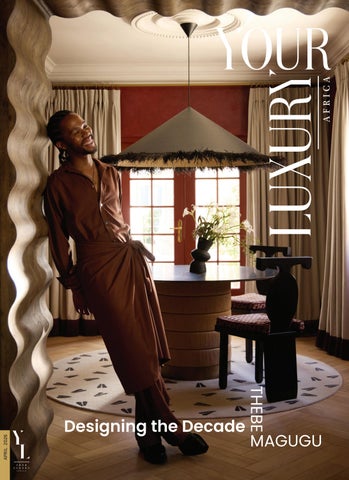
Create a flipbook