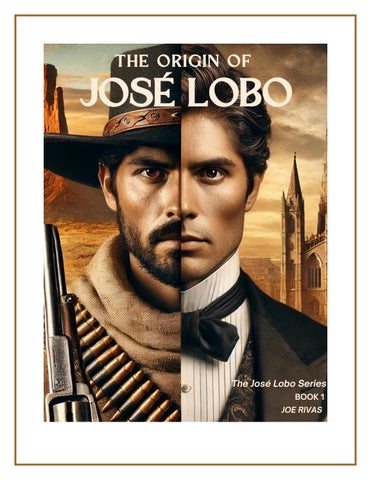
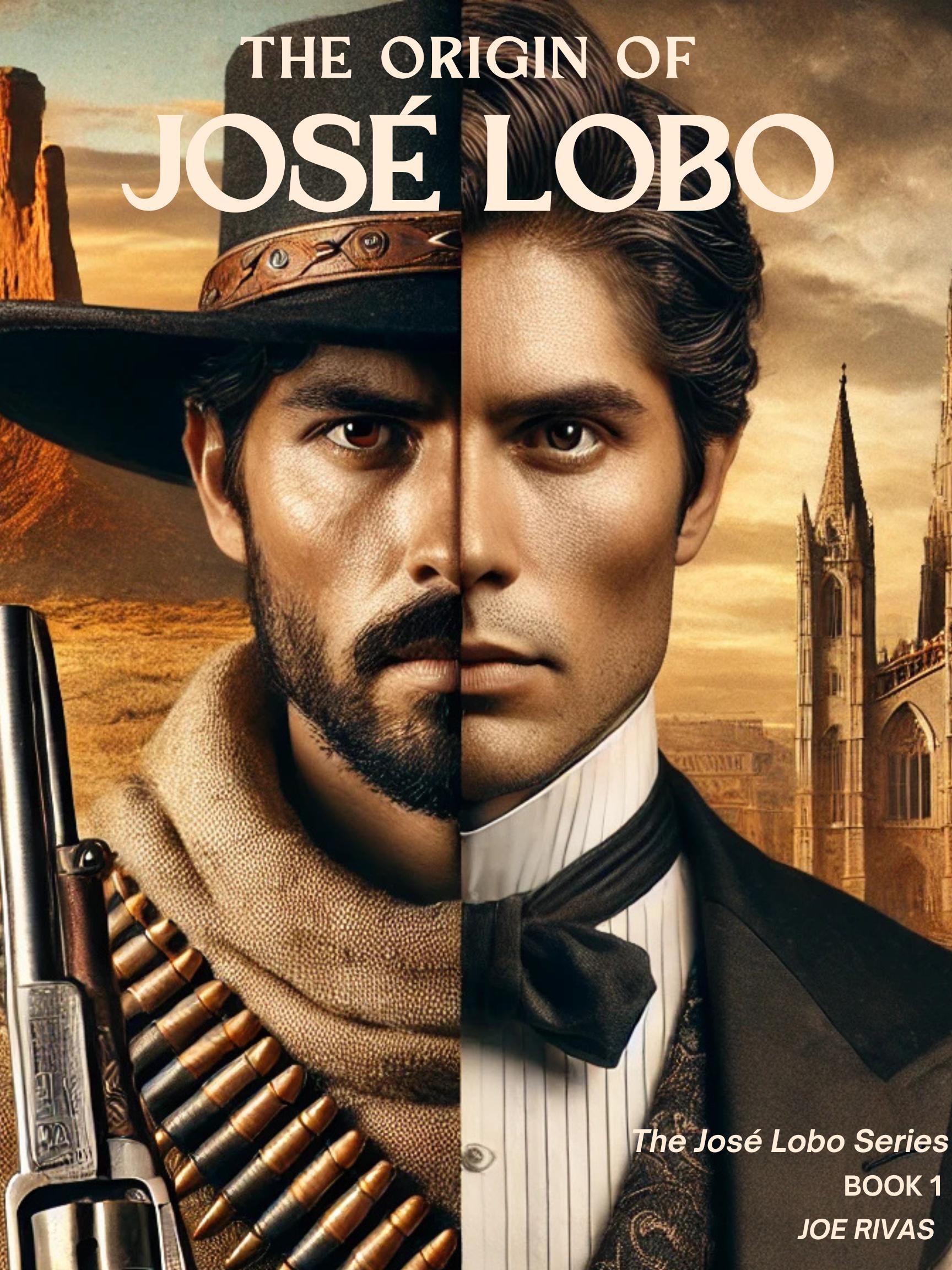
Book 1 - The Origin of José Lobo, a Western Novel by Joe Rivas
Back in 1984, I sat in a creative writing class at a community college. Our instructor gave us a simple but powerful challenge: "Bring a character to life!" That’s when José Lobo also known as Joseph Wolfe was born.
I envisioned a man caught between two worlds: an orphan who left the rugged frontier for an education in the East, only to return home as two men in one. On one side, he was a refined Boston gentleman, shaped by the halls of academia. On the other, he was a hardedged Westerner neither a bandit nor a saint, but something in between.
I built his story from the ground up, crafting the tale of his parents, both grandfathers and the journey that led his father, Jonathon Wolfe, westward. The setting? Twenty years before the Civil War, in a world on the edge of change.
What’s funny is that I created José Lobo before I ever picked up a Louis L’Amour or Zane Grey novel, before I discovered Captain Alatriste by Arturo Pérez-Reverte (my favorite author). But looking at my writing now, you can see their influence.
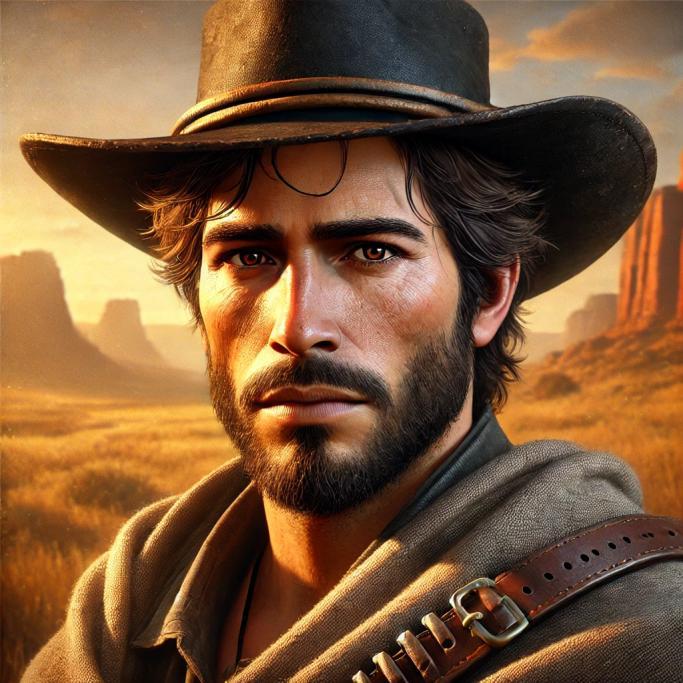
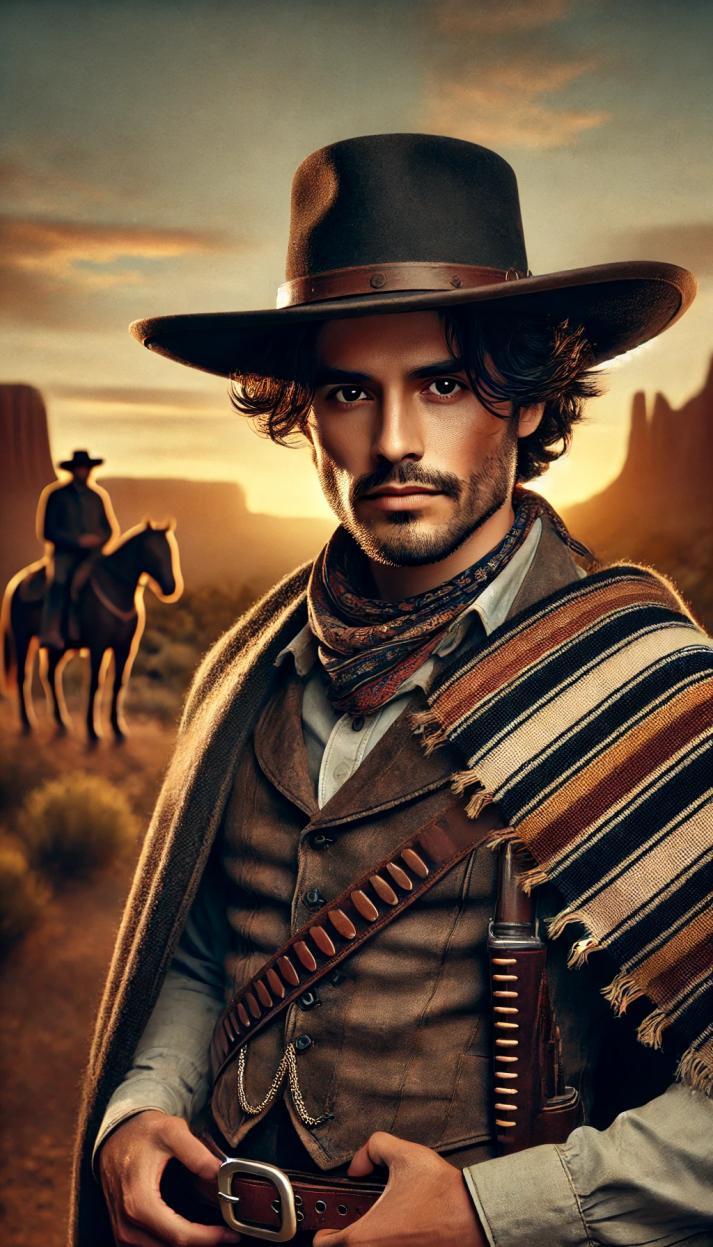
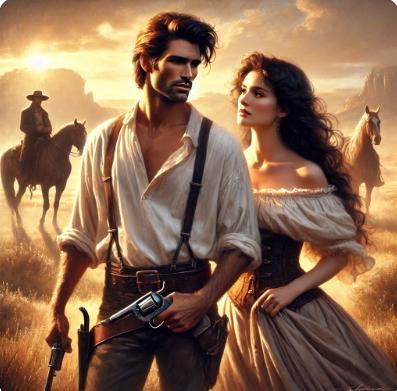
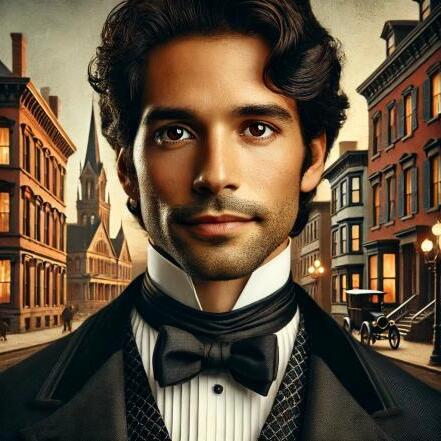
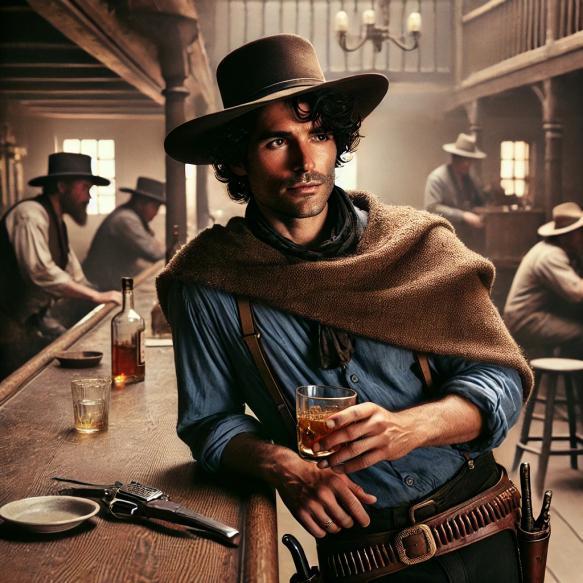
Recently, I decided to revisit José Lobo’s story, this time with a little help from AI. What started as a simple stress-relieving exercise turned into an exciting collaboration, and before I knew it, I had several chapters of a potential first book in a series. I even had an AI picture of José Lobo created bringing him to life in a whole new way.
I hope you enjoy it!
Joe Rivas aka José Rivas / Joe Rivers
Chapter 1 - The Breaking of a Legacy
Boston, 1839
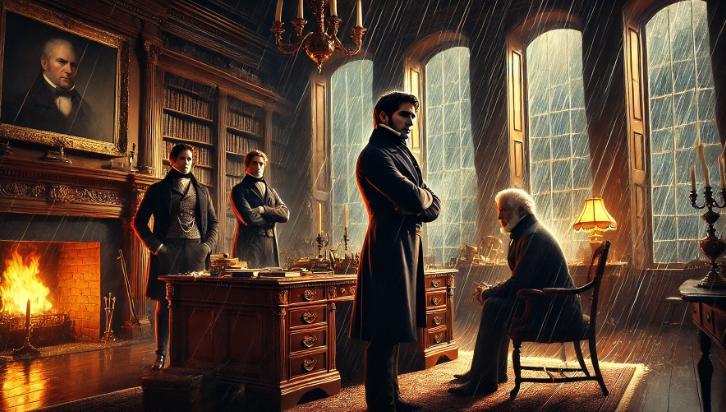
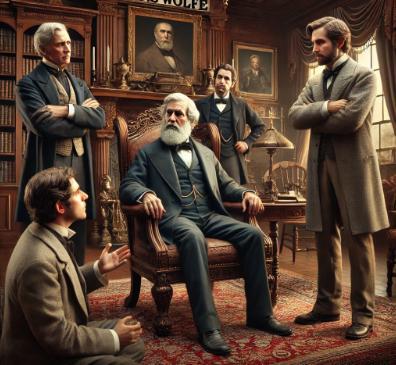
The rain hammered against the tall windows of the Wolfe estate, a cold and relentless downpour that seemed to echo the storm inside the grand study. A fire crackled in the hearth, but it could not warm the four men who stood in tense silence father and sons, locked in a final confrontation.
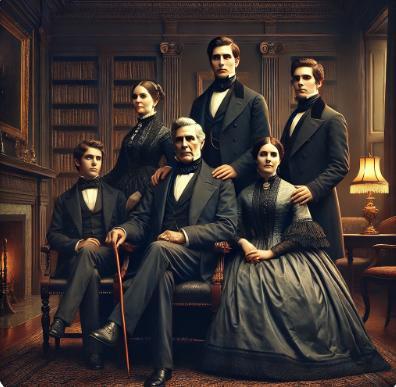
Jonathon Wolfe, the middle son, stood tall and defiant, his traveling coat still damp from the misty night. His strong jaw was set, his blue eyes so much like his father’s blazing with conviction. Across from him, Elias Wolfe, patriarch of the Wolfe family and one of Boston’s most respected bankers, gripped his cane with white-knuckled fury.
To the side, Charles Wolfe, the eldest, leaned against their father’s grand mahogany desk, arms crossed, his expression cool and impassive. There was a faint curl to his lips, a glimmer of satisfaction in his eyes. He had always known this day would come. Jonathon had never fit within the strict mold their father had shaped for them. Their mother’s death years ago had only deepened the divide between them. Without her warmth, Elias had hardened further, determined to raise his sons into men of the world men who would shape the future of the nation with intellect, power, and discipline. Weakness, sentimentality, and rebellion had no place in the Wolfe legacy.
Near the towering bookshelf stood William Wolfe, the youngest of the three. At sixteen, he was still lean with youth, but there was a fire in his eyes. He had idolized Jonathon since childhood, hanging onto his stories and dreams, but he had also learned to navigate the rigid world their father and Charles dominated. He was already preparing for Harvard, just as his father and brothers had before him. Elias had set his path clearly: William Wolfe would be a statesman, a guiding force in the country’s future. And unlike Jonathon, he would not stray.
“You are throwing away everything,” Elias seethed, his voice barely above a whisper, but no less powerful for it. “Your birthright, your future, your family for what? To play cowboy in the wilderness?”
Jonathon exhaled slowly, controlling his temper. “It’s not the wilderness, Father. California is growing. There is opportunity, land freedom. I will not spend my life in a counting house, pushing ledgers and signing contracts for men who have never dirtied their hands with an honest day’s work.”
Elias slammed his cane against the floor. “Honest work? Banking is an honest profession. Law is an honorable profession! You are a Wolfe, and with that name comes responsibility! I raised you all to be leaders, bold and strong, not careless adventure seekers.”
Jonathon’s jaw clenched, but before he could respond, Elias continued, his voice dropping lower, harsher.
“Your mother wanted you to be compassionate. But there was no compassion when her illness took her away from us. I buried my wife without mercy from the world, and I swore that I would raise my sons to be men it could not break. That is what I have done. But you would throw all of that away for a reckless dream?”
For the first time, a flicker of regret crossed Jonathon’s face. He had loved his mother deeply. He remembered how she had smoothed his hair when he was a boy, how she had told him and Billy bedtime stories while their father worked late into the night. Her kindness had been a shield between them and Elias’ stern, unyielding rule. And when she was gone, that shield had shattered.
Jonathon took a slow breath. “I am not throwing anything away. I am choosing my own path.”
Charles scoffed. “Romantic nonsense. You’ve always had your head in the clouds, Jon. Father gave you every advantage, and yet here you are, ready to throw it all away for some foolish dream.”
Jonathon turned to his brother, his expression hard. “No, Charles. Father gave me a future he chose. One that never belonged to me.”
“You’re being selfish,” William cut in, stepping forward. His voice was steady, but his hands were clenched into fists at his sides. “Leaving like this—it’s not just about you. You’re abandoning everything everyone.”
Jonathon’s eyes softened as he looked at his younger brother. “Billy…” He was the only one who ever called him that. Their mother had called him Billy, and Jonathon had kept it alive after she was gone. Elias and Charles never used it. To them, he had always been William. Proper. Controlled. Destined for great things.
“You could stay,” Billy pressed, his voice quieter now. “You could find another way.”
Jonathon smiled sadly. “No, I can’t.”
Elias took a slow breath, his features tightening. “If you leave this house, do not return.”
Jonathon hesitated. He would miss them. Despite everything, he would miss them. But he could not would not be trapped in a future that was not his own.
“Then this is goodbye.”
Charles watched as Jonathon moved toward the door, that glint of triumph never leaving his eyes. Their father had never hidden his favoritism Jonathon had been Elias’s golden boy. But that was over now. And Charles, for all his loyalty, could not help but feel satisfaction in watching his brother be cast out.
Billy swallowed hard, his jaw set. “Then go,” he said.
Jonathon paused beside him, placing a firm hand on his shoulder. He leaned in, his voice barely above a whisper.
“Goodbye, Billy.”
And then he was gone, stepping out into the storm, never looking back.
Chapter 2 - A Love That Sealed His Fate
California, Spring 1840
Jonathon Wolfe had found everything he had been searching for in the wide-open land of California the freedom of the frontier, the satisfaction of work that stained his hands, and, most of all, her.
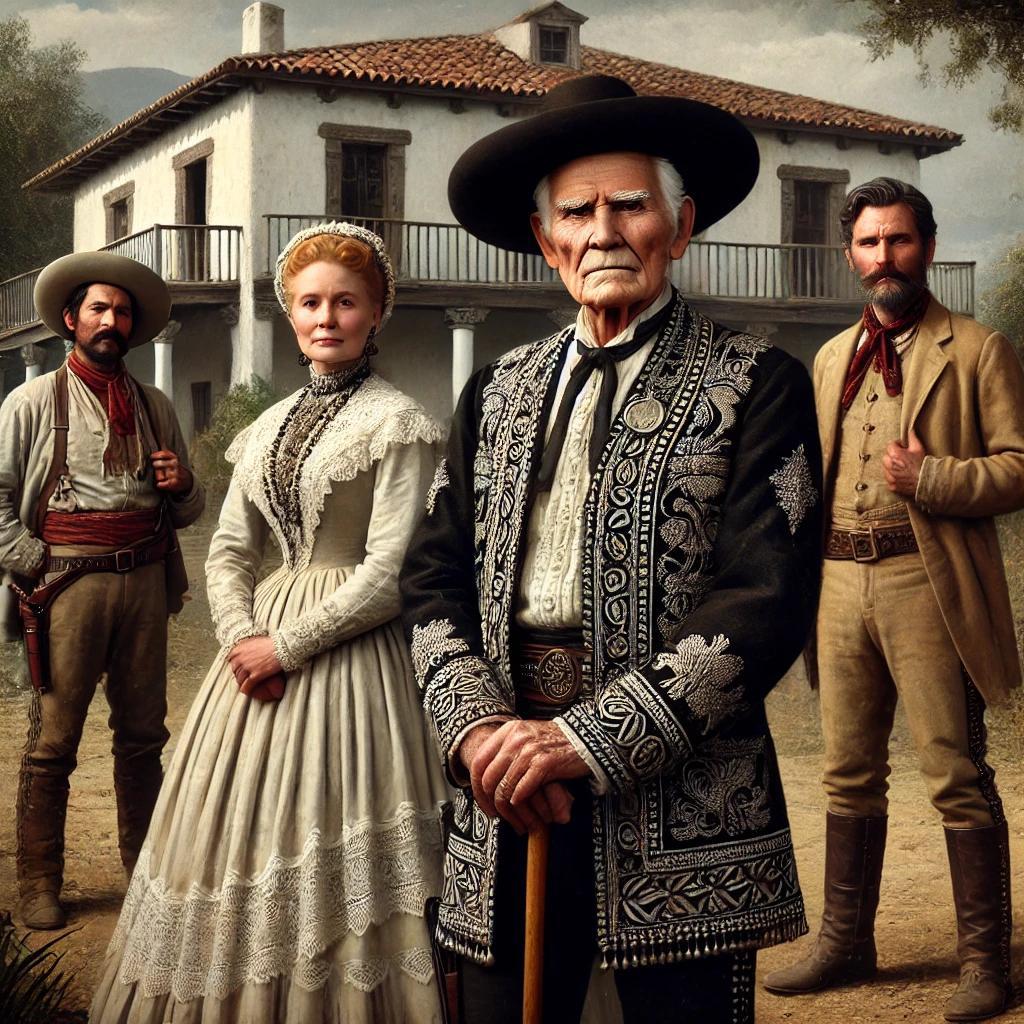
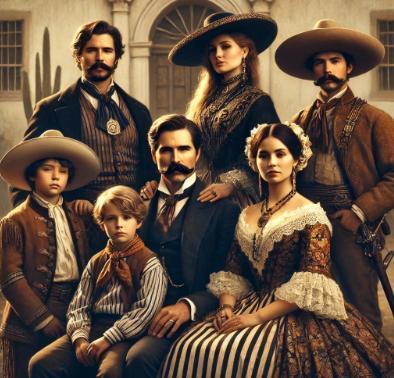
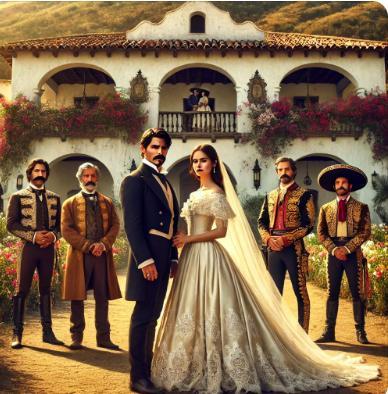
Maria Elena Carrillo was unlike any woman he had ever known. She was the daughter of Don Alejandro Carrillo, a powerful land baron whose family had been among the original Spanish settlers who arrived in the Province of Las Californias in 1769. A proud fourthgeneration Californio, Don Alejandro had spent his life defending and expanding his family’s vast holdings, ensuring their legacy remained strong. His four sons Baltasar, Garcilaso, Franciso, and Cervantes named after famous Spanish writers of Spain’s Golden Age were all raised with that same fierce loyalty to their land and people.
Despite being or maybe because she was the middle child of the Don, Maria Elena had inherited her father’s fire. Though she had been raised with the elegance and refinement of old Spain, she possessed the heart of the frontier she could ride as well as any vaquero, shoot when needed, and held a wisdom beyond her years. From the moment Jonathon met her, he was lost.
Their whirlwind courtship had not been easy. Don Alejandro had eyed him with suspicion at first, a gringo from the East with a name that carried no weight in California. But Jonathon
proved himself by working alongside Maria Elena’s brothers, learning the ways of the land, the language, and the people. Over time, he earned their respect not just as Maria Elena’s suitor, but as a man worthy of calling himself a Californio.
When they married, it was a union of love, a bond as strong as the roots of the ancient oaks that dotted the Carrillo lands. But in the eyes of Elias Wolfe, it was the final betrayal.
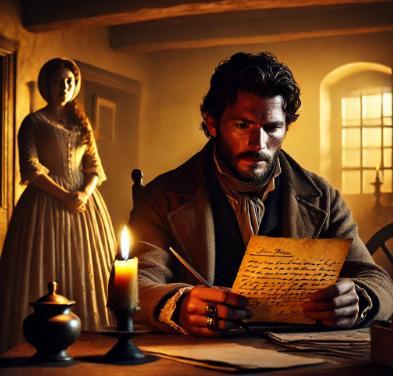
A single letter had come from Boston, written in Elias’ precise, formal hand:
"You are no longer my son."
Jonathon had burned it without reading further. He did not need the approval of a man who had never understood him.
Chapter 3 - The Navidad
California, Winter 1840
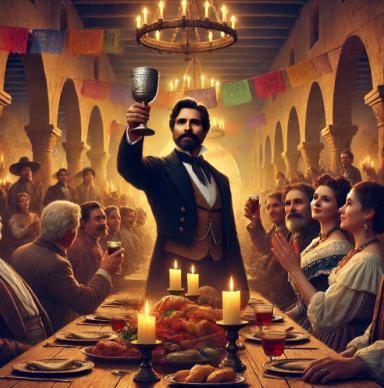
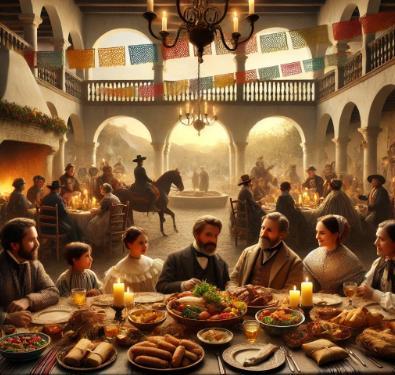
The Carrillo hacienda was alive with celebration. Candles flickered in wrought-iron chandeliers, casting golden light across the long dining table filled with steaming platters of roasted meats, fresh tortillas, and rich tamales wrapped in husks like tiny gifts. Laughter and conversation flowed as freely as the dark red wine, blending with the sounds of guitars and the rhythmic clapping of hands as the household sang old Spanish carols.
The scent of slow-roasted carne asada and cinnamon-spiced chocolate filled the air, mixing with the crisp winter breeze drifting in from the open archways. Outside, the courtyard was strung with papel picado, delicate paper banners that fluttered in the wind, their vibrant colors mirroring the spirit of the evening. Children darted between the legs of their elders, chasing one another with the joyful abandon that only came with Navidad.
At the head of the table, Don Alejandro Carrillo stood, raising his silver goblet. His dark eyes gleamed with the firelight; his face lined with the wisdom of his years but still bearing the strength of the land he had fought for. The room quieted as he lifted his voice.
“Tonight, we celebrate more than just the birth of our Lord,” he said, his deep voice carrying through the hall. “We celebrate family, heritage, and the land that has given us life. And tonight, I wish to honor a man who came to us as an outsider, a gringo from the East, but who has become something far more.”
Jonathon Wolfe, seated beside Maria Elena, looked up as Don Alejandro’s gaze settled on him. The old man’s expression was unreadable for a moment, but then a rare smile crossed his face.
“You have worked beside my sons, earned their trust, and, more importantly, earned their respect. You have taken to this land as if it were your own, and you have loved my daughter with a heart as fierce as any Californio. And so, I toast to you, not as Jonathon Wolfe, the outsider, but as Juan Lobo a man of this land, a man of this family. From this night forward, you are no longer a stranger to us. You are one of us.
The room erupted in cheers, glasses raised high, voices calling out his new name Juan Lobo! as if sealing it into the very walls of the hacienda.
Jonathon Juan felt the weight of it settle deep in his chest, a name that was no longer his father’s, but one that belonged to this land, to this family. He stood, lifting his own goblet, meeting Don Alejandro’s gaze with nothing but gratitude.
“Mi familia!” he called, his voice strong, filled with conviction.
The cheer that followed was deafening, glasses clinking, laughter rising again as the music swelled and the night carried on in celebration.
Juan Lobo had been born that night not from blood, but from choice.
And in that moment, he knew he would never look back.
Chapter 4 - The Lone Wolf California, Spring 1841
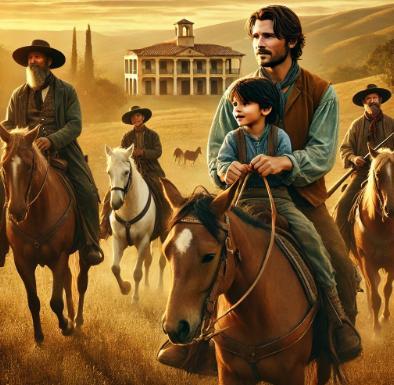
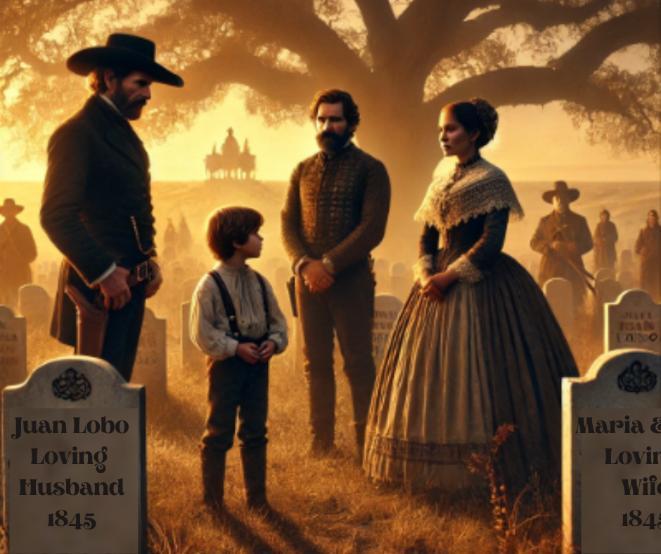
In the spring of 1841, beneath the shade of the hacienda’s sprawling veranda, Maria Elena gave birth to their son, José Alejandro Wolfe—known to all as José Lobo. He was named for both his grandfathers, yet from the beginning, it was clear which world he belonged to. He was raised a Californio, speaking Spanish before English, learning to ride almost before he could walk, and absorbing the fierce pride of his mother’s people.
His tíos his four uncles became his guides in different ways. Baltasar, the eldest, taught him the art of leadership and honor. Garcilaso, the warrior, trained him to fight with both blade and bullet. Francisco and Cervantes instructed him in the ways of the land, the importance of knowledge, and the art of words. And Don Alejandro, his abuelo, taught him what it meant to be a Californio not just by blood, but by spirit.
His Abuelita, Doña Isabella, was his source of warmth and wisdom, reminding him always of the power of compassion, the importance of family, and the unbreakable bond of heritage. It was from her that he learned to play the vihuela, an early version of the classical guitar, and strummed along with her the old songs of Spain, recited the prayers of their
ancestors, and drew for her the quiet strength of the women who had shaped their family for generations.
José Lobo grew up knowing both the gentleness of his mother’s embrace and the rugged demands of the land. He was a boy of two worlds his father’s Bostonian blood and his mother’s Californio spirit intertwining to form something new.
But fate is rarely kind to those who live between two worlds.
By 1845, tensions had begun to rise between the Mexican government and the Californios who sought to align with the Americans. Skirmishes with Mexican raiders became more frequent, often brutal, as factions clashed over the future of the land.
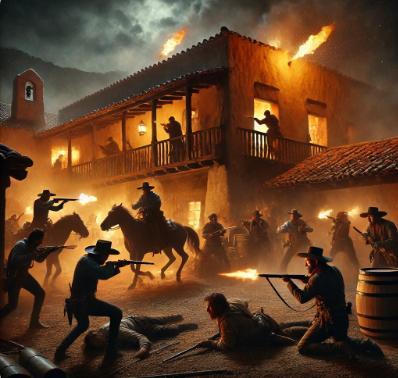
One fateful night, under the cloak of darkness, a band of raiders swept through the Carrillo hacienda. It was not the first attack, but it was the deadliest. They came with torches, rifles, and ruthless intent. The family fought bravely—Juan, Maria Elena, and her brothers defending their home with everything they had. But the numbers were too great.
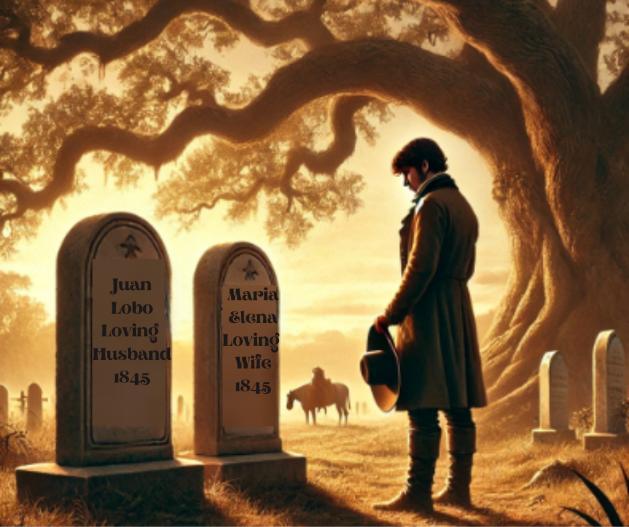
Juan and Maria Elena died side by side, their blood mingling with the earth they had loved. Their deaths were not in vain the Carrillos drove the raiders away, but the cost was unbearable. José was just four years old when he was pulled from his mother’s arms for the last time, his cries lost in the chaos of the night.
Baltasar and Garcilaso, the two eldest Carrillo sons, would go on to fight in the MexicanAmerican War, aligning with the American forces to secure California’s future. They fought as heroes and died as men of honor. Their deaths in battle left an indelible mark on José, reinforcing the lesson that honor and loyalty came with a high price.
With his parents gone and two uncles lost to war, José was raised under the watchful eyes of Don Alejandro and Doña Isabella, as well as his remaining uncles, Francisco and Cervantes. They shaped him into a true Californio a man who carried the past in his heart but looked toward the future with sharp eyes and a steady hand.
He was the last of his father’s legacy. The only son of Jonathon Wolfe/Juan Lobo, and Maria Elena. He was born of two worlds and would learn to navigate and fight in each.
Chapter 5 - A Grandfather’s Regret Boston, 1858
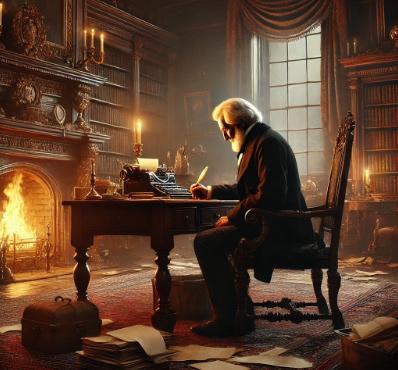
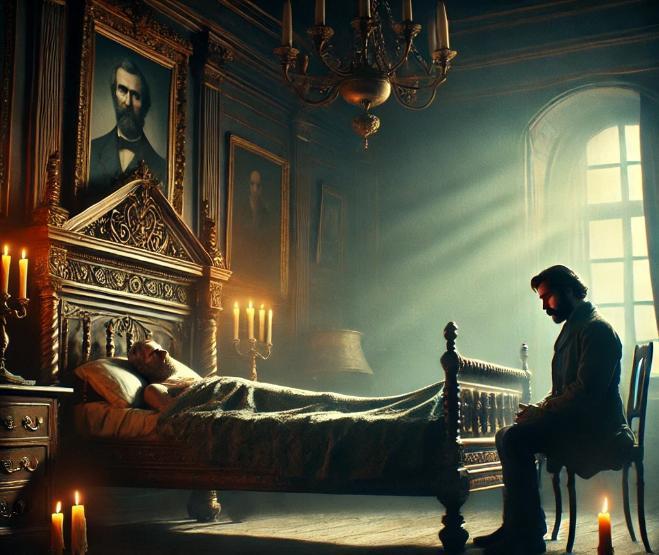
Elias Wolfe sat in his study, now an old man, his once-imposing frame slightly hunched with the weight of years and regrets. The fire in the hearth did little to chase the chill from
his bones, a chill that had settled deep within him the day he received word of his son’s death.
Jonathon was gone.
Killed in a raid on his wife’s family’s rancho, cut down alongside the woman he had loved.
For years, Elias had convinced himself that Jonathon had made his choice, that he alone had sealed his fate. But in the quiet hours of the night, he could no longer escape the truth it was I who cast him out. I who turned him away.
The knowledge sickened him.
But there was still one thing left of his son.
His grandson.
Elias considered writing to Don Alejandro to invite José to Boston, believing that, perhaps, he could mold the boy into the heir he had lost. Yet his oldest son, Charles, opposed the idea. With Jonathon gone, Charles’ own son, Neil, was to inherit the Wolfe fortune alone, and he feared the memory of his brother might sway Elias' heart. Neil himself resented the idea of a long-lost cousin coming to claim a place in Boston’s high society.
Despite Charles’ protests, the letter was sent.
Elias had never met the boy. Had never written, never asked about him. But if Jonathon’s blood ran through the child’s veins, then perhaps just perhaps he could be saved from his father’s mistakes. A letter was sent to California, addressed to Don Carrillo. "If the boy is willing, send him to Boston. He will have a place at Harvard. He will have a future." And so, at seventeen, José Lobo opened himself to being called Joseph Wolfe and went East, to the city where his father had been born, to the grandfather who had once sworn to forget him.
And so, though he would walk among them, Joseph’s soul remained bound to California.
It was only a matter of time before the wolf returned to the West.
Chapter 6 - A Wolf Among Sheep
Boston, Spring 1862
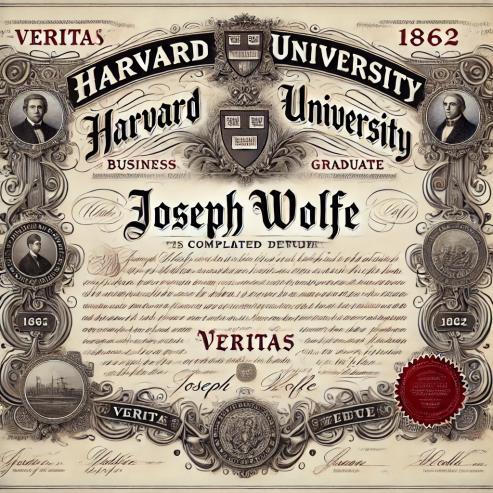
Harvard had been good to Joseph Wolfe.
He had learned the ways of the East, mastered the tongue of politics and commerce, and could hold his own in any parlor conversation with the sons of industry and power. He was
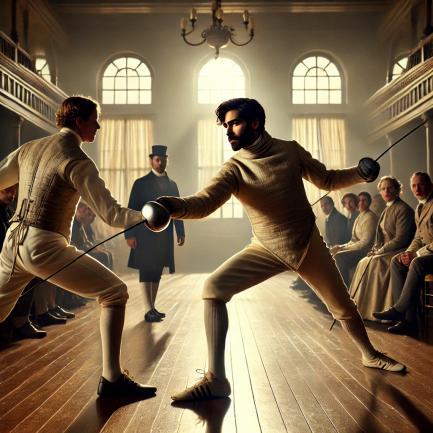
well-liked among his classmates, and respected for his sharp mind, quick wit, and undeniable charm. There wasn’t a fencing opponent who hadn’t come away bruised by his skill, nor a professor who had failed to notice his natural intellect.
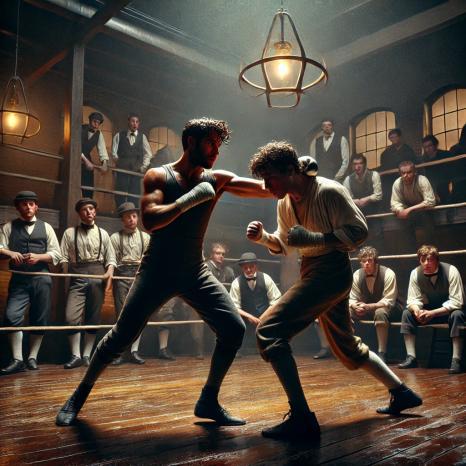
His Uncle Billy, now a senator, husband, and father, ensured Joseph was properly introduced to the world of Harvard and the refined social circles of Boston. Joseph, though visibly different from the city's elite, won admiration for his sharp mind, his skill in dancing, and his prowess in both boxing and fencing.
Yet, the old families would never accept him into their ranks, leaving his courtships few and his heart always yearning for the West. Even with all the admiration of his peers, Joseph never truly belonged.
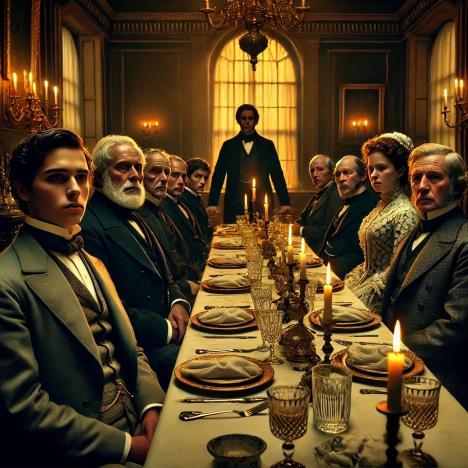
His name was Wolfe, but not like the others. The whispers of his relatives followed him in hushed tones behind closed doors. His uncle, Charles Wolfe, treated him as an obligation, a repayment of an old family debt rather than a nephew. His aunt, Meredith, barely spoke to him beyond pleasantries, and his cousin, Neil Wolfe Charles’ eldest son and heir to the family fortune made no effort to hide his disdain.
Neil Wolfe was the perfect Boston gentleman tall, polished, with the cold arrogance of a man who had never wanted for anything. Where Joseph was lean and hardened, Neil was soft with privilege. Where Joseph rode horses with a natural ease, Neil paid others to do it for him.
And where Joseph had been forced to learn how to survive, Neil had been handed his future on a silver platter.
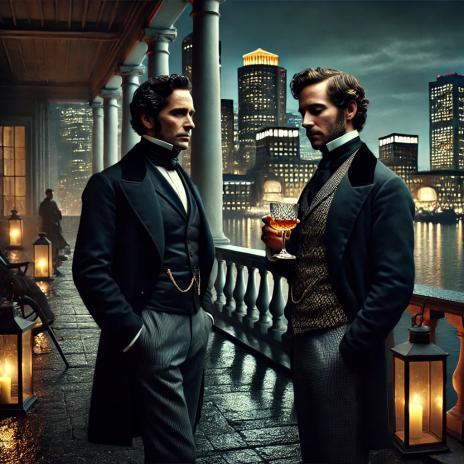
"You could make a place for yourself here," Neil had told him once, swirling a glass of brandy as they stood on the terrace overlooking the harbor. "With your education, your name, and let's not forget Grandfather’s guilt, you could live quite comfortably in Boston society. The West is… beneath you now."
Joseph had laughed then, low and quiet, shaking his head. "You might think so. But I don't."
Neil smirked. "You think they’ll accept you there, either? You’re too refined for the outlaws, too wild for the gentlemen. You’ll be caught between two worlds, cousin, and neither will claim you."
Joseph had said nothing.
But in his heart, he knew the truth.
The West had claimed him. It had done so the moment he was born, and he wanted to return.
Chapter 7 - A Grandfather’s Plea
Boston, Summer 1862
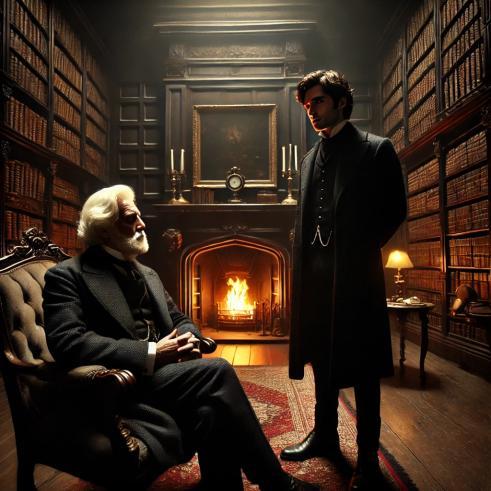
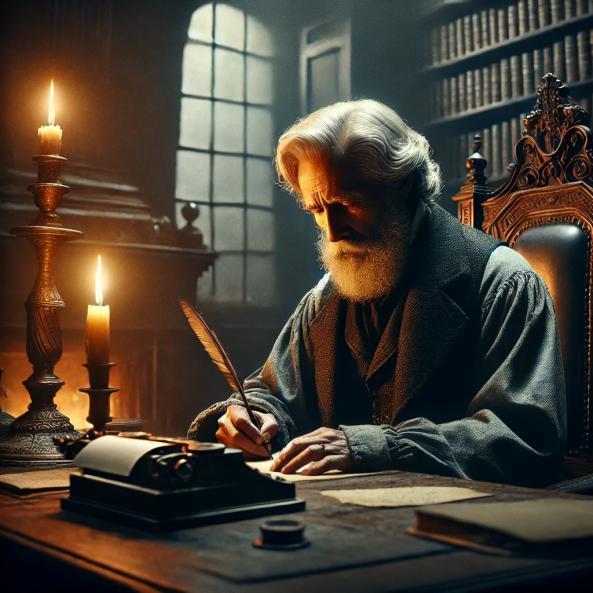
The study of the Wolfe estate had grown darker with age, the once grand furnishings dulled by time and grief. The fire in the hearth flickered weakly, casting long shadows against the towering bookshelves. Outside, the city moved forward, untouched by the private war waged within these walls.
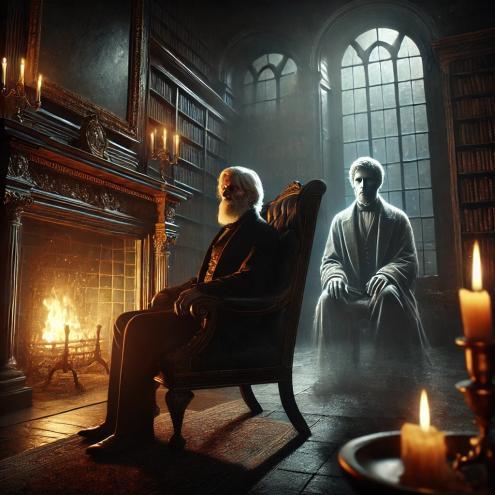
Elias Wolfe sat alone in his chair, staring into the fire, a glass of untouched brandy in his trembling hand. The years had worn him down, but it was regret that had truly hollowed him. The house was quiet too quiet. There had been a time when his sons’ voices had echoed through these halls, when laughter had not felt foreign within these walls. But now, only the past kept him company.
“Jonathon,” he whispered, closing his eyes. “I was wrong.”
The name left his lips like a prayer, or perhaps a confession. He had spent years telling himself that his decision had been right, that his son had betrayed the family, had forsaken his duty. But now, as he sat in the dim light of his final years, he knew the truth he had been the betrayer.
“I cast you out,” Elias murmured, as if speaking to Jonathon’s ghost.
“I let my pride take everything from me. You should have been here. You should have been beside me.” He sighed, rubbing a weary hand over his face. “But you were stronger than me. You made your own way.”
The fire crackled, offering no absolution.
His grip tightened around the arm of his chair. It was too late to seek forgiveness from Jonathon, but perhaps, it was not too late to seek it from his son.
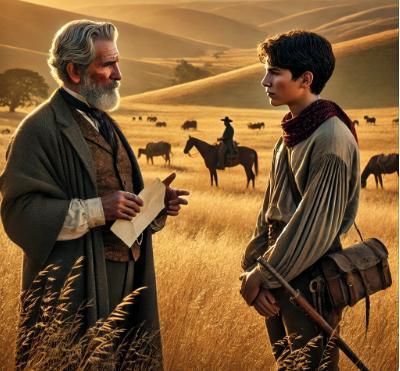
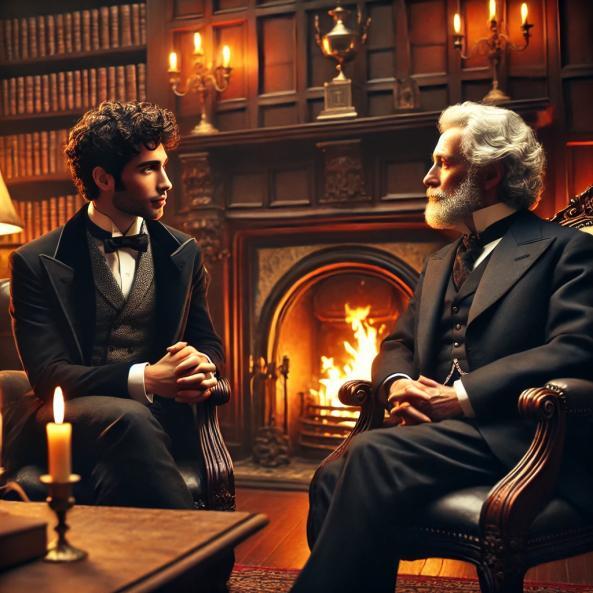
Later that afternoon, summoned by his grandfather, Joseph Wolfe José Lobo stood before Elias’ chair, his posture straight, his expression unreadable. He had arrived in Boston only four years earlier, summoned by Elias Wolfe himself to attend Harvard. He had not come for love of the place, nor for any lingering attachment to the Wolfe name, but out of duty. And perhaps, some small, unspoken need to know the man who had cast his father aside.
Elias, once the unshakable patriarch of a dynasty, was now a frail old man, his once iron grip weakened, his voice thinner than Joseph remembered from when he first arrived. Time
had whittled him down, yet his sharp mind remained. His blue eyes—so much like Joseph’s father, Jonathon studied his grandson with quiet intensity.
“I have no right to ask anything of you,” Elias admitted, his voice rasping with age. “I lost that right the day I disowned your father. But I am an old man, and before I go to my grave, I would like to make amends. Not for my own sake, but for his.”
Joseph said nothing. He had spent years hardening himself against the pain of what his father had endured, the knowledge that Elias had thrown Jonathon away as if he were nothing. But now, in the dim light of the study, Elias looked… small. Human.
“Stay,” Elias said, his tone quiet yet insistent. “Stay until I die. Not for Boston. Not for the Wolfes. But as a last favor from grandson to grandfather.”
The words settled between them, heavy with meaning.
Joseph exhaled slowly. It was not what he had expected, and yet he found himself nodding.
“I will stay,” he said finally. “But only until the end.”
Elias did not smile he was too proud for such sentimentality but there was something in his eyes, something that might have been relief. He nodded once, his hands trembling as he reached for the brandy.
In that quiet moment, no more words were needed.
Joseph had given his answer, and Elias, for the first time in decades, felt something close to peace.
Chapter 8 - The Battle for the Wolfe Legacy Boston, Winter 1862
In the months that followed, Joseph saw glimpses of the man his father had once respected. Elias spoke of Jonathon often, though never without regret. He asked Joseph about California, about the land Jonathon had fought for, about the life he had built before it was torn from him. It was clear that Elias wanted to know his son, even if only through the stories Joseph could tell.
But regret was not enough to change the past.
In one final act of penance, Elias made a bold decision he sought to rewrite his will, naming Joseph as heir to half of the Wolfe fortune and estates. It was to be a surprise for
Joseph, given after the old man died. Elias knew it was his birthright; one he had finally acknowledged.
Yet the ink never dried on that will.
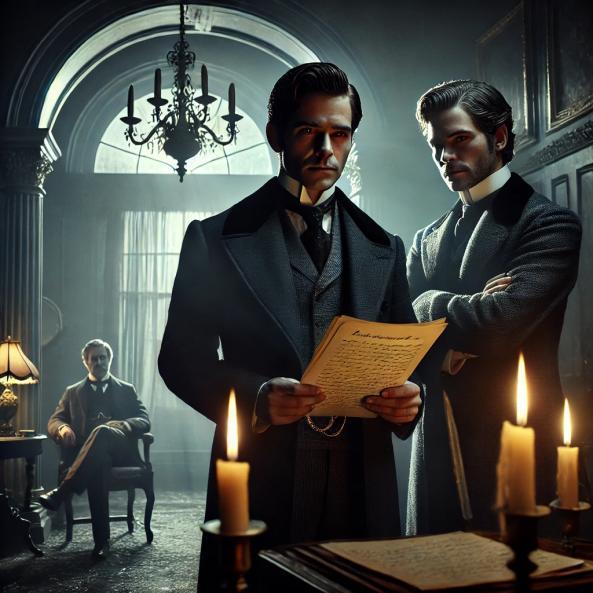
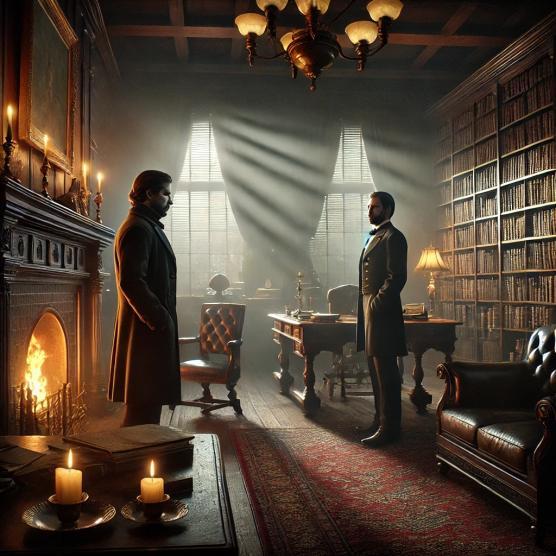
Late one evening, in the dim glow of the Wolfe estate’s study, Charles stood near the fireplace, brandy in hand, watching the flames curl and snap. Across from him, Neil sat stiffly in a high-backed chair, his jaw tight, his fingers drumming anxiously against the carved wooden arms.
“This is wrong,” Neil muttered, breaking the silence. “Grandfather wanted Joseph to have his share.”
Charles scoffed, swirling his drink. “My father is old and weak, forgetting how Jonathan left his family name years ago to play cowboy in California, and it cost him his life. And, now he wants to reward Jonathan's son? He is stealing your birthright, Neil! Sentiment has made your grandfather foolish. He has forgotten his legacy in his final years.”
He turned toward his own son, his tone turning sharp. “And you? Have you suddenly grown soft too, Neil?”
Neil’s gaze flickered to the desk, to the unsigned copy of the amended will Charles had intercepted. He swallowed hard. “I just don’t see why we need to shut Joseph out entirely. Half the estate is still more than enough for us.”
Charles let out a short, humorless laugh. “Half? You would see a bastard Californio an outlaw in the making hold sway over our family’s wealth? Over our name?” His eyes narrowed. “What would that make us?”
Neil’s fingers clenched. “He’s still your nephew, my cousin.”
Charles stepped closer, his presence looming. “And what of your future, Neil? Have you considered that? Or are you too busy playing the noble fool?” He let the words settle before delivering the final blow. “Margaret Alden wouldn’t mind Joseph staying longer. In fact, I’d wager she’d rather see him remain while you leave for war.”
Neil stiffened. The words hit their mark. Charles saw the flicker of jealousy, the flash of insecurity in his son’s eyes. Margaret Alden the woman Neil had long considered his future wife—had always harbored a certain fondness for Joseph. She had denied it, of course, but Neil had never been entirely convinced. The way her gaze lingered on Joseph when they were in the same room, the ease of their conversations it had always gnawed at him.
Charles smirked. “Some men are meant to inherit their legacy, and some are meant to fade into the background.” He gestured toward the desk, where the old will lay, untouched. “Joseph is not meant to be a Wolfe. He was never meant to be one of us.”
Neil hesitated. He wanted to protest, to fight back against the cold logic of his father’s words, but the weight of duty, of expectation, of jealousy held him still.
Finally, he exhaled and gave a slow, reluctant nod.
Charles clapped a hand on his shoulder, satisfied. “Good. Then this matter is settled.” He turned away, draining the last of his brandy.
“Come spring, Joseph will be gone, and you will be on the battlefield, making a name for yourself in a real fight against the South not wasting time on a man who was never meant to be a Wolfe.”
When Elias Wolfe finally breathed his last, the truth became clear. There was no room for a would-be heir.
Joseph had stayed, as promised. He had given Elias what comfort he could in his final days. But in the end, the old man’s redemption had come too late.
Chapter 9 – The Wolf Outcast
Boston, Early Spring 1863
The funeral was cold, formal more a display of the Wolfe family’s standing than a moment of true mourning. Joseph stood apart, dressed in black, watching as the casket was lowered into the frozen ground. He felt no sorrow, only a strange, quiet finality.
Later that afternoon, Joseph did not know why he was asked to be present at the reading of Elias’ will, but he came nonetheless, out of respect for Elias. Charles and Neil stood side by side as the family lawyer read Elias’ will. Neil remained silent; his fingers curled into fists at his side. He had not stopped what was done. And now, it could not be undone.
Joseph Wolfe was cast out once again.
The air was damp with the lingering chill of winter, though the first signs of spring crept into the city with the scent of wet stone and thawing earth. The Wolfe estate was quieter now, the funeral long past, and the weight of Elias Wolfe’s absence had settled over the house like a shroud.
Joseph sat in the study, staring into the fire much like his grandfather had in his final days. The flickering flames reflected in the glass of brandy he held, untouched. He had honored his promise. He had stayed. And now, there was nothing left to hold him here.
A knock at the door pulled him from his thoughts. He turned to see Neil standing in the doorway, his posture uncertain, a hesitation in his movements that Joseph had rarely seen before.
“You’re leaving tomorrow,” Neil said, stepping inside. It wasn’t a question.
Joseph nodded. “There’s nothing left for me here.”
Neil sighed, rubbing the back of his neck. “I suppose not.” He moved toward the desk, pouring himself a drink before turning back to face Joseph. “My father will be glad to see you go.”
Joseph chuckled. “I never expected otherwise.”
Neil hesitated again, looking down into his glass. “I ” He stopped himself, shaking his head. “It doesn’t matter.”
Joseph studied him, sensing the turmoil behind his words. “Say what’s on your mind, Neil.”
Neil let out a slow breath. “You always had a way of making things look easy. I’ve spent my life trying to live up to Father’s expectations, to everyone. And you ” He gestured vaguely toward Joseph. “You never seemed to care what anyone thought. You just lived.”
Joseph leaned forward, resting his forearms on his knees. “It was never easy, Neil. I just chose a different path.”
Neil looked at Joseph then, really looked at him. “You’re still my cousin. No matter what.”
Joseph held his gaze for a long moment before nodding. “And you’re mine.”
Neil opened his mouth as if to say something more, but in the end, he simply clapped Joseph on the shoulder.
“Be careful, Lieutenant,” Joseph said thoughtfully, knowing that Neil was soon to depart to join the war between the states.
Neil smirked, stepping back toward the door. As he reached for the handle, he hesitated, glancing over his shoulder. The words hovered on his tongue—about the will, about what Elias had intended. But in the end, he swallowed them.
Joseph watched him go, then turned back to the fire, knowing that when he left tomorrow, he would not look back. He retired to his room one last time. For the first time in four years, Joseph slept peacefully.
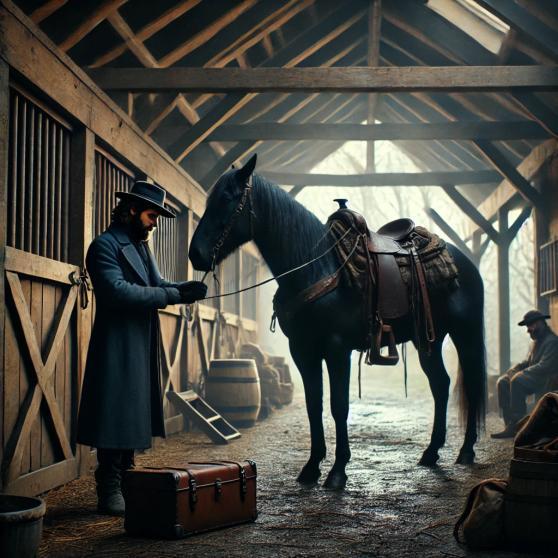
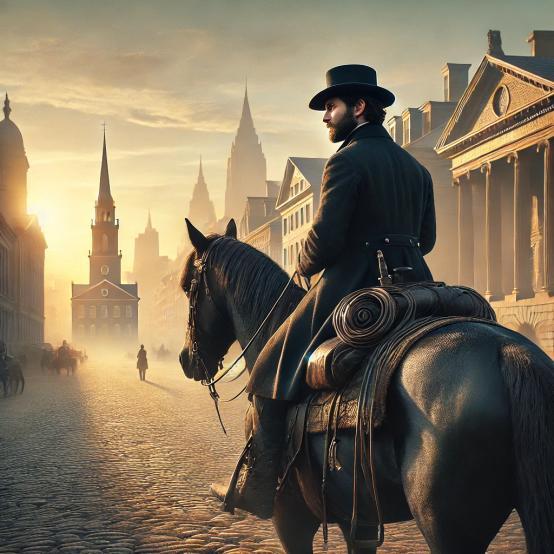
Early next morning, the air was crisp, the streets still slick from the previous night’s rain. Joseph stood by his horse, tightening the last of his saddlebags. The weight of his revolver sat comfortably at his hip, a familiar presence after years of dormancy.
Neil stepped inside the stables and sat down, hands in the pockets of his overcoat, watching as Joseph prepared to leave. He had always been the more refined of the two, more comfortable in the world their father had carved out for him. But now, Neil felt smaller somehow with the war looming over him like a specter that no one could ignore.
All that was left to do was for Neil to extend his hand. Joseph took it without hesitation, their grip firm, neither willing to let the moment slip into words they would later regret.
“You watch yourself out there,” Neil said.
Joseph gave him a knowing look. “You watch yourself too.”
A small smile tugged at Neil’s lips. “I’ll try.”
Joseph mounted his horse, Sombre, adjusting his hat against the early morning sun. He looked down at Neil one last time. “If you ever find yourself out West, look for me.”
Neil nodded. “And if you ever come back East… well, you know where to find me.”
Joseph didn’t answer. He simply tipped his hat and nudged Sombre forward. The city faded behind him, and with it, the weight of a legacy he no longer had to bear.
The road stretched ahead, long and open. José Lobo was heading home.
Chapter 10 - The Wolf, the Hawk, and the Bear Cub
New Mexico Territory, March 1863
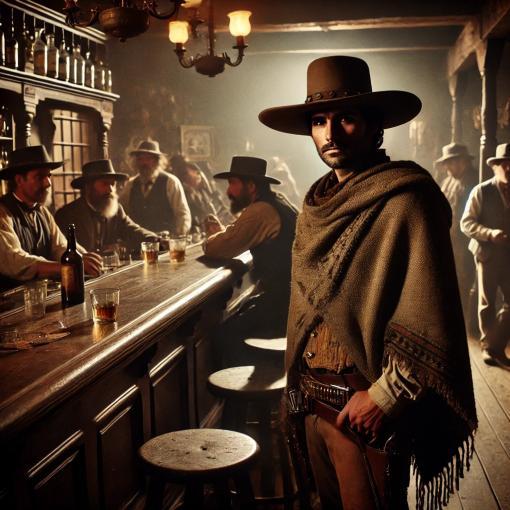
A month after he left Boston, José Lobo rode into the dying town as the sun dipped below the jagged horizon, the wind whispering through the skeletal remains of buildings that had seen better days. Dust swirled in lazy eddies along the street, and the few townsfolk that remained barely spared him a glance as he passed. He had been on the trail for months, pushing westward, facing every hardship the land could offer. Now, he needed a drink and a warm place to rest his weary bones.
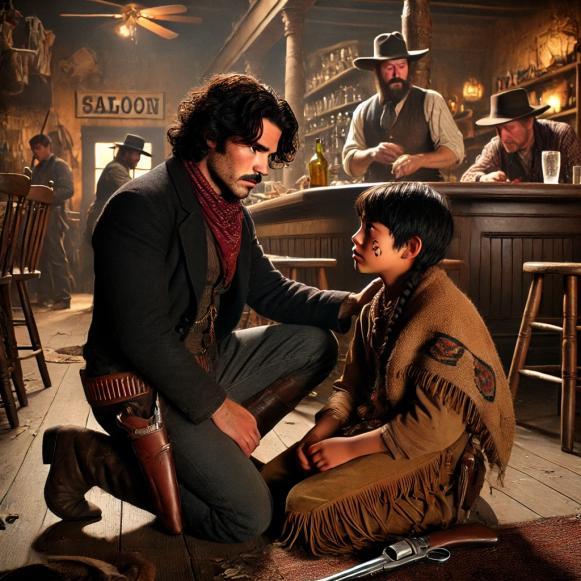
The saloon was as decrepit as the rest of the town. The doors hung unevenly on their hinges, and the inside reeked of spilled whiskey, sweat, and despair. The barkeep, a thickset man with a permanent scowl, barely looked up as Jose stepped in. A handful of patrons sat hunched over their drinks, muttering among themselves.
Behind the bar, an old Apache man wiped down glasses with a cloth worn thin from years of use. His back was stooped, his hair long and silver, and deep lines carved into his face spoke of a hard life. The way the barkeep and customers treated him made it clear he was little more than a servant here. A sneer, a rough shove, a crude insult—it was all routine. The old man endured it in silence.
José Lobo sat at the bar and ordered a whiskey. When the old man set the glass down, their eyes met, and something passed between them something unspoken. A recognition of sorts, as if the Apache could see straight into Jose’s soul.
“You are not just a wanderer,” the old man said in a low, steady voice. “You have the eyes of one who walks two paths.”
José Lobo sipped his whiskey. “That so?”
The Apache gave a small nod. “I am called Itza-chu Great Hawk. Once, I was a warrior. Now, I am nothing to these people. But I stay for my grandson, Kuruk. He is nine summers old.”
José Lobo followed the old man’s gaze to the far corner of the saloon, where a small boy sat quietly on the floor, carving a figure from a piece of wood. His dark eyes flicked up, wary and watchful. He was thin but carried himself with a quiet strength beyond his years.
“My son,” Itza-chu continued, “was Nantan Lupan Grey Wolf. A warrior, like his father before him. He and his wife, Sonsee-array, died in battle when our village was attacked. That was five winters past. I was left with only the boy.”
Itza-chu looked back at Jose. “Ussen, the Life Giver, has not yet taken me, though I have asked him to. I believe he kept me here so that I might find a way for my grandson to escape this place.” He paused, studying Jose intently. “You carry the spirit of the wolf as well. What is your name, traveler?”
José Lobo hesitated before answering. “My birth name is Joseph Wolfe, but I am José Lobo now.”
A slow smile crept across Itza-chu’s face, as if the answer had confirmed something deep within him. “A wolf has come to take the child away from this place. It is the will of Ussen.”
José Lobo frowned, unsure how to respond. The old man had a certainty in his voice that was unsettling. Before he could protest, the saloon doors burst open, and two drunken men stumbled in, followed by two others laughing cruelly. They spotted Kuruk and made their way toward him.
“Well, look here,” one of them sneered. “A little savage playing with sticks.”
Kuruk tensed but did not look up. One of the men kicked over his carving, sending it skittering across the floor. Another grabbed the boy by the arm and hauled him up roughly.
“Enough,” Itza-chu said, stepping forward. His voice was calm, but there was iron in it.
One of the men backhanded him across the face. “Stay out of it, old man.”
José Lobo stood, his chair scraping against the floor. He locked eyes with the man who had struck Itza-chu. The room went silent.
“You don’t want to do that again,” José Lobo said, his voice quiet but deadly.
The man hesitated, taking in José Lobo’s stance, the set of his jaw, the ease with which his hand rested near his gun belt. He muttered a curse and let go of Kuruk, stepping back.
Itza-chu wiped the blood from his mouth and turned to José Lobo. “You have seen how it is. This boy has no future here. I ask you to take him with you.”
Kuruk’s dark eyes widened, and he clung to his grandfather’s arm. “I don’t want to go.”
Itza-chu placed a firm hand on the boy’s shoulder. “I have stayed alive only for you, my grandson. But my time is done. You must go with this man. He walks the path of the wolf, as your father did.”
Tears welled in Kuruk’s eyes, but he did not cry. He straightened and nodded solemnly. “Then I wish you a peaceful death.”
Itza-chu smiled. “A warrior’s death is better.”
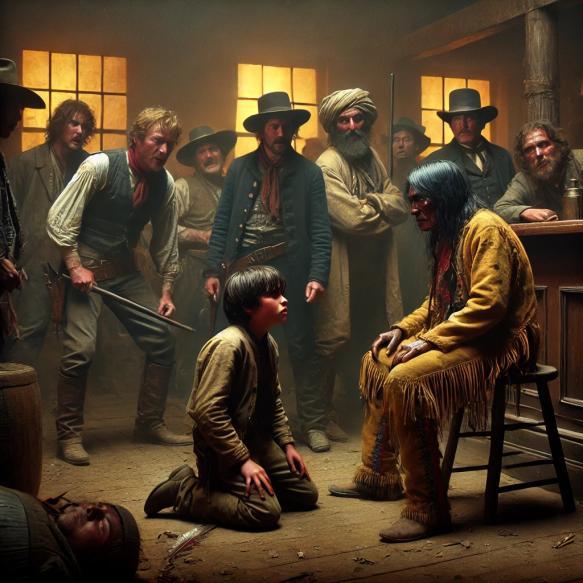
The drunken men were not finished. One of them, eyes still glazed with liquor and hatred, pulled a pistol from his belt. The barrel swung toward Kuruk.
Before the trigger could be pulled, Itza-chu moved. Faster than any man his age had a right to. He shoved Kuruk aside as the gun cracked, the muzzle flash lighting the room for a split second. The bullet meant for the boy struck the old man in the chest.
Itza-chu staggered, his breath coming ragged as blood soaked his worn shirt. But even as he fell, he drew a knife from his belt, driving it deep into the gut of the man who shot him. The drunk let out a strangled cry, crumpling to the floor beside him.
The other three men reached for their weapons, but José Lobo was faster. His gun cleared leather in a blink, and three sharp reports shattered the heavy silence. The last of them slumped over the bar, a look of dumb shock frozen on his face.
José Lobo turned back to the old Apache. Itza-chu’s eyes were distant, his breaths shallow. Kuruk knelt beside him, small hands pressed against the wound as if he could will the life back into his grandfather.
Itza-chu’s fingers curled weakly around Kuruk’s wrist. “Go, little bear,” he rasped. “Go with the wolf.”
Kuruk clenched his jaw, forcing himself not to cry. “I will.”
The old man let out a final breath, his gaze drifting to some unseen horizon. Then, he was still.
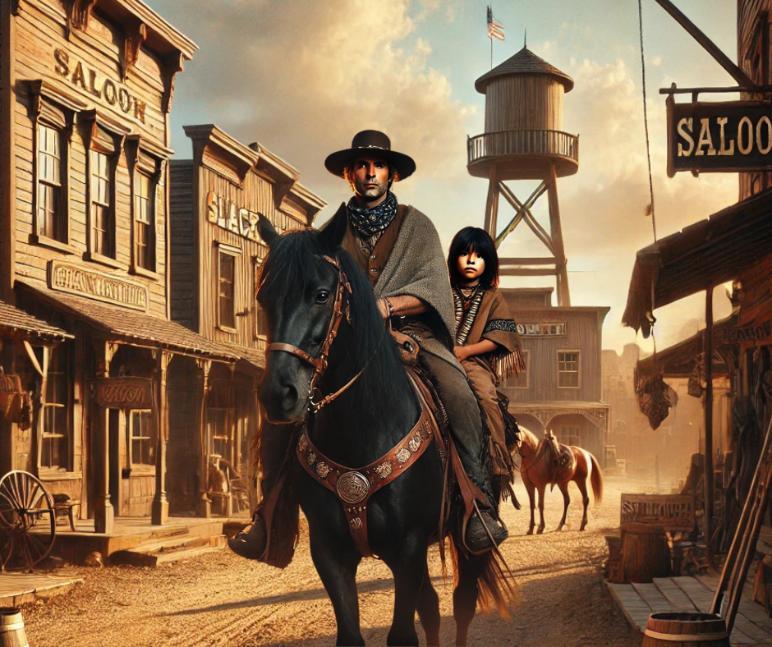
José Lobo holstered his gun and looked down at Kuruk. The boy wiped his eyes, squared his shoulders, and met Jose’s gaze. Jose Lobo lead the boy out into the night. The wolf and the bear cub’s journey west together had merely begun.
Chapter 11 - The Wolf Cub
Recently separated Arizona Territory, May 1863
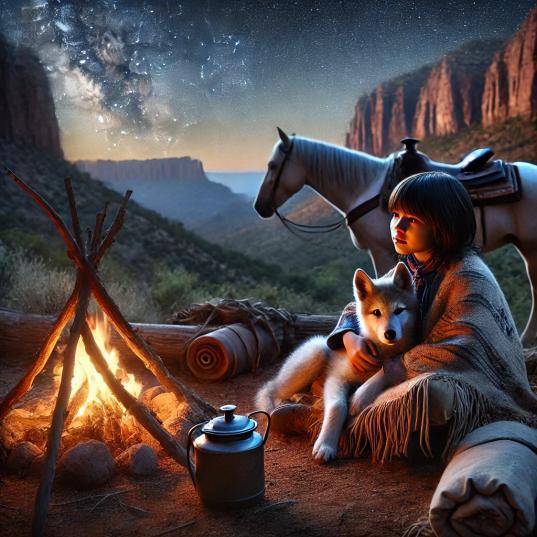
The mountains loomed before them, their jagged peaks still crowned in white, while the valleys below whispered of the coming spring. José Lobo rode his horse, a powerful black Mustang named Sombra, through the thinning snow, his keen eyes scanning the terrain. The stallion had been his companion for years, swift and unyielding, its dark coat blending with the shifting shadows of dusk and dawn. Kuruk rode behind him, his small hands gripping the saddle horn, his breath misting in the cold morning air.
The boy had proved himself capable on the trail, quick to gather kindling for fires, patient with setting snares for rabbits, and skillful with a fishing spear when they camped near the icy streams. At night, as they settled by the fire, José Lobo brewed the coffee, strong and black, just the way he liked it. Kuruk wrinkled his nose at the bitterness but never complained.
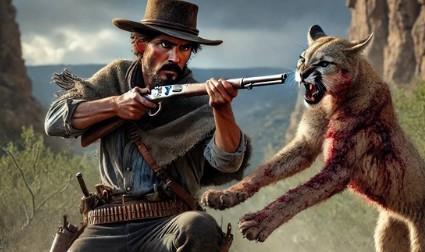
One morning, as they moved through a narrow pass, the quiet was shattered by the frantic rustling of underbrush ahead. A mother wolf burst from the trees, her gray rust coat streaked with blood, her breath ragged. In her mouth, she carried a tiny cub, no more than a few weeks old. She hesitated when she saw them, her golden eyes locked onto José Lobo’s for a heartbeat, before a deep growl echoed behind her.
The mountain lion leapt from the ledge above, muscles rippling beneath its tawny coat, claws extended, aiming for the mother wolf’s throat. José Lobo’s rifle cracked through the cold air. The lion crumpled mid-air, falling lifeless into the snow.
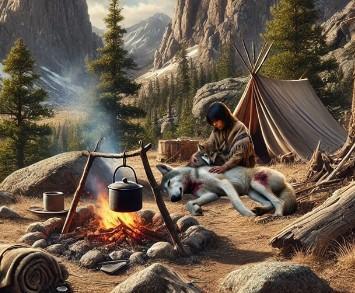
The mother wolf staggered back, her breath coming in heavy gasps. She gently placed the cub on the ground, then turned her eyes to José Lobo once more. A flicker of understanding passed between them before she slumped to the earth, her life spilling out onto the snow.
Kuruk slid off the horse and knelt beside the cub, stroking its tiny head. “We have to take him,” he said, his voice steady. “If we leave him, something else will come for him.”
José Lobo studied the small, trembling creature. It was a Mexican wolf, weak and helpless. He nodded. “Then he’s yours to care for.”
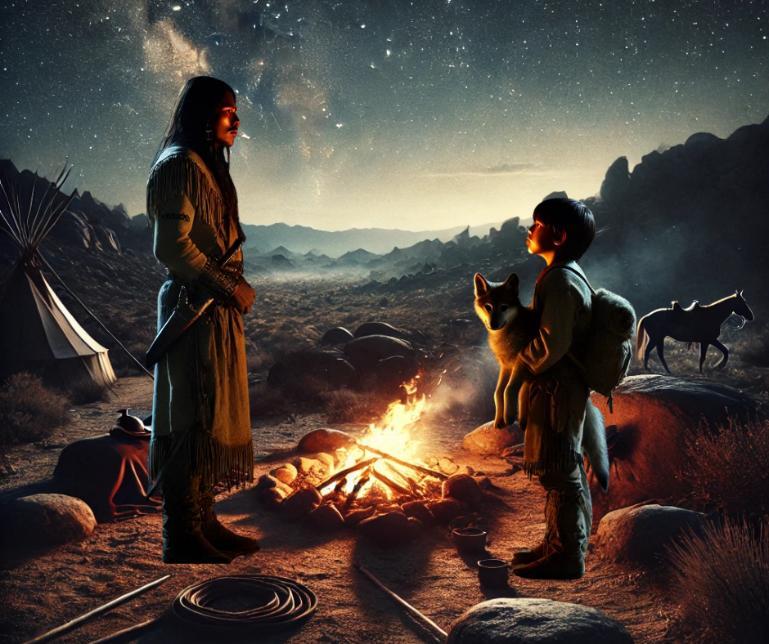
Kuruk lifted the cub into his arms, cradling it against his chest. “I will call him Tahoma,” he said. “It means ‘the one who is strong.’” The little wolf cub rested its rust, gray, and black body against Kuruk.
José Lobo gave a small nod of approval. “Let’s break camp and ride.”
A few nights later at a new campsite, as the fire crackled, Kuruk nestled against Sombra’s flank, Tahoma curled beside him. The boy’s voice broke the silence.
“Before there were men, there were only the Hactcin, the great beings who shaped the world.”
José Lobo glanced at him over the rim of his coffee cup.
“The Hactcin made the earth as a woman, her face turned upward. The sky they made as a man, looking down upon her,” Kuruk continued. “They lived in the underworld where there was no light, where the first creatures were shaped.”
The flames flickered, casting shadows that danced like spirits against the trees. Kuruk stared into the fire, lost in the old story. “One day, the Hactcin would bring life into the world above. But before that, the land had to be made ready. And so, they began their work.”
José Lobo listened in silence, letting the boy’s words settle into the night. He took another sip of coffee, the darkness of the drink mirroring the vast unknown ahead of them.
Kuruk looked at him, curiosity in his eyes. “Do you believe in the old stories?”
José Lobo exhaled slowly. “I believe the world is shaped by those who walk it.”
Kuruk nodded as if considering the answer. “Maybe the Hactcin sent you, then.”
José Lobo smirked. “You think so?”
Kuruk shrugged. “They sent my grandfather a wolf before. Now they sent me one too.” He stroked Tahoma’s tiny head.
José Lobo chuckled softly and reached out to ruffle the boy’s hair. “Get some sleep, storyteller.”
Kuruk grinned and curled closer to Tahoma, his breathing slowing as sleep took him. José Lobo sat watch a little longer, the firelight flickering in his dark eyes.
Tomorrow, they would ride again, deeper into the wild, where the land was still shaping those who dared to walk it.
Chapter 12 - The Gunslinger Jesuit
Eastern part of the Arizona Territory, June 1863
Two months away from Don Carrillo’s ranch, José Lobo and Kuruk rode into a town that barely clung to life. It was a place where the wind carried the scent of dust and regret, and where every man who walked the street did so with a wary eye. The kind of town where a stranger was noticed but rarely welcomed.
José pulled Sombra to a stop in front of a weathered saloon. The wolf cub, curled up inside Kuruk’s coat, let out a soft yawn but remained still. They had been on the trail for weeks, and a night under a real roof would be a welcome relief.
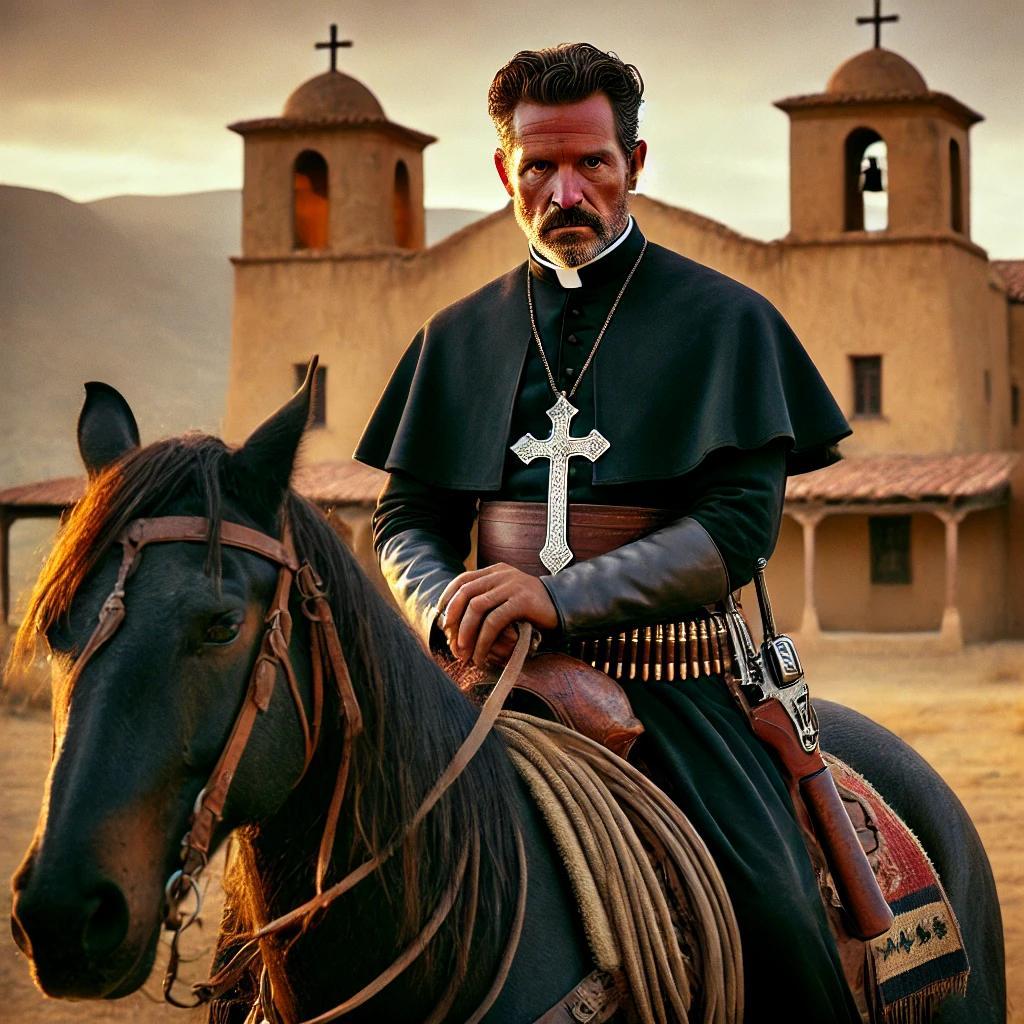
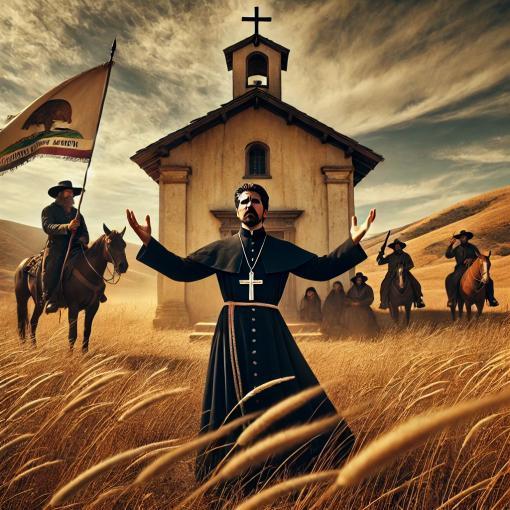
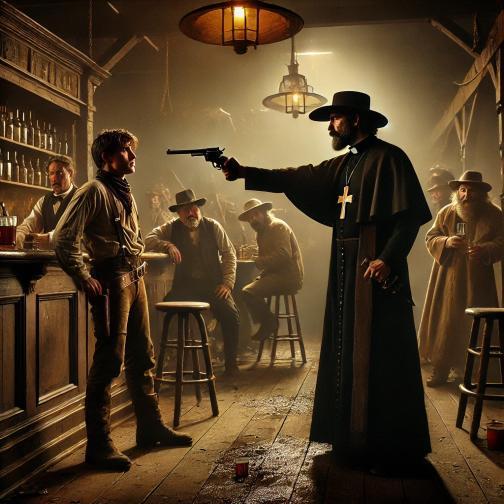
Inside, the air was thick with the usual mix of whiskey, sweat, and whispered conversations. But one man at the bar stood out a tall, broad-shouldered figure in the black robes of a Jesuit priest, worn and tattered by years on the trail. A silver cross hung from his neck, and a well-used Colt belted on his hip.
José took a seat at the bar beside him, motioning for whiskey. Kuruk sat near the stove, rubbing warmth into his hands, while the wolf cub nestled beside him.
The priest turned his head slightly, studying José from beneath the brim of his hat. Then he spoke, his voice deep and measured.
“You have the look of a man carrying burdens, my son.”
José smirked. “No, Padre, I do not carry anything that does not belong to me.”
The priest chuckled, lifting his glass. “Fair enough. Father Esteban, though I have not answered to ‘Father’ in a long time.”
José glanced at the gun belt around the man’s waist. “A priest with a pistol. That’s an uncommon sight.”
Esteban took a slow sip of his whiskey. “I wear the robe and the cross to remind me that God loves me and wishes me a long life. The gun is for those that do not.”
Kuruk, listening from the fire, studied the man with sharp eyes. “Are you still a priest?”
The older man exhaled, staring into his glass. “Depends on who you ask.”
José arched an eyebrow. “That sounds like a story.”
Esteban gave a tired smile. “I once shepherded a town, a quiet place in the hills. My superiors thought it unimportant, but I stayed. The people there were simple, good folk— until a sheep baron rode in with men and money, claiming the land for himself. I called on my flock to resist, to fight for their homes. But in the end, they were more afraid like sheep than willing to fight like wolves.” He swirled his drink. “The baron drove me out, and the people let it happen. I left, feeling defeated. I had been a shepherd, but perhaps I should have been more of a wolf, eh?”
He glanced at his gun. “So, I learned to use this. And I have been wandering ever since, waiting for God to call me to a new flock. Perhaps,” his eyes met José’s, “He already has.”
Before José could respond, a commotion at the door interrupted them. A group of men entered, rough and eager for trouble. Their leader a shorter man with a group of rowdy men. He acted bravely only because of his group who followed him. He scanned the room, his eyes locking on Esteban.
“Thought we ran you out of here, Padre,” the man sneered.
Esteban didn’t move. “And yet, here I am, my son.”
The leader’s hand drifted toward his gun. José tensed, his own fingers grazing his revolver. The saloon went deathly quiet.
Kuruk stood suddenly, the wolf cub stirring against him. “We do not want trouble,” he said.
The small man laughed. “Then you are in the wrong town, boy.”
Before he could draw, Esteban moved. His gun cleared his leather holster in a blink, the barrel pressing against the man’s temple.
“You can leave breathing,” the priest said, “or you can meet our Lord right now.”
The man swallowed hard, then slowly raised his hands. “We were just fooling, Padre.” He stepped back, his men following him out.
When the doors swung shut, José let out a breath. “You ride alone?”
Esteban holstered his gun. “I do. But I desire to head west, and I have faith that traveling with some good company might be safer.”
José considered the priest for a long moment. He looked at Kuruk, who gave a small nod. “We leave at dawn,” José said.
Esteban nodded, then took one last sip of his whiskey. He turned to José with a small smile. “Matthew 10:16: ‘Behold, I am sending you out like sheep among wolves.’” He paused, then added, “I lived as a shepherd to God's sheep, but perhaps with you, I think I may have to play the wolf.”
José met his gaze, a small smile forming. "Let’s hope you will pray more often than you will fire your gun, but let’s see where the road takes us."
Father Esteban crossed himself and just like that, their small band gained another rider.
Chapter 13 - Wolves on the Trail, Friends in High Places
Western Part of the Arizona Territory, July 1863
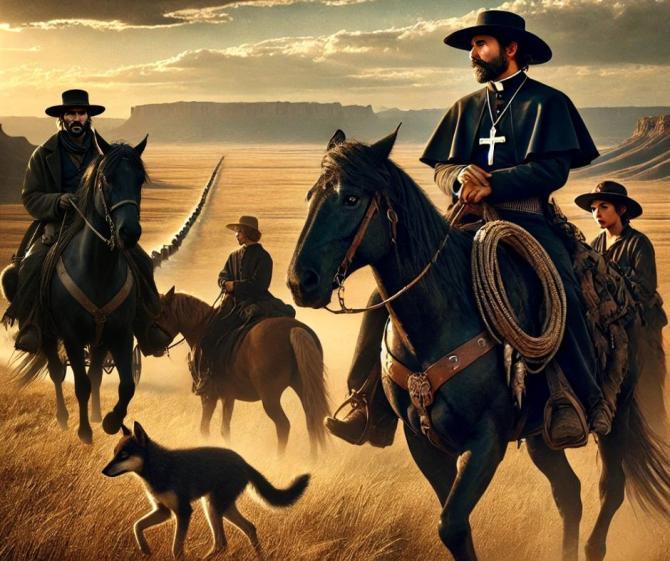
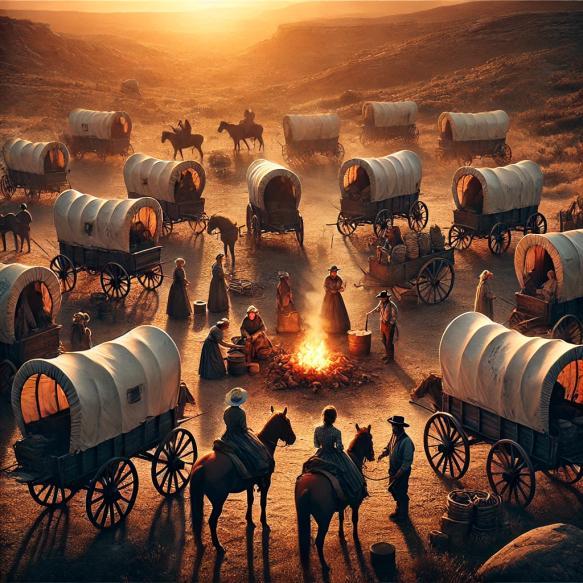
The sun hung low in the sky, casting golden light over the rolling plains as José Lobo, Father Esteban, and Kuruk rode toward the distant silhouette of a wagon train. The scent of freshkilled venison hung from the back of José’s saddle, and a string of river fish was slung across Kuruk’s shoulder. The wolf cub, Tahoma, trotted beside Kuruk, his keen ears pricked forward as if sensing something beyond human perception.
The wagon train, eight strong, creaked forward in a long line, kicking up a thin trail of dust as its settlers moved toward the distant Sierra Madre. At its head, a sturdy-built man with a thick beard and a watchful eye rode beside the lead wagon. His hat was pulled low over his brow, but his gaze was sharp and assessing as he caught sight of the three riders approaching.
José raised a hand in greeting, ensuring their approach was seen as friendly. “Evening, friend. We’re looking to trade.”
The Wagon Master nodded, his grip on his rifle easing but not entirely relaxed. “Name’s Gideon Thatcher,” he said in a deep, steady voice. “We don’t get many strangers this far out. What’re you looking to trade?”
José gestured to the venison and fish. “Meat, fresh from this morning. In exchange, we’d take coffee, bacon, and maybe a few bullets if you can spare them.”
Thatcher considered, then gave a short nod. “Meat’s welcome. Ain’t easy keeping folks fed out here. Come on in, we’ll set up a fair trade.”
With that, José, Father Esteban, and Kuruk rode into the wagon circle, met with curious glances from the families gathered around cookfires. The smell of beans and cornbread filled the air, mingling with the scent of horses and packed earth. Settlers eyed the newcomers warily at first, but seeing their intentions were peaceful, many gave nods of greeting.
Over supper, the travelers asked many questions of the trio, desiring to hear something that was beyond their group whom they traveled with for three months already. After José shared some things about his time in Boston, one of the travelers, a lean man with spectacles and a neatly pressed vest despite the dust of the trail, stepped closer as the trade was completed. “Not often you see a Westerner who’s been to college,” he remarked, his eyes on José. “And Harvard at that.”
José inclined his head, pouring himself a cup of coffee from the pot on the fire. “Spent four years in Boston. Studied law, history, and all the things a man’s supposed to know in the East. But before that, I was raised in California. That’s where I belong.”
The man nodded, taking a sip from his own tin cup. “The West isn’t like the East. People out here don’t put much stock in book learning, at least not the kind they teach back there.”
José smirked. “I learned plenty in Boston. But out here, knowing when to shoot, when to speak, and when to keep moving is the kind of education that keeps a man alive.”
Another traveler, a woman in a worn but well-kept bonnet, turned from stirring a pot. “Did you say you were in Boston?” she asked. “What’s your family name?”
José hesitated for the briefest moment before answering, “Wolfe.”
A few of the settlers exchanged looks. The woman frowned slightly. “I’ve heard of the Wolfe family. Bankers, politicians… a powerful name back East.” Her tone wasn’t exactly warm. “Never heard of a Wolfe leaving all that behind.”
José met her gaze evenly. “It’s a name that carries weight, but it isn’t the one that matters to me.” He glanced at the wolf cub beside Kuruk, then back at the woman. “Lobo is the name I keep. That’s the one I intend to honor.”
She seemed to consider that for a moment before nodding. “Reckon a man ought to decide what kind of name he leaves behind.”
The conversation shifted, and the travelers slowly warmed to the newcomers. As the trading was settled, Gideon Thatcher extended an offer. “No need to push on tonight.
You’re welcome to camp inside the wagon circle. We run a watch—every man takes a shift. You three can take yours if you’re willing.”
José nodded. “Fair trade.”
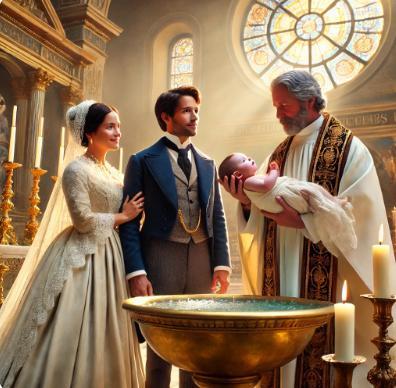
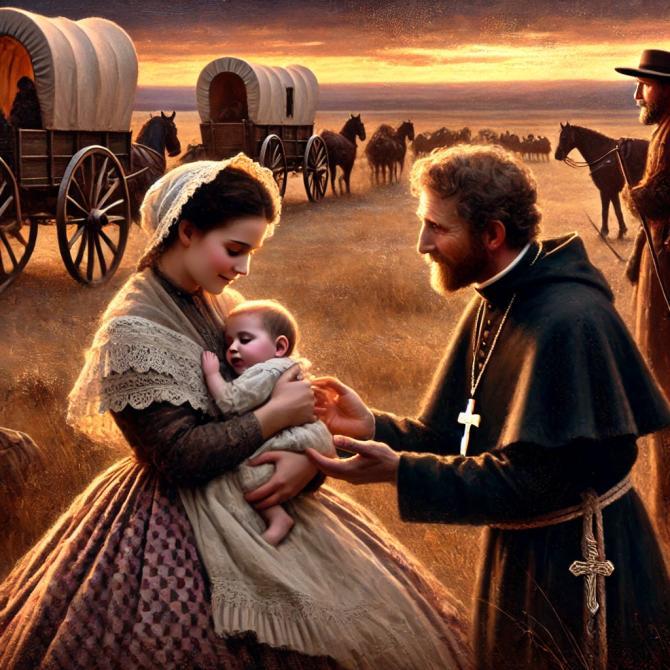
That night, as fires burned low and the prairie wind whispered through the wagons, Father Esteban conducted a mass for the two Catholic families among the settlers. Under the flickering glow of lanterns, he baptized a newborn, the mother wiping tears from her eyes as the priest blessed her child’s journey.
The young mother clutched her infant to her chest, looking up at Father Esteban with gratitude. “Thank you, Father,” she whispered. “I was afraid there would be no priest before we reached California.”
Father Esteban smiled, his weathered face kind. “God is with you on this journey, my child, and His blessings do not wait for great cathedrals. This little one—” he gently touched the baby’s forehead, “ will be protected.”
The father of the child stepped forward, a broad-shouldered man with deep lines around his eyes. “Will you bless the whole train, Father?” he asked. “We’ve had fair weather, but the mountains are ahead.”
Father Esteban lifted his hands, his voice rising in the quiet of the night. “Pater noster, qui es in caelis, sanctificetur nomen tuum, Adveniat regnum tuum, Fiat voluntas tua, sicut in caelo et in terra, Panem nostrum cotidianum da nobis hodie, Et dimitte nobis debita nostra, sicut et nos dimittimus debitoribus nostris, Et ne nos inducas in tentationem, sed libera nos a malo. Amen,” his voice carrying in the stillness of the night.
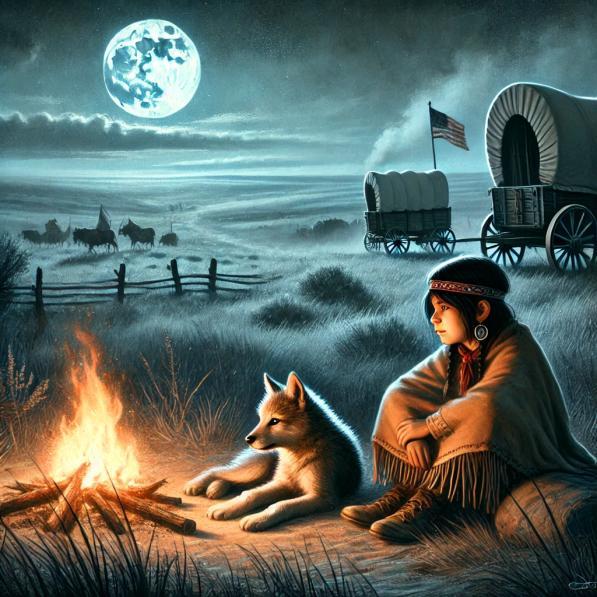
As they settled into their watch, Kuruk sat on the outskirts of the camp, Tahoma nestled beside him. The young wolf cub’s ears twitched, his nose lifting to the wind. Moments later, an eerie yet beautiful sound echoed across the plains a wolf’s howl in the distance. Tahoma sat up, his body tense with excitement. Another howl answered, and before Kuruk could react, the cub darted off into the darkness.
Kuruk watched as his companion disappeared beyond the firelight, his heart sinking. “He’s gone,” he murmured.
José, watching from nearby, placed a hand on Kuruk’s shoulder. “Maybe. Maybe not.”
Kuruk remained silent, staring into the darkness, but eventually, sleep claimed him.
Before the first light of dawn touched the horizon, Kuruk awoke to a familiar weight pressing against him. Warm breath huffed against his cheek, and then a wet tongue dragged across
his face. He opened his eyes to find Tahoma standing over him, his dark eyes bright, his tail wagging.
Kuruk let out a breath of relief, pulling the wolf cub close. “You came back.”
Tahoma let out a soft whine before curling up beside him.
Father Esteban smiled, “The Lord gives, and the Lord takes away, and sometimes He gives back again!”
By sunrise, José’s group prepared to move on. The wagon train was bound for the Sierra Madres, while José, Father Esteban, and Kuruk would follow a southern path toward Alta California and Don Carrillo’s ranch.
Gideon Thatcher shook José’s hand firmly. “Safe travels, Lobo. Roads ahead ain’t always friendly.”
José nodded.
With that, the two groups parted ways, each continuing their journey westward into the unknown.
Chapter 14 - The Trial of the Wolf Alta California, mid-August 1863
Two weeks from Don Carrillo’s ranch, José Lobo, Father Esteban, and Kuruk settled for another night's rest after covering nearly twenty miles that day. The fire burned low, casting flickering shadows against the rocks as the trio lay wrapped in their blankets beneath the open sky. The night was quiet, save for the distant cry of a coyote and the rustling of the wind through the desert brush.
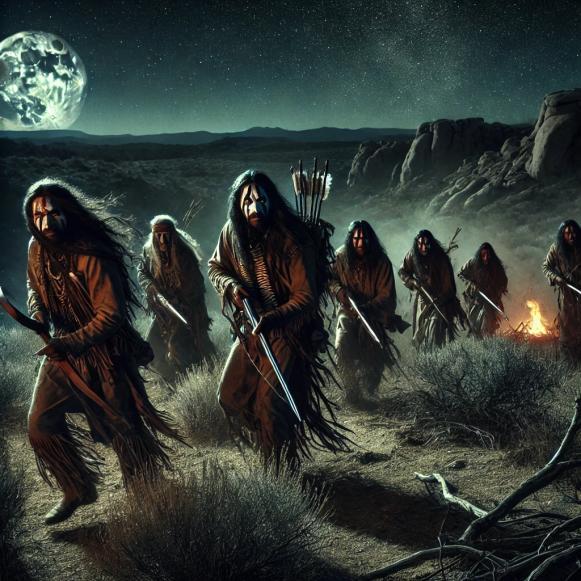
Kuruk barely had time to open his eyes before a rough hand clamped over his mouth. He tensed instinctively, but the cold press of a knife against his throat stilled him. Out of the darkness, ten Chiricahua Apaches emerged like specters, their faces painted, their weapons drawn rifles and bows glinting in the moonlight.
José and Father Esteban were roused none too gently, forced upright as their weapons were stripped from them. José gritted his teeth, keeping his expression neutral. Beside him, Father Esteban muttered a quiet prayer under his breath, his hands open in peace.
Tahoma let out a low growl, his small body tensed with a warning, but Kuruk grasped him firmly, murmuring in his ear. He knew that one wrong move and these warriors would not hesitate to put an arrow through the cub.
A tall warrior stepped forward, his face partially obscured by the night, his presence commanding. His attention fell unto Kuruk.
“I am Sethmooda, son of Mangas Coloradas,” he declared. His voice was calm, and measured, but carried the weight of authority. “We are far from our village and our people, traveling to be with them. Why are you traveling with the Mexican and the priest? Did they take you from your village?”
Kuruk lifted his chin, his voice steady despite the tension. “No. My grandfather, Itze-chu, was killed in battle. Before he died, he entrusted me to José Lobo to raise me. It was his last wish.”
Sethmooda studied him for a long moment, his sharp eyes flickering to José and then back to Kuruk. “And you trust them?”
Kuruk met his gaze without hesitation. “You are my people,” he said, his voice firm. “They are my family.”
A heavy silence followed his words, broken only by the crackle of the fire. Then, one by one, the Apache warriors lowered their weapons.
Sethmooda tilted his head, considering José with new eyes. “You say you will raise an Apache boy,” he said, his tone thoughtful. “But are you strong and honorable enough to do so?”
José spoke with some indignation, “I would not have taken the boy if I wasn’t.”
Sethmooda nodded and gestured toward one of his men, a stocky, broad-shouldered warrior with arms thick as tree trunks. “Test him,” Sethmooda commanded.
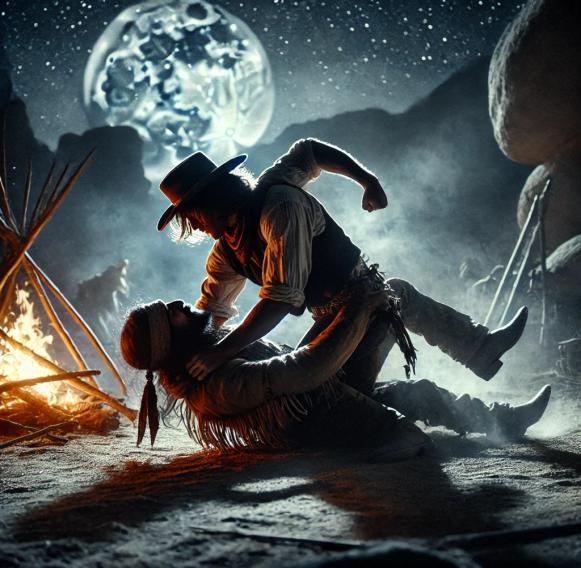
Without warning, the Apache lunged. José barely had time to react before the man crashed into him, knocking them both to the ground in a flurry of fists and dust.
The fight was brutal, neither man holding back. José managed to land a solid punch to his opponent’s jaw, but the Apache retaliated with a sharp elbow to his ribs. They grappled in the dirt, rolling over each other, trading blows with an intensity that left them both breathless.
Kuruk and Father Esteban watched in silence, their fates unknowingly tied to the outcome.
Minutes stretched on, sweat dripping from both men as they fought, neither yielding. But José had spent years learning to fight from his uncles and four years on the Harvard boxing team. When the moment came, he shifted his weight, twisting his opponent’s arm, striking him with a right uppercut and pinning him to the ground. The Apache struggled, but José held firm, muscles straining.
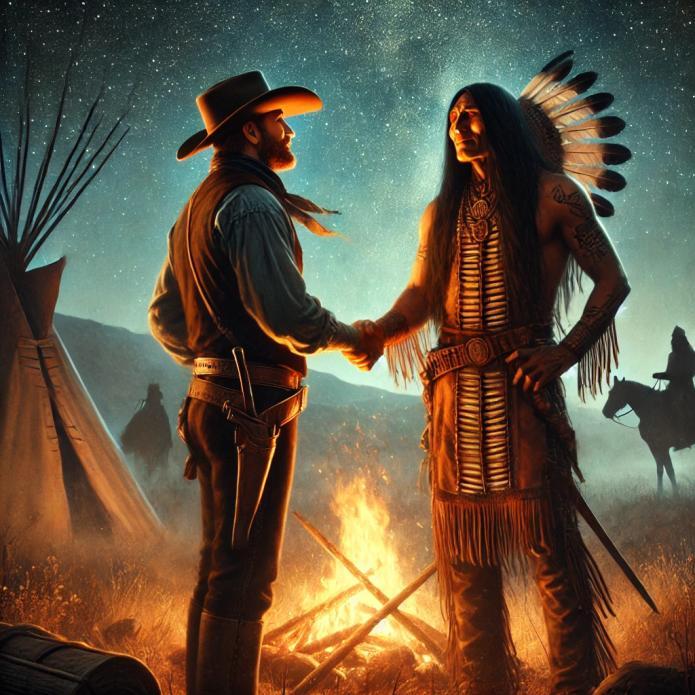
Then, instead of pressing his advantage, José released his grip and extended a hand.
The Apache warrior hesitated for only a second before taking it, allowing José to pull him to his feet.
Sethmooda watched, his lips curling into the barest hint of a smile. “You fight like a wolf,” he said. “Strong and with honor.”
José brushed the dust from his shirt, catching his breath. “Only when I have to.”
Sethmooda nodded. He glanced at Kuruk before locking eyes with José once more. “I hope that if we ever meet in battle, it will be as brothers, not enemies.”
José met his gaze, understanding the weight of the words. “So do I.”
Without another word, Sethmooda signaled to his men, and the Apaches melted back into the desert, their figures vanishing like ghosts into the night.
José exhaled, rolling his shoulders as he looked toward Kuruk, who still held onto Tahoma tightly. “Well,” he said with a half-smile, “that was a hell of a wake-up call.”
Father Esteban crossed himself. “I’ll say a prayer of thanks that we are still breathing.”
Kuruk looked at the ground where the Apaches had stood just moments before, then back at José. “They saw you were strong.”
They settled back into their bedrolls, though sleep came slow. As the fire burned low, José couldn’t shake the feeling that this was not the last time he would cross paths with Sethmooda and his warriors. And when that time came, he hoped they would indeed fight as brothers.
Chapter 15 - The Wolf Returns
California, Early September 1863
The wind rolled across the desert like the voice of a restless ghost, whispering secrets only the land could understand. The golden light of the setting sun stretched long shadows across the rocky terrain as José Lobo entered the valley. José eased his horse, Sombra, down a dry riverbed.
His deep-set eyes, the color of smoldering embers, carried the weight of two worlds the polished Eastern education of a Harvard man and the raw, unforgiving lessons of the frontier. But he was not alone.
Kuruk sat behind him, small arms wrapped around José’s waist, his wolf cub nestled against his chest. The boy had proven himself over the past weeks, sharp-eyed and quick with his hands, but still, there were moments when José felt the weight of his responsibility for the child. Then there was Father Esteban, the gun-wearing Jesuit who had found his way into their small band of travelers. He rode beside José, his robes trailing in the wind, his revolver worn low at his hip like any other rider of the West.
“It has been four years since I have set foot here,” José said, gazing toward the hills ahead. “Four years since I left behind the land of my mother and grandfather.”
“Four years is a long time,” Father Esteban remarked, his voice carrying the weight of experience. “Enough time for the world to shift beneath your feet.”
A rider crested the hill ahead, silhouetted against the dying light. A rifle rested easily in his hands, but there was a tension in the way he held himself as if expecting trouble.
“¿Quién vive?” The voice was sharp, edged with suspicion.
“Un hombre que regresa a casa,” José answered. A man returning home.
The rifle lowered slightly. The rider moved forward, his face coming into view. A scar ran from his ear to his jaw, the mark of a blade that had nearly taken his life. His dark eyes narrowed as they studied José, and then, recognition dawned.
More riders appeared on the ridge, watching closely. One of them, an older ranch hand with a streak of silver in his hair, nudged his horse forward. “You should have come sooner, Lobo,” he said. “Your grandfather wanted you back long before now.”
José’s expression darkened. “What has happened?”
The older man exhaled. “The land is not what it was. The war between the states has begun, but we have our own fight here. Not just for the land, but for the way of life. The past is changing, and no one knows what the future will bring.”
Father Esteban nodded grimly. “Matthew 10:16 'Behold, I am sending you out like sheep among wolves.’” He touched the gun at his belt. “But in case they don’t listen, I have made my peace with playing the wolf.”
Kuruk, ever watchful, spoke up. “Then we will be many wolves, not just one.”
José looked at the boy, pride flickering in his gaze. He turned back to the men on the ridge. “Let’s go home.”
They nudged their horses forward, the wind carrying their names across the desert once more.
As the group arrived, the sun hung low over the horizon, casting long shadows across the dry earth. Dust swirled around the hooves of Sombra as José Lobo rode toward the great gates of Hacienda Carrillo. He had spent four years in the East, but nothing had erased the memory of this place his mother’s land, his grandfather’s kingdom.
But home was not as he had left it.
The hacienda still stood, but its walls bore the scars of time and war. The once-proud fields lay dry, the orchards sparse. The men who guarded the entrance once friends of his uncles now stood weary, rifles in hand, eyes hollow from too many nights spent waiting for another attack.
Kuruk tightened his grip on Jose’s waist, sensing the tension in the air. Even the wolf cub let out a small whimper as if feeling the unease that clung to the land.
Father Esteban, ever the observer, muttered, “There is much to rebuild.”
José nodded grimly. “And much to defend.”
His uncles stood waiting by the entrance Francisco and Cervantes, the younger sons of Don Carrillo. They were broad-shouldered men, older than Jose by only seven and nine
years, but the burden they carried had aged them beyond their years. Yet, as they saw him approach, something in their stony expressions softened.
Francisco was the first to speak, his voice thick with emotion. “You finally return.”
José dismounted, standing tall before them. “I came as soon as I could.”
Cervantes studied him, then his gaze fell to Kuruk. “And who is this?”
José placed a hand on the boy’s shoulder. “This is Kuruk. He is with me now.”
The uncles exchanged glances but said nothing. Instead, they stepped forward, clasping José’s arm in a firm embrace, their grips strong and steady.
At the center of it all, beneath the shade of the great veranda, sat Don Carrillo. The last time José saw his grandfather, the old man had been unshaken, a pillar of strength wrapped in fine charro silk. Now, his hair had turned silver, and his hands bore the tremors of age, yet his gaze was still sharp.
Beside him stood Doña Isabella, her posture as regal as ever. Though lines of worry creased her face, her eyes shone with the warmth of a mother welcoming her own.
Jose swung down from his horse, boots raising dust as he stepped forward.
For a long moment, neither spoke.
Then Don Carrillo smiled.
“You’ve been away too long, Mijo.”
José removed his hat, nodding. “But I have returned.”
Doña Isabella stepped forward, resting a hand on his cheek. “You look so much like your mother.”
The words struck something deep within him, and he covered her hand with his own. “I have missed home.”
Kuruk shifted beside him, looking around at the land that was now his home as well. Father Esteban removed his hat and looked up at the sky. “There is always hope in a homecoming.”
José turned back once, looking out over the land that had shaped him. He was happy to be home, but his heart was heavy. There would be fighting. The wolves would have to rise again.
Don Carrillo gestured toward the open doors of the house. “Come inside. We have much to speak about.”
José nodded, stepping forward, knowing this was not the end of his story.
It was only the beginning.
Chapter 1 - The Breaking of a Legacy
Boston, 1839

Chapter 2 - A Love That Sealed His Fate
California, Spring 1840
Chapter 3 - The Navidad California, Winter 1840

Chapter 4 - The Lone Wolf California, Spring 1841
Chapter 5 - A Grandfather’s Regret
Boston, 1858
Boston, Spring 1862
Chapter 7 - A Grandfather’s Plea
Boston, Summer 1862
Chapter 8 - The Battle for the Wolfe Legacy
Boston, Winter 1862
Chapter 9 – The Wolf Outcast
Boston, Early Spring 1863

Chapter 10 - The Wolf, the Hawk, and the Bear Cub New Mexico Territory, March 1863
Chapter 11 - The Wolf Cub
Recently separated Arizona Territory, May 1863


Chapter 12 - The Gunslinger Jesuit Eastern part of the Arizona Territory, June 1863
Chapter 13 - Wolves on the Trail, Friends in High Places
Western Part of the Arizona Territory, July 1863
Chapter 14 - The Trial of the Wolf Alta California, mid-August 1863
Chapter 15 - The Wolf Returns
California, Early September 1863