ResetSpring




PUBLISHER
Channing Spano
ART DIRECTOR
Sylvia Miller
CONTRIBUTING WRITERS
Kitt Walsh
Channing Spano MAGAZINE ®

14 The Neighborhood Vehicle
2
Bending Toward Perfection
26
Fabulous Farmhouse
LET US FEATURE YOUR HOME PRODUCTS AND SERVICES
We are always on the lookout for new and innovative products and services that our readers would enjoy knowing about for their fine homes. Give us a call at 239.235.3170 or email at info@yhmagazine.com to discuss how effective content marketing can be for your company.
Your Home Magazine® is sent to you courtesy of the real estate professional(s) that specialize in your neighborhood. If you’d like to change your mailing preferences, please email us at info@yhmagazine.com.
Each company that advertises in the YOUR HOME Magazine® is independently owned and operated, and is in no way affiliated with another company shown, nor should this be considered an endorsement or recommendation for any company to another featured in any YOUR HOME product.
Your Home Magazine® is published by Your Home Magazine, Inc© Copyright 2026. All right reserved. All prices, specs, and financing rates & terms are subject to change without notice. All real estate advertised herein is subject to the Federal Fair Housing Act, which makes it illegal to advertise “any preference, limitation or discrimination because of race, color, religion, sex, handicap, familial status, or national origin, or intention to make any such preference, limitation or discrimination.” We will not knowingly accept any advertising for real estate which is in violation of the law. All persons are hereby informed that all dwellings advertised are available on an equal opportunity basis. Advertisers in Your Home Magazine should not be considered referred or endorsed by Your Home Magazine or any other advertiser. If your home is currently listed, this is not an offer to list your home.
10
Designing for Real Life
Spaces that work hard, entryways for sandy feet, kitchens for company, and storage that keeps life moving.
A stunning contemporary home in Bonita Beach that leaves visitors speechless. 17 Everyday Rituals

That Make Home Feel Special
Why routines matter, how they shape our environment, and simple ways to create them.
20
Fresh Start, Florida Style
A reset rooted in light, airflow, simplicity, and ease, designed for homes that don’t hibernate. 23 The Real Value of "Move-In Ready"
This eye-catching and extremely livable modern farmhouse is located in Lake Ida, Boca Raton.
35
Smarter Living Starts Here
How tomorrow’s technology is quietly transforming the way we live at home.
34
Why golf carts are becoming part of everyday life in Southwest Florida. 42 Fresh & Simple Gatherings
What buyers actually notice, what truly adds value, and what homeowners often overlook.
Freshen Up
Romantic and fresh, this issue’s Top Picks celebrate the lighter side of the season.
36


Love Where You Live
Creating a Home That Supports Everyday Florida Life

40 New Starts for Storage
Simple systems that support daily life and create calmer spaces.

Dishes that are elevated, effortless, and meant to be shared.
Bending Toward Perfection
By Kitt Walsh
Photography by Dan Cortuna
Sculptural Statement
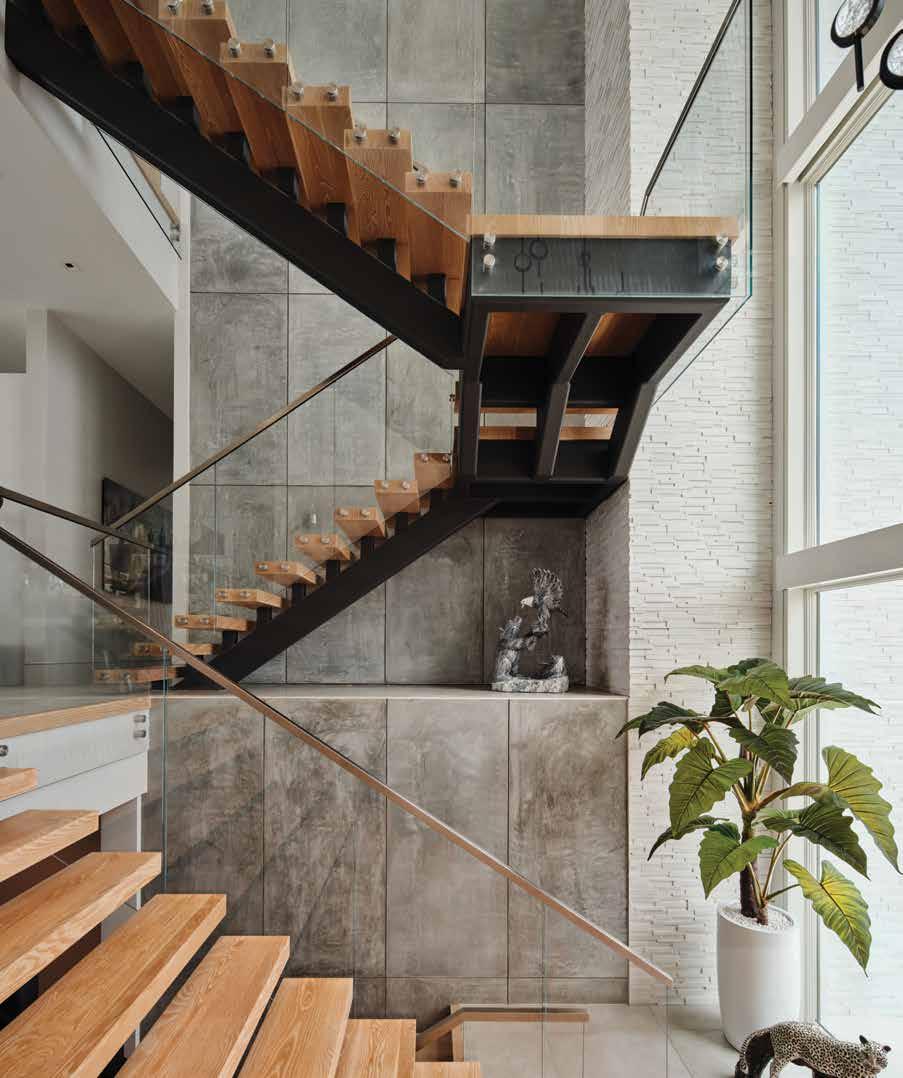
The grand staircase is a sculptural engineering feat anchoring the home with quiet drama. It features a mono-stringer design using a single central beam of blackened steel, open-riser treads of rich white oak, and a tempered glass balustrade with a metal handrail. The focal wall behind the staircase is a large-format textured stone panel mimicking concrete, providing an industrial yet refined backdrop to the structure.
Set along a wide, unbroken expanse of Bonita Beach, this stunning contemporary home was originally built for a couple from the northern Midwest who had made their fortune in agriculture. They had a large, growing family and wanted a place to gather and relax, with plenty of room for everyone. As their kids and grandkids got older, the pattern of their lives changed, and the couple decided to offer their incredible property to help make another family’s dream come true.
Charles Ruck is honored to help make that happen.
Ruck is a luxury home advisor for Potter Trinity Homes in Bonita Springs. After flying helicopters in the Marine Corps, Ruck landed a cushy corporate consulting job, but he changed course when it was suggested, with his personable manner and desire to help everyone he meets, that he would make a great Realtor. He had such success that he adopted the industry as his full-time career in 2019 and hasn’t looked back since.
“I am blessed to be able to represent the most beautiful properties in the world, like this remarkable home, which is so clearly an expression of someone’s imagination and inspired thoughts. Because this home is so artistic and intentional, it evokes emotions in anyone who views it,” Ruck says. “At showings, visitors walk in, and their breath catches in their throats. They are literally speechless for minutes.”
From how the drywall is finished to the hinges on the doors, the million detailed decisions that were made in creating the form and function of this home all come together to create a truly magnificent residence.
“
The owner wanted the design to be contemporary, with very clean lines, not cold or sterile, but a very warm and comfortable place for her family to gather.
“Everything in it bends toward perfection,” Ruck says. Tom Potter, vice president of construction, agrees, saying, “At Potter Homes, our greatest asset is our people, both our exceptional team and the clients who place their trust in us. We truly view those relationships as family, and our success is built on that foundation of trust and connection.
This home reflects that spirit, it’s thoughtfully designed, rich with custom detail, and executed through constant collaboration. It is more than a structure; it’s the result of deep trust, shared vision, and a labor of love.”
The artistic interior design executed by Alex Thies, owner and creative director of Adelyn Charles Interiors, was the result of a collaborative effort between Thies and the homeowner, who came with photos, swatches, tile samples, and strong opinions.
“She appreciated my flexibility in working with her on every detail,” says Thies. “We met often throughout the process. The owner wanted the design to be contemporary, with very clean lines, not cold or sterile, but a very warm and comfortable place for her family to gather.”
Thies’ education (she has a master’s degree in architecture) also came in very handy.
“I was able to help the owner with the form and function, all the details of the house that helped push the boundaries of the usual coastal casual beach residence and define the home as truly special. I worked with residential designer Rich Guzman even through the initial planning, so my ideas influenced the architecture, particularly in the ceiling and window details and the impactful grand staircase, with its visible supports and industrial edge. It was wonderful to be able to celebrate the craft of homebuilding throughout the project.”
Thies continued, “I am very proud of how this turned out. Together, the homeowner and I were able to realize her vision, and both of us were thrilled with the outcome.”
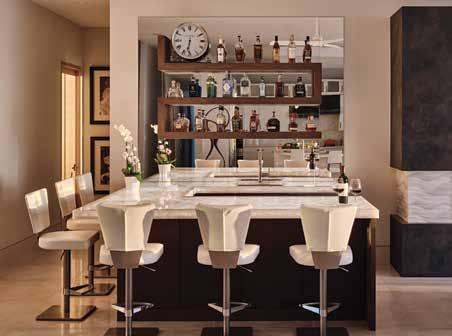
Entertaining Elevated
The bespoke wet bar has a thick white quartzite countertop with a prep sink over a matte-finished dark wood custom cabinetry base. Seating for six comes via iconic Lem adjustable barstools by Lapalma, covered in bonded leather with footrests integrated into the chrome legs. A mirrored backdrop with floating walnut shelving creates a sense of depth while displaying premium spirits.
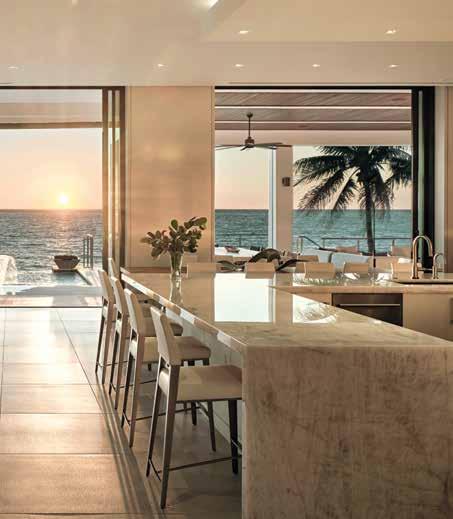
Endless Vista
The unbroken vista from the main-floor living area shows the infinity-edge saltwater pool with its triple fountains and twin fire bowls and affords a stunning view of the Gulf of Mexico and its legendary sunsets.
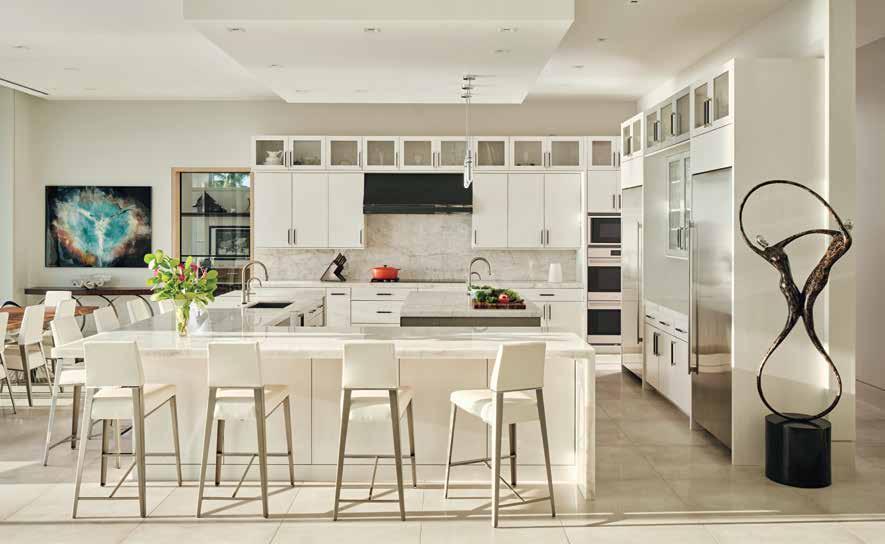
Culinary Showcase
The gourmet chef’s kitchen features a custom “full wall” modular cabinetry system by New Style Cabinets Inc. The perimeter cabinets are finished in Appina White with a matte finish and slim-profile black pulls. A double row of LED-lit, glass-front upper cabinets proves a perfect gallery for glassware. A massive central waterfall-edged island offers seating via leather-backed high stools with steel legs from Elite Modern. Two additional islands have prep sinks for ease of use by the sous chef. The backsplash features Brazilian Cristallo quartzite, as does the countertop housing the professional ceramic cooktop beneath a dramatic black-and-gold range hood. Appliances, including a triple stack of wall ovens and a restaurant-style refrigerator, are by Thermador. A trio of minimalist clear-glass pendants by Visual Comfort joins recessed lighting in the dropped ceiling soffit to afford a brilliant workspace.
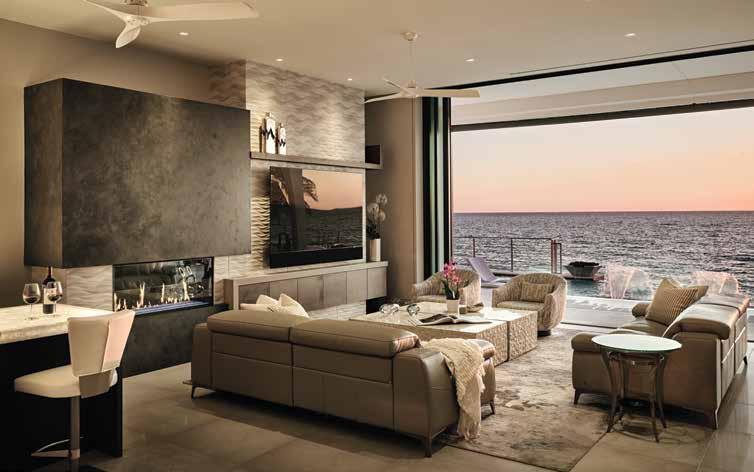
Seamless Horizon
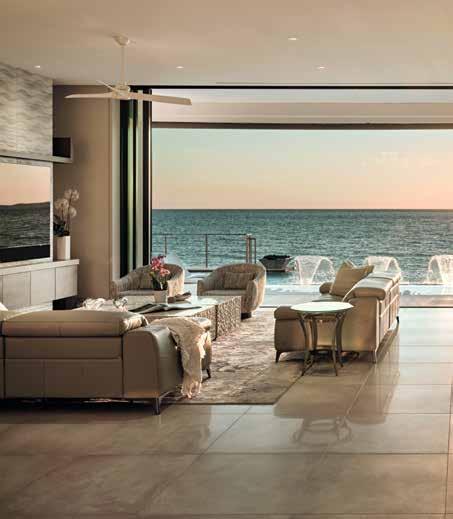
Fully pocketing sliders dissolve the boundary between the interior and exterior in this contemporary open-concept living room offering a breathtaking view of the Gulf of Mexico. A faux-painted plaster feature wall rises above the linear electric fireplace. The adjacent wall of wavy porcelain tile hosts a floating granite display shelf above a custom white oak credenza. The American Leather sofas are treated to resist saltwater wafted by warm Gulf breezes. They are joined by a pair of swivel chairs upholstered in a Kravet textured fabric, specifically chosen because the low-profile backs would not obstruct the view. The oversized fossilized clam shell cocktail tables by Palecek sit atop the hand-knotted wool-and-silk rug, the abstract design of which echoes the natural sand and earth tones of the room.
I was able to help the owner with the form and function, all the details of the house that helped push the boundaries of the usual coastal casual beach residence and define the home as truly special.
— Alex Thies, Owner and Creative Director of Adelyn Charles Interiors
Light-Filled Living
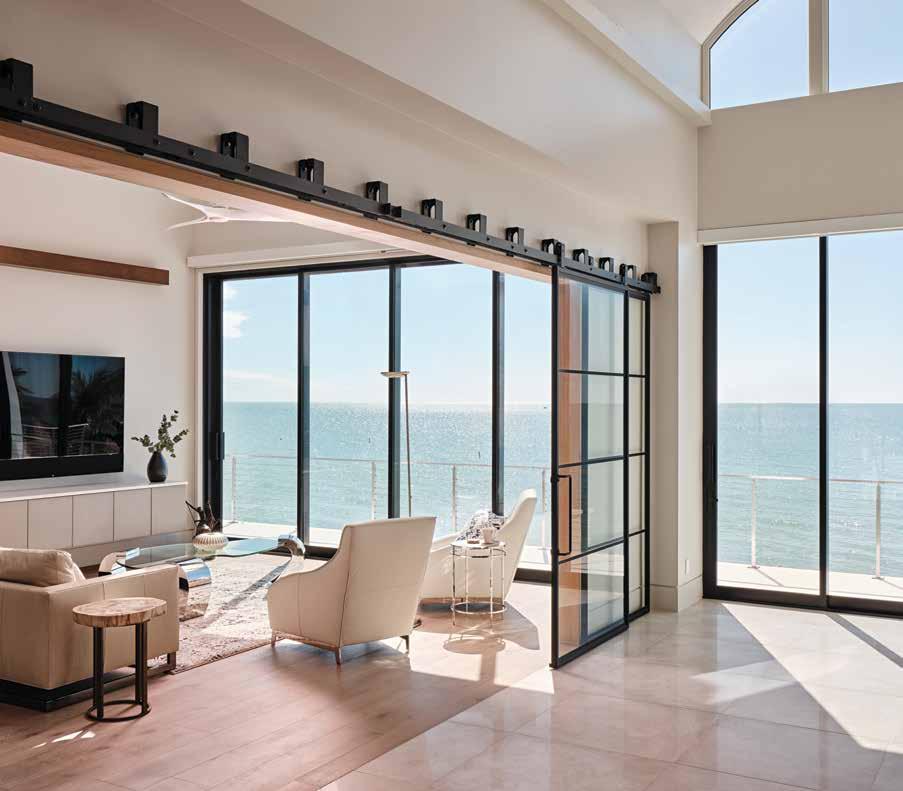
This sun-filled sitting room and adjacent hall feature two-story, high-performance impact-glass Andersen windows with integrated humidistats to allow light while tempering the heat of the Florida sun. The flooring transitions from oversized porcelain tiles to warm European oak planks beneath the intimate seating group. This includes a curved, low-profile cream sofa by Vanguard and twin high-backed swivel chairs by Scan Design facing the flat-backed TV above the floating media console by Magnolia Cabinetry. An acrylic coffee table, a round wood-topped side table, and a metal-legged occasional table provide a place for visitors’ cool cocktails. Black-framed sliding doors set on an industrial track divide the spaces.

Serene Sanctuary
The incredible view seen through the wall of glass in the principal bedroom is enhanced by the simplicity of its furnishings. The metal canopy bed has a champagne finish and features an upholstered headboard in ivory linen. Pops of color from decorative pillows top the quilted bedding of organic cotton, and texture is provided by a suede-clad bench at the foot of the bed.
Flanking it are three-drawer nightstands by Lexington. A private balcony, designed with room for a hot tub, affords a quiet place to greet the dawn, and the sculptural pendant light, the Piola by Marset, brings soft light to the scene when evening falls.
Marble Retreat
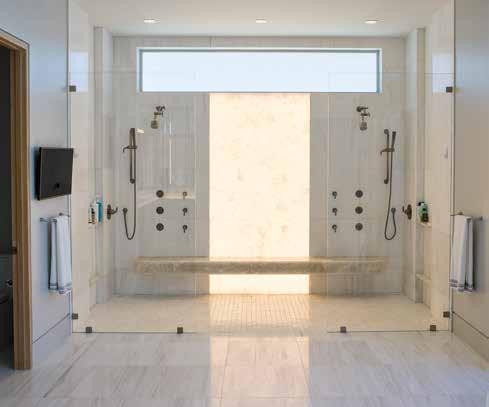
Creamy Bianco Dolomite marble, quarried in Italy, sets the tone for the classic primary bath. The marble continues into the expansive shower, constructed with frameless glass panels, a mosaic floor, and a multi-head thermostatic system by Moen. This system offers vertical body jets, handheld sprayers, and multiple control valves for a customized spa experience. A floating bench of rough-cut marble offers seating in front of an onyx backlit panel. The room features two separate water closets (one with a bidet) and an entrance to a private balcony.
Gulfside Grandeur
Poised directly on the Bonita Beach waterfront, this five-bedroom, eight-bath home has 7,453 square feet under air, with a saltwater infinity pool and garages for seven cars. The residence has multilevel balconies, expansive terraces, and an unbroken Gulf-facing panorama seen through sweeping expanses of glass. An outdoor kitchen, dining area, and living room anchor the outdoor living space, and a rooftop observation deck is perfect for stargazing.
This home is currently for sale and offered at $21,995,000. Please contact the Realtor who sent you this publication for more info on this home, or other homes, in your area.

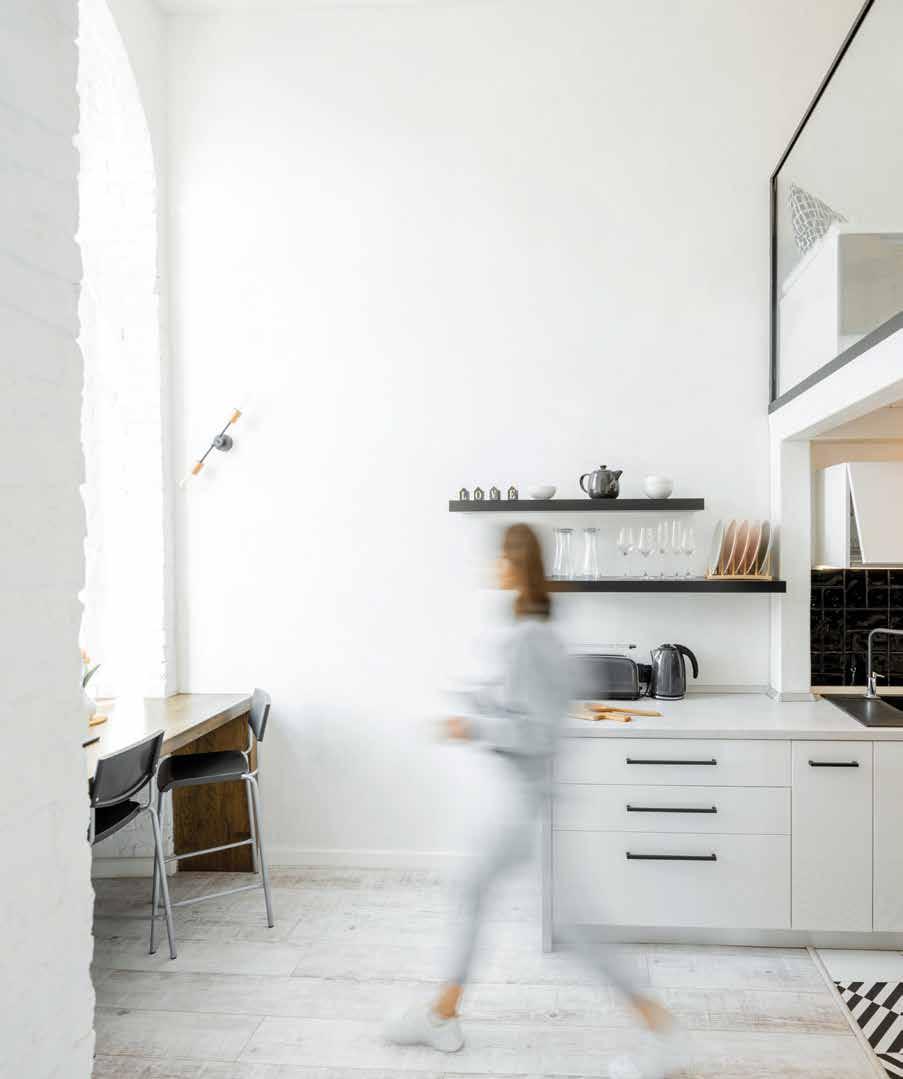
Designing for Real Life
Spaces that work hard, entryways for sandy feet, kitchens for company, and storage that keeps life moving.
Homes are not meant to sit still.
They host neighbors who stop by unannounced. They collect beach bags and pool towels. They welcome groceries carried in from the heat and family members moving in and out throughout the day. Designing for real life means creating spaces that support this movement instead of fighting it.
A beautiful home matters. But a home that functions well matters more. When rooms are arranged to reflect how people actually live, daily life becomes easier. And when daily life becomes easier, a home feels calmer.
Start With the Entry
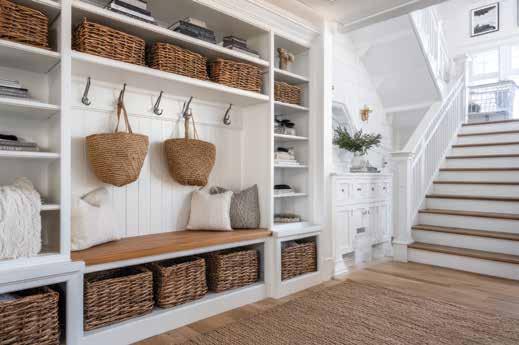
Even in homes without a formal foyer, the entry sets the tone for everything that follows. That space has to do more than hold keys and mail. It needs to manage shoes, bags, deliveries, and whatever came back from the beach.
The most functional entryways share a few characteristics. They provide a place to sit, a place to hang, and a place to store. A simple bench, a few sturdy hooks, and baskets or closed cabinets can prevent clutter from traveling into the rest of the home.
Durable materials matter here. Tile floors, washable rugs, and easy-to-clean surfaces handle sand and moisture without stress. When the entry works, the rest of the house stays cleaner with less effort. A well-designed entry does not need to be large. It simply needs to anticipate real life.
Living Rooms That Can Be Lived In
Kitchens Are the True Gathering Space
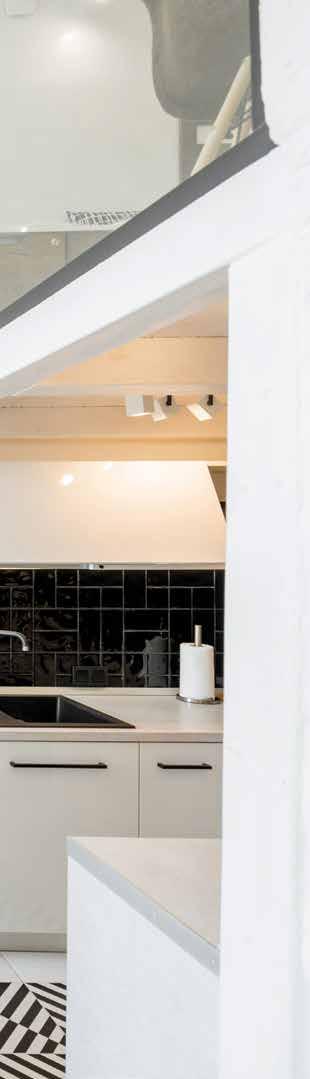
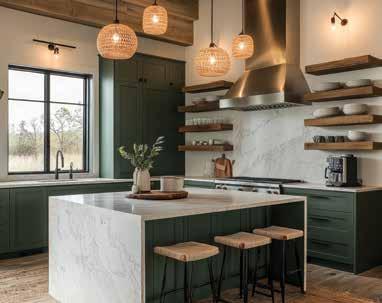
In most local homes, the kitchen becomes the central gathering space whether it was planned that way or not. It is where conversations begin and where people naturally collect. Designing for real life means recognizing this and arranging the space accordingly.
Seating is often more important than decorative detail. A few comfortable stools at an island or a small table nearby can transform how the kitchen is used. When people have a place to sit, they stay longer.
Flow also matters. Clear walkways between appliances, the sink, and prep space allow multiple people to move comfortably at the same time. In homes where entertaining is common, keeping the kitchen open to adjacent living areas helps maintain connection without crowding.
Lighting plays a practical role as well. Task lighting over counters combined with softer lighting in the evening makes the kitchen adaptable from busy mornings to relaxed dinners. A kitchen that works well becomes the heart of the home without effort.
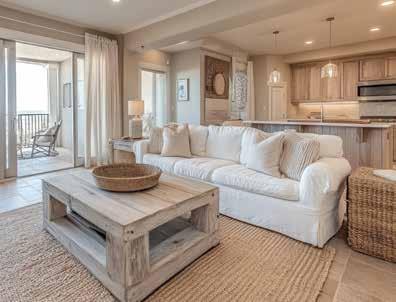
Formal living rooms rarely suit the more casual life Floridians live.
Spaces that feel too delicate or too arranged often go unused. Instead, successful living rooms balance comfort with durability.
Washable fabrics, slipcovers, and performance materials allow homeowners to relax without worrying about spills or wear. Flexible seating arrangements, such as chairs that can be moved easily or ottomans that double as extra seating, make the room adaptable for both daily use and gatherings.
Clear pathways through this space are equally important. When furniture blocks natural movement, rooms feel crowded. When movement flows easily from one side of the room to the other, the space feels open and welcoming. Comfort should always come before perfection.
Storage That Works Without Showing
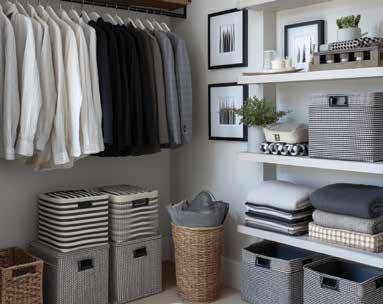
Pool gear, sports equipment, seasonal décor, and outdoor accessories all need a place to live. The most effective storage solutions blend into the design of the home rather than calling attention to themselves. Built-ins, closed cabinets, benches with hidden compartments, and attractive baskets keep items accessible without overwhelming a room visually.
In many homes, the key is decentralizing storage. Instead of keeping everything in one large closet, placing smaller storage solutions near where items are used makes daily life easier. Hooks near the door for beach bags, cabinets near the patio for pool towels, and drawers in the kitchen for frequently used items reduce clutter before it spreads.
Good storage reduces daily friction. When items are easy to put away, they are more likely to stay organized.
The Indoor and Outdoor Connection
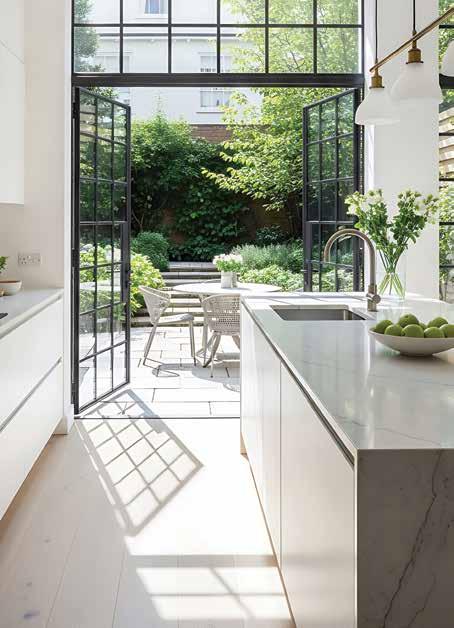
One of the defining characteristics of Florida homes is the connection between indoor and outdoor spaces. Sliding doors, lanais, patios, and pools extend living space beyond the walls of the house.
Designing for real life means treating outdoor areas as functional rooms. Comfortable seating, shade, and lighting allow these spaces to be used consistently rather than occasionally. Consistency in materials and color between indoor and outdoor furniture can also make transitions feel seamless. When the patio feels like an extension of the living room, movement between spaces becomes natural.
Outdoor areas that are easy to maintain are used more often. Durable fabrics and simple layouts encourage daily use instead of saving the space for special occasions.
1.
Anticipate Daily Habits
The most practical homes are designed around habits. Instead of forcing routines to adapt to a space, the space adapts to the routines.
If shoes are always removed near the door, create a place for them there. If mail tends to pile up in the kitchen, add a small tray or drawer for sorting. If mornings always begin at the same counter, keep that area clear and well lit. These adjustments may seem small, but they prevent daily frustration.
Designing for real life is less about aesthetics and more about observation. Notice how the home is already being used. Then support those patterns instead of resisting them.
2.
A Home That Supports, Not Impresses
A well-designed home does not need to announce itself. Its success is felt quietly, in the ease of daily movement, in the absence of clutter, and in the comfort of spaces that truly work. Designing for real life means designing with honesty. It means accepting that homes are meant to be used, not preserved.
When a home supports daily life without effort, it becomes more than beautiful. It becomes livable. And that is what makes it last.
3.
Designing for Movement
Real life always involves movement. People move between rooms, in and out of the house, and between indoor and outdoor areas throughout the day.
Designing with movement in mind means keeping pathways clear, reducing unnecessary obstacles, and choosing furniture that fits the scale of the room. Oversized pieces in smaller spaces can restrict flow. Thoughtful placement opens it up.
It also means considering temperature and comfort. Ceiling fans, well-placed air vents, and breathable materials help maintain comfort in a warm climate. When movement feels easy, homes feel lighter.

The Neighborhood Vehicle
Why Golf Carts Are Becoming Part of Everyday Life in Southwest Florida
In many Southwest Florida communities, the golf cart has quietly become part of everyday life. What was once a simple vehicle for the course is now a practical and enjoyable way to move through the neighborhood, from the pickleball courts to the clubhouse, from the pool to dinner with friends.
As this shift has happened, homeowners have started looking for golf carts that feel less like utilitarian recreational equipment and more like a dependable neighborhood vehicle. Comfort, reliability, safety, and customization now matter just as much as appearance. That’s where newer brands like Atlas are finding their place in the market.

Designed for Community Living
Atlas golf carts were developed by industry veterans with decades of experience designing golf vehicles, with the goal of building carts that balance performance, comfort, and modern technology. Instead of focusing only on golf-course use, Atlas carts are designed around how people actually use them in neighborhoods for short trips, social outings, and everyday convenience.
Four-and six-passenger carts have become especially popular in Southwest Florida communities, where families and neighbors often ride together. Atlas offers models ranging from personal two-passenger carts perfect for many of the local courses, to larger multi-passenger vehicles built for community transportation and lifestyle use.
Where Value Meets Reliability
For many buyers, the decision comes down to finding the right balance between price and long-term quality. Golf carts can range from about $8,000 on the low end to more than $30,000 for premium models. Atlas carts typically fall into the middle of that spectrum, a range where many buyers feel they’re getting strong value without sacrificing performance or durability.
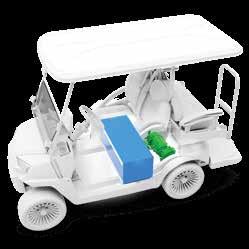
Part of that value comes from engineering choices that prioritize reliability. Atlas carts feature lithium-ion battery systems designed for longer range and faster charging, independent suspension for smoother rides,

and automotive-grade construction that emphasizes durability. These are the kinds of features that owners tend to appreciate most after months and years of use, long after showroom details fade.
The Growing Conversation Around Imported Carts
Over the past several years, imported golf carts have become increasingly common in the marketplace. With attractive pricing and modern styling, they can be appealing to first-time buyers who are just beginning to explore golf cart ownership. At the same time, long-term service and parts availability have become an important part of the conversation.
Because many of these carts rely on overseas production and distribution, replacement parts can sometimes be harder to obtain if supply chains shift, tariffs change, or manufacturers experience financial challenges. In those situations, repairs may take longer, and resale values can fluctuate when buyers become uncertain about future service support.
As a result, many customers are beginning to look beyond the initial purchase price and think more carefully about long-term reliability. Dealers often see owners return a year or two after their first purchase, ready to trade in a cart once they better understand how service, parts availability, and warranty support shape the overall ownership experience.

Warranty Confidence
One of the most distinctive aspects of Atlas carts is their warranty coverage. All current Atlas vehicles include:
• a lifetime powertrain warranty
• a 10-year battery warranty
• a 3-year bumper-to-bumper warranty
This level of coverage is uncommon in the golf cart industry and reflects the brand’s emphasis on long-term ownership confidence. For first-time golf cart buyers especially, warranty clarity can make a meaningful difference when comparing options.
Looking Beyond Flashy Features
While many golf carts emphasize visible upgrades - lighting packages, speakers, and cosmetic details - experienced dealers often encourage buyers to focus on the components that truly affect performance.
Battery systems, suspension quality, braking systems, and drivetrain engineering determine how a cart rides and how well it holds up over time. Atlas carts are built around larger-capacity lithium batteries and core mechanical reliability, which many buyers find more important than decorative features.
It’s a simple idea that resonates with many customers: the most important parts of a cart are the ones you don’t immediately see.

Customization Meets Lifestyle
Even with a focus on engineering, personalization remains a major part of golf cart ownership. Atlas models can be customized with upgraded seating, color options, integrated sound systems, and technology features like touchscreen displays and connectivity options.

These choices allow homeowners to tailor their carts to match their community lifestyle, whether that means daily family transportation, weekend social rides, or simply enjoying the convenience of neighborhood mobility. In many Southwest Florida communities, a golf cart becomes an extension of the home and another space designed around comfort and personal style.
A Different Approach to Buying
At dealerships like Midwest Cartz, the focus is often less about selling a specific model and more about helping customers understand their options. Test drives, side-by-side comparisons, and conversations about long-term ownership help buyers make confident decisions.
Many customers arrive unsure of what they want, only to discover that ride quality,
service support, and reliability matter more than they expected. That education-first approach often leads buyers toward carts that better match how they’ll actually use them.
More Than a Golf Cart
As Southwest Florida communities continue to grow around shared amenities and outdoor living, golf carts are becoming one of the most frequently used vehicles in many households. They’re practical, social, and uniquely suited to neighborhood life.
Brands like Atlas reflect how the golf cart itself is evolving from a simple course vehicle into something designed for comfort, durability, and everyday use. For many residents, the decision to buy a golf cart isn’t just about transportation. It’s about making community life easier, more connected, and a little more fun.

Everyday Rituals That Make Home Feel Special
Why routines matter, how they shape our environment, and simple ways to create them.
Most people think of a home as a physical space, but psychologists often describe it as something more.
A home is also a collection of repeated experiences. The small actions that happen daily, often without much thought, help transform a house into a place that feels familiar, comfortable, and secure.
These repeated actions are known as rituals or routines, and research shows they play an important role in emotional well-being, focus, and stress reduction. While routines are often discussed in relation to productivity or parenting, they are just as important in shaping how people experience their homes. Understanding why routines matter can help homeowners create spaces that feel calmer and more supportive.
Why Routine Matters
Human brains are wired to respond positively to predictability. When certain actions happen regularly, the brain uses less energy deciding what to do next. This reduces cognitive load, which is the mental effort required to make decisions throughout the day. In practical terms, routine creates efficiency. But it also creates comfort.
Studies in behavioral psychology show that repeated actions in familiar environments can lower stress levels. This is partly because predictability signals safety to the nervous system. When people know what to expect, their bodies naturally relax.
This is why small daily habits at home, such as making coffee in the same place each morning or turning on a lamp in the evening, can feel grounding even when the rest of the day is unpredictable. Routine creates stability.


How Environment Reinforces Habit
Routines do not exist separately from the home. Physical spaces often reinforce habits without people realizing it.
For example:
• A chair near a window becomes associated with reading.
• A kitchen counter becomes associated with conversation.
• A bedside lamp becomes associated with winding down.
This is known as environmental cueing. When the brain repeatedly connects an activity with a location, the space itself begins to trigger the behavior.
Over time, this connection becomes automatic. Sitting in a familiar chair may naturally lead to opening a book. Turning on a certain light may signal that the day is ending. Homes become easier to live in when spaces support these cues.
The Role of Routine in Stress Reduction
Routine is closely connected to emotional regulation. When daily life feels busy or uncertain, small predictable actions can create a sense of control.
Research in neuroscience shows that consistent habits can help regulate cortisol, the body’s primary stress hormone. Even simple routines, such as preparing meals at regular times or tidying a room at the end of the day, can signal closure and reduce mental tension. This is one reason evening routines are especially powerful. Actions that repeat each night, such as dimming lights, washing dishes, or preparing for the next day, help the brain transition into rest. These signals are subtle but effective.

Memory and Meaning
Rituals also shape memory. Repeated experiences in the same environment become deeply familiar over time. The brain begins to associate certain places, sounds, and objects with comfort and belonging. This is why homes often feel meaningful even when nothing special is happening. The meaning comes from repetition.
The sound of a coffee maker in the morning, the feeling of a favorite chair, or the routine of locking the door at night can become emotionally significant simply because they happen consistently. Memory is built through repetition, not novelty.
Practical Ways to Create Home Rituals
Rituals do not need to be complicated or time-consuming. In fact, the most effective routines are usually simple and easy to repeat. One way to begin is by identifying activities that already happen daily and giving them a consistent place or time.
For example:
• Preparing coffee in the same location each morning
• Sitting in the same chair to read or relax
• Turning on a specific lamp in the evening
• Tidying one surface before bed
• Opening windows or stepping outside briefly each day
These actions do not need to be formal or structured. Consistency is more important than complexity.
Another helpful approach is reducing friction. When spaces are arranged so that daily actions are easy to perform, routines develop naturally. Keeping books near a reading chair, placing hooks near the entry for bags, or storing frequently used items within reach encourages repetition. The easier a habit is to repeat, the more likely it will become part of daily life.
Supporting Routine Through Design
Home design can quietly support routine by making spaces comfortable and accessible. Good lighting, clear surfaces, and comfortable seating encourage people to use rooms consistently.
This does not require renovation. Often, small adjustments make the biggest difference. Moving a chair closer to natural light, placing a lamp near seating, or clearing clutter from frequently used areas can strengthen daily habits. When a home supports routine, it begins to feel calmer and more predictable.
Small Actions, Lasting Impact
Rituals rarely stand out in the moment. Their value appears over time. Repeated daily actions create familiarity, reduce stress, and strengthen emotional connection to home.
A home begins to feel special not because of major changes, but because of the small things that happen consistently within it. Routine turns space into experience, and experience is what makes a house feel like home.
Fresh Start, Florida Style
A reset rooted in light, airflow, simplicity, and ease, designed for homes that don’t hibernate.
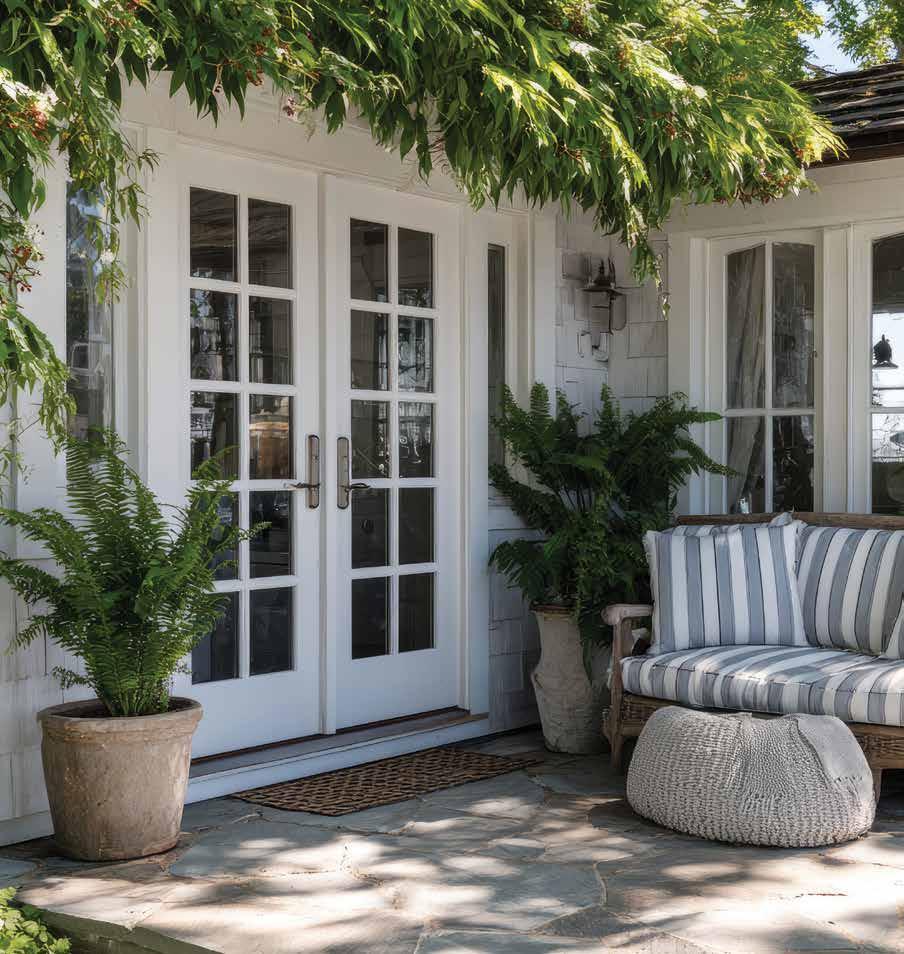
In Florida, homes rarely go dormant. Windows stay open throughout much of the year, outdoor spaces are used in every season, and daily life moves easily between inside and outside. Still, spring brings a quiet sense of renewal. The days feel a little longer, routines feel lighter, and many homeowners find themselves wanting to reset their spaces in small but meaningful ways.
A fresh start does not need to involve dramatic changes. It is less about deep cleaning or redecorating and more about reconnecting with how a home feels to live in. Often, the smallest adjustments can make the biggest difference.
In Florida, homes rarely go dormant. Windows stay open throughout much of the year, outdoor spaces are used in every season, and daily life moves easily between inside and outside. Still, spring brings a quiet sense of renewal. The days feel a little longer, routines feel lighter, and many homeowners find themselves wanting to reset their spaces in small but meaningful ways.
A fresh start does not need to involve dramatic changes. It is less about deep cleaning or redecorating and more about reconnecting with how a home feels to live in. Often, the smallest adjustments can make the biggest difference.
One of the simplest places to begin is with light. Our homes are built to welcome sunlight, yet over time furniture, décor, and daily clutter can block or compete with that natural brightness. Moving a chair closer to a window, replacing heavier fabrics with lighter ones, or simply clearing a crowded surface can make a room feel open again. When light moves freely through a home, everything feels calmer.
Many homeowners notice this first in the morning. The way light falls across the kitchen counter or spills into a living room often shapes the mood of the day. When spaces are open and uncluttered, that light feels energizing rather than overwhelming. A fresh start sometimes begins by simply noticing how sunlight moves through a home and allowing rooms to respond to it.
Another part of a fresh start is editing. Homes naturally collect things over time, not just belongings, but habits and arrangements that once worked well but no longer fit daily life. Spring offers a gentle opportunity to notice what still serves a purpose and what does not. Removing a few unnecessary items from a bookshelf, clearing space on a kitchen counter, or reorganizing a closet can shift the energy of a room without changing its character.
Editing is not about removing personality. In fact, it often does the opposite. When there is less visual noise, the things that matter most stand out. A favorite photograph, a meaningful piece of art, or a collection gathered over time becomes easier to appreciate. Homes begin to feel more intentional and less crowded.
Florida living also invites attention to airflow and movement. Ceiling fans turning slowly overhead, sliding doors opening to a lanai, and clear pathways between rooms all contribute to a sense of ease. Rearranging furniture so it supports movement instead
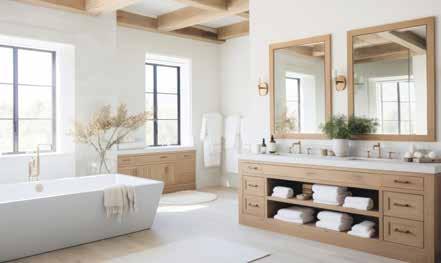
of blocking it can make a home feel more comfortable without buying anything new. Ease is often what people love most about Florida homes, and small adjustments can restore that feeling.
Sometimes this means making space for how a home is actually used. A formal sitting area might become a reading corner. A rarely used dining room might be transformed into a TV or game room, becoming a place where family gathers each evening. When furniture and layout reflect real routines, homes feel more natural and welcoming.
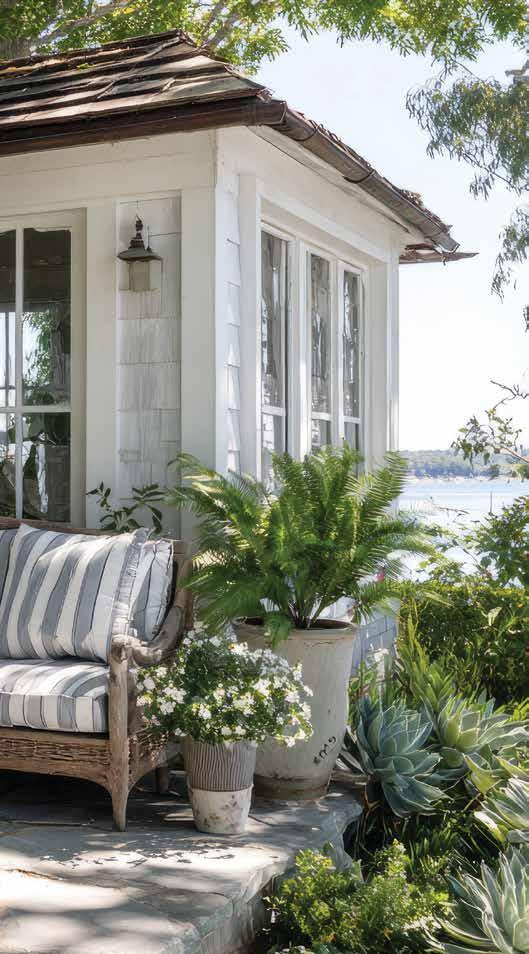
Connecting indoor spaces to the outdoors is another natural way to refresh a home. Adding a few plants, opening doors more often, or styling a patio as a true extension of the living space helps a home feel grounded in its surroundings. Homes feel their best when the boundary between inside and outside is soft and welcoming.
Our outdoor spaces often become the heart of the home. A small table on the lanai can become the place for morning coffee. Comfortable seating outside can turn an ordinary evening into something memorable. These spaces do not need to be elaborate. They simply need to invite people to pause and enjoy where they are.
Fresh starts also come from small visual changes. New towels in a bathroom, updated lighting in a dining area, or a rearranged bookshelf can shift how a home feels day to day. Even seasonal touches such as fresh flowers or a bowl of citrus on the counter can bring new energy into familiar spaces.
These changes matter because homes are experienced daily. Small improvements that make everyday life easier or more pleasant often have a greater impact than larger, less personal updates. A home that feels refreshed supports routines in quiet but meaningful ways.
Storage can also play an important role in a fresh start. When everyday items have a place, rooms feel lighter and easier to maintain. Baskets for pool towels, hooks for bags, and simple shelving solutions keep necessities accessible without making them the focus of a room. When storage works well, homes feel calmer.
Perhaps the most meaningful fresh start is recognizing that homes evolve alongside the people who live in them. A guest room becomes a workspace. A patio becomes the most used room in the house. A kitchen becomes the center of daily conversation. Allowing these changes to happen naturally keeps a home feeling alive.
There is also something about spring that encourages people to spend more time at home in new ways. Meals move outdoors. Windows stay open longer. Even small routines begin to shift. Homes respond to these seasonal rhythms, even in a warm climate where the changes are subtle.
A fresh start is not about achieving perfection. It is about creating a home that feels supportive, comfortable, and connected to daily life. It is about noticing what already works and making small adjustments that allow those things to shine.
Spring in Florida is less about transformation and more about realignment. It is a reminder that loving where you live often begins with noticing the light in a room, the comfort of a familiar chair, or the quiet satisfaction of a space that finally feels settled.
A fresh start does not mean starting over. It simply means beginning again, right where you are.

The Real Value of
What buyers actually notice, what truly adds value, and what
homeowners
often overlook.
“Move-in ready” is one of the most common phrases in real estate listings. It suggests simplicity, ease, and a home that requires nothing more than unpacking boxes. But what does it actually mean?
For buyers, move-in ready rarely means brand new. It means functional, clean, updated where it matters, and free of obvious projects. For sellers, understanding what buyers truly notice can prevent unnecessary upgrades and focus attention on what really influences value.
Buyers Notice Condition First
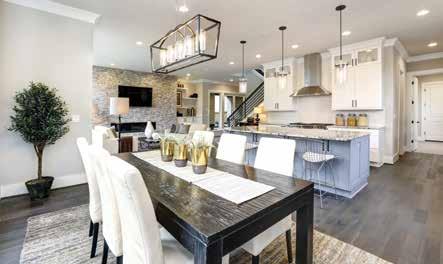
When a buyer walks into a home, their first impression forms quickly. Before they analyze square footage or finishes, they notice the condition. Fresh paint. Clean floors. Updated lighting. Clear surfaces. These elements signal that the home has been cared for.
Even if finishes are not the latest trend, visible maintenance builds confidence. Worn baseboards, outdated fixtures, chipped paint, or stained grout often have an outsized impact. Individually, they may seem minor, but collectively they create hesitation. Condition communicates maintenance.
Move-in ready is less about perfection and more about preparation.
Paint and Lighting Matter More Than Trends
Many homeowners assume that major renovations are required to make a home feel updated. In reality, two of the most powerful upgrades are also the simplest. Neutral, cohesive paint throughout a home immediately creates visual continuity. It brightens rooms and allows buyers to imagine their own furnishings in the space. Bold or highly personal colors can make rooms feel smaller or more specific. Lighting is equally important. Replacing dated fixtures with clean, simple designs can transform a room without structural changes. Consistent lighting styles throughout the home create a sense of cohesion. Good lighting also affects mood. Bright, balanced lighting makes rooms feel larger and more welcoming.
These changes are often more impactful than expensive cosmetic upgrades.
Kitchens and Bathrooms Set the Tone
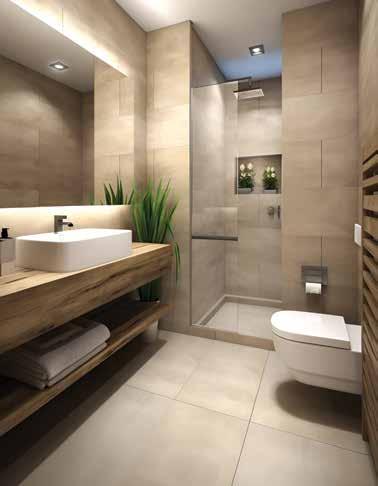
Buyers tend to focus on kitchens and bathrooms, but not always in the way homeowners expect, and complete remodels are not always necessary. Instead, buyers respond to cleanliness, functionality, and modest updates.
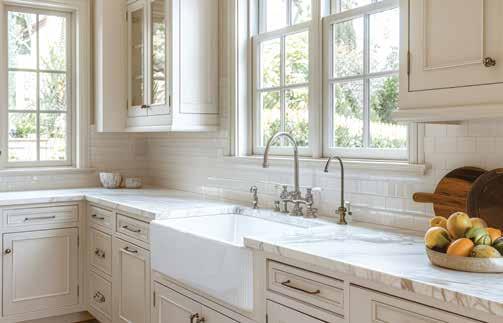
In kitchens, buyers are looking for things like updated cabinet hardware, modern light fixtures, fresh paint, clean grout and sealed surfaces. These small changes go a long way to make potential buyers feel like they aren’t taking on a project by buying your home.
In bathrooms, the things that stand out are new mirrors free from warping or aged patina, dated faucets, bright lighting that’s functional and fresh, and fresh caulk that’s not moldy and cracked. These smaller improvements signal upkeep and reduce perceived future expense.
Buyers often overestimate the cost of repairs. When a room looks finished and well maintained, hesitation decreases.
Flooring Creates Immediate Impact
Flooring affects how a home feels underfoot and visually. Worn carpet, mismatched flooring between rooms, or damaged tile can make a home feel older than it is. In many cases, replacing carpet with a neutral, durable option or ensuring consistent flooring throughout common areas has a strong return.
Hard surfaces that are clean and cohesive create the impression of a larger, more updated space. Again, the goal is not luxury, it’s creating something that looks
What Is Often Over-Improved
Homeowners sometimes invest in highly personalized upgrades that do not increase resale value. Custom built-ins designed for specific hobbies. Highly decorative tile choices. Specialty rooms that remove flexible space. These features may appeal to a narrow audience but limit broader buyer interest.
Move-in ready favors neutrality and flexibility. Spaces that can serve multiple purposes are more valuable than those designed for a single, specific use. Before beginning a major upgrade, it helps to ask whether the change improves broad appeal or simply reflects personal taste.

Preparing Without Overdoing It
The most successful move-in ready homes are thoughtfully prepared, not over-improved. A clear checklist often includes:
a Fresh Neutral Paint
a Updated Light Fixtures a Deep Cleaning
a Minor Repairs Completed a Landscaping Trimmed & Maintained
a Functional Systems Serviced
These improvements are straightforward but powerful. They tell buyers that the home has been cared for and is ready for its next chapter.

Systems Matter More Than Style
Buyers may admire finishes, but they care deeply about systems. A well-maintained roof, updated HVAC system, modern electrical panel, and functional plumbing provide reassurance. Even if buyers do not fully understand these systems, knowing they are newer or recently serviced builds trust. Move-in ready means reducing uncertainty.
The Psychology of Effort
One overlooked aspect of move-in ready is mental energy. Buyers are often stretched thin during the purchasing process. When a home appears to require little additional effort, it feels more manageable.
Even small unfinished tasks can feel larger than they are. Missing trim, broken door handles, or incomplete projects signal more work ahead. Completing small repairs before listing creates momentum instead of hesitation. Buyers respond to ease.
Value Beyond Sale
Even for homeowners who are not planning to sell immediately, thinking in terms of move-in ready can improve daily life. Neutral paint brightens rooms. Updated lighting enhances comfort. Clear surfaces and maintained systems reduce stress. Homes prepared with care function better long before they are listed.
Move-in ready is not about impressing others. It is about reducing friction and increasing confidence, whether for a new buyer or the current homeowner. At its core, the phrase reflects something simple. A home that feels complete. A home that feels cared for. A home that allows someone to step inside and begin living right away. And that is real value.
When buyers believe they will not face immediate repairs, they are often willing to move more quickly and negotiate less aggressively.
Fabulous Farmhouse
By Kitt Walsh | Photography by Michael Connor
After three decades as an award-winning interior designer in Southwest Florida, Fran Brady of Clive Daniel Home has seen many different types of residential architecture but had never designed interiors for this particular style - a modern farmhouse. But when the builder, Mizner Development, contacted her to ask for her help, she was delighted.
“I think the architecture of this home is very interesting, and it perfectly suits the neighborhood, Lake Ida in Boca Raton,” she says. “It is not super-contemporary and therefore not cold, as minimalism sometimes can be, but rather warm and inviting.”
Aware that contemporary design can be a bit sterile, Brady used texture and a mix of materials to make the design cozy. “I imagined a family living in this house (there is even a playroom),” she said. “And I chose performance fabrics wherever possible to withstand the wear and tear children can bring. The house is a home, not an art installation, and is meant to be lived in. The furnishings and fixtures can be both beautiful and practical. From the natural textured wallpaper choices to the gorgeous (yet durable) oak flooring, the home’s design is both eye-catching and extremely livable. It was a joy to work on this project.”

Curb Appeal with Contemporary Warmth
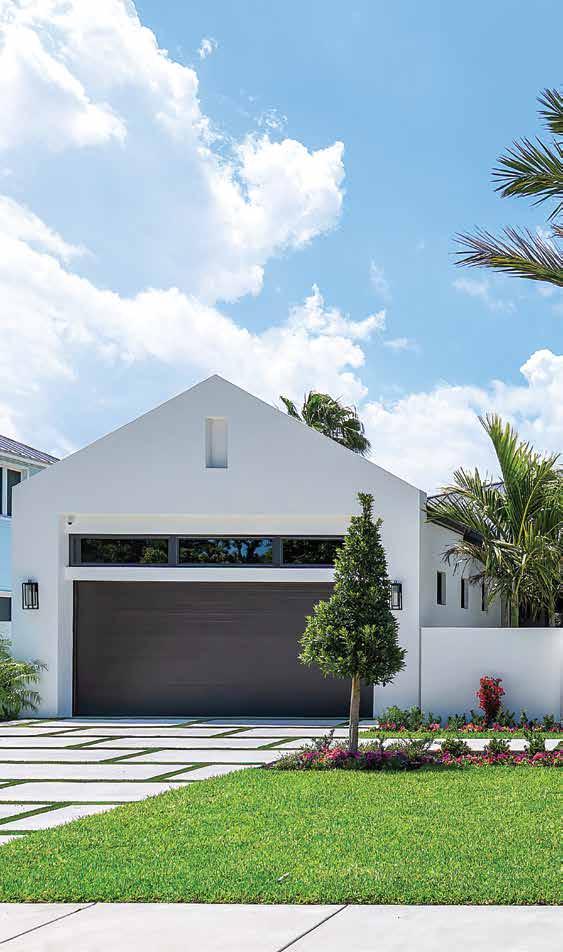
This single-story modern farmhouse, built by Mizner Development in Boca Raton, spans 4,121 square feet with five bedrooms and seven bathrooms, blending contemporary sophistication with traditional warmth. The split-bedroom design features soaring ceilings, a three-car garage, and a beautiful outdoor living area with a summer kitchen, sparkling pool, and spa. Interiors are by Fran Brady of Clive Daniel Home.
Textural Welcome
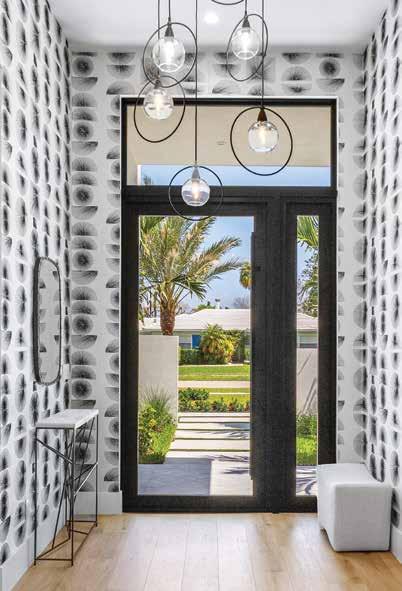
Dark-framed entry doors pivot to admit guests into the stunning foyer, the walls of which are adorned with Parasol Stitch wallpaper from Phillip Jeffries. The paper is textured and features thread stitching, with shapes echoing the knotholes of the oak flooring. A Pick Up Sticks console table introduces the black metal finish, which will be found in many variations throughout the home. A white sculptural entry bench recalls a saddle appropriate for this modern farmhouse. Overhead, the Moorsgate Multi-Pendant by Currey & Company features six glass globes encircled by wrought iron rings with a “Blacksmith” finish and “Old Brass” accents.
Modern Barn Elegance
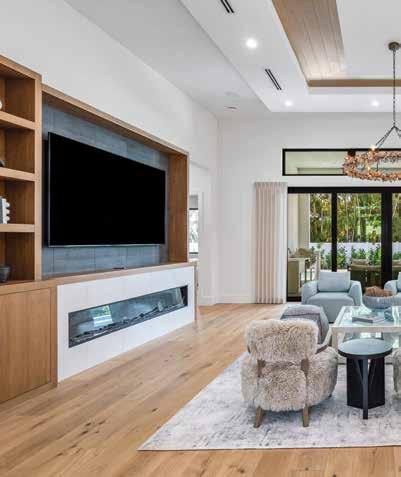
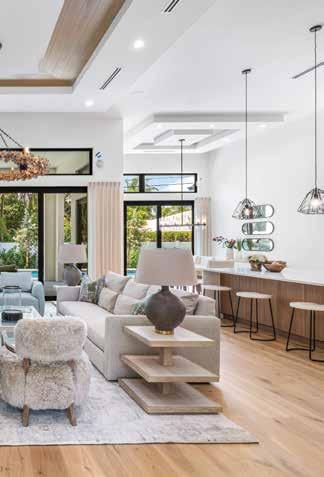
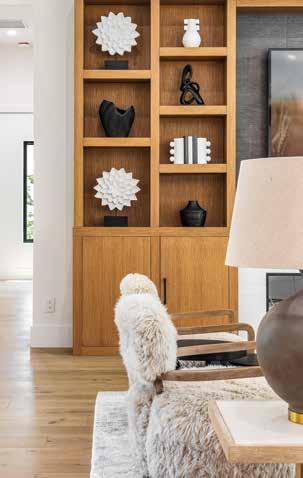
The living room’s volume is defined by the tiered tray ceiling, banded with wooden planks that nod toward the barns of yesteryear. Anchoring the room is a Palecek Siena chandelier of hand-cut, overlapping coco shells. The seating area boasts bouclé swivel barrel chairs next to a tailored white oversized sofa with custom accent pillows. The natural wood and glass coffee table is by Hooker Furniture. Three-level side tables host natural clay pottery lamps, and a geometric Chasinfield end table separates two Royce Lounge chairs by Interlude Home, clad in Tibetan lambskin (and affectionately known as “Yeti” chairs). All rest on a silver-toned distressed area rug. Brady designed the built-in TV alcove, backed by textured slate tiles resting above the linear electric fireplace.
Functional and Refined
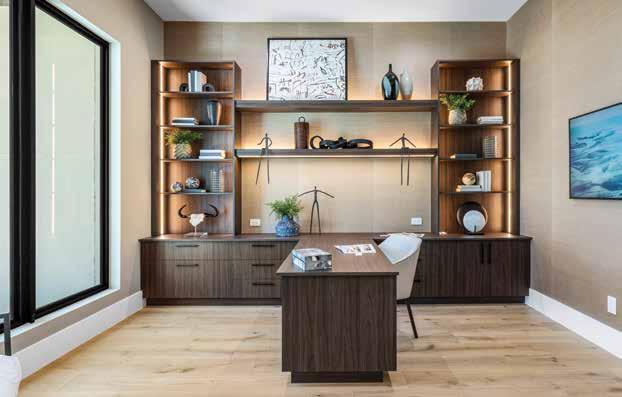
This contemporary office features a custom-built credenza in warm walnut tones. Backlit shelving provides a home for decorative accessories and contemporary art and adds ambient lighting to the space. The complementary desk is open on both sides to allow the homeowner to face the large window or view the Samsung Frame television on the wall. A white leather bucket chair offers comfortable seating for either use. Natural Phillip Jeffries grass cloth wallpaper gives the walls added dimension.
Aware that contemporary design can be a bit sterile, Brady used texture and a mix of materials to make the design cozy.
Organic and Streamlined
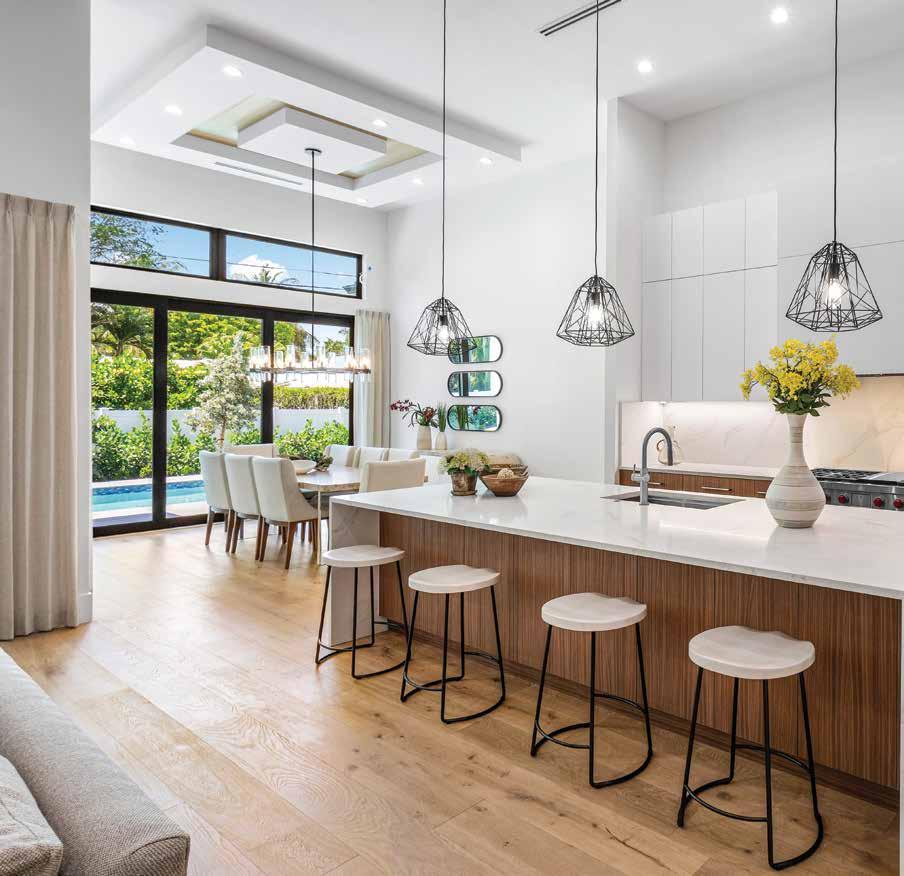
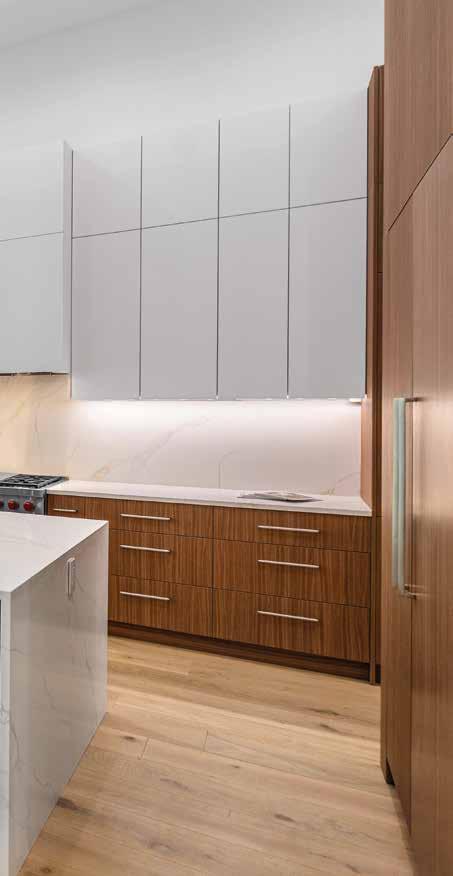
This streamlined kitchen combines minimalism tempered with natural textures. The massive island sports a pristine waterfall white quartz countertop with rich vertical-grain walnut beneath. Seating is provided by a quartet of barstools with sculpted saddle seats and black metal linear frames. Overhead, three geometric cage pendants provide brilliant light for the workspace. The cabinets are of mixed materials, with the lower and accent cabinets in walnut with oversized stainless-steel pulls, and the upper flat-panel cabinets in polygloss optic white. The flooring, wide-planked European white oak, flows throughout much of the home. Appliances are by Bosch and Sub-Zero.
Light-Filled Sophistication
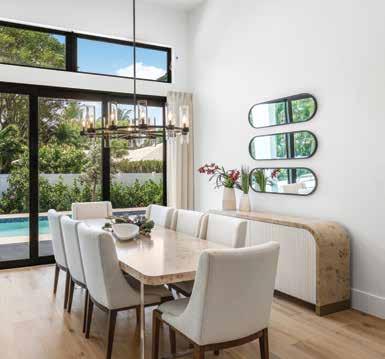
The light-filled dining room, with its floor-to-ceiling sliding glass doors and overhead transom, has views of the pool and garden. A trio of oval mirrors above the rib-fronted sideboard reflects the scene. The Tranquility table with a Mappa Burl (European poplar) top, from the Miranda Kerr Collection by Universal Furniture, is supported on acrylic pedestals. Seating for eight is provided by classic Parsons chairs with dark wooden legs, upholstered in Canberra Ivory performance fabric. A chandelier, reminiscent of a wagon wheel, perfect for a modern farmhouse aesthetic, features cylindrical glass shades set onto black metal spokes.
Layered Warmth
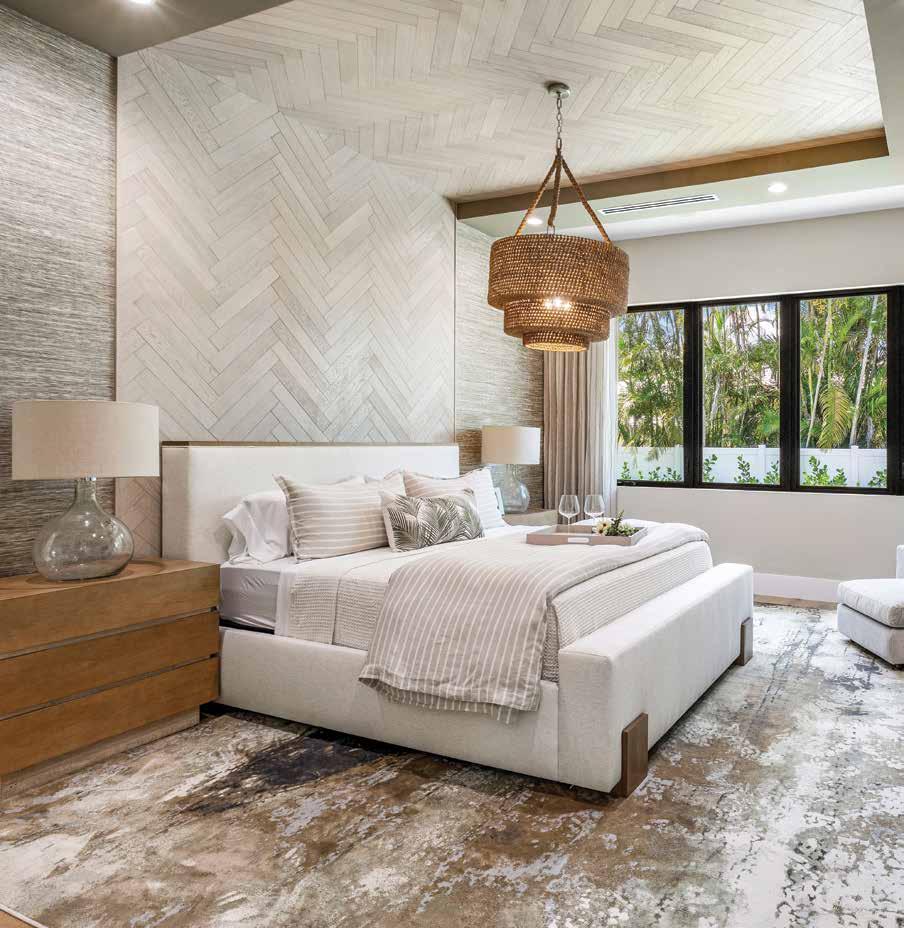
The tailored bed, upholstered in crisp white linen with wooden supports, is framed by a dramatic herringbone accent wall in a whitewashed oak finish that continues across the coffered ceiling. The adjacent walls are covered in vertical grass cloth by Phillip Jeffries. Flanking the bed are mid-century modern nightstands in warm oak with marble insets. Both they and the matching dresser are by Vanguard Furniture. Overhead, the Palecek Green Oaks Oversized Pendant, handwoven from core rattan, lights the scene, and underfoot is an ultra-soft low-pile rug combining the green, gray, and cream hues in the room.
Spa-Like Serenity
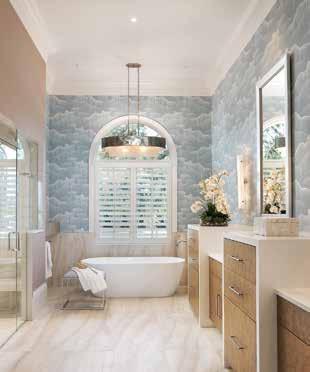
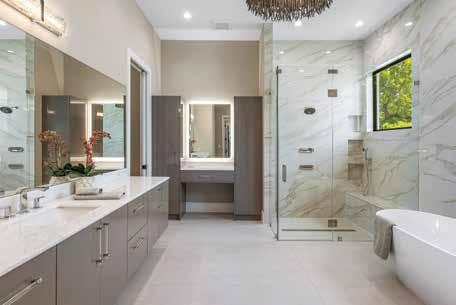
The open-concept master bath uses concrete-look tiles on the floor under the floating custom cabinetry in gray wood tones with Lucite handles. Moen hardware services the deep sink set into a quartzite countertop beneath a wallwidth mirror. Lighting is provided by a textured glass abstract wall sconce and a stunning chandelier of natural wood beads. The built-in alcove vanity features a handy backlit mirror. Thirty-two-inch by thirty-two-inch Carrara porcelain tiles, resembling veined marble, line the frameless glass-enclosed dual-headed shower and the adjacent wall, creating a seamless, cohesive look.

Resort-Style Retreat
The home’s resort-style geometric pool and spa, accented with azure glass mosaic tiles, are surrounded by large-format gray-toned porcelain deck tiles, atop which sit all-weather wicker chaises by Island Club Outdoor. A landscaped border features privacy shrubs, providing a pop of green against the white wall, and palms swaying overhead complete the tropical ambiance. A complete summer kitchen is adjacent to the outdoor dining area, which includes swivel chairs sporting vertical roping.


Kravet Jardin Stoneware Appetizer Plates - Mixed Set of 4
$59.50 | Potterybarn.com
Freshen Up
Romantic and fresh, this issue’s Top Picks celebrate the lighter side of the season. As spring settles in, it’s the perfect time to refresh your home with pieces that feel airy, inviting, and effortlessly charming. Soft tones, subtle texture, and a hint of vintage inspiration set the mood for spaces that feel relaxed yet thoughtfully styled. These selections will help you add a seasonal touch, and the selections are designed to capture the optimism and beauty of spring - and help your home feel renewed, bright, and ready for the months ahead.
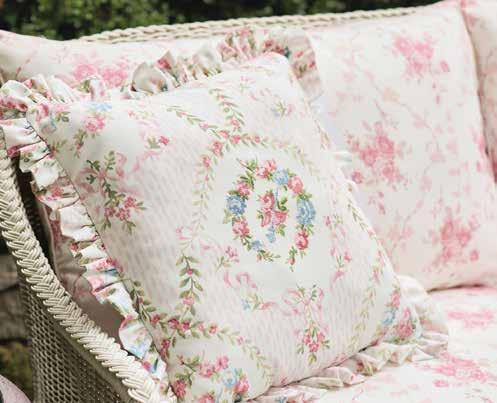
LoveShackFancy Floral
Bow Outdoor Pillow
$89.50 | potterybarn.com
Hawthorne Bowls
$128 | serenaandlily.com
Eleanor Dried Oat and Hydrangea Wreath, 22”
$120 | bloomist.com



Tulip Edged Handwoven Placemat Set of 4 | $89 | potterybarn.com

Wicked Poppy Candle Holder $179 | potterybarn.com

Bridgerton x Williams Sonoma Bud Vases, Set of 3 $79.95 | williams-sonoma.com
| westelm.com

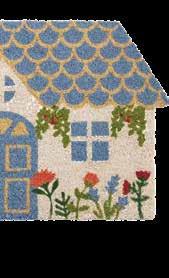
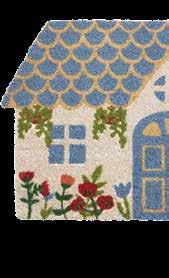
Floral Cottage Shaped Coir Doormat
$17.99 | Worldmarket.com
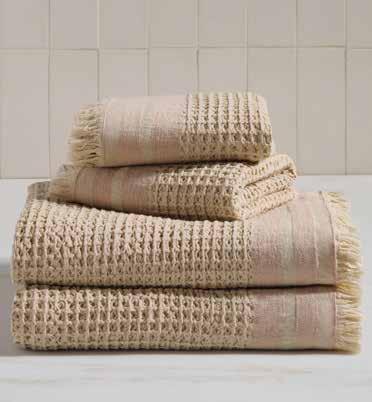
Waffle Knit Organic Cotton Towel, Set of 4 $136 | rejuvenation.com

Spring Botanical Embroidered Beaded Throw Pillow $39.99 | Worldmarket.com
Multicolor
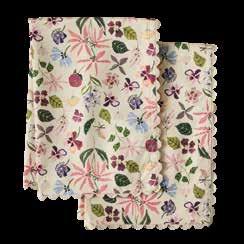
Lulie Wallace Floral Tea Towels (Set of 2) $29.50

Love
Where You Live
Creating a Home That Supports Everyday Florida Life
There is something unmistakable about the feeling of coming home in Florida. It might be the warmth that follows you in from outside, the quiet hum of a ceiling fan, or the familiar way sunlight falls across a room you know well. Home is not defined by architecture alone. It is shaped by routine, memory, and the daily experience of living in a place that supports who you are and how you live. In a region where life naturally extends beyond walls and into neighborhoods, patios, and community spaces, the idea of loving where you live often begins inside the home itself.
Home as a Daily Experience
A home is not experienced all at once. It is experienced in moments.
Morning coffee at the kitchen counter. Bare feet crossing cool tile floors. Sliding doors opening to let in the breeze. The quiet rhythm of evening settling in.
These small, repeated experiences shape how a home feels far more than design trends or square footage. When spaces support these moments comfortably, homes become places people genuinely enjoy returning to.
In Florida, daily life often follows the light. Mornings begin brightly, afternoons slow in the warmth, and evenings invite people outdoors again. Homes that respond to this rhythm feel natural and welcoming.
This is where loving where you live begins. Not in major changes, but in noticing how a home supports everyday life.
Spaces That Invite Gathering
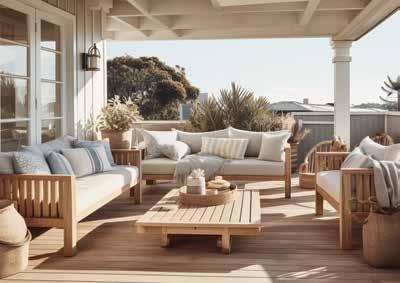
Florida living has always been social. Families visit often, neighbors stop by, and outdoor spaces invite people to linger. Homes that support gathering do not need to be large or elaborate. They simply need to feel open, comfortable, and easy to move through.
Kitchens often become the center of this activity. Not because they are formal entertaining spaces, but because they are where people naturally gather. A place to talk while meals are prepared, to sit for a moment during a busy day, or to share stories in the evening.
Dining tables that are used regularly tend to hold more meaning than those reserved only for special occasions. Chairs pulled close together, soft lighting, and simple table settings often create more memorable moments than carefully planned events.
Outdoor spaces play an equally important role. In Florida, a lanai or patio often becomes another living room. Comfortable seating, shade, and a small table can turn an ordinary evening into time spent together. These spaces do not need to be styled perfectly. They simply need to be used. Homes that welcome gathering feel alive.
Comfort Over Perfection
One of the most important shifts homeowners can make is choosing comfort over perfection.
Rooms designed only to be admired are rarely the ones people use most. The spaces that matter are the ones that allow people to relax, move freely, and live without hesitation.
Soft seating, layered lighting, and durable materials make homes easier to enjoy. Slipcovered chairs, washable fabrics, and surfaces that can handle daily use allow families and guests to feel at ease.
Comfort also comes from familiarity. The chair you always sit in. The corner where a lamp stays on in the evening. The kitchen counter where conversations happen naturally. These elements give homes warmth that cannot be designed intentionally, only lived into over time. A home does not need to be perfect to be loved. It only needs to feel welcoming.
Personal Meaning in Everyday Spaces
The homes people remember most are not always the most beautiful. They are the ones that feel personal.
Photographs on a shelf, books stacked beside a chair, artwork collected over time, or objects brought back from travel all tell stories about the people who live there. These details do not need to match or follow a theme. Their meaning is what matters.
Personal objects create continuity. They remind us where we have been and who we share our homes with. Over time, they become part of the identity of a space.
Even small touches can make a difference. A favorite blanket folded nearby, a bowl kept in the same place for years, or a collection that grows slowly over time. These familiar elements make homes feel settled. A house becomes a home through these layers of memory.

The Influence of Light and Nature
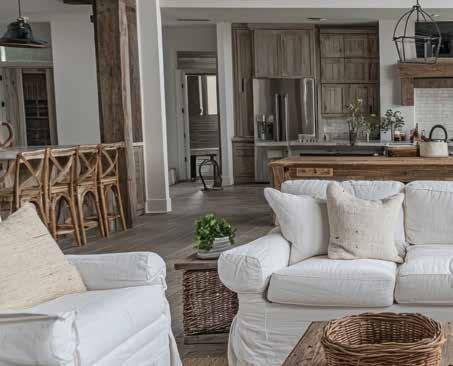
Florida’s natural environment plays a powerful role in how homes feel. Sunlight, greenery, and outdoor views bring energy and calm into interior spaces without effort.
Keeping windows open when possible, allowing light to move freely through rooms, and maintaining visual connection to outdoor spaces strengthens the relationship between home and environment.
Plants often help bridge this connection. A simple potted plant in the kitchen or a larger one near a window adds life to a room without changing its design. Natural materials such as wood, linen, and woven textures reflect the landscape outside and soften interior spaces.

When homes feel connected to their surroundings, they feel more peaceful.
Nature has a way of grounding daily life.
Homes That Evolve With Us
One of the most overlooked aspects of loving where you live is allowing a home to change over time.
Rooms rarely serve the same purpose forever. A guest room may become an office. A dining room may become the place where homework happens. A patio may become the most used space in the house. These changes are not signs that a home is unfinished. They are signs that it is being lived in.
When homeowners allow spaces to adapt to their needs, homes remain relevant and supportive. Resisting change often makes spaces feel unused or disconnected from daily life. Homes feel most comfortable when they reflect the present, not the past.
The Role of Routine
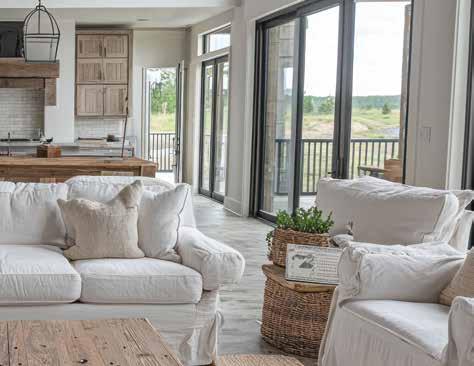
Routines quietly shape the experience of home. That can look like opening windows in the morning, watering plants in the afternoon, or turning on a familiar lamp in the evening.
These repeated actions create a sense of stability and belonging. Over time, they connect people to their homes in ways that are difficult to describe but easy to feel.
In Florida, many routines naturally include outdoor spaces. Morning coffee on the patio, an evening walk through the neighborhood, or simply sitting outside for a few minutes at the end of the day. These habits strengthen the connection between home and place.
Homes support these routines when spaces are comfortable, accessible, and welcoming.
A Place to Belong
At its heart, loving where you live is about belonging.
It is about feeling comfortable in your space, connected to your routines, and supported by the environment around you. In Florida, where life moves easily between indoors and outdoors, homes often become the center of that experience.
They are places to gather, to rest, to celebrate, and to begin again each day. Over time, these ordinary moments accumulate into something lasting. A sense of familiarity. A sense of comfort. A sense of home. And that is what makes a house truly worth loving.
Loving Where You Are Now
It is easy to believe that a home will feel complete after the next project, the next purchase, or the next change. But many people discover that appreciation grows from noticing what already exists.
The window where sunlight falls each morning. The chair where you rest at the end of the day. The kitchen where conversations happen naturally - these familiar experiences give homes meaning.
Loving where you live does not require renovation or perfection. It begins with attention. When homeowners notice the comfort, routines, and relationships that unfold inside their homes, appreciation often follows. A home becomes more than a structure when it supports daily life with ease.
New Starts for
Storage Storage
Simple systems that support daily life and create calmer spaces.
Storage is not just about where things go. It shapes how a home feels. When everyday items are easy to access and easy to put away, rooms feel lighter. When storage is unclear or overcomplicated, clutter builds quickly and stress follows. A fresh start with storage does not require buying dozens of containers. It requires clarity. What needs to be stored? Where is it
used? And how often is it handled? When storage aligns with daily habits, homes stay organized with less effort.
Kitchen: Clear the Surfaces, Simplify the Cabinets
The kitchen is one of the most active spaces in any home, which means it is also one of the easiest places for clutter to accumulate. The most effective kitchen storage systems begin with protecting one clear workspace. Choose a primary prep area and commit to keeping it open. Appliances used daily can stay, but everything else should have a defined home.
Inside cabinets and drawers, simplicity works best. Group similar items together and avoid over-dividing. Too many small containers create more work. Instead, focus on broad categories and easy access. Frequently used tools should live closest to where they are needed.
Paper clutter is another common issue. A single tray, drawer, or small vertical file can prevent mail and school papers from spreading across counters. A calm kitchen supports better routines. When surfaces are clear, the room feels manageable.
Living Areas: Hidden Storage, Visible Calm
Living rooms collect daily life. Books, blankets, remotes, and devices all tend to migrate toward seating areas. The goal is not to remove these items, but to contain them.
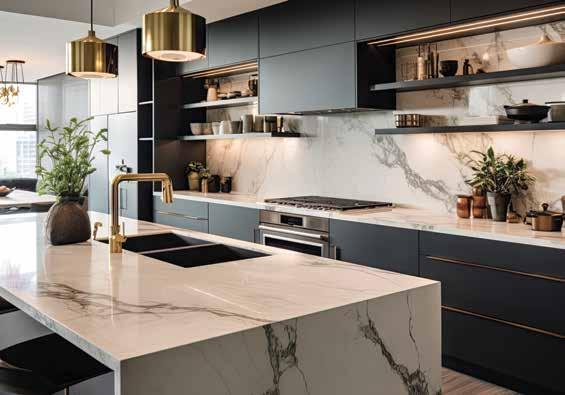
Storage that blends into furniture works best here. Ottomans with lift tops, coffee tables with drawers, and closed cabinetry reduce visual noise while keeping items accessible. Baskets can work well, but only if they are assigned a specific purpose. A basket without a category quickly becomes a catch-all.
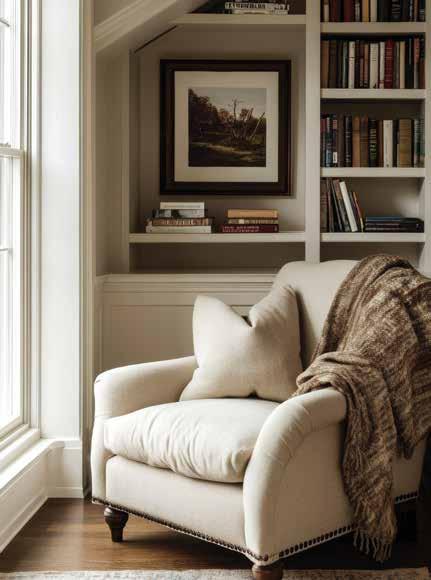
Open shelving requires discipline. Leave breathing room between objects and avoid

filling every inch. Visual space contributes to a sense of calm just as much as physical organization.
Editing is part of the system. If a surface constantly becomes cluttered, it may be holding too many decorative items. Reducing what lives on top makes it easier to maintain order below. A living room that feels clear invites people to relax. Storage should support that goal quietly.

Patio and Pool Areas:
Contain the Movement
Outdoor spaces often struggle with storage because items move in and out frequently. Towels, pool accessories, cushions, and outdoor games need to be both protected and easy to grab.
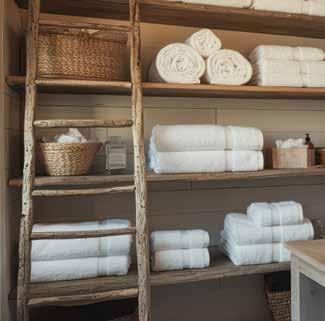
The most successful patio storage systems rely on containment and durability. Weather-resistant storage benches or deck boxes provide large-scale containment without visual chaos. Inside the home, a designated cabinet or shelf for pool towels prevents
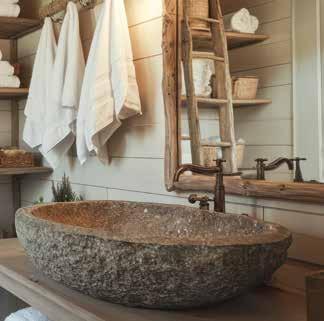
them from spreading through multiple rooms.
Hooks near the door leading outside can simplify transitions. Bags, hats, and outdoor accessories stay organized without traveling into living areas.
Cushions should have a clear home when not in use. If storing them feels complicated, they are more likely to stay scattered. Simplicity increases follow-through.
When outdoor storage is thoughtful, patios and pool areas feel like extensions of the home rather than overflow zones.
The Garage: Zones That Work
The garage is often the largest storage area in the home, yet it is frequently the most underutilized. Without a system, it becomes a holding space for everything that does not fit elsewhere.
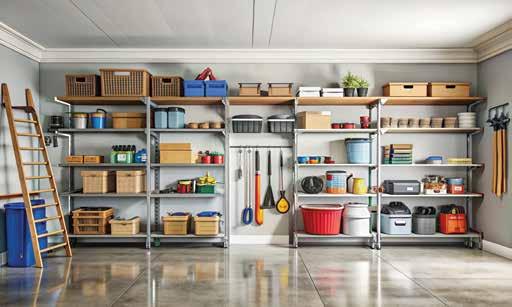
Effective garage storage begins with zoning. Create clear sections for categories such as tools, sports equipment, seasonal décor, and household overflow. Vertical storage is especially important. Wall-mounted shelving, pegboards, and overhead racks free up floor space and make items easier to see.
Clear bins with labels reduce the need to open multiple containers to find one item. However, avoid overcomplicating the system. Fewer, larger bins organized by broad categories are usually easier to maintain than many small ones.
Frequently used items should be placed at eye level. Rarely used items can move higher. This simple adjustment reduces frustration and saves time. A garage that functions well supports the rest of the house. When tools, gear, and overflow have a home, they are less likely to migrate indoors.
Systems Over Perfection
Storage works best when it reflects real life. If a system is too rigid, too detailed, or too difficult to maintain, it will not last. Start with the areas used most often. Simplify categories. Keep surfaces clear. Choose storage that blends into the room instead of competing with it.
A well-designed storage system does more than organize belongings. It reduces daily stress, shortens cleanup time, and creates a sense of order that supports everything else happening in the home.
Fresh starts do not require dramatic change. Often, they begin with a drawer, a shelf, or a single clear surface. When storage works, the entire home feels lighter.

Fresh & Simple Gatherings
There is something about a table set for sharing that changes the pace of a day. It invites people to sit a little longer, pour another glass, and pass a plate one more time.
This collection of recipes is designed with that spirit in mind. Bright citrus, fresh herbs, simple roasting, and generous olive oil create dishes that feel elevated without feeling complicated. Each one can stand on its own, but together they form a table meant for gathering.

Crispy Smashed Potatoes with Rosemary & Sea Salt
Serves 6
INGREDIENTS
2 pounds baby Yukon Gold or new potatoes
3 tablespoons olive oil, plus more for brushing
1 teaspoon kosher salt
½ teaspoon freshly cracked black pepper
2 to 3 sprigs fresh rosemary Flaky sea salt, for finishing
INSTRUCTIONS
1. Preheat oven to 425°F. Line a rimmed baking sheet with parchment paper or lightly oil an enamel baking tray.
2. Place potatoes in a large pot and cover with cold water. Add a generous pinch of salt. Bring to a boil and cook until fork tender, about 15 to 20 minutes. Drain well and let steam dry for 5 minutes.
3. Arrange potatoes on the prepared baking sheet. Using the bottom of a glass or measuring cup, gently press each potato until it flattens but remains intact.
4. Drizzle with olive oil and brush lightly to coat all surfaces. Season with kosher salt and black pepper.
5. Roast for 30 to 35 minutes, until edges are deep golden and crisp. For extra crispness, turn the oven to broil for the final 2 to 3 minutes, watching closely.
6. Remove from oven and immediately sprinkle with chopped fresh rosemary and flaky sea salt. Serve warm.
Whipped Feta with Roasted Cherry Tomatoes & Olive Oil
Serves 6
INGREDIENTS
8 ounces feta cheese
½ cup full-fat Greek yogurt
2 tablespoons olive oil, plus more for drizzling
1 garlic clove
1 pint cherry tomatoes
1 tablespoon olive oil
Salt and freshly cracked pepper
Fresh thyme or oregano
Crusty bread, sliced
INSTRUCTIONS
1. Preheat oven to 400°F.
2. Toss cherry tomatoes with olive oil, salt, and pepper. Roast for 15 to 20 minutes, until softened and slightly blistered.
3. In a food processor, blend feta, Greek yogurt, olive oil, and garlic until smooth and creamy. Spread onto a shallow serving bowl.
4. Spoon warm roasted tomatoes over the feta. Drizzle generously with olive oil and sprinkle with fresh herbs. Serve with toasted or warm sliced bread.


Sparkling Citrus Rosemary Spritz
Makes 2 Drinks

INGREDIENTS
2 ounces fresh orange juice
1 ounce fresh lemon juice
1 ounce rosemary simple syrup
3 ounces prosecco or sparkling water
Ice
2 sprigs rosemary
Orange slices
Rosemary Simple Syrup
½ cup sugar
½ cup water
Rosemary sprigs for garnish
INSTRUCTIONS
Simmer sugar, water, and rosemary for 5 minutes. Cool and strain.
TO ASSEMBLE
Fill glasses with ice. Add orange juice, lemon juice, and rosemary syrup. Top with prosecco or sparkling water. Stir gently and garnish with rosemary and citrus.
Couscous with Roasted Vegetables & Fresh Herbs
Serves 6
INGREDIENTS
1 cup couscous
1 ¼ cups boiling water or broth
1 zucchini, diced
1 eggplant, diced
1 red bell pepper, chopped
1 cup cherry tomatoes
3 tablespoons olive oil
Salt and pepper
2 tablespoons lemon juice
¼ cup chopped fresh parsley
2 tablespoons chopped fresh basil
INSTRUCTIONS
1. Preheat oven to 425°F.
2. Toss vegetables with olive oil, salt, and pepper. Roast for 20 to 25 minutes until tender and lightly caramelized.
3. Place couscous in a bowl. Pour boiling water or broth over it, cover, and let sit 5 minutes. Fluff with a fork.
4. Combine couscous with roasted vegetables. Add lemon juice and fresh herbs. Adjust seasoning and serve at room temperature.


Lemon Garlic Chicken
Thighs with Pan Sauce
Serves 4
INGREDIENTS
6 bone-in, skin-on chicken thighs
Salt and black pepper
2 tablespoons olive oil
3 garlic cloves, minced
1 cup chicken broth
2 tablespoons fresh lemon juice
Zest of 1 lemon
1 lemon, thinly sliced
Fresh thyme or parsley
INSTRUCTIONS
1. Pat chicken dry and season generously with salt and pepper.
2. Heat olive oil in a large oven-safe skillet over medium heat. Place chicken skin-side down and cook 6 to 8 minutes until deeply golden. Flip and cook 2 more minutes.
3. Add garlic and cook briefly until fragrant. Pour in chicken
broth and lemon juice. Arrange lemon slices around and over the chicken.
4. Transfer skillet to a 400°F oven and roast for 15 to 20 minutes until chicken reaches 165°F.
5. Remove from oven. Spoon pan sauce over chicken and finish with lemon zest and fresh herbs before serving.

Lemon Ricotta Cake with Pistachio & Honey Glaze
INGREDIENTS
FOR THE CAKE
(Serves 8–10)
1 cup whole milk ricotta, drained if very wet
1 cup granulated sugar
½ cup unsalted butter, softened
3 large eggs, room temperature
Zest of 2 lemons
¼ cup fresh lemon juice
1 teaspoon vanilla extract
1 ½ cups all-purpose flour
1 ½ teaspoons baking powder
½ teaspoon salt
FOR THE GLAZE & TOPPING
¼ cup fresh lemon juice
2 tablespoons honey
2 tablespoons granulated sugar
⅓ cup chopped pistachios
Thin lemon slices, for garnish
Fresh mint leaves, optional
INSTRUCTIONS
1. Preheat oven to 350°F. Grease and line an 8-inch round cake pan with parchment paper.
2. In a large bowl, beat the softened butter and sugar until light and fluffy, about 3 to 4 minutes. Add the ricotta and mix until smooth.
3. Beat in the eggs one at a time, mixing well after each addition. Stir in the lemon zest, lemon juice, and vanilla extract.
4. In a separate bowl, whisk together flour, baking powder, and salt. Gradually fold the dry ingredients into the wet mixture until just combined. Do not overmix.
5. Pour batter into the prepared pan and smooth the top. Bake for 45 to 55 minutes, or until the center is set and a toothpick inserted comes out clean. The top should be golden.
6. Allow cake to cool in the pan for 10 minutes, then transfer to a wire rack.
MAKE THE GLAZE
1. In a small saucepan over low heat, combine lemon juice, honey, and sugar. Stir until sugar dissolves and mixture slightly thickens, about 2 to 3 minutes.
2. While the cake is still slightly warm, brush the glaze over the top. Allow it to soak in gently.
3. Sprinkle chopped pistachios over the cake. Garnish with thin lemon slices and fresh mint before serving.