Creating Outdoor Spaces That Restore, Recharge, and Invite You to Stay
Vacation-Inspired Design Bringing the Best of Summer Home
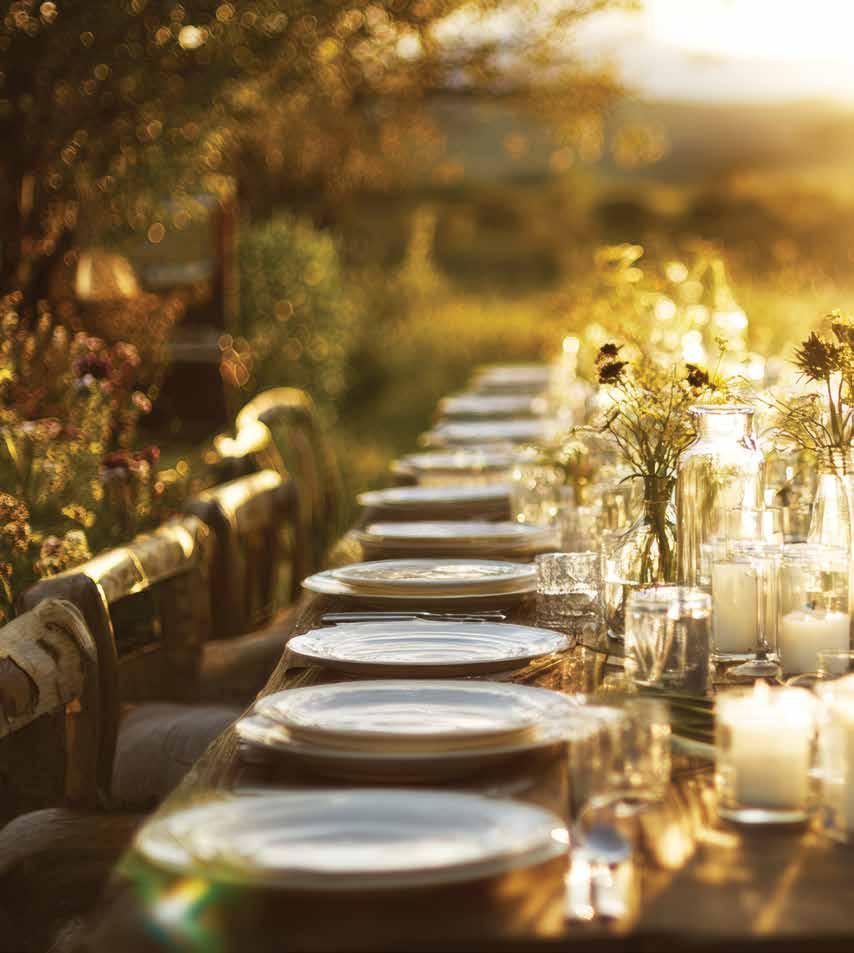
The Art of the Long Summer Table
A setting that encourages people to relax, connect, and stay awhile.
LivingSeasonthe
Compliments of Vincent Branda
Come Build with the Ryan David Homes Team!
Located in Naples, FL Ryan David Homes sets the industry standard for quality, craftsmanship, and professionalism, remaining at the forefront of excellence. In the realm of home renovation in Naples, Ryan David Homes stands as a guiding light for those seeking to reimagine their living spaces.
Dedicated to the highest level of service, we believe in approaching every project the right way— with passion and commitment. Our client-centric approach prioritizes listening, learning, and collaborating to understand unique needs, ensuring consistently outstanding results and satisfied clients. We take immense pride in our approach, resulting in projects built to perfection.
“We are building foundations for generations to come.”
PUBLISHER
Channing Spano
ART DIRECTOR
Sylvia Miller
CONTRIBUTING WRITERS
Kitt Walsh
Channing Spano
We are always on the lookout for new and innovative products and services that our readers would enjoy knowing about for their fine homes. Give us a call at 239.235.3170 or email at info@yhmagazine.com to discuss how effective content marketing can be for your company.
Your Home Magazine® is sent to you courtesy of the real estate professional(s) that specialize in your neighborhood. If you’d like to change your mailing preferences, please email us at info@yhmagazine.com.
Each company that advertises in the YOUR HOME Magazine® is independently owned and operated, and
Some renovations update only the finishes and paint colors. Others rework, rearrange, and reimagine the way a home is lived in. This whole-house transformation at Naples’ Countryside Golf & Country Club falls into the latter category. Designed by Ryann Grace Scott of Reed Design Build, the 1,700-square-foot, three-bedroom, three-and-a-half residence was completely reimagined for homeowners Karen Willis and her husband, New Jersey snowbirds who envisioned a relaxed retreat designed for entertaining, family gatherings, and effortless Florida living.
Entry Foyer:
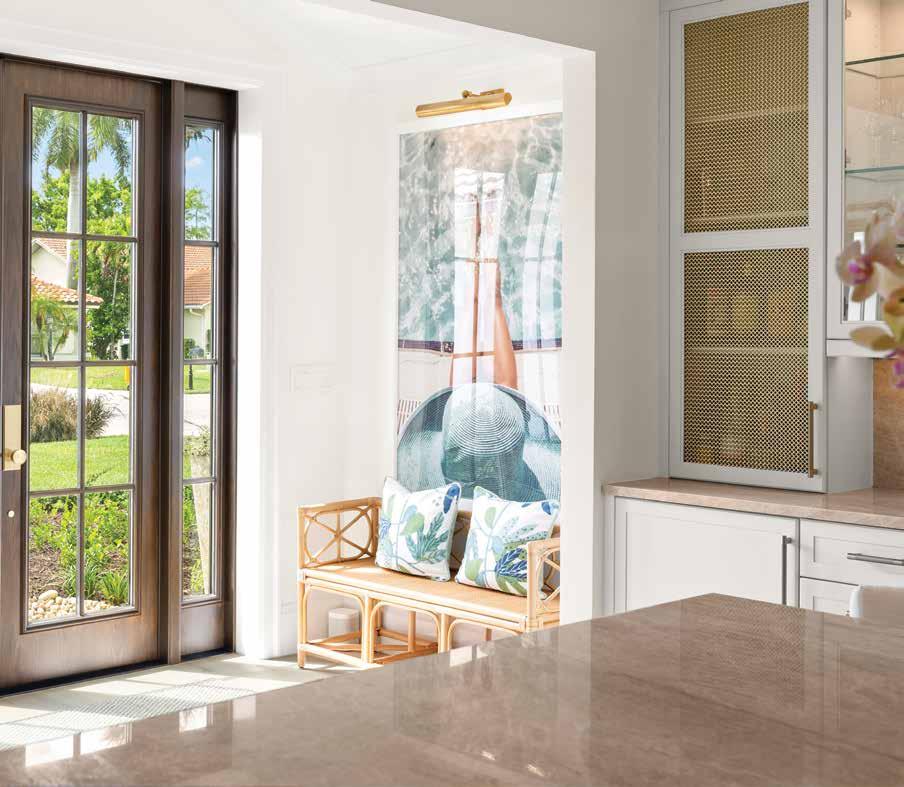
In the entry foyer, fiberglass double doors with expansive glass panels and sidelights draw sunlight deep into the interior. Anchoring the space is a Ferguson rattan upholstered bench by Worlds Away. Decorative pillows in soft blues introduce the color palette used throughout the project. The framed digital print Brigette by the Pool by Christopher Kennedy, lit by a brass art light, establishes the playful tone of the home.
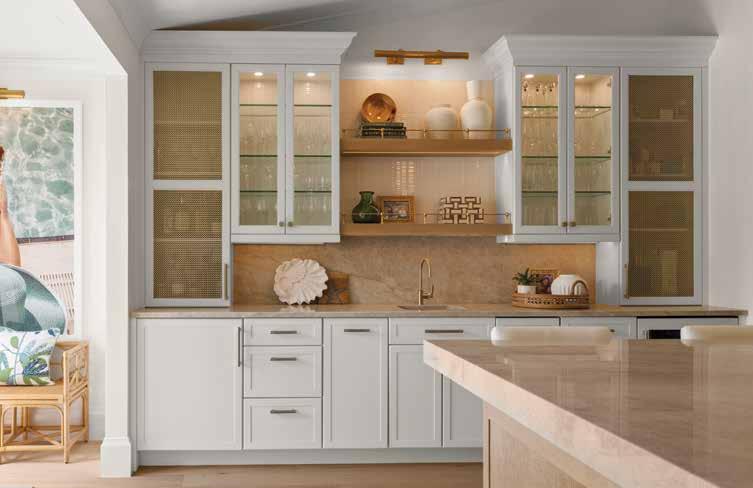
Wet Bar: Chicken wire mesh fronts sections of the white oak Dura Supreme cabinets of the custom-designed wet bar. The backsplash is made of two materials. To standard height, it is Taj Mahal quartz. That merges into coordinating glass tiles backing the illuminated shelves, which provide storage space for sparkling stemware. An antique brass sconce, which complements the bar sink’s faucet and the cabinet hardware, shines down on the oak wood open shelving.
Originally built in 1987, the home struggled from a fragmented floorplan, lack of storage, and undersized service spaces (like a laundry room which was more of a closet than a usable room).
So Ryann used her 13 years of experience and her training in architectural design to create a strategic reconfiguration, expanding underutilized garage space, relocating walls, opening sightlines, and introducing approximately 300 square feet of highly functional living area. The redesign added a powder room and an enlarged laundry room, expanded storage, and created a seamless connection between the kitchen, dining area, wet bar, and living room.
“The homeowners wanted space to entertain and to house their guests, including their visiting adult children,” says Ryann. “They needed this home to be fun and functional.”
Throughout, the design embraces a modern coastal sensibility. Layering organic materials, soft blues, warm brass accents, and natural textures adds coziness, while the raised ceilings in the home’s now-open main area and lots of natural light add to the airy atmosphere.
Ryann and Karen worked well together, with help from Karen’s friend, Stephanie Shaw of Stephanie Shaw Interior Decorators in Wayne, Pennsylvania, and the project came together in a mere eight months. The women shopped for fixtures and furnishings and consulted regularly on the design that Willis picked from among the ten Ryann created when redesigning the flow of the home.
“Ryann is so detail-oriented,” says Karen. “From all the design details and the larger vision, right down to the tiniest space, Ryann was very knowledgeable, and the whole experience was wonderful.”
In fact, Karen told Ryann that there was not one thing she would change about the finished renovation—the highest praise a designer could ask for. For her part, Ryann described this as one of her favorite projects and Karen as her dream client.
“She has excellent taste, knows what she wants, and makes decisions quickly. It was a big project, so I was able to learn a lot, and with the homeowners being so wonderful to work with from start to finish, it was just a fantastic project.”
Kitchen:
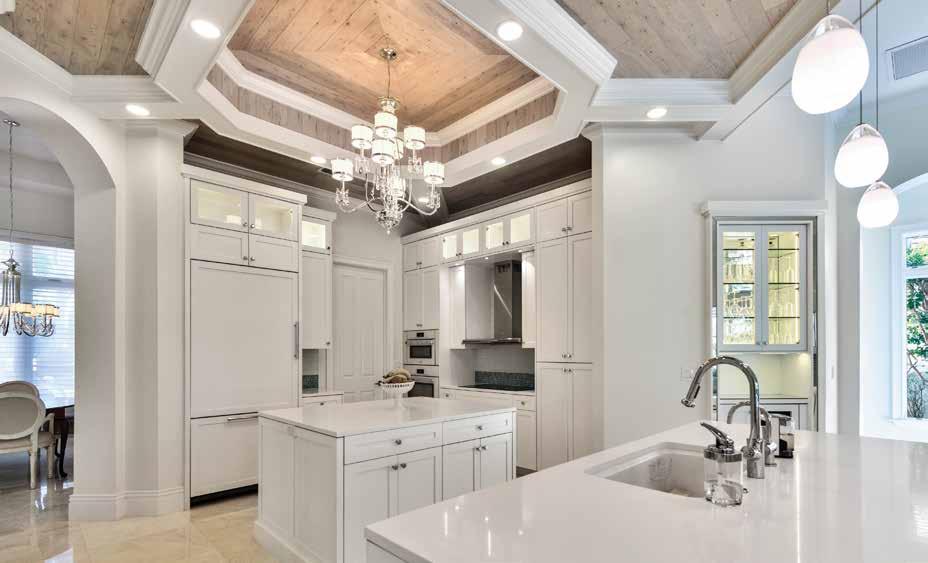
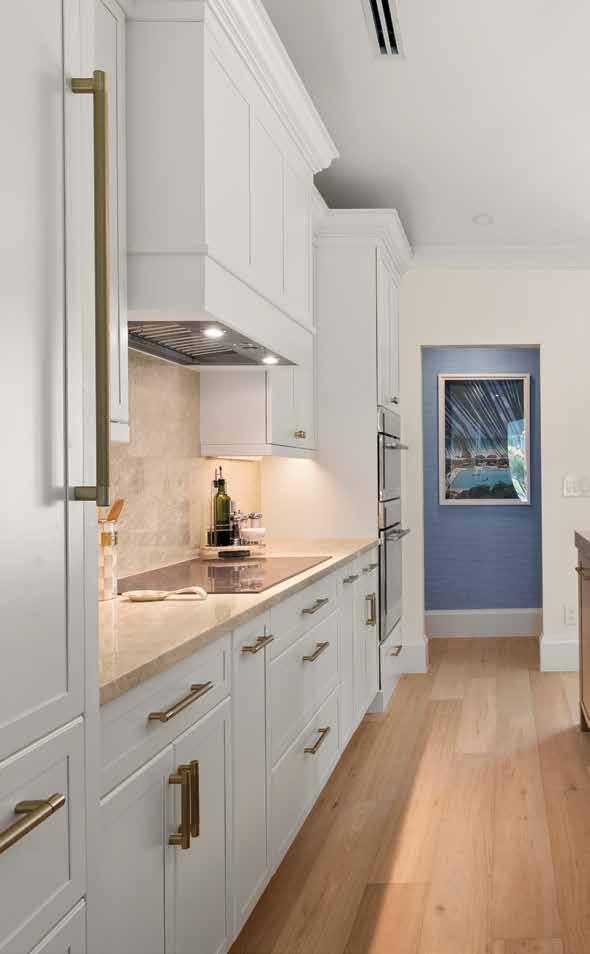
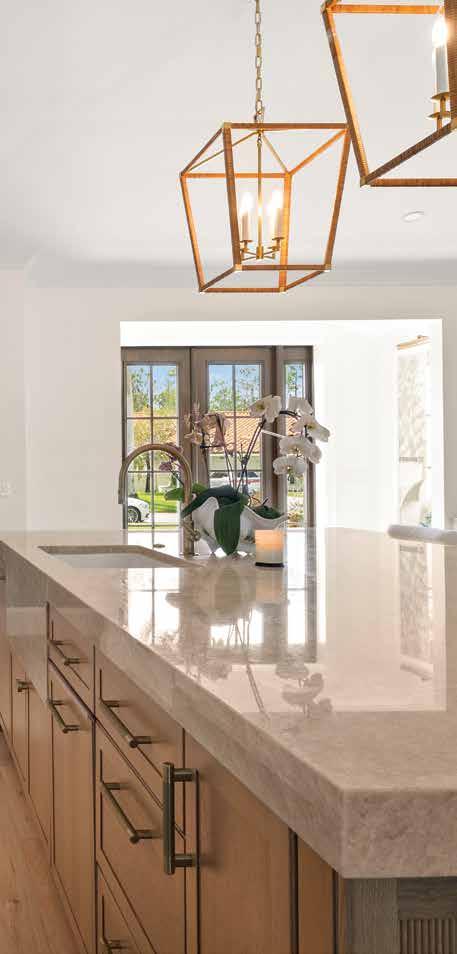
Previously constrained by walls and disconnected spaces, the streamlined kitchen is now part of the expansive open concept of Ryann’s design. A custom range hood matches the white shaker cabinetry that incorporates the Thermador appliances. The oversized island, made of warm white oak topped by Taj Mahal quartz, is illuminated by rattan-wrapped open-basket pendant lights from Happy Lights. Overhead, former ceiling transitions and soffits were removed to create a unified cathedral ceiling that increases the sense of volume and light. Underfoot, the flooring is engineered hardwood by Tesoro and is used, with the exception of the baths, throughout the home.
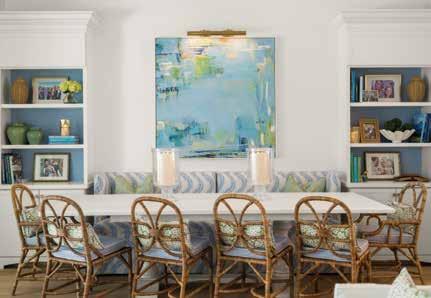
Dining Area: Open to both the kitchen and living room, the dining area sports a custom banquette designed by Ryann, upholstered in a Ballard Design performance fabric. Rattan Antica dining room chairs by Serena & Lily have marine blue and white-piped cushions and join the banquette in providing seating for 12 at the expansive painted wood table also by Ballard Design. Custom built-ins frame the space. These are backed with textured blue wallcovering reflecting one of the hues of the abstract landscape on the wall. Two giant glass candlesticks softly light the scene (the space is wired for a chandelier should Karen decide to add one in the future, but, for now, she opted for simplicity to avoid overcrowding the ceiling, which already hosts recessed lights, ceiling fans, and the kitchen’s pendant lights).
The design embraces a modern coastal sensibility. Layering organic materials, soft blues, warm brass accents, and natural textures adds coziness.
Living Room:
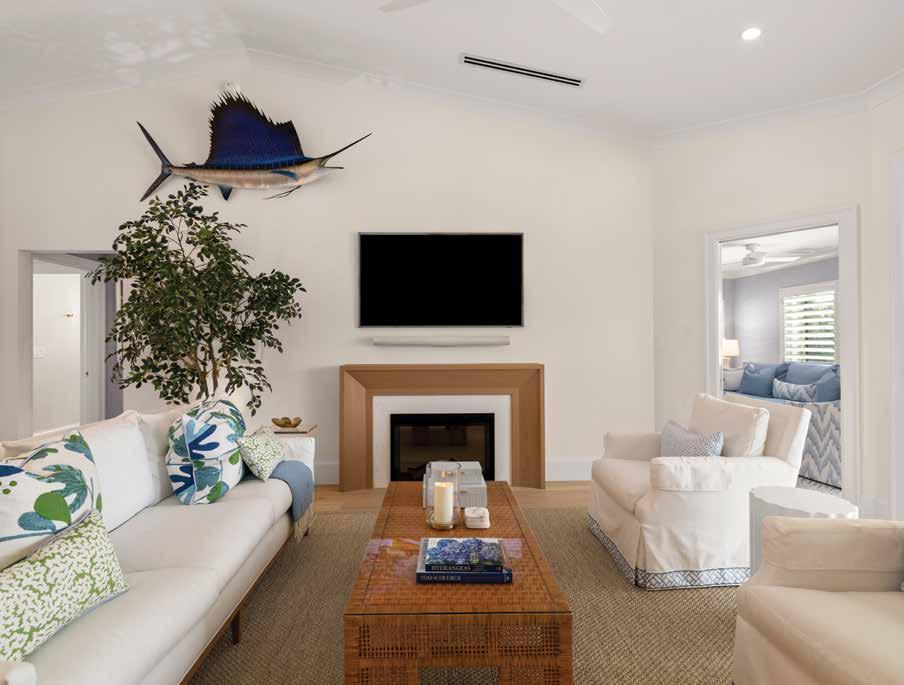
A custom fireplace surround framing the Modern Frames electric fireplace with the same wood finish as the kitchen island adds contrast to the wall of the living room, painted in Sherwin-Williams Pure White. A Barton track arm sofa, clad in oyster linen and topped with custom pillows in botanical prints, provides the perfect place to stretch out and watch TV. Additional seating is provided by twin Lee Industries swivel chairs with geometric borders flanking a Serena & Lily Cabrillo martini table. The Worlds Away woven Montauk coffee table creates more texture, complemented by a natural sisal rug that grounds the space.
Den: Designed to function as both a home office and casual media room, the den demonstrates the project’s emphasis on flexible living. Using custom built-in cabinetry painted in Benjamin Moore’s tranquil Silver Mist, Ryann allowed for hidden storage for printers, remotes, and chargers behind closed cabinet doors, leaving the space uncluttered. Louvered plantation shutters filter the light behind the oversize slate blue sectional by Lee Industries. The tufted Essex ottoman doubles as a footrest and coffee table. Porcelain lamps with linen shades top the rattan and glass end tables, and everything rests on a wool rug by Stark.
Primary Bedroom:
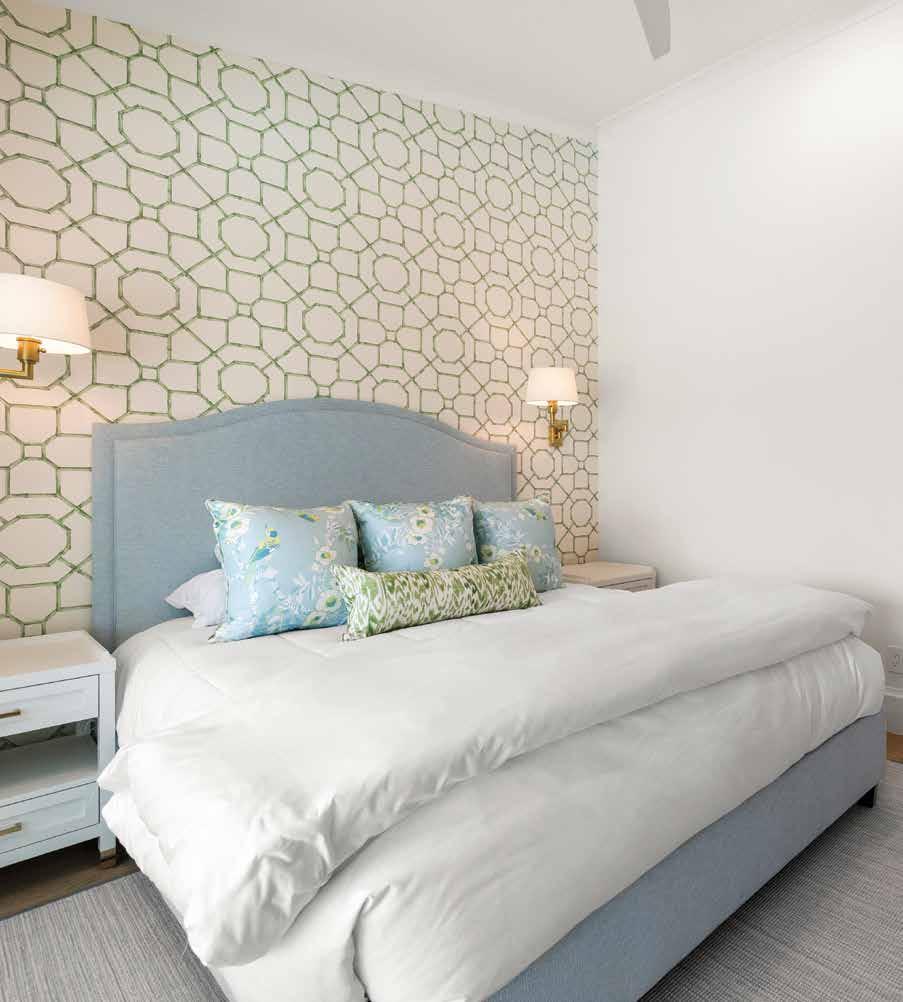
Bold geometric Arbor Green Thibaut wallpaper backs the Vienna upholstered bed in robin’s egg blue in the primary bedroom. Antique brass sconces add a glow to the white painted wood Tidewater nightstands from Basset, and the La Paz banded sisal rug anchors the room, providing a tailored endnote.
Guest Bath: Rich in detail, the guest bathroom delivers the same level of design attention found throughout the home. Serena & Lily Feather wallpaper introduces texture and pattern, while a Hayli scalloped mirror by Ballard Design creates a whimsical focal point above the vanity. Here, the white Shaker cabinetry is topped by a Blue Celeste marble, warmed by Groen brass fixtures used in the sink and shower. The glossy white porcelain basketweave subway tile continues from the floor right into the shower for an uninterrupted visual, adding to the spacious feel of the room.
t. 239.325.1606
28731 South Cargo Ct., Unit 5 Bonita Springs, FL 34135
Guest bedroom: Maintaining the soft color palette, bold patterns make a statement in this guest bedroom. Vibrant Thibaut Tybee wallpaper, rendered in blue and lavender, covers one wall of the room and contrasts, not clashes, with the Schumacher gingham bench and pillows on the Vienna upholstered bed. The organic cotton duvet and chenille coverlet that dress the bed are from Karen’s favorite place to buy linens, the fabled Bloomingdale’s. Oval woven rattan nightstands and a glass-topped white rattan chest of drawers, all by Serena & Lily, are footed by a sisal rug from Prestige. A fanciful print of swimmers reminds guests that a fantastic outdoor lifestyle awaits them, especially since the homeowners added a pool to the footprint of the home during the renovation.
Serena & Lily Feather wallpaper introduces texture and pattern.
Retreat The Backyard
Creating Outdoor Spaces That Restore, Recharge, and Invite You to Stay a While
For many homeowners, summer begins with a familiar thought: I need a vacation. The desire is understandable. Daily life often moves at a relentless pace, leaving little room for quiet reflection or unstructured time. Yet while travel can certainly provide a welcome change of scenery, it is worth asking another question: What if some of the rest and restoration we seek could be found much closer to home?
Over the past several years, homeowners have increasingly shifted their focus away from creating impressive outdoor spaces and toward creating meaningful ones. Rather than designing backyards solely for entertaining, many are carving out areas dedicated to reading, relaxing, gardening, exercising, or simply sitting quietly with a cup of coffee.
A successful backyard retreat doesn’t require a large property or an unlimited budget. More often than not, it begins with identifying the moments you want to create and designing spaces that support them.
BEGIN WITH A PURPOSE
One of the most common mistakes homeowners make when planning outdoor improvements is focusing on features before considering function. The most successful retreats are built around the way people actually live.
enjoy gardening in the evening after work. Perhaps you need a quiet place to escape screens and distractions for a few minutes each day.
A reading garden requires different elements than an outdoor dining area. A meditation space may have little in common with a gathering space designed for entertaining. Defining the purpose of an area helps ensure that every addition contributes to the experience rather than simply filling space.
CREATE A PLACE FOR QUIET
While entertaining often receives the most attention in outdoor design, solitude is just as important.
Many homeowners discover that their favorite outdoor space isn’t a sprawling patio or elaborate pool deck. It’s a single comfortable chair tucked beneath a tree, a bench overlooking a garden, or a small corner where they can sit undisturbed for a few moments each day.
Creating a dedicated place for quiet reflection can dramatically change how an outdoor space is used.
Location matters. Areas positioned away from high-traffic portions of the yard often feel more secluded and restorative. Natural screening elements such as orna-
Before selecting furniture or planning renovations, consider how you would ideally spend time outdoors. Perhaps your perfect morning includes coffee and a book before the rest of the household wakes up. Maybe you
mental grasses, shrubs, climbing vines, or small trees can provide privacy without creating a sense of isolation. Comfort is equally important. Seating should encourage people to linger. Deep cushions, supportive chairs, and small side tables for books or beverages help transform a simple corner of the yard into a destination.
THINK ABOUT SHADE AS A LUXURY
In many parts of the country, particularly during summer, shade may be the single most important element of outdoor comfort.
Beautiful furniture and thoughtful landscaping have limited value if a space becomes unusable during the warmest parts of the day. Incorporating shade early in the design process can dramatically increase how often an outdoor area is enjoyed.
Mature trees remain one of the most effective solutions, providing both shade and a sense of permanence. Pergolas, retractable awnings, covered porches, and shade sails can offer additional protection while helping define outdoor rooms.
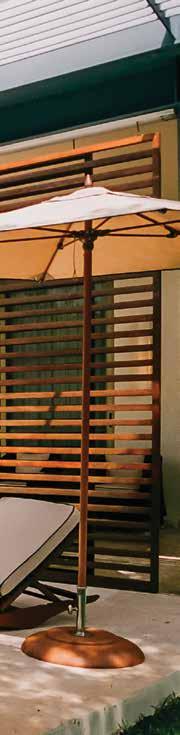
Beyond comfort, shade contributes to the atmosphere. There is something inherently inviting about a space that feels sheltered from the sun, whether it’s a vine-covered pergola, a canopy of oak trees, or a simple umbrella positioned over a pair of chairs.
BRING WELLNESS OUTSIDE
Some of the most interesting developments in residential design involve bringing wellness activities into outdoor environments.
Outdoor showers, cold plunges, yoga platforms, walking paths, and meditation gardens have become increasingly popular, not because they are trendy, but because they encourage habits that support physical and mental well-being.
Fortunately, homeowners don’t need elaborate installations to experience similar benefits.
A simple garden path can encourage daily walks. A shaded corner of the yard can become a place for stretching or meditation. Comfortable seating near flowers and greenery can create opportunities for mindfulness and relaxation.
Even gardening itself has been linked to reduced stress and improved mental health. The act of tending plants, harvesting herbs, or arranging fresh flowers from the garden creates a connection to the rhythms of the season that many people find restorative.
The goal is not to recreate a luxury resort. It is to make healthy, restorative activities more accessible within everyday life.
BLUR THE LINE BETWEEN INDOORS AND OUT
Some of the most inviting homes create a seamless connection between interior and exterior spaces.
French doors that open onto a patio, large windows overlooking a garden, and thoughtfully positioned seating areas all encourage movement between indoors and outdoors. Even small changes can strengthen this relationship.
Container gardens positioned near entrances, outdoor rugs, lanterns, and weather-resistant textiles help outdoor spaces feel like natural
extensions of the home rather than separate environments.
Similarly, indoor spaces benefit from visual connections to the landscape. Views of flowers, trees, and greenery can make rooms feel larger, brighter, and more connected to nature.
A PLACE TO RETURN TO
The most meaningful outdoor spaces rarely contain the longest list of amenities. Instead, they support the rituals that bring comfort, joy, and restoration to everyday routines. Moments may seem small, but they often become the experiences we remember most. Perhaps that is why thoughtfully designed outdoor spaces continue to resonate so deeply. They remind us that relaxation doesn’t always require a plane ticket, a resort reservation, or a faraway destination. Sometimes it begins with a comfortable chair, a bit of shade, and a willingness to step outside for a while.
Vacation-Inspired Design
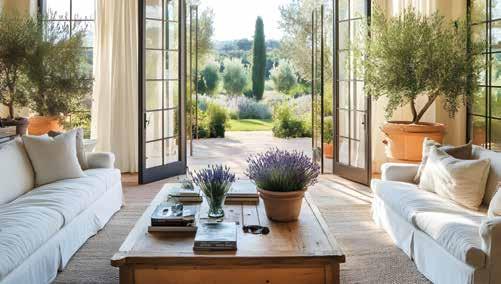
There is a reason certain destinations stay with us long after we’ve returned home. Sometimes it’s the food. Sometimes it’s the scenery. More often, however, it’s a feeling. A shaded courtyard in Italy. A breezy porch in Charleston. A whitewashed villa overlooking the Aegean Sea. The most memorable places have a way of changing how we think about everyday life, even after the vacation ends. Many homeowners experience this phenomenon without realizing it. They return from a trip suddenly wanting lighter curtains, a simpler color palette, fresh flowers on the table, or a dining space that encourages people to linger a little longer. What they’re responding to isn’t a decorating style. It’s a way of living.
The best travel-inspired interiors aren’t themed. They don’t rely on souvenirs or literal interpretations of a destination. Instead, they borrow ideas. They capture the qualities that made a place memorable in the first place: warmth, simplicity, character, authenticity, or a connection to the outdoors.
Whether your inspiration comes from the American coast or the European countryside, the most beautiful homes often share the same lesson. Good design isn’t about creating a perfect room. It’s about creating a home that feels good to live in.
This summer, consider taking inspiration from some of the world’s most beloved destinations, not by recreating them, but by embracing the principles that make them so enduring.
Charleston
Character Over Perfection
One of the most striking things about Charleston’s historic homes is that they rarely feel overly designed. They feel collected.
Walk through the city’s historic district and you’ll notice interiors layered with history. Antique tables sit comfortably beside modern upholstery. Family heirlooms share space with contemporary artwork. Original architectural details are preserved rather than hidden. Nothing feels too coordinated, yet everything feels intentional. Charleston homes remind us that character cannot be purchased all at once. In an age of online shopping and overnight delivery, many homeowners feel pressure to furnish an entire room immediately. The result is often a space that feels complete but lacks personality. The most inviting homes, by contrast, tend to evolve slowly over time.
Nantucket
The Power of Restrain
If Charleston teaches us how to layer, Nantucket teaches us when to stop.
The island’s iconic homes are known for their effortless elegance. Interiors rarely rely on bold colors or excessive ornamentation. Instead, they embrace simplicity through carefully edited palettes and thoughtfully chosen materials.
Rather than purchasing matching furniture collections, focus on mixing periods and materials. A vintage chest paired with a modern sofa creates far more interest than a room filled with pieces from the same showroom floor. Estate sales, antique markets, and family heirlooms often introduce the kind of individuality that new furniture cannot replicate.
Charleston also demonstrates the enduring appeal of natural materials. Linen, wood, brass, wicker, and stone all age gracefully, and small imperfections become part of a home’s story rather than flaws that need to be hidden.
The lesson is simple: allow your home to develop character. A room doesn’t need to look finished, it needs to feel lived in.
Many Nantucket homes are built around shades of white, cream, gray, and blue. Yet they never feel sterile and the secret lies in texture.
Linen upholstery, woven seagrass rugs, weathered wood, grasscloth walls, and handmade ceramics create richness without clutter. Rather than competing for attention, each element
Tuscany
Authentic Materials Matter
contributes to a calm and cohesive whole.For homeowners, this principle can be surprisingly transformative. When a room feels unfinished, the instinct is often to add more. More accessories, more artwork, more decorative objects. In reality, many spaces benefit from subtraction rather than addition.
Editing a room allows important pieces to stand out. Bookshelves become more visually appealing when they contain
For decades, homeowners attempted to recreate Tuscan style through decorative motifs and themed accessories. Yet the most beautiful homes in Tuscany have little interest in trends.
Their appeal comes from authenticity. Stone floors worn smooth by generations of footsteps, handmade ceramic vessels, and aged wood beams. Limewashed walls contrast with iron hardware softened by time and use. These materials tell a story because they have been allowed to age naturally.
Modern design often prioritizes perfection - Tuscany offers a different perspective.
There is beauty in imperfection and warmth in patina. There is comfort in materials that reveal their age rather than conceal it.
Homeowners can apply this lesson in countless ways. Consider choosing natural stone over synthetic alternatives when possible. Incorporate handmade pottery instead of mass-produced décor, and allow wood finishes to develop character rather than replacing them at the first sign of wear.
The goal is not rusticity, it is authenticity. Homes feel timeless when their beauty comes from substance rather than decoration. Materials that have remained desirable for centuries rarely go out of style.
Tuscany teaches us that some of the most beautiful surfaces are the ones that become more beautiful with age.
breathing room. Coffee tables feel more sophisticated when styled with a few meaningful objects instead of a dozen unrelated accessories.
Luxury interiors often appear effortless because they are disciplined. Every item has a purpose. Every color contributes to a larger story.
Nantucket reminds us that restraint is not the absence of design. It is the confidence to let good design speak for itself.
The Greek Islands
Design Around Light
Few destinations understand light better than the Greek Islands.
Whitewashed walls, simple architecture, and open-air living spaces are all designed to maximize the natural environment. Interiors feel bright and welcoming not because they contain more furnishings, but because they contain fewer obstacles.
Before replacing furniture or repainting walls, consider how light moves through your home throughout the day. Heavy window treatments may be blocking natural sunlight, and furniture placement may be limiting views. Dark accessories may be absorbing rather than reflecting light.
Simple adjustments can dramatically change the feel of a room. Sheer
curtains allow sunlight to filter through while maintaining privacy. Mirrors positioned strategically can bounce light into darker corners. Streamlined furnishings create a greater sense of openness.
The Greek approach to design also emphasizes connection to the outdoors. Terraces, courtyards, and balconies function as extensions of the home rather than separate spaces.
Even small changes can help create that same feeling, like pening sightlines to a garden, incorporating potted plants, or creating a comfortable outdoor seating area can blur the boundary between inside and outside.
The lesson isn’t to paint everything white. It’s to recognize that light itself is one of the most powerful design elements available.
Provence
Let Color Come From Natur
While many homeowners struggle to choose a color palette, Provence offers a remarkably simple solution: look outside.
The landscapes of southern France provide a masterclass in color harmony. Lavender fields, olive groves, limestone buildings, sunflowers, and weathered blue shutters all coexist beautifully because they originate from the same environment.
Provencal homes rarely rely on trendy colors. Instead, they draw inspiration directly from nature.
Soft blues echo the sky, sage greens reflect surrounding foliage, warm creams mirror stone facades, and terracotta tones connect interiors to the earth beneath them.
This approach offers a useful alternative to chasing annual color forecasts and short-lived trends.
When selecting colors for a room, consider the landscape surrounding your home. The greens in your garden, the colors of nearby trees, the tones found in local architecture, and the quality of natural light can all provide inspiration.
Nature rarely creates jarring combinations. Its palettes tend to feel balanced, timeless, and calming.
Fresh flowers provide another lesson from Provence. Throughout much of Europe, flowers are not reserved for special occasions. Instead, they are treated as part of everyday life.
A simple arrangement gathered from a garden or market can bring a room to life more effectively than almost any decorative accessory.
Provence reminds us that color works best when it feels connected to the world outside our windows.
BRINGING IT ALL HOME
Charleston teaches us to embrace character. Nantucket shows us the power of restraint. Tuscany celebrates authenticity. The Greek Islands remind us to prioritize light. Provence demonstrates how nature can guide our choices.
At first glance, these destinations may seem very different. Yet they share a common philosophy. None of them pursue perfection. Instead, they celebrate homes that feel comfortable, personal, and deeply connected to their surroundings. They encourage us to collect meaningful pieces, choose materials that age gracefully, embrace natural light, and create spaces that invite people to stay awhile.
The homes we remember most aren’t necessarily the grandest. They’re the ones that make us want to linger, the same is true of travel. Long after the photographs have been filed away and the souvenirs have been unpacked, the best destinations leave us with something more valuable: a new understanding of how we want to live.
Summer Jewelry
Effortless Elegance for the Season
Summer has always inspired a different approach to dressing.
Heavy layers are exchanged for breezy fabrics, structured looks give way to relaxed silhouettes, and style becomes a little less formal and a little more personal. Jewelry follows a similar pattern. The pieces that feel most at home during the warmer months are often those that add polish without feeling overdone, bringing a sense of ease and refinement to everyday dressing.
This year’s most beautiful jewelry trends embrace natural materials, organic forms, layered styling, and timeless pieces designed to be worn again and again.
The Return of Organic Shapes
For years, jewelry design favored highly polished and perfectly symmetrical pieces. Recently, however, designers have begun embracing a softer, more natural aesthetic inspired by the irregular beauty found in nature.
Hammered gold finishes, sculptural earrings, freeform pearls, and organically shaped pendants have become increasingly popular. Rather than striving for perfection, these pieces celebrate texture and individuality.
The appeal lies in their versatility. Organic shapes feel sophisticated without appearing overly formal, making them particularly well suited to summer wardrobes. A pair of sculptural gold earrings can elevate a simple linen dress, while a textured pendant necklace adds interest to even the most understated outfit.
Pearls, Reimagined
Few gemstones are more closely associated with timeless style than pearls.
Yet today’s pearl jewelry looks very different from the classic strands that dominated previous generations. Designers are finding fresh ways to incorporate pearls into contemporary collections, pairing them with modern silhouettes, mixed metals, and unexpected settings. Baroque pearls, with their irregular shapes and natural imperfections, have become especially popular. Their organic appearance feels less formal than traditional round pearls while retaining the elegance that has made pearls beloved for centuries.
Pearl drop earrings, delicate pearl pendants, and modern pearl rings offer an easy way to incorporate the trend into a summer wardrobe. Their soft luster complements sun-kissed skin and lighter fabrics, making them particularly appropriate during the warmer months.
Perhaps most importantly, pearls possess a timeless quality that transcends seasonal trends. They feel just as appropriate at a casual outdoor lunch as they do at a formal evening event.
The Influence of the Coast
Summer style has long drawn inspiration from coastal living, and jewelry is no exception.
This season’s coastal influence appears less through literal nautical motifs and more through materials, textures, and colors that evoke the sea. Gold jewelry remains dominant, its warm tones pairing naturally with sunlit skin and neutral summer palettes. Aquamarine, turquoise, blue topaz, and other ocean-inspired gemstones add subtle color while maintaining an elegant appearance.
Shell-inspired forms, brushed finishes, and textured surfaces continue to appear in collections from both established and emerging designers. These details reference the coast without becoming overly thematic. The most successful interpretations feel sophisticated rather than obvious.
Investment Pieces That Last Beyond Summer
While seasonal accessories can be fun, many jewelry purchases are best approached as long-term investments.
Summer often provides an opportunity to evaluate which pieces receive the most wear. The earrings that are reached for repeatedly, the necklace that works with nearly everything, or the bracelet that becomes part of a daily uniform frequently prove more valuable than trend-driven purchases that spend most of their time in a jewelry box.
Classic gold hoops remain one of the most versatile options available. Delicate pendant necklaces, tennis bracelets, signet rings, and simple gemstone studs continue to earn their place as wardrobe staples because they transcend seasons and trends.
Jewelry as Personal Expression
Perhaps the most compelling trend of all is the growing emphasis on individuality. Rather than adhering to rigid fashion rules, many women are building collections that reflect their personal stories and lifestyles. Heirloom pieces are mixed with contemporary designs. Vacation finds sit alongside fine jewelry. Sentimental items share space with carefully chosen investments.
The result feels more authentic and far more interesting than any trend forecast could predict.
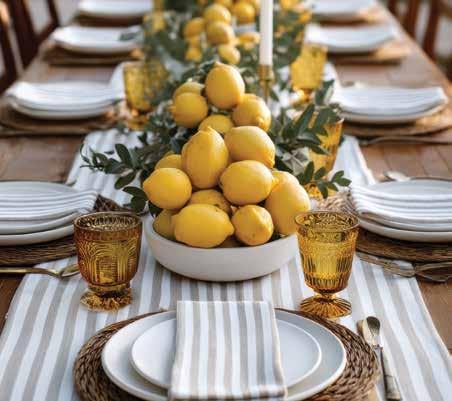
The Art of the Long Summer Table Summer that invites people to linger:
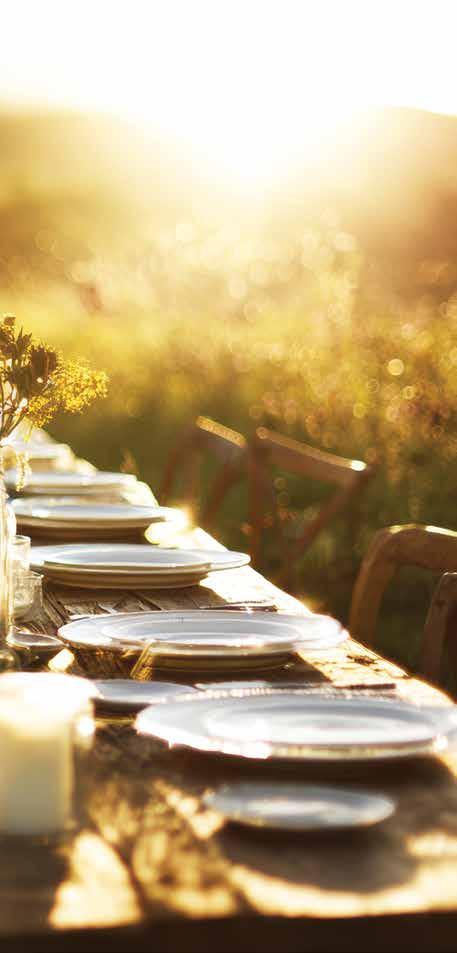
Perhaps it’s the longer evenings, the slower pace, or the simple pleasure of being outdoors, but meals seem to stretch naturally this time of year. Conversations continue long after the plates have been cleared, glasses are refilled without anyone noticing, and what began as dinner becomes an entire evening spent with family and friends.
The most memorable gatherings rarely happen because everything was perfect. In fact, guests are unlikely to remember whether the napkins matched the tablecloth or if every dish was served exactly on time. What they do remember is how they felt. They remember the warmth of the welcome, the ease of the conversation, and the sense that they were invited not just to share a meal, but to belong.
Creating that atmosphere is part design, part preparation, and part mindset. While beautiful tables certainly play a role, the true art of summer entertaining lies in creating a setting that encourages people to relax, connect, and stay awhile.
Start With the Setting
A beautiful summer table begins long before the first plate is placed. Whether you’re hosting on a covered porch, beneath a pergola, around a backyard dining table, or even indoors if it’s a little too hot or you’re running from a summer storm, the surrounding environment plays a significant role in shaping the experience.
One of the most common mistakes hosts make is focusing exclusively on the table itself while neglecting the space around it. Guests notice the atmosphere of a gathering before they notice the centerpiece.
Consider comfort first. In warm climates, shade is often more important than décor. Umbrellas, pergolas, mature trees, or lightweight outdoor drapery can transform an outdoor dining area into a space where guests genuinely want to spend time. Ceiling fans and portable fans can make summer entertaining more enjoyable, particularly during the hottest months.
Seating also deserves thoughtful consideration. Dining chairs should be comfortable enough to encourage conversation after the meal is finished. If chairs are hard or unforgiving, simple cushions can make a significant difference.
The goal is to create a setting that feels inviting rather than staged. Guests should feel comfortable settling in for the evening, knowing there is no rush to leave once dessert has been served.
Let Nature Become Part of the Design
Summer offers one of the greatest decorating advantages imaginable: nature is already doing much of the work.
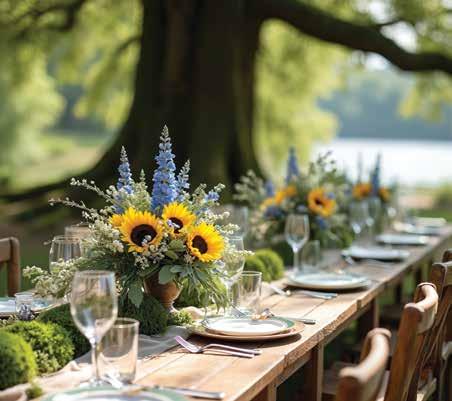
Rather than competing with the landscape, allow it to become part of the table’s design. Fresh flowers gathered from a garden, clipped greenery from the backyard, bowls of citrus, or even a simple arrangement of herbs can create a centerpiece that feels more authentic than anything purchased from a store.
One of the easiest ways to elevate a table is to keep arrangements low enough for conversation. Oversized centerpieces often create visual barriers that force guests to look around rather than through them. A collection of smaller arrangements spread across the table frequently feels more relaxed and encourages interaction.
Natural materials also feel particularly appropriate during summer months. Linen
runners, woven chargers, rattan accents, ceramic serving pieces, and wooden bowls bring warmth and texture without overwhelming the table.
The most successful summer tables often feel slightly imperfect. A casually draped linen cloth, flowers arranged loosely rather than formally, and a mix of serving pieces collected over time can create an atmosphere that feels welcoming rather than overly planned.
Layer for Warmth, Not Formality
Many people associate table layering with formal entertaining, but the principle works just as well for relaxed summer gatherings. Layering simply means creating visual depth through texture, materials, and scale.
A table might begin with a linen runner, followed by woven placemats, ceramic dinnerware, cloth napkins, and simple glassware. Each layer contributes to the
overall experience, making the table feel thoughtful and complete. The key is avoiding excess.
Summer entertaining tends to feel most successful when it strikes a balance between beauty and ease. Guests should feel comfortable using the table rather than worrying about disturbing it.
Color palettes can also help create a sense of cohesion. Rather than introducing numerous competing colors, consider selecting two or three primary tones and repeating them throughout the table. Blues inspired by the coast, soft greens drawn from the garden, sandy neutrals, and crisp whites all work beautifully during summer.
Consistency often creates a greater sense of elegance than complexity.
Lighting Changes Everything
Design a Menu That Supports the Evening
The best summer hosts understand that hospitality begins long before guests arrive. One of the most practical ways to reduce stress is to design a menu that allows the host to spend more time at the table and less time in the kitchen.
Pick dishes that can be prepared in advance as opposed to recipes that require constant attention. You want to be a part of the party too! Salads, grilled vegetables, chilled desserts, and make-ahead sides allow hosts to remain present throughout the evening rather than disappearing repeatedly to finish preparations.
Serving food family-style can also contribute to a more relaxed atmosphere. Large platters placed in the center of the table encourage interaction and create a sense of abundance without requiring elaborate presentation.
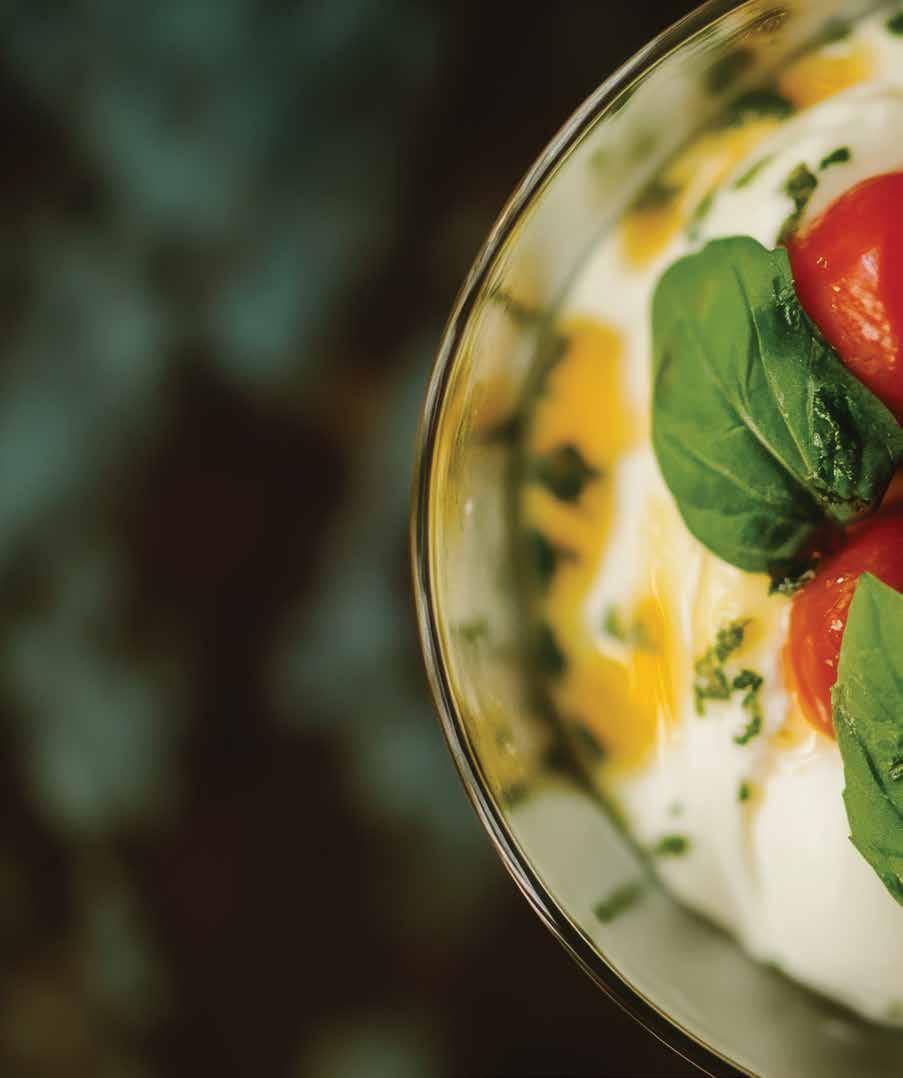
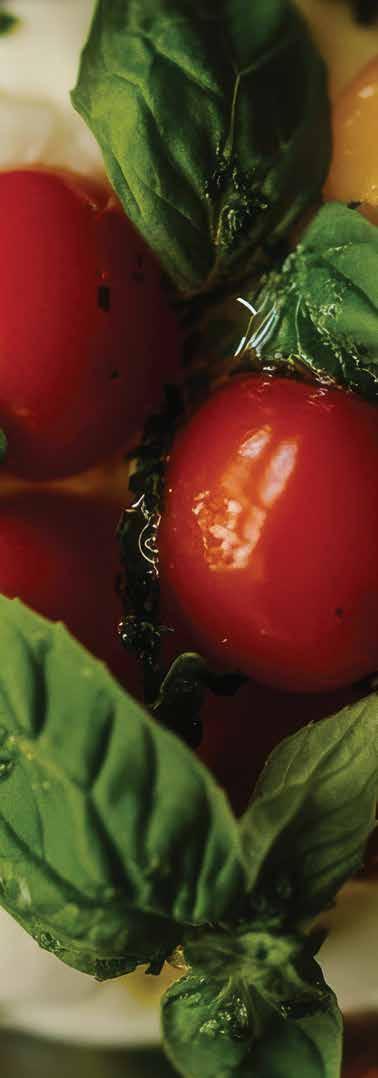
Summer ingredients naturally lend themselves to this approach. Tomatoes, herbs, berries, seafood, stone fruits, and fresh vegetables require relatively little intervention to shine.
When ingredients are at their peak, simplicity is the most elegant choice.
Even the most beautifully designed dining room can feel uninviting under harsh overhead lighting, while a simple space can become magical when illuminated thoughtfully.
Few elements influence the mood of a gathering more dramatically than lighting.
Restaurants understand this principle well. Even the most beautifully designed dining room can feel uninviting under harsh overhead lighting, while a simple space can become magical when illuminated thoughtfully.
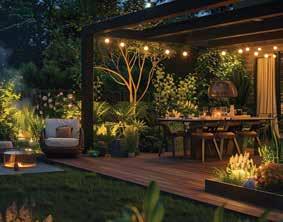
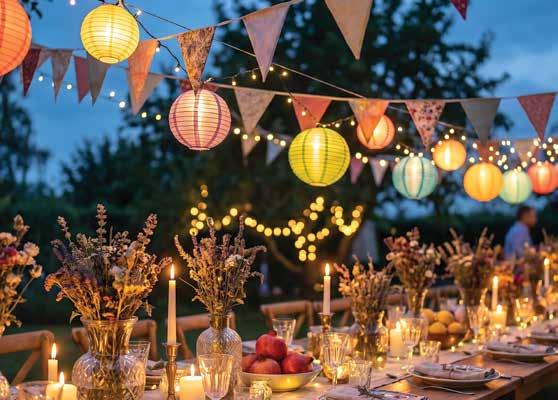
Outdoor entertaining presents unique opportunities to create atmosphere. String lights woven through trees, lanterns lining a pathway, candles scattered across a table, or subtle landscape lighting can transform an ordinary backyard into an unforgettable setting.
One helpful guideline is to incorporate multiple sources of light rather than relying on a single fixture. Layered lighting creates depth and allows the atmosphere to evolve naturally as daylight fades.
Candles remain one of the simplest and most effective tools available to hosts. Their warm glow encourages people to relax and naturally slows the pace of a meal.
As the evening progresses and conversation deepens, lighting often becomes the element guests remember most.
Hospitality Over Perfection
Guests rarely notice small imperfections. They do not remember a slightly overcooked dish or a centerpiece that wasn’t arranged perfectly, but they do remember feeling welcomed.
Some of the most enjoyable dinners happen around tables that are simple rather than elaborate. What makes them memorable is the generosity of spirit behind them.
The art of the long summer table is ultimately about creating space for connection. Beautiful linens, fresh flowers, candlelight, and thoughtfully prepared meals all contribute to the experience, but they are not the reason people gather.
People gather because they want to be together.
And when a table is designed with that purpose in mind, guests often find themselves lingering long after the last course has been served — a sure sign that the evening was a success.
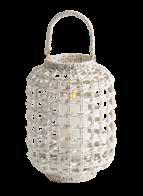
Conrad Woven Lantern $79 - $139 potterybarn.com
The Cut t ing RevivalGarden
Bringing the Beauty of Summer Indoors
Fresh flowers have long been one of life’s simplest luxuries, and even the smallest arrangement has a way of bringing life indoors, connecting a home to the season unfolding just outside its windows. For generations, many home gardens were designed with this purpose in mind. Flowers weren’t planted solely to be admired from a porch or patio. They were grown to be cut, shared, and enjoyed throughout the home. In recent years, that tradition has experienced a remarkable resurgence as homeowners rediscover the beauty and practicality of the cutting garden.
The most successful cutting gardens prioritize flowers that perform well in a vase while also providing a long season of blooms.
A cutting garden is designed specifically to provide blooms for arrangements all season long. Unlike formal landscape beds, where every flower is expected to remain in place, cutting gardens invite frequent harvesting. In fact, many varieties perform better when they are cut regularly, rewarding gardeners with even more blooms throughout the summer.
A cutting garden provides a steady supply of flowers, encourages time outdoors, and offers a simple way to bring beauty into daily life. Best of all, it can be adapted to nearly any property, whether you have a sprawling backyard or a handful of raised beds.
Grow What You Love to Bring Inside
One of the most common mistakes gardeners make when planning a cutting garden is selecting flowers for their appearance in the landscape. The qualities that make a flower attractive in a garden bed aren’t always the same qualities that make it useful in an arrangement. Some blooms fade quickly after cutting, while others have stems that are too short or fragile for arranging.
The most successful cutting gardens prioritize flowers that perform well in a vase while also providing a long season of blooms. Zinnias remain one of the most popular choices for good reason. They are easy to grow, available in an enormous range of colors, and continue producing flowers for months when harvested regularly. Cosmos offer a softer, more romantic look and thrive
even during the heat of summer. Snapdragons, celosia, and strawflower provide texture and variety, while dahlias deliver dramatic blooms that often become the stars of late-summer arrangements.
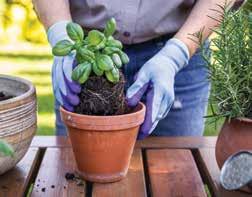
Gardeners looking for reliable filler materials should also consider flowering herbs and greenery. Basil, mint, oregano, eucalyptus, and various ornamental grasses add movement and texture while helping arrangements feel more natural and less formal.
Rather than focusing on individual flowers, think about building a collection of plants that work together. Successful arrangements typically include a combination of focal flowers, secondary blooms, and greenery, creating depth and visual interest without requiring dozens of different varieties.
Plan for Continuous Blooms
One of the reasons cutting gardens feel so rewarding is that they continue producing throughout the season. Achieving this requires a slightly different approach than traditional flower gardening.
Many popular cutting flowers are considered “cut-and-come-again” varieties, meaning the act of harvesting encourages the plant to produce additional blooms. Zinnias, cosmos, and basil all fall into this category. The more frequently they are cut, the more productive they become.
Succession planting can further extend the harvest season. Rather than planting everything at once, gardeners can sow seeds in
Cosmos Zinnia
Mallow
Foxglove Fireweed
One reason professionally designed arrangements appear so effortless is that they rely on a mix of shapes, textures, and heights.
stages several weeks apart. This technique helps ensure a steady supply of flowers from early summer into fall rather than one dramatic flush of blooms followed by a period of decline.
Spacing also matters. While ornamental beds are often designed for visual impact, cutting gardens benefit from efficient planting. Flowers can be grouped more closely together because their primary purpose is production rather than display.
Harvest Like a Professional
Many gardeners are surprised to learn that cutting flowers properly can significantly extend their vase life.
The best time to harvest is typically early in the morning when temperatures are cooler and plants are fully hydrated. Stems cut during the heat of the day often wilt more quickly because they have already lost moisture through transpiration.
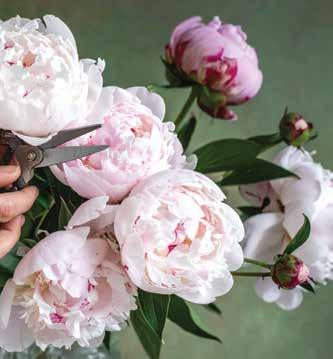
Sharp, clean pruners are essential. Crushing stems can inhibit water uptake and shorten the life of an arrangement. Flowers should be placed into water immediately after cutting whenever possible. Different flowers have different harvesting preferences. Zinnias should be fully open before cutting, while snapdragons are often harvested when only a portion of the blooms have opened. Learning these small details can dramatically improve performance indoors.
Professional flower growers also condition their flowers before arranging them. This simply means allowing stems to rest in clean water for several hours, often in a cool location, before creating an arrangement. The process allows flowers to fully hydrate and often extends vase life by several days.
The Secret to Better Arrangements
One reason professionally designed arrangements appear so effortless is that they rely on a mix of shapes, textures, and heights.
A useful approach is to think in layers. Begin with greenery to establish the overall shape. Add focal flowers such as dahlias, hydrangeas, or large zinnias. Then incorporate smaller blooms and airy filler flowers to soften the arrangement and create movement.
Odd numbers often feel more natural than even numbers, and asymmetry frequently appears more relaxed than perfectly balanced designs. Some of the most beautiful arrangements look as though they were gathered casually from the garden, even when considerable thought has gone into their composition.
Container selection also plays an important role. Beautiful arrangements do not require expensive vases. Ceramic pitchers, crocks, baskets lined with waterproof containers, and vintage vessels often feel more personal and interesting than traditional glass vases.
More Than Flowers
The resurgence of cutting gardens reflects something deeper than a renewed interest in gardening.
Fresh flowers have a unique ability to elevate everyday moments. They make weeknight dinners feel special. They brighten morning coffee rituals. They transform guest rooms into welcoming retreats. Unlike many decorative purchases, flowers ask only to be enjoyed.
Perhaps that is why cutting gardens continue to resonate with so many homeowners. They provide more than flowers. They provide a reason to slow down, step outside, and appreciate the fleeting beauty of the season.
$120/quince.com
$18/magnolia.com
$79/potterybarn.com
$49.50/potterybarn.com
Coastal Charm & Timeless Comfort
Trends come and go, but certain homes seem to remain effortlessly appealing year after year. They are the spaces that feel collected rather than decorated, comfortable rather than formal, and welcoming rather than overly styled. Think linen-covered sofas, blue-andwhite ceramics, woven baskets, fresh flowers on the table, and shelves filled with well-loved books.
In recent years, the design world has embraced terms like Coastal Grandmother and Grandmillennial to describe this aesthetic, but the appeal extends far beyond social media trends. At their core, both styles celebrate timeless design, thoughtful layering, and the belief that a home should support a beautiful life rather than simply impress visitors.
The items featured here capture that spirit and these selections are designed to help create a home that feels relaxed, welcoming, and effortlessly elegant, not just during summer, but throughout the year.
$358.00/laurelandblush.com
$40.99/potterybarn.com
$278.12/englishelm.com
Artisan Studio Clam Shell Candle
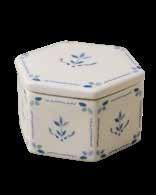
Juliet Ceramic Decorative Canister
Arched Seagrass Table Lamp
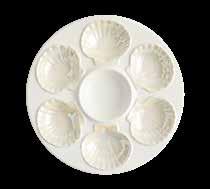
Coastal Embossed Stoneware Oyster Serving Platter
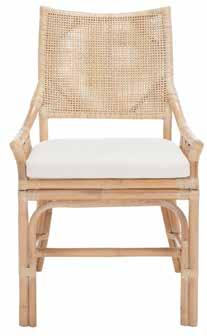
Donatella Rattan Chair
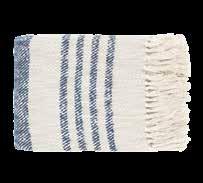
Lallie Handwoven Throw
Pillow Combination Set
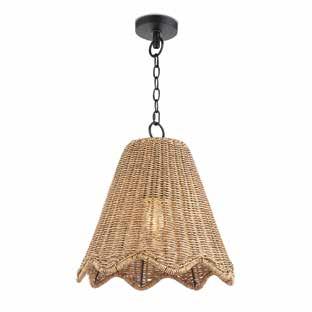
One Light Pendant by Regina Andrew $600/shelldesignshop.com
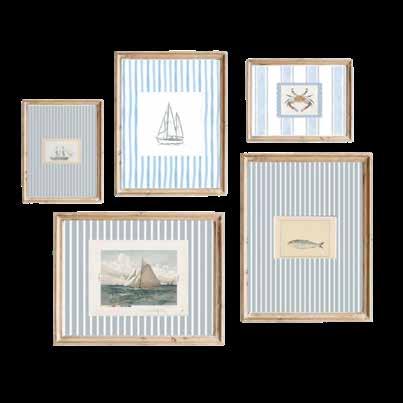
East Coast Grandmillennial Prints $5/Etsy.com - Truth & Tide Studio
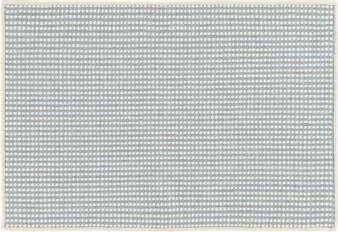
Dash & Albert Pixel Flatwoven Sisal/Wool Rug See Website for Size and Pricing rugsdoneright.com
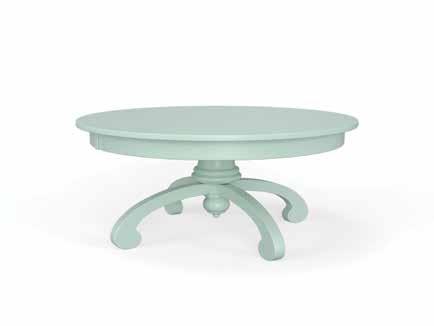
Cocktail Table $1,885.00/mainecottage.com
Harbor Marlow Sofa Starting at $4,608/pepper-home.com
Della
Louisa
Treasures Along the Shore
A Guide to America’s Most Beautiful Seashells
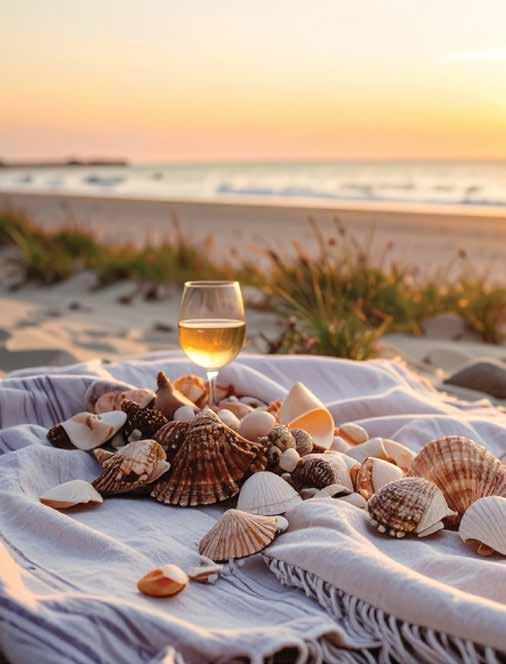
Few beach traditions are as enduring as shell collecting.
For generations, beachgoers have wandered shorelines searching for nature’s tiny treasures, filling pockets, buckets, and jars with reminders of days spent by the water. While every coastline offers its own unique discoveries, certain shells have become favorites among collectors for their beauty, rarity, and fascinating stories.
Whether you’re strolling a Florida beach, exploring the Carolina coast, or searching tide pools along the Pacific Ocean, knowing what you’re looking for can make shelling even more rewarding.
The Lightning Whelk is instantly recognizable thanks to its unusual left-handed spiral, a trait that sets it apart from most other shells. Its elegant shape and warm coloring make it a favorite among Gulf Coast collectors.
Where to Find It: Texas, Louisiana, Alabama, Mississippi, and Florida Gulf beaches.
Moon Snail
Known for its near-perfect spiral shape, the Moon Snail shell is a favorite among collectors who appreciate simplicity and symmetry. Where to Find It: Atlantic and Pacific coastlines.
The Junonia
Often referred to as the “holy grail” of Florida shelling, the Junonia is famous for its cream-colored shell decorated with distinctive brown spots. Because intact specimens are relatively rare, finding one is considered a badge of honor among shell collectors.
Where to Find It: Southwest Florida, particularly Sanibel and Captiva Islands.
Lettered Olive
Smooth, glossy, and beautifully patterned, the Lettered Olive often appears polished by the sea. Its markings resemble delicate handwriting, giving the shell its memorable name.
Where to Find It: Florida and Gulf Coast beaches.
Cockle Shell
Often heart-shaped and beautifully ridged, cockle shells are among the easiest and most rewarding finds for beginner shell collectors.
Where to Find It: Atlantic and Gulf Coast beaches.
Scotch Bonnet
North Carolina’s state shell is prized for its intricate markings and distinctive shape. Named for its resemblance to a traditional Scottish bonnet, it remains one of the most sought-after shells on the Atlantic coast.
Where to Find It: North Carolina and the Mid-Atlantic coastline.
Sand Dollar
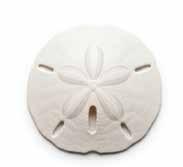
Technically not a shell but the skeleton of a marine animal related to sea urchins, sand dollars are among the most recognizable treasures found along American coastlines.
Where to Find It: Atlantic, Pacific, and Gulf Coast beaches.
Conch
One of the most iconic shells in the world, the conch is known for its size, dramatic shape, and often vibrant interior coloring.
Where to Find It: Florida Keys, Caribbean waters, and portions of the Gulf Coast.
Abalone
The Pacific Coast’s most famous shell is treasured for its iridescent interior, which shimmers with shades of blue, green, and purple. Where to Find It: California, Oregon, Washington, and Alaska.
Responsible Shelling
As enjoyable as shell collecting can be, responsible practices help ensure beaches remain healthy for future generations. Before collecting a shell, always check to make sure it is unoccupied. Many marine creatures rely on empty shells for shelter, particularly hermit crabs. If a shell contains a living animal, return it gently to the water.
It’s also wise to familiarize yourself with local regulations. Some beaches and protected areas restrict shell collecting, while certain species may be protected by law. When in doubt, take only a few meaningful treasures and leave plenty for others to enjoy.
Cleaning & Preserving Your Finds
Once home, begin by rinsing shells thoroughly with fresh water to remove sand and salt residue. For shells that require deeper cleaning, a brief soak in a diluted bleach solution can help remove organic material and stains. Be careful not to over-soak, as prolonged exposure may dull natural colors. Use a soft brush to remove stubborn debris, then allow shells to dry completely before storing or displaying them.
To preserve their natural luster, many collectors lightly rub shells with mineral oil after cleaning. A small amount can enhance color and restore a subtle shine.
Displaying Your Collection
Seashells are more than souvenirs. They are tangible reminders of places visited and memories made.
Display favorite finds in glass jars, decorative bowls, shadow boxes, or framed collections. A handful of carefully chosen shells can add a coastal touch to a bookshelf, coffee table, or guest room without feeling overly themed.
Years later, a single shell can transport us back to a favorite beach, a family vacation, or a perfect summer afternoon by the water.
And that may be the greatest treasure of all.
Travel Through the Table
Three Coastal Destinations, Six Signature Recipes
There are many ways to experience a place. Some travelers remember architecture. Others remember landscapes, museums, or beaches. Yet for many of us, our strongest memories are tied to food. A bowl of pasta enjoyed on a sun-drenched terrace in Italy. Fresh seafood overlooking a harbor in Maine. A slice of pie shared on a porch as the evening settles in. Food has a unique ability to tell the story of a destination. It reflects the climate, the history, the people, and the traditions that have shaped a place over generations. The ingredients available to local cooks often become part of a region’s identity, while recipes passed down through families help preserve a sense of connection to the past.
This summer, we’re taking a culinary journey to three beloved coastal destinations, each known not only for its beauty but also for its distinctive food culture. From the historic streets of Charleston to the rocky shores of Maine and the windswept beaches of Nantucket, these communities have built traditions around gathering, hospitality, and meals shared with family and friends.
The recipes that follow offer a taste of each destination and a reminder that some of the best ways to travel begin right at your own table.
Charleston
The Soul of the Lowcountry
Charleston is a city that seems designed for lingering. Visitors quickly fall in love with its historic homes, sweeping porches, cobblestone streets, and centuries-old oak trees draped in Spanish moss. Yet beneath its undeniable beauty lies something equally compelling: a culture deeply rooted in hospitality.
Food has always been central to life in the Lowcountry. Shaped by African, Caribbean, French, and English influences, the region’s cuisine tells the story of the people who settled here and the coastal landscape that sustained them. Local ingredients such as shrimp, crab, oysters, rice, and stone-ground grits appear throughout traditional dishes, creating a cuisine that feels both deeply Southern and distinctly tied to the sea.
Meals in Charleston often unfold at an unhurried pace. Long lunches stretch into the afternoon. Family dinners become gatherings that linger well after dessert. Front porches serve as extensions of the dining room, offering a place to enjoy conversation while catching an evening breeze.
This relaxed approach to entertaining feels particularly fitting during summer months. The season invites us to slow down, gather with friends, and enjoy simple pleasures, many of which begin around the table.
Two dishes capture the spirit of Charleston particularly well.
Shrimp and grits reflects the region’s coastal heritage and resourcefulness, transforming humble ingredients into something memorable. Crab cakes celebrate another local treasure, allowing fresh seafood to remain the star of the plate.
Together, they offer a taste of the Lowcountry’s enduring appeal—comforting, flavorful, and designed to be shared.
Charleston Crab Cakes
INGREDIENTS
1 pound lump crab meat
1/2 cup mayonnaise
1 egg
1 teaspoon Dijon mustard
1 teaspoon Worcestershire sauce
1 tablespoon fresh lemon juice
1/2 cup panko breadcrumbs
2 tablespoons chopped parsley
Salt and pepper to taste
2 tablespoons butter
2 tablespoons olive oil
DIRECTIONS
1. In a large bowl, gently combine mayonnaise, egg, Dijon mustard, Worcestershire sauce, lemon juice, breadcrumbs, parsley, salt, and pepper. Fold in the crab meat carefully to avoid breaking up the lumps.
2. Form the mixture into eight small crab cakes and refrigerate for at least thirty minutes.
3. Heat butter and olive oil in a large skillet over medium heat. Cook crab cakes until golden brown on both sides, approximately three to four minutes per side.
4. Serve with lemon wedges and a simple green salad for an easy summer meal.
Lowcountry Shrimp & Grits
INGREDIENTS
FOR THE GRITS
1 cup stone-ground grits
4 cups water
1 cup whole milk
4 tablespoons butter
1 cup sharp cheddar cheese, shredded
Salt and pepper to taste
DIRECTIONS
FOR THE SHRIMP
1 pound large shrimp, peeled and deveined
4 slices bacon, diced
1 small onion, finely diced
1 bell pepper, diced
2 cloves garlic, minced
1 tablespoon lemon juice
2 tablespoons chopped parsley
Salt and pepper to taste
1. Bring water and milk to a gentle boil in a large saucepan. Slowly whisk in the grits, reduce heat, and cook according to package directions, stirring frequently until thick and creamy. Stir in butter, cheese, salt, and pepper.
2. Meanwhile, cook bacon in a large skillet until crisp. Remove bacon and set aside, leaving the drippings in the pan. Add onion and bell pepper and cook until softened. Stir in garlic and cook for another minute.
3. Add shrimp and cook until pink and opaque, about two to three minutes per side. Return bacon to the skillet and stir in lemon juice and parsley. Season with salt and pepper.
4. Serve the shrimp mixture over warm grits and garnish with additional parsley if desired.
Kennebunkport
Maine’s Coastal Table
Along Maine’s southern coast, where fishing boats bob gently in protected harbors and hydrangeas spill over white picket fences, Kennebunkport has long embodied the charm of a New England summer.
Unlike destinations that rely on spectacle, Kennebunkport’s appeal is rooted in simplicity. Weathered cedar shingles fade gracefully with time. Lobster boats return to the docks each morning with the day’s catch. Families gather in cottages that have welcomed generations of visitors, and meals often revolve around ingredients harvested from the sea and surrounding countryside.
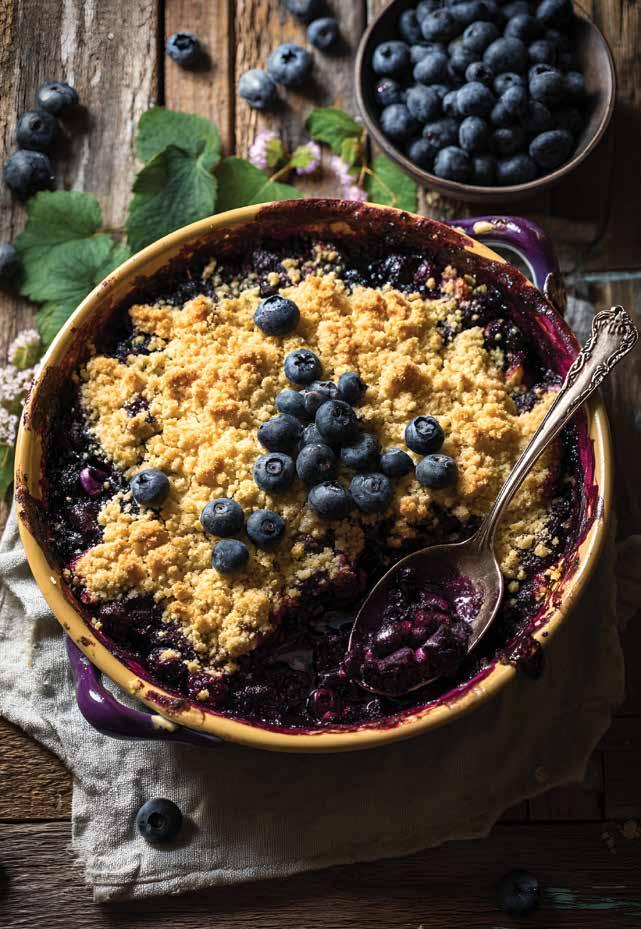
The rhythms of life here remain closely tied to the natural world. Tides dictate fishing schedules. Farmers markets overflow with seasonal produce. Wild blueberries blanket parts of the Maine landscape each summer, providing one of the state’s most iconic ingredients.
That connection to place is reflected throughout Maine’s cuisine. Dishes tend to be straightforward and unfussy, allowing exceptional ingredients to speak for themselves. Lobster, clams, blueberries, and fresh dairy products appear frequently, often prepared with remarkable restraint.
It’s a philosophy that feels particularly relevant in today’s world, where many recipes compete to be more elaborate than the last. Maine reminds us that quality ingredients require very little embellishment.
A perfectly prepared lobster roll may contain only a handful of ingredients. A blueberry dessert succeeds because of the fruit itself, not because it has been transformed beyond recognition.
Perhaps that is why meals in coastal Maine feel so memorable. They celebrate abundance without excess and tradition without pretension.
Like the town itself, the food is welcoming, timeless, and deeply connected to its surroundings.
Classic Maine Lobster Rolls
INGREDIENTS
11/2 pounds cooked lobster meat, chopped into large pieces
1/4 cup mayonnaise
1 tablespoon fresh lemon juice
1 tablespoon finely chopped chives
Salt and freshly ground black pepper
4 New England-style split-top hot dog buns
2 tablespoons butter
DIRECTIONS
1. In a large bowl, gently combine the lobster meat, mayonnaise, lemon juice, and chives. Season lightly with salt and pepper. Be careful not to overmix, as the lobster should remain the star of the dish.
2. Butter the outsides of the buns and toast them in a skillet until golden brown.
3. Fill each bun generously with the lobster mixture and serve immediately.
4. For an authentic Maine experience, pair with kettle chips and a simple cucumber salad.
Wild Blueberry Crumble
INGREDIENTS
FOR THE FILLING
4 cups wild blueberries
1/4 cup sugar
1 tablespoon cornstarch
1 tablespoon lemon juice
FOR THE CRUMBLE
1 cup old-fashioned oats
3/4 cup flour
1/2 cup brown sugar
1/2 teaspoon cinnamon
6 tablespoons cold butter, cubed
DIRECTIONS
1. Preheat oven to 375°F.
2. In a mixing bowl, combine blueberries, sugar, cornstarch, and lemon juice. Transfer to a greased baking dish.
3. In a separate bowl, combine oats, flour, brown sugar, and cinnamon. Cut in the butter until the mixture resembles coarse crumbs.
4. Sprinkle the topping evenly over the blueberries.
5. Bake for 35 to 40 minutes, or until the filling is bubbling and the topping is golden brown.
6. Serve warm with vanilla ice cream or lightly whipped cream.
Nantucket
Summer by the Sea
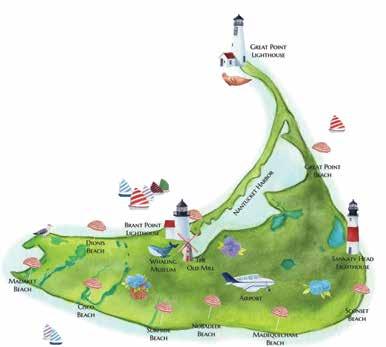
Few destinations capture the romance of summer quite like Nantucket. Located thirty miles off the coast of Cape Cod, the island has long been associated with cedar-shingled cottages, windswept beaches, sailboats, and a style of living that feels both relaxed and refined. While its popularity has grown over the years, Nantucket has managed to preserve much of the character that made it special in the first place.
The island’s history is deeply intertwined with the sea. Once one of the world’s busiest whaling ports, Nantucket developed a culture shaped by maritime traditions, self-reliance, and a close relationship with the surrounding waters. Today, that heritage remains evident not only in the architecture and landscape but also in the food. Seafood continues to play a central role in local cuisine. Bay scallops, oysters, striped bass, and lobster appear on menus throughout the island, often prepared simply to highlight their freshness and quality.
Yet Nantucket’s food culture is about more than seafood. Entertaining is woven into daily life during the summer months. Friends gather for sunset cocktails overlooking the harbor. Families host backyard dinners beneath strings of lights. Farmers markets provide fresh produce that finds its way into seasonal salads, desserts, and weekend brunches.
Like many of the homes that line the island’s streets, the best meals on Nantucket strike a balance between elegance and ease. Nothing feels overly formal, yet every detail feels thoughtful.
The recipes that follow reflect that philosophy. Fresh scallops become an effortless centerpiece for a summer dinner, while a berry trifle celebrates the abundance of the season with layers of fruit, cream, and cake that feel both festive and approachable.
Together, they capture the spirit of an island that understands how to make the most of summer.
Seared Bay Scallops with Lemon Butter
INGREDIENTS
11/2 pounds bay scallops
2 tablespoons olive oil
3 tablespoons butter
2 cloves garlic, minced Juice of 1 lemon
2 tablespoons chopped parsley
Salt and freshly ground black pepper
DIRECTIONS
1. Pat scallops dry with paper towels and season lightly with salt and pepper.
2. Heat olive oil in a large skillet over medium-high heat. Add scallops in a single layer and cook for approximately two minutes per side, or until golden brown.
3. Remove scallops from the skillet and reduce heat to medium.
4. Add butter and garlic to the pan and cook for one minute. Stir in lemon juice and parsley.
5. Return scallops to the skillet and toss gently to coat.
6. Serve immediately with crusty bread, rice, or seasonal vegetables.
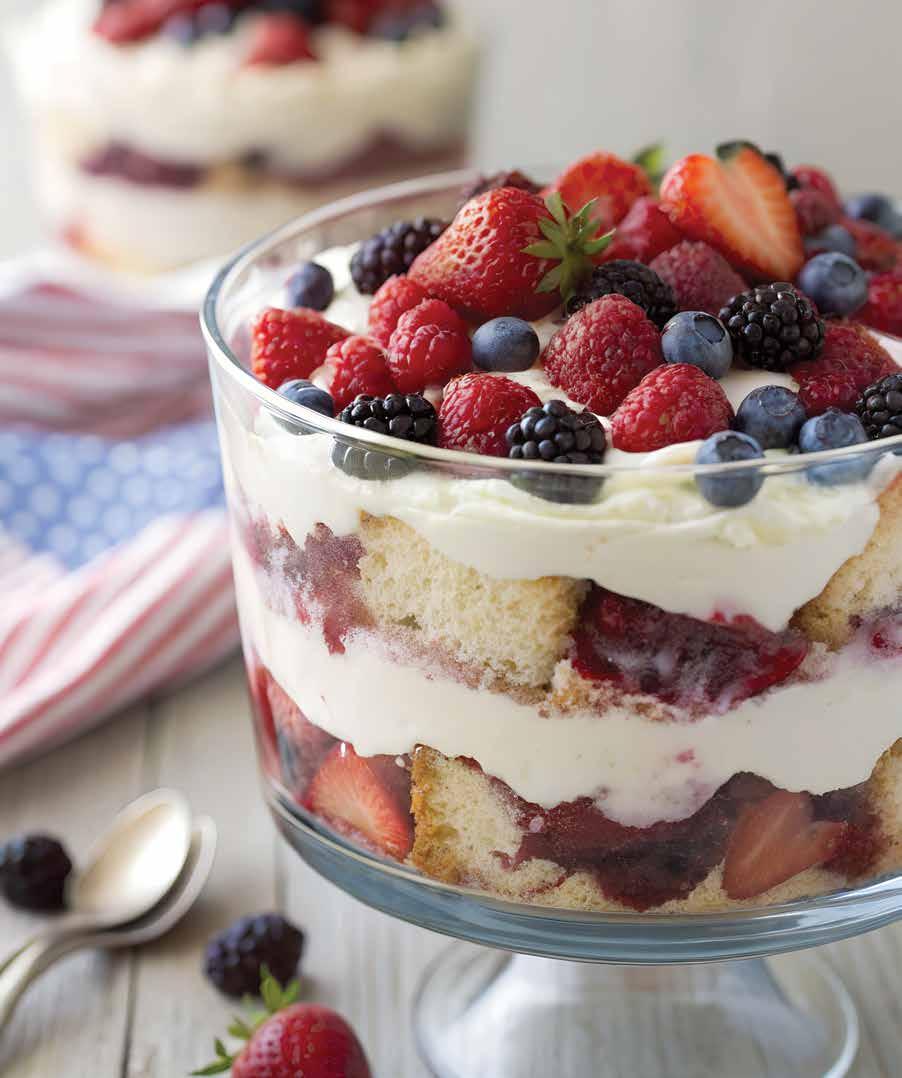
Summer Berry Trifle
INGREDIENTS
1 pound cake, cubed
2 cups strawberries, sliced
1 cup blueberries
1 cup raspberries
2 cups whipped cream
1 cup vanilla pudding Fresh mint for garnish
DIRECTIONS
1. In a trifle dish or large glass bowl, layer half of the pound cake cubes.
2. Top with half of the vanilla pudding, followed by half of the berries and half of the whipped cream.
3. Repeat the layers with the remaining ingredients.
4. Refrigerate for at least two hours before serving.
5. Garnish with fresh mint and additional berries.
6. The result is a light, colorful dessert that feels perfectly suited to long summer evenings and gatherings with family and friends.
Leaving Well Smart Strategies for a Better Summer Vacation
A great vacation rarely begins when you arrive at your destination. More often, it begins weeks earlier with thoughtful planning, smart preparation, and a few simple habits that help eliminate unnecessary stress. While social media tends to focus on the highlights of travel, like the beautiful beaches, memorable meals, and spectacular views, the reality is that the quality of a trip is often determined by the details behind the scenes.
A delayed flight is easier to manage when you’ve packed strategically. Returning home feels more relaxing when you’ve prepared your house before leaving. Even finding the right deal often comes down to planning rather than luck.
The good news is that traveling well doesn’t require expert-level planning or an unlimited budget. A handful of simple strategies can make almost any trip smoother, more affordable, and more enjoyable.
Pack Smarter, Not Heavier
One of the most common travel mistakes is overpacking.
Many travelers pack for every possible scenario, only to discover they wear the same handful of outfits throughout the trip. A more effective approach is to build a travel wardrobe around a cohesive color palette that allows pieces to mix and match easily.
Neutral colors such as white, navy, beige, gray, and black provide flexibility while reducing the number of items needed. A lightweight sweater, versatile dress, comfortable walking shoes, and a few interchangeable basics can create multiple outfits without overfilling a suitcase.
Packing cubes have become increasingly popular for good reason. They help organize clothing, maximize space, and make it easier to locate items without unpacking an entire suitcase.
Another useful strategy is to wear your bulkiest items while traveling. Jackets, sneakers, and heavier layers consume valuable luggage space and are often more comfortable to wear than pack.
Finally, leave a little room in your suitcase. Whether it’s a local specialty, a favorite bottle of olive oil, or a souvenir from a memorable destination, most travelers return home with more than they left with.
Shacke 5 Set Packing Cubes amazon.com / $25.99
Midweek flights often cost less than those departing on Fridays or returning on Sundays.
Finding Better Travel Deals
Travel pricing can feel unpredictable, but a few habits can help improve your chances of finding good value.
Flexibility remains one of the most powerful tools available to travelers. Shifting departure dates by even a day or two can sometimes produce significant savings, particularly during peak travel seasons.
Midweek flights often cost less than those departing on Fridays or returning on Sundays. Early morning departures may also offer lower fares while reducing the likelihood of delays caused by cascading schedule disruptions later in the day.
Fare alerts can be particularly helpful when planning travel well in advance. Many travel platforms allow users to track specific routes and receive notifications when prices change. When possible, consider alternative airports. A slightly longer drive before departure may result in substantial savings, especially for families purchasing multiple tickets.
For accommodations, booking directly through hotels can sometimes provide benefits unavailable through third-party websites, including room upgrades, flexible cancellation policies, or loyalty program perks.
Protecting Your Home While You’re Away
Returning home should feel relaxing, not stressful.
A little preparation before departure can provide peace of mind while helping your home appear occupied during your absence. Begin by pausing newspaper subscriptions and placing a hold on mail if you’ll be gone for an extended period. Packages left on a front porch quickly signal that a home may be vacant.
Smart lighting systems and programmable timers can create the appearance of normal activity by turning lights on and off at scheduled times. Exterior lighting should also be checked before departure to ensure entrances remain well illuminated.
It’s generally wise to avoid announcing travel plans publicly until after returning home.
Did you know? Did you know?
Many
countries require passports to remain valid for several months beyond travel dates!
Making Travel Less Stressful
While sharing vacation photos is part of modern life, posting in real time can unintentionally advertise that a property is unoccupied.
Neighbors can be valuable allies when traveling. Asking a trusted neighbor to keep an eye on your property, collect deliveries, or move trash bins can provide an additional layer of security.
Finally, take a few minutes to walk through your home before leaving.
Verify that doors and windows are locked, unnecessary appliances are unplugged, and thermostats are adjusted appropriately for the season.
Even experienced travelers occasionally overlook small details that can create unnecessary headaches.
A week before departure, confirm reservations, review travel documents, and ensure passports remain valid if traveling internationally. Many countries require passports to remain valid for several months beyond travel dates.
Prescription medications should be refilled in advance, and it is often wise to carry medications in original containers within your carry-on luggage.
Anker Nano Power Bank, 10,000mAh Portable Charger with Built-in USB-C Cable amazon.com
$49.99
Portable chargers have become essential travel companions. Between navigation apps, boarding passes, hotel confirmations, and communication tools, phones work harder while traveling than they do at home.
Weather forecasts also deserve attention. Understanding local conditions before departure can prevent unnecessary purchases and help ensure appropriate packing choices.
Smart lighting systems can create the appearance of normal activity by turning lights on and off at scheduled times.
Travel insurance may be worth consid-
ering for larger trips, particularly those involving international travel, cruises, or significant prepaid expenses.
While it is not necessary for every journey, it can provide valuable protection when plans change unexpectedly.
Preparing for Your Return
One of the simplest travel tips has nothing to do with the trip itself. Before leaving, prepare your home for your future self.
Wash and change bed linens. Empty the refrigerator of perishable items. Run the dishwasher and take out the trash. Consider leaving a simple frozen meal available for your return if you’ll be arriving home late.
These small tasks require only a few extra minutes before departure, yet they can dramatically improve the experience of coming home.
Many travelers find that the most difficult part of a vacation is the abrupt transition back into daily life. A clean house, fresh sheets, and an organized kitchen help soften that transition and allow the benefits of a trip to linger a little longer.
Because the smartest travel strategy isn’t about the destination at all. It’s about making both the journey and the return as enjoyable as possible.
The Summer Soundtrack
Songs That Have Soundtracked Generations of Summers
A great summer song doesn’t simply remind us of a particular year. It reminds us of how we felt. Decades later, a familiar melody can instantly transport us back to a specific beach, a favorite vacation, or a sunset drive along the coast. This playlist celebrates some of the songs that have become part of summer’s collective memory.
1. Summer Breeze — Seals & Crofts
A timeless ode to warm evenings, open windows, and the simple pleasures of the season.
2. Sittin’ On The Dock of the Bay — Otis Redding
Perhaps no song captures waterfront relaxation more perfectly than this enduring classic.
3. Margaritaville — Jimmy Buffett
A carefree anthem that has become synonymous with summer living.
4. Ventura Highway — America
Road-trip music at its finest, evoking endless horizons and sunny afternoons.
5. Southern Cross — Crosby, Stills & Nash
A sailing song that manages to feel both adventurous and deeply nostalgic.
6. Kokomo — The Beach Boys
Tropical escapism wrapped in one of summer’s most recognizable melodies.
7. Into the Mystic — Van Morrison
Soulful, timeless, and perfect for a sunset drive or evening by the water.
8. Come Monday — Jimmy Buffett
A reminder that the best summer memories are tied to places we never quite want to leave.
9. Walking on Sunshine — Katrina and the Waves
Pure optimism in musical form.
10. Banana Pancakes — Jack Johnson
Easygoing and effortless, much like a perfect summer morning.
11. Beyond the Sea — Bobby Darin
A classic that continues to inspire dreams of travel and adventure.
12. Island in the Sun — Weezer
A modern favorite that captures the carefree spirit of summer.
Whether you’re heading to the beach, relaxing on the porch, or gathering friends around the table, consider pressing play and letting these songs provide the soundtrack for the season ahead.
The
Water’s Edge
Why We Feel Be tter Near Water
There is a reason so many of our favorite destinations have one thing in common. Whether it’s a beach on the Atlantic coast, a quiet lake in the mountains, a winding river through the countryside, or a simple harbor overlooking a small coastal town, people have long been drawn to water. We plan vacations around it. We seek homes near it. We spend weekends finding our way back to it.
Ask someone to describe their ideal summer day and chances are water will make an appearance somewhere in the story.
A walk along the shoreline.
An afternoon on a boat.
A quiet morning by the lake.
The sound of waves rolling onto the beach.
For generations, these experiences have been viewed as enjoyable luxuries. More recently, however, researchers have begun to explore something many people have instinctively understood all along: being near water may genuinely be good for us.
The benefits extend far beyond recreation. Time spent near oceans, lakes, rivers, and other bodies of water has been associated with reduced stress, improved mood, greater creativity, and a stronger sense of well-being. While the science continues to evolve, the growing body of research suggests that our attraction to water may be rooted in something deeper than simple preference.
Perhaps the places we love most are not random after all. Perhaps they are responding to something fundamental within us.
The Concept of Blue Mind
Marine biologist Wallace J. Nichols popularized the term “Blue Mind” to describe the mildly meditative state many people experience when they are near water.
According to Nichols, water has a unique ability to calm the mind and shift attention away from the constant stimulation of daily life. Unlike urban environments, which bombard us with information, traffic, advertisements, notifications, and noise, natural bodies of water
tend to encourage a softer form of attention.
We watch waves without needing to analyze them. We listen to water moving across rocks without feeling the need to accomplish anything. Our minds become engaged, yet not overwhelmed.
Researchers studying natural environments have found that these experiences may help reduce mental fatigue and promote a greater sense of calm. While a beach vacation may feel restorative simply because it provides time away from work, the environment itself may also contribute to the feeling.
This helps explain why people often describe feeling different near water.
The pace slows while conversations lengthen. Breathing deepens and the mind becomes less occupied with schedules and more attuned to the present moment. In a culture that often rewards constant productivity, water offers something increasingly rare: permission to simply be.
Nature’s Most Effective Stress Reliever
One of the most fascinating aspects of water is its ability to engage multiple senses simultaneously.
The sound of waves, the movement of light across the surface, the feeling of sand beneath bare feet, and even the scent of salt air combine to create an immersive experience that is difficult to replicate elsewhere.
Unlike many forms of entertainment, which demand active participation, water asks very little of us. We can sit beside it for hours and remain perfectly content.
The rhythmic nature of waves appears to play a role in this effect. Repetitive natural sounds often encourage relaxation by creating a sense of predictability and safety. Similarly, expansive water views may help shift attention away from immediate concerns and toward a broader perspective.
This may be one reason so many people report feeling refreshed after spending time at the beach, even when they have done very little. The restoration comes not from activity, but from the environment itself.
Lakes and rivers provide similar benefits. While they may lack the drama of the ocean, they offer many of the same qualities: movement, reflection, natural beauty, and a sense of separation from daily demands.
Why We Build Around Water
Our attraction to water extends well beyond vacations. Throughout history, communities have formed around rivers, harbors, and coastlines. Waterfront property remains among the most desirable real estate in the world, and homes with water views consistently command premium prices.
Part of this appeal is practical. Water provides transportation, food, and economic opportunity. Yet the emotional attraction often proves just as powerful. People have always inherently recognized the benefits of being near it. This preference has influenced residential design for centuries. Homes are positioned to capture water views whenever possible. Resorts orient rooms toward the ocean. Gardens incorporate fountains and reflecting pools. Public parks frequently feature ponds, streams, and water features designed to create a sense of tranquility.
Even small amounts of water can influence how a space feels.
A fountain tucked into a garden corner introduces movement and sound, while a reflecting pool creates visual calm. The presence of water encourages people to linger, much like a fire pit draws people together on a cool evening.
Designers have long understood what researchers are now beginning to quantify: water changes our experience of a place.
Bringing the Benefits Home
While not everyone lives near a beach or lake, many of the qualities that make water restorative can be incorporated into everyday life.
For homeowners, water features can introduce some of the same sensory benefits into private outdoor spaces. Garden fountains, small ponds, and reflecting pools add movement and sound while creating natural focal points within the landscape.
Swimming pools, while often viewed primarily as recreational amenities, can also serve as places of relaxation and reflection. Early morning swims, quiet evenings by the water, and time spent simply observing the changing reflections throughout the day can transform a backyard into a more restorative environment.
Even interior design often borrows from the qualities we associate with water. Soft blues, natural textures, expansive windows, and reflective surfaces can evoke the calmness many people experience near the coast.
While none of these elements fully replace the experience of standing beside the ocean or a
lake, they reflect our enduring desire to bring some of that feeling into daily life.
Returning to the Shore
Perhaps the most remarkable thing about water is how consistently it draws us back. Year after year, people return to the same beaches, lakes, rivers, and coastal towns.
Families revisit vacation destinations that have become woven into their personal histories. Children who spent summers near the water often seek similar experiences for their own families later in life.
The attraction cannot be explained entirely by scenery. The water remains largely unchanged, yet each visit offers something new.
Perhaps that is why so many of our most cherished summer memories happen near the shore. Water has a way of anchoring us in the present while simultaneously connecting us to the past. It reminds us to look up, slow down, and pay attention to the world around us.
Seasonal Pantry The
Stocking a Kitchen for Effortless Summer Living
The rich braises and long-simmered soups of winter give way to simpler, summer meals built around ingredients that are at their peak. A ripe tomato needs very little improvement. Fresh peaches are often best eaten over the kitchen sink. Sweet corn, fragrant basil, and just-picked berries bring so much flavor to the table that elaborate recipes can feel almost unnecessary.
A well-stocked summer pantry supports easy entertaining and memorable meals. It makes impromptu dinners possible, simplifies weeknight meals, and allows seasonal produce to take center stage. Rather than filling shelves with specialty ingredients that are rarely used, the goal is to create a collection of staples that can elevate everything from a simple salad to an outdoor dinner party.
Start With the Foundation
The best summer meal begins with a handful of ingredients that quietly support everything else.
Few pantry staples work harder than a good olive oil, and it is worth investing in at least one high-quality extra virgin olive oil reserved for finishing dishes rather than cooking. Drizzled over sliced tomatoes, grilled vegetables, or warm bread, quality olive oil contributes flavor, richness, and depth that cannot be replicated by more processed alternatives.
Salt deserves similar attention. Many professional chefs keep multiple varieties within easy reach because different salts serve different purposes. Kosher salt is ideal for cooking, while flaky finishing salts add texture and visual appeal when sprinkled over vegetables, seafood, or even desserts.
A simple tomato salad dressed with olive oil and flaky salt can become one of the most memorable dishes of the season.
Vinegars are equally important. Red wine vinegar, champagne vinegar, and aged balsamic vinegar each bring a different character to dressings, marinades, and sauces. Keeping a small selection on hand allows cooks to create quick vinaigrettes without relying on bottled dressings.
Fresh Herbs Are the Secret Ingredient
If there is one ingredient that defines summer cooking, it may be fresh herbs.
Unlike dried herbs, which contribute background flavor, fresh herbs bring brightness, aroma, and color. They have the ability to transform familiar dishes into something that feels distinctly seasonal.
Basil remains a summer favorite for good reason. It pairs beautifully with tomatoes, peaches, berries, citrus, and seafood, making it one of the most versatile ingredients in a warm-weather kitchen. Mint adds freshness to beverages, salads, and desserts, while parsley, dill, and chives can brighten everything from grilled fish to potato salads.
One of the easiest ways to ensure a steady supply is to grow herbs in containers near the kitchen door. Even a small collection of pots can provide enough basil, thyme, rosemary, and mint to support months of cooking.
For homeowners who enjoy entertaining, fresh herbs also serve a decorative purpose. A few sprigs tucked into a centerpiece or arranged alongside serving platters can make a table feel abundant and connected to the season.
Build Meals Around Seasonal Produce
Summer’s greatest luxury may be the abundance available at local farmers markets and roadside stands.
When produce is harvested at its peak, it requires surprisingly little preparation. A perfectly ripe peach, a basket of strawberries, or an heirloom tomato fresh from the garden often tastes better with minimal intervention than it would in a complicated recipe.
This is why successful summer cooking frequently begins with shopping rather than meal planning.
Instead of deciding what to make and then purchasing ingredients, consider starting with what looks best that week. Tomatoes may inspire a simple caprese salad. Fresh corn could become the foundation for a side dish or chowder. Peaches might find their way into a dessert, a salad, or even a grilled entrée.
Maintaining a flexible pantry makes this approach possible. Grains like farro, couscous, and rice can serve as a base for countless seasonal combinations. Nuts add texture and richness. Good cheeses pair naturally with fruit and vegetables.
Keep Entertaining Staples Within Reach
One of the joys of summer is the spontaneous gathering.
Neighbors stop by unexpectedly. Friends linger after an afternoon by the pool. Family members arrive for a casual dinner that wasn’t planned a week in advance.
A thoughtfully stocked pantry makes these moments easier to embrace. Crackers, olives, roasted nuts, conservas, specialty cheeses, and quality charcuterie items can quickly become the foundation of an effortless appetizer spread. Jars of roasted peppers, marinated artichokes, and tapenades add variety without requiring additional preparation.
Many European households keep these types of ingredients readily available, allowing hospitality to feel less like an event and more like a natural part of daily life. Rather than waiting for special occasions, they create opportunities to gather around simple foods that can be assembled quickly and shared easily.
This mindset can be particularly helpful during summer, when entertaining often happens more frequently and with less formal planning.
Don’t Forget the Pantry’s Sweet Side
Summer desserts tend to follow the same philosophy as summer meals: let the ingredients shine.
Keeping a few staples on hand makes it easy to create simple desserts without extensive preparation. Local honey, quality vanilla, dark chocolate, nuts, and good preserves can transform ordinary ingredients into something memorable.
Fresh berries paired with lightly sweetened whipped cream often require little else. Peaches grilled and served with vanilla ice cream become an elegant dessert with almost no effort. A simple crumble topped with seasonal fruit can move from pantry to table with minimal preparation.
Rather than stocking shelves with highly processed baking mixes and specialty ingredients, consider investing in versatile items that complement fresh produce. The result is a dessert repertoire that feels seasonal rather than formulaic.