Melanie C interview
Liverpool International Tennis Tournament
Belfry Hotel review
Seaforth Restaurant at The Municipal


Melanie C interview
Liverpool International Tennis Tournament
Belfry Hotel review
Seaforth Restaurant at The Municipal
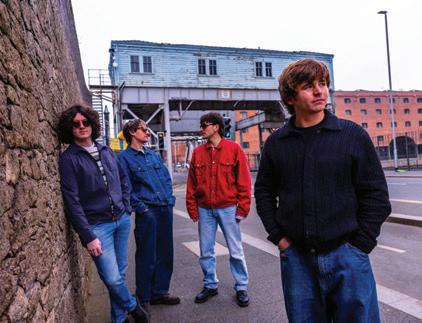
Stars of BBC’s hit Liverpool crime drama talk to YM


Sundial Place
2, 3 and 4 bedroom homes

Sundial Place
2, 3 and 4 bedroom homes
Lydiate Lane, Thornton, Liverpool, Merseyside, L23 1AE
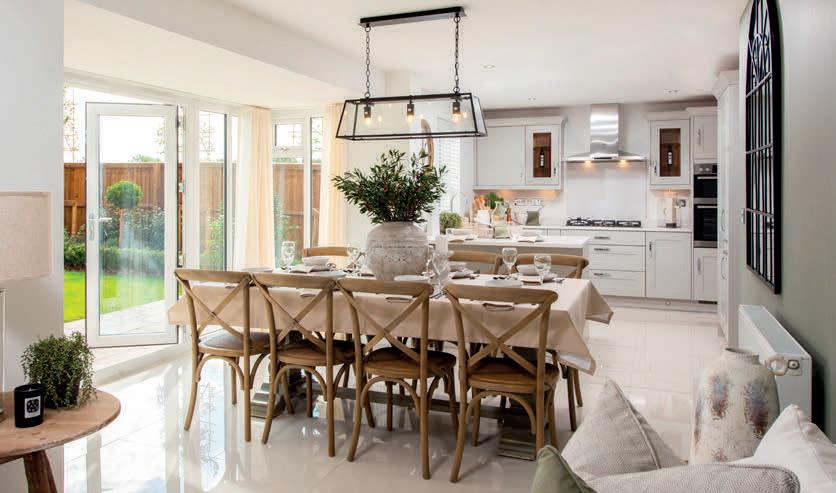
Maylands Park
Lydiate Lane, Thornton, Liverpool, Merseyside, L23 1AE
Silver Hill Manor
3 and 4 bedroom homes
Broad Lane/Lower Lane, Rochdale, OL16 4PT
3, 4 and 5 bedroom homes
Peter De Stapleigh Way, Stapeley, Nantwich, Cheshire, CW5 7TU
Sundial Place 2, 3 and 4 bedroom homes
Lydiate Lane, Thornton, Liverpool, Merseyside L23 1AE
Silver Hill Manor
Kings Park
Calder Rise
2, 3 and 4 bedroom homes
Dunlin Drive, Cottam, Preston, Lancashire, PR4 0JX
Looking for a chain-free move?*
Centurion Village
3 and 4 bedroom homes
Silver Hill Manor 3 and 4 bedroom homes
3 and 4 bedroom homes
Broad Lane/Lower lane, Rochdale OL16 4PT
Broad Lane/Lower Lane, Rochdale, OL16 4PT
Fence Avenue, Macclesfield, Cheshire, SK10 1LT
Maylands Park 3, 4 and 5 bedroom homes
Peter De Stapleigh Way, Stapeley, Nantwich, Cheshire CW5 7GZ
Kings Park 3 and 4 bedroom homes
Fence Avenue, Macclesfield, Cheshire SK10 1LT
Calder Rise 2, 3 and 4 bedroom homes
Looking for a chain-free move?*
Dunlin Drive, Cottam, Preston, Lancashire PR4 0JX
Centurion Village 3 and 4 bedroom homes
Longmeanygate, Midge Hall, Leyland, Lancashire PR26 7TB
Visit our developments and speak to our Sales Advisers about Part Exchange.* We could buy your current home from you, giving you peace of mind of having a guaranteed buyer.
COMING SOON - Queens Reach
3, 4 and 5 bedroom homes, Keckwick Lane, Daresbury, Warrington WA4 6SU

3 & 4 bedroom homes
Longmeanygate, Midge Hall, Leyland, Lancashire, PR26 7TB
Visit our developments and speak to our Sales Advisers about Part Exchange.* We could buy your current home from you, giving you peace of mind of having a guaranteed buyer.
SK10
*T&Cs apply. Offers available on selected homes. Speak to our
Need help with your deposit as a Key Worker?*
Learn more about our Key Worker Deposit Contribution* scheme. If you’re an essential worker, we could contribute £1,000 towards your deposit for every £20,000 spent on the purchase priceup to a maximum of £25,000.
*T&Cs apply. Offers available on selected homes. Speak to our Sales Advisers to find out more.
*T&Cs apply. Offers available on selected homes. Speak to our Sales Advisers to find out more.




Kicking things off this month is an inside look at hit BBC crime drama The Cage. We hear from stars Sheridan Smith, Michael Socha, Barry Sloane and Geraldine James, alongside creator Tony Schumacher, about shooting on location in Liverpool, capturing the city’s voice and authenticity, and the real-life struggles driving the story.
From screen to sound, music also takes centre stage this issue as we sit down with Melanie C, who returns to her dance roots with new album Sweat. The Spice Girl turned solo star reflects on reclaiming her pre-fame self, embracing her Sporty Spice legacy and making a record built for movement, motivation and release.
Meanwhile, we check in at David Wilson Homes’ Sundial Place development in Thornton and highlight a light-filled three-bed semi designed for modern family life at Persimmon’s Old Hall Village.
Plus, Annie S spotlights this summer’s on-trend alternative to jeans and Robin Brown visits the swanky Seaforth Restaurant at Dale Street’s Municipal Building.
Finally, Libby White discovers why a stay at The Belfry Hotel offers a relaxed and surprisingly family-friendly experience, while Jane Clare puts the versatility of Italy’s Gavi wine to the test on a Liverpool restaurant tour, pairing the Piedmont white with a range of dishes.
Until next time!

Editor Lawrence Saunders editor@ymliverpool.com
Design Marten Sealby sulazcreative.com
ADVERTISING Sales 0151 316 0210
sales@ymliverpool.com




When you have finished with this magazine please recycle it.



DISTRIBUTION Enquiries 0151 316 0210 To

A high-stakes, high-energy BBC crime drama set in a Liverpool casino with two unforgettable characters at its heart, The Cage explores survival, addiction and the choices people make under pressure. We speak to stars Sheridan Smith and Michael Socha, plus Barry Sloane, Geraldine James and creator Tony Schumacher, about filming on location, capturing the city’s voice and authenticity, and the real-life struggles driving the story
words naomi eden


Astory of risk, consequence and survival driven by Tony Schumacher’s sharp, distinctive dialogue, The Cage navigates themes of addiction, desperation and shame, as well as fractured family dynamics and the lack of support for those dealing with loss – financial or emotional.
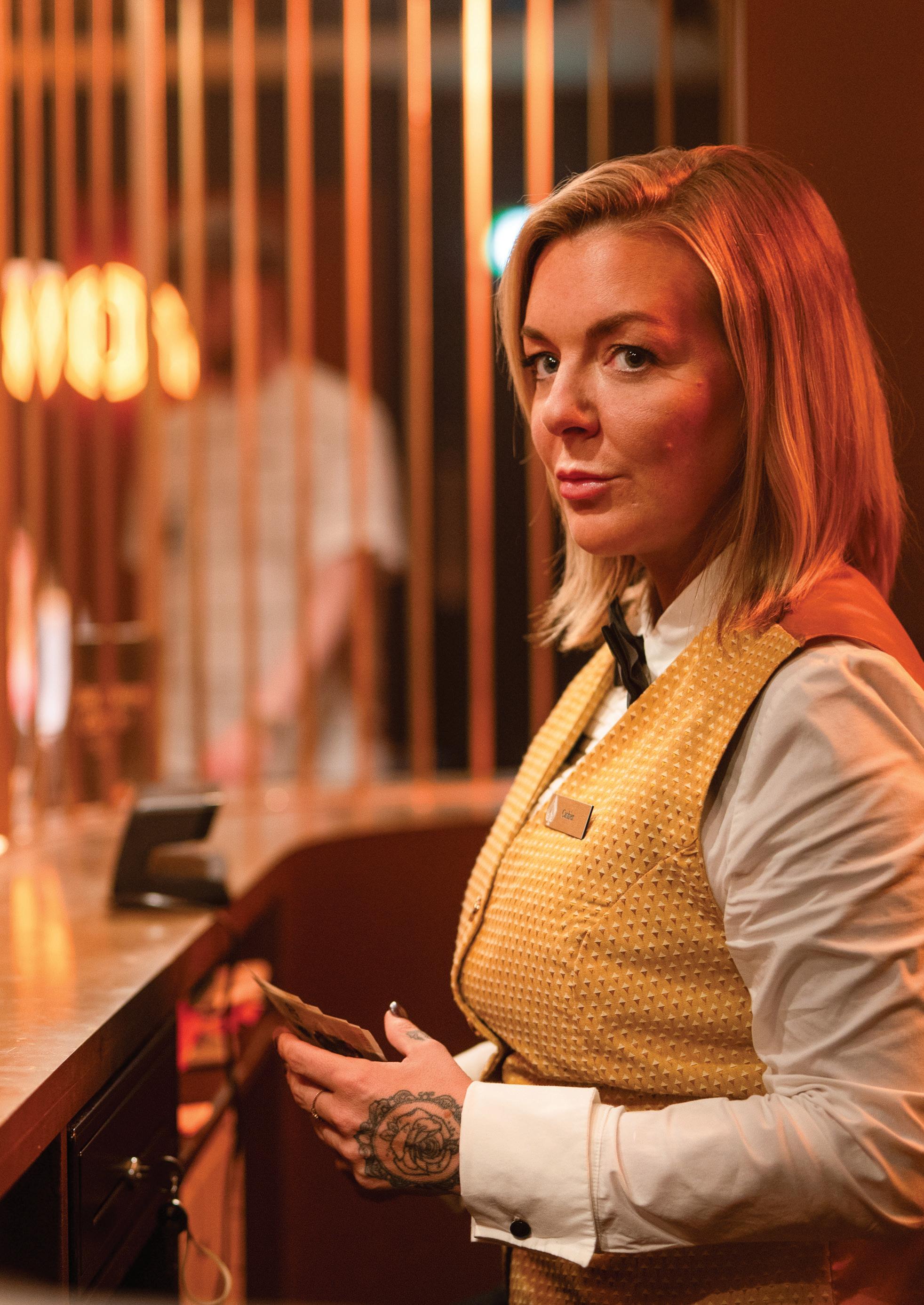
Following the death of her partner and under threat of losing her family home, Leanne (Sheridan Smith) begins stealing from the Liverpool city centre casino where she works as a cashier – taking cash from the ‘cage’, the secure hub where chips are exchanged and money is handled.
“She’s trying to juggle everything at once and not lose the house,” explains Sheridan.
“You totally understand why she would go to such desperate measures to keep the family alive and well. I think anyone, myself included, would do anything for their kids.”
It turns out Leanne’s manager, Matty (Michael Socha), is also on the rob at the Envoy Casino. Battling a gambling addiction and dealing with mounting debt, he is caught between a strained family life and his own personal demons.
“Matty ultimately feels massively ashamed of himself and the person he’s become,” Michael says.
“He finds it so difficult seeing – and maybe wanting – the idea of a normal family.
After years of addiction and
making the wrong choices, it’s a barrel he can’t quite climb out of at this point.
“It feels like the whole world is against him, both inside and outside the casino. He’s not doing himself any favours. Everybody is against Matty, including himself.”
The series has arrived at a time when its themes feel particularly resonant, tapping into the pressures facing many households today.
“[Leanne and Matty] are definitely characters that people will relate to,” says Sheridan.
“I think with the cost-of-living crisis, some people will sadly be in the same situation. Even though it’s a heavy drama and quite a lot of it is dark, there are light moments to hopefully bring a bit of joy and escapism.”
The casino owner’s son Gary, played by Barry Sloane, is often at the centre of these tonal shifts. The Liverpool-born actor characterises Gary as someone “spinning many plates” – a man of shifting identities and hidden layers – and notes that his connection to both the role and the production is grounded in a deep sense of ‘scouse pride’.
“Tony [Schumacher] knows the people, he knows the characters, he knows the story, he knows the world. It has passed the scouse test, if there ever was such a thing,” says Barry.
“It feels real, it feels genuine. It’s a love letter to the city. The characters are well-rounded and not stereotypical cheeky chappy scousers, even though I can bring a little bit of that for free.”
The Liverpool setting allowed Barry to perform in his natural accent – something he has often avoided over a long career that most famously includes voicing Captain Price in the blockbuster Call of Duty video game franchise.
“I very rarely played scousers. I learnt early that it was gonna be beneficial to my career if I could do more, because you can be pigeonholed with that
accent in a very frustrating way. So to be able to work in your own accent was such a joy, such a pleasure.”
Barry beams as he recalls his time on set in Liverpool, which coincided with an unexpected spell of good weather.
“Shooting at home, the city of my birth, was huge,” he says.
“We filmed one of the scenes just around the corner from where my nan lived. It was lovely going round there. I had a little walk around, and there were loads of scallies on bikes up the top [of the road]. I walked up and had a little chat with them. It was fun to go back.
“It was the most beautiful period of sunshine when we filmed, and Liverpool in the sunshine is just golden. It was just scouse pride right the way through.”
Barry’s fondness for Liverpool is something Sheridan clearly shares. Having spent time here across several projects – including her acclaimed turn as Cilla Black in ITV’s Cilla – she recalls a warmth and sense of belonging that lingered long after filming wrapped on The Cage.
“I love Liverpool. It’s my favourite place to film. Everyone makes me so welcome,” she says.
“One day people were bringing us cupcakes and coming out in their pyjamas going, ‘hey girl, come and have a cup of tea at ours’. I do feel like an adopted scouser.”
Taking on a Liverpool character of course also meant stepping back into a scouse accent – something Sheridan approached a little differently this time around.
It’s a love letter to the city. The characters are well-rounded and not stereotypical cheeky chappy scousers.
“I was told not to go too strong with the accent. With Cilla, it was very much put on, so it felt a bit strange going back to it. But all of our crew were scouse, so it’s something you naturally pick up when you’re there for months on end. I’m sure there are bits where scousers say ‘that’s not how we say that’, but hopefully it’s alright.”
Tony Schumacher, the Liverpool-born screenwriter and novelist behind the five-part series, echoed Sheridan’s enthusiasm for working in the city.
“I like Liverpool, because I hate commuting to London [laughs],” he says.
“I think stories should be universal. Liverpool is really important, and I love bringing people here and letting them see the city.
“The director, Al Mackay, has worked here before, and he loves the way a city looks. He wants the city to be almost a character in the background. Liverpool definitely brought that.
“There’s a lot of warmth here as well, and everyone who’s not from the city enjoys it. It was special.”
Tony described finding Barry for the role of Gary as a rare, lightningin-a-bottle moment: “He was recommended to me, and I knew who he was because you know who Liverpool actors are, but I didn’t realise how good he was.
“We got him in to read, and it was one of those magical moments where, within 10 seconds, you know he’s the character. He’s



not just a one-dimensional gangster in the show; there’s a lot of complexity and internal weakness to his character. I can’t speak for Barry, but I think he enjoyed working in his natural accent.”
For Tony, character always comes first – his writing rooted in crafting layered, believable people shaped by the messy realities of life.
“Years ago, when I was in the police, I knew a drug dealer who said to me one night: ‘I didn’t want to be a drug dealer, I never left school and said ‘I want to be a drug dealer’.
“It was always really interesting to speak to people and learn about how they ended up where they ended up in life.”
That sense of curiosity runs through his entire writing process, with each character offering a way to explore both the world around him and something more personal.
“I’m interested in addiction, I’m interested in that world because I’m addicted to work. I’m very interested in any sort of flaw, and as a writer, you have to be interested in flaws because flaws are what you build your character around. You’re exploring your own map, almost.”
For Geraldine James, who takes on the role of casino owner Nancy, the experience of making the show was made all the more memorable by working alongside Tony.
she’s certainly not a good grandmother – but she learns how to do that through the series.
“She’s quite complicated and very emotional. She’s a good person at heart but has had quite a tough life.”
The Cage is a drama rooted in Liverpool, shaped by a strong sense of place and authenticity. The city runs quietly through the story’s core – one centred on survival and the choices its characters make. For Tony, it’s also about pushing beyond expectations and resisting easy labels.
The Cage is a drama rooted in Liverpool, shaped by a strong sense of place and authenticity.
“He’s a fantastic man. I remember always seeing him beaming [with joy] on-set.”
Stepping into Nancy’s world, Geraldine found herself drawn to both the show’s focus on character and the sharply defined edges of the woman she portrays.
“It’s not about story, it’s about people,” she says.
“It’s about getting to know a group of people really, really well, and I think that’s universal. The casino was such a genius set – it was so well constructed, and that made it very easy to believe in working and being in that place.
“Nancy’s hanging on to what she’s been taught about running a casino, and she sticks to it very methodically. She’s not affectionate, she’s not maternal,
“I hope that people – like they did with The Responder, where some saw it as just a cop show – realise I’m not just writing that. I wanted to have lots of different elements in it, so the series can be something you can really immerse yourself in.”
All five episodes of The Cage are available to stream on BBC iPlayer now


Paul Crowley & Co Solicitors stands at a defining moment in its distinguished history following the completion of a Management Buy Out (MBO) by its directors. With formal approval now granted by the Solicitors Regulation Authority, ownership of the firm transfers to the directors. The change marks both a continuation of the firm’s long held values and the beginning of a new chapter shaped by a modern, forward thinking leadership team
The MBO represents a natural progression for the Liverpool based practice, established in 1991 by its founder, Paul Crowley. Under Paul’s drive, entrepreneurial spirit and focus on client care, the firm grew into a respected presence within the city’s legal community. His sudden passing was deeply felt across the profession, leaving a culture defined by integrity, compassion and service.
The directors are clear that the contributions of Paul and, more recently, his partner Julie, remain central to the firm’s direction.
Reflecting on the change, Managing Director Paul Lowry commented, “Our commitment is to uphold the values
In recent months, the directors have worked behind the scenes to strengthen operational infrastructure and modernise internal processes.
The directors are clear that it is business as usual and that the transition does not change the experience for clients or business partners. The same trusted teams, high standards and consistent service remain in place.
Our clients are at the centre of everything we do. We have built a strong reputation for client care and will continue to deliver that standard to more clients as we grow. With stability at our core, the firm is a dependable and collaborative partner, focused on strong working relationships, building from a position
of strength and creating opportunities for growth, investment and enhanced client service.
Innovation will play a central role in the firm’s development, with technology strengthening efficiency, improving responsiveness and supporting the evolving needs of clients and the wider legal landscape.
Equally important is the firm’s support for its people, creating an environment where colleagues feel supported, valued and able to develop their careers.
The firm has made key appointments to strengthen its teams across core practice areas. These additions bring further expertise and energy into the business, supporting client demand and


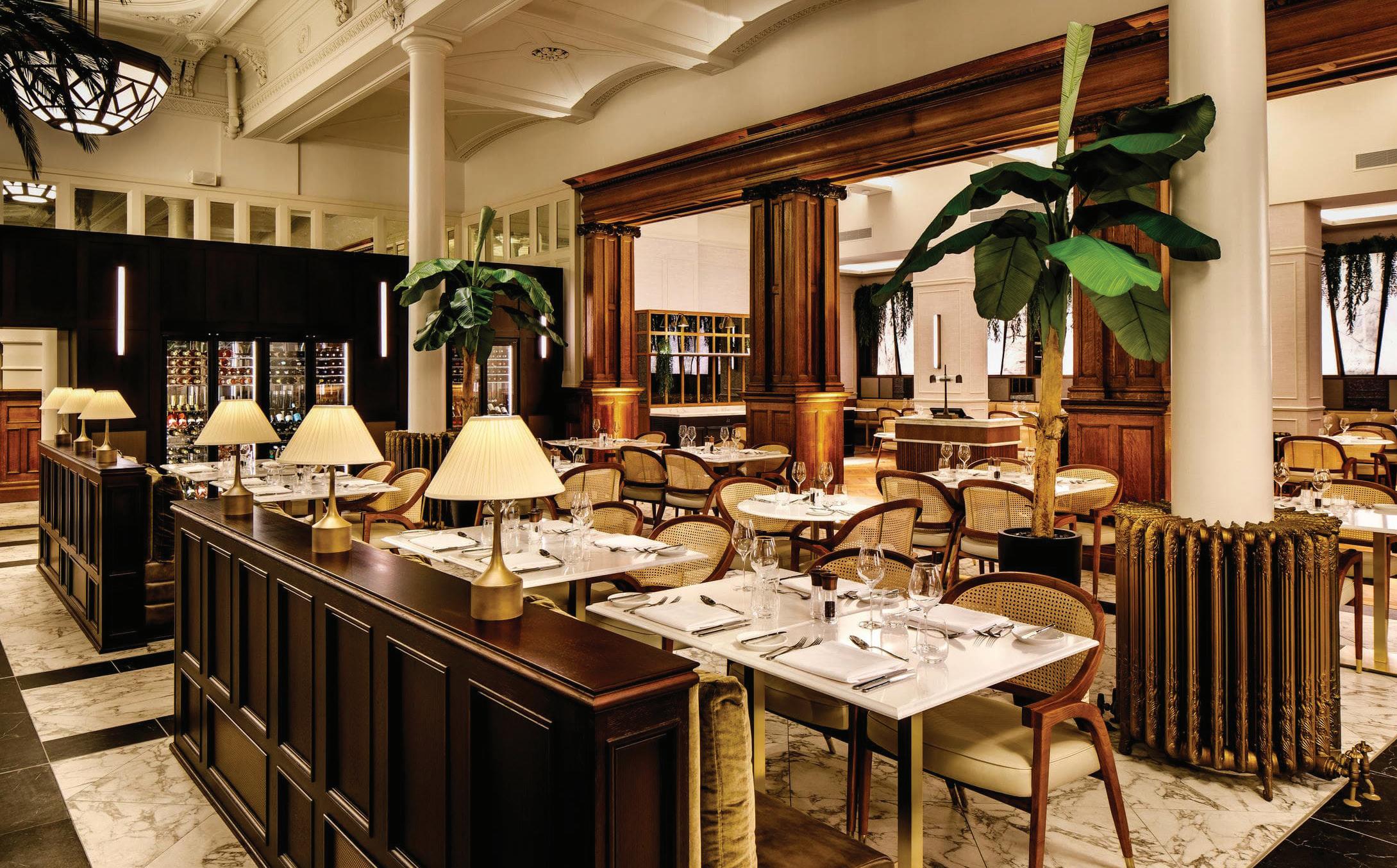
By Robin Brown | British brasserie | ££ | Municipal Building, Dale Street, L2 2DH
Excel spreadsheets and existential dread.
The last time I was in Dale Street’s Grade-II listed Municipal Building it was to argue with a lady about housing benefits. Strolling into the former home of Liverpool City Council 25 years later for a three-course meal at the restaurant of Liverpool’s only five-star hotel certainly gives one the sense that progress has been made – both personally and for this grand old landmark. Even then, I was struck by the magnificence – the munificence, I suppose; a gift to Liverpool and its people –of the place. In its new guise, the building has been looksmaxxed to the hilt.
Now titled The Municipal Hotel & Spa Liverpool – MGallery Collection, this European Renaissance fortress has undergone a transformation that would startle any Victorian clerk – though there is still a doorman with a top hat. Explore further and you might be rewarded with a derelict cast-iron lift spiralling through the central stairwell. If you’re here for pre-theatre, there’s plenty of drama in the building alone.
If you’ve come for sustenance rather than nostalgia, however, your path leads to the Seaforth, located in the grand central atrium. Within there are nods to the building’s past: an old boot and protractors on display, uncovered during renovation and curated alongside the tools of a trade now replaced by
The menu is classy and restrained; no dirty burgers or pizzas here.
The setting is a show-stopper alright – and that’s before the food has even arrived. A vaguely colonial elegance – think Bombay, circa 1930, the palm trees help – now highlights the wood, marble and plasterwork. Tens of millions have been spent on making this superb building soar, rather than drowning it out with modern trappings. Ignoring the AI-written menu prose that simpers over the ‘cobbles’ of Penny Lane, the actual selection is more grounded. The menu is classy and restrained; no dirty burgers or pizzas here. The wine list is impressive (we had a mineral-y and very drinkable house white – a pinot grigio for £36); the service is friendly, knowledgeable and attentive without the ’yes, can you leave us alone now, please?’ of over-enthusiastic service. All that can go wrong now is the food.
I’ll level with you: that was a feint. The food is very good. I had a very pleasing starter of scallops with king prawns, alongside miniature spears of al dente romanesco and a rich pea puree (£22). Confidently cooked and assembled, though I might have added lemon oil for some sharpness. A tasty bowl of roasted tomato and sweet pepper soup arrives (£10) – but while a soup fan, I think there’s a glass ceiling (there’s a literal one here, after all). I could happily have eaten everything on the starter menu. The seasonal and local boxes are thoroughly ticked here, and a main of lamb loin fits right on that axis.
Accompanying the loin (£39) is a scouse croquette, shredded spring greens,

carrot puree and marrowbone lamb jus. There’s enough reduction here to drown a medium-sized account manager and, as someone who takes a dim view of gravy meanness, I’m very happy about that. Beautifully tender lamb, a deeply satisfying croquette, and a nice balance of freshness and sweetness add up to a strong plate of food. It’s new, replacing a traditional scouse, which to me always looks out of place on a good menu – like a Ford Fusion parked outside a country club.
By contrast, my wife has a perplexing bowl of bucatini with garlic and chilli (£19) that was disappointing, lacking in sufficient emulsion for the hollow pasta to really sing. Oh well, you can’t have everything. Except maybe you can. We did, in terms of the desserts anyway, and duly the chocolate delice, a brilliantly Blumenthal-ish apple cheesecake masquerading as a Granny Smith, and a sublime pineapple tatin with coconut ice-cream appear – and promptly disappear. No ‘one dessert, two spoons’ nonsense here. Stepping into the night, the impact lingers. Musing idly on the irony of a building once dedicated to the grim redistribution of wealth now serving as a £60m temple to its concentration, I found I didn’t mind one bit. It feels like a huge vote of confidence for the long-neglected Dale Street. This building is back with a bang; the restaurant a magnet, drawing people back to this neglected edifice. Finally, some municipal pride.
£19.99
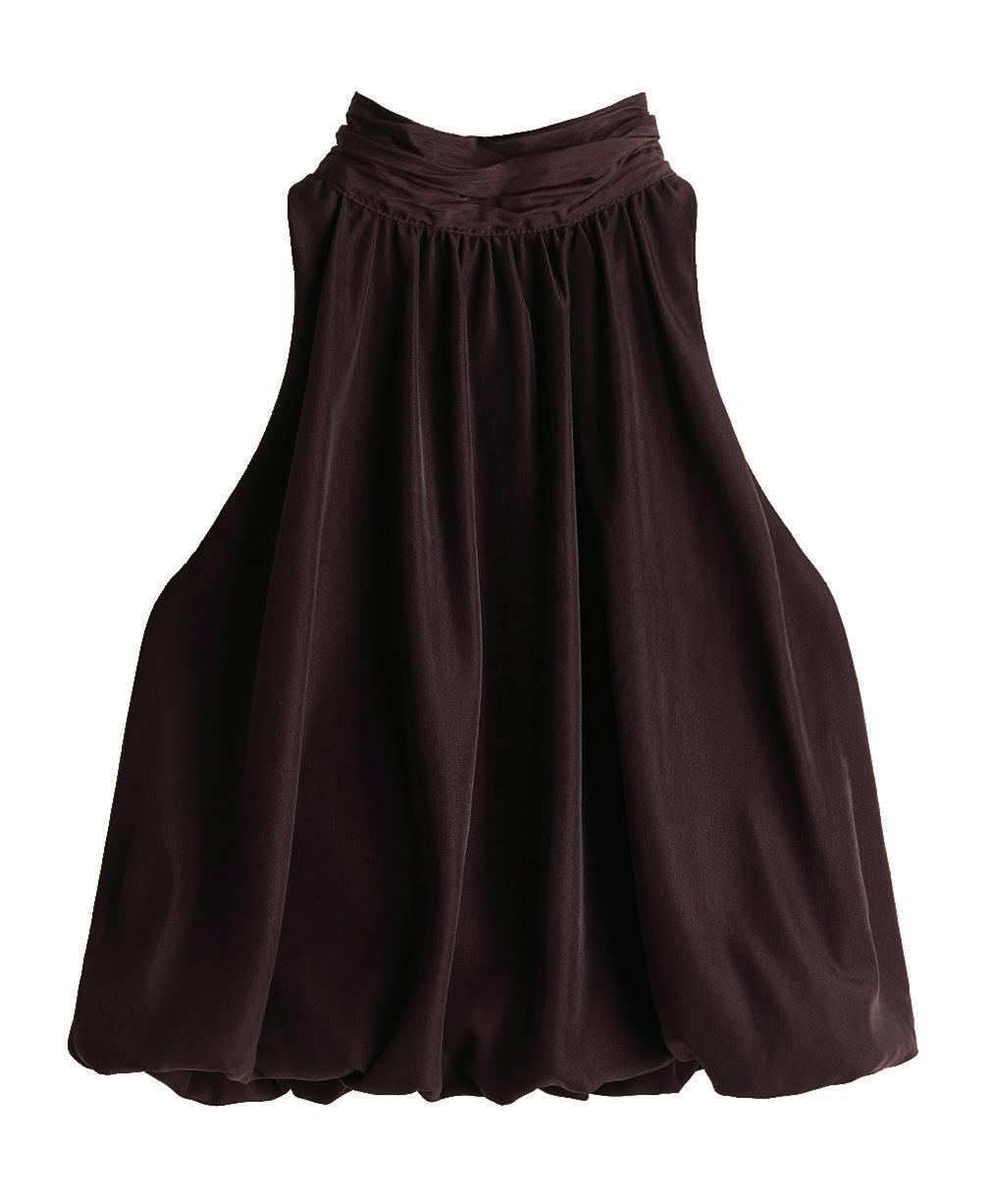

£39.99
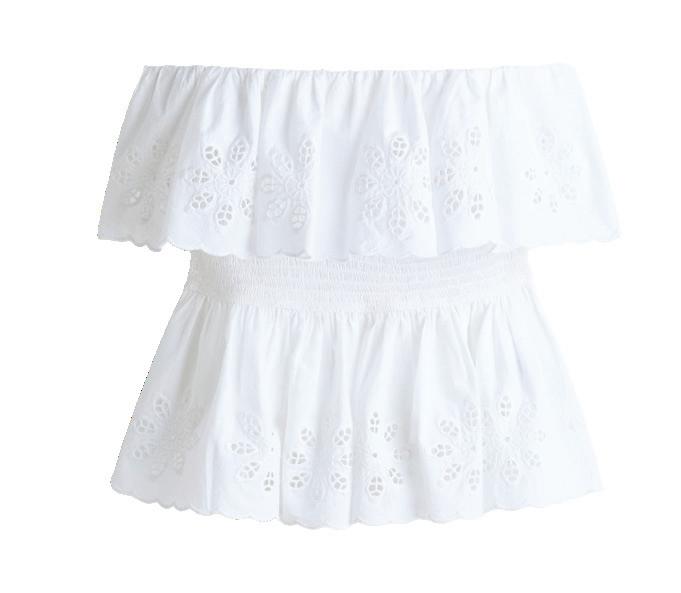
Flouncetrimmed peplum tube top H&M
£22.99

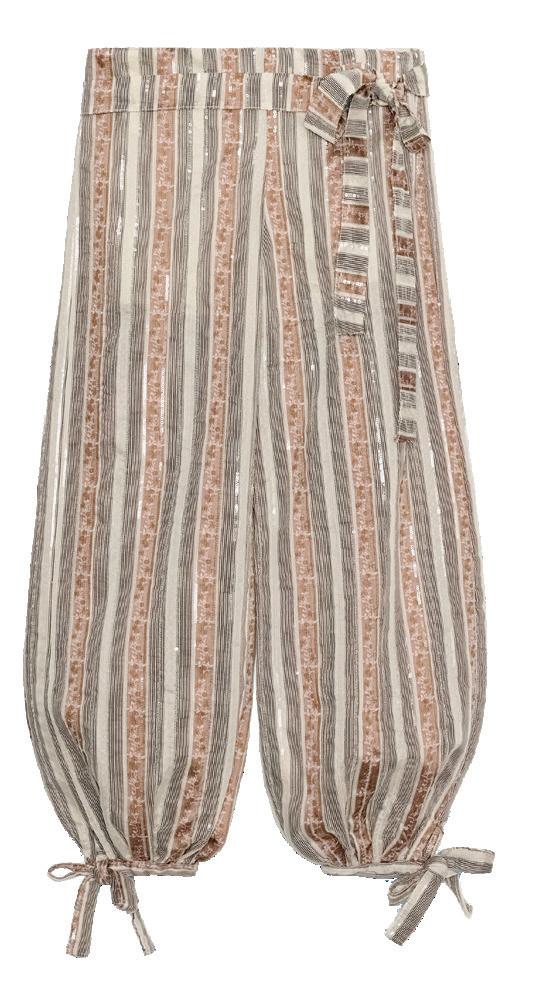
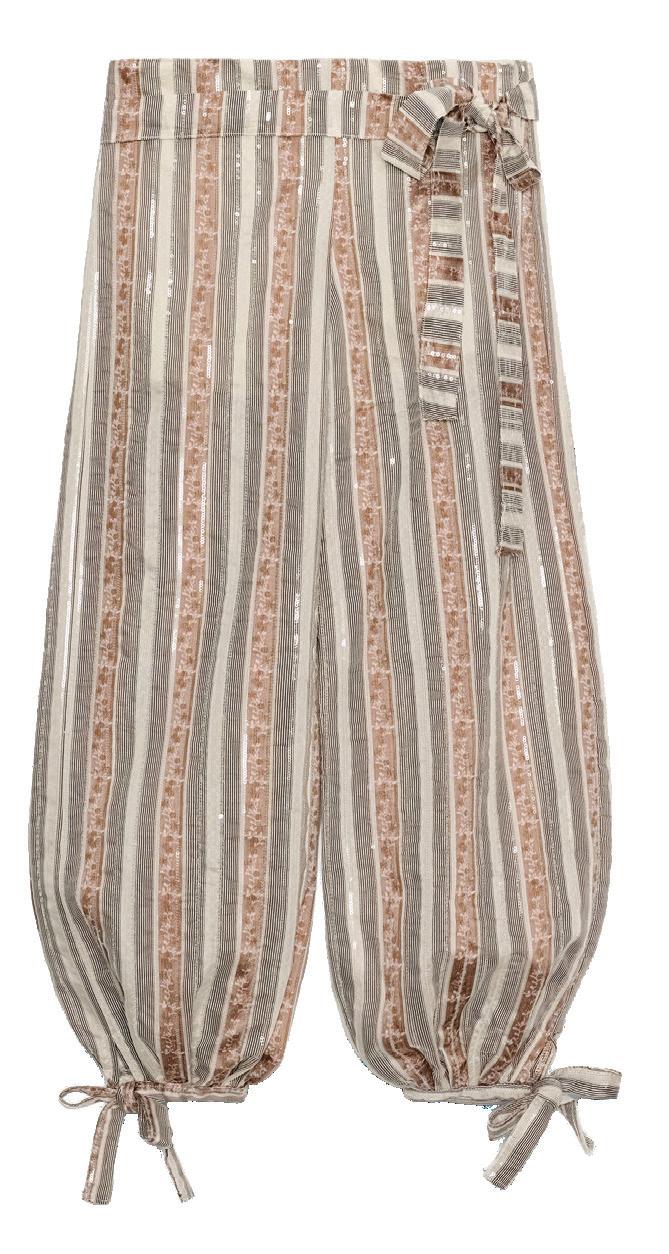
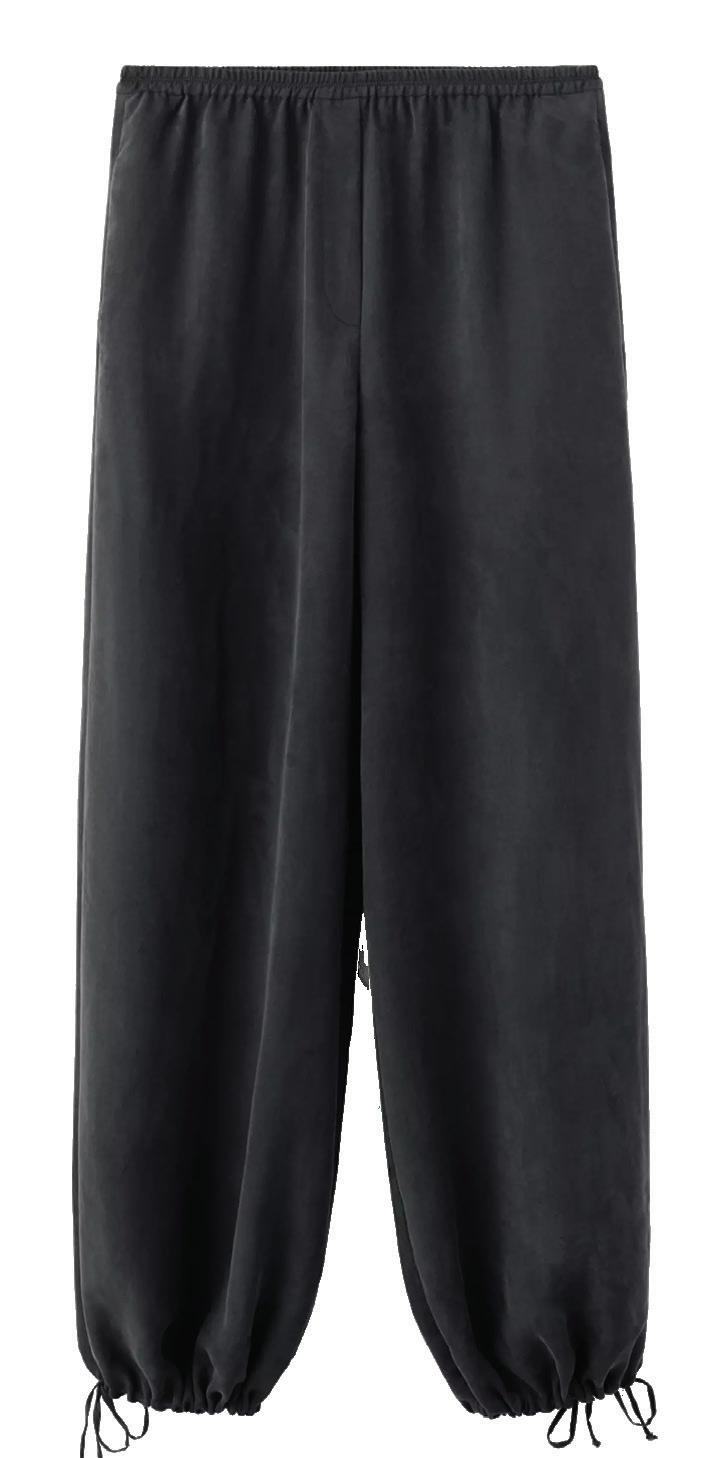
Annie S spotlights balloon trousers, this summer’s on-trend alternative to jeans

£29.99
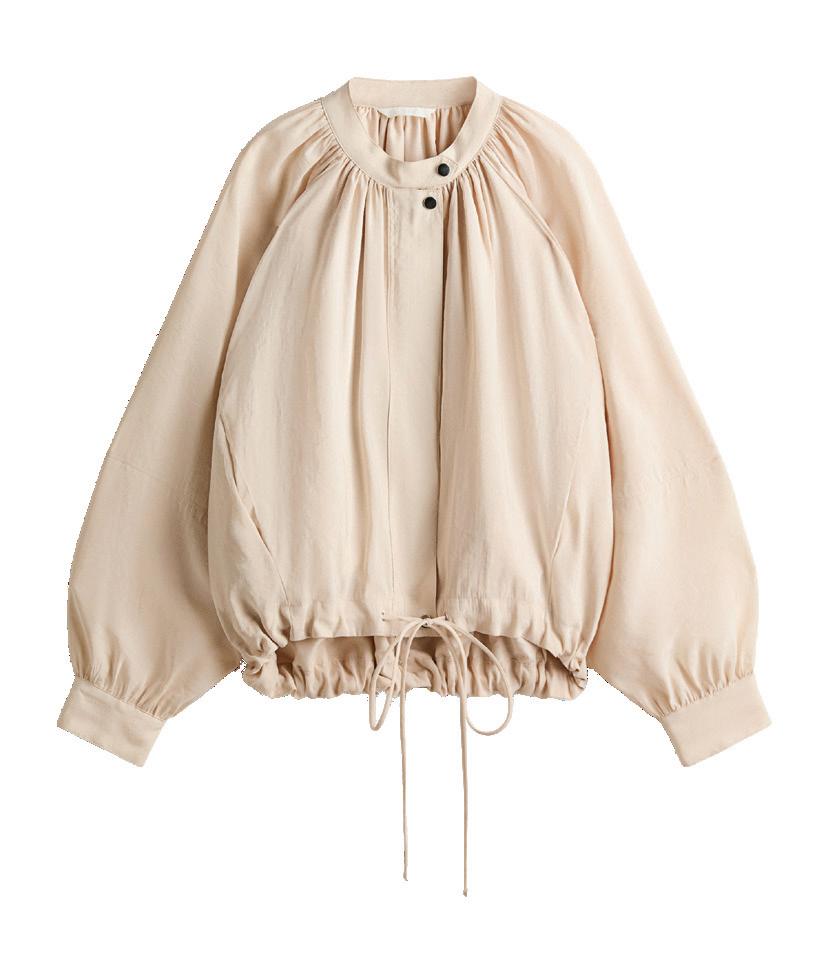
Balloon-sleeved modal jacket
H&M
£37.99
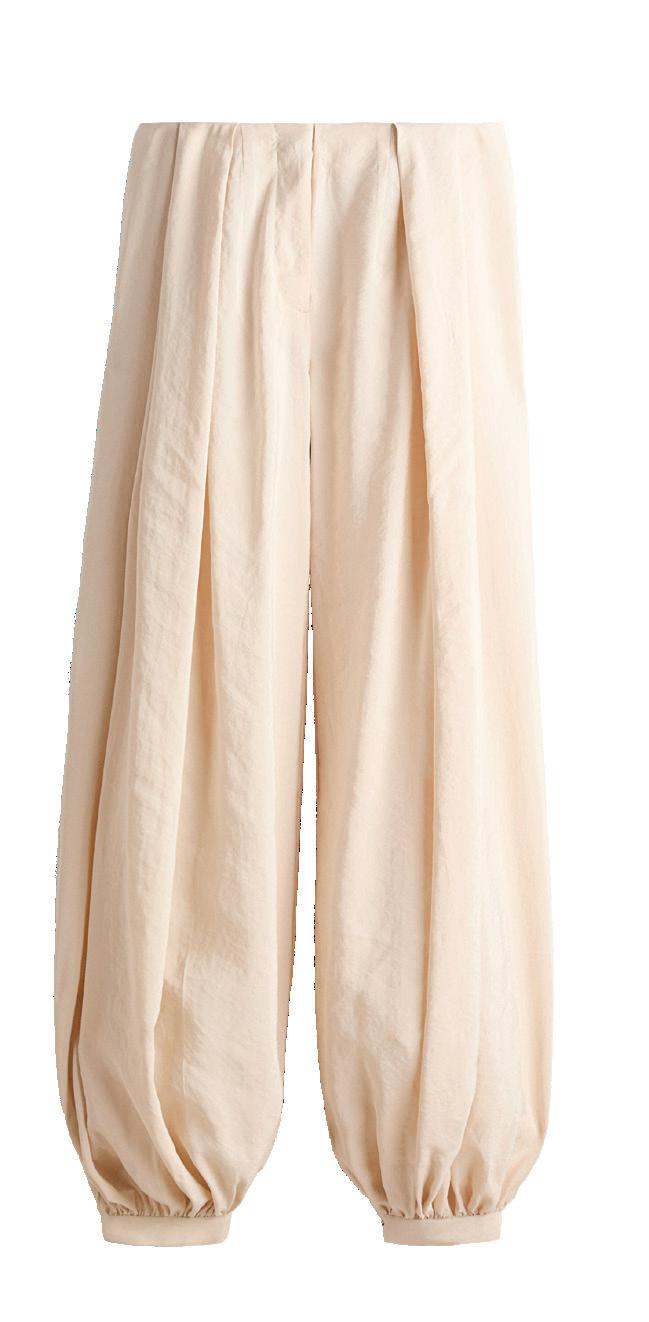
Balloonleg modal trousers
H&M
£37.99

£29.99


M&S
£30

Trousers with elastic waist
Zara
£29.99
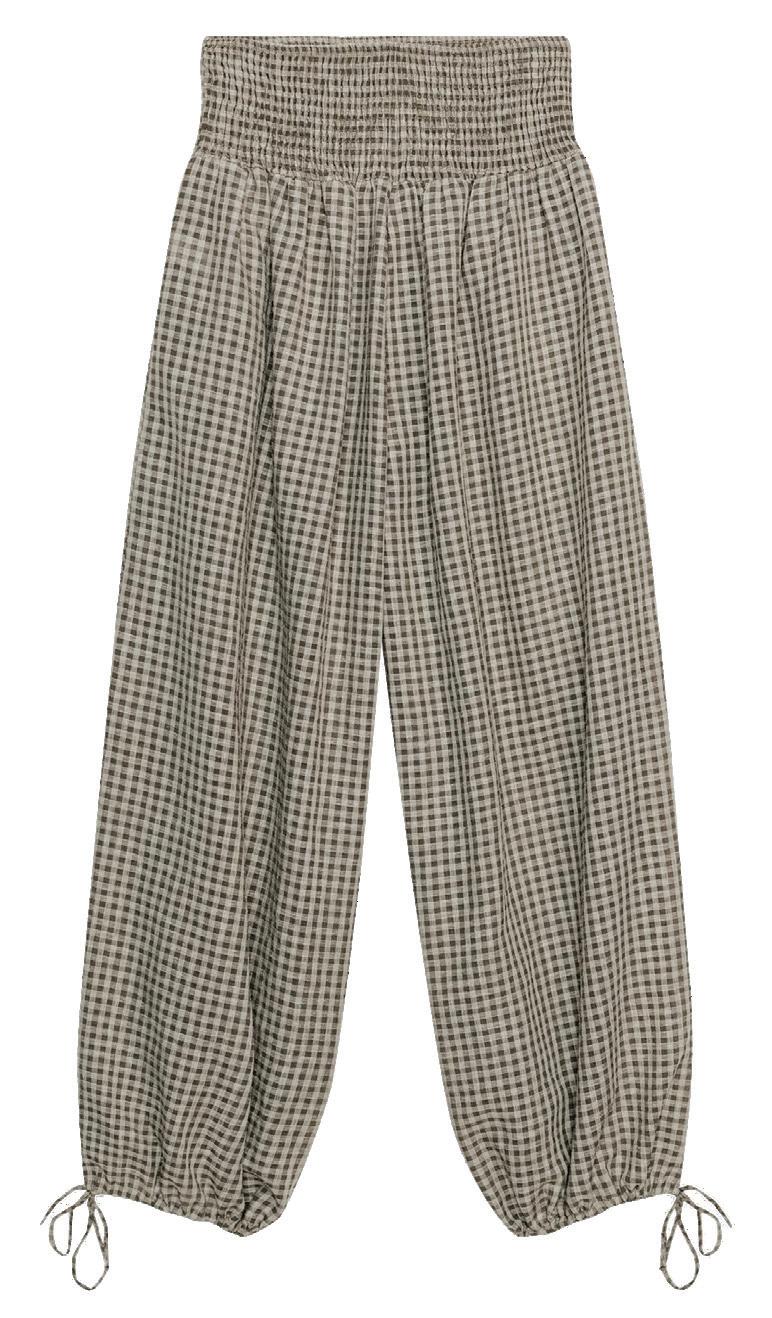
Halter balloon effect body Mango
£35.99




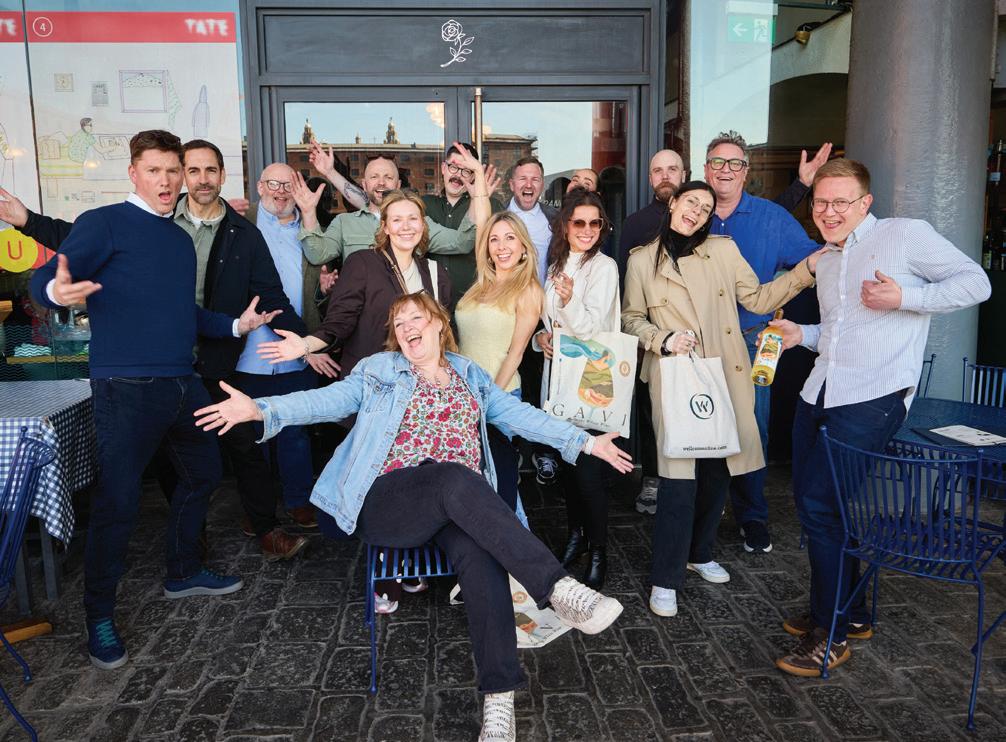
Jane Clare puts the famed versatility of Italy’s Gavi DOCG to the test on a Liverpool restaurant tour, pairing the Piedmont white with a range of British, Chinese and Middle Eastern dishes
The Italian wine Gavi DOCG is having a moment. This crisp, mineral white – long a favourite of those in the know – is highly versatile. It’s perfect with Italian dishes, as it should be, of course, given it hails from the country’s Piedmont region. But how far can its versatility stretch?
There really is no limit, as I discovered when a Gavi wine region ambassador came to Liverpool. I joined a group of wine professionals – merchants, educators, restauranteurs, bar owners and influencers – for a Gavi Restaurant Tour. We were guests of drinks’ trade magazine The Buyer and the Gavi region’s world ambassador Sara Repetto – taking in Gavi wines alongside refined British food, Chinese dishes and Middle Eastern spice.
white clay in the central area have more freshness, with lighter floral notes and a lot of ageing potential.
A coastal wind blows among the vineyards, highlighting the natural freshness and the flavours of cortese. Sara also highlighted that the wines started being exported many many decades ago; and there is a clear synergy between Liverpool and its port.

And so to our menus; our dishes at The Art School included stuffed breast of cornfed guinea fowl with tarragon mousse and a melange of wild mushroom and baby leeks; and hake with garlic crumb, pommes mousseline, Southport shrimp and a chardonnay and butter dressing.
Over at Chamber Thirty Six (whose owner Sasha Brownlow opened especially for us) we enjoyed more than 10 classic Chinese small plates including salt and pepper crispy squid, steamed scallops, gyoza, siu mai and prawn Singapore vermicelli.
And then to the setting of Albert Dock and Maray; where Maray’s famous Disco Cauliflower (pictured, inset) and the silvery Boquerones (anchovy fillets) were among the dishes lauded with a chink-chink of Gavi wine.
Did the wines of Gavi DOCG hold their own in this crosssection of cuisines, and under the professional scrutiny of people on the tour? The answer was a resounding ‘yes’.
The styles were chameleon-like with their ability to adapt to spice, to classic sauces and to rich meat dishes. Gavi DOCG should be very much on your radar; and as Sara implored: “Please embrace this famous white wine, the great white of Piedmont!”.
To find out more about Gavi DOCG wines head online to consorziogavi.com, or follow on Instagram @gavi972.
Our taste-test tour started at Paul Askew’s The Art School, moved on to Chamber Thirty Six on Berry Street, and finished at Maray on Albert Dock. As we gathered in The Art School, Sara told us: “In this moment, where everybody’s looking for fresh, mineral white wine, for Gavi, it’s a kind of golden moment.
“This is a classic white wine from Piedmont and it is a flagship of white wine in our region. It has to be 100% cortese grape variety, native to the region, and cannot be anything else.
“The style of Gavi is crystal clear; when you order Gavi you have in mind what you want to sip. It is mineral and crispy; you can find floral notes, white flower notes and citrus notes.”
The region is, according to Sara, perfect for the grape because of its unique microclimate and soil. Wines from red clay in the north have more structure, are bold and expressive; and wines from the
Try pouring a Gavi wine with your next Chinese, Middle Eastern-style dinner or traditional Sunday lunch.
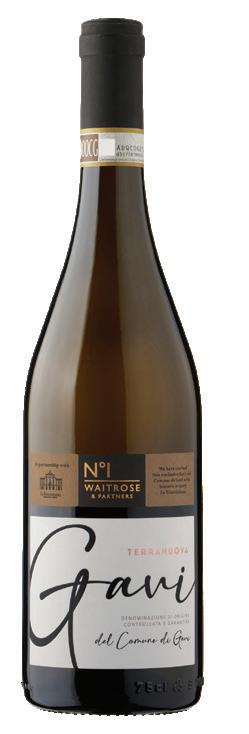
There’s plenty of Gavi on our supermarket shelves and online, including: ASDA Exceptional by Gavi (£9); Tesco Finest Gavi (10); Waitrose Blueprint Gavi Piedmont (£10.75); Co-op Irresistible Gavi Broglia (£11.25); No.1 Gavi di Gavi, Waitrose (£16); La Raia Gavi di Gavi online at Vintage Roots (£17.50).
You’ll also find it at many restaurants and bars in Liverpool, including City Wine Bar on Old Hall Street.
A light-filled three-bedroom Wirral home, designed for modern family life
£309,995
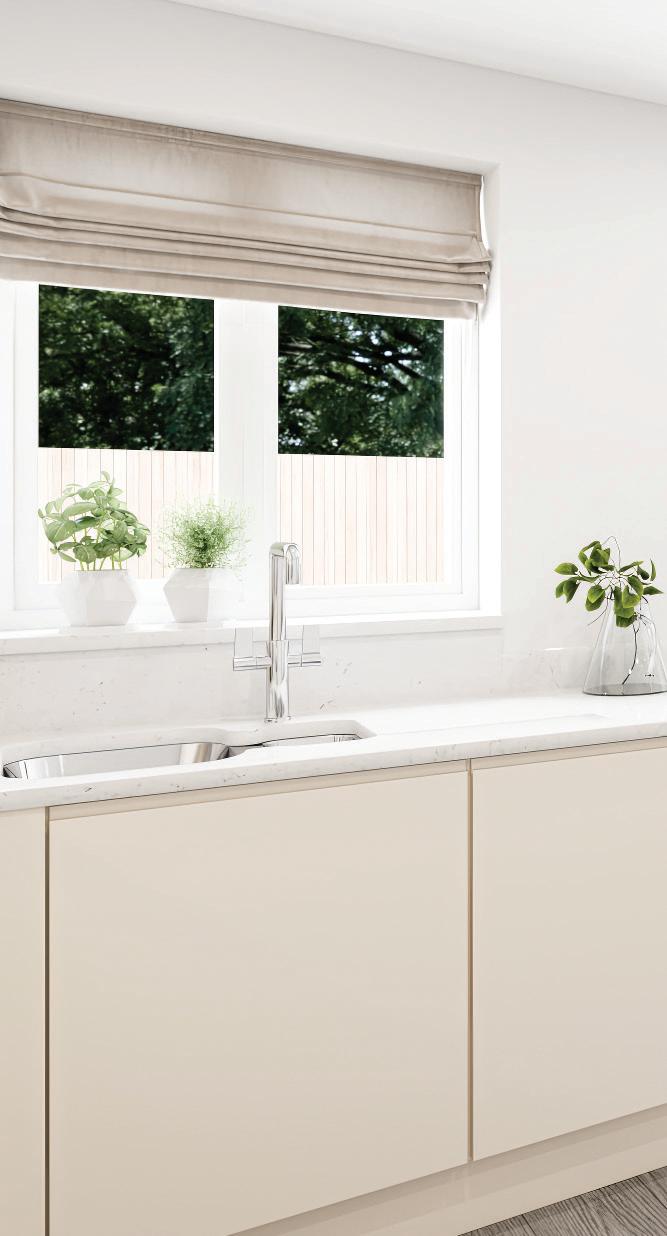
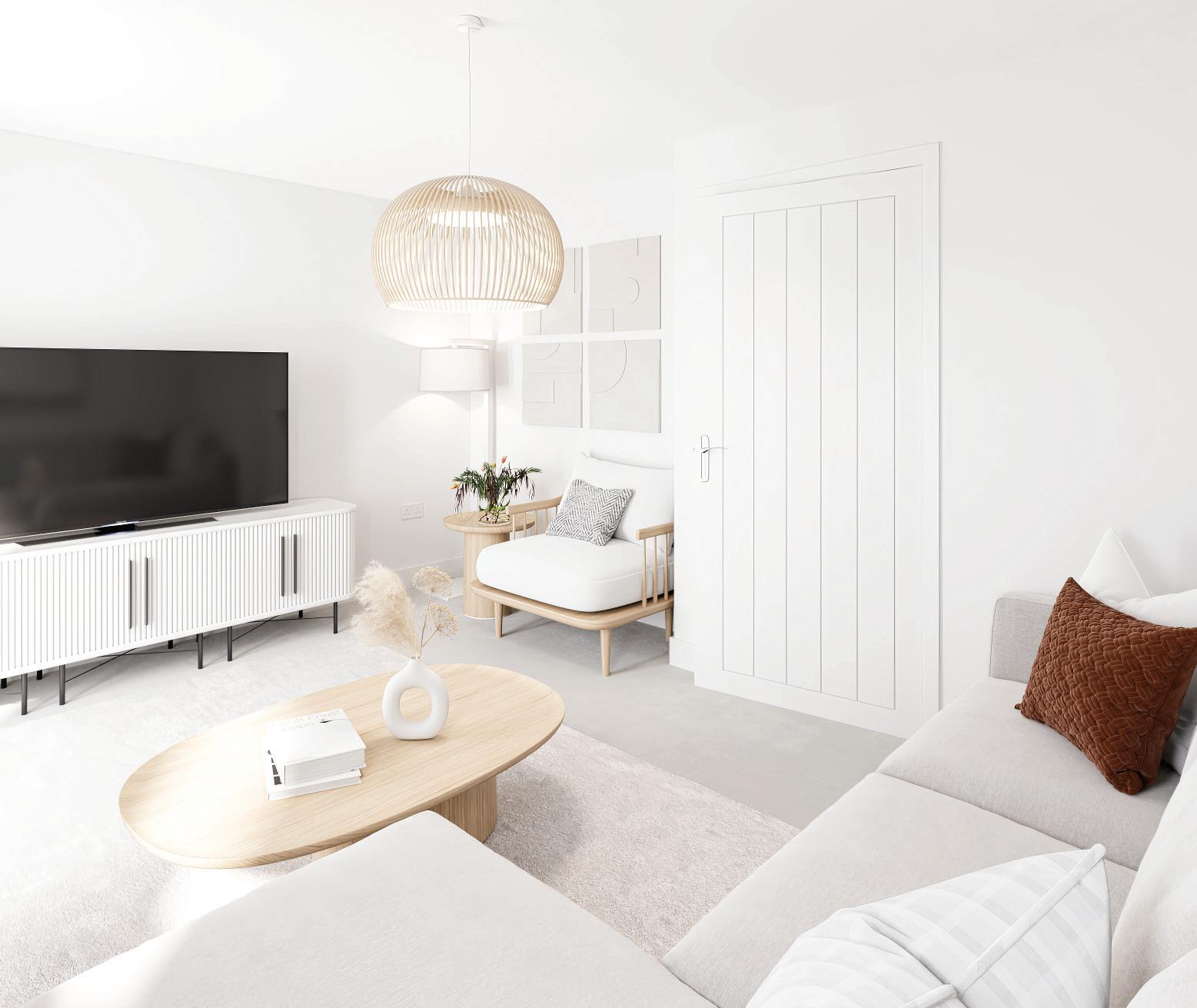
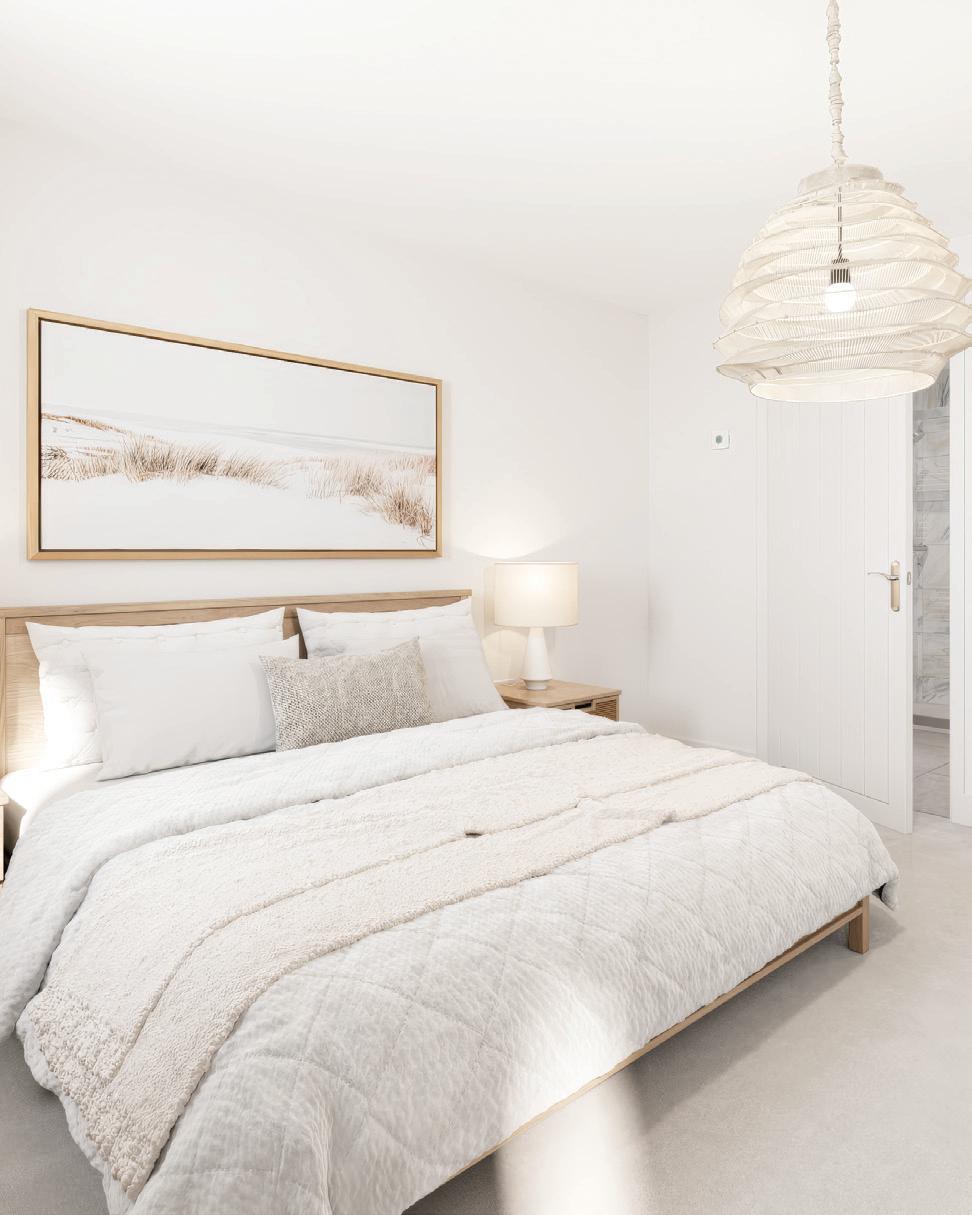
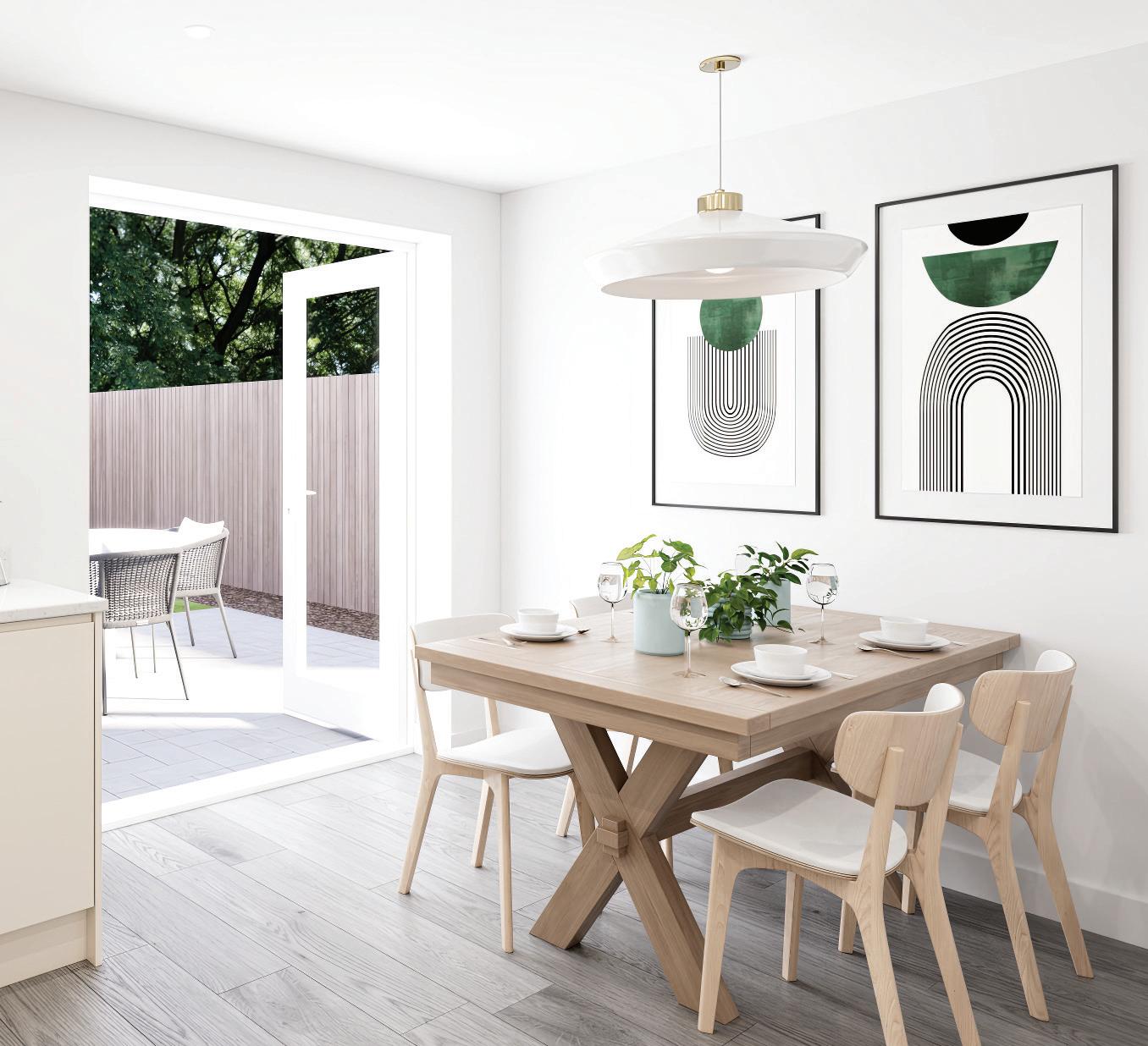

LOCATED AT PERSIMMON’S newest Wirral development, Old Hall Village, The Ashdown Corner keeps things simple, with a layout designed to work around everyday life.
The semi-detached home is built with flexibility in mind, with the added benefit of dual-aspect windows on every floor, helping to bring in plenty of natural light throughout.
The ground floor includes a separate kitchen, alongside French doors opening out onto the garden, creating a seamless connection between indoor and outdoor space.
Up on the first floor, the living room sits at the heart of the home, complete with a Juliet balcony. A second bedroom on this level adds flexibility, whether used for guests, working from home or additional family space.
The top floor is home to the main bedroom, which features its own en suite, while a third bedroom completes the layout.
Old Hall Village itself has been designed to appeal to a broad mix of buyers, from first-time purchasers to growing families and those looking to downsize. The development features a range of two, three and four-bedroom homes, with green space including Eastham Country Park and Leverhulme Sports Field close by.
For day-to-day living, Bromborough village is within easy reach, offering a selection of local shops, pubs and essential amenities, while Bromborough Retail Park provides a wider choice of larger stores, restaurants and leisure options.
Persimmon is currently offering its Part Exchange scheme on selected plots, aimed at helping to simplify the moving process for buyers.
For more information about The Ashdown Corner or Old Hall Village, call 0151 305 6891 or visit persimmonhomes.com

By Libby White | Lichfield Road, Sutton Coldfield | thebelfry.com
Famous for its world-class golf courses and championship pedigree, The Belfry Hotel & Resort might not be the first place that springs to mind for a family break – but alongside its sporting credentials, it offers a wide range of child-friendly facilities and an accessible location, making it a well-rounded resort for both families and golf lovers.
The drive down from Liverpool clocked in at a little over an hour – just enough time for snacks to be demolished and, impressively, only a single chorus of ‘Are we nearly there yet?’ from our everimpatient six-year-old. Honestly, as family journeys go, that counts as a minor miracle.
Any nerves I had about bringing a four and six-year-old to a luxury golf resort were quickly dispelled on arrival when I spotted plenty of other families with young children and we were immediately put at ease by the warm, genuinely friendly welcome from staff at check-in.
Armed with resort maps and kids’ activity packs, we headed to our suite which was perfectly set up for a family of four. Inside, a spacious bedroom, separate living area and dedicated dressing space provided plenty of room, while our large terrace looked out over the immaculately kept fairways of The Brabazon course. The kids wasted no time unpacking and making themselves at home, leaving us time to steal a quiet moment in the sun with a glass of red, mapping out the rest of the day ahead.
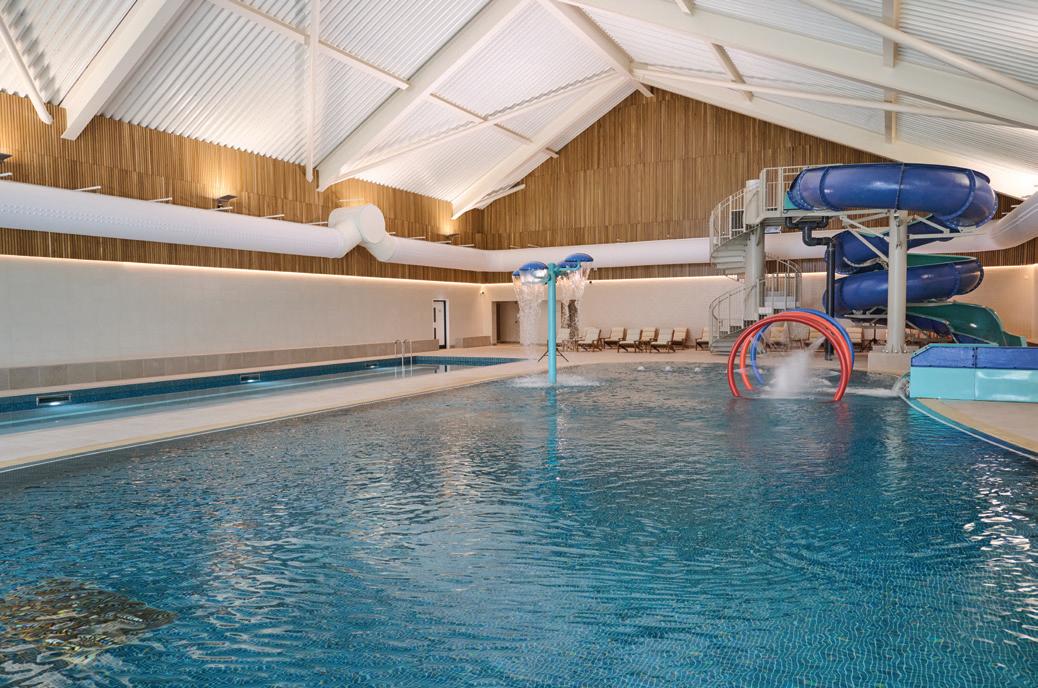
First on our list was The Club, the hotel’s brand-new gym and leisure club, which is free for guests and impressively well equipped. For families, the dedicated splash times are a real highlight, with a slide and pools packed with inflatables – an instant hit with our son. Meanwhile, adults can unwind in the steam room, sauna or drift between the indoor and outdoor hot tubs.
The changing facilities were a pleasant surprise and far from your standard poolside chaos! Think spacious showers, endless mirrors,
The kids wasted no time unpacking, leaving us time to steal a quiet moment in the sun with a glass of red.

straighteners and luxurious ESPA toiletries – everything you could possibly need to get ready in comfort. Clearly designed with families in mind, they made the whole post-swim routine feel effortless.
Our next stop was the games room and mini library – a great addition to The Belfry’s offering and a perfect option if the weather isn’t playing ball. Giant Connect 4 battles and shooting basketball hoops kept the kids entertained, while the mini library offered a welcome quiet corner with a good selection of children’s books. Also


Blessed with a glorious spring evening, we headed outside to the trampolines, tunnels and zip lines.
available were a range of arts and crafts activities, a cosy movie room, and even a mother-and-daughter manicure session – but we’d worked up quite an appetite, and tummies were starting to rumble, so it was time for dinner.
We headed to The Ryder Restaurant, a bright, airy and beautifully styled venue with a stunning light-filled conservatory area and instantly felt relaxed. Seated among other families, it had an easy-going atmosphere that felt welcoming and unfussy.
My husband and I opted for the hot buffet, with a plentiful selection of mains, including vegetarian dishes ranging from monkfish to moussaka. The standout dishes for us were the delicately flavoured roast chicken with peppers and sriracha sauce, alongside spiced roast potatoes and greens – exactly what we needed after a full-on day.
For the kids, the buffet was spot on too – freshly made wood-fired pizzas, plus the usual favourites of chicken nuggets and chips, kept our fussy eaters happy.
But it was the desserts that really stole the show: my Belfry banana bread with sticky sauce and coconut ice cream was perfectly balanced, while my husband’s crème brûlée was equally moreish and disappeared far too quickly.
Blessed with a glorious spring evening, we headed outside to Woodland Adventures, where trampolines, tunnels, zip lines and themed climbing frames made for the perfect final stop at The Belfry before bedtime.
With the kids tucked up in bed, my husband and I planned a visit to nearby Drayton Manor Theme Park for the following day. Thanks to its ideal Midlands location, The Belfry is also a perfect base for exploring attractions such as Twycross Zoo and Cadbury World.
After a good night’s sleep and a satisfying, fuss-free breakfast buffet, we left feeling refreshed and recharged from some much-needed family

time away from the daily grind – wishing we’d had longer to enjoy the go-karts, mini golf and other on-site activities.
So whether you want to perfect your swing at one of the UK’s leading golf resorts, unwind with a relaxing spa day with the girls, or dive into action-packed adventures with the kids, The Belfry Hotel & Resort is the perfect place to do as much – or as little – as you like.

A full-service residential sales and property management agency, delivering clear advice, strong marketing, and results you can trust.

With over 200 years’ combined local experience, Mistoria helps homeowners, buyers, landlords, and investors move forward with confidence.
Proven expertise across sales, lettings & property management
From first-time homes to premium family properties
Specialist knowledge of investment and buy-to-let
liverpool@mistoria.co.uk | 0151 282 1539 | mistoriaestateagents.co.uk
Students. Professionals. Landlords. We’ve Got You Covered.
One of the North West’s leading house-share lettings specialists.
Whether you’re looking for a room, managing an HMO, or building a rental portfolio, Mistoria House Share delivers well-managed homes in the right locations.
A wide portfolio of high-quality house shares
Prime locations across Liverpool and surrounding areas
From one-bed apartments to 29 bedroom en-suite House Shares
Let only and fully managed solutions
houseshare@mistoria.co.uk | 0151 317 5383 | mistoriahouseshare.com

More than 250 new apartments will be built across sites on Greenland Street and Blundell Street
DAVOS PROPERTY DEVELOPMENTS, a subsidiary of T. J. Morris Limited, has welcomed approval of two residential developments in the Baltic Triangle.
Work will begin immediately on taking the projects forward, said a Davos spokesman.
“We welcome the council’s approval and thank its officers for their hard work in helping shape our proposals,” added the spokesman.
Both projects have been designed by the Liverpool studio of Falconer Chester Hall.
Rob Brym, project architect at FCH, says: “The starting point was the need for light and airy homes in which residents will want to put down roots, but after that the two sites provided quite different contexts for us to interpret.
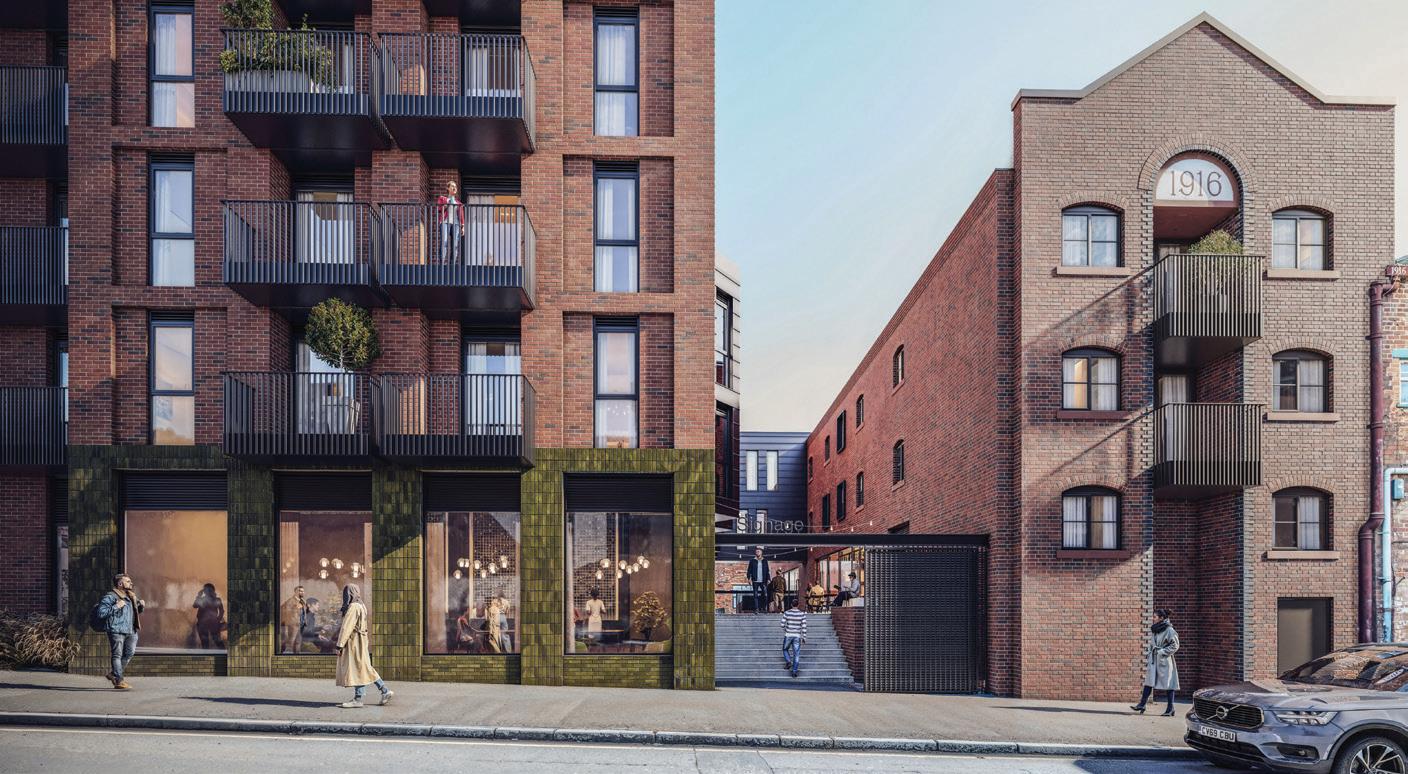
“Greenland Street has the room to go a bit taller and its elevated position will give many of the homes lovely views towards Wales, the business district skyscrapers and to the cathedrals.
“Blundell Street, by contrast takes as its cue the tighter, more urban grain of its location and the classic dockland warehouse vernacular.”
The Greenland Street project rises to 13 storeys and will include 89 one-bed homes and 110 two-bed units and townhouses,
together with commercial units, a gym and co-working space.
Blundell Street offers 59 apartments and three ground floor commercial units, with the development rising in a single step from five storeys at the junction with Simpson Street to seven storeys on Blundell Street, before reducing to meet the neighbouring three-storey warehouse, which is being repurposed into new homes. The new-build element will be joined to the warehouse by a bridge.

LIVERPOOL CITY COUNCIL has granted planning permission for a project that will create a nature-rich public garden on the former Royal Liverpool University Hospital site.
The scheme is the first project to be delivered through an exclusive collaboration between BAM UK and Ireland and the Eden Project, which aims to restore nature in the built environment.
The approved plans include a new public green space with native planting, trees and wildlife-friendly features, alongside walking and cycling routes.
Designed to enhance healing and provide a quiet space for relaxation, the green space will serve patients, staff, and the wider community. Biophilic landscaping has been prioritised, predominantly using native species that encourage pollinators and support long-term ecological viability.
Alongside ecological benefits, the project will include opportunities for community involvement, education, and volunteering. The Eden Project’s experience in environmental engagement will inform programming designed to help the local community explore the relationship between nature and health.
Construction will begin following final preparatory work, with delivery partners working alongside local stakeholders throughout. This will include communication with nearby residents, collaboration with community groups, and ongoing oversight to help ensure the space meets long-term needs.
Everton in the Community event celebrated the people behind charity’s life-changing work
PAUL CROWLEY & CO showed its continued support for Everton in the Community (EitC) at this year’s Blue Heart Awards. The event honoured participants, volunteers and fundraisers from across EitC’s 60+ programmes and initiatives.
Held at BOXPARK Liverpool and hosted by BBC Radio Merseyside’s Giulia Bould, the evening opened with a performance from the Liverpool Philharmonic Orchestra, followed by a dance recital by pupils from The Trinity Catholic Primary School, one of the charity’s partner schools.
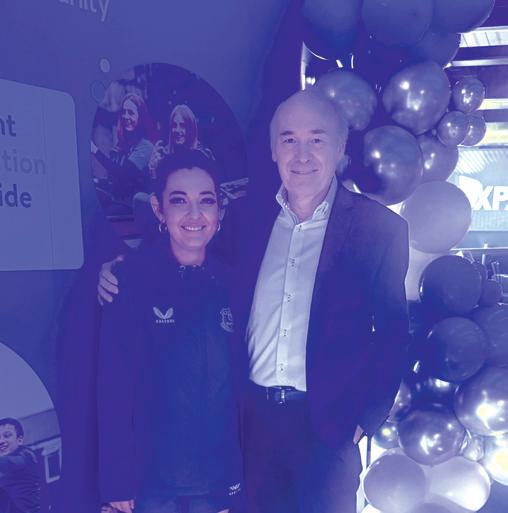
Everton legends Leighton Baines and Rachel Brown-Finnis then presented 13 honours recognising exceptional contributions to EitC over the past year. Leslie Priestley from PC&Co’s marketing team attended the event, joining fellow guests in recognising the achievements of individuals and families across the region (pictured alongside EitC’s People’s Place Manager, Ashley Jones).
PC&Co’s involvement with EitC also includes regular visits to sessions at The Blue Base, where it provides legal advice to local residents.
With her new album Sweat, Melanie C returns to the dance music and rave culture that first inspired her as a teenager. The Spice Girl turned solo star talks about reclaiming her pre-fame self, embracing her Sporty Spice legacy, and making a record built for movement, motivation and release
How are you doing today, Mel?
I’m good, but exhausted! I’m in New York and it’s been a bit of a whirlwind. I was in Australia filming The Voice for two months, then came back to LA to do some promo, went to Coachella for the weekend, and now I’m just rounding off the trip here in New York. So I’m quite looking forward to coming home.
I’m very excited, obviously, about this tour that I’m doing around the UK to promote the new album.
Let’s talk about the new album, Sweat. What changed for you creatively that made this the record you wanted to make now?
So many things have changed. Every album I’ve ever made has really been a reflection of that moment in my life. Over the last eight years, I’ve been DJing, and I’ve been lucky enough to play at so many great festivals all over the world, as well as in Ibiza. For the last five years, I’ve been playing at Pacha, and it’s really reignited my passion for dance music.
And it’s funny, because I discovered raving when I was about 17. I was in Spain with a group of friends on holiday, and we were like, ‘What is this music?’ Everybody was so free when they were dancing, and we were just completely hooked from the get-go.
So when we got back to London, we were like, ‘right, we need to find our people. We’ve got to find out where these raves are happening’.
And I really got into that scene. It was such an incredible time. I grew up through the ’80s, when nightclubs in the UK were a bit cheesy – discos, and it was all a little bit ‘step touch, step touch’ when you were dancing.
So to discover this incredible movement, with music that felt so euphoric at times, and people dancing all night long – different social backgrounds and communities coming together and socialising, probably for the first time in history – it felt like our movement.

I did have the Hex Hector remix on my first album, Northern Star, which was a big dance hit all over the world. So I’ve kind of toyed in that area, but for this album, I revisited those really early days. And also, I’ve just been able to kind of reclaim who I was before I was a Spice Girl. I’ve had so many influences throughout my life, and I’ve been so lucky to work with so many amazing people. This felt like the time to really put all of those pieces together.
I really wanted to bring my work as a solo artist closer to what I play as a DJ. I play multi-genre house when I’m out, so it was just nice to play with all of those different things and find my own voice within that.
Did you approach the production of this album more like a DJ set than a traditional pop album?
I definitely approached things differently. The perspective of a DJ is very different to the perspective of an artist, and I really thought about the way I wanted the music to sound and the way I wanted it to make you feel.
I’ve been DJing at Pacha in Ibiza and I really wanted to bring my work as a solo artist closer to what I play as a DJ.
My parents grew up through the ’60s and, of course, they had the Summer of Love. This was almost like our version of that.
So that was all happening, and then when I turned 20, I auditioned for the band that became the Spice Girls, and that, of course, took over my life. All of my priorities changed. We were so focused, so determined to succeed.
Once the music was released, our schedule was crazy, so there wasn’t much time for going out or socialising, and I’d almost left that part of me behind.
Did Sweat feel like a way of reconnecting with that younger version of yourself?
I’d always loved dance music. Of course, it’s come into the mainstream and influenced so many styles of music now – pop music is so influenced by electronic sounds. So I’ve always listened to lots of different genres of dance and house, but I’ve never really done that much of it as a solo artist.
And I was also really conscious that, as a live performer, I’m very energetic and I’ve got loads of confidence and quite a lot of attitude.
When I’m in the studio, I’m a very different beast. But I thought, I really have to create the music that I want to bring to life on stage.
I wanted to also have some fun. DJing has brought so much joy into my life in the last few years. I’ve been playing live shows and festivals, alongside DJing, and I’ve just been having the best time. I really wanted that to translate onto this album.
And I’m so proud to be a Spice Girl and to be Sporty Spice, and I completely embrace that. It’s such a huge part of who I am.
People will often ask, ‘How do you feel that you were called Sporty Spice and you had to live up to this sporty persona?’ And it’s like, I don’t have to live up to anything. I’ve tried to not be her and it’s impossible, you know. I am very energetic, I’m very sporty, and it was just really fun to look at the album in that way as well and think about it lyrically.
And obviously, a song like ‘Sweat’, to me, felt like the perfect introduction to the album. It has that energy, it’s a little bit tongue in cheek, it’s like a fitness banger, and that was a big part of what I wanted to create in the thread of this album.
When you’re in the studio now, are you already imagining how these songs will feel when people hear them on a dancefloor?
Yeah, 100%. This album, I think more than anything, I wasn’t thinking so much about people sitting at home having a listen – it was about them being on the dancefloor. It was about wanting to motivate and inspire people, either on the dancefloor or in the gym.

I think it’s a good album to listen to with your mates while you’re getting ready to go out. A song like ‘Undefeated Champion’ – I can’t not smile when I hear it. It’s one of my anthems of self-empowerment, you know, picking yourself up when things have gone to s**t. It’s something we can all identify with, right? We all need a little bit of motivation.
You’ll be touring the new album across the UK and Ireland in October, including a date at O2 Academy Brixton – such an iconic venue. What does it mean to you to play there at this stage in your career?
I feel quite emotional about it. I’ve been to see some of my favourite artists at Brixton Academy. I actually saw Madonna there way back in the noughties, which was an insane venue to see her in.
And I’ve been on that stage – I guested with Blossoms a few years ago – but I’ve never played there as a solo artist. This will be my biggest UK headline show since I played Wembley Arena during the Northern Star tour in the very early noughties.
So it means so much to me that, at this point in my career – 30 years since I started with the Spice Girls, over 25 years since I became a solo artist, and at 52 years old – I’m playing this brilliant, iconic venue for the very first time. So that show is going to be extra special.
Your fans have connected with you at different stages of your career – some through the Spice Girls, others through your solo work. How are you going to balance giving them the biggest hits with introducing them to the new Sweat era?
My mind is buzzing right now with creative ideas for the tour because, like the album, I want to approach it differently.
I have this whole new perspective, and I’m going to cram in as many hits as I can. I know, as a gig-goer, you want to hear the hits, right? I’m not going to leave anybody disappointed. I know the fans want to hear the deep cuts, too, but I’ve got plans. I want to keep everybody satisfied.
The live shows are a place where I can really bring this album to life and celebrate my career to this point. It’s going to be full of everything. It’s going to be really energetic, a journey, and when they leave, I want them to be exhausted, but elated – and really sweaty [chuckles].
You’ve had such a varied career, most recently channeling the dance and rave energy on Sweat. What keeps you creatively hungry after all these years?
I just love what I do. I love performing, I love that feeling of being on stage, releasing music, and having that connection with people.
I have learned so much over the years about how, as different as we all are, we share so much and have so much in common. It really is beautiful to be able to express yourself and connect with other people, and that truly is what keeps me going.
How does it feel when younger artists talk about being influenced by the Spice Girls?
It blows my mind. I think all of us Spice Girls are so proud. Obviously, we’ve left this beautiful legacy behind, and we constantly see people who have been affected by it. So many artists mention the Spice Girls – great artists – and that feels very full circle, because some of the artists who talk about being inspired by the Spice Girls now inspire me. So that’s really beautiful. And it’s lovely to meet them as well. I meet so many artists who are very excited to meet a Spice Girl. But I think the most surprising ones are the people who weren’t even born when the Spice Girls first came out. I’m like, ‘How do you know?’ But of course, this is music and a movement that has been passed down through generations, whether it was through your older sister or your mum.
And that’s what we see whenever the Spice Girls get back together – the generational effect our music has had on people.
Melanie C’s album Sweat is out now on Virgin. Her UK and Ireland tour begins 18 October at 3Olympia theatre, Dublin

Start early for summer skin that feels fresh, natural and confident. For Amanda Azzopardi, a thoughtful approach to planning and time-led treatments is key to achieving healthy, radiant, makeup-optional results
As summer approaches, I always see a noticeable shift in the clinic. Patients begin thinking ahead to holidays, weddings, events – and naturally, how they want their skin to look and feel during that time.
For many, it’s not about dramatic change. It’s about feeling confident with minimal makeup, having skin that looks healthy in natural light, and achieving that fresher, well-rested appearance that doesn’t rely on filters.
What’s important to understand, however, is that these kinds of results don’t happen overnight.
At Amanda Azzopardi Aesthetics, we advise patients that if they want their skin to look its best for summer, the process needs to start well in advance. Aesthetic treatments should never be last-minute – they require time to plan, perform and allow results to settle naturally.
Why I recommend a six-week approach
Aesthetic treatments should never be rushed.
From a clinical perspective, the skin needs time to respond. Collagen production takes weeks to develop, hydration improves gradually at a cellular level, and injectable treatments need time to settle properly.
When patients try to do everything at once or too close to an event or holiday, results can look less refined. By spacing treatments over six weeks,
I’m able to:
• Improve skin quality first, rather than trying to mask concerns
• Introduce subtle structural support only where it’s actually needed
• Allow each stage to settle fully before moving on
This creates results that are far more natural and longer lasting.
Week 1–2: Focusing on skin quality
The first step in any treatment plan I create is always the same — improving the condition of the skin.
Before I consider volume or muscle activity, I want to see how the skin behaves when it’s properly hydrated and stimulated to regenerate.
During this phase, I may recommend:
• Medical-grade skin boosters to improve hydration and elasticity
• Microneedling to stimulate collagen and refine texture
• Treatments that support overall skin health and resilience
Clinically, this stage is essential. Better skin quality allows all subsequent
treatments to perform more effectively and produce more consistent results.
Patients often begin to notice their skin looking brighter and smoother quite quickly, but more importantly, the skin is functioning better beneath the surface.
Week 3–4: Assessing structure carefully
Once the skin has been addressed, I then reassess.
Not every patient will need dermal filler, and this is something I’m very clear about. Where it is appropriate, my approach is always conservative and precise.
The aim is not to change the face, but to support it.
This might involve:
• Restoring small amounts of lost volume
• Improving balance and proportion
• Softening areas that contribute to a tired appearance


Overcorrection is one of the most common issues I see in aesthetic medicine. My focus is always on subtlety – using the minimum amount of product required to achieve a balanced, natural result.
When done correctly, patients don’t look like they’ve had filler. They simply look fresher.
Week 4–6: Refinement and regulation
The final stage of the plan is about refinement.
At this point, skin quality has improved and any structural work has settled. I then look at muscle activity and how it may be contributing to lines or a fatigued appearance.
This is where I may introduce:
• Anti-wrinkle treatments to soften dynamic lines
• Preventative treatments to reduce deeper line formation
• Small adjustments to ensure overall balance
Timing is important here, as these treatments take around two weeks to fully take effect. By placing them towards

“My focus is subtlety – using the minimum amount of product required to achieve a balanced, natural result.”
the end of the six-week plan, it ensures everything settles at the right time.
The goal is not to remove expression, but to regulate it – maintaining natural movement while softening the areas that make patients look tired.
What results should look like
At the end of a six-week plan, I don’t expect patients to look dramatically different.
Instead, the changes are more subtle:
• Skin appears healthier, smoother and more hydrated
• The face looks more balanced and supported
• Overall appearance is fresher and more rested
The best feedback I receive is when patients are told they look well, without anyone knowing why.
If you’re considering treatment before summer, my advice is always to start
No time like the present –book your complimentary consultation online, call 0151 558 0742 or email contact@ amandaazzopardi.co.uk
earlier than you think.
Six weeks allows enough time for treatments to be carried out properly, spaced correctly, and to fully settle. Leaving it too late often leads to compromises, and that’s when results can look less natural.
A considered approach to summer skin
For me, aesthetics has never been about trends or quick fixes. It’s about taking a measured, medically-led approach that prioritises skin health and long-term results.
The six-week skin reset is simply a way of structuring that process – giving patients the time and guidance needed to achieve results that feel natural, balanced and appropriate.
At Amanda Azzopardi Aesthetics, our aim is always the same: to help patients look like themselves, at their best.
Refreshed, confident, and ready for summer – without it ever looking like they’ve had treatment.


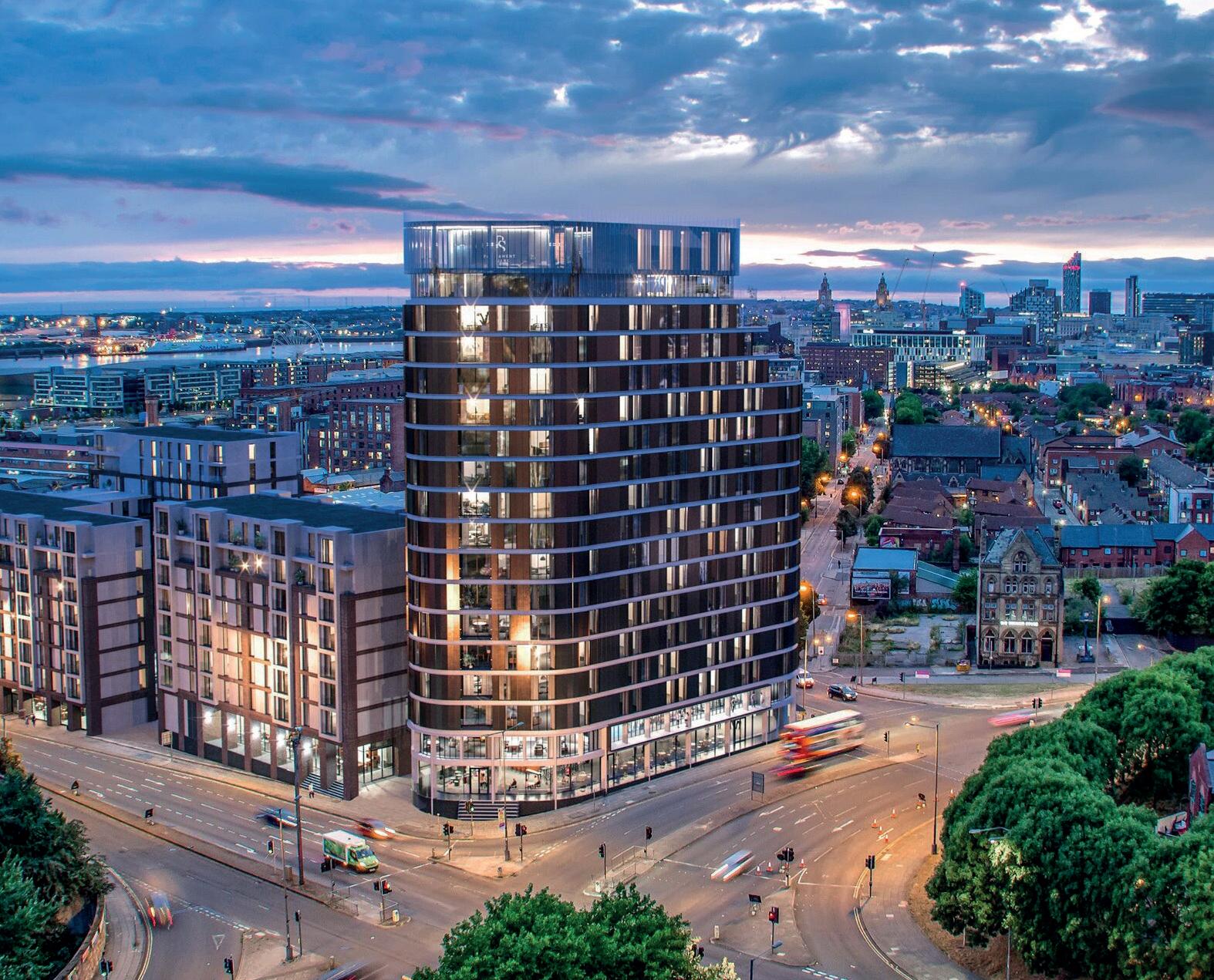
Sundial Place is attracting buyers seeking a well-connected setting, access to open space and modern, energy-efficient design
IN THORNTON, A NEW COLLECTION of energy-efficient homes is taking shape, offering buyers the chance to stay within easy reach of Liverpool while enjoying access to open green space.
Sundial Place, a development by David Wilson Homes, sits close to Crosby and reflects the area’s village feel, with a pace of life that contrasts with the city while remaining well connected.
With a blend of semi-rural surroundings and established commuter links, the location continues to draw a mix of residents, from families to professionals and those looking to downsize.
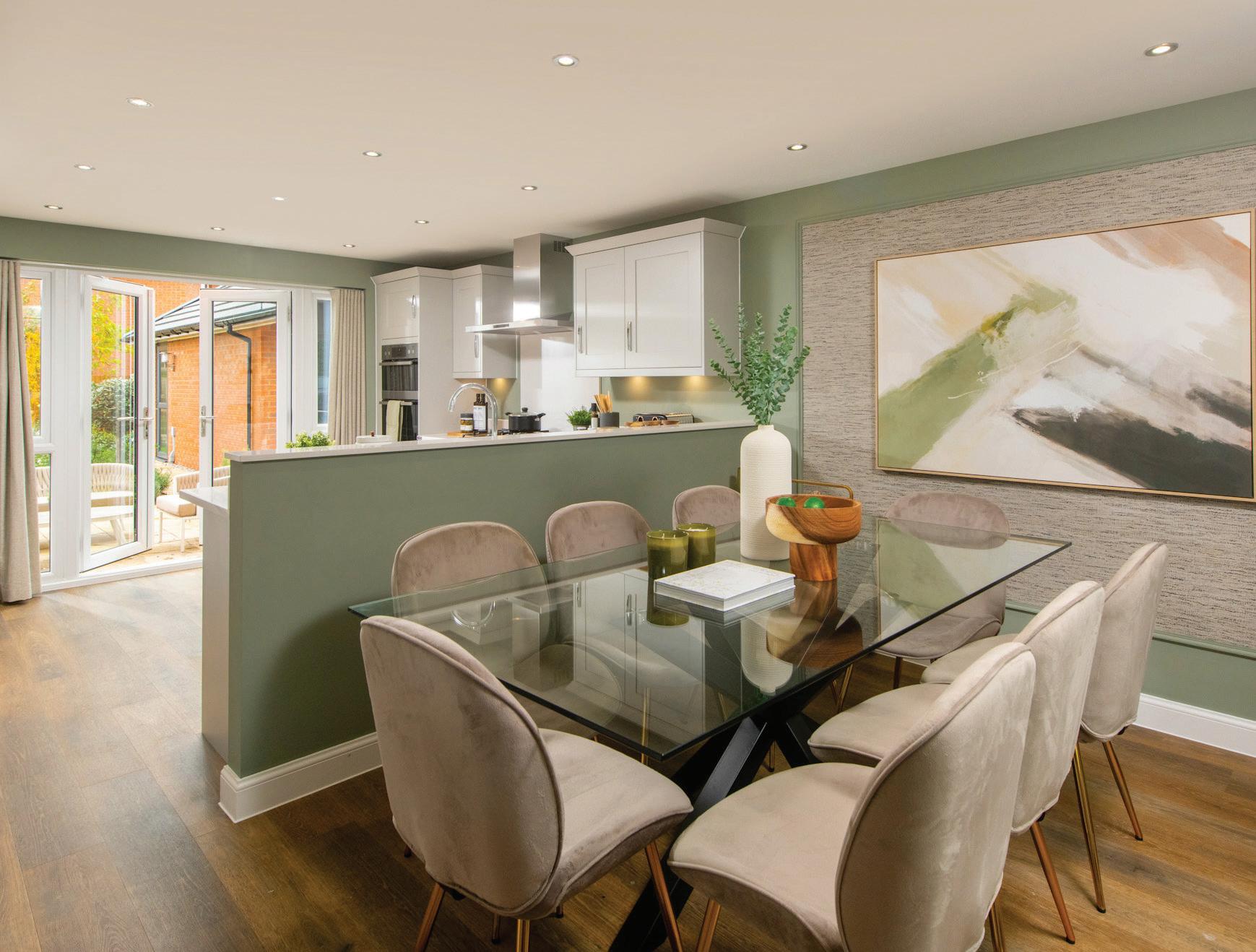
Among the standout homes available is the Woodlark house type, a spacious four-bedroom detached property that has proven popular with growing families. Its layout centres on an open-plan kitchen, dining and family space across the rear of the house, with French doors opening onto the garden, while a separate lounge with a bay window provides a comfortable space for quieter moments
Upstairs, there are four double bedrooms, including a main bedroom
with en suite, alongside a family bathroom serving the remaining rooms. For buyers looking to move more quickly, a completed Woodlark is currently available.
Claire Jarvis, managing director at David Wilson Homes North West, says: “Sundial Place has been designed to offer buyers the best of contemporary living in a desirable location. Thornton is an upand-coming area. It’s close to Crosby but really has its own identity, offering a slightly quieter pace of life, but with shops, pubs and schools all nearby. Residents can also enjoy nearby countryside walks, all while being within easy reach of Liverpool city centre, and the motorway network to connect to the rest of the North West.
“With homes like the Woodlark, alongside attractive incentives such as Part Exchange and deposit contributions, we’re making it easier for people to secure a high-quality new home and enjoy a seamless move this summer.”
Buyers hoping to move in time for the warmer months can choose

Residents of Thornton can also enjoy nearby countryside walks, all while being within easy reach of Liverpool city centre.
from a number of homes currently available for a summer completion. To support those looking to make a move, a 5% Deposit Paid incentive is being offered on selected properties, helping to ease upfront costs.
For those with a property to sell, Part Exchange is also available, offering a more straightforward, chain-free route. Under the scheme, David Wilson Homes acts as a guaranteed buyer, which can help reduce delays and avoid some of the uncertainty associated with selling on the open market.
Homes at Sundial Place are designed with energy efficiency in mind, with modern construction methods and insulation standards aimed at supporting lower energy use and more sustainable living.
For more information about the homes available at Sundial Place, visit www.dwh.co.uk/new-homes/dev002632-sundial-place-dwh or speak to the sales team to find out how you could move in for summer on 0330 029 1410


COOK’S TIP
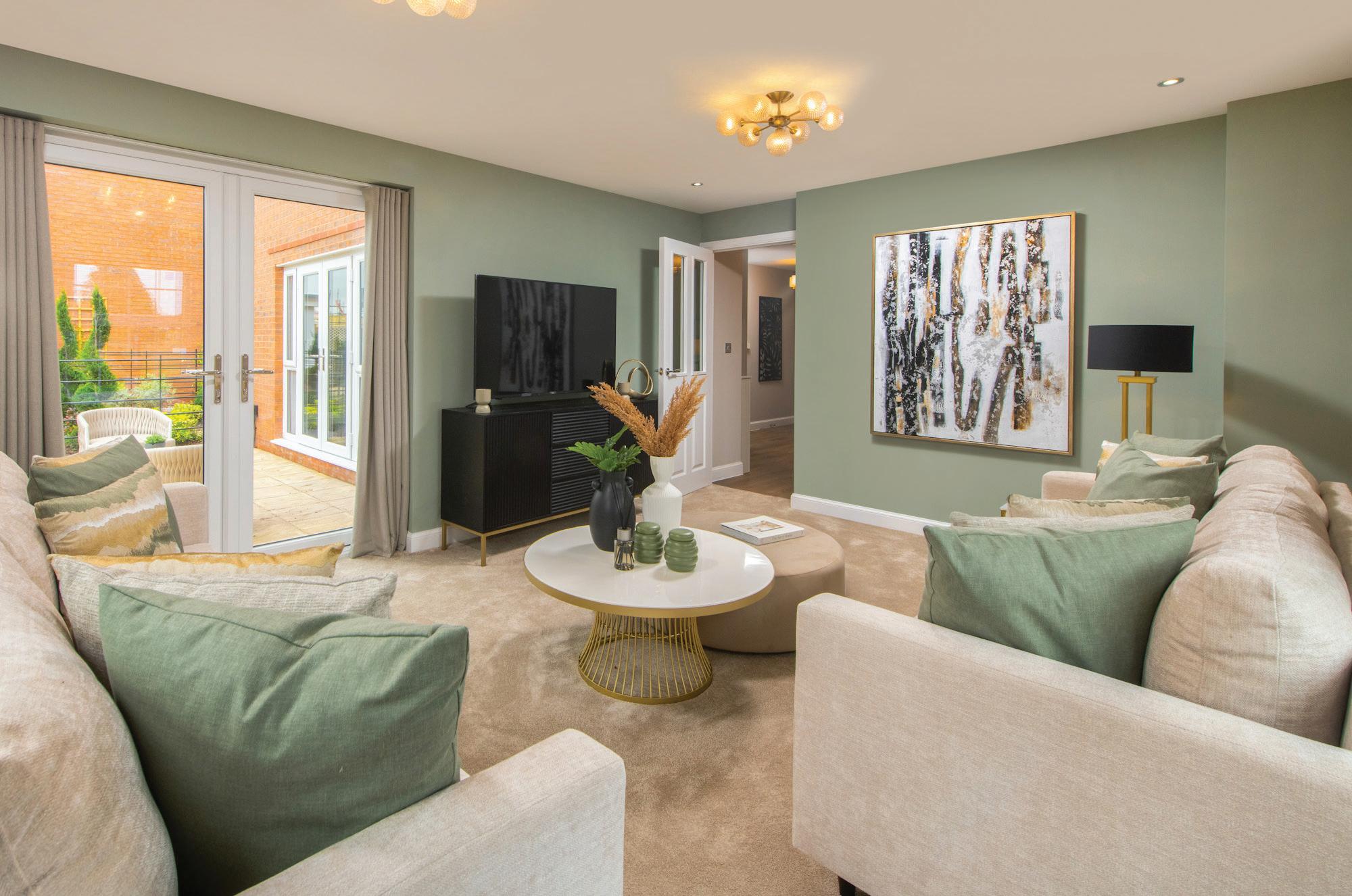
Bursting with sunny Spanish flavours, this spin on seafood paella is high impact and low effort. It goes wonderfully with a glass of crisp white wine
If you can’t find runner beans, you could use frozen peas or broad beans in this recipe instead
INGREDIENTS
• 2 tbsp olive oil
• 2 clove/s garlic, crushed
• 160g pack sliced runner beans
• 1 tsp sweet smoked paprika
• 4 No.1 Red Choice Vine Tomatoes
• 200g paella rice
• 500ml Cooks’ ingredients Fish Stock
PREP 5 mins | COOK 30 mins | SERVES 4 THOUSANDS OF
• ½ tsp salt
• 150g pack Waitrose Duchy Organic Raw King Prawns
• 2 x 260g packs No.1 Icelandic Cod Loin, cut in half, if needed
• ¼ x 25g pack flat leaf parsley, roughly chopped, to serve
• ½ lemon, wedges, to serve
METHOD
1 Preheat the oven to 200ºC, gas mark 6. Heat 1 tbsp oil in a large ovenproof frying pan over a medium heat. Fry the garlic for 1 minute until fragrant, then add the beans and fry for 1 minute more. Add the paprika and tomatoes and cook for another 2-3 minutes.
2 Stir in the rice, add the stock and salt, then bring to the boil. Transfer the pan to the oven and bake, uncovered, for 15 minutes.
3 Remove the pan from the oven, sit the prawns and cod on top, then drizzle with the remaining 1 tbsp oil. Season the fish and bake for a final 8 minutes, or until the fish is opaque and flakes easily with a fork and the prawns are pink, opaque and cooked through. Leave to stand for 2-3 minutes, then serve scattered with the parsley and with the lemon wedges for squeezing.

Marcus Willis heads to Aigburth a decade on from his famous Centre Court clash with Roger Federer at Wimbledon
WIMBLEDON CULT HERO and long-time Liverpool favourite Marcus Willis is set to return to the Liverpool International Tennis Tournament this summer.
Willis captured global attention in 2016 when, ranked outside the world’s top 700 and on the brink of quitting the sport, he battled through qualifying to face Roger Federer on Centre Court at Wimbledon. The improbable run turned him into one of modern tennis’s most enduring cult figures, admired as much for his personality as his shot-making.
Now, a decade on, Willis returns to Liverpool fresh from competing at the Open Aix Provence Crédit Agricole, bringing his trademark flair back to a tournament known for its relaxed, crowd-friendly atmosphere.
Running from 18-20 June at Liverpool Cricket Club in Aigburth, the event remains Europe’s largest and longest-running tennis exhibition. It regularly attracts ATP and WTA professionals using it as preparation for Wimbledon, with previous players including Novak Djokovic, Caroline Wozniacki, Marat Safin and Martina Hingis.
The format encourages interaction between players and spectators, with fans seated close to the action, while tickets start from £22, making it one of the most accessible ways to watch elite tennis live.
Hospitality packages include private or shared tables in the Legends Marquee or Century Pavilion, welcome drinks, a three-course lunch, afternoon tea and reserved VIP Centre Court seating.





Alongside the main competition, Kids Only Day on 17 June is a key feature of the three-day event, welcoming around 450 primary school children to Liverpool Tennis Centre for tennis clinics with professional coaches and players, as well as numeracy and fitness-based learning activities.
Anders Borg, tournament director, says: “The Liverpool International Tennis Tournament Tennis is an event people look forward to every summer. You’ve got world-class players, a brilliant crowd, great hospitality, and that relaxed atmosphere you only really get in Liverpool. It’s a fantastic few days in the city.”








Heather Marsh reveals how simple it can be to create a cottage garden, inviting us to try our hand at this enduring classic
LIKE SO MANY OF US, it has always been my dream to have a cottage garden. For me, that picturesque, chocolate-box image is a garden rooted in nostalgic memories. I suppose that’s where my own gardening journey began. Even in the small backyard of my childhood home in urban Manchester, my mother longed to create a floral haven inspired by this romantic, traditional style – somewhere she could retreat and immerse herself in beauty and old-fashioned charm. And she did just that.
The modest space was transformed into a glorious abundance of informal planting: a delightful, tumbling mix of colourful annuals, blooming herbaceous perennials, rambling roses and fragrant honeysuckle, with the odd vegetable and herb tucked in here and there. Even a small apple tree found a corner in which to flourish. My mother was a complete novice, following no rules or plans whatsoever. She simply grew what she fancied, unaware that her approach – what I might respectfully call organised chaos – was, in fact, the essence of a country cottage garden.
Of course, this style of gardening, familiar to farm workers of the 19th Century, was originally a practical means of putting food on the table, supplementing income and providing for families. The design was primarily functional and productive, with floral aesthetics serving as a pleasing disguise. With space often limited – particularly in small
front gardens – maximising every inch was essential. Potatoes, beans and cabbages grew alongside hollyhocks and daisies; strawberries, gooseberries and raspberries intertwined with roses and honeysuckle. Herbs, too, were indispensable, valued for both culinary and medicinal uses, with lavender, parsley and mint among the most popular.
From seed to summer colour
Creating your own cottage garden, believe me, really isn’t that difficult. Ever the romantic, my own garden is loosely based on these traditional yet informal elements. There are so many plants that capture the country cottage look – the only challenge is choosing what to include.
My mother showed me, all those years ago in her small backyard, that garden design is simply about growing what you love, and most importantly, what brings you pleasure. I’ve no time for gardening snobbery. With that in mind, what are you waiting for? Here are a few ideas to get you started.
For my mother, it all began with packets of seeds. Annuals – of which there are hundreds of varieties – may last only one summer, but they fill a garden with a riot of colour, and many will self-seed to return the following year. She started with cosmos, sweet peas, nasturtiums, marigolds and poppies – all still favourites of mine today. Shirley poppies were a particularly stunning variety she happened

upon. These flamboyant, tissue-paper-like blooms come in a range of pastel colours and are wonderfully easy to sow. Simply sprinkle the seeds like fairy dust where you want them to grow, then wait for the magic to happen.
Snapdragons, honesty (Lunaria annua), columbines, evening primrose and foxgloves – the list could go on and on. I’ve always had a sentimental fondness for these flowers, which bloom right through summer, and I highly recommend them.
There is still time to sow seeds but all of these can be bought as trays of plugs, ready to plant out among your perennials. These


herbaceous plants form the backbone of a cottage garden, returning year after year. Again, there’s a wealth to choose from, but here are a few classic favourites I grow to tempt you.
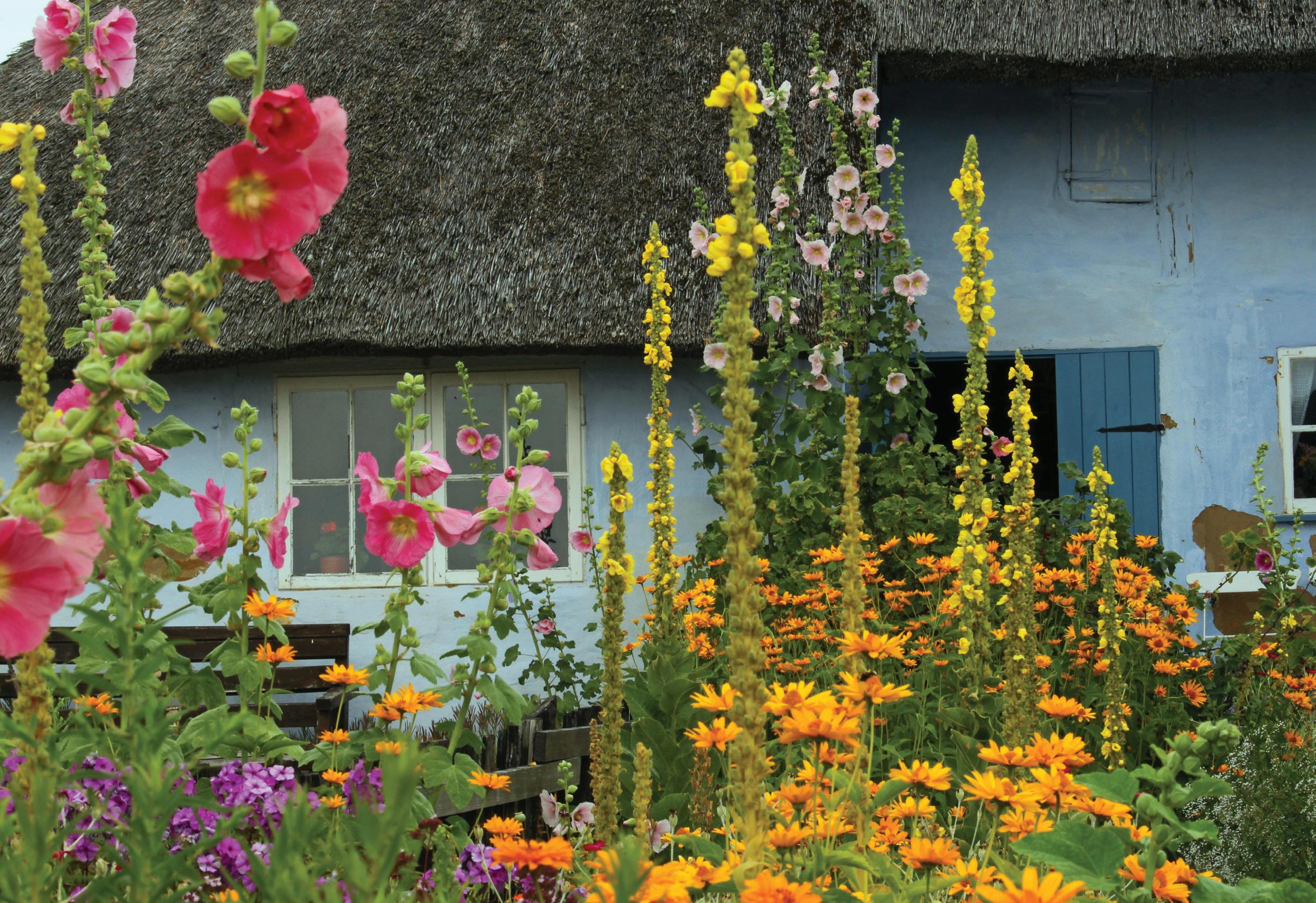
Hollyhocks (Alcea rosea) No quintessential cottage garden would be complete without the ubiquitous hollyhock. These floral giants add height and drama, with blooms in shades from the palest pink to the deepest crimson. Once established – whether grown from seed or bought as young plants – they self-seed freely, popping up wherever they please. A dear friend once had them growing in every crack and crevice of her front garden; it looked glorious. I was always in awe of how effortlessly she grew such impressive specimens. Her secret? ‘I just leave nature to get on with it,’ she’d say. Hollyhocks thrive in full sun and well-drained, fertile soil. Growing up to 2.7m (9ft), most will need staking -though, remarkably, my friend’s never did.

option for more reliable return, varieties such as ‘Firedance’ and ‘Cotswold Queen’ are excellent choices and won’t disappoint. Lupins (Lupinus polyphyllus) Lupins are a cottage garden favourite, available in a rainbow of colours and grown as both annuals and perennials. Their bold, upright flower spikes add structure and impact, with clumps typically reaching around 90cm (3ft) in height. They’re excellent for creating that classic layered cottage garden look.

Southport Flower Show returns to Victoria Park this August for four days of flowers, food and fun – and YM Liverpool has three sets of family tickets to give away.
The largest independent flower show in the UK, Southport Flower Show attracts around 50,000 visitors each year.
This year’s celebrity guests include Strictly’s Anton du Beke; TV chefs Phil Vickery and Briony May Williams; TV garden personalities Adam Frost, Arit Anderson and Lee Burkhill; and children’s TV favourites Andy Day and Justin Fletcher.
Highlights also include live music, dog display teams, birds of prey, horse shows, shopping and a children’s trail.
Delphiniums (Delphinium elatum) The majestic spires of delphiniums are another hallmark of the cottage garden. Their tall flower spikes appear in every shade of blue, as well as white and pale pink. They prefer full sun and rich, moist soil, but beware – slugs are particularly fond of them. A ring of grit or crushed eggshells around the base can help deter pests. While some gardeners grow delphiniums with little fuss, I must admit mine have been less successful. Still, I persevere – they are simply magnificent and well worth the effort. Traditional varieties can reach 2.5m (8ft), though more compact forms are available and tend to be easier to manage.
Verbascum (Verbascum thapsus) These tall, distinctive plants are a familiar sight in cottage gardens. Our native wild verbascum— the great or woolly mullein – is a particular favourite of mine. A biennial, it takes two years to flower: in its first year, it forms a rosette of soft, furry leaves; in the second, it sends up a striking spike of golden-yellow blooms, often reaching 2.5m. An enthusiastic self-seeder, it’s best left to naturalise where it chooses. It thrives in full sun and poor, dry, well-drained soil. If you prefer a perennial
Hardy Geraniums (Geranium spp.) Cranesbills are well-known perennials – hardy, reliable and free-flowering throughout the summer months. They more than earn their place in any cottage garden. I grow the classic blue Geranium × magnificum and the softer pink Geranium endressii, both of which provide excellent ground cover and longlasting colour.
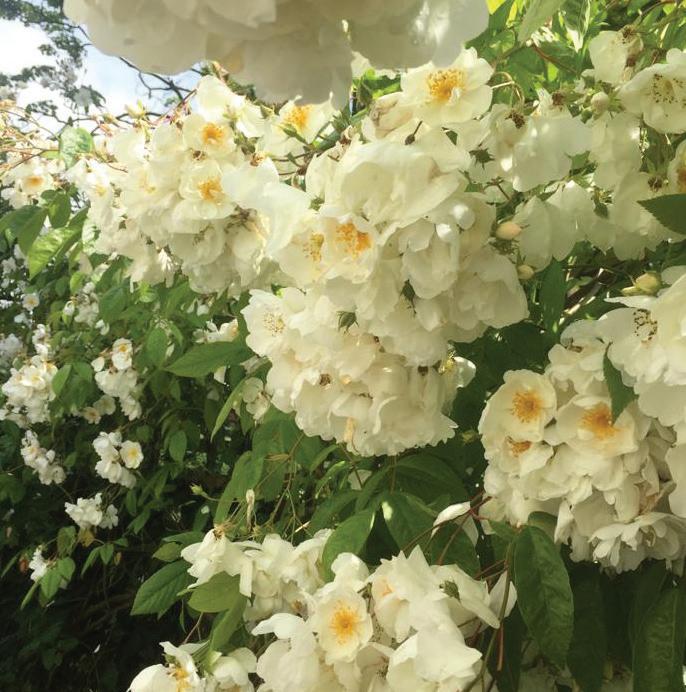
Roses (Rosa spp.) No country garden would be complete without a rose – but where to begin? Climbers and ramblers bring undeniable charm. While both will climb, ramblers are more vigorous but less structured, producing masses of smaller flowers in a single, spectacular flush. Climbers, by contrast, have larger blooms on stronger stems and tend to flower repeatedly.
My own rambler, Rosa ‘Bobbie James’, is perfect for a cottage garden setting. This stunning variety produces great swathes of semi-double white flowers each year, ideal for covering a fence or wall. Fragrance matters just as much as colour for me, and I tend to favour paler shades. Rosa ‘Albertine’, a wellknown pink, highly scented rambler, is another favourite – especially when grown alongside jasmine and lavender, where it creates a beautifully scented, bee-friendly combination.
The show runs from 20-23 August, and tickets are valid for any day.
For your chance to win, simply answer the following question: Which celebrity dancer is appearing at this year’s Southport Flower Show?
A) Anton du Beke
B) Craig Revel Horwood
C) Johannes Radebe
Send your answer, name and contact details to editor@ymliverpool.com with ‘Southport Flower Show Comp’ in the subject line. Entries close on 5 June.
Terms: Three winners will each receive a family ticket for four people. Tickets are valid for any one day of Southport Flower Show, taking place from 20-23 August. No cash alternative is available. Winners will be selected at random from all correct entries.
southportflowershow.co.uk





Struggling to understand how self-employed mortgages work? Martin Green explains what lenders look for – and why securing one might be easier than you think
My name is Martin Green from J&M Green Mortgage Services Ltd on Allerton Road. I’m an independent mortgage adviser with 20 years of experience, and my firm has completed well in excess of 10,000 mortgages over the years.
In this article, I’ll explain how mortgages for the self-employed are assessed, what evidence lenders usually need, and where there can be flexibility.
Being self-employed can feel like a hurdle when you apply for a mortgage, mainly because income can fluctuate and isn’t guaranteed in the same way as a fixed salary. For that reason, lenders usually take a closer look at how much you earn, how consistent the business is, and whether the income you declare is sustainable. The good news is that self-employed underwriting isn’t onesize-fits-all, and the way your income is assessed can vary by lender and by business structure.
Lenders assess self-employed income retrospectively – typically, you’ll need at least 12 months’ trading history, and many high street lenders prefer two years of accounts or HMRC tax documentation. Where profits are rising, lenders often average the latest two years; if profits have fallen, they typically use the most recent year. Some lenders will consider one year of accounts when supported by an accountant’s projection/covering statement – often via specialist lenders, although there are also limited high street options.
There are exceptions to this rule though. Some lenders can consider newly self-employed professionals (for example, doctors, dentists, or solicitors) where there’s a strong employed track record in the industry and evidence of ongoing or future income. Likewise, if you’ve moved from sole trader to a limited company, a lender may take comfort from the sole trader history even if the limited company itself is new and hasn’t filed accounts.

Martin Green Director
How your income is evidenced depends on how you trade. Sole traders commonly use HMRC SA302s (your tax calculation) and the Tax Years Overview to confirm the figures and show taxes are up to date; lenders base affordability on net profit. For limited company directors, most lenders assess a combination of director’s salary and dividends. Eligibility and the documents requested can vary, and many lenders focus on directors with a meaningful shareholding (often around 20%, although this can vary by lender).
Because self-employed income can rise and fall, lenders look for stability: consistent performance, sensible business finances, and a story that matches the numbers. A set of accounts doesn’t always show seasonality, oneoff costs, or a strong order book – so clear supporting documents and a straightforward explanation can make a real difference in underwriting.
Once a lender has agreed what income figure to use, it’s generally treated like employed income in the affordability model. The key is presenting the right
evidence and context. For example, if a sole trader has a vehicle finance payment showing on their personal credit file, some lenders may exclude it from affordability where an accountant confirms it’s a genuine business expense rather than personal spending.
Limited company directors may have additional options. Some lenders can assess your share of company profit after tax (plus director’s salary) rather than just what you draw as salary/dividends. This can help if you retain profits in the business for cashflow or tax planning. For instance, if you pay yourself £50k but the company makes £100k profit after tax, certain lenders may consider the higher profit figure rather than what you’ve actually paid yourself.
If you’re self-employed and unsure where you stand, the first step is to speak to an independent broker. Issues that look like obstacles – limited accounts, a recent change in trading style, fluctuating profits – can sometimes be positioned clearly with the right lender and documentation to be bypassed or even used to your advantage.


National Museums Liverpool marks its 40th anniversary with a showcase of rare and iconic objects
LIVERPOOL’S WORLD-RENOWNED museum group National Museums Liverpool (NML) is celebrating 40 years since its formation, with a newly opened exhibition at World Museum.
National Museums Liverpool at 40 brings together objects from all seven museums and galleries in the portfolio, showcasing some never-before-seen artworks and artefacts from the four million objects in NML’s collection.
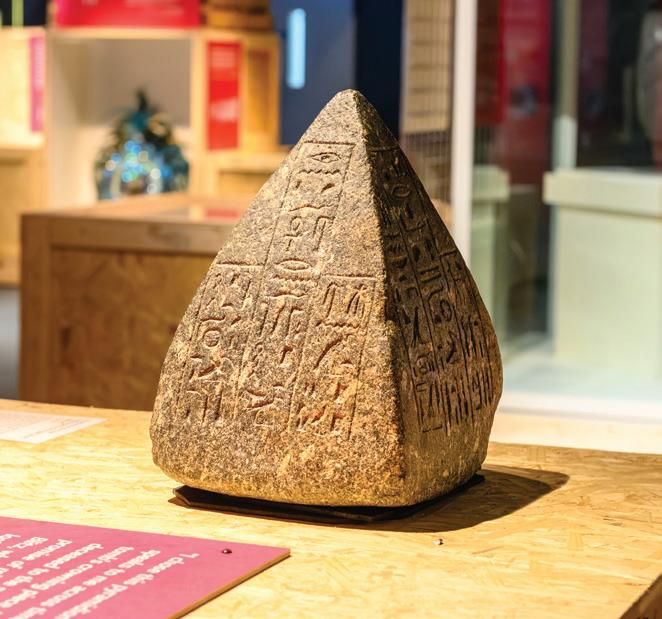
Highlights include one of the earliest paintings of Liverpool, a granite Egyptian pyramidion that dates back to 1279 BC – 1213 BC, a bomber jacket from Liverpool’s legendary nightclub Cream and Albert Einstein’s landing card on his arrival in the UK.
Also announced to mark 40 years is a summer line-up of the best music Liverpool has to offer. Summer of Sound at Museum of Liverpool is in partnership with The Cavern Club, brings special gigs and events to the waterfront all summer-long, starting on 24 July.
Joe Brook, executive director of audiences and media at National Museums Liverpool, says: “We’ve had a brilliant response to our new exhibition National Museums Liverpool at 40 since it opened in April. It’s a great opportunity to explore the breadth of our collections and feel like you’re truly behind the scenes of our museums and galleries.
“The year is already shaping up to be packed with some incredible events and activities with Summer of Sound, Beyond the Label talks and much still to come, we’re celebrating turning 40 in style!”
For more information on National Museums Liverpool at 40 and full listings, visit liverpoolmuseums.org.uk
Special event will coincide with celebrations marking 20 years since city was named European Capital of Culture

BRITISH LUXURY CRUISE LINE CUNARD has announced a landmark moment when all four Cunard ships will come together in Liverpool for the first time.
On 16 May 2028, Queen Mary 2, Queen Elizabeth, Queen Victoria and Queen Anne will unite on the River Mersey, in what promises to be one of the most memorable occasions in Cunard’s modern history.
The event will mark the first time the full fleet of four has ever assembled, and it will do so in Liverpool, Cunard’s spiritual home, where the company was founded in 1840.
The last time Cunard ships gathered on the Mersey was in 2015, when the three Queens came together to celebrate the brand’s 175th anniversary, attracting more than one million spectators to the city and its waterfront.
Queen Mary 2’s arrival in Liverpool on 16 May 2028 will also mark her first ever transatlantic crossing from New York directly to the city, as well as Cunard’s first eastbound arrival from New York to Liverpool in more than 61 years.
The Four Queens spectacle coincides with celebrations marking 20 years since Liverpool was named European Capital of Culture. The city is preparing a year-long programme of music, maritime and sporting events, with Cunard’s return as a centrepiece.
Events not to be missed over the next four weeks

The Spy Who Came In From The Cold, Playhouse
12-16 May
Direct from the West End and starring Ralf Little, this thrilling new play – the first ever stage adaptation of a John le Carré novel – comes to Liverpool for one week only.
9 May Merseyside Vegan Festival, Liverpool Guild of Students
10 May An Evening with Kenny Dalglish & Ian Rush, The Auditorium Liverpool at M&S Bank Arena
23 May LACES OUT! Trainer Festival, BOXPARK
Until The Assassination of 23 May Margaret Thatcher, Everyman
26 May Roscoe Lecture: In Conversation with Sir Phil Redmond, Philharmonic Hall
Until Liverpool Schools
30 May Football Association Exhibition, St George’s Hall
5 June Faithless, O2 Academy

Outer Waves Festival, Invisible Wind Factory & Make North Docks
23-24 May
A gathering for the curious and the sonically adventurous. Following an acclaimed debut in 2025, Liverpool’s underground music and arts festival returns for another weekend of boundary-pushing sound, performance and art.