Our Community A Year in Review 2025

Widji exists today because generations of alumni have carried its values forward. This Year in Review is meant to keep you and the community connected to that ongoing work offering a snapshot of the year behind us, the decisions shaping our future and the role alumni continue to play as stewards of this place. As we move toward our centennial, we share this
“At thousands of feet of elevation and with 1,001 mosquitoes surrounding us, we sat cross-legged in a circle, a sunset of every color we could dream of in front of us. In the short time we’d shared together, this group had become family.”
- Eleanor Pitts, Camper
As we wrap up another incredible season at Widji, I want to take a moment to share my gratitude with all of you. This community has a remarkable way of making people feel at home, and my family and I have experienced that firsthand. From our very first days, you have welcomed us with openness, kindness and a spirit that truly reflects the heart of Widji.
This summer was nothing short of amazing and was full of growth, adventure and the kind of connection that defines this place. Whether through stories at Closing Campfires, alumni support or the quiet ways you continue to uphold Widji’s values, your presence is felt every day.
Thank you for the warmth you’ve shown my family, for the legacy you’ve built and for the energy you continue to bring to the community. We’re grateful to be part of it, and we’re excited for all that lies ahead.
Ben Hoffman Executive Director of Camp Widjiwagan

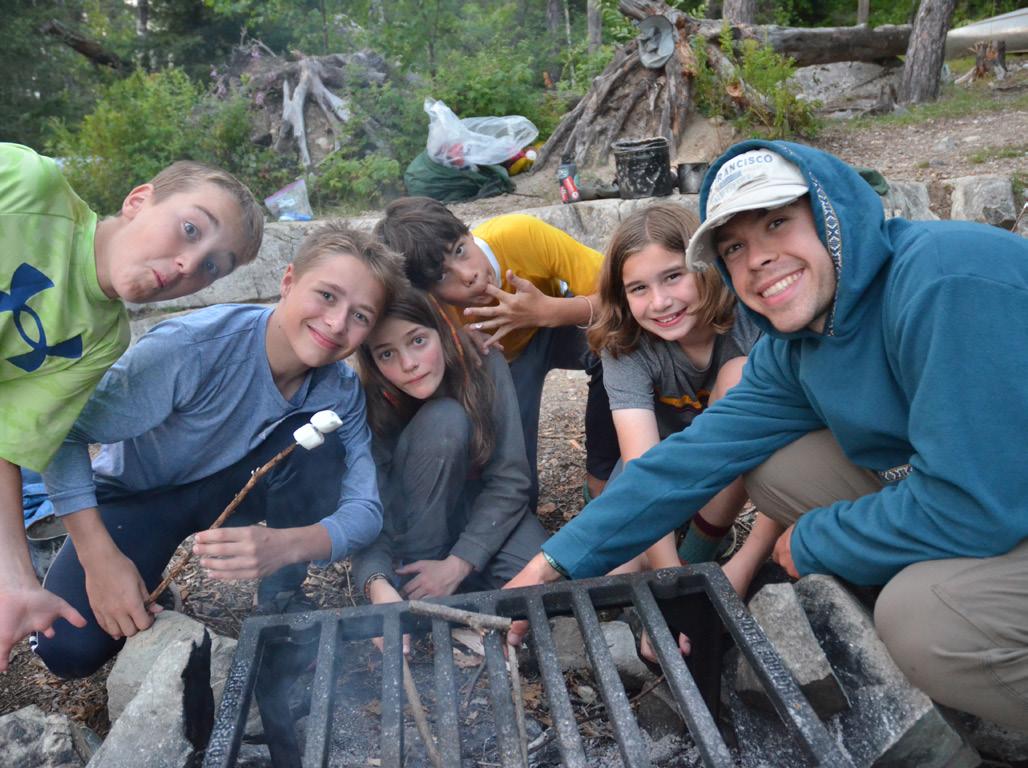
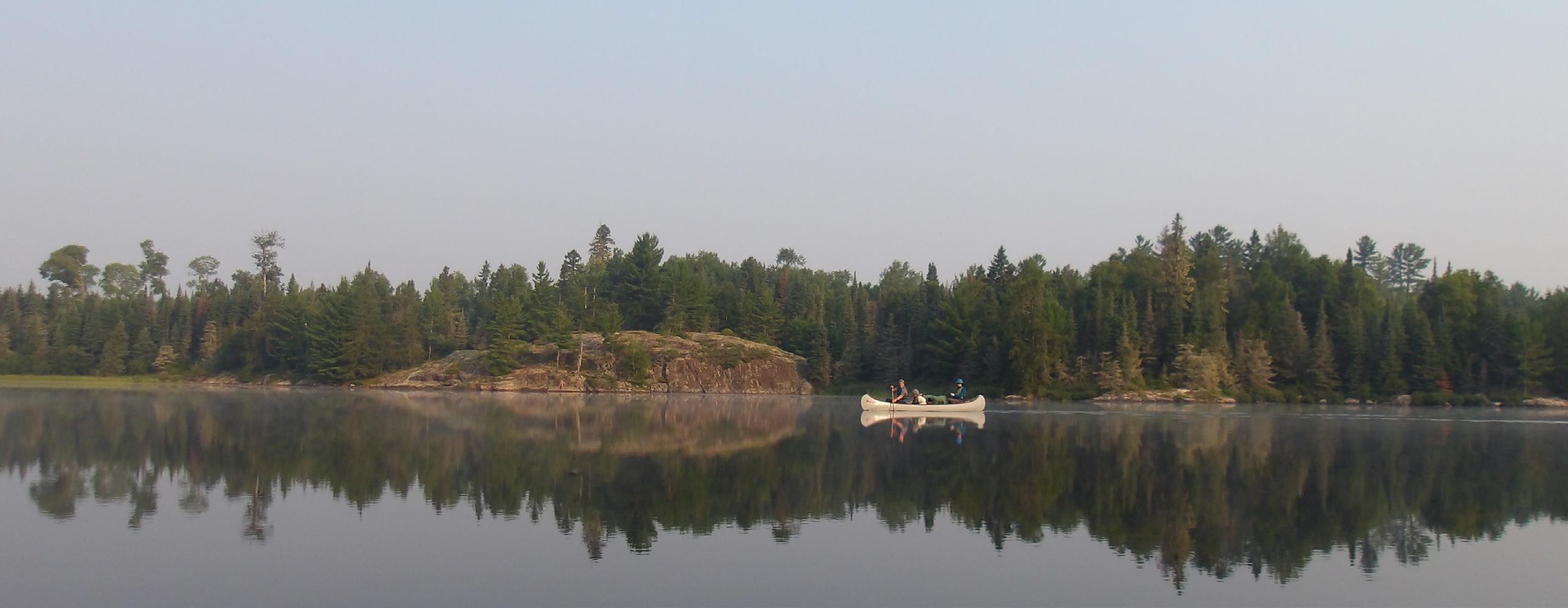
This year, 1,470 adventurers of all ages joined us across our seasonal programs — making Widji a year-round destination for connection, challenge and discovery.
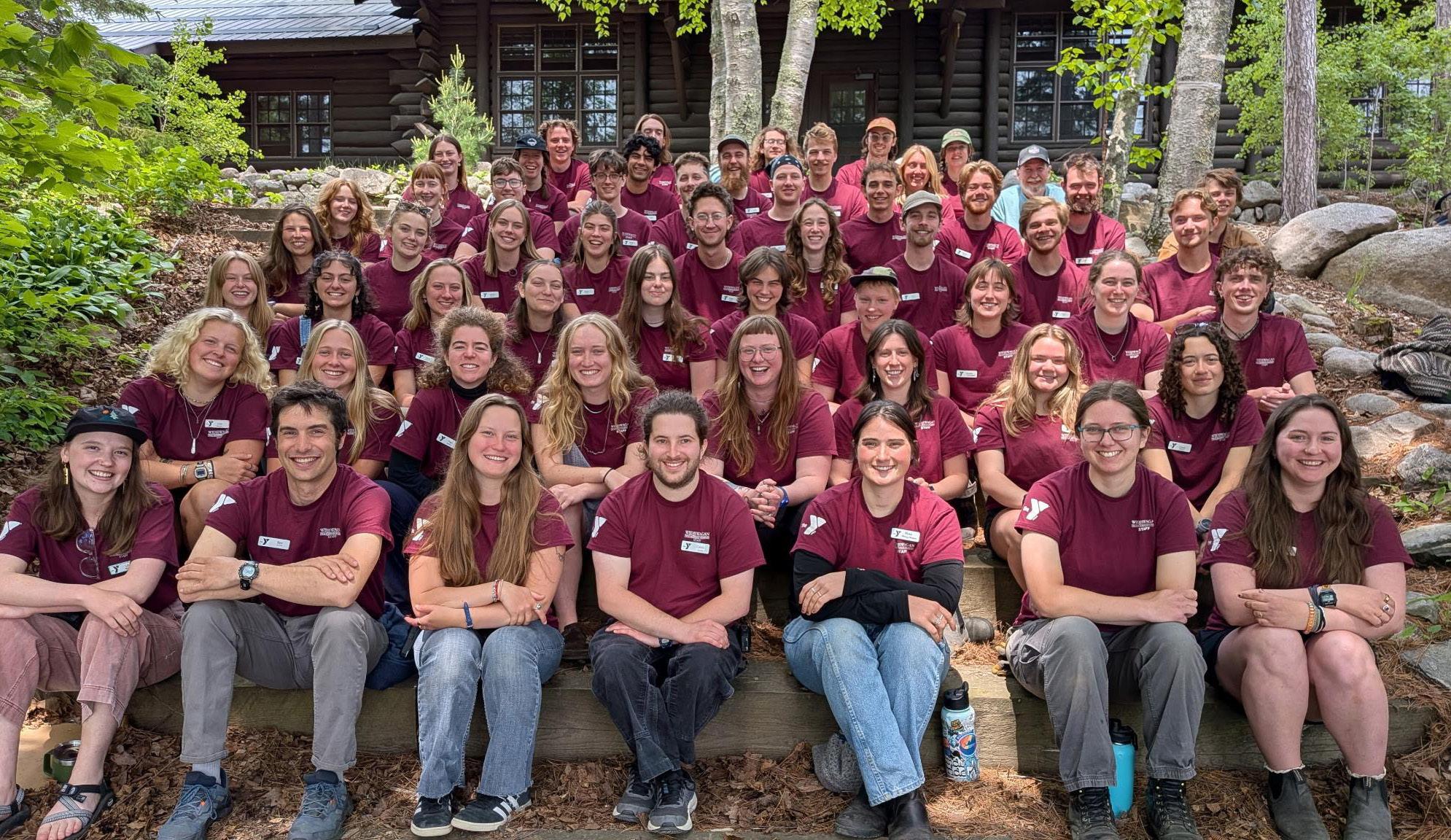
107 staff members who completed more than 120 hours of training, building the skills to deliver safe, high-quality experiences.
8600
2400 miles canoeing miles backpacking trips to the BWCA
100+
And $150,000+indonor-fundedscholarships ensuredthat more than50summercampers and 200+Outdoor Learning Program participants
could answer thecall , regardlessof cost.
By Gwyn Jarrett
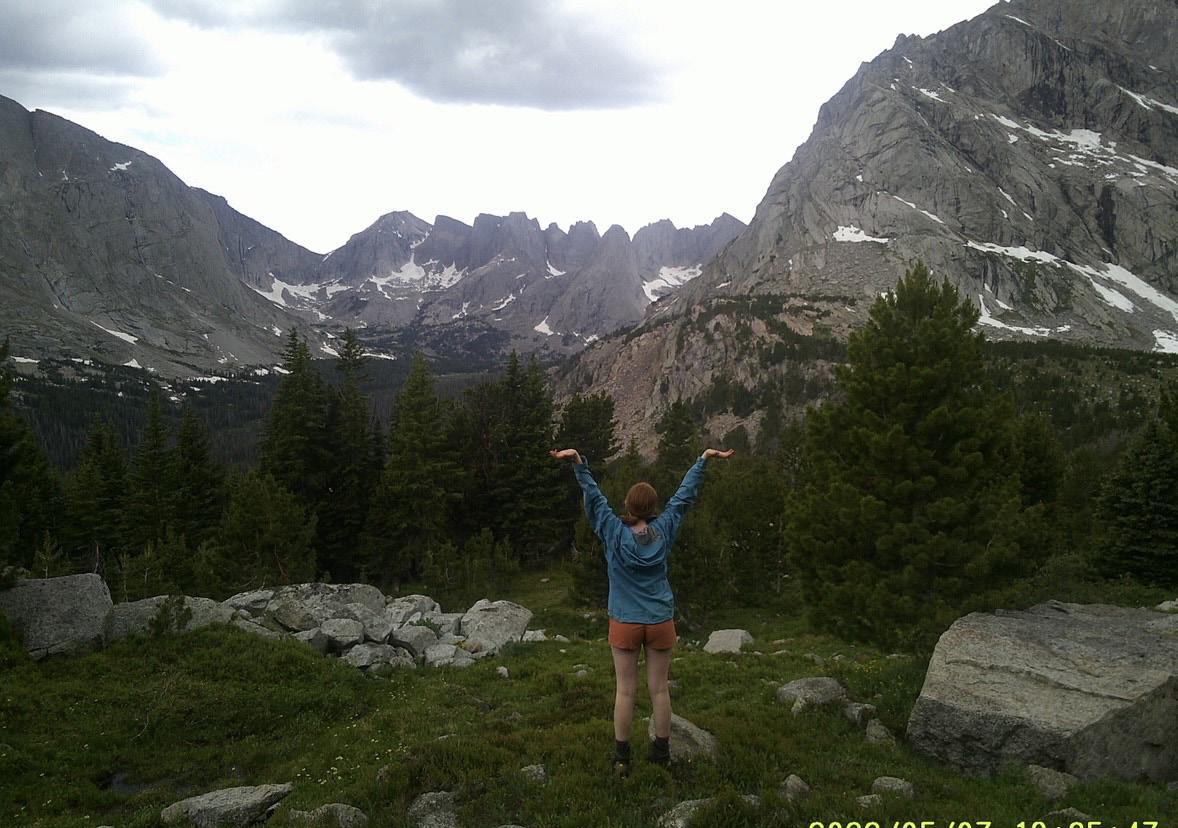
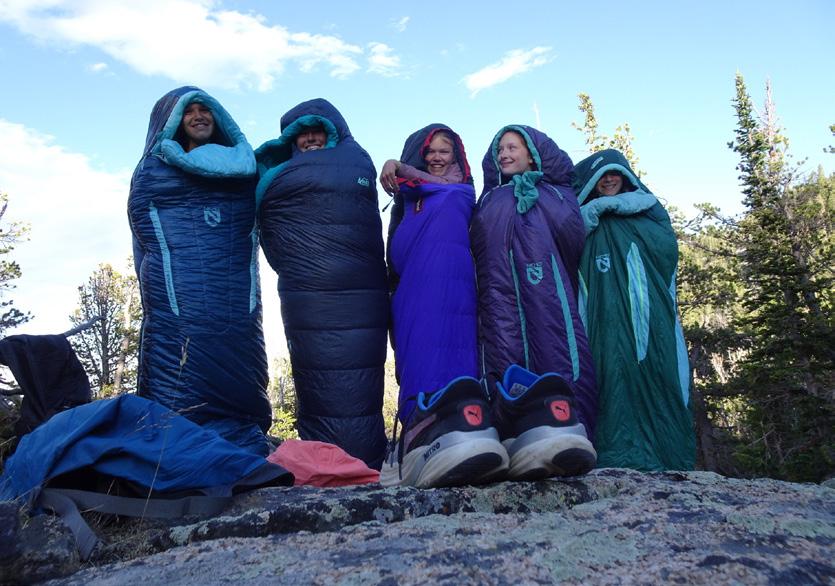
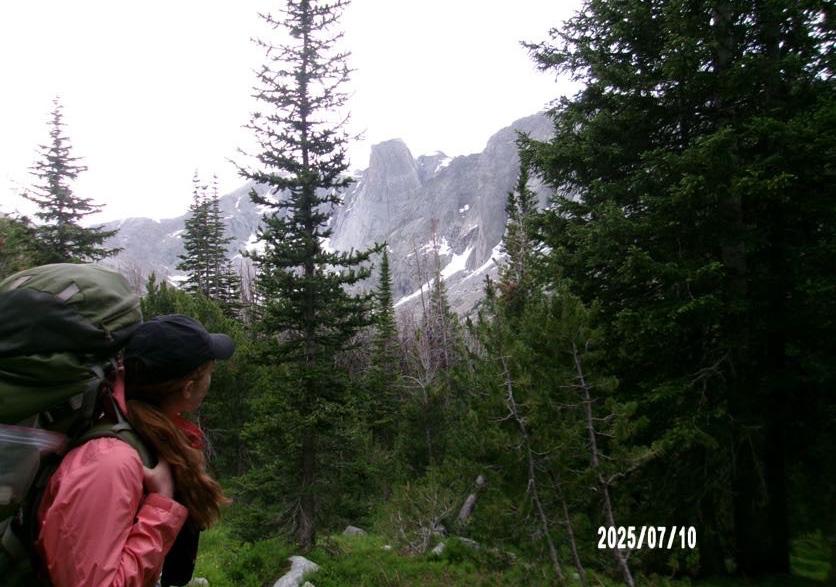
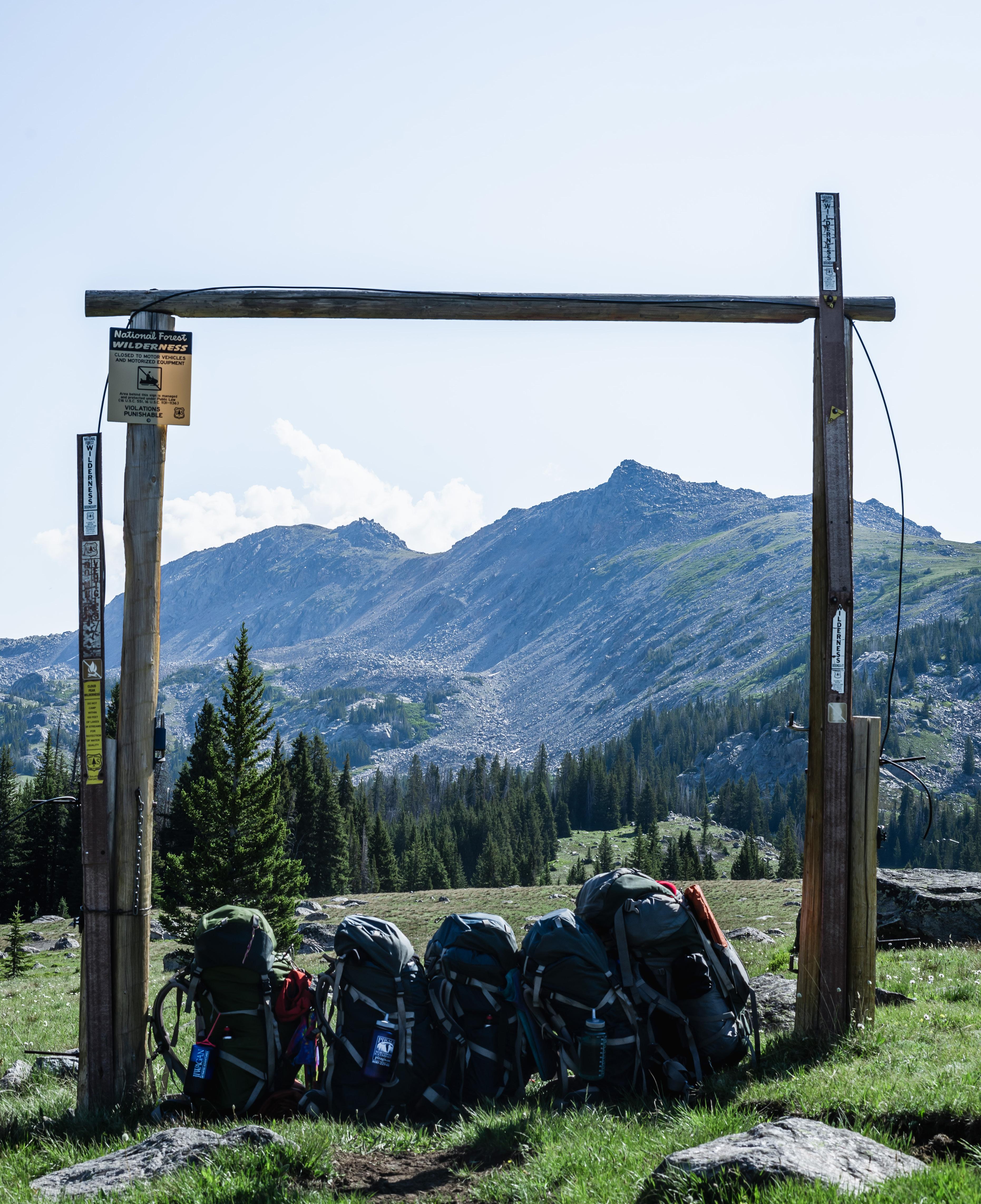
Before we left camp, my group made a plan: hike up to a beautiful alpine lake in the Wind River Range and spend the day there. We knew it would be difficult. We had no idea.
After hours of hiking, we reached a spot on the map where it looked like we could just walk through the woods to the lake. Forty minutes later, we still weren’t where we were supposed to be. At one point we had to hop across wet, slimy rocks over a river. I didn’t think I could do it, but my group encouraged me, and we did it!
After even more hiking, we came to a huge boulder field. It was getting late, and we were all tired and hungry. Somehow our counselor found another way around — still a challenge, but after another hour we finally reached the lake.
I will never forget how satisfying it was to set up our tent and relax. Hard day? Yes, and absolutely worth it.
This was my fourth Widji trip. Going through hard days together creates a bond with your group that you can’t get anywhere else. I know I’ll use what I learned out there in my everyday life.
When I have to make a tough decision now, I think about that river crossing. Not just that I made it across, but that I trusted myself to try.
Ben Hoffman | Executive Director
Jake Cahill | Property Manager
Kevin Mike| Kitchen Manager
Tom Grant| Canoe Master
Clara Pena-Hanson | Summer Program Director
Abby Mans | Fall, Winter, Spring Program Director
Brent Saxton | Wilderness Program Director
Maureen Martin | Business Administrator

Explorer Canoe Trip in Canada with my frie

Summer 2025 - Staff Training Trip


Learning to cook in the BWCA

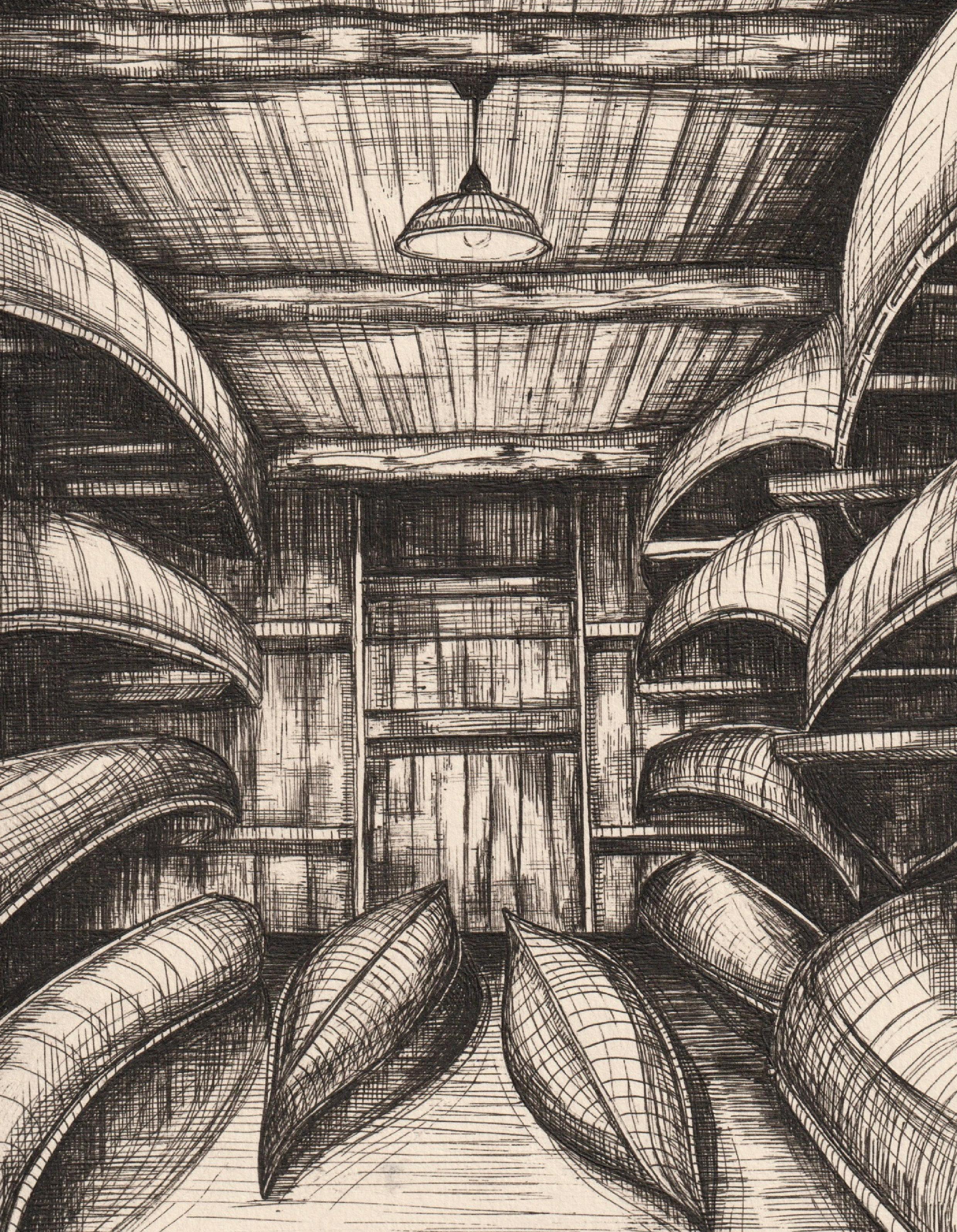
By Tom Burket
Tom Grant doesn’t believe in either/or.
“My life has always had many and’s,” he says.
“Instead of ‘or,’ I’m asking, how do we make this work? What else can I do.”
It’s a philosophy that has shaped a career spanning wilderness education, emergency services, youth development and master craftsmanship, and it’s the mindset he brought to Widji when he stepped into the canoe shop in March 2025.
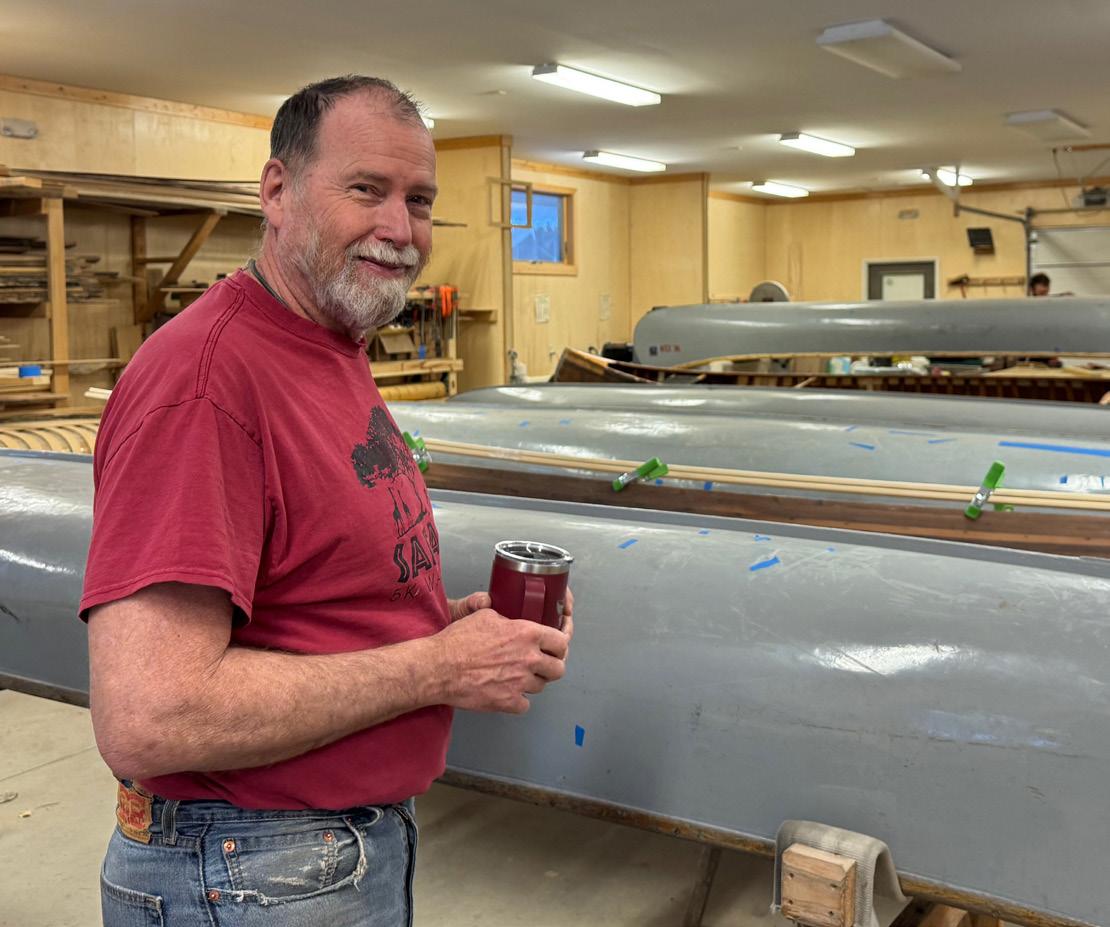
Grant’s path to northern Minnesota wound through the mountains of North Carolina, the ski slopes of Colorado and two decades working with young people in different contexts. At Camp Mondamin, he spent roughly twelve years progressing from camper to canoeing instructor to head of mountaineering. On his days off, he paddled local whitewater rivers like the Nantahala, the Ocoee and the Chattooga.
After college, he landed in Steamboat Springs, drawn to what he calls “a real town” — year-round, somewhat isolated, far from the party scene of Vail or Aspen. There, the and’s kept multiplying. He coached swimming. He joined the volunteer fire department, the ambulance squad, search and rescue. He learned to telemark down black diamond runs. Small communities, he found, will teach you if you show up ready to learn.
“In a small community, you get to grow and they teach you and they take you under their wings,” Grant says. “There are many people who were willing to teach me.”
That willingness to learn — and to teach — defined his next chapter. For 20 years, Grant worked in a youth detention center, teaching science and running certification programs in low-voltage wiring, fiber optics and home theater installation. The approach was always hands-on.
“Everything had to somehow relate back to a hands-on activity,” he explains. The young people he worked with had often struggled in traditional classrooms. Grant’s job was to help them succeed — and then succeed again.
“The big mystery now of teaching young people is resilience,” he says. “How do you build up resilience? Stack up the successes, so that they have a little more resilience.”
Alongside all of this, Grant built boats. For years, he’s crafted custom cedar-strip canoes, selecting from hundreds of hull designs and customizing every detail. He built Greenland-style kayaks. He exhibited at boat shows and learned from master builders who shared their secrets and formulas. The craft became a through-line, a way of working with his hands that connected teaching, patience and precision.
The connection to Widji came through that world. At a boat show, a conversation with a fellow builder led to new introductions and more conversations. Soon there was a question, why don’t you take the Widji canoe shop job? Grant thought and prayed on it for three weeks, telling no one. His wife was retiring. The timing aligned. He said yes. And a new “and” moment opened.
What he inherited was both a challenge and a gift with a fleet that needed attention, a shop that generations of staff and volunteers had built up, and a tradition stretching back decades. Grant speaks with gratitude about everyone who came before him — the vision, the tools, the systems.
“There are so many hands that I see,” he says. “I couldn’t have done any of this by just walking in.”
His first summer was intense. Grant describes working in “problem-solve mode,” losing track of time and four hours passing by in fifteen minutes. He set a personal benchmark for “Zero Day,” the moment around July 10 when peak demand met supply and he had zero boats in-camp for about four hours. Everything was out on the water. The next morning, he finally took a paddle himself — only his third of the season.
Today, Grant is ahead of where he expected to be. Boats that sat for years are coming down for canvas. He’s opened the shop doors wider, inviting campers in for canoe talks, planning classes and builds. The mystery of what happens inside is becoming a shared experience.
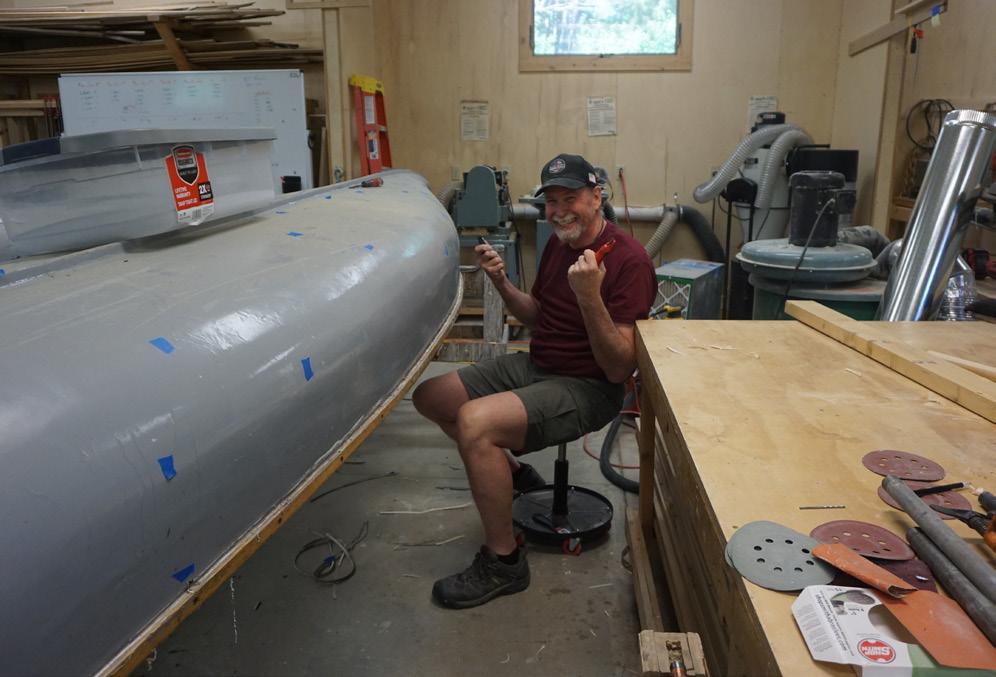
He’s still learning, of course. About ABS repair. About Kevlar. About reading wood. About the particular magic of canvas-on-wood canoes, which is something he never fully explains, insisting that campers have to experience it themselves.
“It’s not just the boat as an object,” Grant says of the fleet. “It’s the experiences and the growth you do in that context. It’s pretty magical.”
For all he brings — the credentials, the skills, the and’s — Grant remains a student of this place. He’s reading the old histories, listening to how things were done, slowing down from the 60 mph pace of his Colorado life.
“Teach me,” he says. “What is it? What’s the knowledge that exists here? I have to know the skills and knowledge and go from there.”

“The big mystery now of teaching young people is resilience.”

By Tom Burket
Joe Smith is telling a story about a Canadian trapper over breakfast in his kitchen. It still feels like a new kitchen because, after 38 years of living at Camp Widjiwagan, he and his wife Lindsay retired to a house in Ely in 2024. Many days, though, he still drives the Echo Trail back toward the North Arm to take care of things.
But first, there’s the story of the trapper, Jim Spence. Back when Joe was in high school, he spent a wintry sojourn near Churchill, Manitoba, working with this Canadian legend, an old-timer who’d become better known to the wider world. On occasion, researchers would show up with tape recorders, eager to document his knowledge and insights.
“All these young guys keep coming to me with that box you talk into,” Jim told Joe, “and they ask me, ‘Well, what was it like in the older days?’ And I can tell they’re just so proud of themselves with all of their inventions and everything.”
The trapper paused and then said, “So I just tell them all kinds of whoppers.”
Joe laughed recounting this as an iPhone on the breakfast table recorded his recollections. PhDs were probably built on that trapper’s tall tales, Joe noted. But Joe and Lindsay are different. As caretakers of Camp Widjiwagan, they saw more of the place than anyone ever, both change and continuity. Memory and future merge freely.
Joe Smith arrived in 1968 as a 14-year-old camper when Armand Ball was director. Joe paddled the Dubawnt River on his Voyageur trip, 39 days and 775 miles to Baker Lake. When Bob Rick hired him as caretaker in the spring of 1986, Joe was 32. When he stepped back from full-time work in June 2024, he was 70, having served under six directors and watched generations of campers come
“A lot of people — Widji means so much to them — they would really like to see it stay the way it was when they first experienced it,” he said. “And it’s not gonna happen. The world keeps changing, and the way to safely provide that Widji experience has to change along with the world.”
When Joe arrived in 1968, campers had no access to flush toilets or showers. Three-seater biffies were standard, and there was a definite pride in roughing it. Now there are drain fields and building codes and fiber optic lines running through camp, a big change from when the only link to the outside world was a radio phone.
And yet ...
His wife Lindsay, who first came to Widji to work at the North Woods Resource Center (NWRC) in the mid-1970s, remembers her first night at camp. She got a ride up from the Twin Cities with the NWRC director, arriving around 10:00 p.m.
“I opened the car door and stood up by that little hill above the athletic field,” she said. “My ears hurt because it was so quiet. I’d never experienced that before.”
She smiled. “That’s still the same.”
Joe sees the constancy too, though he finds it in motion rather than stillness. Last summer, back at camp for his part-time forestry work, he watched the organized chaos of staff and campers packing up and leaving for their trips.
“I could see young counselors just running back and forth with enthusiasm because they’re heading out,” he said. “And I thought, OK. Some things still stay the same.”

That pull between old and new was already there when Joe took on the caretaker role. That first summer, he walked down Cabin Row with his daughter Molly, then three years old. She’d seen him at logging sites before near Grand Marais with heavy equipment and trees coming down. But as they passed the big pines near Moose Cabin, she stopped.
“I think you should just leave these trees standing,” she said.
Joe still tells that story today as if hardly a moment has passed. A toddler who’d watched her father’s chainsaw work recognized immediately that this place was different. It’s the same feeling Joe had as a 14-year-old camper. It’s the same experience generations of Widji kids have been having for nearly 100 years.
That’s why a big part of his post-retirement work focuses on the forest. These days, Joe is doing fire mitigation and climate-adaptive management, tending to an ecosystem that looks ageless but in fact is always shifting. The boreal forest of his first summer isn’t quite the same forest today.
“With a forestry background, I’m paying attention to the larger property. It matters to people that you can walk and see bluebead lily and the native stuff,” he said. The understory, the wildflowers, the particular character of the north woods — they require attention and forethought, not just preservation.
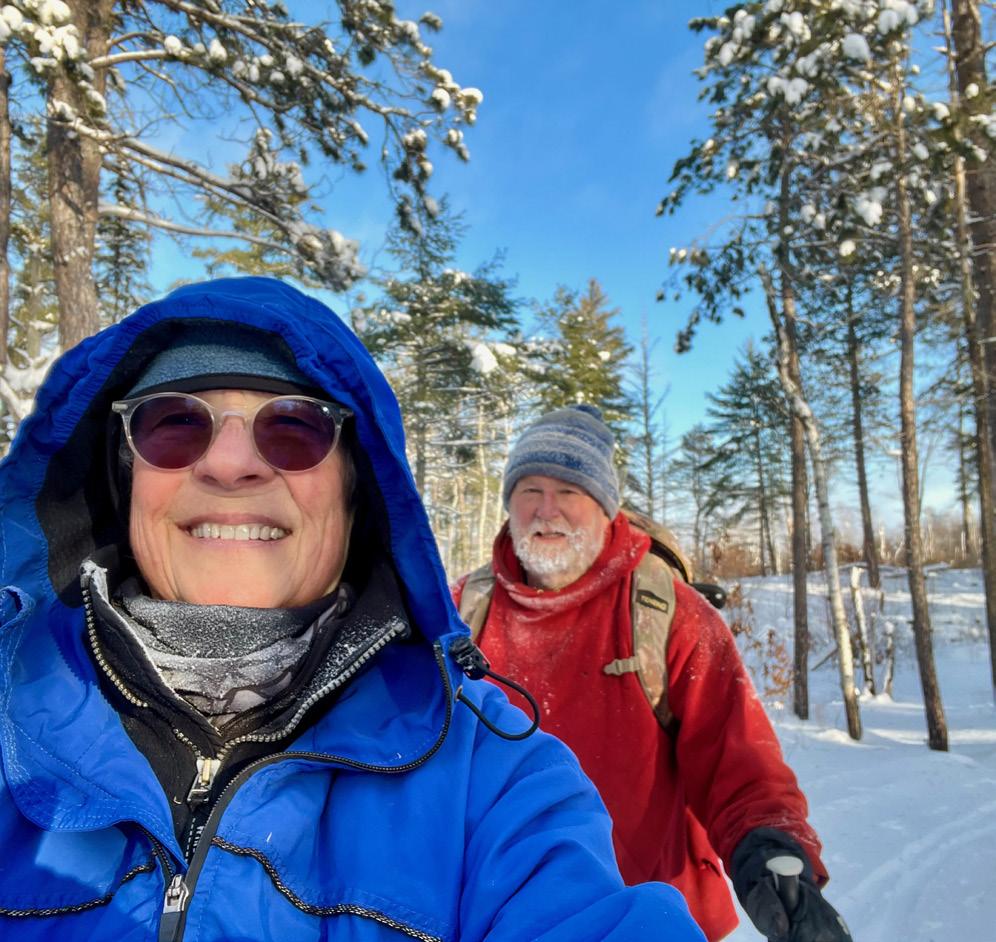
After breakfast, Joe readied himself for the day and more winter work in the woods. There’s still dead balsam to thin and fuel loads to reduce. Lindsay had plans to ski on fresh new January snow.
No whoppers here. Just two caretakers, committed as always.
By Phil Bratnober
It would be impossible to remember Armand Ball without remembering his magical closing campfires.
In a darkened room full of expectant campers and guides, Armand would invite his musical counselors to lead us in four or five well-chosen anthems. Then the focus would shift, gently and spiritually, to the solitary figure of Armand as he sat before the burning candles and logs.
In his rich baritone voice, he would gratefully remember “those who had come before,” including Julian Kirby and the other Widjiwagan founders. Then he would turn to us, the intimate, interdependent trail groups who sat before him, having just completed our wilderness journeys.
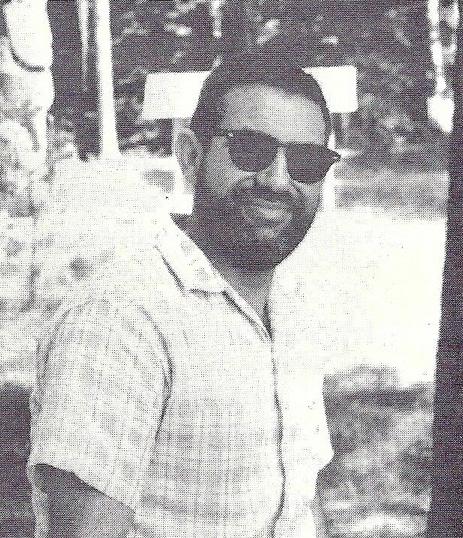
Always a dedicated student of literature, Armand would connect the Widji experience to the prose of Thoreau, reminding us how we, like Thoreau, had “gone into the woods to live deliberately.” He loved Wordsworth, too. The misty mountains of the Lake District informed many of his lessons. And there were times he playfully invoked Winnie the Pooh, reminding us that Pooh, Eeyore or Piglet, could be just as important as the larger, more assertive characters.
Then came the moment I remember most vividly. Armand would encourage us to bring the Widji experience back to our lives in the Twin Cities. The adventures of the canoe trail could be applied to our lives in town. Widji’s philosophy of kindness and respect was not limited to our weeks of wilderness camping. We could live by those values wherever we went.
I spent 11 summers with Armand, Bev, Kathy and Robin Ball, from 1963 to 1974, and I’ve been a close friend of the family ever since. These memories flood in as I look back at those splendid years.
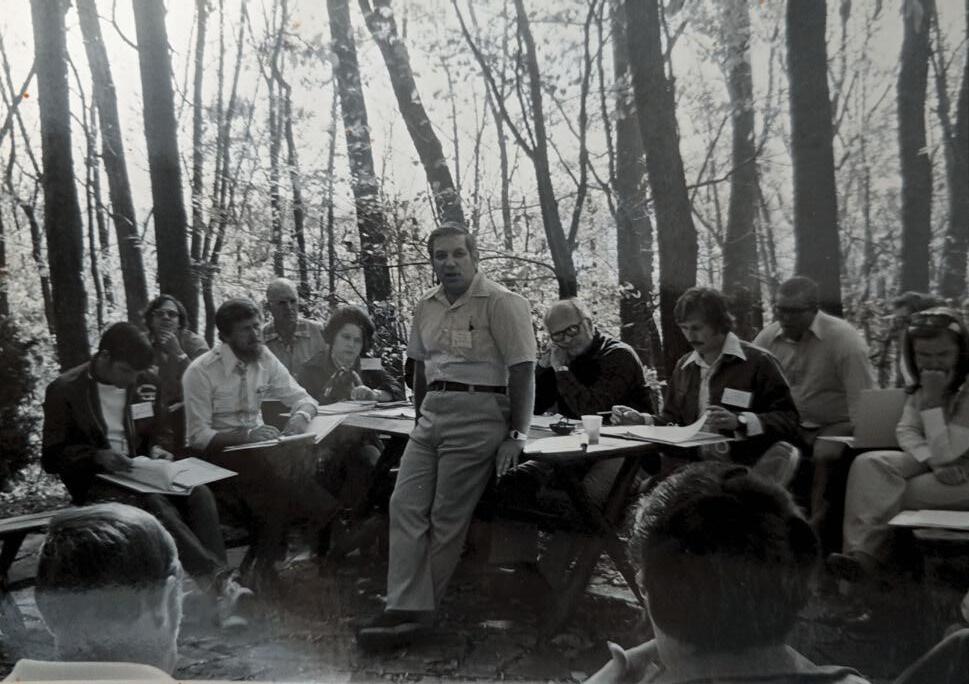
How could any of us forget Armand’s signature belly laugh — a booming, musical release of unadulterated joy? Or the countless Widji banquets, where he stood and flawlessly rattled off the first and last name of every far-flung dinner guest?
Armand was a scholar of English and religion, not a stereotypical burly canoe-country athlete. Yet our love and admiration for this kind, seasoned, deeply intelligent man knew no bounds.
Of special importance to Armand and Bev was their determination to make Widji inclusive. They went out of their way to hire a diverse staff, and a special point of pride was creating the Fall-Winter-Spring program, which allowed campers from many backgrounds to attend Widji with their teachers and classmates.
Less famous, perhaps, were the times Armand stood tall on behalf of his college-age guides who faced the military draft. The Vietnam War loomed large in those days, and Armand was right there with a letter, wise counsel and personal appearances at government offices in downtown St. Paul, patiently supporting Widji’s young men as they sought legal alternatives to military service.
In these and many other ways, Armand Ball was a fierce advocate for those who worked for him.
Memorial Contributions may be made to Camp Widjiwagan’s Annual Fund or to the Armand and Beverly Ball Family Endowment Fund

Others will bring their own perspectives to Armand’s gifts as a speaker, as a YMCA executive, as a role model. These are mine. Armand was a second father to me, and I will cherish to the end of my days my memories of his poetic talks before the roaring fire in Kirby Lodge.
Armand Ball served as Widjiwagan’s director from 1962 to 1974, succeeding Armin “Whitey” Luehrs. He died November 15, 2025, at age 95.
Born in Louisiana, Armand earned master’s degrees from Southwestern Baptist Seminary in Fort Worth, Texas, and George Williams College in Williams Bay, Wisconsin. During his tenure, he opened the camp to new communities. Armand quadrupled campership aid, brought the first African American campers to Burntside Lake and hired the camp’s first Black staff member. He also launched the international exchange program, sending more than 100 campers and staff abroad. After Widji, he served as CEO of the American Camp Association from 1974 to 1988.
Beverly Jane Hodges Ball (1927–2021) worked alongside Armand, her husband, as dining hall manager and Girls’ Program Coordinator. Under her leadership, 1972 became the last year male guides accompanied girls’ trips as standard practice.
The Balls are survived by their daughter, Helen Pound. The family endowment fund, established after Beverly’s death in 2021, continues to support Widji’s mission.
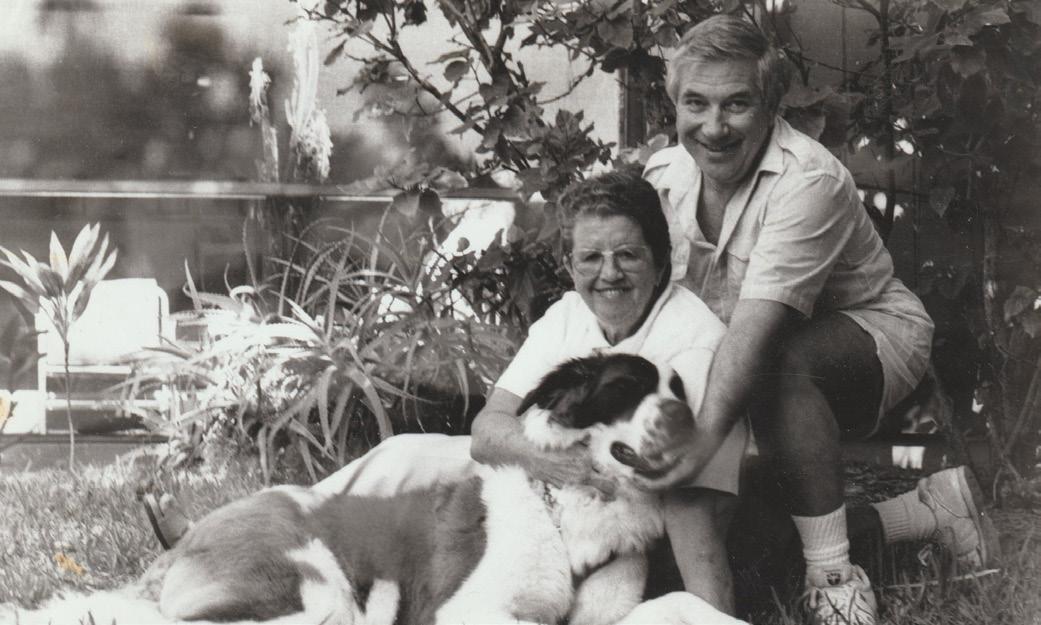
Armand and Beverly Ball
Every generation of the Widji community has invested in the next. The Annual Fund carries that tradition forward, ensuring campers can attend without financial barriers and supporting the day-to-day operations that make programs possible.
Operating costs rose 10.5% in 2025, driven by increased counselor pay, co-led trips, expanded staff training, and inflation across gear, travel and flights. Widji invested $97,971 in camper equipment, up more than 200% year over year. Despite these increases, a 17% rise in Annual Fund giving and a 7.3% increase in program fees kept net operating income in the black.
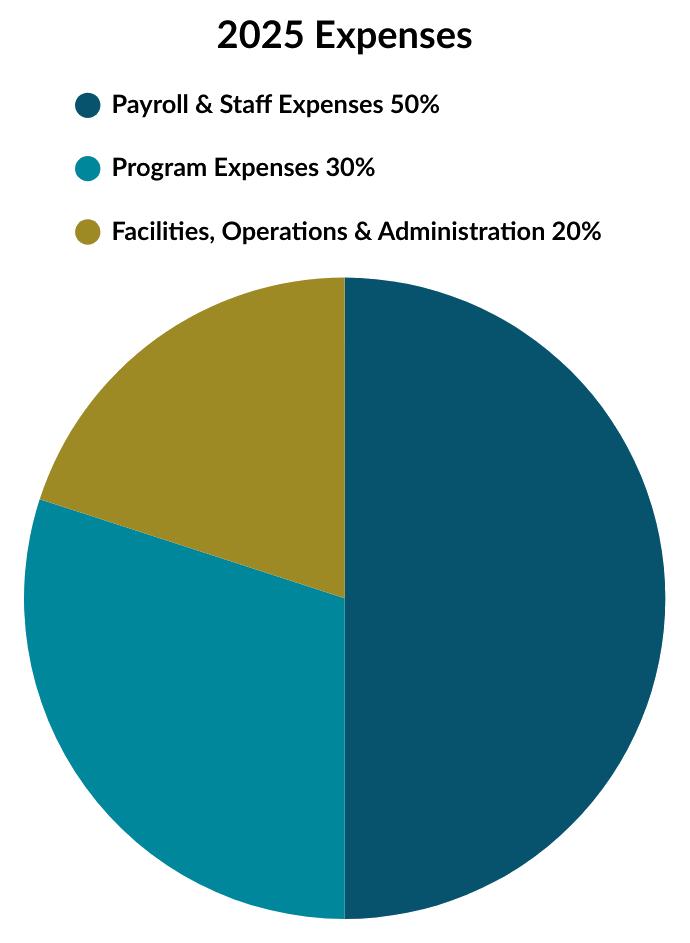
$165,317 IN CAMPERSHIPS AWARDED TO CAMPERS IN 2025
TOTAL 2025 REVENUE: $3,305,671
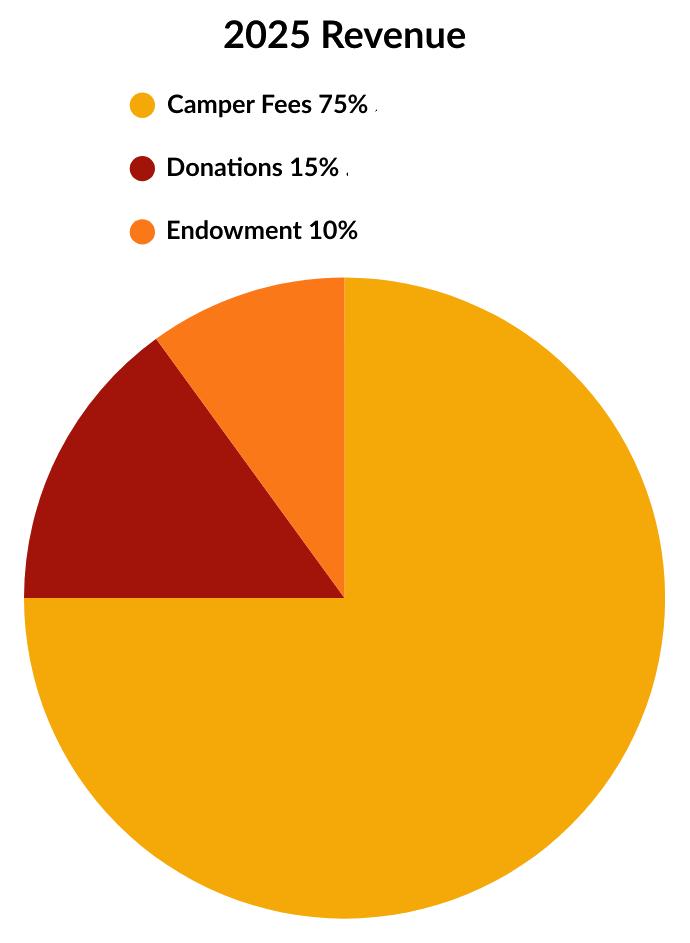
One of the most encouraging trends over the past several years has been a steady increase in the number of individual gifts to Widji. This growing participation reflects a community that believes in the mission and continues to show up for it as donors and as volunteers, across generations.
Widji’s endowment provides long-term stability and supports camperships, canoe building, advanced trips, environmental education and general operations. These funds represent decades of community investment, each one established by individuals and families who wanted to ensure that future generations would have the same access to wilderness experience that shaped their own lives.
THE WIDJI ENDOWMENT CURRENT MARKET VALUE: APPROXIMATELY $11 MILLION
Last summer, a canoe trip my family took along the border route from the Stairway Portage to Sag reminded me how deep Widji connections run. Three sons and a daughter-in-law came through camp as campers and staff. As I begin a two-year term as board chair, I’m grateful for the community that shaped them.
I’d like to thank Bob McKlveen for his leadership of Widjiwagan during 2023-25, and all Widji volunteers who serve on the board, committees and work weekends.
At our annual retreat, the board explored whether to enter a conservation easement and will formulate a recommendation later this year. Other priorities include endowments, financial analysis, camper demographics, alumni engagement and planning for the 100th anniversary.
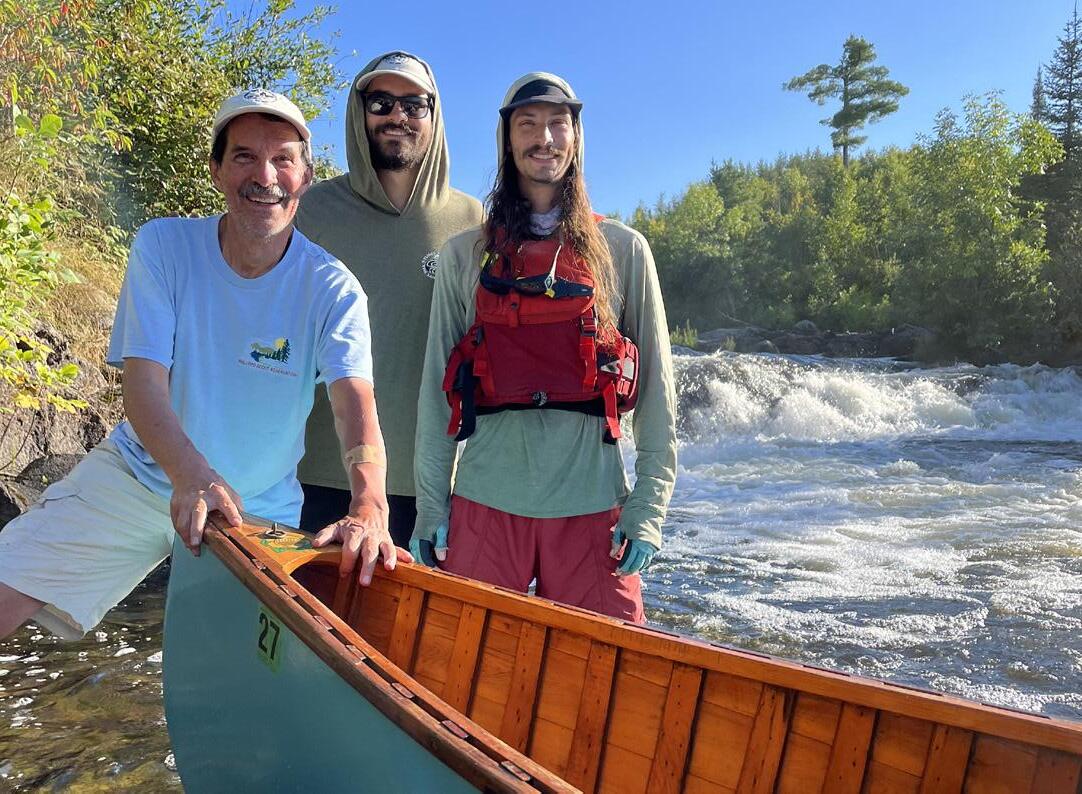
Mark, Sam, Jack at Sag Falls (August 2025). Photo: Emily
Financial support from Widji donors remains strong. Our fundraising campaign for the new sauna culminated in a dedication ceremony last fall. We hope you’ll see it at a future work weekend or alumni gathering. The 2025 Annual Fund campaign was a huge success, exceeding our goal. Like volunteer time, these gifts advance our mission of providing growth for the youth touched by a Widji experience.
After a hiatus during the COVID-19 pandemic, Widji’s “Year in Review” is back. We’ll update the Widji community annually on the year behind us and what lies ahead. Please contact me, board or committee members, or Ben with ideas or questions. Thanks for your support and love of Widji.
- Mark Schroeder
Andrew Barker
Kendal Bergman
Siri Berg-Moberg
Jake Berkowitz
Bonny Birkeland
Tim Brown
Jeremy Burns
Leigh Currie
Alison Flint
Norah Garrison
Alec Hamer
Kelsey Hunt
Emma Ingebretsen
Katja Lange
Kevin McNellis
Eric Orhn
Hatie Parmeter
Kayla Sawyer
Mark Schroeder
Peter Skold
Lucy Soderstrom
Julie Sonier
Gwyn Jarrett (Camper Rep)
Eleanor Pitts (Camper Rep)
Caleb Farwell (Staff Rep)
Zach Danielson (Staff Rep)
Colleen Maloney (Staff Rep)

By John Saxhaug
Wiijiiwaagan, the Ojibwe word that gives our camp its name, means “a friend, spouse, ally, partner, companion on the path of life.” Ojibwe linguist James Vukelich reminds us that in Anishinaabe understanding, a relative is anyone — or anything — you have a relationship with. That includes stones, water, wind and trees.
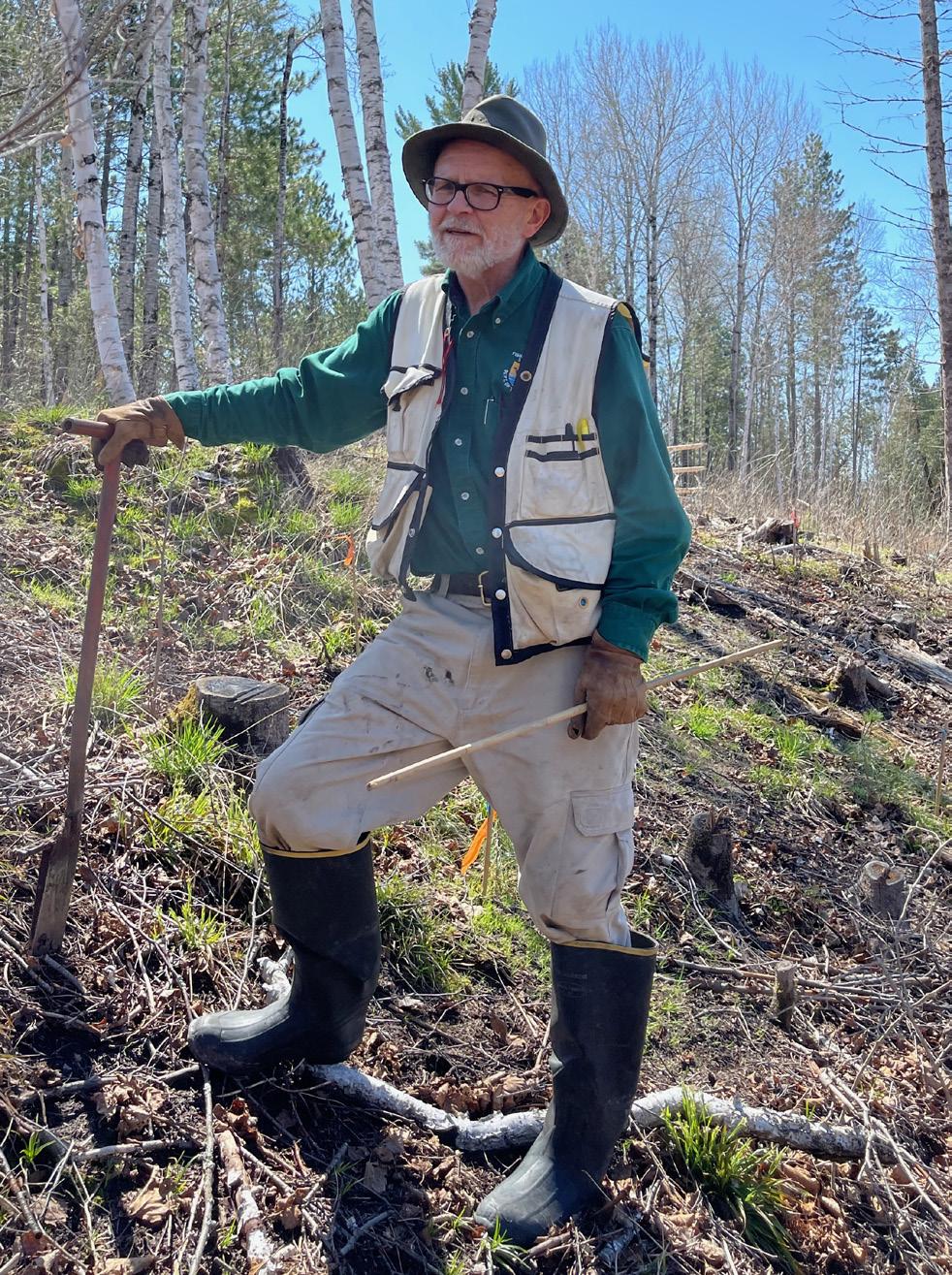
Over the past five years, the Widjiwagan community has deepened its relationship with the forest surrounding the camp. What began during the 2020 pandemic as fire risk mitigation — removing dead and dying balsam fir devastated by spruce budworm — has grown into a comprehensive stewardship effort. Volunteers have planted more than 1,500 seedlings across 12 acres. EQIP grants will enable balsam removal on 160 additional acres. The century-old red pines behind Moose Cabin have been carefully thinned. And this past September, juniors from Open World Learning High School spent three days learning forest care while protecting young trees for winter.
All of this work follows the Camp Widjiwagan Forest Stewardship Plan, developed with the St. Louis County Soil and Water Conservation District. As we approach our centennial in 2029, we’re not just maintaining the forest. We’re accompanying a relative through the next hundred years.
[Read the full forest stewardship story at widji.org]

Jane Adams
Jim and Julia Adams
Thomas Ajax and Jan McElfish
David and Amy Anderson
Robert Anderson
Alan Bahr
Eric Bailey and Laurie Zettler Bailey
Robert and Ruth Baker
Peter and Lauren Bakker-Arkema
Anne and Joseph Barnes
Katherine and John Bartholomew
Ann and Jay Behnken
The Bell Family
Mark Bixby and Keelin Kane
Galen and Mary Brelie
Sally Brown
John M. Burke
Patrick and Twiss Butler
Shelley and John Butler
Heather Irvine Capuano
Carolyn Caswell
Margaret and William Celebrezze
The Cheney Family
Timothy and Kelli Commers
Karen and Alan Crossley
Elisabeth Culligan
Dottie and Dale Cummings
Carol and Donald Damman
Sandy Davis
Alice Dickinson
Wendy and John Doane
Mairi Campbell Doerr
Brooks Donald and Karen Mackenzie
Timothy and Tracy Dunnwald
Katherine and Arthur Eddleston
Kerwin and Doris Engelhart
Liz Flinn
Aaron and Janet Folsom
James and Robin Friedlander
Richard and Kathryn Friedlander
Friends of IPWSO
Joan L. Gardner
Susan Gardner
Lisa Gilliland and Zachary Herringer
Paul and Mary Sue Godfrey
Robert and Susan Greenberg
Ann I. Guhman
Amy Hadow
Tom Hiendlmayr and Jan Ormasa
Steven and Elizabeth Hill
Judith A. Hillger
Geoffrey and Linda Hirt
Christy and Doug Hlavacek
Patricia Hook Virnig and Arden Virnig
Ruth and Alvin John Huss
Harriette T. Irvine
David and Judy Jerde
Erik Jerde and Elizabeth Doty
Sarah and Mark Jerde
Charlotte and Donald Johnson
Sara and Kris Johnson
Barbara Jordahl
Eleanor Kinkead and Martha Babcock
Thomas and Cheryl Kranz
Jon and Beverly Kronstedt
Robert Lotz
Jo Ann Lucas
Kent and Barbara Lyford
Thomas and Judith Mackenzie
Hilary and Fritz Magnuson
Virginia G. Magnuson
Penelope Maines and Knute Johnson
Dave and Sherla Mayer
Elspeth and F. William McClelland
Andrew and Alison Mellin
Sharon T. Merritt
Lynne Meyer and Mary Walser
Joan and Andrew Moylan
Theodore and Ann Naegeli
Chad and Laura Nicholson
Thomas Noyes and Joyce Nakamura
Tim and Francine O’Brien
Jade Oh
Phyl Ostergren
Joanne K. Oyen Rick
Thomas Paper and Eleanor Bigelow
Ned Patterson and Susan Schloff
Sara Pitt-Van Buren and Jim Van Buren
Roxanne M. Port
Nicholas Puzak
Tom Racciatti
Linda and Dominic Ramacier
Lou Ann and Larrie Reese
Catherine Reeves and Steven Utne
Marjorie and Randal Rettler
Gary and Gale Rick
Jeff and Rocky Rick
Bethanne Rochlin Fry
Gwyneth Rochlin
Sandra and John* Roe
Gary Rohrer
Lois S. Runyon Kadlec
Donna Runyon
Judith Ryan
John Saxhaug and Lyn Rabinovitch
Frances and Henrik Schutz
Patricia Shaulis
Lansing Shepard and Gayle Thorsen
Ms. Linda A. Silver
Bill and Ginger Simek
Joseph and Lindsay Smith
John and Marsha Soucheray
Sandra Soucheray
Court Storey and Pam Neary
Kathryn Storey
Bob Stubenvoll
Kurt and Susan Sundeen
Rolf Thompson and CJ Jacobson
D. Andrew and Juliet Turnbull
Joell Tvedt
James and Marianne Ude
Carolyn Vitek
Mark and Diana Abbott
Elizabeth Ahrens
Elizabeth and Robert Andersen
David and Virginia Anderson
Martha and David Anderson
Julie Andrus and Jeff Thorkelson
Thomas Arneson
Albert and Lisa Arthofer
Sarah Asch and Evan Schnell
Paul Aslanian
Dick and Pam Backstrom
James Bailey
Ann Bancroft
John Barber
Andrew and Angela Barker
Lauren Barry
John and Rebecca Bartlett
Anthony and Abigail Basile
Mr. Robert J. Beaudoin and Ms.
Linda A. Unsworth
Patricia Bemis
Mara Benjamin
Kendal Bergman and Jeffrey Schiller
Siri Berg-Moberg
Jacob and Robin Berkowitz
Sheldon Berkowitz and Carolyn Levy
Chris Bewell
Emily and Dylan Bijnagte
Bill Scherado Construction LLC
Bonny Birkeland and Leif
Vandersteen
Shelley C. Birkeland
Mark Bixby and Keelin Kane
Tim Bixby and Heather Myers
Janet Bliss and James Hands
Nate Blumenshine
Megan and Ryan Boatman
Thomas and Teresa Boatman
Paul H. Boening
David Booth and Ann Tobin
Helen Booth-Tobin and Carl
Peterson
Heidi Brantley
Philip Bratnober
Gerald and Karen Bren
Victoria T. Broadie
Roger and Ronnie Lee Brooks
Timothy and Susan Brown
Wade Brown
Christina and William Brunnquell
Lisa and David Bruns
Thomas and Heidi Bryson
Emily Buckner and Sam Schroeder
Christine Buetow
Anna Bukowski and Chelsea Harris
Jennifer Bunce
Allison and John Burke
Jeremy and Amanda Burns
Kay and Nicholas Cahill
Mark and Mary Cahill
Patricia Callaghan
Cesar Carmona
Emily Carroll and Daniel Groll
Cathy Casey
John Cassady
Elizabeth and Richard Charbonneau
Katherine and Alexander Chinn
Jane K. Clements
Kathleen and Douglas Clock
Jeanne Cochran and Andy Wallace
Timothy and Kelli Commers
Hilarie and Caitlin Conboy
Anders Conway
Alexander and Sarah Cook
Adam and Elizabeth Courville
Anne Cowie
Peter Cowiestoll
Paul and Rachel Craighead
Michael and Pamela Crane
Karen and Alan Crossley
Sam Crossley
Teresa Cryan
Mary E. Cunningham
Andrew Currie
Peter and Leigh Currie
Michael Deeble
Judith and Bruce Derauf
Daniel Dobler and Julie Brown
Dobler
Samuel and Melissa Donaldson
Steven and Terry Dondlinger
Lisa Downie
Katherine and Jerold Drake
John and Jodie Duntley
Elizabeth and David Dutcher
Donald Eddy
Thomas and Barbara Elliott
Nancy and Rolf Engh
Ann E. Ericsson
Steve Euller and Nancy Roehr
Mark, Sara, Addie and Liv Fabel
Jennifer Failla
Caleb Farwell
Elizabeth and Andrew Fena
Louis Fink and Pamela Grich
Earl A. Fleck
Ronald and Nancy Fletcher
Alison Flint and Adam Pierre
John and Kristen Floberg
Kathleen R. Floberg
Nora Flynn
Patricia Fontaine
Jacqueline and David Forbes
Thomas France
Marilyn and Greg Franzen
James and Carol Fruehling
Deborah Fulton
Manitou Fund
Jodena and Patrick Gallagher
Cindy and Jamie Gardner
Leslie D. Gardner
Susan Gardner
Richard Gaynor
William and Ann Geery
Robert and Susan Gehrz
Patrick and Martha Gerkey
Gregory Gilbert and Tammy Kellen
Barb Gipple
Elizabeth and Lee Glascoe
Charles and Mary Glenn
Jeri Glick-Anderson and Charles Anderson
Ann and Tracy Godfrey
Paul and Mary Sue Godfrey
Katherine G. Goodrich
Deborah Gottner-Grant
Thomas Grant
Michele and Robert Graves
Kathryn Greenberg
Timothy Griswold
Leah Gruhn and Jere’ Mohr
Carl Richard Guiton
Greg McNeely
George Guthrie and Suzanne
Stamatov
Mary Gutknecht and Guillermo
Azucena
Amy Hadow
Christian and Susan Hagestad
Katherine Hale
Jay Hambidge and Melissa Driscoll
Alexander Hamer
Elizabeth Hand
Mark Hanninen
David and Cynthia Hansen
Richard W. Hansen
Tom Hardel and Jan Ostergren Hardel
Paul Hark and Elizabeth McInerny
Patricia Hauser
Mark Hawkinson and Carol Anderson
Dana Hazel and Michael Vespasiano
Gregory P. Heberlein
Meike and Robert Hengelfelt
Reuben Henriques
Leah Hiendlmayr
Tom Hiendlmayr and Jan Ormasa
Arthur Higinbotham
Tricia Hipps
Christy and Doug Hlavacek
Patrick Hlavacek
Sarah Hobbie and Jacques Finlay
Frederick and Julia Hoeschler
Ben and Christine Hoffman
Daniel Hoffman
Megan and Philip Holleran
Mark Holloway and Briley Brown
Holloway
Mya Honeywell
Daniel Hoolihan
Jan and Katherine Horak
Jason Horn
David Hottinger
Sandra and Steven Hunt
Ruth and Alvin John Huss
Emma Ingebretsen
Gus Ingebretsen
Jim and Debbie Ingebretsen
Sarah Jackson
Francis and Sally Jo Jefferson
John H. Jeffery
David and Judy Jerde
Dwight and Pam Jewson
Andrew Johnson
Charlotte and Donald Johnson
Eric Johnson
Frank and Meredith Johnson
Jacque Johnson
Jacquelyn and Arne Johnson
Martha Johnson
Nancy Johnson
Anita Jones
Darla and Samantha Kashian
Nicholas Kastenholz
Peter and Deb Keenan
Mary Keirstead and Edward Swain
Joe and Joanne Kellogg
Kathrine Kelsey
James Kerwin
Stephen and Jane Kilgriff
Philip and Virginia Kilpatrick
John and Amy Kimberly
B. Kivel
Douglas Kleemeier
Melissa Kleemeier
Lester and Janice Klos
Thomas and Cheryl Kranz
Lucie I. Kroschel
Barclay Kruse
Jan and Robb Lageson
Kevin Lagos and Mai Lagos
Manuel and Sarah Lagos
Vanessa Laird and Timothy Raylor
Jeffrey and Gretchen Lang
Mary and Steven Langlie
Jean and Mark Larson
Caroline Lauth and Brian Quarrier
David Lauth and Lindsey Thomas
Katherine Lauth and Christopher
Sewell
James Lee and Jean Miller
Joyce A. Leibman
Eric and Laurel Lein
Margery Lerner
Barbara Levine and Sara Lynn
Newberger
Beth Levine
Shifra Levine
Cedar Lewis
Karen Lindig and Gary Bond
Margaret Little
Susan Lloyd
Karl and Joslyn Luebbe
Sally Lund
Lawrence Lundy
Alan and Jeanne Maclin
Sara Mairs and Daniel Steinhacker
Daniel Mammel
Mark and Nancy Mammel
Kristine Maritz
Maureen Martin and Craig Schimnich
Sara Martin and Timothy Kohls
Elizabeth McAfee
Sean McCauley and Joselyn
Raymundo
Daniel McConville
Joan McGonigal-Staska
Edward McKlveen
Bob McKlveen and Ellen Jones
Mary McNellis
Hilary Mead
Jessica Melville
Lynne Meyer and Mary Walser
Jean and Paul Michelson
Elizabeth and John Miller
George and Rita Mills
Bjorn and Margot Monson
Elizabeth and James Moore
Richard and Valerie Moore
Kirk Morgan and Shernan Holtan
Sheryl Mousley and David Goldes
James and Nancy Mulvey
Christopher Murray and Shannon
Riley
Phil and Lynda Murray
Sallie Neall
C. Roger Nelson
C. Roger Nelson
Penny and Paul Nelson
Emily Newhall
Chad and Laura Nicholson
Richard and Nancy Nicholson
Mark and Janell Niemann-Ross
Julie A. Nordwall
Melissa and Jesse Nykanen
Tim and Francine O’Brien
Catherine O’Dell
Carrie Ohly-Cusack and Thomas Cusack
Eric Ohrn and Elizabeth Hoel
Judy Olsen
Leigh and Alexander Onkka
Phyl Ostergren
Elizabeth Page Burr
Potter Palmer and Margaret
Groening
John Patterson and Julie Sonier
Beth Pearlman
Mickey and Keely Pearson
Kathleen Perkins
Patti and Steven Peterson
Rolf and Carolyn Peterson
Karen Pick and John Pierce
Katherine Pierce
Anne and Mark Plichta
James Pojman and Patricia Bradley
Susan Pollock and Carla Bates
Matthew and Kristen Poppleton
Poppy Design
Robert and Karen Porter
Robert Power and Connie Ford
Amy Powers
Samuel Pritzker
Molly Quigley
Nancy and Roger Ralston
Linda and Dominic Ramacier
Emily Ranta and Zachary Via
Darlene and John Regan
Peggy Ann Reichert and Carl Ohrn
Sima Reid
Jamie Lyn and John Reinschmidt
Andrea Reising
Elizabeth and Christopher Renz
Marjorie and Randal Rettler
Stephen and Marietta Rice
Philip J. Rickey
Winthrop and Barbara Rockwell
Margaret and Thomas Roe
Sandra and John* Roe
Susan J. Roe
Donna Roles and Terence Neavin
Rebecca Rom and Frederick Carron
Donna Roost
Charles Rossmann
Scott and Teresa Roussin
Jessica and Samuel Rubenstein
Ginner Ruddy
Kurt and Lesley Ann Rusterholz
Paul Rusterholz and Barb Lomas
Rusterholz
Sandy and Jim Rutzick
Jennifer Sahlin
Joan Sample
Constance and Kenneth Sansome
John Saxhaug and Lyn Rabinovitch
The Saxton Family
Lee Schafer and Tanya Bell
William and Suzanne Scherado
Jennifer and Troy Scherer
Michelle and Thomas Schlehuber
Mark and Mary Schneider
Tom Schooley
Cedric and Janet Schrankler
Mark and Lisa Schroeder
Kathy and Fritz Schwarz
Kurt and Erika Schwarz
Sarah and Robert Schweitzer
Sally A. Scoggin
John and Sheilah Seaberg
Thomas Segura
Jeffrey Shaw
Elizabeth Sheehy
Daniel Siegler
Kurt and Fay Simer
Gretchen Sjoholm
Peter Skold and Anna Racer
Anne Slaughter Perrote
Henry and Donna Slawson
Christine and Todd Smalley
Susan and Thomas Smegal
Emily and Peter Smith
Helene Smith
George Socha and Erica Perl
Sarah and Conrad Ryan Solberg
Joan Sorenson and Wayne Jennings
Elena and Ken Sparling
Elspeth Springsted
Alexander Starns
Connie and Byron Starns
Robin Steans and Leonard Gail
Leo and Christine Stern
Mary and Mark Stoick
Kristen Stone
Jesse and Sarah Stremcha
Christian Stumpf
Mark and Elizabeth Sugden
Cynthia Sutton
Thomas and Laura Swain
Judith Swanson
Erin and Steven Tarnowski
Rolf Thompson and CJ Jacobson
Brian and Danita Thyr
John and Amy Tillotson
Kirsten Tinglum Friedman and Richard Friedman
D. Andrew and Juliet Turnbull
Katherine Turnbull
Kirk and Susan Vadnais
Joseph Van Clock and Lisa Van Clock
Karen and William Van Schyndel
Danielle Vanderhoef and Alan Yanny
Gary and Judy Vars
Joyce and Anthony Vavoulis
Becky and Robert Vercollone
Bruce Casselton and Linda Wainio
David and Monica Walsh
David Walsh and Renee Campion
Erin Walsh and Katie Fritz
Carol Godfrey Warren
Marcus Waterbury and Sarah Hart
David and Sara Wellington
Steve and Kathy Wellington
Timothy and Elizabeth Welsh
Carla West
Peter and Lisa West
Mark and Mary Westra
Janice and Michael Weum
Nancy Wheeler Handlon and Chuck Handlon
Amy White and Nicholas Johnson
David and Suzanne White
Philip and Christina White
Barbara Williams
Dan and Ruth Willius
Jeffrey Willius and Sally Gibson
Earl Windahl and Guri Kirkeng
Andrea and Heath Winters
Andrea and Michael Witt
Wendy Youngren
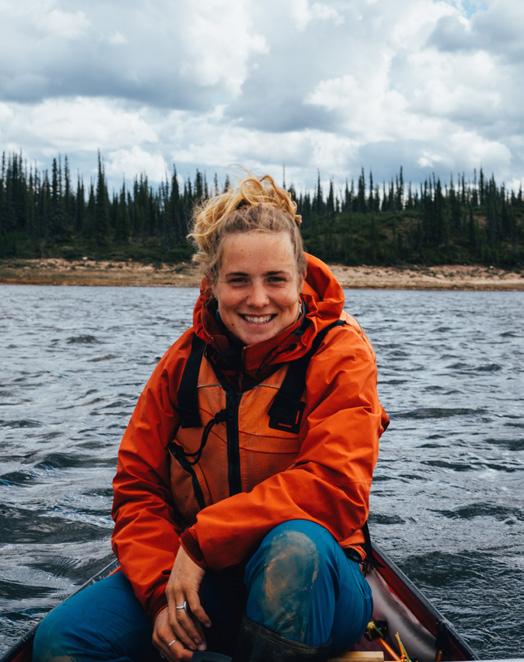
Emma is an artist, ski patroller and outdoor educator in Colorado. Her journey at Widji began on a Quetico Canoe Trip in 2016. She worked as a trail counselor for four years and co-led Voyageur Trips on the Thelon and Coppermine Rivers. Since working for Widji, she has taken the lessons she learned as a couseor on to guiding for the Breckenridge Outdoor Education Center and the National Outdoor Leadership School. | emmabrophy.com
Nate Blumenshine
Megan and Ryan Boatman
Peter and Leigh Currie
Cindy and James Gardner
Paul and Mary Sue Godfrey
David and Judy Jerde
Erik Jerde and Elizabeth Doty
Lynne Meyer and Mary Walser
Heidi and Kris Nordwall
Tim and Francine O’Brien
Kathleen Robbins
Mark and Lisa Schroeder
Philip and Christina White
Elyse and Tyler Wied
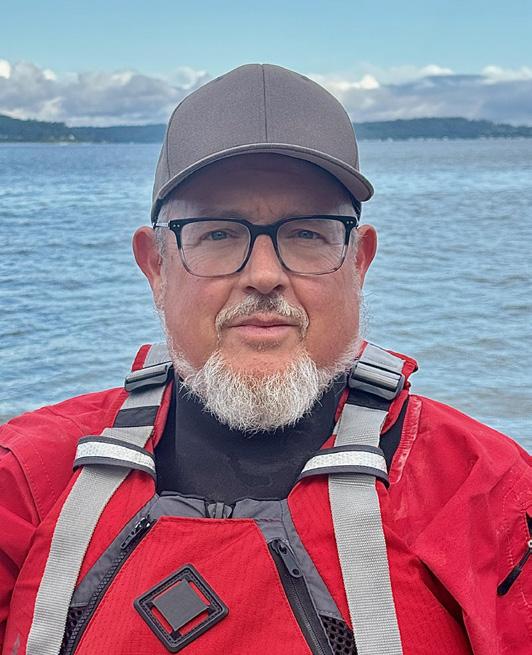
Tom Burket is the editor of this year’s report. A writer specializing in business communications and verbal wayfinding, he worked on Widjiwagan’s year-round staff in the late 1980s and early 1990s. He lives in Seattle and paddles the waters of the Pacific Northwest by sea kayak and outrigger canoe. | wordcairn.com
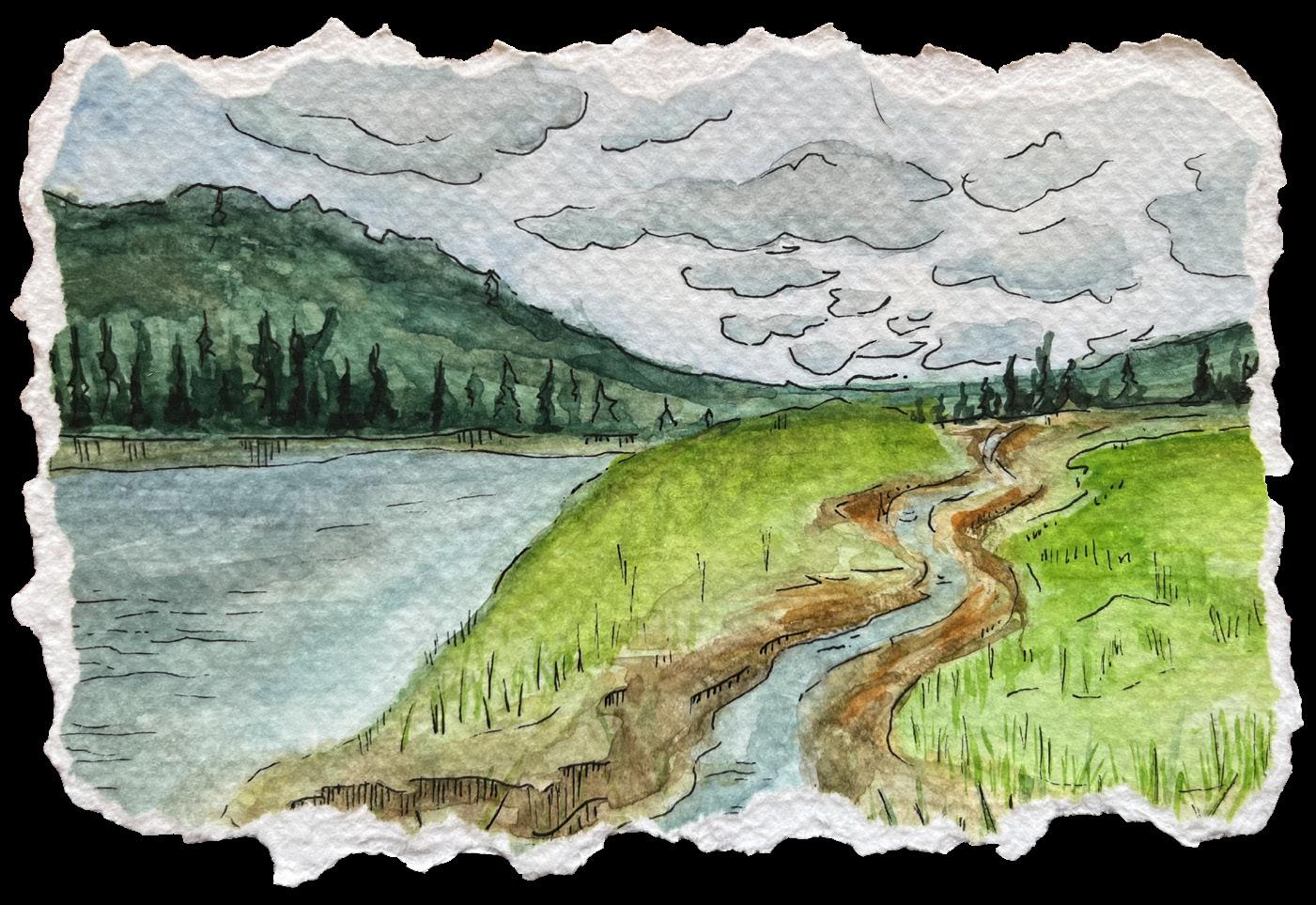
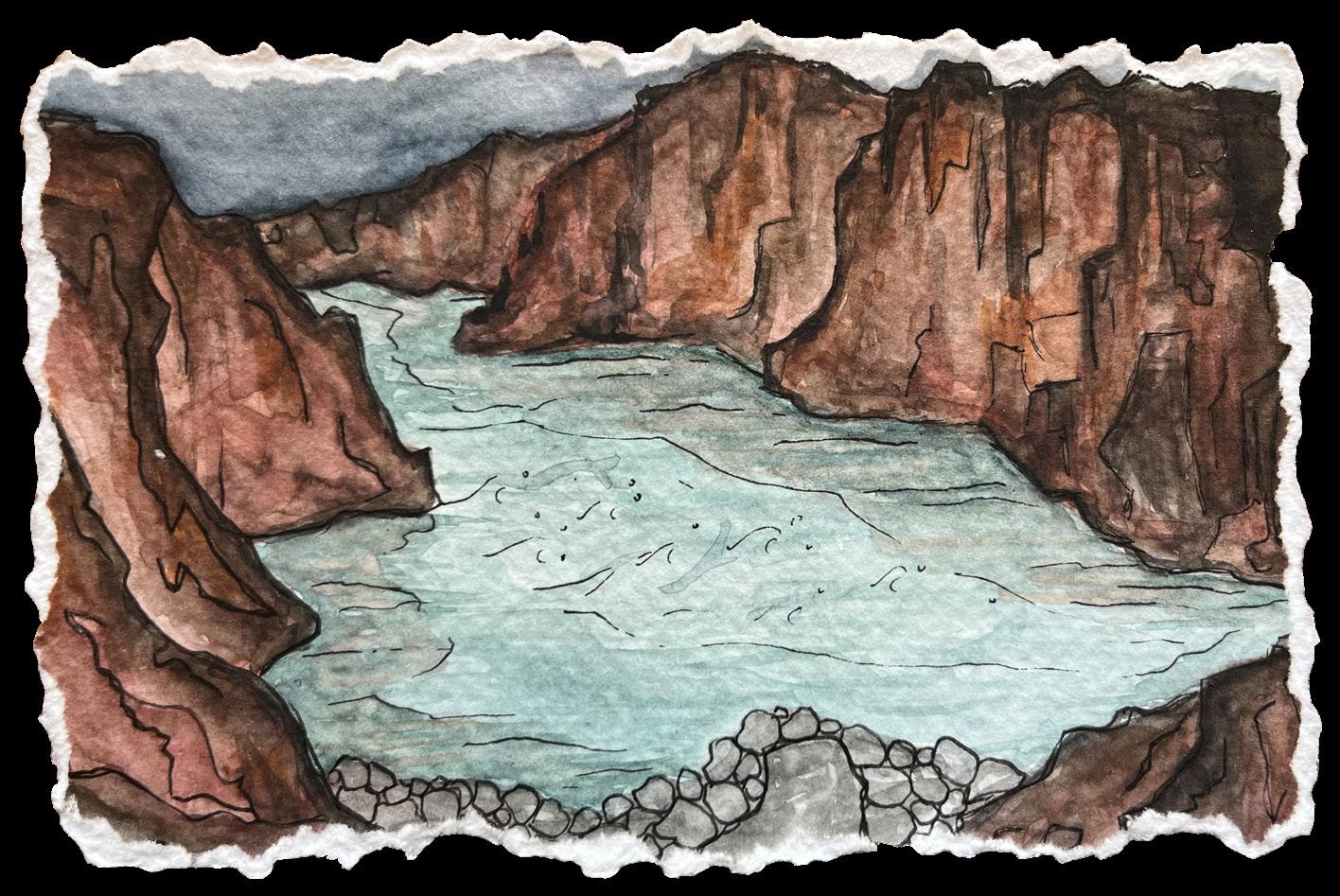
Drawings shared by Kiera Sullivan. Photographs from Widji counselors, campers and friends.
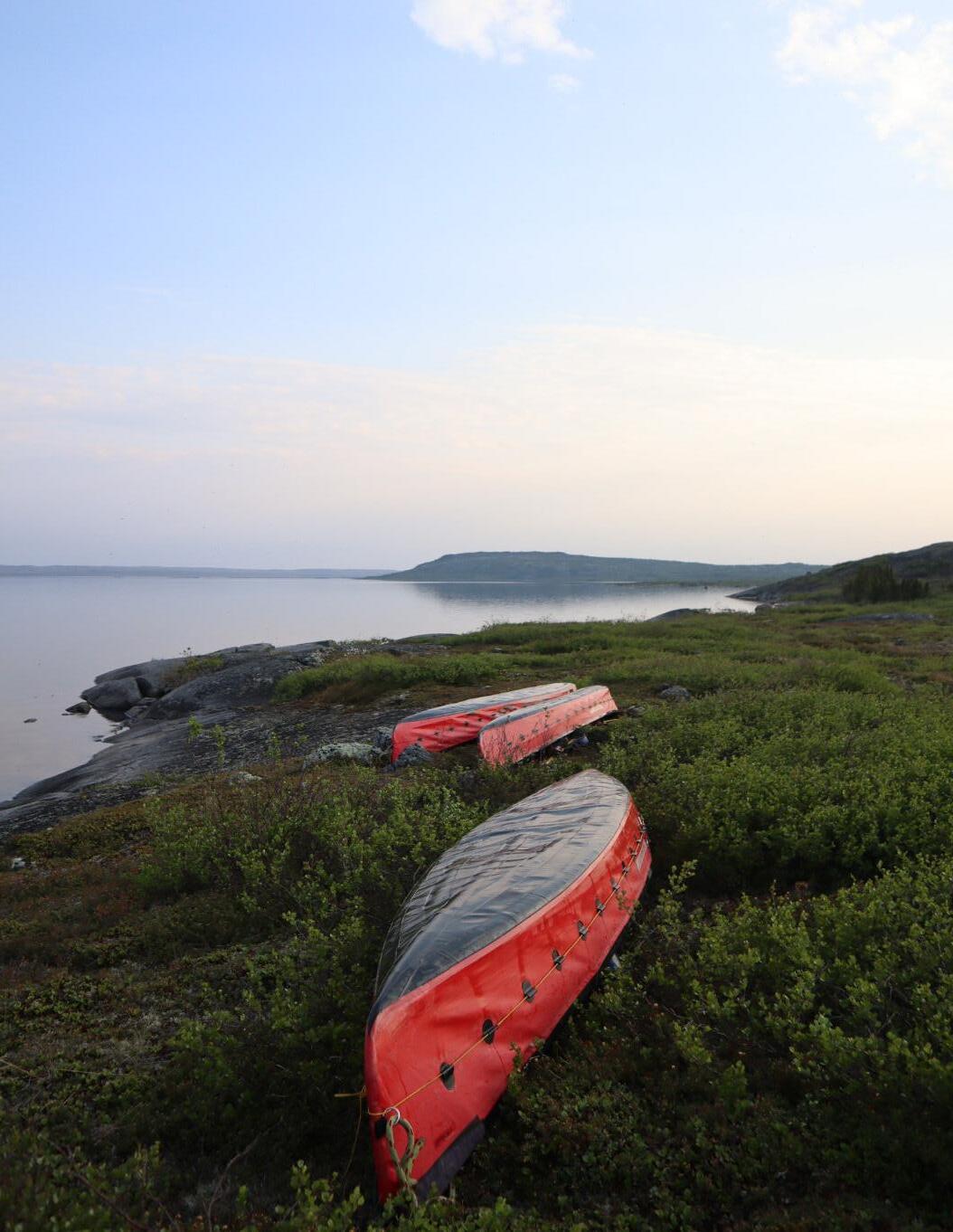
In 2029, Camp Widjiwagan marks 100 years on the trail. Planning is now underway for a year-long celebration honoring the community, traditions, and lasting impact that have defined Widji since its founding in 1929.
Rolf Thompson, camp director from 1990 to 1999, and polar explorer Ann Bancroft, Widji Voyageur camper 1974, are co-leading the centennial planning committee. Alumni and friends interested in helping shape the celebration can contact the camp office or reach Rolf directly at rolf.m.thompson@gmail.com.

If interested in supporting either in person or remotely please use the QR Code above!