Yixiao Fu
design portfoliio
Yuqiao Tech Park
Mycelial
Designing with purpose, honoring heritage, and creating a sustainable future.
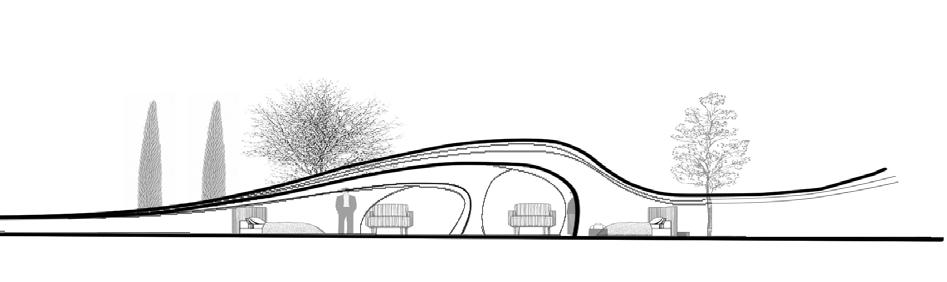
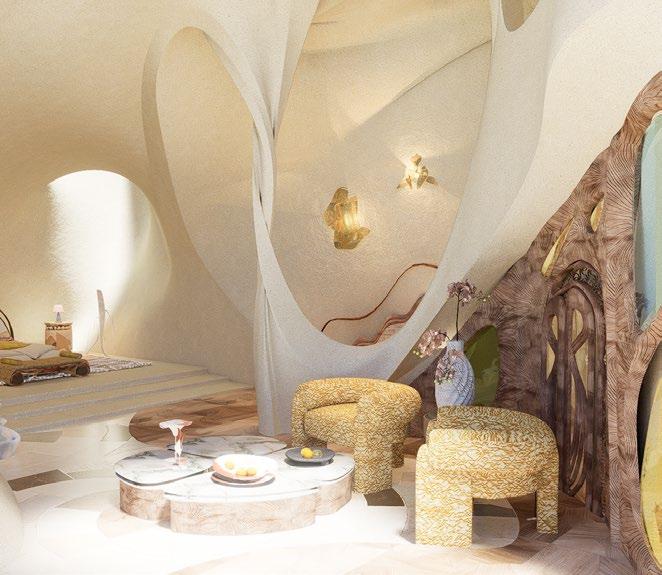
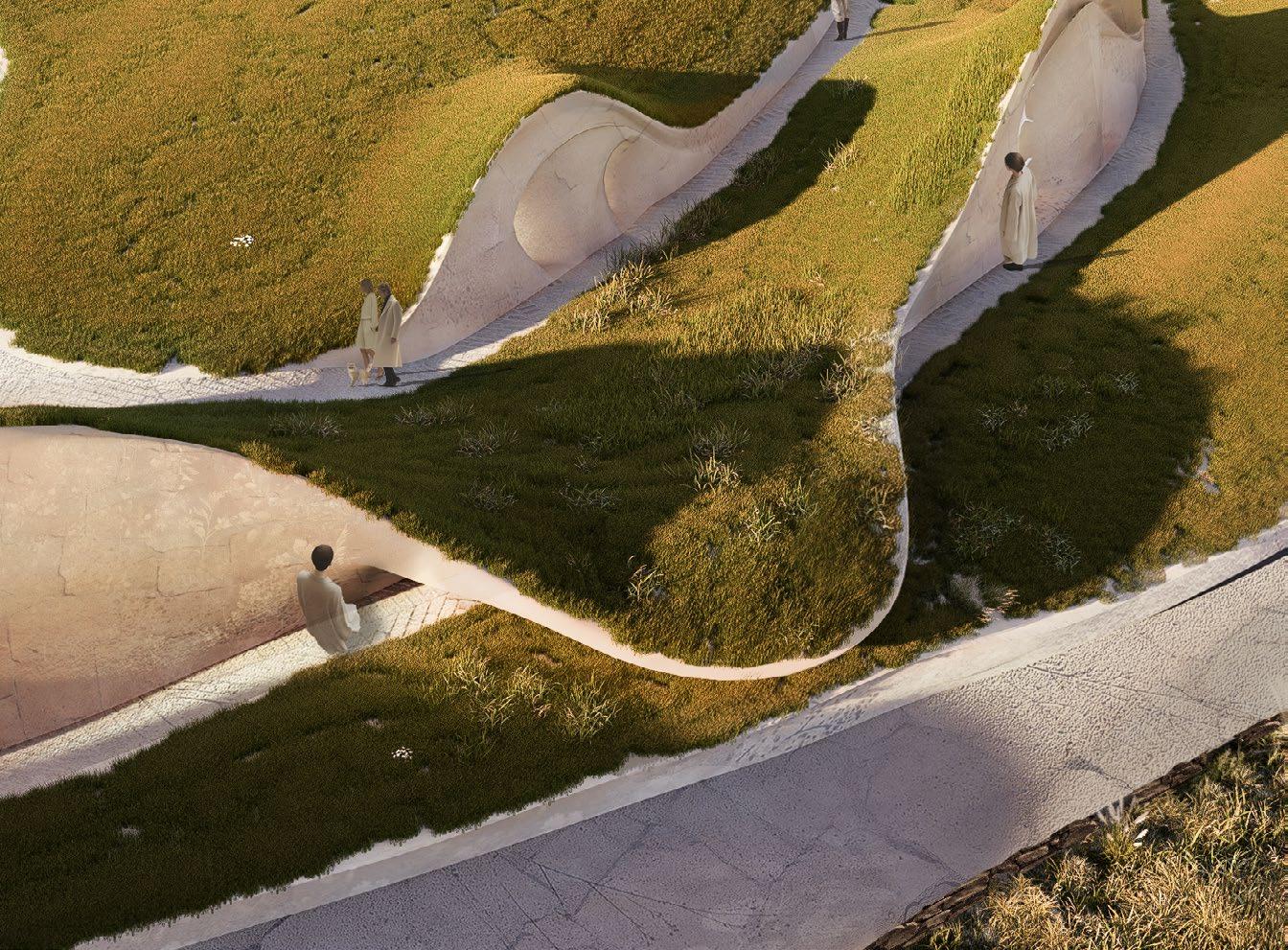
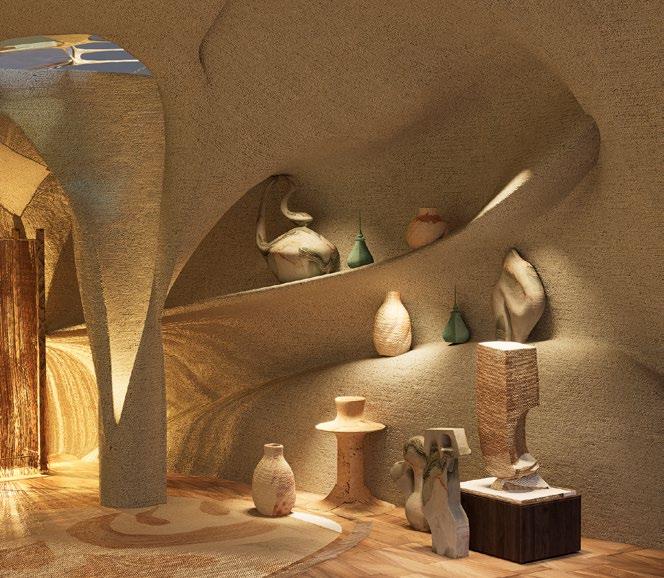
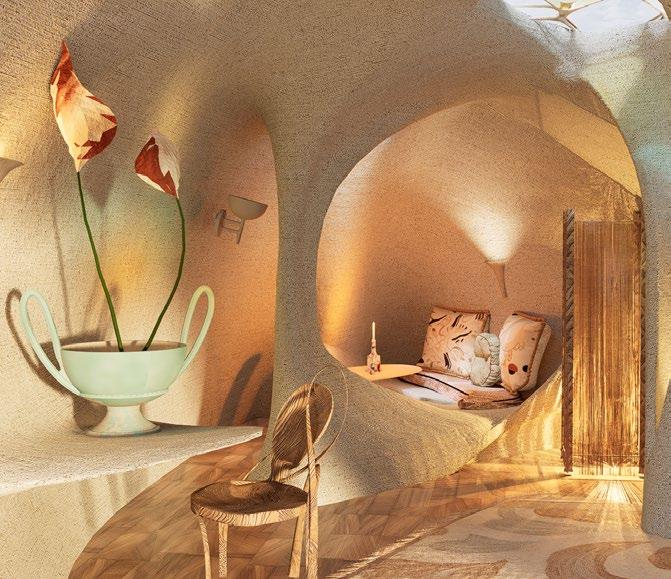
The Gaudi La Coma Artists’ Residences is the first in a series of design competitions run in partnership with the Gaudi Knowledge Association and Inngenium Lab to celebrate Gaudi’s intellectual heritage.
For this competition, participants are asked to submit designs for a sustainable artists’ residence and education complex called “La Coma”. It will be located in Huesca, Spain, and would need to follow Antoni Gaudi’s design values and principles of sustainability, functionality, aesthetics, and innovation.
Gaudi La Casa
Intentions
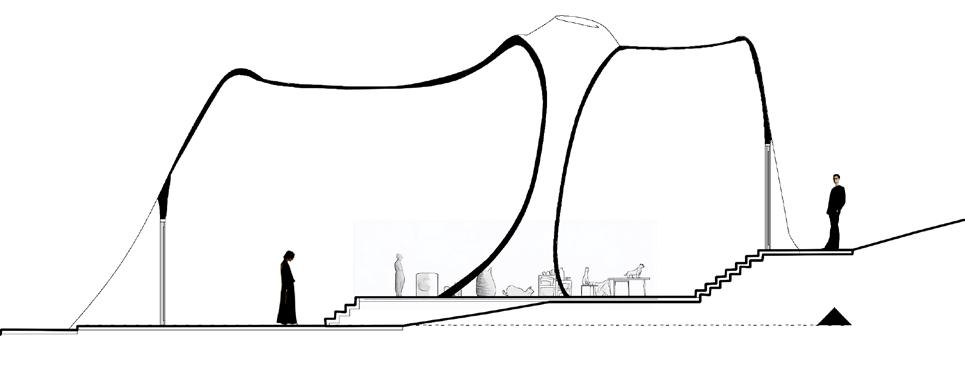
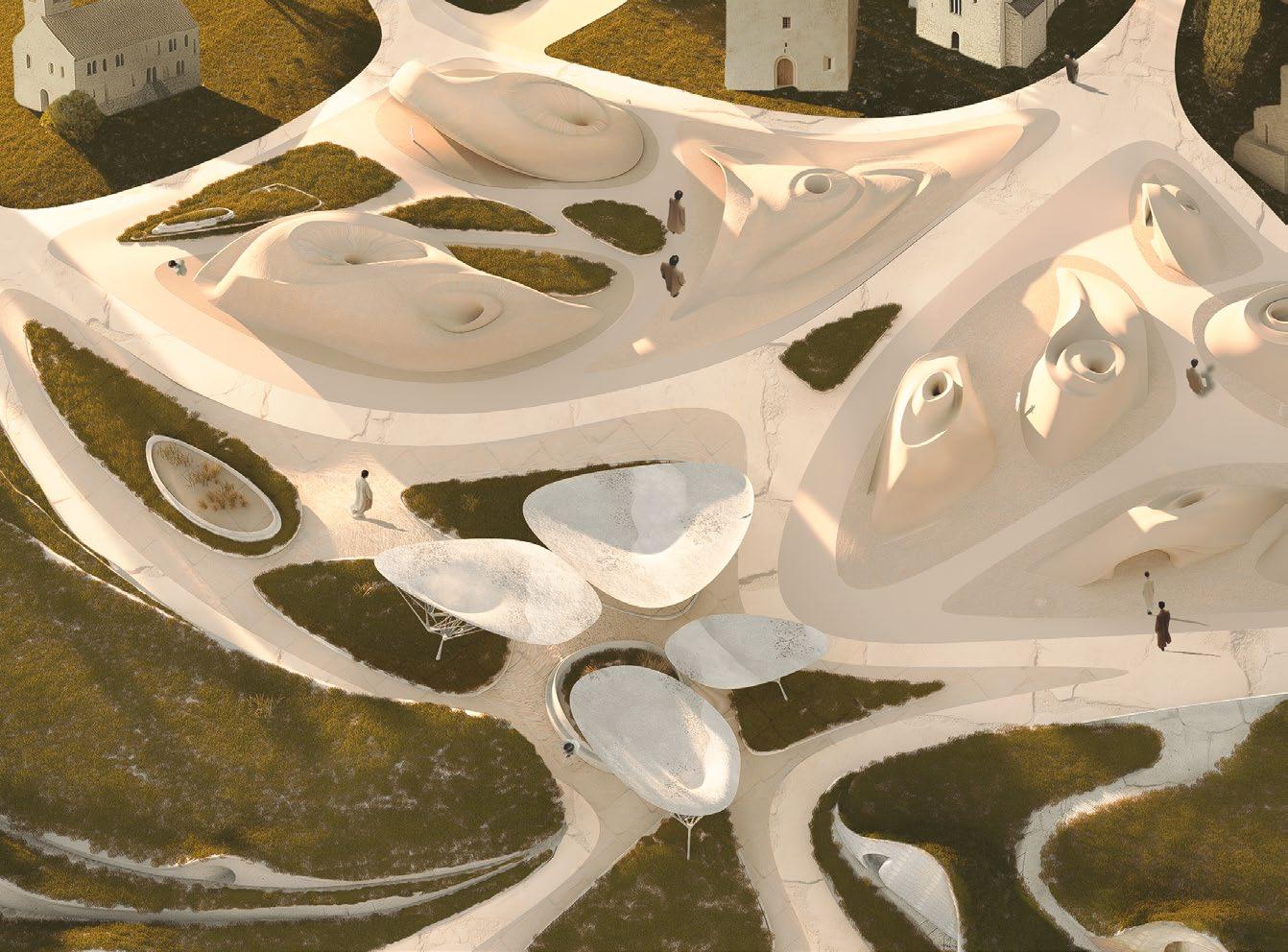
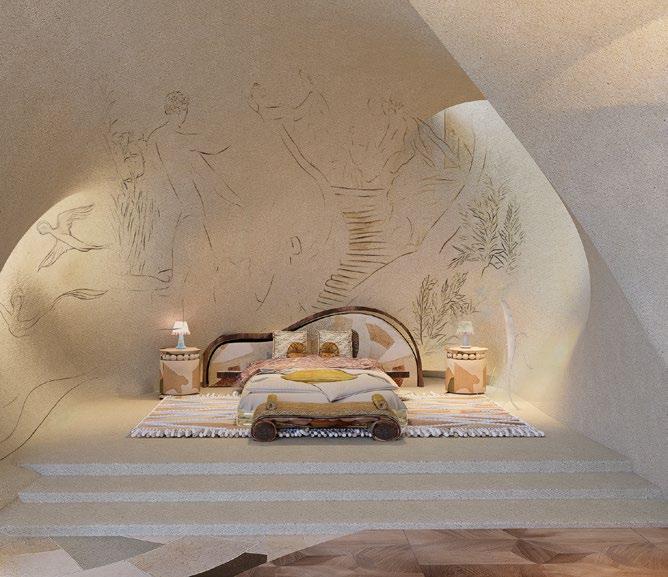
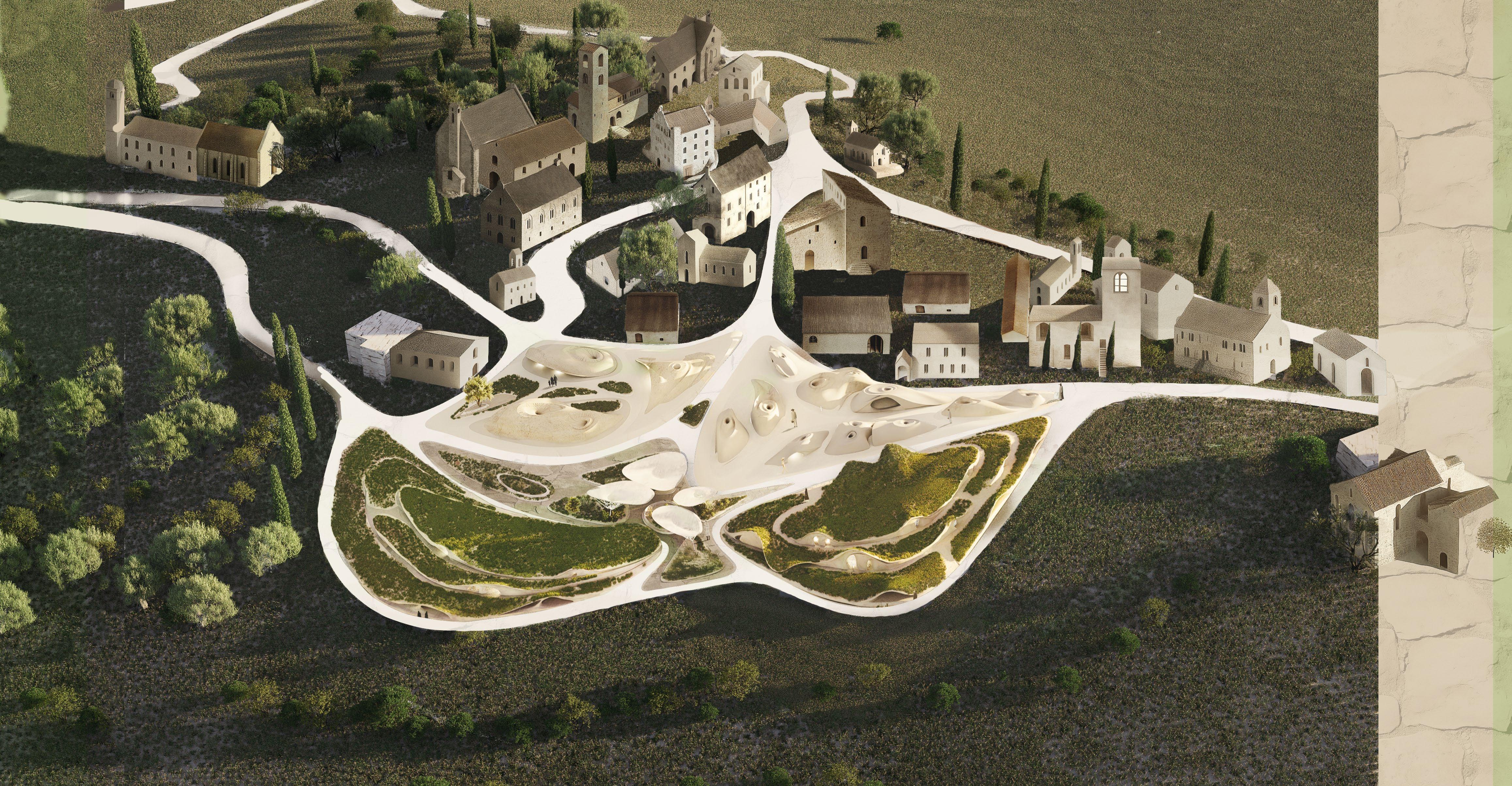
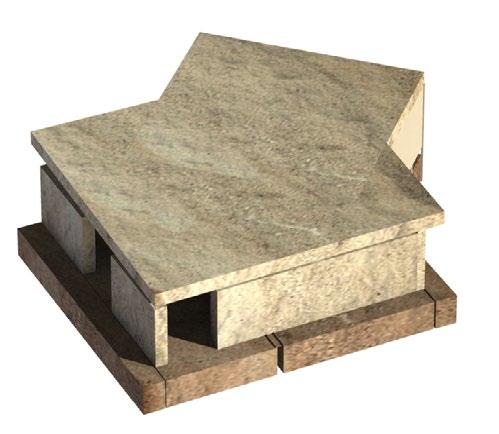
The Gaudi La Coma Artists’ Residences competition invites proposals for a sustainable artists’ residence and education complex in Huesca, Spain, set within an existing olive-and-almond estate. The brief asks designers to reinterpret Antoni Gaudí’s values—innovation, social impact, sustainability, beauty, and symbolism—through a clear volumetric and spatial concept that is both functional and atmospheric. Entries are expected to have the potential to become an iconic landmark, while remaining sensitive to the surrounding landscape and heritage context
Design Mission and Goals
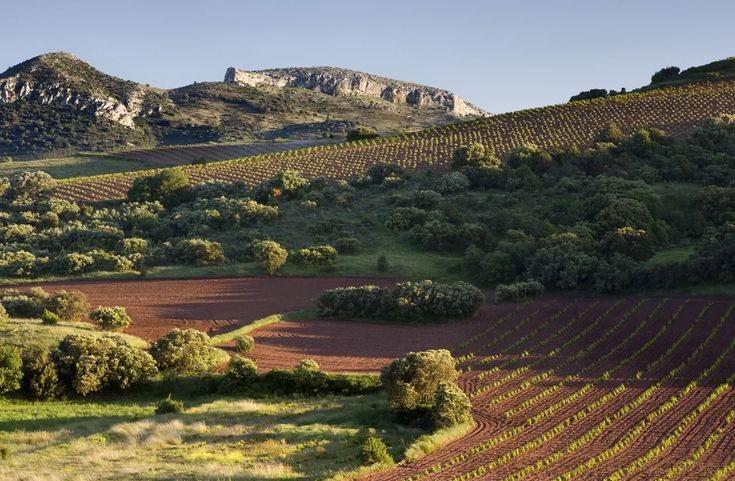
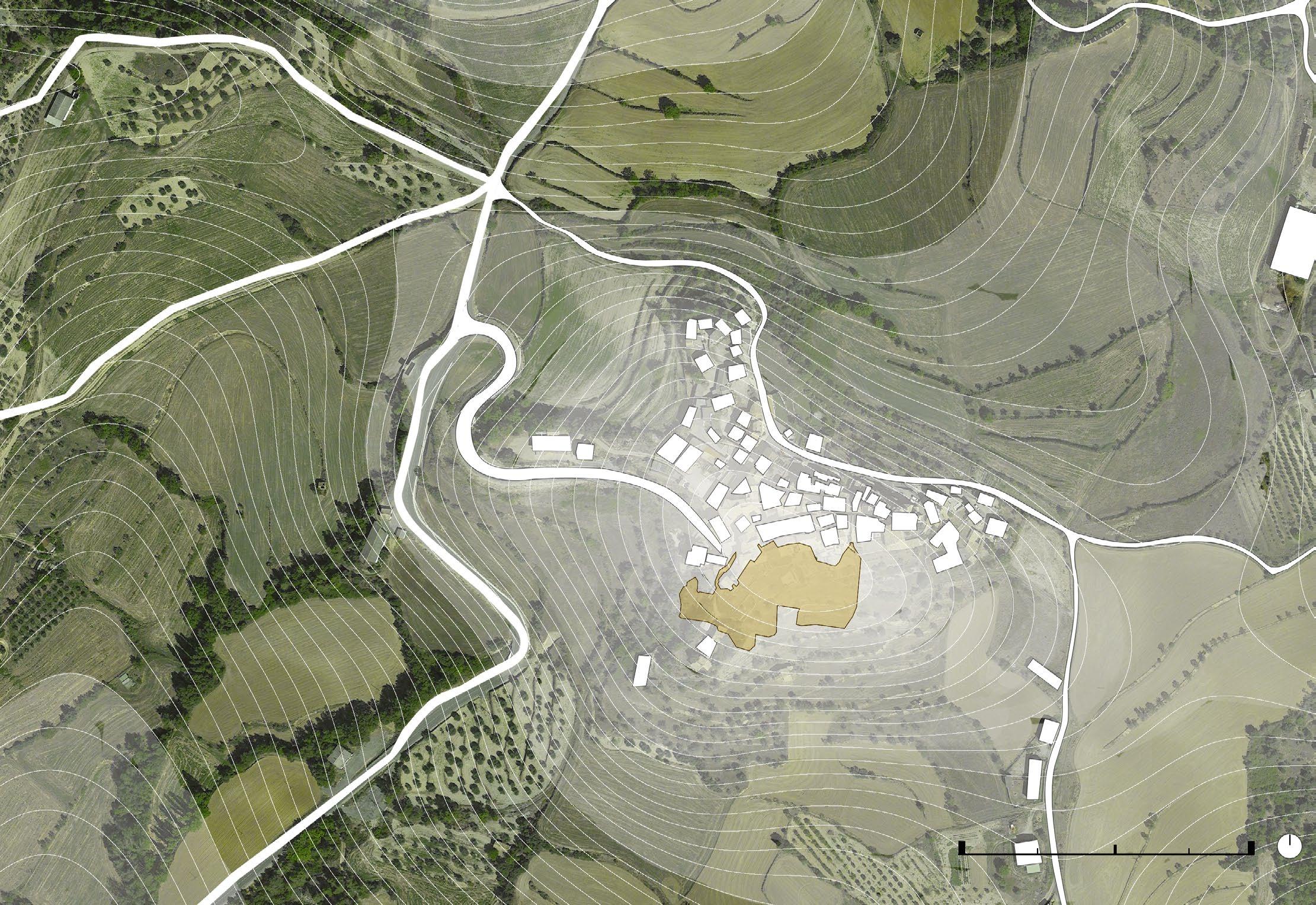
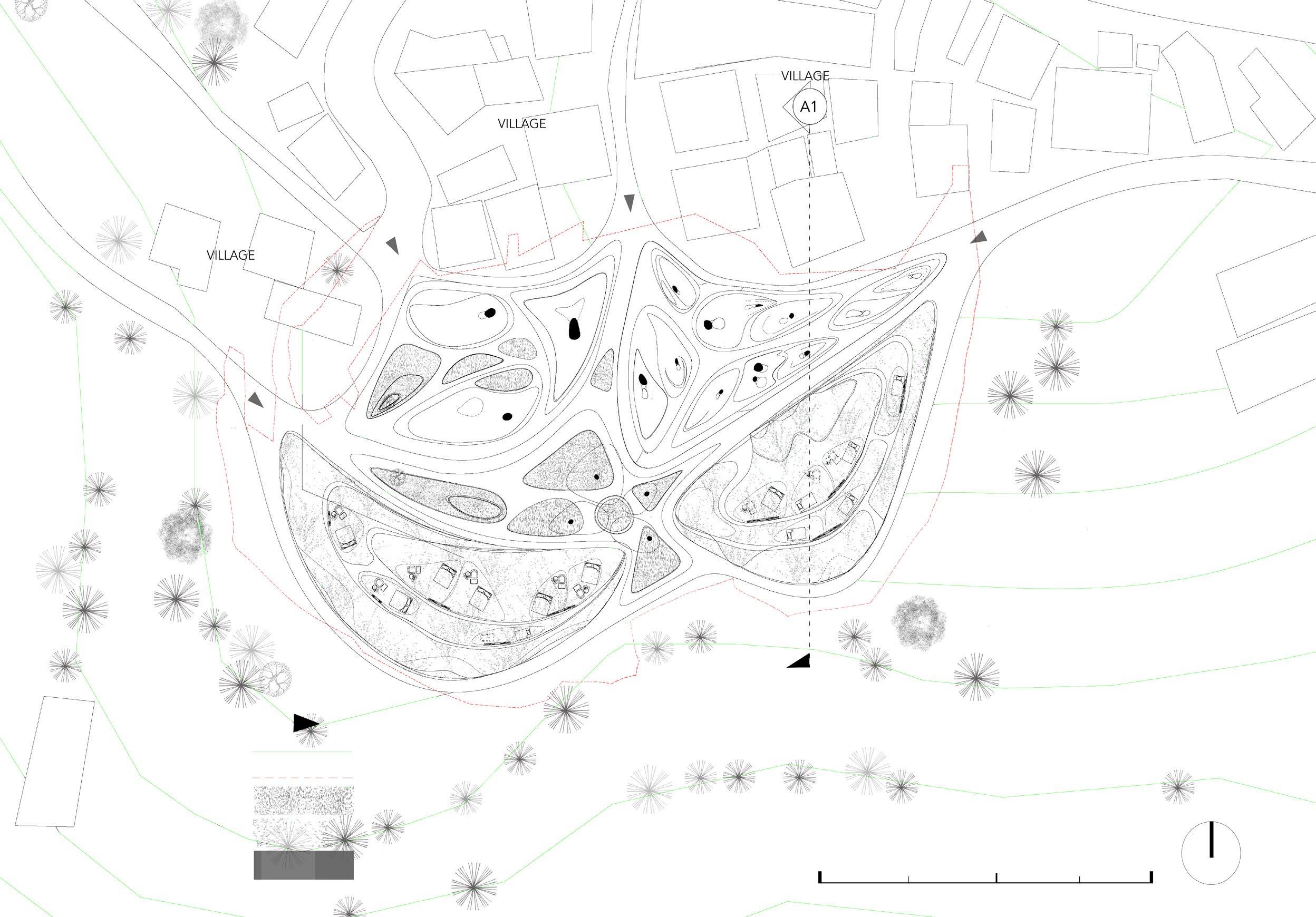
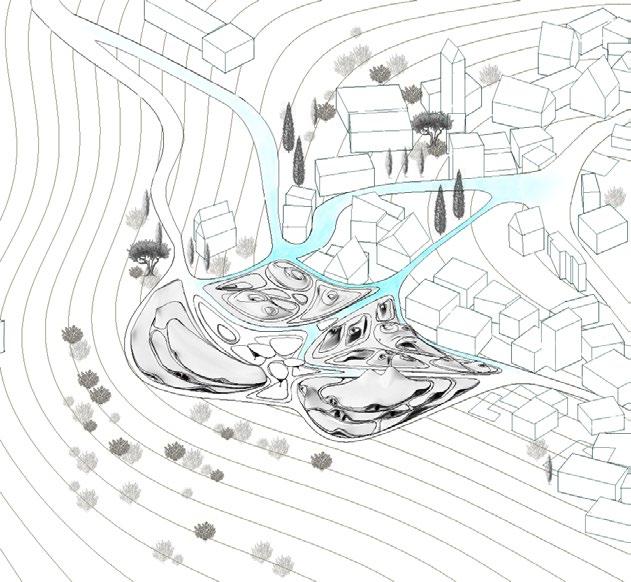
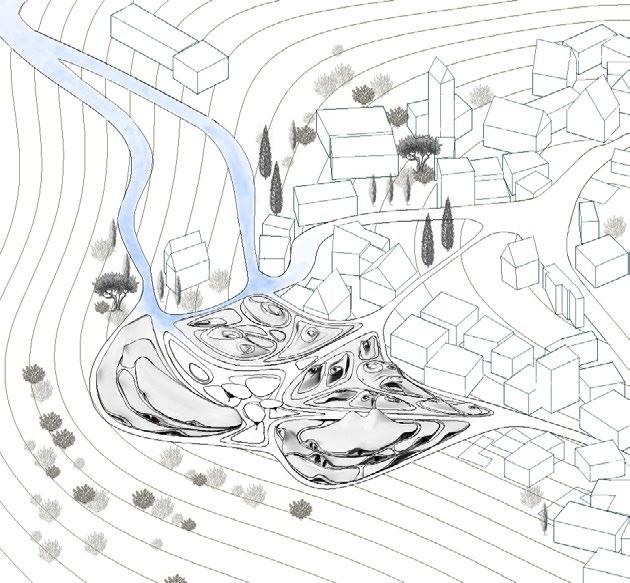
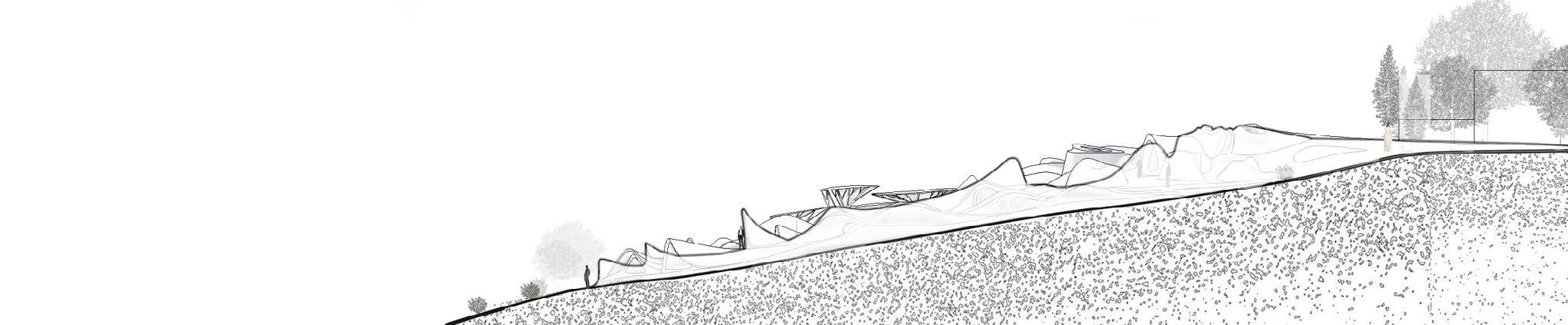
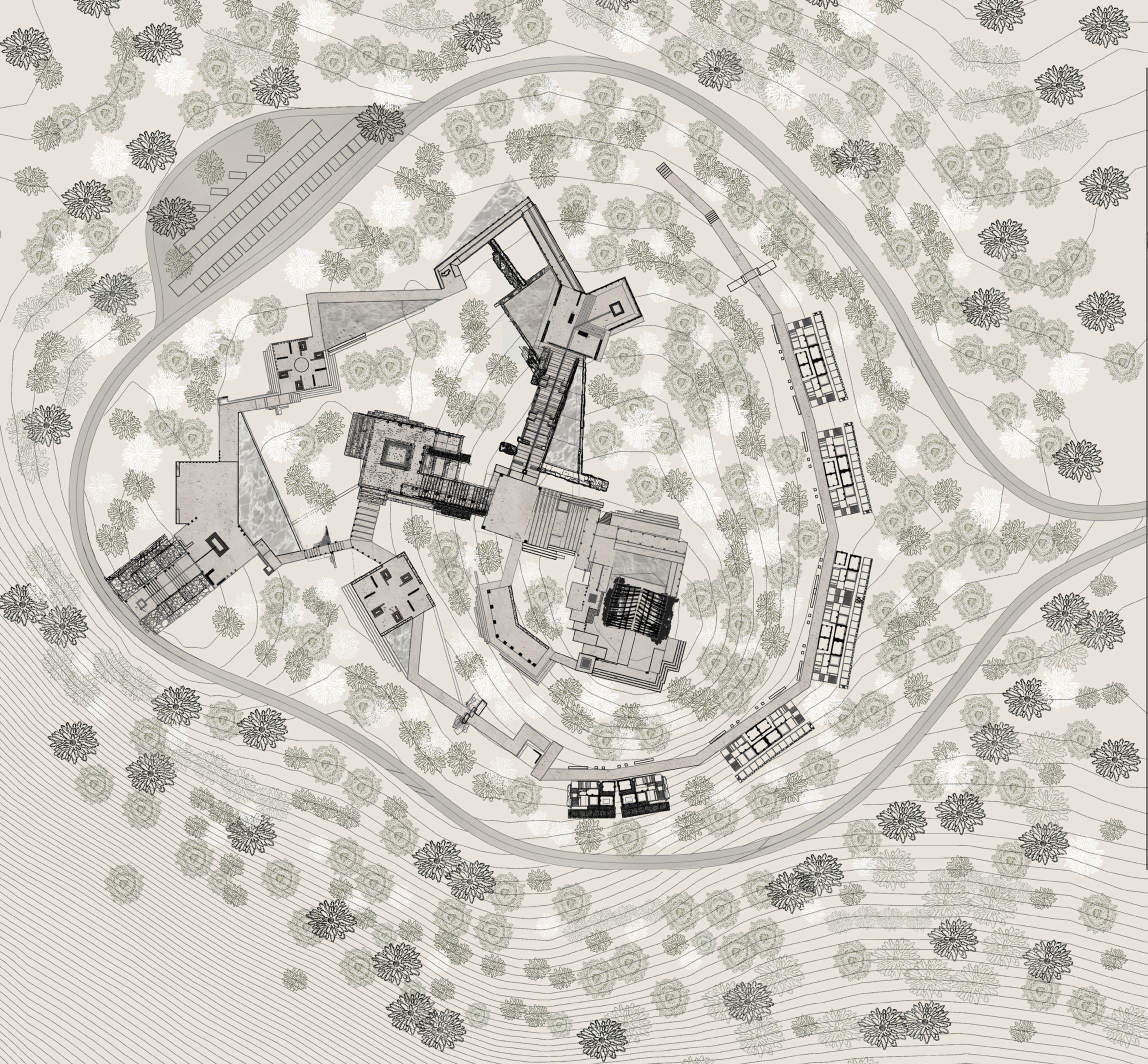
Located in Huesca, Aragón (Spain) at the foothills of the Pyrenees, the project is set within a distinctly terraced, agricultural landscape. The proposed site sits along the edge of an olive grove (outlined by the red boundary), where cultivated fields and contour lines reveal the land’s gentle topography and seasonal rhythms.
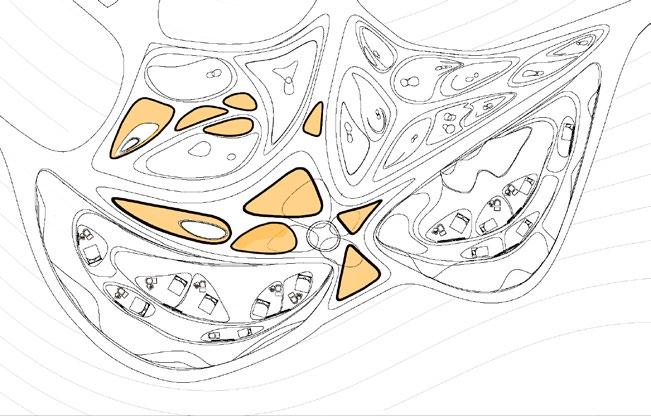
Architectural Modular System
and landscape
Initial Massing Exploration
Model
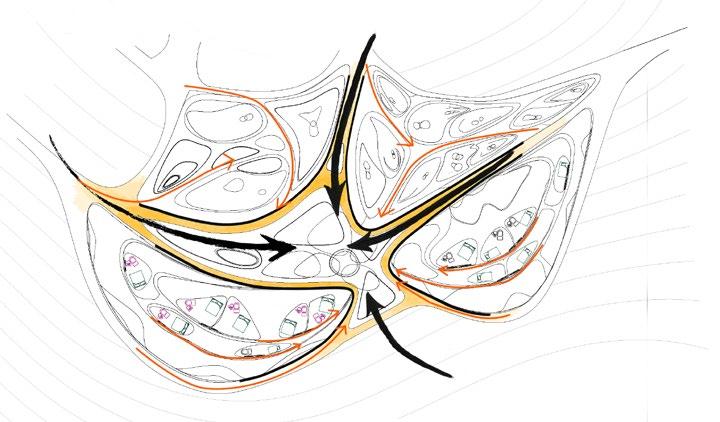
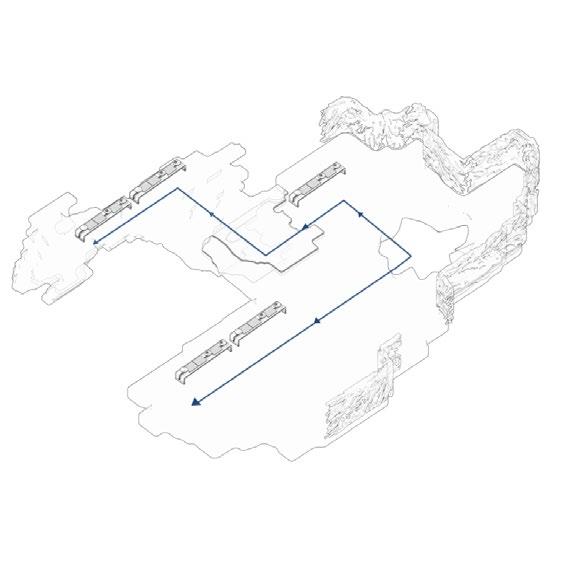
Circulation Systems
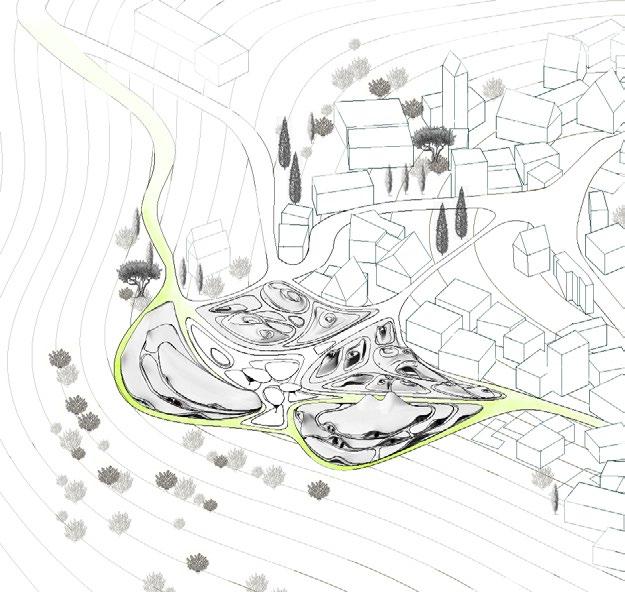
Car Drive-Through Pedestrian Walk Prioritising organic movement and permeability
Plastic Pollution
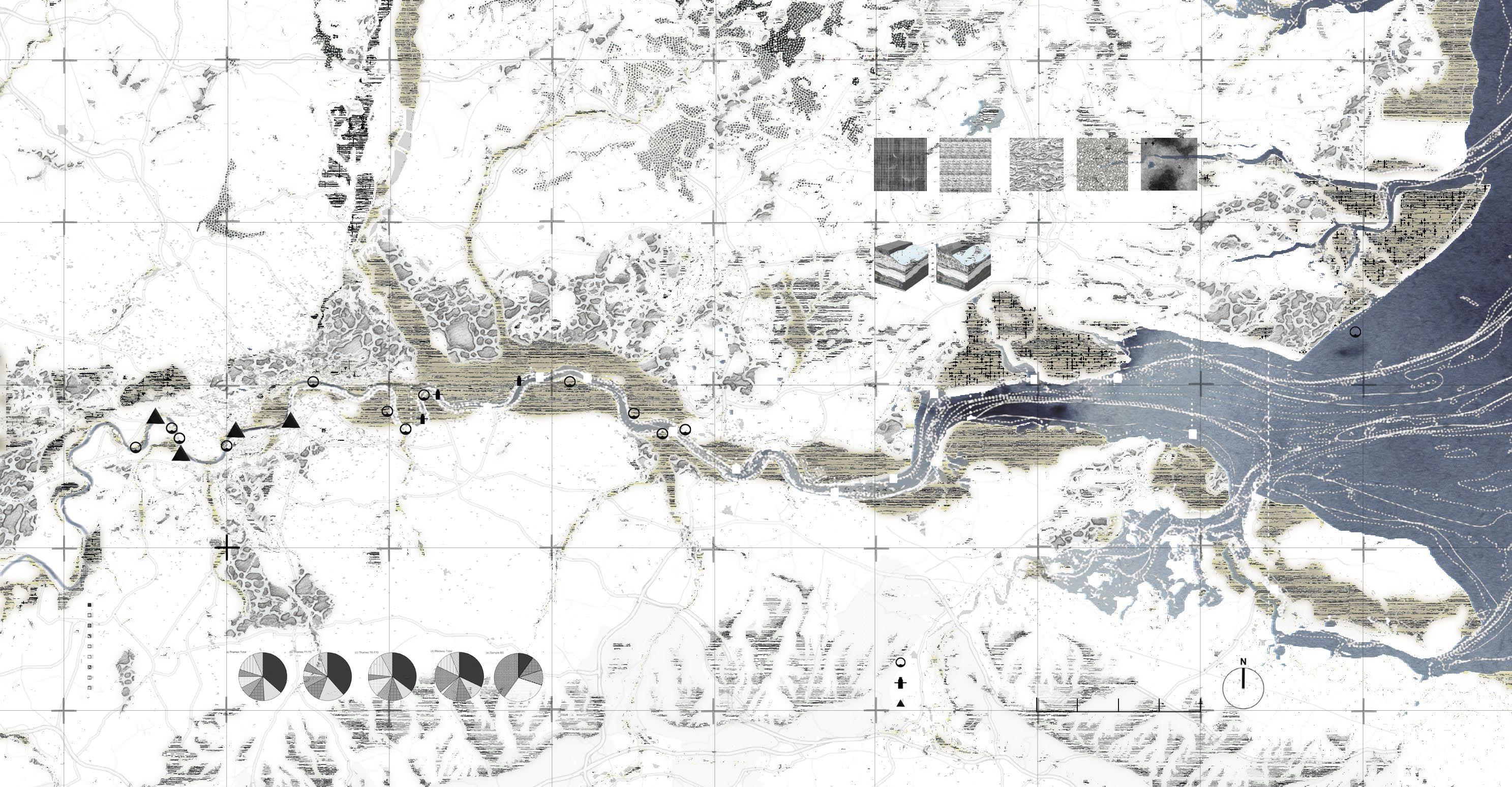
Plastic pollution describes visible waste inputs, while microplastics represent their dispersed and sedimented afterlife.
Lithology
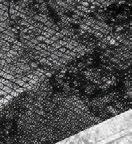
Pre-anthropogenic geological strata composed of silt, clay, sand, and gravel.
Pre-anthropogenic geological strata composed of silt, clay, sand, and gravel.
Altered strata incorporating plastic particulates, forming an emergent anthropogenic sediment.
Microplastic Polyethylene
Fragmented plastic particles persisting within aquatic sediments.
Floating Waste on the Slipways or Beach Plastic Bags Sinking Site
Wet Wipe Sinking Site
Mycelial Strata Museum
Ecological Museum and Bioremediation Infrastructure
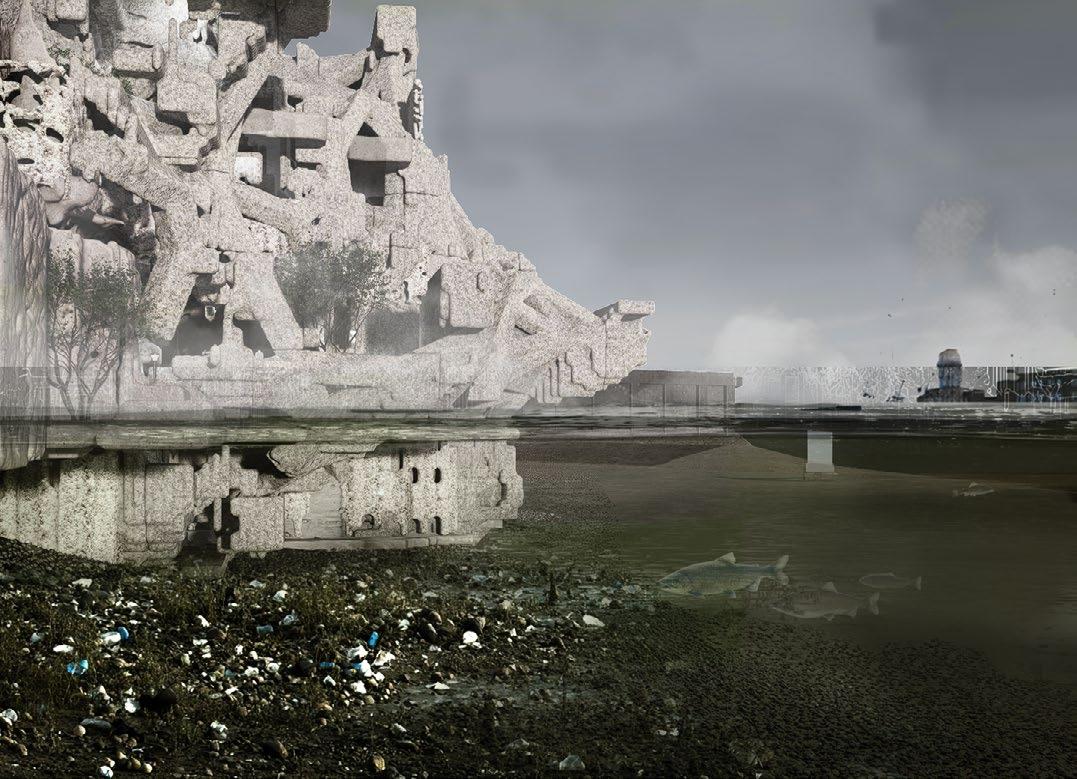
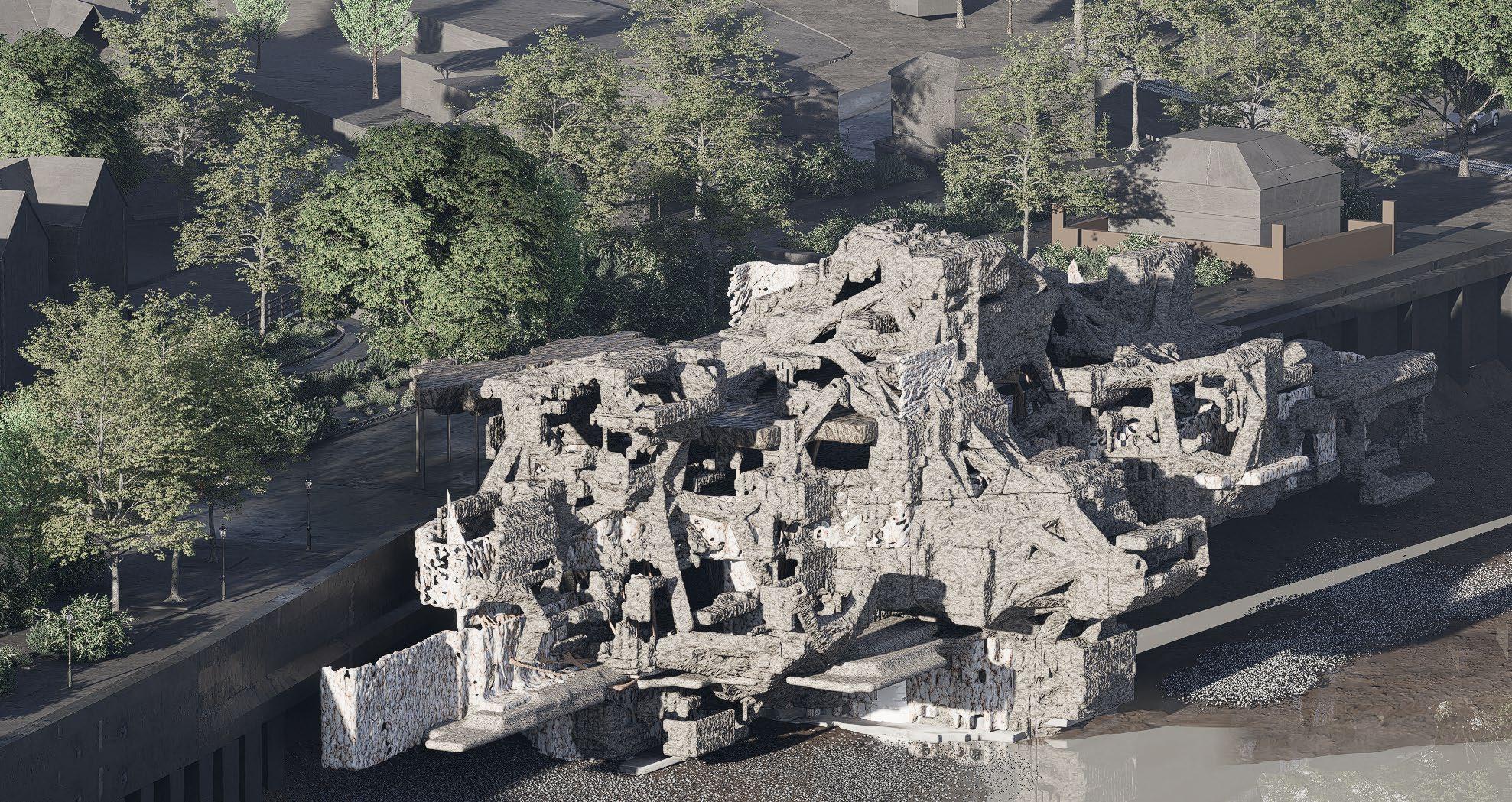
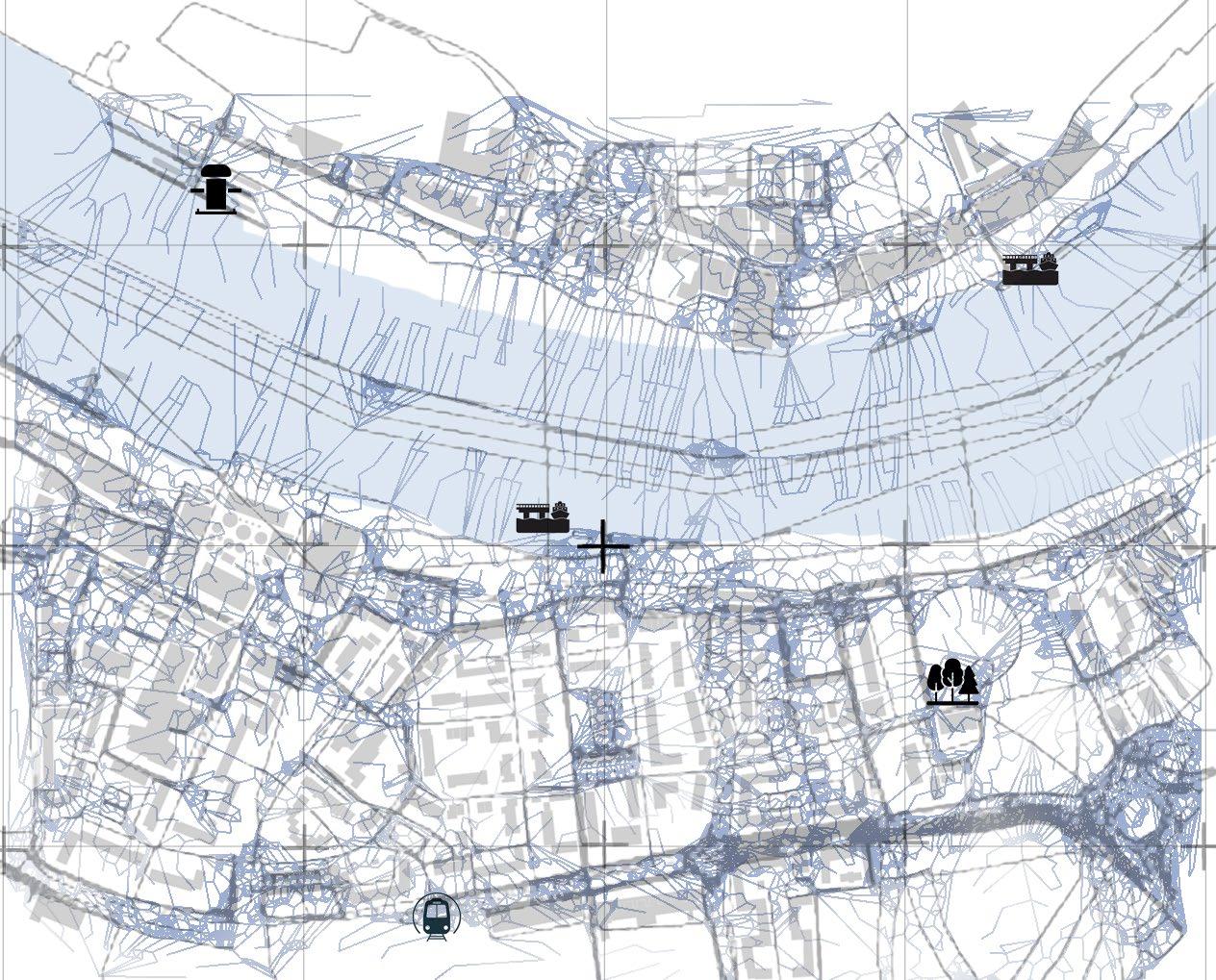
The Mycelial Strata Museum emerges from a rigorous mapping of the Thames River, a waterway long defined by its “biologically dead” history and a modern “rising tide of plastics”. Mapping data reveals a landscape where 83% of foreshore waste is single-use plastic, with submerged “reefs” of wet wipes physically altering the river’s sediment and topography. Beyond visible debris, the mapping tracks a high-resolution invisible layer of microplastics—up to 94,000 fragments flowing per second during peak tides—alongside heavy metals like lead and arsenic buried within tidal mud islands.
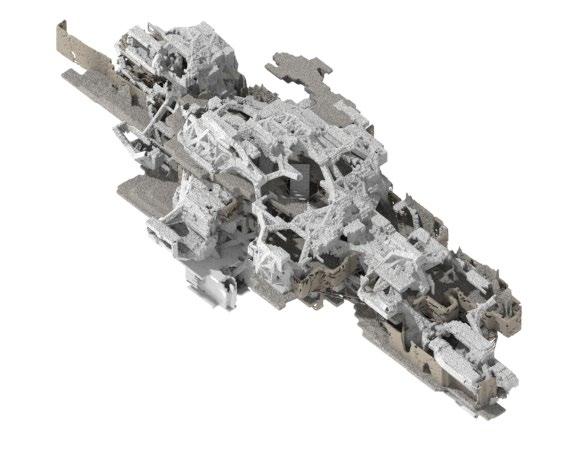
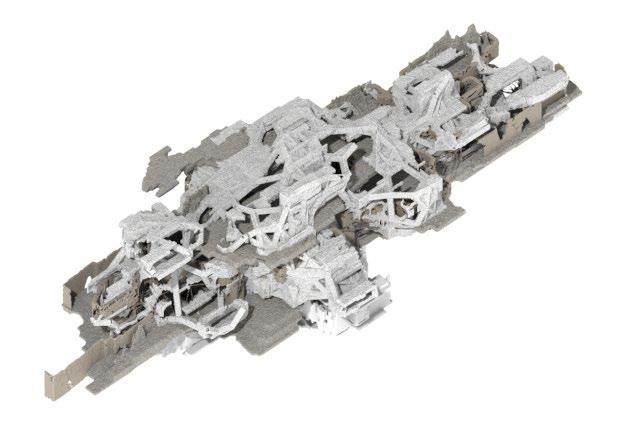
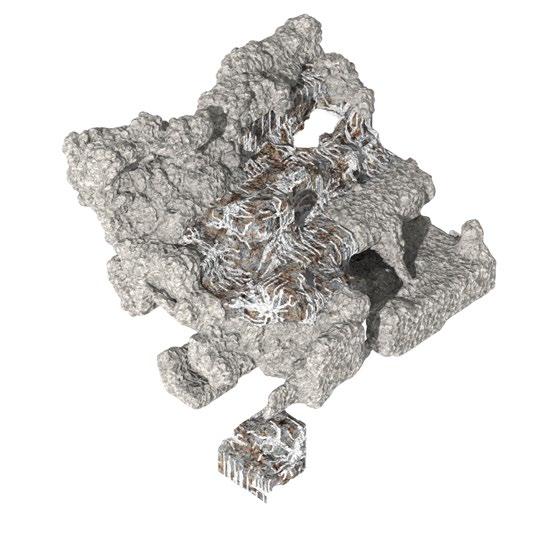
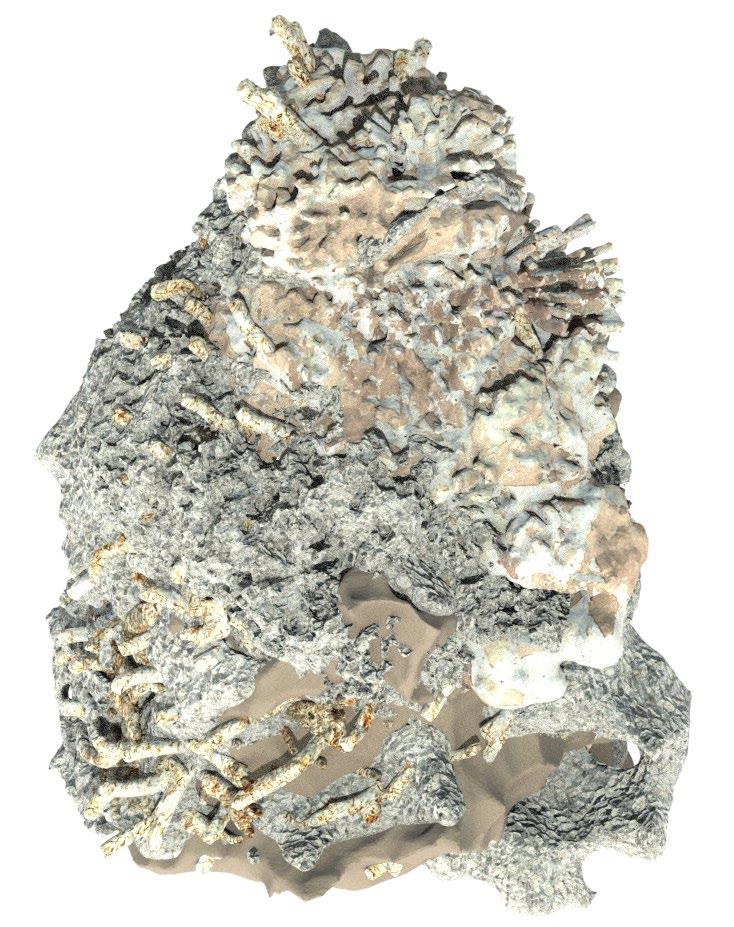
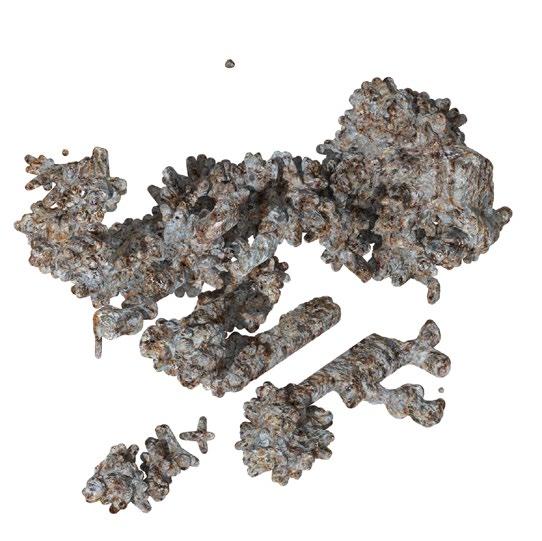
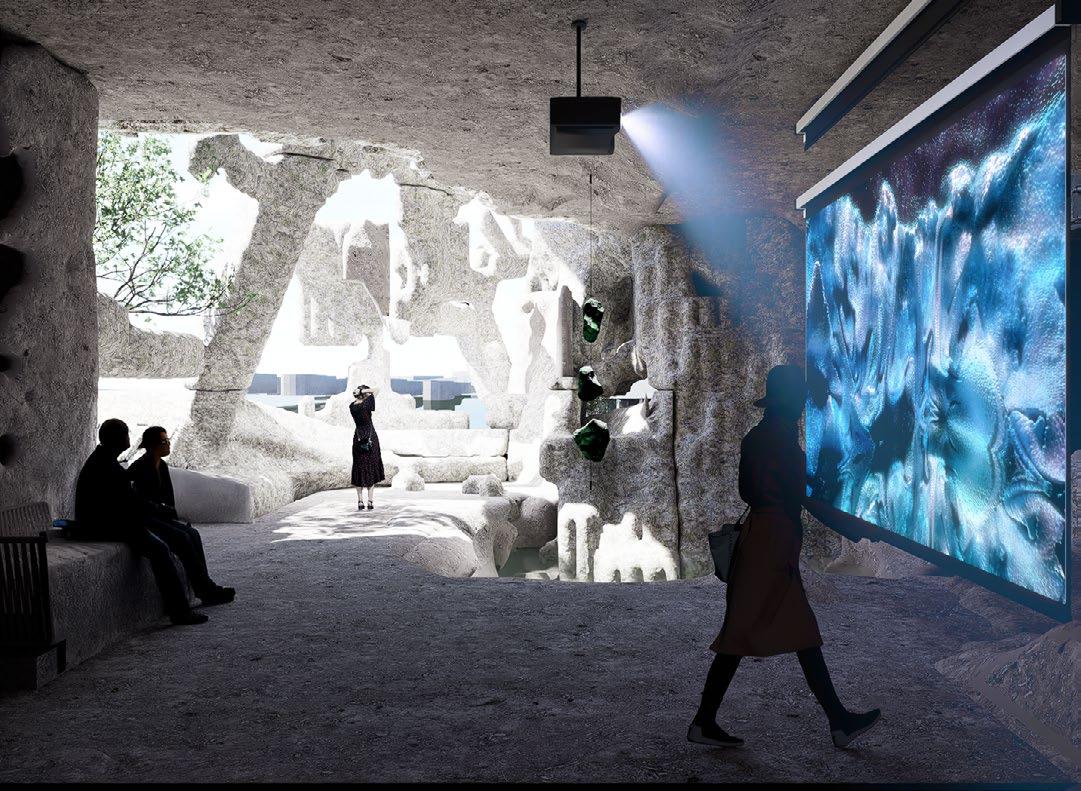
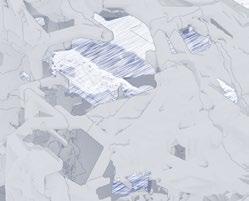
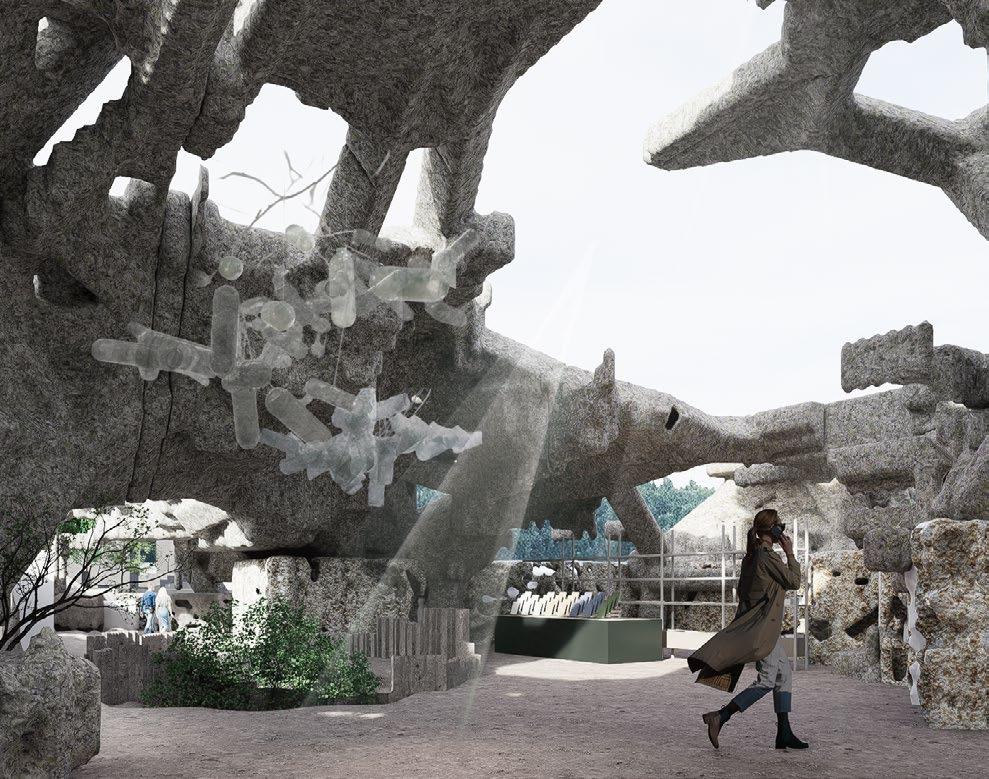
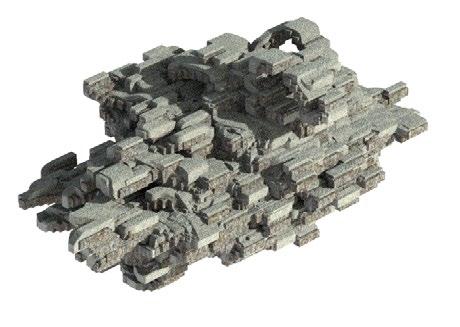
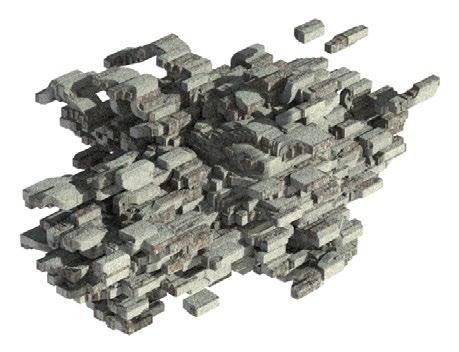
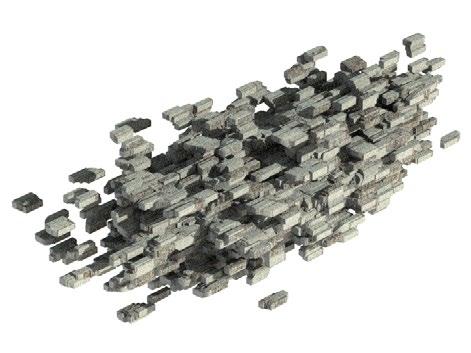
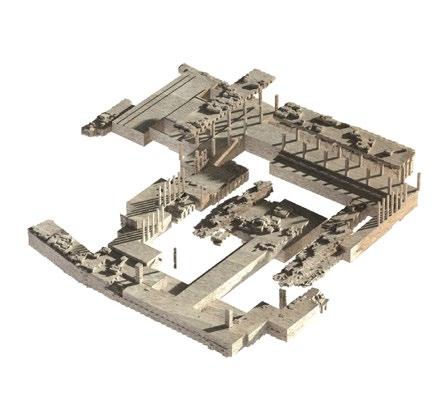
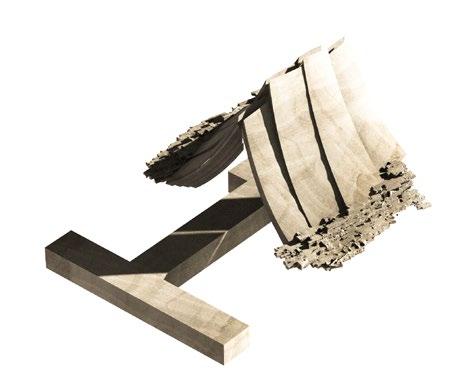
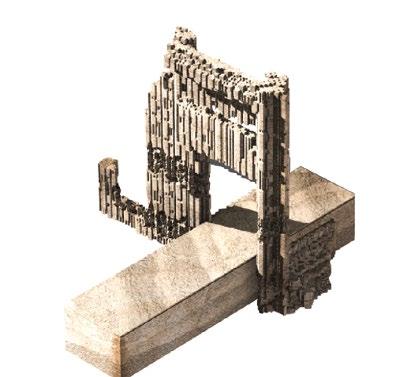
This proposal translates these environmental pressures into a quasi-geological architecture. The museum’s form is directly sculpted by the river’s hydraulic forces and wind patterns, capturing kinetic energy to form a porous, bio-sedimentary skin. Utilizing mycelial bioremediation, the structure acts as a living filter, actively cleansing the Thames while expanding its own mass. The design maintains a distinct spatial grammar, where movement is organized through carved chambers and experiential voids that transition between solid and void. This is not a static building but a self-evolving framework designed for long-term consolidation; over decades, it will continue to thicken and grow, eventually dissolving the boundary between human infrastructure and the river’s natural strata.
Silt Sand Clay Gravel Disticton
Mycelial Bioremediation Shape Formation
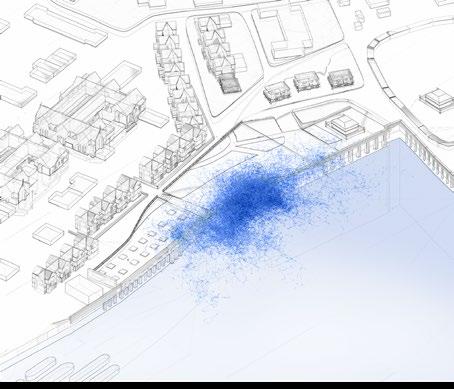
Environmental Forces / Particle Distribution
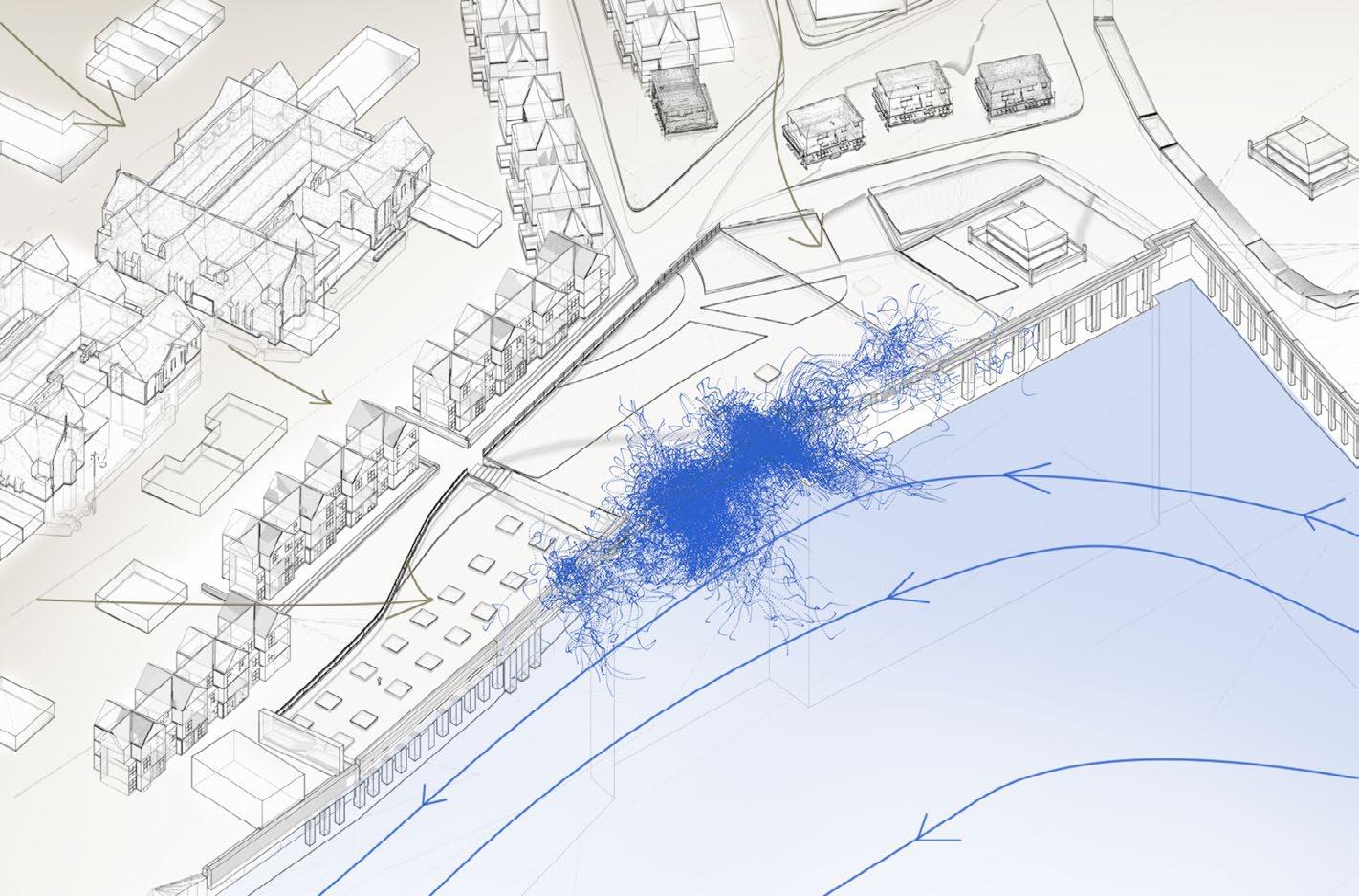
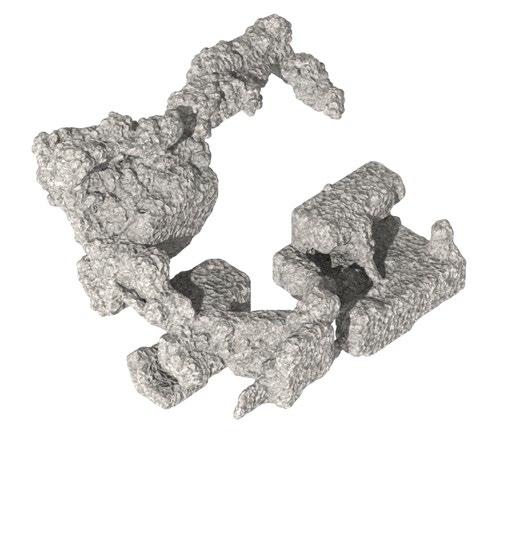
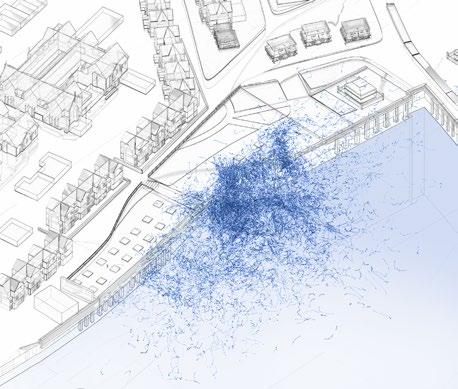
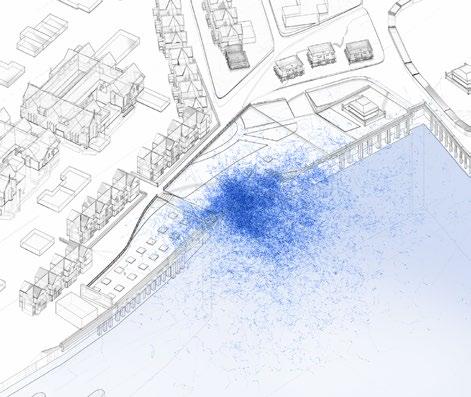
Wind flows from south to north and river currents move from west to east, generating a field of particle trajectories that define the initial spatial distribution.
Deposition and Artificial Aggregation
Stratification and Architectural Formation
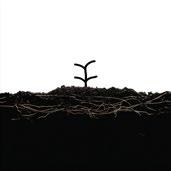
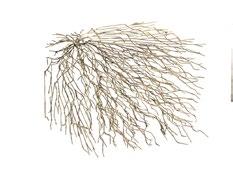
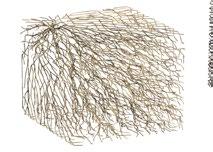
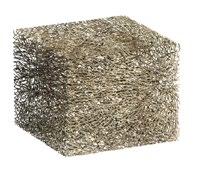
The mycelium intervention operates within London’s moisture-retentive superficial sediments, transforming plastic-polluted sites into active ecological substrates. Rather than erasing pollution, the fungal network engages with it, initiating slow processes of biological occupation and remediation.
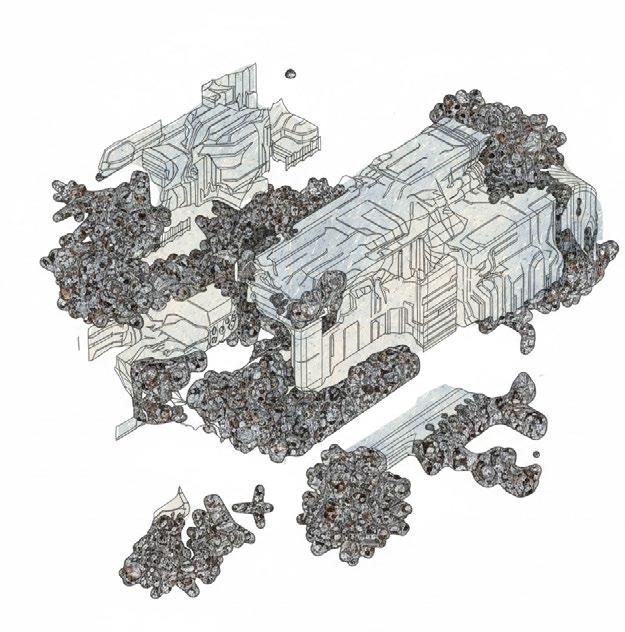
Within the building, mycelium draws moisture and nutrients from the Thames-side wetlands and anchors itself onto plastiglomerate. As the fungal network thickens and weaves through the substrate, it transforms an otherwise inert, polluted material into a living ecological matrix. The wall is therefore conceived not as a sealed envelope, but as a breathable, regenerative skin.
Saturated Substrate Formation Inoculation
Microbial and Nutrient Anchoring
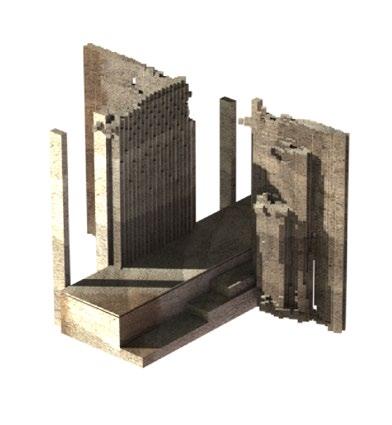
Axonometric of an Emergent Bio-Sedimentary Architectural Skin
Bio-mediated Sediment Formation
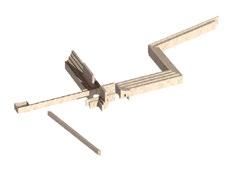
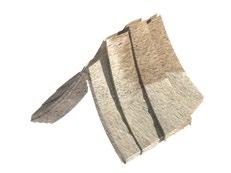
Low-density polymer sheet prior to fragmentation
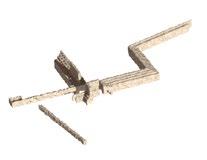
Mycelial growth infiltrates the sediment–plastic matrix
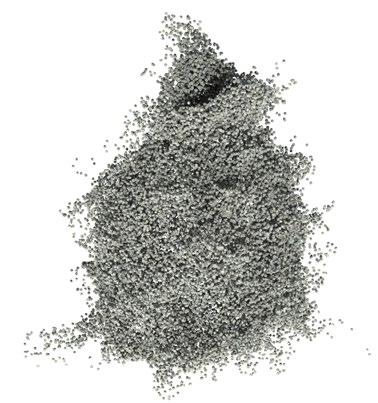
Transition from continuous polymer film to discrete microplastic grains
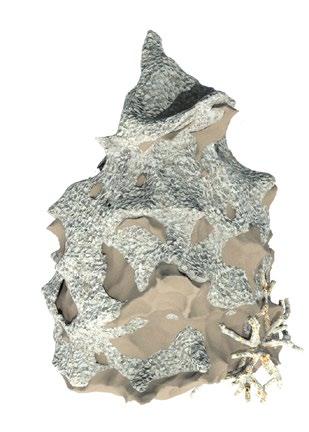
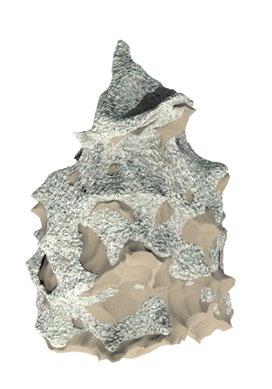
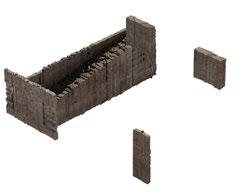
The material exhibits stone-like morphology without thermal transformation
Formation of a heterogeneous sediment–polymer aggregate
An emergent anthropogenic lithic analogue
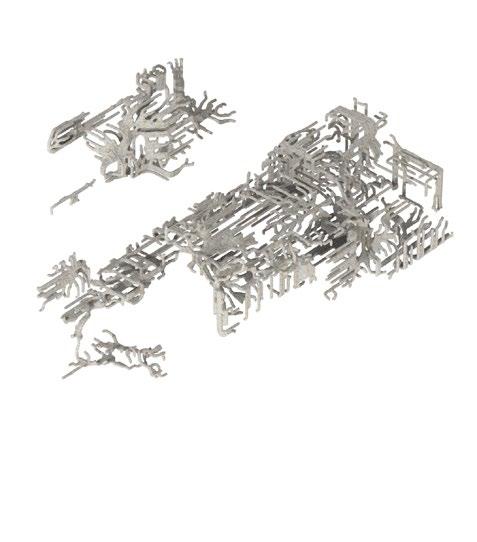
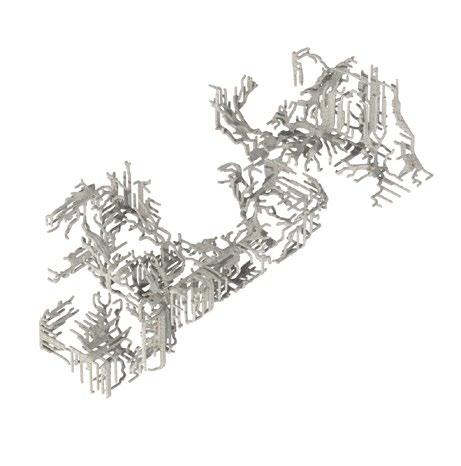
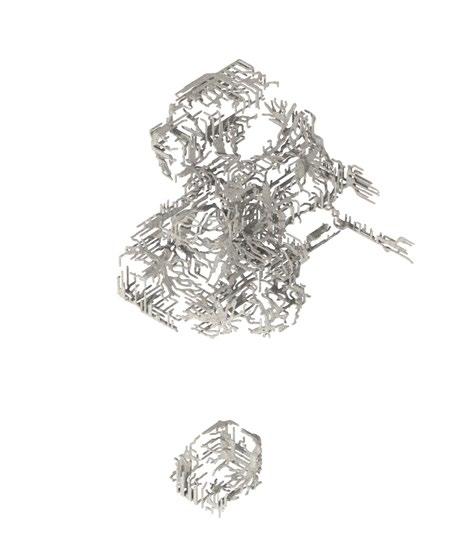
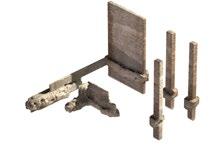
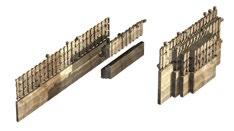
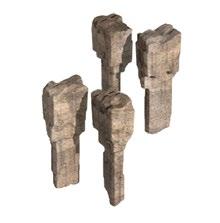
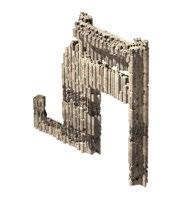
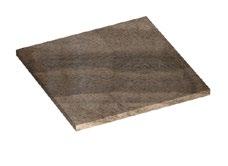
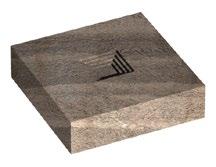
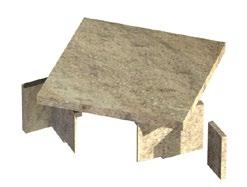
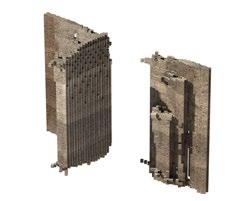
Constitutive Units of the Bio-Sedimentary Envelope
Anthropogenic Bio-Sedimentary Composite
Mycelial growth infiltrates the sediment–plastic matrix
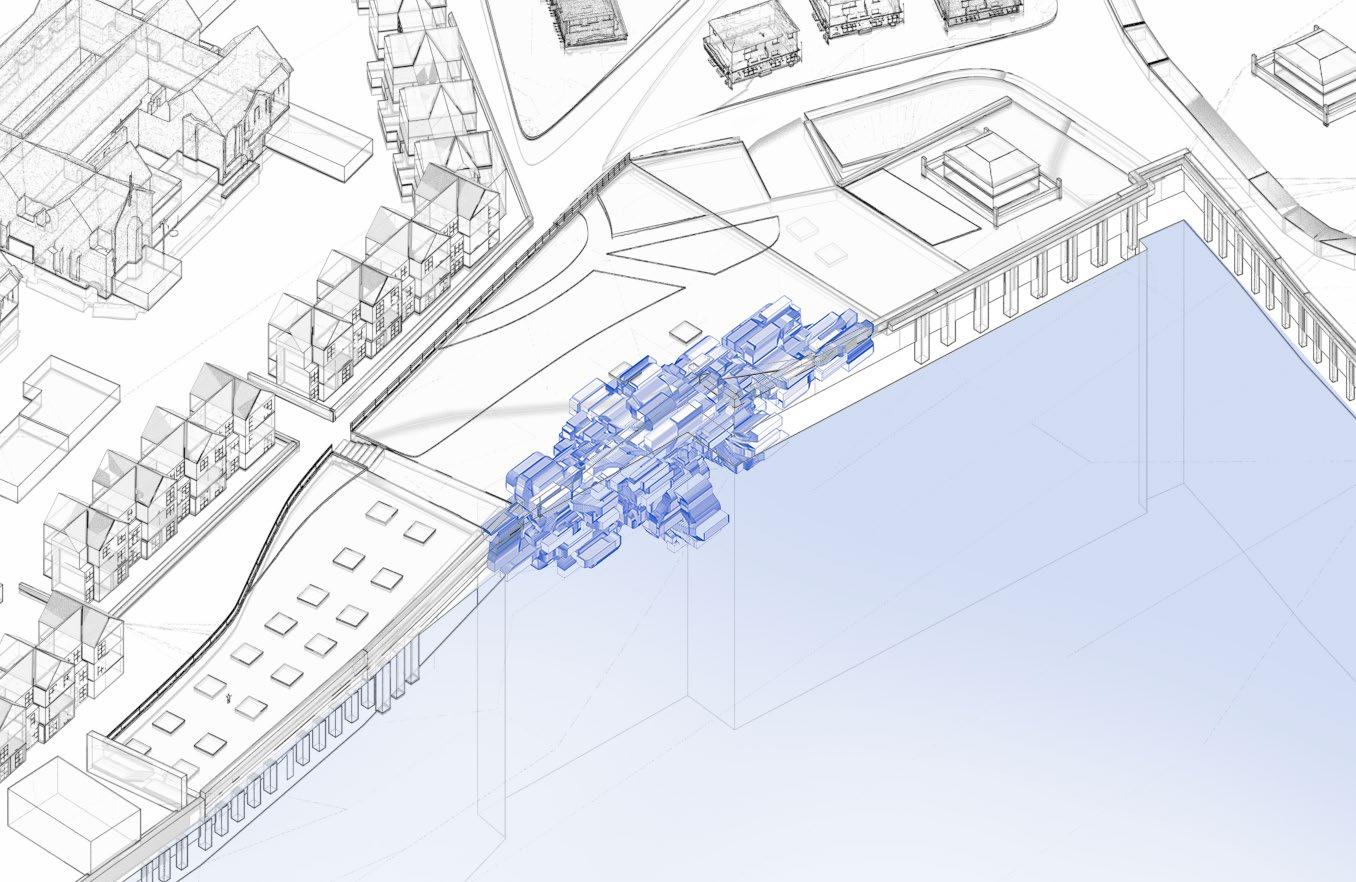
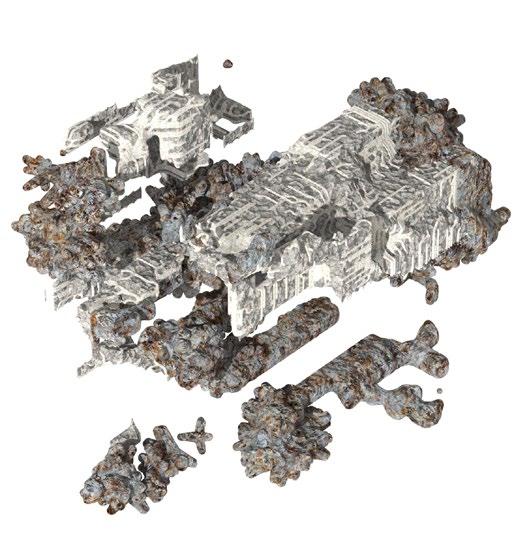
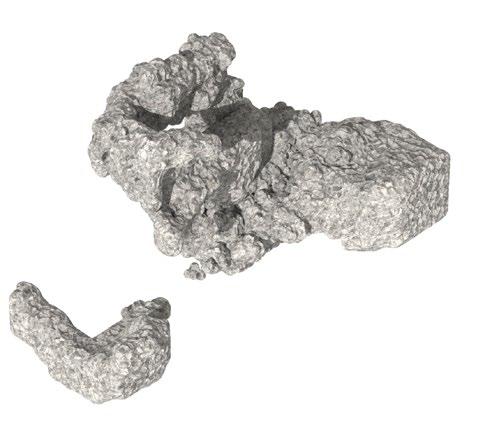
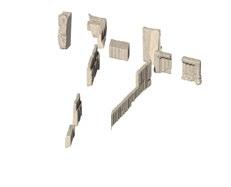
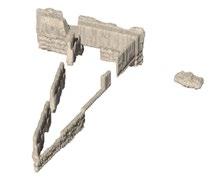
The particles settle and are consolidated through artificial construction, forming a more rectilinear and controlled mass along the river edge.
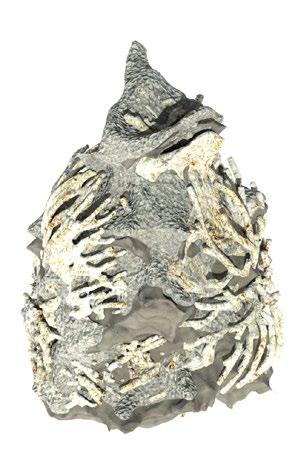
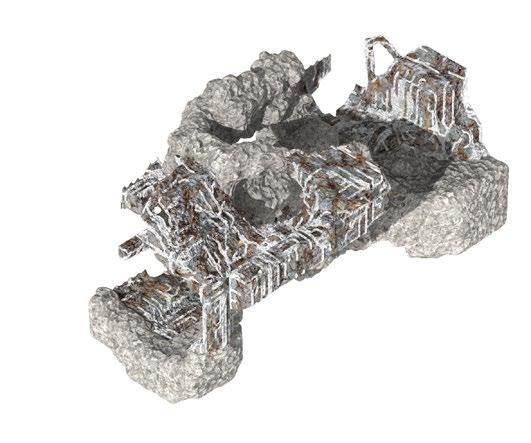
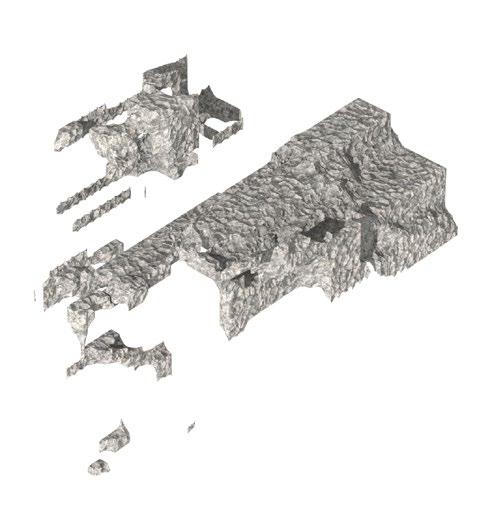
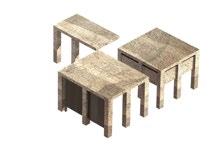
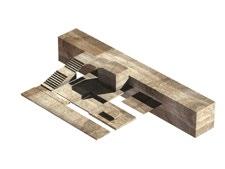
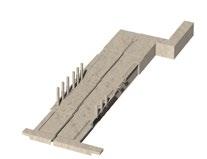
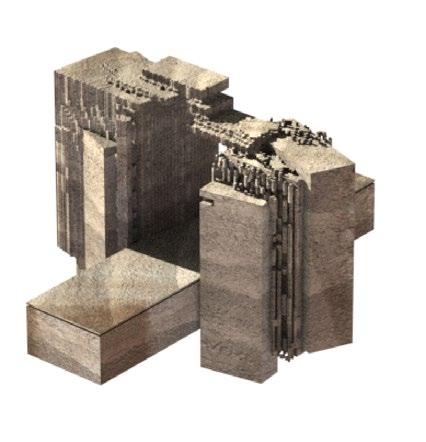
The aggregated form is stratified into four vertical layers, establishing the spatial and programmatic structure of the building.
view from the northwest towards the southeast.
Mycelial growth infiltrates the sediment–plastic view from the northeast towards the southwest. Anthropogenic
Mycelium Bound Retentive Network
Consolidated Sediment Stone structural core Adherent Sediment Stone surface accretion
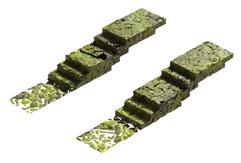
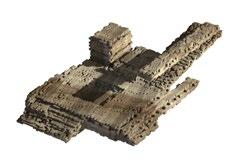
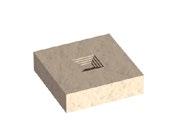
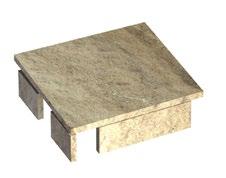
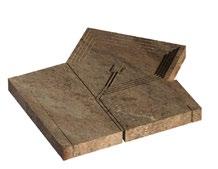
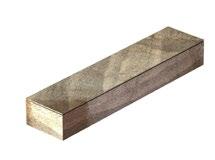
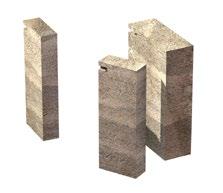
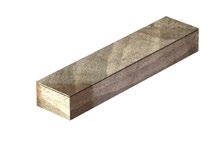
Sedimented Architectural Unit
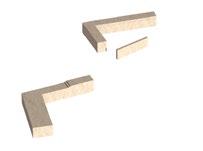
Variant I
Variant II
Variant III
Fungal Emergence Colonisation
Network Development
Densification
Ecological Interaction
Stabilisation
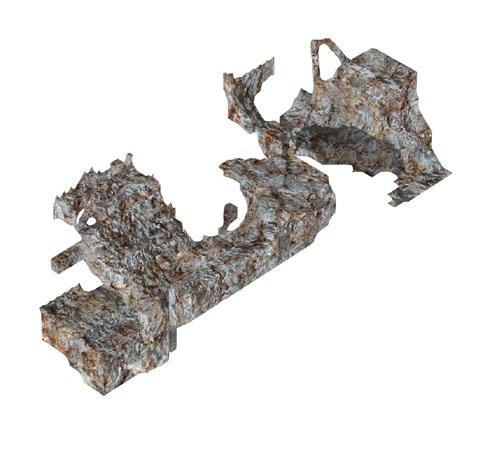
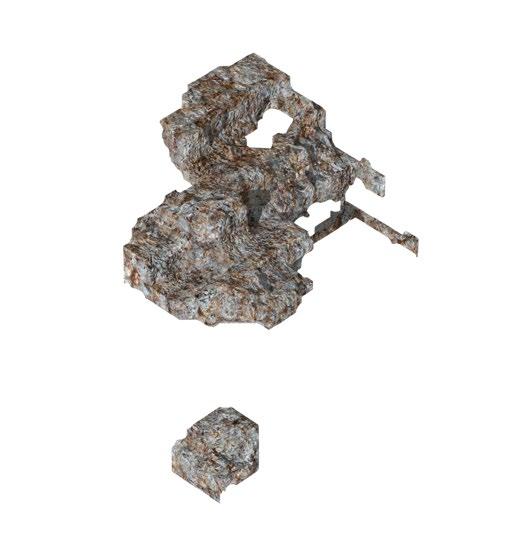
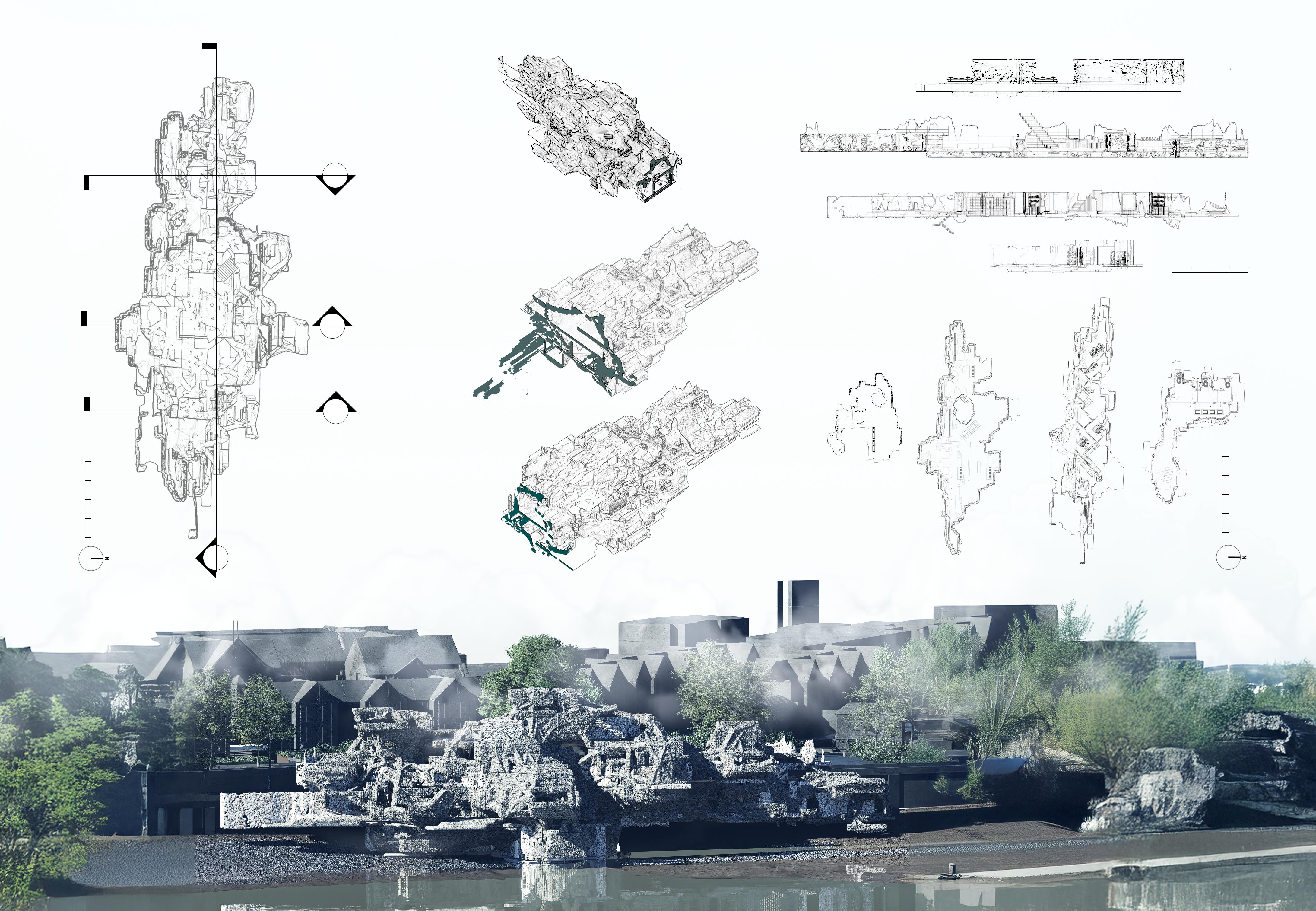
This cut exposes how the dense, accreted form is supported and anchored, highlighting moments where inhabitable spaces are carved out of an otherwise compact volume.
The section emphasises the tension between structural necessity and
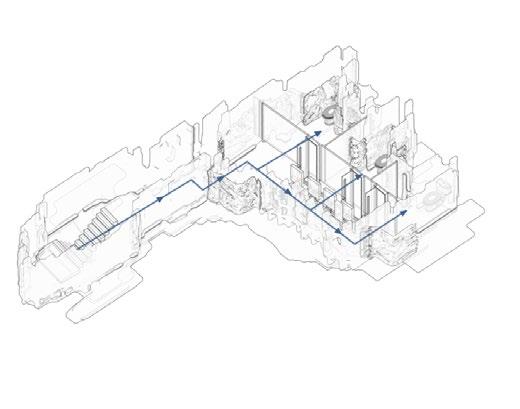
The cut highlights how movement, access, and service paths are embedded within the thickened mass, allowing light, air, and water to penetrate deep into the architecture.
Circulation is conceived not as a separate layer, but as a carved continuity within the sedimented
By slicing through the architectural mass, the section reveals a sequence of compressed and expanded voids, formed through longterm accumulation and erosion.
The architecture reads as a layered spatial terrain, where occupation emerges from the negotiation between solid and void.
Near-Future Adaptation
Over the next one to two decades, continued deposition, erosion, and material accretion along the riverbank begin to alter the architectural mass. While the overall structure remains recognisable, local thickening, erosion, and spatial adjustment indicate the early adaptation of the building to its environment.
Long-Term Consolidation
Prolonged interaction with river dynamics leads to substantial accumulation and compression, resulting in a denser and more stratified architectural form. At this stage, the distinction between building and landscape begins to blur, as the architecture takes on qualities of a sedimentary structure shaped over generations.
After more than a century of accumulation, erosion, and material transformation, the building no longer reads as a designed object but as a geological artefact embedded within the river landscape. Architecture, infrastructure, and sediment merge into a single stratified formation shaped by long-term environmental forces rather than human intention.
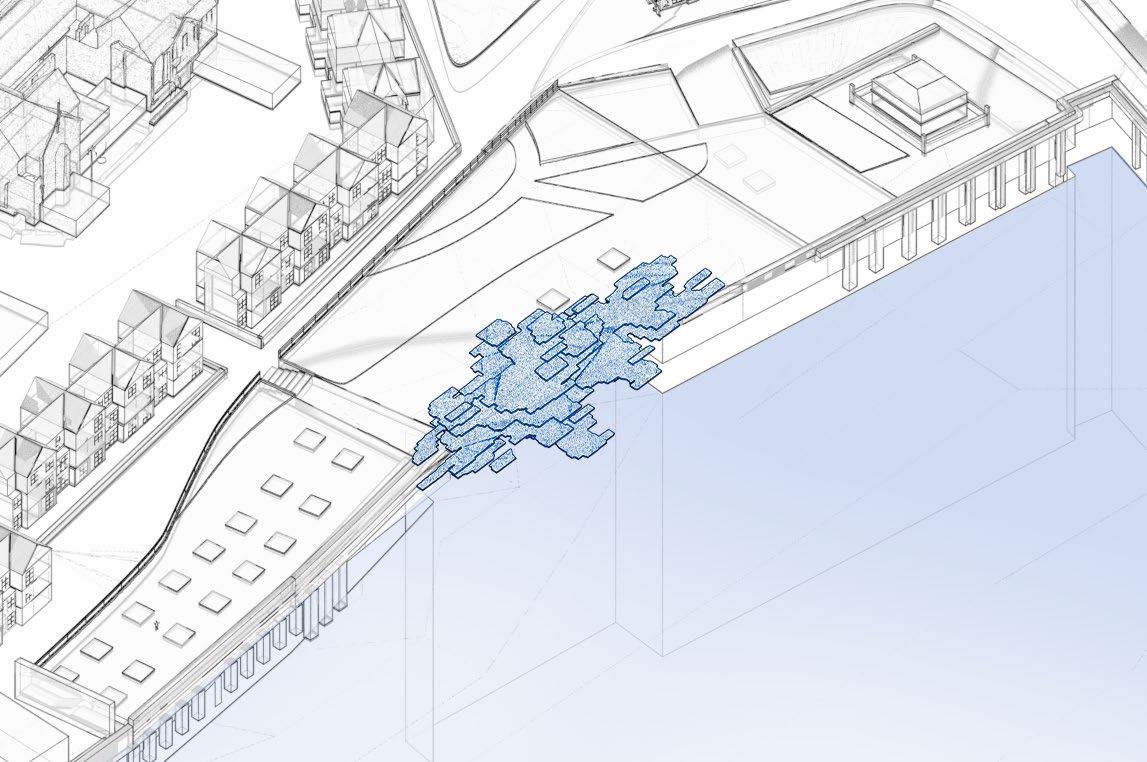
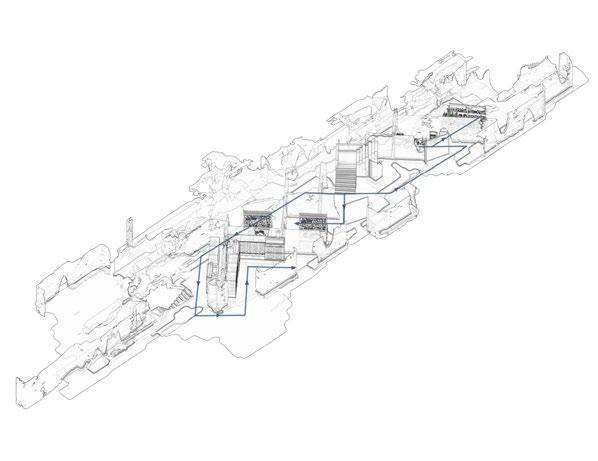
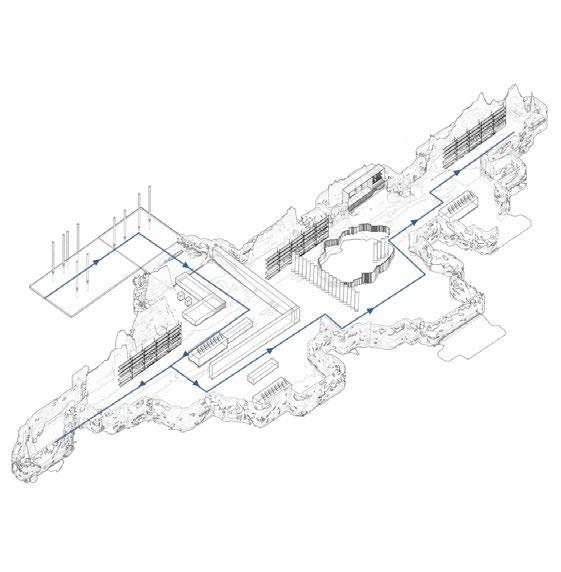
Blue lines map speculative mycelium growth from Bermondsey Beach, tracing adaptive, networked pathways across the landscape rather than fixed forms, shaped by environmental conditions.
View from the river bank level Axonometric Space
Development
Exhibition Floor Terrace
Exploring plastiglomerate formation: mycelium and plastic sediments evolving into bio-materials.
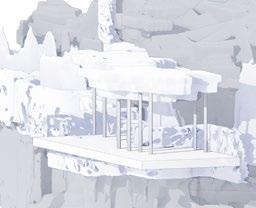
The terrace frames the Thames, viewing it as an ecological system shaped by tides.
Bathroom Research Office
The bathroom sits below high tide, directly engaging with fluctuating Thames levels
The research space investigates Thames water pollution, plastic sediments, and mycelium growth
Interior perspective from the waterside exhibition space
Split-view render showing above- and below-water conditions
View
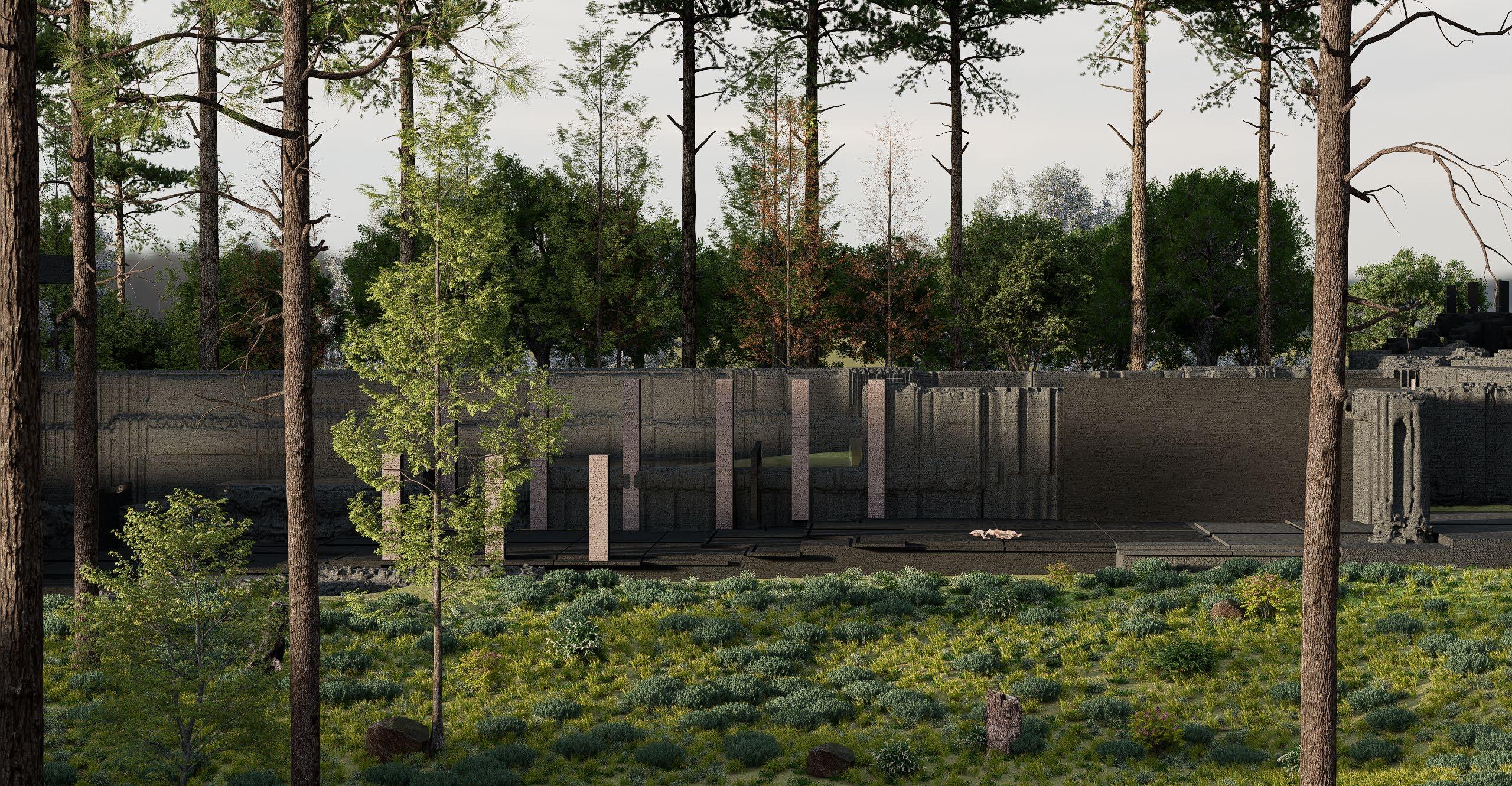
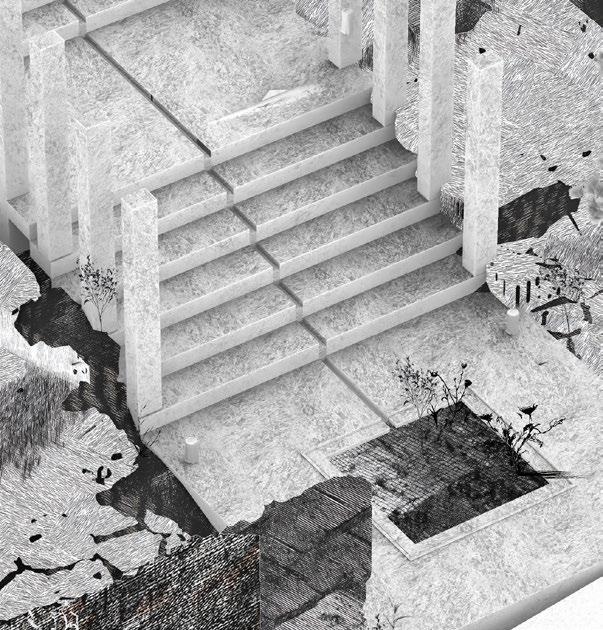
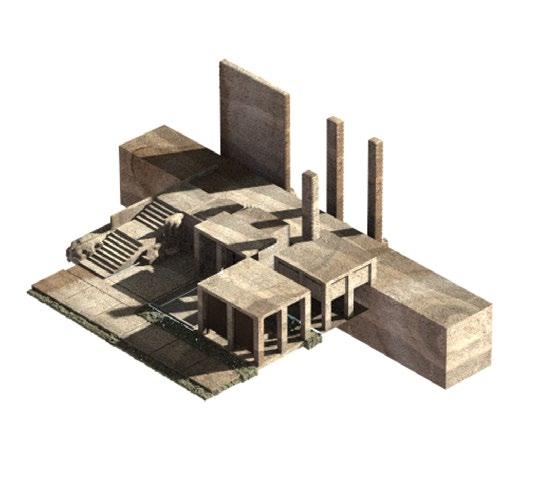
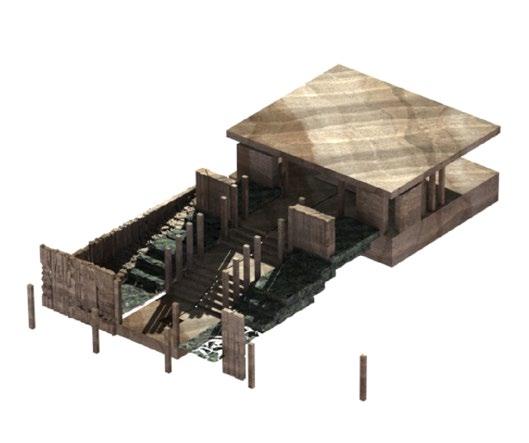
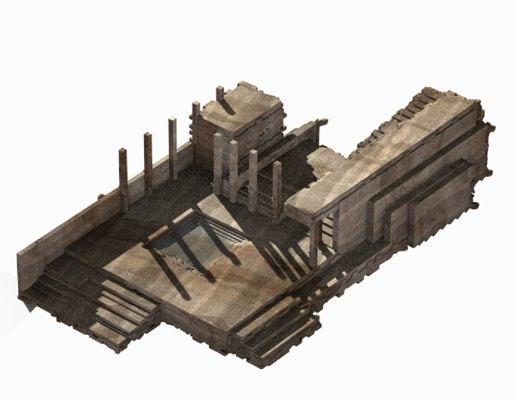
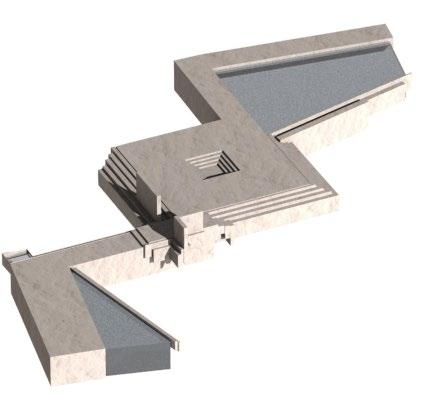
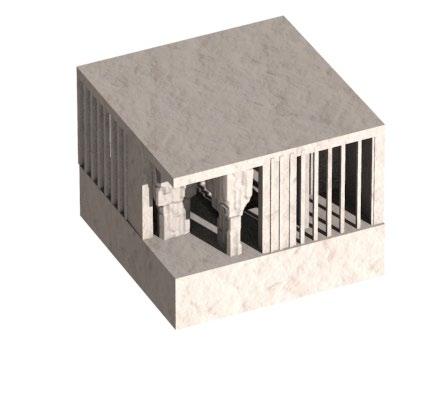
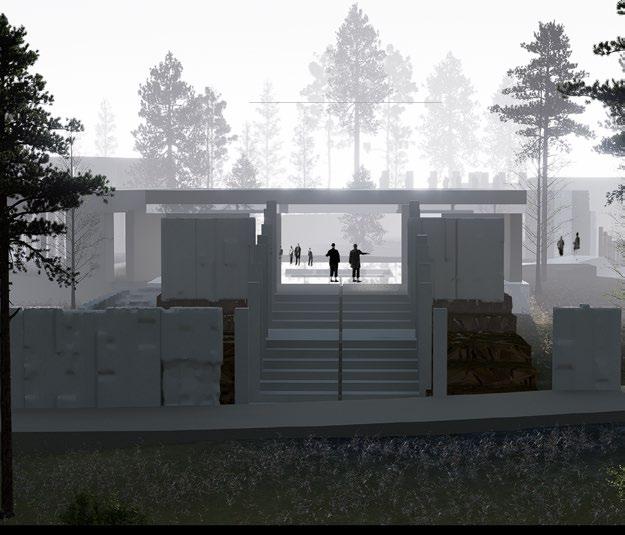
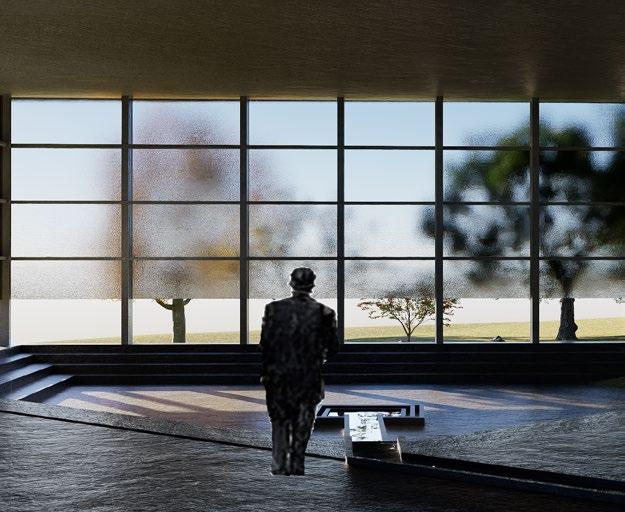
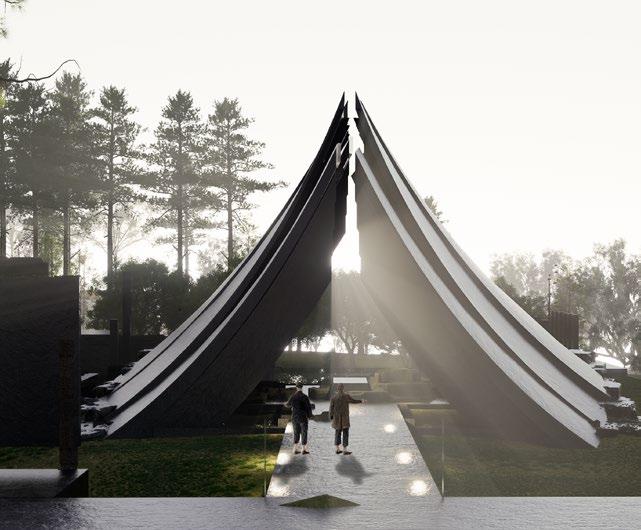
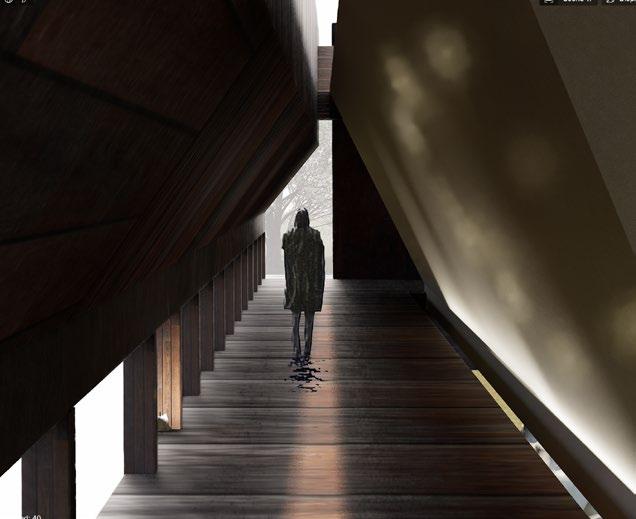
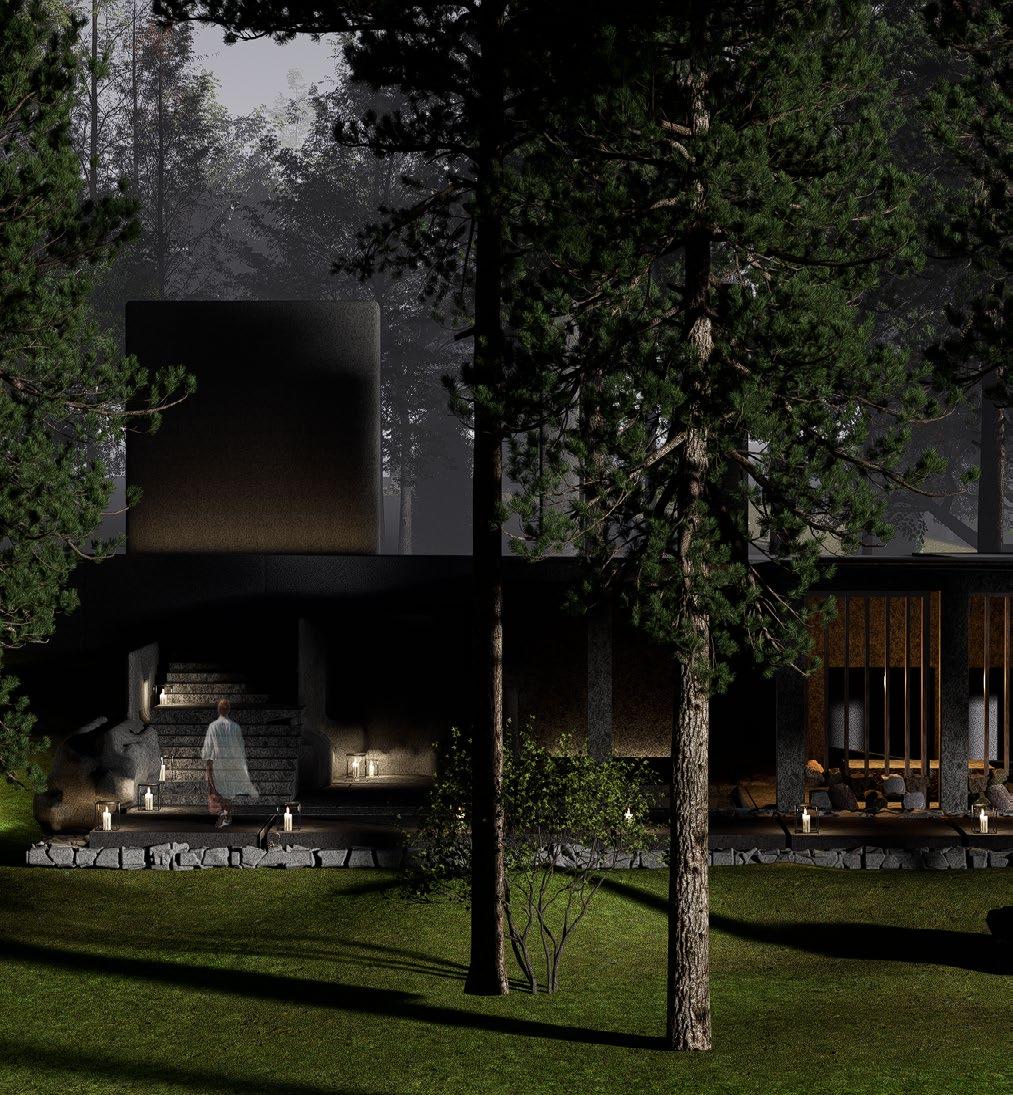
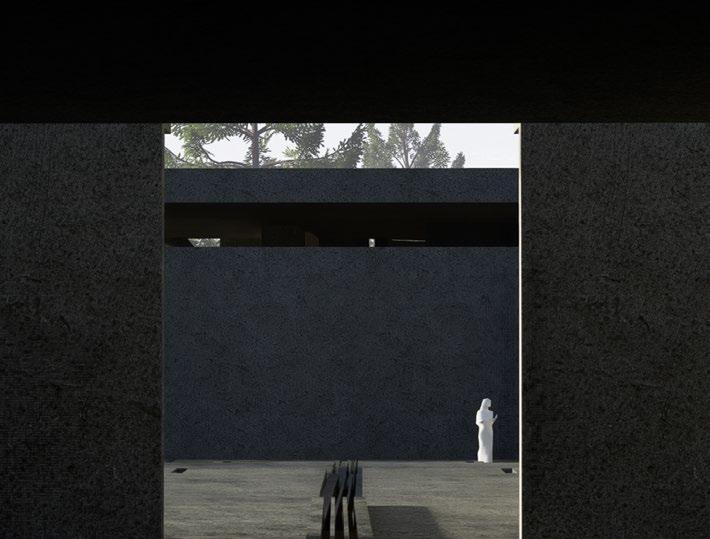
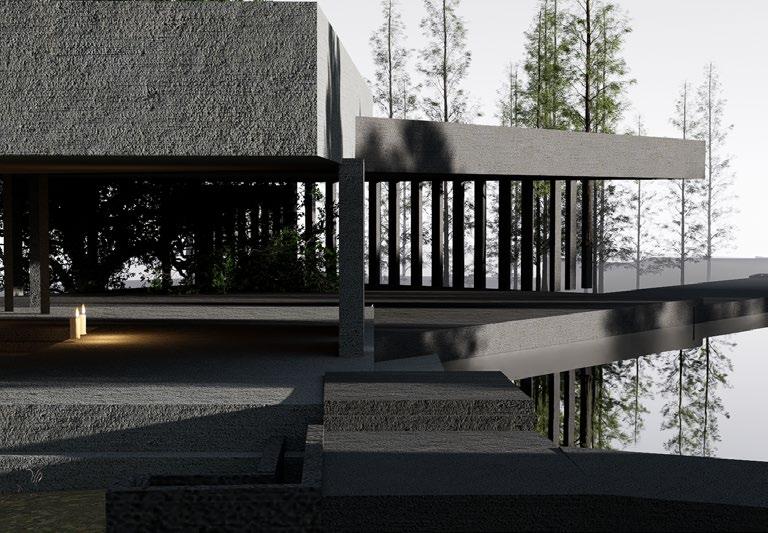
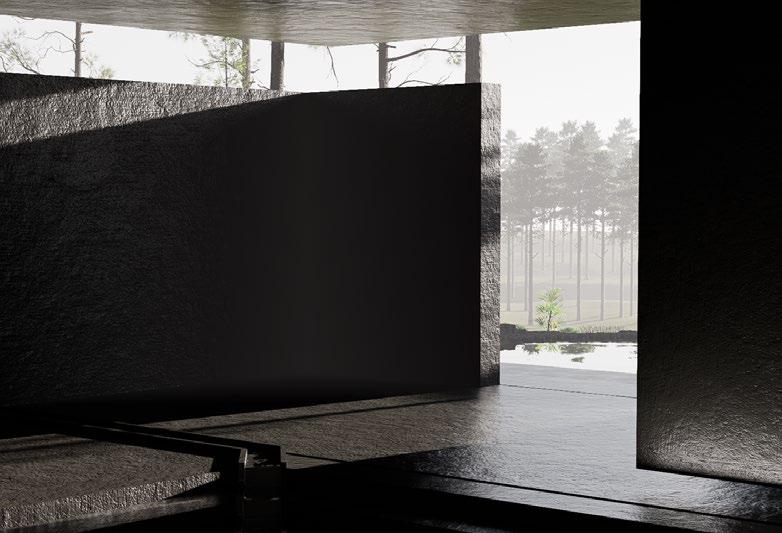
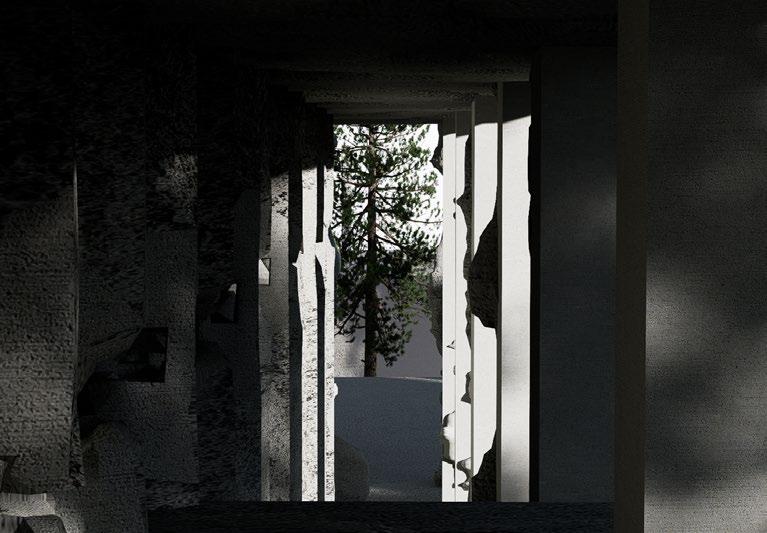
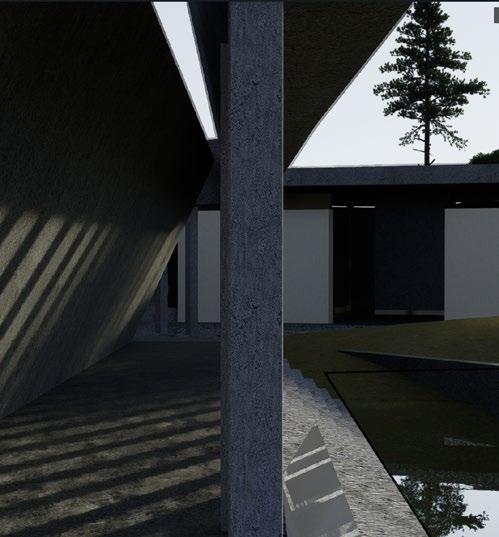
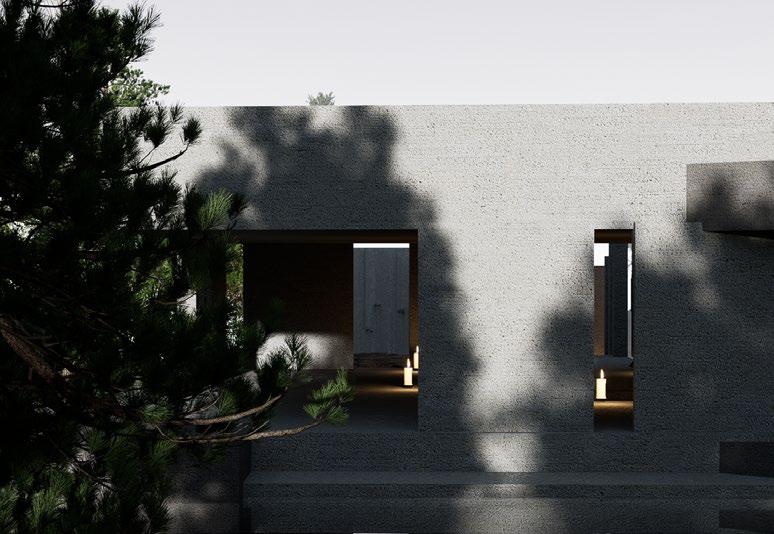
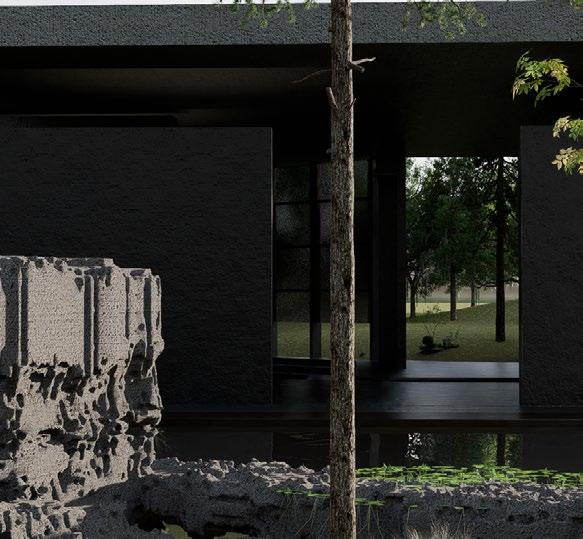
Lichtung is a Cemetery and Sanctuary situated within the Zimmerberg forest, conceptualized through Martin Heidegger’s existentialist lens as a “clearing”—an ontological opening where being is “unconcealed” amidst the density of the world. This architectural clearing serves as a site where light, space, and perception gather, allowing the forest to become a place of profound encounter with one’s own existence. The site is organized around a system of distinct circulations that cater to the varying purposes of arrival, whether for communal ritual, final closure, or quiet deliberation. Developed using Houdini, the architectural language employs complex procedural forms to achieve a sense of “disappearing into the earth while simultaneously growing from the forest”. By embedding a spatial grammar of rhythmic colonnades, sloped roofs, and sculpted pillars into the natural terrain, the project creates a guided experience that transitions from shadow to illumination. Through this interplay of weight and stillness, the architecture transcends mere infrastructure to become a contemplative sanctuary where the built form and the natural landscape gather into a calm, harmonious whole.
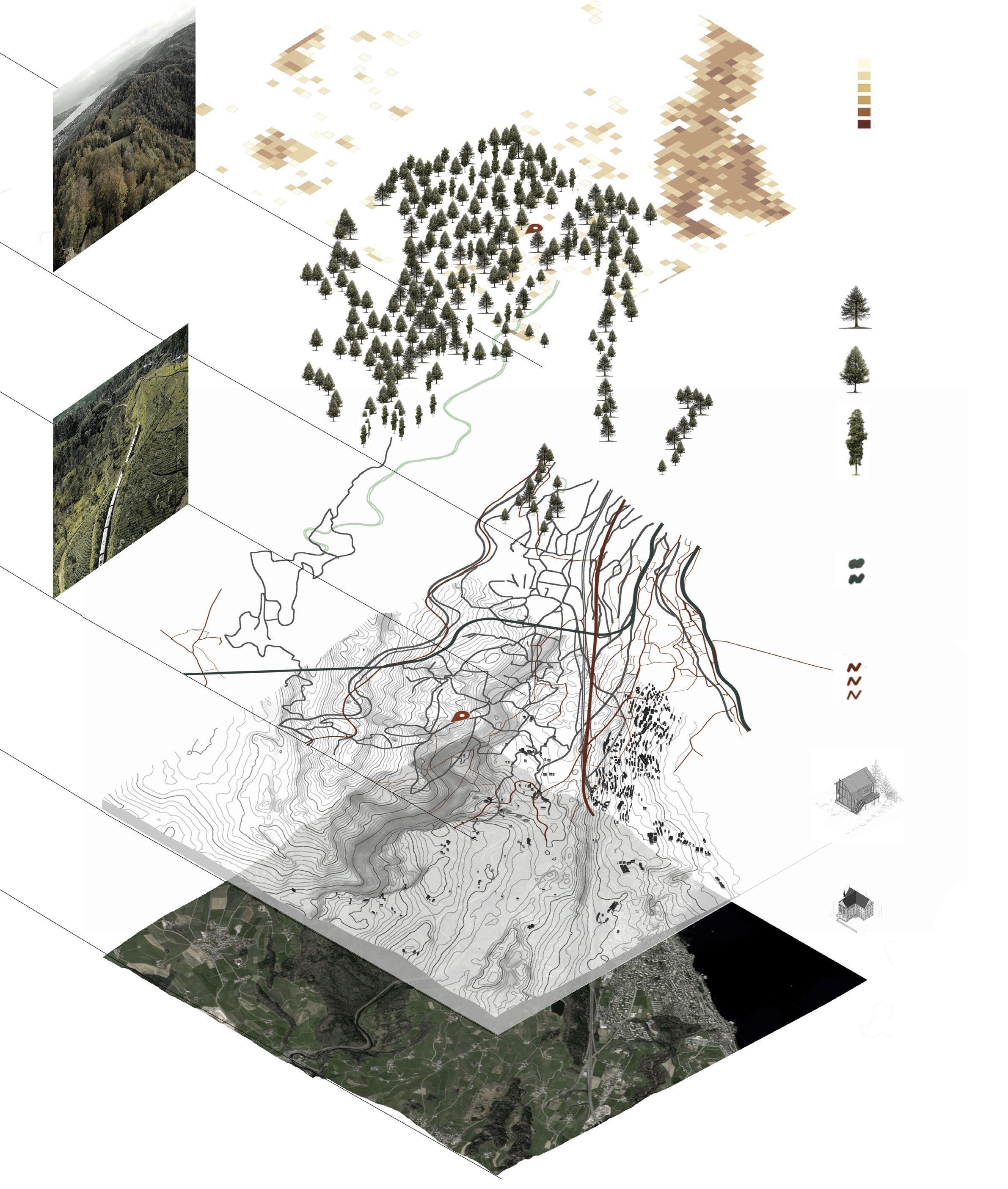
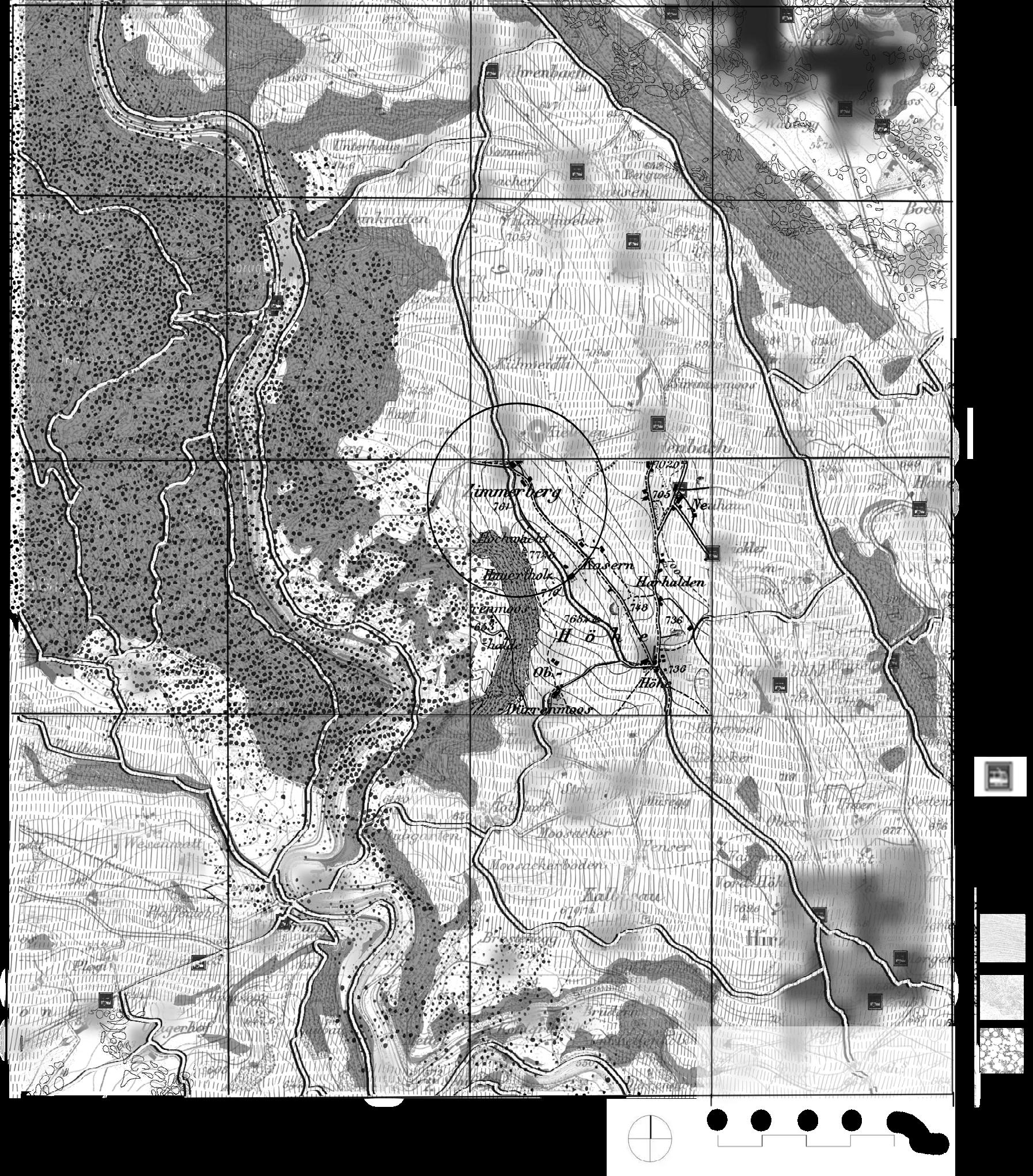
Zimmerberg is a wooded ridge overlooking lake Zurich, positioned between the city of Zurich to the north and the town of Horgen along the western shore. Its landscape is defined by forested slopes, quiet clearings, and protexted natural areas that form part of Zurich’s wider network of conservation and recreational zones.
The region falls within a jurisdiction where assisted dying is legally permitted under strict regulations, contributing to an environment that is both contemplative and discreet, while offering an uniquely calm setting shaped by its topography and vegetation.
Historical-Gothic Typology
Ethuanasia Legislation and Patient Motivations
The map illustrates differences in euthanasia legislation around the world, while the charts highlight the key reasons individuals report when seeking it. Together, they provide a concise view of the legal context and the factors influencing end-oflife decisions.
Stages of the Euthanasia Procedure
Sands, cobble
Marls
Sandstones Bus Stop
Zimmerberg
Hiking Trail
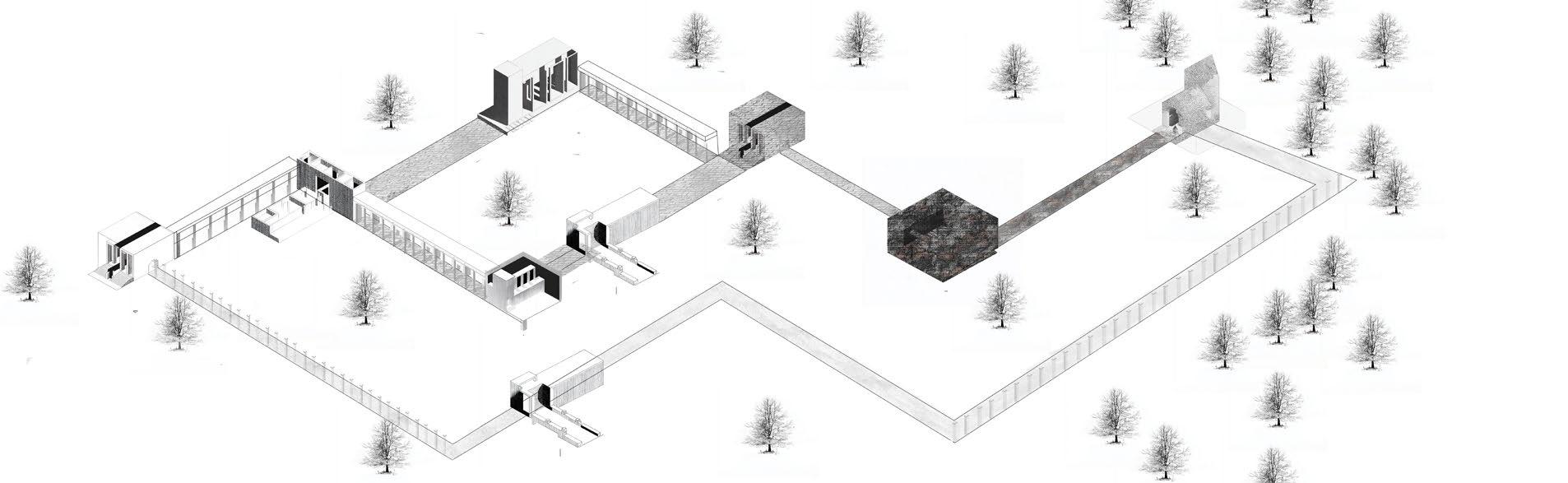
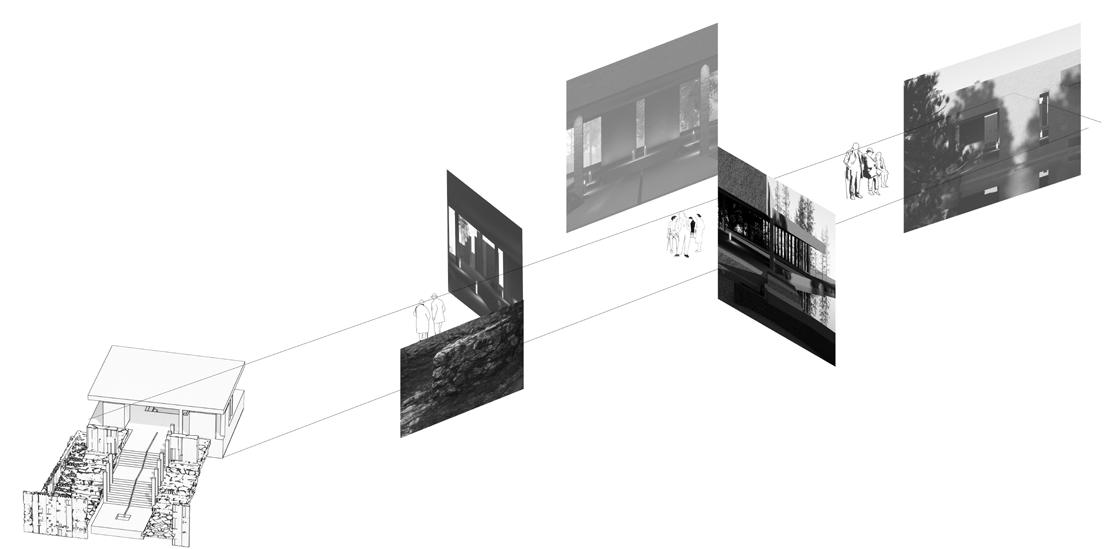
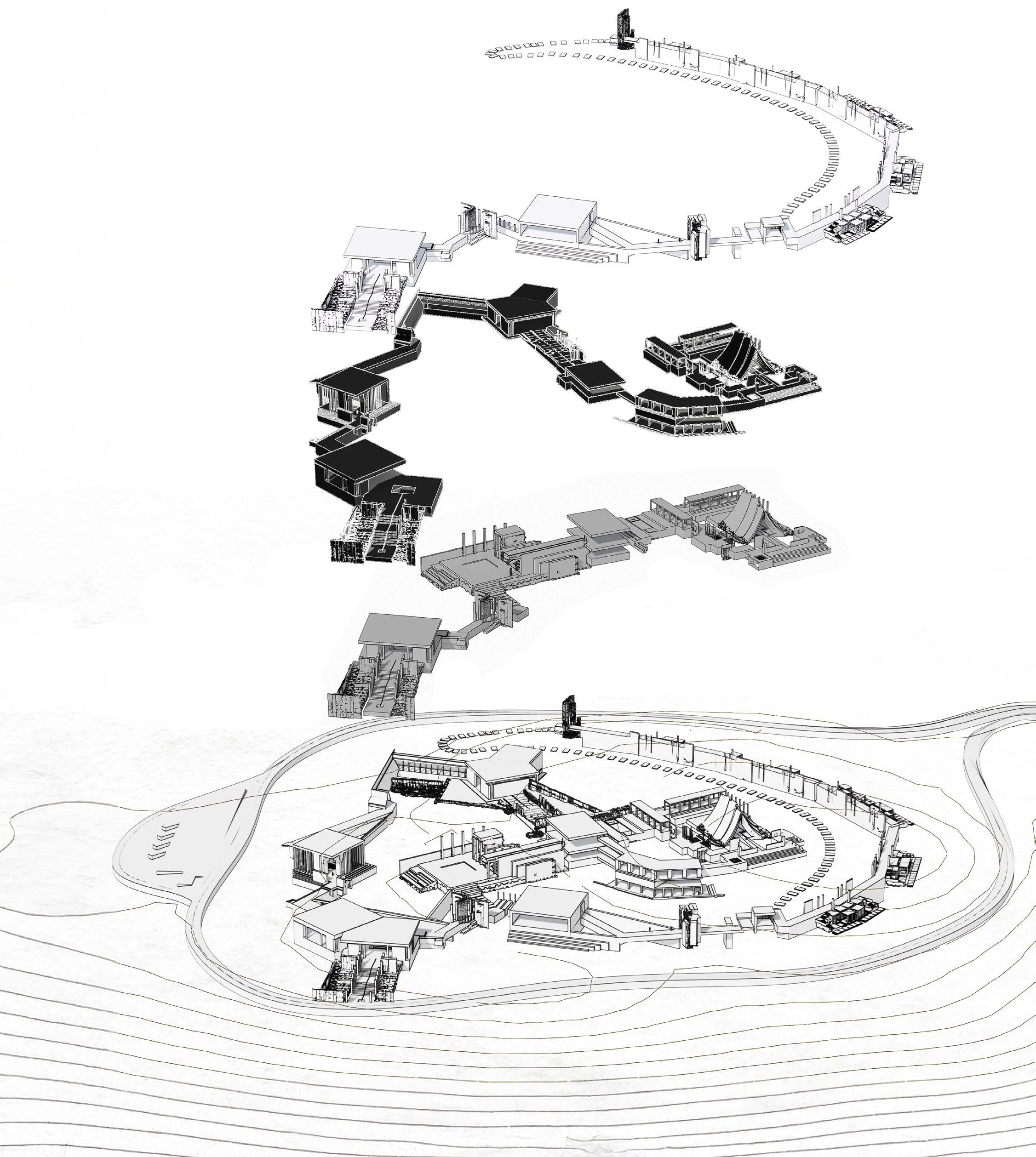
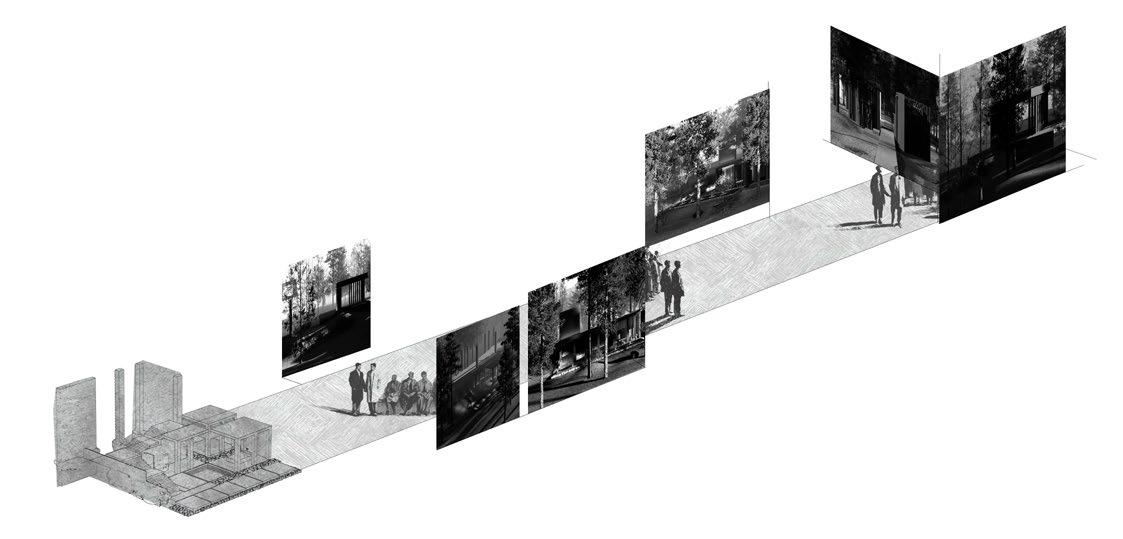
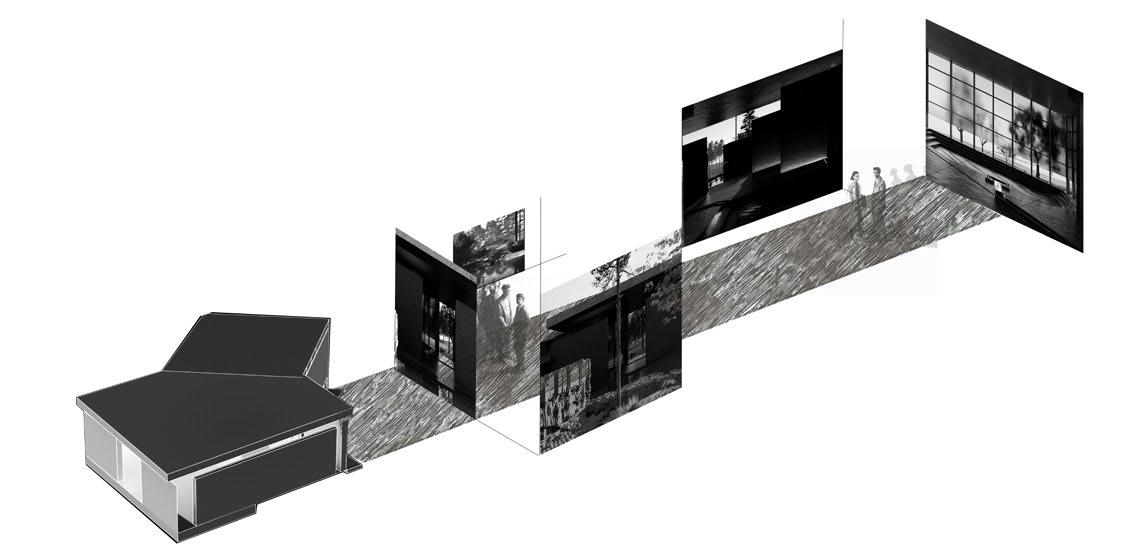
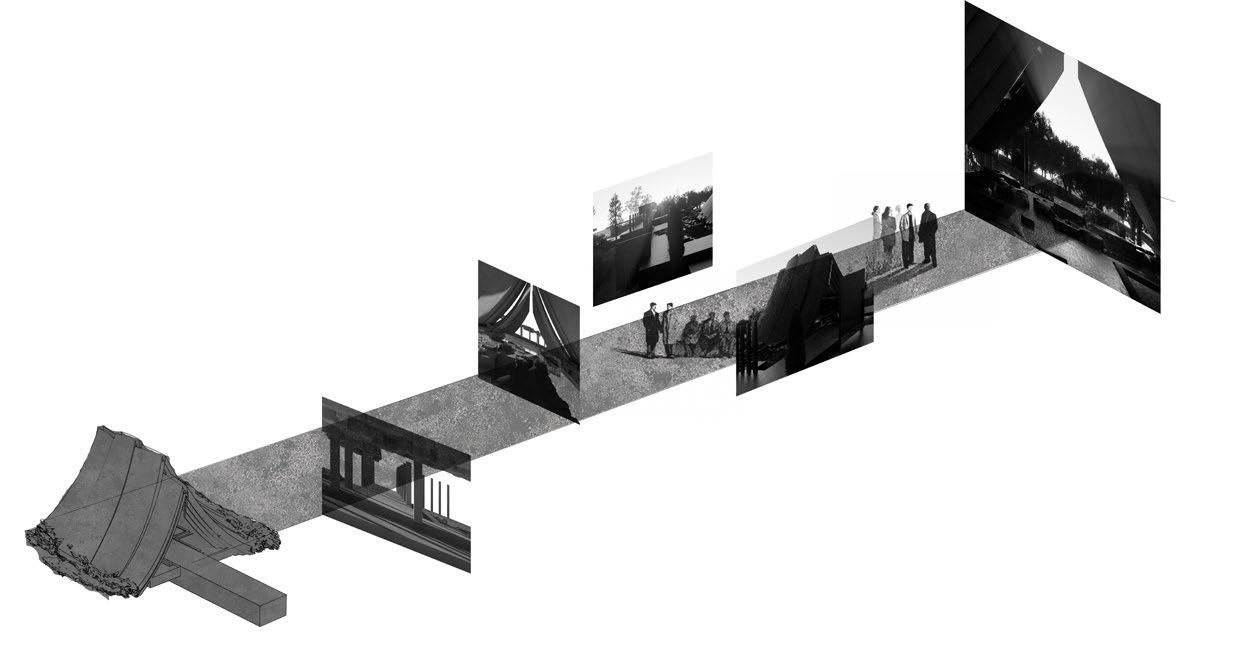
Circulation Systems and Spatial Sequences
This page outlines the three circulation systems across the site and shows how each route organizes interior movement and spatial experience within the buildings.
1.
The white route anchors the living, connecting everyday zones of arrival, support, and shared activity. It traces open, accessible spaces shaped by continuity and presence.
2.
The black route moves through spaces associated with the departed, following a ceremonial and inward-facing sequence. Its path is quiet, contained, and directed toward moments of closure.
3.
The grey route occupies the in-between, drifting through transitional zones where paths overlap. It offers ambiguity and pause, allowing movement without commitment to either side.
Three color-coded circulations articulate the spatial logic of the site: a black route for ceremonial passage, a white route for everyday movement, and a grey route for transitional or uncertain trajectories. Their coexistence produces layered sequences of experience across the architecture.
A cluster of small forest cabin arranged around gentle outdoor paths. These rooms offers a place to stay and a familiar everyday rythmn, where the patients can contemplate in soberness about their final decisions.
A pair of interlinked square rooms shaped with quiet, monastic clarity. The space offers a calm, meditative atmosphere—an interior of stillness meant to hold one’s final moments in peace.
A vaulted space shaped by rising ground-like forms, directing light through a central opening onto the
for a quiet, focused
Grey Zones Living Zones Departed zones
As the threshold to the living zones, the entrance sets a calm spatial tone, opening into places of arrival, pause, and shared presence.
A quiet threshold where one chooses either to continue toward the Final Chamber or return to the white route of the living.
An open-air central node that anchors the site, functioning as a shared gathering and circulation point—an outdoor lobby connecting all major routes.
casket
farewell.
Monumental Nexus
Farewell Ritual Space
Final Chamber
Dwelling Space
Room of Deliberation
Gate of Entrance
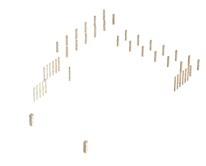
Constructing a Spatial Gramamar
Five Design Strategy That Organise the site and Form a Cohesive Architectural Narrative
Framed Symmetry Rythmic Colonade
Sloping Roof
Embedded Step
Edge Articulation
Togther, these gestures shape a quiet sense of order, guiding the eye through a sequence of calm rhythmns and subtle transitions. Their interplay creates a gentle fow across the site-balanced, deliberate, and attuned to a contemplative atmosphere.
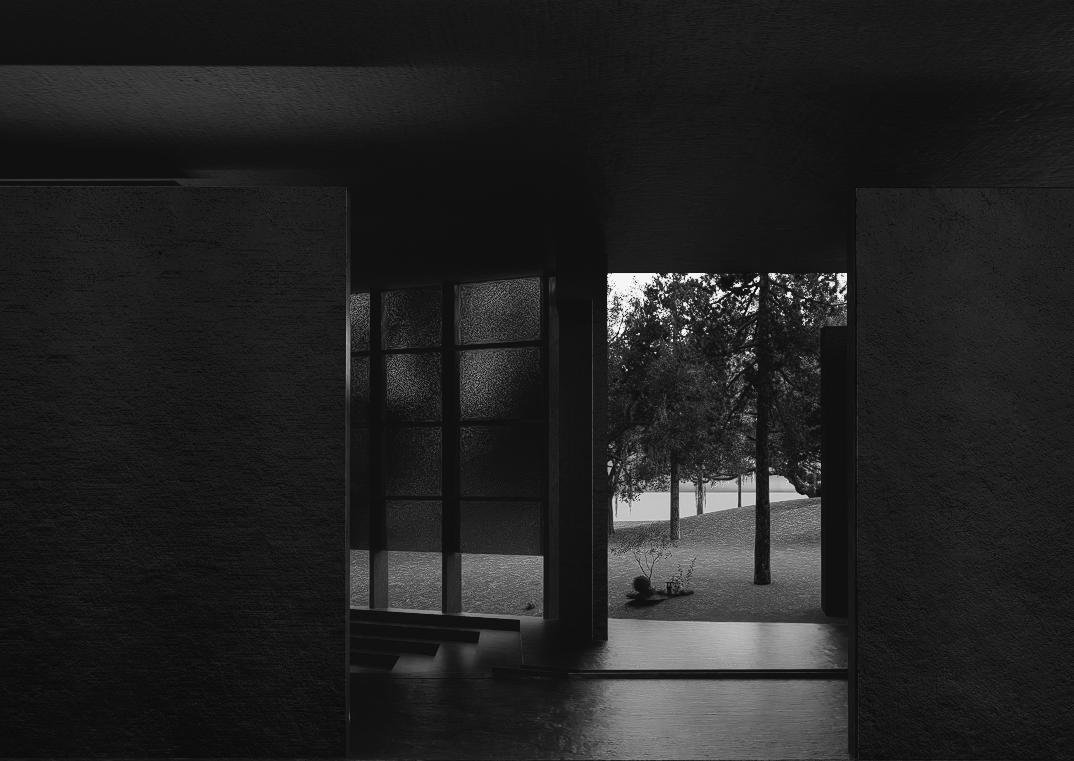
These moments reveal how the spatial gestures unfold within a landscape shaped by weight and stilness. Surfaces carry the depth of time,while the surrounding pines hold a quiet presence that sotens each threshold. Light becomes the guide -- entering as it would in a forest clearing, uncovering what is otherwise concealed and allowing forms, textures, and shadows to slowly emerge. Through this interplay, the site becomes a place where movement, atmosphere, and perception gather into a calm and contemplative whole.
Between
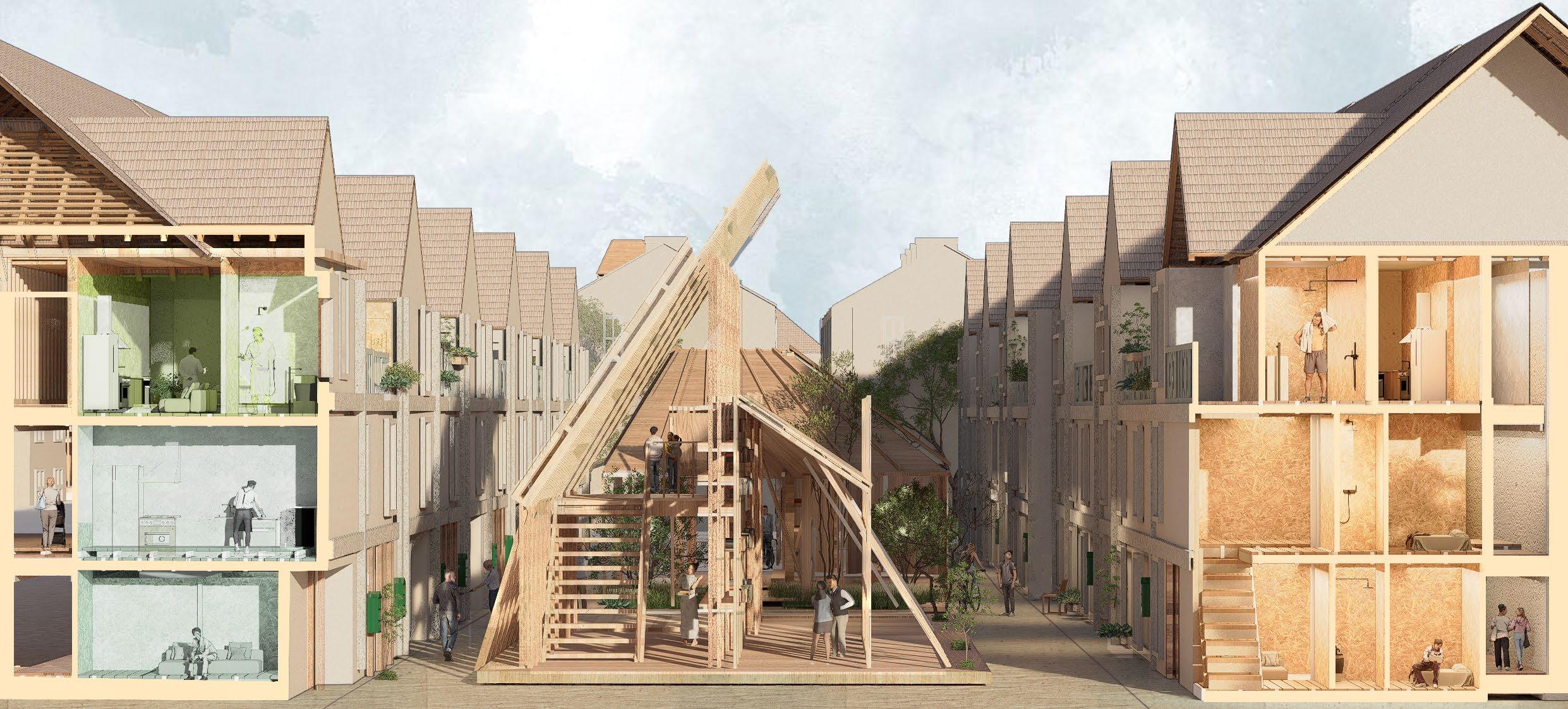
Alley and Dwelling
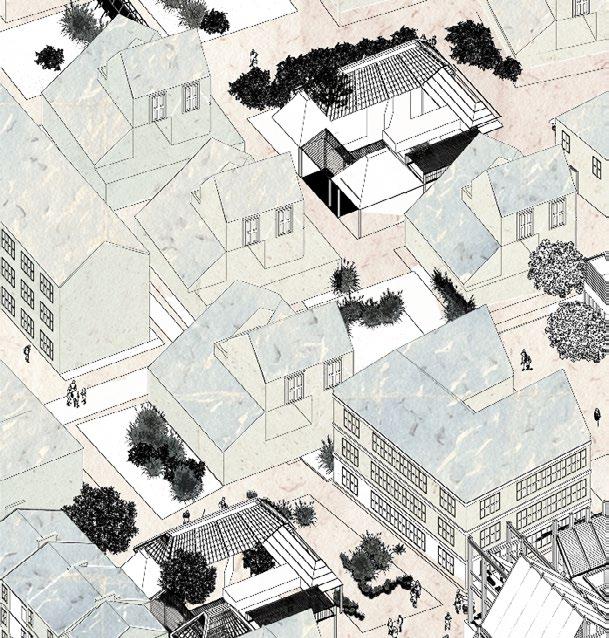
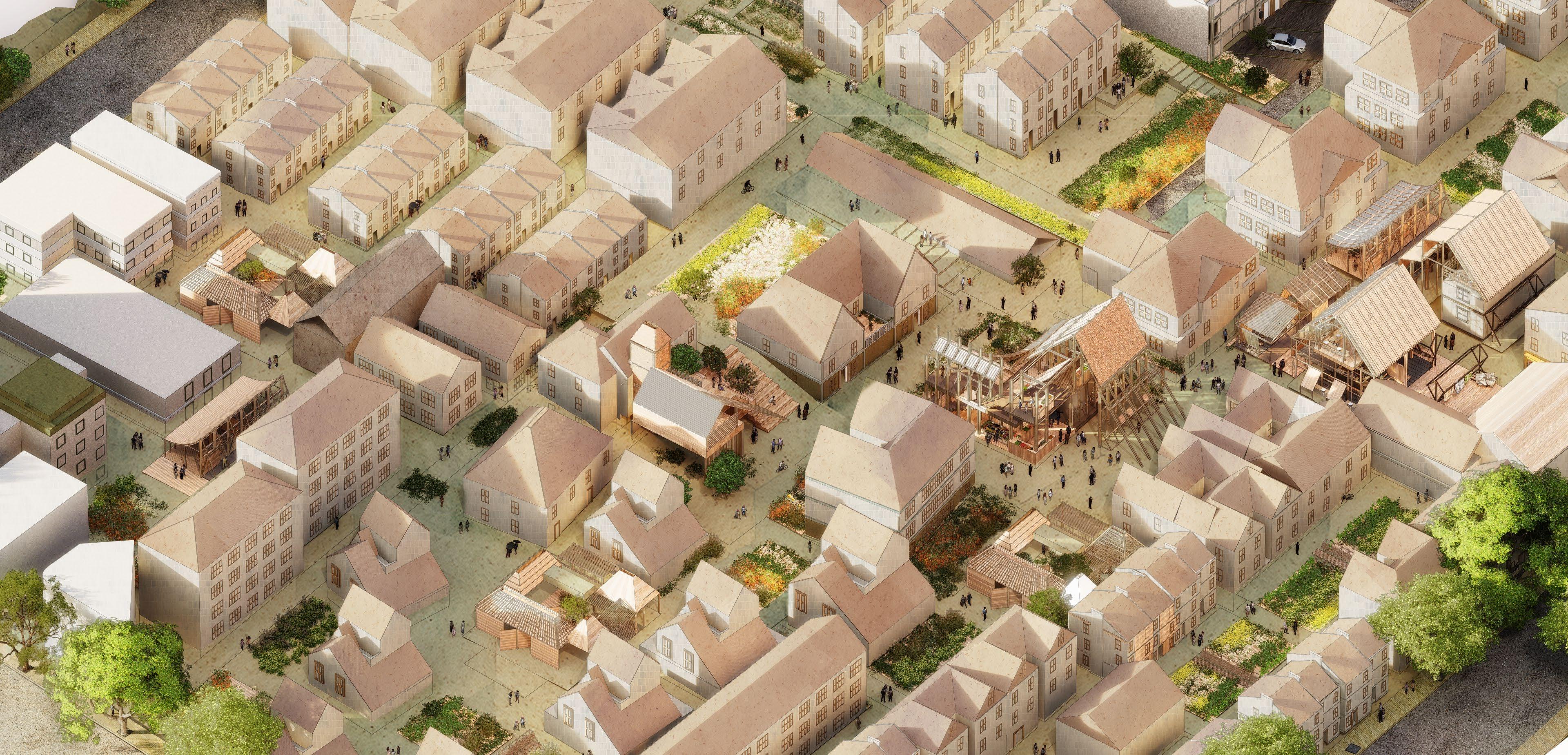
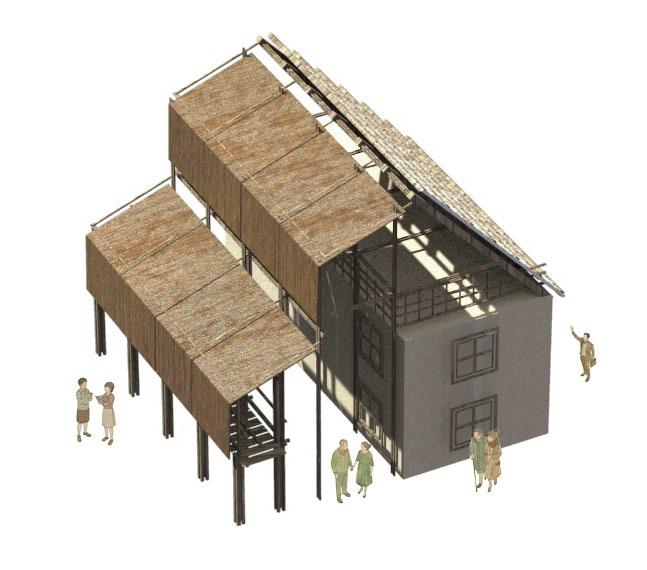
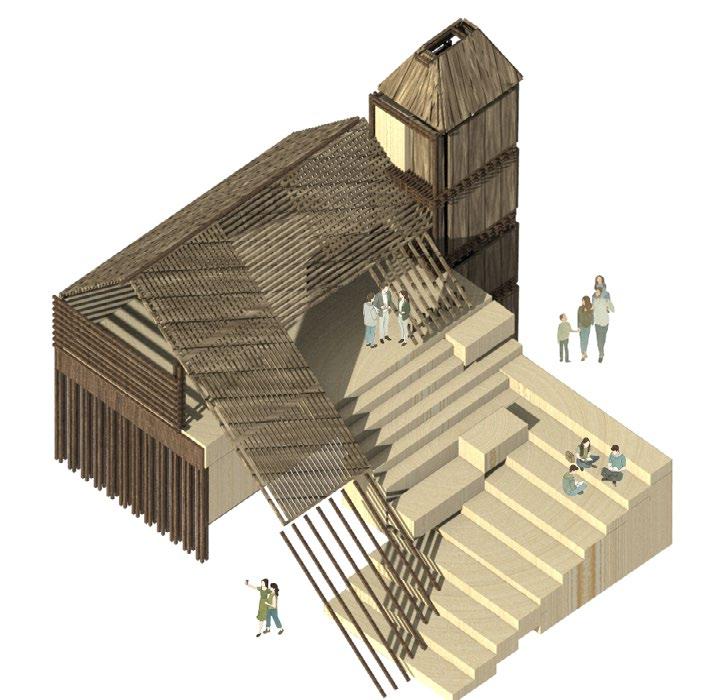
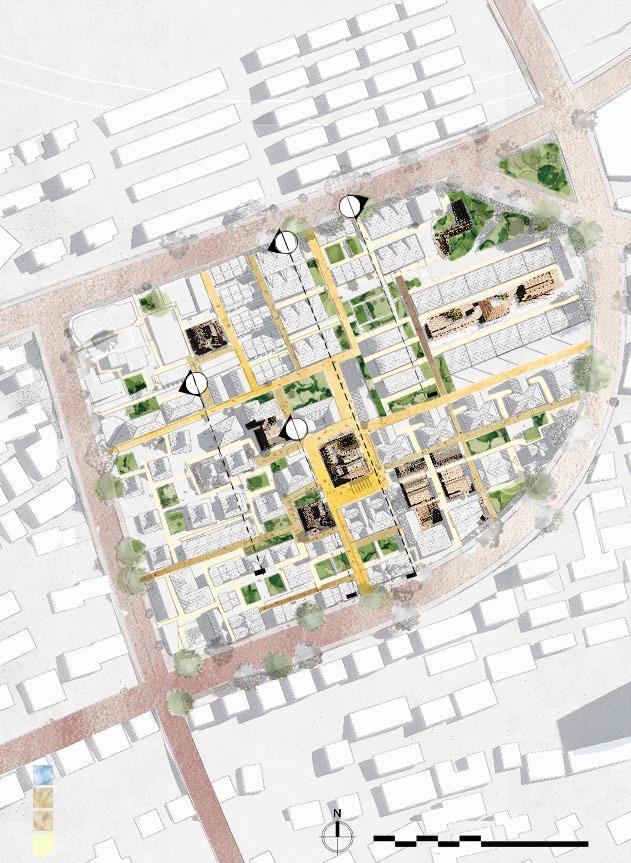
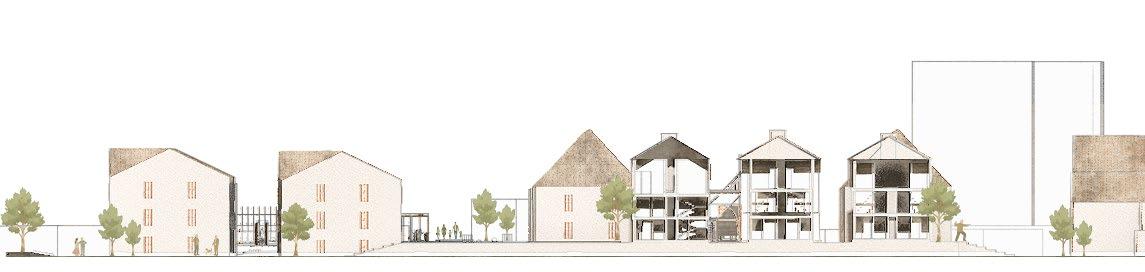
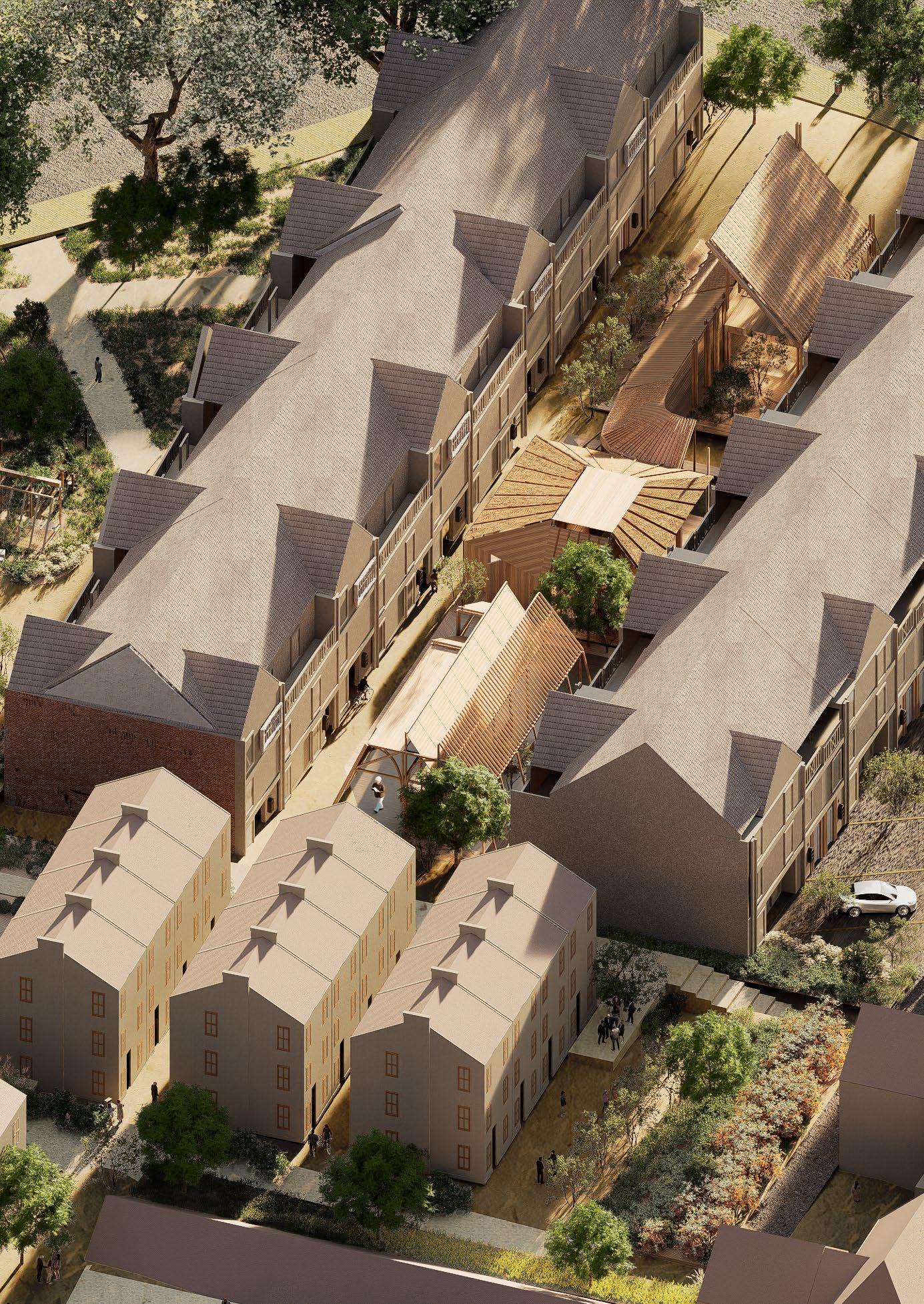
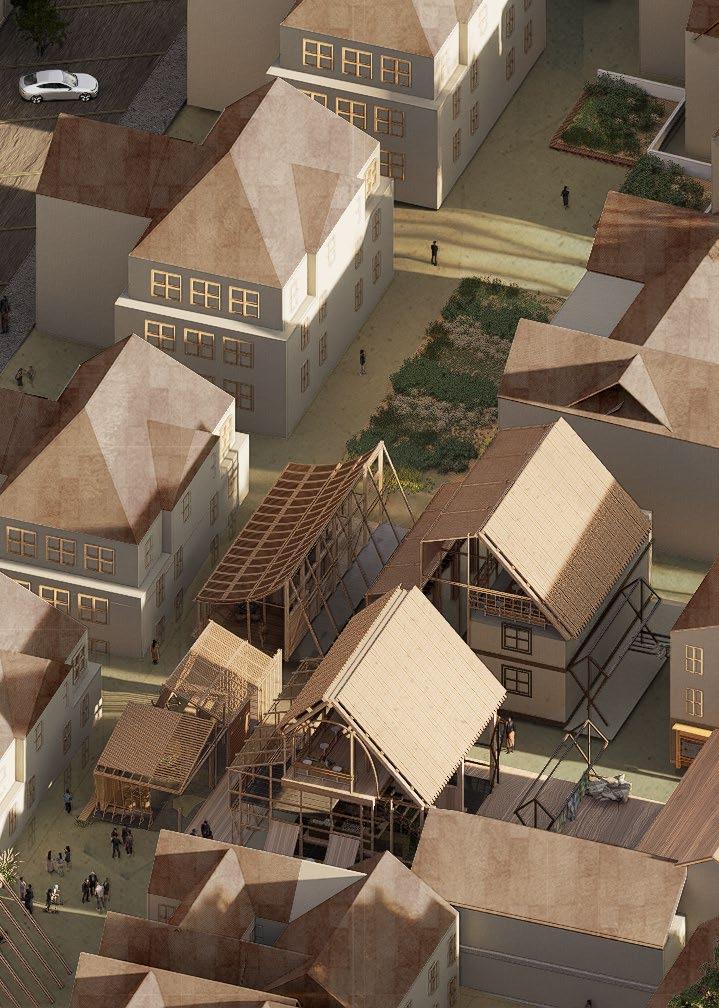
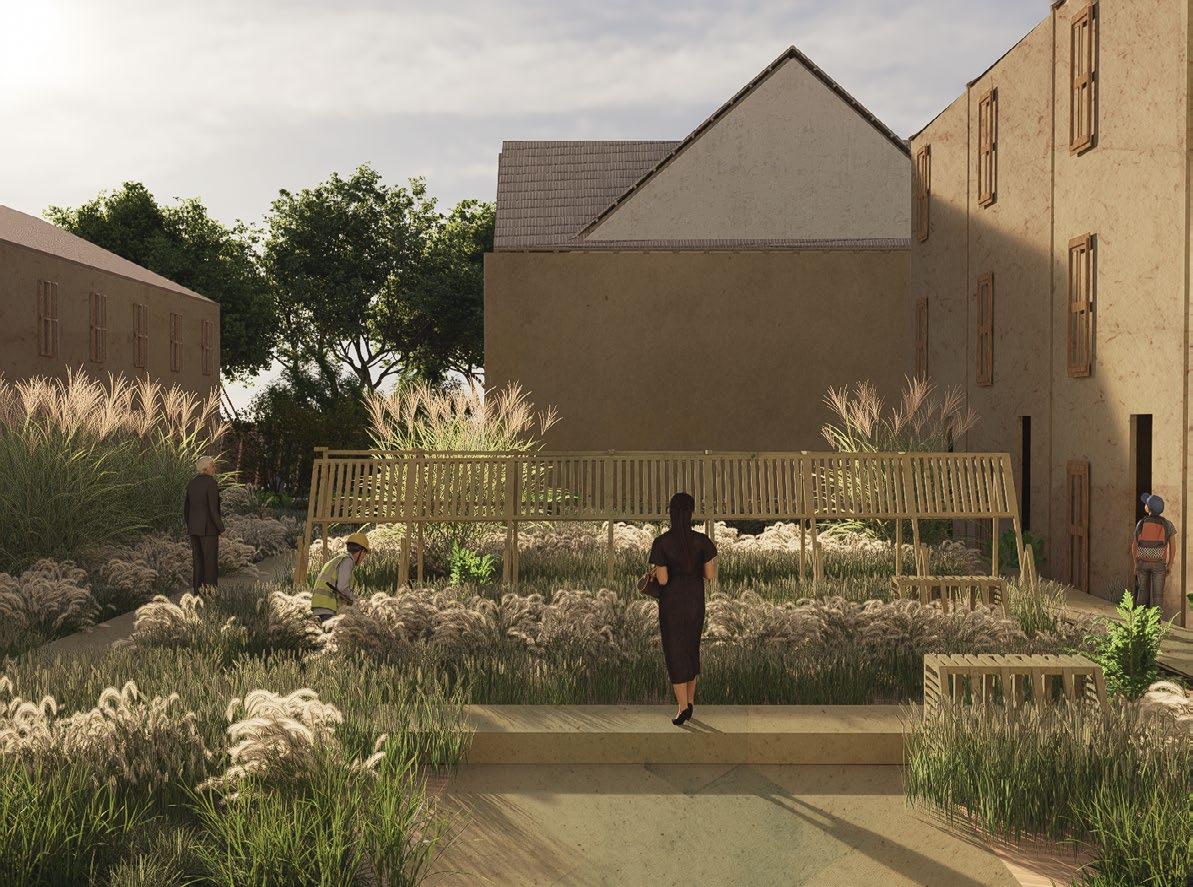
Between Alley and Dwelling is an architectural intervention located in a historical Lilong neighborhood near Huaihai Middle Road, situated in one of the most densely populated and digitally-driven sectors of central Shanghai. In an urban landscape increasingly dominated by high-rise towers and algorithmic efficiency, this project seeks to preserve and revitalize a village-like community that prioritizes human scale and social intimacy. By reimagining the traditional alleyway network, the design fosters a sense of neighborhood belonging that is often lost in modern commercial developments.
The strategy focuses on adapting traditional structures to meet the spatial demands of a shifting demographic, specifically embracing Shanghai’s inclusive culture by welcoming new migrant populations and young creatives alongside elderly residents. Through three key methodologies—reconfiguring interior floorplans for modern living, introducing community hubs as a spatial translation of Lilong culture, and expanding green public nodes—the project creates a porous urban fabric. This “urban village” serves as a sanctuary of slow-paced, collective living, ensuring that historical social memories are preserved while evolving into a vibrant, accessible home for the city’s newest inhabitants.
Existing Conditions
Existing Conditions
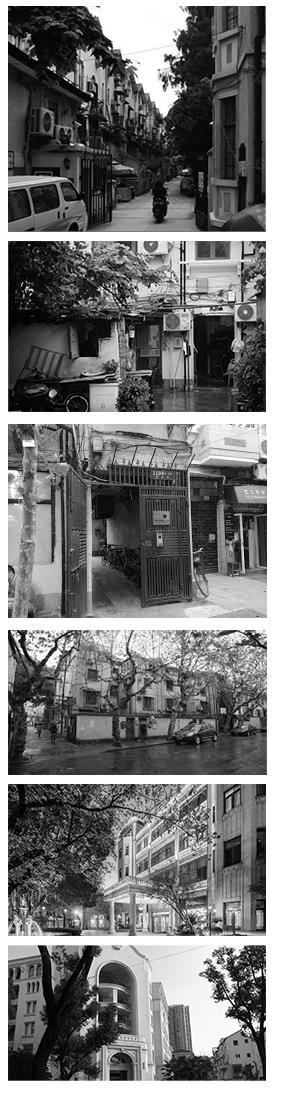
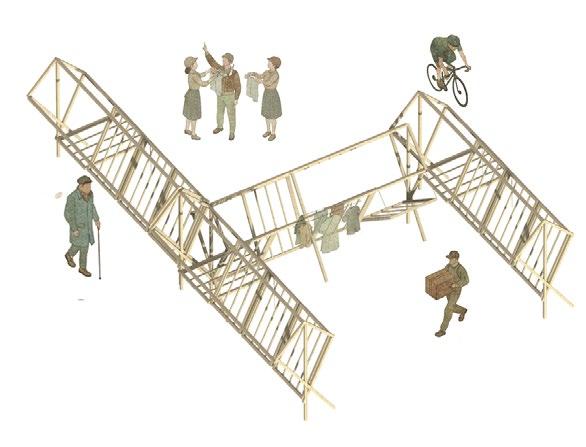
Lilong are dense, lane-based residential environments where everyday life is organised through narrow circulation spaces. Over time, incremental modifications and layered uses have eroded the original hierarchy between public, semi-public, and domestic realms. Informal extensions, private storage, commercial spillover, and daily utilities increasingly occupy circulation paths, forcing them to accommodate both movement and excessive social activities. As a result, routes become congested and illegible, accessibility deteriorates, and the quality of shared space declines. Under conditions of high residential density and unclear property boundaries, the lilong shifts from an efficient and inclusive spatial system into an overloaded and ambiguous urban condition.
and Residential Complex
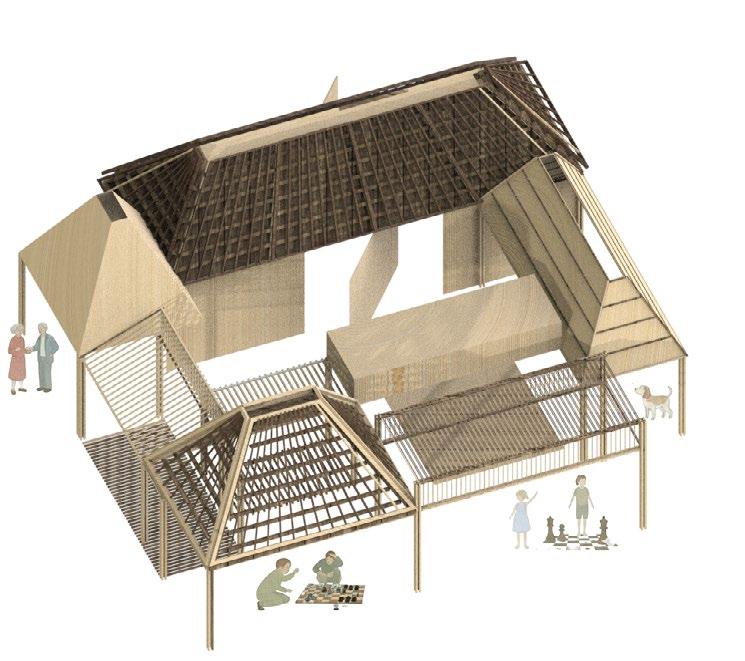
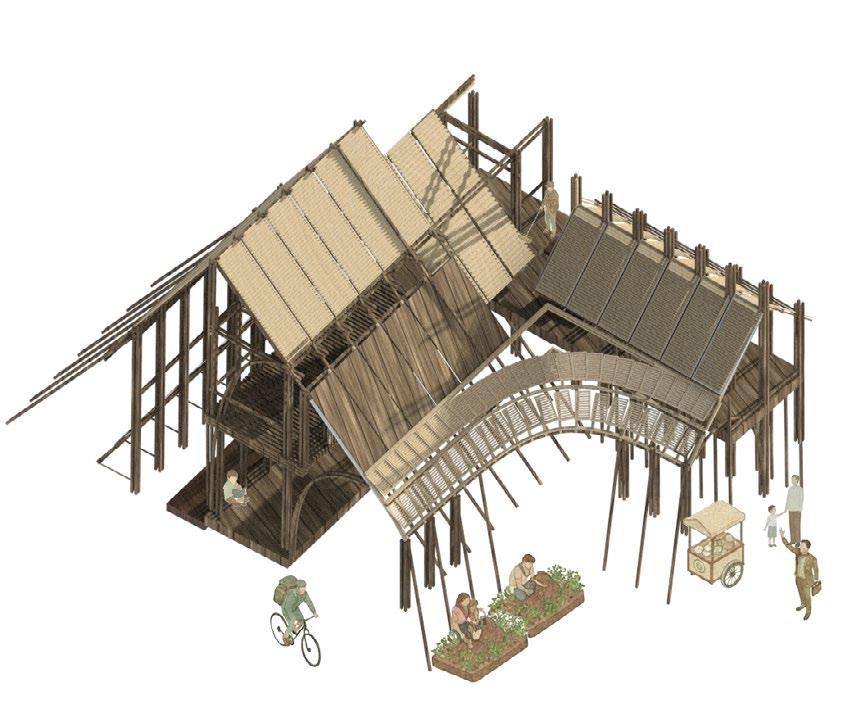
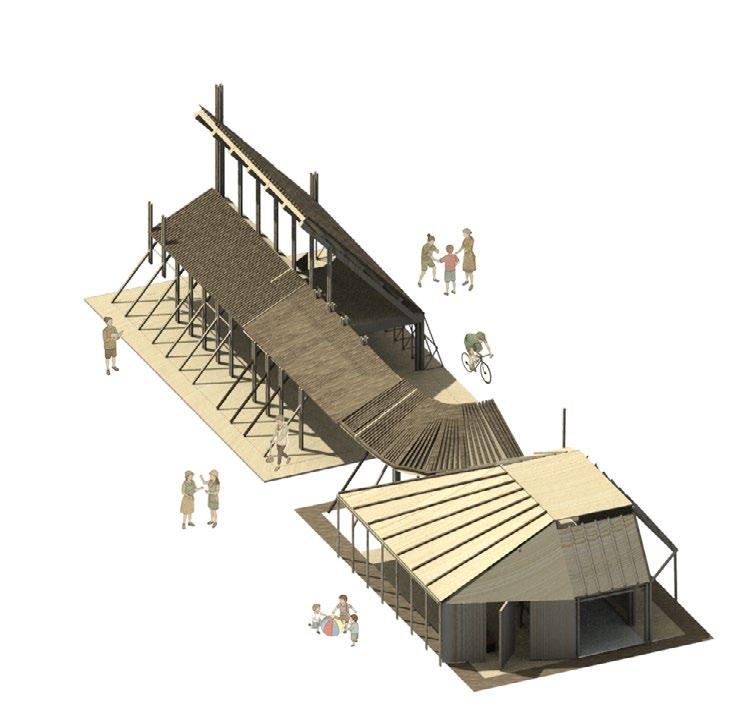
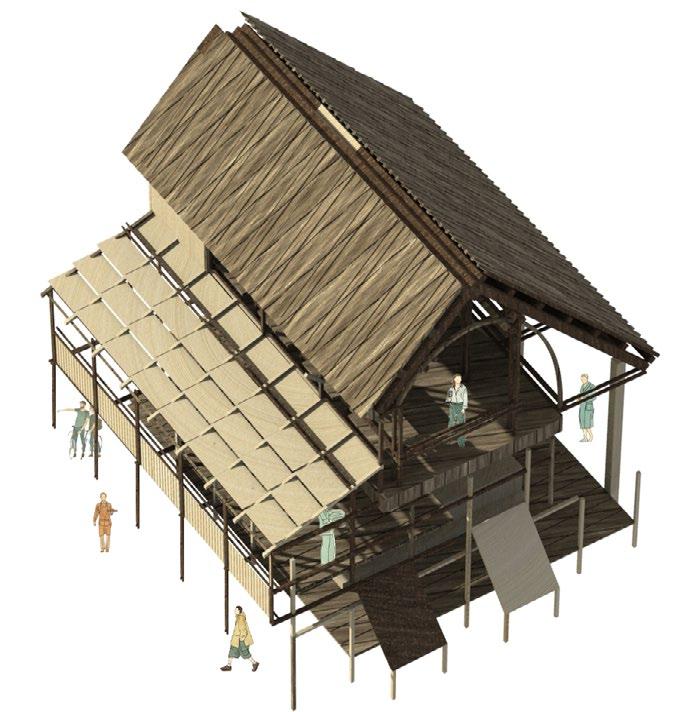
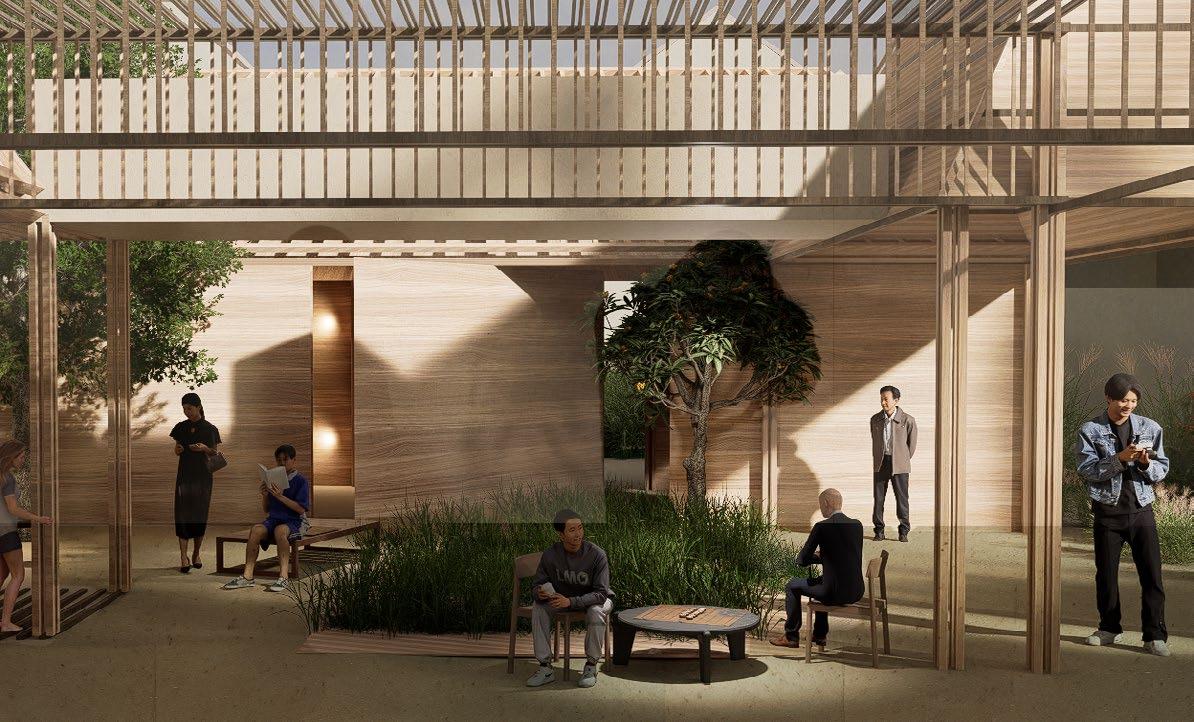
Nodes of Shared Domesticity
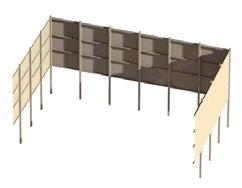
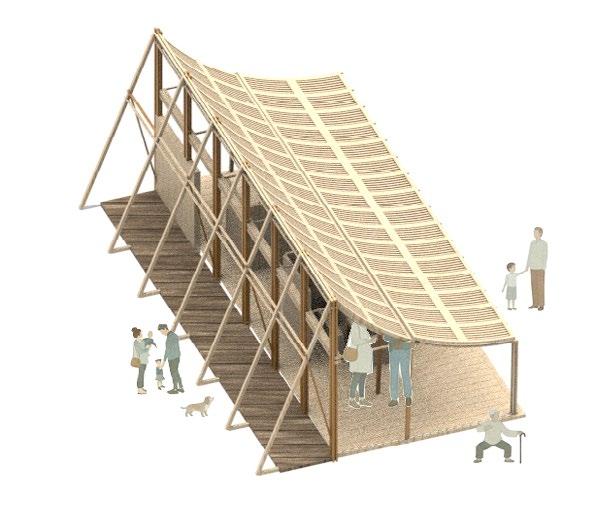
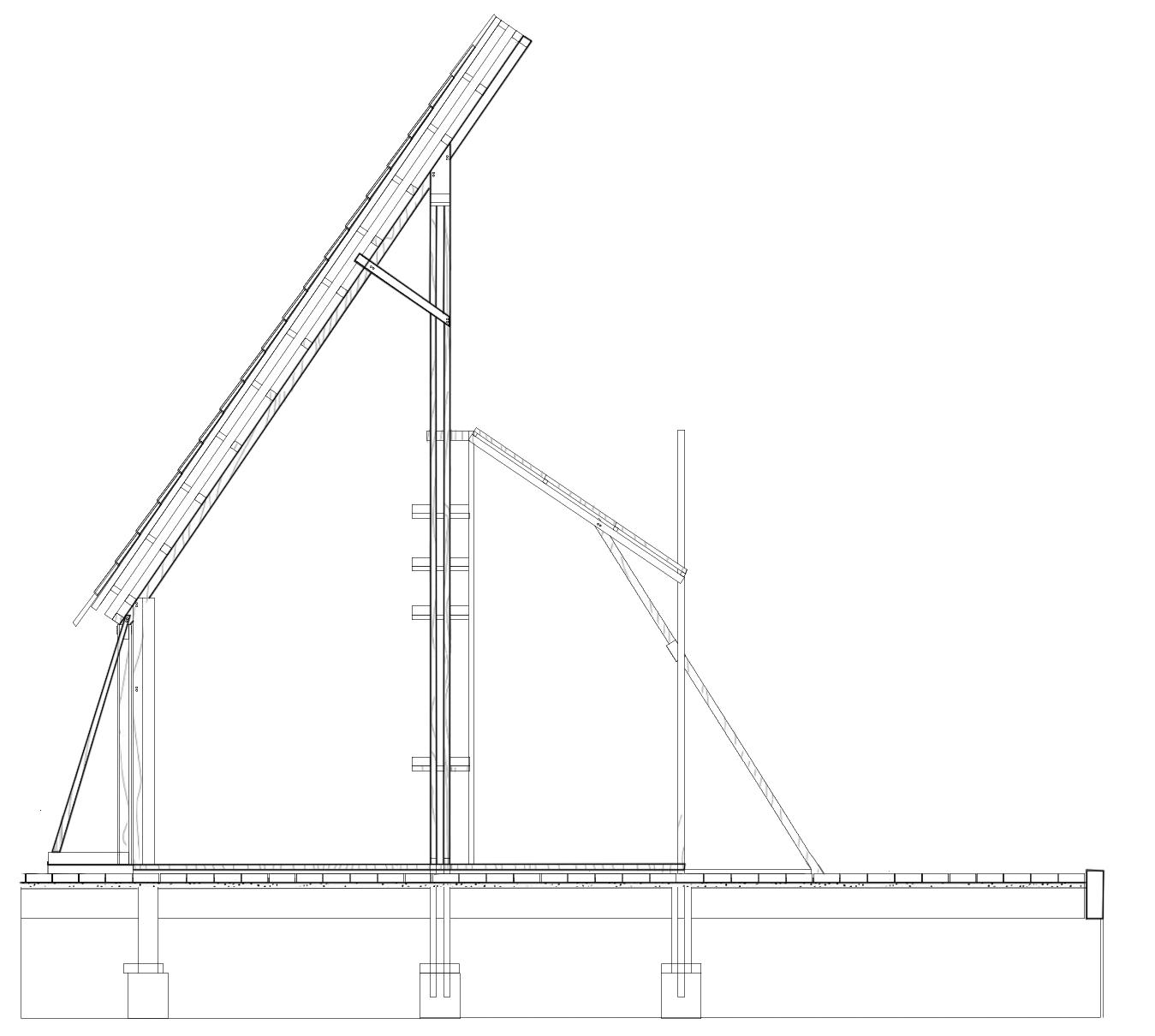
A collection of 12 prototypical interventions, translating traditional domestic behaviors into adaptive spatial modules.
Majeong Room 1 Majeong Room 1
Newsstand
hub and Residential Complex
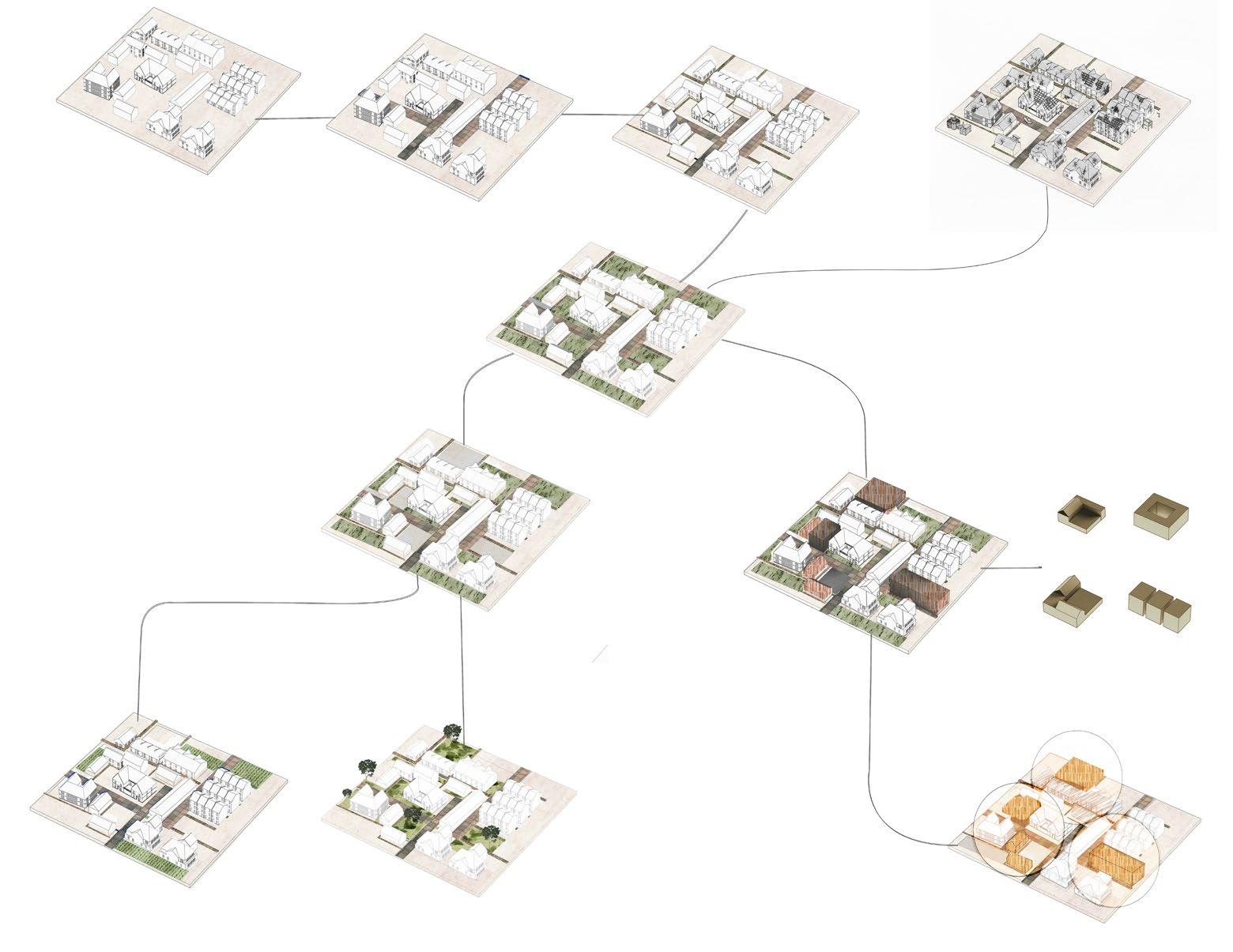
Spatial Reconfiguration of Lilong Housing
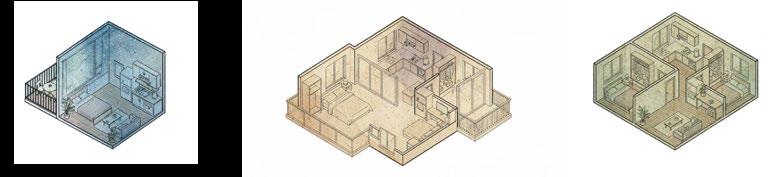
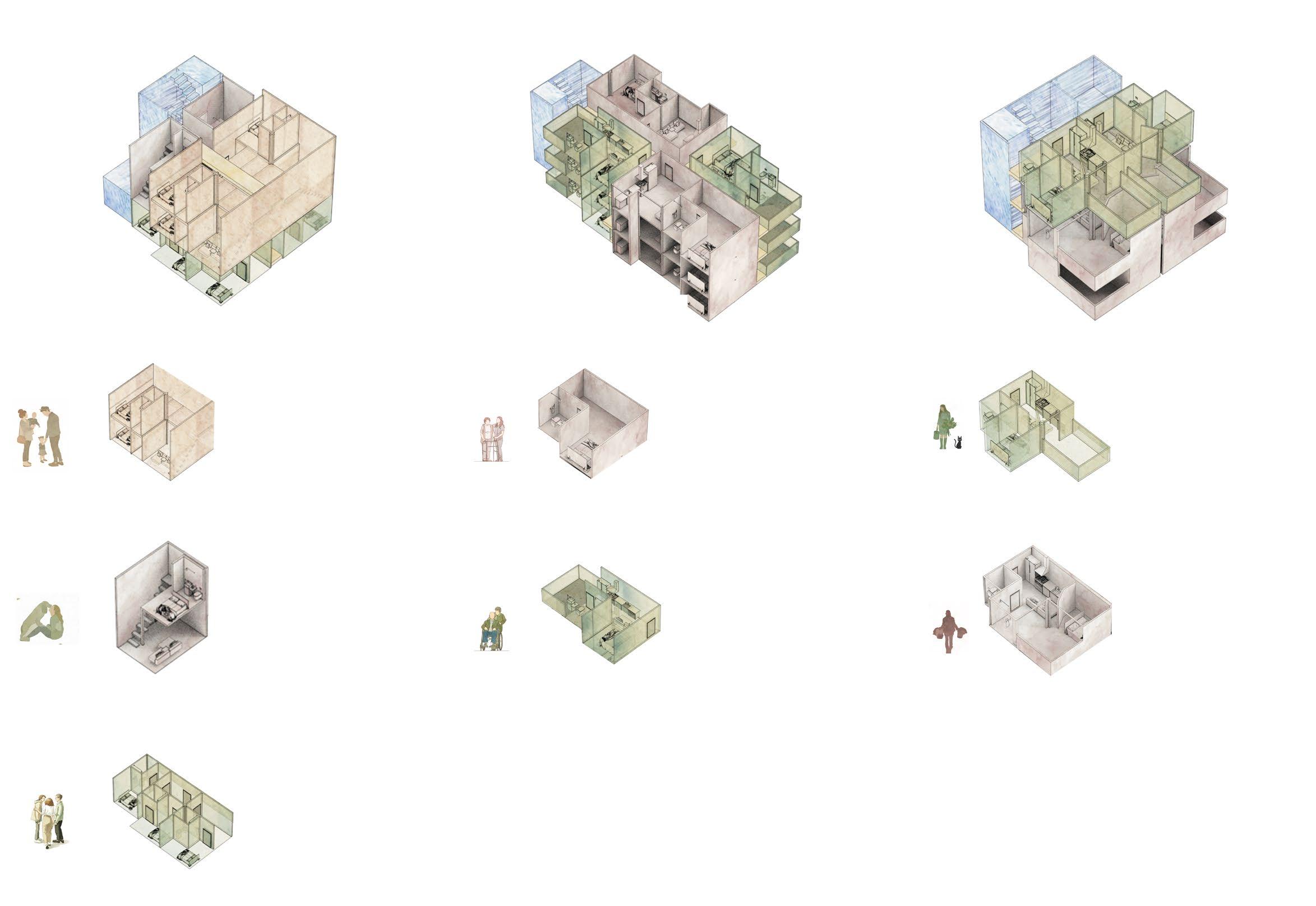
Different buildings serve different ways of fragmentation to adapt to three demographics
Spatial Coexistence: Mediating Diverse Demographics
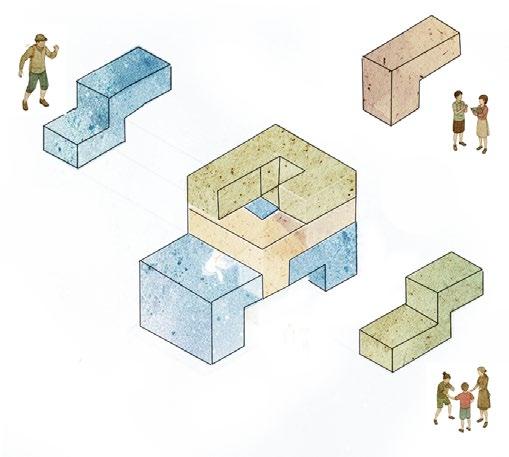
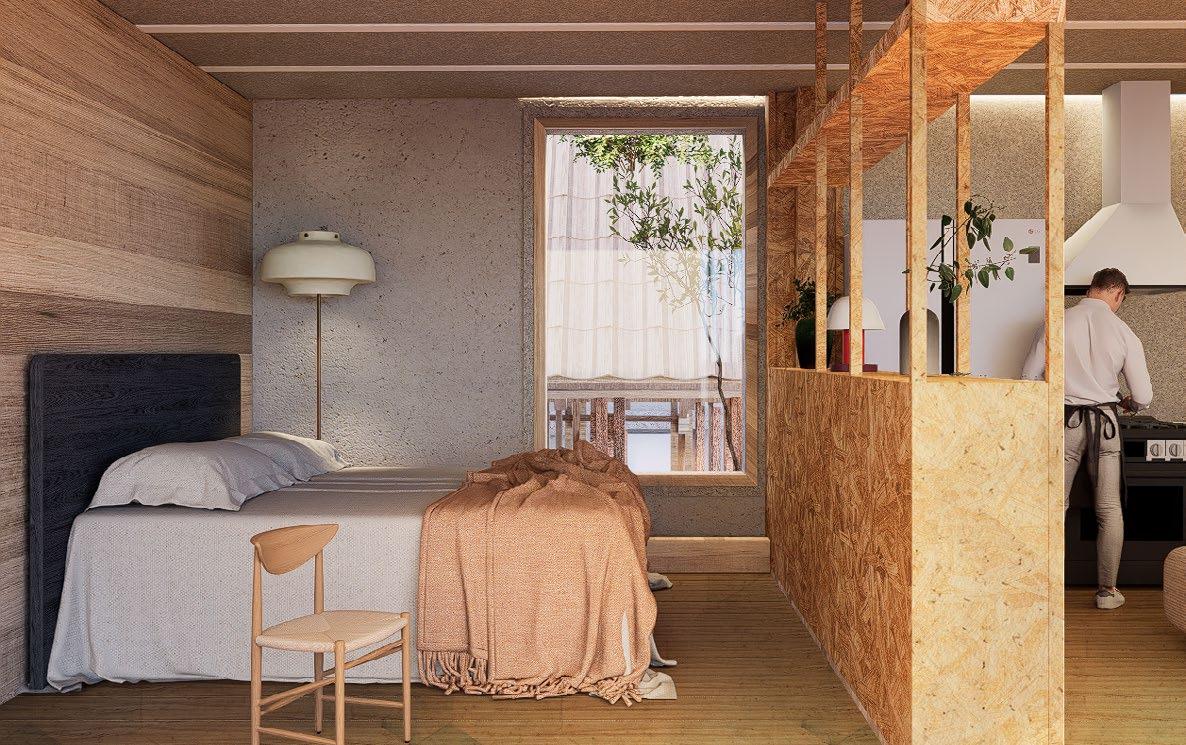
This reconfiguration strategy addresses the social complexity of the Lilong by mediating between three distinct demographics: rooted elder residents, young creative freelancers, and professional curators. By analyzing the unique domestic rituals of each group, the interior configuration translates specific needs—accessibility for the elderly, live-work flexibility for artists, and social-hosting interfaces for professionals—into tailored spatial typologies. This modular approach optimizes micro-spatial efficiency and ensures individual privacy through strategic thresholds, transforming fragmented aging fabric into a harmonious landscape of collective synergy and private autonomy.
Community Library
Community Market
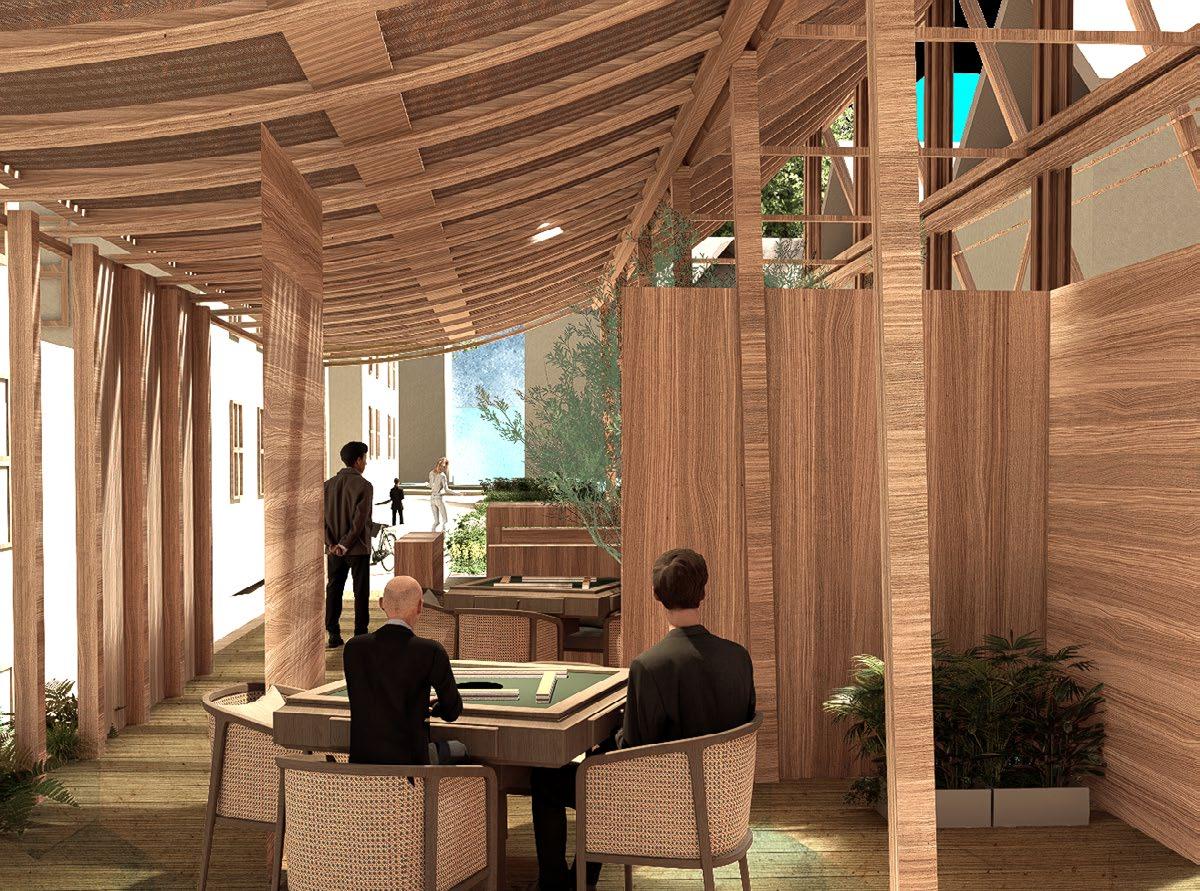
Mahjong Room & Noodle Shop
Young Creatives Apartment
Residents Apartments
Market Gardening Trellis A shared stage for daily trade and seasonal celebrations A quiet retreat for reading woven into the urban fabric The flavor of local life: A social hub connecting community memories
Residential Apartment
Chess Courtyard
Vegetable Garden
Majeong Room
Yuqiao Tech Park
Location: Pudong, Shanghai, China
Client: Shanghai Lujiazui Co., Ltd
Time: 2021
Title: Project Intern
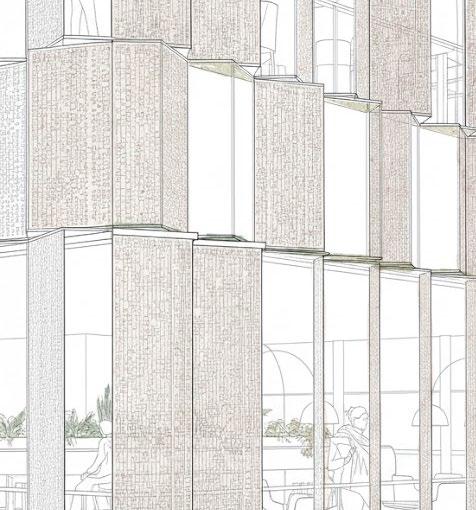
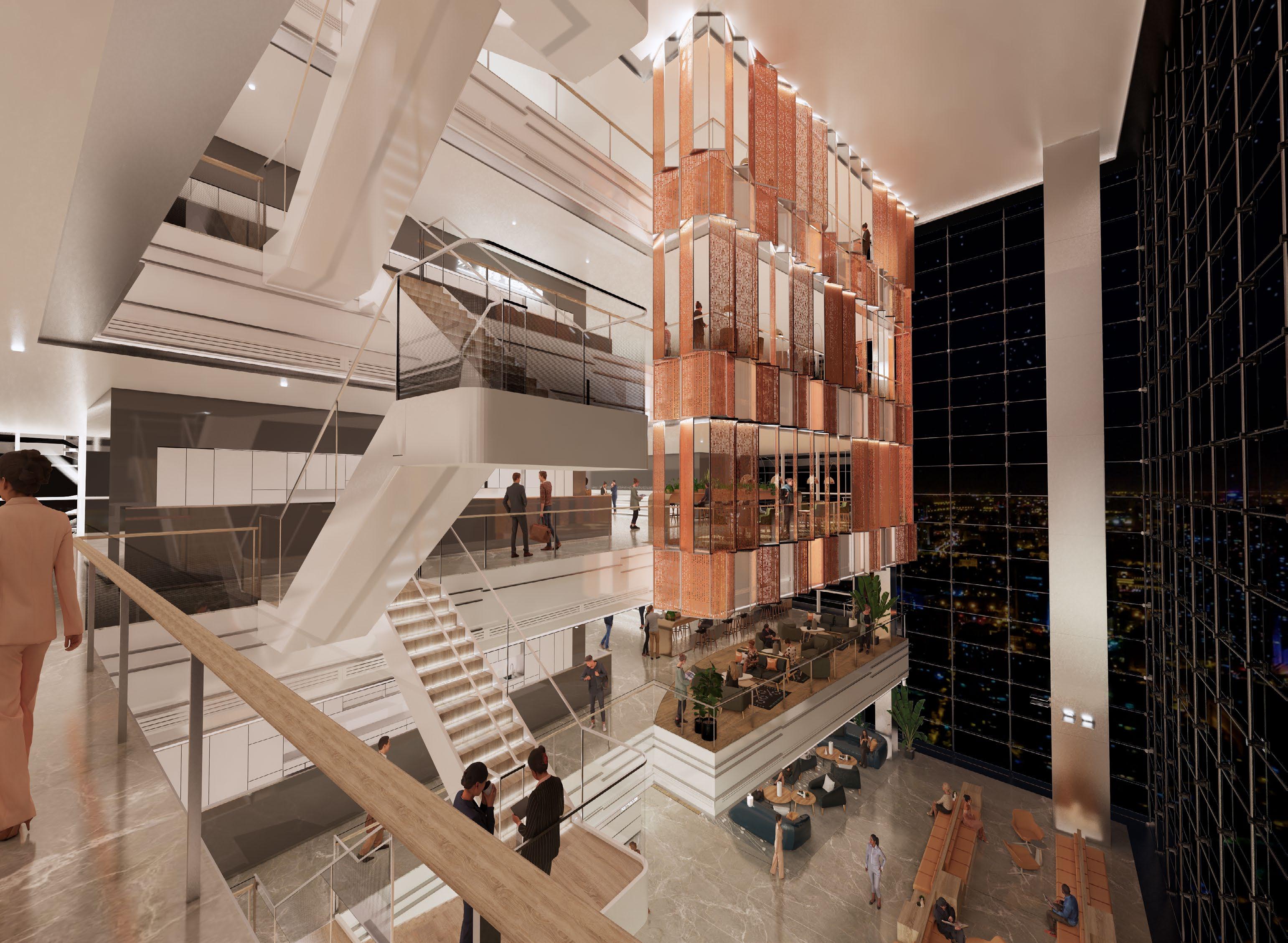
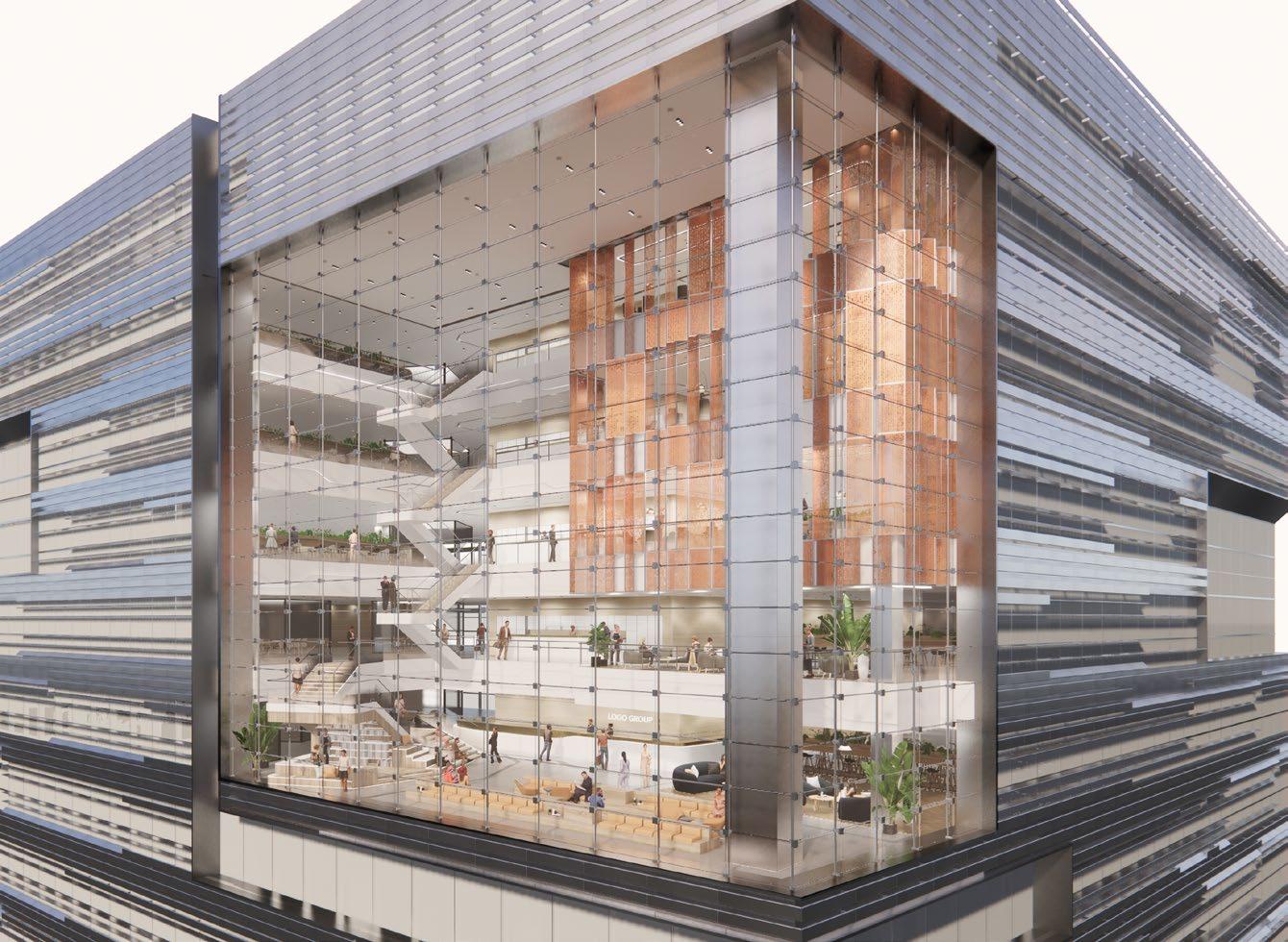
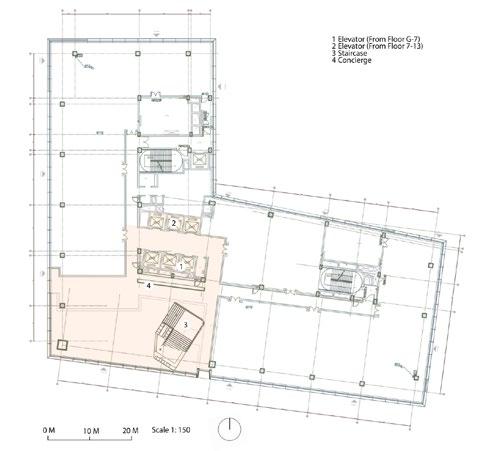
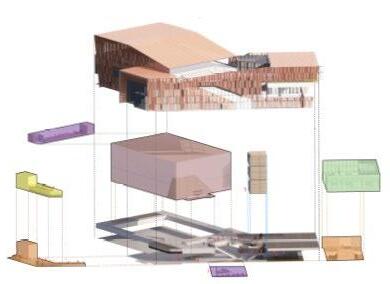
Yuqiao Tech Park is an urban infill site positioned at the intersection of high-intensity circulation and everyday neighbourhood use. Surrounded by dense building fabric and fast-moving vehicular edges, the plot operates as a threshold between the city’s infrastructural scale and the pedestrian scale of streets, courtyards, and daily routines. Its value lies in connectivity: multiple approach routes converge here, creating clear desire lines and opportunities for a public-facing ground plane. The site therefore calls for a building that is both porous and legible—able to absorb movement, negotiate noise and exposure, and construct a sheltered interior climate while maintaining visual permeability to the city.
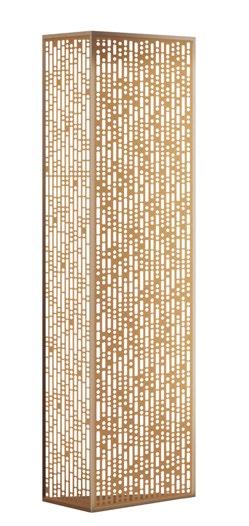
My primary responsibility focused on the parametric refinement and physical implementation of the louvre system. I meticulously adjusted the rotation angles, spacing, and color gradients of the panels to balance visual porosity with optimal solar shading. By simulating three distinct perforation patterns and louvre orientations (0°, 45°, 90)°, I helped ensure indoor privacy while maintaining high transparency at eye level. Furthermore, I followed the project through to the construction coordination stage, assisting in the selection of material textures and overseeing the on-site installation logic to ensure the intricate "digital code" aesthetic was translated accurately from drawing to reality.
Combination of Panels
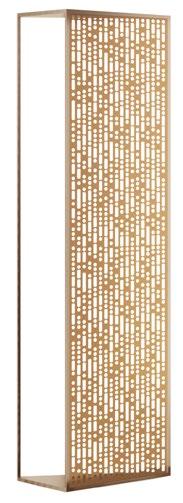
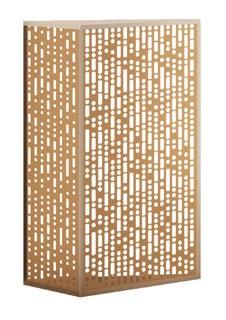
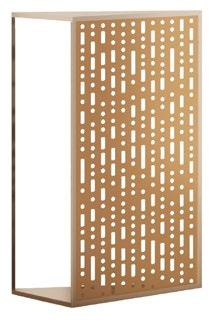
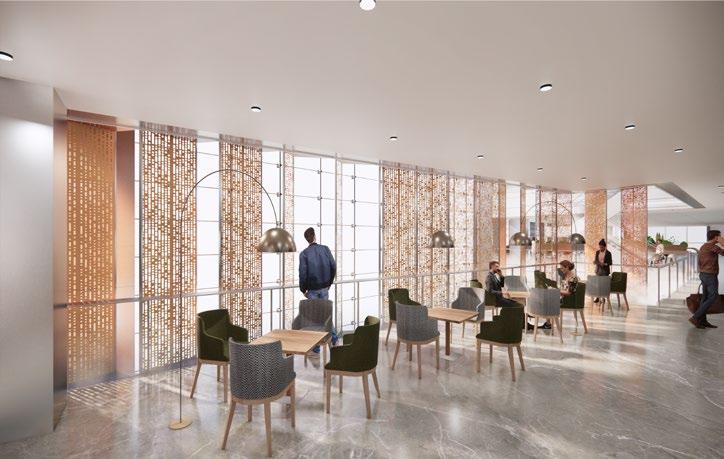
Morse-coded perforated panels redefine boundaries through fluid light and shadow. Calibrated placement maximizes daylight while mitigating solar gain to prevent overheating.
Perforated Pattern On Aluminium Panels
We angled the panels at lower levels to create enhanced transparency and a welcoming atmosphere, while higher levels had greater coverage to prevent overheating and discreetly conceal mechanical equipment.
Short Panels
Long Panels
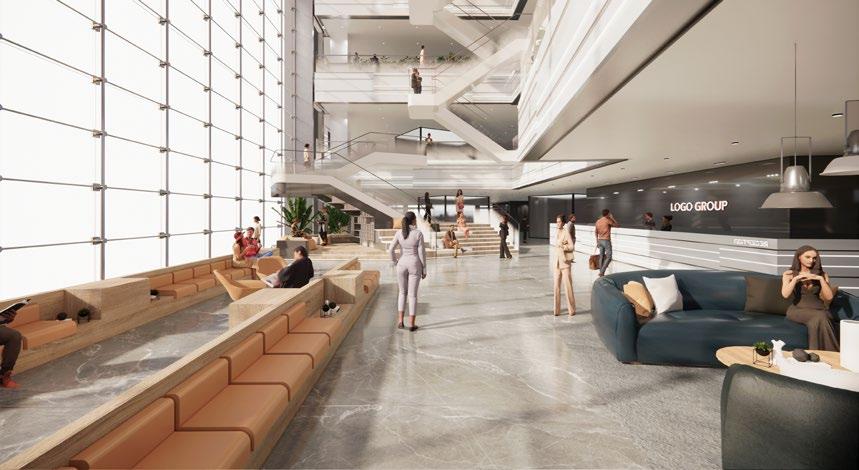
Interior view of sky lobby at night
Ysabel
Location: Pristina, Kosovo
Client: Private Time: 2024
Title: Interior Designer
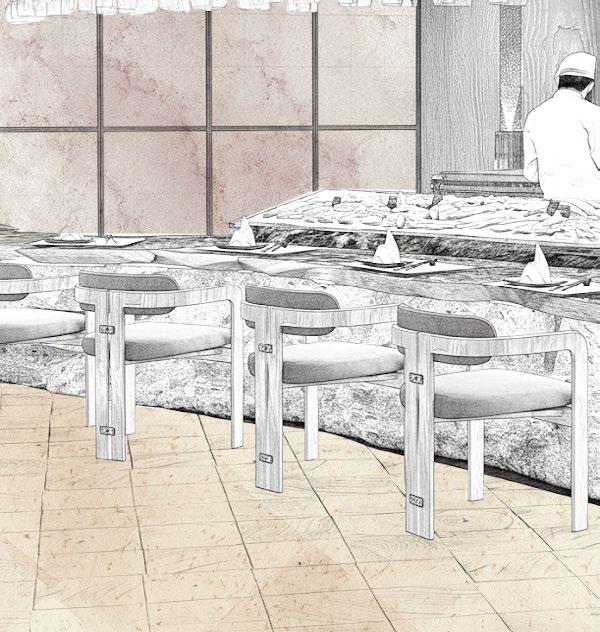
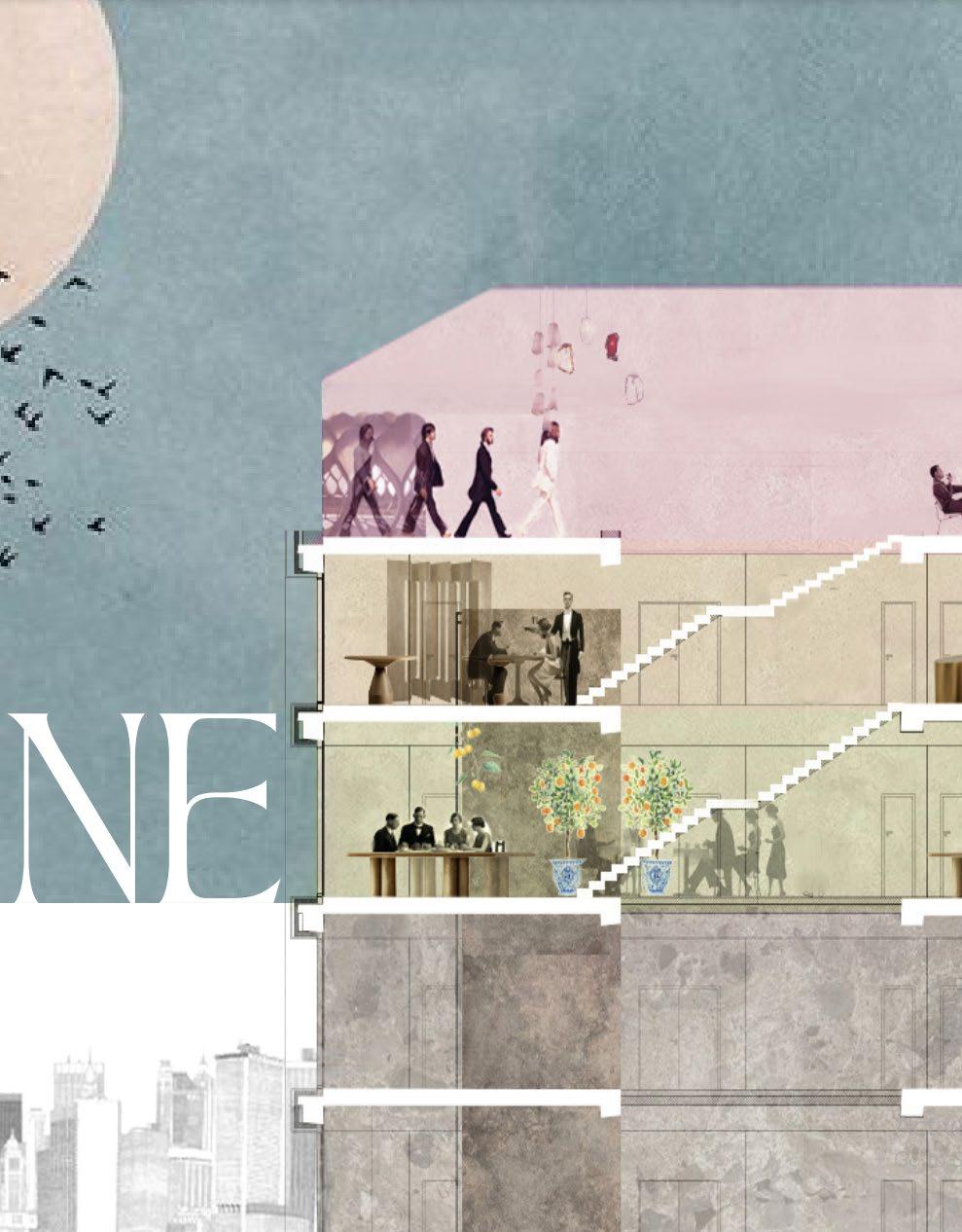
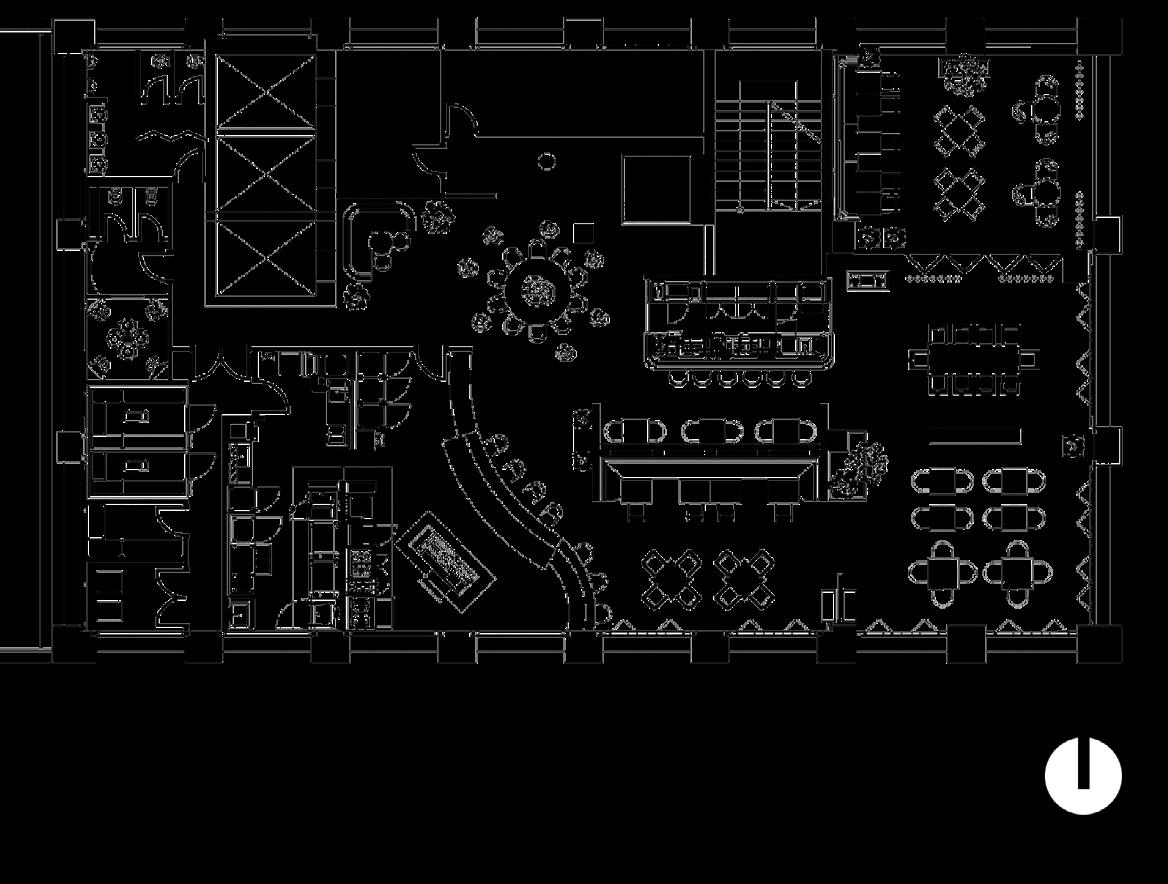
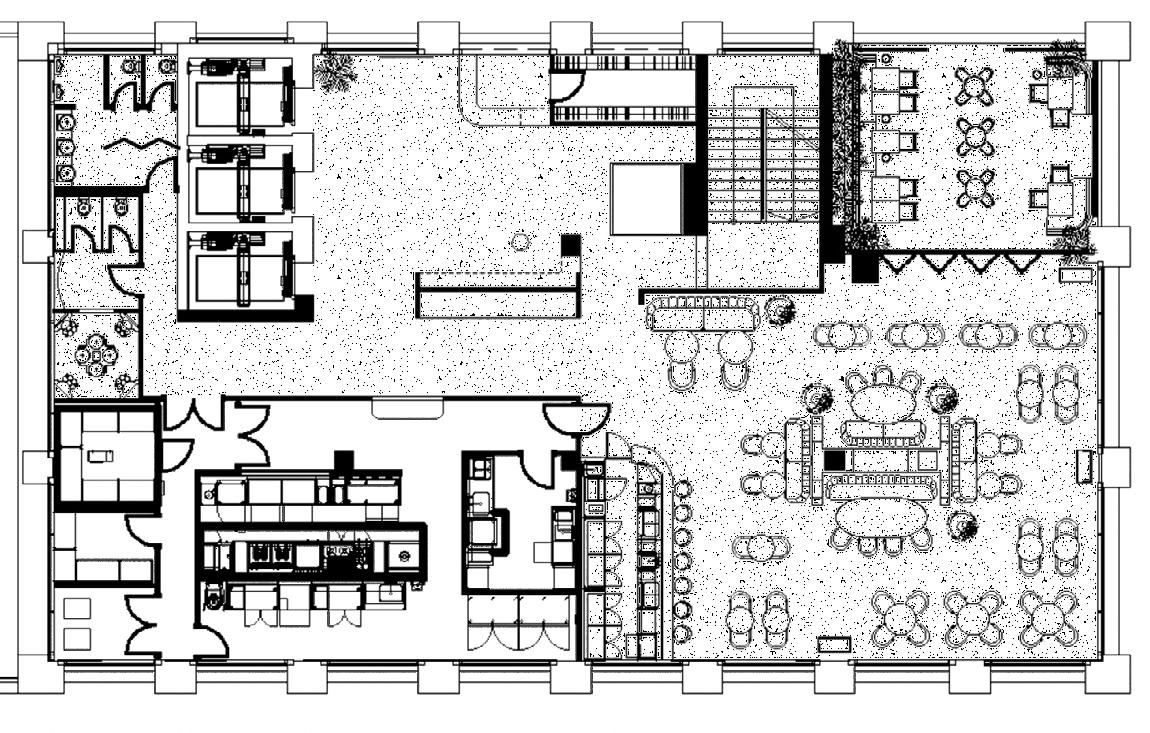
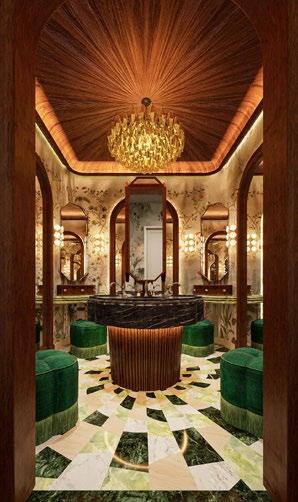
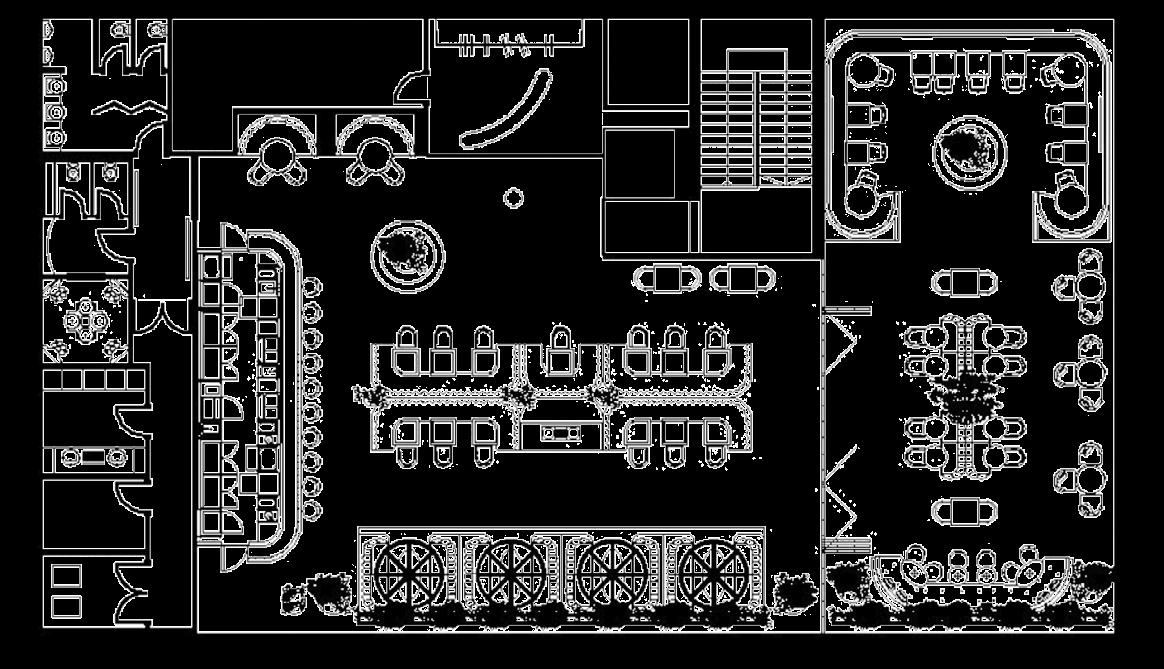
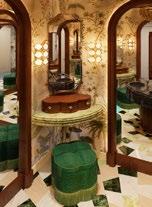
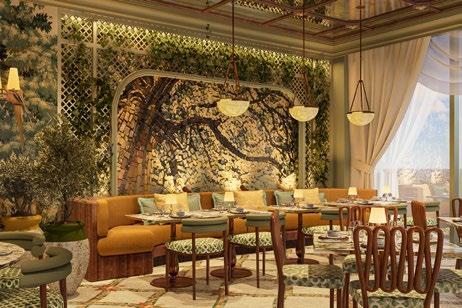
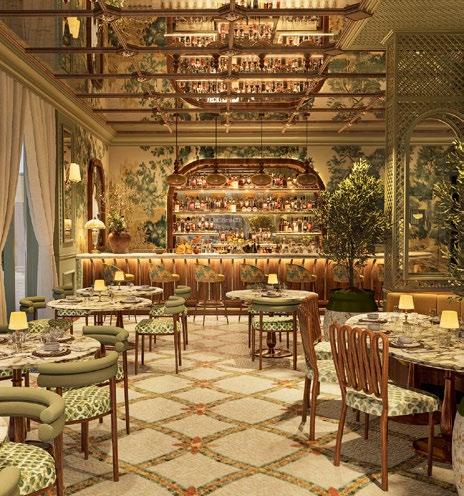
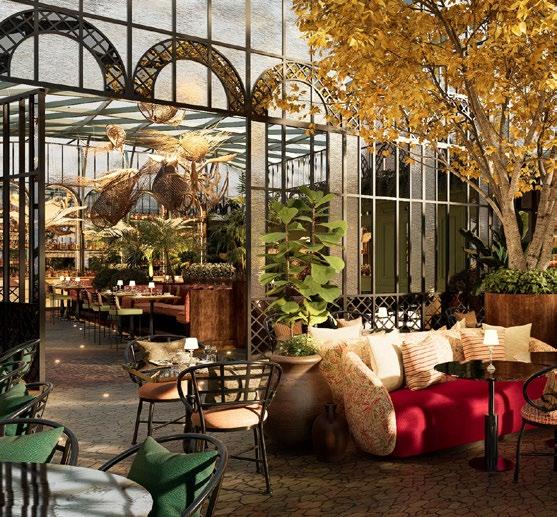
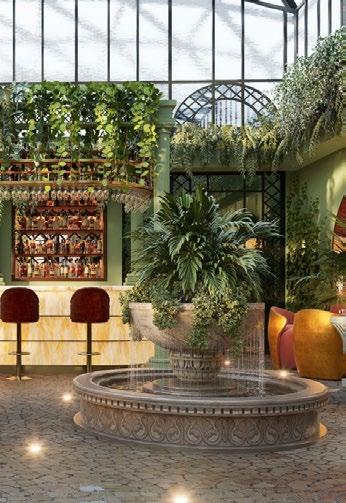
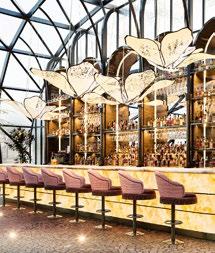
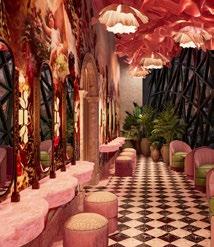
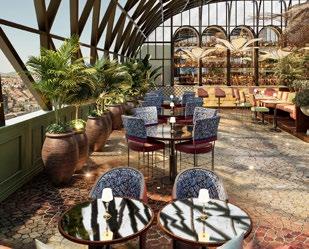
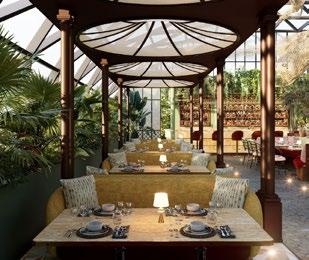
This work project developed a high-end members’ club in Pristina as a day-to-night destination, structured around a “service by hour” concept. The design shifts in mood across the day—from a sunlit, garden-like rooftop experience to a more vibrant evening atmosphere— using material richness, planting, and layered spatial moments to create distinct yet connected dining scenes.
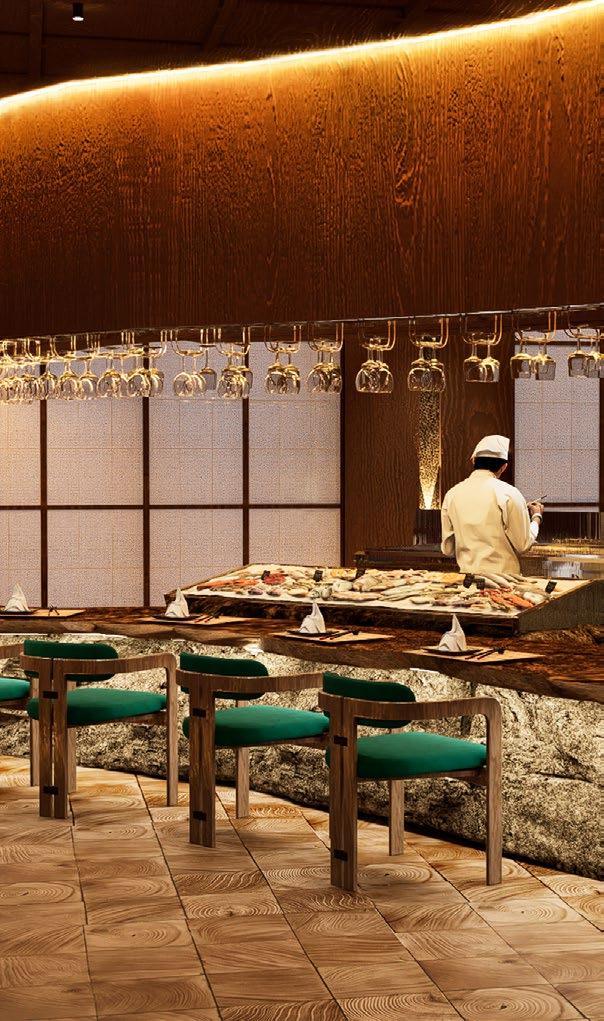
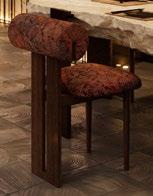
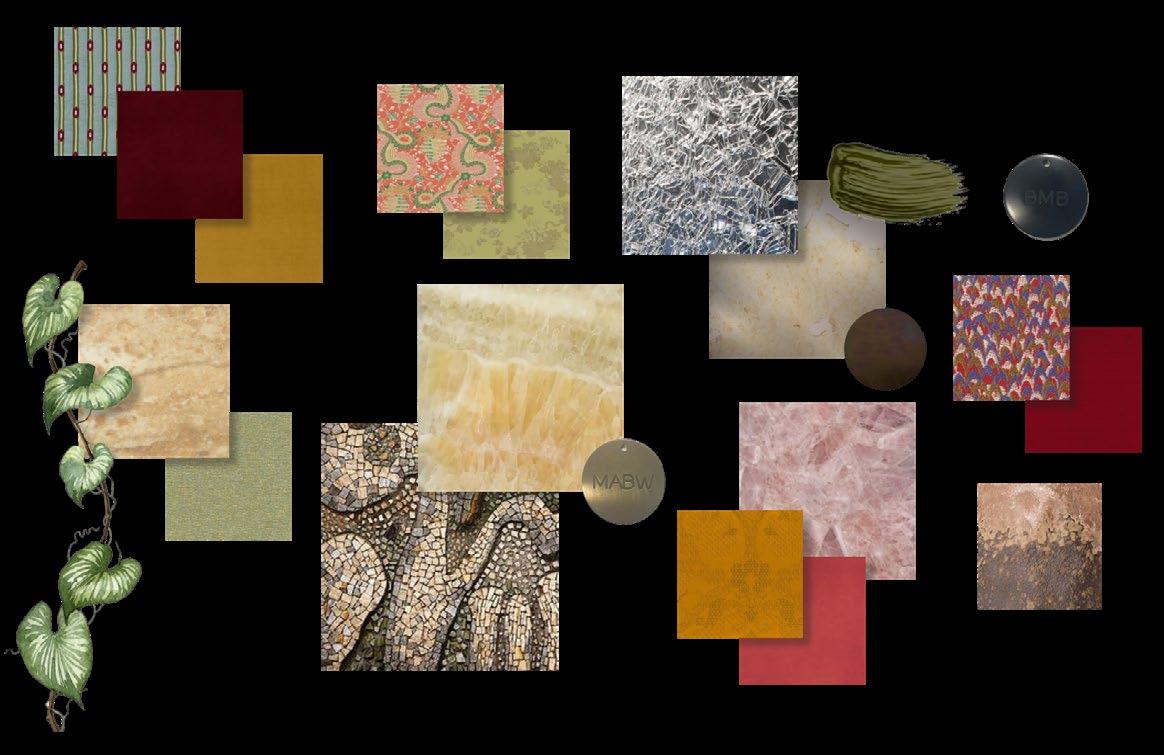
My role focused on concept and aesthetic development through to delivery. I proposed key narrative elements for different floors: a trellis framework for the Italian level, and carved timber details with a wabi-sabi sensibility for the Asian level. I also contributed to fabric and finish sourcing, refined detailed design at key touchpoints, and produced a set of renderings to test and communicate atmosphere, lighting, and materiality.
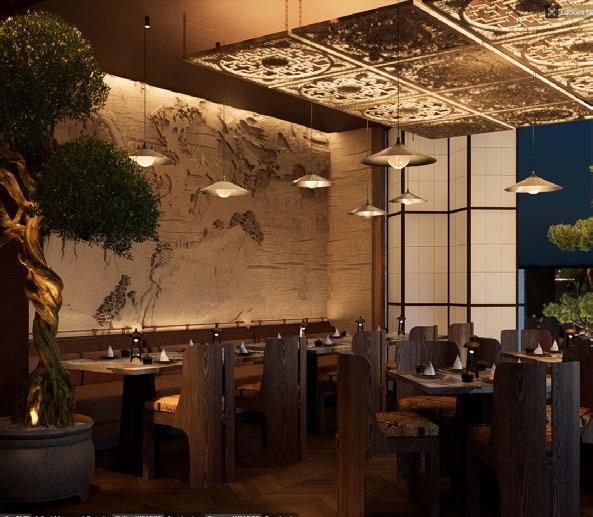
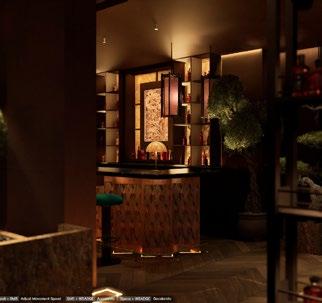
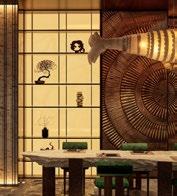
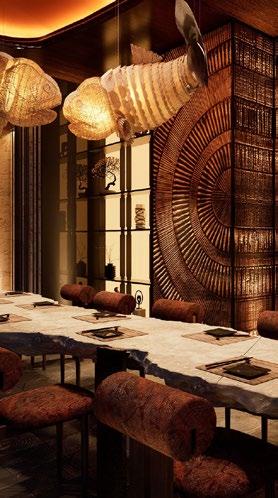
A Japanese restaurant and bar defined by mystery. Dark timber, Kyoto-inspired stones, and rippling glass lanterns evoke Eastern aesthetics, ritual, and immersive nighttime elegance.
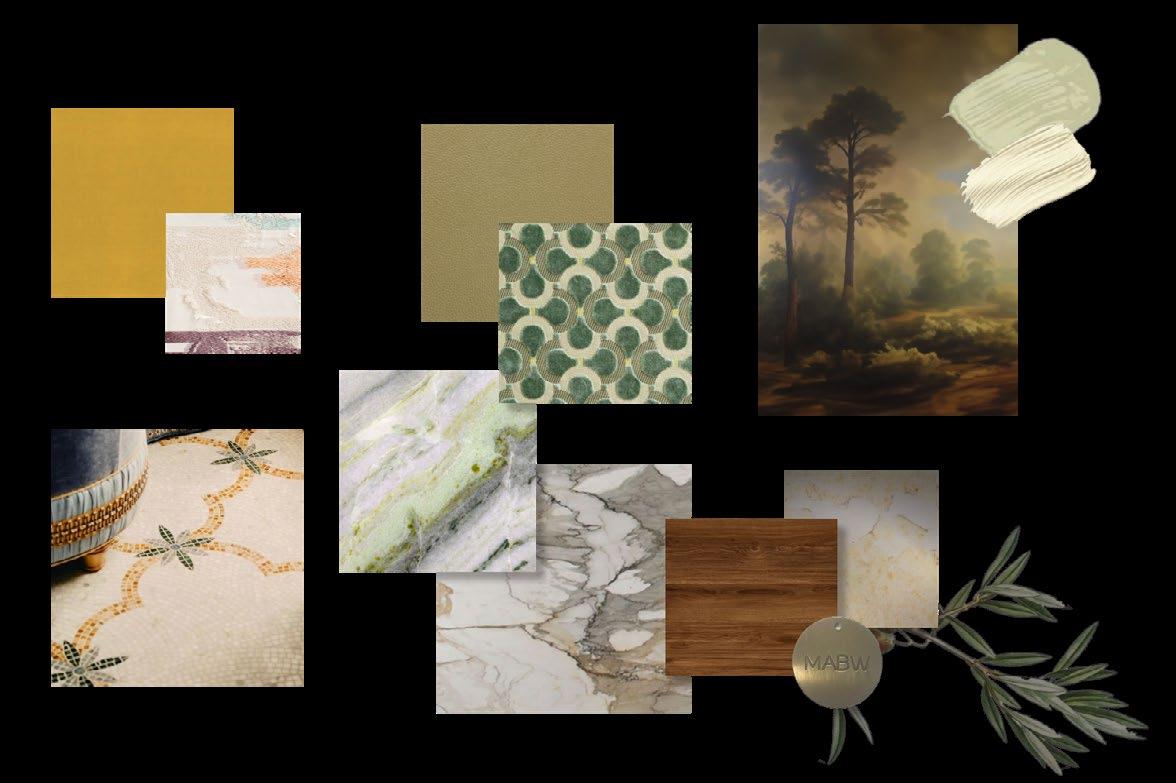
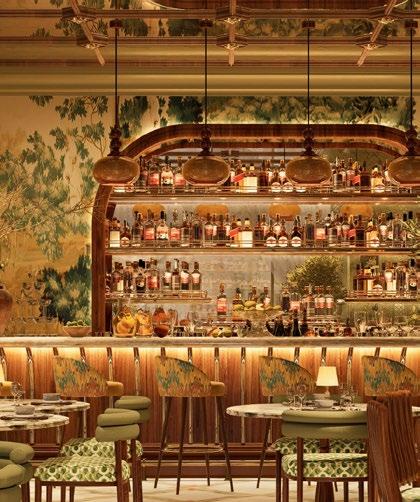
An all-day Italian family restaurant inspired by Capri’s relaxed elegance. Fresh greens, sun-washed ochres, and natural textures evoke a Mediterranean escape—effortlessly refined from brunch to cocktails
A sun-drenched rooftop transforms from a dreamy afternoon tea escape to a vibrant nighttime lounge. Maximalist details, lush planting, and whimsical decor create a fantasy garden above the city.