



This is an operation to treat stress incontinence (leakage of urine when you exercise, sneeze or strain). The operation involves injecting a bulking agent into the wall of your urethra (tube that carries urine) using a small telescope to treat symptoms.
The bulking agent helps the urethra to make a watertight seal and to prevent urine leaking from your bladder.
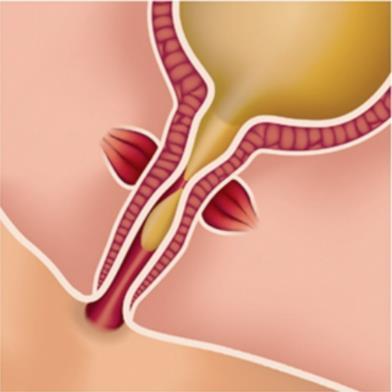
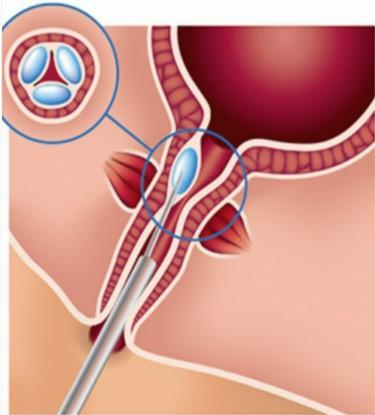
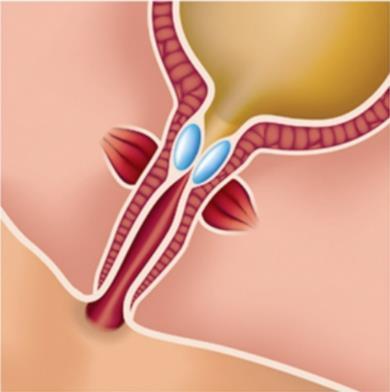
Source: Chapple, C., & Dmochowski, R. (2019). Particulate Versus Non-Particulate Bulking Agents In The Treatment Of Stress Urinary Incontinence. Research and reports in urology, 11, 299–310.
effective is
About 7 out of 10 women have much less leaking or stop leaking altogether after this treatment.
However, some women may start to leak urine again at a later stage and may need either further injections or another type of operation. In the longer term, 50% (half) of women treated by urethral bulking will have a successful outcome.
How is the procedure performed?
• The procedure is carried out in an operating theatre under a short general anaesthesia (while you are asleep), spinal anaesthesia or local anaesthesia
• A telescopic camera will be inserted into your bladder through your urethra to inspect your urethra and bladder
• The bulking agent is then injected into the tissues around the wall of the urethra to raise cushions of tissue which help to keep in closed
• Most patients go home on the day of the procedure
• Mild burning on passing urine
• Mild bleeding in urine
• Failure to improve urinary incontinence significantly requiring a further procedure at a later stage
• Slowing of the urinary flow
• Urinary tract infection requiring antibiotic treatment
• Temporary inability to empty bladder requiring catheterisation
• Urinary frequency and urgency, sometimes with incontinence
• Reaction to the bulking agent
• Anaesthetic or cardiovascular problems possibly requiring intensive care (stroke, heart attack, chest infection)
• Incontinence pads: if symptoms are not causing you bother, you may choose to do nothing and use pads for urine leakage
• Pelvic floor exercises
• Continence pessaries: a small, soft device placed temporarily inside the vagina is used to treat incontinence that occurs only during exercise
• Weight loss and smoking cessation
• Mid-urethral tape surgery
• Autologous sling procedure
• Colposuspension
• Artificial sphincter placement
Your doctor will discuss with you regarding the suitable options.
Please go to the Emergency Department or contact your care team if you experience:
• Fever (≥38°C), chills
• Difficulty urinating or urinary retention
• Worsening bloody urine
• Painful urination
• Abdominal pain