Due to a possible miscalculation, Guilford County fire districts are expected to receive $2.3 million less in the 2025-26 proposed budget than expected. These fire departments are already struggling financially. The budgeting error means some departments will be unable to purchase new equipment, offer training, building upgrades and other items. Fire engines alone cost around $1 million each. Larger departments should feel the effect more than smaller ones.
Pinecroft-Sedgefield Fire District’s three-year accumulated loss in revenue will be $1,096,968. PSFD Fire Chief Derek Carson provided insight to the problem. “Each year, the fire districts in Guilford County build our annual budgets based on the revenue estimates that Guilford County provides to us. PSFD receive funding through [several] tax revenue sources: property (based on fire tax), motor vehicle, sales (based on ad valorem distribution), and prior year residuals (revenue collected in the prior year above the adopted budget).
Once these budget figures are adopted, we rely on that
comPiled by norma b. dennis
fIRST THURSDAY
HISToRY PRoGRAM
The Jamestown Public Library will host another in its series of First Thursday History Programs March 6 at 6:30 p.m. The event will be held on the main floor of the library.
James Lutzweiler, local historian, will discuss two seemingly unrelated topics: A Primary Cause of the American Civil War, Looking Beyond Slavery and The Yellow Rose of Texas, Who Was She — and Was She a Tar Heel?
Lutzweiler, a 1997 graduate of North Carolina State University, wrote his masters thesis on the Yellow Rose of Texas. He had planned to write a dissertation on the primary cause of the American Civil War, but was distracted by the Yellow Rose and did not return to the Civil War topic until a decade later.
The community is invited to attend the free program Two pamphlets about the topics will be available at a cost of $3 for both.
Have an event that you think needs to be included in About Town? Email Norma B. Dennis at ndworddesign@gmail.com or Carol Brooks at cab1hp@gmail.com
Fire districts may receive drastic cut in county budget funding
revenue in order to maintain our overall operations for that fiscal year.
“In fiscal year 2024, PSFD received $183,079 less than what was approved as a part of our adopted budget. In fiscal year 2025, we are expecting to receive $261,184 less than budgeted. This is a two-year total loss in revenue of $444,363. This is our portion of the $2.3 million amount that is being discussed.
“To compound this problem are the budget estimates we are being provided for fiscal year 2026. Our revenue estimates we received from Guilford County in January for fiscal year 2026
are $652,705 less than our adopted budget for fiscal year 2025. This brings a three-year accumulated loss in revenue for PSFD to $1,096,968.
Carson has been told the loss in revenue for the 2024 and 2025 fiscal years was from an error in how the Motor Vehicle Tax Revenue was being calculated.
“Due to various reasons, it finally ‘showed itself’ in FY24,” he said.
It is believed the funding model for expenses and revenue is outdated, partly because the departments now have to pay full-time employees where, in the past, many volunteer fire-
fighters were used.
“Our budget, just like other fire districts throughout Guilford County, is operated on a very tight margin,” Carson added.
“With the loss in budgeted revenue, either that revenue has to be made up, or something is forced to be reduced. Making a cut requires that essential resources or capital planning doesn’t get funded.”
Carson has contacted County Commissioners and hopes the county can work with the fire districts to make up for the revenue shortfall.
“Our firefighters are committed to protecting our citi-
zens and our communities and will continue to do so moving forward,” he said. There are several possible scenarios for this shortfall: Guilford County could use some fund balance savings to mitigate the loss, but this fund is already low. Another option is some departments will have to forego purchases.
But what would hit Guilford County residents most is fire district taxes could go up. There is no solution at this time. County Commissioners met Feb. 18 for further discussion. The 202526 budget will go into effect July 1.
Town Council approves stormwater contract
by carol brooKs FREELANCE WRITER cab1hp@gmail.com
The Jamestown Town Council had no new business to attend to during their Feb. 18 meeting. Additionally, two agenda items were removed. The first elimination was from the consent agenda requesting approval of the Illicit Discharge Detection and Elimination (DDE) Policy. The second item, under Old Business, was a request of approval of the Shared Use Agreement Between Guilford County Board of Education and the Town of Jamestown, regarding use of the athletic fields at Jamestown Elementary School. Replacing the previous agenda item under Old Business was approval of a contact with McAdams for design work for the storm drainage system improvements project in Forestdale East. Certain portions of O’Neill Drive, Royal Road and Wiltshire Drive are affected. These areas flood during
Connecting pancakes and dirty faces
comPiled by norma b. dennis
FREELANCE WRITER
ndworddesign@gmail.com
Lutheran Church of Our Father, 3304 Groometown Road, Greensboro, will celebrate Shrove Tuesday with a pancake supper on March 4 from 5:307 p.m.
Although not scriptural in the sense of relating to a specific Biblical passage, it is spiritual in that it connects to the frequent scriptural theme of fasting — giving up something to help focus on God. (Shrove means an awareness of one’s sins and desire to change.)
Ancient spiritual practices included using the 40 days before Easter to focus more directly on scriptural study,
prayer and acts of mercy. That time is known as Lent from the lengthening of days. The fasting could be anything, such as using the time planned to binge a television show to read scripture or help at a food pantry. Or it could be eating at home rather than going out and then donating the savings. This tradition of a quiet, focused time leading into Easter generated another tradition of partying before all that started. That is how Mardi Gras, which means Fat Tuesday in French, began.
Eating pancakes came about because many traditions fasted from or avoided household fats during Lent and pancakes are a good way to use up fats. The day after Shrove Tuesday, the
see PancaKes, PAGE 2
significant rainfall and contain aging and/or undersized infrastructure, according to the contract. McAdams’ proposed fee for the services is $89,950. The project will be funded through the Golden LEAF Foundation Mitigation Program. Jamestown was awarded the funding in June 2024. Grant funds of $769,000 and $242,700 from the Water Sewer fund have been allocated to complete the project. The grant funds are provided on a reimbursement basis. This Forestdale East Stormwater Project grant project will be set up as a multiyear fund. The Council unanimously approved the contract.
In other business, Robert Coon was reappointed to serve as a Planning Board member representing the extra-territorial jurisdiction (ETJ).
Will Grant was appointed to serve as a Parks and Recreation Committee member.
Several residents were appointed to serve as the first
see council, PAGE 2
by carol brooKs
FREELANCE WRITER cab1hp@gmail.com
Extremely high levels of 1,4-dioxane was found in the City of Asheboro’s wastewater discharge in January, according to the N.C. Department of Environmental Quality. This chemical is identified as a cancer-causing carcinogen. The Environmental Protection Agency recommends 22 parts per billion (ppb) of 1,4-dioxane. Asheboro testing was done Jan. 24 of this year and revealed 2,200 ppb. Asheboro’s own testing revealed 3,520 ppb. These figures are up to 10,000 times above the recommended number.
Dubbed a “forever” chemical, it breaks down slowly and poses long-term health risks. It can enter water supplies of the wastewater in several ways, one being the chemical is not properly treated at a treatment plant.
While this discharge does not affect Guilford County’s
drinking water, The North Carolina Department of Environmental Quality (DEQ) Division of Water Resources (DWR) notified downstream utilities along the Cape Fear River Basin. So far, there have been no bad reports from water treatment plants downstream.
DEQ is also monitoring wastewater plants in Greensboro, High Point, Burlington and Reidsville where some progress has been made to reduce contamination.
“DEQ continues to sample at municipal wastewater treatment plants and in surface waters across the Cape Fear River Basin to identify 1,4-dioxane sources,” Laura Oleniacz, DWR public information officer, said in an email to the Coastal Review “In addition, DEQ continues to assist municipalities to minimize or reduce 1,4-dioxane coming from industrial wastewater. DEQ is also exploring other avenues for protecting drinking water.”
The Jamestown News reported the problem in January prior to Asheboro’s latest wastewater discharge test. NCDEQ had submitted a permit request for the National Pollutant Discharge Elimination System (NPDES) on Oct. 7 of last year. After an initial review, the Environmental Protection Agency objected to the permit later in the month.
As a consequence of the high levels of 1,4-dioxane, the EPA is calling for tougher state action to limit the chemical. The DEQ had 90 days to comply with a revised permit request, otherwise the EPA would step in. The Clean Water Act states, “the concentration of toxic substances, either alone or in combination with other wastes, in surface waters shall not render waters injurious to aquatic life or wildlife, recreational activities, or public health, nor shall it impair the waters for any designated uses.”
Photo courtesy LaTonya Bowman ruby sapp leach, left, stands with councilmember Pam burgess after receiving council recognition for her extensive ancestry research.
From The Front
Notes from Norma: Snowy days come in stages
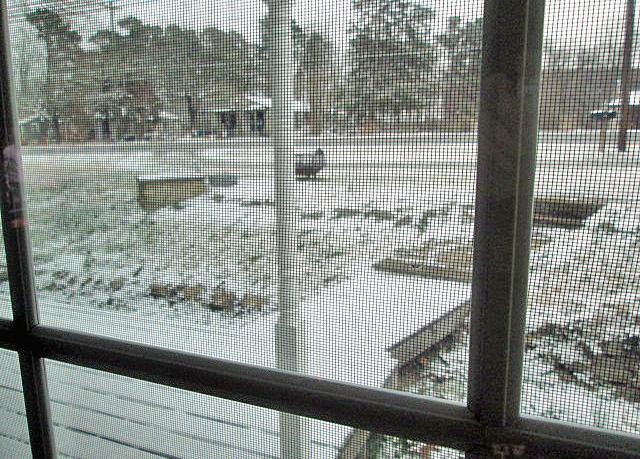
Snowy weather has once again come and gone. As I viewed its beauty from the comfort of my couch I could not help but reflect on how differently it is seen as one ages. There appears to be seven stages of a snow day.
School days
Snow is falling and according to the weatherman more is expected. School has been closed for the day and the child cannot wait to get outside.
council
CONTINUED FROM FRONT
Jamestown Citizen Academy cohort. They are, Emily Wagoner, Don Dale, Denise Johnson, Tricia Payne, John Fendrich, Dan McDaniel, Donna McDaniel, Karen Hicks, Shemika Summers, Tom Dorsheimer, Kelly Young, Donna Vail and alternates Richard Nosal, Erica Magnante and Jim Daubenspeck. The meetings will begin the end of March.
Doug Sampson was recognized with a resolution noting his long service to the Parks and Recreation Committee. He was appointed as an alternate in 2017 and has been a full-time member since 2019. He has served as chair since 2023 and helped work on the Jamestown Park Master Plan.
No trip outside is complete without layer upon layer of clothing, topped with a heavy coat, mittens and knitted hat.
The Council’s Community Corner recognized Ruby Sapp Leach during Black History Month. Councilmember Pam Burgess pointed to Leach’s “tireless efforts to research your ancestral history and your commitment to sharing the knowledge that you have gained to foster opportunities for leading within the community.”
Leach will be profiled in an upcoming Jamestown News
Time stands still as the child sleds down the hill in the side yard and builds a snow duck — no ordinary snowman will do. Mom hands the child a bowl to fill with snow. Mom makes the best snow cream in the neighborhood. The secret is adding an egg to the milk, sugar and snow.
Afternoon brings more time outside and evening is capped with an announcement that school is closed again tomorrow. The child thinks it just cannot get better than this.
College
Snow is falling with a promise of more to come. You think back just a few years when public schools closed for days at a time when it snowed. You drag yourself out of bed because a little bit of snow does not necessarily mean classes are cancelled. If the professor does not show up because he cannot drive in the snow, you are free to
wet coats and gloves hang on racks to dry before the next excursion outside.
Ragsdale High School
Snow cream is now made with a cooked custard for a creamy and satisfying treat.
older family
Snow has fallen and roads in the neighborhood have not yet been plowed. Nighttime sledding with other families in top the day with fun and laughter. A fire in a large barrel warms hands and bodies in between trips down the hilly road, which has just the right incline for sledding. Thermoses of hot chocolate are shared as children and parents enjoy the camaraderie.
If the snowplow delays its trip around the block, tonight’s fun will see a replay.
Childless adults
Snow is falling. There are no longer children at home, but that doesn’t keep the couple inside. Not only does the husband build the perfect snowman, he decorates it with various bottles of colored water, spritzing the liquid onto the figure where it freezes, making the snowman a unique
Ragsdale student representative Ben Arnold reported that seniors are receiving college acceptance letters and that he has been accepted at Western Carolina. He added that the Ragsdale Theater is doing an audio play on Spotify with music by the Ragsdale Orchestra.
Several athletes were recognized for their accomplishments: Elle Dawson came in seventh in the 1600- and 3200-meter Indoor Track State Championship. Senior swimmer Luke Golinski reached the finals in the 100meter breast stroke at the 4A State Championships. Wrestlers Eric Heuangpraseuth and Hack Cyrus qualified for the regional championships.
Manager’s report
Matthew Johnson reported the downtown brick sidewalk project along West Main Street should be completed soon.
The Deep River Outfall Project is complete, coming in early and under budget.
The Litter Sweep for the Town of Jamestown will be March 29. Meet in the Food Lion parking lot at 9 a.m. For more information, contact Elizabeth Greeson at Town Hall, 336-454-1138.
The next Town Council meeting will be March 18 at 6 p.m.
Town Council meetings may be viewed online at www.youtube.com/c/TownofJamestownNC. Click on “Live.”
Young family
The wife watches a while then goes inside to get hot coffee ready for her husband to celebrate his creativity.
Snow is falling and the grandmother sits alone by the window watching as the snow drifts softly to the ground. There is no laughter outside or wet clothes drying inside. But the grandmother is not sad. She remembers fondly snow days past and enjoys the beauty of the snowy yard and white-caped trees. She sips hot tea as she watches and waits for the snow to melt and she will feel more confident to venture outside.
PancaKes
CONTINUED FROM FRONT
first day of Lent, is known as Ash Wednesday. On that day, many Christians have ashes place on their foreheads. The ashes come from burning palms from the previous year’s Palm Sunday service. Palm Sunday commemorates the day people lined the street waving palms in devotion to Jesus as he rode into Jerusalem on a donkey.
The ashes symbolize a Christian’s failure to completely live up to that devotion. The words typically used, ‘remember you are dust and to dust you shall return’ is a quote from Genesis 3:19.
Snow is falling, school is closed and the children are begging to go out to play. The layers come on, not just for the kids but for Mom and Dad as well. Games of fox and geese, tag played on a special grid in the snow, and building snow forts ensue. Inside,
These are my memories. Today the stages may not look the same. For example, students home for a snow day can do school work remotely and many families have dryers in which to dry clothes in between trips outside. The point, of course, is that each stage looks different. In what stage are your
“I love pancakes,” said Lutheran Church of Our Father’s pastor Scott Berry. “And I appreciate the deep spirituality of Ash Wednesday and Lent in preparation for Easter. The shift from the lighthearted fun of Shrove Tuesday to the spiritual depth of Ash Wednesday impacts me every year.
“Putting dirt on our forehead seems like a very strange tradition. Yet Christians have done this for hundreds of years as a visible sign of our mortality and sinfulness.”
Members of Lutheran Church of Our Father invite everyone to come and eat pancakes with all the fixings on March 4. The event is free for guests. They are invited back to the Ash Wednesday service at 6:30 p.m. March 5 where participants who wish to may receive ashes and communion.
Photo by Norma B. Dennis a winter wonderland
from the comfort of
The property to be offered pursuant to this notice of sale is being offered for sale, transfer and conveyance “AS IS, WHERE IS.” Neither the Trustee nor the holder of the note secured by the deed of trust/security agreement, or both, being foreclosed, nor the officers, directors, attorneys, employees, agents or authorized representative of either the Trustee or the holder of the note make any representation or warranty relating to the title or any physical, environmental, health or safety conditions existing in, on, at or relating to the property being offered for sale, and any and all responsibilities or liabilities arising out of or in any way relating to any such condition are expressly disclaimed. Also, this property is being sold subject to all taxes, special assessments, and prior liens or prior encumbrances of record and any recorded releases. Said property is also being sold subject to applicable Federal and State laws.
A deposit of five percent (5%) of the purchase price, or seven hundred fifty dollars ($750.00), whichever is greater, is required and must be tendered in the form of certified funds at the time of the sale.
If the trustee is unable to convey title to this property for any reason, the sole remedy of the purchaser is the return of the deposit. Reasons of such inability to convey include, but are not limited to, the filing of a bankruptcy petition prior to the confirmation of the sale and reinstatement of the loan without the knowledge of the trustee. If the validity of the sale is challenged by any party, the trustee, in its sole discretion, if it believes the challenge to have merit, may request the court to declare the sale to be void and return the deposit. The purchaser will have no further remedy.
Additional Notice for Residential Property
with Less than 15 rental units, including Single-Family Residential Real Property
An order for possession of the property may be issued pursuant to N.C.G.S. § 45-21.29 in favor of the purchaser and against the party or parties in possession by the clerk of superior court of the county in which the property is sold.
Any person who occupies the property pursuant to a rental agreement entered into or renewed on or after October 1, 2007, may after receiving the notice of foreclosure sale, terminate the rental agreement by providing written notice of termination to the landlord, to be effective on a date stated in the notice that is at least 10 days but not more than 90 days, after the sale date contained in this notice of sale, provided that the mortgagor has not cured the default at the time the tenant provides the notice of termination. Upon termination of a rental agreement, the tenant is liable for rent due under the rental agreement prorated to the effective date of the termination.
SUBSTITUTE TRUSTEE SERVICES, INC. SUBSTITUTE TRUSTEE
c/o Hutchens Law Firm
P.O. Box 1028 4317 Ramsey Street Fayetteville, North Carolina 28311 Phone No: (910) 864-3068 https://sales.hutchenslawfirm.com Firm Case No: 10043 - 40861
Feb. 19, 26, 2025 (1000)
NOTICE OF FORECLOSURE SALE NORTH CAROLINA IN THE GENERAL COURT OF JUSTICE SUPERIOR COURT DIVISION GUILFORD COUNTY BEFORE THE CLERK 24SP002355-400
Under and by virtue of the power of sale contained in a certain Deed of Trust made by Marie S. Howard (PRESENT RECORD OWNER(S): Marie S. Howard) to James P. Bonner (Member/Manager) Brock and Scott, PLC, Trustee(s), dated July 15, 2017, and recorded in Book No. R 7962, at Page 740 in Guilford County Registry, North Carolina, default having been made in the payment of the promissory note secured by the said Deed of Trust and the undersigned, Substitute Trustee Services, Inc. having been substituted as Trustee in said Deed of Trust by an instrument duly recorded in the Office of the Register of Deeds Guilford County, North Carolina and the holder of the note evidencing said indebtedness having directed that the Deed of Trust be foreclosed, the undersigned Substitute Trustee will offer for sale at the courthouse, West Door U-G Level in Greensboro, Guilford County, North Carolina, or the customary location designated for foreclosure sales, at 10:00 AM on March 4, 2025 and will sell to the highest bidder for cash the following real estate situated in Greensboro in the County of Guilford, North Carolina, and being more particularly described as follows: The following property in Morehead Township, Guilford County, North Carolina, described as follows:
All of Lot 134, Section 2, Westbury Subdivision, as per plat thereof recorded in the Office of the Register of Deeds of Guilford County, North Carolina, in Plat Book 39, at Page 100. Together with improvements located thereon; said property being located at 2300 Phoenix Drive, Greensboro, North Carolina.
Subject to restrictive covenants recorded in Book 2285 at Page 106, other restrictions and easements of record.
The above land was conveyed by Surety Construction Co., see Book BI, 2418, Page 480.
Subject to restrictions, reservations, easements, covenants, oil, gas, or mineral rights of record, if any.
Being the same premises conveyed to Frank J. Howard and wife, Marie S. Howard from Fred Lenton Miller and wife, Dallas Walton Miller by Deed dated 4/29/1970, and recorded on 4/30/1970, at Book 2479, Page 119, in Guilford County, NC.
Assessors Parcel Number: 0051168
Trustee may, in the Trustee’s sole discretion, delay the sale for up to one hour as provided in N.C.G.S. §45-21.23.
Should the property be purchased by a third party, that party must pay the excise tax, as well as the court costs of Forty-Five Cents ($0.45) per One Hundred Dollars ($100.00) required by N.C.G.S. §7A-308(a)(1).
The property to be offered pursuant to
LEGAL NOTICES
this notice of sale is being offered for sale, transfer and conveyance “AS IS, WHERE IS.” Neither the Trustee nor the holder of the note secured by the deed of trust/security agreement, or both, being foreclosed, nor the officers, directors, attorneys, employees, agents or authorized representative of either the Trustee or the holder of the note make any representation or warranty relating to the title or any physical, environmental, health or safety conditions existing in, on, at or relating to the property being offered for sale, and any and all responsibilities or liabilities arising out of or in any way relating to any such condition are expressly disclaimed. Also, this property is being sold subject to all taxes, special assessments, and prior liens or prior encumbrances of record and any recorded releases. Said property is also being sold subject to applicable Federal and State laws.
A deposit of five percent (5%) of the purchase price, or seven hundred fifty dollars ($750.00), whichever is greater, is required and must be tendered in the form of certified funds at the time of the sale.
If the trustee is unable to convey title to this property for any reason, the sole remedy of the purchaser is the return of the deposit. Reasons of such inability to convey include, but are not limited to, the filing of a bankruptcy petition prior to the confirmation of the sale and reinstatement of the loan without the knowledge of the trustee. If the validity of the sale is challenged by any party, the trustee, in its sole discretion, if it believes the challenge to have merit, may request the court to declare the sale to be void and return the deposit. The purchaser will have no further remedy.
Additional Notice for Residential Property with Less than 15 rental units, including Single-Family Residential Real Property
An order for possession of the property may be issued pursuant to N.C.G.S. § 45-21.29 in favor of the purchaser and against the party or parties in possession by the clerk of superior court of the county in which the property is sold.
Any person who occupies the property pursuant to a rental agreement entered into or renewed on or after October 1, 2007, may after receiving the notice of foreclosure sale, terminate the rental agreement by providing written notice of termination to the landlord, to be effective on a date stated in the notice that is at least 10 days but not more than 90 days, after the sale date contained in this notice of sale, provided that the mortgagor has not cured the default at the time the tenant provides the notice of termination. Upon termination of a rental agreement, the tenant is liable for rent due under the rental agreement prorated to the effective date of the termination.
SUBSTITUTE TRUSTEE SERVICES, INC. SUBSTITUTE TRUSTEE
c/o Hutchens Law Firm P.O. Box 1028 4317 Ramsey Street Fayetteville, North Carolina 28311 Phone No: (910) 864-3068 https://sales.hutchenslawfirm.com Firm Case No: 21940 - 107022 Feb. 19, 26, 2025 (1920)
AMENDED NOTICE OF FORECLOSURE SALE NORTH CAROLINA IN THE GENERAL COURT OF JUSTICE SUPERIOR COURT DIVISION GUILFORD COUNTY BEFORE THE CLERK 23 SP 1086
Under and by virtue of the power of sale contained in a certain Deed of Trust made by Terry D. Bartley and Terry Demetrial Bartley (PRESENT RECORD OWNER(S): Terry D. Bartley and Terry Demetrial Bartley) to Anthony C. McLaughlin, Trustee(s), dated October 28, 2022, and recorded in Book No. R 8674, at Page 113 in Guilford County Registry, North Carolina, default having been made in the payment of the promissory note secured by the said Deed of Trust and the undersigned, Substitute Trustee Services, Inc. having been substituted as Trustee in said Deed of Trust by an instrument duly recorded in the Office of the Register of Deeds Guilford County, North Carolina and the holder of the note evidencing said indebtedness having directed that the Deed of Trust be foreclosed, the undersigned Substitute Trustee will offer for sale at the courthouse, West Door U-G Level in Greensboro, Guilford County, North Carolina, or the customary location designated for foreclosure sales, at 10:00 AM on March 4, 2025 and will sell to the highest bidder for cash the following real estate situated in Browns Summit in the County of Guilford, North Carolina, and being more particularly described as follows: BEING all of Lot 83 of BROOKE MEADOWS, SECTION 2, PHASE 2, SHEET 4 OF 5, as per plat thereof recorded in Plat Book 163, Page 68, in the Office of the Register of Deeds of Guilford County, North Carolina. Together with improvements located thereon; said property being located at 2595 McCullum Court, Browns Summit, North Carolina.
Trustee may, in the Trustee’s sole discretion, delay the sale for up to one hour as provided in N.C.G.S. §45-21.23.
Should the property be purchased by a third party, that party must pay the excise tax, as well as the court costs of Forty-Five Cents ($0.45) per One Hundred Dollars ($100.00) required by N.C.G.S. §7A-308(a)(1).
The property to be offered pursuant to this notice of sale is being offered for sale, transfer and conveyance “AS IS, WHERE IS.” Neither the Trustee nor the holder of the note secured by the deed of trust/security agreement, or both, being foreclosed, nor the officers, directors, attorneys, employees, agents or authorized representative of either the Trustee or the holder of the note make any representation or warranty relating to the title or any physical, environmental, health or safety conditions existing in, on, at or relating to the property being offered for sale, and any and all responsibilities or liabilities arising out of or in any way relating to any such condition are expressly disclaimed. Also, this property is being sold subject to all taxes, special assessments, and prior liens or prior encumbrances of record and any recorded releases. Said property is also being sold subject to applicable Federal and State laws.
A deposit of five percent (5%) of the purchase price, or seven hundred fifty dollars ($750.00), whichever is greater, is required and must be tendered in the form of certified funds at the
time of the sale.
If the trustee is unable to convey title to this property for any reason, the sole remedy of the purchaser is the return of the deposit. Reasons of such inability to convey include, but are not limited to, the filing of a bankruptcy petition prior to the confirmation of the sale and reinstatement of the loan without the knowledge of the trustee. If the validity of the sale is challenged by any party, the trustee, in its sole discretion, if it believes the challenge to have merit, may request the court to declare the sale to be void and return the deposit. The purchaser will have no further remedy.
Additional Notice for Residential Property with Less than 15 rental units, including Single-Family Residential Real Property
An order for possession of the property may be issued pursuant to N.C.G.S. § 45-21.29 in favor of the purchaser and against the party or parties in possession by the clerk of superior court of the county in which the property is sold.
Any person who occupies the property pursuant to a rental agreement entered into or renewed on or after October 1, 2007, may after receiving the notice of foreclosure sale, terminate the rental agreement by providing written notice of termination to the landlord, to be effective on a date stated in the notice that is at least 10 days but not more than 90 days, after the sale date contained in this notice of sale, provided that the mortgagor has not cured the default at the time the tenant provides the notice of termination. Upon termination of a rental agreement, the tenant is liable for rent due under the rental agreement prorated to the effective date of the termination.
SUBSTITUTE TRUSTEE SERVICES, INC. SUBSTITUTE TRUSTEE
c/o Hutchens Law Firm P.O. Box 1028 4317 Ramsey Street Fayetteville, North Carolina 28311 Phone No: (910) 864-3068 https://sales.hutchenslawfirm.com Firm Case No: 15075 - 67422
Feb. 19, 26, 2025 (1728)
NOTICE OF FORECLOSURE SALE NORTH CAROLINA IN THE GENERAL COURT OF JUSTICE SUPERIOR COURT DIVISION GUILFORD COUNTY BEFORE THE CLERK 24SP002897-400
Under and by virtue of the power of sale contained in a certain Deed of Trust made by Helmsman Homes, LLC, a North Carolina Limited Liability Company, Eric Wood, Guarantor and Zeno B. Hawkins, Guarantor (PRESENT RECORD OWNER(S): Helmsman Homes, LLC, a North Carolina Limited Liability Company and Eric Wood, Guarantor and Zeno B. Hawkins, Guarantor) to Sean C. Walker, Trustee(s), dated June 9, 2022, and recorded in Book No. R 8626, at Page 2088 in Guilford County Registry, North Carolina, default having been made in the payment of the promissory note secured by the said Deed of Trust and the undersigned, Substitute Trustee Services, Inc. having been substituted as Trustee in said Deed of Trust by an instrument duly recorded in the Office of the Register of Deeds Guilford County, North Carolina and the holder of the note evidencing said indebtedness having directed that the Deed of Trust be foreclosed, the undersigned Substitute Trustee will offer for sale at the courthouse, West Door U-G Level in Greensboro, Guilford County, North Carolina, or the customary location designated for foreclosure sales, at 10:00 AM on March 4, 2025 and will sell to the highest bidder for cash the following real estate situated in High Point in the County of Guilford, North Carolina, and being more particularly described as follows: BEGINNING at an iron stake in the East line of Fairview Street in the Northwest corner of Lot No. 4, Block A, Loflin. Kinley & Son Map, Plat Book 2 page 28, also being the Northwest corner of property described in deed to City of High Point, Book 3241, page 686, and running thence from said beginning point along the East line of Fairview Street, N. 0 deg. 08’ E. 60 feet to a point in the Southwest corner of Lot No. 2, Block A of said Subdivision, being the Southwest corner of property conveyed to the Meaphysics Church by deed recorded Book 1692, page 377, and running thence along the South line of said Lot No. 2, being the South line of said Church, S. 89 deg. 57’ E. 200 feet to a point in the line of property described in deed to City of High Point, recorded Book 3241, page 686, and running thence along the City of High Point line, S. 0 deg. 08’ W. 50 feet to an iron stake, a corner in City of High Point Property and also being in the North line of Lot No. 4, Block A, of said Subdivision; thence along the North line of lot No. 4, also being the City of High Point Property line, N. 89 deg. 57’ W. 200 feet to the point and place of BEGINNING, and being all of Lot No. 3 of Block A of Loflin, Kinley & Son Property, as shown on map duly recorded in Plat Book 2 at page 28, In the Office of the Register of Deeds of Guilford County, N. C., SAVE AND EXCEPT the Easternmost 19 feet thereof, and being known as 711 Fairview Street, High Point, N, C., and being the same property conveyed to Louis B. Haizlip by deed recorded Book 500, page 164, Guilford County Registry. Together with improvements located thereon; said property being located at 711 Fairview Street, High Point, North Carolina. Also known as 711 Fairview Street, High Point, NC 27260 Parcel ID: 7800201881
Trustee may, in the Trustee’s sole discretion, delay the sale for up to one hour as provided in N.C.G.S. §45-21.23.
Should the property be purchased by a third party, that party must pay the excise tax, as well as the court costs of Forty-Five Cents ($0.45) per One Hundred Dollars ($100.00) required by N.C.G.S. §7A-308(a)(1).
The property to be offered pursuant to this notice of sale is being offered for sale, transfer and conveyance “AS IS, WHERE IS.” Neither the Trustee nor the holder of the note secured by the deed of trust/security agreement, or both, being foreclosed, nor the officers, directors, attorneys, employees, agents or authorized representative of either the Trustee or the holder of the note make any representation or warranty relating to the title or any physical, environmental, health or safety conditions existing in, on, at or relating to the property being offered for sale, and any and all responsibilities or liabilities arising out of or in any way relating to any such
condition are expressly disclaimed. Also, this property is being sold subject to all taxes, special assessments, and prior liens or prior encumbrances of record and any recorded releases. Said property is also being sold subject to applicable Federal and State laws.
A deposit of five percent (5%) of the purchase price, or seven hundred fifty dollars ($750.00), whichever is greater, is required and must be tendered in the form of certified funds at the time of the sale.
If the trustee is unable to convey title to this property for any reason, the sole remedy of the purchaser is the return of the deposit. Reasons of such inability to convey include, but are not limited to, the filing of a bankruptcy petition prior to the confirmation of the sale and reinstatement of the loan without the knowledge of the trustee. If the validity of the sale is challenged by any party, the trustee, in its sole discretion, if it believes the challenge to have merit, may request the court to declare the sale to be void and return the deposit. The purchaser will have no further remedy.
Additional Notice for Residential Property with Less than 15 rental units, including Single-Family Residential Real Property
An order for possession of the property may be issued pursuant to N.C.G.S. § 45-21.29 in favor of the purchaser and against the party or parties in possession by the clerk of superior court of the county in which the property is sold.
Any person who occupies the property pursuant to a rental agreement entered into or renewed on or after October 1, 2007, may after receiving the notice of foreclosure sale, terminate the rental agreement by providing written notice of termination to the landlord, to be effective on a date stated in the notice that is at least 10 days but not more than 90 days, after the sale date contained in this notice of sale, provided that the mortgagor has not cured the default at the time the tenant provides the notice of termination. Upon termination of a rental agreement, the tenant is liable for rent due under the rental agreement prorated to the effective date of the termination.
SUBSTITUTE TRUSTEE SERVICES, INC.
SUBSTITUTE TRUSTEE c/o Hutchens Law Firm P.O. Box 1028 4317 Ramsey Street Fayetteville, North Carolina 28311
NOTICE OF FORECLOSURE SALE NORTH CAROLINA IN THE GENERAL COURT OF JUSTICE SUPERIOR COURT DIVISION GUILFORD COUNTY BEFORE THE CLERK 24SP002297-400
Under and by virtue of the power of sale contained in a certain Deed of Trust made by Ethel D. Morehead (deceased) and Isaiah S. Morehead (deceased) (PRESENT RECORD OWNER(S): Ethel D. Morehead and Isaiah S. Morehead) to BB&T Collateral Service Corporation, Trustee(s), dated November 12, 2010, and recorded in Book No. R 7188, at Page 31 in Guilford County Registry, North Carolina, default having been made in the payment of the promissory note secured by the said Deed of Trust and the undersigned, Substitute Trustee Services, Inc. having been substituted as Trustee in said Deed of Trust by an instrument duly recorded in the Office of the Register of Deeds Guilford County, North Carolina and the holder of the note evidencing said indebtedness having directed that the Deed of Trust be foreclosed, the undersigned Substitute Trustee will offer for sale at the courthouse, West Door U-G Level in Greensboro, Guilford County, North Carolina, or the customary location designated for foreclosure sales, at 10:00 AM on March 4, 2025 and will sell to the highest bidder for cash the following real estate situated in Greensboro in the County of Guilford, North Carolina, and being more particularly described as follows: A tract or parcel of land in the County of Guilford and State of North Carolina, in Jefferson Township, adjoining the lands of and others, and bounded as follows: All of Lot 9, Lake Haven Subdivision, as per plat thereof recorded in Plat Book 30, Page 40, office of the Register of Deeds of Guilford County, North Carolina. Together with Improvements located thereon; said property being located at 1605 Youngs Mill Road, Greensboro, North Carolina.
PARCEL NUMBER 0116015 Loan Nbr: 9014081876-09005-6049005 Accurate Nbr: 508215 Form # 1302 Address: 1605 YOUNGS MILL RD, GREENSBORO,NC
Trustee may, in the Trustee’s sole discretion, delay the sale for up to one hour as provided in N.C.G.S. §45-21.23.
Should the property be purchased by a third party, that party must pay the excise tax, as well as the court costs of Forty-Five Cents ($0.45) per One Hundred Dollars ($100.00) required by N.C.G.S. §7A-308(a)(1). The property to be offered pursuant to this notice of sale is being offered for sale, transfer and conveyance “AS IS, WHERE IS.” Neither the Trustee nor the holder of the note secured by the deed of trust/security agreement, or both, being foreclosed, nor the officers, directors, attorneys, employees, agents or authorized representative of either the Trustee or the holder of the note make any representation or warranty relating to the title or any physical, environmental, health or safety conditions existing in, on, at or relating to the property being offered for sale, and any and all responsibilities or liabilities arising out of or in any way relating to any such condition are expressly disclaimed. Also, this property is being sold subject to all taxes, special assessments, and prior liens or prior encumbrances of record and any recorded releases. Said property is also being sold subject to applicable Federal and State laws. A deposit of five percent (5%) of the purchase price, or seven hundred fifty dollars ($750.00), whichever is greater, is required and must be tendered in the form of certified funds at the time of the sale.
If the trustee is unable to convey title to this property for any reason, the sole remedy of the purchaser is the return of the deposit. Reasons of such inability to convey include, but are not limited to, the filing of a bankruptcy
petition prior to the confirmation of the sale and reinstatement of the loan without the knowledge of the trustee. If the validity of the sale is challenged by any party, the trustee, in its sole discretion, if it believes the challenge to have merit, may request the court to declare the sale to be void and return the deposit. The purchaser will have no further remedy.
Additional Notice for Residential Property with Less than 15 rental units, including Single-Family Residential Real Property
An order for possession of the property may be issued pursuant to N.C.G.S. § 45-21.29 in favor of the purchaser and against the party or parties in possession by the clerk of superior court of the county in which the property is sold.
Any person who occupies the property pursuant to a rental agreement entered into or renewed on or after October 1, 2007, may after receiving the notice of foreclosure sale, terminate the rental agreement by providing written notice of termination to the landlord, to be effective on a date stated in the notice that is at least 10 days but not more than 90 days, after the sale date contained in this notice of sale, provided that the mortgagor has not cured the default at the time the tenant provides the notice of termination. Upon termination of a rental agreement, the tenant is liable for rent due under the rental agreement prorated to the effective date of the termination.
SUBSTITUTE TRUSTEE SERVICES, INC.
SUBSTITUTE TRUSTEE
c/o Hutchens Law Firm
P.O. Box 1028
4317 Ramsey Street
Fayetteville, North Carolina 28311
Phone No: (910) 864-3068
https://sales.hutchenslawfirm.com
Firm Case No: 21998 - 107468
Feb. 19, 26, 2025 (1775)
AMENDED NOTICE OF SUBSTITUTE TRUSTEE FORECLOSURE SALE OF REAL PROPERTY
NORTH CAROLINA IN THE GENERAL COURT OF JUSTICE SUPERIOR COURT DIVISION GUILFORD COUNTY BEFORE THE CLERK
24SP000689-400
UNDER AND BY VIRTUE of the power and authority contained in that certain Deed of Trust executed and delivered by H3 Cube LLC dated December 15, 2023 and recorded on December 21, 2023, in Book 8789 Page 118, in the Office of the Register of Deeds of Guilford County, North Carolina; and because of default in the payment of the indebtedness secured thereby and, pursuant to demand of the holder of the Note secured by said Deed of Trust, the undersigned Goddard & Peterson, PLLC (Substitute Trustee) will offer for sale at the courthouse door in the City of Greensboro, Guilford County, North Carolina, or the customary location designated for foreclosure sales, on February 27, 2025 at 2:00 PM and will sell to the highest bidder for cash the following real estate situated in the County of Guilford, North Carolina and being more particularly described in the above referenced Deed of Trust, together with all improvements located thereon:
Address of Property: 807 Northern Shores Point, Greensboro, NC 27455
Tax Parcel ID: 72028
Present Record Owner: H3 Cube LLC
Trustee may, in the Trustee sole discretion, delay the sale for up to one hour as provided in N.C.G.S. 45-21.23. Said property is sold subject to applicable Federal and State laws. A deposit of five percent (5%) of the amount of the bid or seven hundred fifty Dollars ($750.00), whichever is greater, is required and must be tendered in the form of certified funds at the time of the sale.
The real property described above is being offered for sale AS IS, WHERE IS and will be sold subject to all superior liens, unpaid taxes, and special assessments and any liens or encumbrances that would not be extinguished by non-judicial foreclosure. Neither the Substitute Trustee nor the holder of the Note secured by the Deed of Trust being foreclosed, nor the officers, directors, attorneys, employees, agents or authorized representatives of either the Substitute Trustee or the holder of the Note make any representation or warranty relating to the title or any physical, environmental, health or safety conditions existing in, on, at or relating to the property being offered for sale, and any and all responsibilities or liabilities arising out of or in any way relating to any such condition expressly are disclaimed.
The sale will be held open for ten (10) days for upset bids as required by law. Should the property be purchased by a third party, that party must pay the excise tax, and any Land Transfer Tax as required by N.C.G.S. 7A-308(a)(1). Third party, must pay the full bid amount, less any deposit that has been paid to the Substitute Trustee, immediately upon demand after the conclusion of the final upset bid period. Failure of the bidder to comply with the bid shall result in the resale of the property, with the defaulting bidder remaining liable upon their bid under the provisions of N.C.G.S. 45-21-30.
If the Trustee or Substitute Trustee is unable to convey title to this property for any reason, the sole remedy of the purchaser is the return of the deposit. Reasons of such inability to convey title include, but are not limited to, the filing of a bankruptcy petition prior to the sale and reinstatement of the loan without knowledge of the Substitute Trustee(s). If the validity of the sale is challenged by any party, the Substitute Trustee(s), in its/their sole discretion, if it/they believe(s) the challenge to have merit, may declare the sale to be void and return the deposit.
LEGAL NOTICES
The purchaser will have no further remedy. Additional Notice where the Real Property is Residential with less than 15 Rental Units: An order for possession of the property may be issued pursuant to N.C.G.S. 45-21.29 in favor of the purchaser and against the party or parties in possession by the Clerk of Superior Court of the County in which the property is sold.
Any person who occupies the property pursuant to a rental agreement entered into or renewed on or/after October 1, 2007, may, after receiving the notice of sale, terminate the rental agreement by providing written notice of termination to the landlord, to be effective on a date stated in the Notice that is at least ten (10) days, but no more than ninety (90) days, after the sale date contained in the Notice of Sale, provided that the mortgagor has not cured the default at the time the tenant provides the Notice of Termination. Upon termination of a rental agreement, the tenant is liable for rent due under the rental agreement prorated to the effective date of such termination. This is a communication from a debt collector.
The purpose of this Communication is to collect a debt and any information obtained will be used for that purpose, except as stated below in the instance of bankruptcy protection. If you are under the protection of the bankruptcy court or have been discharged as a result of a bankruptcy proceeding, this notice is given to you pursuant to statutory requirement and for informational purposes and is not intended as an attempt to collect a debt or as an act to collect, assess, or recover all or any portion of the debt from you personally. FN# 3069.00424 60218 Feb. 19, 26, 2025
NOTICE OF SUBSTITUTE TRUSTEE’S FORECLOSURE SALE OF REAL AND PERSONAL PROPERTY GUILFORD COUNTY- NORTH CAROLINA 24SP001771-400
UNDER AND BY VIRTUE of the power and authority contained in that Deed of Trust by Levels to Homes (“Borrower”), dated July 25, 2023 securing an indebtedness to Atlas Property Solutions in the original principal amount of $55,000.00 and recorded on August 3, 2023, in Book R8751 , at Page 1601 of the Guilford County Public Registry (the “Deed of Trust”); and because of default in the payment of the indebtedness secured thereby and failure to carry out and perform the stipulations and agreements contained therein and, pursuant to demand of the holder of the indebtedness secured by said Deed of Trust, the undersigned Substitute Trustee will place for sale, at public auction, to the highest bidder for cash at the usual place of sale at Guilford County Courthouse, in Greensboro North Carolina, on Thursday March 6, 2025AN at 11:00 A.M. those parcels of land, including all of Borrower’s right, title and interest now owned or hereafter acquired in and to the property, including all estates, rights, tenements, hereditaments, privileges, easements, and appurtenances of any kind benefitting the property, all means of access to and from the property, whether public or private and all water and mineral rights, situated, lying and being in Guilford County, North Carolina, and being more particularly described as follows:
Being known and designated as all of Lots 1 and 2 of Westminster Village Subdivision, Section 1, as recorded in Plat Book 164, Page 102; partition of Lot 13 of Westminster Village Subdivision, Section 2, as recorded in Plat Book 58, Page 38 in the Office of the Register of Deeds of Guilford County, North Carolina.
This property is commonly known as 1217 and 1221 Skeet Club Rd. High Point, NC 27265.
Present Record Owner: Levels to Homes LLC The terms of the sale are that the real property hereinbefore described will be sold for cash to the highest bidder. The sale of the personal property is made in accordance with G.S. § 25-9-604 (a) and (b). A deposit of five percent (5%) of the amount of the bid or Seven Hundred Fifty Dollars ($750.00), whichever is greater, is required and must be tendered in the form of certified funds at the time of the sale. In the event that the Holder or its intended assignee is exempt from paying the same, the successful bidder shall be required to pay revenue stamps on the Trustee’s Deed, and any Land Transfer Tax.
The real property hereinabove described is being offered for sale “AS IS, WHERE IS” and will be sold subject to all superior liens, unpaid taxes, and special assessments. Other conditions will be announced at the sale. The sale will be held open for ten (10) days for upset bids as by law required.
If the Trustee is unable to convey title to this property for any reason, the sole remedy of the purchaser is the return of the deposit. Reasons of such inability to convey include, but are not limited to, the filing of a bankruptcy petition prior to the sale and reinstatement of the loan without the knowledge of the Trustee. If the validity of the sale is challenged by any party, the Trustee, in its sole discretion, if it believes the challenge to have merit, may declare the sale to be void and return the deposit. The purchaser will have no further remedy.
Additional Notice Where the Real Property is Residential With Less Than 15 Rental Units:
An order for possession of the property may be issued pursuant to G.S. § 45-21.29 in favor of the purchaser and against the party or parties
in possession by the clerk of superior court of the county in which the property is sold.
Any person who occupies the property pursuant to a rental agreement entered into or renewed on or after October 1, 2007, may, after receiving the notice of sale, terminate the rental agreement upon 10 days’ written notice to the landlord. Upon termination of a rental agreement, the tenant is liable for rent due under the rental agreement prorated to the effective date of the termination.
Any person who occupies the property pursuant to a bona fide lease or tenancy may have additional rights Cameron D. Scott Trustee Feb.26. March 5, 2025 (1512) (paid)
NOTICE OF FORECLOSURE SALE IN THE GENERAL COURT OF JUSTICE SUPERIOR COURT DIVISION GUILFORD COUNTY - NORTH CAROLINA BEFORE THE CLERK 24SP002720-400
IN RE:
FORECLOSURE OF A CLAIM OF LIEN HELD BY HICKSWOOD CROSSING HOA, INC.
FOR PAST DUE ASSESSMENTS ON 3724 SPANISH PEAK DRIVE, UNIT 3B, HIGH POINT, NORTH CAROLINA 27265 WHICH PROPERTY IS TITLED TO SHARON A. THOMAS
Under and by virtue of the power of sale and authority contained in that certain Declaration for Hickswood Crossing HOA, Inc. and recorded in the Office of the Register of Deeds for Guilford County, North Carolina in Book 5581, Page 0637, and because of default in the payment of the indebtedness thereby secured and pursuant to the demand of the owner and holder of the indebtedness secured by Claim of Lien 24M002487-400 and pursuant to an Order entered by the Clerk of the Superior Court for Guilford County, North Carolina, entered in this foreclosure proceeding, the undersigned Trustee will expose for sale at public auction to the highest bidder for cash at the usual place of sale in the Courthouse of Guilford County, in the City of Greensboro, North Carolina at 10:00 a.m. on Thursday, March 6, 2025, all that certain lot or parcel of real estate, including all improvements and fixtures located thereon, situated, lying and being known as 3724 SPANISH PEAK DRIVE, UNIT 3B, HIGH POINT, NORTH CAROLINA
27265, more particularly described on Exhibit “A” attached hereto.
EXHIBIT A
Those certain premises comprising a portion of Hickswood Crossing Condominiums, said Condominiums having been established wider Chapter 47C of the North Carolina General Statues (North Carolina Condominium Act) and the Declaration of Condominium and recorded August 16, 2002, in Book 5581, Page 637, Amendment to the Declaration for Building# 2, Phase 1-B recorded in Book 5721, Page 438, and Amendment to the Declaration for Building# 3, Phase 1-C, recorded in Book 5721, Page 446 in the Office of the Register of Deeds of Guilford County, North Carolina (the “Declaration”), the premises hereby conveyed being more particularly described as follows:
Unit 3B, in Building# 3, Phase 1-C, Hickswood Crossing Condominiums (the “Unit”), as described in the Declaration and as shown on the Plan of Condominium hich is recorded in Condominium Plat Book 8, Pages 22 through 25 of the Guilford County Registry; and together with Unit’s Allocated Interest, which is subject to reduction in percentage if the condominium expands, in the Common Elements of the Condominium, including the building and the improvements on the land described in the Declaration and as shown on the Plan of Condominium for Buildings# 2 and# 3 Phases l-B and 1-C, as recorded in Condominium Plat Book 8, Pages 22 through 25; and Building # I, Phase 1, recorded in Condominium Plat Book 7, Pages 137 and 139, of the Guilford County Registry, and together with the right of ingress to and egress from said property and the right to use, for all purposes, in common with the Grantor, its successors and assigns, and all other occupants from time to time, any and all portions of the Common Elements of Hickswood Crossing Condominiums, as the same may be expanded, in accordance with the Declaration.
The present record owner of the property is Sharon A. Thomas.
The terms of the sale are that the property will be sold for cash to the highest bidder and a cash deposit not to exceed the greater of five percent (5%) of the amount of the bid, or Seven Hundred and Fifty Dollars ($750.00) may be required at the time of the sale. The property to be offered pursuant to this Notice of Sale is being offered for sale, transfer and conveyance “As Is, Where Is”. Neither the Trustee nor the owner and holder of the indebtedness make any representation or warranty relating to the title or any physical, environmental, health or safety conditions existing in, on, at or relating to the property being offered for sale, and any and all responsibilities or liabilities arising out of or in any way relating to any such conditions are expressly disclaimed. The property will be sold subject to restriction and easements of record, any unpaid taxes, prior liens and special assessments, any transfer tax associated with the foreclosure, and any tax required to be paid by N.C.G.S. §7A-308(a) (1). The sale will be held open for ten days for upset bids as required by law.
PLEASE TAKE NOTICE: An order for
possession of the property may be issued pursuant to N.C.G.S. 45-21.29 in favor of purchaser and against the party or parties in possession by the clerk of superior court of the county in which the property is sold.
Any person who occupies the property pursuant to a rental agreement entered into on or after October 1, 2007, may, after receiving the notice of sale, terminate the rental agreement upon 10 days’ written notice to the landlord. Upon termination of a rental agreement, the tenant is liable for rent due under the rental agreement prorated to the effective date of the termination.
Issued the 6th day of February, 2025.
Higgins Benjamin PLLC
William P. Benjamin, Esq., NC Bar #12614 J. Scott Feder, Esq., NC Bar #47253 Scott H. Dunnagan, Esq., NC Bar #38137 Trustees of the Foreclosure 301 N. Elm Street, Suite 800 Greensboro, NC 27401
Tel: (336) 273-1600 Feb. 26; March 5, 2025
NOTICE OF FORECLOSURE SALE IN THE GENERAL COURT OF JUSTICE SUPERIOR COURT DIVISION GUILFORD COUNTY - NORTH CAROLINA BEFORE THE CLERK 24SP002649-400 IN RE:
FORECLOSURE OF A CLAIM OF LIEN HELD BY WOODLEA MANOR ASSOCIATION, INC. FOR PAST DUE ASSESSMENTS ON 345 EAST MONTCASTLE DRIVE, #B, GREENSBORO, NORTH CAROLINA 27406 WHICH PROPERTY IS TITLED TO AKALVA DENISE MCCOY
Under and by virtue of the power of sale and authority contained in that certain Declaration for Woodlea Manor Association, Inc. and recorded in the Office of the Register of Deeds for Guilford County, North Carolina in Book 3521, Page 1277, and because of default in the payment of the indebtedness thereby secured and pursuant to the demand of the owner and holder of the indebtedness secured by Claim of Lien 24M002557-400 and pursuant to an Order entered by the Clerk of the Superior Court for Guilford County, North Carolina, entered in this foreclosure proceeding, the undersigned Trustee will expose for sale at public auction to the highest bidder for cash at the usual place of sale in the Courthouse of Guilford County, in the City of Greensboro, North Carolina at 10:00 a.m. on Thursday, March 6, 2025, all that certain lot or parcel of real estate, including all improvements and fixtures located thereon, situated, lying and being known as 345 EAST MONTCASTLE DRIVE, #B, GREENSBORO, NORTH CAROLINA 27406, more particularly described on Exhibit “A” attached hereto.
EXHIBIT A
BEING ALL OF LOT 136, SECTION II, PHASE I, WOODLEA MANOR TOWNHOUSES, AS PER PLAT THEREOF RECORDED IN PLAT BOOK 82, PAGE 117 IN THE OFFICE OF THE REGISTER OF DEEDS OF GUILFORD COUNTY, NORTH CAROLINA, INCLUDING THE UNIT LOCATED THEREON; SAID UNIT BEING LOCATED AT 345-B EAST MONTCASTLE DRIVE, GREENSBORO, NORTH CAROLINA. (345 EAST MONTCASTLE DRIVE, #B)
The present record owner of the property is Akalva Denise McCoy.
The terms of the sale are that the property will be sold for cash to the highest bidder and a cash deposit not to exceed the greater of five percent (5%) of the amount of the bid, or Seven Hundred and Fifty Dollars ($750.00) may be required at the time of the sale. The property to be offered pursuant to this Notice of Sale is being offered for sale, transfer and conveyance “As Is, Where Is”. Neither the Trustee nor the owner and holder of the indebtedness make any representation or warranty relating to the title or any physical, environmental, health or safety conditions existing in, on, at or relating to the property being offered for sale, and any and all responsibilities or liabilities arising out of or in any way relating to any such conditions are expressly disclaimed. The property will be sold subject to restriction and easements of record, any unpaid taxes, prior liens and special assessments, any transfer tax associated with the foreclosure, and any tax required to be paid by N.C.G.S. §7A-308(a) (1). The sale will be held open for ten days for upset bids as required by law. PLEASE TAKE NOTICE: An order for possession of the property may be issued pursuant to N.C.G.S. 45-21.29 in favor of purchaser and against the party or parties in possession by the clerk of superior court of the county in which the property is sold.
Any person who occupies the property pursuant to a rental agreement entered into on or after October 1, 2007, may, after receiving the notice of sale, terminate the rental agreement upon 10 days’ written notice to the landlord. Upon termination of a rental agreement, the tenant is liable for rent due under the rental agreement prorated to the effective date of the termination.
Issued the 6th day of February, 2025. Higgins Benjamin PLLC William P. Benjamin, Esq., NC Bar #12614 J. Scott Feder, Esq., NC Bar #47253 Scott H. Dunnagan, Esq., NC Bar #38137 Trustees of the Foreclosure 301 N. Elm Street, Suite 800 Greensboro, NC 27401 Tel: (336) 273-1600 Feb. 26; March 5, 2025
Coffee break
Salome’s Stars
week of MARCH 3, 2025
ARIES (March 21 to April
19) You find yourself making sheep eyes at someone who seems receptive. While the situation looks promising, you might not be ready for a longterm commitment.
TAURUS (April 20 to May
20) The delay in getting your task done leaves you pawing the ground in frustration. Be patient. The reason for the holdup will soon become apparent. Meanwhile, an opportunity to travel comes from an unexpected source.
GEMINI (May 21 to June
20) Your usually sharp instincts about people should be right on the cutting edge in regard to a major decision. You might want to hold off on a commitment until (or unless) you feel like both the person and project are trustworthy.
CANCER (June 21 to July
22) Resist the impulse to tell tales about a co-worker. Even if your motives are sincere, they’ll be seen as self-serving. A personal situation remains unstable. Wait for things to settle down.
LEO (July 23 to August 22)
by demi taveras
A Complete Unknown (R) — Hollywood’s golden boy Timothee Chalamet ( Dune: Part Two ) transforms into singer-songwriter Bob Dylan in this biopic, which will be available to rent starting Feb. 25. The film begins in 1961, when an unknown 19-year-old Bob Dylan makes his trek to New York from Minnesota and becomes part of the emerging folk music scene.
On his way to becoming the artist we now know today, Dylan meets a handful of musicians like his idol Woody Guthrie (Scoot McNairy), Pete Seeger (Edward Norton), and Joan Baez (Monica Barbaro), who all play significant roles in his development as
You love to lap up compliments. But be wary of someone at work who is drowning you in an outpouring of praise. In your personal life, pay more attention to your spouse or partner.
VIRGO (August 23 to September 22) A perplexing romantic situation turns out to be less complex than you thought. A simple explanation soon clears up all misunderstandings.
LIBRA (September 23 to October 22) Try to remain balanced as you cope with two emotional people. They want your advice — but at a price to your equilibrium.
SCORPIO (October 23 to November 21) Avoid being goaded into making stinging remarks you could later regret. Best advice: Walk. Don’t talk. There’ll be time later to deal with the situation in a way that makes you look good.
SAGITTARIUS (November 22 to December 21) A family matter becomes too demanding as it overflows into several areas. Try to narrow your focus to where it will do the most good with the least drain on your time and energy.
CAPRICORN (December
an artist. While the film barely made up its budget at the box office despite Chalamet’s ingenious marketing tactics, it received eight Academy Award and three Golden Globe nominations. (Amazon Prime Video)
The Brutalist (R) — This A24 film led by Adrien Brody (Asteroid City) was also a critical darling, snagging 10 Academy Award nominations and giving Brody another shot to land a Best Actor award. The epic period drama follows the heartbreaking story of Hungarian-Jewish Holocaust survivor Laszlo Toth (Brody), who immigrates to the United States after surviving the Buchenwald concentration camp and being separated from his
22 to January 19) It’s fix-up time. Make plans to get things repaired and repainted around your home. A relationship could also stand some patching up before the damage is beyond repair. Schedule a physical checkup.
AQUARIUS (January 20 to February 18) A job that seems to offer everything you’ve always wanted might require moving to a new city. Your family offers support no matter what you decide to do. Other options will also require some hard decisionmaking.
PISCES (February 19 to March 20) Get back into the social swim. Enjoy some fun time with old friends and be open to making new ones. A previous health problem recurs, but prompt attention makes everything all right.
BORN THIS WEEK: You have a deep reservoir of strength that you can draw from to help you get through difficult times. Your compassionate nature allows you to offer support and comfort to others. You are artistically gifted in many areas.
wife and daughter. While he was a respected architect in Europe, Laszlo’s first years in the U.S. are anything but respectable, until a wealthy client hires him for a luxurious construction project. Now with the
Strange But True
by lucie W inborne
• The Climbing Gourami is a fish that can climb out of water, breathe oxygen and even walk for short distances.
• India has 454 living languages and 16 official ones.
During her 1982 restoration, the Statue of Liberty’s head was accidentally installed 2 feet off-center.
• General George S. Patton believed he was reincarnated from either a military leader from Napoleon’s army or a Roman legionary, claiming to have seen combat multiple times in previous lives, and also believed that after he died he would return to again lead armies onto the battlefield.
• Only deceased people can appear on American currency.
When put under a microscope, tears produced by grief, hope or onions were unique in form from each other.
• Viking names included such gems as “desirous of beer,” “able to fill a bay with fish by magic,” “lust-hostage” and “the man who mixes his drinks.”
• North Korea accidentally hit one of its
own cities during a 2017 failed missile test.
• In 1916, a proposed amendment to the U.S. Constitution would have put all acts of war to a national vote. Anyone voting “yes” would have to register as a volunteer for army service.
• Dynamite was originally going to be called “Nobel’s Safety Powder.”
• Singer James Brown was such a strict bandleader that he had signals arranged with his manager to let him know if a musician made a mistake during concerts. After a performance, band members’ errors were deducted from their paychecks.
• Ostriches are the only birds with a bladder.
• In 1872, sitting president Ulysses S. Grant was pulled over and fined $20 for exceeding the Washington speed limit ... on a horse.
• Aristotle believed that plants had souls.
Thought for the Day: “Life is painting a picture, not doing a sum.” — Oliver Wendell Holmes Jr.
promise of the American Dream and a chance to be reunited with his family, Laszlo assumes that his struggles have finally been rewarded ... but they’ve only just begun. Out now to rent. (Apple TV+)
The 31st Screen Actors Guild Awards (TV-14) —
While the Golden Globes and Oscars are buzzy and glamorous, the SAG Award ceremony gives off a more laidback tone, and they also allow the lesser-known names in the award season space to receive recognition for their work during the past year. For the second time, actress Kristen Bell (Nobody Wants This) hosted the ceremony, which is out now to stream if you couldn’t catch it live. The casts of Wicked and Shogun received the most nominations for film and television, respectively, and Jane Fonda was this year’s Life Achievement Award recipient. (Netflix)
Matthew Perry: A Hol-
lywood Tragedy (TV-MA)
— Best known as Chandler Bing from the iconic TV series Friends , Matthew Perry shocked the world when he was found dead at only 54 inside of his Los Angeles home on Oct. 28, 2023. Since Perry was always open about his struggle with drug addiction, many suspected that an overdose was at play. It was later confirmed to be from a high dose of ketamine that was obtained illegally from two doctors. This documentary, out on Feb. 25, discusses the final days leading up to his tragic death, while also explaining his incredible rise to fame. (Peacock)
a drien b rody, left, and Felicity Jones star in The Brutalist.
Build-a-Bowl: The Easy, Affordable Way to Eat Well
by Patti diamond
Grain bowls — also called Buddha bowls, nourish bowls or power bowls — are the ultimate meal prep hack. They’re quick, nutritious, endlessly customizable and make fantastic use of whatever ingredients you have on hand. Plus, they’re frugal, filling and work for breakfast, lunch or dinner.
But to make grain bowls (and meals in general) easy and stress-free, a little planning goes a long way. If you’ve ever stared into the fridge at 5 p.m. wondering what’s for dinner, meal planning is your new best friend. By preparing a big batch of grains, roasting some veggies and having proteins ready to go, you can mix and match ingredients all week.
Here's A Tip
by Joann derson
sels sprouts, you name it!
for 5 minutes. Fluff with a fork, and it’s ready to go!
SIMPLe VINAIGReTTe
3 tablespoons olive oil
1 tablespoon vinegar (balsamic, red wine or apple cider)
1 teaspoon Dijon mustard
1 teaspoon honey or maple syrup
Salt & pepper to taste
• Groceries and food shopping can be a tremendous portion of your budget if you aren’t careful. The best and most serious money-saving tip for home economists is to ALWAYS use a list. It really does make a difference to have a plan. Here are some more tips to save money while feeding your family.
How to Build the Perfect Grain Bowl
1. Start with Greens: A big handful of spinach, kale, arugula, romaine or mixed greens makes the perfect fresh foundation.
2. Add a Hearty Grain: Think quinoa, brown rice, farro, bulgur or barley — any whole grain works! You’ll want about 1/2 to 1 cup of cooked grains per serving.
3. Dress for Success: Toss your greens and grains with a simple vinaigrette, a squeeze of lemon or a spoonful of hummus, salsa or tahini before adding other toppings. Dressing first ensures every bite is packed with flavor.
4. Pick a Protein: Beans, lentils, shredded chicken, tuna, tofu, steak, shrimp or hard-boiled eggs make great protein choices.
5. Load Up on Veggies: Fresh, roasted or sauteed veggies all work beautifully. Think tomatoes, cucumbers, bell peppers, roasted sweet potatoes, caramelized Brus-
6. Add a Pop of Fruit: Apples, pears, citrus, berries or dried fruits like cranberries or golden raisins add a hint of sweetness.
7. Don’t Forget the Healthy Fats: Avocado, nuts, seeds or cheese add richness and satisfaction.
Quinoa is a powerhouse grain — it’s high in protein, cooks quickly and has a light, nutty flavor that works in all kinds of grain bowls.
Quinoa has a natural coating of saponins, which are bitter-tasting compounds that act as a defense mechanism against pests. Rinsing quinoa under cold water removes these saponins, eliminating bitterness and giving it a cleaner, milder flavor.
eASY QUINoA
1 cup quinoa
2 cups water or broth 1/2 teaspoon salt (optional)
Here’s the easiest way to cook it: Rinse quinoa under cold water in a fine-mesh strainer. In a medium saucepan, bring water or broth to a boil. Add quinoa and salt, reduce heat to low, cover, and simmer for 15 minutes. Remove from heat and let sit, covered,
A great dressing ties everything together, and making your own is less expensive and much tastier than storebought! Try this foolproof formula: Whisk all ingredients in a small bowl or shake in a jar. Taste and adjust seasoning. Drizzle over your grain bowl and enjoy!
Make Meal Planning easier
Grain bowls are a great way to simplify meal planning. Cook a big batch of grains at the start of the week, prep a few proteins and chop your veggies in advance. Then, all you have to do is assemble and enjoy!
Want to make mealtimes easier? Visit my website (divasonadime.com) to grab my free Perpetual Pantry List and Mini Cookbook — it’s packed with smart strategies, essential staples and simple recipes to help you save time, money and stress in the kitchen.
Now, go mix and match those greens, grains and goodies! Enjoy!
• “One of the most expensive portions of your meal is probably meats. You can look for larger packages that you can break down, but you can also plan a couple meat-free meals each week. Also, meals like stew and casseroles use less meat per person but are still satisfying.” — W.I. in Arkansas
• Most stores list the unit price on the shelf tag. You can use it to compare the cost of different sizes and brands of the same item. Just because a package is bigger doesn’t necessarily mean it has the best price per unit.
• Remember that typically, the higher shelves and the lower shelves house the better deals. Compare the items on the aisle ends to the same items on their regular shelf. Sometimes, what looks like a sale is not a sale price at all, especially when compared to a store brand that’s just as good.
• “A secret of busy moms: Cook once, eat twice (or three times, if you plan well)! When you prepare favorite recipes that will freeze well, or even just elements of those recipes, make a double or triple batch so that a few nights of the month, you can just pop something in the oven easily. I cook taco meat once for the month, and we have tacos every week. I just freeze three portions of the meat, and the rest is easy to assemble.” — K.S. in Florida
You have tremendous potential. GTCC invests in you, gets you ready for the workforce, and supports you the whole way through. Take the next step.