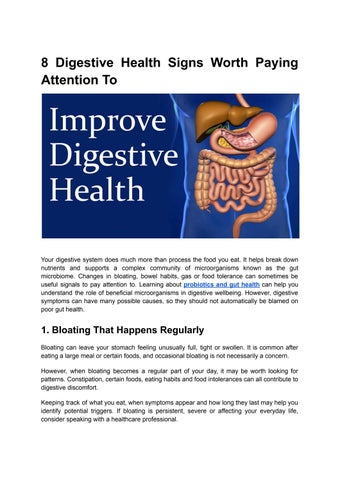
8 Digestive Health Signs Worth Paying Attention To
Your digestive system does much more than process the food you eat. It helps break down nutrients and supports a complex community of microorganisms known as the gut microbiome. Changes in bloating, bowel habits, gas or food tolerance can sometimes be useful signals to pay attention to. Learning about probiotics and gut health can help you understand the role of beneficial microorganisms in digestive wellbeing. However, digestive symptoms can have many possible causes, so they should not automatically be blamed on poor gut health.
1. Bloating That Happens Regularly Bloating can leave your stomach feeling unusually full, tight or swollen. It is common after eating a large meal or certain foods, and occasional bloating is not necessarily a concern. However, when bloating becomes a regular part of your day, it may be worth looking for patterns. Constipation, certain foods, eating habits and food intolerances can all contribute to digestive discomfort. Keeping track of what you eat, when symptoms appear and how long they last may help you identify potential triggers. If bloating is persistent, severe or affecting your everyday life, consider speaking with a healthcare professional.
2. Noticeable Changes in Bowel Movements Your usual bowel pattern is individual to you, which means there is no single definition of “normal” for everyone. Still, a noticeable and ongoing change can be worth investigating. Constipation, loose stools, diarrhoea or alternating bowel patterns may occur after dietary changes, illness, travel, stress or changes in routine. A diet lacking enough fibre and fluids may also contribute to constipation. Eating more fibre-rich foods gradually, drinking sufficient water and staying physically active can support regular bowel function. If a significant change continues, professional advice can help determine the possible cause.
3. More Gas Than You Normally Experience Gas is a natural part of digestion. It can form when bacteria in the digestive tract break down certain carbohydrates, while swallowing air when eating or drinking can contribute as well. The important thing is to notice changes from your usual pattern. Frequent or uncomfortable gas may sometimes be related to particular foods, fizzy drinks, eating quickly or individual food sensitivities. Instead of immediately removing large numbers of foods from your diet, consider keeping a simple food diary. Recording meals alongside symptoms can make possible patterns easier to recognise.
4. Abdominal Discomfort After Eating Digestive discomfort after meals can include cramping, pressure, fullness or a general feeling that something does not feel right. There are many possible reasons for these sensations. Eating large portions, eating too quickly, food sensitivities and different digestive conditions can all potentially contribute. Simple habits such as slowing down while eating and paying attention to portion sizes may help some people. Building meals around a variety of nutritious foods can also support overall digestive wellbeing. Persistent or severe abdominal pain should not simply be assumed to be a gut microbiome issue. If discomfort continues or interferes with normal activities, seek appropriate professional advice.
5. Unexplained Changes in Body Weight Unexpected weight loss or weight gain can happen for many different reasons. Changes in diet, physical activity, stress and other health factors may all influence body weight.
Although digestive health can form part of the wider picture, unexplained weight changes should not automatically be attributed to the gut. If your weight is changing without an intentional adjustment to your eating or exercise habits, it is sensible to discuss the change with a healthcare professional. They can consider the broader range of possible causes.
6. Foods You Previously Tolerated Feel Different Another change you may notice is that certain foods begin causing symptoms that you did not previously experience. These might include bloating, gas, abdominal discomfort or altered bowel movements after eating. A reaction to a particular food does not necessarily mean that your gut microbiome is unhealthy. Food intolerances and sensitivities can have several different causes. If you repeatedly notice symptoms after particular meals, write down the foods involved and what you experience afterwards. This information can be useful when discussing the issue with a healthcare professional or registered dietitian. Avoid unnecessarily removing numerous food groups without professional guidance, as restrictive diets can make it more difficult to maintain adequate nutritional variety.
7. Feeling Tired or Sluggish Low energy is sometimes associated with digestive health in online discussions, but tiredness has many possible explanations and is not a specific indicator of poor gut health. Insufficient sleep, stress, dehydration, dietary factors, nutrient deficiencies, lifestyle habits and underlying health conditions can all affect energy levels. Rather than focusing on one possible explanation, consider your overall routine. Eating a varied diet, drinking enough fluids, remaining physically active and maintaining a consistent sleep schedule can all support general wellbeing. If ongoing tiredness is affecting your daily activities, speak with a healthcare professional to help identify the underlying cause.
8. Your Overall Digestion Feels Different Not every digestive change comes with one obvious symptom. Sometimes you simply notice that your digestion does not feel the same as it used to. Meals may leave you feeling uncomfortable more often, bowel movements may become less predictable, or foods you previously enjoyed may seem harder to tolerate.
These changes do not automatically mean you have “bad” gut health. However, a persistent change from your usual digestive pattern is worth noticing. Looking at your diet, lifestyle and overall symptoms together can provide a more useful picture than focusing on one isolated sign.
Everyday Ways to Support Digestive Wellbeing
Supporting your gut does not have to involve a complicated routine. Start with consistent everyday habits that promote overall health. ● ● ● ● ● ● ● ● ●
Eat a varied selection of fruits and vegetables. Include fibre-rich foods such as whole grains, beans and lentils. Add nuts and seeds where suitable. Drink enough water throughout the day. Include suitable fermented foods if you tolerate them. Stay physically active. Aim for regular, quality sleep. Find practical ways to manage everyday stress. Avoid relying too heavily on highly processed foods.
If you are increasing your fibre intake, do so gradually. A sudden increase can temporarily cause additional gas or bloating, particularly if your current diet is relatively low in fibre.
Can a Gut Health Supplement Be Useful? A nutritious diet should remain the foundation of a healthy lifestyle, but some people choose supplements as an additional source of support. Depending on the formulation, these products may contain probiotics, prebiotics, fibre or other ingredients used in digestive wellness routines. If you are looking for a convenient addition to your routine, Yumi’s Happy Gut Bundle is one option to explore. As with any supplement, check the ingredients, serving instructions and intended use before adding it to your routine.
Supplements should complement healthy habits rather than replace a balanced diet. If you take medication, have an existing health condition or are uncertain whether a particular supplement is suitable for you, speak with a qualified healthcare professional.
When Should You Speak to a Healthcare Professional? Most occasional digestive symptoms are not necessarily a sign of something serious. However, persistent, severe or unexplained symptoms deserve appropriate attention. Seek professional advice if you experience ongoing abdominal pain, blood in your stool, unexplained weight loss, significant or lasting changes in bowel habits, severe recurring digestive symptoms or problems that interfere with everyday life. It is especially important to seek advice when symptoms are new, becoming worse or occurring alongside other concerning changes.
Final Thoughts Your digestive system can provide useful clues when something changes, but symptoms such as bloating, gas, bowel changes or food sensitivities can have many different causes. They do not automatically mean that your gut health is poor. Instead of searching for one “perfect” food or supplement, focus on sustainable habits. Eat a diverse, fibre-rich diet, drink enough water, stay active, prioritise sleep and manage everyday stress. Pay attention to changes in how your body responds to food, and seek professional guidance when symptoms persist or cause concern.