Yasmin Alessandra Jasahui Ocampo Selected works 2018-2025 PORTFOLIO
PANCE RIVER ECOLOGICAL TRANSVERSALITIES
PARQUE DE LA EXPOSICIÓN HISTORIC CENTER OF LIMA
POST-COVID-19 MARKETS RESILIENT MARKETS
p. 03-06
- current
p. 07-09
p. 10-13
EXPERIMENTAL SCHOOL OF GASTRONOMY AND URBAN FAIR OF LIMA
COLLEGE OF ARCHITECTS OF PERU MULTI-PURPOSE HALL p. 14-17
22-24
This portfolio presents a selection of academic and professional work, that reflect how I explore the relationship between architecture, urban systems and landscape processes— works shaped by ongoing questioning, unexpected conditions, and carefully studied contexts. Together, they form a multiscalar approach that navigates diverse architectural, urban, and environmental dimensions.
Each project carries its own challenges, and their differences call for strategies drawn from urban design, construction logic, bioclimatic thinking, and spatial experimentation.
Yet all six share a common vision: improving the quality of human experience through a socially grounded approach—one that emerges from a continuous cycle of creativity, exploration, and refinement, attuned to a changing world and committed to the responsible use of its resources. MANIFESTO
BARRANCO MUNICIPAL STADIUM
Authors: Team work
+ + + Luis Tombé
Yasmin Jasahui
Designer- Joint authorship
Designer- Joint authorship
Natalia Hernández
Designer- Joint authorship
Title of the project:
“Ecological linkages”
Landscape intervention of the Pance River Eco-park
Pontificia Universidad Javeriana de Colombia
Location: Institution:
Pance Park, Cali/ Valle - Colombia
Date of the project:
June 2024
Context of the project:
The project emerges from the misalignment between fluvial dynamics and recreational occupation along the Pance River, focusing on the understanding and reinforcement of transversal relationships within the middle river system.
CONTEXT landscape framework
Site
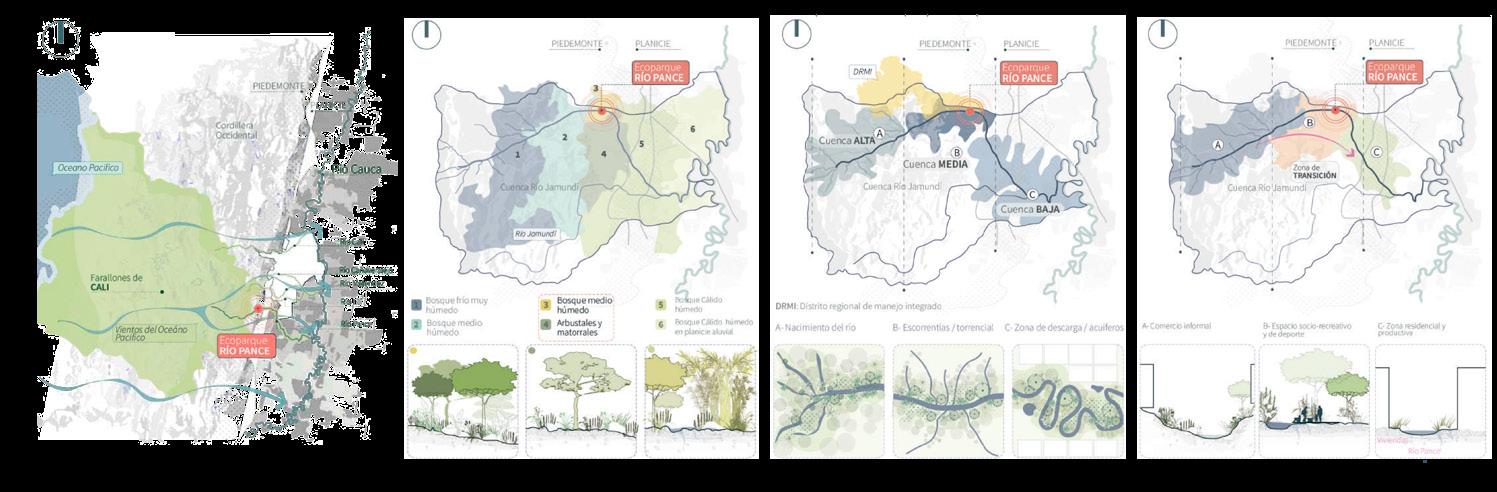
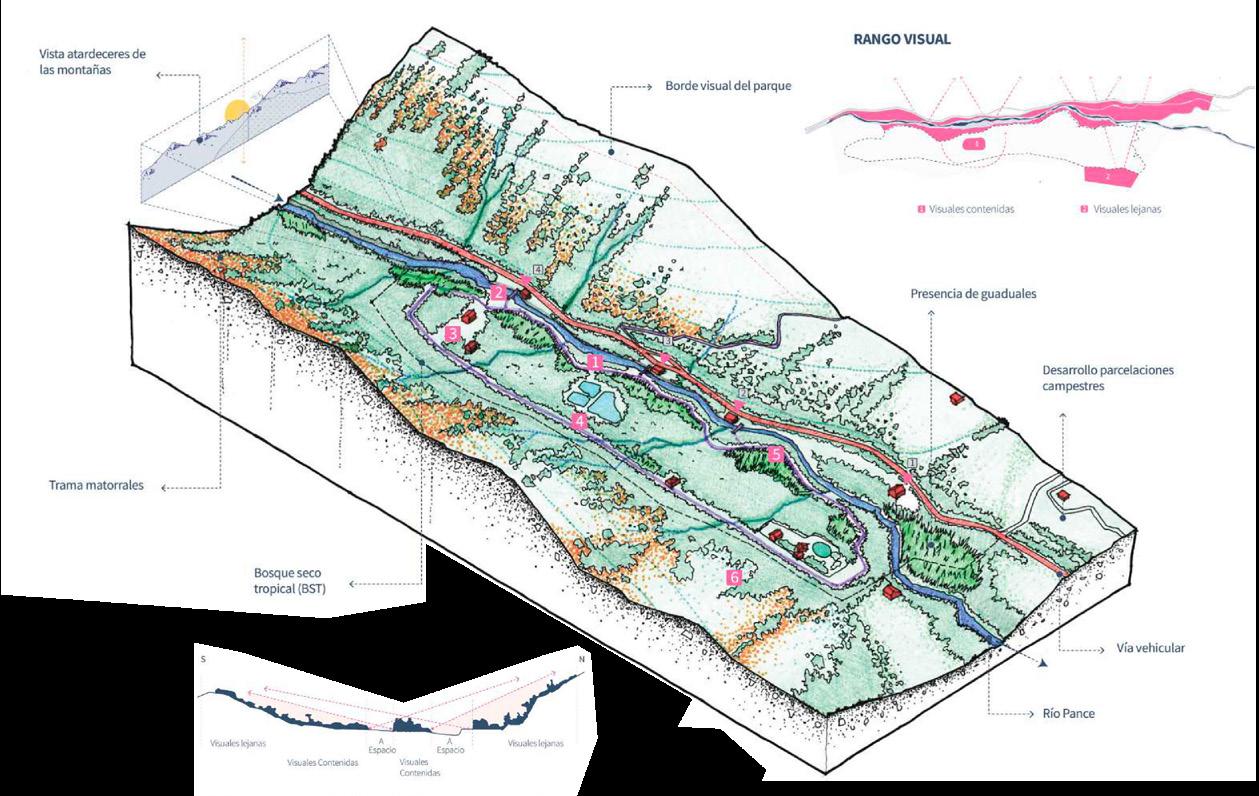
The Pance River Eco-Park is characterized as a landscape in transition between the Farallones mountains and the Cauca River valley.
This condition is expressed through the presence of shrublands, tropical dry forest, and a gentle topography shaped by runoff flows.
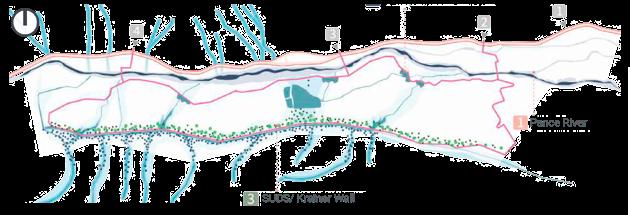
Hydrological dynamics operate mainly in a transverse direction across the site.
Design Principles
DESIGN PRINCIPLES + General Location + Land Cover + Hydrological Landscape + Land Use & Landscape Potential + Transversality
Continuity
Landscape Potential
DESIGN STRATEGIES
Transversality/ Escorrentías
Landscape Analysis
LANDSCAPE SYSTEMS ANALYSIS STRATEGIES
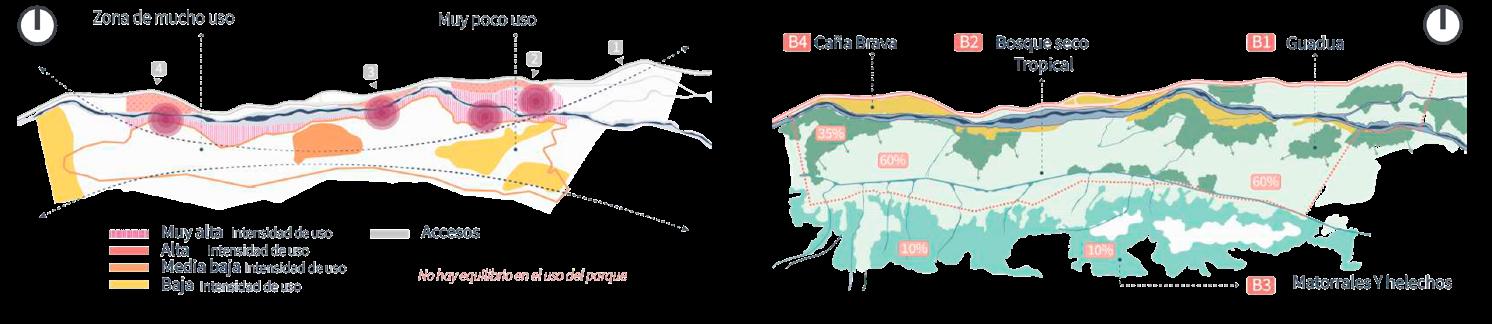
+ Study of usage intensities.
High ecological and landscape values wasted
+ Existing vegetation study
Spatial diversity and uncontrolled growth of bamboo groves
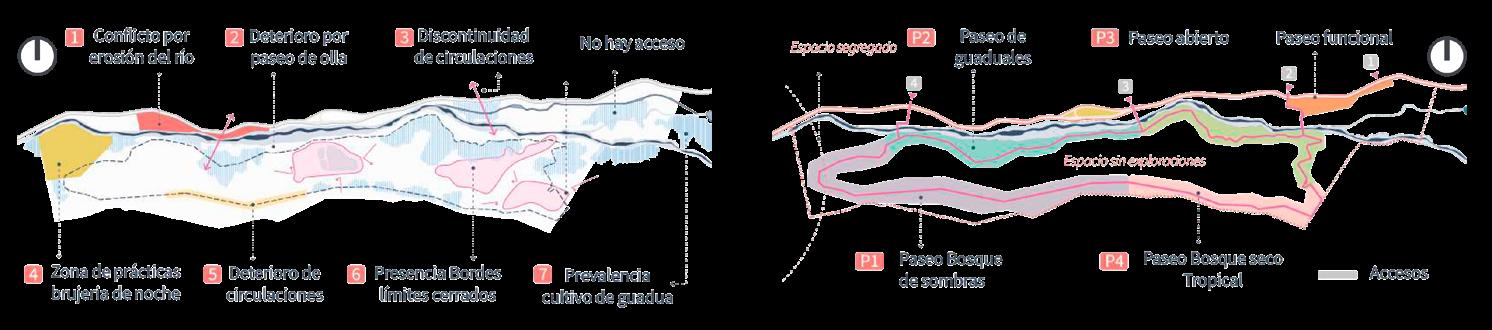
+ Main landscape conflicts
Lack of coordination between natural dynamics and recreational use of the river
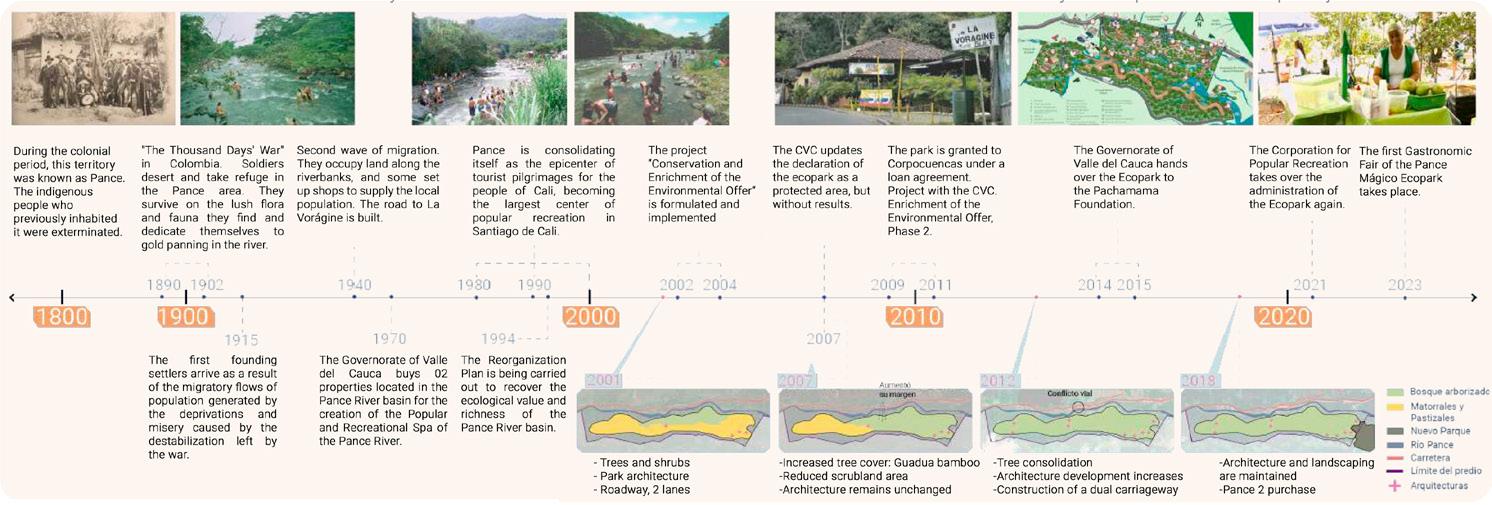
LANDSCAPE EVOLUTION ANALYSIS
Forest and river with few changes. (Low investment)
+ Study characterizing routes and access points
Little diversity of routes and no surprises or scenic highlights.
Escorrentías + Active Edges/ Bordes + Immersion
transversal guided by organizing spaces landscape
Recognizing that landscapes transcend anthropogenic boundaries, this strategy consolidates the park’s edges by reinforcing their natural and human vocations and ensuring ecological continuity with the surrounding territory.
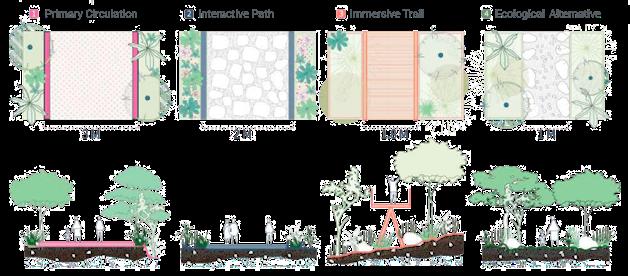
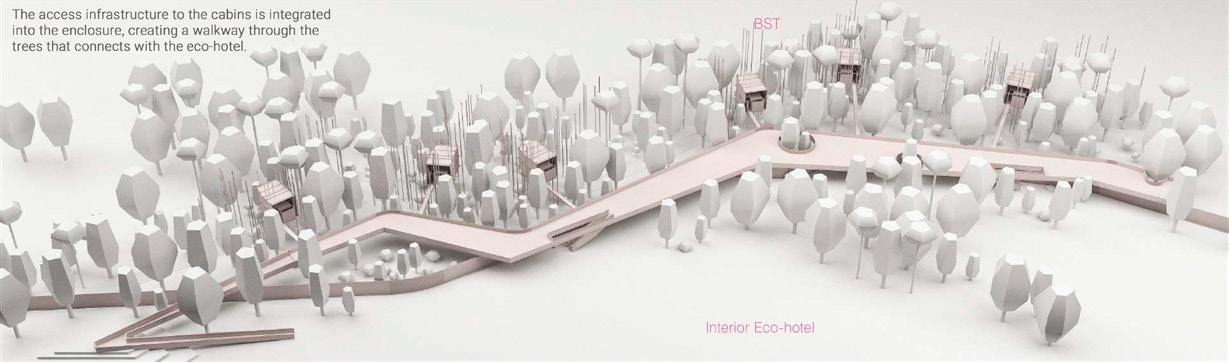
This strategy proposes sensitive immersion into the interior forest through elevated paths that preserve the understory while allowing visual engagement with the canopy and connecting both sides of the park.
Despite its strong urban memory since its inauguration in 1960, the park has not undergone interventions aimed at ecological appreciation beyond its recreational uses along the riverbanks.
As a result, opportunities related to birdwatching, scenic views, arboreal enclosures, forest clearings, and the rich ecological diversity present in these large-scale ecotones remain largely underutilized
DESIGN PROPOSAL
River Landscape
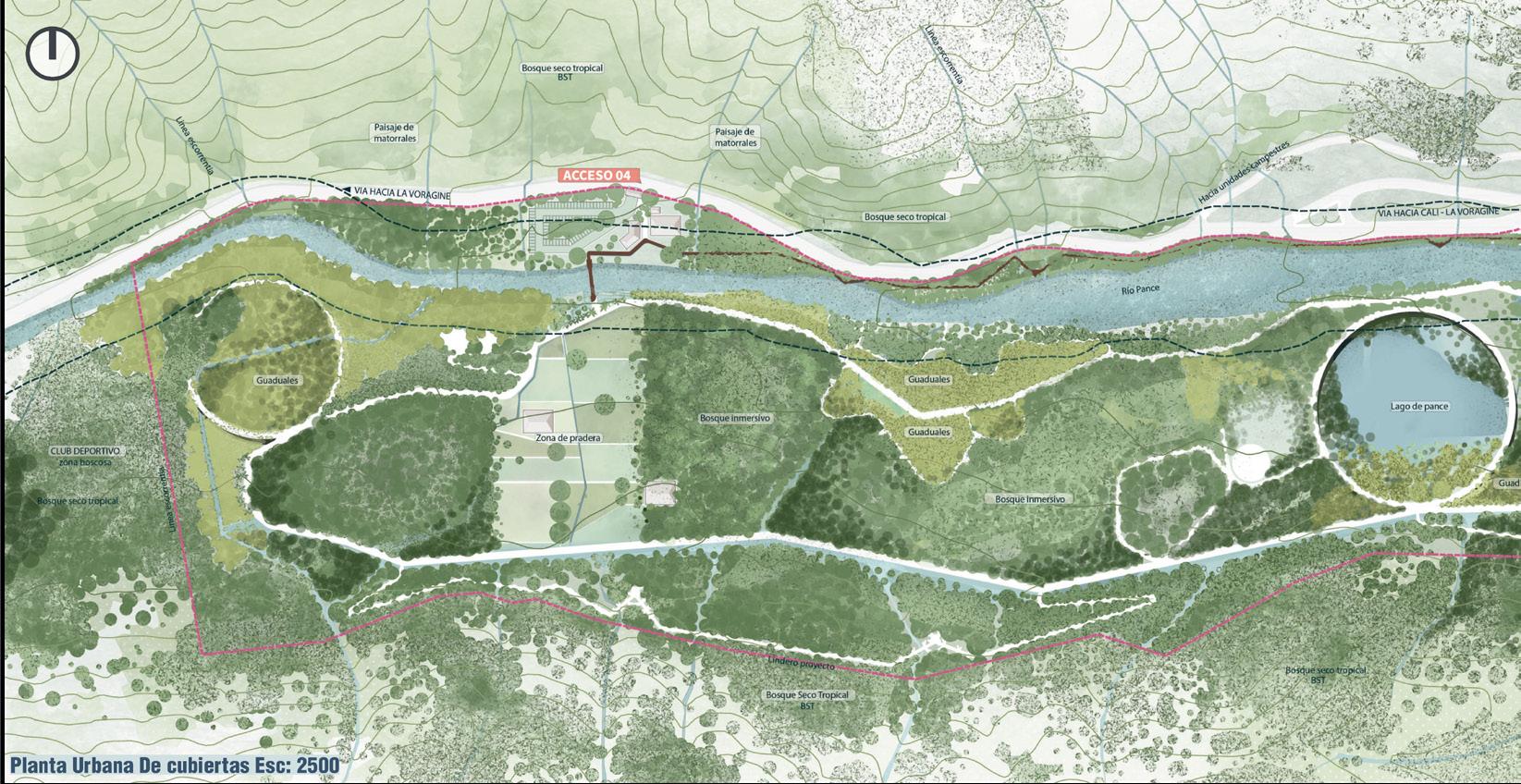
Urban Roofscape Plan
Landscape Analysis
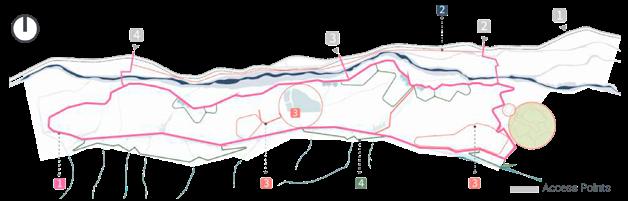
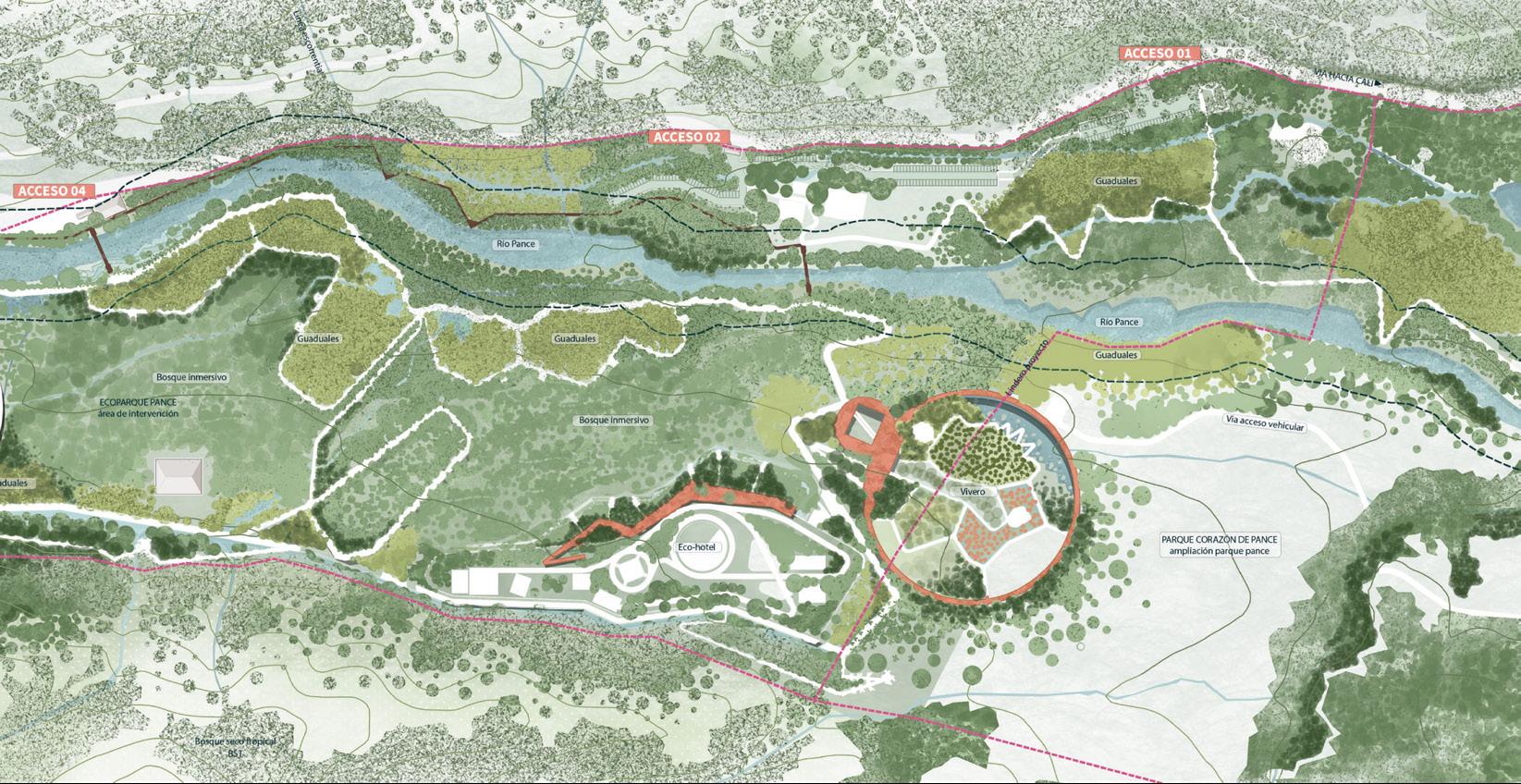
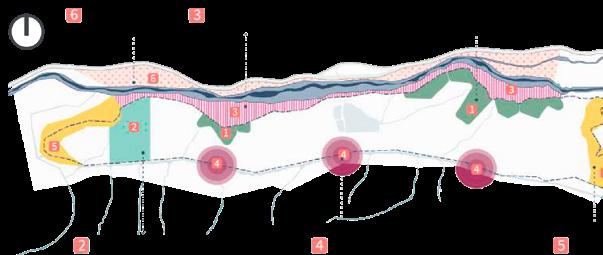
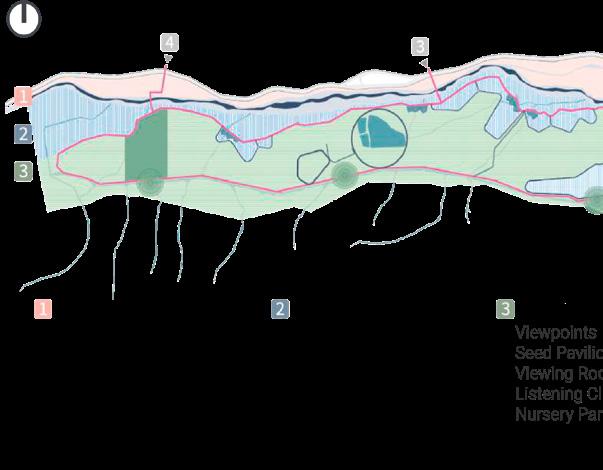
PROPOSED PATHS & GATHERING AREAS
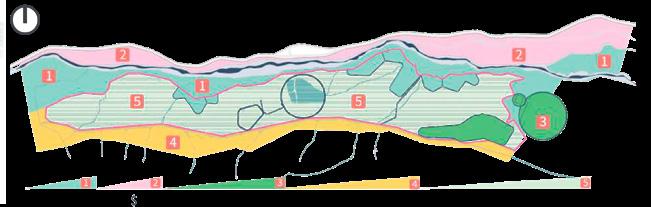
Project Intervention Strategy Layer
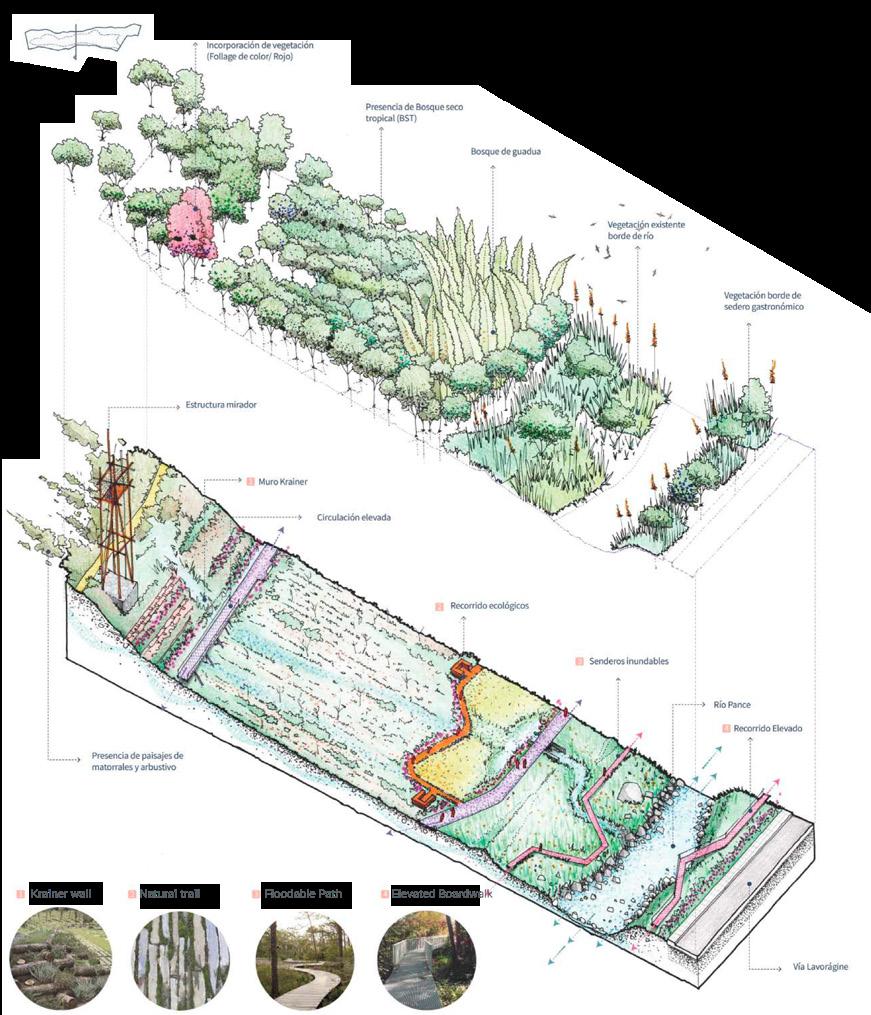
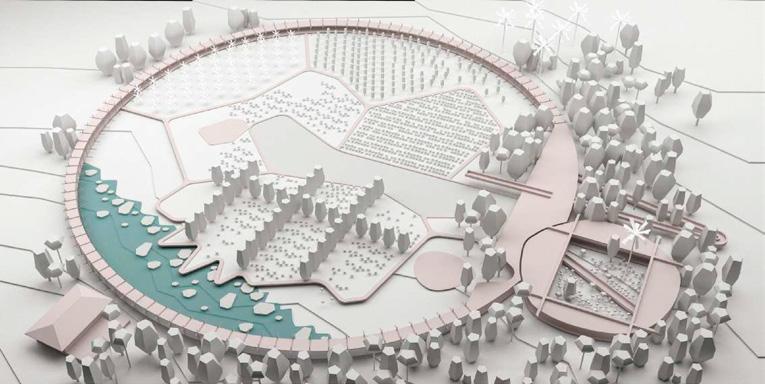
The proposal aims to create a series of scenarios, spatial enclosures, and interpretive tools that promote knowledge, awareness, and appreciation of the landscapes present in the eco-park. This is achieved through subtle elevated structures and infrastructures inspired by local natural geometries.
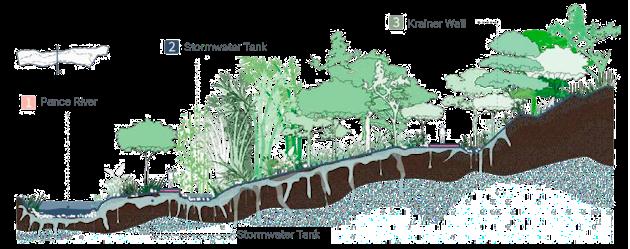
+ Runoff Attenuation Strategy.
Three gathering areas, three pauses
+ Surface Runoff Section
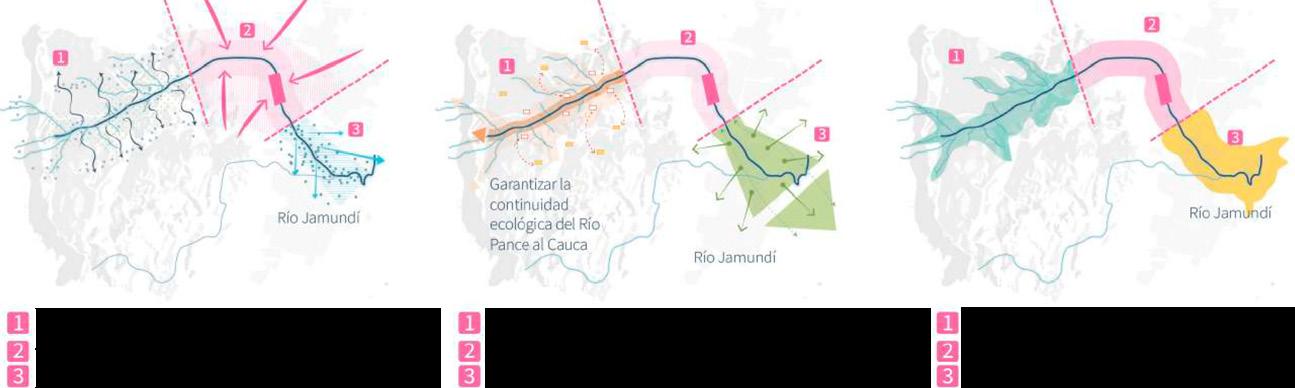
Consolidation of transverse runoff flows
+ Proposed Circulation System
Greater spatial variety, enhanced ecological value
+ Proposed Circulation System
Greater spatial variety, enhanced ecological value
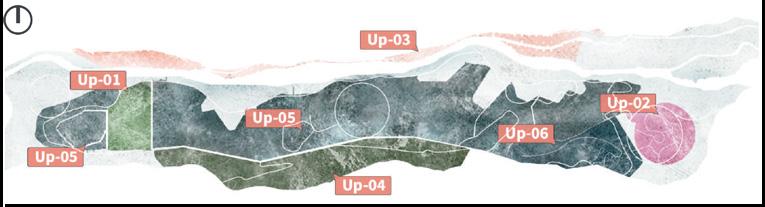
+ Proposed Landscape Units Plan
+ Project Development Phases
+ Landscape Units Catalogue
+ Proposed Landscape Units Plan
From basin-scale policies to site-specific design strategies, the project seeks to understand and strengthen he transverse relationships that characterize the middle section of the river
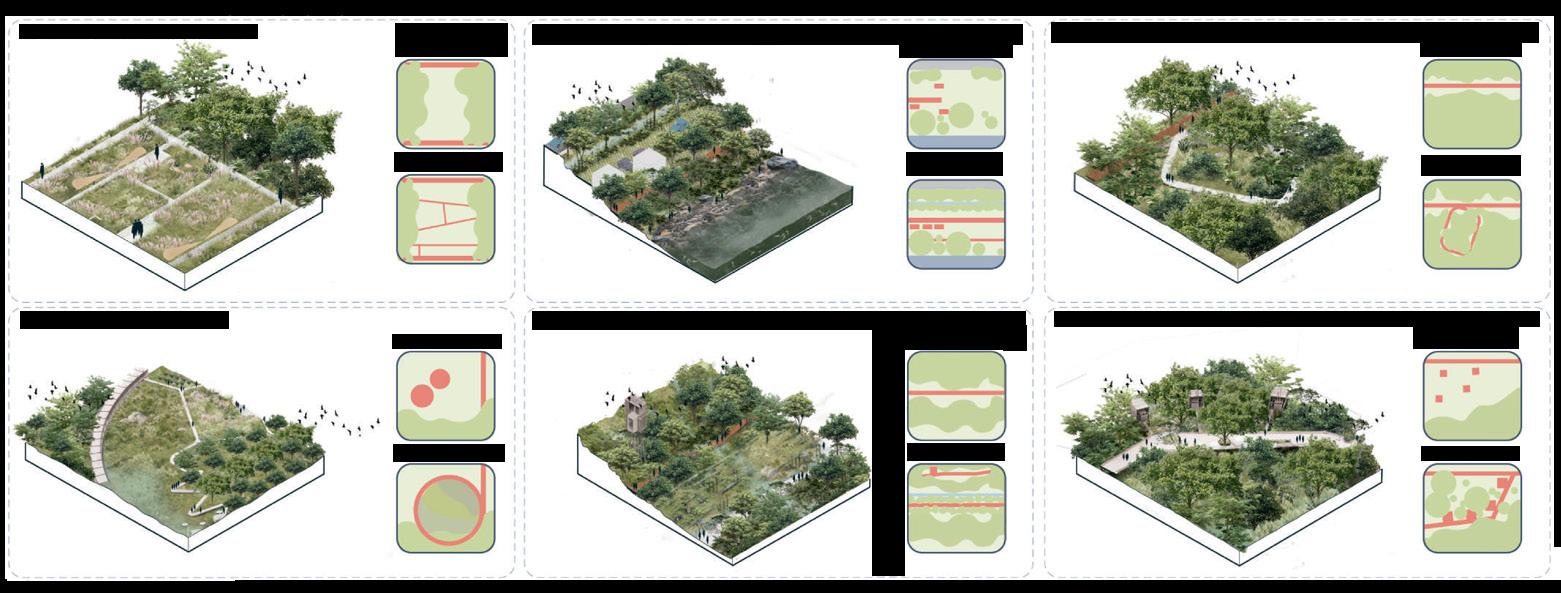
UP-01: Shrubland Clearing Unit
UP-02: Nursery Park Unit
UP-04: Scenic Outlook Landscape Unit
UP-05: Natural Immersion Unit
UP-06: Inhabited Forest Unit
UP-03: Interactive and Gastronomic Landscape Unit
DESIGN PROPOSAL
River Landscape
+ Planting Design Strategies
+ Proposed Landscape Functions, Program & Spatial
Vegetation
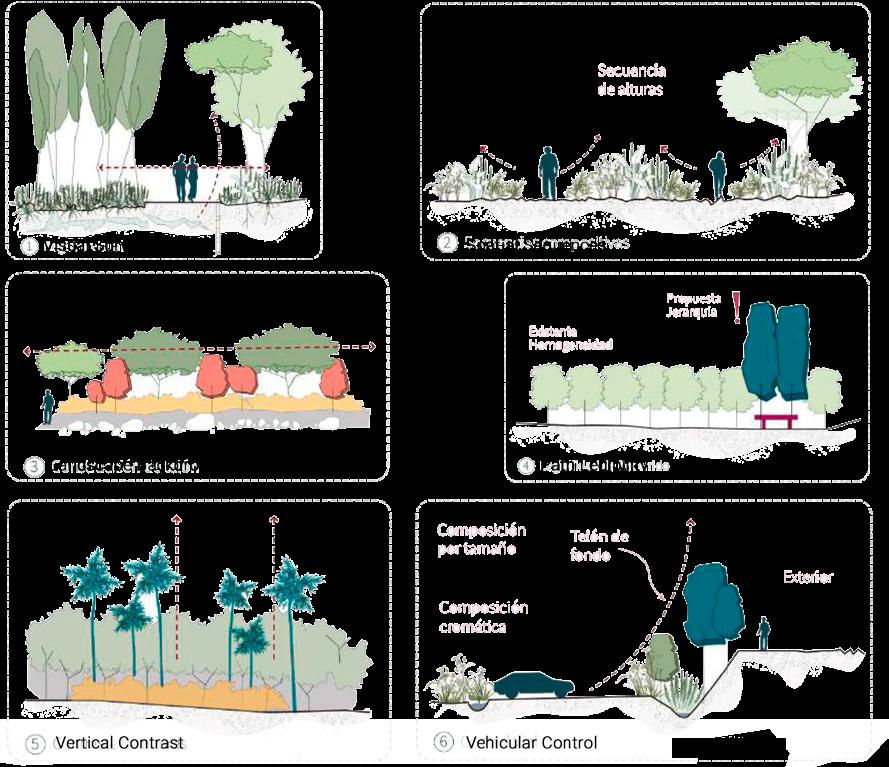
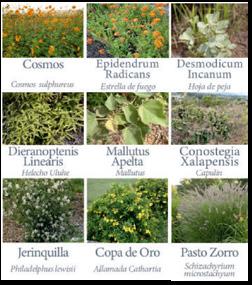
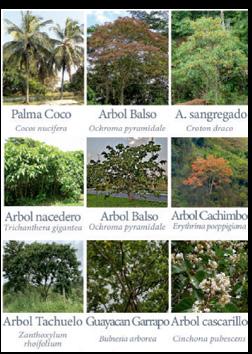
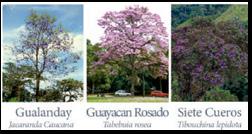
The criteria for plant selection are organized into three main groups:
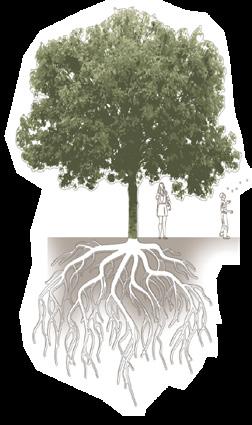
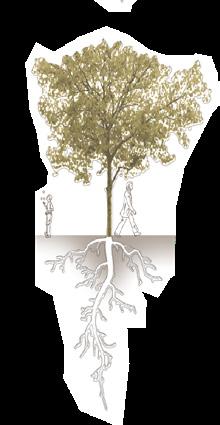
1.Ecological tree species intended to maintain and restore the ecological value of the site.
2.Tree species with red or reddish foliage used to enhance the legibility of the landscape.
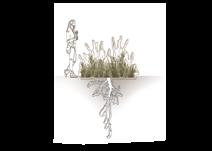
3.Shrub vegetation typical of the tropical dry forest foothills, introduced as remnants of past landscape conditions.
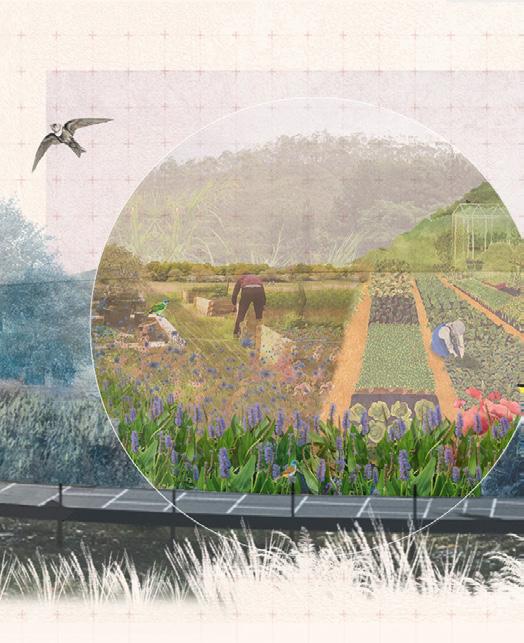
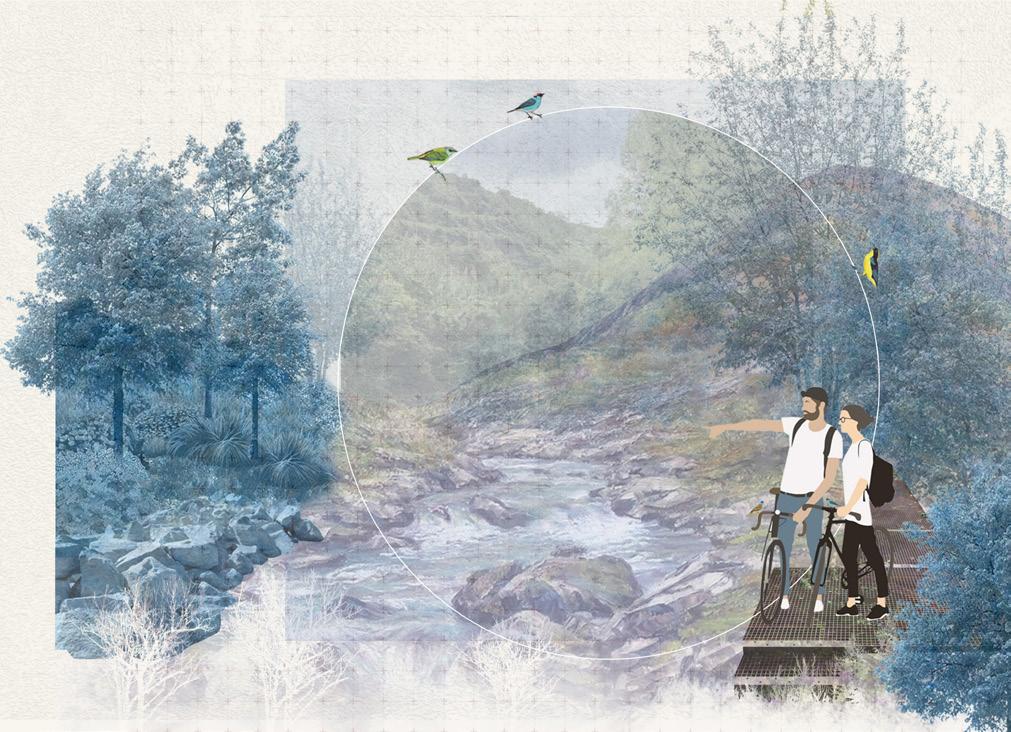
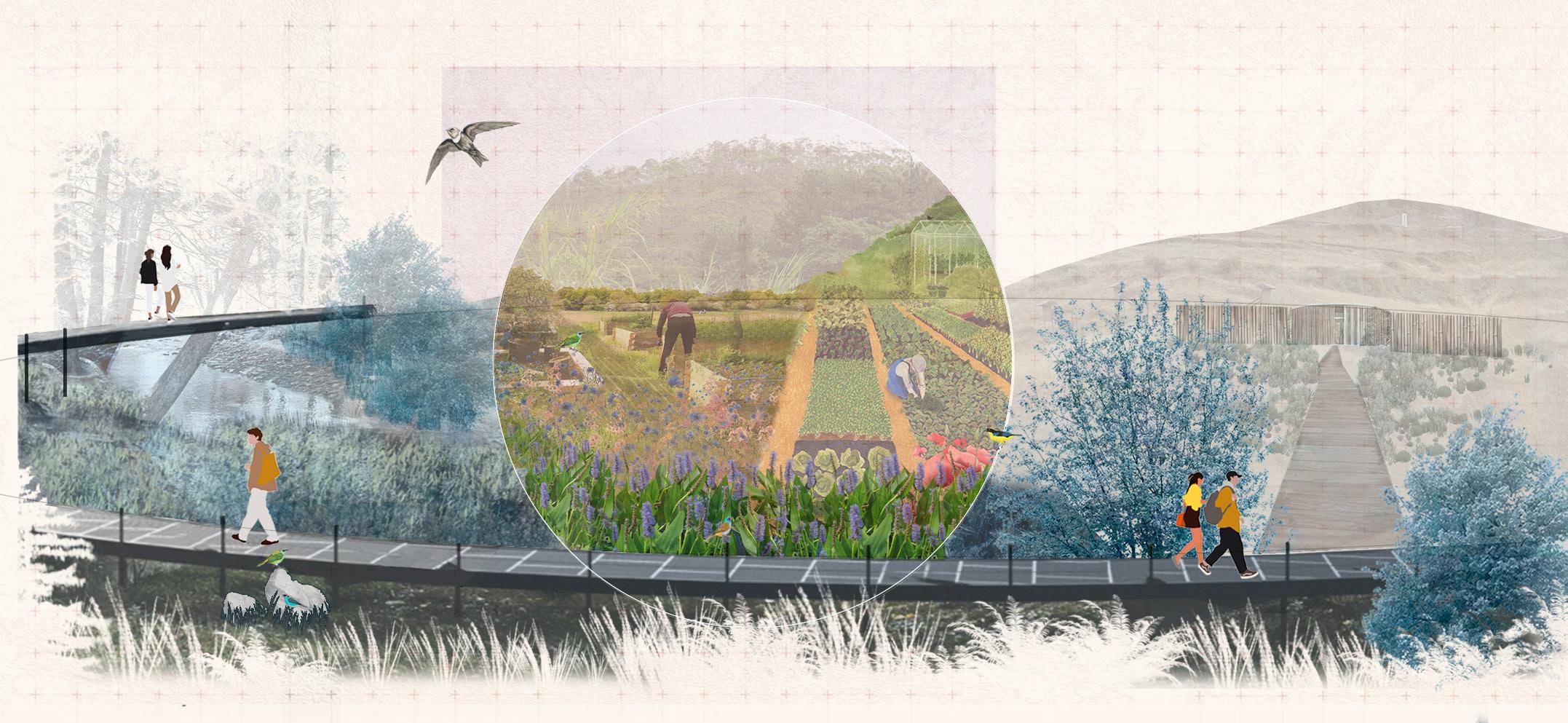
collage 01: riverside intervention view
collage 03: nursery park view
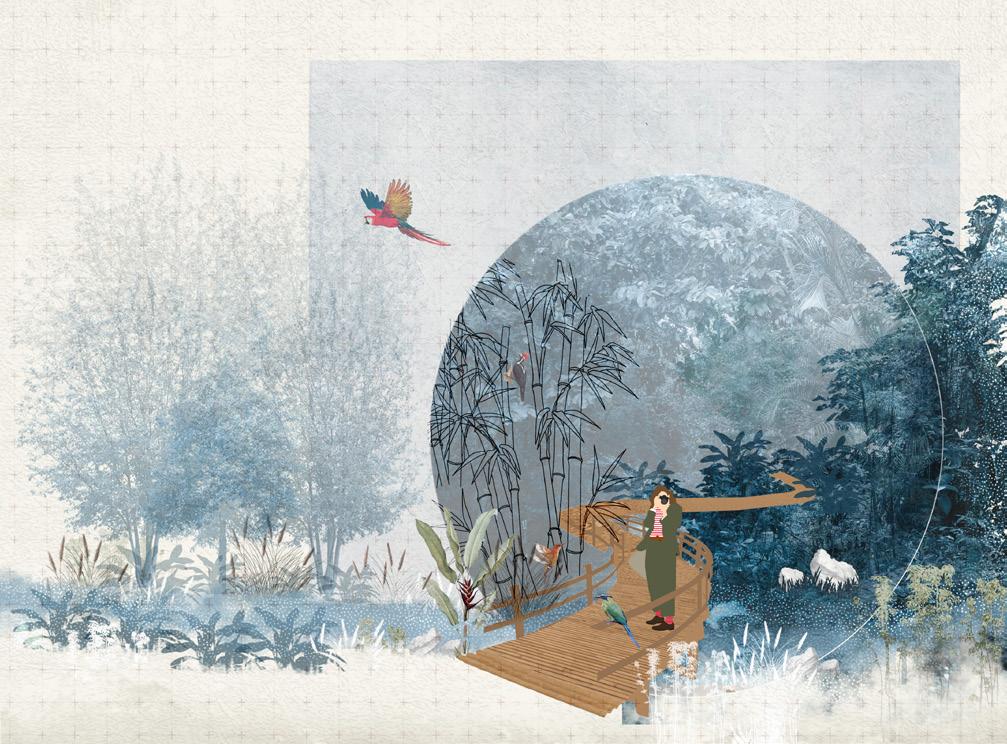
collage 02: inmersive forest view
Design Strategies
+ Planting Design Catalogue
Landscape
Given the challenge of intervening in a site that does not require additional vegetation, the planting strategy focuses on selective interventions that bring order and legibility to the landscape. Additionally, the creation of the Nursery Park makes the process of ecological restoration visible, allowing visitors to participate in and understand the regeneration of the ecosystem.
Architecture
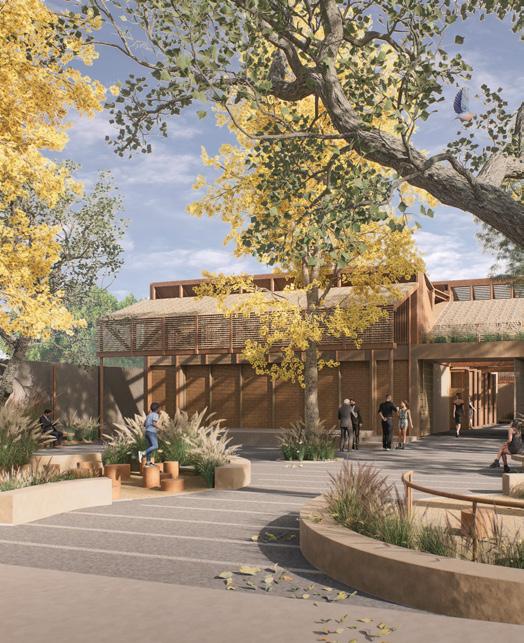
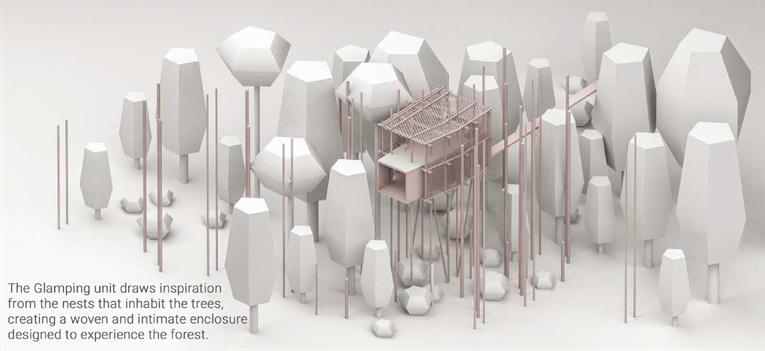
The proposed architectural elements make use of local materials to create spatial enclosures inspired by the geometries of the site.
In addition to the existing path system, new circuits are introduced with clear destinations, designed to remain sensitive to the ecological dynamics of the forest.
+ Detail – Nesting Enclosure Structure
+ Detail – Nursery Park Planting
+ Detail – Elevated
+ Vegetation selection
Canopy
Color Planting
Team:
Yasmin Jasahui Ocampo
Project Coordinator
PROLIMA
Brandon Andía Concha
Public Space Team coordinator
PROLIMA
Luis Martin Bogdanovich
General Manager
PROLIMA
Title of the project:
Enhancement and Revitalization of Parque de la Exposición, Lima
Juan C. Montalvo Figueroa
Project manager
Juan José Quiun Montes
Architecture manager
Urieta Chihuantito Gibaja
Conservation and restoration manager
Context
Maribel Higa Shiroma
Isabel Loredo Pecho
Carlos Herrera Mogollon
Francis Torres Sarmiento
Sebastián Aste Cannock
Institution:
PROLIMA
Planning, Management and Recovery Department the Historic Center of Lima
Location:
Historic Center of Lima
Lima - Perú
Architecture team currently
Context of the project:
Transformation of Parque de la Exposición through Landscape Renewal and Heritage Restoration, reconnecting the park with the city through new public spaces and the recovery historic landmarks.
Date of the project: September 2025
STRATEGY
urban local scale
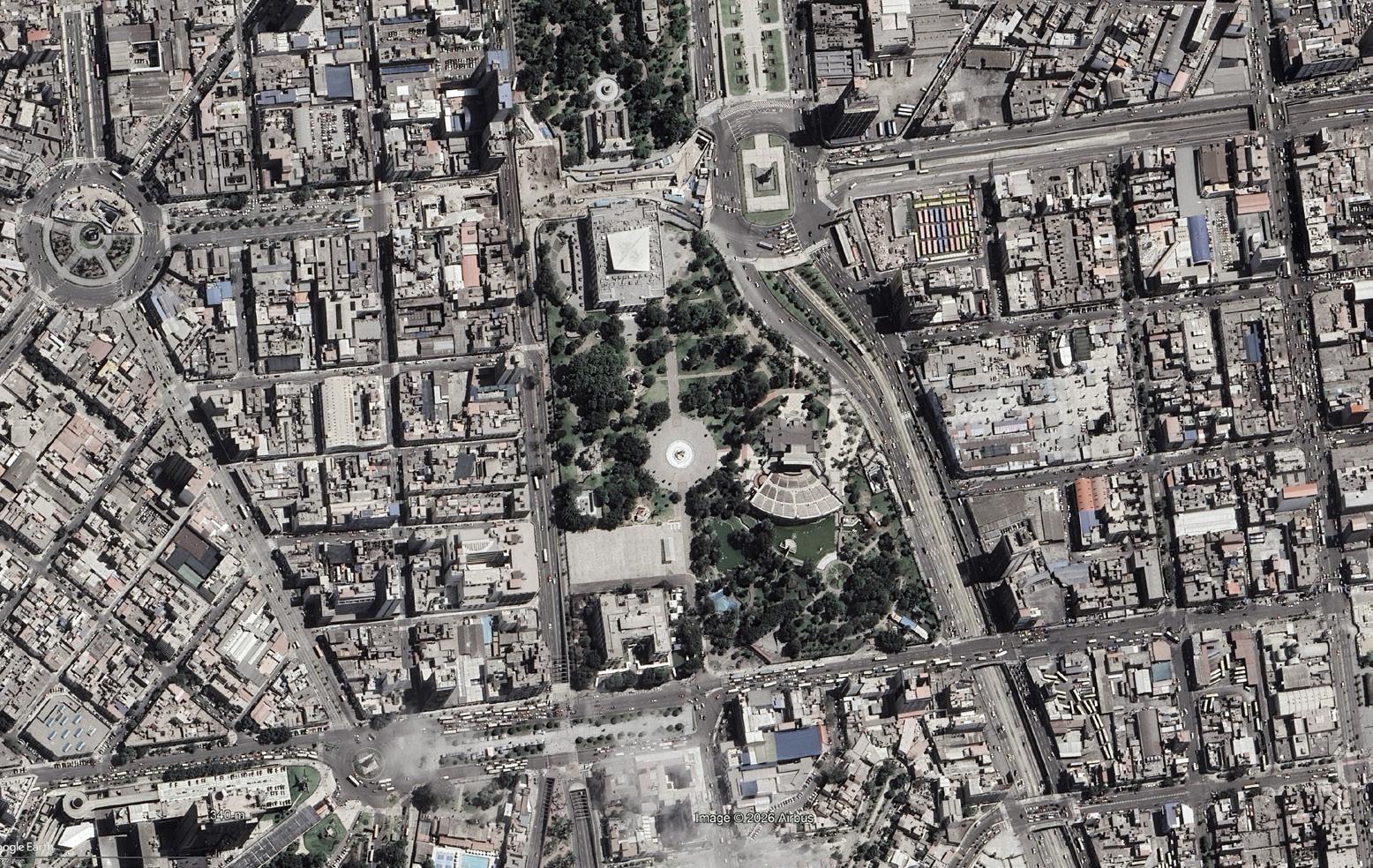
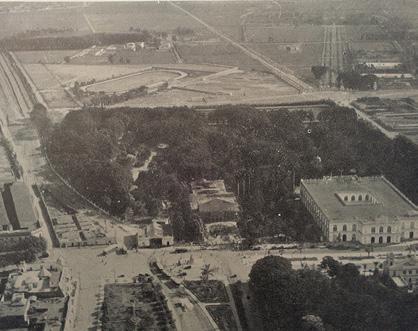
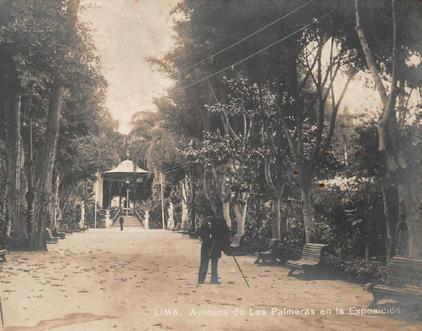
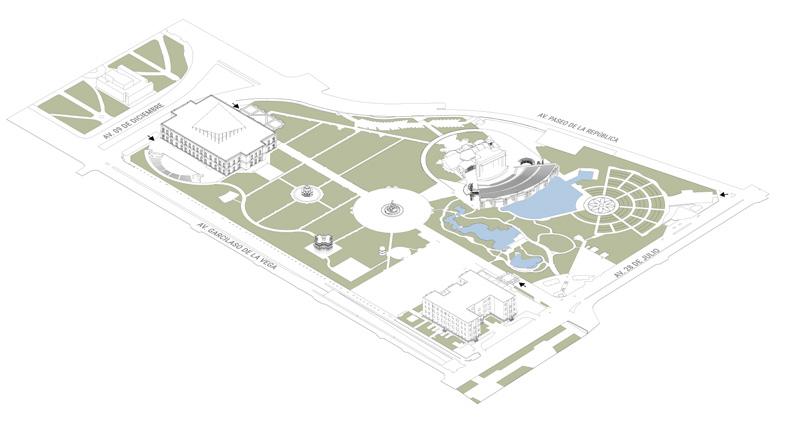
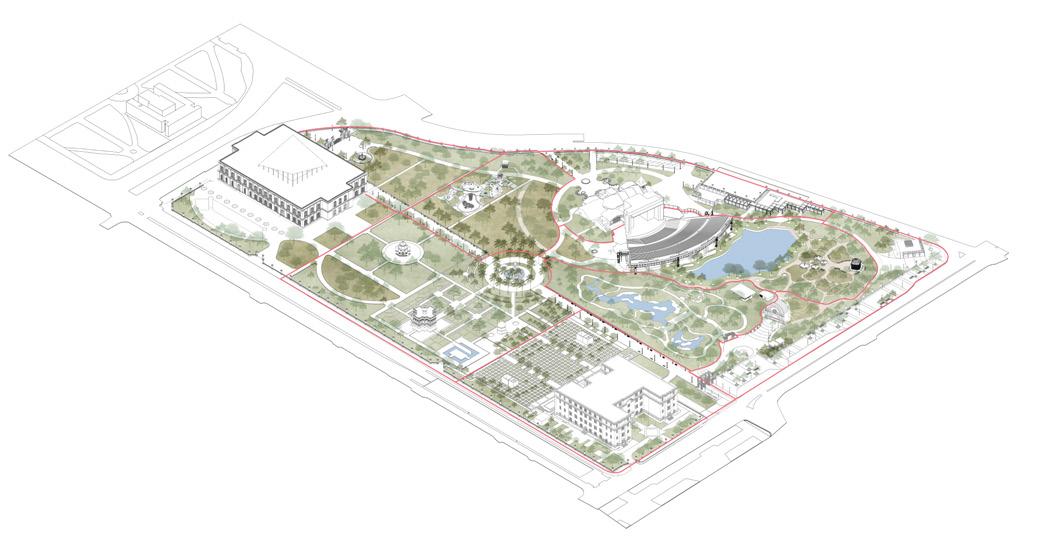
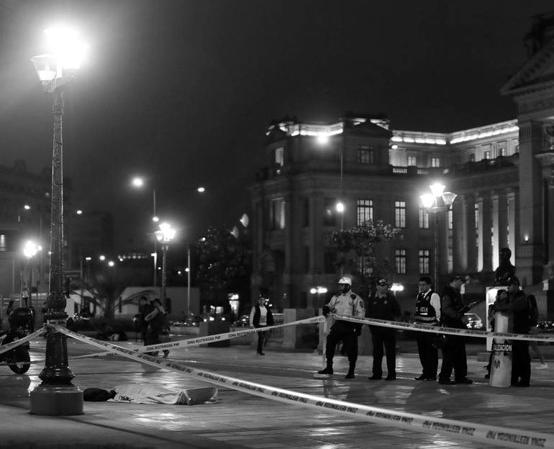
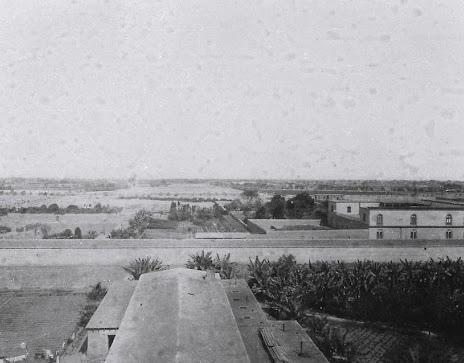
Parque de la Exposición is Lima’s first major historic park, originally conceived as a venue for public festivities, technological exhibitions, and a zoological garden. Over time, processes of urban growth have led to successive reductions and alterations, significantly shaping its present condition.
As part of the Master Plan for Lima’s Historic Center, one of the most significant projects is the restoration of this emblematic public space. The proposal seeks to recover its historical value through an ecosystemic, ecological, and contemporary perspective, aiming to revitalize the urban space and address Lima’s deficit of green areas.
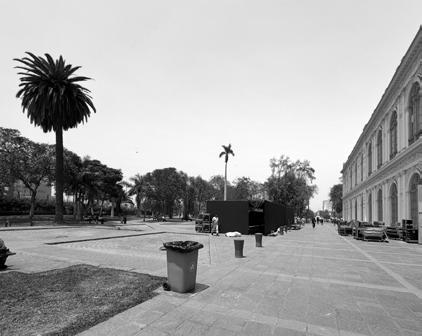
current situation
historic archive
Site view
Design Strategies
MASTER PLAN SCALE
Current Park
The Parque de la Exposición is in an acceptable condition, but it faces various urban and environmental challenges. The commission seeks to restore the park from a historical perspective focused on its monuments.
Urban Articulation
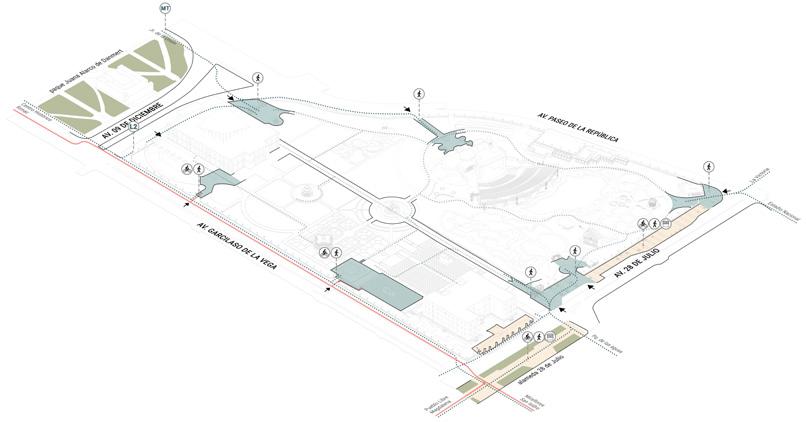
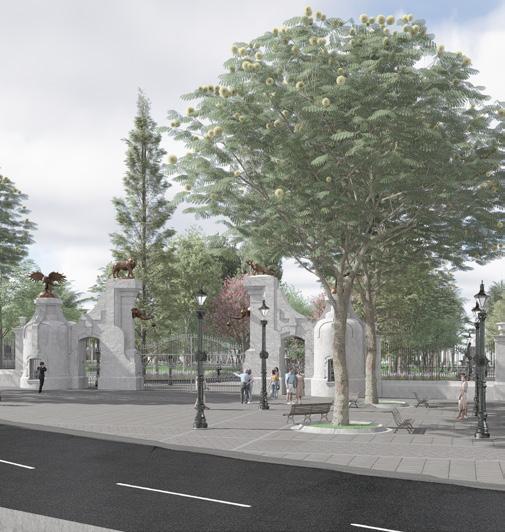
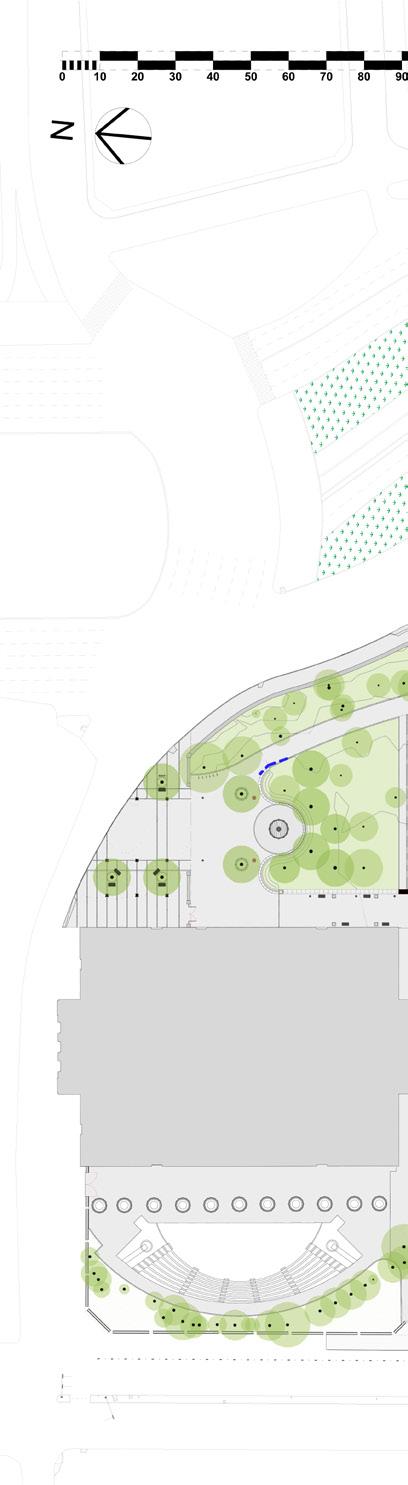
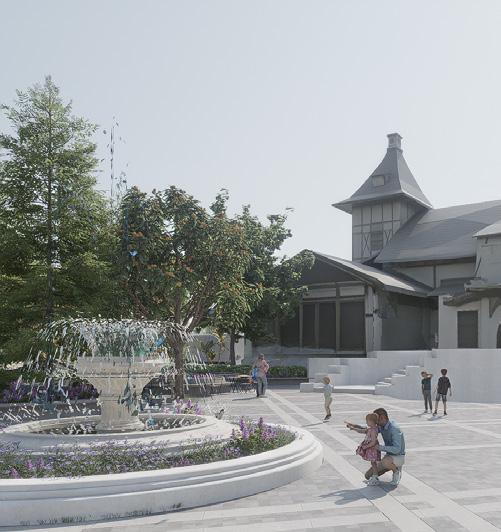
The reconnection with the city is proposed through new entrances to the park, articulated by a series of plazas that function as transitional spaces. These plazas are linked to monuments— existing or reinstated—which act as elements of welcome and as devices for the re-signification of the urban space.
Fauna as Ecological Infrastructure
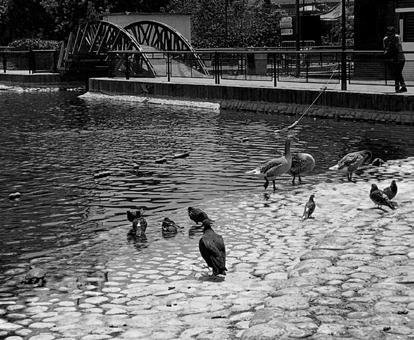
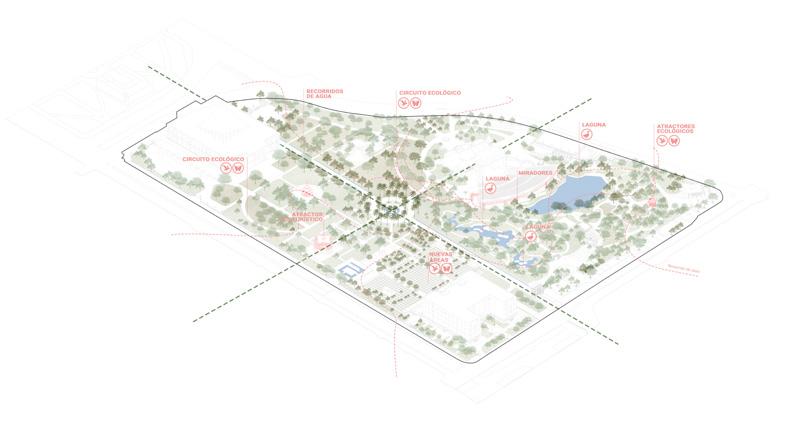
A Through fauna studies conducted in the park, we uncovered a hidden universe. The park is one of the most important habitats for birds and migratory species due to the diversity of tree species and water bodies. Therefore, the park’s structural strategy centers on them, re-signifying the landscape not only in historical terms but also in ecological ones.
The current condition of the park is characterized by problems of integration with the city, with internal areas that are disconnected and isolated despite containing potential cultural and commercial attractors, where historic elements fail to engage in dialogue with the public spaces.
Current Situation Heritage Enhancement
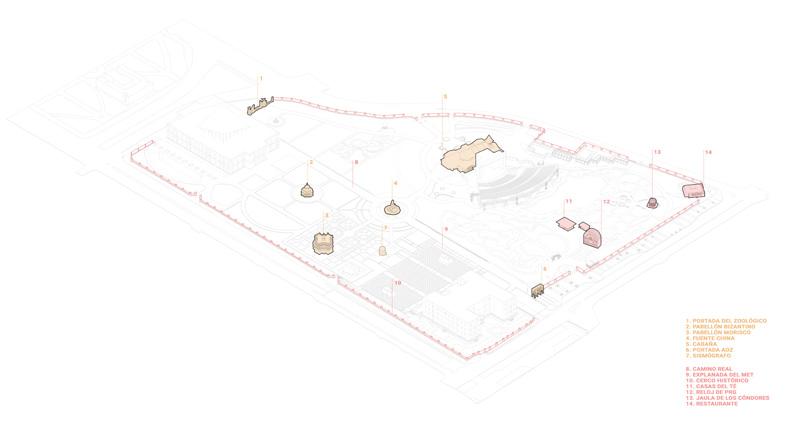
As part of a strategy for the cultural and commercial activation of the park, the heritage buildings will be restored or reinstated, some incorporating new contemporary uses aligned with the park’s overall vision, such as interpretation centers, viewpoints and birdwatching stations, restaurants, and museums.
Landscape Scenarios
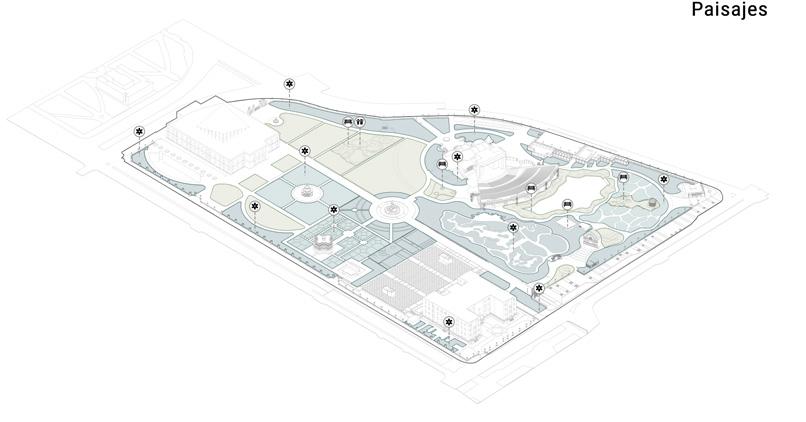
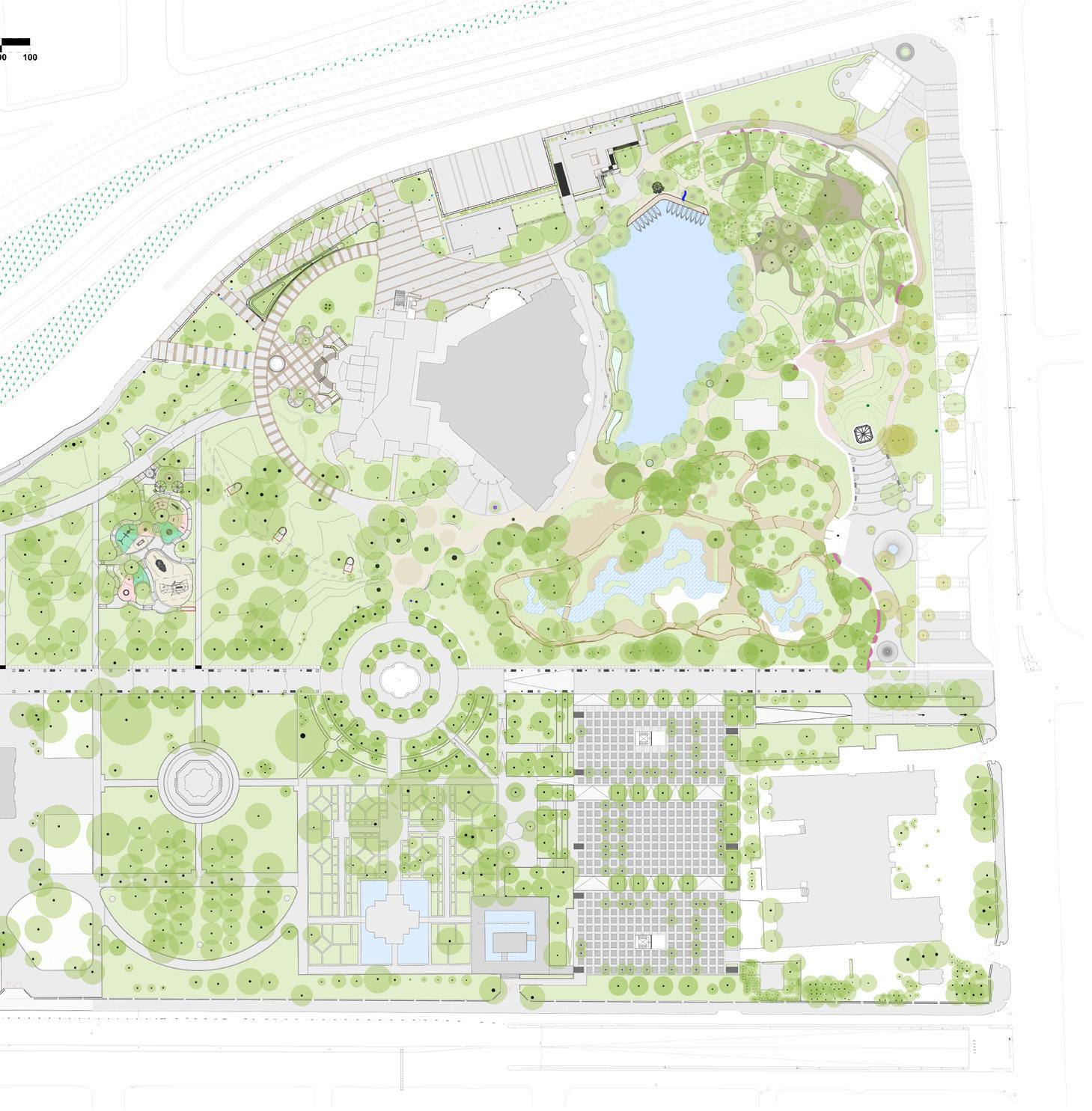
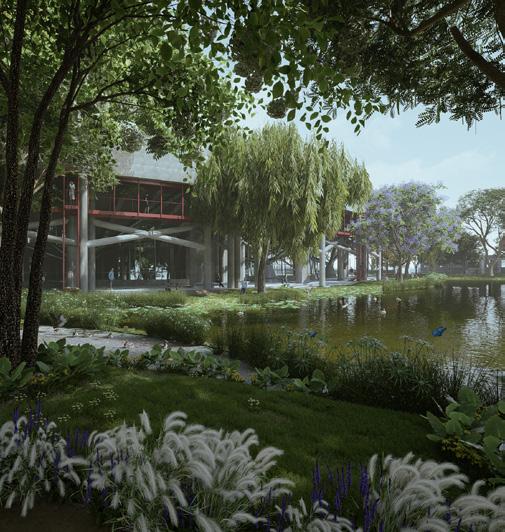
The park’s landscape scenarios are configured according to new dynamics within the park. Recreational and leisure spaces are proposed, along with water environments such as a natural lagoon, and bird observation areas in wooded zones such as the Botanical and Japanese Gardens, among others—creating diverse ecological settings at different scales.
Urban Landscape Proposal
The new Parque de la Exposición is presented as a proposal for urban revitalization through landscape, ecological, and urban design. The presence of diverse natural habitats becomes the turning point that shifts the park’s vision from a conventional historical restoration toward an ecological restoration approach, reimagining and understanding the park as an urban natural ecosystem. The proposal is conceived as an integrated system of circulation loops with different points of stay. Key interventions include the renaturalization and expansion of the lagoon, flexible plazas and gathering spaces of varying scales and dynamics, the insertion of new contemplative gardens, and the restoration of historic buildings. The project was divided into eight sectors for the detailed design of the urban proposal under an interdisciplinary team.
Colón Square Playground
Monumental Heritage Buildings Main northern entrance. A plaza is introduced as a lateral access to the MALI. The historic image of this entrance is recovered alongside the reinstatement of the gateway of the former zoo. - Sector 01
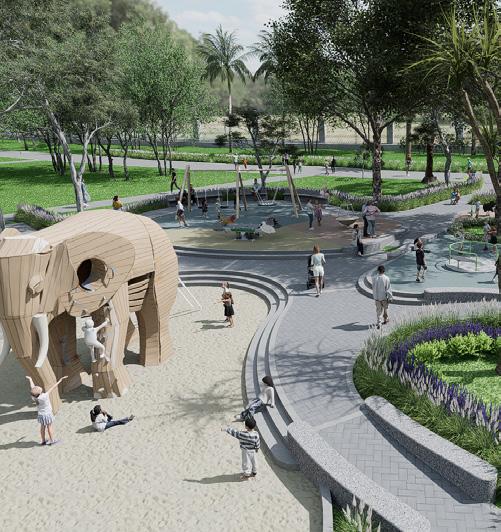
A new children’s play area is introduced, featuring a more contemporary image that recalls the life of the historic park, along with new landscape treatments along its edges. - Sector 02
The landscape proposal is complemented by the restoration and conservation of heritage buildings within the park, reactivating them with new uses as key cultural and spatial nodes.. - Sector 03
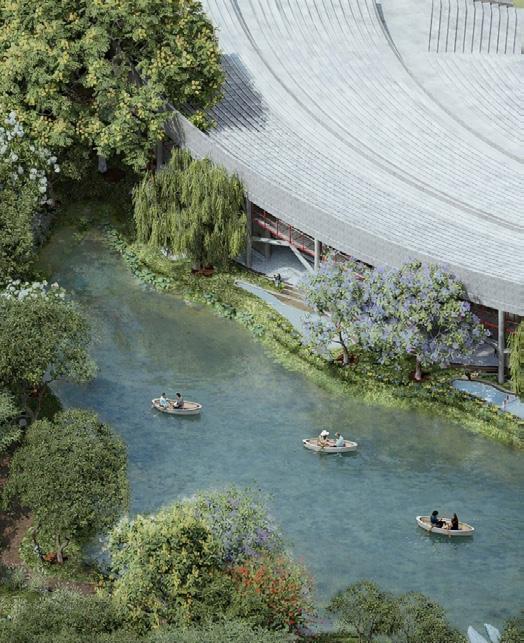
The lagoon, as the park’s main ecological attractor, is revalued through its renaturalization, seeking to reintegrate it into the park’s animal ecosystem together with a historic water canal.- Sector 05
involves
a
and
Natural Squares
Natural Lagoon
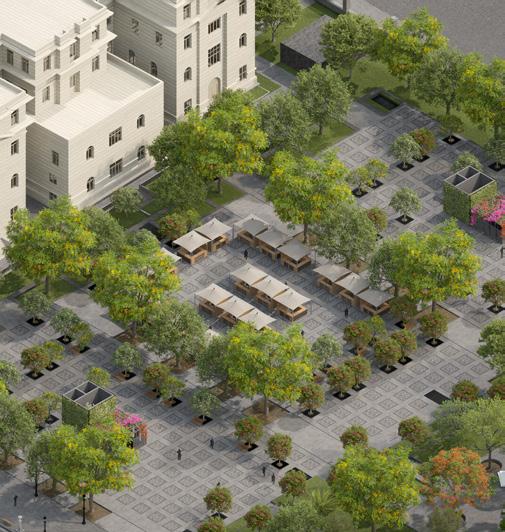
Itinerant Fair Plaza
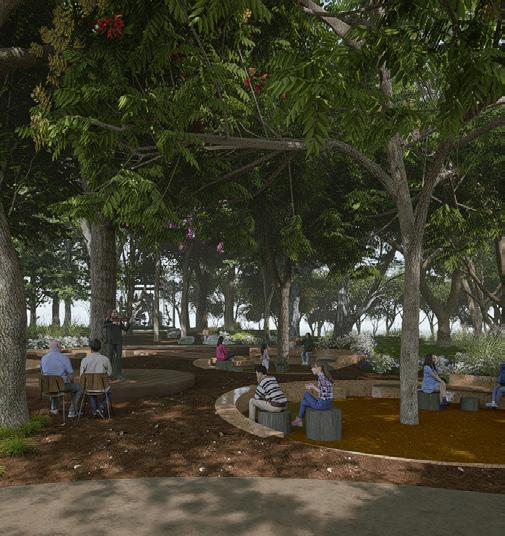
New and diverse atmospheres are created to evoke natural environments for visitors. The sense of immersion in the park’s natural ecosystem becomes part of these new experiences.- Sector 05
The park’s ecological restoration
reactivating underused spaces. Above the underground parking,
new public space is proposed with the capacity to host itinerant fairs
everyday activities. - Sector 08 1. Art Museum of Lima 2. Metropolitan Museum 3. Amphitheatre 4. The Cabin
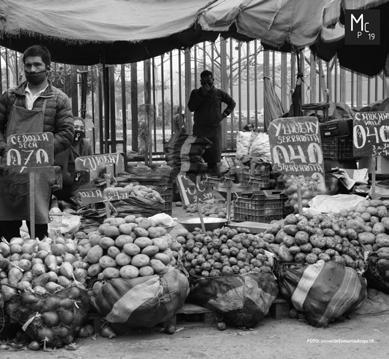
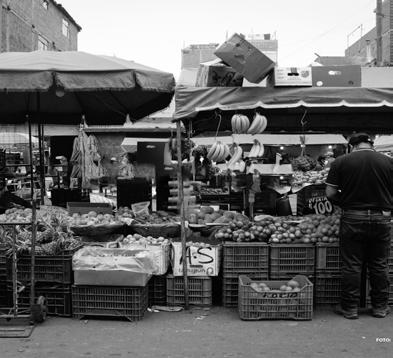
The COVID-19 pandemic exposed the fragility of traditional food markets, revealing spatial, sanitary, and organizational limitations while underscoring the urgent need to rethink these infrastructures as resilient and adaptive civic spaces.
Distinction:
+ Winner: First Place International Competition
MASTER PLAN
urban fabric
Urban Strategies
DESIGN MOVES
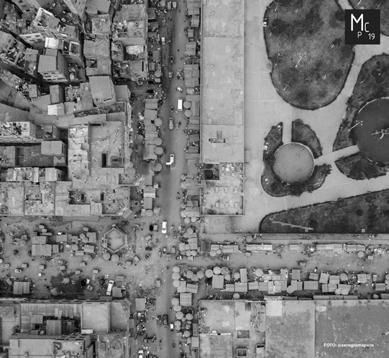
adequate infrastructure in traditional markets has led to the street trading into surrounding public space, urban congestion sanitary risks— intensified during COVID-19 pandemic.
ANALYSIS
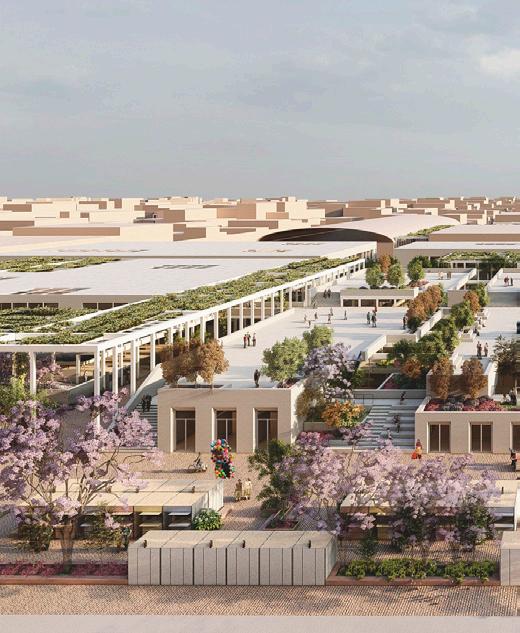
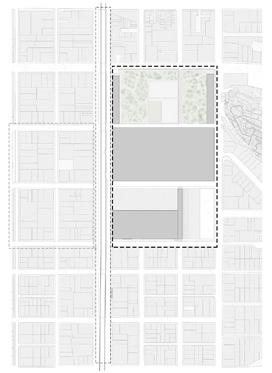
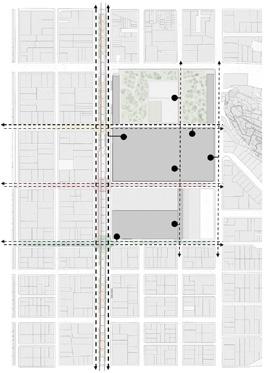
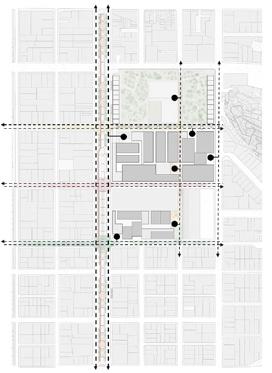
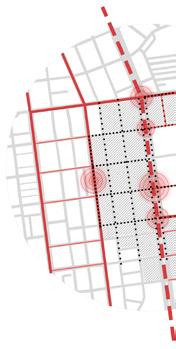
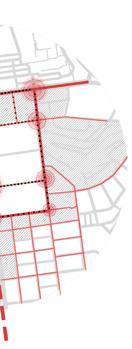
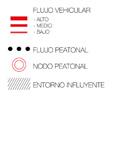
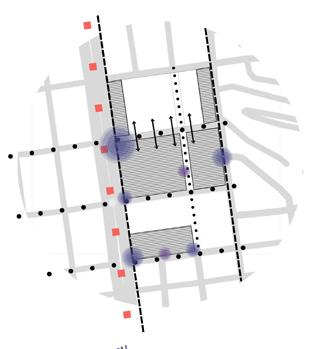
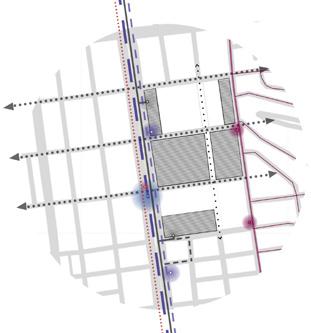
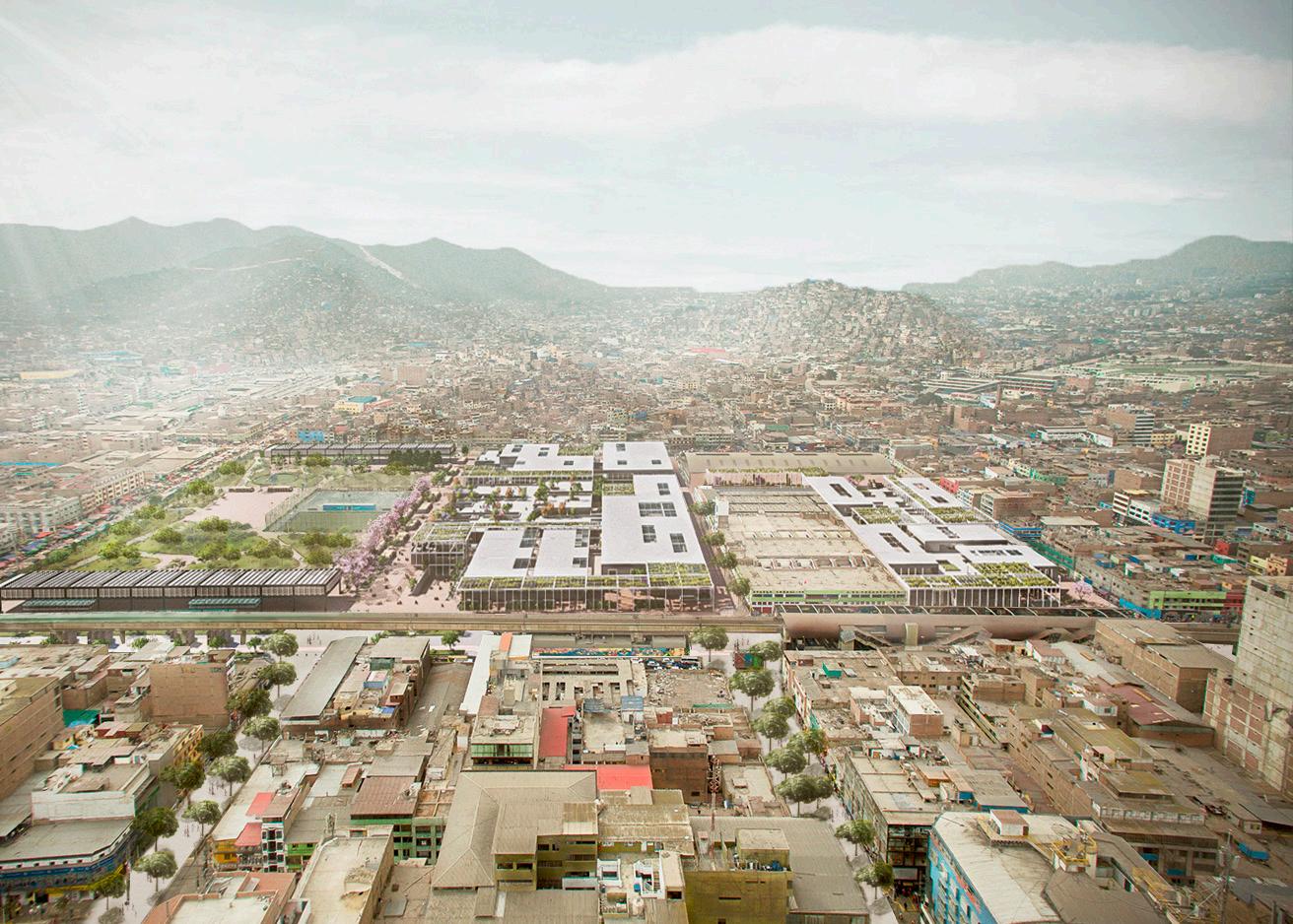
Urban analysis identified critical congestion along major avenues and fragmented pedestrian flows, particularly across Av. Aviación and Migrante Park. Strategic pedestrian spines, new access points, and mobility upgrades were proposed to restore continuity, reorganize circulation, and relieve pressure on the market edges.
STRATEGY
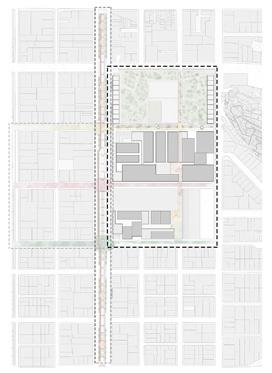
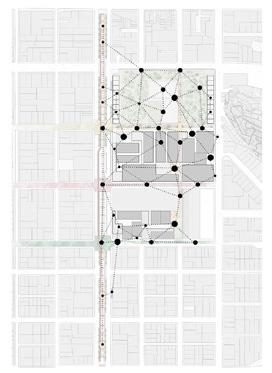
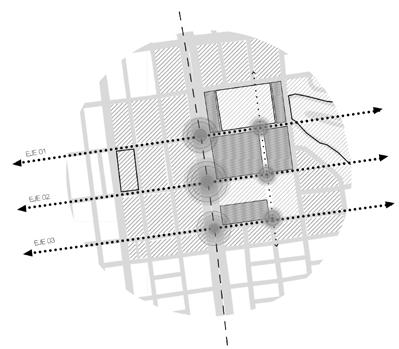
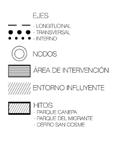
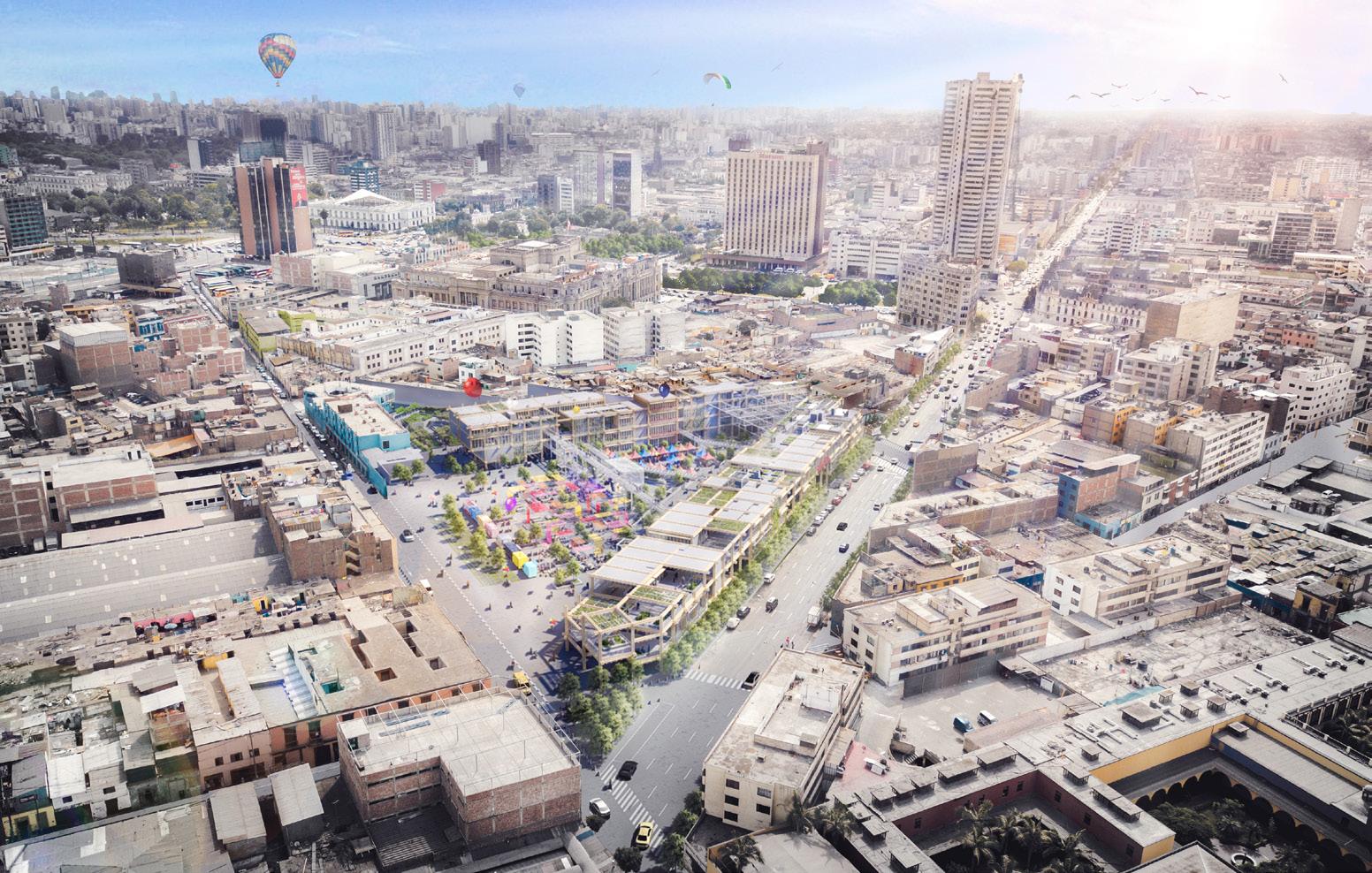
The proposal reconnects Gamarra and the market district through color-coded pedestrian corridors, civic plazas, and a renewed Alameda along Av. Aviación. A commercial superblock, a network of public nodes, and improved mobility infrastructure—bike lanes, bus corridors, and designated stops—strengthen connectivity, commercial dynamics, and social inclusion.
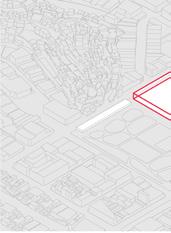
municipal market n°01 + market n°03 de febrero + “el migrante” park placement strategy
municipal market n°01
san cosme hill
“el migrante” park market n°03 de febrero
TRANSFORMATION covid-19 strategy
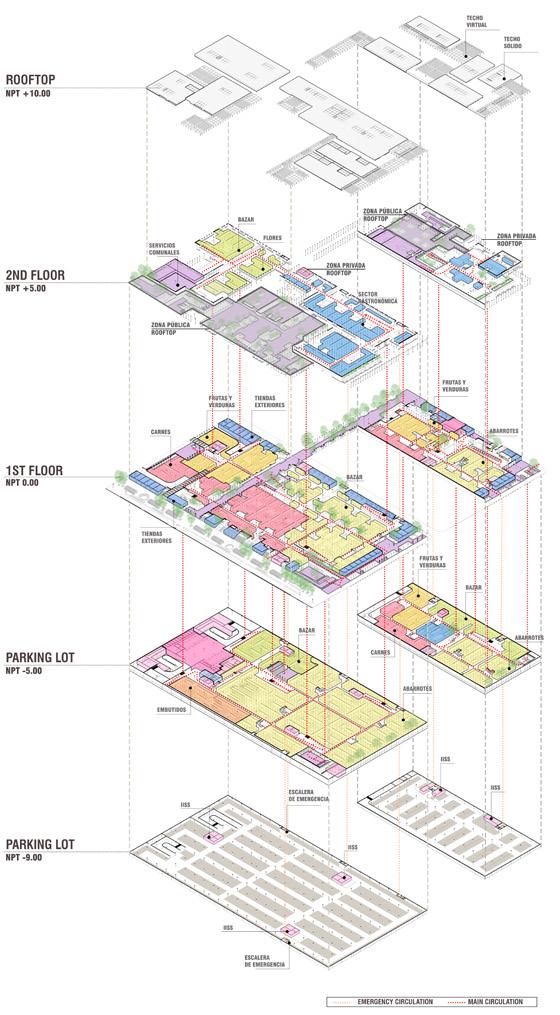
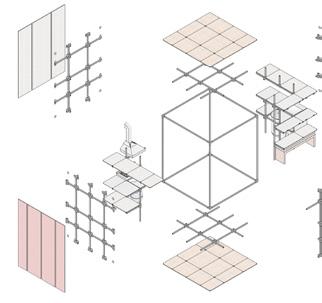
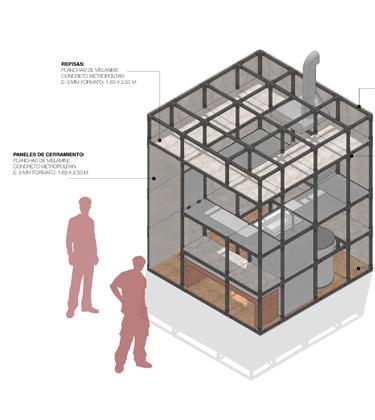
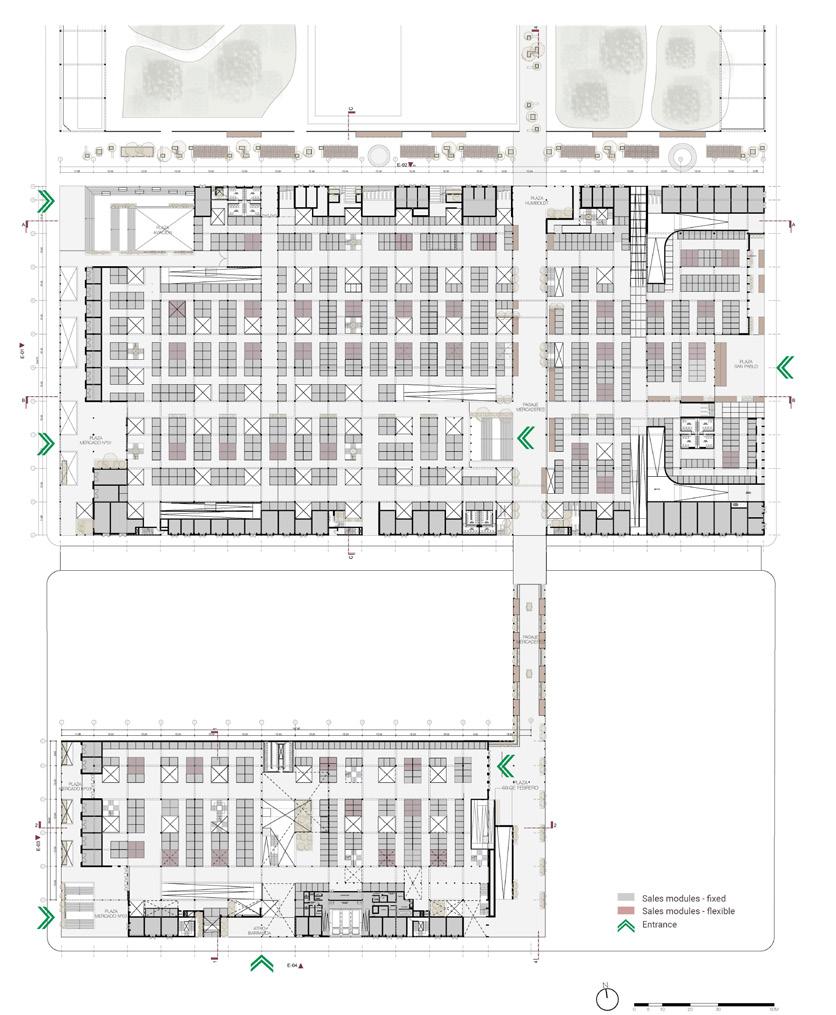
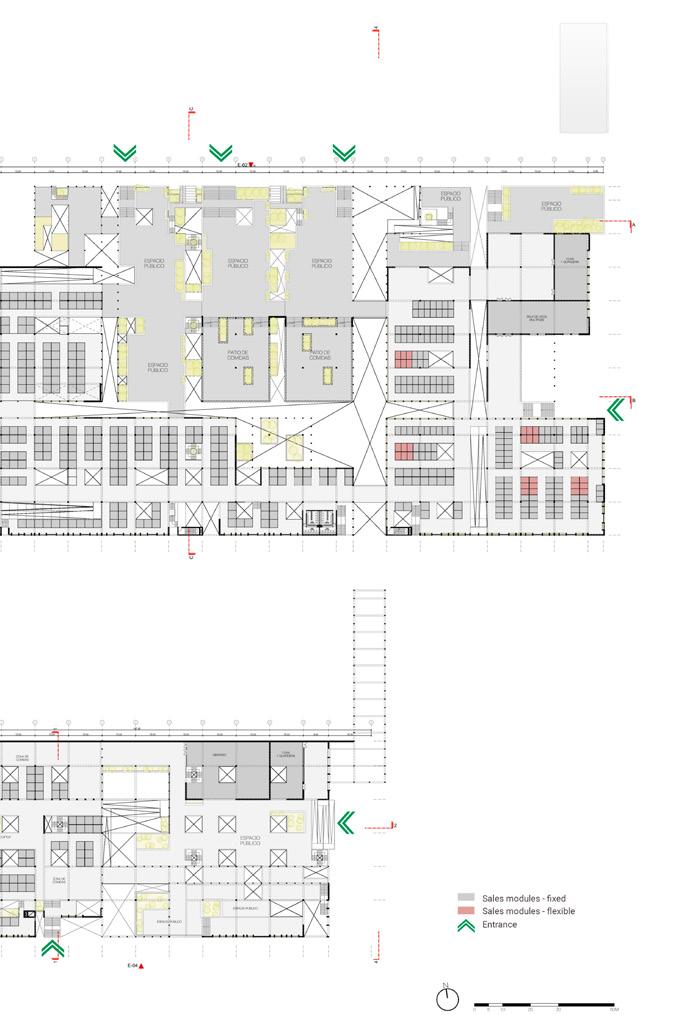
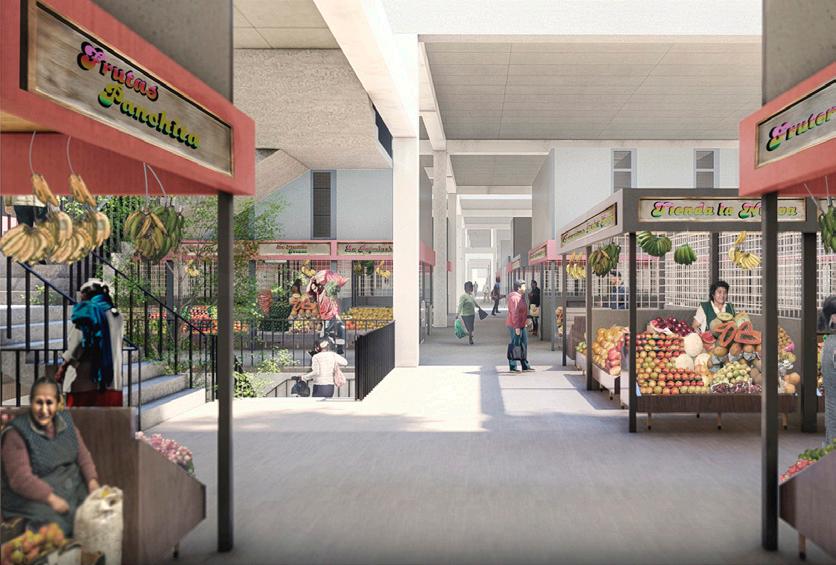
A spatially ordered system addresses chronic market challenges—crowding, obstructed aisles, tight circulation, and inadequate ventilation, lighting, and sanitation.
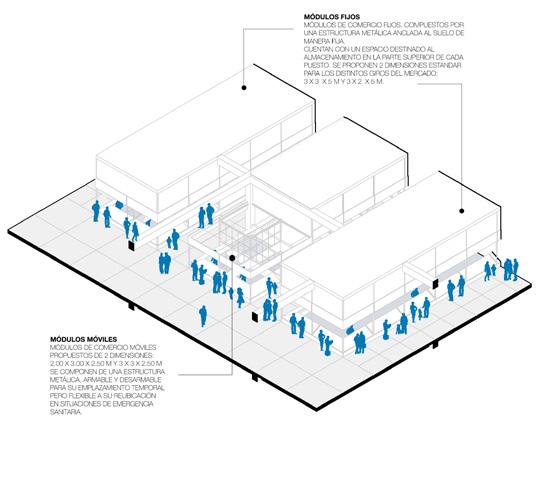
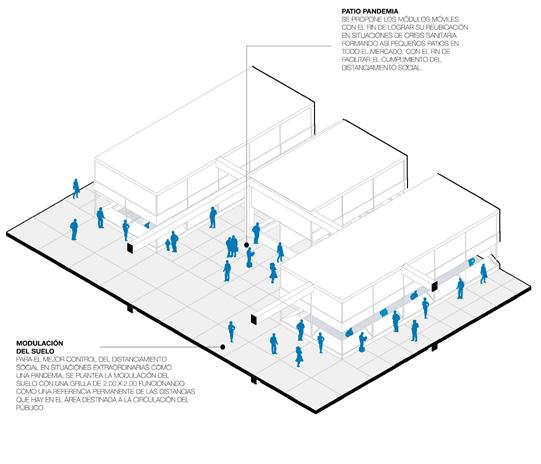
Responding to the need for adaptable layouts under health-related restrictions, the system pairs fixed stalls with mobile units that can be dismantled and repositioned.
This flexibility supports normal operations yet enables rapid reconfiguration during crises, creating temporary courtyards that improve airflow, safety, and overall performance.
B
EXPANSION
space
RELOCATION OF MODULES
market public space extension to “el migrante” park
“El Migrante” Rooftop and
Pedestrian Passage “Mercaderes”
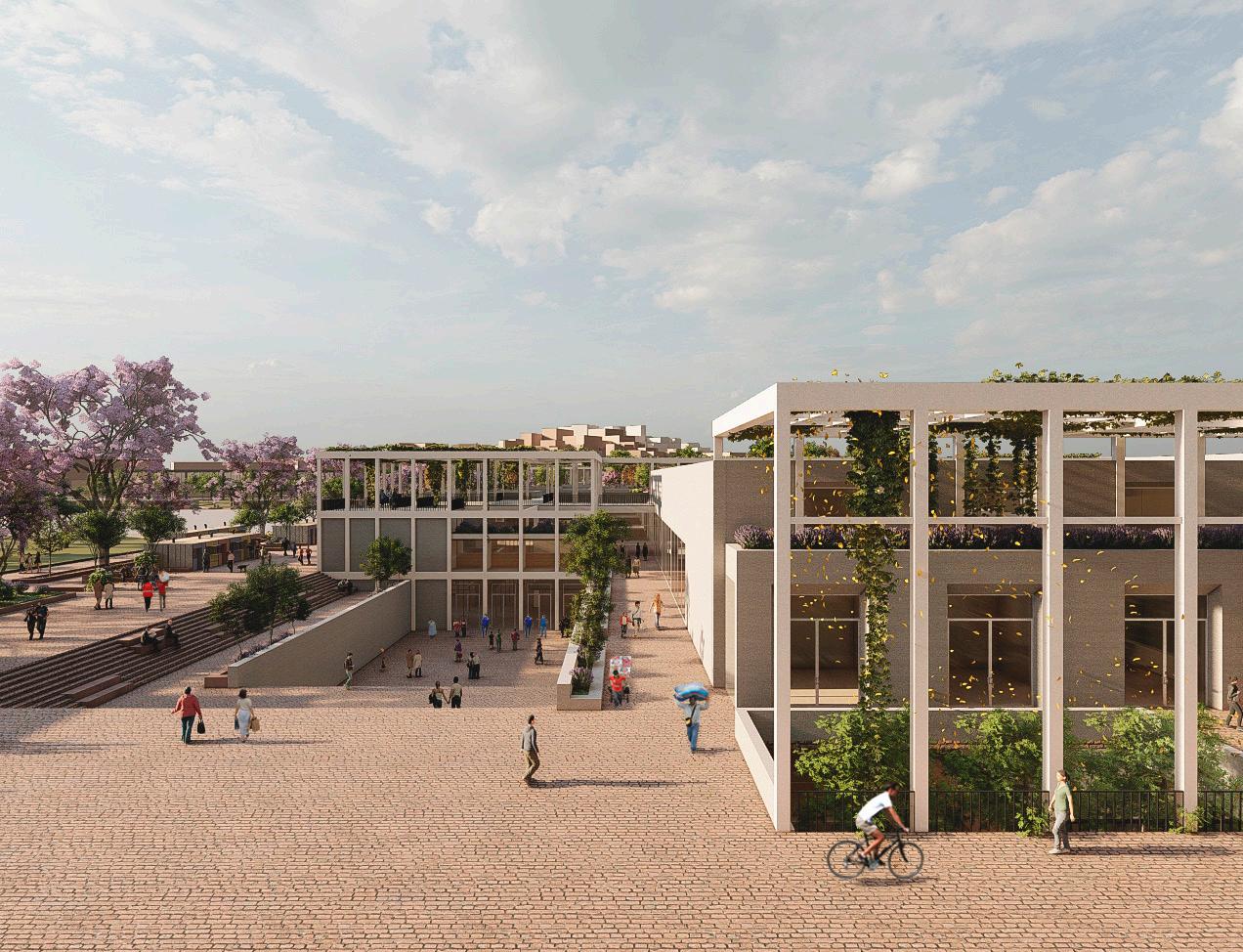
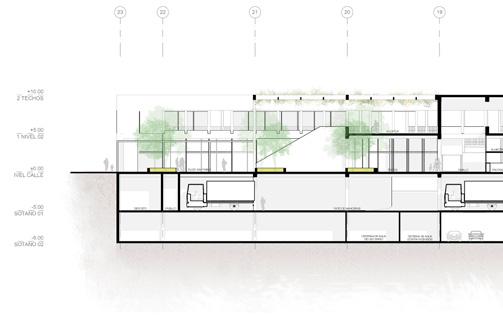
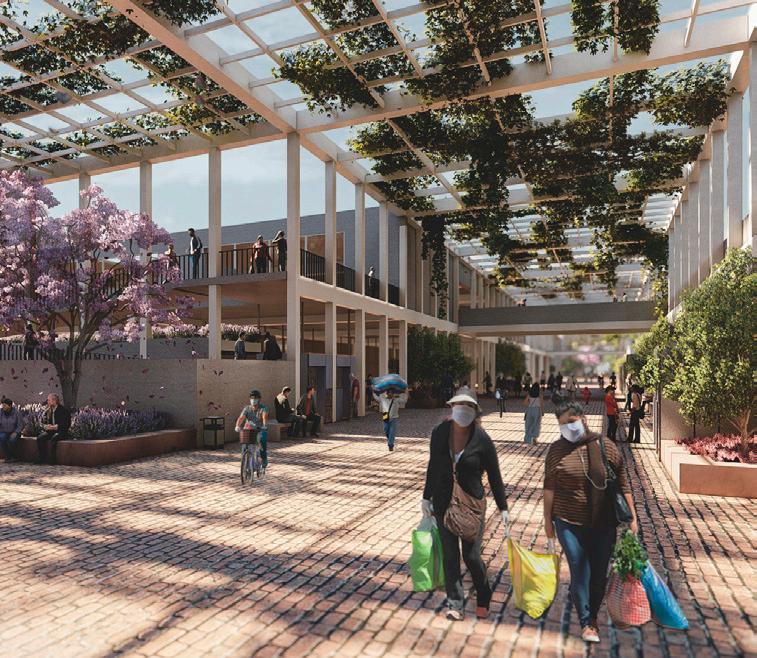
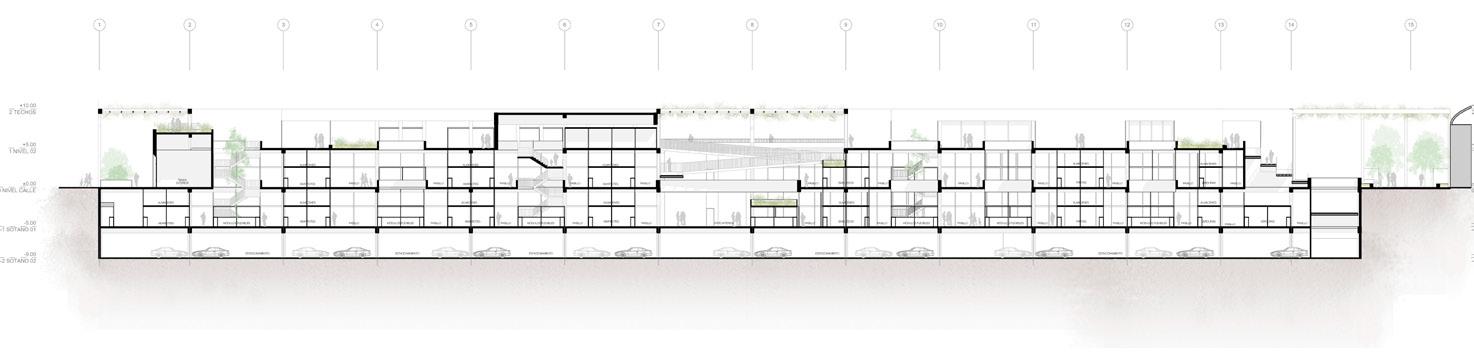
A new pedestrian spine extends from Jr. 03 de Febrero through the market complex to Av. Bausate y Meza, channeling peripheral foot traffic inward and consolidating a coherent commercial core.
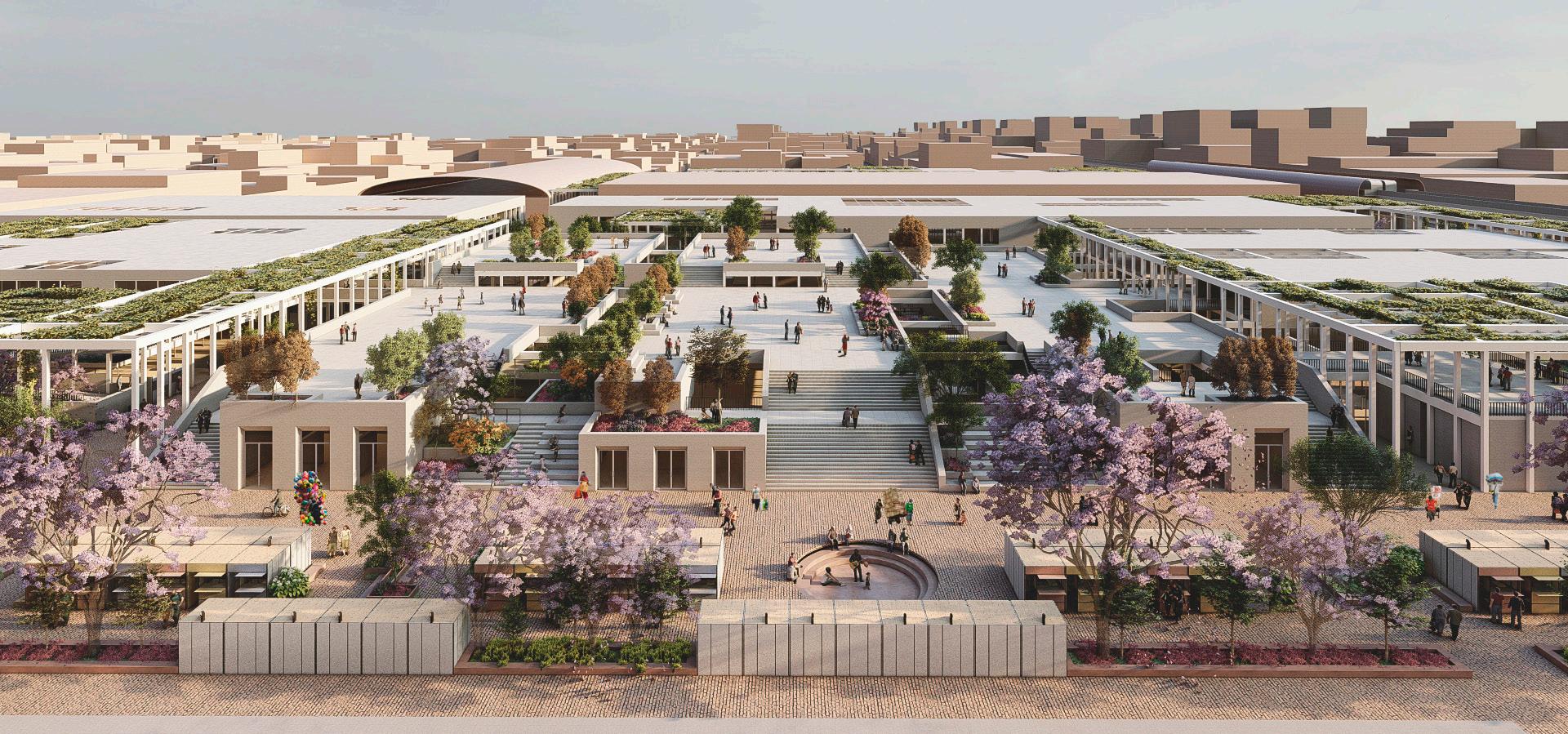
By integrating diverse street commerce, the corridor reactivates public space, enhances safety, and reconnects the district with the underused Parque del Migrante. Conceived as an elevated extension of the park, the upper level introduces planted roofs, communal terraces, and flexible spaces for mobile stalls and events, improving greenery, ventilation, and nighttime activity.
nnnnew connecting passage in the block
Authors : Joint Authorship
+ Yasmin Jasahui Ocampo + Carlos Herrera Mogollon
Asessor:
+ Juvenal Baracco Barrios
Title of the project:
“Experimental
school of Gastronomy and Urban fair of Lima”
Educational Institution:
Universidad Ricardo Palma Faculty of Architecture and Urbanism
Date of the project:
November 2021
Location:
Historic Center of Lima Lima - Perú
Context:
Historic centers in Latin America face increasing degradation due to unresolved social and urban challenges.
In Lima, the area surrounding the Damero de Pizarro remains neglected, as urban interventions focus mainly on monument restoration while failing to address broader social dynamics and the need for active public space.
Distinctions:
Final grade: Excellent + + + Time Space Existence
Venice Biennale 2021: Selected projects Baracco Workshop Lima Biennale 2023: Third Place
Reference contact:
Juvenal Baracco Barrios Thesis assesor
juvenal.baracco@gmail.com
cbaracco@urp.edu.pe
+51 999 774 304
HISTORIC CENTER OF LIMA
context & analysis
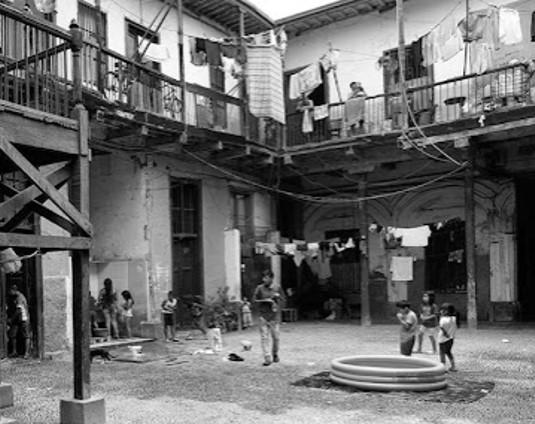
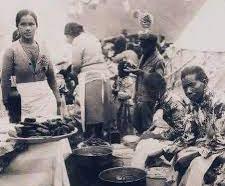
The former walled city of Lima once served as the city’s “pantry,” a fertile landscape that shaped local festivities and culinary traditions. Its grounds supported itinerant gastronomic commerce, a tradition that persists today.
However, in the last two decades, the Historic Center has suffered notable degradation, leading to urban and social decline. How can we restore its vitality while preserving its cultural legacy?
Experimental School of Gastronomy and Urban Fair of Lima
historic background
current situation
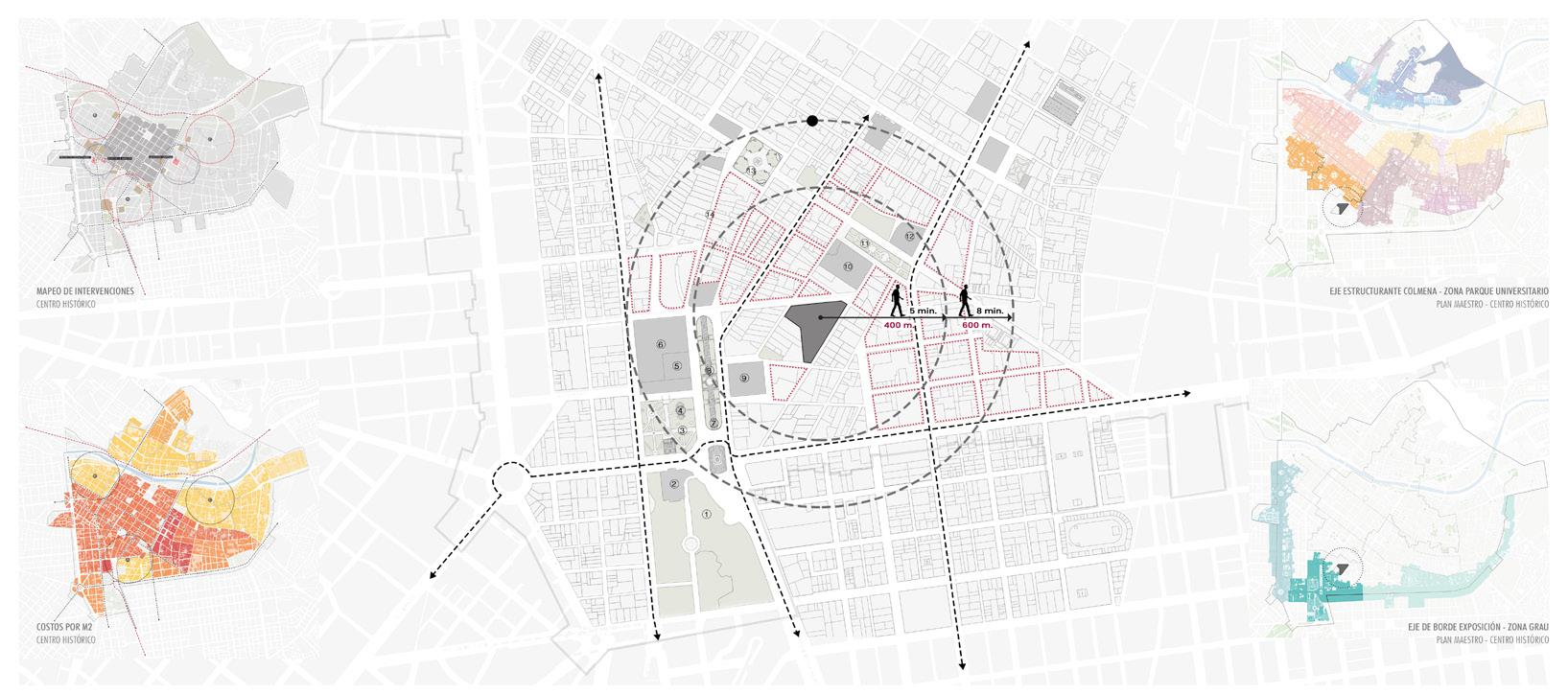
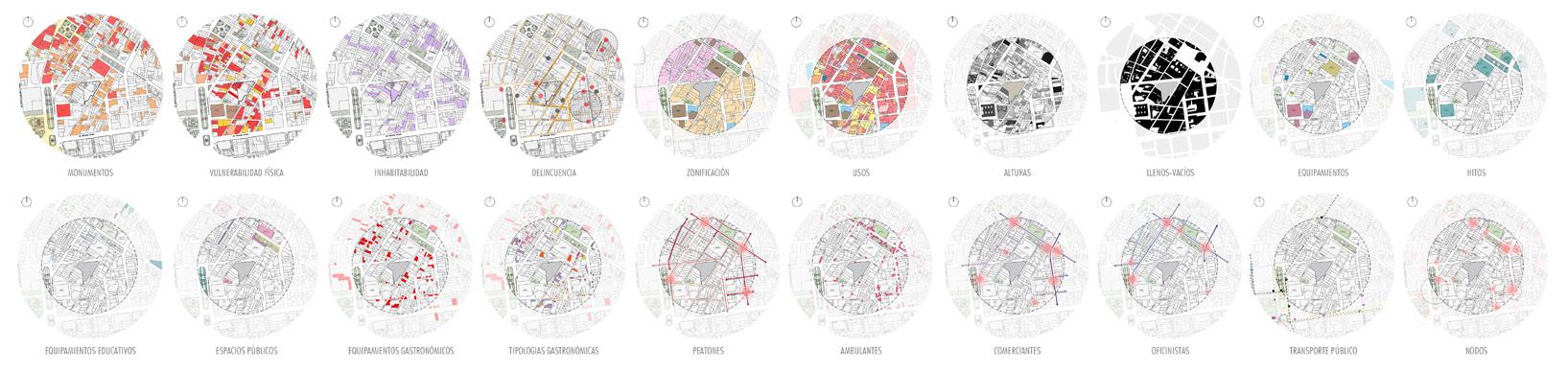
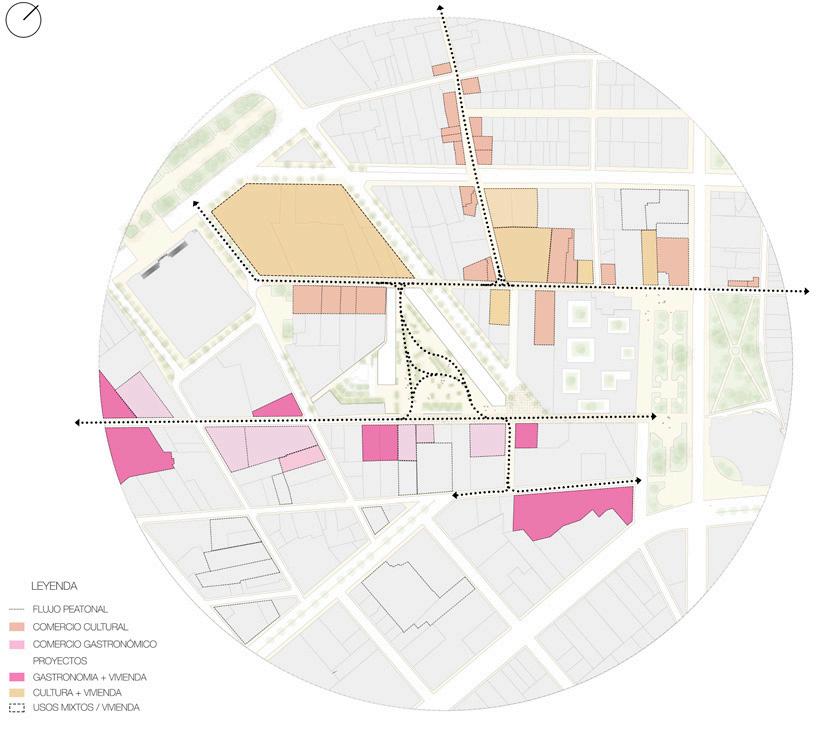
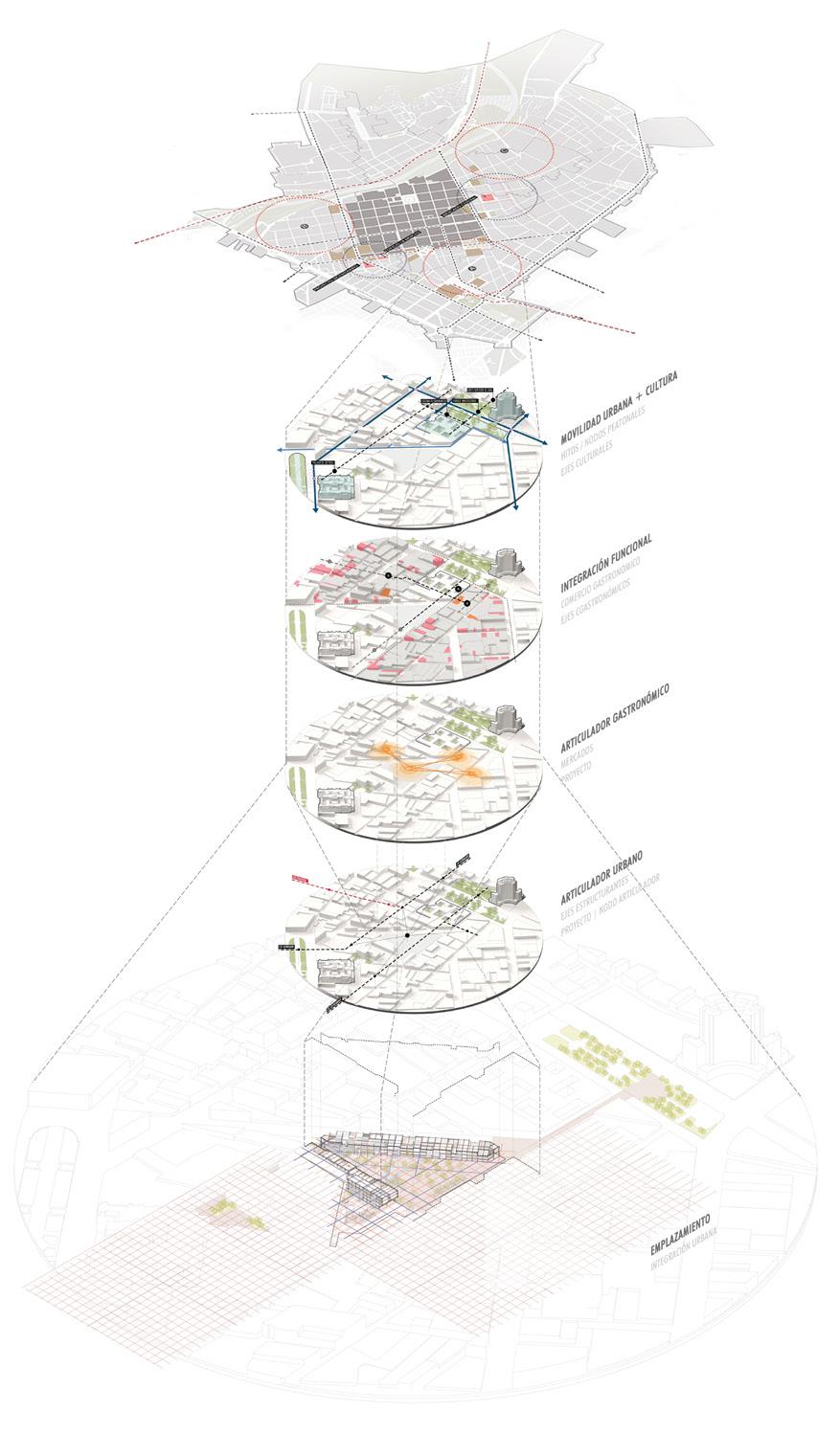
URBAN ANALYSIS
A | Morfology, uses, equipment.B | Nodes and Urban Dynamics. C | Site articulation
STRATEGY urban experimental space
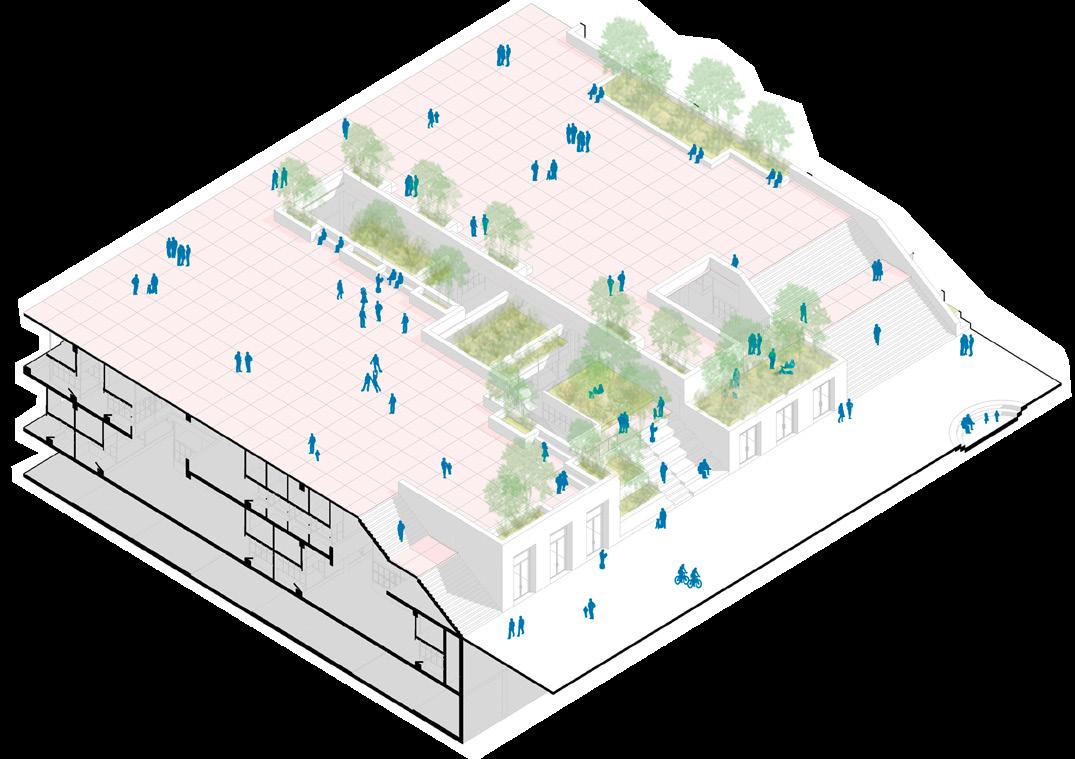
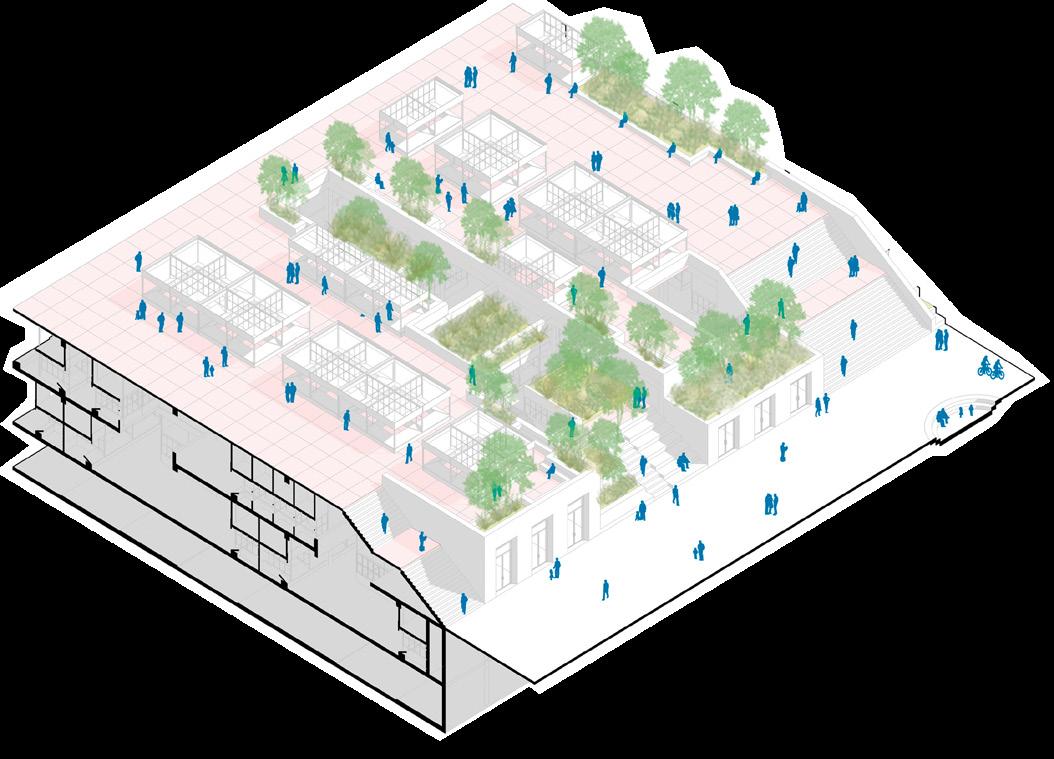
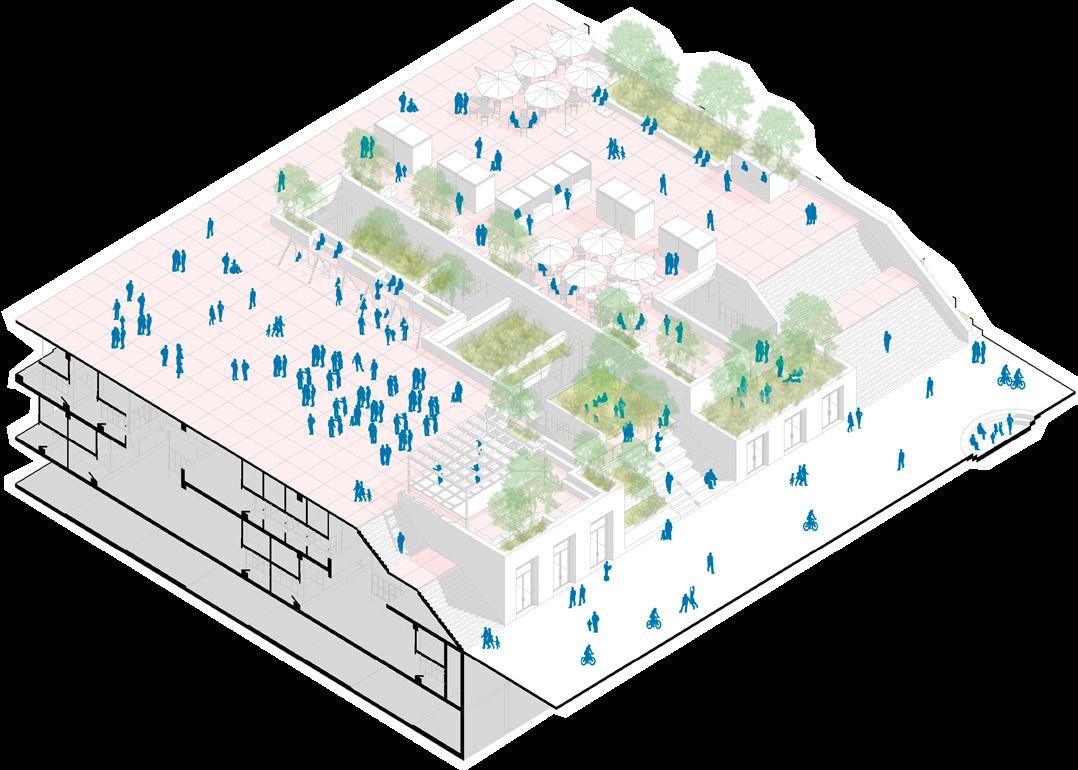
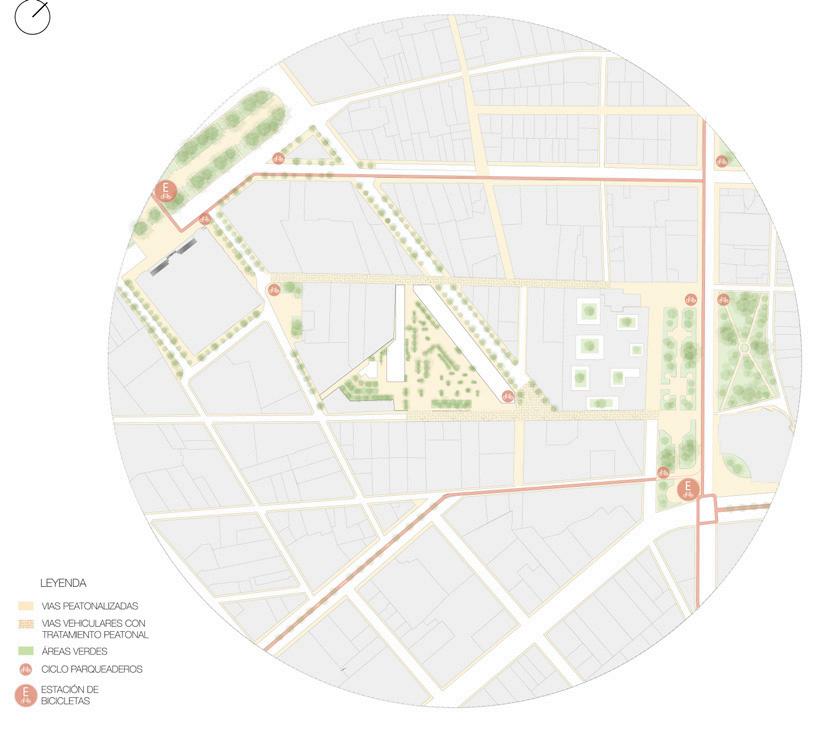
This thesis focuses on a southern sector of the Historic Center, responding to the lack of recreational public spaces, the imbalance in gastronomic educational facilities, and the district’s critical socio-urban condition. It proposes an intervention that preserves collective memory, strengthens neighborhood function, and promotes revitalization through a flexible public space paired with a culinary school.
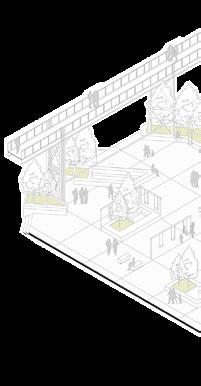
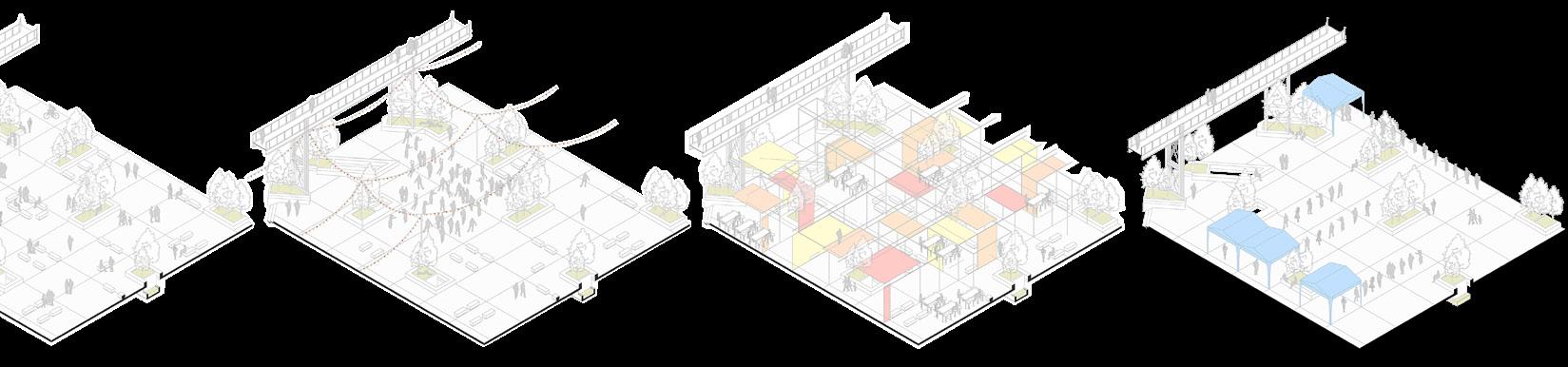
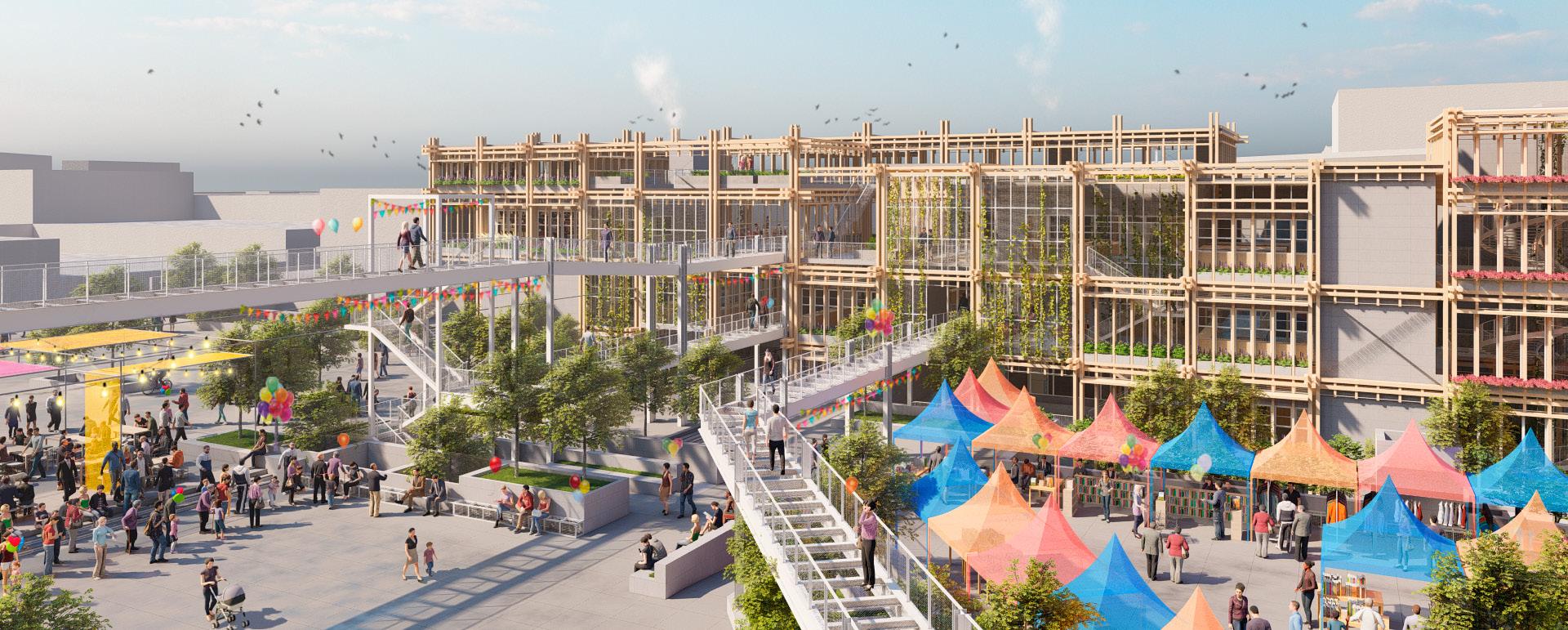
The project arises from an urbanarchitectural inquiry grounded in territorial analysis and explores new models for educational and recreational spaces. It envisions a fairground-like public area integrating itinerant commerce and urban gardens, fostering social inclusion and civic participation. The proposal combines community spaces, event venues of various scales, specialized commerce, public services, and open areas for festivities and gatherings.
1. Public space 2. Communal spaces
“Cedric Price’s Fun Palace, 1964, builds on situationism to create spaces that encourage situations using a unique range of theatre and improvisational architecture [...] While the structure was never built, it served as an example of how architecture can transform the city scape and the way people interact with in it. [...] It is not a conventional building, it is a structure to allow adaptive and evolving architecture. [...] described the design as ‘a ‘laboratory of fun’ and a ‘university of the streets’’
Mathews, S. 2005, The Fun Palace: Cedric Price’s experiment in architecture and technology, Technoetic Arts, vol. 3, no.2, retrieved 20 April 2018, pp. 73–91 <http://www.bcchang.com/transfer/articles/2/18346584.pdf>
flexible space
urban fair of Lima
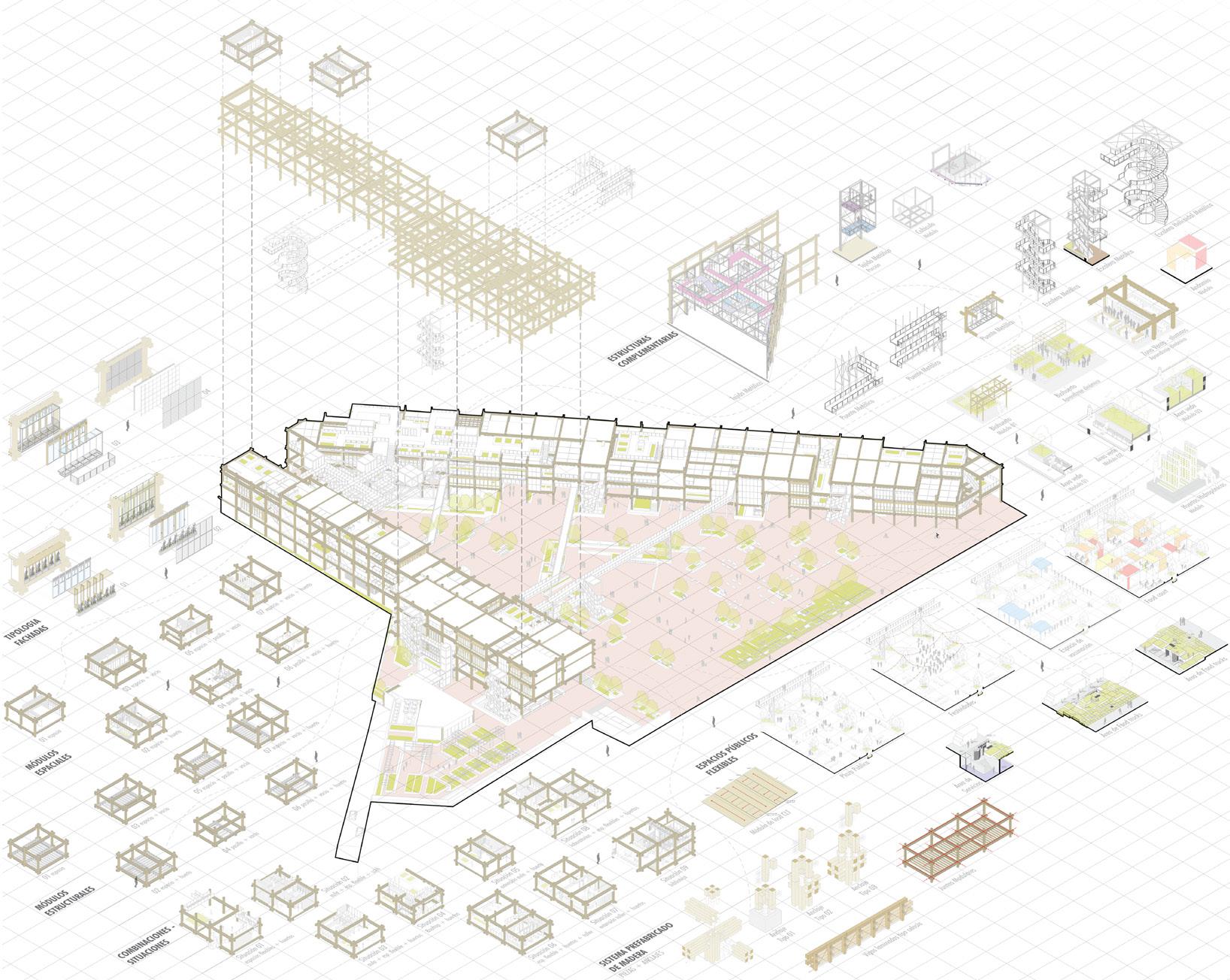
MODULAR SYSTEM
wooden prefabricated
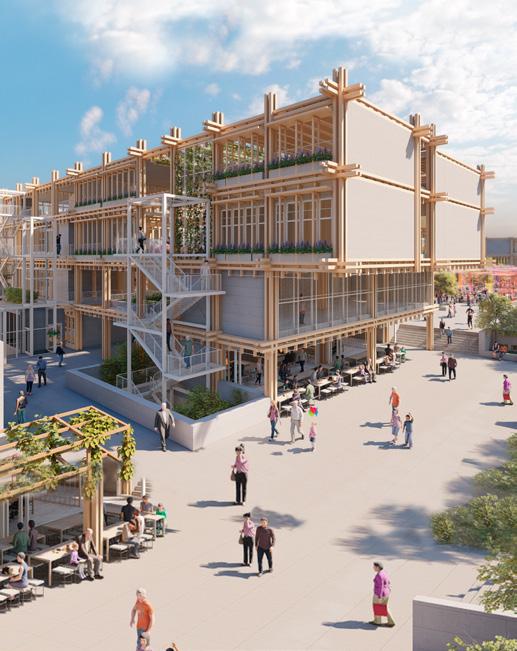
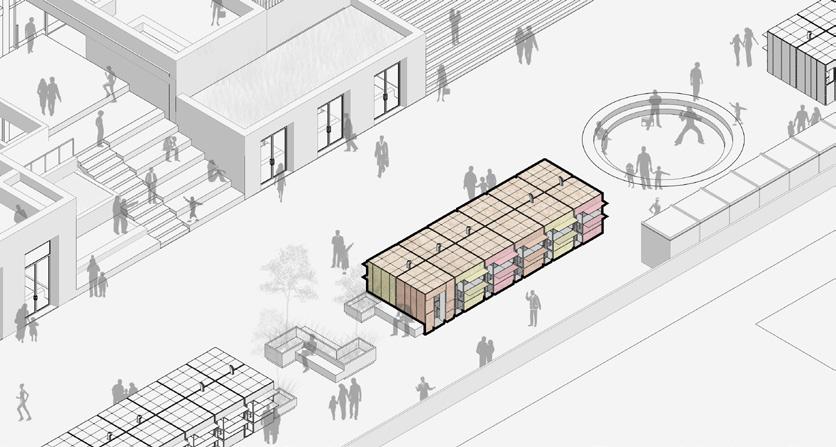
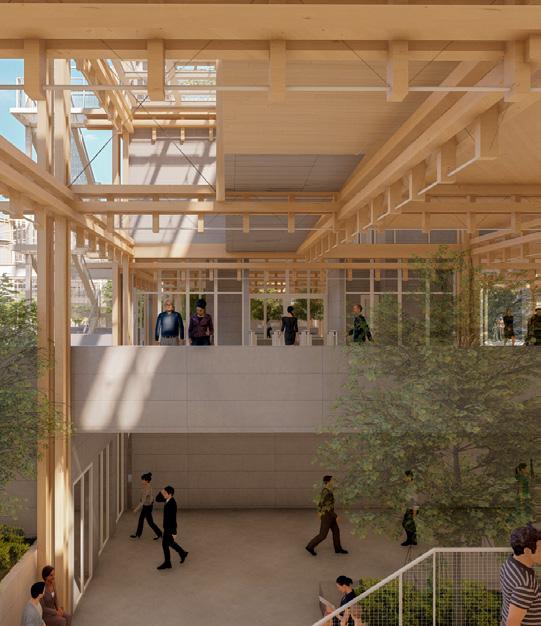
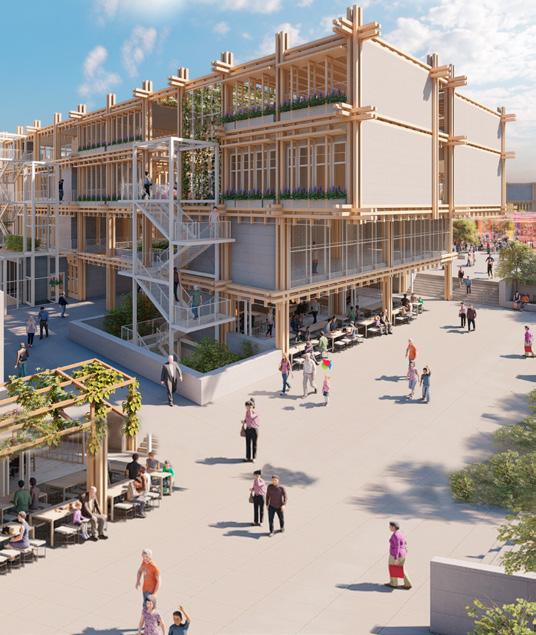
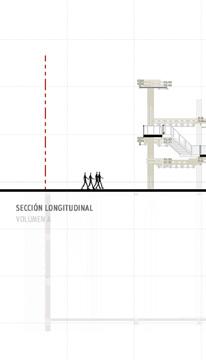
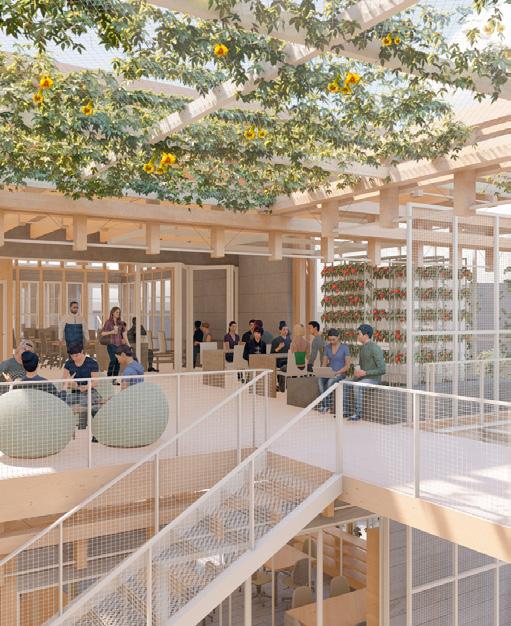
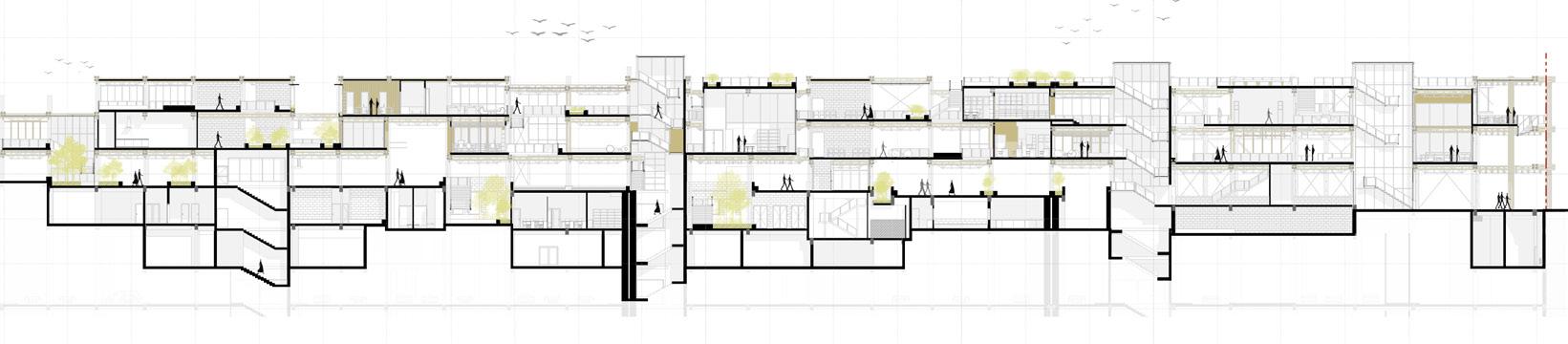
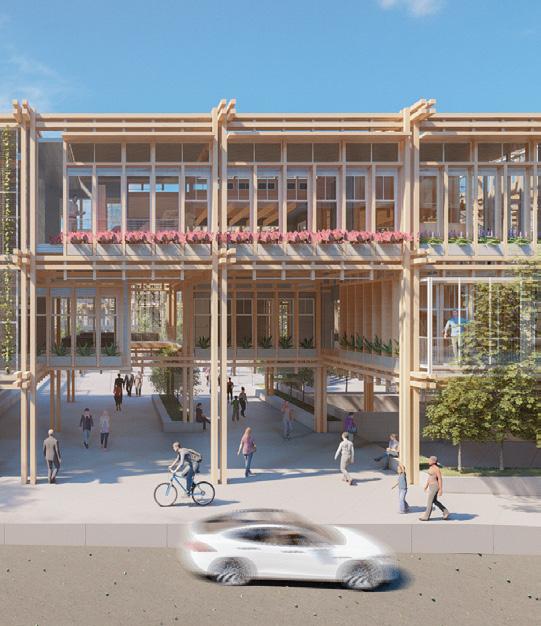
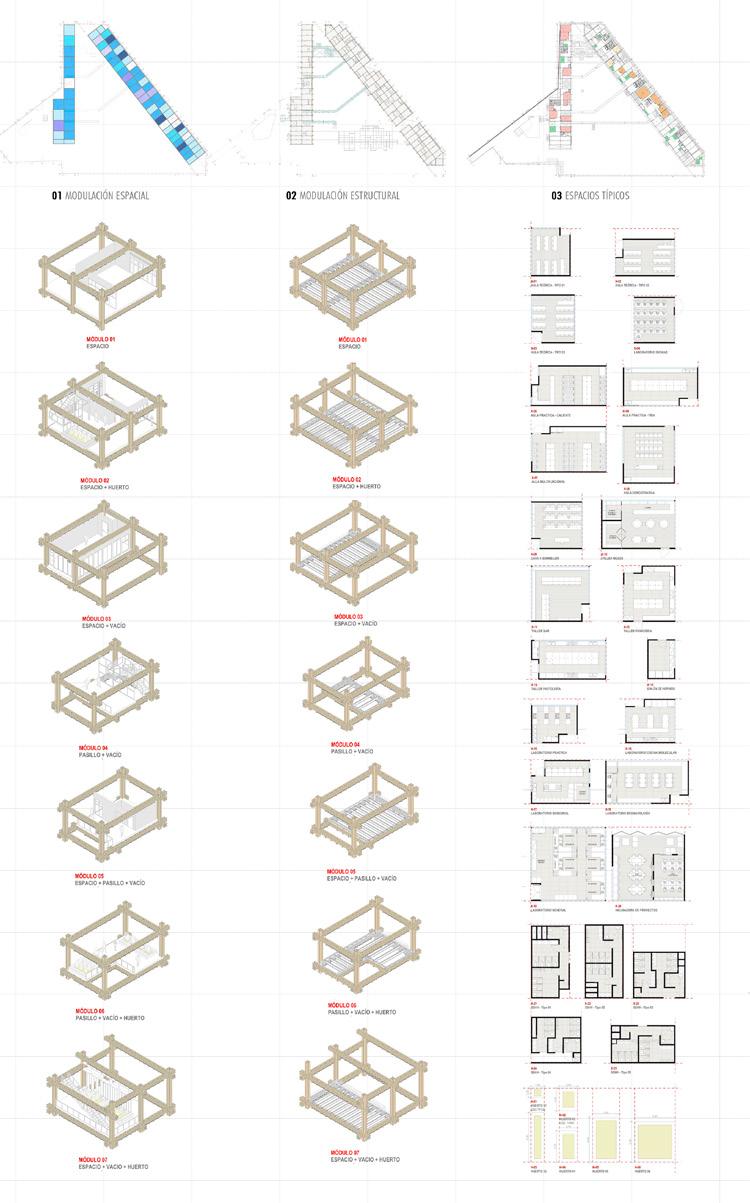
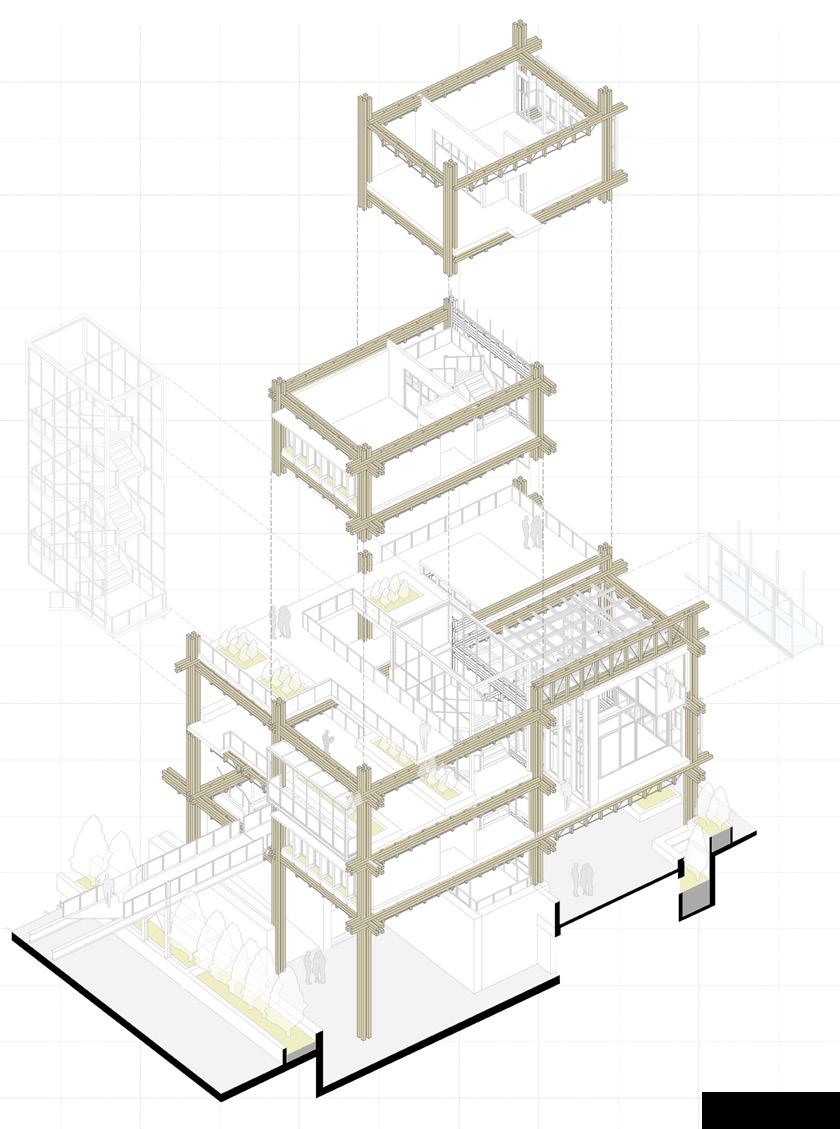
The culinary school complements this environment with dynamic learning methods and a prefabricated modular timber system. Organized into two elongated, lightweight volumes, it conveys a sense of temporality while optimizing construction processes. As an adaptable and replicable prototype, it offers a potential model for addressing infrastructural challenges across the Historic Center of Lima.
This modular occupation system reinforces the project’s experimental character by enabling adaptable spatial configurations tailored to evolving pedagogical and community needs. Its replicable, resource-efficient construction offers a strategic model for addressing infrastructural deficits in Lima’s Historic Center, strengthening urban resilience while promoting inclusive, future-oriented educational and public environments.
virtual space
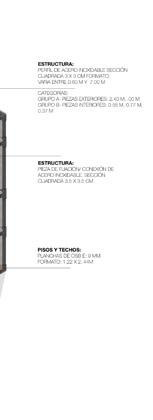
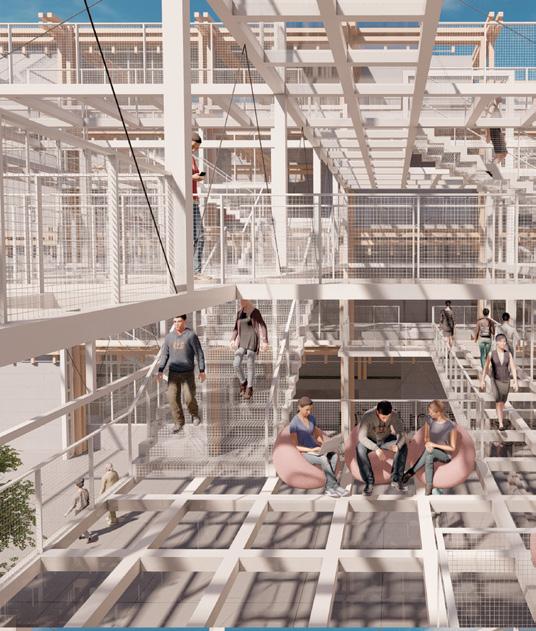
The wooden structures are unified by a suspended steel volume that operates as a virtual fabric, defining study areas and spaces for rest.
modular facade hydroponic gardens
Composed of four modular typologies adapted to spatial needs and environmental solutions, while maintaining virtuality, materiality, and connection to public space
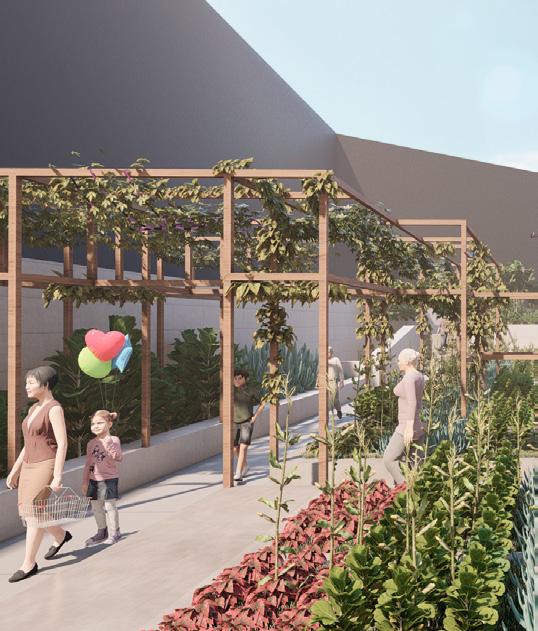
Reviving the memory of traditional gardens, we introduce urban gardens through hydroponic systems to avoid additional soil weight.
Authors: Team work
Yasmin Jasahui Ocampo
Lead designer - Joint authorship
Carlos Herrera Mogollon
Lead designer - Joint authorship
Darryl Herrera Torres
Junior Designer & Visualization
Almendra Tapia Salinas
Mauricio Oyarce Calderón
Post-Production Assistant
Title of the project:
“Expandable Venue”: Multipurpose Hall
College of Architects of Peru Piura Regional Chapter
Location: Institution:
Piura-Perú
Date of the project:
September 2025
National Architecture Competition: Multipurpose Hall for the Piura Chapter of the College of Architects of Peru. Context of the project:
STRATEGY
urban local scale
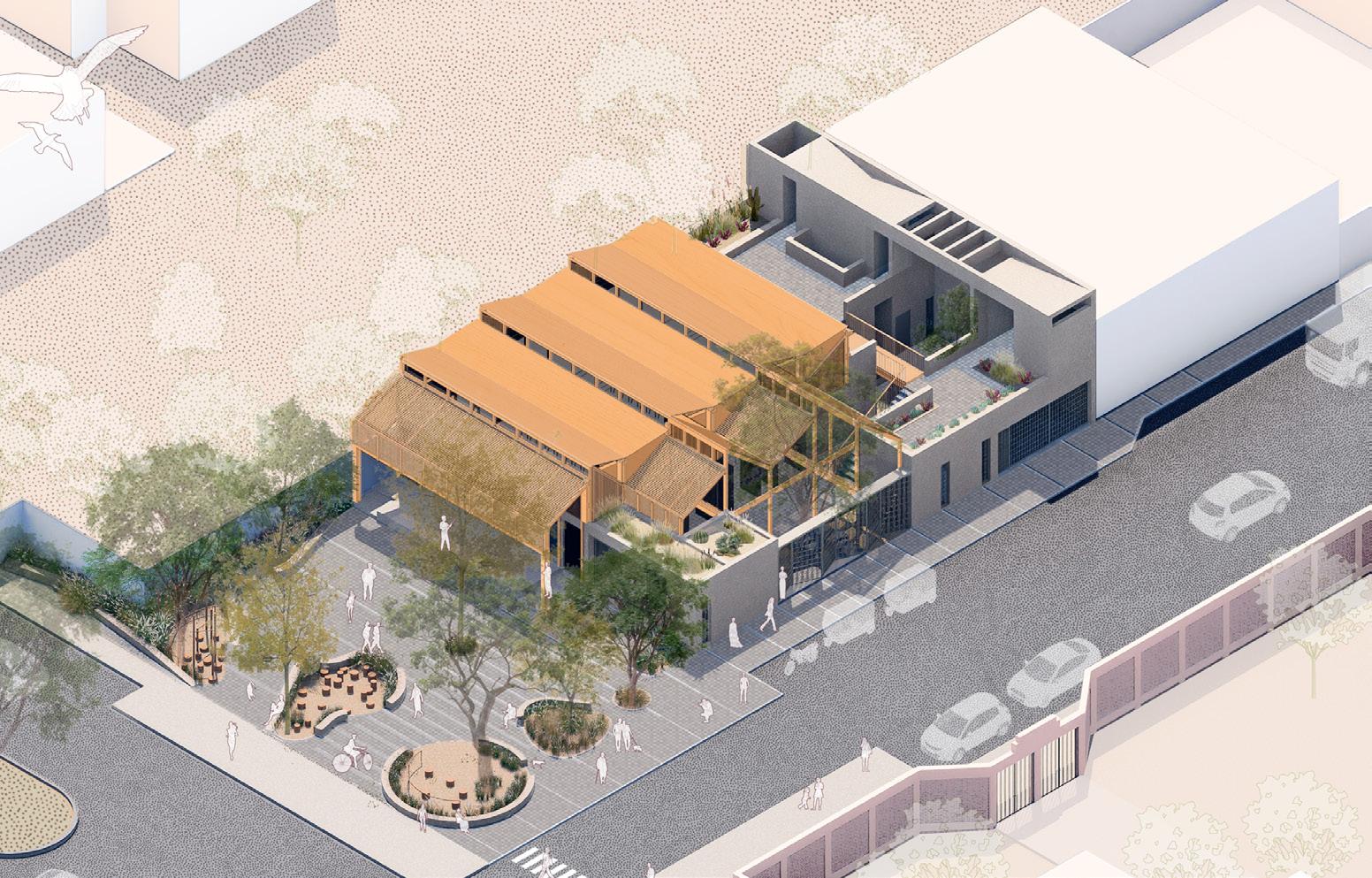
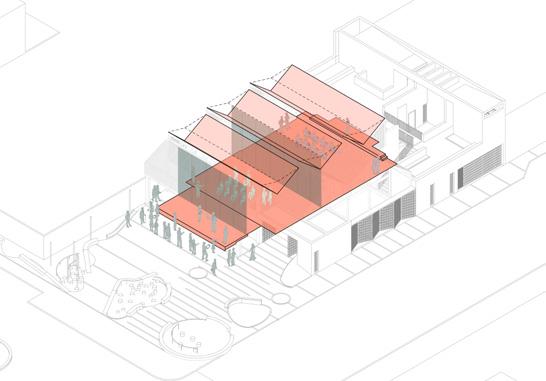
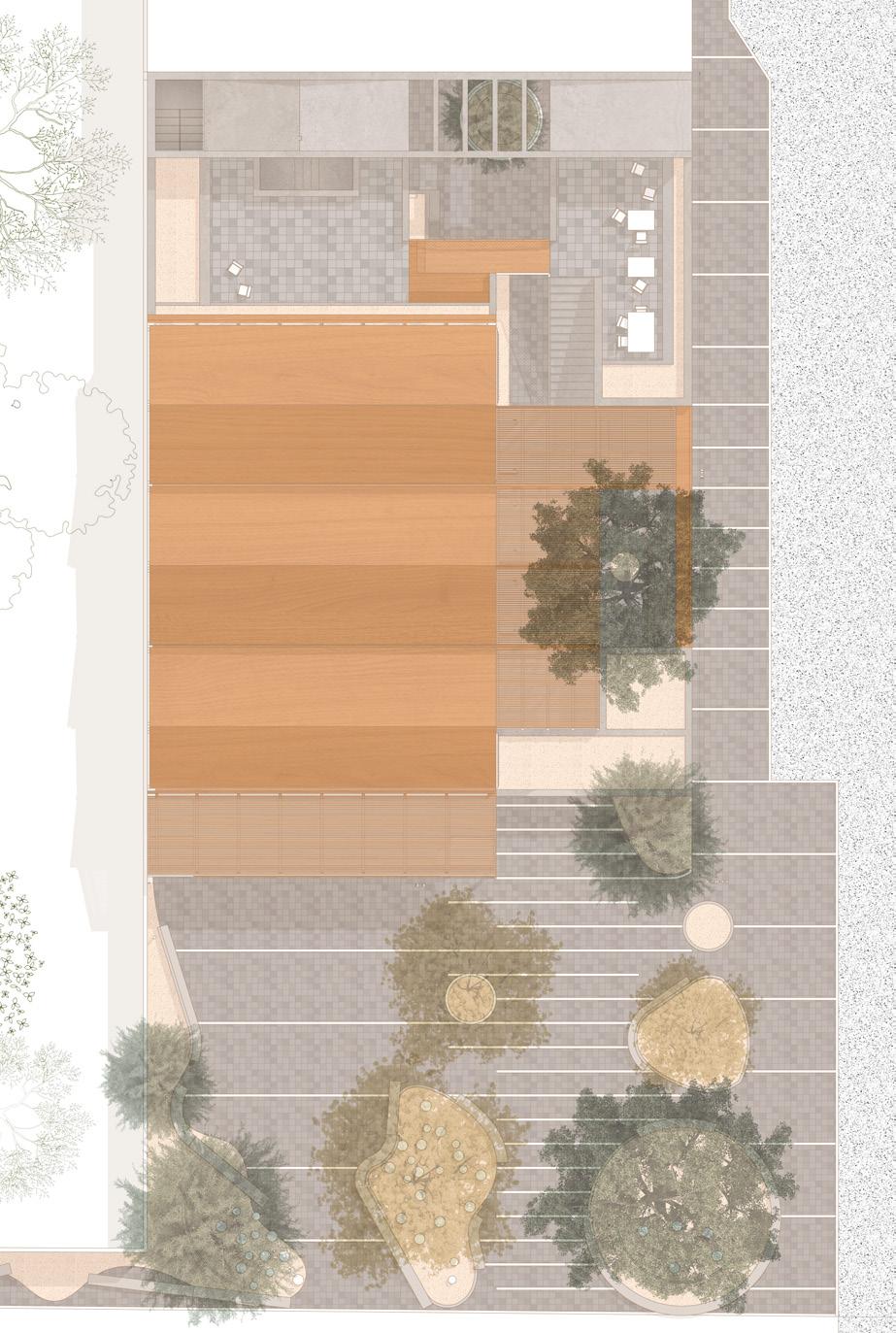
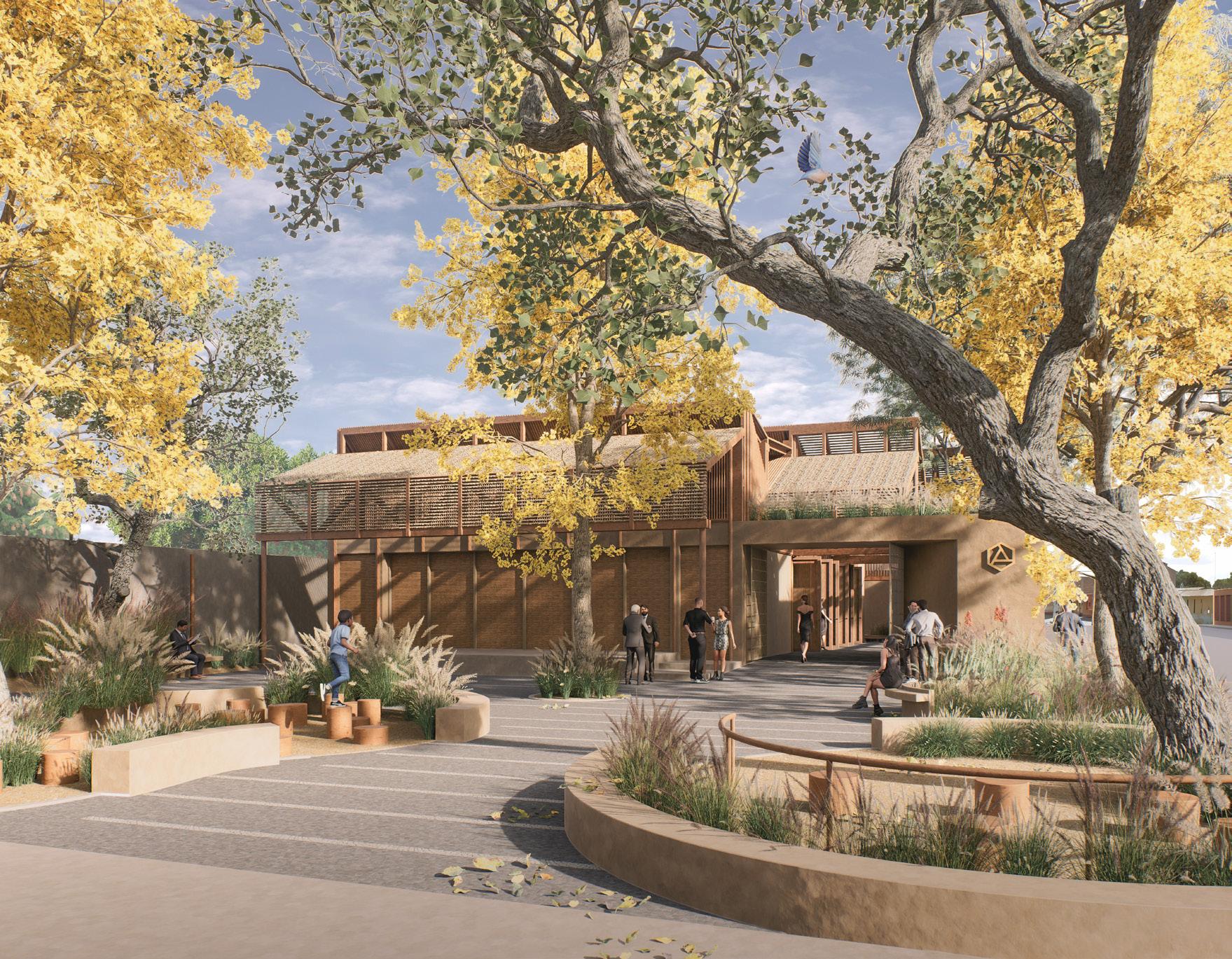
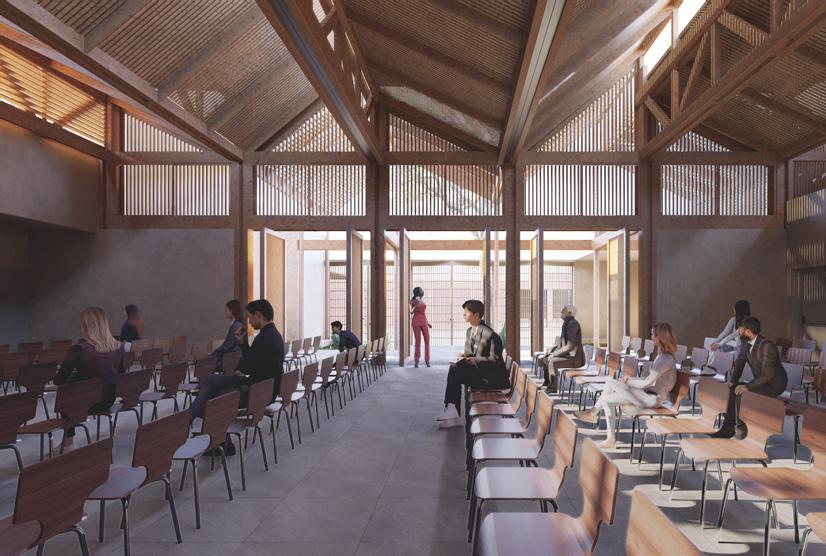
In a city lacking places for gathering and shared memory, the new Expandable Hall of the Colegio de Arquitectos – Piura emerges as a versatile civic anchor. Strategically sited, its climate-responsive volume, patios, and terraces expand its communal capacity. create a calm interior realm.
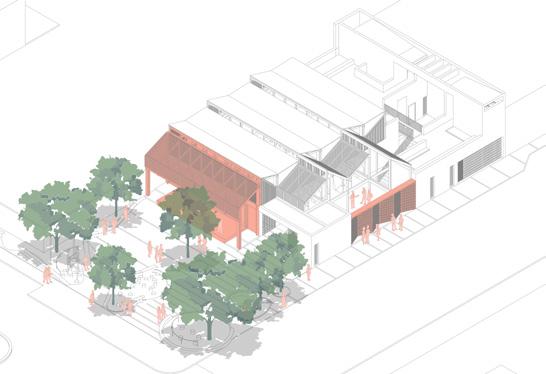
A frontal setback articulates the building with an unused open space, catalyzing the formation of a new public plaza and urban landmark. An active façade with movable panels opens the hall toward the street, integrating urban life, while enclosed volumes and vegetated patios buffer noise and create a calm interior realm.
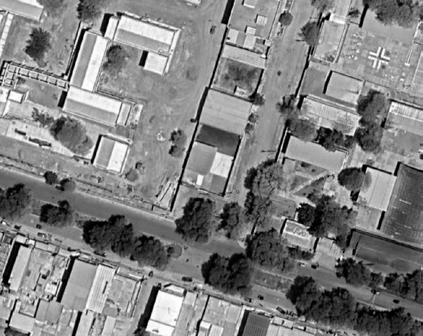
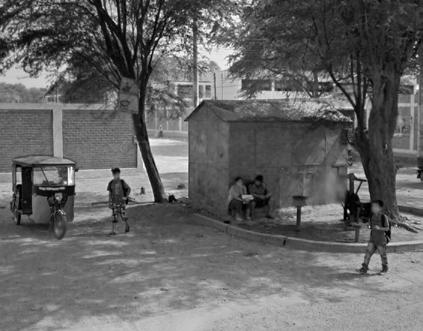
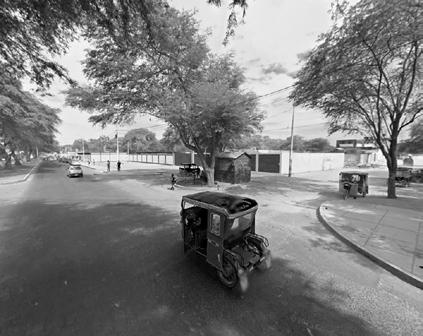
current situation
multipurpose hall + public space
Scale- Domain
Design Strategies
MACRO SCALE
Circulation Axes - Nodes
The building mass is positioned facing the large existing open space, serving as a protective alternative for the volume set back from the edges.
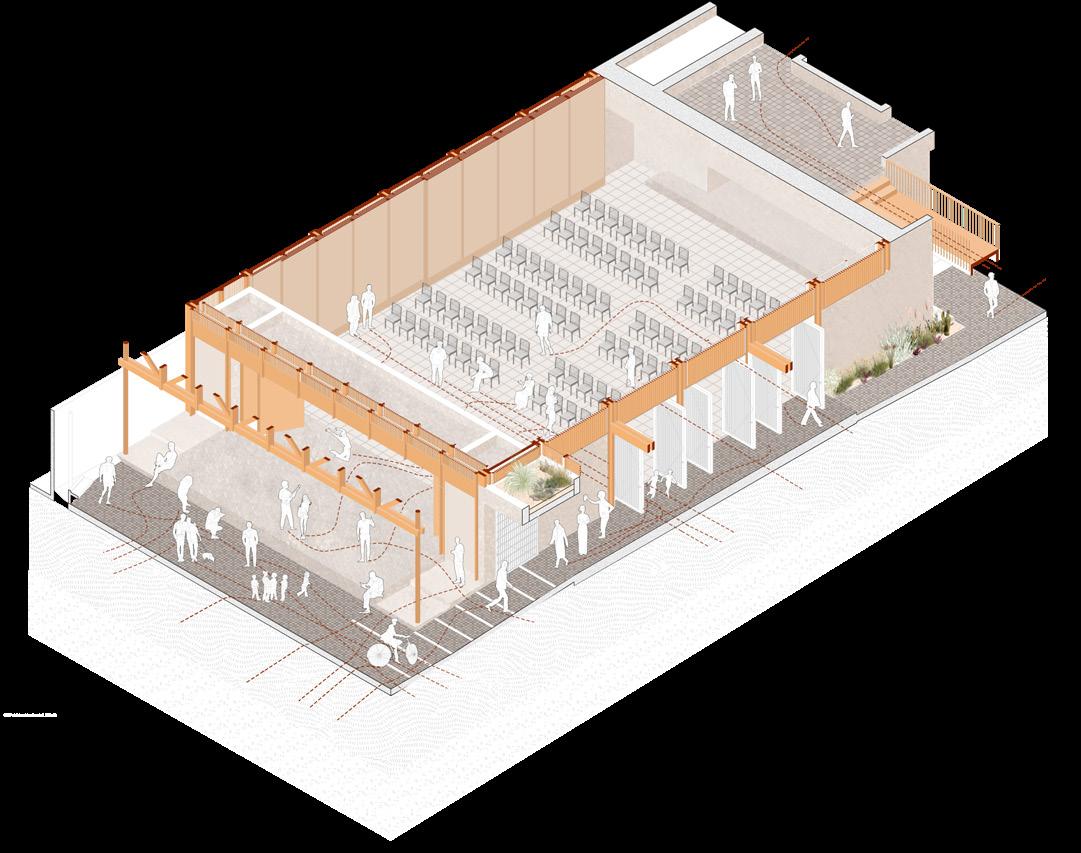
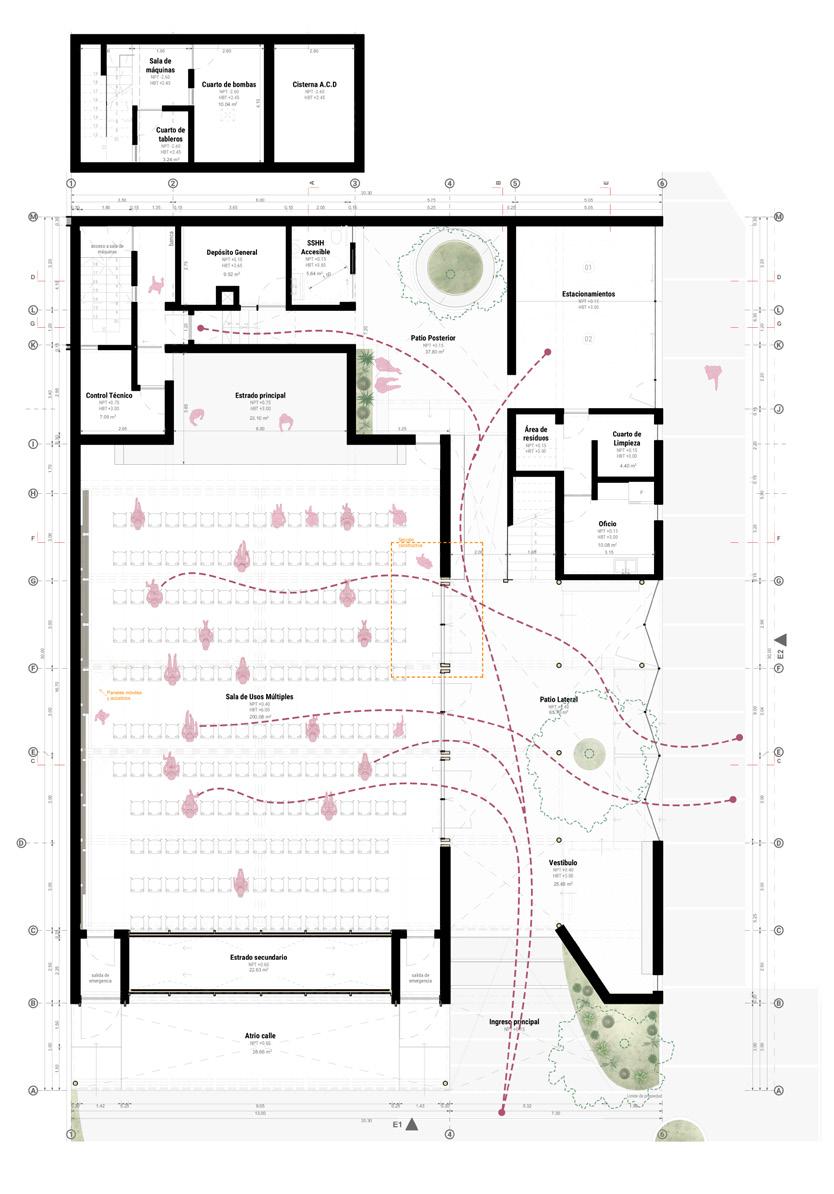
Three organizational open spaces: atrium, side courtyard, and rear courtyard. Service areas are concentrated at the back of the site.
Space & Form - Landmark
An adaptive solution: the architectural gesture addresses climatic conditions and enhances spatial, acoustic, and structural quality.
A lateral circulation axis organizes and connects the front and side public spaces to the project, ending in a rear gathering area.
Material & Structure
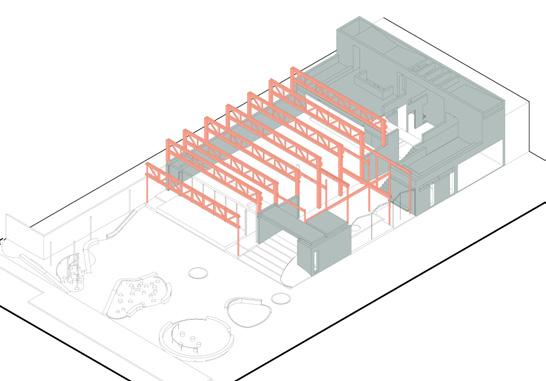
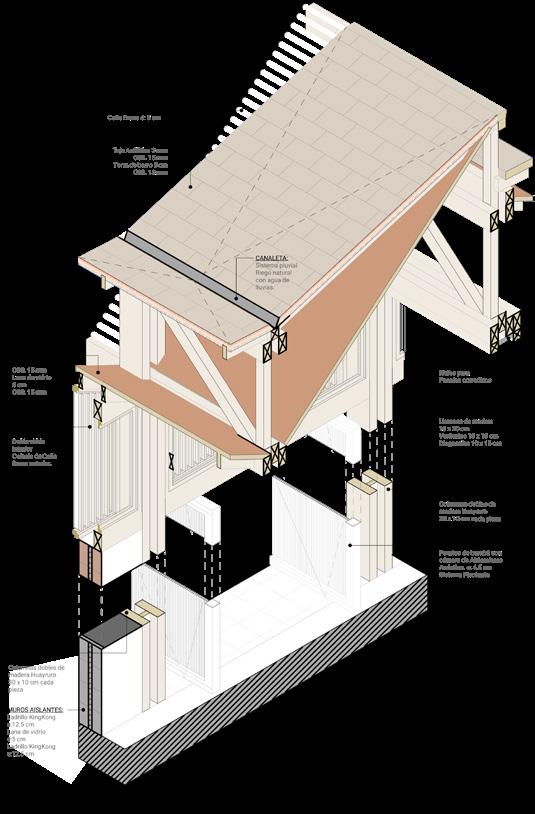
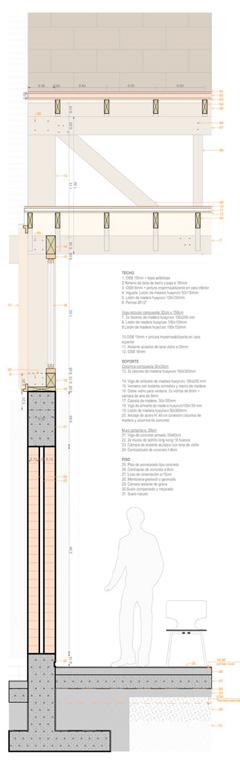
Dual-material composition: a solid concrete structure as support and wood as the roof system. Trussed beams span the multipurpose hall.
Urban Activator
An expandable enclosure. The proposal extends toward the city through the design of the atrium and courtyard, acting as a seed for urban reactivation.
ACTIVATION sustainable strategies
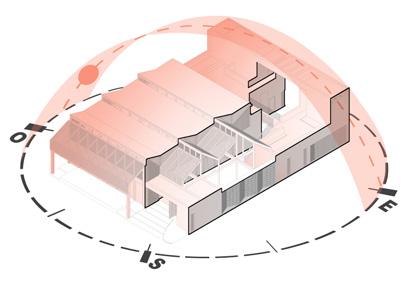
+ Facade Orientation
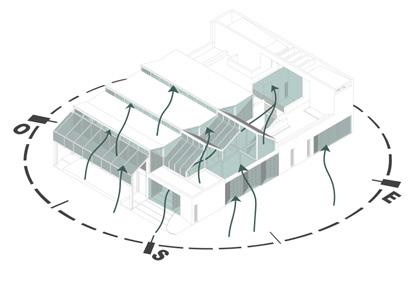
+ Wind Capture
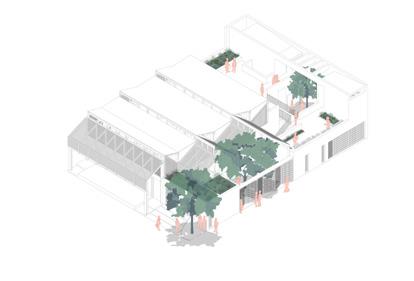
+ Strategic Vegetation
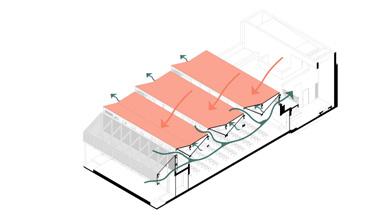
+ Double Roof
VEGETATION SELECTION
algarrobo / ceratonia siliqua
cactaceae & succulents
plot plan
guayacán amarillo /
handroanthus pennisetum salvia rosmarinus chrysanthus setaceum
cola de zorro/ romero/
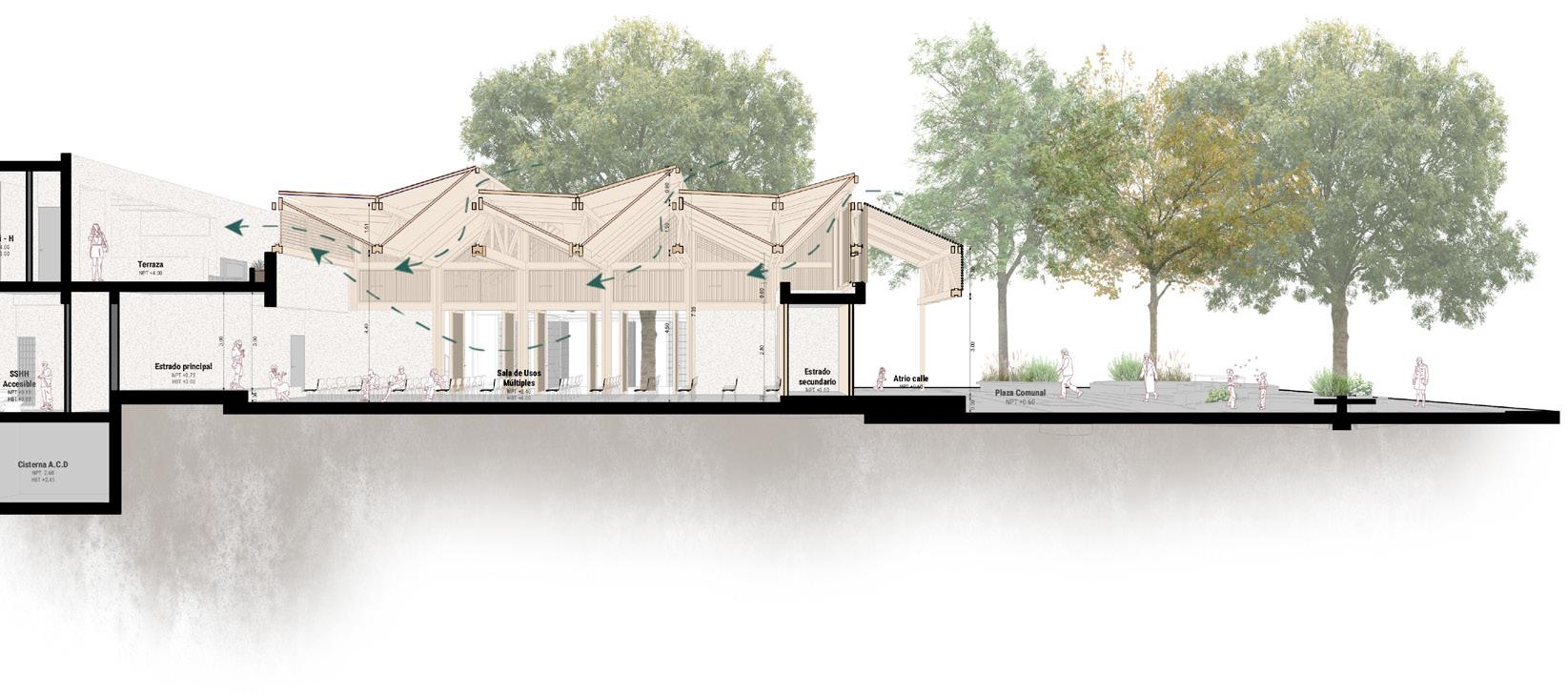
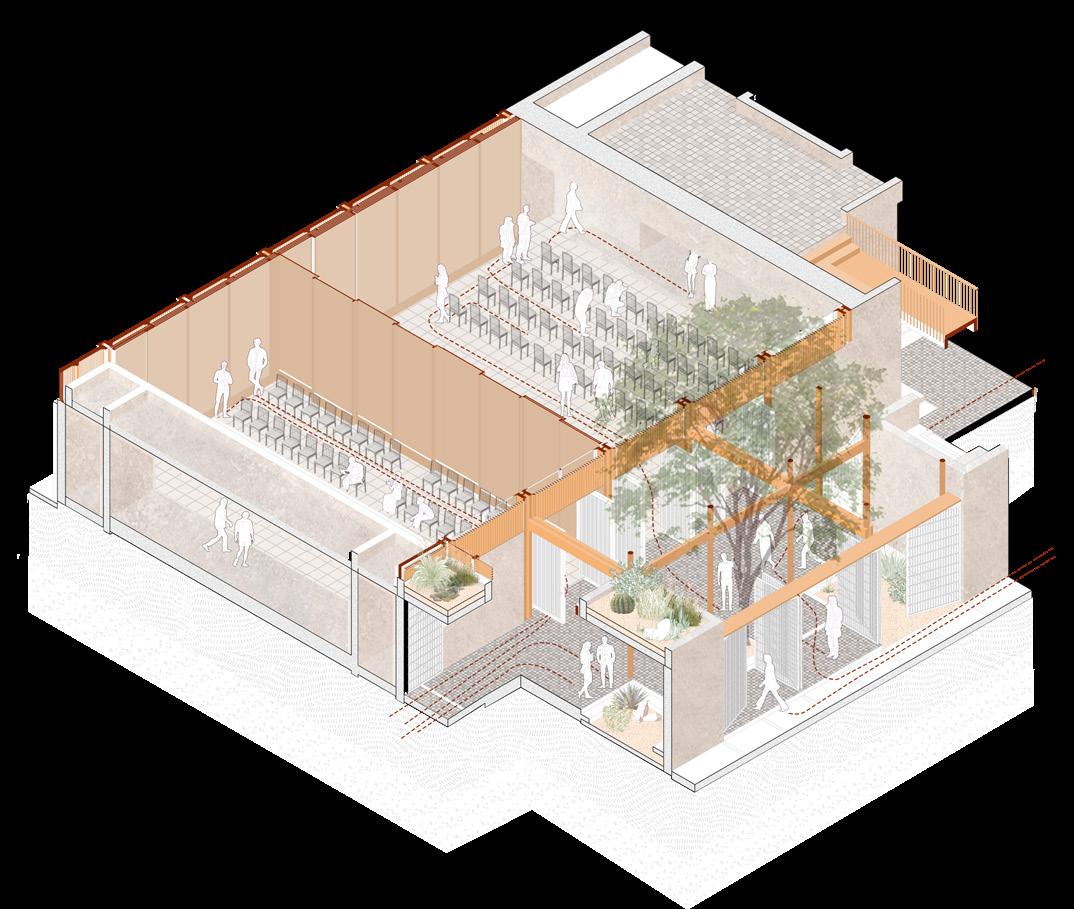
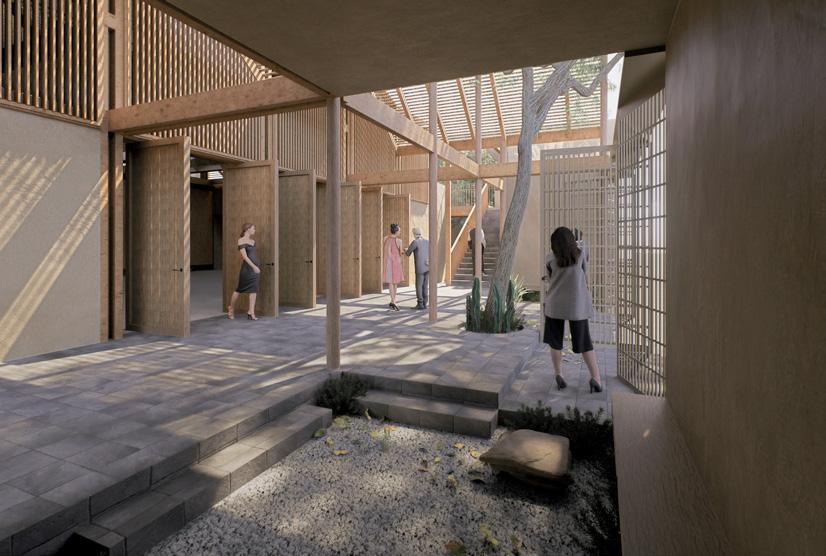
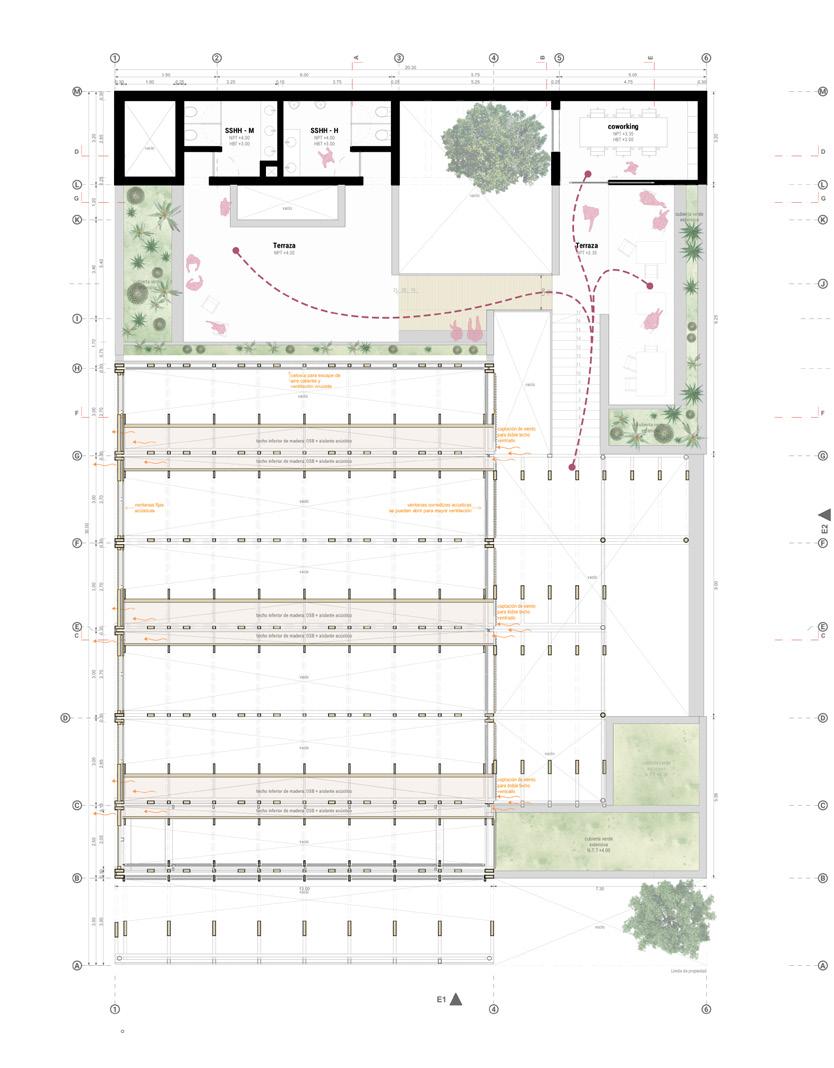
To mitigate Piura’s heat, the building arranges its volumes to create two open patios and an elevated green area that enable shaded circulation, cross-ventilation, and cooling through strategic arborization.
A south–southeast patio captures prevailing winds, while a rear patio releases them across the ground floor.
High ceilings, a ventilated double roof, wind-catching roof slopes, an active façade with insulated openings, green roofs for water reuse, and shaded landscaped patios collectively enhance thermal comfort and environmental performance.
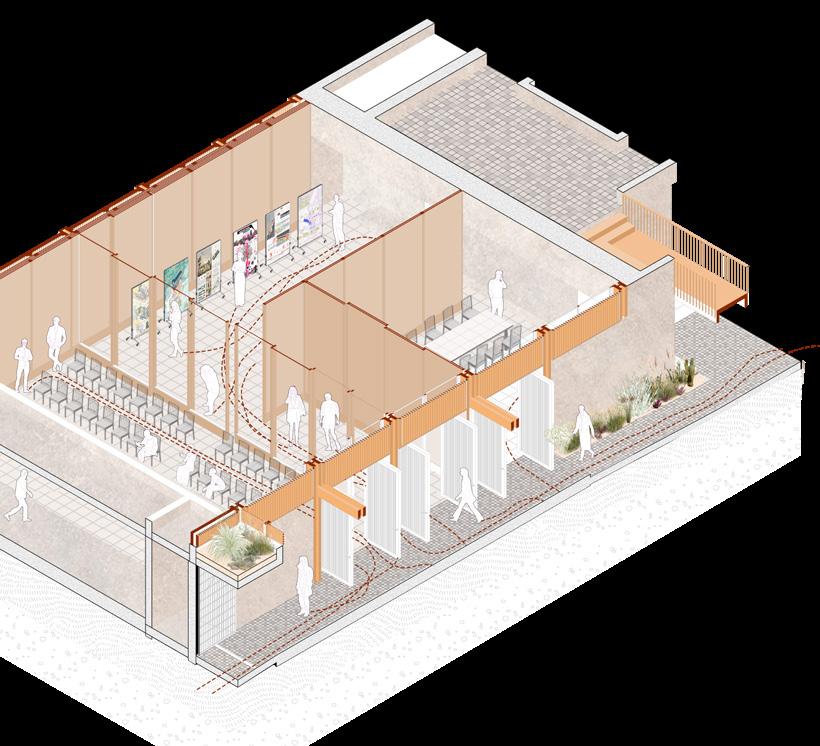
The program is organized in two levels plus a technical basement. The ground floor hosts the Multipurpose Hall, conceived as a flexible space that can open to the plaza or be subdivided into up to four independent rooms. Two patios extend and ventilate the hall, while the upper level provides a terrace and coworking space. A central circulation spine connects all areas.
Material selection centers on locally sourced, climate-responsive construction. Concrete provides mass, rigidity, and thermal insulation, while lightweight timber enables efficient structural spans. Complementary elements—double masonry walls, insulated wood roofs, and movable wood-frame panels— enhance acoustic control, durability, and adaptability.
inner courtyard
multipurpose room
ADAPTIVE SPACE
Indoor use
first floor
Author:
Context of the project: + Yasmin Jasahui Ocampo Designer - 5th academic year
Title of the project:
Location: “Municipal Stadium”
Barranco, Lima - Perú
Institution:
Universidad Ricardo Palma
Barranco, Lima - Perú
Date:
December 2018
A new Municipal Stadium for Barranco that redefines sports infrastructure as public architecture integrating landscape, community, and urban continuity.
CONTEXT urban scale
Society has carried forward values that were once conceived in times when physical preparation was necessary to produce stronger soldiers capable of defending the community. Over time, these values have been transformed into living symbols that inspire and motivate society.
As a result, the city demands territories dedicated to the practice of playful activities—both active and passive, individual and collective—becoming new spaces where contemporary leisure rituals are celebrated within modern temples of pleasure. In this case, a stadium.
current situation
Barranco, Lima- Perú
Metropolitan Stadium
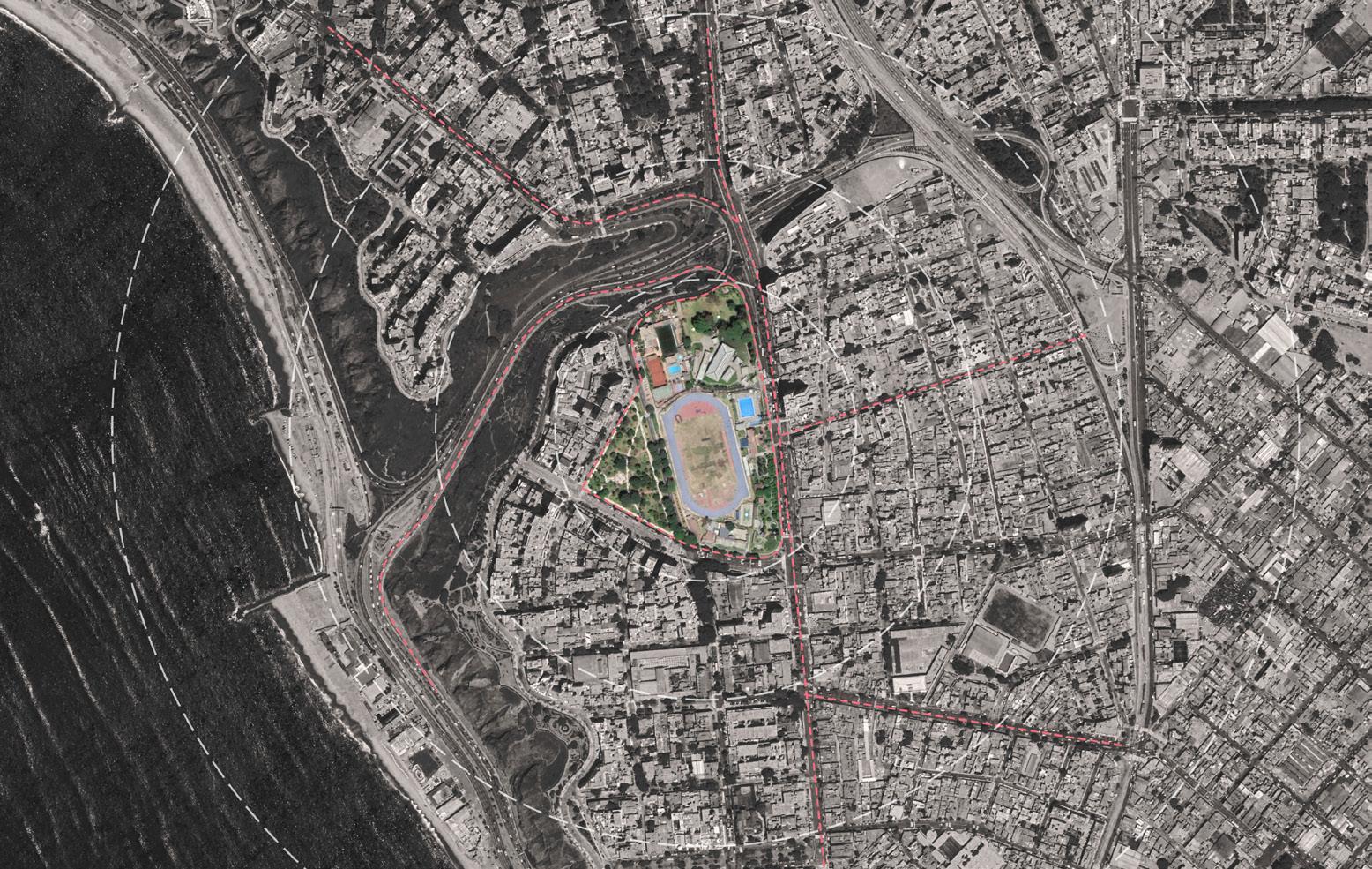
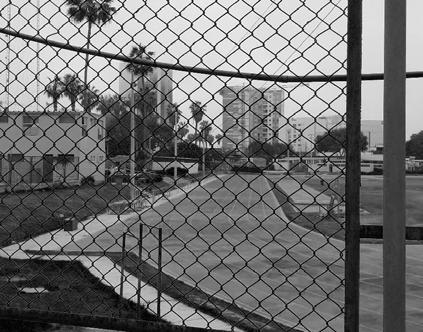
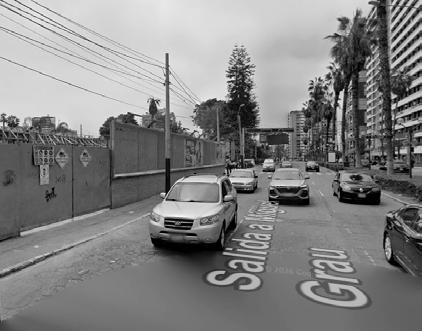
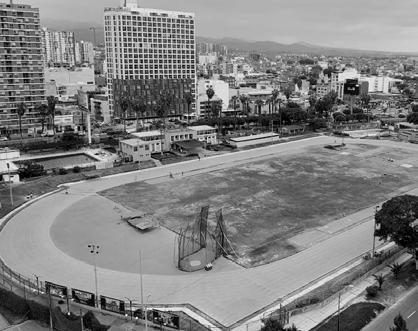
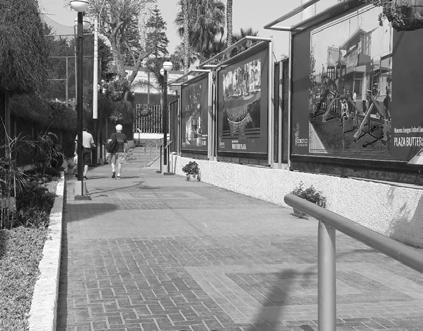
Urban fragmentation isolates the stadium from Barranco, the Costa Verde, and surrounding public spaces, limiting its role as an urban connector.
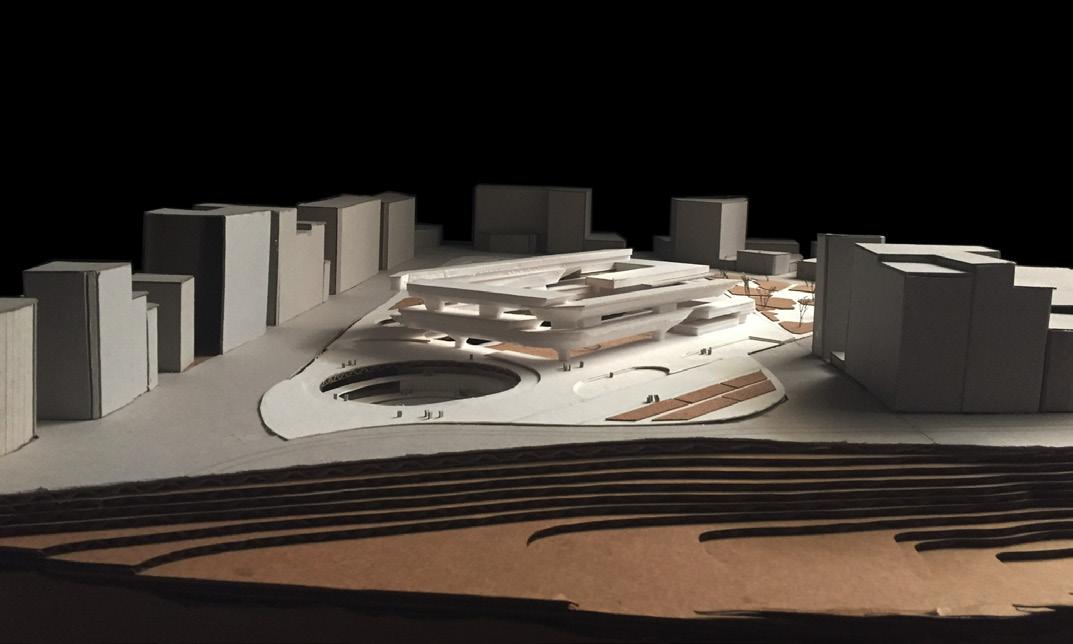
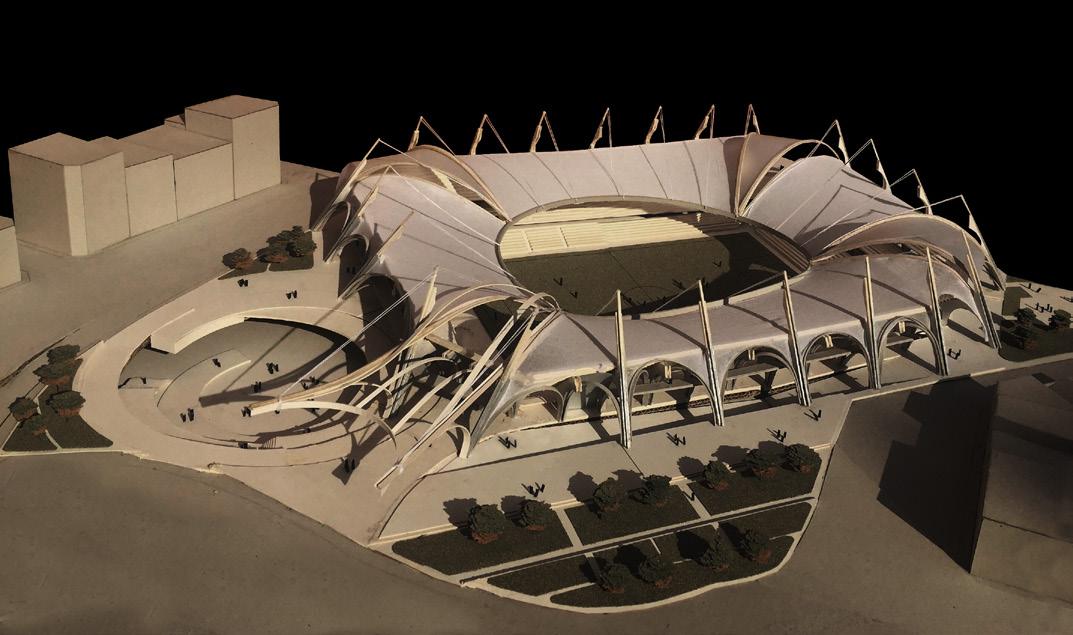
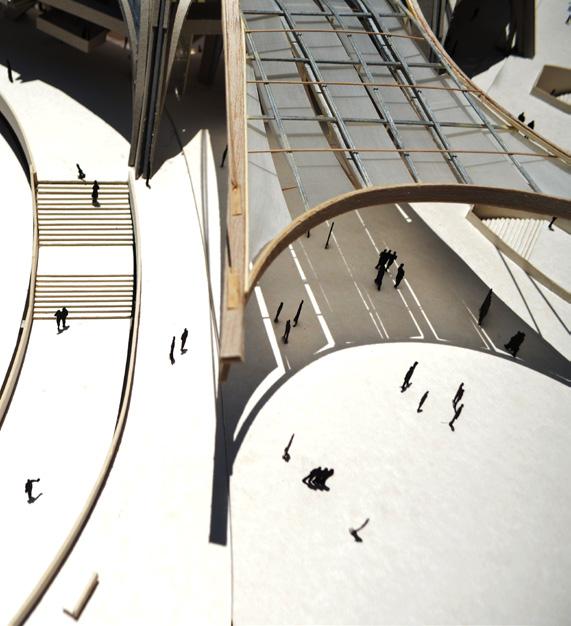
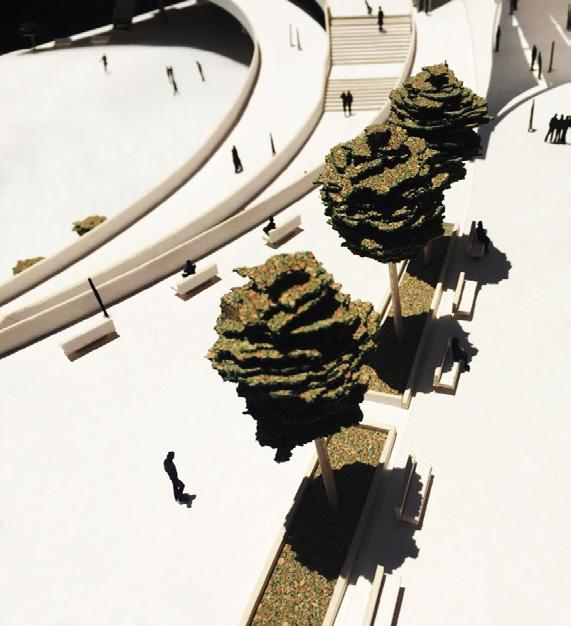
The proposal opens the block to the city by transforming it into a sports and cultural complex where public space supports new social and recreational dynamics within the residential context. A large circular plaza organizes pedestrian flows around the stadium, enabling fluid ground-level circulation while facilitating entry and evacuation through ramps and stairs connected to the underground train station.
Site Context Model – 1:500
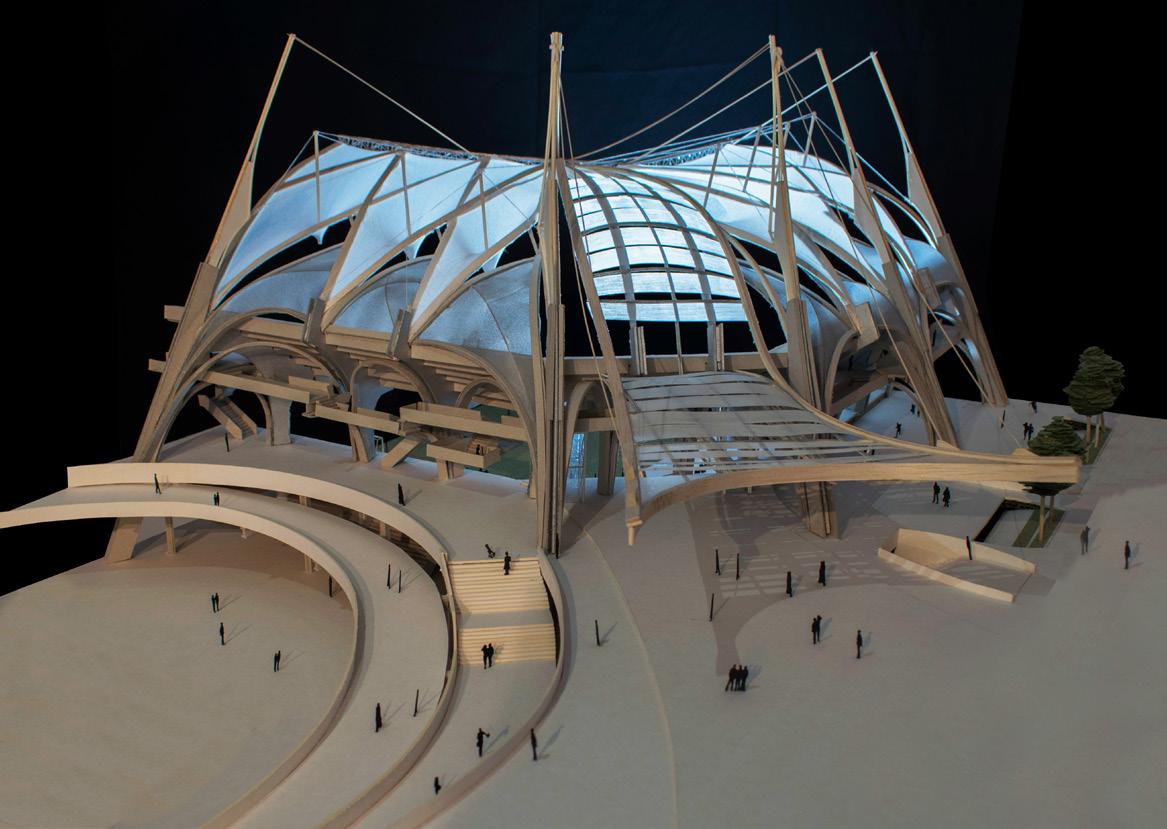
Architectural Massing Model – 1:250
URBAN PROPOSAL & METROPOLITAN COMPLEX
STRATEGY urban experimental
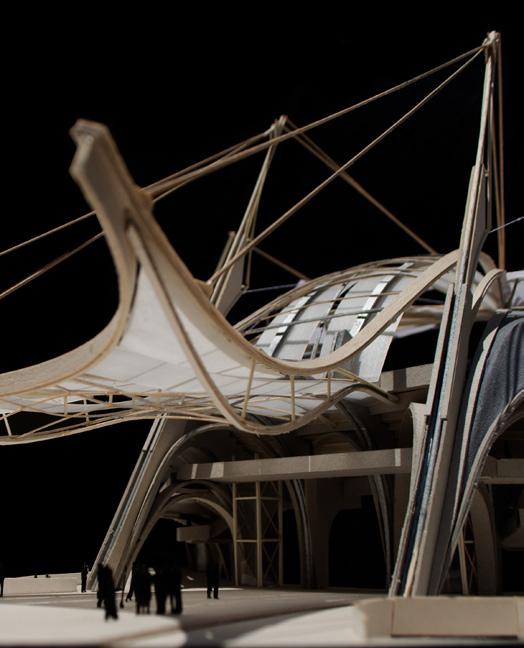
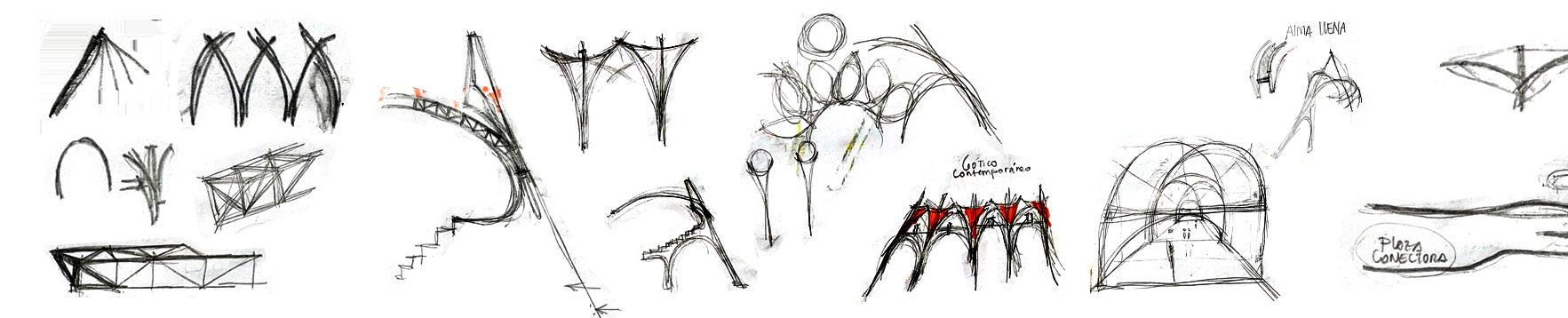
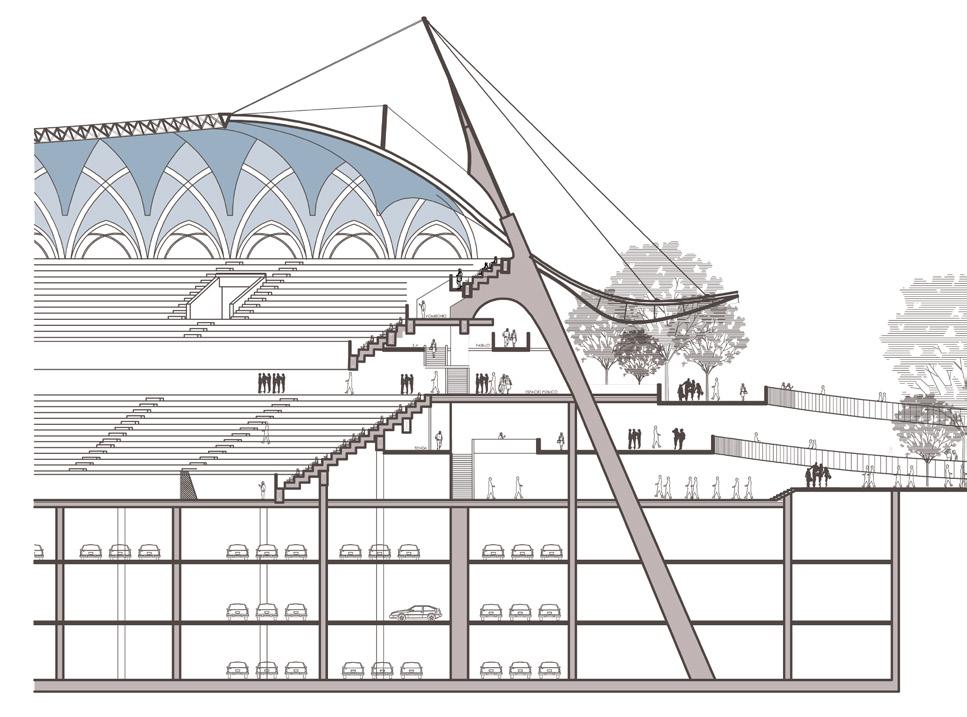
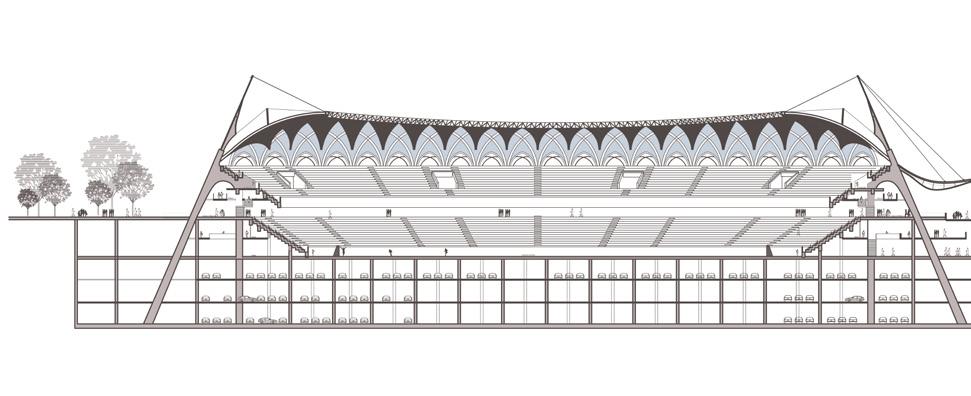
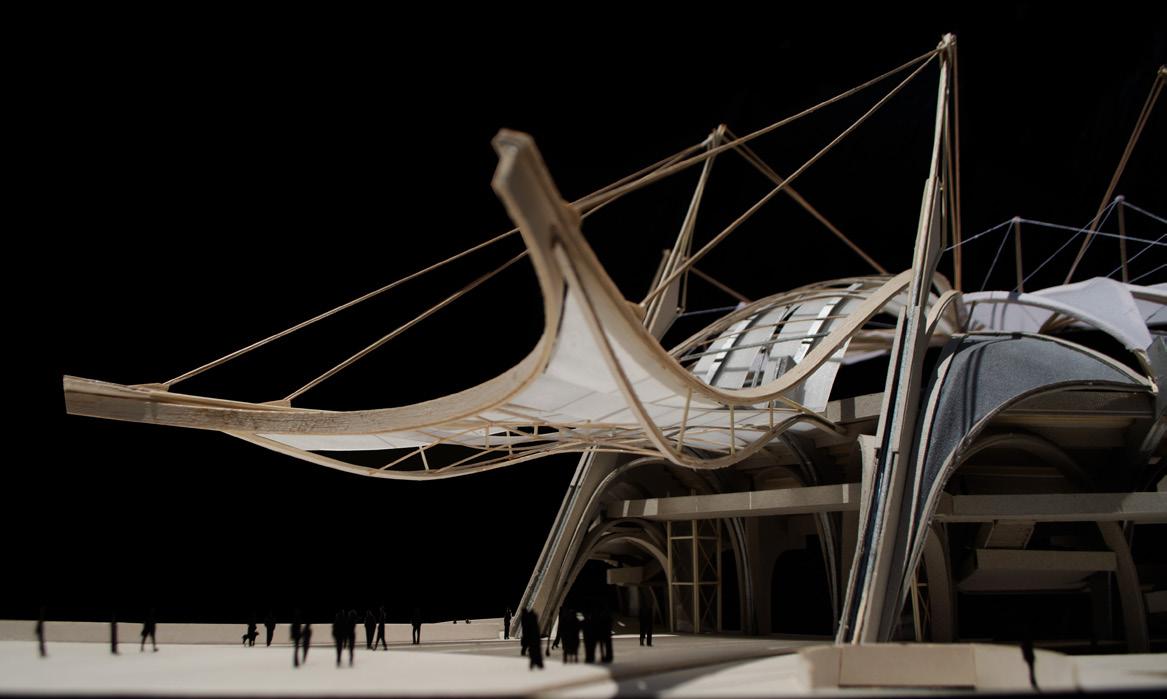
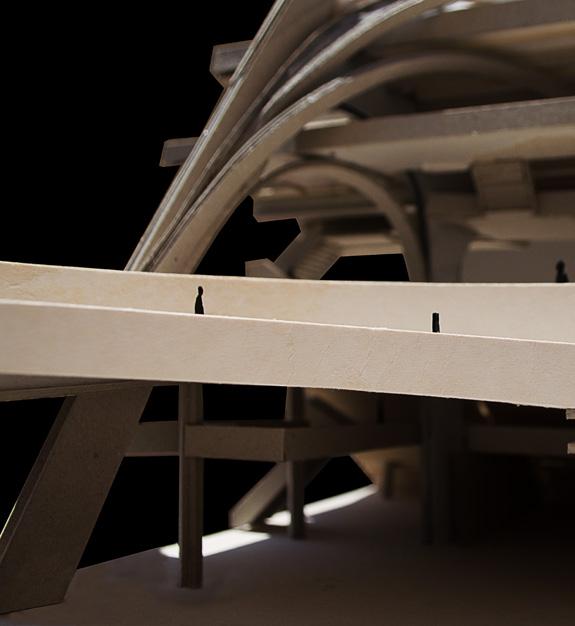
The stadium is conceived as a solid concrete base that forms a shaded public gallery integrated with the surrounding plaza.
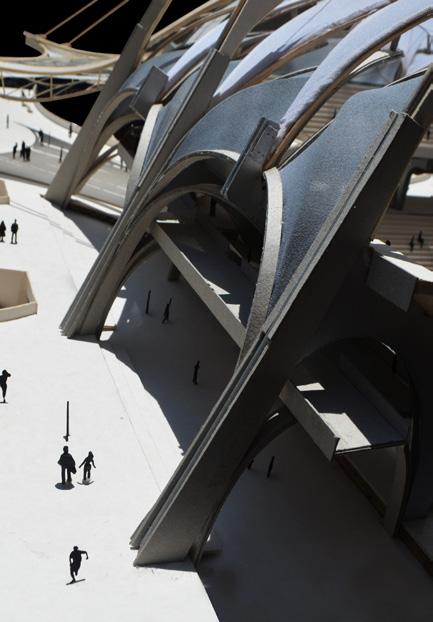
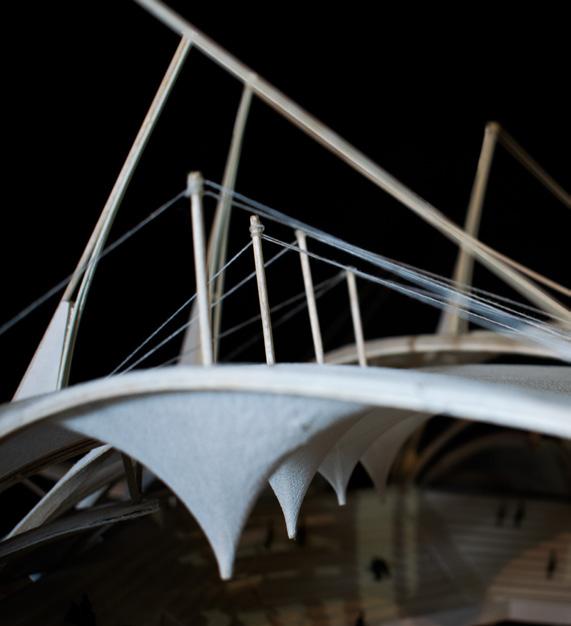
Above, the structure transitions into a lighter system with a dynamic tensile roof responsive to wind and climate.
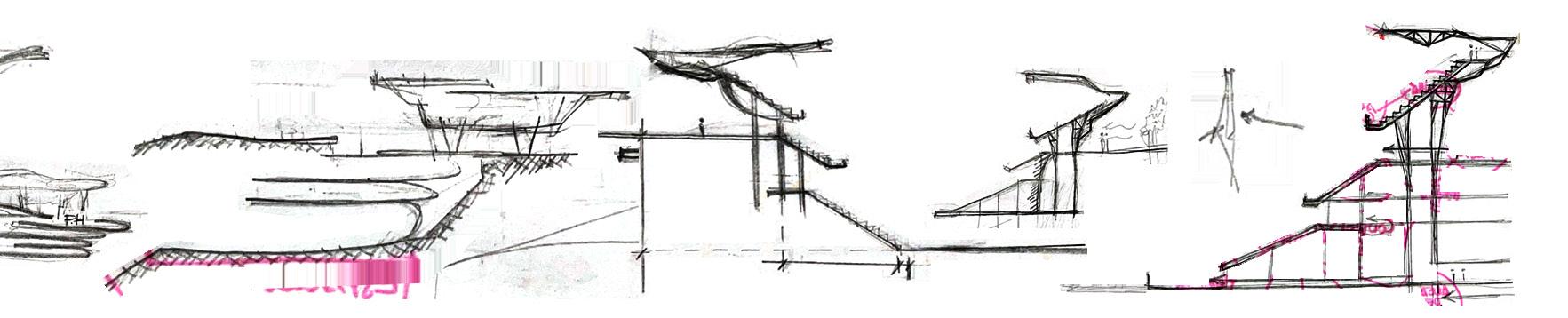
The inclined structural section allows the building to integrate more organically with the site, maintaining a human scale at street level while creating generous shaded spaces for pedestrians.
A large suspended canopy marks the main entrance, generating a curved architectural skin whose shade allows the public space to host activities such as fairs, exhibitions, and everyday social use.
The tensile roof becomes the project’s defining element, composed of bidirectional membranes that create a dynamic rhythm across the stadium ceiling, enhancing the spatial experience of spectators during sporting and cultural events.