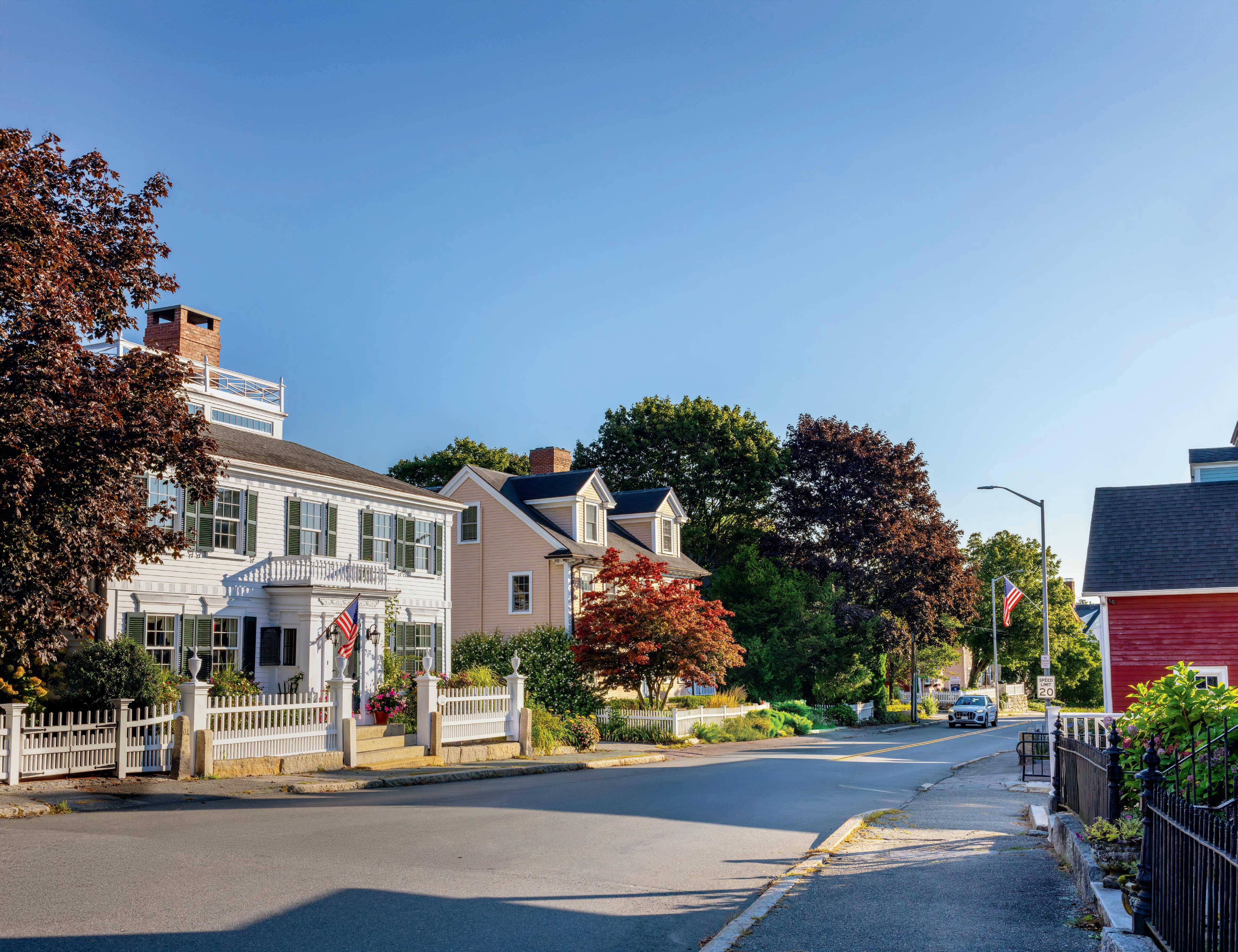
MANCHESTER-BY-


MANCHESTER-BY-

54 /// The Best Small Towns to Live In Trade the commute for a community in 25 New England towns that offer a master class in living the good life.
By Michael Blanding
68 /// In Full Flower
Drawing equally from her garden and her studio, Connecticut ceramic artist Frances Palmer conjures up floral masterpieces in her latest book, Life with Flowers.
78 /// Conversations: Joseph Lee
A Wampanoag writer explores Indigenous identity, displacement, and resilience on Martha’s Vineyard and beyond. Interview by Joe Keohane
82 /// Down East Rising
How an audacious little rocket company could make coastal Maine an unexpected front-runner in the commercial space race. By Brian Kevin











Your Spring Escape Is Just a Short Rhode Away
Your Spring Escape Is Just a Short Rhode Away
Your Spring Escape Is Just a Short Rhode Away
Your Spring Escape Is Just a Short Rhode Away
100 miles of coastline featuring 20 public beaches to relax or play. Miles of hiking and biking trails that spill into lush forests and wildlife preserves.
Fresh, local seafood such as lobster stuffed they’re
100 miles of coastline featuring 20 public beaches to relax or play. Miles of hiking and biking trails that spill into lush forests and wildlife preserves. Fresh, local seafood such as lobster rolls so stuffed they’re
100 miles of coastline featuring 20 public beaches to relax or play. Miles of hiking and biking trails that spill into lush forests and wildlife preserves. Fresh, local seafood such as lobster rolls so stuffed they’re ‘gram worthy.
100 miles of coastline featuring 20 public beaches to relax or play. Miles of hiking and biking trails that spill into lush forests and wildlife preserves. Fresh, local seafood such as lobster rolls so stuffed they’re
Relax and rejuvenate at a luxe spa. Your spring escape is closer than you think. Learn more at SouthCountyRI.com
Relax and rejuvenate at a luxe Your spring escape is closer than you think. Learn more at SouthCountyRI.com
Relax and rejuvenate at a luxe spa. Your spring escape is closer than you think. Learn more at SouthCountyRI.com
Relax and rejuvenate at a luxe spa. Your spring escape is closer than you think. Learn more at SouthCountyRI.com
20 /// Uncurbed Appeal
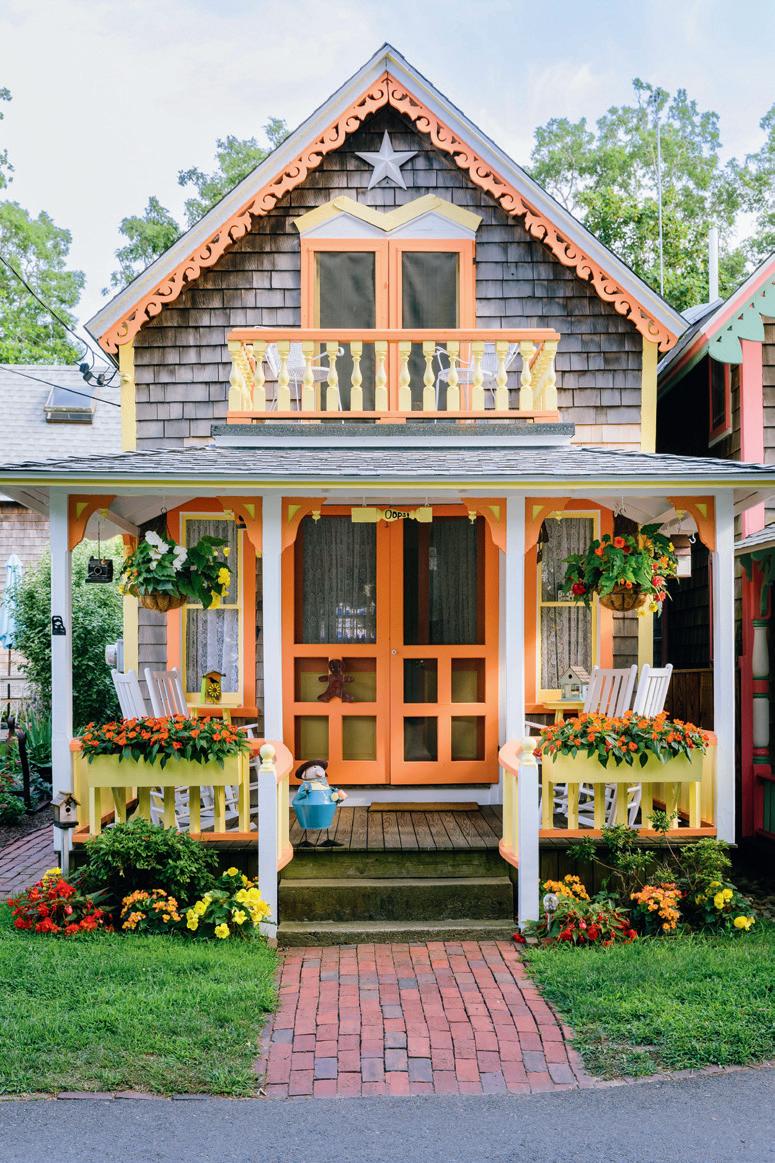
To create New England’s signature gingerbread houses, Victorian ambition and a bit of Yankee artistry took simple wood trim over the top. By
Bruce Irving
28 /// Made in New England
Founded in Massachusetts more than a century ago, Steele Canvas Basket Corp. has heritage and style in the bag. By Katrina Farmer
9
CONNECT WITH YANKEE
Jump-start that springtime feeling with our favorite public gardens—plus brightflavored brunch recipes and home decor glow-ups—now on NewEngland.com.
12
BEHIND THE SCENES
14
34 /// Best in Show
To celebrate a milestone anniversary, senior food editor Amy Traverso brings back five of her favorite recipes from across 10 delicious seasons of Weekends with Yankee
40 /// In the Kitchen
Hot-off-the-press New England cookbooks to launch a new chapter in your home cooking adventures. By Amy
Traverso
42 /// Weekend Away
Bright culinary flavors infuse a springtime visit to Little Rhody’s capital city. By Elyse Major
50 /// Roost & Relaxation
Get back to the land (and meet cute critters to boot) at these farm-focused overnight stays. By Bill Scheller

Spend a day at New Hampshire’s Pickity Place, where it’s all about the gardens, the food, and a touch of fairy-tale flair. By
Carol Connare
A hometown surrounds you not just with buildings and shops and streets, but history, traditions, stories—and memories, most of all. By Mel Allen
ADVERTISING RESOURCES






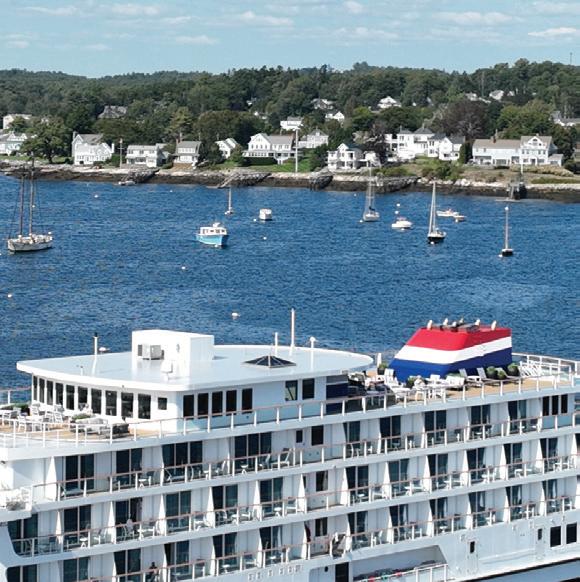



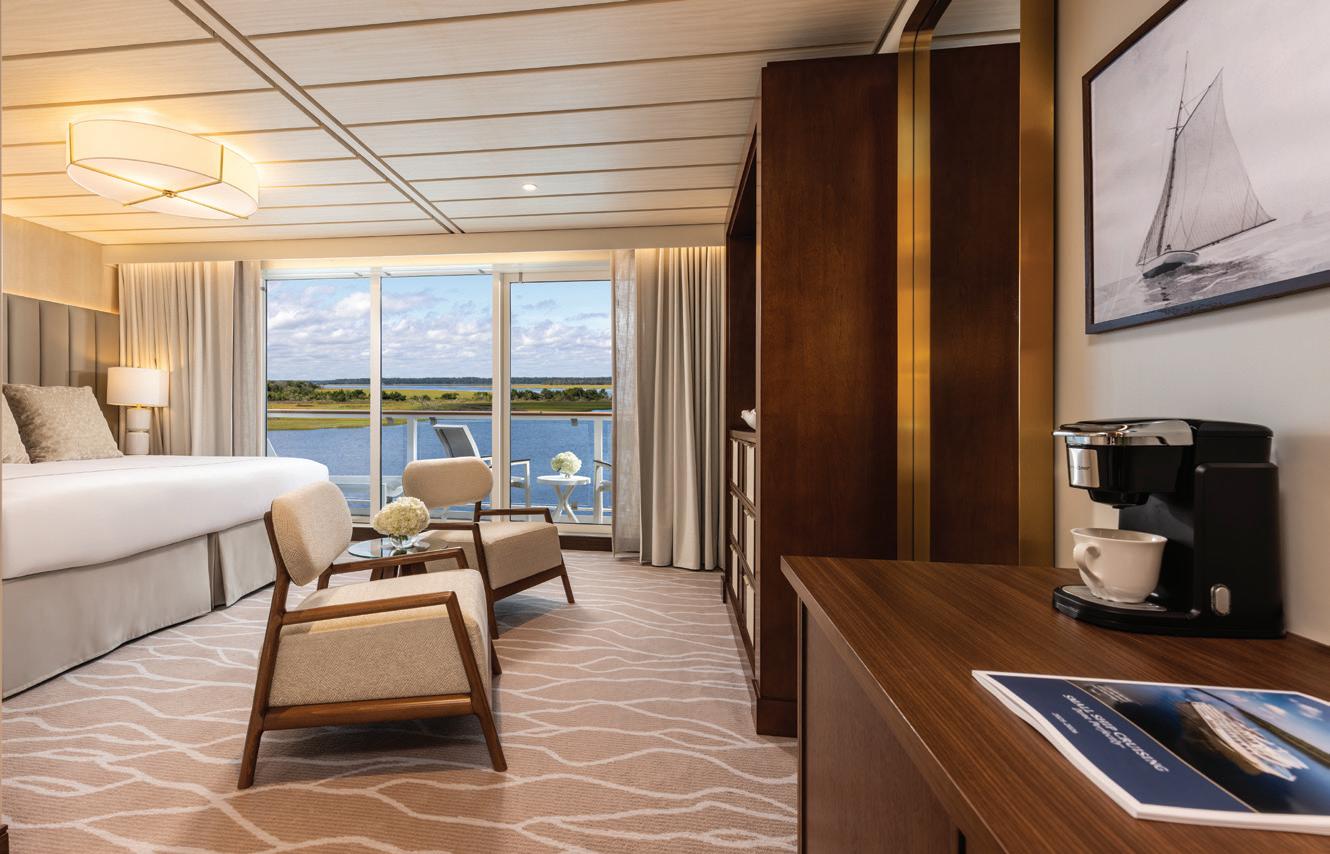

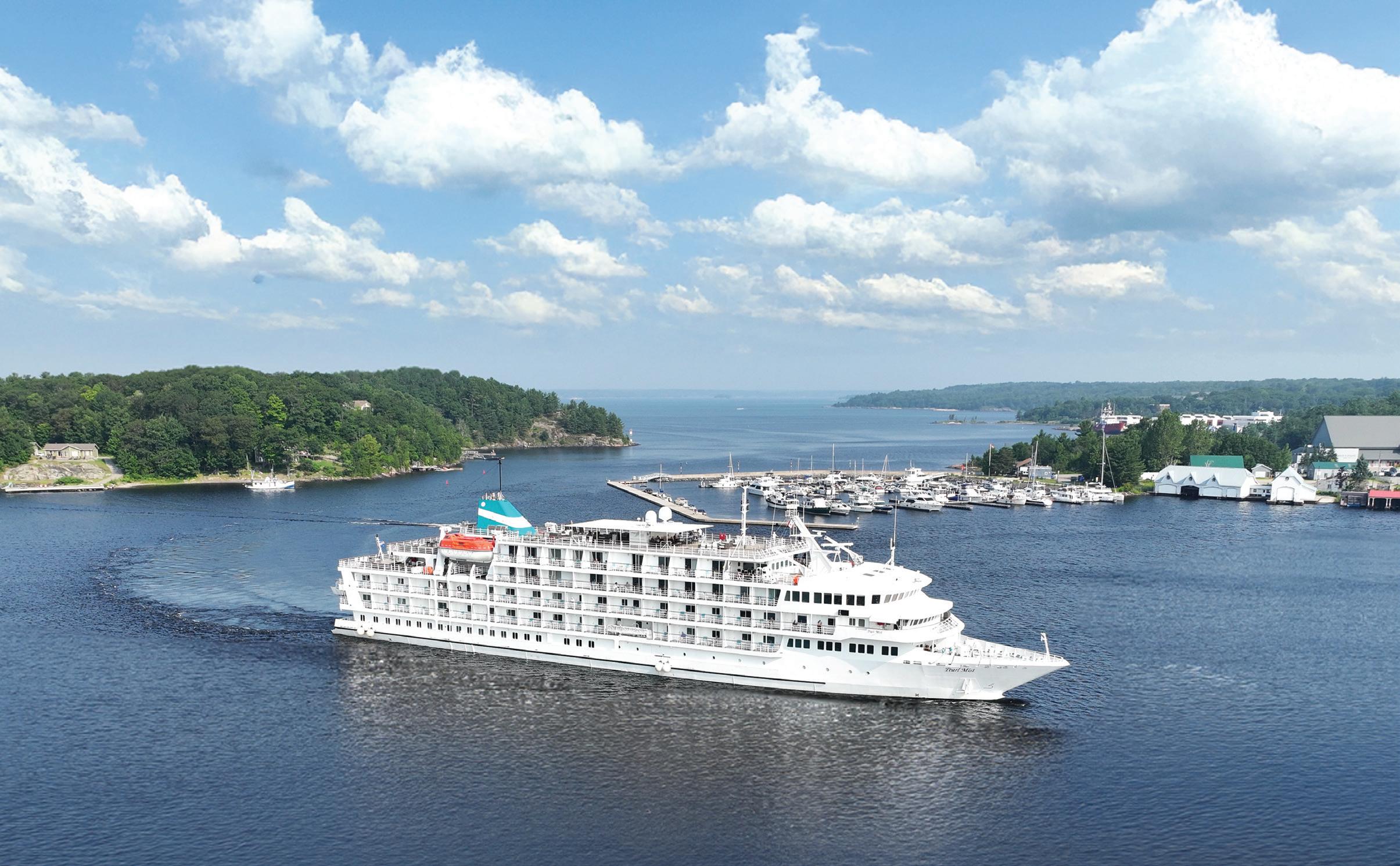
Set sail on a 9 to 14-day all-inclusive journey aboard our fleet of new small ships designed specifically to navigate the Great Lakes. With up to 130 guests, you’ll enjoy an intimate onboard experience and the most spacious staterooms in the industry, each featuring a private balcony, perfect for enjoying the ever-changing scenery. Relax in elegant lounges and inviting social spaces as the landscape unfolds before you, from the castle-dotted archipelagos of the Thousand Islands to the timeless streets of Mackinac Island, and the awe-inspiring beauty of Niagara Falls.
























































Publisher Brook Holmberg
Senior Managing Editor Jenn Johnson
Executive Editor Ian Aldrich
Senior Food Editor Amy Traverso
Senior Digital Editor Aimee Tucker
Travel/Branded Content Editor Kim Knox Beckius
Associate Editor Katrina Farmer
Contributing Editors Ben Hewitt, Courtney Hollands, Rowan Jacobsen, Meg Lukens Noonan, Bill Scheller, Julia Shipley, Kate Whouley
Editor at Large Mel Allen
Art Director Katharine Van Itallie
Senior Photo Editor Heather Marcus
Contributing Photographers Adam DeTour, Megan Haley, Corey Hendrickson, Michael Piazza, Greta Rybus
Production & Distribution Director David Ziarnowski
Production Manager Brian Johnson
Senior Production Artists Jennifer Freeman, Rachel Kipka
Vice President, Digital & Production Paul Belliveau Jr.
Senior Web Designer Amy O’Brien
E-commerce Director Alan Henning
Digital Manager Holly Sanderson
Digital Marketing Specialist Jessica Garcia
Email Marketing Manager Eric Bailey
Customer Retention Marketer Kalibb Vaillancourt
E-commerce Merchandiser Specialist Nicole Melanson
Vice President, Media Sales & Marketing Judson D. Hale Jr.
Media Account Managers Kelly Moores, Dean DeLuca , Steven Hall
Canada Account Manager Cynthia Fleming
Senior Production Coordinator Janet Selle
For advertising rates and information, email jdh@yankeepub.com or go to newengland.com/adinfo.
Marketing Director Kate Hathaway Weeks
Senior Sales & Marketing Manager Valerie Lithgow
Marketing Assistant Natalia Rivera
For press inquiries, email media@yankeepub.com.
ESTABLISHED 1935 | AN EMPLOYEE-OWNED COMPANY
President Jamie Trowbridge
Vice Presidents Paul Belliveau Jr., Ernesto Burden,
Judson D. Hale Jr., Brook Holmberg, Jennie Meister, Sherin Pierce
Editor Emeritus Judson D. Hale Sr.
CORPORATE STAFF
Vice President, Finance & Administration Jennie Meister
Human Resources Manager Beth Parenteau
Information Manager Gail Bleakley
Assistant Controller Nancy Pfuntner
Accounting Associate Meg Hart-Smith
Accounting Coordinator Meli Ellsworth-Osanya
Executive Assistant Christine Tourgee
Facilities Attendants Ken Durand, Bob Sardinskas
BOARD OF DIRECTORS
Andrew Clurman, Renee Jordan, Joel Toner, Jamie Trowbridge, Cindy Turcot
FOUNDERS
Robb and Beatrix Sagendorph
NEWSSTAND
Vice President, Retail Sales Sherin Pierce
NEWSSTAND CONSULTING
Linda Ruth, PSCS Consulting
SUBSCRIPTION SERVICES
To subscribe, give a gift, or change your mailing address, or for any other questions, please contact our customer service department:
Mail: Yankee Magazine Customer Service PO Box 37900, Boone, IA 50037-0900
Online: newengland.com/contact-us
Email: customerservice@yankeemagazine.com
Toll-free: 800-288-4284
Yankee occasionally shares its mailing list with approved advertisers to promote products or services we think our readers will enjoy. If you do not wish to receive these offers, please contact us.

Yankee Publishing Inc., 1121 Main St., PO Box 520, Dublin, NH 03444 / 603-563-8111 / editors@yankeepub.com Printed in the USA at Quad Graphics
Hosts Amy Traverso Richard Wiese
Executive Producer Laurie Donnelly
Senior Producer Tiffany Thompson




Sponsors



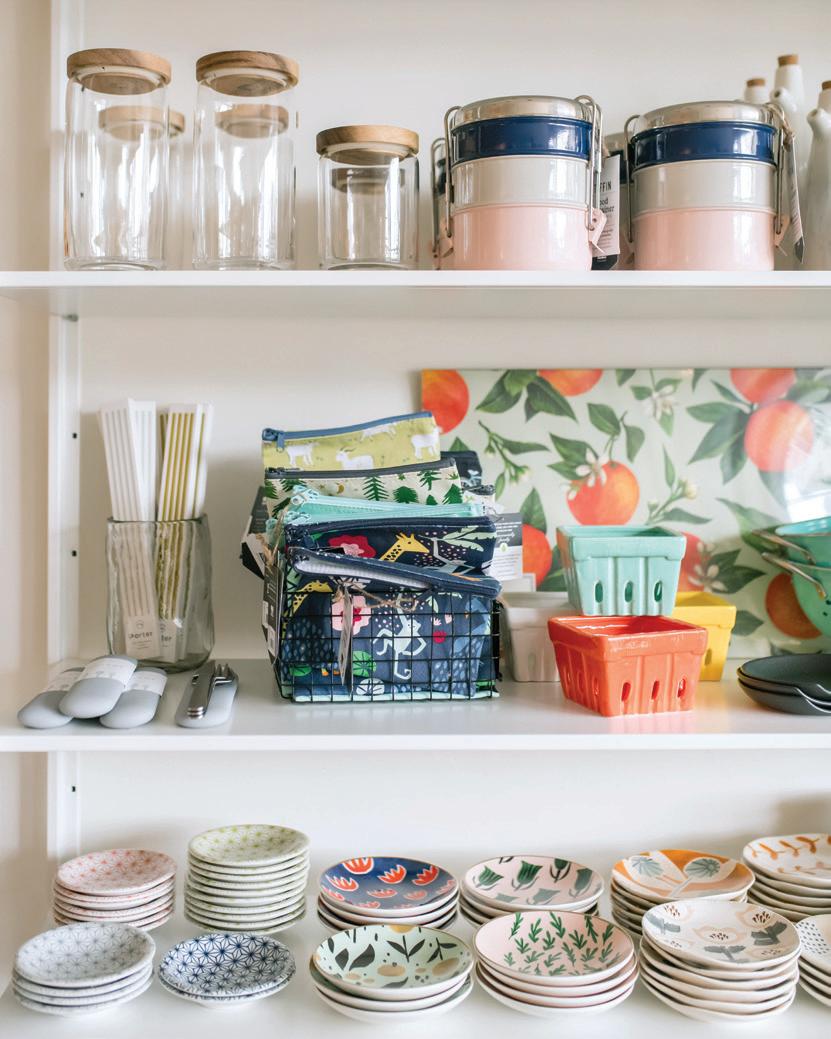
Home Decor Hot Spots
Whether you’re seeking contemporary flair or antique charm, our roundup of favorite New England home decor shops is brimming with unique finds. newengland.com/homedecorshops
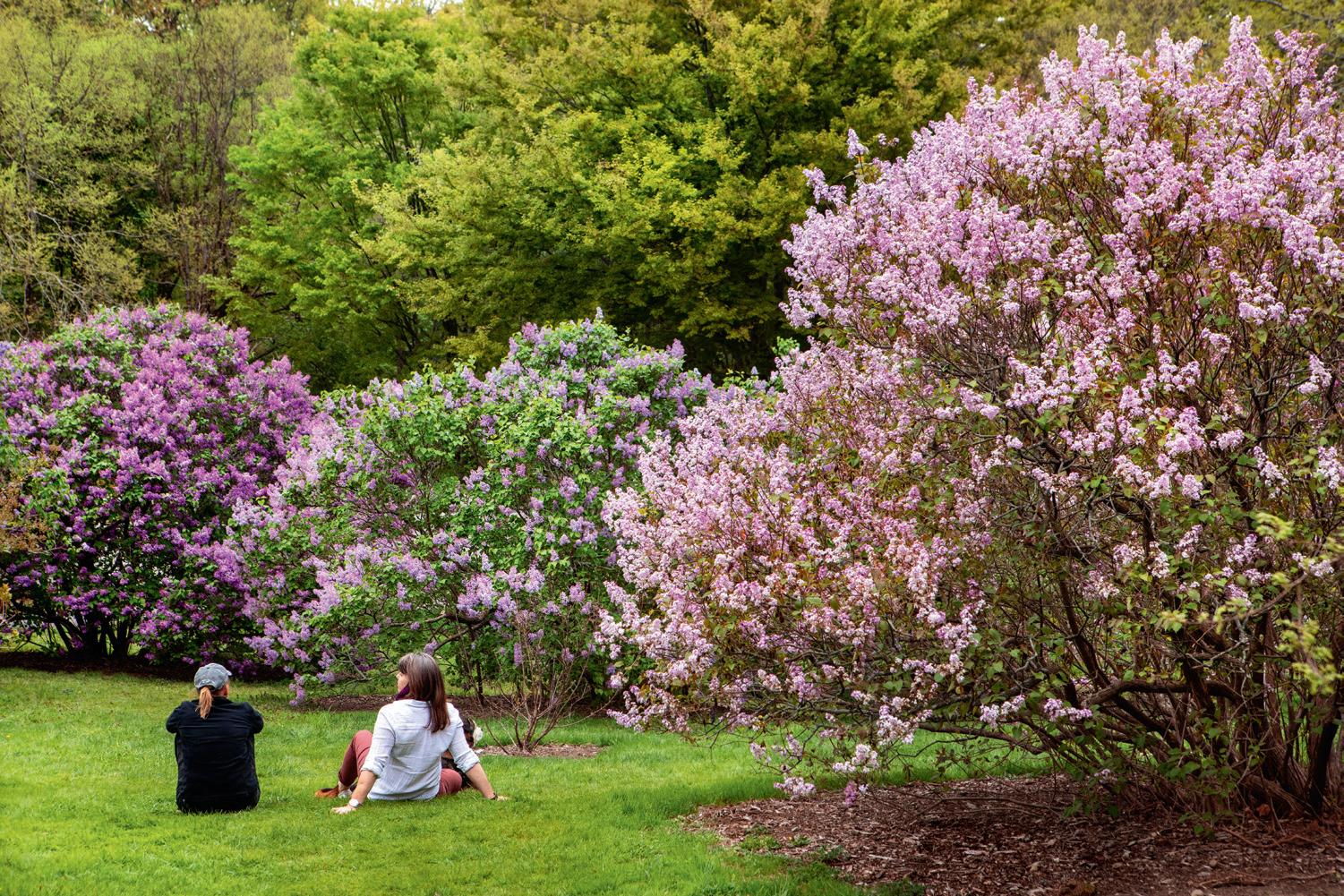
New England’s Best Public Gardens
From the seaside splendor of the Coastal Maine Botanical Gardens to the urban oasis of Elizabeth Park in Connecticut, here are eight flower-forward places to visit this spring. newengland.com/ publicgardens
FOOD
12 Must-Try Brunch Recipes
Look no further for inspiration in planning a sumptuous table for Passover, Easter, Mother’s Day, or any day. newengland.com/brunch
MORE WAYS TO CONNECT
New England Today
Want the best of New England delivered daily to your inbox? Subscribe to our e-newsletter for travel ideas, regional recipes, and much more. newengland.com/newsletter
Letters to the Editor
Join the conversation! Connect with us online to read and submit letters to the editor. newengland.com/dearyankee
Social Media
Follow us @yankeemagazine:


A long drive isn’t necessary to get the elevation gain you’re after. You can climb a whopping 1,832 feet right in Ashburnham. At the southern end of the Wapack Range, Mount Watatic rewards you with views of the Green Mountains in Vermont and the peaks of southern New Hampshire. In Holyoke, there’s Mount Tom, a fairly steep hike with a high likelihood of migrating hawk sightings. At the top, the rolling hills of the Pioneer Valley unfold before you.
Boston hikers are loyal to their beloved Blue Hills Reservation . There, the Skyline Trail leads to the top of Great Blue Hill; the 3.5-mile trek requires some climbing to reach the summit. Once you do, you can opt for another climb up Eliot Tower, which frames views of the city skyline. Head to the Berkshires for a challenging journey all the way up Monument Mountain; prepare to get a bird’s-eye view of the Housatonic River Valley.
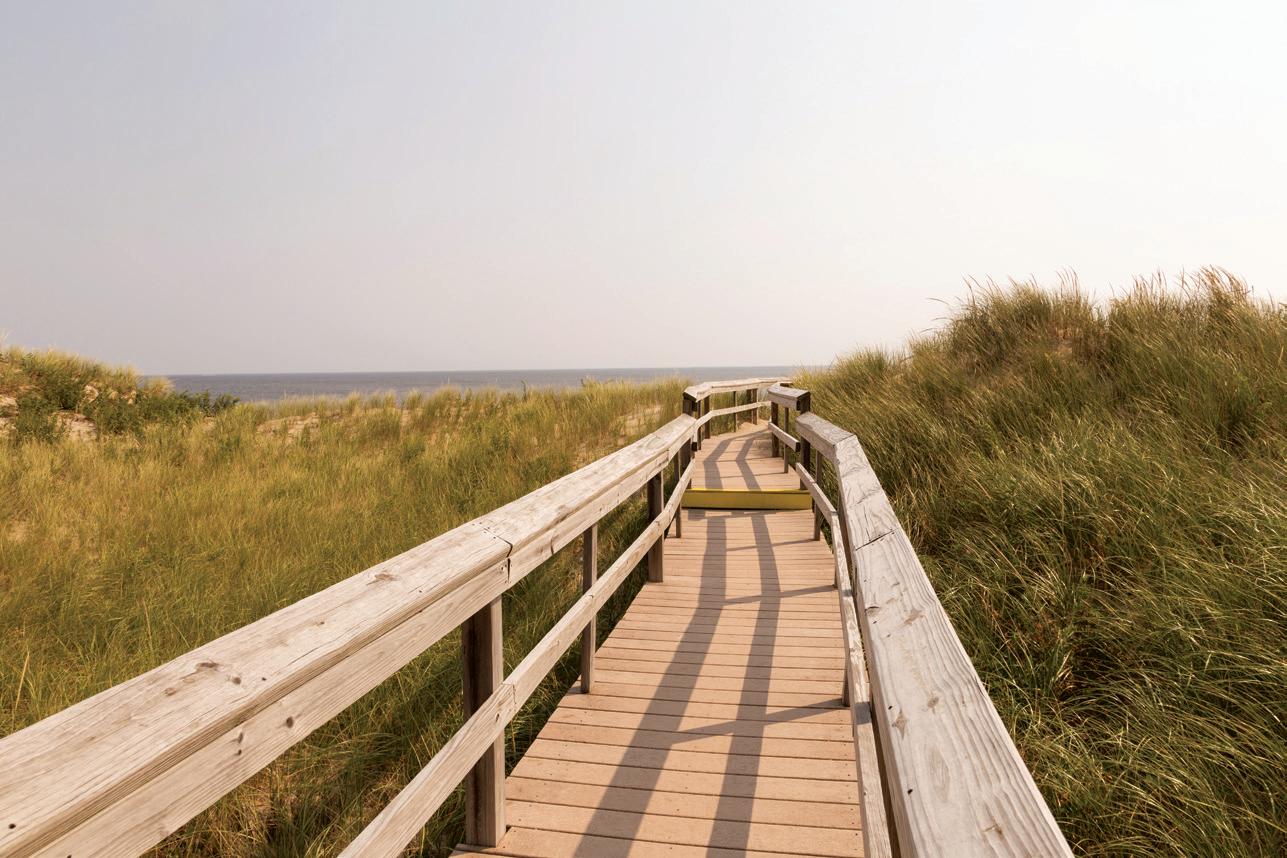
If a stroll through salt air is more your speed, the Bay State has many trails that live up to its nickname. Bird watchers will delight in the paths crisscrossing Parker River National Wildlife Refuge in Newbury. You’ll spend most of your visit on Plum Island, with the ocean on one side of you and salt marshes on the other. World’s End highlights a similarly immersive experience as you trace four drumlins jutting out into Hingham Bay, seemingly surrounded by deep-blue waters.
Along the hook-shaped arm of Cape Cod, the Great Island Trail in Wellfleet puts Massachusetts’s coastal beauty on dazzling display. You have the option to complete an almost-9-mile loop along the beach and through pitch pine forests, punctuated by plenty of scenic overlooks. The iconic scenery continues at Mattapoisett’s Nasketucket Bay State Reservation, where you’ll get a front-row seat to eelgrass meadows, coastal forests, salt marshes, and shellfish beds during your tranquil walk.
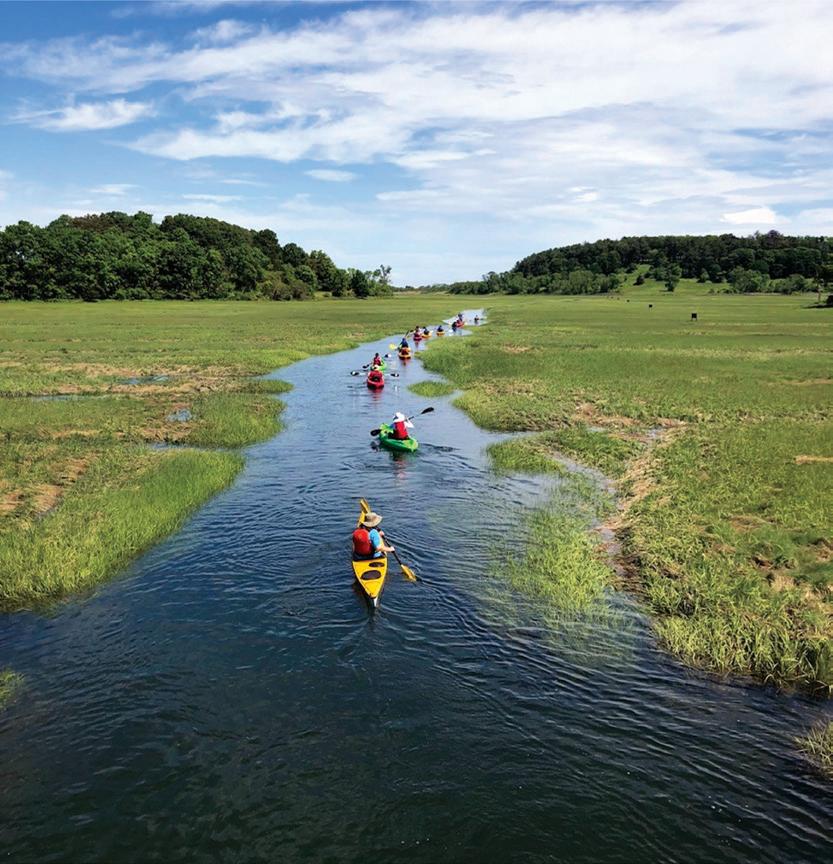
The only thing better than a leisurely paddle down the river is a paddle with a history lesson mixed in. If you bring your kayak or canoe to the Blackstone River in Millville, you can stop by the Millville Lock, one of the best-preserved locks from the former Blackstone Canal.
There’s also a visitor center in nearby Worcester spotlighting the area’s heritage. The Ipswich River, meanwhile, flows 45 miles from Burlington to Ipswich. Paddling here is mostly flat and relatively free from development.
That’s not the case for the Charles River, where you can put your boat in the water at the DCR’s public launch along Nonantum Road in Brighton. Paddle toward Boston to see the boathouses for numerous colleges and universities, or head inland to follow joggers along the Charles River Greenway. In Royalston, the Tully River offers another compelling kayaking experience, passing verdant wetlands on the way to Tully Lake, where there are isles and inlets to explore.
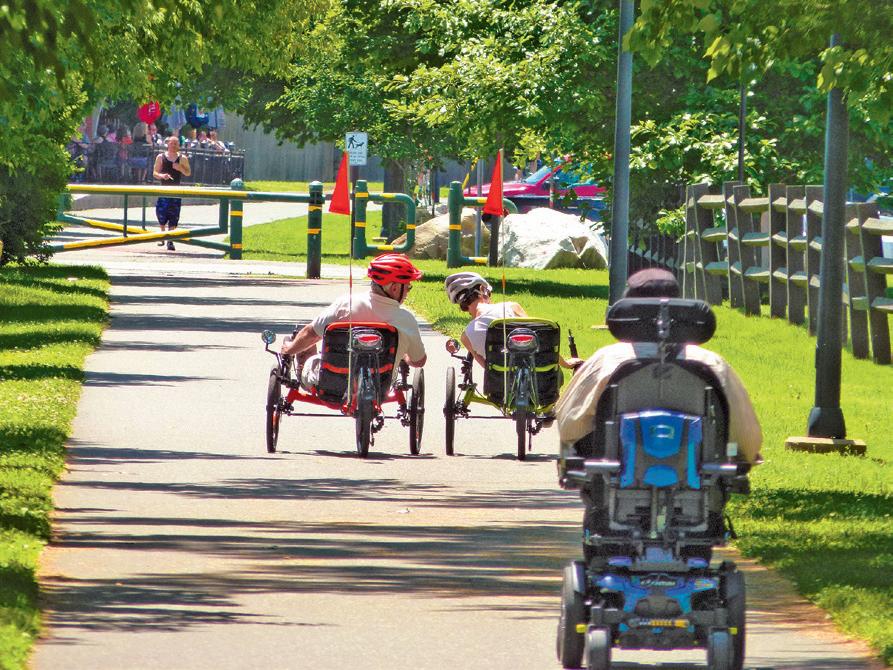
The Commonwealth’s bevy of bygone railroads has resulted in lots of opportunities for biking—in the form of rail trails, that is. And with the DCR’s Universal Access Program all abilities can join in, thanks to staffsupported adaptive cycling programs. Consider taking a ride down the Freeman Rail Trail, which stretches 20 miles from Lowell to Sudbury along the old New Haven Railroad. There’s also the Cochituate Rail Trail nearby, connecting Framingham to Natick via a paved, leafy path.
Some of the state’s best biking can be enjoyed on the Cape Cod Rail Trail which winds through salt marshes, inlets, beaches, and forests from Yarmouth to Wellfleet. There are also several bike rental opportunities along the trail, like Barb’s Bike Shop in South Dennis and Orleans Cycle in Orleans. In Western Mass., the Ashuwillticook Rail Trail links Pittsfield to Adams, passing the Cheshire Reservoir and Hoosic River along the old Pittsfield and North Adams Railroad.
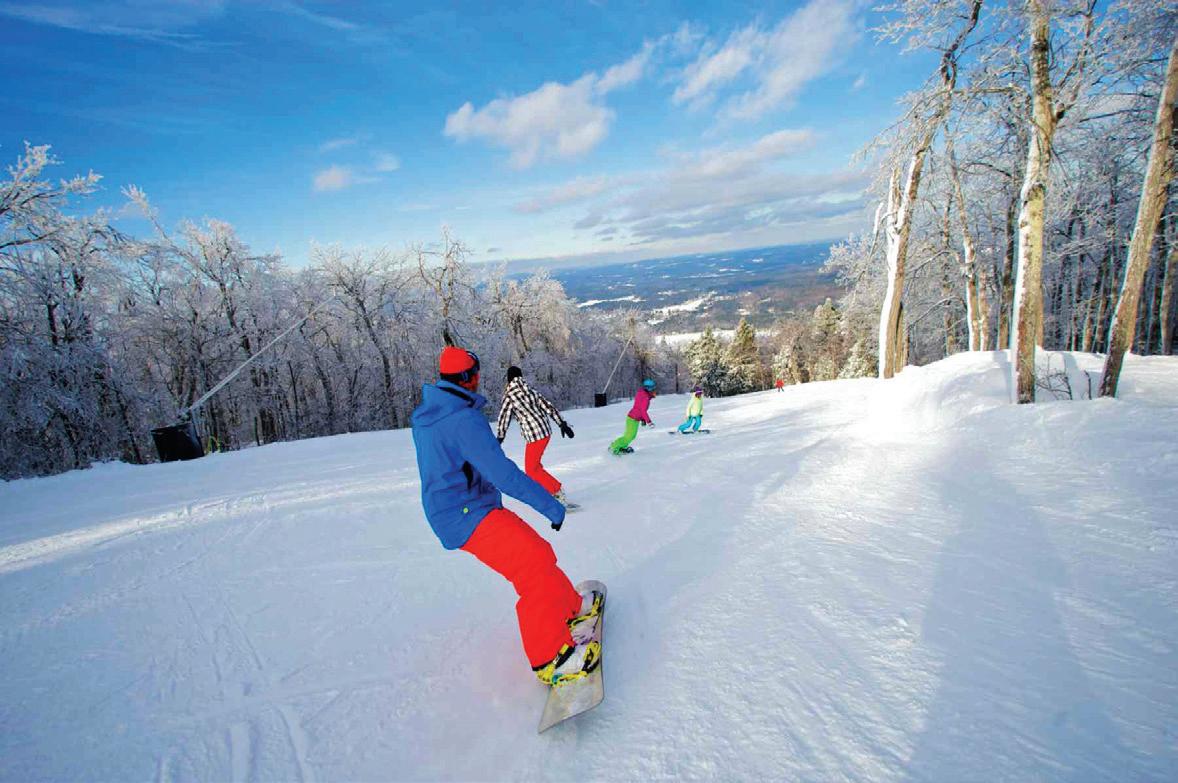
Winter may be prime time for skiing in Massachusetts, but spring skiing shouldn’t be overlooked, as nearly a dozen mountains are open until mid-tolate March. Start making plans to glide down the slopes at Berkshire East Mountain Resort in Charlemont, the world’s first ski area powered entirely by on-site renewable energy, or carve up dozens of trails at Wachusett Mountain Ski Area, complete with a base lodge with lots of restaurants, plus a hot-cider house and a waffle cabin.
n mid-March of every year, around the time when spring’s arrival feels deceptively distant, my teenage son and I take a slow drive around our hometown lake to make guesses on its official ice-out date. There are low-stakes bets attached to the wager, but the real thrill comes in the promise of renewal. No matter how wintery its appearance may be in the moment, in just a few weeks’ time our little lake will be free and flowing. A couple of months after that, we’ll be swimming and paddling its waters. I’m awed by this every year.
Renewal, of course, can take many forms. It could be a springtime pilgrimage to Pickity Place, a regional culinary institution tucked into the woods of southern New Hampshire, whose gardens share center stage with signature five-course lunches [p. 14]. Or it could be immersing yourself in the abundance of blooms that artist, gardener, and writer Frances Palmer showcases in her latest book, Life with Flowers [p. 68], or discovering

To photograph the No. 1 town for “The Best Small Towns to Live In” [p. 54], Yankee called on frequent contributor Haley, whose work has also appeared in The Wall Street Journal and Garden & Gun, but whose local roots run deep: “I grew up in the Pioneer Valley in Massachusetts, where I still live with my family in the tiny mountain town of Warwick— so small there’s not even a post office!”
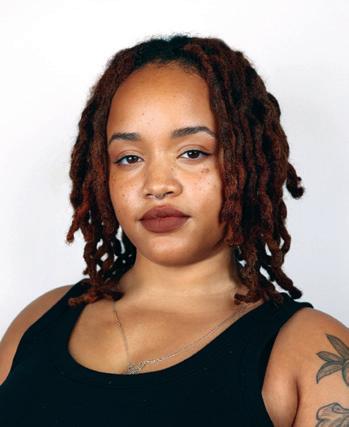
In creating a portrait of Wampanoag author Joseph Lee [p. 79], this Florida-based visual artist found herself relating to Lee’s feeling of being “in between worlds” and reengaging with personal identity, “both themes I explore in my personal work and was happy to incorporate into the final piece.” In addition to Yankee, Gordon’s clients include The New Yorker, Google, and Netflix.
the downtown rebirth of Providence, Rhode Island, home to one of the hottest restaurant scenes in the Northeast [p. 42].
A spirit of reinvention is certainly at the heart of New England’s culture of entrepreneurship, from Steele Canvas Basket Corp., a legacy maker of industrial baskets and bags whose wares are now fashionable staples in homes nationwide [p. 28], to bluShift founder Sascha Deri, who is defying conventional thinking to help make his native Maine a hub for the aerospace industry [p. 82].
But the chance to discover something new also awaits in New England’s most timeless institution: its small towns. These places, with their community-connected Main Streets and promise of tranquility, have never been more appealing. Seaside havens, adventure-forward hamlets, sophisticated suburbs—the options are as varied as the region itself, and our definitive list of New England’s 25 best small towns to live in [p. 54] is a portrait of the good life. And what’s possible.
Ian Aldrich, executive editor

This Boston-area journalist and author says he has a soft spot for New England’s small towns [p. 54], having grown up in one himself. To report our cover feature, he traveled all over the region, driving twisting Vermont roads and dining on lobster in the rough in Maine. While his travels confirmed the greatest of towns he already knew, he says, “I was pleased to find some new-to-me gems to include in the mix.”

and the author of this issue’s “Made in New England” [p. 28],
a historic textile mill village in New Hampshire, where her daily life revolves around skiing, swimming, sailing, and walking the dog. She says it’s her goal to visit (and have a memorable experience in) all 67 counties in New England; she has four to go.

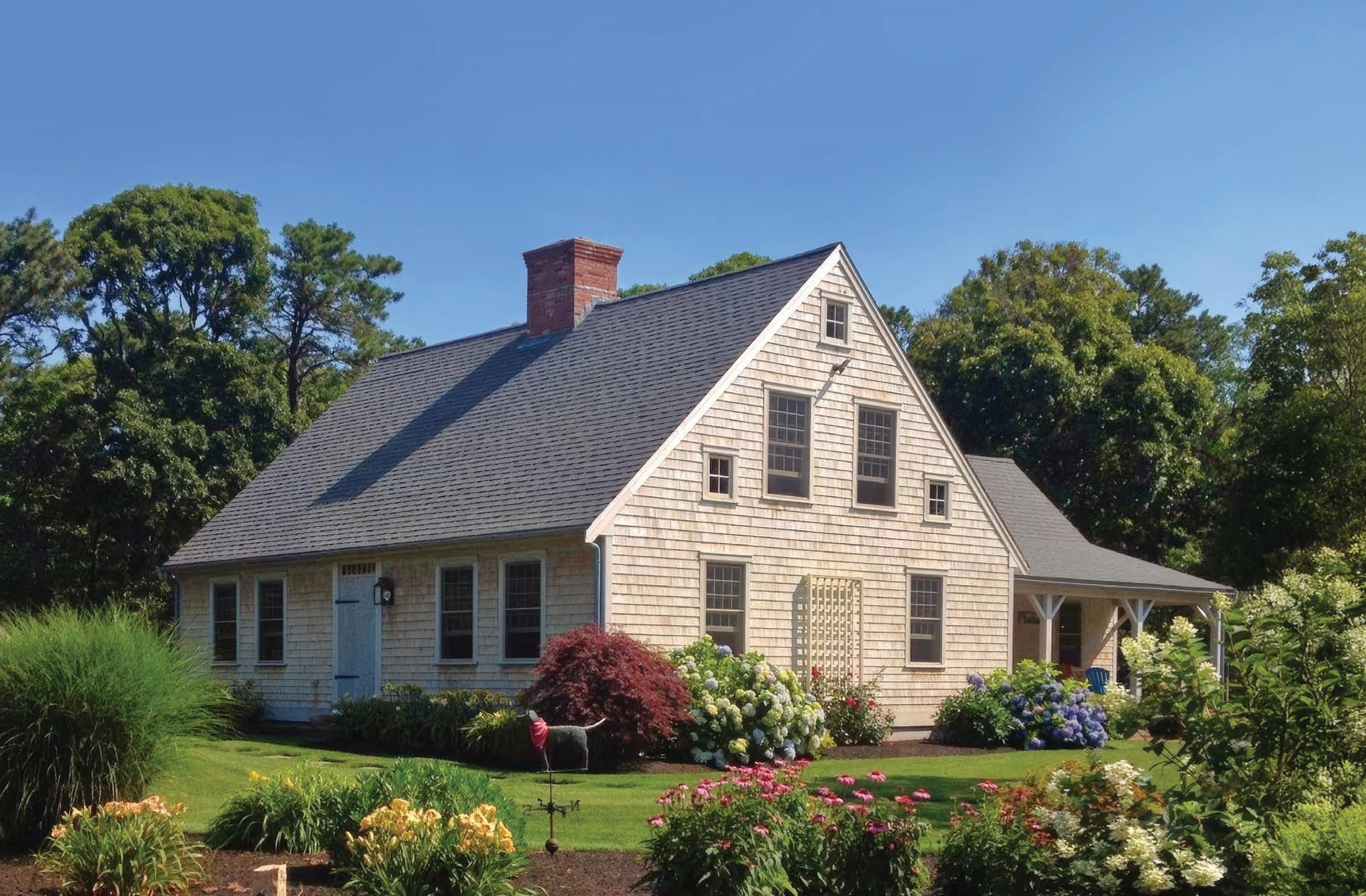
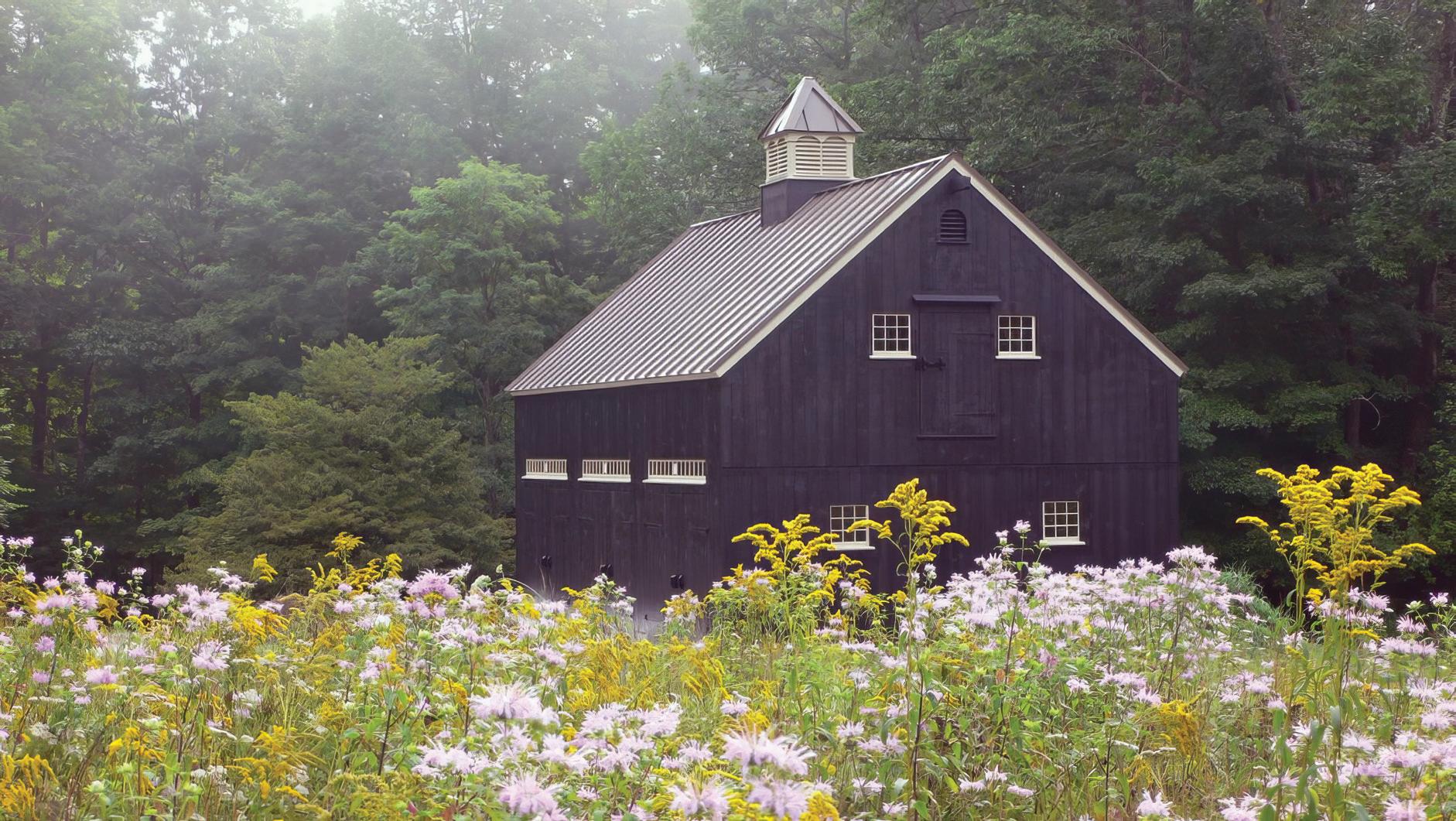

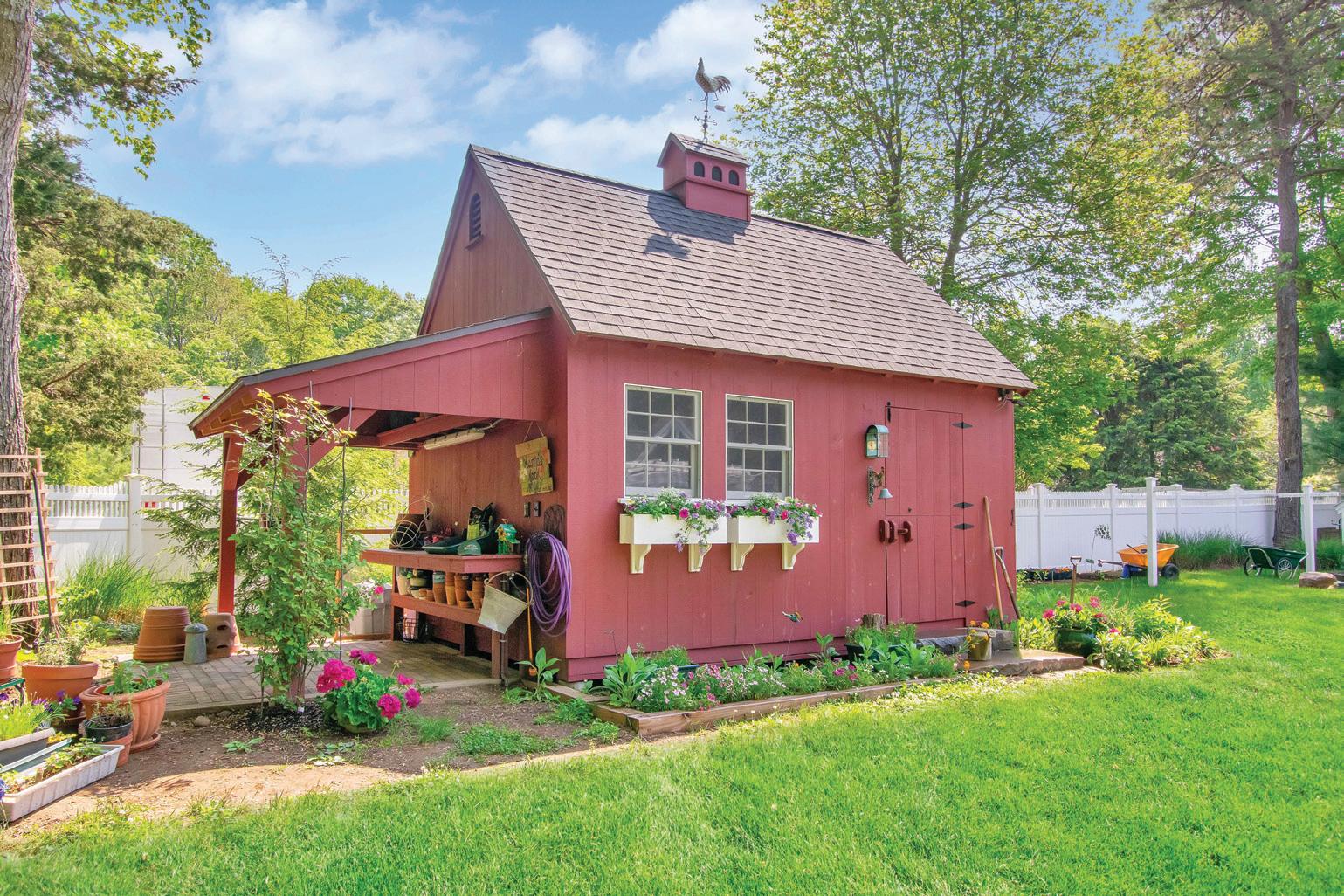


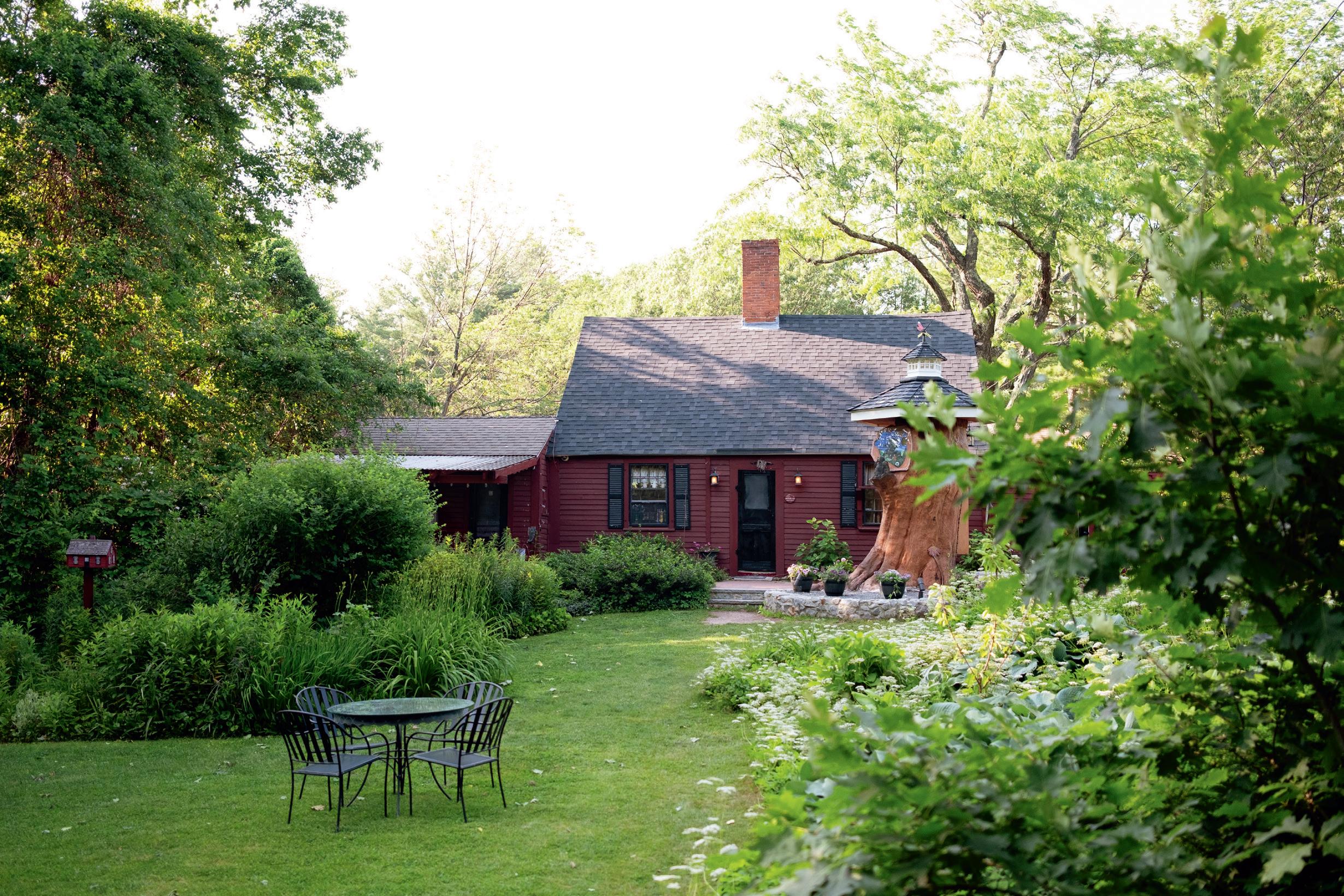
At New Hampshire’s Pickity Place, it’s all about the gardens, the food, and a touch of fairy-tale flair.
BY CAROL CONNARE
PHOTOS BY HEATHER MARCUS
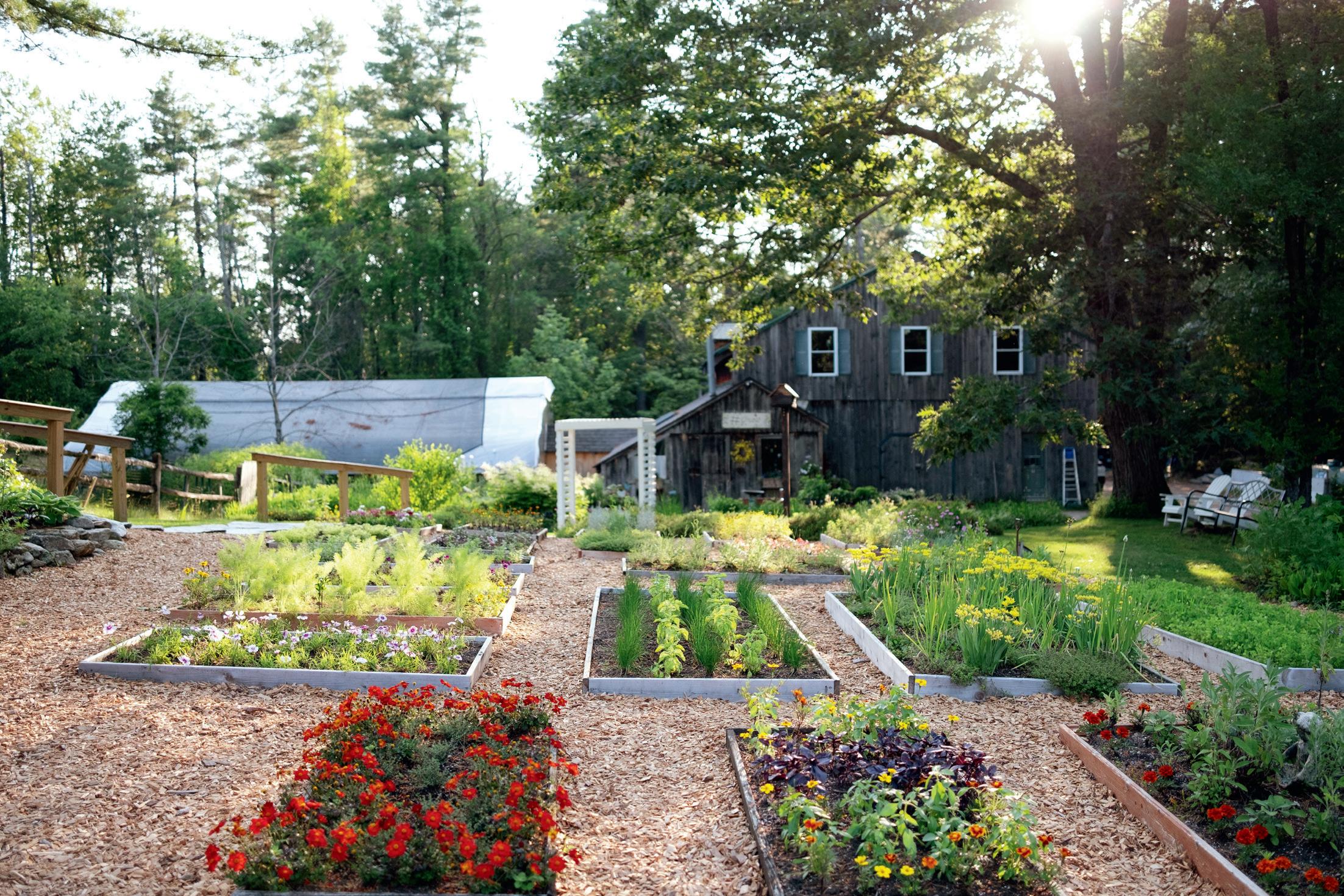
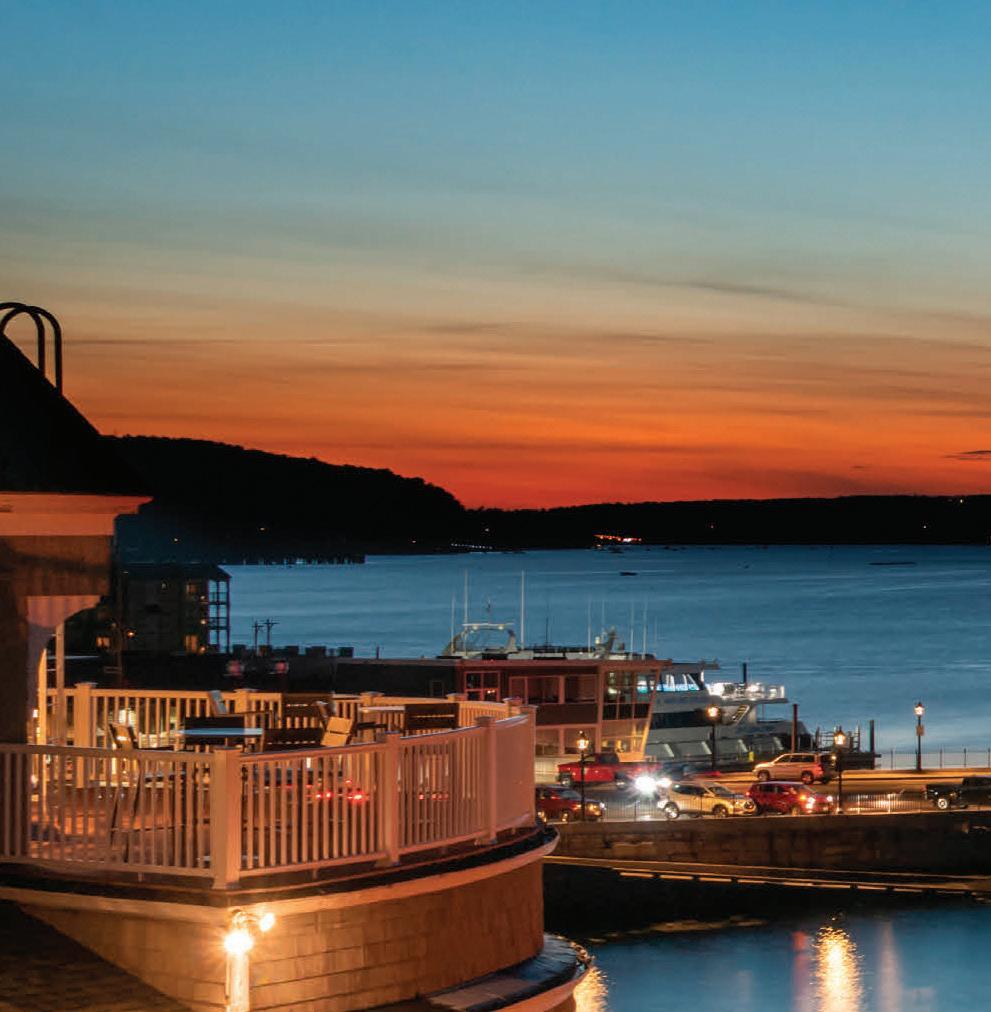
pring’s profusion of pink and purple flowers stirs the soul; its bounty of verdant greens makes the heart sing. Such seasonal gifts also bring on appetites. Thankfully, satiation awaits at Pickity Place, a New England culinary institution tucked away in the hilly woods of southern New Hampshire.
Originally opened as an earth-celebrating tearoom 50 years ago, it’s still true to that mission today. The signature five-course lunch (served three times a day, 360 days a year) is infused with herbs and spices grown mostly in the gardens surrounding the 1786 cottage, all just a stroll from the front door.
Inside, diners fill 16 tables in three cozy rooms, decorated with dried herbs and country decor, including floral wallpaper and stenciled borders. Monthly menus feature herbforward creations, such as freshly snipped chives swimming in French onion soup; sprigs of lovage atop a zesty salad dressed in sun-dried
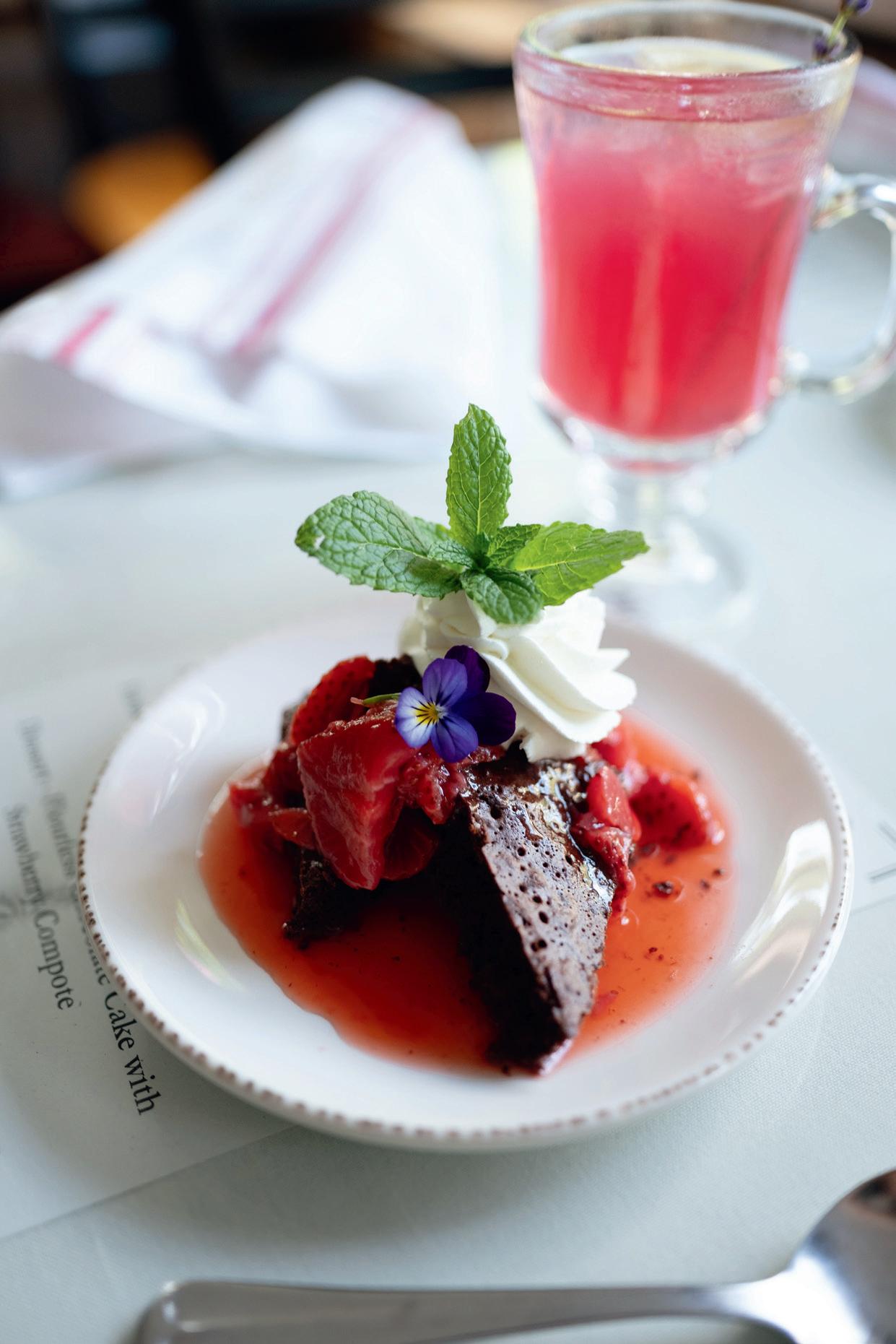
and topped with nasturtium, micro greens, and peppery chive blossoms. Each course delights the senses with color and flavor, accompanied by decaf mocha coffee, mulled cider, herbal iced and hot teas, or lemonade (choose from lavender, mango, or strawberry basil).
The servings are plentiful enough to put dessert in danger of having to be boxed up and trundled home.
Before or after this magical meal, stroll the grounds. (Don’t worry about getting a little lost—a bell is rung when it’s your time to dine.) Even in winter,
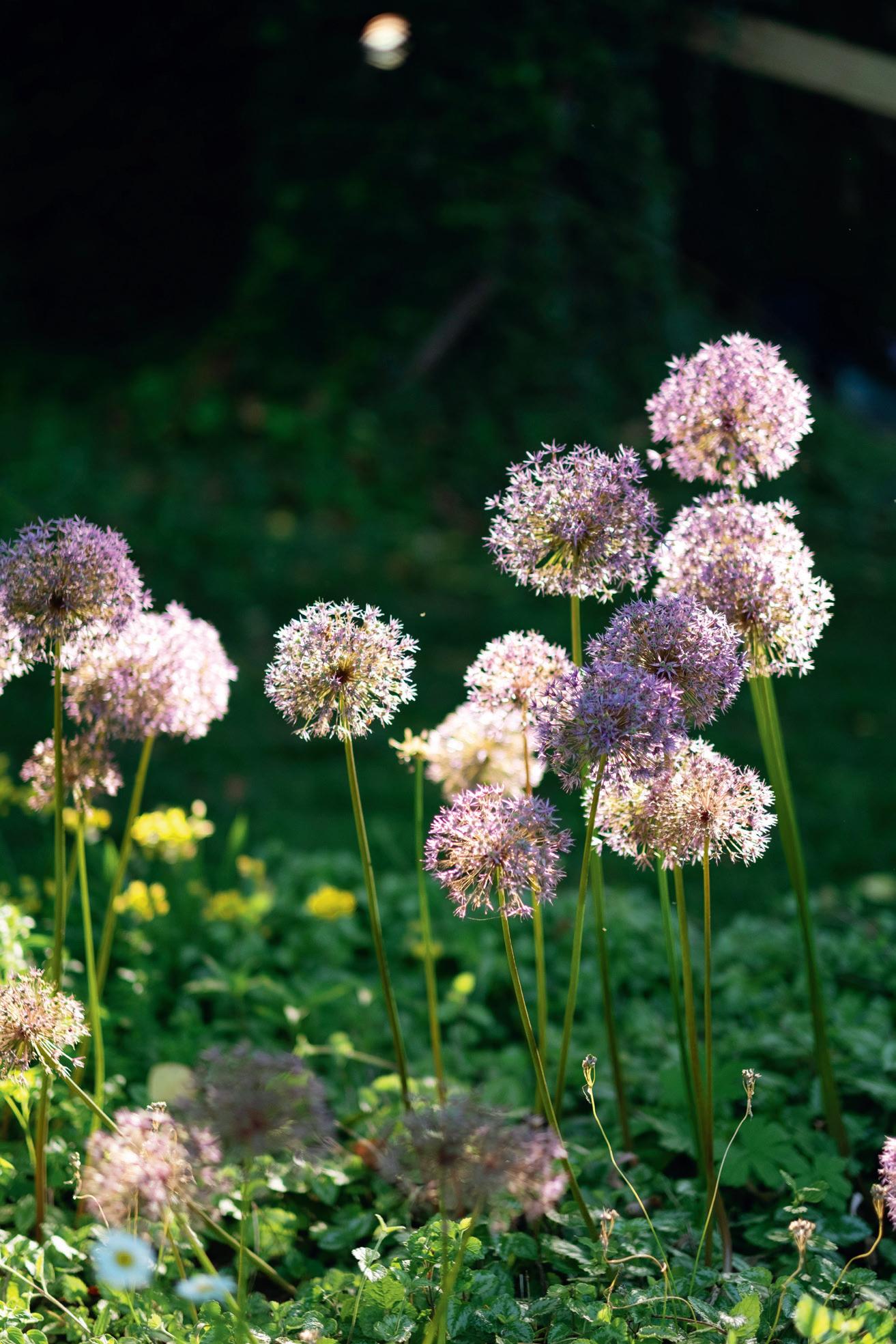
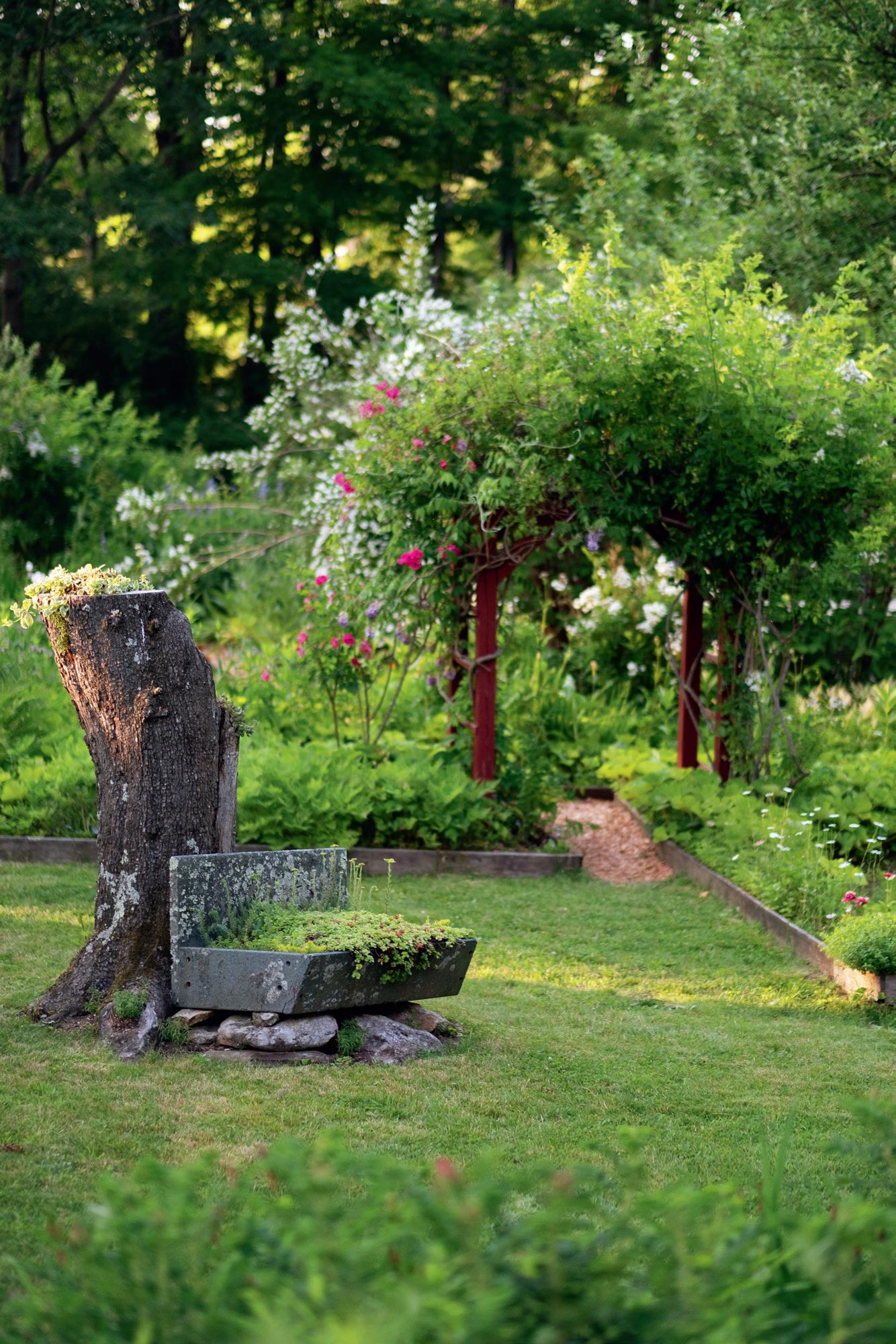
the stone pathways and maze of garden beds delight the eye and capture the imagination; spring through fall, they dazzle with color and aromas. Meander beneath arbors and along paths studded with ferns and lily of the valley to nature’s soundtrack: gray catbirds, American redstarts, and chipping sparrows, with a backbeat of humming bees.
Adjacent to the dining area is the most winsome of shops, where Pickity spice blends are sold alongside gardenthemed gifts, as well as a stuffed version of the resident real-life cat, Poppy, a fluffball who roams around making
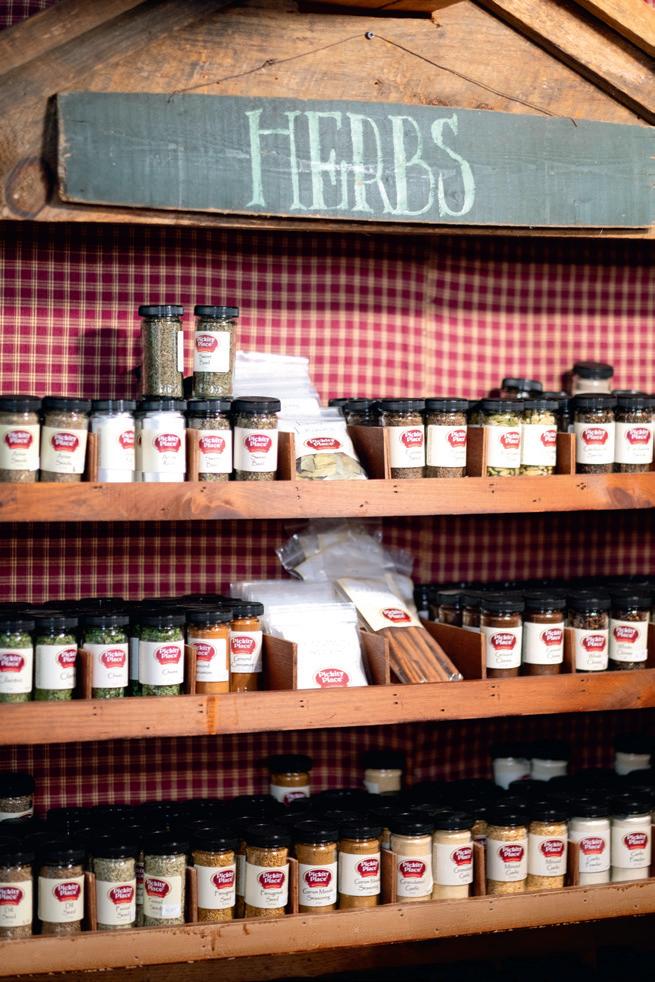
left: Keith Grimes’s mantra “Accept change and preserve history” can be seen throughout the landscape, as with this chopped-down tree turned succulent garden, with heath and heather plants spilling out of an old soapstone sink at its base. above: A cornucopia of spices for sale in the gift shop, which is largely the domain of Keith’s wife, Kim.
Before or after your magical meal, stroll the grounds. (Don’t worry about getting a little lost—a bell is rung when it’s your time to dine.)
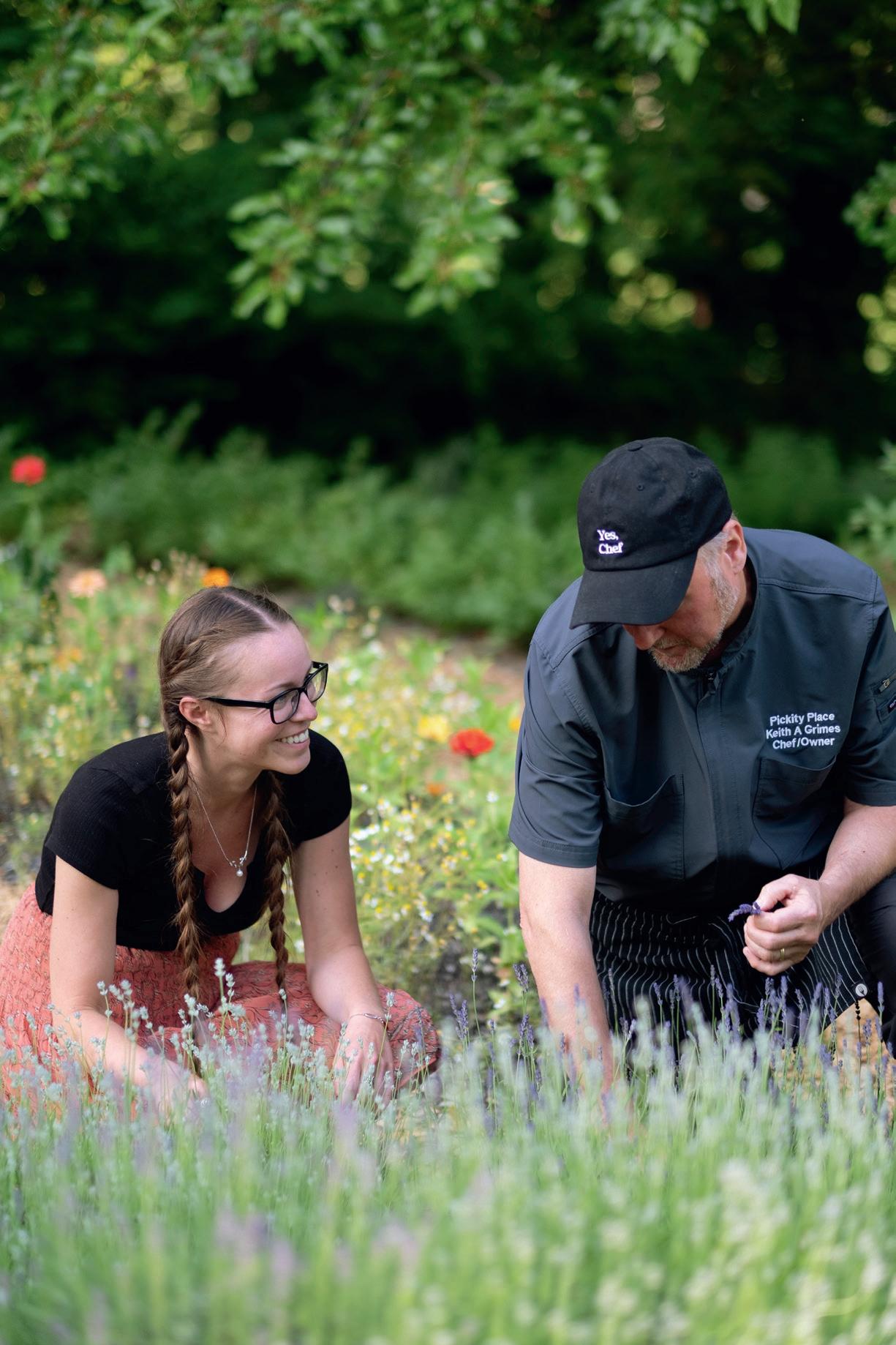
himself available for petting and photobombing. Follow your nose along hedges of lavender and heather, past swaths of thyme, through garden rooms where pollinators alight on blossoms and people literally stop to smell the flowers.
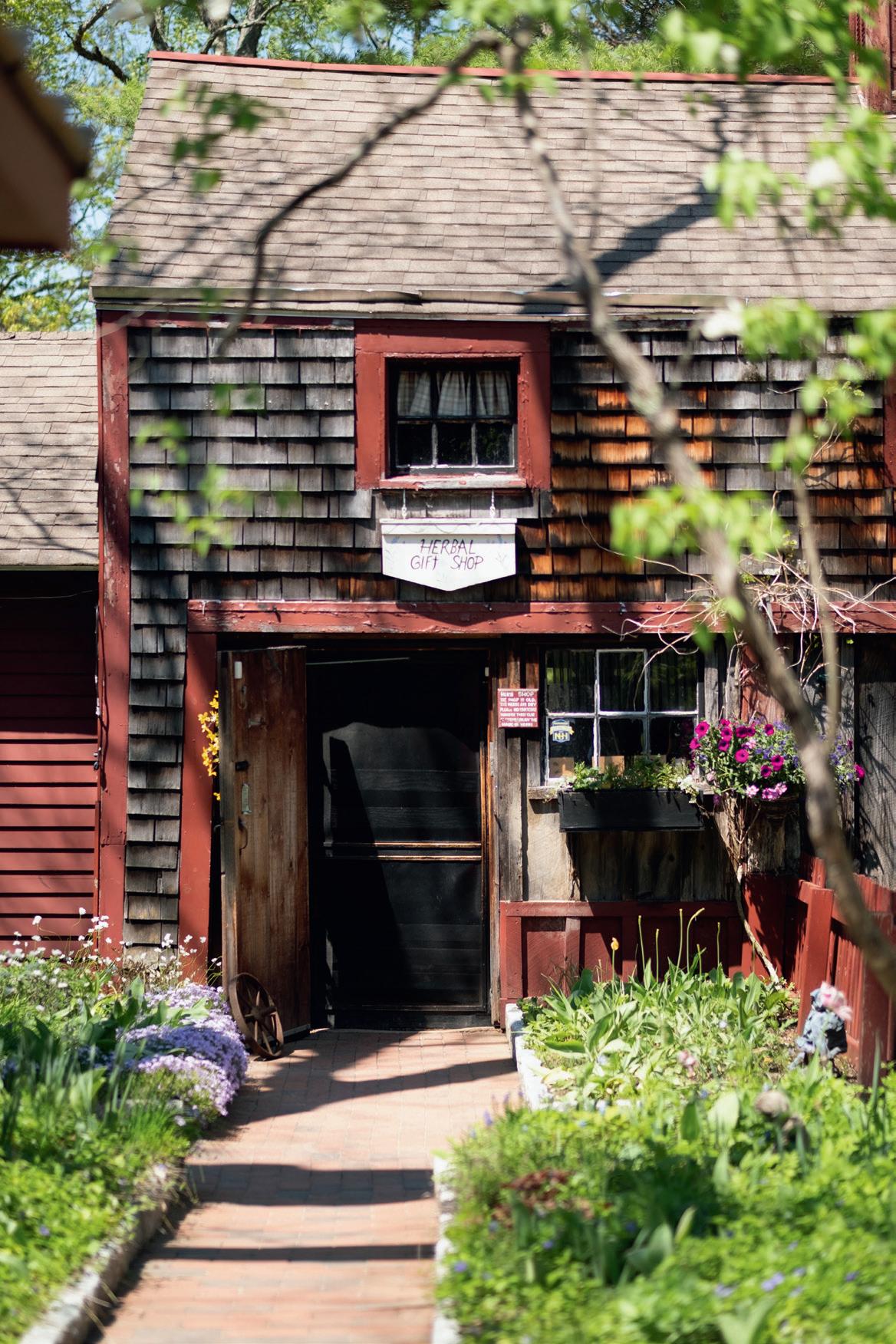
Farther afield, past sweeps of comfrey and thyme, and patches of rhubarb studded with cherubs and whirligigs, beyond phlox tumbling over stone walls and blossom-laden apple trees, you’ll find the garden shop, with more enticing wares and an entryway into the greenhouse, where you can pinch, sniff, and sample herbs for sale, among them
In the comfort of our well-appointed fleet, enjoy the most personalized exploration of the Great Lakes region on a 7 to 15-night journey. Led by our engaging local guides, immerse yourself in the rich history and vibrant culture of charming harbor towns and admire the wonders of nature up close.
Explore Well ™





borage, rue, and several kinds of mint (lemon, apple, chocolate, julep, peppermint, and strawberry among them). The day we visited, dozens of potted opal basil plants awaited planting for chef and owner Keith Grimes to turn into a summer pesto in the months ahead.
As Grimes says after 25 years at the helm, his is a dream job in the restaurant business, since he serves only lunch and can be at home with his family at night. Their biggest day is Mother’s Day, often booked a year in advance (however, don’t let that stop you from trying, as cancellations do occur). Grimes and his wife, Kim, work yearround managing a small staff. Making it a true family affair, their daughter, Ashley, works here, too, and one day she plans to follow in her parents’ footsteps and run the operation.
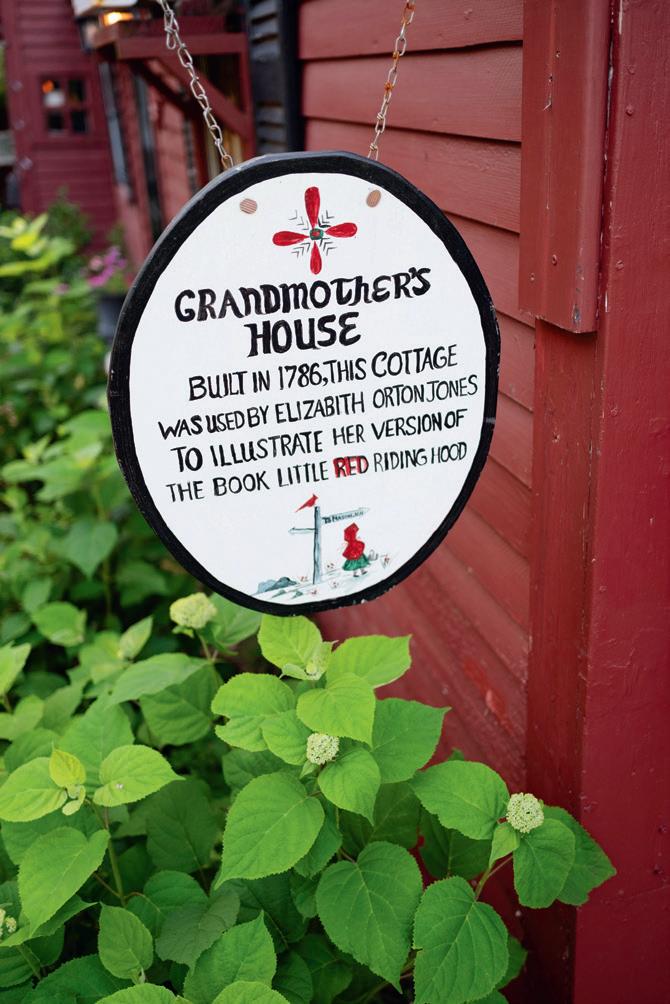
It all looks and sounds like a fairy tale, which is fitting: In the late 1940s,
artist Elizabeth Orton Jones used the historic cottage as the inspiration for her illustrations of the Little Golden Book edition of Little Red Riding Hood. You can learn more about it in a history nook near the check-in, and you’ll notice some related touches around the place, such as a crimson hooded cape—just like little Red’s—hanging in one of the dining rooms. The burgundy clapboard cottage, charming gardens, and surrounding forest proved the picture-perfect backdrop for a wolf’s cravings ... and will for yours, too.
Carol Connare is the editor in chief of The Old Farmer’s Almanac , which has just released the 2026 edition of its annual collection of horticultural advice and inspiration, The Old Farmer’s Almanac Garden Guide (available at store.almanac.com).






How Victorian ambition and a bit of Yankee artistry took simple wood trim over the top to create New England’s signature gingerbread houses.
BY BRUCE IRVING
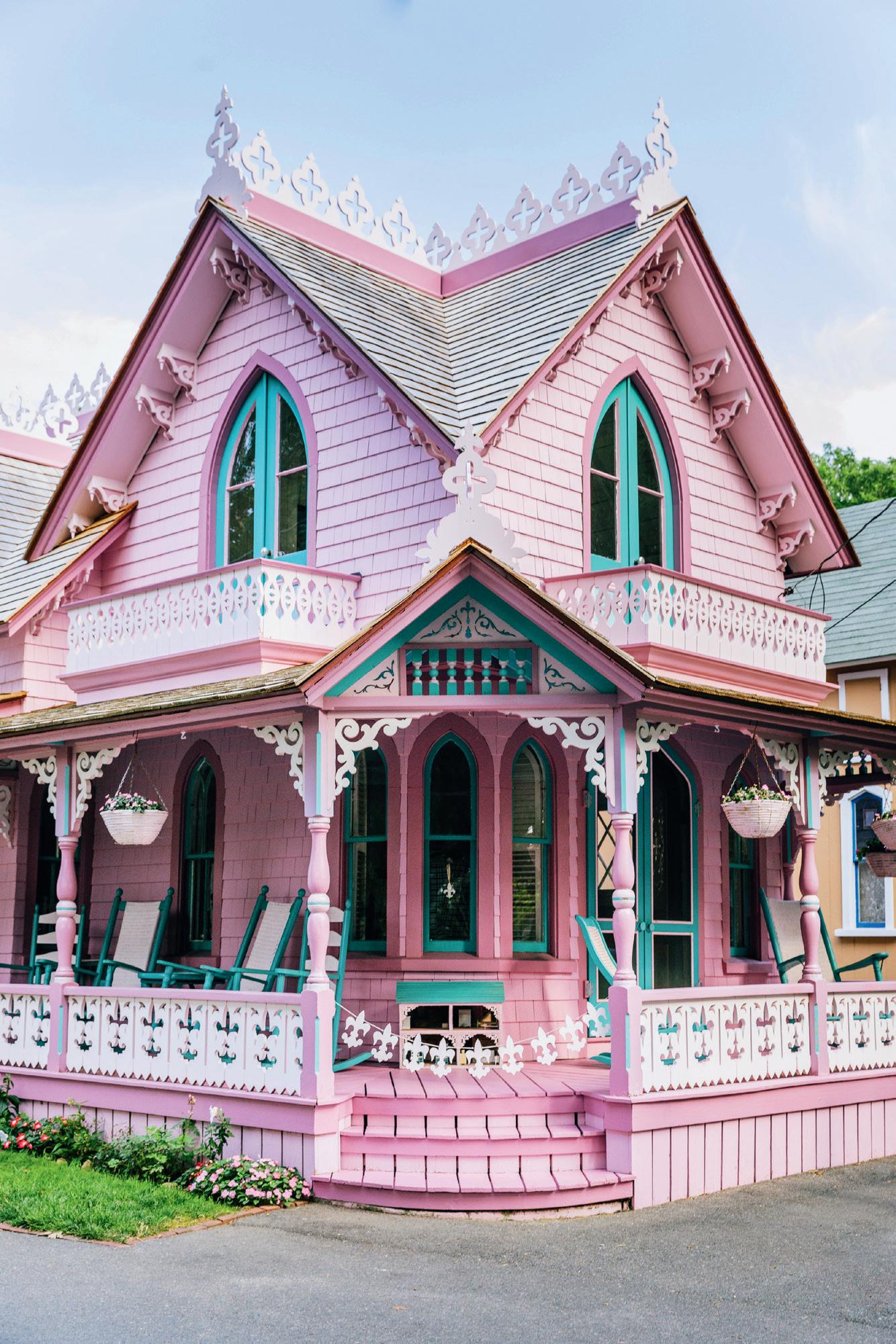
left: From the ornamental cresting on its roof down to its fleur-de-lis porch balusters, the Flower of the Winds House in the Martha’s Vineyard Campground offers an eye-popping primer on gingerbread embellishments.
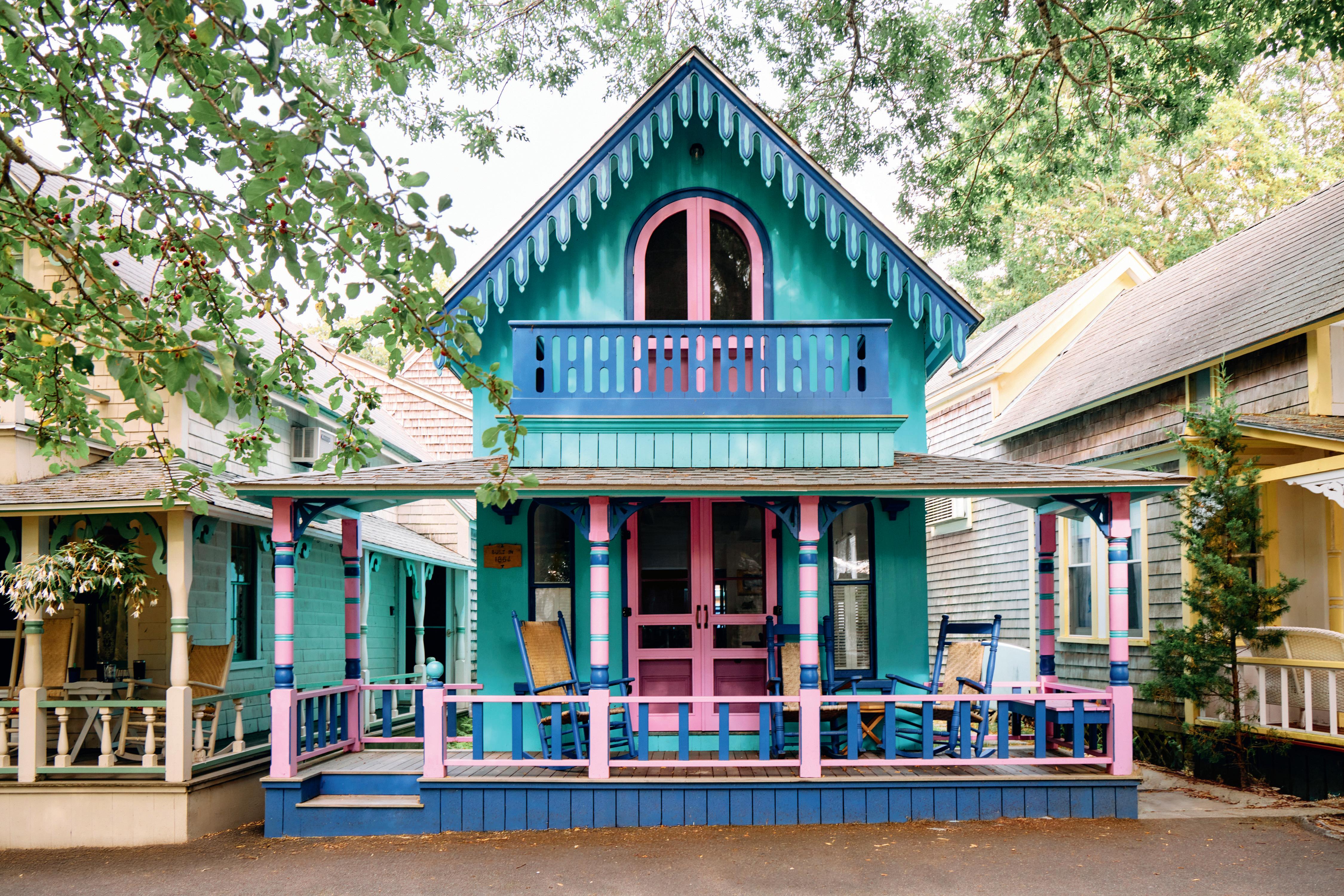
above: Exposed tongueand-groove pine siding and teardrop gable trim, as seen here, are two hallmarks of the original Campground gingerbread cottages.
n his 1908 essay “Ornament and Crime,” the AustroHungarian modernist architect Adolf Loos declared, “Ornament does not heighten my joy in life or the joy in life of any cultivated person.”
To which I and the many fans of gingerbread houses say, “Adolf, baby— loosen up.”
Anyone who has ever walked along
a street of sober, stalwart, sensible structures and then (surprise!) spotted an exuberantly decorated gingerbread cottage will know the delight that this architectural style provides. Wander through an entire neighborhood of them—namely, the 34-acre, 318-house Campground in Oak Bluffs, Martha’s Vineyard—and you just might feel as if you’ve landed in some New England version of Willy Wonka’s world of pure imagination. Overseen by the Martha’s
Vineyard Camp Meeting Association, it is the region’s most enthusiastic repudiation of Puritanical plainness. It makes sense that a group of likeminded folks, united in their faith and coming together each summer, would feel liberated from the conventions back on the mainland, wherever they called home. They originally housed themselves in tents, but when they started to make their little campground more permanent, they kind of went wild.

FINIALS: Also found on stair and deck posts, these can soar upward or hang down from a roof peak—or in this example, both.
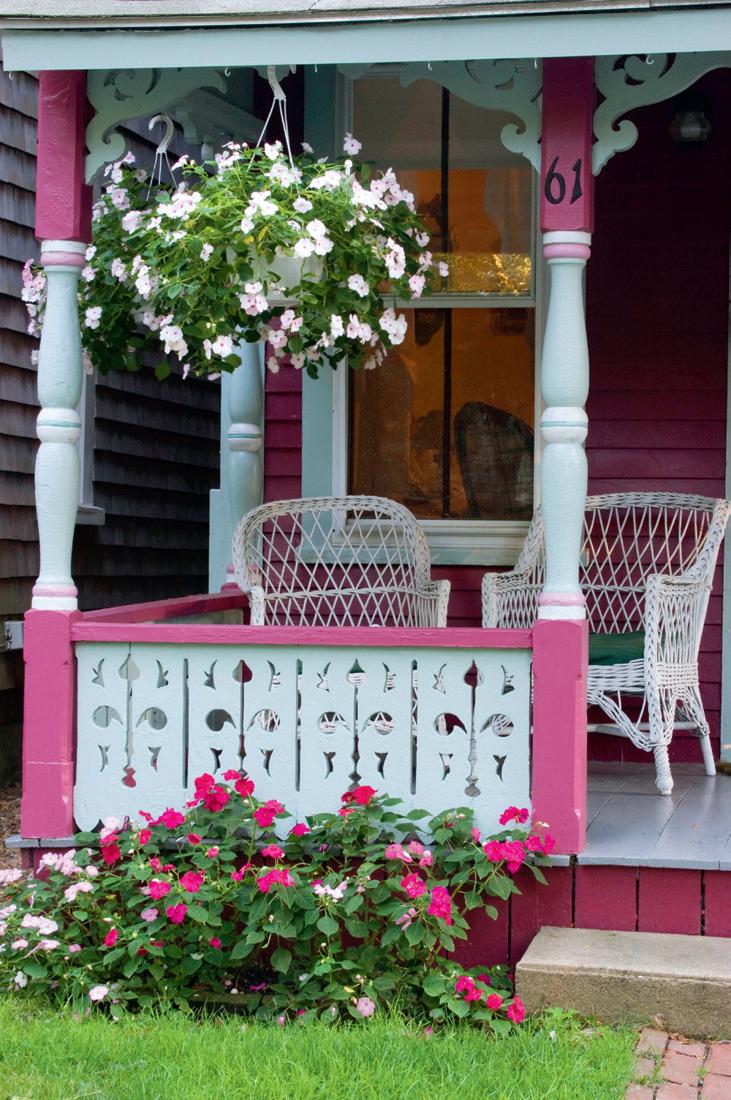
POST BRACKETS: Aesthetic rather than functional, these are sometimes paired with horizontal porch-beam trim called spandrels.
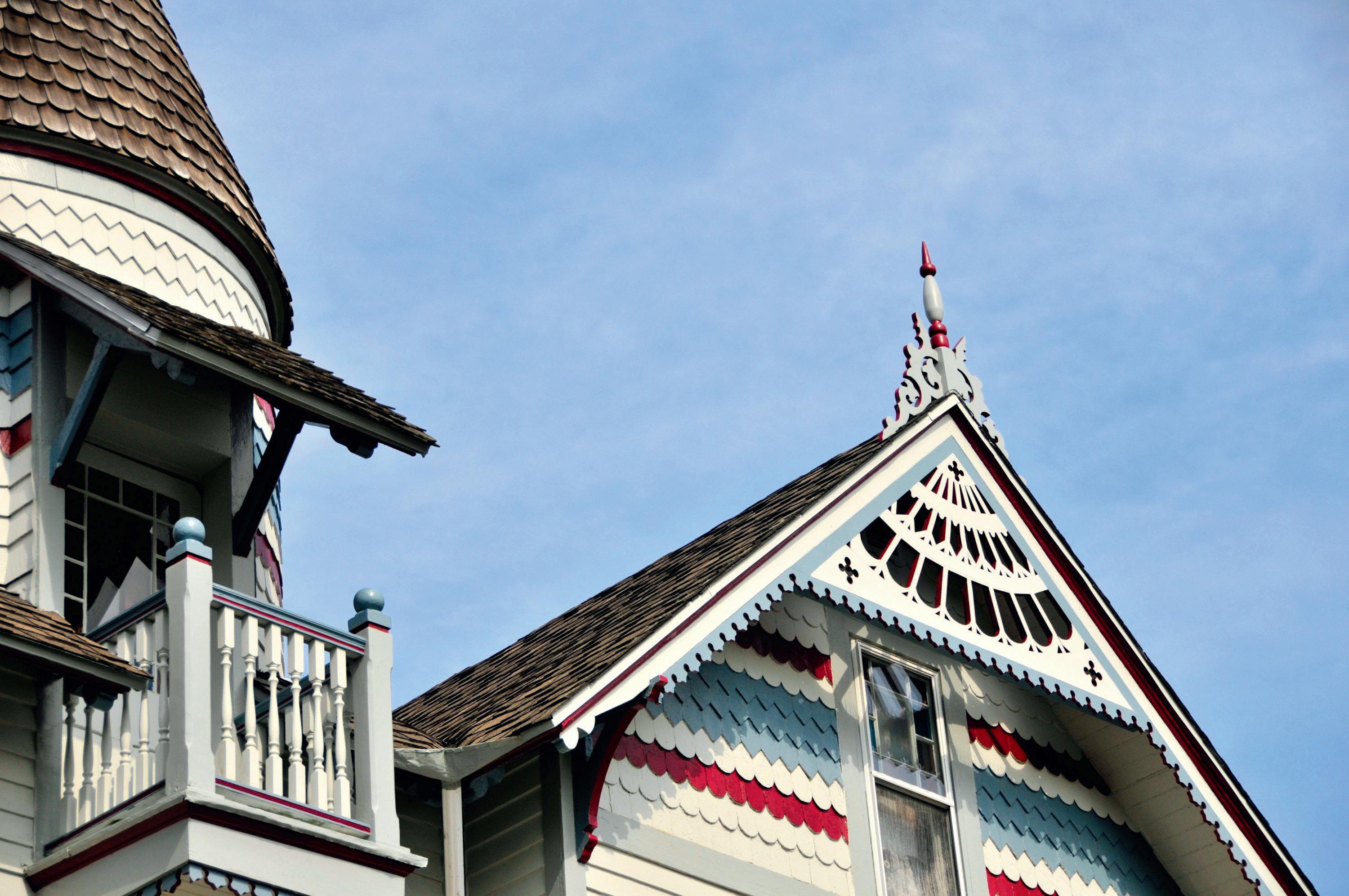
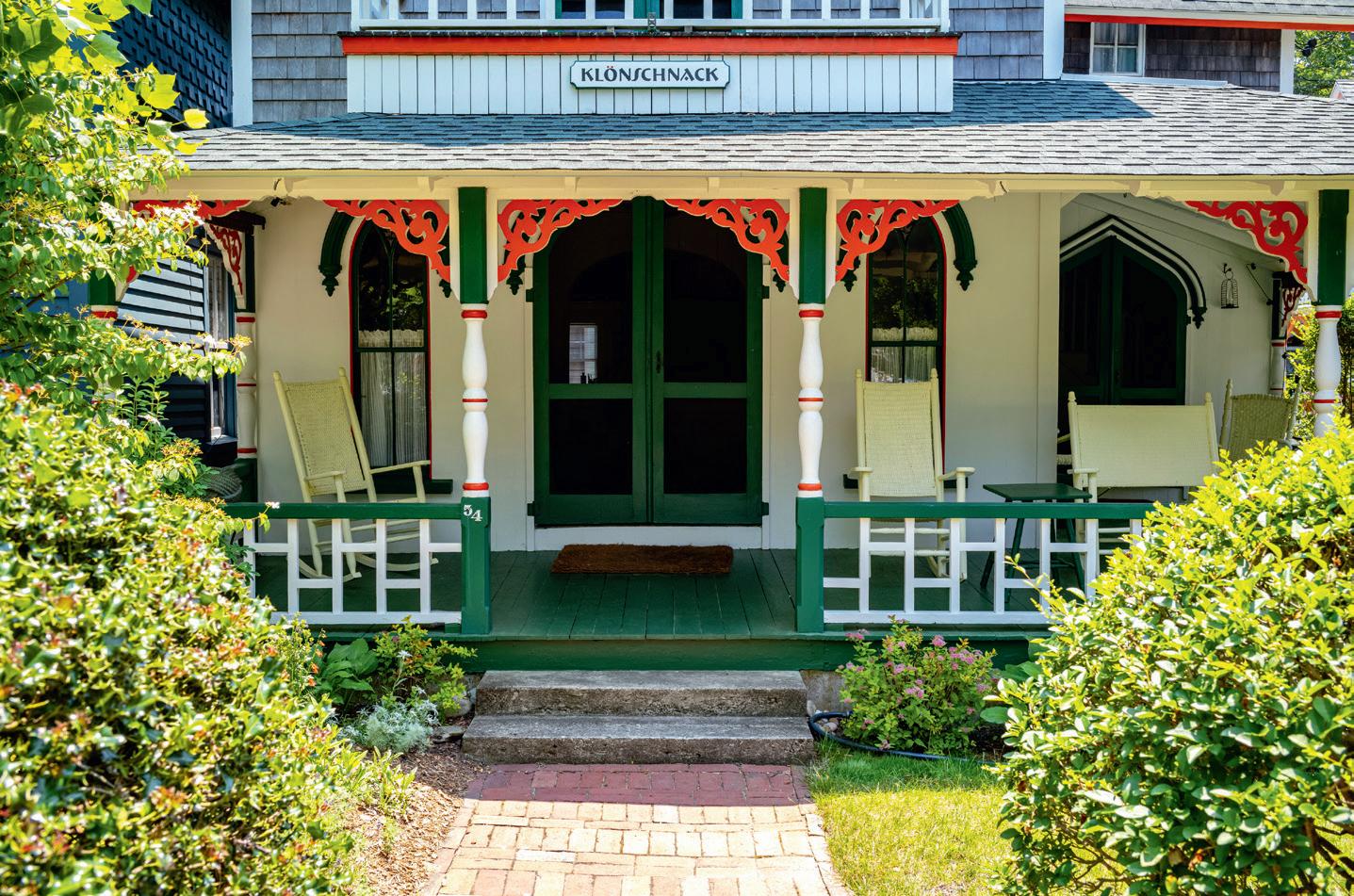
SHINGLES: Fish-scale, diamond, and other fancy-cut shingles, often laid out in bands of color, ensure every surface can get a bit of flair.
Wavy vergeboards, looping scrollwork, elaborate turnings, dripping pendants—this was a riot of form and color that practically shouted freedom. In many ways, the campers were a microcosm of something happening in American culture at large. In the mid19th century, the country was moving away from being an agricultural society at the far edge of “western civilization” to becoming a manufacturing-based powerhouse, connected and interconnected like never before. In 1840, most
travel was by coach and wagon and boat; there were 2,800 miles of railroad track. Four decades later, there were 95,000. Handcraft gave way to machinery, propelled in part by the material demands of the Civil War. As people’s movements sped up, so did fashions. New ideas flowed as quickly as new products, and the building industry was a prime mover, with catalogs full of eye-catching decorations ready to be delivered to the nearest train station. People expressed their
FLAT-SAWN BALUSTERS: Arrayed along porch and stair railings, these accents put the woodworker’s artistry front and center.
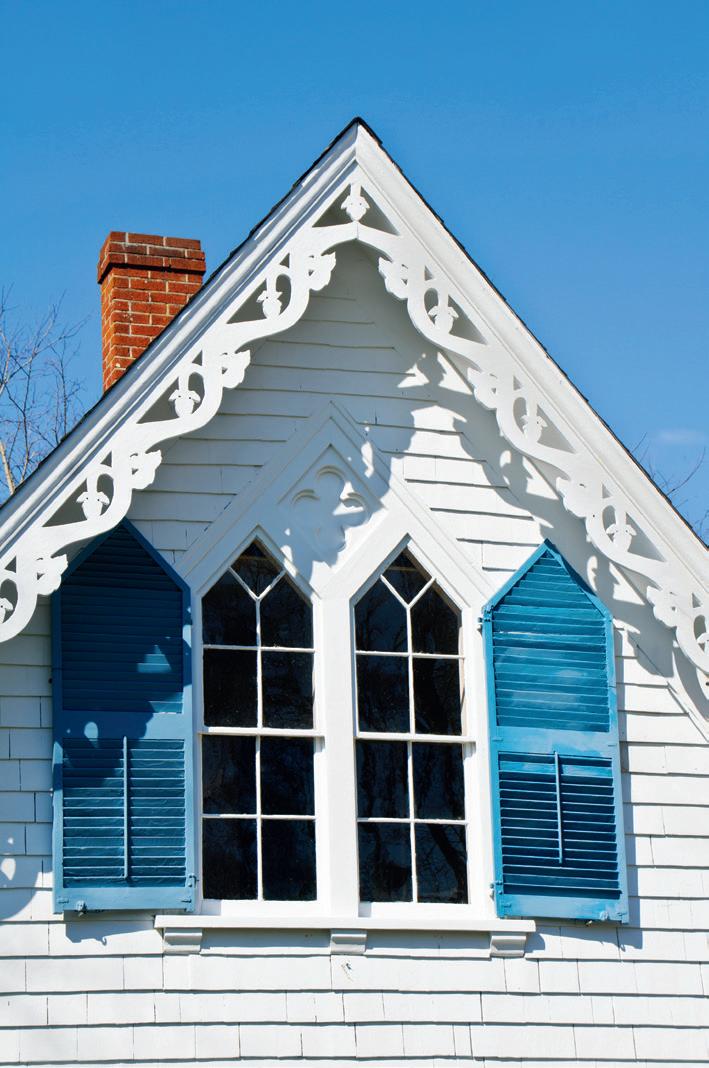
VERGEBOARDS: This type of running trim, also known as bargeboards, provides the visual “icing” along gingerbread roofs and gables.
expanded horizons in three dimensions, building houses that broke with the past.
Well, not quite. New architectural styles like Gothic Revival and Italianate softened the blow of the new by making a point of nodding to Old World models. But make no mistake: These were new ideas popping up in American cities and towns.
Yet unlike Capes and center-chimney Colonials, gingerbread is not a purely New England type. Its origins in new
Everything you expect and so much more.



“We renovated our home and purchased all our kitchen and bath fixtures from Sink & Spout. Their service and attention to detail is unparalleled.”
Step into our showrooms to find inspiration and friendly, expert guidance for your bath, kitchen and lighting projects. Discover New England’s largest Kohler inventory plus world-class brands including House of Rohl, Brizo, BainUltra, Robern, Hinkley and many more.
C.C.
~ Westerly, RI
17 inspiring showrooms in New England
forms of manufacturing and transportation, marketed and distributed far and wide, dictated that it would be, if not a “national” style, a “nationally available” one, accessible to anyone with a catalog and a sense of adventure. Virginia and Lee McAlester’s classic A Field Guide to American Houses doesn’t even list “gingerbread” in its chapters. It’s more a question of adornment and ornament applied over a Victorian-era base style, the more the better, though just about any building, even a stoic Greek Revival, could get a little fillip from the addition of a bit of fancy work here or there. The ease of application aided the homeowner’s sense of whimsy.
Aiding and abetting the adventure was the rise of machine-cut, standarddimension lumber and the wire nails to
In some cases of gingerbread architecture, there was little or no theory in operation, other than perhaps “more is more.”
hold it together. Before these, builders were limited by heavy timbers, whose bulk necessitated simple, boxy forms. The new lightweight “stick” framing allowed for easier corners, curves, overhangs, bays, porches, and dormers … and every exposed edge was an
opportunity for tacking on some more decoration. In some cases, especially in the variant style known as Carpenter Gothic, there was little or no theory in operation, other than perhaps “more is more.” As Britannica describes it, “Turrets, spires, and pointed arches were applied, in many instances with abandon, and there was usually no logical relationship of ornamentation to the structure of the house.” Certainly the temptation was there: Illustrated catalogs from the time show page after page after page of turned work, squareturned work, sawn balusters, cornice


brackets, pierced frieze boards, braced arches, scroll-sawn spandrels, pinnacles, porch roof cresting, and on it goes.
Much of this cornucopia was made possible by the mid-19th-century development of the scroll saw, the jigsaw, and the band saw, which allowed factories to turn out boxcars full of decorative woodwork. While fretwork—intricately cut patterned wood panels—had been around for centuries, these saws sped up the job exponentially. Novelty Wood Works in Boston’s South End became a center for such products, but the tradition of American handiwork didn’t die out. Our Homes and Their Adornments (1882) was both a catalog and something of a how-to book, encouraging its DIY-inclined readers to give it a go: “Some of the higher-priced scroll sawing machines have a turning lathe attachment, and are equipped with a complement of chisels and gouges, by
means of which many useful and ornamental articles can be easily turned,” the author writes. “Some also have a buzz-saw attachment, a dovetailing attachment, a molding attachment, and buffing and polishing attachments, so that they are adapted to a great variety of work.” Norm Abram would be proud.
In the opinion of this author, scale is important to a successful gingerbread. The houses of Martha’s Vineyard’s Campground are smaller than some modern garages yet more orna-
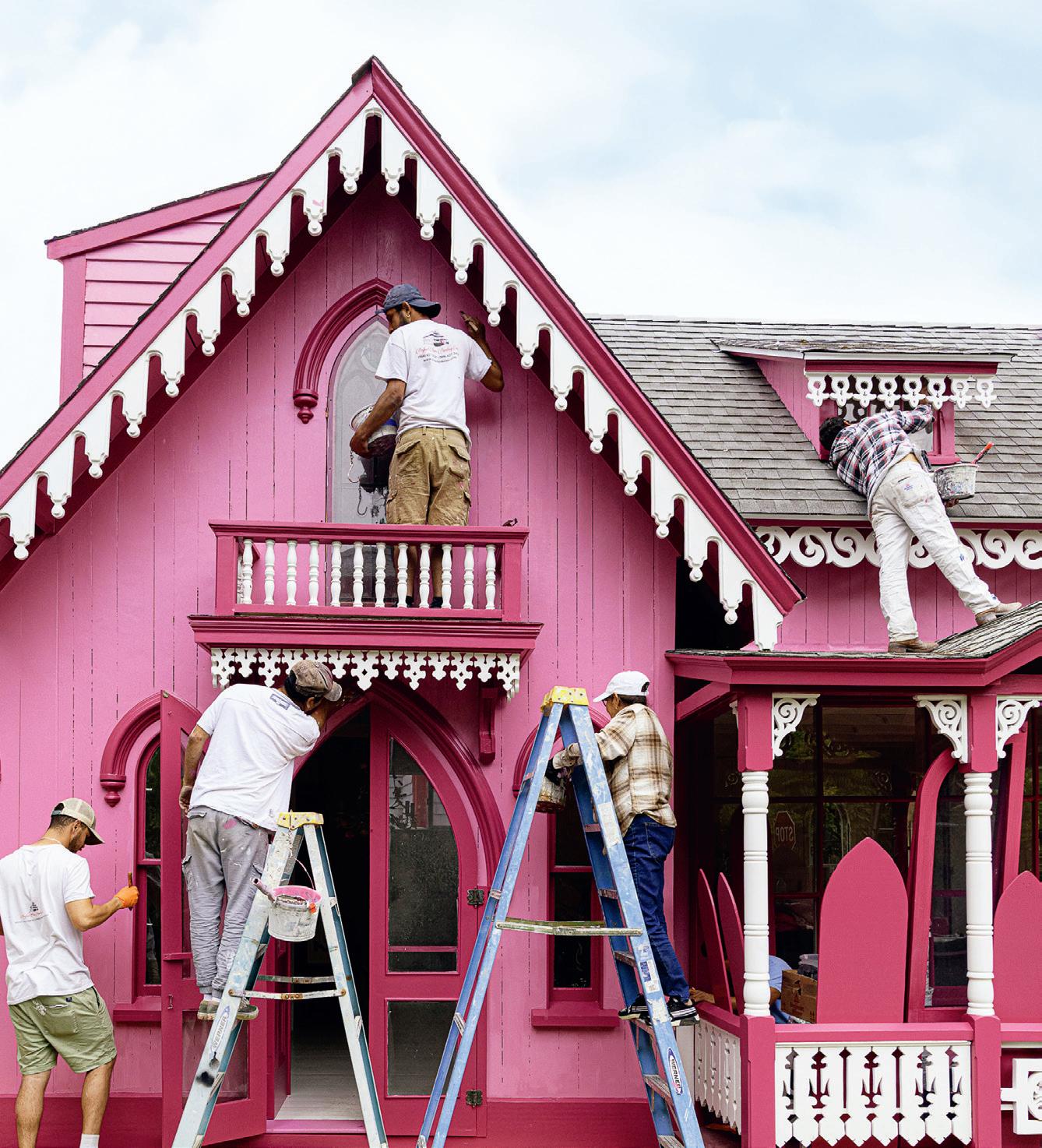
Workers refresh the signature colors of the Pink House in the Martha’s Vineyard Campground last summer. Built circa 1870, it is said to have inspired the spread of rainbow-hued exteriors throughout the Campground.
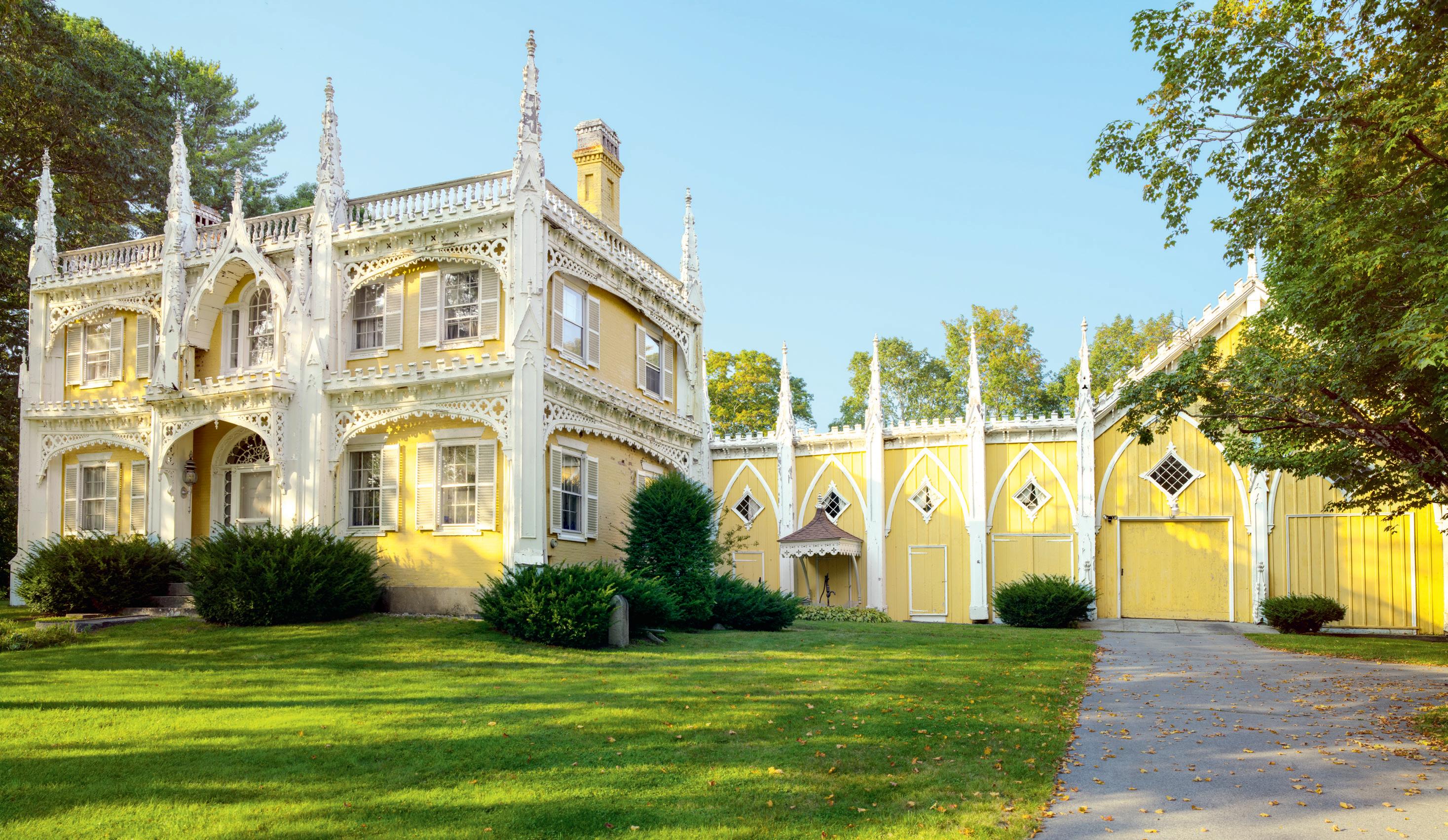
mented than a cathedral—and it works. The eye can take in the whole. Larger structures seem to lose focus, the finely detailed fretwork becoming diluted as it stretches out over seeming acres of facade, the sweet shapes descending into gewgaw territory in their embarrassment. That said, the elaborate Wedding Cake House in Kennebunk, Maine, is high, wide, and quite handsome, not to mention valuable—it recently sold for $1,825,000.
Another reason to support small? Upkeep is a bear. All that surface area, all those piercings and joints, the edges that hold water, the seams that open up…. “What we’ve noticed in a lot of these houses,” says painting contractor Hratch Iskenderian, “is that we find rot because there’s a lot of places for water to hide.” Based in Watertown, Massachusetts, his firm has painted gingerbreads all around the Boston suburbs. “We often have to have pieces fabricated to match. And the polychrome work is tough—you get into a bunch of color changing, which takes a lot of time. Some of the details get painted first, and then you have to work around them with the rest of the colors—it’s a lot of brushwork.”
Before he died in 1933, Adolf Loos wrote, “I have emerged victorious from my thirty years of struggle. I have freed mankind from superfluous ornament.”
That’s news to us!
Every August, the Martha’s Vineyard Campground transforms into a magical, lantern-lit scene for Grand Illumination Night, an annual tradition since 1869. Take a virtual trip to this one-of-a-kind celebration—and see plenty more gingerbread cottages—by cuing up Weekends with Yankee’s recent visit to the Campground: newengland.com/MVgingerbread

For more than 100 years, this Massachusetts company has been cranking out sturdy canvas baskets and bags that last—and look good.
BY KATRINA FARMER | PHOTOS BY SOPHIA LI
Imagine unloading bushel baskets of fresh fish at the Boston docks to be whisked off to markets and restaurants, or piling coal and wood into canvas bags to be lugged up the back stairs of Beacon Hill and Back Bay brownstones. Such scenes were the norm when Steele Canvas Basket Corp. got its start a century ago in Cambridge, Massachusetts, turning out fabric baskets and bags for the rugged use of fishing, coal, shoe, and textile workers.
Today, though, the company’s canvas goods are often found in homes across New England and beyond, tucked into laundry rooms or hanging on hooks in entryways. Stocked by retailers ranging from Williams-Sonoma to Urban Outfitters to L.L. Bean, the products appeal to customers who appreciate items that stand up to decades of hard use.
As CEO John C. Lordan says, “[Our] two-bushel baskets were made for Steve’s firewood. They weren’t made


for Martha Stewart.” And yet, in an ironic twist, it was a mention in the September 2009 issue of Martha Stewart Living that helped put Steele on the map beyond the Greater Boston area. Steele was founded in 1921 by Albert Pratley Sr.; his son, Albert Jr., was head of the company when Lordan’s father, John J., was hired in 1960. Only the second family to lead the business, the Lordans raised the money to buy Steele and keep it going after Albert Jr. passed away in 1984.
When John C. and his younger brother, Paul, came to work for the company, their dad was president and their mom, as vice president, ran the
front office. At first, the brothers saw it as a chance to make easy money over summers and holiday breaks. But in growing up they would come to understand that it was more than a job; after attending college and doing their own thing, they individually found their way back to Steele on either side of 2000. Now, they lead the heritage brand as co-owners.
“It’s the opportunity to step into the shoes of something bigger than you and be responsible for a legacy. That’s what I recognize now,” says John C., with a whisper of a Boston accent.
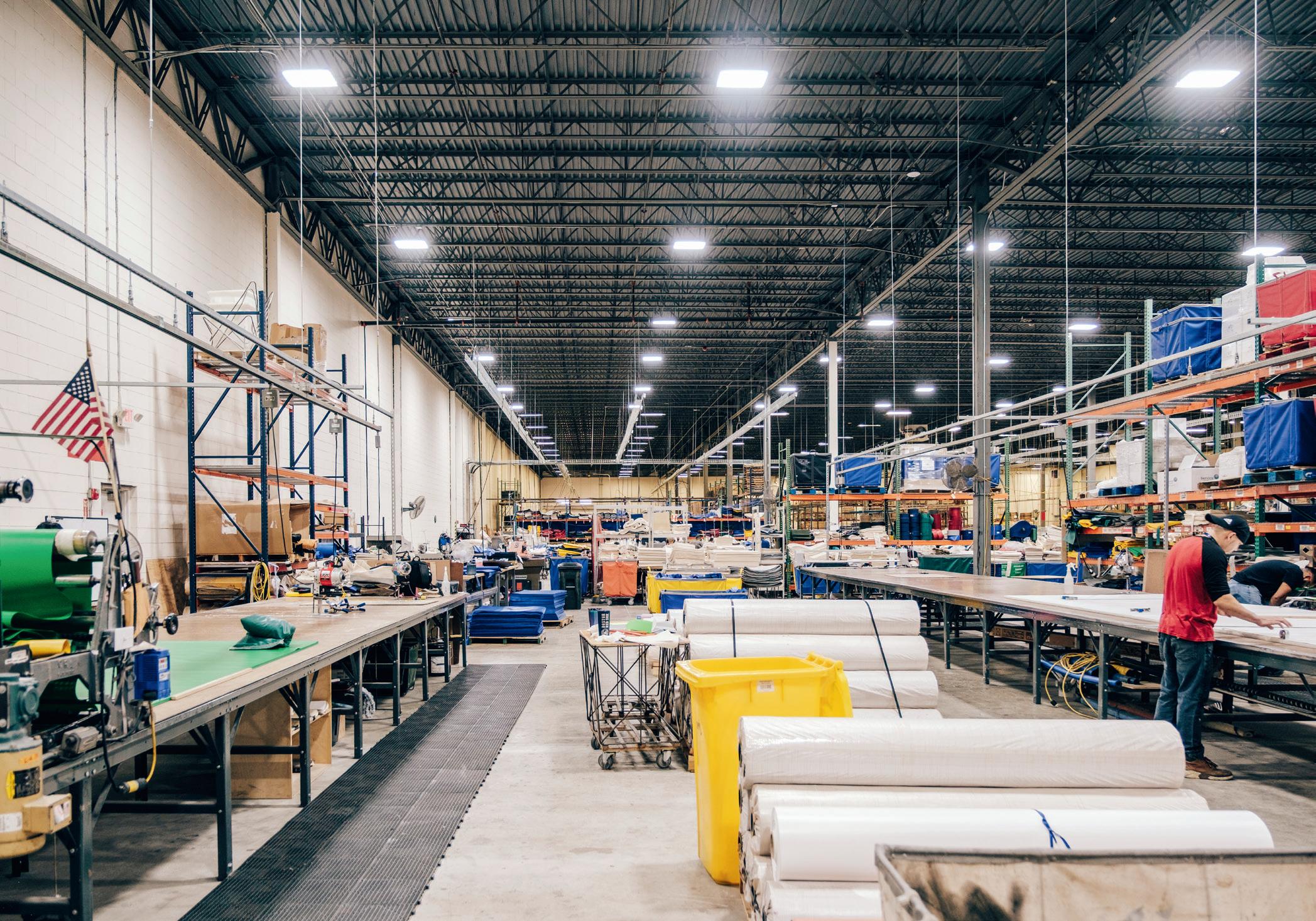
Production happens in a converted warehouse building in Wilmington,

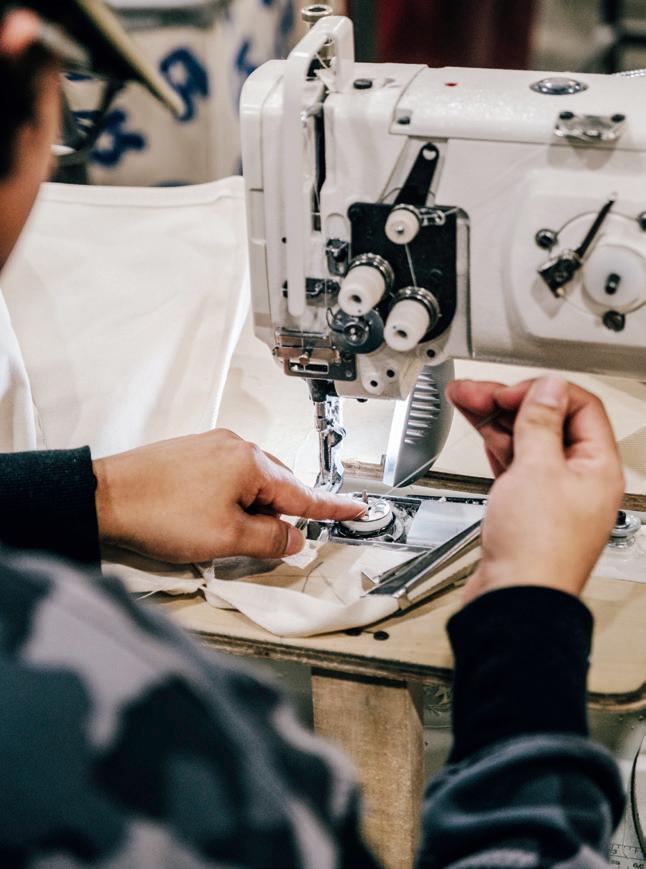
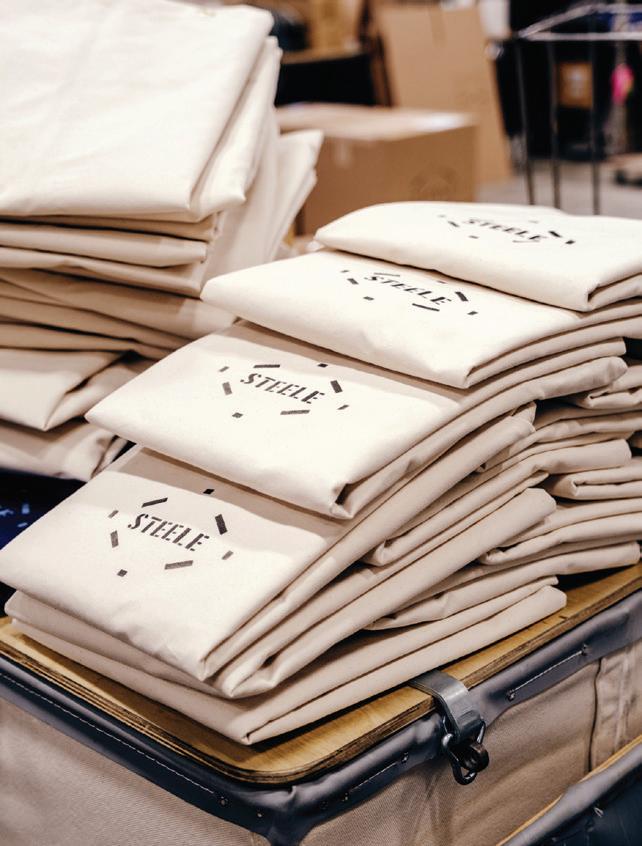
having outgrown a factory space in Chelsea and, before that, two locations in Cambridge. In one corner of the shop, rolls of fabric are smoothed out flat on a giant table and cut into segments for bags, baskets, and wheeled storage containers called trucks. From there, the pieces go to the sewing stations, where a team of 30 people keeps the machines humming and the products take shape.
For Steele’s industrial and commercial clients, large baskets and trucks have long been the offerings of choice. The workhorses of factory floors, film studio lots, laundries, post offices, and so on, these products are reinforced with steel framing—crafted right here in the factory metal shop—and often fitted with wooden lids made by Steele’s woodworking team, along with runners or caster boards.
Before John C. and Paul took the reins, only once did the company target the homeowner, offering a log carrier, a butterfly sling chair, an ice crusher kit, and a laundry bag caddy—all of which are still for sale. (Maybe their mom, Sylvia, was the prescient one: She often























































POWER PACKED with engines up to 27 HP that make light work of weeds up to 8' tall and saplings up to 3" thick.
LARGEST SELECTION of walk-behind machines with up to 36" decks and tow-behind models with up to 60" of cutting width.
RIGOROUSLY TESTED for hundreds of hours so they’re ready to tackle any job you need done.

BACKED BY 40 YEARS OF DEDICATION and supported for the life of your machine.






DO MORE WITH A DR® TRIMMER MOWER



UP TO 5X MORE POWER than a handheld trimmer



ULTIMATE MANEUVERABILIY everywhere a bladed mower can’t










LONGEST LASTING CORD market blasts through thick weeds

















ELIMINATE STUMPS WITH A DR® STUMP GRINDER







GRIND 3X LONGER – with 3-sided tungsten carbide-tipped Greenteeth





POWERFUL ENGINES – take 372 “bites” per second

372 to go mower on the





SELF-PROPELLED – and electric start models available





















found practical uses for Steele’s industrial products, using a horse-feed bag as her purse and keeping bushel baskets on hand in the car and at home, as well as around the office.)
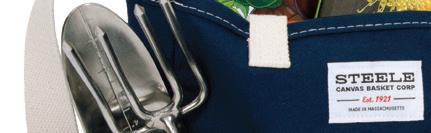
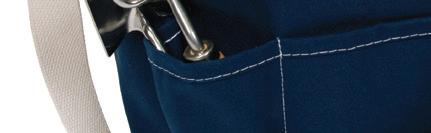
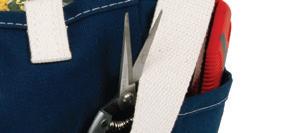
Under the brothers’ leadership, Steele’s signature baskets and trucks have been joined by soft-sided storage cubes, duffel and weekender bags, and dopp kits. And then there’s the ever-expanding lineup of totes, patterned on the company’s early coal bags: Flying out of the factory at the rate of 250 to 300 a day, they boast details such as hand-stenciled logos, color fabrics, and leather handles. The utility tote is a favorite, made of heavyweight or waxed canvas and replete with pockets, while the gardening edition combines the same durable canvas with a sewn-in vinyl liner that protects against rain, wet soil, and damp tools.
In addition to all the retail stores that stock these consumer-friendly products, other brands have approached Steele for partnership opportunities and corporate gifts. The brothers say they’ve done little outreach, as the products speak for themselves. “The name continues to mean something to people as something they can depend on and is American made,” Paul says.
And as the company evolves, it is


staying true to its essential character. In terms of Steele’s product and the way it’s made—well, not much has changed, the brothers say. “We served the New England industries, and we had to make pretty darn tough products for those industries,” Paul says.
“New England customers wouldn’t stand for anything less,” adds John C. “And if it was, they would tell you.”



Get a head start on the new growing season by entering to win this classic Steele utility tote, filled with gifts to delight any green thumb. For details and to enter, snap this QR code or go to: newengland.com/gardengiveaway







See how one small addition can make a big difference “The sky’s The Limit”
See how one small addition can make a big difference “The sky’s The Limit”
See how one small addition can make a big difference “The sky’s The Limit” “The Sky’s the Limit”
See how one small addition can make a big difference “The sky’s The Limit”
HOURS: Mon-Fri 8:00AM-4:30PM • Saturday by Appointment
HOURS: Mon-Fri 8:00AM-4:30PM • Saturday by Appointment
HOURS: Mon-Fri 8:00AM-4:30PM • Saturday by Appointment
78 State Road, Dartmouth, MA • (508) 994-2119 • capecodcupola.com Ltd.
HOURS: Mon-Fri 8:00AM-4:30PM • Saturday by Appointment
HOURS: Mon–Fri 8:00am–4:30pm • Saturday by Appointment
HOURS: Mon-Fri 8:00AM-4:30PM • Saturday by Appointment
78 State Road, Dartmouth, MA • (508) 994-2119 • capecodcupola.com
78 State Road, Dartmouth, MA • (508) 994-2119 • capecodcupola.com
78 State Road, Dartmouth, MA • (508) 994-2119 • capecodcupola.com
78 State Road, Dartmouth, MA • (508) 994-2119 • capecodcupola.com
78 State Road, Dartmouth, MA • (508) 994-2119 • capecodcupola.com

See how one small addition can make a big difference “The sky’s The Limit” Give the gift of hiking, exploration, and adventure! Trustees Membership includes 12-month access to more than 120 properties and discounts on thousands of events and programs.
the gift that lasts all year!
To celebrate a milestone anniversary, Weekends with Yankee host Amy Traverso brings back five of her favorite recipes from across the show’s 10 delicious seasons.

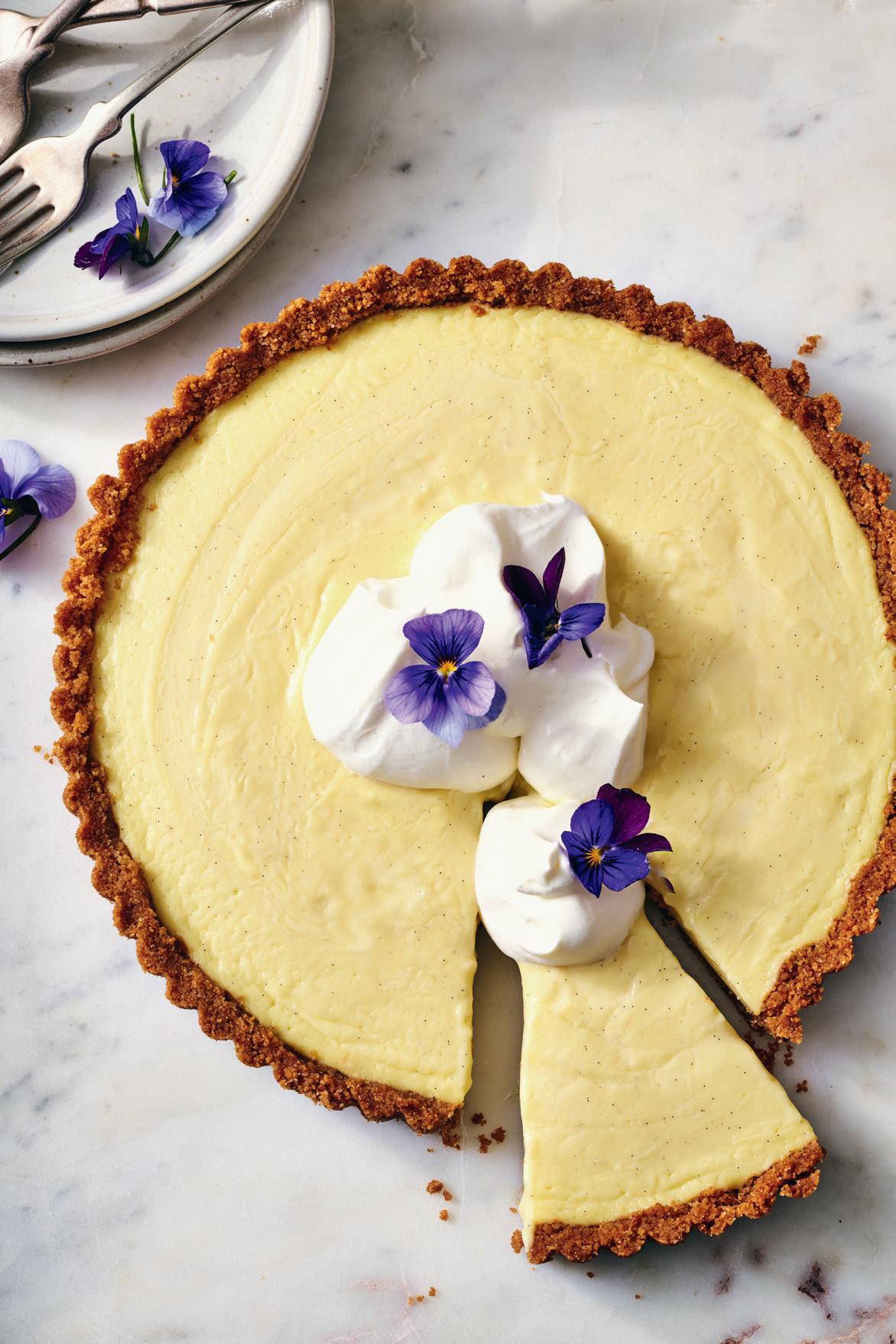
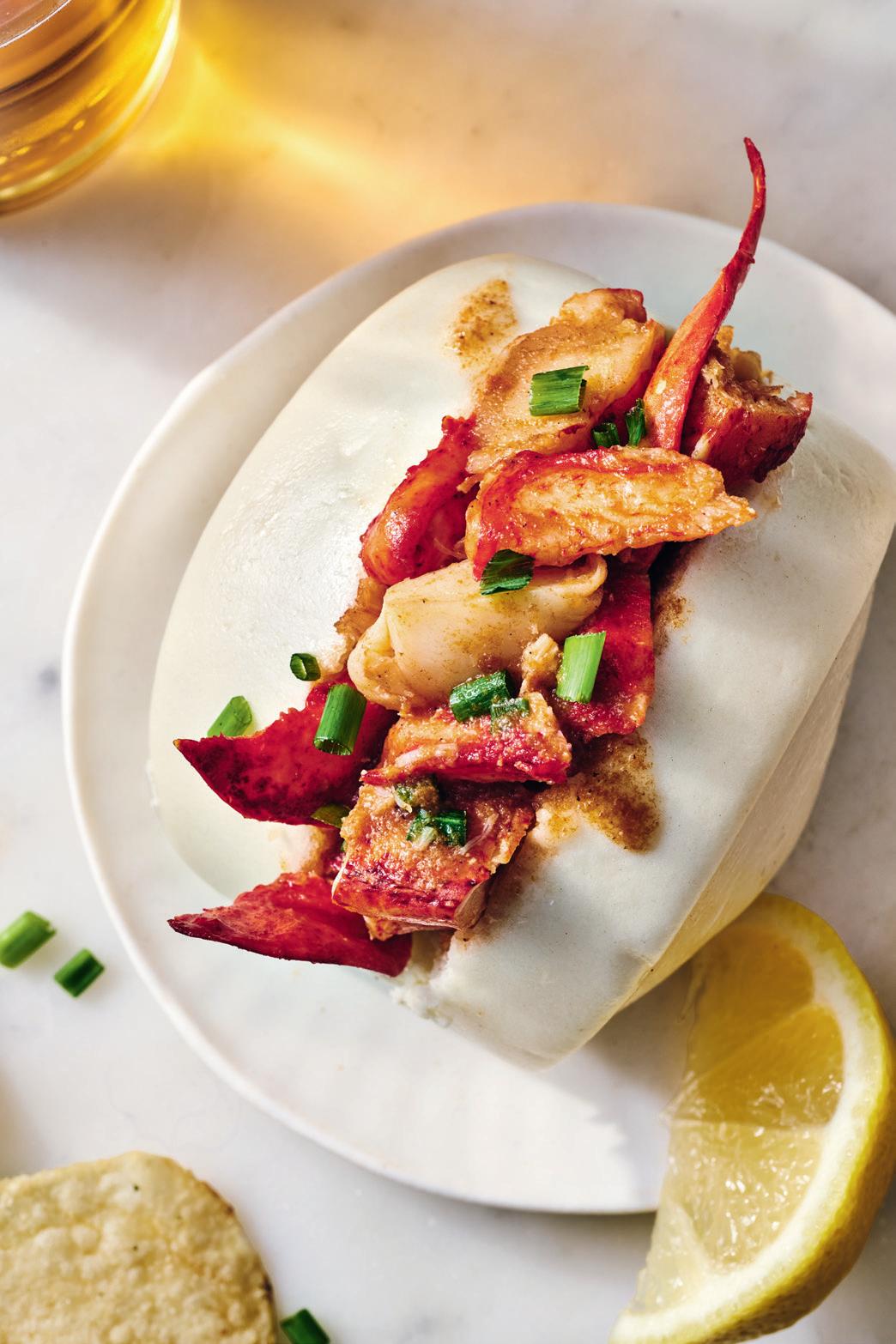
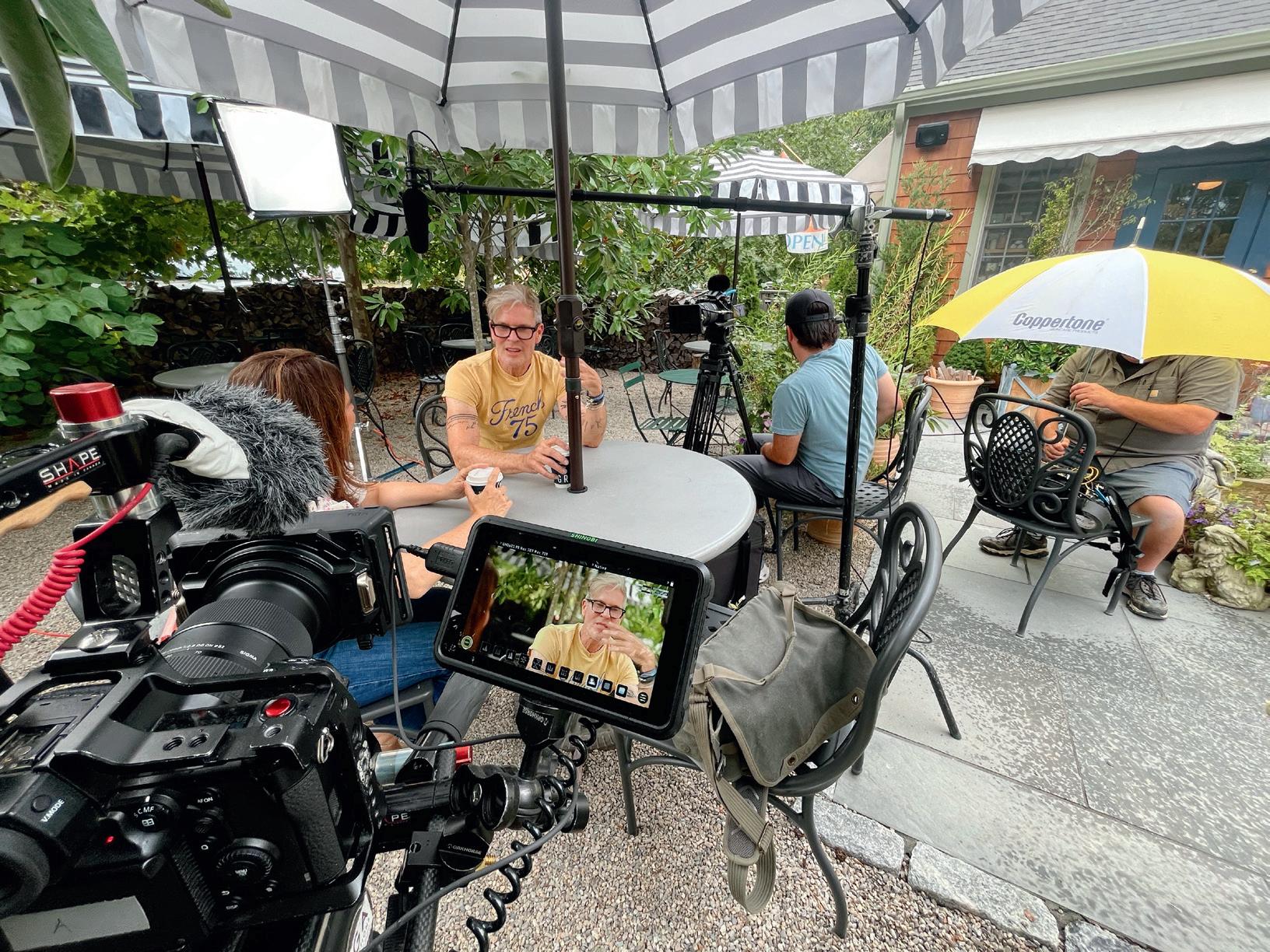
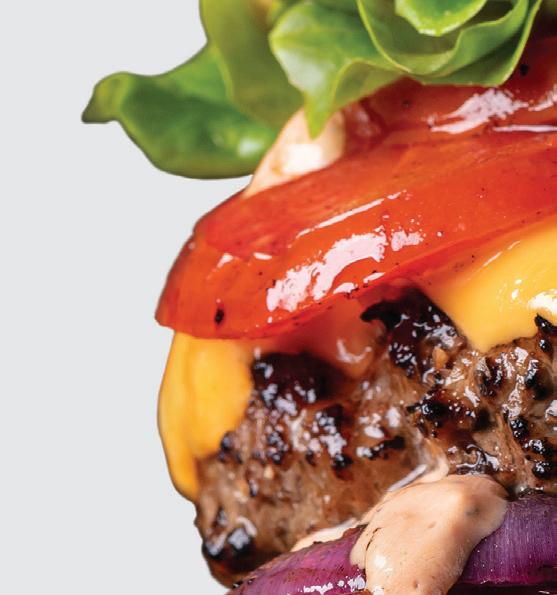
Mixing regional and international traditions—and often with a dash of personal history—the dishes featured on Weekends with Yankee celebrate New England in all its culinary diversity. this page, from left: Yankee senior food editor Amy Traverso in a segment from the new season; Groundswell Café’s Tomato Tartines, recipe p. 38. opposite, clockwise from top left: Mama Chang’s Pork and Chive Dumplings, recipe p. 86; Eventide Oyster’s Brown Butter Lobster Rolls, recipe p. 88; Sherry Pocknett’s Butternut-Cranberry Soup, recipe p. 38; Erin French’s Graham Cracker Pie, recipe p. 88.



ON WITH THE SHOW
Want to know where to watch the brand-new season of Weekends with Yankee? Scan the QR code below or go to weekendswithyankee.com, where you’ll also find full episodes from past seasons and 200-plus snackable segments.

n a chilly night last October, Yankee ’s editorial staff gathered in the softly lit kitchen at Cranberry Meadow Farm, a luxe B&B on the site of the former 1797 Wilson Tavern in Peterborough, New Hampshire. We were doing something new: filming an episode of our public television show, Weekends with Yankee, together as a team. Some of us were comfortable in front of the camera; others had to be coaxed into view. I mixed up a batch of cranberry spritzes, and we toasted two milestones: the 90th anniversary of our magazine and the 10th anniversary of our show.
While they’re both thrilling achievements, the long run of Weekends is perhaps the more surprising one. At our first meeting with GBH producers Laurie Donnelly and Anne Adams back in 2014, we were TV newbies, more accustomed to thinking in terms of words rather than visuals. We knew we had the essentials for a great show: decades of experience covering New England, an award-winning production team, and this beautiful region we call home. We knew that public television stations around the country had expressed interest in airing it—not completely surprising, as nearly half of Yankee ’s readers live outside New England. But we were thrilled when the show was picked up by every major media market in the United States. The love of New England truly does live well beyond our borders.
Over these past 10 years, I’ve had the opportunity to make scallop crudo on a fishing boat off of Martha’s Vineyard, simmer baked beans in the outdoor kitchen of a Maine homestead, harvest lobsters from Penobscot Bay, forage for wild mushrooms in New Hampshire’s Lakes Region, and make a Parisian opera torte in the five-star kitchens of Rhode Island’s Ocean House. I’ve met fascinating, generous, inspired
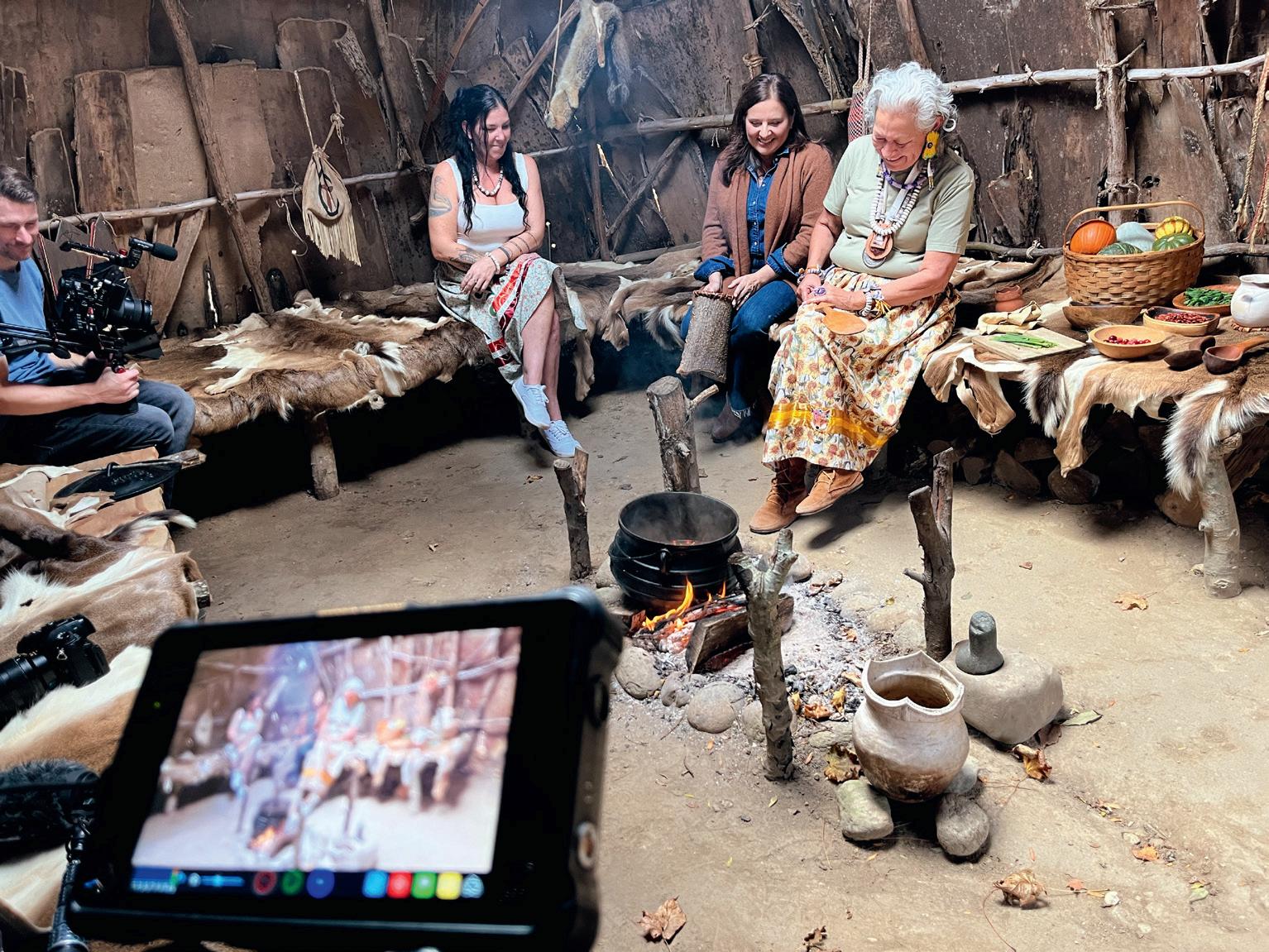
: Season 9 found Amy cooking alongside Indigenous chef Sherry Pocknett (right) as they prepared soup in a traditional Mashpee Wampanoag dwelling called a wetu; Boston pastry chef Joanne Chang, who taught Amy how to make her mother’s pork dumplings in Season 4; Amy and cohost Richard Wiese (second from left) learning the ABCs of an authentic clambake from the seafood pros at Eventide Oyster Company, a Season 1 highlight; Maine chef Erin French, who welcomed Amy at her off-the-beaten-path restaurant, The Lost Kitchen, in Season 2.
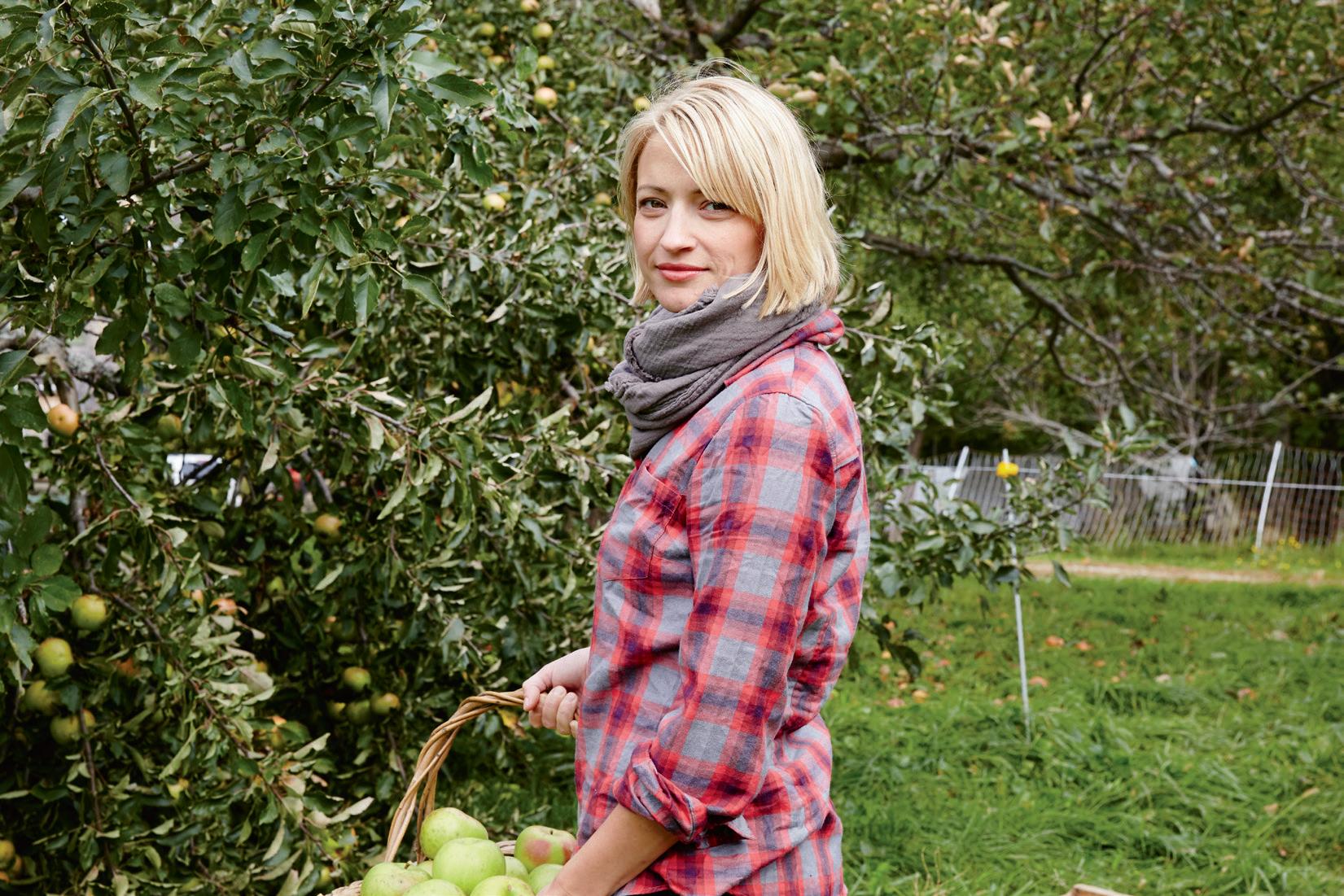
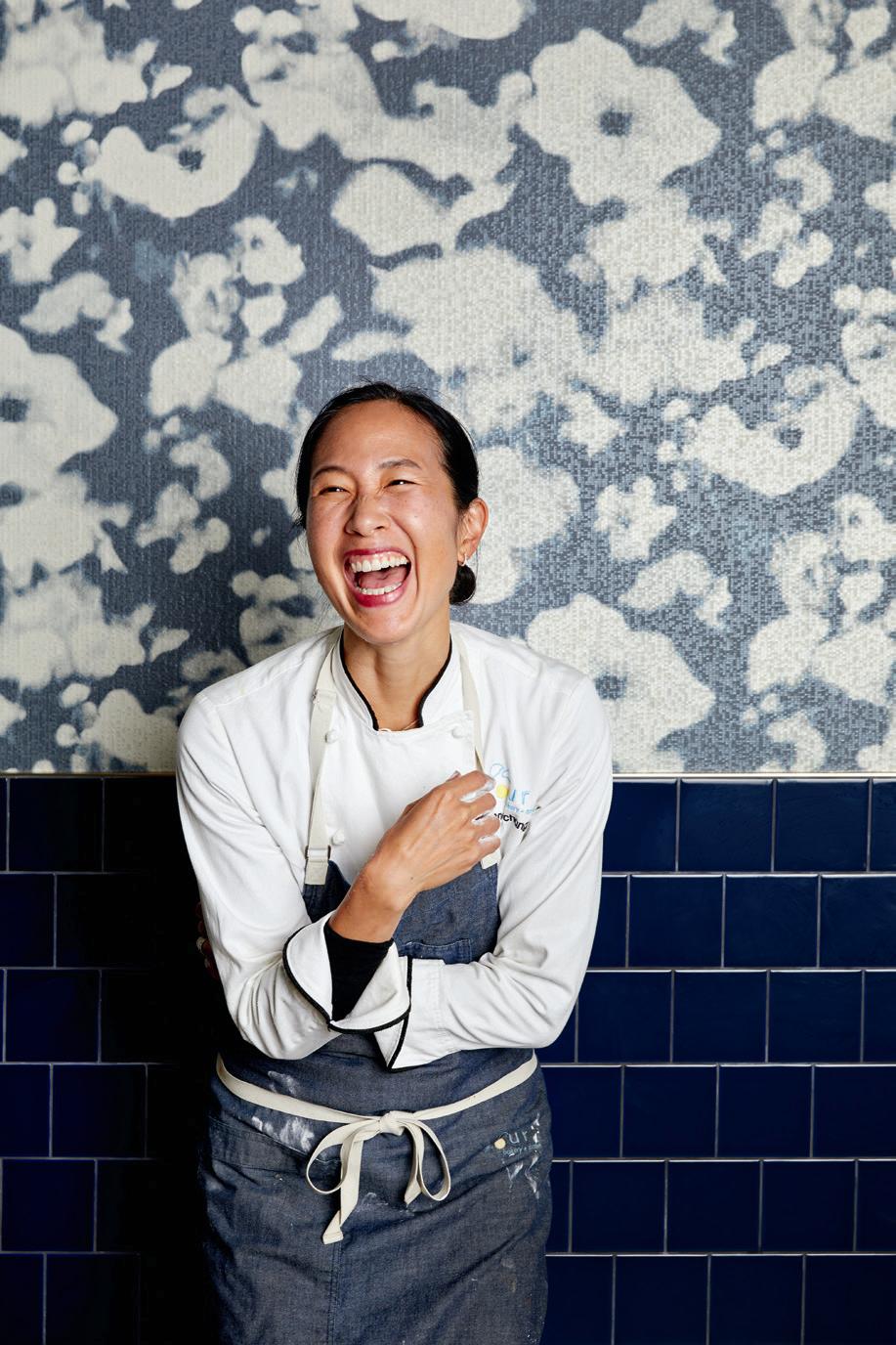
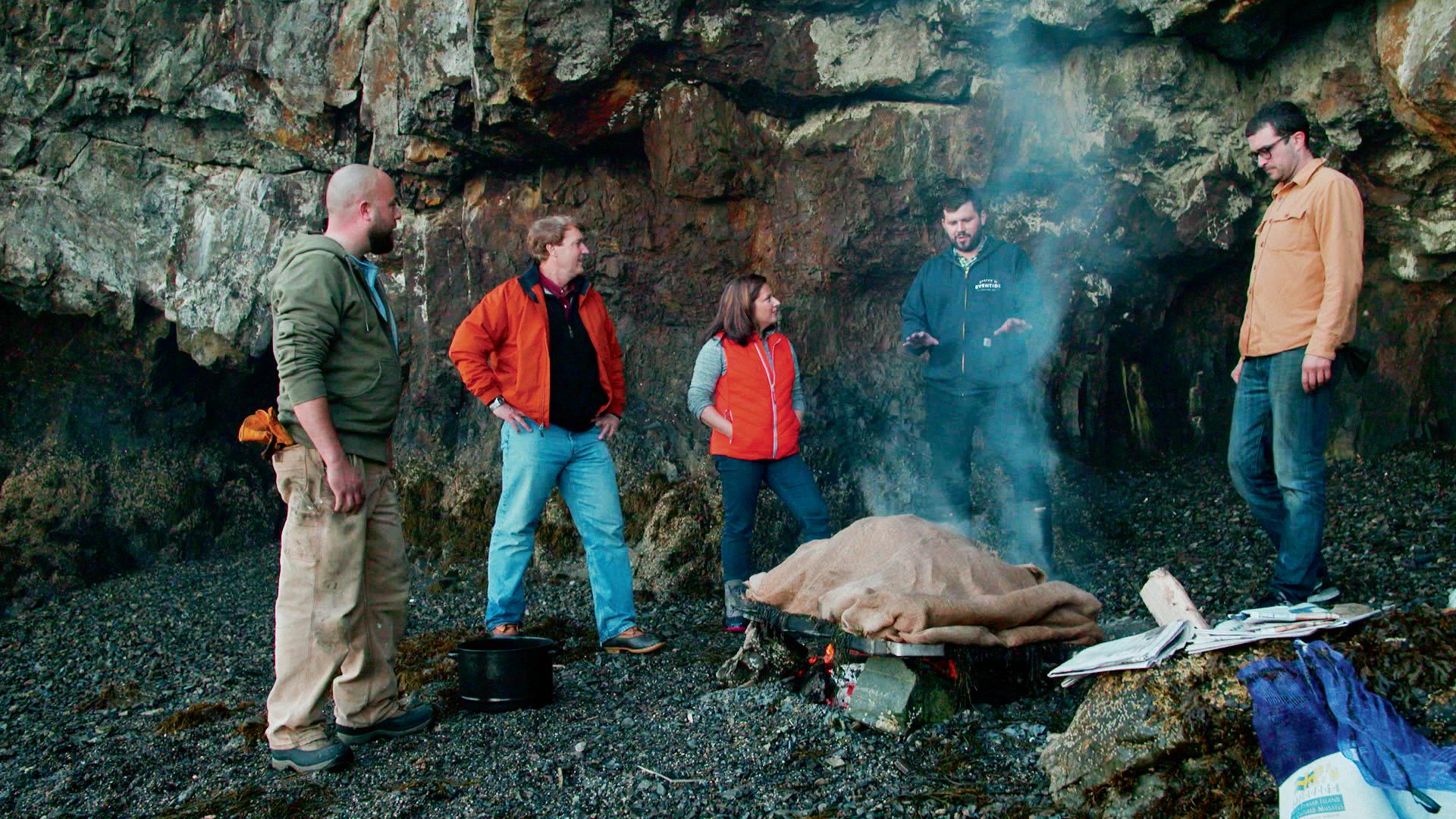
New Englanders, and it has been my greatest pleasure to introduce you to them.
To mark the anniversary, I went back through our archive of recipes from each season and chose five as representatives of all the wonderful food we’ve featured on Weekends with Yankee. The lineup kicks off with a recipe from the brand-new season, which begins airing in early April: tomato tartines (open-faced sandwiches) from Amanda Geisler, the executive chef at Groundswell Café in Tiverton, Rhode Island. We’d spent the day with Groundswell’s owner, David Fierabend—a landscape designer and lifestyle genius who has turned this tiny Farm Coast town into a destination—and ended with a feast cooked by Amanda and her team. It was an early fall harvest celebration, the perfect end to another magical shoot.
We hope you enjoy this new season of Weekends with Yankee as much as we’ve loved making it. Tune in as we hike, drive, boat, and eat our way through our beloved six states, from the Berkshires to coastal Maine to Cape Cod and the White Mountains. Then head to the kitchen with these time-tested recipes.
GROUNDSWELL CAFÉ’S TOMATO TARTINES (SEASON 10)
Imagine the perfect Parisian café plunked down in a Victorian building in coastal Rhode Island, and you have Groundswell, a bakery-café where chef Amanda Geisler and her team turn out beautiful croissants, baguettes, salads, sandwiches, and lattes. This easy-to-make tartine is a great example of the food, which emphasizes seasonality, big flavors, and that French je ne sais quoi.
½ cup extra-virgin olive oil
2 pints cherry tomatoes, halved lengthwise
2 medium garlic cloves, smashed
7 sprigs fresh thyme, leaves removed
3 sprigs rosemary, leaves removed Salt and freshly cracked black pepper, to taste
1 cup whole-milk ricotta cheese Zest of ½ lemon
12 slices sourdough or olive bread, toasted Fresh basil leaves, for garnish
In a large sauté pan, heat the olive oil over medium heat and add the tomatoes, garlic, thyme, and rosemary. Let the tomatoes cook until slightly soft but not fully broken down, 3 to 5 minutes. When the tomatoes are done, add salt and pepper to taste and let them cool with the herbs and garlic for at least 2 hours, or refrigerate overnight.
In a small bowl, stir together the ricotta and lemon zest. Add salt and pepper to taste.
To serve, spread the ricotta mixture on a slice of toasted bread. Spoon the marinated cherry tomatoes onto the ricotta, removing the garlic cloves, and garnish with basil. Yields 12 tartines.
SHERRY POCKNETT’S BUTTERNUTCRANBERRY SOUP (SEASON 9)
After decades in restaurant kitchens, Sherry Pocknett came to national attention when she won the 2023 James Beard Award for the Northeast’s best chef. Her food reflects mostly Wampanoag influences, including this
(Continued on p. 86)










10 New England books to help launch a new chapter in your home cooking adventures.
BY AMY TRAVERSO
As a judge for The Readable Feast Awards, an annual salute to New England’s best culinary books, I’m always looking for new titles from local authors. And I can tell you right now: It’s been a great year for New England cookbooks. Here are some of my favorite releases from the past 12 months, alongside a few eagerly anticipated books scheduled to hit the shelves in May. Happy reading!
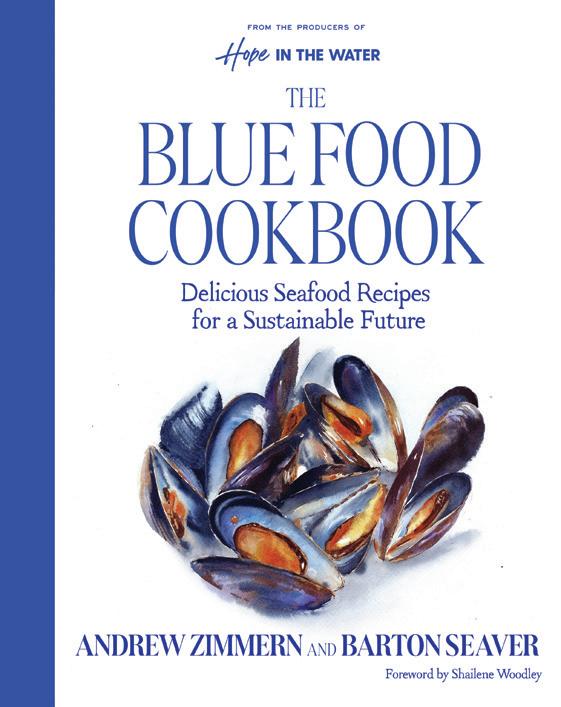
THE BLUE FOOD COOKBOOK : Delicious Seafood Recipes for a Sustainable Future
By Andrew Zimmern and Barton Seaver
Cooking with seafood can be confusing: Farmed fish, or wild? What about mercury? This book offers clear answers, along with a useful guide to seafood species, information on what to buy, and more than 145 tempting recipes, including several chowders and stews. Note on the title: “Blue food” refers to anything harvested from aquatic environments, including kelp and other sea veggies. $45 (Harper Collins/Harvest, October 2025)
BRAIDED HERITAGE: Recipes and Stories on the Origin of American Cuisine
By Jessica B. Harris
Culinary historian Harris, a longtime Martha’s Vineyard resident, tells the foundational story of American food by exploring the interplay among Indigenous, European, and African

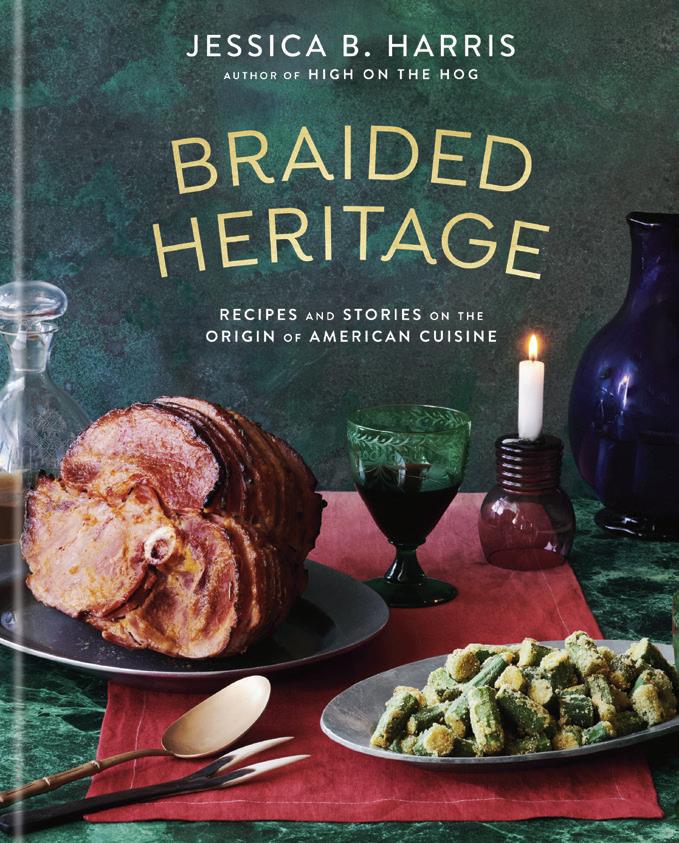

culinary traditions, a narrative fleshed out in recipes like Huguenot Torte and Wampanoag Clam Fritters. Rarely is the story of our nation’s cooking told so prismatically. $35 (Clarkson Potter, June 2025)
DORIE’S ANYTIME CAKES
By Dorie Greenspan
This beloved cookbook author describes anytime cakes as “the cakes that can have frosting, but don’t need it … the cakes we pack for picnics and school lunches; the cakes that come together easily.” From sheet-pan carrot cakes to French spice cakes (nonnettes) to the BFF Brownie Cake, Greenspan gives you more than 100 good reasons to get baking. $35 (Harper Collins/Harvest, October 2025)
EVERYDAY CHEF: Simple Dishes for Family and Friends
By Jeremy Sewall with Erin Byers Murray After decades in professional kitchens, Sewall found himself making daily dinners at home during the pandemic




and became inspired by a whole new approach to food. “Restaurant cooking and home cooking are really different— both of them are a skill set that you develop over time,” he says. His book is full of familiar comfort foods, like banana bread and mac and cheese, but also offers easy ways to jazz up the daily repertoire (try the Brioche French Toast with Brown Butter Bananas). $40 (Rizzoli, September 2025)
IN SEASON: 125+ Sweet and Savory Recipes Celebrating Simple, Fresh Ingredients
By Lisa Steele
In her second cookbook, Maine egg farmer and food writer Steele makes a fresh argument for eating in season: Not only is it delicious, but it’s also more economical. Recipes like Three Cheese Tomato Tarts and Warm Molten Lemon Soufflé Cakes make the most of what’s fresh. The recipes are accessible but sophisticated enough to feel special. $34.99 (Harper Celebrate, May 2026)


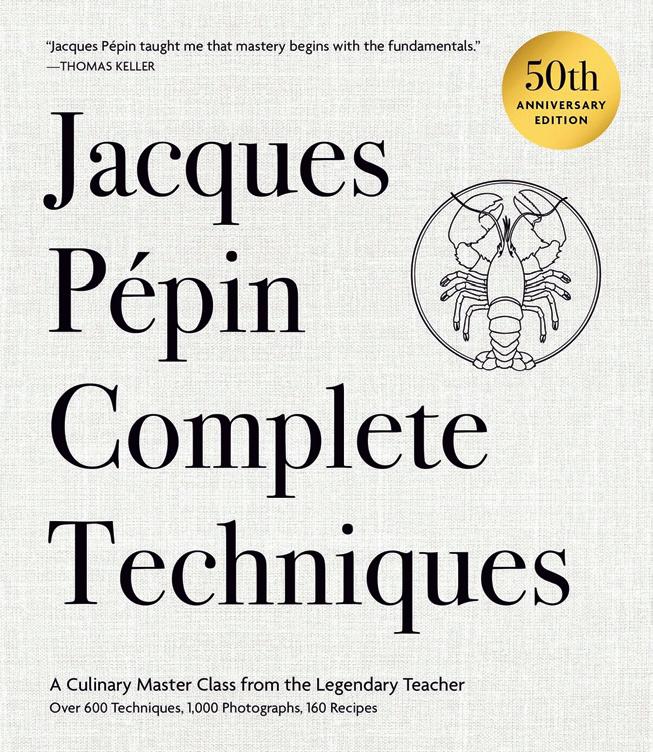

JACQUES PÉPIN COMPLETE
TECHNIQUES: 50th Anniversary Edition
By Jacques Pépin
The two books that Pépin ranks among his greatest achievements, La Technique and La Methode, are combined in this new release, making it the perfect capstone for the legendary French chef’s 90th birthday celebration last year. Step-bystep photos show you how to bone a chicken, shuck an oyster, make pastry cream—600 techniques and 1,000 images in all, plus 160 recipes you can make with your new skills. $60 (Hachette/ Black Dog & Leventhal, April 2026)
A KITCHEN ON GOOSE COVE: Recipes from the Heart of Maine
By Devin Finigan
At the Deer Isle restaurant Aragosta, guests experience Maine in its distilled form: plates of pristine seafood, seasonal fruits, homemade pasta, and fresh vegetables served with a view of sea and islands, spruce and pine. Chef-

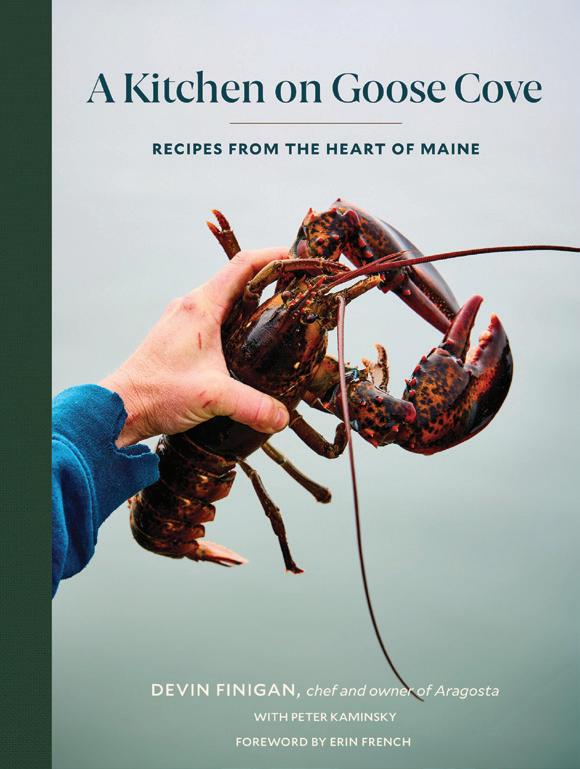



owner Finigan’s first cookbook captures the special feel of this place with such recipes as Duck Breast with Peach Sauce, Mussel Chowder, Whoopie Pies, and her signature lobster pasta. $35 (Artisan, May 2026)
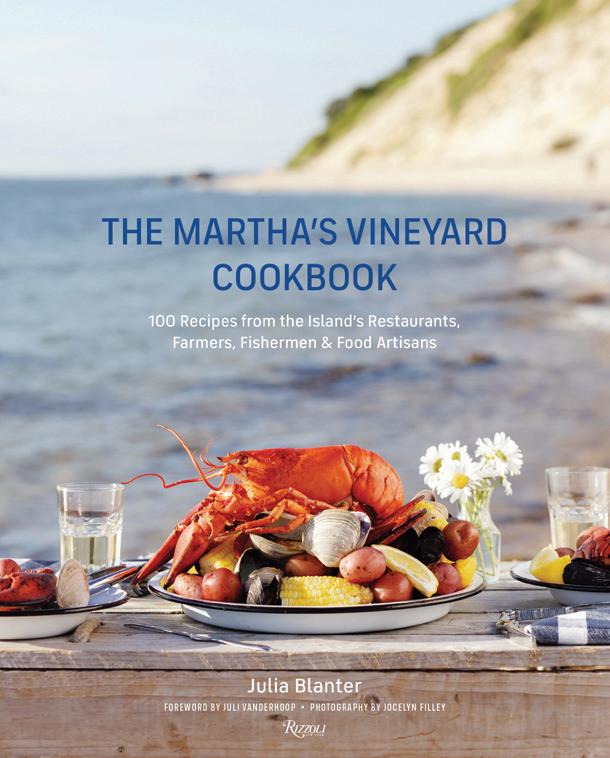
THE MARTHA’S VINEYARD COOKBOOK: 100 Recipes from the Island’s Restaurants, Farmers, Fishermen & Food Artisans
By Julia Blanter
Year-round Vineyard resident Blanter calls her cookbook “a love letter to the island,” and that love shines through in its gorgeous photos of the landscapes, people, and food that make this place unique. With a foreword by Wampanoag leader Juli Vanderhoop, owner of the Orange Peel Bakery in Aquinnah, the book showcases 100 recipes—Brown Butter Lobster Rolls, Striped Bass and Clam Chowder, Fig and Honey Tart, and more—from Blanter’s friends and food lovers around the island as well as her own kitchen. $45 (Rizzoli, March 2025)


MY HARVEST KITCHEN: 100+ Recipes to Savor the Seasons
By Gesine Bullock-Prado
In her seventh cookbook, the celebrated pastry guru takes readers through the seasons in her Vermont kitchen, garden, and baking school. A great storyteller and a crackerjack recipe developer, BullockPrado serves up gems like Cheddar and Chive Biscuits; Chicken, Leek, and Mushroom Pie; and Sour Cherry Pie. $35 (Countryman Press, October 2025)
NEW ENGLAND BRUNCH: Seasonal Midday Meals for Leisurely Weekends
By Tammy Donroe Inman
Using brunch as her organizing principle, Inman weaves New England-y ingredients (blueberries, maple, apples, pumpkins, seafood) and cultural influences (British, Portuguese, Indigenous, Italian) to craft more than 100 sweet and savory recipes such as Boston Cream Doughnuts, Portuguese Sweet Rolls, and Three Sisters Succotash. $35 (Globe Pequot Press, April 2025)
BY ELYSE MAJOR | PHOTOS BY ANGEL TUCKER
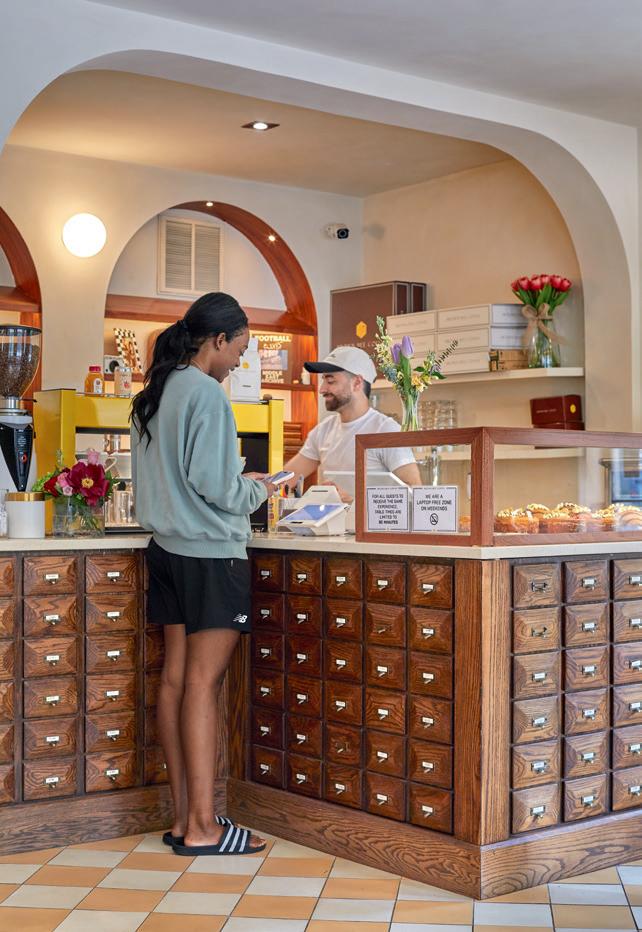

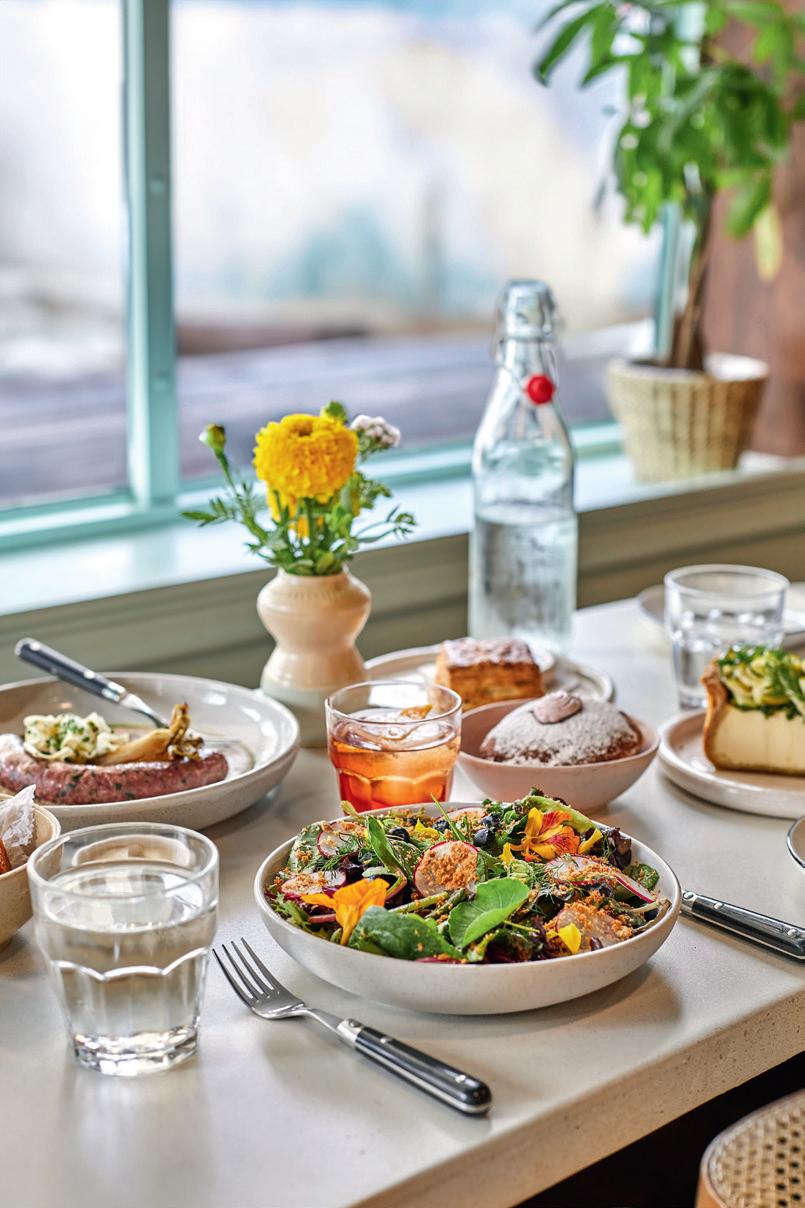
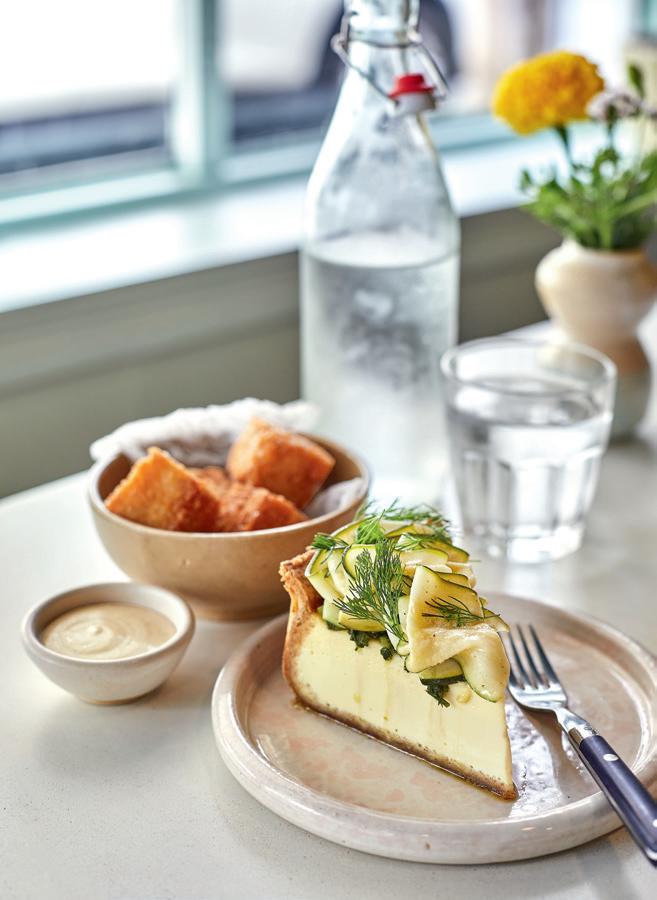
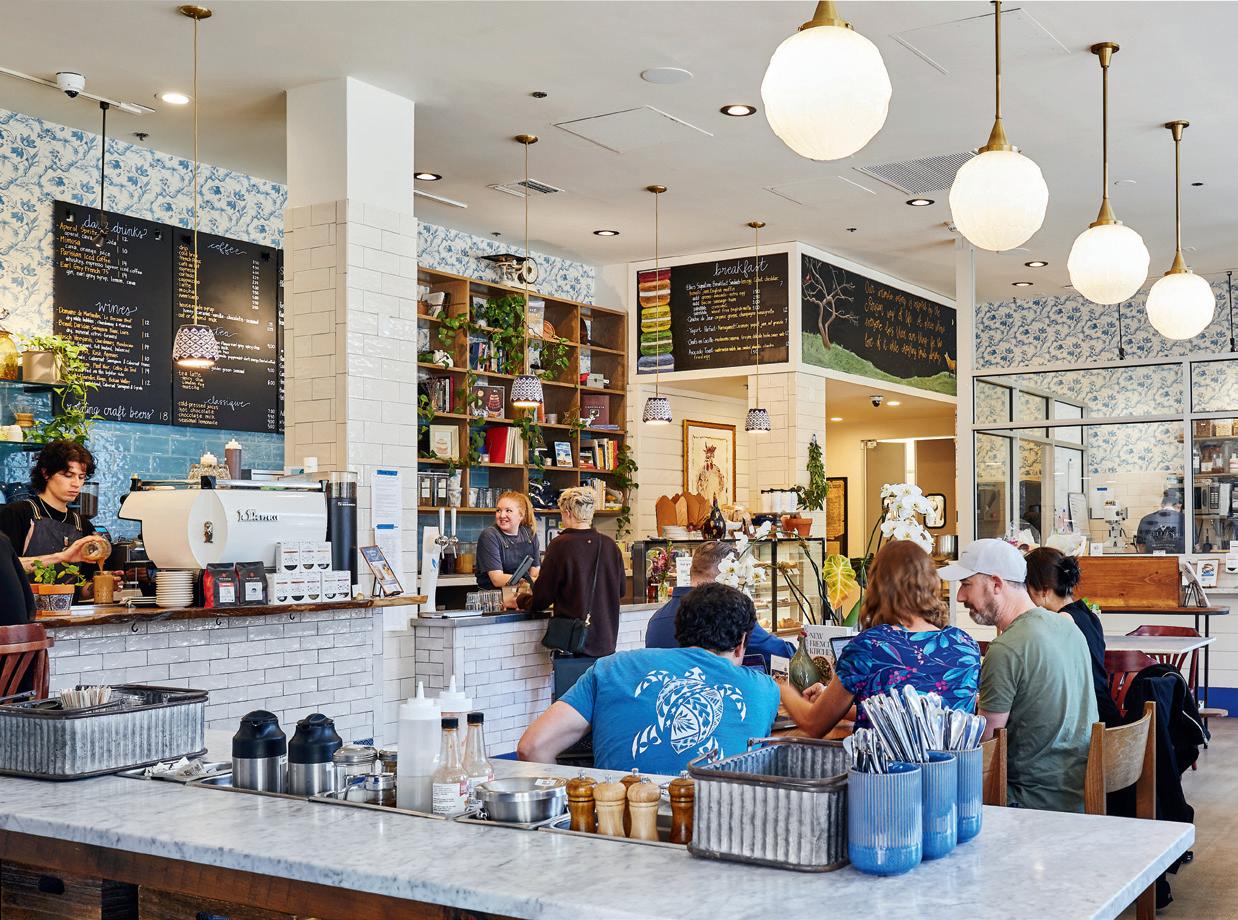
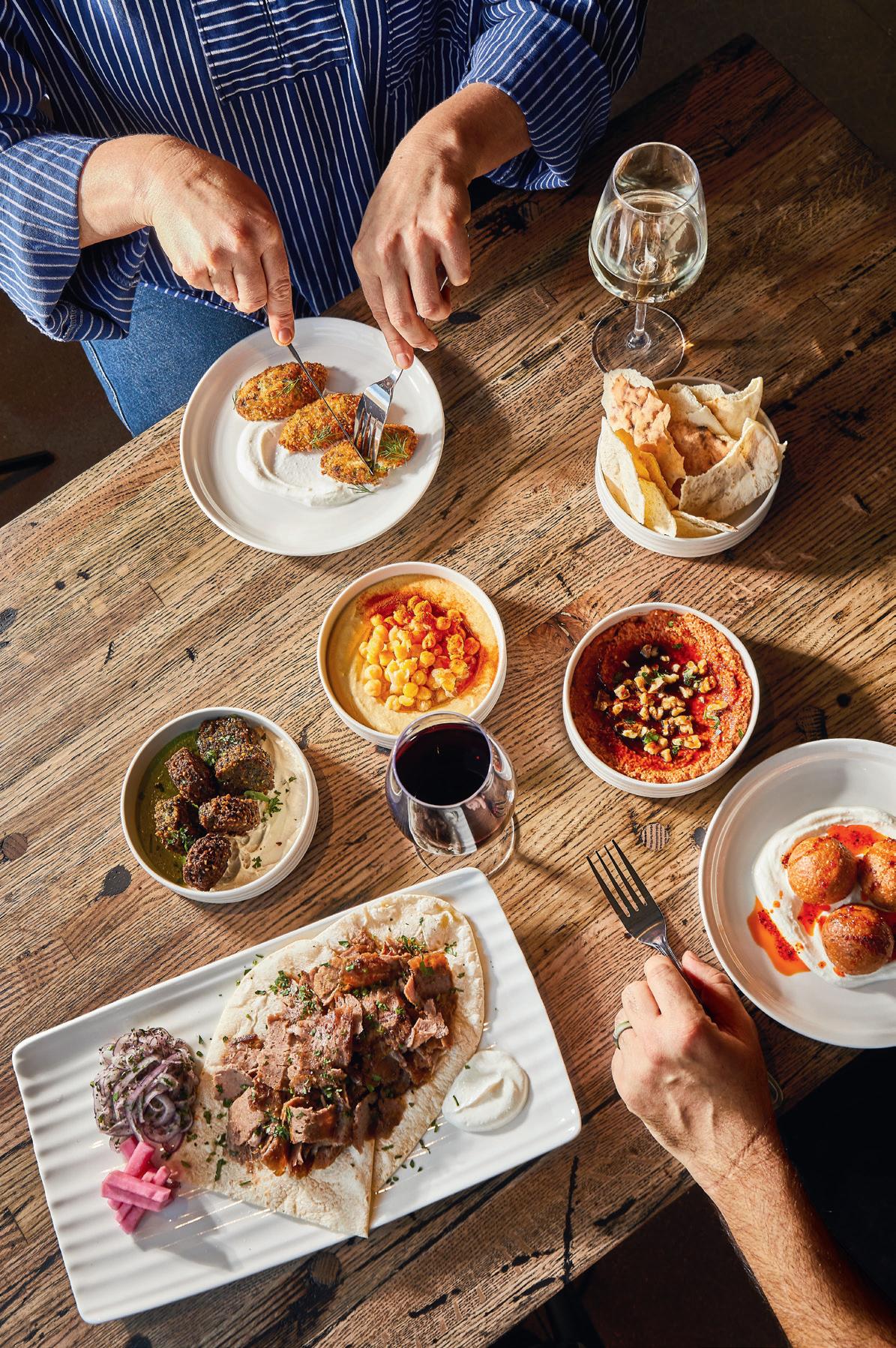
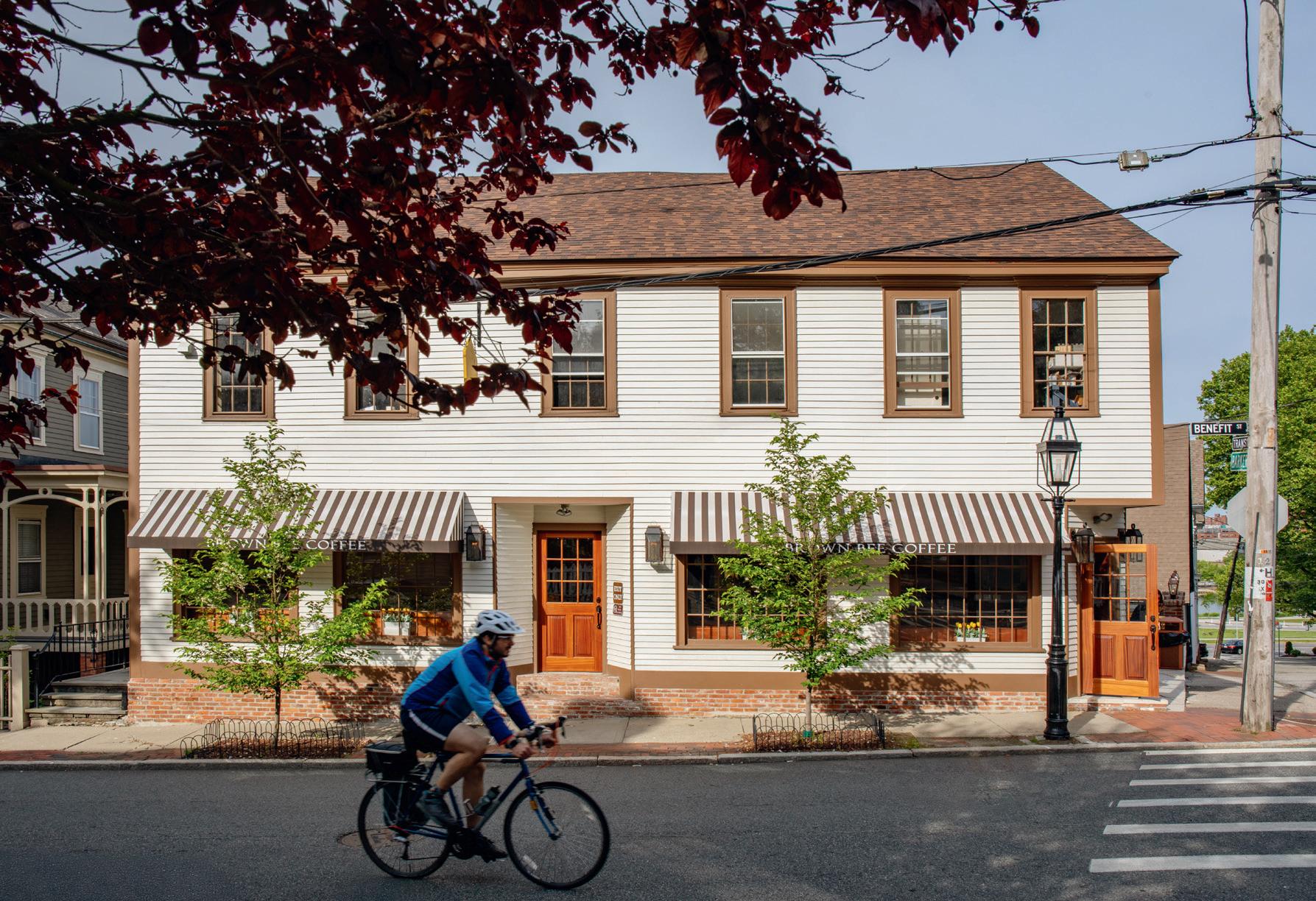
opposite, clockwise from top left: Quiche with marinated zucchini and celery gremolata at Frank & Laurie’s; the interior of Ellie’s, a Frenchaccented bakery-café; pillowy macarons, an Ellie’s signature treat; the counter at Brown Bee Coffee, which owner Waleed Ghazi had custombuilt to look like a vintage card catalog in a nod to the august Providence Athenaeum.
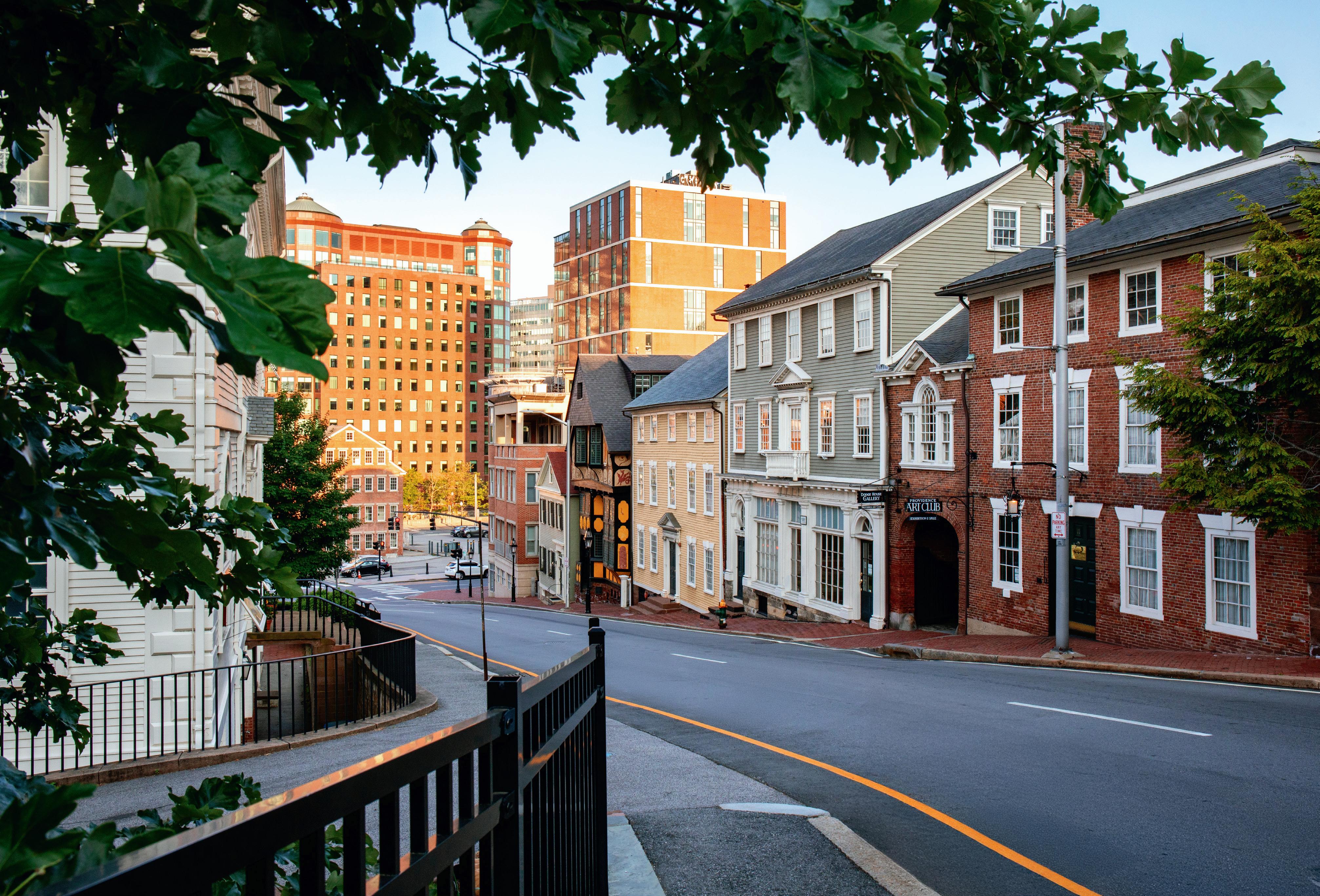
this page: Providence’s historic charm and modern vigor sit side by side in this view from the city’s College Hill neighborhood.
Spring arrived for me on a late March day as I sat at a window-side table at Ellie’s, a Parisian-style bakery-café in downtown Providence. It had been a long winter even by southern New England standards, and the snowflake icon persisted on my phone’s weather app like gum stuck to the sole of a shoe. ¶ And yet, I had reason for hope. Sure, my coffee and shiny croissant had elevated the vibe—but through the restaurant’s sky-high windows were the unmistakably verdant views of budding trees and recently potted curbside flowers. Around me, a flurry of springtime cheer filled the air, as students and neighbors filed in and out of Ellie’s for all manner of pick-me-ups: baguettes, croissants, and any one of the decadent macarons, from lemon lavender to strawberry rose champagne.
A few decades ago, the central district in which Ellie’s sits proudly reclaimed its historical “Downcity” nickname. The neighborhood’s rebirth is emblematic of not just Providence’s revival—today, the surrounding streets are lined with a wide selection of independently owned shops, like Craftland and Symposium Books— but also the city’s rising acclaim as a foodie town. This growing reputation comes courtesy of plucky chefs making the most of locally produced, farmed, caught, and bottled provisions.
I’ve been writing about the Providence food scene for years, and it’s never been better. Last year, for the first time ever, four Providence chefs and restaurants made the short list for the James Beard Awards. The most notable among them was Gift Horse chef Sky Haneul Kim, who won for Best Chef, Northeast. To restaurant connoisseurs who are willing to venture beyond Boston and Portland, this isn’t surprising. After all, this is the sort of thing that happens when Johnson & Wales University (JWU) grads make a go of it on their home turf.
Consider the immediate area surrounding Ellie’s, which one could argue is the best culinary city block in all of New England. Across from the bakery is Oberlin, a popular restaurant lauded for its seafood-forward Italian dishes
that was a 2025 James Beard finalist for Outstanding Restaurant. Like Kim, chef Benjamin Sukle (a three-time James Beard finalist for Best Chef, Northeast) and sommelier Bethany Caliaro are JWU grads, and their eatery features an open kitchen, a wood-fired oven, and a steady soundtrack of soulful tunes. There’s ample seating at both the bar and dining room, with an interior just sophisticated enough to feel special without requiring you to dress up.
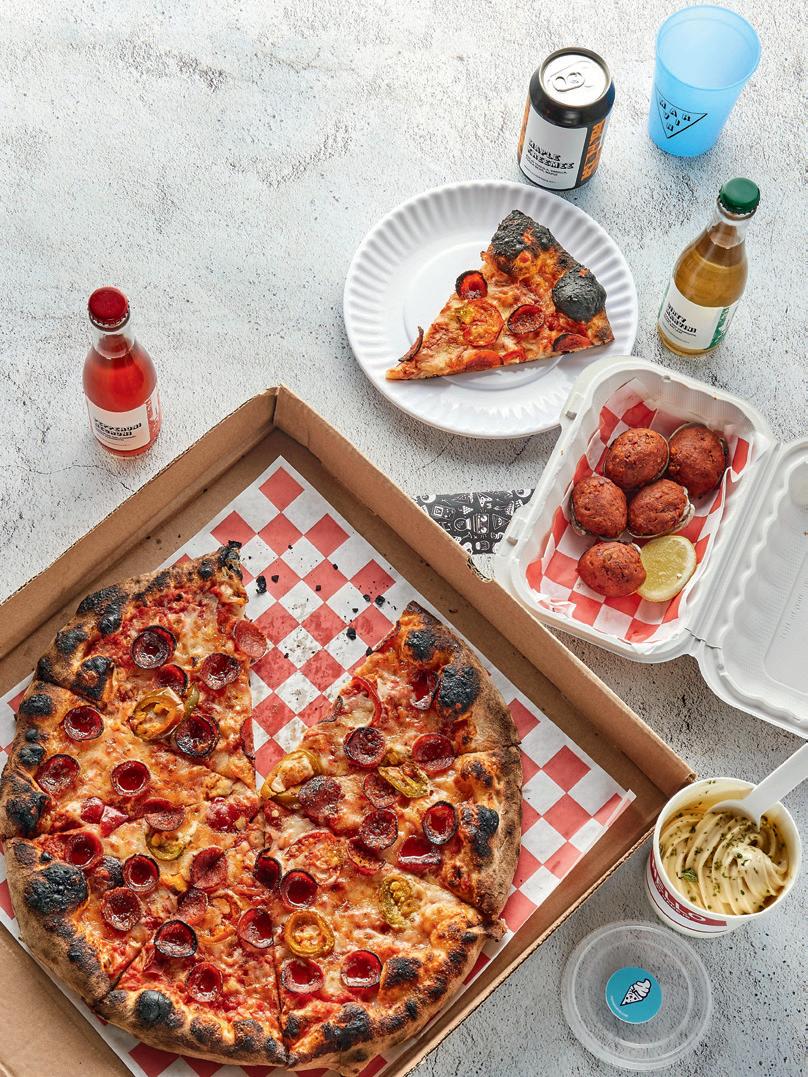
While Downcity lays claim to several of Providence’s fine-dining standouts, great food and drink abounds in neighborhoods across the city—such as College Hill, the setting for Brown Bee Coffee (above), and Fox Point, home to Pizza Marvin (left).
The main menu at Oberlin is stuffed with dishes like whole wood-roasted fish and hearty pastas. But if the weather is right, time your visit between 3 and 5 p.m. for “Cicchetti on the Patio” for raw bar oysters and clams, as well as a perky drinks menu showcasing Rhodium vodka, distilled in the neighboring city of Pawtucket.
Next door, you’ll find Oberlin’s sister restaurant, Gift Horse—a delight for anyone who enjoys an unexpected mix of flavors that are always beautifully plated. Beyond its full-service raw bar, the full menu’s lineup of unexpected delights (smoked scallop rolls and crispy piri piri fish, to name a few) has earned the restaurant accolades, including a nod from The New York Times as one of its top 50 restaurants in America in 2024. And while chef Sky Haneul Kim recently returned to South Korea to be closer to family, internal promotions have kept the kitchen from missing a beat.
Just steps away is Cielito Mexican Kitchen, dishing Michoacán takes on Mexican classics. I’m a big fan of the chiles anchos rellenos made with dried raisins, which lend
Brown Bee Coffee: Tear into handmade croissants over artisan-quality coffee in a café brimming with academic types in the College Hill neighborhood between Brown University and RISD. brownbeecoffee.com
Frank & Laurie’s: When chef Eric Brown and his wife, Sarah Watts, moved to Providence, they couldn’t find a good place for lunch—so they opened one. While billed mostly as a luncheonette, it’s not quite like places your nana might have taken you for a turkey sandwich; it’s very pretty inside, and the biscuits are scrumptious. frankandlauries.com
Nicks on Broadway: With its menu showcasing local produce, chef Derek Wagner’s creation has been a West End go-to since 2002. Look for spring dishes emphasizing bright greens such as parsley, pea greens, and spinach. nicksonbroadway.com
Pizza Marvin: Founded by chef Robert Andreozzi, Pizza Marvin is a lively place on eclectic Wickenden Street for a pie, a slice, or surprising offerings like clam dip with potato chips. pizzamarvin.com
Track 15: What was once a train station has been transformed into an 18,000-square-foot food hall, where you can dig into fare from seven buzzy local restaurants, plus beverages including tasty mocktails from the central bar. track15ri.com
Aloft Providence Downtown: What happens when JWU hospitality alums are at the helm of a Marriott-owned hotel? You get amenities and Bonvoy points, plus a property committed to showing off the city’s attributes. Suites are named in honor of Providence’s jewelry-capital past, and you’ll discover local art at every turn. marriott.com
The Beatrice: This luxury 47-room hotel consistently tops national lists—and for

























AND THIS IS THE PLACE


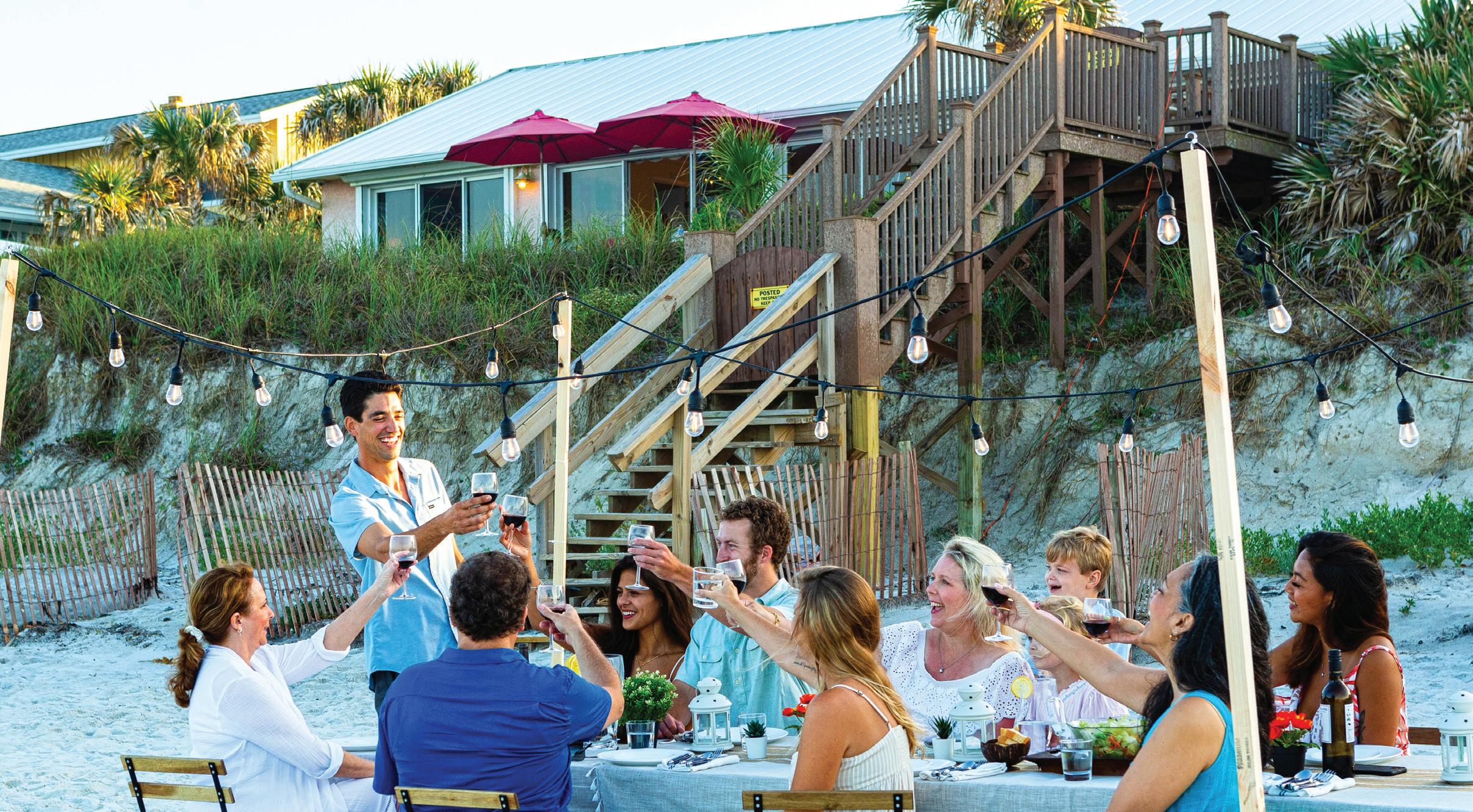
With 17 miles of sun-bathed beaches, bountiful coastal cuisine, and relaxing places to stay, this is where people with too much going on go to forget about it all. If you’ve been looking for your happy place, Relax, you’ve found it.



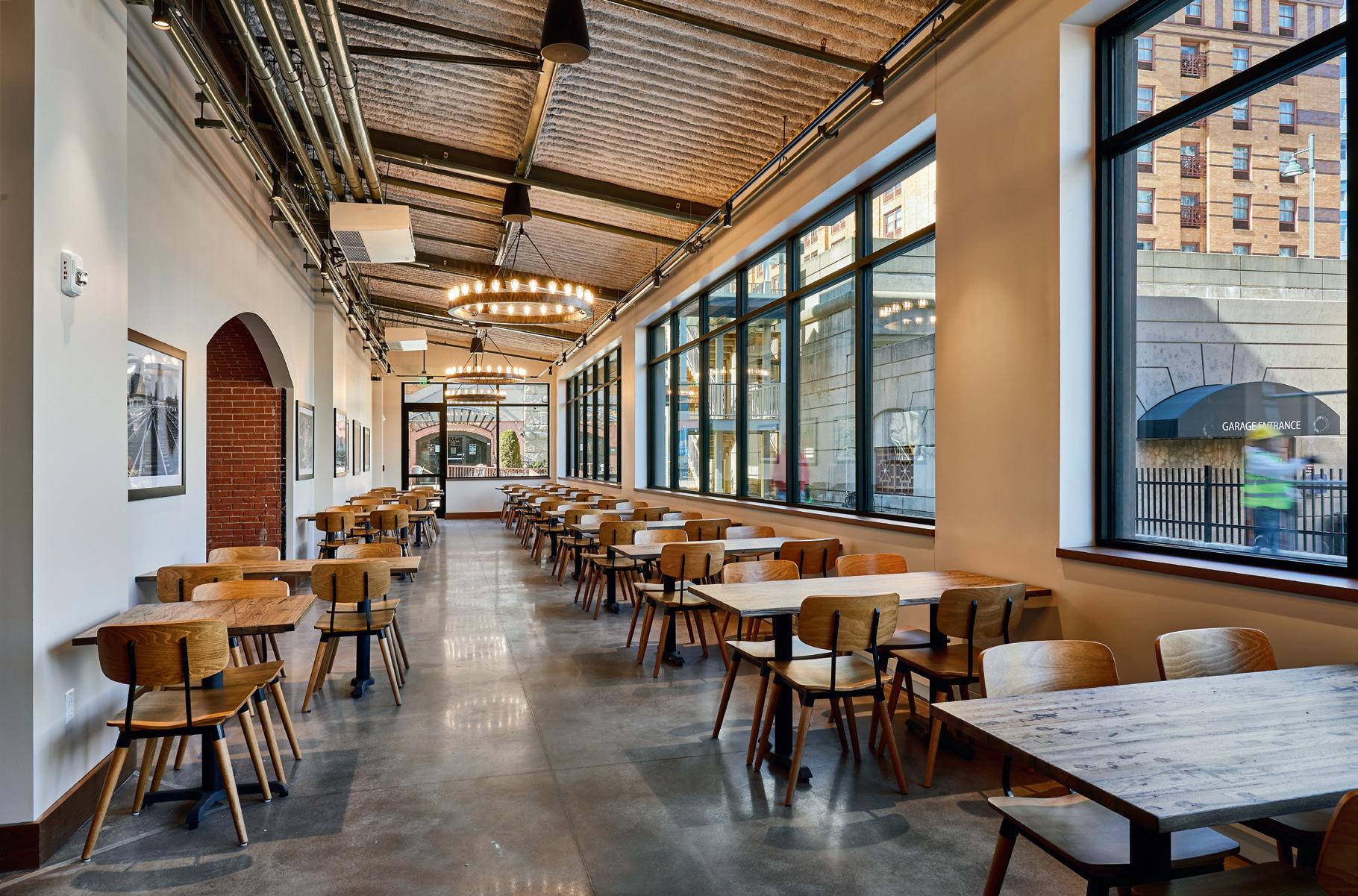
a sweet chewiness to the ground beef. Cielito’s teal-hued walls, framed flower-market prints, and a luscious gladiolus and marigold mural over the bar bring a welcome jolt of color to an early spring day.
A new addition to the downtown dining scene is Claudine. Opened last June, it’s the vision of husband-and-wife team Josh Finger and Maggie McConnell, who met while working at Thomas Keller’s famed Per Se in New York City. By design, the only views at Claudine are of the elegantly plated dishes and the open kitchen, where you can witness the owners practice the art of precision. I love the restaurant’s parade of polished, French-inspired cuisine showcasing regional ingredients, like confit dayboat scallops. Just be sure not to rush your experience at Claudine’s—dining here may very well be your activity for the night, and that’s fine.
For accommodations, The Beatrice pairs nicely with Providence’s food scene. The stylish boutique hotel’s Financial District location puts you smack-dab in the center of nightlife; it’s just a short walk to Providence Performing Arts Center, a historic gem of a theater with a roster of nationally touring musicals and a rare Mighty Wurlitzer pipe organ, still played by house organist Peter
Edwin Krasinski. Seemingly transplanted directly from Europe, The Beatrice boasts such high-end amenities as heated towel racks (and heated bidets) and a rooftop bar perfect for spring’s early sunsets. It’s also home to Bellini Providence, a posh eatery outfitted in blush and teak, whose name is derived from the Venetian cocktail of fresh peach puree and Prosecco. Dining here offers up a nice excuse to dress up for lunch, dinner, or weekend brunch.
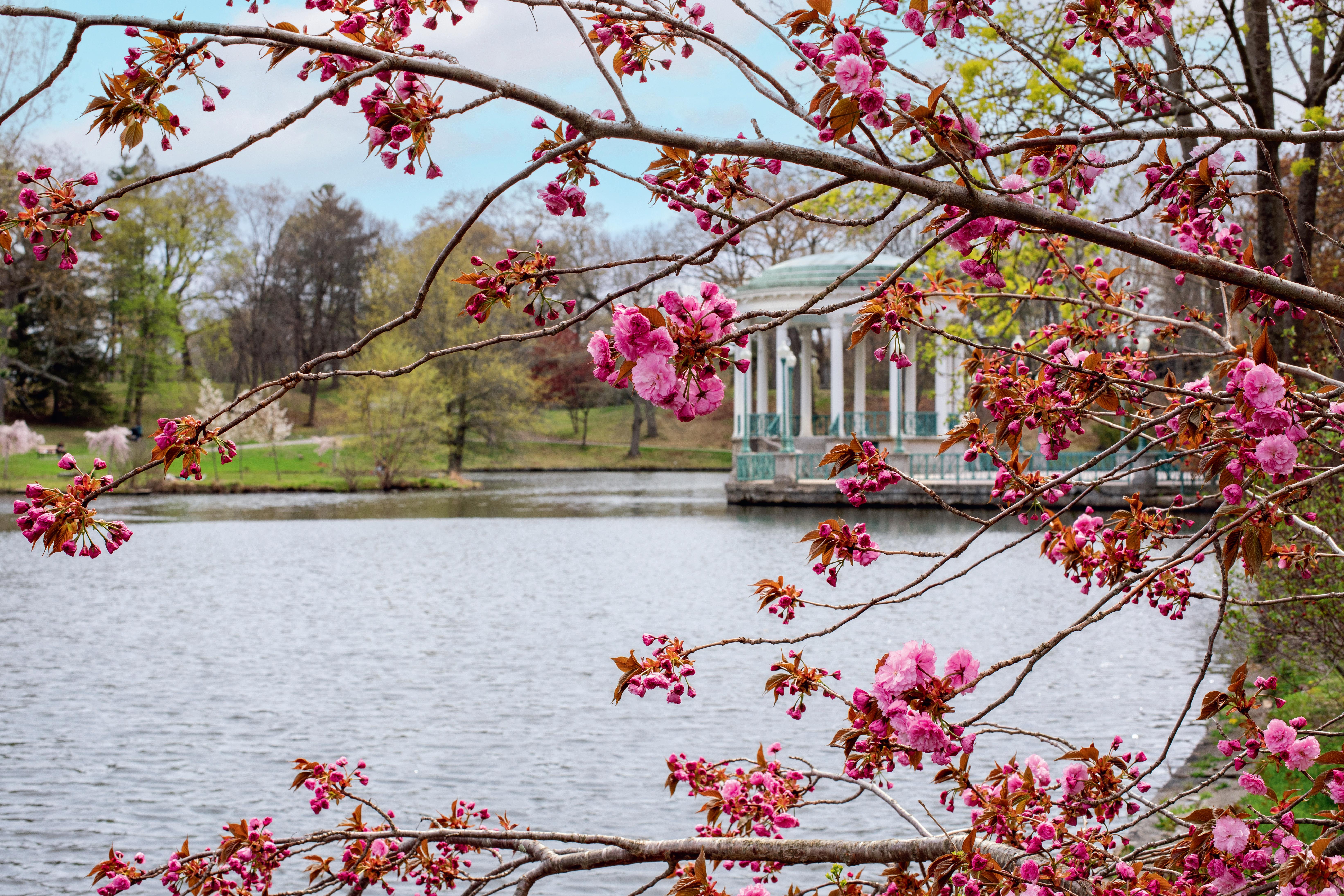
Finally, any spring weekend must include a trek to Roger Williams Park. Free and open daily from 7 a.m. to 9 p.m., the landscaped historic district named for the state’s founder is owned by the city and covers 435 acres with 100 acres of lakes. While it’s getting trickier to forecast bloom-time, mid-April through early May generally means the park’s Japanese Garden is awash in a palette of pinks provided by flowering trees including cherry blossoms. There are walking trails, too, plus a self-guided tour of art and architecture, which no doubt will help you work up an appetite for your next delicious bite.
good reason. Rooms are oh-so comfy, with 600-threadcount linens and plush Matouk towels. Between the Dyson hair dryer and the heated toilet, you may never leave the bathroom. thebeatrice.com
SHOP & PLAY
Downtown Makers
Marketplace: This pantry, café, and beverage bar showcases offerings from Hope & Main, a food business incubator in the nearby coastal town of Warren. hopeandmainpvd.org
Fire and Ice Experience at Gather: Make yourself a memento or a tasty treat (or both) with this studio and adjacent café’s glassblowing and ice cream–making classes. This unexpected combo is the kind of thinking that makes PVD so wonderfully quirky. gatherglass.com
The Greenway: Run by the Woonasquatucket River Watershed Council, this murallined bike path connects to the Providence Riverwalk. Ecotourists will love its volunteer ops, like counting river herring as they return to spawn (typically beginning in early March). wrwc.org
Providence Artisans Market: Lippitt Memorial Park on the East Side is the place to be on Saturday mornings. Peruse produce and goods at this longtime event run by fine artist Mike Bryce (known for his paintings of a Del’s Lemonade cup). Instagram
Providence Culinary Collective: Spring sees the return of this buzzy culinary festival (March 26–29), which includes the Rhode Island Wine Experience (March 26–28). Highlights include expert panels, chef appearances, and exclusive tastings. goprovidence.com; winexri.com
Stock Culinary Goods: Any city worth its weight in sea salt should have a kitchen store as good as this one. Find serveware, cookware, gifts, and groceries, many with Rhode Island origins. stockculinarygoods.com

Get back to the land (and meet cute critters to boot) at these farm-focused overnight stays.
BY BILL SCHELLER
The farm life is alive and well at inns and B&Bs across New England, and at many places, the door is wide open for guests to get a taste of country life over the course of a picture-perfect weekend. Pet a rabbit. Milk a cow. Take a cooking class. Explore local history. Maybe even get your hands a little dirty. The opportunities to turn your next getaway into something truly special are as varied as the farms themselves.
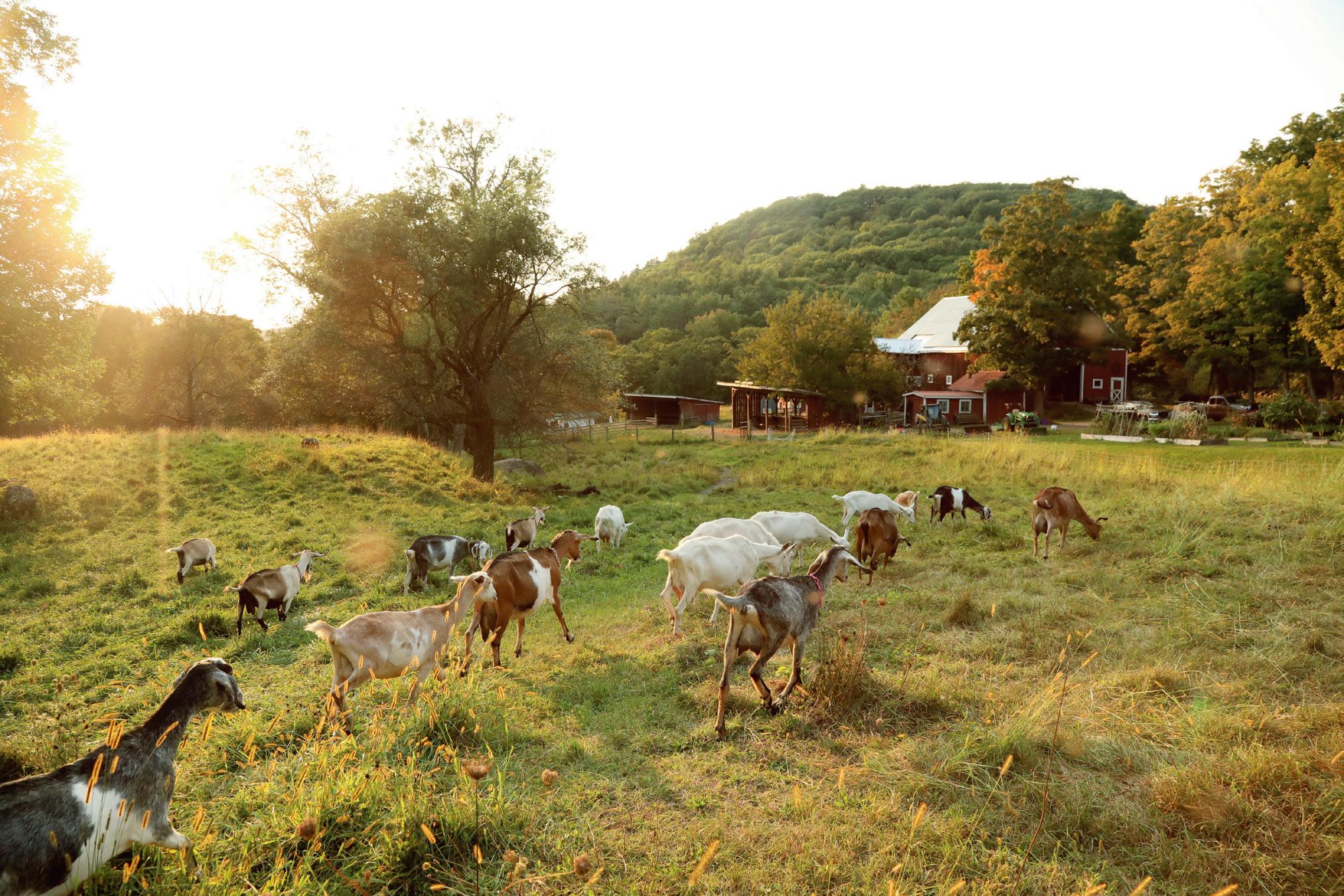
BIG PICTURE FARM, Townshend . Goats are the stars of this picture—40 of them in all, living free-range on 100 sprawling acres and supplying milk for cheese, chocolates, and melt-in-your-mouth caramels. Book a “goat hangout” to get to know the herd and maybe score a “goat snuggle,” or better yet, stay overnight in the farm’s luxurious accommodations. There’s the snug Solar Cabin, with a bedroom in the loft area; the two-bedroom Colt Barn; and the
nine-bedroom Farmhouse, perfect for a large family retreat. All have full kitchens; the Farmhouse also features a six-burner Viking range. And the goats are always right nearby. bigpicturefarm.com
cheese and yogurt. Guests at the farm’s five modern cabins are invited to help milk the sheep, gather eggs from free-range chickens, and sign up for as many (or as few) other farm chores as they wish. The cabins all have fully equipped kitchens, where some of those eggs just might wind up. Bringing your horse? The farm has stalls for rent. fatsheepfarmvermont.com
With a twist on the name of Ethan Allen’s famous crew, Mari Omland and Laura Olsen have created a farm that exemplifies Vermont’s leadership in sustainable agriculture. Known for their Northfield farm stand, they offer guests a chance to learn where all that good food comes from, with programs ranging from quick tours to all-day experiences involving animal
FAT SHEEP FARM & CABINS, Hartland . Before cows mooed their way to becoming Vermont’s iconic dairy animal, sheep were the most popular milkers on farms throughout the state. The tradition continues at Fat Sheep Farm, where a herd of East Friesians supplies the makings of (Continued on p. 90)



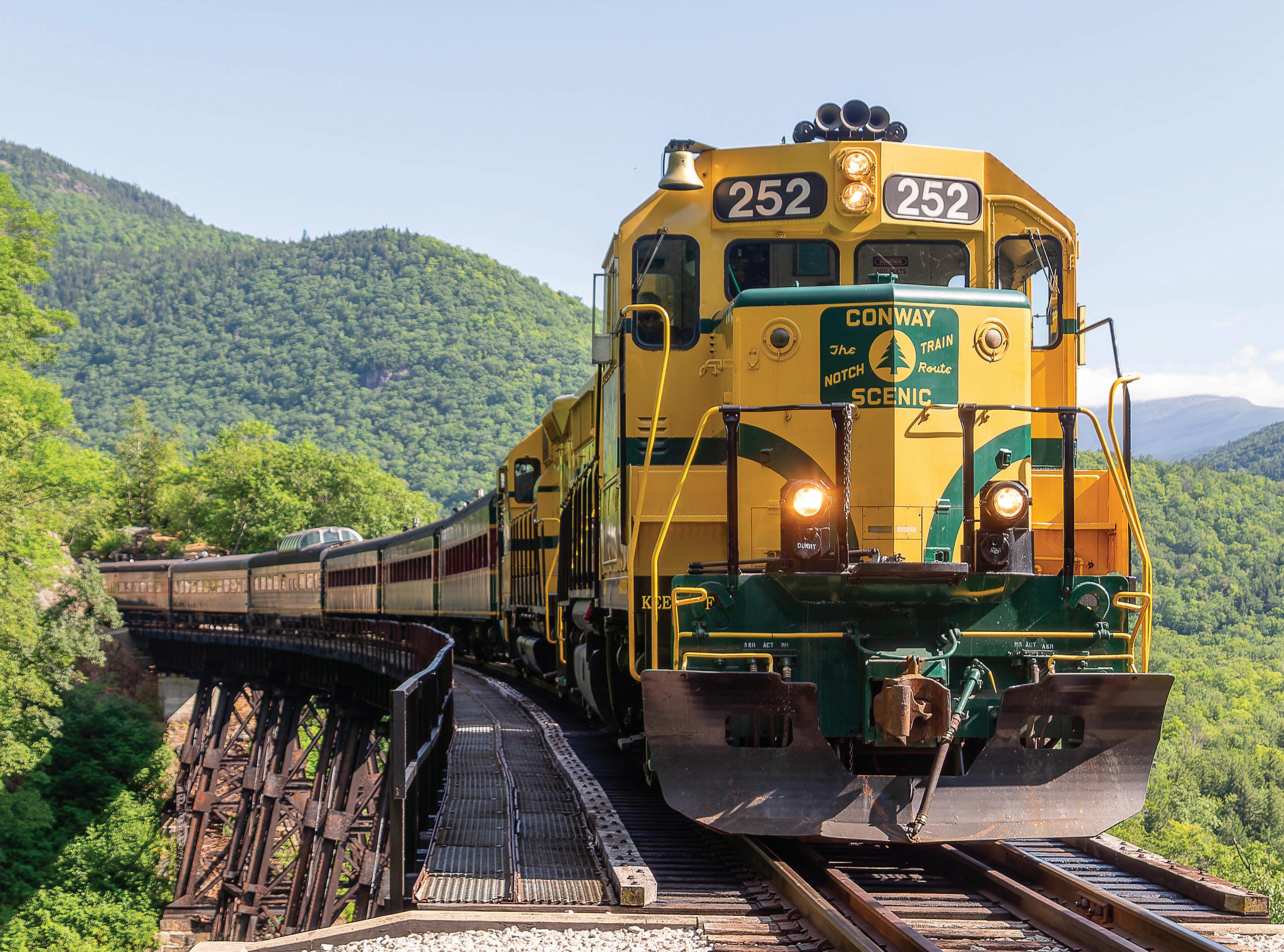
• e Mountaineer is the signature 4-hour scenic journey over Crawford Notch.

• e Valley Train o ers a short heritage-rail excursion popular with families and children since 1974.
• Holiday specials, Snow Trains and Winter Mountaineer now run select weekends anksgiving through February!

• Spring Season excursions begin with the Easter Bunny Express!











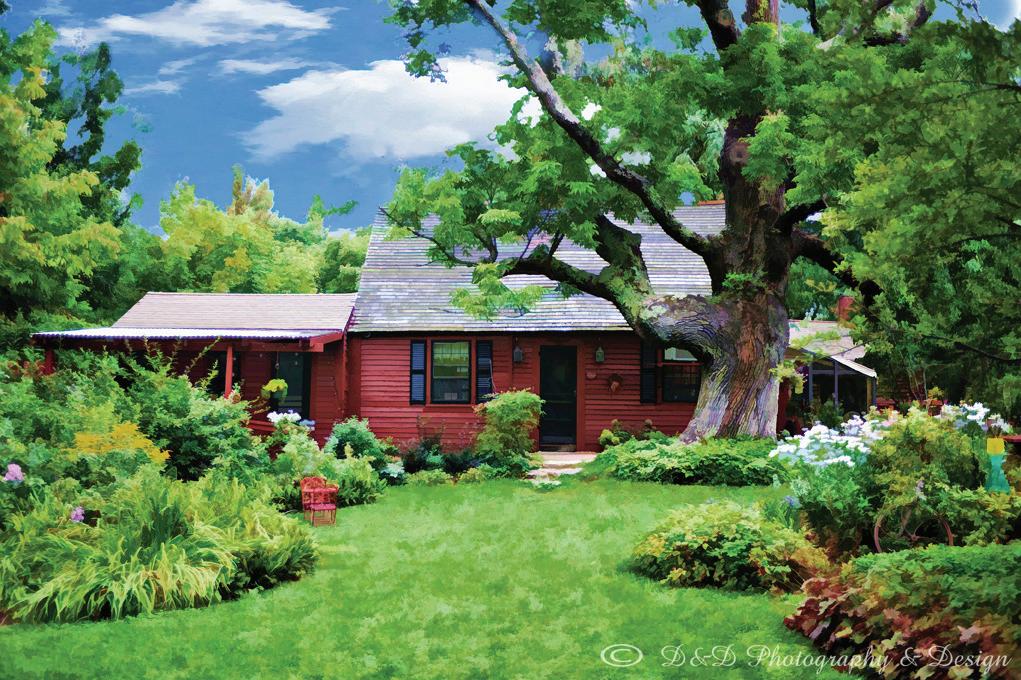
Experience the enchanting cottage that inspired Elizabeth Orton Jones’s Little Golden Books version of Little Red Riding Hood. Untouched by time, this is a mecca for gardeners, epicureans, and anyone looking for inspiration and relaxation. Have a Pickity day!
603-878-1151
pickityplace.com
PLYMOUTH, MA
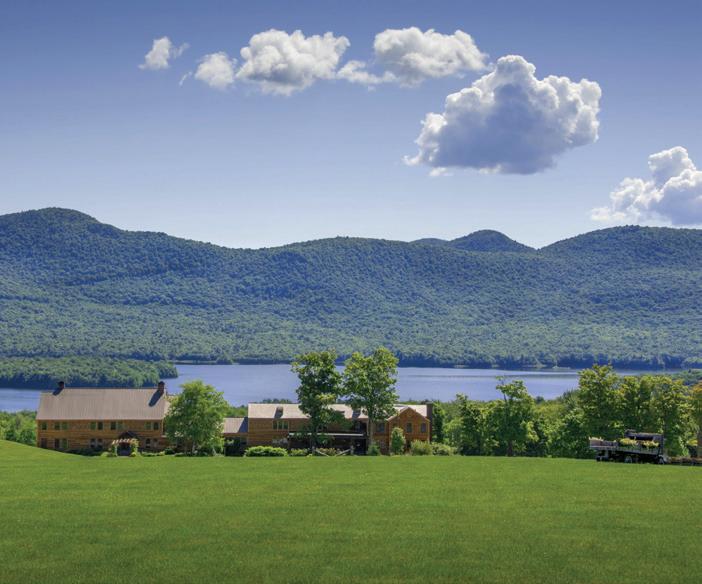
Spanning 700 acres, this resort offers activities for everyone, from horseback riding to clay bird shooting and boat rides. With luxurious accommodations, an on-site spa and salon, and exquisite dining, it’s the perfect getaway destination. A short drive from home—made to feel like a world away.
802-483-2311
mountaintopinn.com
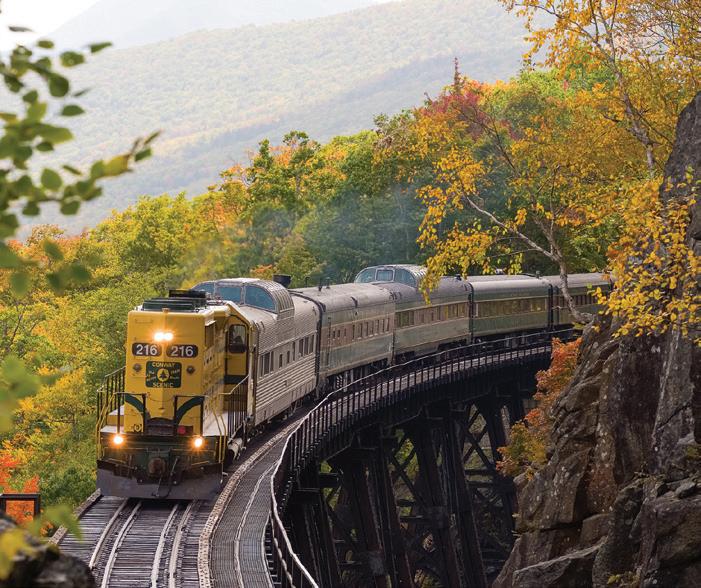
New Hampshire’s Conway Scenic Railroad celebrates 150 years of rail operation over Crawford Notch! Between May and November enjoy a four-hour journey through the Mount Washington Valley aboard the Mountaineer featuring classic 1950s streamlined railcars. Dome seats available.
603-356-5251
conwayscenic.com
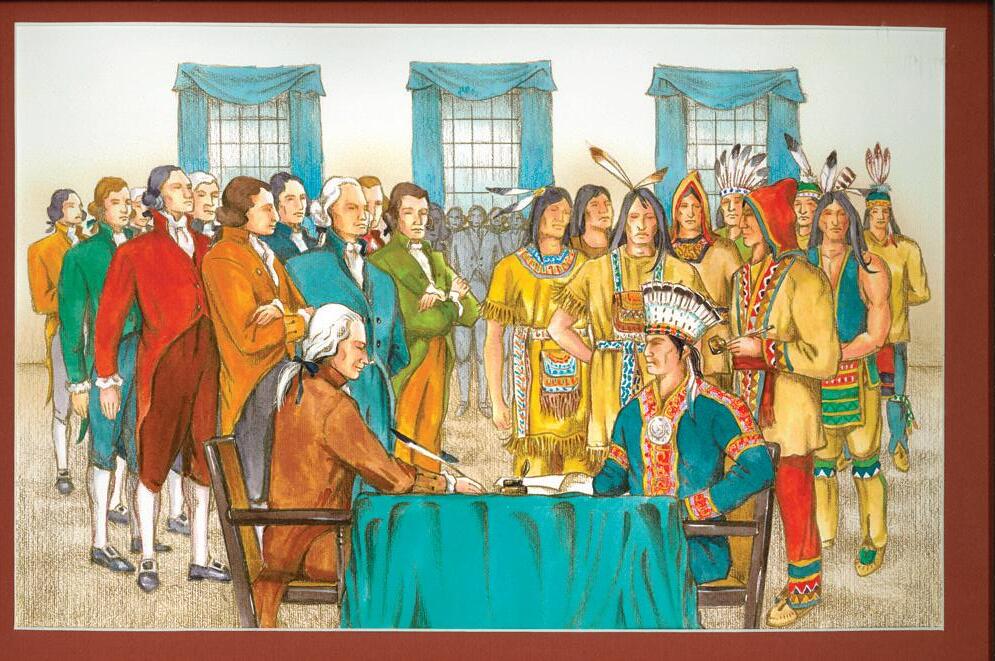
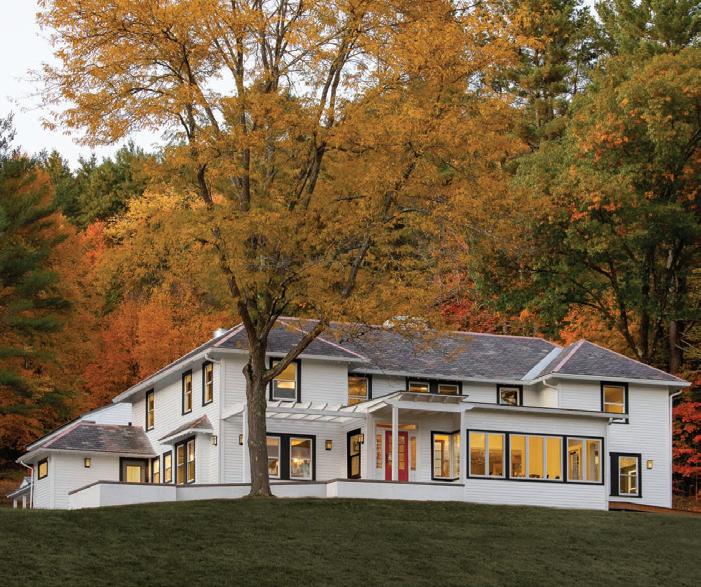
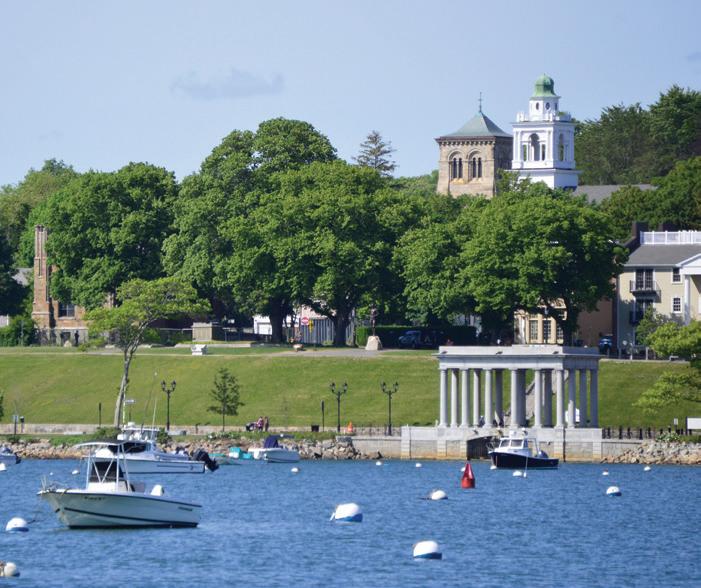
Where history meets coastal charm. See Plymouth Rock and Mayflower II. Walk storied streets, take in a gallery or show, savor fresh seafood, and cruise the harbor. Plan your getaway with the See Plymouth MA app today!
508-747-0100
seeplymouth.com
Take part in commemorating 250 years of the Treaty of Watertown, the oldest treaty in U.S. history! Enjoy a full day of family-friendly events hosted by the City of Watertown and the Massachusett, Mi’kmaq, and Maliseet peoples on July 18, 2026.
617-715-8660
treatyday250.com
Overlooking the historic Mohawk Trail, Shelburne Springs is a luxury boutique hotel in a restored 1914 mansion. We offer seven oversized suites, 38 acres to explore, homemade breakfast, and a seasonal cocktail lounge. Also available for weddings and private events.
413-512-1454
shelburnesprings.com
Reconnect with past Editors’ Choice winners and see for yourself why they received Yankee magazine’s highest accolade.
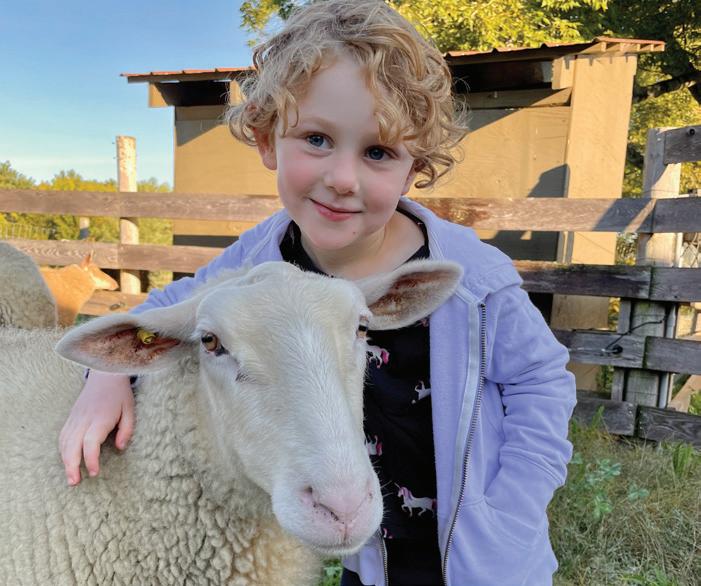
The Boston Globe describes Fat Sheep Farm as “a magical place” offering amazing views from modern cabins. Soak in the sunset by the firepit, taste the farm’s bounty, try your hand at milking sheep, or attend a cheesemaking or sourdough workshop.
802-436-4696
fatsheepfarmvermont.com
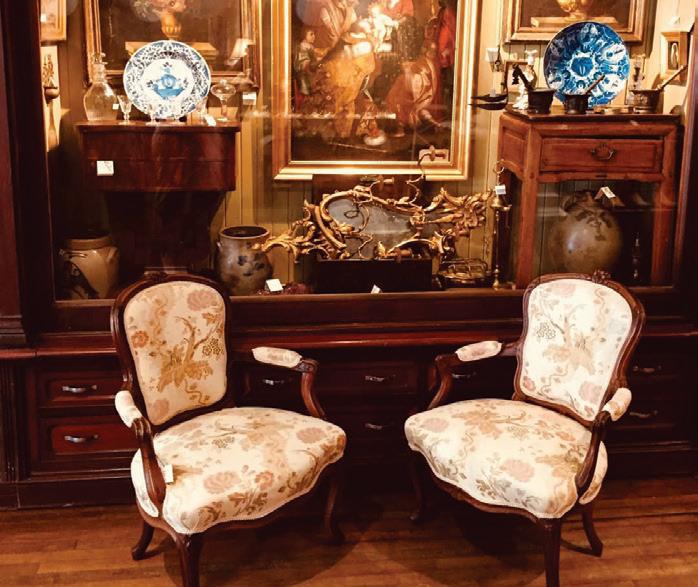
Sprawling across two floors and 7,000 square feet, get lost in centuries past. It’s packed with vintage furniture ranging from colonial through Victorian, porcelain and silver tableware, heirloom jewelry, and restoration hardware. Our natural history collection includes geodes bursting with color.
802-732-8081
windhamantiquecenter vermont.com
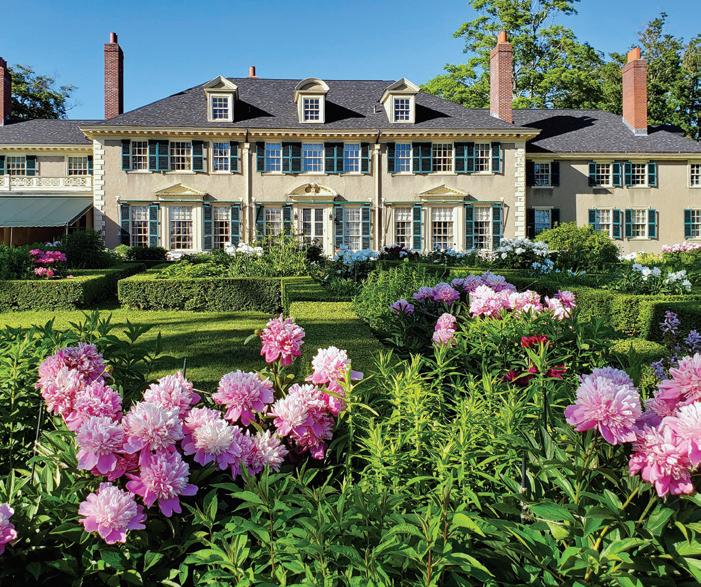
Tour the Lincoln family’s Georgian Revival mansion, built by presidential son Robert Lincoln in 1905. Step out into the European parterre-style garden, designed to resemble a stainedglass window, where the fragrance of our heirloom peonies fills the air.
800-578-1788 hildene.org
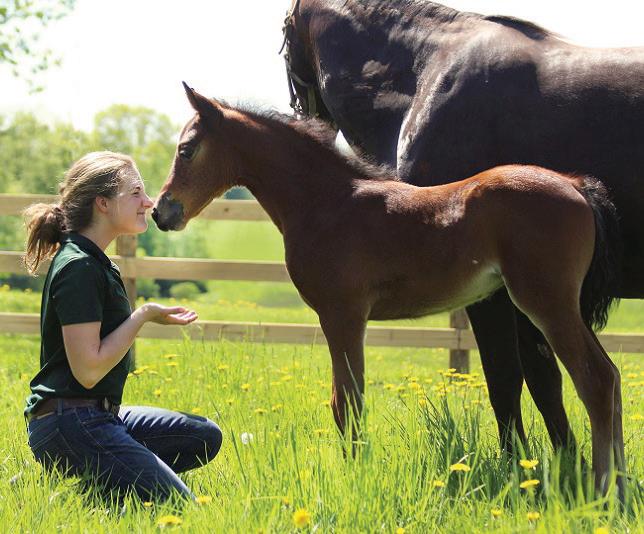
When was the last time you touched the soft coat of a baby horse? Experience living history at this National Historic Site and University of Vermont teaching farm. Open May-Oct. for guided tours and special events. 74 Battell Drive, Weybridge, VT.
802-388-2011
uvm.edu/cals/morganhorsefarm
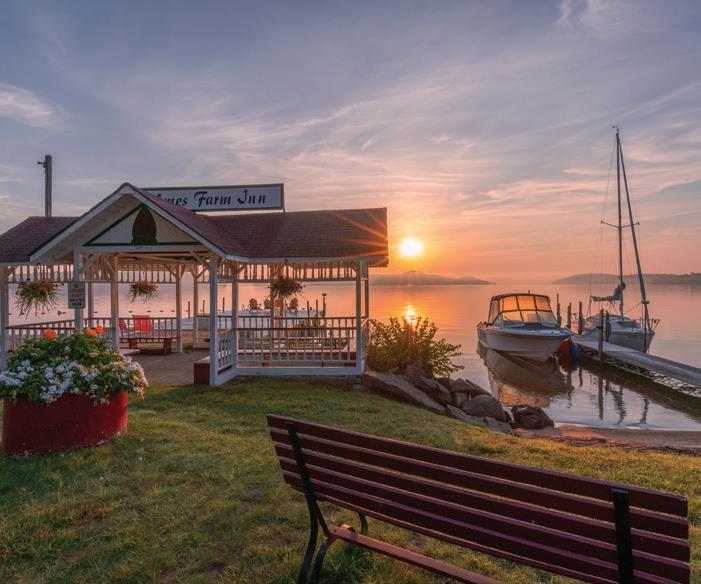
Enjoy a quarter mile of sandy beach and docks on the shores of Lake Winnipesaukee. Lakeside cottages, apartments, and rooms available. Great location for fishing, hiking, kayaking, boating, and more. Family owned and operated since 1890.
603-293-4321 amesfarminn.com
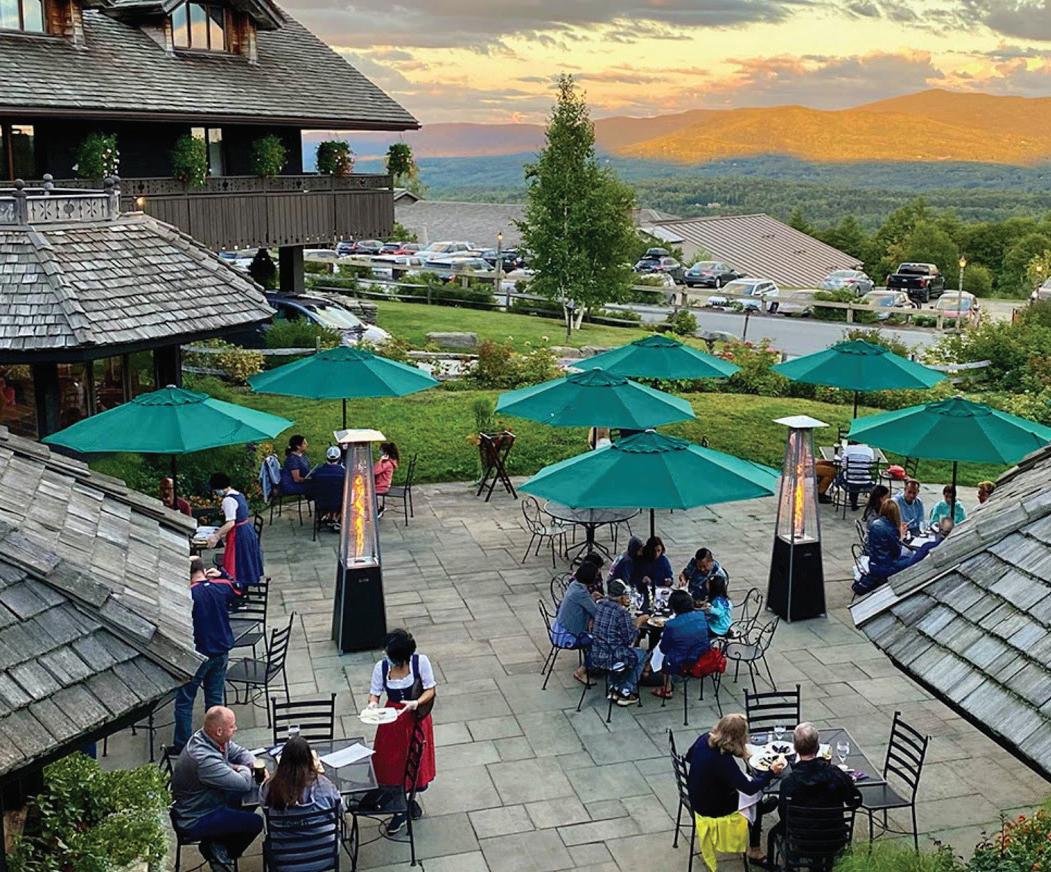
Nestled in Vermont’s scenic hills, the historic von Trapp Family Lodge & Resort blends Austrian charm with modern luxury. Guests enjoy cozy accommodations, outdoor adventures, gourmet dining, and stunning mountain views—all inspired by the legendary von Trapp family heritage.
800-826-7000 x 1 vontrappresort.com
Trade the commute for a community in 25 New England towns that offer a master class in the good life.
BY MICHAEL BLANDING
The New England small town is one of the most recognizable images of America—immortalized in books and movies such as Little Women and Charlotte’s Web, and held up as an iconic symbol of wholesome values and community spirit. We can all picture the white-steepled church, the hills forested with brilliant foliage, the lighthouse on the rocky coastline. But what makes small-town New England special and, just as important, livable?
That’s what we set out to answer in order to compile a definitive list of the region’s 25 most idyllic villages. We wanted to ensure that we weren’t solely picking picturesque tourist spots, but rather vibrant towns where community spirit reigns. So we started with some parameters: Towns had to have a population of less than 10,000, yet also not be so
remote that they couldn’t access a major airport in a couple of hours, or a grocery or hardware store within 30 minutes. We crunched numbers, looking at things like schools, population diversity, crime rates, property taxes, and real estate prices. And we looked for the elements that tie communities together, such as churches, festivals, outdoor activities, and locally owned cafés and bars. Finally—and most critically—we considered those intangible qualities that make a small town unique: the beloved old opera house, the stunning mountain vista, the venerable country inn, the one-of-a-kind museum. When all was said and done, we discovered there were as many versions of the classic New England small town as there are environments in our incredibly varied region— from back-in-time farm communities, to seaside havens, to mountain adventure hubs, to sophisticated suburbs. These are the 25 that rose to the top.
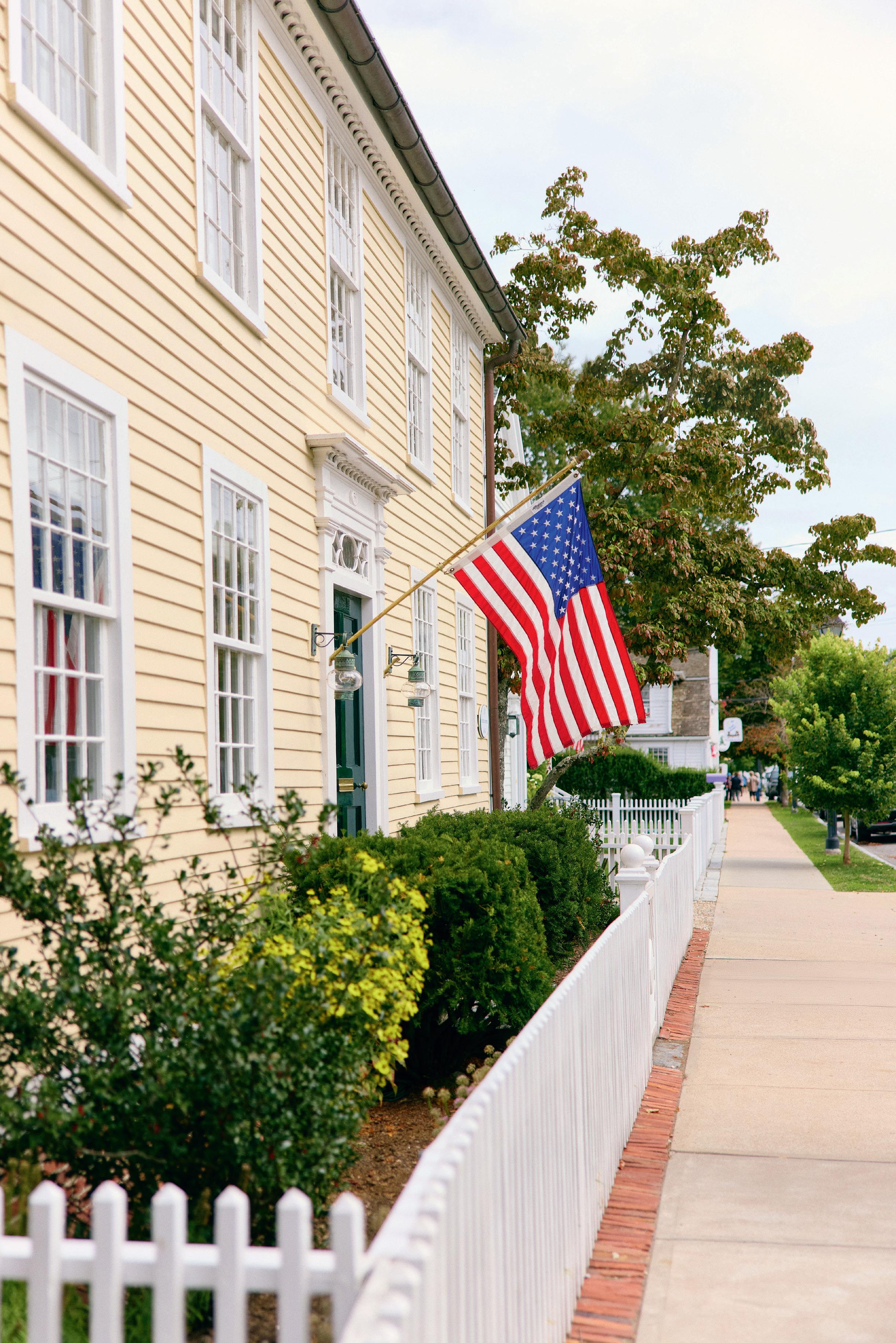
A view along Main
same
BY
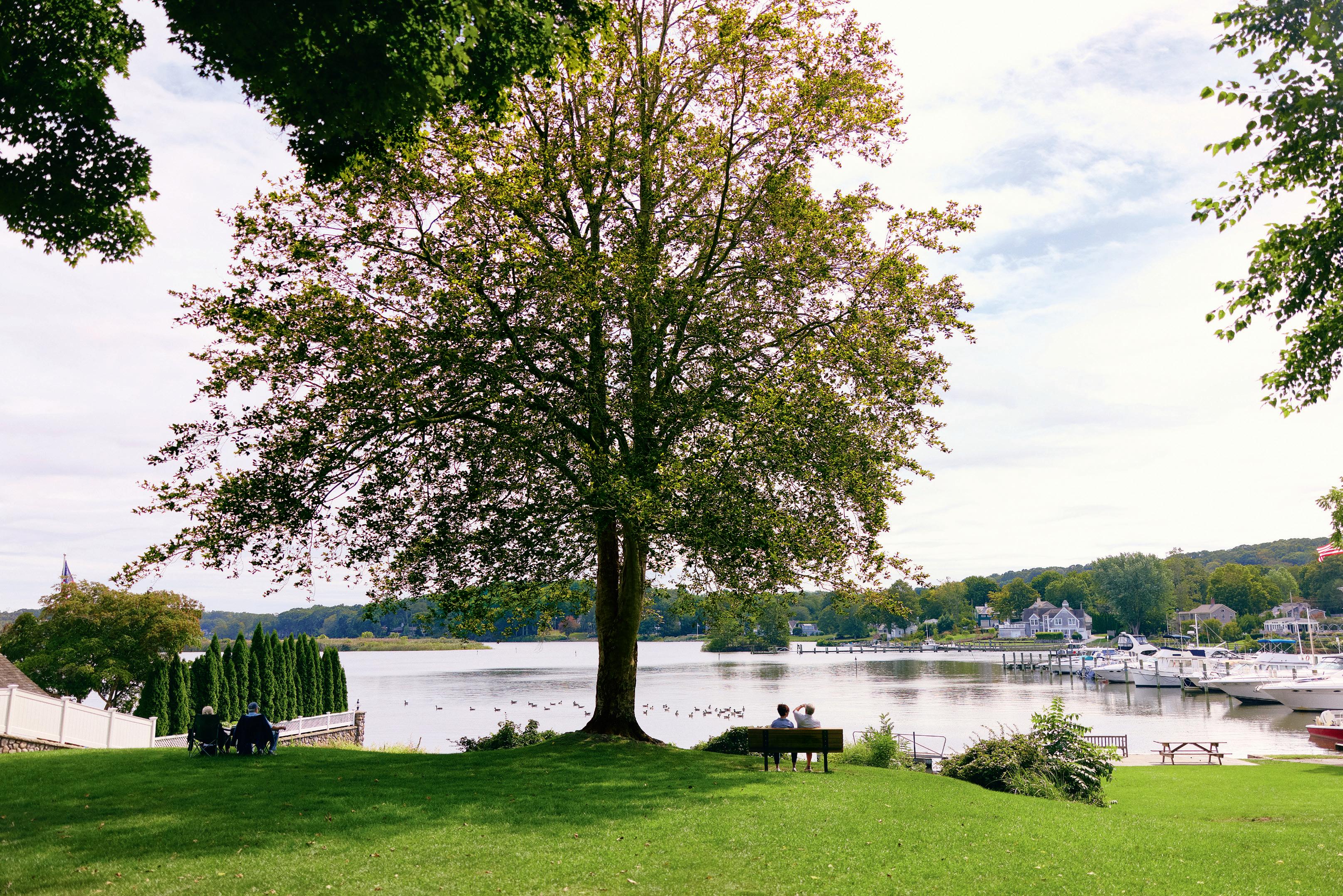
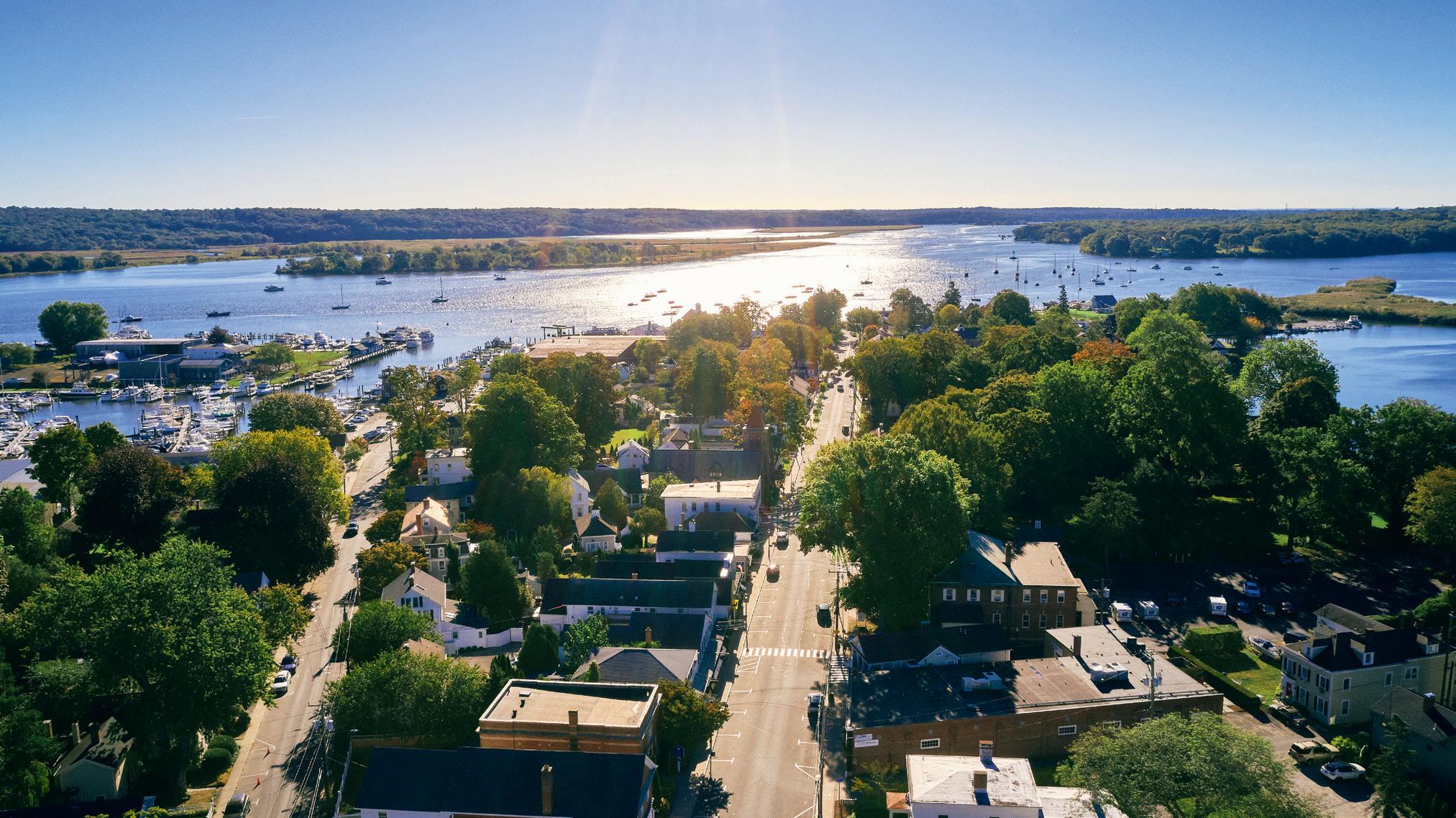
(POP. 6,802) If Essex didn’t exist, a Hollywood director would have to invent it—the perfect evocation of a New England small town, with a picturesque waterfront, historic main street, and rolling forested hills, all in a tight 10-square-mile package. Of course, there’d have to be a quintessential New England inn (and just for kicks let’s say it dates back to Colonial times, making it one of the oldest operating country inns in America). There’d be a vintage steam train with rides up the river, a tableau of fall foliage seen through the windows like a nature documentary. And even our imagined director might find bald eagle spotting tours a bit too on-the-nose in symbolizing an all-American town. And yet this
is not some fictional re-creation, but real everyday life in Essex, the best small town in New England, maybe even the country.
If you’ve heard that particular moniker before, don’t blame us. Essex routinely makes “best small town” lists in major publications, and it’s been that way for decades. Because that’s the thing about small towns: There’s something timeless about them. They might evoke Colonial, Victorian, or 1960s Mayberry vibes—or all of them at once—yet they remain vibrant, tight-knit communities as we enter the second quaternary of the 21st century.
That Colonial inn? It’s called the Griswold, or just “the Gris” to longtime patrons. It’s got a
white clapboard exterior and was founded along with our nation in 1776, and we defy you to find a more New England-y lodging and dining experience. Think creaky floorboards, wood-paneled walls crammed with nautical prints, and a menu of baked haddock, beef short ribs, and butternut squash soup. Its taproom regularly features a band playing actual sea shanties, and yet among its five dining rooms is a modern wine bar with “micro plates” of duck fat–roasted rosemary potatoes and “macro plates” of meatloaf Wellington.
The Gris feels right at home on a main street full of Federalstyle architecture dating back to the time when Essex Village was a
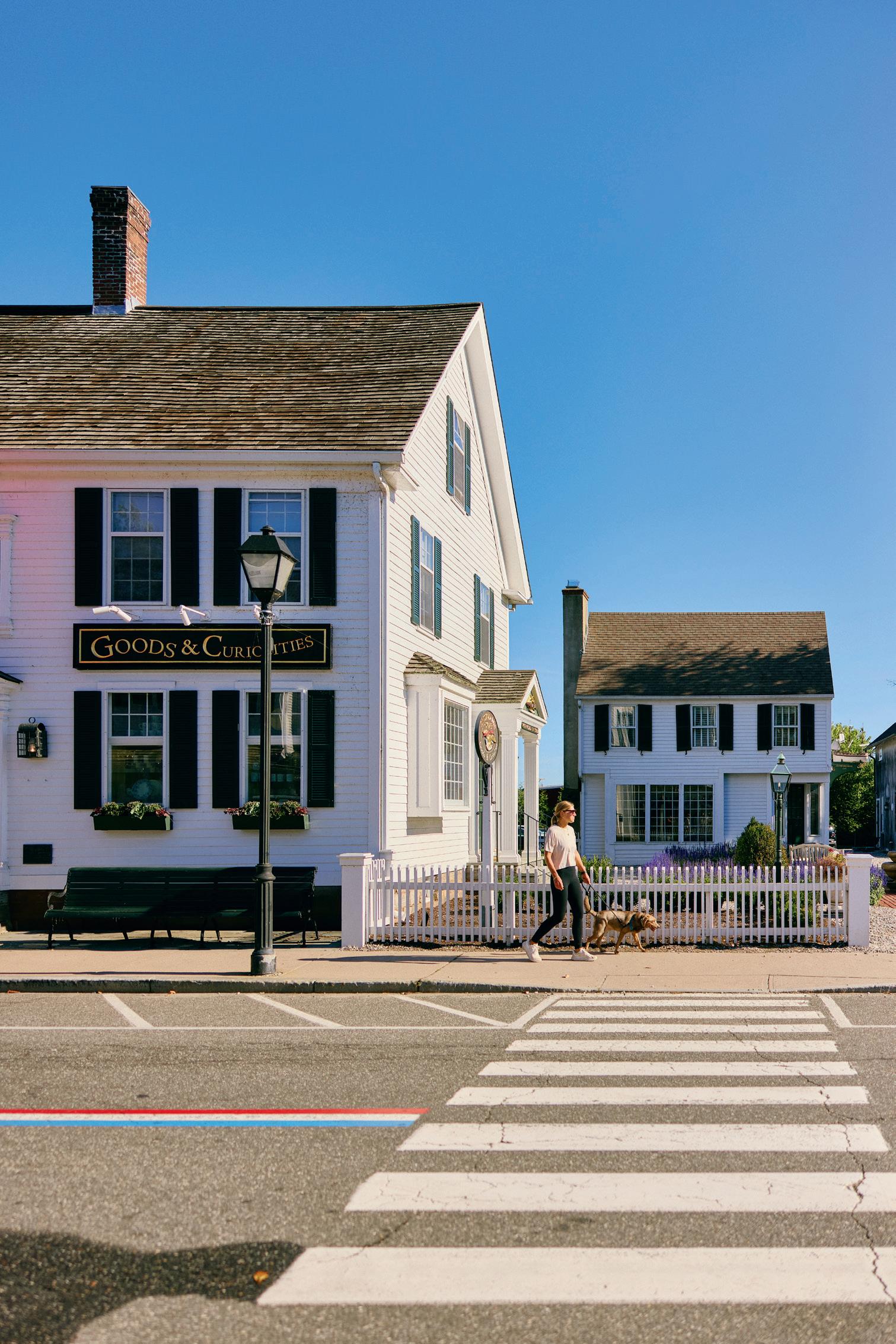
shipbuilding center on the mouth of the Connecticut River, just a few miles from the ocean. The town center is full of twisted lanes with clapboard homes, neatly tended gardens behind white picket fences, and window boxes overflowing with blooms. There’s a good afternoon of work strolling the sidewalks full of clothing boutiques such as classic J. Alden Clothiers and hip The RiverLane, broken up with a treat at Sweet P’s ice cream parlor. Essex is actually three villages in one. In addition to Essex Village, there’s Centerbrook, the original agricultural center, still full of historic farmhouses, and Ivoryton, a center of the 19th-century ivory trade, which made the majority of
piano keys in America for a time. It’s also home to the Ivoryton Playhouse, a 250-seat theater that once hosted greats including Marlon Brando and Katharine Hepburn, and today it still has a full repertoire of half a dozen plays a year.
Meanwhile, kids can live out their Thomas the Tank Engine dreams with a ride on the Essex Steam Train, a vintage locomotive that traverses ancient tracks along the wooded valley; grown-ups can delight in its romantic “dinner trains” at night. Another popular attraction is the Connecticut River Museum, which explores its namesake’s role in the shaping of the town, including a re-creation of the Revolutionary War–era “Turtle,” America’s first combat submarine. It also tells the tragic tale of the burning of 27 ships in the harbor during the War of 1812, an event commemorated each year with Burning of the Ships Day, complete with a parade led by a fife-and-drum corps down to the river (no actual ships are harmed).
In truth, Essex rarely passes up a chance for a community get-together, with a packed calendar that includes the Ivoryton Pumpkin Festival, the Connecticut Boat Show, the Shad Bake, and a Groundhog Day parade that sticks it to Punxsutawney Phil with “Essex Ed,” a giant fiberglass groundhog that leads the way as merrymakers bang on pots and pans to “wake” the rodent from slumber.
Not everything is perfect, of course. Housing prices are high, sidewalks tend to roll up early at night, and the average age of residents is beyond middle age. Families, however, benefit from a solid school system and a rich cultural calendar with plenty of activities for kids. Above all, they enjoy a peaceful, welcoming community that celebrates the best of the past, while firmly embedded in the present.
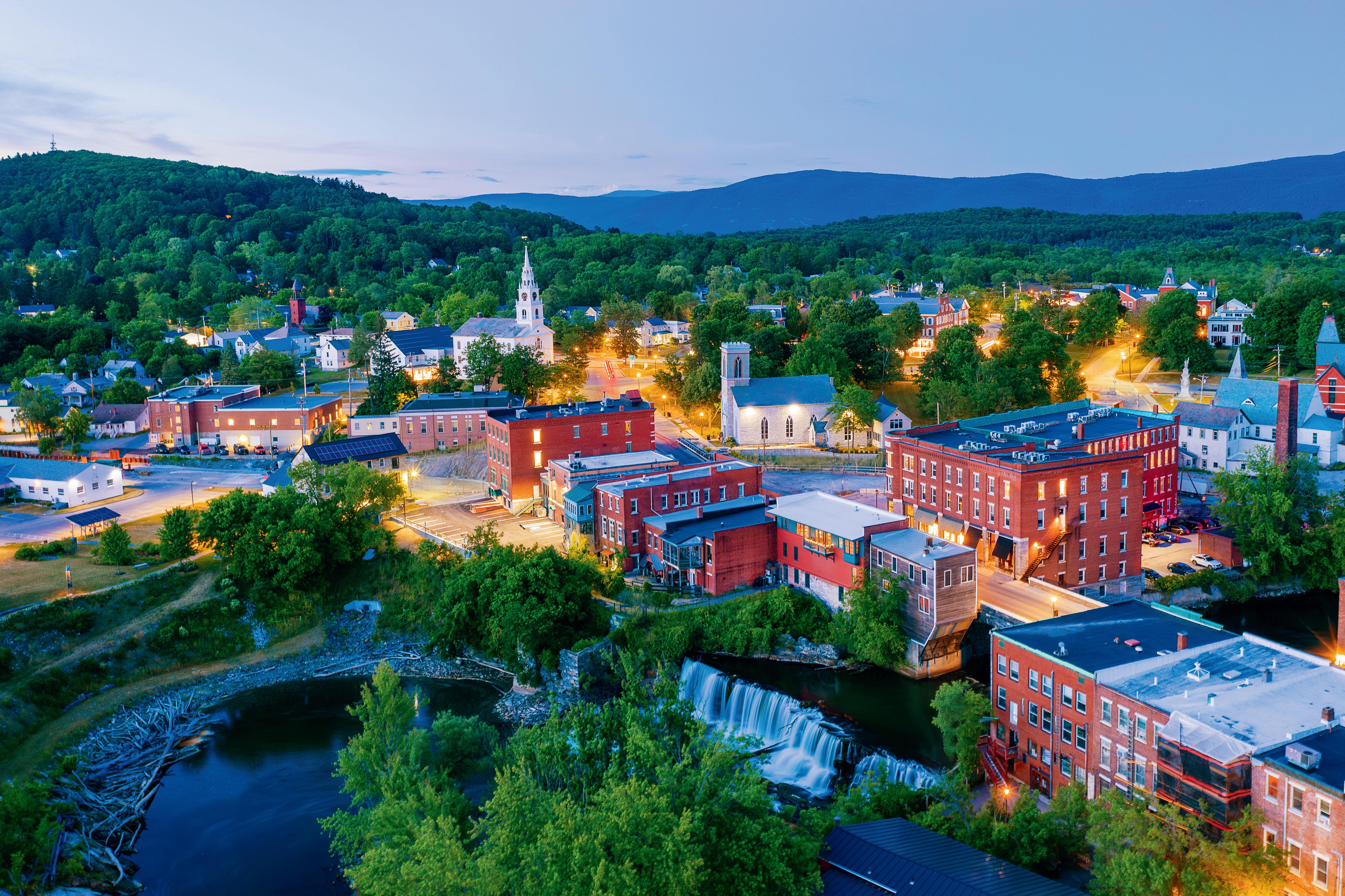
(POP. 9,169) More than just home to its eponymous college, Middlebury delights residents with its rushing Otter Creek tumbling through a downtown shopping district of brewpubs and folk-art boutiques. Once a 19th-century hub for marble quarrying, Middlebury is as much an enclave of young families and farmers as it is a destination for academics and outdoor enthusiasts. The strength of its community life is evident in two significant investments: the recently expanded Town Hall Theater, a showcase of films and local acts, and the soon-to-be renovated Ilsley Public Library. Beyond downtown, recreational opportunities abound, including mountain biking, hiking, and snowshoeing in the Green Mountain foothills, and skiing at the Middlebury Snowbowl. Several historic museums exhibit the best of country life, while the college ensures a steady stream of intellectual speakers and performers to add some worldly sophistication to local culture.
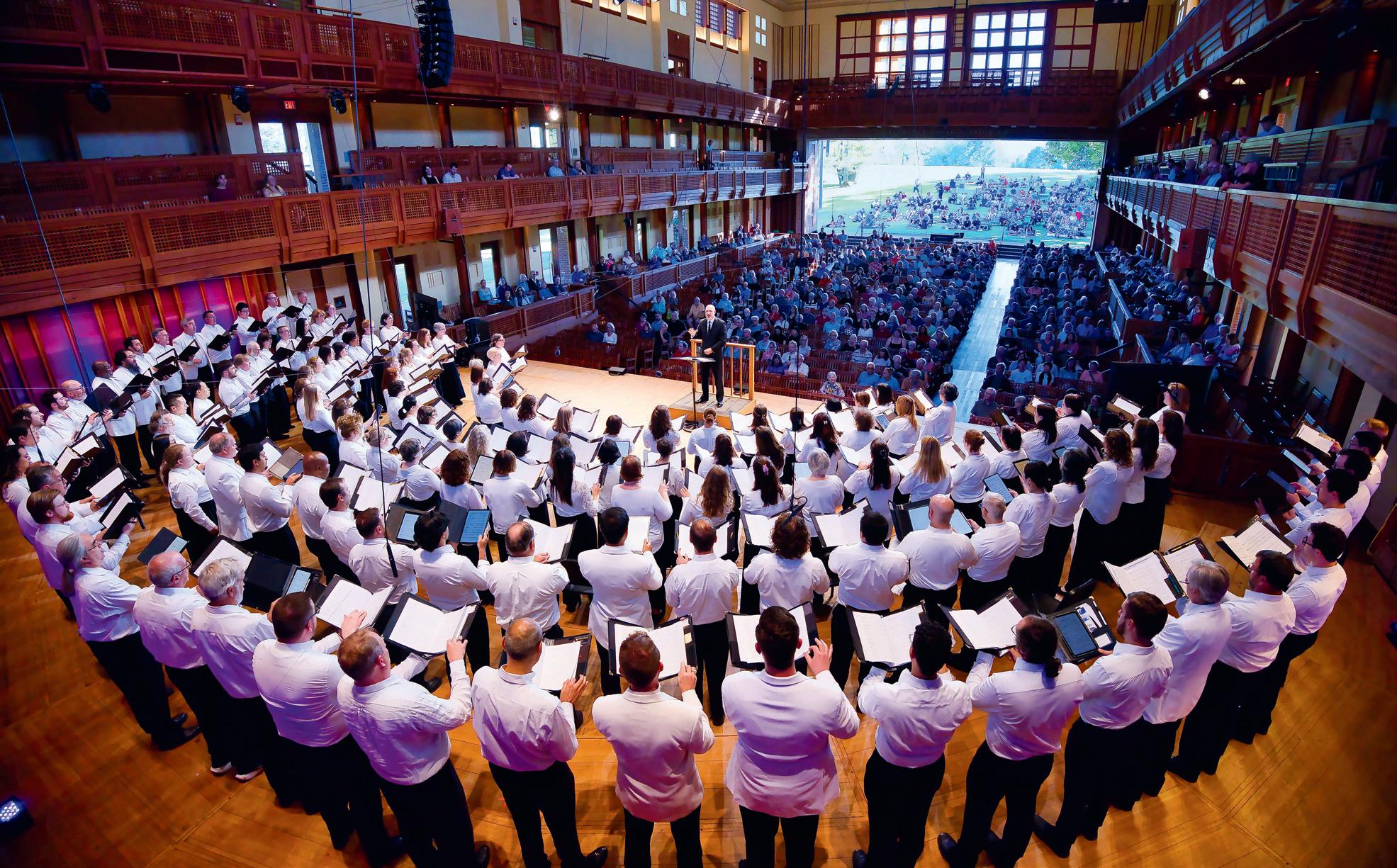
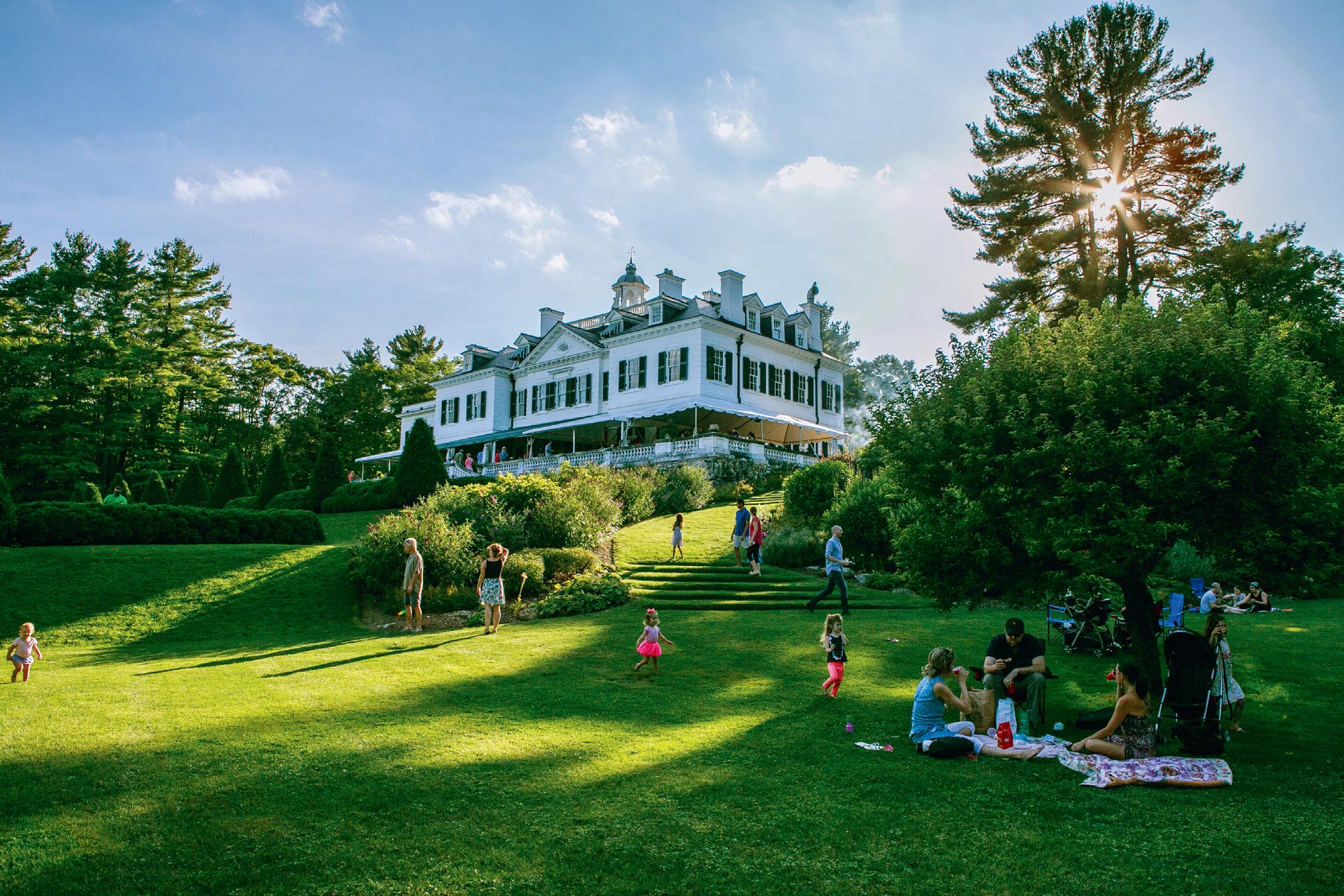
(POP. 5,064) The hills of Lenox echo every summer with the sounds of outdoor concerts at Tanglewood, the summer home of the world-renowned Boston Symphony Orchestra, and the giggles of the groundlings at Shakespeare & Company, one of the country’s top Shakespearean troupes. The town made its mark as a Gilded Age playground, where the moneyed set from New York and Boston came to summer, and a bit of opulence survives in the stunning gardens and turrets of “cottages” such as Edith Wharton’s The Mount and the Elizabethanstyle Ventfort Hall Gilded Age Mansion & Museum. Today’s pilgrims come for more modern-day pampering at Canyon Ranch or Miraval Berkshires Resort and Spa, while year-round residents enjoy a different kind of richness in the top-notch schools and still-reasonable housing prices, a farm-to-table dining scene, and abundant red and gold foliage in fall.
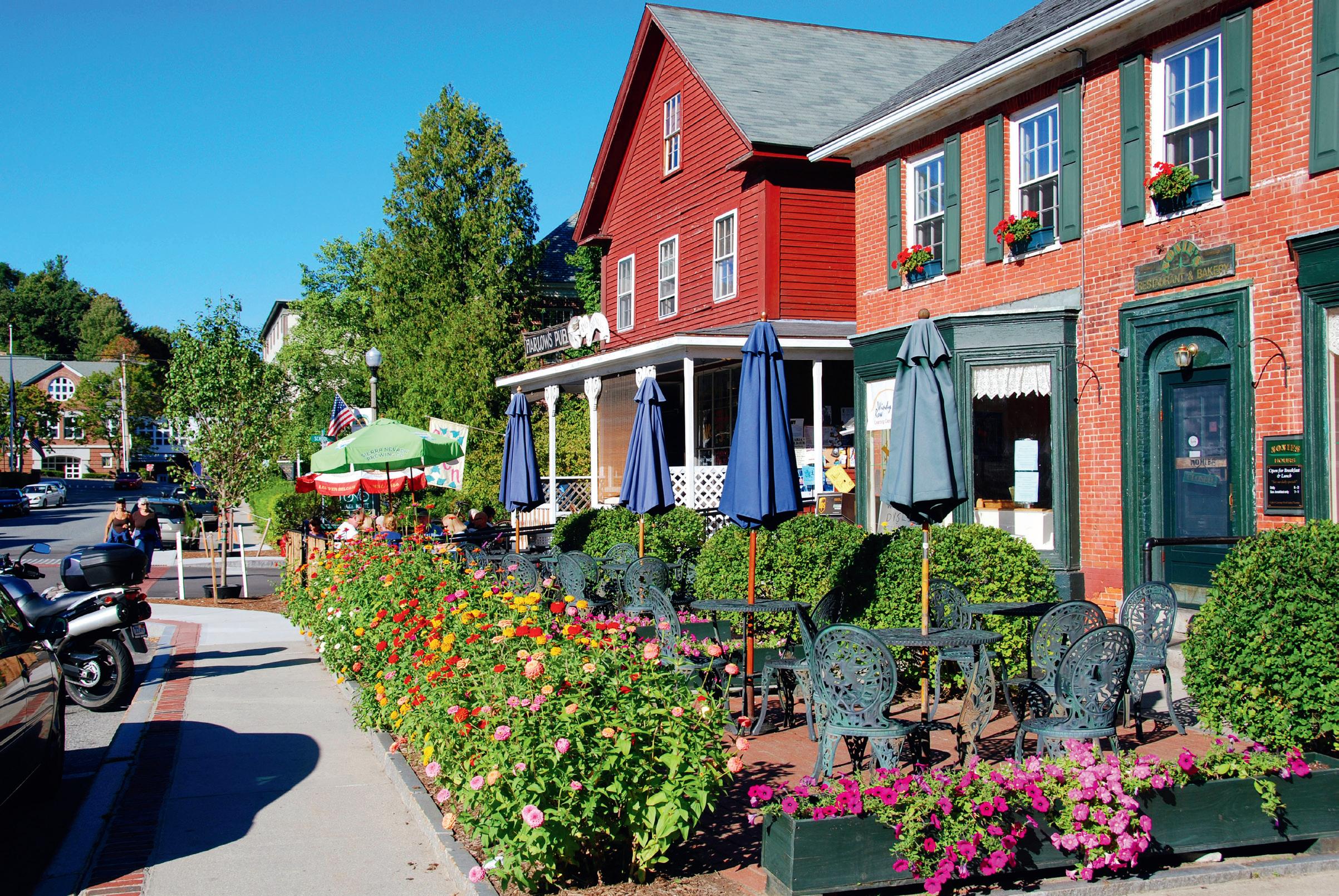
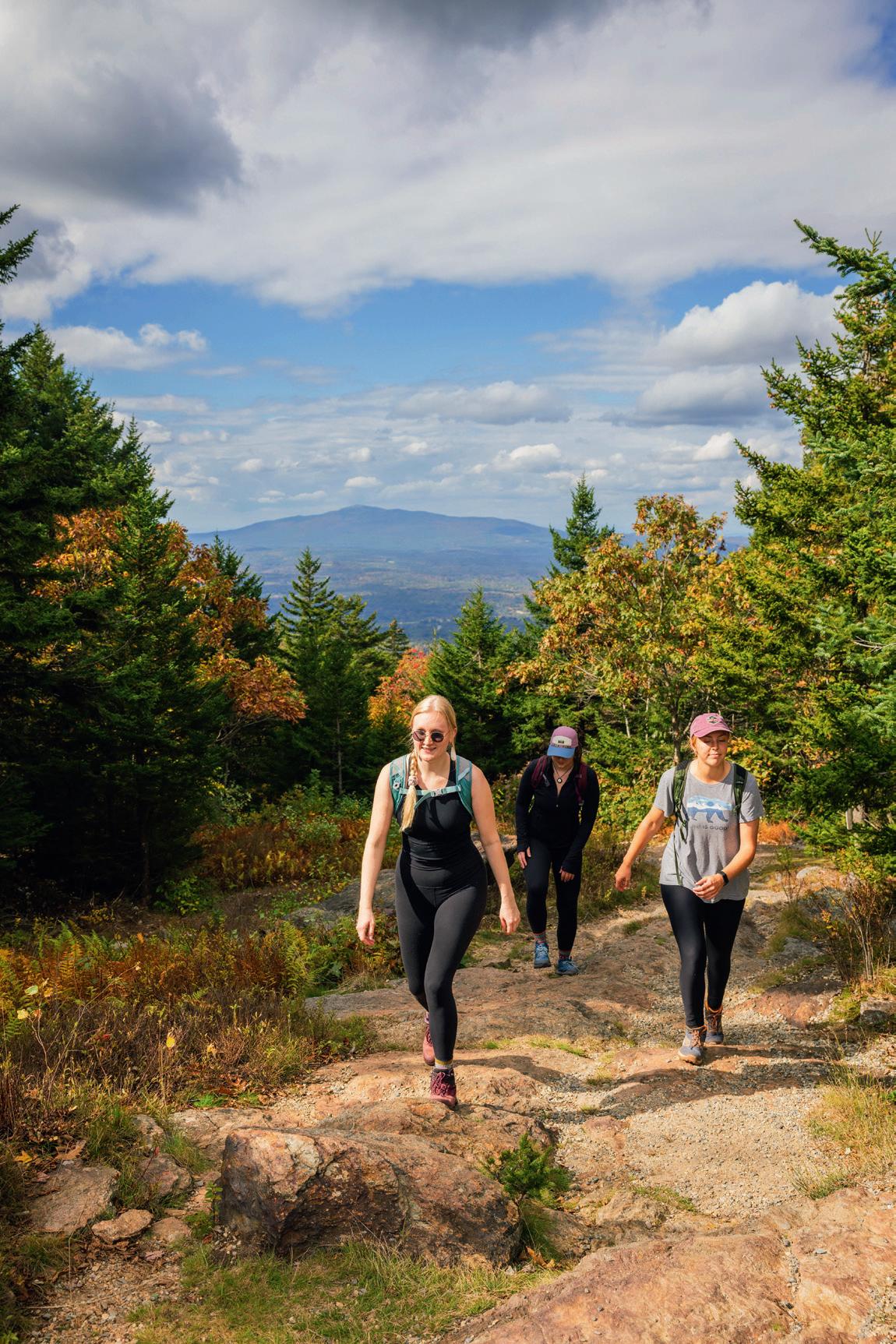
(POP. 6,500) There’s a kind of balance between art and nature, and modern and traditional, that makes Peterborough quintessentially New England. It was here that Thornton Wilder famously wrote much of Our Town —a play about, well, a quintessentially New England town—at MacDowell, one of the country’s preeminent artist residencies, and it was performed by the Peterborough Players a few years later; both institutions still thrive and infuse the village with culture. Downtown’s Depot Square is populated with locally owned shops and boutiques (including one of New Hampshire’s best bookstores, The Toadstool), while nearby Harlow’s Pub and Roy’s Market are two long-standing pillars of community life. Residents have access to above-average schools, a plethora of parks and trails, and views of Mount Monadnock, while the Monadnock Center for History and Culture keeps traditions alive with folk music and dance.
opposite, from top: Tanglewood’s top-tier vocalists and musicians draw scores of music lovers to Lenox each summer; meanwhile, the verdant grounds of Edith Wharton’s The Mount invite strolling and lounging.
this page, from top: On Grove Street in Peterborough, Harlow’s Pub (middle) is considered by many to be the local watering hole; hiking in Miller State Park, with Mount Monadnock in the background.
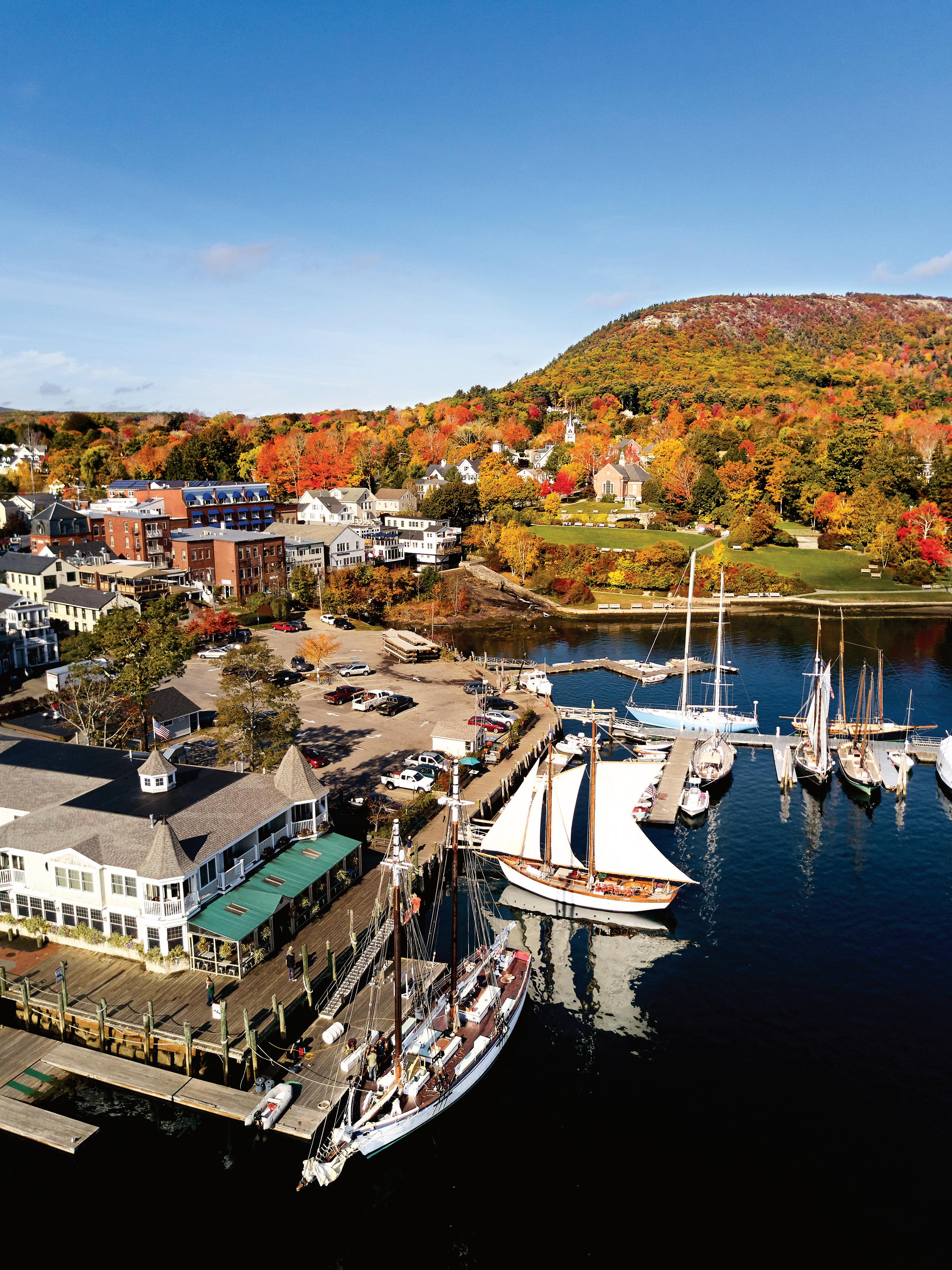
(POP. 5,224) There are few places on the Maine coast where the mountains and sea come together as dramatically as they do here, where the view from the Camden Hills looks over an equally impressive forest of sailboat masts in the harbor. While the bustling downtown can slow traffic to a crawl on Route 1 in the summer, the town’s residents put up with the annual tourist crush to enjoy their picturesque village of brick buildings filled with upscale restaurants, shops, and art galleries; a stunning panoply of lighthouses, marshland, and ocean views; and some of the top schools in the state.
(POP. 5,488) Jamestown is on island time. Situated almost entirely on Conanicut Island in the midst of Narragansett Bay, the town exhibits a unique rural character, with miles of flat farmland best explored by bike. Along the way are peaceful beach communities, Victorian “cottages” in The Dumplings neighborhood (named for its rocky offshore outcroppings resembling dough balls), and sunset views at the 19th-century lighthouse at Beavertail State Park. The town is not without action, however, with Jamestown village boasting upscale seafood restaurants, bars, and art galleries, plus sailboats in the harbor—and all the bustle of Newport a mere bridge away.
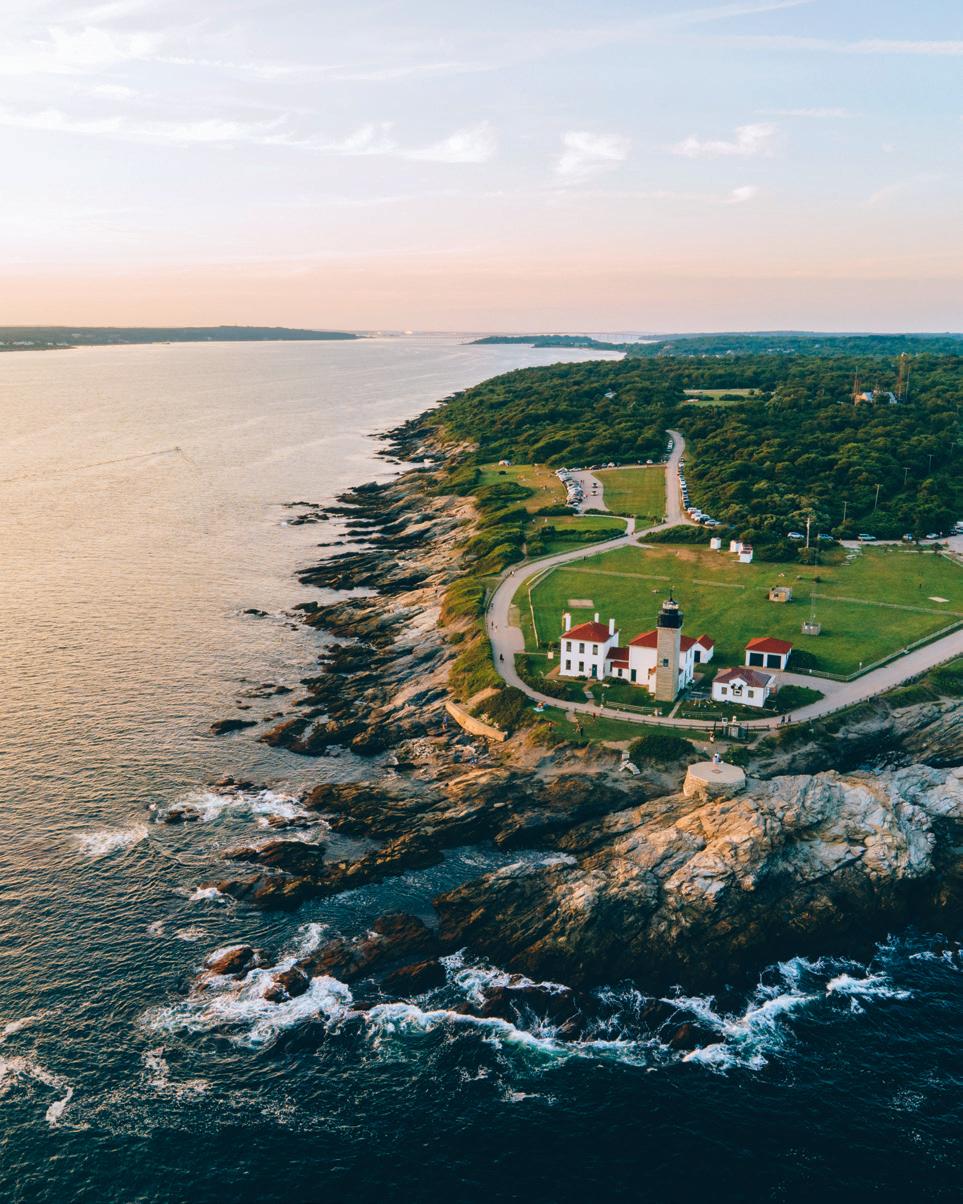
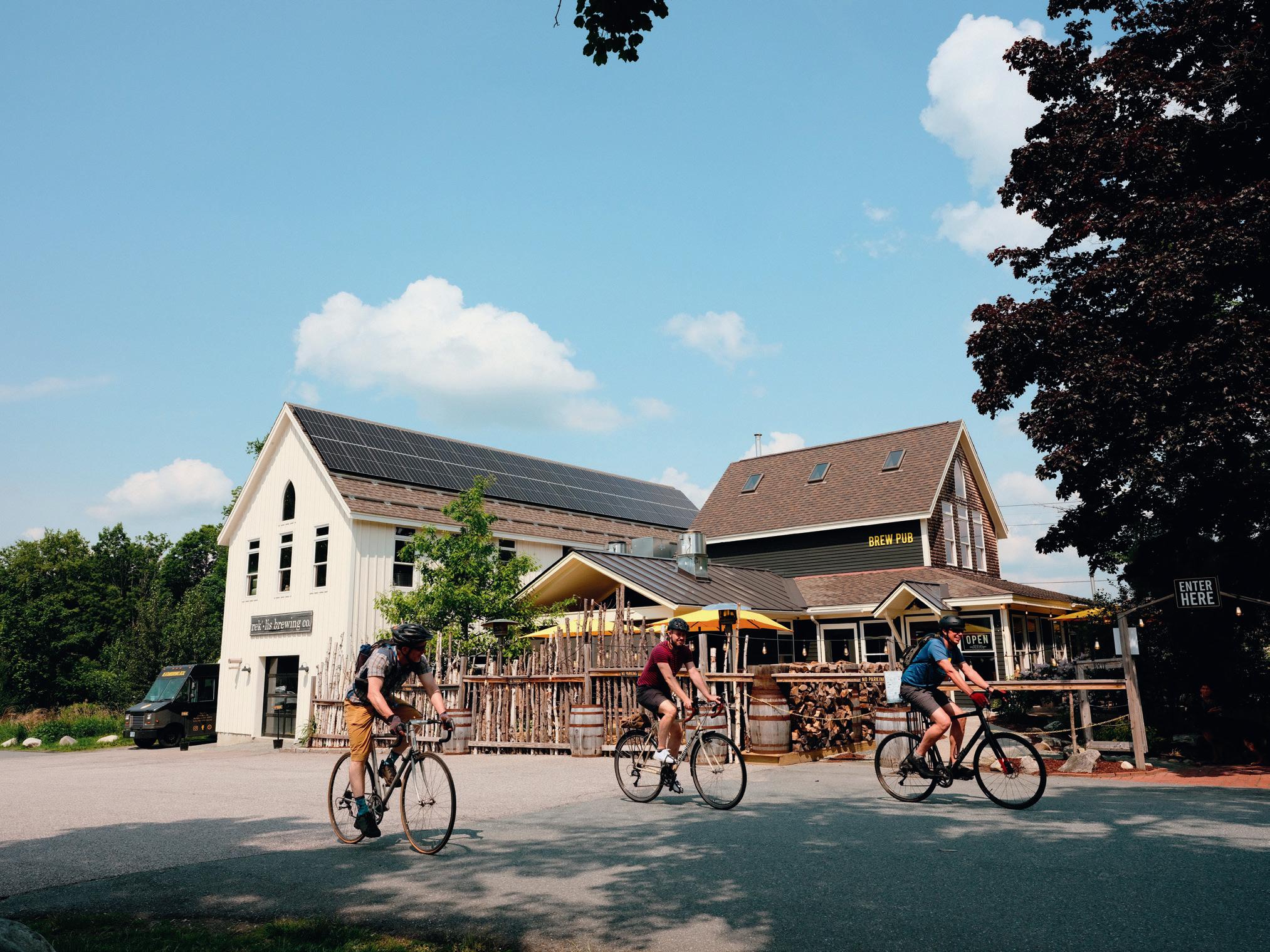
this page, from
:
(POP. 2,544) Like its namesake biblical village, the mountain hamlet of Bethlehem has long beckoned travelers from afar. Tucked into a valley between Franconia Notch and Crawford Notch, it once drew rich and famous visitors with its fresh air and stunning mountain scenery—not to mention more than 30 hotels arrayed mostly along its Main Street. Now its residents enjoy highly rated schools and affordable real estate along with a vibrant downtown anchored by a red clapboard Methodist church and the historic Colonial Theatre (one of the oldest continuously operating theaters in the country), as well as Super Secret Ice Cream, whose small batch flavors are a year-round draw, and the destination beer pub Rek’-Lis Brewing Company. A rich calendar of events, including summer concerts, a wildflower festival, and, of course, Christmas in Bethlehem, ensures a tight-knit community.
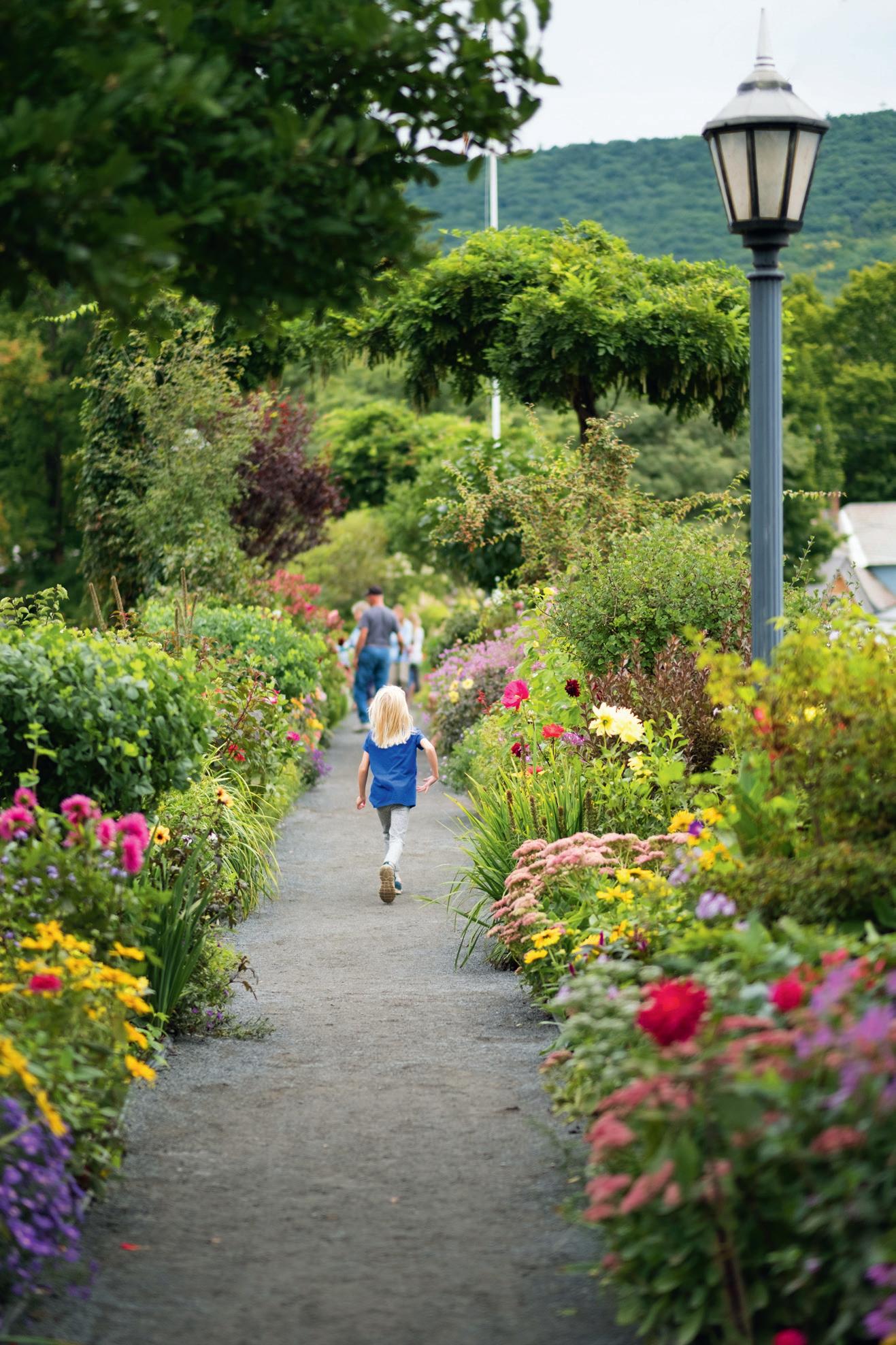
(POP. 4,481) A mix of country charm and urbane sophistication, Manchester draws weekenders from New York and Boston to its designer outlet stores and farm-to-table restaurants—especially in fall, when it becomes the foliage hub of southern Vermont. Increasingly, the town has drawn more transplants who realized they can work remotely during the day in hip cafés and take the afternoon off to ski or mountain bike. The town retains its Vermont charm with a downtown of brick buildings punctuated by the picturesque steeple of the First Congregational Church, and attractions including the Southern Vermont Arts Center, the American Museum of Fly Fishing, and the impressive Hildene, Robert Todd Lincoln’s former Georgian Revival estate.
(POP. 1,878) Few summertime attractions in New England are as spellbinding as Shelburne’s Bridge of Flowers, an old trolley bridge bedecked with scores of blooming trees, vines, and plantings. Newly reopened after lengthy refurbishments, the bridge anchors one of the region’s loveliest villages, which impresses with subtle charm over showiness. The commercial district of Shelburne Falls, partially located in neighboring Buckland, features eminently strollable lanes of Federal-style houses, independent jewelry and clothing boutiques, and comfort-food taverns, alongside a pretty waterfall and scenic glacial potholes. In the neighboring hills, country lanes wend their way into the Deerfield River Valley, past apple orchards, farms, and hiking trails.
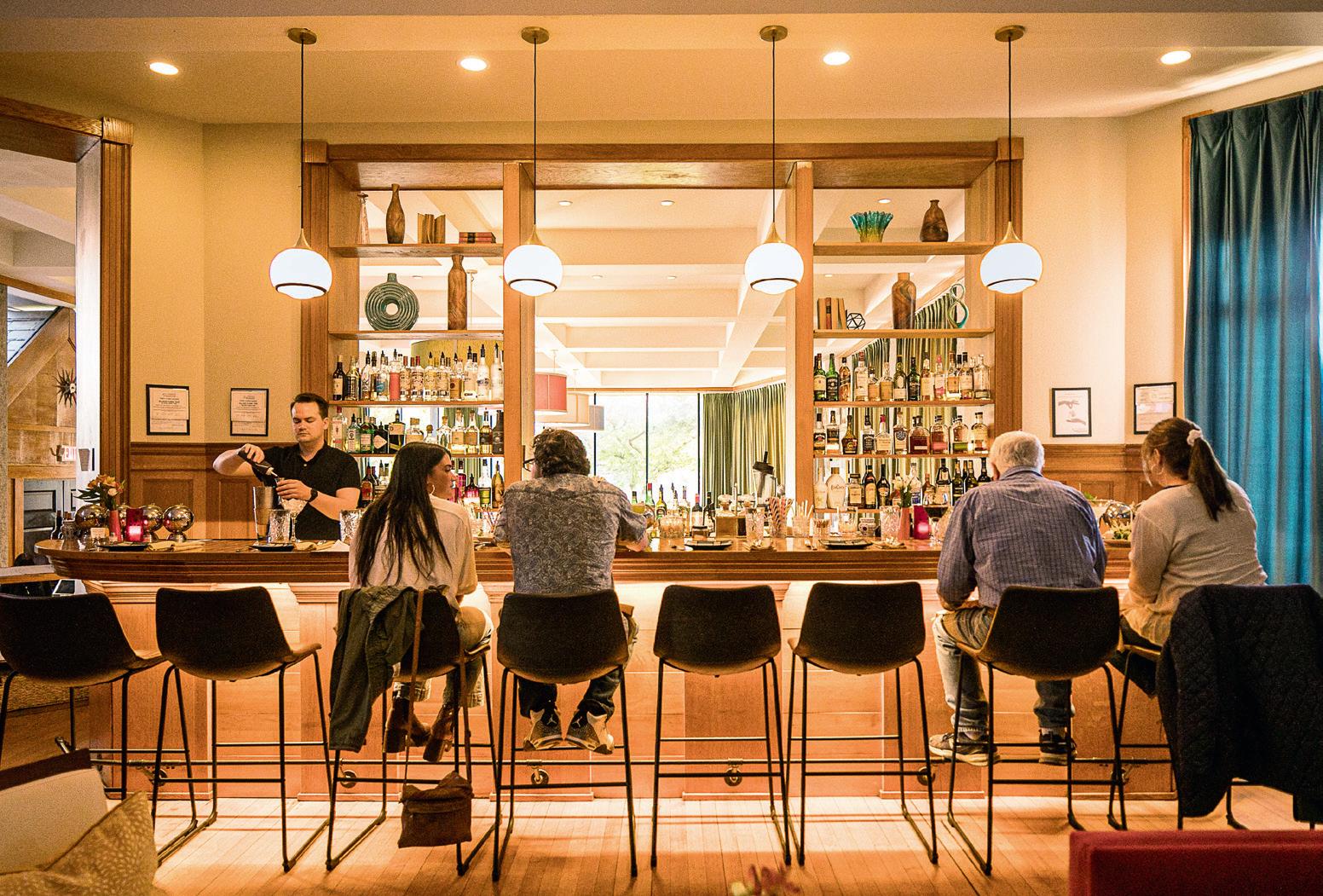
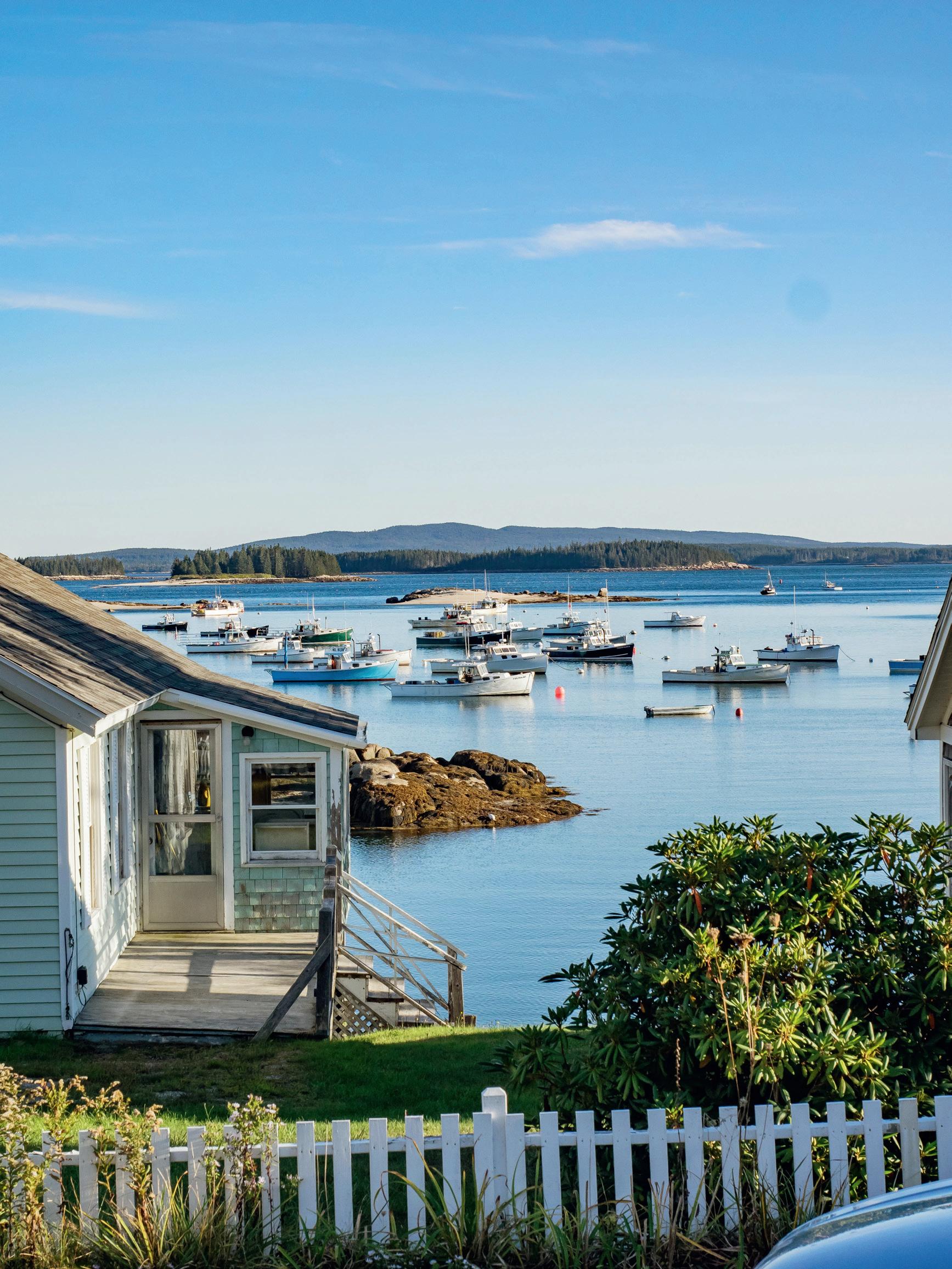
opposite, from top: Closed for over a year for a $3.2 million facelift, the Bridge of Flowers reopened last August to the delight of Shelburne locals and visitors alike; the bar at The Silver Fork, a longtime fixture of Manchester’s food and drink scene.
above: Working boats are an everpresent reminder of Stonington’s maritime heritage.
(POP. 1,055) The foghorn located off Deer Isle sounds every 15 seconds, heard from all corners of this seaside village like a comforting heartbeat. One of the most active fishing ports along the Maine coast, Stonington sees artists, fishermen, and tourists all delighting in the rocky coastline and small main street of gift shops and harborside seafood restaurants. Thankfully, Stonington’s perch at the end of Deer Isle keeps at bay the seasonal crowds that descend on nearby Bar Harbor; it’s still possible here to grab lobster in the rough on a secluded cove and enjoy a front-row seat to the sunset. 10
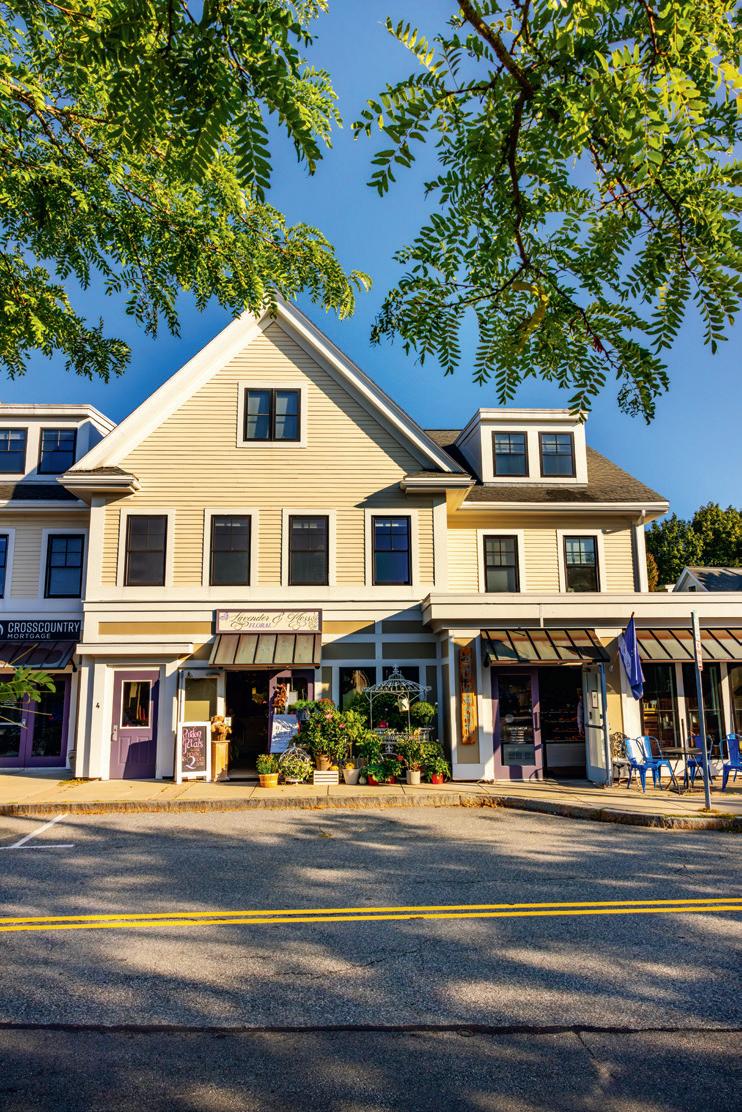
coastal New England village, Manchester-by-the-Sea—first so named in the 19th century to distinguish it from inland Manchester, New Hampshire— offers panoramic views of grayshingled cottages along a graceful curve of coast. Schools are topnotch, crime all but nonexistent, and the town’s relative isolation on the neck of Cape Ann ensures a tight-knit community where everyone knows each other. Bonus: Singing Beach is one of the Boston area’s finest stretches of sand.
(POP. 8,987) East Haddam is a visual feast, with its iconic steel Swing Bridge, which still rotates to let boats pass along the Connecticut River; the crumbling storybook pile of Gillette Castle and its neighboring wooded trails; and the Victorian architecture of the Goodspeed Opera House, one of the finest examples of its kind in New England. The community itself is vibrant, with a downtown humming with coffee shops and restobars, and the big cities of New Haven and Hartford only a short drive away.
(POP. 7,753) A classic mill town that’s reinvented itself into a lively bedroom community, South Berwick perches on the Maine–New Hampshire border with a family-friendly downtown of brick buildings and wooded conservation areas. Many of its solid storefronts have been transformed into artisanal restaurants and independent shops, while the local school district is one of the best in the state.
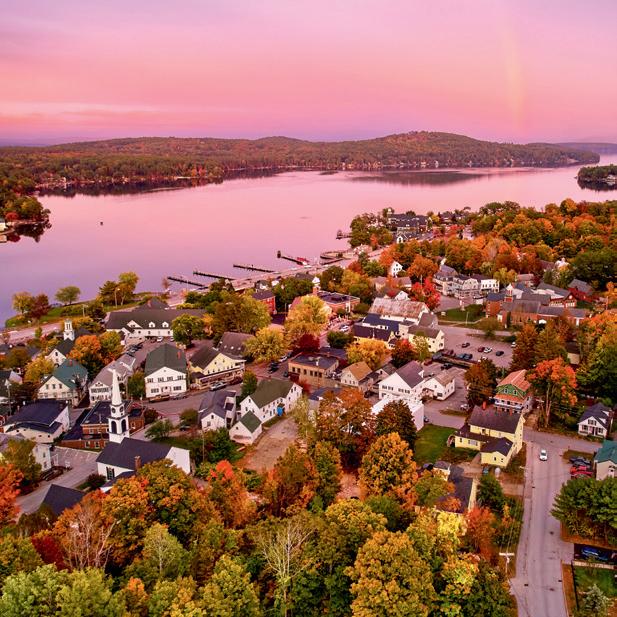
(POP. 6,779) A longtime summervacation mecca on the shores of Lake Winnipesaukee, Meredith supports a year-round community of families and retirees who delight in its natural and manmade beauty and its panoply of activities, including boating, fishing, snowmobiling, and antiquing. The Mill Falls Marketplace is constantly abuzz with energy, and the Winni Playhouse features award-winning community theater. Then there’s the best show in town: sunset on the lake, especially when fall foliage is in full swing.
(POP. 4,240) Nestled into the Litchfield Hills, little Salisbury is iconic New England, with back roads revealing pretty churches, rustic farmsteads, and rushing brooks with every turn. The town
is also home to some less expected pleasures, including an annual vintage car parade in fall and a ski jumping competition in winter. Salisbury’s downtown is as friendly as they come, and hikers can choose from an embarrassment of riches in trailheads and vistas.
(POP. 9,592) The white tapered tower of Portland Head Light is the signature sight on a pretty stretch of coastline that makes for an idyllic retreat from modern life. Cape Elizabeth is all about simple pleasures: tidepooling at Kettle Cove State Park, circling Casco Bay in a lobster boat, picking strawberries at a family farm. The strong school system, inviting downtown, and safe streets are only 10 miles from the activity of Portland, making a convincing case for Maine’s motto, “The way life should be.”
(POP. 8,400) Sprawling along Rhode Island’s western border, Hopkinton is an outdoor enthusiast’s dream. Nature is never far away, from kayaking and fishing along the Wood-Pawcatuck River system to hiking and birdwatching in Canonchet Brook Preserve, home to many kinds of migratory songbirds. Despite over a thousand acres of open space, Hopkinton’s commercial center Hope Valley is classic New England, with a white-steepled church, country grocer, and authentic general store complete with penny candy.
(POP. 4,849) Smack in the center of Vermont, this agricultural hub has everything you want in a small town—including restaurants that take advantage of the local bounty. Its historic library is both an
architectural gem and a thriving gathering place, and the Chandler Center for the Arts boasts some of the best acoustics around. Along with those cultural attractions, it’s never hard to get out into nature, with farm stands and hikes up
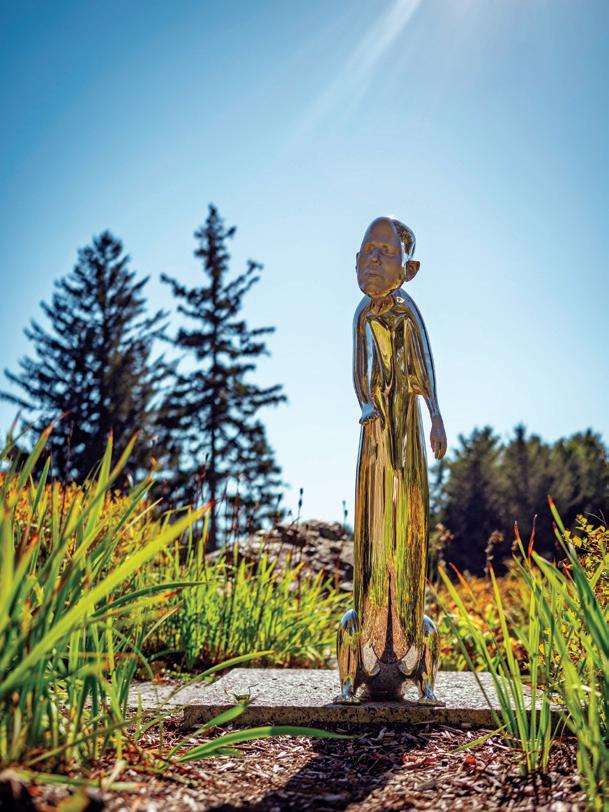
(POP. 6,889) The center of Lincoln is only 25 miles from Boston, but you’d never know it from the wooded back roads and picturesque ponds and meadows that define this rural escape in the midst of MetroWest. Residents pay for the privilege of one of the best school systems in Massachusetts, along with a historic town center and the cultural benefits of the sculpture park and modern exhibits at the deCordova [pictured above], one of the best small art museums in New England—or anywhere.
(POP. 6,106) This delightfully welcoming town on the outskirts of the Connecticut River Valley, southeast of Hartford, offers the best of rural life. Its town green hosts community events throughout the year, including a holiday lights festival, while the Marlborough Tavern hails from the 1700s. Those looking to take home a piece of history can visit The
Shops at Marlborough Barn, one of the best antiques centers in the state, while recreational activities can be had with swimming at Lake Terramuggus and hiking along the Blackledge or Salmon rivers.
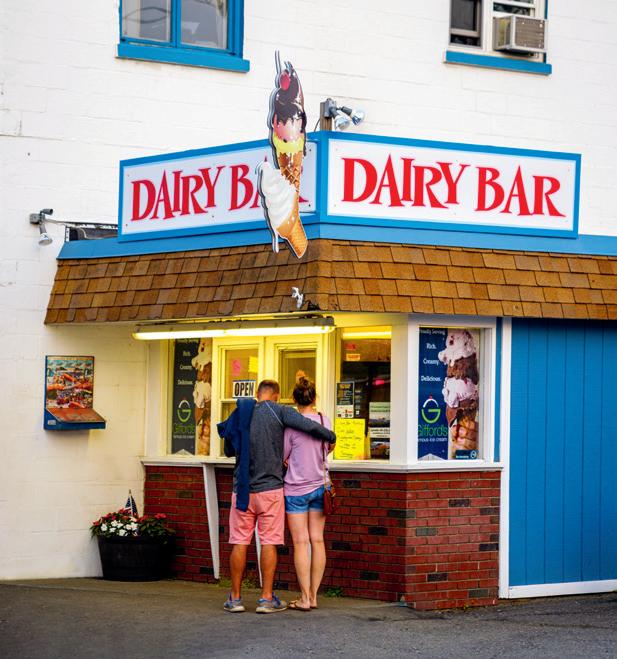
(POP. 1,614) You can’t talk about Greenville without mentioning Moosehead Lake: The largest lake in Maine dominates this North Woods paradise for outdoor enthusiasts. While other lakeside towns have gotten commercialized, Greenville retains real-deal charm thanks to rustic waterfront eateries, old-timey trading posts, and its fair share of local characters, along with the seemingly perpetual smell of campfire smoke in the air. Of course, the town also offers access to a full range of outdoor pursuits, from moose-spotting canoe tours and pontoon plane rides to a cruise aboard the early-20th-century steamboat Katahdin, affectionately known as “the Kate.”
(POP. 8,036) A coastline gem of Rhode Island’s South County, Charlestown mixes a pristine natural environment with a decidedly quirky spirit. The town offers miles of gold-sand beaches, as well as salt ponds and wooded trails that lace through conservation areas such as Ninigret
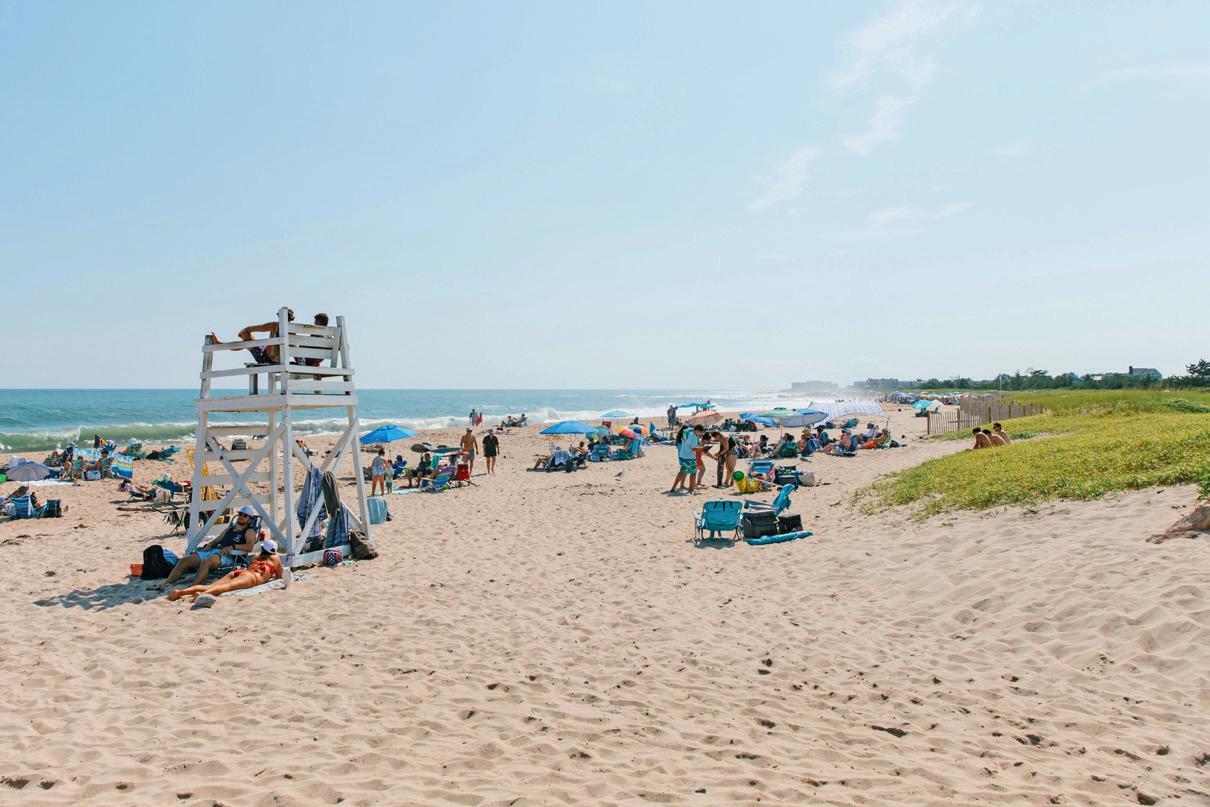
National Wildlife Refuge, a haven for migratory birds. Artists, retirees, and off-the-beaten-track tourists flock to Charlestown’s independently minded businesses, among them the whimsical Fantastic Umbrella Factory complex and local watering hole “the Rat,” aka the Charlestown Rathskeller Bar.
(POP. 6,232) Henniker feels like a throwback to a simpler time. There’s nothing showy about this college town, just plenty of downhome pleasures—from musicians strumming in the gazebo at the local farmer’s market to the wellpreserved downtown with historic buildings and restaurants serving modern takes on classic New England comfort foods (think rib roast, potpie, pie à la mode). New England College injects youthful energy, while the family-run ski area Pats Peak serves as a center for community not just in winter, but year-round with its annual festivals and events.
(POP. 6,685) The upscale boutiques and resorts of this Cape Cod village may lend a sophisticated vibe, but Chatham is a wholesome beach community at heart. Tourists triple the population in summer, drawn to its winsome tableau of grayshingled homes and white-sand
beaches. The rest of the year, the tight-knit community of families, above-average schools, art classes and theater, and outdoor activities that include boating in Oyster Pond and Stage Harbor, hiking in the stunning Monomoy National Wildlife Refuge, and, of course,
The once hardscrabble Northeast Kingdom has witnessed a revitalization in past years, drawing young remote-work professionals to Saint Johnsbury’s stunning (and affordable) Victorian-era downtown. The brick-and-stone architecture gives the town an urban feel in the midst of a rural landscape, with breweries, bakeries, an indie movie theater/arts center, and a giant used bookstore. Add to that an elite prep school, eclectic attractions such as the wunderkabinett Fairbanks Museum and the late artist Stephen Huneck’s Dog Mountain, and access to miles of trails for hiking, biking, and skiing—and it’s easy to see why St. J has developed an enthusiastic cadre of fans.
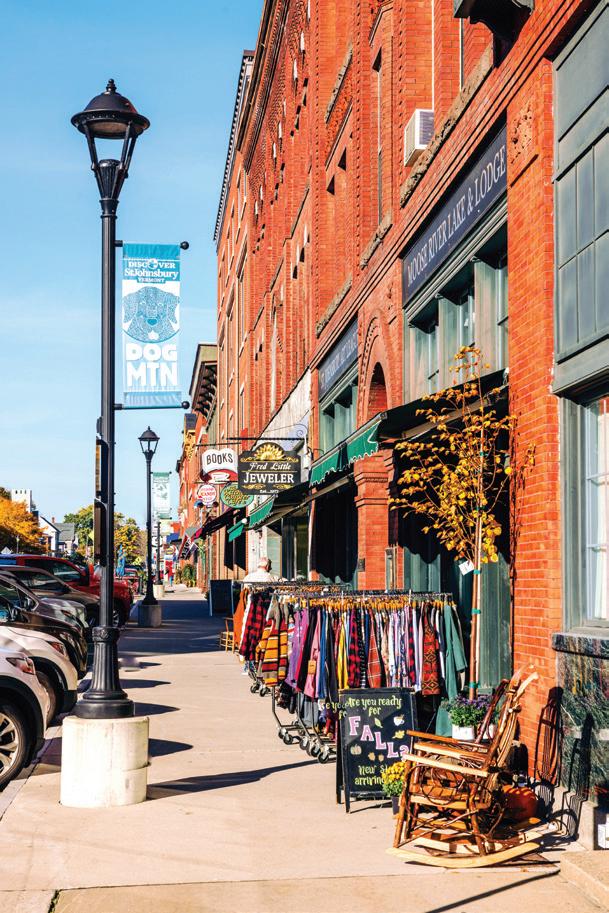
Drawing equally from her garden and her studio, Connecticut ceramic artist Frances Palmer conjures up floral masterpieces.
Frances Palmer started learning photography as a means of documenting her pottery work; initially, incorporating flowers was a way to highlight the dimensions and shapes of her pieces. Over time, Palmer’s painterly images would help inspire two books, Life in the Studio and Life with Flowers , and draw more than 126,000 followers to her Instagram @francespalmer.
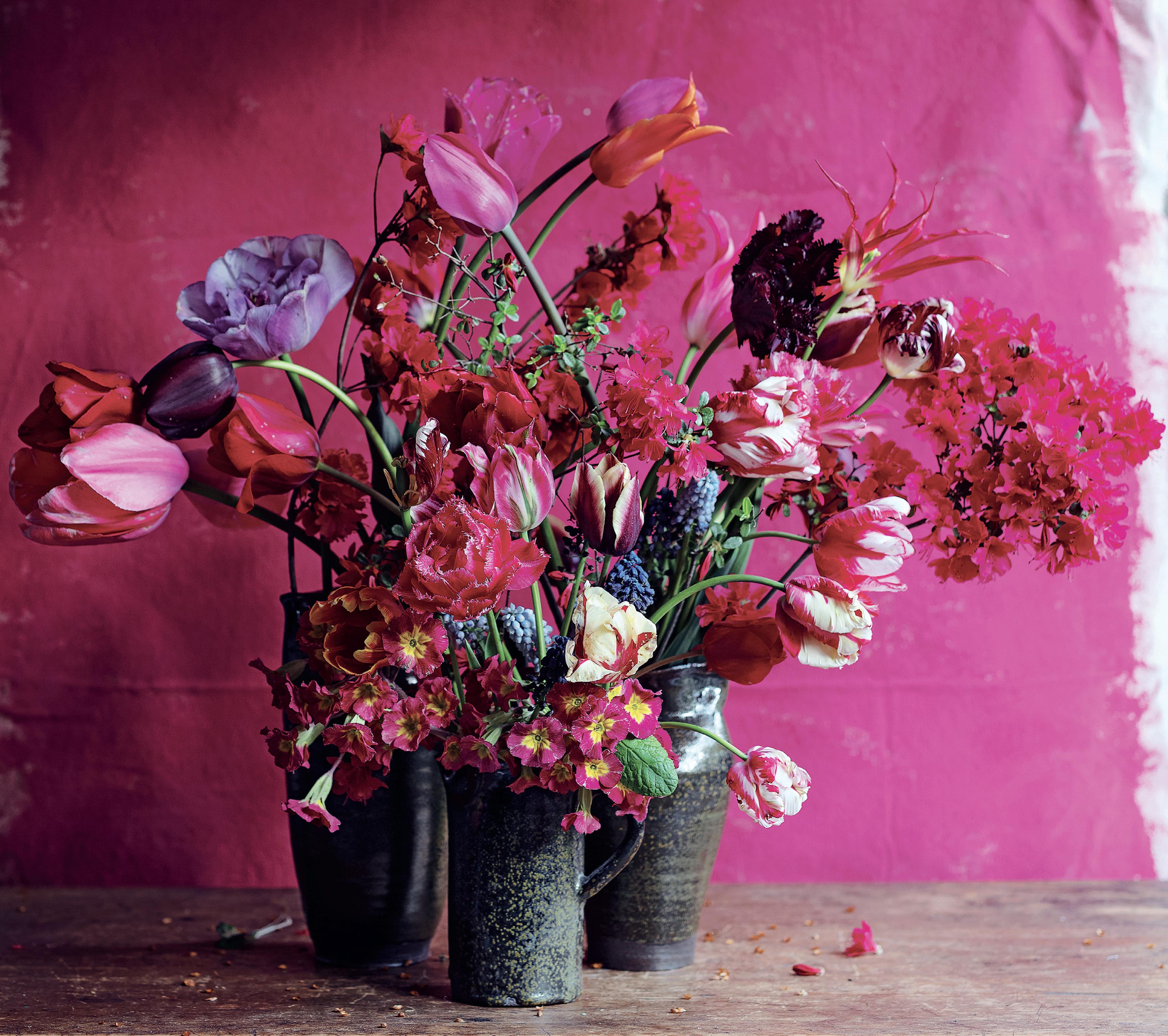

When the signature collections of New England’s great gardens come into bloom, abundance is what dazzles. Think of the 400 or so lilac plants at Boston’s Arnold Arboretum, or the 1,000-plus peony blossoms at Hildene in Vermont, or the more than 100,000 daffodils at Rhode Island’s Blithewold—showstopping displays, all of them, of the particular flowers that have helped make these places famous.
Yet at a very special private garden in Weston, Connecticut, the magic comes not from exactly what or how much is grown, but what it inspires: namely, lush images of flowers erupting from sculptural, handmade containers of every sort. This is nature’s artistry paired with the human variety, and it is the work of gardener, photographer, and renowned potter Frances Palmer.
A ceramic artist for nearly 40 years, Palmer has more recently added published author to the list of her descriptors. First came 2020’s Life in the Studio: Inspiration and Lessons on Creativity, a photo-filled walk down her own artist’s path, followed by last year’s Life with Flowers: Inspiration and Lessons from the Garden , which intersperses images of her floral and ceramic creations with personal essays, DIY projects, recipes, and more.
Given the luxuriant blooms that appear in Life with Flowers, one may well expect gardening advice, too, which Palmer helpfully provides. But speaking late last year from her studio, she said what she most wants aspiring gardeners to know is that perfection isn’t the goal. “I’d say, ‘Be prepared to make a lot of mistakes.’ I don’t even consider them mistakes, but more like trial and error,” she said. “Learning what works in your own space takes years, not a year, you know. Just be patient and learn from things that didn’t go so well.” —Jenn Johnson

Life with Flowers is divided by seasons of the year, but not the four famous ones. Instead, Palmer leads us through the poetically named stages prevernal, vernal, aestival, serotinal, autumnal, and hibernal . “I feel like the garden is a tapestry, with things weaving in and out of each other,” she says, “and these words have a little more nuance” than just spring, summer, fall, winter. Shown here: an ombré arrangement of muscaris (aka grape hyacinths) in a porcelain bisque footed vessel.


Among the earliest heralds of the prevernal season, snowdrops can easily liven up a home during the last dark winter days not as cut flowers, but as rooted ones. Palmer dug up this clump from her garden to complement a blue celadon porcelain bowl whose textural bumps echo the flower shapes.
opposite: Daffodils combine with dripping arcs of pink and white bleeding hearts.

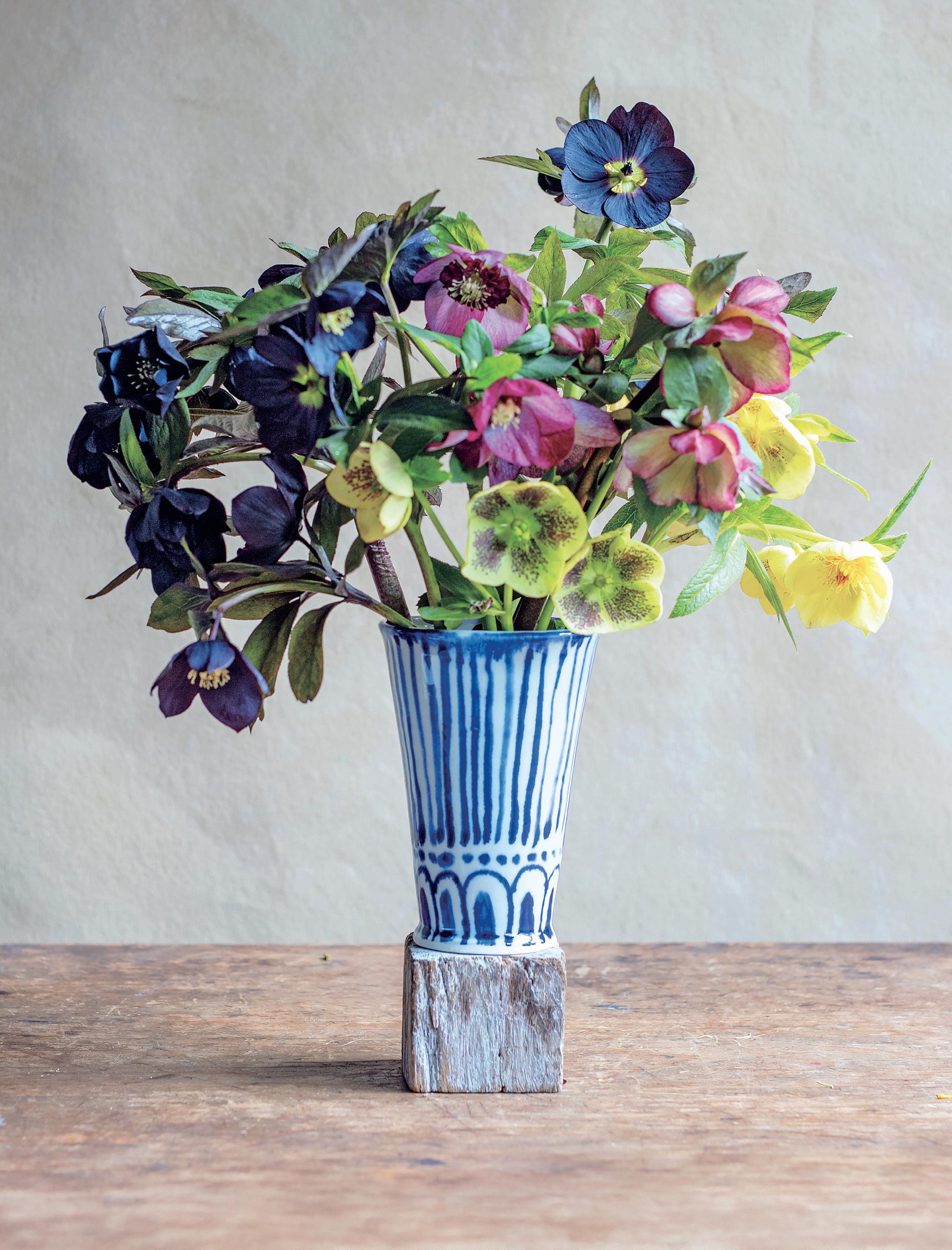
A cobalt-painted porcelain vase holds a fountain of freshcut hellebores, another early riser in the prevernal period.
opposite: The second of Palmer’s seasons, vernal, sees the arrival of late-spring favorites such as foxgloves, bearded irises, peonies, salvias, roses, and dogwood flowers—arranged here in a pink and purple cascade and paired with a paleblue celadon porcelain vase.
Throughout Life with Flowers , Palmer gives a nod to her many sources of inspiration: historical, literary, horticultural. Fine art, too, plays a big role, as she introduces readers to paintings by the likes of Cedric Morris (bearded irises) and Andrew Wyeth (potted geraniums). For the section on tulips, it’s no surprise that a classic Dutch still-life painting is showcased, but so are 20th-century photos by Lee Friedlander and André Kertész. For her part, Palmer contributes this image of cut tulips laid out on their own: a rich palette of color, waiting to be composed into a work of art.
To celebrate the arrival of spring, Yankee’s editors have put together a collection of garden essentials—including a copy of Frances Palmer’s Life with Flowers and a utility tote from Steele Canvas Basket Corp. (see p. 28) which could be yours when you enter to win. For details, go to newengland.com/ gardengiveaway or use this QR code:


A Wampanoag writer explores the complexities of Indigenous identity, displacement, and resilience on Martha’s Vineyard and beyond.
INTERVIEW BY JOE KEOHANE | ILLUSTRATION BY XIA GORDON
Joseph Lee’s story is a quintessentially American story in that it stubbornly defies any easy definition of what a quintessentially American story even is. He grew up in Newton, Massachusetts, the son of a civil engineer and a preschool teacher. His paternal grandparents were Chinese. His maternal grandmother was Japanese, and his grandfather was Wampanoag with a mixed background.
As a boy, Lee would spend his summers on Martha’s Vineyard up-island with the Aquinnah Wampanoag, a people who have lived on the island for some 10,000 years, unbeknownst to the average tourist. “Many people don’t fully understand that there are Indigenous people in this country,” Lee says, “and they certainly don’t think of them in the Northeast, and then they definitely don’t think of them in a place like Martha’s Vineyard.”
Lee’s experience of visiting Aquinnah every summer—staying with his grandparents, attending tribal summer camp—planted the seeds of a complicated but no less profound connection with his Wampanoag heritage, which he grapples with in his book Nothing More of This Land: Community, Power, and the Search for Indigenous Identity, published last summer.
A mix of memoir and reporting, the book covers Lee’s formative summers with the tribe, his drift away from that part of his heritage, and finally his efforts to forge “a more progressive, inclusive understanding of what it means to be Indigenous.”
He spoke with us from his home in New York City, where he works as a freelance writer and journalist.

You grew up in the suburbs of Boston, but you always went to Martha’s Vineyard in the summer when you were young. What do you remember from those days? My earliest memories on the Vineyard would be going down there and visiting my grandparents’ house in Aquinnah. They had this old house with all these old books and artifacts, and the house had an interesting layout, with a sort of semi-hidden staircase—it was one of those houses where, as a kid, you can really lean into your imagination. But it was also summer, so I remember spending time running around with my brother and tribal cousins, going to the beach, getting ice cream cones, hanging out, playing outside….
It sounds pretty idyllic. In many ways, it was perfect.
Going to tribal summer camp on the Vineyard, which ended up being a formative experience for you—what did that look like?
Some of it was like a normal American summer camp: We’d do arts and crafts, go play tag outside, eat some popsicles. But there would be days where we would spend a little more time learning the Wampanoag language, or we’d do something more tribally themed. We’d go walk in the woods and learn about some of the plants. We’d make moccasins.
What was it like to connect with your Wampanoag heritage, as a kid from the city suburbs?
It was mixed. On the one hand, I really valued it, because I knew it was special, and I knew it was something important and unique, and I wanted to learn more. I wanted to care about it. On the other hand, we were kids. We just wanted to go outside and play. It’s summer. I don’t want to be in school learning the language.
You write, too, about staging a big tribal show every summer for a nonWampanoag audience.
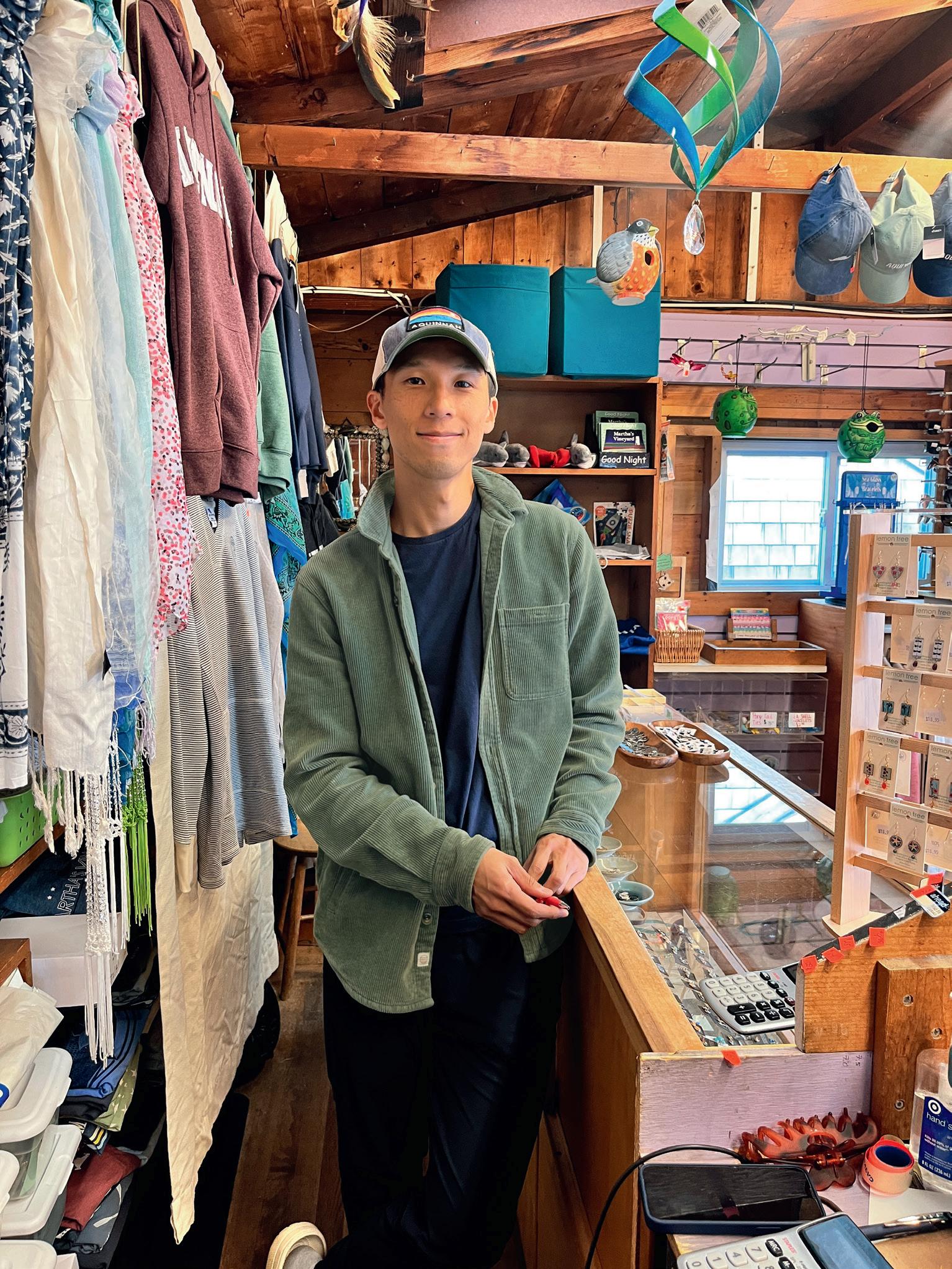
We’d all dress up in traditional regalia and act out what we call “The Legends of Moshup.” It’s the stories of our ancient legendary leader, Moshup. He was a giant, and he led us to Martha’s Vineyard, created the island for us, and created all these various landmarks on the island.
When I was really young, it was just one of those things that we did. But as I got older, I started to think about it. Like, Wait a minute, is it weird performing this thing for outsiders? What is the message that we’re telling these people? I began to wonder if it was confirming some stereotypes for people in the audience, because we were dressed up in the traditional outfits, we were talking about historical events. Were we drawing enough of the line [between the past and present] to understand that this is a modern tribe, we’re still here, we’ve evolved?
One thing you grapple with in the book is reconciling your Wampanoag heritage with the various other strands of your ancestry. Talk to me a bit about your family’s history.
The tribe has been on the island for over 10,000 years—well before written records. We can trace the family tree back through the generations. But what really interested me is that I had always assumed—and this is where even I fall victim to stereotype—that being Indigenous through history means you stayed in one place. I thought my family must’ve always stayed here. Which of course makes no sense. People move around, and especially on an island. They’re seafaring people. My mother was born in Japan, but grew up on and around Martha’s Vineyard, and was always coming and going. My grandfather was born in Aquinnah, but then left and sailed around the world. His father was a lighthouse keeper, famously in what was then Gay Head.
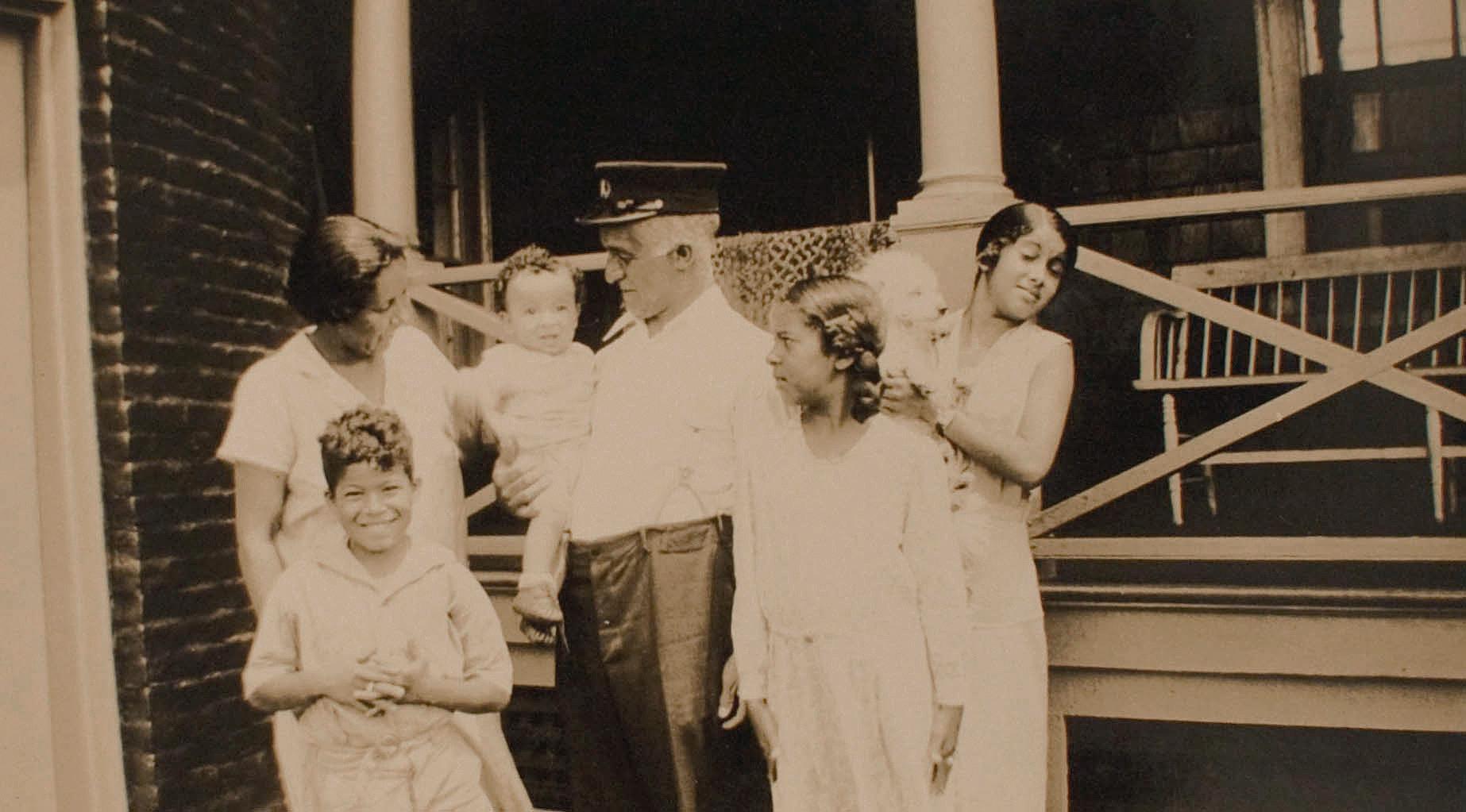
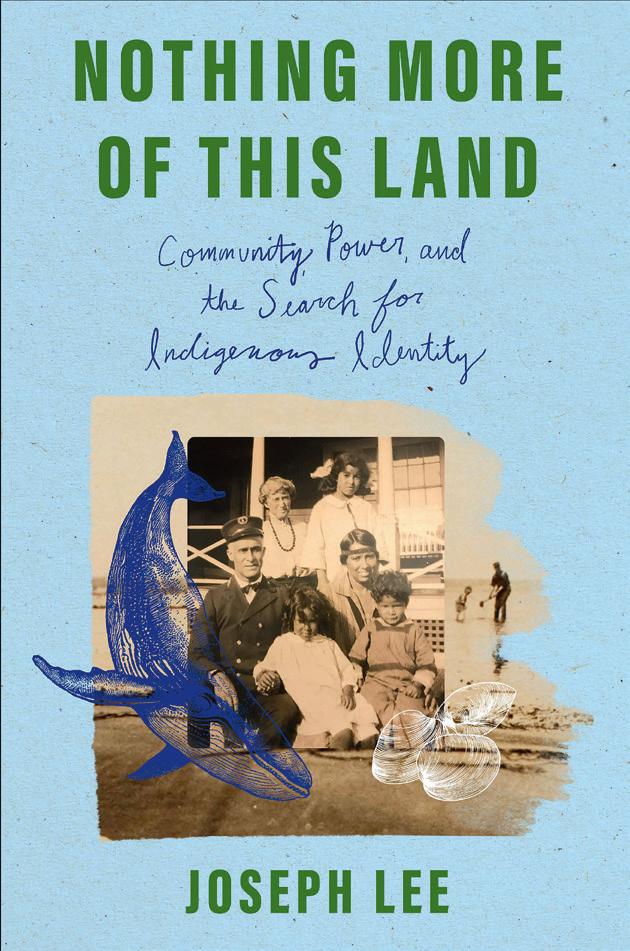
opposite: Joseph Lee at Hatmarcha Gifts, a shop on Martha’s Vineyard known for its Wampanoag-made jewelry and crafts. Founded in the 1970s by his maternal grandparents and now run by his mother, Martha, it’s where Lee worked as a kid spending summers on the island.
this page, top: A 1920s-era photo showing Lee’s great-grandfather Charles W. Vanderhoop Sr., with his family at Gay Head Light, where he was the beacon’s first Aquinnah Wampanoag keeper. A similar family photo appears on the cover of Lee’s book, Nothing More of This Land .
this page, right: Lee with his younger brother, Sam, and their grandparents Charles Vanderhoop Jr. and Hatsuko Sugita Vanderhoop, on Martha’s Vineyard in the 1990s.
“At a basic level, I would really like for people to know that the Wampanoag people still exist. We’re still here. We’re real.”
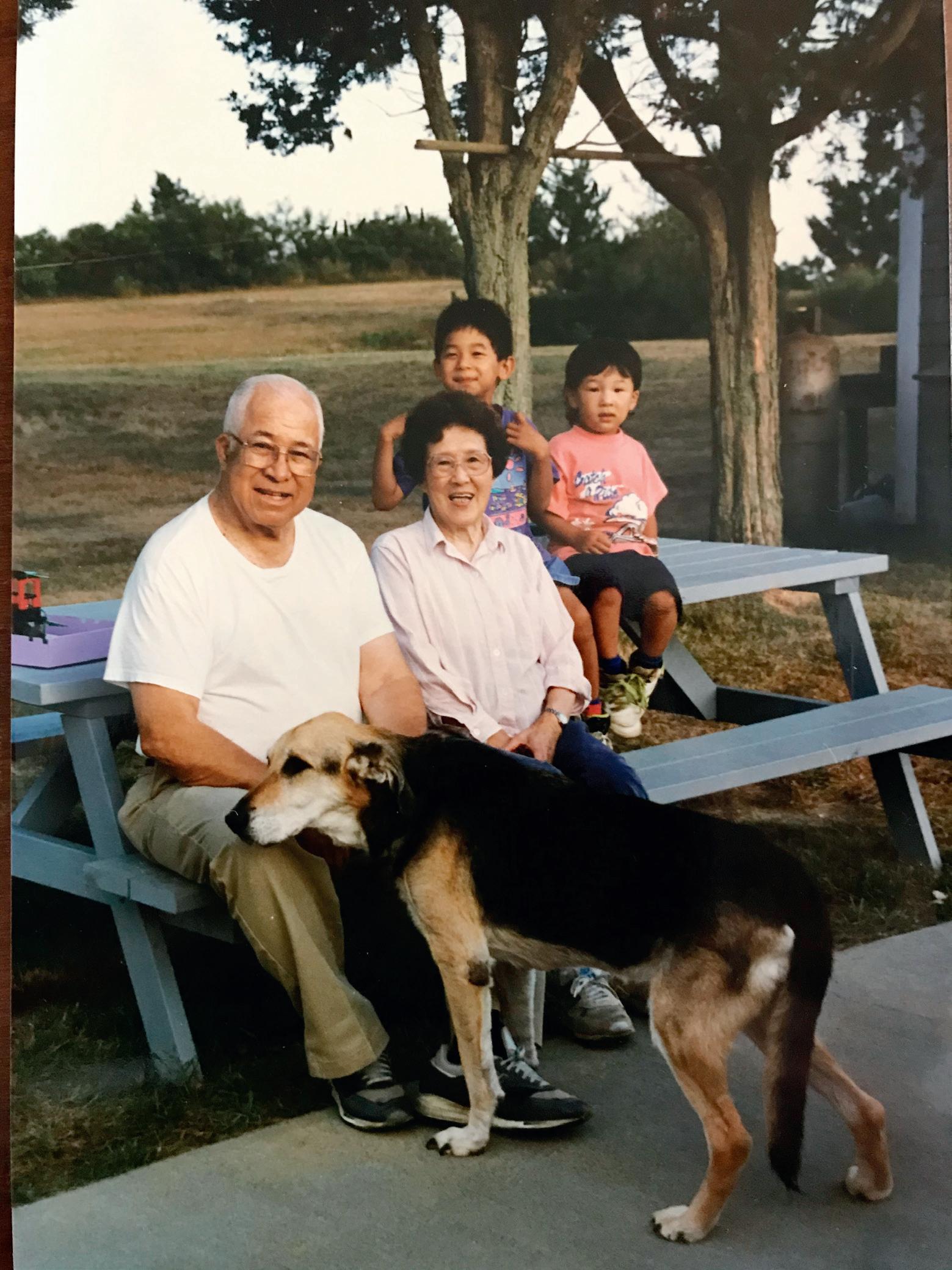
this place, and how can I navigate being attached and being connected without living there.
There was a great deal of mixing in your family, too. Your father’s family is Chinese. Your mother had a
Japanese mother and a Wampanoag father with a mixed background. That’s another really interesting part. I had told myself really simple versions of colonial stories in which we were here, and then some white people came from Europe, and then it was bad. But it’s a lot more complicated than that. My mom’s last name, and my middle name, is Vanderhoop, which is a really big family in the tribe today. I thought that name probably dated back to 1620 or something like that, but it was from the 1800s. My greatgreat-great-grandfather William Vanderhoop was a mixed-heritage
(Continued
on p. 94)

How an audacious little rocket company could make coastal Maine an unexpected front-runner in the commercial space race.
BY BRIAN KEVIN


and research

n a quiet summer morning on the Down East coast in the year 2040, a distant rumble causes a pair of lobstermen to look up from the traps they’re repairing. It’s a Sunday, when hauling is prohibited in Maine waters and the local rocket company tends to schedule its launches. Ambling to the edge of the dock, the two gaze offshore, squinting at a distant platform silhouetted against the horizon. As they watch, swigging their coffee, a slim rocket begins to ascend, trailing a light-gray plume, a silver needle stitching a pale thread into the sky.
The rumble lasts less than 30 seconds, and once the rocket is out of sight, the lobstermen turn back to their traps. They’ve seen this before—a couple of launches a month these days, up from two or three a year, back when the rocket company first opened its mission control near the harbormaster’s office. They know the rocket will ascend some 250 miles, to about the same altitude as the old International Space Station, but that it won’t reach the velocity needed to stay in orbit, falling instead back to Earth after seven or eight minutes in space. And they know that companies and research entities pay a pretty penny to access those minutes in microgravity, that the rocket is ferrying sophisticated experiments that MIT or Intel or Pfizer delivered to their little corner of New England, ready to be installed in a payload bay and remotely initiated when the craft reaches zero G.
And that exhaust trail dissipating over the ocean? They don’t worry anymore about its effects on marine life—or on their livelihoods. They watched the rocket company’s founder nibble on a chunk of its proprietary biofuel a few
years back, during a presentation at the new fabrication shop. They’ve both done some off-season work there, welding rocket parts, not to mention hiring on occasionally to help retrieve rockets after a splashdown. In fact, in just a few short years, the town’s whole little aerospace sector has come to feel pretty humdrum—just another scrappy enterprise in a fishing town used to scrappy enterprises.
That’s Sascha Deri’s vision for the future of bluShift Aerospace, the rocket company he founded in 2014 and currently operates out of a former naval air base in Brunswick, Maine. And at times during the past couple of years, that vision has felt tantalizingly close—for example, early one evening in October 2024, when bluShift gathered a few dozen investors, reporters, and space industry mucketymucks on a stretch of the base’s tarmac to witness a crucial rocket test.
During the hours before ignition, Deri had mostly sat inside the 2006 Timberlodge travel trailer his team had retrofitted into mission control, running diagnostics and narrating excitedly on a livestream. But now and again he stepped outside to mingle and chat with the small crowd, an affably earnest 50-something in khakis and a Patagonia vest. With his salt-and-pepper hair and black-rimmed glasses, he looked like a slightly crunchy Ira Glass—a far cry from space-entrepreneur stereotypes of strutting start-up bros and bombastic showmen. As dusk settled in, Deri grinned and joked about needing to get the test off before his daughters’ bedtime, though his commute wasn’t far, his home just down the road in the little coastal college town.

But back inside the trailer, at the moment of ignition? Deri felt tense, his eyes glued to a cinder-block bunker a quarter mile away as a spear of white flame erupted from one end of it. Inside was a makeshift combustion chamber, a huge cylinder of inch-thick steel more commonly used as sewer-line pipe. Alongside the bunker was a vertical tank, 30 feet tall and gleaming, from which oxidizer flowed into the combustion chamber at a hopefully steady pace.
Deri took his eyes off the fiery plume only long enough to glance at a screen full of data, monitoring, among other things, pressure, thrust, and all-important duration. The test of the engine he’d named MAREVL—the Modular Adaptable Rocket Engine for Vehicle Launch—was what was known as a full-duration hot-fire test. It was bluShift’s second and would determine how well MAREVL could handle a full 60-second burn of the company’s top-secret biofuel. That’s how long a rocket would need to reach the Kármán line, the boundary between Earth’s atmosphere and space, some 62 miles above the Maine coast.
Thirty seconds in, the screen told Deri that the engine was delivering more than 16,000 pounds of thrust, a bit less than was needed to get bluShift’s envisioned 50-foot rocket, dubbed Starless Rogue, into suborbital space. It’s eight times more than what propelled a 20-foot prototype, called Stardust, some 4,000 feet into the air in January 2021. That low-altitude launch, from the frozen runway of the former Loring Air Force Base in far northern Aroostook County, was Maine’s first-ever commercial rocket flight— and the world’s first powered by nontoxic, nearly carbonneutral biofuel. That, too, had been a moment when the

vision of an eventual Maine spaceport had felt very close. But suddenly, 55 seconds into the burn, the smooth white-orange plume was interrupted by a shower of fiery debris, accompanied by a sound like a burst of radio static. To the spectators outside, it looked like sparks pinging around the tarmac. Inside the trailer, a chorus of voices called out, “E-stop! E-stop!” Emergency stop. Deri leaped from his seat and charged into the control room, his farfuture vision abruptly replaced by a more immediate one: of catastrophic combustion-chamber failure, an explosion that could set the project back months—and put those cinder-block walls to the test.
The first spacecraft Sascha Deri ever sketched was a Viper attack ship from Battlestar Galactica, which enthralled him as a ’70s kid with precious little access to TV. He was 6 years old when his parents took the family back to the land, moving to a cabin in East Orland, Maine, near where homesteading gurus Helen and Scott Nearing had famously farmed since the ’50s. At first, Deri’s family lived off the grid, but the simple life proved grueling. When they succumbed to electricity, Deri spent his much-rationed TV time escaping to the worlds of Battlestar, Buck Rogers, and Doctor Who on a black-and-white set.
The outdoors was his chief entertainment: the woods, where he wandered unsupervised; Toddy Pond, where he and his brother paddled and sailed (his dad forbade motorized boats). On winter nights, he nestled into snowbanks at the
(Continued on p. 99)
(Continued from p. 38)
method of long-simmering squash until you end up with a very concentrated squashenriched base on which to build additional flavors. It’s now my favorite way to make butternut squash soup. Sherry uses all kinds of cranberries in this soup: fresh, dried, sweetened, unsweetened. You can choose any type, or go for a combination.
2 large butternut squash, peeled, seeded, and cut into medium chunks
3 tablespoons sunflower oil
2 large shallots, halved lengthwise
1 teaspoon plus 2 teaspoons kosher salt
1½ teaspoons fresh thyme leaves or chopped fresh sage
²⁄ 3 cup fresh or dried cranberries, unsweetened or sweetened
1 teaspoon freshly ground black pepper
3–4 cups chicken or vegetable stock, or water
3 tablespoons heavy cream (optional)
Sunflower oil, cream, pepitas, and flaky sea salt, for garnish
Put the squash in a large soup pot and cover with water. Set the pot over high heat, cover, and bring to a boil. Remove cover and reduce heat to an active simmer. Continue simmering until the squash is very tender and the water is reduced by half, which will take anywhere from 30 to 45 minutes, depending on the size and shape of your pot.
Meanwhile, in a small skillet, heat the sunflower oil over medium heat. Add the shallots and 1 teaspoon salt and sauté, stirring often, until translucent, about 5 minutes. Add the thyme or sage, and sauté briefly.
Roughly mash the cooked squash and add the shallot mixture and cranberries to the pot. Add the remaining 2 teaspoons salt and the pepper, then add 3 cups of the stock or water and stir.
Use an immersion or standing blender to puree the mixture until very smooth (if using a standing blender, you’ll need to do this in batches). If the soup is still too thick, add more stock or water until you get the texture you like. Add heavy cream (if using)
to taste. Taste and add salt if needed. Serve hot, garnished with drizzles of sunflower oil and cream, some pepitas, and a pinch of flaky sea salt. Yields 8 to 10 servings.
4)
Joanne Chang is most famous for the irresistible pastries served at her growing chain of Boston-based bakeries, Flour. But at Myers + Chang, the Boston restaurant she owns with her husband and business partner, Christopher Myers, she celebrates the Taiwanese food she grew up eating at home. In August of 2019, we arrived at Joanne and Christopher’s apartment to make pork dumplings and were delighted to meet “Mama Chang,” aka Sue, who happened to be visiting from Houston. This remains one of my favorite Weekends segments of all time.
Note: If you don’t have an Asian market nearby, you can replace the garlic chives with regular chives or scallions. If you can’t find black vinegar, you can always make a simple blend of soy sauce, sesame oil, and a bit of chili or hot sauce for the dipping sauce.
FOR THE DUMPLINGS
8 large napa cabbage leaves, thinly sliced (about 4 cups)
1 tablespoon kosher salt
1 pound ground pork (not lean), preferably coarse-ground
1 cup minced fresh garlic chives
3 tablespoons soy sauce
1 tablespoon peeled and finely chopped fresh ginger (about a 1-inch piece)
2 teaspoons toasted sesame oil
1 16-ounce package round dumpling wrappers
4 tablespoons vegetable oil, such as canola, plus more as needed
½ cup soy sauce
1 tablespoon Chiangking black vinegar
2 teaspoons sriracha chili sauce
2 teaspoons sesame oil
Rough-chopped ginger, to taste
Place the sliced cabbage in a large bowl and season generously with salt. Let sit for 10 minutes.
In a large bowl, combine the ground pork, garlic chives, soy sauce, ginger, and sesame oil, and use your hands to mix all the ingredients thoroughly together. Set aside.
Take the cabbage in your hands and squeeze as hard as you can to remove the water (you will be amazed by the amount that comes out). Add the cabbage to the pork mixture. Mix well with your hands until the filling is well combined.
Fill a small bowl with warm water. Lay a dumpling wrapper on a clean work surface and scoop about 1 tablespoon of filling into the center. Dip your finger in the water and paint all around the edge of the wrapper to moisten. Fold the wrapper in half to look like a taco. Pinch closed together at the top, leaving the sides exposed and open.
Holding the wrapper at the top and working down one side, use a thumb and forefinger to fold a pleat toward the center, pressing to seal. Then make a second pleat. Repeat on the other side of the top pinch, making two more pleats and pressing to seal. (You could also watch the episode video to see how to do this.) It’s OK if it doesn’t look perfect; the important thing is that it is well sealed.
Continue with the rest of the dumpling wrappers until the filling has been used up. (The dumplings can be made to this point in advance and stored in the freezer. Place them on a flat plate or tray and freeze until the dumplings are completely frozen, then transfer them to a resealable freezer bag or airtight container and return them to the freezer. Thaw in the refrigerator on a flat plate before cooking.)
Before cooking, make the dipping sauce by stirring all the ingredients together in a small bowl. Set aside.
To cook the dumplings, you need a large, heavy, flat-bottomed skillet with a lid or a nonstick skillet with a lid. Heat the skillet over medium-high heat and add 2 tablespoons vegetable oil. When the oil starts to shimmer, carefully add as many dumplings as will comfortably fit in the skillet and turn the heat down to medium. Cook without moving the pan until the dumpling bottoms are golden brown, about 3 minutes. Add about 2 tablespoons water to the bottom of the pan and immediately cover with the lid. The pan will sizzle and steam up immediately. Shake the pan from time to time to keep the dumplings from sticking. Let the dumplings steam for 2 minutes, at which point most of the water will have evaporated.
Add another 2 tablespoons water to the pan, cover, and steam again. Wait until the water has evaporated again and repeat one last time with a final 2 tablespoons water. Turn off the heat, keep covered, and let rest for 1 minute. Uncover and turn the




Twin 39” x 75” 3-pc. set was 59.99 NOW 16.99
Twin XL 39” x 80” 3-pc. set was 59.99 NOW 16.99 Full 54” x 75” 4-pc. set was 69.99 NOW 19.99
Queen 60” x 80” 4-pc. set was 79.99 NOW 22.99
King 78” x 80” 4-pc. set was 89.99 NOW 24.99
Cal King 72” x 84” 4-pc. set was 99.99 NOW 26.99
B | PRINTED SHEET SET 1580-34584-0601
Twin 39” x 75” 3-pc. set was 59.99 NOW 16.99 Twin XL 39” x 80” 3-pc. set was










heat back to medium-high to crisp up the bottoms. Remove from the pan. Continue in the same manner to cook the remaining dumplings, adding 1 tablespoon oil to the pan at a time as needed. Serve immediately with sauce. Yields about 45 dumplings.
This simple graham cracker pie recipe, filled with creamy vanilla pudding, comes from chef Erin French of the renowned Lost Kitchen in Freedom, Maine. We adapted her recipe to put the deliciousness of a perfectly made graham cracker crust front and center. We love how she elevates a simple dish with attention to presentation and technique. It’s typical of Erin’s approach to food: Start with great ingredients, distill the flavor, make it beautiful.
12 graham crackers
3 tablespoons granulated sugar
7 tablespoons salted butter, melted
FOR THE FILLING
3 cups whole milk
1 vanilla bean, split lengthwise, seeds scraped out with a spoon
½ cup granulated sugar
Pinch of salt
¼ cup cornstarch
3 large egg yolks
2 teaspoons vanilla extract
Whipped cream and edible flowers, for garnish (optional)
Preheat oven to 350°F and set a rack to the lower-third position.
In a food processor, pulse the graham crackers, sugar, and butter until finely ground. Press the crust mixture into a 9-inch tart pan with a removable bottom. Bake until the crust is set but not browned, about 10 minutes, then allow it to cool.
Now make the filling: Heat the milk, vanilla bean and seeds, sugar, salt, and cornstarch in a medium saucepan over medium heat, whisking constantly, until it thickens, 6 to 8 minutes.
In a large bowl, lightly beat the egg yolks. Slowly whisk ⅓ cup of the milk mixture into the yolks to gradually raise their temperature. Slowly whisk in the remaining milk. Return the mixture to the saucepan and whisk over medium heat until just bubbling. Remove from heat, let
cool slightly, and stir in the vanilla extract. Remove the bean.
Pour the filling into the crust and let it set in the refrigerator, at least 5 hours and up to overnight. Slice and serve topped with whipped cream and edible flowers, if you like. Yields 8 servings.
One of the most beautiful food segments we ever shot was in Season 1, when we visited Mount Desert Island and the family home of chef and restaurateur Andrew Taylor, whose Eventide restaurants in Portland and Boston have given New Englanders a global vision for local seafood. These lobster rolls are the perfect example. The rich brown butter sauce, made by cooking powdered milk with unsalted butter until it takes on a walnut hue, magnifies the sweetness of the meat, while the Chinese-style steamed buns are the perfect fluffy vessel. However, you can also serve them on regular New England hot dog buns.
The Taylor family house is called Eventide (the restaurants are named after it), and stands overlooking rock formations called The Ovens on a strip of the island’s northern coast. We set up a beachside clambake on a massive steel griddle piled with seaweed and cheered as the rising tide reached our fire just as we pulled the food off, releasing a dramatic cloud of steam.
8 tablespoons (1 stick) unsalted butter
2 tablespoons nonfat dry milk
1 tablespoon fresh lemon juice
Sea salt or kosher salt, to taste
1 pound cooked Maine lobster meat, cut into medium chunks
6 bao buns or 4 New England hot dog buns, steamed Minced chives, for garnish
In a medium skillet over medium heat, melt the butter. Whisk in the dry milk and cook, stirring often, until the solids begin to brown and take on a nutty aroma. Pour the browned butter into a bowl and add the lemon juice and salt.
Wipe out the skillet and add the butter mixture and lobster meat, cooking until just heated through. Divide lobster evenly among the buns and top with chives; serve warm. Yields 4 to 6 servings.
To advertise please call


Roger’s sculpture cover the gamut from fine art to whimsy including functional garden elements, weathervanes, birdbaths, gates, fountains and more. Given the sculptures unique eclectic qualities, they work in sophisticated to comfortable environments. www.ditarando.com











The Old Farmer’s Almanac 2026 Garden Guide has tips, tricks, and new ideas for all types of gardeners!
BUY YOUR COPY TODAY AT


Why wait? Give us a call today!
Forrest Pirovano, artist 781-858-3691
Mashpee Commons, Cape Cod forrestcapecodpaintings.com/pets.htm


“Your house for all occasions” Come

“Your house for all occasions”
“Your house for all occasions” Come
Candies! For over 50 years we have used only the finest ingredients in our candies—cream, butter, honey, and special blends of chocolates. Call for a FREE brochure. Long famous for quality candies mailed all over the world. Treat yourself or someone special today.
Candies! For over 50 years we have used only the finest ingredients in our candies—cream, butter, honey, and special blends of chocolates. Call for a FREE brochure. Long famous for quality candies mailed all over the world. Treat yourself or someone special today.
Candies! For over 50 years we have used only the finest ingredients in our candies—cream, butter, honey, and special blends of chocolates. Call for a FREE brochure. Long famous for quality candies mailed all over the world. Treat yourself or someone special today.
292 Chelmsford Street • Chelmsford, MA 01824 For Free Brochure Call: 978-256-4061 < >
292 Chelmsford Street • Chelmsford, MA 01824 Call 978-256-4061 for Free Brochure
292 Chelmsford Street • Chelmsford, MA 01824 For Free Brochure Call: 978-256-4061 < >
Visit our website: mrsnelsonscandyhouse.com
292 Chelmsford Street • Chelmsford, MA 01824 For Free Brochure Call: 978-256-4061 < >




(Continued from p. 50)
feeding, egg collecting, cheese making, pickling, and much more. Stay overnight in spacious, two-floor accommodations at the Farmhouse Inn or Barn Guest House, both with full kitchens perfect for crafting meals out of the farm stand’s abundance of produce, meat, and canned goods. eatstayfarm.com
HIGHLAND HOUSE FARM STAY, Plainfield Highland cattle—the shaggy longhorn breed that originated in the Highlands and Western Isles of Scotland—are part of the welcoming committee at Ray Shatney and Janet Steward’s Plainfield property, home
creamery where butter was churned by steam engine. The creamery—where that engine is still housed—is now an inn, the centerpiece of a property that straddles a scenic ridge in the heart of Vermont mountain biking country. The inn’s own star attraction is the Mountain View Farm Animal Sanctuary, where guests and day visitors can meet sheep, pigs, donkeys, and other farm animal rescues. innmtnview.com
LIBERTY HILL FARM & INN, Rochester. Time to get up! There are cows to be milked and fed—115 Robeth Holsteins, to be exact. Luckily, though, guests can tuck into a hearty farm-to-table breakfast before trying their hand at milking cows and bottle-
poultry, sheep, and grain and vegetable crops. Now a center for agricultural education, 1,400-acre Shelburne Farms invites visitors to tour its gardens, barns, award-winning cheese-making operation, and Children’s Farmyard. Accommodations? The Gilded Age lives on at the Webbs’ former summer home, now the Shelburne Farms Inn, offering 24 guest rooms, five cottages, and farm-to-table dining. shelburnefarms.org
ANIMAL FARM, North Conway. Nothing Orwellian here—just a pleasant stay on a 40-acre farm with splendid vistas of Mount Washington and surrounding peaks. From the upper-level deck of the private lodging, the animals, too, are in view: miniature horses, pigs, goats, ducks, chickens. Guests are welcome to visit them in the stalls and farmyard, and can make arrangements to help feed the horses and chickens. The guesthouse features two bedrooms, a full kitchen, washer and dryer, and gas fireplace; outside, walking trails and a brook meander through the property. adventuresuites.com/ suites/animal-farm.php
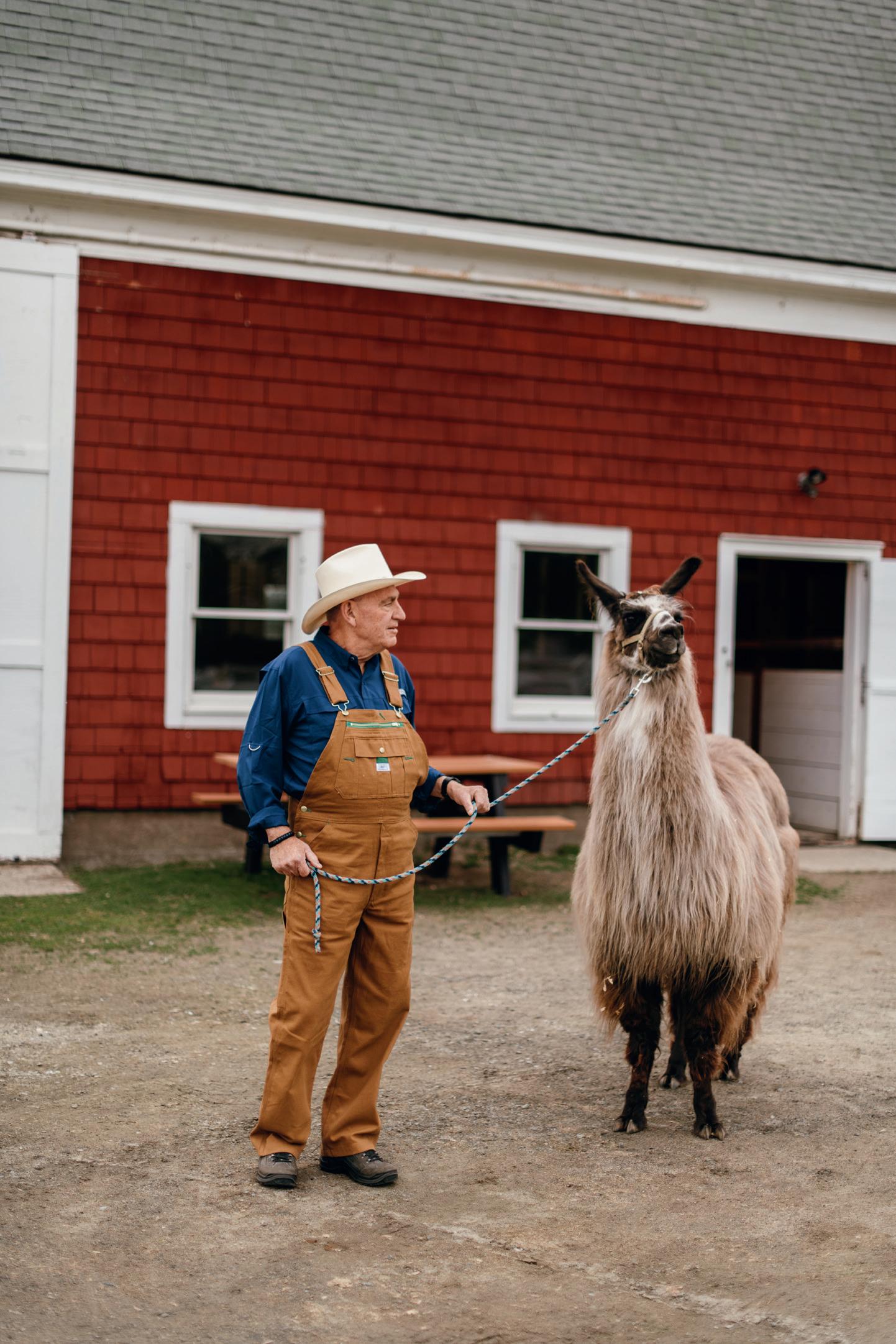
THE FARM AT WOLF PINE HOLLOW, Hancock
The closest thing to living in a pick-yourown paradise might be spending a spell at Wolf Pine Hollow. The farm is a testament to just how much can be grown, organically and sustainably, on a little over 80 acres: vegetables, berries, flowers, orchard crops, a vineyard, and a maple sugarbush. Depending on the season, guests staying at the farm can help plant, harvest, and pick the farm’s bounty. Luxe accommodations come in the form of the six-bedroom Glenrose Manor and the more intimate three-bedroom Cottage at Glenrose. Both have full kitchens, ready for preparing the day’s harvest. wolfpinehollow.com
THE INN AT EAST HILL FARM, Troy. Snugged up against the base of Mount Monadnock, East Hill is part farm, part resort, with indoor and outdoor pools, hot tubs, a sauna, horseback riding, and full-service dining. Guests at this 65-room property, with accommodations spread among the main inn and cozy cottages, can join in farm chores such as milking cows and goats, collecting eggs, churning butter, and making cheese. The farm seasons run from gathering naturally blue Araucana chicken eggs in spring to cider making and wagon rides through the pumpkin patch in fall—and any time of year, kids can bring a certain book to life by patting real bunnies. east-hill-farm.com
THE INN AT VALLEY FARMS, Walpole. In a quiet pocket of the Upper Connecticut
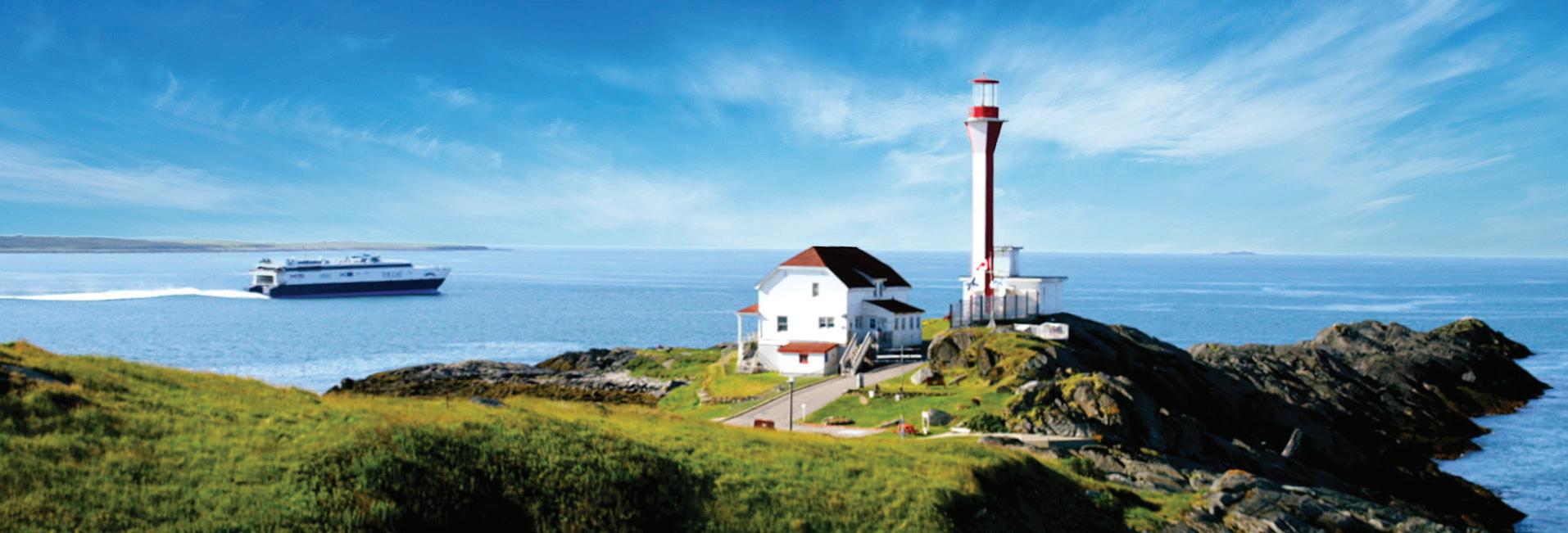
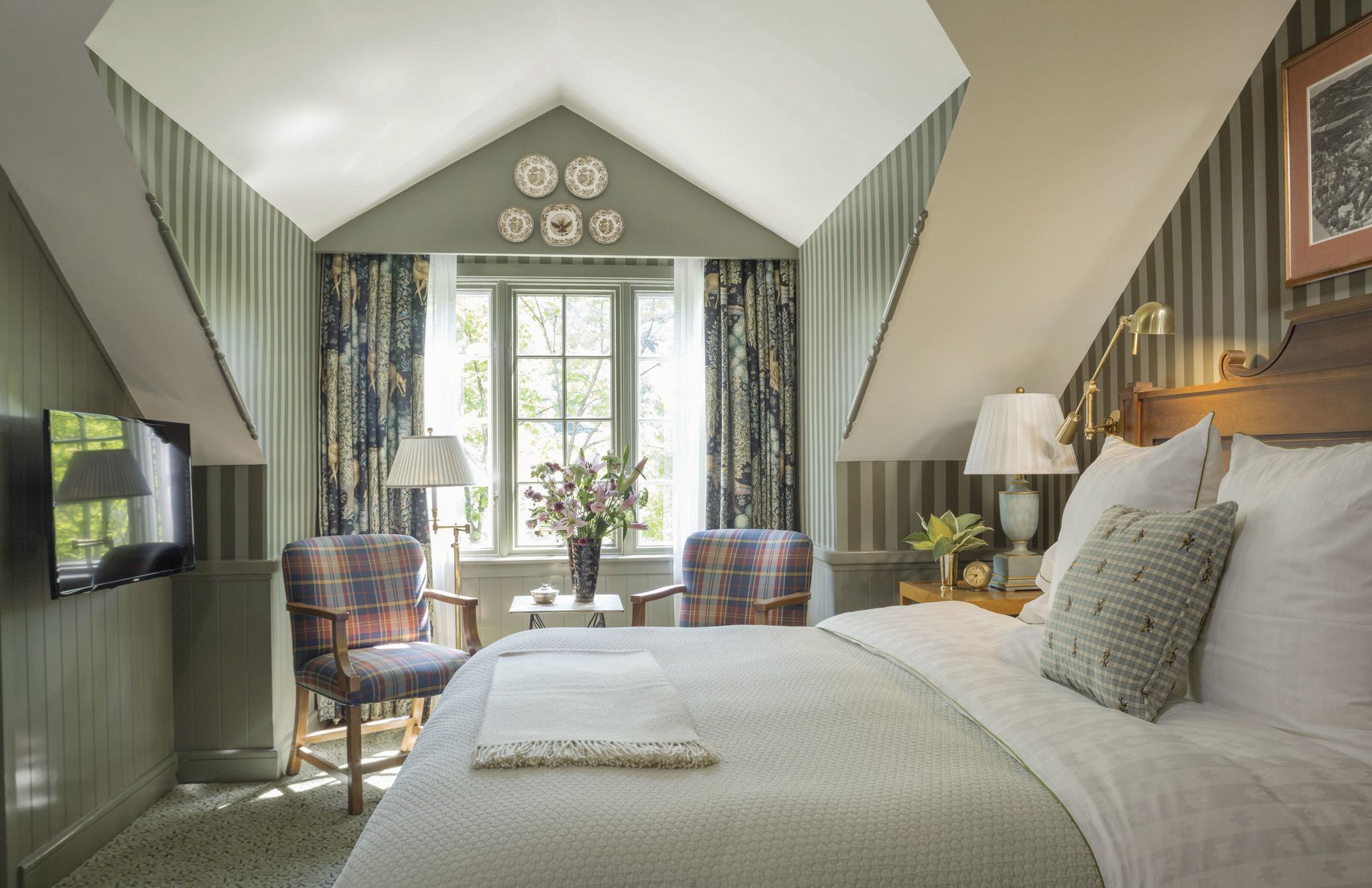
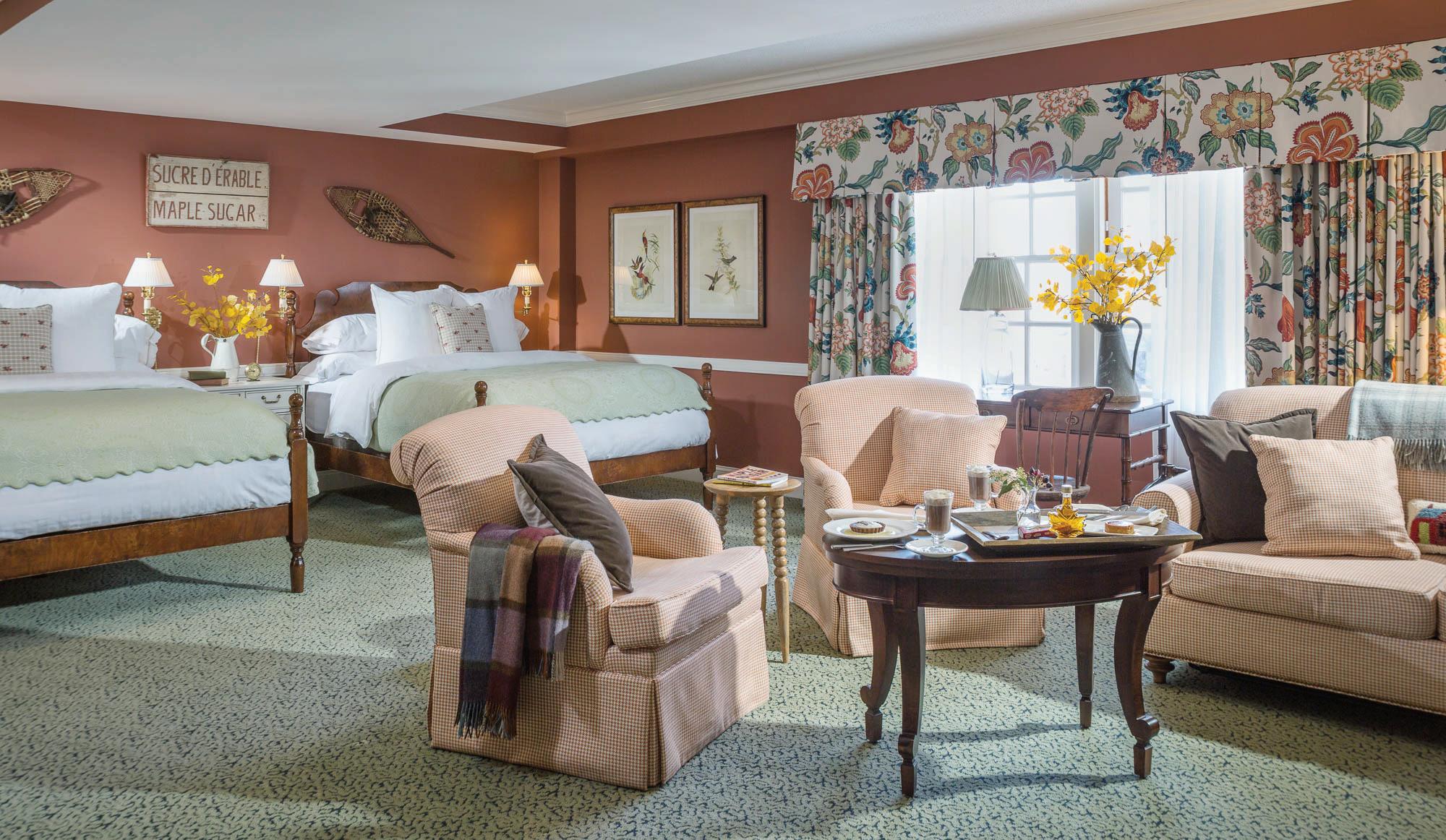
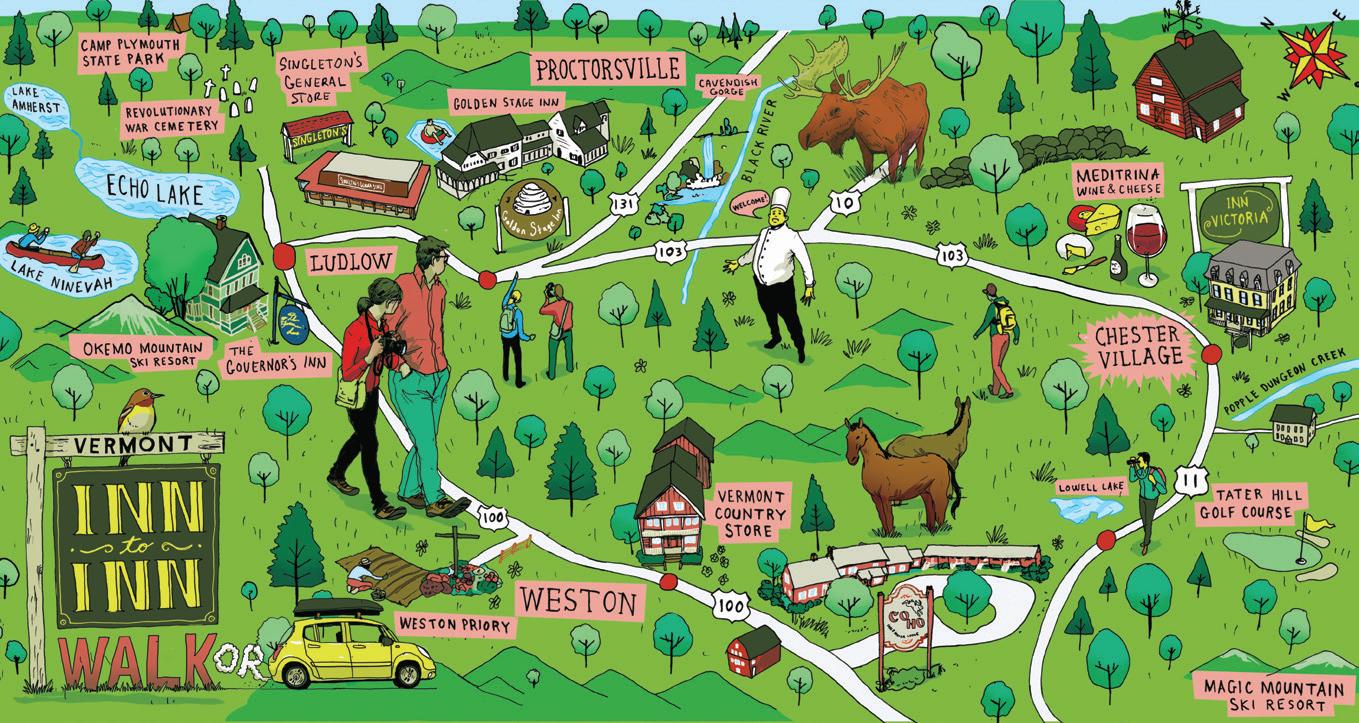
Valley, this inn stands amid farmland cultivated since the 1700s. With a long history of husbandry—sheep, dairy cattle, poultry—Walpole Valley Farms today focuses on livestock pasture-raised for meat and eggs and practices regenerative soil management. Visit the historic barns and learn about sustainable farm practices while staying in one of two fully equipped cottages; one of two farmhouses, each with three bedrooms; or one of the inn’s rooms and suites. Accommodations at the inn include a full farm breakfast, while other overnight guests are provided with coffee and fresh baked goods. Located five miles from the inn, the farm’s acclaimed Hungry Diner restaurant features a menu built around local agricultural abundance. innatvalleyfarms.com
MOUNTAIN VIEW GRAND RESORT & SPA, Whitefield. A farm experience at one of New Hampshire’s famed North Country resort hotels? It’s true: At Mountain View Grand, a variety of programs for children and adults revolve around the property’s working farm. For kids, there’s Saturdaymorning storytime featuring farm-themed books, followed by an afternoon “Guided Farm Animal Care Experience” offering an opportunity to feed and help tend to goats, sheep, rabbits, and alpacas. Each morning, guests ages 5 and older can learn about farm life—and help collect eggs—on a “Meet the Farmer” tour. Weekends’ “Wool & Wonder” is all about fleece from sheep and llamas, and the crafting of felt ornaments. Golfers can even hit the links with, yes, a llama for a caddy. mountainviewgrand.com
GRACE NOTE FARM, Pascoag. The grace note here is variety. Stay in an antiques-filled circa-1730 homestead, and spend days helping in the vegetable garden, gathering eggs, and making friends with Eeyore the donkey and Misty the pony. Then take to the trails for hiking, mountain biking, or cross-country skiing and snowshoeing in winter—unless, of course, you’ve brought your own horse (with boarding facilities and many miles of trails, this is a perfect B&B for equestrians). Guests also enjoy a yearround program of classical music concerts, as hostess Virginia Sindelar is a Julliardtrained flutist who brings world-class musicians to the farm. gracenotefarmweb.com
HURRICANE HILL FARM, Cranston. Just 15 minutes from Providence—and a world away from the 21st century—this 1754 property has been lovingly restored and brought back to life as a fiber farm. The fiber in this case is wool, provided by a herd of Leicester
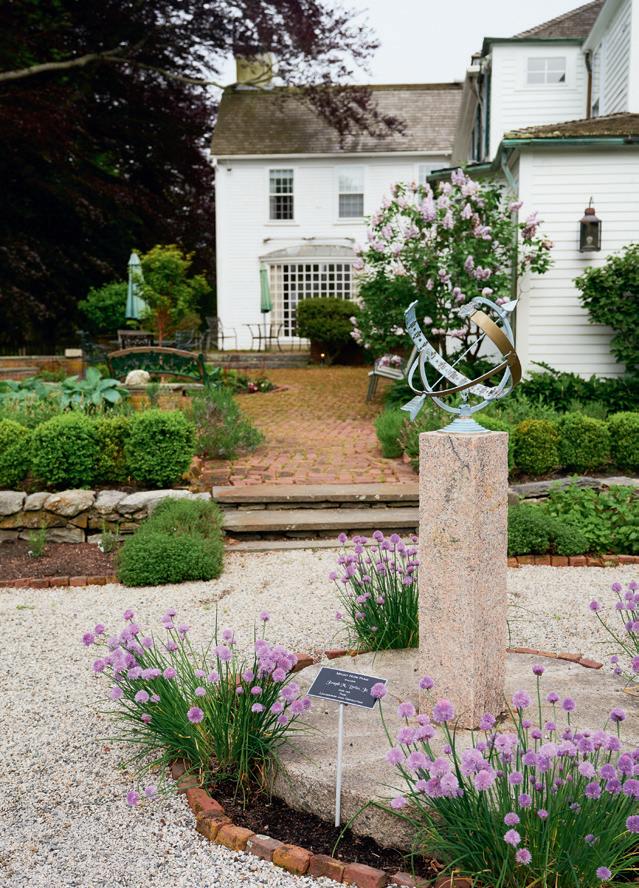
Longwool sheep, a breed once favored by George Washington at Mount Vernon. They’re guarded by a llama and share the farm with goats, chickens, ducks, and guests staying at the four-bedroom cottage or snug Ace travel trailer that sleeps two. Programs offered throughout the year by resident shepherds Drake Patten and Wright Deter include “Sheep to Shawl” and botanical dye workshops. hurricanehillfarm.com
MOUNT HOPE FARM, Bristol. Spreading across 127 acres on the shores of Mount Hope Bay, Mount Hope Farm encompasses a garden growing produce for a local food pantry; an arboretum, among whose 60 species stands a giant sequoia; and a farm menagerie of goats, donkeys, cows, and chickens. A walking trail rambles past both the vegetable and flower gardens, along the bay, and into the arboretum. Accommodations include the 1745 Governor Bradford House, with five guest rooms, and the 18th-century North Pasture Guest House, whose four bedrooms are ideal for families. Past programs include a “farm-to-fragrance” lavender workshop and monthly story walks for children. mounthopefarm.org
AUERFARM, Bloomfield. Less than 10 miles northwest of Hartford, cashmere goats are waiting to take visitors for a stroll. At Auerfarm, a 120-acre retreat that abuts Auerfarm State Park Scenic Reserve, your stay at one of the property’s fully equipped cottages may include a goat walk, gardening and foraging classes, and the chance to help feed farm animals. Or, just hike or jog along the farm’s scenic trails. Auerfarm is a 4-H Education Center, and its programs for kids focus on agriculture and the environment. Among the full schedule of activities: summertime farm-to-table dinners, a fall festival with hayrides, and a spring maple syrup demonstration. auerfarm.org
FISH FAMILY FARM, Bolton. On this 211acre farm and creamery—one of only four
Connecticut dairy farms that pasteurize and bottle their own milk—visitors can say hello to the farm animals and enjoy ice cream made right here. For those staying overnight, there’s a five-bedroom guesthouse with a full kitchen, swimming pool, and firepit, plus opportunities to milk a cow, gather eggs for breakfast and help with other chores, and even fish in the private pond. Facebook
FLAMIG FARM, West Simsbury. Owned by the same family since 1907, Flamig Farm has evolved into an education center and popular spot for families to enjoy hayrides, pony rides, and a petting zoo with all the usual farm critters plus peacocks, potbellied pigs, alpacas, llamas, and miniature horses. Overnight guests stay at a two-bedroom apartment with full kitchen and a secondfloor balcony overlooking the farm. When it’s time to head home, fresh organic eggs and other goodies are available at the Flamig Farm store. flamigfarm.com
BLUE HERON FARM AND RETREAT, Turner With its 13 acres nestled along the lazy Nezinscot River, Blue Heron Farm more than lives up to its billing as a retreat. Guests staying at either of two private bunkhouses (with queen beds, not bunks) or a plush glamping tent can slip easily into farm living, fueled by hearty full breakfasts and dinners prepared with organic produce from Blue Heron’s two acres of orchards and vegetable gardens. A day might start with visiting the goats, geese, chickens, and ducks—as well as the donkey, horse, and cow—then move into paddling on the river in a canoe or kayak provided free of charge. Adults only; separate charge for dinner. blueheronfarmandretreat.com
ME WATER BUFFALO COMPANY, Appleton. They’re a mainstay of southeast Asia and, perhaps more famously among foodies, southern Italy, where their milk is used for the finest mozzarella. But water buffalo also have a hoofhold in Maine. The big bovines at this farm north of Rockland provide milk for yogurt, creamy spreadable cheeses, gelato, and, yes, mozzarella. Tours, tastings, and special events such as pizza nights and “calf cuddling” days bring day visitors; meanwhile, true water buffalo aficionados can book a stay in an on-site glamping tent complete with full bed, firepit, and grill. mewaterbuffaloco.co
WEST BRANCH FARMS, Machias. Located way Down East, far from Maine’s busy southern and Midcoast regions, West Branch combines hands-on farm experiences with a choice of distinctive lodgings. In an
“immersive farm experience,” guests can help harvest produce, feed baby goats and meet other farm animals, and join in workshops on sustainable farming. Stay in one of the 12 cozy Hackmatack cottages set right on the farm, or book the four-bedroom Rockledge House overlooking the ocean; RV sites are also available. Dine at West Branch’s Public House restaurant, specializing in farm-totable fare. westbranchfarmsmachias.com
BLUE HERON FARM, Charlemont. Norwegian Fjord horses are one of the world’s oldest breeds, and they’ve worked on farms in their Scandinavian homeland for millennia. A small herd of the strong, compact horses is a popular feature at Blue Heron Farm, a 130-acre organic producer of blueberries, vegetables, and maple syrup. Guests can help feed the horses and the farm’s herd of Boer and French Alpine dairy goats, as well as collect eggs, harvest garden produce, and pick those plump high-bush blueberries in summer. A selection of nicely secluded accommodations includes a cabin and a bungalow (one bedroom each), a twobedroom cottage, and a spacious house that sleeps six. blueheronfarm.com
THE FARM AT SUMMITWYNDS, Holden
Between the lavender fields and the horse pastures, it’s hard to imagine a setting more tranquil than this working farm set in the rolling hills northwest of Worcester. Visitors flock here for charming annual events such as the Lavender Farm Fest, the Unicorn Experience, and the Butterfly Experience, but to truly experience the property, there’s nothing like a stay in the farm’s historic stone barn. The former hayloft has been converted into a onebedroom suite with a full kitchen and a living room, while a patio extends your R&R into the outdoors. Add-ons such as a farm tour, a wagon ride, and a lavender experience may also be on offer—just be sure to ask about their availability well in advance. thefarmatsummitwynds.com
PLAIN VIEW FARM, Hubbardston. It’s been only a little over 40 years since alpacas were introduced to the U.S., and these relatives of llamas and vicuñas have since won many a heart. Alpacas are the focus of Plain View Farm, where their soft, strong wool goes into hats, mittens, socks, and more. After touring the farm and getting to know the gentle creatures, visitors may feel they want more than just cozy woolens and want to buy an alpaca of their own. Luckily, they can sleep on it first: Two bedrooms in Plain View’s 1800s farmhouse are available for overnight guests. plainviewfarmalpacas.com
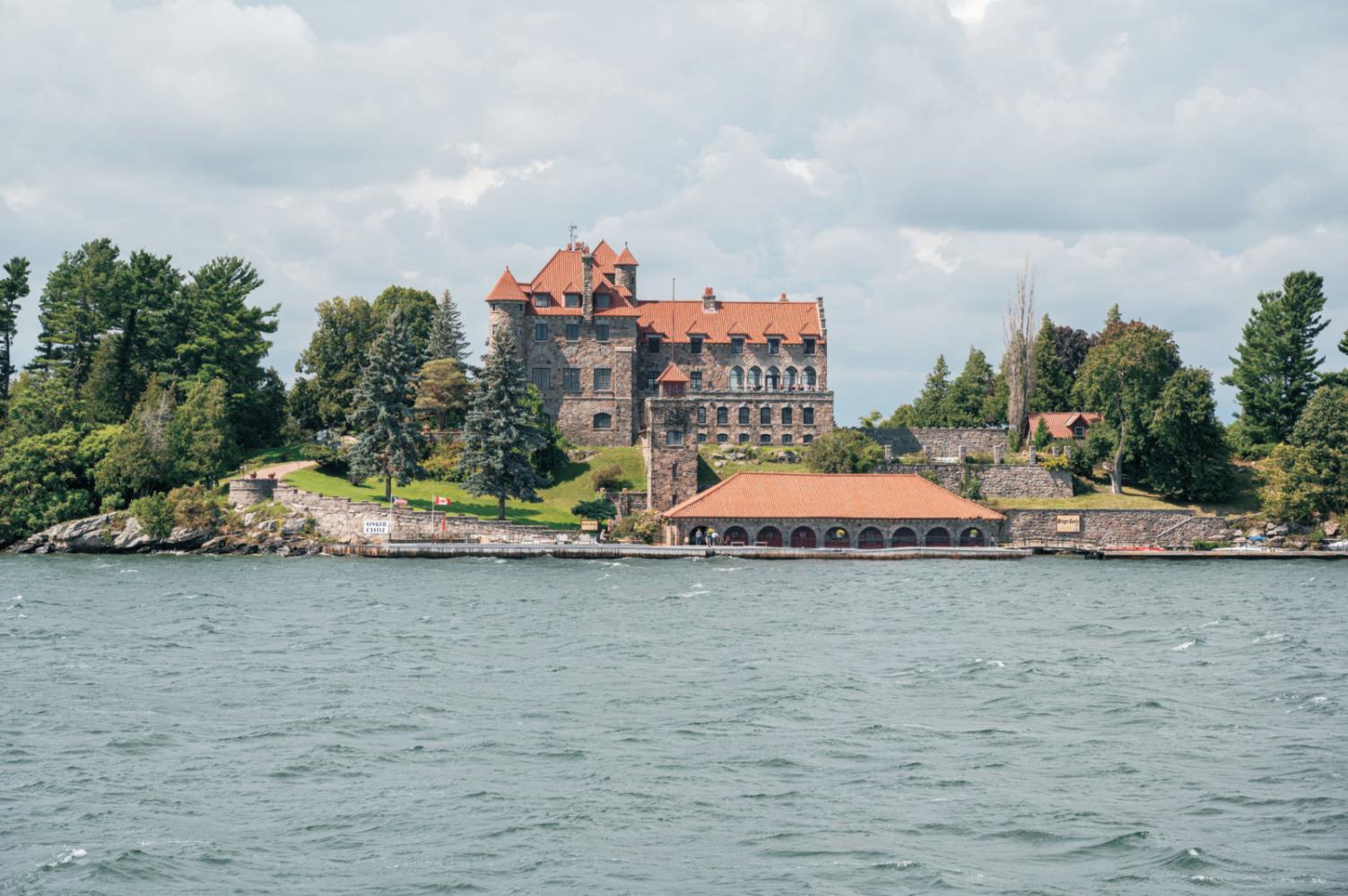



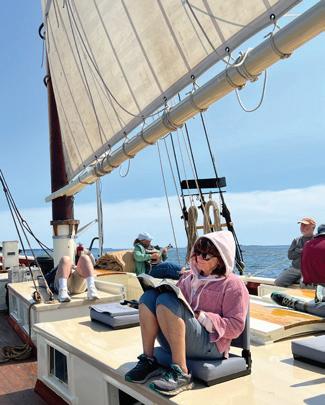

(Continued from p. 81)
person coming from the Dutch colony of Suriname, who ended up meeting a Wampanoag woman in New Bedford, and they came back to Martha’s Vineyard. There are all these kinds of twists and turns and interesting wrinkles in the history that I think really complicate the way we think about Indigenous identity and tradition and ancestry.
That sort of diversity is part of the reason you reject a “blood quantum”—the idea that someone needs to be a certain percentage of Indigenous ancestry to be considered part of a tribe. Instead, you argue that the most important thing is choosing to engage with that part of your heritage, and the way in which you engage. But is there a point where someone has so little Wampanoag blood that they’re seen as insufficiently Indigenous? It’s not to say that anybody could just choose to be Wampanoag. You have to have some sort of family connection. But then it’s up to you how much of that is going to be a part of your life. For our tribe, there’s no blood quantum at all. It’s just a lineal descent. And what’s interesting about that is, we don’t really know for sure how much Wampanoag blood that people even had back through the generations. They could have been intermarrying, mixing. We don’t really know. And I think that’s one of the reasons I’m skeptical of those sorts of pseudoscientific ways of understanding identity.
It’s the same way that I think about Indigenous culture. There’s always this returning-to-tradition, goingback-to-the-past thing. But what tradition are we talking about? If we’re talking about Wampanoag tradition 400 years ago, it’s going to be different from Wampanoag tradition of 500 years ago. It’s a constant evolution.
In the book, your family’s history, your history, and the tribe’s history
all come together in the form of your family’s shop, Hatmarcha Gifts, on the cliffs of Aquinnah. You worked there as a teenager, and, similar to the performances at tribal summer camp, you were putting yourself out there, answering questions from customers about the Wampanoag people. Outside the store, it wouldn’t have occurred to people to ask you why you weren’t “dressed” like a Wampanoag. But in that place, behind that counter, you became an exotic. Yeah, and what’s ironic about it is that in many cases, I’m the one bringing it to their attention. They’re coming in, they’re just trying to buy a T-shirt on Martha’s Vineyard, or a mug or a hat or something, and I’m there telling them, well, hey, you are on Wampanoag land, and all these shops are owned by Wampanoag families. And then that’s what sparks these weird questions.... People would just straight-up ask, “Aren’t all the Indians dead?” “What are you still doing here?” “You don’t look really Indian.” “Do you live in a real house?” “Why are you wearing those clothes?” One really specific one that I always laugh about is somebody asked, “Do you use iPhones?”
Do you chalk any of that up to naivete, or curiosity, from people who have had no exposure to this culture whatsoever?
I would say with the majority of people, it’s coming from a place of earnestness. They are genuinely interested and they want to learn more, but they lack the tools and the vocabulary to ask better questions. And of course there are people who are less well intentioned, but for the most part, people aren’t trying to be offensive.
How would you describe the Wampanoag people’s relationship to the Vineyard’s tourism industry? It’s really, really complicated. For Wampanoag people, tourism-adjacent industries are one of the main ways to make a living, whether it’s having a store up at the cliffs, working down-island in a restaurant, renting your home, working in landscaping,
working on a charter fishing boat—all of these things are connected to this massive tourism machine. But on the other hand, it is an unceasing invasion every summer, and it’s driving up the cost of living. It’s making it increasingly difficult for Wampanoag people to stay on Martha’s Vineyard.
Talk a bit about your personal journey as you explored your Wampanoag identity. You engaged with that part of yourself as a kid, and then, as you got older, it started to fade.
As we talked about, I grew up spending a lot of time on the island in the summer. But as I got older, in high school, I was on sports teams, so I would spend only part of the summer, and go back for soccer preseason. Then I started getting jobs and internships, and eventually went off to college in New York.
It was this big part of my life—and then it was slowly getting less and less. Which isn’t to say I wanted it to be less. There was more stuff in my life that left less space and time to be on the island and have that tribal connection. There are times where I wondered, Is it going to slowly decrease unless I make the decision to move back there?
What inspired you to reengage?
After college, I went to grad school for creative writing. I did an MFA degree, and I started writing about the tribe and my experiences in the tribe. I think that was my way of trying to tackle these questions I had about what it means to be Wampanoag, and how our community works. I was really trying to unpack that, but it was also my way of figuring out a way for me to have the life I had in New York, while still remaining connected to the island.
It’s an interesting point, because there is the idea that tribal membership is inextricably linked to the land. It wasn’t really an option for you to move to the island, but it did sort of force you to come up with a more complex connection with your Wampanoag identity.
Indigenous identity is inextricably linked to the land, but that’s not the only part
of it. Writing about that allowed me to develop other ways of connecting. It was about finding deeper things to think about beyond my own lived experience. I started trying to learn more about the island. By this point, my grandparents had passed away, and I asked my mom about them. I’d try to dig up old records, I would read old newspaper clippings online, watch old videos, and try to learn as much as I could. That led me on this path to becoming a writer and becoming a journalist.
And then from there I developed so many more questions of things I wanted to learn, things I was trying to figure out. Suddenly I’m talking to native people, Indigenous people from other tribes, from all across the country, and realizing that a lot of the questions that I have, these other people have too. And a lot of our issues are shared issues. That really broadened my understanding of, OK, the thing that I want to do, which is engage with the tribe and try to understand the tribe, I can do in a way that’s not just being there and going to summer camp.
What’s the state of the Aquinnah Wampanoag today?
Right now, we have over 1,000 members in the tribe, but most of those do not live on Martha’s Vineyard. And even of the ones that live on the island, a lot of them don’t live in Aquinnah anymore. So we’re a dispersed people. What does it mean to be such a dispersed community? “Diaspora” is not a word that tends to get used often with Indigenous communities, but I think it should.
The state of Martha’s Vineyard is another challenge. There’s a housing crisis on the island for everybody, but I would say it’s especially acute for Wampanoag folks. You can track the Wampanoag land holdings there, and they get less and less every year.
And even if a Wampanoag family owns land, they still have to pay the taxes.
Sometimes people make this mistake. It’s like, “Oh, Indians get all these free benefits. They don’t pay taxes.”
We’re definitely paying taxes, and feeling it every year. It just becomes really, really hard to hold on to land. And it’s also hard to just live on the island. Opportunity is limited. Housing is limited. People leave for education. There’s no college on Martha’s Vineyard. All of these things contribute to Wampanoag folks not living on the island.
What are some good things happening right now with the tribe? There’s a lot of exciting stuff happening. There’s a lot of hope and optimism. There are new projects happening all the time in education, in our language revitalization. We have the Cultural Center, which is our museum in Aquinnah, but it’s also a cultural hub, and they’ve been doing these culture nights on Fridays.
What do you want visitors to Martha’s Vineyard, and New Englanders in general, to take from your book and from the broader history of the tribe? At a basic level, I would really like for
people to know that the Wampanoag people still exist. We’re still here. We’re real. We’re still fighting for our land, and our rights to protect who we are as a community.
Beyond that, I think it would be nice for people to engage more with the tribe, and listen to the tribe, and think about the ways they could support the tribe. In a place like Massachusetts, there is a lot of interest in wanting to do the right thing— Colonialism is bad; we want to honor the tribe. But people need to push past that and think in terms of specifics and think practically. And I think a lot of that is asking those questions, learning, and coming more prepared to the conversation.
Maybe it starts with people realizing that you guys have iPhones. Wouldn’t that be nice? [Laughs.] I mean, somebody could give us a bunch of iPhones. We’re not opposed to different forms of reparations— whether it’s an iPhone, or a little bit of land back.






























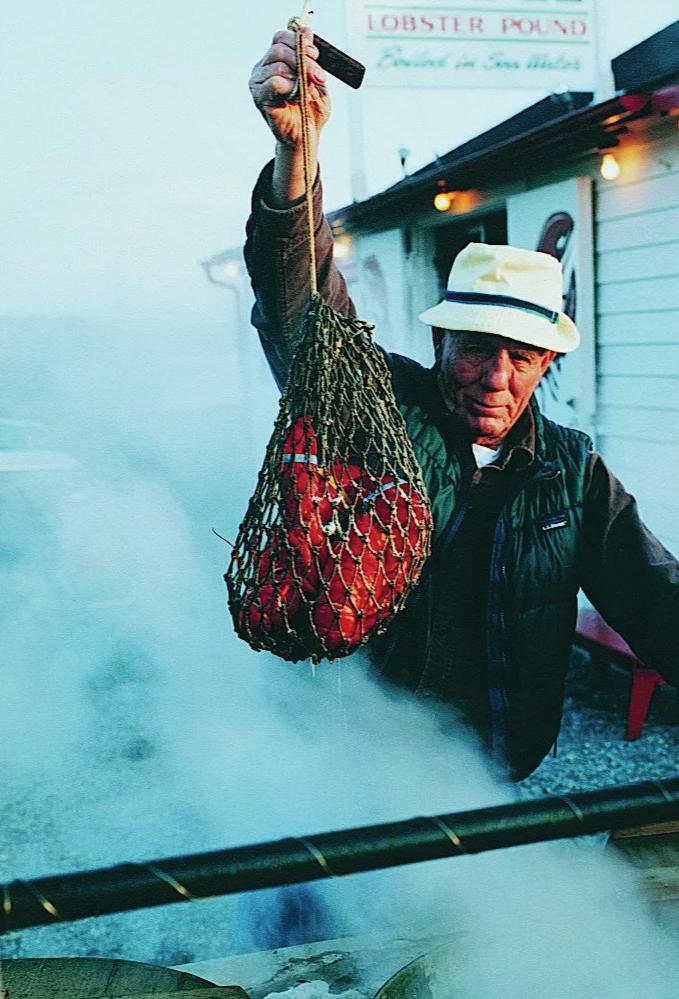



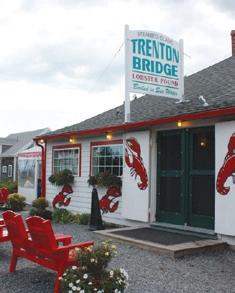






EnergAire continuously puri es up to 4,000 cubic feet (a large room) of air and makes it breathable and invigorating. Restores natural ion balance to unhealthy environments caused by industrial pollution, automobile exhaust, central airconditioning and heating, smoke, dust, pollen, animal fur . . . removes microscopic pollution particles not removed by any other method of air puri cation. EnergAire was rated Number One for speed of removal of cigarette smoke by the leading U.S. consumer protection magazine. It has no noisy fan, no costly lter, and requires no maintenance. Uses less than 2 watts. 9" high. 3" diameter. Weighs less than 1 pound. $79.95

RODAR is the super-powerful professional ultrasonic pest repeller with up to 60 or more times the power of other devices — and power is what makes RODAR so e ective. RODAR ultrasound equals a jet engine — noise unbearable to pests but at frequencies humans and pets cannot hear. RODAR units are completely safe. RODAR drives pests out and keeps them from getting in. Handsome simulated walnut cabinet 5-5/8" high. Weight 1-1/2 pounds. Uses less than 5 watts. $109.95
proof carefully. Approval must be returned by responsible for errors once proof has been signed— or if not returned by the above date. that color proof/pdf is to show color break only. Colors do not accurately actual printed advertisement as it will appear in the publication.

90-day money-back guarantee — 12-month warranty.To order: Send cost for unit(s) plus $12.00 each for shipping and handling (in Mass. add 6.25% tax) by check, money order, MasterCard, Visa, or Discover number and expiration date to Micron Corp. Call Toll-Free 1-800-456-0734



























(Continued from p. 85)
water’s edge to look up at the Milky Way.
“That’s where I remember asking my dad what was up there, how many people, how many stars,” Deri says. “All those normal kid questions—or what used to be normal kid questions.”
His family moved 12 more times before he turned 18, all within Maine (“like we were running from the law,” he jokes). And all throughout, Deri kept asking questions about the stars. He was still in East Orland when he made his first rocket, an aluminum tube stuffed with match heads. He was in Brunswick, on his way to a high school biology class, when the Challenger exploded in 1986. He left Maine to major in physics at Indiana’s Earlham College—a small school founded by Quakers, his mom’s faith tradition—where he studied, among other things, quantum mechanics and the expansion of the universe.
Then, after graduation, Deri’s interests swerved. He picked up a second bachelor’s degree, in electrical engineering, at the University of Southern Maine. In 1999, he cofounded a solar-power start-up in Boxborough, Massachusetts, and the company was a success, helping DIY customers install at-home solar as that market was heating up. But Deri still felt the pull of the stars. And in 2011, turning 40, he also started feeling something like a midlife crisis.
“I decided, embarrassingly, that I was going to give up playing video games at night and dedicate my spare time to something I really wanted to do before I die,” he says. The goal he settled on: launching a space probe to Proxima Centauri, Earth’s next-closest star system, some 4.25 light-years away.
It’s an ambition so improbable that when NASA briefly considered it in the 1980s, the agency dubbed the concept Project Longshot. An object traveling at one percent the speed of light—which no human-made spacecraft has yet achieved— would reach Proxima Centauri in roughly 425 years. But Deri nonetheless began pouring his spare time into reading textbooks and papers on aerospace tech: propulsion physics, materials science, fuel
chemistry. He turned his office into a make-do lab and machine shop, complete with a CNC mill for crafting engine parts. Using an online meetup platform, he assembled a ragtag crew of big-dreaming collaborators with whom he brainstormed and tinkered. On his brother’s farm in North Yarmouth, Maine, he started testing amateur-sized rockets.
That’s where he was in 2013 when he had an epiphany. Deri had already narrowed his interest to what are known as hybrid-propellant rockets, in which a solid fuel source is injected with a liquid oxidizer to help it burn. Hybrid rockets are simpler, cheaper to build, and safer to transport than engines relying solely on solid fuel (like NASA’s space shuttle boosters) or liquid (like Elon Musk’s SpaceX uses). But the particulars of the fuel and oxidizer mix can vary. One day, in his brother’s farmhouse kitchen, Deri’s eye landed on “a certain substance” in a container on the windowsill, and he found himself wondering how it might behave as fuel.
To hear him tell it today, the mystery substance outperformed petroleum.
He won’t say what his proprietary, plant-based fuel source is, but it is avowedly nontoxic and nearly carbonneutral. Deri has declared that it “can be cheaply sourced from farms across America.” A University of Maine researcher once placed it in a tank full of seawater alongside a live lobster, harmlessly, for two weeks. In 2022, during a CNN interview, Deri held up a crumbly black bar of it and took a good-size bite.
He incorporated bluShift in 2014, and as he launched into three years of fuel testing—along with fundraising, team building, and early development of what would become the MAREVL engine— Deri’s lofty focus on Proxima Centauri faded. In its place, a new vision: a fleet of eco-friendly rockets carrying satellites and research payloads, launching from the Down East coast and bringing the booming commercial space industry to Maine.
If the prospect of rural, far-flung Maine as a conduit to the stars strikes you as unlikely, don’t tell Emily Dwinnells. As one of the chief architects of the Maine Space Corporation, a public-private entity established by
“Art to warm your heart & home.”
the state in 2022, she, too, envisions the day when the Pine Tree State is a launchpad—and not only for bluShift, but also for a host of rocketeers.
A Kittery-based consultant in the tech and data sectors, Dwinnells prepared a report for the state legislature that laid out the surprising number of assets Maine has going for it as a would-be space hub. One of the biggies: all that little-developed coastline. Like Cape Canaveral in Florida or the Gulf Coast peninsula that hosts SpaceX’s Starbase, Maine’s sparsely populated Down East coast allows for launch trajectories over the Atlantic, minimizing risk to populated areas and permitting recovery at sea.
What’s more, a rocket launched from the Down East coast can head south over open ocean, which provides a clear pathway for a spacecraft to establish a polar orbit. That’s a perk that few other U.S. launch sites offer and a huge plus for many commercial-satellite applications—imaging, communications, climate monitoring—since satellites traveling pole-to-pole can pass over any swath of the globe as it rotates west-toeast below. An added bonus: Maine’s rural character makes it an ideal place to download satellite data with minimal electromagnetic interference.
No surprise, then, that launch sites are one of three “core business units” the state legislature tasked the Maine Space Corporation with developing. Speaking to a room full of aerospace professionals at the most recent Maine Space Conference, in Portland, executive director Terry Shehata said he envisioned the corporation “at some point” buying or leasing coastal property for construction of a spaceport—though the legislature dictated these be only for small rockets, not NASA-scale launches causing noise, traffic, shockwaves, and debris. (“We’re not interested in becoming the Cape Canaveral of the north,” Shehata said, speaking on a panel alongside an exec from Florida’s aerospace development agency).
The other two pillars of the nascent Maine Space Complex include an analytics center, offering specialized tools for processing satellite data, along with a campus where space start-ups and established operators can share industry-specific tech and other resources.
So far, only that last component has a head of steam. In 2016, Deri moved bluShift from his office in Massachusetts to Brunswick’s former naval air station, decommissioned in 2011 and since reborn as Brunswick Landing, a sprawling mixed-use development. It’s now also home to the Maine Space Corporation, which last year opened an “innovation hub” full of shared tech and is actively wooing more space-related ventures. In the past three years, bluShift has been joined there by another smallrocket start-up—Promin Aerospace, a Ukraine-based company that has yet to launch—and an office of Teledyne Technologies, a $5.5 billion tech giant that built components for NASA’s James Webb Space Telescope.
The engine, it turned out, burned through the last of its fuel right at the minute mark— T-plus 60 seconds, as designed—stopping itself by the time anyone got a hand on the big red button.
In 2023, after touring bluShift and Brunswick Landing with a delegation of Maine politicos, NASA’s highestranking official touted Maine’s “brilliant future in space.”
“You bring up space, and everyone thinks of it as something Florida does,” Dwinnells says. “So part of the communications piece of this is just making it believable for Maine.”
And that means emphasizing the extent of the opportunity. The nonprofit Space Foundation valued the 2024 global commercial-space industry at $480 billion and predicted rapid growth within a decade. Much of that value is tied to products and services that rely on orbiting satellites—often quite little ones, known as nanosatellites—that do things like track your Uber Eats delivery, feed data to your weather app, and put images into your Google Maps search, along with plenty of more esoteric applications.
Some of it is tied to the sector that bluShift is targeting: companies, universities, and government entities that need short stints in microgravity for research and development. Want to learn how to make computer chips without gravityinduced defects? Or culture cells more effectively for drug development? Suborbital rockets, while not powerful enough to deploy satellites, can facilitate these and other remotely conducted experiments in “micro-g.”
But in recent years, folks looking to get to space for any of these purposes have encountered a problem: not enough rockets. There are wait lists to send a payload up on a big launch from, say, NASA or SpaceX—and paying passengers on those rockets can’t be choosy about the specifics of their trajectories or schedules.
So bluShift is far from alone in trying to bring alternatives to market. In fact, Deri has built the company during what Douglas Gorman, a reporter for the space trade publication Payload, characterizes as a global “start-up boom” within the small-rocket sector. And likewise, Maine isn’t the only state hoping to build infrastructure to woo those start-ups and the space-bound clients they serve.
“But I think Maine is approaching it in a unique way that has some staying power,” says Gorman—a native Mainer, as it happens, now based in New York. “It’s because of the geographical aspect, the ability to have a spaceport, but also because it’s doing things like converting old military facilities to support the space industry in other ways.”
For all the talk about the future, however, Dwinnells cautions that wouldbe commercial-space clients won’t stay underserved forever. “We have a timebound opportunity here,” she says. “You look in the paper, and every day there’s a new piece of news about space.” Maine’s launch window, in other words, is now.
bluShift’s first stab at a 60-second engine test hit a snag at T-minus two whole days. A full-duration hot-fire test is a milestone in a rocket’s development. The first, cautious test of the MAREVL engine had lasted just five seconds. The next ran for 20. Tripling that—burning through the fuel load

required to reach space—subjects an engine to far more stress.
The hiccup was a lack of nitrous oxide, the liquid that’s injected, during a burn, into a hollow cylinder of the trade-secret biofuel. For weeks, the bluShift crew, these days about a dozen strong, had been readying a shiny new oxidizer tank the size of a small silo. Custom-built by a Rockland manufacturer—there’s that space economy trickling down—the tank is flight-ready, meant to ascend as part of a finished rocket.
But there was a learning curve to filling it for the first time, transferring N₂O from an array of small pressurized cylinders, and days before the scheduled test, the team realized they were short of the 400 gallons needed. Their usual supplier said getting more would take weeks—weeks of payroll and busywork, with the site already prepped and the test already trumpeted to investors and the press.
“We were ready to drive around New England and literally load whatever we could find in the back of my F-250,” Deri says.
This is not how SpaceX rolls. But to hear Deri and his team tell it, “Yankee ingenuity”—a willingness to improvise and work on the cheap—sets bluShift apart nearly as much as its biofuel. That F-250? During engine tests (that is, when it’s not towing the mission-control RV), it’s parked near the bunker with a pallet
tank full of water and a pump, an oldschool backup for the test site’s firefighting carbon-dioxide quench system. Inside the bunker, meanwhile, a huge length of commercial steel pipe served as a cheap testing alternative to a fully engineered combustion chamber.
“Something I enjoy about watching our engineers work is an emphasis on producibility and testing that’s so realworld,” says David Hayrikyan, bluShift’s chief technology officer. “If you sent our designs to engineers at other companies I’ve worked for, you’d get a big piece of metal and a 5-axis milling machine, and you’d machine all this complicated geometry, and it’d cost $150,000. Our crew starts with, ‘Let’s buy a sewer pipe.’”
Hayrikyan, a Boston University mechanical engineering grad, has been with Deri since the beginning, having answered his online call for would-be rocket scientists back in Boxborough. “I walked into that room looking for people who wanted to build something,” he remembers. “Sascha mentioned the Proxima Centauri idea, and I was like, ‘This is batshit! This dude is lighting rockets on a farm!’
“But the thing about Sascha,” Hayrikyan goes on, “is that he thinks it’s possible. He’s able to imagine these abstract ideas, and he sometimes sounds wild when he talks about them—but then he is also super down to execute.”
After a few desperate calls to Maine gas suppliers, bluShift executed its first full-duration test after only a week’s delay. It was largely a success, the MAREVL engine delivering high thrust for over a minute, along with some evidence of instabilities midway through, a slight sputtering to the plume as it blasted out the back of the sewer pipe. Having an issue to address seemed almost to bolster Deri all the more. “This was incredible!” he told 1,000 or so viewers of his livestream. “I can’t wait to hear the results of the data and make the next test even better.”
The next test, the one in October 2024, was indeed better—the flurry of shouts for an emergency stop notwithstanding.
The engine, it turned out, burned through the last of its fuel right at the minute mark—T-plus 60 seconds, as designed—stopping itself by the time anyone got a hand on the big red button. The sparks that Deri and others saw were the result of burning through a cardboard liner surrounding the fuel, and although a simple graphite piece was expelled from the chamber, it caused no damage. “Nothing’s supposed to fly out of our motor,” Hayrikyan says, “but this was great because it was an informative and benign failure, and preventing it [gave] us a metric for our next test.”
And while the e-stop episode briefly terrified Deri, you’d never have known it from the smile he wore as he bounced out of the RV to join press and investors on the tarmac. Deri is a winning communicator, and as the last moments of twilight gave way to darkness, he stood in front of the testing site and relayed bluShift’s whole genesis story—the farm, the windowsill—with an eager, almost theatrical flair you might expect from a fanboy’s Battlestar Galactica episode recap.
When he finished, one of the TV newspeople muttered about the darkness, switched on an LED, and asked Deri to repeat his whole spiel. “Oh, sure,” Deri said, unfazed. And then he did, without any noticeable lapse in enthusiasm, as if the words were leaving his mouth for the very first time.
That knack for storytelling may serve Deri the next time he sets out to garner support for launching bluShift rockets from Maine. He has twice tried and failed to win backing for such a plan in Washington County, at Maine’s salty eastern edge—a region not known for its embrace of the new. In 2021, Deri approached the town council in Jonesport, population 1,300ish, some 50 miles east of the pond where he once stargazed. A landowner there was willing to lease a small, uninhabited island as a launch site. Deri vowed no more than 32 launches a year, all on Sundays, when lobstermen can’t haul, or in the evenings, when the fishing fleet is in. He pitched STEM projects with local schools. He stressed how dramatically smaller the rockets and launches would be compared to the SpaceX ones on TV. He said he aimed to build a manufacturing facility, hiring welders and machinists, drawing on the town’s boatbuilding workforce.
But locals worried about effects on fishing, and when the town responded with a temporary moratorium on aerospace operations, bluShift instead set its sights on nearby Steuben, reenvisioning launches not from land but from a selfelevating barge called a liftboat. Initially, Steuben’s council was supportive. But local opposition stressed the threat of pollution and made comparisons to SpaceX’s impacts on the Texas Gulf
Coast. Elon Musk’s gargantuan company has been fined there for discharging industrial wastewater into sensitive wetlands. Its exploding spacecraft have rained debris. And last year saw more than 150 launches of its Falcon 9 rockets, each of which, experts say, releases some 336 metric tons of CO₂ into the atmosphere, roughly equal to the carbon output of 78 cars driven in a single year.
In March 2025, Steubenites approved a referendum prohibiting both commercial rocket launches and space-industry manufacturing. Deri was disappointed by the setback, but at the moment, he and bluShift have more pressing tasks. Among them: an investment round, obtaining an FAA commercial launch license, further perfecting the oxidizerinjection system, and building a flightready combustion chamber and fuselage for the rocket they’re calling Starless Rogue. The goal, if these and other pieces line up, is a launch of Starless Rogue, with paying-customer payloads, from New Mexico’s Spaceport America before the end of this year.

Lately, Deri has also been focused on fielding other interest in bluShift’s engine tech, including for use in boosters on hypersonic jets. A bit ironically, he says, it isn’t the carbon-neutral nature of his fuel that’s attracting the interest, but instead that it’s simply easier to source, store, and transport than the toxic chemicals found in conventional solid rocket boosters. (It also doesn’t hurt that it’s less expensive, too.)
But while he doesn’t yet know where, the dream of building a coastal Maine launch facility is still at the core of Deri’s long-term vision—and he repeated as much for the local news folks out on the tarmac in Brunswick.
“What ultimately motivates me,” he said confidently, “is that Maine can have a real foothold in exploring space and the universe.” Then he seemed to go off-script for a moment.
“And I’m hoping that…,” he said, then paused. “This is not…,” he tried again, before faltering.
“The beginning for me was 11 years ago,” Deri said, finally. Then he gestured behind him, at the darkened test site beneath the first faint stars. “But this feels like just the beginning.”
Quarry Hill offers it all: a gracious, maintenance-free home with easy one-floor living, plus priority access to the fullest spectrum of care.
Quarry Hill offers it all: a gracious, maintenance-free home with easy one-floor living, plus priority access to the fullest spectrum of care.
�uarry �i�� offers adu�ts ��� a �racious� �aintenance�free �o�e �it� easy one�f�oor �ivin�� ��us �riority access to a fu�� s�ectru� of care.
Quarry Hill offers it all: a gracious, maintenance-free home with easy one-floor living, plus priority access to the fullest spectrum of care.
Quarry Hill offers it all: a gracious, maintenance-free home with easy one-floor living, plus priority access to the fullest spectrum of care.
Enjoy all the beauty and cultural sophistication of Camden, Maine, and discover your best future.


For
For Adults 55+
Enjoy all the beauty and cultural sophistication of Camden, Maine, and discover your best future.
Pen Bay Medical Center | A MaineHealth Member 207-301-6116 | quarryhill.org
Enjoy all the beauty and cultural sophistication of Camden, Maine, and discover your best future. 207-301-6116 | quarryhill.org �n�oy a�� t�e beauty and cu�tura� so��istication of �a�den� �aine� and discover your best future.
Pen Bay Medical Center | A MaineHealth Member 207-301-6116 | quarryhill.org
Pen Bay Medical Center | A MaineHealth Member 207-301-6116 | quarryhill.org
Enjoy all the beauty and cultural sophistication of Camden, Maine, and discover your best future. Pen Bay Medical Center | A MaineHealth Member ������������ �


Explore the possibilities in Retiring to the Good Life, a guide that introduces readers to select New England retirement communities — each offering a unique opportunity to start your new chapter in a region filled with arts, culture, and outdoor activities.
Read or Download Now!



Our thoughtfully designed communities offer a wide range of living options and services, so you can find the perfect fit for your lifestyle and needs.
From cottages and villas to cozy apartments and inviting spaces, there’s a Masonicare for everyone.
Backed by the award winning Masonicare continuum of care you can enjoy peace of mind knowing that no matter what the future brings, we’ve got you covered. Because at Masonicare, exceptional care and service isn’t just provided.




Finding a home means so much more than just owning a house.
From the day I arrived in New England during a January 1970 snowstorm to now, I have lived in 18 different houses in 11 towns—seven in Maine and four in New Hampshire, the state I’ve called home since the autumn of 1979.
I have been part of many stories telling of deep roots and love of land, the words always belonging to others. Most of those pieces have appeared in this magazine, which for 90 years has been devoted to a singular sense of place.
This feeling of belonging is elusive and cannot simply be wished for; it cannot suddenly be grafted on. For the nearly half century I worked at Yankee, my deepest roots were planted in an office with a view of the town fire station and a grassy meadow that climbs slightly to a knoll beside a country road. Most of the time when I left, it was on the edge of night.
When the pandemic hit, for many months there was no separation between work and home. Town became a family we all shared. And then it ended.
I have a friend who has lived most of his life within a few miles of where he was born and raised. Even when he explored living elsewhere, he knew he would return. His house nestles against a forest; summer days pass in a family boathouse, handed down through generations, on one of the prettiest lakes in New England. If my friend were a tree, his branches would spread high and wide; people would rest beneath its shade and look up in wonder.

My wife, Annie, grew up in the same small town where we are now settled in an old house by the river. She has lived in Rome, San Francisco, and Washington, DC, but years ago she, too, came back to her birthplace. And since I moved here, I have realized that where I see buildings and shops and streets, she sees history, traditions, stories. And mostly, she remembers. When we are walking in town and people pass by in cars or on foot, she knows many by name, and what they do, and often what their parents did, too, a smalltown genealogy that only those with long ties to a town will know.
There is time now to be attentive to the comings and goings of the people who share this place with me. To listen to the rhythm of a town. I had never thought of it this way, but it is not unlike nurturing any relationship.
A five-minute stroll from our house there is a local grocery store with a
few tight aisles. When I enter, as I do almost every day, one staff member or another greets me by name. Not long ago, a young woman who works there had made cookies and offered them hot from the oven to me and other customers.
Recently, I stopped in to find the store celebrating the birthday of a man who had grown up in town and who had worked there for years. Decorated cupcakes and cookies lined a counter, and we were coaxed to help ourselves. You could hear the shouts of “Happy birthday, Dwight!” carry all through the store.
When I walk through town now, people call out and nearly always ask how I am liking retirement; many of them know this stage of life. When we have walked a bit of distance, I ask Annie their name and she knows. Next time, I will know it, too.
I have lived in our town for 17 years and only now, because I am here, daybreak to dark, I greet the people tending the flowers on Main Street; I am learning the names of the dogs we pass by each morning. Maybe, just maybe, I can have more than a house by a river. If I try, if I am patient, I can also find my own best place: a hometown.
Mel Allen is editor at large for Yankee and the author of Here in New England: Unforgettable Stories of People, Places, and Memories That Connect Us All (Earth Sky + Water LLC, 2025).
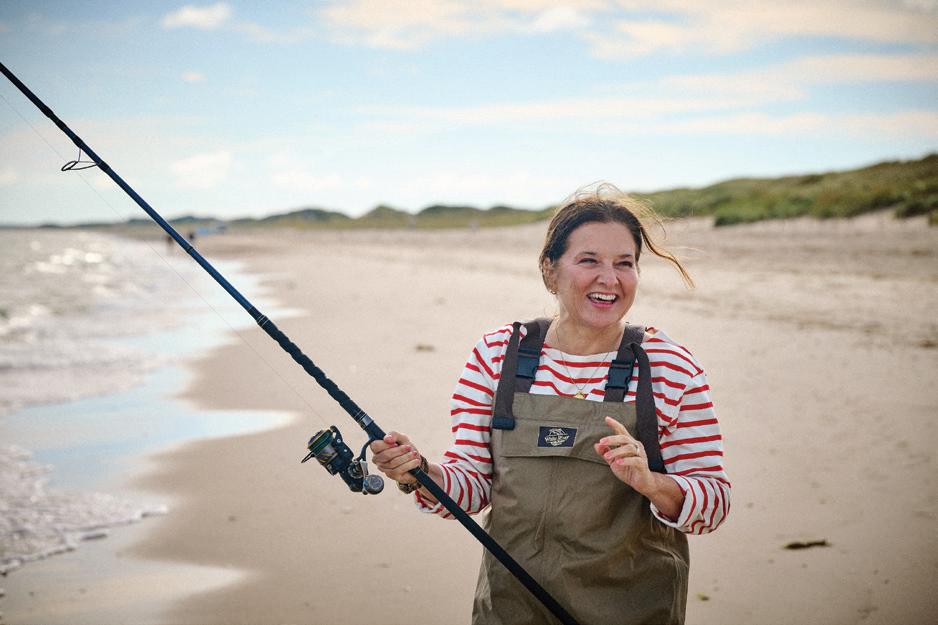




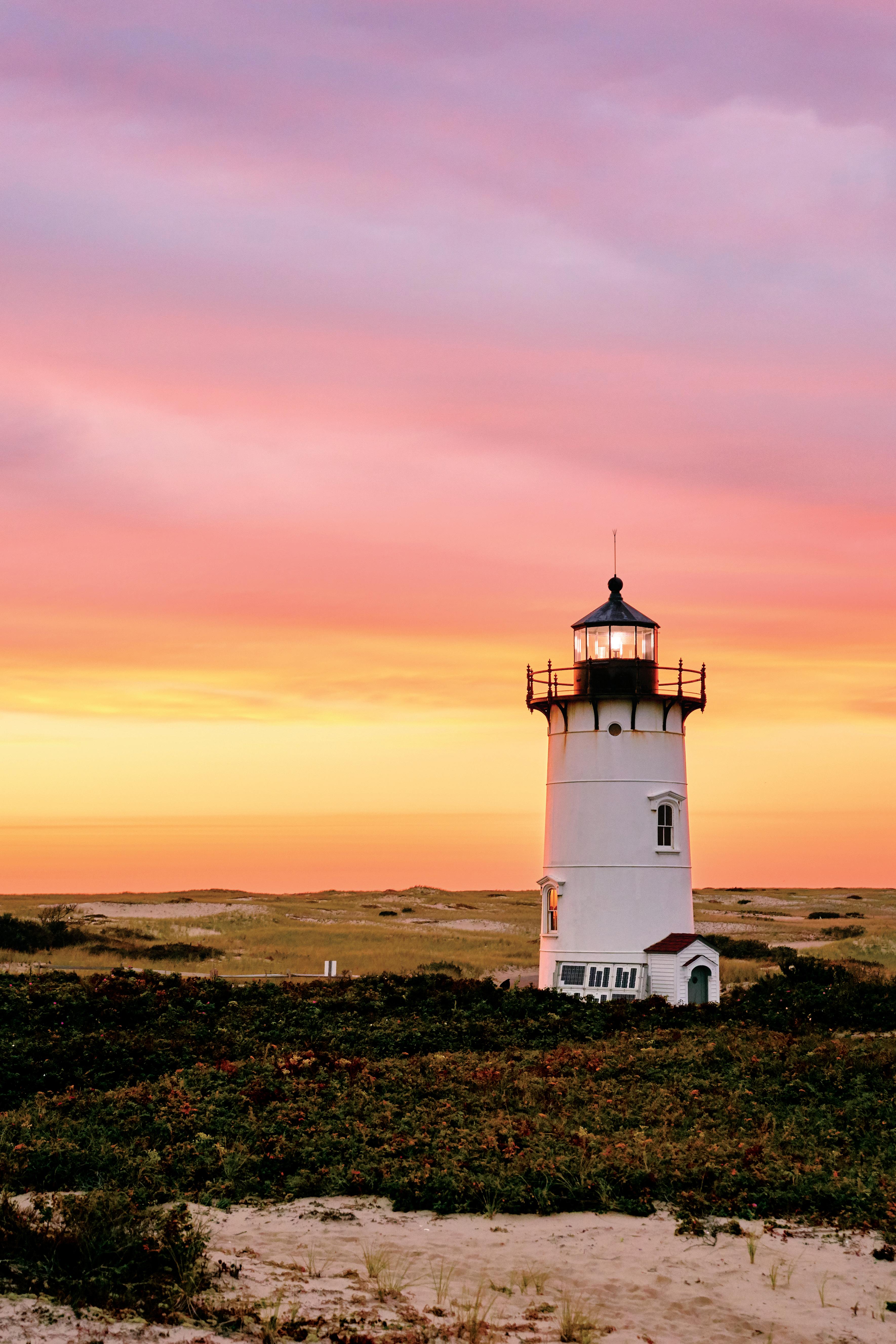

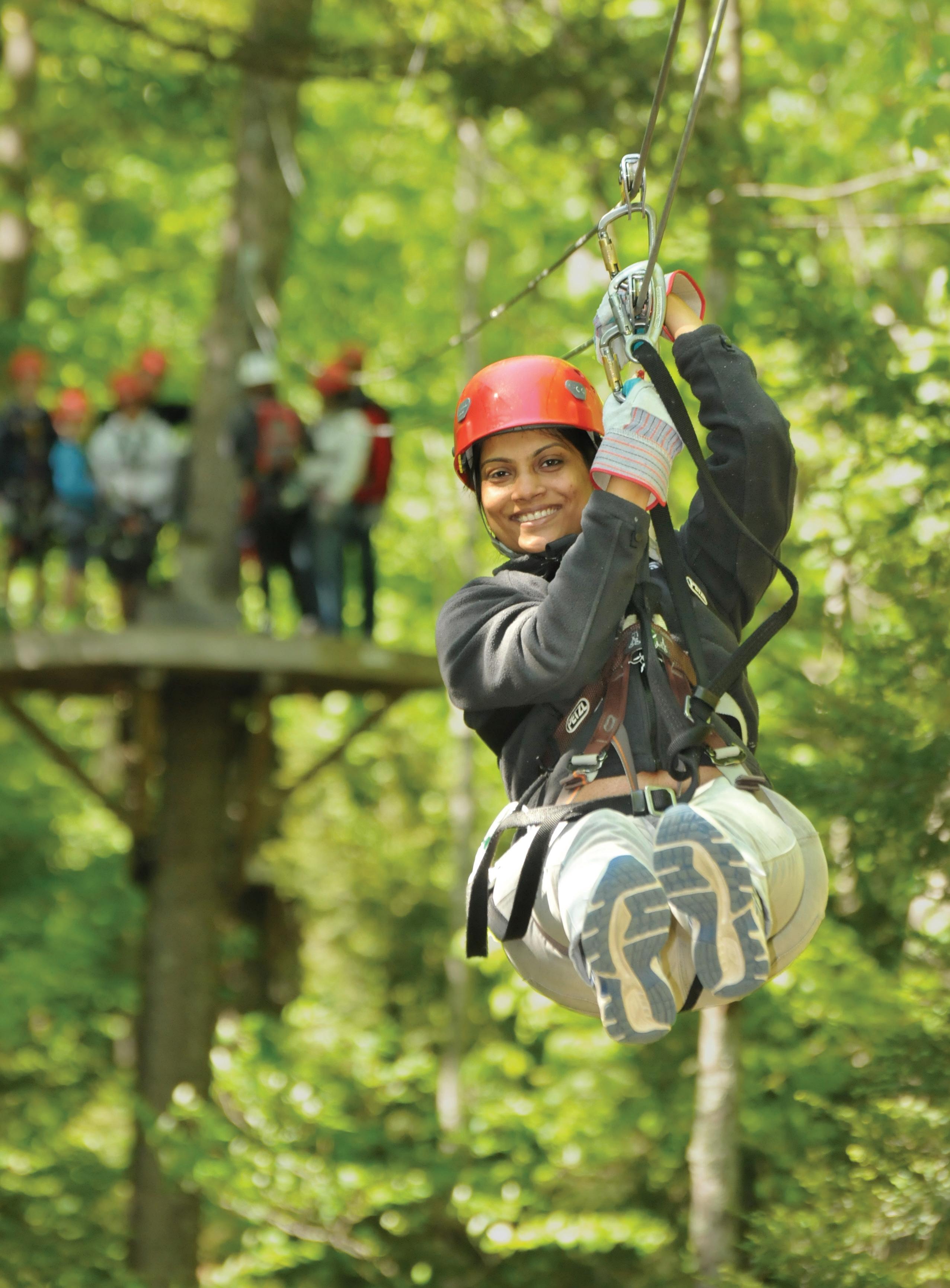
Come to where speed has no limit.