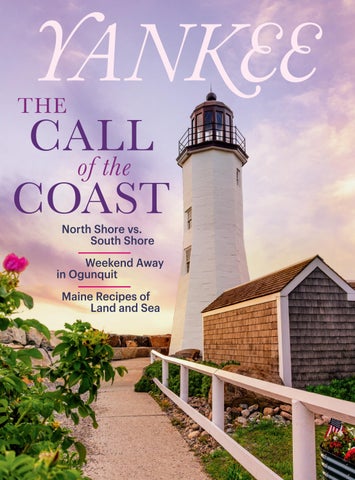
the CALL of the COAST
North Shore vs. South Shore
Weekend Away in Ogunquit
Maine Recipes of Land and Sea

CONTENTS
features
56 /// Tidal Bout
It’s North versus South, as two Massachusetts travel writers make the case for which of their state’s famous shores reigns supreme. By Diane Bair and Pamela Wright
70 /// Residential Power
New England’s presidential homes offer rare insight into their former occupants—and the real human foundations that shaped their time in office. By Justin Shatwell
76 /// Conversations: Ethan Tapper
On doing the hard, and sometimes heartbreaking, work of keeping our forests healthy. Interview by Rowan Jacobsen
80 /// Temples of Unhurried Delight
From antiques-filled cottages to quaint rustic cabins, author and design journalist Jaci Conry ’s new book invites us into the iconic summer house. By Madeline Bilis
88 /// Goodbye to a Grand Laker
It’s hard letting go of an old boat, let alone a piece of Maine’s legendary sporting heritage. By Wayne Curtis
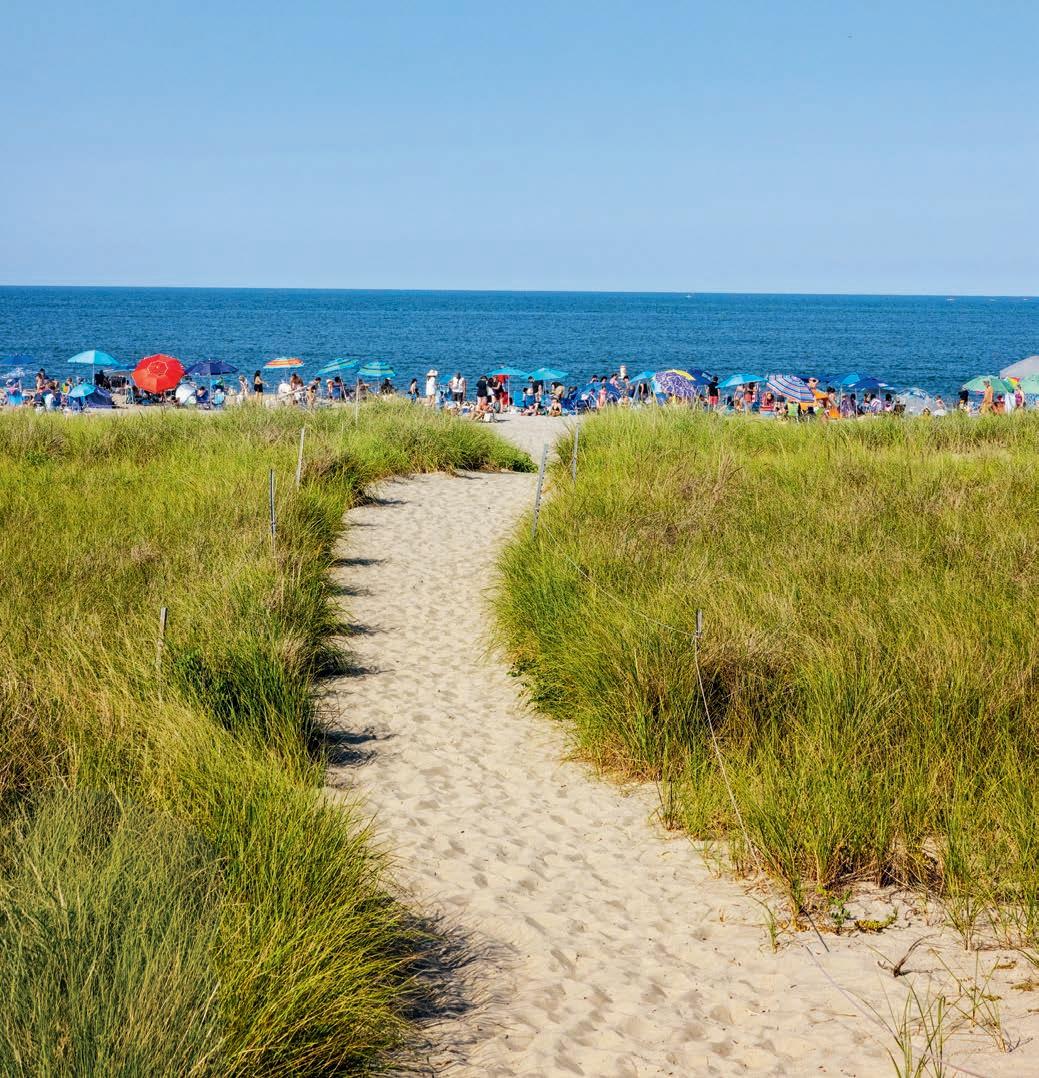
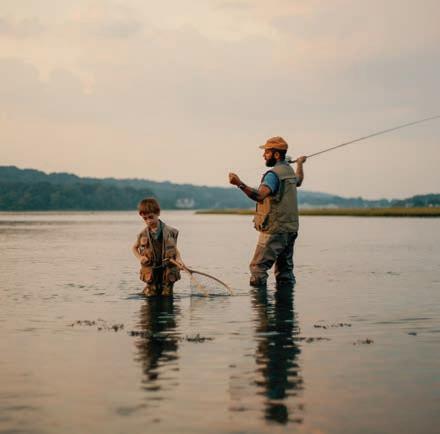
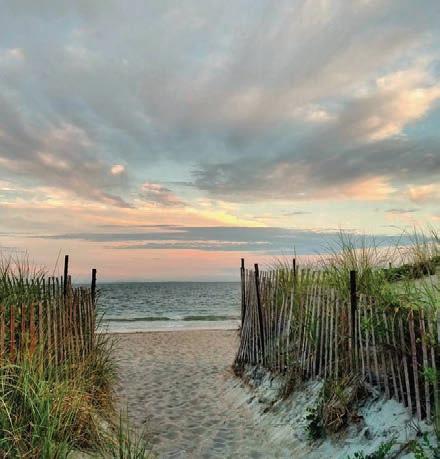
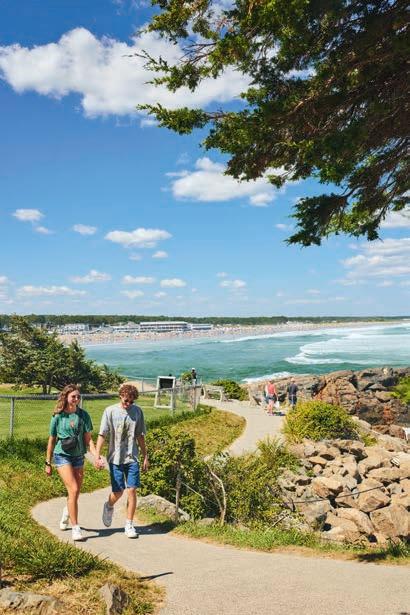
Visited by more than 350,000 people annually, Crane Beach in Ipswich, Massachusetts, is a jewel of the North Shore. See story, p. 56.
@fa3ryg1rl



South CountyRhode Island
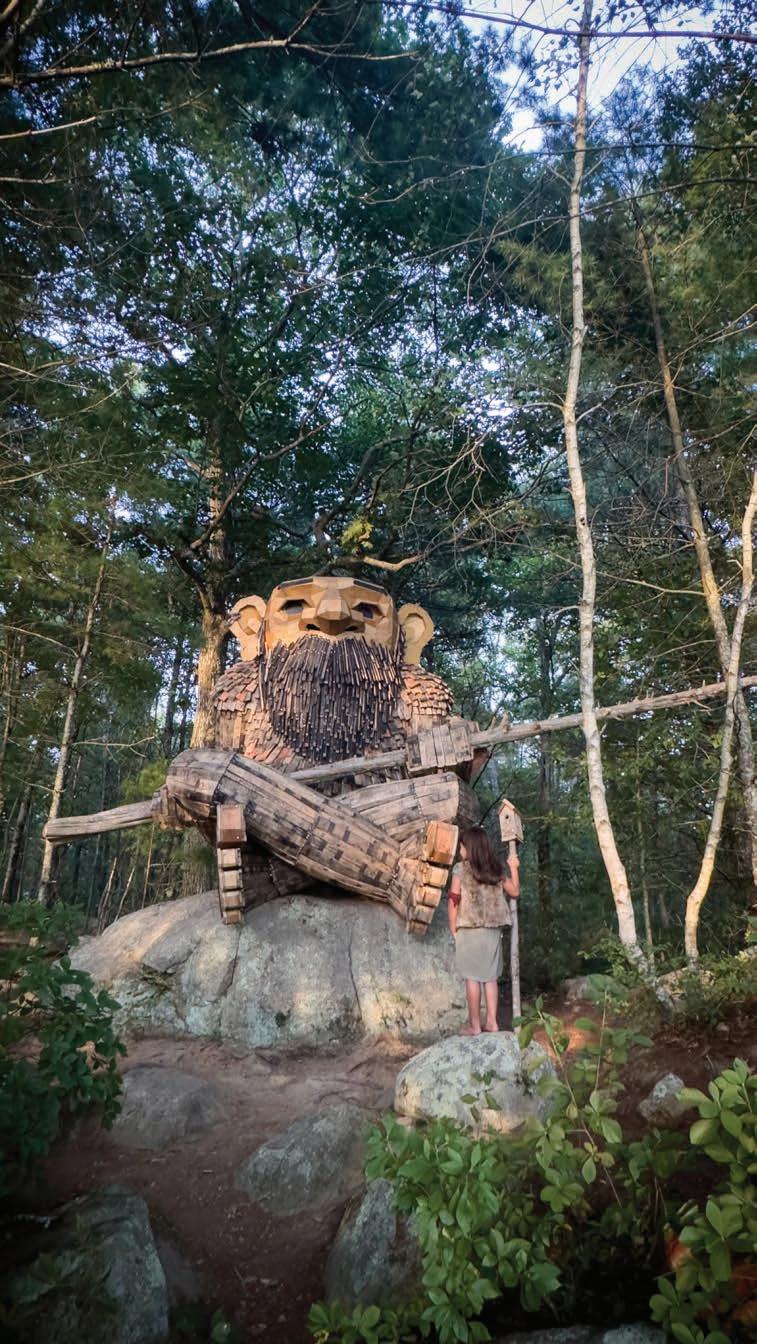




is South County, Rhode Island
100 miles of coastline featuring 20 public beaches to relax or play. Fresh, local seafood. Miles of hiking and biking trails that spill into lush forests and wildlife preserves where you may stumble upon a giant troll by Danish recycle artist Thomas Dambo. Learn more at SouthCountyRI.com
Patty J by Stacey Doyle
24 /// Three’s Company
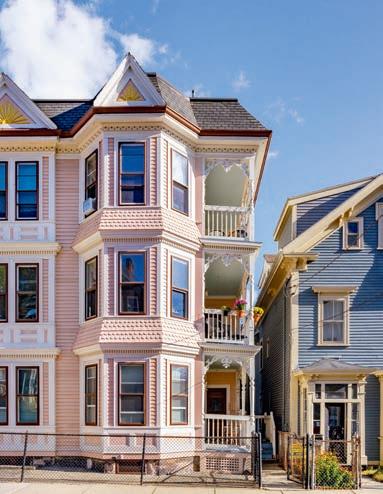
Sizing up the lore and legacy of New England’s iconic urban housing, the triple-decker. By Bruce Irving
30 /// Made in New England
With DIY grit and a splash of locally sourced seawater, Atlantic Soap Co. is turning out sudsy works of art. By
Courtney Hollands
36 /// Maine Courses
The debut cookbook from acclaimed New England chef Devin Finigan aims to gives readers a deeper taste of land and sea.
42 /// Weekends in the Kitchen
Nothing beats the sweet-tart delight of summer tomatoes, celebrated here in two easy recipes inspired by our TV show. By Amy Traverso
44 /// Weekend Away
The big beach is only the start of the summer experience in Ogunquit, Maine. By Ian Aldrich
52 /// How to Staycation
ese quick-hit New England destinations prove you don’t have to drive for days to make great vacation memories. By Bill Scheller
10
BEHIND THE SCENES
12
FIRST PERSON
Learning to see a full spectrum of history in a can of humble white paint. By Howard Mansfield
16
FIRST LIGHT


A historic steam locomotive and riverboat combine for a one-of-a-kind experience in the Lower Connecticut River Valley. By Ryan Cashman
22 UP CLOSE
Twenty-five years after nearly going dark, a Lake Winnipesaukee icon shines on. By Benjamin Cassidy
112
HERE IN NEW ENGLAND
Our most powerful connections to the past aren’t always found in museums. By Mel Allen

CORRECTIONS
• “Shack Mix” (May/June): Chris Vanasse should have been identified as the sole executive chef partner of Haring’s, in Noank, CT.
• “It’s a Mod, Mod World” (May/June): The Portland, ME, store that was listed as Portland Flea-for-All is named Open House.
• “Peak Perfection” (May/ June): Vermont is home to five mountains taller than 4,000 feet, not four.
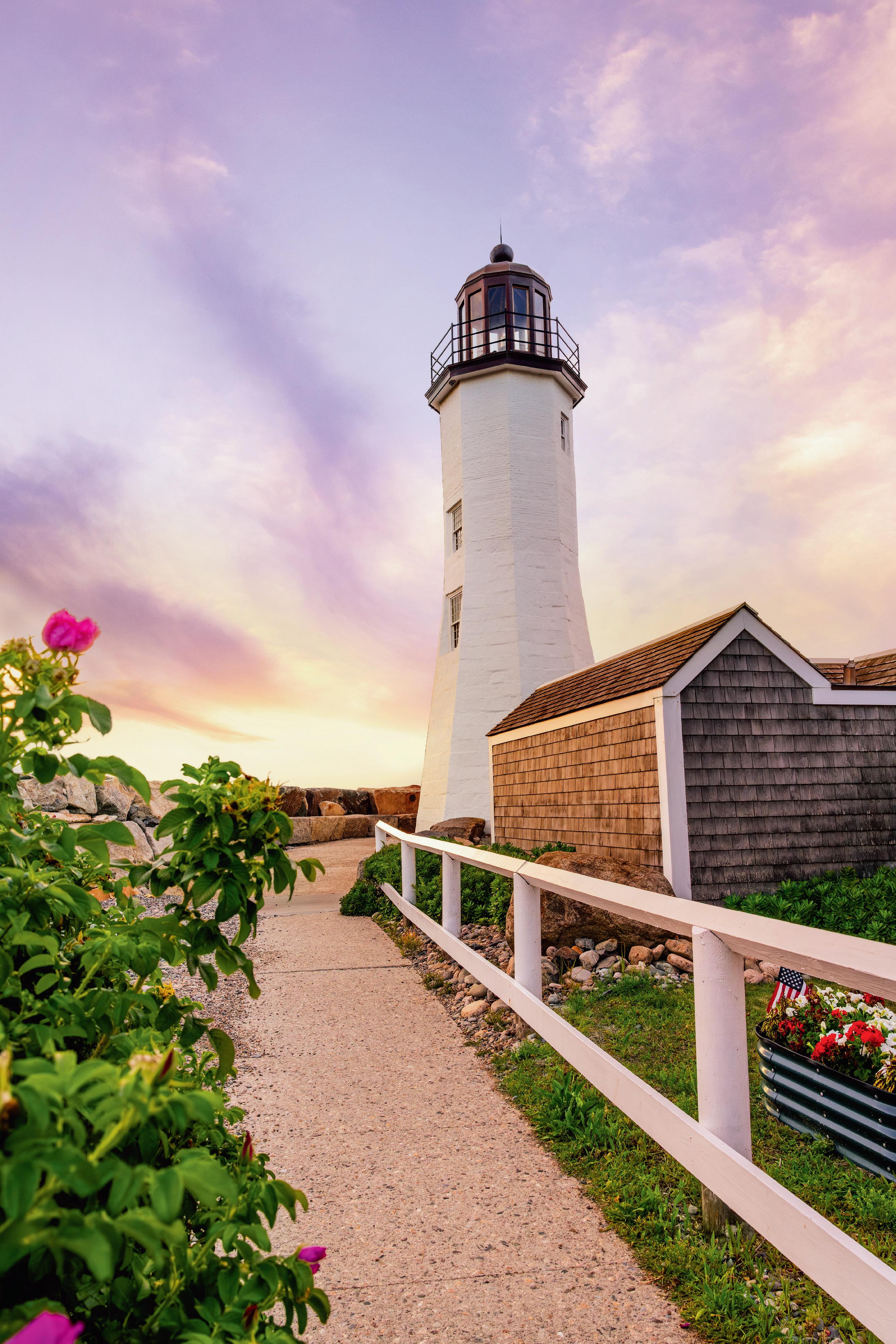
Scituate Light in Scituate, MA.
Photo by Adam DeTour
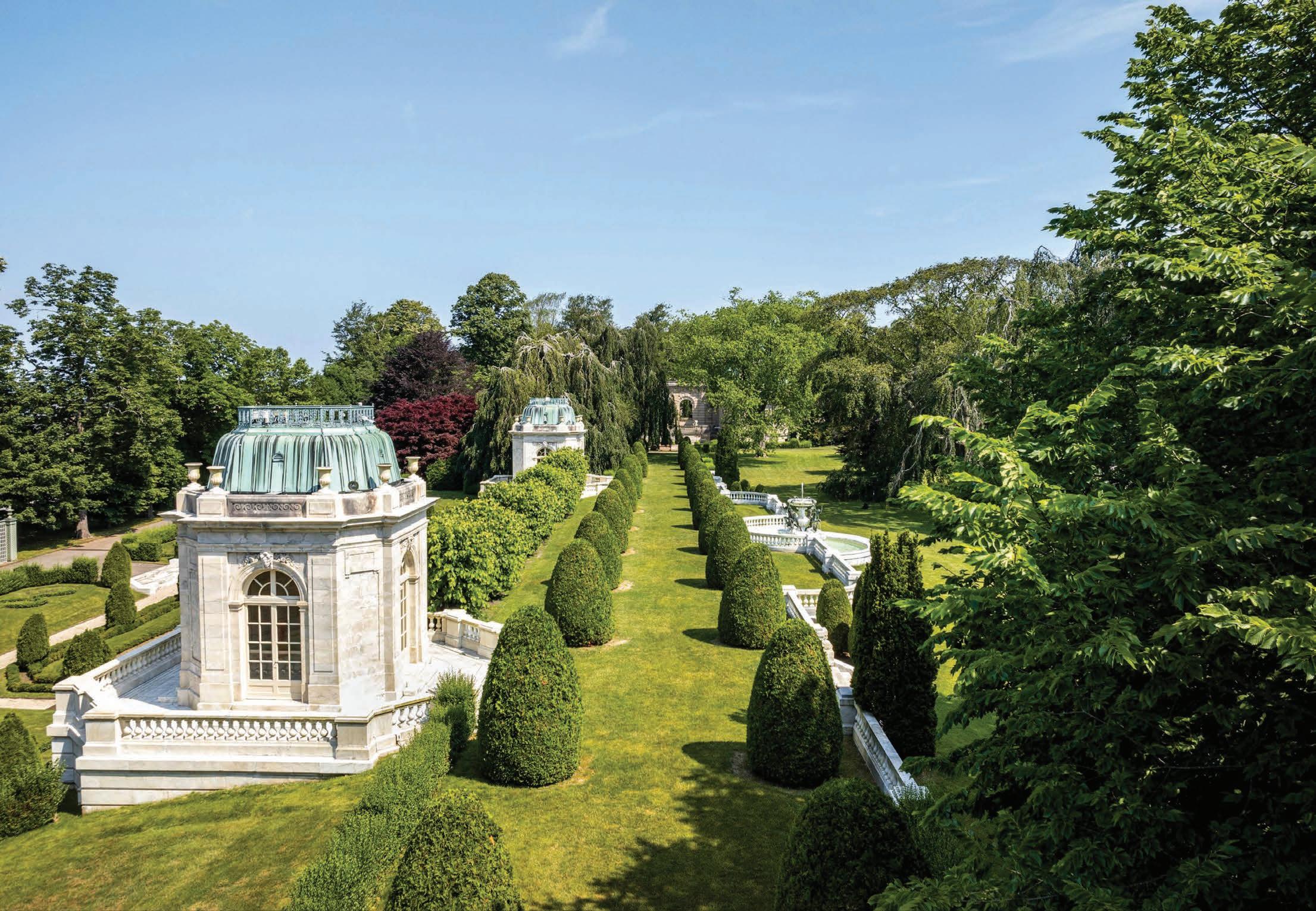
The Elms

BY HAND, WITH HEART
Artisans
find their path and follow their passion
in Maine.
GABRIEL FREY | ORONO
For Gabriel Frey, making art is really an opportunity to build conversation. “It’s
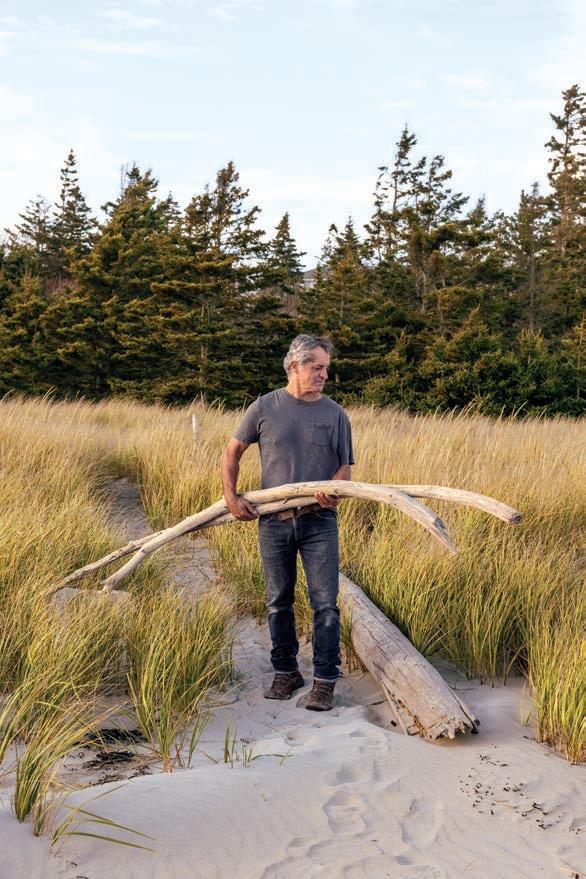



utilized. “Using these materials and expressing their human importance is how we care for the environment,” says Frey, a 2025 Maine Cra s Association Artist Award recipient. “Because when you’re in the land, you’re relating with it continuously, and you’re understanding its changes so that future generations can continue with the traditions we’ve carried forward.”
EBENEZER AKAKPO
| WESTBROOK & PORTLAND
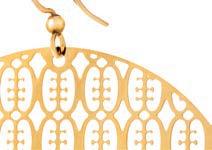
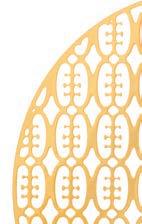
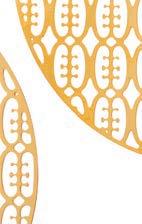
Ebenezer Akakpo’s jewelry—wide cu s, slender bangles, dangling earrings—is adorned with tiny characters called adinkra, strong graphic symbols that appear in handcra s and artwork throughout his native Ghana. They represent some of the most powerful ideas in any language: hope, unity, bravery, and friendship. These traditional Ghanaian designs also dance across his stainless-steel goblets and tumblers, felted trivets, and coasters. And, a er nearly three decades in Maine, Akakpo, who works out of a studio in Westbrook and operates a retail shop in downtown Portland, has even begun to play with symbols familiar to all Mainers: lobsters, moose, lighthouses, and chickadees.
KATRINA KELLEY | NEWCASTLE
When seamstress Katrina Kelley was choosing a logo for her business, Amphitrite Studio, the winning design was clear: a needle and thread running through the state of Maine, with a heart over her home in Newcastle. “This place has formed who I am as a maker,” says Kelley.





“It’s hard-working and salt-of-the-earth, but also community-based … warm, loving, and respectful.” No surprise then, that in addition to the luxurious kitchen and bath linens she sells to an eager, largely online audience, Kelley’s work has reflected her deep local ties—from creating sauna hats for a Nordic spa in Newcastle to making custom-designed chef aprons for the crew at Camden’s Bu ermilk Kitchen.
MICHAEL FLEMING | PHIPPSBURG
While many dri wood artists concentrate on smaller pieces—mirrors and such— Michael Fleming works on a grand scale, cra ing high-end furniture with an artistry that has gained him an enthusiastic following. Several years ago he installed a huge bald eagle on the exterior of L.L. Bean’s flagship store in Freeport, Maine, and his glass-topped tables are coveted from Portland to Paris to Saudi Arabia. “Not everyone has the kind of access to
MICHAEL FLEMING
AYUMI HORIE
EARRINGS BY EBENEZER AKAKPO

the outdoors that I do, and so I want my pieces to bring a li le of that world to them,” he says. “I want it to be soothing and relaxing, but I also want them to realize the importance of nature and to tread lightly so we can make sure our world stays beautiful.”
AYUMI HORIE | PORTLAND
Raised in Lewiston-Auburn, po er Ayumi Horie spent time out West and in New York state before se ling back in Maine. “I’m a product of this place, and it continues to feel right,” says Horie, who works out of a private Portland studio, mixing Japanese and American folk traditions in ceramics that feel whimsical,
emotional, and most of all intimate. “When you hold a handle [of a handcra ed cup], you’re hugging somebody, you’re holding hands with somebody,” she told PBS’s Cra in America. And just as Horie’s art reflects a desire to deepen the connection between people, so do her community projects, including fundraising for disaster relief and helping launch the Cra Archive Fellowship, which supports research on Black, Indigenous, queer, and other underrepresented cra histories in the U.S.
ERICA MOODY | WALDOBORO
A professional metalworker for more than 30 years, Erica Moody has spent the past decade on the Midcoast, drawn
A MAINE-MADE SAMPLER
CENTER FOR MAINE CRAFT | WEST GARDINER
A 2,500-square-foot treasure trove of works by Maine Crafts Association members that also serves as the visitor welcome center of Central Maine. shopmainecraft.com
THE GOOD SUPPLY | PEMAQUID
Art, gifts, and home goods by 100plus makers (90 percent from Maine), set in an 1850s post-and-beam barn. thegoodsupply.com
MARKINGS GALLERY | BATH
Cooperative gallery connecting visitors directly with artists, as it represents more than 50 Maine creatives across a
broad range of contemporary media. markingsgallery.com
MAINE CRAFT WEEKEND
Annual tour of open studios and events offering behind-the-scenes access to artisans statewide, October 3–4; interactive map and directory at mainecraftweekend.org



by its “human-scale” character. “There’s nature, ocean, a lot of space, but it’s a smaller social ecosystem—you get to know your neighbors, you see where your food comes from,” says Moody, who specializes in elegant hand-forged and -fabricated servingware and architectural fi ings. She also loves being in a community of small businesses like hers, where people put family and well-being above chasing profits, and where local creatives inspire each other endlessly. That’s part of why Moody now opens her home to fellow artists and innovators for her Maine Creative Residency program, saying, “I’ve seen how beautiful it is to have creative environments like this.”

ERICA MOODY
KATRINA KELLEY
BASKET BY GABRIEL FREY
Publisher Brook Holmberg
EDITORIAL
Senior Managing Editor Jenn Johnson
Executive Editor Ian Aldrich
Senior Food Editor Amy Traverso
Senior Digital Editor Aimee Tucker
Travel/Branded Content Editor Kim Knox Beckius
Associate Editor Katrina Farmer
Contributing Editors Ben Hewitt, Courtney Hollands, Rowan Jacobsen, Meg Lukens Noonan, Bill Scheller, Julia Shipley, Kate Whouley
Editor at Large Mel Allen
ART
Art Director Katharine Van Itallie
Senior Photo Editor Heather Marcus
Contributing Photographers Adam DeTour, Megan Haley, Corey Hendrickson, Michael Piazza, Greta Rybus
PRODUCTION
Production & Distribution Director David Ziarnowski
Production Manager Brian Johnson
Senior Production Artists Jennifer Freeman, Rachel Kipka
DIGITAL
Vice President, Digital & Production Paul Belliveau Jr.
Senior Web Designer Amy O’Brien
E-commerce Director Alan Henning
Digital Manager Holly Sanderson
Digital Marketing Specialist Jessica Garcia
Email Marketing Manager Myra Fontaine
Customer Retention Marketer Kalibb Vaillancourt
E-commerce Merchandiser Specialist Nicole Melanson
ADVERTISING
Media Account Managers Kelly Moores, Dean DeLuca , Steven Hall
Canada Account Manager Cynthia Fleming
Senior Production Coordinator Janet Selle
For advertising opportunities, email sales@yankeepub.com or go to newengland.com/advertise.
MARKETING
Marketing Director Kate Hathaway Weeks
Senior Sales & Marketing Manager Valerie Lithgow
Marketing Assistant Natalia Rivera
For press inquiries, email media@yankeepub.com.
YANKEE PUBLISHING INC.
ESTABLISHED 1935 | AN EMPLOYEE-OWNED COMPANY
President and CEO Ernesto Burden
Vice Presidents Paul Belliveau Jr., Brook Holmberg, Jennie Meister, Sherin Pierce
Editor Emeritus Judson D. Hale Sr.
CORPORATE STAFF
Vice President, Finance & Administration Jennie Meister
Human Resources Manager Beth Parenteau
Information Manager Gail Bleakley
Assistant Controller Nancy Pfuntner
Accounting Associate Meg Hart-Smith
Accounting Coordinator Meli Ellsworth-Osanya
Executive Assistant Christine Tourgee
Facilities Attendants Ken Durand, Bob Sardinskas
BOARD OF DIRECTORS
Ernesto Burden, Renee Jordan, Joel Toner, Jamie Trowbridge, Cindy Turcot
FOUNDERS
Robb and Beatrix Sagendorph
NEWSSTAND
Vice President, Retail Sales Sherin Pierce
NEWSSTAND CONSULTING
Linda Ruth, PSCS Consulting
SUBSCRIPTION SERVICES
To subscribe, give a gift, or change your mailing address, or for any other questions, please contact our customer service department:
Mail: Yankee Magazine Customer Service PO Box 37900, Boone, IA 50037-0900
Online: newengland.com/contact-us
Email: customerservice@yankeemagazine.com
Toll-free: 800-288-4284
Yankee occasionally shares its mailing list with approved advertisers to promote products or services we think our readers will enjoy. If you do not wish to receive these offers, please contact us.


Hosts Amy Traverso Richard Wiese
Executive Producer Laurie Donnelly
Senior Producer Tiffany Thompson


Sponsors


TRAVEL
Best Fourth of July Events
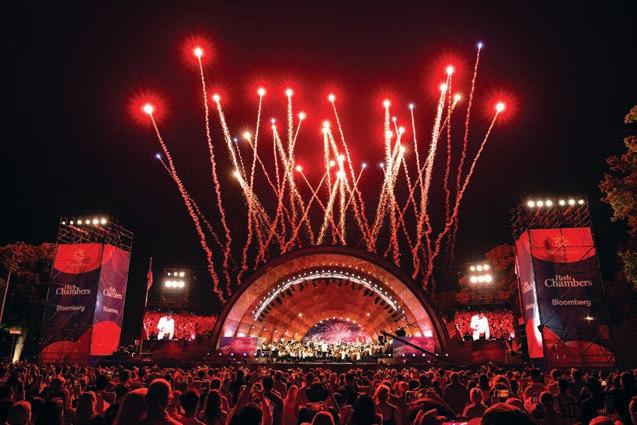
As America turns 250 this summer, Independence Day celebrations across New England are sure to be a blast— and we’ve got your guide to the top spots for fun. newengland.com/july4
Summer Weekend at the Lake
Want to go for a swim, paddle a canoe or kayak, or just relax on the dock and soak up the beauty of Maine’s largest lake? Enjoy all this and more in a weekend getaway to Greenville. newengland.com/moosehead-maine
FOOD
Backyard Grilling 101
Jump into cookout season with Yankee’s favorite recipes, plus tips from chef and pitmaster Andy Husbands. newengland.com/grilling101
LIVING
Tap into Petal Power
Learn how to press flowers with five craft projects that showcase your preserved blooming beauties. newengland.com/summer-craft
NEWSLETTER
New England Today

Add sizzle to your summer with Shrimp and Corn “Clambake” Grill Packs, a hassle-free way to enjoy the nostalgia of a traditional clambake.
NEWENGLAND COM GIVEAWAY
Subscribe to our daily e-newsletter for the best of travel ideas, regional recipes, and so much more. newengland.com/newsletter
SOCIAL
Follow Along
Join us online at your favorite social communities, @yankeemagazine










Win an Instant Library of New England Cookbooks



Start a new chapter in your home cooking adventures with Yankee’s curated collection of seven brand-new or recently released regional cookbooks, including Devin Finigan’s A Kitchen on Goose Cove [see p. 36]. From sweet treats to seafood classics, we’ve got you covered!


For details and to enter, scan the code or go to: newengland.com /cookbook-giveaway




A Birthday Invitation
ack in 1976, as America’s bicentennial fever was hitting its peak, Eric Sloane seemed to have reasons for feeling a bit pessimistic. In an essay published in Yankee ’s July issue that year, the Connecticut artist and author of such books as Diary of an Early American Boy wrote that if the founding fathers could have witnessed Watergate, Vietnam, and the assorted social ills of the day, they would have again dedicated their lives to a revolution.
But in the same essay, Sloane reminds us that, unlike birthdays along a human lifespan, every year that our country ages shows how “America has the sweet secret and habit of renewal.”
Compared with Yankee ’s July 1976 issue (whose cover featured a steely-eyed bald eagle and the words “America and Her New England: 200 years and on course”), the issue you hold in your hands won’t look as if it has much to do with the nation’s latest big birthday, its 250th. We didn’t compile the be-all, end-all guide to visiting New
CONTRIBUTORS

A highlight of photographing “Tidal Bout” [p. 56], says DeTour, was hiking through the dunes at Crane Beach on Massachusetts’s North Shore. “Despite being so close to Boston, the landscape feels completely secluded and untouched,” says the Bostonbased freelancer, whose work has appeared in such publications as The New York Times Magazine, The Boston Globe, and Edible Boston.

To get a feel for what goes into Caroline Laye’s sculptural soaps [“Bathing Beauties,” p. 30], Hollands spent a day shadowing the Atlantic Soap Co. founder. “It was fascinating to see her process up close,” says Hollands, a writer and editor whose résumé includes stints at Culture, Boston magazine, and Tufts Magazine “She approaches each bar with care and a true artist’s eye.”
England’s historical sites, though you will find a thoughtful look at places that U.S. presidents once called home [p. 70]. We don’t offer recipes for the ultimate red, white, and blue cookout; instead, chef Devin Finigan shares dishes that speak to a love of home—in her case, the Maine coast [p. 36]. You won’t read profiles of soldiers and politicians who rose up from these six states to change the world, but rather you’ll meet a Vermont forester on a mission to tend to the land that’s right in front of him [p. 76].
No, this is a Yankee issue like any other. It celebrates what we cherish about New England—big things and small, old ways and new ideas—and most important, it invites everyone to come share in it, too. Come mingle with people from around the world on beautiful beaches like those on Massachusetts’s twin shores [p. 56]. Stroll our cities and see reminders of the generations of working families who helped make them great [p. 24]. Because in New England, and in the nation, connecting to both history and people matters. That is the true sweet secret of renewal. —Jenn Johnson, senior managing editor


more intriguing in context of America’s 250th, he says. Dykes’s artwork can be found at the Norman Rockwell Museum and the New Britain Museum of American Art, and in many private collections.
An award-winning journalist who lives in rural Vermont, Jacobsen writes about science and nature, making him a perfect fit for interviewing forester and author Ethan Tapper [p. 76] about the hard work of caring for our natural resources. Jacobsen’s latest book, In Defense of Sunlight: The Surprising Science of Sun Exposure, is due out from Scribner in July.
ROWAN JACOBSEN
COURTNEY HOLLANDS

































A Darker Shade of Pale
Learning to see a full spectrum of history in a can of white paint.
hat New England photo you love—the one of the meetinghouse on the common with a white spire against a blue sky, or the one of the white farmhouse with green shutters from 1819—well, that photo is a bit of a lie. Our region’s white-painted buildings conceal an evolution in taste, and in chemistry.
Scrape an old clapboard and you may uncover this history, just as the
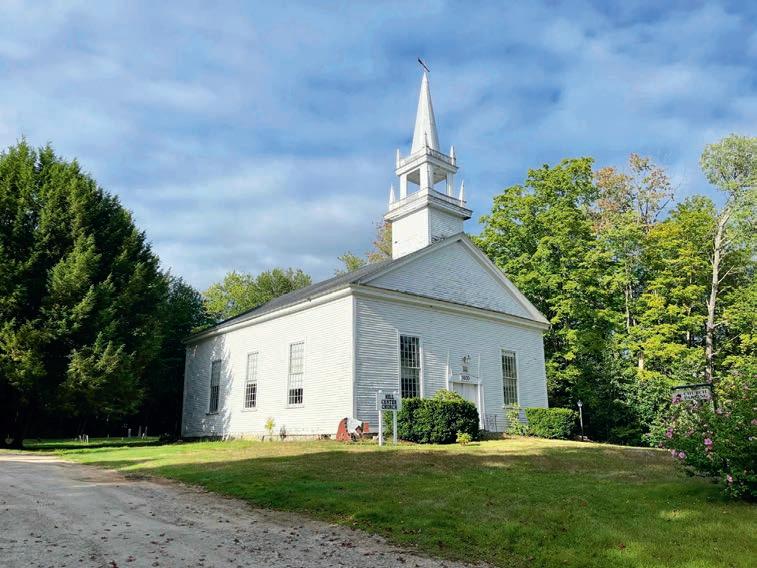
trustees of the Hill Center Church, in Hill, New Hampshire, have learned. They were nearly done with the restoration of their church, built in 1800, when their painter stumped them by asking them what shade of white they wanted. As anyone who’s ever been in a paint store knows, there are a confounding number of varieties: Benjamin Moore’s Off White Collection offers 152 shades, including White
Christmas, Vanilla Milkshake, Snow White, Easter Lily, Picket Fence, Grandma’s China, and Chantilly Lace. Or maybe you want Simply White. Sherwin-Williams also sells more than 150 shades, including Extra White, Greek Villa, and White Duck. Examining those bookmark-sized color samples, comparing Meadow Mist with Mirage White, you are a white mouse in a maze of white-painted walls.
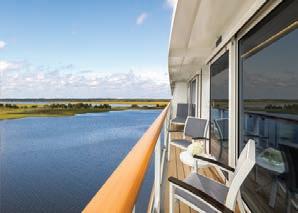
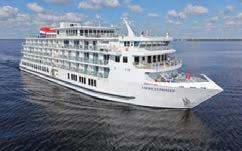
SOUTHEAST U.S. CRUISES

GEORGE WASHINGTON’S ESTATE SHORE EXCURSION MOUNT VERNON, VA
One of the nation’s most iconic homes, Mount Vernon offers a glimpse into 18th-century life through its beautiful gardens and grounds as well as intriguing museum exhibits honoring George Washington’s life and legacy.









NAVAL ACADEMY SHORE EXCURSION ANNAPOLIS, MD







THE WRIGHT BROTHERS
In 1903, the Wright brothers achieved the first powered, sustained, and controlled airplane flight in Kitty Hawk, NC. Two years later, they surpassed their own milestone when they built and flew the first fully practical airplane.
HISTORIC SAVANNAH TROLLEY EXPLORATION SHORE EXCURSION SAVANNAH, GA
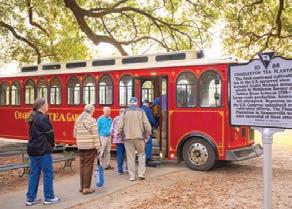
Experience a fully narrated journey aboard the Old Town Trolley, featuring open-air seating ideal for capturing memorable photos. Along the way, expert conductors share engaging stories, landmarks, and over 270 years of history from Georgia’s First City. As your exploration brings the past to life across more than 100 points of interest, you will discover Savannah’s rich legacy and timeless charm.


FORT MASSACHUSETTS SHIP ISLAND, MS
Fort Massachusetts is a historic brick fort located on West Ship Island, Mississippi. It was built by the U.S. government in the mid-1800s as part of a coastal defense system following the War of 1812.
Explore the academy’s historic grounds with our expert guide and experience “life on the yard.” Witness the noon meal formation and take in breathtaking views of the campus.






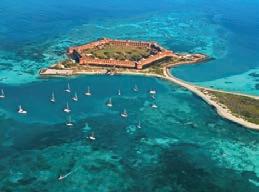


SEAPLANE ADVENTURE TO DRY TORTUGAS SHORE EXCURSION KEY WEST, FL
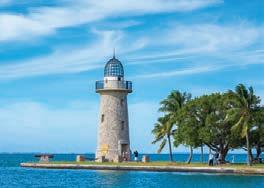
Seventy miles west of Key West, Florida lies one of North America’s most inaccessible National Parks–the Dry Tortugas. The park is renowned for its marine life, pirate legends, and sheer unspoiled beauty.











But these are contemporary editions of the color white, not the historically accurate color the Hill Center Church was seeking. The white paint that New Englanders adopted in the 19th century is not the crisp, brilliant white we know. To us, their white exteriors would seem dirty, dim, and yellowish. It was “offwhite,” a muted color that might prompt today’s homeowners to apply new paint. Inside, a white the shade of doves or oyster shells was popular.
House painters of yore bought raw materials to mix their own paint, blending linseed oil, lead powder, and pigments like white chalk, resulting in offwhite, or whites with a yellowish cast. To create “Pearl,” for example, Hezekiah Reynolds’s 1812 guide Directions for House and Ship Painting prescribed: “To one pint of white Lead add one teaspoonfull of Prussian blue; and one teaspoonfull of Spruce Yellow, or in that proportion.” Premixed paint sold in cans came along in the second half of the 1800s. Another change, the common use of boiled linseed oil, which dried faster, had an even deeper amber, lending more yellow to white walls.
In the early days of the republic, white lead paint, which was expensive, had status. A white house was a sign
of prosperity. “White was more than a fashionable color,” wrote historian John R. Stilgoe. “It was new, completely new, as new as a democratic government free from Parliament, and men and women embarking on the experiment in nationhood embraced it passionately.... White lead paint announced a new country.”
Even so, it wasn’t adopted for every building. Meetinghouses, once towns got around to painting them, were a rainbow: yellow, gray, sky blue, red, bright orange, peach blossom, and— the choice of Ashburnham, Massachusetts, residents—pea green. Pomfret, Connecticut, voted in 1762 to paint its new meetinghouse orange with “the doors and bottom boards of a chocolate color—the windows, jets, corner boards and weather boards, colored white.” And Hampton, Connecticut, voted in 1805 for a “roof and backside red, the foreside and ends of a Stone yellow, the window frames white, the doors and bottom boards of a chocolate color.”
But that colorful history was, you could say, whitewashed. With the advent of the Colonial Revival period around the 1880s, white became New England’s uniform. And then in 1921, white paint became even whiter. Titanium dioxide
The trustees of the Hill Center Church in Hill, New Hampshire, turned to preservationists for advice on a historically correct paint color for their 1800 house of worship, shown here before its 2023 renovation.
was added to white paint, creating what we think of as white today. There was no going back. It was the equivalent of the arrival of teeth-whitening treatments. The classic New England calendar image could be labeled “Brought to you by titanium dioxide.”
Paint colors are fashion. They change radically. (There’s the mauve and deep greens of the late Victorian era, and the paisley wallpaper and avocado-green refrigerators of the 1960s and ’70s.) Fashions come and go; paint colors are “fugitive,” say restorers. They fade, get covered over, and vanish from the record, leaving mysteries on every wall. Early paint colors—bright blues, yellows, and greens—were made with “fugitive” pigments that dulled over the years. They were temporary colors. History, too, and life itself, is “fugitive.”
A major change in our surroundings has slipped by, becoming standard without us noticing. It’s as if we changed the length of a universal measure, the foot, and forgotten that we’re referring to a new measure. A paint chip can be a lens we use to see the rich history around us.
The Hill Center Church, seeking its way out of the white-on-white maze, turned to the New Hampshire Preservation Alliance for an answer. “The paint color was likely an off-white,” said the preservationists. “The level of ‘off’ is up to you. If your board is adventurous or interested in the most accurate color, shoot for something like Benjamin Moore’s Indian White,” which is a light tan or beige. “If that’s too different, work with your painter to find a happy medium.”
In short, as “off white” as you dare. They settled on a color that is grayer, Benjamin Moore’s White Dove. That was in July 2023. Today, says church trustee Frank Razzaboni, it’s “still perfect.”

25 YEAR







Full Steam Ahead
A historic steam locomotive and riverboat combine for a one-of-a-kind experience in the Lower Connecticut River Valley.
BY RYAN CASHMAN
PHOTOS BY MEGAN HALEY
black-and-white photo of my grandfather hangs on the wall of my office in New Hampshire. There he is in his train conductor’s uniform, a broad smile stretched across his face as he waves down at the photographer from the gangway of a railcar. I thought of this moment as I stood alongside my 4-year-old son on a sunny July morning on the platform of the historic 1892 Essex Station, the headquarters of the Essex Steam Train & Riverboat in Essex, Connecticut.
A deafening roar blasted the morning air, scattering birds and causing my son to cling to my leg. “Is that the train?” he asked excitedly.
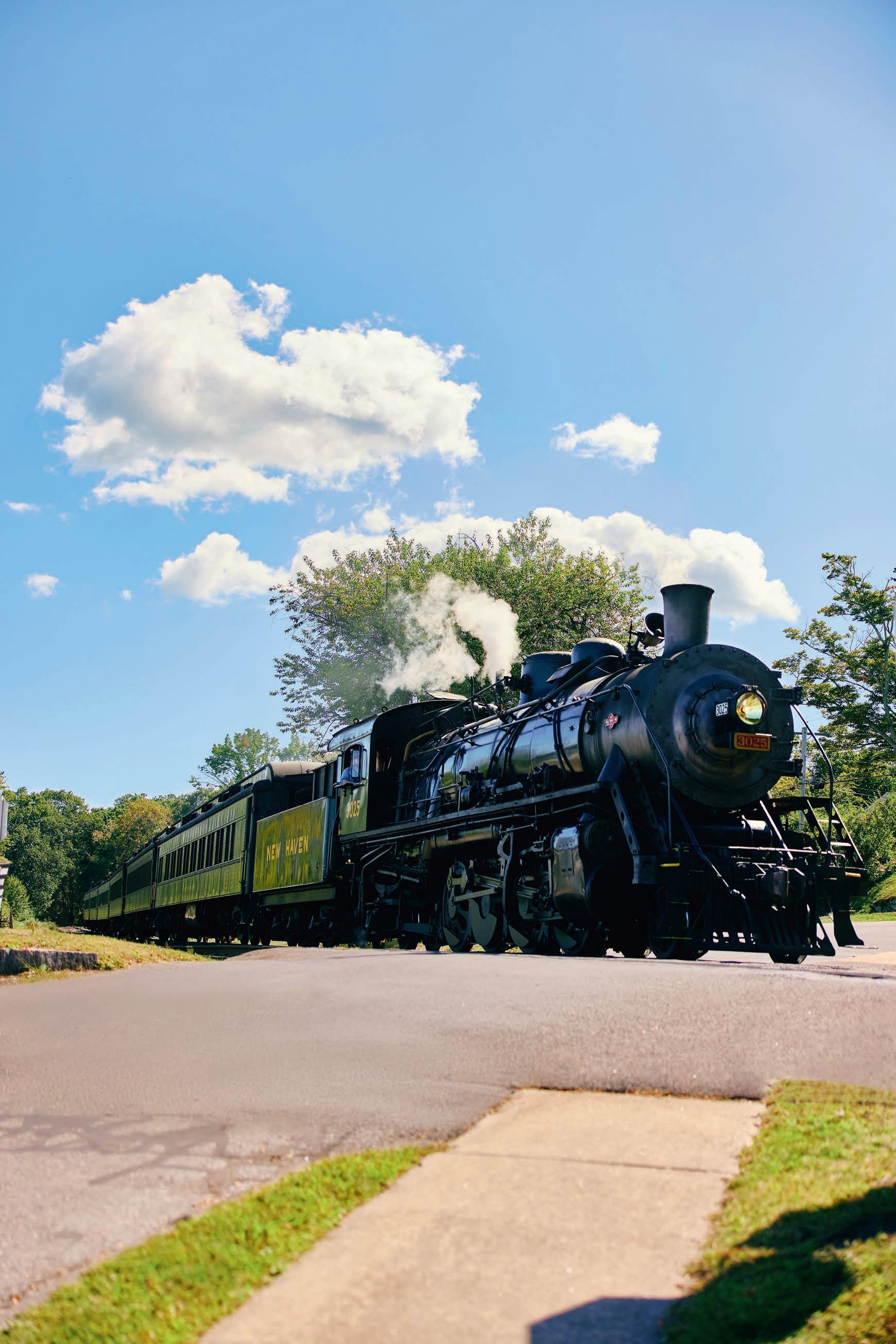
At the opposite end of the rail yard, a giant black steam engine emerged through a gray billow of coal smoke. The century-old train hissed and chugged its way down the track before coming to a screeching halt in front of us. The radiating heat from the massive iron boiler hit our faces, and the sweet summer air was filled with the aroma of burning coal and engine oil.
“This is the kind of thing you have to see, smell, and hear in order to truly experience,” said Joseph Cassineri, the railroad’s operations manager. He was standing beside us on the platform, welcoming visitors who had arrived in cars with

RIGHT: The golden age of railroads rumbles back to life as Engine 3025, built in 1989 and restored to resemble an early 20th-century New Haven Railroad steam locomotive, rolls out on an Essex Steam Train & Riverboat excursion.
ABOVE: Among those keeping such heritage trains running are veteran employees like engineer Chip Mahoney, who has spent a decade working for Valley Railroad Company, the Essex, Connecticut–based operator of the excursion.
license plates from across the Northeast and as far away as Ontario.
People’s reasons for visiting here are many, Cassineri told me. “People come because they have someone in their family who worked for the railroad,” he said. “We have people come because they love trains, or because this is the only steam-train-to-riverboat-connection experience in the country. And, I think, people come here to go back to another time, away from the stresses of their daily lives.”
I was struck by Cassineri’s youth, and that of his fellow railroaders, engineer Carmen Vaccarelli and fireman Elijah Jackson. Connecticut natives Cassineri and Vaccarelli started working for the railroad as teenagers in the late 2010s, while Jackson came to the railroad two years ago from the Midwest.
“We’ve been coming here since we were kids,” Vaccarelli said. “We’ve always loved trains, and now we get to do what we dreamed about doing.”
Today, they help carry on the tradition established by the forward-thinking
volunteers who started the Valley Railroad Company in 1971. The goal was simple: to reinvigorate the old line that ran near-daily trains between Hartford and Old Saybrook from 1871 into the 1960s. Eventually, Valley Railroad restored more than 20 miles of track through the Lower Connecticut River tidelands. A steamboat leg added more mileage and scenery. The combined journey, which is offered three times a day from May to October, is a twoand-a-half-hour trip that takes visitors on a meandering journey through one of the greatest undisturbed ecosystems remaining in New England.
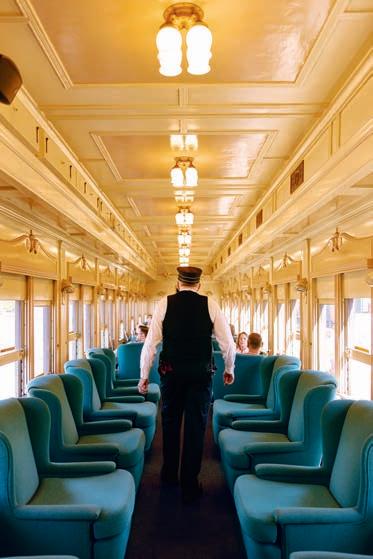
Soon, my son and I were ushered to our coach car, a beautifully restored 1914 Pullman. Around us sat some 50 other travelers, including young couples, families, and train buffs. A pristine natural world quickly came into focus: the wide expanse of the Connecticut River tidal wetlands, where myriad wildlife, especially birds like cormorants, egrets, herons, and osprey, fluttered into and out of view. The smell of salt marsh
the heyday of this 1930 Pullman parlor car, once used on the Yankee Clipper luxury train between New York and Boston.
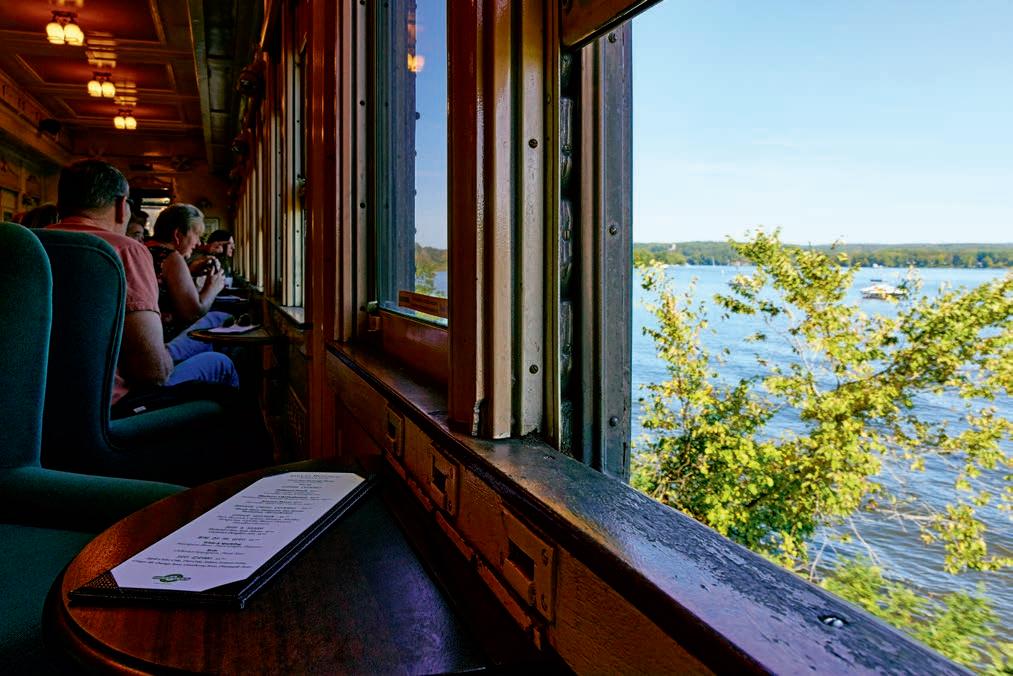
BELOW: Throughout much of the rail portion of the Essex Steam Train & Riverboat trip, passenger car windows frame views of the Connecticut River and its wetlands.
wafted through the open windows. A bit later, vistas of old farmhouses and stone walls provided the sense of traveling back in time, to when the train and the river served as the region’s lifelines.
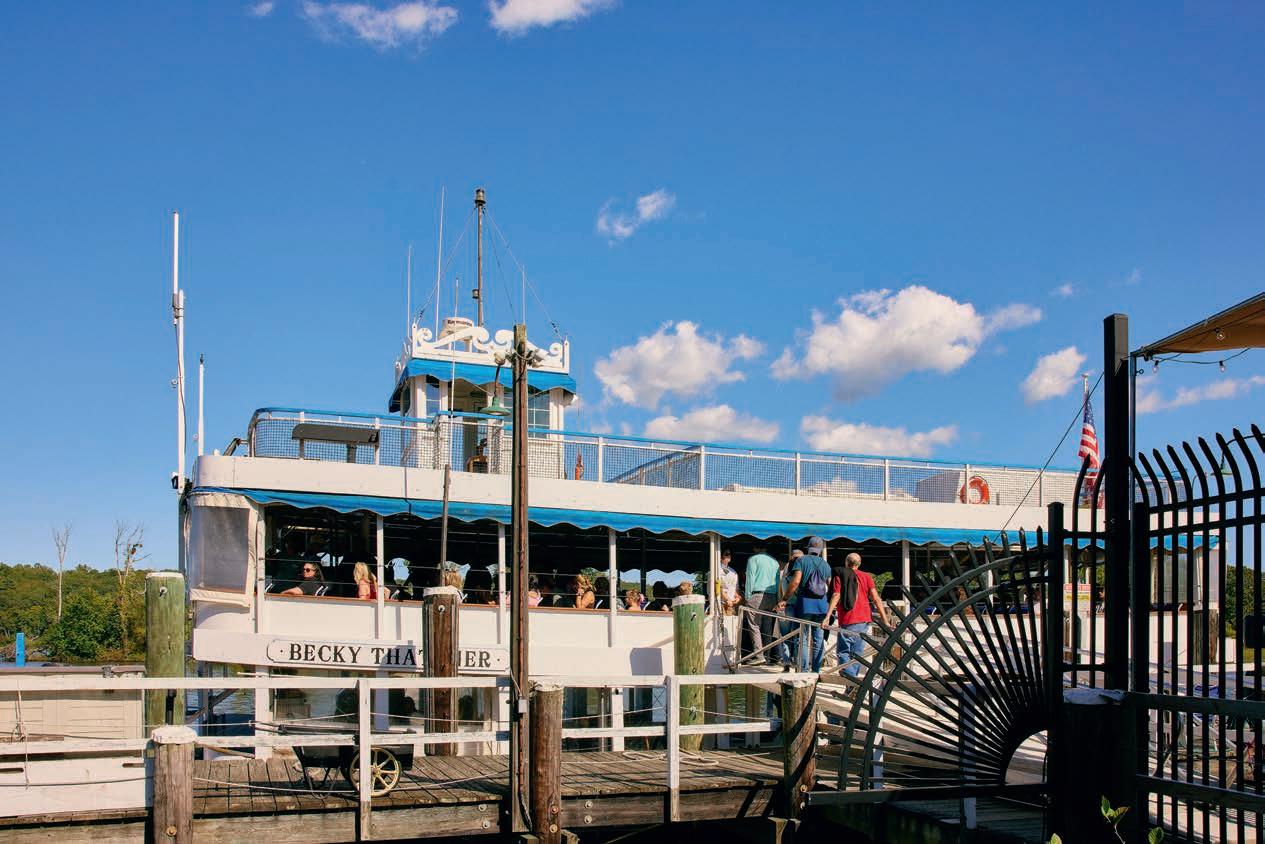
A good 30 minutes into our journey, we came to a whistled stop at Deep River, a town with a maritime history stretching back to 1653. There, we boarded the Becky Thatcher, a replica 1870s riverboat whose white cladding and three decks made it look like something you might have seen chugging down the Mississippi in days gone by.
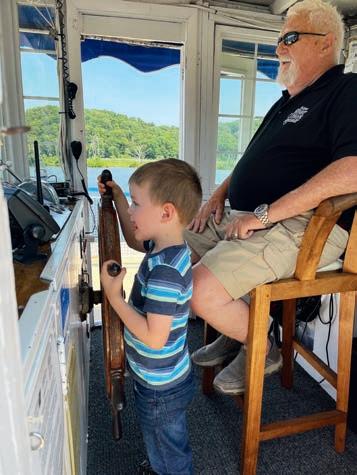
On board, Captain Grant Westerson, a white-bearded man who has captained the Becky Thatcher for the past 11 years, turned up the energy. “Shout it out!” he exclaimed to the passengers. “Who traveled the farthest to be here today?”
“Italy!” replied one visitor. “Pakistan!” another volunteered. “Greece!” said another still.
The click-clack of the train wheels were soon replaced by the gentle sound
of lapping waves and the steady hum of the Becky Thatcher ’s motor. My son and I stood on the top deck and watched the river’s landmarks appear one by one: the Chester-Hadlyme Ferry, in operation since 1769; Gillette Castle, atop its stately promontory; the sturdy steel trusses of the East Haddam Swing Bridge; the rolling green of the Seven Sisters hill chain; the white clapboards of the Goodspeed Opera House shining brightly under the sun.
An hour and a half later, we were back on the train, bound for Essex Station. My exhausted son tucked himself under my arm and closed his eyes. As we rolled along, my mind wandered back to my grandfather’s photo. I briefly imagined him walking along the aisle, asking passengers how they’d enjoyed their trip, and it struck me that for so many, trains and boats like the ones we’d boarded today are not mere conduits of history, but a slow and idyllic journey through time. essexsteamtrain.com
TOP: At Deep River Landing, passengers switch tracks and board the Becky Thatcher for a cruise on New England’s longest river, the Connecticut, which flows from Canada to Long Island Sound.
ABOVE: The author’s son poses at the wheel with Captain Grant Westerson.


Glowing Strong
Twenty-five years after nearly going dark, a Lake Winnipesaukee landmark shines on.
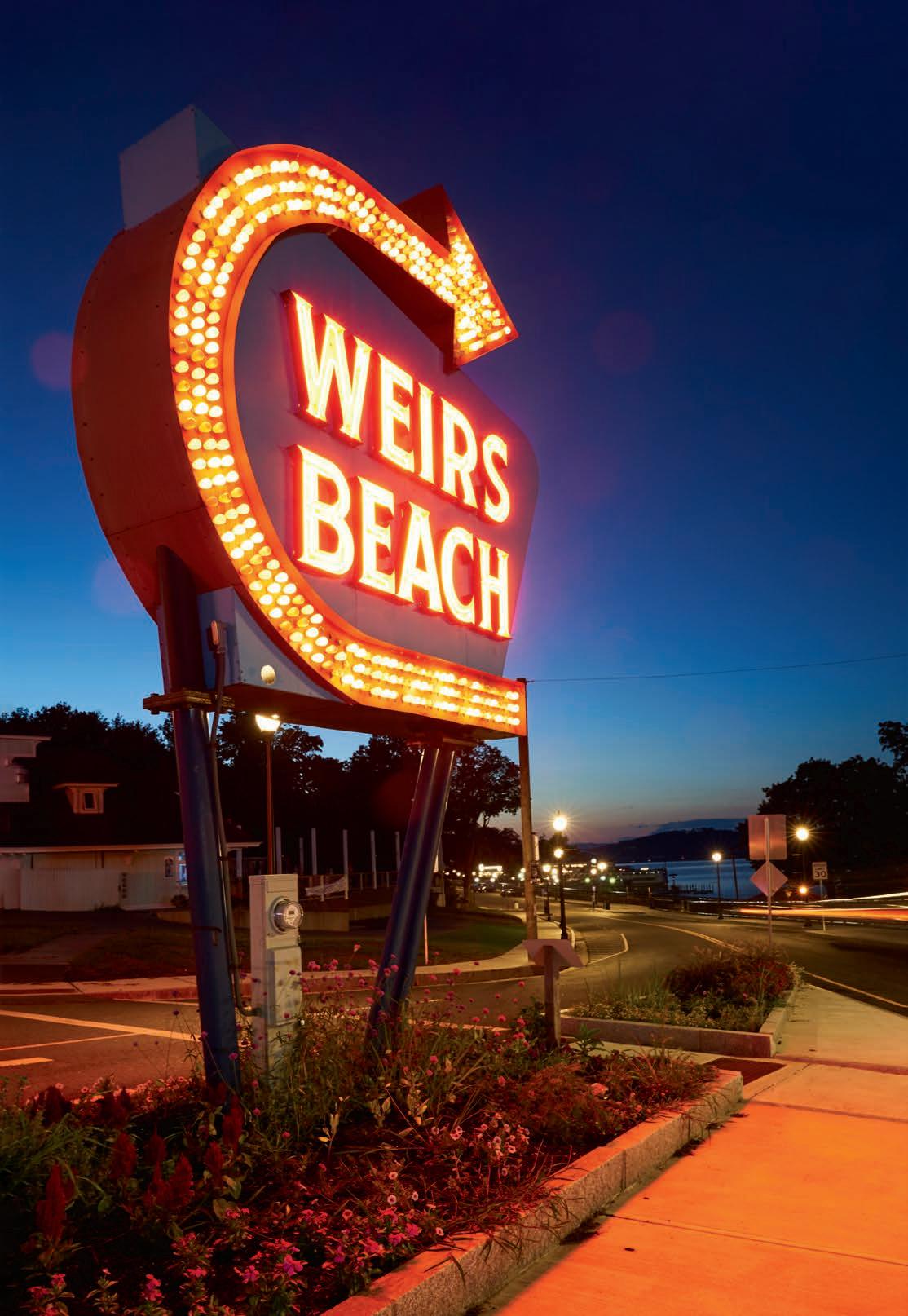
Along the zigzagging shores of Lake Winnipesaukee in Laconia, New Hampshire, a midcentury marvel points back in time. The Weirs Beach sign, with its classic neon lettering and flashing arrow, has directed travelers to a boardwalk brimming with activity since 1956. In the 70 years since, the sign has become a totem not just of the state’s largest lake but of the region’s vintage summer revelry.
Before the 1950s, locals called this stretch of lakefront Weirs or, more often, “the Weirs,” in reference to the fishing trap Native Americans used in the channel. But in 1955, five years after the dredging of this waterway helped to create a large sandy wedge, the Laconia City Council voted unanimously to change the name to Weirs Beach.
during the 19th century, switched the name of its stop accordingly. And a group of local business owners scrounged together $2,200 to erect their own monument to this newly branded summer resort.
On July 19, 1956, framed by a truck and crane, many of these local figures posed for a photo alongside the soonto-be-erected Weirs Beach arrow sign. They beamed beneath the distinctive neon letters and yellow-coated bulbs that were designed to flash sequentially along the curved arrow. In total, the new marker weighed in at an impressive 4,400 pounds. Actress and singer Marilyn Maxwell had her picture taken in front of it the following year.

The local railroad station, which helped usher in the area’s tourism boom

But more than a few times in the ensuing decades, the sign’s signature lights went dark, and repairs were costly. By the turn of the century, Laconia officials weighed replacing the structure altogether. Instead, they opted to restore the sign in 2002 at the urging of locals. Resident Alison Hildebrand had gathered more than 2,000 signatures on a petition to refurbish the 12-foot landmark.
Today, after additional maintenance efforts overseen by the Weirs Action Committee, 696 LED bulbs flash around 200 feet of neon lettering. They light up now more than ever—once solely a sign of summer, the letters and arrow now glow throughout the year. And in homes around the country, images of the Weirs Beach sign adorn coffee mugs, totes, and ornaments.


This summer, the committee will hold a celebration to commemorate the sign’s septuagenarian status. One thing’s for sure: They won’t have to worry about lighting. —Benjamin Cassidy





























POWER PACKED with engines up to 27 HP


CUT DOWN ALMOST ANYTHING, from 3" thick saplings to 8' weeds
LARGEST SELECTION of commercial, walk- and tow-behind models available


BACKED BY 40 YEARS OF DEDICATION and owner support







OWN EVERY ACRE WITH

















DR® CHIPPERS ARE BUILT BETTER

HIGH-TORQUE POWER turns branches into mulch in minutes


UP TO 5X MORE POWER than a handheld trimmer
WIDE CHIPPING HOPPERS self feed material without removing side branches


DURABLE STEEL CONSTRUCTION stands up to daily use


MANEUVERABILITY that goes everywhere a bladed mower can’t


VERSATILITY to mow more with the toughest trimmer cord you can buy








Three’s Company
Sizing up the lore and legacy of New England’s iconic urban housing, the triple-decker.
BY BRUCE IRVING
PHOTOS BY ADAM DETOUR
hen a new architectural style comes along, there are always the grousers. “Oh dear, this Gothic Revival fashion is simply too Old World.” “Ooh, these Modernist houses are so plain and boxy.” “Whatever happened to good olde Colonials?” Everybody’s entitled to their opinion, I suppose.
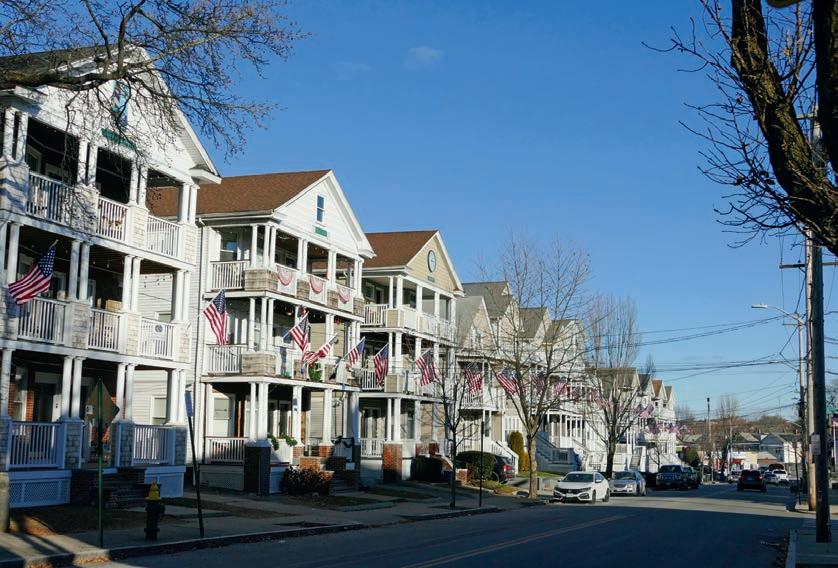
But when a building style appears that’s less about aesthetics and more about social values, look out. The rise of the triple-decker in New England brought out the best and the worst of our nature: They’ve been beloved as a means of affordable renting, or even homeownership, and maligned as a destabilizing blight on the urban landscape. That these hardworking assemblies of living spaces, three or six units on a lot, have endured is a testament to their problem-solving nature.
The triple-decker took New England by storm in the late 1800s. Instantly recognizable as a nononsense, efficient means to house more people by building up rather than out, they were built by the thousands in certain parts of Boston, Worcester, Cambridge, and Fall River, Massachusetts; Providence, Rhode Island; New Haven, Con-
necticut; and Portland, Maine; and dotted here and there throughout other working-class New England neighborhoods.
Their appearance came at the confluence of demographic change and technological advances. New England’s population grew by nearly a third between 1860 and 1880; Boston more than doubled in size. A rise in industrialization led to a majority of people transitioning from farm life to city-based wage work. Many of the new urbanites came from outside the country—French Canadians, Irish, and Portuguese foremost among them. Everyone needed housing, and stacking folks on top of each other was the logical result. Their wood construction was relatively cheap, and the recently introduced balloon framing method, with long wall studs extending from foundation to roof, could handle the load. Urban infrastructure was needed as well, and triple-deckers “did not appear until municipal utilities could provide water and sewage, and until building technology evolved to permit construction of flat roofs,” says Charles Sullivan, executive director of the Cambridge Historical Commission.
The buildings themselves could be trimmed out simply or with stylish elaboration. Queen Anne and Colonial Revival were the dominant
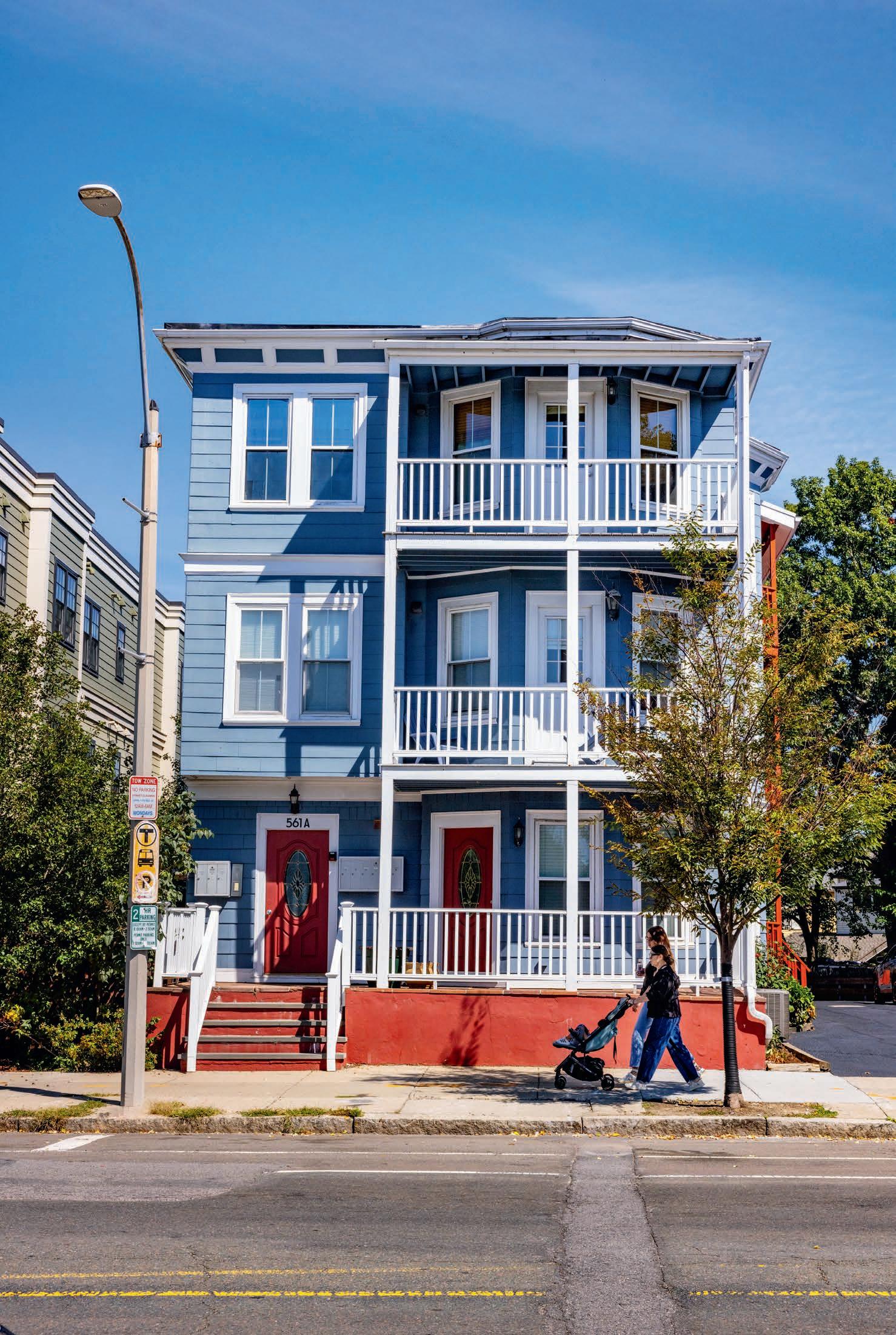
While many vintage triple-deckers, like this 1910 example in Somerville, Massachusetts, have been subdivided into condos and apartments, their signature three-family profile endures.
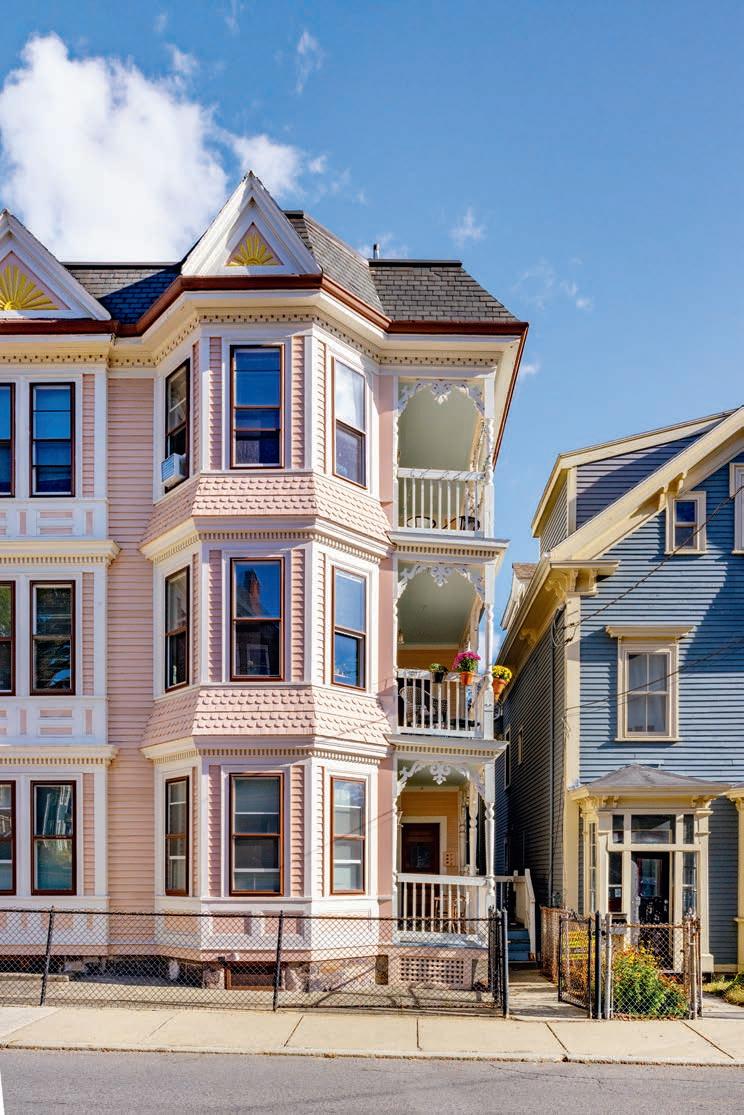
essentially freestanding vertical arrange ments of three apartments, sometimes doubled side by side to hold six. Kitchens and baths were stacked for efficient electrical and plumbing purposes, and there were windows on all four sides. Most had flat roofs, but some had peaks. Most had front and back porches to provide outdoor space, a little relief from the heat, and maybe even some of what the great urbanist Jane Jacobs would later call “eyes on the street.” This was key for developing neighborhoods where
strangers were moving into close quarters with each other. A triple-decker might contain an extended family, or an owner (usually on the first floor) with renters upstairs to help pay the mortgage—everyone benefited from knowing who was coming and going.
Tenant or family member, people liked these places. Sociologists Robert Woods and Albert Kennedy wrote
in 1914, “The values which the tenant receives in this modern flat are so little short of luxurious that it is no wonder they are in demand. A flat which rents for from 20 to 25 dollars a month includes a parlor, dining room, kitchen with set tubs, cook stove with gas stove and water heater attached, two bedrooms, front and back piazza, hot air furnace, electricity, and hardwood floors.”
So what’s not to like? Well, the very people who were benefiting from a chance to build equity or live in comfort—immigrants, poor folks, people of color—were not the people the owning class liked to see in town. As C. Morgan Grefe, executive director of the Rhode Island Historical Society, put it on the state’s public radio show Mosaic, “The house becomes a sort of metonym for the fear of the other”—a physical shorthand for social change, and not the kind the old guard wanted. In a 1917 Providence Magazine article about “the three-decker menace,” an urban reformer named John Ihlder praised the Yankee single-family houses of yore: “Dignified and beautiful dwellings arouse our enthusiasm not merely because of their dignity and beauty, but because they symbolize the spirit of their builders. These men and women not only conquered a wilderness but they set and, in spite of temptations, kept high standards for themselves and their community.” He went on: “The newcomers to Providence find an environment perhaps more kindly to the weak, but less kindly to the strong. The newcomers have lower standards. Are we raising these standards or are ours sinking toward their level? And what will be the results in the future?”
As a building type, you know you’re in trouble when both the AntiTuberculosis Association and the Municipal Art Society condemn you, as happened in Cambridge, Massachusetts, with even the local building inspector (heretofore not known as an architecture critic) taking to the local newspaper in 1913 to decry “street after street of so many three-flat wooden
The space-saving efficiency of the triple decker meets Victorian extravagance in this 1905 example, which graces Boston’s Jamaica Plain neighborhood.

NEW ENGLAND ARCHITECTURE 101
TRIPLE-DECKERS
PROXIMITY: Triple deckers were typically built on narrow, deep lots, with only space for an alley between them.
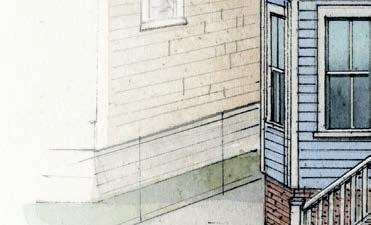
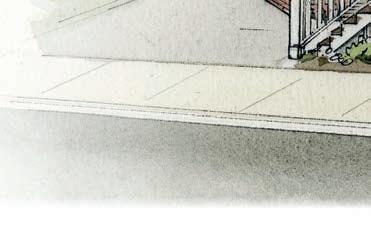

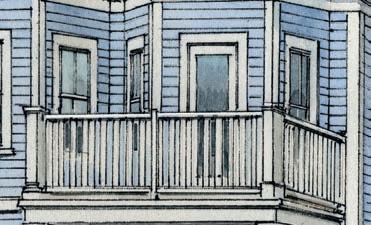
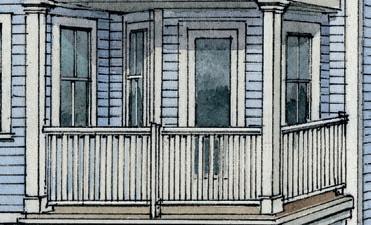
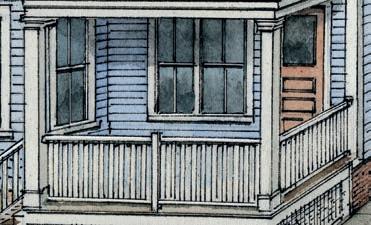
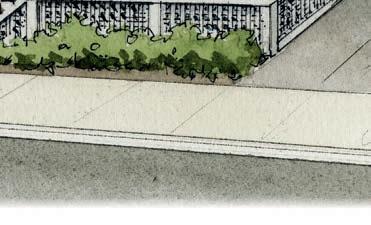
>> WHETHER YOU CALL THEM three-deckers or triple-deckers, there’s no denying this ubiquitous home style embodies efficiency. The narrow buildings began lining streets in the 19th century, providing both housing density and the opportunity for extended families to live under one roof on small plots. They offer three identical floor plans stacked

WINDOWS: As many as 50 total windows let in cross breezes and sunlight from every angle, including multiple front bays and small stainedglass windows on the side.
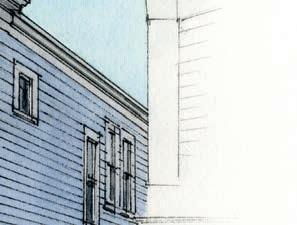

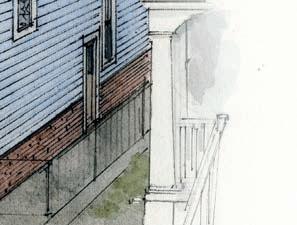
PORCHES: The trio of porches is supported by unadorned columns, offering open-air gathering spaces and a horizontal visual divide between units.
DOORWAY: A common front door is used by all: It leads to a firstfloor entryway, plus a stairway connecting to the second and third floors.
on top of each other—resembling a layer cake—each with a front porch and more than a dozen windows.
Time Period: Approximately 1880s–1920s
Colonial Revival Characteristics: Flat or hip roof; exterior featuring uniform clapboard siding; classical/simple porch columns and posts
Queen Anne Characteristics: Gable roof; varied, decorative siding materials; dormers; turned porch posts and balusters Where to Find Triple-Deckers: Boston (especially Dorchester), Worcester, Fall River, and Lowell, Massachusetts; Providence, Rhode Island; New Haven, Connecticut
boxes standing on end.” Various laws were passed restricting triple-deckers— one banned cooking above the second floor, effectively outlawing them—but in the end, the pressures of growth prevailed. Cambridge’s mayor, Edward Quinn, could have been speaking about any New England city when he said in 1919, “While the tracts of vacant land for residential purposes are limited, there are sections of our city which were built up many years ago, largely with single houses that are fast declining in usefulness. These houses occupy for the most part large land areas, which could be utilized to a much greater taxable advantage for apartment house construction.” He called triple-deckers “one of the best means of solving our housing problems.”
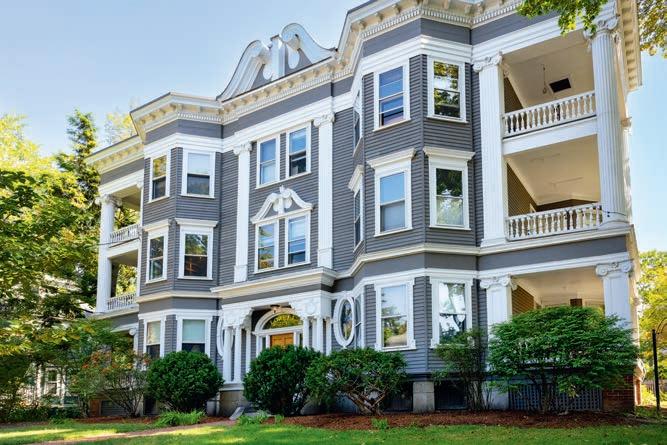
To lure folks out of their singles—to free up more land for building—some developers did their level best to make communal living respectable, offering elaborately designed and equipped multi-unit buildings, all gussied up for the gentry but, in the end, still tripledeckers. In Cambridge, they even gave them fancy names. The London started life as a Second Empire-style single but was converted to a balustraded confection holding three large apartments, while across town The Lowell was
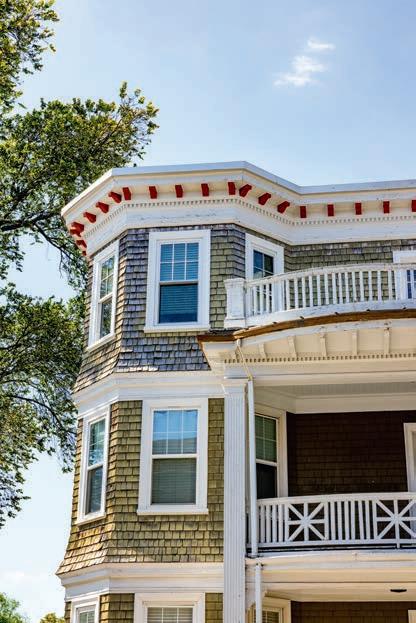
triple-decker festooned with Ionic columns and pilasters and a monumental broken-scroll pediment. All up and down the urban demographic, the triple-decker offered good shelter in a rapidly crowding world.
The London and The Lowell still stand, as do blocks of more modest versions throughout New England, but all around the region, housing pressures continue to this day. Affordable rentals in triple-deckers still house newcomers, while others have been converted to condominiums, with units priced at numbers that would have made their
detail of a South Boston
dating back to 1890; The Lowell, built in 1900 in Cambridge, Massachusetts, is a Colonial Revival “perfect six”—essentially side-by-side triple-deckers built as a single unit with a central entrance.
original occupants faint. Far from being outlawed, the example of sensible density these century-old survivors offer has inspired more and more zoning laws that encourage multifamily structures, which ought to make housing accessible to more people. Looks like the spirit of their builders lives on, too.
Avenue Historic District in Providence, Rhode Island;
triple-decker


Bathing Beauties
With DIY grit and a splash of local seawater, Atlantic Soap Co. is turning out sudsy works of art.
BY COURTNEY HOLLANDS
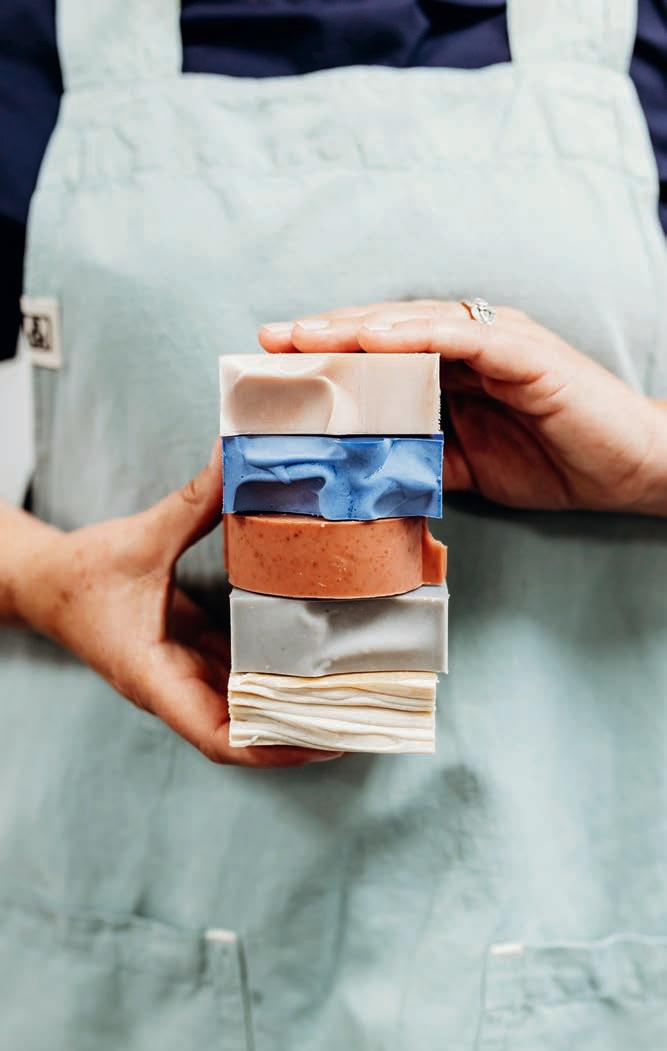



Sometimes, a new Atlantic Soap Co. bar starts with the scent. That was the case with Nor’easter, a striking, swirled inky-blue soap with herbal, vegetal notes. The fragrance “just felt windy to me—this soap needed to be a storm,” says Caroline Laye, owner of the Falmouth, Massachusetts–based company.
Other times, Laye begins with the design. She wanted her exfoliating, mica-flecked Sand Bar to “literally look like you picked up a handful of sand,” she says. After getting the color just right, she turned to the scent, selecting almond, sea salt, and tonka bean to evoke the feeling of “lying on your warm towel in the sun, hearing the waves and being so warm and dry after swimming.”
But no matter the origin story, each bar—crafted by Laye with seawater sourced from the Falmouth village of Woods Hole—has an undeniable sense of place. These hyperlocal vibes have no doubt bolstered Atlantic Soap Co.’s popularity: Since founding her business seven years ago, Laye has created dozens of artful soaps including seasonal offerings and expanded her line with candles, shampoo and lotion bars, and lip shimmers.
Not bad for a self-taught soap maker originally inspired by a DIY magazine in a Michael’s checkout line. Laye and RAE
TOP RIGHT: Caroline Laye in her studio, flanked by containers of the filtered seawater she uses in every bar of her soap. THIS PHOTO: There’s more than a whiff of Cape Cod in this sampling of Laye’s bars, inspired by everything from beach roses and salt marshes to cranberries (a seasonal special).















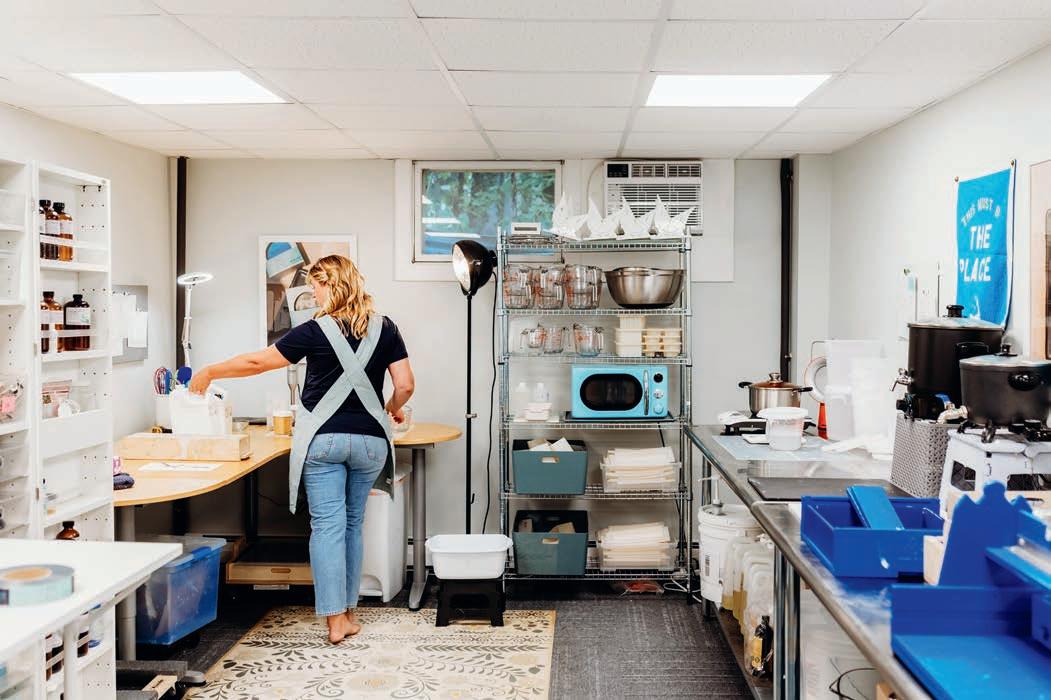
her husband moved to Falmouth in 2015 when he got a job at the Marine Biological Laboratory in Woods Hole. With a master’s in fine and decorative arts and a background in high-end retail and antiques sales, Laye started working in the kitchen and home department at Eastman’s Hardware on Main Street. There, she found herself drawn to the ever-growing soap selection. “I had 17 soaps in my shower at all times,” Laye says with a laugh.
It was in 2018 that she bought the aforementioned DIY magazine on a whim and promptly went down a saponification rabbit hole on YouTube. Laye gathered soap-making equipment and began experimenting with different scents, textures, and methods. “It’s pretty crazy how many different ways you can interpret a bar of soap,” she says. After making batch after small batch, Laye eventually landed on soleseife, a smooth, hard German soap crafted via cold process with a brine solution or seawater.
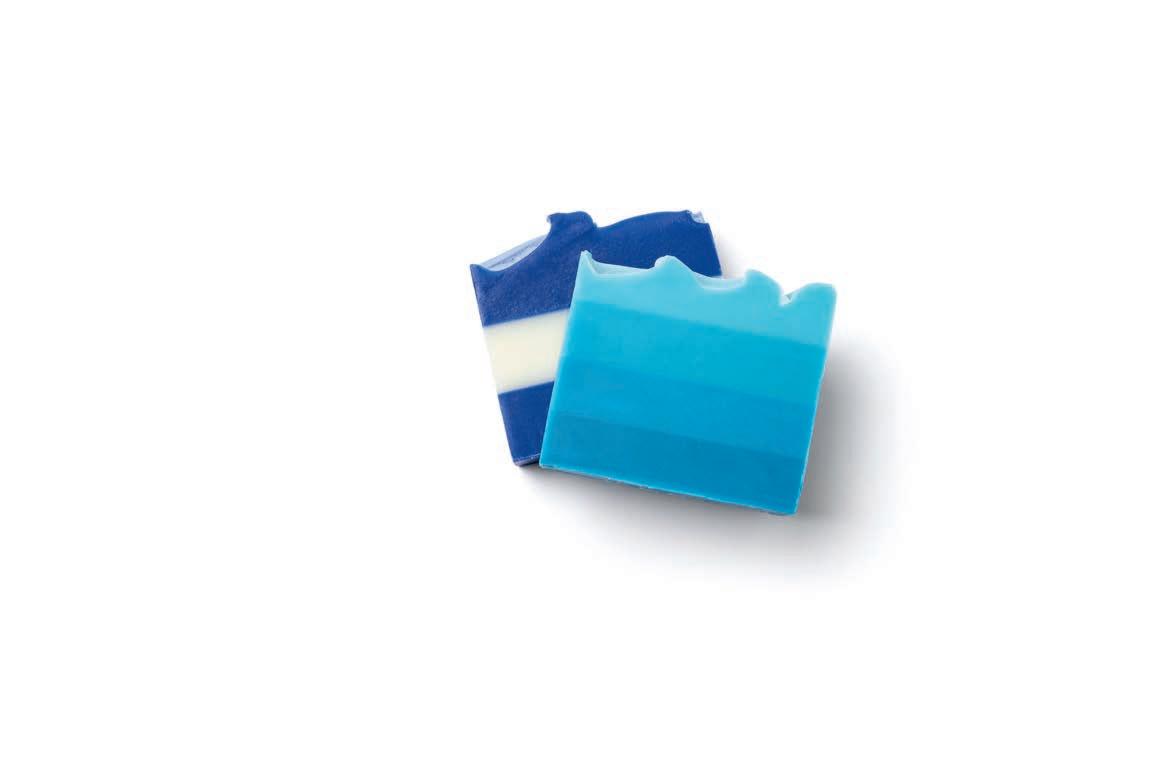
Among her first creations were the Chatham Kelp Beauty Bar (originally made with powdered kelp but now a collaboration with Chatham Kelp incorporating their sustainably harvested seaweed) and Ultramarine. With citrus, cotton blossom, and musk on the nose and an eyecatching design—clean lines of white and deep blue with a wavy top—the latter embodies what Atlantic Soap Co. is all about. “These fresh, clean, airy seaside scents are really what I’m drawn to,” Laye says. “Coastal, bright, and sunny. That’s been a constant.” (She also really likes the color blue— so much so that she almost named her enterprise the Ultramarine Soap Co.)
The following summer, Laye sold her wares for the first time at the Falmouth ArtMarket, now known as Artisans at the Harbor. But when the pandemic derailed her market expansion plans, she used the time to revamp her website with fresh photography,
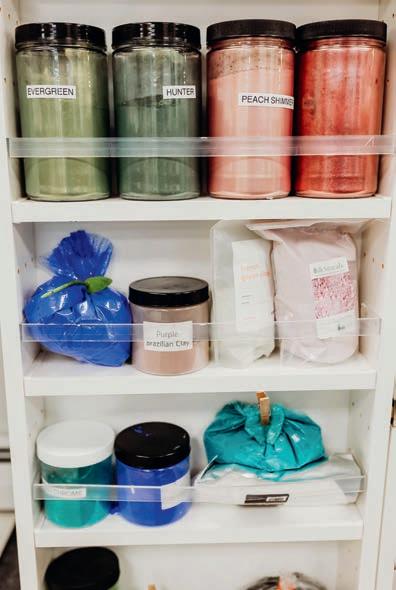
Laye gets to work prepping a batch of Sand Bar soap; shelves of ingredients include micas, ultramarines, clays, and exfoliants.





















participate in a virtual Entrepreneurship for All business accelerator program, and work with a branding consultant. “I was like, I’m doing this for real ,” Laye recalls. “This is really something that I’m passionate about, and I want to make this a big success. And all of that took me from my farmers’-market-and-craft-fair era into e-commerce and wholesale.”
Today, Laye still blends, pours, molds, and cuts her soaps and other
products by hand in her cozy North Falmouth studio. The day I visited, she made a Sand Bar loaf, assembling her mise en place; adding the scents, pumice powder, and black volcanic sand; and demonstrating how she drags a fork’s tines across the hardening mixture to mimic the look of dunes on the finished product. (Studio coordinator Liezl Owen, her sole employee, was packing boxes nearby.) Next, the batch would head to the cutter and then to the
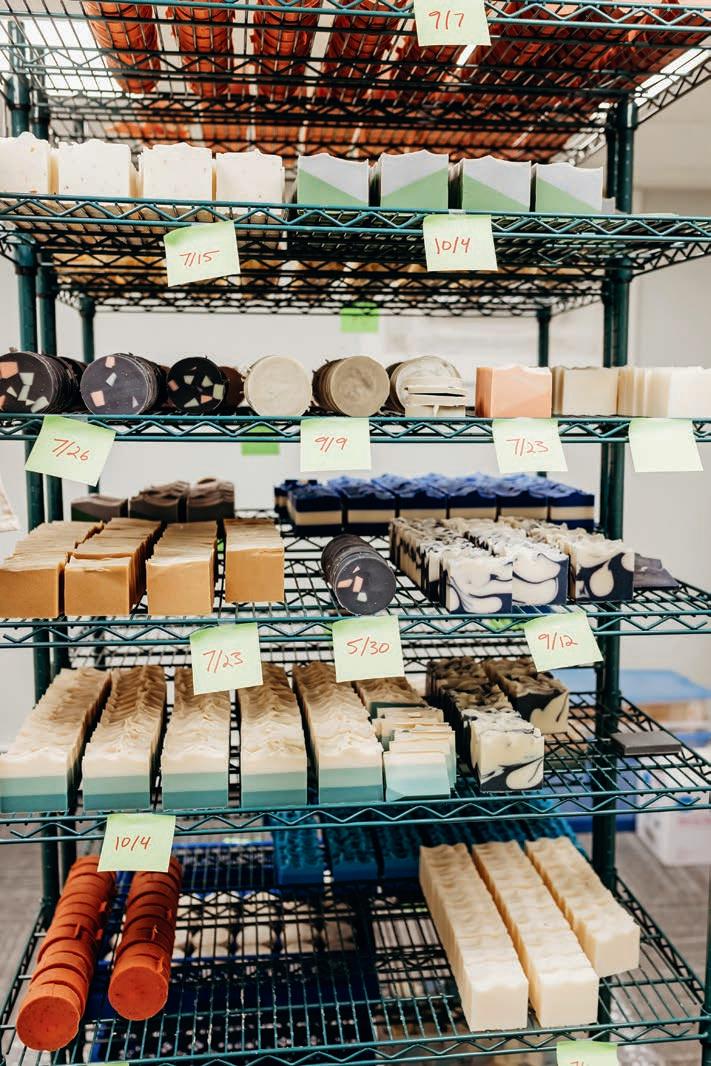
FROM LEFT: The curing rack where soaps rest for four weeks after being cut (sticky notes indicate when each batch will be ready); a close-up of two Atlantic Soap Co. classics, Ultramarine and High Tide.
drying racks, where the bars would rest for four weeks before being packaged in Atlantic Soap Co.’s signature whiteand-gold boxes with light teal labels.
Each of her soap recipes requires different ingredients and techniques—and Laye is always concocting new varieties. Last summer, she introduced a threesoap Cabana Collection, which nods to different regions of the Eastern Seaboard—Cliff Walk for New England, Golden Dunes for the Mid-Atlantic, and Palm Paradise for the South—and features bright, preppy stripes. This summer, she’s turning her eye to the horizon with a four-soap Voyager Collection inspired by four corners of the Atlantic—the Labrador coast, Rio de Janeiro, the Atlantic coast of France, and the Cape of Good Hope.
After all, Laye has ambitions for her soap company that go beyond the Cape—and it’s right there in the name.
“There’s a reason that it’s the Atlantic Soap Co. and not the Cape Cod Soap Co.,” she says. “I do use seawater, which in a certain way makes the soaps hyperlocal, but in another way connects them to the vast Atlantic. It’s this sense of adventure and travel and unknown places that I haven’t been to, and cultures that are connected by this body of water. To me, the ocean is possibility.”
Morning rush hour.
Life is di erent here. Whether you prefer to start the day with a peaceful paddle on the crystal waters of Lake Cochichewick, a spirited hike on the miles of trails that traverse our picturesque 100-acre campus, or a relaxed breakfast sweetened by friends and a touch of real maple syrup tapped from our own trees, each moment is yours to choose. Why not plan today for a beautiful tomorrow? Come explore a community like no other. Call 978-725-3300 or visit our website.

Maine Courses
A new cookbook from acclaimed New England chef Devin Finigan gives readers a deeper taste of land and sea.
PHOTOS
BY
WILLIAM HEREFORD
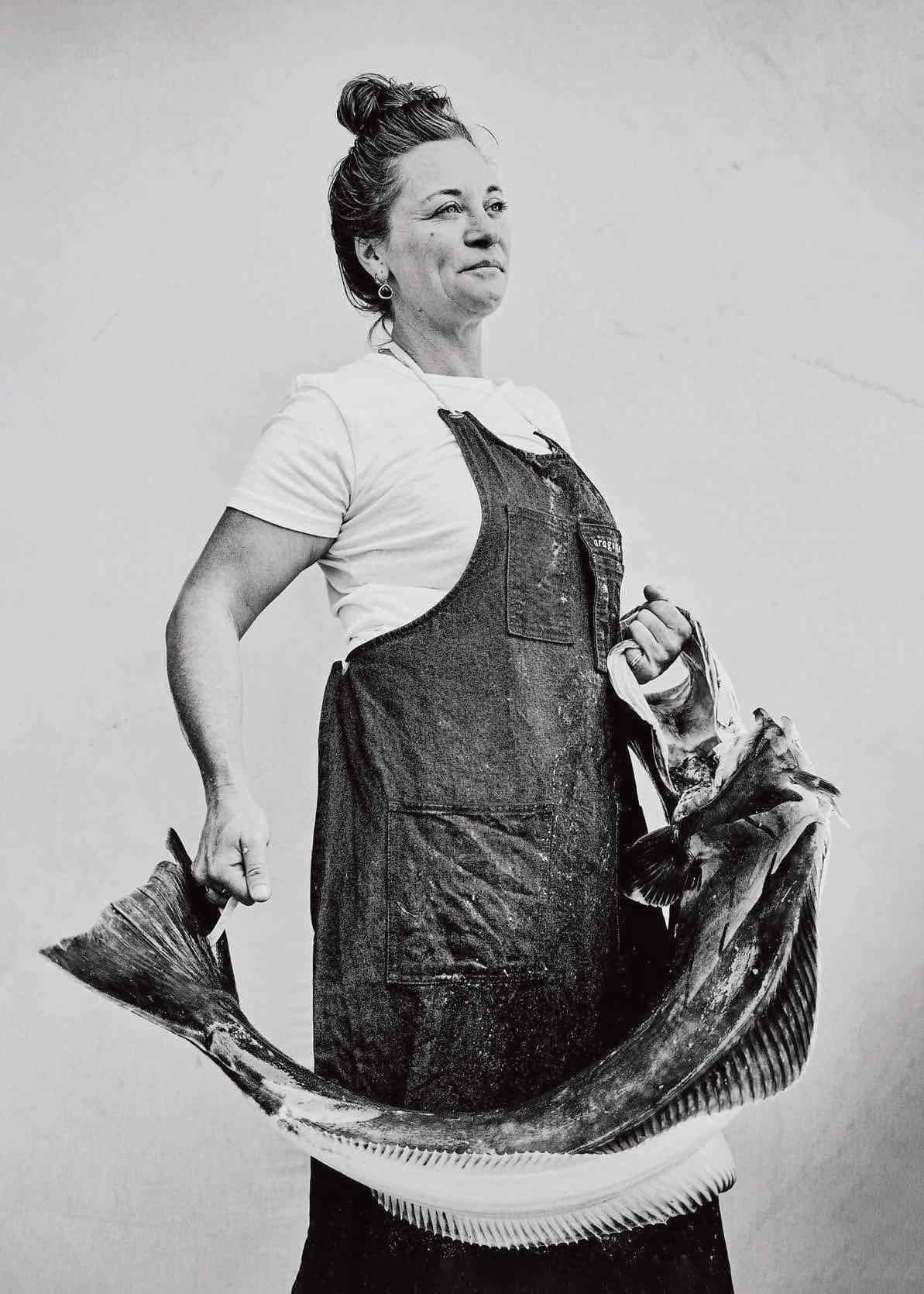
Chef Devin Finigan focuses on local Maine ingredients, like the halibut pictured here, at her Deer Isle restaurant, Aragosta.

Littlenecks in Smoky Spicy Tomato Sauce with Linguine, recipe p. 40

ragosta began its life as a harbor-view restaurant in the fishing village of Stonington, where Maine’s largest lobster catch is still hauled in every season (aragosta means “lobster” in Italian). Six years later, riding on a wave of critical praise, it moved to its current home on Deer Isle’s Goose Cove, a stunning sweep of bay and islands, spruce trees and granite ledges, where chef-owner Devin Finigan could welcome her growing audience into a larger dining room, with outdoor decks, guest cottages, and a glass greenhouse turned dining room.
Through all her years of cooking, and through off-season internships at restaurants in Italy and Spain, at Per Se and Blue Hill at Stone Barns, Finigan kept up an internal monologue—notes for the book she would one day write about everything she was learning. “It’s been living in my head for years,” she says. “Not as a ‘someday’ project, but as something I’ve been quietly building with every season that passes.” After years of thinking, of being asked, “When are you going to write a cookbook?” she finally got to writing it all down.
It’s fitting that A Kitchen on Goose Cove: Recipes from the Heart of Maine should be so deeply rooted in this place she calls home. “In Maine, you do not cook the same way year-round,” she says. “The ingredients don’t let you.” The book’s 75 recipes are designed to let those ingredients shine: blueberry pavlova, sweet corn chowder, grilled swordfish steaks with summer salsa. Her goal? To teach readers to cook with confidence. “I want readers to feel that Maine seasonal cooking is something they can actually own,” she says. “Not special-occasion cooking, just cooking with clarity and intention, guided by what is fresh. I’ve watched friends and guests light up when they realize lobster does not need to be intimidating, or that mussels can be a weeknight dinner, or that the best meals are often the simplest ones when the ingredients are real.”
Meanwhile, the restaurant continues to grow beyond the kitchen and dining room. This summer, Finigan plans to offer guests deeper experiences of Goose Cove: yoga on the beach, guided kayak tours, a new champagnethemed beach bar. “Salt air, great bottles, and food that tastes like exactly where you are,” she says.
Finigan hopes the following recipes, all excerpted from A Kitchen on Goose Cove , remind readers that Maine is not one flavor. “It is a coastline, a working culture, and a rhythm,” she says. “Lobster, oysters, local fish, yes, but also the farms, the people who pull food from the sea and the soil, and the way the seasons shape everything. If someone finishes the book feeling inspired to cook Maine cuisine and feeling connected to where it comes from, then it’s doing what I wrote it to do.” —Amy Traverso
Sweet Corn Vegetarian Chowder, recipe p. 39
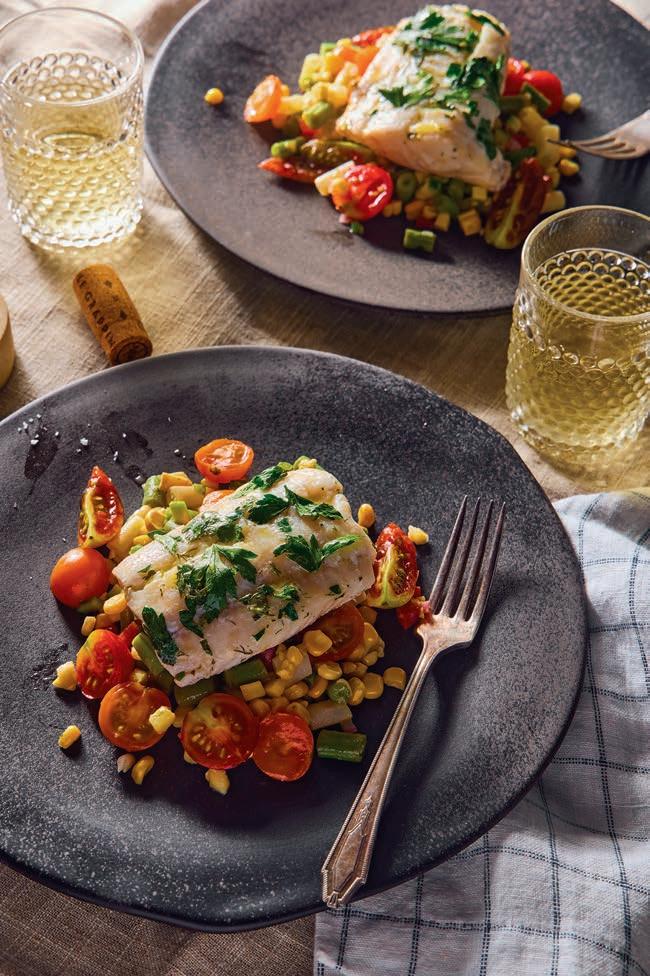
HADDOCK FILLETS WITH DEER ISLE SUCCOTASH
Finigan writes: “Succotash is an ancient recipe made long before Europeans first came to New England. I make mine with string beans ... because when the other vegetables in this recipe are at their peak, so are string beans. You can serve succotash, as we do here, with a simple baked haddock for a fresh and light summer meal.”
FOR THE SUCCOTASH
Kosher salt
4 ounces (about 10) green beans, tips and strings removed
4 ounces (about 10) yellow wax beans, tips and strings removed
4 tablespoons (½ stick) unsalted butter
1 medium shallot, finely diced
2 garlic cloves, minced
1 small zucchini, medium-diced
1 small yellow squash, medium-diced
1 red bell pepper, medium-diced
1 small jalapeño pepper, seeded and finely diced
2 teaspoons kosher salt
4 ears corn, kernels cut from cobs
8 ounces (about 1 pint) cherry tomatoes, halved
FOR THE HADDOCK
1½ pounds haddock fillet, cut into 4 equal portions
½ teaspoon kosher salt
1 cup white wine
2 lemon wedges
2 tablespoons unsalted butter
2 tablespoons chopped fresh flat-leaf parsley
FOR SERVING
Good olive oil, for drizzling
Chopped fresh flat-leaf parsley, for garnish
1 tablespoon thinly sliced fresh basil, for garnish (optional)
First, make the succotash: Set up a large bowl of equal parts ice and water and set it near the stove. In a soup pot, bring 4 quarts of liberally salted water to a rolling boil. Add both types of beans to the pot and blanch until tender but still snappy, 2 to 3 minutes. Scoop the beans out of the pot and immediately shock them in the ice water so they stay brightly colored and crispy. Remove them from the ice bath and cut them into ½-inch pieces. Set the beans aside. Heat butter in a large skillet over medium heat until it foams. Add the shallot and garlic and cook for 1 minute. Add the zucchini, yellow squash, bell pepper, jalapeño, and salt. Cook the vegetables, stirring frequently, until they soften, about 5 minutes. Add the corn kernels and cook for 3 minutes, continuing to stir. Remove the skillet from the heat and add the cherry tomatoes and the cooked beans.
Next, bake the haddock: Preheat the oven to 350°F. Season the haddock with the salt and place it in a baking dish. Add the wine, lemon wedges, butter, and parsley. Transfer to the oven. Bake the haddock until it flakes. Test for flakiness after 10 minutes. Continue to test every 5 minutes until the haddock is moist and flaky. Remove to a serving platter and set aside.
To serve: Place the succotash on a dinner plate and top with a portion of haddock. Drizzle with olive oil and garnish with parsley and, if you like, basil. Yields 4 servings.
SWEET CORN VEGETARIAN CHOWDER
“Chowder is as New England as a soup can be. It’s usually made with clams, lobster, or finfish, but this vegetarian version is quite hearty and stick-to-yourribs. It hits the spot when served up
Haddock Fillets with Deer Isle Succotash
warm on a rainy day. Try it chilled the next day, just like cold leek-and-potato soup. Rain or shine, it makes for a lovely lunch served with a green salad and a piece of crusty bread.”
6 scallions
3 tablespoons unsalted butter
3 celery ribs, medium-diced
1 red bell pepper, roughly diced
1 small jalapeño pepper, seeded and finely sliced
8 ears sweet corn, kernels scraped from cobs
1 pound russet potatoes, peeled and cut into ½-inch cubes
1 quart vegetable stock, homemade or store-bought
1 cup whole milk
1 cup heavy cream
1 bay leaf
1 teaspoon kosher salt
teaspoon freshly ground black pepper
½ teaspoon ground turmeric Furikake (Japanese sesame seasoning), homemade or store-bought (optional)
Thinly slice the scallions and set aside a few tablespoons for garnish.
Warm the butter in a soup pot over medium heat until it foams. Add the scallions, celery, bell pepper, and jalapeño. Cook until the vegetables start to soften, 5 to 7 minutes.
Set aside ¼ cup of the corn kernels for garnish and add the remaining corn kernels to the pot. Add the potatoes, vegetable stock, milk, heavy cream, bay leaf, salt, black pepper, and turmeric. Bring to a medium simmer and cook until the potatoes are tender and pierce easily with a fork, about 10 minutes.
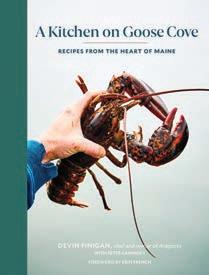
Enter to Win A Kitchen on Goose Cove
Plus six more cookbooks that celebrate New England! Contest details, p. 9
Discard the bay leaf. Transfer half the mixture to a food processor or blender. Blend, starting at a slower speed so as not to spatter, and then increasing the speed until completely smooth. Return the puree to the pot and simmer to the desired temperature for serving, usually about 5 minutes.
To serve: Ladle the chowder into soup bowls. Garnish with the reserved corn kernels, the reserved scallions, and the furikake, if desired. Store any leftover chowder in an airtight container in the refrigerator for up to 4 days. Yields 4 to 6 servings.
LITTLENECKS IN SMOKY SPICY TOMATO SAUCE WITH LINGUINE
“For summer vacation when I was a kid, we’d pile in the car and drive to Ogunquit, Maine, and camp out in tents. One of our favorite group projects was to scramble around for clams at low tide, feeling for them with our toes in the mud. Those summers began my love affair with Maine. Over Christmas and New Year’s, when we were back home in Vermont, we didn’t have much fresh seafood, so our version of the traditional Feast of the Seven Fishes on Christmas Eve included the only fresh sea creatures we could find in the market … clams. Every year, my dad would make linguine and clams in spicy tomato sauce. This updated version
(Continued on p. 94)
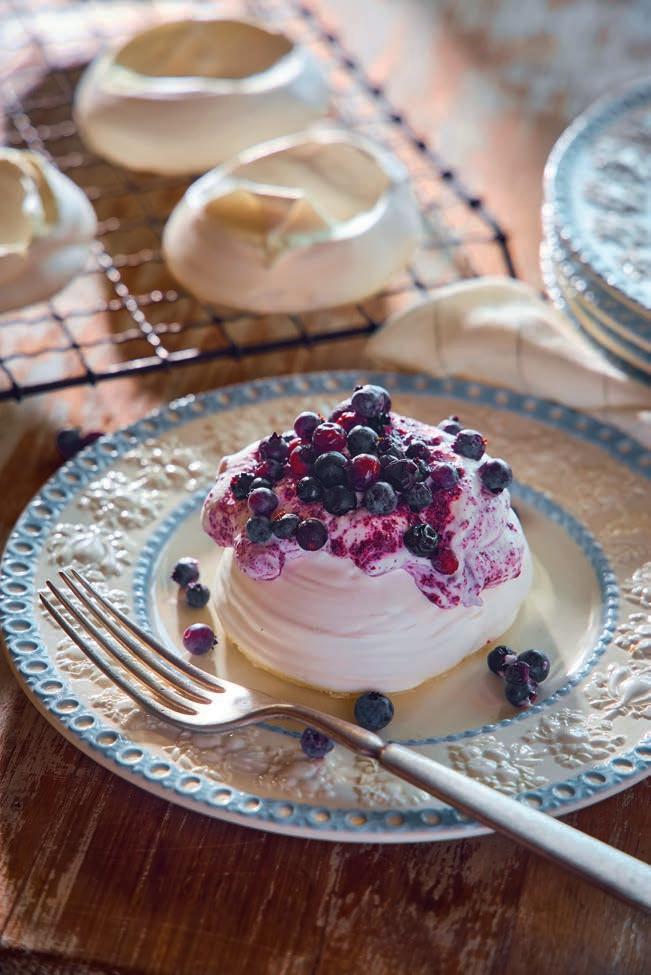
Blueberry Fool Pavlova, recipe p. 94
Any Way You Slice It
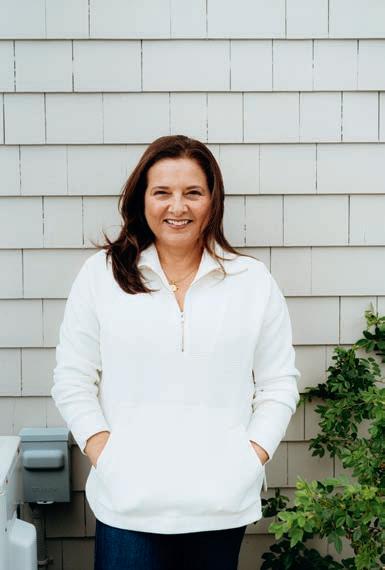
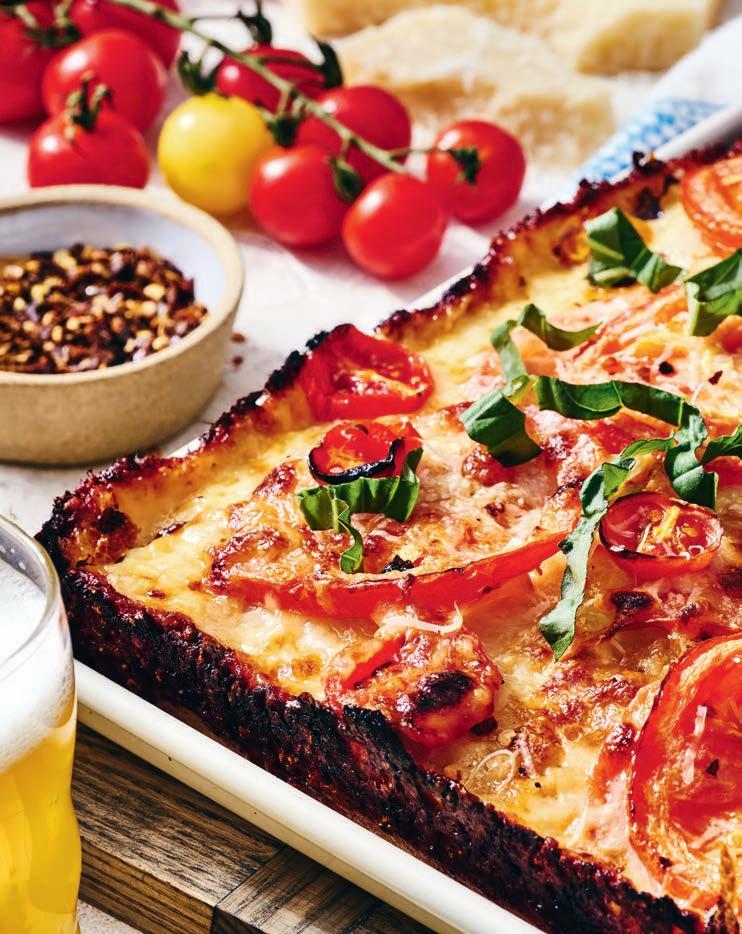
My longtime friend Jessica Battilana writes and edits cookbooks at King Arthur, including her team’s latest, The Book of Pizza. For our TV segment, she taught me the secret of making Detroitstyle pizza, the thick-crust pie baked in a rectangular pan and topped with a glorious abundance of cheese—and even sprinkled down the sides of the crust, where it crisps and caramelizes while baking. This pizza style emerged in the 1940s at Buddy’s Rendezvous in Detroit, Michigan, where it was baked in steel pans like the ones used to hold small parts at nearby auto plants.

Nothing beats the sweet-tart delight of summer tomatoes, celebrated here in easy recipes inspired by our TV show.
STYLED AND PHOTOGRAPHED BY LIZ
NEILY
In the current season of Weekends with Yankee , we visit the headquarters of the King Arthur Baking Company in Norwich, Vermont. If you’ve never been, imagine a mini college campus completely devoted to baking, with classrooms, a café, and
a store stocked with everything from pizza ovens to baking mixes. Now imagine visiting that campus on a beautiful sunny day, beginning with a stop for fresh vegetables and herbs from the farm just down the road and ending with pizza fresh out of the oven.
Making pizza dough is easy, but I know that many people prefer to buy it at the supermarket, so I developed the following cheese-and-tomato pie with that in mind. (You can always make it with your favorite homemade dough, though.)
For the second recipe, inspired by Vermont’s fresh produce (the farm we visited is called Crossroad Farm), I developed a crispy chickpea, feta, and tomato salad that’s quick and simple to make but hearty enough for a summer meal. If you’ve never roasted chickpeas before, prepare to be delighted. When dried well before roasting, they come out nutty and crunchy, the perfect match for the season’s sweet tomatoes.
WEEKNIGHT DETROIT-STYLE TOMATO PIE
1 pound pizza dough (storebought or homemade)
1 tablespoon plus 2 tablespoons olive oil
1 pound fresh, ripe tomatoes, preferably a mix of large and small (cherry or grape)
Weeknight Detroit-Style Tomato Pie
2 cups shredded sharp cheddar
1 cup shredded mozzarella
²⁄ 3 cup freshly grated Parmesan or Romano cheese
1 large shallot, thinly sliced crosswise
¼–½ teaspoon red chili flakes
½ teaspoon kosher salt
Thinly sliced basil leaves, for garnish
If using refrigerated store-bought dough, let it sit in a covered, oiled bowl at room temperature until it begins to rise, 2 to 4 hours, depending on the temperature of your kitchen.
Preheat your oven to 475°F. When the dough is ready, pour 1 tablespoon oil into a 9-by-13-inch baking pan (preferably metal) and spread it over the surface. Put the dough in the pan, turn it to coat, and gently poke it all over with your fingertips to begin spreading it out toward the edges of the pan. When the dough begins to resist, cover the pan with plastic wrap and let the dough rest until it’s workable, about 30 minutes. Spread it to the edges again, then bake until it has risen and set but hasn’t browned at all, 10 to 12 minutes.
Meanwhile, thinly slice the large tomatoes crosswise and halve the small ones. Mix the three cheeses together in a bowl.



Heat the remaining 2 tablespoons olive oil in a medium nonstick skillet over medium heat, then add the sliced shallot, chili flakes, and salt and sauté until the shallot is soft, 3 to 4 minutes. Set aside.
When the dough comes out of the oven, arrange the shallot slices evenly over the surface, then top with the tomatoes in a pretty design. Sprinkle a handful of cheese down the edge of the pizza where it meets the pan. Repeat, working around the edges, until you’ve used up about ⅔ of the cheese. Sprinkle the rest over the top of the pizza.
Bake until the edges are caramelized and crisp and the tomatoes have softened, 15 to 20 minutes more. Use a dull knife or flexible metal spatula to loosen the pizza edges. Use a spatula to lift the pizza inside the pan, then tilt the pan and slide the pizza onto a wire rack to rest for a few minutes. Transfer to a cutting board, sprinkle all over with basil, cut into 8 rectangular slices, and serve. Yields about 4 servings.
TOMATO, CRISPY CHICKPEA & FETA SALAD WITH GARLIC-HONEY VINAIGRETTE
FOR THE SALAD
1 15-ounce can chickpeas
1 tablespoon olive oil
¾ teaspoon kosher salt
½ teaspoon smoked or sweet paprika
¼ teaspoon freshly ground black pepper
2 pounds fresh, ripe tomatoes, preferably a mix of colors and varieties, cored and cut into ½-inch-thick wedges
½ English (seedless) cucumber, cut into half moons
4 ounces fresh, good-quality feta in brine
5 tablespoons minced fresh herbs (I use a mix of 2 tablespoons basil, 2 tablespoons mint, and 1 tablespoon chives)
FOR THE VINAIGRETTE
¹⁄ 3 cup white wine vinegar
1 tablespoon honey
1 large garlic clove, minced Kosher salt and freshly ground black pepper, to taste
½ cup extra-virgin olive oil
First, roast the chickpeas: Preheat your oven to 450°F and set a rack to the upper third of the oven. Drain and rinse the chickpeas, then arrange on towels and gently pat dry. For maximum crispness, let air-dry for 30 minutes (you can skip this step in a pinch).
In a bowl, gently toss the chickpeas with 1 tablespoon oil and the salt, paprika, and pepper. Arrange on a small baking tray and roast until the chickpeas are browned and crisp, 20 to 30 minutes. Meanwhile, arrange your tomato wedges and cucumber on a serving platter or in a bowl, leaving room for the chickpeas. Break the feta into nice-size crumbles and sprinkle over the tomatoes.
To make the vinaigrette, put the vinegar, honey, garlic, salt, and pepper in a jar with a tight-fitting lid and shake to combine. Let this sit for 10 minutes, then add the olive oil and shake well. When the chickpeas are done, arrange them on the platter with the tomatoes. Sprinkle all over with the fresh herbs, then drizzle with the vinaigrette and serve. Yields about 6 servings as a side, 4 as a main course.
Tomato, Crispy Chickpea & Feta Salad with Garlic-Honey Vinaigrette

Ogunquit, ME
The big beach is only part of the summer experience at this seaside gem.
BY IAN ALDRICH | PHOTOS BY MICHAEL D. WILSON
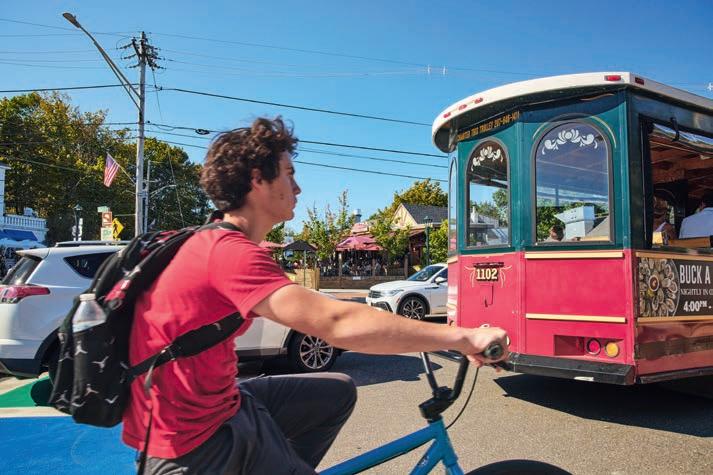
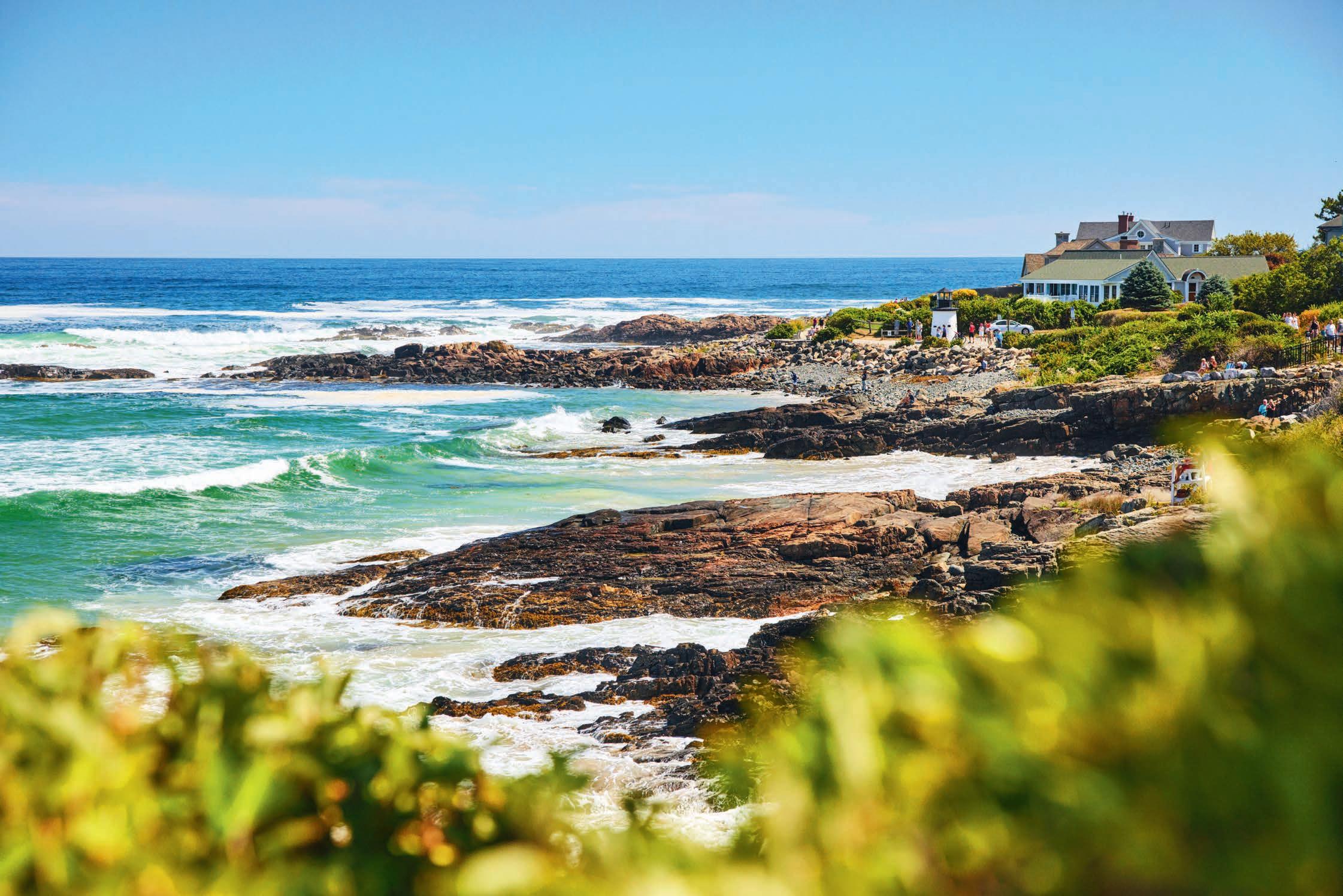
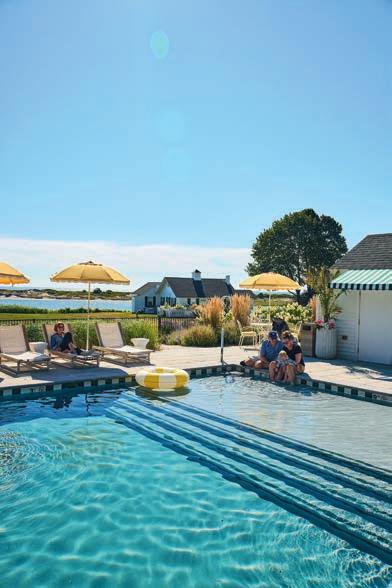
THIS PAGE: Looking along the Ogunquit coast toward the midpoint of one of New England’s most beloved seaside walks, the Marginal Way, where the miniature Lobster Point Lighthouse is a favorite photo op. OPPOSITE, CLOCKWISE FROM TOP LEFT: Relaxing by the heated pool at The Dunes on the Waterfront, a cottage resort founded in 1935; morning pastries at Bread & Roses Bakery; in downtown, a familiar summer sight is the bright red Ogunquit Trolley, offering hop-on, hop-off service from mid-June to early October.
It was only the start of summer, but an old-fashioned heat wave had already descended on the land. Across New England, temperatures were nudging close to triple digits. If you weren’t near the water, you were desperate to get there—and by sheer luck, a planned trip had put my teenage son and me on Maine’s Ogunquit River for an early-morning stand-up paddle. For a good hour we meandered: under a bridge, past fellow vacationers on land lumbering toward the beach, alongside breezy tidal flats. We weren’t the only ones there, but at times it sure felt that way.
Incredibly, everything would soon change.
To know the Ogunquit River is to know its two dispositions. Twice a day, this nearly 10-mile ribbon of water, which runs from inland South Berwick to the Atlantic in its namesake town, empties out at low tide, revealing a band of beautiful mudflats that become their own kind of playground. But time it right on a prime summer day, as the water rises again, and you will be drenched in the most summery of scenes: boogie boarders, tubers, and rafters riding this lazy river to the very same slice of ocean that once inspired a roving band of early-20th-century artists, from Edward Hopper to George Bellows.
Ogunquit Beach stretches a dazzling three and a half miles from the center of town all the way to the more remote sections of Footbridge and North beaches. In a state where much of the coastline is in private hands, Ogunquit proudly hangs its welcome sign: 100 percent of its beachfront is open to the public.
Yet it’s what you’ll find just beyond the surf that lends real summer flair to this town, where Maine’s top restaurants share the same zip code as wooden seafood shacks. It’s home to one of the finest seaside strolls in New England, arguably one of the most beautifully sited museums in the country, and a beloved summer
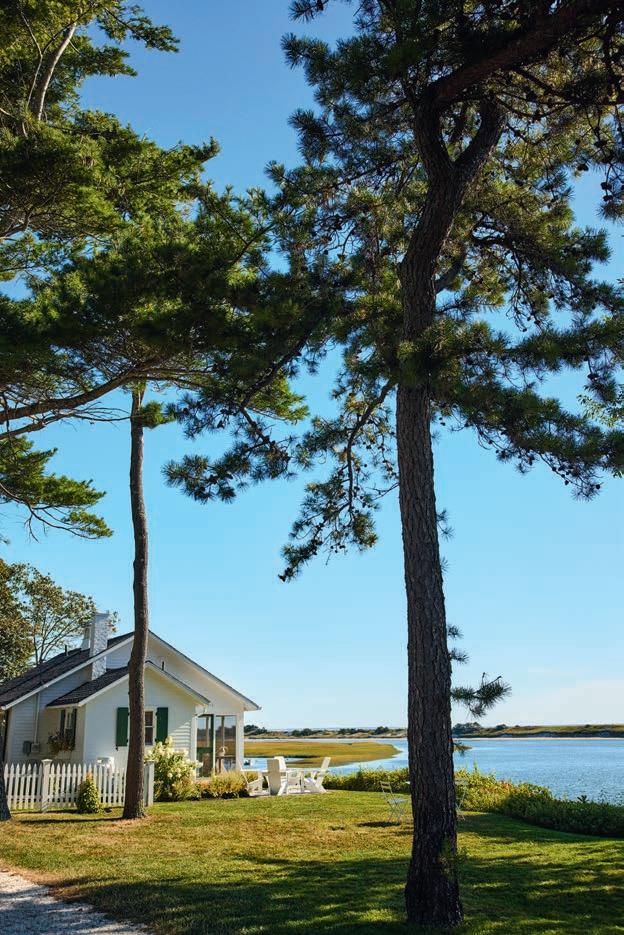
LEFT: One of the nearly two dozen summer cottages at The Dunes on the Waterfront, whose setting on a quiet tidal river contrasts with its proximity to Ogunquit Beach.
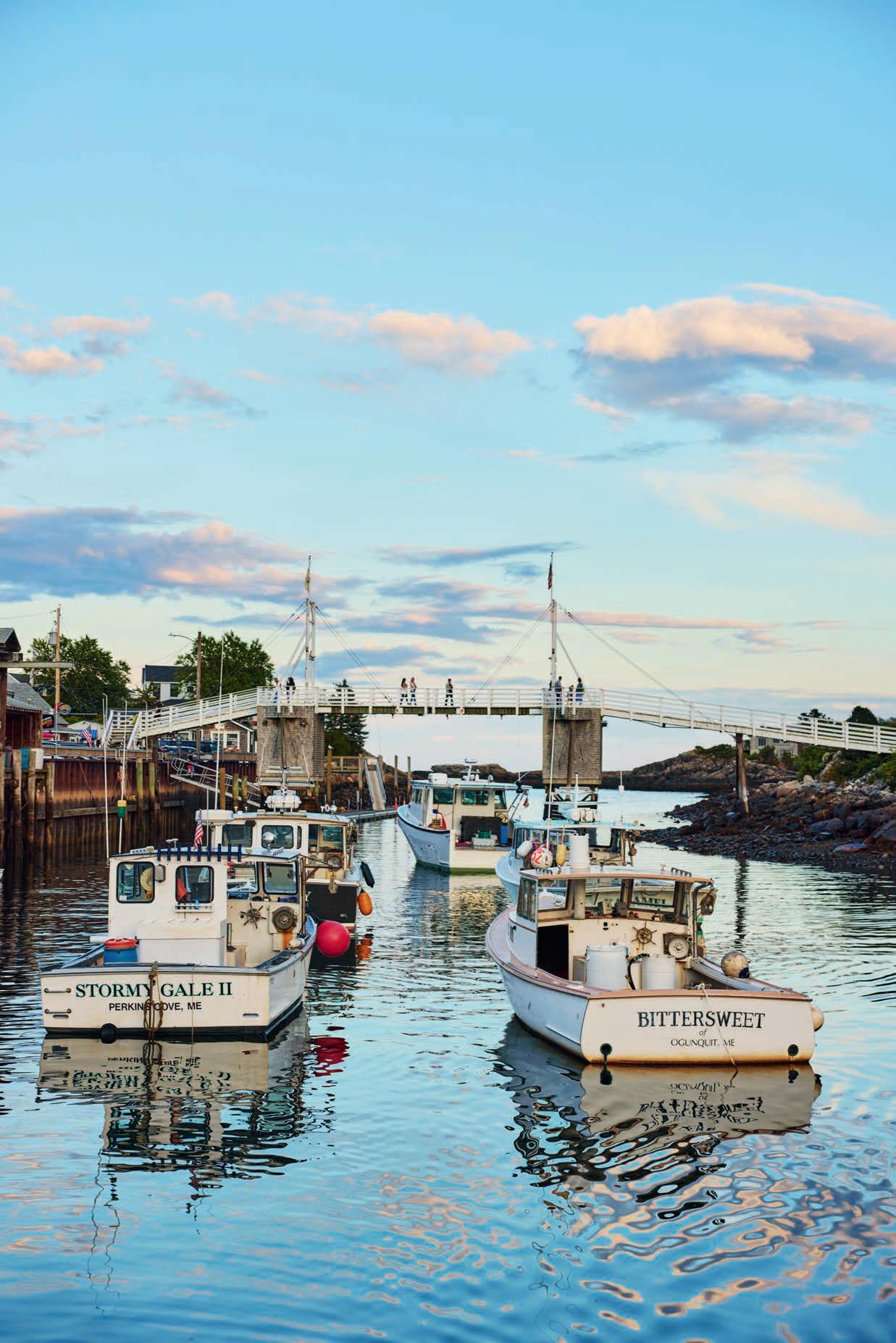
OPPOSITE: Spanning the narrow entrance to Perkins Cove, this historic footbridge is also the last remaining drawbridge of its kind in the U.S.
stock theater that puts Broadway veterans on the stage many nights of the season. It was early evening when we first arrived on the coast, just in time to fit in a leisurely dinner at Walkers Maine in Cape Neddick. The creation of veteran Maine restaurateurs Justin and Danielle Walker, the restaurant has an informal air—couch and chairs anchored in front of the fieldstone fireplace are a popular nightcap spot—with an ambitious menu flavored by herbs and veggies grown at Danielle’s nearby family farm. From the kitchen’s woodfired hearth, meanwhile, Justin churns out a rotation of specialties. We feasted on roasted carrots, haddock, and chicken, mopping up every last bit before hurrying to make the short drive to the Ogunquit Playhouse, where we cooled off with fresh-pressed lemonade and a sold-out performance of Guys and Dolls. We were still humming a few show tunes as we dropped anchor at The Dunes on the Waterfront, a 12-acre compound of 22 guest cottages on the banks of the Ogunquit River. Opened in 1936, the property retains a kind of unassuming charm, even after new owners put $10 million into upgrades just two years ago. The resulting shipshape cottages sit against a beautifully landscaped property featuring a pool, a firepit, and a wide lawn that runs to the river’s bluffs. Guest amenities
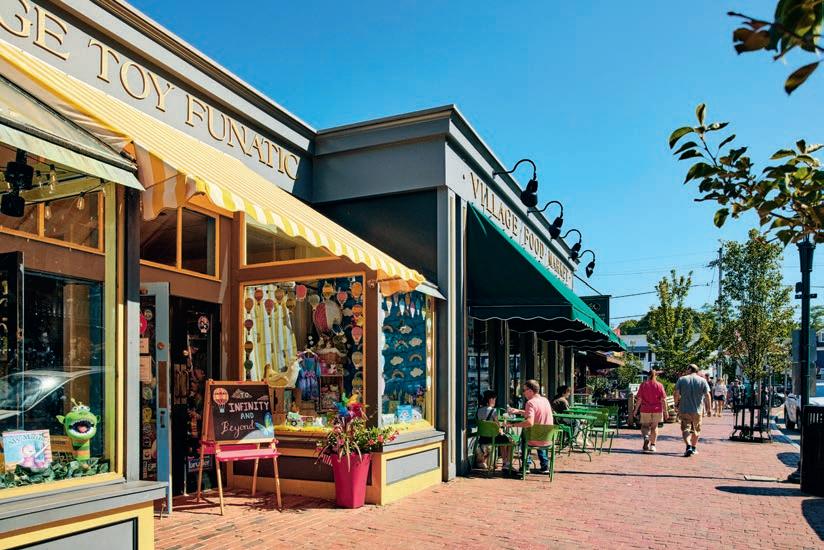
Ogunquit’s highly walkable Main Street and the surrounding side streets are brightened by the storefronts of local shops and eateries such as Village Toy Funatic and Village Food Market.
run the gamut from free bikes to a pontoon boat beach service to a daily morning delivery of hot coffee, The New York Times, and fresh pastries from nearby Bread & Roses Bakery.
The next day we just barely managed to snag a table at the popular Greenery Café, where co-owner Amy Hale presides over a fortifying menu that includes Maine-centric crab cakes Benedict and a lobster-Brie omelet. “This place had closed, and I kept saying somebody should do something with it,” says Hale, a Massachusetts native who moved to Ogunquit a decade ago after years of summer vacationing in the area. “That someone became me.” She threw up her arms triumphantly. “Ten years later, here we are!”
It was still a few hours from peak heat when we shuttled over to the Marginal Way, a 1¼-mile-long cliff walk that opens up to some of the most spectacular views of Maine’s southern waters. Up and down you go, along a paved path that caters to walking … and sitting: A scattering of benches is found along the way, all suitably facing the ocean horizon. With the sun now at its high point, we
EXPLORING OGUNQUIT, ME
EAT & DRINK
Barnacle Billy’s: The restaurant’s claw meat–packed lobster roll is literally the stuff of legend. And whether you’re dining at Billy’s original 1961 location or its neighboring sister restaurant, any wait is always worth it. barnbilly.com
Big Daddy’s Homemade Ice Cream: Nearly 50 flavors in all highlight the big board at this beloved sweet shop, including Maine blueberry pie, as well as a tasty selection of frappes, sundaes, and ice cream sodas. bigdaddysicecream.com
Cornerstone Pizza: Mainemade beers and an expansive pizza menu that includes—wait for it—lobster are the stars of this popular downtown spot. cornerstoneogunquit.com
The Greenery Café: Locals and tourists alike converge at this breakfast joint, which opens at 7 a.m. and offers a menu of inventive Bennys as well as an assortment of made-from-scratch muffins, scones, and cupcakes. Facebook
Jonathan’s: Fifty years ago this summer, Jonathan West turned his childhood home into an Ogunquit original: an upscale restaurant on the first floor, and a second-floor performance venue that has welcomed acts like the Indigo Girls and Lenny Clarke. jonathansogunquit.com
Mornings in Paris: Sweet and savory crepes, not to mention an assortment of croissants and various caffeinated pickme-ups, highlight the menu. morningsinparis.com
Walkers Maine, Cape Neddick: Since opening in 2018, this restaurant has rightfully piled up a number of accolades, including Four Diamond status from AAA. Upscale but never pretentious, Walkers serves up a revolving mix of hearty dishes, from duck to ribs to salmon, that are cooked over chef Justin Walker’s big kitchen hearth. walkersmaine.com


Scan to make the most of your Maine vacation.



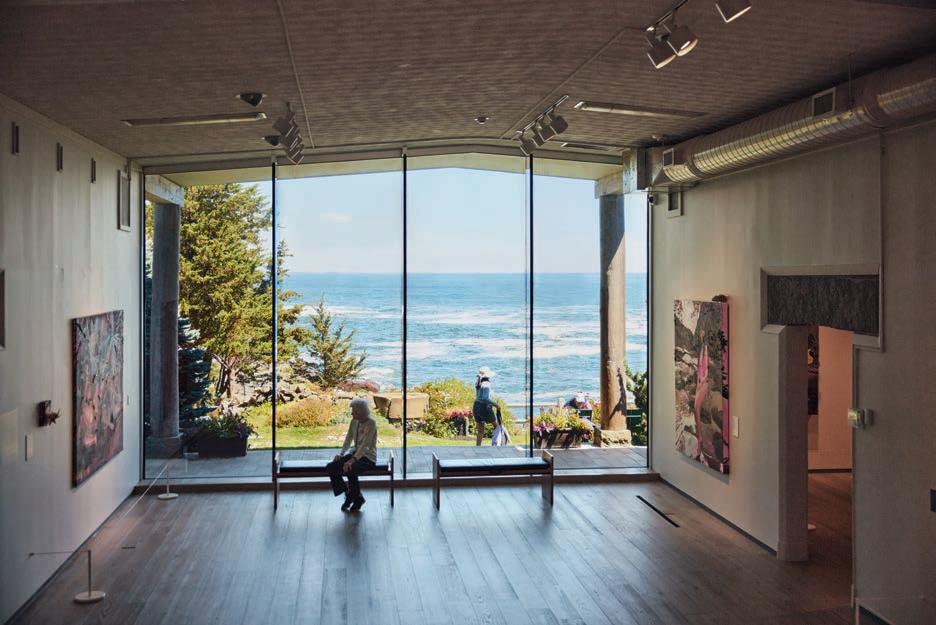
decided to drop into the air-conditioned Ogunquit Museum of American Art, a midcentury-style building perched atop Narrow Cove. Its permanent collection of more than 3,000 photographs, paintings, drawings, and sculptures spans the late 1800s to the present and is studded with marquee names such as Marsden Hartley and Eliot O’Hara. But the jaw-dropping permanent “exhibit” here just might be the ocean views that pour in from the museum’s large back windows.
The next morning we re-carbed with a couple of croissants and a Nutella latte from Mornings in Paris, a French-inspired downtown café, before heading to Perkins Cove, a historic fishing harbor nested at the southern tip of Ogunquit. It was peak Vacationland vibe: Tourists filled the tiny village center, while pretty boats dotted the water. We eventually found ourselves at a coveted outside table at Barnacle Billy’s, an icon of the local seafood scene that first opened in 1961. For many years it was a favorite lunch spot for President George H.W. Bush, who often arrived by boat from his home in Kennebunkport. His meal of choice was reportedly the grilled hot dog, but if only the late commander in chief knew what he was missing: My son let out an audible “wow” when our server delivered a pair of monster lobster rolls.
If we’d been up for the challenge, we could have caught our own crustaceans (with the help of an actual lobsterman) just a few doors down with Finestkind Scenic Cruises. Instead, we opted for the outfitter’s equally popular tour: a 90-minute ride to Nubble Light and back. To reverse-engineer sightseeing and take in the Maine coastline from the water is to appreciate its enduring beauty. We motored past what the locals call Pirates Cove, home to a legendary loot of buried treasure, and past miles of ancient rocks and jagged cliffs before taking a spin around one of the world’s most famous lighthouses. Like millions of others, I’ve seen the Nubble from the vantage point of Sohier Park in York. But this was my first experience viewing it by boat. Back at The Dunes that evening, my son and I flopped down into chairs overlooking the river for one last moment of the day. Waves crashed and retreated in the distance, while a now-delightful heat still clung to the evening air. We fell quiet for a few minutes as we nursed a few cold drinks. I couldn’t have conjured up a better start to the summer season.
STAY
The Beachmere Inn: Conveniently located on the Marginal Way, this classic resort hotel caters to guests with in-room fireplaces, access to a hot tub, and an on-site spa and fitness center. beachmereinn.com
The Dunes on the Waterfront: Ogunquit’s only on-the-river, cottage-style lodging, The Dunes offers easy access to the water and plenty of family touches that will keep everyone in your crowd happy. dunesonthewaterfront.com
PLAY
Finestkind Scenic Cruises: Seventy years after sixthgeneration Mainer Oscar Hubbard first welcomed guests aboard his cruiser, Finestkind offers a range of tours, including a scenic breakfast option and an evening cocktail route. finestkindcruises.com
Marginal Way: While hardly a strenuous hike, this 1¼-mile jaunt remains one of the most popular in New England. The trail features a number of access points, but if you want to walk it from end to end, we recommend starting from Perkins Cove and strolling north to Shore Road, then jogging onto Wharf Lane and over to Ogunquit Beach.
Ogunquit Museum of American Art: Big ocean views and peaceful gardens add to the visual experience at this museum, the only one in Maine dedicated exclusively to American art. ogunquitmuseum.org
Perkins Cove Bookshop: A grand beach deserves a grand beach read, and Ogunquit’s only dedicated bookshop stocks approximately 2,500 titles, including a robust selection from Maine authors. perkinscovebookshop.com
Wheels N Waves, Wells: Ditch the car and power your own sightseeing tour. The shop includes e-bike rentals as well as surf and paddleboard lessons. wheelsnwaves.com
A short walk from Perkins Cove, the Ogunquit Museum of American Art and its three acres of sculpture gardens overlook Narrow Cove and the Atlantic Ocean.


I Was the First One There
I arrived at the mine early. I was not sure if I had misheard our meeting time or if Jeff was late. I liked the sense of space, the openness without any other consciousness to interfere. The space felt different than my years of visits with other people around. Thinking minds are so powerful that one can feel others’ thoughts guided by arrows and pre-established pathways. Here with nothing but cliffs and trees, it was just me with a pen and paper. I was not alone but free to see, sense, and experience.
I heard a plane take off from the airport several miles away. I heard the wind in the pines and spruce, faint and up high. The cliffs that surround, the rubble that litters, and the rock below are all frozen in time. I’ve seen what this place produces. I’ve seen the crystals loosened and pulled from the white clay. I’ve listened to the people who come for the unveiling. I’ve heard their gasps; I’ve seen their wonder. This moment, on this mountain, may be as close as anyone ever gets to true magic in their earthly existence. - R.H.P.

Yes, we have over 100 pieces of SparHawk Mint-Green-Teal Maine Tourmaline jewelry on our website. All of our Maine tourmaline was mined in Maine and therefore never has had a tariff and never will there be a tariff or duty imposed on any of our Maine tourmaline gems. Does your jeweler at home think and care as deeply about jewelry as we do? Probably not.
Spend an hour with our website. It’s worth your time.
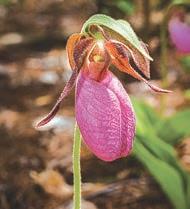
Lady’s Slipper in the woods
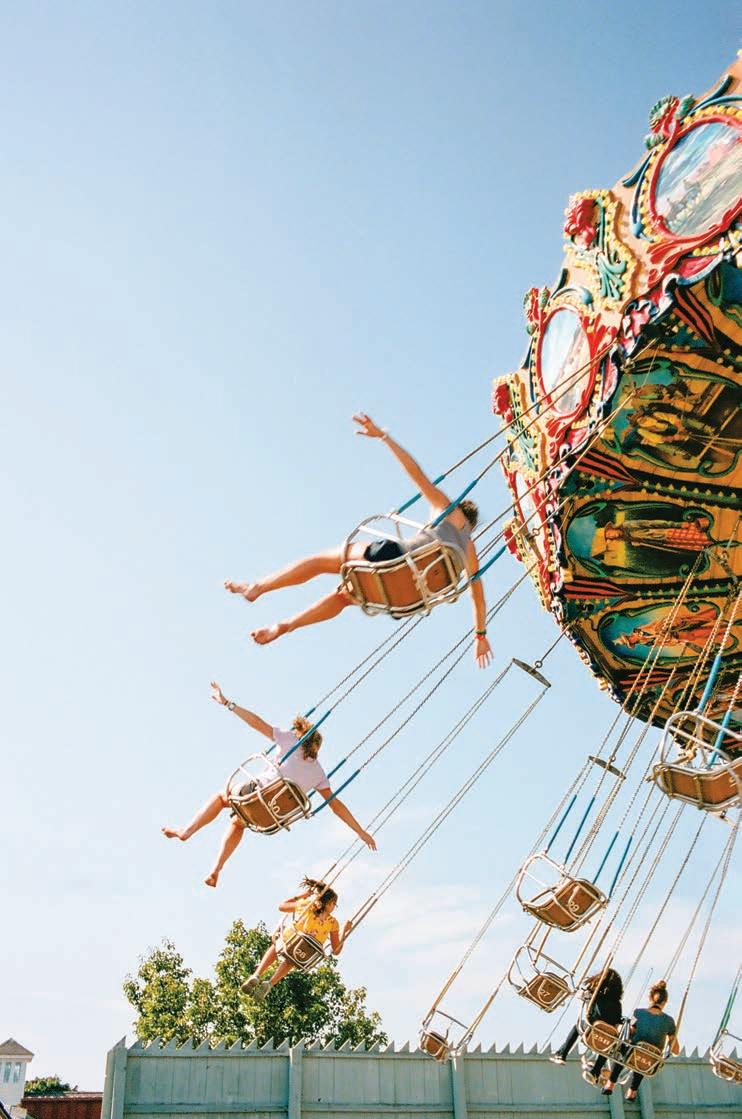
How to Staycation
These quick-hit New England attractions prove that you don’t have to drive for days to make great vacation memories.
BY BILL SCHELLER
I
f gas prices have left your vacation plans feeling pinched, relax: Summer travel’s greatest pleasures can also be its simplest. Sink a putt. Grab a cone. Ride the carousel. Maybe even stay out past your bedtime. Across New England, the opportunities to turn a quick outing into a lasting memory are as varied as the destinations themselves.
CONNECTICUT
BROWNSTONE ADVENTURE SPORTS PARK, Portland. Connecticut probably offers no better way to get creatively wet than a day at Brownstone. Ziplines that dunk riders into the water? Check. Cliff jumping? Sure
thing. Wakeboarding? Yep. Floating obstacle courses of giant inflatables to bounce on and clamber over? Ker-splash! On a more sedate note, there are kayaks and paddleboards to rent; dry-land adventurers, meanwhile, can try rock climbing (safely belayed). brownstonepark.com
Getting into the swing of summer at Palace Playland in Old Orchard Beach, Maine.
DANBURY RAILWAY MUSEUM, Danbury. Danbury’s railroad era dates back to the mid1800s, a proud heritage that animates one of New England’s premier collections of rolling stock—more than 75 pieces in all. Along with a handsomely restored 1903 station that holds museum artifacts and exhibits, there are a dozen or so locomotives (steam, electric, and diesel) and eight cabooses, plus a working turntable. Weekends from early spring through September are the time for regular half-hour train tours around the 10-acre rail yard, while hard-core rail fans over 18 can book half-day deluxe learning experiences dubbed “Hand on the Throttle.” Be sure to grab a selfie with the 38-foot-tall Uncle Sam in the parking lot. danburyrail.org
DINOSAUR STATE PARK, Rocky Hill. State park visits don’t usually involve bringing plaster of paris. But it’s standard practice at this attraction built around dinosaur tracks that were first laid down more than 200 million years ago, when three-toed, claw-footed beasts tramped through what was then a sandy lake bed. Since the first fossilized prints were discovered in 1966, the site has yielded more than 2,600 in all—with some 750 now featured within the park’s Exhibit Center. As for that plaster? Bring it and other mold-making supplies to the outdoor Track Casting Area, and capture your own piece of the distant past to take home. ctparks.com
MANSFIELD DRIVE-IN THEATRE & MARKETPLACE, Mansfield. It’s New England tradition to make the most of what you’ve got. So if you’ve got a 1950s drive-in movie theater, why not use it during the day, too? On Sundays from late March through mid-November, this 40-acre property hosts eastern Connecticut’s largest flea market, with 300-plus vendors hawking antiques and collectibles. As for the movies: There are three screens, the requisite snack bar (this one features homemade chili), and a singleprice, all-you-can-fit-in-your-ride “Carload Wednesday” admission during the peak summer season. mansfielddrivein.com
OCEAN BEACH PARK, New London. Few places say “old-fashioned day at the beach” like New London’s salty getaway perched at the point where Long Island Sound meets the Atlantic. There’s something for all ages: amusement park rides that include a classic Ferris wheel and a carousel; an Olympic-size pool and a giant water slide; dining options aplenty; and a patio bar overlooking the sea. All this plus a classic boardwalk against a sweep of white
(Continued on p. 96)

BEST OF NEW ENGLAND
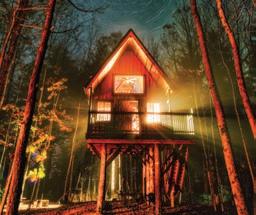
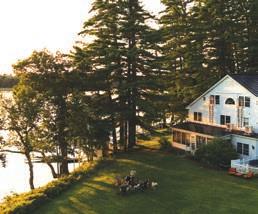
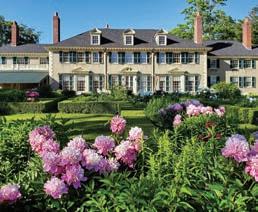
ALPINE GARDEN BARTLETT, NH
Alpine Garden is a luxury glamping resort in Bartlett, New Hampshire, featuring a treehouse, hobbit homes, cozy cabins, retro campers, a heated pool, sauna, and mountain views. Guests can also enjoy the adjacent Alpine Garden Winery. Now booking weddings and private events for up to 125 guests, with lodging for up to 60 guests.
603-374-5154
alpinegardenglamping.com
WOLF COVE INN POLAND, ME
Set on Tripp Lake, this intimate 12-room inn and private cabin blend romance and adventure year-round—from sunset canoeing to four-course boathouse dinners and cocktails at The Den. Unwind in the sauna, savor casual dining, and soak in Maine’s breathtaking natural beauty.
207-998-4976 wolfcoveinn.com
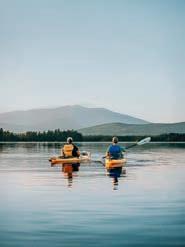



UNIVERSITY OF VERMONT MORGAN
When was the last time you touched the soft coat of a baby horse? Experience living history at this National Historic Site and University of Vermont teaching farm. Open May-Oct. for guided tours and special events. 74 Battell Drive, Weybridge, VT.
CAMP DEFOREST LINCOLNVILLE, ME
Rediscover the magic of summer camp. Set in MidCoast Maine, Camp DeForest reimagines a 1950s roadside lodge as a boutique retreat filled with nostalgia, comfort, and a sense of play. Gather for s’mores, lawn games, cocktails, and cozy cabins. Grownups, families, and adventurers welcome.
207-789-5777 campdeforest.com
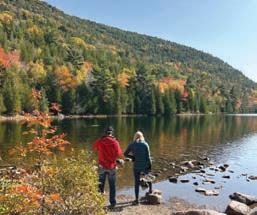
ISLAND TIME E-BIKE SOUTHEAST HARBOR, ME
Discover Acadia’s historic Carriage Roads on guided tours or self-guided adventures with premium electric bikes. Journey through car-free paths, marvel at granite bridges, and circle pristine mountain lakes like Jordan Pond and Eagle Lake. The ride of your life awaits.
207-779-4665 islandtimeacadia.com
HILDENE, THE LINCOLN FAMILY HOME
MANCHESTER, VT
412-acre estate with a 1905 Georgian Revival mansion built by Robert Lincoln and home to three generations of the Lincoln Family; extensive gardens; exhibits; restored 1903 Pullman railcar; Welcome Center and Museum Store; two working farms; hiking trails. On the African-American Heritage Trail. Year-round.
800-578-1788 hildene.org

HARTFORD, CT
The Wadsworth, America’s oldest public art museum, sparks creativity and connection through exceptional collections, special exhibitions, and engaging programs. In the heart of Hartford, the museum connects visitors with art across centuries, inspiring new perspectives and moments of discovery.
802-278-2670 thewadsworth.org
Reconnect with past Editors’ Choice winners and see for yourself why they received Yankee Magazine’s highest accolade.

FAT SHEEP FARM & CABINS
HARTLAND, VT
The Boston Globe describes Fat Sheep Farm as “a magical place” offering amazing views from modern cabins. Soak in the sunset by the firepit, taste the farm’s bounty, try your hand at milking sheep, or attend a cheese-making or sourdough workshop.
802-436-4696 fatsheepfarmvermont.com
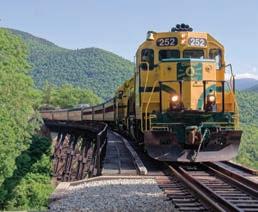
CONWAY SCENIC RAILROAD
NORTH CONWAY, NH
Take a journey through New Hampshire’s White Mountains aboard the Conway Scenic Railroad’s Mountaineer. The Mountaineer is the most scenic of several seasonal rail excursions and now offers an alternative eastbound boarding option from Crawford Notch.
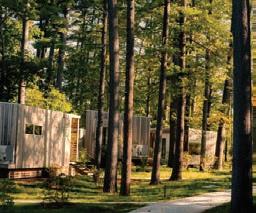
PROSPECT BERKSHIRES
GREAT BARRINGTON, MA
A landscape hotel located in the heart of the culture-rich Berkshires. A restorative lakeside retreat in nature with cabins, pool, sauna, tennis, and curated experiences. Dine at our restaurant, the Cliff House, where seasonal cuisine meets sweeping lake views. 2 hours from Boston, 2.5 from NYC.
413-528-5005 prospectberkshires.com

VUOLO’S WINTHROP, MA
Vuolo’s is a neighborhood spot for handmade pasta and unique craft cocktails. Rooted in tradition, Vuolo’s offers a wonderful mix of classic Italian dishes and new creations. This modern Italian-American restaurant keeps things interesting while making you feel right at home.
781-322-4068 vuoloswinthrop.com
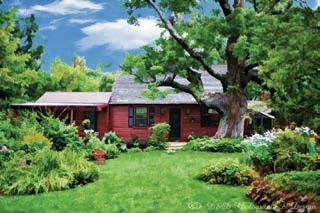
PICKITY PLACE MASON, NH
Experience the enchanting cottage that inspired Elizabeth Orton Jones’s Little Golden Books version of Little Red Riding Hood. Untouched by time, this is a mecca for gardeners, epicureans, and anyone looking for inspiration and relaxation. Have a Pickity day!
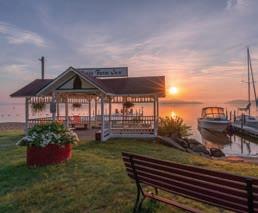
AMES FARM INN GILFORD, NH
Enjoy a quarter mile of sandy beach and docks on the shores of Lake Winnipesaukee. Lakeside cottages, apartments, and rooms available. Great location for fishing, hiking, kayaking, boating, and more. Family owned and operated since 1890.
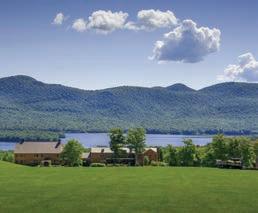
MOUNTAIN TOP RESORT CHITTENDEN, VT
Spanning 700 acres, this resort offers activities for everyone, from horseback riding to clay bird shooting and boat rides. With luxurious accommodations, an on-site spa and salon, and exquisite dining, it’s the perfect getaway destination. A short drive from home— made to feel like a world away.
802-483-2311
mountaintopinn.com
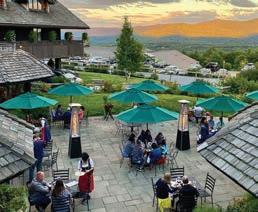
VON TRAPP FAMILY LODGE & RESORT STOWE, VT
Nestled in Vermont’s scenic hills, the von Trapp Family Lodge & Resort blends Austrian charm with modern luxury. Guests enjoy cozy accommodations, a multitude of tours, outdoor adventures, gourmet dining, and stunning mountain views— all inspired by the legendary von Trapp family heritage.
603-356-5251
conwayscenic.com
603-878-1151 pickityplace.com
603-293-4321 amesfarminn.com
800-826-7000 x 1 vontrappresort.com
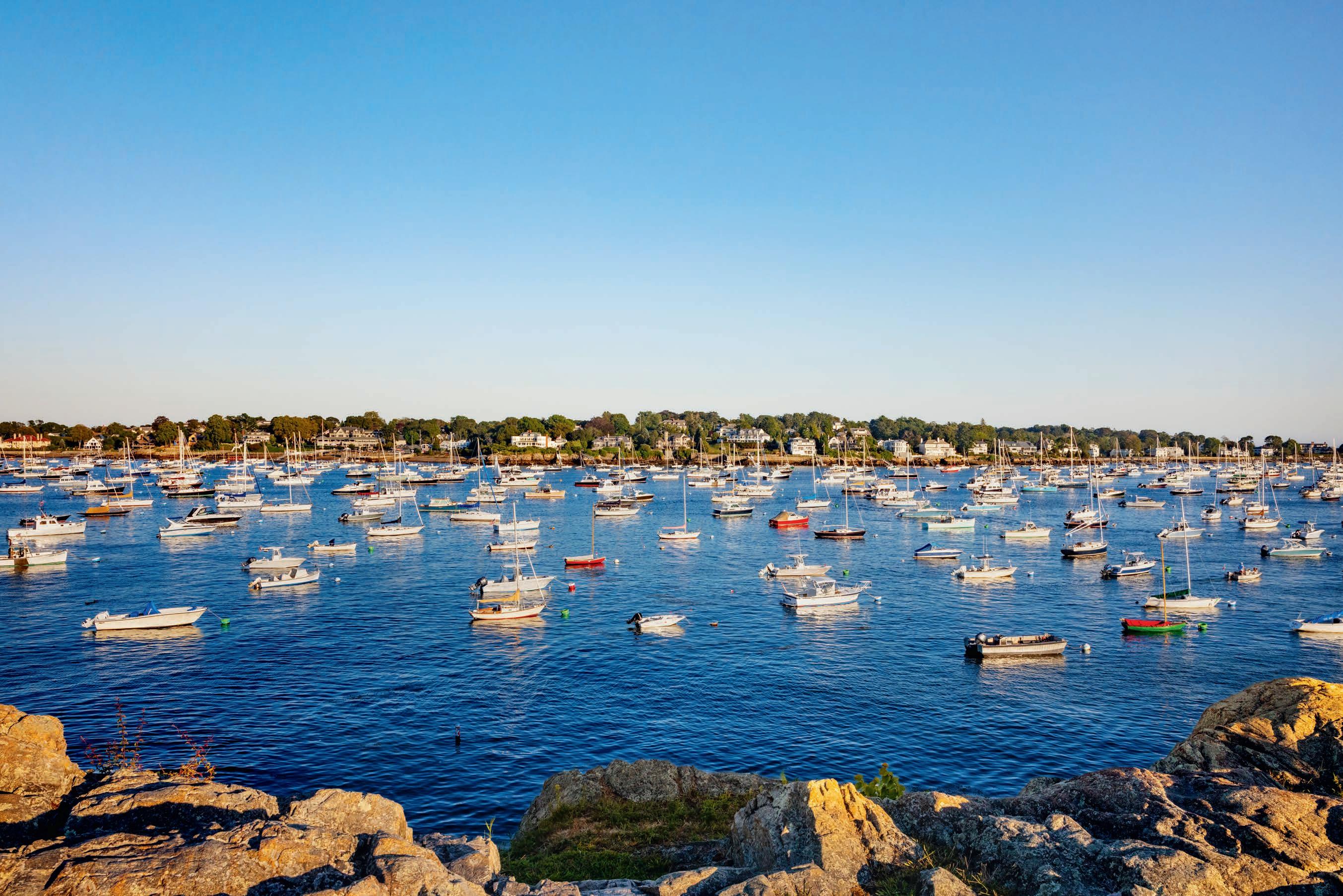
Less than 20 miles north of Boston, Marblehead has long been known as a hub for competitive sailing, with some even calling it the “yachting capital of the world.”
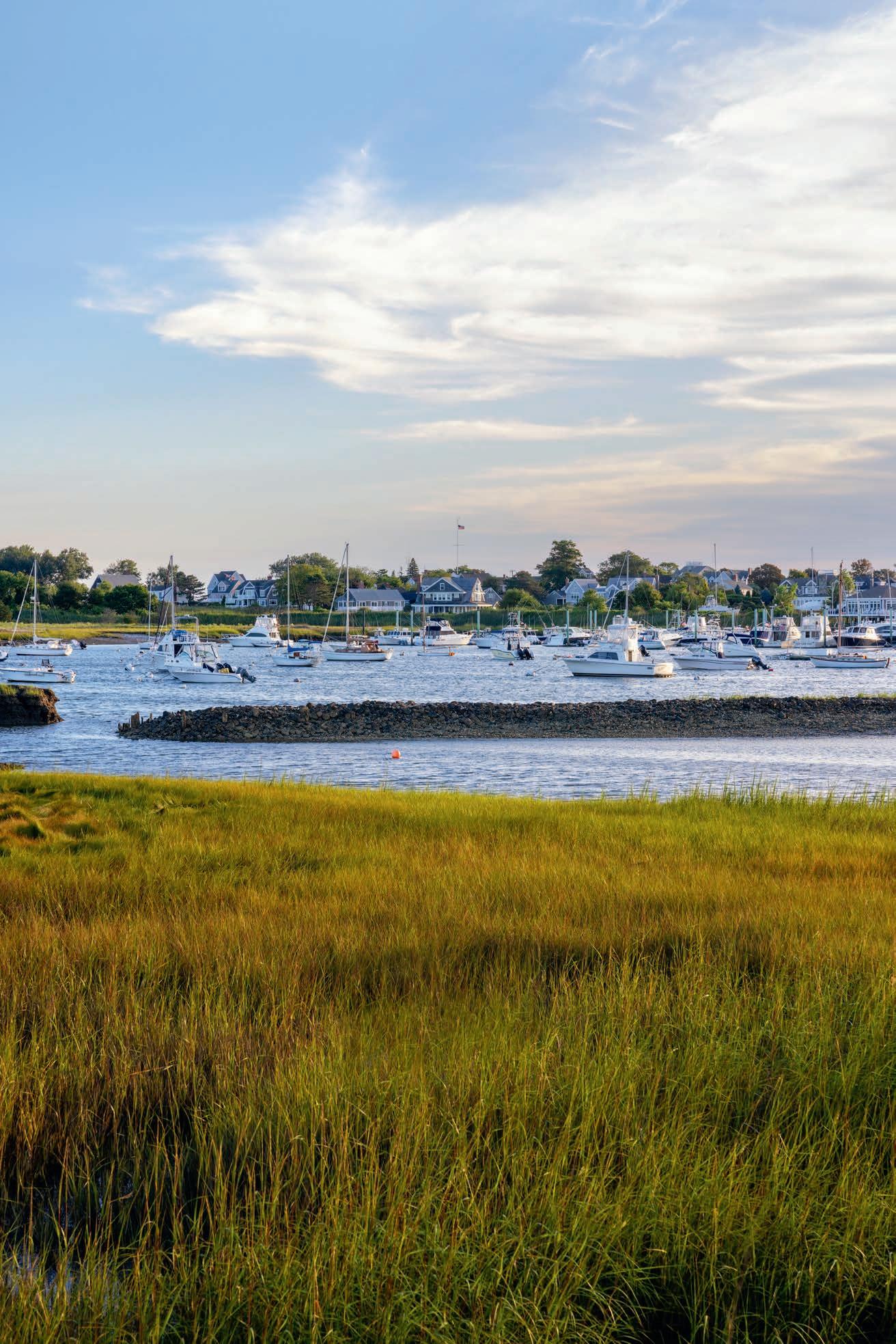
It’s North versus South, as two Massachusetts travel writers make the case for which of their state’s famous shores reigns supreme.
The South Shore town of Scituate, whose name derives from a Wampanoag word meaning ”cold brook,” was hailed by Smithsonian as the nation’s best seaside small town to visit in 2024.
PHOTOS BY ADAM DETOUR
SOUTH SHORE
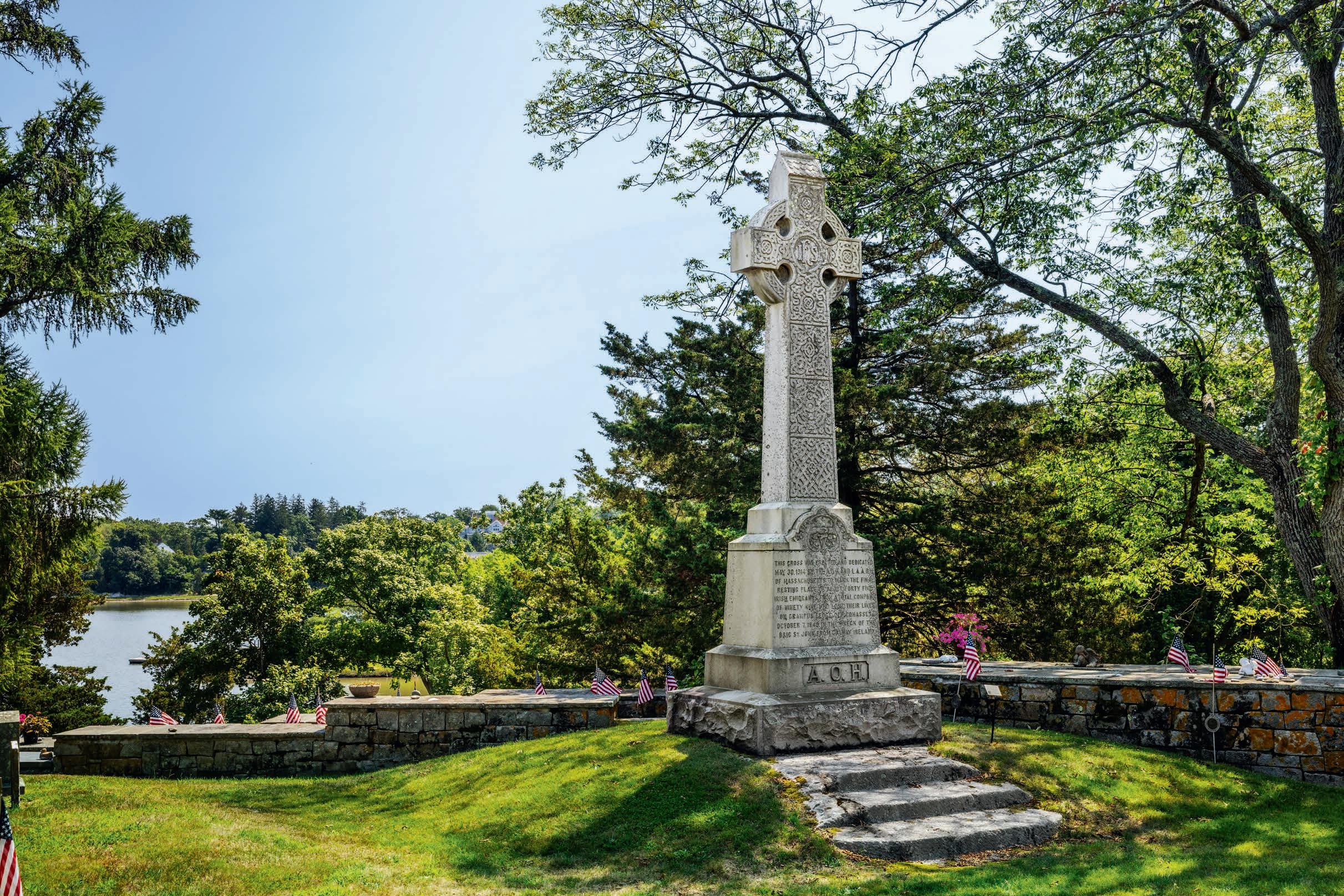
BY PAMELA WRIGHT
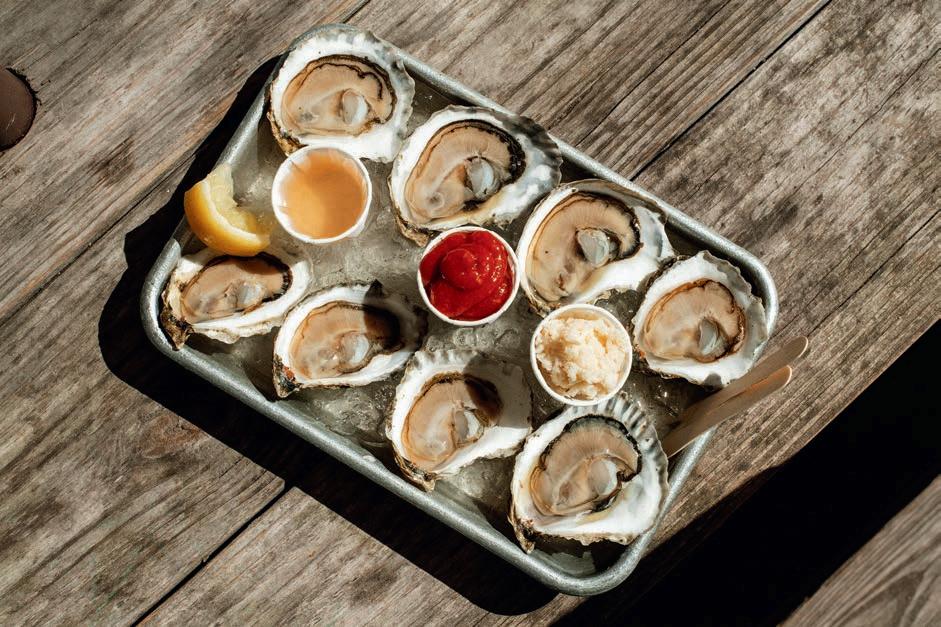
When our daughter landed a teaching job near Boston, she settled on the South Shore of Massachusetts. My husband and I were crushed. We still lived in the New Hampshire Seacoast region, where she had grown up, and we dreaded the distance (and the traffic) between us. “Why not the North Shore?” I asked her.
She shrugged. “South Shore is way more laid-back—it’s pizza and a beer,” she said. “The North Shore is where you meet your grandparents for dinner.”
Ouch.
It took a few years, and many visits, but I finally got it. A glass of bubbly at the Myopia Hunt Club (North Shore) or a pint of beer at the Marshfield Fair (South Shore)? Castles and country estates, or small-town museums and local parks? Puritans and witches, or Pilgrims and pirates? For us, the choices were clear.
The South Shore, stretching from Quincy to Plymouth, is studded with a string of pretty seaside towns, small museums, leafy parks, salt marshes, cranberry bogs, and nature preserves. It has both sandy beaches on the Atlantic and
LEFT: Visitors can connect with immigrant stories along the South Shore Irish Heritage Trail, which includes Cohasset’s Celtic Cross Monument, dedicated in 1914 to honor the 99 migrants who were lost in a shipwreck while fleeing Ireland’s Great Famine. ABOVE: The star attraction at Island Creek Oysters in Duxbury, where founder Skip Bennett and his crew of farmers harvest local bivalves year-round.
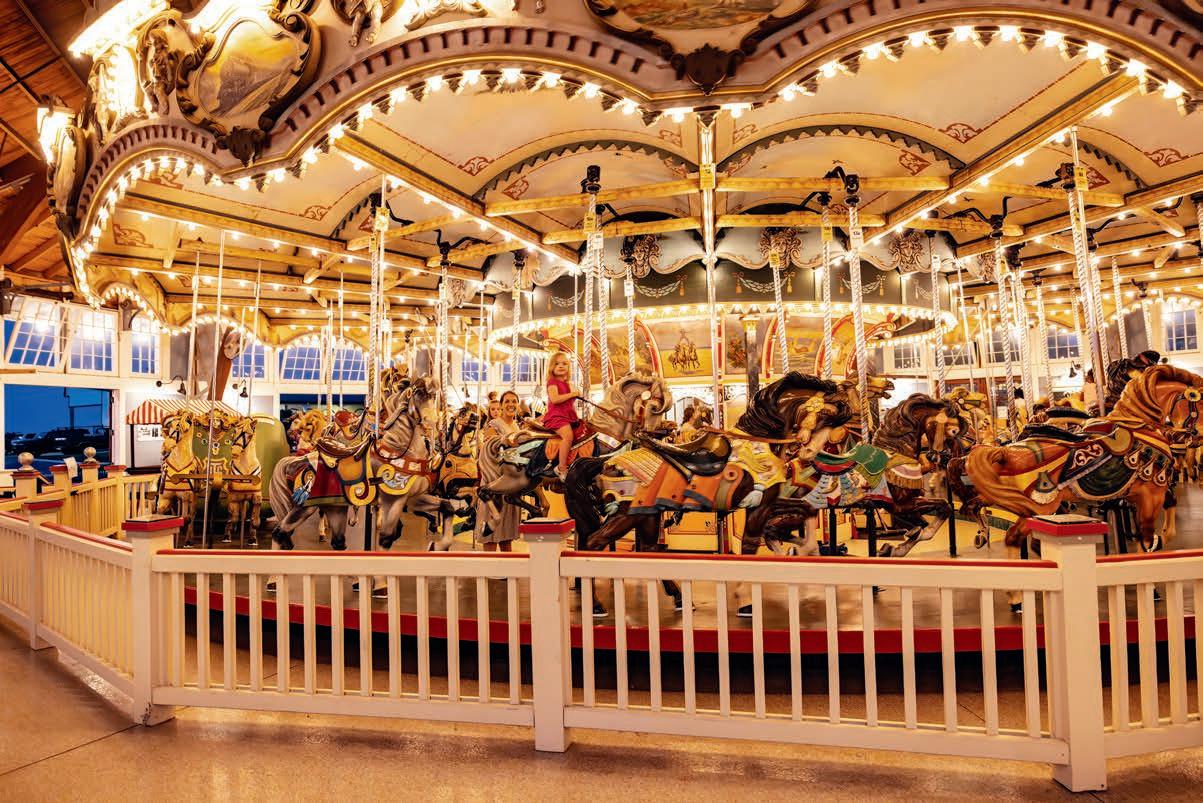
large freshwater lakes and ponds, including Assawompset Pond, the biggest natural lake in Massachusetts.
In other words, it has all the beauty without the attitude. Sorry, North Shore, but the South Shore feels more accessible and welcoming to us ordinary folks.
It can also be argued that no place in New England—and possibly in the country—has a more storied history than the South Shore. It was one of America’s earliest settlements. The Pilgrims landed in modern-day Plymouth in 1620, where they met the Indigenous people, part of the Wampanoag Nation, who’d presided over the region for thousands of years. Later, the South Shore became home to lighthouse keepers, lifesavers, shipbuilders, and sea captains. Its rough, stormy waters, sliced with hidden ledges and cliffs, became a graveyard for shipwrecks, and fodder for tavern tales.
Throughout its history, the South Shore also welcomed waves of Irish immigrants—fishermen, tradesmen, laborers, and more—earning it the nickname the “Irish Riviera,” and an emerald thread still runs through life here. Today, the South Shore Irish Heritage Trail connects nine towns and 36 historical stops, commemorating that immigrant history and its impact on the region.
Like most, my first visit to the South Shore began with a pilgrimage to Plymouth Rock: a smallish boulder in a hole that may or may not have been where the Pilgrims landed (probably not). Dutifully crossing it off my list, I took a
moment to appreciate its location in Pilgrim Memorial State Park. This bustling waterfront property, which draws about one million visitors a year, is filled with gardens, monuments, and historic sites including Cole’s Hill, where a peace treaty was signed between the Wampanoag and the Pilgrims in 1621. There’s even the opportunity to get a feeling for the Mayflower ’s harrowing 17th-century journey across the Atlantic by boarding the Mayflower II, a historic ship in its own right that is still gleaming from its multiyear $11.2 million renovation, completed in 2020.
Plymouth Rock may have been a tad underwhelming, but the same can’t be said of Plimoth Patuxet Museums, located a short drive from downtown Plymouth. The openair museum complex brings the early 17th century vividly to life, as interpreters dressed in period garb share history and demonstrate traditional crafts at sites including a re-created English Village and a Wampanoag Homesite.
ABOVE: In addition to its colorful herd of hand-carved horses (66 in all), the nearly-century-old Paragon Carousel in Hull is embellished with the figures of 36 cherubs and 18 goddesses, and 35 original paintings. OPPOSITE, CLOCKWISE
FROM TOP LEFT: The 1810 Scituate Light, which is open to the public on select days from now to September; breakfastand-lunch spot Lucky Finn Café, perched atop a pier on Scituate Harbor; Cohasset’s Maritime Museum, set in a 1754 chandlery, or marine supply store; the South Shore’s signature dish, bar pizza, at Ppapa’s Pizza in Plymouth.
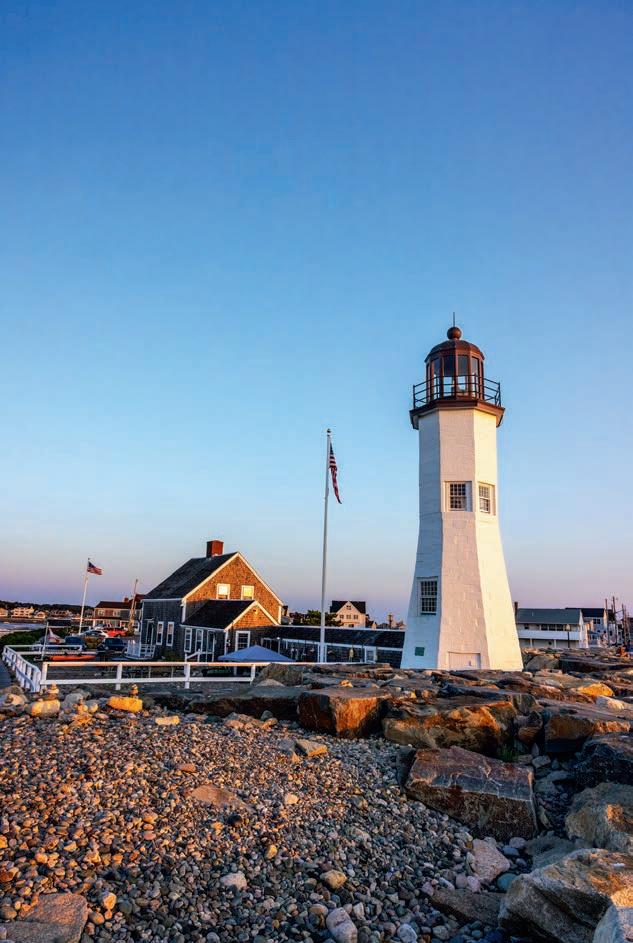
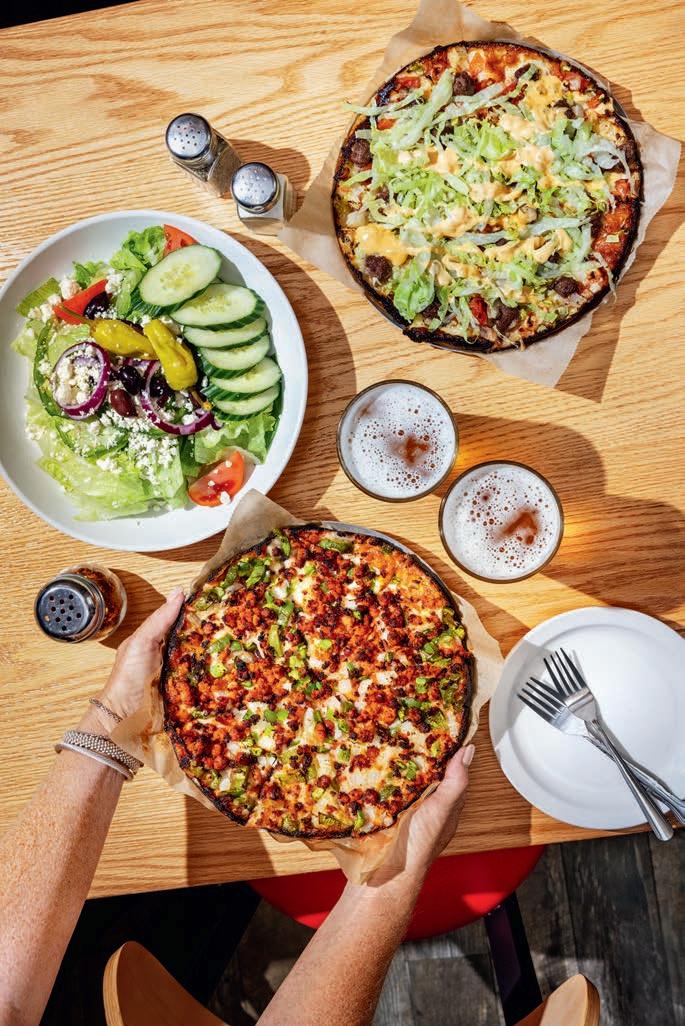
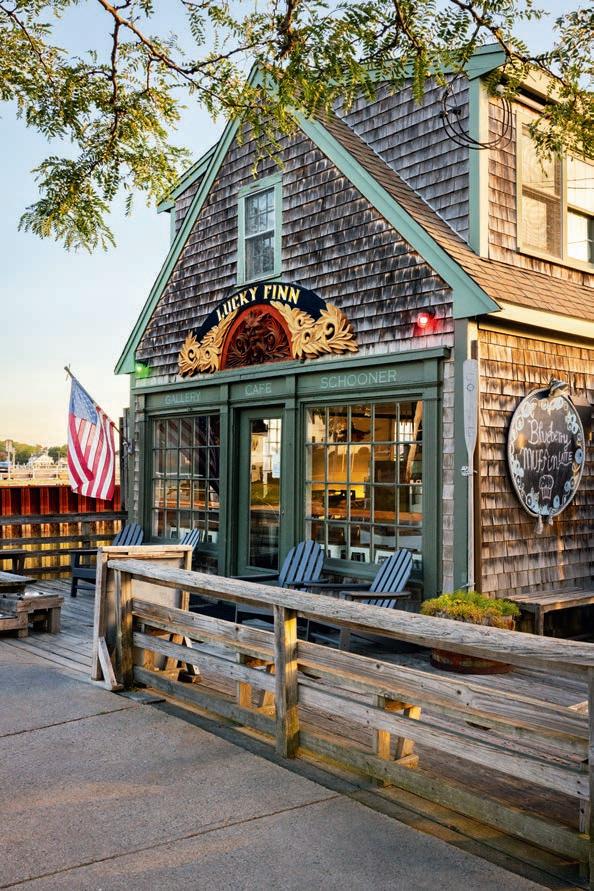
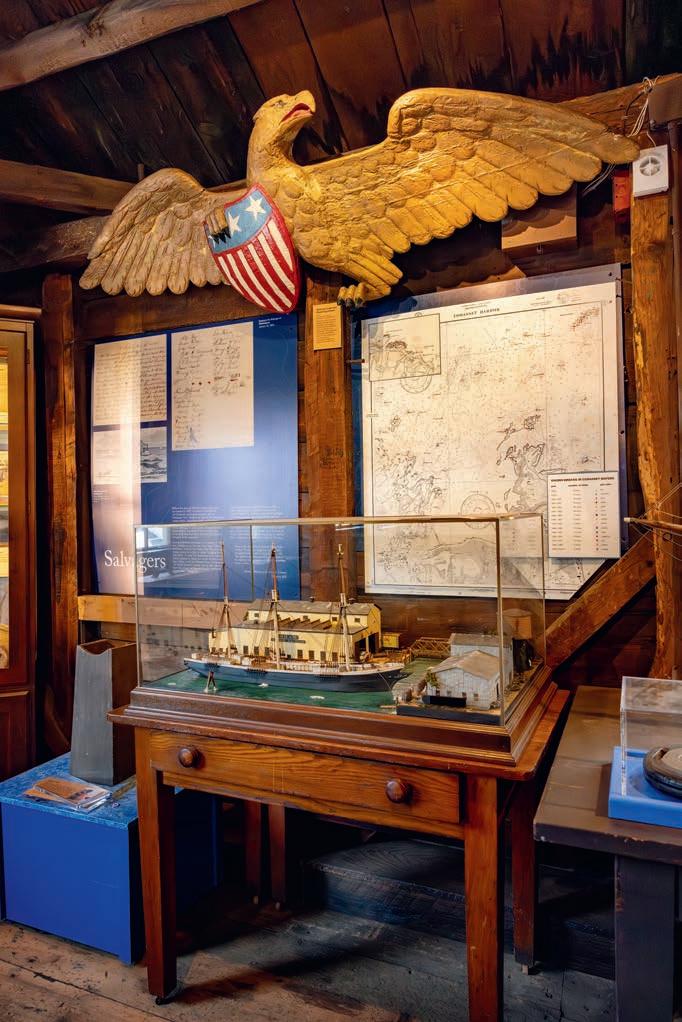
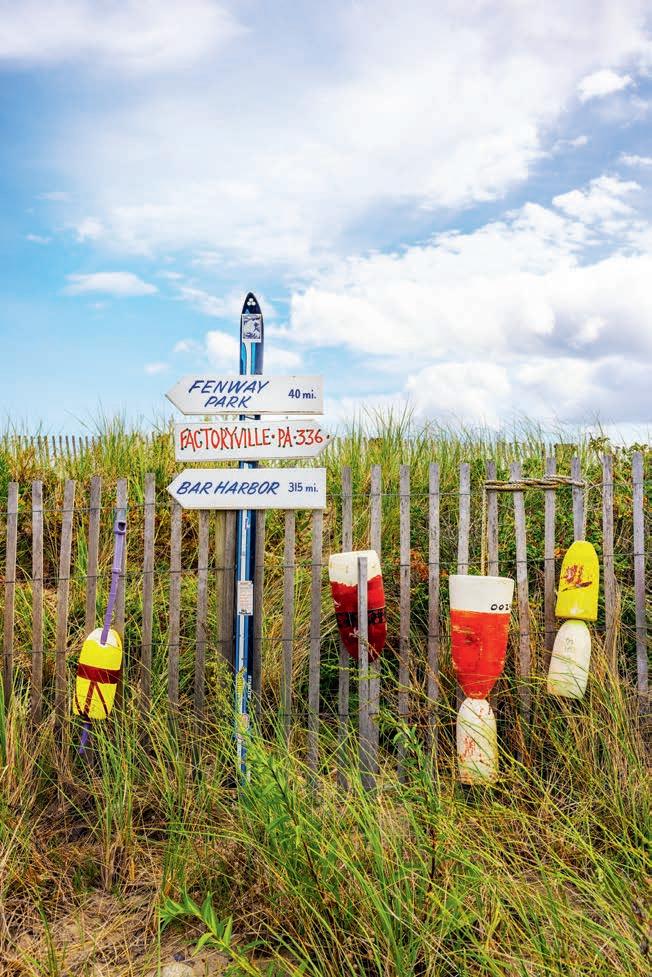
able, vibrant community filled with shops and eateries of all kinds. Over the years, countless hours of family time have been spent at Ziggy’s ice cream shop, a local staple since 1957, and the Plimoth Candy Company, home to 60 bins of oldfashioned novelty candy, along with chocolates, fudge, and saltwater taffy. For fancier sit-down fare, there’s 71° West Atlantic Steakhouse, a modern waterfront eatery known for hefty wood-grilled steaks; on warm evenings, you can dine on the rooftop terrace and watch the boats glide by, the sky turning a kaleidoscope of colors.
Just a few minutes north of Plymouth is Duxbury, home to Island Creek Oysters, one of the first oyster farms in New England. Founded by Duxbury native Skip Bennett, it offers a 360-degree view of the aquaculture industry as visitors tour the farm’s hatchery, take a boat ride past oyster processing shacks and rows of seaweed-topped oyster cages, and learn the art of properly shucking oysters right out there on Duxbury Bay.
Back on land, another South Shore delicacy is calling: bar pizza, known for its crunchy, cracker-thin crust, charred edges, gooey cheese, and crispy toppings. What began decades ago as an enticement (and an aid) for bar patrons to keep tippling a little longer is today served across the South Shore at spots like Squinny’s in North Plymouth, Alumni in Quincy, Lynwood Café in Randolph, and Poopsie’s in Pembroke. My family tends to gravitate to Ppapa’s Pizza in Plymouth, a come-as-you-are joint decorated with neon signs and other pubby items amid a cluster of wooden tables and high-tops.
More of the South Shore’s down-to-earth soul is on display at Nantasket Beach in Hull, with its carnival-like vibe and
OPPOSITE: A vital barrier between Duxbury Bay and the Atlantic, 7.5-mile Duxbury Beach includes a large swath of conserved land that adjoins a smaller, public-access swimming area, Duxbury Beach Park. LEFT: Classic clam-shack decor outside Blakeman’s, a staple at Duxbury Beach Park since the 1940s.
honky-tonk boardwalk. This area is also the former home of Paragon Park, an amusement park that closed in 1984, but you can still ride the historic Paragon Carousel with its 66 wooden horses. On family visits we hang at the beach, a mile of sandy shoreline filled with sunbathers, castle builders, and Frisbee throwers, and if the line at the Carousel Creamery isn’t too long, we grab a scoop of ice cream before we leave.
Also worth visiting is the nearby Hull Lifesaving Museum, housed in the former Point Allerton U.S. Lifesaving Station (1889). After taking in the heroic story of ocean rescuers through artifacts and exhibits, including an original 19thcentury lifesaving boat, don’t miss a trip up the crow’s-nest tower, where you can easily imagine spotting a sinking ship in need.
Across the South Shore, I find myself drawn to small, treasure-filled local museums like this one. On a recent trip to Scituate, for example, I met up at the Maritime & Irish Mossing Museum with Bob Chessia, acting president of the Scituate Historical Society. In addition to telling the story of the region’s shipwrecks, the museum details the fascinating history of seaweed harvesting—or mossing—that the Irish brought to Scituate, which in turn brought more Irish families to Scituate. Today, the village is known as the “Most Irish Town in America.”
“My father and brothers mossed; everyone mossed,” Chessia said. “I remember as a kid I helped to make the nets.”
He later took me to Scituate Light, originally lit in 1811, and told stories of pirates and bootleggers. “Seems like all the troublemakers ended up in Scituate,” he said with pride.
I’m guessing a few of those arrivals even made their way to nearby Cohasset, whose Instagram-worthy town common is surrounded by Georgian and Federalist homes and steepled churches, all within easy walking distance of a cluster of refined shops and restaurants. Cohasset is, in fact, where my own family ended up on one recent South Shore visit: After a long day of lobster rolls, coastal drives, and a few museum excursions, we decided to take a stroll on Black Rock Beach and take in its views of Minot’s Ledge Light, which sits about a mile offshore.
As waves crashed against the stone tower, we watched its distinctive 1-4-3 flash cycle: I-love-you , I-love-you , I-love-you. A perfect ending to a perfect South Shore day. >>
EDITORS’ PICKS: For recommended South Shore dining and lodging, see p. 100.
MICHAEL KRENZER (AERIAL)
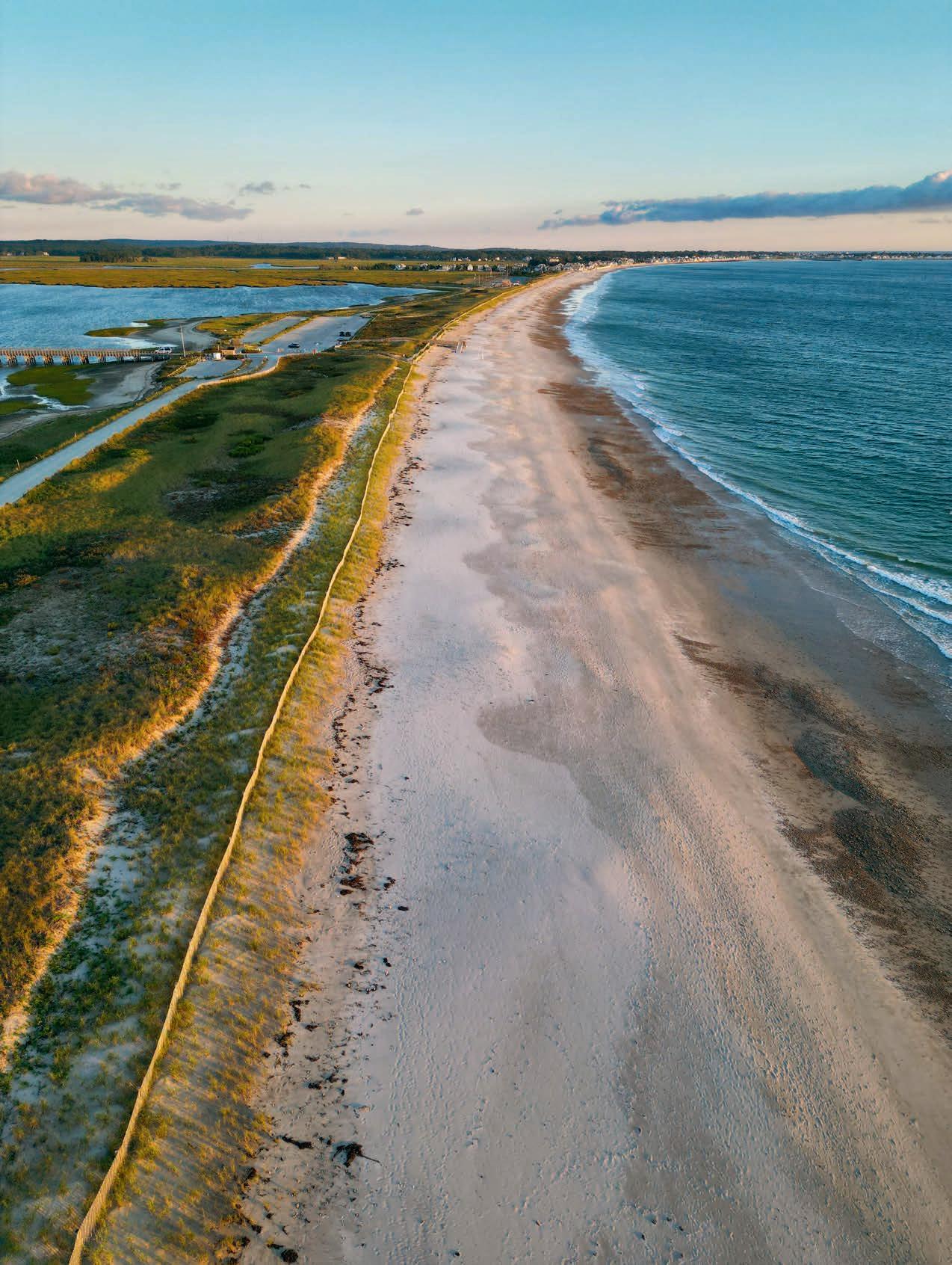
NORTH SHORE
BY DIANE BAIR
I spent 30 years on the North Shore of Massachusetts and raised two kids there, but it wasn’t until we moved away that I realized how lucky I had been. O land of fried clams, roast beef sandwiches, beautiful beaches, and quirky attractions, how could I take you for granted?
My family lives on Cape Cod now, but I’m a North Shore girl to my bones. I therefore believe that the North Shore beats the South Shore in every category. Do not challenge me on this: North Shore kids are scrappy.
Driving back to the North Shore always brings a lump to my throat. It seems like every place has a memory attached: Russell Orchards in Ipswich, for one, where we once shared a hayride with actor Adam Sandler and his family, and the North Shore Music Theatre in Beverly, where my kids first experienced the thrill of a live stage show.
Misty-eyed nostalgia aside, I’ve come to appreciate the unique appeal of today’s North Shore, with its blend of maritime heritage, natural beauty, and arts and culture, plus a food scene that leans toward tasty, not fancy. (Although if you’re craving, say, Chilean uni brûlée, you’ll find it, too.)
Along this 200-mile stretch of coastline that runs from Boston’s northern suburbs to the New Hampshire border, history runs deep. For thousands of years, this coastline was home to several native tribes, including the Agawam, Naumkeag, and Pennacook people. By the early 1600s, even before Gloucester was officially incorporated as a town, the first fishing settlements were established.
Now the country’s oldest seaport, Gloucester is still defined by its working waterfront, and its lively backstory is showcased at Maritime Gloucester, a small museum fea-
turing an aquarium filled with local sea life (including the occasional “misfit” lobster in rarely seen colors of blue, purple, and pink). For those who want to get out on the water here minus the drudgery of pulling in lobster pots, book a sail on the schooner Ardelle through museum partner Maritime Heritage Charters.
Another famously historic North Shore city is Salem, known for better or worse as the home of the Salem Witch Trials. No surprise that its most popular attraction is the Salem Witch Museum, with tourists queuing up in long lines outside the Gothic-looking former church to see dramatic presentations based on the infamous events of 1692 and 1693—and often snapping a selfie with the witchylooking statue out front (it’s actually Salem’s founder, Roger Conant).
In this eminently walkable city, traveling from one attraction to the next is just a short stroll. A few blocks from the witch museum you’ll find the oldest continuously operating museum in the county, the Peabody Essex Museum, dating back to 1799. It holds treasures galore, including the world’s largest Asian export art collection and a wow-worthy assemblage of maritime art—and psst, its gift shop is outstanding.
CLOCKWISE FROM TOP LEFT: Along with its vast array of maritime and Asian import art, Salem’s Peabody Essex Museum delivers a hit of color with its fashion and design collection; the 1727 Old Town House, in the heart of the picturesque Marblehead Historic District; Ernesto Maranje’s In Good Company, one of 40-plus artworks in the Beyond Walls mural project in Lynn; dining alfresco by the Essex salt marshes at Woodman’s of Essex.

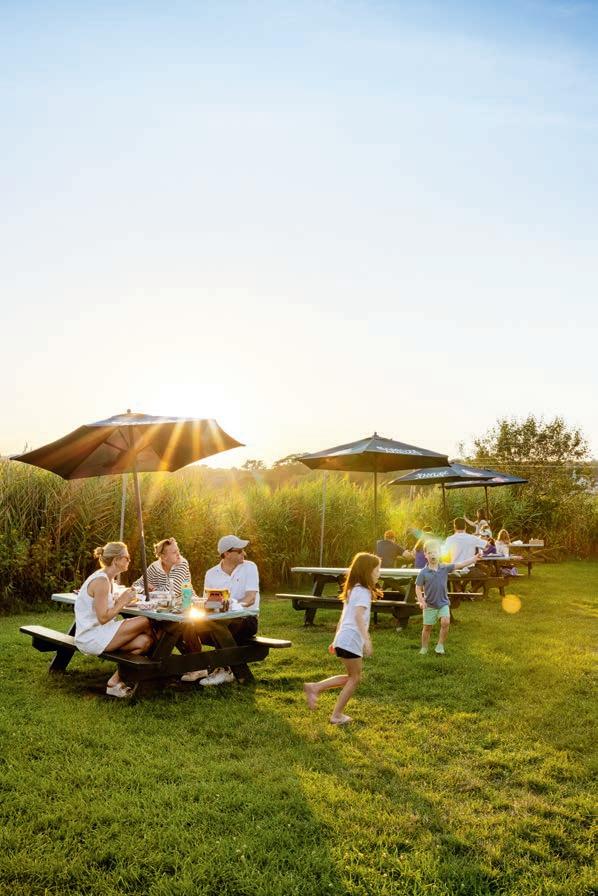
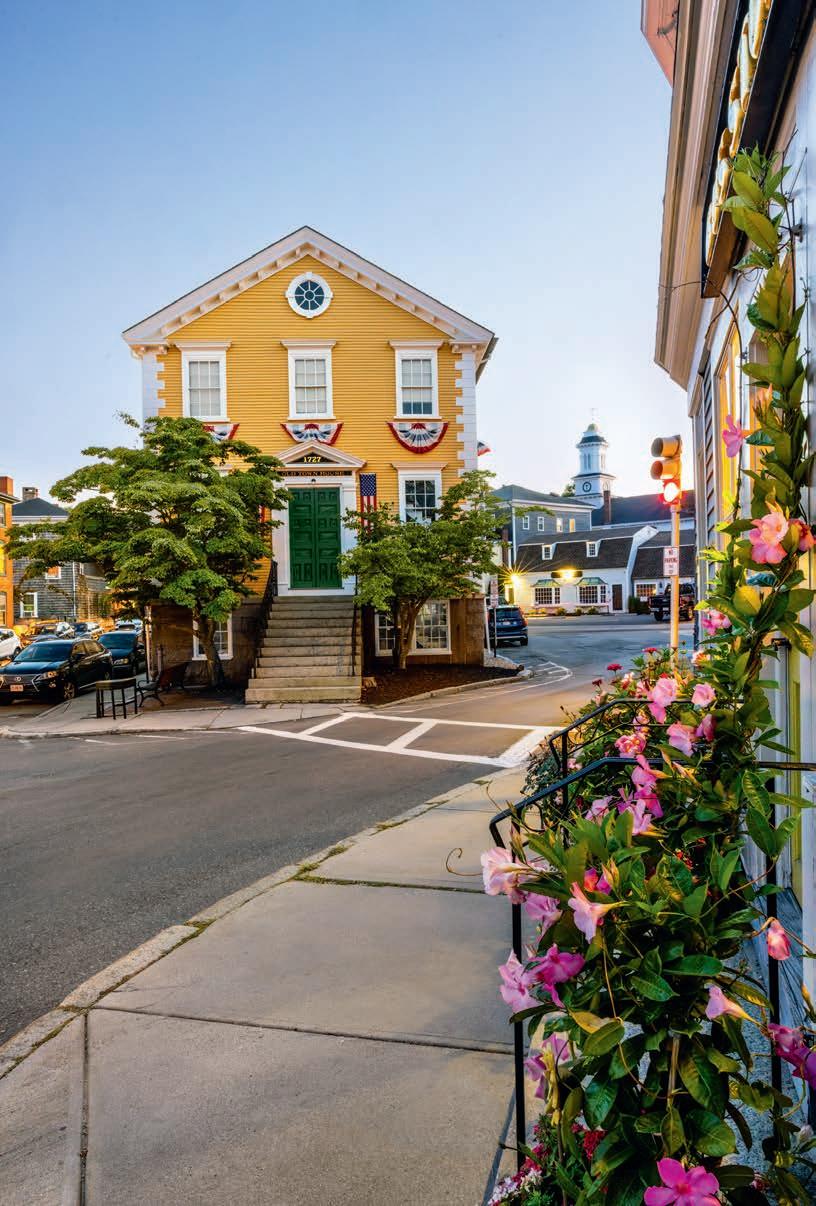
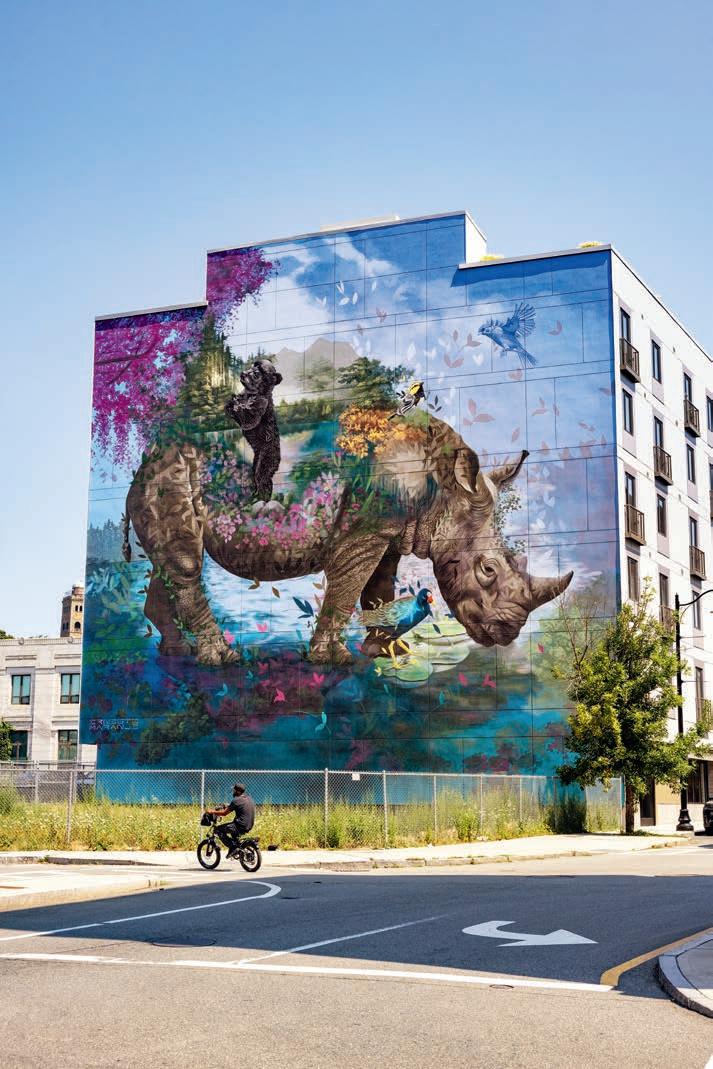
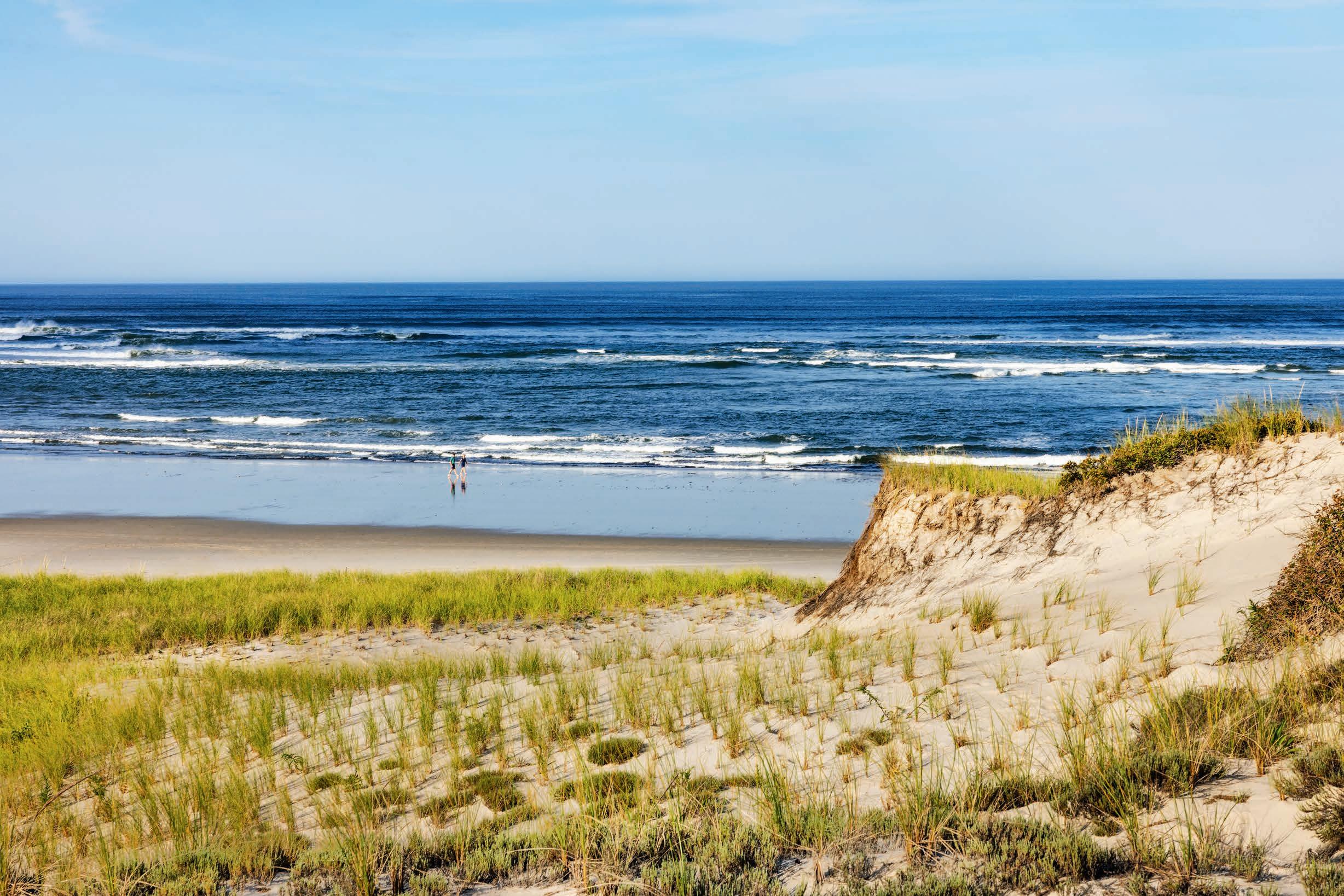
More than just a pretty strip of sand, Crane Beach on the Crane Estate in Ipswich encompasses over 1,200 acres of beachfront, coastal forest, and one of the most accessible dune landscapes in New England.
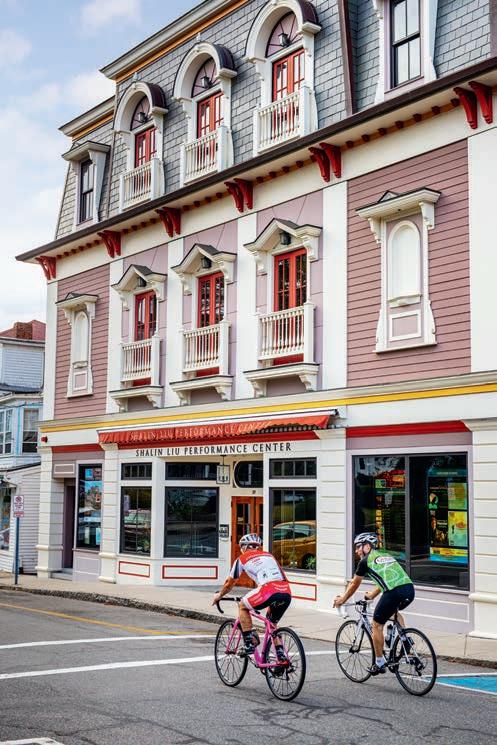
At the risk of playing favorites, my own hometown of Beverly has much to recommend culture-wise, too. There’s the North Shore Music Theatre, whose rare theater-in-theround stage draws Broadway-caliber productions, and The Cabot, a fabulous 1920s movie palace that was recently renovated and now hosts concerts, comedy, and free “community conversations.” And throughout the town, the presence of the Montserrat College of Art and hip ventures like board-game restaurant The Castle add a frisson of cool to this historic city, which once served as the summer home for President William Howard Taft.
I won’t even try to be impartial when it comes to describing the allure of Marblehead. When people think “New England village,” they’re conjuring up something much like the Old Town section of Marblehead. Snugly situated in a tangle of streets that offer peeks of gorgeous Marblehead Harbor, this neighborhood is an architectural treasure trove of grand mansions and quaint cottages, ranging from 17thcentury colonial-era dwellings to 18th-century Georgian and Federal beauties, with a few Victorians for added oomph.
Rivaling Marblehead for aesthetic appeal is Rockport, also on the coast but farther north, on Cape Ann. Its Hallmarkmovie bona fides center on Motif No. 1, the red fishing shack immortalized in countless photos and paintings—but this seaside village offers more than just something pretty to point a camera at. Along the richly historic peninsula of Bearskin Neck, you’ll find funky one-off shops and restaurants like The Pewter Shop, Tuck’s Candy Factory, and My Place by the Sea, a romantic dining spot overlooking the ocean.
Speaking of ocean views: Some might argue that all Atlantic coast beaches are equally lovely, but c’mon—have you seen Crane Beach in Ipswich? Backed by dunes, this pristine five-mile strand of luxuriously soft sand is part of the 2,100-acre Crane Estate, considered a crown jewel among The Trustees’ 100-plus properties in Massachusetts.
Several other North Shore beaches are standouts as well, but for families, Gloucester’s Good Harbor Beach reigns supreme. There’s ample parking (though nonresidents must reserve their spot in advance during peak season), and Good Harbor’s shallow areas are suitable for the tiniest beachgoers.
Another outdoor treat on the North Shore is Plum Island, an 11-mile-long barrier island that is best experienced by wandering the trails of Parker River National Wildlife Refuge. Hailed as one of the region’s top destinations for birding, the refuge is home to more than 300 species, including the threatened piping plover. Even if you don’t know a grebe from a grackle, it’s a joy to go exploring here, and there’s even a prize at Plum Island’s southern end: Sandy Point State Reservation. With waters that are warm by Atlantic standards and offering views of the Crane Estate and Cape Ann, it invites settling in for a serene beach day.
Food lovers have their own reasons to linger along the North Shore. After a busy day on Cape Ann, for instance, you can settle in at Rockport’s Roy Moore Lobster Company for the best eats on Bearskin Neck: lobster rolls and chowder. And if you’ve never eaten a fried whole belly clam, have you even been to the North Shore? This, after all, is where Lawrence “Chubby” Woodman is said to have invented the fried clam, forever changing seafood and making his waterfront shack, Woodsman’s of Essex, a bucket-list destination.
The North Shore has its share of upscale eateries, too, with one of the most intriguing—and acclaimed—being Nightshade Noodle Bar in Lynn. Attracting diners from Boston and beyond with her take on French- and Vietnameseinspired seafood, James Beard Award–nominated chef-owner Rachel Miller does it her way, offering prix fixe tasting menus in a lively, intimate space.
And this, people, is why the North Shore is the best shore … heck, maybe even the best of all shores. Culture, clams, sand castles—there’s so much to love.
EDITORS’ PICKS: For recommended North Shore dining and lodging, see p. 102.
LEFT: Home of the arts organization Rockport Music, Shalin Liu Performance Center faces Main Street but sits right on the ocean, offering a magnificent backdrop for concertgoers in the performance hall. OPPOSITE: Gloucester’s Hammond Castle Museum brings a touch of medieval majesty to the Massachusetts coast.
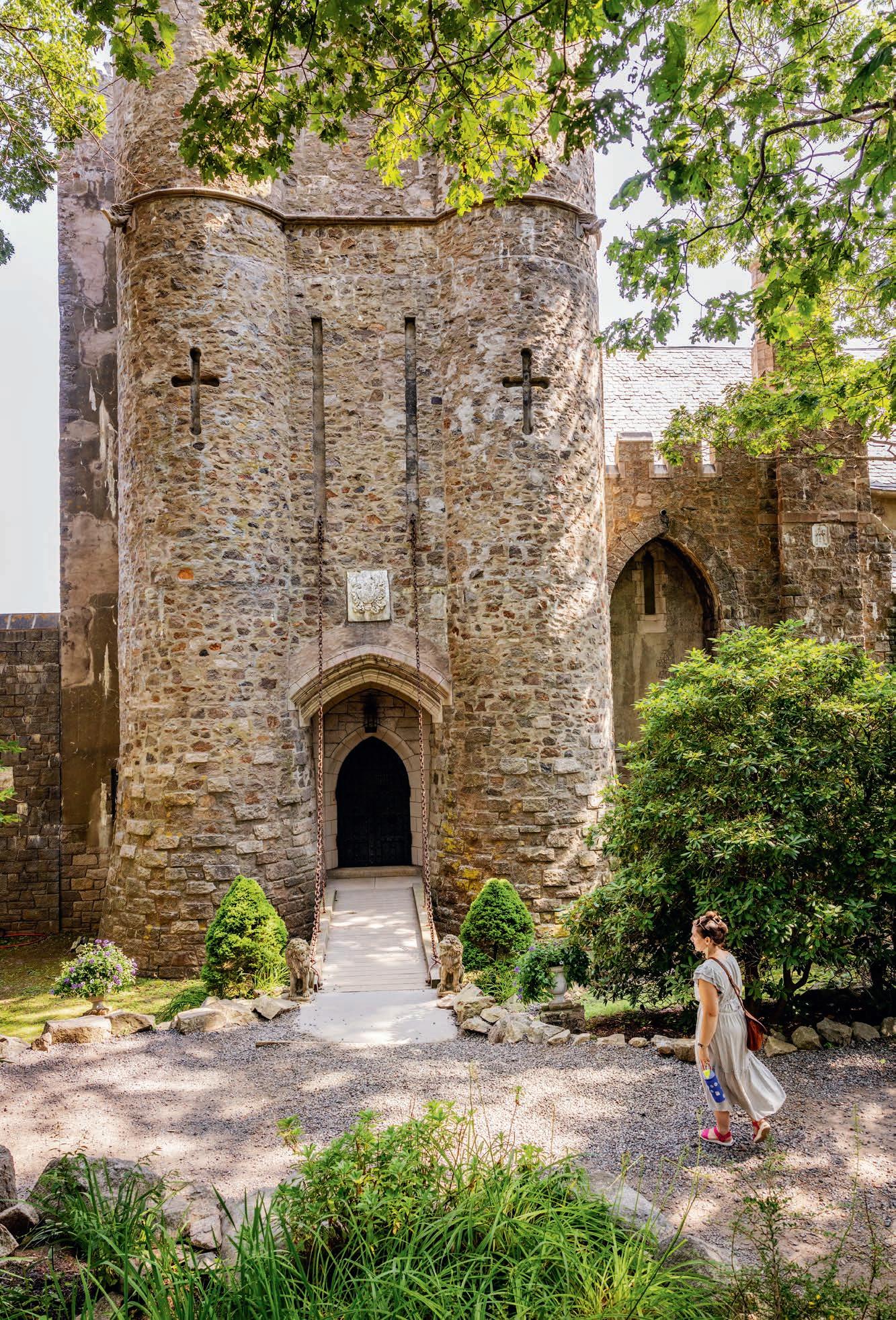

Residential Power
New England’s presidential homes offer rare insight into their famous former occupants—and the real human foundations that shaped their time in office.
BY JUSTIN SHATWELL
ILLUSTRATION BY JOHN S. DYKES
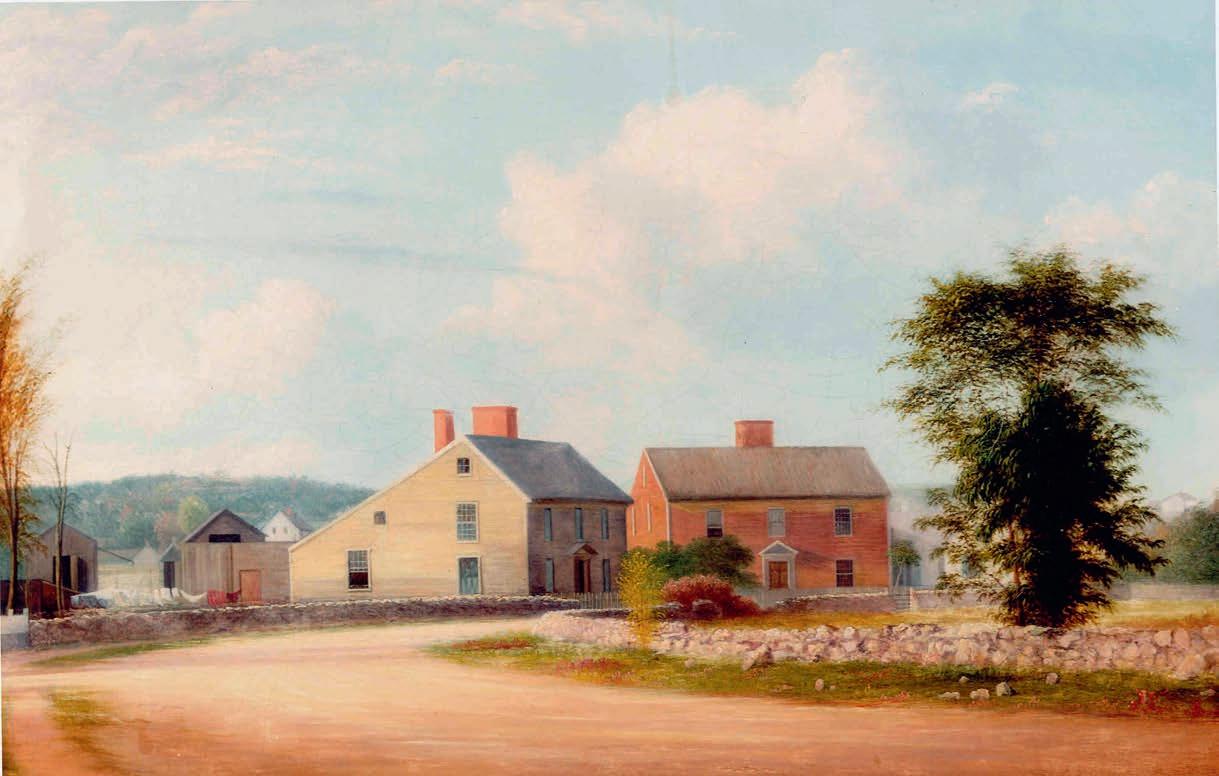
A
rom the top of Penn’s Hill, the British troops are barely visible. It’s June 17, 1775, and Abigail Adams has climbed the summit near her home in what is now Quincy, Massachusetts, to glimpse the Battle of Bunker Hill unfolding 10 miles to the north. Sounds of the battle ripple across the open farmland and beat against the walls of Abigail’s home. That evening, she writes to her husband, John, the future second president of the United States: “The constant roar of the cannon is so distressing that we cannot eat, drink, or sleep.”
Since that fateful moment 251 years ago, countless Americans have lived their lives in the communities around Boston. The quiet farmland that Abigail gazed across has since yielded a crop of family homes, shopping plazas, universities, and highways. Today, it’s hard to imagine someone in Quincy seeing or hearing anything on Bunker Hill, the urban maze around Boston having grown so thick.
But still, this sea of modernity occasionally parts on a small island of the past—a fleeting glimpse of what the country looked like all those years ago. Abigail and John Adams’s homestead is just such an island. It sits on a small triangular lot in Quincy where two roads meet at a sharp angle. It’s exactly the type of parcel that would hold a gas station if only two presidents had not been born here.
landscape
Nicholas Frankenstein depicting the birthplaces of father-and-son U.S. presidents John Adams and John Quincy Adams. The two homes are among 11 historic buildings spanning four generations at Adams National Historical Park in Quincy, Massachusetts.
TOP RIGHT: Circa-1800 portraits of Abigail and John Adams by Jane Stewart, daughter of famed American
RIGHT: Then serving as U.S. secretary of state, John Kerry toured the Stone Library at Adams National Historical Park in 2014.
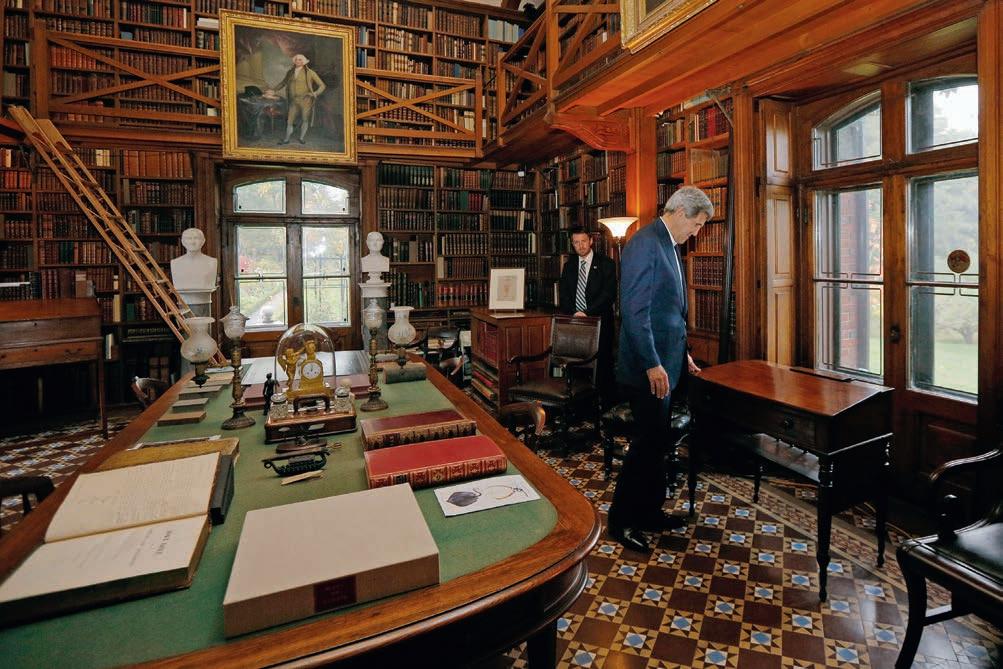
TOP:
1849 oil painting by leading
artist Godfrey
portraitist Gilbert Stewart.


The homestead consists of two modest saltbox houses. John Adams was born in one; his son, John Quincy Adams, in the other. They’re in excellent condition in part due to the efforts of Matthew Vigneau, the curator of the Adams National Historical Park. He explains that he rarely gives tours. His job is to ensure that things don’t fall apart. “Preserve the homes, preserve the objects, preserve the landscape,” he says.
The last task is perhaps the most challenging. For anyone standing on the lawn, there is nothing in sight to suggest this once was an apple orchard. Traffic streams past both sides of the parcel, just feet from the homestead. The view from Abigail and John Adams’s back door is a funeral home across the street. The front window looks out on a dentist’s office.
“How do you make someone feel like they’re on a farm?” Vigneau asks, gesturing at the scene. “You’re hearing the roads, you’re hearing the trains.” It’s a question the park asked with increasing urgency as it entered 2026. It’s the nation’s 250th anniversary, and there are sure to be more visitors as Americans reconnect with their roots at places like this.
For many, their visit will be the first time they really get to know the two Adamses. The public memory of these men is hazy at best. John Adams was a thinker and orator, not a soldier. He didn’t serve in the army like Washington or Hamilton. Instead, he fought his battles on the floor of the Continental Congress and as a diplomat abroad. When he became president, he was the first pure politician to hold the office, and people loved him accordingly: He was ousted after four years. His term was dominated by efforts to keep America from being sucked into the Napoleonic Wars.
John Quincy Adams’s career followed a similar trajectory. He earned his reputation as a senator and diplomat before becoming the sixth U.S. president. He focused on improving the young nation’s infrastructure, but much of his agenda died in Congressional gridlock. Like his father, he also got one term. Neither man received a monument
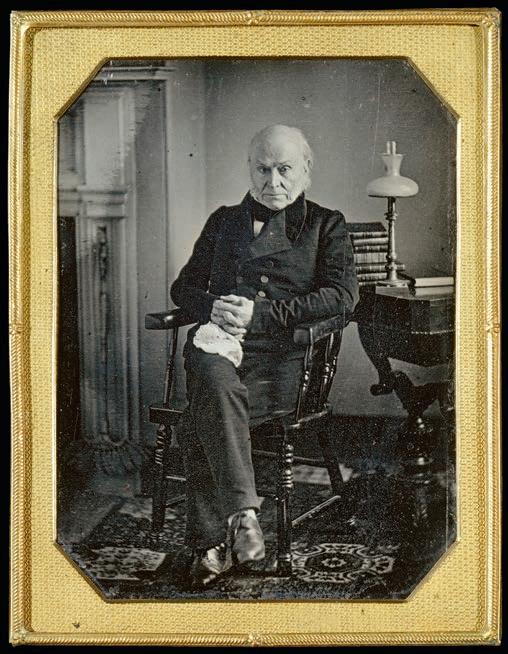
in Washington, DC, or got his portrait on major currency. These little homes in Massachusetts, lovingly preserved, may be the best testaments we have to them.
Inside, the first Adams birthplace is plainly furnished. There is little on the walls and just a few pieces of furniture. A large hearth dominates the front room. Vigneau talks quickly—he knows the history of the property backward and forward, but he’s most passionate when talking about the place itself. He raves about the health of the clapboards and vents about his hatred of silverfish. He talks about the buildings like they’re living things and would love to see them breathe again as they did when people lived and worked here. “These houses are supposed to be open. Every window, every door open. That hearth running. Just air movement,” he says.
Vigneau stops in his tracks. Some blemish on a ceiling beam has caught his eye. He probes it with his finger a moment, and we continue. “We watch these things like hawks,” he says. “We’re in every one of these buildings seven days a week. Year-round, too.” It strikes me that there is something monastic about Vigneau—not in his temperament, but in his devotion. It’s clear that part of his mind is always cloistered here.
In the John Quincy Adams house, Vigneau invites me to poke my head into the attic. It’s dark and empty, but this is a place to be felt, not seen. The sounds of the road are muffled here. The dome of heat at the top of the house makes the air warm and almost sticky. And in that air there is a perfume of ancient timber and dust that overwhelms me. This space has existed longer than our
HOME TURF
More New England properties that offer a peek into a president’s life and times.
President Calvin Coolidge State Historic Site
PLYMOUTH NOTCH, VT
This village remains much as it did on August 3, 1923, when Coolidge took the presidential oath of office by kerosene lamp, following the death of Warren G. Harding. The 600-acre property includes the family home, an 1840 church, and a cheese factory—all shaped by the rugged Vermont austerity that defined Coolidge’s presidency. historicsites.vermont.gov
Eisenhower House
NEWPORT, RI
Set within Fort Adams State Park, this Victorian mansion served as Ike’s summer White House. While stellar views of Newport Harbor and Narragansett Bay attracted Eisenhower, the home’s proximity to Newport’s golf courses was no doubt its true selling point. The home today is largely an event venue but occasionally
opens for free, self-guided tours. riparks.ri.gov
Roosevelt Campobello International Park
NEW BRUNSWICK/MAINE
Although technically within the Canadian border, FDR’s summer retreat on an island in the Bay of Fundy is inseparable from the Maine coast and the president’s own love of the sea. Today, the park is a joint U.S.-Canadian venture featuring a museum and nature preserve. rooseveltcampobello.org
John Fitzgerald Kennedy
National Historic Site
BROOKLINE, MA
In a tribute to her late son John, Rose Kennedy restored this home to the way it looked when he was born there, in 1917, and donated it the National Park Service. The property is less a monument to the 35th president and more a portrait of his family’s uppermiddle-class life in the early 20th century. nps.gov
country, and the air here has aged like wine in a barrel. It’s like smelling the past.
“Unmistakable,” Vigneau says of the scent, and I nod. He wishes he could let guests up here to experience it, too.
“You could go on tour here and remember nothing, but if I put this smell in front of you, you’d know it,” he says.
“It’s the sensory aspect of it that I think resonates more. It’s the power of place.”
Back on the lawn, we have to talk loudly to hear each other. As much as he struggles with the growth of Quincy, Vigneau himself is a product of it. He grew up around here. He and the Adamses were born just miles apart. The stone wall running along the edge of the property was his mother’s bus stop when she was a girl; he got a picture of it framed for her. “That’s how connected I am here,” he says.
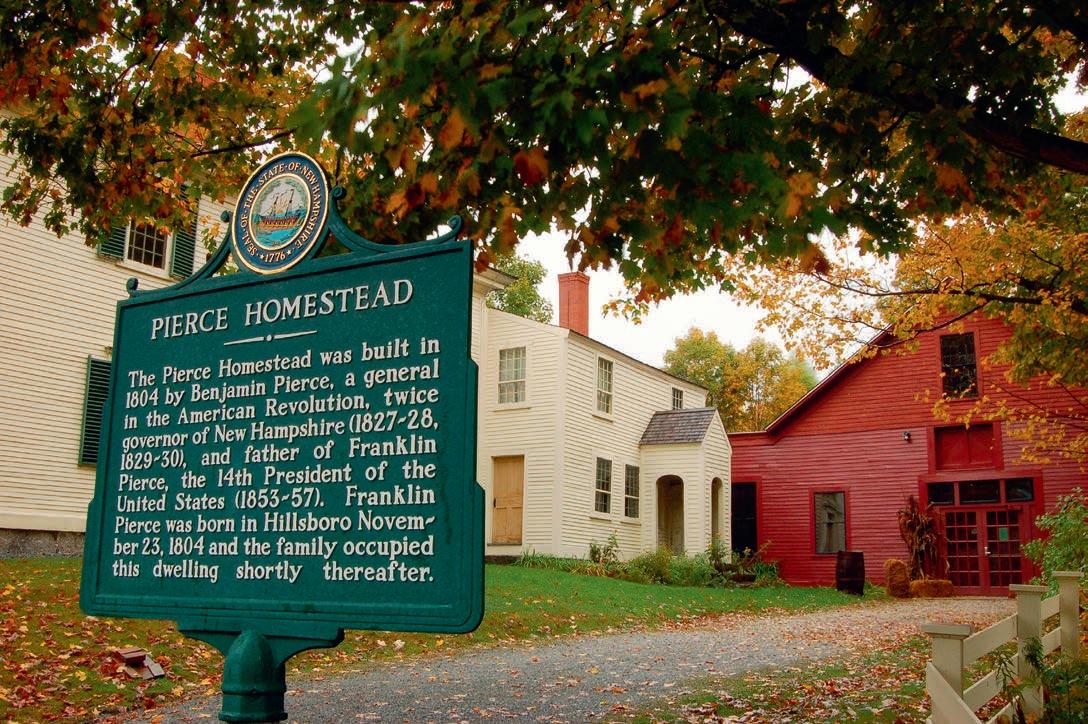
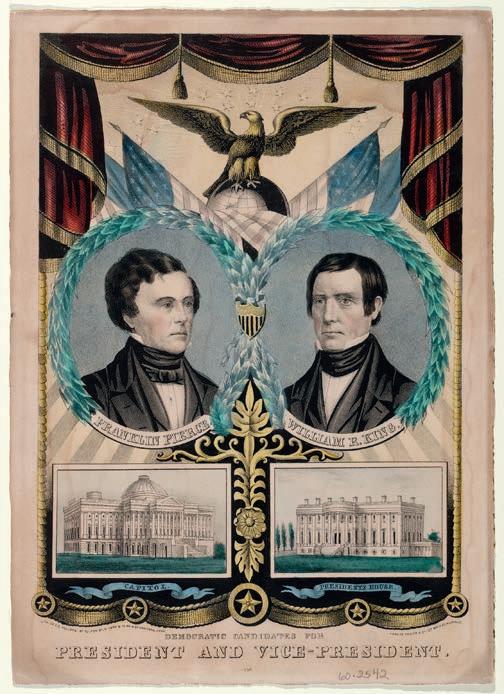
We discuss the park’s plans. They’re improving the walkways and planting some trees to screen the view. A small grove of apples will be a nod to the old orchard. It won’t transport the homestead back in time. The town will still be here, but I’m not sure that’s a bad thing. There’s value in this tension between an ever-changing world and a parcel stuck in time. It’s like seeing both ends of the rainbow, where it all started and where we’ve all come. The homesteads, the funeral parlor, the traffic—what we’ve torn down and what we work tirelessly to save—is all part of the same unfolding story.
A WORLD AWAY IN THE PINE FORESTS of southern New Hampshire, another New England president’s home sits by the side of a road. Far fewer cars pass here. Standing by the stone wall at the front of the parking area, I’m greeted not by the roar of traffic but by a chorus of chipmunks hidden among the stones.
Where the public memory of the Adamses is hazy, that of Franklin Pierce is almost extinguished. New Hampshire’s only president was the 14th person to hold the job and is consistently ranked among the worst. To be fair, he was dealt a terrible hand. He was inaugurated in 1853, when the fissure between abolition and slavery ran through every American institution, including Pierce’s own Democratic Party. His name was floated as a compromise candidate at a divided convention. He didn’t particularly want the job and was dumbstruck to learn he had gotten it.
Pierce’s mandate was clear. His policies were expected to thread a needle that could keep his coalition stitched
(Continued on p. 106)
CLOCKWISE FROM TOP LEFT: John Quincy Adams, America’s sixth president, as he looked in his later years; the Franklin Pierce Homestead Historic Site in Hillsborough, New Hampshire; a campaign poster for Pierce and his running mate, Senator William R. King of Alabama (who died shortly after Pierce’s administration began and was not replaced).
Ethan Tapper
As a best-selling author (and unlikely social media star), this Vermont forester is getting the word out: Nature may have made our woods lovely, but it’s up to us to make them last.
One of the surprise breakout books of recent years is How to Love a Forest, published in the fall of 2024 by Ethan Tapper, then a 36-year-old Vermont forester with no previous writing experience. The nonfiction book chronicles what Tapper calls “the bittersweet work” of managing forests in a world of ecological degradation and stacked stressors— and finding beauty and purpose in them anyway.
How to Love a Forest opens with Tapper driving a skidder into Bear Island, the 175-acre scrap forest that he purchased after it had been ruthlessly logged, and chainsawing a beech tree. In the pages to follow, he cuts trees, hunts deer, and pumps herbicide, working like a surgeon to steer his broken forest onto a healing path. “Like me,” he writes, “this forest is doing its best…. We are both at the beginning of a long journey.” His
message of salvation through tough love and hard work reads like a sermon, and unlike anything else in the annals of conservation literature: “The future belongs to people with the courage and the compassion to do what is necessary, even when it breaks their hearts.”
How to Love a Forest struck a chord among professional biologists and the public alike, and it has propelled Tapper into an unlikely new career as bestselling author and motivational speaker. He now juggles his forestry practice with a lively social media presence and constant speaking gigs. Last fall, How to Love a Forest won the New England Book Award for nonfiction. Tapper has a new book coming out in October, and another in the works.
I spoke with Tapper on a frosty January morning at his home at the base of Bear Island, its dark cliffs and trees rising above us, blue sugaring lines running out of it and into the sugarhouse beside the house.
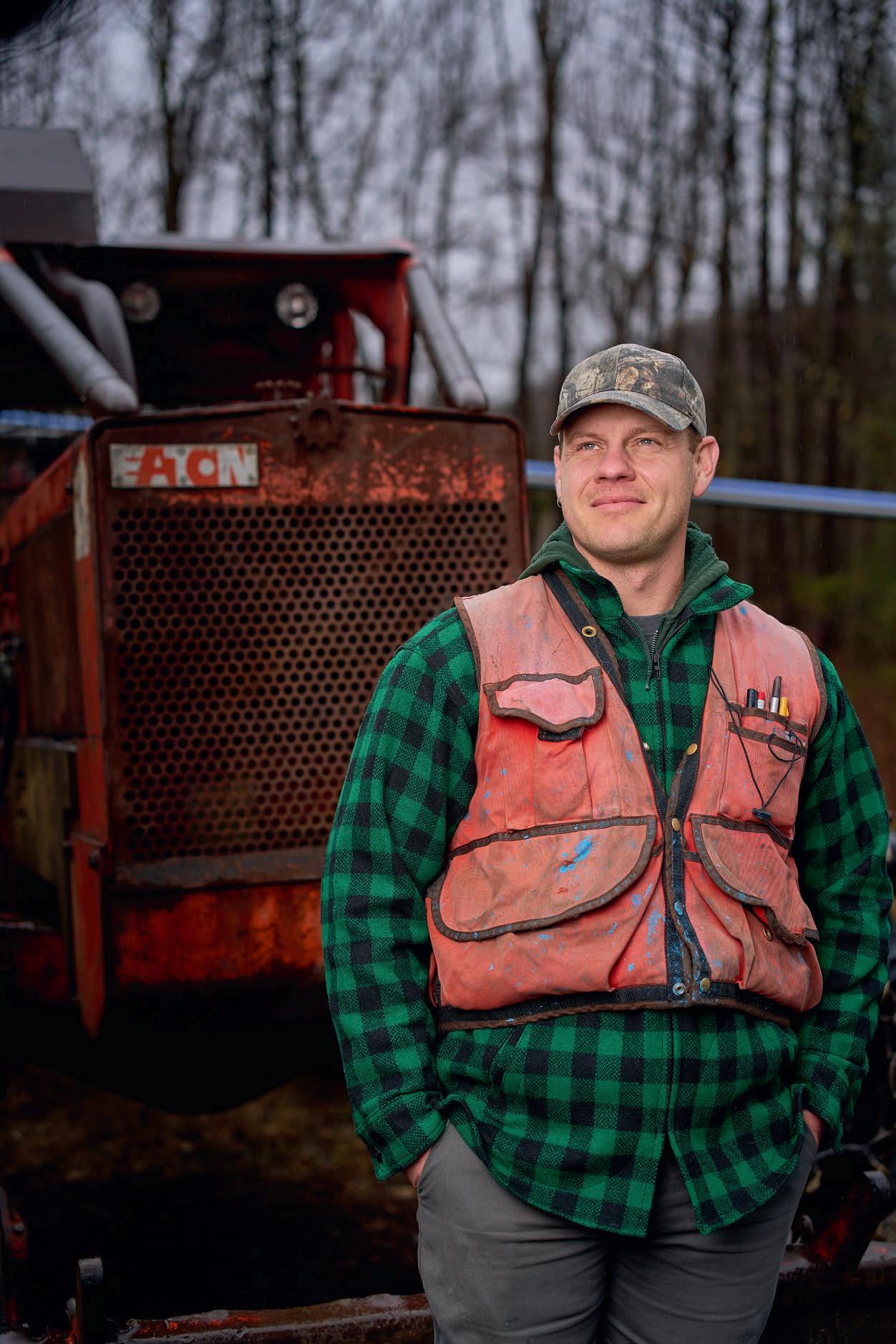
Ethan Tapper at Bear Island with “Red,” his 1981 Timberjack cable skidder. It’s similar to the skidders that were used to degrade this Vermont woodlot decades ago, but instead Tapper uses it to help the forest heal.
This interview has been edited for length and clarity.
Have you always been the woodsy type?
No. When I read these interviews with other nature writers, they’re always like, “I was the nature kid.” Everybody seems to have always known that this is something they wanted to do. I didn’t. I grew up in Saxtons River, Vermont, a teeny little town of 300 people in the Connecticut River Valley. It’s very rural, and in high school we’d go out into the woods but, you know, to cause trouble or to hide away. I wasn’t actively interested [in nature] at all.
What changed for you?
Well, my girlfriend at the time went on this five-month expedition in Ecuador with this organization called Kroka Expeditions. And she had this enormous, life-changing experience. And I couldn’t relate to her anymore. It felt like we didn’t understand each other, and I thought we were going to break up. To me at that time, that would have felt like the end of my life. And it turned out that Kroka Expeditions had this other six-month program that was starting in a few weeks. And I was like, OK, I’m going to do that for this woman.
So it wasn’t about the nature, it was about the girl?
Basically, yeah. So for this expedition you make a lot of your own clothes, and then you ski north for three months. It was hard-core. I’d never cross-country skied before, and suddenly I’m skiing with a 70-pound pack. It was a wild experience, and it did totally change my life. After that I went and lived in the woods of Maine for a year with these folks who do primitive-skills homesteading, and I worked as a wilderness guide. And out of that came a love for the forest and a desire to take care of it.
How did you become a forester? I went to the University of Vermont, and I remember holding a paper list of all the majors that you could have. And I saw forestry. I didn’t know what it was; I was just like, “Forest. I’ll do that.” Back then, I had this attitude like, What could these people possibly tell me about forests? Because I felt like I knew them completely, and I had this very “leave no trace” attitude. And then, of course, I started taking courses in natural history and ecology and wildlife biology, and suddenly my vision of these forests totally changed. I started to see them as they truly are: systems that are complex and beautiful, but also deeply imperiled and deeply altered. And until you take the time to actually study them, you just don’t see it. I mean, you walk in the forest and you think, beautiful forest, because all forests are beautiful, right? But then when you learn more about what’s actually going on, you see different things.
Bear Island is a central part of your book and life. How did you find it? I saw it listed on a real estate website, and it was really cheap. I was like, I wonder what’s wrong with it? And when I went to look at it, what I found was that everything was wrong with it. It had been horribly managed. My first impression was that there were no healthy trees, which is wild. I’d never been in a forest like that before. The skid trails were all rutted and eroding. There was a 30-acre infestation of this introduced plant species called Japanese barberry. There was deer overpopulation. The log landing was piled in trash. The terrain was so steep and rocky it was hard to get around. I got covered in ticks. I was like, Well, this place is terrible; I’ll go find a forest that has less problems.
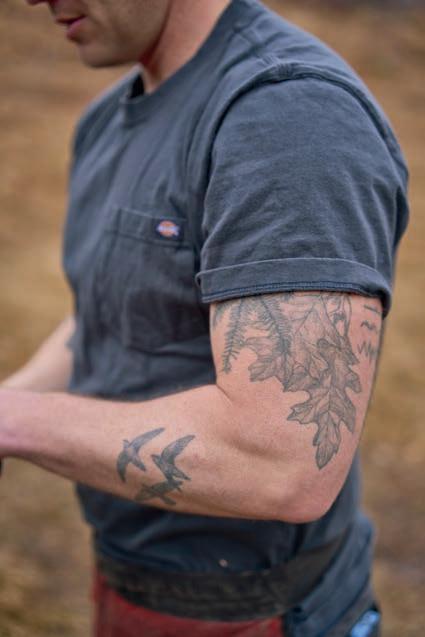
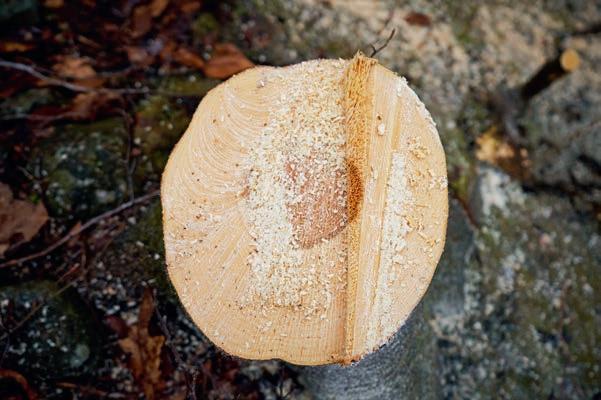
But then I ended up taking some restoration forestry classes, and I convinced myself to go back a second time. And I found all this really cool stuff. Plants that I love, like lowbush
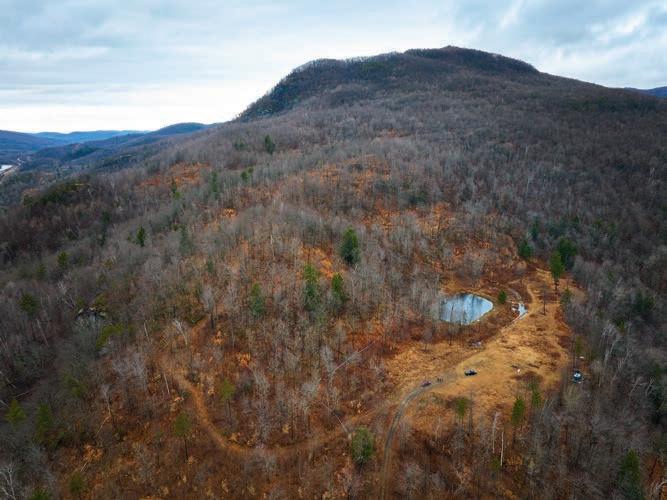
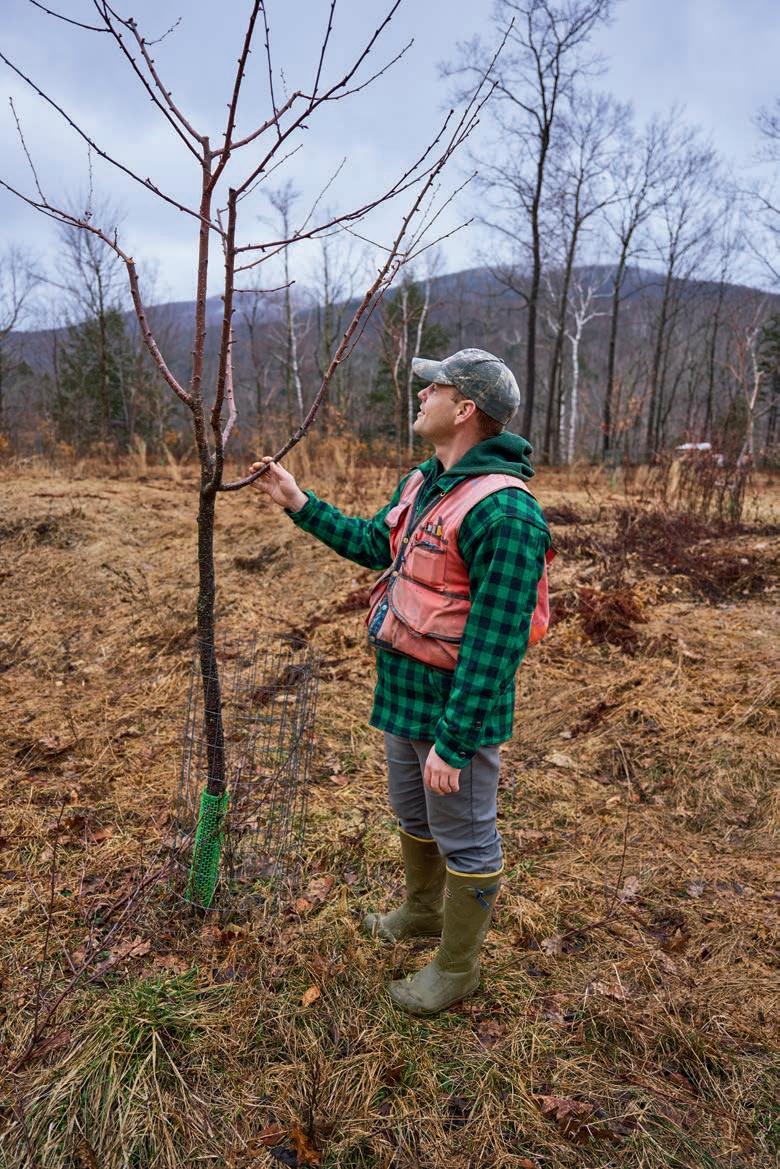
blueberry and sweet fern, corydalis and red columbine. And I found some healthy trees after all—they were just hidden behind all these masses of unhealthy trees. And I remember standing on a rocky outcrop with views over the Winooski River Valley and thinking, I’m gonna buy this place.
So you bought yourself a project. What went into restoring it?
I would love to tell people that all I
CLOCKWISE FROM FAR LEFT: With tattoos of favorite flora and fauna including hemlock and Northern red oak, Tapper wears his devotion to the natural world for all to see; inspecting a cherry tree in his forest orchard; an aerial view of Bear Island, now forever protected by a conservation easement; the stump of a diseased beech tree that Tapper cut down to encourage the growth of healthier neighboring trees.
had to do was just fill my pockets with wildflower seeds and scatter them across the mountain, but it actually required me buying a skidder and a chainsaw and cutting thousands of trees, and teaching myself to be a deer hunter and killing dozens of deer, and teaching myself to run an excavator and restoring those old skid trails, and even using herbicide to control those introduced plants. All of these tools have been used to harm ecosystems, but they are also tools that can be used to help them heal. And because I was willing to do that, I saw transformation here that I’d actually never seen in a forest before. Now I see Bear Island not as a symbol of everything wrong with the world, but as a symbol of what’s possible if we’re willing to take action.
Why did you feel it was necessary to write a book about that?
When people think about our relationship to forests and other ecosystems, there are these two polarities: Either we manage them, or we love them and we leave them alone. But if you actually understand the threats they face, that doesn’t make any sense. They actually need a ton of help from us. So I wanted to paint a picture of how it felt to do the work that I do. You know, I cut trees a lot. I use these tools that people typically think of only as things that degrade ecosystems. But I love forests intrinsically, with all my heart, and this is actually how I express that love. The really radical thing is not just to say you love a forest, but to do something about it.
(Continued on p. 108)
TEMPLES of
UNHURRIED DELIGHT
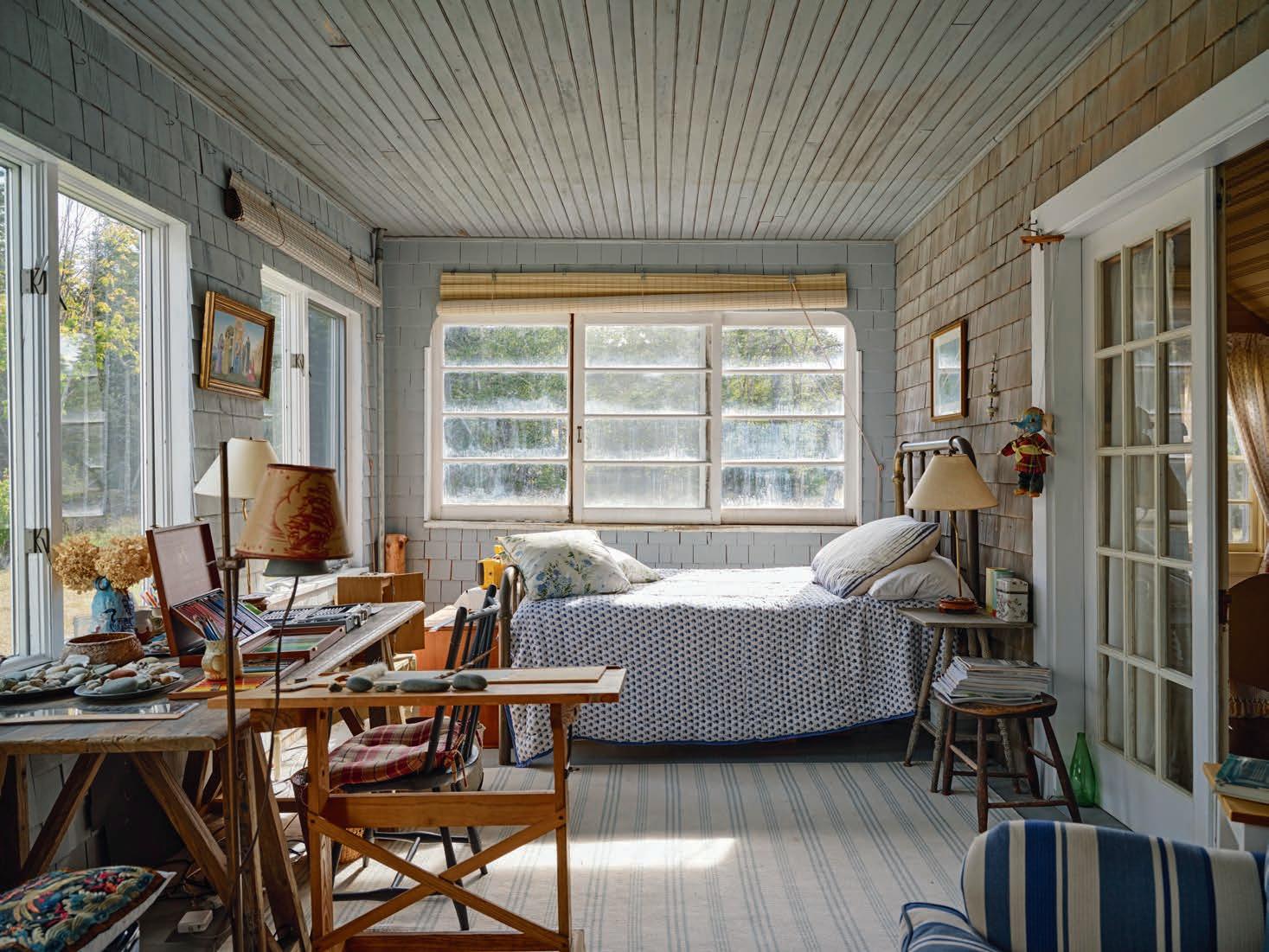
From antiques-filled cottages to quaint rustic cabins, New England author and design journalist Jaci Conry invites us into the iconic summer house.
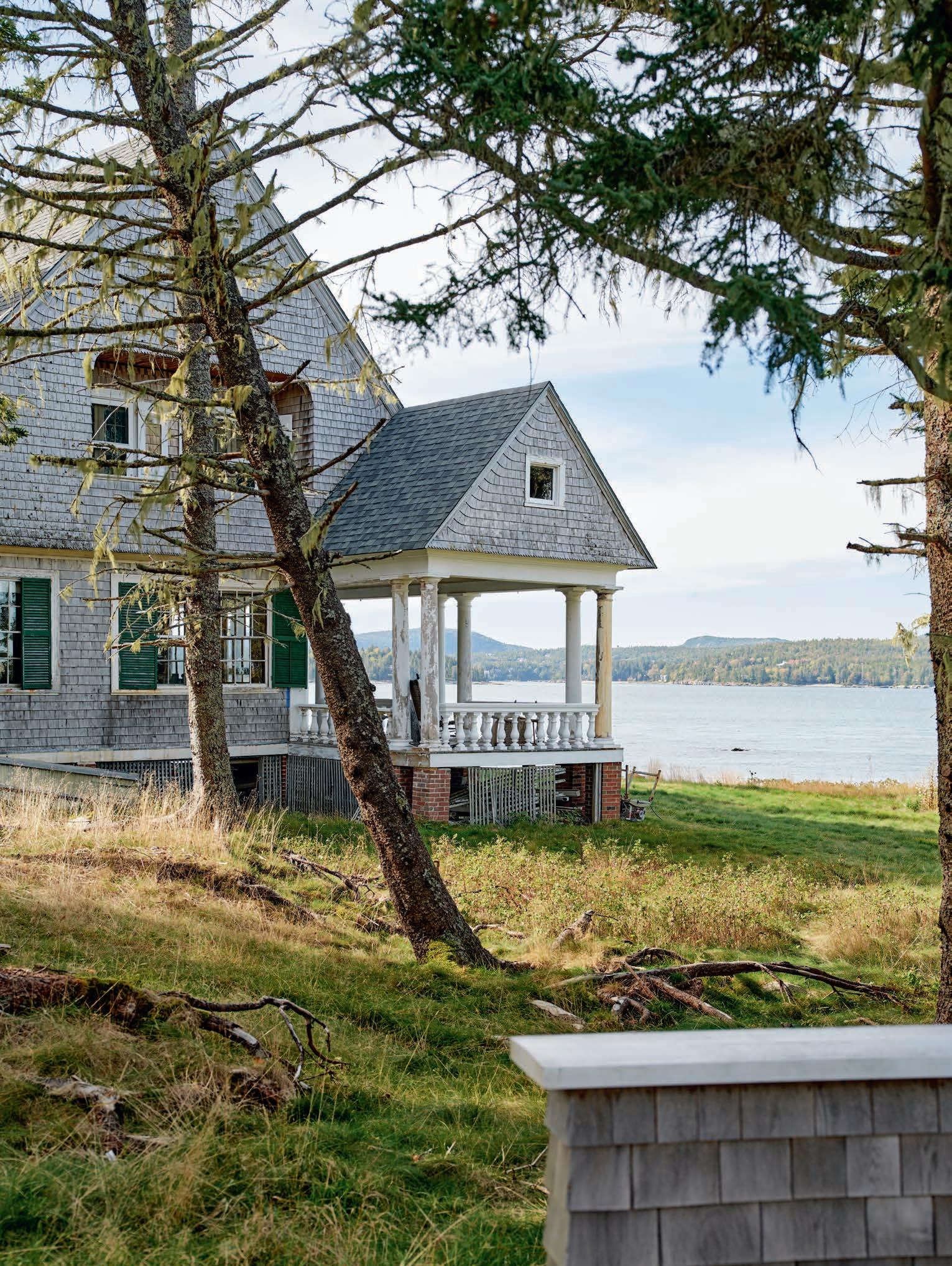
Built on Maine’s Sutton Island in 1889 by wealthy Philadelphians, the summer home known as Windemere survived years of abandonment and winter storms before another family eventually came along to love it and pass it down to their children. FROM LEFT: The former sleeping porch, now an art studio and sunny napping spot; a view across the property to the shores of Mount Desert Island.
In breathing new life into a crumbling 1905 cottage in Provincetown, Massachusetts, owner and A-list interior designer Ken Fulk kept things cozy by preserving the original small rooms—a move that helps maintain “the physical nature that time and place had had on the structure,” he told Conry.
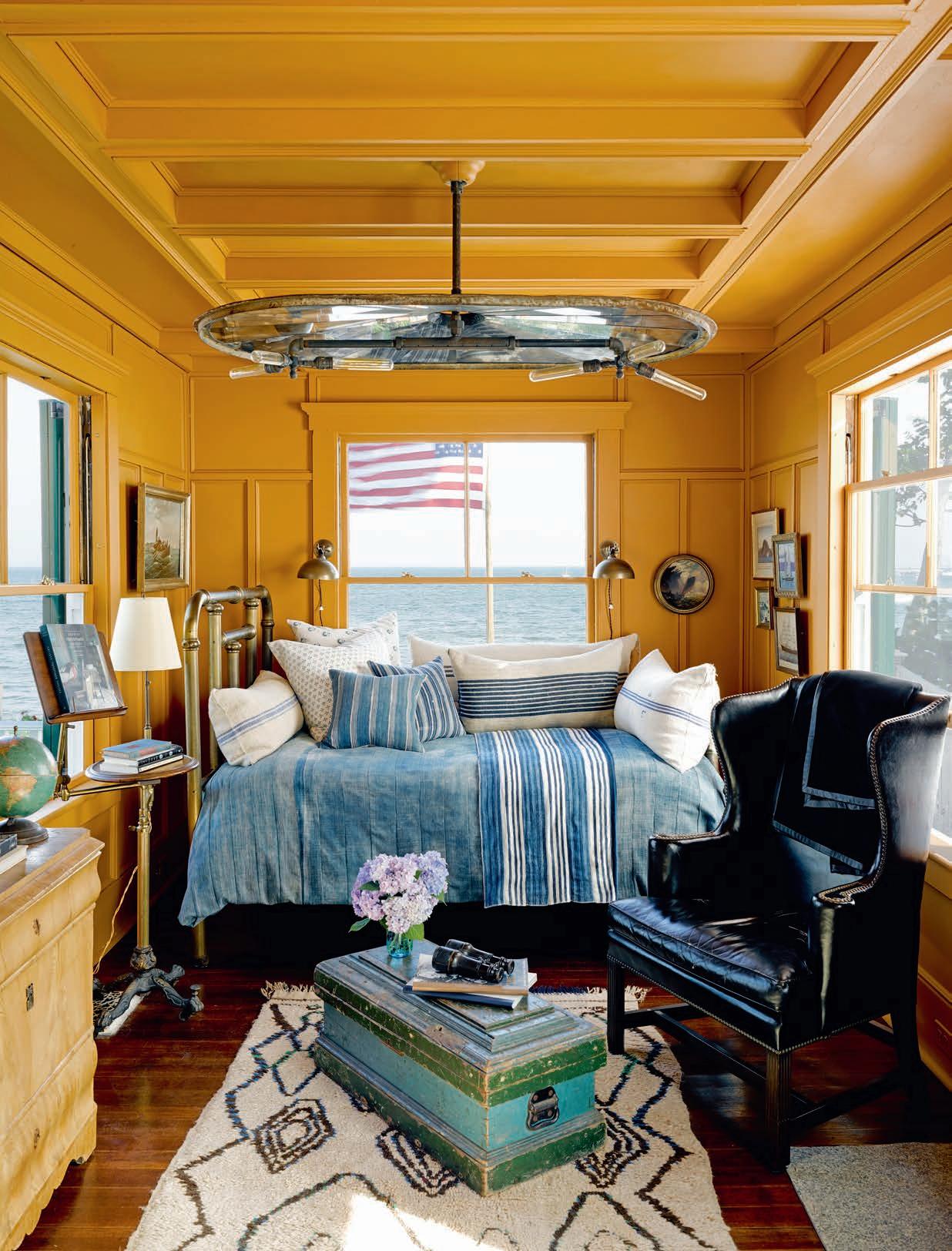
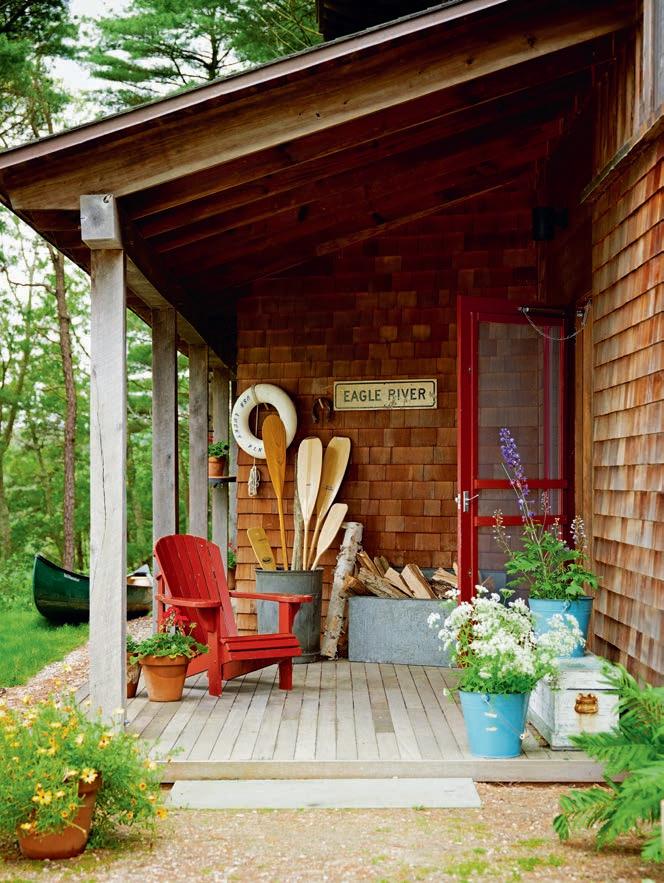
When Jaci Conry was growing up on Cape Cod, her childhood was filled with days on the water, both on boats and from the shore. “I grew up going to the beach with my family, sailed in the summers, learned to drive in the beach parking lot, and spent so many moments there with friends as a teenager,” she says. “[The beach] was just always there—something to be counted on in the landscape of my life.”
Now a Boston-based author and design journalist who lives in Back Bay with her husband, children, and goldendoodle, Conry returns to their second home in Falmouth any chance she can get for that sense of salty, sandy ease. Upon stepping inside, she feels what she calls “the shift.” It’s the “unspooling of whatever I was carrying,” she writes in her new book, The Summer House. “The list in my head quiets; my breath slows.”
“The shift” is what Conry endeavors to capture in the book, which showcases a dozen breezy, casually beautiful summer homes across the Northeast—from a
LEFT: Architect Jill Neubauer, who grew up in the north woods of Wisconsin, took inspiration from her grandparents’ log cabin on a lake when building her own family retreat in Falmouth, Massachusetts. Though just a short drive from the busy island ferry docks, the home channels the serenity of the backwoods with its tucked-away location on a kettle pond, surrounded by
Conry, whose previous books include New England Modern and A Life on the Water.
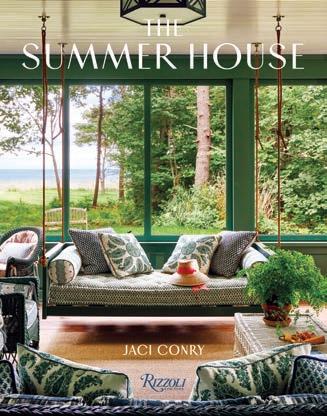

time-honored Cape on Maine’s coast to a bucolic postand-beam Colonial in Connecticut.
Having a seasonal respite feels more important than ever, Conry points out. “It’s really impossible to totally unplug these days. The beauty and the curse of technology is that you can bring it with you—you can bring your work anywhere, you can always be plugged in,” she says. “A summer house can represent this place where you go to be slower.”
Conry’s book rounds up a variety of design styles while underscoring the simplicity of summer’s loose, unstructured days. There are quaint and cozy rustic getaways, historic houses overflowing with antiques, polished newer-construction homes, and more minimal, modern-inspired abodes. “There are so many different ways that people live in summer houses,” Conry says. “We really tried to get at the stories behind the houses, the history of the houses, and why people live in them the way that they do.”
The region’s diversity of landscapes allows for
large pine trees.
BELOW: The latest from Boston Home editor Jaci
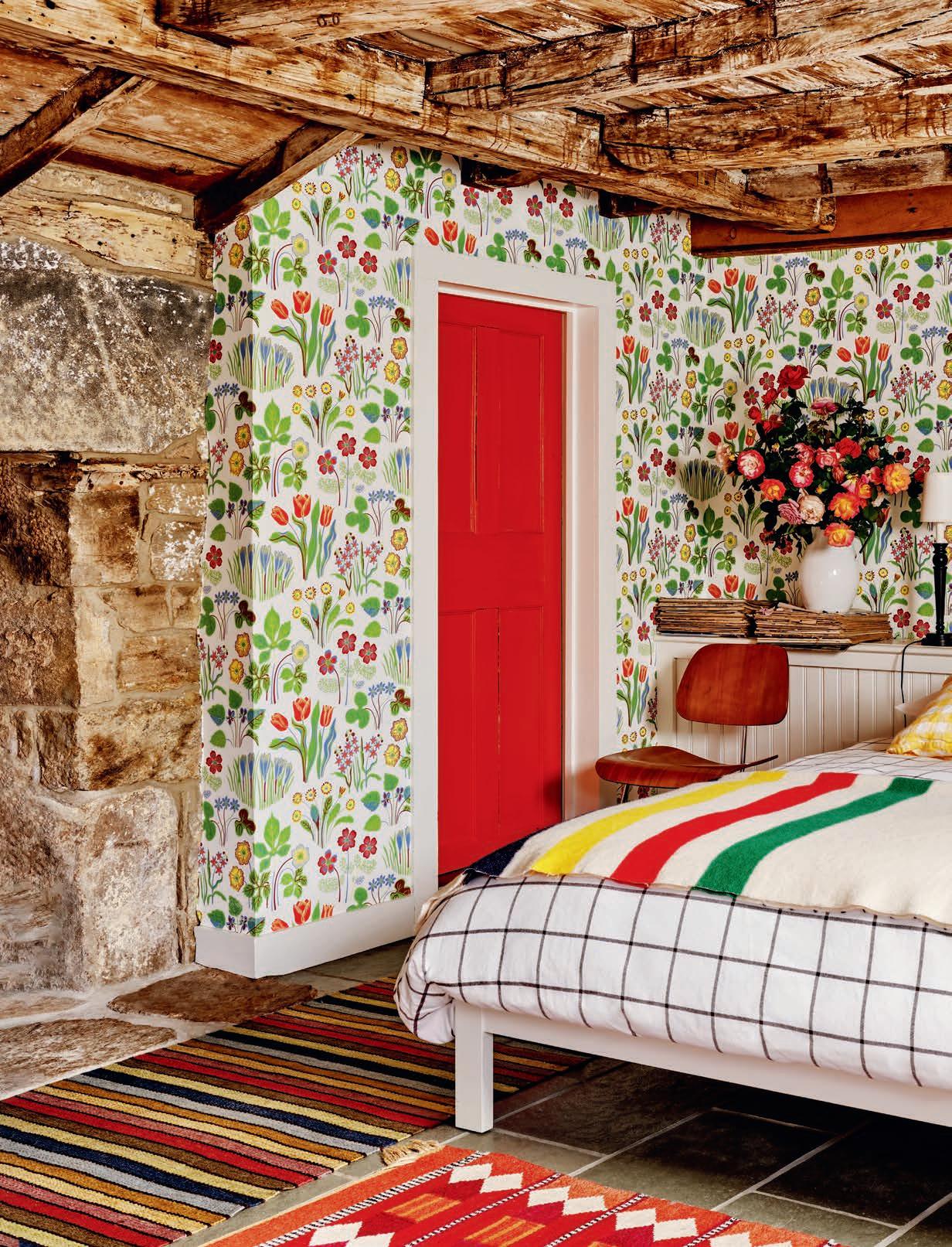
Interior designer Kari McCabe’s Scandinavian heritage meets classic New England in her family’s 1799 postand-beam summer house in Stonington, Connecticut. The original low ceilings are countered with joyously vibrant wallpaper by Josef Frank for Svenskt Tenn, and the views from windows left curtain-free to bring the outside in.
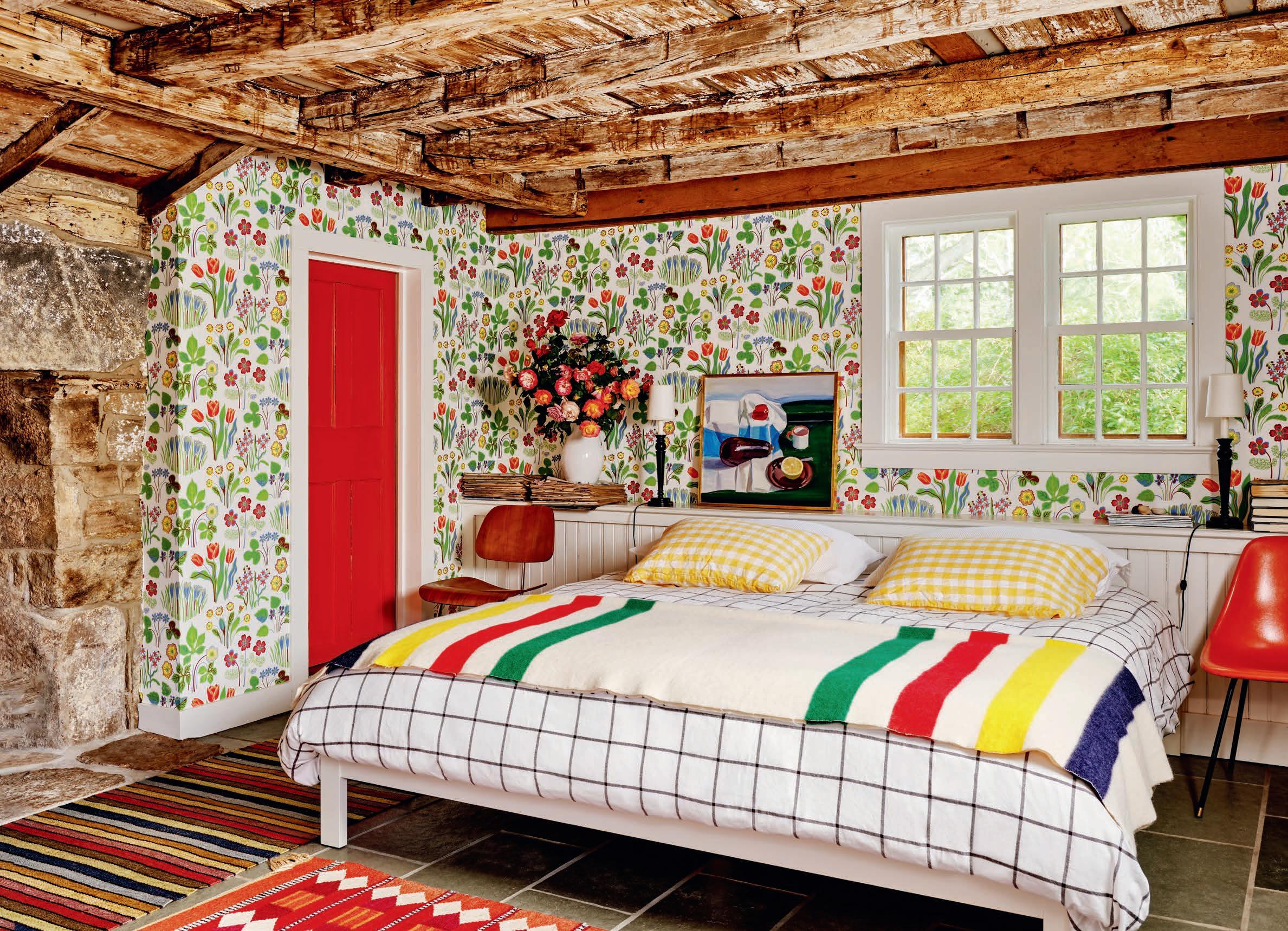
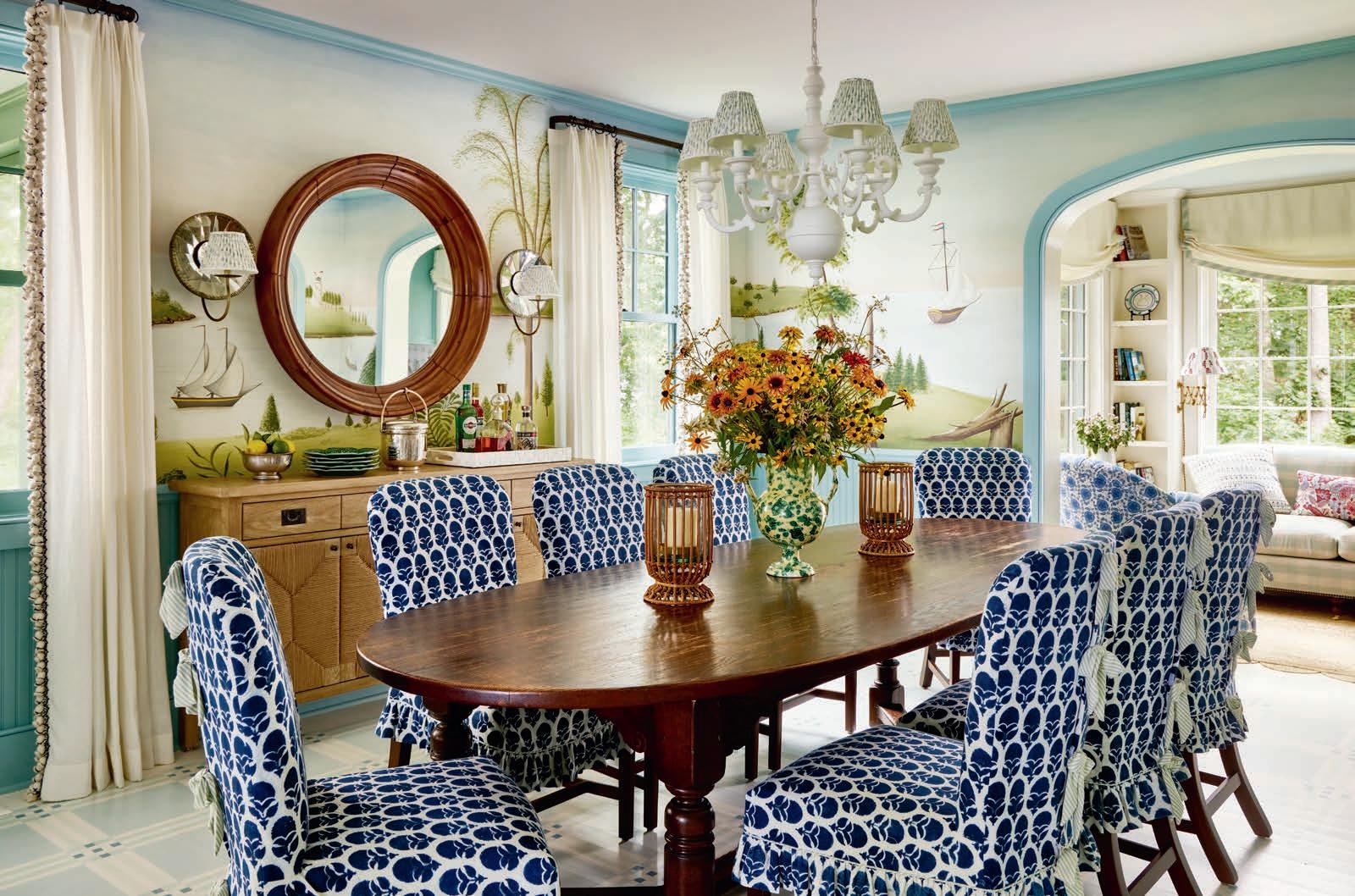
different ways to slow down in summertime, too. Beyond eclectic, laid-back interiors, The Summer House depicts island hideaways, woodsy lake cabins, beachfront houses, and cottages on lively main streets. The point is that New Englanders can while away August beneath some shady pines, or by sunning themselves seaside—and within striking distance of each other, to boot. “Three hours from the city and you can be in the mountains,” Conry says of New England’s summer delights. “And you can be on an island by just hopping on a ferry.”
One such island retreat in the book, however, takes a little longer to reach, which is part of its magic. The 125-year-old cedar-shingled manse on Maine’s Sutton Island, a place with no paved roads, cars, or year-round residents, sits perched on a bluff overlooking Acadia National Park. Left abandoned for a decade, the house
feels especially memorable to Conry. “It’s lived a long life,” she says. “It hasn’t been really touched very much from its original incarnation.”
Owner Nadia Rosenthal and her sister, who both spent childhood summers on the island, restored the place to its former glory after finding the original 19th-century blueprints in the attic. Large windows frame views of the sea, a woodstove and century-old cabinets grace the kitchen, and two pianos in the living area have remained there since the 1920s (a favorite tidbit for Conry).
Conry’s goal, beyond producing a book of inspirational images, was to dive into the histories of each house and its inhabitants over the years—and to nudge readers toward “the shift.”
“Hopefully,” she says, “it will help them get into a summer state of mind.” —Madeline Bilis
When the owners of a southern Maine beach house became grandparents and wanted to reimagine their surroundings for this new era, they called on interior designer Lilse McKenna, known for her grandmillenial style—aka granny chic. FROM LEFT: A modern mural by SO Beaux Arts gives the dining room a backdrop of timeless Maine coastline; cabinets painted in Benjamin Moore Antiqued Aqua and island seating in oversized blue gingham add a splash of color to the kitchen; the makeover included doubling the size of the screened porch, creating the perfect gathering spot for all ages.
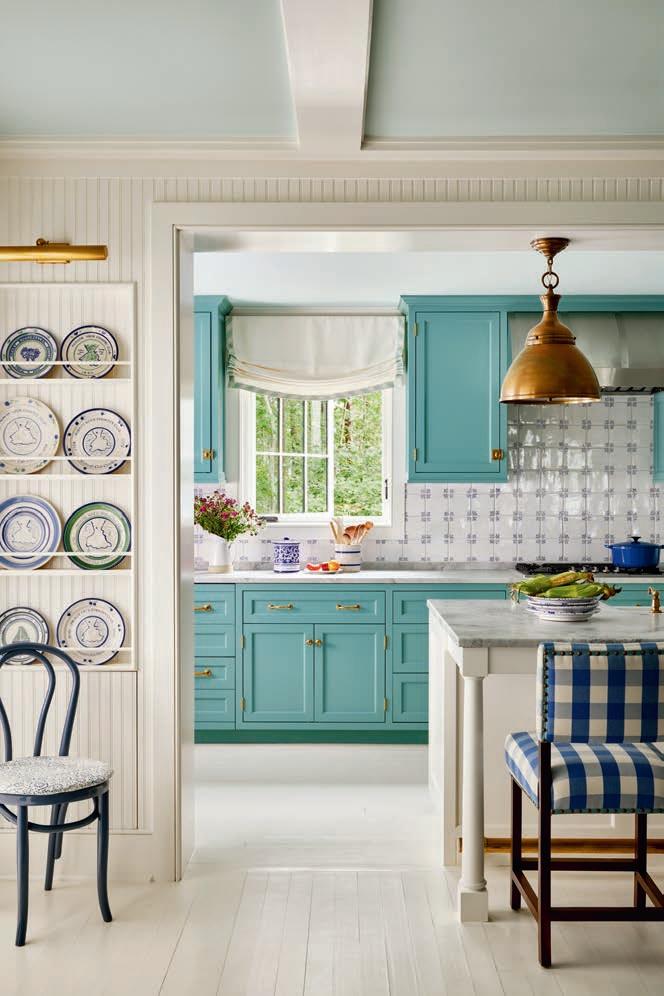
PHOTO CREDITS: Erin Little (Sutton Island, pp. 80–81); Douglas Friedman/Trunk Archive (Provincetown, p. 82); Jane Messinger (Falmouth, p. 83); Read McKendree/JBSA (Stonington, pp. 84–85, and southern Maine, pp. 86–87); all courtesy of Rizzoli New York.
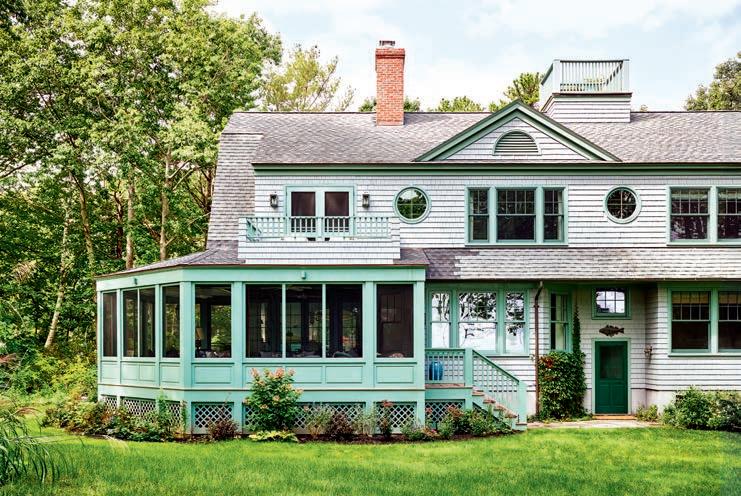
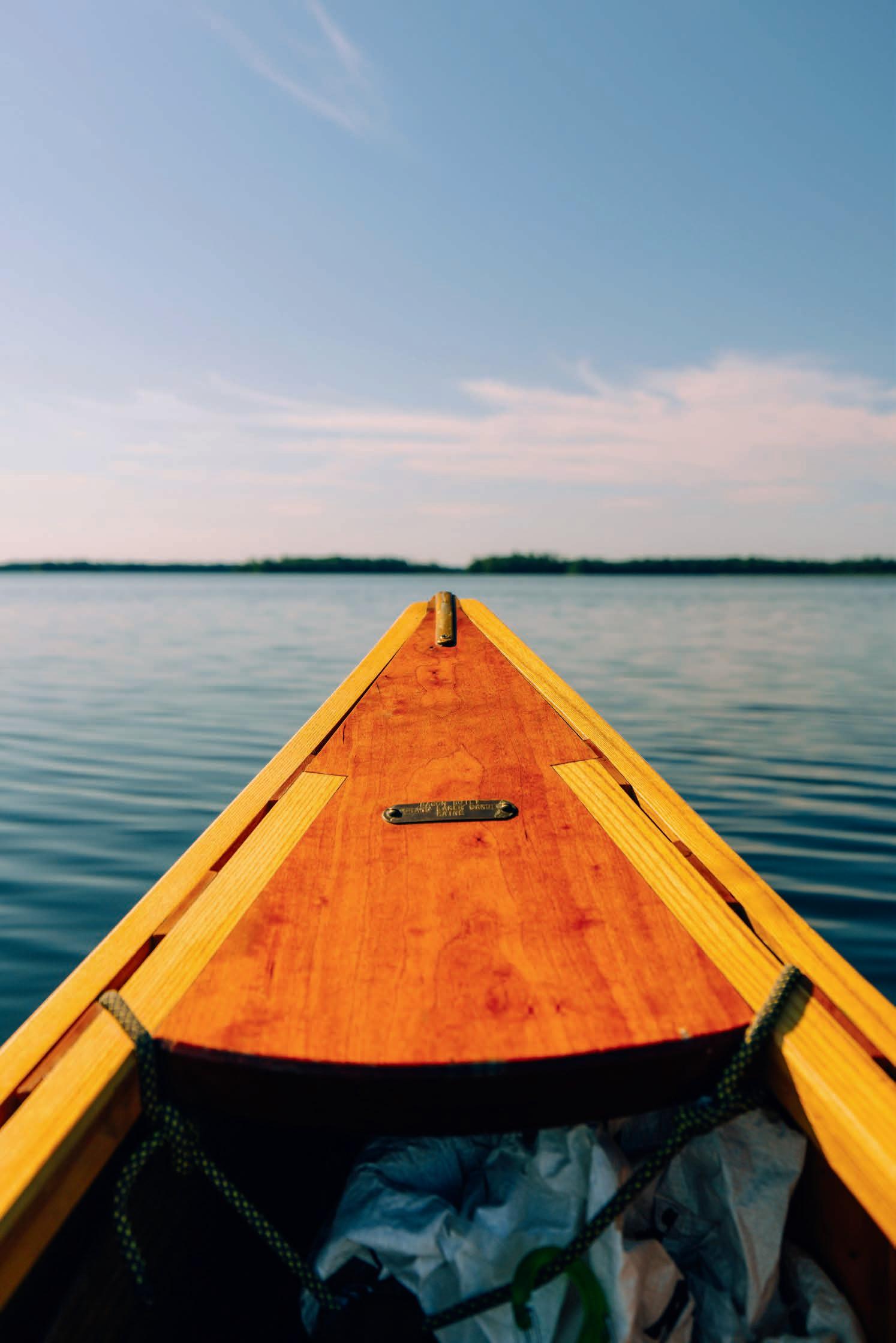
GOODBYE TO A GRAND LAKER
It can be hard to let go of an old boat, especially when it’s a piece of Maine’s legendary sporting heritage.
BY WAYNE CURTIS
o one is sure of the exact date, but just about a century ago, the very first Grand Laker canoe was built in the village of Grand Lake Stream, Maine.
This was a momentous occasion. Since at least the late 19th century, Grand Lake Stream, located in far eastern Maine near the Canadian border, had been a celebrated destination for sports fishermen. (“Grand Lake Stream is known in every corner of the country where there is an enthusiastic lover of the game fish,” reported an Oklahoma newspaper in 1912.) Tweed-wearing anglers arrived by train, boat, and buckboard, then hired local guides, who would take them uplake aboard wood-andcanvas canoes in search of elusive landlocked salmon and other prized catches.
Because the lake system was so vast—one could paddle more than 20 miles through various bays and narrows and past looming rocks before running out of lake—a steamship would tow the canoes a few miles north, then leave the guides and sports to disperse into remote coves to fish. At day’s end, everyone would meet back at the steamer to get back to town in time for dinner at one of the fishing lodges.
In the early 1900s the first commercial outboard motor came on the market. This was disruptive, especially if you operated a steamboat in Grand Lake Stream. It meant guides could now get up the lake with reasonable haste and without having to work around a steamship’s schedule. Of course, beamy motorboats weren’t as nimble as canoes, and guides still needed to put up the motors and paddle into the rocky coves in search of fish.
The Grand Laker was the result. One end of a traditional double-ended canoe was sawed off and a stern plate installed for mounting a motor. The first of these boats had a tiny stern, not much more than half a dozen inches across. These boats were exceedingly tippy. Then local canoe builders started building them with both big lakes and heavy motors in mind. They made them 20 feet long to handle the northwest winds and rolling swells that could arise unexpectedly. And they added a bit of girth for stability and to maintain a shallow draft. A Grand Laker could comfortably accommodate a guide at the stern, plus two sports up front, sitting low in the hull.
Grand Lakers developed a cult following among anglers, and a minor cottage industry producing them flourished in town. Guides would lead sports in the fishing season, then spend winters building boats, both to
use and sell. Hundreds were produced in small woodshops and converted garages in this small village over the decades. Each canoe builder first created a mold on which to bend the ribs and set the gunwales, and over the course of years, subtle differences crept in: the upsweep of the gunwales, the width of the stern, the rocker of the hull. Not that an outsider could tell—they all looked pretty much the same to most people. But the folks in town knew one boat from another the same way you’d know your own children.
For a time, Grand Lakers were once pretty much all you saw on West Grand Lake. And they’re still out there, although they’re gradually being crowded out by fiberglass fishing boats and aluminum pontoon boats. Still, it’s a pleasing sight to see the Grand Lakers heading up the lake at dawn, guides in the stern and eager sports up front, ready for an adventure, whether it involves successful fishing or not.
I acquired my first Grand Laker a couple of years after I bought a camp on West Grand Lake, which was nearly three decades ago. I was told the boat I owned was built in the 1970s by Ralph Beach, or maybe someone who worked with him, and it was made in Grand Lake Stream or possibly nearby in Princeton. I was informed of this by Bill Shamel, a local boat builder, who replaced a rotting stern for me a few years after I got it. When he completed his repairs he asked me, “Do you have any grandchildren?” I didn’t, but he suggested I should because this would be a good boat to give them to play around in. Left unsaid was the part about how it wasn’t much of a boat, and it probably wouldn’t be worth putting any further work or money into it.
The inside hulls of Grand Lakers are typically lustrous and smooth, like crème brûlée, the blond wood lovingly polished. Mine was not like that. It was stained dark, like a German chocolate cake, and not a particularly fresh cake at that. Apparently in the mid-1980s or thereabouts somebody in town bought a sand blaster and offered refinishing services at bargain rates.
Turned out there was a reason not to use a sandblaster. This messed with the wood, raising the grain, from which it never recovered. So, at a salvage store I bought a long carpet runner made of acrylic and designed to look like it came from ancient Persia. This was to ostensibly protect the hull from further wear and tear and to keep the small pebbles and sand out from between the ribs. But mostly it distracted from its appearance and made it look suitable for an outing with a Parthian queen.
I didn’t need a showpiece, but I did want a workboat. I used it a lot for camping, which meant navigating along rocky shores laden with heavy gear. Who doesn’t like to bring cast-iron Dutch ovens and other luxuries
when camping? I used it to explore miles of densely wooded shoreline, pulling up on cobbles and ledges then bushwhacking into the forest in search of chanterelles or old bottle dumps or ledges overgrown with moss.
Getting the boat ashore often required employing ancient technology—I always brought along a couple of small, perfectly rounded logs to roll the boat up across rocks.
All this took a toll. For the first 10 years or so, the boat stayed dry and pristine no matter how long I ventured out on the water. Then some small inexplicable puddles started to appear in it, although this was easily manageable with an oversize sponge. The rate of seepage increased, and on one trip a friend pointed out miniature geysers spurting up between a few planks as we motored through chop. Later inspection revealed the planks had the consistency of cheese—not a nice hard block of aged Parmesan, but something closer to cream cheese.
Anyone who owns a wooden boat is aware of a critical ratio: the time you spend working on it versus the time you spend enjoying it. That ratio starts out at nearly 100 percent enjoyment, but it rebalances gradually over time. When it falls below 50 percent enjoyment, it’s time to reassess.
That time came about five years ago. The boat was out of the water in summer more than in. I tried sanding and fiberglassing and painting. The leaks were wily and persistent.
My friend Steve Keith, a talented wooden canoe builder in town with decades of experience and two sheds full of boats, came at my request to examine my boat. He ran his finger down the low, spongy keel. We rolled it over, and he inspected some of the ribs. At length, he stood and nodded solemnly, then he asked me, “Do you have a chainsaw?”
“Yes,” I said.
“Then cut it into three pieces and take it to the dump.”
Maine humor can be hard to parse, so I just stood with a grave look on my face.
A chainsaw seemed overly violent and disrespectful, but I got the idea of filling the Grand Laker with rocks and towing it out behind my Royalex canoe to where the lake grew deep. There, I’d pull the plug and let the water swamp it and consign it to the depths. It could then forever rest in the lake that spawned it. This seemed poetic, and I also liked the idea of being able to snorkel out and visit it from time to time, and reminisce about the good times we had.
It was a still-early fall night, and a large moon was overhead. I paddled out with the Grand Laker behind me and a slow dirge in my head. I probed with a line and weight to make sure the water was at least 20 feet deep. I pulled the plug; the water flowed in. And in. And
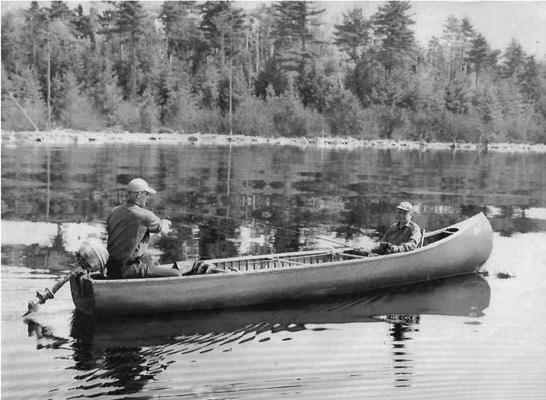
the boat refused to sink. It persisted in its floating, its gunwales above the water and gleaming in the moonlight, despite being nearly full. It had too much wood in the hull, or not enough rocks, or it refused to go down out of some sort of stubbornness. I envisioned a ghost ship destined to forever bob around the lake.
So, defeated, I paddled it back in, very slowly. The next day I drained it, emptied out the rocks, and hauled it into the woods for the winter.
When I returned last summer, I decided to rid myself of it through commerce, and advertised it online: $20 for the boat, leaks included. A half dozen people contacted me—Mainers can smell a deal from 50 miles away—and I ended up selling it to a woman named Darcy, who arrived with her 18-month-old child to tow it away. She thought it would make a good winter project with her dad.
It made me both melancholy and elated to see it roll out of the driveway behind Darcy’s pickup. I felt that it was headed to a good home and would one day emerge like a butterfly from its chrysalis to enjoy yet another life on the lakes.
Also last summer, my friend Steve called and asked me to save his marriage. His neighbor was having a moving sale, and she was selling an old Grand Laker that had been in her barn for years. If I didn’t buy it, Steve said, he would—and he was pretty certain his wife would then leave him.
Forty-five minutes later, the boat and trailer were in my driveway. I was told it was built by Kenny Wheaton, a preeminent boat builder back in the day, and it had a lustrous blond wood interior and a deep hull.
I put it in the lake a couple of days later. It sat elegantly in the water and it handled well. I discovered a small leak coming from somewhere, but I wasn’t concerned. I’ll deal with it next summer. I’m pretty sure this will be an easy fix.
:
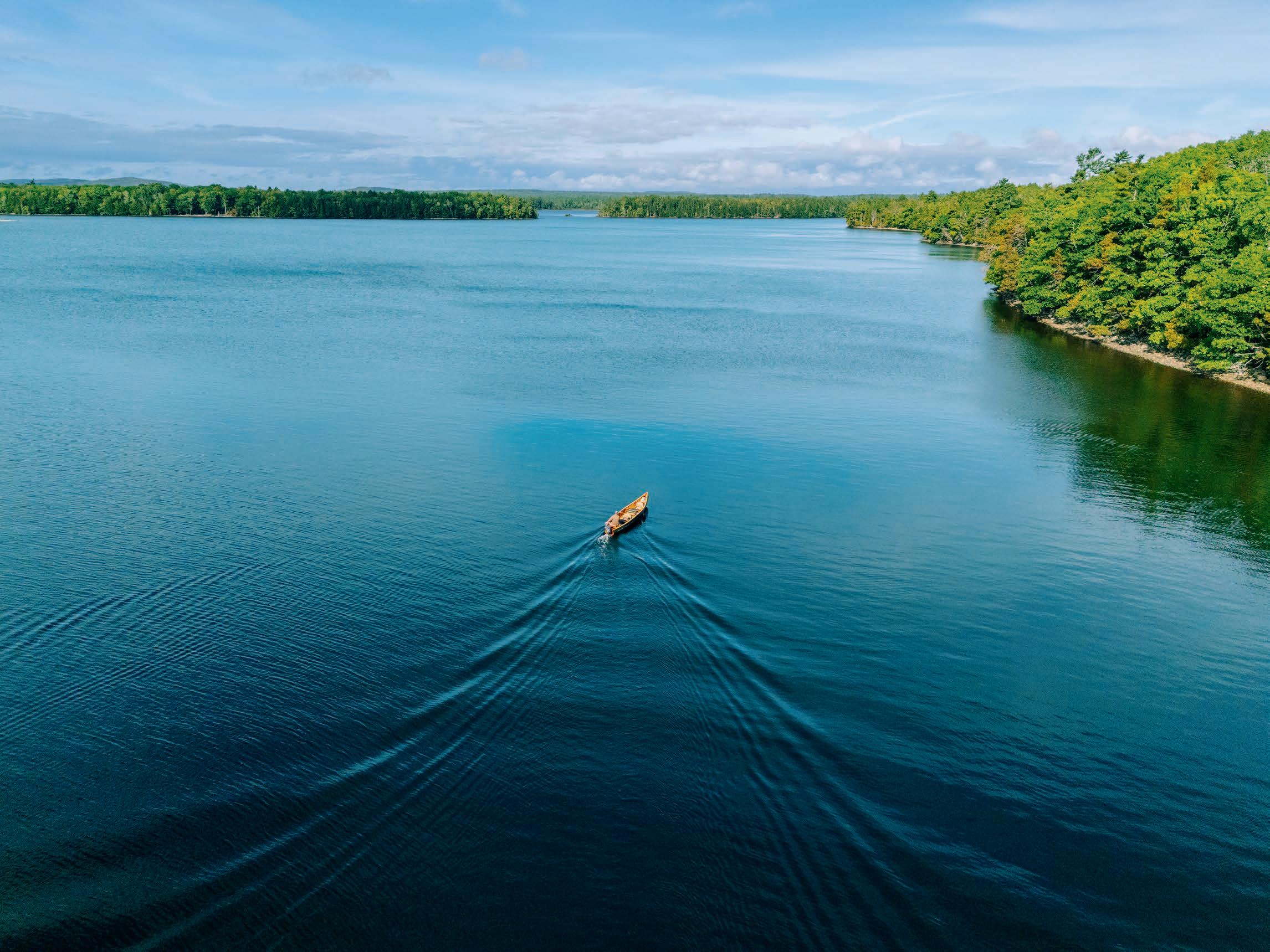
THIS PAGE: Registered Maine Guide Nate
OPPOSITE
Undated photo of a Grand Laker canoe being piloted by Hazen Bagley, a Grand Lake native and guide; the “sport” in the bow is World War II hero General James Doolittle.
Bacon heads out onto Big Lake near Grand Lake Stream. The greatgreat-grandson of Herb “Beaver” Bacon, who is often credited as the originator of the Grand Laker, Nate builds and restores these classic canoes in Hampden, Maine.
Great New
PLAN YOUR TRIP TO THE LODGING
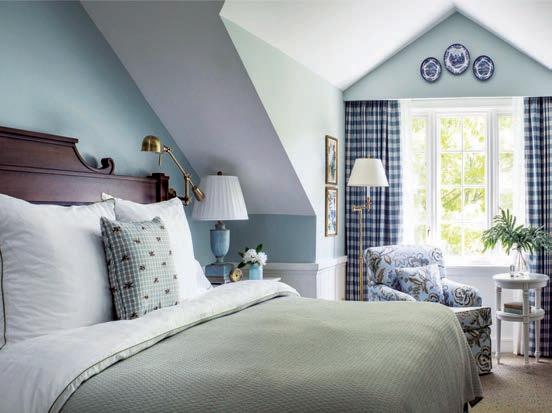
Pickering House
WOLFEBORO, NH
In the heart of Wolfeboro, America’s oldest summer resort, Pickering House is a beautifully restored 1813 historic property steps from Lake Winnipesaukee and a walkable downtown. Ten intimate suites, attentive personal service, and the warm New England character of a true boutique stay make it unlike anything else in the Lakes Region. Steps from the porch, Samuel Avery’s Tavern invites guests to linger over a seasonally fresh, scratchmade menu. This is your New Hampshire. pickeringhousewolfeboro.com
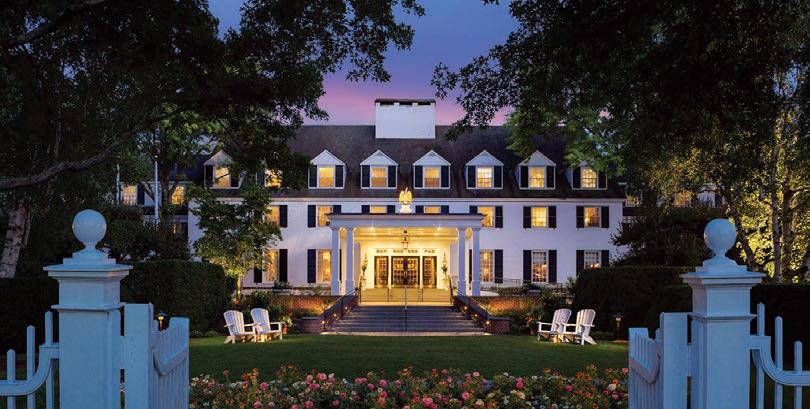

Woodstock
Inn & Resort
WOODSTOCK, VT
Come closer to true luxury and experiences t hat immerse you in the moment at the Woodstock Inn & Resort. Discover thoughtfully elegant touches throughout the historic inn, ignite your sense of adventure with year-round recreation, and connect with relaxation in the world-class spa. Set in the heart of Woodstock, Vermont, every season and every experience offer the opportunity to get closer to what truly matters, one moment at a time. woodstockinn.com


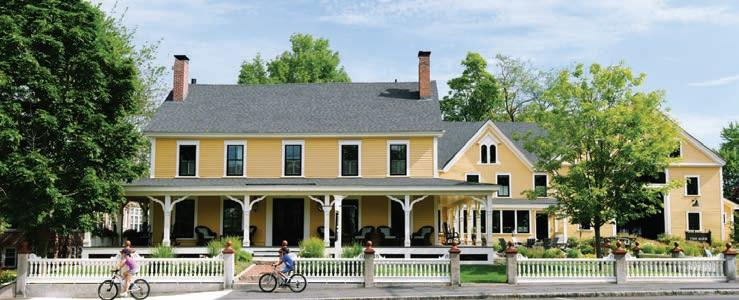
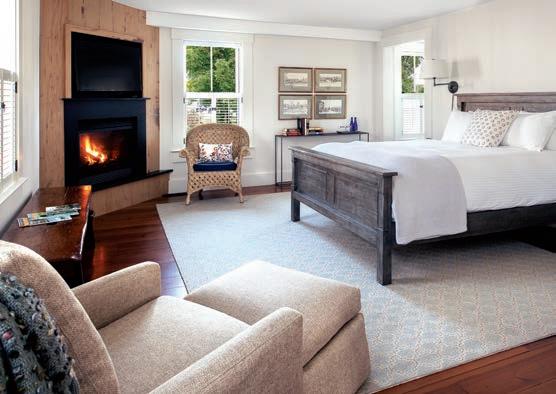
England Getaways
DESTINATIONS FEATURED ON OUR NATIONAL TV SERIES
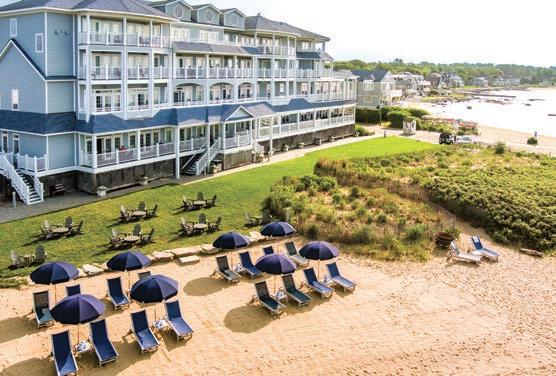
von Trapp Family Lodge & Resort
STOWE, VT

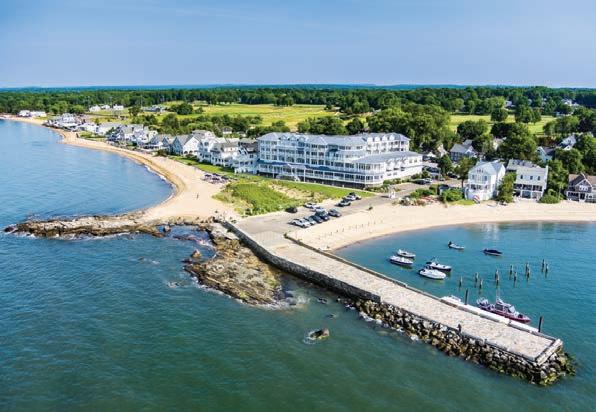

Madison Beach Hotel
MADISON, CT
Relive the magic of Weekends with Yankee Season 9 at Madison Beach Hotel, Connecticut’s top waterfront destination. Explore the natural beauty of the shoreline and indulge in locally inspired culinary excellence at our acclaimed restaurant, The Wharf. Every boutique guest room features a balcony with stunning views of the Long Island Sound. From our private beach to our soothing spa, unforgettable coastal memories await. Plan your getaway at madisonbeachhotel.com.
The von Trapp Family Lodge & Resort is a unique, four-season resort owned by the von Trapp family of The Sound of Music fame. The resort specializes in European-style accommodations and cuisine, spectacular mountain vistas, upscale amenities, and outdoor activities. Situated on 2,600 acres overlooking the classic New England village of Stowe, Vermont, von Trapp Family Lodge & Resort is the perfect setting for a vacation during any season. vontrappresort.com





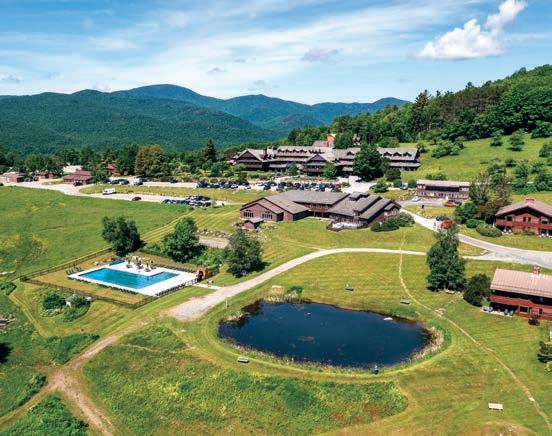
Maine Courses
(Continued from p. 40)
of his recipe gets some Middle Eastern smoke, spice, and tanginess from harissa and preserved lemon. If you keep these two condiments on hand, you will never run out of ways to use them. Harissa has a spicy kick, so adjust to taste.”
FOR THE LINGUINE
Kosher salt
1 pound linguine
¼ cup chopped fresh flat-leaf parsley, for garnish
FOR THE TOMATO SAUCE
2–3 tablespoons olive oil
2 shallots, medium-diced
4 garlic cloves, finely diced
1 teaspoon cumin seeds
2 cups bottled clam juice
1 28-ounce can peeled whole tomatoes, drained and chopped
2 tablespoons diced preserved lemon (optional)
2–4 tablespoons harissa
3 dozen littleneck clams, rinsed, scrubbed, and free of grit
Bring a pot of liberally salted water to a boil over high heat for the pasta.
Meanwhile, make the tomato sauce: Pour enough olive oil into a large nonreactive skillet or Dutch oven to create an even film and warm over medium heat until it shimmers. Add the shallots and cook until they start to soften, 2 to 3 minutes. Add the garlic and cumin seeds and cook for another minute. Pour in the clam juice and tomatoes. Bring the mixture to a gentle simmer and cook until the sauce starts to thicken, 6 to 8 minutes.
Stir in the preserved lemon, if using, and harissa. Add the clams, cover the pan, and continue to simmer until the clams open, 5 to 7 minutes. If any clams remain closed, cook for another minute or two, then discard any that still have not opened. Remove the lid and turn off the heat.
Next, cook the pasta: When the water in the pot comes to a boil, add the linguine and cook to al dente according to the package directions.
Drain the cooked linguine in a colander, then transfer to a large bowl. Pour in the clams and tomato sauce. Toss well, then garnish with parsley. Set a second bowl on the table for empty clam shells and serve familystyle. Yields 4 servings
BLUEBERRY FOOL PAVLOVA
“[This pavlova] checks all the boxes that I want in a dessert: crispness, from the light-as-air meringue; creaminess, from the whipped cream; and sweetness, from the blueberry puree. Lightly mixing whipped cream and puree, so that veins of blue run through the white cream, makes it what the British call a fool. You’ll top it with the sweet pop and light tang of fresh blueberries, ideally just picked from a Maine blueberry barren.”
Note: You can find frozen Maine wild blueberries from Wyman’s at supermarkets around the country.
FOR THE INFUSED CREAM
2 cups heavy cream
2 tablespoons chopped licorice mint (aka anise hyssop) or regular mint
FOR THE MERINGUES
4 egg whites, at room temperature
½ cup (100 grams) granulated sugar
½ cup (60 grams) powdered sugar
½ teaspoon cream of tartar
FOR THE BLUEBERRY PUREE
2 cups blueberries, fresh or thawed frozen
¼ cup (50 grams) granulated sugar
2 tablespoons fresh lemon juice
1 teaspoon grated lemon zest
Pinch of kosher salt
FOR ASSEMBLING
3 tablespoons powdered sugar
2 tablespoons fresh blueberries
First, make the infused cream: In a deep saucepan, warm the heavy cream for a few minutes over medium-low heat. Remove from the heat, add the mint, and steep for 2 hours. Strain, discarding the mint, and refrigerate for 30 minutes. Meanwhile, make the meringues: Preheat the oven to 200°F. Line a baking sheet with parchment paper.
Using a stand (with whisk attachment) or hand mixer, beat the egg whites on medium speed until they are quite frothy, about 2 minutes. Add the granulated sugar and continue whisking until soft peaks start to form, then increase the mixer speed to high and beat until stiff peaks form, about 5 minutes. Add the powdered sugar and cream of tartar and briefly mix to incorporate. The mixture should be glossy and smooth; you should not be able to feel any grittiness if you rub a little between your thumb and finger.
Dollop the meringue in 6 equal portions onto the lined baking sheet. Using the back of a tablespoon, make a depression in each meringue. Transfer the baking sheet to the oven.
Bake until the meringues are firm and dry, 1½ hours. They should be light and airy and release easily from the sheet. Set aside to cool for 30 minutes.
While the meringues are baking, make the blueberry puree: In a deep saucepan, combine the blueberries, sugar, lemon juice, lemon zest, and salt. Stir with a wooden spoon and bring the mixture to a boil over medium-high heat. Immediately reduce the heat to medium and simmer until the berries are quite soft, about 6 minutes. You may need to adjust the heat so that the blueberries don’t spatter outside the pan. Transfer the mixture to a blender. Starting on low speed, then increasing to medium, puree until smooth, 1 to 2 minutes. Using a fine-mesh sieve, strain the mixture into a small bowl and set aside.
To assemble: In a bowl, using an electric mixer or a whisk, whip the chilled infused cream and powdered sugar until medium-stiff peaks form, 3 to 5 minutes. Gently fold half of the blueberry puree into the whipped cream. You want to see veins of blueberries running through the white cream. Reserve the rest of the puree to spoon over the meringue.
To serve: Place the meringues on separate plates, spoon the remaining blueberry puree into the middle of the meringues, and finish with the whipped cream mixture and fresh berries. It’s best to serve immediately, but it will keep in the refrigerator for up to 3 days. Yields 6 servings.

















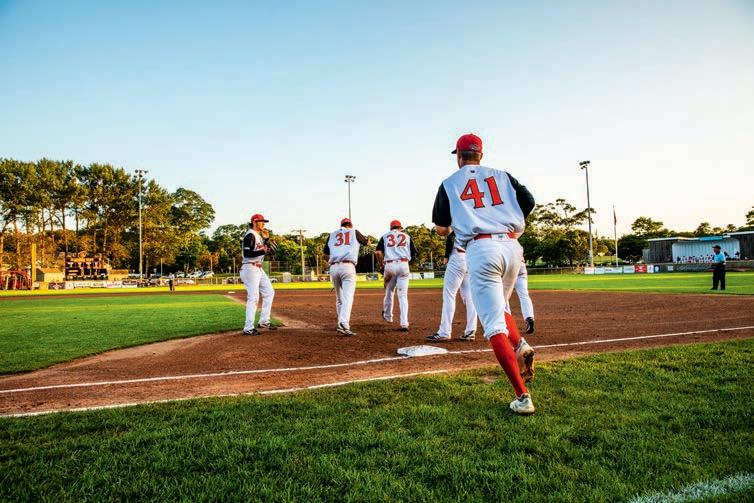
(Continued from p. 52)
sand beach, and a stacked calendar of live entertainment. ocean-beach-park.com
MAINE
DESERT OF MAINE, Freeport. The Desert of Maine is a lot older than most of the state’s other tourist attractions—some 10,000 years older, to be a little less than precise. Glacialera sand deposits lay hidden beneath the site until poor 19th-century farming practices and too many munching sheep stripped away vegetation and topsoil, exposing a mini Sahara. Entrepreneur Henry Goldrup bought the property for $300 in 1919, gave it its alluring name, and opened it in 1925 as a tourist attraction that’s grown over the years to include an 1800s farmhouse museum, train ride, mini golf, and glamping accommodations. desertofmaine.com
DIG MAINE GEMS, West Paris. Here’s a bucketlist experience that involves actual buckets. In West Paris, near the tourmaline-rich Mount Mica mine, amateur prospectors can sift through relocated mine material in search of garnet, lepidolite, and other minerals, including colored and black tourmaline. Dig Maine Gems can equip rockhounds with all the necessary gear: buckets, shovels, sifting screens. Or, you can skip the work and buy a prefilled bucket holding a selection of local and imported gemstones—but where’s the fun in that? digmainegems.com
KATAHDIN CRUISES, Greenville. Not all landmarks on the National Register of Historic Places stay in, well, one place. The Katahdin, built in 1914, is still a busy traveler on Maine’s biggest lake, having served
Moosehead as a steam-powered conveyance to long-gone hotels, a log hauler, and now an excursion boat. Outings range from the popular two-hour Moose Island cruise to an all-day trip to the far northern reaches of the lake’s wilderness shores, and most tickets include admission to Greenville’s Moosehead Marine Museum. katahdincruises.com
PALACE PLAYLAND, Old Orchard Beach. New England’s only oceanfront amusement park is the star attraction—not counting the ocean—of a town whose seaside-resort status goes back almost 200 years. Ride the carousel, enjoy the view from atop the Electra Wheel, whip through the curves on the Sea Viper coaster … then saunter among the shops and eateries that extend 500 feet seaward on Old Orchard Beach Pier, a Maine institution since 1898. palaceplayland.com
SEASHORE TROLLEY MUSEUM, Kennebunkport. Take the kids for a ride into the early 20th century, when streetcars were the way to get around town. Handsomely restored cars from the golden age of electric transit—and from across the world—have found a home in Kennebunkport, a onetime trolley town on the Atlantic Shore Line. Hop aboard vintage equipment for a jaunt on the interpretive railway, peek into the restoration shop, and tour museum exhibits. Desire more streetcars? There’s a satellite campus in Lowell, Massachusetts. trolleymuseum.org
MASSACHUSETTS
BUTTONWOOD PARK ZOO, New Bedford. Considered one of the country’s finest small zoos, Buttonwood has delighted visitors to southeastern Massachusetts with the scope and variety of its animal denizens
since 1894. More than two dozen kinds of mammals, including bison and a red panda, join feathered and scaly species from around the world in a modern facility that’s perfectly sized for a day’s outing. Each day, the zoo posts a “keeper chat” schedule, giving visitors the opportunity to learn about animals from the folks who know them best. bpzoo.org
CAPE COD BASEBALL LEAGUE, Cape Cod. Three-time American League MVP Aaron Judge wasn’t always a Yankee. He once played for the Brewster Whitecaps, one of 10 teams in the venerable Cape Cod Baseball League (founded 1923). Drawing top college players from throughout the U.S., the league’s 40-game regular season and August postseason showdown pack the stands at ballparks from Wareham to Orleans. Late afternoon and evening games are a great way to cap off a beach day and preview tomorrow’s stars. capecodleague.com
KIMBALL FARM, Westford. If it’s a day of family fun you’re after, make tracks for Kimball Farm, where the amusements include a zipline, bumper boats, and an arcade. Its real claim to fame, however, is the colossal portion size of its homemade ice creams (also available at Kimball Farm’s outposts in Lancaster and Carlisle, Massachusetts, and Jaffrey, New Hampshire). Go old-school with grape-nut or frozen pudding, or try out a limited-time special like Berry Spangled Cheesecake—but either way, you may want to seriously consider the “small” or even the “kiddie” size. kimballfarm.com
LOOK PARK STEAMER TRAIN, Northampton. No, the engine doesn’t actually run on steam. But it’s an accurate small-scale replica of an 1863 locomotive, and ever since the 1940s, kids have enjoyed its mile-long excursion through one of the Pioneer Valley’s loveliest parks. The train’s route circles the Christenson Wildlife Center, worth a visit after hopping off to see its pygmy goats, peacocks, and rescued raptors. lookpark.org
REAL PIRATES SALEM, Salem. See and touch honest-to-goodness pirate treasure at this one-of-a-kind museum, named Massachusetts’s Best New Attraction by Yankee in 2023. You’ll also hear true tales of the infamous pirate “Black Sam” Bellamy and his crew, whose ship, the Whydah, remains the only fully authenticated Golden Age pirate shipwreck ever discovered. For a cut-above experience, book a guided tour with an authentically attired pirate. realpiratessalem.com
NEW HAMPSHIRE
CANOBIE LAKE PARK, Salem. Here’s proof that a park doesn’t have to have a theme—unless the theme is fun. Since the days when patrons arrived by trolley, southern New Hampshire’s lakeshore amusement mecca has grown to match classic rides like its 1903 carousel,
Players hit the field for a Cape Cod Baseball League game in Orleans, Massachusetts. ALEX

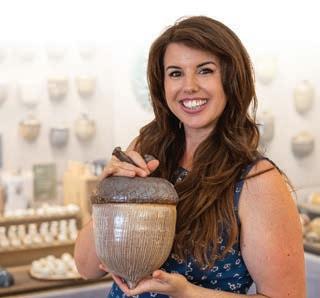


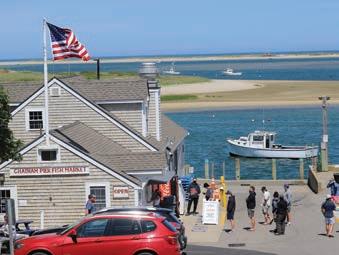

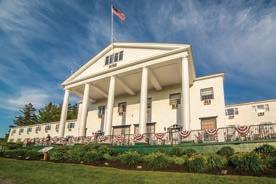




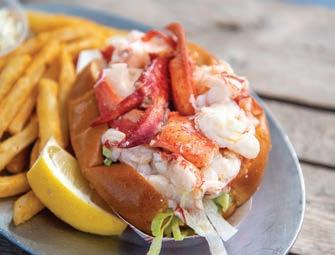


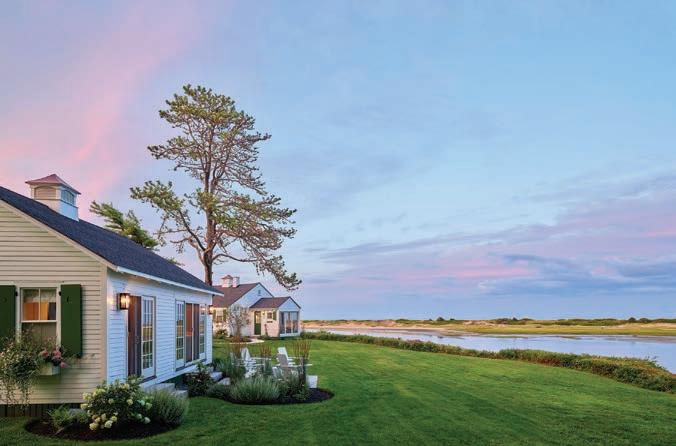

Yankee Cannonball wooden coaster, and 80-foot Ferris wheel with modern thrillers like the Star Blaster drop tower and the strobe-lit spinning cars of the Psychodrome. Arcade games? It’s got those, too. canobie.com
CANTERBURY SHAKER VILLAGE, Canterbury. Strolling the grounds here, you feel relaxed, unhurried. There are nearly 700 acres of forest, meadows, and ponds with six miles of nature trails to explore, while more than two dozen buildings help tell the story of the members of the Shaker sect who lived and worked here for two centuries. Long after the last Shaker sister at Canterbury passed away in 1992, the village remains a tribute to a way of life that influenced generations to appreciate the beauty in simplicity. shakers.org
CONWAY SCENIC RAILROAD, North Conway. North Conway’s classic Victorian depot is the departure point for rail trips ranging from the hourlong Valley Train to the Mountaineer excursion through the Mount Washington Valley and Crawford Notch. For mystery fans, there’s a “Murder on the Rails” trip, and true aficionados can opt for the annual five-to-eight-hour 470 Club excursion that includes stops for photos of the train’s vintage diesel locomotives and 1950s passenger cars. conwayscenic.com
FLUME GORGE, Lincoln. Wooden walkways guide you through an 800-foot-long gorge at the base of Mount Liberty, where a towering waterfall raises clouds of mist that float up to the forest floor 90 feet above. It’s easily the most enchanted spot in the already enchanted Franconia Notch, which features several beautiful lakes and waterfalls as well as the Old Man of the Mountain Profile Plaza, which pays homage to New Hampshire’s late, lamented “rock star.” nhstateparks.org
ISLES OF SHOALS STEAMSHIP COMPANY, Portsmouth. The nine islands that make up the Isles of Shoals are arrayed just half a dozen miles off the coast of New Hampshire and Maine, and each one has a fascinating history. Setting out from Portsmouth Harbor, the Isles of Shoals Steamship Company’s sightseeing cruise wends its way through the little archipelago, with narration touching on Celia Thaxter’s famed Appledore Island flower garden, lore of old-time lighthouses and hotels, pirates, and perhaps a ghost or two. Harbor cruises, Star Island day trips, and other excursions are also available. islesofshoals.com
RHODE ISLAND
EAST BAY BIKE PATH, Providence–Bristol. Sights, sounds, and scents of the bay accompany your walk or ride along any or all of this nearly 15-mile shoreside path from Providence’s India Point Park to Independence Park in Bristol. Possible stops include photo ops, a Crescent Park
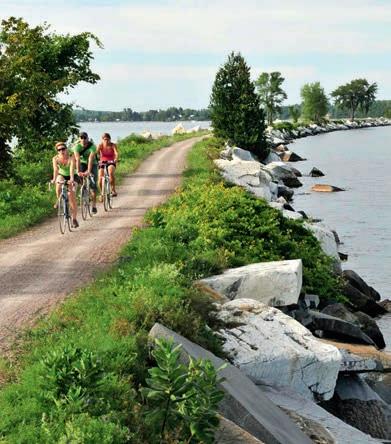
at the Audubon Nature Center and Aquarium, and Del’s frozen lemonade at Colt State Park. dot.ri.gov
FLYING HORSE CAROUSEL, Watch Hill. On most merry-go-rounds, the horses ride up and down. But these hand-carved, gaily painted steeds really do fly: Suspended from chains, they lift outward as they pick up speed. Believed to be the oldest operating merry-go-round of its kind in the country, the carousel (estimated to have been built in 1867) came to Watch Hill in the 1800s when, as the legend goes, it was abandoned by a traveling carnival. Happily, the horses have been at home here ever since. merrygoroundbeach.com
NEWPORT CLASSIC CRUISES, Newport. There’s water, water everywhere, as the Ancient Mariner said—and that’s especially true in Newport, a bona fide sailors’ heaven. Newport Classic Cruises offers day sails on the majestic schooners Adirondack IV and Madeleine, and the sloop Eleanor ; the aptly named 1929 motor yacht Rum Runner II is also part of the fleet. Morning, afternoon, sunset, lighthouse, and cocktail cruises are among the choices, with Newport’s historic waterfront and legendary mansions seen at their best from the sea. sail-newport.com
ROGER WILLIAMS PARK ZOO, Providence. How many tusks are on a babirusa? Find out at America’s third-oldest zoo, where some 800 animals representing over 160 species are featured in an urban park setting. Creatures both familiar and exotic inhabit authentic habitats, from savanna to woodland, and coastal to rainforest. There’s even New England’s only Komodo dragon— and don’t miss a chance to see Alice, Ginny, and Kate, the zoo’s three elephants, who will move to a new home with more pachyderm companions in 2027. rwpzoo.org
VERMONT
BEN & JERRY’S FACTORY, Waterbury. Just 10 miles south of Stowe, sweet tooths flock to the only facility run by the worldfamous Vermont-born brand that’s open to the public. You can see ice cream being made during what’s considered one of New England’s best factory tours, then hit the scoop shop for a shake, cone, or sundae, and stop into the Flavor Graveyard to pay your respects to long-gone Ben & Jerry’s flavors (known as “the dearly de-pinted”) such as Wavy Gravy and Rainforest Crunch. benjerry.com
BUTTON BAY STATE PARK, Ferrisburgh. Button, button, who’s got the button? Button Bay State Park does, and it’s fun to find them along the shores of Lake Champlain. Millennia ago, clay accumulated around pebbles and the stems of water plants; the hardened “buttons”—little discs with holes in their centers—were left. Discovering them is only part of the attraction of Button Bay, Vermont’s only state park with a swimming pool. Tent sites, lean-tos, rental cabins, and a nature center round out park facilities. vtstateparks.com
ISLAND LINE TRAIL, Burlington–South Hero. Who needs a boat to head out onto Lake Champlain when you’ve got a bike? For nearly three miles, the northern stretch of the Island Line Trail slices through the lake on an old railroad causeway. It includes a 200-foot gap of open water, but not to worry: A seasonal bike ferry allows you continue your ride to the island of South Hero. The trail originates nine miles south of the causeway, in Burlington, where Local Motion rents bikes right on the route. helloburlingtonvt.com; localmotion.org
NORTHERN STAR CRUISES, Newport. Designed to resemble a 1920s passenger and freight steamer, the Northern Star takes passengers on Vermont’s only international voyage. Based in Newport, it plies the waters of Lake Memphremagog, most of which extends deep into Quebec along pristine wooded shores. Excursions on the trim 65-foot craft include scenic tours, Sunday brunch and Friday dinner cruises, and a four-hour trip that ventures 20 miles into Canadian waters, lunch included. mcmvt.org
OKEMO ADVENTURE ZONE, Ludlow. With all its options for summer fun, Okemo sometimes seems like a warm-weather draw with a ski area attached. The ticket to the mountain’s many attractions is the Adventure Pass, offering all-day admission to mini and disc golf, the Timber Ripper Mountain Coaster, a bungee trampoline, the Haulback Challenge Course with its rickety (not really) bridges, a sluice where “miners” can pan for semiprecious gems, a gorgeously scenic chairlift ride, and more. okemo.com
Looff Carousel ride, wildlife watching
Cruising the Island Line Trail in Burlington, Vermont.
Step Into History


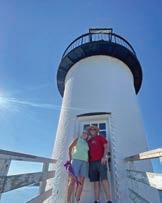
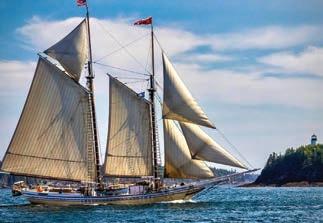
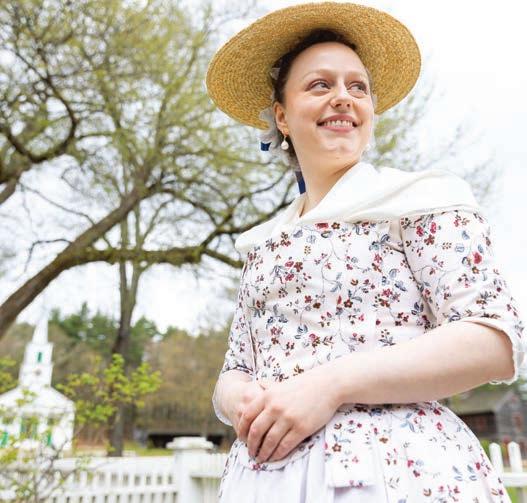
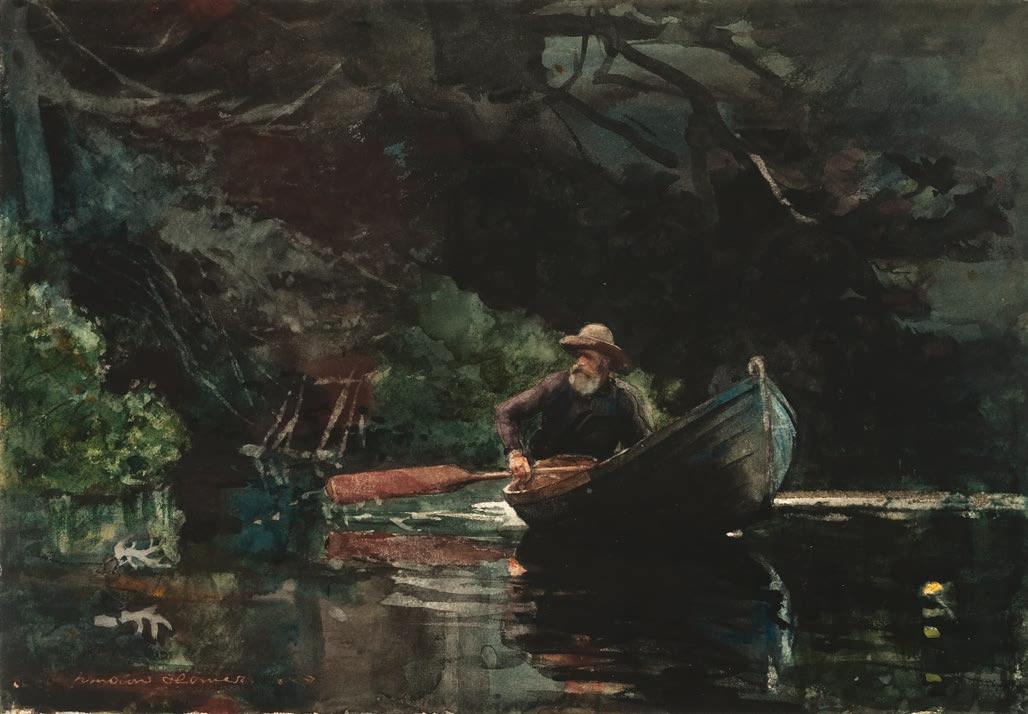
EDITORS’ PICKS: SOUTH SHORE
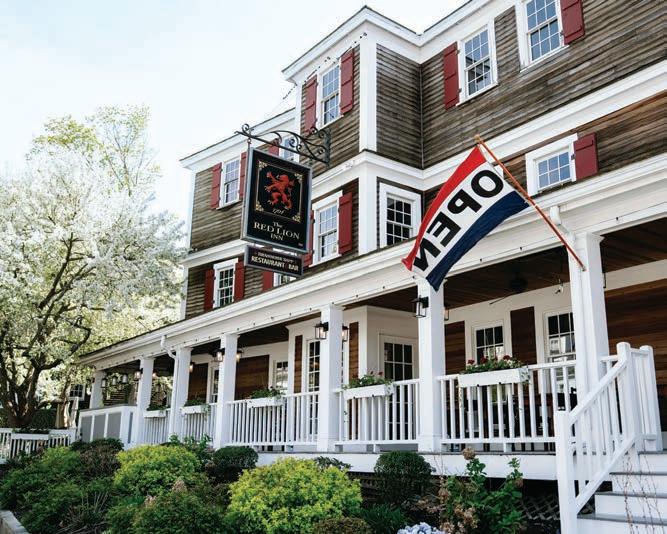
WHERE TO EAT
Alma Nove, Hingham: Treat yourself to fine Italian-Mediterranean fare at this awardwinning restaurant in the Hingham Shipyard. Led by chef and co-owner Paul Wahlberg, the intimate, contemporary eatery serves steaks, seafood, and pasta, along with sweeping water views. almanovehingham.com
Beach House, Hingham: Expect a line at this popular shack on Bathing Beach, where hungry sun worshippers face a tough choice between the mighty smashburger and the classic lobster roll. There are salads, chowder, chicken wraps, and hot dogs, too. beachhousehingham.com
Farfar’s, Duxbury: A summer favorite since 1979, Farfar’s takes its name from the Danish term for grandfather in honor of Walter Simonsen, a former HP Hood ice cream whiz whose legacy is now measured in the cups and cones of 20-plus ultra-creamy varieties scooped by his descendants. farfarsicecream.com
Island Creek Oysters, Duxbury: Skip Bennett started Island Creek in the 1990s, and today it’s one of the top oyster operations in the country. The Island Creek Raw Bar is a fun place to sample tasty bivalves, at picnic tables overlooking Duxbury Bay. islandcreekoysters.com
Jake’s Seafood, Hull: Watch the boats come and go as you dine on ultra-fresh seafood dishes at this family-owned restaurant next to Steamboat Wharf, started as a lobster pound in 1949 and still going strong. Jake’s is known for its fried seafood platters, but we also like
the Vietnamese-style halibut, steamed in a soy-ginger broth. jakesseafoods.com
Lucky Finn Café, Scituate: Sitting atop a pier on the harbor’s edge, this cozy coffee shop is the ideal place to start your day with a pastry or breakfast sandwich, or recharge midway with a tasty sandwich or grain bowl. luckyfinncafe.com
Lynwood Café, Randolph: Locals and savvy visitors flock to this neighborhood bar for gooey, thin, perfectly charred bar pizza that’s consistently ranked among the best on the South Shore. Facebook
Ppapa’s Pizza Bar, Plymouth: Oh, how we crave the extra-crispy thin-crust pizza piled with toppings at this super-casual joint with its friendly “Whadaya want, hon?” staff.
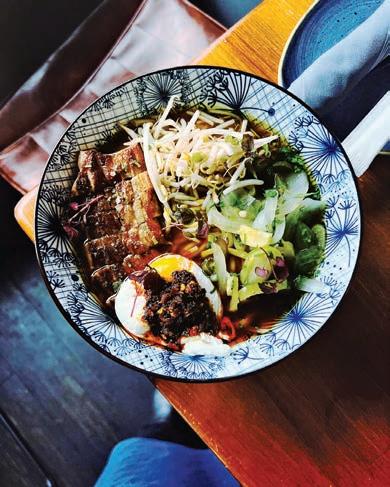
Salt Society, Scituate: Ready to step away from the South Shore’s fried-seafood specialties? Check out this downtown spot specializing in fresh-made maki, sashimi, and nigiri. The meat and seafood dishes are similarly top-notch. saltsocietyma.com
71° West Atlantic Steakhouse, Plymouth: If you’re looking for top-quality steaks and fresh seafood, reserve a table at this upscale eatery on the water. The something-for-everyone menu includes a raw bar, sushi, pasta, poultry, soups, salads, and more. 71westplymouth.com
Shipwreck’d at Pemberton Point, Hull: A waterfront fish shack located next to a marina and the ferry to Boston, Shipwreck’d attracts a crowd of locals and visitors in the know. The fish sandwich is our favorite, but you won’t be disappointed with the fried clams or scallops, or the lobster roll. Facebook
WHERE TO STAY
Hotel 1620 Plymouth Harbor, Plymouth: Boasting a convenient location, free parking, and spacious accommodations, Hotel 1620 is popular with families (who also appreciate the indoor pool). Rooms are modern and comfy; some offer harbor views, too. hotel1620.com
The Inn at Scituate Harbor, Scituate: You can’t beat the location of this nautically themed hotel, which sits within easy walking distance of the harbor and downtown Scituate’s restaurants and shops. Even better: All 29 guest rooms come with water views. innatscituate.com
Nantasket Beach Resort, Hull: Reminiscent of grand resort hotels of days gone by, this sprawling property on Nantasket Beach has 107 rooms and suites, all with gas fireplaces and some with balconies; an indoor pool and hot tub; a micro spa; and a relaxed, Italian-leaning restaurant, Boathouse Bistro Beachfront. nantasketbeachresort.com
The Red Lion Inn, Cohasset: Simply a classic. Housed in an early-18th-century building in Cohasset Village, the inn features 15 unique rooms, some with original wood beams, fourposter beds, whirlpool tubs, and fireplaces. There’s an on-site restaurant and speakeasystyle lounge, plus gardens and an outdoor pool. redlioninn1704.com
FIND MORE ONLINE
For the best of South Shore arts, culture, and recreation, go to newengland.com/southshorefun
The Red Lion Inn, Cohasset



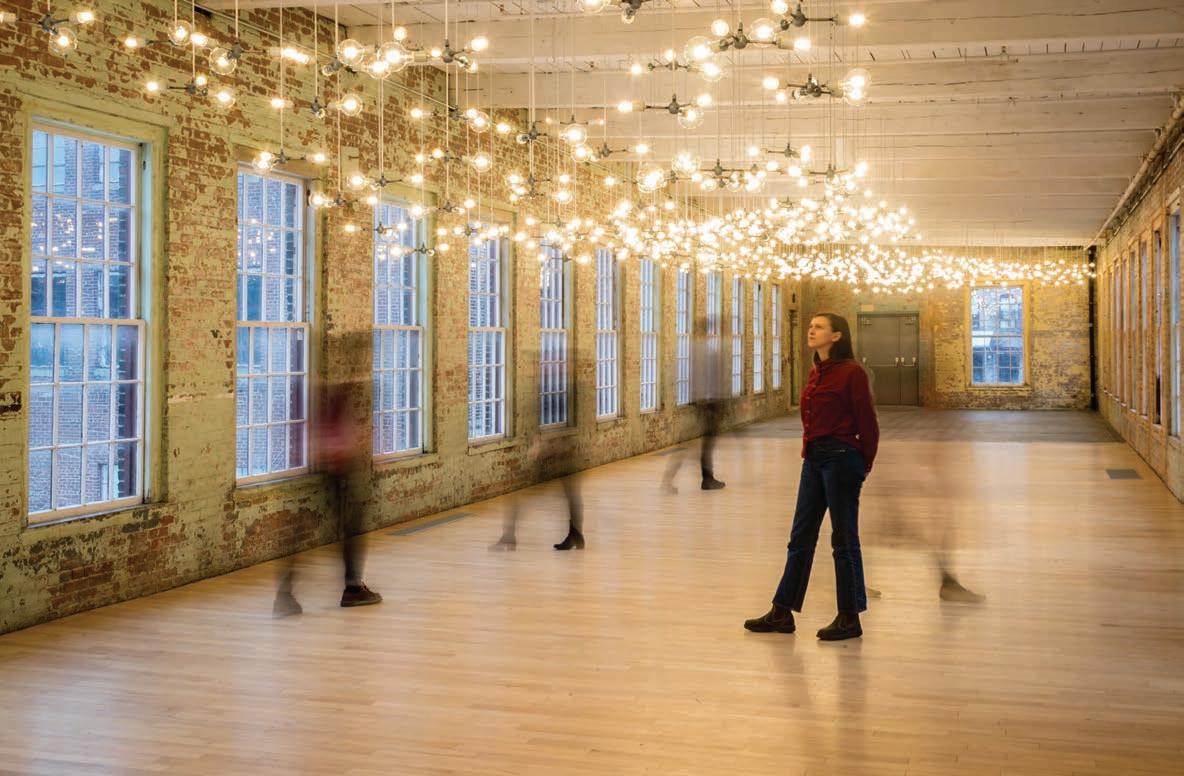



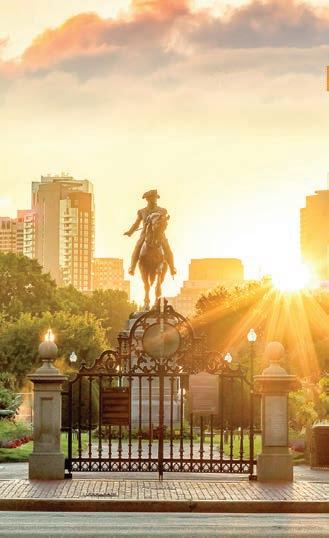






















Spencer Finch: Cosmic Latte at MASS MoCA. Photo by Doug Mason.
EDITORS’ PICKS: NORTH SHORE
Your companion trip planner for “Tidal Bout,” p. 56
WHERE TO EAT
Clam Box, Ipswich: Plump, juicy, and redolent of the sea, the fried clams here (bellies intact) have offered a glorious taste of summertime since 1935. Crunchy, briny deliciousness, we salute you. Pair with a visit to Crane Beach, and you’ve experienced some of the best the North Shore has to offer. clamboxipswich.com
DownRiver Ice Cream, Essex: A brightly colored board announces the inventive flavors being scooped that day, ranging from Tree Sap (starring real Vermont maple syrup) to Willy Wonka Explosion (loaded with M&Ms and Butterfinger and Snickers chunks). It’s all crafted on-site, using a scratch-made base. downrivericecream.com
Goodnight Fatty, Salem: Buh-bye, diet! But you won’t really care; the cookies (aka fatties) at this Salem bakery are that good. They’re chunky and loaded with sweet stuff—think candy bits and Fruity Pebbles. A new lineup of three flavors is released each Friday. goodnightfatty.com
Kelly’s Roast Beef, Revere: OK, Revere is a bit more Boston than North Shore, but we had to include the original outpost of this fabled chain, launched in 1951 as a hot dog stand on Revere Beach. The Kelly’s three-way roast beef sandwich (cheese, barbecue sauce, mayo) is an old-school carnivore delight. kellysroastbeef.com
Nightshade Noodle Bar, Lynn: Chef Rachel Miller brought her French-meets-Vietnamese-
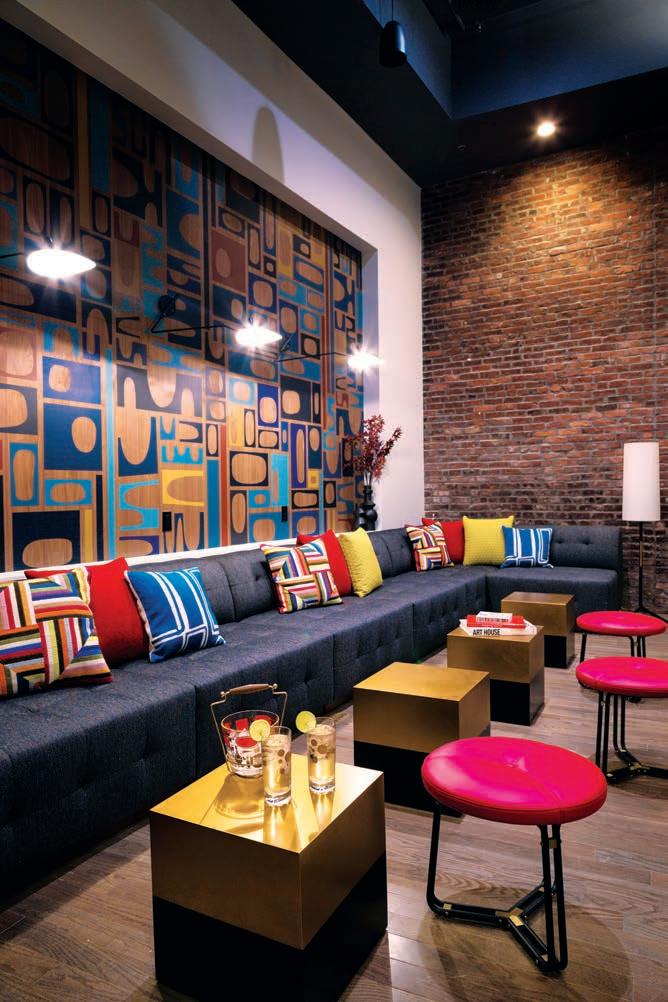
Roy Moore Lobster Company, Rockport: The lines out front tell the story: This fatherand-son-operated fish shack is the go-to on Rockport’s Bearskin Neck for local, fresh lobster, lobster rolls, and thick chowder that really hits the spot. roymoorelobster.com
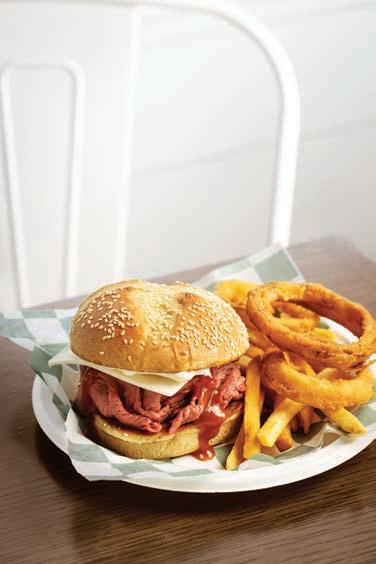
Sunset Club, Newbury: Embrace the surf-y energy of Plum Island with empanadas and tacos, frozen margaritas, and showstopping sunsets over the expansive salt marsh—best viewed from an outdoor table, preferably after a day at the beach. sunsetclubpi.com
Woodman’s of Essex, Essex: More than 100 years ago, Lawrence “Chubby” Woodman invented the fried clam. Folks continue to line up at this sprawling seafood shack, open yearround, for native steamers, boiled lobster, fried shrimp boats, chowder, and, yes, fried clams. woodmans.com
WHERE TO STAY
Beauport Hotel, Gloucester: This oceanfront hotel is the definition of coastal chic. Rooms and suites are decorated in shades of sea, sand, and sky, punctuated by local artwork. Dining options include 1606 Restaurant & Oyster Bar, a seasonal rooftop pool and bar (ages 21+), and, at sister property Cruiseport Gloucester, Seaport Grille. beauporthotel.com
Briar Barn Inn, Rowley: This cozy farmhouse retreat offers 30 guest rooms with country
charm and modern amenities. There’s a spa and
Harbor Light Inn, Marblehead: When Walter Cronkite hitched up his yacht to come ashore, he stayed at this elegant 1729 residence turned B&B. There’s a pub, a pool, an expansive breakfast buffet, so stash your car keys—you won’t need them. harborlightinn.com
Hawthorne Hotel, Salem: A landmark on Salem Common, this stately 1925 Colonial Revival hotel was named after native son Nathaniel Hawthorne. Decor is luxe, with gold accents aplenty, and wingback chairs for lounging near the fireplace at The Tavern. hawthornehotel.com
The Hotel Salem, Salem: Set on the bustling Essex Street pedestrian mall, The Hotel Salem is a 44-room boutique hotel with Mad Men –era flair. Innovative design touches include “microroom” options and a suite with a sleeping loft, and above it all is Salem’s only open-air rooftop bar, high enough to survey the city down to the harbor. thehotelsalem.com
FIND MORE ONLINE
For the best of North Shore arts, culture, and recreation, go to newengland.com/northshorefun
Kelly’s Roast Beef, Revere
The Hotel Salem, Salem



A Taste of New England at spruce
peak
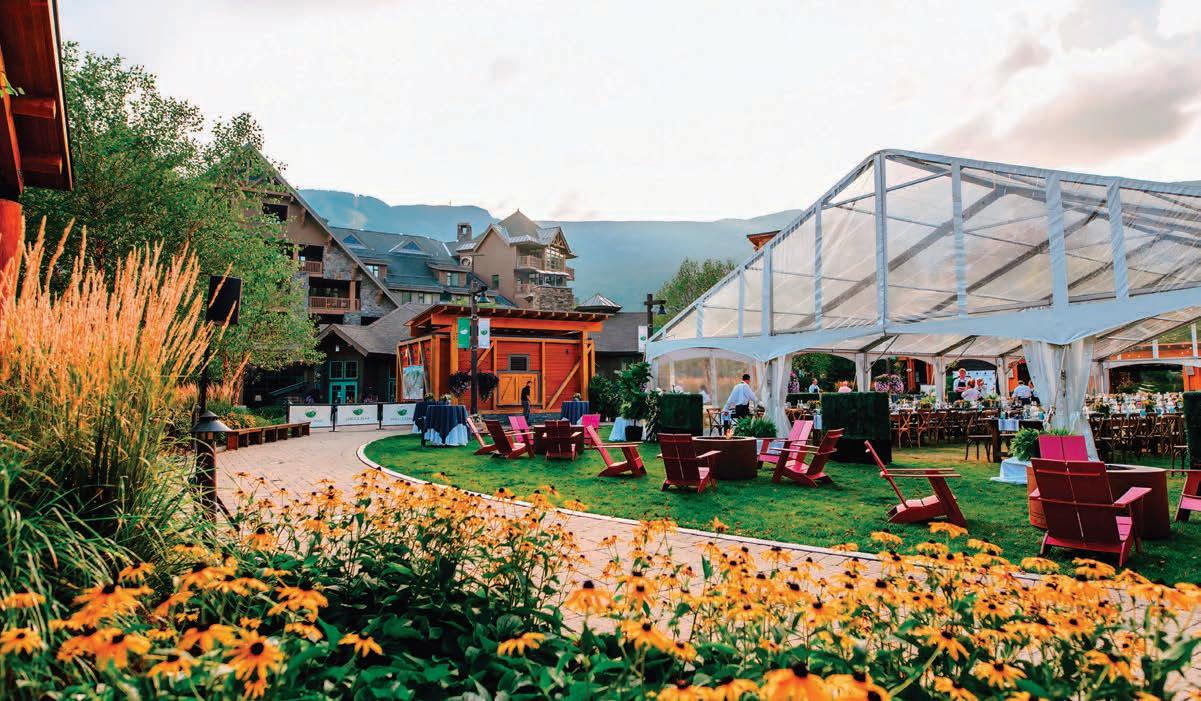



THE REGION’S BEST CHEFS COME TOGETHER FOR A FOOD & WINE CELEBRATION
celebrated guest chefs and enjoy a weekend of amazing food, worldclass wines and spirits, camaraderie, and
This exceptional culinary experience features the exclusive opportunity to meet celebrated guest chefs and enjoy a weekend of amazing food, worldclass wines and spirits, camaraderie, and more.
This exceptional culinary experience features the exclusive opportunity to meet celebrated guest chefs and enjoy a weekend of amazing food, worldclass wines and spirits, camaraderie, and more.






THURSDAY, AUGUST 13
THURSDAY, AUGUST 13
A TASTE OF VERMONT
A TASTE OF VERMONT
Enjoy
THE WEEKEND AT A GLANCE
Enjoy a five-course dinner featuring some of Vermont’s most notable chefs and wine pairings by M.S. Walker.
THURSDAY, AUGUST 13
THURSDAY, AUGUST 13
A TASTE OF VERMONT
A TASTE OF VERMONT
FRIDAY, AUGUST 14
FIRST TASTE RECEPTION
FRIDAY, AUGUST 14 FIRST TASTE RECEPTION
Enjoy a five-course dinner featuring some of Vermont’s most notable chefs and wine pairings by M.S. Walker.
Enjoy a five-course dinner featuring some of Vermont’s most notable chefs and wine pairings by M.S. Walker.
Mix and mingle with our guest chefs while sampling small bites with perfectly paired wines.
Mix and mingle with our guest chefs while sampling small bites with perfectly paired wines.
FRIDAY, AUGUST 14
FRIDAY, AUGUST 14 FIRST TASTE RECEPTION
SATURDAY, AUGUST 15
COLLABORATION DINNER
SATURDAY, AUGUST 15 COLLABORATION DINNER
5:30PM Cocktail Reception 7:00PM Dinner
5:30PM Cocktail Reception 7:00PM Dinner
Mix and mingle with our guest chefs while sampling small bites with perfectly paired wines.
FIRST TASTE RECEPTION Mix and mingle with our guest chefs while sampling small bites with perfectly paired wines.
An unforgettable culinary evening with our guest chefs awaits, complete with wine pairings by the Rare Wine Co.
An unforgettable culinary evening with our guest chefs awaits, complete with wine pairings by the Rare Wine Co.
SATURDAY, AUGUST 15
SATURDAY, AUGUST 15
COLLABORATION DINNER
COLLABORATION DINNER
5:30PM Cocktail Reception 7:00PM Dinner
5:30PM Cocktail Reception 7:00PM Dinner
Make the most of the weekend. 2-Day and 3-Day ticket packages and lodging also available online.
Make the most of the weekend. 2-Day and 3-Day ticket packages and lodging also available online.
An unforgettable culinary evening with our guest chefs awaits, complete with wine pairings by the Rare Wine Co.
An unforgettable culinary evening with our guest chefs awaits, complete with wine pairings by the Rare Wine Co.
Make the most of the weekend. 2-Day and 3-Day ticket packages and lodging also available online.
Make the most of the weekend. 2-Day and 3-Day ticket packages and lodging also available online.
Host Chef
CHEF
BLOMGREN Spruce Peak | Stowe, VT
CHEF GEORGE MENDES
CHEF KEVIN O’DONNEL Gusto | Newport,
CHEF
CHEF NICOLE NOCELLA Stalk | Dover, NH
of
Host Chef
CHEF SEAN
CHEF
Host Chef
CHEF SEAN BLOMGREN Spruce Peak | Stowe, VT
CHEF GEORGE MENDES












Quarry Hill offers it all: a gracious, maintenance-free home with easy one-floor living and priority access to the fullest spectrum of care.
Quarry Hill offers it all: a gracious, maintenance-free home with easy one-floor living and priority access to the fullest spectrum of care.
Enjoy all the beauty and cultural sophistication of Camden, Maine and discover your best future.
Enjoy all the beauty and cultural sophistication of Camden, Maine, and discover your best future.



207-301-6116




quarryhill org
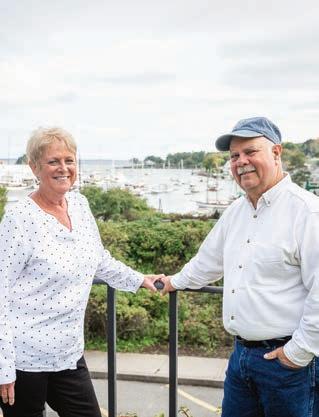

Residential Power
(Continued from p. 75)
together. Unsurprisingly, he failed. Americans craved a reckoning on slavery, not more compromise. His generous concessions to slaveholding states alienated his northern supporters. After four years, the nation was closer to rupture and the Democratic Party was in shambles. Delegates at the next convention refused to renominate Pierce, making him the first elected president to be effectively fired by his own party. His only consolation is that James Buchanan, his replacement, is the only president regularly ranked lower than him.
Pierce’s home in Hillsborough is the type you might see in any New England town of a certain age: stately, but unremarkable. Its flat facade faces the road with two symmetrical rows of windows framing a heavy wooden door at the center. Additions ramble off the back like a tail. A large livestock barn attached to the house serves as the visitor center.
The site is state-run, so the displays are humble. No polished orientation film greets visitors, just a few framed photos and text panels. “What we lack in amenities we have to make up for in content,” quips Sara Dobrowolski, the homestead’s manager.
As she gives tours, Dobrowolski seems as stately as the home. The daughter of an Army chaplain, she exudes a kind of disciplined compassion. She sticks to the facts, but it’s clear she’s developed feelings for the family whose story she tells.
Her tour begins not with Franklin, but with his father, Benjamin, who built the house. A Revolutionary War veteran with grand ambitions, he bought this plot because it sat at a crossroads. “This was a particularly busy road,” she says, referencing the now-sleepy lane out front that extends in the direction of the state capital, Concord. “There would be nonstop ox carts and mules hauling wagons back and forth out there.”
At several points during her tour, Dobrowolski gestures out a window
and asks visitors to imagine a scene that isn’t there. Unlike at the Adams property, where guests are told to imagine there is less, Dobrowolski urges them to envision more— more buildings, more bustle, more noise, and more people. Especially more people.
“Benjamin was never happy until this place was crammed full,” Dobrowolski says. He designed the house with the intention of opening it to the world. The back rooms were reserved for his wife and nine children. The front rooms he ran as a tavern and, for
dirt, and noise from the road wouldn’t flood in, or how after a stroke curbed Benjamin’s socializing he tried his hand at knitting. And she explains how a young, handsome Franklin Pierce shocked the town by marrying a shy and sickly woman because, in his words, no one could have taken better care of her than him.
These are details she’s gleaned from reading countless letters and diaries. She talks enthusiastically about all the research she has done and all the research she wishes yet to do. Franklin Pierce is not widely studied, so she’s
It’s easy to forget that presidents are just people: flawed individuals who lived and learned and loved in some house by a road.
a short time, an inn. There was space for men to drink, and a well-appointed drawing room for ladies. The second floor was built as an open ballroom with sprung floors so you could hold a town dance without shaking the plaster off the ceiling below.
Benjamin was a jovial backslapper who could make friends with everyone. Once the inn was established, he started dabbling in politics and his charms eventually lifted him to the governorship. Franklin was the child most like his father, and Benjamin paved the way for his son’s success. Franklin received an education and became a lawyer. A meteoric rise through state politics led to stints in the House of Representatives and the Senate. When he ultimately became president, he was the youngest person to be elected, at just 48.
As Dobrowolski continues her tour through the narrow hallways, it’s clear she is more enamored with this house than the White House. Pierce’s presidency is mentioned, of course, but most of her stories are about little domestic events. She talks about how Franklin’s mother, Anna, discouraged the use of the front door so that dust,
sure there are letters buried in dusty collections somewhere, hiding more clues about who he really was. “Every time I catch something like that, it adds another piece to the puzzle, and I can see this whole picture of a family,” Dobrowolski says.
Sometimes people complain about Dobrowolski’s tour because she doesn’t focus on politics. “That’s not what this is about,” she says. She doesn’t want to dwell on things people could just as easily read in a book. Some stories, only a house can tell. “I’m talking about the family because I want you to understand the man and where he came from, and why he behaved the way he did, and what he was really like as a person,” she says.
There’s wisdom in Dobrowolski’s approach. It’s easy to forget that presidents are just people: flawed individuals who lived and learned and loved in some house by a road. Driving home, I pass hundreds of houses. Inside, thousands of lives are playing out. Who’s to say where they will lead? Any house could one day have a plaque out front and tour guide inside piecing together the puzzle of the person who got their start there.

















Bedlam Corners
School Picnic
White Creek Sunrise Stars and Stripes
Good Luck Bay
(Continued from p. 79)
And the stuff we’ve got to do are these counterintuitive and confusing and bittersweet actions. And I’d never read a book where anyone spoke to that.
What’s wrong with the hands-off approach?
It’s just another way for us to not help them, while feeling really good about ourselves. And that’s the most dangerous part. It allows us to feel comfortable as we abdicate our responsibility. What I’m advocating for is difficult to understand, because it requires us to have so much more of a nuanced understanding of how ecosystems work and what our role in them is. That’s not something that I can explain in a sound bite. Part of what I do now with my social media and my public speaking and How to Love a Forest is to bring people in and pull them a little deeper, so they can see what I see, which is that these forests are not perfect and pristine and utopian, but they are beautiful and diverse and complex and worthy of our protection—and they also need a lot of help.
Do you ever get people who are like, “But do you really have to kill the deer? ”
Oh yeah. For people who identify as environmentalists, this is a hard paradigm shift. But the way that I try to accomplish it is not by being confrontational. I just try to do it with this grounding of love and care and compassion, and to also spend a lot of time building trust, so they can see who I am and how much I care about these ecosystems. I’m not just a forester who sees every tree as a piece of timber; I care deeply and have devoted my life to these ecosystems. And then I very gently take people by the hand and show them how these things that I’m doing are actually expressions of that care and compassion.
There’s a long New England tradition, going back to the Transcendentalists,
of having some sort of spiritual relationship with nature and seeing it as a potential source of redemption. Do you see yourself as being part of that tradition?
The tradition that I would aspire to be a part of came before that, from the Indigenous people who have been here for hundreds of generations. The thing that I talk about more and more is this concept of stewardship. As Aldo Leopold would say, living on a piece of land without spoiling it. The New England tradition that I really identify with is just living close with the land and the things that it gives us.
And you have a new book coming out in October that talks about that? It’s called The Forest Year. I’ve always been fascinated with the idea of living with the seasons. When I left my job with the state of Vermont and started my own business, the first thing I did was build a sugarhouse. In the fall, I want to hunt deer, and I want to collect apples from the orchard that I planted. And in the winter I want to work in the woods with my skidder. And in the spring I want to plant trees and make maple syrup. There’s something special about the forest in every season, and I wanted to express that. And I wanted it to be an almanac, as a tribute to Aldo Leopold’s famous conservation book, A Sand County Almanac.
Talk about your work a little more, because one of its strengths is how you reveal the beautiful complexity undergirding a common forest. If we just look out our window and think, This is nature, we’re failing to understand that the thing that we call nature is actually tens of thousands of different species that are engaged in these incredibly complex processes and that are dealing with totally novel threats and stressors. It’s a living system. It’s dynamic. And it’s resilient. But its resilience is not limitless.
A lot of times we’ll talk about stressors individually. We’ll talk about climate change, or introduced plants and pests and pathogens,
or deer overpopulation, or forest fragmentation, or deforestation. Any one of those things alone would be enough to completely destabilize our ecosystems, and they’re all happening at the same time. So conveying the extent of the changes to our landscape, and the extent of the threats and stressors that ecosystems face, is really important as a means to tell people why we need to take action.
You maintain an extremely active social media presence. How does that fit into the plan?
There’s an interesting synergy between the book and the social media. You could write the best book in the world, and if nobody knows about it, no one’s going to read it. And so I happen to have these social media platforms that now have hundreds of thousands of followers. When I started those accounts, I was thinking about them as just a way to publicize How to Love a Forest. And then they just became their own thing.
And I’ve realized that not everybody’s going to read a book, so I try to bring people along and provide useful and important information to them no matter at what level they want to engage. You can watch this minute-long video [for example], or if you want to go a little deeper, you can subscribe to my Substack and read my monthly column. And if you want to go deeper, you can read the book.
Do you ever worry it could take over your life?
Yeah, it’s easy to get sucked into that world and forget what you’re doing it all for. Like, I’m not doing this so I can have more followers on Instagram. I’m getting more followers on Instagram so that I can save forests. But I think it’s really important to do the consultingforestry work to stay grounded—to be actually out there in the woods doing stuff, not just up on my computer all the time. Every time I’m out there in the woods all day, I realize how important it is to me. It’s what it’s really all about.



















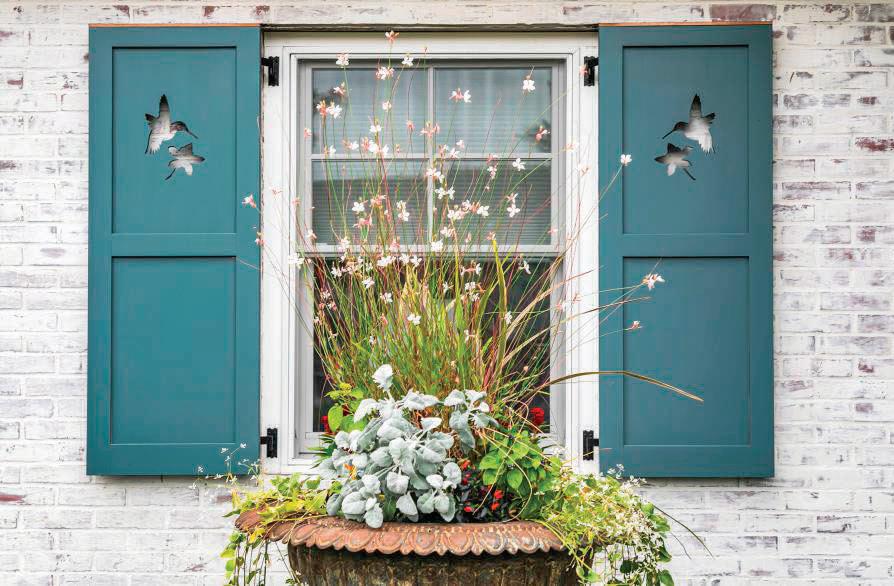






















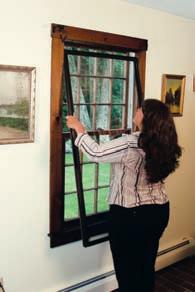







78 State Rd, Dept. Y26 • N. Dartmouth, MA 02747 Phone: 508-994-2119







“Your
Candies!
Candies!
“Your house for all occasions”
Candies! For over 50 years we have used only the finest ingredients in our candies—cream, butter,
CANDY HOUSE
or someone special today.
Candies!
or someone special today.
For a Free Brochure Call: 978-256-4061

“Your house for all occasions” Come visit us today!
CANDY HOUSE
“Your house for all occasions” 292 Chelmsford Street Chelmsford, MA 01824
292 Chelmsford Street Chelmsford, MA 01824 For Free Brochure Call: 978-256-4061
“Your house for all occasions” <


292 Chelmsford Street Chelmsford, MA 01824 Visit Our Website: mrsnelsonscandyhouse.com
Candies! For over 50 years we have used only the finest ingredients in our candies—cream, butter, honey, and blends of chocolates. Call for a FREE brochure. famous for quality candies mailed all over the world. Treat yourself or someone special today. Chelmsford Street • Chelmsford, MA 01824 For Free Brochure Call: 978-256-4061 <
• Chelmsford, MA 01824 For Free Brochure Call: 978-256-4061

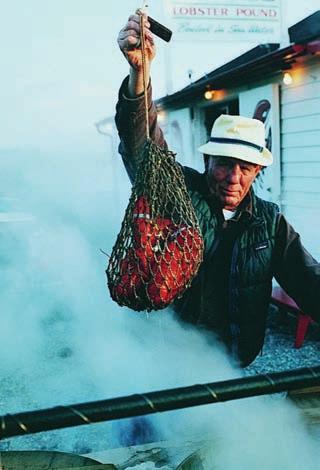



The DNA of Strangers
Our most powerful connections to the past aren’t always found in museums.
This was a long time ago, on a warm spring day in 1956 when I was 9. As it always did, my walk home from school took me beside a nursing home where every Christmas we came to sing carols. A cardboard box lay on the sidewalk; looking inside, I found books. ey must have belonged to one of the nursing home occupants who had passed on, and now there was nobody who cared about them.
I took out the book on top. e cover was brown. Inside, the publication date said 1835. e paper was thin and delicate, and a map spooled out that showed a wild country west of the Ohio River, a country lled with the names of rivers and forts, and swaths of space marked “Unorganized Missouri Territory” and “Unorganized Arkansas Territory.” is was when Walt Disney had 9-year-old boys singing about “the king of the wild frontier,” and here on a sidewalk my hands held that wild frontier.
I brought the book home, telling nobody. At night I turned its delicate pages, and I dreamed of wild rivers and forts. en one day my mother found it on my bed, a book that held who knows what viruses, and took it away. But what I held on to, and maybe why someone in the nursing home had also held on all those years ago, is the sense of how our lives always carry the DNA of stories of those we never knew.
I have a friend in the Lakes Region of New Hampshire whose wife goes

to ea markets looking for antique tintype portraits. Something stirs in her to see those unknown faces caught in the ash of a photographer’s camera. When I stayed at their home a few months ago and saw the framed tintypes hanging on the walls, I had thought they were generations of her family gathered in a time-capsule gallery that owed from room to room.
When she told me they were photos that she just wanted to make a home for, I remembered being at Arlington National Cemetery just before Christmas, as volunteers placed thousands of balsam wreaths beside the graves. I stood beside a woman who murmured every time she placed a wreath, “How long has it been since someone said your name?”
My wife, Annie, once bought an early-1800s New Hampshire farmhouse. When she tore out a wall to put in a window, she found a woman’s shoe with a ower design; according
to early New England belief, old shoes in a new wall protected a home and the people inside. She also found a diary, about 3 inches by 2 inches, with a green leather cover stamped “1883.” Inside, handwritten lines told the daily life of a farmer’s wife. e entries were brief and matter-offact: “ e pig was sick.” “ e sleigh broke.” “I’ve been knitting mittens.” Now and then, the writer mentioned her six children. One day Annie went to the nearby cemetery and found the graves of four of them.
Annie transcribed the diary. “I was sharing the same space with a woman who raised her family here,” she explained. “ e daily weather, the events of her life.” One entry caught her eye and she never forgot it, the only time the farmer’s wife let herself reveal an emotion: “Feeling kind of blue today.”
In a life whose days were lled with keeping the house warm, and the family fed and clothed—all the things that fell to a farmer’s wife to do—why did she feel blue that day? is woman who once looked out her window and saw the same elds that Annie did a century later. It’s the kind of question I hope I also always want to ask.
Mel Allen is editor at large for Yankee and the author of Here in New England: Unforgettable Stories of People, Places, and Memories at Connect Us All (Earth Sky + Water LLC, 2025).










































Town Neck Beach
Sandwich, Cape Cod
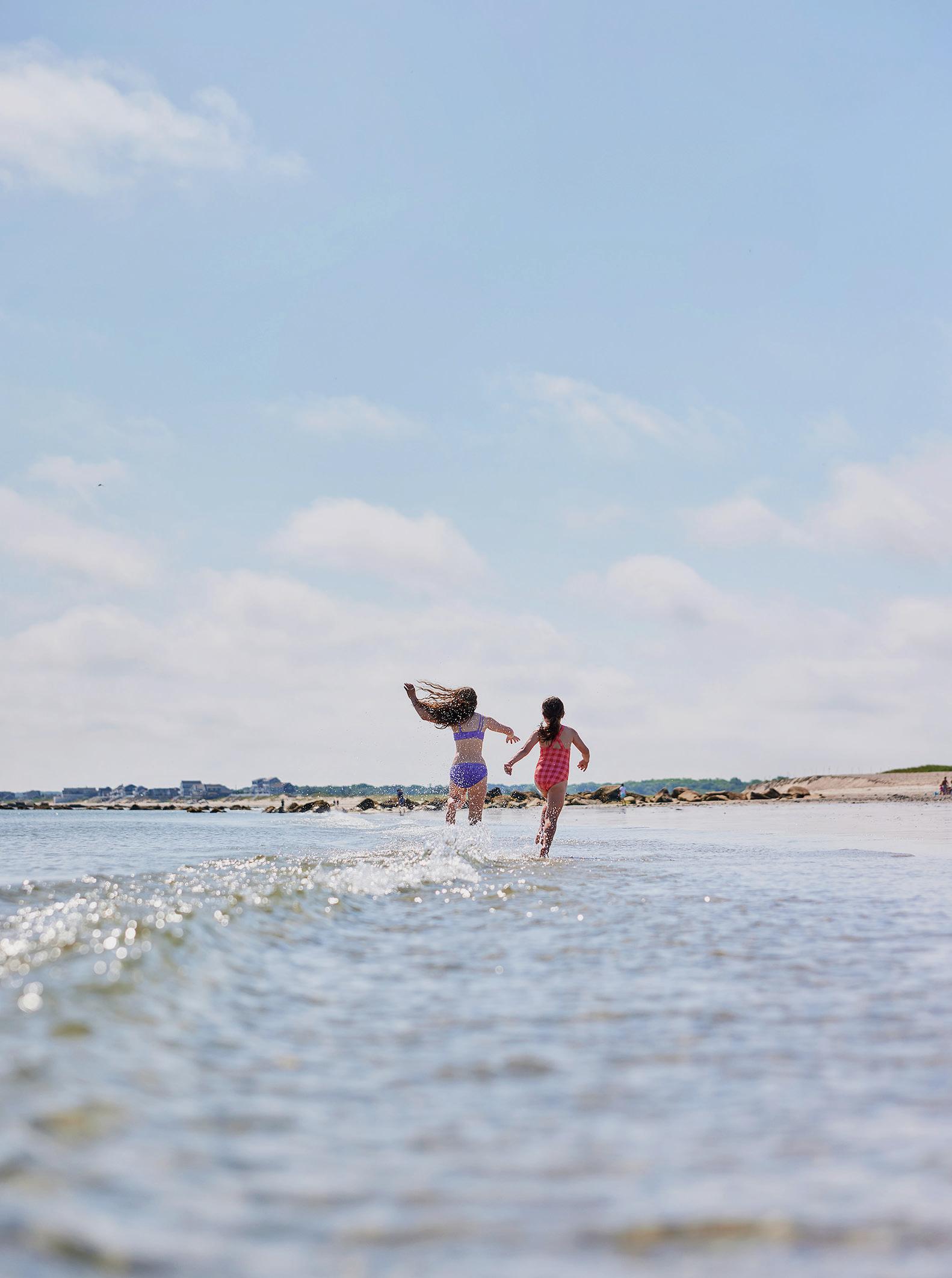
Blue skies
Come to where you can make a splash.