
FEBRUARY 6–7, 2026
DAVID GEFFEN SCHOOL OF DRAMA AT YALE
James Bundy, Elizabeth Parker Ware Dean Florie Seery, Associate Dean
Chantal Rodriguez, Associate Dean Carla L. Jackson, Assistant Dean Nancy Yao, Assistant Dean of Student Life
PRESENTS
FEBRUARY 6–7, 2026
James Bundy, Elizabeth Parker Ware Dean Florie Seery, Associate Dean
Chantal Rodriguez, Associate Dean Carla L. Jackson, Assistant Dean Nancy Yao, Assistant Dean of Student Life
PRESENTS
By William Shakespeare
Adapted by Andrew Rodriguez and Zoë Nagel
Directed by Andrew Rodriguez
cast creative team
Scenic Designer
Yaya Zhang
Costume Designer
John Hardy
Lighting Designer
Mila Mussatt
Sound Designer
Robert Salerno
Production Dramaturg
Zoë Nagel
Technical Director
Meredith Wilcox
Fight and Intimacy
Directors
Kelsey Rainwater
Michael Rossmy
Stage Manager
ty ruwe
Aumerle/Queen
Yishan Hao
Green/Ross/Murderer
Nancy Kimball
King Richard the Second
Sarah Lo
Marshal/Duke of York/Stable Boy
Francisco Morandi Zerpa
John of Gaunt/Willoughby/ Scroop/Murderer
Christopher Thomas Pow
Henry Bolingbroke
Darius Sakui
Thomas Mowbray/Northumberland
Max Sheldon
Bushy/Bishop of Carlisle/ Duchess of York
Henita Telo
atmospheric and content guidance
This production contains haze and violence.
The Life and Death of King Richard the Second is performed without an intermission.
This production is supported by The Benjamin Mordecai III Production Fund.
artistic
Assistant Sound Designer and Engineer
LT Taylor
Assistant Stage Manager
Jiawei Pei
production
Associate Production Manager
Bryant Heatherly
Assistant Technical Director
Chloe Waters
Production Electrician
Cat Slanski
Associate Safety Advisors
Mae Mironer
Forrest Rumbaugh
Run Crew
Nicole Brooks Sanwandee, Ruben
Carrazana, Roberto Di Donato, Parker Essex Hardy
Associate Managing Director
Iyanna Huffington Whitney
Assistant Managing Director
Jocelyn Lopez-Hagmann
Management Assistants
Roberto Di Donato
Ebonee Johnson
House Manager
Claudia Campos
Production Photographer
Maza Rey
David Geffen School of Drama productions are supported by the work of more than 200 faculty and staff members throughout the year.
Acme Lighting, Bethany Caputo, Matthew Chong, Andrea Miller, and Catherine Young.
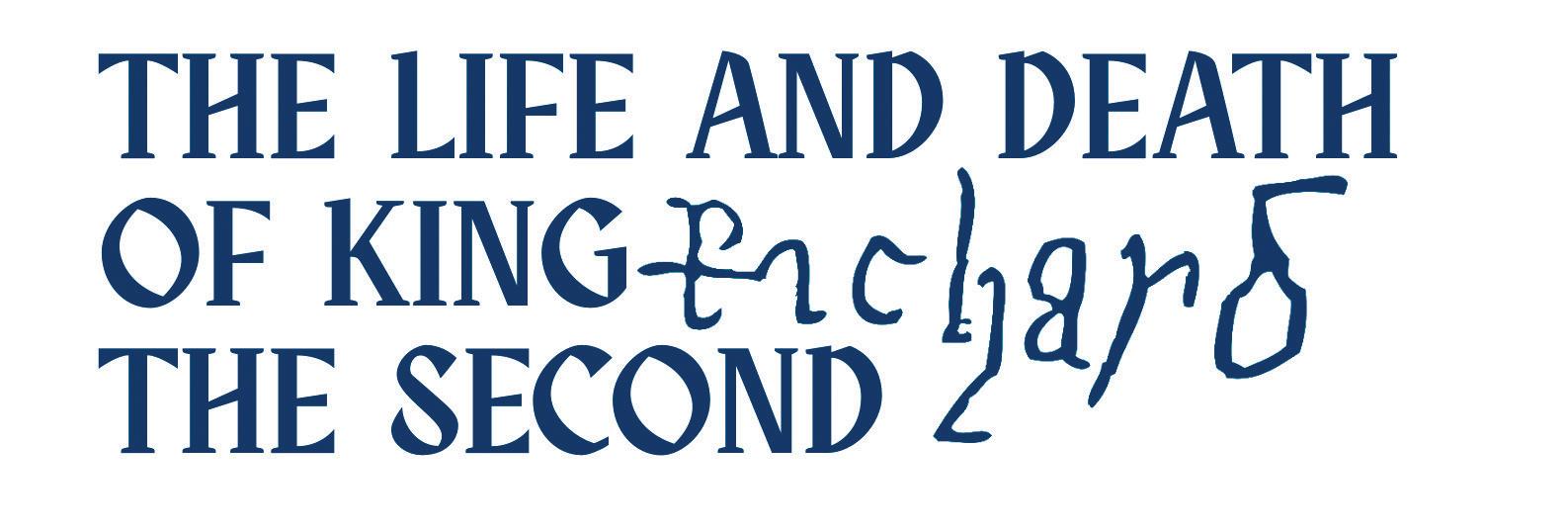
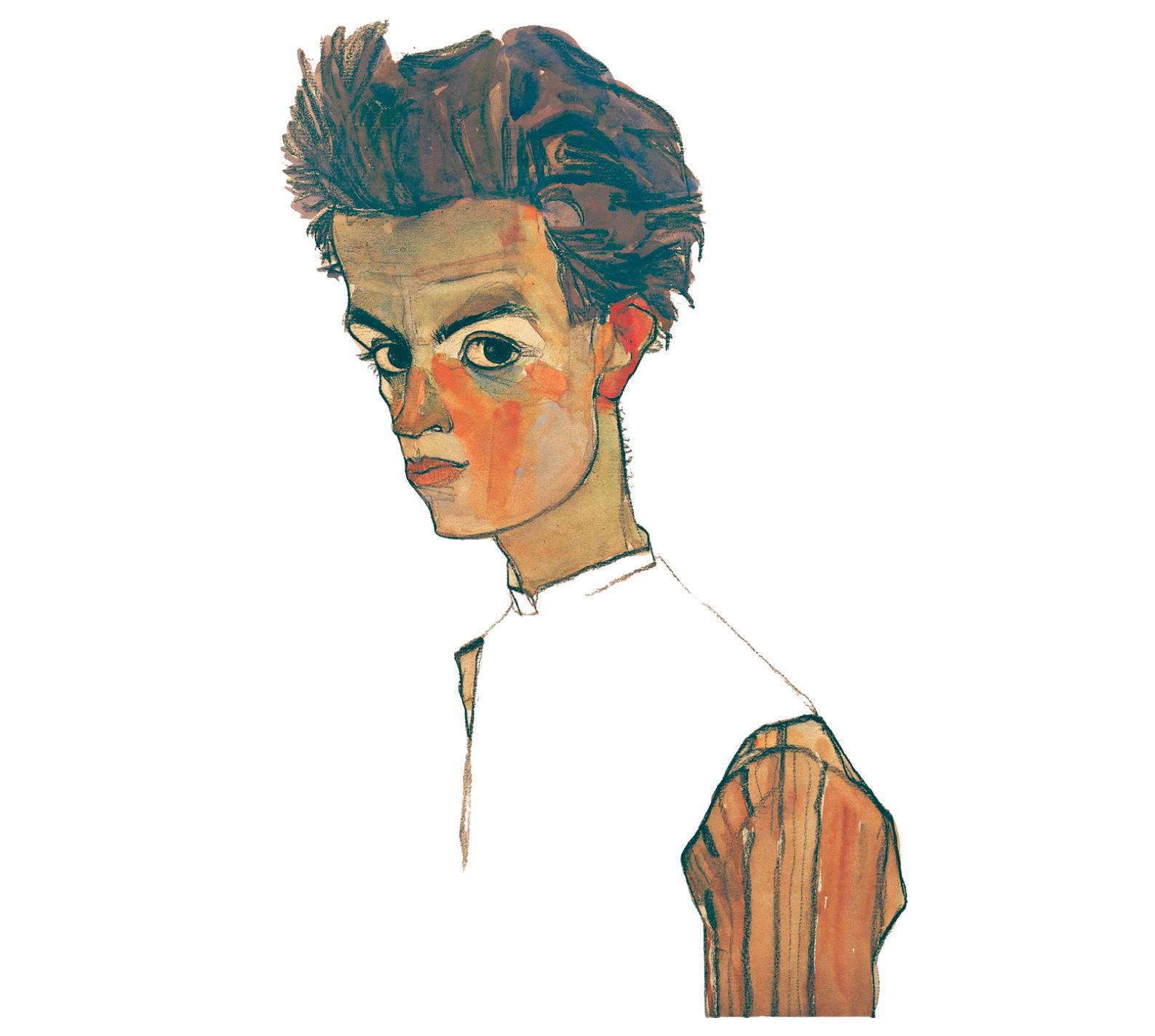
Front: Self-Portrait with Striped Shirt by Egon Schiele, 1910; “Richard” is the actual signature of Richard II.
Yale acknowledges that indigenous peoples and nations, including Mohegan, Mashantucket Pequot, Eastern Pequot, Schaghticoke, Golden Hill Paugussett, Niantic, and the Quinnipiac and other Algonquian speaking peoples, have stewarded through generations the lands and waterways of what is now the state of Connecticut. We honor and respect the enduring relationship that exists between these peoples and nations and this land.
We also acknowledge the legacy of slavery in our region and the enslaved African people whose labor was exploited for generations to help establish the business of Yale University as well as the economy of Connecticut and the United States.
The Studio Projects are designed to be learning experiences that complement classroom work, providing a medium for students at David Geffen School of Drama at Yale to combine their individual talents and energies toward the staging of collaboratively created works. Your attendance meaningfully completes this process.
THE BENJAMIN MORDECAI III PRODUCTION FUND , established by Peggy Cowles ’65, honors the memory of the Tony Award-winning producer who served as Managing Director of Yale Repertory Theatre, 1982–1993, and as Associate Dean and Chair of the Theater Management Program from 1993 until his death in 2005.
On February 7th, 1601, the Earl of Essex paid Shakespeare’s theater troupe, the Lord Chamberlain’s Men, forty shillings above their usual fee to stage a production of Richard II. One day later, he attempted a coup against Queen Elizabeth I.
The Earl didn’t choose Richard II at random. He evidently hoped that the “play [about] the deposyng and kyllyng of Kyng Rychard the second” would inspire the people to rise up and overthrow their Queen the way Richard II had been dethroned two hundred years prior. Richard’s character was certainly capricious and vain enough to plant outrage against monarchical tyranny in any audience’s mind.
Unluckily for the Earl, Elizabeth proved a far savvier ruler than Richard. She crushed the feeble uprising, tracked down the instigators, and sent the Earl of Essex to the Tower of London, where he was beheaded two weeks later.
Though innocent, the theater troupe’s lastminute programming choice was suspicious enough that they were interrogated alongside the Earl of Essex’s co-conspirators. In a society that considered monarchs divinely ordained, opposing a king was not only treason, but a
“He is our cousin, cousin.”
crime against God. Staging a deposition—even a historical one—tiptoed perilously close to blasphemy. The scene where Richard is stripped of his crown was so inflammatory at the time that the original printed quartos of Richard II removed it entirely. After all, people might get ideas…again.
Elizabeth, who had already survived a number of uprisings during her forty-year reign, was keenly aware of the play’s implications. “I am Richard,” she allegedly told her archivist after Essex’s rebellion. “Know ye not that?”
Of course, none of us today is a 16th-century queen identifying with Richard on the common ground of fragile monarchy. But over the course of the play, we watch Richard shed the narcissistic trappings of kingship and become a man. His story doesn’t climax in redemption, but in the crucial turning point of realizing that he is someone who needs redemption.
The play’s tragedy is that Richard only gets to put this recognition into practice once. Still, that one time is significant. Though he can’t save England, or himself, perhaps he can save one stable boy.
—Zoë Nagel, Production Dramaturg
Edward III