the Yale Concert Band
premier wind ensemble
Thomas C. Duffy, Music Director Yale’s
The Thomas C. Duffy Annual Spring Concert
Friday, April 10, 2026 at 7:30 p.m., Woolsey Hall, Yale University
FRANCISCO MIGNONE
arr. Harry Searing
DMITRI SHOSTAKOVICH
ed. H. Robert Reynolds
THOMAS C. DUFFY
LINDSAY BRONNENKANT
Concertino for Bassoon and Small Wind Ensemble (2026) (world premiere)
Frank Morelli, bassoon
I. Assai Moderato
II. Allegro
Folk Dances (1943)
Gnomon (1998)
Tarot (2022)
I. The Fool
II. The King of Cups
III. The Tower
~ intermission ~
ROBERT HONSTEIN
Juvenalia (2025)* (world premiere)
Garrett Arney, percussion
I. Brash and Raucous
II. Contemplative
III. With Abandon
LEROY ANDERSON
trans. Michael Edwards
Bugler’s Holiday (1954)
* commissioned with funds from the Robert Flanagan Yale Band Commissions Endowment
“Yale
Concert Band” to become “Yale Wind Ensemble”
Since it was established in 1946, the Yale Concert Band has carried the name chosen by its first director, Professor Keith L. Wilson —“concert band” being the name of the premier band at his alma mater, the University of Illinois. At the time, “concert band” accurately described the group’s instrumentation, repertoire, and mission; now, those attributes are best associated with the title “wind ensemble.” To align its public identity with contemporary expectations, as of July 1, 2026, the Yale Concert Band will be renamed the Yale Wind Ensemble. With great respect for the ensemble’s distinguished 80-year history, the Yale Wind Ensemble title honors Wilson’s original intent while communicating the ensemble’s excellence in modern terms.
About Tonight’s Music
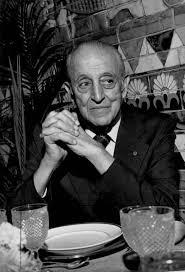
Concertino for Bassoon and Small Wind Ensemble (2026) (world premiere) FRANCISCO MIGNONE (1897-1986)
arr. Harry Searing
Brazilian composer Francisco Mignone was born just one year after his parents emigrated to Brazil from Italy. The early 1920s saw the blossoming of Brazilian Modernism, led by writer Mario Andrade and composer Heitor Villa-Lobos. Their goal was to establish a Brazilian musical identity, independent of European influence. Mignone, who embraced this movement and the music of his Brazilian homeland, became a highly regarded educator, conductor, pianist, as well as composer. His Concertino for bassoon and chamber orchestra was written in 1957 for the French bassoonist Noel Devos, who had emigrated to Brazil earlier in the 1950s. It is a delightful combination of the Western “classical” concertino form and Brazilian melodies and musical styles. Instead of the extended form of the traditional three-movement concerto, tonight’s concertino (or little concerto) is comprised of a slow movement, in this case a melancholy Brazilian Modinha, followed almost directly by a fast-paced Brazilian rondo in the Choro style. Tonight’s soloist, Frank Morelli, recorded this work in its original form with the Orpheus Chamber Orchestra. Tonight we will hear the first performance of Harry Searing’s brilliant adaptation for bassoon and wind ensemble.
— Program note by Frank Morelli
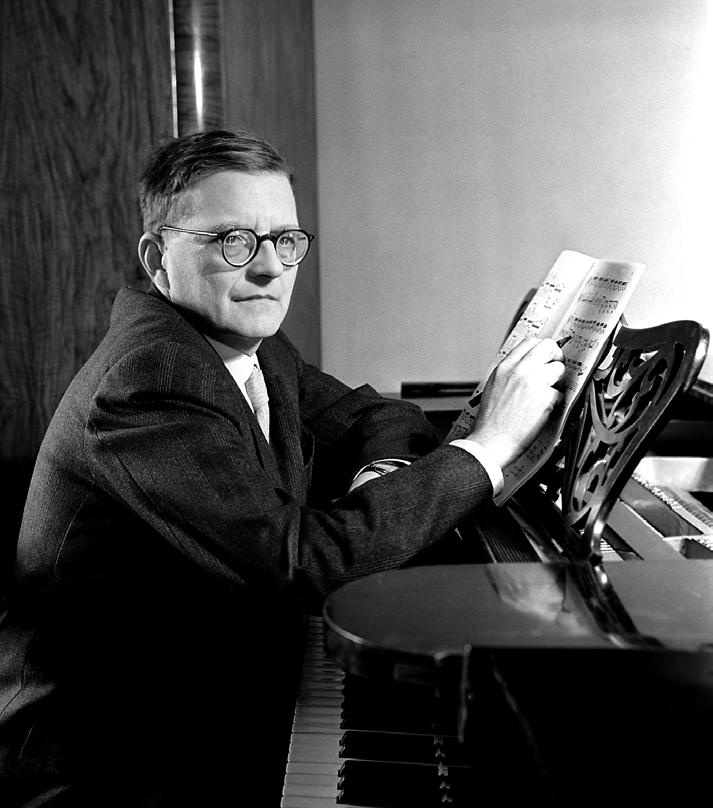
Folk Dances (1943)
DMITRI SHOSTAKOVICH (1906-1975) ed. H. Robert Reynolds (1979)
As an artist in Stalin’s Soviet Union, Shostakovich contended with the dominance of the state over artistic product. He adopted a nationalistic style after his pure music was criticized as being neither nationalistic nor socially realistic. The original version of the Folk Dances was scored for the traditional Russian military band. H. Robert Reynolds did the expanded orchestration for modern concert band.
Gnonom (1998)
THOMAS C. DUFFY (b. 1955)
Inscribed around the base of the gnomon in the same style used for official government grave markers throughout the nation, including Arlington National Cemetery:
“For everything there is a season and a time for every matter under Heaven: a time to be born, a time to die; a time to plant, and a time to pluck up what was planted; a time to kill, and a time to heal; a time to break down, and a time to build up; a time to weep, and a time to laugh; a time to mourn, and a time to dance; a time to cast away stones, and a time to gather stones together, a time to embrace and a time to refrain from embracing; a time to seek, and a time to lose; a time to keep, and a time to cast away; a time to rend, and a time to sew; a time to keep silence, and a time to speak; a time to love, and a time to hate; a time for war and a time for peace.”
— Ecclesiastes (3:1-8)
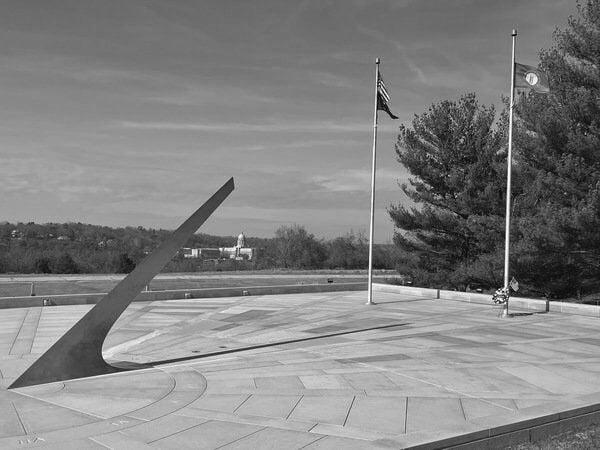
In the course of my visit to Frankfort, Kentucky, for the premiere of my piece, The Miracle Mile, my host Rick Moreno took me to see the local sights of interest. After stopping at Daniel Boone’s grave, we visited the Vietnam Veterans Memorial. As we approached the site, a tall steel appendage came into view. We parked and headed up the stairs to get a first-hand view of “Gnomon,” the Kentucky Vietnam Veterans Memorial. What I saw was absolutely overwhelming – physically, spiritually, and emotionally. I was moved to silence. In the quiet of the moment a quiet accompanied by the sound of birds, in the sacrosanct place surrounded by distant trees I conjured up the sounds of distant bugles, martial drumming, marching, funereal hymns , and the popular folk songs that represented the anguish of America in the 1960s. “Rick, this place resounds with musical metaphor.” One month later, Rick Moreno called to commission this piece, Gnomon, for the Capital City Community Band. The musical materials represent the passing of time and the presence of death and incredible sadness. Correlations exist between the workings of a clock (including this sundial) and progress of the music – with the juxtaposition of things (sounds) civilian and military in the United States during the thirteen years of war, the presence of the 16th century death-chant and a constant ostinato of military drum tattoo, marching music, or the tick-tock of time with the melodic motive spelling HELIOS (sun).
Kentucky
“Gnomon” is the Greek word for the pointer of a sundial, and the Kentucky Vietnam Veterans Memorial bears that name with good reason. Engraved on the surface of the 215-ton blue-grey granite plaza are the names of the 1074 Kentuckians killed and the 20 Kentuckians missing in action in Vietnam, casualties incurred from 1962 through the 1975 evacuation of Saigon. (“The plaza is 89’ 4” long by 71’ 1.5” wide, including the benches. The plaza contains 327 pieces of 4” thick granite with pieces ranging from 2,421 to 133 pounds in weight. The average weight of each plaza slab is 1,144 pounds and the largest pieces are 12’ in length.”) Towering above the plaza and visible for some great distance around the Memorial, the stainless steel gnomon (or “pointer”) “stands at 14.62” above the surface of the plaza and is 24.27” long. The angle of the gnomon is equal to the latitude, or 38” 19’ 25”, from horizontal and points to the true North Pole and Polaris, the North Star.” On the plaza the name of each deceased Kentuckian is located so that the shadow of the gnomon, or sundial pointer, touches it on the actual anniversary of his death. Thus, every day is memorial day for a Kentucky Vietnam veteran.
Kentucky Vietnam Veterans Memorial, Frankfort,
The names of the 20 Kentuckians still listed as MIA or POW are located in front of the gnomon, where the shadow never falls, paying special tribute to their personal agony, and symbolizing our continued vigil for their return.
The area north of the winter solstice line is designed for ceremonies. The United States and Kentucky flags fly day and night and are located to each side of true north.
The Memorial’s brilliant and poignant design is the work of Helm Roberts, a Lexington, Kentucky architect and veteran. The land was donated by the people of the Commonwealth of Kentucky in 1987.
The composer is proud to commit half of the royalties for this piece in perpetuity to the Kentucky Vietnam Veterans Memorial Fund, Inc.”
—Program note by the composer
Tarot (2022)
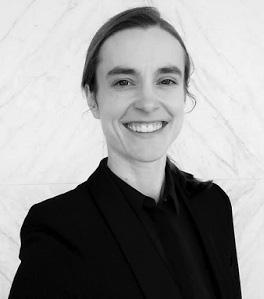
LINDSAY BRONNENKANT (b. 1988)
The composer writes of her piece:
“Gustav Holst was incredibly interested in Indian culture, going so far as to teach himself Sanskrit. Some evidence suggests that he tried to incorporate Indian rāgas (melodic frameworks in Indian classical music used for improvisation) into his works, and after investigating Holst’s resources and analyzing his Planets, I believe that Holst tried to reference rāgas that evoked similar characters to those of the planets in his suite. Holst’s access to authentic performance of Indian music was limited, however, and like many composers especially as a British composer entrenched in modal composition during the English folk song revival of the early twentieth century he took what he understood of rāgas and filled in the gaps with Western theoretical knowledge, resulting in the treatment of what were once rāgas as scales or modes.
“I decided to compose a suite that traces Holst’s footsteps but applies his musical experimentation to a new topic: Tarot. Like astrology, Tarot cards have been used for divination, and as each planet in modern astrology represents specific characteristics and personality traits, so too does each Tarot card. Some elements of the Hindustani thāts, Karnātak mēlakarta rāgas, and pitch sets Holst references in his Planets are referenced in Tarot using a similarly Western approach to portray Tarot card analogs.
“In Tarot, the Fool represents someone who dives head-first through open doors with enthusiasm (and sometimes with a blissful ignorance of any looming danger). The card represents new beginnings, playfulness, naïveté, and optimism. The first movement, ‘The Fool,’ contains several intentionally comedic moments as the Fool, unaware of the luck manifesting from his will, manages to skip through a minefield unharmed. The movement references the pitches of the Kalyān that are found in Jupiter, a benefic planet of good fortune, to represent the Fool’s beginner’s luck. The movement also uses the whole-tone scale hinted at in some of Holst’s themes for Uranus, a chaotic and unpredictable planet, to depict the unintentional mayhem that inevitably follows each of the Fool’s steps.
“In Tarot, the suit of cups corresponds with emotional energy and the element of water. A deeply empathic soul, the King of Cups tempers his emotions by balancing his heart with his head. The King leads diplomatically through compassion. The second movement, ‘The King of Cups,’ references the pitches of mēlakarta rāga Dhavalāmbari from Neptune as a nod to a fellow intuitive and ruler of the sea, and additionally employs the pitches of the Bhairavī that are found in Venus to allude to the King’s kind and gentle countenance.
“‘The Tower’ represents surprise, upheaval, and destruction. It represents the collapse of structure, the crumbling of façades based on faulty foundations. The final movement references Mars, the Bringer of War with two similar pitch sets: the one Holst uses in Mars, as well as a theme that Holst may have meant to draw from, Bhairav.”
Juvenalia (2019/2025) (world premiere)
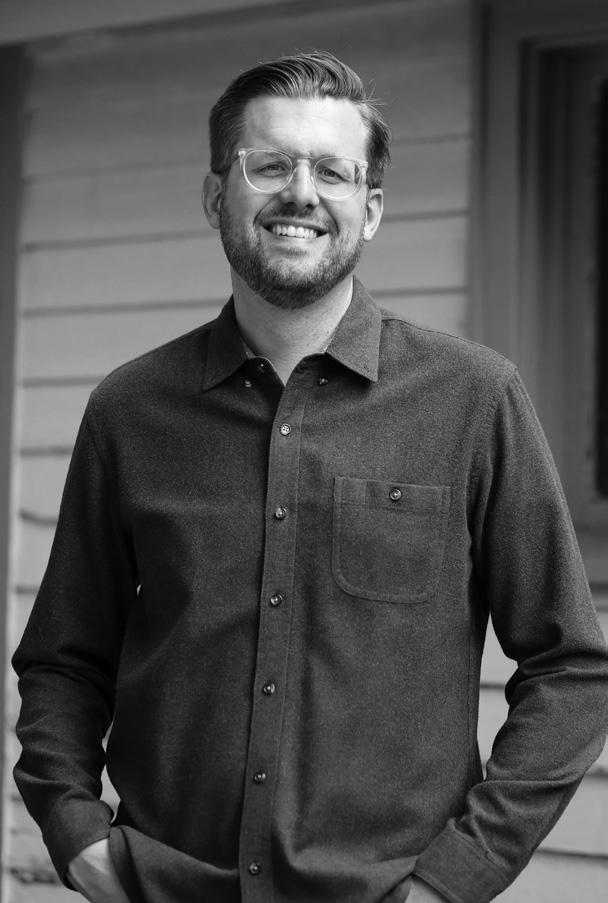
ROBERT HONSTEIN
(b. 1980)
The composer writes of his piece:
“In Ancient Rome, Juvenalia were coming of age festivals featuring games, theater and ritual celebrations. Ironically, these events were noted for the childish behavior of their participants, youth and elders alike. Accounts from the time suggest that wild, debaucherous display was not only encouraged but required. Anyone not acting sufficiently irreverent risked expulsion or worse.
“In my concerto, Juvenalia, I seized on this idea of youthful carousing. At the same time, I considered the linguistically similar notion of juvenilia. Sometimes disowned, often discarded, these early works are at best a footnote to otherwise noteworthy catalogs. Yet these raw, unpolished efforts contain portentous kernels: seemingly insignificant ideas that may grow in surprising, beautiful ways. Looking back at my own early efforts, I’m convinced there are connections between youthful creations and the music I write today. As I grow older, I listen to these first attempts and think perhaps there’s more to discover. Maybe these capricious, unrefined pieces hold secrets yet to be revealed.
“Tapping into both the wild energy of Juvenalia and the elusive premonitions of juvenilia, the concerto begins with music reminiscent of my high school garage band. Playing a modified drum kit, the soloist careens through a series of loud, bombastic episodes, overflowing with youthful energy and wild abandon. The second movement takes a step back. Moving from kit to vibraphone, the soloist leads the band on a slow and spacious soliloquy. Lyrical and contemplative, the music evokes a restrained, classical sensibility. Finally, the third movement revisits the frenzied exuberance of the opening, but now with even greater urgency. A reckless, unrelenting momentum pushes the music forward as the soloist unleashes a torrent of sixteenth notes in a furious drive to the finish.”
Bugler’s Holiday (1954)
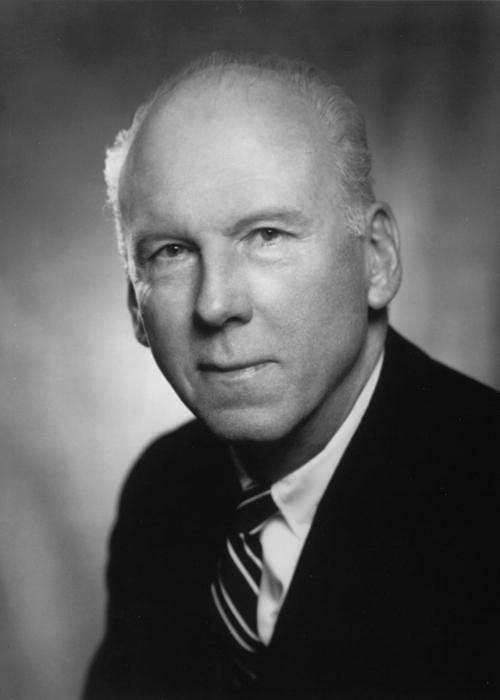
LEROY ANDERSON (1908-1975)
trans. Michael Edwards
Bugler’s Holiday is one of the best-known pieces of band literature written by the band master Leroy Anderson. Anderson was born in Cambridge, Massachusetts, and began studying piano and music at the New England Conservatory of Music when he was eleven years of age. In 1931, Anderson became director of the Harvard Band. During his four-year tenure with this group, he composed several pieces, one of which was accepted to be played by the Boston Pops. This piece, titled Harvard Fantasy, was a success and resulted in Anderson becoming a regular composer for the ensemble. In 1945, the Pops’ lead trumpet player, Roger Voisin, requested Anderson to compose an original piece for trumpet. The result was Trumpeter’s Lullaby.
It was not until 1954 that Anderson again composed a piece featuring the trumpet. He wrote Bugler’s Holiday as a solo piece for three trumpets accompanied by a band. At that time, Anderson had his own ensemble that was recording for Decca Records. He hoped Bugler’s Holiday would become a hit, possibly helping the group surpass the success of their previous gold-record album released in 1951.
The solo trumpet parts in Bugler’s Holiday are written to imitate the sound of a bugle, a brass instrument without valves that is commonly used for military calls and fanfares. Anderson intended for the soloists to stand in front of the ensemble instead of sitting in seats among the band. Since the premiere of Bugler’s Holiday, the piece has remained a favorite among crowds and trumpet enthusiasts.
About Tonight’s Guest Artists
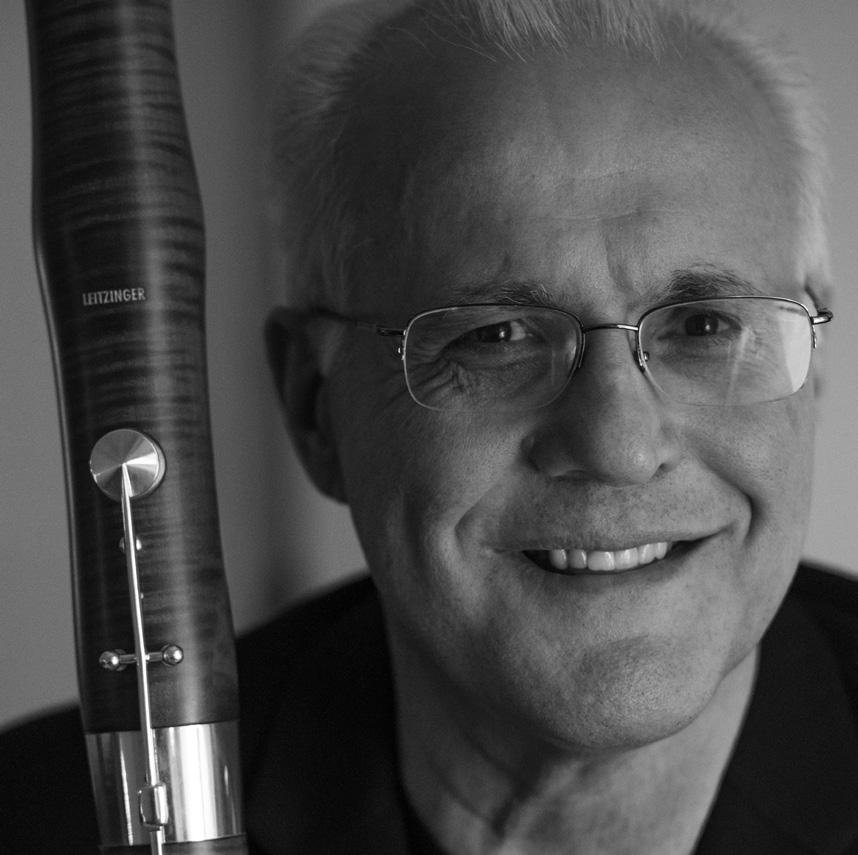
Described by the American Record Guide as “as good as it gets,” bassoonist Frank Morelli has enjoyed a prolific career as a soloist, orchestral and chamber musician, recording artist, and educator. Introduced to the bassoon in the Massapequa, LI, NY, public schools, Frank Morelli later studied with Stephen Maxym, and was the first bassoonist to be awarded a doctorate by The Juilliard School. He recently retired after 45 years as Co-Principal Bassoon of the Orpheus Chamber Orchestra and was principal bassoon of the NYC Opera for 27 years. He is a member of the woodwind quintet Windscape, ensemble-in-residence at the Manhattan School of Music. Morelli has made nine appearances at Carnegie Hall performing concertos, sinfonias concertante, and even a solo with the Carnegie Hall Jazz Band. He performed regularly with the Chamber Music Society of Lincoln Center for over thirty years, including at the White House for the final State Dinner of the Clinton presidency.
Finishing his 32nd year as Associate Professor Adjunct of bassoon and chamber music at the Yale School of Music, Frank Morelli held faculty positions in the past at the Manhattan School of Music (1989-2023), The Juilliard School (1991-2021), and SUNY Stony Brook (2004-2023). At YSM Morelli teaches a studio of graduate-level bassoon students and coaches chamber music. Tonight marks his second solo performance with the Yale Concert Band. He has been featured several times as soloist with the Yale Philharmonia, as well as on Yale’s Faculty Artist Series. He performs and teaches in the summers at the Norfolk Chamber Music Festival/Yale Summer School of Music. Frank Morelli was awarded YSM’s prestigious Gustave Jacob Stoeckel Award for Excellence in Teaching in 2022.
With nearly 200 CDs to his credit, and following his solo album An die Musik with music of Schubert, Schumann and Brahms on the Musica Solis label, Mr. Morelli has just released From the Soul with music by Jeff Scott, Lori Laitman, Dominick Argento, Wynton Marsalis, and Nirmali Fenn. He also has four previous solo CDs on MSR Classics: From the Heart and Romance and Caprice, with pianist Gilbert Kalish, Bassoon Brasileiro with the Orpheus Chamber Orchestra, and Baroque Fireworks with Kenneth Cooper. Of his DG recording of Mozart’s Bassoon Concerto with Orpheus, Fanfare Magazine stated that this recording “reset a reviewer’s standards at too high a level for comfort in a world more productive of ordinary music making.” The magazine Gramophone wrote: “DG…recorded all of Mozart’s wind concertos with Orpheus players as soloists…Frank Morelli’s Bassoon Concerto is probably the pick of this series.” And “Morelli’s playing is a joy to behold.” Frank Morelli has also delved into compositions, composers and performers who have ties to the “classical” and jazz worlds. JazzWeekly.com stated of Morelli’s recent foray into jazz (The OX-MO Incident-Capri CD) with saxophonist Keith Oxman: “Morelli makes the usually unwieldy bassoon work wonders…the team bops with delight on a fun filled “Surrey With The Fringe On Top.” Morelli glistens on the classical-themed “Full Moon and Empty Arms” and is elegiac on “Three For Five.” The next album on Capri of this type, to be called “CLASSICOOL” is in the final stages of production prior to release. Mr. Morelli is also heard in a supporting role on two CDs by legendary saxophonist Wayne Shorter that are also Grammy winners. The Orpheus CD Shadow Dances that features Frank Morelli won a 2001 Grammy Award.
As a member of Windscape, he has recorded several CDs, including one featuring the music of Maurice Ravel, which includes Morelli’s transcriptions of Mother Goose and Valses nobles et senimentales, both published by TrevCo. He has other numerous published transcriptions (also TrevCo), as well as the landmark excerpt book, Stravinsky: Difficult Passages for Bassoon (Boosey & Hawkes) and his unmatched edition of the most celebrated bassoon method, The First Complete Weissenborn Method and Studies, (Carl Fischer).
Frank Morelli plays a Leitzinger bassoon exclusively.
Garrett Arney is an active chamber musician, soloist, and educator among some of the most innovative of the time. He cofounded and performs with Arx Music Association, or “arx duo”, a 501(c)3 nonprofit focused on the creation of new music and engagement with the public.
As a chamber musician, Garrett is passionate about bringing his collaborative energy to the concert stage. In addition to his work with arx duo, he has performed with a variety of groups and performers such as Ensemble ACJW, American Modern Opera Company, members of Eighth Blackbird, the Dover String Quartet, Aeolus String Quartet, percussionist Jason Treuting, pianist Henry Kramer, and many others. He has also worked with the leading composers of today to bring new works to life including Jonathan Bailey Holland, Steven Mackey, Nick Diberardino, Juri Seo, and many more.
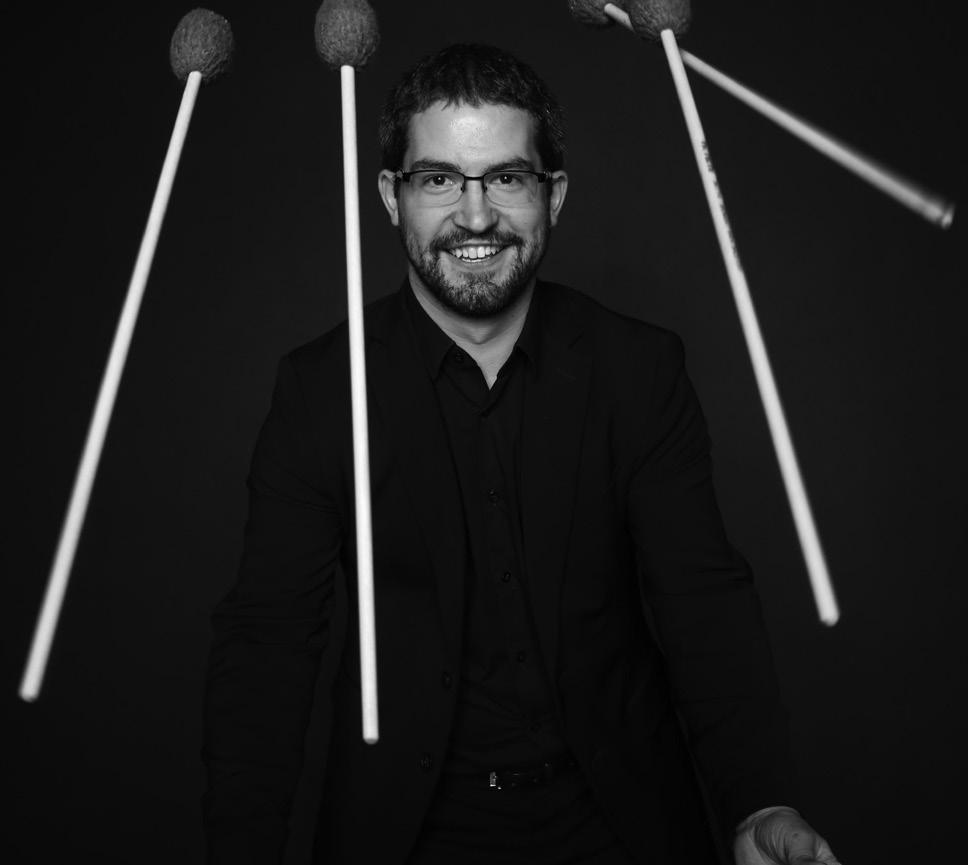
He performed the Carnegie Hall Premiere of Steven Mackey’s “Micro Concerto”, as well as in venues such as Royal Albert Concert Hall, Walton Arts Center, and more. In recent seasons he has been fortunate enough to perform premieres of new concerti as a soloist with Boise Philharmonic, Symphony Tacoma, Missoula Symphony, Auburn Symphony, Winchester Orchestra, Mission Hills Chamber Orchestra, Artosphere Festival Orchestra, and more, with upcoming performances and premieres in upcoming seasons.
He has held adjunct/faculty positions at Peabody Conservatory, Michigan State University, Cleveland State University, University of Central Missouri (sabbatical replacement), and Curtis Young Artist Summer Program. He is also on the Artistic committee and performing faculty for the Lake George Music Festival.
Garrett is an ambassador for Vic Firth Mallets, Adams Musical Instruments, Pearl Percussion, Zildjian Cymbals, and Evans Drumheads.
Garrett holds a bachelor’s degree from Michigan State University, a master’s degree from Peabody Conservatory, an Artist Diploma from Yale University, and was a Fellow for Ensemble ACJW through Carnegie Hall in 2014-16.
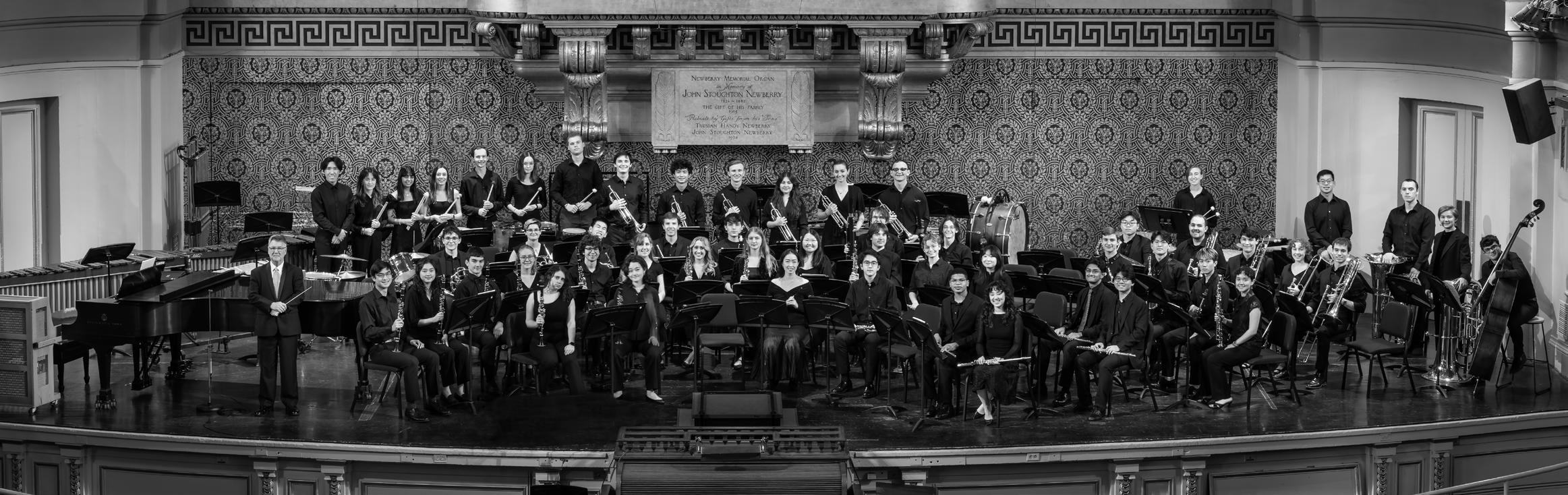
Upcoming Yale Bands Performances Spring 2026
•Tuesday, April 14 – 4:45-5:45 p.m. Yale Concert Band Pre-Commute Concert, Thomas C. Duffy, Music Director. Come hear Yale’s premier wind ensemble perform a short concert before you head home for the evening. Music by Leroy Anderson, D. Shostakovich, L. Bronnekant, T. Duffy. Woolsey Hall. Free/no tickets required.
• Sunday, May 17 – 7:00 p.m. Yale Concert Band Annual Twilight Concert, Thomas C. Duffy, Music Director. Celebratory music and Yale songs on the eve of Yale’s Commencement. Outside on the Old Campus (chairs provided). Free/no tickets required.
Photo: Harold Shapiro
Senior Reflections
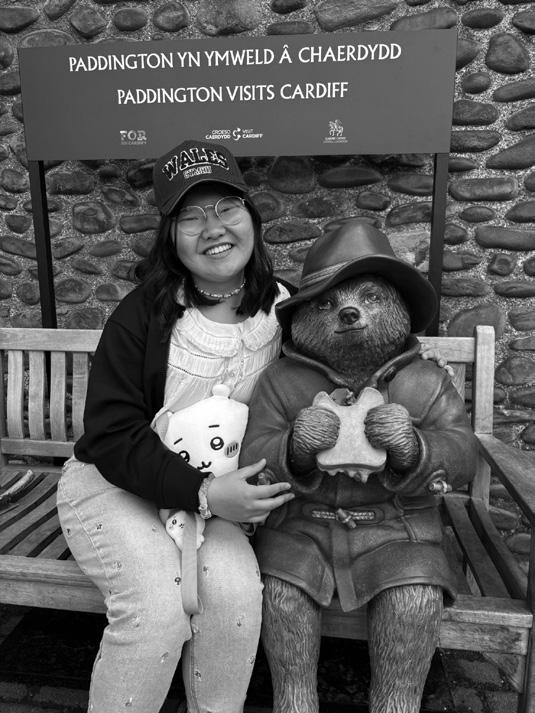
Estelle Balsirow, oboe
I joined YCB in my junior year, and I found that a lot of my time there was spent thinking about what kind of musician I wanted to be. Since high school, I was determined to always play the best, so whenever I struggled musically, I felt defeated. However, as I finish my last semester at Yale, I am finally able to enjoy playing with love for my instrument. Even if I’m not first, and even if I can’t practice 24/7, I always felt valued by Mr. Duffy and the band. I’m happy that one of the last concerts I’ll ever play at Yale will be with the Yale Concert Band.
Sophia Graham, oboe
I can’t imagine my four years at Yale without YCB! I feel so blessed to have played music, travelled, sung, danced, and eaten countless band dinners with the incredible members of this ensemble. During our time in band, the class of 2026 has been lucky to play stunning pieces such as Maslanka’s Symphony No. 4, The Frozen Cathedral, and Re(new)al, collaborate with talented groups such as Glee, YJE, and Seraph Brass, and play in venues both as grand as the Setas of Seville and as intimate as Welsh community centers in the Rhondda Valley. I dreamed of playing oboe in a collegiate ensemble when I was growing up, and to have done it in such a welcoming and warm environment—under the direction and leadership of the incredible Thomas Duffy and Stephanie Hubbard—was an absolute gift. As always, I am so grateful for Tom Torrento, Delaine Gwinnell, Geoffrey Johnson, Gabby Fry, and all of the other incredible music educators who have supported my musical journey over the years.
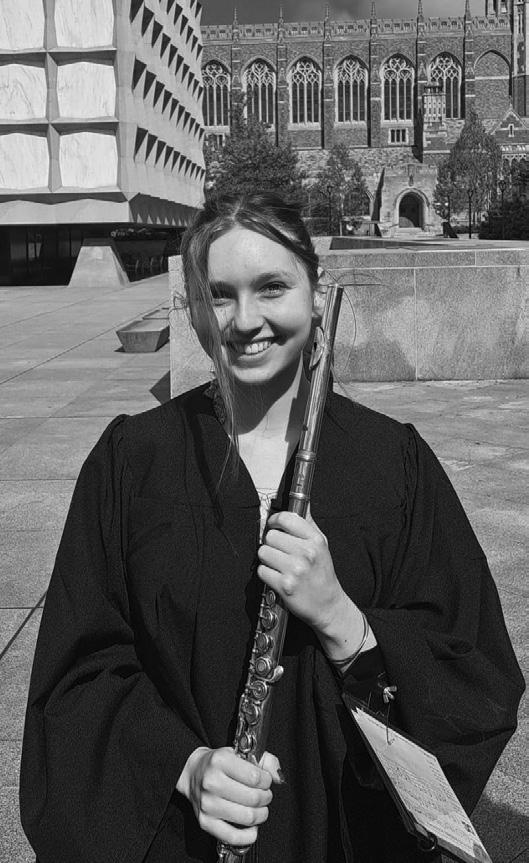
Salena Huang, piccolo
Allie Gruber, flute
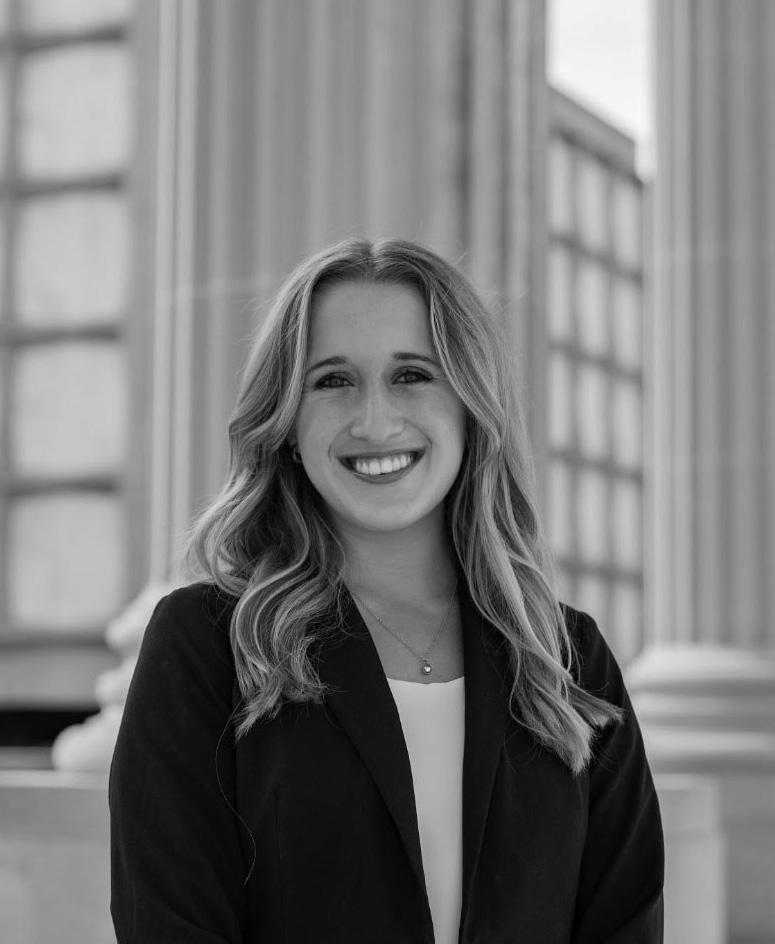
The Concert Band! What to say? I’m so grateful for the four years I’ve spent in YCB since arriving here at Yale. I have to begin with a few words about humor. My fellow band members are some of the brightest and wittiest people I know. I’m from the UK, a country known for its quick humor and sarcastic jibes. But I often reflect that my fellow band members “do” British humor better than many Brits I know. Their humor is a large part of why I love spending time with the band—indeed, why many of my fellow musicians are among my dearest friends. The band community is also extremely supportive. This owes in no small part to Stephanie and Mr. Duffy, both of whom care deeply not just for the music but also for the people who make the music. Ensembles take their cues from their leaders, and I feel honored to have had such a kindhearted manager and conductor setting the tone for the rest of us. And I can’t reflect on my time in the concert band without saying a few words about the UK tour. I’ll leave it at this: when my mother asked me whether I enjoyed our tour, I beamed. “It was one of the best weeks of my life!” I proclaimed—and I meant it. Thank you so much for being such a warm, laughter-filled community for me these past four years. B’bye band!
Playing piccolo in the Yale Concert Band has been one of the unexpected gems of my time here at Yale as a graduate student. Thanks to YCB, I’ve been able to have a fuller campus experience than most graduate students, meet so many genuine and talented people, and even travel abroad. Music truly transcends age and race, and I’m so grateful to have been welcomed with open arms.
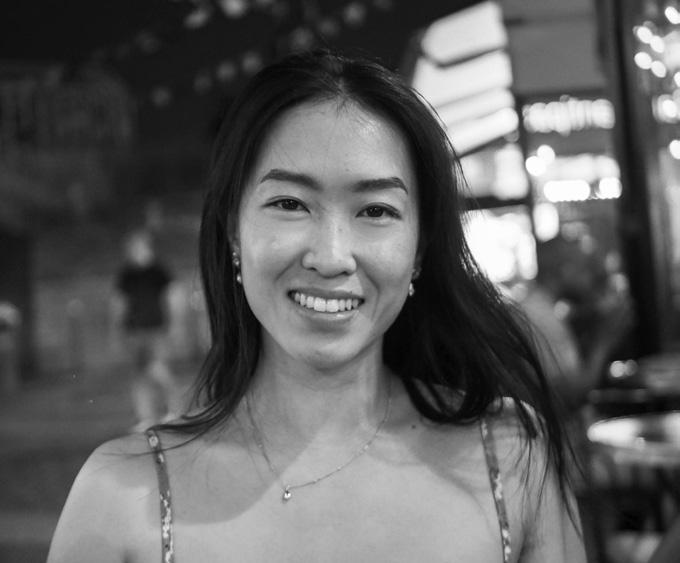
Peter Nelson, flute
Across my four years, the Yale Concert Band has been one of the very few constants. The diverse repertoire and grand music drew me in, but what brought me back yearly was the unparalleled community. Many of my strongest friendships were formed and fostered through unforgettable band traditions (tap, PRR, b’dinners, apple picking, Commencement, etc.) and I will always cherish the (at times chaotic) memories made on the Band Tours of ’23 (Spain) and ’25 (UK). It would be remiss not to credit the exuberant and eccentric Stephanie Hubbard and Thomas Duffy duo, who have together kept the YCB in the best of hands for nearly 40 years. I am also grateful to every single one of the band members I have ever encountered who has shown me true acceptance, love, and community. From the bottom of my heart, I love you flute section. I will miss you Hendrie. Thank you, band.
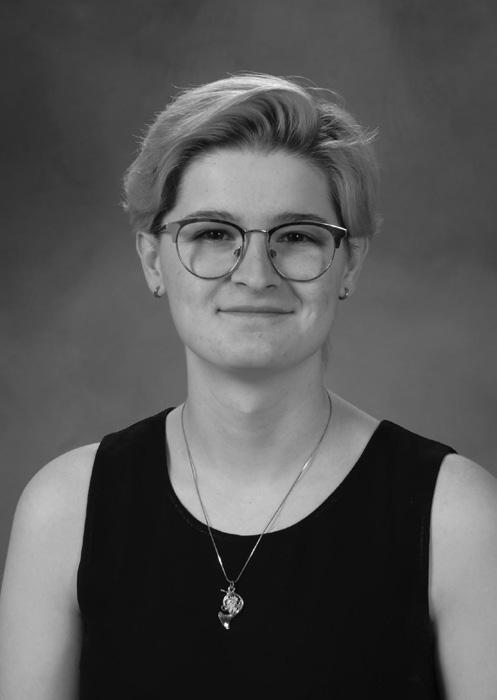
Shell Ross, horn
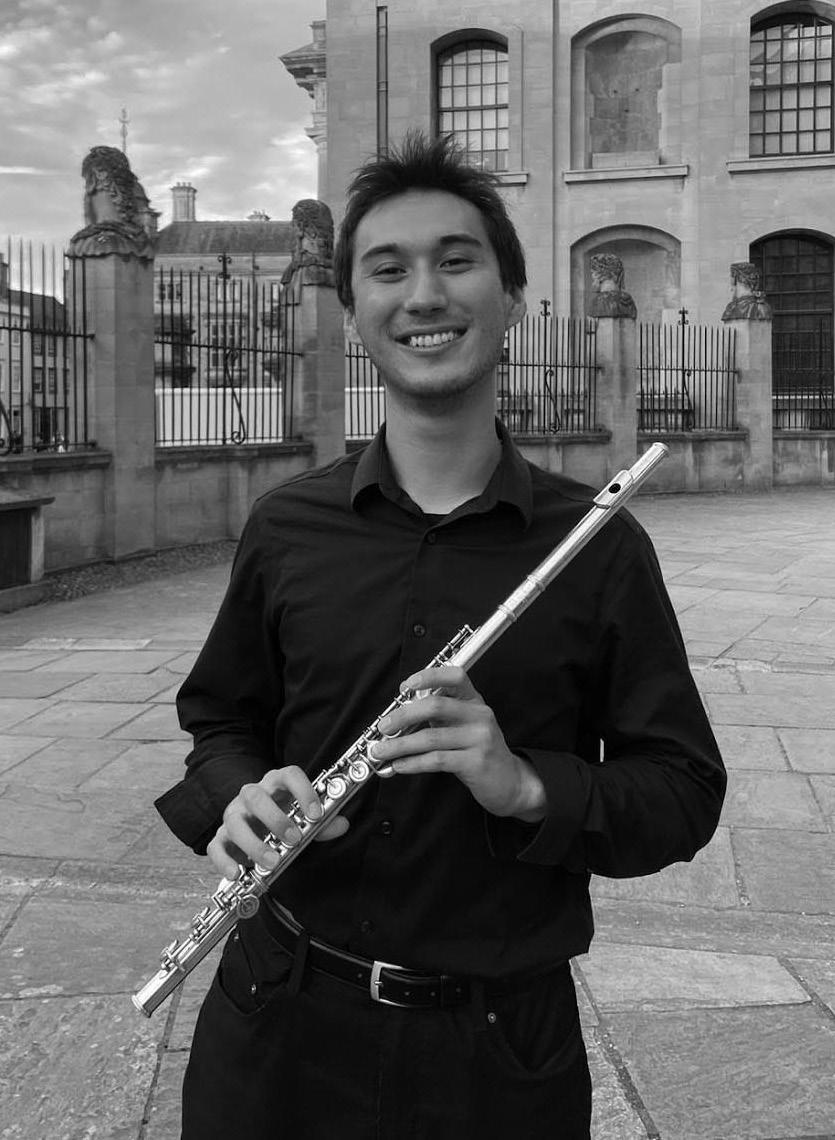
I have spent most of my life being a musician, and it defines who I am. I have loved every minute spent in the Yale Concert Band, and I appreciate the opportunity to play music throughout my time at Yale. I have built such strong relationships and connections through this ensemble and the wonderful community that comes with it. The Spain and UK tours with this group are some of my best memories from Yale, and I will always hold onto those experiences. I will forever miss playing Frozen Flames March. Put that in every concert! The world needs more horn melodies in marches!!
Nikolai Stephens-Zumbaum, percussion
I have absolutely loved every second of my time in the Yale Concert Band, and none of it would have been possible without Mr. Duffy and Stephanie Hubbard. It has been a privilege to share the Woolsey stage with such great musicians, and more importantly all of my friends for the last four years. Each rehearsal and concert is an amazing opportunity to escape the rest of school, and it has always been a blessing to be able to continue my music studies into my college years. I will dearly miss carrying all of the percussion equipment through the streets of New Haven and the percussion section, who have provided me with endless Rose-Thorn-Buds over the years. Cheers.
Zahra Virani, percussion
Playing in the Yale Concert Band has been one of the great privileges and highlights of my time here. I joined my sophomore year after having not played percussion for several years, but Mr. Duffy, Stephanie, and the percussion section welcomed me into their family. From touring in the United Kingdom to P’Dinner after rehearsal, every moment with the band has been unforgettable. As I approach the end of my time at Yale, I feel endlessly grateful to the YCB for giving me the gift of playing music in a space that is joyful, welcoming, and grounding. Through the band, I have also been lucky enough to meet some of my closest friends in the percussion section, Zoe Frost and Ana Rodrigues, who have made rehearsals, concerts, and trips even more meaningful. I am also deeply grateful to the music educators who first nurtured my love of music in Houston, Texas, and to the Clear Brook High School and Westbrook Intermediate bands, where I first learned what it meant to be part of an ensemble. Music has been a consistent home for me, and the Yale Concert Band has continued that sense of belonging on campus in ways I will always treasure.
About the Music Director
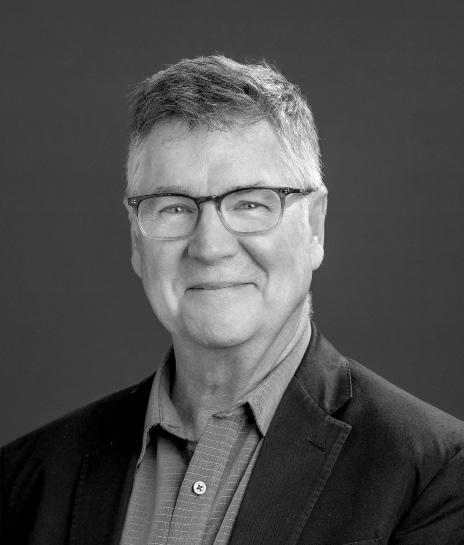
Thomas C. Duffy is Professor (Adjunct) of Music, Director of University Bands, and Clinical Professor of Nursing at Yale University, where he has worked since 1982. He is known as a composer, a conductor, a teacher, an administrator, and a leader. His interests and research range from non-tonal analysis to jazz, from wind band history to creativity and the brain. Under his direction, the Yale Bands have performed at conferences of the College Band Directors National Association and New England College Band Association; for club audiences at New York City’s Village Vanguard, Birdland, Dizzy’s Club, and Iridium; Ronnie Scott’s (London); the Belmont (Bermuda); as part of the inaugural ceremonies for President George H.W. Bush; and concertized in twenty-one countries in the course of nineteen international tours. Duffy produced a two-year lecture/performance series, Music and the Brain, with the Yale School of Medicine; and, with the Yale School of Nursing, developed a musical intervention to train nursing students to better hear and identify body sounds with the stethoscope. He combined his interests in music and science to create a genre of music for the bilateral conductor – in which a “split-brained conductor” must conduct a different meter in each hand, sharing downbeats. His compositions have introduced a generation of school musicians to aleatory, the integration of spoken/sung words and “body rhythms” with instrumental performance, and the pairing of music with political, social, historical and scientific themes. He has been awarded the Yale Tercentennial Medal for Composition, the Elm/ Ivy Award, the Yale School of Music Cultural Leadership Citation and certificates of appreciation by the United States Attorney’s Office for his Yale 4/Peace: Rap for Justice concerts – music programs designed for social impact by using the power of music to deliver a message of peace and justice to impressionable middle and high school students. Duffy has served as associate, deputy, and acting dean of the Yale School of Music. He has served as a member of the Fulbright National Selection Committee, the Tanglewood II Symposium planning committee, the Grammy Foundation Music Educators Award Screening Committee, and completed the MLE program at the Harvard University Institute for Management and Leadership in Education. He has served as: president of the Connecticut Composers Inc., the New England College Band Directors Association and the College Band Directors National Association (CBDNA); editor of the CBDNA Journal; publicity chair for the World Association of Symphonic Bands and Ensembles; and chair of the Connecticut Music Educators Association’s Professional Affairs and Government Relations committees. He is a member of American Bandmasters Association, American Composers Alliance, the Connecticut Academy of Arts and Sciences, Connecticut Composers Incorporated, the Social Science Club, and BMI. Duffy has conducted ensembles all over the world, including the National Association for Music Education’s National Honor Band in the Kennedy Center, Washington, D.C. (More extensive data is available at www.duffymusic.com, including a high resolution downloadable photo.)
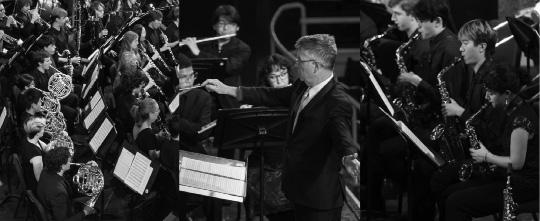
Photos: Harold Shapiro
Piccolos
YALE CONCERT BAND 2025-2026
THOMAS
STEPHANIE
C.
HUBBARD,
DUFFY, Music Director
Operations and Productions Manager
President: Jared Wyetzner | General Managers: Kaustuv Mohanty, William Wakefield
Social Chairs: Kyle Chen, Greta Garrison | Publicity Chairs: Zoe Frost, Lizzie Seward
Salena Huang YSEAS ’26*† Mechanical Engineering and Materials Science
Flutes
Zoe Frost MY ’27*‡ American Studies
Noah Watson TD ’28* Molecular, Cellular, and Developmental Biology
Diego Lee TC ’29 Undeclared
Allie Gruber PC ’26† English
Allan An BR ’28 Music/Molecular, Cellular, and Developmental Biology
Kaustuv Mohanty MC ’29 Molecular Biophysics and Biochemistry
Peter Nelson JE ’26† Biomedical Engineering
Mei Hao YSEAS ’28 Mechanical Engineering
Noelle Smith BK ’28 History
Oboes
Sophia Graham DC ’26*†‡ Economics
Penelope Emerson MY ’29* Applied Physics
Estelle Balsirow JE ’26† Linguistics
English Horn
Sophia Graham DC ’26*†‡ Economics
Bb Clarinets
Sammy Feingold MY ’28 Keith L. Wilson Principal Clarinet Chair*§ Neuroscience
Amelia Shaw TC ’28* Undeclared
Joshua Chen SY ’27* Mechanical Engineering
Su Min Pyo PC ’29 Molecular, Cellular, and Developmental Biology
Trevor Strano MC ’28 Earth and Planetary Sciences
Eleanor Kandoll PC ’29 Music
Cameron Nye BR ’27 Political Science
Bass Clarinet
Jacob Knowles ES ’28* History of Science, Medicine, and Public Health
Bassoons
Ari Blehert JE ’28‡ Physics
Bryce Falkoff TC ’29 Undeclared
Contrabassoon
Laressa Winters YSM ’26† Music
Soprano Saxophone
Lizzie Seward DC ’27*‡ Physics and Philosophy
Alto Saxophones
Lizzie Seward DC ’27*‡ Physics and Philosophy
Daniel Guo DC ’29* Undeclared
Tenor Saxophones
William Wakefield BF ’29* Undeclared
Baritone Saxophone
Hanson Qin ES ’28* Computer Science and Economics
Cornets/Trumpets (rotating)
Jared Wyetzner PC ’27‡ Physics
Lydia Berger MY ’29 Undeclared
Greta Garrison BF ’28 Global Affairs
Graydon Nolen DC ’28 Molecular Biophysics and Biochemistry
Isaiah Harvey TD ’28 Ethics, Politics, and Economics
Kyle Chen SY ’27 Molecular, Cellular, and Developmental Biology
French Horns (rotating)
Julia Landres JE ’28‡ Physics
Atticus Chan TC ’29 Mechanical Engineering
Shell Ross GH ’26† Classical Civilization
Zakariya Bouzid GH ’28 Undeclared
Trombones
Griffin Rupp YSM ’26†‡ Music
Max Watzky BF ’27 Physics
Beatrice Beale Tate PC ’28 Undeclared
Nathan Lange SY ’27 Molecular Biophysics and Biochemistry
Euphonium
Alfred Ma JE ’29 Music/Computer Science
Tubas
Benson Wang BK ’27‡ Economics
Gregory Wolf TD ’26† Psychology
Lillian Adey MY ’29 Electrical Engineering
String Bass
Ziv Shah SM ’29* Undeclared
Piano
Matthew Li MY ’29 Economics/Mathematics
Harp
Sebastian Gobbels YSM ’26† Music
Percussion (rotating)
Madeline Chun SM ’26†‡ Economics/Humanities
Nikolai Stephens-Zumbaum BF ’26†‡ Mechanical Engineering
Gaby Garcia SM ’29 Undeclared
Jacob Leshnower GH ’27 Statistics and Data Science/Music
Mirabel Solomon BF ’28 Undeclared
Tally Vaneman GH ’27 Astrophysics
Zahra Virani SY ’26† Urban Studies/History of Art
Music Librarian
Allan An BR ’28 Music/Molecular, Cellular, and Developmental Biology
Zahra Virani SY ’26† Urban Studies/History of Art
* playing in Concertino
† graduating in May 2026
‡ principal
§ Friends of Keith L. Wilson (Director of Yale Bands from 1946-1973) honored him by endowing the principal clarinet chair in the Yale Concert Band in his name.
If you would like information about naming a Yale Concert Band chair, please contact the Yale Bands Office.