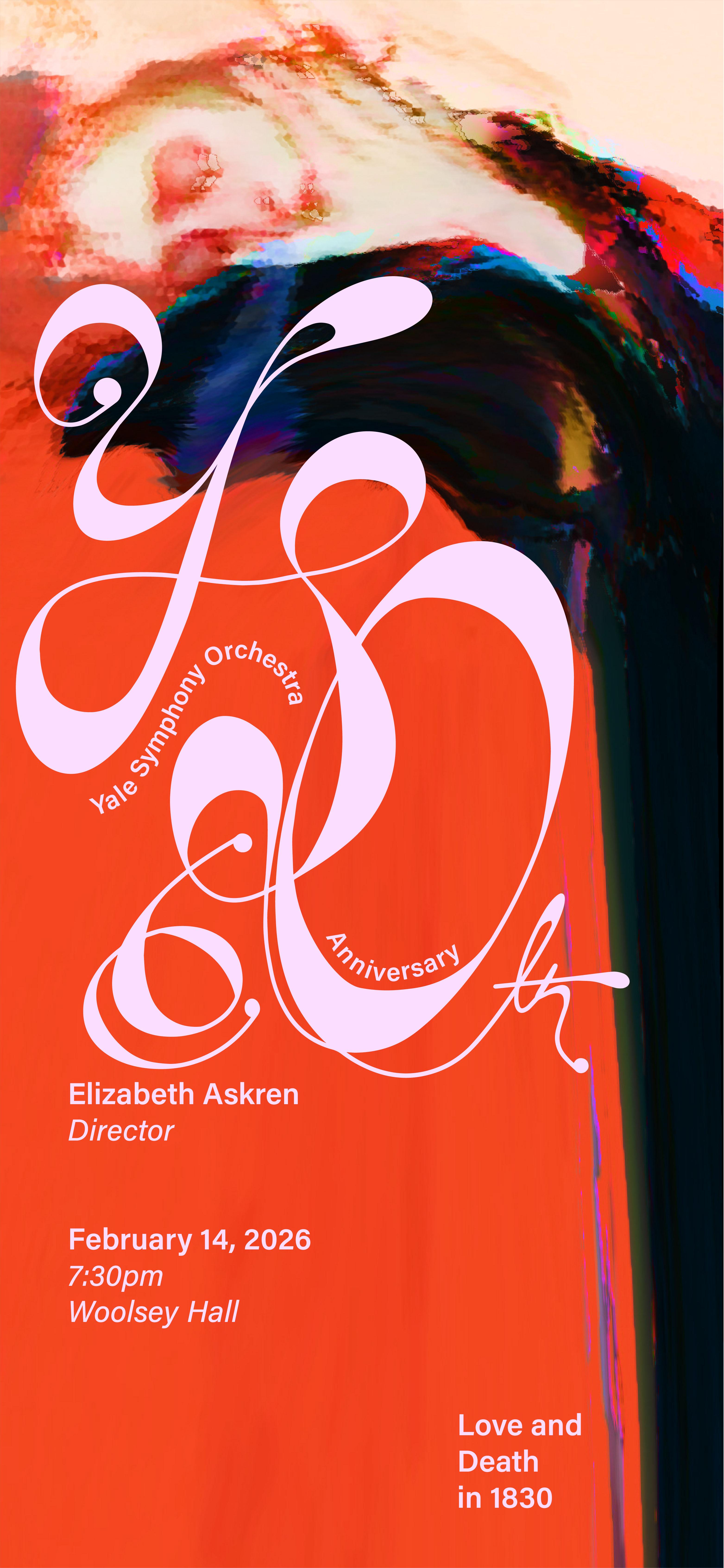
Yale Symphony Orchestra
Elizabeth Askren, Music Director
Peter Oundjian, Ezra Calvino and Thomas Nettle, Guest Conductors
Paul Ji, Piano Program
Overture to I Capuletti e i Montecchi
Vincenzo Bellini
Piano Concerto No. 2 in F minor, Op. 21
Frédéric Chopin
Paul Ji, Piano
Winner of the William Waite Concerto Competition
Allegro Moderato
Adagio di molto
Allegro, ma non tanto
INTERMISSION
Symphonie Fantastique
Hector Berlioz
Rêveries – Passions (Daydreams – passions)
Un bal (A ball)
Scène aux champs (Scene in the country)
Marche au supplice (March to the scaffold)
Songe d'une nuit du sabbat (Dream of a night of the sabbath)
The 24/25 Woolsey Series is generously supported by the Daniel Feller ’74 Yale Symphony Endowment Fund in Honor of John Mauceri (Music Director 1968-74).
About the Artists
Elizabeth Askren, Director
Praised for “inspiring virtuosic achievements from the pit” (Opera Today) and “palpable happiness” (Le Monde) from the artists with whom she collaborates, Elizabeth Askren empowers musicians around the world as a conductor, educator, and cultural activist.
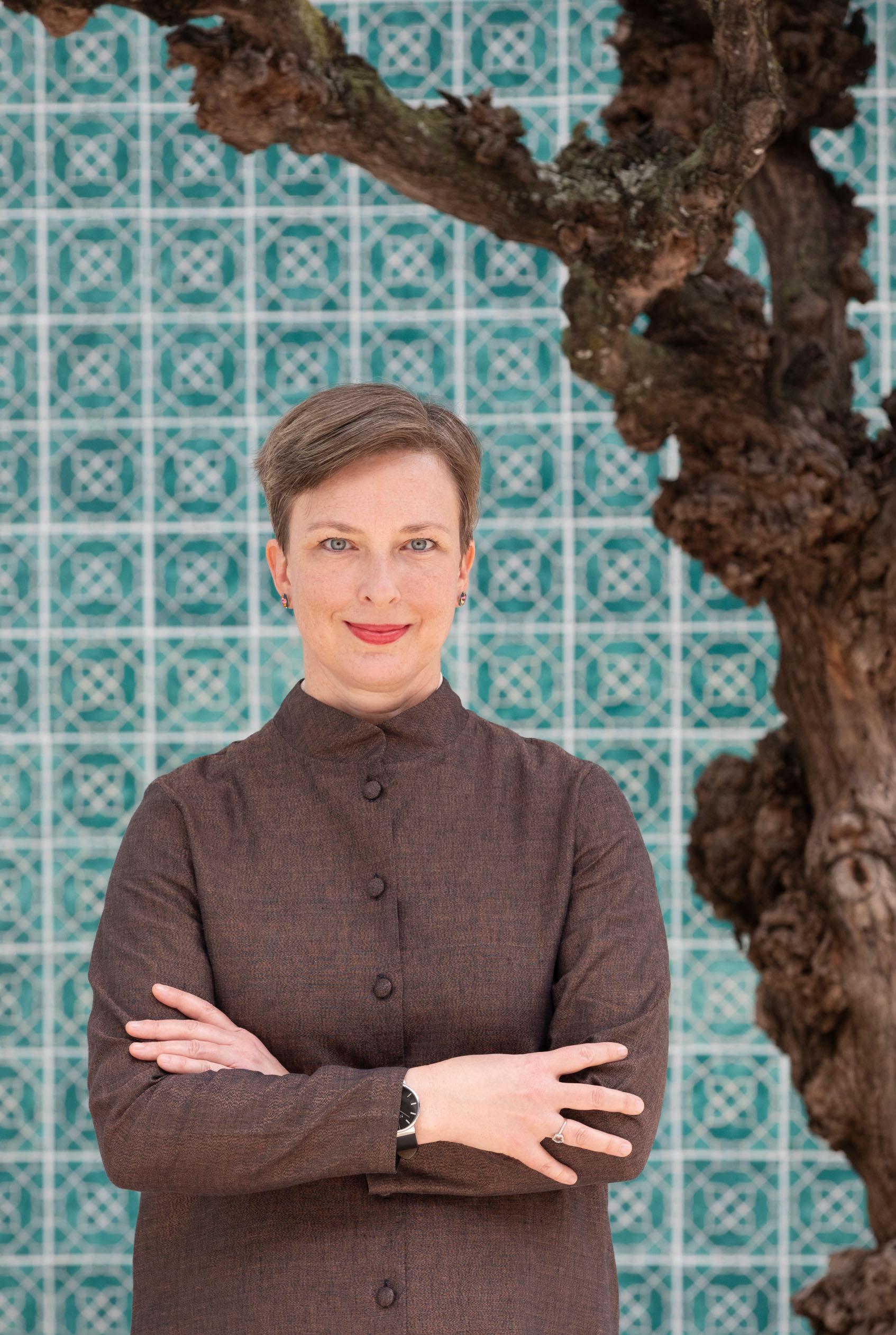
An OPERA America 2024 Opera Grant winner, Askren performs regularly with leading opera houses and orchestras, including The Dallas Opera, with which she enjoys a privileged relationship, Chicago Lyric Opera, where she was on music staff for the 2024-25 season, and Hawaii Opera Theatre, of which she is the company's first ever Principal Guest Conductor. She is also the Music Director of Paola Prestini and Brenda Shaughnessey’s Sensorium Ex, a Ford Foundation-funded multi-modal opera exploring issues at the intersection of AI, disability, and the human voice.
Askren is the Founder and Artistic Director of Transylvanian Opera Academy (TOA), Romania’s first opera studio. Created in 2017, TOA has been featured on national television, radio, and press while partnering with the Paris Opera’s Academy, TEDx, and Opera for Peace. She is also the creator and host of MaestraMagic!, a children’s edutainment series distributed by The Dallas Opera. Askren recently published The Magic Flute comic book, an adaptation from MaestraMagic!’s Opera Bytes episode, which is available on amazon.com and select bookstores.
A master teacher at both The Dallas Opera’s Hart Institute and at the Paris Opera’s Academy, Askren made history by judging the Paris Philharmonic’s inaugural La Maestra Competition for Women Conductors. She is invited regularly to speak about leading and entrepreneurship in the arts, mentoring young artists, and
cultivating humanity in the age of AI through outlets including PBS Newshour, NPR, Radio France Internationale, and The Ford Foundation/How Institute.
Learn more at www.elizabethaskren.com.
Peter Oundjian, Guest Conductor
Peter Oundjian is a dynamic presence in the conducting world with an international career leading preeminent orchestras in many of the world's major musical centers, from New York and Seattle to Amsterdam and Berlin.
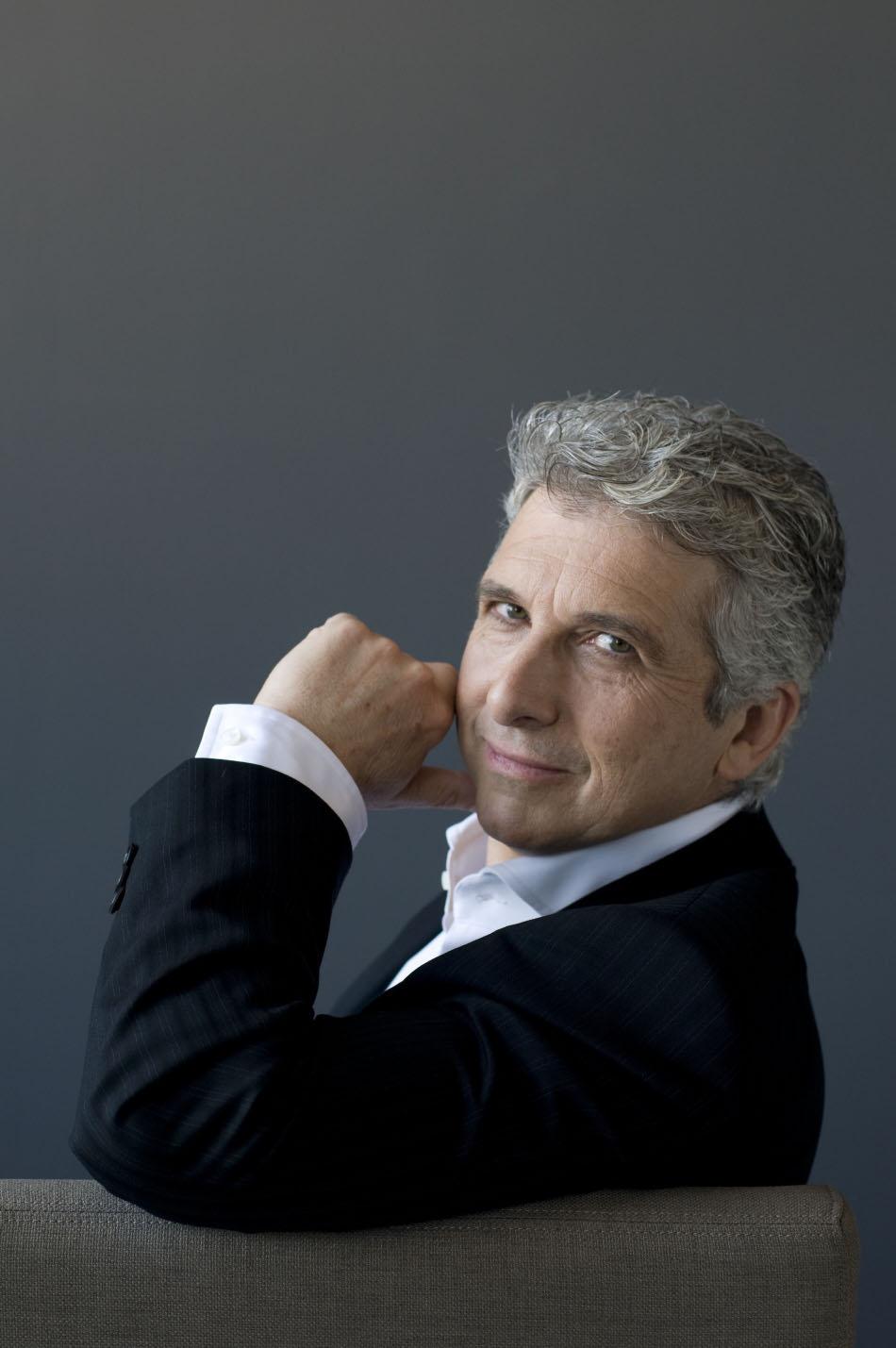
In his debut season as Music Director of the Colorado Symphony, where he served previously as Principal Conductor, Oundjian conducts six programs including a one-night-only performance featuring Lang Lang, Mahler’s Symphony No. 2 “Resurrection,” and a world premiere by Christopher Theofanidis. He also brings the orchestra to Carnegie Hall for the New York premiere of John Adams’s Frenzy. As Music Director of the Colorado Music Festival (CMF), he continues to program and conduct concerts each summer that delight audiences with beloved masterpieces alongside music written by living composers.
Elsewhere in 2025-2026, Oundjian leads the Toronto Symphony Orchestra, Seattle Symphony, Vancouver Symphony Orchestra (where he is Conductor Emeritus), Fort Worth Symphony Orchestra, Kansas City Symphony, and Sarasota Orchestra, and makes international visits to the KBS Symphony Orchestra (Seoul, South Korea) and the Armenian National Philharmonic Orchestra (Yerevan, Armenia).
Over the course of his 14-year tenure as Music Director of the Toronto Symphony Orchestra, which concluded in 2018, he reinvigorated the orchestra with acclaimed innovative programming, artistic collaborations, extensive audience growth, national and international tours and several outstanding recordings, including
Vaughan Williams’s Orchestral Works, which garnered a Grammy nomination and a Juno Award. Under his leadership, the Symphony underwent a transformation that significantly strengthened its presence in the world. He currently serves as Conductor Emeritus of the Symphony.
From 2012-2018, Oundjian served as Music Director of the Royal Scottish National Orchestra, which he led on several international tours, including North America, China, and a European festival tour with performances at the Bregenz Festival and Dresden Festival, as well as in Innsbruck, Bergamo, Ljubljana, and elsewhere. His final appearance as the orchestra’s Music Director was at the 2018 BBC Proms where he conducted Britten’s epic War Requiem.
Oundjian served as Principal Guest Conductor and Artistic Advisor of the Detroit Symphony Orchestra from 2005 to 2008 and Artistic Director of the Caramoor International Music Festival in New York from 1997 to 2007. He was also Music Director of the Amsterdam Sinfonietta from 1998-2002. Throughout his conducting career, Oundjian has appeared as guest conductor with the country’s leading orchestras, including The Philadelphia Orchestra, Boston, Chicago, Pittsburgh, Atlanta and San Francisco Symphonies, among others.
Oundjian has been a visiting professor at Yale University’s School of Music since 1981, and has received honorary doctorates from the San Francisco Conservatory of Music and The Royal Conservatory of Music in Toronto.
Ezra Calvino, Guest Conductor
Ezra Calvino has been recognized for their insight, clarity, and sensitivity as a conductor, violist, and chamber musician. Throughout their studies, they have sought to draw on diverse musical disciplines to develop a unique artistic perspective that seeks to transcend mere aesthetic nicety and participate in holistic social healing.
Ezra has served as Associate Conductor to the Ravinia Festival in Chicago, where they lead the Sistema Ravinia youth ensembles. They were also named the 2024 AAF/Faber Conducting Fellow with the Vienna
Philharmonic at the Salzburg Festival. Most recently, Ezra served as Assistant Conductor to the Peninsula Music Festival in Door County, Wisconsin. They currently reside in New Haven, Connecticut where they study conducting at the Yale School of Music and are the current Music Director of the New Haven Chamber Orchestra. Additionally, they serve as Guest Conductor to the San Gabriel Valley Symphony in Los Angeles, as well as Assistant Conductor to the Yale Philharmonia.
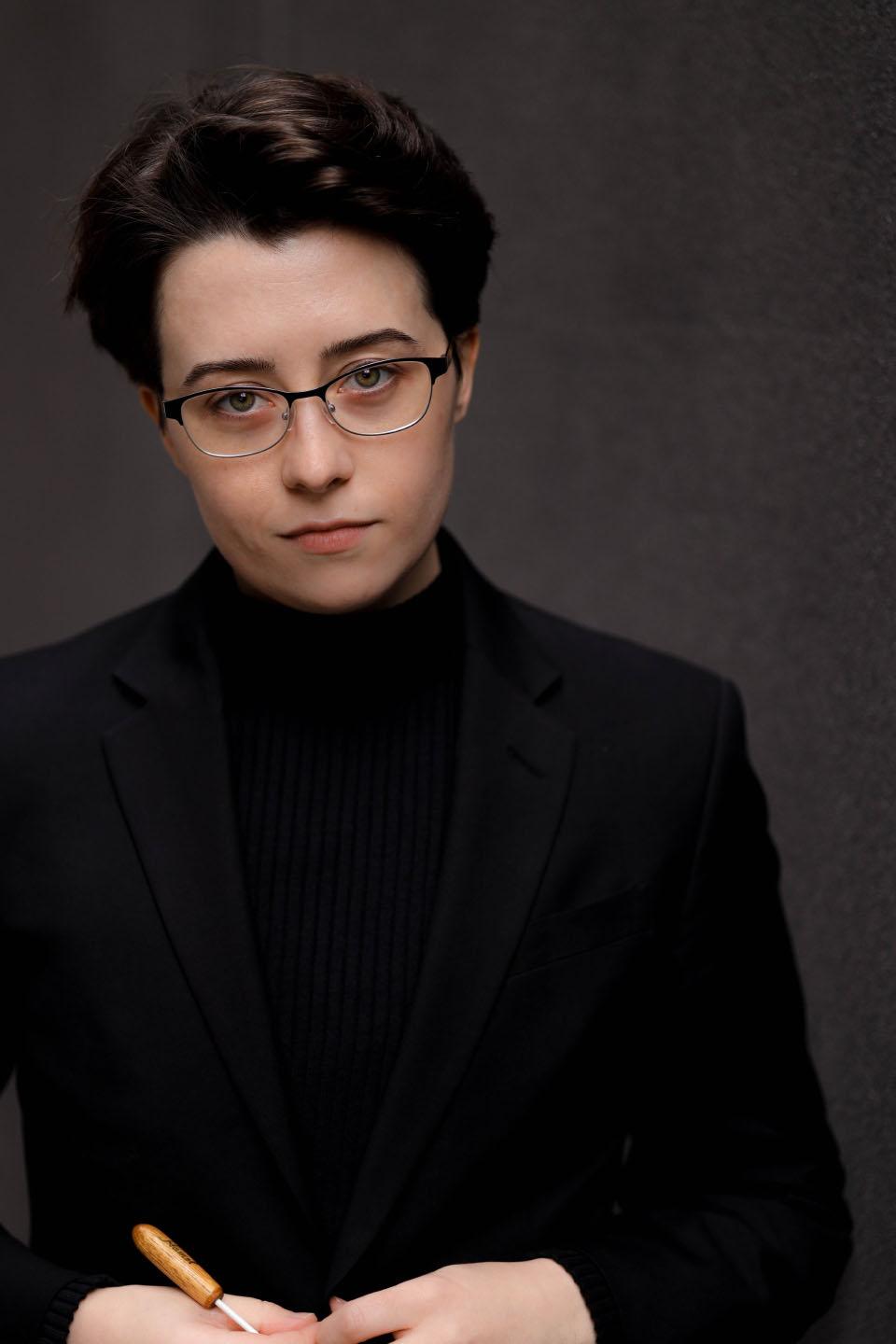
Ezra holds degrees in both Orchestral Conducting and Viola Performance and is an alumnus of notable training programs including the National Orchestral Institute + Festival, the Eastern Music Festival, and the International Conducting Workshop and Festival. They currently study with Peter Oundjian.
Thomas Nettle, Guest Conductor
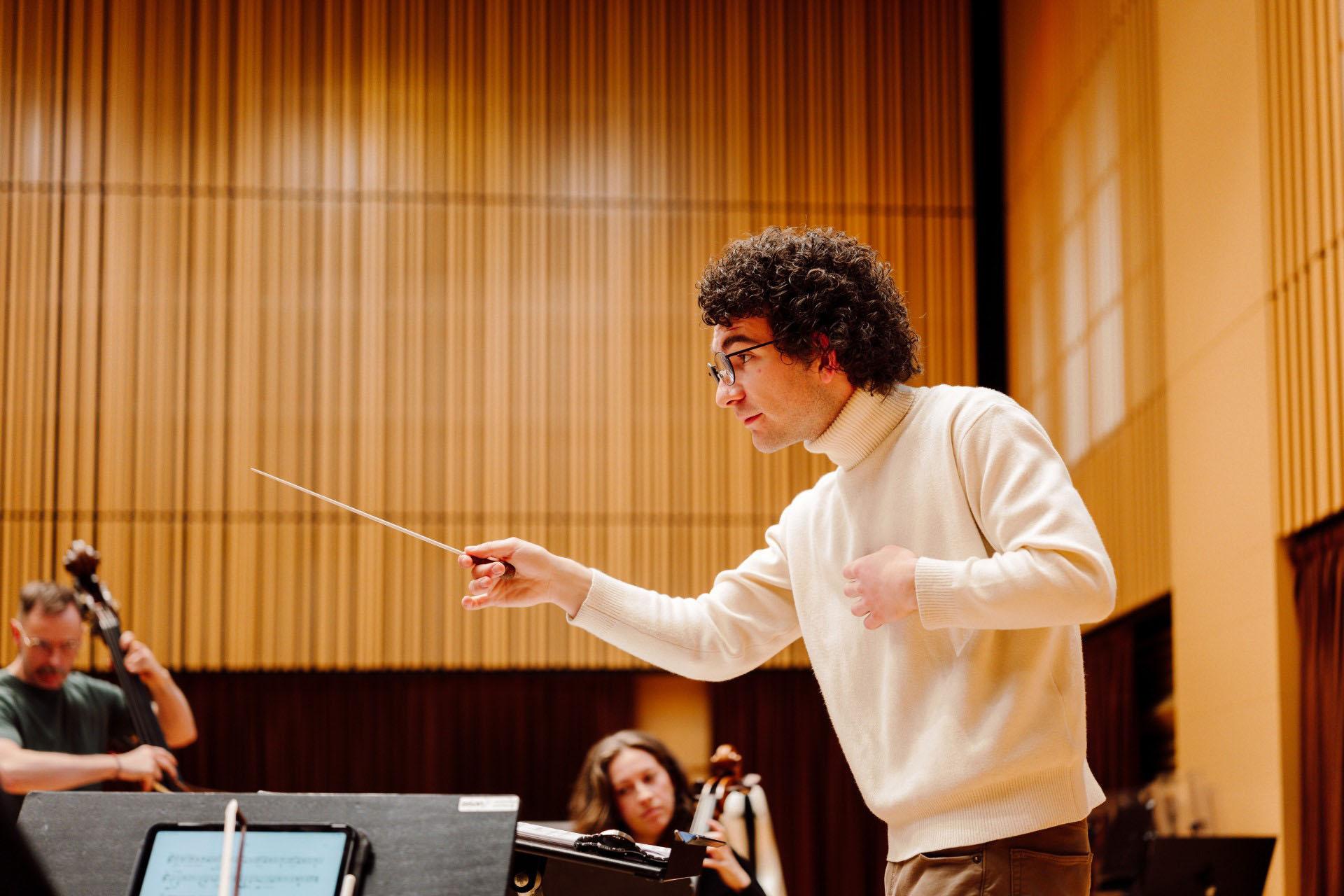
Thomas Nettle is a British conductor currently based in the U.S. where he is studying for his masters degree in orchestral conducting at the Yale School of Music with Peter Oundjian. Prior to this, he received his bachelors degree in orchestral conducting at the Norwegian Academy of Music, studying under professors Ole Kristian Ruud and Rolf Gupta. He has been very fortunate to conduct leading orchestras and ensembles such as Stavanger Symphony Orchestra, North Czech Philharmonic Orchestra, Ungdomssymfonikerne, Marinemusikken, Stabsmusikken and Hærens Musikkorps. Recent highlights have included leading Ungdomssymfonikerne in a world premiere by Norwegian composer
Marcus Paus at the opening concert of the Elverum Festival, conducting the opening concert of Nor59’s Mozart Festival, assisting for a production of Philip Glass’ Satyagraha at the Oslo Opera House, and working as assistant conductor for the Oslo Philharmonic Orchestra and Kristiansand Symphony Orchestra. He has participated in masterclasses with Ed Gardner, Martyn Brabbins and Nicolas Pasquet. Thomas is also highly sought after as an arranger, he frequently arranges music for the Oslo Philharmonic Orchestra, and has previously arranged for members of the Royal Philharmonic Orchestra and English National Opera.
Paul Ji, Piano
Born in Chicago and raised in France, Paul Ji is a senior majoring in Philosophy and Music. A Young Steinway Artist, he has recorded two solo albums with the label Warner Classics. At 16, he released his debut album after winning the French national TV competition Prodiges, viewed by over three million people; his upcoming second album features Chopin’s complete 24 Preludes. His work has been covered by BBC News, Reuters, Le Figaro, Le Parisien, and Elle Magazine, and he has collaborated with Sarah Brightman. Paul has performed solo at Vienna’s Golden Hall, Berlin Philharmonie, Théâtre des Champs-Élysées, KOKO Theatre in London, Carnegie Hall, Hamburg’s Laeiszhalle, and the Steinway International Festival. After winning the Virtuoso & Belcanto Concerto Competition, he was invited to perform as soloist for Chopin’s Second Concerto with the Berlin Symphony Orchestra at Berlin Philharmonie, where he was re-invited the following year for Chopin’s First Concerto, again re-invited for Beethoven’s Fifth. His volunteer work in his local palliative care unit inspired him to found Music For Good, a platform connecting musicians with hospitals, orphanages, and schools.
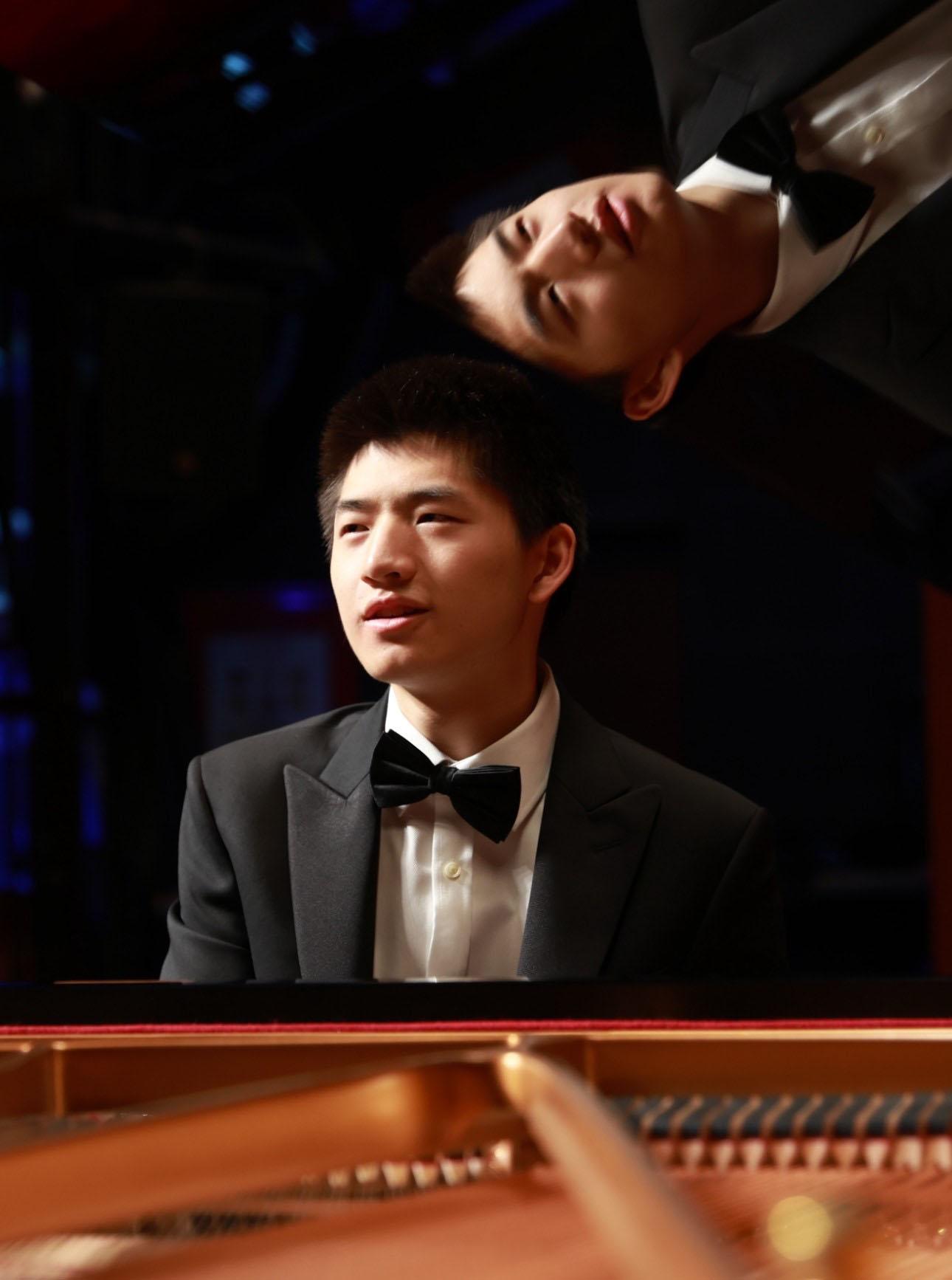
The initiative won the Khemka Social Impact Prize. Paul graduated from Eton College as a Music Scholar, earned an Artist Diploma from the École Normale de Musique de Paris.
Notes on the Program
Overture to I Capuleti e i Montecchi
Vincenzo Bellini
This is the first time the YSO has performed this work.
Perhaps the most famous play of all time, Shakespeare’s Romeo and Juliet inspired surprisingly few successful operatic adaptations, despite an era in which opera was arguably the premier form of entertainment. Among the two that achieved widespread acclaim, and that have since stood the test of time, Vincenzo Bellini’s (1801-1835) two-act opera, I Capuleti e i Montecchi (1830), was a major triumph for the Italian composer and ensured that his “style [was] now heard in the most important theatres in the world … and with the greatest enthusiasm,” as he wrote just weeks after its premiere.
Bellini quickly garnered praise from the giants of the classical music world. Giuseppe Verdi praised his “long, long, long melodies” and wrote that “no one has ever thought of anything that sounds more beautiful, more heavenly.” Richard Wagner, himself a longtime critic of Italian opera, declared that “even the most determined opponents of the new Italian school of music do this composition the justice of admitting that, speaking to the heart, it shows an inner earnestness of aim.” And Frédéric Chopin, a friend and ardent admirer of Bellini’s operas, transcribed multiple works by Bellini for piano.
But not all of his contemporaries agreed. Hector Berlioz, whose Symphonie Fantastique is featured in
the second half of tonight’s program, wrote scathingly of Bellini’s rendition: “pathetic, ridiculous, feeble, worthless; this little fool did not fear that the shadow of Shakespeare might come and trouble him during his sleep; he would richly deserve it.” Perhaps Berlioz did not realize that Bellini’s opera did not draw directly from Shakespeare’s Romeo and Juliet, but instead on the narrative account by Matteo Bandello that inspired Romeo and Juliet, and that therefore, the opera would differ substantially from Shakespeare’s work. But in any case, Berlioz stopped short of criticism of Bellini’s music itself. Tonight’s five-minute overture is a buoyant delight that races through jolly melodies and ebullient rhythms. In the opera, it typically sets the stage for the opening chorus in the Capulet palace, but tonight, it sets the stage for Chopin’s Piano Concerto No. 2 and Berlioz’s Symphonie Fantastique, both composed in 1830: the former by one of Bellini’s greatest admirers, and the latter by one of his harshest critics.
— Tobias Liu ’26
Piano Concerto No .2 in F minor,
Op. 21
Frédéric
Chopin
The YSO has performed this work three time in its 60 year history, all during the 2010 concert tour of Turkey:
May 27, 2010 at Aya Irini, Istanbul, Turkey; Idil Biret, piano
May 30, 2010 at Bilkent University, Ankara, Turkey; Idil Biret, piano June 2, 2010 at Adnan Saygun Concert Hall, Izmir, Turkey; Idil Biret, piano
In 1829, 19-year-old Chopin heard the mezzo-soprano Konstancja Gladkowska sing and fell deeply in love: first with her voice, and then with her person. This was his first love (of which we are aware). Chopin biographer Alan Walker recounts the intensity of Chopin’s love for Konstancja: one Sunday morning, when both sat in church, Chopin was struck by a single unexpected glance from Konstancja, and proceeded to leave the building in such a daze that he stumbled on the pavement! Later, Chopin wrote to his close friend and confidant, Tytus Woyciechowski, “I already have my ideal, whom I have faithfully served for six months, though without saying a word to her about my feelings, whom I dream of, who inspired the Adagio of
my Concerto”. Chopin’s letter provides a remarkable insight about the genesis of this concerto: given that “Adagio” refers to the slow second movement, and that Chopin was writing this concerto in the same year the letter was written, scholars conclude that Konstancja inspired the 2nd movement of this Concerto, and that the nature of this inspiration was an unrequited, secret love. We shall see, below, how this is reflected in the music of the second movement.
The Concerto in F minor was the first concerto Chopin composed, although it was published as the second, and hence called “Concerto No.2”. Written between the early autumn of 1829 and the early spring of 1830, young Chopin was still in Warsaw, not yet having departed for international studies—a departure that would become permanent exile due to the Russian Empire’s rule over his native Poland.
The concerto reflects both his youthful vigor and profound introspection. Although it is rooted in Classical structures and protocols, eg. Sonata form for the first movement, Rondo for the third., along with being modelled after the burgeoning style brillante (virtuosic, brilliant style characteristic of both Chopin concertos) that is found in Hummel, and contemporaries of his like Moscheles, Ries and Kalkbrenner, the concerto is an outpouring of Chopin‘s individuality through his poetry and lyricism: the kind of individuality expressed by his writing to his confidant and closest childhood friend Tytus Woyciechowski, “I say to the piano what I would have said to you many a time”.
The opening theme in F minor uses a dotted rhythmic motif that becomes a ubiquitous motto throughout the whole allegro. The melody, in the sombre key of F minor, and accompanied by falling chromatic thirds, conveys, for me, a sense of solemnness and burden, all within the stately nature of “Maestoso”. After the orchestral introduction, during which the two main themes of the movement are exposed, the entrance of the piano immediately signifies drama and urgency: the first chord, declared in double forte, is unstable and almost provocative. It is followed by a soft iteration of the main melody, before stark dynamic contrasts soon interrupt in the fashion of an argumentative dialogue. All this makes the piano entrance seem very “epic”: we know we are in for an emotionally stirring story.
The second theme, Con Anima (with soul) in the relative major key, opens up a world of intimate, heartwarming lyricism that proceeds into what I find to be
most uniquely instantiated in Chopin’s music, most characteristic of his genius perhaps: the ability to express multiple conflicting emotions at once. The harmonic path and melodic structure Chopin chooses makes possible at once bright hope and despair, interweaving a forward-looking disposition with nostalgic reminiscence, and presenting relentless determination—Con Forza (with force)—but just a few bars later, painful abandonment—Con Duolo (with sorrow). This second theme is a true masterpiece of inner turmoil.
After a dramatic and almost Beethovenian end to the second theme—due to the non-conceding will power, I feel, in the transition to the C minor orchestral tutti with a continuous buildup of tension—the development section begins. The first theme puts on many guises, moving through distant harmonic territory, and the virtuosic stile brillante is brought to its peak as the orchestra continues to re-assert and develop the dotted rhythm of the first theme. Notice that when all this frenzy is over in the development section, the first theme returns with the addition of a low F bass in the strings, signally something uncanny. Chopin then cuts the theme short, and transitions drastically to the second theme, which is properly recapitulated. The movement ends in a heroic cumulation of tension and drama, in the home key where we started, F minor.
We discussed how Chopin himself confessed (privately) that the second movement was inspired by his unrequited first love. The latter being Konstancja Gladkowska, an operatic mezzo-soprano, it makes a lot of sense that the second movement is heard like a tribute to the human voice itself. While almost all of Chopin’s compositions are inspired by human singing, and Chopin always advised his piano students to “sing” on the piano, this second movement is not just “singing”, but a specific kind of singing—operatic bel canto style of singing at its most ornate: the kind of singing Konstancja would have pioneered. The melody is full of roulades, grace notes, and elaborate ornamentation which at times becomes virtually indistinguishable from the melody itself. Franz Liszt praised this movement as consisting in “a perfection almost ideal, its expression now radiant with light, now full of tender pathos.” The movement is roughly in ternary form, with a contrasting middle section which features an “appasionato” (passionate) recitative, between the first and third lyrical, nocturne-like sections. If the first and last sections are optimistic longings associat-
ed with dreamy infatuation, the middle section stirs up angsty and pathetic feelings, maybe belonging to Chopin’s nightmarish thought that his hidden love will remain unrequited forever. However, the movement ultimately ends peacefully in the comforting Aflat Major.
In Rondo form, the third movement begins with the marking “semplice ma graziosamente” (simple yet graciously). There is a combination of gentleness and playfulness in this tuneful dance that occasionally leaps up in an unexpected emphasis (sforzando) on the second beat—a staple of Chopin‘s Mazurkas which are rooted in Polish folk dances and tunes. A little further into the movement, we hear a remarkable feature of orchestration: in the scherzando (“jokingly”) passage, the strings play col legno: a technique where the player uses the wooden stick of the bow to strike the strings, instead of the hair. Primarily used for unique, percussive ("clickety-clack") or eerie, ghost-like sounds, this effect paints a humorous scene, in my mind, of horses marching and dancing in unison. This passage also introduces the arpeggiated triplet motif which will pervade the rest of the movement. Before the brilliante coda, the French Horn announces this arpeggiated triplet motif as though it were a hunt call. This movement showcases pianistic virtuosity at its peak but uses it to present youthful grace, enthusiasm, vigor, and ultimately triumph in F major.
— Paul Ji ’26
Symphonie Fantastique
Hector Berlioz
The YSO has performed this work three times before in its 60 year history:
October 18, 1975, C. William Harwood, conductor
October 18, 2003, Shinik Hahm, conductor
November 13, 2021, William Boughton, conductor
A Tale of Mad Love
Hector Berlioz was born 1803 in a small town near the French Alps. He was an accomplished musician in his youth—playing flute, guitar, and drums—finding solace in sounds while struggling with mood swings and isolation. Berlioz’ move to the city of Paris only
exacerbated the relationship between isolation and music—initially sent to study medicine, his mother disowned him for diverting to artistic ambitions.
In 1824, Beethoven composed his landmark 9th Symphony. For Berlioz in 1828, Paris was alive with the sounds of Beethoven’s catalogue—now revered and complete as the artistic world fused the tradition of greats like Shakespeare and Beethoven with the sense that they were on the precipice of a new romantic movement. Symphonie Fantastique lies in this crucial position in history: a mad lover challenging traditional techniques, forms, and orchestration to tell its story at the start of a new era in music.
In 1827, Berlioz attended a performance of Hamlet in Paris with Irish actress Harriet Smithson playing Ophelia. Instantly smitten, Berlioz devoted the next two years of his life tirelessly pining for her love. He bought her flowers, wrote her letters, and even bought an apartment near her so he could see her come and go. In his memoir, Berlioz describes this as “the supreme drama” of his life. Harriet avoided Berlioz, wanting nothing to do with him. The ensuing symphony was an autobiographical tale of unrequited, obsessive desire and lunatic pining which Berlioz would premiere for the first time in 1830 with Harriet nowhere to be found. Reviews at first were mixed.
Reveries and Passions
The first movement reflects on the desires of a lover (namely, Berlioz) contemplating the ideal with the woman of his dreams. Flutes flutter flirtatiously, and outbursts of frustration disrupt moments of tenderness. In this first movement, the listener is introduced to the object of Berlioz’s love through the melody titled the idée fixe, which appears throughout subsequent movements whenever the beloved appears. Daydream wishes are crushed as the movement ends in collapse.
A Ball
The lover springs into a lofty Parisian ball led by fluttering harps and a dandy waltz as dancers shuffle around. There are moments of pause throughout, our lover’s eyes wandering through the crowd and catching on his beloved as he freezes, transfixed, and the idée fixe breaks apart the constant motion of the
waltz. Eventually, the waltz comes to a triumphant end as the idée fixe fades and his beloved is washed away into the crowd.
Scenes in the Fields
After the first premiere, Berlioz spent time in the Italian countryside trying to make sense of the land around him and polish his sonic love letter with notes from his childhood. The third movement opens with a shepherd’s song played by the English horn and echoed by an off-stage oboe, simulating the call of two darling shepherds across a vast field. The music is tranquil and beautiful, as the sounds of the countryside and the delicate calls give pause between frantic desire and remind the listener of suspended intimacy. The shepherds are interrupted by the idée fixe, the call of the beloved haunting Berlioz, taunting unrequited. A thunderstorm curated by rolling crescendos from four timpanists leaves the movement with the sense of bad omen and isolation.
March to the Scaffold
The reason for the sudden shift in passionate frustration is best explained by Berlioz’s own notes on the beginning of the fourth movement:
“The Artist, knowing beyond all doubt that his love is not returned, poisons himself with opium. The narcotic plunges him into sleep, accompanied by the most horrible visions.”
In this first nightmarish trip, the lover believes he has been sent to the guillotine for the murder of his beloved. Bassoons sound the squawks and squalor of angry Parisians as the brass signal fanfares as the intensity climbs. Eventually, the artist finds his head in a bind as he looks into the crowd and suddenly sees his lover—who he has killed—appear as an apparition. The guillotine falls in one fell swoop on the downbeat and percussion rolls overpower the orchestra as a ruckus ensues.
Dream of a Witches’ Sabbath
The fifth and final movement assumes the story of an opioid-driven satanic dream. This is Berlioz at his
most radical for the year 1830. Strings play with the backs of their bows to represent skeletons and insects jangling in the sky. The idée fixe is contorted, shrill, and plagued by grace notes—now the song of a witch—as the beloved has transformed into one in his dream, haunting him. Low brass and bassoons bark the Dies Irae, an old melody long associated with a song of death in the church. After a witches’ sabbath pulled along by frantic violas, the music concludes in a chromatic, climactic finale with a roaring bass drum, two sets of timpani, and blaring brass as the artist is brought to damnation.
Happy Valentine’s Day from the YSO
When the piece premiered for the second time after edits in 1832, the crowd erupted in applause. With Harriet in the audience, Berlioz’s piece finally led her to accept an introduction. As he tried to flirt, he ended up falling into the ways of his character. In 1833, Berlioz allegedly swallowed a potentially lethal vial of opium after asking to marry Harriet. She frantically fell for him and agreed. A few short years of passion gave way to jealousy, tension, and strife. The two only stayed together for ten years and separated around 1843. With this remarkably inventive and powerful story of obsession, frantic reverie, and lucidity, we wish you a Happy Valentine’s Day!
— David Stolyarov ‘28
Yale Symphony Orchestra
Elizabeth Askren, Director
Brian Robinson, Manager
Tommaso Bailo, Assistant Conductor
President
Tobias Liu
Secretary
Eleanor Ohm
Publicity
Helen Qi
David Stolyarov
Social
Sasha Tarassenko
Emily Zhang
Programming
Jacob Leshnower
Community
Jasmine Chen
Naomi Main
Nathaniel Strothkamp
Tour
Eric Zhang
Librarians
Gloria Baek
Head Librarian
Jasmine Chen
Ella Saputra
Stage Crew
Lee Dufallo
Grady Flinn
Eugene Lee
Amber Sun
Eric Zhang
Cover Design
Becca Cheng ART ’26
First Violin
Nate Strothkamp ’26 Concertmaster
Tobias Liu ’26 Co-Concertmaster
Tai Caputo ’29
Ines Choi ’27
Toby Huang ’29
Josie Kelleher ’26
Jonah Kwon ’29
Isabel Li ’29
Marco Opeña ’28
Ella Saputra ’27
Winslow Solomon ’29
Amber Sun ’28
Justine Xu ’27
Mindy Zhao ’29
Second Violin
Naomi-Jeanne Main ’26, Principal
Holly Lacey ’29, Co-Principal
Gloria Baek ’27
Mina Chang ’28
Maxine Chen ’29
Camille Denman ’26
Sofia Heredia ’29
Rachel Kim ’26
Timothy Lee ’27
Jacob Lewis ’29
Ian Li ’29
Jane Lim ’29
Henry Liu ’28
Ruoshui Liu ’29
Parisa Verma ’27
Viola
Elan Jiang ’28, Principal
Benjamin Graham ’28 Co-
Principal
Josephine Buruma ’29,
Jia Dunsby ’28
R. Grady Flinn ’29
Anna Koontz ’29
Lucian Mikush ’29
Aviv Pilipski ’29
Helen Qi ’27
Sarah Wagner ’29
Amanda Wu ’28
Violoncello
Kira Wang ’26, Principal
Danielle Yoon ’28, Co-Principal
Josef Bell ’29
Gabriela Berger ’27
David Cho ’27
Lee Dufallo ’28
Benjamin Gruenbaum ’27
Sarah J. Lee ’28
Juliette Mandelbrot ’28
Contrabass
Yuvin Kang ’29, Principal
Eleanor Ohm ’27
Kayla Ruano-Lumpris ’28
Flute
Joelle Kim ’28
Lauren Kim ’26
Eugene Lee ’29
Sasha Tarassenko ’27
Oboe
Benjamin Hambleton ’28
Alex Moore ’26
Grace Ort ’29
Alexander Vakov ’29
Clarinet
Ethan Chen ’28
Mia Gribbon ’29
Daniel Lee ’29
Amelia Shaw ’28
Bassoon
Amelia Newman ’29
Leah Wu ’29
Eric Zhang ’27
Linda Zhou ’29
French Horn
Thomas Chang ’29
Jasmine Chen ’27
Julian Kolthammer ’29
Joshua Lee ’29
Bryce Lowden ’28
Ethan Mash ’27
Trumpet and Cornet
Evan Kessler ’28
August Lee-Kovach ’29
Caden Mather ’29
Emily Zhang ’27
Trombone
Lucas Haas ’26, Principal
Patrick Qiu ’28
Konrad Kurczynski ’26
Tuba
Michael Toben ’27
Benson Wang ’27
Harp
Sophia Jho ’28
Jiaxian Chen MUS ’27
Timpani and Percussion
Nate Mathew ’26, Principal
Jonny Duncan ’29
Jacob Leshnower ’27
David Stolyarov ’28
Zahra Virani ’27
About the Orchestra
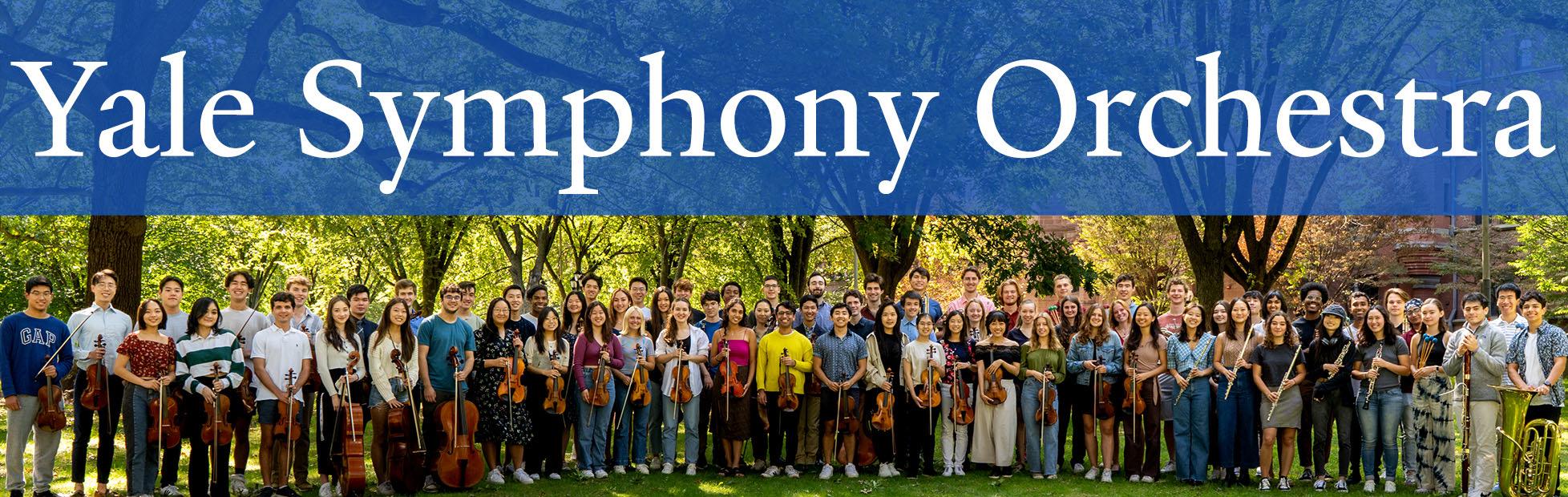
The Yale Symphony Orchestra was founded in 1965 by a group of students who saw the growing potential for a large orchestral ensemble to thrive on campus. The YSO provides a means for students to perform orchestral music at the conservatory level while taking advantage of all that Yale, a liberal-arts institution, has to offer.
The YSO boasts an impressive number of alumni who have gone on to successful musical careers with: New York Philharmonic (Sharon Yamada, 1st violin), the Boston Symphony Orchestra (Haldan Martinson, principal 2nd violin, and Owen Young, cello), Vancouver Symphony (Henry Shapard, principal cellist), the Los Angeles Philharmonic (David Howard, clarinet), the San Francisco Symphony (the late William Bennett, oboe), Philadelphia Orchestra (Jonathan Beiler, violin), Toronto Symphony (Harry Sargous, oboe, ret.) and the Israel Philharmonic (Miriam Hartman, viola); as well as music director of the Baltimore Symphony Orchestra Marin Alsop; National Public Radio commentator Miles Hoffman; composers Michael Gore, Robert Beaser, Conrad Cummings, Stephen Paul Hartke, Robert Kyr, and more.
Throughout its history the YSO has been committed to commissioning and performing new music. Notably, the YSO presented the European premiere of Leonard Bernstein’s Mass in 1973, the world premiere of the definitive restoration of Charles Ives’ Three Places in New England, the U.S. premiere of Debussy’s Khamma, and the East Coast premiere of Benjamin Britten’s The Building of the House.
The YSO programs orchestral works written by new and emerging composers, as well as lesserheard works by established and obscure composers. The full list of YSO premieres can be seen at https://yso.yale.edu/concert-history/premieres.
The YSO has performed with internationally recog-
nized soloists; including Yo-Yo Ma, Frederica von Stade, Emmanuel Ax, David Shifrin, Thomas Murray, and Idil Biret. Each year the YSO is proud to perform major solo concerti played by the student winners of the William Waite Concerto Competition.
The YSO has performed at New York City’s Carnegie Hall, Avery Fisher Hall at Lincoln Center, and St. Patrick’s Cathedral. In the past ten years, the YSO has toured domestically and internationally, including a 2010 tour of Turkey with acclaimed pianist Idil Biret. Ms. Biret rejoined the orchestra for a recording of Paul Hindemith’s piano concerti, which were released in 2013 on the Naxos label.
Past tours have brought the orchestra to Portugal, Korea, Central Europe, Italy, Brazil, and Russia. The YSO completed its first tour of Mexico in March of 2023, and just returned from a five concert tour of North Macedonia and Greece. The full list of YSO tours can be seen at https://yso.yale.edu/concert-history/tours.
The YSO is famous for its legendary Halloween Show, a student-directed and -produced silent movie, performed around midnight in full costume. Long a Yale tradition, the Halloween Show sells out Woolsey Hall days in advance, and the production details and storyline remain closely guarded secrets until the night of performance. Recent cameo film appearances include James Franco, Woody Allen, Alanis Morisette, Rosa DeLauro, Jodie Foster and Jimmy Kimmel.
The YSO music directors include Richmond Browne, John Mauceri, C. William Harwood, Robert Kapilow, Leif Bjaland, Alasdair Neale, David Stern, James Ross, James Sinclair, Shinik Hahm, George Rothman, and Toshiyuki Shimada and William Boughton. This year marks Elizabeth Askren's first year as Director.
The Yale Symphony Orchestra would like to thank the following for their support:
$5,000 or more
Anonymous
The William Bray Fund for Music
Daniel B. Feller, M.D. ’74
James M. Ford, M.D. ’84, MED ’89
Kerry Fowler '73 B.S., '74 M.S., '78 Ph.D. Itzak Gartenberg
David N. Herskovitz ’84
Yale Symphony Orchestra Director’s Resource Fund
James R. Meehan, Ph.D. ’71
Robert L. Perkel, M.D. ’72
Prof. John K. Roth GRD ’66
Wendy Sharp ’82 and Dean Takahashi ’80, ’83 SOM
Mr. Hao and Michelle Wang
$1,000—4,999
Diane Z. Alexander ’83
Ms. Ana Isabel Ayerbe ’86
Daniel Berger ’93
Ms. Jean S. Brenner ’71
Dr. Stephen Y. Chang ’95
Randall S. Edson, M.D. ’70
Mr. Gary S. Ginstling ’88
Mr. Abel G. Halpern ’88
Ms. Rebecca Rusack Hawkins ’83
Dr. Elizabeth Petri Henske ’81
Mr. Robert C. Hensky ’81
$500—999
Mr. Peter Belina
Mr. Daniel Meyer Berger ’93
Mr. David A. Burkhart ’76, ’77 MUS
Mindy B. Chanan
Prof. Lori Fisler Damrosch ’73
Mr. Matthew T. Gabbard ’07
Mr. Matthew Dean Griffith ’14
Mrs. Jeanie K. Jho ’99 Drake M. Lamen, M.D. ’73
Karl R. Laskowski, M.D. ’03 MED ’07 MED ’08
Ms. Caroline Sangwon Lee ’89
Mr. Robert C. Lieberman ’86
Mr. Jonathan Lewis
Mr. Philip Henry Lima ’83
Mr. Christopher Lin-Brande ’10
Dr. Hyun Jung Ko
Mr. Neal E. Kravitz ’79
Steven Liu, M.D. ’97
Ms. Linda A. Marianiello ’80
Mr. Joel Marks
Mr. Frank Oh
Ms. Isabel Padien O’Meara ’99
Ms Sarah Payne ’98
Mr. Jeremy Mrose Rissi ’99
Dr. Pamela S. Tauchi-Nishi
Mrs. Julia A. Viazmenski
Mr. Robert P. Masland, III ’72
Dr. Steven Nishi
Valeria Constance Norton, M.D. ’87
Ms. Erika Johnson Rissi ’98
Mr. Peter Johannes van Roessel ’96
Dr. John K. Roth ’65 M.A., ’66 Ph.D.
Prof. Margo J. Schlanger ’89, LAW ’93
Charles Michael Sharzer ’12
Mr. Ralph A. Schweinfurth
Dr. Jennifer Kyung Shin ’99
Dietrich L. Snell, Esq. ’78 LAW ’82
Justin Daniel Stilwell ’09
Mrs. Linda & Steve Totilas
Mr. Austin Wang ’25
Prof. Robert K. Wimpleberg ’68
Mr. James Charles Barket MUS ’88
John A. Baron, M.D. ’67
Mr. Benjamin G. Bartolome ’16
Jean Bennett M.D., Ph.D. ’76
Dr. Joshua A. Bloom ’77
Mr. Martin J. Brennan III ’87
Mr. Devon R. Breton-Pakozdi ’16
Mr. Samuel William Byrne ’09
David C. Cansler, Ph.D. ’74
Mr. Michael A. Carrier ’91
Ms. Danica Chin ’99
Mr. Charles Cocores
Mr. Conrad M. Cummings ’70
Ms. Jane C. Datta ’84
Dr. Frank Samuel David ’92
Ms. Amy C DeLouise ’85
Dr. Sarah R. Dewey
Mr. Thomas C. Duffy
Richard H. Dumas
Ms. Margaret Edwards
Mr. Thomas K. Emmons ’69
Ms. Sarah A. Felstiner ’91
Mr. Brian Christopher Fidali ’11
Daniel S. Fierer
Mr. Matthew T. Gabbard ’07
Ms. Donna Gacek
Kathleen Gacek
Pamela J. Gray ’74
Richard W. Hadsell, ’71 M.Phil., ’75 Ph.D.
Mr. James B. Harding ’87
Mr. Kyung Suk Hwang
Dr. Michel T. Jackson ’83
Dr. David H. Jho, M.D., Ph.D. ’98
Ms. Ellen Kaner ’80
John W. Karrel ’75
Michael S. Kerekes
Brian D. Koh ’99 M.S., ’01 M.Phil., ’07 M.D.
Mr. Steven Lewis ’18
Ms. Samantha Lichtin ’16
Ms. Sharon B. Like ’78
Dr. Roopa K. Kalyanaraman Marcello ’01
Ms. Michelle Elizabeth Kanter ’03
Mr. Steven M. Kaufman ’81
Ms. Erika Penzer Kerekes ’88
Mr. Lee P. Kessler
Ms. Bee-Seon Keum ’05 MUS ’06
Brian D. Koh, M.D.
GRD ’01, MED ’01
Ms. Kathrin D. Lassila ’81
Mr. Steven Lewis ’18
Ms. Sharon B. Like ’78
Mr Jeffrey Lipnick
Prof. Mary T. Lui HON ’10
Ms. Caitlin L. McAuliffe ’09
Mr. Jared Lee Middleman ’13
Mrs. Veronica Calle Middleman ’13
Dr. Sayuri Miyamoto ’82
Mr. Randi Moore
Mr. Brian G. Mountford ’86
Mr. Mark Mulligan ’84
Dr. Natalia Neparidze
Mr. Jesse Newman ’70
Mr. Ian A. Niederhoffer ’19
Mr. Andre L. O’Neil ’88
Mr. Timothy A. Orr ’09
Ms. Julianne Theresa Parolisi ’02
Ms. Nira Pollock ’93
Paul P. Promadhat ’90
Mr. Kevin Qian ’14
Glenn M. Reiter ’73 B.A., ’76 J.D.
Daniel Rissi ’73
Mr. Peter Johannes van Roessel ’96
Ms. Julie Ann Schneider ’93
Ms. Dana Lee Schneider ’15
Mrs. C. Newton Schenck
Ms. Serena W. Shapard ’20
Mr. Shu-Ping Shen ’01
Dr. Robert J. Shevlin ’69
Ms. Jennifer Siegel ’90 GRD ’98
Mr. Jie Song
Mr. Sasha Henry Spector ’93
Dr. Gary K. Steinberg ’74
Dr. Mary C. Stoddard ’08
Ms. Victoria Yu-Than Su ’96
Ms. Elizabeth A. Sullivan ’74 GRD ’76
Ms. Patricia Borga Suvari ’83
Dr. Sandra M. Sweetnam ’71
Ms. Tasha Yap Tanhehco ’01
Mr. Glenn R. Thrope ’08
Meghan K. Titzer ’06
Mr. Peter Tropper ’73
Mr. & Mrs. Andrew F. Veitch
Claudia B. Veitch
Dr. Nathaniel O. Wallace ’69
Ms. Anna T. Weesner ’87
Mr. David Adam Weinstein ’10
Ms. Cindy Q. Xue ’17
Mr. Jonathan H. Zeitlin ’87
Tax-deductible contributions to the Yale Symphony Orchestra make up a significant part of our total operating budget. Your donations are vital to us, and are very much appreciated. Please consider making a donation to the Yale Symphony Orchestra. https://yso.yale.edu/why-give-to-the-yso