
the Yale Concert Band
Yale’s
premier wind ensemble
Thomas C. Duffy, Music Director
with
special guests
the Yale Glee Club
Jeffrey Douma, Music Director
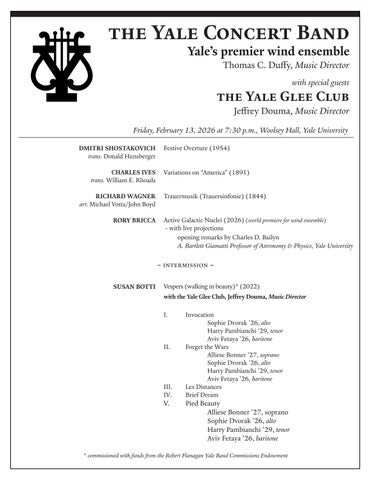
Friday, February 13, 2026 at 7:30 p.m., Woolsey Hall, Yale University
DMITRI SHOSTAKOVICH
trans. Donald Hunsberger
CHARLES IVES
trans. William E. Rhoads
RICHARD WAGNER
arr. Michael Votta/John Boyd
RORY BRICCA
Festive Overture (1954)
Variations on “America” (1891)
Trauermusik (Trauersinfonie) (1844)
Active Galactic Nuclei (2026) (world premiere for wind ensemble) - with live projections
opening remarks by Charles D. Bailyn
A. Bartlett Giamatti Professor of Astronomy & Physics, Yale University
~ intermission ~
SUSAN BOTTI
Vespers (walking in beauty)* (2022)
with the Yale Glee Club, Jeffrey Douma, Music Director
I. Invocation
Sophie Dvorak ’26, alto
Harry Pambianchi ’29, tenor
Aviv Fetaya ’26, baritone
II. Forget the Wars
Alliese Bonner ’27, soprano
Sophie Dvorak ’26, alto
Harry Pambianchi ’29, tenor
Aviv Fetaya ’26, baritone
III. Les Distances
IV. Brief Dream
V. Pied Beauty
Alliese Bonner ’27, soprano
Sophie Dvorak ’26, alto
Harry Pambianchi ’29, tenor
Aviv Fetaya ’26, baritone
* commissioned with funds from the Robert Flanagan Yale Band Commissions Endowment
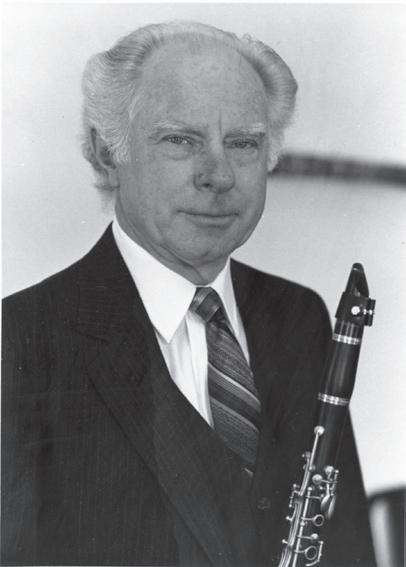
The Yale Concert Band was organized by Keith L Wilson in 1946. At that time and for decades afterward, the majority of music played by wind bands in the United States consisted of arrangements and transcriptions of popular orchestral, opera, and show music. Wilson was a nationally recognized band director, composer, and arranger, whose work is still held in the highest regard. As president of the College Band Directors National Association in 1962, he led the organization in the commissioning of music specifically for the wind band; these compositions were solicited from nationally and internationally known composers. The many years of music being transcribed for wind band did generate some masterpieces, and many Americans learned and loved opera, orchestral, and popular music through their local wind bands.
Festive Overture, Op. 96 (1954)
DMITRI SHOSTAKOVICH (1906-1975)
trans. Donald Hunsberger
About Tonight’s Music
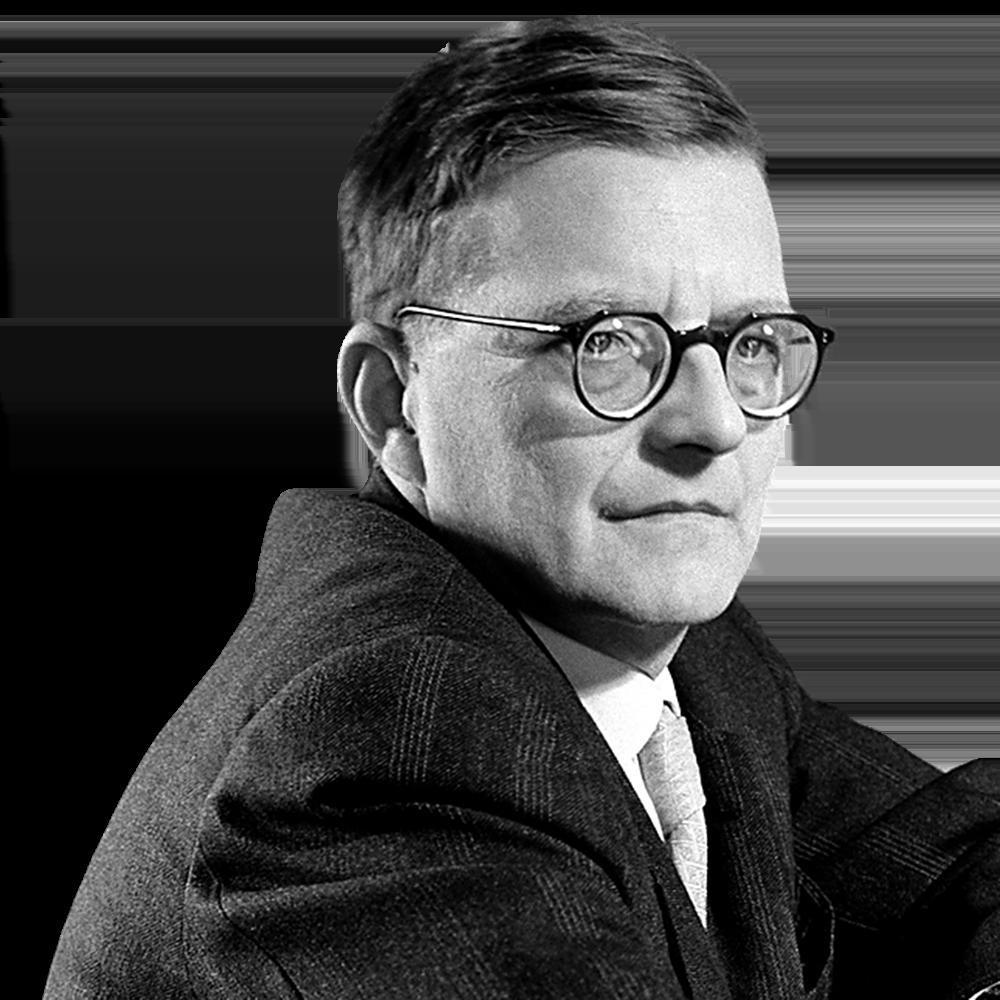
Dmitri Shostakovich composed the Festive Overture in 1954 following a commission from the Bolshoi Theatre in Moscow. The theater requested a piece from Shostakovich only three days prior to the occasion at which it would premiere: a celebration of the October Revolution’s 37th anniversary. Shostakovich is said to have produced the score in a mere matter of hours, leaving the musicians to perform from parts with still-drying ink, rushed over from the copyist minutes earlier.
The speed at which Shostakovich completed this overture is perhaps apparent in its lively rhythms and bright melodies, carried in Donald Hunsberger’s transcription by the upper woodwinds. Following a majestic opening fanfare in the brass, a clarinet solo whisks the ensemble away on a wonderfully wild series of scales upon which the movement is largely based. The middle section’s sweeping melody gives way to a modulated variation of the first theme, and the entire band flies through a final restatement of the fanfare before exploding to a triumphant final chord.
Shostakovich had a complex relationship to the government of the Soviet Union, and many believe that the jovial tone of the Festive Overture reflects his relief at Joseph Stalin’s death the year prior. While at times the composer benefitted greatly from Stalin’s support, he remained under constant scrutiny and threat of execution when his music did not suit the government’s agenda. After the Soviet Union’s Central Committee declared the formalism of his music to be contrary to Soviet values, Shostakovich spent several nights in the hallway outside of his apartment, his briefcase packed with a toothbrush and change of underwear, so that his family would not be disturbed if the secret police came to take him away.
Throughout his life, in times of both governmental favor and condemnation, Shostakovich used music as a form of political expression. His famous Second Piano Trio (1944) engages with Jewish melodies in its final movement, and his 1948 song cycle From Jewish Folk Poetry, though not premiered until 1955, explicitly explores Jewish themes through its textual content; scholars interpret both as referencing Jewish art in subtle protest of Stalin’s regime. Thus, in the exuberance of the Festive Overture, Shostakovich may have been operating on two levels: as a loyalist to the Soviet Union but also, for those who chose to see it, as a figure of creative resistance in the face of immense oppression.
— Program note by Zoe Frost MY ’27
Variations on “America” (1891)
CHARLES IVES (1874-1954)
orch. William Schuman (1910-1992) (1966)
trans. William E. Rhoads (1918-1990) (1968)
The title of “Variations on ‘America’” is somewhat recursive. The traditional tune (and de facto national anthem during Ives’ early life) America (My Country ’tis of Thee) is itself a variation on what has been the national anthem of the United Kingdom, Russia, Germany, and other countries at points throughout history. In a larger sense, the Founding Fathers established America as a variation on the monarchical European powers. By composing this piece in the aftermath of the Civil War, Charles Ives emphasizes that America is always a variation on itself. William Schuman and William E. Rhoads later supported this with their orchestrations of the piece during the height of the Cold War. In its semiquincentennial year, America is again a variation on itself, filled with increasing political polarization and attacks on its own founding principles. There is no better time to revisit Ives’ masterpiece, a work that suggests that America, much like its music, is at its most authentic when it is most dissonant.
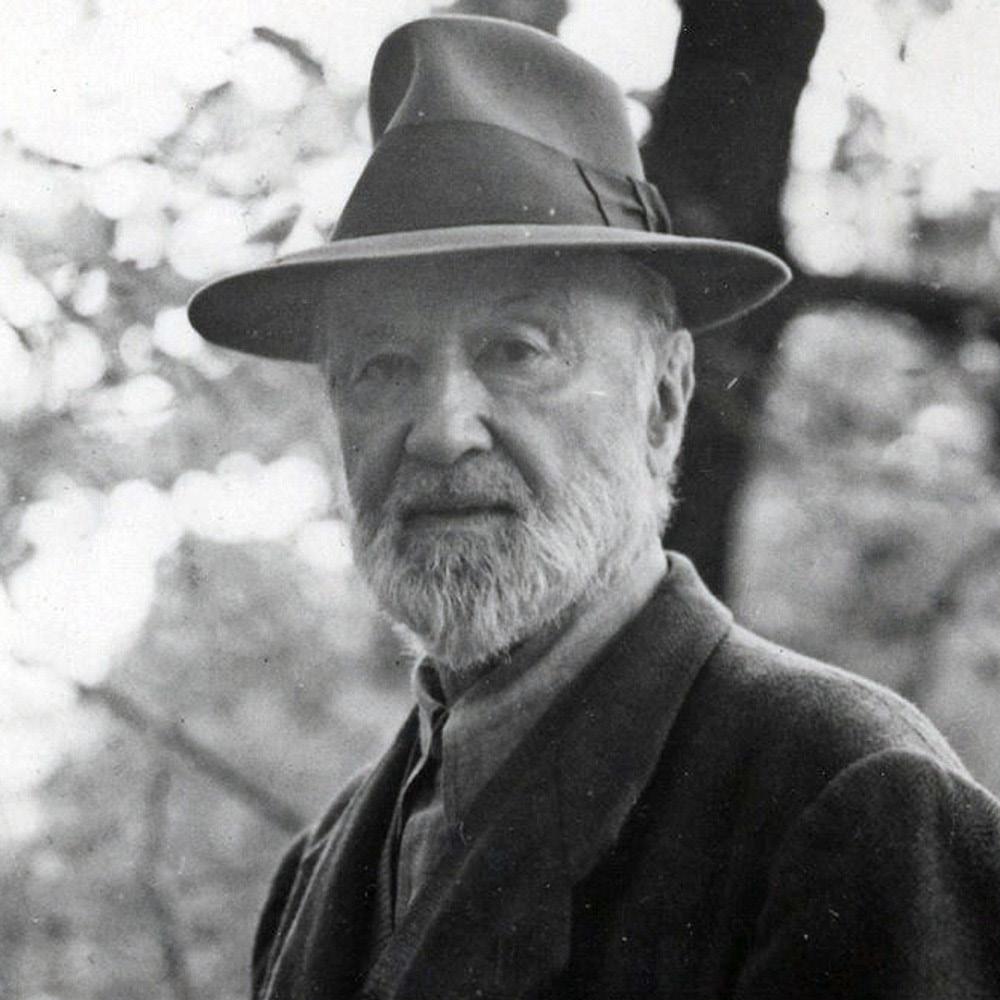
Perhaps Yale’s most influential musical export, Charles Ives is remembered for his trailblazing use of dissonance in painting a distinctively American musical picture. Ives grew up exposed to the sounds of patriotism as the son of a Union Army bandmaster. Through combining Union folk tunes with experimental composition techniques, he vividly portrayed the complexity of American life following the Civil War. Seventeen-year-old Charles Ives composed Variations on “America” for solo organ in 1891 and soon thereafter performed it at the Methodist church in Brewster, New York. The interludes within the piece are thought to be Ives’ first use of bitonality (writing in two keys at once), which would become a staple in his later writing. Ives’ father, although proud, rejected the idea of his son playing this type of music in church: “They upset the elderly ladies and make the little boys laugh and get noisy!” Variations on “America” was not published until 1948. Following Ives’ death, William Schuman and William E. Rhoads transcribed the piece for orchestra in 1966 and wind band in 1968, respectively.
After a triumphant, patriotic introduction and liturgical statement of the theme, Ives immediately begins deconstructing the tune. The first variation showcases virtuosic woodwind flourishes, while the second introduces a lyrical oboe solo undercut by an unsettling bass line, reminding the listener of Ives’ penchant for tension. Following this, the piece becomes truly “Ivesian” with its first bitonal interlude; half the band plays in F major while the other half trails in D-flat major. Despite the muddy defiance, the melody still sings through. The third variation, a jolly scherzo, acts as the light at the end of the gloomy interlude. Although written as a Polish polonaise in the solo organ version, the fourth variation sounds more like a dramatic Spanish folk dance due to the powering castanets. After a second bitonal interlude, Ives’ youthful spirit takes center stage for the fifth variation. In the solo organ version, Ives writes a virtuosic pedal line and marks the tempo with “as fast as the pedals can go.” The pedal part, which Ives described as “almost as fun as playing baseball” is passed down from cornet to euphonium to tuba. The piece ends with an increasingly chaotic coda that culminates in a powerful, unison statement of the theme.
Ives’ characteristic use of dissonance serves as more than just a musical prank from a seventeen-year-old composer; it is a mirror for America to reflect on. By layering clashing keys and unsettling rhythms over a familiar anthem, Ives reminds us that the American experiment is rarely a clean unison and often at odds with itself. However, just as the tension in these variations eventually gives way to the towering finality of the coda, Ives suggests that our national dissonance is not a sign of failure, but a prerequisite for progress. As we navigate the complexities of this semiquincentennial year, Variations on “America” stands as a testament to the fact that while the melody may go off course, the piece continues towards a more perfect resolution.
Trauermusik (Trauersinfonie) (1844)
RICHARD WAGNER (1813-1883)
arr. Michael Votta and John Boyd
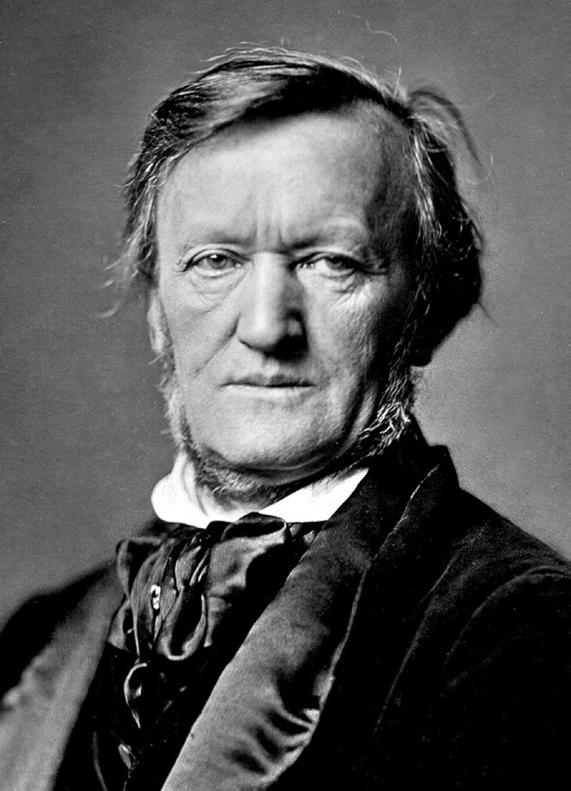
Carl Maria von Weber died in the summer of 1826. The prolific German composer passed away in London, where he was laid to rest in a vault beneath St. Mary Moorfields. This would not be his final resting place. Eighteen years later, following a determined campaign to return him to his homeland, Weber’s remains were exhumed and transferred to his family’s burial plot in Germany. To commemorate the composer’s long-awaited return to his motherland, Richard Wagner composed Trauermusik. Through a torch-lit procession to Weber’s grave, a large wind band of seventy-five players performed a somber selection of Weber’s works, transforming the ceremony into both a homecoming and a eulogy for Wagner’s departed comrade.
By the mid-19th century, Wagner had emerged as one of Germany’s most venerated composers. A celebrated champion of the Romantic tradition, Wagner revolutionized the genre through his principle of “Gesamtkunstwerk,” uniting poetic, musical, visual, and dramatic elements in resounding musical amalgamations. His works are monumental in both scale and ambition, often unfolding over vast spans of time with dense orchestration, elaborate leitmotifs, and an unyielding emotional intensity. Given this reputation for grandeur and excess, “Trauermusik” stands apart within Wagner’s musical repository. Written not for the opera house but for a funeral procession, the piece is marked by restraint and solemnity rather than theatrical bombast, revealing a more intimate dimension of a composer better known for sonic enormity.
Trauermusik opens with quotations from the opera “Euryanthe”, drawing directly from Carl Maria von Weber’s overture steeped in loss, longing, and Romantic fatalism. In the show, the titular heroine mourns Emma, her lover’s sister, who takes her own life after learning of her beloved’s death in battle. By invoking such material, Wagner situates the piece immediately within a world of nostalgia and profound grief, allowing Weber’s musical language to serve as both memorial and emotional foundation. The opening phrases unfold with a ghostly whisper, marked by a darkened woodwind palette. Muted, carefully balanced lines create an atmosphere of hushed devastation rather than overt lament. The principal material that follows is drawn from the cavatina “Hier dicht am Quell,” a moment in “Euryanthe” rich with textual and symbolic references to death. Wagner’s orchestration is especially telling, as the plaintive timbre of the oboes and the exposed upper register of the clarinets evoke the keening cries of mourners, while the ensemble as a whole maintains a solemn, processional dignity.
Trauermusik concludes with a coda drawn from Act II of “Euryanthe,” returning to the work’s earlier “spiritual” motif but reframing it through a gentler, more luminous lens. Where the opening dwells in shadow and suspension, this final section offers a sense of release — its harmonic language subtly warmed, its phrases shaped in a reassuring, majestic benediction. It is eloquent yet understated, overflowing with lyric beauty accentuated by a slow, measured tempo. Wagner himself remembers the piece fondly, stating “one had never before achieved anything that corresponded so perfectly to its purpose.” Indeed, rather than overwhelming the listener, Wagner allows grief to emerge gradually, shaped by color, texture, and breath — suggesting consolation as well as sentimentality.
Richard Wagner is often remembered as a musical juggernaut. His dense textures and daring harmonies reshaped the course of Western music. Unfortunately, inseparable from Wagner’s compositional genius is his virulent antisemitism. No figure embraced Wagner’s musical prowess more than Adolf Hitler, who revered the composer as a prophet of German cultural supremacy. Lauded by some as a “musical revolutionary” and denounced by others as a “disease,” Wagner’s reputation is sullied by bigotry and a posthumous association to the Third Reich.
Nevertheless, Wagner’s works endure as cornerstones of the operatic and symphonic repertoire. His music continues to fill concert halls even as its creator’s ideology casts a long and uneasy shadow over performers and audiences alike. Should we celebrate the innovations of a singular artistic mind, or refuse to separate the art from the harm of its creator? There are no simple answers. What remains essential, however, is an ongoing reckoning and acknowledgment of the prejudicial legacy that haunts even the most transcendent and evocative strains of Wagner’s music.
Active Galactic Nuclei (2024) (world premiere for wind ensemble)
RORY BRICCA ES ’26 (b. 2004)
“Premiered by the Boston Pops Orchestra and Brevard Music Center Orchestra. Readings by the Yale Symphony Orchestra and Brevard Music Center Orchestra. Transcribed for the Yale Concert Band, Thomas C. Duffy, DMA.”
The composer writes of his piece:
“Active Galactic Nuclei (AGN) are supermassive black holes — objects with masses three billion times that of our Sun and from which nothing can escape, not even light. Around each black hole is an accretion disk of swirling, X-ray-emitting dust and gas and, perpendicularly, a jet of particles being violently ejected at close to the speed of light. According to AGN Unification Theory, proposed in the 1990s, a variety of objects thought to be distinct (including quasars, blazars, and Seyfert galaxies) are all in fact supermassive black holes, but simply angled differently in relation to the Earth.
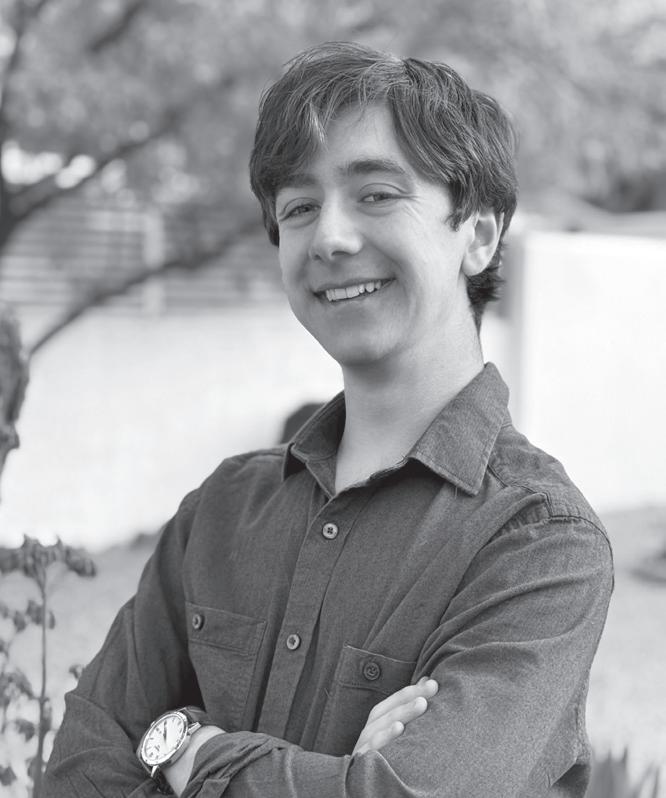
“Inspired by this idea of viewing the same object from different angles and far-flung galaxies, I envisioned Active Galactic Nuclei as a collection of contrasting snapshots juxtaposed with cinematic jump-cuts. The piece also uses two recurring motifs: a distorting fall/rip gesture, representing a star being sucked into the black hole directly, and a chromatic “spiraling inward” motif introduced by the xylophone. Simultaneous iterations of these motifs combine into amorphous textures, like a variety of stars and other objects all losing their identity as they coalesce into the swirling accretion disk. Finally, the piece ends with a terrifying portrayal of an astronaut being “spaghettified” (that is, stretched vertically) as she falls into the black hole, inspired by a recently released NASA simulation of what such an event would look like.
“I dedicate this piece to my astronomy professor, Dr. Charles Bailyn, who inspired in me a profound sense of awe in the frenetic activity and grandeur of these objects, and who, simply put, blew my mind.”
VIDEO CREDITS: Animations by Nick Nathanson, DESY/Science Communication Lab, Alessandro Roussel, European Southern Observatory/M. Kornmesser, ESA/Hubble/NASA/M. Kornmesser, and NASA’s Goddard Space Flight Center/J. Schnittman & B. Powell. Edited by Rory Bricca, with support from Jacob Bricca, Lisa Molomot, and Jonathan Crosby.
VESPERS (walking in beauty) (2022)
SUSAN BOTTI (b. 1962)
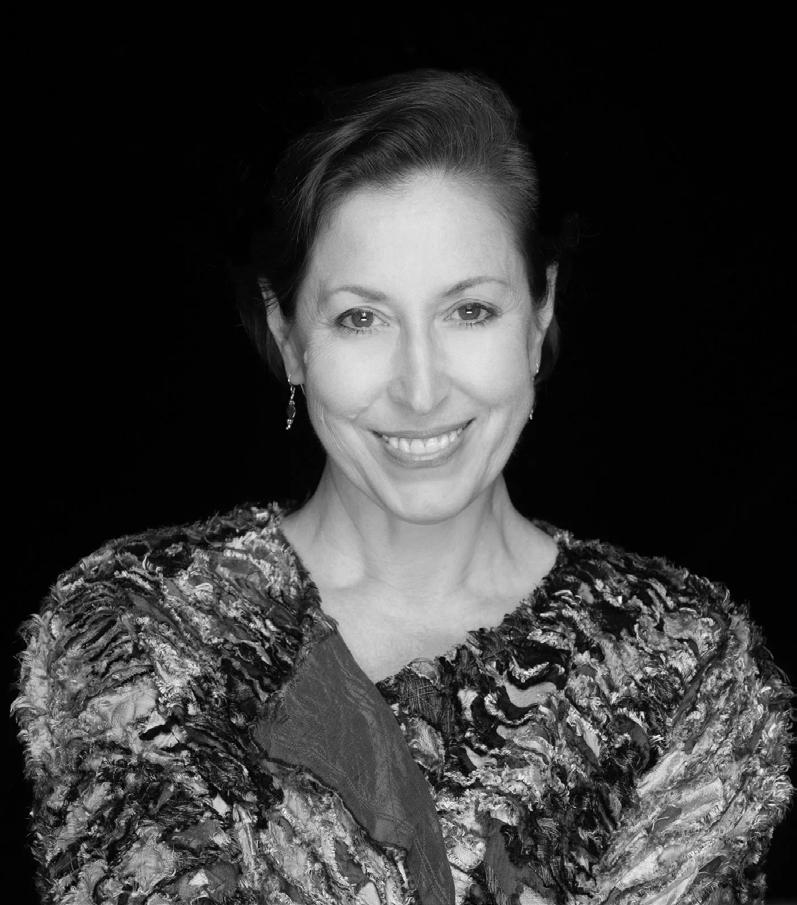
“I am full of memories of walking – alone, and with others, on mountains, through cities, through woods, and along waterways. Walking tunes me to the pulses and sounds of my environment. Aligning myself with the rhythm of the natural world is something I crave, and in fact, I find it to be a form of healing. A form of prayer. Walking at dusk is something I have enjoyed since childhood – a personal ‘vespers.’
“The texts I have chosen to set are interrelated by their imagery, their movement, and their sounds.
“‘Walk in Beauty’ is a Navajo (Diné) traditional prayer. I have not ‘set’ this prayer musically, rather it is a source of inspiration - a meditation I carry with me with gratitude.”
For my father, with whom I loved to walk (SB)
Vespers (walking in beauty) was commissioned by an international consortium of wind ensembles, including Yale University, led by Glen Adsit and the Hartt School. Premiere (17 November 2022): The University of Michigan Symphony Band. The University of Michigan Symphony Band and Chorus, Michael Haithcock, Conductor; Eugene Rogers, Director of Choirs.
Photo: John Rizzo
Text for Vespers (walking in beauty)
About the Yale Glee Club
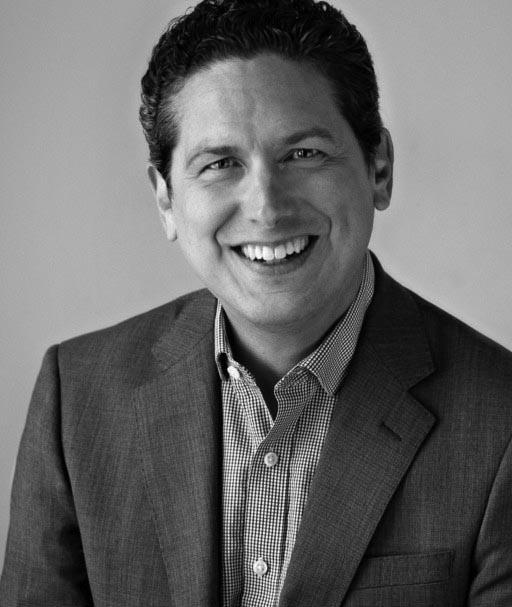
Jeffrey Douma is the Marshall Bartholomew Professor in the Practice of Choral Music at the Yale School of Music, and has served as Director of the Yale Glee Club since 2003. The Glee Club has been hailed under his direction by The New York Times as “one of the best collegiate singing ensembles, and one of the most adventurous.” He also heads Yale’s graduate program in choral conducting, serves as founding Director of the Yale Choral Artists, Director of the Chamber Choir and Choral Conducting Workshop at Yale’s Norfolk Festival, and Musical Director of the Yale Alumni Chorus, which he has led on eleven international tours.
Douma has appeared as guest conductor with choruses and orchestras on six continents and frequently appears as teacher in masterclasses throughout the world. Active with musicians of all ages, Douma served for several years on the conducting faculty at the Interlochen Center for the Arts. He has prepared choruses for performances under such eminent conductors as Marin Alsop, William Christie, Valery Gergiev, Sir Neville Marriner, Sir David Willcocks, Dale Warland, Krzysztof Penderecki, Nicholas McGegan, Craig Hella Johnson, and Helmuth Rilling. An advocate of new music, Douma established the Yale Glee Club Emerging Composers Competition and Fenno Heath Award, and has premiered new works by numerous composers. His original compositions are published by G. Schirmer and Boosey & Hawkes.
Prior to his appointment at Yale he served as Director of Choral Activities at Carroll College and taught on the conducting faculties of Smith College and St. Cloud State University. Douma earned the Bachelor of Music degree from Concordia College, Moorhead, MN, and the Doctor of Musical Arts degree in conducting from the University of Michigan.
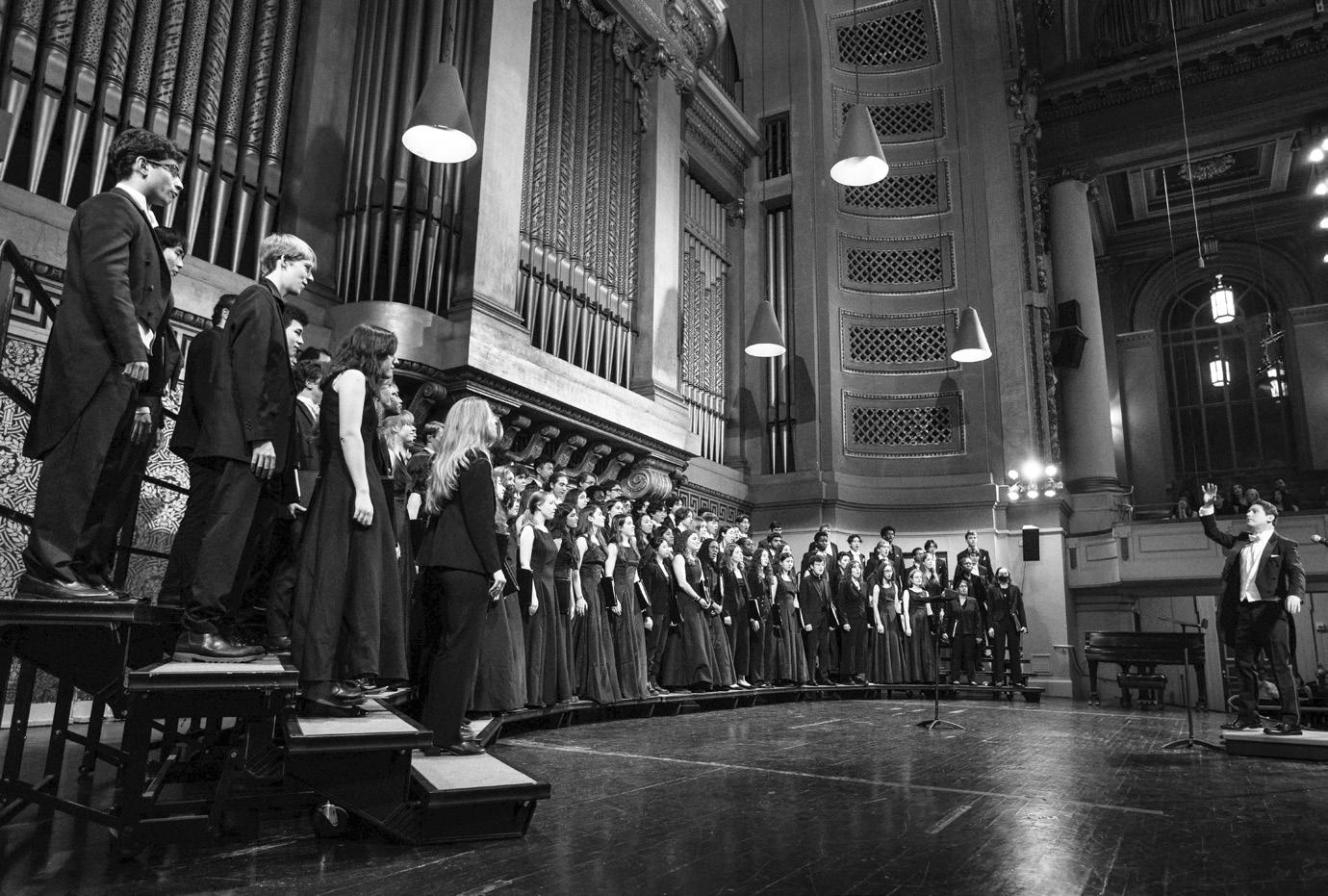
From its earliest days as a group of thirteen men from the Class of 1861 to its current incarnation as a 80-voice all-gender chorus, the Yale Glee Club, Yale’s principal undergraduate mixed chorus and oldest musical organization, has represented the best in collegiate choral music. The students who sing in the Yale Glee Club are drawn together by a love of singing and a common understanding that raising one’s voice with others to create something beautiful is one of the noblest human pursuits.
The Glee Club’s repertoire embraces a broad spectrum of music from the 16th century to the present, including motets, contemporary works, music from folk traditions throughout the world, and traditional Yale songs.
One of the most traveled choruses in the world, the Yale Glee Club has performed in every major city in the United States and embarked on its first overseas tour in 1928. It has since appeared before enthusiastic audiences throughout North and South America, Europe, Asia, Australia, and Africa.
The Yale Glee Club has had only seven directors in its 164-year history and is currently led by Jeffrey Douma. Previous directors include Marshall Bartholomew (1921-1953), who brought the group to international prominence, expanded the Glee Club’s repertoire beyond college songs to a broader range of great choral repertoire, and who also served as the University Glee Club of New York City’s second conductor from 1924-1927; Fenno Heath (19531992), under whose inspired leadership the Glee Club made the transition from TTBB chorus to mixed chorus; and most recently David Connell (1992-2002), whose vision helped carry the best traditions of this ensemble into the twenty-first century.
THE YALE GLEE CLUB - 165th Season
JEFFREY DOUMA, Music Director
T. SEAN MAHER, Operations and Productions Manager
KEVIN VONDRUCK, Assistant Conductor
OMENO ABUTU, Student Conductor
JOHN RASKOPF, Student Conductor
President: Kyle Thomas Ramos | Manager: Kinnia Cheuk | Winter Tour Managers: Ayush Iyer, Anjal Jain
Domestic Tour Managers: Alliese Bonner, Matthew Chen | Social Chairs: Catalina Ossmann, Elizabeth Wolfram
Publicity Chairs: Sofia Sato, Joleen Bakalova | Stage Managers: Logan Gilbert, Alex Kingma | Archivists: Kylie Berg, Angelique Wheeler | Alumni Coordinators: Nate Stein, Anna Zoltowski | Community Engagement Officer: Claire Zhong
Wardrobe Managers: Mika Hiroi, Joshua Li | Website Managers: Erika Lu, Aurelia Keberle
Soprano I
Tamara Bafi ’27, Economics and Humanities
Joleen Bakalova ’28, Global Affairs
Alliese Bonner ’27, Music
Yara Chami ’26, Economics, Certificate in Data Science
Kinnia Cheuk ’26, English, Energy Studies
Anjal Jain ’26, Biomedical Engineering and Music
Miriam Levenson ’29, Undeclared
Erica Lu ’28, Economics and Film & Media Studies
Rhea McTiernan Huge ’27, Philosophy
Elizabeth Wolfram ’27, Math & Philosophy, Molecular Biophysics & Biochemistry
Soprano II
Kylie Berg ’28, Molecular Biophysics & Biochemistry
Senlee Dieme ’26, History of Science Medicine and Public Health†
Sophie Dvorak ’26, Music
Manon Gilles ’29, Mathematics and Philosophy
Katie Gurney’ 26, Mathematics
Aurelia Keberle ’27, Biomedical Engineering
Rose Kosciuszek ’27, Political Science
Catherine Lee ’27, Cognitive Science & Comparative Literature
Christina Logvynyuk, GSAS ’26, European & Russian Studies
Teresa Ng ’29, Economics and Mathematics
Cayley Tolbert-Schwartz ’28, Chemistry and Theater, Dance, and Performance Studies
Naomi Tracey-Hegg ’29, Ecology and Evolutionary Biology
Claire Zhong ’28, Cognitive Science, Data Science Certificate
Alto I
Omeno Abutu ’27, Music
Logan Gilbert ’28, Mathematics & Physics
Mika Hiroi ’28, English
Sreetama Kushari ’29, Molecular, Cellular and Developmental Biology
Alistair Lam ’27, Cognitive Science†
Sofia Sato ’28, Psychology; Molecular, Cellular, and Developmental Biology
Francesca Sisskind ’29, Applied Mathematics and Economics
Sarah Sparling ’26, Linguistics
Hila Tor ’28, Theatre, Dance, and Performance Studies and Physics
Angelique Wheeler ’26, History and Molecular, Cellular, and Developmental Biology
Alto II
Temiladeoluwa Adeniran ’29, Molecular, Cellular, and Developmental Biology
Alexis Cruz ’28, Astrophysics
Audrey Jamieson ’29, Undeclared
Alexis Mburu ’27, Anthropology
Catalina Ossmann ’27, Cognitive Science
Aryana Ramos-Vazquez ’26, Biomedical Engineering
Fiona Ress ’29, Biomedical Engineering
Myla Toliver ’28, Chemistry and Theater, Dance, and Performance Studies
Thisbe Wu ’26, Art (Painting/Printmaking)
Anna Zoltowski ’27, Classics
Dibora Yilma ’29, Cognitive Science
Tenor I
Matthew Chen ’27, Ethics, Politics, and Economics
Schandy Cordero ’28, Ethics, Politics, and Economics
Ayush Iyer ’26, Molecular Biophysics & Biochemistry and Economics
Harry Pambianchi ’29, Math and Physics
Bill Qian ’26, Computer Science and Applied Math
John Raskopf ’27, Music, Education Studies Intensive Certificate
Gbemiga Salu ’27, Applied Mathematics
Nate Stein ’28, Political Science
Noah Stein ’26, Music
Kevin Vondrak YSM ’26, Choral Conducting
Tenor II
Jonathan Akinniyi ’26, Political Science
Andrew Jean-Charles ’27, Political Science and Music
Tavian Jones ’26, Applied Mathematics
David Liebowitz ’26, Music and Architecture†
Parker Mednikow ’29, Chemical Engineering
Stephen Morris ’27, Political Science
Prithvi Narayanan ’28, Global Affairs and Political Science
Ari Tsomocos ’27, Undeclared
Corin Wang ’29, Molecular Biophysics and Biochemistry
Andrew Xu ’27, Computer Science and Mathematics
Bass I
Andrew Boanoh ’27, Philosophy
Alexandre Campant ’29, Biomedical Engineering
Aviv Fetaya ’26, Computer Science and Music
Creed Gardiner ’26, American Studies
Alex Kingma ’28, Mathematics and Computer Science
Lukas Koutsoukos ’27, History and Ethics, Politics, and Economics
Frank Petty ’29, Computer Science and Economics
Vishwa Rakasi ’29, Global Affairs
Everett Tolbert-Schwartz ’26, Applied Physics and Chemistry
Jeffrey Yang ’28, Cognitive Science and Sociology
Bass II
Seung Min Baik ’26, History and Economics
Ethan Cooper ’29, Political Science
Ben Graham ’28, Music and Cognitive Science
Zach Jarvis ’28, Music and Philosophy
Josh Li ’26, Astrophysics and Global Affairs
Kyle Thomas Ramos ’26, Political Science
Lukas Vander Elst ’28, DS-Pre Med; Comparative Literature
Ben Weiss ’27, Molecular Biophysics & Biochemistry and Computer Science
Ben Xu ’26, Computer Science and Mathematics†
Charlie Zhong ’29, Undeclared
†—Section leader
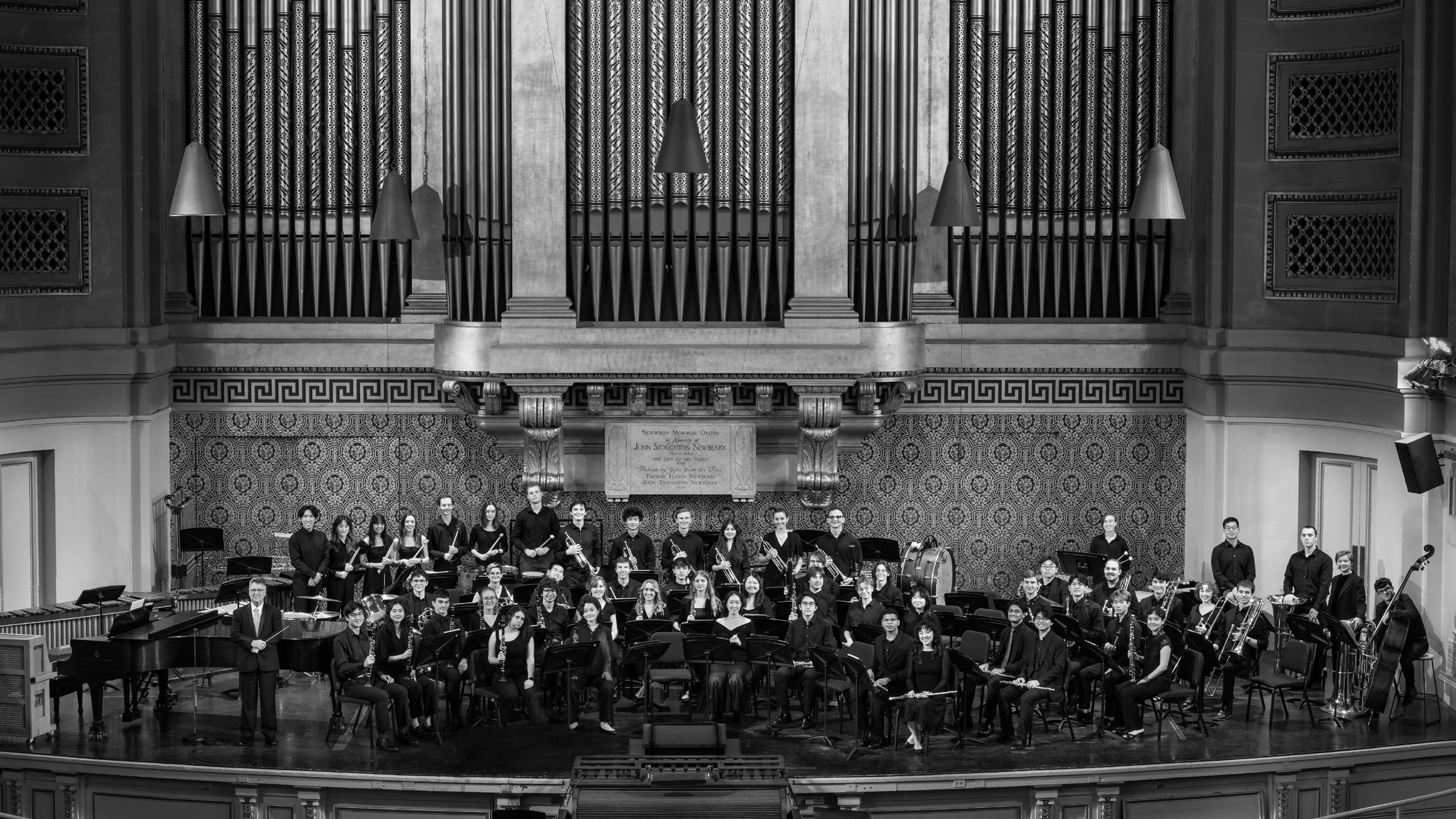
Upcoming Yale Bands Performances Spring 2026
• Wednesday, March 4 – 7:30 p.m. Yale Jazz Ensembles Big Band: Celebrating the Centennial of Miles Davis - “Miles Ahead.” Wayne Escoffery, Music Director. World premieres of big band orchestrations for the YJE Big Band by Michael Philip Mossman. Also feat. the world premiere of Through the Sunbreak by Miles Zaud. Morse Recital Hall in Sprague Memorial Hall. Free/no tickets required.
• Monday, April 8 – Yale Jazz Ensemble Big Band at Dizzy’s Club, New York. Wayne Escoffery, Music Director. Two sets, 7:00 and 9:00 p.m. Info/$Tickets: https://jazz.org/dizzys/

• Friday, April 10 – 7:30 p.m. Yale Concert Band, Thomas C. Duffy, Music Director. The Thomas C. Duffy Annual Spring Concert. Juvenalia for Solo Percussion and Wind Ensemble (Robert Honstein), feat. guest artist Garrett Arney, percussion. Also feat. Frank Morelli, Yale School of Music Professor of Bassoon: Bassoon Concertino (Francisco Mignone); Gnomon (Thomas C. Duffy); Tarot (Lindsay Bronnenkant). Woolsey Hall. Free/no tickets required.
•Tuesday, April 14 – 4:45-5:45 p.m. Yale Concert Band Pre-Commute Concert, Thomas C. Duffy, Music Director. Come hear Yale’s premier wind ensemble perform a short concert before you head home for the evening. Program TBA. Woolsey Hall. Free/no tickets required.
• Sunday, May 17 – 7:00 p.m. Yale Concert Band Annual Twilight Concert, Thomas C. Duffy, Music Director. Celebratory music and Yale songs on the eve of Yale’s Commencement. Outside on the Old Campus. Free/no tickets required.
Yale University Bands
P.O. Box 209048
New Haven, CT 06520-9048
ph: 203-432-4111
stephanie.hubbard@yale.edu https://bands.yale.edu
Photo: Harold Shapiro
SCAN for Dizzy’s tickets
About the Music Director
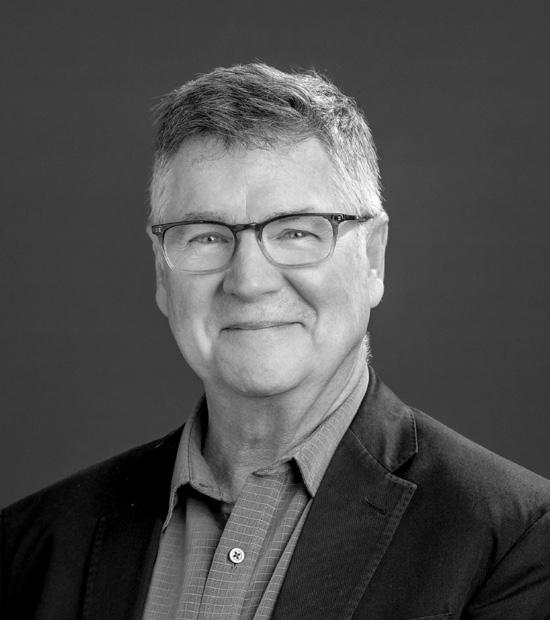
Thomas C. Duffy is Professor (Adjunct) of Music, Director of University Bands, and Clinical Professor of Nursing at Yale University, where he has worked since 1982. He is known as a composer, a conductor, a teacher, an administrator, and a leader. His interests and research range from non-tonal analysis to jazz, from wind band history to creativity and the brain. Under his direction, the Yale Bands have performed at conferences of the College Band Directors National Association and New England College Band Association; for club audiences at New York City’s Village Vanguard, Birdland, Dizzy’s Club, and Iridium; Ronnie Scott’s (London); the Belmont (Bermuda); as part of the inaugural ceremonies for President George H.W. Bush; and concertized in twenty-one countries in the course of nineteen international tours. Duffy produced a two-year lecture/performance series, Music and the Brain, with the Yale School of Medicine; and, with the Yale School of Nursing, developed a musical intervention to train nursing students to better hear and identify body sounds with the stethoscope. He combined his interests in music and science to create a genre of music for the bilateral conductor – in which a “split-brained conductor” must conduct a different meter in each hand, sharing downbeats. His compositions have introduced a generation of school musicians to aleatory, the integration of spoken/sung words and “body rhythms” with instrumental performance, and the pairing of music with political, social, historical and scientific themes. He has been awarded the Yale Tercentennial Medal for Composition, the Elm/ Ivy Award, the Yale School of Music Cultural Leadership Citation and certificates of appreciation by the United States Attorney’s Office for his Yale 4/Peace: Rap for Justice concerts – music programs designed for social impact by using the power of music to deliver a message of peace and justice to impressionable middle and high school students. Duffy has served as associate, deputy, and acting dean of the Yale School of Music. He has served as a member of the Fulbright National Selection Committee, the Tanglewood II Symposium planning committee, the Grammy Foundation Music Educators Award Screening Committee, and completed the MLE program at the Harvard University Institute for Management and Leadership in Education. He has served as: president of the Connecticut Composers Inc., the New England College Band Directors Association and the College Band Directors National Association (CBDNA); editor of the CBDNA Journal; publicity chair for the World Association of Symphonic Bands and Ensembles; and chair of the Connecticut Music Educators Association’s Professional Affairs and Government Relations committees. He is a member of American Bandmasters Association, American Composers Alliance, the Connecticut Academy of Arts and Sciences, Connecticut Composers Incorporated, the Social Science Club, and BMI. Duffy has conducted ensembles all over the world, including the National Association for Music Education’s National Honor Band in the Kennedy Center, Washington, D.C. (More extensive data is available at www.duffymusic.com, including a high resolution downloadable photo.)
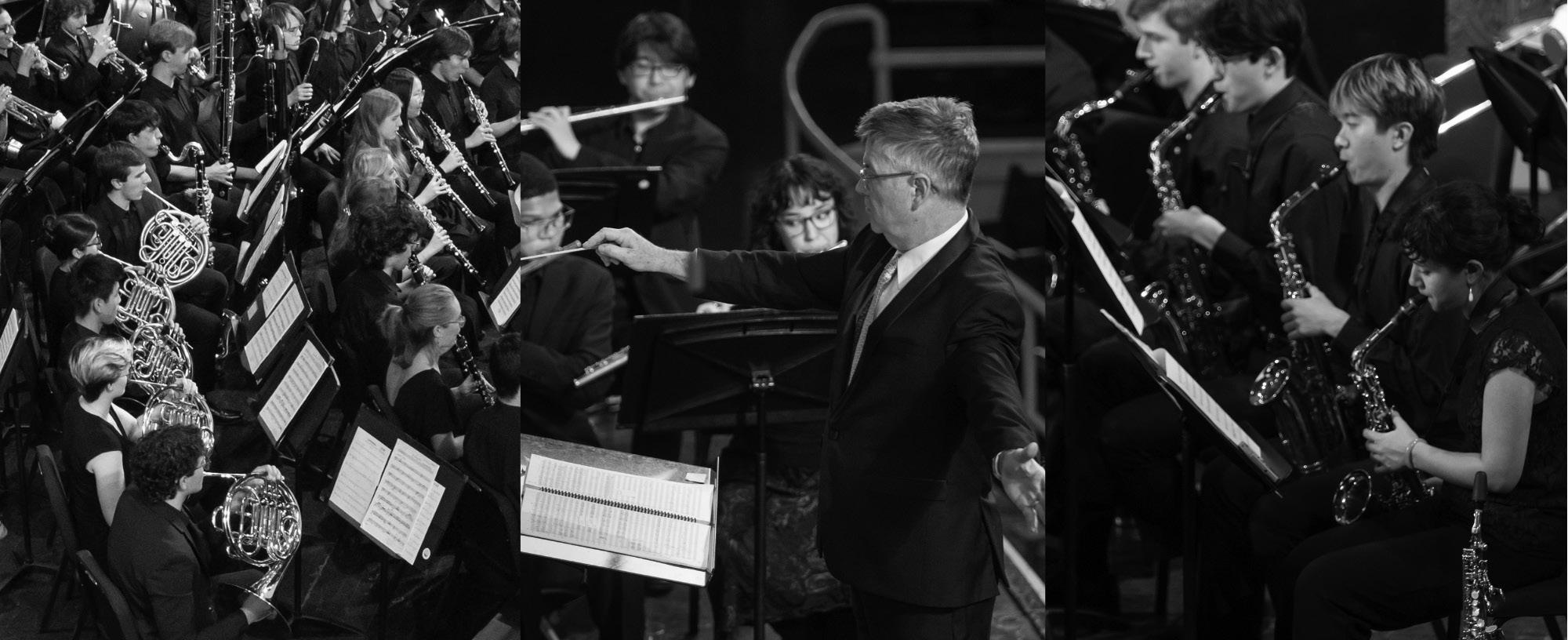
Photos: Harold Shapiro
Piccolos
YALE CONCERT BAND 2025-2026
THOMAS C. DUFFY,
Music Director
STEPHANIE HUBBARD,
Operations and Productions Manager
President: Jared Wyetzner | General Managers: Kaustuv Mohanty, William Wakefield
Social Chairs: Kyle Chen, Greta Garrison | Publicity Chairs: Zoe Frost, Lizzie Seward
Salena Huang YSEAS ’26 Mechanical Engineering and Materials Science
Flutes
Zoe Frost MY ’27* American Studies
Noah Watson TD ’28 Molecular, Cellular, and Developmental Biology
Diego Lee TC ’29 Undeclared
Allie Gruber PC ’26 English
Allan An BR ’28 Music/Molecular, Cellular, and Developmental Biology
Kaustuv Mohanty MC ’29 Molecular Biophysics and Biochemistry
Peter Nelson JE ’26 Biomedical Engineering
Mei Hao YSEAS ’28 Mechanical Engineering
Noelle Smith BK ’28 History
Alto Flute
Noah Watson TD ’28 Molecular, Cellular, and Developmental Biology
Oboes
Sophia Graham DC ’26* Economics
Penelope Emerson MY ’29 Applied Physics
Estelle Balsirow JE ’26 Linguistics
English Horn
Sophia Graham DC ’26* Economics
Eb Clarinet
Amelia Shaw TC ’28 Undeclared
Bb Clarinets
Sammy Feingold MY ’28 Keith L. Wilson Principal Clarinet Chair** Neuroscience
Amelia Shaw TC ’28 Undeclared
Joshua Chen SY ’27 Mechanical Engineering
Su Min Pyo PC ’29 Molecular, Cellular, and Developmental Biology
Trevor Strano MC ’28 Earth and Planetary Sciences
Eleanor Kandoll PC ’29 Music
Cameron Nye BR ’27 Political Science
Amalee Bowen GSAS ’28 Egyptology
Bass Clarinet
Jacob Knowles ES ’28 History of Science, Medicine, and Public Health
Bassoons
Ari Blehert JE ’28* Physics
Bryce Falkoff TC ’29 Undeclared
Contrabassoon
Laressa Winters YSM ’26 Music
Soprano Saxophone
Lizzie Seward DC ’27* Physics and Philosophy
Alto Saxophones
Lizzie Seward DC ’27* Physics and Philosophy
Daniel Guo DC ’29 Undeclared
Tenor Saxophones
William Wakefield BF ’29 Undeclared
Baritone Saxophone
Hanson Qin ES ’28 Computer Science and Economics
Cornets/Trumpets (rotating)
Jared Wyetzner PC ’27* Physics
Lydia Berger MY ’29 Undeclared
Greta Garrison BF ’28 Global Affairs
Graydon Nolen DC ’28 Molecular Biophysics and Biochemistry
Isaiah Harvey TD ’28 Ethics, Politics, and Economics
Kyle Chen SY ’27 Molecular, Cellular, and Developmental Biology
French Horns (rotating)
Julia Landres JE ’28* Physics
Oved Rico MUS ’26 Music
Atticus Chan TC ’29 Mechanical Engineering
Shell Ross GH ’26 Classical Civilization
Zakariya Bouzid GH ’28 Undeclared
Trombones
Griffin Rupp YSM ’26* Music
Max Watzky BF ’27 Physics
Beatrice Beale Tate PC ’28 Undeclared
Nathan Lange SY ’27 Molecular Biophysics and Biochemistry
Euphoniums
Alfred Ma JE ’29 Music/Computer Science
Will Roberts MUS ’26† Music
Tubas
Benson Wang BK ’27* Economics
Gregory Wolf TD ’26 Psychology
Lillian Adey MY ’29 Electrical Engineering
String Basses
Ziv Shah SM ’29 Undeclared
Arden Ingersoll MUS ’26† Music
Piano
Matthew Li MY ’29 Economics/Mathematics
Harp
Sebastian Gobbels YSM ’26‡ Music
Percussion (rotating)
Madeline Chun SM ’26* Economics/Humanities
Nikolai Stephens-Zumbaum BF ’26* Mechanical Engineering
Gaby Garcia SM ’29 Undeclared
Jacob Leshnower GH ’27 Statistics and Data Science/Music
Mirabel Solomon BF ’28 Undeclared
Tally Vaneman GH ’27 Astrophysics
Zahra Virani SY ’26 Urban Studies/History of Art
Music Librarian
Allan An BR ’28 Music/Molecular, Cellular, and Developmental Biology
Zahra Virani SY ’26 Urban Studies/History of Art
* principal
** Friends of Keith L. Wilson (Director of Yale Bands from 1946-1973) honored him by endowing the principal clarinet chair in the Yale Concert Band in his name. If you would like information about naming a Yale Concert Band chair, please contact the Yale Bands Office.
† playing on Vespers only
‡ playing on Active Galactic Nuclei only