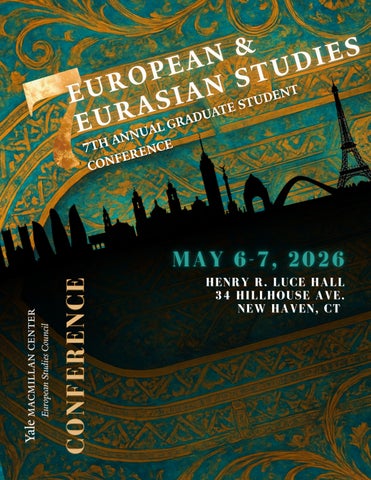
2026 Yale European and Eurasian Studies Graduate Student Conference Program
We share our sincere appreciation to the conference organizing committee for conceptualizing and planning this conference:
Committee Chair: Mike York
Christina Logvynyuk
Kam McDonald
Esin Nizamoglu
Christina Oh
Saba Shukvani
Katrina Simanovska
Lydia Smith
Jake Waldinger
Rebeka Zvirbule
Christina Andriotis, and all Staff and Student support of the European Studies Council of the Yale MacMillan Center
The planning committee is formed from current and former graduate students of the Yale European and Russian Studies MA Program, and the staff of the European Studies Council of the Yale MacMillan Center.
WELCOME REMARKS
by Professor Julia Adams, Chair, European Studies Council
COMMON ROOM COMMON ROOM
LUCE HALL LUCE HALL
PANEL ABSTRACTS & BIOS
Jamil Alizada is from the Republic of Azerbaijan and is currently a second-year MBA student at Yale School of Management. Before Yale, he served as General Counsel at a family office and worked as an Associate at Baker McKenzie. He holds a Bachelor of Laws from the Moscow State Institute of International Relations (Russia) and a master’s degree in Intellectual Property Law and Knowledge Management from Maastricht University (the Netherlands). His professional interests include IP management, AI governance, and regulation of digital platforms
“Telegram as Civic Infrastructure in Eurasia: Rethinking Trust & Safety Framework for Channel Ecosystems”
Across Russia and Eurasia, Telegram has become a core layer of public communication, operating less like a social network and more like civic infrastructure This creates a platform governance gap, because prevailing regulatory models assume enforcement can be applied to individual posts or accounts. Telegram’s channel architecture challenges those assumptions With one-to-many broadcasting, frictionless forwarding, and rapid mirroring, harm is rarely contained in a single post, but is produced and amplified through distribution pathways. What matters is how content spreads and who drives that spread. This shifts effective enforcement to channel networks – hubs, relay channels, and mirror channels – and to repeat-actor behavior rather than isolated content decisions This paper proposes a new platform governance framework for Telegram-like channel ecosystems that bridges legal expectations and operational realities It offers (1) a risk taxonomy for public channels, (2) a network-based enforcement model that treats interconnected channel clusters as the relevant unit of analysis, and (3) practical interventions, including clearer source cues on forwarded content and escalation against repeat offenders The framework is illustrated through a case study of information integrity during a fast-moving crisis The results can be used by platforms and policymakers to reduce risk without undermining legitimate civic use
ALP DEMIROGLU & MAURICIO MEZA
Alp Demiroğlu is a Master of Environmental Design candidate in the School of Architecture at Yale University. He is an architect and spatial researcher focusing on issues of migration, infrastructure, landscape, and architectural translation throughout the Mediterranean, Caucasus, and Central Asian regions. Alp holds a Bachelor of Architecture degree from Cornell University and is a recipient of the Robert J. Eidlitz Travel Fellowship. His work has been exhibited at Cornell University and the Turkish Pavilion at the 2018 Venice Biennale. Alp has presented research at the Royal Geographical Society's 2024 Annual Conference in London, and is published in the Dutch arts and culture magazine, Simulacrum.
Mauricio Meza is an MBA candidate at the Yale School of Management and an investment professional specializing in Latin American companies. His expertise spans the energy, utilities, and materials industries, with a particular focus on political analysis frameworks to guide investment decisions across the region. Previously, as a Portfolio Manager at SURA Asset Management, Mauricio directed asset allocation for international mandates and conducted research for Latin American portfolios. He holds a B.S. in Finance from Universidad Católica Santa María and is a CFA Charterholder. He currently serves as the President of the Yale SOM Investment Management Club.
PANEL ABSTRACTS & BIOS
“Corridors of Capital: Competing Systems of Financing and Worldmaking in Eurasia”
This paper examines how transnational oil pipelines function as worldmaking infrastructures that materialize competing regimes of finance, sovereignty, and territorial governance across post-Soviet Eurasia Through a comparative analysis of the Baku-Tbilisi-Ceyhan (BTC) pipeline and the KazakhstanChina (KzC) pipeline, we argue that infrastructure is not a neutral conduit of energy but a political technology that reorganizes space, authority, and minority relations. Drawing on political economy, legal geography, and infrastructure studies, the paper traces how neoliberal project finance anchored in Western capital markets and multilateral institutions produces the BTC as an extraterritorial corridor that manages risk through contractual sovereignty and spatial avoidance, notably routing around Armenia and marginalizing Kurdish regions In contrast, the KzC pipeline exemplifies Chinese state-backed sovereign lending, embedding energy flows within bilateral statecraft and incorporating Xinjiang into a tightly integrated economic-security frontier By foregrounding how financial architectures translate into divergent spatial strategies avoidance versus incorporation the paper contributes to debates on decolonizing Eurasian studies and understanding infrastructure as a regime of governance Ultimately, it shows how corridors of capital redraw political geographies, shaping visibility, marginalization, and power in contemporary Eurasia.
Alex Fisher is a PhD student in the history and theory of architecture at Princeton. His research focuses on how types and materials are repurposed and how cultural actors work with memories in Eastern Europe and Central Asia.
“Aisha-Bibi
in tatters—or, a dressing down in Soviet Kazakhstan”
In this paper, I study how the 12th-century Aisha-Bibi mausoleum was interpreted by historians and architects in Soviet Kazakhstan during the late Stalinist era and its immediate aftermath I start with an analysis of the mausoleum, whose exterior resembles the wedding dress that according to legend the woman it was built for died on her way to wear Next, I compare one of the photos my analysis is based on with a graphic inspired by it which appears on the cover of Architecture of Kazakhstan (1959) a first-of-itskind attempt to assemble the history of architecture on Kazakh territory. This comparison indicates that the designer who produced the graphic accentuated the ruinous state that the mausoleum was in I then track how Aisha-Bibi holds the book together, focusing on a spread in which a grid of ornaments from the mausoleum is juxtaposed with a plan of Russian imperial fortresses. This plan was purposefully cropped so that the fortresses look like Aisha-Bibi’s ornaments Finally, I consider high-profile building projects from the 1950s which reference the mausoleum, finding that this pre-modern work’s protracted ruination facilitated the production of modern space in print and the public realm.
Aliaksandr Shuba graduated the Bachelor and Master programmes in the Cultural Heritage studies from the European Humanities University in Vilnius, Lithuania. From 2017, he worked as an Early Stage Researcher under the urbanHIST project with the research project “The European Historiography of Urbanism in the 20th century. A critical analysis of cross-nationally oriented publications in Slavic languages” at the Bauhaus-Universität Weimar, Germany and spent his secondment at the Univerzita Pavla Jozefa Šafárika v Košiciach, Slovakia, along another one under the Centre of Social and Psychological Sciences of the Slovak Academy of Sciences (Slovakia). At the BauhausUniversität Weimar, he worked on his PhD thesis on “The Soviet and State Socialist Historiography of Urban Planning in the 20th century. A critical analysis of cross-nationally oriented publications in Slavic languages” under the supervision of prof. Dr. phil. habil. Max Welch Guerra, when he received the grant and worked as a teaching assistant under the DAAD STIBET programma. In his dissertation were integrated parts of the previous research, ideas and findings from his research under urbanHIST. He completed a few fellowships the Klassik Stiftung Weimar (Germany), and under the Thesaurus Poloniae programme of the Ministry of Culture and National Heritage of the Republic of Poland at the International Cultural Centre in Krakow (Poland). During the last years, he published numerous texts individually and co-authored on the European 20th century architectural, intellectual, and academic history.
PANEL ABSTRACTS & BIOS
“Tracing
the Forms
of Censorship
in the Soviet and State Socialist Architectural and Urbanistic Knowledge”
Censorship and its apparatus were strengthened and took different forms within professional and academic circles of writers, artists, and scholars after the Soviets came to power in the territories of the Russian Empire, and later in other parts of Europe after the Second World War, in countries aligned with what was considered the so-called “Eastern Bloc” or satellites of Moscow Although the presences of censorship in Soviet and state-socialist intellectual productions and discourses are no longer in question in current state of the scholarship, there remains a need to trace and deconstruct the evidence of its and implemented modifications, and how complex censorship apparatuses, their practices, and their intellectual outcomes operated in different forms, and what these looked like within the professional circles of Soviet and state-socialist artists, architects, and academics A key question, therefore, remains how to trace the elements and impacts of censorship in Soviet and state socialist professional literature and debates Different forms of censorship and their practices are often associated with institutions such as Glavlit in Moscow and other respective state bodies that functioned under Communist regimes This contribution offers critical insight through the case of the widely known and authoritative Soviet textbooks History of the Art of Urban Planning (1953, 1971, and 1979) by A V Bunin and T F Savarenskaya on architecture and urban planning, which were widely accessible in both state-socialist aligned and nonaligned countries due to the authors’ respected positions, state recognition, multiple editions, and translations Rare archival and published materials from Erkner, Moscow, and Berlin provide insights that help to clarify the mechanisms and logics of Soviet and state socialist censorship practices, while their books and related materials remain unique and representative cases
KISHWAR RIZVI (DISCUSSANT)
Kishwar Rizvi is the Robert Lehman Professor in the History of Art, Islamic Art and Architecture at Yale University. Her recent publications include The Transnational Mosque: Architecture and Historical Memory in the Contemporary Middle East (University of North Carolina Press, 2015), for which she was selected as a Carnegie Foundation Scholar, and Emotion, and Subjectivity in Early Modern Muslim Empires: New studies in Ottoman, Safavid, and Mughal art and culture, editor, (Brill, 2017). Her earlier publications include The Safavid Dynastic Shrine: History, religion and architecture in early modern Iran (British Institute for Persian Studies, I. B. Tauris, 2011) and the anthology, Modernism and the Middle East: Architecture and politics in the twentieth century (University of Washington Press, 2008), which was awarded a Graham Foundation publication grant.
Christina Oh is currently pursuing her M.A. in European and Russian Studies at Yale. She holds a B.A. in Linguistics with a Minor in Russian from the University of North Carolina at Chapel Hill. At UNC, Christina conducted extensive counterterrorism research, co-publishing one of the first comprehensive databases of right-wing extremist crime in the United States. During her senior year, Christina spent the months following the Russian invasion of Ukraine helping organize the volunteer effort Berlin Central Station, where she translated for refugees using language skills gained through the Critical Language Scholarship program.
Andrii Hrynko is a Political Studies MA graduate from the University of Saskatchewan, where his research examined temporary protection regimes, neoliberal humanitarianism, and displacement governance. His paper, "Precarious Reality, Humanitarian Rhetoric: A Critical Policy Analysis of Canada's CUAET Program," draws on Critical Policy Analysis, autoethnography, and Access to Information and Privacy (ATIP) requests (Canada's equivalent of FOIA) to examine the gap between Canada's humanitarian rhetoric and the economic logics shaping the Canada-Ukraine Authorization for Emergency Travel (CUAET) program. Having navigated the CUAET program himself, Hrynko brings a perspective rooted in both institutional research and lived experience. The paper is currently under review at Refuge: Canada's Journal on Refugees. Previously a parliamentary intern with the Office of MP Jenny Kwan and the Ukrainian Canadian Congress, he contributed to refugee casework and immigration advocacy at the federal level. He is now based in Ottawa, Canada, working as a community interpreter and developing a comparative doctoral research agenda on displacement governance and temporary protection regimes, building on his Canada-based analysis.
PANEL ABSTRACTS & BIOS
“Precarious Reality, Humanitarian Rhetoric: A Critical Policy Analysis of Canada's CUAET Program”
In this paper, I examine the contradiction between humanitarian rhetoric and economic logics in Canada’s migration governance through the case of the Canada-Ukraine Authorization for Emergency Travel (CUAET) Using a Critical Policy Analysis framework and Access to Information and Privacy (ATIP) documents, media sources, and autoethnographic evidence, I show that CUAET constructs Ukrainian displacement as temporary and treats permanent residency as unnecessary This design shifts responsibility for long-term stability onto individuals and communities while offering conditional support tied to economic performance. It privileges those whose labor aligns with Canadian market needs and produces structured precarity for others
Drawing on theories of neoliberal humanitarianism and biopolitical precarization, I situate CUAET within broader patterns of migration governance I show how temporary protection regimes manage displaced populations through conditional care, labor-market selection, and systemic insecurity This case contributes to scholarship on state-led humanitarianism by illustrating how policies framed in compassion can function as regulatory mechanisms for labor selection and exclusion
KAMRYN MCDONALD (CHAIR)
Kamryn is currently pursuing her M.A. in European and Russian Studies at Yale University. She holds a B.A. in International Relations and Gender Theory from UNC Chapel Hill and attended the University of Oxford University as an Armitage fellow studying International Relations, Russian Studies, and Philosophy. Kamryn has worked extensively to improve first-generation participation in higher education, founding the Honors Carolina FirstGeneration Student Association and the UNC First-Generation Student Newsletter. In addition to her advocacy work, Kamryn previously partnered with the UNC European Center to create materials highlighting Eurasian contributions to Eastern European literature. In this position, she brokered a partnership between Oxford and UNC to feature Ukrainian artwork that showcased the historical contributions of Ukrainian women throughout Europe. There is a growing body of evidence demonstrating that queer people face heightened vulnerability to conflict-related sexual violence (CRSV) This research project utilizes recent humanitarian reports conducted by the United Nations and various Human Rights groups to argue that the Russian Armed Forces (RAF) are specifically targeting queer Ukrainians in occupied Ukrainian territory with sexual violence This research project uses a Pattern of Violence (PoV) matrix to construct an argument highlighting the RAF’s pattern of targeting queer Ukrainians with sexual violence The research is based on data from a wide range of International and Ukrainian sources, including a report documenting War Crimes Against LGBTQ+ people in Kherson Oblast that was completed by the non-governmental organization “PROJECTOR ” This research also utilizes a report from the NGO OutRight International, as well as a 2024 report from the LGBT+ Human Rights group NASH MIR Center The PoV matrix also uses information gathered from the Gender Persecution Observatory for analysis. Using this data, this project argues that there is a widespread policy of CRSV by the RAF that targets queer civilians and detainees
Marina Perglová is a PhD candidate at the Department of Russian and East European Studies, Charles University (Czech Republic). Her research examines post-Soviet Russia, focusing on value and identity changes among Russian youth amid new emigration following Russia’s 2022 invasion of Ukraine. She studies the socio-political effects of emigration and cross-cultural interactions in Russian communities abroad. Marina has contributed to multiple European research projects and developed expertise in international Russian-speaking communities.
“’I Don't Plan To Return Home’: Heteronationalist Sexual Violence as Polic Against Queer People in The Russo-Ukrainian War”
PANEL ABSTRACTS & BIOS
“Navigating Identity and
Moral Boundaries: Young Russian Emigrants in Georgia”
This article examines the experiences of young Russian emigrants who relocated to Georgia (Tbilisi and Batumi) after Russia’s full-scale invasion of Ukraine in 2022, focusing on changes in everyday practices and moral boundary-making within the Russian-speaking community Based on qualitative interviews, the study explores how emigration can create space for the de-imperialization of daily life, prompting re-evaluation of linguistic, cultural, and behavioral patterns once taken as neutral or self-evident. The findings indicate that de-imperialization is often incomplete and contradictory Many respondents attempt to distance themselves from imperial behaviors and symbolic dominance, yet maintain economic, emotional, and cultural ties to Russia, including professional activities, family relationships, and nostalgic practices For several participants, drawing moral boundaries between “aware” emigrants and less reflective Russian visitors seems to shape ideas of a “proper” post-imperial Russianness, often framed in terms of reflexivity and respect toward the host society The article contributes to scholarship on post-Soviet migration and post-imperial subjectivity by showing how respondents use the language of de-imperialization to interpret shifts in everyday practices and moral evaluations, rather than solely as a framework for explicit political positions This approach highlights the nuanced, often contradictory ways in which emigration reshapes post-imperial identities.
Maria Sergeeva is a PhD candidate in Anthropology at Carleton University in Ottawa, Canada. Her research focuses on nation branding, wartime propaganda, and identity formation in contemporary Russia, with particular attention to media narratives and everyday perceptions in Rostov-on-Don during the war with Ukraine.
“Imagining the Nation from the Border: Media, Affect, and Wartime Identity in Rostov-on-Don”
This paper examines how Russian state-led nation branding during the war against Ukraine is affectively encountered and negotiated in a symbolic border region. Focusing on Rostov-on-Don, a city geographically close to Ukraine and discursively central to wartime narratives, I analyze how national identity is mediated through digital platforms, historical memory, and everyday media consumption
Drawing on digital ethnography and a set of remote semi-structured interviews, the paper conceptualizes Rostov-on-Don not as a site of physical frontline experience but as a symbolic field saturated with militarized imagery, commemorative rituals, and narratives of historical destiny I approach state propaganda as a form of nation branding that operates through emotional resonance and aesthetic repetition rather than persuasion alone The analysis foregrounds how individuals engage with these narratives through ambivalence, irony, selective acceptance, or emotional fatigue, revealing a gap between ideological projection and lived reception
By centering a non-Moscow border city and examining identity formation as an affective and mediated process, the paper challenges assumptions about the coherence and totalizing power of wartime propaganda in authoritarian contexts It contributes to debates on nationalism, media, and war by offering a decentralized perspective on how national belonging is experienced, negotiated, and destabilized at the margins of the Russian state during ongoing conflict
ALICE M. MILLER (DISCUSSANT)
Alice Miller is lecturer in law at Yale Law School and the co-director of the Global Health Justice Partnership. She is also a professor in the practice at the Yale School of Public Health and a lecturer in global affairs at the Jackson School of Global Affairs at the Whitney and Betty MacMillan Center for International and Area Studies. An expert in gender, sexuality, health and international human rights, Miller previously taught at the University of California, Berkeley School of Law, where she was faculty director of the Women’s Institute for Leadership Development, and at Columbia University, where she was co-director of the Center for the Study of Human Rights. She holds a B.A. from Harvard and a J.D. from University of Washington School of Law.
PANEL ABSTRACTS & BIOS
Oleg Golishnikov is a Ph.D. candidate in Political Science at Southern Illinois University (SIU) with expertise in International Relations and Comparative Politics. His research interests include the dynamics of U.S.-China strategic competition and Sino-Russian alignment. Additionally, his research interests cover security issues in Central Asia and South Asia, as well as integration processes in the IndoPacific region. His theoretical and conceptual inquiries center on Great Power Rivalry, Grand Strategy, Strategic Culture, and Foreign Policy Behavior. Oleg Golishnikov holds a BA in International Relations from the University of World Economy and Diplomacy (UWED) in Tashkent, Uzbekistan. He earned an MA in International Relations: European and Asian Studies from the National Research University Higher School of Economics (NRU HSE) in Moscow, Russia.
“Between
Strategic Cooperation and Rivalry: Russia-China Relations
in Central Asia”
This research is about the strategic interaction between Russia and China in Central Asia A close investigation of this interaction is crucial, as the growing Russia-China alignment challenges the United States’ dominant position in the international system, yet existing scholarship overlooks the variation in cooperation and competition between Moscow and Beijing at both global and regional levels What theoretical and conceptual framework can describe and explain the complex nature of Russian-Chinese strategic interaction in Central Asia, and why does cooperation prevail over competition between the two great powers in the region? To address these research questions, this study employs qualitative methods and introduces a new theoretical and conceptual framework, the Balancing Plus Theory ” The research argues that great powers’ prioritization of balancing against the hegemon, combined with their mutual concerns over domestic stability and security, encourages them to cooperate more than compete with one another at both global and regional levels In this context, the predominance of cooperation over competition in the Russian-Chinese relationship in Central Asia is driven by a combination of balancing factors (such as opposing U S primacy) and non-balancing factors (such as fighting against common internal security threats) prioritized by both Moscow and Beijing at global and regional levels This study offers a balanced perspective – neither overly pessimistic nor overly optimistic – on Russian-Chinese interaction in the region, thereby contributing to the literature on Russia-China relations by addressing conceptual, theoretical, and empirical gaps.
KATRINA SIMANOVSKA (CO-CHAIR)
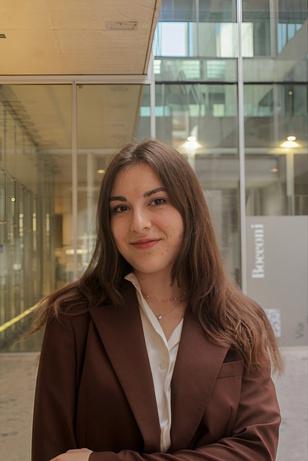
Katrina Simanovska is a current M.A. student in European and Russian Studies at Yale. Originally from Latvia, she holds a B.A. in Political Science and Government from Sciences Po Paris, with a year abroad at King’s College London. She is fluent in Latvian, English, and French, and conversational in Russian. Her research focuses on disinformation and information manipulation in Eastern Europe, the role of historical memory in shaping political narratives, and strategies for strengthening democratic resilience in the post-Soviet and Baltic region.
“Asymmetric Partnership or Unified Bloc? European Security Elite Perceptions of Russia-China Relations”
European policy discourse traditionally characterises Russia-China relations as a strategic partnership threatening Western interests. However, recent reports (EUISS, 2025; EPC, 2026) demonstrate significant asymmetries, with Russia increasingly dependent on Beijing while China reduces support when facing sanctions pressure and conducts intelligence operations against Russian actors This paper examines whether European security elites’ understanding aligns with empirical evidence. Through analysis of European think tank publications and policy statements, I assess how European analysts frame Russia-China cooperation Preliminary analysis reveals tension between threat inflation (emphasising ""no-limits partnership"" and unified authoritarian bloc) and asymmetry awareness (acknowledging Chinese conditional support and Russian dependence) I argue that European discourse shifted following Russia's 2022 invasion, with growing recognition of partnership limits after Chinese dual-use export declines due to secondary sanctions However, significant gaps remain between elite perceptions and observable Russia-China behavioural patterns, including mutual surveillance operations and divergence in international diplomacy By mapping elite discourse evolution against empirical evidence, this analysis identifies where perceptual gaps may lead to policy improvements, contributing to understanding how threat perception shapes European strategic responses
PANEL ABSTRACTS & BIOS
Julia Lasiota is a coterminal student in the CREEES program, having completed a double major in History and International Relations at Stanford. Her undergraduate research has focused on Polish identity-making among refugee communities in the Middle East and Africa during World War II, as well as the wartime experiences of women in Eastern Europe. Julia has also worked on projects related to great power competition in East Asia, including U.S.-China ideological rivalry in Central and Eastern Europe. She has assisted with Slaviclanguage materials at the Hoover Institution Library and Archives and has pursued a side interest in international space law. In 2025–26, she will conduct research as a Presidential Fellow at the Center for the Study of the Presidency and Congress, examining how presidential and congressional leadership has shaped American foreign policy toward Eastern Europe over the past century. At CREEES, Julia looks forward to deepening her understanding of the geopolitical legacies of the Soviet Union and further exploring how contemporary Russia interacts with other critical regions such as the Middle East and East Asia, while honing her relevant language skills.
“Playing All Sides: Central Asia's Ideological Arbitrage in Great Power Competition
This paper introduces the concept of ""ideological arbitrage"" to explain how Central Asian states navigate great power competition between the United States, China, and Russia Unlike Cold War bipolarity, which forced smaller states into exclusive ideological alignment, contemporary multipolarity enables strategic flexibility. Central Asian republics Kazakhstan, Tajikistan, and Kyrgyzstan selectively adopt elements from competing great power frameworks to maximize autonomy and extract material benefits without committing fully to any single bloc Drawing on structural realist and constructivist frameworks, this paper argues that neither approach adequately explains Central Asian foreign policy behavior Instead, ideological arbitrage treats ideology as a diplomatic resource rather than a constraining identity Evidence includes coordinated UN abstentions on Ukraine resolutions, simultaneous membership in potentially competing organizations (CSTO, SCO, and bilateral U S arrangements), and diversified economic partnerships that preserve strategic flexibility. Comparative analysis reveals that material constraints shape but do not determine the scope of arbitrage Kazakhstan, with substantial energy resources, demonstrates the most sophisticated positioning, maintaining neutrality on Ukraine despite accepting Russian military assistance in January 2022. Tajikistan's severe security vulnerabilities limit its maneuvering to balancing Russian and Chinese influence Kyrgyzstan's democratic revolutionary heritage creates unique positioning opportunities despite authoritarian drift These findings challenge assumptions about ideological power in the twentyfirst century, demonstrating that even authoritarian great powers cannot compel genuine ideological alignment from strategically positioned smaller states For policymakers, Central Asian behavior suggests that demands for exclusive alignment prove counterproductive in multipolar environments where attractive alternatives exist
JOHN E. HERBST (DISCUSSANT)
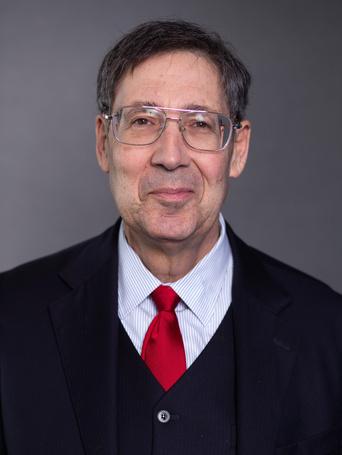
Ambassador John E. Herbst is senior director of the Atlantic Council’s Eurasia Center and served for thirty-one years as a foreign service officer in the US Department of State, retiring at the rank of career minister. He was US ambassador to Ukraine from 2003 to 2006, when he worked to enhance USUkrainian relations, help ensure the conduct of a fair Ukrainian presidential election, and prevent violence during the Orange Revolution. Prior to that, he was ambassador to Uzbekistan (2000-03), where he played a critical role in the establishment of an American base to help conduct Operation Enduring Freedom in Afghanistan. He also promoted improved US-Uzbek relations, in part by encouraging the government in Tashkent to improve its human rights record.
JAKE WALDINGER (CO-CHAIR)
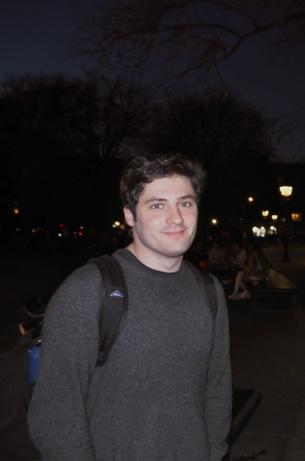
Jake Waldinger graduated with a degree in International Studies at the University of Missouri in 2019. He is interested in researching Central Asia's role in the Russo-Ukrainian War, as well as geopolitical implications that the war has for post-Soviet countries. His geographical interests include Russia & Central Asia.
PANEL ABSTRACTS & BIOS
LIZA BROVER (CHAIR) AND IGOR KOLESNIKOV
Liza is a PhD student in the Yale Economics department. She studies economic history with a regional focus on the Soviet Union, and explores recurrent motifs of ideology and repression in the formation of the Soviet economy. Liza's parents came to the US from Russia in 1996.
Igor's interests are centered around the interplay between organized violence and the process of state building, development, and identity formation. In his recent work, he utilized historical data on the spread of the Bolshevik insurgency in 1917 and quasi-experimental methods to study how local economic grievances and exposure to information coming from the central government affect the fight for territorial control in post-revolutionary contexts. His interests also include interactions between the central state and local actors and how they influence the well-being of communities, and efficiency in implementing reforms.
“Selection and Sorting in the Early Communist Party of the Soviet Union”
Despite having an interest in internal promotion and expansion, the Communist Party of the Soviet Union (CPSU) routinely purged and repressed its cadres, even in early periods of its formation This paper leverages newly available CPSU individual-level census data from 1922 to examine the selection into and composition of the early party members We examine the characteristics of communists purged from the party and those repressed at various points in their life cycle to understand the types of individuals the early party did not want to associate with. We then examine the characteristics of communists that were promoted to high official positions within the party to understand what kinds of traits the party rewarded We lastly examine characteristics of communists that were enterprise managers
AGZAM NIYAZKHODJAYEV
Agzamkhon Niyazkhodjayev is a Ph.D. candidate in Economics at Institute for East European Studies and School of Business and Economics at Freie Universität Berlin. His research primarily focuses on the economic history and development of post- Soviet countries, with a particular emphasis on Central Asia. Agzamkhon holds a Master of Science in Applied Economics from Westminster International University in Tashkent and has extensive working experience in the energy sector. He is also a scholar of the "El-Yurt Umidi" Foundation initiated by Uzbekistan.
"Cotton, Colonization & Development in Imperial Turkestan"
This paper sheds light on the multifaceted effects of Russia’s early colonial rule in Turkestan during the 1894–1913 years Drawing evidence from a unique archival dataset, I investigate how cotton and colonization shaped the socio-economic development of the region. To this day, the Central Asia part of Tsarist Russia has not been empirically examined, which makes this paper a pioneering effort to address a prominent gap in the current academic debates This research is especially essential as it investigates a previously unexplored aspect of economic history, contributing to broader discussions on the impact of cotton and colonialism on the development of Central Asia The various econometric techniques, including ordinary least squares, two-stage least squares instrumental variables, propensity score matching, coarsened exact matching, and arbitrary correlation regression models were employed to ensure the robustness and reliability of the empirical analysis The findings robustly reveal the adverse impact of cotton on economic development while reporting a positive influence on the expansion of local schools On the other hand, colonization indicates a positive effect on the establishment of factories per capita and a negative influence on the development of local education infrastructure It is salient to acknowledge that this research has limitations, primarily related to the scope of the available archival dataset Nevertheless, these outcomes have the potential to explain the development trajectory of Central Asia and create a framework for future research devoted to the socio-economic development of Central Asia under Russian rule.
PANEL ABSTRACTS & BIOS
Roman Osharov is a historian of the Russian Empire and Eurasia in the nineteenth and twentieth centuries. He is currently a European Research Council Postdoctoral Fellow in the School of History at University College Dublin, which he joined shortly before completing his PhD in History at the University of Oxford. He continues to work on Russian rule in Central Asia, the focus of his PhD research, combining this with his current project on Russian rule in the Caucasus, both in the Tsarist period. His research has taken him to archives and libraries across Eurasia, including in Georgia, Kazakhstan, Uzbekistan, and Mongolia, as well as to holdings in the UK, the US, and Japan. In 2025, Roman was also a visiting scholar at the Mongolia and Inner Asia Studies Unit in the Department of Social Anthropology at the University of Cambridge.
“Manganese Mining and Environmental Change in Western Georgia under Russian rule, 1879-1917”
This paper is an initial exploration of the relationship between mining, environmental change and the Russian Empire. Taking the region now known as Chiatura in western Georgia as a case study, it examines how this small region of the Russian Empire played a pivotal role in its expansion across Eurasia, including Central Asia and the Far East, through the extraction of manganese crucial for making steel stronger It also focuses on the environmental impact of mining in western Georgia itself, the wider South Caucasus region and the Russian Empire more broadly by examining industries reliant on manganese The paper is based on archival research conducted in Tbilisi, Kutaisi and Chiatura over a period of more than three months, as part of fieldwork in Georgia spanning more than six months
Justin É.R. Reynier is an M.A. student in Political Science at McGill University. His research sits at the intersection of comparative politics and Eurasian studies, with interests in institutions, contentious politics, and state-society relations in the post-Soviet space. He also works on questions of identity, religion, and political memory in transnational contexts. At the Yale European and Eurasian Studies Graduate Student Conference, he presents research on democratic demands in workers’ movements in Eurasia.
“Explaining Democratic Claims in Authoritarian Labor Movements: Evidence from Belarus, Kazakhstan, and Russia”
This paper examines why labor mobilizations in authoritarian post-Soviet contexts sometimes expand into democratic challenges while in other cases remain confined to economic grievances, through a comparative analysis of Belarus, Kazakhstan, and Russia Building on theories of contentious politics and authoritarian incorporation (Hirschman 1970; Collier and Collier 1991; Tarrow 2011; Tilly 2008), it advances a three-factor explanatory framework emphasizing the role of collective memory of past struggles, the evolution of workers’ loyalty toward the regime, and interactions with more politicized social actors In Belarus and Kazakhstan, labor mobilization was facilitated by the reactivation of earlier protest experiences and by the diffusion of political frames from broader protest coalitions In contrast, in Russia, fragmented protest memory, trade-union cooptation, and persistent paternalistic loyalty to the state have constrained labor contention to depoliticized and defensive forms The paper contributes to comparative research on authoritarianism by foregrounding labor as a key but unevenly politicized actor in post-Soviet protest dynamics
SERGEI ANTONOV (DISCUSSANT)
Sergei Antonov is Associate Professor of History at Yale University. He specializes in modern Russia after 1800, with particular interest in politics, culture, and society in the late imperial and early Soviet period (ca. 1850-1927). His research focuses on the history of Russian law, conceived broadly to include not just legislation and legal doctrines, but ways in which legal norms and institutions impacted the daily practices of ordinary persons, rich and poor, men and women, and served to define and protect private interests, resolve (or perpetuate) interpersonal conflicts, as well as to assert (or challenge) social power and authority.
PANEL ABSTRACTS & BIOS
Delving into history, memory, and trauma throughout her M.A. in Holocaust and Genocide Studies at Yeshiva University, through psychoanalytic study, as a 2023 Summer Graduate Research Fellow at the US Holocaust Memorial Museum, and by 9 Russian-language testimonies from Soviet Holocaust survivors, as a Belarusian native, Vesta has noted that manifold ways of tackling Holocaust and Soviet historical trauma appear to play a role in the democratization of postSoviet states along the Central Eastern European borderlands. The approaches to trauma in the national identity formation of Belarus, Lithuania, and Ukraine, as well as the evolution of those approaches over the last 30 years, illustrate a movement toward or away from the Russian sphere. A lingering fear permeates Belarusian society: a yoke that maintains the political status quo and the presence of Belarus' dictatorship. Vesta hopes to explore that fear.
“Mury: The Mythical Baggage of a Transnational Anthem”
How does a Catalan antifascist hymn transform into the unofficial anthem of Poland’s Solidarność movement, eventually turning up in Belarus’ thwarted revolution of 2020? What does the song’s deployment and metamorphosis say about twenty-first century Belarusian nationalism? What is the mode of transmission of the music of revolution? Interpreting the song Mury as a revolutionary space of “imagined solidarity,” this paper unpacks the anthem’s teleological mythology: its potency to dislodge the most pernicious regimes, illustrating how and why Mury was intentionally deployed in the Belarusian revolutionary space It follows the line of transmission from the song’s inception in Catalonia in 1968, to its uptake in Poland in 1979, to Belarus and Russia in 2010 – 2020, and beyond Scaffolded by a series of interviews with the individuals who “touched” the song, altered, and handed it off, the paper is threaded with the voices of Belarusian opposition figures in the tradition of Timothy Garton Ash’s “history of the present,” as well as publicly available audio and video recordings. How does Belarus’ revolutionary mythology interact with the myths that have influenced it? Mury’s role as 2020’s revolutionary anthem offers a fascinating glimpse into modern Belarusian nationalism through a musical conversation
GIOVANNA DE CAMPOS MAURO
Originally from São Paulo, Giovanna is a PhD student in Italian Studies at Yale University. Giovanna’s work focuses on reshaping modern readings of Dante’s Commedia by drawing on cross-cultural, geographical, and chronological convergences. She is currently interested in investigating movements, postures, and affects in the Commedia and exploring its resonances with Portuguese and English medieval and early modern texts. As well as medieval literature, Giovanna is interested in Italian postcolonial cultural production and has written about the representation of issues of identity and gender in the works of second-generation African-Italian authors.
“The multisensory perception of the divine: Dante’s Purgatorio and the Portuguese Bosco Deleitoso”
It has been suggested that the Portuguese Bosco Deleitoso, published in 1515, could share a thematic affinity with Dante Alighieri’s Divina Commedia While recent studies on the dialogue between the two works have been limited to general similarities, affect theory provides valuable tools to understand the complex imitatio at play in the Bosco through which the Dantean lesson is incorporated into the mystical mode A reading of the multisensory perception of the divine as it is articulated in the Purgatorio (XXIV and XXVIII) and the Bosco (CXXI-CXXXII) can shed light on fresh insights into the relationship between the texts and the degree of influence of the Italian poem on its Portuguese counterpart I will argue that the pilgrims undertaking the journeys described in both works share a multisensory perception of the divine rooted in the mutability of the affective atmospheres experienced through their bodies. Finally, I will investigate the extent to which multisensory encounters with an otherworldly dimension are shareable and thus invite the reader to read - and potentially sense - these corporeal alterities
PANEL ABSTRACTS & BIOS
Claudia Gioia is a third-year PhD student in Comparative Literature at Södertörn University, Stockholm. She holds a Bachelor's degree in Foreign Languages and Literatures and a Master's degree in Modern, Comparative and Postcolonial Literature from the University of Bologna.
“Sweden Meets the Soviet Union: Perspectives on the First Congress of Soviet Writers”
My contribution explores the encounter between Swedish working-class writers and Soviet literary culture during the interwar period. In 1934, Moa Martinson, Harry Martinson, and Erik Blomberg participated in the First Congress of Soviet Writers in Moscow as representatives of Swedish proletarian literature Their markedly different responses to the Moscow experience, along with their reflections on the debates they attended, offer a valuable lens through which to examine more closely the relationship between Swedish working-class writers and the Soviet conception of literature
The study is structured in two main parts The first focuses on the reactions of Western delegates particularly from France, Spain, Germany, and the UK in order to provide an overview of the Congress’s reception, especially among left-wing intellectuals The second part considers how these debates illuminate the position of Swedish working-class literature within a wider European context, as well as the interactions between national literary production and international socialist discourse The ultimate aim of this proposal is to analyze the reception of Soviet culture and politics in the West to conduct a comparative study of two distinct traditions of proletarian literature: the Soviet and the Swedish This perspective highlights points of contact and tension between the two traditions while examining the influence of the Soviet model on debates regarding the role of literature among Swedish working-class writers.
MADELEINE GIACONIA
Madeleine Giaconia is a Ph.D. student in the department of History of Art and Architecture at Harvard University. She studies modern art and empire in the Soviet Union, particularly in Ukraine and Central Asia. Her research also considers how the art of the Soviet national republics beyond Russia was utilized in Soviet cultural diplomacy. Madeleine holds a B.A. in Radio/Television/Film and Art History from Northwestern University. Before coming to Harvard, she worked as a video editor at the Art Institute of Chicago and communications coordinator at the Block Museum of Art. Outside of scholarship, Madeleine also works in film production, and her editing work has screened at venues like Palm Springs ShortFest and the Chicago International Film Festival.
“‘Local’ Modernism, International Stage: The Ukrainian Section at the 1928 Venice Biennale“
In 1928, the Soviet pavilion at the Venice Biennale included a separate section dedicated to contemporary art from the Ukrainian Soviet Socialist Republic This paper proposes, based on research in the Biennale Archives, RGALI in Moscow, as well as Russian, Italian, and Ukrainian primary sources, that this Ukrainian section can serve as a test case of the Bolshevik ideal of “anti-empire,” marshaling Ukrainian art to present the USSR as a distinctly socialist breed of empire It examines the motivations behind the Ukrainian section, newly utilizing Russian archival materials from the Soviet organizing committee. The paper places these interactions within the broader landscape of Ukrainian modernism in the 1920s I will argue for the Ukrainian work’s expressive singularity at the Biennale, contrasting with the more conservative Russian art Examining Italian exhibition reviews, the paper traces how critics warmly received the unfamiliar Ukrainian artwork, identifying a “sincere” and “local” modernism that drew on folk culture, ancient local visual language, and international influences In dialogue with this criticism, the paper examines several prominent works within the exhibition, such as Fedir Krychevskyi’s The Family (1927), which fused motifs from Byzantine frescoes and Ukrainian folk embroidery with international influences like Gustav Klimt and Japanese printmaking
PANEL ABSTRACTS & BIOS
MEENA VENKATARAMANAN
Meena Venkataramanan is pursuing a law degree at Yale Law School alongside a PhD in English literature at Brown University. Her doctoral research is situated at the intersection of postcolonial Asian and Black diaspora literature, particularly in the postwar United Kingdom, Anglophone Caribbean, and United States. She is also a book critic, journalist, and essayist who writes about identity, culture, and race in the United Kingdom, Germany, and the United States. Her work has been published in the Washington Post, the Los Angeles Times, the Boston Globe, and the Los Angeles Review of Books, among other outlets. She earned a BA in English from Harvard University and an MPhil in English from the University of Cambridge, where she studied as a Gates Cambridge Scholar.
“’That Indian
Fellar’: Indianness as Specter in Samuel Selvon’s The Lonely Londoners”
Deemed the “father of Black writing” in Britain, Trinidadian writer Samuel Selvon is considered a predecessor to well-known Black British authors But Selvon was Indo-Caribbean His widely regarded characterization as Black, then, prefigures, per J. Dillon Brown, the “1970s British understanding of blackness as a coalition of people of African and Asian descent,” termed political Blackness The novel’s protagonist, Moses Aloetta, was originally “conceived of as an Indian,” per David Dabydeen But conspicuously absent in The Lonely Londoners are main characters explicitly defined as Indian, including Indians from South Asia, who migrated to London during Windrush This is surprising, given that the Windrush era, from 1948 to 1971, occurred in tandem with significant migration from South Asia to Britain Despite the significant presence of South Asians in 1950s London, then, and notwithstanding Selvon’s own Indian ethnic heritage, the only Indians who appear in The Lonely Londoners are not characters at all but rather specters, nebulous “Indian fellars” only invoked through hearsay and left to linger on the page This paper argues that in the novel, the “Indian fellar” reflects Selvon’s reluctance to identify with South Asian immigrants and complicates the notion of a meaningful “political Blackness” in late 20th-century Britain
ANDREI KUREICHYK (DISCUSSANT)
Andrei Kureichik is a Belarusian playwright, director, publicist, and civil activist. As a writer and director prior to 2020, Andrei was especially beloved for his comedies and suspense thrillers. Following the contested presidential elections and brutal aftermath in Belarus in August 2020, Andrei gained an international following as a political playwright. Forced to flee the country as a member of the Coordination Council working with perceived winner Sviatlana Tsikhanouskaya’s transition team, Andrei leveraged his creative energy to produce the documentary play “Insulted. Belarus(sia)” about the 2020 presidential elections, subsequent protests, and violent crackdown by Alexander Lukashenko’s regime in Belarus. The play has been translated into 29 languages and received 200 readings and performances across the globe. Articles about the play have been published in Plays International and Europe, Contemporary Theatre Review, the Boston Globe, Dialog, and Theatre Journal
“Writing at the Edge of Rupture: Jewish Responses to the Collapse of Modernity in Stefan Zweig and Mihail Sebastian”
Auschwitz conveys the ultimate breaking point of the modern project, where modernity’s promise of an efficient, corporealized nation state revealed its genocidal underside. The Holocaust was a rupture that fundamentally untethered faith in progress, technology, and nationalism, yet also became the foundation for the neo-liberal world This paper sets out to explore the question of the Holocaust’s modern ripples through the voices of its victims in the midst of what was not yet known to be the ultimate rupture By reading three different Jewish texts Yisroel Shtern’s corporeal poem “When the Surgery is Over;” Mihail Sebastian's modernist diarist-novel ""For Two Thousand Years"", and Stefan Zweig’s extremely popular but less theorized cosmopolitan novel “The Royal Game I will explore how Jewish identity and connection to history standing at an ambiguous ledge between tradition and the new This paper will argue that European Jewish literature of the Holocaust, reveals not a rejection of the modern project, but the inadequacy and instability of both identity and time in modernity, and powerful, mixed narrative forms its authors come up with to explore their identities and connection to history. When the forms of meaning we understand no longer hold up, but the new hasn’t yet arrived, how do we make meaning? This question holds echoes for our own uncertain times
PANEL ABSTRACTS & BIOS
Ksenija Iljina is a researcher specialising in cultural memory, contested heritage, and identity formation in post-socialist societies. She completed her PhD in Heritage, History and Cultures at the School of Slavonic and East European Studies (SSEES), University College London, with a dissertation titled Soviet Mythologies in Commemorative and Ritual Practices in Contemporary Latvia. She is currently Research Grant Coordinator at the University of Cambridge, contributing to the project The Social Consequences of Religion and supporting the Leverhulme International Professorship. At UCL SSEES (2021–2025), she taught across undergraduate and postgraduate teaching on the intersections of culture, society, and politics in Central and Eastern Europe, including communism and post-1989 transformations. She currently serves as Senior Teaching Fellow at the Baltic International Academy in Riga. In 2021, she was a Visiting Fellow at Yale University’s MacMillan Center.
“Researching Memory under Geopolitical Pressure: Methodological Challenges of Qualitative Research with Russian-Speaking Communities in Latvia after 2022"
Russia’s full-scale invasion of Ukraine in 2022 has profoundly reshaped the political, ethical, and epistemic conditions under which qualitative research on memory and identity is conducted across post-Soviet Europe This paper examines the methodological challenges that emerge when researching memory among Russian-speaking communities in Latvia in the context of heightened securitisation, intensified reconfigurations of historical narratives, and the politicisation of the past Drawing on longitudinal qualitative fieldwork conducted before and after 2022, including in-depth interviews with Russian-speaking respondents in Latvia, the paper analyses how geopolitical rupture transforms research encounters themselves It shows how war-related developments reshape what can be said, how narratives are framed, and where silences emerge Interviewees increasingly navigate fear, self-censorship, and moral risk when reflecting on the Soviet past, while researchers face new ethical dilemmas concerning trust, positionality, and the boundaries of responsible inquiry. Rather than treating these constraints as methodological obstacles to be overcome, the paper argues that they constitute analytically productive sites that reveal shifting regimes of memory, legitimacy, and belonging By foregrounding reflexivity and methodological adaptation, the paper contributes to interdisciplinary debates on qualitative research in Europe and advances efforts to decentralise the study of the post-Soviet space in times of geopolitical crisis
From Warsaw, Poland, Julia Kulon is a Neubauer Family Distinguished Doctoral Fellow in Slavic Languages and Literatures at the University of Chicago. Her research examines both direct and indirect representations of the physically disabled body in Polish culture during the first half of the twentieth century, tracing its manifestations across literary and cultural production as well as material culture, with particular attention to the interwar and early postwar periods. She holds an M.A. in Modern and Contemporary Art History from the School of the Art Institute of Chicago and a B.A. in Liberal Arts from St. John’s College (Annapolis).
“Vehicles of Rupture: Speed, Wheelchairs, and the Disabled Body in Polish Futurism”
This paper complicates Polish Futurism through disability, arguing that the war-wounded body–and especially the wheelchair–constitutes a suppressed yet central symbol of Futurist speed, mechanization, and modern subjectivity in post-World War I Poland It begins with Jan Lechoń’s 1917 poem Herostrates, whose image of Poland as a crippled soldier reflects the material reality of wartime mutilation rather than abstract metaphor Emerging after the war, Polish Futurism embraced velocity, technology, and radical transformation in a society visibly marked by disabled veterans Read alongside the manifestos of Bruno Jasieński and the writings of Tytus Czyżewski, Futurist rhetoric reveals tensions between ideals of health, masculinity, and progress and the pervasive presence of injured bodies Jasieński’s pathological metaphors of national rejuvenation and Czyżewski’s post-human visions of animated machines both grapple with the legacy of bodily rupture The paper emphasizes the wheelchair as a counter-symbol to the Futurist automobile Photographs of Polish war invalids from the 1920s show wheelchairs as vehicles of propulsion and hybrid embodiment. This paper argues that the wheelchair materializes Polish Futurism’s man-machine fusion while destabilizing its utopian claims, revealing Polish modernism as inseparable from traumatic reconfigured mobility
PANEL ABSTRACTS & BIOS
ESIN NOZAMOGLU (CO-CHAIR)
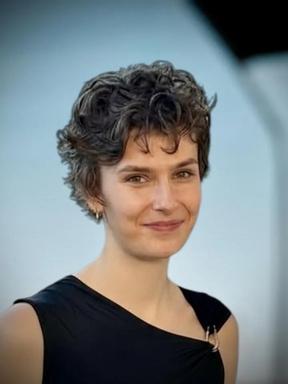
Esin Nizamoglu is currently pursuing an M.A. in European and Russian Studies at Yale University. A dual citizen of Turkey and Bulgaria, Esin holds a B.A. in Political Science and Government from Sciences Po Paris, with an exchange year at Vassar College, where she conducted a research project on the ethnic cleansing of the Turkish minority in late-socialist Bulgaria. Esin’s research interests span the politics of memory, historiography, and identity in postsocialist Eastern Europe. Her undergraduate research examined how memory accounts can reconstruct the narrative of the 1989 ethnic cleansing of the Turkish minority in Bulgaria in the absence of historiographical consensus. Drawing on survivor interviews, archival research, and critical memory theory, her work positions memory as a means of confronting the legacies of violence and informing policy in international law and transitional justice. Building on this foundation, her research at Yale seeks to develop a fuller historiographical and political analysis of ethnic tension and state violence in Bulgaria across the 1980s.
“No More Turks in Bulgaria: Recovering the Turkish Experience of the Belene Concentration Camp”
In 1984, ethnic Turks comprised 10% of the People’s Republic of Bulgaria’s population, approximately 900,000 people according to official census data In the summer of 1989, the Bulgarian communist regime expelled close to 400,000 ethnic Turks in what constituted the largest act of ethnic cleansing in Cold War Europe The expulsion unfolded in the final months of Todor Zhivkov’s rule and coincided with the political and economic crisis of the regime Despite its scale and historical significance, the 1989 expulsion has largely remained a non-event in international law as well as scholarly work, often subsumed under the broader rubric of the so-called “Revival Process” or mischaracterized as a voluntary migration. The absence of sustained scholarly engagement with this event raises a central historiographical question: How did an act of ethnic cleansing of this magnitude remain so poorly studied and told? This paper will argue that the expulsion’s historical marginalization was produced through the convergence of Cold War legal norms that normalized “population transfer” (until the Yugoslav Wars), triumphalist transition narratives of 1989, and postcommunist strategies of archival erasure The historical and political treatment of the 1989 ethnic cleansing thus exposes how dominant narratives of transition have masked institutional continuities with the former regime
REBEKA ZVIRBULE (CO-CHAIR)
Rebeka Zvirbule is currently pursuing an M.A. in European and Russian Studies at Yale University. She is originally from Latvia and holds a Bachelor's degree in International Relations from Rīga Stradiņš University. She also completed an exchange semester at the University of Ljubljana in Slovenia. Rebeka is fluent in Latvian and English and is continuing her studies in Russian and German. Her research focuses on Russia’s foreign policy discourse and narrative construction, as well as security dynamics in the post-Soviet space and the Baltic region. She takes a nuanced approach to the historical and contemporary identities of marginalized groups - particularly LGBTQIA+ community - exploring their experiences during the Soviet occupation of the Baltic states. In addition, she critically examines how Russia instrumentalizes "traditional values" in its foreign policy narratives.
“Multidirectional
Postmemory in the Spotlight of War in Ukraine: Generation Z and the Soviet Deportations in Latvia”
MARIJETA BOZOVIC (DISCUSSANT)
Marijeta Bozovic is Professor of Slavic Languages and Literatures at Yale University. Her research focuses on twentieth- and twenty-first-century Russian and Southeast European literature and culture, with particular attention to avantgarde movements, the intersections of politics and poetics, diasporas and transnational cultures, translation and remediation, Danube River and Black Sea studies, digital humanities, new media, and cultural networks. She received her Ph.D. in Slavic Languages and Literature from Columbia University and her B.A. in History and Literature from Harvard University.
PANEL ABSTRACTS & BIOS
SABA SHUKVANI (CHAIR)
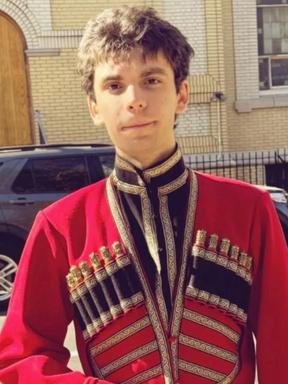
Saba Shukvani is pursuing a Master’s degree in European and Russian Studies at Yale University. Born in Tbilisi, Georgia, and raised between Georgia and New York City, he has been shaped by Georgian and American cultures and by a longstanding interest in how people understand politics, history, religion, and culture. He earned a B.A. in Global Liberal Studies and History from New York University, where he received recognition for social and political engagement and historical research, including the Kwame Yeboah Daaku Memorial Prize in African History and induction into Phi Alpha Theta. Saba has worked with pro-European Georgian organizations addressing issues such as unlawful political detentions and serves as an administrative assistant at the Consulate General of Georgia in New York. At Yale, his research examines conflict in Eastern Europe and Eurasia, especially Russia’s occupation of Georgia, the 2008 Russo-Georgian War, and the ongoing Russo-Ukrainian War.
“Georgia’s Political Crisis and the Future of European Integration”
Following years of steady institutional alignment with the European Union under the 2014 Association Agreement and DCFTA, Georgia entered a profound political crisis after 2023. Despite obtaining EU candidate status in December 2023, the Georgian Dream government accelerated democratic backsliding by undermining judicial independence, repressing civil society and independent media, adopting Russian-style “foreign agents” legislation, and suspending accession negotiations until 2028 These actions triggered sustained nationwide protests beginning in November 2024 and produced the most severe rupture in EU–Georgia relations since independence, while simultaneously expanding Russia’s influence without overt coercion This paper argues that Georgia’s crisis reflects a central paradox: extensive sectoral Europeanization advanced even as democratic institutions eroded, exposing the limits of the EU’s existing approach to democratic backsliding in its neighborhood It contends that resolving the current deadlock and preventing the consolidation of a Kremlin-aligned authoritarian regime requires a fundamental recalibration of EU policy. The EU should adopt a dual-track strategy that combines targeted pressure on the ruling elite through sanctions, suspension of direct financial assistance, and political isolation with significantly expanded support for Georgian civil society, independent media, and pro-European opposition forces. By placing its confidence in Georgia’s overwhelmingly pro-EU society, the EU can help restore the country’s European trajectory, safeguard the credibility of enlargement, and counter Russia’s growing geopolitical leverage in the South Caucasus
DOBRINA TRENDAFILOVA
Dobrina Trendafilova is a Master’s student in Global History and Global Studies at the University of Vienna, where she previously completed her Bachelor’s degree in History. Her academic and professional experiences have taken her to Cuba, Kosovo, and Bosnia and Herzegovina. Her research focuses on the Balkans and questions of regional identity and historical transformation. Originally of Bulgarian descent, she is based in Austria.
“Anatomy of a Revolution: Bulgaria's Gen Z on the Frontline and the Crisis of Political Legitimacy”
Bulgaria is currently undergoing signifcant transformation
Recent years have brought major steps in European integration: the country fully joined the Schengen Area in 2025 and adopted the euro in 2026 Nationwide protests against corruption and for the defense of the rule of law culiminated in the government's resignation at the end of 2025 The protests were largely driven by Bulgaria's Gen Z through digital tools such as social media The paper wants to analyze the political participation of Bulgarian civil society during a period of political transformation, with a focus on the broader crisis of political legitimacy that shaped these developments including a retrospective chapter of Bulgaria's post-1989 political transition and related protests
PANEL ABSTRACTS & BIOS
JULIE MOSTOV (DISCUSSANT)
Julie Mostov is Dean Emerita (2017-2025) and Professor of Liberal Studies at New York University. She was the first woman dean of Liberal Studies, serving from 2017 to 2025. She is currently on research leave, continuing her work on borders, mobility, and authoritarian closure. A political theorist by training and a leading scholar of Southeastern Europe, Dr. Mostov has written extensively on soft borders, transnational citizenship, national identity, sovereignty, citizenship, and gender. Her publications include Soft Borders: Rethinking Sovereignty and Democracy, the co-edited volume From Gender to Nation, and essays on gendered populism, symbolic boundaries, and violence in the Balkans. At Drexel University, she spearheaded global initiatives and international academic partnerships as Senior Vice Provost of Global Initiatives and Professor of Politics, and earlier directed International Area Studies and Women’s Studies. She has also been affiliated with the University of Bologna’s Network on Europe and the Balkans. Beyond academia, Dr. Mostov is a longtime advocate for women’s rights and ending gender-based violence.
Yana Balanchuk is a first-year MA student in the Russian, Eurasian, and East European Regional Studies program at Columbia University’s Harriman Institute. She holds a BA in International Relations from Ukraine. Her research interests include democratic governance and institutional reform in Ukraine, anticorruption policies and accountability mechanisms, and state resilience in the context of Russia’s war against Ukraine. She previously interned with the Kiel Institute for the World Economy’s Ukraine Support Tracker and worked as an analyst and fact-checker with VoxCheck (Vox Ukraine).
“Informal Executive Centralization in Ukraine after 2019: SemiPresidentialism, Single-Party Majority, and War”
This paper examines the transformation of legislative-executive relations in Ukraine after 2019, focusing on the growing gap between the formal parliamentary–presidential constitutional design and its actual governance practices. Although no constitutional amendments expanded presidential authority, Ukraine has experienced a noticeable shift toward informal executive centralization following the 2019 presidential and parliamentary elections The paper argues that the emergence of a presidential single-party majority in the Verkhovna Rada constituted a critical institutional turning point This unprecedented configuration reshaped parliamentary–executive relations and reduced the scope of executive pluralism, enabling the Office of the President to evolve into an informal center of political coordination Drawing on theories of semi-presidentialism, presidentialization, and informal institutions, the study conceptualizes this transformation as the rise of a substitutive informal institution that assumes core executive functions without formally violating constitutional norms Empirically, the paper analyzes legislative dynamics, executive coordination practices, and patterns of accountability between the parliament, the Cabinet of Ministers, and the Office of the President from 2019 onward. It further demonstrates that Russia’s full-scale invasion in 2022 did not create this governance model but rather reinforced and normalized pre-existing practices of centralized decision-making under conditions of existential crisis The Ukrainian case contributes to comparative debates on democratic governance under crisis by showing how significant shifts in executive power can occur without formal regime or constitutional change While informal centralization enhanced decision-making efficiency during wartime, it also raises important questions about the future of checks and balances, parliamentary oversight, and post-war democratic recovery
PANEL ABSTRACTS & BIOS
Diana Kuznetsova is an MA student in Intelligence and International Security and an IAEA–Marie Skłodowska-Curie Scholar. She currently serves as a Policy Advisor to a Member of Parliament in the Verkhovna Rada of Ukraine and is a fellow of Atomic Anxiety in a Nuclear Age. She holds a BA in International Relations and Regional Studies, with additional training in Political Science from the University of Zurich. Diana has completed advanced academic programs in politics and security at leading institutions, including Cambridge, Stanford, and Oxford, and has held research fellowships at prominent think tanks such as the Cambridge Security Initiative, NEREC, SIPRI, and the Fondation pour la Recherche Stratégique. With over five years of experience working at the intersection of the public and private sectors, Diana has contributed to policy and research initiatives within the Canadian and Ukrainian Parliaments, the United Nations, Zurich Insurance Group, and the Ministry of Foreign Affairs of Ukraine. She is also a Board Member for Outer Space at the Global Youth AI Advisory Body. Her research examines how emerging technologies shape international security, nuclear policy, and strategic stability, with a particular focus on Russia and Ukraine, and on the role of intelligence and global governance.
“How Russia Reads Its Neighbours: Soviet Intelligence Legacies and the Ukrainian
Case”
Russia’s full-scale invasion of Ukraine has refocused scholarly attention on how Moscow interprets political dynamics and security challenges across the post-Soviet space This paper examines how inherited Soviet analytical frameworks, specifically assumptions about political loyalty and nationalism, shaped Russian intelligence assessments of Ukraine Using Ukraine as the main case, the paper draws on selected archival materials from the KGB and Soviet security services from the late Soviet period (1970s–1980s), held in Kyiv, to show how these assumptions were constructed and institutionalized within Soviet intelligence analysis. It then briefly considers how these same assumptions persisted in Russian intelligence and political assessments of Ukraine after 2014, focusing on interpretations of Ukrainian statehood and societal cohesion in the post-Maidan period. By privileging imperial conceptions of loyalty and minimizing the influence of nationalist sentiment, these frameworks contributed to enduring misreadings of Ukraine While empirically focused on Ukraine, the analysis highlights broader regional implications, suggesting that similar modes of intelligence reasoning shape Russia’s approach toward other former Soviet republics. The paper thus offers a contribution to ongoing efforts to decentralize and decolonize Eurasian security research, demonstrating how Soviet-era legacies continue to shape Russian security behavior in Ukraine and the wider region
Charlie Sagner is an MA candidate at Stanford's Center for Russian, East European and Eurasian Studies (CREEES), where he studies Russian state ideology, national security, and elite politics. He received his BA in Slavic Studies and Political Science from Columbia University and has worked for the Johns Hopkins University Applied Physics Laboratory, the Council on Foreign Relations, and the U.S. Department of Defense.
“Umom
Putina ne Ponyat’? Understanding Russian State Ideology with Natural Language Processing”
As Russia continues its offensive in Ukraine and grows more assertive on the international stage, understanding the role of ideological trends like Russian Orthodoxy and Eurasianism in shaping Russian national security decision making under Vladimir Putin becomes increasingly vital This project seeks to identify the prevalence and evolution of specific ideological themes and rhetorical justifications used in the lead-up to and aftermath of Russian national security decisions, such as the invasion of Ukraine and its hybrid warfare campaign in Europe By leveraging natural language processing (NLP) and word embedding techniques, this project will identify key ideological themes across speeches, interviews, and articles from political and religious figures in Russia, and analyze how and when these themes are employed in support of policy This project will focus on the degree to which three distinct ideologies––Orthodoxy, Eurasianism, and Chekism––have become more or less intertwined under Putin, and whether their rhetoric has adapted in response to or than in anticipation of shifts in national security policy.
PANEL ABSTRACTS & BIOS
Lydia Smith (she/her) is a second-year MA student in the European & Russian Studies program and a Professional Development Fellow at the European Studies Council. Her research focuses on how nationalism and displacement interact in post-conflict settings, particularly in the South Caucasus and Eastern Europe. Lydia's MA thesis analyzes public opinion over time in Armenia towards refugees from Nagorno-Karabakh following the 2023 exodus, and how this case diverges from prior frameworks of refugee integration. She is interested in mixed-methods approaches to social science, including text-as-data, sentiment analysis, interview data, and large-n statistical analysis.
“How Solid is Solidarity? Co-Ethnic Refugee Reception in Armenia, 2023- 2025”
CHRISTINA LOGVYNYUK (CHAIR)
OLENA LENNON (DISCUSSANT)
Olena Lennon, Ph.D., is a Practitioner In Residence of National
Defense Policy, International Relations, and Comparative Politics. An Eastern Defe
Ukraine native, she
on Donbas: Politics, Places, and People" at the
Research on Don
Institute. Formerly a Fulbright scholar and most recently a Title
Scholar at Institute . Form
Woodrow Wilson Center’s Kennan Institute in Washington, D.C., Olena has Woodrow W
dedicated
as Eurasian geopolitics and security writ large. as Eur
C O N F E R E N C E C O N F E R E N C E C O N F E R E N C E
PARTICIPANTS PARTICIPANTS P A R T I C I P A N T S
Julia Adams, University
Julia Adams, Yale University
Jamil Alizada, Yale University
Jamil Alizada, Yale University
Sergei Antonov, Yale University
Sergei Antonov, Yale University
Yana Balanchuk, Columbia
Yana Balanchuk, Columbia University
Marijeta Bozovic, Yale University
Marijeta Bozovic, Yale University
Elizaveta Brover, Yale University
Elizaveta Brover, Yale University
Vesta Burk, Brown University
Vesta Burk, Brown University
Giovanna de Campos Mauro, Yale University
Giovanna de Campos Mauro, Yale University
Alp Yale
Alp Demiroglu, Yale University
Alex Fisher, Princeton University
Alex Fisher, Princeton University
Madeleine Giaconia, Harvard University
Madeleine Giaconia, Harvard University
Claudia Gioia, Södertörn University
Claudia Gioia, Södertörn University
Skyler Gluck, Columbia University
Skyler Gluck, Columbia University
Oleg Golishnikov, Southern Illinois University
Oleg Golishnikov, Southern Illinois University
John E. Herbst, Atlantic Council
John E. Herbst, Atlantic Council
Andrii Hrynko, University of Saskatchewan
Andrii Hrynko, University of Saskatchewan
Ksenija Iljina, University of Cambridge
Ksenija Iljina, University Cambridge
Igor Kolesnikov, University of California, Berkeley
Igor Kolesnikov, University of California, Berkeley
Julia Kulon, University of Chicago
Julia Kulon, of Chicago
Andrei Kureichyk, University of Chicago
Andrei Kureichyk, of Chicago
Diana Kuznetsova, King's College London
Diana Kuznetsova, King's College London
Julia Lasiota, Stanford University
Julia Lasiota, University
Olena Lennon, University of New Haven
Olena Lennon, University of New Haven
Christina Logvynyuk, Yale University Christina Logvynyuk, Yale
Kamryn McDonald, Yale University Kamryn McDonald, Yale University
Mauricio Meza, Yale University
Mauricio Meza, Yale University
Alice M. Miller, Yale Law School
Alice M. Miller, Yale Law School
Julie Mostov, New York University
Julie Mostov, New York
Agzamkhon Niyazkhodjayev, Free University of Berlin
Agzamkhon Niyazkhodjayev, Free University of Berlin
Esin Nizamoglu, Yale University
Esin Nizamoglu, Yale University
Christina Oh, Yale University Christina Oh, Yale University
Roman Osharov, University College Dublin Roman University College Dublin
Marina Perglová, Charles University Marina Perglová, Charles University
Justin Reynier, McGill University
Justin Reynier, McGill University
Kishwar Rizvi, Yale University
Kishwar Rizvi, Yale University
Charlie Sagner, Stanford University
Charlie Sagner, Stanford University
Mariia Sergeeva, Carleton University
Mariia Sergeeva, Carleton University
Aliaksandr Shuba, Bauhaus-Universität Weimar
Aliaksandr Shuba, Bauhaus-Universität Weimar
Saba Shukvani, Yale University
Saba Shukvani, Yale
Katrina Simanovska, Yale University
Katrina Simanovska, Yale University
Lydia Smith, Yale University
Lydia Smith, Yale University
Dobrina Trendafilova, University of Vienna Dobrina University of Vienna