
BY ASHER BOISKIN, ARIA LYNN-SKOV AND RISHI GURUDEVAN STAFF REPORTERS
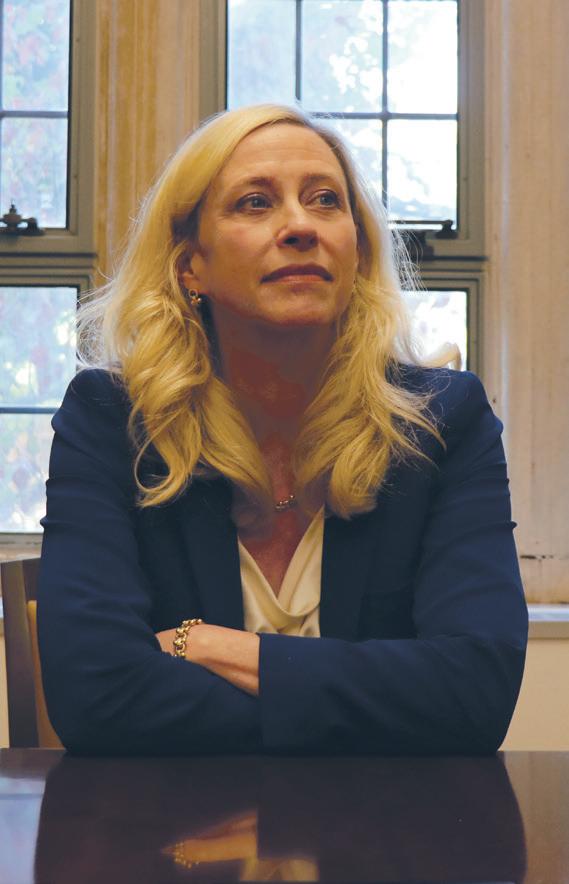
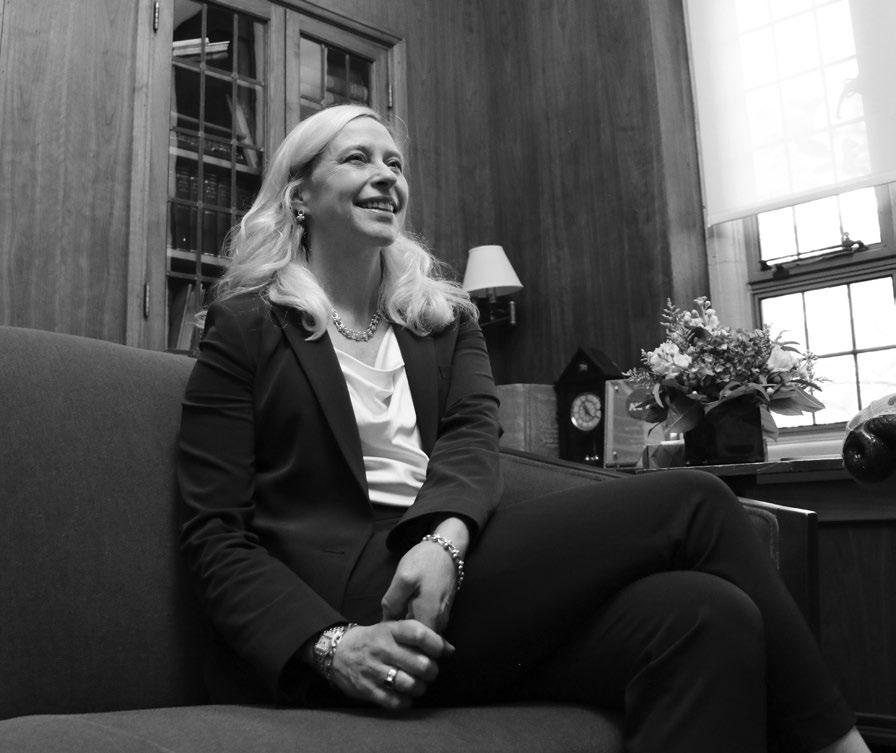
As Yale has avoided the targeted federal funding cuts that have battered other schools since President Donald Trump returned to office last year, faculty members have expressed mixed evaluations of how University President Maurie McInnis has handled the Trump administration.
McInnis herself, though, rejects the premise that she is responsible for Yale’s avoiding the government’s punitive threats to funding.
“I don’t believe I deserve either credit or blame,” McInnis said in a Wednesday interview. “I believe it is the work of this community — and again, there is no explanation to why
we have not been targeted — but it is the work of every member of this community that makes the Yale community so special.”
In the last year, the federal government has enacted widespread cuts to research funding, and Trump signed a bill that will increase the tax on Yale’s endowment investment returns from 1.4 to 8 percent — an increase that is set to cost the University about $300 million per year. Some Yale faculty have said they feel uncertain about how those changes will affect Yale in the long run. In 2025, the University more than doubled its spending on lobbying the federal government compared to what it spent in 2024, while McInnis
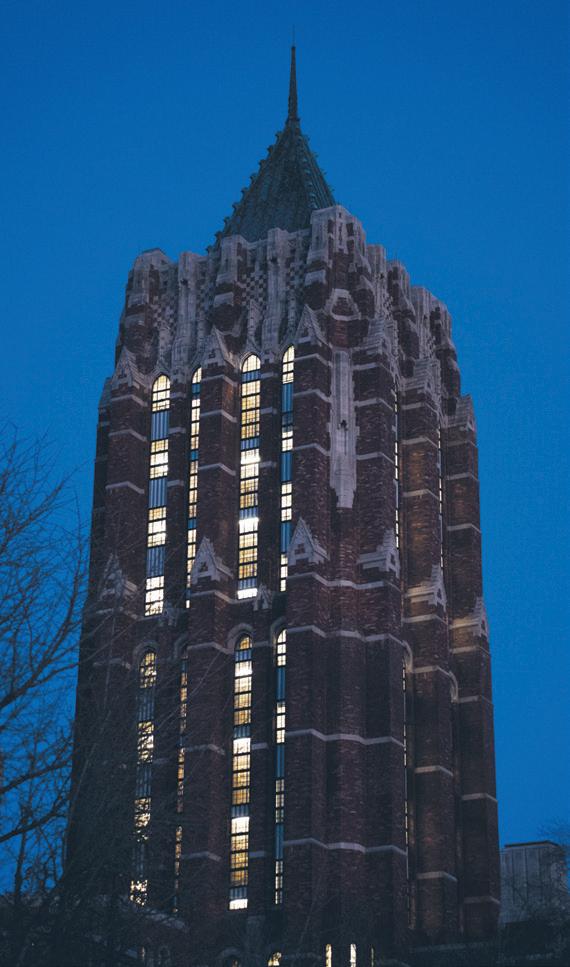
BY OLIVIA CYRUS, OLIVIA WOO AND JAEHA JANG STAFF REPORTERS
Fewer courses will be offered between 10:30 a.m. and 2:30 p.m. next school year as part of an effort to improve the efficiency of class scheduling and classroom usage, according to an email that was sent from University administrators to faculty and obtained by the News.
Courses that meet on consecutive days, such as language classes, must be scheduled outside the hours of 11:30 a.m. to 2:30 p.m., the email says. Under the new standard meeting times, the number of weekly class meeting blocks, or the slots in which classes can be scheduled, will
BY GEMARD GUERY STAFF REPORTER
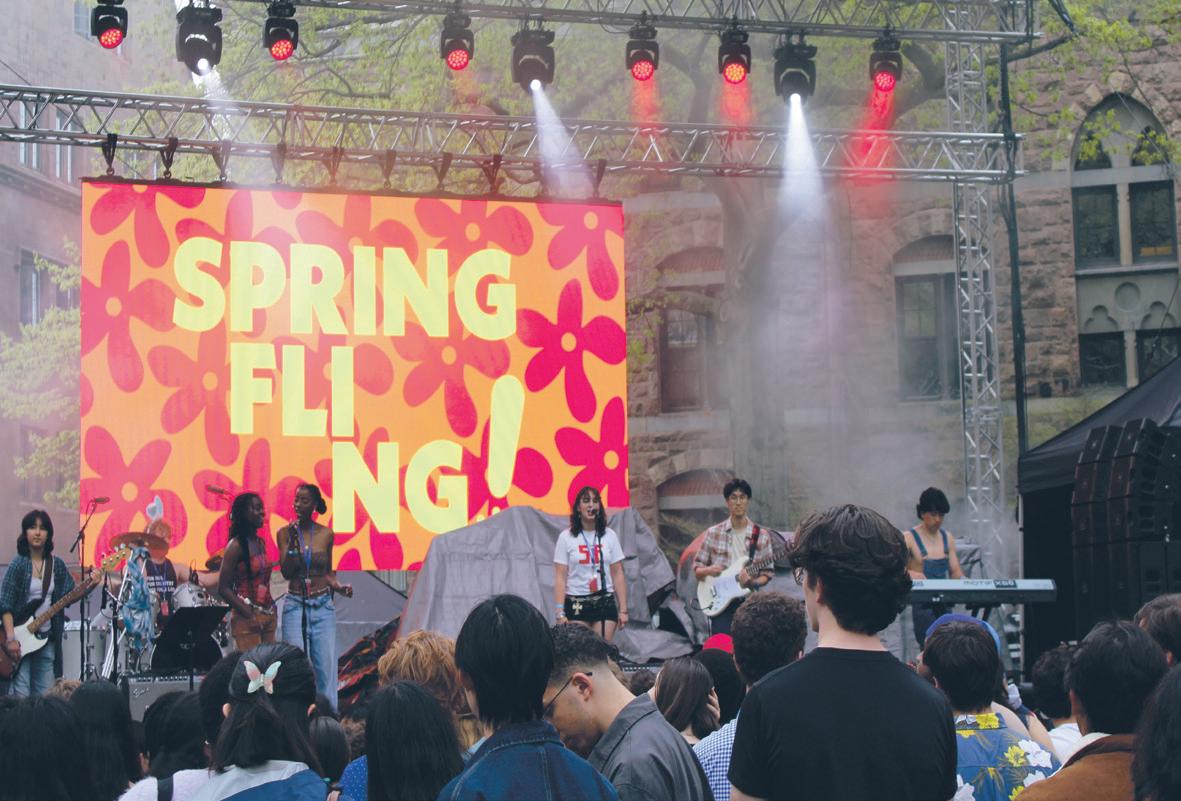
Shortly after midnight Thursday, a crowd at Toad’s Place watched a video reveal of the 2026 Spring Fling lineup — Zara Larsson, Sheck Wes and Aluna — who will perform on Old Campus on April 25. Larsson, a Grammy-nominated Swedish artist with more than 61 million monthly listens on Spotify, will be the first woman to headline Spring Fling since 2014. Spring Fling Committee members told the News they were excited that the lineup spanned pop, rap and
BY ELIJAH HUREWTIZ-RAVITCH AND EVELYN RONAN STAFF REPORTERS
As negotiations between Yale and New Haven over the University’s voluntary financial contribution to the city continue, Mayor Justin Elicker’s March 1 deadline to propose a municipal budget is fast approaching. In December, University President Maurie McInnis told the News that she thought it was “possible” to reach a deal on Yale’s payments to the city by that date — a goal Elicker set. But in a Wednesday interview, McInnis said she was “not sure if we’re going to make the March 1 deadline that I had hoped for.” Yale’s annual contribution to the city budget is set to decrease by $8 million to around $16 million in the final year of a town-gown deal reached in 2021.
Elicker declined on Wednesday to discuss the timeline of ongoing negotiations over the future payments but said “obviously the budget is a significant issue for us, and we’ll have a significant gap if we can’t come to an agreement.”
When?
The mayor does not handle the day-to-day negotiations with Yale on the city’s behalf. That task falls to Henry Fernandez LAW ’94, a CEO and nonprofit director who headed the city’s negotiating delegation in 2021 and is again representing the city in a volunteer capacity. Fernandez said that he most recently met with the University's lead negotiators — Jack Callahan ’80, Yale’s former senior vice president for operations, and Alexandra Daum, the associate vice pres-
4
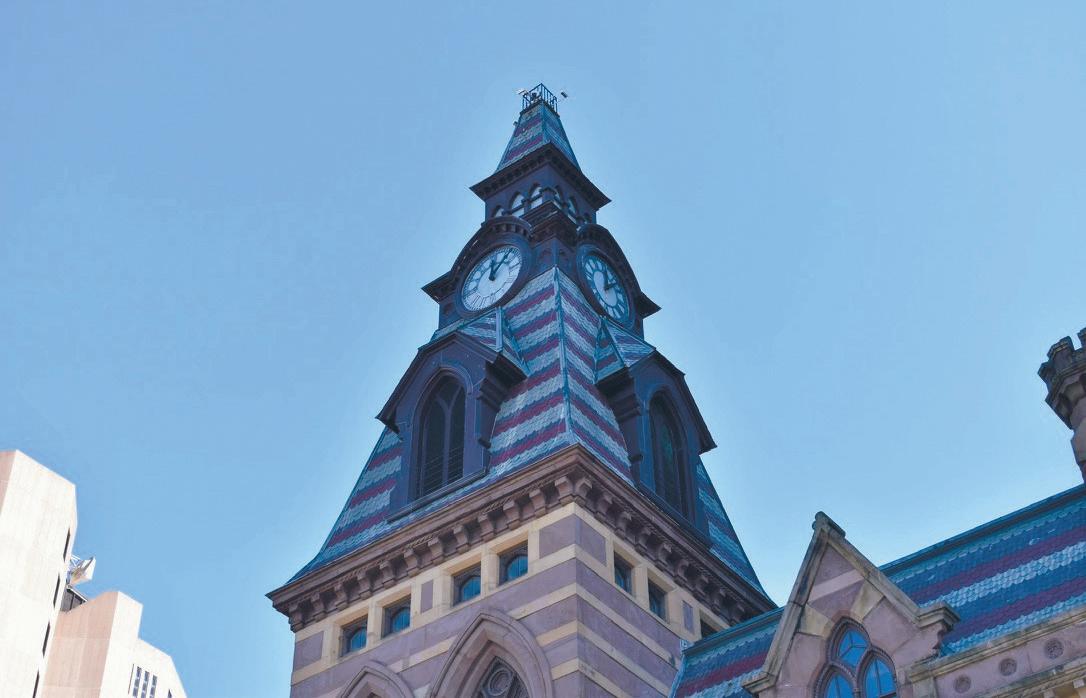
BY NELLIE KENNEY STAFF REPORTER
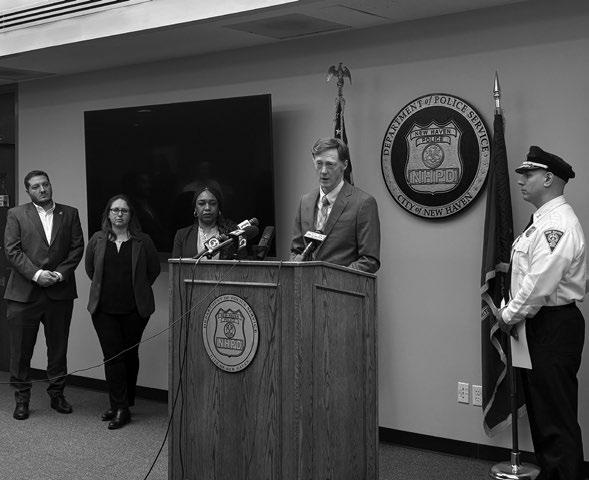
Last Thursday, city officials announced plans to hire an external organization to review the New Haven Police Department’s confidential informant program, after former police chief Karl Jacobson allegedly embezzled $ 81,500 from its fund in the two years before he abruptly retired last month.
Nearly 20 years ago, the city hired the same organization — the Police Executive Research Forum — to review its narcotics program after three New Haven officers were accused of bribery and theft. The officers ultimately pleaded guilty to the charges. The city’s confidential informant fund, part of the narcotics program, is used to pay informants who assist the police in investigating drug-related crime.
Jacobson was arrested by state police last Friday and charged with two counts of first-degree larceny
for his alleged theft from the informants fund and a separate youth programming organization, state prosecutors said. In a statement to the New Haven Independent, Jacobson’s lawyer, Gregory Cerritelli, wrote that “an arrest is not evidence of guilt and allegations are not proof.” In 2007, the department’s former lieutenant William “Billy” White and Detectives Jose Silva and Justen Kasperzyk were caught by the FBI after White stole cash from a paper bag planted by the federal agency in the back seat of a car, according to the News’ coverage at the time. A “culture” had developed in the narcotics unit at the time that was
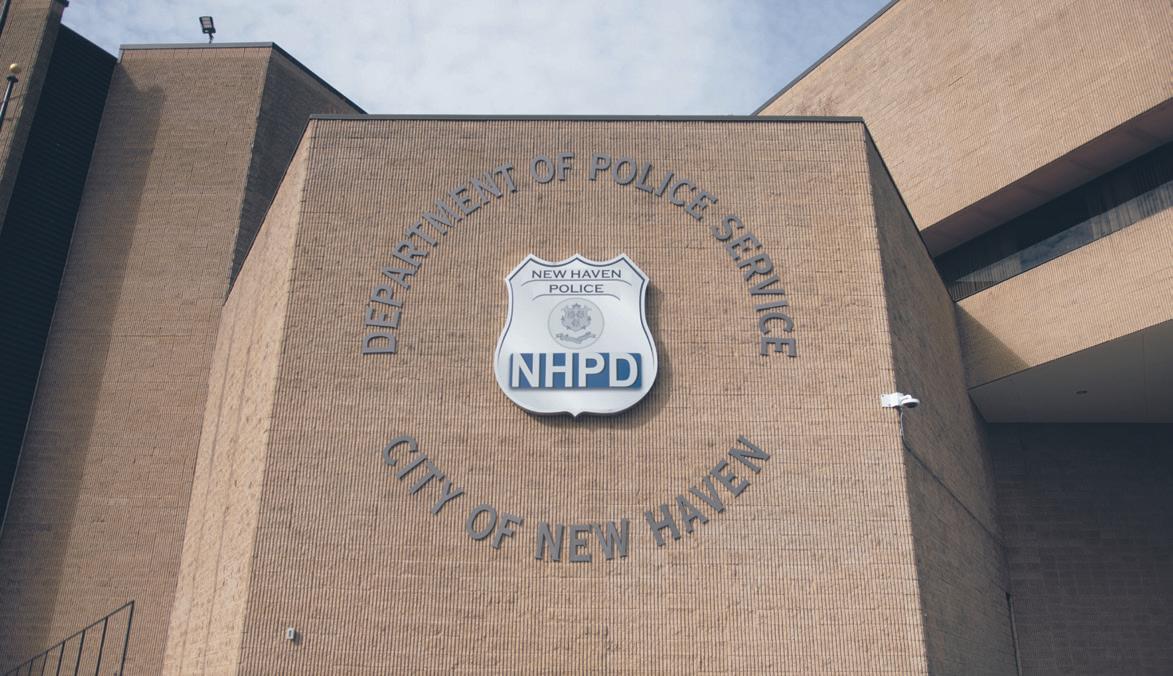
BY KIVA BANK STAFF REPORTER
In a joint Instagram post on Wednesday afternoon, The Yale Review and its executive editor Meghan O’Rourke ’97 announced that the literary journal will not be hosting its annual spring festival this year.
The Yale Review Festival usually features four days of panels, readings and workshops with writers and editors, but O’Rourke cited budget tightening caused by the upcom-
ing endowment tax hike as the reason for the “difficult decision.” In the fall, administrators announced that schools and divisions across Yale would have to reduce their budget targets as the University prepares for a tax increase that will cost it about $300 million per year.
“The festival is one of the most meaningful parts of what we do — a chance to bring extraordinary writers to Yale and gather a community around literature and ideas,” O’Rourke wrote. “But in this moment of financial uncer-
tainty, we need to be thoughtful about how we use our resources.”
A similar message was sent via email to subscribers of The Yale Review, mentioning the publication’s “steady growth of readership” to over one million people each year, alongside some additional statements.
“We are committed to staying in print and remaining excellent, and this is how we can best do it,” O’Rourke wrote to subscribers. “In the meantime, we’re grateful—as always—for your readership.”
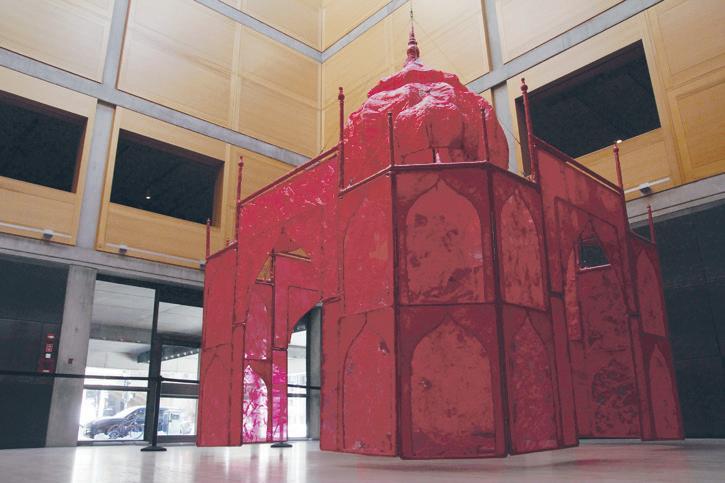
O’Rourke, who also teaches editing and writing at Yale, wrote in an email to the News that the annual festival was cancelled to ensure the magazine could make necessary alterations to its current operations.
“The decision was both about our reduced budget for this year and about our need to free up time to build out a new publishing model and a revised student program,” she wrote. “We can’t redesign how we operate while also running at full capacity.”
Last year, The Yale Review Festival took place from April 8 to 11 and fea-
tured novelists Catherine Lacey and Raven Leilani, as well as poet Ocean Vuong. Originally founded by a group of Yale faculty members in 1819 as the Christian Spectator, the journal claims to be the oldest literary quarterly in the United States. The Yale Review won the National Magazine Award for general excellence in the category of literature, science and politics in 2024. The journal publishes essays, fiction, poetry and criticism.
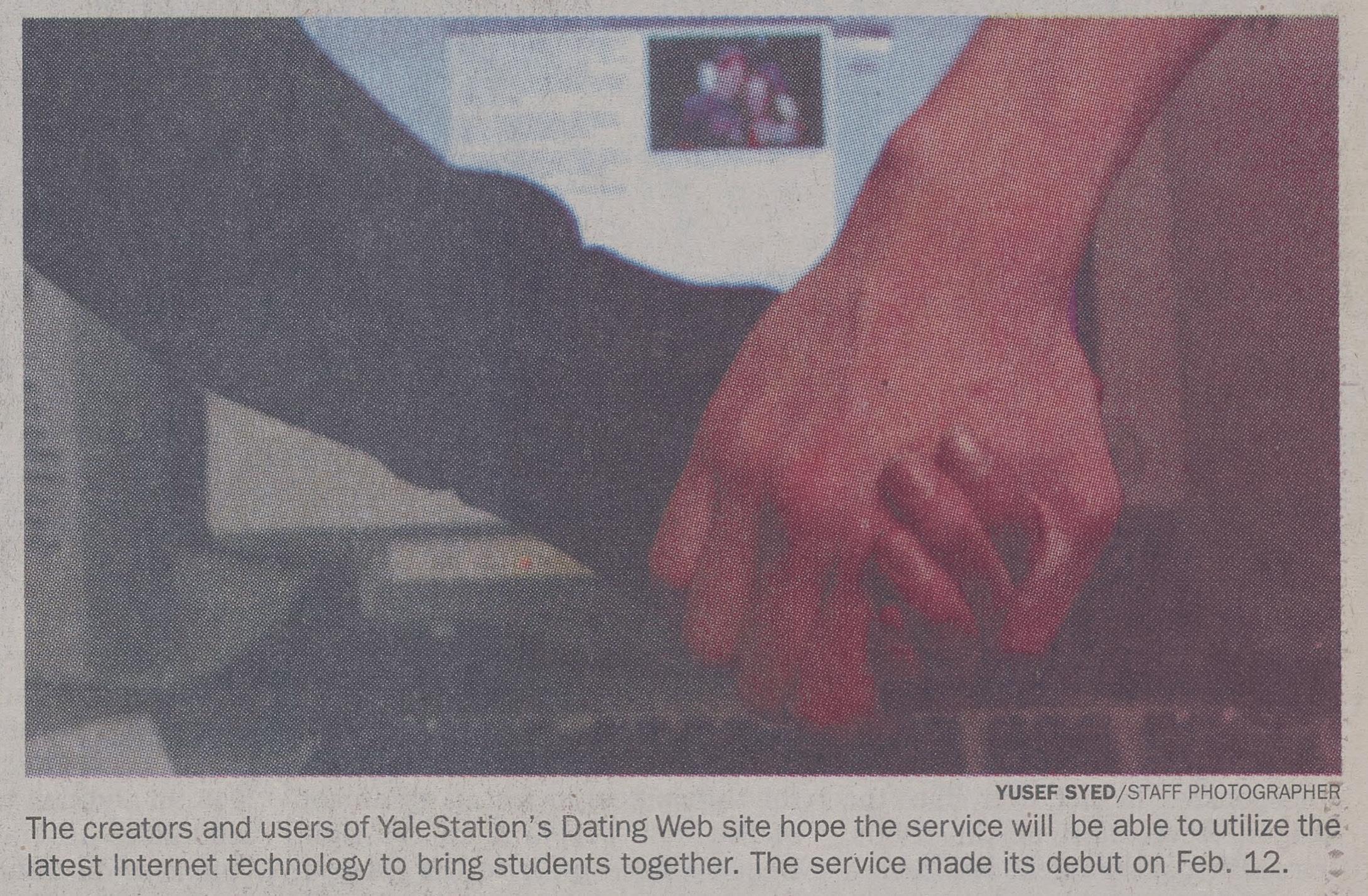
February 27, 2004 / Dating site links students, but ‘flirts’ fall short of dates
By Clare Stanford
According to the photos uploaded on YaleStation’s Dating Web site, Yale students are drunk people, people wearing silly hats, humorous animals, babies, or celebrities ranging from Lucy Liu to Bing Crosby.
Since the Web site’s debut on Feb. 12, over two-thirds of Yale undergraduates have registered on the site, far exceeding expectations. Many users have posted photos and taken the time to craft thorough profiles. But most students’ — even those who have used the site to find dates — say they do not take it seriously.
Yale College Council President Elliott Mogul ‘05 said even he was surprised by the level of interest, and attributed the Web site’s success to its constant updates and additions of new features. Mogul said he was especially impressed by the campus response to the newest feature, “flirts.” Mogul said students sent 1,000 flirts the same day the feature debuted.


By Asher Boiskin
Wednesday morning started with a small scare. When I arrived at Sterling Memorial Library to print my six pages of questions for my interview with University President Maurie McInnis, I discovered my Student Printing account had run dry. For a brief moment, I worried the whole morning might unravel before it began. Fortunately, the process of adding credit went far quicker than I thought it would, and I made it to 3 Prospect Street with my questions in hand.
The Yale Daily News generally gets just one 30-minute interview per month with McInnis, so we spend significant time thinking about the questions we want to ask. Prior to the interview, I asked reporters from across the paper about how I could leverage the interview to help with their reporting. I wanted to make the most of the time, so I opened with a round of “rapid-fire” questions before moving into more substantive territory. We covered a wide range of subjects, which I’m continuing to report on, and sat across from one another in her office.
The interview fed into a broader story I had been working on alongside two fellow News writers about how Yale faculty members view McInnis’ handling of the Trump administration’s policies toward higher education — and toward elite universities like Yale in particular. The piece has been several weeks in the making, drawing on interviews and written comments from more than 20 current and former faculty members. Hearing directly from McInnis on her own perception of her role in Yale’s approach to handling the Trump administration helped us put the finishing touches on that article.
Read “On Trump, McInnis denies credit” on page 1.

HANNAH
I came to Yale expecting to be surrounded by classmates and professors “who hold a diverse range of perspectives and beliefs,” as Yale’s former initiative on diversity, equity and inclusion promised. Instead, I found something different: despite its appeals to openness, political viewpoints on campus often cluster within a fairly narrow spectrum. Throughout my time at Yale, I have been disappointed by the institution’s partisanship. Yale offers explicitly progressive courses; one class, “No Time for Tears: Friendships between Black Women and White Women,” asks, “Are these relationships even possible?” Entire departments, such as Women’s, Gender & Sexuality Studies, are rooted in progressivism. I haven’t seen a class rooted in conservative political thought.
This imbalance shapes the tone of conversation. In a political philosophy class discussion on immigration, my peers affirmed one another’s radical stances — including support for open borders and abolishing Immigration and Customs Enforcement — while appearing careful not to step out of the party line. Signaling conservatism, even for the sake of debate, seems to risk public backlash — it’s no wonder that a report by the Buckley Institute found that 60 percent of students say they often feel intimidated about sharing beliefs that differ from those of their classmates.
Another report by Buckley found that there are no Republican faculty members across 27 Yale departments. Similarly, the Yale Daily News reported that 0 percent of Yale professors’ political donations went to Republicans. Among students, the overwhelming majority identify as liberal, likely because, as another Buckley report found, among 26 employees involved in undergraduate admissions, none are registered Republicans. Conservative groups exist at Yale, but they are small compared to their liberal counterparts and unrepresentative of the overall student body. The Yale College Republicans, for instance, were only revived last year after a nearly ten-year hiatus.
These trends are troubling. Yale prides itself on being an institution of learning, yet it shuts off opportunities for intellectual growth by keeping students in an ideological bubble. This environment robs them of the most valuable opportunity a university ought to offer: the ability to discover the truth.
Pursuit of truth demands intellectual humility. No political party is correct on every issue, and intelligent people exist across the political spectrum. Ideas are sharpened when they are challenged. Absent disagreement, students embrace extremism, according to a study by political scientist Sarah Hobolt and colleagues, and lose the critical thinking skills that higher education is designed to foster.
They resist engaging the other side, instead generalizing their opponents as fascists or bigots.
In addition to stunting students’ growth, the lack of many conservative thinkers at Yale is a symptom of a much larger issue: a culture of exclusion against conservatism by elite institutions. It is not by accident that Yale wound up having almost no Republican faculty members.
According to a Pew survey, 46 percent of Americans identify as or lean Republican — slightly more than those who lean Democrat. While the percentage among university professors is lower, one must ask why. Is there some innate difference between Democrats and Republicans that makes the latter vastly less likely to pursue academia? Or is it instead the fact that those hiring professors are almost exclusively Democrats themselves?
Many liberals argue that these trends, rather than reflecting bad practices on behalf of Yale, have to do with the Republican Party attacking academia. But this explanation collapses under scrutiny. It requires the belief that Yale’s faculty transformed into a near-unanimous Democratic bloc only in response to Trump-era rhetoric. A more plausible explanation is that ideological homogeneity has long existed and is now being justified rather than examined.
Do conservatives hate higher education, or is it rather that they reject ideological favoritism? It would be strange to celebrate overturning affirmative action, or create organizations like Charlie Kirk’s Turning Point USA to promote conservative thought in universities, if the goal were to see such institutions perish.
The response of my peers to Yale’s lack of political diversity exhibits the exact problems of ideological insularity that the Buckley report condemns. They stereotype the Republican party as opposed to the values of “truth and the academic community,” as one opinion piece in the News put it, suggesting that these are only found among Democrats. This generalization suggests that Yale students lack an accurate understanding of the modern conservative.
Though Yale is largely an ideological bubble, the rest of the world is not. When they graduate, students will encounter people from across the political spectrum. If Yale is serious about preparing students for that reality, it must do better. A university committed to truth should welcome intellectual challenge — not avoid it. Yale must amend its hiring and admissions practices and welcome more conservatives among its staff and student body.
HANNAH OWENS PIERRE is a sophomore in Benjamin Franklin College. She can be reached at hannah.owenspierre@yale.edu.

I only know one Yale student who dresses in the eponymous Ivy fashion: tennis sweaters over Oxford shirts and penny loafers to complete his appearance. In the near past, this young man’s attire would have been commonplace on Yale’s campus. Yale has undergone a transformation wherein the figure of the Yale gentleman — the Nick Carraway type who was once a symbol of cultivated restraint and moral seriousness — has all but vanished.
In his place stands a fragmented successor: the anxious technocrat, the disillusioned ideologue or the ironic cosmopolitan. This transformation reflects not merely a shift in aesthetic, but a deeper unraveling of the moral and educational ideals that once gave elite formation its purpose. Where did the Yale gentleman go, and more than that, should we mourn him?
Yale once understood itself as a moral and civic formation, not merely a credentialing apparatus. It produced men steeped in the great books tradition — formed by Plato and Augustine as much as by mathematics or law — who were trained to deliberate about the ends of life before mastering its means. Education aimed at judgment, character and statesmanship.
Today, that formation has largely given way to technocracy: the production of highly skilled managers fluent in process, metrics and policy abstraction but increasingly estranged from substantive moral reasoning. What has been lost is not only a costume or an etiquette—the Yale gentleman as an aesthetic — but
an ideal of education ordered toward wisdom rather than optimization. The question, then, is not whether we should nostalgically revive him, but whether a university that no longer forms persons capable of asking first-order questions about the good can still claim to educate at all.
Philosophically, this transformation reflects what Alasdair MacIntyre famously diagnosed as the loss of a shared moral tradition. In his book “After Virtue,” MacIntyre described how modern elites cease to be bearers of coherent ethical inheritance and become instead managers or emotivists — figures adept at technique or expression but untethered from substantive accounts of the good. The Yale gentleman, once a synthesis of classical virtue, Protestant moral seriousness and civic responsibility, becomes unintelligible under these conditions.
Indeed, the disappearance of the gentlemanly ideal opened the gates to many who had been excluded from this closed circle. The old ideal, for all its polish and cultivated restraint, was fundamentally exclusive. It drew its strength from a narrow, homogenous circle — one that systematically excluded women, racial minorities, religious outsiders and those without the cultural capital to perform its codes. I, for one, as a woman, can now attend Yale and participate fully in its intellectual life — an opportunity that would have been impossible had the university clung to its aristocratic past. Yet even as we acknowledge these gains, we must ask what has been lost when formation is abandoned in favor of either pure self-expression or instrumental careerism. If the gentleman’s demise was a necessary clearing of the old order, what new forms of character and civic responsibility might we cultivate in its wake?
Perhaps it is time, then, not simply to mourn the Yale gentleman, but to ask what new kind of human being our universities should form in his absence. The old figure — dignified, restrained and morally serious — represented both an ideal and an exclusion. In dismantling the gates that kept many out, we have gained greater justice and diversity of voice. Yet in the rush to democratize, we risk losing the very notion that an elite
IN THE END, THE DEATH OF THE YALE GENTLEMAN COMPELS US TO ASK NOT SIMPLY WHAT WE HAVE LEFT BEHIND, BUT WHAT WE ARE WILLING TO BUILD IN ITS PLACE. WHAT VIRTUES DO WE WANT OUR FUTURE LEADERS TO CULTIVATE? WHAT MODELS OF GREATNESS SHOULD ANIMATE THE NEXT GENERATION?
should be more than merely a credentialed class — that it should be a moral and civic vanguard, trained not only for power but for sacrifice and stewardship. The challenge before us is not to resurrect the gentleman wholesale, but to recover the animating conviction that education is soulcraft: that it is meant to shape human beings who can hold authority lightly, wield it wisely and embody a sense of responsibility beyond the self. The lone student in a tennis sweater and loafers, wandering among his ironic or restless peers, becomes a living emblem of this tension — a ghost of an older aspiration and a question posed to the present. In the end, the death of the Yale gentleman compels us to ask not simply what we have left behind, but what we are willing to build in its place. What virtues do we want our future leaders to cultivate? What models of greatness should animate the next generation? And most importantly, what kind of soul should a true education dare to shape?
RALEIGH ADAMS is a Master of Arts in Religion candidate at the Yale Divinity School. She can be reached at raleigh.adams@yale.edu.


herself largely refrained from commenting on Trump and his clashes with universities. The month before Trump was elected president, McInnis adopted a report from the Committee on Institutional Voice that advised Yale leaders to limit their public statements on “matters of public, social, or political significance,” except in “rare cases.”
Professors recently interviewed by the News generally agreed that managing persistent threats from the federal government has been a critical part of her tenure as president. Many of them praised McInnis’ response to Trump because Yale has avoided the cuts many of its peers have faced. Some, however, said they wished McInnis had emerged as a more public defender of higher education.
“I wouldn’t have said before the, you know, recent years, you know, that it was the job of the president to lobby or to organize lobbying of the administration, but she’s been successful at that,” Paul Freedman, a history professor, said in a phone interview. “It pains me a little that the president should have to spend so much time dealing with Washington.”
When asked whether she has met with members of the Trump administration, McInnis told a News reporter, “I don’t know what you mean by members of the Trump administration.”
“I have met with many lawmakers, many elected officials, and some people who are in a variety of the governmental agencies,” she added. McInnis clarified that she has not met with anyone who works in the White House.
McInnis has regularly traveled to Washington, D.C., to “defend and speak to Yale’s mission,” she previously told the News. Over the summer, administrators solicited student statements to help in the University’s lobbying push, and Yale has sponsored students’ meetings with members of Congress.
“What keeps me up at night is always making sure that we can protect the work that we do here — the work that we do in patient care and research and the delivery of the educational opportunities for our students,” McInnis said on Wednesday. In February, Republican Rep. Mike Lawler of New York posted a photo with McInnis at his office in Washington, D.C.
“I was glad to meet with Yale President Maurie McInnis to discuss strengthening higher education and better aligning it with today’s workforce needs,” Lawler wrote on X. “Preparing students for success is critical to our country’s economic future.”
For some professors, McInnis’ behind-the-scenes approach in Washington has been a positive trademark of her presidency.
Jing Yan, a molecular, cellular and developmental biology professor, said he has not interacted much with McInnis but mentioned “an open info session to all faculty,” where McInnis described working to convince alumni and policymakers on Capitol Hill about “the importance of education and the contribution of Yale to education and beyond.” He wrote to the News that the University’s efforts to avoid cuts “somehow works” but did not know how.
Leslie Brisman, an English professor, said he thought it was “initially so disappointing” that McInnis and other university leaders did not “get together and collectively resist” what he refers to as “the outrageous assault of the Trump administration on academic freedom.”
However, Brisman has come to appreciate McInnis’ approach.
“It became clear that universities could do better with individualized ‘deals,’ however loathsome,” Brisman wrote to the News. “So it is very much to President McInnis’ credit that Yale has so far gotten off relatively easy.”
James Berger, who teaches American studies, said in a phone interview that elite institutions with resources like Yale should “stand up” and that
University presidents should be “at the barricades.”
“How she handles the endowment donors, you know, dealing with the intricacies of dealing with a Trump administration, the best way to do that is to just be really clear on what higher education is about and stand up for it,” Berger said.
Daniel HoSang, a professor in the American Studies department who is the president of Yale’s chapter of the American Association of University Professors, said in a phone interview that “there’s a set of faculty who are not displeased” by McInnis’ focus on “institutional preservation.” Yet he shared concerns that many faculty “feel very much on their own” in standing up against the Trump administration’s crackdown on universities.
“They’re having to individually navigate hazards about whether their research will be attacked, whether they’ll face censure — the issues in the world, whether they’ll be addressed,” HoSang said. “I think it’s been demoralizing, and I say that about the climate, not about President McInnis.”
In response to concerns that faculty members have felt on their own in standing up to the Trump administration, University spokesperson Karen Peart pointed to the Committee on Institutional Voice’s report as an explanation for why McInnis has not made more public statements.
“The president accepted the committee’s recommendations, and she considers these recommendations when making decisions on speaking on behalf of the university,” Peart wrote.
McInnis announced her acceptance of the committee’s recommendations on Oct. 30, 2024.
Contact ASHER BOISKIN at asher.boiskin@yale.edu, ARIA LYNN-SKOV at aria.lynn-skov@yale.edu and RISHI GURUDEVAN at rishi.gurudevan@yale.edu.
Lee / Senior Photographer
faculty have commended University President Maurie McInnis for keeping Yale out of the Trump administration’s crosshairs, but she said in an interview on Wednesday that she doesn’t think she deserves “either credit or blame.”
ident for New Haven affairs and University properties — over Zoom on Wednesday. Callahan oversaw talks in 2021.
“We’re getting to a good place,” Fernandez said in a Wednesday interview. “Whether or not we get to a good place by Saturday, I don’t know.”
He said that Yale and New Haven have to reach an agreement where both parties “feel like they won.”
“Sometimes a deadline helps get you there. And sometimes a deadline can be a little arbitrary, and maybe you need a little extra time,” Fernandez added. “If you ask me, ‘Is this something that’s going to get settled in June?’ I would say, ‘No, I think we’ll get it done before then.’”
In addition to Yale’s annual payment, Fernandez said he is renegotiating an agreement in which the University temporarily offsets the lost tax revenue of properties it purchases — which are thus removed from the city’s tax rolls — with payments that decrease over time.
In December, Elicker said he was “cautiously optimistic” that negotiations would wrap before March 1.
Asked Wednesday if his feelings had shifted, he said only that “it’s right around the corner. So, we’ll see.”
In March 2021 — eight months before Yale and New Haven arrived at a deal — Elicker presented two budgets to the Board of Alders. One planned for an increase in Yale’s voluntary contribution. The other, called the “Crisis Budget,” envisioned city spending without additional help from Yale; it proposed raising taxes by nearly 8 percent and shutting down a library, a senior center and a fire station.
Neither Fernandez nor the mayor’s spokesperson confirmed whether or not Elicker plans to present two budgets again this Friday.
How much?
Last month, leaders of Yale’s UNITE HERE unions stood alongside politicians at a Martin Luther King Jr. Day rally held outside Sheffield-Sterling-Strathcona Hall to demand the University increase its annual payment to $110 million for the next fiscal year — over four times Yale’s contribution in recent years.
UNITE HERE Local 34 spokesperson Ian Dunn told the News that the $110 million figure is meant to compensate for the property taxes Yale would have paid in the most recent fiscal year if it were not a tax-exempt nonprofit, subtracting the $16 million contribution under the current agreement and more than $100 million in state funds intended to offset the lost property tax revenue.
“It’s not a retroactive repayment,” Dunn said in a phone interview. “$106 million only accounts for what we lost in the last fiscal year; it doesn’t make up for past gaps in contribution from the University.”
Asked where the additional $4 million came from, Dunn said there was “no exact formula” for calculating what Yale owes New Haven, but that this is the “best estimate” for the next fiscal year.
Daum wrote in an email to the News on Feb. 17 that Yale “values its close partnership with New Haven” and that Yale’s voluntary financial contribution to the city — around $23 or $24 million under the 2021 deal, before the upcoming scheduled drop-off — is “the most significant commitment to a local community made by any higher education institution across the country.”
When asked last week if he supported the unions’ demand for an $110 million, Elicker did not make the demand himself but he said he would welcome the amount.
“I completely endorse Yale giving New Haven $110 million,” he said. But David Schleicher, a professor of urban law at Yale Law School, is skeptical.
“I mean, they can ask for whatever they want. But, no, that’s not even within a country mile of being in the ballpark of being anywhere close to being feasible or reasonable,” Schleicher wrote in an email.
Board of Alders President Tyisha Walker-Myers — who is the chief steward of Local 35, the union of Yale’s dining and facilities workers — continues to back the $110 million demand.
Speaking earlier this month, she urged Yale to “do the right thing and be our partner,” emphasizing that increased money from Yale would be essential in New Haven’s attempt to offset federal cuts to programs like SNAP and Medicaid.
“The Trump administration is not just affecting New Haven; this is affecting y’all too. I would think it would be best to help your neighbors,” she said.
Yale has tightened its own budget and taken steps to shrink its workforce in anticipation of an increased federal endowment tax that is expected to cost roughly $300 million each year.
Asked Wednesday whether the University planned to increase its yearly contribution to New Haven, McInnis did not answer the question. She instead pointed to Yale’s other financial commitments to the city — including a $10 million teacher fellowship program; New Haven Promise, which as of mid-2023 had helped over 1,000 New Haveners earn bachelor’s degrees; and the Center for Inclusive Growth.
“The voluntary contribution is merely additional money that we are investing in the city’s budget,” McInnis said.
For Elicker, the fungible lump sum is critical.
“It’s important for Yale to make a financial payment to the city and to respect the city enough to understand what’s the most appropriate way to use those funds,” he said.
Elicker proposed a $703.7 million general fund budget for the city on Feb. 28 last year.
Asher Boiskin and Nellie Kenney contributed reporting.
Contact ELIJAH HUREWTIZ-RAVITCH at elijah.hurewitz-ravitch@yale.edu and EVELYN RONAN at evelyn.ronan@yale.edu.
In the Instagram announcement, O’Rourke said that due to funding reductions, the journal will also prioritize its quarterly print and reduce online publishing in order to maintain free access to its online page. She said the quarterly print edition, Poem of the Week series and Shakespeare and Company interviews will continue to be published on their website, along with “occasional online pieces.”
O’Rourke said that the festival will return in the spring of 2027.
“Pausing allows us to fundraise and secure the support necessary to
underwrite the festival over the next five years,” she wrote.
O’Rourke was appointed executive editor of the magazine in 2019, and under her leadership, The Yale Review launched a new website in May 2021, which replaced the placeholder webpage the journal had for the previous two years. The updated website featured their print issue as well as exclusive online content. In an editor’s note published for the website’s launch, O’Rourke said that “the challenge of ushering The Yale Review into the 21st century” with online publication is what garnered her interest in the journal.
In her email to the News, O’Rourke remarked on the “rapid growth”
The Yale Review has undergone since she became executive editor.
“I’m grateful for the strong support of the university’s humanities leadership,” she wrote to the News. “I remain hopeful that Yale can see investment in The Yale Review as investment in exactly the kind of rigorous public intellectual life the university aspires to model for the country.”
The literary journal was renamed The Yale Review in 1892, according to its website.
Contact KIVA BANK at kiva.bank@yale.edu.
“There
decrease from more than 100 to just 30. In light of the recent developments, some professors expressed a range of emotions, from concern to ambivalence to confusion.
“Our current schedule offers over 100 different meeting blocks during the week, many of which are partially overlapping, underusing classroom space, and complicating students’ schedules,” the administrators’ email reads. “This schedule is decades old, makes poor use of classrooms, and has not kept pace with the number of courses now available to the student body, which has grown substantially in recent years.”
The email was sent on Jan. 30 and signed by Dean Jeffrey Brock of the School of Engineering & Applied Science, Dean Lynn Cooley of the Graduate School of Arts and Sciences, Dean Steven Wilkinson of the Faculty of Arts and Sciences and Dean Pericles Lewis of Yale College.
In the new scheduling system, no more than 60 percent of any program’s or department’s courses can be scheduled between 10:30 a.m. and 2:30 p.m., a period which, according to the email, has “peak demand for classrooms.”
Daily language courses will gain the option to meet at 8:20 a.m., 2:35 p.m., 4 p.m., 5 p.m., 7 p.m. and 8 p.m., in addition to the current class times of 9:25 a.m. and 10:30
a.m., according to the website of the University Registrar’s Office. Departments will no longer be able to schedule daily 11:35 a.m. language classes. In the fall, 50-minute lecture courses will also be permitted to meet at 8:20 a.m.
Lewis said the changes were made partially in response to challenges regularly experienced by first-year students, who often face trouble simultaneously completing their language requirements and taking introductory courses required for their majors.
He added that undergraduates would no longer be permitted to schedule overlapping classes, a revision of a policy adopted during the COVID-19 pandemic.
“The 11:35 slot is the most popular slot for lecture courses, which are often prerequisites for other majors and so on,” Lewis said in an interview on Thursday. “And in the past, we’ve found a lot of conflict between that and the four-day or five-day-a-week language classes, which students also often are taking their first year.”
Lewis added that using the same classrooms for longer periods of the day is “good for environmental reasons” because there will be “less heating and cooling of rooms.”
He continued that the changes are “good for instruction quality, because we’re not having to use as many marginal rooms that are sort of crummy” or “windowless.”
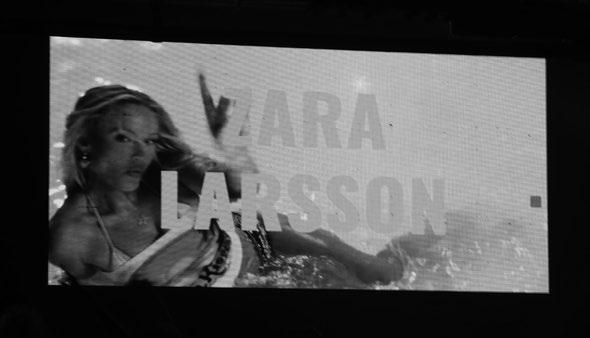
EDM — all genres that Yale students had expressed interest in, according to a survey conducted by the committee last September.
“Our priority for this year was building a lineup that appeals to the diverse music tastes of Yale’s student body,” Mateo Felix ’27, the talent chair of the Spring Fling Committee, said. “We do a survey at the beginning of every year, and pop is always the genre that people feel most excited about, so this year, to be able to finally meet that expectation has been a really incredible journey.”
Last year’s headliner was originally announced as NLE Choppa before he cancelled just over two weeks before the festival due to personal health issues. Ultimately, the Spring Fling committee chose Ken Carson as the replacement.
At this year’s festival, Aluna, a British singer-songwriter and DJ, is slated to be the first performer in the lineup.
A former member of the duo AlunaGeorge, Aluna has collaborated with KAYTRANADA, Chris Lake and Diplo. In 2023, Aluna began a music label spotlighting the talent of Black, female and LGBTQ artists in the music industry.
Following Aluna, rapper and singer Sheck Wes will take the stage. Wes is best known for his 2018 single “Mo Bamba” and has since released music with J. Cole, Travis Scott and Don Toliver.
Committee members said they were especially proud to feature Larsson in the lineup because she has grown as an artist and cultural sensation over the last few months.
“We were very excited to have someone who’s been such a main pop voice throughout our lives,” Lelah Shapiro ’27, hospitality and operations chair of the Spring Fling Committee, said. “Something that really stood out to us is how engaging and captivating her performances are in terms of fan engagement and her general stage presence.”
Sophie Peetz ’28, the committee’s creative and marketing strategy chair, said she was looking forward to pro-
Wilkinson also wrote in an email to the News that Yale’s “peer schools use far fewer time slots, which is one indicator that things needed simplifying.”
The administrators’ email to faculty also said that the new schedule guarantees at least a 15-minute break between all blocks and that the College has been in “close contact” with professional school deans to “encourage alignment” and “ease cross-school registration.” At least 75 percent of courses in most professional schools will now align with the College’s blocks, the email said.
The changes were made following recommendations provided by the Course of Study Committee during the 2024-25 academic year and were discussed at Yale College faculty meetings in May and December 2025, according to the email. The committee consists of professors, administrators and two undergraduates, according to its website.
Wilkinson also wrote in an email to the News that “maybe (my estimate) 100 people” attended the second faculty meeting on Dec. 4, “at which many instructional and ladder faculty provided input on the changes.”
Language instructors, who will no longer be able to teach courses between 11:30 a.m. and 2:30 p.m, expressed mixed reactions to the changes.
“The language faculty in French have had a variety of
concerns, including how the new patterns will impact the complexity of course scheduling, their back-to-back teaching schedules, classroom availability, small class sizes, and student preferences,” Constance Sherak, the director of the program in French, wrote in an email to the News. “Students may not choose to take French (or another language) based on the new patterns because they could conflict with afternoon commitments.”
Sherak added that the scheduling requirements present a new “logistical concern” for faculty members who have to drop off or pick up their children in the early morning and late afternoon hours, during which they may now have to teach.
Modern Greek, which is a small language program, will be unaffected by the timetable changes, according to Maria Kaliambou, the director of undergraduate studies for the program in Hellenic Studies.
Kaliambou wrote in an email to the News that “these changes are particularly burdensome for larger language programs.”
Korean language faculty opted to include the 2:35 p.m. slot in their teaching schedules and to exclude the 8:20 a.m. timeslot “because this is generally too early for students,” according to Angela LeeSmith, the coordinator of the Korean language program.
“Overall, the Korean Program faculty are pleased that this adjustment will allow us to offer students a more balanced and diverse set of course meeting times across the curriculum,” Lee-Smith wrote in an email to the News. She also noted that 50 percent of Korean language courses will now be offered from the 10:30 a.m. to 2:30 p.m. “peak-demand” period, down from the current 67.5 percent.
English professor Heather Klemann also wrote in an email to the News that she is relieved that students will have more time to travel between classes. She currently teaches on York Street and worries that her “poor students” coming from Science Hill would injure themselves on the ice trying to make it on time.
“Students shouldn’t have to leave classes early or arrive late because they didn’t have enough time between classes that meet back-to-back--I’m glad the university did something about it,” Klemann wrote.
Yale offered its first Filipino language courses in the fall semester.
Contact OLIVIA CYRUS at olivia.cyrus@yale.edu, OLIVIA WOO at olivia.woo@yale.edu and JAEHA JANG at jaeha.jang@yale.edu.
20 years after police scandal and reforms, city taps auditor again
“pretty abusive towards city residents,” John DeStefano, who served as mayor of New Haven from 1994 to 2014, said in a phone interview on Tuesday. “It was a narcotics unit issue, and it was made worse because it was driven by the leader of the narcotics unit, White.”
In 2006, an unidentified undercover state law enforcement officer contacted the FBI after White approached the officer and “suggested that they engage in illegal activity,” FBI special agent James McGoey wrote in a 53-page affidavit which he filed under seal in 2007.
moting Spring Fling “not specifically around one artist, but rather the vibe we are trying to curate — more of a dance, party vibe.”
In response to the live announcement, the crowd at Toad’s erupted into roaring cheers.
“Spring Fling did an amazing job combining three different popular genres of music and managed to incorporate everyone’s preference very well,” Ayannah Obas ’27 said.
“I’m really excited, and I’m already planning my outfit.”
Committee chairs met over the summer to brainstorm potential artists. When the school year began, they presented their pitches to the rest of the Spring Fling Committee and allowed the rest of the members to weigh in.
When evaluating musicians, the committee takes into account cultural relevance, listenership statistics and videos of live performances to gauge if the artist will be a good fit, members said. And they prioritize getting the artist confirmed as early as possible, as the date of Spring Fling is popular for college spring music festivals.
Once the artists are secured, however, the work does not end. Last year, the festival had to be briefly paused due to poor weather conditions. In order to ensure the festival continues, a contingency plan is in place.
“We always have a backup plan in place to ensure everyone can really enjoy this experience,” Jalen Freeman ’27, the production chair of the Spring Fling committee, said. In the event of extreme weather, Spring Fling could be moved indoors to the Lanman Center in Payne Whitney Gymnasium.
Before the lineup of professional performers, the winners of the Spring Fling’s annual Battle of the Bands will warm up the crowd. On April 11, student music groups will perform for an audience of their peers, who will decide which bands they would like to open the festival.
Contact GEMARD GUERY at gemard.guery@yale.edu.
On Jan. 31, 2007, the FBI planted around $27,500 in cash in the back of a rental car, the affidavit says. The same undercover employee reportedly told White that he had heard from an informant that the car belonged to a drug dealer and contained a large sum of money.
White decided to steal the money and stage his theft as a break-in, according to McGoey’s affidavit, which cites audio footage of White collected by the undercover officer. According to the affidavit, he took the entire amount from the car, shared about half with the undercover employee and wrote “estupido” on the emptied money bag in an attempt to divert suspicion.
In March of 2007, Kasperzyk stole $1,000 while searching a New Haven home and split the money with Silva, the News reported in 2008.
That same month, the FBI raided the New Haven Police Department’s headquarters and arrested White and Kasperzyk. White pleaded guilty to bribery and theft of government property. Kasperzyk pleaded guilty to felony and a misdemeanor, and Silva pleaded guilty to a misdemeanor, the News reported at the time.
After the arrests, the narcotics unit was temporarily disbanded. At the same time, New Haven hired the Police Executive Research Forum, a nonprofit organization focused on policing practices, to examine the department. The organization’s 127-page report, which the city received in November of 2007, encouraged the department to embrace a “new vision.”
The report suggested establishing a written performance evaluation system, internal audit system and mandated ethics trainings.
It also included a list of suggestions specific to the confidential informant program, including that the department establish a designated position responsible for overseeing and distributing confidential funds, rotate narcotics unit personnel and conduct an annual audit of informant files, including payments made to informants.
The report concluded that the existing approach, which did not routinely follow “strict policies and procedures,” broke down when senior officers and supervisors were not “good role models.”
DeStefano said in a phone interview that regularly rotating narcotics personnel was a “hard lesson” of the thefts. In 2009, the News reported that the department had adopted 90 percent of the report’s recommendations, including organizational and procedural changes.
DeStefano suggested that the officers became too immersed “in the atmosphere” of the unit and so became “unmoored from values they once had.”
“I don’t think Billy White started out as anything other than a good cop. He just became something else or made some choices that were something else. So to me it is this issue that starts with training and accountability,” DeStefano said.
The narcotics unit was revamped in 2008 at the report’s urging. The confidential informant policy was “updated” the same year, Officer Christian Bruckhart, the police department’s spokesperson, wrote to the News.
Bruckhart pointed to further changes in police department policy since the White, Kasperzyk and Silva cases, including mandatory body camera usage and recording policies for interviews. The department has required officers to wear body cameras since 2017, five years before they became mandatory for all Connecticut officers.
In recent years, the confidential informants fund has been overseen by the department’s assistant chief of investigations, a role which Jacobson held from 2019 to 2022. Jacobson continued to oversee the fund after he became chief in 2022, officials have said.
In a Wednesday interview, Mayor Justin Elicker suggested both policy and culture reforms.
“We need to make absolutely sure that public dollars are always audited, especially when there’s cash available, and that there’s better systems in place to make absolutely sure that people are following the rules and abiding by the law,” he said.
At a press conference at police headquarters last Thursday, Elicker and Acting Police Chief David Zannelli announced a set of new guardrails under a temporary order to restart the informants program’s operations, which had been paused last month after the allegations against Jacobson came to light. When confronted by his assistant chiefs about his theft of funds, Jacobson said that he had spent “too much gambling,” according to an affidavit in the application for his arrest warrant. He had turned to gambling after fixing his alcohol addiction, Jacobson reportedly said. The affidavit said that Jacobson had wagered over $4 million across two online gambling platforms last year.
Elicker added that it was important to “reiterate to people that are in the city, that we have support for people that are suffering from addiction.” He pointed to the city’s employee assistance program and added that the city has discussed other ways to “identify problems before they become more significant.”
Elicker announced on Friday that the city plans to pay $87,000 to the Police Executive Research Forum to analyze the department’s practices and draft a report with recommendations.
Elijah Hurewitz-Ravitch contributed reporting.
Contact NELLIE KENNEY at nellie.kenney@yale.edu.
“For
BY LEO NYBERG STAFF REPORTER
An environmental advocacy leader who sits on the Yale Corporation — the University’s main governing body — has publicly denounced President Donald Trump and his administration multiple times in recent months.
In a series of X posts earlier this month, Fred Krupp ’75 GRD ’22, the president of the Environmental Defense Fund and a Yale trustee, condemned Trump’s reversal of a scientific finding that allowed the federal government to regulate greenhouse gases. Krupp and the environmental advocacy nonprofit he leads have criticized Trump repeatedly throughout his second term.
University Spokesperson Karen Peart wrote in an email to the News that Krupp’s views about the endangerment finding were his own, and that he was not speaking for the University when he made those remarks.
Krupp did not respond to requests for comment placed to his office and through multiple media contacts at the Environmental Defense Fund.
In October 2024, University President Maurie McInnis adopted a report that advised leaders across Yale’s administration to refrain from commenting on matters of public importance unless they impact Yale’s mission. In 2024, the authors of the report told the News that leaders will not face repercussions for violating the recommendations.
The report does not specifically mention the University’s board of trustees. It advises that its recommendations apply to “central administrators,” deans and leaders of academic departments and other Yale programs.
Since adopting the report, McInnis has issued statements condemning the National Institutes of Health’s move to cut funding for indirect research costs and urging members of the Yale community to ask senators to challenge the Republican taxand-spending bill that included
a provision that would increase the tax on Yale’s endowment investment returns. She also signed a joint statement in April criticizing Trump’s “unprecedented government overreach and political interference.”
But McInnis, citing the report, has been silent on other issues relating to the Trump administration. Last January, she told the News that she was not certain whether “a lot of public pronouncements make a difference.” She has issued fewer campus-wide statements on national issues than her predecessor, Peter Salovey, collections of Salovey’s statements as president show.
Krupp has taken a different approach. A few days after Trump returned to office last January, the Environmental Defense Fund put out a statement rebuking Trump for withdrawing from the Paris Agreement, an international treaty on combating climate change, and Krupp made a similar post on X.
Most recently, Krupp critiqued President Donald Trump’s recent move to deregulate greenhouse gas emissions in a press release and in a series of posts on X, where he described the move as “unlawful.”
Krupp’s posts have described Trump’s repeal of an Obama-era endangerment finding, which allowed the Environmental Protection Agency to regulate six greenhouse gases. The Trump administration repealed the finding, which significantly rolled back the EPA’s regulatory authority, according to a press release from Trump and EPA Administrator Lee Zeldin.
Krupp and the Environmental Defense Fund denounced the move after it was reported on Feb. 9 in the Wall Street Journal.
“The unlawful, year-long effort by the political leadership at EPA rejects the overwhelming evidence that climate pollution threatens everyone’s health and safety,” Krupp wrote in a Feb. 10 press release.
In a Feb. 12 post on X, Krupp called the Trump administration’s
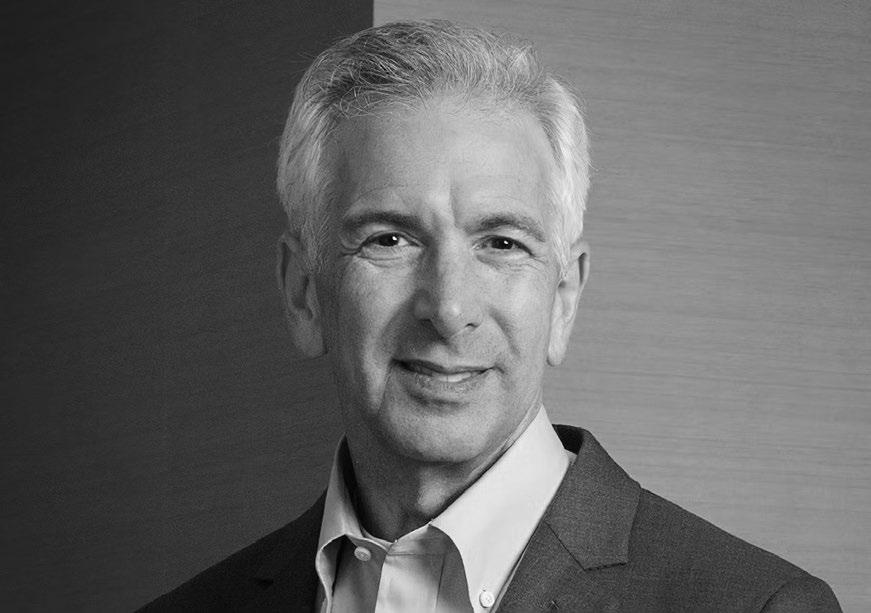
repeal of the endangerment finding “extreme” and urged people to pay attention to the decision.
“Zeldin prejudged the outcome & rushed to complete this harmful action with undue haste, saying on the day he proposed repeal that the Trump Admin ‘is driving a dagger’ into the Endangerment Finding,” Krupp wrote. Throughout the last year, Krupp has critiqued Trump’s EPA. In October, he wrote on X that the Trump administration’s rollback of methane regulations was seeking to “undo” progress in methane regulations. Krupp’s post coincided with the 10-year anniversary of the Aliso Canyon methane leak — a leak that reportedly released 100,000 tons of methane gas near Los Angeles, according to an EDF report.
Krupp was elected to the Yale Corporation as an alumni fellow
in 2022 in the first nomination cycle after the board abolished its petition process, in which prospective candidates collected signatures to get on the ballot in alumni trustee elections. In the 2021 alumni fellow election, the climate action group Yale Forward petitioned on behalf of a candidate focused on climate issues.
When Krupp was nominated the following year, a founder of Yale Forward said Krupp likely would not have been chosen as a Yale Forward petition candidate, had the petition process still existed, but praised Krupp’s “environmental credentials,” the News reported at the time.
In October, Krupp met with students at a residential college tea ahead of a Yale Corporation meeting. At the tea, Krupp spoke about his work with the Environmental Defense Fund.
Krupp has not been the only trustee to criticize Trump.
In January 2025, Yale trustee and former president of Morehouse University David Thomas ’78 GRD ’84 ’86 said that Trump’s freeze on grants and loans was an “existential threat as great as the pandemic” to CNBC. Thomas was the president of Morehouse, a historically Black university, at the time.
Yale is one of two Ivy League universities that has thus far avoided targeted funding cuts during Trump’s second term. The Trump administration froze billions in federal grants to Harvard last spring after Trump said Harvard failed to protect Jewish students during proPalestinian protests. The next Yale Corporation meeting is scheduled to take place on Saturday.
Contact LEO NYBERG at leo.nyberg@yale.edu.
BY ARIA LYNN-SKOV STAFF REPORTER
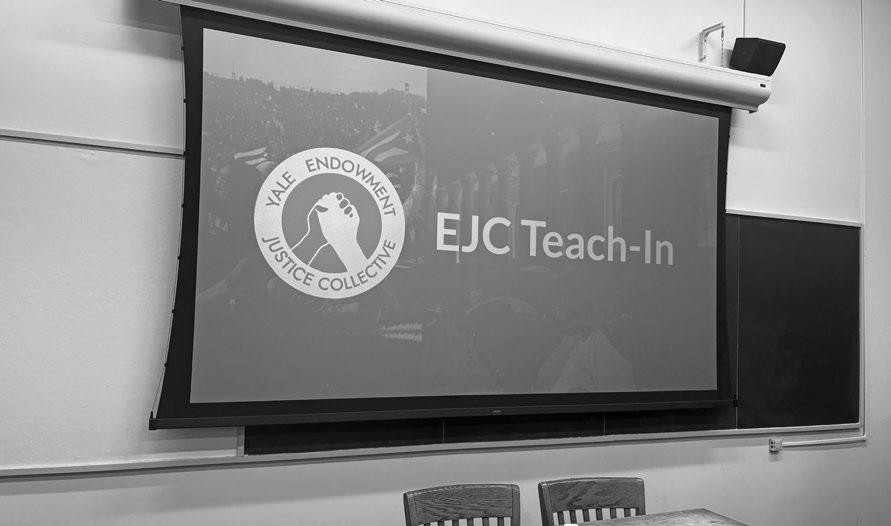
At a teach-in, members of the Yale Endowment Justice Collective advised students on how to organize against Immigration and Customs Enforcement activity in New Haven and renewed calls for Yale to discontinue its investments in companies linked to the agency.
At the Tuesday evening meeting, which took place in Phelps Hall and was attended by about 30 students, organizers called for students to take action to combat the presence of ICE in New Haven and advocate for Yale to divest from corporations they said are linked to ICE, especially the data analysis software company Palantir, which students recently asked Yale to divest from because of its ties to Israel and ICE. The News could not confirm whether Yale’s endowment is invested in Palantir or if Yale has other financial ties to the company.
“I’m partly motivated by how dire the situation is for people here and the fact that ICE is operating in New Haven, but then, of course, also largely motivated by Yale’s investments and that complicity,” Abraham Rebollo-Trujillo DRA ’26, who attended Tuesday’s event, said in an interview.
As the child of immigrants, Rebollo-Trujillo said she is “very plugged into immigrant rights.”
Since President Donald Trump began his second term last January, his administration has enacted a mass deportation campaign. Last month, during an ICE crackdown in Minneapolis, federal agents killed two U.S. citizens, Renée Good and Alex Pretti.
The Endowment Justice Collective meeting slideshow was structured into three main sections, entitled “ICE out of our streets,” “ICE out of our endowment” and “how we’ll win.” Organizers advised attendees on how to identify and respond to the presence of ICE officers in New Haven.
Organizers also described what they said were Yale’s investments in organizations that support ICE and explained the process of making divestment proposals. The presenters explained how students can help immigrants in New Haven by signing up for ICE watch shifts at the New Haven courthouse and writing letters to trustees on the Yale Corporation and President Maurie McInnis about divestment.
“The Advisory Committee on Investor Responsibility considered this topic as part its review process and did not recommend any changes to investment eligibility policies, based on Yale’s criteria,” University spokesperson Tina Posterli wrote in an email to the News, referring to the committee’s review of students’ recent Palantir divestment pitch. Posterli linked a frequently-asked-questions page on the committee’s website that details the circumstances under which it recommends a divestment policy.
“It’s important to note that just because a topic is reviewed by the ACIR, it does not mean the Endowment holds the investment,” Posterli added, referring to the investor responsibility committee. “The university encourages all groups with concerns to follow the ACIR process.”
Presenters at the teach-in explained how to identify ICE vehicles and agents. They advised students to look for unmarked vehicles with tinted windows and agents wearing either identifying badges or symbols or casual clothing, and carrying radios and handcuffs. The presenters encouraged attendees to take action, including by joining groups accompanying immigrants to court and signing up for the ICE watch.
In the second section of the presentation, Endowment Justice Collective leaders wrote that investment decisions by the Yale Corporation can connect to “extractive and exploitative industries.”
The presenters criticized the lengthy process of advocating for divestment and a perceived lack of transparency about the Yale Corporation’s actions. According to the advisory committee’s webpage, the board of trustees makes decisions about investments after hearing from the Corporation Committee on Investor Responsibility — a standing committee of trustees that is supported by the advisory committee.
Last fall, students in the Endowment Justice Collective went through what they described as the “proper channels” to call for Yale’s divestment from Palantir.
“Palantir blurs data privacy laws, relies on mass surveillance to make predictions, and then supplies ICE with a map of deportation targets,” students wrote on the slides they presented at the teach-in.
The New York Times reported last month that according to two Homeland Security officials, ICE uses a Palantir database to “find and track individuals for deportation.” In April, Wired reported that ICE was paying Palantir $30 million to build a surveillance platform that would provide “near real-time” information.
In January, the advisory committee rejected students’ fall pitch for Yale to divest from Palantir, as well as other corporations, including natural gas companies and weapons manufacturers.
Isabel Matos ’28, referencing Palantir’s deals with the federal government — specifically those with the Department of Homeland Security and ICE — said, “that’s something that we believe is absolutely in violation of the ethical principles that the endowment ought to be invested through.”
According to Matos, the group has not had any contact with the advisory committee or other administrators since their pitch was rejected.
The slideshow ended on an optimistic note, with examples of past student protests that led to divestments on various ethical grounds.
“Student organizing at Yale has won before, and will win again,” the presenters declared on a slide referencing Yale students’ decades-long history of protesting for divestment.
One example the presenters mentioned was from 2006, when student activism led to the University’s divestment from oil companies operating in Sudan during the genocide in Darfur.
According to Matos, the Endowment Justice Collective held an “identical” teach-in on Thursday that took place in a lecture hall in Linsly-Chittenden Hall.
“I would say we filled the room,” Matos said, referring to a lecture hall with a capacity of 149, according to the University registrar’s website.
“The Ethical Investor,” which according to the advisory committee’s website contains guidelines that the University follows when making investment decisions, was published in 1972.
Anna Koontz contributed reporting.
Contact ARIA LYNN-SKOV at aria.lynn-skov@yale.edu.
“There are two ways of spreading light: to be the candle or the mirror that reflects it.”
EDITH WHARTON
BY LEO NYBERG AND ARIA LYNN-SKOV STAFF REPORTERS
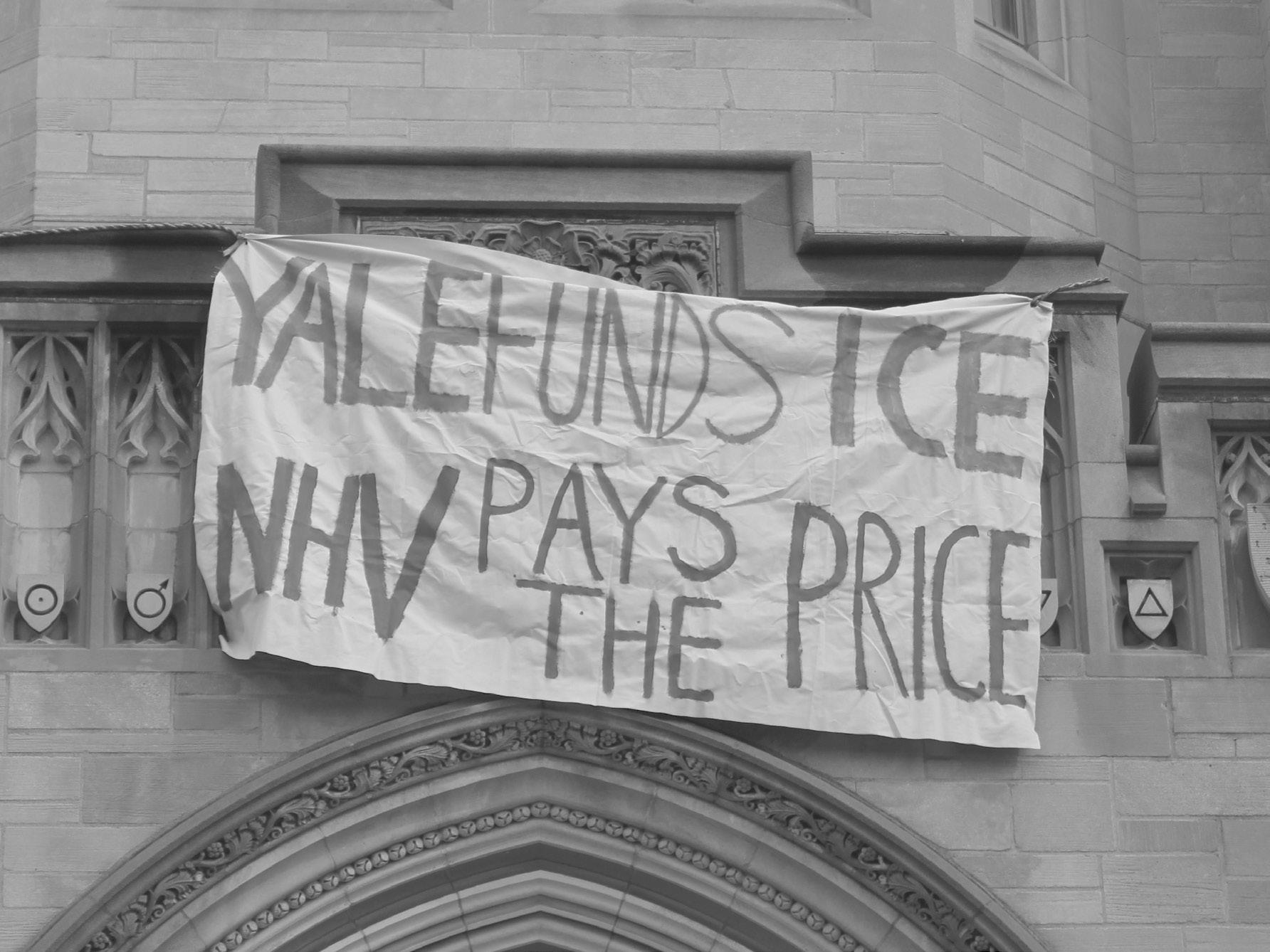
Around 100 students gathered on Thursday outside of SheffieldSterling-Strathcona Hall, where University President Maurie McInnis’ office is located, to drop off letters demanding that Yale divest from companies connected with Immigration and Customs Enforcement.
What started as a small gathering in the Schwarzman Center rotunda at 12:40 p.m. turned into a 100-person demonstration as the students moved to stand outside the entrance to McInnis’ office building. The protest came ahead of a Saturday meeting of the Yale Corporation, the University’s main governing body, which makes decisions about how Yale’s endowment is invested.
A small group of protesters rang the intercom system at the door, and after a brief pause Pilar Montalvo, Yale’s assistant vice president for University life, stepped out, collected the letters and walked back into the building.
The event started with around 20 students who, wearing pins and holding signs calling for divestment, gathered in the rotunda. As more demonstrators trickled in, organizers told students to line up in a semicircle around the rotunda to keep the space open.
Isabel Matos ’28, a student organizer with the Endowment Justice Collective then addressed the crowd, which had at that point grown to about 50 people.
“Yale invests our 44 billion dollar endowment into these exact companies powering ICE’s terror and gets richer while New Haven, a sanctuary city, is systematically defunded by Yale’s tax-exempt status,” Matos said in her speech, referencing companies including Palantir, Anduril, Flock Safety and Target Hospitality. In the group’s press release for the event, they detailed the alleged ties between Yale and those companies. The News could not confirm whether Yale has any financial ties to those companies.
“The university has received the letters,” University spokesperson
Karen Peart wrote in an email to the News on Thursday.
Matos condemned ICE’s presence in New Haven and also mentioned a student who was arrested by ICE on Thursday morning on Columbia’s campus.
The student was released by Thursday evening, according to reporting in the Columbia Daily Spectator.
“If you see the trustees on campus, tell them our demands have always been the same: Disclose and divest from companies profiting from violence and reinvest in New Haven,” Matos said in her speech, referring to the Yale Corporation members. “And if they keep refusing to hear us, we will have no choice but to get louder.”
The crowd launched into a series of chants including “Yale funds ICE, New Haven pays the price.”
The chants drew some spectators who left their lunches at Commons to see what the noise was about.
Students held cardboard signs with slogans like “Divest from Palantir,” “Abolish ICE Free Palestine” and a cardboardcutout sign with the letters “FUCK ICE.”
At 12:55 p.m., the crowd, which had swelled to about 100, crossed the intersection of Grove and Prospect Streets to line up outside McInnis’ office in an attempt to hand deliver the letters.
When the locked door to the administrative offices in the building opened, students cheered. Montalvo stepped out and a few organizers greeted her. Montalvo took the letters and thanked the organizers. After Montalvo left, organizers began addressing the crowd.
While organizers told the News that they had wanted to hand the letters directly to McInnis, they emphasized the importance of delivering the correspondence — a combination of physical letters and emails from the online petition. The organizers thanked the crowd and encouraged them to keep coming to events.
On Thursday afternoon, organizers said a total of around 1,300 emails demanding divestment had been sent to the Yale Corporation, of which
McInnis is a member. According to event organizer Diego Loustaunau ’27, “several hundred” physical letters were delivered in person. By Thursday evening, over 1,600 letters had been sent via the online petition, according to the Endowment Justice Collective’s letter campaign website.
The group also passed out flyers with information on Palantir’s ties to ICE. Palantir, a data analysis technology firm that has contracts with the Trump administration, is one of the companies from which students have repeatedly asked the Corporation to divest. Palantir is a data analysis technology firm that has contracts with the Trump administration.
On the back of the flyers were pictures of McInnis and the 14 current trustees listed on the University’s website. The flyers instructed students to “remind them to divest from ICE technologies” if they saw them
on campus this weekend.
As the crowd dispersed around 1:05 p.m., students placed their cardboard signs outside of Sheffield-Sterling-Strathcona. By 2:20 p.m., the signs were gone.
The Endowment Justice Collective has repeatedly attempted to sway Yale’s investment decisions. In November 2025, the group presented a pitch to the Advisory Committee on Investor Responsibility, which makes recommendations to the Yale Corporation’s committee on investments.
In January, the advisory committee rejected students’ pitches for divestment from British oil company BP and gas companies Ring Energy and LNG, as well as their pitch for divestment from Palantir.
“The Advisory Committee on Investor Responsibility (ACIR) considered this topic as part its review process and did not recommend any changes to
investment eligibility policies, based on Yale’s criteria,” Peart wrote in an email to the News Thursday evening, adding that just because a topic is reviewed does not mean the endowment holds the investment.
“The university encourages all groups with concerns to follow the ACIR process,” Peart wrote. The trustees are scheduled to meet on Saturday, according to a Yale website. The Corporation’s meetings are closed to the public.
Jaime Teevan ’98, a Yale trustee and chief scientist at Microsoft, spoke at a dean’s speaker series on Thursday three hours after the demonstrations.
Before McInnis became University president, she served as a successor trustee on the Yale Corporation.
Contact LEO NYBERG at leo.nyberg@yale.edu and ARIA LYNN-SKOV at aria.lynn-skov@yale.edu.
BY OLIVIA WOO AND ISOBEL Mc CLURE STAFF REPORTERS
Kamile Makselyte ’27 was grocery shopping at home in New Jersey when decisions for Yale College’s first-year counselor program were released last Friday. Without saying anything, she high-fived her mom, she recalled in an interview.
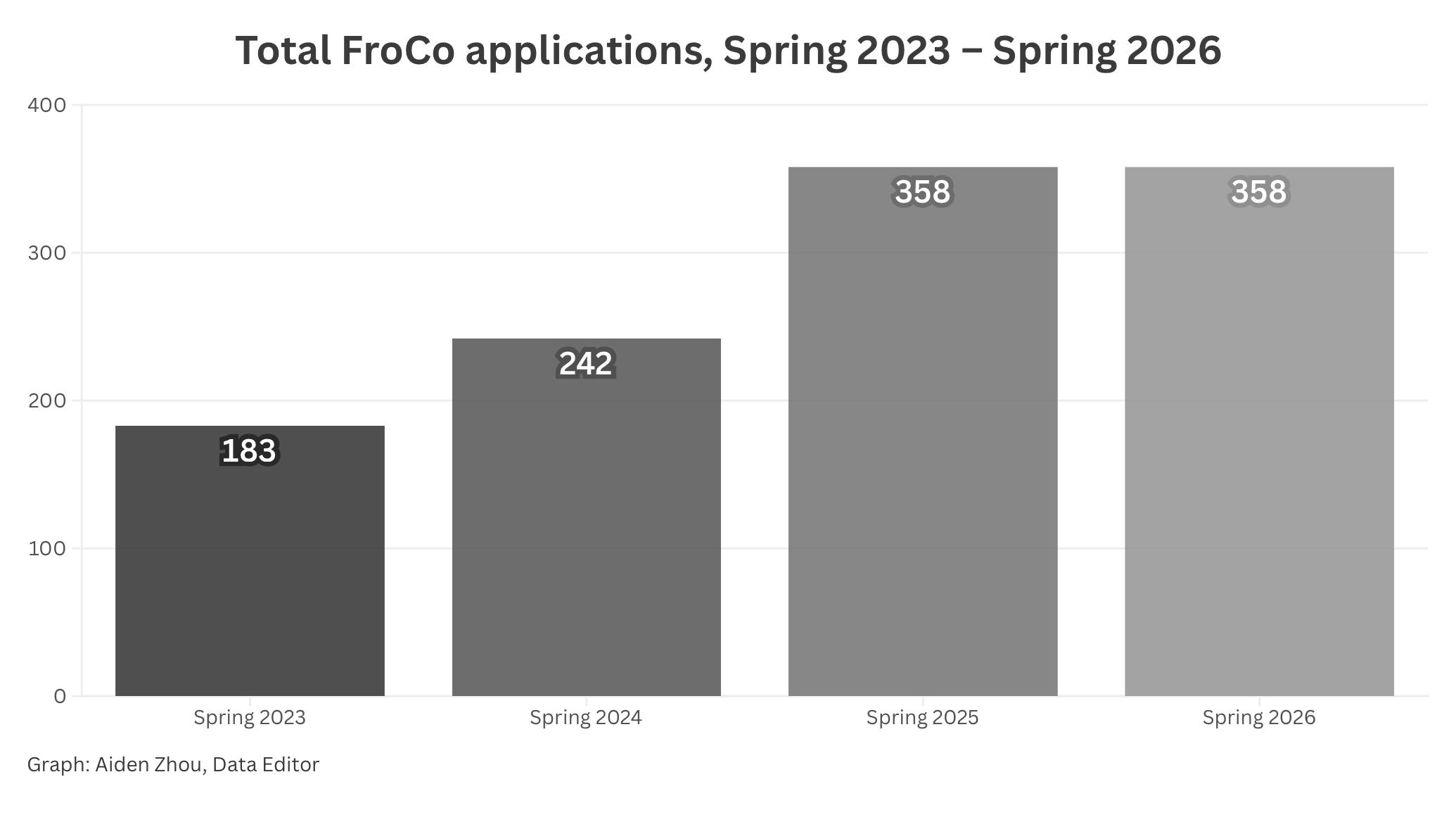
Makselyte was one of 132 rising seniors — out of 358 applicants — selected to be a FroCo.
She said her close relationship with her own FroCo and her experiences as a first-generation college student without older siblings motivated her to apply for the position.
“I would have been so lost had it not been for my FroCo, and I know for a fact that there are more kids like me,” Makselyte said in a Thursday interview.
This year’s application cycle was identical to last year’s, each drawing 358 applicants for the 132 available positions, according to Associate Dean of Residential College Life Ferentz Lafargue. The 358 applicants mark an increase in total applicants from 2023 and 2024, when 183 and 242 students applied each year, respectively.
The overall number of counselors increased to the current 132 last spring, the News reported in January 2025, a change that enabled smaller average FroCo group sizes. According to Lafargue, each residential college has either 10 or 8 counselors, and most FroCo groups have between 11 and 13 first years.
The FroCo application process remained consistent with the 2025 cycle, according to Lafargue. He noted that the College was “making some adjustments to FroCo training.”
What was once a two-to-three day “Spring Training” will this
year be a single evening titled “Spring Orientation,” he said. Lafargue noted that the shift towards a single evening of spring programming was caused by conflicts due to athletics and study abroad programs.
“The other change that we are making is exploring ways to increase opportunities for teams to experience training sessions in smaller groups in hopes of facilitating more fervent exchanges with presenters and more brainstorming/problem solving among team members,” Lafargue wrote to the News.
Gloria Kunnapilly ’27 — who will work alongside Makselyte as a future Branford FroCo — said that she had been thinking about applying to the role since her first year at Yale.
“I absolutely loved my FroCo and the entire Branford FroCo team,” she said in a Thursday interview. “I worked their commencement my first year, and I think seeing them graduate and reflecting on the positive impact they had on my freshman year really made me want to take on that mentorship role.”
That experience wasn’t universal among future Branford FroCos, however. Suitemates Erin Hu ’27 and Te Maia Wiki ’27 both said during a Wednesday interview that their interests in the role only became serious during their junior years.
Hu said that in the fall, she “realized that what I want my senior year to look like is an experience that’s very grounded and rooted in the community here at Yale. And I think that FroCo is such a great way for you to do that.”
Lafargue wrote that colleges that “house their students all four-years” continued to receive more applicants, pointing to Benjamin Franklin, Pauli Murray, Silliman and Timothy Dwight.
Of the 358 rising seniors who applied to be first-year counselors, 132 were
According to Lafargue, this year, Benjamin Franklin received the most applicants at 34.
Most residential colleges had openings for 10 FroCos this year. Trumbull, Grace Hopper, Jonathan Edwards and Berkeley, however, each accepted 8 to the role.
Victoria Mnatsakanyan ’27, a future Timothy Dwight FroCo, will move from her off-campus apartment back to her residential college in the fall.
“I was excited to be connected to my residential college community again,” Mnatsakanyan said in a Thursday phone interview.
“I still go back there every Sunday night for family dinner and meetings with the college council, but I do miss that collegiate feel that you don’t really get off campus.”
Most Benjamin Franklin FroCos currently live in the “Founder’s Suite,” a suite in Franklin with two floors and seven singles, according to Taylor Burke ’27, who will be a FroCo next year. That housing designation was new this academic year, and current FroCos have “seemed to really enjoy it so far,” Burke said. The rotation of Old Campus housing assignments that took effect this academic year moved Branford first years from Vanderbilt Hall to Lawrance Hall. Wiki said that she was “sort of sad” about not getting to live where she did her first year but added that she has grown to appreciate the prospect of living in Lawrance.
Hu added that current Branford FroCos have told her
that the prevalence of singles in Lawrance has led to “less roommate-to-roommate conflict,” which is “something very new in Branford.” Compensation for the FroCo position will match the cost of housing and meals for the 202627 academic year, equivalent to $21,600. Hu said that the FroCo compensation helps signal to her that “the University values this job” — and more specifically, she said, that “the University values you.”
The FroCo program at Yale was founded in 1938.
Contact OLIVIA WOO at olivia.woo@yale.edu and ISOBEL McCLURE at isobel.mcclure@yale.edu.
“Don’t go blindly into the dark / In every one of us shines the light of love”
BY EDIS MESIC STAFF REPORTER
A recent study from the Yale School of Medicine found that having both insomnia and obstructive sleep apnea was associated with a greater risk of developing hypertension and cardiovascular disease.
The researchers used data from a large national cohort of nearly one million post9/11 U.S. military veterans — those discharged from military service since October 2001 who enrolled in care provided by the Department of Veterans Affairs. Their chief goal was to examine how the risk for hypertension and cardiovascular disease in veterans with both insomnia and obstructive sleep apnea — known as comorbid insomnia and sleep apnea, or COMISA — compared to veterans with either condition alone.
“Compared with veterans who had no sleep disorder, those with COMISA showed the highest risk of developing hypertension,” Allison Gaffey, an assistant professor of internal medicine at the School of Medicine, said in an interview with the News.
Gaffey noted that this trend of increased hypertension risk was found for men and women, but adjusted risk estimates were slightly higher for women veterans.
The team further investigated hypertension risk for veterans with either insomnia or sleep apnea alone and found that veterans with either condition still had a higher risk than those who had no history of sleep disorders.
In addition to hypertension, veterans with both insomnia and sleep apnea also had the highest risk for developing cardiovascular disease, according to Gaffey. Upon dividing the sample by sex, the team found that the trend held for both
men and women, although male veterans with both sleep conditions were at slightly greater risk for cardiovascular disease than women veterans with sleep disorders.
“Veterans with both insomnia and obstructive sleep apnea have substantially higher cardiovascular disease risk than those with either condition alone,” Gaffey told the News.
Gaffey added that these results suggest that the co-occurrence of insomnia and sleep apnea is a particularly potent marker of cardiovascular risk among veterans. She emphasized the importance of future screening efforts in clinical practice to help identify veterans who have a high risk for developing hypertension and cardiovascular disease, paving the way for proper treatment and prevention.
Chronic insomnia is the most common sleep disorder, with 6 to 10 percent of adults meeting diagnostic criteria and 33 percent experiencing insomnia symptoms. Those with insomnia have difficulty initiating sleep, maintaining sleep or waking too early. And, as Gaffey described, the disorder is strongly associated with depression, post-traumatic stress disorder, chronic pain and cardiovascular risk.
Obstructive sleep disorder — characterized by episodes of interrupted breathing and snoring — affects nearly 18 million adults in the US, and is strongly associated with hypertension, heart failure, Type 2 diabetes and Alzheimer’s disease. The disorder is also more common in men than in women.
Gaffey emphasized that sleep disorders and their symptoms are not only extremely common but also often go underdiagnosed.
“Sleep is something that we don’t give enough attention to. Even if we’re having problems, we tend to brush them off and assume
that’s normal,” Gaffey said. Matthew Burg, a co-author of the study and professor emeritus at the School of Medicine, wrote in a statement to the News that while most government research funding is directed toward biomedical research, more than half of the chronic disease burden is attributable to behavioral and psychological factors.
Of the eight components of the American Heart Association’s metric for minimizing the risk of cardiovascular disease — called “Life’s Essential 8” — five are behavioral, including sleep, Burg noted.
The good news, Gaffey, is that, although there is a spectrum of severity, these sleep disorders are
treatable. Sleep medicine doctors can consult with patients to develop treatment plans that work best for them, possibly prescribing CPAP devices for those with sleep apnea and behavioral treatments for insomnia, which are often provided by psychologists who specialize in sleep care.
Looking ahead, the team is working on another investigation looking at the connection between insomnia and sleep apnea and diabetes with the same veteran cohort. Other questions the team might tackle include sex-specific differences in the metabolic consequences of COMISA — comorbid insomnia and sleep apnea — exploring how it mechanistically affects cardiovascular disease risk
and the cardiovascular benefits of treating COMISA among men and women.
“Our findings bring hope that preventive strategies that address sleep apnea and insomnia together, may lead to healthier hearts and minds down the road. The job of the healthcare community now is to show that this is possible,” Andrey Zinchuk, a senior author and associate professor of internal medicine at the School of Medicine, wrote.
The study was published in the Journal of the American Heart Association.
Contact EDIS MESIC at edis.mesic@yale.edu.
BY HARI VISWANATHAN AND OLIVIA CYRUS STAFF REPORTER
Yale New Haven Hospital lost nearly $200 million in the 2025 fiscal year, according to a recent balance sheet. Between October 2024 and September 2025, the hospital accrued a total operating loss of $196,817,000, which was first reported by CT Insider.
Robert Hutchison, a spokesperson for the hospital, blamed the “chronic underpayment of the state’s Medicaid program” in part for the losses. In response to the deficit, the hospital anticipates growing “critical services,” “offering voluntary retirement to select members” of its workforce and redesigning its organizational structures, according to Hutchison.
“Like all healthcare systems across the country, we continue to face unrelenting financial pressures due to a complex and challenging healthcare environment,” Hutchison wrote to the News. “As Connecticut’s largest Medicaid provider, we are particularly impacted by this as we are paid the least to care for the patients who need us the most.”
In the past six years, YNHH has had an operating surplus only in 2024, with $46 million. In the two years prior, YNHH posted operating losses of $162.3 million in 2023 and $240.3 million in 2024.
According to the document, major changes from 2024 to 2025
include operating expenses from salaries and benefits increasing by $102,195,000, a nearly 3 percent increase.
The hospital also posted restructuring expenses of over $57 million in 2025, including severance payments and vendor contract terminations.
As for Medicaid, YNHH received roughly $883 million in Medicaid payments in 2025 and paid more than $316 million into Connecticut’s hospital assessment program, receiving about $197 million back — a net payment of over $100 million, according to the balance sheet.
During the year, the hospital generated more than $6 billion in patient revenue, 49 percent of which was from patients with private insurance, 37 percent from those with Medicare and 14 percent from those with Medicaid, according to the document.
For the 2025 fiscal year, the hospital was listed with assets of exceeding $9 billion. The expense and income document showed that factors such as staff salaries and benefits and restructuring expenses contributed to the ninefigure loss.
Yale New Haven Health Services Corporation was formed in 1983.
Contact HARI VISWANATHAN at hari.viswanathan@yale.edu, and OLIVIA CYRUS at olivia.cyrus@yale.edu.
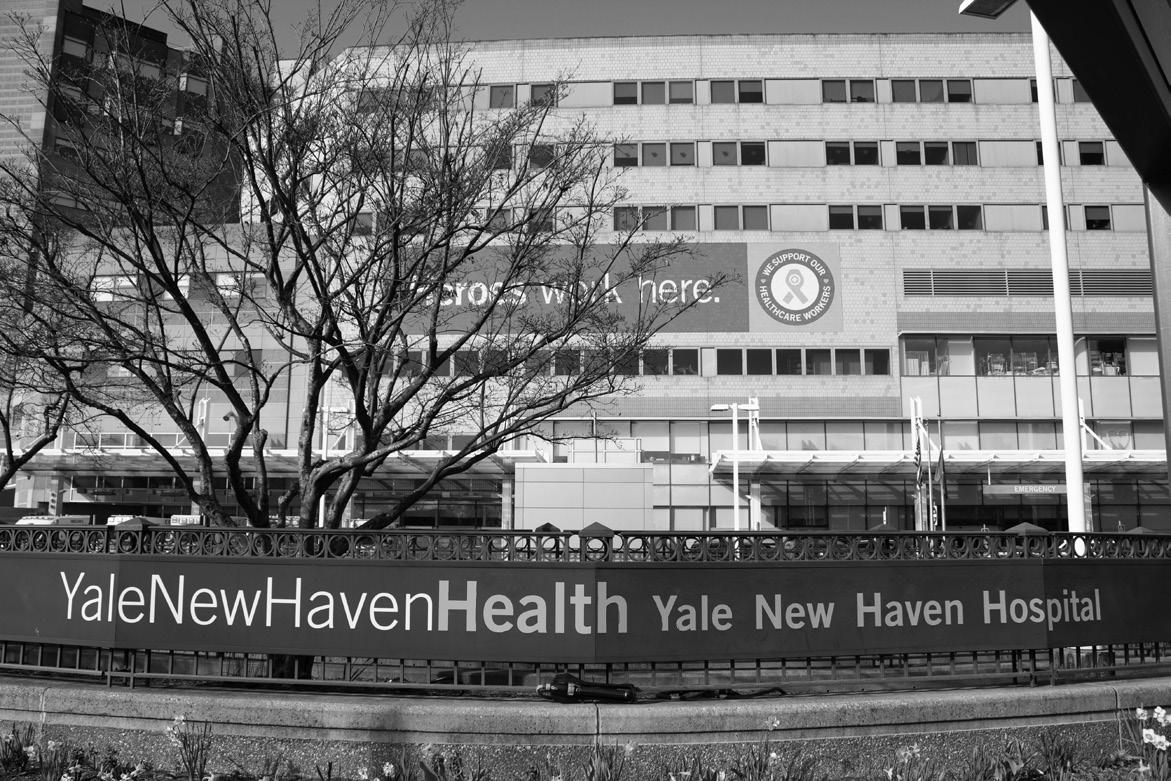
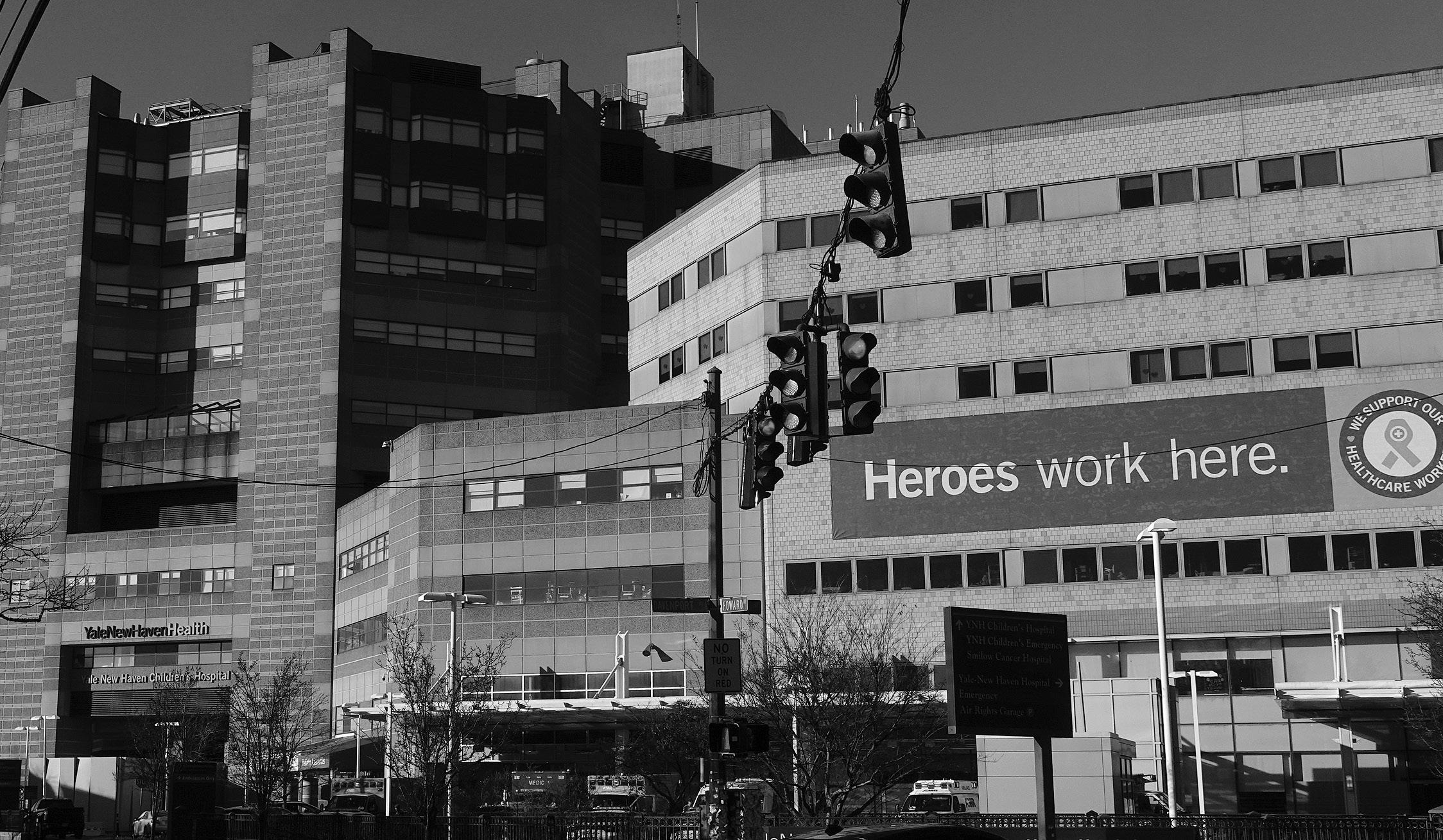

BY LAURENTIA WOO CONTRIBUTING REPORTER
Visitors entering the Yale Center for British Art this season are met with an unusual sight: a luminous pink model of the Taj Mahal.
Rina Banerjee’s ART ’95 immersive installation, “Take me, take me, take me…to the Palace of love,” on display at the YCBA until Sept. 13, transforms the image of the Taj Mahal into something translucent, buoyant and alive with movement.
“I actually really like it, it’s so unique,” visitor Claudia Lenskold said in an interview. “At first you just see the vibrant color and these random objects suspended in the air. Then you read that it’s about love.”
Banerjee’s Taj Mahal does not replicate the marble grandeur of its counterpart in Agra. Instead, it is constructed from unexpected materials: plastic wrap, toothpicks, found objects, antique furniture and suspended fragments. The bright pink and red colors of the sculpture are in stark contrast to white marble mausoleum on which it is based.
According to Banerjee, the origins of her engagement with the Taj Mahal date back to 1998. At the
time, she had just been invited to participate in the Whitney Biennial — the longest running survey of contemporary art in the United States — but was unable to access her studio.
Working at home while caring for her young daughter — who would attend Yale in 2021 — Banerjee began experimenting at her table, wrapping food in Saran Wrap of various colors, she said. According to the artist, the material’s vivid hues and its extraordinary versatility fascinated her.
Before becoming an artist, Banerjee was a plastics engineer, and her understanding of material science informed these early artistic experiments, she said. Banerjee said she was drawn to plastic wrap’s resilience, its ability to withstand the warmth and pressure of hands and what she described as its memory property — the way it holds form after being shaped or stretched. Using toothpicks as armatures and a baby’s milk bottle and cap for a dome, she constructed a miniature pink Taj Mahal.
Decades later, the concept expanded dramatically. In 2023, Banerjee was invited to create a major commission at the Massachusetts Museum for Contemporary Art, where the pink
Taj Mahal would become a largescale installation, she said. Here, the project became deeply research driven, and Banerjee said she travelled to various storage facilities and auction houses to collect materials.
Banerjee said she realized that objects that symbolized refinement and prestige in the United States were largely made in Asia. This historical research shaped the installation now on view at the Yale Center for British Art, she said.
Banerjee’s sculpture draws upon legend and cinema as well as history. She recalled a vintage black and white film in which a woman kneels before her lover, imploring him to take her to the Taj Mahal — the “palace of love.” That plea became the work’s title and emotional refrain.
For Banerjee, the monument embodies modern romance: the desire to choose love as an individual, rather than submit solely to social arrangement.
The artist deliberately warped certain details of the iconic structure, she said. Banerjee described the monument as traveling — spiritually, intellectually and materially — across contexts.
Clara Ortenzi, a local high school
senior visiting Yale, described feeling embraced by the piece. She interpreted the vibrant pinks and throne-like elements as symbols of love and creativity, which are especially resonant in February.
Claudia Lenskold, also a high school senior, noted her surprise at encountering such an installation at the museum. She also noted that the contrast between the marble original and Banerjee’s assemblage — constructed from what might be dismissed as “garbage” — heightened its impact.
The sculpture will be on view until Sept. 13, 2026.
Contact LAURENTIA WOO at laurentina.woo@yale.edu.
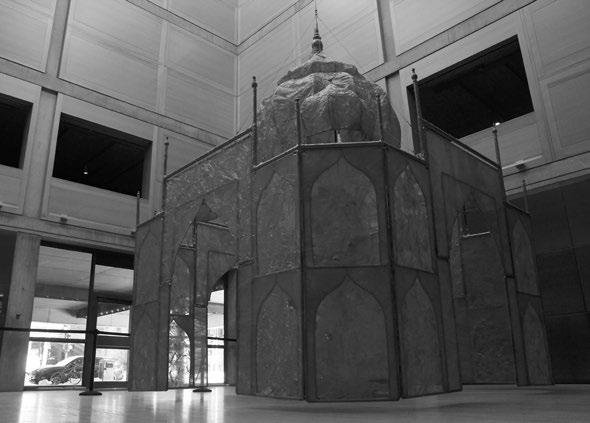
BY LENA KATIR STAFF REPORTER
“Arcadia,” a Yale Dramatic Association play produced entirely by first years, premiered Thursday at the University Theatre.
Directed by AJ Jones ’29, Tom Stoppard’s “Arcadia” invites audiences into an English country estate shifting between two centuries. The play follows a precocious young girl, Thomasina, and her tutor as their intellectual sparring and personal entanglements unfold alongside modern scholars attempting to reconstruct their story on the same stage.
“It takes place within two timelines in the same room,” Jones explained, emphasizing how the scale of that space became a central design priority. “A lot of its sophistication relies on its simplicity. We sized down some of the furniture to make the room feel larger.”
Jones said the production embraces the play’s complexity by emphasizing the grandness of the room in which it takes place, adding that the team was careful not to overcomplicate the set as “much of
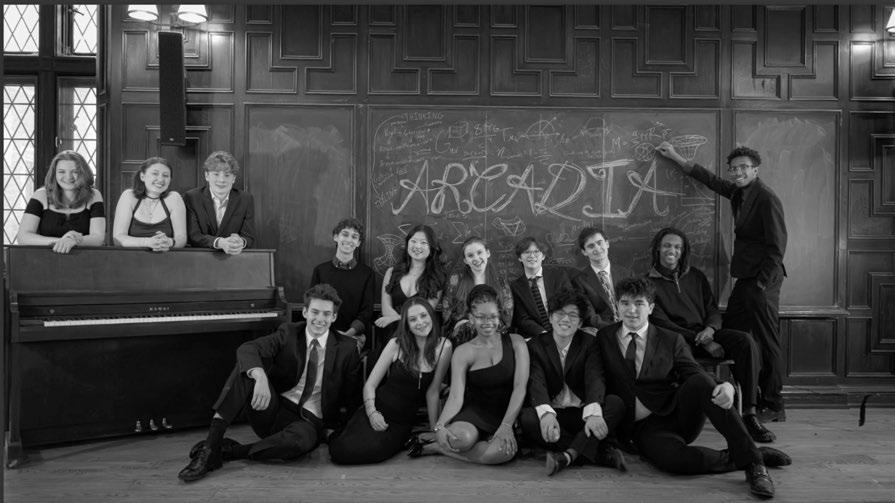
COURTESY OF SADIE SCHOENBERGER The Dramatic play, which is produced entirely by first years, will follow a young girl’s
the play’s beauty lies in the language.” Jones also highlighted Mya Osei’s ’29 costume design work, which helps visually guide audiences by using clothing to distinguish
between the early 19th century and the present day without disrupting the flow of the story, he said.
Producer Molly DellaValla ’29 said that the collaborative process behind
the show mirrors the play’s own themes of curiosity and discovery.
As a first-year production, the team brought together students with a wide range of theatrical experience.
“It’s a process where we’re all learning together,” DellaValla said.
“It’s been such a beautiful experience to build our own culture as an entirely freshman company.”
Stage manager Noah Allen ’29 said the play’s thematic range makes it feel particularly at home at Yale.
Many of the characters, Allen said, exist “on the spectrum of sciences and humanities” and move between modes of thinking in ways that mirror Yale’s academic culture. “The main character embodies the Yale spirit of caring about a lot of different kinds of knowledge,” Allen said.
For Jones, what ultimately grounds the production is the cast’s attention to character, and he said he hopes audiences will be able to see “the tremendous amount of care the actors have put into their characters.”
“Arcadia” is running from Feb. 26 through Feb. 28 at the University Theatre.
Contact LENA KATIR at lena.katir@yale.edu.
BY ELLISON DUNN STAFF CRITIC
The Yale School of Architecture is featuring an exhibition on one of its own: Denise Scott Brown, a professor of architecture from 1967 to 1970.
“Encounters: Denise Scott Brown Photographs,” is up through July 3 in the Rudolph Hall gallery, the same building in which she taught some 60 years ago.
Curator Izzy Kornblatt ARC ’28, a graduate student in architecture, and curatorial associate Peter
Xu ’27, an undergraduate student majoring in architecture, gave me a look into the motivations and inspirations for the show. The exhibition explores the birth of postmodern architecture, for which Scott Brown and her Yale colleague Robert Venturi are to thank. However, the walls of the gallery in Rudolph Hall are concrete and bush-hammered, entirely representative of architect Paul Rudolph’s Brutalist aesthetic. Without choosing a side, “Encounters” playfully engages
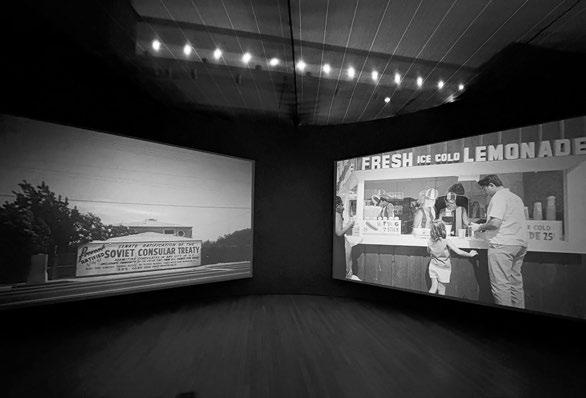
with the decades-old debate between Scott Brown and Rudolph’s respective architectural styles. The exhibition “changes how you interact with the space,” Kornblatt said — in an effort to build on, juxtapose and perhaps even contest Rudolph’s Brutalist design.
“You have Denise taking a picture of you when you walk in,” Kornblatt added, gesturing toward the exhibition poster: a photograph circa 1968 of Scott Brown holding her camera in a mirror. A massive rotunda structure was built specially for this show. It is gift-wrapped in an abstracted floral motif: large reflective decals on a mint-green background. The pattern alludes to a 1978 project by Scott Brown and Venturi, the “Best Products Catalogue Showroom.”
The playful, colorful reference poses a stark contrast to the concrete walls of the gallery, successfully transforming the space as the curators intended. I watched as a visitor took a selfie on the reflective surface of a flower decal, stunningly mirroring Scott Brown in the poster photograph.
Photographic prints line the walls around the rotunda. The exhibition also features posters, dishware and, of course, architectural plans — little treasures from throughout Scott Brown’s career. The photographs and ephemera provide visitors with
a new and intimate perspective on her life, especially for those already familiar with her work.
Streets’ worth of buildings are documented on long strips of paper that line the walls and display cases. Like these monographs, the exhibition itself is a panorama of sorts, collapsing Scott Brown’s life and career down into a legible yet novel bite.
“Encounters” acknowledges Scott Brown’s childhood in South Africa as formative for her photographic eye and passion for photography, while confronting the challenging, not-so-distant history of apartheid. As a white South African photographer working during that period, she had an “asymmetrical relationship” to non-white photographic subjects, as one of the wall labels reads. The exhibition also follows her travels after leaving South Africa, her personal relationships and her time teaching at Yale, to name just a few highlights.
Walking into the rotunda through a mint-green curtain, there is an audible click, something shifting: the thunder before lightning. The entire space illuminates as projectors cast onto two large screens, playing a slow montage of Scott Brown’s photography. Cubic stools invite visitors to sit and experience the photographs as they were intended to be seen: massive projections like those Scott Brown would show her students in lecture.
The order of the photographs follows that of Kornblatt’s photography book, which he designed with Scott Brown herself, also titled “Encounters.” Kornblatt described how, by maintaining Scott Brown’s ordering of the images, the projected images “keep her voice alive” amid the show’s fresh curatorial perspective.
Kornblatt and Xu spoke about how special it was to work on this exhibition with other students. “I haven’t seen another show by students from different programs” like this one, Kornblatt said as we were leaving, describing it as a “special opportunity for us to get to work on this together.” At the heart of “Encounters” are the students: those curating, those visiting and those whom Scott Brown taught. Especially striking is one particular display case with anonymous student work from Scott Brown’s days teaching at Yale: syllabi, quizzes, notes from studio. How incredible to think that the same documents are being produced now in this very building, perhaps to be archived and displayed in an exhibition 60 years from now, tattooed in anonymous ink.
Contact ELLISON DUNN at ellison.dunn@yale.edu
BY NICOLAS CIMINIELLO STAFF REPORTER
As the local biotech firm Arvinas transitions from focusing on one drug to developing multiple, it has named a new chief executive officer to lead this process.
While it is seeking a new partner to bring its flagship oncology drug vepdegestrant to market, Arvinas is centering its operations around multiple drugs in the early phases of development. The new CEO, Randy Teel GRD ’08, has worked in a variety of roles for Arvinas, including as chief business officer. He previously worked as a management consultant and corporate strategist for Alexion, another New Haven biotech company.
Founded by Yale professor Craig Crews in 2013, Arvinas specializes in targeted protein degradation, a practice Crews pioneered to treat diseases by attacking diseasecausing proteins.
Though Arvinas initially saw a stock market sell-off last year after it announced that it was ending its partnership with Pfizer to commercialize vepdegestrant, it has recovered recently. The firm’s stock price has increased by more than 60 percent in the past six months.
“We had to do some kind of downsizing and reduce our burn rate. But that actually ended up being a really positive thing overall for the company in terms of rebalancing,” former Arvinas CEO John Houston said in a phone interview. “So the timing is perfect now for Randy to come in and take the company forward.”
Houston also said that the time was right for him to step down.
“You get to a certain age where you don’t want to be leading the kind of intensive day-to-day stuff of a public company,” he said.
In a phone interview with the News, Teel emphasized that Arvinas is in a much different position than it was last year due to the firm’s transition from a focus on commercializing vepdegestrant to developing other drugs.
“Right now, we are really a Phase 1 early clinical company,” Teel said. “We’ve got a pipeline that stretches across oncology and neurology.”
The general mood around the biotech sector has also shifted in recent months, as the sector sold more than $13 billion in shares in the final months of 2025, the most since 2021. This has led some local firms to capitalize on it through fundraising rounds and acquisitions by large pharmaceutical companies.
“That’s changed. We’ve never seen more M&A activity. Some of the big pharma companies are buying a lot of significant biotech companies,” Houston said, referring to mergers and acquisitions. “Given the cost of bringing a new drug through testing phases and to the market, many firms opt to sell to large pharmaceutical companies and focus only on development. Hopefully that continues for the rest of the year and beyond.”
Teel said that despite a surge of interest in the biotech sector, Arvinas remains focused on producing good data from its early-phase drugs.
“Even if there’s a little bit more investor enthusiasm for biotech in 2026 than there has
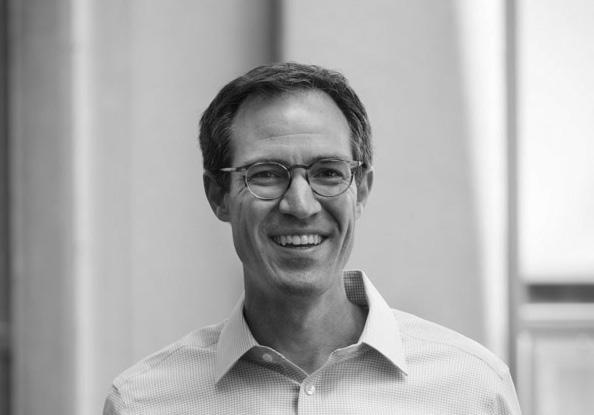
been for the past couple of years, I think investors will remain very focused on differentiated data,” Teel said.
Jodie Gillon, who heads the Connecticut biotech firm BioCT, praised the choice of Teel.
“Randy is the ideal next CEO for Arvinas, having held several key roles within the organization and on the Board,” she wrote in an email. Gillon also referred to the success of another local biotech firm: Halda Therapeutics, an oncology-based startup
recently acquired by Johnson & Johnson for $3 billion.
“I am personally betting that Randy brings Arvinas to the finish line of Haldalike success,” Gillon wrote.
Despite an increase in pharmaceutical company acquisitions of small biotech firms, including in New Haven, Teel did not indicate that Arvinas was looking for an exit. Instead, he stressed the need to build up relationships with large pharmaceutical companies for future partnerships.
“We always want to keep our options open,” he said.
Asked about his plans for the future, Houston said that he was staying on the Arvinas board and doing some consulting work, but also that he was looking forward to spending more time with his wife at their Connecticut vineyard. Arvinas is located at 5 Science Park.
Contact NICOLAS CIMINIELLO at nicolas.ciminiello@yale.edu.
BY EVELYN RONAN STAFF REPORTER
The New Haven Pride Center announced Monday that it would cease its operations, attributing the move to more than $200,000 in outstanding debt owed to the Internal Revenue Service, which began accruing in 2022.
According to a statement on the organization’s Facebook page, the center “cannot continue to make new expenditures” and would be forced to suspend all operations beginning Thursday and furlough staff due to the size of the remaining debt. Pride Center Board President Hope Chávez said she hopes to reopen in 30 days.
In a phone interview, Chávez
said the IRS debt stems from “previous mismanagement of funds.” The original unpaid tax liability was approximately $250,000, she said, though the exact amount remains unclear due to daily compounded interest applied by the IRS.
The Pride Center temporarily lost its federal tax-exempt nonprofit status in 2022 after failing to file required annual Form 990 tax documents, Chávez said. That lapse coincided with the abrupt departure of then–executive director Patrick Dunn.
“It took a long time to come to an understanding of what that was costing us,” Chávez said.
The organization regained its nonprofit status in 2023 with assistance from Rep. Rosa DeLauro’s
office, Chávez said. However, the accumulated debt could not be offset by the center’s inconsistent stream of income, which continued to strain the organization.
The financial pressure has limited the Pride Center’s ability to maintain its basic programming. Last year, approximately 7,000 people used the center’s food pantry, Chávez said, with thousands more participating in support groups, social programming and community events. The center also provides access to case management services, clothing closets, and food and hygiene pantries.
During the furlough period, the Pride Center will not be able to provide these direct services, Chávez said. She added that the board is working with partner
organizations and directing community members to groups such as the Downtown Evening Soup Kitchen and Loaves and Fishes.
The Pride Center’s financial instability has coincided with repeated leadership turnover. Chávez said that the extent of the debt was revealed in 2023, after executive director Juancarlos Soto had been at the center for about a year. Soto stepped down in April 2025.
In November 2025, the board announced the hiring of a new executive director, Edward Summers, who resigned within a week.
Chávez described the debt as “not a typical loan.”
“You don’t get bills. You don’t have a portal,” she said. “Even
though we’re in good standing and doing the right things now, something in the past can really loom over you.”
The center’s revenue has been highly unpredictable, Chávez said. In addition to servicing IRS debt, the organization has lost funding sources and faced challenges with employee retention.
“We’re trying to take care of our staff and help them do their work effectively,” she said.
“They’re really giving all that they can, but it didn’t feel right to keep scraping it together day to day.”
The New Haven Pride Center is located at 50 Orange St.
Contact EVELYN RONAN at evelyn.ronan@yale.edu.
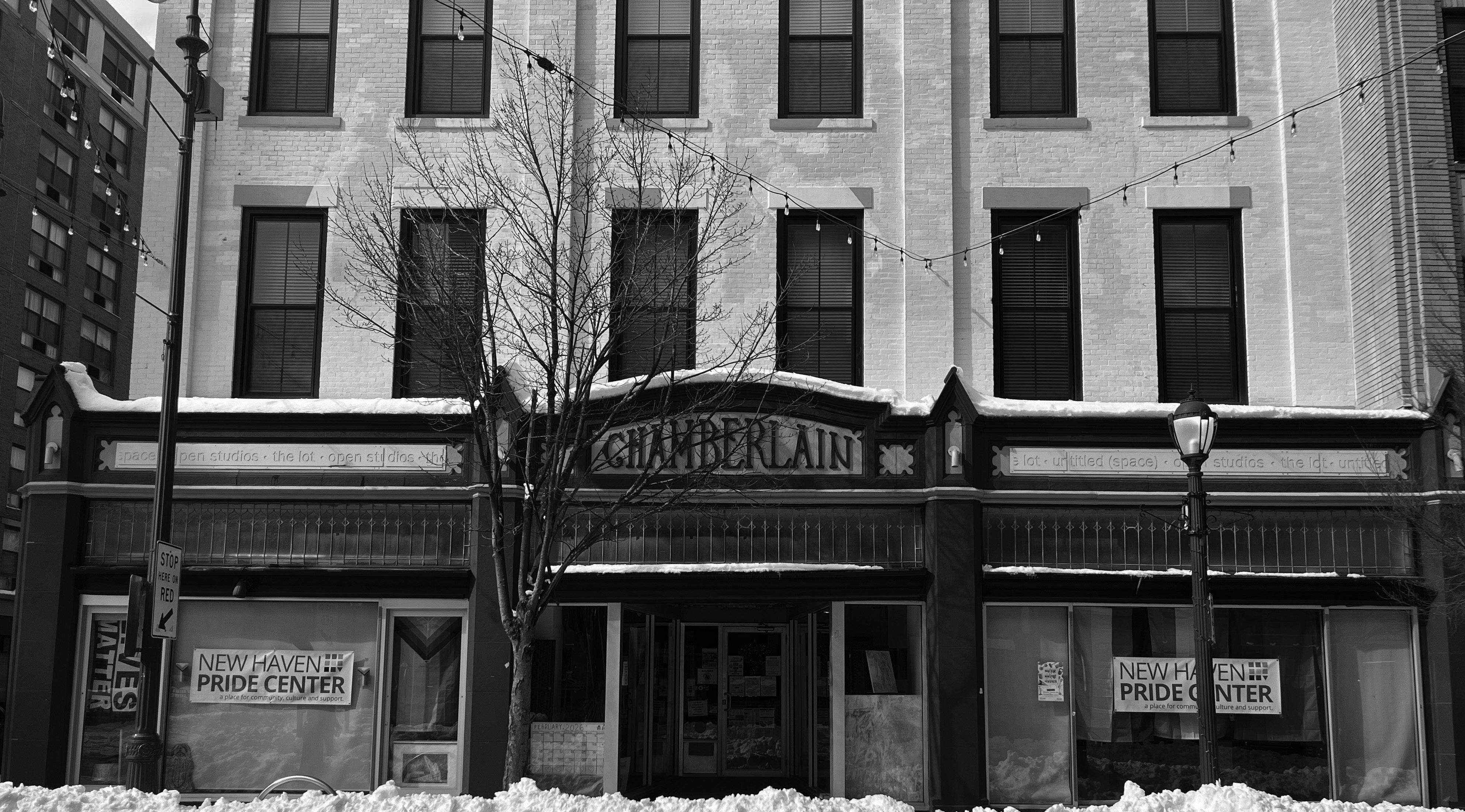
BY LIZA KAUFMAN STAFF REPORTER
The Yale men’s hockey team (8–19–1, 7–12–1 ECAC) will conclude regular season play this weekend when it welcomes Union College (19–10–3, 9–9–2 ECAC) and Rensselaer Polytechnic Institute (9–22–1, 6–13–1) to Ingalls Rink.
The Bulldogs will host Union on Friday night and face off against Rensselaer on Saturday night. Before puck drop on Saturday, the program will honor its six seniors for their contributions to Yale hockey over their four years.
“This weekend is special for both our team as a whole and the senior class,” junior Will Richter ’27 wrote in a text message to the News. “It is almost a way to give back to the seniors for everything they have done for us both at a personal and organizational level.”
The program will graduate defensemen Bayard Hall ’26 and Tucker Hartmann ’26 and forwards Kalen Szeto ’26, Jojo Tanaka-Campbell ’26, Elan BarLev-Wise ’26 and captain David Chen ’26.
For Bar-Lev-Wise, the defining characteristic of the class has been its tight bond.
“I’d describe my class as kind, genuine, and extremely smart people,” Bar-Lev-Wise wrote in a text message to the News. “We are more than just friends, we genuinely have a brotherhood and have unconditional love for each and every one of us. We can hold each other accountable without it ever breaking our bonds and I truly believe they will all be my best friends for life.”
Although this weekend will surely be filled with mixed emotions for the seniors who will play their final regular season games at The Whale, Chen said he is approaching the weekend with the same mindset as always.
“I’m not really trying to let it affect the way that I go through this week,” Chen said in a phone interview. “It’s a very exciting time for my class because we’ve been through so much over the past four years, and we want to end it the right way at home for our senior week.”
According to Chen, his class is the first senior class in recent program history to defeat every ECAC opponent at least once during their four years, a feat he said ranks among his proudest accomplishments during his time repping the Blue and White, alongside beating Harvard at home earlier this month.
Richter is grateful for the three
years he spent playing with the seniors and said the group has played a major role in shaping the team’s culture and fostering relationships across classes.
“The way the seniors have led our team is bringing a sense of togetherness to our program,”
Richter wrote. “From the beginning they have brought our junior class under their wing and have been really good to us. My favorite memory was from our Europe trip freshman year. I feel like as a group we got very close because of it.”
Richter’s reflection highlights the cross-class bonding that has defined the Bulldogs’ locker room this season, a dynamic younger players say starts with the seniors’ example.
Sophomore Micah Berger ’28 echoed that sentiment, pointing to the seniors’ energy and inclusivity as defining traits.
“The senior class this year is just super well rounded and energetic,” Berger wrote in a text message to the News. “Each guy brings something different to the rink every day. They’re all so positive and inclusive it’s awesome to be around. They just push our entire team and every individual to be better every day. They’re such great teammates no matter if they’re in the lineup or out of the lineup it’s all about the greater good.”
That sense of inclusivity has been especially important for the program’s youngest players navigating their first collegiate season.
Defenseman Hudson Miller ’29 said the senior class has played a key role in helping the first years adjust to the college game.
“They are all such great leaders and great models to look up to,” Miller wrote in a text to the News.
“They have given us so much advice on and off the ice that has helped guide our whole class throughout our first year. We’re really fortunate to have the senior leadership that we do. We are all going to miss them next year.”
Miller added that beyond this support, the seniors have also set a competitive standard for the program.
“Their work ethic and passion for the game pushes our team every day,” Miller wrote. “They bring out the best in everyone and set the standard for what it means to play for Yale.”
As Chen prepares to lace up his skates for one last regular season homestand at The Whale alongside the five other members of the senior class, the relationships he built off the ice are what he will miss most next year, he said.
“I think what I’ll miss the most is just hanging out with the guys around the rink and in the dining
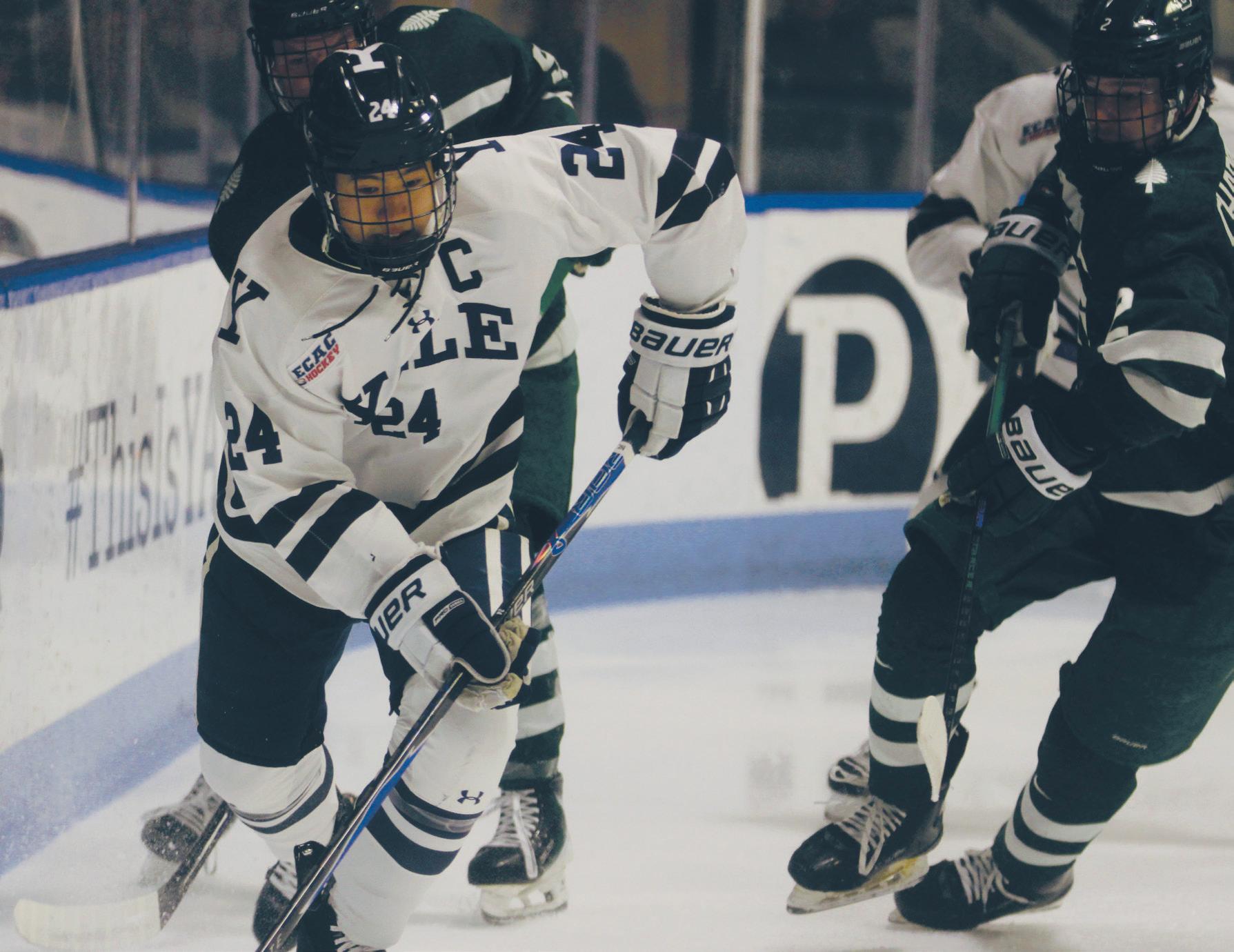
halls, sharing so many laughs with them,” Chen said. “Every day there’s always something to smile about, something to laugh about, and I think that’s the best thing about playing for Yale.”
Reflecting on his four years as a Bulldog, Chen offered a piece of advice for the returning players: live in the moment and enjoy every part of the experience wearing the Yale jersey.
“Don’t take a day for granted here. It really does fly by so fast,” Chen said.
He added that he hopes this year’s senior class will leave behind a legacy of being respectful, supportive teammates on and off the ice.
“I hope they remember the type of people that we are. I think that’s more important than anything,” Chen said. “More important than the type of hockey player you are is the type of friend and teammate that you are.”
Bar-Lev-Wise expressed a similar sentiment and also encouraged younger players to embrace the opportunities Yale provides beyond the rink.
“Go out, meet new people, get yourself out of your comfort zone, because at a place like Yale you are able to meet some of the most well rounded and diverse students in the world,” Bar-Lev-Wise wrote.
Now, the focus turns to closing out the regular season the right way.
The celebratory weekend begins Friday night against Union, a team
the Bulldogs defeated earlier this season during a January road sweep through New York’s Capital District.
The Bulldogs steamrolled the Rensselaer Engineers 8-3 last Friday night in Troy, New York.
An offensive surge, in which seven different players tallied goals, coupled with a perfect penaltykill unit and 28 saves from Noah Pak ’28 in the net powered the team to victory.
The squad rode the momentum of its victory over Rensselaer into the following night when they played Union. A strong 60-minute performance resulted in a 4-1 upset over the Garnet Chargers. Despite Union getting on the board first, a second period equalizer and three-goal third frame sealed the victory.
The Bulldogs will look to replicate these successes on home ice to send the seniors out on a high note.
“We want to sweep every weekend, but sending them out on a positive note to end the regular season would be awesome and bring us some great momentum going into playoffs,” Berger wrote.
Union will arrive in New Haven after a shootout loss to Dartmouth (18–7–3, 12–5–3 ECAC) last Saturday and a 4-1 victory over Harvard (13–13–2, 10–9–1 ECAC). On the road, the team has struggled in 2026, falling to Quinnipiac (25–6–3, 16–3–1 ECAC) 2-7, Harvard 0-4, Dartmouth 2-4 and Clarkson 7-8
(14–15–3, 8–9–3 ECAC).
With home ice advantage this time around, the Bulldogs will look to thrive on familiarity and the energy of a packed home crowd en route to another upset. Rensselaer will also come to The Whale after a split weekend at home. Last Friday, the Engineers tallied the first goal against Dartmouth, but soon saw their lead slip away as the Big Green proved why it is No. 2 in the ECAC. The Engineers bounced back the following night against the Crimson. Harvard’s late first period goal gave the team a one-goal lead. Following a scoreless second frame, the Engineers came out flying in the final 20 minutes. The offense put up two power-play goals, while the defense held the Crimson scoreless. In their last away matchup, St. Lawrence (7–22–3, 6–13–1 ECAC) demolished Rensselaer 7-3.
While the senior sendoff will be bittersweet, Berger is thankful for the two years he played alongside the members of the senior class and wouldn’t have it any other way.
“Thank you guys for being so welcoming, energetic, and all around great guys,” Berger wrote. “Brothers for the rest of our lives and so blessed to know each and every one of them.”
Puck drop is slated for 7 p.m. both nights.
Contact LIZA KAUFMAN at liza.kaufman@yale.edu.
BY INEZ CHUIDIAN STAFF REPORTER
After weeks of back-to-back competition, the Yale track and field team spent last weekend on
a well-deserved break. With the regular season now behind them, the Bulldogs turn their focus to two final weekends of championship racing. This weekend, the team will travel to New York for the Ivy League Heptagonal Indoor Track and Field Championships. The weekend after, any athletes who
qualify will head to Arkansas for the NCAA indoor championships. Both competitions offer athletes the chance to cap off months of training with podium finishes.
Runners to watch this weekend include men’s captain Andrew Farr ’26 and Otis Irwin ’28 in the sprints, alongside distance standouts Kenan Pala ’26 and Owen
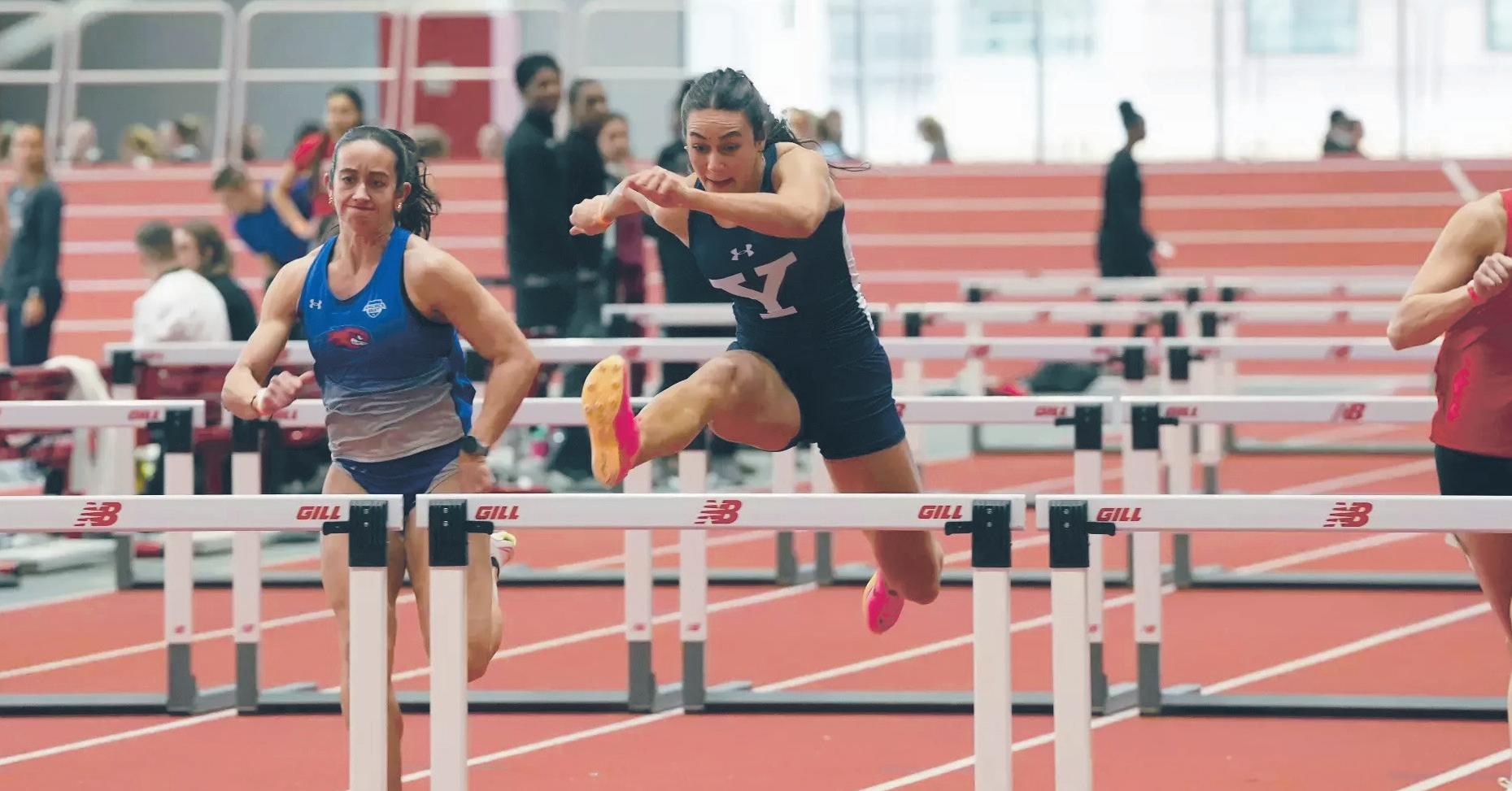
Karas ’26. Each of these runners ranks on Yale all-time indoor top10 performance lists, exemplifying the strength and experience they bring to the squad. On the women’s side, that distinction spans nearly every discipline. Anna Siciliano ’28 and Makayla Harris ’26 lead the charge in the shot put, while Gloria Guerrier ’27 and Sophie Spokes ’27 headline the sprints. Charlotte Whitehurst ’26 and Claire Archer ’26 have consistently delivered standout performances, and Layni Kaase ’29 has led the multi-event results.
“My indoor season has honestly been a lot of fun!” Kaase wrote to the News. “The pentathlon is new to me, so it’s been rewarding seeing the work in practice translate to performances.” Kaase has been Yale’s top finisher in the women’s pentathlon, showing strong performances in the 60-meter hurdles and high jump. It’s in both these events that she has landed herself on the program’s all-time lists as just a first year.
“While I’m a little nervous, I’m more excited going into this weekend,” Kaase wrote. “Obviously, it’s my first heps, so I think as a result I’m not feeling as much pressure, and I just get to truly enjoy my sport.”
On the men’s team, athletes
are eager to take advantage of the weekend while conserving energy for the upcoming outdoor season.
“We’re definitely rounding into form at the right time,” Matthew Schutzbank ’28 said in an interview with the News. “We kind of think of indoor and outdoor as one season because everything is so jam-packed, so a lot of guys use the indoor season as more of a build-up for outdoor.”
Outdoor season competition begins with the Black and Gold Invitational in March. Until then, the Bulldogs will focus on finishing their indoor season strong. Last year, at the Ivy League Championships, the men’s team came sixth of eight teams, and the women placed fifth. The Elis could outperform themselves this year, given the records broken and personal bests achieved in the past months.
The Ivy League Indoor Heptagonal Championships will take place this weekend at the Armory Track and Field Center in Manhattan. Events will be livestreamed on ESPN. Track and field events will begin at 10 a.m. on Saturday.
Contact INEZ CHUIDIAN at inez.chuidian@yale.edu.

BY BRODY GILKISON STAFF REPORTER
The Yale men’s basketball team (21–4, 9–2 Ivy) will be hitting the road this weekend to take on Cornell (12–12, 5–6 Ivy) in a Friday night matchup before heading to Columbia (15–10, 4–7) for the penultimate game of the regular season on Saturday night.
The Bulldogs currently hold the top spot in the Ivy League standings with just three games left in the regular season, and Ivy Madness looms on the horizon. With a conference record of 9–2, the magic number for Yale stands at three, but two wins this weekend should all but lock down the top spot due to the conference’s tiebreaking procedures.
“We know where we are at in the standings, but that’s not what we are focused on right now,” guard Trevor Mullin ’27 said. “There’s a lot of basketball left to be played, and we just want to focus on being consistent and continuing to improve every day.”
As far as the rest of the league goes, all eight Ivy squads are still in contention. The bottom five teams are all within two games of each other as the race for the final spot continues. Dartmouth and Cornell can each clinch the four seed by winning out, and Penn needs to win two out of their last three to punch their ticket. In the No. 2 pot, Harvard has already clinched its berth to the conference tournament and will most likely maintain its seed barring any major meltdowns.
While the rest of the conference
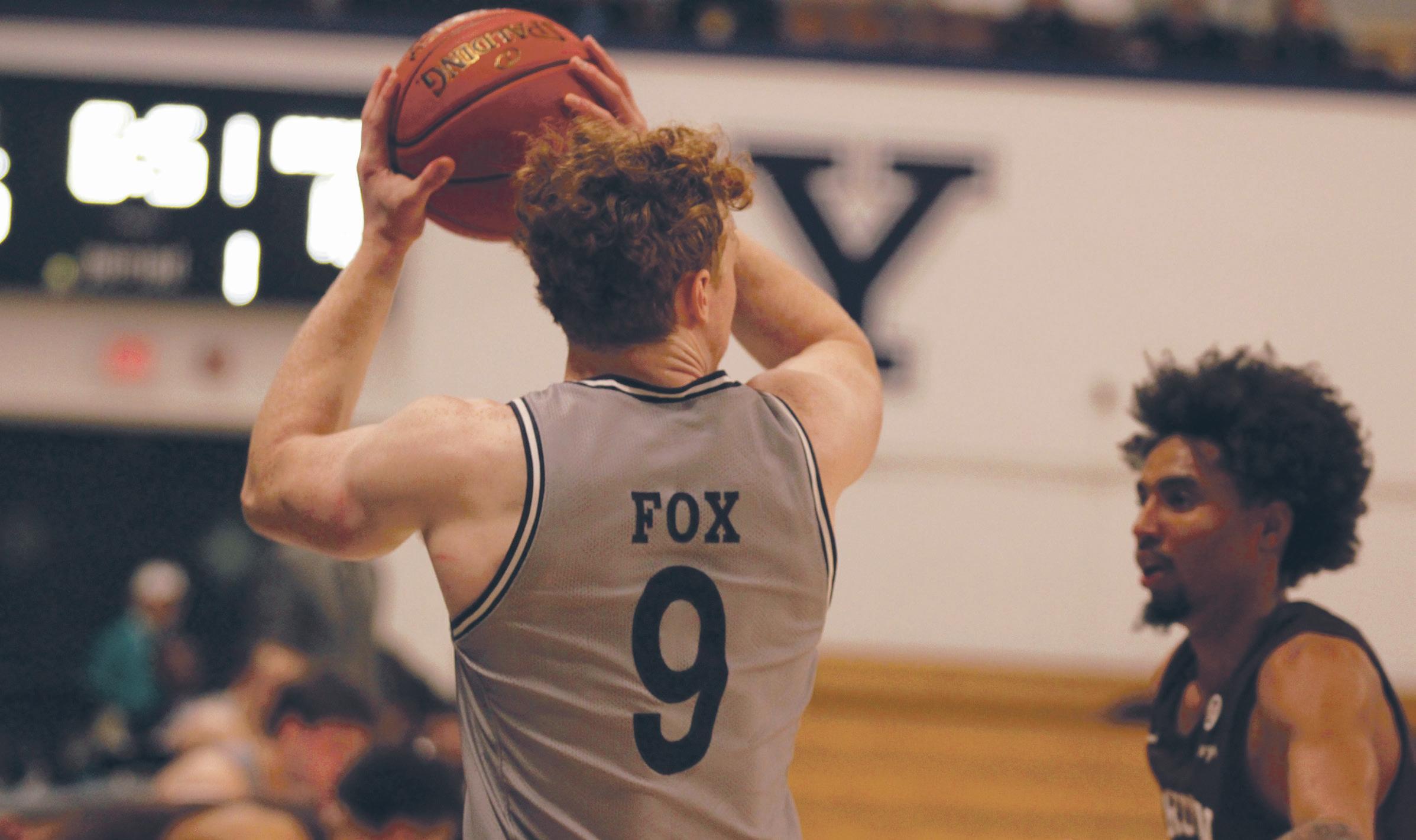
battles it out, the Bulldogs are focused on their own games this weekend. First up is the Big Red. This will be the second matchup between the two teams this year, with the first a 34-point shellacking put on by Yale earlier in January.
That game exposed Cornell’s defensive woes. Ranked 343rd in the nation defensively by KenPom, the Big
Red have struggled to limit their opponents’ scoring all season long. With Nick Townsend ’26 back on the court this week, the Bulldogs may produce another high-scoring output that ends with Yale coming out on top.
On Saturday, Yale will play for a chance to all but clinch the conference championship with a second win of the year against Columbia.
After starting 9–1 on the year, the
Lions have gone 6–9 since and have struggled to get hot offensively, which doesn’t bode well for them as they seek a win against Yale’s 27th-ranked offense. A large part of Columbia’s scoring has come from guard Kenny Noland and forward Blair Thompson, but Columbia will need much more from the rest of its roster to keep up with high-powered Yale in a must-
win game. Yale tips off at Cornell at 6 p.m. on Friday, with the game being broadcast on ESPNU. The following day, the Bulldogs tip off against Columbia at the same time, and that game will be streamed on ESPN+.
Contact BRODY GILKISON at brody.gilkison@yale.edu.
BY LIZA KAUFMAN STAFF REPORTER
The Yale men’s lacrosse team (2–1, 0–0 Ivy) will travel to State College, Pennsylvania, this weekend to take on the No. 15 Penn State Nittany Lions (2–2, 0–0 Big Ten).
The game between the Bulldogs and the Nittany Lions comes on the heels of two strong home performances by Yale.
The Bulldogs hosted their home opener last Tuesday against Marist (1–2, 0–0 MAAC) and defeated the Red Foxes 15-9. In the 15-goal performance, several first years shined. Sean Grogan ’29 potted four goals and notched one assist, while Dylan Blekicki ’29 netted two goals and had two assists and Asher Ziv ’29 recorded one goal and one assist. Flynn
Leonard ’29 and Gaetano Cicotello ’29 posted their first collegiate assists.
On Saturday, the Bulldogs came out on top against the then No. 18
Boston University Terriers (2–2, 0–0 Patriot) 16-11 in the dog-ondog battle. In the upset, the Elis opened scoring with four unanswered goals to send the Terriers back to Boston with their tails between their legs. Connor Gately ’28 led the offensive production across both games. In the Marist game, he recorded a goal and four assists. Against BU, he tallied seven points on four goals and three assists. Senior attackman David Anderson ’26 also proved crucial with four goals and one assist in the
BU game, and Peter Moynihan ’27 posted two goals in each.
Coming into Saturday’s matchup, Gately is currently ranked third in the Ivy League in assists per game, fourth in points per game and eighth in goals per game. Grogan sits in sixth place in goals per game and seventh in points per game, while Anderson is fifth in shots per game.
In the net, Ben Friedman ’28 ranks first in the conference in saves per game and has the second-highest save percentage of .583.
On defense, long stick midfielder
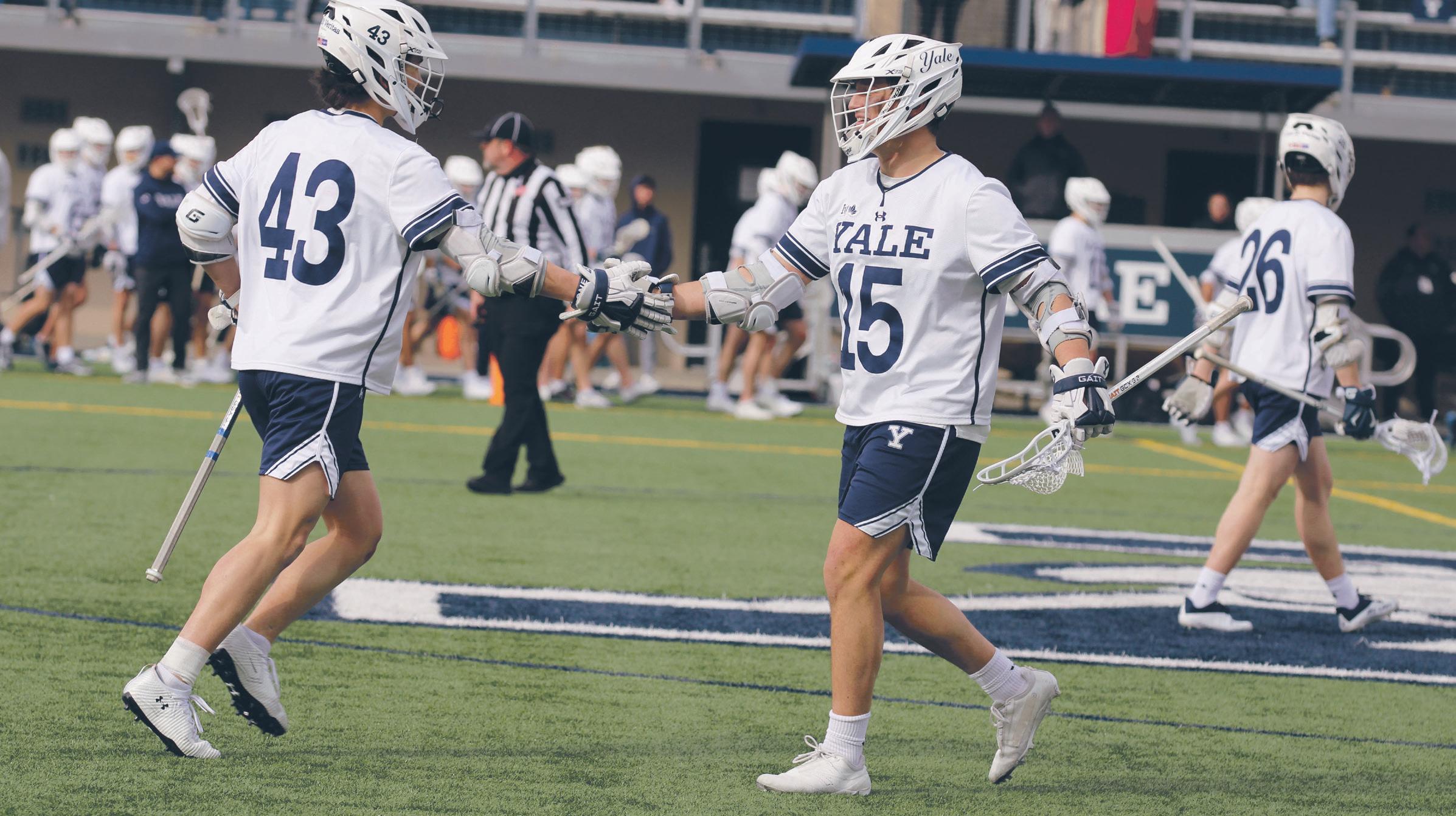
Luke Michalik ’27 is second in the Ivy League in average number of caused turnovers per game with 2.33.
On the other sideline, the Nittany Lions will be coming into this game looking to avenge a recent defeat.
This will be the team’s first game since its nailbiting 11-12 loss to No. 20 Navy (3–1, 0–0 Patriot) last Saturday. The Nittany Lions and Midshipmen traded goals throughout the game, with neither team ever taking more than a two-goal lead. A late fourth quarter three-goal run put Navy up 12-10. Penn State scored at 1:51 to cut the deficit but was unable to find the back of the net again to equalize the score.
The loss followed the Nittany Lions’ impressive 13-7 victory at Princeton (1–1, 0–0 Ivy) — a team favored to finish first in the Ivy League — an overtime 13-14 loss at home to Villanova (1–2, 0–0 Big East) and an 18-14 opening victory over Colgate (1–3, 0–0 Patriot).
Despite Penn State’s hightempo offense, Yale’s defense is confident in its ability to compete at even strength.
“The biggest things this week are staying out of the box and stopping transition,” Cicotello wrote in a text message. “We feel like we can play with anyone in our 6v6 sets, so for this week it’s just all about getting to that point.”
Limiting penalties and transition opportunities will be key for the Bulldogs as they look to secure their first road win of the season.
Faceoff is slated for 1 p.m. on Saturday, and the game will be streamed on B1G+.
Contact LIZA KAUFMAN at liza.kaufman@yale.edu.


Growing up in the tropics of southeast Asia, winter snowstorms were a childhood fantasy of mine. From snow-dusted roofs straight out of a Hallmark movie to the feeling of clicking your ski boots into place, I dreamed of leaving the humid heat of Hong Kong and Manila behind. Each year, I counted down the days to our Christmas holidays, enchanted by the promise of snow, skiing and hot chocolate. Yet two years into college in New England, this winter novelty has worn off.
The howl of blizzarding gusts makes me crave the warm sticky air back home, and the heaps of snow lining the sidewalks fill me with dread instead of delight. Somewhere along the line, I lost this gusto for the freezing outdoors and retreated inside. While my freshman winter began with an undying thirst for snowball fights, it ended with days spent hiding in the warmth of my princess suite. My sophomore year has seen more of the latter.
Of course, that’s not the whole story. Maybe I hate this particular winter because, a month ago, I had knee surgery.
It is only the second month of 2026, and we are three huge storms into the snow season. Each storm has aligned uncannily with my recovery: one during my ACL surgery day, another during my first week in the infirmary, and now a third as I remain confined to my medical suite —all leaving me stranded in one place during an especially immobile time in my life. Perfect timing. Yet, against my childlike nature, I’ve embraced this new insulation from the outside world.

// BY INEZ CHUIDIAN

Despite the videos of friends sledding down ice-frosted roads on mattresses and the posts of snowmen I once would have gladly trampled, this winter’s depth has nudged me to appreciate the snow once again, but differently — in a manner focused less on movement and more on stillness.
As I’ve navigated the past four weeks on crutches, winter has taken on a different shape than in semesters before. Time outdoors is no longer an activity, but rather a transition — from my room to an Uber, from the library to an accessibility van. The few moments I do spend outside feel more deliberate. I breathe in the crisp, frozen air a little deeper, aware of it in a way that I wasn’t before.
I was told by a teammate before surgery that the healing process would teach me to appreciate my body in ways that didn’t involve movement. I didn’t think much of it at the time, but now, as I sit on my yoga mat tirelessly trying to bend my operated knee, I look at the heaps of snow outside — that I would fail to traverse — and understand.
As much as I miss the spontaneity I had in freely gallivanting around New Haven with my peers, or diving into mounds of snow, winter almost feels like the perfect season for this imposed slowness. In early evenings and on treacherous pavements, our campus hums softly, and the world, too, seems to move with a little more caution. Though not for medical reasons like mine, most of us now think twice about trekking across campus for a meal or a

function — something we would do without hesitation in the summer.
So instead of wallowing in the grief of being bound to my medical suite, I’ve embraced this winter with grace. The strange American tradition of Punxsutawney Phil remaining in his hole — which I will never understand — has only excited me with the promise of more cozy evenings and candlelit study sessions. I am enamoured with the idea of watching snowfall from my bedside, with blankets and friends nearby.
Too often at Yale we get swept away in the hustle culture, living from meal to meal and class to class, always having something we’re moving toward and something we’re missing out on.
Having been forced to stay still this winter, I’ve developed a newfound appreciation for taking things slowly and being appreciative of the present. Because I quite literally cannot run from class to meal to party while juggling three other commitments, I choose one of the six, make my way there on crutches, and sit fully present — letting it be enough.
As eager as I was to breeze through physical therapy and run around campus once again, I think all of us, injured or not, deserve the wintertime to be still. Only in stillness can we begin to appreciate the smaller things, and only in the pause of a cold, long winter do we learn to truly be present in the moment — whether inside or not.
Contact INEZ CHUIDIAN at inez.chuidian@yale.edu.
// BY HANA TILKSEW
Kaitlyn Shavelle, 23, is many things: a SoCal girl by birth, a ballerina since her youth and a budding TikTok influencer. She’s also a second-year PhD candidate in Princeton University’s astrophysics department.
I first stumbled onto her TikTok page as a community college student who could only dream of the Ivy League. My eventual arrival at Yale culminated in an identity crisis: How could I reconcile my California girl identity with my rigid, austere image of the Ivy League? The TikToks were no longer aspirational, but a realistic guide on finding joy in academics without allowing them to consume me. Her perspective could benefit many of us at Yale who feel torn between our intellect and our humanity.
Shavelle, who goes by Kate, has heard from many that she doesn’t “look” like a scientist. She’s heard it from undergraduate professors at Columbia, from first dates and from skeptical social media followers. She’s young, Black and female in a field where the stereotype is typically older, white and male. In between academic commitments, she uploads beauty tutorials and sisterly advice for her TikTok audience of almost 67,000. I met with Kate over Zoom to discuss the experience of online stardom and how she balances femininity with intellect.
Kate grew up in Manhattan Beach, California. Her mother, an MD-PhD, was an early inspiration for the woman she would become. “She is so fabulous. Her closet is crazy,” Kate says. “I saw her get ready for work and I was like, okay, that’s just part of the process. You can wear makeup and you can wear cute clothes and you can go be a surgeon.”
As Kate has shared on TikTok, she comes from an impressive line of academics. Her grandmother, Annie Marie Garraway, received a PhD in mathematics from University of California, Berkeley — one of the first Black women in the United States to do so.
“For African Americans of my generation and before, education was valued and sought after as a ‘way out’ and as a way to realize a higher economic status in life,” Garraway writes to me in an email. “While there were virtually insurmountable barriers in the days of slavery and Jim Crow, we saw value in education for its own sake, for helping navigate the world in which we lived and for the inward strength and character an education could provide.”
Before Columbia and Princeton, teenage Kate’s dream was Yale, but she was rejected after applying early. At the time, she says, the disappointment was “heart-breaking” and “soulcrushing.” When she applied again as a prospective graduate student, Yale said yes — this time, it was Kate’s turn to say no.
“I was looking at schools, obviously, that were the best in astro and places that were supportive,” Kate says. “It is obviously a very rigorous thing that you’re doing and I wanted to be very supported.” While she was impressed by Yale’s Science Hill when she toured, she felt that Princeton was better suited to her personal academic interests.
Kate’s trajectory towards astrophysics was heavily impacted by her childhood love for the movie “Interstellar.” When her mom found a book detailing the science behind the movie’s plot points, she was attracted to the field — no pun intended. When I point out that most kids would watch “Interstellar” and dream about being astronauts, not astrophysicists, Kate laughs.
“I was like, well, no. I want to be the person who’s doing the blackboard equations, you know?”
Dr. Regina Jorgenson, who mentored Kate during a 2022 summer research experience, writes to me in an email that “It’s been a joy to watch Kate develop and grow as a scientist and as a person. And perhaps most impactful to me personally, has been experiencing Kate’s perseverance, tenacity, honesty, and joy.”
Before she fell in love with science, Kate had her heart set on ballet, starting pre-professional ballet training at eight years old. “I always say that astrophysics is my backup career,” she says, “because if you were to ask me when I was 14 years old, ‘Kaitlyn, what do you want to be doing when you’re 23,’ I would have said a professional ballerina, and I think it would have really crushed me to hear that I was an astrophysicist at Princeton.”
In September 2024, after Kate’s get-ready-with-me video gained traction, she began to share more videos about life at graduate school. Eventually, her content became more personal, discussing her family history and personal struggles while also remaining lighthearted with the occasional makeup tutorial. Her blend of typical influencer content with academia-inspired content allowed her to cultivate a distinct audience.
“I’d seen a lot of law school creators and a lot of med school creators, but I hadn’t really seen anyone going through a PhD, and I also just wanted to record for myself my own experiences,” Kate says of her motivation to become a creator. “I just thought maybe there would be a niche for me and somehow there has been.”
One of Kate’s most viral TikToks, with 990,000 likes, details her journey of training as a ballerina through adolescence, planning to audition for professional companies until COVID interrupted her plans and led her to attend Columbia instead. The comments flooding that video echo comments left on her page all the time: things in the vein of “you’re so cool” and “you do it all.” One person writes “limited edition barbie material.”
Conscious that her online persona may lend itself to an image of perfection, Kate is not shy about sharing less-than-ideal aspects of her day-to-day, including her battle with stressinduced alopecia. “I feel like part of TikTok and sharing so much of my life has been showing the not-so-good parts and showing that I am human too, and I think people really resonate with that,” she says.
When the camera isn’t on, Kate’s daily life revolves around teaching undergraduates as a teaching assistant, working in her office at Princeton’s astrophysics department, completing coursework and doing research. She is specifically interested in active galactic nuclei, which are areas of matter around black holes — or so Kate tells me. I wouldn’t know — I’m an English major! She is in year two of a five-year program, after which she looks forward to becoming a full-fledged professor.
“Depending on where you go and depending on what level of faculty you are, you don’t get to interface with students as much, so I hope I’ll end up at a place that is very interactive and I’ll be able to actually really have deep connections with students because that’s something I really love right now,” she says.
Contact HANA TILKSEW at hana.tilksew@yale.edu.
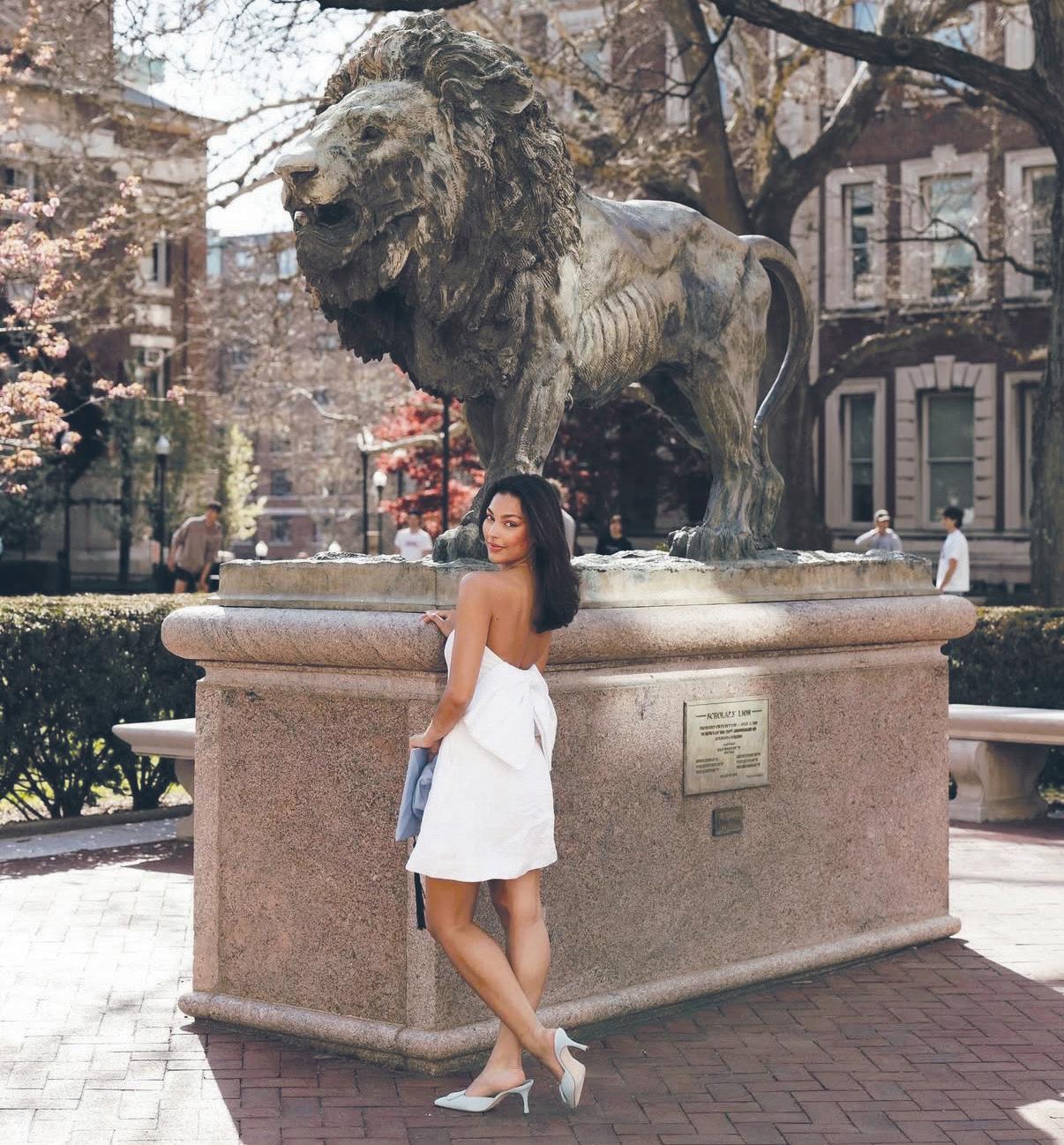

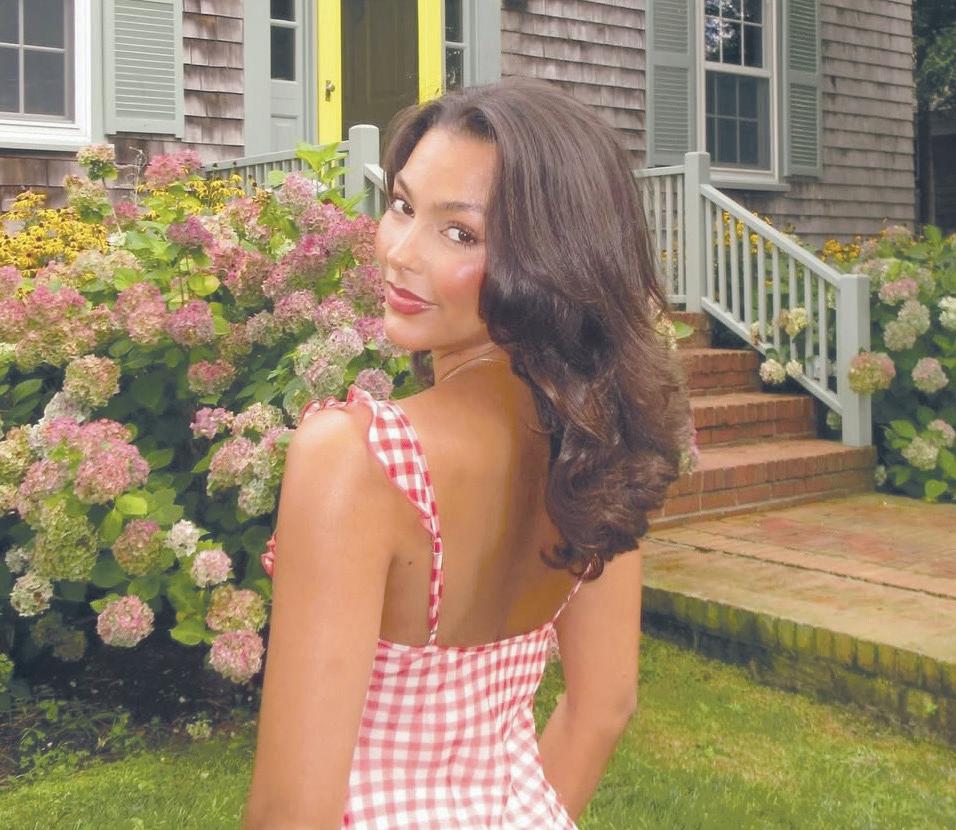
It’s a week from March, and we’ve been hit with another blizzard. From that first glance at my weather app, I could already imagine all the groans at another cold spell. It’s hard to picture spring break when spring… isn’t here. That goddamn groundhog. However, to a South Carolinian like me, the snow is a novelty; I treasure every snowfall like it might be my last. I understand that Northeasterners and Midwesterners who see this every year are currently crashing out, but I’m glad that I have a perspective that — while crashing out — allows me to embrace the winter magic. A perspective that allows me to notice that being trapped with others during a blizzard creates moments that we wouldn’t otherwise get. And so, as a little morale booster, I’m going to share some moments from the blizzards that brought me joy. Hopefully they make you think of your own. Spring will come, but there’s value in every moment, including the cold and inconvenient ones. Stick with me through the sappiness, okay?
Snow art exhibition
I see them everywhere on campus… and on Fizz. We get snowmen, igloos, snow bears and weird, niche snow configurations that nobody understands. You can always count on Yalies to be a little too creative. In the middle of a blizzard shutdown day, my friend and I made the most beautiful snow serpent on Old Campus and ignored our other responsibilities. That’s what a snow day is for!
Extreme sledding
I don’t know what it is about humans, but we really enjoy throwing ourselves off of high surfaces: rollercoasters, bungee jumping, skydiving… sledding! There’s something so nice about hurtling down a hill in the freezing cold before crashing into a snowbank and getting wet ice all over your face: My friends and I call this nature’s Botox. In the last snowstorm, I made the pilgrimage to the Divinity School with some friends and spent hours tossing myself down a sledding hill. Afterwards, we made a quick Yealth trip, but isn’t that what makes these things so memorable?
An ambush
What shows friendship more than wanting to pelt someone in the face with a snowball? The closer I am to someone, the more this desire arises — can someone get Freud on this? I felt the urge this week and tempted my friend out of his library lock-in to get hit. He was not pleased. I highly recommend making your friends miserable like this — it’s a great way to get your anger out and to take a much-needed break after squatting like the Hunchback of Notre Dame over Zoom all day. Sorry if I called you out.
The backflip Snow seems to be woven into the frat pledge process. I’ve seen shirtless pledges playing football in the snow, complete snow beer miles, create weird red stains on snowbanks — does anyone know what that is, by the way? And the other night, I spent about an hour watching a helpless pledge try to do a backflip in the snow. Over and over, he hurled himself backwards as my friends and I watched from our dorm window like Darla from “Finding Nemo.” We shouted encouragement-adjacent things, and my gymnast friend tried to teach him better form. And to his credit, he almost got there.
And now that I’ve shared my favorite moments, get your butt into the cold and make some stupid college snow memories before it all becomes gray mush!
Contact BEATRICE BARILLA at beatrice.barilla@yale.edu.
Us Yale students have it great. But during your time as a Yale student, you’ll come to realize: There is no stopping. Every day feels like a hustle to catch up on something you’re inevitably behind on. Even if you have miraculously gotten ahead on everything, a shadow of unproductive doom looms over you wherever you go. You cannot escape the pressure to keep producing. It’s go, go, go or failure, surely.
Our friend Yubble — for those of you unfamiliar, let me introduce you to the Yale bubble, aka Yubble, which will indubitably conquer your sense of reality and take over your conceptions of normal — is responsible for such a mindset. Yubble creates an illusion that if you’re not continuing to get ahead, then you’re falling behind. Yubble tells you that normal is nonstop. But the human condition is not built for perpetual motion.
Now, don’t get me wrong: I adore Yubble. As is the case with many of my peers, I am extremely goal-oriented. I find fulfillment and excitement in continuously attacking tasks and goals. But, although I find this sentence hard to admit — Yubble, look what you’ve done to my mentality — I need a break sometimes. And I find blizzards on campus, while still physically at Yale, to be an escape.
Sundays are known as a reset day. Recalibrate, reorganize, get ready to do it all again. But rarely — if ever — do I get to the end of a Sunday feeling 100 percent ready to attack the week ahead. Enter Blizzard. Blizzard is here to give you another Sunday.
Yubble’s clock breaks during snow storms at Yale. Since we’ve had two of them in a month I feel prepared to speak on the matter. It’s not that time stops when campus is shrouded by flurries of beautiful white snow. Nah. None of that. This is no winter wonderland. You still have shit to do — piles of it, I’m sure. But when taken by storm, the gears of Yubble’s ticker slow down a bit. Urgency loses a bit of its authority. You get redemption from Sunday’s fake “restful reset” that really was just anxiety in the form of procrastination and complaints.
There are aspects of the storm that are not so good. For starters, I am cold. I much prefer warm weather. I am also not particularly a fan of the shoebox prepacked lunches they served when the dining halls were unable to open. And the following days, when the snow remains everywhere you look but you still have to function regularly, those suck. But we’re just talking day-of-the-storm right now.
I’m sure part of my love for storms here has been partial luck — I know some friends who have had four back-to-back uncancelled lectures on snow days, and I doubt their experience felt much like a Yubble escape. But regardless of how much online class you have, you can exist wherever and however you want on a snow day. You get cozy and trudge across campus to see loved ones but only loved ones because you don’t have to be anywhere except for where you want to be. When I say loved one, it’s important to note this could come in the form of a coffee or GHeav sandwich. I have trudged across campus for exactly those things midstorm.
It’s not often the Yubble clock breaks, so take advantage. Enjoy getting taken by storm.
Contact NINA BODOW at nina.bodow@yale.edu.
STAYING INSIDE IF YOU CAN SEE YOUR SHADOW
// BY STEPHANIE ALTSCHUL SPRING FLING
Minutes past midnight at Spring Fling’s Toad’s Place release party, the crowd erupted as Swedish superstar Zara Larsson was revealed as the headliner for the 2026 Festival. Her 2015 hit “Lush Life” filled the room, and members of Spring Fling danced along on stage while multicolor dolphins and technicolor sunsets filled the screen behind them. Larsson’s iconic summer energy is bringing 2016 back to New Haven, and we’re all a part of her symphony.
The buildup was as electrifying as the reveal. Sitting by the entrance of Toad’s Place 15 minutes before the lineup was released, I watched crowds of students chatter excitedly and file into the dance venue, each paying the price of a Common Grounds coffee to get past the doorman. Fresh off Bass Library cramming sessions and still stressed about impending midterms, groups of friends ditched the stacks for synths and a study break.
2010s pop hits blasted over the speakers and students in sweatpants gossipped and wandered towards the barricade at the front of the venue. Ella Kraynak ’29, Kat Dubrow ’29 and Morgan Damiba ’29 giggled with me as they entered, describing the scene as “electric, vibrant.” Morgan told me she came to “support friends on the team” and because she “loves art.” I asked the girls who they’d be most excited to see perform at Spring Fling, to which Kat replied, “lowkey, Zara Larsson … maybe Pitbull.”
As the countdown dropped to single digits, Spring Fling members filled the stage, boasting custom painted T-shirts and way too many mini skirts for February. A projector whirred, and the Spring Fling release video began. Dramatized skits of the committee’s deliberations foreshadowed each artist’s genre. Grant Pool ’29, effortlessly disguised with a backwards baseball cap and a heavy “fraccent,” told the audience how much electronic dance music means to him on a personal level. Coupled with synths and kick drums, Aluna’s name filled the screen. The British DJ-singer-producer was the first in Spring Fling’s lineup to grace the public’s ears. Aluna’s inclusion in the festival signals
a pronounced shift towards house and EDM for Spring Fling, moving towards a genre popularized through party culture and international influence.
As the crowd danced, anticipation for the festival’s other headliners built. The next skit rolled. The rap fans in the Spring Fling committee emphasized the “cultural influence” of the genre and the impact of Ken Carson’s performance of “Yale” on Old Campus last year. A trap beat sounded over the speakers. “Sheck Wes” appeared in all caps over the crowd, and the one-hit-wonder’s track “Mo Bamba” sent jostling waves of energy through the audience. The song, which peaked at number 6 on the Billboard Hot 100 in 2018, is Wes’ most anticipated track this year. The audience seemed unsure of what else he’d play. Maybe an extended cut?

// BY FABEHA JAHRA
With tensions high, Lelah Shapiro ’27 appeared on screen, wearing a hot pink Elle Woods-adjacent set. Adorned with her best Valley Girl accent, she told the audience, “I just, like, want Coachella.” Iconic. Zara Larsson’s name flashed on screen, and Toad’s Place burst into screams. I received half a dozen texts: “I’M SO GAGGED,” among my favorites.
Zara Larsson will be the first woman artist to headline Spring Fling since 2014. It’s belated, but considering the resurgence of 2016 pop culture icons, it’ll really just be two years ago by the time April 25 rolls around.
Afterwards, at a Brick Oven debrief, I spoke with Wyatt Fishman ’27, who told me he was elated about the headliner. “I love Zara Larsson.” He also remarked on the “decent attendance” and “great vibes” of the Wednesday night event.
Between midterm cramming, mini skirts in February, blow-up dolphins and the promise of “Stateside” echoing across Old Campus in a few short months, the release party felt like a cultural reset — perhaps not a genuine 10-year rewind, but certainly a promise of “tan lines, low-rise” and Midnight Suns to come.
Contact STEPHANIE ALTSCHUL at stephanie.altschul@yale.edu.

At Yale, my name is printed cleanly on syllabi, ID cards and email signatures. It travels easily through classrooms and meetings. Professors pronounce it carefully. Friends shorten it when they get comfortable. It exists in public — legible, formal, steady.
But at home, I’m no longer Fabeha. At home, I’m Faboo.
Faboo is the name shouted from across the kitchen. The name said with a sigh when I’m being stubborn, that my mom uses when she’s half scolding, half laughing. It’s rounder, softer, less polished than Fabeha. It doesn’t belong on a resume. It belongs in voice notes, in family group chats, in the space before I learned how to introduce myself in rooms like this one.
In Bengali culture, many of us grow up with two names: a “bhalo naam,” the formal name meant for school forms and official documents, and a “daak naam,” the name used by family — sometimes playful, sometimes affectionate, oftentimes completely unrelated to the “real” one. The daak naam isn’t meant for the outside world.
So, Faboo lives inside the house.
No one at Yale calls me that. And most days, I don’t think about it. I answer to Fabeha. I introduce myself confidently. I correct mispronunciations. I write my name at the top of exams.
But every once in a while, I’ll get a call from home. My phone lights up with “Ma.” And before I even say hello, I hear it: “Faboo.”
Just like that, I am somewhere else.
There is something disarming about hearing that name in a place where no one else knows it exists. It reminds me that the version of myself that walks through Sterling or Cross Campus isn’t the only version. Before Yale, before internships and majors and carefully curated introductions, there was a girl being called Faboo for no reason other than love.
At Yale, names are tied to reputations. They carry accomplishments, majors, and clubs. They’re printed in programs and said into microphones. A name here is something you build.
Faboo isn’t something I built. It was given to me. It carries no resume and asks nothing of me. There’s a quiet comfort in that.
Sometimes I wonder what would happen if someone here called me Faboo. Would it feel exposed? Too intimate? Would it collapse the careful distance between my public self and my private one?
Because that’s what a daak naam does — it collapses distance. It assumes closeness. It belongs to people who knew you before you became polished.
Holding both names feels like being in two places at once. Fabeha moves through Yale — steady, ambitious, learning how to speak in seminar rooms. Faboo belongs to a different rhythm: kitchens and cousins and Bangla spoken quickly and without translation.
Neither is more real than the other, but one requires more effort. Faboo doesn’t need Yale to recognize her. She doesn’t need to network or perform. She is proof that I existed before this campus and will exist after it.
And maybe that’s the quiet gift of a daak naam. It reminds you that your identity is layered. That you are more than the version that fits neatly on a syllabus. That somewhere, beyond the stone and structure, there is a name that means home.
At Yale, I answer to Fabeha. But when my phone lights up late at night and I hear “Faboo” through the speaker, I am reminded that not every part of me has to travel. Some names are meant to stay inside the house. Contact FABEHA JAHRA at fabeha.jahra@yale.edu.
WEEKEND RECOMMENDS: EATING THE BROWN SNOW
// BY REETI MALHOTRA
The first time I heard Wanda June’s name, I was standing in the warm blur of a mid-September pregame in Davenport.
A former class-friend who was slowly turning into a friend-friend, Sofia, pulled me aside in her common room, brimming with excitement. She had stumbled upon a play in a secondhand bookstore: a satirical, forgotten work by Kurt Vonnegut that she hoped to put on during the spring.
“It’s a retelling of ‘The Odyssey,’” she explained. (We met through Directed Studies.) “I thought of you when I read Penelope’s part. Please audition if it happens.”
I tucked away her words and responded with a distinct maybe.
I had decided to take a break from theater. My first year at Yale had been crowded with it: I was cast in three shows although only two were staged. I loved the art form so much that I was certain that I would be a Theater, Dance, and Performance Studies major when I arrived at this university. But loving it that intensely had hollowed me out.
Each show was a marathon event. During tech week for my first play at Yale, “Top Girls,” my days cleaved in two: six hours spread thin over classes and the library, racing through readings and essays, and another six hours spent under stage lights, learning cues and quick costume changes. At midnight, I stumbled to GHeav for dinner, contented but physically undone, humming with a visceral exhaustion I didn’t even have the energy to articulate.
And yet, I loved it. I cherished the magic of strangers becoming castmates and dear friends. I savored the pang of fear cutting through my gut in the dark wings as I waited to make my entrance.
I delighted in hearing a line land, through the sharp intake of nervous breath or loud burst of laughter from the audience.
When “Top Girls” closed in December and the spring semester arrived, green and impatient, I found myself back in auditions despite my vow of restraint and recuperation. I landed the first-
year show, “Miss Molly: A Marital Deceit of Honest Intentions,” a bright farce that flung me against the walls of my comfort zone.
The same process repeated itself. I met a new slew of people, learning their cadences and rhythms on stage. By opening night, we felt close — bound together by inside jokes, mutual anxiety and shared exhaustion.
And then our show ended.
We received our flowers, struck the set, and our group chat went quiet. I remained good friends with a couple of my castmates and waved to the rest when I saw them in passing on Cross Campus. This was a part of the rhythm of theater, after all: an inherently transient and consuming medium. You audition, rehearse tirelessly, let the production overtake your life during tech week, perform, dismantle and audition again. Some connections last and maintain their closeness — most fade into memory.
I told myself I could manage the cycle — that the enervation and mourning were the tax I paid in exchange for having the opportunity to actualize a passion and create art. Yet, come summertime, I felt that I was being dragged under by the medium rather than buoyed by it. I took a sabbatical: my sophomore fall, at the very least, would be one without shows.
So, when Sofia mentioned “Happy Birthday, Wanda June,” I nodded and tucked her words away for a later date, if I were ever ready to reignite my affection for the stage.
The fateful moment arrived a month later. I stood in the room below her suite — the Davenport armor room — as my itch to perform overtook my reservations.
It was the strangest audition slide I had ever read. Penelope, the character I wanted to play, recalls a memory of her husband pulling a hook from the throat of a fish. Soon after, she declares that she does not wish to ever be scrogged. I didn’t know what scrog meant. I barely understood the significance of the fish. By the time I finished, I was certain I had tanked it. Worse still, I began to doubt whether I could
act at all. Perhaps slowing down had dulled whatever made me sharp and compelling to watch. Maybe the verve I once relied upon had been diluted into watery self-consciousness.
I was unsettled to find that all of this upset me. I had wanted distance from the theater. This audition was supposed to mean little to me. Yet, as I walked out of the armor room, I realized I wanted this — this play, this role, this experience — urgently and overwhelmingly.
When Sofia called me on casting day to offer me the role of Penelope, I was stunned speechless.
I couldn’t help but smile. Relief overcame me, but nerves just as quickly supplanted that delight. I oscillated between yes and no — between caution and want — as the deadline to make my decision approached. In the end, I conceded.
I said yes.
A whirlwind four-month rehearsal process thereafter began in earnest.
We closed “Happy Birthday, Wanda June” last Saturday. As our cast of seven bowed to a roaring crowd, I burst into tears — laughing and sobbing all at once — as Tali, our producer, and Sofia, our director, raced down to the stage and pulled us all into a single, sprawling hug.
My heart felt impossibly full — not just because each show went well, though they had, nor because our audience was cheering with raucous applause, which they were. It was full because sometime between that first, terrifying audition and closing night, theater stopped pulling me under and instead became an anchor, a fixture of my Yale experience that I fell in love with again. And I owed that change to all of the people I stood beside on that stage.
It is rare to find yourself among a cast that you not only admire, but deeply care for and trust. Over the course of four months — through late-night rehearsals, winding conversations, and highly imperfect stumblethroughs — I formed friendships with every member of our production. Sofia had promised it would be so from the
outset. She declared that we would be a family: a troupe, as she likes to say in French. I, who was accustomed to theater as an ephemeral and efficient exercise, did not understand, let alone believe her, at first. Theater had been something to give my all to and then leave behind, to immerse and then detach from — the same approach applied to the friendships I formed within it, with few exceptions. But Sofia, subtly stubborn and well-meaning as ever, resisted that culture of theater-making I had internalized.
Rehearsals still stretched long. Tech week remained exacting. But I was no longer diminished by the process, a machine pushing herself to the brink of collapse. I clung to the ripples of laughter between taxing scenes. I lingered after rehearsals instead of rushing out, content to just sit and talk with every person involved in our show. I even excitedly scheduled an alarm to wake for strike at 8:15 a.m. the morning after we closed — the sign of true affection and commitment.
Standing shoulder to shoulder beneath the stage lights, my heart strained with gratitude for the people I had undergone this production experience with, each of whom had made me feel respected, trusted and appreciated — not only as a performer, but as a person. I loved our play, I loved our work, and I simply loved everyone involved in it.
“Happy Birthday, Wanda June” breathed new life into my love for theater. Pursuing my passion at Yale was no longer punishing. Devotion no longer required depletion. I did not lose myself in this production, either, subsumed by ardor and drive. Instead, I met a steadier version of myself within it: a person open to the patient, unfamiliar and intimate work of making something that mattered, and being changed by it, especially as it ends.
So, happy birthday, Wanda June. Thank you for everything.
Contact REETI MALHOTRA at reeti.malhotra@yale.edu.


// BY LEONARDO CHUNG
At 12:52 a.m. on the fourth floor of Stoeckel Hall, Mandy Chen ’28 is hunched over a sound board, trying to elicit a feeling.
She’s not working on a melody, exactly, but more of the aftertaste of a scene. She’d never used the Ableton or Max music composition softwares before this class, but there she was anyway, “trying to communicate emotion using audio alone.” It’s a very Computing and the Arts sentence — allergic to staying in one lane.
Computing and the Arts is the Yale major that makes people squint at you like you just said you’re majoring in “Left and Right Brain.” It’s a joint major that combines computer science with an arts track: architecture, fine arts, history of art, music or theater. This range of arts tracks is what makes the major so applicable and diverse.
“Because the arts side spans five tracks, people approach the major differently,” Chen said. Some students tinker in creative coding, while others use computing to strengthen or augment their work in design, research, performance or visual systems. Either way, people that major in Computing and the Arts are able to connect fields that — at first glance — don’t have a shared language.
If you’re trying to picture the average Computing and the Arts major, imagine someone who can lecture you on C++ and has strong opinions about jazz. Or perhaps someone who keeps their sketchbook next to their laptop.
Miffy Wang ’28, another student in the major, describes it more simply, as “basically half arts … and half computer science. In my opinion, it’s the perfect intersection of both.” For her, it was less a “strange major” and more a name for something she had already been doing. She came into Yale loving digital design, but without any formal training. “CPAR felt like the natural and perfect choice for me,” she said, “as someone who wants to be between Science Hill and Green Hall.”
This area of “between” well characterizes the activities of those majoring in Computing and the Arts. The major isn’t a fully blended smoothie where everything tastes the same. Instead, Wang says, even the day-to-day experience of the major can be wildly diverse: standard computer science courses on one hand, and painting and photography classes on the other. Meanwhile, the magic of CPAR shows up in the courses that reject the split — like “Introduction to Human-Computer Interaction” and “Interactive Design and the Internet: Software for People.” In these classrooms, the assignment is more than just making something work — it’s making it work for someone in particular.
That philosophy is essentially the mission statement of Design for America at Yale, a student-led design studio and community that Wang and Chen refounded and now co-head. Computing and the Arts majors, Wang said, show up to the group in disproportionate numbers — which makes sense, because Design for America is where Computing and the Arts can shine.
“It’s not just making posters, and it’s not just doing research,” Wang said. “You get to think creatively, use human-centered design and then actually make something: to engineer it, code it, build it from scratch.”
Design for America’s projects sound like wild concepts until you realize they are all around you. The group has collaborated with Schwarzman Engineering to design and build an art postcard vending machine “from concept to physical product,” Wang said. It is an object that is simultaneously a sculpture, a system and a user experience. The club has also expanded to professional work: Felix Lee ’28 launched Design for America Pro for students to actively work with companies to ideate and test product solutions, including work on LinkedIn’s student portal, according to Wang.
Part of what Design for America is doing, Wang and Chen emphasized, is building out the missing middle part of the Computing and the Arts major: the practical craft skills that create the intersection. Wang noted that tools and workflows like Figma, Adobe and product design aren’t always formally taught, but these educational deserts gatekeep a whole world of creative technological work. Computing and the Arts majors are those who want the studio culture and the technical confidence — and Design for America is trying to be the place where these people can thrive.
Chen describes the “art” side of her work as “Illustrator, sketching, the storytelling portion … composition, tone, clarity and making something feel intentional.” The “computing” part, on the other hand, is clear in her implementations of her designs. Chen codes websites, prototypes interactive experiences and even builds small creative tech projects out of curiosity, like a Pokémon GO-like game in JavaScript that maps art opportunities on Yale’s campus. Zoom out, and Computing and the Arts is less of a quirky major and more of a backbone of many of our everyday convenient technologies. Art lives inside technology, and technology shapes what art can be. Your camera roll is curated. Your playlists are designed. Your favorite museum probably has some sort of interface. Instead of questioning whether technology and art can integrate, we must ask how those building technological tools can begin to think like artists. Or, as Chen put it, Computing and the Arts trains “visionaries and executioners.” Slightly intense phrasing? Sure. But if you’re ever had a beautiful idea and then watched it die because you couldn’t build it, you understand what she means. So maybe the weird part isn’t the major. It’s pretending everything else isn’t Computing and the Arts.
Contact LEONARDO CHUNG at leonardo.chung@yale.edu.
When it comes to being busy, why do Yalies keep score?
// BY LEONARDO CHUNG
At Yale, busyness is a competitive sport. No officials watch and no prizes are given out — but everyone is racing anyway. Before you see it, you hear whispers of it in the rooms of Bass and Sterling: “I didn’t sleep at all last night.” “I’m so behind on my work.” “I literally have no time!”
The sentences come out as grumbles, yet there is a twinge of pride, too. No one spells it out, yet everyone understands the rules: The more blocks on your Google Calendar, the higher you rank. The colored rectangles just highlight how much you pack into each day. Classes are blue, meetings are green, labs are red, peer tutoring is yellow, meals are orange. Some snap screenshots of their weekly layout like Olympic runners sharing victory photos on Instagram.
Unlike Alysa Liu’s time on the ice, however, Yale’s “I’m busy” Olympics runs year-round.
The Scheduling Event is first. Midway through organizing dinner with four others, you notice the only shared free time lands twelve days away, squeezed between a lab and a review at 4:30. The Endurance Round comes next — how many extracurriculars fit into your week before you visibly collapse? There’s even a linguistic category. Phrases like “this week is crazy” might gain you a few extra points.
At Yale, rushing around has become a kind of proof of your competitiveness. Being stretched thin means people count on you. Free time by midday seems wrong somehow — did you skip out on someone who reached out? Each quiet moment begs the question: When things are going smoothly, am I even trying hard enough?
Many of us genuinely are overwhelmed. Tough coursework piles up. Opportunities are endless. The fear of falling behind is very, very real. But somewhere along the way, our exhaustion becomes a credential we can exchange. Late hours get tossed around like war tales from past decades. Then again, sometimes even loud arenas fall still.
A clock reads 11:43 p.m. in Sterling. The loud study groups have left. A page flips quietly. Zippers close on bags nearby. The fluorescent lights buzz softly overhead. For a brief stretch of
time, no one is narrating their workload. No one is announcing how much — or more likely, how little — they’ve slept. Instead, everyone is leaning over notebooks, staring at glowing displays, or just sitting quietly and taking a breath. Pressure lingers, yes, though it no longer needs an audience. The competition begins to dissolve, and what remains is … a room full of students just trying to get through.
Contemplation strikes when you least expect it. Maybe it’s during that stretch of pavement leading toward your dorm once things wind down — could’ve been a meeting, maybe a study note swap, perhaps just a chat stretching longer than planned. You’re walking through Cross Campus, and it’s cold enough that your face stings a little. The bricks are shiny, and lights in the dorm windows look warm and distant. For five minutes, you’re not talking about your workload with anyone. You’re just walking.
Midway through the week, gaps appear as half-hour slots left blank by accident. Instead of rushing to patch it with tasks — maybe you can squeeze in that English reading! — to feel like the day is “used,” you pause. Whether you’re sitting in the dining hall and eating without scrolling or staring at nothing for a while, you let yourself be unimpressive. These are the moments of quiet — not a glamorous self-care montage or “romanticized rest.” This stillness resists the pressure that your life has to look maximized from the outside.
I don’t think the answer is to stop being ambitious. Most Yalies didn’t come here to coast. Yet it gives me pause when tiredness becomes something we wear proudly. Running nonstop is contagious, whether we want it to be or not. Maybe “I’m busy” could stay a fact, without that extra implication stuck to it. Chasing races without purpose wears anyone down. Only then do we wonder why energy fades so fast.
Perhaps nothing screams Yale quite like snagging Olympic gold. But the most human thing you can do, every once in a while, is stop keeping score. Contact LEONARDO CHUNG at leonardo.chung@yale.edu.