

BY OLIVIA WOO STAFF REPORTER
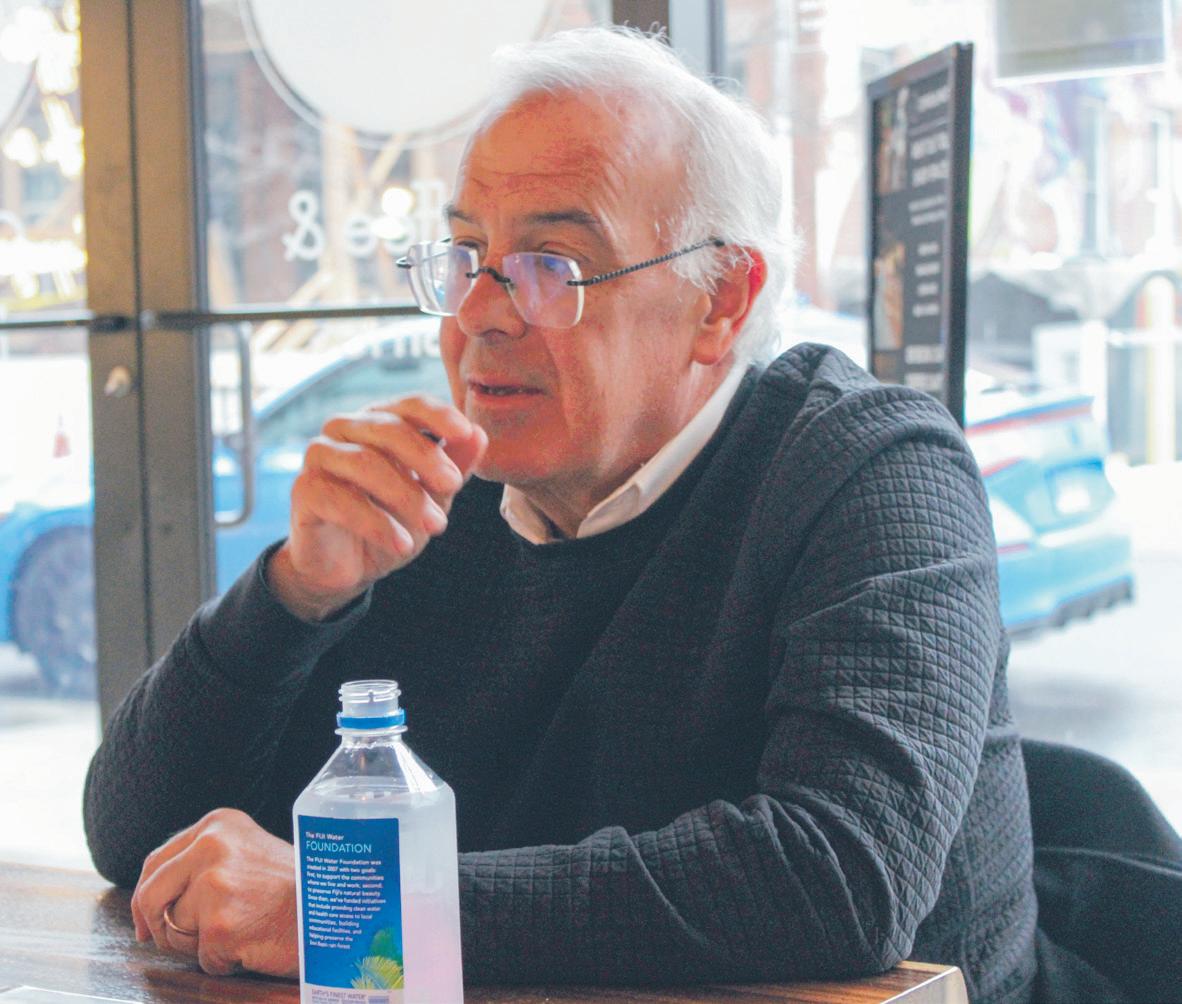
Less than two weeks after a Harvard faculty committee proposed a cap on the percentage of A grades given to undergraduates there, Yale College Dean Pericles Lewis said that Yale faculty will receive recommendations to combat grade inflation “within a year or so.”
On Feb. 6, Harvard faculty released a report proposing that professors cap the number of A grades at 20 percent of their class size, along with a new internal ranking system for determining honors and awards, the Harvard Crimson reported. The recommendations come as rising con-
centrations of both A grades and grades in the A range — including a spike during the COVID-19 pandemic — have sparked controversy at both Harvard and Yale.
“I think it’s very sensible of the Harvard faculty and leadership to be thinking about this challenge,” Lewis said in an interview last week. “I think a situation where a majority of grades are a straight A, and where the median grade is an A, obscures di erences in accomplishment by the students and makes it harder to reward the best-performing students.”
The Harvard faculty recommendations come after the number of A
BY ARIA LYNN-SKOV AND LEO NYBERG STAFF REPORTERS
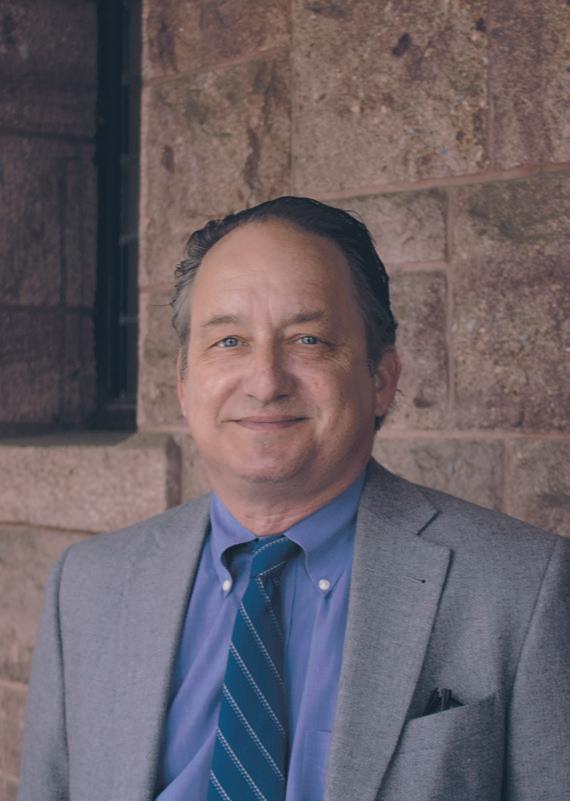
After 22 years writing opinion columns for The New York Times, David Brooks said it took a personal call from University President Maurie McInnis for him to consider a latestage career shift.
Now, Brooks is the inaugural presidential senior fellow of McInnis’s new program aimed at increasing intellectual diversity and addressing declining trust in universities. At Yale, Brooks — a self-proclaimed conservative and “clear never-Trumper” — will be housed at the Jackson School of Global A airs.
In a 40-minute interview with the News at MOTW Coffee on Crown Street, against a background of lo-fi music and colorful murals, Brooks discussed his new position at Yale, the role of a modern university president and the state of higher education under President Donald Trump. Brooks said he hopes to help solve declining trust in higher education while at Yale.
“It’s a terrible time to be a university’s president because of Trump and what he’s doing,” Brooks said.
“But it’s also kind of an exciting time.”
Brooks said he spoke to McInnis on the phone “months ago” about “the
BY JAEHA JANG STAFF REPORTER
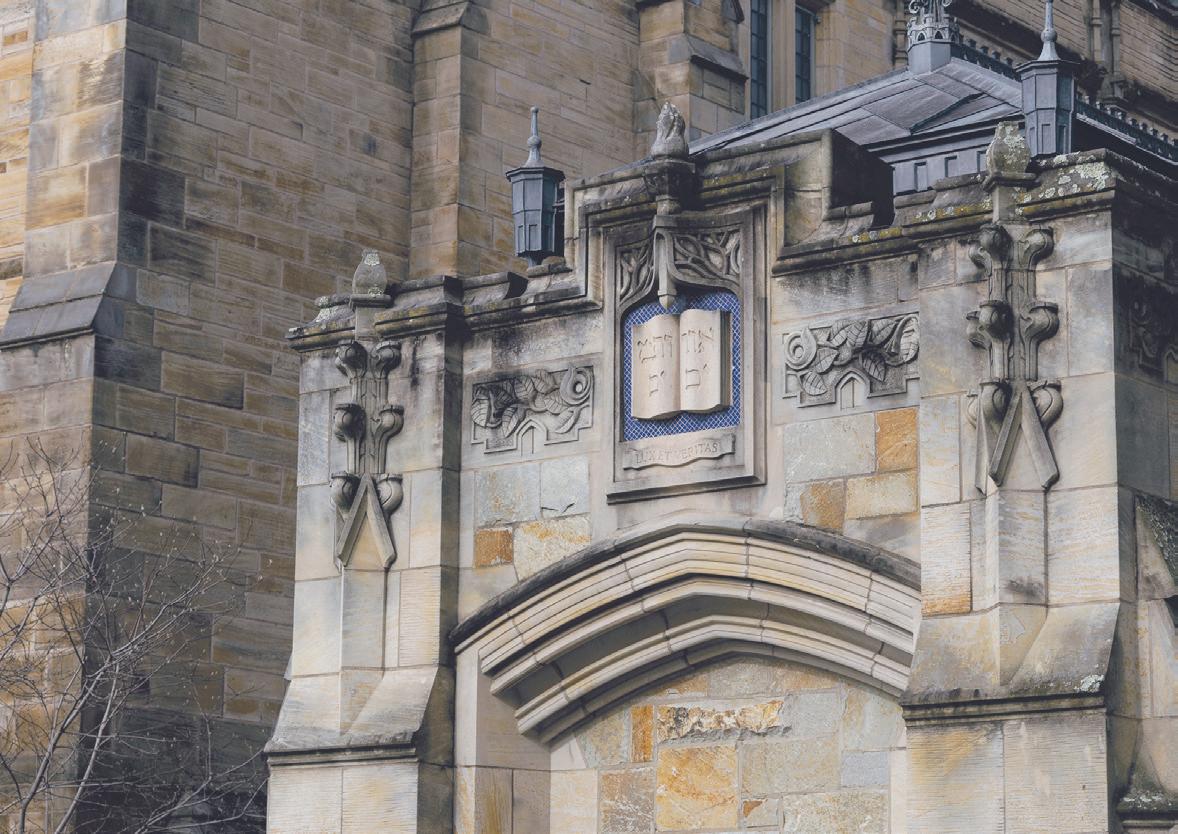
Roughly 100 faculty members gathered on Tuesday to launch a campaign that calls for Yale to add academic freedom protections to its faculty handbook.
The event, which was hosted by the Yale chapter of the American Association of University Professors in a small lecture hall in William L. Harkness Hall, served as the launch for the group’s academic freedom campaign, which demands the addition of explicit guarantees of academic freedom to the faculty handbook by the end of this semester. At the event, faculty also discussed their experiences of threats to academic freedom and wrote postcards to University President Maurie McInnis.
“Our newly launched academic freedom campaign will create
opportunities for faculty from every rank and every corner of the university to share their experiences of why academic freedom matters to them,” Daniel HoSang, an American studies professor and the president of Yale’s AAUP chapter, wrote in an email to the News.
“We are documenting examples of faculty who have faced infringements on their academic freedom in teaching, research, or public speech, and are providing channels for communicating those concerns directly to President McInnis,” he added. The event was “closed to the press” to “ensure that faculty had a space where they could speak freely and honestly,” HoSang wrote.
More than a dozen attendees leaving the lecture hall declined to answer questions about the event, with some citing that they were told
during the event that it was closed to the press.
According to the group’s website, its new campaign calls for revisions to the faculty handbook that would guarantee faculty input in future handbook revisions, explicitly define academic freedom, acknowledge that both faculty and Yale have an obligation to protect academic freedom, clarify that faculty contracts are with the University itself — not departments or programs — and protect divisions from closure without faculty consultation.
These demands, which were outlined last October as a joint initiative between the AAUP and the Faculty of Arts and Sciences and School of Engineering and Applied Sciences Senate, were developed after an “extensive review of Yale’s Fac-
BY REETI MALHOTRA STAFF REPORTER
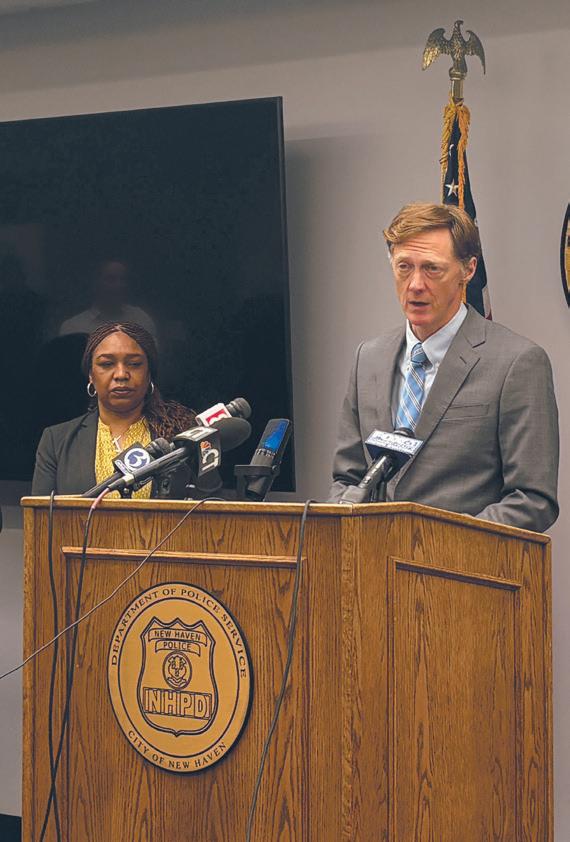
City officials announced Thursday that the New Haven Police Department is overhauling the oversight measures for its confidential informants program, six weeks after former Police Chief Karl Jacobson allegedly admitted to stealing from the fund and abruptly resigned from his position.
Acting Police Chief David Zannelli, who took the helm of the department after Jacobson’s departure on Jan. 5, signed into e ect a temporary special order
SEE POLICE PAGE 4
BY ELI RATNER STAFF REPORTER
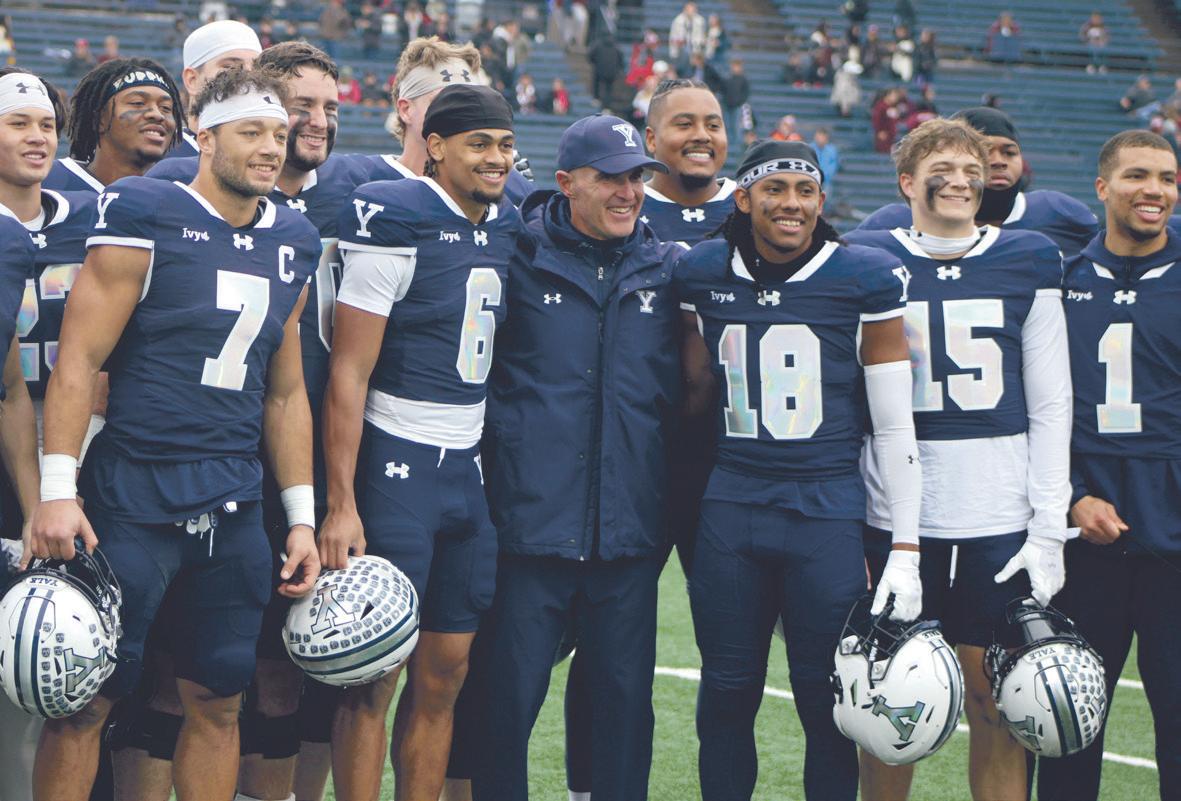
Following a historic 2025 season with the Yale football team, Head Coach Tony Reno has stepped down due to health issues.
Yale Athletics announced Tuesday morning that Reno was leaving his position as the Joel E. Smilow ’54 Head Coach of Football. Over the past 14 years, Reno has led the Bulldogs to five Ivy League championships. Under his coaching, the team has won The Game in seven of the last nine contests. His 83 career victories place him second of all time among Yale football coaches, behind only
Carm Cozza, according to a Yale Athletics press release.
“Given my current health situation, I have made the decision to step down as head coach of Yale Football,” Reno said in the press release. “From the very beginning, I spoke about honoring the proud tradition of Yale Football and fully embracing the responsibility that comes with leading this program.”
“I am incredibly proud of the foundation we laid and confident in the future of Yale Football. Serving as the head coach of this program has been the greatest honor of my life,” he added.
Immediately following the end of the 2025 season, Chun
announced that Reno would take a leave of absence for health concerns. Sean McGowan, the head coach of defense, has served as interim head coach since then. The nature of Reno’s health situation was not immediately clear. In 2017, Reno led the Bulldogs to their first outright Ivy League victory in 37 years. Five years later, Reno was awarded the Ivy League Coach of the Year after winning the league outright once again with a dominant 8-2 record.
In the fall, Team 152 reached a new milestone. After a successful year and another dominant win against
SEE RENO PAGE 5
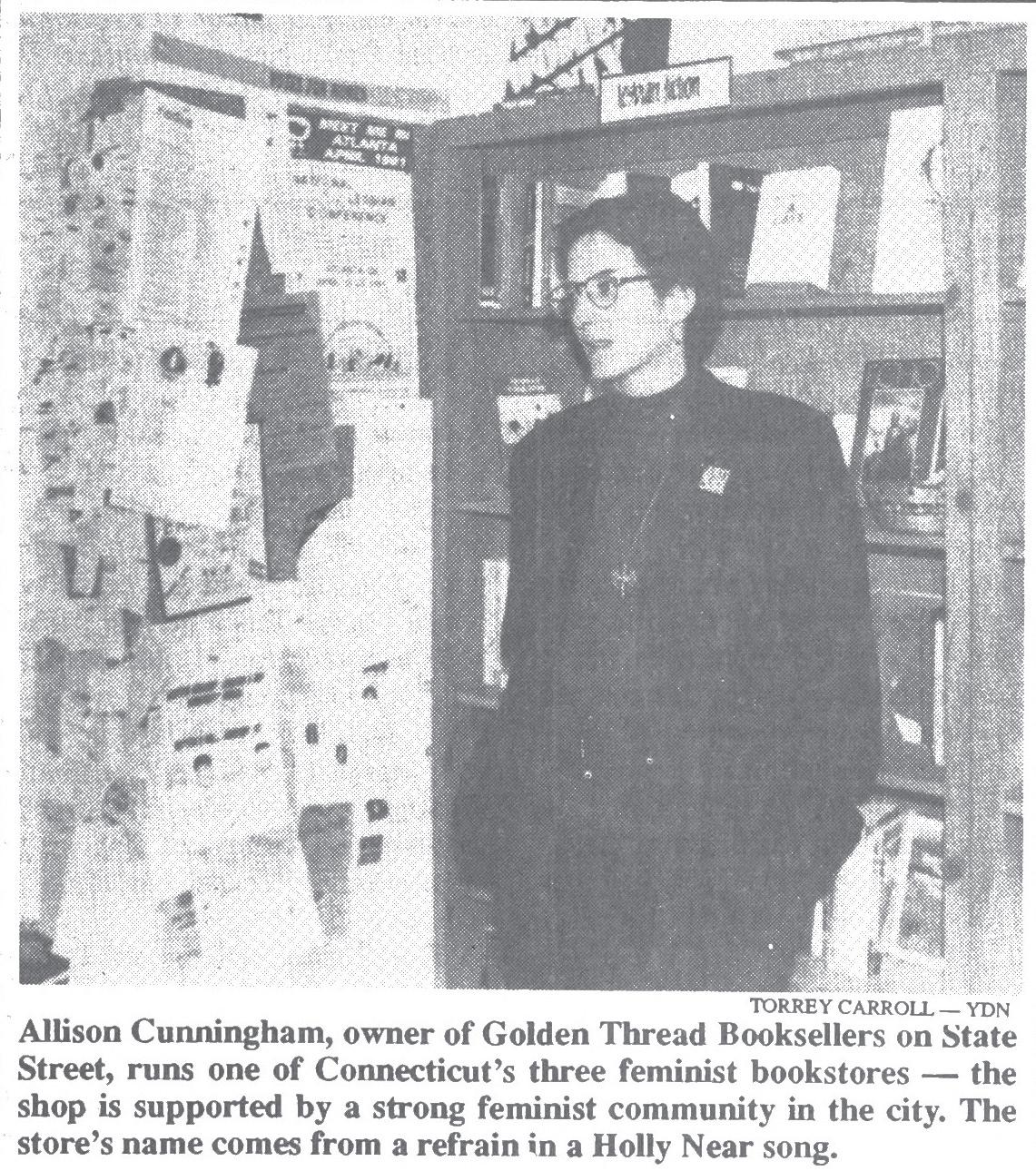
February 20, 1979 / Feminist bookstore has eclectic collection
By Laura Parsky
The flag outside the door reads “books,” but Golden Thread Booksellers is no ordinary New Haven bookstore.
There are shelves labelled fiction, non-fiction, biography, and health, but a closer look reveals that every book is written by a woman. Along with the familiar names of Toni Morrison, Virginia Woolf, and Jane Austen, the store stocks many female authors not recognized by the mainstream literary world.
The small, unpretentious store at 915 State St. teems with colorful and diverse works by women artists. There are posters and Tshirts on the walls, a table display of music by female performers, a glass case full of hand-made jewelry. As its logo states, Golden Thread Booksellers is feminist book store “by, for, and about women.”


By Jaeha Jang
When I learned that the Tuesday meeting for Yale’s chapter of the American Association of University Professors was closed to the press, I recognized that I would have to get creative. I wanted to learn about the meeting’s launch of the AAUP’s new academic freedom campaign, and I knew I could not count on interviewing attendees in person. Instead, I sent questions over to Daniel HoSang, the group’s president, and, by the morning of the meeting, also had two phone interviews with panelists scheduled.
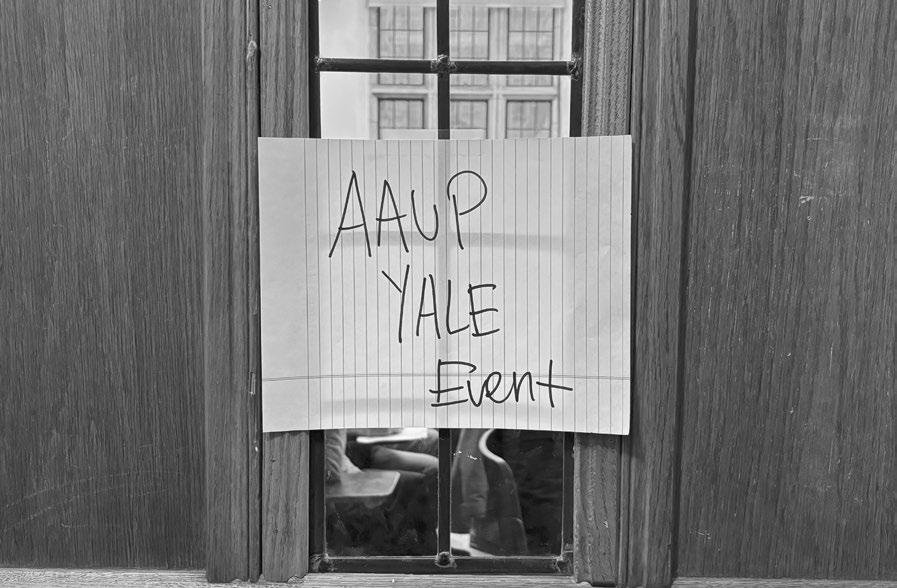
Meeting attendees outside of the meeting in WLH 119 was, in fact, di cult. As I awkwardly stood around the hallway, trying to do my English readings on my iPad but repeatedly losing focus, more than a dozen professors leaving the meeting declined to speak with me on the record. Some told me that they were told during the meeting that it was closed to the press, while others said they had to go pick up their kids. All I could do was take a photo of the sign on the door reading, “AAUP YALE Event.”
After the meeting, HoSang arranged for me to speak with some more panelists and organizers. By the end of the night, I was able to piece together why more than a hundred professors showed up for the campaign and how they spent the 90-minute launch meeting.
Read “Academic freedom push begins” on page 1.


R HOWARD BLOCH
Back in the 1970s, when my student generation and I took to the streets to protest the Vietnam War, we sang a song written by the legendary Pete Seeger and popularized by that singing angel Joan Baez: “Where have all the Flowers Gone.” The lyrics cycled through a series of rhetorical questions and answers from the young girls who “have taken husbands every one,” to “young men all in uniform,” to soldiers “gone to graveyards every one,” to “graveyards covered with flowers every one,” to “young girls who have picked them every one” in a great circle of stubborn dedication to war capped by the subsuming repeated refrain, “Oh, When will you ever learn? When will you ever learn?”
These days, strolling around campus, I find myself humming this song silently to myself. But instead of flowers I hear the word “students.” Where have all the students gone?
I don’t mean there are no students in the halls and walls of Yale, but there seems to be so little evidence of student protest against what is happening in the world around them as to resemble a great empty silent space. Only two years ago U.S. campuses erupted over events occurring 3,000 miles away. Today, the threat is immediate, direct and existential, yet student reaction is seemingly non-existent.
I tend to ask students with whom I interact, “What are your ambitions for your future?” The answers range, of course, widely — from those interested in law, more particularly, constitutional law, to those headed to medical school or a career in science; from students interested in saving the environment, or in engineering, finance or “consulting,” to the myriad of other paths in the arts, teaching, cultural management, politics and government. All are menaced by the potential disappearance of the rule of law or looming constitutional crises, the degradation of the U.S. health system or the devaluation of scientific knowledge, the denial of climate change, the massive unemployment, even in technical fields, caused by artificial intelligence, or the loss of faith in essential private and public institutions.
All of our students’ ambitions depend upon the democratic process this country has nourished for 250 years and which we can no longer take for granted. For it will be tested by the upcoming midterm elections in ways that it has not been since the Civil War.
I read in the News that many students feel numbness in the face of current events, and others may feel there is nothing they can do.
On the contrary, this is a time when students, like those who participated in the Civil Rights movement of the 1960s or the
anti-war movement of the 1970s, can and should take stock, speak out, step out of the safe space of campus and become actively involved in the future of the country which is the only guarantee of their own futures.
And here is one concrete way students might engage: Michael Roth, President of Wesleyan University and an effective organizer of university presidents in response to recent attacks upon higher education, has proposed a National Democracy Summer on the model of the courageous Freedom Summer of 1964 which played a key role in the Civil Rights movement by advancing voting rights in Mississippi. Roth proposes that “by the fall thousands of students will be working side by side with election administrators and civic organizations to support poll worker recruitment, election protection efforts, and lawful observation.” Students trained in what to watch for and what to do will make a di erence in countering all the ways in which free and fair elections are threatened next fall.
Yale, which has a noble history of participation in the Civil Rights movement through William Sloane Coffin, might consider altering its academic calendar to make fall break coincide with election week. Alternately, students might be accorded an excused absence for the beginning of the week of Nov. 7. Such an e ort articulates with creative ways of thinking about the future of participatory democracy already underway at Yale as part of the Citizen’s Assembly project. So, if you are contemplating an internship this summer, why not consider making a meaningful contribution to your own future and that of your families, friends, neighbors, and, potentially, your children and grandchildren who one day may ask, “What did you do to preserve America’s great experiment in democracy?” It may mean some sacrifice, and even some risk, but you have been given great privilege in attending Yale, and, under current circumstances, you owe it to those both near and far who have made it possible. Besides, few things worth doing in this wondrous world are without sacrifice or risk.
I had the extraordinary blessing of being present at Martin Luther King’s “I Have a Dream” speech on the Washington Mall in August 1963. That moment was proof positive that young people can make a di erence in the course of a nation’s history. If ever there were a time for you to intervene both for what is right and what is in your own interest, that time is now. The danger is stunning; the path forward is clear.
R HOWARD BLOCH is Sterling Professor of French and Humanities. He can be reached at howard.bloch@yale.edu.

TIMOTHY RIEMANN
Dear Secretary Hegseth,
I write to you as an active-duty Marine Corps officer currently serving as a visiting fellow at Yale University. I write not to challenge your commitment to our armed forces. Last week, CNN reported that the Department of War — formerly called the Department of Defense — would be suspending tuition aid for graduate education, fellowships and certificate programs for active-duty service members at Harvard. The department is reportedly contemplating similar action at Yale and dozens of other colleges and universities. I would like to o er for your consideration a “boots on the deck” perspective and recommendation, having spent the last seven months at Yale.
I understand your concerns about these institutions. You’re right that many top-tier universities lean heavily left in their faculty composition and campus culture. Yale is no exception. But I would submit that this political reality is precisely why military o cers belong here, not why we should be removed.
During my time at Yale, I’ve had co ee with 25 or 30 students who sought me out specifically because I wear the uniform. They’re curious, and they want to understand what we do and how we think. They ask hard questions about current events and the logic behind decisions that shape public policy and global security. In seminars, I’ve been asked to explain our strikes on Iranian nuclear facilities and the military operation to capture Nicolas Maduro. I was given a chance to speak about your meeting in Quantico with flag and general officers. I’ve provided context on why repositioning forces or moving aircraft carriers matters and what these actions signal to adversaries and allies alike.
These aren’t just academic thought experiments. These types of conversations can and often are formative. The students I engage with today will very likely become tomorrow’s journalists, policymakers and business leaders. They are future members of
Congress who will vote on defense budgets and authorizations for military force. If we remove military practitioners from campuses like Yale, these future leaders will graduate, enter positions of influence and make decisions affecting our national security without ever conversing with someone who has spent their career in uniform.
The danger isn’t just ignorance; it’s the persistence of the echochamber. Without us, the military remains an abstract idea or a distant institution that will be viewed through whatever lens the media or their liberal professor provides. Students will lose the opportunity to understand the perspective of the servicemembers who may execute the very policies many of them will help create and implement. They lose access to voices that, according to Gallup polling, still enjoy some of the highest trust ratings among American citizens.
What members of the military say matters, and it matters most while these students are still forming their worldviews. What we bring to the classroom at Yale cannot be replicated through reading assignments or guest lectures. When discussions turn to international relations, military strategy or the use of force, we don’t o er just ideas or theory: we are the only voice of actual experience. We challenge widely held assumptions and complicate easy narratives. We represent a perspective that’s often missing in rooms dominated by one political viewpoint.
While the Yale faculty does lean hard and nearly exclusively to the political left, the student body is more diverse than someone might imagine. One of the largest studentrun organizations at Yale is the Buckley Institute, which actively promotes conservative thought and advocates for free speech. There is intellectual curiosity across campus, and I have found a genuine openness to di erent perspectives.
However, students can only be open to new perspectives if those
perspectives are present on campus to engage with. I can’t speak to what happened at Harvard or what conditions exist at the other universities under review. What I can tell you is what I’ve seen and experienced at Yale. Here I’ve seen and experienced military officers adding tremendous value to the classroom conversations and to the student’s outlook. On a near daily basis, I see the bridging of a civilmilitary divide that grows more dangerous the wider it becomes. I do not believe the solution to a politically homogenous campus like Yale is to remove the voices that o er alternative viewpoints. I think it is far more beneficial to ensure those voices remain present, engaged and able to share their expertise with these future leaders.
These programs represent a vital investment in civil-military relations at a time when such relations are increasingly strained. They make it possible for future leaders to potentially have at least one meaningful interaction with a soldier, a sailor, an airman or a U.S. Marine during their college years. The programs allow Department of War personnel to plant seeds of understanding that may bear fruit decades later when Yale graduates face decisions involving war, peace and the proper use of military personnel.
I respectfully recommend that you consider not cutting ties between the Department of War and Yale University. The officers you send here serve a mission that extends far beyond their own education; they serve an irreplaceable link between the military and the next generation of civilian leaders who will one day direct it. Thank you for your time and consideration, Mr. Secretary. Respectfully, Lt. Col. Tim Riemann TIMOTHY RIEMANN s a Lieutenant Colonel in the United States Marine Corps and the U.S. Marine Corps Visiting Fellow at Yale. He can be reached at timothy.riemann@yale.edu.
I don’t like basketball, so when I clicked on a News article about a Yale-UConn basketball game, I was not expecting to be entertained. But as I began to read, the unthinkable happened. Verily, yea, I was transported to the stadium itself by such evocative prose as the Bulldogs “stunning” UConn in a “buzzer-beating game winner.” It wasn’t just the UConn Huskies that were stunned. But just as the most riveting NCAA championship double-overtime has to come to an end, so too did the piece. However, the last few seconds of a game are often the best part. The time was ripe for a borderline-legal buzzer beater of a paragraph that would generate angry opinion-editorials, libel accusations, and defamation lawsuits, as all good journalism does.
Instead, there was a single sentence: “At home, the University of New Haven basketball teams play in the Jeffery P. Hazell Athletic Center.” This was no buzzer-beater. It was a pathetic, flaccid air ball.
Slapping asinine hooey on the ends of articles appears to be official News protocol. News reporters may be very good at following the policy of the “neutral fact” — a whopping 100 percent of reported news articles on the News’ home page end with neutral facts — but they are often less clear on why exactly they are following it. When I asked News staff about the point of the policy, I was met with vague blatherings about “tradition.”
Unfortunately for them, this was not “Fiddler On The Roof.” Such bunk would not cut it with an investigative journalist. Did anyone remember the original point of this vapid dogma?
After conducting further investigation on News staff at an alcohol-fueled function, I got the truth: the policy was supposed to make articles “unbiased.”
Sometimes someone can be so wrong about something that it is
hard to address the issue without insulting them. So why even try not to?
Slapping an “unbiased” fact on the end of a biased article is like spraying Febreze on something produced from a squatting position. Just to make sure you understand the sheer level of stupid at play here, let me remind you of the headline of the article in question: “UConn won’t play Yale. Now it faces Elis’ neighbor.” If this “neighbor,” the University of New Haven, wasn’t even important enough to be mentioned by name in the headline, why did I need to know that their team plays in an athletic center named after some guy named “Je ery”? If they were dead-set on ending the piece with the address of an athletic center, at least this mouth-breathing oxygenwaster of a sentence could have been about Yale’s athletic center. Even then, to be clear, this embarrassingly loud word-hiccup would have been about as interesting as watching an elementary-school Nativity play just good enough not to be funny. These dingleberries clinging onto the ends of articles have managed to soil nearly everything in the News. They generally fall into the following five categories: addresses, e.g. “The Rosette Neighborhood Village is located at 203 Rosette St;” antediluvian founding dates, e.g. “The Stanford Daily was founded as The Daily Palo Alto in 1892;” amount of people in a building, e.g. “Yale New Haven Hospital has over 12,000 employees and 4,500 university and community physicians;” yogurt facts, e.g. “During the 2024-2025 school year, approximately 19 pounds of yogurt were wasted each day;” and finally, pure twaddle, e.g. “Junus’ YouTube channel has 711,000 subscribers.” Sometimes neutral facts create unintentional ironies within articles, which can only mean that whoever
was supposed to edit the article was instead scrolling through 2x-speed split-screen Family Guy / Subway Surfers clips at maximum volume. The most barbarous instance of this sort of neutral fact I’ve ever seen came at the end of an article about how a history professor’s book misrepresented its sources: “The Qing dynasty fell in the early 13th century.” The rest of the article criticized the book for containing “out-of-context” information. Even Stevie Wonder could have seen this irony. Hear me well, YDN: any effort to conclude a piece on an unbiased yet thought-provoking note is dead on arrival if it uses the phrases “is located at,” “was founded in,” or “YouTube channel.” As I am nothing if not practical, allow me to suggest two simple amendments to the News constitution. First: Do NOT end an article with: a) the location of a building, b) the amount of people in a building, or c) a statistic about dairy. Second: Above all, NEVER end an article with anything related to the Qing Dynasty — unless the article is about the extremely niche field of Qingology, in which case the News has bigger problems than neutral facts.
But if you’re going to continue this imbecilic policy anyway, as I suspect you will, at least consider this: what’s so bad about bias, in the first place? Bias can make an article much more convincing. A rank instance of bias can even make an article more relatable, because if there’s one thing we all have in common, it’s that we’re really, really biased.
Miles Zaud’s Tinder is @ beefcake22.
MILES ZAUD is a senior in Saybrook College studying English. He can be reached at miles.zaud@yale.edu.
“My gift is my song, and this one’s
GRADING FROM PAGE 1
grades awarded to Harvard undergraduates dropped from 60.2 percent in the 2024-2025 academic year to 53.4 percent in the fall, according to the Crimson. Yale College has not released grading data for any academic year since 202223, when, according to a report obtained by the News, the average GPA at Yale was 3.70.
That school year, 64 percent of grades awarded to Harvard undergraduates were A’s, according to the Crimson, while 58.26 percent of grades awarded to Yale undergraduates were A’s. When accounting for both A and A- grades, Yale saw 78.97 percent awarded and Harvard saw 83 percent awarded.
“When we looked at it a few years ago, our numbers were very similar,” Lewis said, referring to grading data for undergraduates at Harvard and Yale.
“I’m just going to study what happens at our peer institutions, and we’ll have some recommendations for the faculty within a year or so.”
On Jan. 30, a week before the Harvard faculty proposal was released, Lewis told the News that he had asked Yale College’s Standing Committee on Teaching, Learning and Advising to “advise” him on the issue of grade inflation. Last Wednesday, he added that the committee’s members are “aware of what’s going on at Harvard and will be looking closely at it.”
The standing committee, which is chaired by economics profes -
sor Benjamin Polak, is composed of nine faculty members, seven College administrators and two undergraduate students.
Lewis said that the College has “good reason to keep an eye on what happens” at peer institutions like Harvard and Princeton.
“We’re competitors, and so we stay competitive with them,” he added.
“We’re in a marketplace where I’m very much aware of what an A means at Yale and how that compares to A’s at other places, and I don’t want an A at Yale to be seen as a lesser A.”
This concern is particularly relevant for graduate school admissions, Lewis said, where a disparity between Yale and its peer institutions in terms of grade cap policies could lead to A’s awarded by Yale not being considered “worth as much” as those awarded by its peers.
Though the grading data revealed in November 2023 prompted faculty members to express concerns about rising grade inflation, the College did not announce any plans that academic year to target the issue.
The last time such policies were considered was during the 201213 academic year, when Lewis’s predecessor Mary Miller created an Ad Hoc Committee on Grading to address issues including rising grade averages in Yale College, the News reported at the time. The most recent grading data at the time showed that 62 percent of grades awarded to undergraduates were in the A range.
The committee recommended in February 2013 that the College transition from a letter-grade system to a 100-point scale and suggested a set of guidelines that would award 35 percent of grades in the 90 to 100 range and 40 percent in the 80 to 89 range, with a mean grade of 85.5 percent, the News reported.
The proposed overhaul of Yale College’s grading system was met with overwhelming backlash from undergraduate students.
A Yale College Council survey at the time found that 79 percent of 1,700 respondents were opposed to the changes, and Joshua Kalla ’14 GRD ’14 — now a political science professor and member of the Standing Committee on Teaching, Learning and Advising — began a petition protesting the changes that garnered over 1,200 signatures in three days, the News reported at the time.
At a faculty meeting that April, professors tabled the proposal to switch to a numerical grading system. In the fall of that year, economics professor Ray Fair, who chaired the Ad Hoc Committee on Grading, announced that the committee would not pursue the switch any further. Fair was also the professor who, a decade later, authored the report showing that 78.97 percent of grades awarded to Yale undergraduates in the 2022-23 academic year were in the A range.
On Monday, Fair wrote in an email to the News that grade inflation “is an important issue at Yale,” but said
BROOKS FROM PAGE 1
political climate,” but at the time, they did not discuss the presidential senior fellow position.
Brooks said he generally speaks to university presidents about “what the hell is going on” in Washington, and he has spoken to several university leaders since Trump returned to o ce.
He said presidents want reforms to fall into three buckets: more intellectual diversity on campuses; less pre-professional culture and a return to the “humanistic core of the university”; and more education about how to live after college.
In an email to the News, McInnis wrote that she created the Presidential Senior Fellowship program in response to what she heard at listening sessions with students, faculty, sta and alumni. She wrote that one of the program’s “areas of focus” emerged from those sessions, including “enhancing and expanding educational opportunities for students and welcoming diverse viewpoints.”
“Over the decades, Mr. Brooks has examined issues from a range of perspectives, and he has convened experts to explore topics across differences,” McInnis wrote.
Brooks said he traces his “intellectual lineage” back to Edmund Burke, who is widely regarded as a father of modern conservatism, and Alexander Hamilton. Brooks has critiqued higher education in the past, including in an article in The Atlantic called “How the Ivy League Broke America.”
Now, he is working on a piece for The Atlantic — where, in addition to his position at Yale, he will be a sta writer — about positive aspects of the current state of universities, Brooks said.
“I thought I should acknowledge the things that are going right,” he said.
Brooks emphasized that he was particularly “attracted” to the opportunity at Yale because McInnis seemed open to new ideas and projects.
“There are some people who lead major organizations that are bureaucrats. They are ‘no people.’ They want to make sure nothing bad happens,” Brooks said. In contrast, he described McInnis as less guarded and willing to try new things, saying, “she struck me as a yes person.”
Brooks said McInnis gave him broad leeway in shaping his role at Yale. This semester, he will deliver a series of lectures and host the podcast with The Atlantic, which is supported by Yale, according to Anna Bross, the senior vice president of communications at The Atlantic.
Brooks’ podcast will feature Yale professors and scholars to discuss “great books” and give listeners a glimpse of what Yale and other top universities do, he said.
“I’d love to give people out there in podcast land a sense they are on a college campus,” Brooks said. “So I’m looking for one of those old classrooms or old rooms where it feels like you’re on a college campus.”
Around half the episodes will be recorded on Yale’s campus, while the other half will be recorded across the country, Brooks said.
According to Brooks, this spring he plans to lecture on why he still considers himself a conservative, how America can recover from “this mess,” how to fall in love and how to be ambitious without being a jerk, which he said “applies to a lot of Yale students.” Next fall, he said there will be a “big launch event.”
Brooks said he is still working to conceive the details of his daily routine at Yale. He mentioned that he will be having dinners with Yale professors to decide how he can be most helpful at the University.
“Mostly, I’m up here this term to ask people at Yale, ‘what should I do?’” he said.
Brooks said he chose Yale because of its “mixture of intellect and worldliness.” Brooks arrives at a time when universities are being widely critiqued for lack of intellectual diversity — though Brooks says he hopes he could help remedy concerns as they relate to Yale.
“Trump is not entirely wrong about his critique of the university and there’s some kernel of truth in there,” Brooks said, “but he’s widely overreacting” and being “very destructive.”
With the prevalence of conversations about how “woke the universities are, you can be seduced by that media narrative,” Brooks said, “and I would even include myself in this.”
However, visiting Yale and meeting with faculty made him realize that “there’s intellectual diversity here to some degree, and it’s not a super woke, revolutionary place,” Brooks said.
Brooks said that “the answer to the problems of the university are already in the university.”
He added that Yale would benefit from a pro-Trump voice. He said outlets like The Atlantic or The New York Times would also benefit, but that it can be hard to find Trump supporters who “follow the journalistic standards that we insist on.”
This is not Brooks’ first stint at Yale. According to a Jackson School webpage, he was a senior fellow at the University from 2012 to 2018 and 2021 to 2022 and has also taught courses over the years, including one on humility.
“I thought it would be hilarious to have a New York Times columnist teach about humility,” Brooks said.
When Brooks taught at Yale in the past, he loved “the atmosphere” and “hanging around the students,” he said.
he could not comment on potential changes to Yale’s grading policy.
A week before the recent Harvard faculty proposal was announced, Lewis said that the discourse around Fair’s 2023 report on Yale College grading led to an understanding that the College would circle back to the issue.
“People who are knowledgeable recognize that we had the same kind of conversation a few years ago here in Yale College, and then we agreed we would continue to monitor the situation,” Lewis said. “I think the time is coming soon for us to do something more specific about it.”
Lewis added that he will continue to “encourage faculty to use the full range of grades” and raise awareness among professors about how grading at Yale compares to that of its peers.
Philosophy professor Shelly Kagan has long been a proponent of a stricter approach to grading by Yale faculty. Kagan said he did not think that the Harvard proposal, which, if passed, would halve the number of A’s given to undergraduates, would su ciently address the issue of grade inflation.
“It simply means that all the students that would have been given A’s are no longer given A’s, but are going to be given A-’s. I don’t want to say that it’s not worth anything,” Kagan said in a Wednesday interview over Zoom, but he added that this change would not offer enough “finegrained discrimination” between
grades to inform students about their performance in a class.
“Now, you’re going to ask me, so what’s my solution?” he continued. “And sadly, you know, the only real solution is for other people to grow a spine, and be prepared to give out B’s, and B-’s, and C’s, and C-’s, and D’s.”
The prevailing issues regarding trust in higher education have some bearing on the discussion around rising GPAs, Lewis said last Wednesday.
“I think there is the perception, which I think is unfair, but just the caricatured version of it would be, well, you admit students, and then they don’t have to work. They’ll get A’s and we’ll help them find jobs, but they haven’t actually learned anything in their classes. That’s not true,” Lewis said.
“In a situation where everybody got an A on everything, you would lose something,” Lewis added. “And so I think we need to have a working grading system. We do have standards for what grades should mean, and I’m going to be reminding the faculty of what those are at the faculty meeting in March.”
The next Yale College Faculty Meeting will occur on March 5, according to a provisional schedule on the website of the Faculty of Arts and Sciences.
Contact OLIVIA WOO at olivia.woo@yale.edu.
“I used to hold what I call o ce hours at the Study bar,” he said. His “office hours” would start at 9:30 p.m. and stretch well past midnight, he said.
McInnis wrote that one aspect of Brooks’s fellowship is “to share the conversations we have on our campus more widely with the nation and the world, which will help to bridge the academy with society at large.”
McInnis wrote that there would be more senior presidential fellows at Yale, but she did not say who they might be. The fellows will be connected to specific parts of Yale based on their professional focuses, she added.
“Presidential Senior Fellows are matched to a home program, department, or school based on the topics and areas they have covered in their distinguished careers. I will continue to work with deans and other university leaders to identify opportunities for future presidential fellows,” McInnis wrote to the News on Wednesday.
In November 2025, Brooks wrote an article in The New York Times called “The Epstein Story? Count Me Out.” He argued that politicians were paying too much attention to and trying to exploit renewed outcry about the sex o ender Je rey Epstein. The piece received pushback, some of which The New York Times also published.
“I could rewrite that column. I would amend it and say I think it’s a cultural story. It shows something rotten among a lot of people in the elite, but it’s not representative of the elite, I don’t believe,” Brooks said when asked about his stance on the issue.
Brooks said he has “some regrets” about the story, and underestimated how many elites sent emails to Epstein that were “wildly inappropriate.” Files of Epstein’s email correspondence were recently released by the Justice Department.
In December, The Guardian reported that Brooks appeared in photos from a dinner that Epstein also attended at a conference in 2011.
In his interview with the News, Brooks said that about three dozen people were at the dinner gathering, which Brooks said was at a TED conference, and that he had no interactions with Epstein and did not know about him at the time.
Brooks said he will continue to live in Washington, D.C. and will commute to Yale for “a few days every other week.”
David Brooks graduated from the University of Chicago in 1983 with a degree in history.
Contact ARIA LYNN-SKOV at aria.kynn-skov@yale.edu and LEO NYBERG at leo.nyberg@yale.edu.
enacting new accountability mechanisms on Wednesday night.
The order will enable the program to restart its operations in the next two weeks, Mayor Justin Elicker said at a Thursday afternoon press conference. Elicker temporarily had paused the program last month in the wake of Jacobson’s alleged theft.
In early January, Zannelli and two other assistant chiefs confronted Jacobson with the allegations of misappropriating city funds, prompting the former police chief to concede to having stolen $10,000 from the confidential informant program, Elicker and Zannelli have said.
The fund, which contains approximately $50,000 and is usually overseen by the assistant chief of investigations — a position Jacobson held from 2019 to 2022 — is used for controlled, undercover purchases of weapons and narcotics and to pay individuals who provide useful and credible information to aid in criminal investigations, according to Elicker. Jacobson had maintained his management of the fund upon his appointment to his chief of police position in 2022.
“Our confidential informant program has been critical to our success in reducing crime and contributed to the department’s success in solving crimes and bringing people to justice,” Elicker said at Thursday’s press conference.
The mayor explained that the police department has a “general order” which delineates how to handle the program, but that the department violated those protocols at Jacobson’s direction.
Upon discovering these irregularities, city officials “acted immediately” to engage the state’s attorney’s office, who, alongside the Connecticut State Police, are investigating Jacobson’s alleged misconduct.
Zanelli declined to provide an update on the ongoing investigation.
According to Elicker, the city has implemented three key measures to overhaul the oversight mechanisms for the program.
First, the city has enlisted the Police Executive Research Forum, a national law enforcement organization, to analyze the department’s policies and practices. PERF members will interview relevant police officers and city staff, review current policies and observe department practices. The organization will then issue a report that will be used to draft a
new general order to manage the fund in line with best practices.
The city will pay $87,000 to hire PERF to conduct its investigation over six months, Elicker said. The city has not yet finalized a contract with the organization.
In the interim, Elicker said, the city has enacted a new temporary confidential informant special order — replacing the current general order, which came into effect in 2016 — to resume the program’s operations as PERF carries out its probe.
The new special order will implement “significant new accountability measures, increased supervision and enhanced procedures to ensure responsible oversight” of the program’s funds, Elicker said. “It’s very thorough and exhaustive — an emphasis on exhaustive.”
Under the new order, the police department will keep the program’s funds in a digital safe in a restricted room at department headquarters. The safe will be monitored by video surveillance at all times, according to Zannelli.
“Designated” individuals will have “badge in” access to the funds to create a video record timestamp and an “audit trail,” Elicker added.
The municipal Chief Administrator’s Office, which supervises the police department, will now replenish the program’s funds — an authority previously reserved for the city police chief.
Police officers will also have to provide the office with documented proof of the use of existing, confidential funds before they are replenished, and these replenishments will occur “in smaller increments,” rather than annually, Elicker said. And audits of the program — within and outside the police department — will become more frequent.
“We have gone to extremes here to ensure that the temporary special order has exhaustive oversight and accountability while PERF goes through their process,” Elicker said. “These processes and procedures may change clearly with the general order.
Zannelli reflected that the department should review and update its policies and best practices every one to two years, but that this “just wasn’t the case” for the management of the confidential informants program.
The New Haven Police Department is headquartered at 1 Union Ave.
Contact REETI MALHOTRA at reeti.malhotra@yale.edu.
to the University’s endowment returns beginning in July. He said at the time that a cut to the Yale College budget resulting from the tax required sta reductions.
Yale College Senior Associate Dean Burgwell Howard said that the Office of the Provost’s Budget Advisory Group “provides guidance” to help administrators meet budget targets. However, he said the committee does not issue specific directives at the employee level that unit leaders must follow.
“They don’t say, you can’t hire that person. They’re saying, okay, you have to get to this target of FTEs,” Howard said in a Thursday interview, referring to full-time equivalent employees.
Since President Donald Trump signed the slated endowment tax increase into law last summer, Yale administrators have announced several University-wide measures intended to reduce sta sizes, including a 90-day hiring pause that expired in September and a one-time retirement incentive o ered to certain employees. Eligible sta members were able to opt into the incentive between Nov. 1 and Dec. 31 of 2025.
Lewis said Thursday that his office has “plenty of people who were eligible” for the retirement incentive and that “some of them took it,” though he declined to provide specific numbers quantifying the effects of the program on Yale College staff.
“I do think we had enough people take advantage of the retirement incentive that it really minimized how many layo s we would actually have,” Howard said, though he added that it was “a combination of retirement incentives and leaving posi-
tions unfilled” that helped shrink sta sizes.
Layoff decisions were “very much a last resort,” Lewis said. For “programs where we’ve decided that we just don’t have the funds to keep them going at the same scale or where there’ve been changes in the nature of the program or the work that they do, we’ve had to reduce staff,” he said, adding, “I wouldn’t say any programs have been eliminated.” He declined to say the exact number or positions of the staff members laid off.
Lewis said on Thursday that he “would expect” layoffs to occur in other parts of the University. A University spokesperson did not respond to repeated requests for comment on layoffs at the University.
In early December, senior administrators announced that “layoffs may be necessary” as budgetary units work to meet their targets, though they added that “leaders are working hard to minimize them wherever possible.”
“We hope to substantially complete any downsizing efforts by the end of calendar year 2026, provided there are no additional significant financial changes,” read the December statement from Provost Scott Strobel, Senior Vice President for Operations Geoff Chatas and Stephen Murphy, the University’s vice president for finance and chief financial officer.
The endowment tax hike, set to take effect on July 1, will raise the tax on the University’s endowment returns from 1.4 percent to 8 percent. Isobel McClure contributed reporting. Contact OLIVIA WOO at olivia.woo@yale.edu.
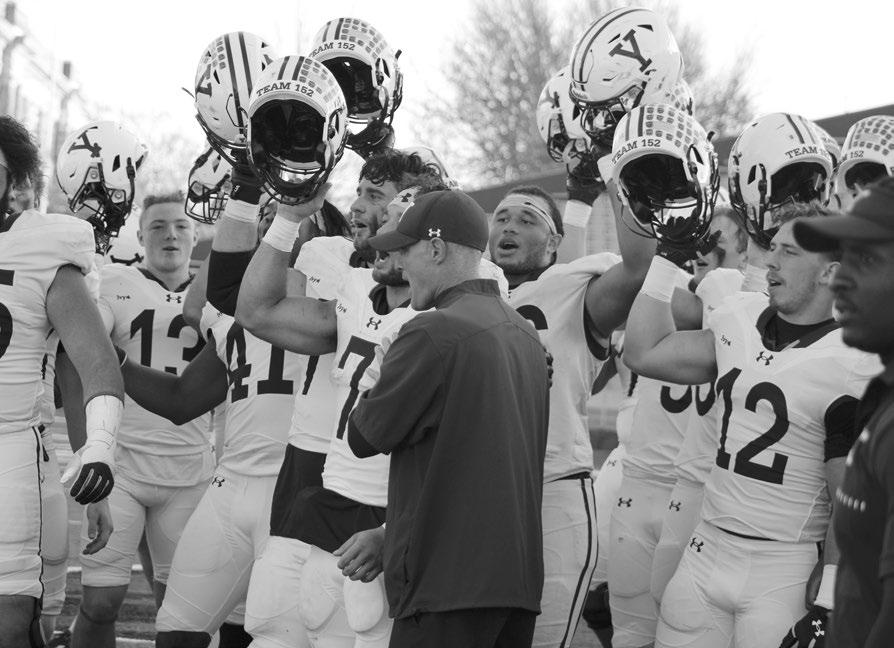
Harvard, the Bulldogs found themselves with their first chance to compete in the Football Championship Subdivision playo s, which — after Ivy League teams had been prohibited from competing in the postseason since 1946. Following the 2025 season, Reno was named Jack Grinold Division I Coach of the Year by the New England Football Writers for the second time.
“Coach Reno’s leadership has been truly transformational. His impact on Yale Football, our department, and the university extends far beyond championships and wins—it lives in the countless people he has inspired,” Athletics
Director Vicky Chun said in Yale’s press release.
“Coach Reno led with integrity, humility, and an unwavering commitment to excellence, giving his whole heart to this program every day. He cared deeply about his players as people, challenging them to excel on the field, in the classroom, and in life,” she added.
As the news of Reno’s departure spread, his athletes mourned and celebrated his tenure at Yale.
“It’s an unreal feeling, the legacy he has built here will be forever lasting, and the main focus is to make sure all is well with him and his family,” Abu Kamara ’27, the captain chosen for Team 153 this year, wrote to the News. “We will
continue to run this program the way we know how to through the culture and standards that Coach Reno has built.”
Reno’s son and starting quarterback Dante Reno ’28 posted to X following his father’s announcement: “Dad, you are my role model, my best friend and my coach.”
“From your first year to playing with you last year, you have put your heart and soul into coaching. Your legacy will last forever,” Dante Reno added.
Yale Athletics announced that it would conduct a national search to find the next head football coach.
Contact ELI RATNER at elijah.ratner@yale.edu.
ulty Handbook, peer institutions’ policies, and consultation with Yale Law faculty,” according to the Yale AAUP website.
Joe Cohn, a panelist and the executive director of Yale Law School’s Center for Academic Freedom and Free Speech, said in a phone interview that the faculty handbook is “the most straightforward place” for these protections to academic freedom that “would be generally applicable to all faculty at all levels.” He also said that faculty members at Yale “can’t rely exclusively” on the First Amendment for free speech and academic freedom because Yale is a private institution.
HoSang agreed that “enshrining” these protections in the faculty handbook instead of having them as a “separate, standalone statement from the administration” would make them more binding as a contractual right, although the faculty handbook may not provide as “robust” guarantees as a collective bargaining agreement could.
According to Yale spokesperson Karen Peart, University Provost Scott Strobel made a statement at a meeting with the Faculty of Arts and Sciences and the School of Engineering and Applied Science faculty last week that he and McInnis are “unequivocally committed to Academic Freedom and we view this as a central element of our purpose and our mission.”
The statement said that the faculty handbook in its current form does make an explicit commitment to academic freedom, recognizing that “Academic freedom and the spirit of free inquiry are fundamental to Yale’s mission,” and that faculty “have the right and obligation to criticize their colleagues, sta members, and the university.”
It also reads that the handbook already “guarantees specific procedural safeguards for faculty who believe their academic freedom has been improperly restrained.”
“In other words, the Faculty Handbook recognizes the importance of academic freedom both by name and by the principles that
underpin those faculty rights and responsibilities,” Strobel’s statement said, according to Peart.
The statement further notes that Strobel and McInnis are “grateful” for the attention that faculty were directing toward academic freedom. According to his statement, Strobel has met with the faculty senate leadership, the deans of all Yale’s schools and “the world’s leading scholars on academic freedom” who are at Yale to better understand academic freedom and how to best protect it, and deliberations on next steps “will continue in the coming days.”
In the first step of the AAUP’s new campaign, faculty members who attended the Tuesday event wrote postcards to McInnis.
History professor Deborah Coen, who was one of seven panelists on Tuesday, said in a phone interview after the event that the postcards were meant to share with McInnis “why each of us personally cares about academic freedom, whether or not we signed our name, so that she gets a sense of the range of personal commitments to this principle.”
The collective nature of sending postcards allows instructional and untenured faculty “who probably don’t feel comfortable making statements themselves” to voice their concerns, Coen added.
Coen also said that when she attended the meeting with Strobel last Thursday, she felt that “the administration just isn’t hearing about a lot of faculty experiences, about the threats that many faculty are feeling.” Cohn said that Yale has a “real opportunity to lead” other universities in making commitments to free speech and academic freedom. He mentioned a 2023 federal court ruling that a rmed the dismissal of a lawsuit against Yale by Bandy Lee MED ’94 DIV ’95, a former School of Medicine a liate who alleged that she was wrongfully terminated over her 2020 comments on President Donald Trump.
“Yale is an institution that just went to federal court to argue that its promises of academic freedom and free speech in the faculty handbooks are too broad and general to confer any particular meaningful rights,” Cohn said. “So they’ve kind of made that bed. And to make sure that real meaningful protections are o ered to faculty, they now need to be more specific in its binding documents about what protections it will o er and stand behind.”
While there is “clearly work to be done,” Cohn added, he said that Yale is an institution with “people of good faith.” The University can show the rest of the nation how to “breathe life” into academic freedom, he said.
Amy Kapczynski, a Yale Law School professor who is on the AAUP’s executive committee, also said in an interview that the campaign is “very clearly in Yale’s best interest.”
“There is a commitment to academic freedom here, but it needs to be made more meaningful at a time when there’s so much real risk around it,” she said.
Faculty agreed that this campaign is particularly important today due to increased government threats to academic freedom.
“People are alarmed. People are afraid,” Rod Ferguson, a panelist and the chair of the Women’s, Gender, and Sexuality Studies department, said in an interview. “There are
so many looming threats to what we do, to what we study. WGSS departments around the country are being canceled, and so this moment represents a real existential threat.”
Coen said that she told attendees stories of threats to academic freedom on behalf of her colleagues who feel like “they would jeopardize their jobs by describing these experiences to the administration.”
Ferguson also said that he shared with attendees his experience of receiving threatening emails — hundreds daily — between April and May 2024 about his department’s sponsorship of a proposed conference on “pinkwashing,” or the practice of deploying superficial sympathetic messages about the LGBTQ+ community. The emails contained slurs and were copied to lawmakers and then to former University President Peter Salovey, Ferguson said.
The proposed Women’s Center conference that year, “Pinkwashing and Feminism(s) in Palestine,” was indefinitely postponed by the center’s board.
Ferguson said that in June 2024, he received emails calling him a racial slur, and in November that year — a week after Trump was elected — his department received a voicemail, again containing slurs, about its course on Beyoncé and Black music.
Ferguson added that it would benefit not only faculty but also Yale and other universities “if we can get the administration to partner with the AAUP around academic freedom, which includes our historic right as faculty members to teach according to our interests and our expertise, to research according to our interests and expertise, for the administration to not back away from the rights that have been inherent for faculty for hundreds of years.”
Coen said that she thinks the high turnout for Tuesday’s event demonstrates that academic freedom is a “major concern” on Yale’s campus.
Kapczynski also said that “it was a moment of kind of coming together because people are concerned right now and want to work together to try to protect each other and our students and this place that we love.”
The national AAUP was founded in 1915, according to its website.
Contact JAEHA JANG at jaeha.jang@yale.edu.
“One good thing about music, when the music hits you, you feel no pain”
ELLA FITZGERALD AMERICAN SINGER-SONGWRITER
BY ELIJAH HUREWITZ-RAVITCH STAFF REPORTER
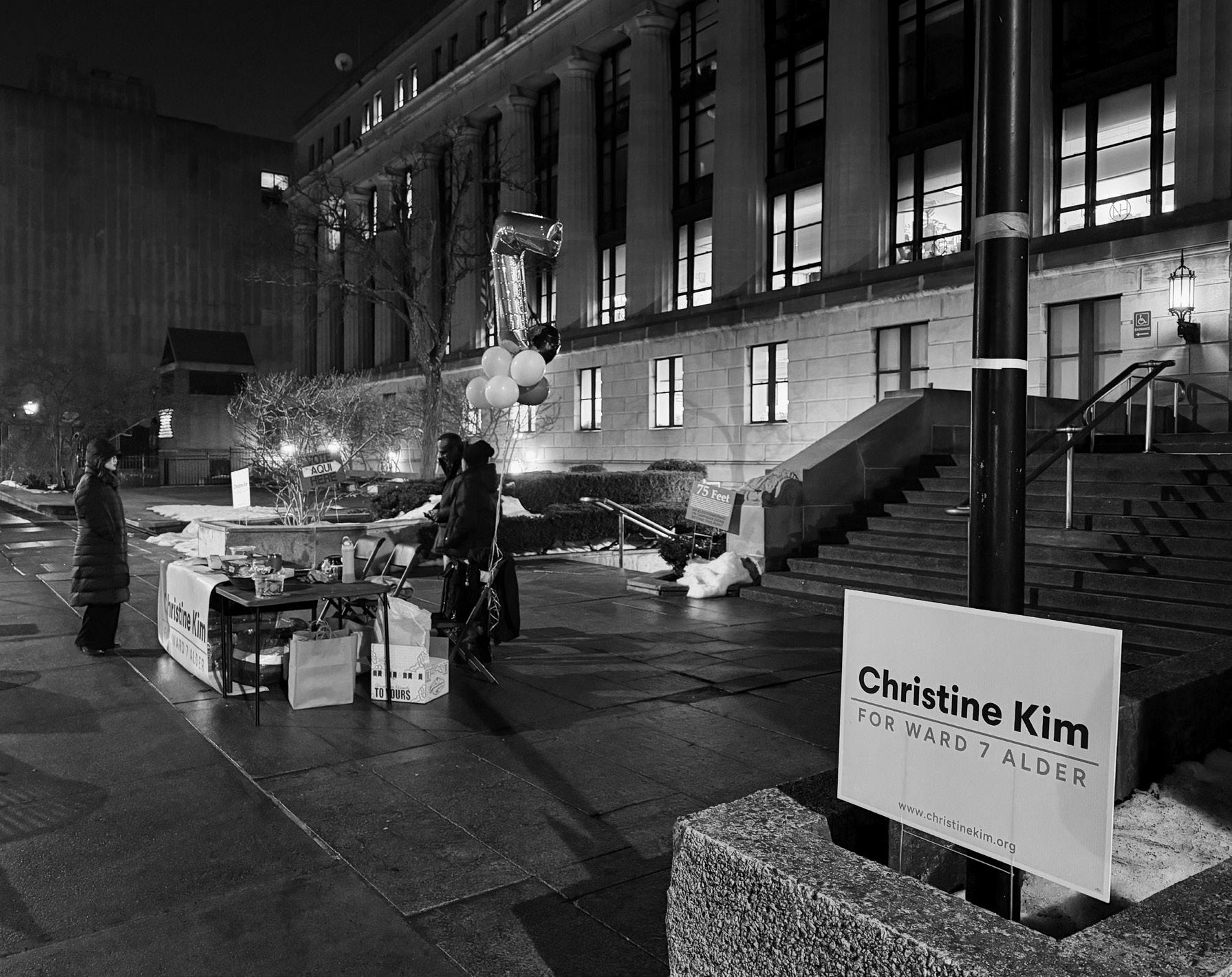
Democrat Christine Kim ’99 came out on top in a quiet special election for Ward 7 alder
Tuesday evening.
Kim, a community organizer, beat her write-in opponent
Kyle Ross by 72 percentage points. She will soon be sworn in to represent parts of downtown and East Rock on the Board of Alders.
“I feel really grateful for all of the residents who came out,” Kim said just after an election official read out the results in the basement of the city’s Hall of Records on Orange Street.
“Everyone that came are people that came out because they care about their neighborhood, they care about their city and they care about democracy, because it’s not easy to come out for a special election randomly.”
Tuesday’s special election was triggered by the surprise resignation of Eli Sabin ’22 LAW ’26, who stepped down from the Board of Alders less than an hour before he was set to be sworn in for a third term as Ward 7 alder.
Between early, absentee and in-person voting, 193 Ward 7 residents cast their ballots — 166 for Kim and 27 for Ross. The turnout represents just under 7 percent of the ward’s active registered voters.
Ross, a financial advisor, is a Republican, but ran as a write-in candidate because of an error with the paperwork he submitted to the city clerk, causing his name not to appear on the ballot. He said in a telephone interview that the election’s results were “disappointing” but added that
his campaign had done its best.
“We gave it a good college try, and we left it on the field,” Ross said. “It’s just a heavily blue area.”
Incumbent mayor Justin Elicker, a Democrat, won around 92 percent of the vote in Ward 7 in November’s municipal election.
Kim said that she set up a table laden with snacks and campaign literature at 5:30 a.m. in front of the Hall of Records. Ross joined his opponent around 8 a.m.
Ross said that Kim struck him as a “really good person” and added that “we’ll definitely be in communication going forward.”
Ross had hoped to “to get about 75 votes and then have a little bit lower turnout than what we had,” he said.
“That’s a winnable bogey,” he added, alluding to a one-overpar golf result.
As voting on Tuesday drew to a close, Ward 9 Alder Caroline Tanbee Smith ’14 SOM ’25 and Ward 14 Alder Sarah Miller ’03 arrived to support Kim and help her break down her table. And as the clock struck 8 p.m., Ward 1 Alder Elias Theodore ’27 and Ward 27 Alder Richard Furlow appeared at the Hall of Records to hear the results.
Tanbee Smith, a longtime friend of Kim’s, said that she was “excited” to get to work with the alder-elect.
She added that they already have a project in the works — a raised crosswalk at the intersection of Humphrey and Pleasant Streets, which sits at the border between their respective wards.
Kevin Arnold, the head election moderator, said that this race’s turnout was “unfortunately” average for a special election. But Ward
7 tends to have higher voter participation relative to other wards, he added.
Kim speculated that the election’s timing might have had something to do with low turnout.
“It’s hard. It’s Tuesday right after a long weekend,” she said.
Campaigning for alder was “wonderful,” Kim said. After a
full night’s sleep, she said she plans to reach out to Board of Alders leadership.
“I’m not going to come in thinking I really know anything,” Kim said. “I want to come in and learn how it works, and also communicate that to our residents so they know all the hard work that goes into making the city run.” Around 600 people voted in last November’s municipal election in Ward 7, according to data from New Haven’s registrar of voters.
Contact ELIJAH HUREWITZ-RAVITCH at elijah.hurewitz-ravitch@yale.edu
BY KELLY KONG STAFF REPORTER
New Haven officials want to build a public park with an outdoor aquatic center — complete with a pool and lazy river — on the site of a decommissioned power plant, but they don’t yet own the property.
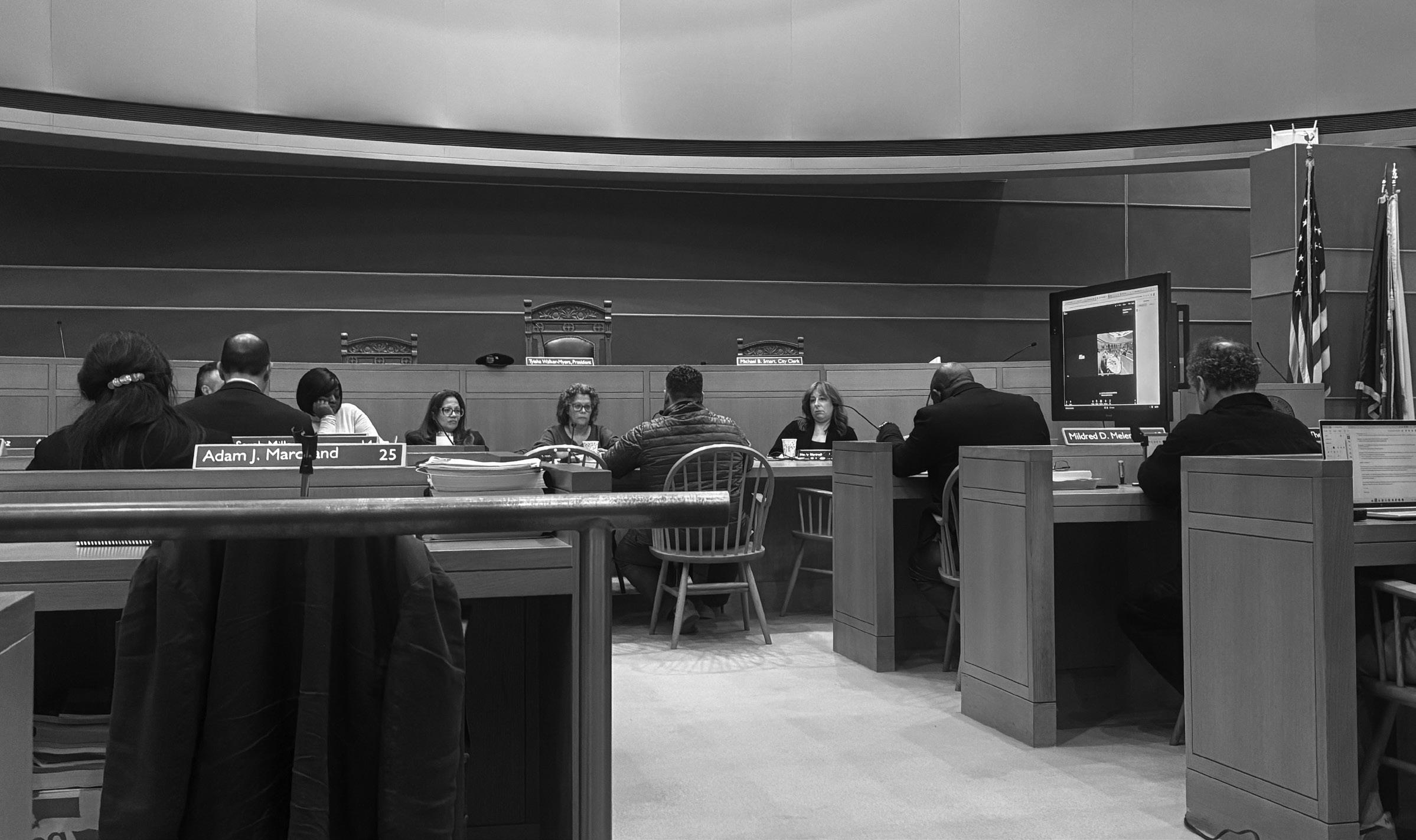
At a Board of Alders Community Development Committee meeting on Wednesday evening, the city received approval to move one step closer to the acquisition of the English Station site through either negotiated purchase or, if necessary, eminent domain.
Michael Piscitelli, the city’s economic development administrator, presented the acquisition as a crucial step toward building community assets that will allow for the expansion of public recreation facilities, housing markets and neighborhood renewal.
“How do you build a new neighborhood and area that’s highly characterized by brownfields, significant environmental justice concerns and low intensity uses?” Piscitelli asked at Wednes-
day’s meeting, referring to abandoned and underused properties in the city.
A new park, he said, may help the city create “a neighborhood of distinction.”
Piscitelli emphasized that the acquisition would also advance remediation and clean-up e orts at the site, which is contaminated with dangerous pollutants.
Five members of the committee voted in favor of moving forward with the city’s request, while one voted against.
During public testimony, proponents of the acquisition expressed enthusiasm for the city’s ability to expand access to swimming lessons, induce economic revival and clean up a site that has been unused and polluted for over three decades.
Sebastian Ward ’26, a lifelong resident of New Haven, said his parents signed him up for swimming lessons at the city’s LEAP program, or Leadership Education & Athletics in Partnership, when he was young, which helped him build “confidence, discipline and life skills” that he still carries today.
The proposed aquatic center, Ward said, “would expand this foundation of services, helping produce more well grounded young people with access to the same opportunities that shaped me.” New Havener Manmita Dutta cited environmental justice as a key reason for supporting the city’s proposal.
“For nearly 100 years, the site has blocked New Haven residents from their own waterfront,” Dutta said. “Environmental justice means we stop asking working class communities to live with the toxic leftovers.”
She added that waterfront parks create a shared civic space for New Haven families who can’t afford swimming private classes or summer travel. “In the summer, families need safe places where children can be active, healthy and connected,” Dutta said.
Other residents, however, are more skeptical about the park’s proposed benefits.
Lee Cruz, the chair of the Fair Haven community management team, said that the city does not have a lack of
parks or pools, but instead has a maintenance problem with its existing public facilities.
“Half a mile away is the John Martinez School,” Cruz said in an interview, referring to the STEM magnet school a ten-minute walk from Ball Island, where English Station is located.
“The pool there is often closed because we don’t have the money to maintain it.”
“Why would we build another pool on toxic land?” he said in his public testimony.
Cruz added that an outdoor pool in Connecticut could only be used for four months a year, but would nonetheless be costly.
Rafael Fuentes, a Fair Haven resident, expressed little faith in the city’s ability to maintain the new park.
“It’ll get built, done, and it’s not only going to be a burden on the taxpayer, it’s going to be another dilapidated park that’s not being taken care of,” Fuentes said in an interview.
In his testimony, he stood by these concerns and added that the city doesn’t currently have a
“good idea” for the site that warrants negotiated purchase or eminent domain.
Kimberly Acosta, a resident of New Haven, said that the budget necessary for both property remediation and development of the site is still undetermined. The city, she said, also hasn’t taken the Fair Haven community’s actual visions and needs into proper consideration.
“They recklessly pursued this park and pool idea,” Acosta said. “I do not trust them to honor community input and alternative uses after the land has been acquired.”
Michael Berindei, a New Haven resident and photographer, proposed that the English Station building can be remediated without demolition and repurposed into a valuable cultural and historical site for the city.
“English Station is truly unique, as it reflects the civic architecture of New Haven itself,” Berindei said.
“The designers drew from local churches, Yale’s collegiate Gothic buildings and City Hall in order to establish the power company as an equal to these longstanding and respected institutions.”
He raised several examples of successful, comparable power plant redevelopments from across the country, such as projects accomplished in cities like Savannah, Georgia, and Lansing, Michigan.
Leslie Blatteau ’97 GRD ’07, the president of New Haven’s teachers’ union, questioned the city’s priorities in financial and future planning in light of the city’s budget concerns for New Haven Public Schools.
“We have schools with sewage links. Temperatures in our schools this winter have been at 50 degrees on multiple sites,” Blatteau said.
“We don’t even have the money to handle what currently is dilapidated for 18,000 kids and thousands of workers.”
When asked about community opposition against the city’s plans, Piscitelli said in an interview that the committee’s approval on acquisition is “an important step of the process, but just one step of the process.”
“Lots of thoughtful comments tonight,” Piscitelli added. “We need to take them all seriously.” English Station is located at 510 Grand Ave.
Contact KELLY KONG at kelly.kong@yale.edu.
“The only thing better than singing is more singing”
ELLA FITZGERALD JAZZ SINGER
BY JERRY GAO AND ANAYAH ACCILIEN STAFF REPORTERS
The student group Plant Forward Yalies is petitioning the University to default to plantbased desserts instead of those containing dairy or eggs.
Cole Haynes ’27, a member of Plant Forward Yalies and a co-president of Yale Effective Altruism, said that the petition to offer plant-based desserts is the next step Yale Hospitality can take toward meeting its sustainability goals, along with guaranteeing tofu in every dining hall’s salad bars and providing more protein-rich, plant-based options.
“Emissions from our food system alone could preclude achieving the 1.5°C and 2°C climate change targets set by the Paris Agreement. At the same time, factory farming is linked to serious environmental damage and harm to both workers and animals,” Haynes wrote to the News. “Serving more than 15,000 meals each day, Yale has both the influence and the responsibility to lead food sourcing that benefits humans, animals and the planet.”
Haynes also claimed that Yale would save money by switching to plant-based desserts.
“According to a report published by UPGRADE Dining, an egg reduction in baked goods alone can save approximately $34,000 per year at a university of Yale’s size,” he wrote.
The impending endowment tax hike imposed by the One Big
Beautiful Bill Act has triggered budget constraints at the University. Last week, Yale College Dean Pericles Lewis told the News that the college’s sta will shrink by roughly 7.5 percent.
In a statement, a Yale Hospitality spokesperson wrote to the News that students from Plant Forward Yalies had met with representatives of Yale Hospitality.
“Yale Hospitality was introduced to the group through Yale College Council and met with them to understand their requests. They asked for usage data on specific menu ingredients, which we have provided previously and will provide again,” the spokesperson wrote.
The Yale Hospitality spokesperson did not address the News’ request for what survey data said about Yalies’ interest in the petition.
Adriana Petrizzo ’29, another organizer with Plant Forward Yalies, said the petition would signal to other universities the feasibility of changes that would reduce greenhouse gas emissions, promote healthier diets, and support a more compassionate food system.
“Many other universities across the country have already taken steps toward a more plant-forward dining experience, and we want to ensure that Yale positions itself as a leader in this change,” Petrizzo said.
Several schools, including Cornell University and the
University of Michigan, have shifted towards using plantbased strategies in their food service operations, according to the nonprofit Better Food Foundation, which advocates to “flip food norms so plant-based food is the default, with animal products available by request only” on its website.
Yale Hospitality is no stranger to new dining advocacy campaigns. Last year, the Coalition of Immokalee Workers called on Yale Hospitality to join the Fair Food Program, telling the News that the organization had “really publicly launched” the push for universities to join the program at Yale.
Haynes referenced the 2015 Paris Agreement, where 195 countries committed to take action measures to curb climate change. The United States withdrew from the Paris Agreement in 2017, rejoined in 2021 and withdrew again in 2025.
On Thursday, the Trump administration revoked the federal government’s ability to impose rules on greenhouse gases by rejecting an Environmental Protection Agency finding that greenhouse gases — such as methane and carbon dioxide — threaten human health.
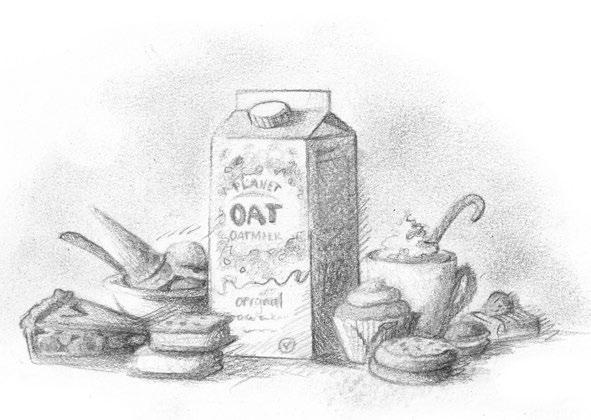
Haynes said that the initiative is grateful for the support that they have already received, with their petitions for an oatmilk default at the Yale cafes and a plant-based default in baked goods receiving over 200
signatures after a month.
Petrizzo added that a plantbased default in baked goods would promote a healthier and more inclusive dining experience because eggs and dairy are major allergens and are avoided in several religious, cultural and dietary traditions.
“Plant-based alternatives remove these barriers, making them a healthier and more inclusive option for a wider range of students. This is especially feasible for desserts, in which animal products don’t contribute much to taste,” Petrizzo said.
The Yale Hospitality spokesperson
wrote to the News that Hospitality “agreed to continue the conversation in the future to better understand their interests, consistent with our standard practice when engaging student groups and gathering feedback on dining preferences.”
The United States produced 231 billion pounds of milk in 2025, according to the Department of Agriculture.
Contact JERRY GAO at jerry.gao.jg2988@yale.edu and ANAYAH ACCILIEN at anayah.accilien@yale.edu.
BY LEO NYBERG AND ANAYAH ACCILIEN STAFF REPORTERS
Defense Secretary Pete Hegseth announced this month that the Department of Defense will review all graduate programs for activeduty service members at Ivy League schools to determine whether the programs are “cost-e ective.”
Lt. Col. Timothy Riemann, an active-duty Marine and the Marine Corps fellow at the Jackson School, estimated that there are around 10 active-duty service members at Yale, not counting ROTC — Reserve O cers’ Training Corps — instructors. The active-duty graduate students are dispersed across programs at Yale.
University spokesperson Karen Peart wrote in a statement that Yale did not receive any formal notice from the Defense Department or any military branch indicating that its programs are under evaluation or considered at risk. The Defense Department did not respond to the News’ request for comment.
“In two weeks time, components of all of our departments — Army,
Navy and Air Force — will evaluate all existing graduate programs for active-duty servicemembers at all Ivy League universities and other civilian universities,” Hegseth said in a Feb. 6 video posted to X.
A Defense Department memo listed Yale among 34 institutions at “moderate to high risk” of losing Pentagon funding for military tuition assistance, according to reporting by CNN. The News has not reviewed the memo and could not independently verify its contents. Hegseth said in the video that, with some exceptions, the Ivy League “has pervasive institutional bias and a lack of viewpoint diversity.”
“I think it’s my privilege for me to be here,” Riemann said.
“It is my sincere hope that the Department of War will continue to send military o cers here to engage with, to be around, to learn from, and hopefully impart something in the next generation of leaders at Yale,” he added, using the name for the department that President Donald Trump announced for the executive branch in an order last year
but that Congress has not reinstituted. Riemann wrote an open letter to Hegseth in the News’ Opinion section, urging continued ties between the military and Yale.
According to Yale’s Veteran and Military Affairs resources, financial aid for veteran and military-affiliated students may be provided through the Department of Veterans A airs, the ROTC program and other scholarships.
In addition to active-duty students and fellows at Yale’s graduate schools, Yale College has one active-duty student, as well as 130 students participating in ROTC programs in preparation for future service, according to Holly Hermes, Yale’s liaison for veteran and military a airs.
“Yale has long been a leader in national security research and the education of future leaders in national security,” Peart, the University spokesperson, wrote. “As part of that tradition, Yale is dedicated to supporting students throughout their military journeys.”
Riemann told the News that he attends classes, meets with students
and conducts research as a Marine Corps fellow.
Riemann is researching artificial intelligence and its application to national security and plans to publish a report, he said. At Yale, Riemann has taken the grand strategy course as well as artificial intelligence and history courses.
Riemann said he gets co ee with Yale students and answers questions about how the Marines function, his experience being deployed and military strategy.
“There’s a lot of goodness in having some connective tissue between the next generation of civil leaders and politicians, and someone who is currently on active duty,” Riemann said.
Before coming to Yale, Reimann said his image of the University had been a ected by social media, where he saw protestors screaming and disrupting classes. Reimann said he was pleasantly surprised by the quality of discourse at Yale.
“There’s a collective feeling that I’ve gained from them, that they are serious, that they are compassionate and that they want the United States
to succeed, generally speaking,” Reimann said.
In a Feb. 6 press release, Hegseth announced that the Defense Department would cut ties with Harvard — which include professional military education, fellowships and certificate programs — in the 2026-27 school year.
“Harvard is woke; The War Department is not,” Hegseth wrote in the X post announcing the cuts. Hegseth described Harvard as one of “the red-hot centers of hate-America activism” in the attached video.
Harvard and the Trump administration have been at odds in the past year, with Trump freezing billions of dollars in federal funding to the university. Hegseth said Harvard “receives billions of our federal tax dollars.”
Hegseth has degrees from Harvard and Princeton.
Contact LEO NYBERG at leo.nyberg@yale.edu and ANAYAH ACCILIEN at anayah.accilien@yale.edu.
BY CORINNE COWAN STAFF REPORTER
The Yale Center for Civic Thought has helped students and faculty tackle critical questions about politics and society since it was started last year, center leaders and participants told the News. With guest seminars, reading groups and weekly discussions over co ee, the center aims to promote civil discourse and civic intellectual thought in new generations, according to its website.
Executive Director Stephanie Almeida Nevin, a humanities lecturer, said she defines civic thought as answering the question: “How can we just be more thoughtful about our shared civic life?”
“They do a very good job of trying to make people comfortable in expressing their beliefs,” Elizabeth Swaine ’27, an active attendee of center events, said in an interview. Under the leadership of Almeida Nevin and professor Bryan Garsten, the center’s faculty director, the center has built on Garsten’s earlier e orts with the Civic Thought Initiative.
Yale administrators championed the center when it was first launched, with President Mau -
rie McInnis expressing hopes in a news release that the center would “cultivate habits of thought and support free expression, on campus and beyond, that are so essential for the future of higher education and our nation.”
The founding of the center at Yale followed similar civic thought programs that have emerged at universities across the country, including Arizona State University around a decade ago. Some of these schools or initiatives have been explicit e orts by Republican legislators to expand viewpoint diversity in universities with a perceived liberal bias, the Chronicle of Higher Education reported in 2025.
Several individuals distanced Yale’s center from the other universities’, but acknowledged the current debates over the role of civic education in universities.
“We feel like that sort of thing should be part of what a university is,” Garsten said, though he denied that the center had a goal of attracting all Yale students or advancing a single political perspective.
Students agreed with Garsten’s characterization of the center’s ideological neutrality.
“It’s more about people bringing in their di erent perspectives, discuss-
ing it, rather than ‘This is a debate, this is the viewpoint you need to adopt in the end,’” Justin Greenman GRD ’30 said.
Participants cited engaging with people of diverging political persuasions as one of the most intriguing aspects of the center.
For Nico Sahi SOM ’26, Yale lacks other places to engage in discussion. As a liberal, he said he appreciates hearing other students’ opinions. In the room, Swaine said, “there are Trump supporters, and there are Marxists.”
For this school year, the center is prioritizing three themes: constitutional democracy in the United States at its 250th anniversary, the role of universities in civic life and humanity in the age of artificial intelligence.
A unique mode for discussion
In the lamplit upper library of 77 Prospect Street, home to Yale’s Institution for Social and Policy Studies, the Center for Civic Thought hosted Jenna Silber Storey last week. Storey, a fellow at the American Enterprise Institute, is among the many figures in the worlds of academia, government and research who have discussed their ideas with students and faculty at the center.
The center’s events called “guest
seminars” follow an unusual format to promote healthy discussion: After the guest converses with a faculty moderator for about 20 minutes, participants discuss the ideas without the guest’s input for another 20. Then, the guest rejoins the conversation.
“I’ve heard from many of the visitors who we have had, that they’ve actually liked that,” Kieran Mabey, a postdoctoral associate at the center, said in an interview. At last week’s seminar with Storey, participants — a mix of nine professors, graduate students and undergraduates — settled into a casual conversation over lunch.
“A messier, less disciplinarily confined set of conversations is important for creativity and new ideas,” Garsten said.
At a seminar in November, Daniel Wasserman ’19, a Trump administration o cial, discussed the relationship between the executive branch and higher education reform.
In addition to guest seminars, weekly coffeehouses and over 10 different reading groups provide opportunities for tackling tough questions.
Each of the reading groups prompt discussion by up to 15 students focused on one of the center’s three themes for the year.
“The idea is to give both students and faculty a lot of relative freedom in organizing them,” Almeida Nevin said.
Caroline Pecore ’27 leads a reading group called “Hannah Arendt on the Human Condition.”
“It’s a space to engage with books and ideas in a more personal, self-directed way where we choose what we want to read and take more ownership of the discussions,” Pecore wrote in a text message to the News.
The center also hosts a summer program for New Haven high school students.
Students can become fellows of the center through a process of active involvement and leadership, culminating in writing a creative dialogue showcasing one of the three themes. Almeida Nevin stressed that being a fellow does not come through an application process but is “something you earn.”
The Center for Civic Thought’s website lists four members of an External Board of Advisers and nine members of a Yale Faculty Advisory Council.
Contact CORINNE COWAN at corinne.cowan@yale.edu.
So I say thank you for the music, the songs I’m singing” “THANK YOU FOR THE MUSIC”, ABBA
BY SARAH RIVAS STAFF REPORTER
Following the announcement that Campus Rabbi Alex Ozar GRD ’22 would be leaving the Joseph Slifka Center for Jewish Life, students and faculty reflected on how he led Yale’s Jewish community through difficult moments.
Ozar’s tenure spanned challenging times on college campuses, including the COVID-19 pandemic and student protests in response to Hamas’ Oct. 7 attacks in Israel and the subsequent war in Gaza.
Ozar first began working at Slifka in 2018, when he and his wife Lauren Steinberg became co-directors of the Orthodox Union Jewish Learning Initiative on Campus, a program that is “a partnership between the Orthodox Union and Slifka Center that has ensured strong Orthodox community rabbinic leadership and learning at Yale” according to an email sent by Uriel Cohen, the executive director of the Slifka Center, to the Slifka community.
“My job is to help our students have better conversations about their shared life and things that matter, through the articulation of ideas, through modelling my own vulnerability and listening along with sharing my convictions, and through the pastoral work of helping students in hard moments sustain their equilibrium and stay focused on what really matters,” Ozar wrote to the News.
In 2024, Ozar became the campus rabbi after Rabbi Jason Rubenstein left his position as the Howard M. Holtzmann Jewish chaplain. He also earned
a doctorate in philosophy and religious studies at Yale, according to the Slifka Center’s website.
On Jan. 21, Ozar announced that he would be leaving Yale to serve as the director of academic programs for the Shalom Hartman Institute of North America, which is described on its website as “a leading research and educational center serving Israel and world Jewry.”
Shlomi Helfgot ’25 in an email described Ozar as “a visionary leader, inspiring educator, unflinching moral compass, and dedicated pastoral caregiver.”
During the pandemic, Ozar and Steinberg had to adapt to new restrictions to continue serving the Jewish community at Yale.
The couple passed kosher food and shabbat supplies to students under the gates of their residential colleges and through the backs of the dining halls, Ozar wrote.
“It’s not just a religion but the whole of life. And our conviction was that communities can’t just press pause and hope to pick up later. The heart has to keep beating,” Ozar wrote to the News.
As communal standards adjusted, Ozar and Steinberg began hosting communal Shabbat dinners and prayers in their backyard, a space which became like their “synagogue,”
Ozar said in an interview.
“It is no exaggeration to say that I — and the other Sabbath observers in my class — practically lived at the Ozar’s home for multiple days a week,” Helfgot wrote.
After the pandemic ended, Ozar and Steinberg continued to invite students to their house, often hosting meals on holidays and for Shabbat, Eytan Israel ’26 wrote to the News. Ozar wrote that this practice is “one of the best things” they do.
“Judaism is more about the home and family than the synagogue. Beyond all the programming and teaching and relationship work, the aim is to model, and welcome students into, a Jewish family,” Ozar wrote.
Ozar’s appointment to campus rabbi followed months of pro-Palestinian activism on campus. According to Ozar, a part of his role was to navigate tensions between Zionist and pro-Palestinian Jewish students.
“Many Jews discovered or rediscovered in new depth that their Jewishness was essential to them,” Ozar wrote.
Ozar spoke with many Jewish students “to just be with them and meet them wherever they were and with whatever they were sitting with,” Aviva Green, the director of Jewish student life at the Slifka Center, wrote to the News.
“I think this called for gentle but firm top-down leadership at certain points, but more importantly it was about a conviction that a thousand hours of di cult conversations toward generating mutual understanding and acceptance across our di erences is more important than any given practical outcome,” Ozar wrote.
While Ozar is a member of the observant community, he connects to the broader Jewish community at Yale by lead -
ing classes and events, according to Green.
“Rav Alex manages to simultaneously maintain pluralism and promote inclusivity across multiple axes within our Jewish community” Yossi Mo ’27 wrote to the News.
This semester, Ozar is teaching classes at Slifka that include “Intro/ Intermediate Talmud Club” and “Yeshivat Yale,” according to the center’s website.
“His classes are full of students from all types of Jewish lives,” Green wrote.
“I think Rav Alex has impacted the community by allowing Jews, both orthodox and not, to feel proud of their Jewish identity, excited by Jewish texts, and interested in seeking a
life that engages with the questions of the human condition and our purpose as Jews,” Israel wrote.
Maya Viswanathan ’28, a member of Yale Friends of Israel, wrote that she appreciates Ozar’s “guidance on how to mark world events in a respectful way.”
Ozar told the News that the conversations he had with Jewish students gave him “a huge amount of hope that these young Jews are going to be the leaders of the Jewish community going forward.”
Ozar grew up in St. Louis, Missouri, according to the Slifka website.
Contact SARAH RIVAS at sarah.rivas@yale.edu
BY JAEHA JANG STAFF REPORTER
Around 200 people gathered on Wednesday for a comedy show featuring disabled comedians.
The event, which was hosted at the Yale School of Medicine by the Faculty with Disabilities at Yale Interest Group, was meant to challenge stereotypes about disabilities, according to organizers. It featured the comedian Josh Blue, as well as Yale linguis-
tics faculty member and comedian Andrew Fisher and the undergraduate comedy groups Red Hot Poker and the Fifth Humour.
“I think people tend to not respond as well to lectures, but everybody likes humor,” Katie Wang, an associate professor at the School of Public Health and a co-chair of the faculty group, said in a phone interview. “So we thought we would do that to raise disability awareness and to sort of challenge some negative ableist stereotypes that
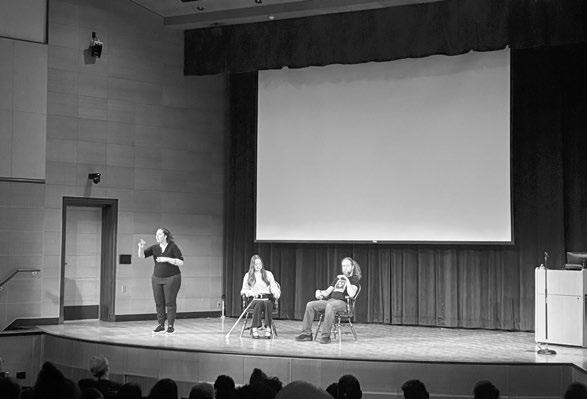
we might all have, just because we have not had as much contact with people with a wide range of disabilities.”
The Faculty with Disabilities at Yale Interest Group was founded in the fall of 2024 by Wang and Monkol Lek, an associate professor at the School of Medicine. Lek and Wang told the News that the comedy show was their first major event and that they invited undergraduate groups to perform in hopes of increasing student engagement.
The group’s primary goals this year are to increase accessibility for faculty with physical disabilities and to secure more adequate and timely communication about accommodations for new faculty with disabilities, Wang said.
The Fifth Humour kicked o the show, performing comedy sketches ranging from a man requesting Viagra at a pharmacy to children asking their parents for liquor. Red Hot Poker also gave the audience laughs with sketches about a fortune teller predicting a man’s pregnancy and a “giving tree” breaking down to dance.
Comedian and Yale linguistics lector Andrew Fisher then performed a stand-up act in American Sign Language, accompanied by an interpreter. He poked fun at the discrimination he faces as a deaf person, as well as his experience performing comedy with an interpreter.
Wednesday’s headliner was Josh Blue, a comedian who was voted as the Last Comic Standing on the NBC reality show “Last Comic Standing” in 2006. Blue has cerebral palsy, which, according to the National Institutes of Health, affects body movement and muscle coordination.
Blue gave the audience laughter — and some murmurs — for 45 minutes as he joked about his disabilities, comparing his movements to those of homeless people on the New Haven Green and quipping that his Apple Watch records 90,000 steps daily. He also joked that he was selling handicap parking signs, which he said he was calling bookmarks “for legal purposes.”
After his act, Blue joined Elizabeth Caldwell SPH ’27, the content and events manager of the Faculty with Disabilities at Yale Interest Group, for a question-and-answer session, in which Blue discussed the power of humor in changingperceptionsondisabilitiesandhowhe navigates life as a professional comedian.
Wang said that featuring Blue, who has placed third in Season 16 of “America’s Got Talent” and also competed at the 2004 Paralympics as a soccer player, helps combat ableism.
“Josh Blue had cerebral palsy but hasn’t let that impact all the things he wants to achieve in life,” Lek, also a co-chair of the faculty group, said in a phone interview. “He’s achieved a lot in his life, and he’s never let his
disability be an excuse getting in the way. So he’s a great inspiration.”
Lek added that many people with disabilities have to “deal with hardships in life” and that it helps “just to have a good sense of humor.”
Three attendees told the News that they found the comedy acts both entertaining and inspiring.
“I thought it was a great way to make light of very real situations that people are living with every day,” Nikki Tehrani SPH ’27 said after the event. “It was nice to see how people translate that into their work and how Josh has made that into a career and is making comedy his avenue of awareness for people with disabilities.”
Scott Roberts, a research assistant at the School of Medicine, also said that he found Fisher’s act “really enjoyable” and that he thought “it was such a clever act” to perform comedy with an interpreter.
Lek and Wang said that another goal of the event was to raise awareness about their group and grow membership — among not only faculty with disabilities but also others.
“In hitting up our goals and missions, we need allies too, when you’re such a small group,” Lek said.
Josh Blue has more than 261,000 followers on Instagram.
Contact JAEHA JANG at jaeha.jang@yale.edu.
BY ANAYAH ACCILIEN STAFF REPORTER
On Wednesday morning, workers for Yale removed political messages painted in red in the snow on Cross Campus and Old Campus.
“Free Palestine,” “ICE Out,” “Intifada” and “IDF Die” — apparently referring to the Israel Defense Forces — were among the phrases painted in the snow, according to photos reviewed by the News. By the late morning on Wednesday, the messages had been cleared from the snow.
In a Wednesday morning message sent to a Slifka Center for Jewish Life email list, Campus Rabbi Alex Ozar described the gra ti as “violent” and “simply unacceptable language.”
In an email to the News, Uri Cohen, the Slifka Center’s executive director, described the painted messages as “harmful and threatening” to Yale’s Jewish community.
Tina Posterli, a Yale spokesperson, said the messages were removed to be “consistent with Yale’s policies on postering and chalking.”
“We are grateful to Yale Facilities for promptly removing the gra ti,” Hillel Student Board Co-Presidents Zach Pan ’27 and Yossi Mo ’27 wrote to the News in a joint statement. Cohen acknowledged that several Yale students and faculty have served in the Israeli military, and said that the language graffitied onto the snow was received as “a direct personal attack on those individuals, as well as Jewish Yalies’ family members and friends who live in Israel where military service is mandatory rather than optional.”
Cohen referred to the word “intifada” as “a direct and personal threat” to the Jewish community.
The Arabic word “intifada” is used to refer to two historical periods of uprising against Israel. It has also been invoked, including in current protest movements, to express solidarity with Palestinians.
“Students are entitled to their beliefs. Students are not entitled to deface the University with messages of hate and violence,” Eytan Israel ’26 wrote to the News. Israel added that he was “grateful” to Yale for its response.
“The Jewish community has thou-
sands of years of experiences of suffering from threats, persecutions, and violence,” Cohen wrote to the News. “This morning’s incident is just the latest in a long string of attacks and attempts to make Jews feel and be unsafe, and we stand against it.”
In order to “fight back” against the messages, Cohen wrote that the Jewish community must continue celebrating their culture and supporting those who feel emotionally targeted.
Sophie Schonberger ’26 said the messages “bring up memories of community members and loved ones killed in violent acts of terror targeting explicitly civilian spaces.” Schonberger added that seeing the term “intifada” on campus concerned her, and she described the term as “a call for violence against Israel.”
The high temperature in New Haven on Wednesday was 37 degrees Fahrenheit, according to the National Weather Service.
Contact ANAYAH ACCILIEN at anayah.accilien@yale.edu.
BY KIVA BANK STAFF REPORTER
The dark comedy — written by Elora Sparnicht ’27 — centers around a high school slam poetry team, Drop The Mic Poetry Club’s CompSquad, and how the dynamics of the teammates shift in response to the replacement of a senior member. The play deals with intimidating themes of selfesteem, suicide and grief within the microcosm of high school competitive slam poetry.
Co-directed by Sparnicht and Nicolas Maynulet ’27, the production is running from Thursday through Saturday, with four performances in total.
Sparnicht said the work was inspired by her experiences on her high school slam poetry team in downtown Los Angeles, where she competed alongside her sister Kaya Sparnicht ’29, who plays the CompSquad poet Zoe.
“I love slam poetry, and I think it’s such a powerful and underhyped art form,” Elora Sparnicht said. “I don’t want this to be a critique of slam poetry, but rather a critique of what happens when we ‘hyper-competitiveize’ — make competitive worlds that are supposed to be for the sake of the art.”
In the opening scene of the play, characters Carter and Zoe forget their lines, an incident based on Elora Sparnicht’s having forgotten her routine when she performed a duet poem with her sister Kaya in high school.
“It is a luxury as an actor to have experience in what my character is experienced in,” Kaya Sparnicht said.
The majority of the poems in the show are real poems that Elora and Kaya Sparnicht used in competitions, except for a few joke poems and a new poem she wrote in a scene for Zoe.
“One of the great things about doing an original show is that we have the space and the writer to make changes and adapt it and help fit it to the original cast, and do that in a way that you wouldn’t be able to with the show that’s already written,” Maynulet said.
One significant change made during the production process was swapping the gender of Carter’s character. Carter — originally intended to be a female character — was Zoe’s best friend, until Zoe realizes that she is undervalued as a poet in their partnership.
Elora Sparnicht explained that actors were welcome to try out for any character regardless of gender, and when Slater Vance ’28 performed Carter’s monologue, the
production team thought he was “perfect” for the role.
Accordingly, Elora Sparnicht said the character was “gender bent” and shifted to dating Zoe instead of being best friends.
Even with the gender swap, however, Kaya Sparnicht explained that the relational tension between the two characters remains true.
“I think that that feeling of being underappreciated can apply to both romantic relationships and just normal friendships,” she said.
“I think having the opportunity to adapt and add for the characters in the room is unique and really special,” Maynulet said. “I think it made a big di erence for what the show’s final product will look like.”
Elora Sparnicht said she finalized the script around November. However, there was one more major change in January, when she stepped in to play Nina after the initial cast member had to step out for personal reasons.
“We decided that this was the best way to keep the process moving along,” Maynulet said. “I still think we made the right choice, and she does a great job playing Nina, and it’s been great to have her not only be a part of the production directing team, but also a part of the cast and getting to interact with all of them.”
He explained that since Elora
Sparnicht wrote the show, she was familiar with the lines and could easily grasp the complexities of Nina’s character, who he said shares similarities to Elora Sparnicht herself.
Maynulet said he did not not know anything about slam poetry before the show, but he still thinks the story is relatable for Yale students because of its satirical approach to hypercompetitive environments.
“I think a lot of times people feel like they have to overperform or reach a certain caliber,” he said.
The play is running at the University Theatre, located at 222 York St.
Maynulet said all of the characters have their own form of imposter syndrome, similar to some Yale students.
Contact KIVA BANK at kiva.bank@yale.edu.
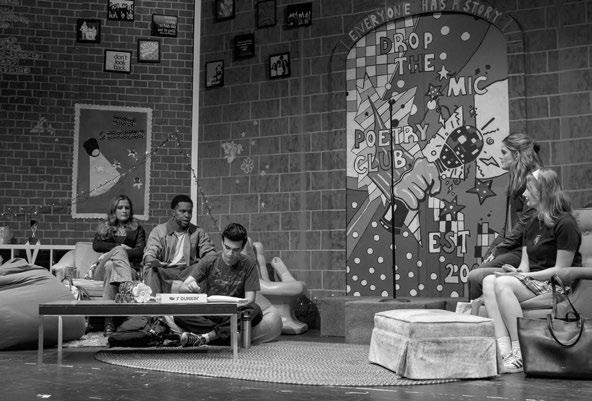
BY KIVA BANK AND GEMARD GUERY STAFF REPORTERS
A call at 5 p.m. on a Monday might seem trivial, but for the newest tap class of the Whi enpoofs, getting a call from current members will alter the next year of their lives.
Monday evening, 14 juniors received the news that they were accepted to Yale’s and America’s oldest collegiate a cappella group. The class of Whi enpoofs-designate included Daniela Rodriguez-Larrain Fernandez ’27, who was the first woman tapped to be the Whiffs’ business manager.
Rodriguez-Larrain Fernandez said in a phone interview that she was waiting by herself in her room when she received a call from current Whiff Lucas Oland ’27, who is also her boyfriend.
“It’s really sweet to have someone that you love and you have a relationship with that tells you this incredible piece of news,” she said.
She said she is “excited” for the upcoming year of travel and singing and feels prepared to take on the role of the business manager. She has been the business manager of Mixed Company for the past year, as well as tour manager of the Yale folk group Tangled Up in Blue.
“I know it’s a very big responsibility, but I feel very capable of doing the work, and I am very excited to have this incredible
honor being the first woman to take the position,” Rodriguez-Larrain Fernandez said.
She said all auditionees were required to sign a contract agreeing to take a gap year if accepted to the group. Applying to be the business manager involved a presentation and Q-and-A component in addition to the regular audition process, she added.
Founded in 1909, the Whiffenpoofs were traditionally a group of 14 male seniors. In February 2018, the Whiffenpoofs accepted their first female singer following a joint decision earlier that month with Whim n’ Rhythm — Yale’s only other all-senior a cappella group — to consider accepting singers of any gender.
In 2021, the Whiffs tapped their first non-male business manager, Sydney Bakal ’23, who is nonbinary, according to Rodriguez-Larrain Fernandez.
Eason Rytter ’27, a member of the Spizzwinks, received a FaceTime from a current member of the Whi s, Emily Patrick ’27, at 5 p.m. Monday while walking along Chapel Street with a friend.
“I immediately collapsed to the ground, screaming,” Rytter told the News in a phone interview. “I’m just overjoyed.”
He said he spent the next several minutes thanking Patrick, whom
he described as a friend. Rytter recalled saying “oh my God” repeatedly.
Rytter said that while growing up, he used to hear about the Whi s from his mother — despite her not having any connection to Yale — which influenced his decision to attend the University.
“I never believed that it was a group I would one day join,” he said.
Rytter said he prepared for the audition for three months by “drilling every day,” describing the audition process as “intense” and “strange” because it di ers from the regular first-year rush process, when candidates are still new to the a cappella community.
Auditions were hosted by the current Whiffenpoof class and consisted of only one round. Every prospective Whi had to prepare a personal solo, a solo of a Whi song and the background part of one of their songs. The entire audition process takes approximately 20 minutes in total.
The newly selected Whi enpoof tap class of 2027 includes five nonmale members, the highest number of non-males in Whi enpoof history, which the tap class of 2023 also had.
Last year, the Whiffenpoofs announced their first woman musical director in the group’s 117-year history, Eunice Oh ’27. After the phone calls, the taps were
announced in a post on the Whi s’ Instagram page. Joining the the Whiffenpoofs’ class of 2027 are Rytter, RodriguezLarrain Fernandez, Ben Heller ’27, Jiayang Jin ’27, Kenneth Vo ’27, Storm Egbosimba ’27, Marko Gajic ’27, Stellan Min ’27, Grace O’Grady ’27, Eshaan Giri ’27, Ryann Scha er ’27, Natalie Bassini ’27, Cyrus Rivers ’27 and Justin Wang ’27, the new musical director.
For Gajic, a current Yale Alley Cat, being a Whi enpoof has long been a goal, given his love for the a cappella community he found at Yale.
“I’ve been singing for much of my life, and I’ve found that it has brought me incredible communal spaces on this campus and beyond,” Gajic said. “I’m super excited to get to do it with the Whi s.”
The Whiffenpoofs originated as a quartet that gathered weekly at Mory’s Temple Bar, according to the group’s website.
Contact KIVA BANK at kiva.bank@yale.edu and GEMARD GUERY at gemard.guery@yale.edu.
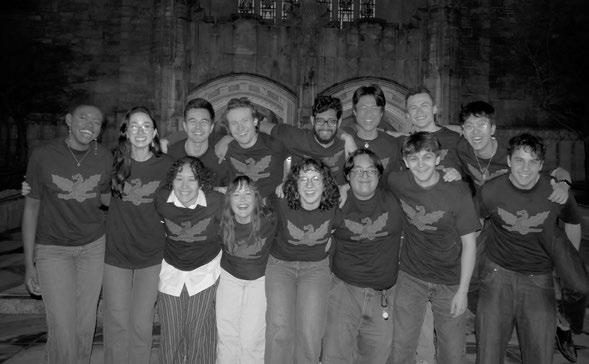
BY KIVA BANK AND GEMARD GUERY STAFF REPORTERS
On Tuesday night, the newest members of Whim ’n Rhythm celebrated their acceptance into Yale’s senior-only soprano-alto a cappella group in a tradition-filled tap night. Just the prior evening, 14 Yale College juniors had received a call that they had been accepted into Whim.
“I think what’s so beautiful about the Whim ’n Rhythm experience is that it’s 14 women coming together to craft this repertoire and forge this experience for the audience that’s music made purely with the voice and body percussion,” Tamara Bafi ’27, one of the new taps, said. Whim was founded in 1981 as a senior-only group of seven women, according to the group’s website. Yale’s other senior-only a capella
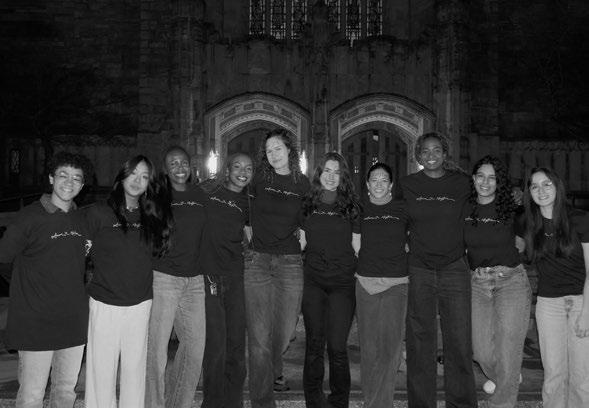
group, the Whiffenpoofs, which accepted only men until 2018, this week announced a tap class including five non-male members.
The Whim ’n Rhythm class of 2027 was announced Tuesday on the group’s Instagram page. Some of this year’s tap class, including Bafi and Lelah Shapiro ’27, came without backgrounds in a cappella singing at Yale.
Shapiro said that before auditioning for Whim, she hadn’t performed any music at Yale besides DJing but was inspired by her sister’s experience in the group and decided to take a chance.
“For one of the Whim tours my sister’s year, they visited Los Angeles and stayed with my family, and I got to see the incredible work that goes into planning an a cappella tour and the impact that it has on the audiences,” Shapiro told the News.
Bafi has been a member of Yale Glee Club, and given her love for singing, she said that she felt that joining an a cappella group was a “natural next step.”
According to Isabelle Millman ’26, the current musical director of Whim ’n Rhythm, the variable backgrounds of taps mark a trend over the years, where more and
more members of Whim haven’t previously been involved in a cappella or music at Yale.
“It’s an incredibly musically diverse tap class, and it’s always exciting to put together a whole group of singers and musicians and see the magic they can make together,” Millman said.
According to the group’s website, Whim ’n Rhythm auditions consisted of ear training, pitch-matching and blending exercises. Every prospective Whim also had to prepare their own solo and a section of “Softly, As I Leave You” and do a short interview.
For Bafi, part of the appeal of Whim over the Whi s was not having to take a gap year to be a part of the group, she said.
“I love the Whiffenpoofs, and I think it’s an incredible group with this incredible tradition,” Bafi said. “Not doing the gap year is really great, because that way it complements your academic experience senior year and it provides a great transition to what lies beyond.”
She explained that she thinks the Whim’s summer tour after senior year is a “unique opportunity.”
For Erin Kearney ’27, another new tap, being in Whim will give her the chance to work with new talented singers with whom she has not had
the chance to sing before.
“I liked that it’s historically been all female because I’ve never sung in a group that’s all upper voice parts,” she said. “I’m really excited to get to know them, travel with them and sing a genre of music that I haven’t really sung before.”
Kearney, a current member of Shades of Yale, lives with Shapiro, and the pair waited together for their Whim decisions. They both received calls within five minutes of each other informing them they had been accepted into the group.
In addition to Shapiro, Kearney and Bafi, the other members of this Whim class are Bella Amell ’27, Jas Hollis ’27, Nadia Petersen ’27, Pearl Mallick ’27, Justine Xu ’27, Sarah Feng ’27, Lauren Walker ’27, Diana Cao ’27, Salma Laraki ’27, Alexis Mburu ’27 and
Xu will serve as musical
and Hollis will serve as business manager. Whim ’n Rhythm releases a new album every spring.
KIVA BANK at kiva.bank@yale.edu and GEMARD GUERY
“Don’t
BY CHUER CINDY ZHONG AND JINGCHU SOPHIA ZHANG CONTRIBUTING REPORTERS
Bobbi’s, a new pizzeria on Broadway that specializes in what it calls “Detroit-ish” pizza, hosted its third Sunday trivia night on Sunday.
Bobbi’s opened in October after a ribbon-cutting ceremony that included Mayor Justin Elicker and Yale’s mascot, Handsome Dan. The pizzeria held its first Sunday trivia night on Jan. 18.
It was a “full house — not a seat open,” said Morgan Chapman, the events manager of Immodest Trivia. “We actually had to grab chairs from upstairs to make it work.”
“Night one, you kind of hold your breath,” Chapman added. “The most exciting piece was probably actually having to tell people that we’re full.”
Bobbi’s puts on these events through a partnership with Immodest Trivia, a company which specializes in planning bar trivia nights.
Eddie Daniels, Immodest Trivia’s owner, hopes that Bobbi’s will help retain a particular audience at their events. Before starting at Bobbi’s, Immodest’s Sunday trivia nights were at Fussy Coffee, a local coffee shop which closed with little notice in early September last year. After that abrupt farewell, Daniels wondered how to continue serving a similar niche.
“That was a really nice Sunday crew, because the rest of our trivia are in places that are strictly bars,” Daniels said. “So, people that were under 21, or didn’t like to drink, or just didn’t want to be out that way, they didn’t really have a place to go.”
As Immodest’s Sunday trivia night searched for a new home, Ankit Chenalli — co-owner of Bobbi’s and owner of the nearby restaurant Sherkaan — reached out to Daniels about hosting. At
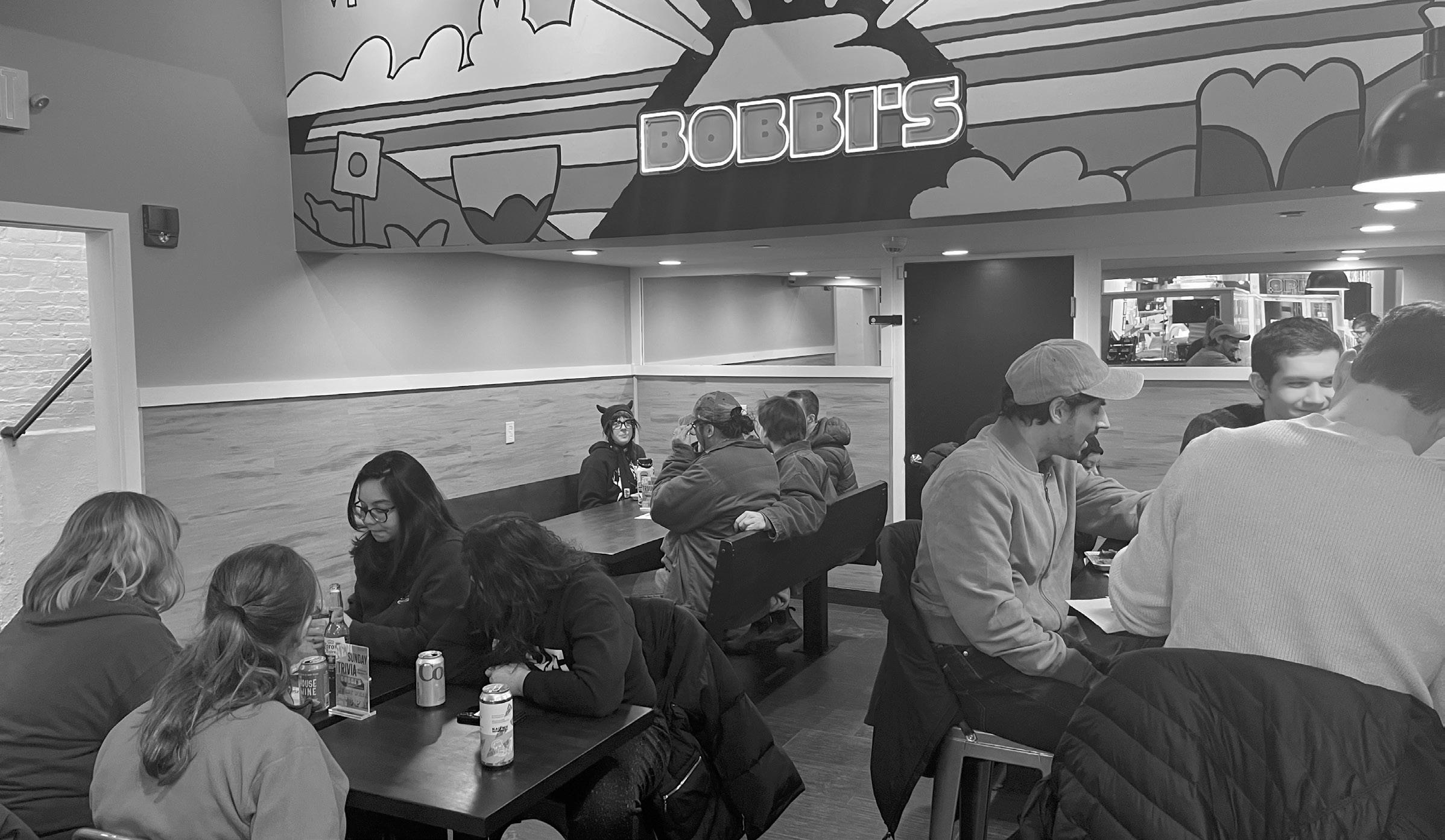
first, Daniels wasn’t sure what to expect.
“It’s a Sunday afternoon, it’s a pizza place, it’s a lot of new variables that we don’t usually host with,” Daniels said. “I was over the moon that we had a huge crowd the first night.”
Each week, Daniels writes a new set of trivia questions, which are then used at Immodest’s locations. Every game has four regular rounds and one quick answer round at the end. Customers can compete in teams of up to six people and are asked to only play trivia at one location per week.
For Becca Pearlman and her friends Max Orsolini and Saige Pagano, the game fits into a familiar routine. While it was their first time at Bobbi’s, Pearlman told the News that
trivia nights were something they all looked forward to each week.
“It’s a tradition we have, and we’ve been doing it for — at this point — over a year,” Pearlman said. “It’s just a nice way to wind down, forget about things that are stressing me out and have fun with my friends.”
Usually, Pearlman and her friends go to trivia on Tuesday nights at Archie Moore’s restaurant in East Rock. This week, after one of their friends noticed an advertisement for Bobbi’s, they decided to try out a new spot.
Another team — Martha Seibel, her sister Autumn Parris and her cousin George Seibel — similarly described trivia as a source of lighthearted fun.
“I like learning,” Parris said, “and I always learn something.”
This week, players had the chance to learn about the chief justice behind United States v. Nixon, to whose song Nicki Minaj’s “Anaconda” responded and what a pangolin is. One of the categories was completethe-list, with two items each missing from lists of novels in the “Hunger Games” series, the thirteen colonies and the cluster of Central Asian countries ending in “stan.” All questions were displayed on a TV screen above the pizzeria’s kitchen.
As the game progressed, teams alternately huddled at their tables, discussing in hushed voices, and cheered when Chapman revealed a long-shot guess to be right. Even after 90 minutes, the dining area still buzzed with energy. Chapman’s computer
screen even attracted a few spectators as they waited for their pizzas.
For both Daniels and Chapman, inspiring that curiosity remains a driving force behind their work.
“It’s rare,” Daniels said, “to put something out and see directly the impact that your work is having on a community. It really brings me a lot of joy seeing people, like, react to questions and categories, especially when they solve a mystery theme.”
Bobbi’s hosts Sunday trivia night at 6 p.m. on Sundays.
Contact CHUER CINDY ZHONG at cindy.zhong@yale.edu and JINGCHU SOPHIA ZHANG at jingchu.zhang@yale.edu
BY MICHELLE SO STAFF REPORTER
The media is filled with surprising and horrifying statistics about our everyday encounters with microplastics.
People inhale up to 68,000 microplastic particles a day. Your brain may contain one plastic spoon of microplastics. Even the tears you shed upon hearing these facts may also contain microplastics.
Researchers from the Yale School of the Environment published a paper last month in Nature Reviews Clean Technology that explores the life cycle of biodegradable plastics and tradeoffs of the alternative to traditional plastics.
“Carbon emissions and plastic pollution affect the environment in different ways and at different scales. Our study emphasizes the need
for a systems perspective that evaluates multiple environmental impacts simultaneously,” Yuan Yao ENV ’19, one of the study’s authors, wrote in an email to the News. Yao and her team of industrial ecologists conducted an analysis comparing traditional plastics such as polyethylene and polyvinyl chloride with biodegradable options such as polylactic acid, or PLA, and thermoplastic starch — two of the most common biodegradable plastics. Ecotoxicity, the potential to harm an ecosystem, is primarily a concern with conventional plastics.
“If you think about sand or rocks getting into rivers, right? They grind against each other. They become smaller and smaller until it becomes sand,” Hanno Erythropel, an
environmental chemist at Yale’s Center for Green Chemistry and Green Engineering, said in an interview. “You can think of that analogy for some of the plastics. They just become smaller, and eventually they become the micro scale. And that’s what we call them, microplastics.”
According to Erythropel, microplastics’ small size is only one part of the problem. He conducted research on plasticizers — liquids put in plastics to make them less brittle when heated up. Plasticizers and toxic additives are at risk of leaching out from plastic over time, ultimately ending up in the environment or in human bodies. Another reason to be concerned is that plastics are generally nonpolar and repel water. This allows them to transport toxic compounds that similarly repel water.
The recent study found that substituting all plastics with biodegradable alternatives could reduce ecotoxicity by 34 percent, while reducing global waste accumulation by up to 65 percent. This best-case scenario, however, is less straightforward in reality. Many biodegradable alternatives only break down under specialized conditions unachievable in a household setting. This may include humidity and temperatureregulated industrial composting facilities or biogas-producing anaerobic digestion with microorganisms. Unless properly managed toward their end of life, “biodegradable” materials are no more sustainable than plastics. The confusion occurs when people mix up the term “compostable” with “biodegradable,” according to Lars
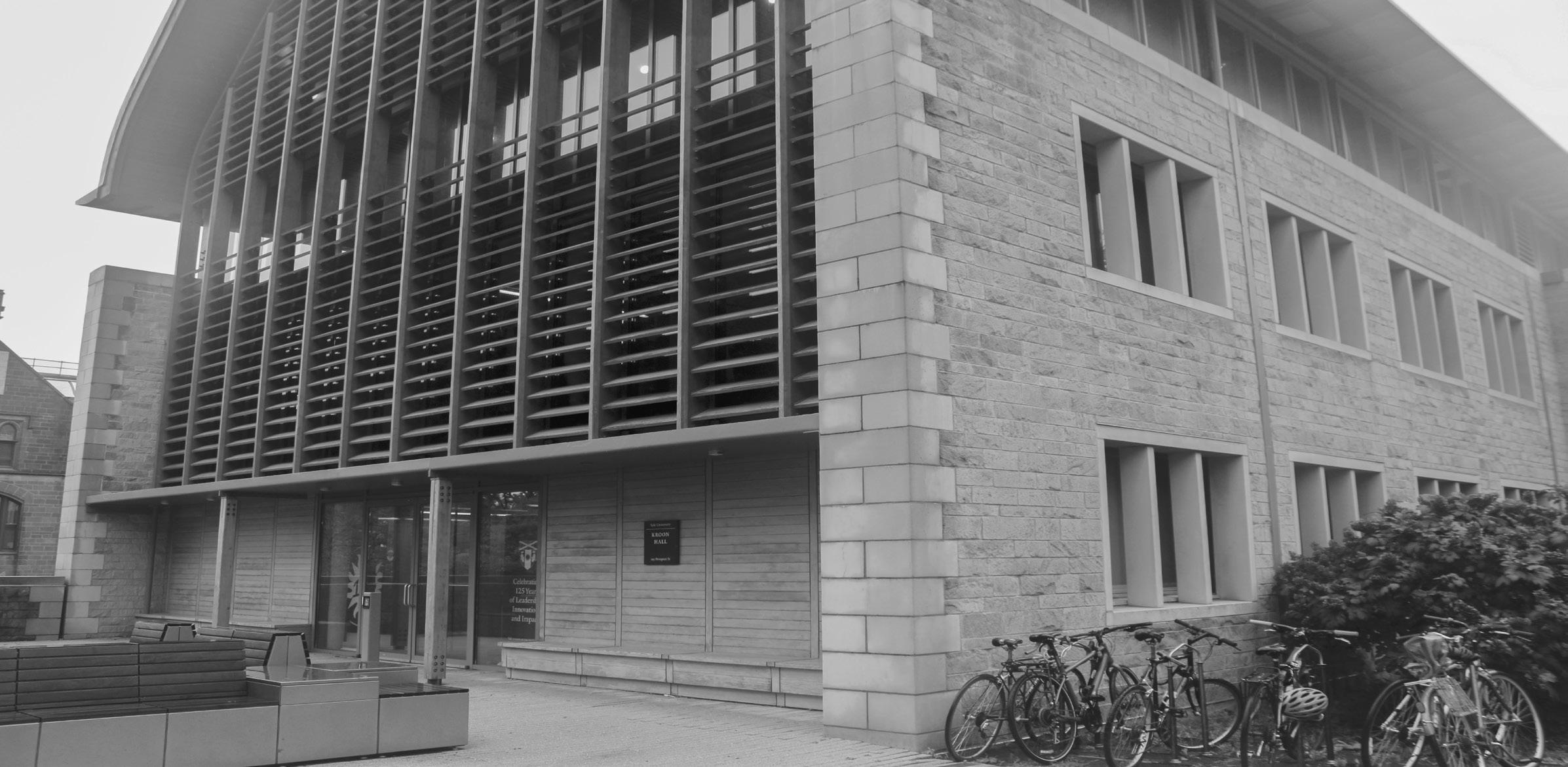
Ratjen, an environmental chemist at the Center for Green Chemistry and Green Engineering.
Though the two terms are often lumped together, compostability refers to a plastic or material’s ability to completely turn into biomass, carbon dioxide and water without forming any problematic byproducts. Biodegradability is a material’s inherent ability to break down through biological processes; for food scraps, this might be a few days, while for plastic, it might be centuries.
“Hence, all compostable plastics are biodegradable, but not all biodegradable plastics are compostable,” Ratjen wrote to the News.
Ensuring that biodegradable plastics are properly managed after use is a resourceintensive process that involves facility startup costs, intensive water usage and potentially doubled greenhouse gas emissions.
In their discussion, the study’s authors note that implementing penalties and fines for biodegradable plastic mismanagement may be needed to discourage improper disposal.
“Many companies, especially startups, are working on this and are coming up with solutions for plastics that are fully compostable in home composters. But this is still a rapidly changing environment, also highly interesting, so as a consumer I would always recommend to keep eyes and ears open,” Ratjen told the News.
Over 460 million metric tons of plastic are produced each year, according to the International Union for Conservation of Nature. Contact MICHELLE SO at michelle.so@yale.edu
BY LIZA KAUFMAN STAFF REPORTER
Led by four first years, the Yale men’s lacrosse team (1–1, 0–0 Ivy) delivered a statement performance in its Tuesday night home opener, slaughtering the Marist Red Foxes (0–2, 0–0 MAAC) 15-9.
In the Tuesday night lights showdown at Reese Stadium, the Bulldogs and Red Foxes took to the field, playing in a foggy mist on a field surrounded by huge piles of snow.
“Definitely felt great to win the home opener. After the strong first half at Army we knew we could be great,” long stick midfielder Francis Keneally ’28 wrote to the News.
“We just needed to become a full 60 minute team and not become stagnant at any point in the game. We did a good job taking the game minute by minute and play by play.”
Nine di erent players contributed to Yale’s 15 goals, seven of which came from the new first year class. Sean Grogan ’29 was on fire, powering the o ense with four goals, one assist, three turnovers and three ground balls. Fellow first years Dylan Blekicki ’29 and Asher Ziv ’29 also had multipoint performances: Blekicki notched two goals and two assists, while Ziv tallied one goal and one assist.
Sophomore attackman Connor Gately ’28 was crucial to the o ense throughout the night with four assists and one goal. Upperclassmen Peter Moynihan ’27 and William Sheehan ’26 each found the back of
the net twice to tie and reach career highs, respectively. The Bulldogs set the tone early and never looked back. Moynihan opened the scoring 32 seconds into the game. Although Marist’s leading scorer, Sean Mullan, responded immediately, netting two back to back to give the Red Foxes a one-goal lead, first year attackman Grogan swiftly equalized the score with his first of four goals of the night. Senior midfielder Sheehan, assisted by Gately, gave Yale a 3-2 lead at 3:44 to close the first quarter. In the second quarter, the Yale o ense continued to apply pressure. In the span of two minutes, the Elis notched four consecutive goals to take a five-goal lead. At 7:33, the Sheehan-Gately duo struck again, and Grogan followed up with his second unassisted goal of the night.
Gately beat Marist’s goalie and then found Nicolas Boudreau ’26 for his third assist. The Red Foxes answered with two goals on extraman opportunities, cutting the deficit to 7-4.
The game tightened early in the third quarter when Marist cut the deficit to one, but the Bulldogs’ offense surged in a seven-goal campaign, including four from first years, and quickly proved that Marist would not pull out the win on Yale’s home turf. With the score at 7-6, Blekicki found Luke Pascal ’28. On defense, Yale converted 20 of 22 clearing attempts, maintaining possession and preventing Marist from capitalizing on momentum.
“We settled in by chopping the game into smaller portions. Only worried about the next 2-3 mins and this mindset allowed us to shift our
focus from the outcome of the game,” captain Patrick Pisano ’26 wrote in a text to the News. “Huge credit to our o ense and face o guys for racking up 7 in a row.”
A minute later, first year Ziv connected with Cole Jackson ’27, and then Moynihan netted his second unassisted goal of the game.
Flynn Leonard ’29 recorded his first collegiate assist on Grogan’s third goal. Ziv followed up with his first collegiate goal on an assist from Grogan. With only 20 seconds remaining in the quarter, Gately made his fourth assist of the night to Blekicki. Blekicki wasn’t done yet though, netting another with five seconds left on the clock on an assist from long stick midfielder Gaetano Cicotello ’29 to close out the quarter 14-6.
“It was electric being out there with all the energy from the team in the third,” Cicotello wrote in a text to the News. “Coach Fossner set a goal for us to make Reese Stadium the hardest place to play in the country, and I think it’s safe to say that we did that in the third.”
Cicotello, who recorded his first collegiate assist in the run, added that the team’s seniors have been critical to his development and have made him feel at home sporting the blue and white.
“I’m honored to play for a team with such a rich history of success and I hope to carry that on,” Cicotello wrote. “I’ve got to give a lot of credit to our 3 starting senior defensemen for helping me out every day in practice and filling the gaps in my knowledge. Those guys have been instrumental in my development.”
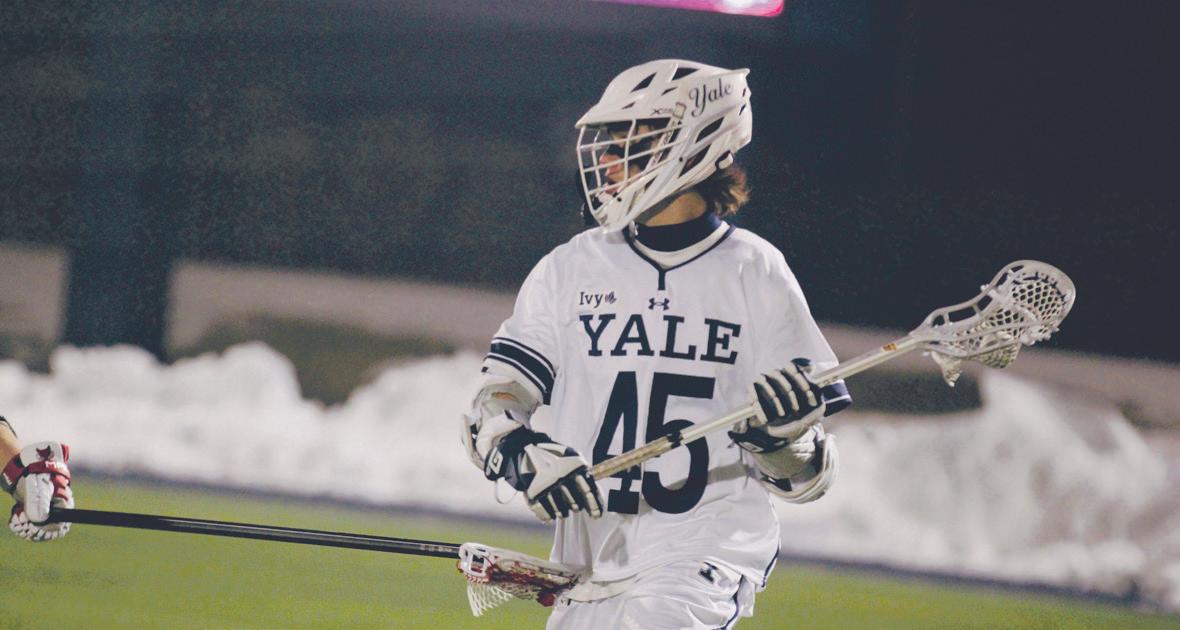
In the final quarter, Marist struck first, finding the back of the net twice. However, Yale’s seven-goal explosion proved insurmountable.
Grogan cushioned the lead with his fourth goal at 4:21. Marist closed out the scoring a minute later. Yale triumphed 15-9.
“Everyone, whether it was the sideline or in the locker room, was hype. Always good feeling when we get a home win,” Keneally wrote. “It was great to see a lot of freshman score today.”
With the victory under their belts, the Bulldogs will return to Reese Stadium to host No. 18 Boston University (2–1, 0–0 Patriot) on Saturday.
The Terriers had a di cult start to the season at No. 1 Syracuse (3–0, 0–0 ACC). Despite being down by only three goals at halftime, a sixgoal campaign from the Orange and a tight defensive unit put the game out of reach for the Terriers.
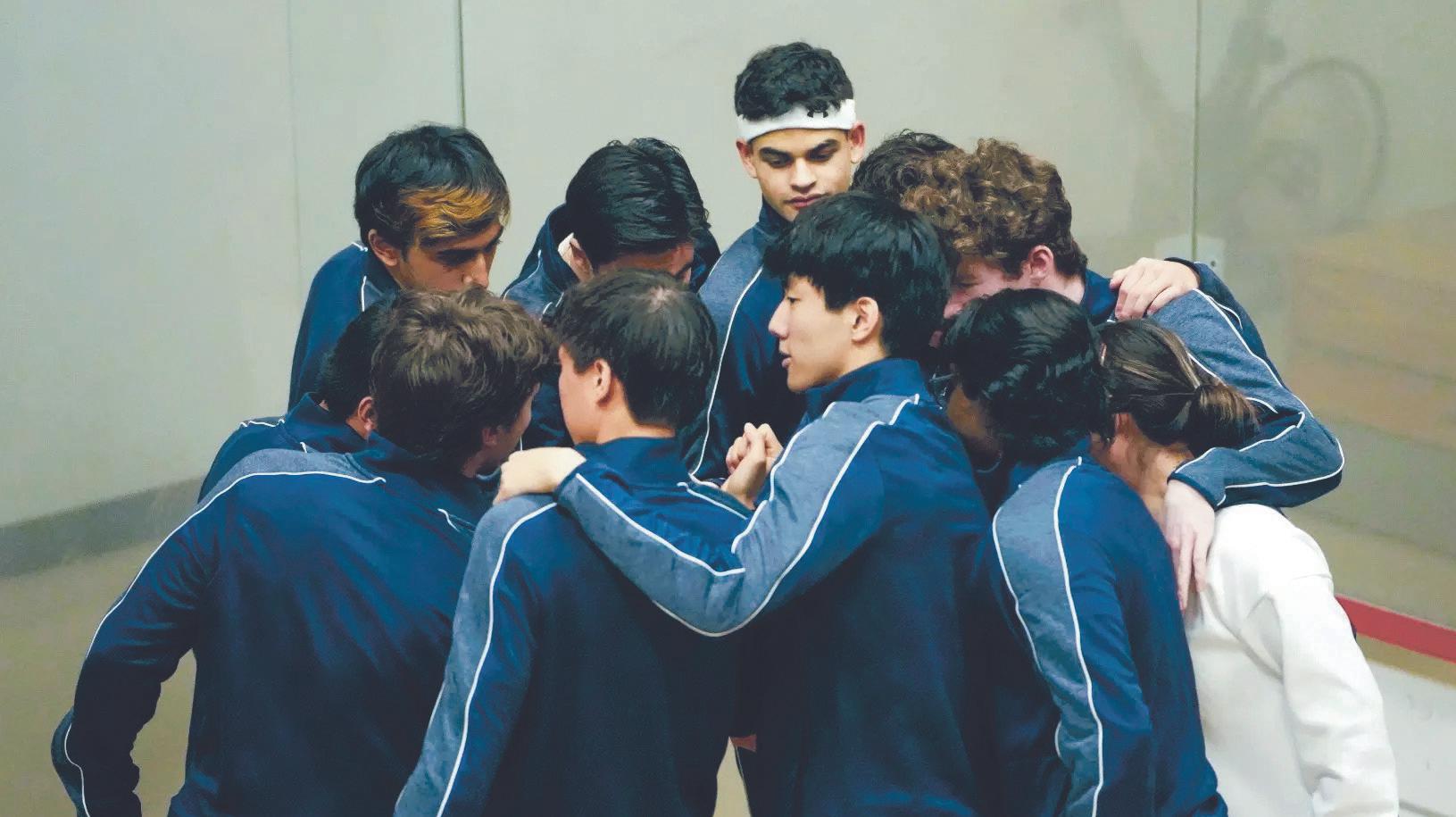
However, the Terriers then pulled out two victories at home and will enter Saturday’s matchup on the heels of a 13-5 victory over Dartmouth (0–1, 0–0 Ivy) last weekend and a 23-7 victory over Siena (2–1, 0–0 MAAC). Against Siena, 13 Terriers scored, including sophomore Timothy Shannehan who made BU history with his 11 points, including five goals and six assists. Facing Dartmouth, the Terriers held the Big Green scoreless throughout the first half, ending it 7-0. Although Dartmouth mounted a four-goal comeback in the third, BU exceeded it with five goals to put the game out of reach. In the dog-on-dog showdown, the Bulldogs will look to defend their home turf.
Faceoff is slated for 12 p.m. on Saturday at Reese Stadium.
Contact LIZA KAUFMAN at liza.kaufman@yale.edu.
BY RACHEL MAK STAFF REPORTER
The Yale men’s squash team (6–4, 4–2 Ivy) will head to Princeton on Saturday to compete in the inaugural Ivy League Squash Tournament.
The Bulldogs enter the tournament as the No. 4 seed and will face No. 1 Penn (12–2, 5–1 Ivy) in the semifinals. No. 2 Harvard and No. 3 Princeton will also be competing for a spot in the finals.
Penn goes into the tournament as the No. 1 seed after winning its third straight Ivy League regular-season title. They are currently ranked second nationally, with only two losses this season. One of those losses came at the hands of the Bulldogs. Since then, the Quakers have won every match. In Yale’s last matchup against Penn, the Bulldogs prevailed 5-4. It
was a hard-fought win, with multiple players securing important victories in their respective positions. Tad Carney ’26 will face off against Penn’s Omar Hafez, who won the College Squash Association National Individual Championships in January. In the two teams’ last meeting, Carney defeated Hafez 3-0. The Bulldog captain will look to repeat that performance on the road this go around.
Rohan Arya Gondi ’28, Rishi Srivastava ’28, Oliver Velasco ’29 and Jack O’Flynn ’27 also secured wins against their Quaker opponents in the last matchup. The Bulldogs will look to finish the season on a strong note, but Penn will be a challenge. The Bulldogs will play Penn at 10 a.m. on Saturday.
Contact RACHEL MAK at rachel.mak@yale.edu.
The Yale women’s basketball team (6–17, 2–8) will look to replicate its fiery o ensive performance of last week when they take on the Penn Quakers (14–9, 4–6) on the road this Saturday. Last Saturday, the Bulldogs stormed to a 82-54 win over Dartmouth (10–13, 1–9). A week later, Yale will look to extend its winning ways.
“We are really excited to get some momentum in the conference,” captain Kiley Capstraw ’26 wrote to the News.
In their last faceo against Penn, the Bulldogs fell 37-64, suffering from an uncharacteristically low-scoring night. Recently, the Elis have shown their o ensive potential.
Over Valentine’s Day weekend, Yale played two competitive games against Harvard (14–9, 7–3) and Dartmouth. After losing a nail-biter to the Crimson 62-70, the Bulldogs came back strong, beating the Big Green by 28 points.
In each game, Yale scored over 60 points.
Ciniya Moore ’28 scored 58 points total over the two games and accounted for more than half
of Yale’s points against Harvard. She consistently drew contact on her drives, which helped her earn 14 shots from the charity stripe against Harvard.
Moore has consistently contributed on o ense all season and currently averages 17.7 points per game.
“It starts mentally,” Moore wrote to the News. “Going into the weekend, I was just really locked in on staying present and calm. In-game, I just focused on making the right read every possession and letting the game come to me. A lot of credit goes to my teammates. Our spacing was great, we moved the ball well, and they trusted me in big moments.” Against Dartmouth, Yale’s o ense was firing on all cylinders.
Four players scored in double digits and Moore shot a cool 50 percent from the three point arc. On the boards, Mary Meng ’27 came away with 14 rebounds, preventing Dartmouth from getting many second-chance points. If the Bulldogs hope to pull out a win against the Quakers, Moore and Meng will need to play big roles once more. Yale will face Penn at The Palestra on Saturday at 2 p.m.
Contact TANNER BATTLE at tanner.battle@yale.edu.
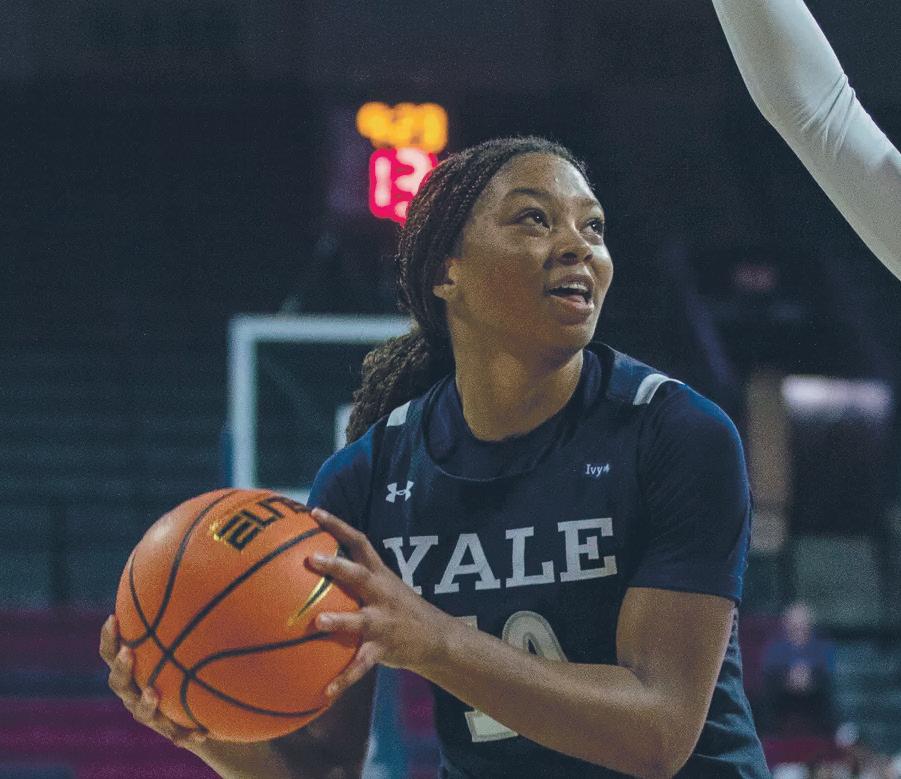

BY LIZA KAUFMAN STAFF REPORTER
The Yale men’s hockey team (8–17–1, 7–10–1 ECAC) will travel to upstate New York to play Clarkson (12–15–3, 6–9–3 ECAC) and St. Lawrence (5–22–3, 4–13–1 ECAC) in their penultimate weekend slate of the regular season.
The Bulldogs will take a 6-hour drive to Potsdam, New York, to face the Golden Knights on Friday night, before making the quick 20-minute trip to Canton for their matchup with the Saints on Saturday night.
Following last weekend’s success, when the Bulldogs took the then No. 12 Dartmouth Big Green (17–7–2, 11–5–2 ECAC) into an overtime shootout and nosed out the Harvard Crimson (13–11–2, 10–7–1 ECAC) 3-2 in overtime, the Elis will look to ride the momentum into their final road trip of the regular season.
Rhys Bentham’s ’27 strong twoway performance last weekend earned him recognition as ECAC Defender of the Week. On o ense, Bentham netted the game-tying goal both nights to send the contests into overtime. He was equally impactful in the defensive zone, finishing with a +4.
When the Elis hosted the Saints and Golden Knights at Ingalls Rink in early January for their first homestand of 2026, Yale steamrolled St. Lawrence 8-1 and narrowly fell 2-3 to the Golden Knights.
After a scoreless first period against the Saints, the Bulldogs set the tone in the second frame with a four-goal offensive surge. Hudson Miller ’29 got Yale on the board at 3:45, but less than 30 seconds later, the Saints equalized the score. Midway through the period, Micah
Berger ’28 and Will Richter ’27 tallied goals to give Yale a twogoal lead. Bentham’s goal at the end of the period put the game out of reach for the bottom team in the ECAC.
In the final frame, Tom Molson ’29 and Ronan O’Donnell ’28 each netted two goals, and the Saints lost any lingering hope of making a comeback. Molson opened and closed the period, while O’Donnell notched two back-to-back. The impressive eight-goal performance marked Yale’s first since 2012.
The following night, the Bulldogs sought to complete the weekend sweep but came up short in a heartbreaker in the final minutes.
After the Golden Knights took the lead late in the first frame, Iisai Pesonen ’27 equalized the score. A David Andreychuk ’27 one-timer gave Yale the lead in the second frame. Neither team was able to find the back of the net for the majority of the final frame, and it looked like the Bulldogs were going to get their first 2026 weekend sweep at home. However, Clarkson capitalized on a power play to equalize the score with three minutes remaining and then netted the game-winning goal at the 19 second mark.
With both teams tied at 21 points in the ECAC standings, Yale will look to defeat Clarkson in the rematch at Cheel Arena. Clarkson will enter Friday’s game after a split weekend at home. The Golden Knights fell 3-4 to the lower-ranked Rensselaer Polytechnic Institute Engineers (8–21–1, 5–12–1 ECAC) before mounting an 8-7 overtime comeback the following night against the Union Garnet Chargers (18–10–2, 8–9–1 ECAC). Despite edging the Garnet Chargers in overtime, the Golden Knights have had mixed success on home ice this season, with a 6–6–2 record, which the Bulldogs will look to exploit this weekend. When the Elis arrive at Appleton Arena on Saturday night to face the Saints, a team that had a 10-game losing streak from November to January and has consistently sat at the bottom of the ECAC, Yale will seek to replicate its earlier eight-goal per -
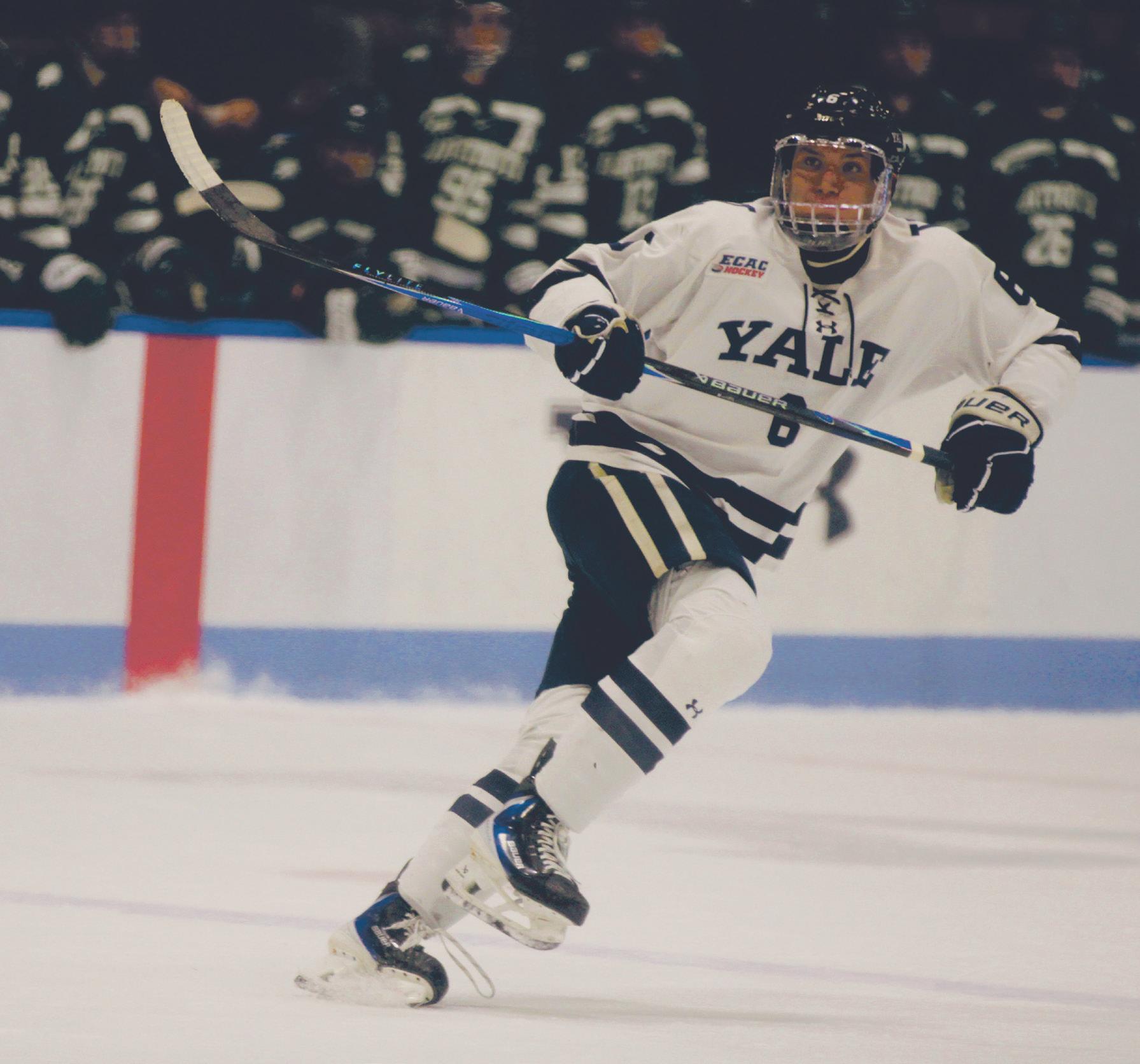
formance. St. Lawrence secured its fifth victory of the entire season last weekend against RPI after falling to Union the night before. Although the Saints have shown signs of improvement, picking up one win in each of the last three weekends, Yale will look to replicate its earlier success on St. Lawrence’s home ice.
With only two weeks to go in the regular season, victories this weekend will be even more crucial for post-season standings. Puck drop is slated for 7 p.m. both nights, and the games can be streamed on ESPN+.
Contact LIZA KAUFMAN at liza.kaufman@yale.edu.
BY BRODY GILKISON STAFF REPORTER
The Yale men’s basketball team
(20–4, 8–2 Ivy) is set to host Penn (13–10, 6–4 Ivy) on Saturday in a
battle between the Ivy League’s first- and third-place teams.
A week removed from toppling the Harvard Crimson in overtime, the Bulldogs could punch their ticket to Ivy Madness with a win over the Quakers this weekend.
This is the second meeting between the two schools, with the
last contest resulting in a 77-60 victory for the Bulldogs at The Palestra, commonly referred to as the Cathedral of College Basketball.
In that game, Nick Townsend ’26 and Trevor Mullin ’27 led the way for Yale, each putting up 17 points.
However, the Bulldogs will be without Townsend this time around after he su ered a concussion on a blow to
the face in last weekend’s game, per the ESPNU broadcasting crew.
To overcome the Quakers, the Bulldogs will need their bench to step up and fill the hole left behind by their captain. Townsend, who is seventh in the league in scoring and second in both rebounding and assists, has been impressive this season in his ability to domi-
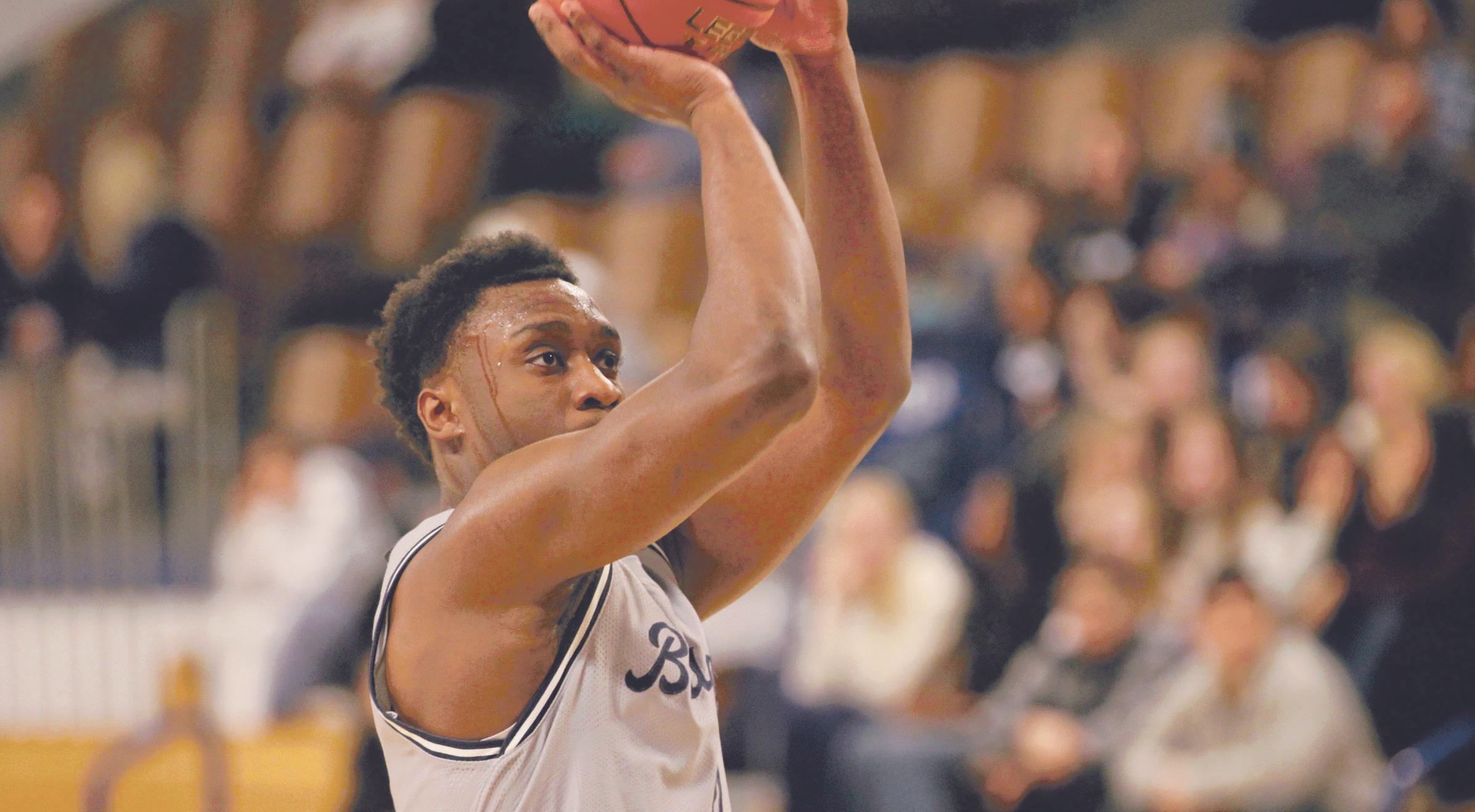
nate down low while also being one of the highest-percentage shooters from beyond the arc.
Mullin has been red-hot shooting the ball as of late, having shot 57.1 percent from three in his last six games. Casey Simmons ’26 and Jordan Brathwaite ’28 have shown signs of hitting their stride as of late, with both of them coming o their best games of the season, where they scored 16 and 17, respectively.
That being said, the X factor in this matchup looks to be Isaac Celiscar ’28, who put the team on his back last weekend to pull out the overtime win. After a Braithwaite missed three, Celiscar secured the rebound amid a herd of Crimson defenders and was sent to the line after being fouled. Although it looked as if he had injured his hand during the previous play, Celiscar calmly nailed the pair of free throws to secure the victory.
Celiscar has regularly stepped up where the team has needed him, whether that be for scoring, lockdown defense or crwashing the boards. This weekend, Celiscar may be called upon once more as the Bulldogs look to replace the efforts of their leading scorer.
“It’s always next man up,” Celiscar said. “We all believe in each other to go out there and get it done, and that mentality is clear to see on the court every week.” Yale tips off against Penn at 2 p.m. on Saturday at John J. Lee Amphitheater.
Contact BRODY GILKISON at brody.gilkison@yale.edu.


It was add/drop period, and I was mindlessly sifting through a sea of calculus and econometrics sections, when a class that wasn’t another introductory biology lecture caught my eye: “Introduction to Lithography: Foundations of a 19th Century Planographic Process.”
I wasn’t sure at all what that meant, but I wanted to find out. My schedule, filled with prerequisites, ended the daydream of registering for such a course, but I still wanted to know what a “planographic process” really was — the AI overview could not satisfy my curiosity. So, I reached out to professor Irene Michniki and arranged a visit to the studio to talk all things lithography.
The Yale School of Art lithography workshop was below ground yet strikingly saturated with light and color: metal mechanical presses and laminate tables, scattered with inked papers, gleamed under the fluorescent lights. I followed Professor Michniki to one of the tables, propping myself up on a stool as I took in the space. A student across the room hunched over an inked stone slab.
Painfully aware that I had zero clue what any piece of equipment in the room did, I decided to start simple with that allimportant question: “What is lithography?” Professor Michniki answered my question, and I will share the answer, because at this point, you are on the edge of your seat. Essentially, lithography is a printmaking method distinguished by its use of stone — as opposed to paper — to transfer ink. It’s “an art form that allows
people to create multiple impressions of images,” which came about when people discovered that “the chemical properties of limestone allow you to do this crazy thing” that we now know as lithography!
“How is it crazy?” you might ask skeptically. Well, lithography is actually an incredibly scientific process — it’s all about the chemical reactions that occur between stones, grease and a whole host of other things. Thus, the studio is a laboratory!
Although stone looks solid, it’s actually porous. According to Michniki, it can absorb this type of grease used by lithographers to make certain parts of the stone hydrophilic and other parts hydrophobic — think biosequence lipid bilayers.
Armed with the basic idea, I wanted to know more about the process. Specifically, I wanted to know when the big machine presses came in. It’s all very technical — I know.
First, the stone is kind of sanded down in a process called “graining,” which removes any previous printing residue and readies the stone for new material. This means that the printing stones can be reused.
Seeing as stones could be reused, I naturally asked Michniki if she had a favorite stone. She humored me by saying that each stone has its own chemical “personality,” and some people name them! “I have names for my rollers but not my stones,” she said.
If my lithographic aspirations take flight, I think I’ll christen my stone Patricia.
Next, you draw on the stone with specific types of black pigment containing the special grease. These could be crayons,
// BY BEATRICE BARILLA
sticks, pencils or — my personal favorite due to its lovely name — tusche, pronounced “toosh,” which is a paste loosened with water. When the tusche dries on the stone it does something called reticulation — I told you this was a laboratory — where a super cool, web-like, distinctly lithographic pattern forms. Michniki described how you can also scrape into the stone to create the design.
“The stone itself, the beauty of it, is that it is this malleable object, and you can push and pull your image on the stone,” she told me.
The stone canvas is then stabilized with gum arabic — which I feel like I’ve seen on the ingredient list of my Buldak ramen — that chemically binds with the calcium carbonate in the now grease-saturated stone. “It’s all about ionic bonds, so you can get really sciency with it if you want to,” Michniki said. The gum arabic seals off the grease, creating a kind of stencil through chemical stabilization. Tusche makes this a little more complicated: You have to add nitric acid and “etch” away the excess grease to stabilize it — the more grease used, the more nitric acid content required. To Michniki, this extra challenge is worth it: If you add salt to a tusche wash you can “see the chemical reactions,” she says, showing me an example of tusche wash reticulation.
I asked what tusche is made of, but apparently it’s a “trade secret” and there are special tusche recipes that suppliers make for lithographers. It’s like a family soup recipe, but instead it’s grease — for rock printing.
After the chemical stabilizing, during a process called “washing out,” the drawing material is extracted from the stone. A lithographer will sponge the stone with water, which migrates to the gum arabic–treated hydrophilic segments of stone: the greased design. Next, rollers cover the stone in ink, which also chemically attaches to the water, readying the design for printing. The catch is that “over-inking” can occur, when too much ink makes the whole stone inky, ruining the piece irreversibly. I began to question whether I would be patient enough for this art form. Now for the cool big machines — the presses! Lithographic presses are distinct because they use a polyethylene “scraper bar” with incredible pressure to print designs. This scraper uses 10,000 pounds of pressure per square inch of stone. Do not get on the bad side of a lithographic press. Finally, after all that science, you get a sick design — and a print that can be transferred to a variety of mediums.
Lithography used to be more practical — crucial for printing paperwork headers, business papers and more. The recent advances in digital printing have meant it’s now used more for its artistic properties. I asked Michniki what she wanted people to know about lithography. “In today’s digital world, it is so worth getting your hands into something and physically doing it,” she said. “Lithography really teaches you that.” If you’re interested, which you should be, Michniki offers her lithography class every spring semester. I promise she can teach you much more about the fascinating art than I can in this crash course.
Contact BEATRICE BARILLA at beatrice.barilla@yale.edu.
// BY LILY SCHECKNER AND MADISEN FINCH
Walking around campus feels like traversing a Ralph Lauren ad. Whether it’s the glossy blowouts, Longchamp purses or perfectly curated outfits, the theme seems to be elegant, understated and “old money.” While there are some miniature exceptions — switching to wired earbuds or a tattered vintage Coach bag — the goal seems to be to conform in a cool way. To stand out but not draw unwanted attention. Even individuality must be aesthetically conventional. Despite the fact that getting tattoos or body modifications seems to be incredibly popular amongst our age group, we don’t frequently see tattoos, colored hair or piercings anywhere else but on earlobes on Yale’s campus.
After we both happened to get hip tattoos of animals last semester — separate, not matching! — we wondered where this culture on campus came from, and who was brave enough to fight against it. Why get a tattoo if it is incongruous with the “Yale aesthetic”? Why do students decide to show them off, or keep them hidden? What do these tattoos mean, if they mean anything at all?
Angelina Reno ’28 explains that for her, the choice to get tattoos meant something, but she cared about making sure they weren’t visible. She didn’t want people to know she had them but felt like they were a way of expressing her dedication to her family. The tattoo behind her ear, the “Reno” on her ankle and the tattoos on her forearms are all easy to hide and don’t stand out against the quiet elegance of the Yale campus.
Maya Koerber-Marx ’29 offers another perspective. While Koerber-Marx’s tattoos, including a Rooibos flower on her ankle commemorating her high school semester abroad, are relatively visible, she explained her original fears about getting a tattoo in the first place. As someone interested in going into
politics, she was worried that tattoos could make her seem unprofessional. She’s not alone. This worry seems a prevalent one, especially for the pre-professional students that Yale attracts. Regardless of this fear, however, Koerber-Marx said, “I am not going to let that dictate how I live my life.” She currently has six tattoos, all somewhat visible.
For others, their tattoos are emblematic of life-altering, movie-worthy experiences — meant, in a way, to be seen and asked about. For Sophie Peetz ’28, a small angel wing on her wrist is more than just an addition to her soft aesthetic or a matter of self expression.
“Basically, the summer after my freshman year of high school, I was involved in a lightning strike accident,” Peetz told us. “Me and two other individuals were all struck by lightning. We were all unconscious. It was a huge ordeal. I was the first one to regain consciousness and I performed CPR on one of the victims and did intense first aid on the other — and they both made it.”
The lightning strike took place at the Grand Canyon on the Bright Angel Trail. In the weeks that followed, one of the two other victims was in a coma. Her religious family took to calling Peetz — who helped save the girl’s life — their “bright angel.”
Peetz chose her left wrist for the angel tattoo, the side of her body that was affected by the electricity. She didn’t feel any pain in the moment because the nerve damage was so severe, but later, she had to relearn how to walk and permanently lost hearing in her left ear, she said. Peetz wanted a constant reminder in the tattoo of not only what she had been through but that her survival is continuous.
“It’s a reminder that anything can happen at any time,” Peetz said, “and I feel like all of us always take for granted every single day, and I wanted a constant reminder of that.”
Unlike Peetz’s subtle tattoo, Max Chabries-Smith ’28 and Orion Browne ’28 have tattoos that are immediately obvious to passersby. Chabries-Smith’s large fish tattoo spans the length of his forearm, curling up towards his elbow, while Browne’s various tattoos — the number of which he struggles to pinpoint — are scattered across his forearm,
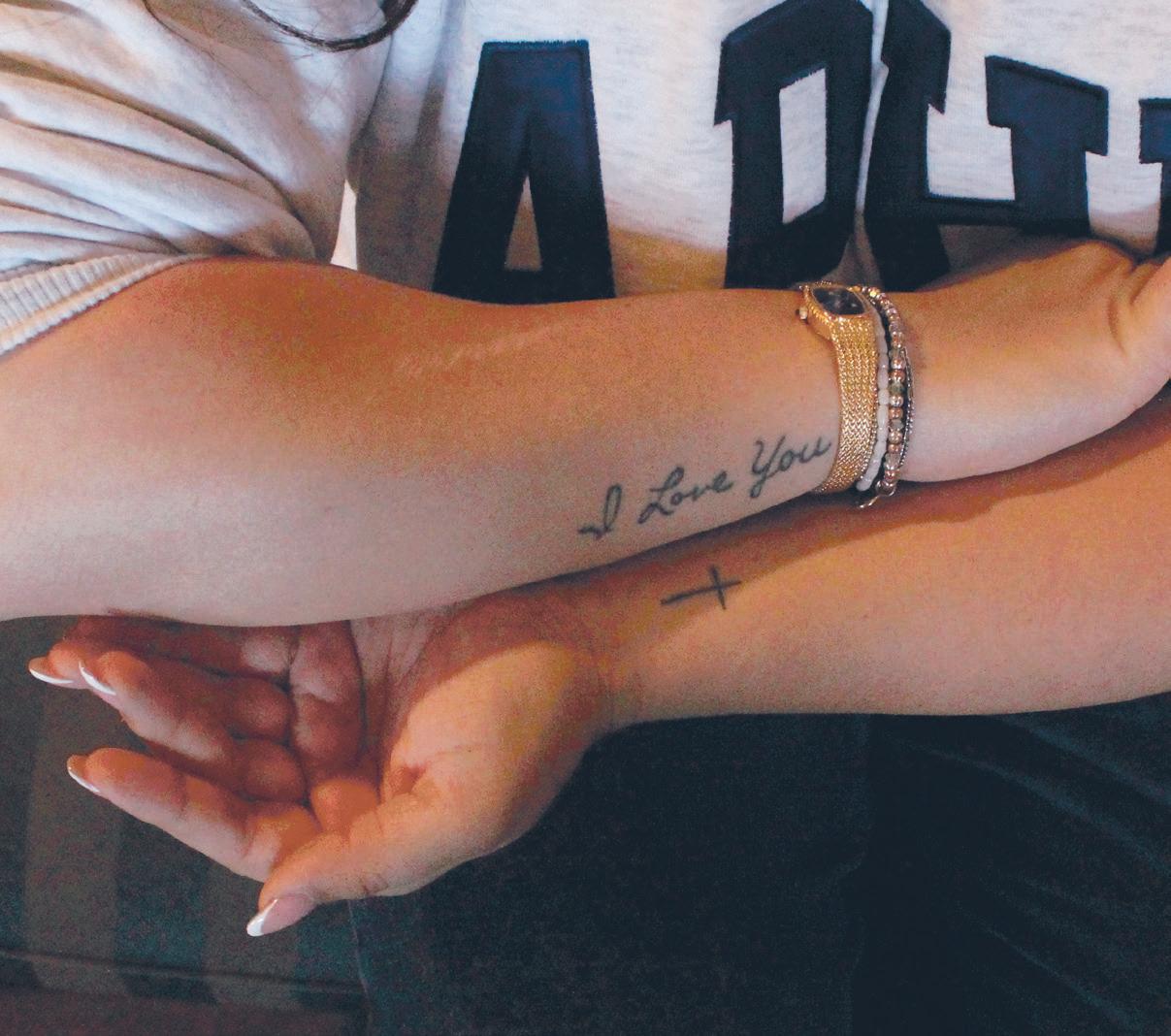
shoulder, bicep, chest and ribs.
For Chabries-Smith, his tattoo is inherently grounded in a place: the Great Lakes area of Milwaukee, Wisconsin. He was homesick during his first semester at Yale and went home for break, feeling an itch for something that would remind him of home when he returned to college.
“I was like, I want to get a tattoo to ground me, to connect me to home,” Max Chabries-Smith explained to us. “What should it be?”
The answer was obvious. The North American lake trout is one of the most populous fish in Lake Michigan. For Max, the fish represent strength and rebirth. “It felt very symbolic almost, that sort of reattachment and rehabilitation of the species,” Max said.
Browne’s tattoos, much like their placements, are diverse: a snowflake on his ribs, an infinity symbol on his arm, a sun peeking through a forest on his shoulder. Each one represents a connection to a person in his life. The snowflake on Browne’s ribs represents the impact of his long-term girlfriend, who he has dated now for over four years. The infinity symbol on his arm, intertwined with the words “be consistent,” “be present,” “be uncomfortable” and “be yourself,” is a reminder of the four biggest lessons his mom has taught him, he said.
“The most meaningful is probably my shoulder one, it was for my little sister,” Browne told us. “When she was born it was a huge moment in my life. Her name is ‘sun’ in French, and so I got woods and the sun shining through it — it was like her shining through all the struggles in my life.”
Tattoos seem to serve as both ways to relive moments and express oneself. While many of the tattooed Yalies point to purity culture — as Peetz said, “It’s a matter of wanting women to look pure and untouched, and I think that’s ridiculous” — or concerns about their future professional careers as reasons why one might be apprehensive about tattoos, there is consistent intentionality behind each of their choices to rebel. Why and where people get tattoos is not a youthful indiscretion but a thoughtful decision — one that will last long after we leave these ivy-covered walls.
Contact LILY SCHECKNER at lily.scheckner@yale.edu and MADISEN FINCH at madisen.finch@yale.edu.
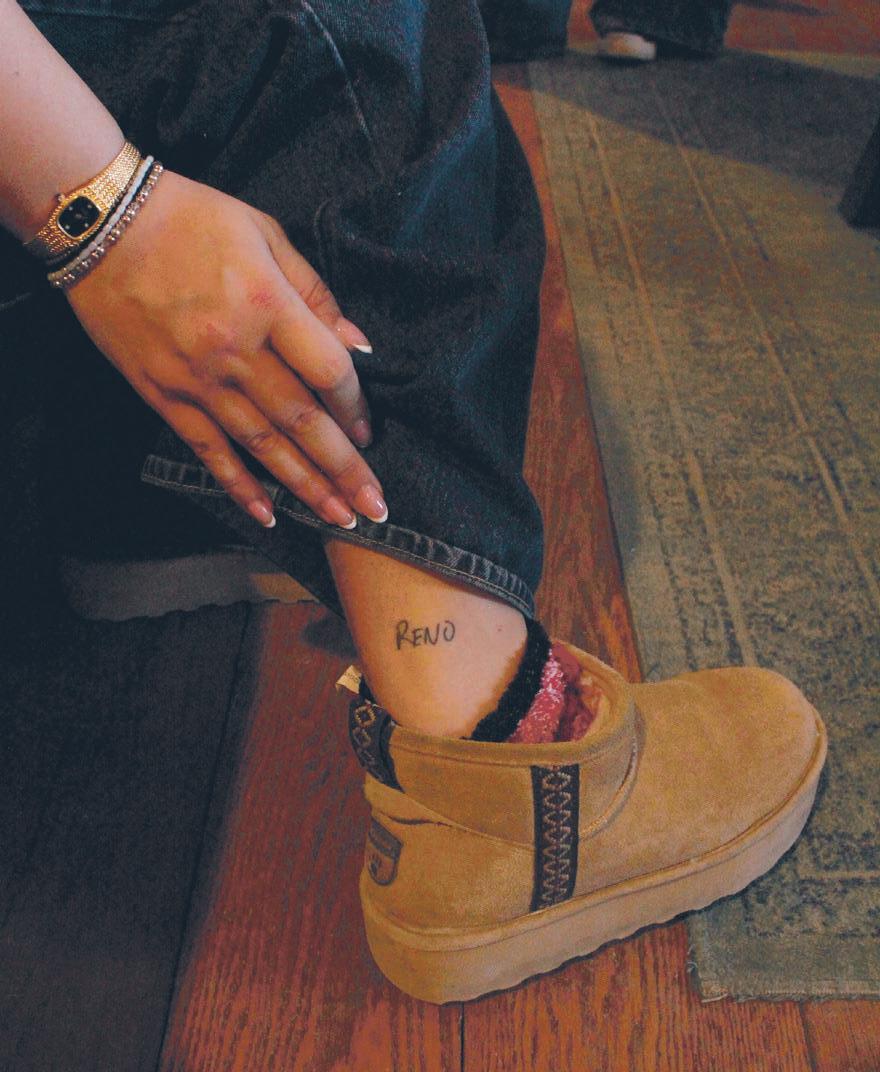
Money, money, money. I’m not talking about an ABBA song. Money plays a big role in every college student’s day-to-day life. Whether you’re a frugal minimalist or the top Shein consumer in America, thinking about your finances is unavoidable.
As a broke college student, I long for the days when I could justify dropping over $100 to get my nails done. For now, glueon nails are good enough. Eating food outside of the dining halls has become a source of financial guilt. Even thrifting has been rebranded as “curated vintage.” I am giving influencing, TikTok-ing and Yale daily vlogging a go as a side gig. People spend hours to find dupes for the Free People We The Free Emerson Tote Bag that is already a dupe for the Balenciaga City Bag. Identifying “recession indicators” has become an online trend and joke. It seems like a coping mechanism, but I am not certified to diagnose.
But as time goes on, the broke college student aesthetic is becoming less of a funny joke and more of a serious indicator of the current political and social disquietude. Anxiety is inescapable — probably because paying for therapy
is equally burdening. I can’t even escape to TikTok or Instagram reels without running into financial tips and budget plans for 2026. As a New Yorker article posited last April, what started as an internet punchline has begun to gesture towards “a collective psychological state.” I agree that financial stress has seeped into all aspects of day-to-day life, especially as a college student. Even the humanities, a historically sacred bulwark of thought and expression, seems to be filled with students more likely to sell out to some artificial intelligence startup or investment bank than pursue their passions. Jokes aside, it has become apparent that pursuing a passion is either a sign of privilege or simply a bad financial plan.
Like many students, I hope to study abroad this summer. But this past semester, Yale combined the previously independent International Study and Summer Experience Awards into a single grant. This policy has created a difficult choice between pursuing educational passions or career stability. The price of education is a barrier that many are unable

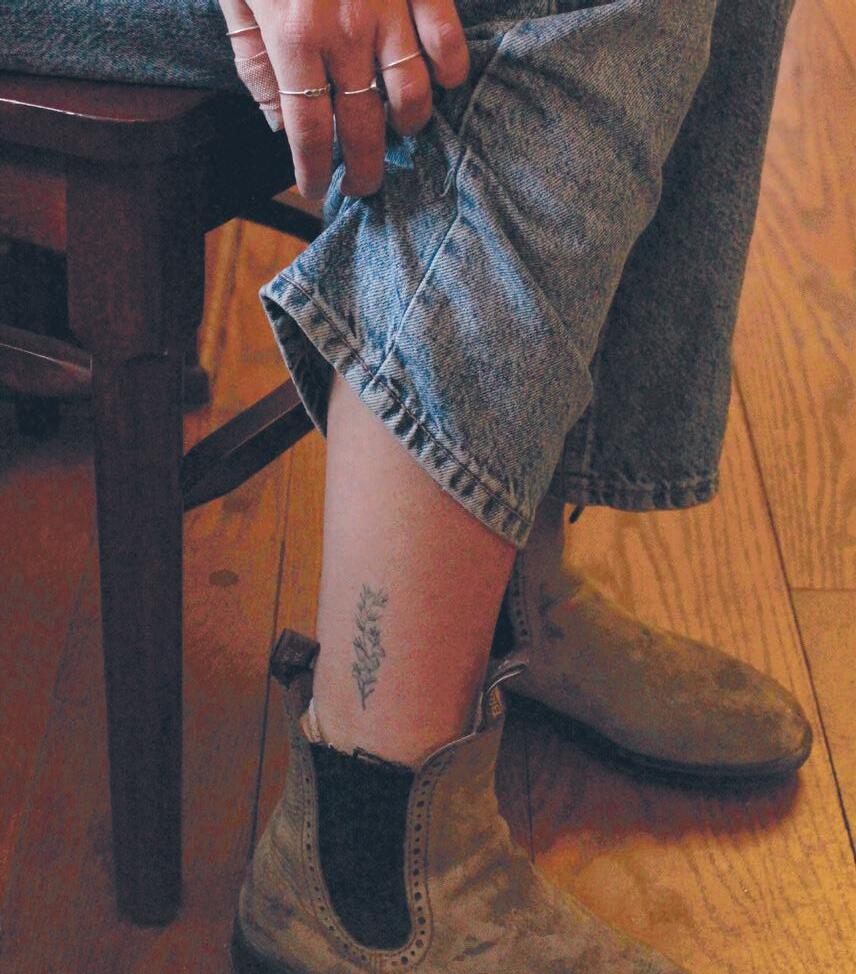
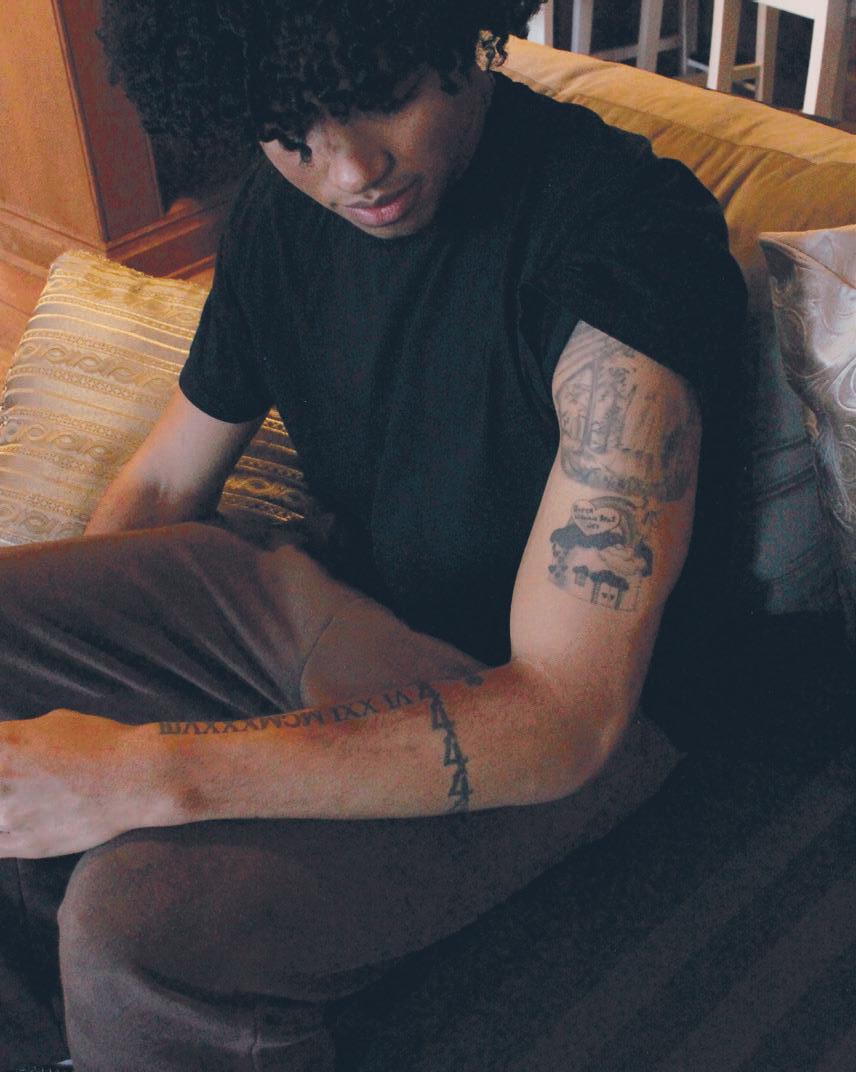
to overcome, forcing them to sacrifice their academic interests over their future.
But despite all these pressures, there are ways to combat financial stress. Having open and honest conversations about money with your friends can be one way to set up realistic expectations. Personally, I’m always willing to swipe the credit card at Atticus, but I try to recognize how the costs of nights out and off-campus coffee runs add up quickly.
Learning to maximize all of Yale’s resources has been pivotal to helping me lower my monthly expenses. I don’t need to own every book I read and I don’t really need to buy new clothes — except when there’s a sale, that is. Yale has a lot of free events that can be fun to attend.
Visits to Yale’s museums can be a cute date idea. Replacing my daily matcha with water once or twice a week can save me around $10. Ten dollars a week is $40 a month and soon enough I have enough to buy a flight ticket back home. Maybe I don’t need the matcha lattes after all.
But my personal reality is different from that of others, a difference that makes finances hard to talk about. A lot of the financial stress people experience stems
from not having the money to meet their needs and means of survival.
Here at Yale, our peers might be the next politicians, and — if the amount I hear about coffee chats is any indication — they are definitely the next bankers. But just because we live in a community rooted in a history of wealth does not mean that we can turn a blind eye towards the fact that low-income students are the ones most affected by our economic reality. Although I stand by my earlier advice to “maximize all of Yale’s resources,” one of these days we are all, hopefully, going to graduate. If these humorous “recession indicators” turn real, many Yale graduates won’t be able to scrimp and save their way out of financial anxiety. Acknowledging the economic implications of the current system is crucial.
Losing faith in the current economy, housing and job market is a serious issue, even if online jokes help make light of the situation. But it’s not a joke. It is that serious.
Contact ESMERALDA VASQUEZ-FERNANDEZ at esmeralda.vasquez-fernandez@yale.edu.
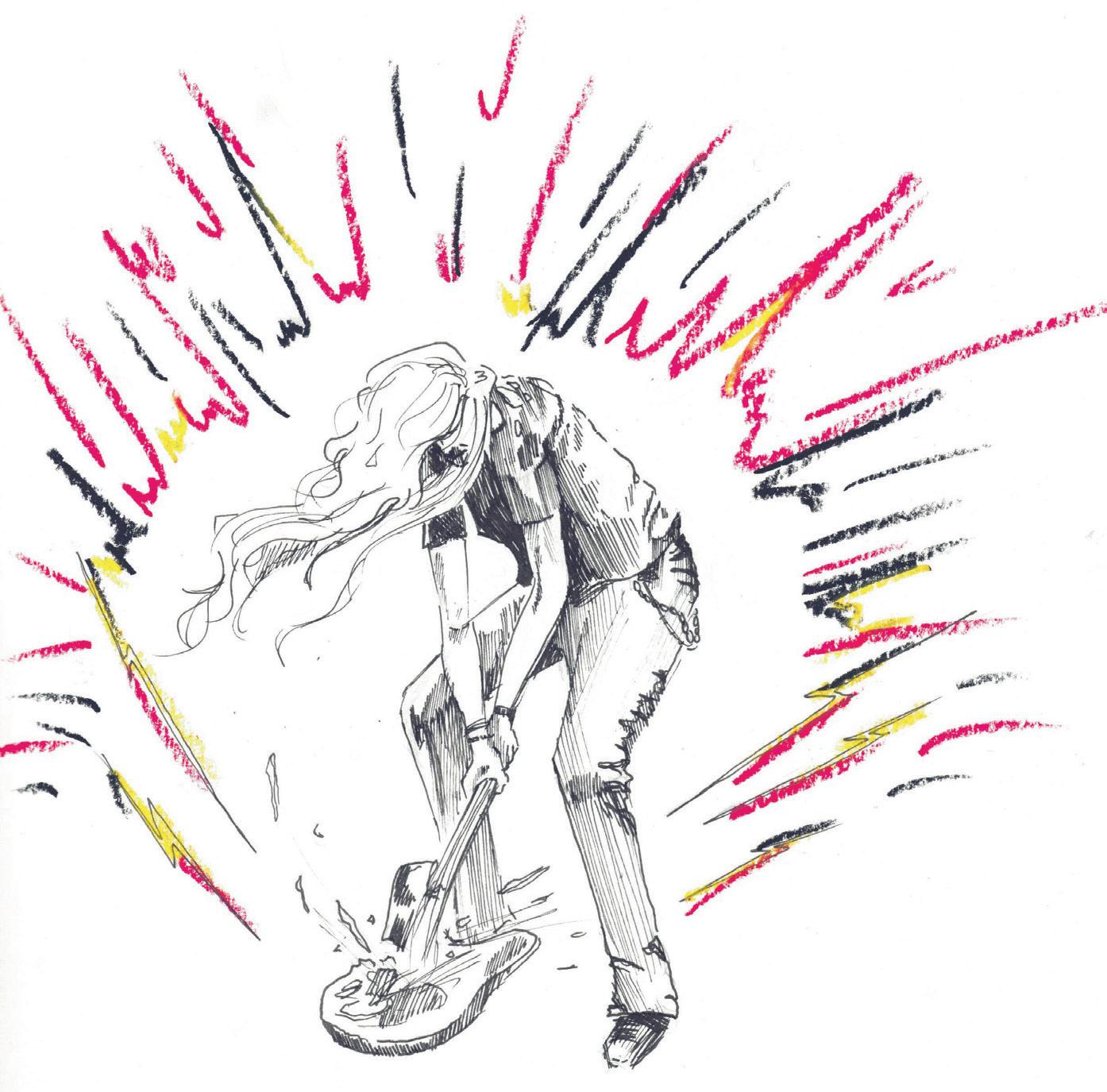
// BY ESMERALDA VASQUEZ-FERNANDEZ
// BY CIELO GAZARD
How much is your favorite artist worth? Can you put a price on a musician’s life work? In the music industry, some artists have a higher price than others. The recent barrage of legacy artists selling their catalogs makes this question more pressing now than ever. Last week, it was announced that pop superstar Britney Spears sold her entire music catalog. While the total amount has yet to be revealed, insiders estimate that the deal was worth $200 million. While I am not a connoisseur of Spears’s discography, I think this deal is shockingly low for a world-famous pop star who dominated the 2000s with hit after hit. But then again, $200 million is quite a pretty penny.
Let’s first define what “selling a catalog” means. Deals have varied in what exactly is being sold to the buying company. A musician’s catalog is simply their recorded material. Whoever owns the rights to the recorded catalog of an artist owns the copyright. The owner can decide to re-release recorded material, release unfinished songs or demos, and have material remixed and remastered. Separate from the recorded music includes an artist’s name and likeness. If sold in a catalog deal, the new owner can do anything from selling merchandise with a group’s name and faces to releasing an official movie about the artist. Moreover, publishing rights consist of songwriting royalties. If sold, the artist no longer makes money off of their lyrics. The lump sum paid to the artist in a catalog acquisition deal is all they will have after everything is sold.
Forbes estimates that Spears will pocket around $70 million of the $200 million after taxes. Unfortunately, Spears did not write most of her songs. A good chunk of the other $130 million will go to the various songwriters of Spears’s hits. $70 million is still an unfathomable amount of money, but Spears might have gotten the short end of the stick.
If a singer-songwriter prides themselves on writing their own material, why would they sell their publishing rights? This is a question that many had after revered songwriters like Bob Dylan, Paul Simon and Bruce Springsteen sold their songwriting for nine figures. Dylan, who became the first musician to win the Nobel Prize in Literature, made $300 million after selling the rights to his songwriting to Universal Music Group in 2020. Springsteen sold his entire catalog to Sony Music for an estimated $550 million, and in doing so, became a billionaire.
So is it best for an artist to sell out once they hit their golden years? While all three of the aforementioned musicians are still active, they are far older than someone like Spears. Britney Spears released her
last album in 2016. It doesn’t make sense for someone in their forties to sell off their catalog. Catalog sales usually attract older or inactive artists who want to ensure that, after their deaths, their families will be financially taken care of. Rather than collect the cash slowly over time, it’s a way to get richer far quicker.
Label ownership of masters — all officially released recorded material — has sparked some controversy in more recent years, largely due to Taylor Swift’s public outcry in 2019.
Throughout the history of recorded music, very few artists have ever owned their masters. When a label signs a deal with a musician like Swift, and nearly every single artist before and since, the label controls all recorded material. This is how labels can release greatest hits albums and use songs in movies and advertising without input from the artist.
The lack of input is what caused Swift to push for ownership of her masters. She still profited off of songwriting royalties, both from the original recordings and the “Taylor’s Version” re-recordings. Swift was able to buy the masters of her original recordings last year, but this avenue is not possible for artists who are not worth over a billion dollars and who cannot easily make a payment of over $300 million. Swift’s dispute with her previous label opened a greater discussion on ownership and copyright in music. Taylor Swift’s eventual ownership of the recorded material she created places her in a unique position for a songwriter. Her case is one that could only happen because of the seemingly endless funds she has access to.
The music industry has a long history of exploiting and scamming artists. Some artists are trapped into legally complicated deals that make ownership of recorded or written material impossible. Major labels also haven’t had the best track record of keeping masters and recorded material safe. Universal Music Group, the secondlargest music corporation in the world, came under scrutiny after a 2019 New York Times investigation into a 2008 fire in the backlot of a studio reportedly that damaged upwards of 175,000 master tapes belonging to thousands of artists.
The catalog deals prove that music corporations like UMG and Sony have money to burn. They are much more interested in profiting off of hugely successful musical artists rather than investing in newer ones. The music industry does not want to risk putting millions of dollars into new talent and would rather make money off of tried and true classics from decades ago. Next time you hear “It’s Britney, bitch” remember: it’s not.
Contact CIELO GAZARD at cielo.gazard@yale.edu.
Bouquets of roses matched their flushed cheeks as they floated along the sidewalk. Couples walked, arms intertwined, fully enthralled in their own world. Girls with kitten heels didn’t notice the puddles they stepped into; or maybe they did, but they didn’t care. In a world of two, it seems nothing else matters, everything melts away. I’ve found someone who has that same effect on me.
He has seen me at my worst and at my best. He’s seen me with my head in my hands, sobbing, and he’s seen those same hands gently wiping away joyous tears that streamed down my face. He knows my coffee order, favorite band, secrets, fears, insecurities and goals. But while lovers come and go, situationships start and end — well sort-of — and the thrill of seeing your classroom crush wears off, friends remain.
Reese is my friend. He’s from California, and he visited me this past Valentine’s Day weekend. He stopped by Yale to see my new life, and then we took the train to New York trying to find out if love was alive in the city.
Grand Central Station has an inescapable romantic feel. Maybe it’s because of its history or its over-romanization in movies and TV shows. I mean, “Young Folks” by Peter Bjorn and John plays in my head every time I step off the train. The flash of my camera flickered every five seconds trying to capture Reese’s excitement at the station. I will treasure the tape recordings of him running up and down the stairs for decades to come.
Upon entering the buzzing streets, something felt different. Maybe it’s because I’ve only been to the city with a strict itinerary, trying to maximize my time there, but strolling aimlessly with him felt peaceful. I had nowhere to be and I promised to ignore every email that was begging to be answered.
We sat on cold metal chairs at a bagel shop in the Upper East Side. The dining area was filled with couples that matched, made sense, emanated the same energy, each looking made for each other. Everyone leaned in closer to their partner. I did the same, except I leaned in to avoid letting the cold metal touch my back. Oh, and to hear Reese talk. I don’t think I’ve ever had a better bagel.
Quickly, night fell upon us. In our scant daylight hours, we visited a vintage thrift store in Greenwich Village. I scored a great pair of low-rise jeans, though my credit card shed a tear when I swiped it. Taking photobooth pictures with Reese from a booth there was the highlight of my trip. We have a collection of them now, but every time we wait those five minutes for them to print feels just as exciting as the first time we took one back home in San Diego. The line was filled with couples who wanted to commemorate their love with something physical. Something they can hold, a way to solidify that their love is real. I love people, sometimes.
We sat at Union Square Park for around an hour, pretending we knew those around us. Maybe he works at a coffee shop. Maybe she is the CEO of a natural beauty empire. Maybe they are a singer in a band. The list went on as each strutted or jogged past us. We compiled every person’s characteristics and life story, and in the end it didn’t matter so much who they actually were. This imaginative world came to a quick close when Reese spilled his entire drink on me. The cold liquid quickly made me jolt up, and my pants were soaked. His eyes widened as he apologized profusely, but I wasn’t even the slightest bit mad. Maybe that’s the only trait I truly appreciate about myself. I don’t tend to get mad at people over accidents or things they didn’t mean to do. Like when a boy made me hit the curb on the streets of Prague so hard that I carry a physical scar with me everywhere I go. I simply just changed into a skirt I bought earlier that day. Oh, and in Prague, I just washed my knee with water. Both make for a funny story, one maybe more than the other.
The cutest couple sitting on a bench on our path out of the park. I asked if they wanted a picture of themselves, and the girlfriend’s eyes lit up. They had just been talking about how nice it would be if someone could take a picture of them. Suddenly, I needed to take the best pictures they have ever seen, capturing the skyline behind them, the red roses on the bench and the warmth that they radiated.
They turned out beautifully. I imagined the picture being hung on a refrigerator years from now. Maybe their children will ask when and where they took the picture. They might tell them how a girl wearing a black felt skirt with a white long penny lane coat asked to take it and a boy with curly brown hair waited patiently, holding her purse and giant tote of purchases. In the West Village, everything seemed to have a rose-colored filter. Maybe, I am a romantic after all. Thankfully, we had made a reservation the day before because every single restaurant was filled with tables for two. We shared vegan pad thai and coconut curry while talking to a pair of friends sitting next to us. They went to Columbia and were out for the celebratory night. Giggles from their table echoed my own conversation with Reese. Plans for the future were shared between them. I couldn’t help but glance at their joy and contentment in sharing dinner on a holiday that reminds people they are single. I stared back at my own friend and it became clear, love exists in all forms. I returned back to New Haven with a full heart and many memories to carry. Thanks to the photobooth, I have a refrigerator picture too.
Contact ESMERALDA VASQUEZFERNANDEZ at esmeralda.vasquez-fernandez@yale.edu

// BY ALEXANDER MEDEL
Roads rarely begin dramatically. From my experience, beginnings are marked by lonely intersections, faded highway shields and wistful traffic lights. No fanfare. No fuss. Just asphalt. But Utah’s Scenic Byway 12 was different.
I was traveling north from Hatch on U.S. Route 89 with hopes of turning into the byway a few miles east of Panguitch. The day was dark and dismal. It bore a strange resemblance to the day when I took my Math 115 final two years ago. Unlike that day, however, I was wrapped with the feeling that all was right in the world.
The pastures that animated my car windows were brown and barren. Every now and then I sighted growing patches of grass fed by the water of melted snow that had, until recently, covered this valley in a blanket of white. The mountains to the east retained vestiges of winter with its snow-capped peaks. The sky was cloudy enough to inspire a torch song.
But nestled in the eastern mountains — in a landscape of brown, beige and gray — was a canyon of fiery red. It emitted a glow so passionate and amorous it beguiled every car and beckoned my own. This was Red Canyon. It was also the welcome to Scenic Byway 12.
Spires of rock raced toward the heavens. Pine trees dotted the landscape, climbing cliff sides and dancing with the rocks to which they clung. Arches jetted onto the byway as my car coursed through its serpentine paths. Trading canyons for verdant pastures, I found myself standing atop Inspiration Point at Bryce Canyon National Park.
Bryce Canyon is iconic for its hoodoos, spires of rock eroded over millions of years by the forces of wind and weather — each pointed skyward in neat rows, one descending from another toward the canyon floor. The hoodoos were arranged like bottles of vintage wine at a market. And just like wine, each hoodoo had a story to tell, a composition unique to itself and a life defined by aging gracefully. For a landscape so jagged, it pierced my eyes with a beauty of its own. I stayed the night in a comfortable hotel and continued my journey the next morning.
The rain pattered an errant melody on the window
as I grabbed my breakfast. It was of no concern. It was gentle and kind, a stark detour in disposition from the torrents of a New Haven winter. My breakfast was a simple affair, consisting of scrambled eggs, bacon, a biscuit and a scone. It was good, and so was the coffee.
Not because it was strong, but because it was free.
If I were dining in a room of fellow Yalies, I would feel no judgment in scrolling through my Instagram feed. But given that I was the only one in the restaurant younger than 60, I felt an indescribable need to be precocious, or at least look the part. So I drank my coffee black, turned on my phone and read the latest headlines from Politico. I had never felt so young and so old at the same time.
Raindrops dotted my windshield as I continued on Scenic Byway 12.

It stopped as I parked my car at Kodachrome Basin, a state park just south of the byway at Henrieville. Named for a brand of Kodak film, the park is known for its monolithic spires of rock known as pipes. It seemed to be that this part of Utah has a fascination — indeed, an obsession — with rocky towers. I blamed the wind and rain.
The rain gave the monoliths a richer shade of orange. On a dry day, these pipes sport a hue reminiscent of marigolds. On this day, their colors transformed into a shade of brown as sweet as the caramel squares I used to eat when I was a little boy.
Unlike the crowds I encountered at Bryce Canyon the previous day, Kodachrome Basin was empty. I followed a short trail into a small canyon with my mother and retrieved my father from following a dry riverbed that led to nowhere before leaving the park.
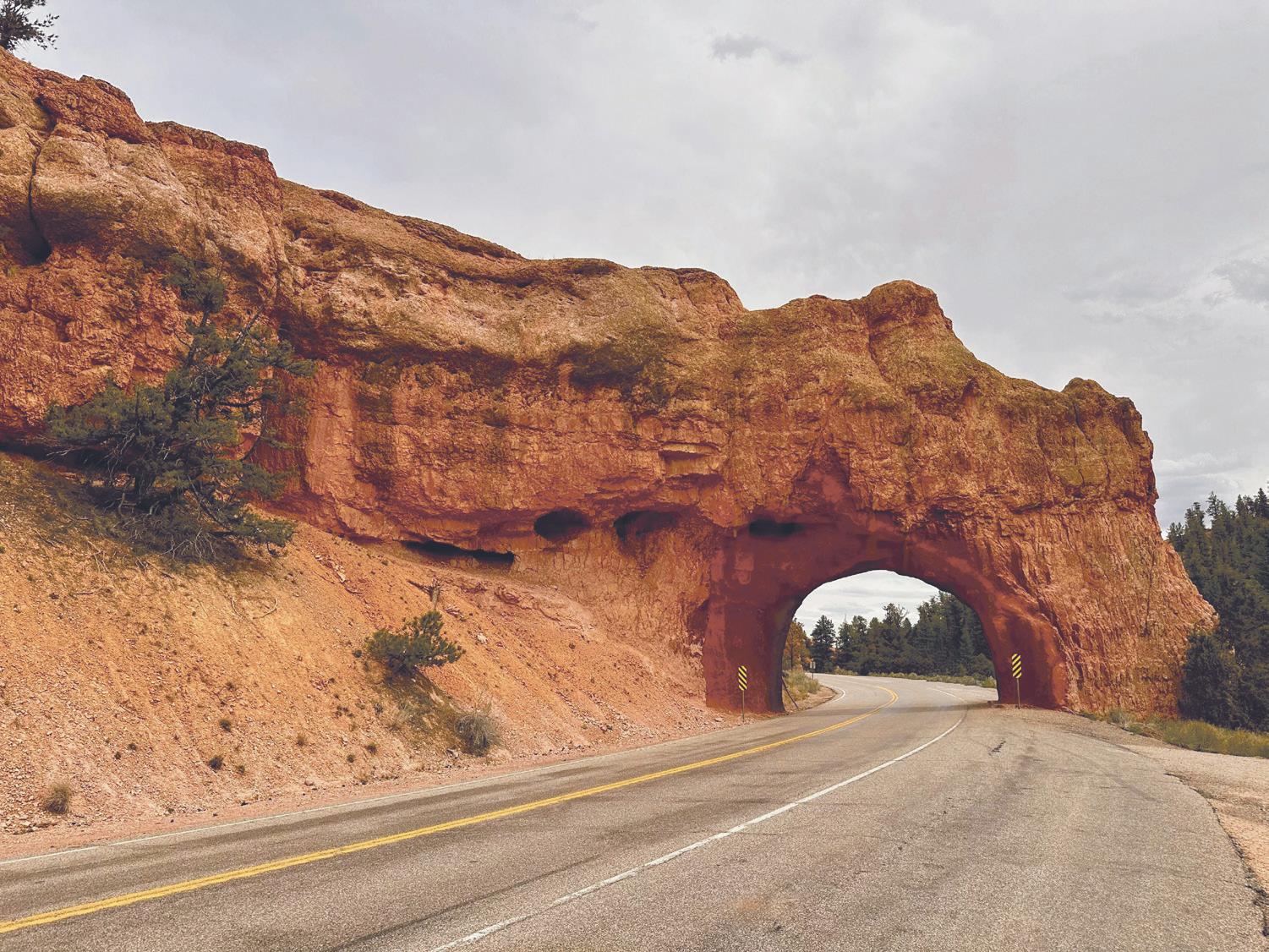
The byway continued to impress me with its beauty. The scenery was partly to blame. The rocks here were of a different design to many others I have seen. Some resembled croissants in the flakiness of their layers. Others resembled soufflés in the softness and smoothness of their surfaces.
Every now and then, a breeze would pull back the branches of a cottonwood tree to reveal a canyon obscured by a verdant canopy.
Its shades of orange, as bright as a jar of freshly made marmalade, had the power to enchant any observant traveler like me. Canyons soon gave way to mountains. Cottonwoods soon gave way to aspens.
The closer I approached the end of the byway at
Torrey, the more the road became one with the earth to the point that the two became inseparable.
The beauty of Scenic Byway 12 is evinced by its landscape but more so by the land’s profound ability to slow someone down. I forgot what that feeling was like, and it took two days along 123 miles in Utah from Panguitch to Torrey to rediscover it.
Life at Yale is life in the fast lane. We follow an unforgiving circuit of coursework, professional aspirations and social pressures that erode our tire treads and eat at our mileage. Slowness is approached with suspicion. Stillness is mistaken for slothfulness. We dare not stop, fearing judgment and failure from an unforgiving world that we believe would pass us by when we do. Our speedometers turn towards only one direction: rightward. Our engines are powered by bitter oil and ambition, and ambition can be such a shallow fuel.
My father tells me constantly that a good driver knows when to speed up and slow down. By this measure, Yalies have become bad drivers. Not because we know how to drive fast, but because we have forgotten how to drive slow.
Driving on Scenic Byway 12 reminded me of the beauty to be found on a journey in the slow lane. Every minute felt like an hour, every hour felt like a day and every day felt like a year. If Yale succeeds in speeding time, Utah succeeds in suspending it. I was grounded and freed by the byway. And for the first time in a good long while, I felt like I was living my life instead of surviving it.
Easing my foot on the pedal did not cost me anything in my race with the world. Truthfully, the world moves slowly outside Yale. And the best part about it? If you blink, you won’t miss it. You will see it, enjoy it and maybe even fall in love with it. Sometimes you really need to slow down. Ease your foot on the pedal. Let the needle move leftward. Roll your windows down and let the air be a breeze, not a right hook. Look for peeking canyons. Watch aspens dance. Count mountaintops. And like that Frank Sinatra song, enjoy every step along the byway.
Contact ALEXANDER MEDEL at alexander.medel@yale.edu.
Talking to my high school friends, I get the sense that at other colleges, senior spring is breakup season. Not at Yale. Here, everyone’s third capstone project seems to be securing a relationship and locking down a “Yusband” before graduation. It’s romantic whack-a-mole: couples popping up, breaking down and reappearing with someone new. As with any impending deadline, procrastination only heightens the frenzy.
For single seniors, the Valentine’s weekend bender is like “The Hunger Games.” Too many good tributes are falling, and nobody really wins the games.
Tributes are rated before they even step into the arena. The season begins with our very own Caesar Flickeman, AJ Nakash ’26, declaring Yale’s 50 most beautiful people in the Rumpus.
With that, Feb Club lights the torch, and the opening cannon fires Thursday night.
The Careers, those who just broke off two-to-three year relationships from first year, are the first ones running to the bloodbath at the cornucopia. Their friends and families watch in horror as they get stabbed lunging for the nearest weapon: their ex.
Seeing couples up against the walls at the Wolf’s Head’s Estate party, I have the urge to channel my inner Effie Trinket on the train to the Capitol and scold them, “THAT IS MAHOGANY!” But something tells me they don’t particularly care for the quality of the woodwork.
Fire is catching, and when your other perpetually single friend gets cuffed, you may suddenly be volunteering as tribute.
You may be saying, “Single Today, Single Tomorrow, Single Forever.” You may try to pull a Peeta Mellark and
paint yourself like grass to wait it out, but the Gamemakers are relentless. Just when you think you’re safe, Friday’s Dinosaurs & Cupids beckons you out of hiding.
The desperate ones start hunting for fresh meat (freshmen) and slam into the force field of judgement. But, there’s always a Beetee who has figured out how to de-bug the system for his own amusement.
You hear a cannon go off in the distance, a vague Valentine’s Instagram story, but can’t tell if they’re really out of the game. Gay or Galentine’s? Real or not real?
And, we all have our Rue of a would-be relationship, gone too soon. You lay down the flowers. Sing a little song. Try to abstain from the hunger games of senior spring in peaceful rebellion. But that resistance is brief. Without warning, your society will deploy hundreds of tracker jackers; wingmanned setups, wine-and-crimes and “you’d love him” texts, swarming your vision. One sting can be a fun trip. But too many, and you’ll end up like Glimmer: swollen, delirious and eliminated by Saturday.
By Sunday night, the arena starts whispering: Tick. Tock. Tick. Tock. Tick. Tock. And you remember who the real enemy is: the looming terror of post grad.
At this point in the game, even your long standing alliances turn fickle. Watch out, or you may feel compelled to do a joint nightlock berry death with your closet ally.
But, fear not, standing tributes. The Quarter Quell is coming.
See you at Masquerade.
Contact CASSIE WATT cassie.watt@yale.edu.