Undergraduates hoping to major in global affairs will no longer have to apply for admission to the program.
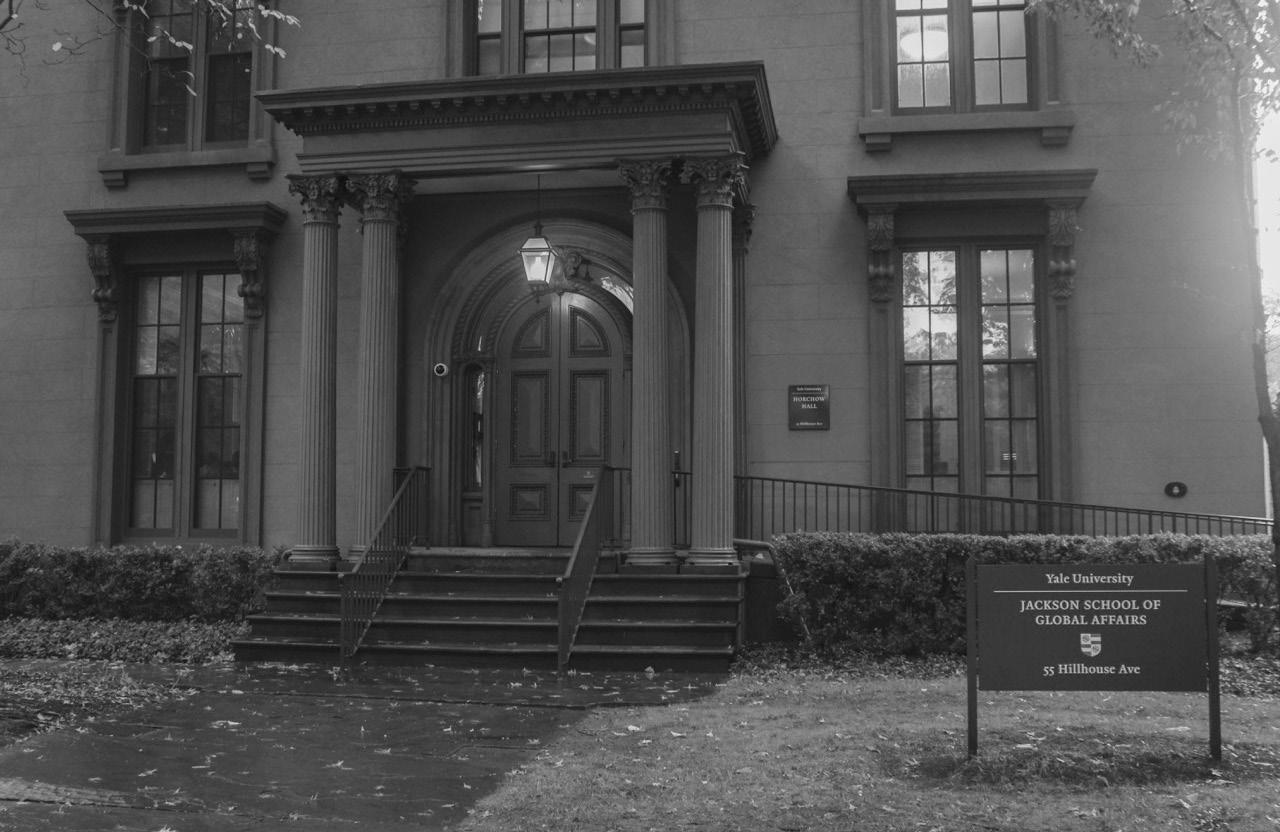
The major, which is administered by the Yale Jackson School of Global Affairs, previously required students to apply for admission. The application process required sophomores to submit a resume, a transcript and a 300-word personal statement, according to two current majors. Now, any student who completes eight prerequisite courses can major in global affairs — in the major’s latest step to reduce requirements for its students.
“Given today’s global challenges, we want to equip as many students as possible with a rigorous grounding in global affairs so they can engage thoughtfully with the world around them,” Jackson School Dean James Levinsohn wrote in a fact sheet about the change given to the News. “The major will remain just as demanding as it was when admission was by application, but it will now be open to any Yale College student prepared to meet that standard.”
SEE GLOBAL PAGE 5
Schools dogged by teacher absences
BY SABRINA THALER STAFF REPORTER
Last school year, nearly a third of New Haven public school students were deemed chronically absent, meaning that they missed at least one in 10 school days — a problem that district leaders identified as a top priority to tackle this year.
When New Haven students do make it to class, though, it’s not always a given that their teacher will be there to instruct them.
According to the most recent data published by the Connecticut Department of Education, fulltime teachers at New Haven Public Schools missed an average of 17.8 days of school “due to illness or personal time” in the 20232024 school year, which exceeds the state average by almost five
days and amounts to nearly onetenth of the 180 days in a school year. The number had remained relatively level for the prior three school years.
Currently, the district sees between 175 and 180 teacher absences per day, according to district spokesperson Justin Harmon. The school district employs a total of 1,460 general and special education teachers, according to state data.
In interviews with the News, school district officials, teachers, students and an education policy expert presented competing theories for why the city’s teachers appear to be out of the classroom so frequently — and how the school district should address the problem.
Elis win title despite first loss in months
BY AUDREY KIM STAFF REPORTER
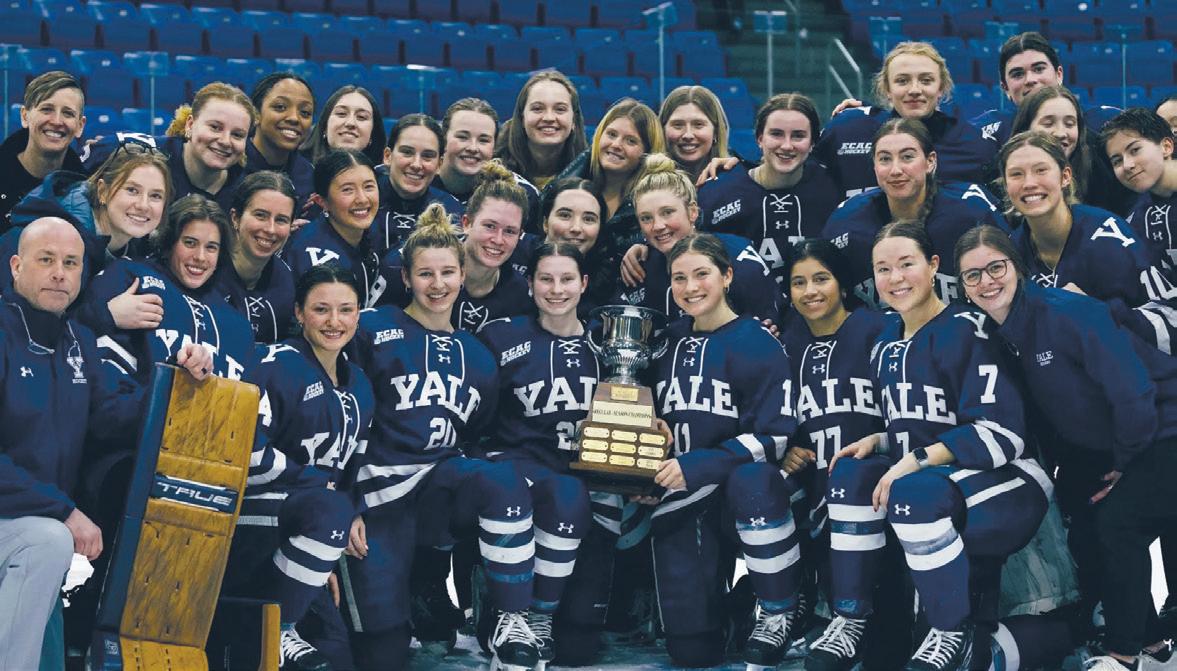
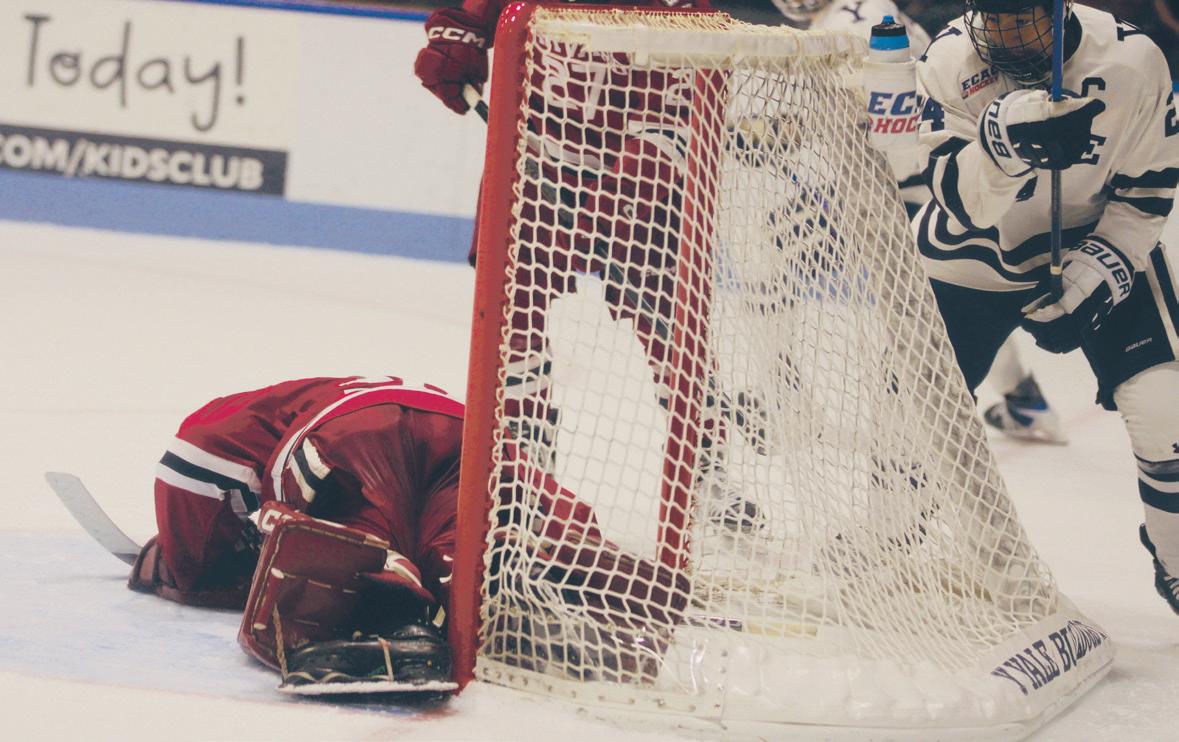
The No. 9 Yale Bulldogs (22–8, 16–6 ECAC) had their regular season finale this past weekend, and captured the second ECAC conference title in program history after a shutout win over the No. 8 Princeton Tigers (21–8, 16–6 ECAC) and despite a hard fought overtime loss to the No. 7 Quinnipiac Bobcats (24–7–3, 14–6–2 ECAC).
Yale, Princeton and Quinnipiac entered the weekend as the top three teams in the ECAC, each vying for the first seed spot. Yale and Princeton both finished with 46 points, with Yale coming out on top in head-to-head after taking down the Tigers in both of their ECAC matchups. Quinnipiac finished third in the conference with 45 points.
“The last regular season weekend was one of our toughest, fac-
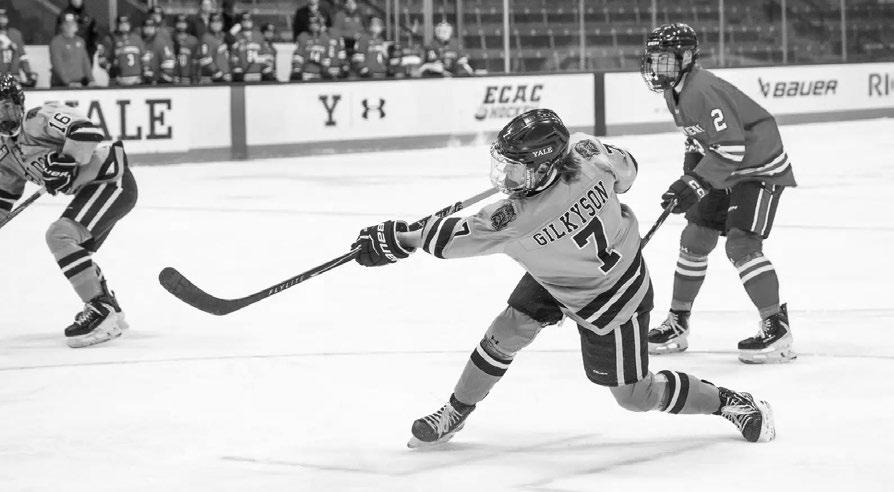
ing two opponents ranked above us. Scoring early against Princeton was huge and then we ultimately just shut them down, playing solid defensively,” senior defenseman Gracie Gilkyson ’26 wrote to the News. “That helped us build confidence for Saturday and even though we didn’t get the result we wanted, we still finished with the number 1 seed which is important moving forward.”
The Bulldogs have previously faced the Tigers twice this season, resulting in one win and one loss in two overtime games. The loss was a non-conference match, so it did not factor into the head-to-head rankings. On Friday, the Bulldogs were able to shut Princeton down, preventing them from finding the back of the net for all three periods.
Jordan Ray ’26 and Mariya Rauf
SEE HOCKEY PAGE 4
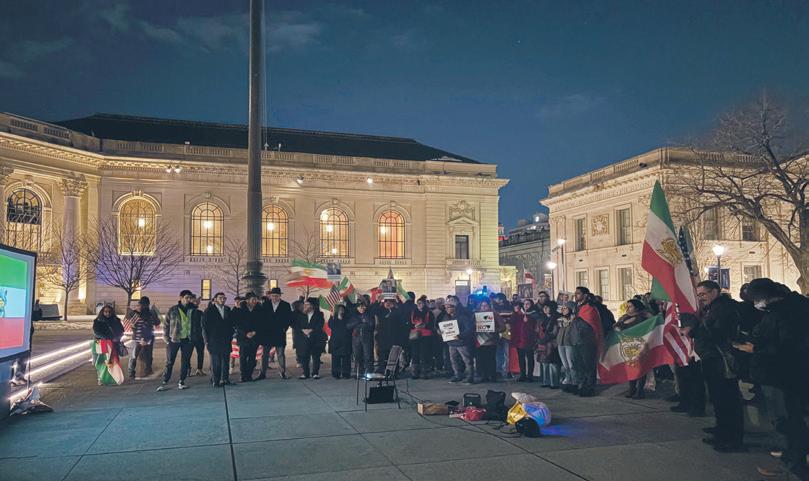
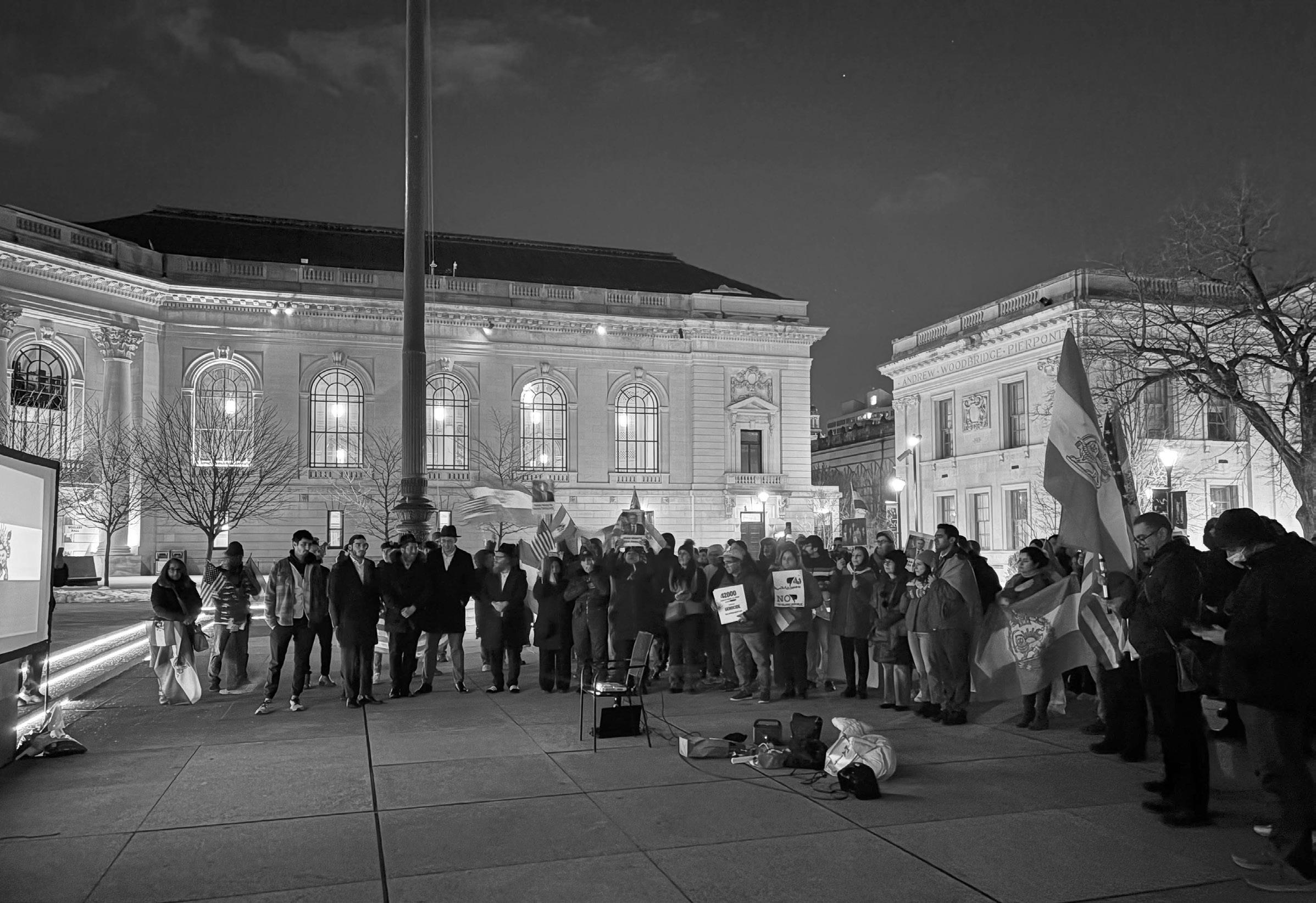
Around 100 students, faculty and locals rallied on Beinecke Plaza against ongoing killings of cillivian protesters in Iran.
BY OLIVIA CYRUS STAFF REPORTER
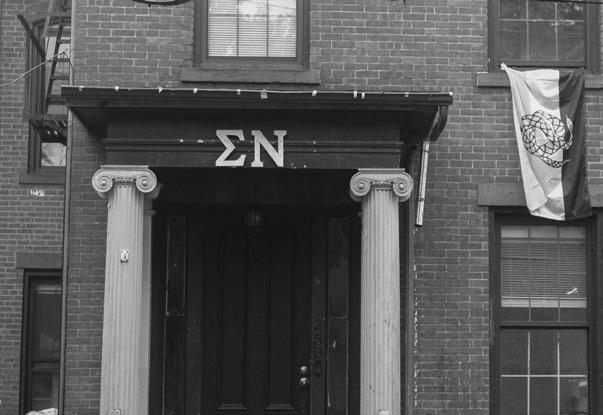
The Yale fraternity Sigma Nu is no longer listed as an active chapter on the Sigma Nu national organization’s website. The chapter is now included on a list of “dormant” chapters.
As of Sunday, the Yale Beta Alpha chapter — which has been on campus for nearly 137 years — was no longer listed alongside about 150 active chapters at colleges and universities nationwide. The chapter was listed as active as recently as January.
The national Sigma Nu fraternity did not immediately respond to the News’ inquiries. The News could not confirm Sigma Nu’s criteria for a chapter to become “dormant” or the reasons for the Yale chapter’s change in status. The chapter has not made public any plans to disaffiliate from the national organization, and the News did not speak with any current
or former members of the chapter on Sunday evening for this article.
Yale’s Sigma Nu chapter first received its charter from the national organization on Feb. 4, 1889, according to a Yale Daily News article at the time calling it “a new secret fraternity.” The News noted that its members included medical and law students and students at the Sheffield Scientific School. It was the 28th chapter in the fraternity’s history, the News reported.
The development comes after several Yale social organizations — LEO, Aeris and Edon — have disaffiliated from national organizations in recent years. LEO, formerly a chapter of Sigma Alpha Epsilon, left the national organization in August 2018 after questions about inclusion dominated campus discourse in the fall of 2015.
SEE FRATERNITY PAGE 4
Off-cycle vote gets slow start
BY NELLIE KENNEY STAFF REPORTER
A few dozen residents of Ward
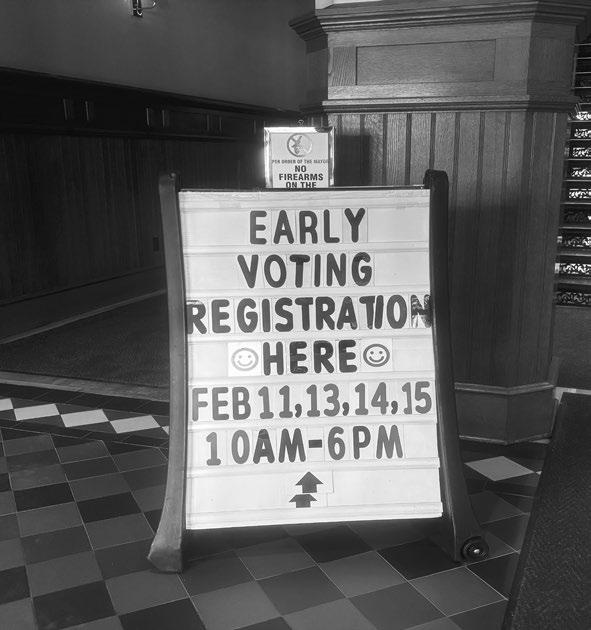
7, which includes parts of downtown and East Rock, have cast their votes in the ward’s second alder race in four months. Other residents will vote on election day on Tuesday, as Democratic community organizer Christine Kim ’99 squares off against Republican financial advisor Kyle Ross, who is running as a write-in candidate.
The Ward 7 seat is up for grabs after former Alder Eli Sabin ’22 LAW ’26 resigned on Jan. 1
before he would have been sworn in for his third term representing the district.
“It’s been slow — very slow, unfortunately,” Head Election Moderator Kevin Arnold said of early voting. “We’ll see what happens on Tuesday.” According to Arnold, 19 votes were cast on Wednesday, 25 on Friday and 12 on Saturday. Three absentee ballots have also been cast. Only three residents had voted as of 2 p.m. on Sunday, the final day of early voting.
SEE WARD 7 PAGE 4
Is island too toxic for a park?
BY MICHELLE SO STAFF REPORTER
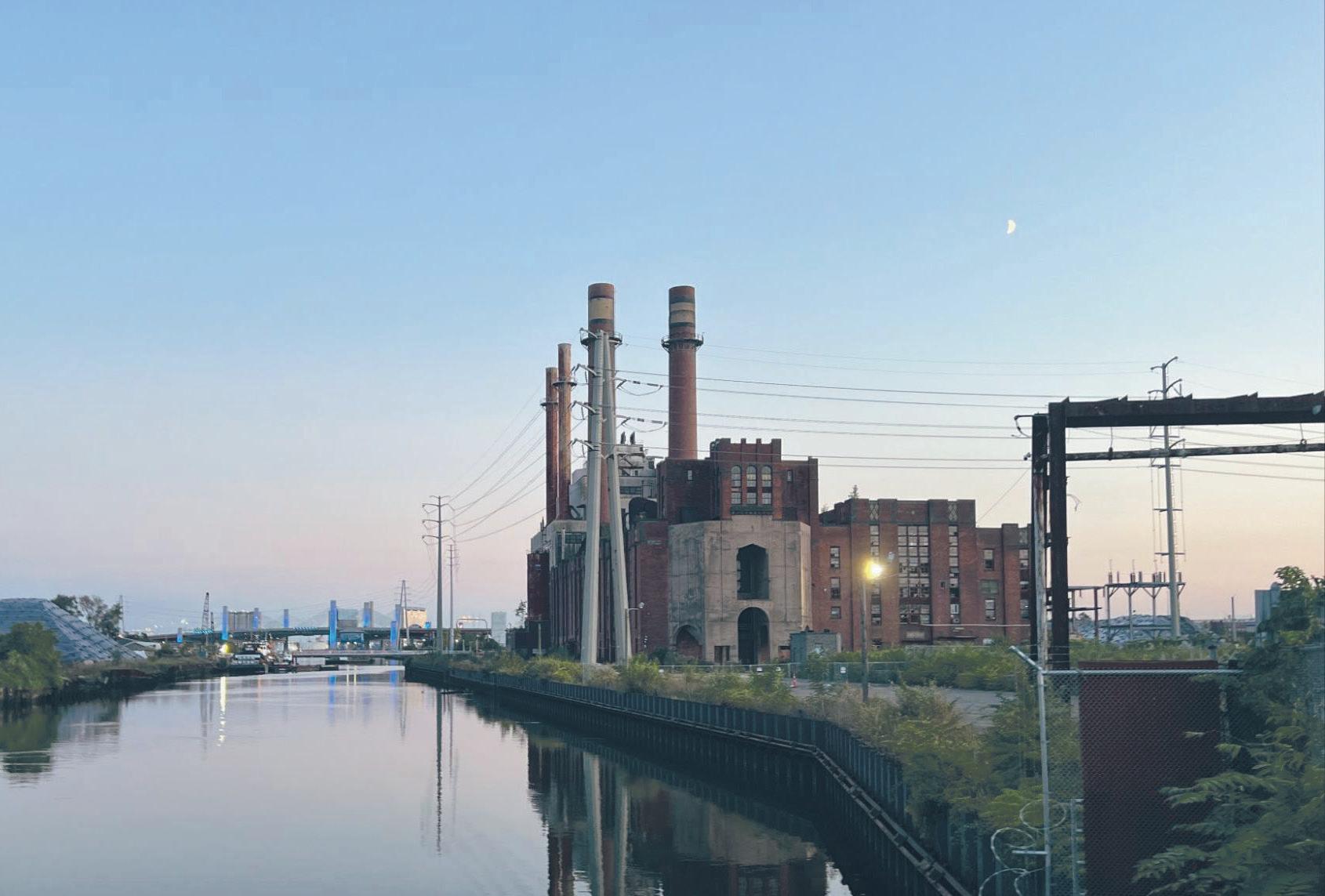
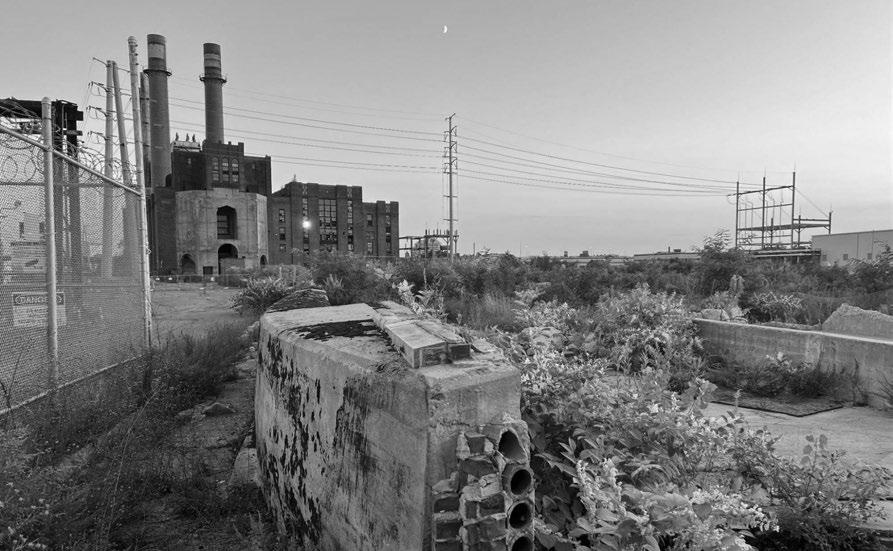
New Haven recently unveiled design plans for a proposed public park on Ball Island in the Mill River district. However, the city has not yet acquired the property, which is the site of the decommissioned English Station power plant that is highly contaminated with heavy metals, asbestos and polychlorinated biphenyls, known as PCBs. While the rendered images of the proposed park depicted a scene of families picnicking, teens enjoying basketball and children learning to swim in the aquatic education center, the current site is far from that.
As cleanup efforts have stalled, residents have raised concerns about the safety of
the site, including at a town hall meeting held last month. In 1992, English Station, a historic coal plant, was decom -
missioned and placed on deactivated reserve due to its energy
WOMEN'S ICE HOCKEY
YuLin Zhen, Photography Editor
Lily Belle Polling, Staff Photographer
Alex Hong, Staff Photographer
Yale Athletics
Nellie Kenney, Contributing Photographer
This Day in Yale History, 1977
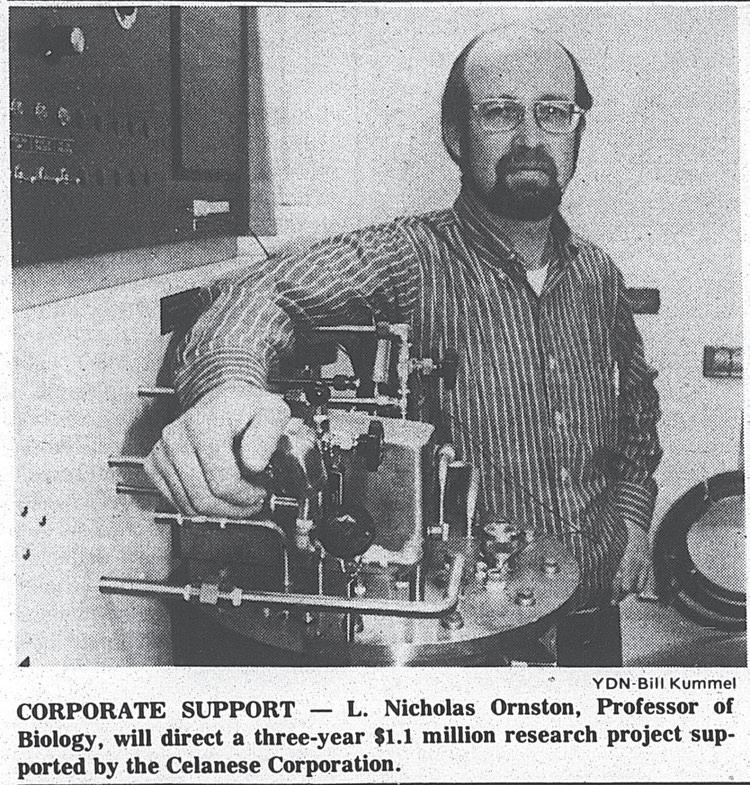
February 16, 1977 / Celanese signs agreement to support biology research
By Annarie Lyles and Norman Oder
Barely two months after Yale signed its first contract for private sector marketing of biological research, the University has signed an agreement with another firm to support basic biological research.
Yale and Celanese Corporation, a large producer of chemicals, fibers and plastics, announced today that they have signed a threeyear, $1.1 million agreement that will support basic interdisciplinary research into the structure and function of enzymes and the genes that govern them.
The agreement, following about a year of discussion, provides support for four research projects, along with the hiring of a postdoctoral fellow for each, under the direction of Yale professor of Biology L. Nicholas Ornston.
Behind the Headline
By Sabrina Thaler
A few weeks ago, I was holed up in my dorm room watching what felt like a particularly long online meeting of the New Haven Board of Education’s Finance and Committee. Board members were scrutinizing the details of the newest draft budget for New Haven Public Schools’ next fiscal year, part of what is always a months-long, high-stakes discussion.
A brief digression partway through the meeting caught my attention. A board member asked the school district’s Chief Finance Officer why the budget proposal included a $1 million increase in funding for substitute teacher salaries. The CFO, and later the superintendent, explained it was because the district was seeing higher levels of teacher absences, and they needed more substitutes to fill in.
That sounded like a significant problem, and I had questions: How often were teachers missing school? Why? How did this pattern affect NHPS students, who are struggling with their own absenteeism crisis?
After finding the absence rates from the state’s online education data portal, I started reaching out to people who I thought might know something. I emailed teachers, messaged high school students on Instagram, called an education policy scholar and tracked down the superintendent for an in-person interview. I learned from these conversations that there are many opinions on how best to solve this problem — and why it exists to begin with.
Read “School dogged by teacher abscences” on page 1.
RANA ROOSEVELT
OPINION
Abandon institutional voice
GEORGE BEEVERS Staff columnist
Universities are meant to be sanctuaries for discovery — spaces where curiosity, research and open dialogue shape our understanding of the world. Trust in that mission is fundamental. Without it, the integrity of higher education crumbles and universities risk losing their role as credible arbiters of knowledge. Today, this trust is becoming increasingly fragile, strained by political polarization and the sense that universities have become ideological actors rather than impartial centres of learning.
As a British student, I’m constantly being asked about our campus political climate by people back home. American universities have faced mounting criticism — particularly from political and media figures — who frame them as bastions of “wokeness” and ideological indoctrination. This narrative portrays universities as out of touch with ordinary Americans, more invested in moral posturing than in rigorous scholarship. It’s damaging and unhelpful for society and for the universities themselves. When trust in a university erodes, its graduates carry the burden of stereotypes and its research risks being dismissed — not for its quality, but for its perceived bias.
If this isn’t the case elsewhere, why is it an issue here? The answer is a difference in culture: universities as institutions in America act as persons in their expression of ideas and controversy.
But no university can truly speak for all of its stakeholders. Yale, like any university campus, holds thousands of different minds and perspectives. Expecting a single institution to represent all of them is impossible. When universities attempt to adopt political stances on behalf of their communities, they alienate some and embolden others, contributing to the polarization already fracturing public discourse. Trust cannot thrive in such an environment — it demands humility from institutions and space for disagreement amongst individuals.
Instead, we should anchor trust where it has always belonged: in the quality of education, research and intellectual output. These are the functions that make a university valuable — not its alignment with fickle, shifting public opinion. A trusted university is one that upholds standards, safeguards fairness and creates environments where inquiry instead of ideology define it.
In the market for universities, schools like Yale trade much less on distinct academic content than on reputation — the same Intro to Microeconomics course with nearly identical material exists at countless other institutions. What makes a university unique is not its syllabus but the prestige attached to it: the belief that they signify rigor, fairness and intellectual excellence. That reputation becomes a kind of social currency. When trust in that reputation falters, the actual educational product loses much of its perceived value, no matter how strong the teaching
or research remains. Trust, then, is not just moral or abstract — it is the foundation of an institution’s practical influence.
The stakes are much higher than simple pride or prestige. For students, trust in their university translates into real-world opportunity. Rightly or wrongly, employers, research partners and the public all draw signals from reputation. When universities seem politically charged, those signals blur. The “Yale” name should reflect scholarly excellence, integrity and fairness — not assumptions about one’s personal politics or beliefs. Where you study should inform others about your skills and intellectual standards, not your ideological stance.
Having been through the UK’s educational system, I find this to be an especially striking contrast. In the UK, universities tend to maintain a much clearer distinction between institutional purpose and political identity. British universities, with very few exceptions, refrain from speaking on behalf of their communities on social or political matters. This doesn’t mean that they’re indifferent to injustice or criticism. It means their role is to foster informed debate, not to pre-determine its outcome. When the Oxford Union hosts political debates, it does so as a platform for diverse perspectives, but doesn’t implicate Oxford University as a partisan actor. As a result, UK universities cultivate trust through consistency and academic excellence rather than ideological signalling.
If American universities value trust, they might learn from this model. This doesn’t necessitate silence or complicity: universities should address political and social questions through research, dialogue and education — the tools of their trade — not through institutional endorsements that collapse complex debates and perspectives into soundbites. Although Yale’s institutional voice guidance somewhat serves this purpose, we ought to focus less on regulating our “voice,” and more on being an institution. When universities are seen as fair and rigorous, their contributions carry more weight in public life: policymakers listen more closely, graduates aren’t burdened with unhelpful stereotypes and students feel freer to express uncertainty or dissent without fear of professional backlash. In short, people become more comfortable speaking when the institution speaks less.
Maintaining institutional trust is not about protecting elite privilege. It is about ensuring universities remain credible, accessible and useful to the societies that support them. At Yale and elsewhere, we should care deeply about trust in higher education because it underwrites everything that universities do. In a time when labels and polarization already define much of American identity, universities should offer an alternative model: one where truth, not tribe, binds people together.
GEORGE BEEVERS is a first year in Pierson College. He can be reached at george.beevers@yale.edu.
GUEST COLUMNIST
BRIAN MOORE
Why you should walk to New York
Last Sunday, I was shuttling around the basement of Trinity on the Green, handing out information about warming centers to homeless parishioners.
During one stop, I introduced myself to a middle-aged woman named Julia. After helping clarify the opening time and location of a particular shelter, I moved onto the next client.
Five minutes later, while in the midst of another conversation, I heard Julia’s familiar voice piping up behind me:
“Wait — are you the Brian from the walk to New York?”
I stopped in my tracks, at a momentary loss for words.
“Uhh, yes?” I stammered. “How did you know it was me?”
She explained to me that a couple months ago she had picked up a copy of the Yale Daily News on York Street. She had been captivated by the article about our trek to New York, my name still cinched into her mind. What followed was the story of an equally foolhardy adventure from her youth — an ill-fated attempt to bicycle from central Florida to Connecticut along the interstate.
As I find my footing in my final semester at Yale, our oncelegendary walk to New York had faded into a misty recollection, little more than an overwrought talking point. Yet it is because of moments like these that I chose to walk to New York — and why you should too.
The most common question I received, both during and in anticipation of the walk, was “Why?” Why subject yourself to eighty miles of bone-wearying,
leg-depleting, arch-crushing torture? You know there’s a train. Surely there must be some sort of grand cause. Well, folks, the cause was unimpressively simple: just because. It was neither practical, nor logical, nor sane. And yet, it spoke to something deeply human. It was the same impulse that summoned the aging nobleman Alonso Quijano after waking up one morning to become the gallivanting knight Don Quixote, or that drove the idle, restless Ishmael out to the boundless expanse of the sea. It is something you discover along the way, if you ever do at all.
This call to adventure now increasingly falls on deaf ears. All of us, in one way or another, answered this call by attending Yale, whether from down the road or halfway across the world. Yet the same risk-taking that brought us here is now dismissed as juvenile whimsy. Once we settle into routine and career, adventure — because it refuses to be rationalized — becomes a distraction. In short, we grow boring and stale, suffering a kind of premature death.
In “To the Lighthouse,” Virginia Woolf locates life’s meaning not in grandiose philosophical abstractions but in “little daily miracles, illuminations, matches struck unexpectedly in the dark.”
It is precisely when we stop calculating, stop weighing cost against utility, that meaning quietly slips in.
It is that same illumination, I imagine, that lit up Julia’s
face when she cracked open the News to spot our ragtag group assembled before the Grand Central Concourse. The same flicker that moved a Hong Kong university student to send a heartfelt message of support. That inspired one walker to publish a vivid, weavedtogether narrative of her experience. That drew zestful third-graders spilling out of school to join us for a mile. That led one hiker — limping, battered, lagging but not defeated — to proclaim, “This is the best thing I have ever done.” When planning the walk to New York, I faced a decisive inflection point. Originally, the trip was meant to be just me and a couple of close friends. One of them warned that inviting the wider campus would be opening Pandora’s box. Open Pandora’s box I did, and it stands as one of the best decisions I have made at Yale.
As my time here draws to a close, it is beginning to dawn on me that the walk is no longer mine, nor that of my co-organizers. In truth, it may have never belonged to us at all. It belongs to you. Whether it remains a flash in the pan or grows into a storied Yale tradition is in your hands. Your call to adventure might not be walking to New York — but it might just be. And if it is, what do you have to lose?
BRIAN MOORE is a senior in Silliman College studying Humanities. He can be reached at b.moore@yale.edu.
Fight numbness with action
We are all Yalies. We are students. We are alumni. We are parents of current Yale undergraduates. We are Yale faculty.
We write in response to a report in the Yale Daily News that students have felt numbed from the barrage of bad news coming out of Washington, D.C., from Minneapolis, from around the country. That numbness is not an accident, it’s the point.
The events of this year are not random shocks or disconnected headlines. They are cumulative and deliberate. Authoritarian politics has always relied on exhaustion, confusion and isolation of ordinary people trying to pay attention. If we feel overwhelmed, we stop acting. If we feel alone, we stop believing that our actions matter.
What makes our moment different than any in history is how easily we are separated from one another. The same technologies and platforms that promised connection now leave us scrolling alone through crises on our phones, emergencies that feel either distant or unstoppable. Yet neither is true. At this moment we must remember that we are not isolated spectators. If social media and our devices don’t connect us, we are linked together in more fundamental ways: We are roommates, suitemates, families, friends and neighbors.
Each of us chose Yale. That makes New Haven our neighborhood, our community right now. In a few months, members of the senior class will choose new cities, schools, workplaces and communities across the country to live in. Those places will be theirs to belong to soon enough. And even as adults we retain connections to where we were born and grew up, even if just in memory for some of us. And all these places are under threat now.
Archimedes said that with a place to stand, he could move the world. Yale is a place to stand, to make a stand. So are our colleges and classrooms, labs and libraries, dining halls and dorm rooms, as well as your hometowns and New Haven. Where we are now, our communities and our neighborhoods are the places where if we stand together, we can create leverage, move things and change the world.
We are not powerless.
While you may not notice it,
there are many people on campus working to stem the attacks on higher education, on research, on the rights of immigrants and others who have been under siege by this White House.
One thing is clear to us: The antidote to numbness is action. Each of us have joined organizations working to make things right, and if nothing else, have found a sense of purpose, as we struggle for a better future.
Emily and Michael, seniors in Yale College, believe that a key solution to the seemingly overwhelming attacks on democracy is creating a clear, forward-looking vision to organize behind. In the last year, both have been increasingly disillusioned by the ways in which Yale has undermined trust in higher education and chosen silence amid a myriad of injustices. So, they’ve gotten involved with Class Action, a non-profit organization that works to make elite higher education more accountable to the public good. They’ve connected with organizers across the nation putting in hard work and seeing real results — catalyzing the end of legacy admissions in California and expanding a national conversation about the harms of corporate career funneling. Organizing spaces gives them energy, clarity and hope. And as more people get involved, their voices cannot be ignored.
Katherine and Jess, together with fellow Yale College alums Susan Choi and Erica Newland, founded the alumni organization Stand Up for Yale last spring. Within a few weeks, they had gathered over 7,000 signatures to two open letters to Yale’s leadership, telling Yale’s president and trustees that alumni are hungry for bold action to protect academic freedoms, both at Yale and country-wide, and will support their alma mater in taking such actions. After a jointly sponsored tailgate with Harvard’s Crimson Courage at The Game this past fall, the group is gearing up for new actions at this spring’s reunions. If you are an alum, or soon to be one, please join them!
Gregg and Katherine along with other faculty members at Yale are part of a newly reinvigorated chapter of the American Association of University Professors, which
has been organizing teach-ins on campus, advocacy with our administration and joint actions with faculty at other institutions. Gregg has also started a coalition called Defend Public Health, which has 8000 plus members around the country including Yale faculty, staff and students defending biomedical research at the National Institutes of Health, public health at the Centers for Disease Control and Prevention, LGBTQ members of our community, immigrants and other marginalized populations whom we serve as leaders in health.
We’ve listed these organizations and activities just to let you know there are places to plug in, ways to make a difference. There are many other places to get involved. These are just a few. Former Yale professor Timothy Snyder, in his book “On Tyranny,” urged us all in 2017 to practice corporeal politics: “Power wants your body softening in your chair and your emotions dissipating on the screen. Get outside. Put your body in unfamiliar places with unfamiliar people. Make new friends and march with them.”
We are now indeed new friends and we are marching together. Emily, Michael, Jess and Gregg met just a few weeks ago at a College Organizing Convening in Orlando, Florida, sponsored by the Emergency Campaign to Support Higher Education, which brought over 300 students and some alumni from colleges around the country together to train and strategize. Katherine and Gregg and other Yale alums met each other last year while organizing rallies on campus during reunion season in May.
There is safety in numbers. There are more good people in this world than bad. We have to find each other, stick together and get to work. Whether you do it on campus or elsewhere, you can shape history even in these terrible times. It bears repeating: the antidote to numbness is action. So together, from Yale to wherever we call home next, let’s make a commitment among us, to make a difference by getting up, out from behind our desks, into a world of hope.
Emily Hettinger, Michael Ndubisi, Katherine Profeta, Jess Marsden and Gregg Gonsalves
FROM THE FRONT
“Time stops for no one, no matter how unsure we are of the
Bulldogs clinch title after mid-season turnaround
HOCKEY FROM PAGE 1
’27 recorded one goal each to give the Bulldogs their 14th straight win, one win short of the record 15-game win streak they achieved in their 2022-23 season.
On Saturday afternoon, Yale traveled to Hamden to face Quinnipiac, a team the Elis lost to in the beginning of their season.
The Bulldogs took an early lead over the Bobcats, ending the first period up 2-0 with goals from Gilkyson and Stephanie Stainton ’27. Quinnipiac was able to net one goal in the second, while Yale scored the first goal of the third period to extend its lead.
Both teams had their fair share of chances, and the Bobcats managed to score two goals in the last three minutes of the third to send the game into overtime. Quinnipiac scored in the extra time to seal their win.
Despite the Bulldogs’ loss, they prevented Quinnipiac from a regulation win, which meant that Yale earned enough points in the conference standings to earn the first
seed and a share of the ECAC title.
“There is a lot we can learn from this weekend and we’ve put ourselves in a good spot moving forward. I know we’re all excited to host the three game series at home in Ingalls and use the off-weekend to our advantage,” Gilkyson wrote to the News.
While the team’s win streak came to an end on Saturday, it was proof of the Bulldogs’ impressive mid-season comeback. This season, the Elis’ record in 2025 was 9–7, which included a fall out of the national rankings at the end of November and a three-goal loss to Harvard.
But with a win over Brown on Dec. 7, Yale began a win streak that would continue until its last game of the regular season. The team achieved several ranked wins, including upsetting No. 6 Northeastern, and quickly climbed the ECAC and national rankings. Yale currently is ranked No. 9 in the nation, and has remained in the top 15 since December. The Bulldogs retained their midseason momentum throughout the rest of their season and have
gone 13–1 so far in 2026.
The Bulldogs now hold the ECAC first seed, earning them a first round bye and home rink advantage in the
ECAC quarterfinals.
Yale’s first quarterfinal game is set for Feb. 27 at Ingalls Rink. Contact AUDREY KIM at audrey.kim.ajk234@yale.edu.
Early votes trickle in for race to fill Sabin’s alder seat
WARD 7 FROM PAGE 1
Arnold said this was characteristic of special elections, which are “always a lot quieter.” He guessed that many residents were more likely to turn out for regular November alder races because they coincide with mayoral elections.
Both Kim and Ross said they plan to spend the final days of their campaigns reaching out to more voters in the ward.
Kim said she is “avidly learning and trying” to build relationships with residents. She added that she has started working on a newsletter and that she has mapped out all of the ward’s businesses, which she plans to visit in the coming days.
Kim is also trying to reach voters through social media, an approach that she said is inspired by Ward 1 Alder Elias Theodore ’27 and Ward 9 Alder Caroline Tanbee Smith ’14 SOM ’25. Both Theodore and Smith have active social media presences.
Posting makes her feel “a little nauseous,” Kim added. “It’s not natural to me to do a dance and put myself online. But it’s a really important way to get the news out,” she said.
Ross said he plans to spend the final days of his campaign “door knocking and calling and following up with people,” as well as “just being around the neighborhood.”
“It’s not about me, it’s about talking with people that live in the ward and seeing what’s important to them,” Ross said. “We’ve been trying to say, hey, there’s an election. Get out the vote.”
Ross said the biggest issues he has heard about from constituents are property taxes and crime rates. He also noted concerns about recent snow clearance, which he called “minimal at best.” Ward 7 resident Mariana Trevino, who voted on Friday, said she had spoken with Ross about both snowplowing and crime. She had not yet met Kim, she said.
Yale chapter removed from “active” list
FRATERNITY FROM PAGE 1
In 2015, the chapter had been banned from campus by administrators for sexual misconduct policy violations and garnered national attention for allegedly holding a “white girls only” Halloween party, which chapter leaders denied. A University investigation into the incident found “no evidence of systematic discrimination against people of color.” The fraternity’s president wrote in May 2016 that discussions about leaving the national SAE organization began prior to those controversies.
The social club Edon disaffiliated from the national fraternity organization Sigma Phi Epsilon
in September 2020 and a month later voted to admit non-male members into the once exclusively male fraternity. And in 2023, members of the sorority Aeris voted to disaffiliate from national organization Pi Beta Phi due to debt, cultural differences with the national organization and insufficient funds for financial aid, the News reported.
Sigma Nu was founded publicly in 1869 at the Virginia Military Institute, whose Alpha chapter is now included with Yale’s on the list of 131 “dormant” chapters.
Contact OLIVIA CYRUS at olivia.cyrus@yale.edu and
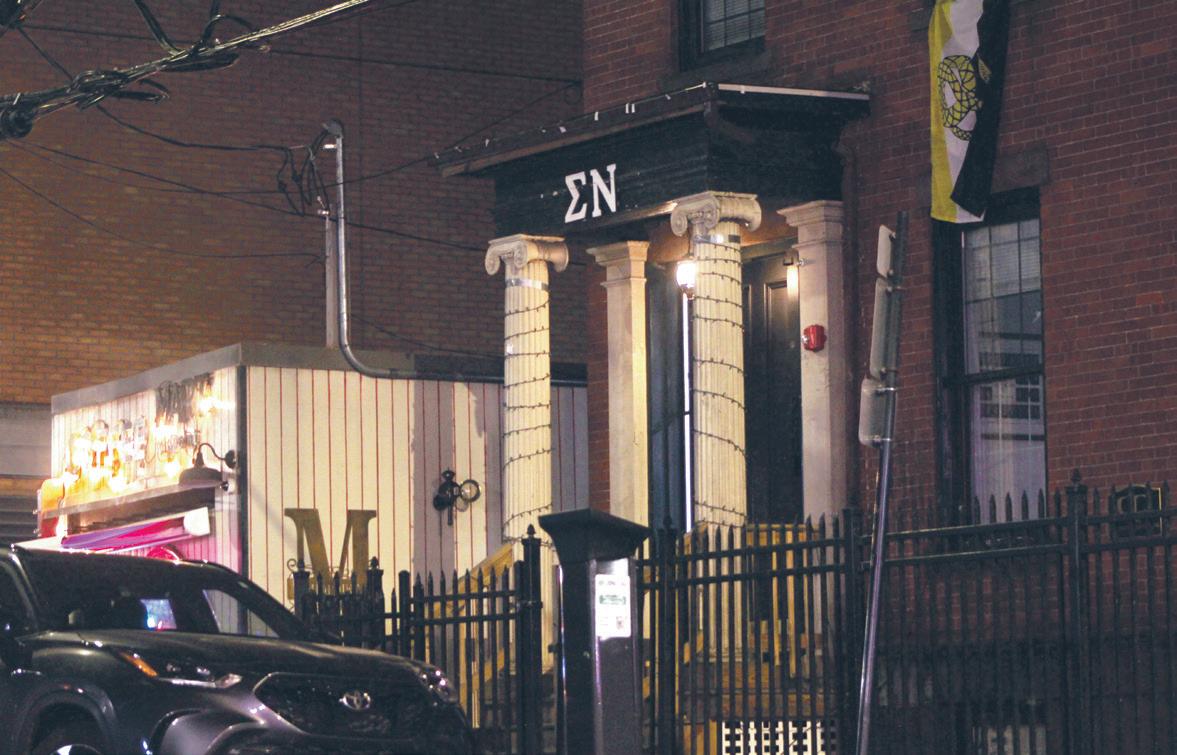
Yale’s Beta Alpha chapter is no longer listed among the active chapters on the national Sigma Nu fraternity website — a change from last month whose reasons and implications remained unclear. / Rachel Mak, Photography Editor
Trevino said the special election “happened very fast.” She guessed that some of her neighbors might not have read through Sabin’s resignation letter, or might have thought that he intended to leave at the end of his term, rather than before taking office. Sabin is now running in a three-way Democratic primary for a seat in the Connecticut House of Representatives. Matthew Whiting, a local business owner and resident of the ward, cast his vote on Sunday morning. Whiting said that he had spoken to both candidates. He had been particularly impressed with Kim’s engagement with businesses, he said.
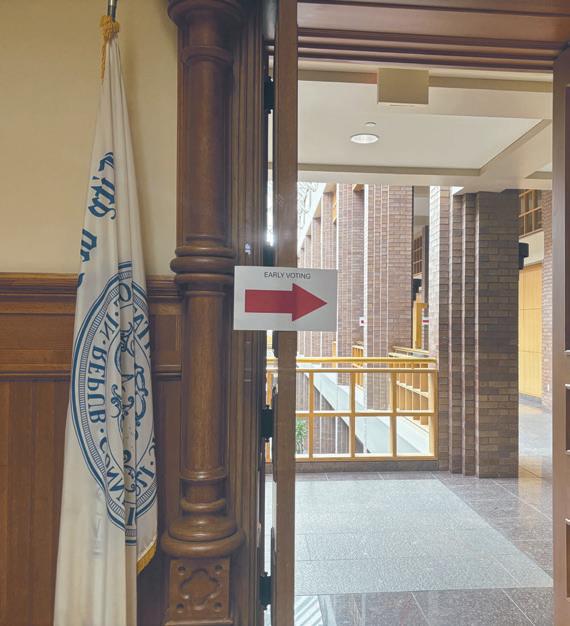
Early voting ended on Sunday. The polls will be open on Tuesday from 6 a.m. to 8 p.m. in the New Haven Hall of Records at 200 Orange St. Ward 7 last had a special alder election in 2014.
Contact NELLIE KENNEYat nellie.kenney@yale.edu.
ABSENCES FROM PAGE 1
Many of the reasons for substantial teacher absenteeism across the country are also linked to teacher turnover, said Chris Torres ’03, a professor of educational policy and leadership at the University of Michigan.
“The research on teacher retention finds that educators stay at schools where they feel supported, where they feel engaged in the work, and that have good working conditions. Things like smaller class sizes, more autonomy and input into decisions at the school, feeling supported around behavioral and instructional challenges,” Torres said in a phone interview.
During an online meeting of the New Haven Board of Education’s Finance and Operations Committee this month, Superintendent Madeline Negrón cited rising teacher absence rates to explain a proposed additional $1 million in funding for substitute teacher hiring and salary increases in the school district’s 2026-2027 budget.
Kevin Barbero, an English teacher at James Hillhouse High School, said the district’s proposal to invest more money in substitute teaching is a pragmatic but shortterm solution.
Some teachers use their allotted sick days to skip professional development activities that they find repetitive or unhelpful, Barbero said, rather than to miss classroom time — in which case the data might not reflect actual
absences from the classroom, he said. It does indicate, though, that teachers are facing “unmet needs.”
“In terms of money well spent, I think pragmatically, they need it, but it’s a band-aid,” Barbero said in a phone interview, referring to the $1 million proposed increase. “What are the core issues behind teacher turnover? What are the core issues behind teacher absences?”
For Ahmed Maklad, an English teacher at Betsy Ross Arts Interdistrict Magnet School, one of those issues is his health. He said in a phone interview that there are at least five teachers at his school, including himself, that he knows are actively looking for work outside the school district.
“When I get home, I am mentally and physically exhausted from babysitting, not teaching,” Maklad said, adding that “severe stress and extreme work conditions” are driving causes of some teacher absenteeism.
He estimated that in one 90-minute class period, he spends less than 30 minutes on actual instructional time, occupied otherwise with behavior management.
Like Barbero, Maklad said that an investment in substitute teachers was merely a “band-aid” solution. Before boosting the substitute teaching budget, Maklad said the district should change the conditions that cause teacher absenteeism in the first place.
“I suspect that mental health is a pretty universal factor in absen-
teeism in any industry,” Harmon, the district spokesperson, wrote in an email, claiming that the district has “no choice” when it comes to hiring substitutes to fill teacher absences. “The district does prioritize building the climate in schools. We try to make them welcoming places for students and teachers.”
Torres, the Michigan professor, said improving teachers’ working conditions requires time and “culture change.” In the short term, he said, he understands why school districts might prioritize hiring substitutes. One effective strategy, Torres said, is to hire and competitively pay full-time substitutes who work at the district level, serving at multiple schools depending on a particular day’s needs.
Districts can also consider introducing “team-based staffing models,” Torres said, which train multiple staff members to work with a single group of students and preserve student learning when a teacher is absent.
John Carlos Musser, a 2025 graduate of Wilbur Cross High School and a former student representative on the New Haven Board of Education, said that during three of his four years of high school, a long-term substitute teacher was brought in to replace his teachers, who were absent for various reasons.
Contact SABRINA THALER at sabrina.thaler@yale.edu
against Quinnipiac / Yale Athletics
Nellie Kenney, Contributing Photographer
“To try is to invite uncertainty. Where confidence goes, success usually follows.”
WAYNE GERARD TROTMAN BRITISH AUTHOR
College global affairs major no longer requires application FROM THE FRONT
The eight prerequisite courses — which include two introductory economics courses, two political science courses, two history courses, an applied quantitative analysis course and either an advanced economics or “qualitative methods” course — were already included in the global affairs major requirements.
While the class of 2029 will be the first class that will not have to apply for admission to the major as sophomores, students in any year can declare the major as long as they complete the prerequisites and demonstrate an “ability to fulfill all major requirements prior to their expected graduation,” according to the fact sheet.
Although the Jackson School of Global Affairs has not pub -
lished acceptance numbers for the major, an archived version of the Jackson School’s frequently asked questions page notes that “anywhere from 50-90 students” have historically been accepted every year.
Last year, the major adopted a new set of course requirements that lowered the non-English-language course requirement from L5 to L4 and expanded requirements in history and political science. This change, which took effect starting last fall, also allowed students to choose between a one-semester senior thesis and a one-semester senior capstone project instead of requiring the capstone project.
“The decision to lift the application to the major reflects an evolution in the Global Affairs curriculum, which was updated
for students entering the major in fall 2025 and after,” the fact sheet notes.
Bonnie Weir, the director of undergraduate studies for global affairs, did not immediately respond to the News’ requests for comments about past application numbers and how the major will potentially support higher enrollment in the future.
Both prospective global affairs majors and upperclassmen who have gone through the application process praised the change.
Eduardo Rodriguez ’29, a prospective global affairs major, said in a phone interview that the change alleviated his worry about not getting into the major. Now, he said, he will definitely commit to fulfilling the major’s requirements but wonders whether the changes could affect the appeal of the major’s selectivity.
“I’ve been trying to work as hard as I can to get into the major, and knowing that I don't have to apply is like a stress has been lifted off my back,” he said.
Jordan Epping ’28, an economics and history major who was not admitted to the major earlier this year, said in a phone interview that he thought, “Oh, man, if only that were the case one year ago.”
He added that he is no longer interested in the global affairs major because he has already completed many economics major requirements this year.
Anna Chamberlin ’26, a current global affairs major, said in a phone interview that the changes ultimately “fall in line” with the efforts to remake the major. Chamberlin said that although she did not think the original applica-
tion was very intensive, removing the application requirement allows more students to access a “whole breadth of courses.”
Chamberlin said she recognizes that the capstone trip is a significant financial demand in the program and is concerned that accepting more students in the major could result in the discontinuation of the offer.
Yunhan Liu ’29, also a prospective global affairs major, said in a phone interview that she is concerned about fulfilling the prerequisites but will still “100 percent continue with global affairs.”
“I’m happy that, in a way, it makes the major more accessible to students and less daunting,” she said. “Instead of feeling like I can’t tell people that I’m in the global major because it’s something I have to apply to, I can now say I’m actually working towards the global major.”
Greta Garrison ’28, who is a global affairs major, said in a phone interview that the change is “awesome.”
Previously, many first years have taken predominantly global affairs-related courses to show interest in the major for their applications, and now, they will be able to “try different disciplines and things,” which is essential for a liberal arts school, Garrison said.
The application process had also made it “really unfair” to students who chose Yale over other schools because they wanted to major in global affairs, only to get rejected from the major, Garrison added.
Jehan Fernando ’28, who is also a global affairs major, also praised the change in a phone interview, noting that Yale already has “so many” application processes and “gatekept academic programs.” Application results for the global affairs major were released in October, a month before course registration for the spring semester opened.
Contact JAEHA JANG at jaeha.jang@yale.edu and JOLYNDA WANG at jolynda.wang@yale.edu.
Residents raise concerns about proposed park site
inefficiency, according to the New Haven Building Archive.
In 2001, the plant was transferred from United Illuminating, or UI, to Quinnipiac Energy, according to the company’s website. Ball Island, which is divided into two parcels, was sold in 2012, with one portion owned by Asnat Realty LLC and the other by Evergreen Power LLC. As owners moved to demolish the site, Connecticut’s Department of Energy and Environmental Protection discovered cancer-causing PCBs, which halted the demolition and brought the plant’s future back into discussion. In 2013, the state, noting the contaminants, issued an administrative “cease-and-desist” order, which required the site to be cleaned up before further demolition to pre-
vent the spread of contaminants into nearby waters. City officials have been discussing plans for English station for the last decade, and Mayor Justin Elicker announced the recent park proposal in July 2025.
Under environmental remediation laws, the polluter is responsible for cleaning up the site, making UI, despite having sold the site decades ago, responsible for remediating the land.
“While UI has not owned English Station since the early 2000s, we are fully committed to working within the bounds of the Partial Consent Order signed by state officials to remediate the English Station site to the standard that was agreed to in 2016,” Sarah Wall Fliotsos, a UI spokesperson, wrote in an email to the News. “The Mill River Park envisioned by Mayor Elicker would require remediation far beyond
this standard, so alternate funding mechanisms would need to be identified to bring this vision to life. We are always ready to work with state and local officials to support their vision for the site.”
According to Fliotsos, the current owners of Ball Island have taken an “absentee” role when it comes to contributing to remediation efforts.
The owners have not responded or complied with the city’s requests to sell the property, Fliotsos said.
Last month, Elicker submitted a proposal to the Board of Alders for the city to acquire the English Station property, either through purchase or eminent domain, if necessary.
At a town hall about the proposed park last month, residents expressed skepticism about the site’s safety.
According to Hanno Erythropel, an environmental chemist at Yale’s Center for Green Chemistry
and Green Engineering, the PCBs at English Station are one of the “dirty dozen”: 12 man-made compounds classified as persistent organic pollutants. The chemical structure of many chlorines makes them difficult for microbes to break down, leading to their accumulation over time.
As these compounds accumulate in the environment, they can have major impacts on the ecosystems surrounding the site of pollution as well as the health of people nearby, according to Erythropel.
According to the Agency for Toxic Substances and Disease Registry, PCB accumulation in humans may cause conditions such as acne and rashes, while more severe exposure can lead to hormone imbalance and endocrine disorders.
UI completed a partial PCB and asbestos clean-up at the site in Aug. 2018, according to its website. Based on the original timeline, the remediation was supposed to be fully completed by 2019, according to Fliotsos. Remediation can fall into two categories of standards: commercial and residential. Commercial remediation is less comprehensive, allowing industrial complexes to be rebuilt upon the same site, and residential remediation is more comprehensive — and expensive.
UI has already spent $22 million of its $30 million budget, Fliotsos said, and has blown past its original 2019 deadline. The holdup has been compounded by an ongoing dispute between the state and UI about the standard to which remediation should be held. According to Fliotsos, the cleanup is nowhere near the standards for a residential site or a heavy industrial site.
Contact MICHELLE SO at michelle.so@yale.edu. BALL ISLAND FROM PAGE 1
Other organizations, like the Urban Design League, are actively pushing for alternatives to building the park on the site because English Station qualifies as a historic site. At a recent town hall meeting, members of the group handed out fliers lead-
ing to their website, which has a page about the history of the site.
Anstress Farwell, the president of the group, was among the most outspoken about English Station’s historical value at the meeting.
“Although DEEP’s court filings seem to claim that following the federal standard would lead to an unsafe building, DEEP hasn’t really backed that up that claim,” Farwell later wrote to the News in an email. “Our preliminary review of DEEP documents on PCB and other criteria pollutants suggests that the building can be remediated to usable standards, and that it is cheaper to remediate and reuse the building than it would be to remediate and demolish the building.”
Farwell wants the city to preserve the plant’s historical and aesthetic value, and contribute to mitigating inadvertent pollutant releases into the environment. She has proposed keeping the site and building around the intact structure, rather than conduct a full demolition as the City intends.
Bill Flood, a spokesperson of the Department of Energy and Environmental Protection, wrote to the News that the responsibility to present alternative futures for English Station lies with UI.
“The responsibility to present an evaluation of alternatives to the Commissioner as it relates to remediation or demolition at the English Station Property resides with United Illuminating, based on the investigation performed by their hired Licensed Environmental Professional (LEP) and the results of that investigation,” Flood wrote to the News. “No such evaluation of remedial alternatives for the main power plant building has been submitted to date.”
The National Register of Historic Places contains over 93,500 places.
Mayor Justin Elicker has proposed converting a decommissioned coal-fired power plant into a public park. Dangerous pollutants still fill the site, and remediation is progressing slowly. / Lily Belle Poling, Staff Photographer
GLOBAL FROM PAGE 1
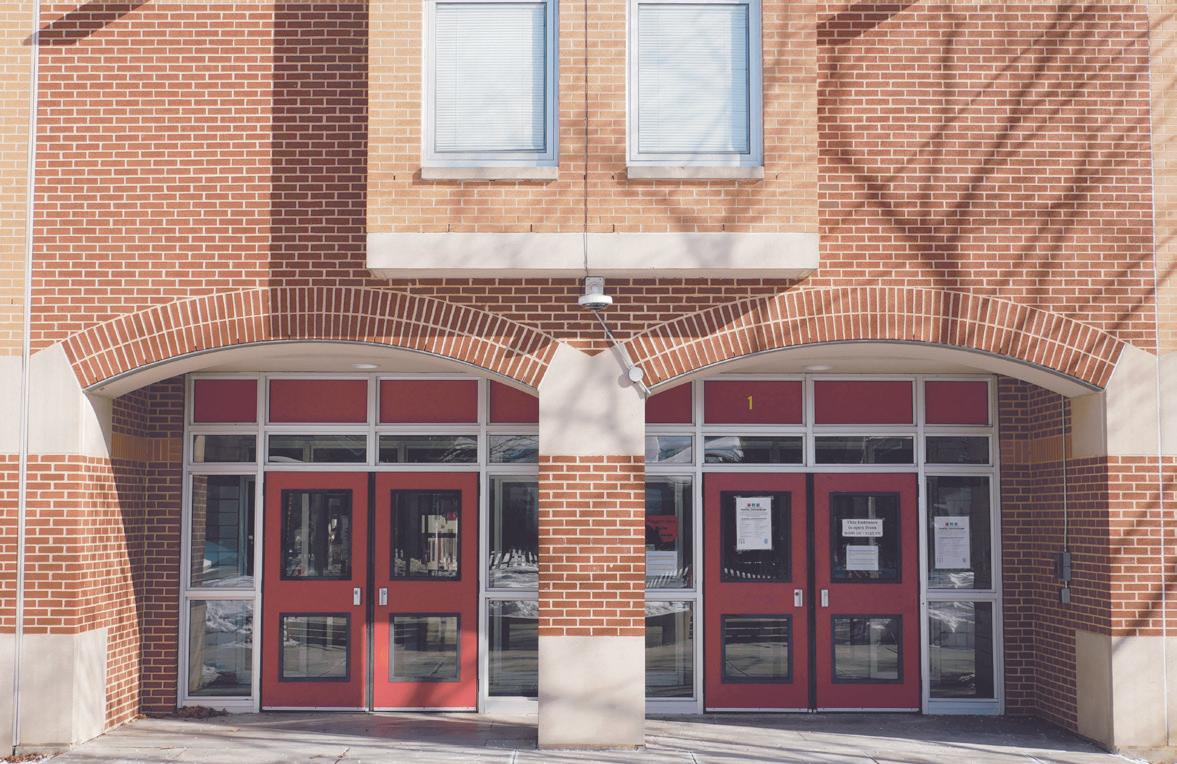
Starting with the class of 2029, the major will not require the traditional application process during students’ second years. Now, any student can enroll in the major as long as they complete eight prerequisites. / Rachel Mak, Photography Editor
“Only I wasn’t steering anything, not even myself.”
SYLVIA PLATH AMERICAN AUTHOR
Protesters rally on Beinecke on day of action against Iranian regime
BY ANAYAH ACCILIEN, JOLYNDA WANG AND SARA AGRAWAL STAFF REPORTERS
About 100 faculty, students and locals gathered on Beinecke Plaza on Saturday to express solidarity with people killed in Iran since late December.
The Yale Alliance for Solidarity with Iran hosted the demonstration, which was part of a broader wave of protests around the world, including in Munich, Toronto and Los Angeles. Since late December, Iranian security forces have killed thousands of civilian protestors. Estimates of the death toll vary, with numbers ranging from at least 7,000 dead, according to the Human Rights Activists News Agency, to upwards of 30,000, per The Guardian.
“For me, I cannot see that much blood on the streets of my hometown and stay silent. This is my university as well, and I wanted to demonstrate, to tell my friends, to tell my colleagues that I’m furious, that I’m angry. Being at this demonstration is the very least. Hopefully, we can notify people here at Yale campus about the situation in Iran,” Herlock Rahimi ENG ’25 GRD ’29, a doctoral candidate from Iran, said in an interview. “I wanted to demonstrate this is not justice, this is not civilized, and other countries should act against the regime in Tehran.”
Reza Pahlavi — the exiled crown prince of Iran and opposition leader to the Islamic Republic of Iran — announced that Feb. 14 would mark a global day of action for Iranians worldwide to protest the regime of Supreme Leader Ayatollah Ali Khamenei.
A projector displayed graphic videos of violence and protesters being killed on the streets of Iran. During the demonstration, participants chanted “40,000 people killed: this is genocide;” “Not Gaza, not Lebanon, my life for Iran;” “Islamic Republic: terrorists, terrorists;” “Trump act now” and “Death to Khamenei” in English and Persian.
Some wore Iran’s lion and sun flag, which was banned in Iran after the 1979 revolution, on their backs.
The demonstration concluded with participants singing the Iranian national anthem.
Protests in Iran began on Dec. 28 over the country’s economic crisis.
After Khamenei ordered officials to crush the protests by any means necessary on Jan 9, officials began
to open fire on civilian protesters, according to the New York Times.
On Jan. 13, President Donald Trump posted on Truth Social, “keep protesting, help is on the way.”
Speakers laid out demands for the international community and for Yale.
Hadi Mahdeyan ’27, a student from Iran, organized the event and founded the Yale Alliance for Solidarity with Iran, which was approved as a student organization on Friday. He said in an interview with the News that “to show exactly what was happening on the streets, to show the videos, even though it is disturbing” was particularly important for him.
“One of my friends was killed in the protests, so it was really personal for me. I felt like it’s something that I at least owe it to him,” Mahdeyan said.
Pourya Navi, a student at the University of New Haven, called upon countries to take action, including by dismantling the Islamic Republic’s
military machinery, guaranteeing internet access for Iranians, expelling Iranian regime diplomats, securing the release of political prisoners and transitioning to a democratic government by recognizing Pahlavi as a legitimate representative of the Iranian people.
Rahimi, the doctoral candidate, recited names of citizens killed in Iran, and the crowd responded, “rest in peace,” in Persian.
Rahimi said that since the 1979 establishment of the Islamic Republic of Iran, authorities have replaced historic national symbols with statebacked ideological imagery. He said he believes Iran should represent its people and national heritage rather than a governing ideology, describing his decision to wear the lion and sun flag on Beinecke Plaza as an expression of solidarity with the Iranian people.
Rabbi Shmully Hecht, a founder of the Jewish society Shabtai, criticized
members of the Yale community who did not attend the demonstration.
“They’re so busy with every cause — freedom, human rights, minority rights, women’s rights,” he said. “Now the people of Iran are fighting for freedom. Where are the thousands of U.S. students who claim to be concerned about freedom in the world?”
He also directed criticism toward Yale’s leadership.
“Where is the University? Shame on them, shame on the president of Yale and the deans and faculty,” Hecht said.
“Tonight was a night to stand in solidarity with the people of Iran. This is a scar on our reputation as a university that portrays itself at the forefront of fighting for human rights.”
Tina Posterli said on behalf of the University, “Yale is committed to a diverse and respectful community where
free expression is a fundamental value. The university promotes free expression on campus by permitting peaceful talks, vigils, rallies, and protests that adhere to university policy.”
Shervin Issakhani GRD’ 30, a second-year doctoral candidate who attended the demonstration, said that while he would not call on “foreign military force intervention” at this point, it might be necessary for longterm peace. He said that you “wouldn’t ever negotiate” with Iran’s current regime.
Reza Pahlavi gave a talk at Yale in 2001.
Contact ANAYAH ACCILIEN at olivia.cyrus@yale.edu, JOLYNDA WANG at jolynda.wang@yale.edu and SARA AGRAWAL at sara.agrawal@yale.edu.
Annual lecture on physics Nobel Prize highlights Yale professor’s work
BY ANYA GEIST STAFF REPORTER
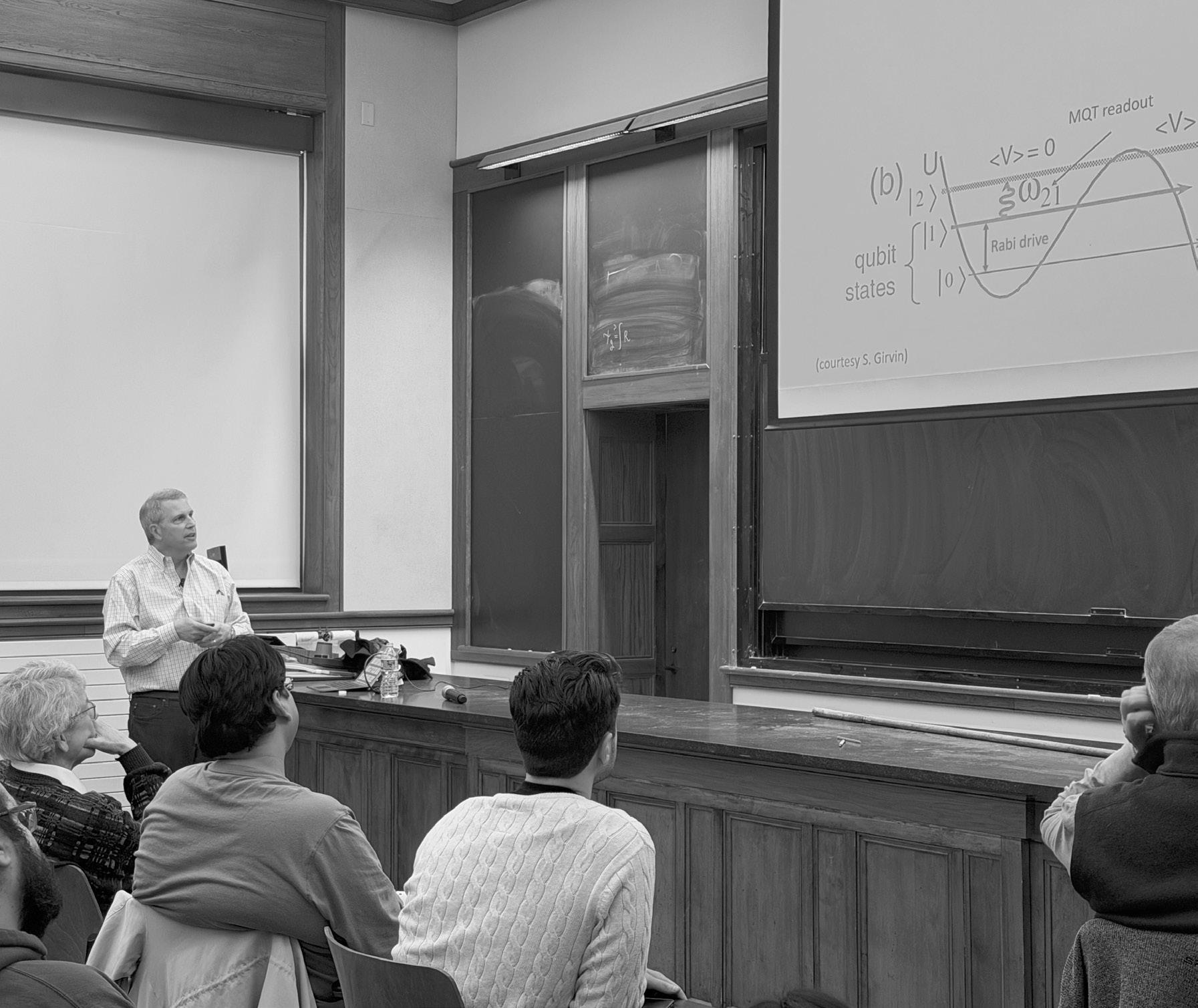
Students and faculty packed a lecture hall in the Sloane Physics Laboratory on Monday to hear Rob Schoelkopf, a Sterling professor of applied physics, discuss this year’s Nobel Prizewinning physics research.
Yale’s physics Nobel Prize lecture is held annually to explain and contextualize the most recent Nobel Prize in physics. This year, the lecture concentrated on the work of John Clarke, John Martinis and Michel Devoret, a professor emeritus of applied physics, who jointly won the Nobel Prize
for demonstrating quantum phenomena on a scale visible to the human eye.
“The Nobel Prize and Nobel laureates are something that the general public appreciates in some vague way,” Schoelkopf said in an interview after the lecture. “Having them understand the research that
goes along with it, I mean, it’s a good way to get people who are science-curious to get more enthusiastic about it.”
The attitude in the lecture hall was enthusiastic as Schoelkopf talked to the audience of undergraduates, graduate students, researchers and faculty through the history of quantum research. He began by describing the work of Tony Leggett, a British-American theoretical physicist who predicted that quantum mechanics could be applied to macroscopic systems. Devoret and his colleagues’ work demonstrated Leggett’s prediction.
A. Douglas Stone, a professor of applied physics, told the News that in the years immediately following Devoret and his colleagues’ research in the 1980s, few researchers built on their work.
However, quantum computing expanded following the 1994 research of Peter Shor, a theoretical computer scientist who is currently a professor of applied math at MIT, Stone explained. Shor proposed a theoretical quantum computer that could break the standard code used to encrypt most websites. As a result, quantum computing became a matter of national security.
“Suddenly, anything that was manipulating, controlling quantum, was a step towards the quantum computer, which was going to be this important national security and economic breakthrough,” Stone said.
In the decades since, the field of quantum physics has grown rapidly, as researchers develop more effective and efficient quantum computing systems. In particular, many researchers have explored more efficient and effective
methods for producing stable qubits. Qubits, the fundamental unit of information in quantum computing, are notoriously unstable, but are necessary for any quantum computing. Scientists are developing numerous methods of making them more stable.
Schoelkopf also discussed the role of industry in quantum computing. Most large technology companies, such as Microsoft, Intel and IBM, are developing qubits and quantum computing systems.
“One of the things I’ve learned about being a little bit involved in the industrial side is there’s no time to indulge your curiosity or to try something that might not work,” Schoelkopf said during the lecture.
Schoelkopf also touched on Yale’s contributions to the field.
“Our superpower over the years here at Yale has been that we are small, but we take advantage of that small size by being extra collaborative, extra interactive,” Schoelkopf said.
Darya Dayanim ’28, the prize lecture chair of the Society for Physics Students, said she appreciated how approachable the lecture was as a synthesis of complicated Nobel Prize research. It was motivational, she said, to see how Nobel Prize-winning research could inspire future developments in quantum computing.
“Something that stood out to me in particular was the history he took us through, step by step, showing how all these little pieces built on themselves,” Dayanim said.
The Sloane Physics Laboratory is located at 217 Prospect St.
Contact ANYA GEIST at anya.geist@yale.edu.
ANAYAH ACCILIEN / CONTRIBUTING PHOTOGRAPHER
Around 100 students, faculty and locals gathered on Beinecke Plaza to protest ongoing killings of civilian protesters in Iran.
The lecture about Yale professor emeritus Michel Devoret’s Nobel Prize-winning work highlighted the history of quantum computing for a physics audience.
REVIEW
In intimate Valentine’s Day ‘La Bohème,’ romance’s joys and sorrows
BY ANNA ZOLTOWSKI STAFF CRITIC
On Saturday night, Yale Opera’s production of Giacomo Puccini’s
“La Bohème” wooed the audience in the Shubert Theatre with a timeless story of love and sorrow in a production involving Yale School of Music students, guests from the Metropolitan Opera and members of the New Haven community.
“La Bohème” — directed by J. David Jackson, a staff conductor at the Metropolitan Opera — was a treat for the opera fanatic and layman alike. The opera stands as an enduring tragedy of true love, sickness, companionship and death, set in alluring 19th-century Paris — a romantic choice for Valentine’s Day weekend, certainly, but nevertheless gloomy. In an unusual directional choice, the casts differed entirely between the Saturday evening and Sunday matinee showings.
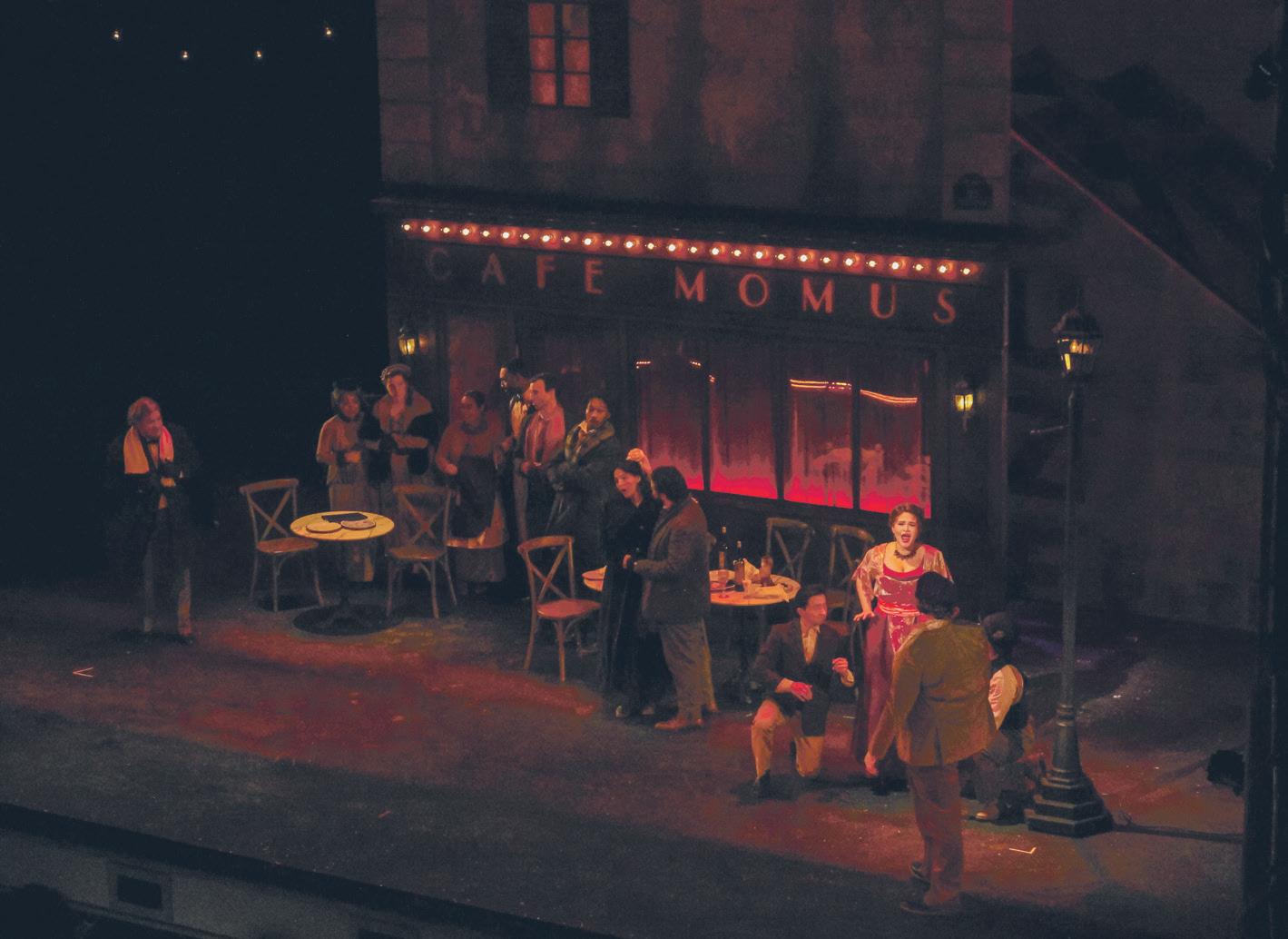
As the jaunty overture began, the curtain rose on a spartan scene: The frame and rafters of a house stood center stage in front of a bare brick wall. It was austere and, owing to the anachronistic abstract painting on an easel in the corner, instantly evocative of the lifestyle of a starving artist. In the first scene, Rodolfo, a poet played by Dominic Salvati MUS ’27, burns his manuscript for warmth, and the room is saturated in glorious orange firelight. “La Bohème” hinges on juxtapositions: light and dark, hot and cold, destitution and excess, love and death.
Act 1 continued with precise and amusing physical comedy as Rodolfo’s three highspirited companions entered the apartment. The clear highlight was a fantastically choreographed half-dance, half-combat pillowfight. The audience laughed along with the
‘College
BY CAMERON NYE STAFF CRITIC
four young men onstage. Chris Leimbruger MUS ’27 delighted as the bothersome landlord, Benoit, with a dopey gait.
Later, three of the artists left to make merry at nearby Café Momus, leaving Rodolfo alone in his quarters. His neighbor Mimi knocks on his door seeking a light for her candle. She is ill and immediately faints in Rodolfo’s arms. Maia Aramburu MUS ’26 delivered a classic Mimi — darling yet doomed. Upon entering the barren room, Rodolfo remarked that Mimi looked pale. Only here did Aramburu begin to act like an ailing damsel in distress. Her character work seemed inconsistent at certain moments, but she snapped back into her illness upon prompting by other characters’ comments on her frailty. Her voice never faltered and held strong through even the lower notes of her register.
The exchange of arias to close Act 1 displayed the highest caliber of artistry and vocal technique from both Aramburu and Salvati.
In “Che Gelida Manina,” Salvati’s high B’s and C’s gushed through the theater with confidence, passion and ease. He had complete command over his register, and over the audience’s hearts. We rejoiced when he rejoiced. We cried when he cried.
In larger productions of “La Bohème,” an intermission between acts 1 and 2 allows for a magnificent scene change from a drafty, gray apartment to a lively Parisian city square. On Saturday night, the curtain stayed up and the transition was woven into the continuous action of the performance under the brilliant oversight of stage director Christopher Mattaliano. The entire chorus, 30 singers strong, rushed onstage, excitedly singing about the spritely energy of a lively
Parisian evening. The facade of the Café Momus rolled into place and the ensemble split off to go about their business flirting, chatting and waiting tables.
The ensemble featured a children’s chorus composed of members from Trinity on the Green in New Haven and St. Paul’s Episcopal Church in Fairfield. When the toyseller, played by a suitably nimble Scott La Marca MUS ’26, danced onstage shouting about his wares, the children ran up to him and jumped after his toy horses and tambourines. A military parade marched through the square, complete with brass, drums and flutes. Through this masterful direction of the chorus, Act 2 offered a deliciously ideal picture of a Parisian night. It was a total delight to the eye and ear.
Laura Miah MUS ’26 emerged as an unquestionable standout as Musetta. During Act 2, Musetta stages a tantrum at the Café Momus to simultaneously ditch her geriatric date and catch the eye of Marcello, her former lover and Rodolfo’s roommate. She is conniving yet genuine, both a wannabe prima donna and a sweet young Parisian. Miah walked this line with mature finesse to enchant the audience. Her supple technique excelled among the cast. The final sustained note of her Act 2 aria, “Quando m’en vo,” a scalding high B, diminuendoed to a delicate pianissimo before swelling into a lush vibrato. As Marcello, Chancelor Barbaree MUS ’27 thundered a robust baritone. Barbaree and Miah could have made a perfectly delectable and impassioned Rodolfo and Mimi.
As the curtain rose for Act 3 after intermission, the audience
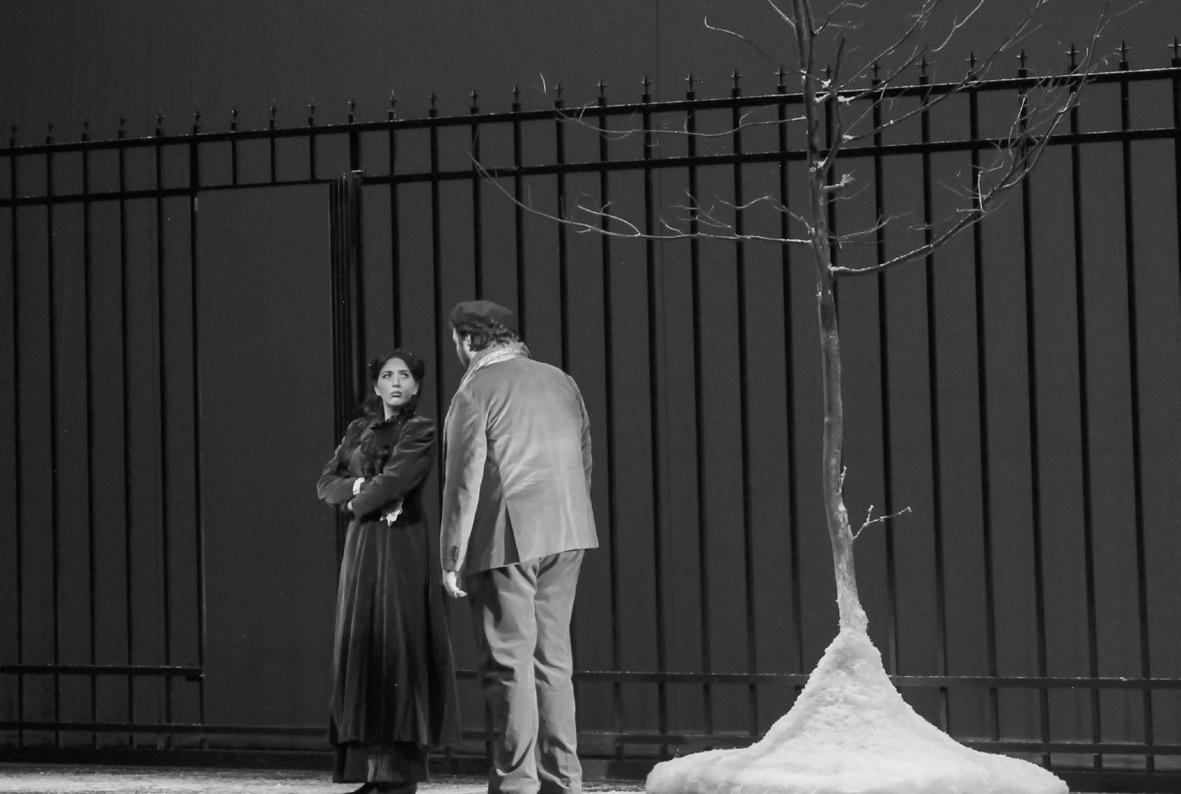
collectively gasped in wonder at the ethereal winter landscape onstage. The backdrop was a ghostly shade of steel blue. An imposing iron fence traversed the stage. A lone, leafless tree stood on stage left. Snowflakes floated down from the ceiling. Members of the ensemble sang an otherworldly melody from offstage. The scene was heavenly yet uncanny. From this bleak midwinter scene alone, it was clear that Mimi’s end would be utterly hopeless.
After the lighthearted camaraderie and new romances of acts 1 and 2, the final Act 4 is a challenge for even a veteran Mimi or Rodolfo — both characters deliver gut-wrenching solos while seated or reclined. Singing one’s strongest from a constricted position is a true test of a performer’s abilities, and both Salvati and Aramburu did not let their staging impinge on their tender yet tortured grief at Mimi’s impending demise. In the final scene, Rodolfo huddled
at the foot of Mimi’s bed, where his lover lay limp. Musetta knelt in prayer and the other three artists formed a tableau of utter agony. The lighting faded to icy gray and the curtain lowered, leaving us audience members on a melancholy note to continue our Valentine’s Day festivities. The production’s greatest strength was its ability to communicate emotion. The audience had no choice but to feel along with the characters. The stage and lighting design, the precise musical and stage direction and the small size of the venue created an experience that was world-class yet had a hometown feel. It was easy to discern that every person involved — from a distinguished conductor to rising-star sopranos to local choir girls — put their whole heart into this performance.
Contact ANNA ZOLTOWSKI at anna.zoltowski@yale.edu.
Play’ captures absurdity and sincerity at Yale College
To say someone is a “Yale student” is to summon a myth. It conjures mahogany seminar tables, secret societies and a conveyor belt to power. A Yale student is imagined as a tweed-clad apparition from the upper echelon of society, their pretentious reputation preceding them, their success as certain as their trust fund. They are supposed to have it all figured out. Yet beneath the suit jackets and suffocating cologne is something less composed: a student carrying the weight of the world on their shoulders.
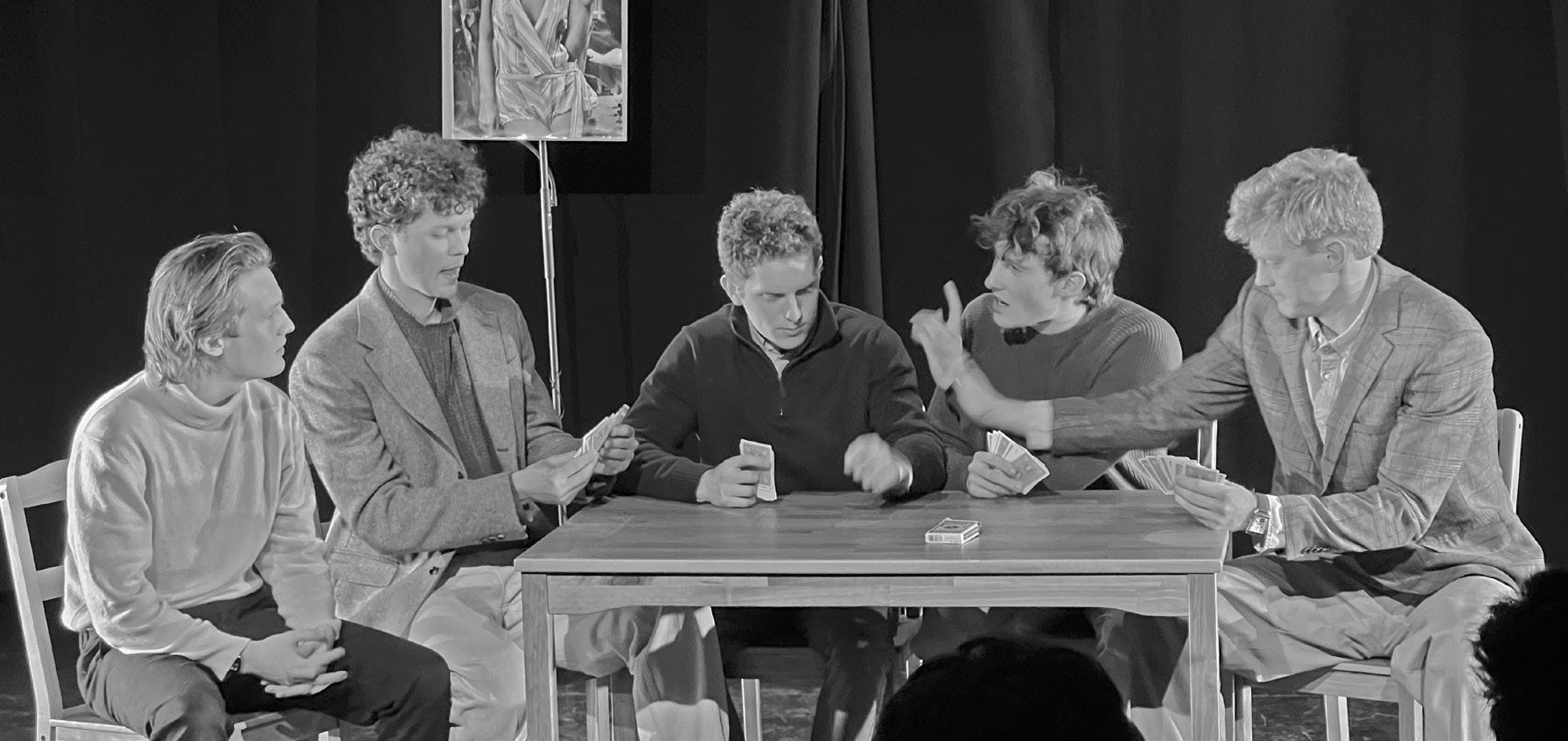
“College Play,” a creative writing senior thesis and original work of the director and lead Brennan Columbia-Walsh ’26, animates these archetypes through the lens of his own life. Semi-autobiographical in form, it centers around his days living on Edgewood Avenue with his closest friends — played, fittingly, by the housemates themselves.
The play opens with Columbia-Walsh’s astute narration, immediately shattering the fourth wall and establishing its self-aware, meta sensibility. He sketches the world in quick strokes: crooked floorboards, a
bridge table, a gigantic stuffed gorilla, a poster of Kate Moss. One by one, his housemates emerge in plaid robes, exuding boyish bravado as they trot across the stage.
The residents of 17 Edgewood Ave. are your typical Yale students — literally. Leo Greenberg ’26 leans into the overachieving polymath. George Baily ’26 plays the suave, self-serious English gentleman. Oleg Laskov ’26 relishes the role of the affable goof. Rounding out the household are the fictional Marty Bukowiee, portrayed by Eason Rytter ’27, and the honorary housemate — Columbia-Walsh’s girlfriend — Maisie Bilston ’26. Their story stretches from junior year through commencement and into a hazy ten-yearslater epilogue. We see vignettes of Yale “traditions” — Conservative Party debates erupting with spitty hissing and shady backdoor deals to secure leadership positions, eccentric professors who dazzle with their brilliance but baffle with their nonsense, even the tragedy of gorgeous women settling for merely available men.
Columbia-Walsh knows exactly which corners of Yale College to skewer. Drawing shamelessly from his own experience, he pushes “write what you know” to theat-
rical extremes, recasting professors and classmates as razor-edged caricatures, mining his memory for texture. The result is uncanny, unconventional and wildly imaginative — veering from narrated fraternal antics to impromptu talk shows featuring sensational guests like the illustrious Dean of Yale College and the ever-infamous president of the fraternity LEO. These segments, commonly in Act One, are where the production locks into place, propelled by Columbia-Walsh’s deadpan delivery and a script sharp enough to feel both meticulously engineered and gleefully unhinged.
Columbia-Walsh’s performance as himself is hilarious and surprisingly moving. He juggles his roles well: part omnipotent narrator, part exasperated playwright, part faithful friend. One moment he’s corralling an overzealous chorus of Whiffenpoofs, the next he’s flashing a conspiratorial smirk that punctures the scene’s self-importance. He lets the audience catch up to the joke rather than fishing for laughs. Later in the show, his sentimentality surfaces in raw flashes, particularly in moments grappling with his religious convictions and quiet reflections in mourning.
Casting your friends is a controversial practice. Casting them to play themselves is practically unheard of. Yet, Columbia-Walsh takes that chance. To their credit, the central cohort rises to the occasion with commendable — if occasionally tentative — performances, made all the more impressive by the fact that some are stepping onto a Yale stage for the first time. Their chemistry carries the early scenes. Morning skirmishes over the shower unfold with lived-in ease and ritualistic card games bristle with just enough competitive bite to feel authentic, even when the acting itself still searches for firmer footing.
Rytter emerges as the undeniable standout. His Marty, the house’s affectionate punching bag, radiates such earnest sweetness as the group’s scapegoat.
Laskov is a riot in his own right, with soaring Barbra Streisand impressions and an easy-going demeanor that Emma Fusco ’26 marvels as the Dean, wielding a blindingly toothy grin and perfectly calibrated word-salad platitudes to capture the toxic positivity and gentle absurdity of collegiate administration.
Talia Namdar-Cohen ’27 relishes the genuine eccentricity of drama professor Deborah Margolin, while William Barbee ’26 delights as a stoic, intellectually foggy yet impeccably credentialed English Professor that may or may not be based on a current Yale faculty member.
The most surprising yet welcome performance of the evening was that of Meg Columbia-Walsh, Brennan Columbia-Walsh’s mother, who made the trek to New Haven to play herself. Effortlessly charming, she leans into her maternal instincts with a knowing ease that grounds the production.
“College Play” succeeds because the writing is ruthlessly observant. Columbia-Walsh has an ear for the kind of dialogue that sounds absurd until you realize you’ve heard some iteration of it in a dining hall booth.
“I’m leaving Yale and the only thing I gained is the ability to be a Yale student,” one character con-
fesses, a line so simple yet sympathetic. Elsewhere, platitudes soar with unironic conviction: “We’re all going to be fine because we have beautiful souls.” And in a moment of delicious melodrama, a character sputters, “We’re not in the swimming pool. How are you drowning?” These thoughts and sentiments are recognizably ours. Columbia-Walsh understands that Yale students oscillate between existential crisis and unearned confidence, sometimes within the same breath, and he writes accordingly.
That being said, the play’s most lyrical prose arrives at a moment when its structure begins to fray. Near the end of the second act, the ensemble lines up beneath a sterile wash of white light, each stepping forward to deliver an impassioned monologue. The speeches themselves are often striking, but their sudden appearance feels abrupt. From there, the production veers into melodrama, trading the sly observational humor of its opening for a heavier hand that dulls some of the earlier brilliance. It’s not that the sentiment is unwelcome, it’s that the play, so deft at skewering Yale mythmaking, momentarily forgets how sharp it once was.
For all its uneven turns and bursts of theatrical self-indulgence, “College Play” remains a deeply Yale production, one that could only exist here, shaped by the peculiar ecosystem that produces both pragmatic overachievers and reluctant romantics. Columbia-Walsh doesn’t stop at staging a play about Yale College. He stages the fragile, occasionally ridiculous relationships that make this place feel singular. The next time you wander down Edgewood Avenue — past crooked porches and windows still glowing long after midnight — consider the friendships, rivalries and moments of sincerity unfolding behind those doors. At Yale, the mythology is loud, but it’s the people who make the story worth telling.
Contact CAMERON NYE at cameron.nye@yale.edu.
“Although our intellect always longs for clarity and certainty, our nature often finds uncertainty fascinating.”
Bulldogs break a school record and win 11 events at home
TRACK & FIELD
BY INEZ CHUIDIAN STAFF REPORTER
While some may break hearts on Valentine’s Day, the Bulldogs broke times and records. This weekend marked the final week of the regular season for the men’s and women’s Yale track and field teams, as they prepare for the upcoming Ivy championships in two weeks.
On Friday, a handful of athletes traveled to Boston for the David Hemery Valentine Invitational. The rest of the team remained in New Haven in preparation for the Giegengack Invitational that Yale would host the following day.
In Boston, junior Finnegan Quinn ’27 placed seventh with a personal best in the 400-meter race, while Gloria Guerrier ’27 took home fourth in the same event with a time of 54.35 seconds.
Saturday’s meet at home in Coxe Cage delivered great results for the refreshed Bulldogs.
Junior Lucija Grd ’27, the school record holder for the 60-meter hurdles, once again
broke her own record in the event.
After setting a record of 8.35 seconds at the Penn Invitational in January, she beat it by 0.06 seconds on Saturday.
“I knew I was capable of the result and practice has been going well,” Grd wrote in a text message to the News, adding that every race is an “opportunity to learn even more and hopefully run even better results. I am even more happy to see many people do really well on the team and I am really excited for Ivy Championships in two weeks!”
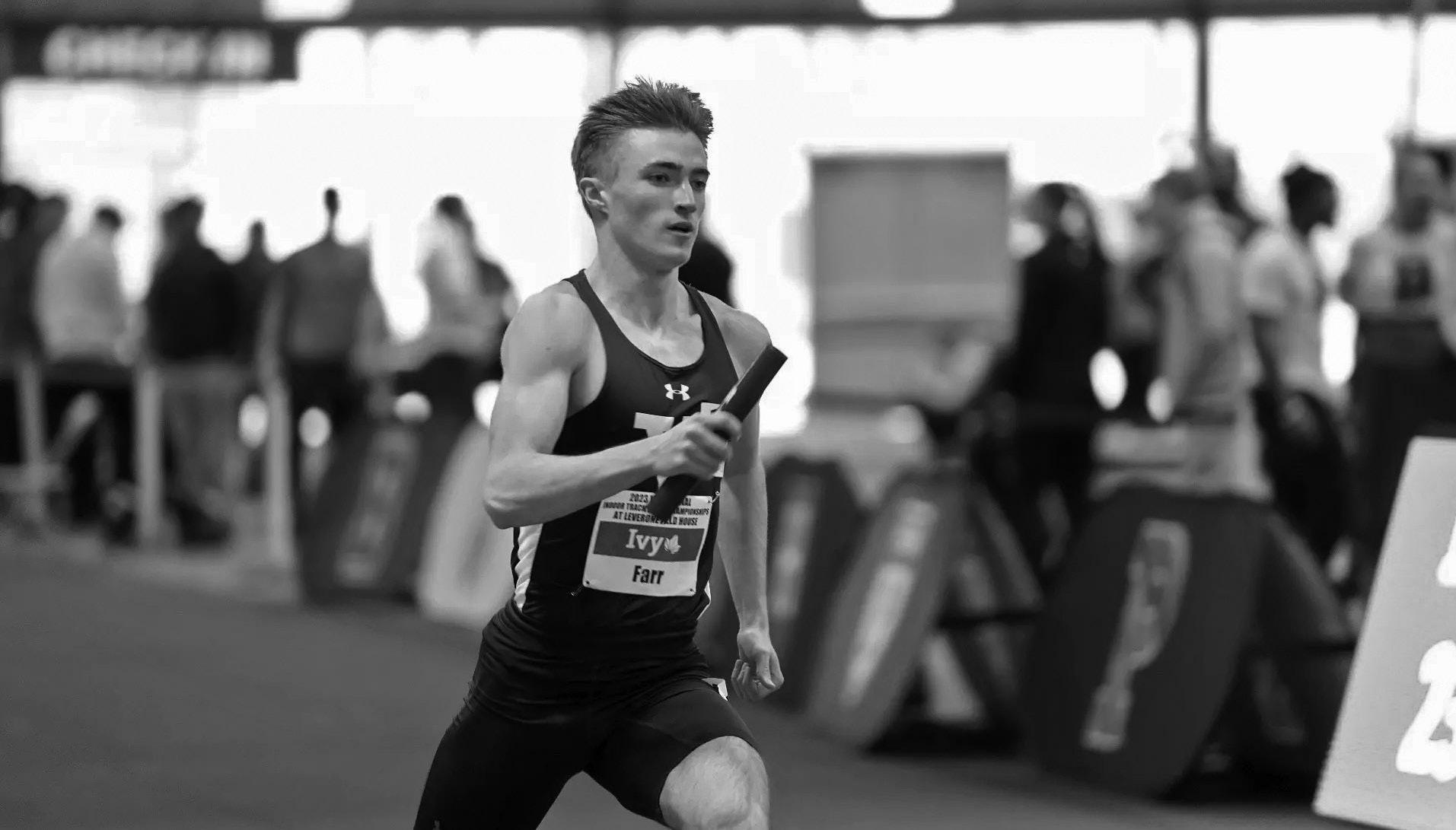
Building off of the momentum of Grd’s record-shattering performance, Yale went on to capture 11 event titles overall. On the track, the men claimed firstplace finishes in the 60-meter, 800-meter, 1000-meter and mile races, while the women topped the field in the 60-meter hurdles and 200-meter dash.
“It’s always a great feeling spinning your legs on the oval,” Amaré Fields ’27, who came second in the 1000-meter race on Saturday, wrote to the News. “This weekend was just another mark to keep pushing the needle forward.” Fields took home fourth place last weekend at the ECAC
Championships, where he was just 1.01 seconds away from the top finisher. He stressed the importance of the team’s pursuit of continual improvement. In the field events, the Bulldogs swept the weight throw in both the men’s and women’s divisions. Sophomore Anna Siciliano ’28
secured the women’s shot put victory, while Layni Kaase ’29 won the women’s high jump and Orion Browne ’28 won the men’s triple jump. On the heels of this dominant performance, hopes are high for Yale’s championship season. The team will next compete at
After Bulldogs extend win streak to seven with victory over St. John's
WOMEN'S TENNIS
BY BRODY GILKISON STAFF REPORTER
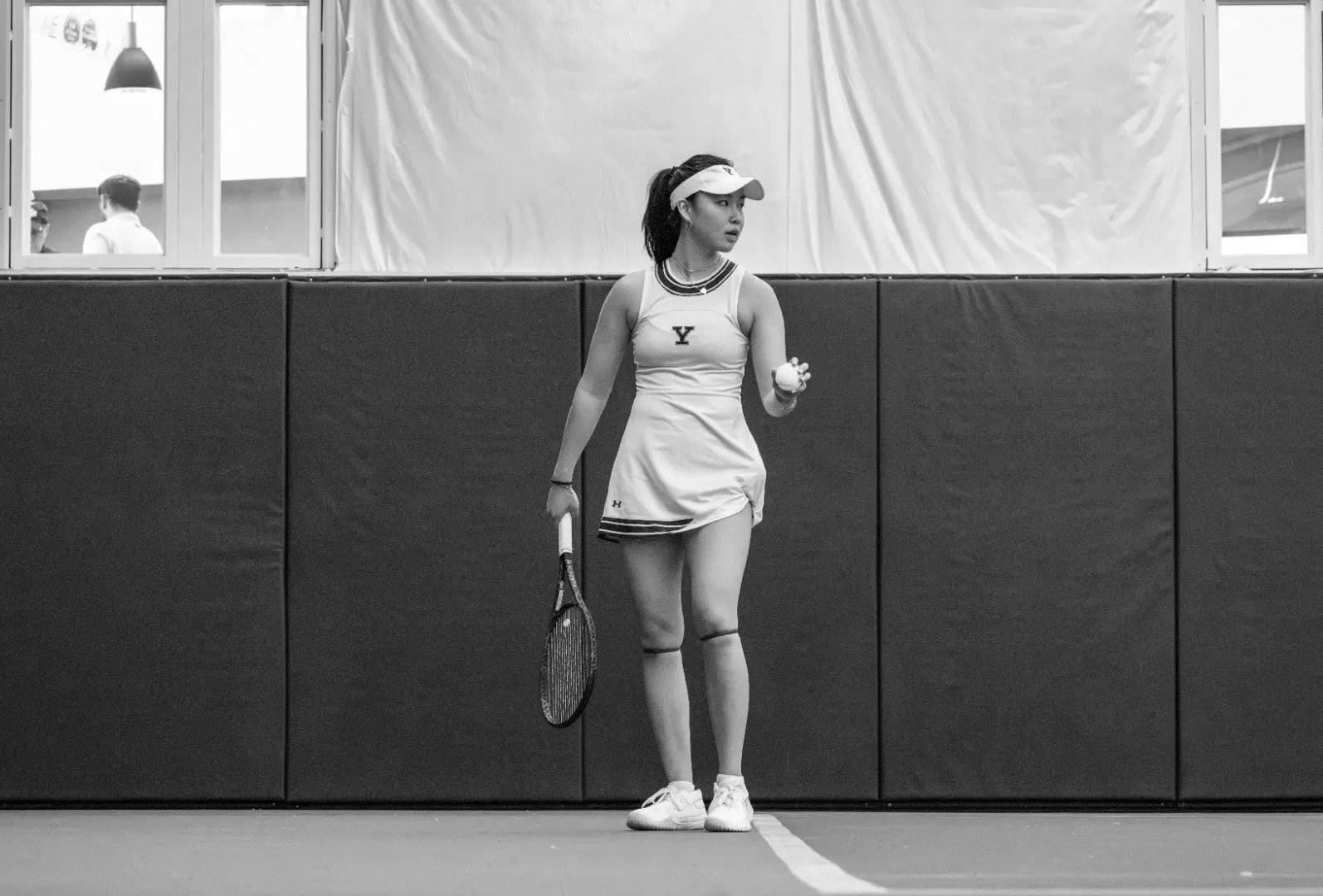
The Yale women’s tennis team (8–1, 3–0 Ivy) traveled to St. John’s over the weekend to take on the Red Storm in their lone match of the weekend.
Just a week removed from the team’s victory at the ECAC Championships, the Bulldogs came into Saturday firing on all cylinders with a scorching hot six-game win streak. Yale immediately got off to a strong start, winning two of three doubles matches to put the first point of the day on the board.
In singles, Leena Friedman ’29 got the scoring started after blanking her opponent.
Captain Erin Ha ’27 put the Bulldogs up 3-0 after winning her match 6-4, 6-1, and Angela Huang ’28 won the final match after her oppo -
nent, Alicia Gomez, withdrew.
After the fourth match had been won, all other matches were halted because Yale had already claimed victory. However, while the three other matches went unfinished, Yale was leading in all of them before play was stopped. With the win against St. John’s, the women’s tennis team has won seven straight matches and sits at 8–1 to start off their spring season, playing mostly out-of-conference universities. After being in action every weekend of the semester so far, the Bulldogs will have a weekend off next week before heading to Rutgers on Feb. 27. In September, when Yale and Rutgers last faced each other, the Bulldogs went 5-0 in singles against the Scarlet Knights.
Contact BRODY GILKISON at brody.gilkison@yale.edu.
Yale crushes UMass Lowell in sweet start to the season
WOMEN'S LACROSSE
BY AZARA MASON STAFF REPORTER
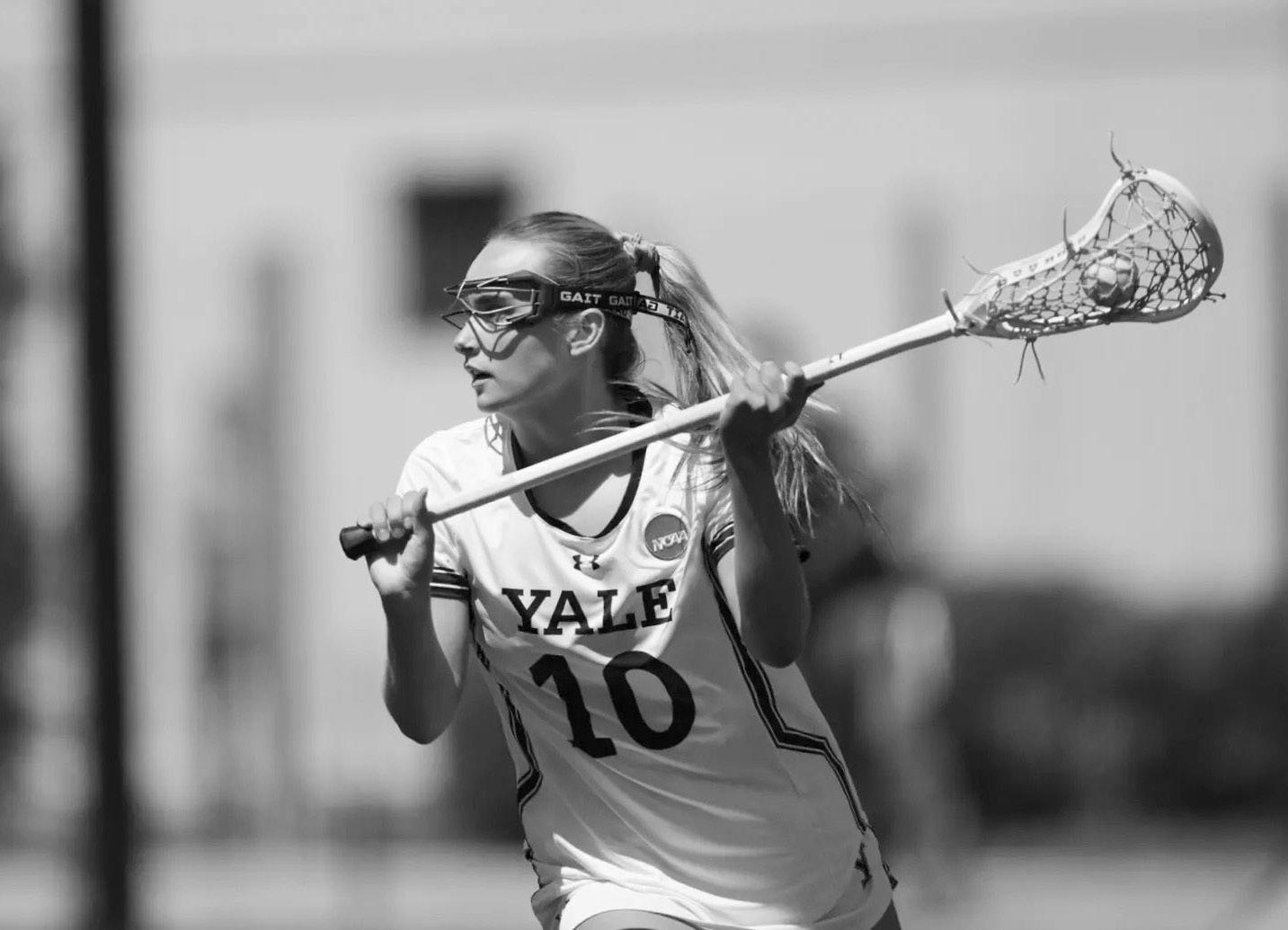
The Yale women’s lacrosse team (1–0) traveled to Cushing Field to take on the UMass Lowell River Hawks (2–1) on Saturday afternoon.
With seven Bulldogs making their first career starts and three making their first collegiate appearances, the game provided an early opportunity for new talent to shine.
Just minutes into her collegiate debut, Kate Gould ’29 earned a free position opportunity after captain Emmy Pascal ’26 won the opening draw. She converted the chance, scoring the first goal of more to come.
Gould finished the game with three points, all on free position shots. Yale converted six of its 14 goals from the eight-meter mark.
“To be able to go out on the field and play in my first collegiate game wearing a Yale uniform is something that I will never forget,” Gould said.
Ashley Kiernan ’27, another first-time starter, also capitalized early, scoring with 7:53 remaining in the first quarter to give Yale a 2-0 lead. Like Gould, Kiernan recorded a hat trick in her first start.
The Bulldogs closed the first
quarter ahead 3-2. This was the closest the River Hawks got all afternoon.
Sophomore Kelly Holmes ’28, also making her first career start, earned another hat trick. Less than a minute into the second quarter, Holmes converted a free position shot to extend Yale’s lead to 4-2. The three hat tricks out of Gould, Kiernan and Holmes highlighted the team’s offensive depth following the graduation of several senior attackers.
About a minute later, it was Ashley to Ashley. Ashley Kiernan found fellow attacker Ashley Newman ’26, who buried the shot to make it 5-2.
Gould credited Yale’s upperclassmen for helping her adjust to playing at the collegiate level.
“I think the success that we had on the field yesterday can be attributed to the amazing leadership from our upperclassmen,” Gould said. “Throughout the entire fall and preseason, they welcomed the freshmen in a way that gave us confidence and let us know that we have their support.”
Yale entered halftime with an 8-3 lead.
On defense, the Bulldogs forced nine turnovers throughout the game. Midway through the third quarter, the River Hawks scored to cut the deficit to 9-4, but that would be their final goal of the afternoon.
Goalie Niamh Pfaff ’28 finished with six saves. Her final stop came
On Saturday, the Yale women’s lacrosse team defeated UMass Lowell, 14–4, on the road in its first game of the season.
in the closing seconds, when she denied a free position shot to preserve Yale’s 14-4 victory. In less than two weeks, the Bulldogs will face tougher competition when they travel to Ann Arbor to take on the No. 19 Michigan Wolverines. Gould, how -
ever, expressed excitement for the upcoming challenge.
“We know that we have a lot of challenges ahead,” Gould said. “But getting this win under our belts excites us for the rest of the season and motivates us to work hard and accomplish our goals.”
Yale will play its home opener against the Quinnipiac Bobcats on Tuesday at 2:30 p.m. at Reese Stadium.
Contact AZARA MASON at azara.mason@yale.edu.
YALE ATHLETICS
The Bulldogs defeated St John’s on Saturday to extend their dominant hot streak to seven.
THROUGH THE LENS
YALE UNIVERSITY ART GALLERY
Photos by Martin Peralta Staff Photographer
MEN'S BASKETBALL
BY WALTER ROYAL STAFF REPORTER
The Yale men’s basketball team (20–4, 8–2) picked up a pair of wins over Dartmouth (10–12, 4–5) and Harvard (14–10, 7–3) on the road over the weekend.
The hard-fought overtime win at Harvard gave the Bulldogs sole possession of first place in the Ivy League as they head into the final three weeks of the regular season.
Yale first traveled to Hanover on Friday to take on the Big Green. Coming off of a closer-thanexpected overtime win Monday at Howard, Yale head coach James Jones was pleased with the team’s bounceback 83-70 win over Dartmouth.
“We shared the ball really well. We had 21 assists and five turnovers. That's always good,” Jones pointed out at the start of the postgame press conference.
The Bulldogs jumped ahead of the Big Green right from the tip off the back of a Trevor Mullin ’27 three. Mullin eventually finished with 17 points, his sixth consecutive game scoring in double-digits. Yale led 8-2 entering the first media timeout.
MEN'S HOCKEY
BY LIZA KAUFMAN STAFF REPORTER
The Yale men’s hockey team (8–17–1, 7–10–1 ECAC) gained crucial momentum over the weekend at Ingalls Rink with their games against No. 12 Dartmouth (17–7–2, 11–5–2 ECAC) and Harvard (13–11–2, 10–7–1 ECAC).
The Saturday win against the Crimson marked Yale’s first victory after a six-game skid and came against a team ranked ahead of the Bulldogs in the ECAC standings. The results also carried postseason implications, as Yale continues to push for home-ice positioning in the ECAC playoffs.
“This weekend was a big statement from our team. It just shows the resilience of this group and there’s absolutely no quit,” captain David Chen ’26 wrote to the News. “We have been through a rough stretch but everyone has had the same mentality of just continuing to show up and work at the rink day in and day out.”
On Friday night, the Bulldogs went toe-to-toe with the Big Green, pushing the game into overtime and then a shootout, where Dartmouth pulled out the win. The following night, the Elis again went to overtime, this time beating the Crimson when Ronan O’Donnell ’28 netted the game-winning goal before a soldout crowd.
Assistant coach Rob O’Gara ’16 praised the team’s ability to execute two solid back-to-back performances.
“Obviously, those were big games considering the opponents and standings, but really the most important thing for our group was putting together two 60-minute efforts, especially in front of fantastic crowds at Ingalls,” O’Gara wrote in an email to the News. “It had been too long since we played to our identity for a full game, let alone a full weekend, and to do that for the most part is why we almost came away with two victories. Not to be understated is how dif-
Dartmouth fought back, eventually taking a two-point lead with 12:45 remaining in the first half.
Yale slowly crept out to an eightpoint lead in the next six minutes.
The teams traded blows over the following seven minutes, but the margin remained at eight entering the break, 38-30. The Bulldogs continued their steady pace, stretching the lead to 14 by the 12-minute mark. Then, spurred on by another Mullin three, Yale ripped off a quick 7-0 run. With a 21-point lead, the game was effectively decided. The Big Green mustered a brief comeback, but it was too little too late.
The final score was 83-70.
Ninth-year Dartmouth head coach David McLaughlin praised his counterpart afterwards in a solemn postgame presser.
“Coach Jones has done a great job with this group, and they really get the ball where they want to get it. They find the mismatch on a consistent basis and they take advantage of that,” McLaughlin said.
The Bulldogs then shipped up to Boston for the weekend’s marquee matchup. Tied with Harvard for pole position in the Ivy League, the game had major conference tournament seeding implications for Yale.
The Crimson won the first matchup between the two teams
earlier this year on a Tey Barbour banked three, 65-67.
On Saturday, the hosts struck first, and Harvard took an early 0-6 lead. The Bulldogs chased the Crimson, but every attempt to erase the deficit was quickly neutralized.
Riley Fox ’28 hit a jumper to pull within four, 21-25, but a subsequent 7-0 Harvard run put Yale in a dire situation. With 3:41 remaining in the first, the Bulldogs trailed 21-32.
In the first of many key moments to come, Jordan Brathwaite ’28 sunk a pair of free throws to end the Crimson scoring run.
The Bulldogs chipped in a couple more points, then went on a 5-0 run of their own to end the half. The margin had slimmed to 30-34, though the Crimson still led.
Casey Simmons ’26 and Harvard’s Robert Hinton III traded layups to open the second before disaster struck for the Bulldogs.
Yale Captain and leading scorer Nick Townsend ’26 caught an elbow to the head while going for a defensive rebound. The senior exited the game with a trainer and did not return.
Despite the loss of a key contributor and leader, the Bulldogs continued to trade blows with Harvard. A Mullin three-pointer pulled Yale within one score, 47-49, with 12 minutes to go. Two minutes
later, a jumper from Fox put the Elis ahead for the first time that night. Time wound down, and neither team was able to build a multiscore lead. Isaac Celiscar ’28 hit both free throws after a Barbour foul to tie the game at 66 with 1:33 remaining in regulation.
Neither team scored the rest of the way, and the game went to overtime.
The teams combined to score on all of the first five possessions in overtime. After three minutes, the Bulldogs and the Crimson were knotted at 74 apiece.
Then Barbour got to the line for one free throw and drilled it while Yale failed to score for the next minute and 30 seconds. With 20 seconds remaining, the Bulldogs trailed by one.
Yale shifted the ball around before finding Brathwaite for a three-point attempt with four seconds remaining.
No good.
Celiscar grabbed the offensive rebound, and with half a second on the clock, drew a foul. The sophomore would get two shots to tie the game and potentially take the lead.
His first shot, despite the deafening crowd noise, was good. Unfazed by the gravity of the moment, Celiscar calmly received the ball from the referee for his second attempt. He spun the ball, dribbled once, then
spun it again. Yale’s leading scorer on the day put up the critical shot. Swish. Yale led 76-75 with a half second to go. Harvard didn’t get a shot up in time, and the game was over.
Harvard head coach Tommy Amaker, despite the loss, was proud of his team.
“I thought we fought and did everything we could. They did the same. It’s one of those games where, in all honesty, it’s hard for any team to lose, just like it was down there in New Haven in the previous game,” Amaker said.
Meanwhile, Jones recognized the difficulty of winning a tough conference road game without Townsend in the second half. The Bulldogs outscored the Crimson by five following Townsend’s exit.
“Everybody had to step up and they did, and it was fun to watch,” Jones said.
Yale now holds the sole lead in Ivy conference play. The Bulldogs return to New Haven this Saturday to host Penn (13–10, 6–4), the current Ivy three-seed.
Tip off is set for 2 p.m., with a special Autism Acceptance theme presented by Yale’s Child Study Center McPartland Lab.
Contact WALTER ROYAL at walter.royal@yale.edu.
ficult it is to bounce back from a disappointing ending on a Friday night and go to war again on Saturday.”
Friday night’s matchup showcased Yale’s resilience. After dropping two games to Dartmouth earlier this season, both by 1-6 scores, many expected another blowout. However, the Bulldogs proved their ability to push the Big Green to the wire.
Dartmouth put up the first two goals of the game, but at 14:38, Yale struck back. Micah Berger ’28 threaded the puck to Joe Blackley ’28, who buried it bar down to cut the deficit 2-1. In the second period, the Big Green took back a two-goal lead when Joshua Schenk netted his second goal of the game. However, the Elis then answered with two back-to-back goals to tie it up. At 8:00, James Shannon ’29 dropped a slick between-the-legs pass to Kalen Szeto ’26, who put it home. With less than two minutes to go in the period, O’Donnell passed the puck to Donovan Frias ’28 from behind the net, who sent it to Rhys Bentham ’27 in front of the net for the equalizer. With the score tied 3-3 going into the final frame, both teams sought a breakthrough. At 8:08, the Big Green took the lead. Down by one with only a few minutes remaining, Yale pulled its goalie to add an extra attacker to the ice. Dylan Hunt ’29 fed the puck to David Andreychuk ’27 for a onetimer, but it rebounded. With 8.8 seconds remaining, Donovan Frias corralled the rebound and slipped it to his twin brother Julian Frias ’28, who buried it to force the game into overtime. In the five-minute three-onthree overtime, neither team could find the back of the net, sending the game into a shootout, where the Big Green edged out the Elis. The shootout was Yale’s first at Ingalls in two years since the Bulldogs won a shootout against Rensselaer Polytechnic Institute in February of 2024.
The overtime tie with Dartmouth snapped Yale’s six-game skid and showcased the squad’s strong performance against a
nationally ranked opponent. Several Bulldogs also reached notable career milestones: Blackley notched his first collegiate goal and Julian Frias ’28 netted his first goal of the season.
After narrowly losing the shootout, the Elis came into Saturday night’s Harvard game determined to pick up a victory on home ice in front of a crowd of fans sporting Yale Blue. In another game thrown into overtime, Yale edged out Harvard 3-2.
Interim head coach Joe Howe was especially proud of the team’s performance on Saturday night on the heels of a disappointing shootout finish the night before and said the weekend marked an important step for the team.
“Was a big weekend for us to get back on track, we have been playing good hockey in spurts lately but haven’t put together a full 60 minutes,” Howe wrote in an email to the News. “Thought the guys battled hard against two very good opponents and were rewarded with valuable league points as we chase home ice in the playoffs. Both games our guys showed resiliency after being down early, despite having the better of the play in my opinion.”
The Crimson opened the scoring at 4:02. Two minutes later, Yale responded when Chen slid the puck to Blackley, whose wrister equalized the score. While Harvard answered at 10:20 to regain the lead, Seiya Tanaka-Campbell ’27 fed it to Bentham, who fired it to tie the game 2-2. In the second frame, both goalies combined for 14 saves to keep the period scoreless. The final frame also saw no action, sending the game into overtime.
The Bulldogs and Crimson then went head-to-head threeon-three in overtime. At 1:05, Chen dropped a pass to O’Donnell at the blue line. O’Donnell sniped it five hole, but the puck sat on the goal line and was initially waved off.
Yale’s coaches, however, challenged the call. With the game hanging in the balance, the referees entered the bowels of Ingalls Rink to view all of the angles.
The crowd stood silent for several minutes while the play was under review. When the referees ruled in Yale’s favor, the crowd erupted and the Bulldogs rushed the ice in celebration.
“In overtime it all happened pretty fast. I just tried to get to the net and put it on goal, and honestly once it left my stick I had no idea if it went in,” O’Donnell wrote to the News.
“When they finally called it a goal, it was pure relief and excitement. Wins like that mean a ton, especially after a tough stretch, and I’m really happy we could get it done for the seniors. It’s a huge win for our program and something we can build off,” he added.
Howe credited the atmosphere at Ingalls with energizing the team.
“The atmosphere was what you’d expect do Yale vs Harvard, we are really appreciative of the support and boost it gave our guys,” Howe wrote.
Blackley and Bentham both came up clutch for the Bulldogs over the weekend. Blackey scored the opening goal for Yale in both games, notching his first two collegiate goals, and Bentham netted the equalizers both nights.
Blackley emphasized the confidence on the bench despite Yale falling behind early both nights.
“Even though we went down early both games this weekend, we had a lot of belief on our bench because we knew we were
playing good hockey,” Blackley wrote to the News. “Getting on the board was big for momentum in both games and I am proud of how we responded as a group to going down early both games. We never lost faith and had contribution from everyone on the team leading to a big win over Harvard.”
Sophomore forward Zach Wagnon ’28 echoed Blackley and reflected on what the victory meant to the team.
“It was a huge win for us last night. As a team, we needed the win to build some confidence and there’s always a little more on the line when we’re playing Harvard,” Wagnon wrote to the News. “The vibes were high in the room after, with a couple of alumni in town. Now we have to use this energy and build on it for our trip to Clarkson/SLU.”
The Bulldogs will return to action next weekend, when they travel to New York to play Clarkson (12–15–3, 6–9–3 ECAC) on Friday night and St. Lawrence (5–22–3, 4–13–1 ECAC) on Saturday night for their final away matchups of the regular season.
Puck drop is slated for 7 p.m. both nights in Potsdam and Canton, New York.