
BY ISOBEL MCCLURE AND OLIVIA WOO STAFF REPORTERS
Yale College staffing will decrease by roughly 7.5 percent in response to the Trump administration’s endowment tax hike, according to Yale College Dean Pericles Lewis.
Aside from financial aid programming, the “biggest expense” for the College is the payment of staff salaries, Lewis said in an interview last week. The Yale College operating budget, which totals approximately $80 million this academic year, is separate from the $275 million annual financial aid budget that Lewis’ office also oversees.
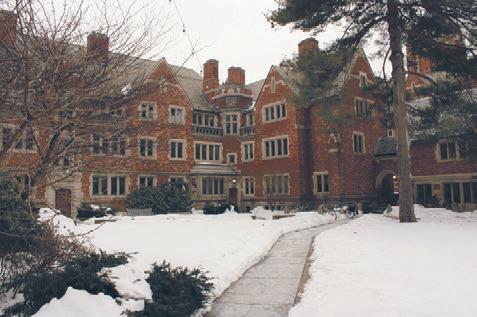
“The staff will be about 20 people smaller than it would have been. Most of that is people who have left,” Lewis said in reference to Yale College in a Wednes-
BY OLIVIA WOO STAFF REPORTER
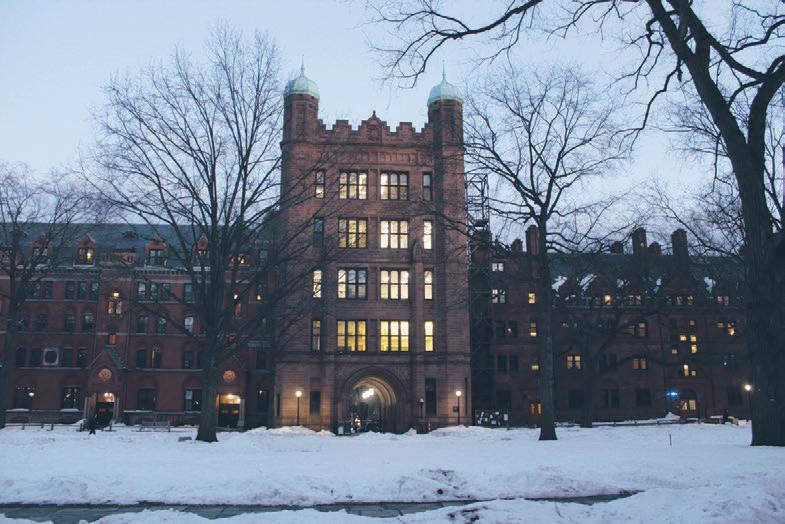
Yale donors are “relatively more enthusiastic” about funding undergraduate financial aid during the school year than about financing summer grants, Yale College Dean Pericles Lewis told the News. Their priorities, which Lewis said have emerged in his conversations with donors, helped inform the decision to replace two guaranteed summer awards for low-income students with one grant.
Only around half of the $275 million annual budget for undergraduate financial aid programs — which include aid offered during the school year and grants provided for the summer — comes from the University endowment, Lewis said in an interview in late January.
“We don’t have enough endowment even to pay for our standard
BY LIZA KAUFMAN STAFF REPORTER
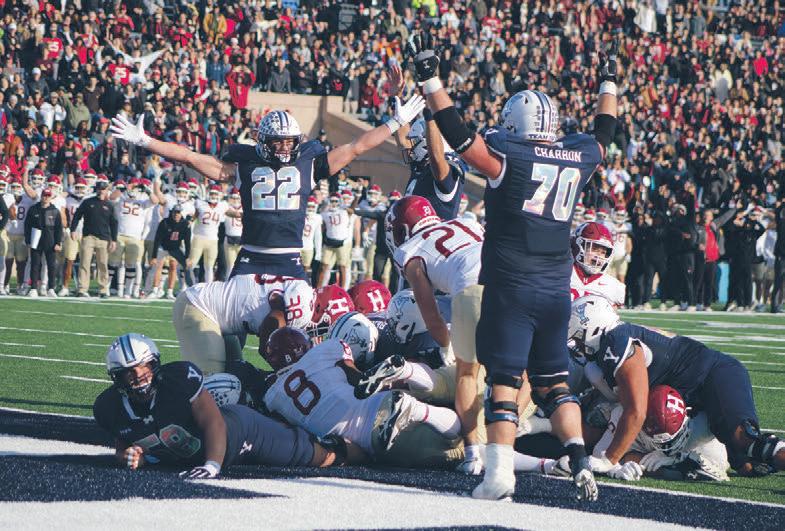
Yale football player Abu Kamara
’27 spent Labor Day morning signing autographs for local children at the annual New Haven Road Race.
Kamara’s appearance was part of his name, image and likeness deal with Farnam Realty Group, a local real estate firm.
Kamara, the 2025 Ivy League Defensive Player of the Year and the Bulldogs’ 2026 captain, said he didn’t expect much when Carol Horsford, the founder of Farnam, reached out to him. The partnership Horsford offered wasn’t flashy: some Instagram posts, occasional appearances and autographs in exchange for a small amount of money.
“I was proud of myself because it’s an opportunity and a step in the right direction,” Kamara said of the
As Yale's graduate school is
deal in an interview. Yale, like other schools in the Ivy League, clings tightly to amateurism. Last year, the conference opted out of the 2025 $2.8 billion House v. NCAA settlement, which allowed participating schools to distribute up to $20.5 million annually in athletics revenue directly to student-athletes.
At the same time, donor collectives, which channel money directly to student-athletes, are driving recruiting and continuing to expand across Division I. While other elite institutions such as Duke and Stanford are embracing revenue share and NIL collectives, the Ivy League is the only Division I conference that has formally opted out of revenue share and continues to resist donor collectives. Kamara’s experience captures
SEE NIL PAGE 11
financial aid, but donors are relatively more enthusiastic about paying for financial aid for students during the year than they are for summers,” Lewis said. “We weren't able to raise enough money from donors to keep paying for the whole of the two-summer guarantee.”
The College’s plan, announced two weeks ago, to guarantee the full cost of attendance for students from families making under $100,000 and tuition for those from families making under $200,000 — conditional on their holding “typical” assets — will result in an expansion of spending on financial aid for the academic year, Lewis told the News last week.
Those changes were made possible by a reduction in spending on
BY LEO NYBERG, ASHER BOISKIN, JERRY GAO STAFF REPORTERS
Yale professor David Gelernter ’76 GRD ’77 is no longer teaching his computer science course, just over a week after his emails with Jeffrey Epstein surfaced. Gelernter — who has defended his communications with the convicted sex offender, including a 2011 email to Epstein describing an undergraduate’s appearance while recommending her for a job — is facing a University review, according to University spokesperson Karen Peart.
“I’ve been relieved,” Gelernter wrote to students in his course “The User Interface” in a Tuesday morning announcement on Canvas, Yale’s online course management system, that was first reported by CT Insider. Gelernter and Epstein main -
tained substantial email correspondence between 2009 and 2015, which the U.S. Department of Justice released in late January among some three million other files related to Epstein. In their exchanges, Gelernter and Epstein planned meetings and discussed art, business and women. Gelernter described an undergraduate as a “v small goodlooking blonde” in an October 2011 email to Epstein that Gelernter has characterized as a recommendation letter. Gelernter defended that message last week in an email to Jeffery Brock, the dean of Yale’s School of Engineering & Applied Science, on which Gelernter copied Computer Science department chair Holly Rushmeier. In the email, which Gelernter forwarded to the News, he wrote that he had kept “the
BY MICHELLE SO STAFF REPORTER
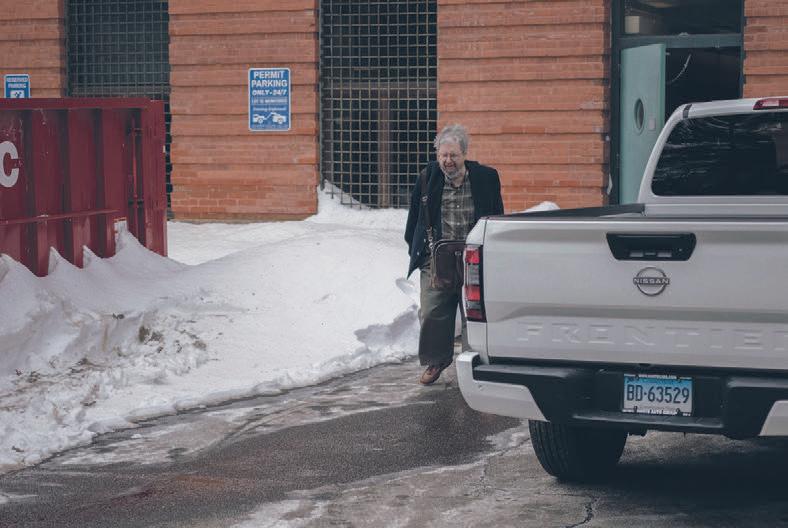
Despite years of complaints from people who live in the Westville neighborhood, Yale uses an herbicide on its lawns and athletic fields that has been connected to cancer and recently came under renewed scrutiny following the retraction of paper that said it was safe.
In December 2025, a paper on the safety of Roundup, a widely used herbicide, was retracted from the journal “Regulatory Toxicology and Pharmacology.” The announcement came over a decade after the International Agency for Research on Cancer denounced the compound for being a probable
human carcinogen.
Locals have been voicing their concerns over Yale’s use of Roundup with the University and state and federal agencies for decades, but the herbicide use has continued. One former worker, who died about a year ago, wrote an essay about how his doctor attributed his non-Hodgkin lymphoma diagnosis to his exposure to herbicides on Yale’s golf course, where he worked.
“Our use of all pesticides, including Roundup, is very limited and targeted — primarily where there is a direct safety concern such as poison ivy removal,” Steven Gilsdorf, the director of facilities operations, wrote in an email to the
News. “Pesticides are restricted and only used as a last measure or in the case of extreme infestation, with all applications handled by staff trained and licensed to do so and in compliance with Connecticut regulations for pesticide use near residences.”
A controversial herbicide
Since glyphosate was introduced under the brand name “Roundup” in 1974, it has become one of the most widely used herbicides in the United States. Glyphosate is often applied to lawns and agricultural fields to hinder weed growth and has been
SEE HERBICIDE PAGE 8
BY HENRY LIU AND NICOLAS CIMINIELLO STAFF REPORTERS
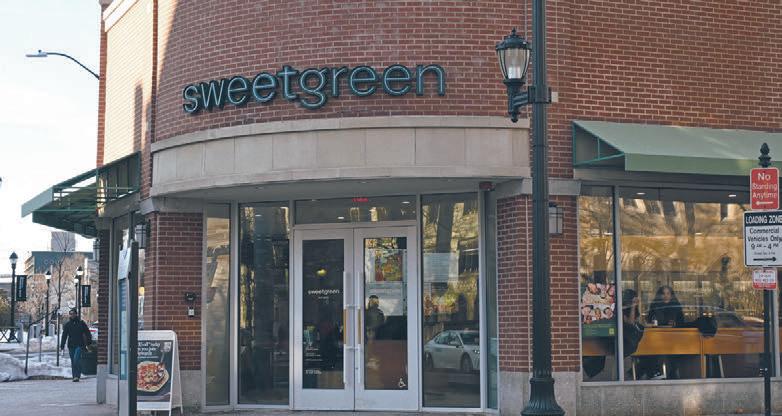
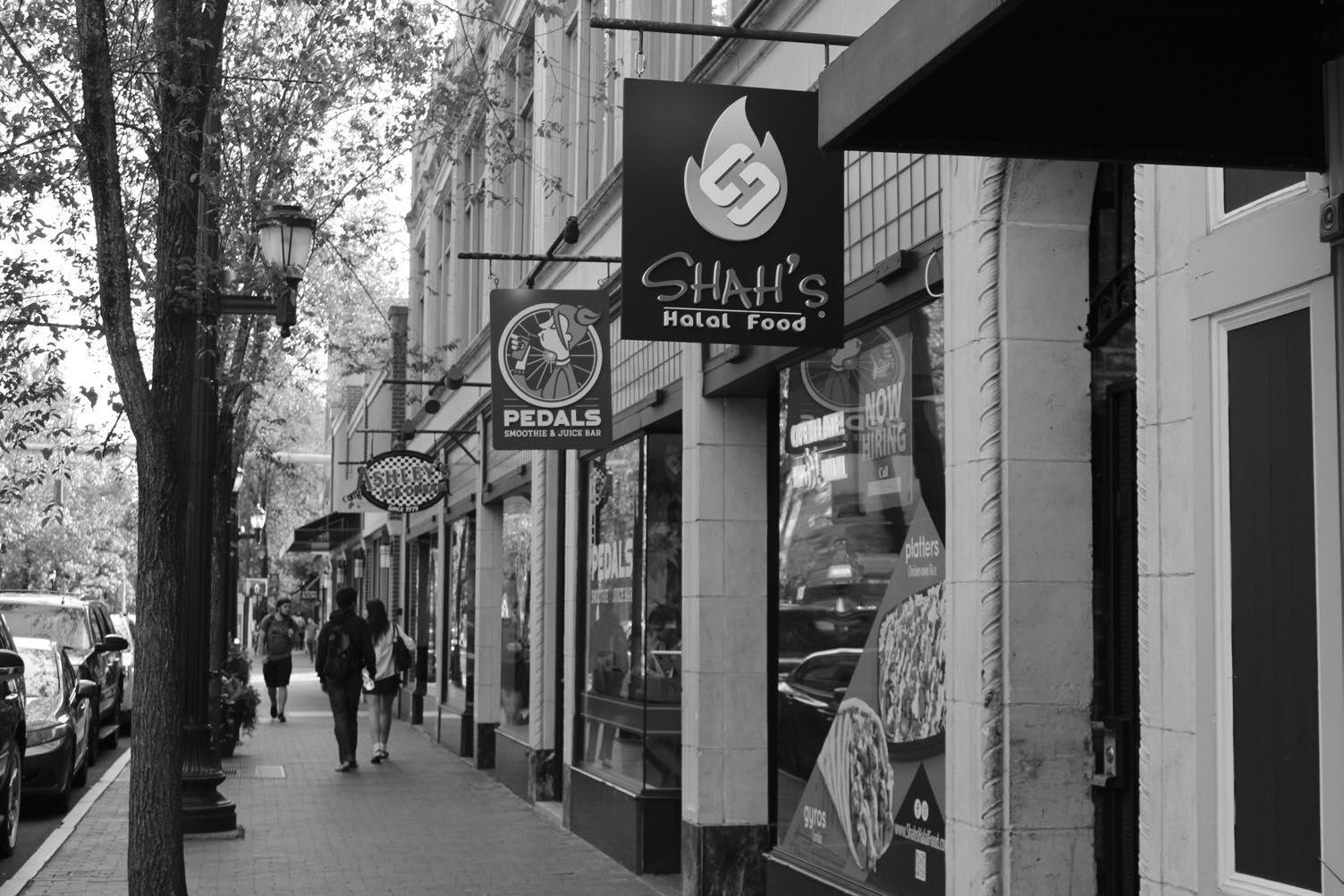
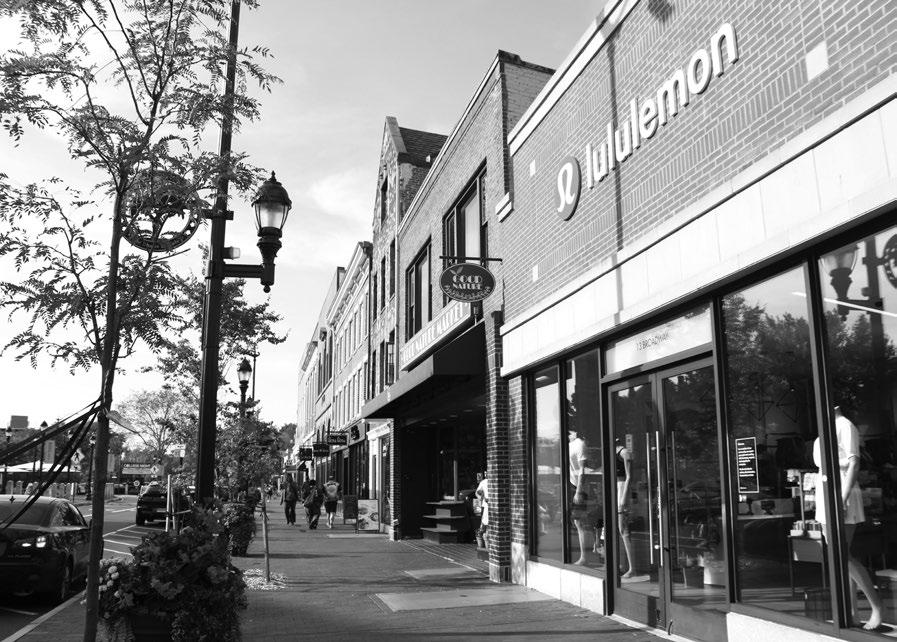
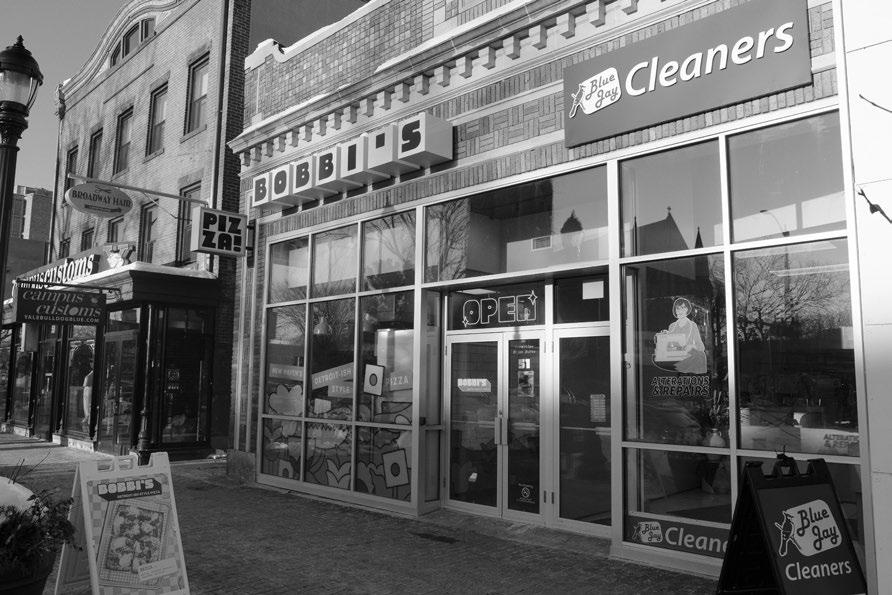
While the recent openings of Sweetgreen, Shah’s Halal Food and Bobbi’s Pizza are drawing student interest and increasing competition for the older establishments around them, longstanding businesses remained confident about their places in the Broadway area.
Roughly nine months after the openings of Sweetgreen and Shah’s Halal Food, and four months after the opening of Bobbi’s Pizza, students and business owners reflected on the new stores’ popularity with students and how it has con
tributed to a more competitive
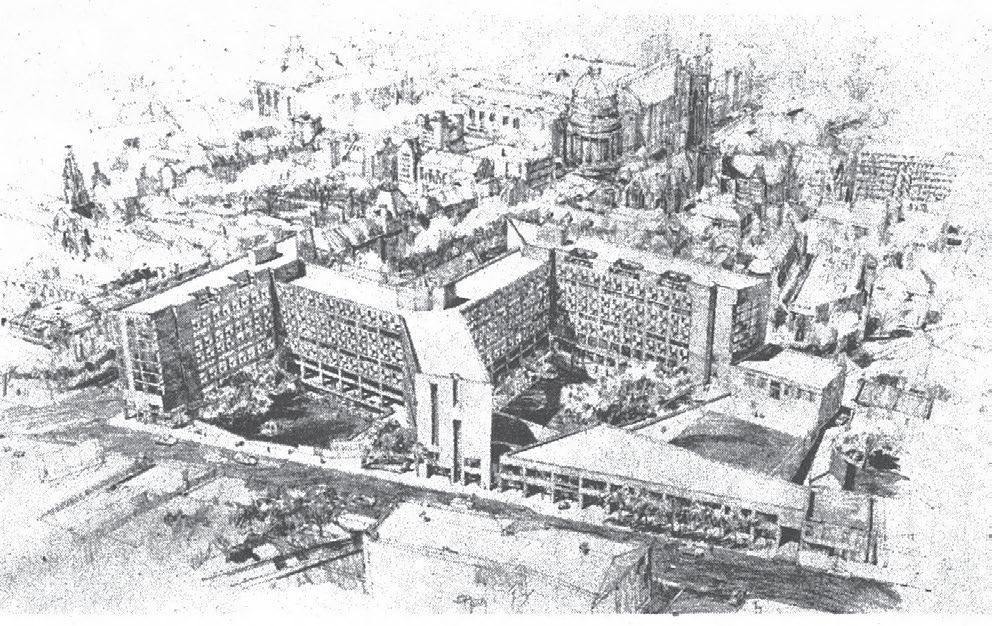
February 13, 1979 / Yale drops plans for new colleges
By James L. Nuzzo
Yale’s dreams for two new residential colleges have been shattered.
John Hay Whitney has decided to transfer his $15 million gift from the college construction project to the Campaign for Yale. That action was prompted by the escalation of building costs since 1972, when the project was first rejected by the New Haven Board of Aldermen.
The estimated budget of the project has risen from $16 million in 1972 to the current $26 million.”
by JACK BERRIEN ’29
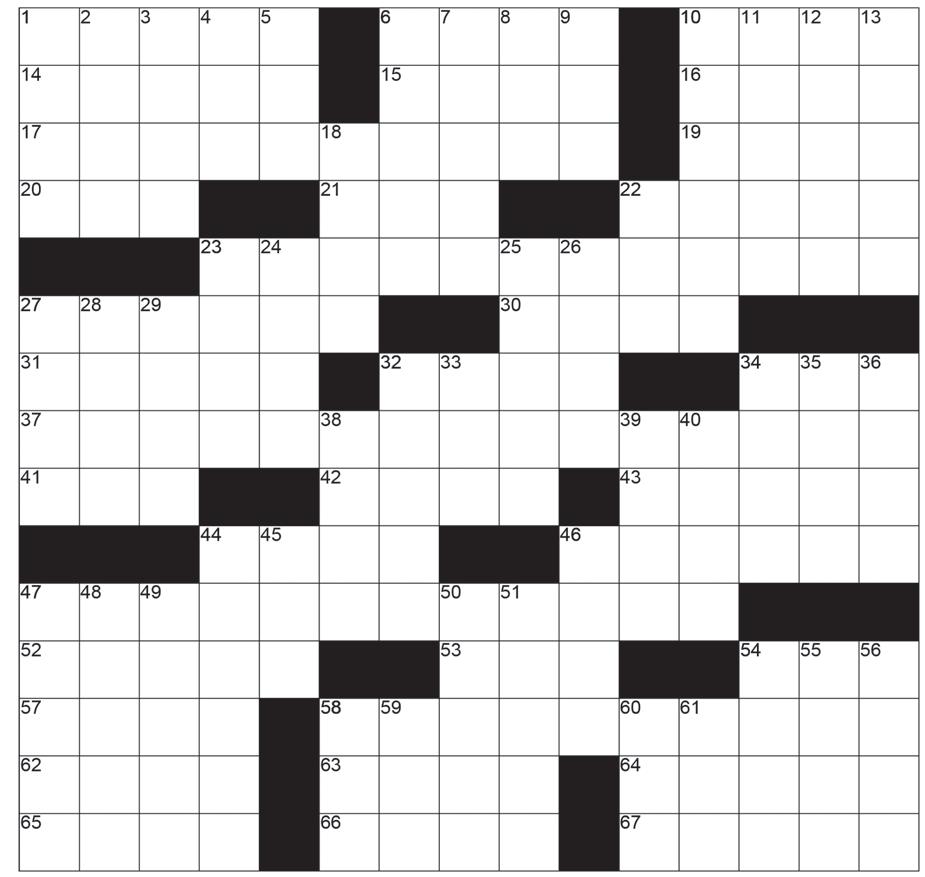
winner 7. Archenemy, particularly in sports 8. Prez after Harry 9. German article 10. Taylor Swift’s “______ Well” 11. Anti-Reformation Pope 12. Show runner? 13. Medieval weapon 18. Ground zero? 22. Math subj. 23. One who acts 24. Baseball’s Hershiser 25. Leave behind 26. Iona College athlete 27. Huck Finn’s transport 28. Showbiz “grand slam” 29. French vineyards 32. Louisiana wetland 33. “___ a tree falls...” 34. Country’s McEntire
35. Lit ____
36. Regarding 38. Chemical compound
39. Stench 40. O.G.s, say 44. Photoshop tool 45. Some colas 46. Former R.I. Senator 47. Jewish prayer
48. Tribal symbol
49. San Antonio shrine
50. Replay effect
51. Baseball card org. 54. URL opener
55. Conflict leading to the formation of NATO
56. Over there, to Shakespeare
58. Due follower?
59. ‘Violent’ card game
60. Oldhead, in slang 61. Wee bit
by Michelle So
Early in my first year at Yale, I came across signage indicating a patch of Yale’s lawn had been treated with pesticides. Odd, I said, and thought nothing more of it. Last summer, I spoke to local environmentalist Laura Cahn over the phone to discuss environmental policy in New Haven, and she mentioned how Yale’s pesticide usage had been the spark for her blown environmentalism. There was a desperation in her voice when she told me about the suffocating odors, fearing for her daughter’s life and the frustration of having her concerns dismissed. Cahn connected me with others who were involved in her fight against pesticide usage.
I reached out to several Yale officials who confirmed they had still been using glyphosatebased products. We think of Rachel Carson’s “Silent Spring” as a product of a bygone era, when science was less developed and farmers could get away with bald eagle-harming chemicals. My mind returns to a personal essay by Steve Herzog, who worked with pesticides as a Yale employee, and died from a cancer of the blood. Herzog wrote: “This is Yale University, one of the top universities in the world. It must be safe to apply it.”
Read“Yale uses cancer-tied

Five days before we returned to campus in January, an Immigration and Customs Enforcement agent murdered Renee Good, a 37-yearold mother of three, in Minnesota. Good was on her way home from dropping her child off at school. The agent shot her three times, including at point blank range through her Honda’s side window. After watching Good’s car crash, the agent called her a “f—ing bitch.”
As is her practice, Yale President Maurie McInnis was silent about Good’s murder. But the Advisory Committee on Investor Responsibility, an unelected group of university affiliates that makes recommendations on how Yale’s endowment is invested, communicated Yale’s position: five hours after Good was killed, the ACIR emailed students its refusal to divest from Palantir Technologies, a company critical to ICE’s operations nationwide.
Despite the ACIR’s refusal to divest, neither students nor the committee actually know how extensive Yale’s investments in the company are. Most of the University’s investments are not disclosed. Yet Yale has public financial ties to Blackstone, which bought into Yale’s recent private equity portfolio sale, and has worked with Palantir to develop risk analysis technologies. Pantheon, another of Yale’s asset managers, includes Palantir as a significant share of their portfolio.
Co-founded by Trump megadonor Peter Thiel, Palantir is essential to ICE’s surveillance and deportation regime. Last April, the company entered a $30 million contract with the Department of Homeland Security to build “ImmigrationOS,” a software that builds data-mined profiles of immigrants, placing them on a map to be tracked and deported.
Palantir boasts nearly a decade of collaboration with ICE, with notable involvement during family separations in Trump’s first term, and has provided vital support to Israel’s military operations in Gaza, with CEO Alex Karp praising the company’s “operationally crucial operations.” The company’s partners include Unit 8200, the Israel Defense Forces’ cyberwarfare hub, developing technology to identify strike targets in Israel’s genocide in Gaza.
Arguing that Palantir’s surveillance and warfare technologies meet the “grave social injury” criteria for Yale divestment, students have twice called on the ACIR to recommend divestment from the company to Yale’s trustees. Twice, the ACIR has refused.
In 2024, former ACIR Chair Heather Tookes said the committee would not recommend divestment from Palantir, but suggested that it might reconsider its decision in response to future evidence: “the ACIR recognizes technology is evolving,” Tookes wrote. In November 2025, EJC presented in an open meeting on how Palantir’s technology had evolved to empower ICE’s reign of terror. Nonetheless, ACIR Chair Kenneth Gillingham
sent a formal denial for a divestment recommendation on Jan. 7. Yale’s ties to immigration enforcement technology reach beyond Palantir. Last year, Yale disclosed that part of its endowment was managed by General Catalyst, a venture capital firm and leading investor in Anduril.
As the sole contractor for hundreds of AI-guided watchtowers along the United States’ southern border, Anduril consistently coinvests in startups driven towards inhumane surveillance and subsequent deportation and family separation. Furthermore, TDR Capital, one of Yale’s favored investment firms, manages a “significant stake” in the company behind one of ICE’s largest children’s jails — where preschooler Liam Conejo Ramos was abducted just weeks ago.
Yale’s financial support for Trump’s violent immigration crackdown is particularly reprehensible given increasing ICE violence in New Haven. Only a week after 100 New Haven community members protested the killing of Renee Good, ICE arrested a man inside the Connecticut Superior Court in New Haven. This came after the abduction and 44-day detention of a Wilbur Cross High School junior last summer. During a local protest in June 2025, a 13-yearold girl whose mother was abducted by ICE agents spoke directly to immigration enforcement, pleading. “You’re causing a lot of pain to these families by taking them away.”
On our own campus, a failure to divest is a failure to protect our peers. Immigrant students strengthen the diversity of our student body, yet Palantir, through its partnership with ICE, has aided the arrests of students and academic workers nationwide, including Mahmoud Khalil and Rumeysa Ozturk, terrorizing campuses and stifling the free speech that Yale purports to celebrate.
While Yale’s leadership is silent, its endowment isn’t. Refusal to divest is yet another instance of the Corporation choosing marginal benefits on a $44.1 billion endowment over the mission it is entrusted to steward: “improving the world today and for future generations through outstanding research and scholarship, education, preservation, and practice.”
We look to the example of local students, labor leaders and the struggle against ICE nationwide, and demand that Yale divest from all corporations enabling immigration enforcement’s campaign of murder, deportation and detention. Such investments violate the University’s mission statement and fly in the face of its obligations to students, New Haveners and the Yale community.
SIENA GROUF is a first year in Trumbull College. She can be reached at siena.grouf@yale.edu.
MERCURI LAM is a sophomore in Benjamin Franklin College. She can be reached at mercuri.lam@yale.edu.

Late last month, to far-reaching acclaim, Yale announced that it would no longer charge tuition to students coming from families with typical assets and incomes under $200,000.
Having worked extensively to expand access to higher education — in the Yale College Council, nationally with Class Action and as a Yale admissions ambassador in my hometown — I was initially very pleased with this announcement. And, having watched my financial aid package dwindle every year, so were my parents. Upon deeper investigation, however, I worry that this change is at best not a meaningful shift in favor of accessibility, and at worst, an exploitative public relations strategy to win back public trust.
Both the timing and target audience of this change are revealing. It is no secret that Yale is facing record low public trust. A big reason? Universities are becoming increasingly unaffordable for the middle class. Notice how Yale’s announcement came with two parts: first, the university raises its full financial aid coverage to families making under $100,000, and then, it stops charging tuition — but not room and board — to families making under $200,000. While there has been some press about the first change, the headlines pushed by everyone from the New York Times to Gilmore Girls actress Lauren Graham have spotlighted the second. Because this change, or at least Yale’s public relations effort around it, targets the shrinking middle class.
At the same time, Yale is facing an immense funding crisis. From cuts to federal research funding to the upcoming endowment tax increase
to a hiring freeze, Yale has made one message abundantly clear: now is not the time to spend. So where did they find the money to be so newly generous with financial aid? I don’t think they did. If you dig into the available history on Yale financial aid offerings, you can see that the change in total estimated cost for families in the income range between $150,000 and $200,000 is negligible. The median cost of Yale for these families in 2024 was just shy of $30,000. In 2027, the total cost of housing, food, books, the student activities fee and personal expenses — what these families might pay under the changes to financial aid — isn’t projected to be much different. Now, even if it isn’t a strong departure from the status quo, the publicity around these changes will make talented students from middle-class and lower-income backgrounds who might not be applying to Yale due to its exorbitant sticker price more likely to apply, which is a good thing, right? Well, yes, theoretically. But bringing in more applications from these groups will not mean much if Yale simply rejects them.
Though claiming to be needblind, Yale accepts more students from the top 1 percent of the income distribution than the entire bottom 60 percent combined. Think about that for a second: if you were to walk up to a random Yalie on Cross Campus, you would be more likely to be staring at a member of the 1 percent than a middle-class or lowincome student. Several factors go into making this a reality: legacy admissions, preparatory schools, student athlete recruitment and admissions standards that favor extracurricular activities to
which children of the 1 percent have disproportionate access, to name a few. Yet, with this announcement, Yale has made no public commitment to renegotiate these standards. I think that the real goal behind this change, and the subsequent media blitz, is to encourage more middle-class students to apply — but not necessarily attend. Yale can accept public praise for this change, pocket application fees and lower its acceptance rate — which boosts its national rankings — all without accepting any more middleclass students. Yale has found an opportunity to circumvent public criticism while protecting its bottom line. I’m not going to applaud this move, and I don’t think you should either. But, there is hope. With this increased national attention on Yale’s financial aid offerings, we, as the Yale community, have an opportunity to leverage this attention to open nationwide scrutiny into university financial aid and admissions writ large. Universities across the Ivy League and beyond have demonstrated that they respond to public pressure over affordability, and we can use this power to demand real changes that require actual financial sacrifice and imagination on Yale’s part. Now is our chance to completely transform university affordability. But to do that, we need to make ourselves clear on one point: we are not satisfied. I hope you’ll join me.
EMILY HETTINGER is a senior in Pierson College studying Psychology and Education Studies. She can be reached at emily.hettinger@yale.edu.
I have been skeptical of the city’s plan to convert several downtown streets to two-way traffic, including the narrow stretch of Chapel Street that runs from College Street to York Street. Speeders, bicyclists, electric scooters, panhandlers, jaywalkers and double-parkers already turn driving in this town into a frustrating adventure. I feel a migraine rising whenever I think about measures that, despite assurances to the contrary, seem guaranteed to increase congestion and traffic.
The recent snowstorm offers a glimpse of what’s to come. New Haven’s painfully slow snow removal effort has left piles of solid ice obstructing parking spaces along some of downtown’s most-traveled thoroughfares, narrowing two-lane one-way roads into a single lane. And traffic has never been worse. The storm’s effect on traffic presents a rare opportunity to see the impact of a proposed policy before that policy is actually implemented. The city must reconsider its misguided plan to convert Chapel Street from oneway to two-way.
During the week after the storm, I saw traffic backed up all the way down York to Chapel Street, a milk truck and a garbage truck locked in a game of chicken on York between Grove and Elm streets as the former tried to park and the latter tried to pass, and a large delivery truck unable to navigate the left turn from Elm onto York. Parked cars lined both sides of York Street, each one multiple feet from the curb because the snow still hadn’t been removed. The truck struggled to turn into the narrow opening, eventually giving up and reversing back onto Elm and roaring off toward
the New Haven Green. The whole process took no less than ten minutes, obstructing an intersection that’s already chaotic on its best day. How in the world are trucks like that supposed to turn from York or College onto Chapel once it’s converted to two-way traffic? The snow has finally been cleared — on some streets, at least — so the turn from Elm onto York is navigable again. But impossibly tight turns will be the new normal facing truck drivers downtown if the proposed changes go into effect. The plan is to maintain parking on both sides of Chapel. How will trucks stop and make deliveries to restaurants like Strega, Union League and Claire’s without completely obstructing the flow of traffic?
Let’s forget about delivery trucks for a moment, because they’re far from the only vehicles guilty of doubleparking on New Haven’s streets. Passenger cars constantly stop within lanes of traffic, forcing everyone else to merge into one lane to get around them. Frustrated blares of car horns are the only repercussions these drivers face; in three years here, I have never seen a police officer ticket a double-parked car, and I see several doubleparked cars every single day. Once Chapel is converted to two-way traffic and someone decides to double-park during rush hour to run into Starbucks, I hope for the sake of everyone behind them that they placed their order on the app ahead of time and will be right back out. I don’t know if the city’s lackluster response to the snow was due to a lack of funds or a lack of will. But let’s take this opportunity to learn from one failure and prevent another one.
Downtown streets like Chapel cannot handle two-way traffic. Proponents of the plan are quick to point out that these streets all used to be two-way. But cars were smaller then and there were far fewer of them. I have to imagine that people were also less likely to double-park in those days. No delivery apps and less of a take-out-driven dining culture means fewer drivers were “just running in for one quick thing.” Too many people now seem to have no qualms about inconveniencing dozens of others just to save themselves a few minutes. This won’t change on two-way streets, but the consequences will be worse. Selecting Chapel Street for two-way conversion doesn’t make sense. The two lanes are already narrow enough that speeding isn’t the problem it is on, say, Elm Street between York and the Green. Cars treat that stretch like a drag strip, racing down the three and four lanes and often running the red light at High Street. Any conversion of downtown streets should begin there.
I appreciate the goal of making New Haven a more pedestrian-friendly city by slowing the flow of traffic — or “calming” traffic, to use City Hall’s buzzword. But needlessly increasing traffic congestion cannot be the answer. Unfortunately, the time to make New Haven less car-centric was before the streetcars were removed. Our 18th century streets can barely handle 21st century traffic as it is. Let’s not make it more difficult, please.
TOM DAWBER is an Eli Whitney student in Pierson College studying History. He can be reached at tom.dawber@yale.edu.
“For thy sweet love remembered such wealth brings / That then I scorn to change my state with kings.” SONNET 29 WILLIAM SHAKESPEARE
FROM PAGE 1
non-competitive summer grants resulting from the replacement of the International Study Award and Summer Experience Award with a one-time Summer Experience Grant, Dean of Undergraduate Admissions Jeremiah Quinlan previously told the News.
More than a quarter of the undergraduate student body has signed a Yale College Council–sponsored petition protesting the replacement of the two-summer guarantee with a one-time grant — a change that Lewis explained in November as a result of the impending increase in the federal tax on Yale’s endowment returns.
Some students have said they
felt that the moves to reduce summer grant opportunities and to expand term-time financial aid for incoming students prioritized future students’ interests over their own.
Lewis said last week that the replacement summer grant will allow non-competitive summer grants to be paid for mainly by endowed gifts. Due to donor priorities, he said, gifts and endowments alone were not enough to cover the International Study Award and Summer Experience Award.
“When these programs were started over the last fifteen-twenty years, there was a hope that donors would give enough money to make it possible. But the fundraising was
much less than what we had hoped for. It wasn’t zero, but it wasn't enough to cover the whole cost,” Lewis said.
Donors to the University are “able to designate the school, program, or initiative they would like to receive their gifts,” according to Diana Evans, the senior marketing and communications director for Yale’s For Humanity fundraising campaign.
The campaign gathers all University fundraising efforts and organizes its priorities around four “pillars,” Evans wrote in a statement to the News. Undergraduate financial aid falls under the pillar called “Leaders for a Better World.”
Donors must give at least $100,000 to set up an endowed
fund dedicated to undergraduate financial aid that will pay out a few thousand dollars per year, Lewis told the News in January. Last September, he said that donors who begin these personal scholarship funds can attach their names to the financial aid awards received by undergraduates whose enrollment they fund.
Those interested in funding undergraduate financial aid need not create personal funds to help cover undergraduates’ tuition and cost of attendance, however.
“Donors who would like to make a straightforward cash donation for ‘current use’ funds may also choose to designate that those funds be used for a particular area (like
undergraduate financial aid) and have the funds used in their entirety in the year they are given,” Evans wrote. Lewis told the News in January that these current-use gifts presently help to fund undergraduate financial aid programs, but that the College is working to “build the endowment” to cover these expenses in their entirety. As of last week, just under 20 percent of donations to the University’s fundraising effort for financial aid have been designated for “current use,” according to Evans.
Contact OLIVIA WOO at olivia.woo@yale.edu
day interview. “Often more junior people might go off to grad school or more senior people might go find a job somewhere else or even transfer to another part of the University. And we haven’t filled all of those vacancies.”
According to the Office of the Provost’s website, the increased federal endowment tax will result in a 12.5 percent decrease in the University’s ability to spend from its roughly $44 billion endowment. Lewis said last week that this reduction will result in a 7.5 percent cut to the Yale College budget, adding that the “only way” to meet this reduction was to employ fewer staff.
Last summer, University administrators announced a 5 percent reduction in non-salary expenses, delays for construction projects and lowered annual salary increases for faculty and staff, while implementing a 90-day hiring pause, in anticipation of the heightened 8 percent tax on Yale’s endowment investment returns — which is scheduled to take effect in July.
Days before the expiration of the hiring pause last September, Lewis told the News that Yale College staffing was “maybe 3 or 4 percent smaller” as a result of the freeze by his “very rough estimate.”
Administrators announced in October a one-time retirement
incentive program, available to certain managerial and professional staff, and a reduction in budgets across the University over a threeyear period. The deadline for the retirement incentive program was Dec. 31, 2025.
Lewis said on Wednesday that he could not specify the individual effects of either the hiring freeze or the retirement incentive on the number of Yale College employees.
Provost Scott Strobel and Vice President for Finance Stephen Murphy ’87 did not directly respond to the News’ question about how the Yale College staff reductions compared to those of other parts of the University. They instead referenced previous school-wide communications in a joint statement to the News on Thursday.
“As detailed in these communications, deans and unit leaders have prepared multi-year budget plans,” Strobel and Murphy wrote, citing September and December messages to faculty and staff. “These plans include budget reductions necessitated by the tax on Yale’s endowment income. They vary by each school and unit’s financial dependency upon endowment support and their strategic priorities.”
The administrators wrote that the University would continue to “share written updates” with the Yale community, alongside hosting “town halls and other meetings.”
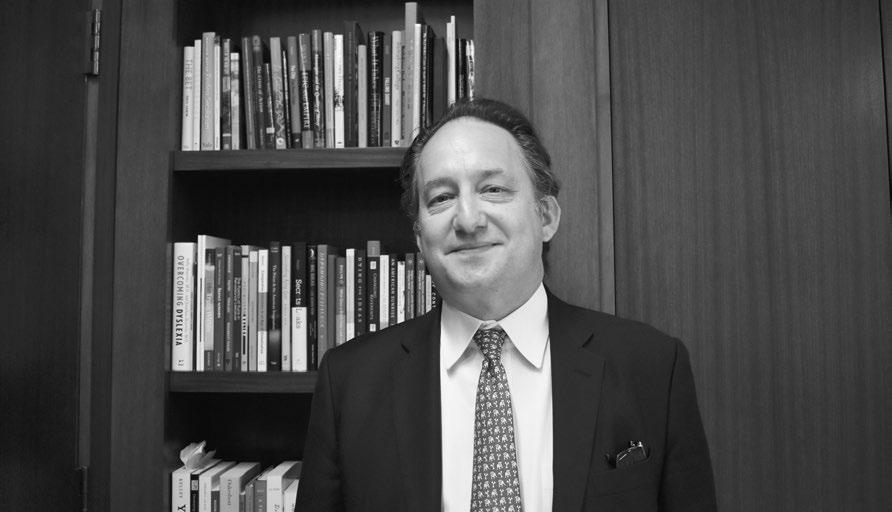
Murphy, Strobel and Geoffrey Chatas, the senior vice president for operations, were signatories of a December update that announced that layoffs “may be necessary” as the University navigates the elevated endowment tax. Administrators have predicted that the heightened rate will cost Yale around $300 million.
“We are hopeful that most reductions can be accomplished by elim-
inating open positions and through regular turnover and retirement incentives,” the administrators wrote in the December memo, noting that “nearly two-thirds of the university’s expenses relate to compensation and benefits.”
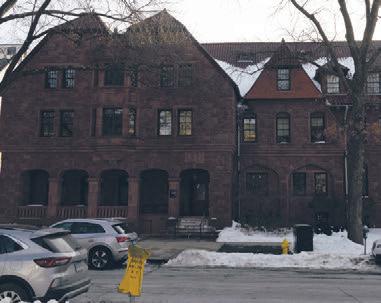
“The retirement incentive may not enable us to meet all the budget targets we need to meet, and it may be possible that some units will need to then figure out whether or not they need to do layoffs,” University President Maurie McInnis told the News in a December interview over Zoom. Lewis’ office, in Warner House, is located at 1 Hillhouse Ave.
Contact ISOBEL MCCLURE at isobel.mcclure@yale.edu and OLIVIA WOO at olivia.woo@yale.edu .
FROM PAGE 1
potential boss’s habits in mind” — a reference to Epstein — when he sent it.
“The university does not condone the action taken by the professor or his described manner of providing recommendations for his students,” Peart wrote in a statement on Tuesday. “The professor’s conduct is under review. Until the review is completed, the professor will not teach his class.”
Students arriving at Gelernter’s classroom in Arthur K. Watson Hall on Tuesday morning were informed by Rushmeier, who took over the class, that Gelernter had been suspended from interacting with students, Johann Ortiz ’26, a student in the class, said in an interview.
“All she said was that Gelernter is suspended from interacting with students. He’s not teaching. That’s all that she said,” Ortiz said when asked about if Rushmeier has explained Gelernter’s absence.
Rushmeier told the News that she will be teaching Gelernter’s course for the rest of the term. She later wrote in an email to the News that she has not had contact with anyone in the University administration about the review of Gelernter’s conduct.
In his Tuesday Canvas announcement, reviewed by the News, Gelernter referred to his exchanges with Epstein as “personal” and “private.”
“If someone handed you a a stack of other people’s private correspondence, would you dive in and read them? Of course not. Gentlemen and ladies don’t
read each other’s mail (Courtesy 101.)” Gelernter wrote. Gelernter wrote that the student he described “had become a family friend” and added that she had stayed at his and his wife’s house “at least twice.”
In the Canvas announcement, Gelernter described the job for which he recommended the student in 2011 as “strictly on the financial side of his private bank.” Gelernter said the student he recommended knew who Epstein was, but “not that he was a felon & sex criminal!”
He added that the student knew the job paid well and that Epstein “hadn’t made a move on anyone since moving to new york.”
In 2008, Epstein pleaded guilty to two state felony prostitution charges in Florida and was required to register as a sex offender. Gelernter wrote on Canvas that he did not know throughout their communications that Epstein was a sex offender.
Four students in “The User Interface” told the News that the revelations about their professor’s contact with Epstein have been jarring.
“It’s been a crazy situation so far,” Ian Gotcher GRD ’26 said.
According to Ortiz and lecture slides that Rushmeier presented in Tuesday’s class — visible to a News reporter through a classroom window — future lectures “will be video, guest lecturers, student presentations.” For most of the session, the class watched a video of an interview with Don Norman, a designer and professor emeritus of the University of California, San Diego. Two of the students who
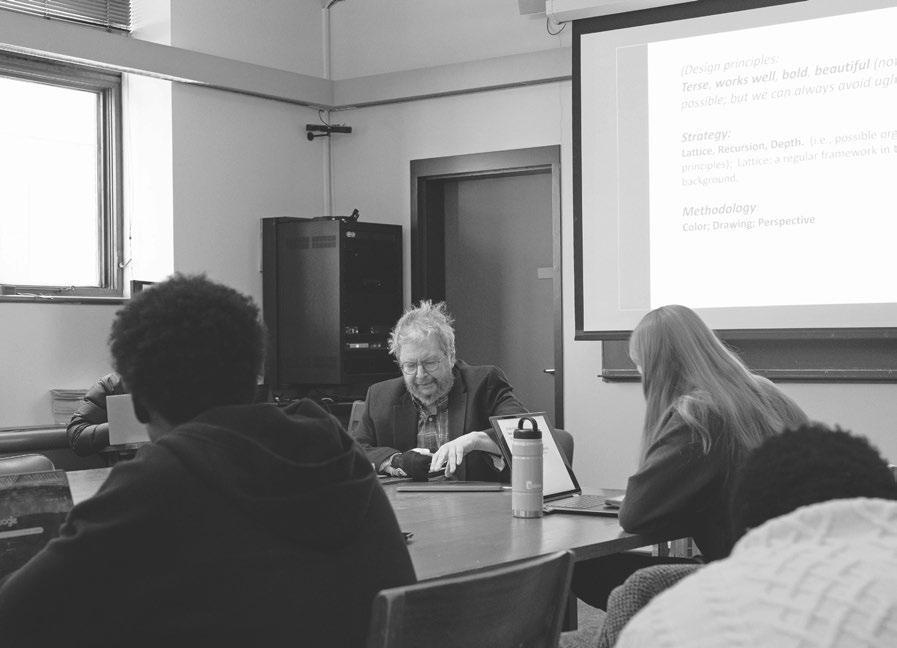
spoke to the News said they had not seen Gelernter’s Canvas announcement or another one by Rushmeier and were surprised when they walked in and saw Rushmeier teaching.
Kris Aziabor ’26 and Joaquin Santoscoy-MacPhee ’28, who are both in his class, said they found Gelernter’s emails with Epstein and his subsequent defense of them shocking.
“I think it’s very upsetting and disgusting,” Santos -
coy-MacPhee said.
In his Canvas post, Gelernter thanked the class and speculated that it could be the last one of his lengthy career at Yale. “You’ve been a marvelous class -- and not only on intellectual terms. You’re way out of the ordinary, and I’ll always remember that. If my very last class at Yale turns out to be CPSC 450(or a piece of it),e-then a thousand thanks. A million. You know what I mean,”
Gelernter wrote. Yale Course Search now lists Rushmeier as the course’s instructor. Fifteen students are taking “The User Interface,” according to Course Demand Statistics.
Contact LEO NYBERG at leo.nyberg@yale.edu and ASHER BOISKIN at asher.boiskin@yale.edu and JERRY GAO at jerry.gao.jg2988@yale.edu.
CEO of Junzi Kitchen and Nice Day Chinese, Junzi Kitchen saw a 10 percent decrease in customers in September compared to the prior year. He attributed this change to Junzi being a fast-casual restaurant focused primarily on lunch,
similar to Sweetgreen.
However, Junzi’s numbers recovered in October, Zhao said, returning to similar numbers from the previous year. Their overall fourth quarter numbers remained relatively unchanged, according to Zhao. Zhao attributed this to menu innovation. The restaurant, which
serves “healthy and authentic” Chinese food, according to its website, has recently added new items like beef noodle soup and Taiwanese sausage.
“Every semester we are trying to put out a few new dishes,” Zhao said, adding that he was currently in the process of experimenting with menu additions and recipe
changes at his New York location.
According to Zhao, Nice Day Chinese has not been affected by the new stores and continues to grow its business, possibly due to its focus on dinner offerings.
Even though the new shops could raise competition, Zhao said that the addition of new options could be ultimately beneficial for his business.
“Getting more restaurants in, I think there could be a kind of competition but also mutual benefits,” Zhao said. “I think more people will be coming to this area to eat, which is not a bad thing.”
Students offered largely positive opinions on the addition of Sweetgreen to the Broadway area.
Sydney Minetta Brown LAW ’27 said in an interview in November that as a vegetarian, the opening of Sweetgreen was a “true game changer” and that it has “absolutely” changed law students’ eating preferences for both lunch and dinner.
“The options at Junzi, and sort of the surrounding restaurants, for vegetarians and for vegans are quite limiting,” Brown said. Sweetgreen’s opening “really expanded my access to be able to grab lunch quick and easily while I’m at school for full long days,” she added.
Zhao acknowledged that the vegetarian options at Junzi were limited, though he also said he was working to fix them.
“Chinese food historically, there’s not much of a focus on the vegetarian option as the most important part,” Zhao said. “So it’s something we don’t have full control of, but we can bring a limited amount of vegetarian options to the store.”
Law School students and undergraduates interviewed by the News had varied opinions about Sweetgreen.
Kai Zhang ’26 wrote that he still had not eaten at Sweetgreen since its opening.
“I still haven’t visited it since because I think the dining hall is suitable enough to get a healthy salad in. Despite living in Davenport, I just don’t see a need to get something overpriced and nothing too special,” Zhang wrote.
Andrey Sokolov ’27 said that he was not used to eating at Sweetgreen, and prefers to order a bagel sandwich at Good Nature Market instead because it is similar to what he eats back at home in New York City.
“For me it boils down to going to Sweetgreen not really being a habit. Sweetgreen is not something I grew up with and as a result I end up getting food from places I’m more familiar with,” Sokolov said.
Ilani Nurick LAW ’27 wrote in November that it is “definitely the case” that Sweetgreen has changed law students’ eating out preferences.
“I had previously never in my life gone to a restaurant to order a salad — now, I eat at Sweetgreen at least four times a week and I can guarantee that I am not an anomaly,” Nurick wrote to the News. “I doubt it’s because of the location, I think people just enjoy having a slightly healthier but still filling option that is also just as convenient as the alternatives.”
However, Hannah Terrapin LAW ’26 wrote in November that she was put off by the “robotic silos” at Sweetgreen and the pricing.
“Although many of my peers have been seduced by sweetgreen’s swanky salads, I think there’s something ominous about the robotic silos of grain being dumped into those cardboard hex troughs. I haven’t tried the New Haven sweetgreen yet.
I’ll continue to get my lunch at lunch talks or to order from tried and true places like Good Nature,” Terrapin wrote. “However, if someone wants to gift me a $25 salad, I will gladly try it and give the salad robots an honest review.”
Nolan Ortiz, the assistant manager of the New Haven Sweetgreen, responded to the criticism by saying that the robotic silos were in place to ensure equal proportions and to speed up the process of creating bowls.
“The robotic part of the machine itself is just the portioning because we still have to cook, cut it, clean it and put it into the machine,” Ortiz said.
“The only difference from a classic Sweetgreen is the speed. It could pump out about 150 salads in about 45 minutes, which would take a whole row of about 13 of us to do.”
Tae Park, the general manager of Good Nature Market, said that the store has remained largely unaffected, even with the addition of new shops.
When asked whether the new shops have affected their sales, Park replied, “It hasn’t much. Maybe in the beginning with all the openings. But we’re still here, still doing our thing.”
Junzi has three locations, including its original storefront in New Haven as well as shops in New York City and Blacksburg, Virginia.
Contact HENRY LIU at henry.liu.hal52@yale.edu and NICOLAS CIMINIELLO at nicolas.ciminiello@yale.edu.
“So true a fool is love that in your will / Though you do anything, he thinks no
WILLIAM SHAKESPEARE SONNET 57
BY JAEHA JANG AND ANNA KOONTZ STAFF REPORTERS
In 2001, Yale fired tenured geology professor and former Saybrook master Antonio Lasaga, who admitted to downloading child pornography and possessing videotapes of a 13-year-old boy engaged in sexual acts in his classroom and Saybrook house, the News reported at the time.
It took 29 months after the Federal Bureau of Investigation raided Lasaga’s Saybrook residence for Yale to ultimately revoke Lasaga’s tenure and dismiss him — only the second instance in the University’s 325year history that a professor’s tenure was withdrawn, Yale historian and professor emeritus Gaddis Smith ’54 told the News in 2005.
The first instance, in 1904, happened to a philosophy professor due to an “academic dispute,” Smith said in 2005. The professor’s tenure was ultimately restored after he protested, but his “voting rights” on faculty issues were permanently revoked.
While various tenured professors have been suspended by Yale or have voluntarily resigned after allegations of financial mismanagement or sexual misconduct, an exceedingly high bar must be met for the University to strip a professor of their tenure because the status, by definition, provides near-invincible job security.
As tenured computer science professor David Gelernter’s recently revealed correspondence with sex offender Jeffrey Epstein and the University’s subsequent launch of a conduct review process raise questions about the extent of job security that tenure entails, Yale College Dean Pericles Lewis and two departmental chairs spoke to the News about what the status means and why its protections are in place.
“You have job security, you’re not on contract,” philosophy department chair Paul Franks said about the
privilege of tenure in an interview.
“And you can only be fired for a certain number of things, like gross moral turpitude, whatever that is. Pretty bad stuff.”
According to Franks, there are two ways to get tenure at Yale. First, a professor who has tenure at a different institution successfully goes through Yale’s tenure review process and is admitted as a tenured professor.
Tenure “does not automatically carry through,” Franks added.
Second, a faculty member can enter Yale as an assistant professor on the tenure track, joining what is called the “ladder faculty,” Franks said. After reappointment as an assistant professor in their fourth year, the faculty member can go through the “tenure review” process during their seventh year to gain tenure, according to Franks, as well as the Faculty of Arts and Sciences and Yale Engineering websites.
The process begins on the departmental level, when the faculty member is evaluated by more than 10 external letters from experts in their field, a departmental committee writes a report on the faculty member and tenured departmental faculty vote on the advancement of the review.
If the case receives a majority vote, it is then sent to a Tenure and Appointments Committee that oversees the faculty member’s area.
There are four of those committees at Yale — for the social sciences, physical sciences and engineering, humanities and biological sciences— and each consists of 10 to 12 tenured professors in the area, as well as the relevant deans, according to the committees’ webpage.
If a majority of a committee approves reappointment, the case moves on to the Joint Board of Permanent Officers, which consists of all full professors in the Faculty of Arts and Sciences or School of Engineering & Applied Science and some full professors from professional schools, according
ADVERTISEMENTS

to the Faculty Handbook. Tenure reviews at the board require a twothirds majority to pass, after which the appointment is forwarded to the Yale Corporation for final approval.
Franks said that the two steps after the committee’s vote — the approvals from the board and the Yale Corporation — are largely formal procedures and that the “real rejectable stuff” happens at the departmental and committee levels.
“In principle, you could get rejected at those stages, but it very rarely happens,” he said of the stages after the committee-level approval. “A lot of this are historical remainders. This is left over from a time when Yale College was probably pretty small, and everybody voted on, there weren’t really departments.”
The processes of reappointment as an assistant professor, which happens before the tenure review process, and promotion to full professor follow mostly similar processes, according to the faculty websites. The reappointment and promotion review processes, however, only require a majority vote at the board — a largely formal step — unlike the two-thirds requirement for tenure review.

Sociology department chair Emily Erikson also said in a phone interview that each of the three processes requires different numbers of external letters and that there are different “evaluative criteria” for each process.
Lewis said in an interview that tenure gives professors the “right” to conduct their research and teach “for an indefinite period.” While all faculty “enjoy the protections of academic freedom,” he added, “clearly, once you’re tenured, you have a certain kind of
autonomy that you lack when you don’t have tenure.”
“Tenure serves one clear good for education by protecting intellectual inquiry that may offend the opinions of a great many people,”
Sterling Professor of English David Bromwich ’73 GRD ’77 wrote in an email to the News.
Erikson said that tenure “guarantees employment, which guarantees the autonomy of the faculty.”
The basis of the university is the freedom of faculty, as peers, to “criticize, engage, discuss issues at will and to explore ideas that they believe are important,” Erikson said.
The autonomy that tenure “secures” is essential to this process.
She added that the bar for tenure revocation “has to be very high.”
Lewis acknowledged that it’s rare that faculty misconduct leads to the revocation of tenure. When asked about why tenured faculty members may choose to resign instead of facing tenure revocation, he said, “Sometimes you see the writing on the wall, and the faculty member just decides, ‘I don’t want to go through this.’”
“There have been occasions where misconduct has led to revocation of tenure, but it’s pretty infrequent,” Lewis said. “And we do have faculty standards of conduct. So there’s, above all, there’s an expectation that faculty will behave responsibly.”
Lewis emphasized that the faculty conduct review process is the same for tenured and non-tenured faculty.
“Doesn’t matter whether you have tenure or not, it would work the same way,” he said of the review process.
The conduct review process
According to the faculty handbook, the provost can refer complaints about academic or sexual misconduct, as well as other issues that are not resolved by the deans of the respective school, to the Faculty Standards Review Committee, which consists of elected faculty members from Yale’s various schools.
“The Provost will submit a complaint to the Committee only if the Provost and the Committee Chair determine that the complaint provides a reasonable basis to believe that (i) a faculty member’s actions were substantially inconsistent with the Faculty Standards of Conduct; (ii) the actions were reckless or intentional; (iii) the actions caused serious harm to the University or to an identified member of the University
community; and (iv) no other process or procedure is available to address the matter,” the handbook reads. The most recent action complained about must also be within one year of the complaint submission unless the Provost and committee chair agree that “extenuating circumstances” warrant an exception, according to the handbook.
University spokesperson Karen Peart wrote in a Tuesday email to the News that Gerlenter’s “conduct is under review” and that he will not teach while the review process is underway. His emails with Epstein, in one of which he describes a former student as a “v small goodlooking blonde,” are from between 2009 and 2015.
Peart also wrote that the University does not “comment on or confirm the existence of specific complaints.”
In a process that typically takes up to 90 days, a fivemember hearing panel within the committee then reviews evidence, interviews witnesses and, after a majority vote, returns a written report to the provost with a conclusion on whether the faculty member violated the standards of conduct. If the panel determines that the faculty member is guilty of a violation, it also recommends further disciplinary steps, including suspension without pay and reduction in salary.
If the panel concludes that “more severe penalties” — including dismissal — are justified, “it may recommend that the Provost forward the matter to the President, who may convoke the University Tribunal,” the handbook also reads.
According to Yale’s website on the University Tribunal, a five-member tribunal panel can, after hearings, recommend to the President that Yale impose a minor or severe sanction, including dismissal, on the faculty member in question. The respondent may appeal within three weeks, after which the Yale Corporation considers the case and sustains the sanction, reduces it or returns the matter to the panel with directions for further proceedings. If the matter is returned, the panel would then create new recommendations for the Corporation, which makes the final decision.
If a tribunal is not recommended by the faculty standards committee, the provost, after a hearing period, can “accept, modify, or reject the conclusions of the panel or any of its recommendations.”
Either the complainant or the accused professor can appeal the provost’s decision within seven days on grounds of a procedural error, the discovery of new evidence or “the imposition of a penalty grossly disproportionate to the behavior found by the panel.” If this appeal is granted by the president, the panel will reconvene and issue a new recommendation with the president’s input, and the provost will consider the new recommendation. That decision would not be subject to appeal.
In 2025, Harvard University stripped tenure from a professor accused of data fraud in what was the university’s first tenure revocation since its rules were formalized in the 1940s, according to the Harvard Crimson.
Contact JAEHA JANG at jaeha.jang@yale.edu and ANNA KOONTZ at anna.koontz@yale.edu.
BY JAEHA JANG STAFF REPORTER
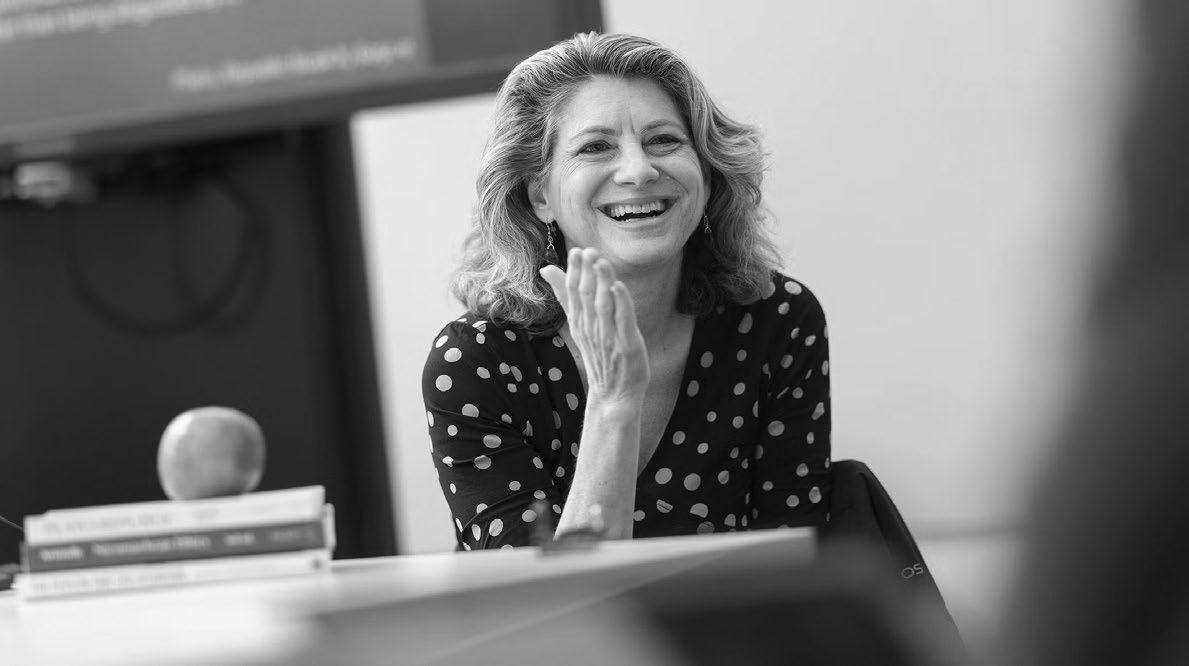
Tamar Gendler ’87, a former dean who said she was considered for the Yale presidency in 2024, has returned to the classroom full time.
Gendler, who served as the inaugural dean of the Faculty of Arts and Sciences from 2014 to 2024, said in an interview that she is enjoying her return to a transformed teaching landscape.
In October 2024, Gendler told the News that she was considered for Yale president after former University President Peter Salovey announced that he would be stepping down. On Wednesday, she said that she has found her return to full-time teaching — after 13 years — “entirely fulfilling.”
“I had completely lost track of both how incredibly energizing and how incredibly exhausting it is,” she said about teaching full-time. “It is really, really joyfully overwhelming.”
This semester, Gendler is teaching a philosophy section for the first-year Directed Studies program and an upper-level cognitive science seminar. She said that it’s clear that her students spent their formative years in “the 2016 to 2026 world, which was one of the weirdest worlds there was.” This distinction has “affected everything” about her classroom’s understanding of learning and her students’ “sense of the future,” Gendler said.
Gendler added that the international resurgence of populist frustration against elites from both the left and the right has raised new questions about the “structures the elite had brought about.”
“You guys, the guys I’m teaching right now, are incredibly nuanced and subtle in your understanding of how complex the world is,” she said.
It’s also her first time having students who have been “native speakers” of smartphone technology “all their lives,” Gendler said.
The rise of artificial intelligence technology, too, has changed the relationship between the production and consumption of knowledge “in all sorts of ways,” Gendler said. According to Gendler, the AI policy in her cognitive science seminar is that while students can use AI for research, brainstorming or editing, all work they submit should reflect their own judgment and intellectual labor.
But Gendler said she already suspects some of her students are using AI, so she is asking for more subjective answers.
“I have directed exercises, which last week were so clearly everybody had just plugged my question into AI, and I thought, ‘This is ridiculous,’” she said. “I don’t need to be reading what AI said back to you about this. So this week’s exercise is much more personal reflection.”
Gendler’s students praised her charismatic teaching style and warm personality in the classroom.
Liam Drake ’29, who is in Gendler’s Directed Studies section, wrote in an email to the News that one morning, she exclaimed that her students were not laughing at her jokes enough and told them to get up and switch seats. She demands the same level of commitment to the classroom from her students as she gives, Drake wrote.
Two students agreed that it is clear that Gendler’s time as Faculty of Arts and Sciences dean influenced her methods of incorporating diverse teaching techniques into her seminars.
“Evidently, her time as faculty dean gave her a panoramic view of Yale’s premier teaching styles, which she’s synthesized into a whirlwind of pedagogical engagement,” Kyler Parker ’29, another student in her Directed Studies section, wrote in an email to the News. “A dynamo in the classroom, Professor Gendler wields a repertoire of top-of-theline instructional approaches frankensteined together into a style that’s simultaneously accessible and erudite.”
Parker added that he is “extremely lucky to have been in Directed Studies the year of her return.”
Rhea McTiernan Huge ’27, who is in Gendler’s cognitive science seminar, said in a phone interview that classroom discussion with Gendler feels like “a conversation of equals.” Devin Grooms-Lee ’27, who is also in the upper-level seminar, said in a phone interview that Gendler’s leadership experience comes off when she guides the conversation’s direction while incorporating students’ thoughts.
Gendler is returning from a yearlong sabbatical at Stanford, where she explored topics on behavioral science and artificial
intelligence that informed her seminar on human, animal and artificial intelligence, she said.
She is also writing a book that introduces readers to philosophy “in the voice of a stand-up comic,” she said. The book is due to be published by Knopf in 2027, she added, and she hopes to do a book tour in the fall of 2027, she wrote in a Wednesday email to the News.
“I’m very much looking forward to the prospect of talking about philosophy to the wider public,” she wrote.
While Gendler said recent changes in the landscape of higher education are “so sad,” she said being a professor largely insulates her from these changes and that “the classroom experience is almost unchanged.”
“What’s lovely about being a professor is, it doesn’t matter what’s going on in the world in terms of your day-to-day work,” she said. “Today, my DS students and I read Berkeley. And I taught it in the way I would have taught it in 1890, and I taught it in the way that I assume it will be taught in 2140.”
Gendler added that the changes in the higher education landscape did “profoundly affect” her role as an advisor to students.
In the past year, multiple universities across the nation, including Yale, have announced that they are reducing their graduate student enrollment due to the increase in university
endowment tax and subsequent budget pressure.
“Five years ago, they would have gotten into every graduate school in the world because there would have been every graduate school in the world,” Gendler said. “And now, they might or might not be able to pursue graduate study. That’s a complete change.”
Gendler said that she is grateful for those who are serving as university presidents during this time, whether it be at an Ivy League school, small private colleges or big public institutions. It’s an “unbelievably challenging job” to be a university president amid such an unpredictable landscape, she said –– “even in circumstances where the world is on your side.”
In October 2024, Gendler told the News she was interested in leading Cornell, Harvard, Columbia and the University of Pennsylvania, the four Ivy League universities that did not have a permanent president at the time. When asked whether she would be interested in returning to an administrative role, Gendler said, “I love doing whatever comes my way.”
While Gendler has previously said she was “sad” and “felt disappointment” about not being Yale’s president –– though noting that “I will have a fantastic time not being president” –– she struck a more affirmative note this time.
“I love the job that I have right now. I love what I am doing,”
Gendler said. “I feel no sadness or deprivation in doing what I’m doing because it’s entirely fulfilling.”
Grooms-Lee said that, having taken Gendler’s class, he thinks she would have been a successful University president. She takes time to learn about her students’ backgrounds, he said, and she would have been “excellent” at representing the opinions of Yale’s student body. He also said that as a “talent” in philosophical thought, she would have been a “powerhouse” leader in reflecting the University’s needs and the “American ethos.”
McTiernan Huge said that while she thinks Gendler would do “super well, really, in any role,” including University president, she is grateful to have Gendler in the classroom.
“It feels so natural for her to be a teacher,” McTiernan Huge said, adding that Gendler is always excited about class material and speaking with students. “I think in a selfish way, I’m grateful that she has the opportunity to be my professor because I think she’s a really wonderful professor.”
Gendler graduated from Yale College summa cum laude in 1987, earning distinctions in the humanities and the mathematics and philosophy majors.
Contact JAEHA JANG at jaeha.jang@yale.edu.
BY ARIA LYNN-SKOV AND LEO NYBERG STAFF REPORTERS
The Yale Program for the Study of Antisemitism kicked off its new scholar-in-residence program with a lecture by Fordham Professor Magda Teter on Wednesday.
Teter’s lecture, the first of five events with the scholar slated for this semester, was an hour-anda-half discussion of the global history and contemporary politicization of antisemitism. The program plans to host a new scholar every year, program director Linda Maizels wrote to the News.
“We live in troubled times, in the times where hateful rhetoric and even violence are normalized,” Teter said in her lecture. “Times when it is difficult to have conversations about difficult topics, to face the past and the present. Times when it is really
increasingly difficult to disagree with one another.”
Teter argued that it is necessary to move away from focusing on debates over definitions of what antisemitism is. Instead, she said people must “think more deeply” and focus on how “what people call antisemitism” impacts lives.
Since Hamas’ Oct. 7, 2023, attack on Israel, which set off the war in Gaza, national conversations about antisemitism have often focused on its definition.
Last April, Yale added a contested International Holocaust Remembrance Alliance definition of antisemitism to a webpage that explains its discrimination policies. At the time, Linda Maizels, the program director for the Study of Antisemitism at Yale, told the News that she had mixed feelings about the University’s decision
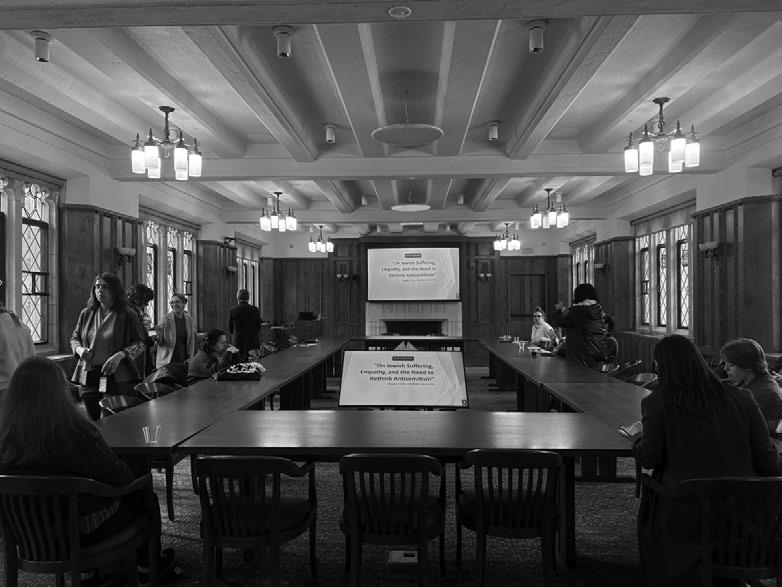
to add the definition to the webpage, saying that while it could be a “useful guide,” it was not meant to be applied to a University setting. Wednesday’s lecture, titled “On Jewish Suffering, Empathy, and the Need to Rethink Antisemitism,” drew a crowd of around 25 in-person attendees, with over a hundred more joining on Zoom. In-person attendees included Yale students, faculty and staff.
Teter is the author of five books, including the award-winning “Blood Libel,” which details the history of the antisemitic trope and how it continues today. She is the co-director of the Judaic Studies department at Fordham.
She spoke about the complexity of studying and discussing the history of antisemitism, particularly what she described as the question of how to handle “both the longevity of anti-Jewish hostility, but also not to resort to what Hannah Arendt called ‘eternal antisemitism,’” referring to the German-American political theorist.
Teter said that she thinks Arendt “correctly cautioned against” the concept of eternal antisemitism “because it naturalizes anti-Jewish hostility.”
According to Teter, the problem with this “longest” or “eternal” hatred framework is that it provides an “alibi for the perpetrators” and “tends to blame Jews for what happens to them.”
“I think we have to think more carefully about these power dynamics that develop over centuries, conceptions of social hierarchies, modes of exclusion,” Teter said.
She also highlighted the differing approaches of the Biden and Trump administrations in their political responses to a rise in antisemitism in recent years. Teter talked about the Biden adminis -
tration’s May 2023 report “The U.S. National Strategy to Counter Antisemitism,” which focused on a collaborative, cross-community approach to counter hate.
In comparison, when Teter described the Trump administration’s approach to fighting antisemitism, she gave the example of a January 2025 fact sheet, where Trump stated his commitment to defending the civil rights of Jewish citizens by saying, “With your vote, I will be your defender, your protector.”
Teter described Trump’s approach to antisemitism as “conditional,” pointing to the use of “with your vote.”
She added that Trump, in his defense of American Jews, focuses overwhelmingly on antisemitism from “the left,” and ignores what she described as the far-right’s “white supremacist propaganda” that is also often “anti-Israel.”
Teter said antisemitism research tends to focus on the oppressor, while research on other forms of racism focuses on the impacted group. Teter said this should change.
“We talk about Jews and Jewish experience in Jewish history, but we don’t talk about Jews in antisemitism studies,” Teter said “That’s entirely missing.”
She later added, “When you think about the study of racism, this is entirely different. And in the study of racism, we never lose focus and never lose sight of those affected by racism, victims of racism.”
“The scale of thinking about antisemitism is much, much more narrow,” Teter said.
Teter believes “we need to reintegrate Jewish experiences” into studies of antisemitism to have “a reflection of Jewish lived experiences.” She said this will “give us a broader spectrum of language and
of experiences,” instead of only focusing on murder, violence or the Holocaust. The program for the Study of Antisemitism at Yale supports research, two post-doctoral fellows and partnerships with student organizations like the Slifka Center and the Chaplain’s Office, according to its website. The program’s mission is to support research on antisemitism and provide opportunities to learn about antisemitism at Yale, Maizels wrote to the News.
“Antisemitism is often a hard topic to talk about, and nowadays, all the more so, an extremely volatile topic,” Sarit Kattan Gribetz, the acting director of the program and a Yale professor, said in an interview at the event. “What we hope to do is to historicize the questions, to think about them in nuanced and complicated ways.”
Gribetz said the program wants to “make it okay for people to ask questions, out of curiosity, without judgment, and to really think together.”
Claire Aubin, a postdoctoral fellow at the Program for the Study of Antisemitism, said she hopes Teter’s lecture will encourage people to look at antisemitism as “a topic of real scholarly study, rather than a sort of emotional or cultural experience.”
Tracy MacMath, who works at Beinecke library and attended the lecture, said “the depth of the talk” stood out to her.
Teter’s next lecture, set for Feb. 16, will be on researching and writing about antisemitism.
Contact ARIA LYNN-SKOV at aria.lynn-skov@yale.edu and LEO NYBERG at leo.nyberg@yale.edu.
“O, learn to read what silent love hath writ: / To hear with eyes belongs to love’s fine wit.”
BY HARI VISWANATHAN STAFF REPORTER
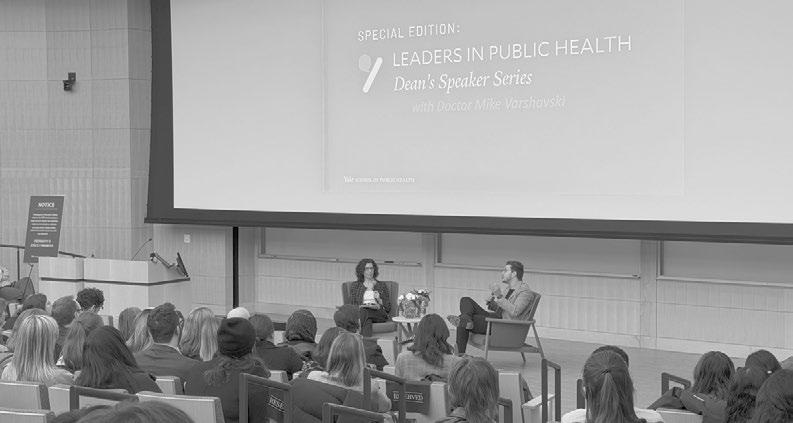
A doctor with 5.3 million Instagram followers spoke to a packed Marsh Lecture Hall on Tuesday evening for a talk titled “How to Debunk Misinformation in the Digital Age.”
In a conversation with Megan Ranney, the dean of the School of Public Health, Mike Varshavski — known to millions of followers worldwide as “Doctor Mike” — discussed misinformation in healthcare, and how he leverages his online presence to combat it. He reflected on shifting patterns of media consumption and the emerging challenges posed by the Trump administration and the rise of artificial intelligence.
“To be honest, I just wanted to prove people wrong,” Varshavski said, answering a question on how he began creating content.
The event opened with a short video recounting how his online rise began in 2015, when a selfie with his dog was featured in a Buzzfeed article and quickly went viral. Later that year, People magazine named him “the Sexiest Doctor Alive.”
Varshavski said he observed that while family medicine physicians were a ubiquitous presence in emergency rooms and nursing homes, they lacked a strong presence online. At the same time, he said he noticed patients falling victim to misinformation — buying misleading products such as “snake oil” remedies and developing distrust towards the healthcare system. In response, he began building a digital platform aimed at debunking such medical myths, he said.
He said that the nature of misinformation has shifted dramatically over the past five years. While Varshavski said he believes it is critical to call out false claims, he emphasized the importance of acknowledging when evidence is still evolving or when facts remain uncertain. He likened this to clinical practice: When a patient comes into the hospital with abdominal pain, there may be more than 20 potential diagnoses, and physicians must resist the urge to jump to premature conclusions.
Varshavski then turned to the public’s changing relationship with the media. Today, media consumption is fragmented, he said. Viewers are dispersed across different platforms, and there is no longer a unified show that everyone watches.
“We need to be everywhere,” Varshavski said. “And I think social media gives us that opportunity.”
One of his proudest moments, he said, was not a viral YouTube debate. Rather, it was his threeyear run on a Fox Business show called “Mornings with Maria,” whose host was initially skeptical of the flu shot. After years of continued appearances and conversations, he ultimately persuaded the host to get a flu vaccine herself. The host later spoke publicly about its benefits and the absence of adverse effects.
Ranney then asked Doctor Mike about the techniques he uses to build trust among his followers online. Varshavski admitted that he was initially hesitant to share personal details because doing so was once considered unprofessional for physicians. Over time, however, he said he saw value in
selectively offering glimpses of his life, striking a balance that makes him appear more human and relatable without compromising professionalism.
“You’re not a robot in a white coat trying to convince them to do something they’re not trying to do,” Varshavski said.
Another key principle guiding his content decisions is avoiding the unintentional amplification of niche conspiracy theories or misinformation.. He explained that with a large following, creators must be careful not to elevate false claims that might otherwise have gone unnoticed. While it can be tempting to publicly “dunk” on such posts, he cautioned that even a small percentage of viewers may believe them and responding can inad
vertently give new visibility to a TikTok video that previously had few views.
When deciding what content to address, Varshavski explained that he prioritizes targeting intentional misinformation — claims that are deliberately spread to mislead people, he said.
“If someone’s an activist who’s making money by spreading misinformation, I’m dunking on them all day,” he said.
Varshavski also described being intrigued by the psychological and strategic aspects of growing his audience. For example, at times, he intentionally posts lighter —even silly videos —with the intention of having those videos go viral. By doing so, he said he increases the likelihood that his more substantive, educational content will later surface in viewers’ algorithms, since his earlier videos already appeared in their
watch histories. After the conversation with Ranney, Varshavski answered audience questions relating to artificial intelligence, content moderation online and the Trump administration.
Ranney said that the conversation provided valuable insight into questions administrators are grappling with at the School of Public Health.
“One of the big things that I think that we can and will lean into more based off of this conversation is thinking about how we train our students to be great online as well as offline communicators,” Ranney said.
Audience members said the discussion reshaped their perspectives on misinformation in healthcare.
Gabriel Hartman ’27, an economics and history major, said he was surprised by how closely Varshavski’s in-person demeanor mirrored his online persona and found the discussion of online moderation particularly compelling.
Ashyah Galbokke Hewage ’27, a neuroscience and history of sci-
ence, medicine and public health major, said he found Varshavski’s discussion of AI insightful.
“Something that stuck with me is his take on the fact that AI is not a good substitute for mental health care, and I think the fact that we do need to create boundaries with using AI as a form of mental health treatment,” Galbokke Hewage said. Ranney added that preparing students for an evolving landscape is central to her work as dean.
“That’s something that I spend a ton of my time working on as a dean, is thinking about how I can set our school up to create a tomorrow that looks different from today, but also a tomorrow that looks different from yesterday or five years ago,” Ranney said. “The goal is not to recreate the past.”
The School of Public Health is located at 60 College St.
Contact HARI VISWANATHAN at hari.viswanathan@yale.edu.
HERBICIDE FROM PAGE 1
sold under various brand names, including Rascal, Honcho, Expedite and Landmaster. Exposure has become so common that data from 2013-2014 found that 80 percent of Americans had traces of glyphosate in their urine.
In 2000, researchers published a paper in a toxicology journal in response to questions regarding the safety of glyphosate and Roundup. Based on animal trials, they asserted that “Roundup herbicide does not pose a health risk to humans.”
In the years following the study’s publication, evidence toward the contrary began to emerge.
A 2015 report from the International Agency for Research on Cancer classified glyphosate as “probably carcinogenic to humans.”
Additional studies have shown that glyphosate exposure produces multiple forms of cancer in mice and rats, as rodents are often used as predictors of human disease.
“It is difficult to see how they could reach any conclusion other than glyphosate can cause cancers in experimental animals,” authors of the rat study wrote.
In 2017, litigation unearthed how the authors failed to disclose their affiliations and sources of funding. Monsanto, the producer of Roundup, had essentially “ghost-written” the safety paper. The details of the scandal were publicly released and dubbed the “Monsanto Papers.”
Roundup has changed its formula to decrease its glyphosate levels. In a 2021 call to investors, Bayer AG, which acquired Monsanto in 2018, said it would no longer sell glyphosate-based herbicides to consumers by 2023, though it would continue offering glyphosate to commercial entities. The company has already taken millions in losses and was involved with class action lawsuits.
In light of the controversy, the 2000 paper on glyphosate’s safety was officially retracted in December 2025.
“The potential financial compensation raises significant ethical concerns and calls into question the apparent academic objectivity of the authors in this publication,” Martin van den Berg, the editor-in-chief of “Regulatory Toxicology and Pharmacology,” wrote in the retraction statement.
As of 2026, the U.S. Environmental Protection Agency still maintains that “there are no risks of concern to human health when glyphosate is used in accordance with its current label. EPA also found that glyphosate
is unlikely to be a human carcinogen.”
Sprayed in the city
In 2006, Laura Cahn smelled an odd, acrid stench coming from her backyard. Cahn lived on Cleveland Road, and her backyard was adjacent to Yale’s athletic fields. She knew that Yale sprayed chemical treatment — she had seen them do so, she said — to maintain the grass composition, but the generous application sounded an alarm in her.
Concerned, Cahn inquired with Yale, which told her the odor she had been smelling was Roundup, a commercially available herbicide, she said. Though Yale reassured her it was safe, Cahn said her mind immediately went to her young daughter and the potential health hazards of chemical exposure.
Cahn filed a complaint with Connecticut’s Department of Energy and Environmental Protection which sent an inspector to investigate the site 10 days later. The report came back negative, as Cahn had expected, she said. In the 10 days it took for the DEEP inspector to arrive, rain had washed away the remaining chemical residue from her backyard plants, Cahn recalled.
As Yale continued to use Roundup, Cahn said she remained wary of the chemicals around her.
Cahn and one neighbor, Jeanne Dubino, an English professor at Appalachian State University, in 2011 met with Ginger Chapman, the then director of the Office of Sustainability, and Phil Sissick, director of Landscaping and Maintenance Services, about getting advanced notice from Yale about any pesticides. According to Cahn, Chapman acknowledged their request and agreed to alert the neighborhood before spraying pesticides.
“They promised they would do it, and they did not notify us in advance of spraying pesticides,” Cahn said in a recent interview. Sissick did not respond to the News’ request for comment.
Yale groundskeepers did, however, briefly stop using pesticides on the part of the field closest to Cahn’s yard for a couple of years, according to Cahn.
Dubino and Cahn spoke to local media about their complaints in 2013. Many of the pesticides used then were, and remain, EPA-approved. However, both women stressed that legality was besides the point.
“Guns are legal. Tobacco is legal. Cigarettes are legal. And it’s not OK,” Cahn told the New Haven Independent in 2013. Steve Herzog, a Yale Golf Course
groundskeeper, was diagnosed with non-Hodgkin lymphoma in 1997.
In a 2011 essay titled, “Poisoned Golf,” Herzog described himself as a “whistleblower.”
“This same occupational doctor concluded with a reasonable degree of medical certainty that I got my lymphoma from exposures to multiple pesticides at YGC, including through the well water exposure,” Herzog wrote in the essay, referring to the Yale Golf Course.
Herzog described suffering from weekslong nose bleeds and being offered no personal protective equipment while he did his work. In 2014, Herzog submitted a statement for Connecticut House Bill 5330, which proposed banning the application of pesticides on parks, playgrounds, athletic fields and municipal greens — areas where children are likely to frequent. The motion failed in March 2014.
“You may ask why I did not refuse to do it,” Herzog wrote. “In the back of my mind, I would say to myself, this is Yale University, one of the top universities in the world. It must be safe to apply it.” Herzog passed away on Feb. 14, 2025, according to his brother, Don Herzog.
Years later, concerns over pesticide use persisted. Again, in 2021, Cahn saw a Yale groundskeeper spraying pesticides, and she filed a complaint with the Department of Energy and Environmental Protection. According to Cahn, the report earned her a call from Yale’s Karen McIntosh, who told her that the substance was glufosinate ammonium, or “synthetic glyphosate.”
McIntosh did not respond to the News’ request for comment.
Though glufosinate is sometimes used as an alternative to glyphosate, excess exposure can cause pronounced neurologic symptoms, including dizziness, headaches and seizures, according to an article in the “Journal of Forensic and Legal Medicine.”
Louise Washer, the president of the Norwalk River Watershed Association and on the board of Pollinator Pathway, said she has been deeply involved in the local fight against pesticides.
She helped organize the Connecticut Pesticide Reform, a coalition including the Connecticut Audubon, Save the Sound and other organizations that advocates for stricter pesticide policies.
“What I don’t understand is that we have this bizarre vision of a monoculture of just grass,” Washer
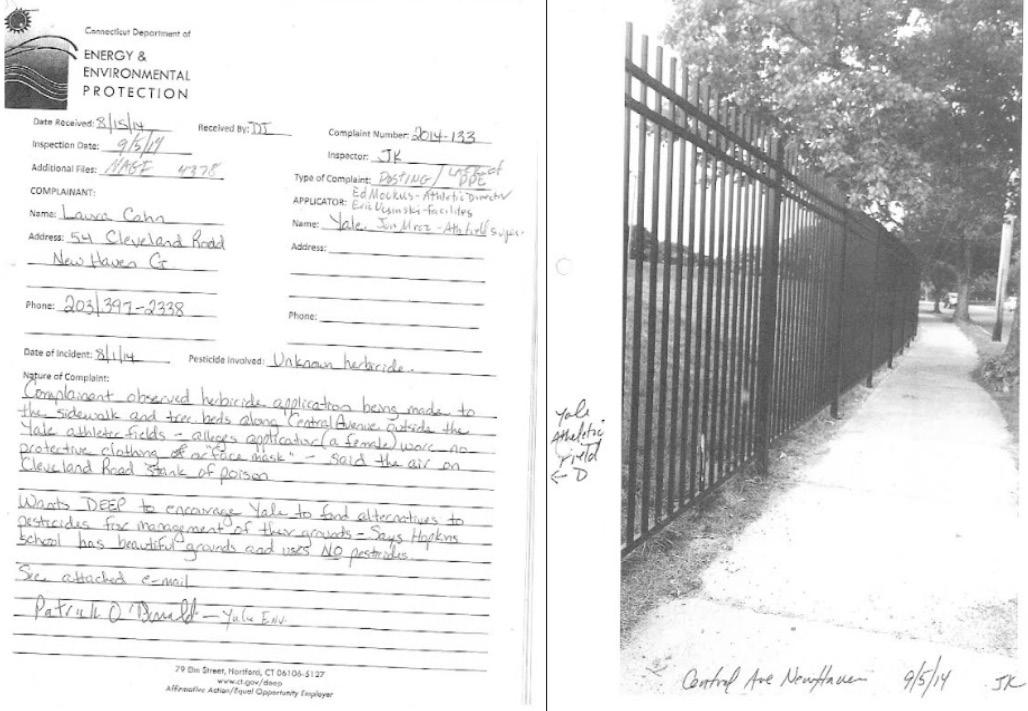
said. “I think that’s a lot of the use of glyphosate — to spot, kill, dandelions or little violets that grow in the grass that people want.”
In April 2022, Washer and Cahn went to the Department of Energy and Environmental Protection office in Hartford to sift through boxes of pesticide reports. They soon came across a setback: Nothing was organized, Cahn said. Physical records lacked dates, locations and amounts of pesticide used.
“We have a huge problem in Connecticut that we don’t have a way to know how much of a certain pesticide is being used, where it’s being used, or in what region,” Washer said in an interview. “So it makes it really difficult to pass good policy.”
The Environmental Protection Agency made a finalized stance on glyphosate in 2020. The Department of Energy and Environmental Protection continues to classify glyphosate products registered with EPA as “general-use.”
“General-use pesticides can be sold to and used by anyone without any requirement for a person to have pesticide certification, maintain application records or submit reports of their use to DEEP,” William Flood, a spokesperson for Department of Energy and Environmental Protection, wrote in a statement to the News.
Karen Beaulieu, a representative of the U.S. Geological Survey, said that the agency does not have data on levels of glyphosate in the areas surrounding Yale. The U.S. Geological Survey monitors the water quality of waterways across the United States for chemicals and contaminants, including glyphosate in some areas.
Washer and Cahn are hoping that the state will pass a bill called the “Pesticide Data Modernization Act,” which would require the state to create a searchable database of records.
“There just seems to be a disconnect between the science going on at the University and the decisions being made about land use that contribute to some of the pollution the scientists are testing,” Washer said.
“I don’t get that, especially for a research institution. Yale could lead the way for the state.”
Washer pointed to successful examples of research-based pesticide bans, including New York’s “Birds and Bees” Protection Act. Enacted in 2023, the act phases out the use of neonicotinoid insecticide sprays on seeds, which indirectly harm native insect populations.
The act was motivated in part by a 2017 Cornell study that investigated pesticide risks to essential pollinators like honeybees.
“The best alternative would of course be not having to use herbicides at all, e.g. with mechanical/benign methods of weed control,” Lars Ratjen, a researcher with Yale’s Center for Green Chemistry, wrote to the News.
Ratjen suggested using hot water works to kill weeds for certain applications — a method of using vinegar-based acids or even creating a “benign foam” with steam that is used by the Swiss National Railway in their track beds. The Yale Golf Course is located at 200 Conrad Dr. Contact MICHELLE SO at michelle.so@yale.edu.
“In black ink my love may still shine bright” SONNET 65 WILLIAM
BY JOLYNDA WANG STAFF REPORTER
Spring enrollment in Yale’s Chinese language program climbed to 345 students this semester, marking a decade-high level, according to program coordinator Fan Liu.
Chinese professors identified the program’s strong relationships between students and instructors, an engaging and practical curriculum and cultural activities outside the classroom as factors for the growing enrollment. The program has increased its advanced-level course offerings in response to greater student interest, according to Chinese professor Ninghui Liang.
“We are thrilled to see the sustained and growing interest in Chinese language and culture among both undergraduate and graduate students,” Liu wrote to the News. “The program continuously monitors evolving student interests and changing learning preferences to better serve our community.”
Liu wrote that the program has undertaken several new initiatives to enhance student learning and boost interest.
Liu, along with Chinese professor Wen Zhang, introduced the course “Chinese for the Food Culture of China” for the first time last spring, as an advanced elective class for both heritage and nonheritage speakers.
“We have enhanced hands-on experiences across all courses to make Chinese a living part of students’ lives,” Liu wrote.
Liu emphasized that the program offers students multiple opportunities to practice Chinese and engage with Chinese culture,
such as weekly Friday lunches and calligraphy sessions. The program also hosts an annual Chinese New Year celebration and a UN Chinese Language Day event on Cross Campus each April.
Chinese professor Mo Wu said that the Friday activities are open to classmates and friends who have never even studied Chinese before. She also said that these hands-on activities allow students to connect personally with the culture and draws students into the Chinese program community.
“I think every teacher in the Chinese program is kind of like your friend,” Wu said in a Zoom interview. “In the classroom, we are your teachers, but every Friday afternoon, we are like your friends.”
Chinese professor Ninghui Liang wrote that one potential factor that may contribute to the increasing trend in student enrollment is a shift in teaching philosophy. She explained that the program’s professors are stressing lessons on language for real-life situations such as searching for apartments and buying snacks.
“This is indeed very encouraging news, especially given the current tensions in U.S.–China relations and the nationwide decline in enrollment in Chinese language programs,” Liang wrote to the News. “Against this broader context, our program has continued to see steady growth, which we find both meaningful and motivating.”
Chinese professor Rongzhen Li wrote that instructors’ participation in AI pedagogy workshops at the Poorvu Center and workshops at the Center for Language Study has contributed to the program’s growth by improving
teaching methods.
Jason Cao ’29, a student in “Readings in Modern Chinese Fiction,” wrote to the News that through these courses he can grow his passion for Chinese literature and political movements.
Tiffany Zhou ’27, who is taking “Chinese for the Food Culture of China,” said she joined the program initially to acquire a language certificate. However, she continued to take courses to learn more about her culture and become a more fluent speaker.
Isabella Greubel ’28, who is taking “Readings in Modern Chinese Fiction” and “Introduction to Literary Chinese
II,” wrote that she was drawn to the program by its additional Shanghainese and Cantonese courses and the potential to apply for the Richard U. Light Fellowship, which lets Yale students study language in China, Korea and Japan. Last year, Greubel received the fellowship to study in Beijing.
Leslie Stone, the vice president of the Yale-China Association, suggested that the increase in Chinese language enrollment has contributed to an increase in applications for Yale-China’s programs.
“Yale students and alumni understand the importance of U.S.-China understanding and
people-to-people engagement during these turbulent times,” Stone wrote.
Mya Fisher, the director of the Richard U. Light Fellowship, wrote to the News that “over the past five years, application volume has remained relatively steady across Chinese, Japanese, and Korean language applicants and does not fluctuate in direct response to enrollment changes in any single language program.” Yale established a Chinese language program in 1936.
Contact JOLYNDA WANG at jolynda.wang@yale.edu.
BY HENRY LIU STAFF REPORTER
Yale’s Graduate School of Arts and Sciences is decreasing its enrollment as the University anticipates an endowment tax hike this year. But at Yale Law School, enrollment is remaining steady. While the graduate school provides healthcare and living stipends for students, the Law School charges students for tuition, meaning that enrollment is a “source of revenue,” according to Sterling professor and former Law School dean Robert Post LAW ’77.
“One way to respond to the tax is to increase enrollment to increase your income,” Post said. “We don’t use our endowment to subsidize students the way that the endowment of the graduate school does.”
In a statement to the News, Law School spokesperson Alden Ferro wrote that “Yale Law School is not planning any significant changes to its enrollment.” Yale Law School’s tuition for the 2025-2026 school year is $76,636. It enrolls roughly 600 to 630 J.D. students, most of whom receive some financial aid. The endowment tax increase that President Donald Trump signed
into law last year has led the University to tighten its budget through a 90-day hiring freeze, a 5 percent reduction in non-salary expenses and a one-time retirement incentive for managerial and professional staff. In December, administrators warned of potential layoffs as departments downsize.
In a Zoom interview with the News, Post explained that while enrollment is a financial loss for graduate schools, it is a source of revenue for the Law School. Post said that while the Law School awards scholarships, enrollment is a source of income “on the whole.”
Post recalled that when he became dean in 2009, the Law School’s endowment had decreased by 35 percent due to the Great Recession. As a result, the Law School increased enrollment to bolster its revenue, he said.
However, Post said that the endowment tax increase could decrease scholarship resources, since the Law School’s scholarships are funded by its endowment. That includes programs such as the Soledad LAW ’92 and Robert Hurst Horizon Scholarship Program, which now supports a record high 96 law students.
“If the endowment goes down, then our scholarship resources go down,” Post said, but called it a “whole different dynamic” than the challenges faced by the graduate school. Yale recently announced cuts to the graduate programs, reducing enrollment by approximately 13 percent in the humanities and social sciences and by 5 percent in STEM fields over the next three years.
Other institutions have made even steeper cuts. Harvard announced a 50 percent reduction in Ph.D. admissions slots in science departments. Contact HENRY LIU at henry.liu.hal52@yale.edu.
BY NELLIE KENNEY STAFF REPORTER
The elevator in Morse College’s 14-story tower has been broken since Monday morning. Issues with the tower’s elevator began on move-in day this year, when an elevator breakdown left students to haul their belongings up the stairs to the tower’s higher floors, tower resident Xinzhi Qiu ’27 said in a phone interview. Several residents of the tower said that elevator breakages have been a recurring problem all school year.
A Yale Facilities spokesperson did not immediately respond to the News’ question about how many times the elevator has broken down this year. The current outage, which was ongoing as of Tuesday night, began on Monday morning, residents said.
“I woke up yesterday to go to class, I pressed the elevator button. It wasn’t working. It would just glow a little bit, and then it just never came up,” Kyle Romans ’27, who lives on the tower’s 13th floor, said.
For Romans and other students living on the tower’s top floors, the elevator outage has been a hassle. Some have said that carrying laundry up and down the stairs was a hurdle.
“It’s as if I didn’t already feel like Sisyphus struggling against the burden of a physics p-set every week,” Eric Claassen ’27, who lives on the tenth floor, wrote in a text message. “Now, every time I come home I must trudge up 10 flights of stairs to get to my lofty perch in morse tower.”
Karim Najjar ’27 said in a phone interview that the elevator outage has made him avoid returning to his room “until the very end of the day” to avoid the dreaded climb. When Najjar ran out of water in his room on Monday night, he said, the “prospect of going all the way down to fill it up and then all the way back up made it not worth it.”
Qiu, who lives on the tenth floor, said that on previous occasions when the elevator has broken down, it has usually been repaired within one business day. This time, he said, the wait has been “particularly long.” He guessed that Yale Facilities may have “their hands full” at the moment, referring to a sprinkler pipe failure that drenched dorm rooms in Lawrance Hall on Monday.
Qiu said he “put in a call” to Facilities on Tuesday morning and was told
that they had received two work orders about the issue and would fix it as soon as possible.
Facilities representative Ayde Lyons wrote in an email Tuesday evening that Facilities is “looking into this,” but did not immediately answer questions about previous elevator issues or suggest a time frame for repairs.
Qiu, who lives on the tenth floor, said that he “doesn’t know how” people who have injuries or disabilities fare when the elevator is down. Other residents echoed this sentiment.
Sarah Senatus ’27 also said that she had been “wondering” how people with injuries or disabilities could reach the higher floors. The situation is “actually ridiculous, especially considering how high up people live,” she said.
Morse Head of College Catherine Panter-Brick and Dean Blake Trimble did not immediately respond to questions about whether the college has a plan in place for students unable to climb to higher floors when the elevator is down.
Lichel Johnston ’27 said that aside from “daily inconveniences,” the outage has been a wake-up call to how much students living in the tower rely on the elevator. The elevator is an opportunity for a “quick catch up” with friends, she added, a facet which she has missed in the past two days.
Morse College was built in 1962.
Contact NELLIE KENNEY at nellie.kenney@yale.edu.
"I
BY LIZA KAUFMAN STAFF REPORTER
The Yale men’s lacrosse team will open its 2026 campaign with an early season test in West Point, New York, against No. 11 Army (2–0, 0–0 Patriot).
After months of daily preseason practices, the Bulldogs say they are ready to take the field.
“It’s electric,” long stick midfielder Francis Keneally ’28 told the News, describing the energy in the locker room. “Everyone’s just excited to be there. Everyone’s fired up.”
To build depth across all three units — the offense, defense and midfield — head coach Andy Shay and his staff recruited 14 new players, including a 13-member first-year class and one transfer.
“They’re very self-sufficient, and I think we’ll have a lot of freshmen, probably seven guys playing on the field this year, so I’m really excited for them,” captain and senior defenseman Patrick Pisano ’26 said in a phone interview. “I think you can expect big things from Sean Grogan, Gaetano Cicotello, Dylan Blekicki and Ben Cuomo.”
On offense, the team welcomes six attackmen from as far as Murrieta, California, and as close as Orange. Blekicki and Grogan will be joined by Lincoln Herring ’29, Henry Hughes ’29, Oliver Nappi ’29 and Colin Zeller ’29, while faceoff specialist Cuomo will look to bolster the Elis at the X. The midfield unit also gained depth with first years Luke DeAngelis ’29, Flynn Leonard ’29 and Asher Ziv ’29, along with Colorado College transfer Braydon Ellis ’27.
For the defensive unit, the Bulldogs have brought in long stick midfielder Cicotello, defenseman Danny Van Camp ’29 and goalie Aidan Olazabal ’29. Grogan, Cuomo and Cicotello were named the 32nd, 42nd and 49th best recruits, respectively, in the Nike Lacrosse/Inside Lacrosse “Power 100 Freshman Rankings” released in August.
Pisano said he has enjoyed bringing the newest Bulldogs into the brotherhood and looks forward to leading the team this season.
“I hope to foster an environment where everybody’s pushing each other, each and every day, whether you're on the bottom of the depth chart or at the top of the depth chart,” Pisano told the News.
After finishing 5–8 last year, which was good for fourth in the Ivy League, Yale was picked to finish fourth again this season in the 2026 Ivy League preseason poll.
“I’m excited, but the finality of it is pretty bittersweet,” Pisano said. “We’re leading the team as seniors now, but we have to depart the team this year as well, so it’s our last shot at this whole thing.”
For Keneally, a sophomore, the season brings an opportunity to step into a leadership role and to sharpen his skills.
“I’m excited to try and get some leadership roles and help out the freshmen and kind of just guide them through their first season,”
Keneally said. “It’s just so exciting to be on the team and I’m glad to be a part of it.”
Six of Yale’s 13 games this spring will be played at Reese Stadium. However, before opening Ivy League play against Princeton, the Bulldogs will face five nonconference opponents, beginning with Saturday’s matchup at Army.
At this weekend’s Valentine’s Day season opener, the Elis will play a rematch against the Black Knights. When Yale hosted Army last season for its home opener, the Bulldogs came up short against the nationally ranked opponent.
Army enters Saturday’s game with a leg up, having already played two games this season. The Black Knights defeated UMass (1–1, 0–0 A10) 14-8 and No. 18 Rutgers (1–1, 0–0 Big Ten) 11-9.
To start their 13-game regular season slate, the Elis will travel to West Point, New York, to face off against
“Our only goal right now is to beat Army this weekend,” Pisano said ahead of the matchup.
For Keneally, who grew up a short drive from West Point, opening his sophomore season at Army holds special meaning.
“Growing up as a kid, I would go to the Army games, so that should be pretty exciting,” Keneally said.
Following Saturday’s matchup, the Elis will return to New Haven for their Tuesday night home opener against Marist (0–1, 0–0 MAAC) and a Saturday afternoon matchup against No. 20 Boston University (1–1, 0–0 Patriot).
The Bulldogs will then hit the road and journey to State College, Pennsylvania, to play No. 14 Penn State (1–1, 0–0 Big 10), before returning to the Nutmeg State to play at Fairfield (1–0, 0–0 CAA).
The Nittany Lions will be another road test for the Bulldogs, as Penn State made it to the semifinals of the NCAA tournament last year before losing to Cornell 9-11.
With depth across the midfield and a defense anchored by veteran leadership, Yale enters the season emphasizing discipline
and connectivity. When asked to describe the team’s identity heading into the season, Pisano pointed to the team’s close-knit nature.
“I’d say our brotherhood and our bond as a team, just the overall closeness and togetherness that I feel on this team is very different from last year and even the year before that,” Pisano said.
Keneally echoed Pisano and described the team as a “unit” and “detail-oriented.”
Conference play will begin during Yale’s spring break with a home matchup against the No. 3 Princeton Tigers, a team predicted in the preseason poll to finish first in the Ivy League. After dominating the Insider Lacrosse Poll week after week and reaching the NCAA quarterfinals last season, Princeton will be a formidable opening Ivy League opponent.
With the graduation of the last season’s top two scorers, Chris Lyons ’25 and Leo Johnson ’25, Yale will look to senior attackman David Anderson ’26 and junior midfielder Cole Cashion ’27 to fill the offensive void.
The Bulldogs will follow that
up with a game against the Penn Quakers. When the Elis traveled to Philadelphia last season, Yale served up Penn a 14-11 loss, and the Bulldogs walked away with their third straight victory of the season. The team will then head to Ithaca to face No. 4 Cornell, the defending NCAA champions. The Bulldogs will start April play with a quick trip to Hanover to play Dartmouth, whom Yale soundly defeated 21-12 last season en route to punching their ticket to the 2025 Ivy League tournament.
April play will continue with a home matchup against No. 12 Harvard on the 11th, coinciding with Yale’s Alumni Day at Reese Stadium.
The squad will then wind down the regular season with an away game at Hofstra (1–1, 0–0 CAA), before concluding with home contests against UAlbany and Brown.
Faceoff is slated for noon on Saturday in West Point, New York. Contact LIZA KAUFMAN at liza.kaufman@yale.edu.
BY RACHEL MAK STAFF REPORTER
The Yale squash program hosted Trinity in the Brady Squash Center
on Wednesday evening for senior night. Both teams lost to topranked Bantam squads.
The No. 9 Yale women’s team (2–6, 1–3 Ivy) lost to No. 6 Trinity (8–4, 0–0 NESCAC) 7–2. Heng Wai Wong ’28 had a
rematch against Thanusaa Uthrian, whom she played in the College Squash Association National Individual Championships earlier in the season. Once again, she defeated her foe in the number one position in four games.
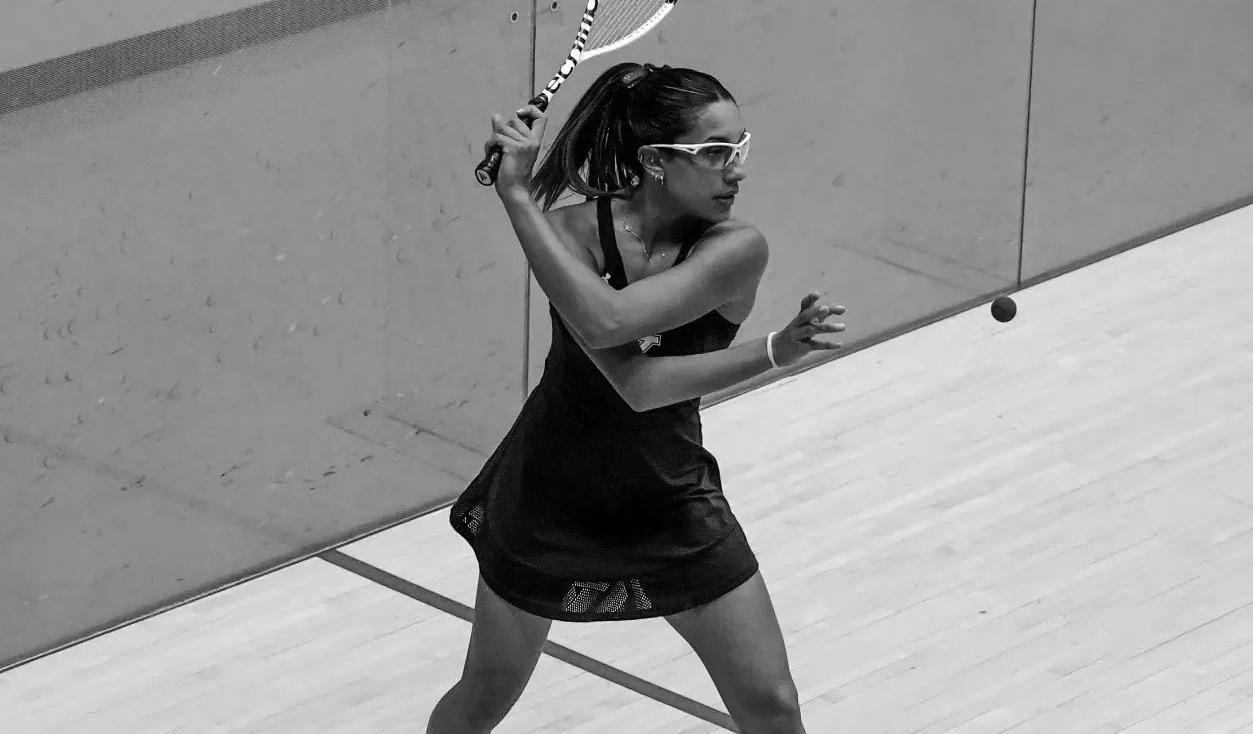
Elise Kang ’29, who plays in the fourth position, picked up the sole other win for the Bulldogs. After dropping her first two games, she came back to win the next three, grinding out a 13-11 victory in the fourth game.
Whitney Taylor ’26 dropped a tough 3-2 match against the Bantams’ Varvara Kliueva in the seventh position. She dropped the first two games but came back to take the next two. However, Kliueva regrouped to take the final deciding game.
Spring Ma ’28, Meha Shah ’28 and Alyssa Ho ’29 lost to their opponents in four, while Eedha Mehta ’29, Layla Johnson ’27 and Swetha Sivakumar ’29 fell in three.
“Overall, we all did really well,” Wong wrote to the News. “Despite the results, the scoreboard shows that we’re not very far behind them. Through this match and the one against Stanford, the team has gained a lot of confidence overall.”
On the men’s side, the No. 4 Yale squad (5–3, 3–1 Ivy) lost to No. 1-ranked Trinity (11–0, 0–0 NESCAC) 9-0. This loss snapped two of the Bulldogs’ previously undefeated records on the season. Tad Carney ’26 lost his first team matchup to Trinity’s Joachim Chuah, in a tight 3-2 match. The two players traded games in a
back-and-forth battle before Chuah pulled away in the fifth.
Rishi Srivastava ’28 lost to the Bantams’ Huzaifa Ibrahim in four, breaking his undefeated collegiate record.
Rohan Arya Gondi ’28 lost in five games in the fourth position. Lachlan Sutton ’27, Bennett Eun ’27 and Jack O’Flynn ’27 lost to their Trinity opponents in four, and Arav Bhagwati ’26, Rick Chen ’28, and Oliver Velasco ’29 fell in three. Looking ahead, the Bulldogs look to finish the regular season strong in the Empire State. With wins against Cornell and Columbia, the women’s team will secure a spot in the Ivy League squash tournament. The men’s team can reach the tournament with one more win this weekend.
“Going into this weekend, I hope we can keep this momentum going and have some great wins,” Wong wrote to the News. “It’s going to be tough since we don't have many away matches, and they are also our long-term rival in the Ivys. We’re gonna show up strong and ready for some battles!” Yale will play Cornell on Saturday at 12 p.m.
Contact RACHEL MAK at rachel.mak@yale.edu.
an NIL paradox inside the Ivy League, where NIL opportunities have been more theoretical than real. While other Division I programs offer six- or seven-figure contracts through revenue share and pay-for-play models, at Yale, small, local deals and the school’s official partnership with the digital marketplace Opendorse define the NIL landscape.
Crippled by strict Ivy League rules, limited demand for athletes’ services and minimal Yale Athletics advertising of athletes, NIL deals at Yale can be hard to find. As the NIL environment continues to evolve, the Ivy League’s commitment to amateurism is increasingly leaving its athletes and programs behind.
The Ivy League’s approach: tradition first
Since the presidents of the “Ancient Eight” adopted the NCAA’s 1948 Sanity Code banning athletic scholarships, the conference has conducted its business under strict amateurism.
But in 2025, the League reversed a longstanding agreement that had barred its football teams from competing in the playoffs.
In September, the league added another restriction: Athletics departments must sign “attestations of independence” for NIL deals over $2,000, on top of the NCAA’s requirement to report deals over $600 through NIL Go, a clearinghouse run by Deloitte.
Sports attorney Richard Kent said this additional layer of restriction, which requires the institution to sign a legal document claiming that it played no role in brokering the deal between the student-athlete and an outside company, is part of the Ivy League’s self-image.
“It’s important for the Ivy League to say directly or by inference that ‘we’re different, we’re better, we’re different, we’re better,’” Kent said in an interview.
“‘We are pure.’”
But Kent argues that the landscape has changed, and the Ivy League no longer stands alone as the only prestigious academic and athletic model.
“There are a bunch of legitimate universities by the name of Stanford, Vanderbilt, Northwestern, in which there’s plenty of NIL,” Kent said. “There’s full opt in of revshare, and has that brand, from an academic perspective, been tarnished even one scintilla? No.”
Yale’s bet on Opendorse
On Feb. 10, 2025, a month after opting out of revenue share, Yale Athletics announced its new partnership with Opendorse, a leading NIL marketplace.
“Partnering with Opendorse allows us to provide best-in-class NIL resources that empower our student-athletes to make the most of the opportunities available to
them in this evolving landscape,”
Director of Athletics Vicky Chun was quoted as saying in a Yale Athletics press release in February.
But one year later, interviews with student-athletes across the football and men’s basketball teams, as well as with a sports attorney, paint a different picture. Shallow deal flow, minimal awareness and an Ivy League regulatory structure all but ensure NIL remains modest at Yale.
“There are some good opportunities in there, but you just kind of have to look around,” Yale men’s basketball forward Riley Fox ’28 said. “But then there’s a lot of stuff that’s kind of not worth it at all.”
“While Yale Athletics embraces evolving NIL opportunities and innovative platforms, the primary focus remains the student-athlete experience, ensuring all NIL engagement aligns with the values and expectations of Yale, the Ivy League, and the NCAA,” Colleen Murphy, the assistant athletic director for strategic communications, wrote in an email to the News.
While Yale joined the national trend on paper, the Ivy guardrails are hindering the marketplace for athletes at the eight institutions. NIL at Yale remains dominated by the athletes with the time, savvy or personal connections to seek deals independently.
Unfulfilled promises
Opendorse advertises itself as the industry leader, boasting more than 100,000 athletes and partnerships with major brands like EA Sports, Pepsi, Toyota and Capital One.
But for Yale student-athletes getting little visibility, the platform has not lived up to its promises.
“I’ve only done one deal on Opendorse,” Kamara said. “Opendorse is nice but most of the deals that I’ve gotten have been from me reaching out and connecting with owners of companies.”
A major obstacle for Ivy student-athletes stems from a lack of institutional education, support and resources on NIL. Three Yale student-athletes told the News that their entire NIL education consisted of one compliance meeting at the start of the year.
While student-athletes interviewed by the News said that Yale makes it easy to submit and get approval on NIL deals, learning how to seek out deals, understand and negotiate contract terms and monetize their brand falls on the athletes themselves.
“Yale, specifically, doesn’t provide people that help us with understanding contracts,” Kamara said.
In the rare cases where Yale student-athletes do secure more substantial or nationally recognized NIL deals, those opportunities tend to come from outside the Uni-
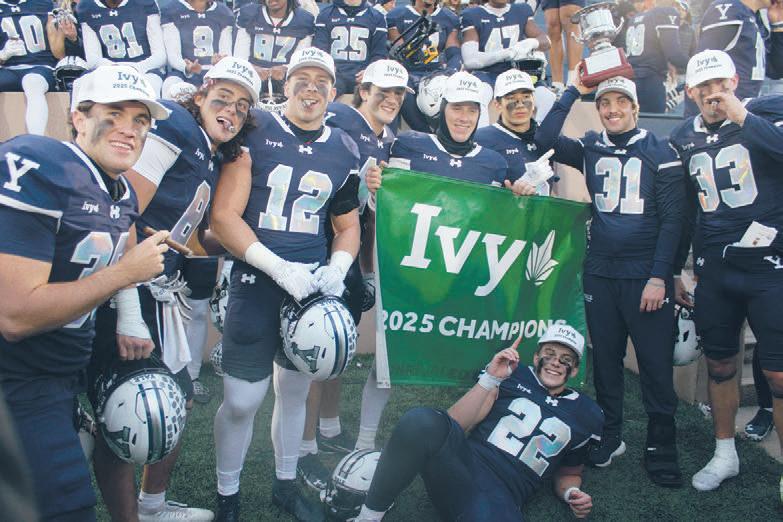
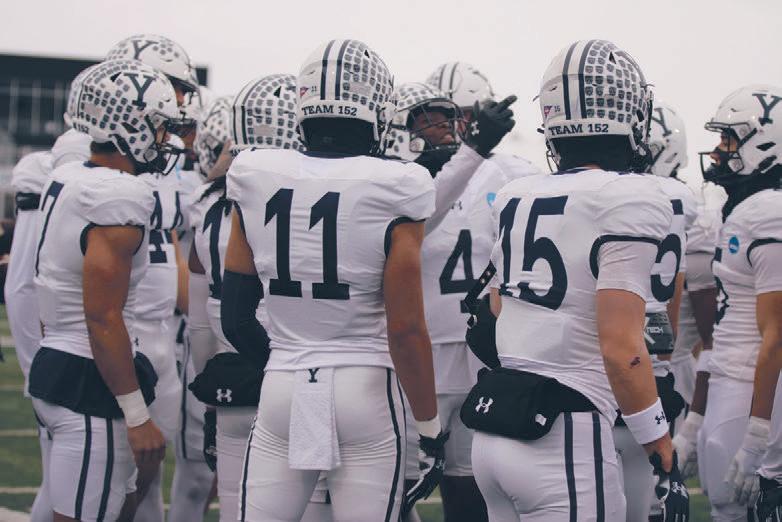
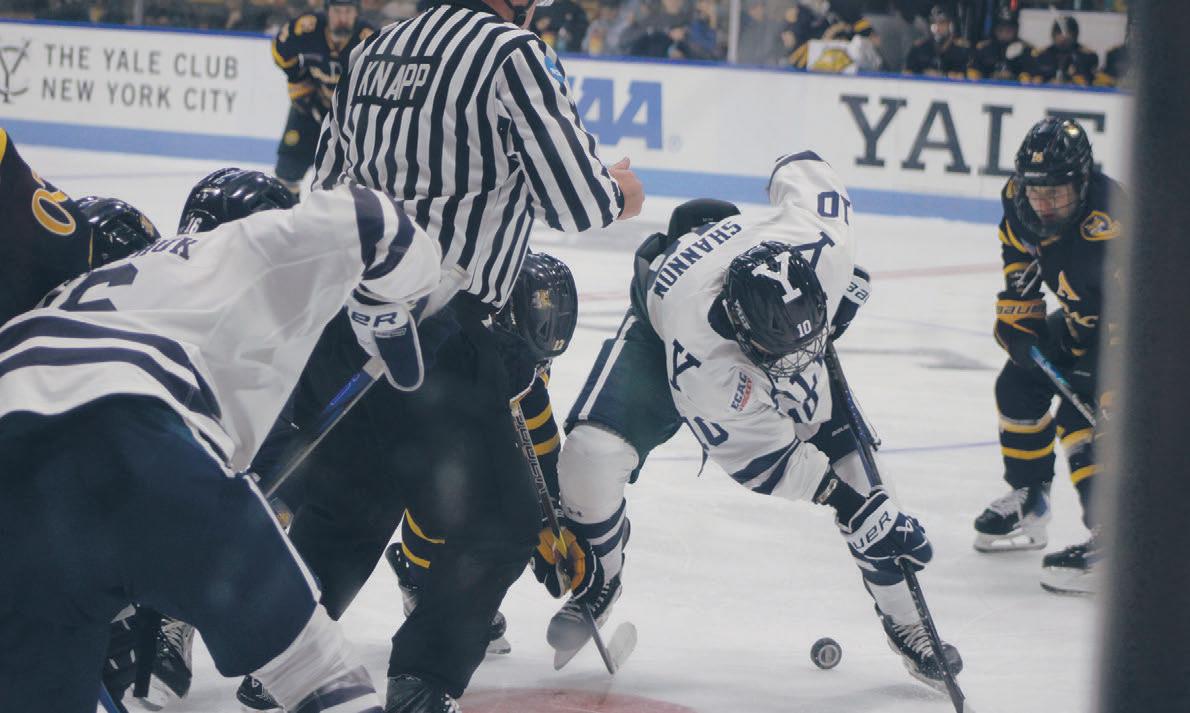
versity’s NIL infrastructure.
Fox’s Opendorse deal with Vuori is one exception. Fox, however, had help from an outside NIL agent.
“He would do everything, which was nice. I didn’t have to get any deals on my own. He would find them and send me ideas,” Fox said of his NIL agent. “Then he would fill out the paperwork and send it to the athletics department.”
But most student-athletes don’t have that option. And even when student-athletes do manage to obtain deals on their own, the money is small, they say.
A dormant marketplace
Unlike at Power Four schools, where NIL activity can define the student-athlete experience, NIL has yet to develop a strong presence on Ivy League campuses.
“NIL activity at Yale is dormant,” wide receiver Mason Shipp ’25.5 said. “It does not exist.” Kent said he tried to secure a sponsorship for Yale basketball players at a local bank.
The response?
“UConn, UConn, UConn,” Kent said. The bank opted to sponsor the Huskies, instead.
Yale men’s basketball team has enjoyed much success in recent years, including back-to-back NCAA tournament appearances, a 2024 upset victory over No. 4 Auburn at March Madness and Ivy League titles in 2022, 2024 and 2025. The Yale football program has also had recent success, claiming the Ivy title in 2022, 2023 and 2025.
Yale student-athletes are aware of the visibility gap.
“We don’t have the same exposure as bigger schools. Yes, we’re an Ivy League. Yes, we have influence on social media, but it’s not as strong and as exciting as a school like Alabama or a school like Georgia,” Kamara said.
Among Yale’s primary revenue-generating sports, engagement with Opendorse remains uneven. Publicly available Opendorse data shows that 61.7 percent of Yale football players have active Opendorse profiles. Of those 63 players, most of their profiles lack personal biographies or customized branding, and many rely on Opendorse’s automated pricing system rather than athlete-set rates.
The men’s basketball team has the highest level of participation, with 71.4 percent of players on the platform, but even there, pricing largely followed Opendorse’s default formulas. Women’s basketball lagged behind at 42.9 percent, while men’s hockey had profiles for just 20.7 percent of players. One notable outlier was the women’s lacrosse team, a consistently successful program, where 60 percent of athletes have Opendorse profiles.
Without consistent deal flow or institutional guidance, optimizing a personal NIL marketplace often feels like wasted effort, athletes said. According to student-athletes, rather than serving as a catalyst for NIL activity, Opendorse at Yale functions more as a listing service, one that rarely results in tangible opportunities.
Shipp, nevertheless, said that students who choose to pursue athletics at an Ivy League institution know that academics come first.
“You know what you’re getting into,” Shipp said. “You sign up to get your education. You’re not signing up for active NIL and
scholarships.”
If NIL is driven by attention, exposure and brand visibility, then the lack of visibility for Yale’s athletes makes it difficult for them to get deals.
Growing up two blocks from the Yale Bowl, Kent spent his weekends in the portals of the historic stadium cheering on the Bulldogs, he said. The team once regularly played before packed crowds with up to 70,000 fans every weekend, according to Kent.
Now, those numbers couldn’t be more different. According to the box score from Yale Athletics, the football team’s 2025 home opener against Holy Cross only drew 4,469 fans. That number remained roughly consistent across games. The only game of the season that drew more than 4,500 fans was the 141st playing of The Game, which drew 52,497 fans.
“They play in anonymity,” Kent said. “It’s laughable,” he added, referring to the low attendance. Effects on recruitment and retention
NIL has already started to impact college coaches’ conversations with recruits, according to Kent.
“I’ve talked to many Ivy League coaches,” Kent said. “It’s a very early question they get asked,” he said, referring to NIL deals. Kamara, however, argued that while NIL is becoming part of recruits’ considerations, a degree from an Ivy League school still carries more weight than the money other schools might offer.
“I think it’s something that recruits consider, but overall, I think when recruits come here, they come because they love the game of football,” Kamara said.
Yale and other Ivy League schools offer a “4-for-40” model, athletes said. By choosing to play in the Ivy League for four years, the logic goes, student-athletes prepare themselves best for the next 40 years of their careers.
“The ball’s going to stop bouncing eventually, and this is going to set you up for long-term success in the future,” Fox said. But as Yale continues to rely almost entirely on Opendorse and student-driven outreach, some Ivy peers are beginning to test the limits of the conference’s restrictive rules.
This fall, Penn became the first Ivy to see an alumni-driven donor collective take shape around its men’s basketball team. The group funds paid internships for players, a workaround that was designed to comply with the League’s ban on “pay-for-play,” according to The Daily Pennsylvanian.
The emergence of Penn’s model highlights a widening divergence inside the Ivy League: While Yale relies on a hands-off marketplace, some peers are quietly building systems that provide student-athletes with stable financial pathways. For student-athletes and experts like Kent, these developments signal that donor collectives are already happening in practice, even if the Ivy League publicly maintains opposition.
While the effects on recruiting cannot be conclusively determined in these early stages of the new NIL environment, the effects on retention are already obvious, particularly in men’s basketball.
Penn’s collective came after the program lost three players to schools with donor collectives. Jordan Dingle transferred to St.
Yale, Harvard and Princeton have also seen top players leave and gain access to greater visibility and NIL money.
Danny Wolf, once a member of Yale’s class of 2026, transferred to the University of Michigan after his 2023-2024 season. As a student-athlete there, he gained access to Michigan’s $30 million NIL collective, and the following summer he was selected as the 27th overall pick in the 2025 NBA Draft. At Harvard, Malik Mack played for the Crimson for one season before making the move to Georgetown. Xaivian Lee, a former Princeton Tiger, transferred to the University of Florida after he was offered $6 million from NIL and a shoe deal, according to the sports media outlet On3.
Pursuing local deals
Farnam Realty has positioned itself as an option for Yale student-athletes looking to make a little NIL money. A big Yale sports fan, Horsford has embedded herself and her company into Yale sports culture.
Kamara’s NIL deal with Farnam came about after he spent last summer working as an intern for the company.
As the landlord of the off-campus basketball house, Horsford maintains a unique relationship with the student-athletes.
“She comes to all the basketball games, and she is in touch with the assistant coach a lot about ways to help us out,” Fox said.
While deals with Farnam give Yale student-athletes a chance to dip their feet into NIL, the money is modest, often used to help pay for rent and food, athletes say. The sums they earn are far less than the life-changing deals that athletes at Power Four schools are signing.
Nevertheless, the local partnership shows a possible future for NIL in the Ivy League.
Kent, the sports attorney, advised Ivy schools to lean into the NIL era by revolutionizing the way that they market their athletes, specifically on a local level.
“How about a big billboard on I-95 like you see with Sacred Heart and Fairfield University?” Kent said.
On the player side, Fox pointed to the disparities in revenue share when looking at teams’ records and argued that the Ivy League should pay its athletes.
While Shipp agreed that revenue share would be great, he pointed out that the Ivy League is not bringing in revenue like Power Four schools.
Instead, he believes Yale should help cultivate relationships between student-athletes and local businesses, similar to the Farnam partnership.
“Yale could cultivate better relationships with companies like Chipotle or smaller ones like Tomatillo,” Shipp said.
“Popular restaurants in New Haven like Geronimo’s or BAR pizza or Sally’s or Frank Pepe’s. Yale creating relationships with these companies would surely enhance the student-athlete experience more than NIL social media deals.”
Yale’s athletic department is headquartered in Ray Tompkins House.
Contact LIZA KAUFMAN at liza.kaufman@yale.edu.


“This weekend’s games are huge. Winning both would mean
as well as probably the 6th seed nationally.”
BY BRODY GILKISON STAFF REPORTER
The No. 9 ranked Yale Bulldogs (21–7, 15–5 ECAC) will
go on the road this weekend to play the No. 8 Princeton Tigers (20–7, 15–5 ECAC) and No. 7 Quinnipiac Bobcats (22–7–3, 12–6–2 ECAC).
All three teams currently sit at the top of the ECAC conference
rankings, with Yale trailing Princeton by two points and leading Quinnipiac by two. The three teams also all rank within the top 10 collegiate women’s hockey teams in the country, meaning this weekend will have
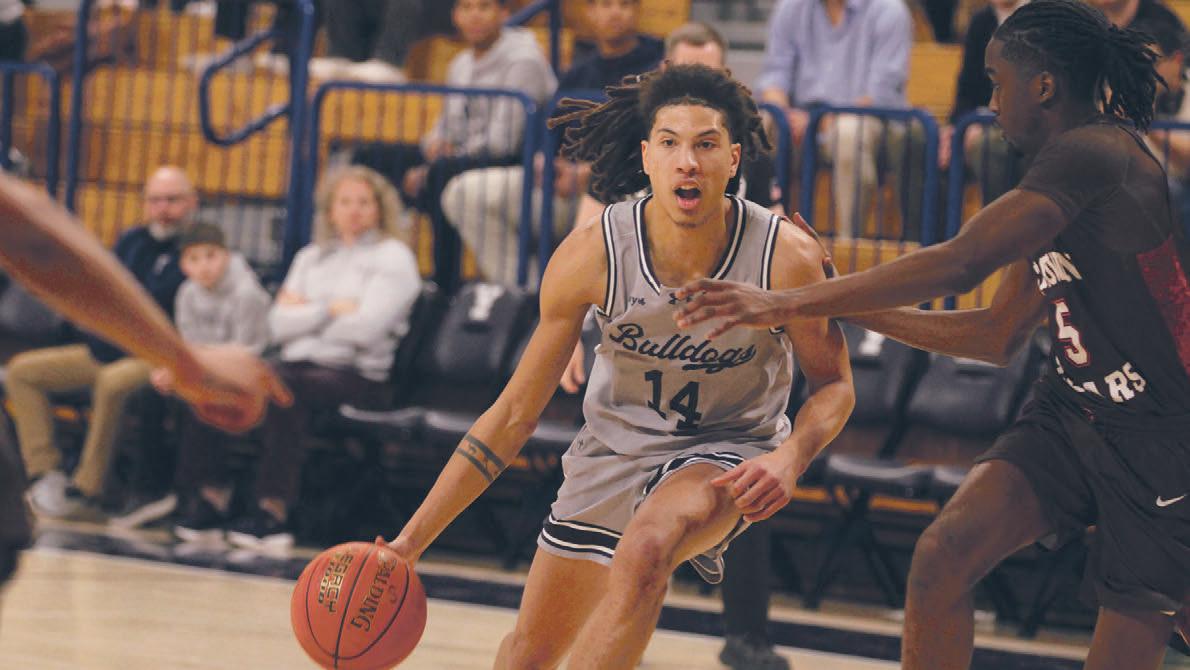
postseason implications at both the conference and national level.
“This weekend’s games are huge. Winning both would mean winning the ECAC regular season title, the first seed in league playoffs as well as probably the 6th seed nationally,” Sophia Levering ’28 wrote to the News.
“Princeton, who we play first, is always a tough opponent with dynamic top forwards. They just came off of a 13 game win streak of their own and will be determined to break ours,” Levering added. “We have split games against them this season, and being the top ranked ivy team puts a little extra bragging rights on this game.”
The Bulldogs faced the Tigers in two games earlier in the season, both of which went into overtime.
On Oct. 25, they beat the Tigers 4-3 at Ingalls Rink, but lost 3-4 on Nov. 25 while playing at Princeton’s home rink.
Yale has played Quinnipiac once so far this season, a tough game that ended in a 1-3 loss for the Elis. However, the last time the two teams met was late October, and the Bulldogs have been at the top of their game for the past few weeks.
“Quinnipiac is another great team with one of the best goalies in the league and depth throughout their lineup,” Levering wrote. “Being only 15 minutes apart, the rivalry is strong.” In their previous matchup, the Bobcats were able to keep the Bulldogs from scoring until the third period, blocking 25 out of the Bulldogs’ 26 shots on goal in the game.
Both teams also competed in the Nutmeg Classic in November, the annual hockey tournament between four of Connecticut’s elite collegiate hockey programs, although Quinnipiac and Yale didn’t face each other.
If Yale wins out this weekend, they will extend their win streak to 15, which would match the record winning streak they achieved in the 2022-23 season.
“The goal of any season is arguably to be playing big games at this time of year, so we are excited to be playing with such high stakes,” Levering wrote.
Yale will face the Tigers on Friday at 6 p.m.
Contact BRODY GILKISON at brody.gilkison@yale.edu
BY LIZA KAUFMAN STAFF REPORTER
The Yale men’s hockey team (7–17–0, 6–10–0 ECAC) will return to Ingalls Rink this weekend for a two-game homestand, including a Valentine’s Day rivalry clash with Harvard.
The Bulldogs will take on the Dartmouth Big Green (17–6–1, 11–4–1 ECAC) Friday night, before facing the Crimson (13–10–1, 10–6–0 ECAC) on Saturday night.
“As a team we’re really excited to be back on home ice this weekend. Nothing better than playing at the Whale in front of our fans!” Hudson Miller ’29 wrote to the News. “It’s a really important stretch for us leading up to playoffs, that we’re really excited about.”
The squad will look to reset on home ice against two top Ivy and ECAC rivals after a challenging stretch on the road. No. 12 nationally-ranked Dartmouth currently sits second in the ECAC, while Harvard trails behind in fifth place.
Week after week, Dartmouth has dominated the conference.
The Big Green have gone 13–1–1 at home, with their only home loss to Arizona State (13–16–1, 6–11–1 NCHC) in December.
While Dartmouth has had success at Thompson Arena, it has struggled to find consistency on the road. Given Dartmouth’s 4–5 away record, the Bulldogs will look to capitalize on their home ice advantage this weekend.
The Big Green will arrive in New Haven with a three-game win streak, following a home weekend sweep of Union (16–10–2, 6–9–1 ECAC) and Rensselaer Polytechnic Institute (7–21–0, 4–12–0 ECAC) to round out January and a recent 3-1 victory over Harvard. Those successes followed a rough road trip to New York, where Dartmouth fell to No. 9 Cornell (17–6–0, 12–4–0 ECAC) 1-2 in an overtime nailbiter before getting crushed the following night 2-5 at Colgate (11–14–3, 8–6–2 ECAC).
While the Harvard Crimson had a strong start to the season, picking up early conference victories against Colgate, Clarkson (12–15–3, 6–9–3 ECAC) and St. Lawrence (5–22–3, 4–13–1 ECAC) in November, the team started 2026 with four straight losses. Harvard fell 1-9 to No. 5 Quinnipiac (22–5–3, 13–2–1 ECAC), 2-3 to Princeton (14–9–1, 10–6–0 ECAC), 4-5 to Dartmouth and 1-4 to Boston University (13–14–2, 9–10–0 HEA). The Crimson then rebounded in the second half of January, adding four ECAC wins to its record
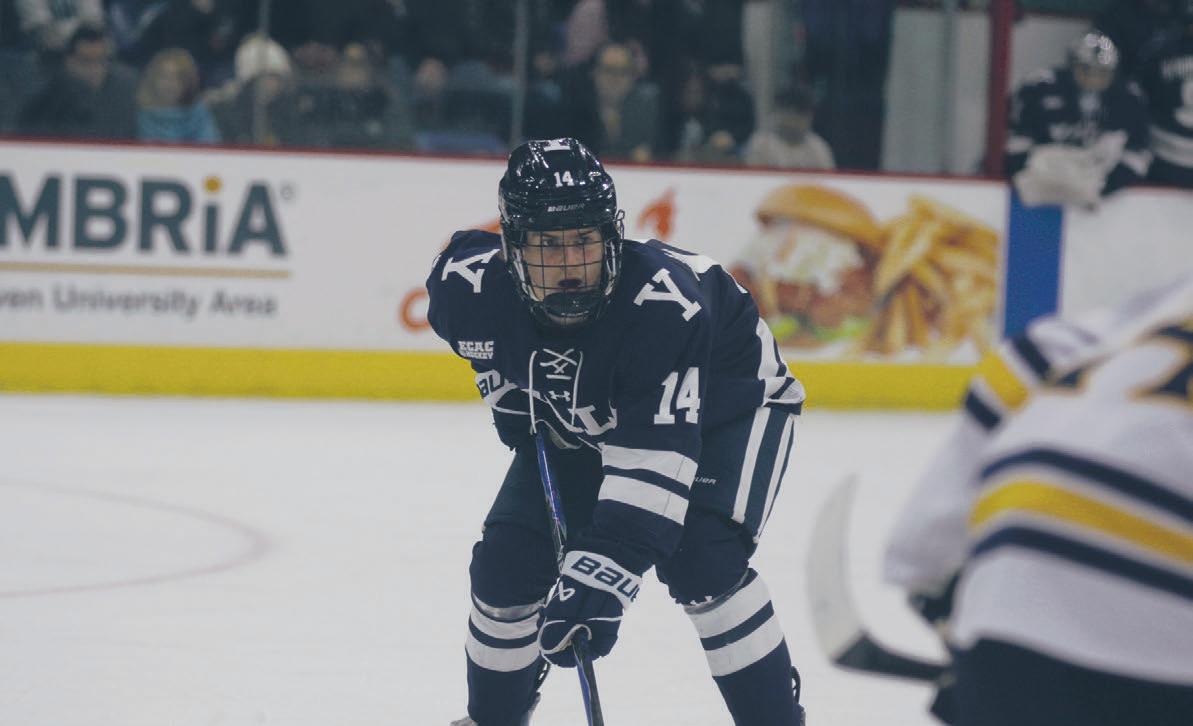
over St. Lawrence, Clarkson, Union and Colgate.
The Crimson will arrive in New Haven fresh off a third-place finish in the 73rd Beanpot. The tournament brings together Boston’s four Division I hockey programs: Harvard, Boston College (16–9–1, 10–6–0 HEA), Boston University and Northeastern (12–14–1, 7–10–0
HEA). In the opening round, the Crimson fell 1-5 to the Boston College Eagles, who then went on to win the Beanpot. They then lost to Dartmouth 1-3 in a regular season game in between tournament rounds. On Monday, the Crimson defeated the Huskies 4-1 in the Beanpot consolation game to take third place in the historic tournament.
With the home-ice advantage, Yale will look to capitalize on the energy of the crowd at The Whale this weekend.
Puck drop is at 7 p.m. both nights at Ingalls Rink.
Contact LIZA KAUFMAN at liza.kaufman@yale.edu.
BY AUDREY KIM STAFF REPORTER
The No. 9 ranked Yale Bulldogs (21–7, 15–5 ECAC) will go on the road this weekend to play the No. 8 Princeton Tigers (20–7, 15–5 ECAC) and No. 7 Quinnipiac Bobcats (22–7–3, 12–6–2 ECAC).
All three teams currently sit at the top of the ECAC conference rankings, with Yale trailing Princeton by two points and leading Quinnipiac by two. The three teams also all rank within the top 10 collegiate women’s
hockey teams in the country, meaning this weekend will have postseason implications at both the conference and national level.
“This weekend’s games are huge. Winning both would mean winning the ECAC regular season title, the first seed in league playoffs as well as probably the 6th seed nationally,” Sophia Levering ’28 wrote to the News.
“Princeton, who we play first, is always a tough opponent with dynamic top forwards. They just came off of a 13 game win streak of their own and will be determined to break ours,” Levering added. “We
have split games against them this season, and being the top ranked ivy team puts a little extra bragging rights on this game.”
The Bulldogs faced the Tigers in two games earlier in the season, both of which went into overtime. On Oct. 25, they beat the Tigers 4-3 at Ingalls Rink, but lost 3-4 on Nov. 25 while playing at Princeton’s home rink.
Yale has played Quinnipiac once so far this season, a tough game that ended in a 1-3 loss for the Elis. However, the last time the two teams met was late October, and the Bulldogs have been at the top of their game for the past few weeks.
“Quinnipiac is another great team with one of the best goalies in the league and depth throughout their lineup,” Levering wrote. “Being only 15 minutes apart, the rivalry is strong.”
In their previous matchup, the Bobcats were able to keep the Bulldogs from scoring until the third period, blocking 25 out of the Bulldogs’ 26 shots on goal in the game.
Both teams also competed in the Nutmeg Classic in November, the annual hockey tournament between four of Connecticut’s elite collegiate hockey programs,
although Quinnipiac and Yale didn’t face each other.
If Yale wins out this weekend, they will extend their win streak to 15, which would match the record winning streak they achieved in the 2022-23 season.
“The goal of any season is arguably to be playing big games at this time of year, so we are excited to be playing with such high stakes,” Levering wrote.
Yale will face the Tigers on Friday at 6 p.m.
Contact AUDREY KIM at audrey.kim.ajk234@yale.edu.


a look at setup culture
a message to Yale’s romatics
a love letter to Duck, North Carolina
// BY MADISEN FINCH


Dear romantics everywhere, The best holiday is upon us: Valentine’s Day. The singing valentines, the bouquets and the Galentine’s parties are all hallmarks of what I believe to be the best time of year. For one day we can pause the anxious anticipation of romance and rest easy knowing it is a guarantee.
I don’t quite remember when Valentine’s Day became my favorite holiday. It probably occurred sometime between learning Santa wasn’t real and being allowed to watch my mom’s favorite rom-coms. Regardless, I am now Feb. 14’s biggest advocate. “The holiday of love!” I might say. “A day where everyone can love each other!” I might say. “The holiday I don’t switch houses!” I mean, but I don’t say — a holiday not overtly celebrated, not one that even gets a day off of school, not one that could be won or split up in a divorce. It was perfect. As I have grown up and grown into loving the holiday, I have noticed the treatment of Valentine’s Day changing. I used to spend hours making boxes of treats. It was a demonstration of creative prowess for our second-grade class, and it was an expression of love. I picked the best treats for my classmates — partly to maximize my popularity, of course, and to get my crush to notice me. But at some point in between second grade andmysecondsemesterofcollege,lovebecameembarrassing. Swiping right, swiping left, Yale Date Drop, “hey u up?”
We seem to be obsessed with the quick fix, the immediate right answer. We imagine that an algorithm might match us with the perfect partner — or the perfect hookup — and we certainly don’t want to be caught caring too much about what might happen if it doesn’t work out. In a time where the love quick fix seems to be everyone’s primary goal, I have to wonder: What happened to romance? What happened to second-grade me?
In a desperate effort to find her, I am taking up the mantle of writing love letters. The act of writing my feelings down is one

// BY LILY SCHECKNER

To Duck, North Carolina,
Love stories rarely last for fifteen years. But against all odds, ours has. Fifteen years of sun-burned shoulders, cricket-filled nights and midday swims spent convincing my sister that mermaids are, in fact, real. Reminders of those fifteen years are written all over my body in freckles and healed-over shin scrapes. Even when walking the snowy streets of New Haven, I can taste salt water on my tongue.
Fifteen years ago, in a Mazda that we no longer own, my family strapped our suitcases to the car roof and drove 300 miles down the East Coast to North Carolina. The first trip we took, the six-hour car ride was unremarkable, but over the years, that drive took on meaning. We decided to stay awake for the milanos and Disney classics, then for the rainbow goldfish and “Hamilton” soundtrack. After the long ride, we passed by the weathered “Welcome to Duck!” sign with its big mallard. We stopped for nachos and virgin daiquiris on the boardwalk, and then we arrived at our house.
We called it our house because we stayed there for two weeks every summer, and that was the closest we could get to owning a vacation home. It was named Seaduction, one of the hundreds of beachbased puns that were attached via colorful signage to the places for rent. We always giggled at it. We loved the way it seemed to laugh at its own sentimentality, at its commercialism.
My sister and I grew up on the steps of Seaduction. In colorful tankinis and too-big baseball caps, we’d reluctantly pose for pictures year after year. I’d usually stand above my sister, my hand on her shoulder as we’d squint into the sun. When our mom would finish taking our picture, we’d run the short block down to the beach. We’d spend entire days in the ocean, especially my sister, who we’d affectionately call “water baby.”

that I increasingly eschew, instead hiding behind nonchalance and niche internet references. Instead of pages-long letters, a simple heart reaction. The manifestation of feelings as words on a page is worth it, worth the agency of putting pen to paper, worth embarrassment, even worth getting turned down.
Maybe you don’t have to pen a novel-length piece or the next great romance, but I think that love letters can be hidden in the little notes we leave behind. Write a “Good Luck!” sticky note on your suitemate’s desk; include an especially nice email salutation or send a voicemail to your mom. What first drew me to Valentine’s Day, when I was that second grader with the best valentines in the class, was not the things I got from it. While the candy was a perk, it was the joy of loving others and being loved by others that did it for me. Valentine’s Day, regardless of which parent I stayed with, meant loving others without having to dissect the implications of love. Rather than balancing loving one parent and the other at the same time, while also making sure not to bring up the other parent in order to keep the separation from causing any more problems, Valentine’s Day meant that everyone loved each other — the perfect balm to a hyper-anxious child of divorce. And as a balm, the act of thinking through notes to send your friends cured the burns of complicated family dynamics. The act of loving — despite the fear of being noticed for caring — is one that was radical because I did it without shame. So this Valentine’s Day, write the letter.
With Madisenlove,Finch
Contact MADISEN FINCH at madisen.finch@yale.edu.

the contrails of planes with banners streaming from their tails. We’d return to our house dehydrated and exhilarated, and my parents would make the meals they always wanted to but never had time to cook at home: creamy corn pasta, shrimp and white beans, tiny olive oil muffins topped with orange zest. At night, we’d watch ghost crabs scurry across the beach, screaming with laughter as we chased after them.
Then, after nine years, each one blending into the last, we changed. And so did Duck, North Carolina.
One week after our ninth summer — another perfect, sun-kissed trip — my parents separated. It was a shock to nearly everyone. It was a dark year, full of screaming matches and therapy sessions and a pandemic, before we saw Duck again for our tenth trip.
My mom’s car was too small to take our boxes of belongings. Instead, we rented a U-haul that clanged behind us for six hours. It was still a quieter ride than usual. Sufjan Stevens and Mazzy Star played in my earbuds as I stared out the window, occasionally grabbing handfuls from a bag of slightly stale pretzels. When we got to the winding suburban roads of Duck, they felt less magical. We pointed out fascist bumper stickers and confederate flags, flipping them off as we drove by. As we pulled up to our house, we saw it was different too. The sign that had said Seaduction for nearly a decade was gone. Instead, it read Family Tides. No, I’m not joking.

My mom and I would turn red while my dad and sister would tan. Laying on our towels, we’d trace

face their date night spot — until we decided to face it together. My mom and I reclaimed that restaurant. We ate steak and talked for hours, watching the sun set over the Currituck Sound. She gave me sips of her wine. I told her about things we hadn’t spoken about all year: fears, crushes and inside jokes.
The next year, the new owners of Family Tides took it off the market. We got a new house, on a different street. I stopped taking pictures on the steps and started posing for Instagram stories on the balcony.
When my best friend visited, we went on runs around the block and flirted shyly with boys staying across the street. My sister didn’t spend all day in the ocean, instead becoming intermittently withdrawn in her noise-cancelling headphones as she entered teenagedom. My mom was happier, mostly. New traditions were forged, and others were forgotten.

Everything seemed heavier as we lugged our supplies to the beach each morning. My sister and I pretended not to see my mom stare, with glossy eyes, out over the ocean. Family Tides was haunting us with more than just its name.
When we were younger in Duck, my parents had a date night restaurant they’d go to on the boardwalk. They would leave me and my sister at Seaduction with a family friend while they had “high end seafood and southern fare.” After the divorce, my mom couldn’t
Now that I’m in college, we’ve planned to reduce our time in Duck, North Carolina from two weeks to one. But I want Duck — or rather, me — to know that this is not a goodbye letter. Duck is a love of my life. When our family devolved and evolved, Duck, like the tide, was steadfast, constant. I grew up with Duck. I walked Duck’s streets in every stage of my life, in shoes that grew ten sizes. When I was naive, when I was heartbroken, when I was exhilarated, that small town in North Carolina was there. I’ve seen myself and my family in Duck’s waves, and though our reflection has changed, one thing never will: Those waves will come in again, and go out again, whenever we choose to return.
Love, Lily
Contact LILY SCHECKNER at lily.scheckner@yale.edu.
What do single men do on Valentine’s Day?
// BY BEATRICE BARILLA
My friends and I sat hunched over a laptop on the common room floor, space heater whirring as the gray sky deflated our hopes of venturing outside. Instead, we procrastinated together over Pinterest, planning a miraculous day: Galentines. Crepes at Choupette and craftmaking filled our sparkling minds. We laughed in each other's company like sisters, embracing the best things about femininity and love and…
A man walked into the dorm. The laughter stalled.
It was then I thought: Is there a male version of Galentines? While we plan a day of love among girlfriends, what are the bros doing?
Later that night, I called my token male friend to demand answers. Apparently there is no… Malentines? Valmentines? Guyentines?
My friend said that female friendships felt more “structured” or planned, while his male friendships felt too casual to organize that kind of event. He said men might feel less comfortable sharing their emotions in the way that women do.
Granted, this is one man’s opinion. But I was still intrigued: Why are female friendships more “structured?” Maybe it’s because women had to form groups for shared support throughout history and became closer through shared dependence. Maybe it’s society’s determination that women are emotional, which allows them to express their feelings more freely. Maybe it’s just the Y chromosome.
Do men feel these emotions? Are they platonically loveless? I doubt it. Therefore, consider this a call for a new dawn, a new day and a new excuse to do stupid stuff with your
friends: Malentines (working title)!
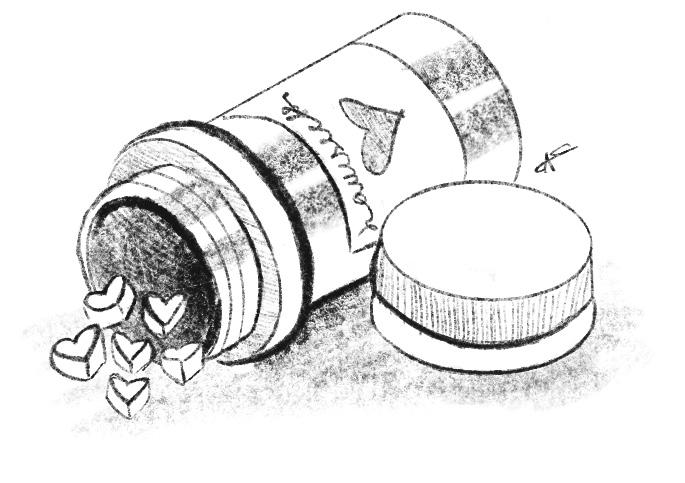
If Galentines is a way for women to celebrate female support networks, Malentines should be a way to embrace male emotion and friendship. We’ve all heard of the concept of “performative men,” but I think this trope has done its time, reinforced masculinity and encouraged men to be emotionally distant. I don’t want to encourage another generation of Andrew Tates. Why not celebrate men for being vulnerable instead of making fun of them?
What should Malentines include? I’m not quite qualified to decide; I think it should be up to the other half of the population, not a girl planning her own Galentines — regardless of how good I am at planning events. That being said, I am now counting on a Malentines event at DKE soon.
Contact BEATRICE BARILLA at beatrice.barilla@yale.edu.
// BY REETI MALHOTRA
Nearly a year ago today, I wrote a piece on the “fiction of the one”: a reflective, musing essay that dwelled upon the emotionally-charged myth that everyone is destined to find their person. I was weary, jaded and sensitive when I penned it. I barely remember why.
Well, that is untrue. I do know why, and more importantly who. It is simply no longer important.
In my visceral state of disenchantment, determined to convince myself of the certainty of soulmates, I typed out the essay in a fury. I illustrated the brief kaleidoscope of instances when I had flirted with the possibility of having found a person who could be mine, and the moments when that feeling drifted away into the wind, proven erroneous or fleeting or empty. I was affectionate towards those I still appreciated and scathing to those I scorned. It didn’t matter that I anonymized who I spoke about — the essay was cathartic.
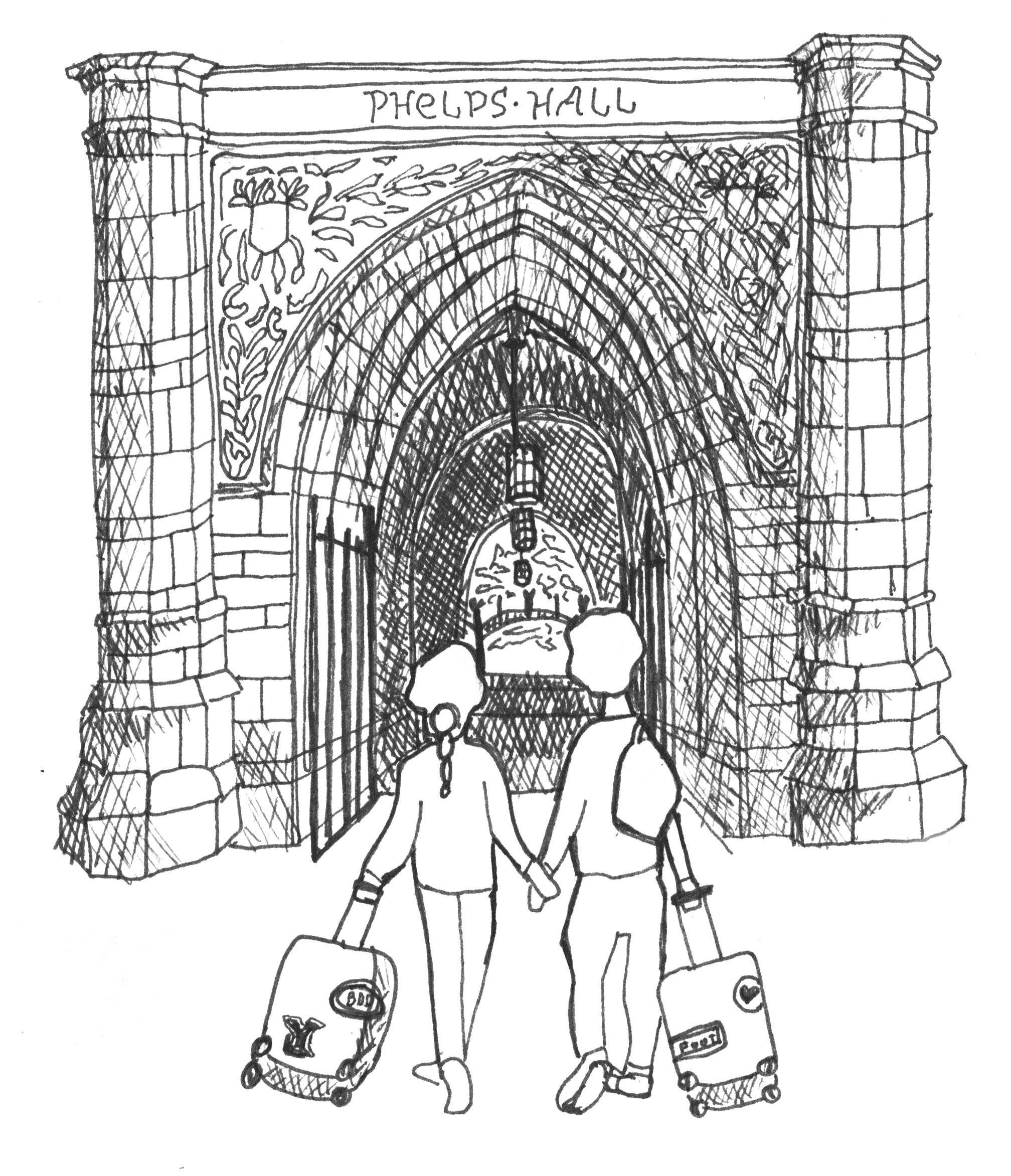
But as I approached its conclusion, language failed me. I didn’t know how I was meant to feel, having laid out my brief emotional history on paper. I didn’t know what I was meant to say. I wanted to believe in the hope of love and intimacy, in the image of being warmly embraced by your person on a bleak, snowy Sunday after twilight. I just didn’t know if I did.
So my 19-year-old self, disenchanted but aware that she was still only 19, that she was barely at the end of her teenage years and had a chaotic decade of fleeting connection and lasting intimacy to discover in her 20s — as those older than her had assured her — chose to end her piece with a trite piece of wisdom. It is a statement one only has the arrogance to deliver when she is 19 and believes she has seen enough to declare that she knows it all. “The discovery of ‘the one’ is never guaranteed. But that does not mean you should avert the fleeting, but worthy prospect of love that appears in a series of promising moments,” I wrote.
The sentiment was sweet — sing-songy and saccharine and imbued with anticipation.
A year later, I can say frankly that I did not believe those words when I wrote them. I don’t know if I do now. I don’t think it matters. These things don’t have to be cleanly distilled into pearls of wisdom to string and save for a despairing day.
The truth is, as much as I ruminated upon how wonderful it would be to find my one true person, I had no desire to do so. For nearly all the life I can remember, I’ve been independent, perhaps to a fault. The thought of admitting the kind of intimacy a relationship would require — of being willfully affected by someone, entirely and without reason — was terrifying. So anytime I got close, I ran. And any time it seemed futile, I stayed. As a friend told me over dinner a few weeks ago, I was a case study on avoidance. I feigned upset but nodded in agreement.
Yet rereading the words I had written at 19, I realize I no longer recognized the emotionally detached individual who wrote them.
Yale, for all its turbulence, had pried me open. I formed friendships deeper than most I had known back home, allowing people to see me for who I was. I stepped away from the neat, trodden career path I was compelled to follow, into the murkier waters of journalism.
Yet love still remained locked away, a room I refused to enter in a house I had otherwise explored.
But at 20, nearly 21, I think I can certainly say that I no longer think it would cost me who I am to turn the handle. Perhaps that’s the first step necessary to believe what I wrote at the end of my last essay for Valentine’s Day — that I need not avert the fleeting but worthy prospect of love when it appears.
Contact REETI MALHOTRA at reeti.malhotra@yale.edu.
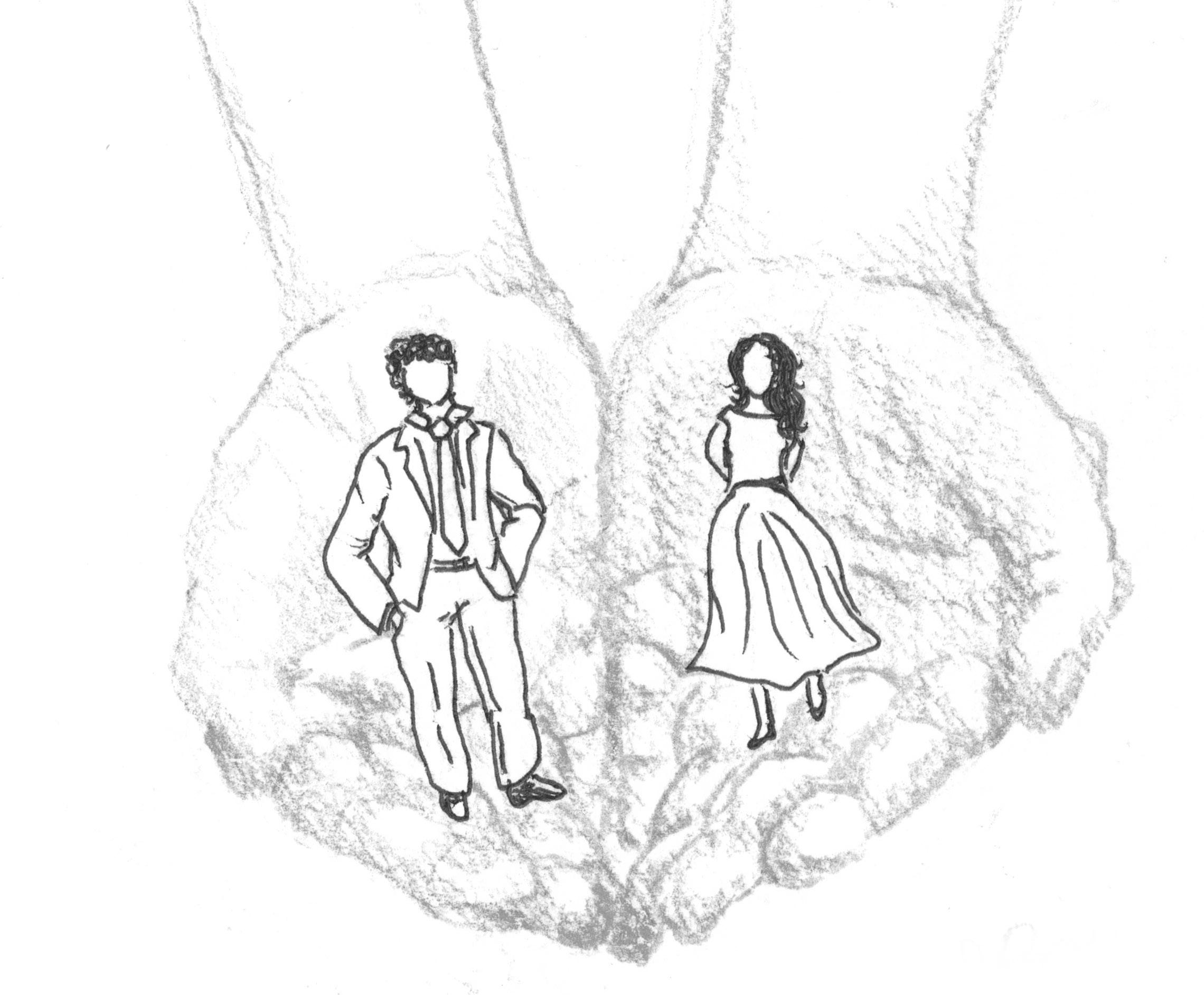
// BY FABEHA JAHRA
Somewhere along the way, we decided that wanting someone too obviously was embarrassing. That asking directly was “too much.” That caring had to be filtered through the guise of chillness. In the space between unread texts and half-made plans, the situationship took hold — a relationship defined more by what isn’t said than what is. It’s worth asking why we’ve accepted this as normal.
Situationships thrive on ambiguity. You talk, but you don’t plan. You feel, but you don’t name it. Everything exists in potential, never quite arriving anywhere. On the surface, it looks casual. In practice, it asks you to constantly read between the lines — to interpret tone, timing and silence as if they were a language. That kind of guessing is exhausting. Valentine’s Day tends to make this dynamic impossible to ignore. For one day a year, romance becomes visible again: roses in dining halls, reservations made in advance, couples who suddenly have to decide what they are — or aren’t. Even if you try to opt out, the day has a way of surfacing questions we usually keep buried. It exposes how unsustainable that guessing can be. It turns “we’ll see” into a deadline. Suddenly, ambiguity feels less like freedom and more like avoidance. When a day built around intention arrives, situationships reveal what they lack most: clarity.
What we’ve lost isn’t romance in the literal sense. It’s courting in the most basic one. Courting means asking someone out clearly. It means choosing a time and a place and following through. It means making interest legible instead
of leaving it implied. It doesn’t require extravagance — just decisiveness.
Occasionally, pop culture reminds us of this. When a new season of “Bridgerton” airs, people briefly remember that romance can be obvious, that attraction doesn’t have to be hidden behind irony or detachment. And then, just as quickly, we return to pretending ambiguity is safer.
Situationships reward restraint. They train us to hedge, to keep one foot out the door, to treat effort like a liability. We learn to want someone quietly, in a way that can be easily denied if things go wrong. We confuse emotional distance with freedom, even when it leaves everyone shackled to their phone and their unsaid hopes.
On Valentine’s Day, clarity feels less scary than continuing to guess. That’s where courting comes back in — not as tradition, but as a structure of thought.
There’s relief in that kind of clarity. Knowing where you stand frees you from overthinking every interaction. Even when the answer isn’t what you hoped for, honesty is kinder than uncertainty stretched over time.
Valentine’s Day doesn’t need to be a spectacle. It can simply be a reminder that romance works best when it’s deliberate — when people are willing to say what they mean and mean what they say.
Courting doesn’t guarantee love. But it does guarantee honesty. And in a culture saturated with half-signals and hedged feelings, that might be reason enough to bring it back.
Contact FABEHA JAHRA at fabeha.jahra@yale.edu.
In theory, Yale College is made up of brave individuals. Sending in an application knowing that only 4 percent of applicants make it through takes guts. Almost a fifth of the class of 2025 graduated with two majors. A quarter of the student body is made up of international students who spend most of the year in a country that’s not their own. Considering the many obstacles Yalies overcome, we should have no trouble being plucky in all aspects of our lives.
But underneath this veneer of courage, we seem to have trouble exercising any boldness in romantic pursuits. Something I’ve only witnessed at Yale is a school-wide obsession with being set up. Why ask someone out to first-year formal when you can get your friends to set you up with a date? And if you don’t want your friends to pick out your sweetheart, you can use matchmaking platforms like the Marriage Pact or Date Drop, which function more or less like dating apps but are exclusive to people on campus.
Marriage Pact is a setup tool that’s been around since Stanford students founded it in 2017. Date Drop is newer, launched in 2025, also on Stanford’s campus. Date Drop is different from Marriage Pact in that, instead of getting a single match with whom the algorithm has deemed you compatible, matches are released in weekly drops over the course of three weeks. If this week’s match is someone you’d rather stay just friends with, you only have to wait seven days for the next round of matches to drop.
// BY HANA TILKSEW
Henry Weng, founder of Date Drop’s parent The Relationship Company, wrote in an email that this technique leads to “in-person dates at an order of magnitude higher rate than Tinder.” How does a platform that uses artificial intelligence figure out whom you should date? Date Drop’s questions include whether you prefer a match of a specific religion or ethnicity, if you’d be OK with a partner who uses substances and whether you prefer to subscribe to traditional gender roles in a relationship. “Our questions are grounded in psych research,” Weng wrote. “Since we collect feedback on how matches go, we add or remove questions based on how well they predict good matches.”
Getting set up, whether in real life or through an online matchmaker, seems like it can relieve the awkwardness of finding your own dates. But at a relatively small campus, even being matched by a digital platform doesn’t grant complete anonymity. Meti Negewo ’28 noted that “the circle here is so small, so no matter who you end up being paired with — especially if you’re the same identity — you’re gonna know them. Most likely, they’re already someone you’re friends with.”
While being matched — instead of matching yourself — means “the work is being done for you in a sense,” Negewo noted that “it takes away the pleasant surprise of being matched with someone you wouldn’t know.”
Contact HANA TILKSEW at hana.tilksew@yale.edu
For Valentine’s Day, a tribute to “I’m Not in Love” by 10cc, a love song that doesn’t want to be a love song.
// BY CIELO GAZARD
My favorite love song is not a love song. “I’m Not in Love” by 10cc has been my most listenedto song on Spotify for the better part of

three years now. It’s heartbreaking, it’s hilarious, it’s ethereal and gets in
my head when no other song can. I’ve never been in love, but saying this is my favorite song to my mother was the closest I felt to admitting I had a crush on someone. “Don’t tell your friends about the two of us,” as the lyrics say. This song is a masterpiece in multitrack recording. The members of 10cc took three weeks to record the vocals, singing “ahh” 16 times for each note of the chromatic scale. Forty-eight voices for each note of the scale, totaling to 256 individual vocal overdubs. The tapes were nearly translucent by the time the band finished recording the track.
When I listen to the dizzying and dazzling instrumentation, I feel like I’m traveling alone at night. Every note of the piano played by lead singer Eric Stewart shimmers like a guiding star in the dark night. And then, after I sit alone with the droning “ahhs” for a few minutes, a soft voice on the leftside of the mix — the band’s secretary — says those immortal words, “Big boys don’t cry.” I played this song once on a night shift playlist and lost my aux privileges as a result. People were puzzled, bewildered by those repeated lines that were soon drowned out by the overdubbed band choir.
The song was inspired by Stewart’s wife asking why he stopped saying “I love you” to her. Despite his lyrics claiming he keeps her picture on the
wall, but only to hide some “nasty stain that’s lying there,” Stewart and his wife are still together to this day. I think he was being a little facetious when he said “I’m not in love, so don’t forget it” in response to her grumbles.
“I’m Not in Love” is a song about refusal to commit to love. It’s a love song that doesn’t want to be one. It wants to be more than just another song that repeats “I love you” to the point of boredom.
“I’m Not in Love” is of its time. It was released in May 1975, and sounds like it. There’s nothing wrong with a song being a time capsule. As long as it pulls on my heartstrings, I think it’s worthy of obsession. It’s only six minutes long but feels much longer. It’s a whole journey through this man’s psyche and his refusal to say those three little words.
“I’m Not in Love” is the reason why I have this column. Last spring, I took a seminar entitled “Writing About Music” with professor Adam Sexton. For our last meeting, we all participated in “critical karaoke,” an idea professor Sexton lifted from his colleague Daphne Brooks, where we presented on a song of our choice for the length of said song. “I’m Not in Love” was my song. I made sure that I packed enough of the song’s lyrics in my essay to line up perfectly with when they are sung in the song. Much of what I said in class is what I’m saying here. If you stop me in the street, I’ll say the same thing.
Contact CIELO GAZARD at cielo.gazard@yale.edu.
// BY ESMERALDA VASQUEZ-FERNANDEZ
I have been waiting to see Bad Bunny — Benito Antonio Martínez Ocasio — headline the Super Bowl ever since he made a guest appearance in 2020. This year, that dream was realized. So allow me to join the chorus of voices praising the halftime show: the entire performance was meticulously thought out and perfectly executed. The political undertones communicated through creative visuals and set design displayed the intentionality Bad Bunny has carried throughout his career. And the intention is clear: to unite people with love.
While many people wanted to hear him discuss immigration enforcement like he did at the Grammy’s a week before, I saw resistance clearly through the symbolism and metaphors used on stage. The opening scene of the sugar cane fields showcased the physical strength of immigrants and the country’s dependence on them, and later, the light posts brought attention to Puerto Rico’s ongoing energy crisis. He didn’t have to say “ICE out” to make his message clear. Food stands, nail techs, construction workers and the group of older men playing dominoes all represented Latino culture. As expected, Bad Bunny included women in his performance in a way that showed female empowerment and autonomy, especially during his song, “Yo Perreo Sola.” Karol G and Cardi B foregrounded female excellence.
The visuals in the performance were top-tier. I did not expect to see people in green bush costumes or for Bad Bunny to drop into a staged Puerto Rican casita. And, not to sound overdramatic, but I screamed when I heard the words of “Gasolina” by Daddy Yankee segway into “Eoo,” which Spotify told me was my most listened to song in 2025. I anticipated Daddy Yankee or Don Omar, the kings of reggaeton, to appear on screen, but Ricky Martin was just as exciting. Many people forget how Ricky Martin, a Puerto Rican singer, changed Latin pop music forever. He is also vocal about his journey as a gay Latino artist.
I won’t lie. I was very confused when I saw Lady Gaga take the stage, but who better to join Bad Bunny than an artist who has been pushing acceptance of all communities in America her entire musical career? But I am still trying to understand how “Die With a Smile” plays into the show. It feels like its own act. Personally, I would have loved to see Cardi B and Bad Bunny sing “I like it Like That,” or to see El Alfa perform, but Lady
Gaga gave a great performance, too.
Bad Bunny’s range in music has always been notable, and when the orchestra strummed the strings of “Monaco” — a distinct tonal shift — I was almost moved to tears. While the orchestra strummed, Bad Bunny credited his successes to his self confidence. While performing, he pointed into the camera to convey that the audience, too, should always believe in themselves. It felt like he was telling me directly to never give up, no matter how difficult it can feel to push forward.
Bad Bunny’s performance speaks to the moment in which he delivered it. The political and social divide was so strong that an unofficial second halftime show was streaming simultaneously via Turning Point USA. With notably fewer viewers, it featured Lee Brice saying he wants to “kiss” his “fish.” Not sure how the fish feels about that, but back to the real show.
Hearing “Mi Baile Inolvidable” was very bittersweet. If you have never dedicated “Mi Baile Inolvidable” to someone before, I do not
expect you to understand the slight flinch I get when I hear it. Then again, I plan on playing this song at my own wedding, just like the lucky couple, Eleisa “Elli” Aparico and Thomas “Tommy” Wolter, who got married live — yes, that wedding was real. I agree with Benito, that “mientras uno está vivo, uno debe amar lo más que pueda.” While one is alive, we should love the most we can. But my advice is to let this song be your song and not tie it to someone else. “Never stop loving.” I second that.
The Latino community historically has used music and dance to push through trauma and hardship. Benito was a force of joyous radicalism and advocacy on stage.
For many years, the halftime show has been an opportunity for artists to make a statement on American culture.
Kendrick Lamar, in many ways, paved the way for Bad Bunny’s performance when he stated, “the revolution is about to be televised. You picked the right time but the wrong guy” back in 2025. Bad Bunny syphoned the entire Americas at the end of his performance by stating “God Bless America” and immediately listing most of the the countries in the Americas, even Canada. He put the “united” in the United States. Benito finished by hugging the immigrants, children of immigrants, people of color, LGBTQ+ community and the many marginalized communities that make up the United States. What we witnessed Sunday was not just another American halftime superbowl performance, it was an act of love. It truly was “un baile inolvidable,” an unforgettable dance.
Contact ESMERALDA VASQUEZ-FERNANDEZ at esmeralda.vasquezfernandez@yale.edu.