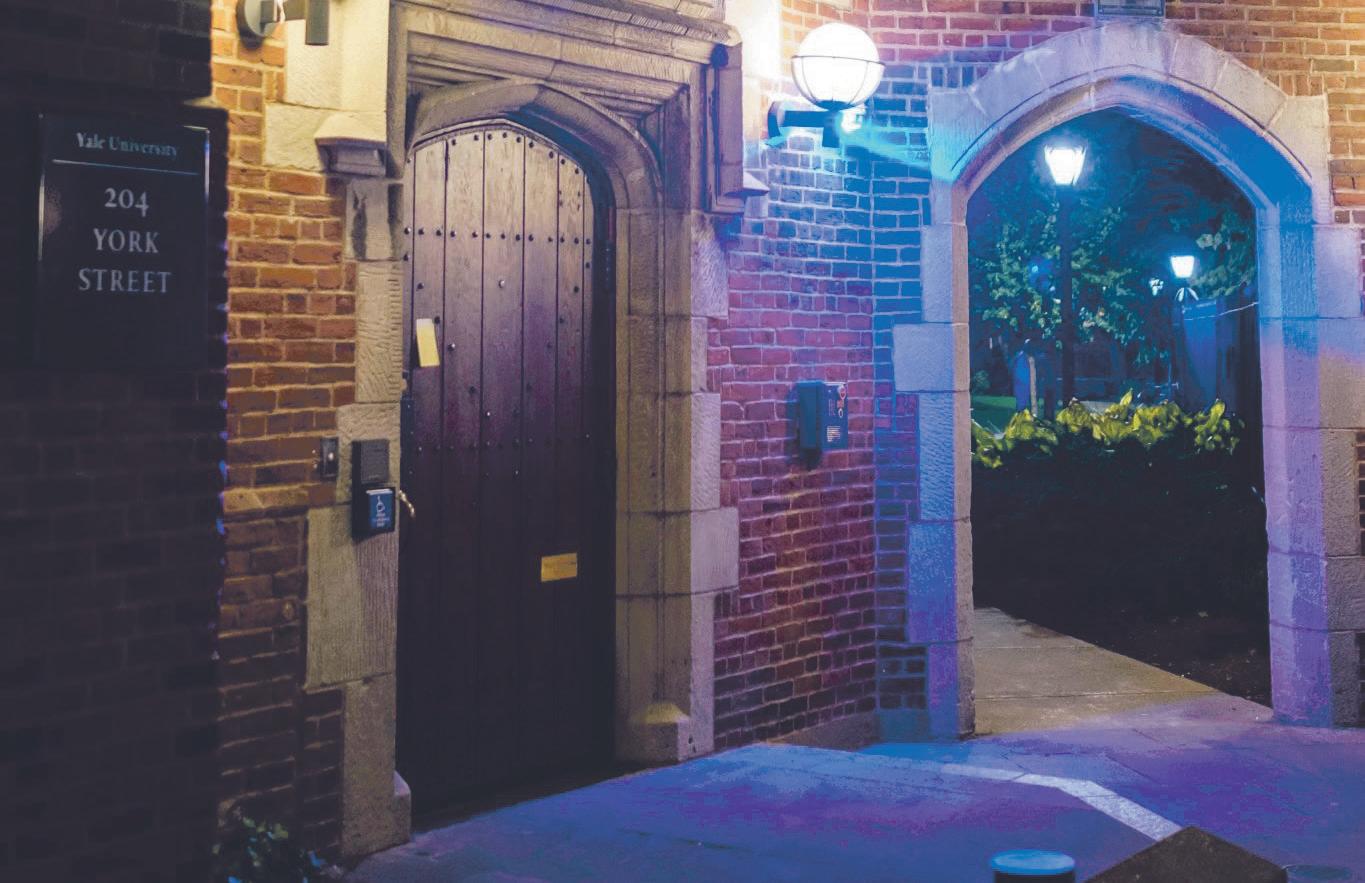
A woman who allegedly posed as a Yale Law School student was arrested in Gryphon’s Pub in May for trespassing on Yale property, police documents obtained by the News show.
The woman — who is now 25, according to the documents — was charged on several counts of criminal trespass for entering the pub, Sterling Memorial Library and Jonathan Edwards College and for performing in a student dance show, as well as forgery counts for being found to have a fake Yale ID.
Her activity on campus was the subject of a Yale Police Department investigation that the documents suggest went on for about two years and involved at least 11 YPD officials.
The case is a third known example of a person identified last year by Yale students and authorities as having claimed Yale affiliation on false pretenses.
In April, a girl pretended to be an admitted undergraduate during Bulldog Days and talked her way to overnighting in a Saybrook College suite. And in September, a Davenport College first year was escorted from campus after administrators rescinded her admission to Yale College, accusing her of falsifying information on her application.
Just under a year before her arrest at Gryphon’s Pub, the woman — identified in the police reports as Suzanna Mikaelyan — appeared in a May 2024 Instagram post by the Armenian
BY SARA AGRAWAL STAFF REPORTER
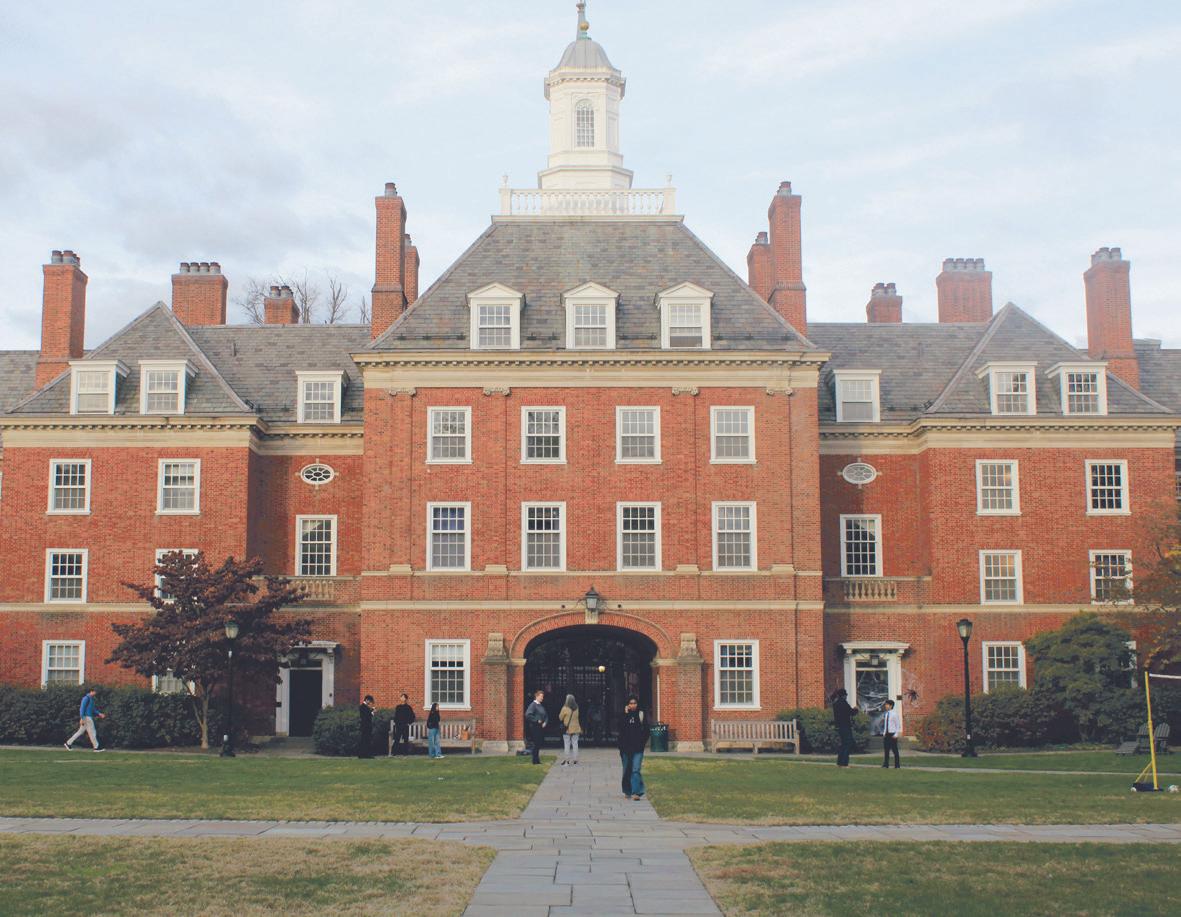
Rising juniors and seniors who don’t secure a room in their residential colleges through the housing lottery this spring will be able to pick from leftover rooms across campus, a Yale College administrator told the News.
Students going into their junior and senior years who are placed on housing waitlists in the first round of the draw will be able to select empty rooms from any of the 14 residential colleges with available space instead of being assigned to an empty room. The change is the latest effort by administrators to reverse the trend of more juniors
BY EMILY AKBAR AND SARA AGRAWAL STAFF REPORTERS
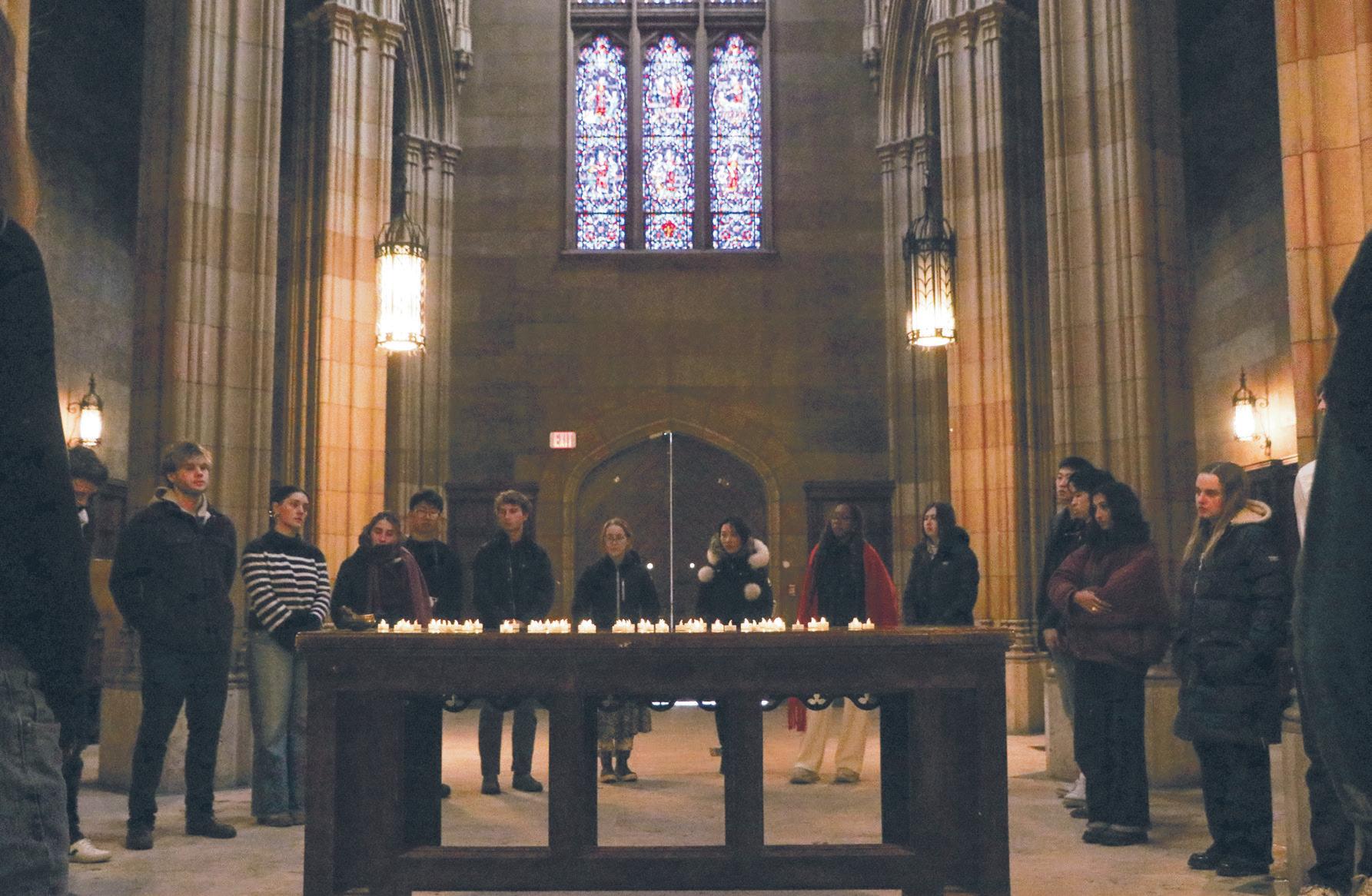
On a frigid afternoon two months after MukhammadAziz Umurzokov and Ella Cook were killed in a shooting at Brown University, around 30 Yale students gathered for a moment of reflection.
Saturday’s memorial came almost two months after the Dec. 13 attack at Brown University, when a man opened fire on a review session for an economics exam, killing two students and wounding nine. At the time, Yale President Maurie McInnis refrained from releasing a statement in the wake of the shooting, citing Yale’s guidelines about institutional voice.
“I’m terrified of the prospect of anything like what happened at Brown befalling anyone
else in the world. But I’m more terrified still that when it happens, we find it familiar, rather than utterly shocking,” Andrew Boanoh ’27, the president of the Yale College Council, said in his speech during the service.
In an interview after the event, Boanoh explained that the timing of the memorial came at the request of Brown’s Undergraduate Council of Students. The council reached out to all Ivy League campuses with a request to hold similar events in solidarity with Brown, according to Boanoh. Brown held a memorial service on Saturday that included speeches from Brown President Christina Paxson and several community faith leaders, the Boston Globe reported. During the service in Dwight Memorial Chapel, students gath-
ered around a table laid with plastic candles. Boanoh and University Chaplain Maytal Saltiel were the two speakers at Yale’s service. Boanoh’s speech reflected on the lives of Umurzokov and Cook, the empathy that “transposes” the tragedy at Brown onto members of the Yale community, and the importance of feeling the grief
“deeply, wholly and completely.”
“Today, we are shaken out of the complacency and forced to see the fragility and sacredness of life in our community,” Saltiel said in her brief speech.
Saltiel called the service a “collective breath.” She ended the memorial with a moment of silence.
Boanoh said that the YCC had discussed “doing something”
BY JERRY GAO STAFF REPORTER
of the
entryway D
12:40 p.m. A warning screen in the first floor of nearby Phelps Hall blared an alarm and displayed multiple warnings related to Lawrance Hall’s sprinkler system. Steven Gilsdorf, Yale’s director of facilities operations, wrote to the News on Monday evening that a sprinkler pipe’s failure mainly affected the second through fifth floors of the entryway. “There is also evidence of light dripping on the first floor. The cause is currently unknown
SEE PIPES PAGE 4
Nips ban bid is back
BY NELLIE KENNEY STAFF REPORTER
New Haven environmentalists are pushing the state to allow municipalities to ban the sale of the small alcohol bottles commonly referred to as nips this legislative session, which began on Wednesday.
At its second meeting of the year, the New Haven Board of
Alders reviewed a resolution by the city’s Environmental Advisory Council urging them to press state lawmakers to support legislation that would allow local governments to ban the sale of nips. Advocates of the resolution pointed to pollution and concerns that the small bottles
SEE BOTTLES PAGE 5
Snow too slow to go, New Haveners say
BY KAMALA GURURAJA AND NORAH MCPARTLAND STAFF REPORTERS
Mayor Justin Elicker touted the city’s efforts to confront “storms swirling around us” at his State of the City address last week, but for some New Haveners, the city’s snow clearance e orts have fallen short of their expectations.
Nearly two weeks after a Jan. 25 snowstorm buried the streets of New Haven in about a foot of snow, nine New Haveners and commuters interviewed by the News voiced frustration about snow buildup on sidewalks and roads. They criticized the city’s snow removal process, which they said has compli-
SEE SNOW PAGE 5
Eric Wang
Abby Assouad, Staff Photographer
Alex Hong, Staff Photographer
Kamala Gururaja, Contributing Photographer
William Qian, Staff Photographer
This Day in Yale History, 2006
February 10, 2006 / Fire repairs close BAR
By James Warrick-Alexander
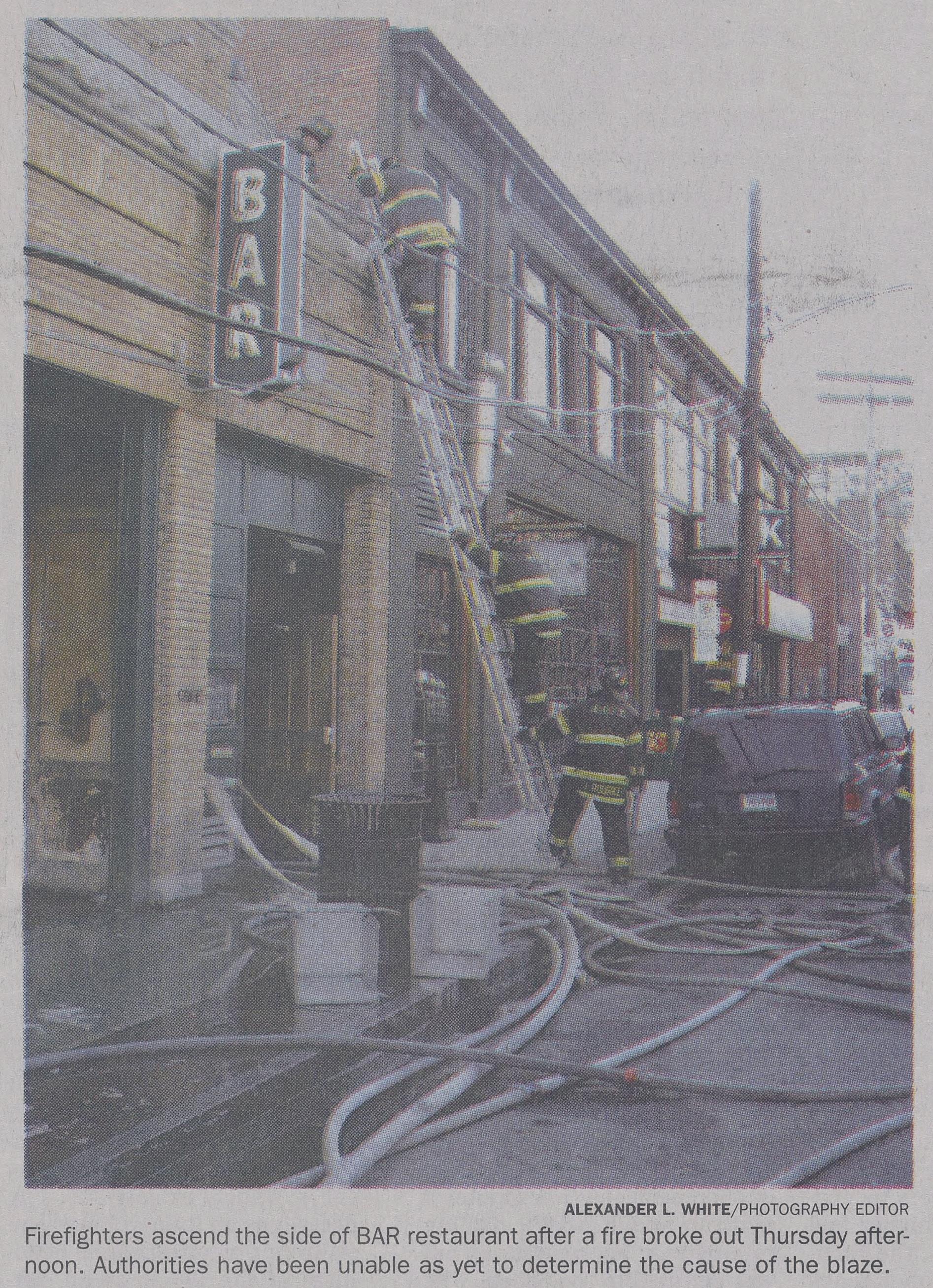
BAR will be closed at least through this weekend after a twoalarm fire flared up in the popular Crown Street restaurant Thursday afternoon, causing the surrounding streets to be blocked for several hours.
The fire, which began at approximately 3 p.m., caused damage to the second floor and roof of the building, New Haven Fire Chief Michael Grant said. Despite the apparent damage, the building remains structurally intact and will be able to reopen. Although BAR is in close proximity to other businesses, Grant said the threat to neighboring buildings was quickly neutralized.
Grant said the fire was small but produced a lot of thick smoke, and that the 50 assembled firefighters were able to control it within roughly 20 minutes.
“The firefighters did a great job,” he said. “They worked hard to expose the fire.”
An investigation is underway to determine the cause of the fire, though it is likely to have been electrical, Grant said.
Letter from the Editors
For the next four weeks, the Yale Daily News will be undertaking a pilot of a second weekly print edition. In addition to our Friday print newspaper, we will publish a print paper on Tuesdays until the academic break in March.
The News published a print edition every weekday while Yale College classes were in session until the COVID-19 pandemic. As Yale students returned to campus from lockdowns, the News resumed operating out of our building on York Street but did not return to our prior print schedule. For the past several years, we’ve published our journalism online and in daily email newsletters and printed a Friday newspaper.
Our current website, launched last month, has boosted the News’ capacity to share that work with our broad readership. But, while the news business and the News have turned to focus on digital audiences, we are also lucky to be able to honor our roots as a nearly 150-year old print newspaper and to serve readers closest to home. Throughout this experiment, we’re excited to spotlight more of our talented sta ’s work — articles, photographs, illustrations and puzzles — in a unified physical form.
Each edition will feature news coverage and opinion columns laid out by our production and design team. The weekly “Through the Lens” photo essay will now be published on Tuesday, while the WKND insert will continue to be published on Friday. Both issues will feature a “This Day in Yale History” column and “Behind the Headlines” notes in which News journalists give an inside view of their work.
Whether you pick up your print Yale Daily News from outside one of Yale’s residential college dining halls or from the blue boxes on surrounding streets, we hope you share our excitement for a more frequent and timely print paper. Throughout the four-week period, we will solicit feedback from readers and sta ers to determine future plans for our print publication schedule. — Ariela Lopez,Carter Cashen, Lily Belle Poling and Ethan Wolin
STAFF COLUMNIST
MILAN SINGH
GUEST COLUMNIST
KEITH G. PEMBERTON II
The impending higher education crisis A Yalie’s forgotten campaign gave us Black History Month
This piece is part of an Opinion series, “Trust Issues.” Each week, a writer will weigh in on what “trust in higher education” means to them. Interested in contributing your perspective? Email opinion@yaledailynews.com.
Higher education: There’s been a lot of talk about it lately. The state of it. Right-wing attacks on it. Whether Americans are losing trust in universities, and if so, why? University President Maurie McInnis recently set up a Committee on Trust in Higher Education to answer that last question.
I’m from Cambridge, Massachusetts — home of that other university — so I’ve spent a good bit of time grappling with that question myself. But when I’m back home, the conversations I have about higher education are a lot more mundane. I chat with my aunt Maya about grade inflation and what can be done about it. My mom forwards me the latest crime alert emails from the Harvard University Police Department, and my architect dad and I speculate about whether endowment taxes will hurt his industry by reducing university spending on new facilities or renovations.
In Cambridge, the town-andgown relationship is much less contentious than in New Haven. Harvard has plenty of money, but, unlike Yale, it’s not the only game in town. There are lots of universities in and around Cambridge, a thriving biotech industry in Kendall Square — and, of course, there’s Boston right across the river. As a consequence, there is not the same sense of proximate rage towards Harvard, at least in my experience.
It’s also true, though, that almost everyone I talk to when I’m at home — myself included — is bought into the basic project of the university. We see higher education as a very good thing. We might have our various criticisms of this or that institution, but our preferred fixes are tweaks here and adjustments there — not revolution or abolition.
Plenty of people might say that folks like me are out of touch with the rest of the country. While we sit cloistered in our ivory towers, Real America has grown sick and tired of being condescended to and having left-wing ideologies crammed down its throat. “No, thank you” to the degree in underwater basket weaving with a minor in pronouns; the kids can learn to weld instead. There’s certainly a grain of truth to that narrative.
Plenty of Ivy Leaguers can be condescending, and most of us are, politically, to the left of the country overall — although there is a deep and under-discussed network of institutions within Ivy League schools set up to cater to conservative students, such as the Yale-adjacent Buckley Institute. But I don’t think that
wokeness is the biggest reason that Americans are losing faith in higher education. It’s not that people think college is worthless, but that people increasingly think college isn’t worth the price.
In a piece published last semester in The Harvard Crimson, Alex Bronzini-Vender argued that if “Harvard and universities like it want to win back the public, their focus should be upon affordability and access.” According to a Gallup survey that he cites, the top two things universities can do to restore confidence in higher education are to focus on “practical teaching” and lower the costs of attendance.
Part of the problem is that universities increasingly create confusion about the cost of attendance by quoting sky-high sticker prices that few people end up paying. Since 2000, the wage premium that a college graduate earns relative to a high school graduate has remained flat, while the cost of a four-year degree has continued to increase. There’s plenty of demand for certain skilled trades jobs and lots of uncertainty about how artificial intelligence will change white-collar o ce work.
In other words, the problem facing higher education is on the demand side. America is running out of college-aged young people because our population is getting older. In an essay for The Argument, where I now work, Kyla Scanlon described what’s coming as America’s “next Rust Belt moment,” poised to hit small towns that rely on local colleges as anchors of economic activity, and leave “entire regions hollowed out, communities that feel abandoned, and another generation left behind by the very institutions that promised them a future.”
It’s difficult to see a way out of this. Birth rates in America have been below the replacement level since 2007. Because of immigration, our population has still grown, but there’s a growing backlash towards higher migration, especially through irregular channels like asylum claims. The Trump administration wants lower levels of immigration of any kind, including fewer international students, who are often essential to making the finances of smaller colleges work when they pay full price. Elite schools like Yale and Harvard may have to worry about endowment taxes. They’ll never have to worry about finding enough students. The impending crisis will hit those colleges that do.
MILAN SINGH is a senior in Pierson College studying Economics and a former Opinion editor for the News. His column, “All politics is national,” runs fortnightly. Contact him at milan.singh@yale.edu.
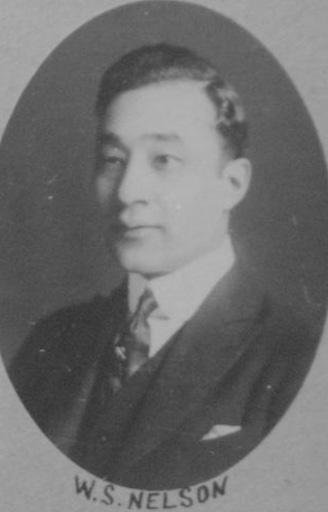
William Stuart Nelson completed his theological studies at Yale Divinity School as a member of the class of 1924. But by that point, Nelson had already been at the forefront of a movement to make recognizing Black history a national practice. His effort anticipated what would later be institutionalized each February as Black History Month.
Nelson’s path to Yale ran first through Omega Psi Phi Fraternity, Inc., the first national fraternity founded on the campus of a historically black college or university — and an organization of which I’m now a member. Nelson was initiated in 1916 through Alpha Chapter at Howard University, which he graduated in 1920. The fraternity was not merely a social organization, but rather a growing network of Black college men committed to education, public service and leadership. It was within this network that Nelson would come to play a pivotal role in the establishment of Black History Month, showing that what we now treat as a national observance emerged from deliberate institutional and scholarly labor.
His role first took shape in December 1920, at the fraternity’s ninth national conference, held at Meharry Medical College. During this opening session, Carter G. Woodson, who co-founded the Association for the Study of Negro Life and History and, in 1916, The Journal of Negro History, was emboldened to articulate a compelling vision. Already an honorary member of Omega Psi Phi, he delivered a speech entitled “Democracy and the Man Far Down.”
According to archival materials compiled by the International History and Archives Committee of Omega Psi Phi Fraternity, Inc., Woodson spoke directly to his fraternity, warning for what he described as “the Negro’s neglect for history, in fact, his ignorance of it.” He urged this group of educated black men to give “less attention to social afffairs and devote more of his time to the study and dissemination of the facts of Negro life and history.” His argument was that such knowledge would help produce capable leaders and inspire pride “in the masses as a whole.”
The fraternity responded decisively. According to its records, the brothers present were “so moved” by Woodson’s address that they voted to create a national public campaign devoted to the study of Black history. The initiative was formally tilted the Campaign for the Study of Negro Literature and History. To ensure its
success, fraternity leadership created a new position, director of publicity, that would be held by none other than Nelson. Nelson’s directive was clear: translate Woodson’s challenge into action. Beginning in April 1921, Nelson arranged a nationwide effort to mobilize the fraternity’s chapters to insert Black history into public life. Chapters were tasked with organizing mass meetings featuring prominent speakers, working with Black press to circulate historical materials, and print and distribute pamphlets on African American history. The campaign was not restricted to college settings, but extended to grammar schools, private schools, churches and community institutions.
momentum did not disappear. Woodson advanced the works of his fraternity through the Association for Study of Negro Life and History, launching Negro History Week in February 1926. The second week of the month was chosen to coincide with the birthdays of Frederick Douglass and Abraham Lincoln. When the celebration kicked o on Feb. 7, 1926, what appeared a new observance on the calendar was, in practice, the formalization of years of organizing.
“Shining Light on Truth: Early Black Students at Yale,” a public history exhibition on view at the Schwarzman Center until March 8, situates Nelson among a cohort of early Black students whose professional lives extended far past Yale. Nelson later served as president of Shaw University, dean of Howard University and a representative of American Friends Service Committee where he marched alongside Mahatma Gandhi to unite Hindu and Muslim communities in Bengal, one year before Martin Luther King Jr. ‘s widely celebrated visit.
Chapter reports indicate the success of such efforts. From Atlanta, one fraternity leader described the initiative as a “howling success” that drew in more than 2,000 attendees from all sectors of the city. Similar activities unfolded in cities across the country enabling Black history to be taught publicly and systematically through Black institutions. While Nelson was completing his divinity degree at Yale, the work Woodson called for, and which Nelson had spearheaded, was well underway. When the fraternity paused its national campaign in 1925 to focus on internal growth, the
This past Saturday, Feb. 7, 2026, commemorated the centennial anniversary of Negro History Week, the predecessor of Black History Month. All these years later we’re reminded that this historical commemoration did not begin with a single moment or institution, but the intersection of historians’ challenge, a fraternity’s decisive action and the work of a Yalie who helped turn an idea into a national practice. For students willing to engage in archival collections, at Yale or beyond, the past is not fixed or finished. It’s still unfolding box by box and connection by connection, waiting to be discovered.
KEITH G. PEMBERTON II is a junior in Branford College studying History. He can be reached at keith.pemberton@yale.edu.
Discipline Professor Gelernter
In my classes here at Yale, I hope that my professors’ impressions of me are based on my character, intellect and effort, not on my size or hair color. I hope when I reach out to schedule office hours or events, they see this engagement not as a “first advance,” but as an expression of my intellectual curiosity, interest in their ideas and perspective, and commitment to the pursuit of knowledge. I hope that, regardless of who they correspond with and the levels they may stoop to, they never violate my integrity to appease and excite the cruel, wealthy men of the world. Professor David Gelernter’s comments — and his shameless defense of them — betray that hope. They make me wonder
about my safety and security within these classrooms. I wonder about Yale’s place within the systems of exploitation; does it construct or disrupt them? I wonder about the kind of people Yale allows proximate to the young, impressionable students who, like me, hope to be seen not as bodies to be transacted but as whole people amid life’s beautiful arc of growth, change, education and transformation. Sexual misconduct, objectification and harassment all too often disrupt those trajectories. They scare victims out of the classroom and out of the world, repeating cycles of exclusion and abuse that an institution like Yale should aim to break. In the face of Professor Gelernter’s actions, I will
be interested to see how the administration responds. Will it remain committed to the values it espouses, or to something else entirely? As the Yale administration navigates what must be a very complex set of concerns, I am now left hoping only that they consider us students, our beliefs about what this university stands for, and our faith in our institutions’ willingness to protect us. I hope, too, that they share with us the steps they will take to assess this professor’s history, actions and statements, and how they will continue to ensure that all members of Yale’s community are respected and safe.
ELIZABETH CHIVERS is a senior in Davenport College studying Economics and Humanities. She can be reached at elizabeth.chivers@yale.edu.
WIKIMEDIA COMMONS
FROM THE FRONT
“Doesn’t like you? How could anyone not like you?”
HELEN SEINFELD
Woman was arrested in May on trespassing, forgery charges
Pre-Law Student Association at the University of California, Los Angeles, which identified her as a second-year law student at Yale.
The post, presented as a recap of a conference panel, includes advice attributed to her: “Don’t be afraid to ask questions. Don’t be afraid to take risks.”
Mikaelyan and her lawyers did not respond to a detailed request for comment.
In response to a public records request from the News, the New Haven Police Department provided 24 pages of Yale Police reports, which include a narrative of her arrest by the reporting officer. The News filed a similar request to the Yale Police Department for internal communications relating to the investigation. The department acknowledged the request but has not yet fulfilled it.
Yale’s central communications office declined multiple requests to comment on her case.
In response to the News’ request for Yale Police documents related to Mikaelyan, Lieutenant Sabrina Wood wrote, “Please know that Suzanna Mikaelyan was never a Yale Law Student.”
A pub ‘regular,’
a dance performer
A year and a half before her arrest in 2025, Mikaelyan was involved in “trespass/disorderly conduct investigations conducted by Yale police officers on three di erent occasions,” YPD O cer Sergei Orshansky wrote in a report after arresting her in May.
Orshansky wrote that Mikaelyan “had been posing as a Yale Law student in the past.”
Using evidence including accounts from her undergraduate boyfriend, credit card transaction records and video footage, police determined that Mikaelyan went to Gryphon’s Pub five times between September and November 2023. She was issued a “no trespass” letter by a Yale detective on Dec. 20, 2023. The letter, which the News has not reviewed, apparently prohibited her from returning to Yale property.
Police determined that Mikaelyan went to Gryphon’s Pub 17 more times in 2024 and 2025, according to the report.
Gryphon’s Pub manager Dmitri Alvarado said in an interview that the pub is the “strictest bar that anyone can go to” in New Haven. To abide by its liquor license, the pub can only serve members or their guests. Only Yale graduate students, including law students, can be members.
Even so, Mikaelyan was a “regular” at Gryphon’s Pub, according to Alvarado.
According to Orshansky’s report, Mikaelyan admitted to the officer after her arrest that she had obtained a fake Yale ID in November 2024, which she used to get into the pub.
In late April of 2025, she participated in a dance show open to Yale students only: Yale Danceworks’ “Teenage Dream.” Mikaelyan registered with a fake email, according to a police report.
Less than two weeks before Mikaelyan’s arrest, Orshansky emailed a Danceworks business and production manager, Michael Willen ’26, asking for a list of participants in the show and for confirmation that only Yale students are allowed to participate in Danceworks, according to the report.
Orshansky found registrations under the names Susan Mika and Suzi Mika in the list provided by Willen — a former head copy editor of the News — who also confirmed to the officer, “Yes, all participants must be Yale University students.”
“I do remember very briefly hearing a rumor that one participant — Susan/Suzi Mika — was not a Yale student, though in the chaos of a busy tech week I didn’t remember it beyond that brief moment,” Willen wrote in the email to Orshansky, according to the report.
The arrest Sometime in May 2025 after the Danceworks show, Orshansky had a phone conversation with Mikaelyan, according to his police report.
According to Orshansky, during that phone call, she indicated that she was aware that she would be arrested if she returned to Yale property again because of the “no trespass” letter issued a year and a half prior.
On May 4, 2025, Mikaelyan and her undergraduate boyfriend entered the Humanities Quadrangle, the boyfriend told the police. According to him, Mikaelyan told him that she was in an advanced Russian class, according to the report.
Orshansky wrote in the report that he emailed “Russian Classes faculty, including a registrar,” and found that “no one was familiar with name Suzi Mika or Susan Mikaelyan.”
On May 6, a Yale police dispatcher told Orshansky to call Silliman Head of College Arielle Baskin-Sommers, who told
the officer she had “received new complaints about Suzanna Mikaelyan showing up on Yale Properties,” according to the officer’s account.
Mikaelyan also told police on May 6 she had been in California since February, which her boyfriend disputed to police, according to the report.
Mikaelyan went to Gryphon’s Pub on May 17, according to credit card transactions linked to her name and examined by Yale police.
On May 19, Alvarado, the pub manager, noticed Mikaelyan was in the pub again. Shortly after 8 p.m., he called Orshansky, who “requested a Yale PD unit to respond to the pub” as well as another officer, Orshansky wrote in his report.
Orshansky wrote in the report that he saw Mikaelyan sitting on a couch holding a drink and a graduation gown and hood. That night, the bar was serving free drinks to graduates, according to the report.
At first, she told Orshansky the graduation set she was wearing belonged to her friend, he wrote in the report. After her arrest, she admitted to Orshansky she had bought it herself, the report says.
In the pub, Orshansky asked Mikaelyan for her ID. Mikaelyan said she was the guest of a friend, according to the o cer’s account.
“I told Mikaelyan that she was not supposed to be on Yale property regardless of the invitation,” Orshansky wrote. He then handcuffed her and transported her to the Yale Police Department, where they scanned an identification number on her Yale ID card and confirmed that it was a fake.
In the station, Mikaelyan admitted to having visited Gryphon’s Pub and Sterling Memorial Library, Orshansky wrote. She was then transported to the New Haven Police Department headquarters, where police logged one fake Yale ID and one fake California drivers’ license as evidence in her case, Orshansky wrote.
On Aug. 11, less than three months after her arrest at Gryphon’s Pub, Mikaelyan was allegedly on Yale property again. She turned herself in that day and was booked and released on a $1,000 bond, according to the police files. Her case is now statutorily sealed, according to the Con
necticut judicial database.
Contact ADELE HAEG at adele.haeg@yale.edu.
First years relocated from their rooms
PIPES FROM PAGE 1 and is being determined,” Gilsdorf wrote.
New Haven experienced around a foot of snowfall in a Jan. 25 storm and has since experienced subzero temperatures. Water pipes commonly fail due to freezing temperatures.
Lucy Drebitko ’29, a first year living in Lawrance Hall, told the News that the flooding started at around 11 a.m.
Drebitko lives on the fifth floor, the top floor of Lawrance Hall, which houses first-year students in Branford College.
“I’m up there, my suitemate’s ceiling fell the other day, and then water just kept pouring,”
Drebitko said.
The Yale Facilities workers, who declined to comment, checked inside suites on multiple floors, including the first floor, where water could be seen dripping from the ceiling.
Gilsdorf wrote that students on the affected floors had been relocated to annex housing in McClellan Hall, also on Old Campus. According to Gilsdorf, the length of time needed to restore the building is “still being determined.”
Melanie Boyd ’90, the dean of students of Yale College, wrote in an email addressed to “students of entryway D” just after 1 p.m. that details regarding the relocation would be released “over the next few hours.”
“In the meantime, I ask that you do not return to your room in Lawrance, as that will only complicate the response,” Boyd wrote.
“We will let you know when it’s okay to pick up belongings.”
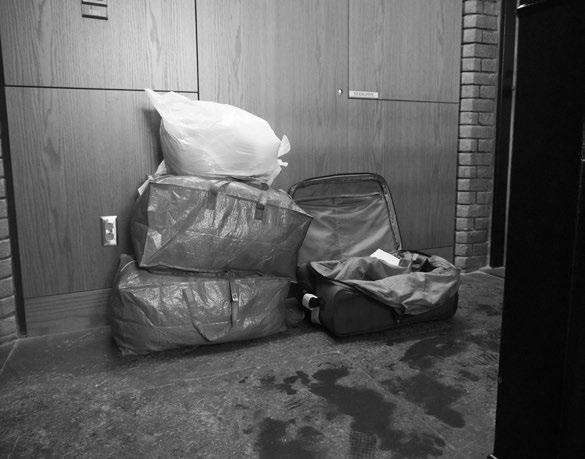
Around that time, various items seemingly rushed from the flooding dormitories — including numerous suitcases, duffle bags, clothing and a still-wet electric fan — were scattered near stairs and outside entryway D. By midafternoon, a small truck loaded with suitcases and bags was parked outside of Lawrance Hall.
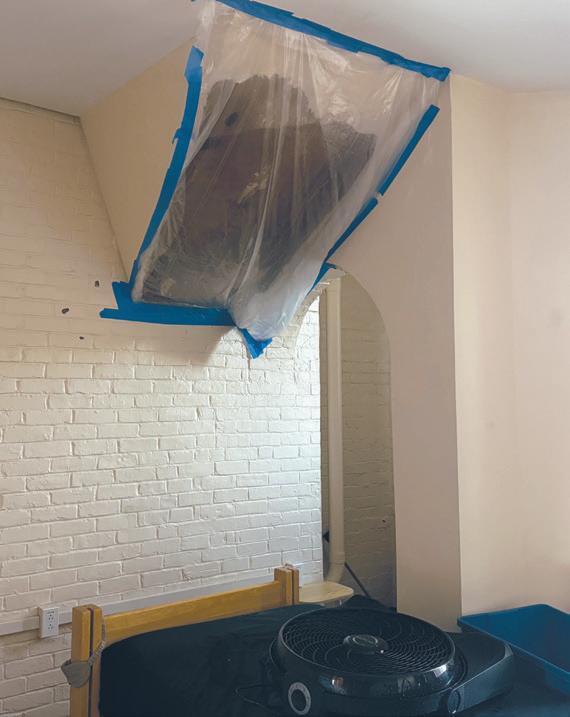
Drebitko told the News that parts of the ceiling on the top floor of Lawrance Hall had fallen several days ago, but said that she did not know the exact reason. A News photographer observed a large opening on a ceiling patched by what appeared to be a taped plastic bag, though the exterior roof of Lawrance Hall seemed undamaged. Gilsdorf wrote that Yale Facilities is examining whether the incidents are related.
“A few days ago, in the same room on the fifth floor at Lawrance Hall, ice damning on the roof caused interior leaks and a plaster dormer was affected,” Gilsdorf wrote. This year, Lawrance Hall houses first-year students from Branford College under a new system after Yale College announced that it will increase its enrollment by 100 students per class.
Lawrance Hall had previously housed first years from Ezra Stiles College.
Contact JERRY GAO at jerry.gao.jg2988@yale.edu.
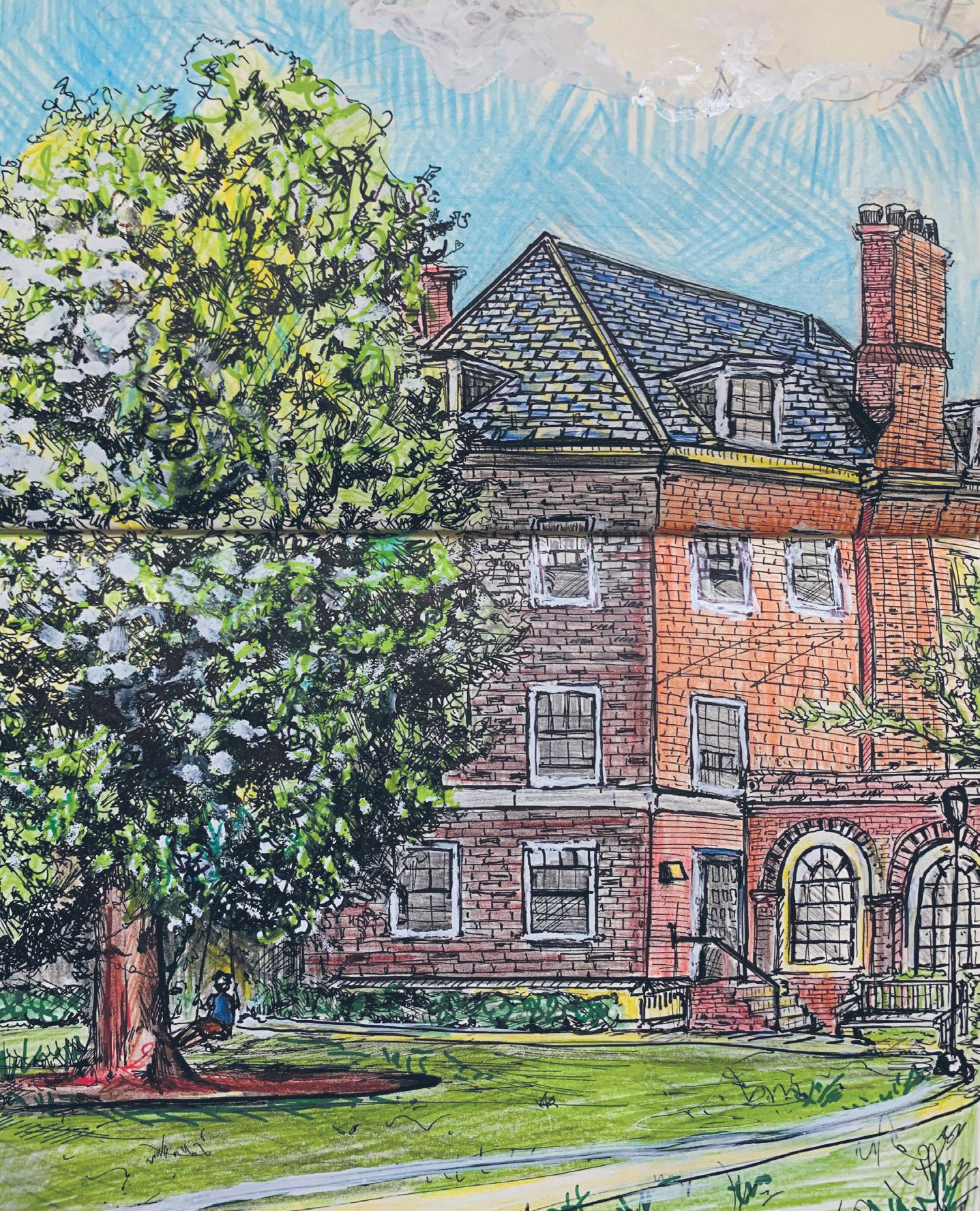
Students get new choice among rooms across campus
and seniors living o campus since the COVID-19 pandemic.
“The overarching purpose of the secondary room draw is to expand opportunities for students to secure on campus housing,” Ferentz Lafargue, the associate dean of residential college life, wrote in an email to the News.
Lafargue explained that in the old housing draw system, a student who was not able to secure a room in the first lottery would have to wait to be o ered a room outside of their residential college.
Now, after the conclusion of the first draw, students who did not get an assignment inside their colleges will be able to see the locations of all available beds on campus and form housing groups from there. During a second draw in midApril, students will be able to access the housing portal and choose their rooms from options all over campus, Lafargue said.
During the 2020-21 school year, an abnormally high number of juniors and seniors lived o campus due to COVID-19 policies that limited the number of students allowed to live in campus housing. Since then, the number of students living on campus has not returned to pre-pandemic figures.
According to Lafargue, approximately 5,100 students live on campus this year, which translates to roughly 76 percent of the
undergraduate student body — a decrease compared to the 84 percent who lived on campus in 2019, according to data from the O ce of Institutional Research.
“We have had empty beds for the last decade. And so it’s not like there’s nowhere to stay. Admittedly, some of the empty beds are probably less desirable rooms, but we’re also trying to solve some of that problem through having a second round of draw,” Yale College Dean Pericles Lewis said in an interview.
Lafargue wrote that this new system will give students “more agency in choosing where they land.”
“Given the way that most of the colleges are clustered around York, Elm and Tower Parkway, students who’ve been annexed have inevitably landed near their own residential college, and this will continue in this process,” Lafargue wrote.
Last year, administrators began shifting housing priority from rising seniors to rising juniors. Last spring, rising juniors and seniors were in the same draw for rooms. This year, students going into their junior years will have priority over those going into their senior years — a change that aims to keep more juniors living on campus.
“The rationale is we want juniors to stay on campus. Seniors are older and more ready to move o . And if juniors are moving o in large numbers, there’s a pretty good chance that they won’t move back on to their senior year,” Lewis said.
Lafargue reported that 63 percent of current juniors declared their intent to live on campus for the 202526 school year during the housing draw last spring. During the 2024-25 school year, only 41 percent of juniors lived on campus.
Andrew Lipka ’78 said that this change will still fall short of encouraging students to stay within their residential college.
“I don’t know that this really does anything to maintain the coherence of the residential college system,” Lipka said in a phone interview with the News. Lipka is a fellow of Jonathan Edwards College who co-authored an opinion article for the News last January on the importance of the residential college culture.
Lipka suggested that, if needed, some rising sophomores — who under the new system will choose housing alongside rising juniors — should be annexed instead of juniors and seniors. He said that those sophomores should then be put in a “special group” that has top priority for housing in their final two years.
“I would put the burden more on sophomores without taking them off the campus,” Lipka said, “So if you’re annexing them together, you know, some of them, and then you’re scrunching some others, then they would have to look forward to, great housing as junior and senior, and a real, you know, integrated community.”
Lipka remembered being crowded in “sophomore slums” when he was a student and being able to say, “we are su ering through it, but I know the good times are coming.” Lipka emphasized that annexed students should still be grouped by residential colleges. Lipka attributed much of the di culty of keeping students on campus to “poor planning” when Yale expanded undergraduate enrollment after building Pauli Murray and Benjamin Franklin Colleges in 2017. Lipka said that increased enrollment has not
relieved the competition of the admissions process to a point that would justify the increased strain on the housing system.
“If we’re creating a worse experience for the people that are here, we’re not solving the many frustrations of admissions,” he said.
This year, the first round of room selection for rising sophomores and juniors will take place on March 25 and 26.
Contact SARA AGRAWAL at sara.agrawal@yale.edu.
Abby Assouad, Staff Photographer If students do not receive a room in their residential college in the housing draw, they will get to choose rooms from
Jerry Gao, Contributing Photographer
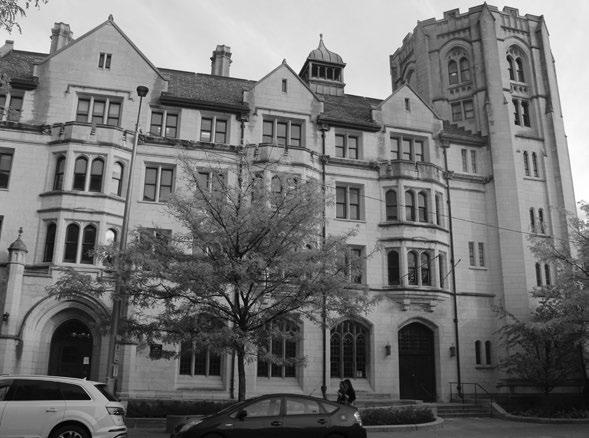
A flooding of entryway D in Lawrance Hall, which houses Branford College first years, left personal belongings “ruined,” in the words of one affected student.
FROM THE FRONT
YCC service honors two killed in December shooting
VIGIL FROM PAGE 1
immediately after the shooting but decided to hold o
“While we, of course, are in solidarity with our peers at Brown, we also wanted to make sure that anything that happened at Yale was kind of on their terms and on their timeline,” Boanoh said.
After the shooting, Yale increased security across campus. Boanoh said that the YCC has been in conversation with students, deans and faculty about the future of campus safety.
Boanoh said the solidarity displayed by the Ivy League schools to all hold the memorial at the same time was “exceptional,” noting that such collaboration across student councils is rare.
“I talk occasionally with some of the presidents of student councils at the other universities, but in terms of someone putting out a call for all of us to come together in this way is very unique,” he said.
Landon Bishop ’27, an attendee at the vigil, said that he wished he could have offered more support to the Brown community after the shooting. He said that he came to the vigil “to show that even though
the shooting happened a while ago, I guess relatively a while ago, that there are still reasons and people still care about it.”
Another student who attended the memorial, Rohan Phanse ’27, reflected on the Brown tragedy and how he appreciated that the Yale community could come together to mourn the tragic event.
“It’s very cold, and it’s snowing right now, so it was probably hard for a lot of people to come, but I think there’s still a really good turnout,” Phanse said.
Michelle Jimenez ’28, another student who attended the vigil, similarly appreciated the opportunity to remember the victims of the shooting, she said.
“Even if they didn’t attend, I hope knowing that Yale did this gave people a sense of unity and hope for the future,” Jimenez said. With the wind chill, temperatures in New Haven dipped as low as -16 degrees Fahrenheit on Saturday, according to the National Weather Service.
Contact EMILY AKBAR at emily.akbar@yale.edu and SARA AGRAWAL at sara.agrawal@yale.edu.
State’s OK needed to nix shooters
BOTTLES FROM PAGE 1
facilitate drunk driving. Similar legislation has failed in previous legislative sessions.
“I notice that people throw them out at stop signs and stoplights because they do not want to get caught in their cars with empty nip bottles,” Laura Cahn, the former chair of the Environmental Advisory Council, said in a Zoom interview. “This puts nips everywhere, and they get into storm drains, and they get into rivers, and it’s a mess.”
Cahn said the city can do very little to curb nip pollution without the state’s support. The Board of Alders could “go around fining everybody they saw throwing a nip bottle, but can you imagine trying to do that?” she said. She hopes that the Environmental Advisory Council’s resolution will convince the board to “ask” the state delegation to “please do this for us,” she said.
Cahn held up a large Ziploc bag of nips which she said she had picked up from the ground in a single morning.
“I’m saving them to dump on the Capitol lawn in case we ever have to do that,” she said in the interview.
Iris Herz Kaminski, a Yale School of Public Health lecturer in epidemiology and a member of the Environmental Advisory Council, voted in favor of the resolution. She said that nips pollution is “one more layer of plastic pollution.”
Kaminski said that littered bottles that slip through street drains could end up in the Long Island Sound.
“We’re coastal, so you really don’t want plastic pollution in a coastal area. It really impacts the fish and the ecosystem,” she said.
Ward 1 Alder Elias Theodore ’27, who is also a member of the Environmental Advisory Council, said in a phone interview that
it is “abundantly clear,” especially in warmer months, that “nips are a major problem.”
While he is “excited that the city is discussing” nips and has been “hearing a lot of really compelling cases why we should make this change,” Theodore said he wants to hear from as many constituents as possible, including liquor store owners, before he casts his vote on the resolution.
In 2021, Connecticut passed a bill imposing a five-cent surcharge on nip sales. The bill requires vendors to return the additional five cents to their municipality. Municipalities in turn are required to use the funds generated by nip sales for environmental measures “aimed at reducing solid waste or reducing the impact of litter,” the bill says.
About 2.3 million nips were sold in New Haven between April and September of last year, generating an estimated $117,000 for the city, according to an article in the New Haven Patch.
That money has gone toward a part-time recycling educator and street cleanups, according to Steven Winter ’11, the executive director of the city’s climate and sustainability office.
Winter said in a phone interview that he and the city’s climate and sustainability team are “in agreement that municipalities should have this option to decide whether or not they want miniature liquor bottles sold in their city or town.”
If New Haven did ban the sale of nips, Winter said, the work currently funded by nips sales would have to find funding elsewhere. He suggested that money might come from the city’s general fund, the Solid Waste and Recycling Authority’s budget or tipping fees collected from trash and recycling, although he emphasized that the decision would ultimately be made by the city and the Solid Waste and Recycling Authority.
Winter, who also represents parts of New Haven and Hamden
Kenney, Contributing Photographer
in the Connecticut House of Representatives, said that there is “a good contingent of legislators who are concerned” about littered nip bottles and that he hopes the Environment Committee “takes it up.”
Connecticut state Rep. Patricia Dillon SPH ’98, who represents western New Haven, sponsored a bill to allow municipalities to ban spirit and liquor bottles of 50 milliliters or under in 2024. The bill ultimately did not survive the legislative process. In a phone interview on Friday, Dillon said she now saw some problems with the 2024 bill.
If only some towns ban the sale of nips, the ban could “have the consequence of leaving some wealthy towns nice and clean and doubling up on the amount of nips in other towns,” she said. “And so I don’t see it as a systemic approach at all.”
Dillon said she still thinks that nips are an issue which should be addressed. She suggested two possibilities: a statewide ban or legislation requiring manufacturers to make the bottles “uniform” and “recyclable.”
Currently, nips are too small to be processed by recycling apparatuses, a problem which is complicated further by their varied shapes and materials, Dillon said. She added that she had spoken to one company with plans to make nip-specific recycling machines, but that the company had ultimately scrapped the plans because of the cost.
“‘Not worth the money’ doesn’t even connect with me,” Dillon said. “The plastic could be leeching into our rivers and into our soil.”
Although “it never happens until it happens,” Dillon guessed that several nips bills may be in the works in Hartford.
Massachusetts currently allows municipalities to ban the sale of nips.
Contact NELLIE KENNEY at nellie.kenney@yale.edu.
City still clearing snow from storm
cated public transportation and pedestrian tra c.
“We have a little bit of a more complex challenge this time and need to do a lot more removal than we typically do,” Elicker said in an interview on Friday.
He said that following snowstorms, the city’s first priority is to ensure that every street is “passable,” especially to allow emergency vehicles through. When there is a significant amount of snow, the city transitions from “push back operations” to snow removal operations, Elicker said.
“We’ve been doing the snow removal operation for the last two weeks. We have about 20 dump trucks and five payloaders that are operating probably about 16, 18 hours a day,” Elicker said. “With 800-plus streets in the city, 237 miles of road, it’s a lot of ground to cover.”
With regard to the bus stops, Elicker said that they “haven’t really seen a lot of indication that bus routes are have actually changed,” but that the main concerns from they’ve heard about are “the bus stops being cleared so people can get on and o the buses” and to allow buses to stop closer to the corner.
“It’s not a perfect situation where we’re going to be able to clear every single bus stop in the city. There’s hundreds and hundreds and hundreds of bus stops, but we’re, you know, we’re working to chip away at that,” he said.
New Haveners described varying experiences with snow buildup impeding their daily travel.
“Some buses take di erent routes because the snow is so piled up on the streets,” said Ja’Sai Dennis, a student at Gateway Community College who said she uses public transit multiple times a day. “There’s a lot of people who don’t use the transit app, so when they’re waiting for the bus and it just doesn’t come, there’s nothing they can really do.”
Dennis recalled recently waiting for a bus that “just never came,” which she attributed to the snow buildup. She ended up having to walk 20 minutes to her destination, she said.
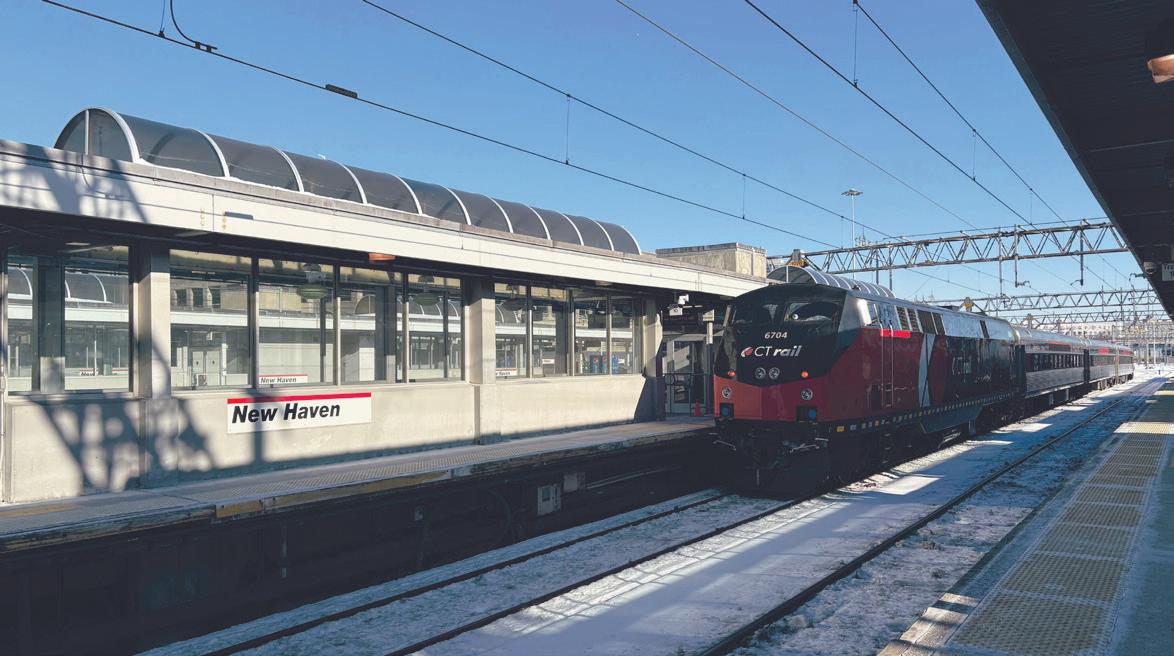
Commuters at Union Station on Thursday also described varying levels of travel complications due to the snow.
Brian Murphy said the snowstorm prompted him to take the train from Washington, D.C., to New Haven on Feb. 4. He typically commutes by car, he said.
Katherine Walsh, who said she commutes from New Haven’s Union Station to New Rochelle twice a week to teach at Iona University, described New Haven’s initial snow clearance as “challenged,” though she has noticed improvements this week.
“The first day after the big snowfall, I probably waited 20 minutes to actually get o the highway and onto the streets of New Haven because it was so backed up,” she said. “That was not the case this week at all.”
She added that the city has fewer available parking spots due to the snow pileup and “visibility is reduced a little bit.”
Hazel Romany said that, in her neighborhood, snow “piled up on the sides” of the streets and obstructed sidewalks.
“Residents literally had to come and clear a pathway because of the amount of snow,” she said.
Morgan Callahan, who said she commutes out of Union Station two to three days a week, said her commute was only a ected on the day of the storm.
“Once I started the next day, we were back on track,” she said. “I was actually pretty impressed.”
Julie Meisner, who works at Hull’s Art Supply and Framing in downtown New Haven, said that snow removal is “progressing a little slowly.”
She added that while Hull’s customer tra c hasn’t been significantly impacted because many of their customers are students located within walking distance of the store, “parking has been kind of challenging,” and her main concern has been “slipping on the snow.”
The National Weather Service issued a cold weather advisory for New Haven and surrounding towns through Monday morning.
Contact KAMALA GURURAJA at kamala.gururaja@yale.edu and NORAH MCPARTLAND at norah.mcpartland@yale.edu.
Alex Hong, Staff Photographer
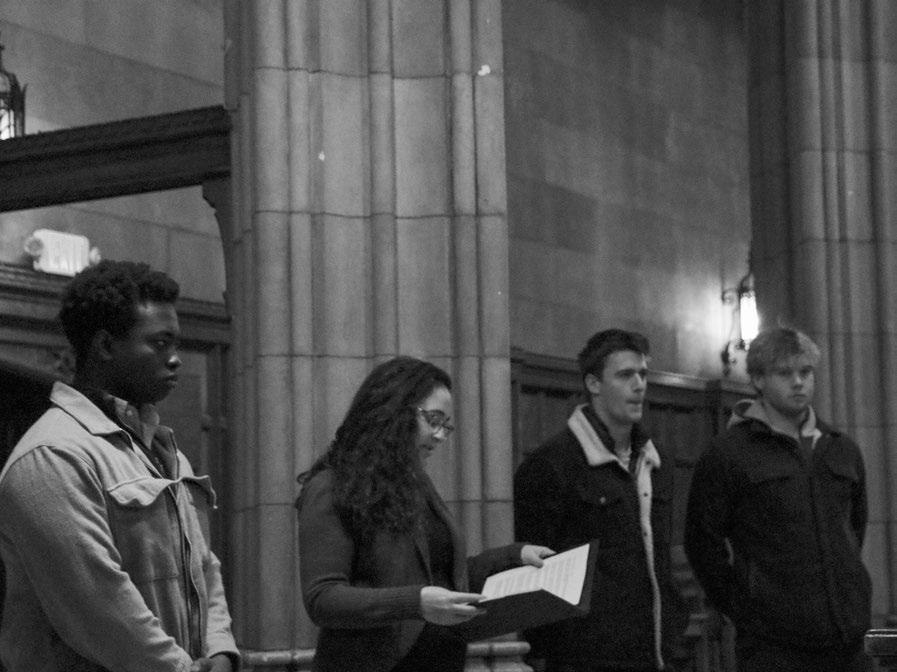
The gathering at Yale happened concurrently with memorials at other Ivy League schools, at the request of Brown’s student government.
Nellie
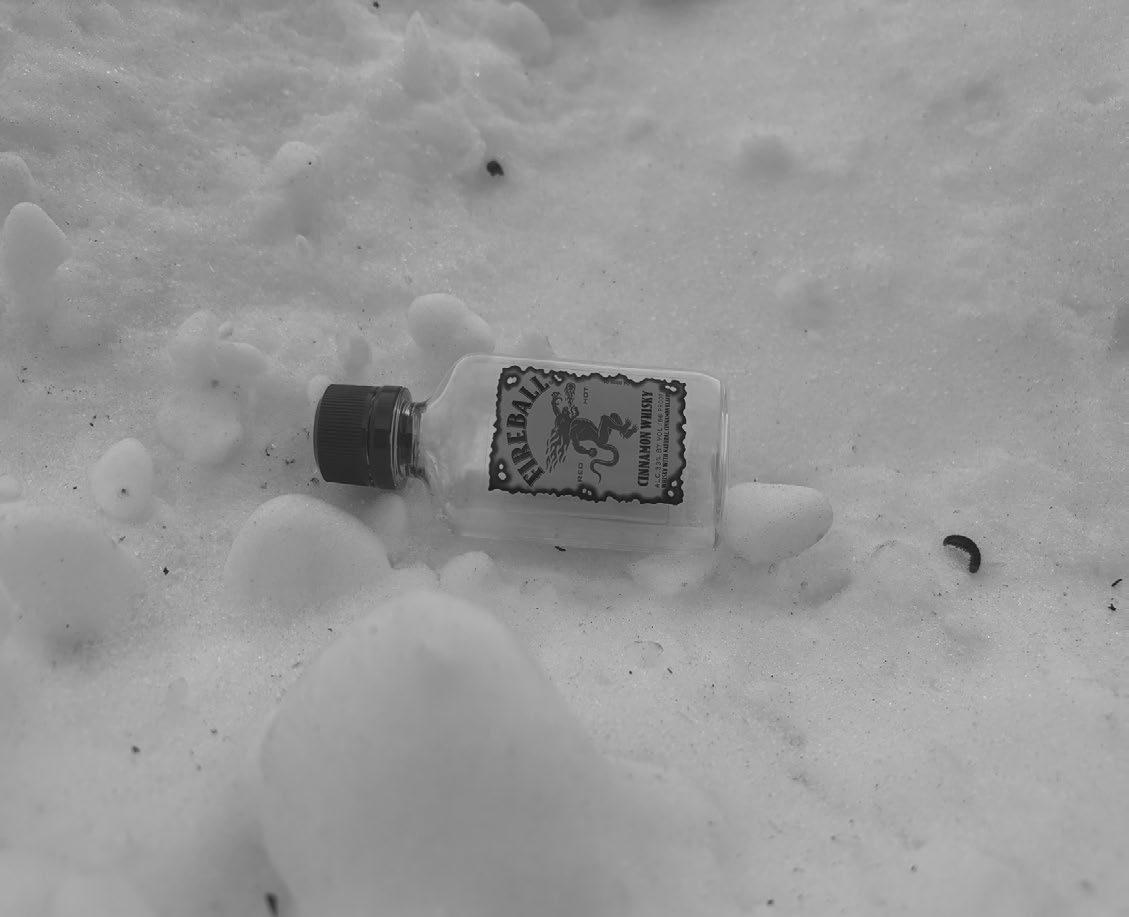
New Haven’s Environmental Advisory Council asked the Board of Alders to press state lawmakers to pass legislation that would allow cities to ban the sale of small liquor bottles.
Logan Dinkins, Staff Photographer
“Look to the cookie, Elaine, look to the cookie”
JERRY SEINFELD
Conference hosts Black students for talks on leadership, solidarity
BY OLIVIA CYRUS AND ANAYAH ACCILIEN STAFF REPORTERS
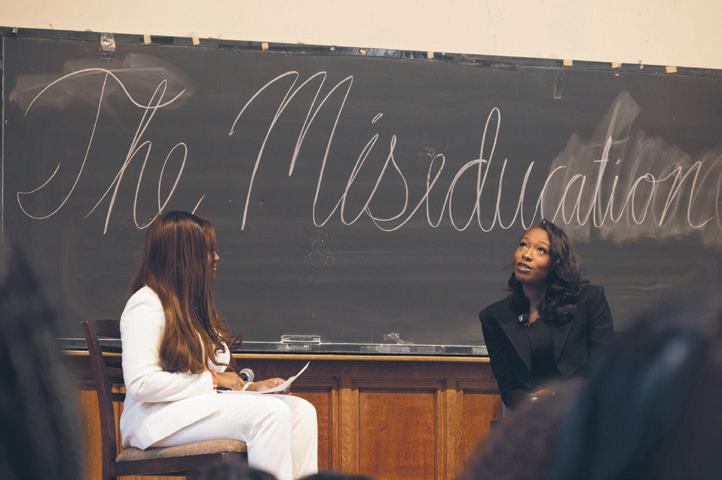
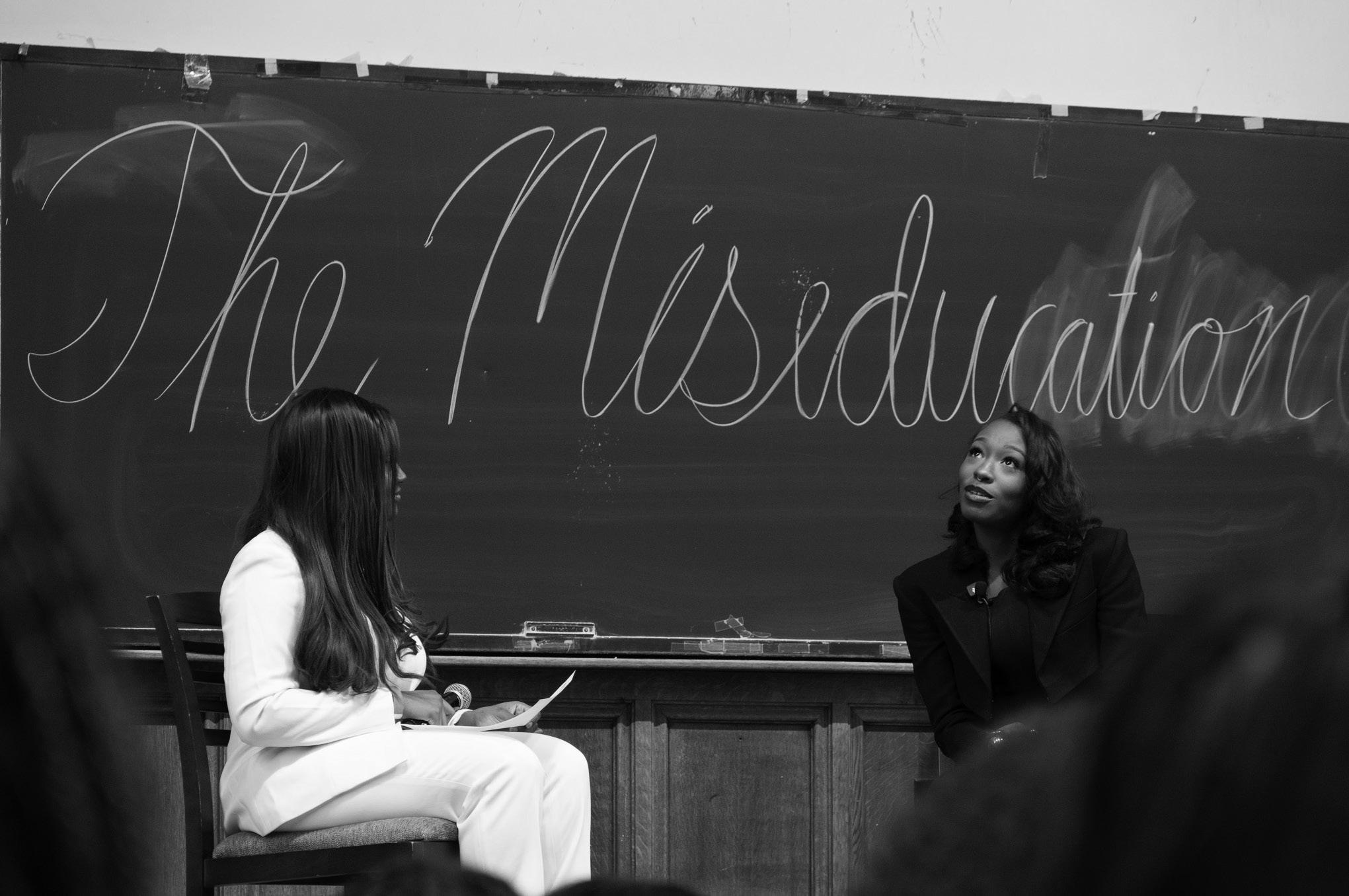
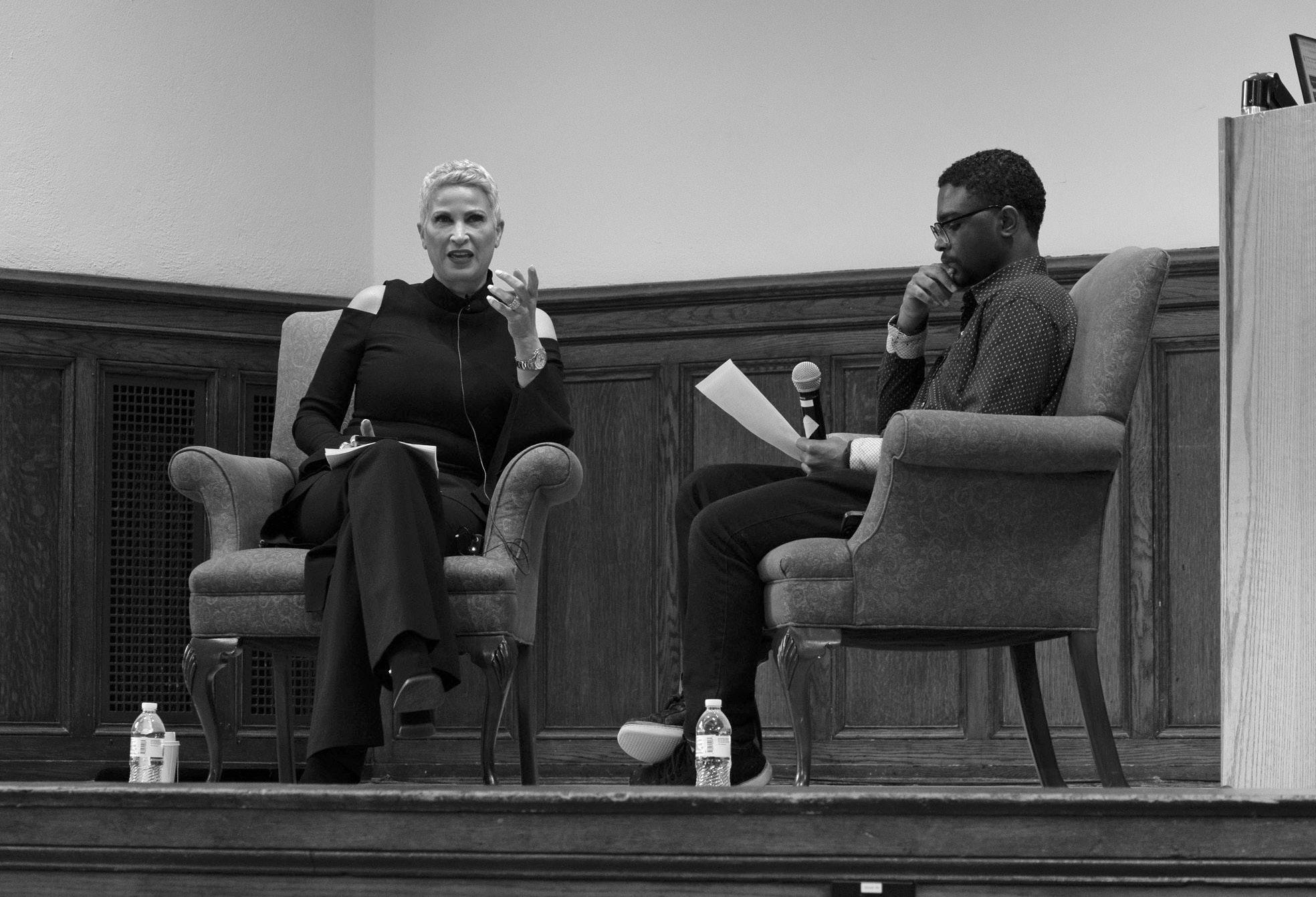
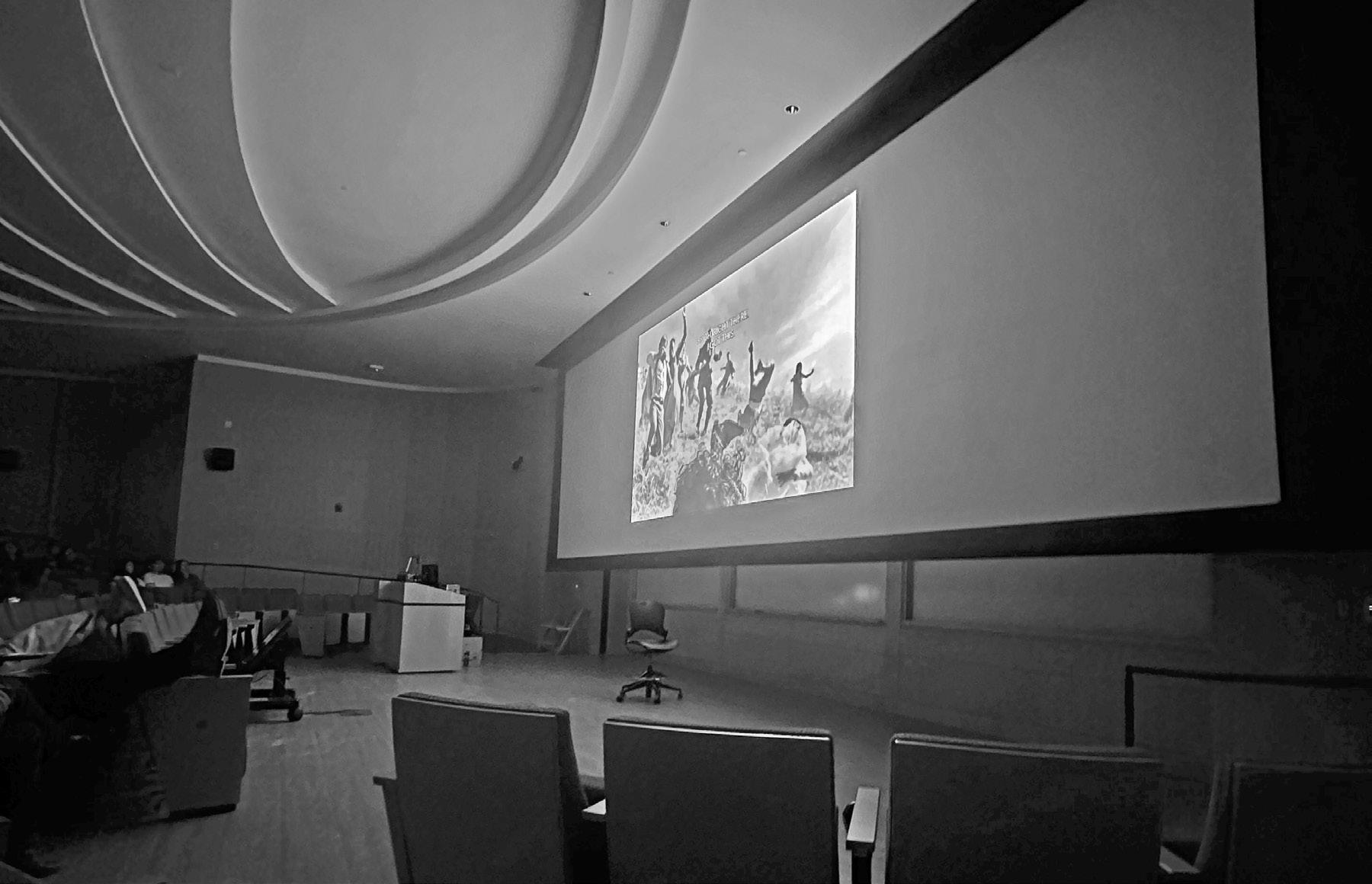
Attendees came from across the nation for the Black Solidarity Conference hosted at Yale over the weekend, which was centered on the theme “The Miseducation: Learning as a Tool for Social Justice.”
Guest speakers included historian and anti-racist activist Ibram X. Kendi, author Angie Thomas, businesswoman Michele Ghee and “Love Island USA” season six winner Serena Page. The speakers highlighted using their personal initiative to overcome career obstacles and stand out as Black professionals.
For Kyara Douglas, a junior from Johns Hopkins University, it can be easy to feel separated from the Black community while at college.
“But with this conference, we’re all allowed to come together and integrate with one another to learn how different Black student unions can coordinate across schools. From there, we will learn how to move in spaces both creatively and professionally,” Douglas said.
The Black Solidarity Conference is a studentrun annual conference held during Black History Month. It is the largest undergraduate conference held at Yale, according to organizers, inviting over 700 undergraduate students
of varying races, religions and ethnicities to discuss issues pertaining to the African diaspora and solutions that could be implemented on their campuses and in their own lives.
The programming lasted the full weekend and included sessions on entrepreneurship, entertainment and networking.
Mehari Milton, a junior from Brown University, said he was enticed to come to the conference after having been a part of the Black Student Union at Brown for the last three years and hearing about peers coming to the conference.
An economics major, he was most excited for the resume workshop and career fair on Friday.
“Now more than ever, it’s important to show solidarity. It just seems like it’s us against the world sometimes and it’s so amazing to see people from the Northeast and states outside of the Northeast today, especially from mostly PWIs,” Milton said, referring to predominantly white institutions. “It’s great to see so many smiles on Black faces.”
The conference kicked off with a concert at Toad’s Place featuring the rapper Zeddy Will on Thursday evening. The next morning, the Afro-American Cultural Center hosted recruiters from the consulting company McKinsey & Company and the wealth management firm Corient.
That same morning, Page spoke at a panel titled “We Write the Syllabus: Social Media” in SheffieldSterling-Strathcona Hall.
“I love speaking to college kids all around because it was such a big part of my life,” Page, a graduate
of the University of Texas at San Antonio, told the News when asked about her reason for being at the conference. “I also went to a PWI so I know how hard it is to find community and how important it is to find community at a school like this so I’m just here to chat and have fun with you guys.”
Jada Benefield, a senior from the University of Virginia, heard about the conference on Instagram and attended Page’s panel as “a big fan” of Love Island.
Ghee, the president of PlayersTV, spoke about entrepreneurship and initiative at 53 Wall Street.
“Everyone’s not the main dog and doesn’t have an innate hunger or is confident, but there are tools and resources for you to get them,” Ghee said about being a self-starter and working for entities Essence Communications and CNN. “You have to look at yourself, and wellness has to be your number one priority.” Madison Tetteh of the University of Southern California — the public relations chair of her school’s Black Student Alliance — came to the conference this year hoping to see what Black organizations at other schools were doing. Tetteh said she most enjoyed the “honesty” and “openness” in Ghee’s discussion of how to climb the professional ladder.
In an interview with the News, Ghee said the Black Solidarity Conference is important for students because it allows for them to learn lessons that could only be learned from experienced professionals and experts.
Ghee also said she admired the community-building and networking aspect of the conference. “Love and support, unfortunately, can be one of the biggest barriers as well,” she said. Madelynn Hu ’27, the president of the conference’s board, has been involved in the behind-the-scenes process of the conference since her first year at Yale. Planning the conference takes weeks of meeting with the board not just to consider logistics, but to represent diverse perspectives across the Black community, Hu wrote to the News.
“It has been crucial to my sense of belonging here,” Huff wrote. “Black Solidarity Conference planning has been one of the most impactful intellectual and extracurricular endeavors I’ve participated in.”
This year’s conference was the 29th Black Solidarity Conference.
Contact OLIVIA CYRUS at olivia.cyrus@yale.edu and ANAYAH ACCILIEN at anayah.accilien@yale.edu.
Yalies celebrate Puerto Rican culture at Super Bowl party
BY REMI CLARK-REDSTAR STAFF REPORTER
This Sunday, over 200 undergraduates crowded the Yale Science Building’s Marsh Lecture Hall for food, drinks and Bad Bunny at a Super Bowl LX watch party hosted by La Casa Cultural, the Yale College Council, La Unidad Latina and Despierta Boricua, a Puerto Rican student group.
From the game’s start at 6 p.m., many Yale students attended the “Benito Bowl” event — named after the Super Bowl halftime show performer. They enjoyed a “DeBÍ TiRAR MáS FOToS” albumthemed polaroid photobooth, the Super Bowl match between the Seattle Seahawks and the New England Patriots, and a bu et of local Puerto Rican food. Throughout the event, one could hear Bad Bunny’s most recent album being played.
“This was a great opportunity to unite not just all the Latinos but also share our culture,” Daniel Torres-Santana ’27, a co-head student coordinator of La Casa, told the News. “The beauty of the album is that it promotes family and Puerto Rico. We really wanted to be able to share that with all of Yale College.”
Despierta Boricua created the menu of Puerto Rican food to be served, contacting local Puerto Rican restaurants. La Casa made the Bad Bunny trivia Kahoot and, with the added support of La Unidad Latina, the “Benito Bowl” was created.
The restaurants El Coqui, Sabor Nuestro, Via Lactea and La
Cayeyana Donis Bakery catered the food, including empanadillas, gourmet ice cream, alcapurrias and Mallorca bread.
Leading up to the halftime show, any time Bad Bunny was shown on screen, the event’s attendees would cheer and scream. When the Puerto Rican singer began his performance, opening with “Tití Me Preguntó,” attendees and fans loosed a great cheer as they sang along with the pop-rap star.
“Being Puerto Rican, you exist in the periphery in American discourse and the United States broadly,” Héctor Miranda Plaza ’26 said in an interview. “Being represented on this level and having someone who has openly sung about our culture and the struggles we face as a nation — be it whether we live in Puerto Rico or in the diaspora — is something that is very important for us.”
When the Puerto Rican flag, the U.S. flag and the flags of South American nations were waved during “DeBÍ TiRAR MáS FOToS,” another great cheer erupted.
After the performance, a Bad Bunny trivia Kahoot was held, with limited edition sapo concho toad keychains, courtesy of La Casa, going to the top three finishers. La Unidad Latina also gave away 100 disposable cameras to the top 100.
A little over 200 people played.
Kingson Wills ’26, the YCC’s events director, helped bring together the event.
“I have a friend in all these organizations, and since Bad Bunny was performing the Super Bowl and with New Haven having a large
Puerto Rican population, I wanted to find some way to give back to these businesses, in honor of Bad Bunny,” Wills told the News. “So I reached out to all my friends in each organization, trying to see what they wanted to do with this watch party.”
Antonio Padilla ’27 contrasted the celebration of Puerto Ricans with the Gag Law, a 1948 Puerto Rican law that suppressed Puerto Rican revolutionaries by banning the Puerto Rican flag.
“Compare this to now where we wave it wherever we go and the number one music global artist is a Puerto Rican singing all in Spanish on the biggest American stage there is,” Padilla said.
“An event like this exemplifies what makes Latinos distinct and exceptional: We believe that joy and resistance can go hand in hand, and so we have celebrations like these to remind people of that in these tough moments,” he added.
Bad Bunny’s Super Bowl halftime performance was the first Super Bowl halftime show where the main performer sang almost entirely in Spanish, according to The New York Times.
Contact REMI CLARK-REDSTAR at remi.clark-redstar@yale.edu.
LOGAN DINKINS / STAFF PHOTOGRAPHER
This weekend’s Black Solidarity Conference — which featured speakers such as Ibram X. Kendi and “Love Island’s” Serena Page — included panels and networking events for students from across the country.
MARTIN PERALTA / STAFF PHOTOGRAPHER
La Casa Cultural, the Yale College Council, Despierta Boricua and La Unidad Latina hosted a “Benito Bowl” watch party for Super Bowl LX, providing food and drinks from local Puerto Rican restaurants.
LOGAN DINKINS / STAFF PHOTOGRAPHER
Local businesses announce special deals ahead of Valentine’s Day
BY NICOLAS CIMINIELLO STAFF REPORTER
This Valentine’s Day, local
o cials are hoping residents will make plans that include spending money at local businesses.
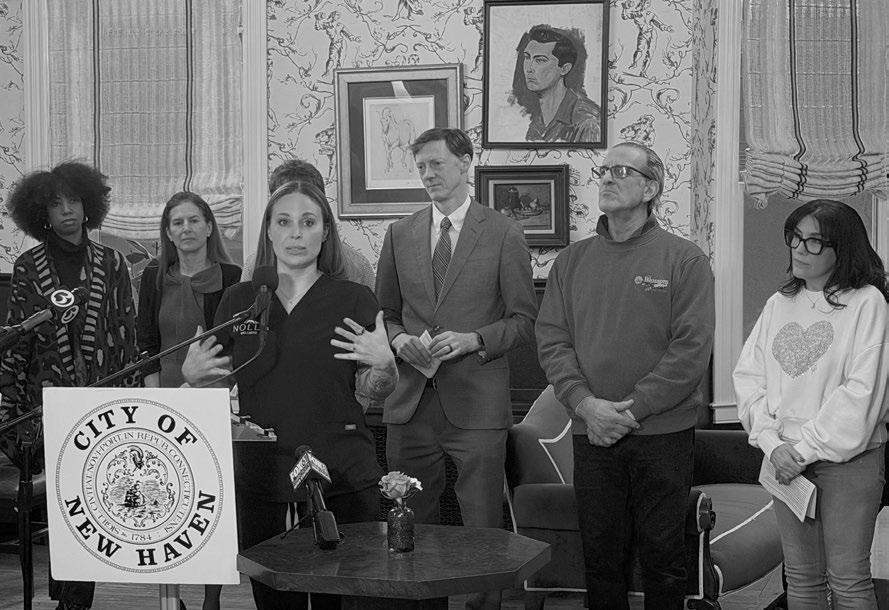
Gathering at the Graduate Hotel on Thursday, Mayor
Justin Elicker, Lt. Gov. Susan Bysiewicz, Ward 1 Alder Elias Theodore ’27 and small business owners promoted the city’s local stores and announced deals for Valentine’s Day customers. They encouraged consumers to support New Haven businesses and celebrate their love locally.
“Any experience you might be looking for is right here,” Shamain McAllister, the city’s director of arts, culture and tourism, said. “Whether you’re in love, whether you’re looking for love, or whether you just want to be with yourself.”
Elicker encouraged customers to prioritize experiences over “stuff,” and he offered free parking for the day.
To access the deal, drivers can enter code “LoveLocal” in the GoNewHaven parking app.
“You buy at a large, big box store, and most of that money goes out of the city,” Elicker said.
“You buy local, and that money overwhelmingly stays in the city, goes to employees that live in our city, goes to owners that
live in our city — and that money circulates more.”
Theodore encouraged residents to make an active choice to prioritize local shops over corporations.
“Any consumers, we have to remember that we have real power,” Theodore said. “We can choose to shop at online chains, big corporations, or we can choose to shop here, and that choice really matters. That choice is the di erence between jobs in New Haven and somewhere else.”
The event featured several small businesses, including newer businesses like the spa Nolla Wellness and the longstanding flower store The Blossom Shop.
Roland Olah and Angela Grogan, co-owners of the new modern European restaurant ROLi Cuisine & Libations, spoke about the importance of supporting small businesses.
“Supporting local isn’t just about where you’re spending your money. It’s about who you choose to believe in,” Grogan said. “When local systems work, small businesses don’t survive, they grow. ROLi exists because New Haven’s local support system worked.”
Grogan credited the Connecticut Small Business Development Center for help with
establishing the restaurant, which opened in 2025. ROLi was recently recognized as a semifinalist in the “Best New Restaurant” category in the prestigious James Beard culinary awards.
After the press conference, Elicker and Bysiewicz helped make the hotel’s specialty Valentine’s Day drinks alongside the staff, while Nolla Wellness offered mini-massages.
Members of the class of 2025 found their Yale email accounts seemingly deleted on Thursday morning.
The recent graduates temporarily lost access to their Yale email accounts and related files four months ahead of schedule due to an Information Technology Services outage that lasted until 11:20 a.m.
One alumnus, Arden Parrish ’25, told the News that he temporarily lost access to significant amounts of data, ranging from photos with friends to his thesis and medical school application essays.
Parrish said that he first noticed the outage around 9 a.m., when he woke up and tried to check his email but was faced with a prompt asking him to re-enter his password.
“I thought that was strange
because I had never seen that before,” Parrish said in a phone interview. “I went to sign back in, and instead of seeing the Yale login page, I saw a message that said this account was recently deleted, and I freaked out.”
The outage was resolved by 11:20 a.m., per a status update from Yale ITS. According to ITS, the outage affected “EliApps Google Apps for Education” for “users who have left the University but are still within their grace period.”
By Thursday evening, a University spokesperson did not respond to the News’ request for comment, and, according to Parrish, the University did not address the incident with those whose accounts were temporarily affected.
“I’m in med school, and I know that I’m going to need to do a data transfer at some point, but I’ve been so busy, I’ve just
been procrastinating because I knew I had a year,” Parrish said. “So I was freaking out because I counted on having access to that data, and I didn’t even know how to catalog what I lost, let alone how to function without it.” Parrish also said that he had accounts linked to his Yale email account that he had not yet transferred, including some for his current medical school program.
According to a Yale Student Technology Collaborative webpage, students who graduated Yale College and Yale Graduate School of Arts and Sciences in May 2025 have until June 2026 to “migrate emails, calendar, files.” Yale students’ accounts are deactivated 365 days after graduation, according to an ITS webpage. Faculty and sta are given 45 days after their last active day.
Contact JERRY GAO at jerry.gao.jg2988@yale.edu.
Fewer than half of registrants race in frigid Run for Refugees
BY TAJRIAN KHAN CONTRIBUTING REPORTER
On a morning with frigid winds that made temperatures feel negative, more than 1,000 people came together Sunday morning to run the annual Run for Refugees, which is hosted by the local agency Integrated Refugee & Immigrant Services, better known as IRIS.
Though more than 2,500 people originally signed up for IRIS’ 5K race, more than half stayed home due to the weather, with some joining the race virtually. Connecticut is currently experiencing its longest stretch of severe cold weather protocol since 2015, and it is currently expected to last until noon on Tuesday.
The Run for Refugees has been one of New Haven’s major annual running events since IRIS launched the annual fundraiser in 2006. This year, IRIS organized the race with the support of 23 local sponsors, including Yale New Haven Health, Havenly and Community Soup Kitchen. Despite having fewer registrations compared to previous years, IRIS surpassed its fundraising goal of $100,000.
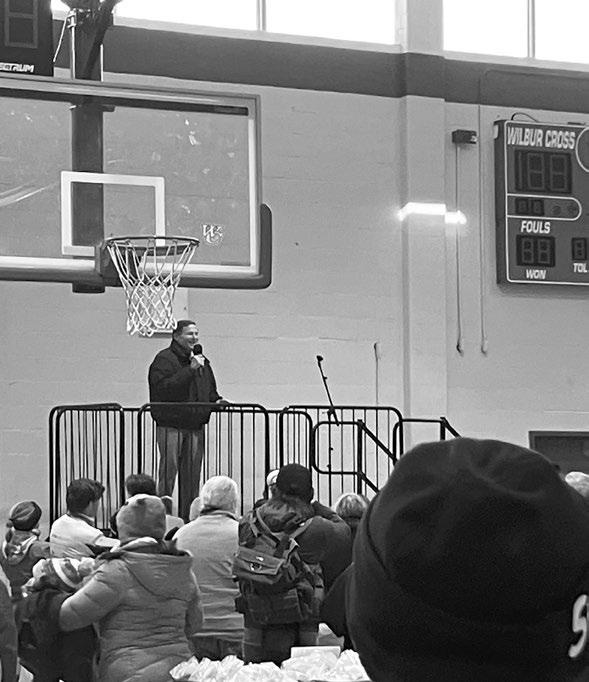
Before the race kicked off, Maggie Mitchell Salem, the executive director of IRIS, welcomed participants inside the gymnasium at East Rock’s Wilbur Cross High School.
“Refugees and immigrants across the country are having their protections ripped away, and it
means so very much to the people we serve that you showed up this morning,” she said to the crowd.
“This fight is long and hard, but we will work hard to keep our people safe.”
The welcome speeches, which are typically held outside as participants gather behind the starting line, took place inside the school this year due to the cold weather.
Sen. Richard Blumenthal LAW ’73 also addressed the crowd, asking, “Are you ready to fight for America, our nation of immigrants?”
He paused to take a photo of the large crowd, noting that he would take the photo with him to Washington, D.C.
“With what’s happening in Minneapolis and all across this country — ICE agents literally kicking down doors, brutalizing Americans and murdering them — we need to shut down DHS if necessary,” Blumenthal added, referring to the Department of Homeland Security’s deployment of thousands of federal immigration agents in Minnesota since December.
Both Blumenthal and William Tong, Connecticut’s attorney general, urged participants to remember Alex Pretti and Renée Good — the two American citizens who were recently killed by federal immigration agents in Minneapolis — during the race.
“It’s brutally cold outside, but it’s much more brutal for immigrants, refugees and their fami -
lies across the state and country,” Tong said. “While there is much to fear, I am not afraid, because IRIS is here, and the senator and mayor are here, and nonprofits across the country are working hard to protect us and keep us safe.”
Mayor Justin Elicker spoke to the crowd before taking part in the race. He crossed the finish line after 20 minutes and 39 seconds, placing 25th overall and 1st in his age group of men aged 50 to 54.
“We are here to make a statement that ICE has no business in our community,” Elicker said, referring to the U.S. Immigration and Customs Enforcement agency. “We will stand up for our immigrants.”
After the speeches, participants huddled behind the starting line on Orange Street. Runners of all ages came prepared with hats, scarves, gloves, glasses and even ski masks.
Max Watzky ’27 said he was apprehensive about running in frigid temperatures, but he lined up outside Wilbur Cross for his second Run for Refugees anyway.
“I’ve been feeling a lot more fear for my friends and neighbors who are immigrants or international students,” he said.
“It’s been distressing seeing so much violence against innocent protestors who are just trying to advocate for their friends and neighbors.”
Watzky also expressed admiration for his hundreds of fellow participants who were “undeterred by the cold and came out in support
CIMINIELLO / CONTRIBUTING PHOTOGRAPHER
Mayor Justin Elicker announced that the city will provide free parking, while several small business owners promoted their special promotions at a press conference on Thursday.
JERRY GAO / CONTRIBUTING PHOTOGRAPHER
“These
Bulldogs deliver strong performances in Boston to end regular season
SWIM & DIVE
BY JUSTIN LEAHY CONTRIBUTING REPORTER
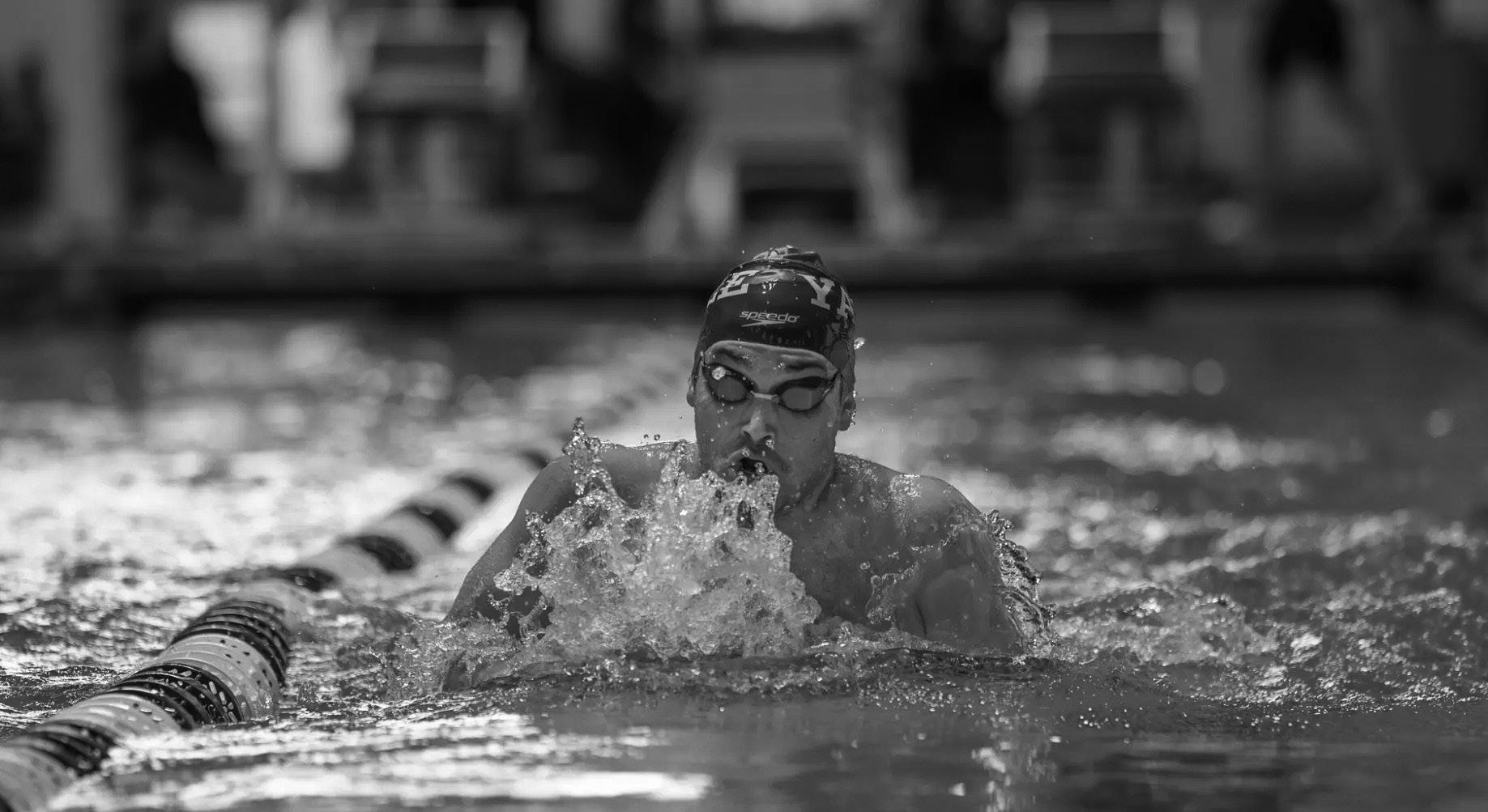
The Yale swim and dive teams finished off their regular season with a strong performance at Boston University’s FitRec Competition Pool. The Bulldogs pulled off multiple event victories and gained postseasonstyle experience. Only a limited roster of swimmers and divers traveled to Boston for the meet. Most of the Elis remained in New Haven to continue their preparations for the Ivy League Championships later this month. The Bulldogs who traveled to Boston for the Winter Invite were swimmers who didn’t make the roster for the Ivy League Championship meet.
The lineup was smaller than usual, but Yale still delivered many standout performances across both the men’s and women’s squads. There were multiple individual victories and several dominant team relay finishes that highlighted the Bulldog’s performance.
“I feel that a huge strength of this team is how connected we are,” Aedan Conners ’29 wrote to the News. “Even with this smaller lineup, we still brought the same energy and support for every race. We were still the loudest on deck for sure.”
The Winter Invite came after a long, demanding stretch of lateseason Ivy League competition. The Bulldogs had dominant wins earlier in January, but suffered losses last weekend to Harvard and Princeton. At the meet over the weekend, the
Bulldogs’ focus was especially on race execution, experience and long-term development. For the women, Lillian Teel ’28 and Ellie Horning ’29 led the Bulldogs with several top-three finishes.
Teel touched out first in a middistance event, the 400-yard individual medley with a time of 4:30.90. Later, she added a third-place finish in the 200-yard individual medley and then another in the 200-yard breaststroke. Soon after, Horning delivered a strong performance, with a victory in the 200-yard backstroke with a time of 2:00.74. She then also placed second in the 100-yard backstroke with a time of 56.08 and finished third in the 100-yard butterfly with a time of 56.25. The women continued their domination at the meet in the relay events, where they showed off formidable teamwork. Horning, along with Lauren Putnam ’29, Michelle Chen ’27 and Violet DorseyReyes ’28, won the 400-yard freestyle relay with a time of 3:33.24.
Later in the meet, a similar quartet, this time composed of Chen, Teel, Horning and Putnam, won the 200-yard medley relay with a time of 1:48.46. To close o the weekend, a group of Horning, Teel, Dorsey-Reyes and Putnam claimed first in the 400-yard medley relay in 3:53.94.
Individually, Putnam also contributed more podium finishes, taking second place in the longdistance 500-yard freestyle (5:00.73) and third in the 200-yard freestyle (1:53.75). On the men’s side, the Bulldogs were similarly dominant. Firstyear Henry Webb ’29 turned in a breakout performance for the team. Webb won the 200-yard individual
medley, with a time of 1:48.04.
Then, he followed it up with another victory, touching out in the 200yard freestyle with a time of 1:37.91. He also took second in the 100-yard freestyle with a time of 45.32.
Soon after, Conners added a win to the team’s totals with his own in the 200-yard backstroke. He finished in a time of 1:47.84.
In the breaststroke, Jack Saber ’26 dominated the events, winning both the 100-yard and 200yard relays in times of 54.79 and 1:59.66, respectively.
The men also had similar strong performances in the relays, particularly the medley. Conners, Saber, Webb and Christian Lee ’27 won the 400-yard medley relay in 3:20.95. A similar quartet, Conners, Saber, Webb and Finn Henry ’26, placed second in the 200-yard medley relay.
The Winter Invite was a strong race experience, especially for younger members in the program.
“As a first year, any race experience is great,” Conners wrote to the News. “The more reps of getting on the block and going after it helps me progress as a competitor and contributor on this team.”
With these swimmers’ seasons e ectively over, they could have turned to disappointment and regret about what could’ve been, or disappointment about not being able to race for their team in the playo s. Instead, after leaving the meet, many swimmers felt very optimistic about their future roles in the program.
“These results make me super optimistic for next season,” Conners wrote to the News. “This season was a huge turning point for my
swimming career, and making the Ivy team is the next thing on my list.”
Conners also mentioned how this weekend’s meet showed the program’s depth and competitiveness, especially on its reserves.
“These results show how strong this team is,” Conners wrote to the News. “Every single person on this team can step up and contribute no matter the time or place. That same fight and attitude isn’t going anywhere next season.”
The women will race at the Ivy League Championships later this month, from Feb. 18 to 21 at Brown, while the men will compete from Feb. 25 to 28 at Princeton.
Contact JUSTIN LEAHY at justin.leahy@yale.edu.
After promising start, Yale loses to Brown for second time this season
WOMEN'S BASKETBALL
BY AZARA MASON STAFF REPORTER
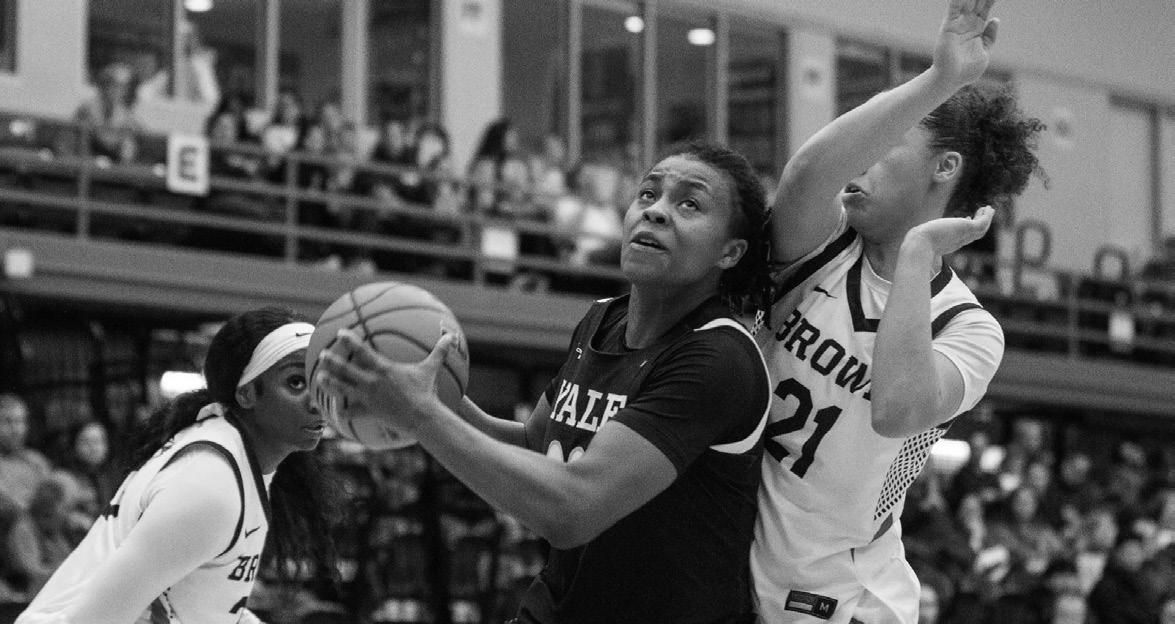
The Yale women’s basketball team (5–16, 1–7 Ivy) faced Brown (13–7, 5–3 Ivy) on Saturday afternoon in Providence. Despite an early scoring surge from the Bulldogs, Brown ultimately prevailed.
WOMEN’S SQUASH
BY RACHEL
MAK STAFF REPORTER
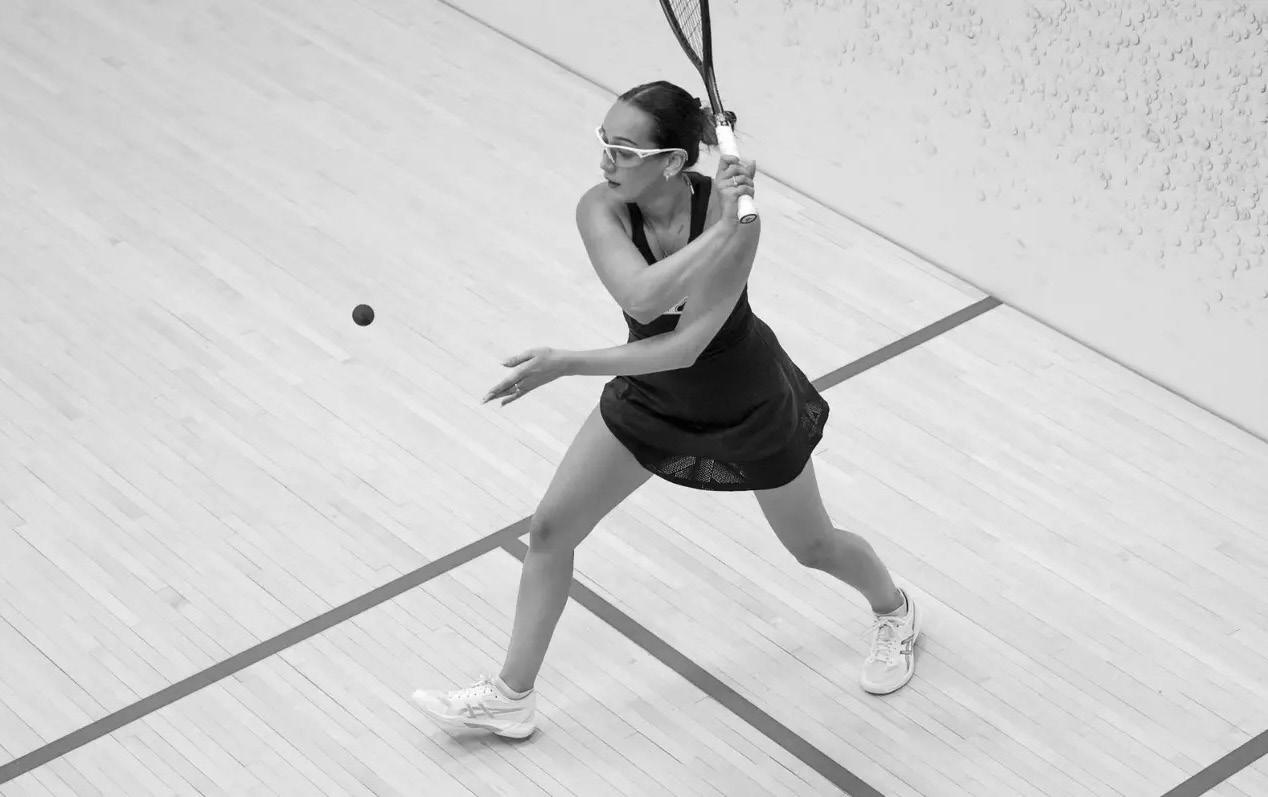
The No. 9 Yale women’s squash team (2–5, 1–3 Ivy) fell to No. 3 Stanford (6–2, 0–0 MASC) 5-4 on Saturday.
In the matchup, Heng Wai Wong ’28, who plays in the first position for the Bulldogs, defeated Stanford’s Amelie Haworth in straight sets, 12-10, 11-4, 12-10. Spring Ma ’28, who plays in the second position, defeated her opponent 3-1 in a series of tight games. Building off of that intensity, Meha Shah ’28 in the third position and Eedha Mehta ’29 in the fifth position defeated their opponents after grueling 3-2 battles. Despite losing the first two games, Shah rallied to win the next three. Her fourth and fifth games were hardfought victories, going beyond the usual 11-point cap. Mehta and her Stanford opponent traded games throughout their match, with
Kiley Capstraw ’26 opened the scoring with a 19-foot jumper to put Yale up 2-0. On the following possession, Marisa Chapman ’28 continued the defensive intensity she has shown in recent games, tipping the ball to set up a steal by Ciniya Moore ’28. That takeaway led to an inside basket by Mary Meng ’27 over two defenders, extending Yale’s lead to 4-0. Moments later, Meng intercepted another Brown pass and pushed the tempo in transition, finishing the sequence with an and-one by Moore.
Moore, who is averaging 16.6 points per game — the third-best in the Ivy League — has consistently gotten to the line this season, where she shoots 85.7 percent, second best in the conference. Her free throw put the Bulldogs ahead 7-0.
On the next possession, Chapman applied pressure immediately, picking up her girl well before half court and continuing to clamp down on Brown’s ballhandlers. Her defensive effort helped set up a double team with Meng, who denied a shot attempt at the rim with a block.
Moore then attacked the left side of the lane through tra c, laying it up to give Yale a 9-0 lead, which prompted a Brown timeout.
Coming out of the break, the Bulldogs maintained their defensive intensity, forcing another turnover that led to a pull-up jumper from Chapman to extend the lead to 11-0.
“I think we played really good defense and were running hard in transition to help us get out to the early lead,” Capstraw said.
A basket from Luisa Vydrova ’27 just outside the block pushed Yale’s advantage to 13 with 4:30 remaining in the first quarter, capping the opening run. Brown responded with 10 points over the next few minutes, but Yale still held a lead at the end of the quarter, up 14-10.
The offensive momentum that Brown was able to gain to close out the first quarter extended into the following quarter, where the Bears extended their run to 22-1 until Moore hit free throws to end a Bulldog scoring drought in the second quarter. The Bulldogs found themselves trailing 16-22.
On the final possession of the half, Chapman drove through the lane and finished at the rim with just seconds remaining. The basket trimmed Yale’s deficit to three, and the Bulldogs headed into halftime trailing 21-24.
At that point, the Elis were in a familiar spot. In the teams’ previous matchup on Jan. 5, the Bulldogs and Bears were tied up at 41-41 at halftime.
On Saturday afternoon, the Bulldogs came out of the locker room hot with a 6-0 run to start the sec-
ond half which gave them a 27-24 lead. But the Bears, once again, roared back with their own 8-0 run. The Bulldogs trailed 33-39 at the end of the third quarter.
Less than a minute into the fourth quarter, Chapman — who had applied consistent defensive pressure throughout the game — picked up her fourth personal foul, before heading to the bench due to her foul trouble. A few minutes later, Vydrova made her presence felt on the defensive end, tipping a shot in the paint and securing the rebound. Vydrova then pushed the ball ahead to Capstraw, trailed the play and received the return pass at the top of the key, where she swished a three-pointer to cut Brown’s lead to four, 46-42. The Bears responded with a decisive 12-0 run, putting the game out of reach in the final minutes. Yale ultimately fell 66-52.
The Bulldogs will host rival Harvard (13–8, 6–2) on Saturday at 6 p.m. in the John Lee Amphitheater.
Contact AZARA MASON at azara.mason@yale.edu.
Top three Bulldogs win matches, but team falls short against Stanford
Mehta coming out on top in the fifth, 11-8. Even though several Yalies were able to come up with wins, Stanford proved a formidable opponent.
Elise Kang ’29 lost 3-1 to her Stanford opponent in the fourth position. Alyssa Ho ’29 and Swetha Sivakumar ’29 lost 3-0 in the sixth and ninth positions, respectively. Whitney Taylor ’26 lost to Maeve Baker in the seventh position and Layla Johnson ’27 lost to Valerie Huang in the eighth position in four games. Last year, the Bulldogs lost to the Cardinal 7-2. This year the team improved on that score but remained one match short of a win.
Taylor is the only returning player who defeated her Stanford opponent last year. Both the women’s and men’s squads will take on Trinity on Wednesday in the Brady Squash Center.
Contact RACHEL MAK at rachel.mak@yale.edu.
YALE ATHLETICS
The women’s basketball team opened with a 13-0 run but ultimately fell to Brown after the Bears’ late-game scoring surge.
YALE ATHLETICS
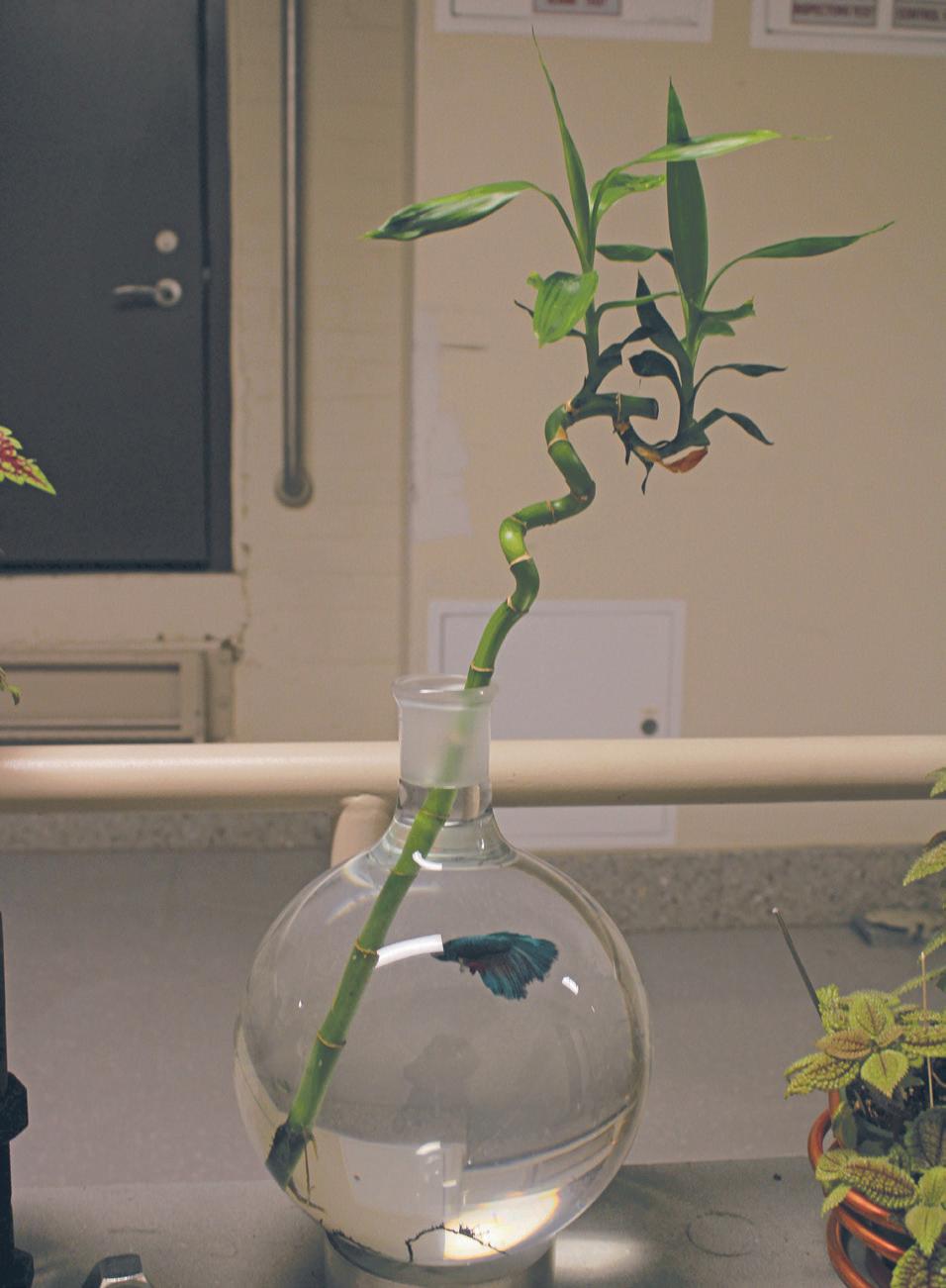
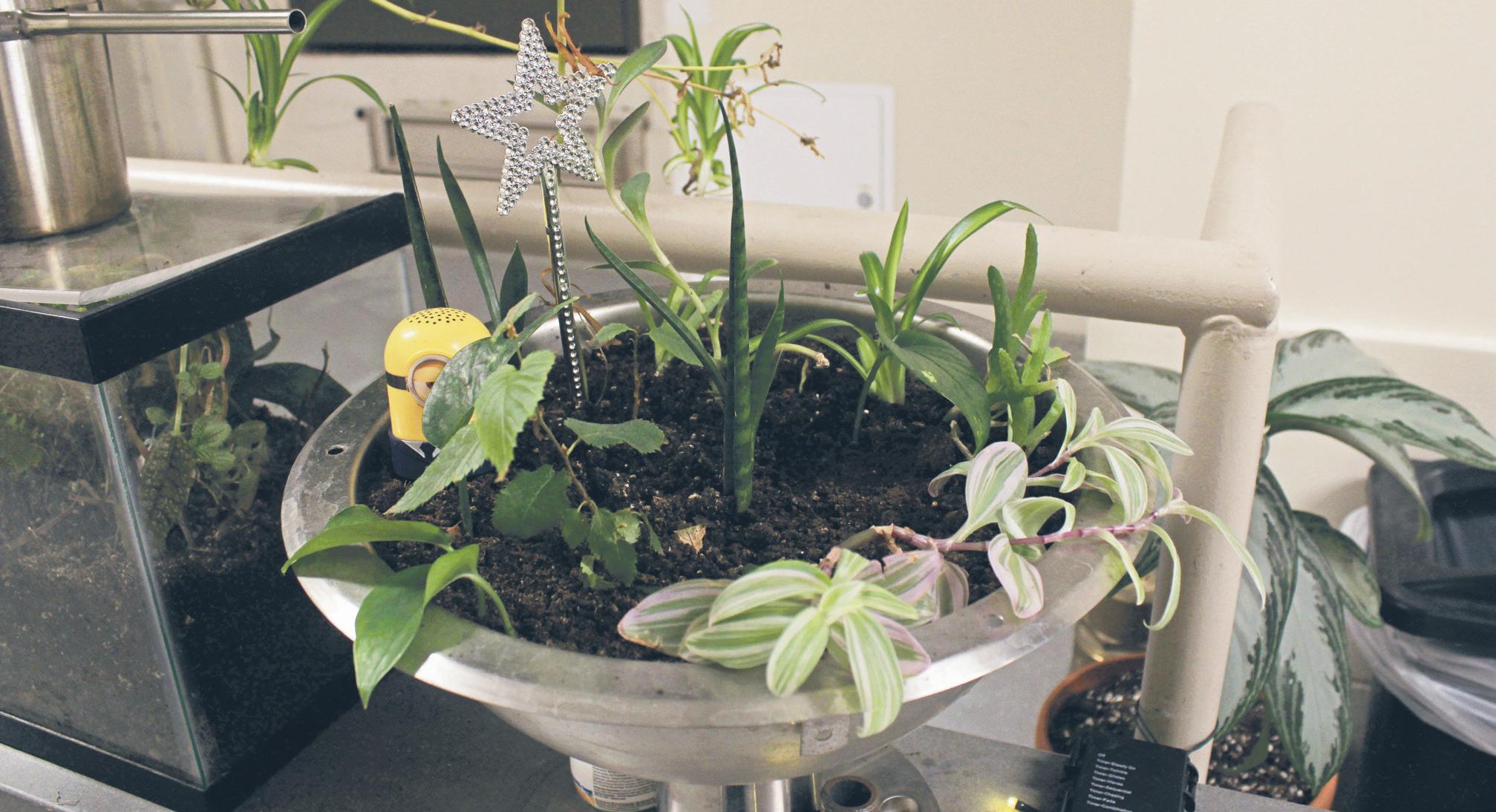
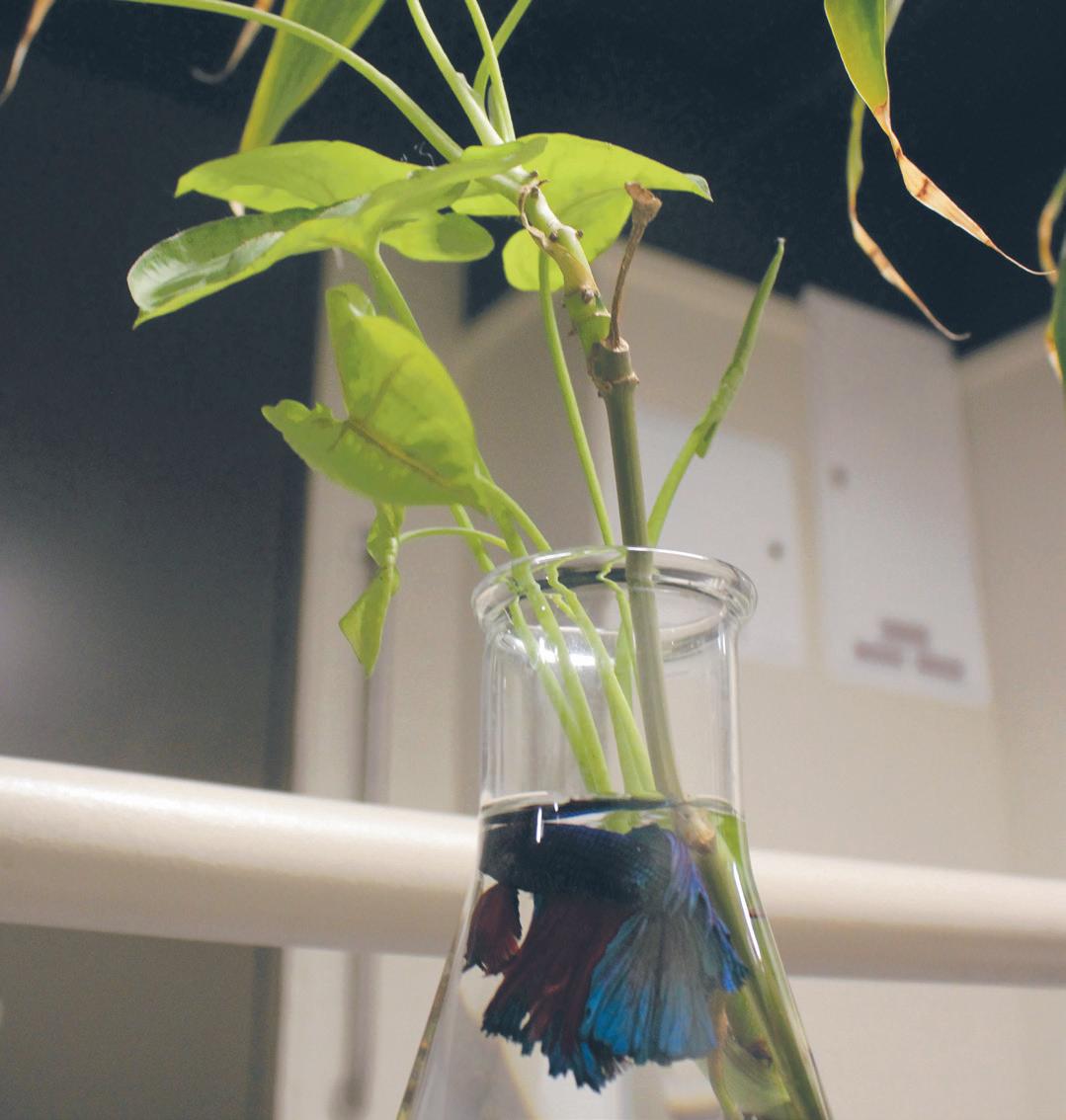
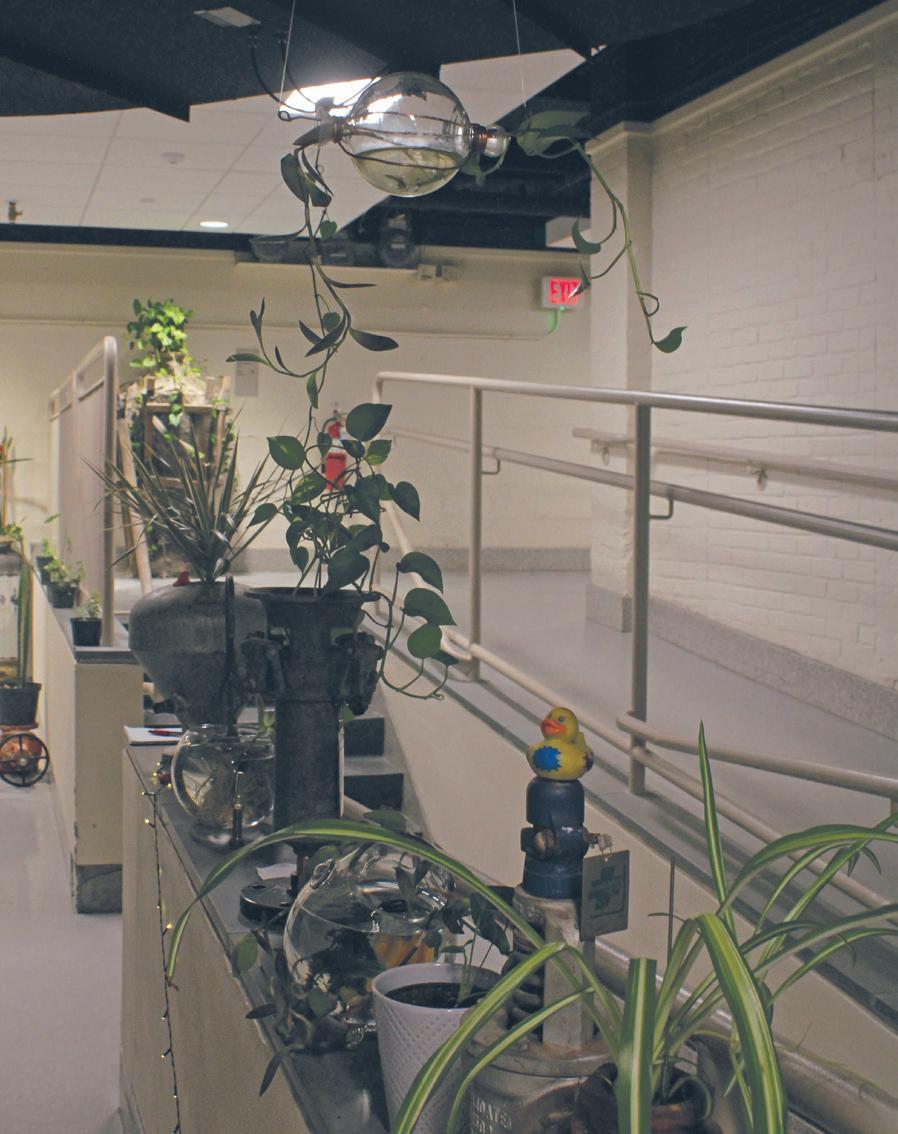
THROUGH THE LENS
THE PLANTS OF STERLING CHEMISTRY LAB
Photographs by Ximena Solorzano Head Photography Editor
WOMEN’SHOCKEY
BY AUDREY KIM STAFF REPORTER
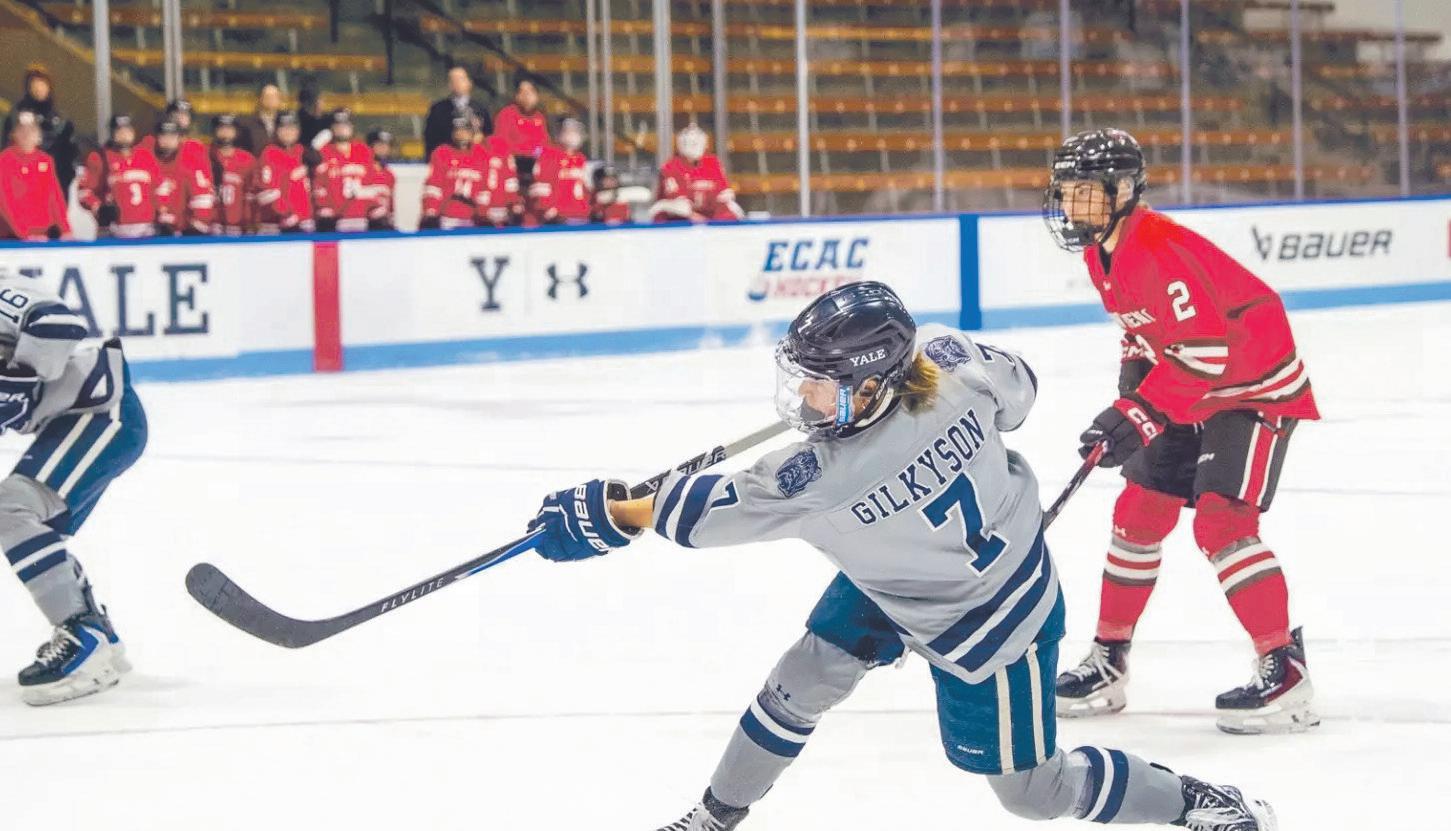
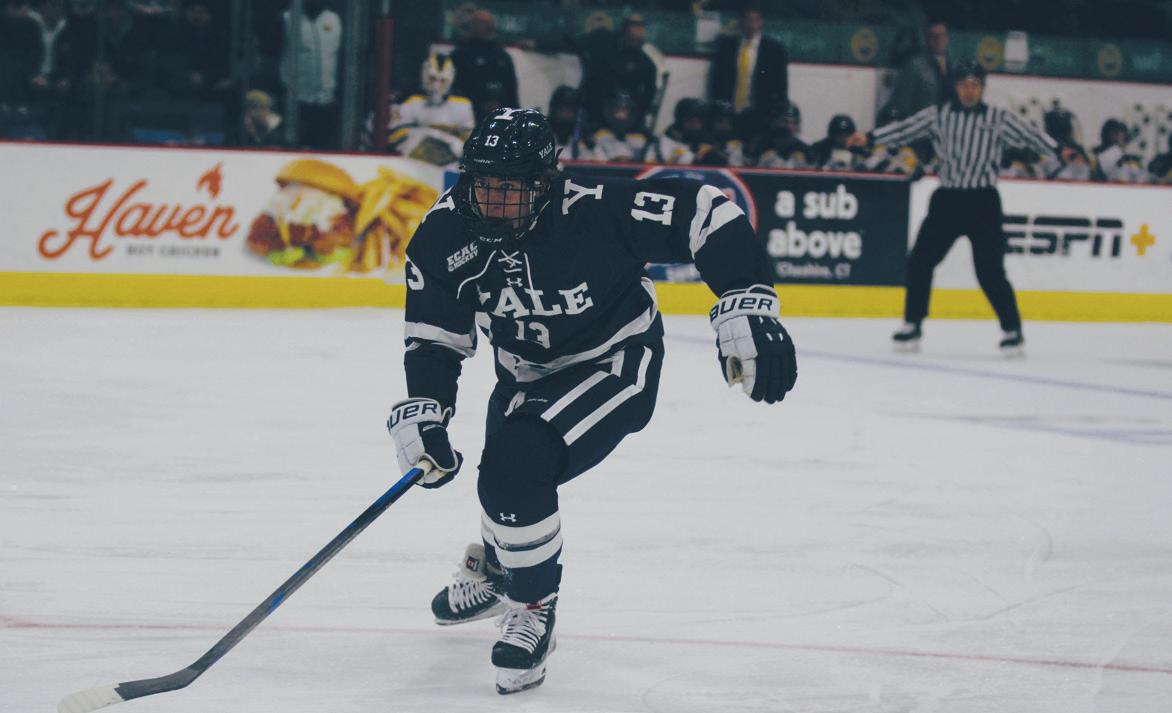
The No. 9 ranked Yale Bulldogs (21–7, 15–5 ECAC) took down the No. 11 Clarkson Golden Knights (19–10–3, 12–6–2 ECAC) and the St. Lawrence Saints (11–18–3, 8–11–1 ECAC) during two high stakes conference matchups.
Yale now sits in second place in the ECAC conference, trailing No. 7 Princeton (20–7, 15–5 ECAC) by two points and leading No. 8 Quinnipiac (22–7–3, 12–6–2 ECAC) by two. While Yale and Princeton have the same conference record, the Tigers rank ahead due to regulation wins being worth more points than overtime wins.
The Elis will soon go on the road to play both of these teams — a pair of games that will determine
MEN'SBASKETBALL
BY WALTER ROYAL AND BRODY GILKISON STAFF REPORTERS
Despite hot-and-cold shooting, the Yale men’s basketball team (17–4, 6–2) defended home court on Friday, beating the Brown Bears (7–14, 1–7) in a back-and-forth thriller.
Brown, which entered the night on a four-game losing streak, held a lead as late as the 5:39 mark in the second half. Powered by a 50-point second half, the Ivy League leading Bulldogs pulled out a victory in dramatic fashion in front of a raucous home crowd.
the final conference rankings for the season.
Yale’s play has been stellar over the past few months, and the team currently holds a win streak of 13 while also remaining undefeated in 2026.
The Friday night game against Clarkson was expected to be competitive because both teams are ranked in the nation’s top 15.
The Bulldogs lost to the Golden Knights when the two met at the beginning of this season, but the Elis were able to emerge with a 5-4 victory this time around.
Yale was ready to play right from the opening puck drop and dominated the first period by outscoring Clarkson 4-1. The Bulldogs continued to assert themselves in the second period, allowing zero goals from the Golden Knights and finding the back of the goal once more to go up 5-1.
However, Clarkson refused to go away quietly, and they scored three unanswered goals in the third. Despite their late push, they were unable to defeat the Bulldogs, who came away with a 5-4 win.
The following afternoon, the Bulldogs took the ice against St. Lawrence, while also celebrating Yale’s eight seniors. Saturday’s game marked the last regularseason game at Ingalls Rink for the season.
The Bulldogs commemorated their senior day with a runaway win over the Saints, finishing the game up 4-1. The Elis scored one goal in both the first and second periods, keeping St. Lawrence off the board until the third.
Senior forward Jordan Ray ’26 scored the final goal of the game, marking her 40th point of the season, just shy of her career high 42-point season in
2022-23. Carina DiAntonio ’26 also netted a goal on her senior day during the second period. DiAntonio leads the ECAC in in-conference goals. Yale will travel to Princeton on Friday to face the No. 7 Princeton Tigers. Contact
“Really tough, gritty win by the team tonight. By all intents and purposes, Brown had us down and out a few times in the game. They made some big shots, and we matched them,” head coach James Jones said in an interview. After a pair of slow starts against Dartmouth (10–11, 4–4) and Harvard (13–9, 6–2) last weekend, the Bulldogs raced out to a 14-2 lead over the Bears before the first media timeout. However, after hitting all four of their first four three-point attempts, Yale began to cool o . Over the course of the next nine minutes, Brown cut the deficit to three. Two minutes later,
Brown’s Luke Paragon tied the teams at 29 apiece.
The Bears’ assault continued, and by the half, Brown led 31-36. Jones lamented the offensive burnout, while simultaneously complimenting the Bears’ e ort. “I thought that we got a little complacent. I thought that we thought it was going to be easy, and it’s never going to be easy,” Jones said. “They’re well-coached, the kids are going to play hard, and anytime that you play hard, you give yourself an opportunity. And not that we didn’t play hard, we just didn’t play smart. We missed assignments, which led to opportunities for them.”
After the first few minutes of the first half, the situation became even more dire for the Bulldogs. Malcolm Wrisby-Jefferson drew a foul on Samson Aletan ’26 — his third of the night — sending Aletan to the bench momentarily. After Brown’s starting shooting guard nailed both freethrows, Yale trailed by 10, 34-44.
One Bulldog, however, was not fazed.
In tight spots, Yale has routinely drawn up plays for Riley Fox ’28. The sophomore has hit 40 percent of his three-point attempts this season.
Flying around the arc for a dribble hando , Fox lost his defender with a smooth pump-fake, then stepped up to drill a three.
“I was feeling it, so I knew if I had an inch of space, it was going up,” Fox said with a laugh after the game.
Playing the hot hand, the Bulldogs funneled the ball to Fox on the
next possession. Unbothered by a good closeout from his defender, Fox put up another three, and the deficit dropped to four.
Brown mustered a quality response, keeping its lead for the next few minutes. With a little over nine minutes to go, Jordan Brathwaite ’28 got a possession and rose to the moment, making a step-back three to knot the game at 57.
While the Bears quickly struck back to regain their lead, their momentum was gone. The 1,100-strong John J. Lee Amphitheater crowd was the loudest they had been all night.
When Yale took the lead on a Nick Townsend ’26 coast-to-coast layup with 5:06 remaining, Brown was out of answers. The Bulldogs ended the game on a 22-5 run, holding a 12-point lead when the buzzer sounded.
Fox led Yale in scoring with 23 points, with his key back-to-back threes contributing to the Elis’ hot three-point shooting stretch in the second half. Townsend wasn’t far behind with 21 points of his own. The captain also grabbed 13 rebounds and dished out six assists.
Jones highlighted a standout on the other side of the ball in his postgame interview.
“Casey Simmons did a great job. In the last six or seven ball games, we’ve kept the leading scorer on the other team under their average. And tonight against Landon Lewis, we kept him under his average. So we’ve
done a good job of doing that,” Jones said.
The Bulldogs will next trek down to Washington for a rare February non-conference tilt to take on Howard (15–9, 8–3 MEAC) on Monday night. The Bison are coming into the matchup with a three-game winning streak, a streak that has had an average margin of victory of 25 points. Howard’s main scoring attack comes from Bryce Harris and Cedric Taylor III, who both average right around 17 points per game. After the duo, the average scoring drops o quite a bit, with a handful of role players contributing solid minutes. If the Yale coaching sta can find a way to shut down the two high-octane guards, the Bulldogs’ defense shouldn’t have too much trouble limiting the rest of the squad. On the defensive side of the ball, Howard has been solid all season long. However, this may be a game where big men Townsend and Aletan are able to assert their presence. The Bison are not too gifted in the size department, which may allow the bigger Bulldogs to flex their muscle down low and impose their will.
Tipo is set for 7 p.m. at Burr Gymnasium, and the game will be streamed on ESPN+.
Contact WALTER ROYAL at walter.royal@yale.edu and BRODY GILKISON at brody.gilkison@yale.edu.
Bulldogs fall to Princeton and Quinnipiac on the road
MEN’SHOCKEY
BY LIZA KAUFMAN STAFF REPORTER
HAMDEN — From a whiteout student section in “Beat Yale” shirts to fans dressed as bananas, chickens and Teletubbies, a packed M&T Bank Arena was a relentless backdrop Saturday night when Yale men’s hockey (7–17–0, 6–10–0 ECAC) closed out a di cult road weekend against No. 5 Quinnipiac (22–5–3, 13–2–1 ECAC).
The Bulldogs fell 0-8 to the Bobcats, following a 1-3 loss at Princeton (14–9–1, 10–6–0 ECAC) on Friday night.
With a rowdy student section and local families staying loud for the War on Whitney, there was constant noise after every whistle. The rink filled with chants rolling down from the stands,
creating an atmosphere that rarely let Yale settle.
The Bulldog defense kept the Bobcats scoreless for most of the first period. However, at 14:48, Quinnipiac’s Ethan Wyttenbach netted the first goal of the game. Two minutes later, Yale nearly got on the board when Elliott Groenewold and Graham Sward were sent to the box for hooking and tripping. With a fiveon-three man advantage, the Bulldogs looked to equalize but could not beat Bobcats goalie Dylan Silverstein. Quinnipiac sustained pressure and extended its lead in the second frame, picking up four more goals. The Bobcats sealed the victory with a three-goal third period, continuing to generate chances through waves of extended offensive-zone pressure. Wyttenbach powered the Bobcats’ o ense with a hat trick, including the game-winning goal.
Despite letting up two power-play goals early on in the second frame, Yale’s penalty kill unit was perfect for the rest of the night.
The weekend began Friday night in Princeton, where Yale faced a quieter test at Hobey Baker Rink. Following a scoreless first period, the Tigers came out hot in the second frame, opening scoring one minute into the period. At 8:47, Yale equalized the score on a power play goal. Hughie Hooker ’28 sent the puck to David Chen ’26, who then fed it to Zach Wagnon ’28 for a one-timer. The Bulldogs kept pace with the Tigers through two periods, but Princeton eventually pulled ahead. A Princeton empty-netter with eight seconds remaining closed out the game.
The Bulldogs will return to home ice next weekend against Ivy rivals Dartmouth and Harvard. They will face the Big Green on Friday night and the Crimson Saturday night
is at 7 p.m. both nights.
Contact LIZA KAUFMAN at liza.kaufman@yale.edu.
YALE ATHLETICS
Yale took down conference opponents Clarkson and St. Lawrence to close out the last regular season games at Ingalls Rink with wins.
on Valentine’s Day at The Whale. Puck drop
LIZA KAUFMAN / PHOTOGRAPHY EDITOR
Powered by 23 points from Riley Fox o the bench, the Bulldogs beat Brown 81-69.
LIZA KAUFMAN / PHOTOGRAPHY EDITOR With the regular season winding down, the Elis traveled to Princeton and Quinnipiac over the weekend for a slate of challenging road matchups.