

BY NORA MOSES STAFF REPORTER
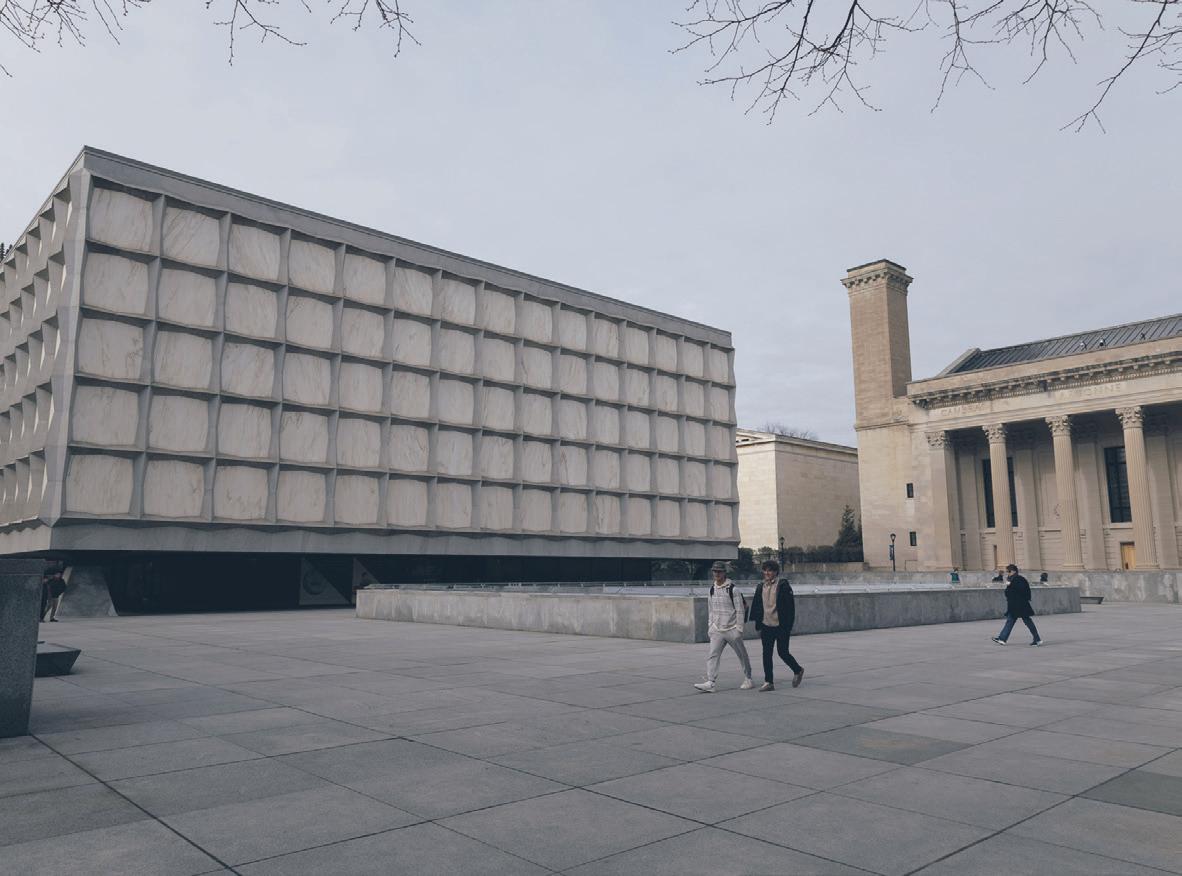
Two years ago, 44 Yale students were arrested for trespassing on Beinecke Plaza.
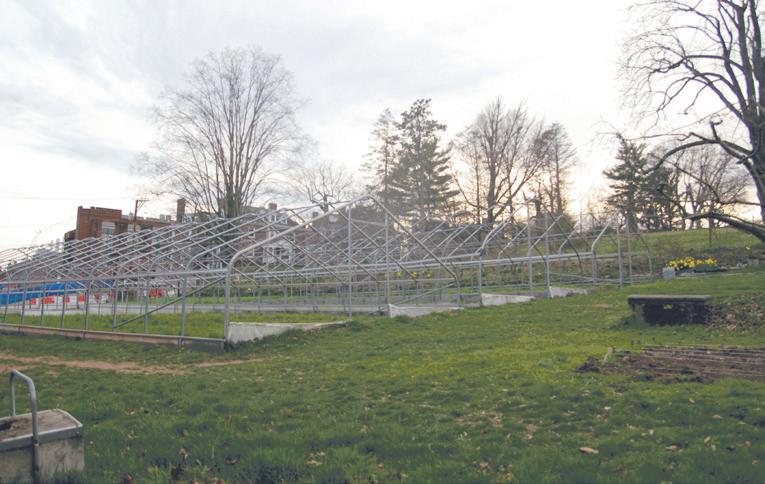
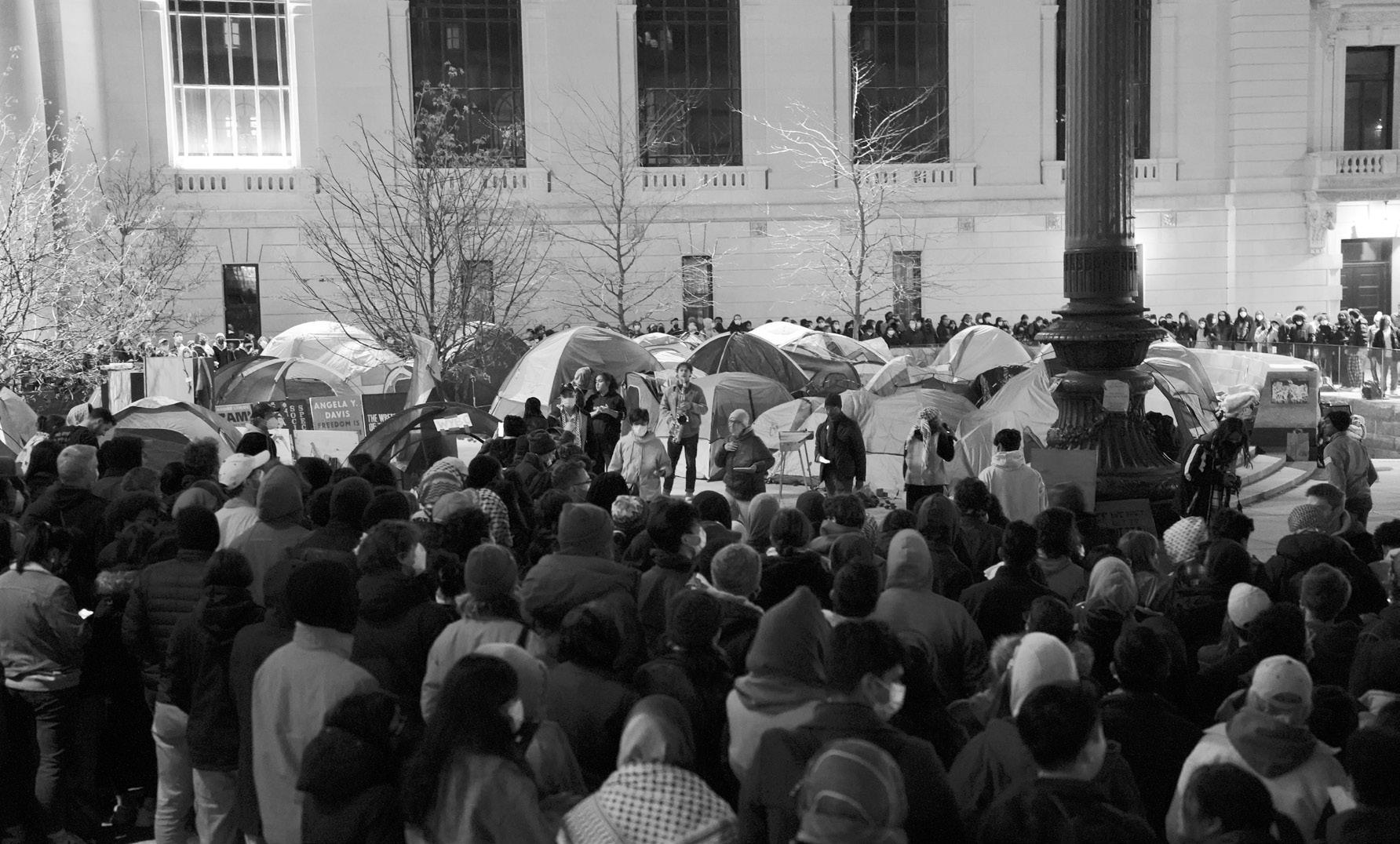
Three days before, the students erected tents to form an encampment on the plaza, protesting Yale’s investments in weapons manufacturers, which they tied to Israel’s war in Gaza. They draped Palestinian flags off surfaces and pasted posters with messages such as “liberated zone,” “Yale is complicit” and “welcome to Gaza Plaza” on the ground and walls. During the early evenings, the crowd on the plaza could swell to
SEE PROTESTS PAGE 4
BY JONAS LOESEL CONTRIBUTING REPORTER
On October 2, 2025, Keith Allain ’80 wrote an email to University President Maurie McInnis. The recently retired longtime men’s hockey coach blasted his former boss, Yale Athletic Director Vicky Chun, as “the absolute worst leader I have ever been around in my life.”
The email, which was first reported last month by Fox News and has been reviewed by the News, claims that Chun’s tenure since 2018 has “created a toxic environment within the department,” marked by a “culture of fear” and a “lack of lead-
ership.” Allain confirmed to the News that he wrote the letter.
The News spoke to two dozen current and former staff members, coaches, athletes and a donor who have worked with or played under Vicky Chun — many under the condition of anonymity due to fears of retribution by the Yale Athletics administration. While some came to Chun’s defense, eight former staff members and coaches backed Allain’s account, saying that Chun’s tenure has created a culture of fear in the department.
Many said the effects are obvious: Since Chun’s arrival in 2018, more than 200 employees have left Yale Athletics, according to a News
analysis of online directories. Eight former employees said that department had high turnover because of a combination of firings and a siloed workplace Chun fostered, marked by absence and a need for control.
Chun’s current contract lasts through June.
Asked about Allain’s letter in an interview with the News, McInnis said: “I do not comment on any letters that I receive as part of a review process.” She added that “many people” have sent letters about Chun as the University considers whether to renew her contract.
SEE CHUN PAGE 8
BY ADELE HAEG STAFF REPORTER
At first, they are hard to notice. But start to see them, and they seem like they are everywhere. In downtown New Haven, there are two on the public library across from the Green, another on City Hall, four more between the district attorney’s office and the courthouse: surveillance cameras.
Each sends footage directly to New Haven’s Real Time Crime Center, a surveillance hub in the city police department where analysts monitor citywide cam -
eras 16 hours a day, responding to officers’ calls. Cameras are always recording, and footage is stored for at least two weeks, according to a spokesperson for the New Haven Police Department. Alexandra Kenealy, one of the center’s crime analysts, first saw a Real Time Crime Center while interning at the Bridgeport Police Department in 2023. She remembers experiencing a “wow factor” when she stepped in, she said, gesturing at several TV-size screens in front of her desk in New Haven’s Real Time Crime Center.

“I didn’t realize that you can monitor the city like this,” Kene
aly said as she clicked through camera feeds, touring the city from her computer. “It’s insane. But I felt a sense of safety.”
In the past five years, the New Haven Police Department has expanded its surveillance system, installing hundreds of cameras, license plate readers and ShotSpotter microphones — which detect gunshots — across the city. The police have asked residents to connect their Ring cameras to a department registry and deployed drones with video capability. In 2022, the department also started using StarChase, a technology that allows officers to shoot rubber GPS trackers at cars instead of pursuing them at high speed. Officers don’t need warrants to deploy StarChase, which Officer Christian Bruckhart, the department spokesperson, said is generally considered an exception to Fourth Amendment privacy rights.
This surveillance system grants the police department “a lot of
BY NELLIE KENNEY STAFF REPORTER
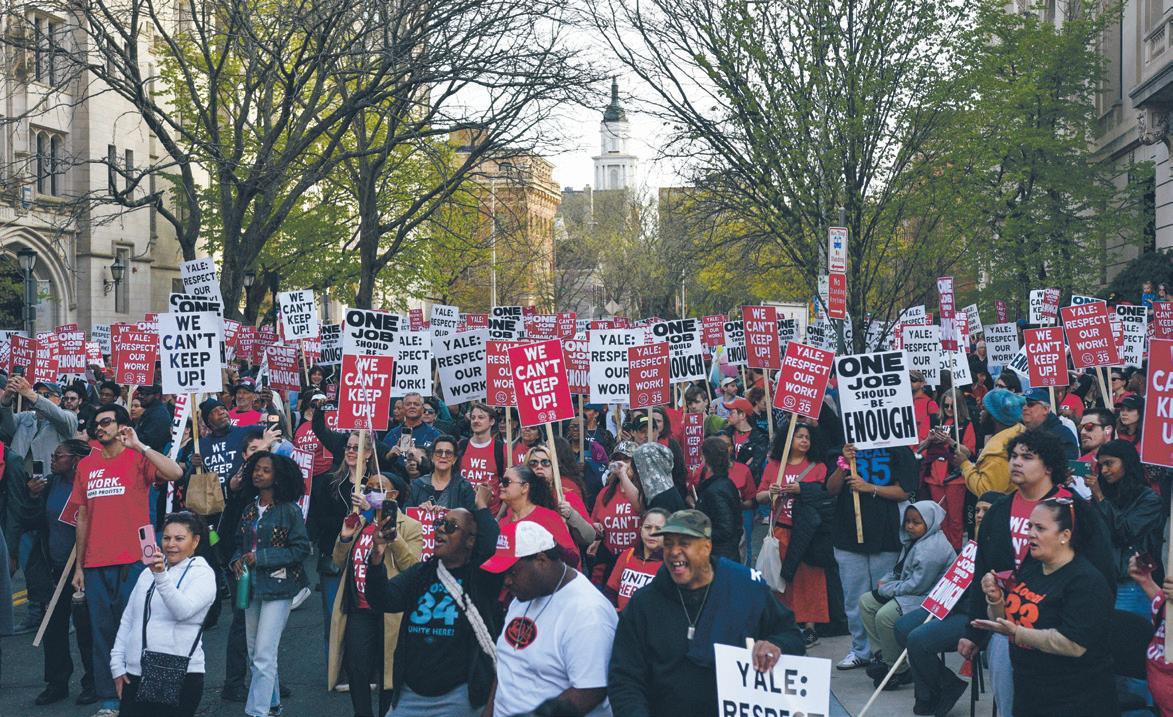
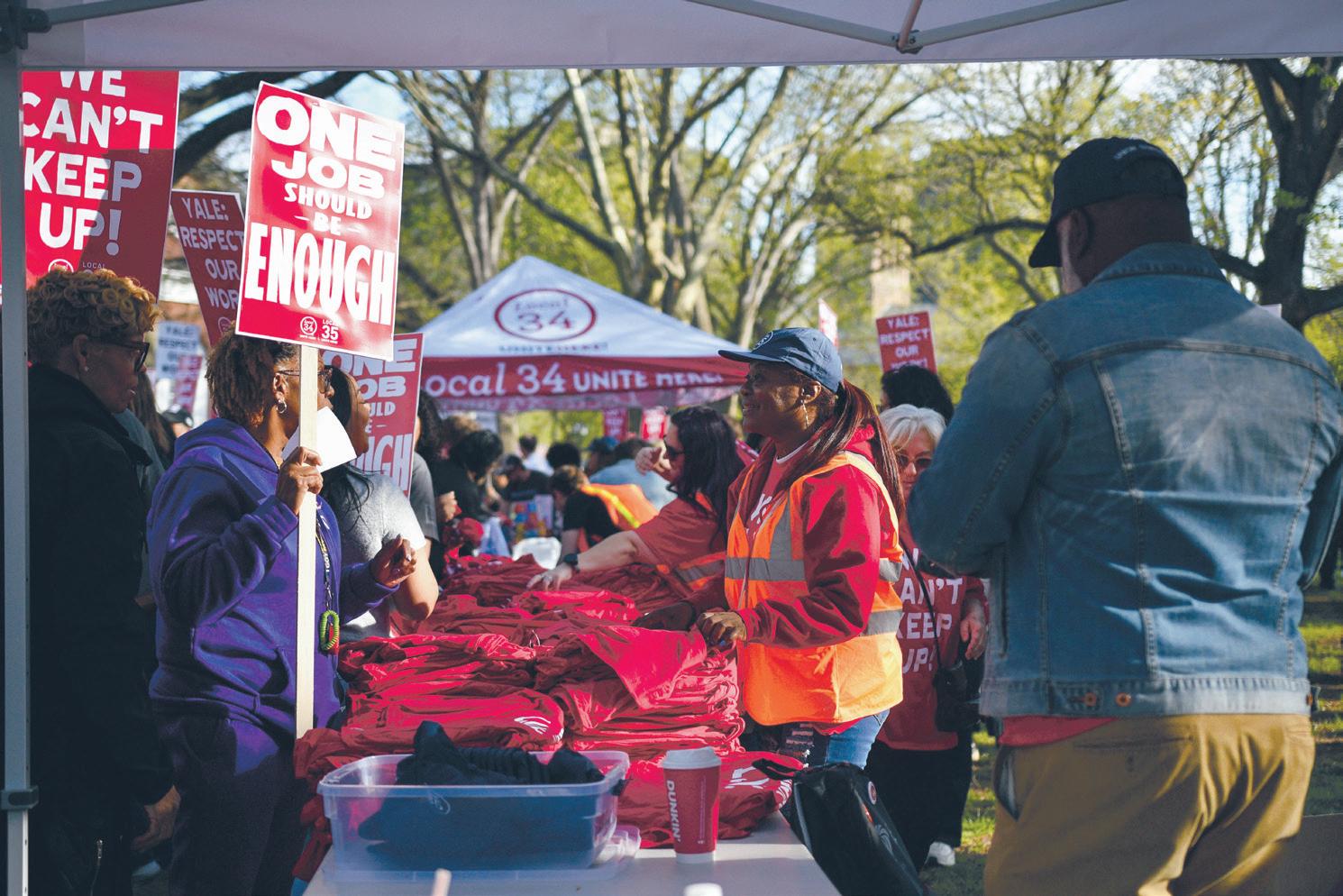
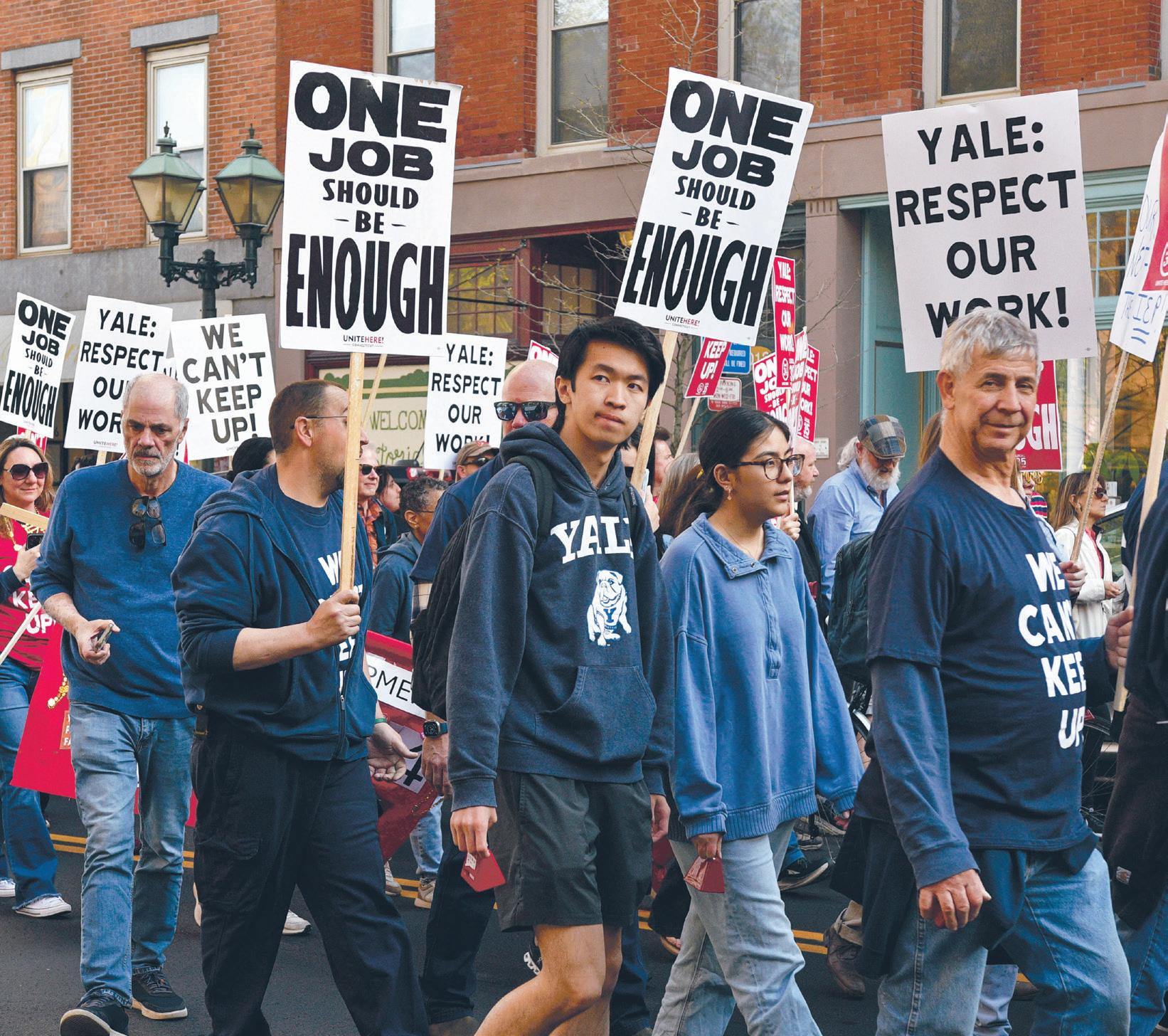
Over a thousand members of two Yale unions and their supporters marched in a loop around the University’s campus on Thursday as part of a rally calling on Yale to raise workers’ wages.
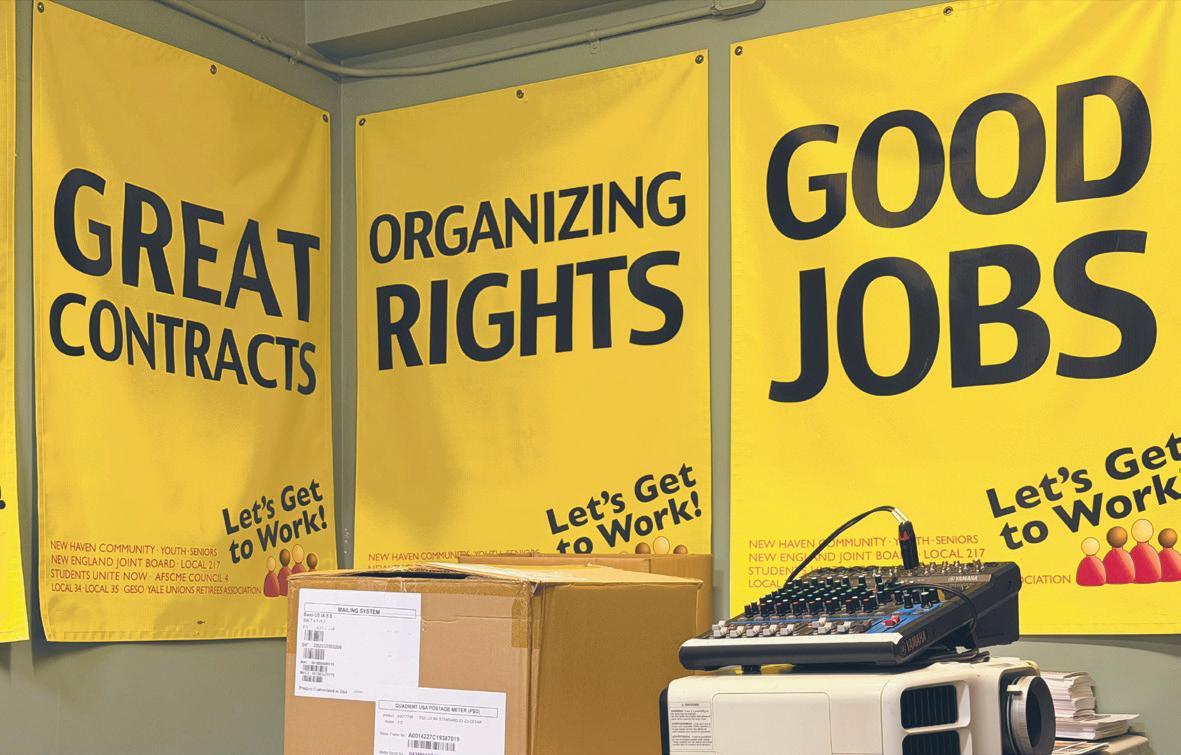
The contracts for UNITE HERE Locals 34, Yale’s clerical and technical workers’ union, and 35, the University’s service and maintenance staff’s union, are set to expire in January. Joined by Connecticut Gov. Ned Lamont SOM ’80, Mayor Justin Elicker, alders and other city leaders, union organizers called on Yale to up wages to meet inflation and the rising cost of living.
According to Local 34 Vice President Ellen Cupo, a former alder, the union has presented Yale with contract proposals and has been met with silence.
“Yale is not coming to the table, and that is a serious problem,” Cupo said in an interview before the rally began. “We have not seen a proposal from Yale since we started bargaining.”
Cupo added that she is “incredibly proud” to work at Yale. “I need Yale to respect me,” she said.
“The university began negotiations with Locals 34 and 35 last summer and looks forward to a positive, productive process that results in a fair agreement for all parties,” Yale’s Head of Union Management Relations, Joe Sarno, wrote in an email to the News after an April 1 rally.
Locals 34 and 35’s current memorandum of agreement with Yale was signed in January 2022.
Protesters gathered on the New Haven Green at 5:30 p.m., ring-
BY ELIJAH HUREWITZ-RAVITCH STAFF REPORTER
Early last September, days before the Democratic primary for Ward 1 alder, Elias Theodore ’27 gathered his supporters at La Cocinita Mexican Cafe. As they wolfed down rice
and fajitas, the floppy-haired New Havener gave an impromptu campaign speech.
His opponent, Norah Laughter ’26, had the backing of the powerful Yale unions and New Haven Rising, an adjacent community advocacy organization. Laughter’s supporters, often identifying
BY MICHAEL NDUBISI CONTRIBUTING REPORTER
When Will Barbee ’26 arrived at Yale, he didn't come for politics. He said he came for theater and music. His freshman fall, he rushed five a cappella groups, a dramatic society and some of the campus comedy
troupes, navigating the high-stakes audition culture that serves as a brutal rite of passage for Yale first years. Like most students, he met rejection. Within two weeks, he filled out an application to become a fellow of the William F. Buckley Jr. Program, a campus organization founded to promote conservative
thought and open debate, and was accepted. The application, he said, took about 15 minutes.
“I was immediately accepted into the community,” Barbee said. What followed surprised him. There were speaker events open to anyone, followed by smaller, invitation-only dinners at New
Haven restaurants. He said it was a level of intellectual access he found that Yale’s formal classrooms rarely matched, so he kept going back. By his junior year, he was president of the program. By his senior year, a Buckley mentor was writing his recommendations for journalism fellowships.
Barbee’s path is not unique. As the class of 2026 navigates a job market that has rarely looked more uncertain, job postings have proliferated while actual offers have declined, producing a market that appears abundant from the outside
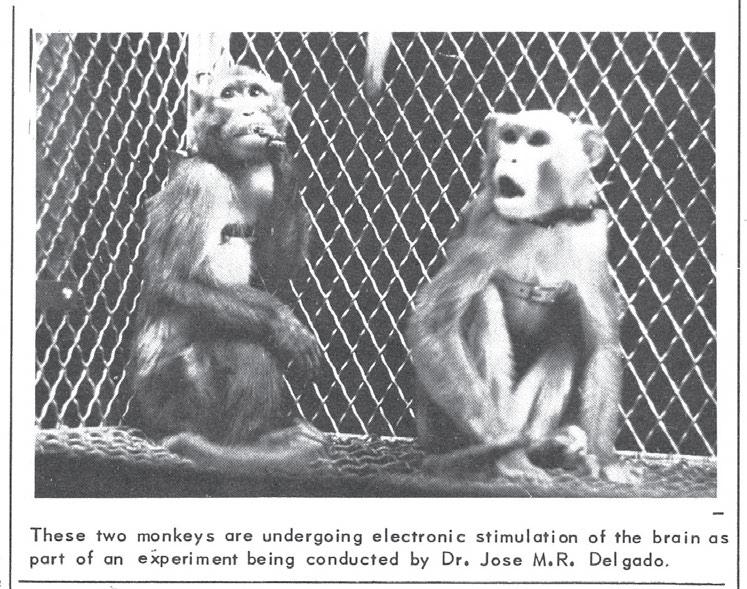
April 24, 1963 / Dr. Delgado’s Monkeys: Art, Morality and Brain Stimulation
By John H Garabedian
(Will morality control science, or vice versa? This is the first of a two-part series dealing with electric and chemical stimulation of the human brain.)
“No wonder these poor pre-moderns were mad and wicked and miserable. Their world didn’t allow them to be sane, virtuous, happy. With temptations and lonely remorses, with all the diseases and the endless isolating pain, with uncertainties and poverty–they were forced to feel strongly (and strongly in solitude, in hopelessly individual isolation), how could they be stable?
But how...roses and electric shocks are wedded indissolubly before the child can speak...wordless conditioning...”
Brave New World

By Nora Moses
Two years ago, when Yale police officers arrested 44 students and led them from Beinecke Plaza and into shuttles waiting on the other side of the Schwarzman Center, I stood in the crowd with a fellow reporter, speed-writing updates for the News’ live feed. It was my first semester as a Yale Daily News staffer. It was exciting to get to cover fast-breaking news as a first year. Now, that period of round-the-clock encampment coverage is a kind of newsroom legend.
I was curious about how Yale’s pro-Palestinian movement has changed in the years since – how student activism has evolved under a new University administration, and a new White House. I found in interviews with activists that the tighter enforcement of Yale’s free expression guidelines and the climate under Trump has altered how — and more importantly, whether — they choose to demonstrate.
When I wrote this piece, I opened with the question “Where have all the protestors gone?” – a reference to the Pete Seeger protest song. Although this lede didn’t survive my editors, the story got published on the two-year anniversary of the arrests and my last week at the News, where I have been an editor for the past year. I hope my final contribution to the News sparked a conversation about this campus movement and the University’s policies towards free speech.
Read “Two years on, a quiet Beinecke” on page 1.
Across its 20 recommendations, the report recently published by the Committee on Trust in Higher Education is, in many respects, an admirable document. It defends free speech in unambiguous terms, calls for the formal adoption of academic-freedom principles for the 21st century and names the opacity of admissions and the financial aid system as drivers of distrust. But the committee’s second recommendation should give our community cause for concern: the proposal to narrow the University’s mission statement and thus deemphasize its commitment to public service.
In 2016, Yale expanded its mission beyond just the pursuit of knowledge to include “improving the world today,” educating “aspiring leaders worldwide” and fostering “an ethical, interdependent, and diverse community.” The Trust Committee proposes jettisoning these three goals and adopting a much leaner mission like the one in the Faculty Handbook: “Yale University’s mission is to create, disseminate, and preserve knowledge through research and teaching.” The committee frames this as a return to Yale’s traditional mission. But narrowing what Yale stands for, at this particular moment, is retreat by another name. It is unclear how deemphasizing improving the world and ethics will make Yale more trustworthy. A cynic might be forgiven for thinking that many of these changes are a smokescreen to distract from and justify excluding a “diverse community” from our central goals. Under this reading, the proposal, far from being directed to the public, is primarily aimed at placating the tyrant in chief who has recklessly targeted a number of our peers. What is clear is the message the proposed amendments send to our scholars whose work bears most directly on public life: improving the world is no longer central to Yale’s institutional business.
In 2018, Fox News host Laura Ingraham told LeBron James, after the basketball star criticized President Donald Trump, to “shut up and dribble.” The narrowed mission proposed by the Trust Committee, however principled its drafters’ intent, might communicate a comparable message — to students, clinical professors, policy researchers, the many faculty whose scholarship influences law and policy and all at Yale who otherwise strive to enact meaningful change in our world. Turning away from “improving the world” implicitly suggests that professors should stay in their lanes and focus on what is more than what ought to be.
Mission statements can inspire, but they can also meaningfully constrain institutional activity. They tell deans what to fund, search committees what to value and administrators what to defend
when a program is questioned.
Under its current mission, Yale can confidently answer that the Grand Strategy program, the Tsai Leadership Program, Yale Young Global Scholars, the Law School clinics that sue government agencies and the public health initiatives that engage state legislatures all serve the university’s stated purpose and thus deserve University backing.
Under a pared-back mission, what would Yale instead choose to support?
Improving the world is not a recent commitment for Yale.
President Kingman Brewster Jr., in his 1967 letter laying out Yale’s modern admissions philosophy, argued that the University should seek future leaders whose capacities and moral seriousness would let them shape institutions beyond the campus. The Trust Committee’s report quotes that letter approvingly in its admissions section. The “aspiring leaders” language now slated for removal is a direct descendant of the very tradition the report elsewhere honors.
This pivotal political moment should be one where Yale leads and protects scholars. Over the past year, the federal government has attacked many of Yale’s peers over precisely the kinds of publicoriented scholarship and clinical work Yale’s current mission embraces. The report itself notes that faculty “express alarm about mounting pressure from beyond the campus, especially from government authorities,” and that “post-doctoral fellows and international students at Yale report that they now hesitate to speak out, even about their own research, for fear of government retaliation.” Yet the report proposes no recommendation that takes a stand against government pressure.
Public trust is not built by quietly retiring institutional commitments in advance of pressure. It is built by standing behind them under pressure. The committee’s report observes that universities have lost public trust in part because they have not done what they said they would.
The appropriate fix is to do more of what we pledged: defend our existing commitments, fund them visibly and stand behind them when they are inappropriately challenged.
A Yale that retires “improving the world” from its mission — during a federal campaign against other universities for doing precisely that — would not solve its problem of public trust. It might instead confirm, with unfortunate irony, that distrust is warranted.
IAN AYRES is the Oscar M. Ruebhausen Professor of Law and Professor at the Yale School of Management and the Yale School of Public Health. They graduated from Yale College in 1981 and Yale Law School in 1986. They can be reached at ian.ayres@yale.edu.

I sit down to write with this year’s “Report of the Yale Committee on Trust in Higher Education” fresh in my mind. In many ways, I find myself agreeing with those who praise its honesty, but there are some very obvious things left unsaid. The report fails to fully reckon with how Yale’s financial aid policies actively erode trust among the very students it claims to support.
For me, this concern is very far from abstract. While the committee was meeting, I was packing a tote full of all my possessions in preparation for an extended — if not permanent — leave of absence from Yale.
Months ago, I wrote an open letter undersigned by four pages of students addressing President Maurie McInnis, Yale College Dean Pericles Lewis, Dean of Undergraduate Admissions Jeremiah Quinlan ’03 and Financial Aid Director Kari DiFonzo advocating for a change in financial aid policy for rural students with assets like farms and fishing boats. I wrote out of necessity: Despite being from a low-income family, I am expected to pay the full price of Yale attendance because of my family’s not-yet-paid-off livelihood. For us and families like us, these are not liquid assets or disposable sources of wealth. They are what we depend on for survival; they are often tied up in debt and cannot be sold without a total loss of our ways of life.
Despite Yale’s advertisement of its financial aid as reasonable, holistic and accessible to everyone, my situation has been met with utter indifference from the powers that be at Yale. And now, after fighting for nearly a year simply for the ability to stay here, I am preparing to leave Yale.
This isn’t to say that I haven’t had support. Many fellow
students, staff members and even alumni have expressed their sympathy for my case. Some have given great time and effort to help me navigate this system. But this is precisely why I find Yale’s silence so disturbing. Yale has ignored all of us, not just me. What my situation lacks isn’t awareness but action.
My experience is unfortunately not unique. Rural and lowincome students have long struggled within financial aid systems that fail to account for the realities of non-liquid, livelihood-based assets. When institutions like Yale treat those assets as if they were equivalent to disposable wealth, they effectively exclude students from backgrounds like mine, all while claiming to broaden access to higher education.
Our administration’s recent decisions embody this pattern.
The removal of funding for summer storage for low-income students, for example, signals a broader disregard for the financial struggles many of us face in our daily student life. Programs like the Sustainable Food Program, which are especially meaningful to rural students as they form links to our agricultural homes, are also facing slashes in funding. While these decisions are separate from financial aid policy, they reflect Yale’s broader attitude towards things that don’t have obvious financial value.
These policies, not reports or public statements, are how trust is truly built — and broken. It’s no wonder that rural and low-income places are notorious for their mistrust of universities, if this is what happens when they sacrifice
time, effort, money and separation to send their children to school. When rural students are admitted but not meaningfully supported, Yale’s message to us becomes clear: We are welcome in theory but not in practice.
I WILL BE FORCED TO LEAVE ONE OF THE WEALTHIEST UNIVERSITIES IN THE WORLD SIMPLY BECAUSE I CAN’T AFFORD IT.
I would love to assert my full trust in Yale and encourage others to do the same, but I cannot do so with a clear conscience. I will be forced to leave one of the wealthiest universities in the world simply because I can’t afford it. If Yale cannot recognize the diversity of backgrounds that comprise it, students like me will continue to be left behind, and if our administration is truly serious about building trust, it needs to start by addressing these gaps. Right now — for rural and lowincome students especially — this trust remains as far out of reach as financial support does.
ELEANOR KANDOLL is a first year in Pierson College studying Music from Petersburg, Alaska. She can be reached at eleanor.kandoll@yale.edu.
The Committee on Trust in High Education’s 58-page report is nothing if not thorough. It makes 20 recommendations and cites hundreds of sources. But the committee missed an obvious problem.
AMERICANS HAVE WATCHED, DECADE AFTER DECADE, ELITE SCHOOLS LIKE THIS ONE SHEPHERD OUR NATION’S BEST AND BRIGHTEST INTO INDUSTRIES THAT ACTIVELY EXTRACT VALUE FROM THE PUBLIC.
Yale became a prominent university because of the success and strength of its alumni. Our public trust and legitimacy are directly correlated with what those alumni do with their Yale education. So I was astounded to find that in 58 pages on trust in higher education, alumni were only mentioned about a dozen times. Furthermore, alumni were almost always mentioned as donors or trustees, never as the actual output of the institution and therefore a critical source of legitimacy. While I respect the committee’s effort, academics often overcomplicate or outright ignore simple truths. Have we considered that the first step to rebuilding trust in Yale is making sure our alumni aren’t inflicting massive pain on our country?
It is a fact that Yalies are fleecing America. The Wall Street Journal reported that nearly 30 percent of Yale graduates are funneled into finance or consulting. The report briefly acknowledges this, writing that selective universities reinforce this “culture by allowing recruitment from finance, law, and consulting firms as early as a student’s first year, before a single round of classes has been completed.” The conversation ends there. This brief remark is treated as a byproduct of declining classroom rigor rather than a central fact of our campus culture and a crisis of legitimacy. Americans have watched, decade after decade, elite schools like this one shepherd our nation’s best and brightest into industries that actively extract value from the public. Alumni of this school were architects of the Iraq War, the Vietnam War and the 2008 financial crisis. The American people are not confused when they distrust Yale. They are simply beginning to see Yale for what it is. Obviously, the University can’t police the careers and private lives of its alumni. So there is certainly no way this problem can be addressed, right? Wrong. Start with admissions. Each time a student admitted based on an interest in humanitarian work becomes a McKinsey consultant junior year, the admissions office has failed. To avoid this common pitfall, the admissions office could connect admitted students before they reach campus with clubs and communities on campus that match the moral aspirations they wrote about in their essays. We need to give students the resources to actually accomplish their lofty moral ambitions. Thirty percent of the class of 2030 probably did not answer “Why Yale?” by stating their desire to work 80-hour weeks in high finance. Next, examine our career infrastructure. The Office of Career Strategy should devote substantial time and energy
into recruiting for careers like public service, teaching or journalism. Seemingly, firstyear students are more likely to have opportunities to interview with consulting firms than local nonprofits. This ought to change. Finally, look at who Yale celebrates. When people think of Yalies, they think of a Silicon Valley tech bro creating AI solutions to nonexistent problems. They envision a private equity executive who bought his hometown’s only grocery store and overleveraged it within a year. They picture an establishment politician who has spent years dodging accountability, likely for his time spent on a certain island. Instead, let’s highlight the alumni that are doing meaningful work and leading change. Yale’s communications apparatus could prioritize the graduates doing work aligned with the mission of “improving the world today and for future generations,” rather than the ones who are simply rich, powerful and prestigious.
None of this violates institutional neutrality. Yale does not have to denounce Vice President JD Vance LAW ’13. It does not have to denounce any particular alumnus or career. It only has to stop crafting and celebrating a pipeline that contradicts our mission to serve the public. Shockingly, the first step toward rebuilding trust may be actually doing good for society. The report writes that “trust is earned by doing what you say you’re going to do—and, ideally, doing it well.” Yale says it is educating future leaders who will serve the public. The public has looked at said leaders and, rightfully, drawn conclusions about the trust they place in our institution and higher education. Now we have to respond.
JACK CLAWSON is a first year in Grace Hopper College studying Ethics, Politics and Economics. He can be reached at jack.clawson@yale.edu.
“It was a crush, I kept saying, imma stay in touch. But that thing went bust, so I gave it up”
as many as 500 people, according to the News’ estimate.
In the two years since the encampment, Israel and Hamas have reached a ceasefire, but Gaza’s future remains uncertain. In February, Israel and the United States attacked Iran, starting a new war that has also spread into Lebanon.
Yale has not divested from weapons manufacturers, nor have administrators made any public indication that they intend to do so. Yet the coalition that emerged as the encampment’s leaders — the Sumud Coalition, which includes Yalies4Palestine, Jews for Collective Liberation in Palestine and the Endowment Justice Collective — has not since organized any protests that matched the levels of energy and disruption that appeared on Beinecke Plaza in spring 2024.
Pro-Palestinian sentiment has continued to influence student politics. Last fall, the Sumud Coalition pushed for a Yale College Council referendum on the question of whether Yale should divest from military weapons manufacturers.
On the first anniversary of the encampment, students protesting the visit of a far-right Israeli minister set up tents on Beinecke Plaza once again. But that time, the encampment lasted less than three hours before students dispersed and Yale police dismantled the tents. In February this year, 100 students gathered outside University President Maurie McInnis’ office to present letters urging divestment from companies with ties to ICE.
Student protesters say the Trump administration’s targeting of universities and student activists — and Yale’s changes to enforcement of public gathering policies — have prompted protesters to change tactics. Some protesters have moved their advocacy from Yale’s campus to New Haven’s public spaces.
Meeting the moment
The campus encampments in the spring of 2024 arrived around the sixth month of Israel’s war in Gaza, which was launched after Hamas’ Oct. 7 terrorist attack against Israel which killed over 1,200 people. At that time, the Gaza Health Ministry reported that more than 33,700 Palestinians were killed in the war.
Students at Columbia, who had protested the war in Gaza since it began, were first to set up an encampment in mid-April. The New York Police Department arrested over 100 protesters for their participation in this encampment, making national headlines. After that, Craig
ple, observing from them, learning their strategy,” Karell said, adding that the activity may then “dissipate” over time.
A referendum — and a brief response The next semester, the day after President Donald Trump was elected to a second term, about 200 students gathered on Beinecke Plaza for a rally organized by the Sumud Coalition, which was announcing its upcoming referendum. Organized through the Yale College Council, the referendum asked the undergraduate student body to vote on whether the University should disclose and divest its investments in military weapons manufacturers and invest in Palestinian scholarship.
Despite the election of Trump, who told donors to his campaign that he planned to deport student protesters, the feeling at the rally was far from dire, Karsten Rynearson ’26, who attended, recalled. To some protesters, the referendum felt like a chance to take action.
“It was nice to remember democracy doesn’t end with an election. It’s something you practice,” Rynearson said.
Rynearson said that the rally and the referendum campaign that followed had “a certain energy” that was characteristic of the days of the Beinecke encampment. The mobilization felt ripe with potential for a real impact, he added.
Just under half of undergraduates voted in the referendum. 76.6 percent of those who voted said “yes” on the question of whether Yale should divest from military weapons manufacturers. When accounting for the entire undergraduate student body — including students who did not vote — 37.9 percent of students voted in favor of divestment.
To members of the Sumud Coalition, the success of the referendum was confirmation of what they already felt was true: Their views were popular on campus.
Despite the energy of the campaign, the results did not sway the University. In a five-sentence reply to the referendum, Yale President Maurie McInnis pointed to Yale’s existing policies and procedures for presenting divestment requests to the Advisory Committee on Investor Responsibility, which makes recommendations to the Yale Corporation. McInnis said that she did not see the referendum results as representative of campus opinion.
Yale’s new rules In April 2025, pro-Palestinian protests seemed, momentarily, to resurge. Tents appeared briefly on
“Theplaybookforaverylong timehadbeenthatpublicity inanyway,shapeorform,is thesolution.Ifyoucangetthe Universityinthenews,you’re doingagoodthing,becauseyou’re puttingattentionontheissue.”
Birckhead-Morton ’24 recalled, Yale activists felt the time was right to escalate their movement.
Pro-Palestinian Yale students had already started a daytime presence on Beinecke Plaza. On April 15, pro-Palestinian protesters erected wooden bookshelves on the plaza, which were dismantled that day by Yale workers. On April 19, the day after the Columbia students were arrested, Yale activists set up tents and began staying the night. After three nights of overnight encampment, Yale police arrested 44 students early in the morning. Those students were charged with criminal trespassing. Within a month after the arrests, most Yale students had left campus for summer recess. The encampment did not resume when they returned.
Daniel Karell, a Yale sociology professor who studies social movements, culture and technology, said that social movements have had a tendency to wax and wane in accordance with national trends.
“There is research that has noticed, over generations, that a lot of protests happen in kind of waves or cycles because there is this dynamic of observing other peo-
Executive Committee by Assistant Vice President for University Life
Pilar Montalvo, Hedroug said.
Yalies4Palestine, a group that had posted about the protest on social media, lost its official Yale club status.
According to Hedroug, the University’s reaction to the protest went beyond their reactions to earlier student activism. Before, activists did not expect the University to discipline a student for participation in a protest of that caliber, Hedroug said. Hedroug added that the protest was “not nearly as disruptive as the previous year.” Hedroug said that she felt she was being used to “set an example” and discourage future student activism.
“Their ability to arbitrarily pick and pinpoint students for their involvement,” Hedroug said, “it’s demotivating, honestly.” She added that she suspects she was singled out because an administrator knew her identity from other contexts. Hedroug said that she had worked with Montalvo on the Belonging at Yale and Muslim Life at Yale student committees.
To questions about why Hedroug specifically was referred to the executive committee, Montalvo wrote that she “cannot discuss individual student matters.”
After the protest in April 2025, Harmeet Dhillon, the assistant attorney general for the Justice Department’s civil rights division, reposted a video of the protesters on Beinecke on X and wrote that her department was “tracking the concerning activities at Yale.”
A day later, in a news release entitled “Yale maintains calm campus and takes disciplinary action,” the University announced its response to the protest, which included taking disciplinary action against students. The Justice Department’s Task Force to Combat Anti-Semitism then released a statement which wrote that “we are cautiously encouraged by Yale’s actions” in its response to the protest.
“Honestly, I think it’s primarily rooted in fear from the pushback of Trump’s administration,” Hedroug said about how Yale handled that encampment.
Beinecke Plaza on April 22, 2025 — exactly a year after the wave of arrests — in anticipation of the farright Israeli minister Itamar BenGvir’s visit to the Yale-adjacent Jewish society Shabtai.
But students said in interviews this school year that in 2025 it was hard to maintain the type of momentum they achieved the spring before because of Yale’s stricter enforcement of disciplinary measures for student protesters.
During the protest, organizers assembled eight tents and announced at the time that they planned to stay the night on the plaza. Two administrators distributed cards with QR codes linking to Yale’s free expression policies. They also informed students that they were in violation of the policies and could potentially face arrest or disciplinary action from the University if they did not leave.
About two hours after the tents went up, the protest disbanded, with organizers “citing threats of ‘retribution’ from administrators’” in an announcement to the crowd.
The next day, Layla Hedroug ’25 and at least three other students were referred to the Yale College
University Spokesperson Karen Peart declined to answer a question about whether the University response to the 2025 protest was motivated out of fear of a reaction from the Trump administration.
She wrote in a statement that Yale “maintains clear free expression and peaceable assembly policies and guidelines” and that Yale security and free expression facilitators “are present at on-campus demonstrations” to give guidance and “prioritize the safety of all involved.”
Free expression facilitators are administrators “who work collaboratively to manage and support free expression on campus following university policies and guidelines,” Montalvo wrote.
Free expression facilitators were present at the encampment in April 2025 and have been present at many protests since their creation in mid-August 2024.
Hedroug said that the presence of the free expression facilitators can actually be “threatening” to activists, who believe the facilitators’say that it seems like their job is to write down the names of students present at the events and threaten them with arrest and disciplinary action.
A change to the ‘playbook’
The University’s crackdown on
campus gatherings was only one reason why activism began to falter, protesters said. Soon after Trump took office, the executive branch began to fixate on the campus encampments of 2024, withdrawing federal funding from various universities including Columbia and Harvard on the grounds of uncontrolled antisemitism. So far, Yale has avoided Trump’s targeted funding revocations.
In March 2025, Mahmoud Khalil, a graduate student affiliated with pro-Palestinian campus activism at Columbia, was arrested while Yale students were on spring break. Some of Yale’s pro-divestment activists said that upon returning to campus, they realized that the Trump administration — and its ability to target international students and withhold federal funding — had to factor into their organizing strategies.
“The playbook for a very long time had been that publicity in any way, shape or form, is the solution. If you can get the University in the news, you’re doing a good thing, because you’re putting attention on the issue,” Rynearson said. “And then after the Columbia situation, it doesn’t completely invert the equation, but it really changes everything.”
Diego Loustaunau ’27, an organizer for the Endowment Justice Collective, agreed, saying that the detainments of Khalil and Rümeysa Öztürk, a Turkish graduate student at Tufts University, made the federal government seem “kind of hell-bent on repression and on suppressing dissent,” which affected activists’ senses of safety.
Norah Laughter ’26, who was involved with labor activism in New Haven and ran to represent Downtown on the Board of Alders, said that as someone who frequently organizes protests, she hears from people who tell her they are scared to participate in protests due to concerns about the new stakes of participating in activism.
“It’s gotten way riskier to be a student activist, especially if you’re a student activist who isn’t white, especially if you aren’t a citizen or you’re on a visa here. I think that that also has made it really hard for activism groups on campus to kind of build a lot of momentum, which is really frustrating,” Laughter said.
Yale College Council senator Joseph Elsayyid ’26, who has authored several bills related to Yale’s policies towards student protests, agreed that Trump’s crackdown on student protesters has chilled campus speech. Senators have also brought up concerns about keeping Yale out of the national spotlight in their debates, Elsayyid said, and senators and student participants have at times argued that controversial actions and statements, if publicized, could invite retaliation from the Trump administration.
“It’s preemptive censorship,” Elsayyid said.
A ‘chilling effect’ and a move off campus Jameel Jaffer, the executive director of the Knight First Amendment Institute, a First Amendment policy group at Columbia, said there has been a “chilling effect” on free speech at universities across the country.
“Students and faculty too are much more reluctant today to participate in protests or to speak out publicly on controversial political issues,” Jaffer said. “Not just because of the policy that targeted pro-Palestinian foreign students for their pro-Palestinian advocacy,
but because, more broadly, there is a sense or a recognition that the official and unofficial consequences of speaking out can be severe, and even life-altering.”
Laura Beltz, who works with colleges to reform free expression policies at the Foundation for Individual Rights and Expression, a national organization focused on defending free speech rights, said she’s seen a tightening of restrictions at universities across the country.
Now aware of the risks of holding demonstrations on campus, some Yale activists are moving their protests off University grounds.
Two weeks ago, Arjun Warrior ’26 said he helped organize a rally urging Yale Hospitality to commit to sourcing from suppliers that adhere to fair labor standards. Warrior said that the rally was initially planned to take place on Cross Campus, but that organizers received an email from administrators saying the event “couldn’t be held there since we hadn’t registered the event,” which they couldn’t do because they aren’t registered as an official student group. Peart confirmed that the group couldn’t use University space for the event because it isn’t an official student group.
The event moved to the New Haven Green, where 70 people attended. The cause caught the attention of Democratic Sen. Cory Booker of New Jersey, who sent the University a letter urging it to support the initiative. Still, the fact that it was easier to host a protest on the New Haven Green rather than on campus was “jarring” to Warrior.
“Every time that speech is restricted, that protests are repressed, that students are prevented from sharing their ideas and beliefs with one another, Yale becomes less of a university,” Warrior said. “And I think that’s a real tragedy.”
Jaffer and Beltz both said that private institutions have no legal obligation to the First Amendment in the way that public state universities do. Still, both said universities should be accountable to their own stated commitments to free expression.
“All these private and public universities that have cracked down on protests are very publicly committed to free speech and to allowing the broadest possible range of voices in their public discourse,” Jaffer said, adding that he believes most universities are “sincere” in their commitment to free expression.
In a recently released report, the University’s Committee on Trust in Higher Education, which was assembled by McInnis in April 2025, emphasized Yale’s public commitment to free speech and open discourse.
“Protect free speech,” the report says in its “recommendations” section before reaffirming the centrality of the 1974 Woodward Report, which “recommended that Yale treat free speech as a first principle.”
The report praised what it described as Yale’s recent progress in enforcing those standards.
“We applaud Yale’s recent progress in enforcing these rights, and in clarifying sanctions for those who attempt to curtail free speech on campus,” the report says.
The report makes sweeping recommendations to other University policies, including proposals to change Yale’s mission statement and establish a 3.0 mean gradepoint average.
Contact NORA MOSES at nora.moses@yale.edu.
“If
you got me way back then, life could’ve been different, probably be livin’ with you.”
AMMUNITION ZARA LARSSON
CAREERS FROM PAGE 1
but functions like a brick wall for most applicants.
The Trump administration’s cuts to the federal workforce and military education have closed off categories of public interest employment that schools like Yale have long relied on as graduate destinations. And finance and consulting, long the reliable fallback for elite graduates, are now slowing hiring and announcing layoffs of their own.
Over several months, the News spoke with more than a dozen students, alumni and program directors across the Buckley Program, the David Network and Dwight Hall. At Yale, perhaps the most durable professional pipelines now belong not to the University but to organized programs that have moved into the space it left open, and the students who are finding their footing there.
Mixed signals
Johns Hopkins sociologist Amy Binder finds that at elite universities, the path from credential to career is largely unstructured. At large public universities, career prep programs and employer pipelines are often built into the curriculum. At highly selective institutions like Yale, students navigate that path themselves. In a 2025 white paper, Binder described the process as less a formal pipeline than a gravitational pull from peer culture, on-campus recruitment and institutional signals that steer students, often without their full awareness, toward a narrow set of outcomes she calls “career funneling.”
Across Ivy-Plus schools — the Ivy League and several other top universities — roughly half of all workbound graduates end up in finance, consulting or tech, according to a 2016 study published in the journal Sociology of Education. At Harvard, more than half of the class of 2025 ended up in those same three fields according to The Harvard Crimson’s annual senior survey. At Yale, finance and consulting alone accounted for more than a third of the class of 2025’s first destinations according to a University report on graduates’ first jobs.
But a growing number of students in the class of 2026 are realizing there may be no light at the end of the funnel.
The Office of Career Strategy has moved to meet record-breaking demand. According to its annual report for 2024–25, the office conducted 7,391 total advising interactions, a 9 percent increase over the previous year. The office’s deputy director, Robyn Acampora, wrote in an email to the News that 87 percent of the class of 2025 reported using the office’s resources.
Even as students increasingly turn to those official channels for guidance, Yale administrators under budget pressure have narrowed some financial resources available to them.
In the fall, Yale College Dean Pericles Lewis announced that the
Summer Experience Award and the International Study Award — two non-competitive funding opportunities for financial aid recipients — would be subsumed into a single Summer Experience Grant beginning in 2027, citing the upcoming increase in the federal tax on university endowment returns, which raised Yale’s rate on investment gains from 1.4 to 8 percent.
Allie Ruiz ’28, a Dwight Hall Student Executive Committee coordinator, said students “might have limited opportunities to engage in public service because of the cuts to the ISA, SEA.”
For students already navigating what Binder describes as an unstructured path from credential to career, the loss of summer funding shifts an already outsized burden further. For years, students have had to construct, through an architecture of clubs and social maneuvering, the kind of career infrastructure that many state schools provide as standard programming.
Several student organizations have spent years building exactly that, increasingly becoming the places students believe can actually turn a credential into a career. Each has a different theory of what a Yale career can look like and different tools for getting there.
A think tank in New Haven?
Founded in 2010 by a handful of undergraduates who felt the campus had no serious home for conservative thought, the William F. Buckley Jr. Program today has over 800 student fellows — more than one in 10 Yale undergraduates — and a multimillion-dollar budget. Its summer internship program places students in Washington, D.C., and New York on a $5,000 stipend that is sponsored by the program and administered directly through the Office of Career Strategy.
When asked publicly why Yale has avoided the targeted funding cuts that have hit most of its Ivy League peers, University President Maurie McInnis said there was “no obvious answer,” but cited the Buckley Institute — the professional, off-campus parent of the student-led program — and a broader campus tradition of “open debate” as potential reasons.
No matter Buckley’s significance for the institution, Isaac Oberman ’26, who comes from Wisconsin, came to the program the same way Barbee did — almost by accident. After hearing from a friend that becoming a fellow was the easiest way to get priority tickets to a speaker event, he filled out the form. Before Buckley, his only internship had been at a dairy company back home. When asked if he had joined looking for professional direction, Oberman didn’t hesitate: “Definitely not.”
He kept showing up anyway. He attended winter-break seminars and met people, including someone who had interned at the Calvin Coolidge Presidential Foundation, a small conservative organization based in
Washington and Vermont, through a Buckley-sponsored internship. Oberman applied, went through several rounds of interviews and got it.
That summer, he was in Washington transcribing presidential speeches, traveling to Vermont to run debate programs for high school students and writing book reviews for the foundation’s journal.
“It was an experiment, really,” he said. “By taking this internship in a field I wasn’t used to, I discovered skills in writing and people-interaction that I wouldn’t have known I had otherwise.” The Buckley stipend had bought him something harder to quantify than a summer salary.
Trevor MacKay ’25, a former Buckley program president now working at McKinsey in Washington, was measured in his assessment of the program’s preprofessional element. The 800 fellows are not all conservatives, he said, and internal surveys show an even ideological split. People join, he said, because they want to hear arguments the rest of campus treats as not worth having.
“I’m not sure that people are joining Buckley because they’re thinking, ‘Oh, they’re going to get me a job,’” he said. “But it certainly doesn’t hurt.” What makes it work, he added, is that “it does create these connections organically. It’s not really artificial.”
What makes any of it possible is a carefully engineered funding structure built over its 14-year history. The Buckley Institute works with partner organizations such as the Manhattan Institute, National Review and the Coolidge Presidential Foundation to offset the cost of bringing on an additional intern. That money flows from an interconnected ecosystem of conservative alumni and philanthropies, including the Bradley Foundation and Donors Trust, which allows donors to give anonymously while guaranteeing their contributions reach only conservative causes. Many of the foundations in that network also fund the partner organizations where Buckley places its interns. The Institute brought in just over $2 million in 2023. In 2024, that figure surged to nearly $3.8 million according to Buckley Institute tax filings.
“The institute model was implemented to accommodate the massive interest we had on campus,” Barbee told the News, “and the big ideas we wanted to accomplish. It’s allowed us to grow into something bordering on a think tank, right here in New Haven.”
Dinner at Villa Lulu
To Buckley’s political right sits an organization that operates under a different set of assumptions. The David Network was founded in 2020 and has since grown to 3,000 students and 4,000 alumni and professionals across 10 elite universities, including Yale. Where Buckley accepts almost anyone who fills
out a form, the David Network explicitly vets for conservatives.
“Ideological alignment is our first priority,” Annie Rogers, the organization’s director of development and external affairs, said in a phone interview. “That comes first, always.”
The network’s primary vehicle for translating that vetting into professional access is the private dinner, Rodgers said, adding that the setting is deliberately far removed from the sterile anxiety of a campus career fair and designed to make the professional outcome feel like a byproduct of the conversation.
“It’s not really about bypassing traditional application portals,” Rogers said. “It’s about working with students to help them build their networks.” But some of the roles the network helps fill, she said, are specialized enough that they would never appear on a public portal in the first place.
At a recent David Network event at Villa Lulu, an upscale Italian restaurant just off campus, a senior executive from Palantir spent the evening dining with a small group of undergraduates, one student present told the News on the condition of anonymity, citing professional repercussions. Before the night was over, the executive had instructed the students at the table to send him their resumes so they could be “plugged in,” according to the student.
Rogers confirmed that Palantir has a “unique recruitment and vetting system” and that the network works to accommodate it when the company comes to campus.
But not everyone navigating this job market gets access to that kind of evening.
Playing catch-up
For students considering public-interest careers — which include working in the government or at nonprofits — the alternatives to Buckley and the David Network look very different. Dwight Hall, founded in 1886 as a center for voluntary service at Yale, was never designed to be a career office. But it increasingly resembles one. Last Tuesday, roughly 60 students filed into Dwight Hall’s common room to hear the Dutch historian Rutger Bregman describe consulting, banking and corporate law as a “Bermuda Triangle” of wasted talent. Bregman’s core message to the room of undergraduates was a rejection of the standard prestige track in favor of what he calls “moral ambition,” combining the operational drive of the private sector with the idealism of an activist to tackle neglected problems.
He was there representing the School for Moral Ambition — a nonprofit, expanding on his latest book by the same name, that pairs students with public-interest internships and stipends in a model designed to make a summer of service financially competitive with a corporate internship. Bregman
closed his pitch with a bleak concession about the reality awaiting the student attendees after graduation.
“Let’s be honest: Today, a lot of people get burnout while they do jobs they don’t really like all that much or that don’t really contribute all that much to the welfare of the world,” Bregman told the crowd. “So if we’re going to get a burnout anyway, we might as well do something useful.”
Still, the Office of Career Strategy has maintained its own programming for those on the public-interest track. Through its Common Good and Creative Careers initiative, the office hosted over 85 employer events in the last academic year and funds up to 12 students annually through a competitive fellowship for nonprofit internships carrying a $5,500 stipend, according to Jorimel Zaldivar, the senior associate director for common good careers.
But institutional scale is not the same as career advancement. “For people interested in public service careers like myself,” Ruiz, the Dwight Hall coordinator, who attended the event where Bregman spoke, “the resource gap is difficult to ignore.”
The finance and consulting tracks include formal recruitment pipelines, employer relationships and alumni networks that begin working with students before they declare a major. Dwight Hall has partially closed that distance by paying students directly through its Urban Fellows and summer fellowship programs, so the nonprofits hosting them don’t have to absorb the cost.
According to Ruiz, Dwight Hall is now in conversations with the School for Moral Ambition. The organization launched its first fellowship program based in the United States at Harvard, where 8 percent of the junior class applied for 12 spots, and has since established chapters at Brown, Stanford, Princeton, Vanderbilt and several universities in Europe. Yale does not yet have one. Laura Clancy, a senior program manager for the fellowship, wrote in an email to the News that the School for Moral Ambition was “actively evaluating a range of universities, including Yale, as potential sites for the future,” adding, “we know what an incredible source of talent Yale already is to high-impact nonprofits.”
That interest arrives as Yale constrains its own support. Acampora, the deputy director of the Office of Career Services, wrote to the News that the combination of two summer grants into a single award will require students on financial aid to plan their summers “more intentionally” across their four years at Yale.
The median post-graduation starting salary for the Yale College class of 2025 was $90,000, according to the Office of Career Strategy. Jane Park and Olivia Woo contributed reporting.
Contact MICHAEL NDUBISI at michael.ndubisi@yale.edu.
ing cowbells and hoisting red and white signs with messages that read, “WE CAN’T KEEP UP” and “YALE RESPECT OUR WORK!” Union members from the Yale Peabody Museum roamed through the crowd in inflatable dinosaur costumes. Others carried banners identifying their University jobs.
As they marched, the protestors chanted, “If we don’t get no contracts, you don’t get no peace,” “If we don’t get it, shut it down!” and “Who’s got the power? We’ve got the power!”
The crowd arrived at the intersection between Sheffield-Sterling-Strathcona Hall, home to University President Maurie McInnis’ office, and the Yale Schwarzman Center, where a temporary stage had been set up.
Local 35 President Bob Proto addressed the crowd from the stage.
“We are going to do whatever it takes,” Proto said. “There hasn’t been labor unrest on this campus for a long time. So, Yale, read between the lines.”
Thursday’s rally followed similar demonstrations that were organized in September, November, January and earlier this month.
Local 34 President Lisa Stevens took the microphone after Proto.
In her speech, Stevens emphasized the increased cost of living.
“As a longtime member of this union, I know how our jobs lifted people in the middle class and supported families. Just a few years ago, a Local 34 job allowed people to buy a home, send their kids to college, save for retirement. But times have changed,” she said. “We can’t keep up.”
Stevens has listened to Yale’s negotiators “crying poor” for months, she said. She echoed Cupo’s statement that Yale had not responded to the union’s proposed contract.
A Yale spokesperson did not immediately respond to an emailed request for comment.
In a speech to the crowd, Lamont urged attendees to be “fired up.”
“You know how you keep up?” Lamont said. “You get better pay. Better pay and better healthcare.”
In an interview following his speech, Lamont called Yale a “gem.”
“I love Yale. And I love the workers here. That’s why we’re here today,” he said. Lamont said that he had been invited to speak by the unions and
added that he knows UNITE HERE “pretty well.”
In an interview early in the rally, Board of Alders President Tyisha Walker-Myers, the chief steward for Local 35, emphasized that union members were not only seeking a raise.
“We like money, but it isn’t about money for us,” she said. “We fight for healthcare for workers, we fight for pension for workers, we fight for upward movement for workers.”
The Yale Unions Retirees Association carried a banner through the crowd. Aldo Cupo, a member of the retirees association and founding member of Local 34, said in an interview that Yale was following “the same playbook as it did 40 years ago.”
“Stall, stall, stall and just say you’re broke,” he said of that “playbook.” Scott Marks, the director of New Haven Rising and a UNITE HERE employee, earlier this week sent a letter to McInnis that called the University’s new voluntary contribution agreement “a modest step towards building a better partnership” but also “woefully insufficient.”
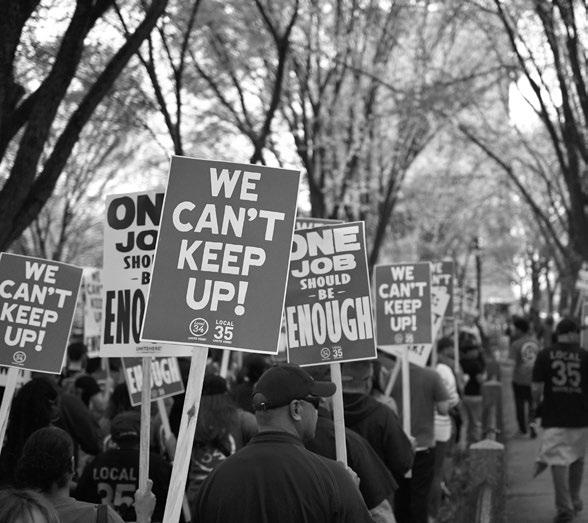
In January, before the new agreement was announced, union leaders stood outside of Sheffield-Sterling-Strathcona Hall to call for Yale to pay $110 million to the city each year.
“A better partnership with New Haven would mean transformative investment in New Haven, more concern regarding affordability and inequality in our city, and a deeper commitment to local hiring,” Marks wrote in the letter, which was
“Mama
cried, “Little daughter,” disappointed when she caught her sneakin' out the window pane.”
MEMORY LANE ZARA LARSSON
UNIONS FROM PAGE 1
themselves as union workers, had taken to following would-be Theodore voters on walks to the polls, trying to persuade them to change their minds.
“It has been intimidating at times these past few days,” Theodore told the crowd at La Cocinita. “I know that there are a lot of people with a lot of power and a lot of money who are against us, which is funny to say, because these are traditionally, I think, the groups that get seen as grassroots. We are the ones running the grassroots campaign.”
In the last days of the race, Theodore bumped up against one of the most influential forces in New Haven politics: the coalition of Yale’s UNITE HERE unions and New Haven Rising.
“The union really wants this seat, and that has become abundantly clear this past week,” Theodore said in September. “I want to be an alder who solely acts and votes on behalf of my constituents.”
Three days after the event at La Cocinita, Theodore beat Laughter by 125 votes.
The unusually competitive race to represent the downtown ward that encompasses part of Yale’s campus on the Board of Alders offered a window into the unions’ role in New Haven’s electoral politics. In a rare setback since their rise to political dominance, the unions’ organizing efforts fell short in swaying a local election.
There are four unions headquartered in New Haven that belong to the UNITE HERE national labor organizing network. Local 217 represents hospitality workers across Connecticut. Local 34 represents Yale’s clerical and technical workers. Local 35 represents Yale’s service and maintenance staff, including dining hall workers. And Local 33, which officially unionized in 2023 after a protracted battle with Yale, represents the University’s graduate students.
Together, the UNITE HERE unions represent thousands of Yale workers. And since 2012 — after the unions organized a slate of candidates that won seats on the Board of Alders — their candidates have maintained a majority on the board, the legislative arm of New Haven’s government.
“We have 23 out of 30 allies on the Board of Aldermen,” Local 35 president Bob Proto said at a 2017 meeting of Locals 34 and 35, according to the New Haven Independent. Local 35’s chief steward, Ward 23 Alder Tyisha Walker-Myers is the board’s president.
A machine Before their candidates won a majority on the Board of Alders in 2011, Yale’s unions spent decades building out their grassroots organizing power, according to Zachary Schwartz-Weinstein ’04, a historian of university labor. Then they made their push for City Hall.
“You had regular, everyday, runof-the-mill people running for political office to be able to make changes that people can feel,” Ward 22 Alder Jeanette Morrison, who was first elected as part of that 2011 slate, said. Since then, she has represented a district that includes a significant portion of Yale’s campus, including six residential colleges.
Together, the unions spent around $200,000 on the 2011 effort, the New Haven Independent reported at the time. Union candidates won 14 of the 15 races against establishment Democratic candidates.
In election cycles since then, political action committees associated with Locals 34 and 35 have contributed money to elect and reelect candidates to the Board of Alders. Many candidates have also received money from the Connecticut arm of the UNITE HERE TIP State and Local Fund, which is a “nonfederal” PAC, according to its website. Nonfederal PACs are not subject to federal campaign finance regulations.
In fall 2025, the Connecticut TIP State and Local Fund spent $9,125 on local races. Much of that money went to political committees like “Eastside Dems United” that do not disclose the candidates they support. The Local 34 PAC spent $9,875 that fall.
Both the Local 34 and the TIP PACs gave $1,500 to New Haven’s Democratic Town Committee, according to state campaign finance disclosures.
Vincent Mauro Jr., who chairs the committee, said that it solicits contributions from “all kinds of PACs” but that it gets a “significant portion” of its funding from UNITE
HERE. That money goes towards registering voters and turning them out on election day, Mauro said. He added that the Democratic Town Committee is “politically aligned” with the local unions.
“There’s a symmetry between good jobs, fair work, fair wages, a coalition built around not just the short term, but the long term future of the city of New Haven, its residents, its workers,” Mauro said.
There are currently six firstterm alders on the board, and three of them — Ward 8 Alder Mandy Martinelli, Ward 16 Alder Magda Natal and Ward 18 Alder Leland Moore — received money from union PACs in their campaigns, disclosures show. Of the 24 other alders, at least 16 have received financial support or endorsements from UNITE HERE unions.
Two alders — Ward 2 Alder Frank Douglass Jr. and Ward 29 Alder Brian Wingate — are vice presidents of Local 35. That union’s chief steward is Walker-Myers, the ward 23 alder who is the president of the Board of Alders. Ward 25 is represented by Adam Marchand GRD ’99, the chief steward of Local 34.
Over the years, union issues have come to dominate local politics, local experts say.
David Schleicher, a Yale Law School professor and an expert on urban politics, said that “on the core things 35 and 34 care about” — the relationship with Yale — unionbacked alders don’t have “too much range to do anything else.”
Yale’s unions have long pushed for the University to give more to New Haven, and Mayor Justin Elicker — who beat a UNITE HEREbacked incumbent in 2019 but has since forged a sometimes uneasy alliance with organizers — consistently thanks the unions for their efforts on that front.
In January, Walker-Myers joined other union leaders in front of Sheffield-Sterling-Strathcona Hall, which houses Yale President Maurie McInnis’ office, to call for Yale to pay $110 million to New Haven each year.
In March, Elicker and McInnis stood on the second floor of City Hall to announce a new voluntary contribution deal in which Yale will pay New Haven around $230 million over the next seven years. Walker-Myers, who did not respond to repeated requests for comment, did not attend the announcement.
The UNITE HERE-New Haven Rising coalition is “somewhere between” a local political party and an interest group, Schleicher said. The unions make endorsements and develop a platform on a variety of issues — some of which are directly related to their interests and some of which are not, he added.
A major source of the unions’ power in aldermanic elections is simply the fact that there are not other organized groups that get involved, according to Schleicher, “which makes sense, because it’s a very small city.” In a Democratic-dominated urban context, the unions fill a void that competing political parties would otherwise occupy, Schleicher said.
New Haven Rising and the unions largely operate in tandem, often hosting rallies together. The group is also financially tied to the UNITE HERE unions. The 501(c)(4) organization’s 990 filing from 2024 — the most recent year available — shows that it spent $378,078, most of which went toward compensation for officers and directors. Data from the United States Department of Labor shows that New Haven Rising received $326,950 from Local 34 that year, plus $348,985 from Local 217.
As of publication, the Rev. Scott Marks — the director of New Haven Rising, vice chair of the Democratic Town Committee and a UNITE HERE union employee — has not agreed to an interview or responded to repeated requests for comment.
The resistance Efforts to disrupt union dominance emerged not long after 2011. A slate called Take Back New Haven — spearheaded by then-Ward 7 Alder Doug Hausladen ’04, who now heads the city’s parking authority — coalesced in 2013, though it quickly fizzled out. Hausladen and several other alders in 2014 formed a coalition called the People’s Caucus that aimed to counter union influence on the board. The effort appears not to have gotten very far. In 2023, Frank Redente Jr. won the Democratic primary in Ward 15 against a UNITE HERE-backed incumbent.
“Obviously, it’s public knowledge that they campaigned against me
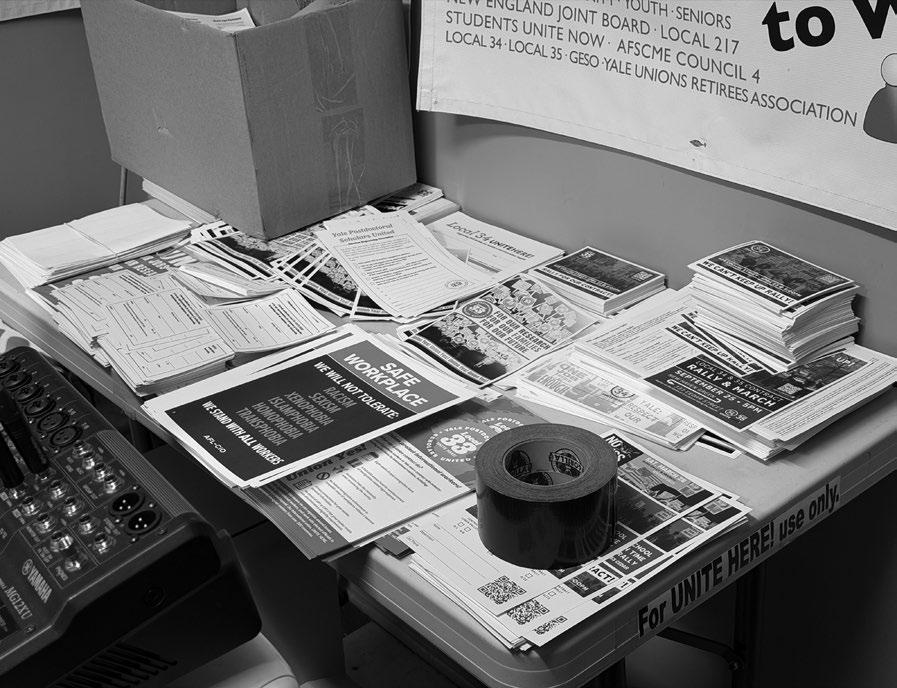
during my election,” Redente said, referring to the unions. He added that before that election, he had felt frustrated by the unions’ “blanket endorsement” of candidates.
Ward 10 Alder Anna Festa, who was elected in 2013 after an uncontested Democratic primary, was part of both the Take Back New Haven slate and the People’s Caucus, and she is the longest-serving member of the Board of Alders who was elected without union backing.
“Every institution in the city, whether it’s labor or large employers or developers or government itself, should have a seat at the table, but no one should control the table,” Festa said. “At the end of the day, our responsibility is to the public, to make decisions that are fair, fiscally responsible, and in the best interest of the entire city.”
Festa supports labor organizing but is skeptical of union hegemony, she said.
“Their influence has to be balanced,” she said. “And our job is to make sure that no single group has so much influence that it limits our transparency and our accountability and our good decision making.”
Leslie Radcliffe, a longtime civic leader and the former chair of the City Plan Commission, has been a frequent critic of the Yale unions. She is also a former steward of Local 34.
“Every citizen in New Haven is not a Yale employee,” she added. “And when the focus of those alders are Yale, Yale, Yale, for me, it’s like, you’re ignoring the nonYale employees.”
There’s been another battle brewing in the Hill’s Ward 3, a district that includes Yale-New Haven Hospital and the Schools of Medicine and Public Health.
Miguel Pittman, a businessman and restauranteur, has spent the past few years trying to disrupt UNITE HERE’s hold on Ward 3. After Ron Hurt, a close ally of the Yale unions and of New Haven Rising, resigned in 2024, Pittman faced off in a special election against Angel Hubbard, a community organizer backed by several local elected officials. Pittman lost by just 16 votes.
He lost again to Hubbard in the Democratic primary in the fall and, running on both the Independent and Republican lines, in the general election.
Each of those races has been highly competitive, driving up voter turnout in a ward that has had low political engagement in recent history.
Hubbard said that the Yale unions have a strong influence on the board, particularly “because a lot of us are union workers. And you know, for any job, you will want a union.”
She added that the UNITE HERE unions stay engaged in local politics at all times — not just during campaign season — and hold alders accountable.
In Ward 3, Hubbard said, “when I hold community meetings, they are there. When the CMT has meetings, they are there. So they’re not just around when it’s campaigning time. No, they are always present.”
In that sense, Hubbard said, the Yale unions are involved in “basically” all realms of city governance.
Reflecting back on his primary, Theodore feels he underestimated how much it was shaped by larger forces.
“I hadn’t realized that this race could be so imbued with city-wide
dynamics and union dynamics,” he said in an interview this month.
“There were a bunch of people in Local 34 and Local 35 out canvassing. And I think I was naive, but I didn’t think of this race much beyond the few hundred stakeholders who live in these downtown apartments and Yale undergrads.”
After his win, Theodore said he had to work hard to repair ties the election had strained. Theodore said his campaign was not meant to affront union power, but he acknowledged that his outsider status created tension with one of New Haven’s strongest political forces.
“I don’t want my campaign to seem — it was not one that was antiunion, and it was never meant to be one to degrade their power. But, yeah, I mean, I think, I think that dynamic was at play.”
Now, seven months after that election, Theodore is a member of a board built in large part by the unions, and he is navigating relationships with the same people whose volunteers followed his supporters to the polls.
“I’m just still, like, trying to be very conscious of — like, union relationships are good, but I think I still feel very, kind of, anxious about saying something that will be misconstrued,” he said.
When pressed, Theodore declined to say why he is anxious about what he says.
Schleicher thinks union power may be waning.
“There was a period when everyone understood them to be the most powerful force in local politics,” Schleicher said. “It’s not clear that’s true anymore, and it’s also not clear that the place where they’re powerful, which is in the board, is not the center of politics, right? ” Factions? Or fantasy?
John DeStefano, New Haven’s mayor from 1994 to 2013, pushed back on a narrative of union dominance. For DeStefano, it is inaccurate to define alders elected to the board with union support as “purely UNITE HERE alders.”
The former mayor said that the unions have had a much larger impact on the local Democratic party than they have had on city governance.
“For sure, UNITE HERE in 2011 decided to, in quotes, take control of the Board of Alders. But I don’t think it was to some purpose,” DeStefano said. “Maybe we all imagined this to be a bigger thing than it was.”
Morrison, the Ward 22 alder who is a steward at a state employees union, agrees. She said that UNITE HERE-affiliated alders check their union affiliation at the door. But she said they never stop thinking “about their role as an advocate, regardless if they’re a union steward or a legislator.”
“It’s about making sure that the needs of the people are met,” Morrison added. “That’s why I say it’s kind of blurred. It’s the same goal.”
Mauro, the chair of the Democratic Town Committee, referring to the unions, said: “I think sometimes people make them out to be the big bad wolf. And I think that’s an unfair criticism.”
For Douglass, the Ward 2 alder and Local 35 vice president, concerns about tension between union interests and constituent interests are unwarranted.
“No, we’re gonna shut that down right there,” he said. “They can keep
their opinion. I know why I’m here. I’m here for my community.” Ian Dunn, the UNITE HERE unions’ spokesperson, said that he was “a little reluctant to engage overall.”
“We don’t want to engage in this story,” Dunn said, clarifying that he was referring to the Locals 33, 34, 35 and 217 and New Haven Rising coalition. He questioned whether speaking about that coalition’s approach to politics was part of its current “message” or “program.”
“The zeitgeist in New Haven has often been, like, ‘The unions are bad. What the unions are doing in politics is bad.’ We’re like, ‘Why? Why? Why?’ It’s working people representing working people. What’s wrong with that?” Dunn added. Dunn framed the Yale unions’ political involvement as self-evident rather than strategic. He rejects the premise that unions need a formal rationale for political engagement.
The mayor and the Board of Alders before 2011 were much more closely aligned with Yale than they are now, Dunn said.
“Is that good for New Haven to have the billion dollar company — the company town controlling everything?” he asked.
Dunn said that he could not answer questions about the political engagement of Locals 34 and 35 without approval. He said that Marks, the New Haven Rising director, was “totally the right person” to answer questions about the Yale unions. Marks did not respond to repeated requests for comment.
“The beauty of a union, right, is it’s not any individual’s choice to do anything,” Dunn said. “We collectively decide what we’re going to do. It makes things really slow and painful sometimes.”
When it comes to the Board of Alders, some say the split between alders that are aligned with Yale’s unions and those that are not is overstated.
For Redente, walking into his first board meeting with a president who had actively campaigned against him was “weird, to say the least” — but he said that those dynamics quickly evaporated.
“I don’t think there’s camps. No, I would have thought that going in, but being there, no, I think everybody’s been very welcoming,” Redente added. Ward 7 alder Christine Kim ’99, who was sworn in just last month, agreed that there are not distinct camps and said she has not observed “this kind of conspiratorial type of work going on.”
“I had heard that there’s like a UNITE HERE and non-UNITE HERE,” Theodore said. “And I just — I think it’s not that black and white.” Theodore, who beat the unions’ candidate, is now backing an effort to name a street corner after John Wilhelm ’67, formerly an influential Local 35 employee, a founding organizer of Local 34 and a longtime president of UNITE HERE itself.
The signpost would stand at the corner of Elm and College streets. That’s where Old Campus faces First and Summerfield United Methodist Church, the headquarters of New Haven Rising and the Yale unions.
Contact ELIJAH HUREWITZ-RAVITCH at elijah.hurewitz-ravitch@yale.edu.
“You set fire to my world, couldn’t handle the heat. Now I’m sleeping alone and I'm starting to freeze”
CAMERAS FROM PAGE 1
power,” Ward 29 Alder Brian Wingate, who chairs the aldermanic Public Safety Committee, said. Alders held public hearings before purchasing cameras, but Wingate said that most residents still are not aware of how extensive New Haven’s surveillance system is.
And it is continuing to expand. Last month, the city received a $750,000 grant from the state to expand StarChase and purchase more automated license plate readers and tire deflation devices.
Kenealy said last month that the police department was looking to hire another crime analyst.
“The biggest question I have is, where do you cross the line with privacy?” AnneMarie Rivera-Berrios, chair of the city’s Civilian Review Board, which handles civilian complaints against the police, said. “Is it okay to put these cameras in place if we don’t have these answers yet?”
A surveillance hub
When a shot is fired in New Haven, all of the city’s police officers are instantly alerted on their department-issued smartphones. Each time Kenealy gets a ShotSpotter notification, she immediately pulls up camera feeds in the area of the gunshot as dispatchers send officers to the scene.
Kenealy’s task is to give officers what experts call a “tactical advantage” when they arrive at the scene. That could mean describing a suspect’s car, clothing and direction of travel over the radio, or sending photos or videos to cruiser computers, so officers know exactly who they are looking for and where they are going. Stationary and policecar cameras can also automatically identify license plate data, which officers can access and send to Kenealy.
“Ten, fifteen years ago, when we didn’t have all these cameras, these people could have been like a ghost,” Kenealy said.
According to Kenealy, the police department doesn’t have cameras “in every single intersection, but for the most part, our areas are pretty well covered” — particularly high-traffic areas or crime “hotspots.” There are cameras in each of the city’s 10 policing districts, but the city does not disclose their locations.
When she’s not actively responding to a crime, Kenealy keeps cameras around District 1 — which covers downtown — on the main screens, she said, “since there's a lot of traffic” there.
Kenealy said she most frequently responds to car thefts and other larcenies. She mentioned a recent case in which Real Time Crime Center technology helped the department apprehend a woman who had stolen $100 from a CVS pharmacy. “A crime is a crime, and if you can get a record of it, it definitely just helps for closing a case out,” she said. “No crime is
too small.”
The department stores camera footage for 15 to 30 days, and the footage can be searched as needed by anyone in the department, according to Kenealy.
Andrew Guthrie Ferguson, an expert on privacy and policing and a law professor at George Washington University, said a Real Time Crime Center gives officers an “impressive level of observational power.”
New Haven Mayor Justin Elicker said in a phone interview that “reasonable people” can disagree about whether cameras make cities safer, or just give that illusion. Even without the guarantee that they will deter crime, or proof that they allow the department to solve crimes faster, Elicker said that giving up a measure of anonymity is “a sacrifice that most people are willing to make.”
‘We needed every tool possible’
In 2001, the New York Police Department became the first department in the United States to set up a Real Time Crime Center, according to Kimberly Przeszlowski, an assistant professor of criminal justice at Quinnipiac University.
New Haven started to develop its own in 2020, which Przeszlowski called a year of “peak growth” in Real Time Crime Centers nationwide. There was “peer pressure” on New Haven to level up, she added.
Wingate also attributed New Haven’s increased spending on surveillance technology to the police department’s retention issues in the early 2020s.
“We needed every tool possible to keep New Haven safe,” he said, emphasizing that the department “didn’t have a lot of manpower.”
Bridgeport and Hartford both have Real Time Crime Centers.
According to a press release from Milestone — a company from which both Hartford and New Haven buy cameras — Hartford had a “staggering 442% increase in case solvability for firearm assault incidents with video evidence” during a two-year study starting in January 2022. The company appears not to have conducted such a study in New Haven.
Since 2021, the city has committed about $13 million to contracts with Axon, a police and military technology company, and Fusus, a surveillance company Axon acquired in 2024. That money has come from the city budget and funds from the American Rescue Plan Act, a 2021 pandemic relief bill, according to public records of the agreements.
In 2021, the NHPD signed its first five-year contract with Axon for tasers, improvements to interview room equipment, dashboard cameras for police cruisers and body-worn cameras, which the department began using in 2017.
The city bought 500 surveillance cameras that year, 300 of which have been installed so far,
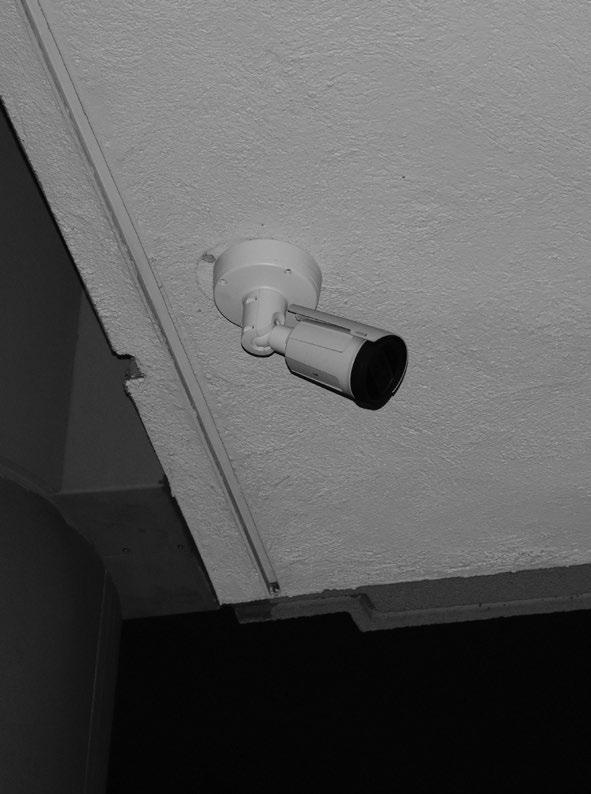
according to Elicker.
Axon provides storage for camera footage on a website called evidence.com, according to Ferguson, the privacy expert. Elicker said the companies “have made written commitments to us that we own the data.”
Ferguson said Axon has been “more transparent” than other surveillance companies, conducting bias checks on their technology. Still, he said, “the technology is moving faster than law and regulation.”
“I think the cameras and the money that we spent on the surveillance has been beneficial,” Wingate said. Wingate said surveillance is one aspect of a “holistic” approach to policing, and that a recent downturn in crime has come as a result of “communication with the community.”
Acting Police Chief David Zannelli, who has been with the police department for 18 years and whom Elicker nominated last month to become the permanent chief, emphasized that the new technology, particularly the citywide cameras, has increased the department’s efficiency.
“The expansion of the cameras has really helped us in the last couple of years to recover vehicles and people involved in gun violence rather quickly,” Zannelli said in a phone interview. “Now that we have equipment that is set up there, we're able to respond quickly, and not just respond quickly, find the right person and the right car.”
Data as to whether the Real Time Crime Center is helping the department solves crime faster is “pending,” Zannelli said.
Concerns about expansion
Axon and Milestone, two surveillance companies that the department has partnered with, both sell artificial intelligence technology.
Other Real Time Crime Centers employ two types of surveillance cameras: closed-circuit television, or CCTV, and cameras with the capacity for video analytics, which can turn a city into “a trackable object tracing system,” according to Ferguson. Officers can use video analytics to search footage for specific objects.
Bruckhart said the department does not use video analytics. He declined to specify the make or model of its cameras.
“We don’t provide specifics for the cameras as we don’t want the exact capabilities of them made public,” Bruckhart wrote in an email. He added that the department uses “a variety of vendors depending on who is cheaper.”
“One can have video without video analytics. It is just super time consuming to find or use anything for court,” Ferguson wrote in an email to the News.
According to Bruckhart, right now, the New Haven police’s crime analysts and detectives manually search footage themselves, although it’s inconvenient.
When the city reupped its first contract with Axon in 2024, it signed on to the possibility of implementing more advanced Axon technology, including Axon Investigate Pro and Axon Redaction Assistant, which Bruckhart said the department is not currently using.
“We have a contract with Axon in which various products are negotiated,” like tasers, body cameras and data storage, according to Bruckhart, but the department does not “provide details on those negotiations because it
Zannelli proposed that the department should be able to keep license plate data for six months. There is no current Connecticut law limiting license plate data retention.
“How do we know that they’re not just going to hide their vehicle used in the drive-by shooting in a garage somewhere for a week and then just start driving around?” Zannelli said. “I wouldn’t want Big Brother, but that’s not the intent of it.” In 2017, before New Haven had a Real Time Crime Center, Sean
“Everyonceinawhile,you know,perhapsweneedtotake apeekintoseewhat’sgoingon withthatkindoflevelofpower,”
could affect future contracts.”
Under the 2024 contract, the department also purchased Draft One — an AI-assisted police report drafting tool — and Axon video drones with the ability to play pre-recorded messages.
The chief state’s attorney and the state’s attorneys for Connecticut’s 13 judicial districts this month issued a moratorium “on the use of AI tools for drafting or narrating police reports,” according to Alaine Griffin, a spokesperson for the chief state’s attorney.
The department had been “experimenting” with Draft One, according to Bruckhart.
‘I wouldn’t want Big Brother’
The New Haven Independent reported in 2024 that the city operates 190 “regular cameras” and 183 automated license plate readers. Przeszlowski, the Quinnipiac University professor, said the New Haven Police Department has access to footage from over a thousand cameras, some of which are businesses’ or private Ring cameras.
Chelsea Infinity-Gonzalez, the director of public policy and advocacy of the American Civil Liberties Union of Connecticut, said that when a city expands its surveillance system like New Haven has, “the question isn’t just about the number of cameras, but what rules are actually in place to govern that data.”
The ACLU of Connecticut has advocated for seven-day limits on the police’s retention of license plate reader data, meaning that data would be deleted after seven days if not saved.
With automated license plate readers, “you can query your plate and see where it’s been across multiple locations,” Infinity-Gonzalez said, “so from a privacy perspective there’s a strong argument and we support having stricter retention limits.”
O’Brien, the founder of the Privacy Lab at Yale Law School’s Information Society Project, decided he would try to map the city’s surveillance cameras.
When O’Brien posted pictures of cameras on State Street that year to a website called Open Street Map, he said he “would come back the next day and there would be a traffic cone over one of them.” Others, he said, “would look like they’d been hit with baseball bats, or would be spray painted black.” He hasn’t mapped the new cameras — the Open Street Map of New Haven’s surveillance cameras was last updated by the Privacy Lab in 2017.
For O’Brien, the police department’s surveillance has gone too far.
“If your neighbor had a camera pointing into your window and you knew that they were watching it on their monitor or on their smart TV in their living room, watching a feed of your living room,” he said, it would be “very visceral and very creepy.”
But, he said, “when we have cameras everywhere outside all the time, even if they’re effectively doing this at a massive scale, we don't have the same feelings because we can externalize it and not have to think about it as strongly.”
O’Brien believes New Haveners should be paying attention to surveillance. “People deeply care about privacy,” O’Brien said, “yet feel powerless to do anything about it.” O’Brien has seen what he calls “privacy nihilism” take over.
“Every once in a while, you know, perhaps we need to take a peek in to see what’s going on with that kind of level of power,” Wingate said of police surveillance. New Haven’s Real Time Crime Center is in the police department’s headquarters at 1 Union Ave.
Contact ADELE HAEG at adele.haeg@yale.edu.
“When the one you care for just takes it all, washing you down like a waterfall”
CHUN FROM PAGE 1
Chun did not respond to the News’ request for responses to a detailed list of questions about her leadership as athletic director and the criticisms leveled against her.
University spokesperson Karen Peart declined to comment on an individual personnel matter.
A Colgate coterie
On July 1, 2018, Chun started her new job as Yale’s Thomas A. Beckett director of athletics, a position endowed by Yale alumni to honor her predecessor, who had been Yale’s athletic director for 24 years. Chun is the first woman to hold the position.
Five people who worked in the department at the time told the News that Chun’s leadership quickly eroded the camaraderie among Yale Athletics staff.
She forced out a number of longtime employees, according to six administrators, staff and coaches who worked there at the time. One former staff member who said he left as a result of his peers’ departures described a moment of “rapid turnover,” and a former head coach said firings by Chun created a “chill” in the department.
Some coaches told the News that the high turnover was reasonable, and many who criticized the pace of turnover also agreed that it was Chun’s prerogative to hire and fire whomever she wanted. Kylie Stannard, Yale’s head men’s soccer coach, wrote in an email to the News that “whenever there is a new leader of a team or organization, there is always going to be some turnover in the early years.”
After axing many longtime Yale Athletics staff members, Chun hired a number of employees from Colgate University, where she had been the athletic director before taking the Yale job.
Two of Chun’s current top deputies, Ann-Marie Guglieri and Mary Berdo, both worked under her at Colgate. Guglieri started at Yale with Chun in July 2018, and Berdo soon joined the next year. In Yale Athletics’ top administrative unit, the director’s office, four of six people — including Chun — formerly worked at Colgate. In addition, the News identified nine other Yale Athletics hires since 2018 who formerly worked at Colgate.
“It seems weird: You do a national search for a very competitive athletic program and you come back with 10 people from Colgate,” said Matthew Dean, a former head of membership services at the Yale Golf Course whose father, a longtime administrator, left the department in 2020
after butting heads with Chun. “That doesn't make sense to me.”
Laz Fernandez, a high school athletic director and former assistant women’s basketball coach under Chun at Colgate, told the News that he thought Chun’s bringing her own staff was normal in athletics.
“It's like comparing it to a head basketball coach being hired from one school to another and bringing their associate head coach,” Fernandez said.
‘Their way or the highway’
Wayne Dean was one of Yale Athletics’ most senior administrators, serving as a deputy director of the department when Chun arrived in 2018. He was also a close friend of Allain, according to his son, Matthew Dean.
In 2018, when Wayne Dean heard the news that Chun would be Yale’s next athletic director, he called the head coach of Colgate’s men’s hockey team at the time, Don Vaughan, according to Matthew Dean. He said his father was advised by Vaughan not to get on Chun’s “wrong side.”
The News could not reach Vaughan for comment.
Wayne Dean ended up on the wrong side, according to six former employees. Matthew Dean said his father felt he had to leave the place where he had worked for 34 years because of Chun’s mistreatment of him. Wayne Dean retired in July 2020 and died suddenly that November.
Allain wrote in a text message to the News that “Wayne Dean would have been a tremendous asset to the new administration.”
“He was extremely competent, hard working, selfless and the ultimate team player,” Allain wrote. “Yet they demeaned him, treated him as if he were a problem and made him so miserable that he finally left a job he loved.”
Five former employees said that Chun and her top administrators have demanded a culture of loyalty, allowing little room for pushback or dialogue. These employees said that the culture created an in-group of loyal employees, which alienated others. Chun’s hirings since 2018 have replaced dissenters with employees who will follow her top-down leadership style, according to six former coaches and staff.
“It was basically their way or the highway,” Matthew Dean said, referring to Chun’s top brass. Chun “would hire the people who were closest to her that have already proven their loyalty to her.”
In a 2018 interview with the #3Pillars Academy, released by the America East Conference, Guglieri — who
worked under Chun at Colgate at the time — described how she treats her boss. “Always, always be on their side, I think this cannot be overstated enough,” Guglieri said.
“If you wanna be viewed on the inner circle, or be a member of the inner circle, you can’t think like an outsider, and you can’t be perceived as if you are an outsider from people that are making the decisions,” she added. “Be really, really cognizant of always being on the side of your one-up.”
Henry Harutunian, a 93-year-old former Yale head fencing coach, said in an interview at his home in the New Haven suburbs that he had told Chun in 2018, during his 49th year as coach, that he wished to stay for a 50th season and then retire.
In March 2019, to his surprise, he was told by the Yale Athletics administrator assigned to his team that he would be let go a year before hitting that milestone, Harutunian recalled. He said he was not given a reason for his firing, and Yale fencing alumni at the time told the News that it came as a shock. The administrator, who has since left Yale Athletics, did not reply to requests for comment.
Three current Yale head coaches came to Chun’s defense when presented with their colleagues’ allegations about the culture she oversaw.
Brian Hamm, who became Yale’s head baseball coach in 2022, denied that there was a division between coaches who fell in line and those who did not.
“We are all on the same team - Team Yale. I don’t view this as an ‘in-group/ out-group’ dynamic,” he wrote in an email to the News this month, adding that, in an organization like Yale Athletics, “it is not possible to keep everyone happy all the time.”
Erin Appleman, who became Yale’s head volleyball coach in 2003, agreed with Hamm’s view.
“There’s a lot of support from staff and administrators across all our programs, and we’re all working toward the same goal,” Appleman wrote in response to a question about the alleged division in the department. “After more than 20 years here, I’ve always felt the department is supportive and inclusive.”
When Chun took the Yale job, she wrote in an article for AthleticDirectorU: “I do not expect the Yale community to simply embrace me because of my title. I will have to earn and re-earn their trust and commitment every single day through my actions.”
Very visible — on social media
In his letter to McInnis, Allain wrote that Chun’s “singular talent is self promotion.”
Six former employees said Allain
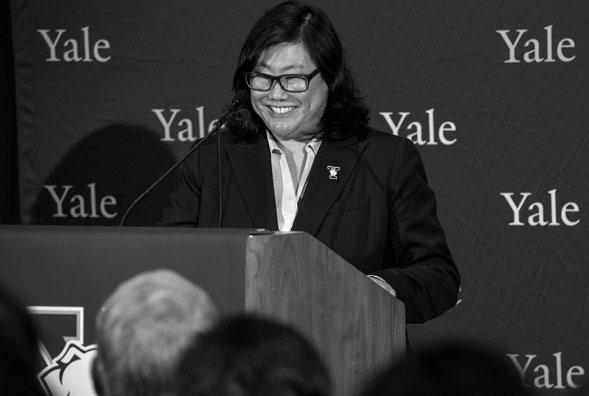
was right. Often the first place they would point is her social media presence. Chun maintains an active Instagram account, frequently posting photos of herself at Yale events. Three employees recalled Chun telling staff and coaches to follow her and like her Instagram posts.
“I felt like we were being led by, like, an 18-year-old girl,” one former head coach said.
Three former staff members and one coach complained that Chun always wanted to get in photo ops, something they said Beckett, her predecessor, would shy away from.
Chun’s social media received serious criticism within the department for one specific post, the former head coach said. On January 16, 2022, Yale’s men’s hockey team played against Colgate at Ingalls Rink. Chun posted a photo of herself with the hashtag “#GOGATE,” apparently rooting against Yale while not at the home rink. Chun graduated from Colgate in 1991, and worked there until she was hired by Yale. Four former coaches and staff members said it was inappropriate that Chun seemed to be rooting against the program she led. In a June 2025 interview with AthleticDirectorU, Chun was asked about how she balances a public social media presence and her private life.
“I really try to be transparent,”
Chun said. “It is a fine line. And I have gotten in trouble a couple of times of maybe being too transparent.”
While Chun was focused on social media, nine former employees said, she remained largely out of sight to much of her staff. A former senior administrator said that “access to Vicky was very limited”
and that he struggled to get meetings with her.
Seven employees said that Guglieri ran the bulk of the department’s dayto-day operations and controlled access to Chun.
“You rarely saw her, you never really got to meet her, you had a mandatory semi-annual meeting and everything had to be vetted. They always said ‘Vicky doesn’t like surprises,’’ a former head coach said. In a 2022 interview with the One Question Leadership Podcast about her role in Yale Athletics, Guglieri described how she managed access to Chun.
“You have to be cognizant that someone in her position is talking to a thousand different people a day, and you never want her to be caught flat-footed, that they’re telling her something that she’s hearing for the first time,” Guglieri said. “I’m a big believer in ‘never let your boss open a sealed envelope.’”
Three coaches disputed their colleagues’ opinions on Chun’s involvement and social media presence. Hamm wrote that Chun’s style is reflective of broader changes in Division I athletics, where the responsibilities of the athletic director “now mirror those of a CEO.” In response to a question about Chun’s presence around Yale Athletics, Stannard, the soccer coach, wrote that “Vicky has so many responsibilities and that is why her staff is so crucial for supporting her.”
Former Yale President Peter Salovey in 2021 extended Chun’s contract for five additional years. Asher Boiskin contributed reporting. Contact JONAS LOESEL at jonas.loesel@yale.edu.
BY LIZA KAUFMAN STAFF REPORTER
Yale Athletics announced Monday afternoon that Jeff Hamilton ’01 will be the next head coach of the Yale men’s hockey team.
An Englewood, Ohio native, Hamilton is no stranger to Yale or Ingalls Rink, having sported the Yale jersey from 1996 to 2001.
Hamilton was a former captain and made history during his time at The Whale, going down as the all-time leading scorer and totaling 174 points, including 80 goals
and 94 assists, in his 127 games as a Bulldog.
Hamilton’s wife, Jane, was a forward on the Yale women’s hockey team from 1999 to 2001 and was named the most valuable player of the 2000-2001 season.
“I am thrilled that Jeff will be returning to the Whale to lead our storied men’s ice hockey program. His deep understanding of Yale, combined with his experience and leadership, makes him the ideal person to guide us forward,” athletics director Vicky Chun is quoted as saying in a Yale Athletics news release.
Hamilton’s homecoming comes after longtime coach Keith Allain ’80 announced his retirement in August after 19 years at the helm of the men’s hockey team.
Following an impressive career at Yale, Hamilton played one season overseas for the Finnish team Kärpät and then returned to the United States to play for the American Hockey League’s Bridgeport Sound Tigers and the New York Islanders. He then joined the Hartford Wolf Pack for the 2004-2005 season. He played
eight games for the Russian Ak Bars Kazan before turning to the Sound Tigers.
Hamilton then had a stint in the National Hockey League. In 2006, Hamilton made his debut with the Chicago Blackhawks. After one season in the Windy City, in which he tallied 18 goals and 21 assists, Hamilton signed with the Carolina Hurricanes in July 2007.
A year later, he returned to Chicago and the AHL as a member of the Chicago Wolves, before going up north to join the Toronto Maple Leafs’ roster.
His career then took him to Switzerland to play for HC Lugano from 2009 to 2010 and concluded in Finland, the same nation where his professional career began after his time in New Haven.
After wrapping up his career overseas, Hamilton returned to Connecticut and committed himself to coaching and developing the next generation of hockey players through the Connecticut Junior Rangers program, of which he is a co-owner.
Although Hamilton has not coached at the collegiate level, his work with the Junior Rangers has produced more than 100 players who have gone on to compete at the collegiate and professional levels.
He also works with athletes and their families through his company, 203 Sports Group, to navigate the recruiting process. Hamilton is excited to return to the rink he and his wife called home.
“Building on the foundation laid by my greatest mentor, Coach Tim Taylor, and on
the extraordinary success of the past decades, we will pursue excellence with the highest expectations,” Hamilton is quoted as saying in the news release. “My staff and I are committed to elevating the student-athlete experience to the highest standard of recruiting, developing, and championing the very best in college hockey, while providing opportunities that are uniquely Yale.”
Players said Hamilton made a strong first impression in his meeting with the team on Monday afternoon.
“We’re really excited and thankful to have Coach Hamilton leading the program,” sophomore forward Ronan O’Donnell ’28 wrote in a text message to the News. “What stands out right away is his competitive drive, it’s clear why he’s had such a successful career in the sport.”
O’Donnell added that Hamilton’s emphasis on team culture stood out.
“He brings a high standard and a development-focused mindset that I’m looking forward to buying into,” O’Donnell wrote. “His emphasis on culture and family really came through in his opening remarks to the team, which is something we value greatly within the program. I’m excited for this new era of Yale men’s ice hockey with Coach Hamilton at the helm.”
Yale finished the 2025-2026 season 8–22–1.
Contact LIZA KAUFMAN at liza.kaufman@yale.edu.
BY SASHA HUROWITZ STAFF REPORTER
Yale’s English department had a target of four incoming graduate students for next year — down from as many as a dozen. Medieval Studies could make just one offer, down from its usual two. Classics will have three spots instead of four.
Facing an 8 percent federal tax on its endowment investment income and resulting University budget cuts, the Graduate School of Arts and Sciences has reduced the size of incoming graduate student cohorts across various programs. Administrators’ plans to reduce graduate student enrollment over the next three years — by approximately 13 percent in the humanities and social sciences and 5 percent in STEM programs — emerged in the winter.
Now, some enrollment numbers for next year are coming into focus. Directors of graduate studies across a variety of departments, who provided the sizes of the incoming and previous classes, told the News that the reductions will diminish graduate and undergraduate student experiences.
“Because the cuts came so quickly and were a surprise to many of us, we’re now kind of scrambling to figure out what other kind of changes we need to make to our programs in response to what seems to be a far smaller profile or footprint for graduate education in our program,” Daniel HoSang, the director of graduate studies for Yale’s American Studies Program, said in a phone interview.
“What it’s turned into is just trying to manage austerity,” HoSang, who is also the president of Yale’s chapter of the American Association of University Professors, added.
In a January email to the News, University spokesperson Karen Peart attributed the varied graduate program cuts across disciplines to “the fact that a larger fraction of graduate student support for humanities and social sciences comes from endowment funds than in the sciences and engineering.”
She added that the enrollment reduction numbers were decided in conversation with a “faculty working group and with each department chair and director of graduate study.”
Admissions cuts by department
Across the Faculty of Arts and Sciences, directors of graduate studies reported lower admission targets and smaller incoming classes compared to historical averages.
The American Studies cohort was reduced by roughly half, according to HoSang. He noted that the program — which includes joint programs in Black Studies and Women’s, Gender and Sexuality Studies — will bring in just four students this year, down from recent classes of seven to nine students.
The English department, which typically welcomes between eight and 12 graduate students, was given a strict target of four and allowed to make just five offers to reach it, according to Sterling professor Ruth Yeazell GRD ’69 ’71, the director of graduate studies.
Classics saw its allocation drop from four spots down to three, the department’s director of graduate studies, Christina Kraus, wrote to the News.
The East Asian Languages and Literatures department received between 80 and 90 applications but was tightly restricted to just two offers — a sharp decline from historical highs of six or seven offers — according to its director of graduate studies, Mick Hunter.
“Since I have been at Yale, we’ve never had a situation where we’ve only been able to make two offers of admission,” Hunter said in a phone interview.
Medieval Studies, which usually makes two offers for a target class of two, was permitted only a single admit this cycle, director of graduate studies Emily Thornbury confirmed.
This year, the Music department was allowed to make four offers for a target class of four graduate students, Chair Gundula Kreuzer wrote to the News, adding that while the numbers “have varied widely” in the past, they have “never dropped below five.”
Some STEM programs were less affected. According to Astronomy’s director of graduate studies, Robert Zinn, the program yielded four students, roughly its usual number.
Others saw significant drops compounded by yield challenges. Earth and Planetary Sciences typically targets 10 incoming students and enrolled 12 last year, director of graduate studies Alexey Fedorov wrote to the News.
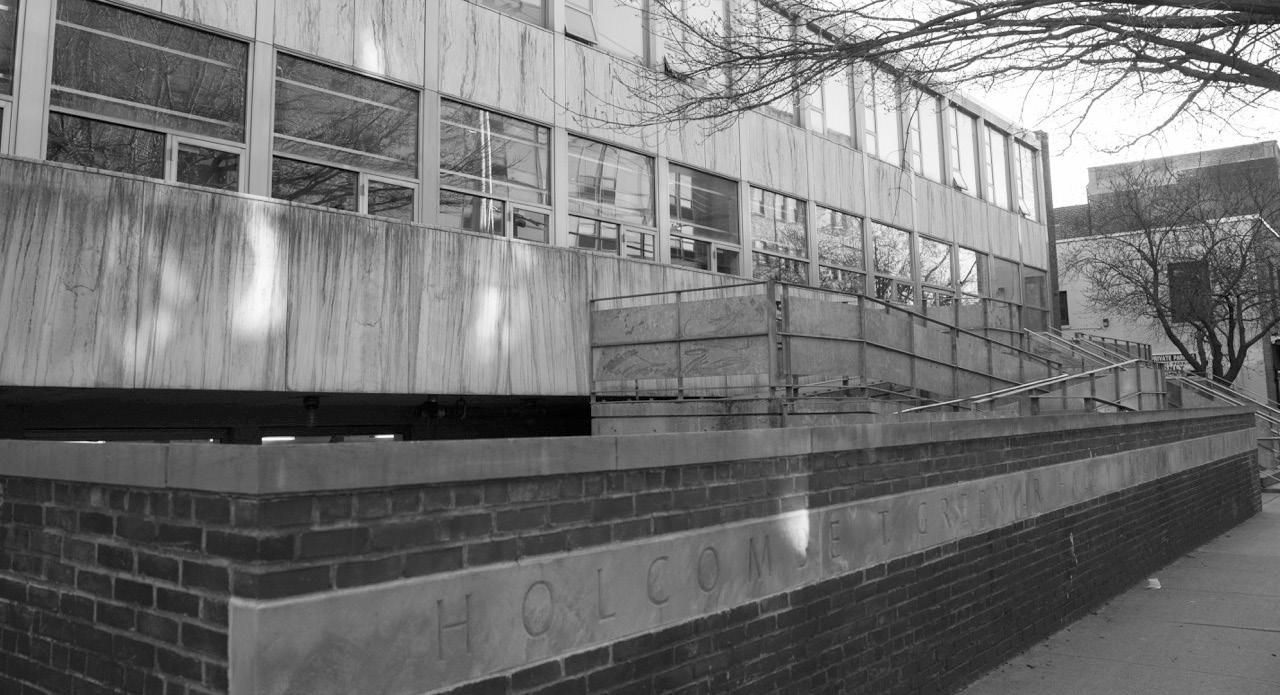
“This year, we sent admission offers to only 9 students, and only 4 decided to enroll. This is due to a combination of factors: reduced support from the Graduate School, increased tax on the departmental endowment, and a more conservative approach by the department in light of reduced federal funding for the sciences,” he wrote.
Smaller cohorts
As the reality of these reductions sets in, faculty are warning that the cuts will fundamentally alter Yale’s intellectual experience and competitiveness.
“We had more trouble persuading people to come than we might have in other years, because they’re worried about the small size of a cohort,” Yeazell said.
Yield rates also posed a problem in the reduced Medieval Studies graduate program. Because the department was only allowed to take one person, Thornbury said she was “really worried” that if the accepted student declined admission, people on the waitlist might have accepted offers elsewhere, leaving the program with an empty class.
“When you’re facing a question of no one coming in, versus a slightly smaller class than usual, it feels existential in a way that it doesn’t normally,” Thornbury said.
Beyond initial yield rates, Yeazell expressed concern over sustaining a “robust program” when cohort sizes are so small.
“We teach by seminars, just as we teach undergraduates by seminars. How many seminars can you run if you only have four or five people coming each year?” Yeazell said.
Beyond recruitment, faculty are also concerned about the social and intellectual isolation of the students who do enroll.
Hunter, in East Asian Languages and Literatures, highlighted the “increasing importance of having graduate students form cohorts that are across departments,” so that students have peers “to bounce ideas off of, to compare experiences with, and to be friends.”
Potential effects on undergraduates
Faculty members also warned that having fewer graduate students will compromise the undergraduate academic experience.
William Honeychurch, a professor of anthropology, stressed that experimental learning relies heavily on having enough skilled graduate students to guide undergraduates, noting that his department’s current struggles are “following cuts from COVID.”
“Taking 20 to 30 students out to an archaeological site is not easily accomplished with only one professor, but on the other hand it would be a shame to not do such activities since these greatly enrich the learning opportunities for undergraduates in our field,”
Honeychurch wrote to the News.
“Without help from qualified TFs,
I cannot create these high quality opportunities for my students.”
A lack of grading support could also prompt changes to course offerings. Hunter speculated that, with fewer teaching assistants, “professors might decide they’re going to limit enrollment to 30 students, which is more manageable if they are going to be doing all the grading themselves.”
Thornbury shared that concern, saying that an assumption that one can take any grad student and “plunk” them to teach any subject matter, regardless of their speciality, is “simply not true.”
“You need to know something about the material in order to be able to teach it well,” she said.
Thornbury said she believes that the cut in graduate admissions will not start affecting undergraduates for at least three years, because the previous incoming graduate classes were “pretty much normal in size.”
In a statement provided to the News in January, Graduate School of Arts and Sciences Dean Lynn Cooley wrote that implementing the enrollment cuts amid the University’s current budgetary strain “preserves Yale’s ability to continue to fund and invest in its excellent graduate education for the students currently at Yale and in the decades to come.”
The Graduate School of Arts and Sciences has about 3,500 students, according to its website.
Contact SASHA HUROWITZ at sasha.hurowitz@yale.edu.
BY SASHA CABRAL AND JERRY GAO STAFF REPORTERS
Yale College Dean Pericles Lewis said in a Wednesday interview that his office is “looking for faculty leadership” to sustain the Food, Agriculture and Climate Change certificate program for at least two more years.
Those plans were conveyed in a meeting last Thursday between College administrators and students, according to a Yale Farm manager, Sawan Garde ’27, who said he was present at the meeting.
Garde said that the dean’s office arranged the meeting after students involved in the Yale Sustainable Food Program, which runs the Yale Farm, circulated an open letter that alleged the program’s executive director, Mark Bomford, had been let go. The letter also called on Lewis to disclose the budgetary rationale behind cuts to the program.
Yale College spokesperson Paul McKinley DRA ’96 previously confirmed that the program’s staff was reduced from four to three people but did not confirm whether Bomford was the staff member let go. Bomford has not responded to the News’ requests for comment.
Lewis declined to comment on Wednesday about whether the staff reduction has left the certificate program without a faculty director, saying that he could not “comment on anything specific to any individual.”
“The plans are the following: Yes, we’re looking for faculty leadership for the program for the next two years. And then the faculty will decide whether to continue the certificate after the two-year period,” Lewis said.
Garde wrote in an email to the News that administrators and
students had come “to agree” on continuing to offer the Food, Agriculture and Climate Change certificate program for a minimum of two years. When asked to confirm the agreements Garde mentioned, Lewis pushed back on the notion that the meeting had been a negotiation.
“Just to clarify, I talked to a group of students and I shared with them what my plans are. So characterizing it as an agreement makes it sound a little more like it was a negotiation, if you know what I mean,” Lewis said.
Lewis told the News that academic decisions, such as those regarding the future of the certificate program, will “always” be made “in conjunction” with faculty.
Deborah Coen, who directs the certificate’s faculty committee, told the News on Wednesday afternoon the dean’s office has not been in communication with the committee since November regarding related changes.
“I have not received any communication,” Coen said in a phone interview. “The faculty group responsible for the certificate is the one that I direct, and I have not been part of any such communication.”
Hi’ilei Hobart, another member on the faculty committee, echoed Coen’s account.
“I haven’t, as a member of the certificate’s faculty committee, received communication from the Yale College Dean’s office yet,” Hobart wrote in an email to the News on Wednesday evening. “I can’t speak to whether or not a new director will be selected (I just have no information to offer in that regard).”
Coen told the News that she is “very confused” about the lack of communication. When asked about the two year continuance of the
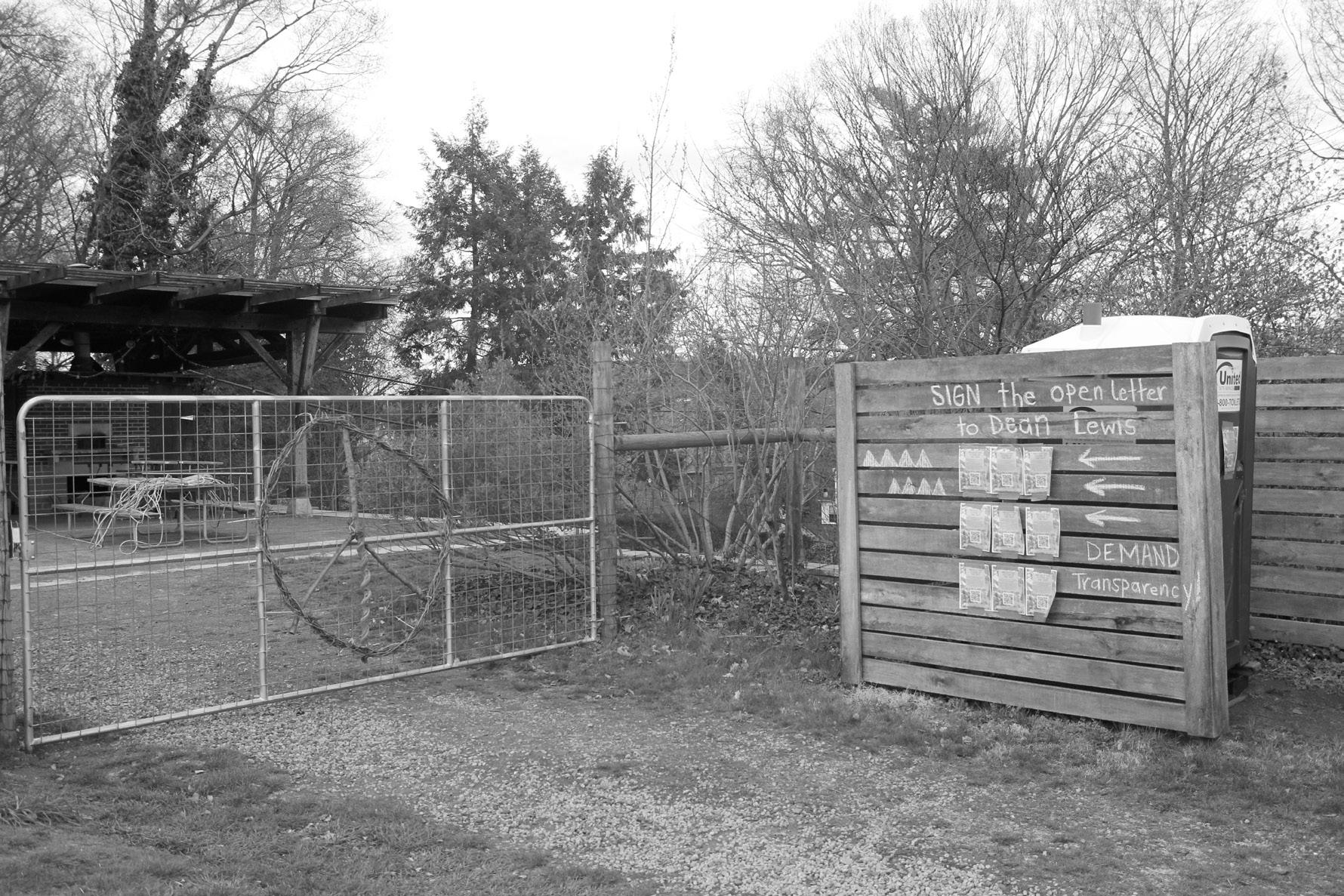
certificate, Coen said that she does not know if the certificate director position is vacant and what the process to fill the position would be.
“I have no idea. I was still under the impression that it would be possible to preserve Mark Bomford’s position — which, to my mind, is vital to the certificate. So I have not even begun to contemplate what it would look like to replace him, and certainly my colleagues and I have not discussed that because I thought it was still in the realm of possibility that he would be retained.” Coen said.
Several active staff members of the sustainable food program did not respond to the News’ requests for comment. Garde said he contacted Lewis after the meeting to confirm the future of the certificate program.
In Lewis’ email response to Garde, which Garde provided to the News, the dean wrote that he is “consulting with faculty about the future of the certificate program, but it is unlikely I will have news for you before May 6.”
“But I do expect everyone in the classes of 2027 and 2028 who has started the certificate program to be
able to complete it,” Lewis wrote. “As I hope I made clear, I am very supportive of the mission of the Yale Farm and am sorry that our budget situation has made these difficult decisions necessary.” Yale College will offer 42 certificate programs for the 2026–27 academic year, according to its website. Olivia Woo contributed reporting. Contact SASHA CABRAL at sasha.cabral@yale.edu and JERRY GAO at jerryu.gao.jg2988@yale.edu.
“From the moment I looked into your eyes, saw what I’d been searchin’ for all of the time.”
END OF TIME ZARA LARSSON
BY ARIA LYNN-SKOV STAFF REPORTER
In a Wednesday afternoon talk with around two dozen attendees, Yale trustee Maryana Iskander LAW ’03 answered questions about leadership and working in nonprofits.
About 25 people, mostly students, attended the event, which took place in the 53 Wall Street auditorium. Before the Yale Corporation’s meeting on Saturday, the Yale Alumni
Nonprofit Alliance is hosting two events featuring trustees. Fred Krupp ’75, a trustee who is an environmental advocacy leader, is set to speak on campus on Thursday afternoon.
During the event and in an interview with the News, Iskander said that she values interacting with students.
Iskander is one of the Corporation’s student liaisons, alongside trustees Carlos Moreno ’70 and Felicia Norwood LAW ’89.
Students have criticized the Yale Corporation for not engaging with students’ repeated requests for divestment from weapons manufacturers or companies tied to United States Immigration and Customs Enforcement. Ahead of the trustees’ February meeting, students wrote letters calling for divestment and gathered outside of Yale President Maurie McInnis’ office building.
“I actually meet with students, and then, as I said, I
welcome opportunities to hear perspectives from students — whoever invites me,” Iskander said in an interview after the event. Iskander said she didn’t have any other student meetings before her Wednesday afternoon talk, which she said she was invited to give.
In an interview after the event, Iskander acknowledged widespread issues related to limited transparency of boards’ activities. The Yale Corporation convenes on campus five times a year, and while the dates are disclosed, the times, meeting locations and agendas are not. The board’s meeting minutes are sealed for 50 years, in accordance with the Corporation’s regulations.
When asked what the Yale Corporation will discuss on Saturday, she pointed to general topics that she said boards often discuss.
“Boards usually discuss the same kinds of things: budget, governance, what’s happening in the world,” she said. “I think there’s a lot that can be demystified about what boards do anyway, right?”
When asked specifically about what should be demystified, Iskander pointed to the “hard issues.”
“I mean, to be honest, I feel like the hard issues are the ones that everybody’s talking about,” she said. “Trust in higher education, figuring out how to partner with the city of New Haven.”
Last week, Yale’s Committee on Trust in Higher Education released a sweeping report examining a wide range of campus issues and offering potential solutions. One of the report’s 20 recommendations was to “build trust with the trustees,” writing that “more formal methods” are needed to increase connection and trust with the board. The committee proposed adding faculty liaisons, and that “the Board of Trustees include, at all times, experienced scholars and academic leaders among its members.”
Iskander did not comment on any of the report’s specific recommendations, but she said that it would “probably” be discussed this weekend.
“I’m on the Corporation board, and when I come for meetings — which is why I’m here — nothing gives me more joy than spending time with students,” she said to
close her talk.
Iskander is the former CEO of the Wikimedia Foundation — the nonprofit that oversees Wikipedia — and the former COO of Planned Parenthood. She also served as the CEO of the Harambee Youth Employment Accelerator, a nonprofit based in Rwanda and South Africa that works to find solutions for youth unemployment.
Iskander was elected as an alumni fellow trustee in 2023. At her talk, she answered both prewritten questions from a student moderator and audience questions submitted through a QR code during the event.
During her talk, Iskander gave advice to students wanting to work in nonprofits and spoke about how nonprofits can increase efficiency to better achieve their goals.
“The value of most opportunities are the people you meet and the network you build,” she said, adding that by network, she meant “other people who are interested in the same things as you.”
Iskander also spoke about how nonprofits can be most effective in their work, saying “an important mantra is that you have to stay in love with the problem and not stay in love with your solutions.”
In a response to a student seeking advice on managing people, Iskander highlighted the importance of listening.
“People don’t spend enough time learning how to listen,” she said.
Keith Pemberton ’27, a student who is “building a startup here at Yale focused on knowledge infrastructure,” was one of the students who attended the event.
“Considering her work with Wikipedia, as the CEO, I was very curious about how she thought about the reliability of knowledge infrastructure today, especially as large language models hallucinate, but also how Wikipedia operates as an inclusive encyclopedia, how it handles non-notable figures,” he said when describing what drew him to the event.
The Yale Corporation’s next meetings are scheduled for April 25 and June 6, according to a University website.
Contact ARIA LYNN-SKOV at aria.lynn-skov@yale.edu.
BY ANNA KOONTZ STAFF REPORTER
Beverly Gage ’94 has crisscrossed the nation from Independence Hall to Disneyland. After visiting over 300 historical sites, the Yale history professor published her latest book, “This Land Is Your Land: A Road Trip Through U.S. History,” this month.
As the United States approaches the 250th anniversary of its independence, Gage said she hopes that “This Land is Your Land” will inspire readers to wrestle with national identity and reflect on their favorite historical sites. The book travels across space and time with 13 chapters that focus on different locations and eras in American history.
“How do you say that you love your country, that you’re a patriot, and yet also know and face and understand all of the really difficult parts of American history?” Gage said in a Zoom interview. “Some of the book is about my own wrestling with that question.”
The book is recognized on the New York Times nonfiction best sellers list. Gage will be speaking about her book on Wednesday afternoon in the Sterling Memorial Library lecture hall.
The book’s title is a reference to the popular Woody Guthrie song from 1940. Gage described both the song and her book as a “celebration and a protest.”
“I also wanted to challenge people to in fact go explore this land, in a quite literal way,” Gage said. “To think about it, to explore it, to be curious about it, to participate in it.”
“This Land is Your Land” was published on April 7, eight days before the release of a major report from Yale’s Committee on Trust in Higher Education, which Gage led as a co-chair. The report contained a wide range of recommendations for Yale to reform itself and prompted University President Maurie McInnis to acknowledge Yale’s “role in the erosion of public trust.”
In an email to the News on Monday, Gage wrote that “the main connection” between her book and the committee’s report was “that it was hard to do both things at once!”
As she traveled to research for the book, Gage said she brought a notebook, voice recorder, phone and camera. She recorded her thoughts in voice memos as she walked around museums and photographed signs and plaques. While driving, she listened to audiobooks relevant to her location.
The first chapter centers on Philadelphia, where the Founding Fathers signed the Declaration of Independence and where Gage grew up.
“It’s both the beginning of the nation’s story and is also the beginning of my story,” she said.
The chapters then proceed chronologically through history as Gage visits historical sites across the mainland United States, including the Alamo in Texas, a sex commune in New York and a Confederate memorial in Georgia.
Gage noticed that certain historical figures reappeared in the stories of many different sites. She decided to begin each chapter of the book with a notable individual embarking on a road trip of their own, such as George Washington’s
cross-country travels soon after becoming president.
“A lot of people are moving from place to place and making new lives and taking what they learn in one place and bringing it to another,” Gage said. “I was really able to see these local stories as also being national stories.”
The project also allowed Gage to explore beyond her academic area of expertise.
Gage specializes in 20th century American history and won a Pulitzer Prize for her 2022 biography of former FBI Director John Edgar Hoover.
Working on “This Land is Your Land” inspired Gage to suggest a one-time Yale course covering American history from colonial times to the 21st century. Alongside professors Joanne Freeman and David Blight, she taught the “America at 250: A History” lecture last fall.
Felix Santiago-Martinez GRD ’29, a teaching fellow for “America at 250,” described his experience as “fantastic” and highlighted Gage’s contributions towards the class.
“I think it is important to look back on American history, especially during an
extraordinary anniversary as the nation’s 250th year, as a way to periodically remember that the American republic is still an unfinished project,” SantiagoMartinez wrote in an email.
Gage spoke at a Yale Center for Civic Thought event last week, discussing the question “Can we face the injustices in our history and still love our country?”
“This Land is Your Land” was published by Simon & Schuster.
Contact ANNA KOONTZ at anna.koontz@yale.edu.
“Cause
BY ELIJAH HUREWITZ-RAVITCH STAFF REPORTER
Gov. Ned Lamont SOM ’80 said he gets an email in his inbox “every day” that reads something like this: “Dear Ned, aren’t you sick of Ned Lamont? Give money so I can get this guy out of office.”
As he makes his pitch for a third term, Lamont, 72, is facing federal headwinds—and a dark horse Democratic challenger in state Rep. Josh Elliott, 42, of Hamden, who is responsible for the emails. Elliott, who was first elected to the state House in 2016, launched his campaign for governor over the summer. Across Connecticut, as Democratic incumbents face upstart challengers born decades before them, “generational change” is the phrase on the street.
Rep. John Larson, who is 77 and has represented Connecticut’s first congressional district since 1999, is fielding challenges from Luke Bronin ’01 LAW ’06, the 46-year-old former mayor of Hartford; Jillian Gilchrest, a 44-year-old state representative; and Ruth Fortune, a member of the Hartford school board in her late 30s. In the first quarter of 2026, Bronin outraised Larson, with $2.2 million to the incumbent’s $1.9 million.
Meanwhile, Rep. Rosa DeLauro, who is 83 and has represented New Haven and its suburbs in Congress since 1991, has a challenger of her own: Andrew Rice, 38. Another challenger, Damjan DeNoble, ran with an explicit pitch for generational change but suspended his campaign in February.
And in western New Haven, 26-year-old Eli Sabin ’22 LAW ’26 and 31-year-old Justin Farmer are each hoping to replace 77-yearold-state Rep. Patricia Dillon SPH ’98, who was first elected to her position in 1984.
But few of the younger Democratic candidates are embracing the generational change narrative.
“Certainly the idea of generational change can be part of the overall matrix of somebody making a
decision about who they want to be in office,” Elliott said in a February phone interview, “but for it to be the end-all be-all? Definitely not.”
The state lawmaker said he does not dwell on age, though he occasionally discusses it “for people that care.”
Farmer, for his part, does see “generational change” underway— “not so much in terms of age, but in terms of ideology and thinking.”
A member of the Democratic Socialists of America and former member of the Hamden Legislative Council, Farmer is running on a progressive agenda centered on increasing state funding for public schools and a reimagined approach to public safety.
Facing both a baby boomer and a Generation Z politician, Farmer said in a January phone interview that he doesn’t think much about age.
Of course, youth may not be a compelling campaign message.
“‘Vote against him because he’s older’ is not a great argument,” Lamont said.
Rice, a former Democratic Socialists of America member, is also reluctant to lean into agerelated messaging.
“With age comes experience and wisdom and knowledge,” he said in a phone interview on Monday.
“As far as it being centered on just a generational change, I worry that that would also make people feel left behind, because you can be a Boomer, an X-er, a millennial or a Z-er and still be struggling.”
But Rice is eager to see the “people who will be inheriting the future” have greater say in how that future is determined.
“It’s unfair for people who statistically will not live to see the repercussions of their decisions be the ones making those decisions,” he said, but added that he is “not the type of person that’s going to go around and be like, ‘Okay, boomer.’”
In the governor’s race, meanwhile, Elliott’s campaign messaging is focused on economic populism. He said that the generation before
his “has really done incredibly damaging things to our economy.”
As he tells it, a gutting of the middle class has led to a “de facto monarchical structure where people are hiding their money in trusts from generation to generation.”
The most recent poll showed Elliott with 13 percent of the primary vote to Lamont’s 57 percent.
Meanwhile in New Haven, Sabin notched a small victory earlier this week, scoring the endorsement of a Westville Democratic ward committee. That group’s vote is nonbinding and largely a formality, but the result seemed to come as a surprise to local Democratic leaders.
“Most of the support that we’re earning is about people feeling like the challenges that we are dealing with in the city and as a state and as a country right now require new, bold leadership that can get out in our neighborhoods, bring people together and is focused on the issues that matter most to our residents,” Sabin said in a phone interview on Monday. “It’s about the issues.”
The ward committee’s endorsement went against the wishes of its cochair, who will help decide whom New Haven’s Democratic committee will officially endorse, and Vincent Mauro, Jr., that group’s chair. Both are supporting Dillon. Mauro wrote in a text message Monday that he has “never not endorsed an incumbent.”
Dillon, who last faced a primary challenger in 2010, noted earlier this year that local news media coverage has focused on the question of age in her three-way race.
For the veteran state legislator, “experience matters.”
“You have to know what you’re doing,” she said in a phone interview in January. “And when you look at a problem, it doesn’t always have a little label on it that tells you who is going to be affected by it. Sometimes it does, but generally speaking, you have to be able to know what you’re looking at, how it affects your district, who to go to to work together to fix it, and experience brings you that.”
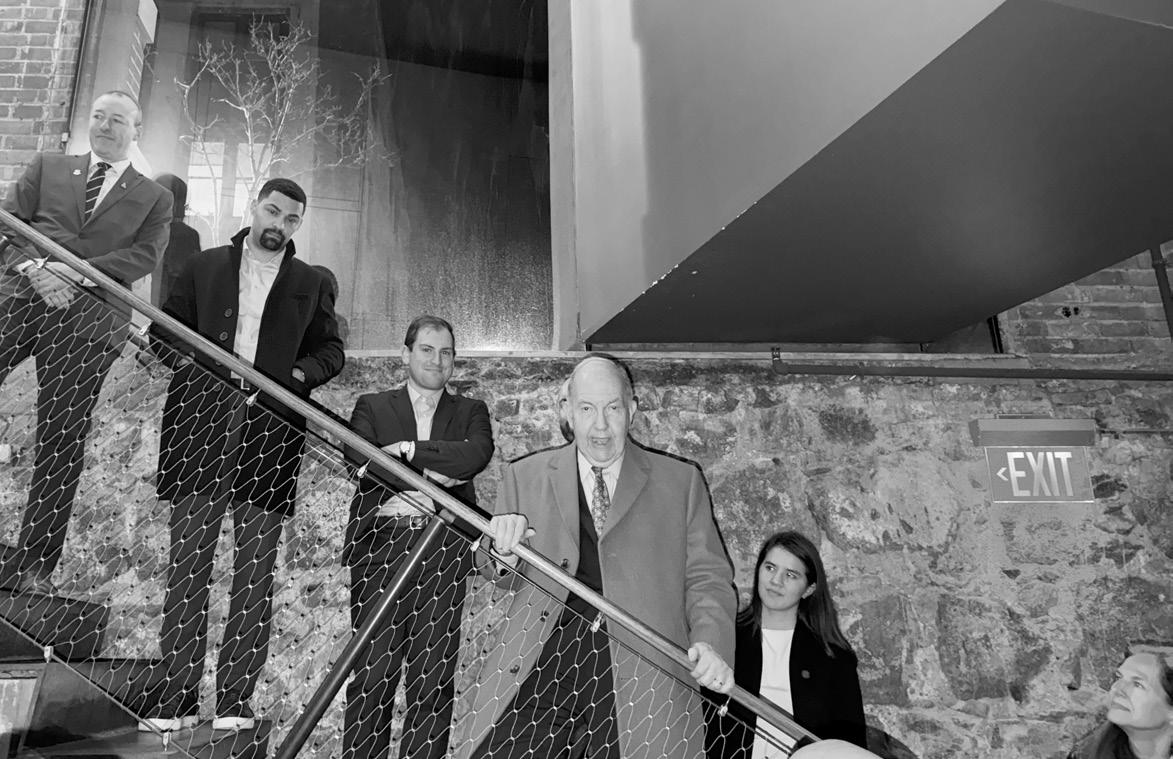
Some are making a similar argument for DeLauro, the longest-serving member of Connecticut’s congressional delegation and a prominent voice in the Democratic caucus.
Leaving a Young Democrats of Connecticut event in January, 77-year-old Senate President Pro Tempore Martin Looney, who represents part of New Haven in the state senate, made the case for his longtime political ally.
“Rosa is still very vigorous, still very active,” Looney said. Given Congress’ senioritybased structure, a freshman replacement for DeLauro will struggle to get much done, Looney added, “no matter how talented that person may be individually.” If Democrats take back the House of Representatives in this fall’s midterm elections, DeLauro, the top Democrat on the House Appropriations Committee, will become one of the most powerful people in Washington.
Lamont—who himself took on an incumbent several years his senior when he challenged Sen. Joe Lieberman ’64 LAW ’67 in 2006 — agreed that policy matters far more than age.
“I think it’s time for new ideas,” he said in a February phone interview. “I see a lot of old ideas coming from young people, and I see a lot of bold ideas from a guy named Bernie Sanders, who’s older than dirt.”
In Connecticut, with its lineup of older politicians, generational change may simply be inevitable, whether in 2026 or 2028.
“Anybody who challenges them is going to be younger,” Elliott said. “So I don’t know how much of a story there is. I just know there’s an incredible amount of frustration.”
That is just the feeling Lamont and his fellow incumbents are trying to address as they develop the latest of many election pitches.
“I want to be a state that allows young people to have the resources and the backing to start their own business and grow some opportunity and wealth in their own communities,” he said. “I want a state that thinks young, and maybe it’s ironic that a 72-year-old is the guy running on that.”
The Connecticut Democratic primary will be held on Aug. 11.
Contact ELIJAH HUREWITZ-RAVITCH at elijah.hurewitz-ravitch@yale.edu
BY BRETT PENK STAFF REPORTER
New Haveners and Yale student leaders have collected about 320 signatures on a petition to name the corner of College and Elm streets in honor of a man who helped establish Yale’s first employee union.
The petition required 250 signatures to qualify for review by the president of the Board of Alders, Tyisha Walker-Myers, who may assign it to one of the board’s committees, according to Ward 1 Alder Elias Theodore ’27. Theodore said he recently submitted the petition to City Hall for review.
Under the proposal, the corner would be dedicated to John Wilhelm ’67, who helped found Local 34, which represents the University’s clerical and technical workers. Last year, the union celebrated the 40-year anniversary of its first contract
with Yale—a milestone that motivated locals Aldo Cupo and Cheryl Bergman to spearhead the renaming efforts, they said. Cupo and Bergman were also founding members of Local 34 and are now members of the Yale Unions Retirees Association. The pair said in a phone interview that they wanted to honor Wilhelm’s contributions to the union.
According to Cupo and Bergman, Wilhelm led Local 34’s first contract negotiation processes and pushed for pay equity for male and female workers.
Later in his career, Wilhelm was elected president of UNITE HERE, a national labor union that encompasses Yale’s Locals 33, 34 and 35. He retired in 2012.
Cupo and Bergman started the renaming process by reaching out to Theodore, whose district includes the corner where College Street meets Elm Street.
“I was really excited when Aldo and Cheryl reached out,” Theodore said. “We all recognize this as an opportunity to help educate on this history.”
In order to gain city approval to rename the street corner, Cupo and Bergman had to collect 250 signatures, at least 166 of which were mandated to come from downtown residents. Theodore assisted them by partnering with the undergraduate organizations Students Unite Now and the Yale College Democrats to collect signatures from Yalies, many of whom live in the downtown area.
Audrey Landeros ’27, a community engagement fellow for the Yale College Democrats, described Yale students as being “incredibly positive, super enthusiastic to sign and give someone that honor” of having a street corner named for them.
Cupo and Bergman said that the corner of College and Elm
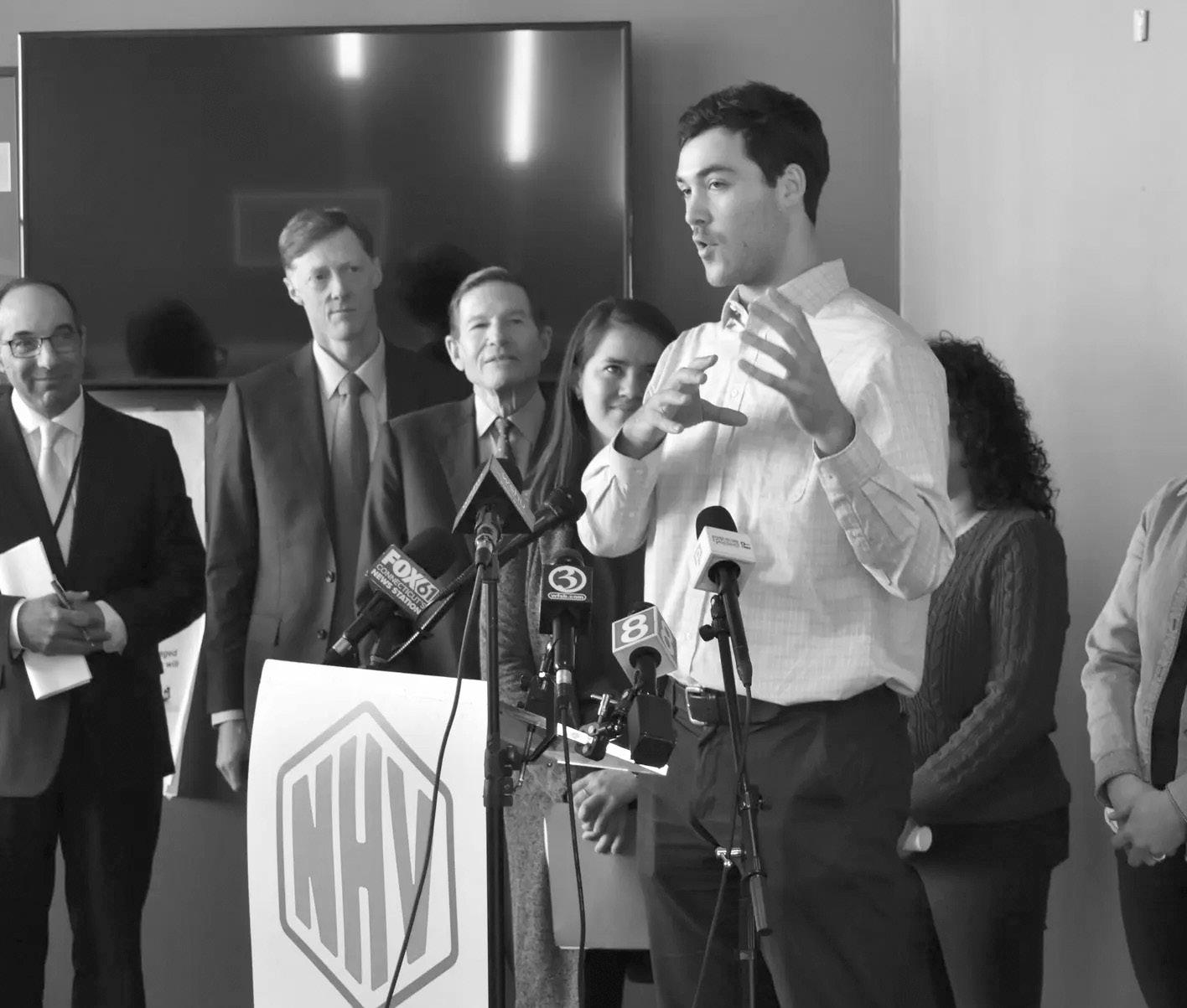
BY ELIJAH HUREWITZ-RAVITCH STAFF REPORTER
In a surprising shake up, the Ward 26 Democratic committee voted to back Eli Sabin ’22 LAW ’26 in his primary challenge to a 21-term incumbent state representative. Sabin, who is set to graduate Yale Law School this spring, launched his campaign to unseat state Rep. Patricia Dillon SPH ’98 in January. Dillon’s district covers much of western New Haven and includes all of Westville’s Ward 26.
Sabin served on the Board of Alders for six years and announced his resignation just minutes before he was set to be sworn in to a third term as Ward 7 alder. Now, along with Justin Farmer, a progressive organizer and former Hamden town legislator, he is taking on an influential legislator who was first elected to the body in 1984.
is symbolic for the union. For the past four decades, they said, Local 34 members have met at First and Summerfield United Methodist Church, which is nested in the northeast corner of the intersection. The pair described the street corner as the dividing line between New Haven and Yale’s campus.
Wilhelm said in a phone interview that he was humbled to learn of the renaming effort.
“If you had asked me if that was okay, I would have said no because I don’t like glorifying myself,” he said of the renaming effort.
If approved, the sign would also commemorate the work of all Yale union members in the past 40 years, Wilhelm said.
“I’m humbled and I’m proud of the work that I and others did when I was there,” he said. “I am also really proud of the amazing progress that the people who
have led the union of Yale have made since I left.” Now that the petition has surpassed the 250-signature threshold, Theodore said, several steps are in order.
If Walker-Myers assigns the renaming effort to a committee, it would then hold a public hearing in which locals can weigh in on the petition, he said.
“Hopefully, we can get this done in the next four to six months, so we’re hoping for a ceremony at the corner of College and Elm Street in the fall, and we would love to have many people there,” Theodore said.
Wilhelm said he would attend the ceremony.
Local 34 signed its first contract with Yale in 1985.
Contact BRETT PENK at brett.penk@yale.edu.
Twenty-one members of the ward committee voted to endorse Sabin, nine Dillon, and one Farmer, according to the New Haven Independent. The vote is nonbinding and serves as a recommendation to the ward’s Democratic Town Committee co-chairs. They will decide whom to endorse at a larger New Haven Democratic Town Committee meeting next month.
Laura Cahn, one of the Ward 26 co-chairs, told the News she is backing Dillon — as is Vincent Mauro, Jr., the chair of the Democratic Town Committee, who added in a text message that he has “never not endorsed an incumbent.” In a brief phone interview Monday, Cahn said she “had no idea” the Ward 26 committee would support Sabin. Dillon called the vote a “straw poll” in a phone interview Monday. “I didn’t understand it to be an endorsement.”
“Is it dispositive? No. But of course I respect that people came
out. I’m sorry that some of the people who didn’t come were not aware that so much emphasis would be placed on it,” Dillon added. Sabin, for his part, said he was “honored” to have the support of the committee’s majority.
“It just reflects what I’ve been hearing from the hundreds of people I’ve talked to while knocking doors so far during the campaign and at the many meet and greets that we’ve had so far,” he said in a phone interview Monday. “There’s just a lot of energy and excitement in the district about new leadership and new fight.” In the first quarter of 2026, Dillon raised around $9,585, Sabin $8,585 and Farmer $7,595, according to campaign finance disclosures.
Contact ELIJAH HUREWITZ-RAVITCH at elijah.hurewitz-ravitch@yale.edu.
“Just take what you want, and leave what you don’t Let the world sink in and stick to your bones” WHAT THEY SAY ZARA LARSSON
BY MICHELLE SO STAFF REPORTER
Earlier this year, Health and Human Services Secretary Robert F. Kennedy Jr. announced a revamp of the familiar food pyramid, with protein sources like red meat and full-fat dairy at the top of the list of recommended foods.
Yet, certain studies have found consumption of red meat to be linked to cardiovascular diseases and cancers of the colon.
Now, simply living near sites of red meat production may be linked to cancers as well.
A Yale study published in the journal Environmental Research examined whether living in areas with higher densities of animal feeding operations and concentrated animal feeding operations is associated with cancer incidence.
The feeding operations, commonly known as factory farms, often contain livestock in cramped conditions. Concentrated operations exceed a threshold population of
1,000 beef cattle, 700 dairy cows or 2,500 hogs.
“These facilities are known sources of environmental pollution, including air pollutants (e.g., ammonia, particulate matter, hydrogen sulfide) and water contaminants such as nitrates, which may have implications for human health,” Jiyoung Son, a researcher at the School of the Environment and the paper’s first author, wrote in an email to the News.
Using county-level data from California, Iowa and Texas between 2000 and 2021, the researchers found that counties with higher factory farm density had higher overall cancer incidence.
The increased cancer incidence prevailed despite variations in factory farm makeup; for example, dairy operations are more common in California, swine in Iowa and beef cattle in Texas.
Cancer isn’t the only risk associated with living near a factory farm. When animals live in close proximity with one another,
disease transmission becomes nearly unavoidable. Farmers often add antibiotics to animal feed to prevent disease-related deaths and bolster livestock growth. Overuse of antibiotics can cause bacteria to develop antibiotic resistance.
When runoff from these feedlots enters the environment, these superbugs may infect humans and other animals and remain unresponsive to treatment — a scenario that is dangerous to both livestock and human health.
Cole Haynes ’27, the co-president of Plant Forward Yalies, a student group that promotes sustainable food systems, said he was not shocked by the study’s results.
“While the findings of this Yale study are deeply concerning, they are unfortunately not surprising. The public health impacts of animal agriculture are widespread and well documented,” Haynes wrote in an email to the News.
The study’s researchers still say more detailed research is needed. Son suggested implementing
environmental monitoring, especially of air quality and drinking water contamination, and improving waste management and reducing emissions.
Consuming red and processed meats is also associated with “proinflammatory mechanisms” that increase gastrointestinal and colon cancers and cardiovascular disease, John Dinkler, a cardiologist and the associate head of Timothy Dwight College, said.
Instead, Dinkler recommends that people switch to a more plant-based diet. Changing one’s eating habits has marked benefits on cardiovascular disease and reduces cancer risk.
A plant-based diet tends to lower blood pressure, improve cholesterol levels, maintain healthy blood sugar levels and reduce inflammation, he wrote in an email to the News. All of those changes improve the health of blood vessels throughout the cardiovascular system, reducing the risk of heart attacks and strokes.
“I’ve actually had many patients lower doses of cholesterol, blood
pressure, and diabetes medications (or come off medications completely) after changing to a plant-based diet,” Dinkler wrote.
“It’s impressive to see!” According to Haynes, a plantbased diet has been shown to be one of the most effective ways to reduce an individual’s carbon footprint by 75 percent, while also decreasing reliance on systems that harm human health, animals and the environment.
“Even small changes, like replacing meat with plant-based alternatives, opting for plantbased desserts, or swapping dairy milk for oat or soy, can have a significant impact,” Haynes said.
An estimated 99 percent of the United States’ farmed animals live on factory farms, according to the Sentience Institute, a think tank.
Contact MICHELLE SO at michelle.so@yale.edu.
BY ANYA GEIST STAFF REPORTER
When Yassin Mudawi ’28, a transfer student, arrived on campus last fall, he said he found Yale’s dining system confusing: There were so many dining facilities, all with varying closures, transfer restrictions and menu changes.
Mudawi recently led a team at the Yale Computer Society to launch YaleMeals, an app that aims to offer an intuitive, easy-to-use menu guide to Yale’s dining options. The app was downloaded over 700 times by April 7, according to Mudawi.
“For a new student coming here, it seemed to be a pain point for me personally, and how I approach software is I find a pain point in my life and then try to fix it,” Mudawi said in an interview, referring to Yale’s dining system.
Mudawi wanted to create an easily navigable app. The Yale Hospitality website, which uses Nutrislice to display menus, has a lot of “nested pages,” Mudawi said. Nutrislice requires users to visit new pages to view a dining hall’s menu for each meal on a given day.
Mudawi said he brought his idea to Yale Computer Society co-President Ryan Fernandes ’28 last fall, and the club decided to take on YaleMeals as a project.
On YaleMeals, Mudawi tried to make it simple to switch between locations, meals and days. The app also allows students to customize its settings, including for their dietary preferences. The app features a “Friends” tab, where users can invite and schedule meals with their peers.
“I noticed there’s a big meal culture here at Yale, where everyone wants to grab, like, lunch together or dinner together, and it’s really wholesome. So why not try to promote that and encourage that?” Mudawi said.
Mudawi said he and his team hope students can use YaleMeals even in the case that Yale Hospitality’s database changes. He added that he built the YaleMeals code to make it easy to switch to a new interface for a changed database.
Yale Hospitality spokesperson Alexa Gotthardt wrote in an email to the News: “We value student innovation and recognize the creativity students bring in developing new tools and platforms. At the same time, we encourage students to rely on Yale Hospitality’s official menus page for the most accurate and up-todate menu information.”
Other students have created similar apps to YaleMeals in the past, including Bulldog Menus, which was founded by Edmundo Chavez Ramirez ’28. Regarding similar apps created outside of the Yale Computer Society, Lily Lin ’27, the club’s co-president, said, “Our goal is not to monopolize the market.”
YaleMeals builds on the work of Yale Menus, a previously popular app that also listed each dining hall’s menus. Yale Menus was originally launched by Eric Foster ’20 and his brother David Foster ’23 in 2017, and it was relaunched by David Foster and Erik Boesen ’24 in 2020, Boesen wrote to the News. After Boesen
graduated, the app became challenging to maintain.
“We negotiated a license to sell Menus to Yale Hospitality over a period of roughly 4-5 years,” Boesen wrote to the News. Ultimately, the sale fell through. Boesen, realizing the app was out of date due to changes to Yale Hospitality’s databases and programming interfaces, passed it on to the Yale Computer Society. While Yale Menus was not a project created through the club, Boesen wrote, he had been a club member as an undergraduate.
“Yale Hospitality has previously explored partnership opportunities related to student-developed dining apps, including the ‘Yale Menus’ app,” Gotthardt wrote to the News. “At that time, we determined it was not the right fit, largely due to the operational complexity involved in maintaining a separate platform alongside our existing systems, which serve the same purpose.”
Ruby Lytton-Hirsch ’29 frequently uses Yale’s Nutrislice app to look at lunch menus around campus. Looking at the menu in advance allows her to see whether she prefers the Greens and Grains option or the regular offering. However, Lytton-Hirsch said the Nutrislice app can be challenging to use, particularly because she has to scroll to the bottom of the page to see the main options for each meal.
Lytton-Hirsch said she thought the YaleMeals app looked “prettier and easier to navigate” than Nutrislice.
Similarly, Hrishita Shah ’28 said she found YaleMeals more “intuitive” to use than Nutrislice, though she added that she does not mind using Nutrislice because she has gotten used to it.
Shah, however, noted that the YaleMeals app lacks reviews of the menu items.
“The old Yale Menus app, it had a lot of reviews, like the Commons cookies had, like, 50 hearts,” Shah said, adding that “not a lot of people” use YaleMeals. “So, like, the s’mores brownies have zero ratings.”
Rishi Sankhe ’28 sometimes uses YaleMeals, though he does not always feel the need to check dining hall menus before visiting. He finds the app easy to use, he said.
Sankhe noted that he thought the YaleMeals team was continuing to make good changes to the app, including adding pictures of the dishes.
Some students have never used YaleMeals. Zach Pan ’27 said he had not heard of YaleMeals or even the Nutrislice website.
“I show up at the dining hall and eat what’s there,” Pan said.
“I know I’m not going to spend additional funds on food from other sources. So I enter the dining hall, and I eat the food in the dining hall.”
The dining halls serve chicken tenders for lunch every other Thursday.
Contact ANYA GEIST at anya.geist@yale.edu.
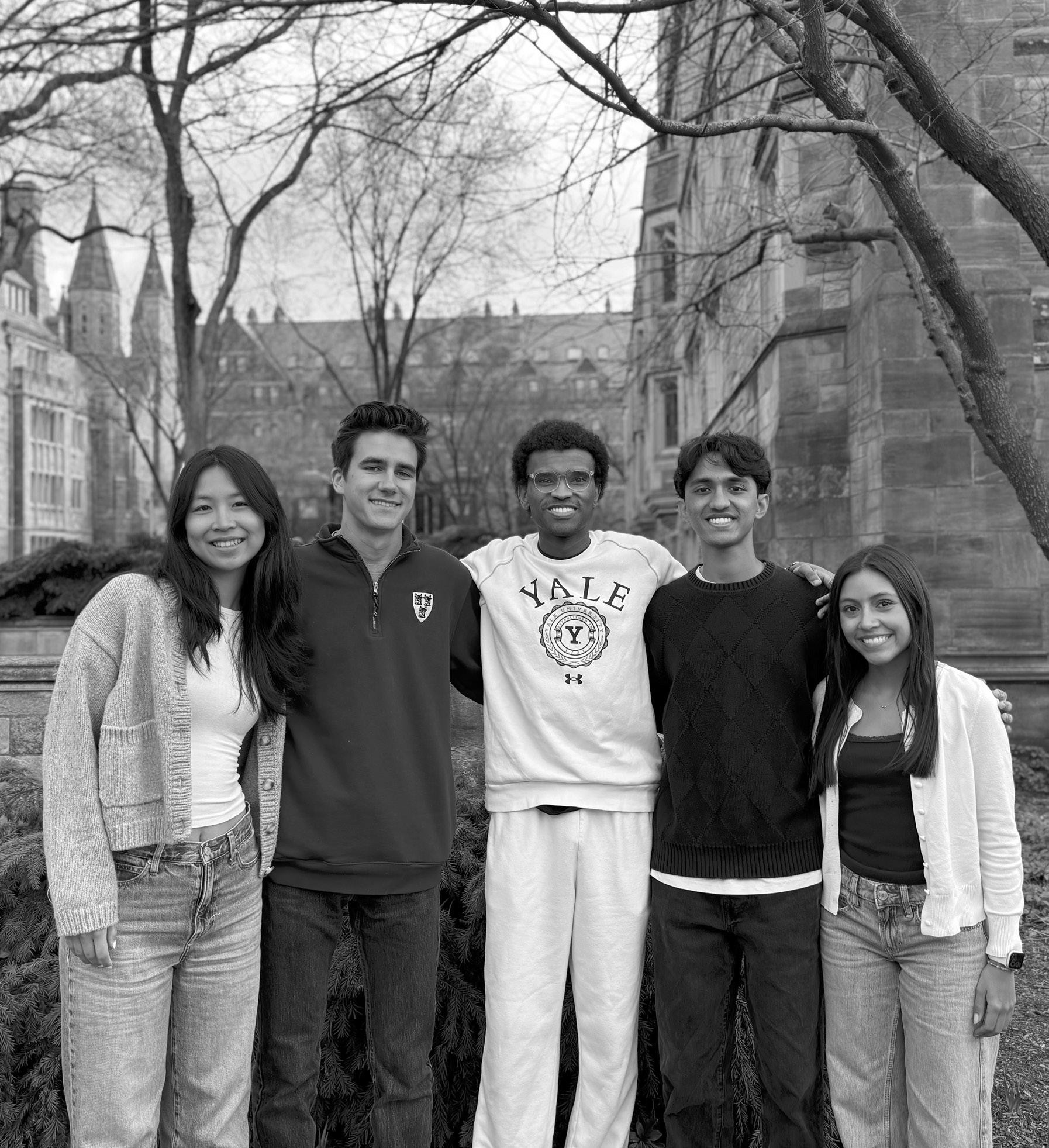

“I can’t fall in love
without you, please don’t fall in love without me”
I CAN’T FALL IN LOVE WITHOUT YOU ZARA LARSSON
BY SOFIA GAVIRIA PARTOW STAFF REPORTER
As the class of 2026 approaches graduation, seniors involved in Yale’s theater scene are reflecting on the communities they have built with fellow performers, professors and audiences during college.
In interviews with the News, three seniors highlighted a profound sense of intimacy developed through working with the same group of actors and directors for various productions, as well as their relationships with a tuned-in audience and the influence of coursework across departments.
“I think that the theater world can be super insular here, which is one of its biggest strengths,”
Emiliano Cáceres Manzano ’26, who is known for his credits directing “Spring Awakening,”
“The 25th Annual Putnam County Spelling Bee,” and other musicals and plays, said.
Cáceres Manzano, who is double majoring in Film and Media Studies and English, described the long-term collaborative relationships he has built within the theater community as some of the most meaningful parts of his time at Yale.
Cáceres Manzano said he first became interested in theater through a series of poetry recitation contests he participated in as an elementary school student living in Mexico.
That led him to acting, which in turn opened his eyes to directing as a means by which to shape the environment in which theater is created, he said.
“One of my favorite quotes about acting is that ‘acting is being private in public,’” Cáceres Manzano said.
“I recently just acted a little bit in a friend’s web series, and it reminded me of how vulnerable it can be. I think it’s important as a director to understand what you’re asking your actors to do.”
He also shared how his academic studies, particularly in the English major, have grounded his work as a director, a discipline that he described as ultimately founded in text analysis. He added that academic exploration beyond theater has allowed him to bring new perspectives and creativity to his shows.
For Hannah Kurczeski ’26 — who also spends a lot of her time outside of class working on student productions, including playing Sally Bowles in “Cabaret” — the decision to major in Theater, Dance and Performance Studies was an easy one.
“This is what I love to do and is
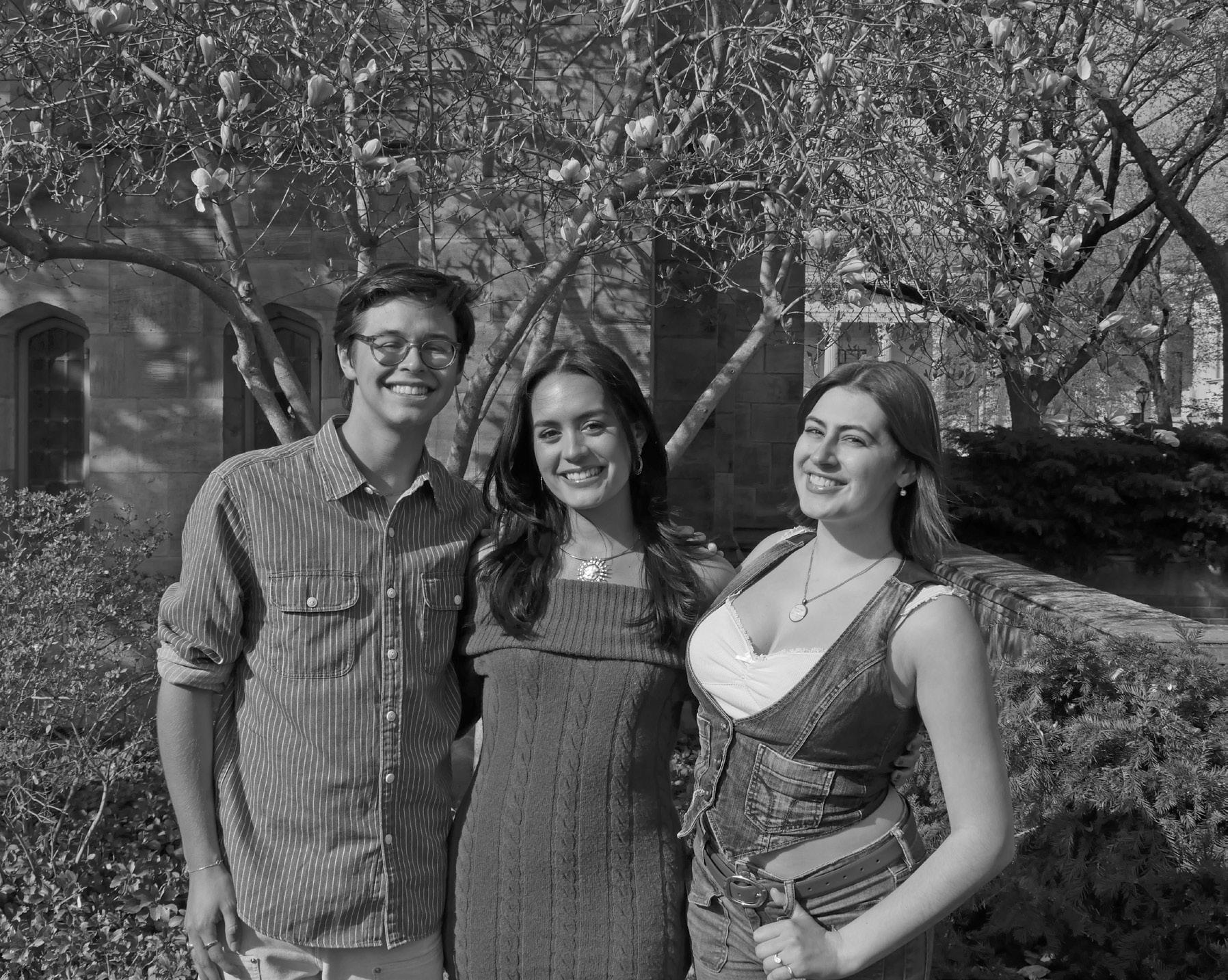
what I ideally would love to spend all of my time doing, always,” Kurczeski said. “There’s no place I’d rather be than rehearsal.”
Kurczeski mentioned Annette Jolles, Daniel Egan and Sohina Sidhu as three transformative professors she’s had during her time at Yale. The three professors are all in the Theater, Dance and Performance Studies department.
Kurczeski reflected on a piece of advice she had received from Jolles, who is also her thesis advisor. They had been speaking about the tendency to overintellectualize what’s happening on stage, which can result from studying theater in an academic setting.
“You always need to be serving the story and serving the work,” Kurczeski said, referencing Jolles’ advice. “At the end of the day, you have to trust yourself — that all the invisible prep work that you did, trust that it is there for you and it has got your back, and just be in the moment.”
Zaida Rio Polanco ’26, who is majoring in Environmental Studies but has also taken several theater courses at Yale, recalled another class — “Acting Shakespeare,” taught by Daniela Varon — that she said fundamentally changed her approach to acting.
The class introduced Polanco to a concept of three macrocosms into which the body is separated: the head as the heavenly space, the gut as what grounds an actor and, finally, the bowel region. Varon explained to the class that acting in Shakespearean plays requires one to locate different lines in the various regions of the body, according to Polanco.
“It’s those distinctions within any piece of work that I’ve worked on since then that have made a difference in how I approach new dialogue,” Polanco said.
Polanco highlighted that the distinctions have been particularly useful to her in conceptualizing darker roles she has played in theater at Yale, including the character Anita in a production of “West Side Story,” which was directed by Cáceres Manzano two years ago.
Both Polanco and Cáceres Manzano described “West
Side Story” as one of the most meaningful projects they’ve worked on at Yale. For Polanco, it allowed her to combine the three things she loves most — singing, dancing and acting — and fall back in love with theater. For Cáceres Manzano, the show taught him how to create theater both logistically and artistically.
“The high stakes of, ‘Oh my God, I don’t know if we’re gonna be able to pull this off,’ I think created an experience that was unlike any other,” Cáceres Manzano said. “Everybody was really, really invested in it. Even the audiences were invested.”
Cáceres Manzano also underscored the power of audiences, adding that one of the most special parts of doing theater at Yale is having access to audiences who are deeply interested in performance and art.
Kurczeski also said that the University’s support of artistic projects through Creative and Performing Arts grants and other programs means that the creative possibilities at Yale are endless for actors and directors alike.
“It grants students so much agency, especially at Yale, that I think frankly would blow the minds of people who study theater at more traditional BFA schools,” Kurczeski said. “If you can dream it, you can do it. You can truly make anything happen, and you don’t need to wait for someone else to make it happen for you.”
Kurczeski, Cáceres Manzano and Polanco all highlighted the collaborative nature of theater at Yale and its ability to build networks of trust and support among participants.
“Theater is such a powerful community builder, both the process of making it, but also watching it. It’s a presence art form, it demands so much engagement and real-life connection,” Cáceres Manzano said. “I think spaces like that are really missing from our lives.”
Yale’s 325th commencement will take place on May 18.
Contact SOFIA GAVIRIA PARTOW at sofia.gaviriapartow@yale.edu.
BY ANGELINA KOVALCHUK STAFF REPORTER
Five exhibitions that opened in the Yale Schwarzman Center on April 7 feature creative work from 53 young artists, including New Haven high school students, Yale undergraduates and Yale graduate students.
“Each exhibition explores how the students see and interact with the world; they are all responding to different themes and questions,” Carlynne Robinson, the center’s associate director of venues and exhibitions, wrote in an email to the News. “They explore identity, unity and memory, and nature and emotion.”
The works span a range of mediums, including visual art, photography, installation, digital work and multimedia. All exhibitions are free and open to the public.
“Whether someone is coming to the Yale Schwarzman Center to have lunch or see a performance in The Dome, I hope that people visit the exhibitions multiple times and experience something new every visit,” Robinson said.
“Call-to-Connect,” located in the building’s rotunda, was designed by Soleil Piverger ’27. The exhibition consists of two payphones positioned on opposite sides of the space, inviting visitors to connect and converse from afar.
Each payphone is accompanied by a phonebook, which contains extension numbers corresponding to previously-recorded messages.
“Even if you’re not creating one in the moment, you can look through and listen to all these other people’s memories and moments of connection,” Robinson said of the installation.
“The View From Here:
Accessing Art Through Photography” is on the second floor of the center. In collaboration with the Yale Center for British Art, the annual exhibition features photography by New Haven high school students.
According to Robinson, the photos were taken only on smartphone cameras.
“All you need is a cell phone, because these days, every smartphone has a camera. So everybody is a photographer in some sort of way,” she said.
The theme of this year’s “The View from Here” exhibition centers around “pathways” through the students’ lives and communities, according to the Yale Center for British Art’s website.
On the Schwarzman Center’s lower level, “Rooted in Heritage: Art Across Yale’s Cultural Centers” showcases visual art and photography from Yale undergraduate and graduate students. Each of Yale’s five cultural centers are represented in the exhibition.
“I just asked people to kind of reflect on the multicultural communities that they’re a part of at Yale, and how they feel represented here within their community and back home,” Robinson, who curated the exhibition, recalled.
Stella Duran Gonzalez ’29, one of the artists spotlighted in the installation, said her identity and experiences as a Puerto Rican greatly inspire her work.
In her featured pieces “Escúchame” and “Isla del Encanto,” Duran Gonzalez highlights classic figures and iconography from Puerto Rican culture, including the coquí frogs native to the island. Duran Gonzalez wants her work to inspire viewers to
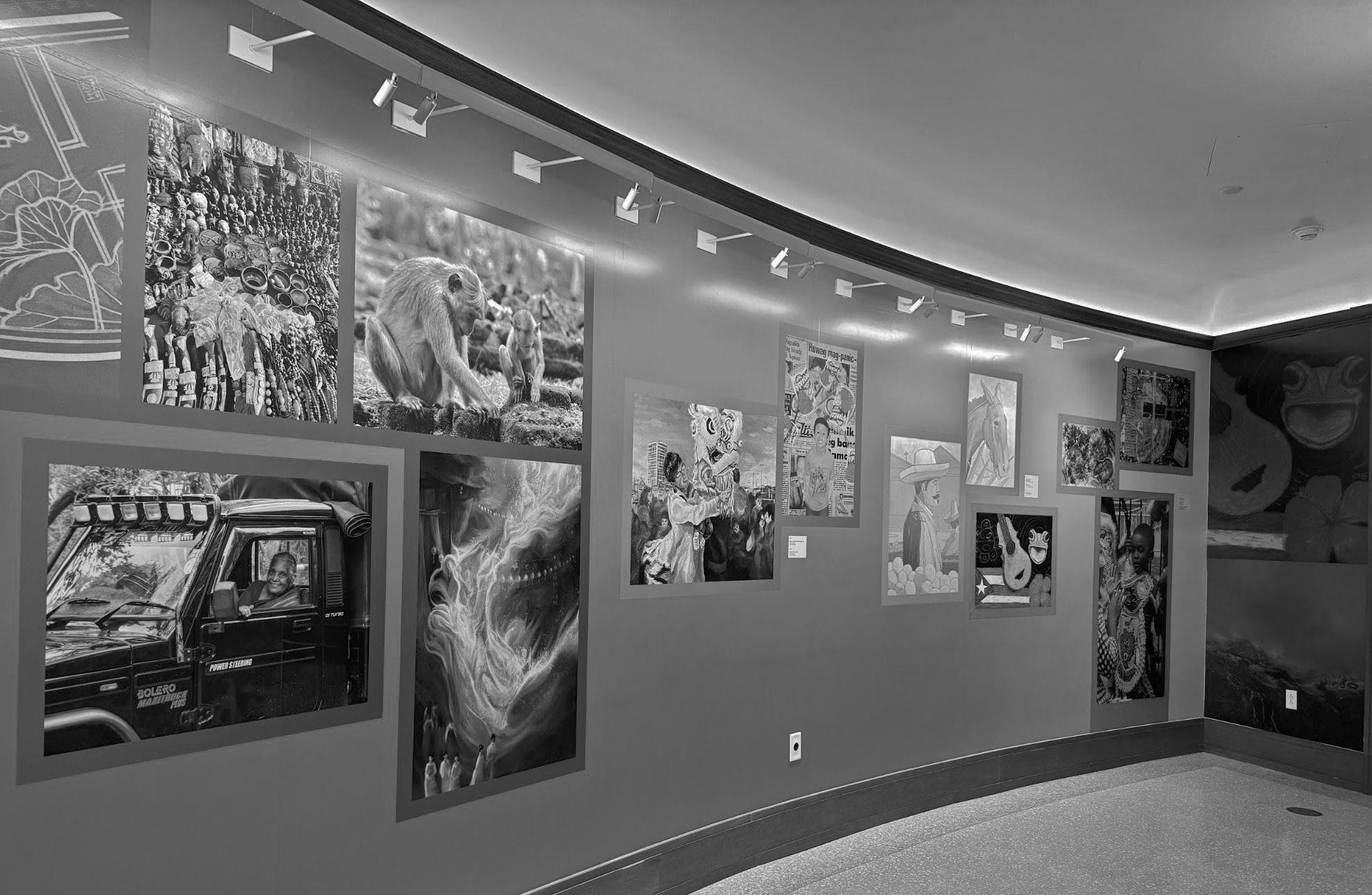
ANGELINA KOVALCHUK / CONTRIBUTING PHOTOGRAPHER
The new exhibit, “Unfurling the Flag: Reflections on American Patriotism,” includes significant documents from Yale’s collections, including an original copy of the Declaration of Independence.
reflect on their own cultures and backgrounds, she said.
“This dual reflection — artist reflecting while working, viewer reflecting while observing — is what I believe makes art so powerful,” she said.
Olivia Jiang SOM ’26 contributed the pieces “Ablaze” and “Waiting,” which feature urban scenes from ancient and modern China, to the “Rooted in Heritage” exhibit.
“The specific settings are deeply Chinese, but the feelings of longing, community, vitality and loss belong to everyone,” Jiang said of her work.
The corridor of the Schwarzman Center’s lower level displays “West of the River,”
which features rural landscape photography by Christian Badach ART ’26.
“His work is focusing on rural landscapes and how they function in the dichotomy of emotions,” Robinson said. “So thinking about community and isolation, bliss and madness, these different kinds of ways that you can feel emotions.”
Another exhibition, “Storyboard: Poetry and the Everyday,” is showcased virtually on the center’s website. The digital gallery showcases a mix of visual art, audio, video and written work submitted by Yale students. Students were asked to convey in their submissions the ways in which they interact with poetry
“on a daily basis, if at all,” according to the website.
Elisabeth Nwasokwa ’26 submitted a poem inspired by the autumn views on Hillhouse Avenue.
“While my poems are often about the beauty within the simplicity of nature,” she said, “the desire to reflect that beauty aligns with the long and continued history of storytelling of both my Nigerian and Haitian cultural heritage.”
“Poetry and the Everyday” was curated by Babette Thomas GRD ’26.
Contact ANGELINA KOVALCHUK at angelina.kovalchuk@yale.edu.
BRUNELLA TIPISMANA
Last Wednesday — an hour before the Yale Committee on Trust in Higher Education released its 58-page report calling for sweeping reforms — my history class discussed an essay written in Berlin back in 1807, during an earlier crisis in higher education. At the time, the university seemed like a pitiful relic, threatened by political crisis and the perceived decadence of national elites. In response, the Prussian government asked public servants and intellectuals to come up with solutions to academia’s existential crisis.
One response came from philosopher Johann Gottlieb Fichte, who submitted a proposal for a new university in Berlin — and, it turns out, a foundational manifesto for what became the first modern research university. This school would shed the academy’s medieval habits. It would raise scholars committed to the public sphere. It would also be a refuge. Insulated from an increasingly commercial world and uncompromised by crude professionalism, young people would cultivate a new art of learning. This could only happen under specific material conditions, Fichte wrote: The university needed “to cover [students’] current expenses and provide a guarantee of appropriate support in the future.” To do otherwise was to subordinate the pursuit of knowledge to the desire for profit — and, in the process, to ensure that students learned nothing.
As we discussed these passages in class, we all burst out laughing. Yes, we acknowledged one after another: pre-professional culture — pointless coffee chats, club meetings, evenings spent tinkering with Workday applications — cannibalizes the university’s academic core. But it also seems impossible to graduate into a semi-secure future without giving in to it.
Indeed, I can only sit down to write this piece because I am no longer sinking 30 hours a week applying to internships and other resume-stuffers. To be clear, I didn’t spend my sophomore and junior years like this for fun. I would have much preferred to spend that time poring over essays or doing the optional readings.
No: I did it because I am a lowincome student and I knew I’d have to care for myself and my family soon after graduation. And while this pre-professional emphasis did get me a job, it also seems obvious to me that it was the single most destructive force in my undergraduate education.
So, as I read the Committee’s report after class, I was surprised to see only a passing mention of this side of student life. It calls on Yale to focus on its austerely rewritten goal, “to preserve, create, and share knowledge,” through measures like a no-device policy (a good idea) and grade deflation (a more controversial one). But in its attempt to “re-center the classroom,” the Committee misses what pushed it aside in the first place: not the students, but the conditions they were embedded in and the choices their university made in response. So I believe, as Fichte did, that nothing would bring classrooms back to the fore more effectively than a reimagining of what Yale owes its students.
For current undergraduates, the Buckley Institute arranges internships at the National Review and the Manhattan Institute, and the Block Family Foundation funds
BUT IT FEELS IMPOSSIBLE TO GRADUATE INTO A SEMI-SECURE FUTURE WITHOUT GIVING IN TO IT.
highly competitive fellowships in local journalism. Yale should radically expand post-graduate support for similar public service initiatives. Freed from spending the years before graduation chasing the spring program that leads to the internship that leads to the job offer, students could “re-center the classroom” secure in the knowledge that a cushion of time explicitly devoted to kickstarting their careers awaits them after graduation.
As the report rightly acknowledges, the administration must also steer students’ considerable privileges — inherited from their families or acquired here upon admission — toward braver pursuits than editing PowerPoints for health insurers. Consulting and finance have excelled at selling themselves as the natural next step for any competitive undergraduate; Yale must use its resources just as directly to raise the status of public service careers, at least within its own walls.
My proposals might seem obvious, yet the university’s approach to its current budget shortfall suggests otherwise.
In addition to shrinking summer activity funds and low-income student stipends, the administration has cut the contracts of contingent faculty, the instructors most directly tasked with supporting our education. For Yale to implement this report as it erodes the tangible foundations of intellectual life is like giving a blood transfusion to a patient whose wounds haven’t been stitched shut: You’ll end up with a corpse anyway.
FOR YALE TO IMPLEMENT THIS REPORT AS IT IS ERODES THE TANGIBLE FOUNDATIONS OF INTELLECTUAL LIFE IS LIKE GIVING A BLOOD TRANSFUSION TO A PATIENT WHOSE WOUNDS HAVEN’T BEEN STITCHED SHUT: YOU’LL END UP WITH A CORPSE ANYWAY.
To be fair, the Committee’s report does nod at expanding public service fellowships. And because responsibility for recent cuts lies with the Office of the Provost and the Board of Trustees, it also rightly calls for a stronger faculty voice in university governance. It must ask for more.
To focus on academic excellence means putting pressure not just on students’ grades, but on an unaccountable administration often more concerned with cultivating donors than knowledge. It might also mean contending with the failure of the university when run as a corporation.
To restore public trust, it isn’t enough to simply strike out the word diversity from our mission statement and make vague allusions to intellectual renewal. Let us remember that the choice between those faddish changes and the real material conditions needed for the cultivation of thought is not new. In fact, it’s the same Fichte wrote about in 1807: today, the university “must justify itself, or perish.”
BRUNELLA TIPISMANA is a senior in Saybrook College studying History. She can be reached at karinabrunella. tipismanaurbano@yale.edu.
GUEST COLUMNIST
JEAN-CLAUDE PIERRE III
It is frustrating that three years since the end of raceconscious admissions, one year after the first-ever election of an all-Black Yale College Council ticket and in the midst of an intense anti-DEI campaign against universities across the nation, there is little to no journalism that explicitly and substantively regards race on this campus.
This is troublesome because the stakes of comprehensiveness in our journalism are high, especially in a democratic society. The dissemination of information vitalizes our perception of the world, in turn informing our actions within it. Raceblind journalism builds limited perceptions, which — often, unknowingly — motivate the construction of flawed realities. This is problematic in the context of any race, but I’d like to focus on the need for change specifically in relation to blackness at Yale.
First and foremost, we need better representation of Black journalists within our publications. While it may seem at a glance that the Yale Daily News’ racial demographics are generally reflective of that of broader Yale, representation dwindles in more influential positions. In the past 20 years, the News has had 65 managing editors and editors in chief, including in the incoming board. Four have been Black; none of the four have been editor in chief. I wouldn’t be surprised if this trend is reflected in most of Yale journalism. Throughout American history, Black journalists have played an important role in intervening on prevailing narratives within American discourse. Ida B. Wells pioneered data-driven investigative journalism to disprove misleading portrayals of lynching. It was the Black-owned Jet magazine that spread the tragic photo of Emmett Till and lit an urgent fire within the Civil Rights Movement. Ta-Nehisi Coates has repeatedly countered comfortable
distortions of America’s racial reality that white liberal journalists so easily fall into.
The reason for this is simple: The uniqueness of the Black experience leverages Black journalists to have different perspectives on key issues. This is most true while directly reporting on race — white journalists have often been allowed to take for granted what have been matters of life and death for Black journalists, instantiating a strong bias — but it remains true for all topics of discussion, primarily because race is so fundamental to our society that it affects every realm of our existence.
This is not to say that a Black food journalist needs to infuse their racial experience into their reportage on, say, the taste of a meal, but rather that their lived experience has been significantly affected by their race in one way or another, and that lived experience often will affect how they taste and interact with said meal.
Where it often fails to be monolithic, the Black experience on Yale campus remains undeniably unique. Whether it be from The House’s Black oasis or knee-deep in the whiteness of Sigma Nu-turned-Knox Club, we as Black Yalies see this campus differently, and that matters — it is extremely consequential to the type of journalism we can and want to produce.
But even more importantly, there is a need for what I call Black journalism. By this, I mean journalism — by journalists of all races — that concerns itself with the intricacies of Black life on this campus. This can be applied to Yale-wide topics: What were attitudes about race in regards to the YCC election of Andrew Boanoh ’27 and Jalen Bradley ’27? We love talking about Yale dating, so how is it affected by race?
Or this can be focused within Yale’s Black community: Did the affirmative action ruling have an effect on the Black community that was not captured by the
STAFF COLUMNIST
ZACHARY CLIFTON
demographic percentage? How do Black people feel about the Black community here at Yale?
While some pieces have discussed race, Yale publications have not approached these questions with the nuance and depth they deserve — to ask beyond the “what” of the matter, and inquire at length about “why” and “how” things are the way they are.
These types of questions are not just a means to an end of more comprehensive journalism. Journalism that asks these questions has a pragmatic benefit to campus life. We are in desperate need of a more robust archive of Black life on this campus. There are repeated conversations of issues of all types we wish we could improve upon, but once we learn enough about Yale life to have any sort of solution, we are on our way out and too old, jaded, busy and tired to do much about it. Black journalism highlights and archives meaningful discussions about problems and solutions relevant to the Black experience here at Yale. Data collection, wide-ranging interviews and well thought-out reportage and analysis are far more helpful to present and future Yalies than the insular dialogue we currently rely on.
Thus, Black journalists and Black journalism are both critically important to our Yale community. They contribute to our journalism by building new knowledge and new pathways to action. With better information, it becomes easier to rally, easier to make change — the type of change that makes Yale a better place. This isn’t new. It’s what my ancestors have been doing in America, in Haiti and around the world for centuries. And they’ve been able to do it because they and the world were aware of their race.
JEAN-CLAUDE PIERRE III is a sophomore in Berkeley College. He can be reached at jean-claude.pierre@yale.edu.
Last year, on a warm April Fools’ Day, I stood on the sidewalk outside Schwarzman Center, where Prospect Street becomes College Street, and watched President Maurie McInnis drive what I would later call a Harvardhued, Musk-manufactured car. I obviously don’t care what car she drives. But I was a firstyear student, and I was angry: the institution was old and enormous, and in light of the second Trump administration, suddenly seemed small. That observation on College Street, and what I felt it represented, became an essay. Then that essay became a series. I wrote that what was happening at Yale was Orwellian. I wrote about the university’s poor judgment in allowing itself to become a passthrough for a donor sending funds to the Friends of the Israeli Defense Forces. And, only days ago, I wrote about what I called the Summer Storage Wars — an unarmed conflict with an endowed chair of history calling Yale College Dean Pericles Lewis “arrogant” for comments he made about “stuff.”
But now, I’m putting the series aside.
Last week’s “Report on Trust in Higher Education” was written by a committee co-chaired by Professors Julia Adams and Beverly Gage ’94, and it is the best and boldest set of recommendations to come out of Yale since I’ve been a student here. My favorite idea in the report is that a minimum standardized test score should be set for applicants. The implication is important: Yale is not the right school for all of the students in its enormous applicant pool. Yale should not try
to be everything for everyone — and pretending otherwise serves neither the institution nor the students it misleads. It is only the right school for an infinitesimal number of them. There’s no reason for Yale to leave ambiguous whether a student with an 1180 on the SAT or a 26 on the ACT will be admitted. That ambiguity is institutional dishonesty. Yale should be too academically rigorous for a student with those scores to succeed here. That is what rigor means — or, at least, what it used to mean.
There may be a Yale student reading this who has an 1180. That student is probably thinking about how their grades are pretty good and about the stupidity of my argument — and that student is not entirely wrong. Yale has grade inflation, and grade inflation has made their thinking reasonable. I explain my department, political science, the same way to every student taking their first course. “Let me tell you about the grading scale,” I say. “It runs from A to A-minus, and one B-plus is reserved for the worst student in the class — the one the professor has inevitably decided is beyond saving.” Then I tell them that my explanation is a joke. It is, mostly.
I don’t intend to insult students who have received a B. But the mediocrity that ambiguous admissions standards and grade inflation creates is real, and artificial intelligence has made it worse. Students can now absorb course content without attending lecture, without thinking and without being present in any meaningful way. I think all of this has made exceptional students worse, and I don’t necessarily
exclude myself from the students who are slouching toward mediocrity. I have suffered from many of these same impulses — not going to class and using AI, among them. But unfortunately, in many departments, the worst penalty that students risk for these infractions is an A-minus. I think the report was written with this intuition. It was written by faculty who still believe academics should mean something — faculty who are serious about Yale being serious. Professors Adams and Gage, who co-chaired the committee have, in the past, signed letters calling for change and accountability from the university’s administration. They are exactly the kind of leaders our university needs. That is a different kind of leadership than what I’ve been writing about for a little more than a year, and it’s coming from those who are actually in the classroom.
Whether any of this will restore public trust in Yale, I don’t know. I’m not sure public trust is something Yale should want, particularly if the American public now distrusts institutions by default. There is no practical argument for chasing the trust of someone with no interest in reconsidering it. But there is a different argument — for Yale getting serious about serious students.
Yale’s faculty, at least, seems to understand what the university’s reputation is built on.
ZACHARY CLIFTON is a sophomore in Benjamin Franklin College studying Political Science. He can be reached at zachary.clifton@yale.edu.
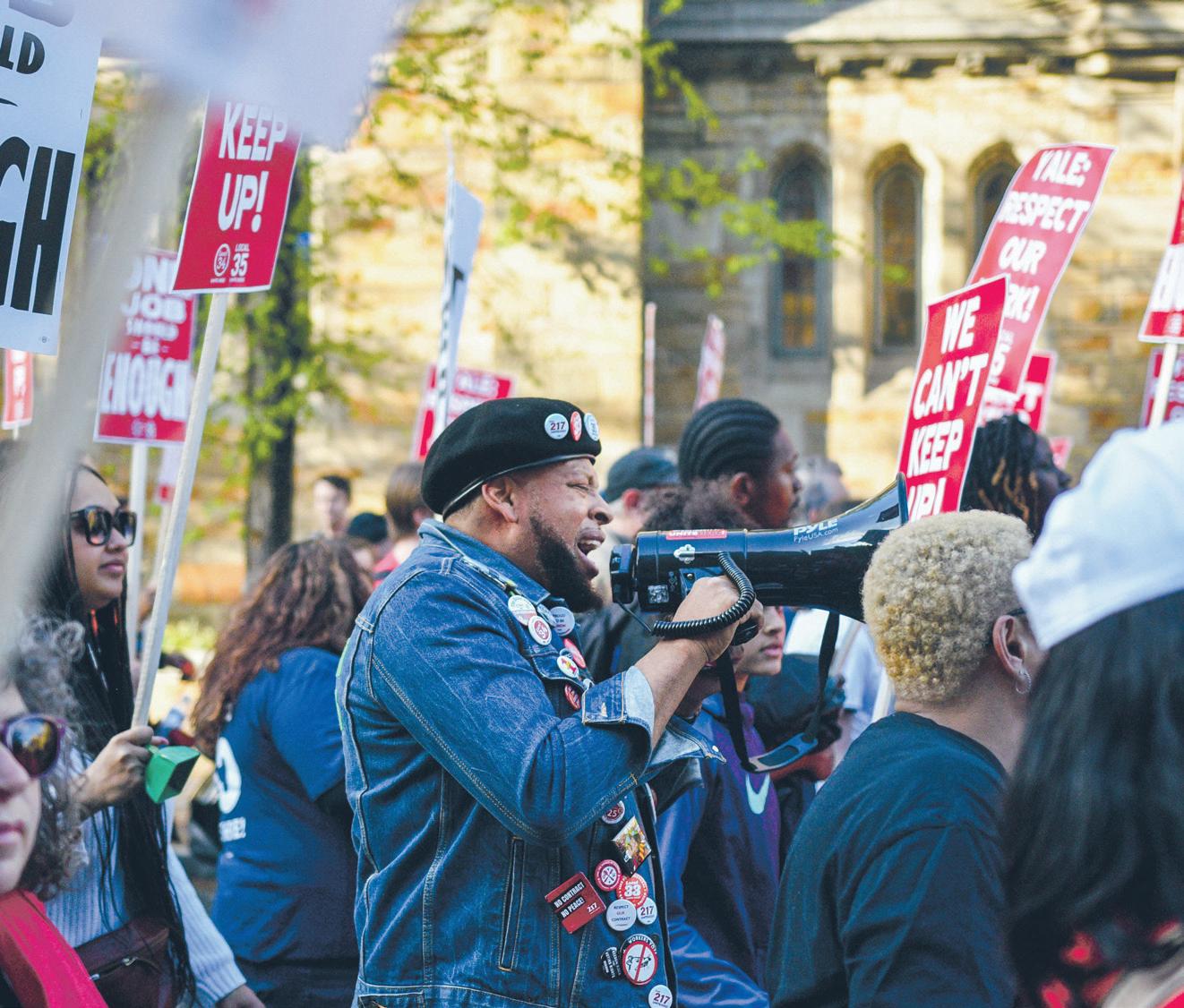
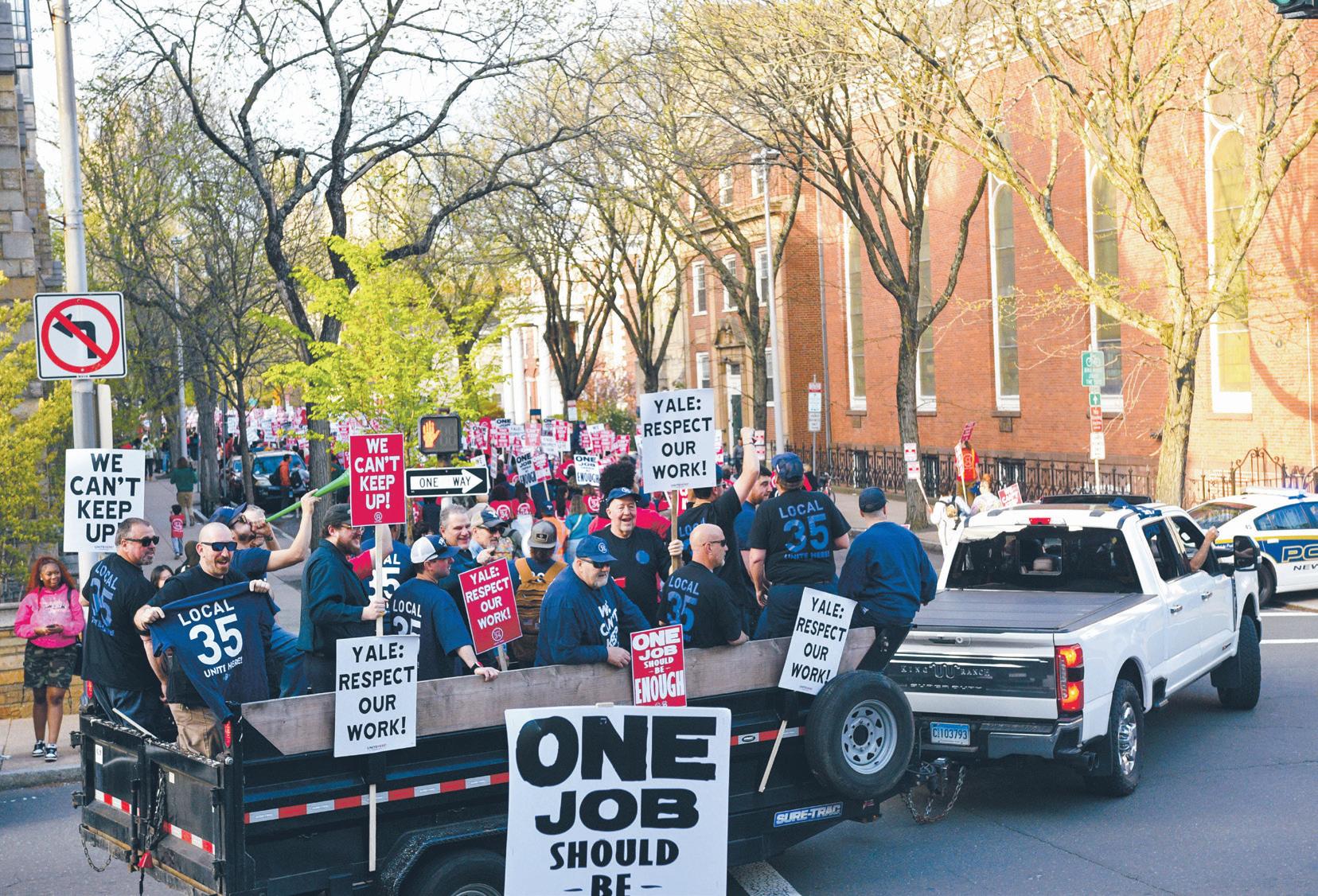
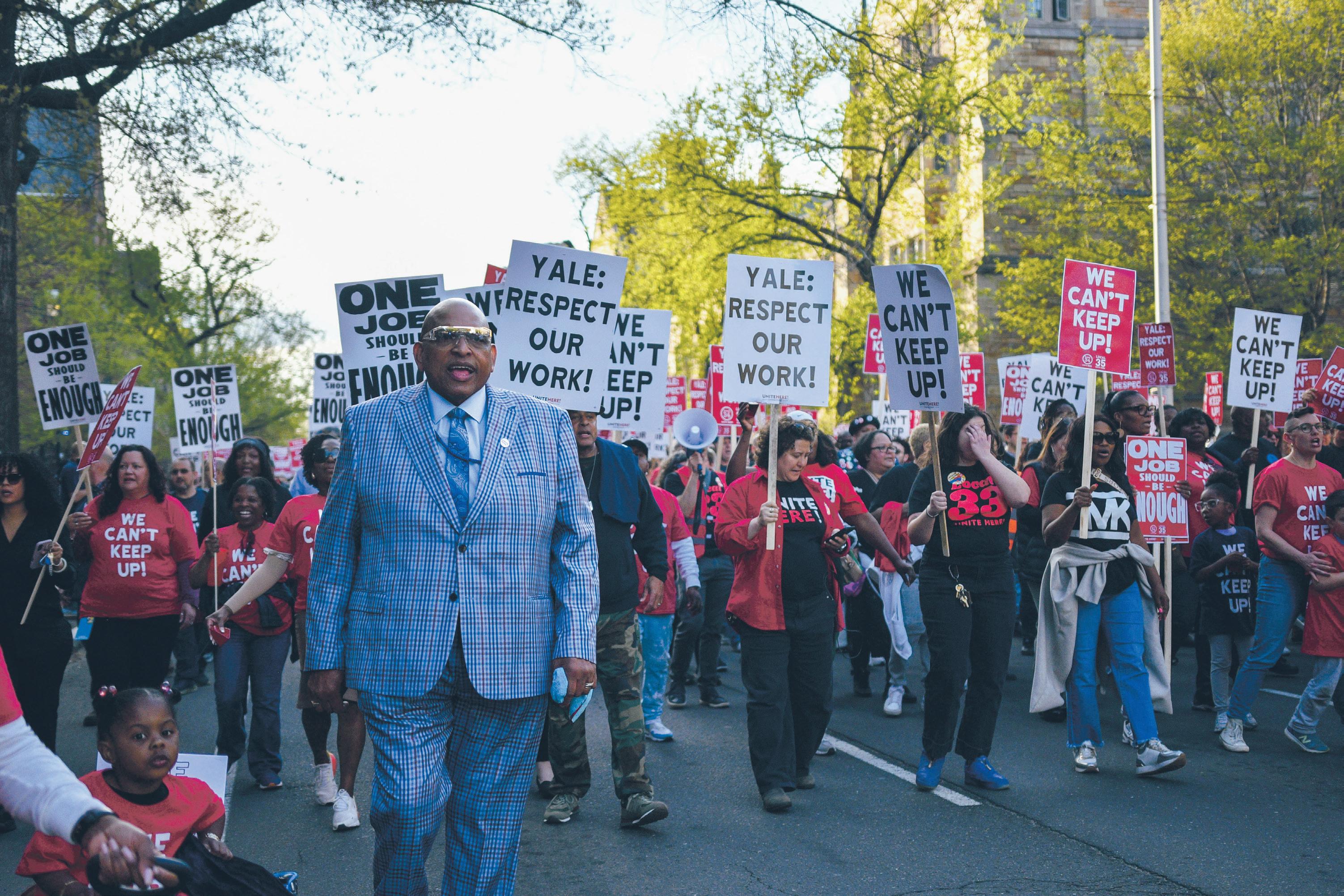
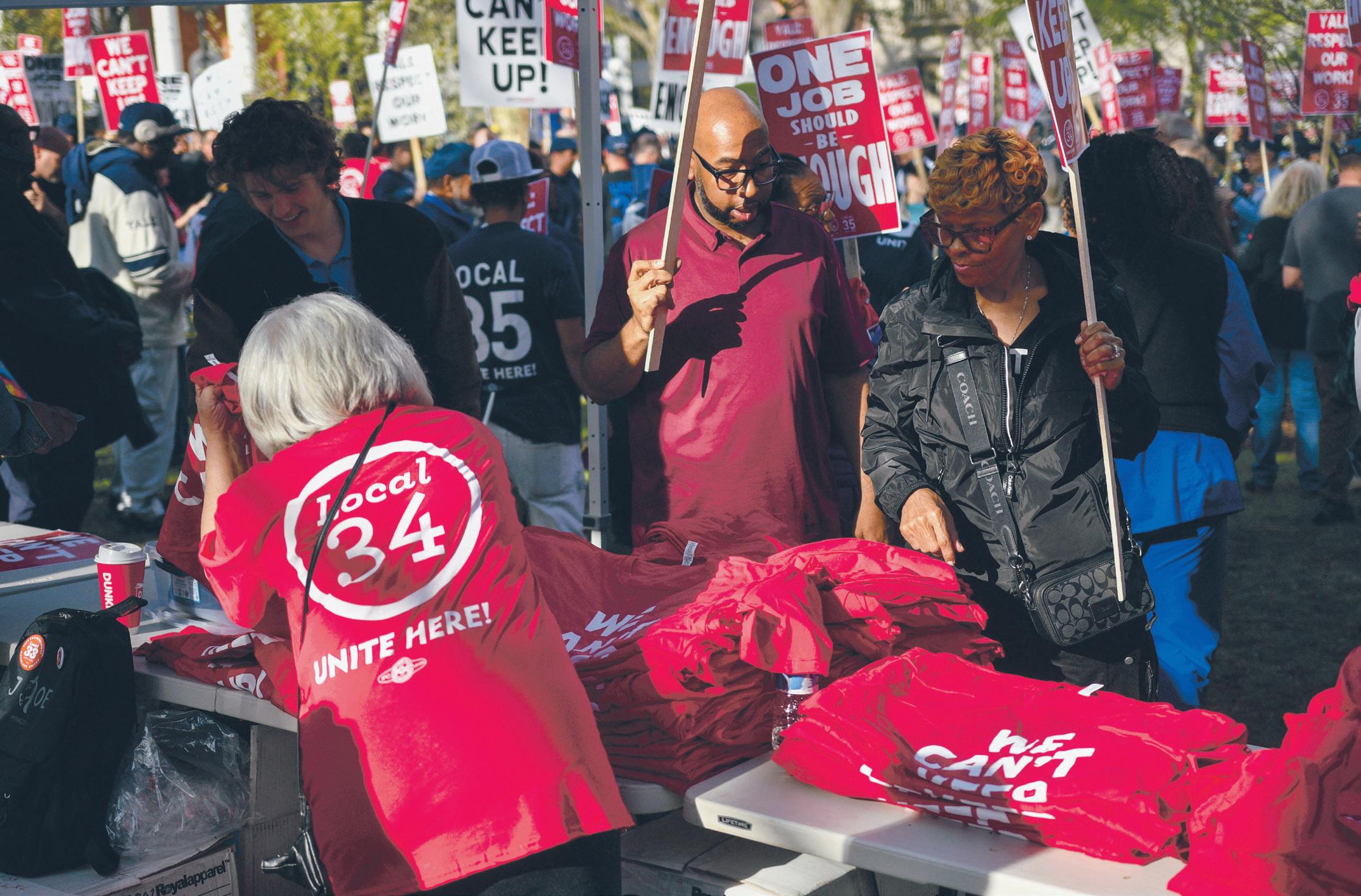
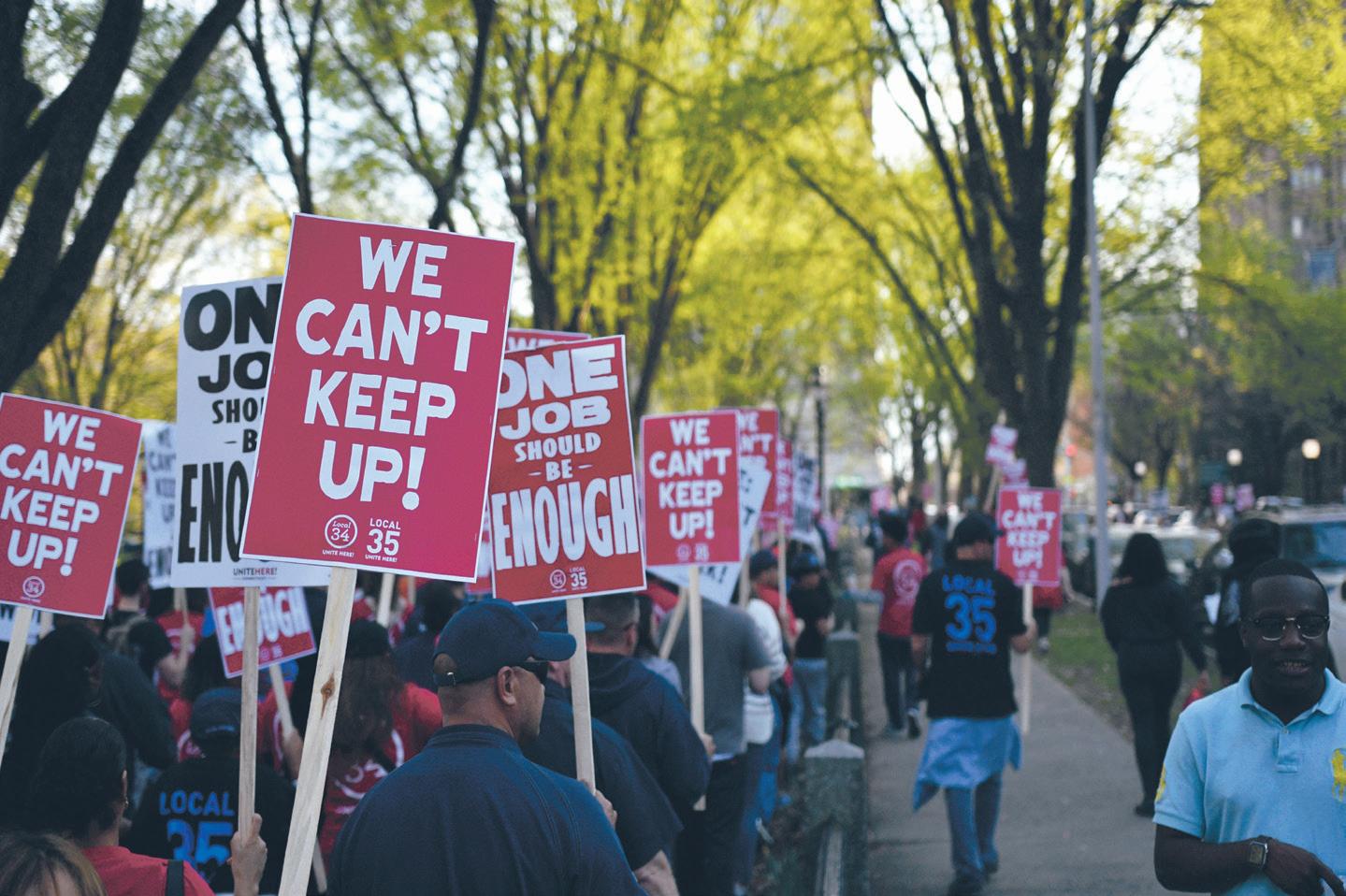
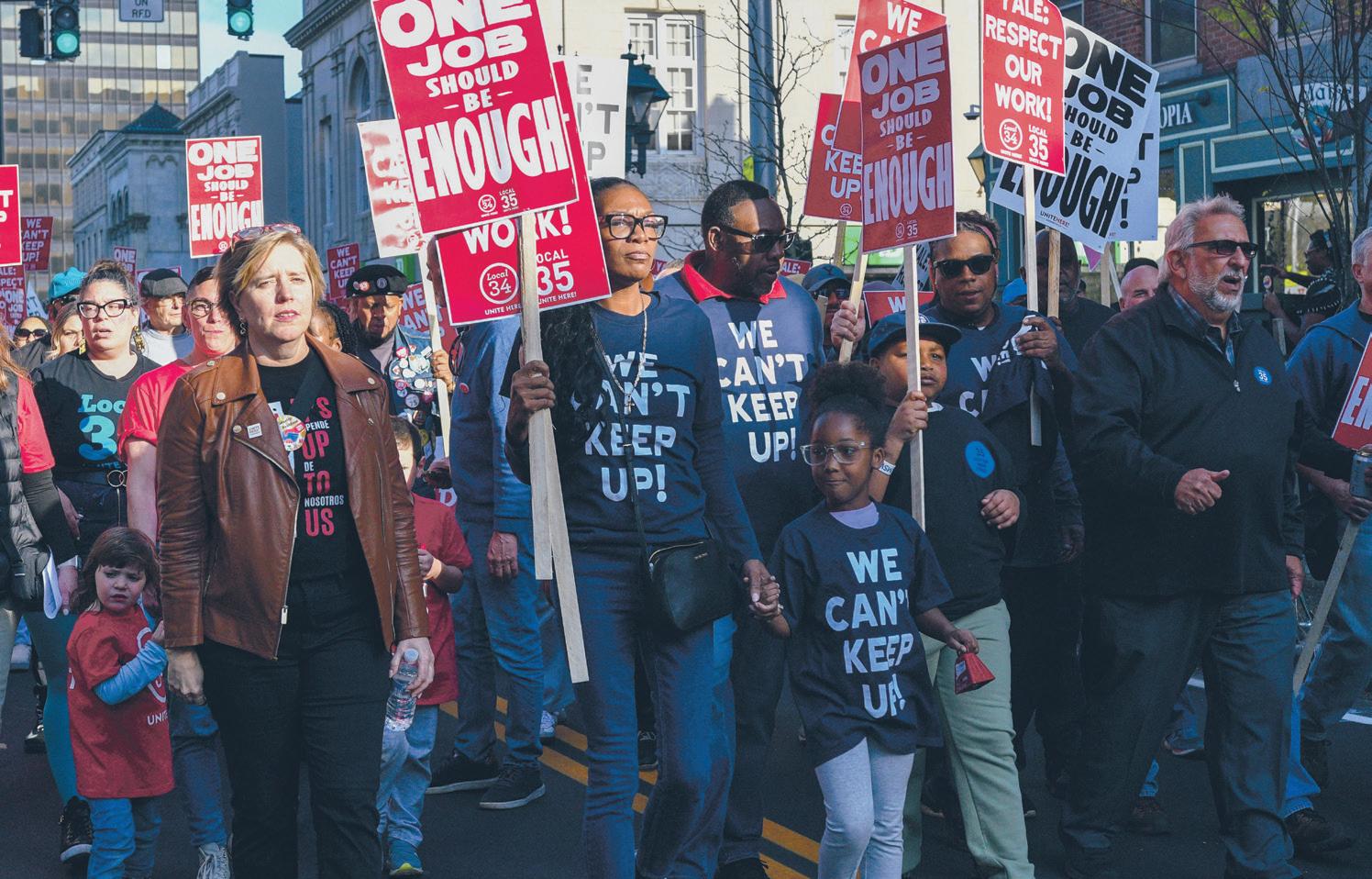

“The team is super close, we are always there for each other on and off the
and it shows as we've been able to get through close matches.”
BY JUSTIN LEAHY, STAFF REPORTER
The Yale Bulldogs (22–11, 11–4 Ivy) prevailed 14-5 in a Wednesday game against Sacred Heart University. The win follows the team’s fourth consecutive Ivy League series victory over the weekend, when it won two of three games against Cornell in Ithaca. That victory extended Yale’s lead over Brown (9–4 Ivy) in the Ivy League standings by a full game.
In the first inning of Wednesday’s game against Sacred Heart, the Bulldogs experienced a hiccup when their starter gave up four earned runs. However, Yale soon recovered.
Teo Spadaccini ’27 joined in relief, throwing three strong scoreless innings. From there, the offense took it away. Jack Dauer ’28 had a career day at the plate, crushing two homers and driving four runs, and Kaiden Dossa ’27 and Colin Sloan ’27
also went deep. It was the first game since 2022 in which the Bulldogs hit four taters. The opener against Cornell on Friday appeared to be a rare off day for the Bulldogs. The starter, Daniel Cohen ’26, who had been nearly immaculate over his last several appearances on the mound, allowed four earned runs in just 4.1 innings. Yale batters could only draw up three hits against the Cornell pitching staff, though with the help of two sacrifice flies and a hit by pitch with the bases loaded, they were able to scrape together three runs. The Big Red was able to hold its own in the late innings and pulled ahead to a 5-3 win.
Saturday’s doubleheader was a different story for the Bulldogs on both sides of the diamond.
In the first game, Jack Ohman ’28 gave the Bulldogs a muchneeded bounce-back start with a strong pitching performance through six innings.
The Bulldog offense also locked in. After scoring four runs in the first inning, Yale chalked
up 16 runs on just 12 hits. Dossa reached base three times and had three runs batted in to extend his on-base streak to 25 games. Dauer also drove in three runs and he extended his runs batted in total to a team-leading 37. Thanks to the three scoreless innings performance by Ben Winslow ’27, Yale closed out the game strong to take the win 16-5.
In the latter part of the day, Tate Evans ’26 was on fire, throwing 109 pitches and allowing just three runs. Evans now leads the Ivy League with a 2.34 earned run average.
Throughout the series, Dossa and Garrett Larsen ’27 were forces to be reckoned with. Larsen had two multihit games on Saturday and now heavily paces the Ivy League in both batting average, with a .389, and base percentage plus slugging percentage, with a .998. In the second game of the doubleheader, Dossa extended his on-base streak to 26 games.
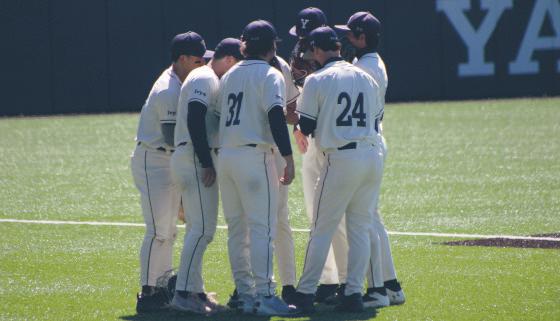
Yale will soon head to New York to face off against Columbia (11–21, 6–8 Ivy). The Bulldogs and Lions are scheduled to play a doubleheader on Saturday and finish off with a noon rubber match on Sunday. Last season, Columbia took the Ivy League tournament from Yale, even though the Bulldogs had won the regular season title. This year, however, Columbia has struggled, and has so far been unable to replicate its form from last year. The Lions sit
near the bottom of the Ivy League, despite strong wins over powerful teams like Brown and Harvard. The Bulldogs begin their three-game series against Columbia at 11:30 a.m. on Saturday. The game will be broadcast live on ESPN+.
Contact JUSTIN LEAHY at justin.leahy@yale.edu.
BY LIZA KAUFMAN STAFF REPORTER
The No. 9 Yale men’s lacrosse team (8–4, 3–2 Ivy) will travel to Providence to face Brown (6–6, 1–4 Ivy) in its final regular-season contest on Saturday afternoon.
With three other Ivies having already punched their tickets to the Ivy League tournament, only one berth remains. Yale currently sits in fourth in the standings with a 3-2 record in Ivy play, just ahead of Penn (6–6, 3–3 Ivy). A win on Saturday would clinch Yale’s spot in the tournament. However, even with the added pressure of Saturday’s matchup, the Bulldogs are well-positioned to return to New Haven victorious.
After picking up a 16-9 victory at Hofstra University (4–9, 2–3 CAA) last Tuesday and a 15-2 win over the University of Albany (8–5, 5–0 AE) on Senior Day over the weekend, the Elis extended their win streak to five.
By triumphing over the Great Danes, Yale snapped the University
of Albany’s six-game win streak just after the Great Danes secured the America East regular-season title. Yale also moved up three spots in the Inside Lacrosse KANE Men’s Division I Media Poll and now sits just ahead of No. 10 Harvard.
The Bulldogs are ranked among the top 10 teams in the nation for the first time this season, which puts them in a good position to earn an at-large bid to the NCAA tournament at the end of May.
While the Elis will enter Saturday’s contest on a hot streak, the Brown Bears will be recovering from a bitter double-overtime 11-12 loss to the Penn Quakers.
Despite Brown’s jump to an early 4-2 lead in the first quarter, Penn knotted the game at the end of the half and then took a one-goal lead at the end of the third quarter. Four unanswered Brown goals in the fourth quarter sent the game into overtime. Neither team scored in the first overtime period, but a Penn sudden-death goal in the second period handed the Quakers a victory on the Bears’ home turf.
While the Bears will be hungry to secure their second conference win of the season after last weekend’s loss, they are already out of the running for the postseason, sitting
sixth in the Ivy League standings.
The Bears opened the season with three wins in their first four non-conference games against Fairfield University (4–9, 1–4 CAA), Providence College (6–8, 2–2 Big East) and Bryant University (6–5, 3–2 AE), but they have struggled to find consistency this season, holding 3-3 records both at home and on the road.
Brown started Ivy play in Ithaca with a 9-18 loss to then-No. 11 Cornell (9–3, 4–1 Ivy). The Bears then rebounded with two non-conference wins over the University of Massachusetts Lowell (2–9, 0–5 AE) and St. John’s University (2–11, 0–4 Big East) before dropping their Ivy home opener to Princeton (10–2, 4–1 Ivy) 14-20.
The Bears showed major signs of improvement when they nearly served Harvard (9–3, 3–2 Ivy) its first Ivy loss of the season in Cambridge, a task which Yale later accomplished when they upset the then-No. 5 Crimson 15-9. Following the BrownHarvard game, the Bears edged out Dartmouth (4–8, 0–5 Ivy) 17-16, a team Yale steamrolled 18-7, before falling to Penn last weekend.
Yale’s offense has surged in recent games, tallying at least 15 goals in each of the last four games.
Midfielder William Sheehan ’26 potted four in the 18-7 victory over Dartmouth, while midfielder Cole Cashion ’27 led the attack against Harvard, netting five goals. In last week’s games against Hofstra and the University of Albany, attackman Sean Grogan ’29, the team’s leading scorer, recorded a combined seven goals and three assists, while attackman Connor Gately ’28, who leads the squad in points, potted three goals and recorded seven assists.
The goals just kept rolling against the Great Danes as Yale took a 9-0 lead at the half and the man-up unit converted on all three opportunities. Yale’s man-up scoring percentage, 0.609, is second in the Ivy League and beats out Brown’s 0.459. Additionally, Yale has the nation’s second-best man-up offense at 0.652.
While Brown’s Jeremy Hopsicker is second in the conference and 13th nationally in goals per game, averaging 2.83, Grogan follows closely with 2.17. In assists per game, Gately also leads the conference and is ranked 10th nationally.
On the other end of the field, Yale holds a defensive advantage over the Bears.
Despite the University of Albany
declared unfinished.
1-4, with Princeton the victor.
BY REMI CLARK-REDSTAR STAFF REPORTER
The Yale men’s tennis season wrapped up its regular season campaign on Saturday and Sunday against Princeton and Penn. The Bulldogs finished with a record of 16-9. Coming off of the win against Dartmouth and a loss versus Harvard last weekend, the Elis hit the road to finish up the string of Ivy matches that began on March 28.
The team started the weekend matchups in Princeton, squaring off against the Tigers at the Lenz Tennis Center. In the doubles, it was Vignesh Gogineni ’26 and Edward Liao ’28, Jason Shuler ’27 and Dylan Tsoi ’27, and Eric
Li ’26 and Ethan Chung ’29 teaming up. In singles, Gogineni, Liao, Shuler, Li, Jim Ji ’27 and Tsoi hit the court. Princeton started the matches off hot, seizing the doubles point with two wins out of three doubles matches played. Gogineni and Liao, and Li and Chung were defeated 3-6 and 4-6, respectively; Shuler and Tsoi’s match went unfinished. In singles, Yale put up a valiant fight, taking four out of the six matches to three sets, but ultimately could not top Princeton’s momentum.
Gogineni fell 3-6, 6-2, 3-6, Liao 2-6, 4-6, and Li 3-6, 6-4, 1-6. Shuler and Ji’s matches went unfinished with final scores of 4-6, 6-4, 3-4 and 6-3, 4-6, 5-6, respectively. Tsoi took the solitary win of the day with a straight-sets 6-4, 6-3 win. The final points tally for the day was
“There was never a moment within the match where we were completely out of it,” Liao told the News. “Every single match was super close and each person had chances and it shows with the close scores. It showed that we were missing the small edge over the team where they were ultimately slightly better.”
The following day, the Bulldogs headed down to Philadelphia to square off against the University of Pennsylvania at its home turf. The lineup remained the same from the previous day.
Penn opened up similarly to Princeton, taking the doubles point with two wins out of a total of three matches played. Shuler and Tsoi, and Liand Chung lost 6-2 and 6-0; Gogineni and Liao’s match was called early while Yale led 4-3, being
In the singles, Penn closed the door on the Elis, picking up the three necessary wins for the victory. Gogineni, Shuler and Chung were defeated, and Liao, Li and Tsoi had their matches called early, going unfinished. The final score against Penn was 0-4, Penn victorious.
“I think starting well is something to really strengthen,” Shuler said. “I think they got off to an early lead on some courts and were able to carry that momentum throughout. I think another thing is dealing with adversity. There were a lot more external factors this match than what we were used to, and I think that distracted some of us from performing our best on the tennis court.”
With those last matchups complete, the Bulldog regular season came to a close with a
holding a slightly better penalty-kill percentage than Yale, the Bulldogs held the Great Danes to one-for-six on man-up opportunities and only two goals, giving up the fewest goals since 2014.
This time around, Yale’s penalty kill percentage of 0.591 edges out Brown’s of 0.575. Additionally, Patrick Pisano ’26 and Luke Michalik ’27 are second and fifth, respectively, in the Ivy League in caused turnovers per game.
In the cage, Yale’s Ben Friedman ’28 holds a statistical advantage. He ranks second in the conference and ninth nationally with a save percentage of 0.567, while Brown’s Connor Foley is ranked 34th nationally with a percentage of 0.519. Friedman is also first in the Ivy League and 10th nationally in saves per game, averaging 13.09 to Foley’s 11.42.
The Bulldogs will look to exploit the Bears’ struggles at home and return to New Haven with a ticket to the postseason in hand.
Faceoff is slated for 12 p.m. on Saturday at StevensonPincince Field.
Contact LIZA KAUFMAN at liza.kaufman@yale.edu.
16-9 record, the best record the men’s tennis team has achieved since the 2016-17 season, when they also went 16-9.
“The team is super close, we are always there for each other on and off the court, and it shows as we’ve been able to get through close matches,” team captain Li told the News, reflecting on this past season’s successes. “Also, we practice everyday like we are playing a match, and that has significantly raised our intensity and overall level and has led to significant improvements for many of the guys.”
The NCAA tournament will begin May 1 and last until May 23. The teams that have made the tournament will be announced on April 27 at 4 p.m
Contact REMI CLARK-REDSTAR at remi.clark-redstar@yale.edu.

When the Coachella music festival was founded in 1999, it cost attendees $50 per day. It was a festival option for music purists — a place where one could enjoy the best bands of a generation. The festival even intentionally resisted corporate sponsorships. It was home to iconic moments, like the call for the Bush administration to be tried for war crimes in 2007. I imagine music lovers crammed in mini vans on their road trips to the valley, chanting — in Nicole Kidman-esque voices — “We come to this place for magic.”
I have never been to Coachella, and I’m sure I would jump at it if given the tickets. But from what I’ve seen online, the festival has transformed a lot since its early origins. It has become less of a music festival, in many ways, and more of a status symbol. General admission tickets start at around $600, not including fees for camping and parking, but many influencers attend via sponsorships from brands while still paying thousands of dollars so stylists can construct their outfits. Seas of these influencers stand stock-still and hold their cellphones up to capture videos of Sabrina Carpenter. Corporate sponsorships have become the quintessential emblem of Coachella, with elaborate brand houses like Rhode’s and Starbucks’ scattered across the festival grounds.
// BY LILY SCHECKNER
Music, for me, has always been one of the most influential methods of forging genuine connection. It keeps me close with my mom. At Yale, I’ve stayed up until 3 a.m. talking about music with my friends. I’ve also been known to say, unironically, that one of the most romantic things you can do is share wired earbuds with someone. All of this to say, I believe music is a universal language.
The more I think about it, the more I worry that events like Coachella are the antithesis of that sentiment. In a world where nearly every arena has become divided by wealth, it deeply saddens me that music — one of many industries historically barricaded from wealth and influence — is losing one of its most important, initially democratizing events to the breeding ground of exclusivity. The amount of content I’ve seen about the actual performances at Coachella is ridiculously paltry next to the mass videos on styling outfits, staying in luxury hotels and taking Instagram photos — all under the label of some brightly-colored, carbonated drink brand.
Now, with Spring Fling coming up, I hope that Yale students take this opportunity to enjoy a music experience without feeling those pressures. It’s a rare opportunity for students to attend a festival with headliner artists like
Zara Larsson, Sheck Wes or Ken Carson without having to spend hundreds of dollars on tickets. College music festivals like Spring Fling might be the last remnants of the affordable music festival — a microcosm of what Yale, in its quest for affordability, hopes to be for its undergraduates. Even though some pregames on Saturday are charging overhead prices, anywhere from $4 with not-so-well-kept secret discount codes to $45 for the desperate Luther-lover, there is still a free way to experience Spring Fling. And what would Yale, in all its hopes for democratic equity, be without a thinly yet opaquely veiled barrier to some further, more exclusive, possibly more fun and definitely more expensive opportunity?
Still, while we all excitedly contemplate our outfits and the amazing pictures we will inevitably take, I sense that everyone is still most excited about the experience itself, something both universal and specific to Yale. As we crowd onto Old Campus on Saturday, I believe that, at the very least, we’ll put down our phones — and umbrellas — and dance.
Contact LILY SCHECKNER at lily.scheckner@yale.edu.

LUCAS CASTILLO-WEST
No, you were not born in the wrong generation. I too was once a music snob — the kind that people called an “old soul.” I declared my superiority over the latest pop music fads, thinking there was nothing better than good ol’ boomer rock music. My scope of music and history was very narrow. I put up boundaries and limited what I defined as “good” music. After what should’ve been enough study of music history to validate my taste, I realized I was wrong to think that every goodie was an oldie.
It’s a common trend for music fans “born in the wrong generation” to look at the past with rose-tinted lenses. The know-it-all snob tends to remember only the crème de la crème of their favorite decade. There was plenty of bad music in the 1960s. Not every artist was making “Pet Sounds” or “Revolver.”
In middle school, I used to think all modern pop music was inherently bad and formulaic. I looked down on my fellow sixth graders whose taste revolved around 2016’s Top 40. This view I held in the sixth grade was reactionary and myopic. The vast majority of what I was listening to was anything with a guitar solo from a year that started with the numbers 1 and 9 succeeded by the numbers 6, 7, or — if I was feeling ambitious — 8. I thought that my music taste was superior to everyone else’s. I could name the release date of every Beatles album and all the tracks on them in order. No other middle schooler could do that. I peaked early.
At some point, every young music fan believes that they have superior music taste. This is endemic among rock fans, who feel morally superior because they are the only one in their friend group who can tell the Beatles apart. I ate up every biographical detail — both the random and scandalous — about all of my favorite musicians and spewed them out as fun facts at any opportunity. I was a sponge for information about my favorite songs and musicians. As a result, I got into 20th century history in general. I wanted to know the history that informed the musicians I loved. Studying history made me appreciate the music I grew up listening to even more.
On that historical journey, my younger self made a shocking discovery: Not everyone in the 1960s liked the Beatles. Scrolling through ’60s Spotify playlists gives off the impression that progressive anti-war songs were all the rage back then. The bestselling single in the United States in 1966 was not something by the Beatles or the Beach Boys, but rather “The Ballad of the Green Berets” by Staff Sgt. Barry Sadler. The pro-war, patriotic ballad sold 9 million copies. Not everyone believed in the mantra “Make Love, Not War.” Not every collegeaged kid was burning a draft card or a bra.
Self-described classic rock nerds need to know about great music not written and performed by a bunch of white guys.
It’s quite unfortunate that many music fans write out black artists’ contributions to rock music. On their early records, the Beatles covered girl groups like the Shirelles and the Marvelettes. The Rolling Stones’ first U.S. recordings were at Chess Records in Chicago, where Muddy Waters and Howlin’ Wolf recorded years before them. These artists openly showed their love and appreciation for black musicians, and it’s only right that rock fans do the same. Just because a Motown hit wasn’t written by its performer or doesn’t have a guitar solo doesn’t mean it’s not a timeless classic.
After I decided all good music came from the 20th century, I tried to imagine being born in the “right” generation. I realized it wouldn’t have been easy to have such a diverse musical palate. If it weren’t for the internet, I couldn’t have listened to some of my all-time favorite artists. The number of musicians I’ve discovered from YouTube video recommendations is enormous. What if I didn’t have internet access? The only way I’d find new artists would be rummaging through LPs at a record store. Most of my favorite artists are from the United Kingdom. What if my local record shop only sold American artists? AM/FM radios were playing the top hits. What if I wanted to hear the b-side to a single I didn’t own or wanted to listen to an upand-coming band on the West Coast? Today, I can easily listen to an artist’s entire discography on Spotify. Imagine waiting for “Sgt. Pepper’s” to come out!
I wouldn’t be the person I am today if I didn’t get into the Beatles when I was 7 years old. There’s a high chance I wouldn’t be studying history and English at Yale if it wasn’t for my rock music nerdiness. When it comes to studying history, there is always some new narrative or new perspective to discover and analyze. The same thing goes for getting into older music. There’ll always be an album from decades ago that I’ve never listened to and one day will listen to on repeat. Do I still think I listen to the best music and have the best music taste in the world? I’m not in a position to judge anyone else’s taste. Part of the beauty of being a music fan is knowing that you will never listen to every song ever written. This is the beauty of exploring any piece of media: Films will go unwatched, books will go unread. I actively try to uncover what I call “musical blindspots” — artists and genres that are not in my regular rotation. Some discoveries have become instant favorites. Music snobbery should go away when realizing there’s more to discover. On the musical Mount Everest, I’m nowhere near the summit.
Contact CIELO GAZARD at cielo.gazard@yale.edu.
It went like this: It is Aug. 19. I — Melissa — am in my room in Vanderbilt Hall. I hear screaming. I hear laughter. I look over at the mysterious exit door, the one that separates me from the screaming and the laughter. I ignore the sign that reads: “Open only in case of emergency.” I am a risk taker. I knock.
And at the same time, I — Lily — am in the middle of watching a new episode of “The Summer I Turned Pretty” with my suitemates. I hear a knock. Who’s knocking? Is this a noise complaint? Why is it coming from the wall? “COME IN!”
Oh, how thankful we are for that knock.
That knock led us to each other. It led to late-night debriefs and shared closets. Study sessions and movie nights. Emotional support on the worst days and ideas traded back and forth on the best ones. It led to mutual friends, birthday celebrations, formal preparations, endless conversations, future trips to Athens and Barcelona. It led to sisterhood.
College friends can come about in the most fateful of ways: tripping over each other at an orientation-week suite party, commiserating over some niche interest or family trauma, holding someone’s hair back after said ill-advised suite party. Proximity — our foundation — is hardly the strangest way we met people during those first few hazy weeks at Yale. And yet, we’ve always thought about our exit door as something magical and destined, like the wardrobe in Narnia. It provides us with a too-easy method of transportation between our suites, yes, but our shared wall also has a whimsy of its own.
More times than we can count, we’ve FaceTimed each other on a Sunday morning, after yet another ill-advised party, evaluating the merits of the Prohibition era from our respective couches. Were we technically less than 10 feet away from each other? Yes. Were we being lazy? Also yes, but there’s just something special about accepting a FaceTime call only to hear the echoes of our own voices on the line. It’s straight out of a sitcom.
This past year has been our very own season of “Friends,” only with
significantly fewer square feet of living space and no important male characters. The theme song has felt especially resonant — particularly the lyrics about your job being a joke, being broke and your love life being “DOA.”
“I’ll be there for you” hits too. Yale can feel too big to take in all at once; it’s extraordinary in the moments when you zoom in. We build communities — circles within circles within circles — until things and places and people that began as foreign become familiar.
These circles make us feel unique but less lonely, diachronically connected to generations before and after. We are pioneers, and we are following a path long ago drawn. An older sibling paves the way for a younger one, an avenue around the corner longs to be traversed and our exit door is forever waiting to be opened.
But it was never really ours. In the blink of an eye — or two — freshman year is over, and with it our time in the “megasuite,” as we call it. One of us will go to Pierson, the other will go to Morse, and suddenly we won’t be able to hear each other through the walls when the dreaded Sunday morning FaceTime rolls around. It is this ephemerality of it all that calls you to open the door. Our time on Old Campus may be fading, but certain things that came out of it make us feel, in the words of Stephen Chbosky, infinite. This year, we are the keepers of the exit door. Next year, it will be someone from the class of 2030, and someone after them and someone after that. We think of first years in the 1900s. Likely, we will never know their names or stories. But we know their curiosity, that feeling that dared them to knock. There have been years of students just like us, looking at the very same door. Some hated the people on the other side; others loved them. Some never opened it. We did.
Contact LILY SCHECKNER at lily.scheckner@yale.edu and MELISSA ADAMANTIDI at melissa.adamantidi@yale.edu.
It is strange to think that I once disdained writing as much as I did.
Perhaps disdained is the wrong word — I was fatigued by it, having been inundated with high school required essays and written responses that left little time or desire to write beyond what I was required to.
I used to pen short stories and novels as a child. My greatest ambition was to be published by the age of 13. But then my 14th birthday rolled around, along with IGCSE exams and then IB exams and the tens of extracurricular activities to stock up on for college applications. All passion for the form disappeared, along with my regular sleep schedule.
My experience of writing became selfcontained and sporadic: short poems and reflections tucked away into my Notes app and half-empty journals. I wrote when the need to express something became too great, but I lacked the nonjudgmental and listening audience at 3 a.m. to say my piece.
It was therefore surprising, when I arrived at Yale and found myself writing. There were aspects that I had somewhat anticipated. I was taking Directed Studies and was well aware of the thrice-a-month essay cycles I was subjecting myself to. But that system was no different from what I had become accustomed to in high school. I was writing because I had to.
What was surprising was when I began to write outside of the classroom. It began innocently enough. I picked up a general assignment for the News to send along a byline back home. My mother had always said that I would be a journalist. My friends found it hilarious that I could be living the Rory Gilmore life. My English teacher, ever-supportive, was curious to see what I would get up to.
I decided to cater to all interested parties and send along a short reported piece on what I expected to be a farmer’s market event, but ended up being on subsidised food produce being sold outside of the Fair Haven Free Public Library. The rush of having discovered something previously unknown was enthralling. The idea of having something I wrote being published and read — and potentially valued — was all the more invigorating.
That single piece woke something within me: the dormant, long-discarded passion for writing I had denied for years.
I began to write in earnest, or rather, in a blurred flurry. I churned out articles and WKND pieces and DS essays. It was an endeavour of learning as I went,
punctured by subtle imposter syndrome that left me questioning if anything I wrote had any value at all. My lack of faith was rooted in an uncertain quest. I was searching for something that I couldn’t quite articulate — a voice of my own. A niche to inhabit, where every piece would leave my blood hot with pride.
The prospect of discovering that voice seemed impossible. In my first effort to do so, I took English 1020 during my sophomore fall with lecturer Seth Walls. I wanted to make my WKND essays sharper; to dig into the craft of the so-called “personal essay,” rather than haphazardly stumbling through it. The experience was life-altering — my seminar grew close and I developed a previously unfathomable candor in my essays. I left that class as an English major with a deep affection for and nascent desire to pursue quasi-new journalism. But still, I was unsteady. What voice was unmistakably me?
In my growing murk, I applied to “Daily Themes.”
The class, taught since 1907 and currently led by senior lecturer Kim Shirkhani, requires you to pen 250 to 300 word pieces responding to five different prompts, five days a week, while you work one-to-one with an assigned writing tutor to improve. It wasn’t clear what improvement would entail. Would my sentences just sound, suddenly, better? More pressing was that I had no clue what to write about, why I was writing, or if I could write. My greatest fear — lacking a voice and niche — was coming to the fore with “Daily Themes.”
But now, 13 weeks have passed, and I have written some 19,500 words on various topics, while meeting with my tutor, Jen Stock, every Wednesday at Poindexter Coffee. I have experimented with grammatical structures and figurative language and rhetorical techniques to evoke certain responses from my reader. I have ruminated upon her feedback and pushed forward to challenge myself, even when writing a theme while half delirious in the airport on my way home for Spring Break or at 3 a.m. on a Tuesday while waiting for my laundry cycle to complete.
I just wrote — no concerns for voice in mind. And in doing so, I learned habits of my own; tastes and tendencies. My niche, ever-present, now noticeable.
Contact REETI MALHOTRA at reeti.malhotra@yale.edu.
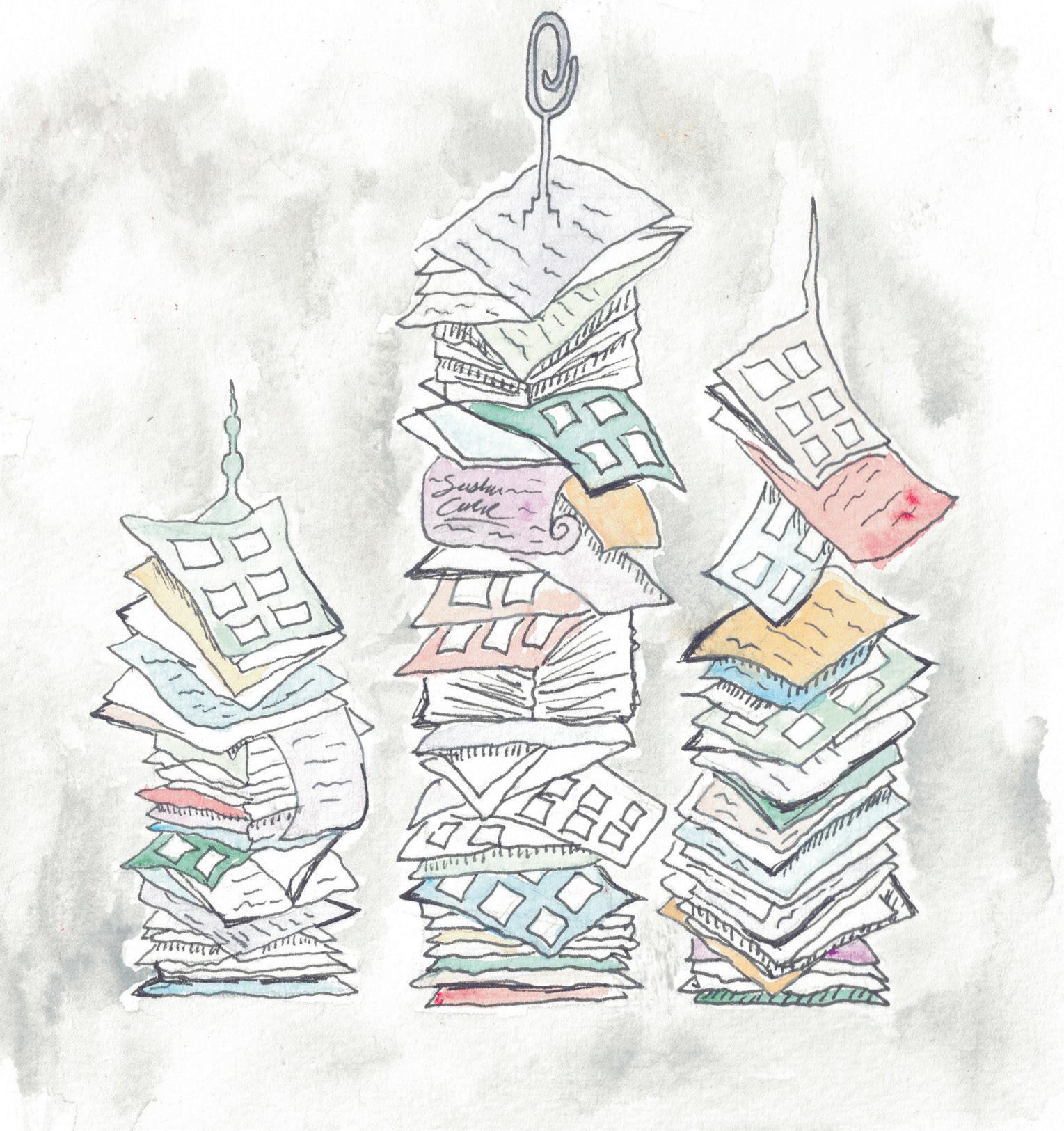

Spring has sprung. Or at least it did before the sun sprang back into hibernation behind the clouds and brought on the 40-degree weather. Although the sunshine was brief, it was still enough time to illuminate the fashion choice that every girl on campus thinks is original: tank top, boots, mini skirt. You’ll see the exact same “original” outfit combo for Spring Fling this weekend.
Alas, there is no Mercury or Venus or Saturn retrograde to blame your misfortunes on, as the only retrograde you’re about to experience is your decline into debauchery and drinking BORGs.
The end is near — not just the end of the semester but the end of collective sanity and the end of these horoscopes. Here’s what the stars have to say about your Spring Fling fate.
Aries
You’ve been told by your pledgemasters that diamonds form under pressure, and that’s the justification they use to make you and the other pledges deep throat the Cholula. “The best bonding happens under trauma,” says a Leo brother who has never experienced trauma or any real hardship in life. The elephant walk doesn’t count.
Taurus Your relationship was as fleeting as the seasons and ended as soon as cuffing season did. You’re now entering an era of self-reflection as you realize that your situationships have treated you better than your official partners. Short-term boyfriend, long-term situationship, medium-distance relationship — whatever term you use, it doesn’t matter. It all ends the same, with an angry Fizz post that you delete after six downvotes.
Gemini
You hosted the worst prefrosh this week who were so obnoxious and pretentious that they made you question the ability of the admissions office to put together a decent class of 2030. You hope they don’t choose Yale, but it looks like they’re going to fit right in with the DS kids. You would know from personal experience, of course, because it takes one to know one.
Cancer
Submitting an instructor permission request for the third year in a row is humiliating, just like texting an ex desperately trying to convince them to get back together with you. For the past week, you’ve been sending follow-up emails like, “Hey, it’s me again. I just wanted to say I’ve been doing great without this class, but I really need you now.”
Leo
You’re sad to leave for the summer because you’re going to miss one thing and one thing only. People complain about the food in the dining hall, but you’re going to long for the various liquids Yale graciously supplies. And no, not those kinds of liquids. You need the fruit-flavored water to sustain your intellectual efforts. How else will you get through your boring 9 to 5?
Virgo
You only have a few weeks to take advantage of the Yale health insurance
// BY KIVA BANK
you paid an arm and a leg for, so if you’re going to lose an arm and a leg, now is the time to do it. You should make sure that your habit of taking five-minute naps during lecture isn’t narcolepsy. And book that gynecology appointment as soon as possible — you need to get that funky smell checked out.
Libra
You’ve discovered rock bottom has a basement, and final exams haven’t even started yet. That’s probably when you’ll realize that the basement has an even lower level: a weird moldy sex dungeon. Avoid the descent into the ninth circle of hell — moving back in with your parents for the summer and having to share the car with your younger siblings, who have more robust social lives than you.
Scorpio
You’ve been looking forward to seeing Zara Larsson with your best friend ever since she was announced as the Spring Fling headliner, but unfortunately Yale Connect crashed. You didn’t secure a guest ticket for her in time. The only midnight sun you’ll be enjoying together is the Stephanie Myers version.
Sagittarius
It was hard for you to say goodbye to gazing wistfully at your crush across the seminar table, not just because of their pretty face, but because it’s the closest you’ll ever get to really loving academia. Your GPA will suffer until you find another delusionship to motivate you to study.
Capricorn
You haven’t been able to sleep for days because your suitemate is wailing over his girlfriend who dumped him because she wants to have a “hot girl study abroad summer.” It’s offensive to feminism that he’s making a woman’s perfectly reasonable decision all about him. You must take him to the Women’s Center so you can both learn about performative allyship and go forth spreading the wise word throughout your Big Apple capital ventures this summer.
Aquarius
You didn’t win any position in Yale Model United Nations, and you’ve been walking around Beinecke Plaza aimlessly ever since. Now you’re having an identity crisis because you realized you peaked in high school. Your days of being in faux positions of power are over, at least until you are put in charge of the new interns at McKinsey. Then you can lead the charge of buying coffee for your superiors.
Pisces
You have been preoccupied with finding a cute Y2K Eurosummer outfit and memorizing the “Lush Life” dance for when Zara Larsson calls you on stage. Unfortunately, with all your daydreaming, you completely forget to apply for fellowship funding. Now you’re trying desperately to network in order to secure a paid internship for the summer, but pickings are slimmer than Y2K accessories on Depop.
Contact KIVA BANK at kiva.bank@yale.edu.