
PAGE 7 LOCALCITY33 Graduate
U. joins amicus brief ahead of Supreme Court Decision
THIS DAY IN YALE HISTORY, 1990. Mike Carass '94 invites 100 first years from Morse and Berkeley to a Camp Yale bash. The spontaneous four-hour party inlcudes bassoon, bongo drum and saxophone performances from the first years.
Just weeks later, on Aug. 15, an Illinois judge rejected three motions to dismiss the lawsuit — one joined by all defendants, one filed by Yale and a joint motion signed by four other defendants. The universities’ arguments included that their actions are justified under Section 568 of the 1994 Improving America's Schools Act and that the plainti s failed to prove that the universities violated the Sherman Antitrust Act of 1890. “The Court finds that … the plainti s have su ciently alleged that the defendants are not covered by the 568 Exemption and thus denies the defendants' motion on this basis,” the Judge’s opinion states. The 568 exemption itself — which enables the schools to collaborate as long as they do not consider need when admitting students — is set to expire at the end of September. This
dismissedfiWrongfulringsuit
BY JORDAN FITZGERALD STAFF REPORTER
The University of Texas usurped Yale as the university with the second largest endowment in the world — though both still fall short of Harvard’s top spot. The University of Texas System’s endowment totals $42.9 billion compared to Yale’s $42.3 billion in 2021. It is now expected to possibly top Harvard University’s $53.2 billion endowment with its 2022 fiscal year results — generating discussion over endowment sources related to fossil fuels. “It’s a game with who has the biggest endowment, who has the second biggest,” said James Choi, a professor of finance at the Yale School of Management. “It’s a little bit silly because in terms of the resources of the endowment, you really care about the endowment dollars per student. The Yale endowment is covering a lot less students than the Texas endowment.” While donations and long-term operating funds account for approximately half of the UT System’s endowment, the other half comes from the Permanent University Fund, or PUF, which is a special fund that supports both the UT and Texas A&M Systems, according to a document provided by the UT System. The fund receives oil and gas revenues generated from 2.1 million acres of land in the Permian Basin in WestWhileTexas.the UT System’s endowment grows to potentially top Harvard’s with the help of these oil and gas revenues, Harvard recently divested from fossil fuels and Yale has taken some steps towards divestment Psychiatrist says she will appeal
SOVETOV The University held a memorial service this summer where colleagues, friends and family reflected on Anton Sovetov’s life. students began the process of forming a union by collecting cards signifying the intent to unionize.
Yale’s FOCUS orientation program is changing its New Haven partnerships after a local site leader instructed students to remove people’s belongings from a recently-cleared homeless encampment. FOCUS on New Haven, one of the University’s five “Camp Yale” orientation programs for incoming first-year students, is centered around community service and activism in the New Haven community. On Aug. 24, a group of FOCUS leaders and first-year students took part in a volunteer project with the New Haven Department of Parks and Trees, focused on collecting litter around the city’s West River. An external project supervisor at the site instructed students to throw away clothing and tents belonging to people living in a homeless encampment, which police had BY SARAH COOK AND CHARLOTTE HUGHES STAFF REPORTERS
Yale recently took steps to defend raceconscious admissions ahead of a Supreme Court decision that could determine the fate of affirmative action. The University and other peer institutions submitted an amicus curiae brief in August, lending support to affirmative action in a pair of cases that will be argued in the Supreme Court next term. The cases, which are likely to be decided in May or June 2023, will determine whether or not universities may continue to consider race in admissions. Parties who are not directly involved in a case — but have a special interest in its outcome — may write an amicus, or “friend of the court” brief, to present new knowledge and arguments to the court. While a single brief may not alter a ruling, precedent shows that a collective may have sway. In Grutter v. Bollinger, a 2003 case that upheld a rmative action at the University of Michigan, the Supreme Court seemed to be influenced by briefs filed by military and business interests in support of the practice. “Diversity fosters a more robust spirit of free inquiry and encourages dialogue that sparks new insights,” the Yale joint brief reads. “Diversity encourages students to question their own assumptions, to test received truths, and to appreciate the complexity of the modern world.” In the brief, Yale joined 14 other schools — Brown University, The California Institute of Technology, Carnegie Mellon University, Columbia University, Cornell University, Dartmouth College, Duke University, Emory University, Johns Hopkins University, Princeton University, the University of Chicago, the University of Pennsylvania, Vanderbilt University and Washington University in St. Louis — to a rm the importance of diversity and the right of colleges and universities to consider race in admissions. The pair of Supreme Court cases implicate Harvard University and the University of North Carolina specifically for their admissions practices but have the potential to a ect schools across the country. The first Yale class that could be affected by an anti-affirmative action ruling would be the class of 2028, set to first matriculate in fall 2024, said Jeremiah Quinlan, dean of undergraduate admissions and financial aid. But if affirmative action does fall, Quinlan and Moira Poe, senior associate director of admissions for strategic priorities, said that Yale will pursue other paths to cultivate a diverse student body. “We are not making any assumptions about the Court’s ruling,” Quinlan wrote in an email to the News. “But we are being prudent and planning for possible limitations on our ability to consider race and ethnicity as part of our holistic review of eachTheapplicant.”plaintiff in the ongoing Supreme Court cases is Students for Fair Admissions, a group that opposes the use of race in admissions. The group first sued Harvard University and the University of North Carolina in 2014, claiming that Harvard was discriminating against Asian American students and that the University of North Carolina was discriminating against Asian American and white students in admissions. The outcome of the case could undermine the legal basis for affirmative action, which some legal experts argue was SFFA’s motive for bringing the suits.
CourtesyCommonsofYaleUniversity
BY LUCY HODGMAN STAFF REPORTER
BY ISAAC YU STAFF REPORTER A judge has dismissed a high-profile lawsuit against the University in which former professor Bandy Lee alleged that she was wrongfully fired over public statements criticizing former President Donald Trump and his lawyer. Lee, a psychiatrist formerly a liated with the Yale School of Medicine, fi rst fi led her complaint against the University in March 2021, arguing that her contract had shewhich2020tiedminationthatplaintfiledeyeintocasespeech.herviolationunlawfullyterminatedbeeninoffreedomofLee’sfirstcamethepublicwhensheacom-arguingherter-wastoJanuarytweetsinshesaidbelievedthat lawyer Alan Dershowitz LAW ’62 and supporters of former president Donald Trump experienced “shared psychosis” — though Dershowitz has repeated stated that he does not support the former president.
Yale filed an amicus brief in support of Harvard and the University of North Carolina / Wikimedia Commons
BY JORDAN FITZGERALD STAFF REPORTER Yale and its peer universities faced multiple setbacks in recent weeks regarding an ongoing lawsuit that challenges the universities’ claims that they employ need-blind admissions.The 568 Presidents group is a collective of 17 elite universities, including Yale, who use the same financial aid formulas. In January, 16 of the universities in the group faced a lawsuit alleging that they violated antitrust law by factoring financial need into admissions decisions. In February, the plainti s filed an amended complaint that accused every member of the group of examining need during their admissions processes. In July, the Department of Justice filed a motion in support of the plaintiffs’ case and testified in the case’s early proceedings.
INSIDE THE NEWS Yale files a rmative action defense SEE AFFIRMATIVE PAGE 4 C ROSS C AMPUS YSPH INDETENTIONIDENTIFIESCAMPSUKRAINE PAGE 6 SCITECH
signed
PAGE 9 CITY PAGE 2 PHOTO PAGE 3 OPINION PAGE 13 BULLETIN PAGE 14 SPORTS PAGE B1 WKND SEE LEE PAGE 5 Endowment rank sinks BANDY LEE SEE ENDOWMENT PAGE 5 NEW HAVEN, CONNECTICUT FRIDAY, SEPTEMBER 2, 2022 VOL. CXLIV, NO. 23 yaledailynews.com · @yaledailynews THE OLDEST COLLEGE DAILY FOUNDED 1878 SEE ANTITRUST PAGE 5 FOCUS draws criticism for clearing local homeless encampment Antitrust suit lives on SEE FOCUS PAGE 4 Directors of the program said they would separate from the Department of Parks and Trees / Wikimedia


In August, new stained glass windows were installed in the Grace Hopper College common room and dining hall designed by Faith Ringgold and Barbara Earl Thomas, re spectively. The windows commemorate Grace Hopper GRD ’34, who became the namesake of the college when it was renamed in 2017. “In addition to being stunningly beautiful works of art, the Ringgold and Thomas win dows evoke life in the college and mark the college’s momentous name change, in dif ferent, complementary ways,” Head of Grace Hopper College Julia Adams wrote in an Aug. 17 email to Hopper students.
Words by LUCY HODGMAN. Photos by MICHAEL GARMAN .
THROUGH THE LENS PAGE 2 YALE DAILY NEWS FRIDAY, SEPTEMBER 2, 2022 yaledailynews.com


OPINION
Old age is a slap in the face — the most undignified indignity, the most aggrieving grievance that a cruel world has subjected me to. Yes, I am twenty, and some admirers might even claim that my cheeks still bloom with the rosy-cheeked complexion of youth, that vigor pulses through my veins. They are not wrong. But in Yalie terms, I might as well be an octogenarian. Seeing a new class inducted into Yale’s hallowed halls is vicariously exhilarating, but it is a sobering reminder of the steady march of time. Each one of us is Dorian Gray, and you are our collective portrait —a reminder of the beauty of new beginnings and the ways in which that has faded for us, a radiance that has been dimmed by gradual familiarity, a boundless potential that has been wrested from us by the choices our past selves inmade.Immersedournostal-gia,webegintofearit.Idon’twanttobenostalgic. Nostalgia is for has-beens. I want to be excited, as hopeful for the future as each of you, bursting with possibility. But in the absence of time dilation or a Faustian bargain, nostalgia is an inevitability. Soon you will be nostalgic. This place will change you. It has certainly made me more dramatic. Even as existentially perturbing as your presence is, we could not be happier to see you. Most days, you are a reminder of the best two years of my life. Without you, I’d never think about how happy I have been at Yale. Some days here I was unreasonably happy, so happy I felt like I was lording it over every non-Yalie I knew, wielding my happiness as a shield to protect me from the way I felt in highTheschool.suite you moved into last week belonged to my best friend freshman year. The white cabinet. The half-opened box of CheezIts. It’s been two years since I thought about that white cabinet. Other days – the first time you realize your friend group from first year will change, the first time you get a B+, or the first time you feel like you’ve wasted six months on a broken relationship — you will remind us of how di cult we once found it to admit failure. In those moments, remember the people before. Your ancestors. The person living in suite E42 in Ben Franklin probably cried about the same things you did. In those moments, turn to us. Your upperclassmen — the ones who are still figuring it out but better at concealing it. I said I resent my nostalgia, and that’s because I fear that nostalgia is all I will have in a few years. But I don’t want my legacy to be a series of memories that I look back on every few weeks. I don’t want my time to be measured solely in pictures and photo albums. Meaningful legacies are rarely so radicallyFacedselfish.with the prospect of “life after Yale,” we want our legacies to be measured in the indiscernible imprints we left on people’s lives, in ways in which we paid it forward. I want my legacy to be personal, yes, but I want it to be shared. So, when you are lost looking for WLH, when you don’t have anyone to sit with in the dining hall, when you are overloaded with stimuli at the extracurricular bazaar, turn to us. Allow us to construct a legacy as the people who helped you when you needed it. Permit us to bolster our own joy with your triumphs. Let us feel like a part of us will live on in the advice you give freshmen during your senior year, long after Yale is nothing but a memory for us.
PRADZ SAPRE Growing pains
EDITOR IN CHIEF & PRESIDENT Rose Horowitch PRINT EDITORSMANAGING Ryan OwenChiaoTucker-Smith MANAGINGMULTIMEDIAEDITOR
EDITORIALS & ADS The Editorial Board represents the opinion of 12-15 members of the Yale community. Other content on this page with bylines represents the opinions of those authors and not necessarily those of the Managing Board. Opinions set forth in ads do not necessarily reflect the views of the Managing Board. We reserve the right to refuse any ad for any reason and to delete or change any copy we consider objectionable, false or in poor taste. We do not verify the contents of any ad. The Yale Daily News Publishing Co., Inc. and its o cers, employees and agents disclaim any responsibility for all liabilities, injuries or damages arising from any ad. The Yale Daily News Publishing Co. ISSN 0890-2240 SUBMISSIONS All letters submitted for publication must include the author’s name, phone number and description of Yale University a liation. Please limit letters to 250 words and guest columns to 750. The Yale Daily News reserves the right to edit letters and columns before publication. E-mail is the preferred method of submission. ADVERTISEMENT (203) 432-2424 (before 5 p.m.) (203) 432-2400 (after 5 p.m.)
Natalie Kainz PUBLISHER Christian ContrerasMartinez OPINION Awuor HanwenOnguruZhang NEWS Julia AmeliaBrownDavidson CITY Ángela ChristianPérezRobles SCIENCE Anjali NicoleManglaRodriguez Marisol Carty SPORTS Melanie Heller Serena Puang WEEKEND Claire TonyJordanFangFitzgeraldHao YTV Maya OliviaLagrimasWeldon-Sally PODCAST Andrea Lee Simi Olurin DATA Leon Lufkin Amy Zhao MAGAZINE Claire Lee Marie Sanford COPY Josie Jahng Chris YingyingCarolineHaileyLeeO’ConnorParkerZhao PRODUCTION & DESIGN Jose IsaacStephanieElifnazRachelEstradaFolmarOnderShaoYu AFFAIRS AFFAIRS VOL. CXLIV, NO.
Recently, House Speaker Nancy Pelosi sowed division and chaos in the Biden administration, provoked a foreign superpower’s military might, and was almost universally slammed by American media pundits for her reckless behavior. Those of us who don’t obsessively follow the news might be wondering: what in God’s name did she do? Did she threaten to nuke Russia? Did she openly support some terrorist group? I doubt anyone would’ve been able to come up with her real o ense: visiting a peaceful, democratic, staunch American ally whose sole crime is existing as an independent country in the South ChinaPeopleSea.might say my depiction of the scenario isn’t fair. They’ll claim that Pelosi unnecessarily amplified tensions in an already tense region just to add another stamp to her diplomatic passport. I think it’s precisely this wildly appeasatory attitude towards the ruthless Chinese regime and not Pelosi’s light tapping on the gas of the U.S.-China conflict that is the real problem. Everyone engaged in histrionics over Pelosi’s Taiwan visit seems to forget that barely three years have passed since China attempted to, and basically succeeded in, clawing millions of free Hong Kong citizens back under its autocratic rule. Of course, it’s no accident that we are all su ering from this short term memory loss — China can shift the goalposts faster than you can say Tiananmen Square. It’s also nothing new: indeed, an autocracy slowly imposing its soul-crushing regime on an innocent populace is a tale as old as time. China’s done it multiple times — including with Tibet and Hong Kong — and Russia has done it more times than I can count, including right now. This is because until recently, that was the way of the new world order — barring aggression on the level of Hitler, the U.S. was not going to jeopardize its own security in defense of its allies who had the misfortune of existing in the backyard of an autocrat. Fortunately for supporters of freedom worldwide, however, something changed this year. When Russia unsurprisingly invaded the parts of Ukraine it hadn’t already taken, and seemed poised to add another tally mark to its “countries taken” column, an often-mocked and belittled force unexpectedly cut them o — the force of American public opinion. For the first time in a long time, the American people said: “No matter what the ‘game theory’ indicates, we are going to support our free allies and stand up to our authoritarian enemies.” It might have been a little later than Ukrainians would have liked, but it still worked: thanks to global — but particularly American — outrage, the scrappy Ukrainian underdogs will end up successfully repelling a Russian attack while maintaining their dignity and sovereignty. Let me stress how much this was not a given — Putin’s entire plan hinged on us forsaking Ukraine like we did Hong Kong and Crimea and Tibet, and it seemed like a very sound bet. Simply because our Western emotions got the better of us, however, our government and its hefty defense budget was finally forced into action. Still, we were somewhat late to fully supporting Ukraine, and Ukrainians will be paying the price for our apathy and appeasement for years, if not decades, to Fortunately,come.we have been given a golden opportunity to right our wrongs, to get aggressive before a full-scale war breaks out and we have to tread lightly in our support of the innocent lest the war turns nuclear. To take advantage of this opportunity, we only need to do one thing: care. And when I say we, I mean we the American people, but more specifically, I mean we Yalies. Because as it happens, Yale wields disproportionate influence over American public opinion — if you don’t believe me, just look at how many times professor Timothy Snyder has been mentioned online in the past six months. Even better, the playbook for Yalies supporting a di erent country is already quite well established — just look at the myriad of ways in which we’ve supported Ukraine, from harboring pro-Ukraine personal views to attending and organizing awareness events. E orts like these in Yale and across America spurred the U.S. government to send unprecedentedly signifi cant military aid to Ukraine, aid which has proven to be the largest bulwark against large Russian territorial gains. For some reason, however, Yale — and America — can’t seem to replicate their e orts for Taiwan. While one Yalie wrote an article expressing his concern for Taiwan’s safety in the wake of Russia’s invasion, essentially nothing has happened since then. There is no plan for a Yalies for Taiwan group, advocacy, rallying, events or even just people waving the Taiwanese flag on Cross Campus, despite Taiwan’s fate being arguably much bleaker than that of almost anywhere in Ukraine — as evidenced by China’s militaristic actions recently. If we want to put our money where our mouth is and stop authoritarian expansion before people start dying en masse, we need to start pushing back on China’s aggressive tactics with some of our own. That starts with encouraging, not catastrophizing, run-of-themill diplomatic visits to Taiwan. But it also includes supporting the establishment of a formal embassy in Taiwan, and giving Taiwan access to advanced militaryLet’stechnology.prove that all our so-called “social justice warrior” emotion isn’t a total paper tiger, but rather a formidable force that even the mighty Chinese government must reckon with. Because, as we proved with Ukraine, no one, can stop the righteous anger of the American people.
GUEST COLUMNIST ARI BERKE Avenge Ukraine by protecting Taiwan COLUMNISTS PORRAS MADERO & SASHA TABACHNIKOVA worker unions are delivering the goods ARE ORGANIZING TO WIN A GRADUATE WORKER UNION AT TO OUR UNIVERSITY MORE DEMOCRATIC AND BECAUSE WE WANT TO BE PAID AND TREATED FAIRLY.
YALE DAILY NEWS FRIDAY, SEPTEMBER 2, 2022 yaledailynews.com PAGE 3
Megan Graham NEW HAVEN, CONNECTICUT COPYRIGHT 2022 —
YALE DAILY NEWS PUBLISHING CO., INC. 202 York Street, New Haven, CT 06511 (203) 432-2400 Editorial: (203) 432-2418 editor@yaledailynews.com Business: (203) 432-2424 business@yaledailynews.com
To all the first years that came before,Welcome to the beginning of the rest of your life. The phrase “rest of your life” probably seems a little dramatic, as if the moment you first felt the grass in the Branford courtyard tickle your bare feet marked a clean break from a life that came before. That probably isn’t true. But what is true is that this place will irrevocably change you. Today is your day. It is a day that you will write about in your journal, that will linger in the back of your mind as you shed your “first week” personas and find your community, but it is not your dayTodayexclusively.isalso a day of reckoning — the day when sophomores realize that a year only has as many seconds as you can remember, when seniors begin to pay homage to three fraught, joyous college years and when juniors reckon with what it means to be at the halfway point of our time at Yale. So before offering you more unsolicited advice than has already been foisted upon you this week, I will take a moment for the Today,upperclassmen.Iamterrified.
GUEST
Zully Arias EXTERNAL
THIS ISSUE COPY STAFF: Will Aarons, Grace Aitken, Adam Levine, Maya Melnik, Paola Santos, Olivia Schnur, Patrick SebaRaj, Sydney Zoehrer PRODUCTION & DESIGN STAFF: Chris de Santis, Catherine Kwon, Chen Lin, Yash Roy, Anika Seth, Sophie Sonnenfeld PRODUCTION & DESIGN ASSISTANTS: Beril Birlik, Jessica Sanchez
JAVIER
Direct all letters, columns, artwork and inquiries to: Caleb Dunson and Awuor Onguru Opinion Editors opinion@yaledailynews.com Direct all comments regarding the fairness or accuracy of stories to: Rose Julia(203)Editor-in-ChiefHorowitch432-2418Bialek,Jose Davila IV, Phoebe Liu Public public@yaledailynews.comEditors
To all who came before
YALE FOR MANY REASONS:
JAVIER PORRAS MADERO is a third-year graduate worker in the Department of History. Contact him at javier.porrasmadero@yale.edu . SASHA TABACHNIKOVA is a third-year graduate worker in the Department of sasha.tabachnikova@yale.eduContactImmunobiology.herat.
TECHNOLOGY&
INVESTIGATIONS
PRADZ SAPRE is a sophomore in Benjamin Franklin college. His column, titled ‘Growing pains’, runs every other Monday. Contact him at pradz.sapre@yale.edu .
Graduate
23
WE
ARTS
PHOTOGRAPHY Zoe ReginaVaibhavKarenYasmineBergHalmaneLinSharmaSung ILLUSTRATIONS Sophie Henry Cecilia Lee DEVELOPMENTWEB Julia Macri Iris Yang DIR. OF FINANCE Melissa Kim DIR. OPERATIONSOF Angela Lee INTERNAL
We are organizing to win a union. Over the last several months, graduate workers at Yale have had hundreds of conversations with each other about winning a union. Three major issues have come up often — the cost of living, access to health care including mental health care, and responses to instances of harassment and abuse. So, what could a union actually do to address theseFortunately,concerns? we don’t need to look far for answers. Graduate workers at Harvard, Columbia, Brown and beyond have in recent years come together to demand recognition for their unions and negotiate good union contracts that address exactly these issues — delivering real, material benefits to themselves, their families and the wider academic community. Amid the continuing challenges of the global pandemic and inflation hitting levels not seen in decades, Yale graduate workers are deeply worried about making ends meet. Average rent increased by over $300 per month in New Haven between 2018 and 2022. Last year, facing growing calls for unionization and mounting pressure from the Graduate Student Assembly, GSAS increased PhD stipends, including a 14 percent increase in pay for the humanities and social sciences. But these increases still do not provide a guarantee of a truly livable wage with the skyrocketing cost of living, nor do they ensure adequate pay increases in the future. It has taken nine months for our raises to even go into effect. Because we don’t have a real seat at the table, we have no guarantee of future raises that reflect our actual cost of living. Without a union and a contract, we just have to wait and see. Things are di erent for our unionized colleagues. Columbia graduate workers negotiated compensation increases of at least 3 percent per year and Harvard graduate workers have similar raises securely in place. Even with the larger increase this year, PhD grad worker pay at Yale is significantly less than pay at Columbia and Harvard. At Brown, their contract requires that the university and the union negotiate each year to determine pay increases. The minimum PhD pay at Brown is now $42,411 per year, while the minimum pay at Yale is $38,300, more than 10 percent less. The cost of living is lower in Providence than it is in New Haven and Brown’s endowment ($6.9 billion) is six times smaller than Yale’s ($42.3 billion). The gap in pay is the union di erence. These contracts also boosted subsidies provided for childcare, a critical need for graduate workers with children. And for international graduate workers, the contract at Harvard includes a fund of $30,000 per year to help pay legal expenses related to international students’ ability to work at the university. Graduate workers at Harvard and Columbia won from their administrations a promise to cover 75 percent of dental premiums. Columbia’s union additionally pushed for the creation of a Student Employee Support Fund and a Student Employee Dependent Support Fund that collectively make more than $2 million over two years available for graduate workers to cover out-of-pocket medical, dental and vision Graduateexpenses.workerunions have also been successful in winning stronger recourse and protections for graduate workers experiencing harassment, discrimination or abuse in the workplace. Right now, we have no independent recourse to deal with such situations. Yale has repeatedly refused to make even modest changes to its policies, rejecting calls to institute an Ombuds O ce like the ones that exist at other Ivy League universities. At Columbia, graduate workers have a union contract that guarantees access to impartial arbitration or mediation in instances of harassment or discrimination, while Harvard’s allows for arbitration in all cases except for those falling under Title IX. Both ensure full transitional pay in the event graduate workers need to leave their lab or advising situations due to inappropriate behavior on the part of their advisor. We are organizing to win a graduate worker union at Yale for many reasons — namely, to make our university more democratic and because we want to be paid and treated fairly. Across the country, graduate worker unions are delivering the goods. We can do the same here.
MAKE
ARI BERKE is a sophomore in Branford college. Contact him at ari.berke@yale.edu.



“forcibly evacuated” from the area, FOCUS leaders said.
The partnership with the Department of Parks and Trees was a new one, Schroth-Douma said, forged in response to the University’s expansion of pre-ori entation programs last spring.
Crumlish told the News that Dwight Hall is considering alter ing the schedule of the program in future years so that work shops, panels and community conversations are held before students arrive on service sites, giving program leaders addi tional time to review program details. The program will also consider holding further train ings for FOCUS leaders in the spring semester.
Linda Greenhouse LAW '78, clinical lecturer and senior researcher at the law school and former New York Times Supreme Court reporter, said that the “con stitutional and legal framework of the two cases is the same” and that the “only explanation” for splitting the cases centers around new justice Ketanji Brown Jackson. If the cases are separate, Jackson, who recused herself from the Har vard case due to her membership on the Harvard Board of Overseers, could still rule on the UNC suit, which would add another left-lean ing voice to the majority conserva tive bench.
The program had only the summer, Duron wrote, to build a relationship with commu nity sites. Under ideal condi tions, such partnerships would take over six months of advance planning.“Ifgiven sufficient time to prepare, we would have consid ered our community sites care fully and arranged for funded, education-based activities in order to accommodate students without a volunteering site,” Duron told the News. “We did not have that time.” FOCUS was established in 1991.
that a
never
Pre-orientation program directed to clear encampment
but he should
FOCUS directors said the recent expansion of the Univer sity’s orientation programs left them scrambling to accommo date an unprecedented influx of students, causing them to form partnerships with dif ferent groups than in previous years. The Dwight Hall Cen ter for Public Service and Social Justice, which oversees FOCUS, has supported the program’s decision to pull students from the project site where the inci dent“Thisoccurred.sortofviolence — ‘clean ing up after the cops’ and theft of unhoused people’s homes and belongings — is antithetical to the values of FOCUS,” program direc tors Giuliana Duron ’24, Sean Per gola ’24 and Fi Schroth-Douma ’24 wrote in a joint statement to the News. “The fact that FOCUS members were told to participate in this violence speaks to the gap between the ideals we hold and the work we actually do. One thing is clear: FOCUS needs to change.” In their statement, FOCUS directors told the News that the direction to throw away tents and clothing at the West River came as a “complete surprise.” In total, students were at the site for a few hours, although Schroth-Douma said she did not know at what point the supervisor instructed students to begin removing items from the encampment. The New Haven Department of Parks and Trees did not respond to multiple requests for comment.
MARCUS AURELIUS FORMER ROMAN EMPEROR AFFIRMATIVE FROM PAGE 1
According to their statement, FOCUS also stressed to partici pants in the program the impor tance of recognizing an encamp ment as a “home and a survival tool, not a public nuisance.” “Dwight Hall staff has offered continued support to FOCUS directors and leaders throughout the program and supported their decision to shut down the proj ect site at West River,” Dwight Hall executive director Peter Crumlish wrote in an email to the News. “Over the following days, staff helped gather information from other community partners to understand the impact of the situation and to help students reflect on the experience.”
FOCUS on New Haven is one of the University’s five “Camp Yale” orientation programs for incoming first-year students / Yale Daily News
Contact JORDAN FITZGERALD at jordan.fitzgerald@yale.edu . not death man should fear, fear beginning to live."
FROM THE FRONT PAGE 4 YALE DAILY NEWS FRIDAY, SEPTEMBER 2, 2022 yaledailynews.com · @yaledailynews "It is
In March, the Yale College Dean’s Office announced that beginning this year, participation in one of Yale’s orientation pro grams would become both man datory and free of charge. The expansion, Dean of Yale College Pericles Lewis told the News, has “gone pretty well so far.” The FOCUS program in par ticular has seen a dramatic expansion in size. Last year, the program consisted of just over 300 students and leaders, Duron told the News. Under the new orientation policy, FOCUS took on about 550 students — over a third of the class of 2026 — and continued to receive new stu dents after the first day of the program on Aug. 23. Duron said that FOCUS took on “overflow” students who did not want to participate in the other four Camp Yale programs, all of which offer either outdoor experiences or resources specif ically geared towards students of color or international students. Boyd told the News the YCDO would review the expansion ahead of the start of next year, “survey ing all new students, as well as others involved in Camp Yale.” Duron said that the incident at the West River was a result of University administrators pri oritizing the implementation of the new policy over the needs of FOCUS student leaders. “The Yale College Dean’s Office implemented drastic changes to orientation without providing suf ficient support,” Duron wrote in an email to the News. “What happened at FOCUS is the most visible nega tive consequence of YCDO’s lack of advanced logistical planning.” According to Duron, there were not enough community sites in New Haven to host 550 short-term, untrained vol unteers. FOCUS began reach ing out to organizations outside of the city, as well as forming a “last-minute” partnership with the New Haven Department of Parks and Trees.
Yale files affirmative action amicus brief
SFFA also sued Yale in 2021, alleging similar discrimination in its admissions practices. The lawsuit has been on hold pending ongoing litigation / Tim Tai, Staff Photographer
Ketanji Brown Jackson was con firmed as a Supreme Court Justice on April 7.
Following the incident, FOCUS canceled their collaboration with the site — which was meant to last until Aug. 26 — and gathered the program’s leaders for a conversa tion. In their immediate response to the incident, FOCUS program lead ers consulted with a harm reduc tion organization to make a list of material resources that might ben efit people living at the West River.
Contact LUCY HODGMAN at lucy. hodgman@yale.edu SFFA also sued Yale in 2021, alleging similar discrimination in its admissions practices. The lawsuit has been on hold pend ing the resolution of the ongoing Supreme Court litigation. SFFA founder Ed Blum called the current state of the Supreme Court lawsuits “common knowl edge” and declined to comment further. SFFA lawyer Adam Mor tara also declined to comment. Lower courts ruled in favor of the universities in 2019 and 2021, allowing them to consider race in admissions so long as they do not employ racial quotas. The lower court decisions are consis tent with the 1978 Regents of the University of California v. Bakke Supreme Court decision. On July 22, the high court decided to hear the Harvard and UNC cases separately, revers ing its January announcement to take up the suits together. Derek Black, a constitutional law professor at the University of South Carolina and expert on education policy, said the cases were cleaved because of the dif fering legal standards applying to private and public universities. All institutions of higher edu cation — public or private — must avoid racial discrimination and adhere to Title VI of the Civil Rights Act of 1964 if they want to receive federal funding. But because UNC is a public university, it must also obey the equal pro tection clause of the Constitution, and its admissions practices can be evaluated with the clause in mind. Black and Peter Schuck, a for mer professor and deputy dean at Yale Law School, said that Harvard and UNC are also dif ferent universities with different admissions systems, which could explain the splitting of the cases. But the disparate legal standards are not the only explanation.


.
The DOJ’s July motion and later oral argument centered on technical legal issues. They argued that the judge should take a narrow view of the 568 exemption and employ a strict application of antitrust laws. By using the consensus methodology, the DOJ motion argued, a university “eliminates an important dimension of price competition … in the same way that an agreement on the minimum net price of attendance eliminates price competition.” Robert Gilbert LAW ’82, a partner at one of the three law firms representing the plaintiffs, said he was “extremely pleased” that the DOJ decided to support theirThoughcase. it is plausible that the defendants violated the exemption, Kennelly wrote in his decision, he was not yet ready to rule on two other central issues to the case: whether the defendants consider need in admissions and whether “need-blind” admissions require a university to ignore the need for financial aid or all financial considerations. According to Kennelly’s opinion, the defendants must respond to the amended complaint by Sep. 9, 2022.
After a months-long legal battle, U.S. District Judge Sarah Merriam rejected Lee’s claims, some of which were based on Yale’s faculty handbook and the University’s “Woodward Report,” which outlines its principles of academic freedom. Merriam noted that Lee had been teaching on a voluntary, unpaid basis with a contract that was renewed year to year at the University’s discretion. The judge’s ruling was handed down on Tuesday.“[Lee’s] vague assertion that some unspecified provision in the Faculty Handbook creates a right to ‘academic freedom’ is plainly insufficient to show that [the] defendant undertook a contractual commitment to guarantee plaintiff continued reappointment,” Merriam stated in the Theruling.University’s representatives had twice filed motions to dismiss Lee’s complaint, stating that her claims had “no legal basis.” University spokesperson Karen Peart said in a statement that Yale “does not consider the political opinions of faculty members when making appointment“Yaledecisions.”isgratified that the United States District Court for the District of Connecticut has agreed with Yale that Dr. Lee’s lawsuit had no legal basis,” Peart wrote in an email. Lee told the News that she was not surprised by the ruling. She noted that Yale’s first motion to dismiss the lawsuit had been rejected and suggested that the outcome could have been infl uenced by the original judge on the case being replaced by Merriam. There was then an eight-month stall in the case, she noted. Lee described the outcome as a “vigorous refusal to investigate the“It’sfacts.”an outcome I already expected,” Lee said. “When the presiding judge was replaced without explanation, that’s when I suspected that this would be the outcome.” Lee told the News that she would likely appeal the ruling and contact an appellate lawyer onLeeFriday.said the ultimate goal of her lawsuit was to prompt discussion about the American Psychiatric Association’s Goldwater rule, which states that it is generally unethical for psychiatric professionals to comment on the mental health of public figures. The University cited Lee’s “repeated violations” of the Goldwater rule in a September 2020 letter as raising “significant doubts” over Lee’s understanding of psychiatry. Lee, meanwhile, said she viewed the APA’s handling of the rule as a “grave error” that inhibits professionals in her field. “I was hoping that this would be an occasion for discussion about Goldwater, but that appears to be avoided at all costs,” Lee said. “I won’t giveLee’sup.”past tweets prompted a letter from Dershowitz to University ocials alleging that Lee had publicly “diagnosed’ [him] as ‘psychotic,’” in violation of psychiatric ethics rules. Dershowitz told the News that he felt the dismissal of the lawsuit was “correct.”“[Lee]does not belong in a university setting, teaching children,” Dershowitz said. “But I didn’t have anything to do with firing her. I wish her well, but she should stop diagnosing people she’s never met.” At the time of her termination, Lee had been teaching courses at the Yale Law School continuously for at least 15 years. She disputed Yale’s claims that her appointment was purely voluntary, because she relied on the appointment to secure several sources of employment, including teaching a Yale undergraduate course.After her March 2021 tweets, scores of psychiatrists voiced support for Lee, who demanded reinstatement and damages for lost income. Lee first rose to national prominence in 2017 for co-authoring “The Dangerous Case Against Donald Trump.” She has since become a champion for some fierce critics of the former president and remains a vocal critic herself on Twitter. Lee’s complaint was fi rst fi led on March 22, 2021. Contact ISAAC YU at isaac.yu@yale.edu . tonight... for it is the beginning of always."
FROM THE FRONT YALE DAILY NEWS FRIDAY, SEPTEMBER 2, 2022 yaledailynews.com · @yaledailynews PAGE 5 " Remember
A lawsuit filed in Illinois courts alleged Yale violated antitrust law by colluding to cap financial aid o ers / Zoe Berg, Photography Editor
The Yale endowment was established at Yale College in 1718.
Contact SARAH COOK at sarah.cook@yale.edu and CHARLOTTE HUGHES charlotte.hughes@yale.eduat.
Contact JORDAN FITZGERALD at jordan.fitzgerald@yale.edu
Price-fixing case looms over University
LEE FROM PAGE 1 from fossil fuels, with students still calling for full divestment. While the UT System endowment is among the largest in the nation, this does not remain the case when looking at the number of students and institutions served. In reality, the value of endowment per student across all 13 UT institutions averages $176,050, according to a document provided by the UT System. The Yale endowment, in comparison, totals $42.3 billion and serves 14,525 undergraduate, graduate and professional students — totaling approximately $2.9 million per student. In terms of Yale’s endowment, Stephen Murphy, vice president of finance and chief financial officer, and Jack Callahan, senior vice president of operations, wrote in a joint statement that Yale’s endowment is the University’s largest revenue source, and it funds 60 percent of Yale’s budget, excluding the School of Medicine. They also added that the size of the endowment changes as a result of investment returns, new gifts and spending. Callahan and Murphy attributed Yale’s recent endowment growth to “sensible longterm investment policies, grounded by a commitment to equities and a belief in diversification,” and they wrote that this has allowed Yale to increase spending from the endowment by over 1,500 percent over the past 30 “Sinceyears.other universities, including UT, invest in different assets than the Yale endowment, the investment returns between universities can differ significantly in the short- and long-term,” Murphy and Callahan wrote to the News. Avery Long ’24, an activist from the Yale Endowment Justice Coalition, described investments in fossil fuels as “despicable.”To Long, the multibillion-dollar Yale and University of Texas endowments are incomprehensibly large that comparing relative sizes is simply “splitting hairs.”“All of it represents just gross amounts of wealth hoarding,” he said. Madeleine Zaritsky ’25, the co-president of the Yale Student Environmental Coalition, also criticized fossil fuel investment. She said that any funds going towards fossil fuel investment are contributing to the global climate“Investmentcrisis. in the industry is contributing to this cataclysmic catastrophe that’s going to affect the future of its students, not to mention its faculty and other people that work at the university,” Zaritsky added. According to the documents provided by the UT System, they are also looking to invest more in renewable energy, and solar and wind energy is already being produced on the 2.1 million acres of land producing revenues for theWilliamPUF. Murphy, chief executive officer of the University of Texas System’s O ce of University Lands, wrote to the News that the o ce regularly looks at the risks associated with many commercial activities including oil and gas, along with renewable energy, and conducts “hundreds of emissions inspections” annually. It has also invested resources in groundwater conservation to prevent waste of ground water on the lands contributing revenue to the PUF, he said. In June 2021, Yale deemed a group of fossil fuel companies no longer eligible for investment in accordance with newly adopted ethical investing principles.
U. of Texas endowment surpasses Yale’s could signal more trouble for members of the group who rely on the exemption to justify their collaborativeIfpractices.defendants continue to collaborate, they are vulnerable to more antitrust litigation, according to an attorney close to the case. If they disband the group, they are vulnerable to the argument that working together is illegal without section 568. In his August ruling, Kennelly specifically referenced Yale’s motion to dismiss the case, which the University filed in April. Yale claimed that it had not used the 568 Presidents Group’s “consensus methodology” since it left the group in 2008, but the court said it is possible that Yale began using the method again when it re-joined in 2018, as the plainti s “Althoughclaim.the court will allow the case to proceed,” University Spokeswoman Karen Peart wrote in an email to the News, “Yale continues to believe the lawsuit is factually and legally baseless, and it will o er a vigorousThedefense.”courtdecision followed oral arguments from the plainti s, defendants and a representative from the DOJ, a body that rarely argues in private cases. According to the source close to the case, the DOJ intervening in private cases rather than conducting government investigations is a relatively new tactic. This strategy grew more prevalent during former President Donald Trump’s term, they added, and the Biden administration continued the precedent.
ENDOWMENT FROM PAGE 1
DANTE ALIGHIERI ITALIAN POET
ANTITRUST FROM PAGE 1 The University’s representatives had twice filed motions to dismiss Lee’s complaint, stating that her claims had “no legal basis.” / Yale University
Lee says she will appeal after case dismissal




“We again call on Russia to immediately halt its filtration operations and forced deportations and to provide outside independent observers access to identified facilities and forced deportation relocation areas within Russia-controlled areas of Ukraine and inside Russia itself,” the Department of State said in a statement referring to the newRussiafindings.invaded Ukraine on Feb. 24, 2022.
So we’re dealing with a COVID epidemic, combined with some demonstrated immune reduction correlating with PFAS concentrations — that’s a terribleWhiledisaster.”efforts can be made to clean up releases into the environment, ramifications of PFAS exposure can be seen in water streams — which then can contaminate drinking water — in air and in wildlife. This persistence in the environment is matched by bio-persistence in humans, with PFAS being able to stay in the body for severalResearchyears. on the long-term health effects of PFAS exposure have continued to uncover how this toxic persistence harms human health. Vasiliou’s recent study linked PFAS to liver damage in both humans and rodents. Zeyan Liew, an assistant professor of epidemiology at YSPH, has found that maternal exposure to PFAS is associated with risk of miscarriage, impaired fetal growth and poorer executive functioning and behavioral di culties in childhood. “The principle of toxicity is, the longer a foreign chemical stays in your body, the higher the chances that you’re going to have a toxic response,” Vasiliou said. “So now these chemicals are in your body for several years, [PFAS’] half life is seven years, which means they’re gonna be in your body forever. According to Vasiliou, a major field of PFAS research is devoted to figuring out how to break down PFAS for decontamination e Anotherorts.major area of research will be demystifying the thousands of other PFAS chemical compounds. According to Liew, earlier studies from 2005 to 2015 of PFAS’ potential toxicity have predominantly focused on the two legacy compounds, with research on other PFAS compounds having only begun in the past few years. Pollitt said she thinks that some of the alternative compounds are potentially toxic as well. Pollitt is working on developing software to detect how a chemical compound will behave when measured. Such a method would enable the thousands of compounds in the PFAS class to be simulated and thereby tested. According to Pollitt, this software’s impact would be significant, enabling every possible “theme and variation” to be tested for its toxicity before the new compound even has a Pollittname.recently released a study which found that PFAS tended to accumulate in household dust, raising concern for levels in indoor spaces. Her lab is currently working on detecting PFAS in the air with wearable devices. Tested internationally and across New Haven, these devices have been shown to regularly detect at least twenty alternative PFAS compounds outside of PFOS and PFOA. Pollitt said that dogs and children are especially vulnerable to PFAS exposure due to greater time spent on or near the Vasiliouground.labeled PFAS contamination as “endemic.” While all states have had issues, and many with major cases of contamination, the EPA had not issued regulations, he said. This left responsibility to the states to individually issue regulations and bans in recent years. In 2019, Connecticut Governor Ned Lamont created an Interagency PFAS Task Force to create an action plan — Weiner himself had witnessed his local river contaminated with 40,000 gallons of firefighting foam containing PFAS, which the state then addressed upon local advocacy. On July 20, 2021, Connecticut passed a law banning the use of PFAS in fi refighting foams and food packaging.
BY KAYLA YUP STAFF REPORTER
University affiliates have located 21 sites in Russian-occupied Ukraine that are part of a military “filtration system” that detains prisoners and is in violation of international humanitarian law. A team at the Yale School of Public Health used publicly-available satellite imagery and opensource information to document possible crimes in eastern Ukraine and provide situational awareness for civilians on the ground, humanitarian organizations and international actors attempting to assist those affected by the invasion — in near real time. Their findings, the latest in a series of three reports, were first reported by the New York Times last week. “This is all about accountability,” Kaveh Khoshnood, a YSPH associate professor and faculty director for the Humanitarian Research Lab, said. “Governments make these terrible decisions of bombing hospitals, schools, train stations et cetera, and these are gross violations. This can’t justThehappen.”research is part of a partnership between Yale and the U.S. Department of State’s Conflict Observatory program, and concludes that Russian military or pro-Russia militias have gradually systematized the registration, interrogation and detainment of prisoners since March, soon after the country’s invasion of Ukraine. In some cases, individuals are deported back to Russia. The satellite images also found evidence of disturbed earth that appears consistent with mass graves. This evidence is consistent with the testimony of a released prisoner who claimed that their cellmate participated in a grave digging operation. The U.S. Department of State issued a statement alongside the report calling for Russia to “immediately halt” its filtration system. Khoshnood said that the team’s role is to provide “strong and accurate” evidence that international humanitarian law experts can use. This way, the proof can not be “easily denied.” Because the project uses only publicly available information, findings can be more easily verified. And though intelligence agencies may have access to higher-resolution images or other advanced technologies, the YSPH report doesn’t undergo the lengthy de-classification process that many government reports are subject to, making it more useful to those on the ground in the“Weshort-term.arehaving real impact in that we are presenting information that traditionally would not be available to the public in this way,” Nathaniel Raymond, executive director at the YSPH Humanitarian Research Lab, said. “[We are] ensuring that [the data] collected through sources and methods that are entirely open-source and reproducible.”Theresearch is made possible, operations director Caitlin Howarth added, by the commercial satellite imagery industry’s establishment over the two decades. Howarth explained that ‘very high-resolution’ images being analyzed were obtained from three private companies and purchased by the Department of State. Similar analysis is being conducted to aid victims of record flooding in Pakistan. The team’s membership and size is being kept confidential to protect individual researchers and avoid compromising its operations, Howarth noted. Raymond described each member of the team as “superheroes.”
“As public health professionals, we don’t have the power and the tools to end conflicts, but there’s plenty that we can do,” Khoshnood said. “We have skills to offer to help strengthen the humanitarian response to people affected by conflict.” Another goal of the lab, he said, is to address the health needs — ranging from mental health injuries to chronic conditions — of people who are impacted by the consequences of those violations and no longer have access to physicians and medications.
Following the EPA’s proposal to identify as hazardous two chemicals sometimes found in drinking water, experts at the Yale School of Public Health weighed in on the thousands of other chemicals that remain unchecked, and discussed what research will be vital. On Aug. 26, the EPA announced a proposal to designate two chemicals of the PFAS class — nicknamed “forever chemicals” — as hazardous. Since the 1960s, PFAS have been used in the production of numerous consumer products, including nonstick pans, carpets, waterproof garments, firefighting foams and cosmetics. This policy would allow the EPA to clean up contamination involving the chemicals PFOS and PFOA, members of the PFAS class, while increasing transparency around releases of these hazardous substances into the environment. It would also require polluters to either perform cleanups independently or reimburse the government for EPA-sponsored cleanup. “We all believe that there needs to be better regulation for these PFAS, especially for the drinking water,” said Vasilis Vasiliou, professor and chair of the YSPH department of environmental health sciences. “It’s just not these two chemicals. These two chemicals have already been withdrawn by the industry voluntarily, but you have another 9998 [PFAS] compounds that are there in our environment.” According to Krystal Pollitt, assistant professor of epidemiology and of chemical and environmental engineering, PFAS chemicals are a double edged sword. Dubbed “forever chemicals,” these compounds have a very strong carbon-fluorine chain which makes breaking down the chemical challenging. However, that persistence also enables its favorable properties — PFAS are hydrophobic, allowing them to repel water and other liquids. This makes the chemicals effective for use in nonstick pans and firefighter foam, but near impossible to eliminate fully from the “[PFAS]environment.posesamultitude of risks,” said Eric Weiner, member of Governor Ned Lamont’s Interagency PFAS Task Force. “There’s a variety of cancers, high cholesterol … and what’s very salient right now is reduced immune function.
Yale researchers use satellite images to locate detention camps in Russian-controlled Ukraine FLICKR WIKIMEDIA COMMONS
PAGE 6 YALE DAILY NEWS FRIDAY, SEPTEMBER 2, 2022 yaledailynews.com SCIENCE AND TECHNOLOGY
The research, Khoshnood said, is part of an increased discussion on the role of academics in armed conflicts. He advocated for similar demonstrations of institutional support for other scholars, such as female researchers in Afghanistan who may be subject to persecution.
The team will continue to analyze data and look at other international humanitarian law violations and will release its next report in two weeks.
Yale experts share insights on future of hazardous chemicals
Contact SOPHIE WANG at sophie.wang@yale.edu and ISAAC YU isaac.yu@yale.eduat
.
Contact KAYLA YUP at kayla.yup@yale.edu .
The Russian embassy in the United States described the report as “fake news.” Raymond challenged the embassy’s statement, arguing that if the report is “absolutely fabricated,” then Russia should open up the camps and allow the Red Cross and other humanitarian programs to come in and prove that the report is wrong. The United States and Albania have also called a United Nations Security Council meeting to discuss the report on Sep. 6. Yale experts have become increasingly influential in the U.S. response against Russian aggression. The School of Management’s Jeffrey Sonnenfeld led an effort to pressure American companies to withdraw from Russia, while history professors Timothy Snyder and Marci Shore are among the most-cited scholars in news articles reporting on the current violence.
BY SOPHIE WANG AND ISAAC YU STAFF REPORTERS


Community
ART ’16 NEWS YALE DAILY NEWS FRIDAY, SEPTEMBER 2, 2022 yaledailynews.com PAGE 7
Last year, Yale College and Yale-NUS collaborated to offer a similar six-week intensive pro gram, also about private equity in Asia and instructed by Lu. The course’s guest speakers included c-suite executives from top finan cial firms such as The Carlyle Group and GIC. “We thought it would be really interesting for the School of Management to get involved because we have a strong asset management program,” Ma said. After last year’s course, some stu dents were given the opportunity to work directly with Lu to publish articles in economic journals. Akanksha Madan NUS ’23 and Hongyi Shen ’24 each worked with Lu on articles — both of which were published in the World Economic Forum. “At the end [of the program], there was an internship opportu nity for researching private markets, which I was curious about,” Shen stated. “We had weekly meetings with [Lu] … and we also had a lot of events for interns and speakers.” Madan and Shen both high lighted the diversity of back grounds, interests and levels of experiences they encountered in theCraigclassroom.added that she hopes humanities majors take the course, in addition to those primarily inter ested in economics or finance, because the course takes a special interdisciplinary approach to pri vate equity in Asia. “[The program] is a conver sation-starter,” Ma said. “We are going to give you fundamentals, and depending on your own career path, ambition and interest, you are going to take part of what you learned in this class for your own career and life.” Applications for this year’s course are due on Sept. 9. Contact ESMA OKUTAN at esma.okutan@yale.edu .
During Sovetov’s first year work ing at Yale, he met Gold. Through traveling, going to concerts and vis iting museums together, Gold said Sovetov’s excitement was “genuine andRolandinfectious.”Coffey, who met Sovetov through Gold, described Sovetov as “a lovely human being.” Coffey and Sovetov used to share a similar route to work at Yale and would run into each other in the mornings. Another of Sovetov’s friends, Joseph DiMaggio, noted how pas sionate Sovetov was about his work and how eagerly he wanted to secure his visa to continue working in the AnnU.S.Kuhlman and Mihwa Lee, who both work for the Yale Office of International Students and Scholars, or OISS, said that they had worked closely with Sovetov on his student visa and immigration papers. Sove tov was coming to the office so often, they said, that he proactively worked to redesign OISS’ annual report. Outside the office, Sovetov assembled a “ragtag collection” of New Haven friends and Yale col leagues, including DiMaggio, to regularly play Magic: The Gather ing, a popular trading card game. DiMaggio and Sovetov also cele brated birthdays, toured art galler ies and visited New York together.
Sovetov especially admired archi tecture in New York and even dreamed of moving to the city. DiMaggio also accompanied Sove tov on multiple hiking trips, describ ing him as “such an amazing out doorsman.” The pair had hiked three of the 46 Adirondack Mountain peaks and had hoped to someday hike all of them together. “He was a hard person to get to know, personally he was very guarded but in those moments we had a lot of great conversations,” DiMaggio said. He inherited his connection with nature from his mother, Victoria Sovetova. She joined the memorial service remotely by Zoom, recall ing how, at dusk, she used to bring Sovetov outside their home in Saint Petersburg to watch the sun dip below the horizon and gaze up at the stars. And at dawn, they often rose early to listen to the birds singing outside. Sovetov grew up as an only child, raised solely by his mother. “Anton and I had one life for two for a long time,” she Surroundedwrote.by fairy tales, music, artwork and nature, Sovetova said her son grew up as a “quick-witted, lively child.” As a child, he enjoyed studying music, singing in a choir and learning English. When he was not studying, Sovetov was reading classical litera ture, dancing or playing the flute and the harmonica. Together, Sovetova and Sovetov attended concerts, art exhibitions and lectures. These visits inspired lengthy discussions between the two where they talked about life andHevalues.soon found joy in drawing as a way to blend his bend towards clar ity, accuracy, creativity and play. “I watched with interest how he drew drawings with ease and concision, with a thin pen, ornaments on paper, or a napkin,” Sovetova recalled. University Printer John Gam bell ART ’81, who was Sovetov’s boss, said Sovetov talked about his mother often. Gambell said it was clear how close they were. In the five-person office, Sovetov grew close with his colleagues and with Gambell, whom he exclusively referred to as “Boss.” Talented in his illustration abilities and original use of color, Sovetov was the “most effective graphic designer working at Yale,” Gambell said. For the last 100 years with few exceptions, Yale’s communication designs have been characterized by what Gambell called “solid, bookbased” photography. It was when Sovetov joined the office in 2017 that he “literally changed what Yale looked like.” Yale began to look less like a cof fee table book, according to Gam bell. When meeting with clients to brainstorm project designs, Sovetov whipped out a notebook and would begin sketching designs while the cli ents were Gambelltalking.said Sovetov’s early effort often gave him pause. Gam bell expressed his concerns to Sovetov that the clients would not find his work “pretty enough,” and that they would not feel it repre sented Yale. Sovetov would turn to Gambell and say, “hold on, let’s just see how it goes.” “I was completely off base,” Gam bell admitted. “Our clients loved his work. They hadn’t seen work like it coming out of Yale and rather than feel uneasy about it, they saw in it a chance to up their game and distin guishAfterthemselves.”theceremony, guests mingled and moved to pick up umbrellas that were dripping in a pile by the door, but not before turning back to catch one more glimpse of Sovetov’s art. Since Sovetov’s body was found in May, no cause of death nor offi cial reports have been released by police or the Suffolk County Medical Examiner’s Office. The investigation remains open.
Contact SOPHIE SONNENFELD at sophie.sonnenfeld@yale.edu
YALE DAILY NEWS Students from Yale College, the Yale School of Management and Yale-NUS can take a special five-week, non-credit course.
After the Yale alum and graphic designer was found dead across the Long Island Sound in May, the University held a memorial service this summer.
BY ESMA OKUTAN CONTRIBUTING REPORTER Yale College, the Yale School of Management and Yale-NUS Col lege in Singapore are joining forces to offer a special seminar on private equity in Asia. The five-week non-credit course, which will be held simul taneously in New Haven and Sin gapore, is titled “Money, Wealth Accumulation and Societies: Raising Capital for Private Equity in Asia.” It will be instructed by Kevin Lu from Partners Group, a private equity firm with $127 bil lion assets under management. Lu currently serves as the chairman of the firm’s Asia business and the head of its Singapore office. “The goal of the program is to introduce classic knowledge in private equity and asset man agement, and also specific devel opments of this field in Asian emerging markets,” said Song Ma, associate professor of finance at SOM and the co-organizer of the program. “We want students to think about not only finance but also cultural differences, social issues, and how we can solve social issues with economic tools.” The program consists of five sessions covering the essen tials of impact investing, wealth management and equity fund raising, in addition to other top ics. It will focus on countries like China and Singapore and explore their critical roles in the global equity markets. Vice President of Engagement at Yale-NUS Trisha Craig ’93, who was also involved with organiz ing the course, explained that the program explores private equity while specifically considering the rapid economic growth that has occurred in Asia in recent years. “Why this topic? Well, in a really short time, Asia has become a massively important space in terms of private market invest ments,” Craig said. “Even if stu dents are not majoring in finance or economics, or don’t plan a career in private equity, this is a really interesting opportunity to understand this part of the world.” Ma said that the sessions will include a blend of classic, modern and future issues, and will also feature a variety of guest speakers who will share their experiences.
“Let us always meet each other with smile, for the smile is the beginning of love.” SOPHIE SONNENFELD/CONTRIBUTING PHOTOGRAPHER
Three schools collaborate for course on private equity in Asia mourns the loss of Anton Sovetov
MOTHER TERESA NUN
In the winter, Anton Sovetov wore black clothing like it was a uniform. But in the summer, his wardrobe came alive, splashed with color. Sam Gold embraced that splash of color, donning Sovetov’s bright yellow Yale School of Art gradua tion scarf to speak at his best friend’s memorial service. Sovetov’s former classmates, colleagues and friends gathered at the Yale School of Art’s Edgewood Gallery in late June, swap ping sentimental Sovetov stories while admiring his artwork displayed along the walls inside. Following a mysterious, months-long disappear ance case that left Yale Police Depart ment investigators with few leads, Sovetov’s body was found washed up across the Long Island Sound on May 1. The investigation into his death remains open as Sovetov’s friends and loved ones grieve his loss. “Anton was a collection of contra dictions,” said outgoing Vice Pres ident for Communications Nate Nickerson, who got to know Sovetov through his design work for the Yale Office of Public Affairs and Commu nications, or OPAC. “He was thor oughly modern but terribly old-fash ioned, a little bit wild but quite fastidious, he was blunt but soft.” In his five years with OPAC, Sove tov took the reins on projects design ing posters and graphics for the Office of Sustainability, the Carbon Charge Initiative and the School of Public Health. “Anton reflected the very best of Yale,” said Nickerson. As Nickerson delivered his speech, Sovetov’s work was pro jected in a rotating slideshow on a hanging screen above the room. Nickerson said he felt “admiration, awe and sadness” watching Sove tov’s sketches of woodland crea tures, photo collages and University posters flash by on the screen. Before studying graphic design at the Yale School of Art, Sovetov attended the Royal Academy of Art in The Hague. It was during his time there 12 years ago that Sovetov met Marvin de Jong, ART ’15. The two became close friends and ended up studying at the Yale School of Art together a few years later. De Jong said he and Sovetov used to playfully tease each other and talk about movies and anything that was on their minds. He added that they often talked through problems they were facing. “We just always had each other,” de Jong said. Despite de Jong moving away from New Haven after graduation, the two stayed in touch. De Jong spoke about how rare it is for friends to be able to pick up right where they left off. “You’re lucky if you have four or five people who you can truly talk with,” he said. “Anton was one of those people for us.”
BY SOPHIE SONNENFELD STAFF REPORTER


While Antillano specializes in urban music, her influences come from a variety of other genres, including Argentinian rock, salsa and heavy metal — which have taught her “how to fall on the beat.” She appreciates other rappers, such as Nicki Minaj, who know how to play with words and vowels. In her own work, Antillano also plays with sounds, using her native Spanish dialect to her musical advantage. “We chew up the language that they colonize us with,” Antillano said. “In my case, it was Spanish.” A queer and transgender activist, Antillano believes she makes a statement with her stage presence because people like her “are not supposed to getSheanywhere.”hopesto use her presence on stage as a platform to spread love, energy and empowerment.
PAGE 8 YALE DAILY NEWS FRIDAY, SEPTEMBER 2, 2022 yaledailynews.com
CHOCQUIBTOWN ChocQuibTown, a Latin Grammy-winning Colombian hip hop group composed of members Carlos “Tostao” Valencia, Gloria “Goyo” Martínez and Miguel “Slow” Martínez, started sharing Afro-Colombian music with other Colombians. Today, they are doing the same with the rest of the Theworld.group grew up listening to di erent kinds of music, from regions including Latin America, Jamaica and Africa in their hometown of Chocó, Colombia.
I do than anything else,” Garcia said. “Bending genres and weaving them into each other is sort of the classical mentality, the cacophony of it all.” Garcia also recalled her fi rst DJ experience during her childhood. At 12 years old, she brought a box of cassette tapes to her friend’s house to DJ a party. She admired the idea that through playing her set, she had a say in how people at an event experienced their night. It solidified her love for music –and translated when she started workingGarciaprofessionally.performed at the previous two Bulldog Bash events in 2018 and 2019, and hoped that this experience would be a chance for Yale students to feel at home, safe and welcomed.
RIMARKABLE Maria Elena Garcia, also known as Rimarkable, is an Afro-Latina Puerto Rican producer and DJ who hails from Detroit,Garcia’sMichigan.mother, a classically trained pianist, introduced her to the world of music at a young age. She spent her Sundays listening to Black gospel music at her local church. In her youth, she was an avid collector of music, recording music o the radio and playing from a box of tapes. “I would say that is moreso the foundation of the work that
“Sometimes you got a lot of people around you who don’t believe in what you are doing … [but] you have to keep it up because someday they’re gonnaThisunderstand.”year’sBulldog Bash was hosted in-person on Old Campus.
The student festival, which featured music of the Latin American diaspora, was this fall’s first major campus event.
“I started really thinking about joy,” Newman said. “And then I just started to think of what is joyful — dancing is joyful. And so I started to think about music that makes you want to Newmandance.”explained that Latinx music boasts diversity, with rhythms coming together and “speak[ing] to one another across sounds, across languages.” With this idea in mind, Newman found up-and-coming artists whose work — ranging from hip hop to Latin rap — made powerful statements about“What’sidentity.really interesting to me about each of these artists is they’re also thinking about their work in sort of a larger way,” Newman said. “They think about, you know, what their platforms are and the issues that they feel like they want to bring to light.” This year’s celebrations brought back Maria Elena Garcia, also known as Rimarkable, as the o cial festival DJ. Rimarkable has performed at every Bulldog Bash since the celebration’s start in Rimarkable2018.said that she hoped that students from all walks of life would feel welcomed.
Growing up, Mexico City native Camilo Lara discovered a passion from his musical family, who had a particular a nity for the guitar. But when his brother tried to teach him to play, Lara’s left handedness clashed with the instrument’s design. Instead of giving up, Lara found an alternative way of appreciating music by sampling on the keyboard — which is how he makes music to this day. “I think of my music as a collage,” Lara said. “So I use instruments, picking up samples and [creating] a bigger canvas.” Lara grew up listening to hip hop and electronic music. His music today has influences from Latin America, punk rock and even Bollywood. He described the goal for his music as a “sort of unifier” representing all different forms of sound. As for the dance floor, he hopes to create a musical space where everyone is equal, following the beat in a place where he claims that “democracy happens.”
“It’s fantastic to showcase di erent music from di erent parts of the world,” Lara said. “I think it’s very important to do this. These kinds of shows are eclectic and fun, and I feel we’re really happy to be part of them.”
“I started singing at home with my family,” Goyo said. “And then I started with hip hop … mixing di erent sounds.” In the early 2000s, they gathered as a group and started creating music from di erent rhythms in one style — from hip hop to danza genres to traditional music from Chocó. As Afro-Colombian artists, they hoped to share their identity and unique styles of music from the Black community with other Colombians. After performing in Colombia, they gained international fame and went on tour in Europe, eventually winning a Latin Grammy. “They didn’t believe at the beginning when we just started to do our thing,” Tostao said.
“I want to bring everybody together,” Rimarkable said. “You know, there’s a ton of freshmen that’ll be there. And with the jitters from their first time being away from home … they’re excited.” According to Maurice Harris, director of marketing and communications at the Schwarzman Center, this year’s Bulldog Bash required a widespread social media campaign to spread the word about the event. Previously, Harris explained, Bulldog Bashes had been organized without significant marketing because the event serves as “something fun to do” before classes convene and therefore would likely generate organic buzz within the Yale community. This year, however, most students were not familiar with the event — only students who began in the original Class of 2023 or before had experienced a Bulldog Bash — and thus a social media campaign with posters and a special announcement from Lewis popularized the “Oneevent.ofthe most fun aspects about marketing Bulldog Bash is how quickly it spreads by word of mouth,” Harris told the News. Michael Ofodile ’26 spoke of one moment in particular, when he saw University President Peter Salovey dancing at the Bash. “He looked like he was having a fun time,” Ofodile said. “The music was incredible and I loved hearing all the different sounds [of the Andrewartists].”Lake’26 said he thought that the event was fun, loud and energetic. He especially appreciated the artists’ music, as well as the dining o ered by Yale Hospitality. “It’s been great,” Lake said. “The music was fun, electric.” Jeongjun Yun ’25 described how, as the fi rst major organized campus event for fi rst years and transfer students such as himself, Bulldog Bash helped him get a sense of the college experience –full of people, food and music. “It was great because as a transfer student, I didn’t have much [of an] opportunity to meet with the freshmen,” Yun said. “Like when you’re waiting in line, for example, for a mocktail [you can] say hi to people waiting with you.” This year’s Bulldog Bash was hosted from Saturday, Aug. 27 at 9 p.m to Sunday, Aug. 28 at 2 a.m. Contact WILLIAM PORAYOUW at william.porayouw@yale.edu
PROFILES: Bulldog Bash artists celebrate Latin American roots through rhythm
RYAN CHIAO/SENIOR PHOTOGRAPHER
VILLANO ANTILLANO Villano Antillano, a Puerto Rican rapper with over nine million monthly Spotify listeners, weaves her music throughAntillanowords.started “playing with music” in her bedroom as a teenager, and released her work on the internet. There, she was noticed by a social collective group that worked to help artists expand. The group helped her record and mix her music, as well as “bu it up.” She was then noticed by record label La Buena Fortuna, which she says has brought her to where she is now as a trans woman rapper in a largely male-dominated space. “They gave me the opportunity to be myself,” Antillano said. “I feel like it’s very important for queer artists to not be … handled as puppets, because nobody can tell you how to sell their product.”
Yale hosts annual Bulldog Bash after two-year hiatusARTSARTIST
YALE DAILY NEWS Members of the lineup, whose performances blend a variety of musical styles, described their relationship with music.
“I want to bring everybody together,” Garcia said. “It’s outside and everyone is finally back on campus physically, and it’s just like a resurgence – it’s just a rebirth.”
Contact WILLIAM PORAYOUW at william.porayouw@yale.edu .
BY WILLIAM PORAYOUW STAFF REPORTER After a two-year hiatus, Bulldog Bash returned to campus last weekend with a Bulldogbang.Bash, an annual event first hosted in 2018 under thenYale College Dean Marvin Chun, is a celebration on Old Campus with music, food and drinks for undergraduate students. The event is a collaboration between the Yale College Dean’s office and the Schwarzman Center, with catering offered by Yale Hospitality. The theme for this past Saturday’s event centered around cultures of the Latin American diaspora. The Schwarzman Center hosted several Latinx artists including ChocQuibTown, Mexican Institute of Sound, Villano Antillano, Batalá New York and Rimarkable, and Yale Hospitality distributed a menu including ceviche, empanadas and mock“It’smojitos.really nice to see [Bulldog Bash] reestablish people having fun, you know, relaxing, getting to know each other, and you know, just the excitement at the start of a new school year,” Dean of Yale College Pericles Lewis told the News. “I got the sense everyone’s having a greatLewistime.”said he felt that the event was a success, with Old Campus transforming into a dynamic space with spots for spirited dancing and cuisine, in addition to spaces for conversations among students reconnecting after a summer apart. Jennifer Newman ART ’11, associate artistic director of the Schwarzman Center, saw the event as serving two purposes: “an introduction and a welcome home.”
BY WILLIAM PORAYOUW STAFF REPORTER MEXICAN INSTITUTE OF SOUND







“You don’t have to be great to start. You have to start to be great.” BY SARAH COOK STAFF REPORTER
Chen said that an effective vac cine, JYNNEOS, should be admin istered within four days of expo sure and can be administered at one of three local vaccine clinics. Yale Health will provide isola tion instructions along with clin ical support if a student tests pos itive. Yale Health’s website states that students living on campus may go home to isolate or a loca tion will be provided on campus, and students living off campus will be provided with information on isolation practices. Those who contract monkey pox at Yale and opt to stay on campus will isolate in inpatient units in Yale Health, Genecin told the News. The isolation period for monkeypox is sig nificantly longer than COVID19; Chen wrote in her email that isolation lasts two to four weeks, until lesions are com pletelyAlexandragone.Savinkina GRD ’27, a public health graduate student who has been studying mod els of monkeypox at universi ties and Yale specifically, said that universal vaccination is not being considered currently. Mel anie Chitwood, another grad uate student in the School of Public Health who studies these models, said her research shows that other methods can be used besides vaccination to prevent large“Theoutbreaks.onlytime where we see a sustained outbreak is when we do nothing, so it seems it might be possible to do enough good public health, that university students wouldn’t be considered high risk and we wouldn’t be recommend ing vaccines for them,” Chitwood told the SavinkinaNews.has studied mon keypox risk at college campuses in general, but said two risk fac tors set Yale apart from other campuses: the large student population and proximity to a largeSavinkinacity. added that through her modeling, she found that the most important factor in stop ping monkeypox spread at uni versities is being able to diagnose cases quickly and isolate students who test positive.
BY YASH ROY STAFF REPORTER As the daughter of two educators, Camila Marcone GRD ’27 has been around unions since she was born. Now, as a medieval studies doctoral student, Marcone is organizing with her fellow graduate student workers for a union of their own. Local 33, the graduate student worker union that Yale does not recognize, hosted a callto-action protest in May. This fall, the group began the semester by staging a card-collection campaign early last week, calling on graduate students to sign cards signifying their intent to join a “Thisunion.part of our organization’s effort allows us to start the process of formally unionizing,” said Local-33 co-president Paul Seltzer GRD ’23. “If a majority of grad student workers sign these cards, the University can opt to recognize the union without a formal ballot involving the National Labor Relations Board.” Local 33 has set up card-collec tion tables across campus over the last week, including on Cross Cam pus, in front of the Humanities Quadrangle, on Hillhouse Avenue and on 425 College St. According to Seltzer, Local 33’s work and similar graduate student unions organizing at peer institu tions mark an inflection point in the relationships between universities and their unionizing employees, as graduate students at other peer insti tutions like MIT, Columbia and Har vard rally for recognition as well. “We’re in a really special moment right now because everyone is really excited,” Marcone said. “It’s been especially exciting to see all of the first-year grad student workers come in and immediately go ‘yes, this is something I really want to be a part of.’ The pandemic meant that so many of us were taking on even more responsibilities without extra com pensation, so it shifted many of our perspectives on unionization.” According to Carson Bryant GRD ’23, a sixth-year molecu lar biophysics and biochemis try doctoral student, the current campaign has elicited excitement from many of his colleagues, who see many benefits to a unionized workforce. For Bryant, a union may bring an independent grievance procedure for graduate student workers working in work environ ments they see as toxic. For many of his colleagues, a union may bring stronger health benefits, including dental care, better pay, more workplace pro tections and job stability. The current campaign is just one of the steps along the path of for mally becoming a union. According to Abigail Fields GRD ’24, since the union’s launch in May, the group has continued flyering, calling on the University to remain neutral throughout the process. In order to unionize, Seltzer said, Local 33 must officially file with the National Labor Rela tions Board for a union ballot. At this stage, graduate workers will be able to vote on whether or not they unionize. Through out this process, the Univer sity can choose to remain neu tral and refrain from launching an anti-union initiative or can act against the union. Local 33 has not yet announced a specific date for filing. The University has not officially committed to any position on the unionization effort, according to Uni versity Spokesperson Karen Peart. “Yale supports open and robust discussion on the topic of graduate student unionization, with respect for everyone’s viewpoint,” Peart said. Connecticut Attorney General William Tong sent a letter in support of the organizing effort on Aug. 30. There are two other Yale work er’s union: Local 34 and Local 35. Contact YASH ROY at yash.roy@yale.edu
As students return to Yale’s classrooms, University officials are preparing for the potential spread of monkeypox, which the White House declared a national public health emergency earlier thisThemonth.University developed a multi-disciplinary work ing group that started meet ing early in the summer to plan Yale’s response to monkeypox infections and develop preven tion strategies, said Stephanie Spangler, vice provost for health affairs and academic integrity. The University has so far released guidance on testing, vaccination and prevention, and has isola tion plans in place should stu dents contract the virus. “At this point, Yale has a lot of experience with managing stu dents’ learning needs remotely,” Paul Genecin, Chief Executive Officer of Yale Health, wrote in an email to the News. “Hope fully, it won’t be necessary!” One day after the White House’s Aug. 4 declaration of a public health emergency, Span gler and Madeline Wilson, Chief Quality Officer at Yale Health, wrote to the community with information about the disease. In the email, they also empha sized the difference between COVID-19 and monkeypox, as monkeypox is not airborne and not a novel disease. Wilson and Spangler also wrote in their email that mon keypox primarily spreads through close skin-to-skin con tact with the rash or lesions of an infected person or less com monly through objects used by an infected person. Genecin said that to date, mon keypox has disproportionately affected men who have sex with men, but anyone can get monkey pox if exposed through intimate or close contact. He added that exposure can occur from respira tory secretions, direct contact and contact with contaminated items such as Thereclothing.areavariety of ways for students to reduce their risk of contracting monkeypox, according to Chief of Student Health Christine Chen. Preven tive measures include avoiding crowded gatherings and avoid ing touching objects like bed ding and clothing that have been in contact with an infected per son. Sexually active students can lower their risk by temporarily reducing their number of sexual partners, knowing their partners and using condoms.
Project takes CT residents on treasure hunt for local art
Contact SARAH COOK at sarah.cook@yale.edu
“After more than a year of taking classes online, to phys ically be in a room with other students and to see people filling the streets, walking to class and interacting felt surreal,” Victoria Vera ’23 told the News of her first day of classes. “Even with every one wearing masks, it almost feels like Yale was approaching normalSimilarly,again.”Natasha Ravinand ’24 told the News that she feels “really grateful” to return to New Haven for in-person classes after her gap year, during which she counted down the days until she could reunite with friends and professors.
SomethingProjects,
ZIG ZIGLAR AMERICAN AUTHOR
Grad students begin union card-collection campaign
Chen wrote in an email to undergraduates that monkey pox can spread among social and sexual networks, but it is “much less infectious” than an airborne virus like COVID-19 and is there fore “very unlikely to affect cam pus health to the degree that an airborne virus can.” Genecin said that Yale Health is “prepared for an outbreak,” but he added that “widespread infection of the sort we see with COVID is not at all likely” due to the lower transmissibil ity of “Theremonkeypox.arenounique factors about Yale or other college cam puses that make outbreaks more likely,” Genecin wrote to the News. “However, we obviously have people in our community who have risk factors.”
YALE DAILY NEWS FRIDAY, SEPTEMBER 2, 2022 yaledailynews.com PAGE 9
Contact BRIAN ZHANG at brian.zhang@yale.edu.
In a welcome email sent to undergraduate students on the first day of classes, Dean of Yale College Marvin Chun stressed that even amid the excitement of the return to campus, public health should be at the forefront of the Accordingcommunity.to the CDC, COVID-19 cases are up 14.3 per cent in New Haven County since Aug. 1. The county falls under the CDC’s “high transmission status” category, which means there are more than 100 posi tive cases per 100 thousand resi dents, or a positivity rate greater than 10 percent.
NEWS
BY BRIAN ZHANG STAFF REPORTER Yale has recorded more pos itive COVID-19 cases this term than the corresponding period last fall as students return to in-person classes after 18 months of remote instruction. This year, during the seven-day period before classes started, 11 undergraduate students tested positive for COVID-19, nine liv ing on campus and two living off, according to the COVID-19 dash board. Over the past seven days, from Aug. 24 to Aug. 30, 31 Uni versity-affiliated individuals have tested positive for COVID-19, including 16 students and 15 staff and faculty members — up from six total cases between Aug. 23 to Aug. 29 last fall. All Yale students, faculty and staff are required to be vaccinated and wear masks indoors, allowing campus to more closely resemble its pre-pandemic self. Prior to the start of classes, the University reached a 98 percent vaccination rate among undergraduate stu dents — a percentage nearly dou ble the national rate due to Yale’s vaccination mandate. Vaccina tion rates for graduate students, faculty and staff have reached 97, 92 and 90 percent, respectively. Still, undergraduates began the semester with a risk of contracting COVID-19 as the Delta variant cre ates uncertainty about the state of the pandemic on campus. In a town hall last week, University officials and public health experts com mented on the uncertainty of how well the vaccines protect against transmission of the Delta variant but said they plan to have classes remain in person even if its mem bers or faculty contract COVID-19. But the pandemic has already thrown a wrench into the Univer sity’s housing plans, as it prepares for the possibility of a spike in posi tivity rates following student arrival to campus. Five days before classes began, the 49 students who were supposed to live in mixed-college housing in McClellan Hall were notified that they will be indefi nitely moved to the Omni Hotel in order to increase isolation housing capacity on-campus should there be a need for it. Currently, the Uni versity has 74 percent of its isola tion housing capacity free. According to Dean of Student Affairs Melanie Boyd, the length of the students’ stay in the hotel will depend on whether and how long the extra isolation space is necessary, which will be deter mined by the student testing data collected over the next few weeks. Despite these risks and pro tocols, students expressed grat itude for the ability to return to in-person classes.
COURTESY OF SOMETHINGPROJECTS a CT-based art program, piloted a treasure hunt that takes residents to different art exhibitions.
COURTESY OF YASH ROY Grad students began the process of forming a union through asking grad students to sign cards signifying their intent to unionize.
Yale prepares for potential spread of monkeypox on campus


PAGE
MUSCOSPORTSPHOTOS.COM
against the best defense in the Ivy League every single day,” Gargi ulo said. “We’re going to be getting great work every single day.” Prior to the season, the Bull dogs’ schedule features two standout games which will be aired on national television by ESPN as part of the Ivy League’s deal with the network. As has been standard since the begin ning of the deal, The Game will be aired on an ESPN channel yet to be determined, but the Bull dogs will also have a second game aired nationwide. On Friday, Oct. 28 at 6:30 p.m., Team 149 will get a chance to play in front of the nation on ESPNU when it travels to New York to take on Columbia. The game will feel like a return to high school for many players, a collegiate version of the Friday Night Lights that so many Bull dogs grew up with. “For our team it’s just a great experience to play in that envi ronment,” Gargiulo said. “It really just feels differently, it really does, and I’m so excited that we get to show all of the talent on our team on such a big stage like that on ESPN. I’m really excited for that.” Team 149 will start their sea son at Holy Cross on Sept. 17 at 2:00 p.m. The Bulldogs have faced the Crusaders in the season opener each of the last three sea sons and have gone 1–2 against them since 2018.
SOCCER FROM PAGE 14 second varsity eight claiming the grand final and the Bulldogs tying with Princeton and Brown for overall team points. Ulti mately, the title went to Princ eton whose first varsity won gold.Nevertheless, the event was a success for the Bulldogs who won four of the six grand finals, consisting of three eights and three fours. The varsity eight and the varsity four also medalded, each coming in third. After this success, the first and second varsity eight and the varsity four headed to Sara sota, Florida for the 2022 NCAA Women’s Rowing Champion ship. At the time, the CRCA national poll ranked the crew as No. 4, the varsity eight posted a 19–1 record during the sea son and both the second varsity eight and the varsity four cul minated the season undefeated. “I am so proud of this team. They fought for everything here,” head coach Will Por ter said to Yale Athletics at the championship. “There is no question we are not 100 percent as a team, but they just stepped up and raced their tails off. We had to make many last-minute adjustments to our lineups, but they stepped up as a team.” Despite strong racing, the varsity eight and varsity four narrowly missed a spot in the grand final after both crews placed fourth in their respective events. The second varsity eight advanced to the final event, and ultimately won gold after beating second-place Stanford by two seconds. The last time the second varsity eight boat advanced to the grand finals was in 2018. The overall team placed fifth as a team with 102 points. The 2V8’s victory is the second NCAA title for the Yale crew and the fifth for the Bulldogs. A month later at the Hen ley Royal Regatta, the Bull dogs submitted two entries to race on the Thames — a coxed eight in The Island Challenge Cup and a coxless pair, Lucy Edmunds ’23 and Katie KingSmith ’22, in The Hambleden Challenge Cup. Through out the weekend, the eight won three races in the brack et-style regatta to advance to finals where they fell to Brown. After an impressive race, the pair was defeated during the first round by the California Rowing Club, who ultimately captured the cup. “We had a good run through the regatta coming in as a low seed and fighting our way to the final,” Porter said. “I look forward to getting the team together in the fall in New Haven.”After completing a successful season for Yale, 12 Bulldogs rep resented numerous countries at the U23 and U19 World Cham pionships in Varese, Italy. “I was in the eight with two other Yale teammates which was exciting and hopefully gives an indication of the caliber of our squad,” Hedeman said. “We also had several other Yalies representing various countries who performed very well such as Christina [Bourmpou] — 2020 Olympian — who also won herAtevent.”theU23 world champion ships, the United States eight sat three Bulldogs: Hedeman, Sophia Hahn ’24 and Mad die Moore ’25. Hedeman won a U19 World Championship in 2018 and Hahn received a gold medal in the U.S. U23 eight last summer. This summer, the three Yalies helped the United States eight win the finals, awarding each of them a gold medal.Great Britain’s coxless four included Lauren Carey ’24 and Phoebe Campbell ’22 who cap tured a silver medal, and Den mark’s coxless four included Marie Ramm ’25. “I think my U23 experience this summer was a great com pliment to my first year row ing at Yale in both its intensity and excitement,” Moore wrote. “It was super fun to see my Yale teammates all around the course, and become teammates with people from other NCAA programs. The excitement and competitiveness of racing has made me eager to continue rac ing for ChristinaYale.” Bourmpou ’25, who won at the U23 champi onships last summer and raced at the Tokyo Olympics, rep resented Greece in a pair and captured gold while simul taneously posting a World Championship record-break ingAttime.the U19 championships, three first years raced for differ ent countries. Imogen Cabot ’26 represented the United States in the coxless four, Zoe Beeson ’26 raced for Great Britain in the pair and Lexi von der Schulen burg ’26 represented Switzer land in the pair.
Contact TOIA CONDE RODRIGUES DA CUNHA at toia.conderodriguesdacunha@yale. edu
Contact SPENCER KING at spencer.king@yale.edu ’25, who shot from 20 yards off the goal, hitting the far post. This was the only time that Hofstra’s goalkeeper, Skylar Kuzmich, was tested during the game. The game finished with a 14–3 edge in shots for Hofstra, who had advanced to the second round of the NCAA Tournament last“Whileyear. we always want to get a win, we are happy with walk ing away from this game with a point,” Martinez told Yale Ath letics. “The defensive efforts we saw from our group is some thing we are proud of and cer tainly an area of growth from lastThatfall.”same weekend, Yale tri umphed over Quinnipiac with a 4–1 win at home. Although the Bobcats had 16 shots to the Bulldogs’ nine, and a 6–4 advantage in shots on goal, the Blue and White still managed to win the game. The star of the game was sophomore Ellie Rappole ’25, who in the first half of the game scored two goals just 11 minutes apart and notched one assist. The first goal was at 36:30, where Rappole was assisted by Belle Golden ’26 and Meredith Phillips ’25. Rappole’s second goal came when Rebeka Róth ’25 sent the Massachusetts native a long feed. Rappole then pro ceeded to take a few dribbles and beat Quinnipiac’s goal keeper, Sofia “QuinnipiacLospinoso.wasavery excit ing game,” Rappole said. “Last year we lost to them 4–0, so to get revenge on them this year wasTheawesome.”firstgoal came at 22:33 when Rappole assisted rookie defender Golden to her first goal with the Bulldogs. In the 84th minute, forward Zia Makhathini ’24 was the last to score for the Bulldogs, with an assist from Ashley Kirschner ’26. “I do want to give a special shoutout to Zia for scoring her first career goal,” Martinez said to Yale Athletics. “She is a quiet, loyal worker who deserves every bit of that Quinnipiac’sgoal.”only goal of the game came at the last minute, when Rebecca Cooke scored with only 26 seconds left on the clock. The Bobcats arrived at Reese Stadium with two wins already in the season and as preseason favorite of the MAAC, having reached the final game of this tournament a year ago. Mean while, Yale was picked last in the Ivy Preseason Poll. With these early wins, the Bulldogs are likely to exceed expecta tions and pick up some confer ence wins later this season. Last season, Yale’s over all record was 3–14, with the squad only picking up one win from Ivy play. It took the Bull dogs until Sept. 19 to take a win, while this year, the squad is cur rently running undefeated. During the three games, Giana Pittaro ’23 led the Bull dogs as the team’s new captain. The defender has 27 collegiate games under her belt, and was also the player with the most games her rookie year. “I’m extremely honored that my teammates have entrusted me to lead the program into our upcoming season,” Pittaro told Yale Athletics. “I'm especially grateful to be working along side a group of incredibly strong and talented women, to have the support and leadership of the upperclassmen on the team, and to have had such a great exam ple set for me by the captains of the past three seasons: Brit tany Simpson, Alyssa Fagel, and Kristen Enriquez.” The next game for the Bull dogs will be an away game against Boston University on Sept. 1 at 7:00 p.m.
YALE ATHLETICS
During the Amateur Open, Gianchandani and Lee spent time together practicing and socializing, which Gianchandani described as “super fun.” FROM 14 14
Yale off the mark at season's start Bulldogs Gear Up For New Season
Gianchandani, Lee reflect on USGA
Contact NICOLE RODRIGUEZ at nicole.rodriguez@yale.edu
CREW
FOOTBALL FROM PAGE 14
GOLF FROM PAGE
The Bulldogs’ defense promises to be the backbone of Team 149, as experience and depth stand out as key factors on both the line and in the secondary.
SPORTS PAGE 10 YALE DAILY NEWS FRIDAY, SEPTEMBER 2, 2022 yaledailynews.com
Contact HAMERA SHABBIR at hamera.shabbir@yale.edu
The Yale women’s golf team will begin their season at home in the Yale Invitational during the weekend of Sept. 10.
“One of the greatest things as her coach was she was so in her element,” Harling said. “She was so comfortable in that environ ment. She wants to try to pursue professional golf after she fin ishes school. She’s done so many things while she’s been at Yale and during her gap year to pre pareDuringherself.”the Amateur Open, Gianchandani and Lee spent time together practicing and socializing, which Gianchandani described as “super fun.” While Lee did not qualify for the U.S. Women’s Open, she shot three birdies during the first round and two more during the second round. Originally from Scarsdale, New York, Lee nar rowly missed out on qualifying for the U.S. Women’s Open with Gianchandani and was listed as an alternate for her region. “The U.S. [Women’s Amateur Championship] was the most competitive tournament I’ve played in,” Lee wrote to the News. “It felt great competing against the best players in the coun try and knowing that I’m good enough to play at that level.”
MUSCOSPORTSPHOTOS.COM With these early wins, the Bulldogs are likely to exceed expectations and pick up some conference wins later this season.
Crew secures titles, medals
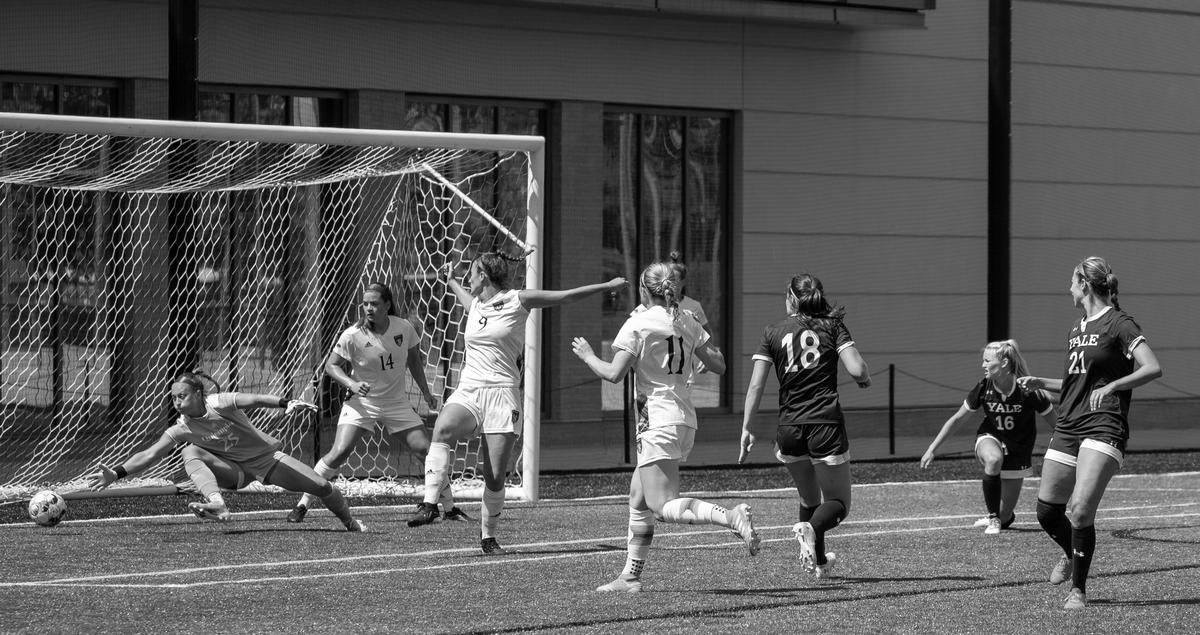


“I am worried about steadi ness regarding upper leader ship,” said Cruz-Bustamente. “I hope that we find someone who will be willing to truly transform our schools and tackle issues head-on with the solutions that community organizers, students, and teachers propose.”
NHPS Superintendent retires; students start school unmasked
BY ISAAC YU STAFF REPORTER
The Board of Education has not announced formal plans for a superintendent search but has indicated that they will begin the process soon. Dave Cruz Bustamante, Board of Education member and Cross School student, expressed con cerns about the district’s future.
“All great deeds and all great thoughts have a ridiculous beginning. Great works are often born on a street corner or in a restaurant’s revolving door.”
Cohen Gilliland, meanwhile, is working on a book of her own about Argentinian women searching for their grandchil dren who went missing under the country’s former military regime. Her previous work spans a range of genres and publica tions; The topics that are most captivating to write about, Cohen Gilliland said, involve people pushing their boundar ies, from amateur rock climbers to celebrity horse cloners. “The mission of the program remains the same as it was 16 years ago — to help Yale students break into journalism,” Gilliland said. “The more we can encourage a diversity of voices in journalism, the richer journalism becomes.” Gilliland also mentioned fact-checking, pitching and journalistic ethics as potential workshop topics. YJI was established from a donation made by Steven Brill ’72 LAW ’75 and Cynthia Margo lin Brill ’72. Contact ISAAC YU isaac.yu@yale.edu.at
BY YASH ROY STAFF REPORTER For the first time since March 2020, New Haven Public Schools students walked into school on Monday without a mask. Students were required to wear masks for all of last school year, but the district now says pub lic health conditions allow for a change in masking policy. At a press conference last week with New Haven Mayor Justin Elicker, outgoing superintendent Iline Tracey announced the change. The decision comes after the dis trict initially kept its mask man date in mid-March when Gov. Ned Lamont dropped the state wide mask mandate. “We have a mask-friendly sit uation,” Tracey said last week. “If students or their parents want them to wear masks they’re wel come to wear them; however, stu dents will no longer be required to wear a Accordingmask.”to New Haven Public Schools Spokesperson Justin Har mon, all summer school classes and activities adopted the same policy and the district did not see an increase in cases. “Health department and dis trict officials are still closely mon itoring COVID-19 cases in the district, but for many students they’re starting to feel like school from pre-2020,” Harmon said. If students or staff test positive for COVID-19, they will be told to remain at home for at least five days or until they are asymptom atic, according to Harmon. Upon their return to school, they will have to wear masks for five days. Students will complete their work online during their isola tionCOVID-19period. test kits will be available at New Haven schools, and if students or staff are exposed to the virus they will be asked to wear masks until they test nega tive once, Harmon added.
ALBERT CAMUS FRENCH PHILOSOPHER
Beginning next month, a new director will lead the Yale Jour nalism Initiative for the first time since the program’s founding. Haley Cohen Gilliland ’11, a freelance writer who has reported for The Economist in Argentina, London and Califor nia, will become Yale’s de facto journalism mentor next month. She replaces Mark Oppenheimer ’96, who will step away after 16 years to focus on an upcoming book and other projects. At Yale, Cohen Gilliland wrote and edited for The New Journal. She points to Oppenheimer and other English faculty, includ ing Fred Strebeigh ’74 and Anne Fadiman, as “voices in her head” driving her career. The new role, she said, is an opportunity to pay it forward.“Yalewas definitely the rea son I chose the career path that I did,” Cohen Gilliland told the News. “I’ve felt so supported in my career choices at every point … to have that level of support is really, really rare.” The new director hopes to foster stronger connections between students and fellow alumni. She also seeks to make program offerings more acces sible to a wide range of students. Cohen Gilliland is not the only familiar face returning to the journalism scene; Another Yale graduate, Susan Dominus ’92 LAW ’99, arrived last spring to teach the signature “Journalism” seminar, replacing Bob Wood ward ’65. Joanne Lipman ’83, former Editor-in-Chief of USA TODAY, started teaching a media seminar last fall. YJI, which was seeded with a grant in 2006, aims to sup port undergraduates considering a career in journalism. The pro gram’s scholars must take ENGL 467, the foundational journalism seminar, become involved with student publications and complete a summer reporting internship.
YALE DAILY NEWS AND COURTESY OF HALEY COHEN GILLILAND Mark Oppenheimer ’96 is departing Yale’s journalism program after 16 years at its helm.
Tracey, who has worked in New Haven Public Schools for 38 years, has led the district of 19,000 stu dents during some of its most unpredictable years. “I accepted the challenge prior to a pandemic that was unprece dented for our times. Like a cap tain, I navigated the ship through rough waters and landed it,” Tracey wrote in her three-page retirement notice to the Board of Education. “Like with many things in life, people tend to quickly forget the struggles and trials and behave like nothing positive has happened. But, only those who waded through the waters will remember.”
The New Haven public school system has 19,000 students. Contact YASH ROY yash.roy@yale.edu.at
Tracey’s tenure began follow ing instability after the departure of former Superintendent Carol Birks. Birks entered a settlement with the district to leave her job before her contract expired due to staff, student and parent protests over budget and teaching issues. Soon into Tracey’s tenure, she was presented with the task of transitioning in-person instruc tion to a remote model. Tracey also highlighted a set of 28 accomplishments that she said her administration has achieved during her tenure. These achievements include reducing the budget deficit three years in a row, providing 40,000 computers and tablets to stu dents, locating and supporting 500 homeless students and fami lies through the Attend, Connect, Engage campaign where the dis trict canvassed to find families in difficult situations and overhaul ing the district’s curriculum and strategic plan. But even as normalcy has slowly returned to the district, with schools gradually reopen ing in 2021 and the mask mandate ending, controversies remain. In recent months, the district has come under fire after last year’s reading and math test scores revealed that more students have fallen below grade level than in prior years. In 2019, 34 percent of third through eighth graders were at grade level for ELA and 22.5 percent were for math. In 2022, only 23 percent were on level for ELA and 12 percent were for math. In her retirement letter, Tracey rejected arguments from members of the Boards of Alders and Edu cation that the newest test scores were a “Dr.crisis.Tracey has led New Haven Public Schools through one of the most challenging periods in our city’s and nation’s history and worked tirelessly through out the pandemic to support our students, parents and teachers,” Elicker told the News. “It is a crit ical time for our students and educators, as they prepare to start the new school year off strong and begin the challenging task of making up for the recent learning loss we’ve experienced.”
Tracey announces retirement When New Haven students returned to school on Mon day, they did so under a cloud of administrative uncertainty after Superintendent Iline Tracey announced that she will retire at the end of the school year.
YALE DAILY NEWS FRIDAY, SEPTEMBER 2, 2022 yaledailynews.com PAGE 11 NEWS
Yale Journalism Initiative sees director shakeup
Oppenheimer, who is best known outside of Yale for a reli gion column in the New York Times and a book on the 2018 massacre at the Tree of Life syn agogue, said Cohen Gilliland was “a great hire” for the department. “[Cohen Gilliland] is a tre mendously talented journalist, with important experience work ing abroad, reporting in multiple languages, and writing for a range of publications,” Oppenheimer wrote to the News. “She is now working on a book that promises to be exceptionally good.” Oppenheimer will now focus on his sixth book, a biography of the newspaper advice columnist Ann Landers, as well as the new “Gatecrashers” podcast, which covers the history of Jews and antisemitism in the Ivy League and debuts on Sept. 13. He said that while YJI has largely stayed the same since he came to campus, student jour nalism has evolved with the rise of the internet and smartphones. The student body has also become more liberal, he said, a trend reflected in published work. In addition to YJI, Oppen heimer has taught a range of the creative writing program’s classic offerings, most recently the pop ular spring course Daily Themes. That class will now be taught by Andrew Ehrgood ’85 GRD ’93.
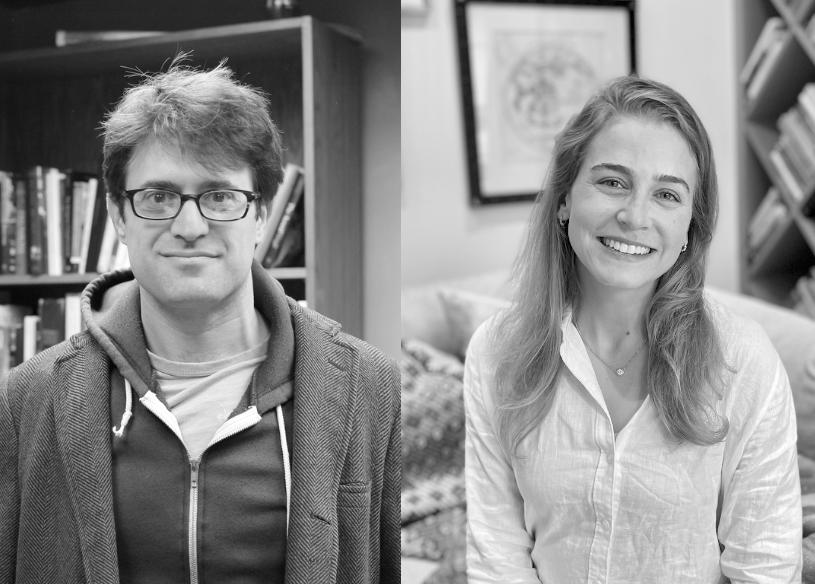

I had the pleasure of interviewing Ted Evelyn Mosby, or rather Carter Bays (but basically the same thing) ahead of his upcoming visit to campus. Bays is the co-creator, writer and executive producer of the wildly popular television show, How I Met Your Mother, or HIMYM, which follows Ted, Robin, Barney, Lily and Marshall through their lives in New York City. He met with me to share some of the tips and tricks he’s learned over his career, as well as to provide a glimpse into the secrets of the show.
The Writing Process Seeing as HIMYM had two co-creators and primary writers, Bays and Thomas split epi-
HOW I MET THE CREATOR of HOW I MET YOUR MOTHER
cross-pollinationtobetweenersstaffbutvidualtwosplitson.perevenlysodessea-Theyintoindi-roomshadtheirwrit-alternateroomsallowforasmuch as possible.Before scripting each season, Bays and Thomas would chart out where they wanted the season to go, just the two of them and a giant dryerase board — an image they perhaps paid homage to in the episode featuring Barney’s girl bracket. With their writing team, they would then divide the board into 24 sections, one per episode, and once the handwriting in each section was so small it was barely legible, they knew they had enough ideas to begin outlining. In addition to the show’s writers, the episode charting process also included writing assistants working like court stenographers copying down every joke made while discussing ideas. This meant that once a writer went to create the outline for an episode, they had about 30 pages of jokes from which to pull.Bays then explained to me a process known as a “punch-up,” which is done once an episode’s script is drafted. The writers would examine a fi nished script to assess whether there were enough jokes on each page. Their motto was “don’t go more than 30 seconds without a good laugh.” In terms of what that looks like on an actual written script, Bays described, “three big laughs on a page — that was a good page — and if not, you had to really earn those moments where it’s dramatic or there’s a big speech or Thissomething.”wasa claim I intended to factcheck while rewatching the show. I decided to stream episode 21 in season nine, titled “Gary Blauman,” as Bays informed me this is his favorite episode — a choice he admits is a strange one. He was right about the jokes; the intervals between good laughs range from three seconds to a rare 45 seconds, with one interval timing in at one minute and 16 seconds, which is filled with a heartfelt speech about losing touch over time. In line with Bays’s remark, this speech is followed by a string of jokes mere seconds apart as the show looks back on where past characters such as Patrice, Jeanette and Zoey are today. Like all shows, following the punch-up, the team began table reads and runthroughs. Bays emphasized the importance of run-throughs, explaining how they allowed the team to rehearse bits of physical“Withcomedy.people like Neil Patrick Harris, you could write something like ‘Barney has a bad coughing fit’ in the script, and he would turn that into the biggest laugh of the episode,” Bays said. “‘Barney sneezes so much that he falls down’ was all we wrote in the script, and he turned it into this glorious 30 seconds of clown work that was just magnificent.”
Few devoted fans can forget this scene of Barney’s intense coughing and sneezing fit in the hallway in “How Lily Stole Christmas” (Season 2, Episode 11). A huge part of what made HIMYM so uniquely entertaining Cont. on page B2 ELLA MARTINEZ
“Write What You Know” An avid Star Wars fan, Bays expressed some suspicion of the saying “write what you know,” seeing as George Lucas never had to fight in the galactic wars. That said, when writing 208 episodes to satisfy the cultish fanbase of HIMYM, much like Ted recounting his stories to his children, Bays looked into his past to create Ted’s future. “With HIMYM, because I so related to Ted, and to all the other characters at various points in the series, it made it easy to generate stories,” he said. HIMYM is loosely based on Bays and fellow co-creator Craig Thomas’s lives, starting as college roommates at Wesleyan and then as adults navigating life and love in New York City. Beloved details such as Ted’s not-so-illusive alter ego, Dr. X, were taken directly from Bays’s life as he admits to having a few late night slots on Wesleyan’s college radio station. The show also makes several references to the characters wanting to start or already being in a band, another detail drawn from Bays and Thomas’ lives as they have been in the band The Solids since they formed it at Wesleyan in 1996. This technique also provided Bays with another benefit: a room full of therapists. “HIMYM was such a great alternative to therapy for me and for a bunch of the other writers,” Bays explained. “Here’s what’s going on in my life; here’s what I have to complain about this week; let’s make it funny.”
WEEKEND FRIDAY, SEPTEMBER 2, 2022 //JACK LI // BY


Keeping
Bays recalled planting the line “‘Kids, did I ever tell you the story of the goat? Nah, I’ll tell you that later,’” which challenged the writers to introduce a caprine tale two seasons later. Bays is addicted to challenging himself and his whole team as writers and watching them rise to the occasion. He credits much of this to the show’s director and producer, who never backed away from difficulty, including a continuous two-minute shot that even featured two taxis in order to capture Ted and Stella’s two-minute date. It’s been over a decade since the two-minute date, and Bays is continuing to push himself. Though his most famous work is in television, he has recently pivoted to books. Bays’s debut novel, “The Mutual Friend,” came out this past June. Bays said that the tone of the book is similar to HIMYM, though he claims it’s even better than the series. “I remember when I finished How I Met Your Mother, Pamela Fryman said to me, ‘You’re gonna be chasing this feeling for the rest of your life because it’s going to be hard to find something you love as much as you love these five characters, this bar, and this apartment,’” he told the News. “And I feel this way about the book.” A Year of Experiments What inspired season five? I will admit, this was a self-serving question that, as a “cultish fan” who favors season five, I just really wanted to know the answer to. As fans will remember, season five of HIMYM is unique from the other seasons in that the episodes do not really push the plot forward and tend to be stand-alone. For reference, season five contains episodes like “Hooked,” “Robin 101,” “Doppelgangers,” “The Wedding Bride,” and “Girls vs. Suits.” All masterpieces in their own right. Bays explained that in the earlier seasons, they struggled a lot in the ratings. However, by season four, they had a stable position on CBS following several seasons of intense story and character arcs. Given their newfound stability, the creators decided they wanted to make a season “filled with episodes that you want to watch when you are just flipping through the channels.” To do this, they wanted to eliminate the need for continuity between episodes as much as possible.Then, Bays told me the Forrest-Gump-esque secret to season five that gave me my glass-shattering moment — similar to the ones experienced by the characters in the episode “Spoiler Alert” when Ted is clued into his nonstop talking girlfriend: “Our philosophy of season five was to make it a box of chocolates. Each one you could reach in and grab one, and each one would be a little di erent.”
Make sure that OnlyFans is the right thing for you. According to @SunkissedBloom, it is di cult to pull significant profit if one doesn’t have a “large social media following.” Even then, it still takes “a long time and a lot of work to be able to even make $500 a month, let alone paying for rent and other bills.” An online community full of advice exists, but even after expanding your platform, it requires a lot of upkeep to maintain that growth. If quick cash is what you’re after, try a sugar daddy. Find your niche. There are certain genres of content in the sex realm of the site; for example, @SunkissedBloom’s profile boasts lots of bondage, “fun and cum” videos and ratings of people’s dicks. Maybe you’re not into being tied up, but love a blindfold. Maybe posting yourself being fucked in the vag seems a little too intimate, but the ass is fair game. @SunkissedBloom shared a story with me detailing how they made $300 after sending a subscriber a video of them burping. The point is, when there is an action, there is an audience. Once you’ve found your niche, it’s time to start producing content. @SunkissedBloom heavily emphasizes finding your angles, explaining that they “can get a photoshoot of +5 outfits and +150 photos in an hour because [they’ve] researched di erent poses and angles” and “figured out through trial and error what poses and angles look best.” Twitter is a fantastic resource for nude inspiration; next time you get annoyed by an unexpectedly-salacious photo showing up on your timeline, rethink things. For all you know, it could be your @SunkissedBloommuse.also distinguishes between “good” and “great” content — because there is no bad — we at Sex on the WKND don’t kink shame. They recommend having “good lighting so you can see everything,” trying “many different poses that show o all di erent body parts,” and experimenting with “multiple facial expressions.” If you wouldn’t want carbon-copy sex every time you hit the bedroom, why would expect di erent from not-suitable-for-work content? Variety is key. Once you’re finished with your desired content, it’s time to publicize. The key to growing your audience is consistency; @ SunkissedBloom notes that “even if you only post once or twice, it’s better than making five posts one week, one the next week, none for two weeks,” and so on. Regularity is the foundation of your relationship with subscribers; knowing what to expect motivates them to stick around.
SEX ON
Advice for Screenwriting Hopefuls The first piece of advice that Bays would give to prospective screenwriters is simply to write a lot. More than that, write a lot and get your work out in front of other people as much as possible to get impressions and feedback. His four years writing for “The Late Show” with David Letterman taught him the importance of sharing your work with an audience to hear their immediate reactions and figure out whatHisworks.second, and I would argue less intuitive, piece of advice is “be kind. Be a good person. Be decent.” He“Ifcontinued:youare in a power structure that is abusive to you, speak up about it, and if you are ever lucky enough to be at the top of that power structure, remember how that feels, and don’t be abusive. Just be kind to people.” Bays reflected, “One of the benefits of getting old is you get a perspective when you see people’s careers unfold, and I can tell you with 100 percent certainty that the people that are assholes don’t last long, or maybe they do last a little long, but they do 100 percent eventually get the ending that they deserve.” He explained that it’s better to create a good working environment than to produce good works, especially when working in comedy, a field that trades in smiles.Bays will be visiting Yale, specifically Davenport College — the best one — to participate in a Head of College Tea on Friday, September 16th. Perhaps the tea will be followed by a visit to Sally’s, as Bays, a Wesleyan alum, agrees that it is superior to Pepe’s.
That’s exactly what it was! If you don’t have this same epiphany, go back, and watch season five through this lens.
WEEKEND CAREERS PAGE B2 YALE DAILY NEWS FRIDAY, SEPTEMBER 2, 2022 yaledailynews.com WKND RECOMMENDS
Cont. from page B1 Pining after your FroCo? Dying to get on the orgy panlist? Sick of seeing khakis on men? You’re in luck! Welcome to Sex on the WKND, YDN’s anonymous column dedicated to answering your burning questions about sex, love and anything in between. Obsessing over sex is a Yale tradition as old as the Oldest College Daily itself. This year, we have a loveguru columnist who has done it all — including everyone on the aforementioned orgy panlist — and is ready to share. Whether you have a seminar with a hookup gone wrong or accidentally sent a raunchy text to your chemistry study group, Sex on the WKND is ready to help. Don’t be shy. Submit your anonymous questions, stories and tips online.
After seeing all my friends blow loads of cash after their summer finance internships, I’m starting to crave a disposable income. I’ve been looking at starting an OnlyFans … any tips?-NotJustAFan First of all, welcome back to Sex on the WKND, home of all things racy, risque and ribald! To all my devoted readers, I’ve missed you. Genuinely. My fingers practically ached to write you all advice for your — hopefully — sexy summers. I can’t wait to hear all about them. To anyone new, I’m so glad to have you here. The class of 2026 slightly terrifies me — it’s still not too late to turn back with your innocence in hand — but whether you’re a seasoned slut or a virginal fledgling, this era of Sex on the WKND is going to be a blast. Back to the question. I’ll start with what I know about OnlyFans. Launched in 2016, OnlyFans is a subscription-based social platform that allows users to buy and sell original content; this includes entertainment, art, and — most famously — sex work. Unless it gets banned again. To gain access to this content, subscribers pay individual creators a monthly fee between $4.99 and $49.99. Creators can also distribute pay-per-view content or construct a “tipping system” for private messaging/ exclusive photos to supplement the subscription-based income. The highest-paid OnlyFans star is Blac Chyna, who racks in $20 million a year from the platform alone. Although this isn’t the norm for the majority of creators, it makes clear that OnlyFans is not only viable as a side hustle — it can be turned into a full-time job. I know, I know. That was awfully logistical coming from me. I’ll be honest, I’m no expert in this domain. In fact, I relate the quality of my social media presence to that of a middle school boy. Let’s just say, there’s a reason I’m anonymous. Luckily, an old, dear, and sexy friend of mine is an expert and runs a successful OnlyFans profile. I was able to interview them to answer all your questions about the life of an OnlyFans creator. Creator @SunkissedBloom, like many creators on the site, made their profile in the midst of the COVID-19 lockdown as a “way to make money without putting [their] safety and health at risk.” With OnlyFans, they could work from home and with their own hours, which they cite as “common factors” among sex workers’ decisions to join the platform. However, these aren’t the only reasons. Maybe you’ve been Snackpassing whenever the ethnically ambiguous dining hall meals don’t hit. Or, if you’re like me, you live on the fourth floor and have been dying for an air conditioning unit. After making an account on the platform, @SunkissedBloom gained instant attention, which included some familiar faces. When asked about the overlap between personal connections and their profile, they explained to me that “it’s funny and shocking to see people that [they] knew from high school who were subscribed to [their] account, especially from people who used to bully [them].” For those of you who aren’t chronically online, to subscribe to someone’s OnlyFans, one needs to make a profile that includes a name and profile picture. So, for all you lurkers out there, make sure you know how to fly under the radar. Or just don’t be a creep. Despite the funny side of OnlyFans, the overlap between personal life and business can turn more serious. Thankfully, @ SunkissedBloom has had a primarily positive experience with telling those close to them about their account — their mom even “joked about starting her own page for extra money” — but they also mention that this is not the case for many people. Some report being kicked out of their homes, severed from relationships with family and friends and even being fired from other jobs once their side hustle is discovered. Because of the stigma surrounding sex work, if you decide to make an OnlyFans, be sure to have a solid support system to rely on. After that well-needed warning, let’s talk about the part we’ve all been waiting for: how does one start and grow an OnlyFans profile? @SunkissedBloom had a lot of advice to give, which I’ll condense into three main points: research, find your niche and build social media presence.
Of course, this isn’t always possible. Work piles on, friends come and go, we find out the ‘rents are getting divorced and have to reinvent our identity around it. Shit happens. It’s likely you’ll lose subscribers. Luckily, rebuilding is similar to the initial jump; @SunkissedBloom highlights the value in subscription “sales” — ex. 50 percent off for a few months — and posting on NSFWfriendly websites like Reddit. Whatever your method, make sure it does not overwhelm you. Just like all raunchy activities, things ought to be mutually beneficial. With this advice, hopefully you’ll have the tools necessary to launch yourself into the world of OnlyFans. But if making a profile is starting to seem more intimidating than invigorating, there’s still some work to be done. After our lighthearted conversation about optimal phone placement and the understated importance of hip flexibility, I posed one final question: What is the future of sex work? While you all know I love to give slightly-unqualified advice, I think I’ll let @SunkissedBloom take it from “Decriminalizinghere. sex work/prostitution is one of the most important things because it stops us from getting arrested and punished by law. We have to work to change our perceptions of sex work and give it more respect as one of the longest careers that’s existed in human society. “I think a lot of people don’t like sex work because they think of the unethical and awful porn industry and they don’t like the idea of a person “selling” their body in exchange for money. We can criticize the unethical porn industry while simultaneously recognizing that there is a lot of ethical porn out there that doesn’t push unrealistic expectations. That’s why I like OnlyFans so much; it’s way more of an ethical porn that I can do and be safe doing while not sending unrealistic expectations to my Youcustomers.don’thave to be over the moon excited about sex work or agree with how we use our bodies, but we are real people who deserve respect and common decency. If more people were willing to open their minds a little more and just put their bias aside, I think a lot of the stigmatization of sex would go away.” Nu said. If you have any other questions, stories, dick pics, catfish suspicions, etc., submit them online. See you next week, sluts! THE WKND: it Cool with OnlyFans
Carter Bays gets candid about HIMYM and how to write
Cornwas how the writers pushed themselves creatively, playing with camera techniques and setting up plots that wouldn’t be completed for years.
Contact ELLA MARTINEZ ella.martinez@yale.eduat.

The Afro-American Cultural Center was established in 1969.
The Biden administration also extended the moratorium on loan repayment and interest through Dec. 31, the final expansion of a policy it put in place when the COVID-19 pandemic began in March 2020. Wallner said that she views Biden’s loan forgiveness plan as “one in a string of policy wins.” Yet she noted that the plan provides temporary relief, rather than addressing the soaring prices of a college education. “The root of the issue, the ballooning cost of college education in America, looms over the working class, even at an institution like Yale,” Wallner said. Students on the opposite side of the political spectrum also expressed concerns about the effectiveness of Biden’s plan. Daniel Sorial ’24, who identifi es as a conservative, described it to be a “band-aid solution.” He said that the loan relief program “does not solve the root problem that the price of college education has grown tremendously in the last few decades.” At Yale, the price of tuition and room and board currently sits at $80,700. For the 2002/2003 academic year, students paid $35,370 for the services. He added that he thinks there will be little benefit to this program in the long-term and that loan forgiveness discredits other Americans who paid off their student loans. “This will produce little longterm good and diminishes credit from those who have diligently paid back their loans,” Sorial said. Student loan holders apply for relief at the U.S. Department of Education.
Contact JORDAN FITZGERALD atandjordan.fitzgerald@yale.edu
BY DANTE MOTLEY STAFF REPORTER Timeica E. Bethel-Macaire ’11 spent her college days heavily involved in the Afro-American Cultural Center, also known as the House. She recalls the bustling of students cooking in the kitchen, taking drum classes or watching the acapella group Shades of Yale perform. And now, she is back — this time as The House’s new director. Bethel-Macaire began her time as Af-Am House Director and Assistant Dean of Yale College on Aug. 8, filling a position that was left empty when former Dean and Director Risë Nelson transitioned to a role within Yale’s libraries. “It feels amazing to be back,” Bethel-Macaire said. “It’s also strange to be back in this seat. I never imagined I’d be coming back to Yale, let alone as the director of the Bethel-MacaireHouse.”has dedicated her career to addressing inequities within education. After graduating from Yale, she went back to her hometown of Chicago as part of Teach for America. Most recently, she was a Program Director at LINK Unlimited Scholars, a nonprofit supporting Black middle and high school students in the Chicago area. While at Yale, Bethel-Macaire was a leader in organizations like Black Church at Yale, the Dominican Students Association, the Yale chapter of the NAACP, the Urban Improvement Corps and the Yale Black Women’sBethel-MacaireCoalition. was named Director after a lengthy interview process, conducted by a search committee composed of professors, students and a Yale pastor. Her appointment was announced on July 27 by Dean of Yale College Pericles Lewis and Dean of Student Engagement Burgwell J. Howard. “Mrs. Bethel is a lifelong learner and educator,” Lewis and Howard wrote in a community-wide email. “She lives by her high school’s slogan, ‘everything to help; nothing to hinder.’ She’s passionate about educational equity and providing people with the opportunities and resources necessary to be Bethel-Macairesuccessful.”saidthat she hopes to create a high-energy atmosphere in the House. She recognized the ways COVID-19 has affected the ability for students to connect and aims to ensure students are able to easily re-engage with the House. Bethel-Macaire also hopes to galvanize the House’s alumni network, noting the excitement among the alumni community during the House’s 50th anniversary, Af-Am 50, which she helped plan. The experience of putting on such an event encouraged her to apply for the director position. Bethel-Macaire said that meeting students, and receiving encouragement from other alumni at the event, inspired her to take on the role. “So much institutional knowledge has been lost because of the lack of activity over the COVID years,” Bethel-Macaire said. “So I am excited to connect student leaders with some alumni to get that knowledge and decide what pieces of that they want to use moving forward, and what pieces of that they want to leave in the past. “My goal is not to make the House the House that it was in 2011,” she added. “I want it to be the House that current students need it to be.” Since arriving from Chicago on Aug. 8, Bethel-Macaire said she felt like she is “running in a million different directions,” but is ready to help figure out how the House, and the University more generally, will take shape after the pandemic. She says the doors of the House are open to anyone who wants to learn about, celebrate and appreciate the aspects of the African Diaspora.
Yale students split on e cacy of Biden’s student loan forgiveness plan
Timeica E. Bethel-Macaire
Leleda Beraki ’24, Yale College Council president and member of the House’s student engagement team, said that in her few interactions with Bethel-Macaire, she has seen “her desire to make all of us feel heard.” “It’s amazing to see administrators who have been in our shoes now working to make our experience better,” Beraki wrote to the News. “She’s a genuine and down to earth person who I know will help create a vibrant space for Black students.”
OLIVIA LOMBARDO at olivia.lombardo@yale.edu .
COURTESY OF YALE COLLEGE Alumna Timeica E. Bethel-Macaire ’11 was appointed to the role of Af-Am House Director and Assistant Dean of Yale College after being involved in the House as a student and helping plan Af-Am 50.
BY JORDAN FITZGERALD AND OLIVIA LOMBARDO STAFF REPORTERS U.S. President Joe Biden approved a sweeping student loan forgiveness plan on Aug. 24 — a plan that Yale administrators say will have little effect on Yalies who primarily rely on grants, but that some students say is significant nonetheless. While student loan debt has grown nationwide, with 16.6 percent of American adults owing a cumulative $1.75 trillion in total student loan debt, Yale’s financial aid grants aim to help students afford the $80,000 term bill. Still, Yale Democrats Vice President Emma Wallner ’23 said that student loans are likely more prevalent on campus than many students believe. “Student loans are a taboo topic on Yale’s campus,” Wallner said, “There is an unspoken a ordability gap for middle-income students who do not receive full aid yet do not have the means to write o a check in full.” For the class of 2021, 12 percent of graduates took out student loans, amounting to an average $14,383 of debt per person. Nationally, 57 percent of students at private four-year universities take on educational debt, and borrowers owe an average of $28,950. “Since 2008, Yale College has met 100% of demonstrated financial need for all students without including loans in financial aid awards,” said Scott Wallace-Juedes, director of undergraduate financial aid. “This means that — by our calculation — every family will have the resources to cover their full cost of attendance through a combination of scholarship aid, an affordable parent share and a studentJeremiahshare.”Quinlan, dean of undergraduate admissions and financial aid, added that ensuring that every student can graduate debt-free is an “important pillar” of Yale’s financial aid policies. However, some students — whether or not they qualify for need-based aid — may still choose to fund their cost of attendance through loans, Wallace-Juedes said. The Office of Undergraduate Financial Aid offers personal student-loan counseling, which may cover whether or not to borrow, which types of loans to take out, repayment options and the loan application process. And for some Yalies, student loan cancellation could save them thousands of dollars. Under the new loan forgiveness plan, millions of borrowers will see up to $10,000 of student debt voided, and Pell Grant recipients will have up to $20,000 of their loans canceled by the Department of Education. Eligibility is limited to individuals earning less than $125,000 and families earning less than $250,000 per year. Some loan recipients may be automatically eligible for relief, while others whose data has not yet been submitted to the U.S. Department of Education must apply. The official application has yet to be released, but is expected to be available by October, according to the Department of Education.
CECILY STRONG AMERICAN ACTRESS
PAGE 12 YALE DAILY NEWS FRIDAY, SEPTEMBER 2, 2022 yaledailynews.com NEWS
YaleAlumna REGINA SUNG/PHOTOGRAPHY EDITOR Yale administrators say the University’s financial aid policies have shielded most students from loans, but some students say there are still gaps.
’11 appointed Director of Af-Am House
Contact DANTE MOTLEY at dante.motley@yale.edu .
“Take the first step in faith. You don’t have to see the whole staircase, just take the first step.”


CECILIA LEE is a junior in Saybrook College. Contact them at cecilia.lee@yale.edu .
SOPHIE HENRY is a senior in Jonathan Edwards College. Contact them at sophie.henry@yale.edu .
CECILIA LEE is a junior in Saybrook College. Contact them at cecilia.lee@yale.edu .
BULLETIN BOARD YALE DAILY NEWS FRIDAY, SEPTEMBER 2, 2022 yaledailynews.com PAGE 13
SOPHIE HENRY is a senior in Jonathan Edwards College. Contact them at sophie.henry@yale.edu .


YALE DAILY NEWS FRIDAY, SEPTEMBER 2, 2022 yaledailynews.com FOR MORE SPORTS CONTENT, VISIT OUR WEB SITE goydn.com/YDNsportsTwitter:@YDNSports
2 THE NUMBER OF YALE FOOTBALL GAMES TO BE BROADCAST ON NATIONAL TELEVISION (OCT. 18 AT COLUMBIA; NOV. 19 AT HARVARD)
BY HAMERA SHABBIR STAFF REPORTER
FOOTBALL Utah State 31 Connecticut have a lot of guys who have had a lot of playing time and I think that’ll bode well for us… We’re going to be getting great work every single day.”
BY NICOLE RODRIGUEZ STAFF REPORTER Following an impressive spring season, the No. 5 Yale women’s crew team embarked on a remarkable journey around the world this summer, collecting a slew of victories and medals. At the culmination of their regular season in April, the Bulldogs clocked in five victories, effectively sweeping Radcliffe and Northeastern on the Housatonic. The varsity eight defeated Radcli e with a 15-second victory and captured the Case Cup for the ninth straight season. This impressive success followed the squad to the postseason and throughout the summer, where it earned various titles and“Rowingmedals. at these high level championships gives an extra dimension to the sport, which makes coming back to New Haven to compete for Yale even more exciting,” Margaret Hedeman ’23, a former sports editor for the News, wrote. “It is also a great opportunity to gain a new perspective through di erent coaching and meeting people from opposing NCAADuringteams.”the Ivy League Championship, the women’s crew delivered impressive results, with the
Elis find postseason, o season success
S TAT OF THE W EEK
BY TOIA CONDE RODRIGUES DA CUNHA STAFF REPORTER Before most students returned to campus, the Yale women’s soccer team (1–0–1, 0–0–0 Ivy) was already o to a flying start, picking up one win and a draw from two home games. The Blue and White started their season on Aug. 20, lacing up to trounce Manhattan College (0–1–0, 0–0–0 MAAC) 3–0 in an exhibition game. Six days later, the squad drew against Hofstra (2–0–1, 0–0 CAA) in its season opener before beating Quinnipiac (2–1–0, 0–0–0 MAAC) 4–1 on Sunday. The Bulldogs scored seven times across the three matches. “Winning games at this level is always hard, and we are happy as a staff to come away from our opening weekend with two results,” head coach Sarah Martinez said to Yale Athletics. Although Yale’s season opener against Hofstra at home was delayed for 30 minutes due to inclement weather, the show eventually went on with the two teams playing to a scoreless tie. Goalkeeper Maya Bellomo ’24 kept the Bulldogs in the game with four saves, including one in the second half when she blocked a shot from Hofstra forward Leah Iglesias, who lashed out at goal from the right. The second half also brought Yale’s best chance at scoring with a chance from Tina Teik
MUSCOSPORTSPHOTOS.COM
The Yale football team will start the 2022 season in September with 23 fifth-year seniors.
COURTESY OF RENA HEDEMAN
MEN’S BASKETBALL
BASEBALL C IS FOR CARSON Carson Swank ’23 will lead the Yale baseball team as its new captain this year, as the program prepares to welcome a talented firstyear class and new members of its coaching sta .
SPORTS
MUSCOSPORTSPHOTOS.COM
20 W. SOCCER Marist 1 Cornell 1 FIELD HOCKEY Villanova 3 Fairfield 1 VOLLEYBALL Merrimack 3 Hartford 1 M. SOCCER Quinnipiac 2 Vermont 0 “We
BY SPENCER KING STAFF REPORTER
SEE SOCCER PAGE 14
Yale starts undefeated
The Yale women's soccer team has scored seven times across the three matches they have played this season.
The Yale football team will kick o its 2022 season on Sept. 17 with high hopes of redemption following a middling 5–5 campaign last year.The team will hope the return of 23 fifth-year seniors, an irregularity brought on by the COVID19 cancelation of the 2020 season, and an increase in the roles of key younger players will return it to the top of the Ivy League. With so much roster continuity from last season, the message for the team is clear: Learn to fi nish the tight games.“When you look at our consistency, when we’ve had championship-level teams, we’ve been able to be consistent for 60 minutes and find a way to be better at the end,” head coach Tony Reno said at Ivy Football Media Day. “Find ways to put points on the board and stop opponents from scoring late. Those are things that we need to do more consistently.”TheBulldogs’ defense promises to be the backbone of Team 149, as experience and depth stand out as key factors on both the line and in theStandoutsecondary.defensive lineman Clay Patterson ’24, who led the Ivy League last season with 11.5 sacks, will be a player to watch nationally, as he was named to the preseason watch list for the Buck Buchanan Award which is given to the defensive player of the year in the Football Championship Subdivision, or FCS. In the defensive huddle, Patterson will be the star while defensive lineman Oso Ifesinachukwu ’23 will be the leader. Ifesinachukwu, who ended last season with one of his strongest performances against Harvard with four tackles, a sack and a forced fumble, will join with Patterson and the rest of the line to create a nightmare for opposing coaches.“Ourstarting D-Line have all played before, our secondary has all played before, we got a lot of experience,” Ifesinachukwu said. “I’m really excited to see what we can do with that understanding of how we play our defense, how we’re going to work together.” The opposite side of the fi eld features starting left tackle and captain Nick Gargiulo ’23. Gargiulo and the rest of the line will be in charge of the protection for returning dual-threat quarterback Nolan Grooms ’24. Grooms, a local product from the Taft School in Watertown, MA, started the fi nal five games for the Elis and enters the new season with high expectations. Grooms has the ability to break down opposing defenses through the air and on the ground, with 1,569 passing and 425 rushing yards in the 2021 campaign. The quarterback won’t be asked to do it all by himself, with a talented host of skill position players ready to help carry the load.Running back Spencer Alston ’24 will likely be the lead back for the Bulldogs, as he finished the season strong with 74 rushing yards against Harvard last season. The receiving core will feature a deep group with options both out wide and in the slot. Last season’s leading receiver Mason Tipton ’24 returns as the biggest weapon in the group, with multiple younger players preparing to step in behind him. “We have a lot of guys who have had a lot of playing time and I think that’ll bode well for us. But another thing is we’re going to be going
Two Yalies compete at USGA
JONES LOCKED IN Yale men’s basketball head coach James Jones’ extension through the 2030-31 season gives him one of the longest contracts in men’s college basketball and marks the third extension he has signed since 2019.
NICK GARGIULO ’23 FOOTBALL CAPTAIN
Bulldogs Gear Up For New Season
Over the summer break, two Bulldogs qualified for U.S. Golf Association national tournaments. Ami Gianchandani ’23 and Kaitlyn Lee ’23 both participated in the U.S. Women’s Amateur Championship, where Gianchandani exited in the round of 64 after making the cut for championship weekend. At the same time, Lee exited in the second round with a score of nine over par. Earlier in the summer, Gianchandani played two rounds at the U.S. Women’s Open“GoingChampionship.intothe Amateur Championship this year, I had missed the cut two times that I had previously played it,” Gianchandani said. “But this time, I had a renewed sense of confidence and belonging in the field because of playing the U.S. Open. I knew I could be one of the better players there and that kind of propelled me to make the cut.” In 2019, Gianchandani played the U.S. Women’s Amateur and exited after two rounds with a score of eight over par. The Women’s Amateur Open is played in August, two months after the Women’s Open in June. Gianchandani was among nine players who played in both tournaments. At the U.S. Women’s Open, women’s golf head coach Lauren Harling visited and supported Gianchandani. “I grew up thirty, forty minutes away from Southern Pines, where the U.S. Women’s Open was played, and I’ve played that golf course many times,” Harling told the News. “Seeing Ami out there doing her thing in a place I’m really familiar with wasHarling,great.” who grew up in North Carolina, had followed Gianchandani’s path to the tournamentGianchandani’sclosely. run at the U.S. Open finished with her hitting one over the par for the next round’s cut-o . During her time at the tournament, she played two rounds over two days.
SEE FOOTBALL PAGE 14
MUSCOSPORTSPHOTOS.COM Ami Gianchandani ’23 participated in the U.S. Women’s Amateur Championship this summer.SEE CREW PAGE 14
The Yale women's crew team clocked in five victories, e ectively sweeping Radcli e and Northeastern on the Housatonic.
YALE


Few devoted fans can forget this scene of Barney’s intense coughing and sneezing fit in the hallway in “How Lily Stole Christmas” (Season 2, Episode 11). A huge part of what made HIMYM so uniquely entertaining Cont. on page B2 ELLA MARTINEZ
WEEKEND FRIDAY, SEPTEMBER 2, 2022 //JACK LI // BY
“Write What You Know” An avid Star Wars fan, Bays expressed some suspicion of the saying “write what you know,” seeing as George Lucas never had to fight in the galactic wars. That said, when writing 208 episodes to satisfy the cultish fanbase of HIMYM, much like Ted recounting his stories to his children, Bays looked into his past to create Ted’s future. “With HIMYM, because I so related to Ted, and to all the other characters at various points in the series, it made it easy to generate stories,” he said. HIMYM is loosely based on Bays and fellow co-creator Craig Thomas’s lives, starting as college roommates at Wesleyan and then as adults navigating life and love in New York City. Beloved details such as Ted’s not-so-illusive alter ego, Dr. X, were taken directly from Bays’s life as he admits to having a few late night slots on Wesleyan’s college radio station. The show also makes several references to the characters wanting to start or already being in a band, another detail drawn from Bays and Thomas’ lives as they have been in the band The Solids since they formed it at Wesleyan in 1996. This technique also provided Bays with another benefit: a room full of therapists. “HIMYM was such a great alternative to therapy for me and for a bunch of the other writers,” Bays explained. “Here’s what’s going on in my life; here’s what I have to complain about this week; let’s make it funny.”
The Writing Process Seeing as HIMYM had two co-creators and primary writers, Bays and Thomas split epi-
HOW I MET THE CREATOR of HOW I MET YOUR MOTHER
cross-pollinationtobetweenersstaffbutvidualtwosplitson.perevenlysodessea-Theyintoindi-roomshadtheirwrit-alternateroomsallowforasmuch as possible.Before scripting each season, Bays and Thomas would chart out where they wanted the season to go, just the two of them and a giant dryerase board — an image they perhaps paid homage to in the episode featuring Barney’s girl bracket. With their writing team, they would then divide the board into 24 sections, one per episode, and once the handwriting in each section was so small it was barely legible, they knew they had enough ideas to begin outlining. In addition to the show’s writers, the episode charting process also included writing assistants working like court stenographers copying down every joke made while discussing ideas. This meant that once a writer went to create the outline for an episode, they had about 30 pages of jokes from which to pull.Bays then explained to me a process known as a “punch-up,” which is done once an episode’s script is drafted. The writers would examine a fi nished script to assess whether there were enough jokes on each page. Their motto was “don’t go more than 30 seconds without a good laugh.” In terms of what that looks like on an actual written script, Bays described, “three big laughs on a page — that was a good page — and if not, you had to really earn those moments where it’s dramatic or there’s a big speech or Thissomething.”wasa claim I intended to factcheck while rewatching the show. I decided to stream episode 21 in season nine, titled “Gary Blauman,” as Bays informed me this is his favorite episode — a choice he admits is a strange one. He was right about the jokes; the intervals between good laughs range from three seconds to a rare 45 seconds, with one interval timing in at one minute and 16 seconds, which is filled with a heartfelt speech about losing touch over time. In line with Bays’s remark, this speech is followed by a string of jokes mere seconds apart as the show looks back on where past characters such as Patrice, Jeanette and Zoey are today. Like all shows, following the punch-up, the team began table reads and runthroughs. Bays emphasized the importance of run-throughs, explaining how they allowed the team to rehearse bits of physical“Withcomedy.people like Neil Patrick Harris, you could write something like ‘Barney has a bad coughing fit’ in the script, and he would turn that into the biggest laugh of the episode,” Bays said. “‘Barney sneezes so much that he falls down’ was all we wrote in the script, and he turned it into this glorious 30 seconds of clown work that was just magnificent.”
I had the pleasure of interviewing Ted Evelyn Mosby, or rather Carter Bays (but basically the same thing) ahead of his upcoming visit to campus. Bays is the co-creator, writer and executive producer of the wildly popular television show, How I Met Your Mother, or HIMYM, which follows Ted, Robin, Barney, Lily and Marshall through their lives in New York City. He met with me to share some of the tips and tricks he’s learned over his career, as well as to provide a glimpse into the secrets of the show.
Carter Bays gets candid about HIMYM and how to write
Cont. from page B1 Pining after your FroCo? Dying to get on the orgy panlist? Sick of seeing khakis on men? You’re in luck! Welcome to Sex on the WKND, YDN’s anonymous column dedicated to answering your burning questions about sex, love and anything in between. Obsessing over sex is a Yale tradition as old as the Oldest College Daily itself. This year, we have a loveguru columnist who has done it all — including everyone on the aforementioned orgy panlist — and is ready to share. Whether you have a seminar with a hookup gone wrong or accidentally sent a raunchy text to your chemistry study group, Sex on the WKND is ready to help. Don’t be shy. Submit your anonymous questions, stories and tips online.
Bays recalled planting the line “‘Kids, did I ever tell you the story of the goat? Nah, I’ll tell you that later,’” which challenged the writers to introduce a caprine tale two seasons later. Bays is addicted to challenging himself and his whole team as writers and watching them rise to the occasion. He credits much of this to the show’s director and producer, who never backed away from difficulty, including a continuous two-minute shot that even featured two taxis in order to capture Ted and Stella’s two-minute date. It’s been over a decade since the two-minute date, and Bays is continuing to push himself. Though his most famous work is in television, he has recently pivoted to books. Bays’s debut novel, “The Mutual Friend,” came out this past June. Bays said that the tone of the book is similar to HIMYM, though he claims it’s even better than the series. “I remember when I finished How I Met Your Mother, Pamela Fryman said to me, ‘You’re gonna be chasing this feeling for the rest of your life because it’s going to be hard to find something you love as much as you love these five characters, this bar, and this apartment,’” he told the News. “And I feel this way about the book.” A Year of Experiments What inspired season five? I will admit, this was a self-serving question that, as a “cultish fan” who favors season five, I just really wanted to know the answer to. As fans will remember, season five of HIMYM is unique from the other seasons in that the episodes do not really push the plot forward and tend to be stand-alone. For reference, season five contains episodes like “Hooked,” “Robin 101,” “Doppelgangers,” “The Wedding Bride,” and “Girls vs. Suits.” All masterpieces in their own right. Bays explained that in the earlier seasons, they struggled a lot in the ratings. However, by season four, they had a stable position on CBS following several seasons of intense story and character arcs. Given their newfound stability, the creators decided they wanted to make a season “filled with episodes that you want to watch when you are just flipping through the channels.” To do this, they wanted to eliminate the need for continuity between episodes as much as possible.Then, Bays told me the Forrest-Gump-esque secret to season five that gave me my glass-shattering moment — similar to the ones experienced by the characters in the episode “Spoiler Alert” when Ted is clued into his nonstop talking girlfriend: “Our philosophy of season five was to make it a box of chocolates. Each one you could reach in and grab one, and each one would be a little di erent.”
After seeing all my friends blow loads of cash after their summer finance internships, I’m starting to crave a disposable income. I’ve been looking at starting an OnlyFans … any tips?-NotJustAFan First of all, welcome back to Sex on the WKND, home of all things racy, risque and ribald! To all my devoted readers, I’ve missed you. Genuinely. My fingers practically ached to write you all advice for your — hopefully — sexy summers. I can’t wait to hear all about them. To anyone new, I’m so glad to have you here. The class of 2026 slightly terrifies me — it’s still not too late to turn back with your innocence in hand — but whether you’re a seasoned slut or a virginal fledgling, this era of Sex on the WKND is going to be a blast. Back to the question. I’ll start with what I know about OnlyFans. Launched in 2016, OnlyFans is a subscription-based social platform that allows users to buy and sell original content; this includes entertainment, art, and — most famously — sex work. Unless it gets banned again. To gain access to this content, subscribers pay individual creators a monthly fee between $4.99 and $49.99. Creators can also distribute pay-per-view content or construct a “tipping system” for private messaging/ exclusive photos to supplement the subscription-based income. The highest-paid OnlyFans star is Blac Chyna, who racks in $20 million a year from the platform alone. Although this isn’t the norm for the majority of creators, it makes clear that OnlyFans is not only viable as a side hustle — it can be turned into a full-time job. I know, I know. That was awfully logistical coming from me. I’ll be honest, I’m no expert in this domain. In fact, I relate the quality of my social media presence to that of a middle school boy. Let’s just say, there’s a reason I’m anonymous. Luckily, an old, dear, and sexy friend of mine is an expert and runs a successful OnlyFans profile. I was able to interview them to answer all your questions about the life of an OnlyFans creator. Creator @SunkissedBloom, like many creators on the site, made their profile in the midst of the COVID-19 lockdown as a “way to make money without putting [their] safety and health at risk.” With OnlyFans, they could work from home and with their own hours, which they cite as “common factors” among sex workers’ decisions to join the platform. However, these aren’t the only reasons. Maybe you’ve been Snackpassing whenever the ethnically ambiguous dining hall meals don’t hit. Or, if you’re like me, you live on the fourth floor and have been dying for an air conditioning unit. After making an account on the platform, @SunkissedBloom gained instant attention, which included some familiar faces. When asked about the overlap between personal connections and their profile, they explained to me that “it’s funny and shocking to see people that [they] knew from high school who were subscribed to [their] account, especially from people who used to bully [them].” For those of you who aren’t chronically online, to subscribe to someone’s OnlyFans, one needs to make a profile that includes a name and profile picture. So, for all you lurkers out there, make sure you know how to fly under the radar. Or just don’t be a creep. Despite the funny side of OnlyFans, the overlap between personal life and business can turn more serious. Thankfully, @ SunkissedBloom has had a primarily positive experience with telling those close to them about their account — their mom even “joked about starting her own page for extra money” — but they also mention that this is not the case for many people. Some report being kicked out of their homes, severed from relationships with family and friends and even being fired from other jobs once their side hustle is discovered. Because of the stigma surrounding sex work, if you decide to make an OnlyFans, be sure to have a solid support system to rely on. After that well-needed warning, let’s talk about the part we’ve all been waiting for: how does one start and grow an OnlyFans profile? @SunkissedBloom had a lot of advice to give, which I’ll condense into three main points: research, find your niche and build social media presence.
Make sure that OnlyFans is the right thing for you. According to @SunkissedBloom, it is di cult to pull significant profit if one doesn’t have a “large social media following.” Even then, it still takes “a long time and a lot of work to be able to even make $500 a month, let alone paying for rent and other bills.” An online community full of advice exists, but even after expanding your platform, it requires a lot of upkeep to maintain that growth. If quick cash is what you’re after, try a sugar daddy. Find your niche. There are certain genres of content in the sex realm of the site; for example, @SunkissedBloom’s profile boasts lots of bondage, “fun and cum” videos and ratings of people’s dicks. Maybe you’re not into being tied up, but love a blindfold. Maybe posting yourself being fucked in the vag seems a little too intimate, but the ass is fair game. @SunkissedBloom shared a story with me detailing how they made $300 after sending a subscriber a video of them burping. The point is, when there is an action, there is an audience. Once you’ve found your niche, it’s time to start producing content. @SunkissedBloom heavily emphasizes finding your angles, explaining that they “can get a photoshoot of +5 outfits and +150 photos in an hour because [they’ve] researched di erent poses and angles” and “figured out through trial and error what poses and angles look best.” Twitter is a fantastic resource for nude inspiration; next time you get annoyed by an unexpectedly-salacious photo showing up on your timeline, rethink things. For all you know, it could be your @SunkissedBloommuse.also distinguishes between “good” and “great” content — because there is no bad — we at Sex on the WKND don’t kink shame. They recommend having “good lighting so you can see everything,” trying “many different poses that show o all di erent body parts,” and experimenting with “multiple facial expressions.” If you wouldn’t want carbon-copy sex every time you hit the bedroom, why would expect di erent from not-suitable-for-work content? Variety is key. Once you’re finished with your desired content, it’s time to publicize. The key to growing your audience is consistency; @ SunkissedBloom notes that “even if you only post once or twice, it’s better than making five posts one week, one the next week, none for two weeks,” and so on. Regularity is the foundation of your relationship with subscribers; knowing what to expect motivates them to stick around.
SEX ON
Keeping
Of course, this isn’t always possible. Work piles on, friends come and go, we find out the ‘rents are getting divorced and have to reinvent our identity around it. Shit happens. It’s likely you’ll lose subscribers. Luckily, rebuilding is similar to the initial jump; @SunkissedBloom highlights the value in subscription “sales” — ex. 50 percent off for a few months — and posting on NSFWfriendly websites like Reddit. Whatever your method, make sure it does not overwhelm you. Just like all raunchy activities, things ought to be mutually beneficial. With this advice, hopefully you’ll have the tools necessary to launch yourself into the world of OnlyFans. But if making a profile is starting to seem more intimidating than invigorating, there’s still some work to be done. After our lighthearted conversation about optimal phone placement and the understated importance of hip flexibility, I posed one final question: What is the future of sex work? While you all know I love to give slightly-unqualified advice, I think I’ll let @SunkissedBloom take it from “Decriminalizinghere. sex work/prostitution is one of the most important things because it stops us from getting arrested and punished by law. We have to work to change our perceptions of sex work and give it more respect as one of the longest careers that’s existed in human society. “I think a lot of people don’t like sex work because they think of the unethical and awful porn industry and they don’t like the idea of a person “selling” their body in exchange for money. We can criticize the unethical porn industry while simultaneously recognizing that there is a lot of ethical porn out there that doesn’t push unrealistic expectations. That’s why I like OnlyFans so much; it’s way more of an ethical porn that I can do and be safe doing while not sending unrealistic expectations to my Youcustomers.don’thave to be over the moon excited about sex work or agree with how we use our bodies, but we are real people who deserve respect and common decency. If more people were willing to open their minds a little more and just put their bias aside, I think a lot of the stigmatization of sex would go away.” Nu said. If you have any other questions, stories, dick pics, catfish suspicions, etc., submit them online. See you next week, sluts! THE WKND: it Cool with OnlyFans
WEEKEND CAREERS PAGE B2 YALE DAILY NEWS FRIDAY, SEPTEMBER 2, 2022 yaledailynews.com WKND RECOMMENDS
That’s exactly what it was! If you don’t have this same epiphany, go back, and watch season five through this lens.
Contact ELLA MARTINEZ ella.martinez@yale.eduat.
Cornwas how the writers pushed themselves creatively, playing with camera techniques and setting up plots that wouldn’t be completed for years.
Advice for Screenwriting Hopefuls The first piece of advice that Bays would give to prospective screenwriters is simply to write a lot. More than that, write a lot and get your work out in front of other people as much as possible to get impressions and feedback. His four years writing for “The Late Show” with David Letterman taught him the importance of sharing your work with an audience to hear their immediate reactions and figure out whatHisworks.second, and I would argue less intuitive, piece of advice is “be kind. Be a good person. Be decent.” He“Ifcontinued:youare in a power structure that is abusive to you, speak up about it, and if you are ever lucky enough to be at the top of that power structure, remember how that feels, and don’t be abusive. Just be kind to people.” Bays reflected, “One of the benefits of getting old is you get a perspective when you see people’s careers unfold, and I can tell you with 100 percent certainty that the people that are assholes don’t last long, or maybe they do last a little long, but they do 100 percent eventually get the ending that they deserve.” He explained that it’s better to create a good working environment than to produce good works, especially when working in comedy, a field that trades in smiles.Bays will be visiting Yale, specifically Davenport College — the best one — to participate in a Head of College Tea on Friday, September 16th. Perhaps the tea will be followed by a visit to Sally’s, as Bays, a Wesleyan alum, agrees that it is superior to Pepe’s.
When I got into Yale, I felt I had been chosen. I didn’t know if it was fate or pure chance. Either way, I was one of the selected few, not only to attend one of the most prestigious academic institutions in the country, but to mingle with the most gorgeous, privileged and accomplished teenagers in the world. The opportunity was immense. And nowhere did it present itself like a frat party. In my first year, parties felt glittery, magical fairy tales. That was a juvenile perspective, but then, I was a juvenile. At 18, from an impoverished hometown with a high school graduating class of thirty, my only prior social outlet was Saturday debate tournaments. Drinking was new to me, and so were my elite peers. So when I tripped into sweaty basements, intoxicated by cheap vodka, I was less disgusted and more excited by the endless possibility of connection. It took three years for me to understand the sobering answer to these questions. It took me three years to learn that alcohol is a depressant. That weekends often made me overwhelmed, anxious and insecure. That I was focusing more on missed connections than the ones I’ve made. That my sleep schedule sucked. Every Friday, I’d try to soothe the nauseating, looping memories of the weekend before by going out again, hoping this time, I’d find satisfaction. Gossiping with that girl, being with that boy, outsourcing my selfworth to everyone I encountered. Just like any addiction, fulfillment never comes from the next fix. This year, I promised myself I wouldn’t base my self esteem on drunken interactions. So the evening after my red-eye flight back to New Haven, I climbed into bed — at an early hour and in conservative pajamas — and manifested my clean girl, inner peace era in my journal. Secretly, there was little I wanted to do more than launch myself into a crowd of sweaty bodies. When a friend said she could get me into a Sigma Nu mixer with Kappa Alpha Theta and Pi Beta Phi. I leapt out from under my covers, laid my eyeliner on thick and quite literally sprinted to the party. I did keep one promise to myself though — I’d stay sober. I pushed to the front of the stairs on high street and the bouncer didn’t let me in on the first try. It should’ve been humiliating, but standing on the steps was just the first step of the explicitly exclusive and arbitrary Greek life ritual. Luckily a friend knew a frat brother, who looked like he could’ve starred in a summer blockbuster. When she pointed me out, the brother handpicked me out of the crowd and ushered me in. Once again, I wasInsidechosen.beautiful people kissed other beautiful people. Beautiful people danced on tables. Beautiful people scanned the room, searching for something or someone more. Normally I would’ve wondered if my body maintained the right proportions to warrant attention. I would’ve wondered if my outfit gave away the fact that I didn’t have endless disposable income. But without a drink in hand, I was secure. I had already counted myself out of the race. I was standing at the bottom of a glorious impossible mountain, and for once I wasn’t trying to climb it. My friend and I left shortly after we got there. I went home, put my conservative pajamas back on and climbed back into bed. I journaled about all that I had learned. From Greek life, to exclusive clubs, to senior societies, exclusivity is built into the infrastructure of college life at every turn. Those 6,500 drunk teenagers — especially ones at Yale — will continually pine for the feeling of being chosen. These two truths make it a challenge to find contentment. By no means am I touting complete sobriety. Over the past few days I’ve been properly inebriated more than I’d like to admit. Sometimes it’s been incredibly rewarding. Sometimes the drunken pursuit of belonging in this utopic, dystopic university is nothing less than brutal. So, I’ve been sheepishly telling all of my friends that my sober experience verged on something spiritual. For a night, I focused more on getting out than gaining entry.
Contact MAYA WELDON-LAGRIMAS maya.weldon-lagrimas@yale.eduat.
YALE DAILY NEWS FRIDAY, SEPTEMBER 15, 2022 yaledailynews.com PAGE B3 WEEKEND PARTIES // BY MAYA WELDON-LAGRIMAS SOBER AT SIG NU WKND’S TRAVEL HORROR WKND Recommends Joining tour groups and bemoaning about how everything is better at Harvard readconfiscatedindig-andbyanovertallytheimmediatelyattendantclosedcabinmyguitarbeenforced,bytyrannicalairlinedropthatonepairofunderwearthatyoushouldhavethrownawaythreeyearsagomy itinerary months in advance, and I hadn’t exactly where I was
by a fare four times what I had been expecting. My dad booked me a LaGuardia Airport hotel, and I had landed at John F. Kennedy Airport. Normally, I could deal with something like this, except this was also the moment my father chose to inform me that my beloved dog — Tippy, the Lhasa Apso my parents had gotten me in first grade and who is, by all accounts, my best friend — had gone to the vet in borderline kidney failure. After sobbing for the entire 90-minute drive, everything became morbidly worse when I discovered my hotel room overlooked a cemetery – and not just any cemetery, rather a massive swath of land where no less than 210,000 people are buried. God, I thought, am I going to have to pick a tombstone for Tippy?
Hannah Mark: Until you have been forced, by tyrannical airline weight restrictions, to transfer the contents of your luggage from one suitcase to another on the raw and gritty airport fl oor while two Air Canada workers watch with glee, until you accidentally drop that one pair of underwear that you should have thrown away three years ago but somehow never did and now every traveler walking past you on the floor now knows this about you, until you suffer the indignity of having your personal onzealousreadconfiscatedjournalandbyanover-TSAagentthepresump-
I don’t understand how I keep getting myself into these travel fiascos —though at least this was mild, by my standards, but it all worked out in the end. My dog, being the stubborn creature she is, pulled through, I made it to Minnesota and I learned to double check everything — even my dad, the professional traveler.
Nevertheless, my peace was disrupted when a Miamian Karen towered over me — while sitting at 5’2” — attempting to put her hard case luggage on top of my guitar. When I asked her kindly what the hell she was doing, she responded by saying her seat was 10 rows behind but had no overhead cabin space. She told me to move my guitar because it’s too big. When I refused, she started yelling at me in Spanish. The old lady next to me was astonished. The friend I was traveling with, a Colombian, started yelling at her back.
tion that it was a bomb, until you have achieved all of this, you have never known shame. Contact ANABEL MOORE at anabel.moore@yale.edu, EDA AKER at eda.aker@yale.edu and HANNAH MARK at h.mark@yale.edu.
Eda Aker: I am used to Americans nagging and pushing me at JFK airport, but I was hopeful on my flight to Miami this year. I was with one of my closest friends and felt like nothing could drag me down. Also, I was traveling with my $500+ electric guitar and looked like an absolute badass nobody should mess with. All was going well when I was settled in the row my friend, an old lady, and I shared. My guitar was stowed, like directed by the flight attendant, in the baggage space above my row.
Anabel Moore: I would make the best of it, I told myself. Flying home from studying abroad in Nice, France, the cheapest flight option saw me hopscotching across Europe and the continental United States. “Home” was a four-day odyssey: six hours of trains, a night at an airport hotel, a transatlantic flight, another stay in an airport hotel, another flight to Minneapolis, a night with my uncle and finally a shuttle to Rochester, Minnesota. There I was to spend three weeks with my grandmother, mom, extended family and boyfriend, a long-awaited vacation after a hectic semester and a rewarding but exhausting foray into the French hospital system. My dad had booked my flights fearing I wouldn’t have time to make it off the plane from Milan and through customs onto the daily 9:40 p.m. JetBlue flight from New York to theseallystaying.exactlybotheredadvance,my—thecheckHemercialadoes,he’dthese“Anabel,Minneapolis.Iknowhowairportswork,”tellme—whichhehavinglongbeentransatlanticcom-pilothimself.evenwentsofarastothearrivalhistoryforEmiratesflightIwason“consistentlylate.”HehademailedmeitinerarymonthsinandIhadn’ttocheckwhereIwasHe’susu-brilliantaboutthings,beingsosavvythatIrarelythoughttwiceabouthowIwouldgetwhereIwasgoing.ButwhenIpluggedtheaddressintoUber,anhourandahalflongdrivepoppedup,followed
There was a space in the overhead bin one row in front that was the perfect size for her suitcase. When a man sitting near us pointed that out, Miamian Karen said “see” and pushed me to put my guitar in the space clearly too small to fit it. When I refused, she started trying to move my guitar herself.Unacceptable.Myrowand I called the flight attendant, and the flwhere.movetheimmediatelyattendantclosedcabinmyguitarwasinandtoldhertoherstuffelse-Hopeshehadaniceight.


WEEKEND LOCAL BITES PAGE B4 YALE DAILY NEWS FRIDAY, SEPTEMBER 2, 2022 yaledailynews.com
Andrew Cramer: I —like seemingly everyone else on this planet— wanted OneRepublic’s “I Ain’t Wor ried” or Will Cramer’s “i kiss a lot of girls” to be the soundtrack of my summer. But alas, it wasn’t meant to be. You see, while you were lis tening to those bangers, I was working as a camp counselor, living in a bunk with five little 10 Eachyear-olds.time I tried to play my music, I was met with rowdy disapproval. My camp ers wanted to hear their “old school” tunes, that stuff from before they were born, the songs that were topping the charts way back in the early 2010s. One day, after agree ing to a compromise of some Ed Sheeran, one of the kids requested something with more energy: “Can you play ‘Waka Waka?’ That’s classic hype music,” he said. “‘Bad Habits’ might be a perfect song, but I want to go crazy.” I caved, and we did, in fact, give “Waka Waka” a quick lis ten. That moment was indic ative of how nearly all of our song-choice battles went over the course of the summer, with me caving to the mob’s vote. They never settled on a pre ferred song of the summer, though, so much as a vibe of the summer: 2010s nostalgia. If I’m being perfectly hon est, I didn’t hate it. “Party in the USA,” “California Gurls,” and “Dynamite” are quality songs that made me feel like I was ten again, back when these songs were the hottest new bops on the radio. While part of me found it beautiful that the songs of my past were still the ten year-old summer staples, they might not have been my first choices anymore. So don’t take your songs of the summer for granted, my beloved read ers. You never know when the ten year-olds might hijack the aux again.
Jessica Sanchez: Did you spend your summer reevaluating one of the closest and most formative relationships you’ve ever had in your life? No? Don’t fret! My August playlist is here to tell you all about it.
Contact JESSICA SANCHEZ edu,jessica.sanchez.jms469@yale.at EDA AKER at eda.aker@yale. edu and ANDREW CRAMER at andrew. cramer@yale.edu. Song of the Summer
I’ll bite. When the News sent me to the newly opened Tous Les Jours — a South Korean bakery fran chise with over a thousand loca tions worldwide — I had no idea what French-Asian cuisine would look like. However, when I rolled up to the downtown location Mon day morning with my roommate, we were greeted with an extensive dis play featuring ingredients and pas tries from several Asian cultures. So, we grabbed our self-serve plates and got straight to eating. Tous Les Jours’ website boasts over 300 baked goods throughout the chain, and after browsing the selection before us, it wasn’t at all hard to believe. From fluffy loaves of milk bread to hot cheesy pas tries to neatly sliced cream cakes, the bakery’s endless options left us wanting to try everything. The friendly staff suggested dishes that represented the bakery’s unique take on fusion cuisine. We strolled the aisle as we decided on goods to grab from the self-serve line for our trays. Eventually, we set tled on a raspberry donut, a hot mushroom and cheese pastry, a blueberry cream cheese pocket, a honey cheese mochi pancake, a roll, ube-flavored cream bread, a slice of cheesecake and a loaf of milk bread. When we reached the checkout spot at the end of the line, we went with drinks our baristas recom mended — an iced cappuccino and dirty ube latte. Much like my beloved home in Pierson College, the bakery opted for a clean white aesthetic through its walls and countertops, with pas try display cases forming a neat and lengthy line. We enjoyed our seats near the window, taking in a nice view of Chapel Street as we talked. “This would be a really good study spot,” my roommate, Alika Ting ’25 commented. As I turned to look at the rows of small tables and chairs lining the other side of the aisle, I couldn’t help but agree. Several people sat quietly with their laptops or books as they enjoyed their food. At the table behind us, a lady suggested “breakfast at this place every Sunday” to her friend as she typed on her computer. After we shared bites and sips from all of our pastries and drinks, I declared ube — a purple yam pop ular in Filipino cuisine — the star of the show. The latte and cream bread paired a vibrant flavor and color with a smooth texture we both enjoyed. The added espresso shot — sug gested by our barista — provided a much-needed kick to our morning without overpowering the ube flavor. Another standout? The honey cheese mochi pancakes. I had never tried such a combination before — my part-Japanese roommate, how ever, had — and I was surprised at how effortlessly the light cheese and crunchy honey flavors com plemented each other. Like the ube treats, the dish showcased Tous Les Jours’ imaginative takes on Asian-European fusion. It was the fan favorite among my suitemates. Many of the pastries we tried also featured pairings of dense, rich fill ings and light or flaky outside lay ers. The blueberry cream cheese pocket and mushroom cheese pas tries — which mimicked the styles of several other pastries in-shop — packed a decent amount of texture diversity I Althoughappreciated.mostofthe goods in the bakery — and on our table — were sweet, I’m more of a savory person, so I set out to look for other dishes like the mushroom cheese pastry. Then, I identified my one issue with the menu — outside of the iced cap puccino, which I don’t believe can be a thing, but it was good any ways — the lack of savory vegetar ian options. Regardless, I was still content with the dozen other goods weForordered.theadventurous eater, Tous Les Jours is a new must-try a few blocks from Yale’s campus. I’d advise taking your time to explore the numerous options, to talk to the baristas and staff and to load up on treats from each of the dis play cases. The next time I stop by, I look forward to trying the straw berry cream sorboro — a twist on a classic Korean pastry — and a red bean donut. Contact MEGAN VAZ megan.vaz@yale.edu.at TOUS LES JOURS OPENS ITS DOORS DOWNTOWN
Consider the song “Pretty Pictures” by Indigo De Souza, a song that will stab you with reminders of the hardest deci sion you’ve ever had to make: “Breakin’ up with someone you love / ‘Cause you know it’s gonna be for the better / But it’s so hard to give it up.” Or pop on some headphones, close your eyes and lay back as you listen to “I Wish I Never Met You” by Babygirl. Prepare to descend into sensory depriva tion induced, “Eternal Sunshine” inspired daymares, corrupted fantasies combining past mem ories of that special person with every single question you have about their life now that commu nication is no longer an option. Once you’ve run out of regret, feel free to turn to bitter sweet pettiness while you lis ten to Similar Kind’s “Nobody Loves You.” Don’t succumb to jealousy; instead, revel in the knowledge that you will forever own a piece of their heart. But the stand-out song for a summer that’s less fun-in-thesun and more sobbing-in-thedark: “The Past and the Pend ing” by The Shins. This song is the sound of curtains closing, of a final end. After all, “in matters of love lost, we’ve no recourse at all.” Maybe after a summer of reevaluation, this can be an autumn of rebirth. Allow your self closure. And use your play lists to get you there.
WKND Hot Take: Leave Mr. 305 in the 305 // CECILIA LEE
WKND’s
// BY MEGAN VAZ
Eda Aker: I have mixed feelings about summer songs. I think popu lar songs are all like summer flings. The song is light and breezy — catchy at first — and I fall in love. But, when I’ve heard them about 100 times on the radio, they end up being a fleet ing nuisance. I outgrow summer songs each fall. But, this year’s summer song “I Ain’t Worried” by OneRepublic may actually be the one.
