Radiation Safety Instructions for Pluvicto™ Information for patients
Overview
PLUVICTO™ (lutetium Lu-177 vipivotide tetraxetan) is a medication used to treat adults with an advanced cancer called prostate-specific membrane antigen-positive metastatic castration-resistant prostate cancer.
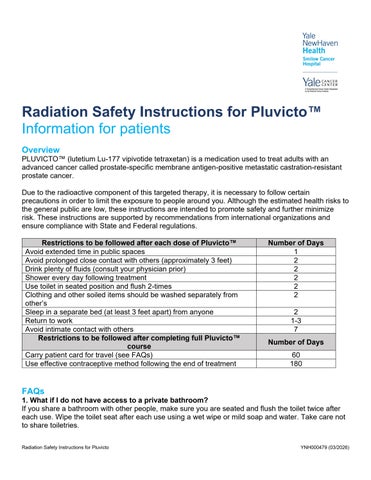
Due to the radioactive component of this targeted therapy, it is necessary to follow certain precautions in order to limit the exposure to people around you. Although the estimated health risks to the general public are low, these instructions are intended to promote safety and further minimize risk. These instructions are supported by recommendations from international organizations and ensure compliance with State and Federal regulations.
to be followed after each dose of Pluvicto™
FAQs
1. What if I do not have access to a private bathroom? If you share a bathroom with other people, make sure you are seated and flush the toilet twice after each use. Wipe the toilet seat after each use using a wet wipe or mild soap and water. Take care not to share toiletries.
2. Is it safe for someone to be in the same vehicle as me following the procedure?
Yes. However, to further minimize radiation exposure to the driver or any other person in the car, sit somewhere in the vehicle that will provide the greatest distance between you and others.
3. Why do I need to carry a patient treatment card?
There will be detectable amounts of radiation originating from you for a period of time after your procedure. This can be detected by sensitive radiation monitoring devices (e.g. at airports). Carry your card for 60 days and be ready to present it in the event that this occurs. The card will provide information regarding the radioactive pharmaceutical you have been administered.
4. Are there travel restrictions for longer trips?
It is recommended that you avoid prolonged travel for 2 days following your treatment.
5. Can I have physical contact with my children?
It is recommended that you limit prolonged close contact with children for the 2 days following your treatment. If you are interacting with children, it is recommended to maintain 3 feet of distance.
6. What if I have pets?
There are no restrictions in terms of being able to care for your pet. However, it is recommended that you do not share food with your pet and limit prolonged physical contact for the first 2 days following treatment. Take precautions to prevent your pet from drinking out the toilet that you use, as it will contain residual levels of contamination.
7. How should I handle trash/waste that I generate following my procedure?
It is recommended that trash/waste that has come into direct contact with your blood or urine in the first few days after the procedure be stored for a few weeks prior to regular disposal. Any waste saturated with body fluids (e.g. blood, urine) should be handled using gloves. Hands should be washed after handling these items.
8. Are there special instructions if I experience difficulty controlling urination?
Some of the radioactive pharmaceutical is cleared from your body through urination. For patients with impaired urinary control it is important to protect the skin from extended contact with urine. The following recommendations will assist in reducing the radiation exposure of the skin.
If you use absorbent incontinence products (i.e. diapers), you should change them soon after they become soiled to reduce the time urine is in contact with your skin. The use of barrier creams such as Aquaphor on the skin that may come in contact with urine will reduce the amount of radiation exposure you receive. It is also important to wipe the skin down after contact with urine to further remove any trace amount left behind. Please see question 7 for more instructions on handling waste products.
If you use a urinary catheter please discuss any additional instructions with your healthcare team to determine any special precautions during use.
Questions?
If you have any questions or concerns related to the instructions presented above, please call the Radiation Safety Office at 203-688-2950 or email RadiationSafetyGroup@ynhh.org