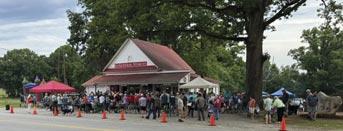
Saturday, September 12 ● 11 am to 3 pm (second Saturday in September) Enjoy FREE Hot Dogs Chips ● Ice Cream ● Soft Drinks
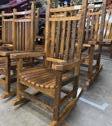
Outdoor Furniture to enjoy for every season of the year, plus Quality Furniture for every room of your home.
foodsandflavors
24 Beat the Heat Summer Recipes
Summer Fun in the Heart of Surry
Reducing Food Waste with Meal Planning 36 Sweet Memories: Baking Traditions in the Heart of the Yadkin Valley
Home, Lawn & Garden
42 Surviving the “Dog Days”: A Mid-Summer Tomato Rescue Guide 44 Finding Joy in the Garden
Refill Questions Answered!
People, Places, Events
40 Confidence
46 Moravian Celebration of Peace, July 4, 1783
48 Henry Hampton House-Yadkin County’s Oldest Home
56 The Rock House-An American Patriot’s Home
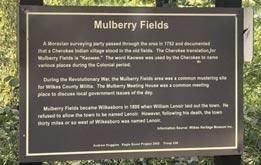
64 History Keeps Its Mysteries: Mulberry Fields and Wilkesboro’s Earliest Known Building
Wellness
Anyone can provide advice. At Edward Jones, our goal is to provide advice and guidance tailored to your needs.
That’s why we live and work in your community. When it comes to your financial needs and goals, we believe you deserve face-to-face attention.
You talk, we listen, and we get to know you.
Dobson
Paul J. Bunke, Sr., CFP®, ChFC,®AAMS™ 124 W. Kapp Street, Suite C PO Box 407 Dobson, NC 27017 336-386-0846
paul.bunke@edwardjones.com
Audra Cox, ABFP ™ 715 S Main St, Suite B Dobson, NC 27017 336-569-7385 • 844-795-3462 audra.cox@edwardjones.com
Elkin
Frank H. Beals
965 North Bridge Street Elkin, NC 28621 336-835-4411 frank.beals@edwardjones.com
Timothy Johnson
116 E. Market St. Elkin, NC 28621
336-835-1124
For more information or to schedule a complimentary financial review, call or stop by today.
www.edwardjones.com Member SIPC
FINANCIAL ADVISORS
Mount Airy
Andi Draughn Schnuck 496 N. Main Street Mount Airy, NC 27030 336-789-1707
andi.schnuck@edwardjones.com
Dale Draughn, AAMS™ 140 Franklin Street Mount Airy, NC 27030
336-789-0136
dale.draughn@edwardjones.com
Logan Draughn 492 N. Main Street
Mount Airy, NC 27030
336-789-3323
logan.draughn@edwardjones.com
Kody Easter, AAMS™, CRPC™, CFP® 304 East Independence Blvd Mount Airy, NC 27030 336-789-2079
kody.easter@edwardjones.com
Tammy H. Joyce, AAMS™ 136 W. Lebanon Street, Mount Airy, NC 27030 336-789-6238
tammy.joyce@edwardjones.com
Tanner Joyce 136 W. Lebanon Street Mount Airy, NC 27030 336-789-6238
tanner.joyce@edwardjones.com
timothy.johnson@edwardjones.com
Nathan Sturgill
116 E Market Street
Elkin, NC 28621
336-835-1124
nathan.sturgill@edwardjones.com
Jonesville
Aaron L. Misenheimer, CFP®, ChFC® 1530 NC Hwy 67, Suite A Jonesville, NC 28642
336-258-2821
Randy D. Joyce
136 W. Lebanon Street Mount Airy, NC 27030
336-789-6238
randy.joyce@edwardjones.com
aaron.misenheimer@edwardjones.com
Tiffany L. Smith 106-B South Depot Stree Pilot Mountain, NC 27041 336-368-2575
tiffany.l.smith@edwardjones.com
Michael Warren, WMCP® 101-D Shoals Road, Pilot Mountain, NC 27041 336-368-0782
michael.warren@edwardjones.com
Yadkinville
Christopher L. Funk 128 South State Street • PO Box 790 Yadkinville, NC 27055 • 336-679-2192
chris.funk@edwardjones.com
STORY IDEAS
At Yadkin Valley Magazine we value the concerns, ideas and interests of our readers. We welcome all story ideas and suggestions, always keeping an open file and working them in when possible. All story ideas should be submitted by mail to: PO Box 2077, Yadkinville, NC 27055.
WEEKENDS
Please submit information regarding fundraisers, gallery show openings, plays, readings, concerts or other performances at least two months in advance of an issue’s cover date. Sign up for our free weekly newsletter yadkinvalleyweekends.com/weekends
DISTRIBUTION
The magazine is FREE at locations throughout the Yadkin Valley. You will find a highlight listing of pick-up locations on our web site at www.yadkinvalleymagazine.com Not all locations will always have copies in stock.
ADVERTISING
We view our advertisers as people providing a service or a product who are genuinely interested in their customers. These businesses make it possible for you to enjoy the magazine for free. We hope that you’ll make them your first choice when you need the products and services they offer. Be sure to share that you read about them in Yadkin Valley Magazine.
Information about advertising is available at: yadkinvalleymagazine.com/advert ising
Health and educational articles included in Yadkin Valley Magazine are for information purposes only. Be sure to consult your personal physician before you begin any diet, medicine or course of treatment.
Yadkin Valley Magazine is a publication of Crossroads Publishing, LLC. PO Box 2077
Yadkin Valley Magazine is a publication of Crossroads Publishing, LLC. PO Box 2077
Yadkinville, NC 27055
Yadkinville, NC 27055
336-961-2620
336-961-2620
yadkinvalleymagazine@gmail .com
July-August 2026
January-February 2024 Volume 24 Number 3
Volume 26 Number 6
PUBLISHER
PUBLISHER
Leah Wagoner Williams
Leah Wagoner Williams
ASSISTANT EDITORS
ADVERTISING SALES
Victoria Williams
Leah Wagoner Williams
Rebecca Williams
Ken & Denise Knight
ADVERTISING SALES
CONTRIBUTING WRITERS
Leah Wagoner Williams
Ken & Denise Knight
Peggy Isenhour
Dr. Heather Kilbourne
Carmen Long
CONTRIBUTING WRITERS
Kellee Payne
Scott Duckworth
Lisa Prince
Peggy Isenhour
Chelsea Johnson
June Rollins
Madaline Jones
Courtney Tevepaugh
Karen Wagoner
Dr. Heather Kilbourne
Jill Walker
Carmen Long
Sharee Parker
Jessica Wall
Christi Pate
Patty Williams
Kellee Payne
Lisa Prince
June Rollins
Victoria Williams
Leslie Rose
Chelsea Johnson
Jessica Wall
Rebecca Williams
Madaline Jones
Molly Johnson
Sharee Parker
PHOTOGRAPHS & PHOTOGRAPHERS
Scott Duckworth
Peggy Isenhour
PHOTOGRAPHS & PHOTOGRAPHERS
Chelsea Johnson
Carmen Long
Madaline Jones
Lisa Prince
Carmen Long
Sharee Parker
Chelsea Johnson
Christi Pate
June Rollins
Kellee Payne
June Rollins
Madaline Jones
Molly Johnson
Leslie Rose
Leah Williams
Leah Williams
Rebecca Williams
Rebecca Williams
Victoria Williams
DISTRIBUTION
Sharee Parker
Gray & Amber Harris
Kellee Payne
Ken & Denise Knight
Michael Scott
Courtney Tevepaugh
Mark Williams
Peggy Isenhour
Rebecca Williams
DISTRIBUTION
Rebecca Cranfill
Ken & Denise Knight
Debbie & Andy Hennings
Michael Scott
a line from leah
When we celebrated our country’s bicentennial in 1976, it was certainly a simpler time. At least the term for 200 years was simpler.
This year’s term, America 250, has been used because the words that mean 250th anniversary are hard to pronounce and harder to spell. “Semiquincentennial” (literally Latin for “half of five centuries”), “Sestercentennial”, and “Bicenquinquagenary” are some of the ones I found. “Quarter Millennium” rolls off the tongue a little easier, but I guess none of them look great on a t-shirt. So America 250 it is.
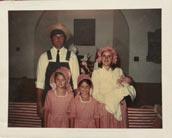
I remember the summer of 1976 pretty distinctly, since my baby brother arrived in June before the big celebration on July 4th that year. To celebrate 200 years, we had old- timey day at church, and I suppose red gingham was considered old-timey. An older lady in the community made the bonnets that my sister and I are wearing. Pretty sure they are still in a trunk at my mom’s house. I also distinctly remember riding to church in Daddy’s 1930
A-Model. Though not 200 years old, it was surely older than any other vehicle driven to our church that day, though some people probably walked and I wouldn’t be surprised if someone rode a horse.
To honor the 250 years since the Declaration of Independence was signed, I wanted to take a look at life in the Yadkin Valley then. I appreciate the contributors who shared stories of homes and an early settlement. While the Moravians were certainly in the area before 1776, we jumped ahead to their July 4th celebration as the Revolutionary War ended. Bet your Fourth of July plans are quite different, but maybe we should spend at least part of the day like they did. You can look forward to more America 250 topics in the September-October issue because there is more to come!
But don’t worry! There are still great recipes, gardening topics, and regular features to enjoy in this issue of Yadkin Valley Magazine.
Our telephone number is 336-961-2620 web address: yadkinvalleymagazine.com
Please email the following: Advertising Inquiries Weekends/Events Calendar Submissions
BEST Yadkin Valley COOKS recipes Pet Photos to: yadkinvalleymagazine@gmail.com
Yadkin Valley Magazine assumes no responsibility for unsolicited materials. Entire contents copyright 2024 All rights reserved. Reproduction of our created advertising materials and design work are strictly prohibited. Yadkin Valley Living, Yadkin Valley Magazine, Yadkin Valley Weekends, Best Yadkin Valley Cooks, 52 Pounds and then some!, are trademarks of Crossroads Publishing LLC, PO Box 2077, Yadkinville, NC 27055.
Proudly printed in the USA. Every effort has been made to ensure the accuracy of the information contained in the magazine. We assume no responsibility for changes in schedules, prices, hours or information.
Before travelling long distances, it is always wise to use the contact numbers included in the magazine to confirm that the events you wish to enjoy are still on schedule.
The contents of advertising and articles do not necessarily represent the views of the publisher. The publishers assume no responsibility for errors or omissions of any advertisement beyond the actual cost of the advertisement. In no event shall the publishers be liable for any consequential damage or any damages in excess of the cost of the advertisement.
Before you replace the wood on your deck, talk to us about…DECK RESTORE™ or DECK REVIVE products. Both products revive and protect wood surfaces such as wood and composite decking, stairs, docks and more. They install at a fraction of the cost of total surface replacement while adding years of life to older wood decks!
Our Design Specialist can offer creative ideas on any painting project. Whether you’re just needing a little guidance… or the whole idea.
Want to see more before & after samples of our work? Call me today and I’ll be glad to bring photos by for you to see. Discover how our superior protective coatings stand up to the toughest elements Mother Nature can throw at it. How much will it cost? My consultation visit and estimate are FREE. —Mark Diachenko. Mark@PaintandCoatingsLTD.com
Visit June’s website at: www.junerollins.com
Why Are You Here?
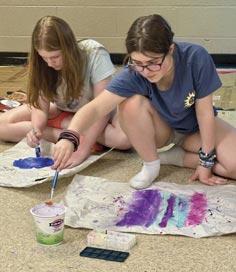
Recently, I offered weekly art classes for two different age groups; an afternoon series for 7th and 8th graders and a morning series for 70 to 80-year olds. They were different classes for different ages with an amazing similarity.
Creating art gives us the opportunity to express our uniqueness. Something deep inside is awakened when we sit before a blank piece of paper with a brush in our hands. We choose colors and make marks with curiosity, exploration, and discovery. Whether we are in the first third, or the final third of our lives, we are enriched.
So, why do some of us never try? No time. Too tired. No motivation. No inspiration. Or, one of the most pervasive, fear of (fill in the blank).
Fears of inadequacy held me back in college from my desire to pursue art. I was forty-three in 1999 when Y2K predictions pushed me past my fear. Before the world ends, I would at least like to take a watercolor class. That personal experience is why I teach art.
At the beginning of the first session for the 7th and 8th graders, I asked, “Why are you here?”
They immediately responded with bright-eyed youthful enthusiasm. “ART!” No hesitation. No doubts. Not so with the 70 to 80-year olds. When asked the same question at their initial session, there was a collective bowed head pause before one tentative response, I always wanted to try, but never did. …Life got in the way.
I worked with the two groups differently. The middle schoolers were eager to create with very little instruction. There was boldness and joy in their efforts. In contrast, the senior citizens sat still and uncertain during the first session. We took it slower. We reminisced, laughed and encouraged one another while carefully testing out brushes and paint. Gradually, rekindled light began flickering in their eyes.
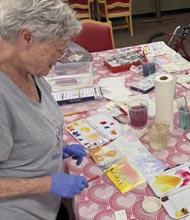
Wesley Woods Retirement Community of Blairsville, GA, beginning watercolor session.
I’m continuing weekly art classes with the seniors, but the middle school students are off and running to the next thing. Their busy lives have decades of friends, sports, summers, schooling, relationships and careers before them; so many pivotal life choices in the years to come.
Will they one day sit subdued before a blank sheet of paper and feel something stir within? Will they remember how they felt in their middle school art classes and come alive again?
"A
simple line painted with the brush can lead to freedom and happiness." —
Joan Miró
AIM, (Artist Innovation Mentorship), is the signature outreach program of the NCMA, pairing teaching artists with middle school–aged youth in after-school programs throughout North Carolina. The April/May AIM sessions were were made possible through a partnership between NCMA and John C. Campbell Folk School, Brasstown, NC
foodsandflavors ™ ~ with Lisa Prince
Beat the Heat Summer Recipes
Eggs might not be the first ingredient that comes to mind for summer meals, but they should be! With just 70 calories and six grams of high-quality protein, eggs are a smart, nutritious choice all year long.
Short on time? Using chopped rotisserie chicken, hard-boiled eggs and a few pantry staples, you can whip up a deliciously simple rotisserie chicken & cheddar egg salad sandwich in minutes. Layer the mixture with tomatoes, pickles, and crisp lettuce between two slices of bread for a satisfying meal. Even better—this recipe can be made a day in advance!
Or cool off with a rich, creamy soft-serve ice cream made from just five simple ingredients. It’s easy to whip up at home—and even easier to customize! Add your favorite toppings or mix things up with flavor variations like matcha, chocolate or coffee for a refreshing treat everyone will love.
From fresh salads to protein-packed snacks, egg recipes that are anything but ordinary!
Visit NCEGG.ORG to sign up to receive NC Egg Association’s monthly e-newsletter, which features egg-inspired recipe ideas, cooking and safety tips and information on NC’s egg farming families!
Prepare chicken salad: In a large bowl, use rubber spatula to work together mayonnaise, mustard, pepper, garlic, celery, parsley, and onions.
Add chicken and cheddar cheese to the bowl. Mix thoroughly with other ingredients. Taste and adjust seasoning aggressively, as flavors will be muted by bread, tomatoes, pickles, and lettuce.
Gently fold in eggs to preserve the yolks appearance and texture. Keep chilled until ready to use. Can be made a day ahead.
Director, NC Egg Association
SUNNY’S CUSTARD FREEZE
https://ncegg.org/recipe/custard-freeze/
Ingredients
1 – 13.5 oz. can coconut cream
2 egg yolks
1⁄4 cup honey
1 1⁄2 teaspoon vanilla extract
1⁄2 teaspoon almond extract
Instructions
Heat coconut cream in a pot over medium heat to 170°F.
Temper the egg yolks and then add egg yolk mixture back into the hot coconut cream. (To temper egg yolks, drizzle a portion of the hot coconut cream into the egg yolks while whisking. This prevents the egg yolks from cooking and turning into scrambled eggs once added into the hot coconut cream.)
Continue to whisk mixture over low heat for 2-3 minutes until mixture thickens slightly. Mixture should be around 170°F. For food safety, always ensure eggs are cooked to 160° F and/or use pasteurized eggs.
Remove pot from heat and place it in an ice bath. Stir the mixture to cool. If you use regular honey, you can add honey and flavorings now. If using raw honey, cool the mixture to 105°F before adding in the honey.
Cool and then freeze the mixture.
Once frozen, remove from the freezer and allow to thaw at room temperature. Add mixture to food processor or blender and process until mixture reaches the consistency of soft serve ice cream. Serve immediately or transfer to a container and freeze for later. Enjoy
PRO TIP
For matcha frozen custard, remove the almond extract and add 1 1/2 tablespoon matcha powder after removing mixture from heat. For chocolate frozen custard, remove the almond extract, mix in 1/4 cup cocoa into the coconut cream in the beginning and then once you remove the mixture from the heat, add in 0.5 ounces dark chocolate and mix until chocolate has melted. For coffee frozen custard, remove the almond extract and add 2 teaspoons of instant coffee into the mixture while it’s hot.
foodsandflavors ™ ~ with Carmen Long
Family & Consumer Sciences Agent
N.C. Cooperative Extension
Surry & Alleghany County Centers
Summer Fun in the Heart of Surry
Looking for a little summer fun, check out Dobson. Dobson may bring thoughts of the courthouse, judicial building, law enforcement center, tax office, board of elections, community college, etc. but the county seat is not just all work. Dobson provides an opportunity for play for all ages.
Known as the “Heart of Surry County”, Dobson has an abundance of recreational and outdoor resources. The historic Surry County courthouse is the centerpiece of the town. Taking up a whole square block, the courthouse is surrounded by demonstration gardens, designed by Surry County master gardeners. Take a walk around the building and check out the different themed areas. The edible garden and sensory garden are two of my favorites.
Diagonal from the historic courthouse is Dobson Square Park. This 2.5-acre recreation area boasts a wonderful splash pad, playground, picnic shelters, amphitheater, and walking path. Check out the Cooperative Extension StoryWalk along the sidewalk closest to the parking area. A story that moves you, the stories are changed on a rotating basis.
The park is home to many events. My family recently attended one of the 3rd Saturday of the month concerts at the amphitheater which was enjoyed by all. The May –October concerts are preceeded by an afternoon classic car show. Pack a picnic or visit one of the food trucks for dinner, bring your lawn chair and spend the evening listening to a free concert from 6:00-9:00 pm.
If there are readers in your group and you are visiting during business hours, walk across the street from the park to the Dobson Library. Across from the splash pad and next to the library is Dobson’s new mural. Painted by
this colorful piece of art really brightens the corner and does a great job showcasing all that Dobson represents.
Just a few miles down the road, you can visit Fisher River Park. This recreation area just keeps growing and improving. The new accessible playground, which was unveiled at the end of May, makes me wish I was a child again. What a wonderful addition to our community!
One summer soon after we moved to Surry County, our son Carson spent a lot of time at Fisher River Park. At that time, there was a summer day camp program at Dobson Elementary School. Each afternoon, they would take the kids to the park to play. One of Carson’s favorite places was a shallow spot along the river where he would go on scavenger hunts. One day I asked him why he had not drunk the water from his thermos. He assured me that he had and proudly opened it up to show me that it was full of little minnows he had captured from the river.
Another day as I was driving down the road, his little hand reached over the front seat next to my ear. Holding his prize he said, “look Mom!” A frog had caught a ride home with us in Carson’s empty chip bag left over from lunch. I don’t know who was more startled by that experience, me or the frog!
We don’t need to go on an expensive vacation to have fun and make special memories. Take an hour, an afternoon or an evening and enjoy what we have nearby. Let the “heart of Surry County” fill your heart with joy.
Mount Airy artist Madeline Matanick,
This recipe for Chinese Chicken Salad would be great for a picnic at the park or an easy meal at home. Happy Summer!
Chinese Chicken Salad
8 servings
Ingredients
4 ½ cups shredded cabbage – I use already chopped
Cole slaw mix with carrots and purple cabbage
1 Ramen noodle package - chicken
1 teaspoon sugar (optional)
¼ cup vinegar (rice or white wine)
1 Tablespoon vegetable oil
1 teaspoon Ramen noodle flavor packet
½ cup bell pepper, gently rubbed under cold running water, chopped – Try red, yellow or orange
¼ cup scallions, gently rubbed under cold running water, minced
½ cup unsalted peanuts or sliced almonds
1 (12.5 ounce) can of chicken drained or 1 ½ - 2 cups of cooked chicken breast*
1 (8 ounce) can Mandarin oranges, drained (optional)
Directions:
1. Wash hands with soap and water.
2. Gently rub cabbage under cold running water, then shred with either a knife or grater. Set aside.
3. Break up Ramen noodles. Set aside.
4. Make dressing in a small bowl by combining sugar, vinegar, oil and 1 teaspoon of the Ramen noodle flavor packet. Stir well and set aside.
5. In a large bowl, combine bell pepper, scallions, and nuts. Add chicken and cabbage. Stir gently.
6. Pour dressing over cabbage mixture and stir gently. Top the cabbage mixture with broken noodles.
7. Although this recipe is best when eaten right away, leftovers can be stored in a sealed container in the refrigerator for up to four days.
Note: Wait and add noodles when ready to eat to keep them crunchy.
*Use 2 cooked chicken breasts, (heated to an internal temperature of 165 ºF asmeasured with a food thermometer) in place of canned chicken
Building & Restoring Family Heirlooms
foodsandflavors ™ ~
Gluten Free
with Peggy Isenhour
July and August are the warmest months of the year in our area. Long daylight hours and school vacations make them perfect for travel, cookouts, swimming and family gatherings. July 3 – August 11, the “dog days of summer,” traditionally bring the hottest, most humid days of summer. We celebrate our nation’s independence on July 4th with family and friend gatherings. Corn, tomatoes, peaches and other summer produce are at their peak during this time of year. The Triad Farmer’s Market on Sandy Ridge Road in Greensboro is my favorite place to find locally grown produce and baked goods. When we buy from our local farmers, we are strengthening our rural communities. The produce at farmer’s markets and country stores are harvested at their peak, so the taste is much sweeter.
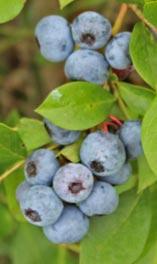
July is National Blueberry Month, so this month’s recipe is Lemon Blueberry Bread. Blueberries and lemons provide a great contrast of flavors. The blueberries bring the natural sweetness to the cake while the lemon adds citrus and tartness. If baking gluten free, I have included in parentheses the brands I prefer.
Happy 4th of July! Blessings
WHAT
NEEDS TO BE DONE?
NAME:
ADDRESS:
PHONE:
DROP OFF LOCATION: _________________________
HOW IT WORKS:
1. CALL IN ADVANCE TO SCHEDULE REPAIRS 336-468-0211 TUE, WED, THU 9-5
2. Place your project IN A BOX* (NOT A BAG)
3. Place your PAYMENT INSIDE* the BOX
4. Place the LABEL on the OUTSIDE* of the BOX
5. TAPE THE BOX SHUT *
6. Drop off the box at your local DROP OFF LOCATION by the DAY BEFORE* the pick-up day
* Please follow ALL these directions to ensure that nothing is lost from your project.
Drop Off locations:
1st Thursdays - Mo’s Boots and Carhart: Boone, W Jefferson, & Newland
2nd Thursdays – Wilkes County Hardware, N Wilkesboro
3rd Thursdays – HG Greene: Ronda and Jonesville Yadkin Valley Quilts: Elkin
4th Thursdays – Red Hill General Store: Hillsville, VA Harmon’s Western Wear: Woodlawn, VA
Blueberry Lemon Bread
2 cups all purpose flour (King Arthur Measure for Measure gluten free flour)
2 teaspoons baking powder (Clabber Girl is gluten free)
½ teaspoon salt
½ cup vegetable oil
1 cup granulated sugar
1 cup plain Greek yogurt, or sour cream
2 large eggs
2 tablespoons fresh lemon juice
Zest of 1 lemon
2 teaspoons vanilla extract
1 cup blueberries, fresh or frozen + 2 teaspoons flour (King Arthur Measure for Measure gluten free flour)
Lemon glaze
1 cup confectioners’ sugar sifted
2 tablespoons fresh lemon juice, more or less as needed
Preheat the oven to 350°. Spray a 9x5 inch loaf pan or 3 mini loaf pans with cooking spray and set aside. In a large bowl, whisk together the flour, baking powder and salt. Set aside. In a separate bowl, mix together the oil, sugar, yogurt or sour cream, eggs, lemon juice, lemon zest and vanilla extract until fully combined. Add the dry ingredients to the wet ingredients and mix until just combined. If you make this bread gluten free, let the batter rest for 20 minutes so the flour can begin to absorb the liquid, and then proceed. In a separate bowl, toss the blueberries with 2 teaspoons of flour. Then gently fold the blueberries into the batter. Pour the batter into the prepared loaf pan(s) and bake for 50 – 60 minutes (mini loaf pans bake for 36-40 minutes). If using frozen blueberries, a few extra minutes in the oven might be necessary. If needed, cover loosely with foil the last 10-15 minutes if bread is browning too much. Remove from the oven and allow to cool for 20 minutes (mini loaf pans for 10 minutes). Then remove from the loaf pan(s) and transfer to a wire rack to cool completely.
To make the glaze:
Once the bread has completely cooled, whisk together the sifted confectioners’ sugar and lemon juice. If your mixture is too thick, slowly add more lemon juice. If your mixture is too thin, add more confectioners’ sugar. The glaze should be thin enough to drizzle but thick enough to set up on the bread. Using a spoon, drizzle the glaze on top of the bread and spread it around. The glaze will harden after 15-20 minutes. Store in an airtight container in the refrigerator for up to four days. Microwave to warm slices before eating. Bread will freeze well for up to 3 months. Thaw overnight in the refrigerator and bring to room temperature before serving.
Need fresh blueberries for this and other great recipes?
Check out Hutchens Blueberries in Yadkin County! 2809 Indian Heaps Road East Bend, NC 336-829-8268
Follow on Facebook for updates about availability
foodsandflavors ™ ~
with ShaRee Parker
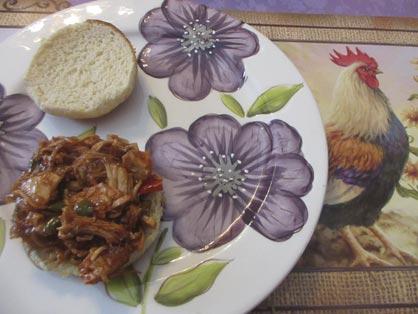
Chicken Barbecue
1 cup chopped green pepper
1 cup chopped celery
1 cup chopped onions
3 tablespoons butter or olive oil
3 cups cooked chicken breast, cut in small chunks or shredded (I sometimes use prepackaged rotisserie chicken from Costco)
1 ½ cups barbecue sauce (use more sauce, if needed) (I prefer Sweet Baby Ray’s BBQ sauce)
¼ teaspoon Dash seasoning
1/8 teaspoon black pepper
In a saucepan or stainless-steel bowl of Instant Pot, sauté the green pepper, celery, onions, and butter or olive oil for approximately 10 – 12 minutes, or until crisp tender.
Stir in the cooked chicken breast or rotisserie chicken, barbecue sauce, Dash seasoning, and black pepper. Heat for 2 – 3 minutes, stirring constantly.
Serve on toasted rolls or buns.
Makes approximately 8 servings.
This simple recipe is a good way to use fresh onions and green pepper from our spring and summer gardens. This Chicken BBQ makes delicious sandwiches for a quick and easy meal.
foodsandflavors ™ ~ with Chelsea Johnson
Family & Consumer Sciences Agent
N.C. Cooperative Extension Yadkin County Center Cooperative Extension
Chelsea_Johnson@ncsu.edu
Follow along on Facebook @YadkinCountyFCS
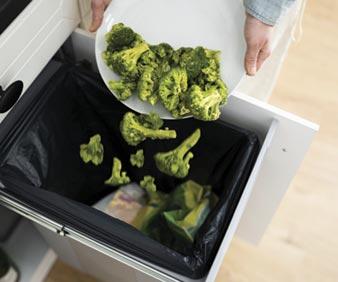
Reducing Food Waste with Meal Planning
Unsure of what to do with extra food? Don’t throw away those meals! Planning meals in advance can save trips to the grocery store and keep money in your pocket. Remember to plan for meal preparation and cooking, leftover food from the meal, and excess purchased ingredients.
Here are some tips to help reduce food waste and food spending in your home:
•Prepare fruits: Prep foods after you purchase them, so you can use them for snacking and cooking throughout the week. For example, remove the rind from large fruits such as pineapple and melons, cut them into chunks, and place them in airtight storage containers in the fridge so they are ready and easily eaten. Some produce is more prone to waste than others.
•Freezer Meals. When cooking, make extra to freeze. Casseroles, one-pot recipes, soups, and stews are ideal. Other favorites include sloppy joes, tacos, shredded barbecue pork, and fillings to roll up a burrito. Freezing half of the prepared meal will help ensure your family doesn’t tire of the same food. Be sure to indicate on the container when the meal was cooked and frozen.
•Several meals from the same item. Large food items such as rotisserie chicken may take several days to consume. Get creative and prepare multiple meals from the same item. Day one, eat the chicken as an entrée with vegetables. Day 2, chicken noodle soup! There’ll be plenty of chicken and vegetables from day one, and soup makes the perfect freezer meal. Day 3, use the remaining meat to enjoy a sandwich!
•Challenge yourself! Consider using a "pantry challenge" approach to utilize what you already have on hand before purchasing new groceries. Take inventory of your pantry, fridge, and freezer to identify ingredients that may be nearing their expiration dates or that you haven’t used in a while. Create meals around these items, combining them creatively to produce delicious dishes while minimizing waste. Not only does this save money, but it also inspires creativity and resourcefulness in the kitchen. Plus, you'll likely discover some hidden gems that you forgot you had!
To learn more, take a look at “Reduce Food Waste” on morefood.org
Written by: More In My Basket-Adapted by Chelsea Johnson, FCS Agent, Yadkin County
Chicken and Rice Enchiladas
This recipe makes TWO 9×13 pans. Serve one for dinner tonight, and freeze the other one for another day!
4 ounce can jalapeño peppers or diced green chiles
10.5 ounce can cream of chicken soup
4 ounces cream cheese, softened
3 cups shredded cheese, mozzarella cheddar, or Mexican blend
16 large flour tortillas, (not burrito size)
1 batch red enchilada sauce, (or 4 cups store bought)
Instructions
Preheat the oven to 400 degrees F (200 degrees C). Add a few spoonfuls of enchilada sauce to the bottom of TWO 9×13-inch pans.
Filling: Add all ingredients except for the tortillas and enchilada sauce to a very large bowl. Stir everything until evenly combined.
Assemble: Spoon ½ cup of filling mixture into a line on the edge of a tortilla. Sprinkle a small handful of shredded cheese on top of the filling. Roll each tortilla tightly and place seam-side-down into the pan. Each pan should fit 7-8 enchiladas. (At this point you may freeze the second pan, if desired).
Pour enchilada sauce over the top, dividing it between both pans. Sprinkle with remaining cheese. Bake at 400 degrees (200 degrees C) for 15-20 minutes, or until the cheese is melted and bubbly. Serve with salsa, or Pico de Gallo.
Layered Peach Delight
2 cups self rising flour
1 stick margarine
1 cup chopped nuts
1 (8 oz.) package cream cheese
1 (8 oz.) carton cool whip
1 cup powdered sugar
4 cups fresh peaches, sliced
4 tablespoons peach Jello (dry) 1/4 cup
1 cup sugar
4 tablespoons flour or cornstarch
1 cup water
Crust: Blend self-rising flour, margarine and nuts together and press into a 9x13- inch baking dish. Bake at 350 degrees for 20 minutes. Cool.
Filling: Blend cream cheese, Cool Whip and powdered sugar well. Spread on cooled crust.
Fruit: Evenly spread peaches on top of Cool Whip mixture.
Topping: Blend dry Jell-O, flour and sugar. Add water and cook over medium heat until thick. Cool. Put on top of peaches and refrigerate.
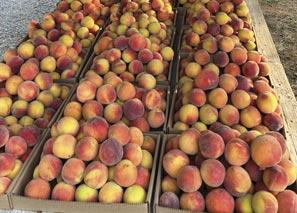
Need fresh peaches for this and other great recipes? Check out Nick’s Peaches in Yadkin County! 2509 Forbush Road East Bend, NC 336-469-1889
Follow on Facebook for updates about availability
What Is PEMF?
We’ll Help You Feel BETTER!
Whether you’ve had a whiplash injury, took a fall, or just overdid it at the gym, let us help you heal naturally!
These types of injuries involve your soft tissue, which consists of nerves, muscles, tendons, ligaments and cartilage.
Unlike broken bones, soft tissue injuries can take years to heal.
If your spine is out of alignment, it can cause tissue tears, irritation, inflammation and scar tissue. When ignored,this can lead to altered biomechanics, spinal degeneration and disabling osteoarthritis.
Chiropractic care can improve your joint range of motion and break up scar tissue, increase your circulation and reduce inflammation for a faster more complete healing.
A Chiropractic adjustment is a controlled motion that can restore the alignment and function of your spine. The Open Rehabilitation Journal states controlled motion “can stimulate the repair and restoration of function.”
Everyday is More Fun When You Feel Fantastic!.
We see patients every day that come in struggling to walk, lift or turn their heads. Yet, after completing their program of Chiropractic care they have returned to their normal activities. Don’t suffer needlessly from misaligned, injured and inflexible spinal joints. Spinal adjustments effectively reduce pain and enhance health... without drugs or surgery!
Let us help you and the people you care about live healthier and more active lives. CALL NOW!
foodsandflavors ™
Christi Pate
The Sweet Shack Bakery
111 West Main Street
Boonville, NC
336-467-0963
Sweet Memories: Baking Traditions in the Heart of the Yadkin Valley
There is something magical about the smell of a cake baking in the oven. Long before timers buzzed and recipes were stored on smartphones, the kitchens of the Yadkin Valley were filled with the aromas of fresh biscuits, fruit cobblers, layer cakes, and homemade breads. These recipes were more than food—they were family history.
The Yadkin Valley has always been rooted in agriculture and family traditions. Generations of local families worked the fertile land, gathering around kitchen tables after long days in the fields. Farms produced the ingredients that found their way into cherished recipes, creating a culture where food and fellowship were inseparable.
Many of our sweetest memories begin in a grandmother's kitchen. Flour dusted countertops, handwritten recipe cards stained with vanilla and butter, and the anticipation of licking the mixing bowl all became part of family traditions passed down through generations. Whether it was a coconut cake for Sunday dinner, a chocolate pound cake for a church gathering, or a warm blueberry cobbler cooling on the counter, these desserts told the story of home.
Today, the Yadkin Valley continues to celebrate its rural roots while preserving the traditions that make small-town life so meaningful. Local bakeries do more than create desserts—they help preserve memories. A birthday cake becomes a centerpiece for family celebrations. A wedding cake marks the beginning of a new chapter. A favorite recipe can instantly transport someone back to their childhood kitchen.
Perhaps that is why baking remains so special in the Yadkin Valley. In a fast-paced world, it encourages us to slow down. It reminds us of family gatherings, holiday celebrations, and the simple joy of sharing something homemade with the people we love.
From family farms to church suppers and bakery counters, the spirit of togetherness continues to thrive here in the Yadkin Valley. And often, it all begins with something sweet coming out of the oven.
Because in the Yadkin Valley, baking is more than dessert—it is tradition, community, and a little taste of home.
Old-Fashioned Blueberry Cobbler
Few desserts feel more like summer in the Yadkin Valley than a warm blueberry cobbler fresh from the oven. Made with juicy blueberries and a buttery golden crust, cobbler has been a staple at family dinners, church potlucks, and backyard gatherings for generations. Served warm with a scoop of vanilla ice cream, it’s the kind of dessert that brings everyone back to the table for seconds.
Ingredients
4 cups blueberries
1/2 cup granulated sugar
1 teaspoon lemon zest
6 Tablespoons butter
Batter
1 cup all-purpose flour
1 cup granulated sugar
2 teaspoons baking powder
1/4 teaspoon salt
3/4 cup milk
Ground cinnamon
Directions
Preheat oven to 350°F.
Slice butter into pieces and place into a 9x13-inch baking dish. Set the dish in the oven while it preheats so the butter melts completely. Remove from oven once melted. In a bowl, combine blueberries, sugar, and lemon zest.
In a separate bowl, whisk together flour, sugar, baking powder, and salt. Stir in milk just until combined. Pour blueberry mixture over the melted butter in the baking dish. Drizzle batter evenly over the top and sprinkle lightly with cinnamon. Bake for 35–40 minutes, or until golden brown on top. Serve warm with vanilla ice cream for the perfect Southern dessert.
Classic Southern Coconut Cake
One dessert that has remained a timeless Southern favorite is coconut cake. Light, fluffy layers paired with rich cream cheese frosting and sweet coconut create the perfect blend of comfort and celebration. In many Yadkin Valley homes, coconut cake has long been served at Easter dinners, family reunions, church socials, and Sunday suppers.
Cake Ingredients
2 and 1/2 cups cake flour
2 teaspoons baking powder
1/2 teaspoon baking soda
1 teaspoon salt
3/4 cup unsalted butter, softened to room temperature
1 and 2/3 cups granulated sugar
5 large egg whites, room temperature
1/2 cup sour cream
2 teaspoons vanilla extract
1 teaspoon coconut extract
1 cup canned coconut milk
1 cup sweetened shredded coconut
Coconut Cream Cheese Buttercream
1 cup unsalted butter, softened
8 ounces cream cheese, softened
5 cups confectioners’ sugar
2 Tablespoons coconut milk
1/2 teaspoon vanilla extract
1/2 teaspoon coconut extract
1/8 teaspoon salt
2 cups sweetened shredded coconut
Directions
Preheat oven to 350°F. Prepare three 8-inch cake pans with grease and parchment paper.
Whisk together cake flour, baking powder, baking soda, and salt. In a large bowl, beat butter and sugar until light and creamy. Add egg whites, sour cream, vanilla extract, and coconut extract until combined.
Slowly add dry ingredients and coconut milk, mixing until smooth. Fold in shredded coconut.
Divide batter evenly between cake pans and bake for 21–24 minutes, or until a toothpick inserted in the center comes out clean. Allow cakes to cool completely before frosting.
For the frosting, beat butter and cream cheese together until smooth. Add confectioners’ sugar, coconut milk, vanilla extract, coconut extract, and salt. Beat until fluffy and creamy.
Layer the cakes with frosting between each layer, then frost the top and sides. Finish by pressing shredded coconut onto the cake for a beautiful Southern-style finish.
Refrigerate briefly before slicing.
Wellness
The Importance of Oral Health
Have you ever had to fight your child to brush their teeth? How about getting them to the dentist? This is likely something that most families with small children have dealt with at some time. Oral health is an indicator to your overall health and starting good oral hygiene early sets your child up for a lifetime of healthy habits.
As soon as your child has their first tooth, you should begin caring for their teeth. Even babies and toddlers can experience tooth decay. According to the American Academy of Pediatrics, via their HealthyChildren.org website, “Tooth decay (dental caries) is one of the most common chronic childhood diseases in the United States”. What do these early habits look like? When your child has teeth, but is under the age of three, use toothpaste the size of a grain of rice to brush their teeth. Once your child has reached 3, you can start using a pea sized amount of tooth paste. You should be brushing your child’s teeth or assisting them until they have mastered the skill on their own. And just like adults, children should have their teeth brushed twice a day. The first should be in the morning, preferably after breakfast, and before bed. You should not have any food or sweetened beverages before bed. The last thing before bed should be brushing your teeth.
Jessica O. Wall, MPH Director, Yadkin County Human Services Agency Medical Clinic and Wic jwall@yadkincountync.gov
336-849-7588
Another layer of protection or care is fluoride. Fluoride is a naturally occurring mineral in water sources. Fluoride can be added topically, by using fluoride toothpaste or getting a fluoride varnish during a dental visit. Fluoride may also be consumed through fluoridated drinking water or supplements. Fluoride protects teeth from decay by building back enamel eaten away by acids in the mouth or by making the tooth even stronger by protecting against the erosion of enamel. The American Academy of Pediatrics recommends to “check with your local water utility agency to find out if your water has
fluoride. The health benefits work when the drinking water has 0.7 mg/L of fluoride. If your community water supply does not have fluoride or you live on a private well, ask your doctor if you should get a prescription for fluoride drops or chewable tablets for your child”. Fluoridation of water is safe.
According to the North Carolina Division of Public Health, “fluoridation has been studied for over 60 years -more thoroughly than any other public health measure. The overwhelming weight of credible scientific evidence indicates that fluoridation of community water supplies is safe”.
Just like you go to the doctor for routine check ups on your body, you should be seeing a dentist regularly to monitor your oral health. Having an established relationship with a dentist is called a “dental home”. Children should start seeing a dentist around their first birthday or within 6 months after their first tooth. Your dentist can work with you on how often you should make appointments.
The linkage between overall health and oral hygiene are clear. Regular brushing and flossing (twice a day) can decrease the number of germs in the mouth that can travel to other parts of the body or decrease acids in the mouth which can cause tooth decay or gum disease. Some conditions have been linked to oral health such as endocarditis, cardiovascular disease, pneumonia, or even pregnancy or birth complications such as periodontitis being linked to premature birth and low birth weight. In addition, those with diabetes should take extra care and concern with their oral health, as these conditions might make the body less able to fight infection. According to the Mayo Clinic, this puts gums at risk. People with diabetes may be more likely to experience gum disease or it may be more serious than those without diabetes. Other conditions that might affect oral health include HIV/AIDS, cancer or Alzheimer’s disease. There is a correlation between the progression of Alzheimer’s and declining oral health. The Mayo Clinic recommends that you share with your dentist any medications you take and any changes you have had in your overall health.
The Center for Disease Control (CDC) has a webpage dedicated to oral health. Go to www.cdc.gov/oral-health to learn more. From this site, you can learn more about cavities, gum disease, oral cancers and tooth loss. Their website also includes good information about prevention such as brushing and flossing, watching the amount of sugar sweetened beverages you are drinking and keeping routine dental appointments. Taking care of your body also means taking care of your mouth, teeth and gums. Start these healthy habits early and carry them throughout your lifetime!
Discover Your Best Self at Aesthetix Laser and Medspa
At Aesthetix Laser and Medspa , we believe in the power of self-care and transformation. Our mission is to help you look and feel your absolute best through cutting-edge treatments, personalized care, and a luxurious experience that rejuvenates both body and mind.
Help us welcome Melanie Childress to Aesthetix Laser & Medspa! A skilled nurse injector, Melanie brings more than 30 years of experience in healthcare to help our clients look and feel their best. Schedule a consultation to discuss your personalized treatment plan and let Melanie help you look and feel your best!
Aesthetix Laser and Medspa: Where Beauty Meets Science, and Confidence Comes Naturally. Ready to start your journey? Consultations are complimentary! Contact us at 336-409-0241 or visit our website www.aesthetixlaserandmedspa.com to schedule your appointment. Follow us on @aesthetixlaserandmedspa_pllc for the latest updates, tips, and specials.
4-H Agent
N.C. Cooperative Extension Yadkin County Center madaline_jones@ncsu.edu
Confidence
Putting time and energy into artfully c reating a photograph is something that would make anyone proud. Photography builds confidence by helping youth master a technical skill, step outside their comfort zone, and capture their unique creative vision. This sense of pride grows not only when young people admire their own finished work, but also when they participate in competitions—like county fairs—where they can showcase their artwork alongside their peers and receive valuable feedback.
The Dr. Kim Ingold North Carolina 4H Photography Contest
While there are many photography shows held through local fairs, and many counties—like Yadkin County— host their own 4-H competitions, there is one contest near and dear to 4-H’ers across the state: the Dr. Kim Ingold 4-H
Photography Contest.
As the state-level 4-H photography competition, it honors the legacy of Dr. Kim Ingold, a passionate 4-H volunteer who generously gave her time to photograph many state events.
Tragically, Dr. Ingold lost her life in an accident. To keep her memory alive and celebrate her love for the camera, this competition was named in her honor to inspire the next generation of visual storytellers.
The contest is open to 4-H members ages 5-18, with the competitive divisions beginning at age 8.
Participants are invited to submit one photo per category, accompanied by a brief description or caption. According to the North Carolina 4-H guidelines, the entry categories are: 4-H in Action: Capture the excitement and impact of 4-H experiences. This may include events, leadership activities, project work, community engagement, livestock shows, or everyday moments where 4-H members are learning and having fun. Strong entries help viewers feel connected to the moment and the people in it.
Nature’s Beauty: Capture the beauty of the natural world through landscapes, scenery, plants, skies, or water. Whether it is a sunset, flowers, or dramatic weather, photographs in this category should highlight the beauty of nature. Animals should not appear in this category.
Animals: Capture animals in a way that showcases their beauty or personality. Subjects may include wildlife, livestock, pets, or insects. Strong photos will be clear, well-composed, and help the subject stand out.
Black and White: Create a powerful image using only black, white, and shades of gray. Focus on contrast, lighting, shapes, textures, and composition to tell a story without color. Black and white photographs must be entered in this category regardless of the subject matter.
Deadlines and Submissions
State-level submissions are due by August 14th, 2026. However, because
Athena Danforth 1st Place Jr. Nature
each county must submit its entries collectively, local deadlines will be earlier. Any 4-H member interested in competing should contact their county 4-H agent as soon as possible to confirm their local deadline.
The competition is judged by NC State University’s Communications Department, and the winners will be announced during National 4-H Week via Facebook Premier. Winning photographs will be printed and sent to their respective county extension offices for display during National 4-H Week, and ribbons will be awarded to the
winners.
Get Involved!
For more information on 4-H programs in your area, contact your local Cooperative Extension 4-H Development Agent. NC Cooperative Extension is an equal opportunity provider and welcomes everyone to explore our programs. You can visit ces.ncsu.edu, click on the “County Centers” tab, and select your home county.
For more information about Yadkin County 4-H specifically, please contact Madaline Jones at madaline_jones@ncsu.edu or 336-849-7908.
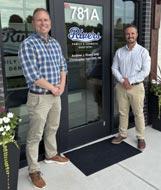
Dr. Andrew Rivers & Dr. Christopher Ioan
Addison Kelly Honorable Mention Jr. Nature
Surviving the "Dog Days": A Mid-Summer Tomato Rescue Guide
By the time July and August roll around in the Yadkin Valley, our gardens are often a tale of two extremes. One day, you’re picking sun-warmed fruit faster than you can eat it; the next, you’re looking at yellowing leaves and wondering why your plants have suddenly stopped producing. While the heat and humidity of a North Carolina summer can be brutal on even the most seasoned gardener, a few strategic moves during these "dog days" can keep your vines productive well into autumn. Here is how to rescue your crop and bridge the mid-summer gap using growing techniques.
The most common mid-summer frustration occurs when plants look healthy and are blooming, yet the flowers dry up and fall off without producing a single tomato. In the Piedmont, this "blossom drop" is a common physiological response to our sweltering afternoons. When daytime temperatures consistently stay above 90°F and nights remain above 70°F, the plant's pollen can become sterile, causing fruit sets to stall. Rather than giving up on the vine, the best approach is to continue consistent care and perhaps provide a bit of relief. Using a 20-30% shade cloth during the hottest part of the afternoon can lower the leaf temperature just enough to keep those blossoms viable. This is usually just a temporary "heat gap," and once the temperatures dip slightly in late August, you’ll see the plant begin setting fruit once again.
While the heat
Home & Garden
WRITER/PHOTOS
Kellee Payne
Commercial and Consumer
Horticulture Agent
N.C. Cooperative Extension
Yadkin County Center
kellee_payne@ncsu.edu
Facebook @YadkinCountyHorticulture
Maintaining a thick layer of mulch, such as wheat straw or pine needles, further protects the plant by creating a physical barrier between the soil and the leaves.
This moisture balance is critical for more than just disease prevention; it is also the key to avoiding the dreaded leathery, black sunken spots on the bottom of your fruit. Though often mistaken for a disease, blossom end rot is actually a physiological disorder caused by the plant’s inability to transport calcium effectively. This almost always stems from inconsistent watering—the wild swing from bone-dry soil to a soakingwet garden bed. To combat this, aim for roughly one to 1.5 inches of water per week, delivered as consistently as possible. If the weather remains particularly erratic, a foliar calcium spray can provide a quick "emergency" boost directly to the fruit, helping the plant recover while you get your watering schedule back on track.
impacts the blossoms, humidity creates a different kind of trouble for the foliage. These damp conditions serve as the perfect breeding ground for fungal diseases like Septoria leaf spot and Early Blight, which manifest as brown spots that eventually turn the lower leaves yellow and brittle. To prevent these diseases from climbing the plant, airflow is your best defense. By using sterilized shears to remove the bottom 10–12 inches of leaves—a practice often called "skirting"—you prevent soil-borne fungi from splashing up onto the foliage during our sudden summer thunderstorms.
As your plants move through the peak of the season, they likely have exhausted much of the initial fertilizer provided at planting time. To keep them strong enough to fight off pests like the voracious Tomato Hornworm, they require a mid-summer "snack." Applying a sidedressing of a balanced fertilizer about six inches away from the base of the stem will provide the nutrients needed to sustain growth into the fall. For those who prefer organic methods, a liquid fish emulsion or compost tea every two weeks can provide that final flush of energy. As we move toward late August, you can signal the plant to finish strong by "topping" your indeterminate varieties. By cutting off the growing tip of the main stem, you force the plant to stop putting energy into new height and instead funnel all its remaining nutrients into ripening the green tomatoes already on the vine before the first frost arrives.
Even if your heirloom varieties like Cherokee Purple struggle with the peak heat, don't forget that cherry tomatoes like Sun Gold or Super Sweet 100 are naturally much more heat-tolerant and will often keep your salad bowl full until frost. For more detailed troubleshooting, the NC State Extension provides an excellent resource on Growing Tomatoes in the Home Garden (https://content.ces.ncsu.edu/growing-tomatoes-in-thehome-garden), which covers everything from types of tomatoes to supporting home garden tomatoes.
Our office is an equal opportunity provider, so if you have any questions related to horticulture, please contact Kellee Payne at kellee_payne@ncsu.edu or 336-849-7908.
Where attention goes, energy flows. Lately, though, it feels like our attention is being held hostage. Between the constant notifications from screens and the pace of modern life, our nervous systems are easily pushed into a state of stress that feels like perpetual survival mode. When life gets loud, hope and healing require intention. Healing isn’t a luxury; it is a natural, essential part of life. And luckily for us, the best antidote can be right outside. For better or worse, "it’s just plants." They don't care about your inbox, and they don't send push notifications.
Reclaiming Your Peace
Mindful gardening gives us a way to take our attention back. This summer, let your garden become a place to relax rather than a space you’re constantly trying to perfect. Gardening is a full-body, multi-sensory experience filled with smells, textures, and the sounds of natural life. When our outdoor spaces are alive, they essentially become a magnet for others, inviting butterflies and other creatures to drift in and make an ordinary backyard feel wilder.
Creative people have always loved the garden because it's a living canvas. It lets us play with color, shape, height, seasonality, and a sense of movement that changes day by day. It’s a hobby that beautifully balances immediate gratification with delayed rewards. Gardening offers quick visual wins today and a quiet, long-term hope for tomorrow.
Letting Go
Summer is fundamentally about paying attention, but the true survival guide for the season is simply this: resist the urge to manage everything.
Nature is beautifully unpredictable. You can plan, prepare, and research, but the weather, the pests, the soil, and the sunlight will always have the final say. For many of us, the garden becomes a much-needed lesson in flexibility. Watching nature take its course is a wonderful, free experience. It’s a slow-motion show, put on just for you.
The secret is to be strategic with your timing. Your garden is far more patient than the rest of your to-do list, but you still want to catch issues before they build up. By using a little ingenuity and paying attention to what you already have, you can work with nature instead of against it. For instance, dense planting with shrubs, perennials, and ground cover helps suppress weeds naturally while keeping moisture in the soil. Over time, they spread out and have deep roots, which means less watering, less weeding, and less maintenance. Incorporating evergreen shrubs, ornamental grasses, and small trees provides shape and texture throughout the year, ensuring the garden feels intentional even when winter rolls around.
Grow More Joy
Ultimately, using plants as a tool allows us to disconnect from screens and reconnect with ourselves. There is a deep, historical reason people have kept fragrant herbs nearby for centuries; they keep us grounded.
Discover the power of plants, and grow a little more joy in your world. After all, as the old saying goes: you don’t stop gardening when you grow old… You grow old when you stop gardening.
Summer Inspiration: Midsummer Color & Low-Stress Greenery
The Longest Bloomers for Non-Stop Color If you want a vibrant yard that stands up to the peak of a Carolina summer, look for plants that offer some endurance. Zinnias, Vinca, and Lantana are absolute champions in the southern heat, drawing in pollinators while keeping their bright colors rolling for weeks. Daylilies and Salvia are practically excellent choices as well, while classic Hydrangeas bring some durability with their large blooms... For a bolder, more dramatic look, tropical Hibiscus delivers high-impact color with huge flowers, while a nearby tuck of Lavender rewards you with a calming fragrance.
The Easiest Keepers for Low-Stress Joy You don’t need a high-maintenance routine to enjoy the presence of plants. If you want to keep things beautifully simple, whether out on the patio or inside where it's cool, rely on varieties that practically take care of themselves. Outdoors or in bright windows, Succulents and Jade Plants thrive on sunshine and minimal watering. Indoors, the bold, split leaves of Monstera deliciosa and the glossy foliage of the Rubber Tree (Ficus) add instant height and artistic design features to a room. For trailing greenery that forgives a forgotten watering, you can’t go wrong with tough favorites like Pothos and Spider Plants. And if you want year-round texture, the soft, layered branches of a Norfolk Pine will make your indoor space feel more like a forest.
Scott Duckworth with Mitchell’s Nursery and Greenhouse
If you missed our event, we still have 600+ Knives In Stock!
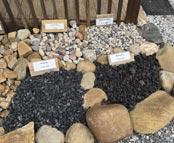
Family Owned Mulch & Stone Products too!
Statesville Apothecary Products Local Homemade Soaps (Goat milk & Donkey milk) Southern Sisters Tallow Honey House Naturals-hand lotions and lip balms Grandma’s lye soap products Burt’s Bees Rainbow Sandals Simply Southern Apparel Lodge Cast Iron Pottery(Blackwelder & Jordan) Handmade furniture Corn Meal SoyworxCandles Jelly and Jams ENO Hammocks Cornhole Boards
NORTH IREDELL RECORDS, INC.
Moravian Celebration of Peace July 4, 1783
On July 4th, 1783, members of the Protestant denomination the Unitas Fratrum, or Moravians, all participated in a day of Thanksgiving for Peace. They worshiped together, singing songs of praise and thanksgiving, and marched processions through illuminated streets in the Congregation Towns of Bethabara and Salem. This day-long celebration was ordered by Governor Alexander Martin and was to be celebrated across the young state. While other towns may have participated, the Moravians in Wachovia left detailed accounts of the day’s festivities.
The Moravians of Wachovia suffered greatly during the six year conflict that we call the American Revolution. The Moravian faith called on them to not take up arms in the conflict; this neutrality was seen as problematic by both sides. They had paid threefold taxes and fines to the new State Government for their refusal to take up arms, while providing supplies to both sides in the conflict under threat of violence and destruction of their towns. These trials of
The restored Gemeinhaus served as Bethabara’s church, as well as a meeting house, school, and a residence for the minister and his family. It was built in 1788 and restored in 1969-1970. Photo courtesy of Historic Bethabara Park.
political maneuver and faith had finally come to an end in 1782 with the drafting of the Treaty of Paris, and the people of Wachovia felt they had much to be thankful for.
The celebrations of July 4th, 1783 were far from the first celebrations of that date in the new United States. Large cities like Boston and Philadelphia had well documented celebrations of the signing of the Anniversary of the Declaration of Independence in 1777 that looked very similar to modern celebrations. Parades through the streets, 13 gun salutes, and even fireworks were features of the holiday that developed while Americans were actively locked in military struggle to assure their freedom. What makes the Moravians’ celebrations in 1783 unique is how different they seem from our modern holiday. They were truly celebrations of peace and an end to conflict.
There were six Moravian settlements in the 100,000 acre Wachovia Tract by 1783. Bethania, Friedburg, Friedland, and Hope were predominately Moravian settlements called “Country Congregations” while Bethabara and Salem were “Congregation Towns”. These distinctions reflect the density of settlement more than anything else, but are interesting due to the difference in the July 4th, 1783 celebrations in these congregations. The celebration in Bethania serves as a good example of these:
“This being the appointed day for the Peace and Thanksgiving Festival the first service was held at ten o'clock. First the Proclamation was read, then the portion of the litany referring to the government of the land was prayed standing, then on our knees we thanked the Lord of Lords for His gift of peace. The 46th Psalm was read, as the 12th verse was the Watch- Word for Jan. 20th when Peace was agreed upon in Paris, and this was followed by an address based on this Psalm. An unexpected number of outsiders were present.”
The reading of the Proclamation from Governor Martin began the service, but after its reading, the service was much like others that would have been held on special religious holidays of the Moravians.
The celebration began similarly in the towns of Bethabara and Salem, with religious services that resembled those held weekly in the Gemeinhaus’ of each place. Interestingly, the celebration continued later in the afternoon at both. In all Wachovia’s congregations, a new hymn written in Salem was sung throughout the day. Bethabara’s account of the day after the morning worship shows us a day filled with intentional religious celebration:
“At two in the afternoon the congregation, including the children and some of the neighbors, had a happy lovefeast, during which the Ode composed in Salem was sung. In the evening all the houses were illuminated, the bell was rung, and the congregation assembled before the Gemein Haus. Singing began with the hymn : Oh Thou, Whose goodness no tongue can tell, and the congregation marched in procession between the two Brothers Houses and the other houses to the tavern, along the road by Schaub's and back by Stach's to the Gemein Haus, full of praise and thanksgiving. As close the choir sang the benediction.”
Salem’s record of the day is remarkably similar, buts ends with the following note:
“Hearts were filled with the peace of God, evident during the entire day and especially during the procession, and all around there was silence, even the wind being still.”
These early July 4th celebrations in what is now Forsyth County reveal the sentiments of the settlers of this year at the end of the American War of Independence. The war had become a violent civil war in the South, and the Moravians of Wachovia and their neighbors witnessed the violence first hand. These Days of Celebration of Peace were a perfect opportunity for the communities to come together and celebrate the end to a time of uncertainty and violence. They could now look forward to the hard work of building a new nation, and navigating their place within a new American Society.
Jacob Crews is the Education Coordinator for Historic Bethabara Park.
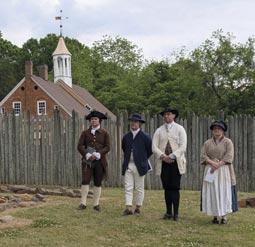
Costumed interpreters bring history to life at select locations in Historic Bethabara Park, as well as at special events. Photo courtesy of Historic Bethabara Park
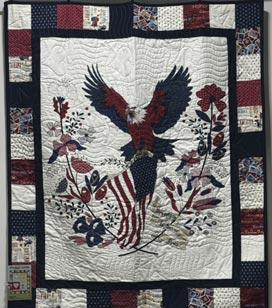
On the Cover
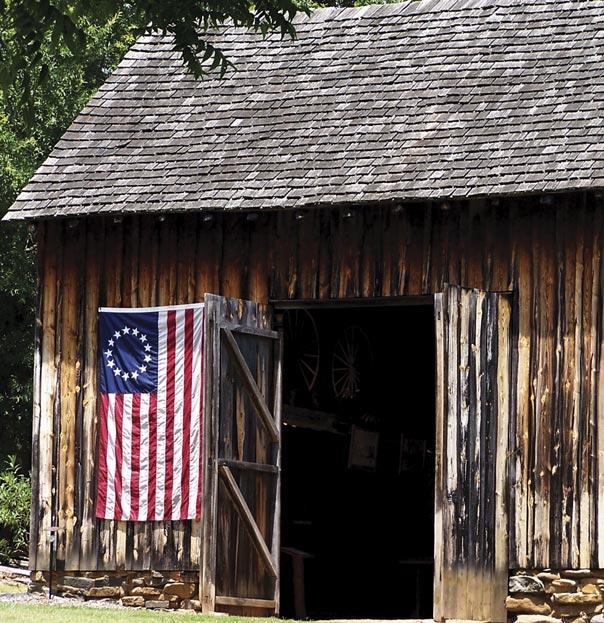
Established in 1753, Bethabara was the first European settlement in North Carolina’s Piedmont.
Historic Bethabara Park preserves the history of this 18th century community. The park features both restored original buildings and reconstructed buildings. The calf barn, pictured with an early American flag, is located adjacent to the Visitor Center. It is a restored structure (c.1800) that was moved in 1993 to the original site of a 1765 barn built at Bethabara. Visitors can learn about 18th century tools and trades from the exhibit there.
The park is open to the public at no charge. Guided tours are available for a fee. Many events are scheduled through the year, such as the Hands on History event in the summer and the Apple Festival in September. You can learn more at https://historicbethabara.org.
Cover photo courtesy of Historic Bethabara Park.
Henry Hampton House Yadkin County’s Oldest Home by Adam Pardue,
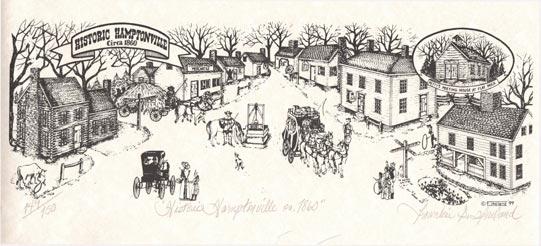
Two decades prior to the signing of our Declaration of Independence, Thomas Hampton (1728-1796) built a twostory log cabin in the frontier territory of what was, at the time, the English colony of North Carolina. In the 1750s, he traveled from southwest Virginia along with his older brother Anthony, into what is now Yadkin County. His son, Henry Hampton (1750-1832), would in 1801 set aside fifty acres of land to establish the town of Hamptonville. Twenty years prior, he had donated land to establish a church, just down the road from his home, beside the branch with the flat rock. What was first called Petty’s Meeting House would soon be known as Flat Rock Baptist Church, whose cemetery is the final resting place of every soon to be mentioned, preceding owner of the home.
The house is referred to as the “Henry Hampton House” in most Yadkin County historical documentations, and rightfully so. His father Thomas, returned to Virginia to live his final years until his death in 1796. After fighting in the Revolutionary War for the very independence we celebrate today, Colonel Henry Hampton returned to his home, never to leave. He and his wife Sarah (Beaver) Hampton would live in the house until their deaths. The home then passed to their son, Dr. John Hampton (1795-1872). Following the death of Dr. Hampton, it passed to his son, Civil War Colonel John A. Hampton (1836-1917). After the Civil War, Colonel Hampton returned to his century old family home and added the west wing, increasing the size of the house. Hamptonville
current resident
was quite a busy little town during the Colonel’s lifetime. The house sits at the intersection of what was, at the time, the two main roads in the area, with a public well right in the middle of the crossroads. Head south to Statesville (on what is still named Statesville Road today), north to Elkin, west to Wilkesboro, or east to the fast growing towns of Winston and Salem. Colonel Hampton was a State Senator from 1883-1887 and a practicing attorney until his death in 1917. His widow, Caroline (Brown) Hampton remained in the home until her death in 1929. This could have easily marked the beginning of the end for this old house. It remained mostly unoccupied and fell into a state of disrepair for a decade. You see, the only thing that ever saves an old house is a person who wants to save it. In this story that person was my grandmother, Nanny, Margaret Bell Gough.
She had a bird’s eye view of the ominous fate of the old house from right across the road, at her parent’s home. Her mother, Nellie Hampton Bell, was a daughter of Colonel Hampton, and had grown up in the old family house, then moved only right across the road to raise her own family. Margaret, as a child, spent many hours with her grandparents in their home, hearing stories about her ancestors from both her grandfather (The Colonel, as he was known), and her grandmother. Years later, she couldn’t bear to see the house she had grown to love and was older than our very nation itself, simply fall. (I know exactly how she felt).
So, what did she do? She simply had to convince her husband (Charles William Gough) that they should move from Jonesville, where he had built a nice modern home with all the conveniences of the day, one mile from his office at Chatham Manufacturing in Elkin, with their two young daughters (a third, my mother, would soon follow), into a nearly two hundred year old house in Hamptonville. According to my mother and aunts, it probably didn’t take too much persuading from my Nanny. Anything she wanted that my grandfather Charlie could possibly give her, she got. They restored and saved the house, moving in in 1942.
My grandfather died in 1961, soon after adding a big beautiful kitchen to the house (it remains nearly unchanged today). My Nanny lived in the house until her death in 1983. In 1977, my father built a home for our family right behind “Nanny’s house”.
From the time I could walk up the path between her house and ours, I spent most of my nights at my Nanny’s house. She told me all the stories her grandparents had told her about my ancestors who had lived and died in that old house. I listened, and I remember. Because of her, this house still stands. I am proud to be the eighth generation of the same family living in Yadkin’s oldest home. The independence of our great Nation will be celebrated again this year in Henry Hampton’s home, just as it most certainly was two hundred fifty years ago, in 1776.
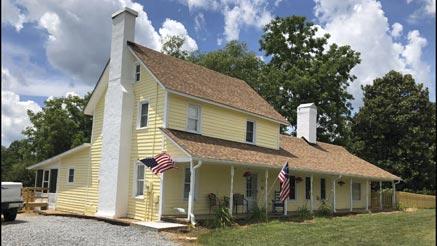
Photos: p. 57 Henry Hampton House today
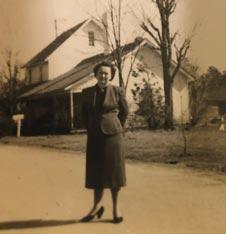
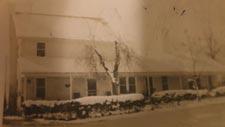
This page top to bottom: “Nanny” Margaret Bell Gough, c.1940 in front of the Henry Hampton House; snowy Henry Hampton House in the 1930s; artist rendering of Historic Hamptonville c.1860, the Henry Hampton House is the first on the left side (note the well in the middle of the street). Thanks to Frankie S. Ireland, artist and graphic designer, for sharing her work.
Refill Questions Answered!
by Rebecca Williams, Owner of
"Why refill?" Refilling is a simple way to reduce your plastic waste. Regardless of what container you bring to refill, if you use it more than once, you're making a difference. Plastic isn't going away any time soon, but by using plastic containers, straws, forks, etc. more than once, that is less plastic being thrown away. Plastic is sturdier than we give it credit for!
"Does it really make that much of a difference?" Absolutely. While I do not believe that our environmental issues are created by everyday people (90 some percent of all emissions come from about 10 different companies), that doesn't mean we can't help. Think about how long one bottle of body wash or dish soap lasts you and then figure out how many bottles you throw away when you finish them. If you can use one of those bottles for a year by refilling it, you're throwing away less plastic, just for one item!
Rebecca S. Williams, Owner of Refill Carolina
Refill Carolina
"Do you make your soap?" I don't, it is purchased from a family company in Missouri who makes soaps wholesale for refilleries to resell. Their products are non-toxic, paraben and cruelty free, safe for sensitive skin, and the ones I purchase are unscented. So they are very sensitive-skin friendly. I do bring a few essential oils with me to markets in case you'd like to add scent, but you can also add it later when you get home!
"Do you have a storefront?" Not yet, but maybe one day! I am completely mobile, so I am at different markets every few weeks, sometimes more often. Social media is the best way to see where I will be set up at, but once I get my website up, that will be another place to check! BUT, if you can't make it to a market, shoot me a message on social media or email me at refillcarolina@gmail.com and we can work out something to get refills to you!
rebeccasuz14@gmail.com �� (336) 469-6670
●Leaky foundations and damp walls are more than just a nuisance-they're a warning. Water damage can weaken your foundation, promote mold growth, and lead to costly repairs.
●Protect your
and mold-free.
●Our expert team seals cracks, waterproofs walls, and keeps moisture out, saving you thousands in future repairs.
The 13th Annual Christian Round-Up is a praise and worship event planned for August 22. Organizer Dwayne Groce felt led in 2012 to begin such an event, to be held annually, and after a year of planning, the first one was held in 2013 at the Lone Hickory Arena in Yadkinville. After six years, the event was moved to Mount Pleasant Baptist Church in State Road.
Reverend Neal Hatfield, evangelist and co-founder of Uplands Reach in Yadkinville will deliver the message at 6 pm. Following, musical artist Rhett Walker will perform, ending the event with praise through music.
Doors will open at 5 pm for this FREE event sponsored by local businesses. A love offering will be taken, and there will be general seating. For more information, contact Dwayne Groce at christianroundup@gmail.com
By Patti Dunlap – Stokes County Historical Society
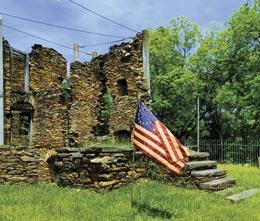
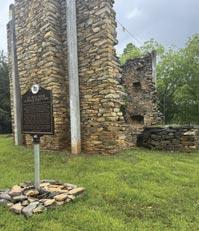
On a hill in the northwestern corner of Stokes County stand the ruins of an impressive home whose foundation was laid in 1770 by a young John “Jack” Martin. In 1768, Jack came to Rowan County (which was divided to create Surry County in 1770 and Stokes County in 1789) possibly in the company of his older brother William. Born in Virginia, his date of birth is traditionally listed as 1756, but historians believe he could have been born five to seven years earlier.
To build this home would have been a monumental task for any skilled stone mason. Could Jack Martin have been as young as fourteen when he began building this structure? Or if older, could he have been a Mason with extraordinary skills for a nineteen to twenty one year old? Who assisted him? He owned no slaves, that we know of, until later in life. If indeed he was a Mason, he would have had connections to other skilled workmen. Using native rock found in the area, his home was four stories which included the basement where an interior kitchen and dining area was located. The completed home used an estimated 40,000 loads of native stone with red clay mud used as mortar. The walls were two to three feet thick. The slightly medieval architectural style was a design found in New England, Virginia and among the Moravians in Bethabara, NC. Being on the edge of the western frontier of North Carolina, Martin’s home provided shelter and refuge for local settlers in
times of danger. Interrupted by Indian uprisings and war, and heeding the call to serve, it took Jack fifteen years to finish his home.
Jack Martin began his military career in early 1776 as a militia Lieutenant serving with General Griffith Rutherford in Western NC and Southwest Virginia. Knowing that conflict with the British was imminent Rutherford’s militia sought to keep the Cherokee from siding with the British. In the fall of 1776 Martin readily began his service in the Patriot Militia to fight for American independence from British rule. Serving under the leadership of many different high ranking officers during the Revolutionary War years, Martin was known as a light horse militia scout. He frequently rode with Major Joseph Winston. In October of 1780, when the Overmountain Men (Patriots) marched to King’s Mountain, where they soundly defeated a group of Loyalists and British (a turning point in the Revolutionary War), Martin was sent ahead to scout the area. He and another scout were ambushed, shot and left for dead. Martin was found, his wounds treated and returned home with an escort. Five months later, in March of 1781, Martin was marching with Major Winston to the Battle of Guilford Courthouse…another major turning point for the Patriots. Jack was wounded at least twice during the Revolutionary War years – from his King’s Mountain scouting injury he carried buckshot in his temple the remainder of his life.
Extraordinary times created extraordinary men…
At the end of the Revolutionary War, Jack returned and began finishing his home and restoring his fallow fields, officially completing the Rock House in 1785 when a white stucco material was applied to the exterior making the house visible for miles. Jack married Nancy Shipp Martin in 1784. Nancy was a sister of Thomas Shipp, a fellow Patriot and neighbor. Nancy’s family had moved to Surry County from Virginia when Nancy was about 12 years old. For the next 38 years Jack and Nancy lived and raised 10 children within the sturdy walls of the Rock House. Tradition says the Martins had a finely appointed home and entertained friends and dignitaries who were a part of Col. Jack Martin’s public life. Nancy was said to be an excellent hostess.
Settling into life after the war continued to be a life of
continued on p. 58
service for Jack Martin. He was a magistrate in the Court of Pleas and Quarters for over 30 years and represented Stokes in the NC State Legislature for two - one year terms. Including his Revolutionary War service, Jack served in the militia for over 40 years. He was promoted to Colonel of the local militia in 1804.
Jack loved the land….he loved speculating on land. Buying and selling land, he owned between 8,000 and 10,000 acres at any given time. Jack died in 1822 after helping to fight a brush fire on his land. According to family tradition Nancy found Jack near their home shortly after he had died. Nancy continued to live at the Rock House until her death in 1841. They are both buried near the Rock House. Their descendants are many!
The Rock House has seen much in 256 years! Oh, if these walls could talk! Built by an incredible American who served his county, his state and his country through dangerous and uncertain times, these walls probably heard war strategy, they protected his neighbors, they heard the laughter and held the tears of his children. The grounds were used to muster the militia for two wars. But the ravages of time and the thoughtlessness of strangers have left this grand sentinel in a perilous state. Protected now by a tall wrought iron fence and under the ownership of the Stokes County Historical Society since 1975, the house is on the National Register of Historic Places. It remains an architectural wonder and is recognized as an honored Revolutionary site by the Daughters of the American Revolution.
For America 250 the Stokes County Historical Society has erected a memorial marker to honor John “Jack” Martin’s life, his service, his home and his family. The marker was paid for entirely by generous donors who believe Jack Martin was an important figure in North Carolina history.
History Keeps Its Mysteries:
Mulberry Fields and Wilkesboro’s Earliest Known Public Building
To history belong its mysteries, and Wilkes County, North Carolina, has its share.
Did Wilkesboro’s earliest citizens walk across meadows and forests and imagine a field of municipal dreams? Did they conceive that their colonized places would later be transformed into more modern sites and scenes?
America’s 250th anniversary celebration is a good time to look at Wilkes County’s birth, as the county is almost – just almost – as old as our country itself.
Early Anglo-Saxon settlers officially gathered together to create Wilkes County (a much larger version than that we know today) in 1777. The area was so named to honor English statesman and liberal Parliament member John Wilkes. Following assignments from the General Assembly, the town of Wilkesborough was formed officially in 1800.
The heart of the town was first known as Mulberry Fields, referring to “river bottom lands and the hills on both sides of the Yadkin River near its junction with the Reddies River,” according to late local newspaper editor and historian Dick Underwood.
“Early Baptists had built the Mulberry Fields Meeting House on the south side of a hill above the valley, so when Wilkes County was created, the old wooden Meeting House was used as a temporary courthouse,” Underwood wrote. Eighteenth-century Moravian Church Bishop
August Spangenberg wrote in his journal that Wilkes’ first court of law originally met in the home of citizen John Brown. He added, “The court was soon moved to the Mulberry Fields Meeting House, which had been built by early Baptist settlers. This building functioned as the seat of government for the area, until the first courthouse was built.”
The earliest council members were so dedicated to organizational duties that they constructed not only a courthouse but “pillory and stocks where the Mulberry Fields meetinghouse was in modern-day Wilkesboro. Some semblance of law and order was critical to the new county’s survival,” wrote authors Jennifer L. Pena and Laurie B. Hayes in their book, Wilkes County: A Brief History.
Establishing a livable town in the middle of wilderness with possible interference from Cherokee tribes and the throes of the Revolutionary War required guts and sacrifice. In his essay, “In the Olden Time,” General William Lenoir wrote, “the Mulberry-fields Meeting House was the only place of worship in the upper end of [Wilkes] County. It was built by the Baptists and very large congregations of different persuasions of people attended their meeting.”
Notably, he recorded a change in Sunday clothes as time and the war marched on. From men with hunting shirts, short breeches and moccasins to ladies with Linsy petticoats, and bonnets and gowns of calico, the times required a simpler, more pared down appearance:
“As the war progressed, Gentleman and Ladies that had been in the habit of dressing well seemed to take a great pleasure in dressing in homespun, to set an example to others, suitable to the times. And through patriotism with some degree of necessity, both gentlemen and ladies continued to dress plain and cheap during the war and for some years after its termination,” Lenoir wrote.
Clearly Wilkes County’s earliest public building played a pivotal role in the community. But we can’t be completely certain of where it stood.
According to a recent e-mail from Wilkes Heritage Museum author and historian Jason Duncan,
“Yes, the exact location is a mystery. The only contemporary reference that I can think of is the attached page from Will Book 1, page 8. (I have no idea why they included this detail in the will book!) It says that they found ‘the place where the Mulberry Field Meeting House stands to be the most central, suitable, and proper whereon to erect the public buildings aforesaid.’ The first courthouse stood on the west edge of the Community Commons parking lot, near where the electric car charging station is today. The jail stood near where the Lenderman house was (until it was torn down last year). So, if they constructed these buildings near the meeting house as they planned, then the meeting house likely stood near the commons parking lot. I imagine the meeting house used the north spring for water. The valley along the greenway is where this spring originally ran, north to the Yadkin River.
“Now, the Mulberry Fields, themselves – not the meeting house – was a mystery even to people living in 1803! During the Moravian court case, some people claimed, in their depositions, that the Mulberry Fields were on the north side of the river. Others claimed it
was on the south side. So if they didn’t know 200+ years ago, then we’ll never know for sure. But, it’s safe to say that the area of Mulberry Fields – or, the Mulberry Fields settlement – became the town of Wilkesboro…,” Duncan wrote.
Nevertheless, Duncan concludes, “It’s very possible that the courthouse lot is exactly where the meeting house stood.”
Duncan’s latest book, Wilkesboro: The First 50 Acres, includes insights from his early Wilkesboro mapping project. Meticulously researching Gen. William Lenoir’s papers now preserved in a large microfilm collection, Duncan was able to reveal “the locations of the original Wilkes County courthouse, the jail, stables, storehouses, and residences. All of these places were on the north side of Main Street between West Street and the Community Commons.”
Perhaps something more than a building location has been lost along the way. As progress continues to tear down old structures and erect new ones, wisdom suggests inspecting, preserving, and evaluating history. Perhaps it is more important than ever as our country moves forward into its 251st year.
Lisa Brewer is Executive Director of Carolina Bible Camp Bluegrass Festival. She and her husband, attorney Gregory J. Brewer, live with their rescue dog, Biscuit, in the John Cranor House in Wilkesboro, NC. She is grateful to historian Jason Duncan for his help and advice with this article.
Offering Medical Supplies and Equipment
Bathroom Aids & Safety
Sanitation and Deodorizers Beds & Accessories
Braces, Splints & Slings
Custom Fit Compression Garments
Daily Living Aids Health Monitors
Mobility Aids & Equipment
Surgical Supplies
Bathroom
Dr. Mary Katherine Taylor, DDS NCDS, AIAOMT
Dr. Mark Shircliffe DMD, MS, ADA, NCDS, IAOMT
Deadline for advertising in September-October YV Magazine is Monday, July 27
Regional Reach Local Impact
Distribution
Counties near Yadkin River in Northwest North Carolina
If you’d like to learn more about advertising with us contact: Leah Williams 336-961-2620 yadkinvalleymagazine@gmail.com Your advertising message is included in long shelf life print copies plus our digital edition offering with in stores beginning 1st week September
If you know someone who has recently celebrated this milestone birthday, Yadkin Valley Magazine would love to recognize them!
Send in their name and a photo by August 1 to see them in the September/October issue. Photos mailed in will not be returned, so please send a copy.
100th Birthday yadkinvalleymagazine@gmail.com PO
104
Ethel Hobson
What IS That?
The next two correct entries drawn win a copy of one of our Yadkin Valley Magazine cookbooks.
Enter by postcard, letter or email, be sure to include your: name, PHYSICAL MAILING ADDRESS and guess. And if you’d like, tell us about your experiences using or collecting this item. Entries must be received no later than 8/13/26, Winner will be drawn 8/14/26. The winners will be notified by mail and announced in the September/October 2026 issue. All entries become the property of Yadkin Valley Magazine. Turn to p. 76 to read about the May/June contest.
Mail your guess to: “What is That Contest” Yadkin Valley Magazine PO Box 2077 • Yadkinville, NC 27055 or e-mail: yadkinvalleymagazine@gmail.com. You can also enter on-line at: yadkinvalleymagazine.com
the sound of home! ...a cherished grandfather or mantel clock
an heirloom that will last a lifetime
authorized dealer:
Bulova • Hermle
Howard Miller
Why should you buy your new Grandfather Clock from Oldtown Clock Shop & Repair?
Our clocks are under factory warranty and we do the warranty work
We deliver your new clock for FREE
We “set up” your clock in your home or business
We offer a full service department (we do not service watches or cuckoo clocks)
And even after offering all those extras that others don’t…
Our prices are very competitive!
We carry Howard Cleaning ProductsGreat for clocks and around the house, too!
May-June Winner
Congratulations to the winners of the May-June What IS That? contest. This item is a case for 8-track tapes, and lots of you remember having one and the favorite music it held. The lining tricked some of you who thought it was for storing silver, but those deep slots held those bulky 8-tracks.
The first name drawn and the winner of $100 is Jill Calhoun of Jonesville. The second and third names drawn are Frances Mabe of Yadkinville and Sherri Bunton of East Bend. Sherri says, “I have one just like it full of Motown 8 track tapes in the backseat of my 1967 Chevelle Supersport!” She and Frances will receive a Yadkin Valley Cookbook.
Thanks to everyone who entered, and be sure to keep sending in those entries with your mailing address!
Please be sure to include your name and physical mailing address with your entries. You cannot be the winner if I don’t know how to send a prize to you!
The Business Section
Turn your savings into paychecks in retirement
Margaret had saved diligently for decades. Every paycheck, a portion went toward her retirement account. Then, the day finally came: she retired. Suddenly, the hardest part wasn’t the saving. It was learning to spend. If that sounds familiar, you’re not alone. Many retirees find the shift from building savings to living off them emotionally difficult, even when they’ve planned carefully. Here are five smart strategies that can help you feel more confident about what’s ahead.
Give yourself permission to spend conservatively. Your retirement plan likely assumes a certain annual spending amount, with increases each year to account for inflation. All else being equal, the lower those initial withdrawals, the longer your money will last. A financial advisor can help you set up portfolio withdrawals personalized to your goals and situation. Feel free to give yourself permission to spend those amounts, knowing there's intention behind them.
For many retirees, the challenge isn’t math — it’s mindset. After years of being rewarded for saving, spending can feel like doing something wrong. It can help to reframe withdrawals as a paycheck you’ve already earned. For example, using your monthly distribution to cover travel, hobbies or time with family isn’t indulgent; it’s the purpose of the plan you built. Connecting spending to your values can make it feel more natural and sustainable. Do be sure to to review your spending regularly and don’t forget to set aside funds for annual expenses like taxes and insurance.
Keep some cash on hand. A general rule of thumb for retirees is to keep about 12 months’ worth of withdrawals
in a separate account for spending and another three to five years’ worth in short-term, fixed-income investments. This cushion can allow your stock investments time to recover from a market downturn, reducing the need to sell investments when markets are down. That said, holding too much cash carries its own risk, as your portfolio may not grow fast enough to keep pace with inflation. So, while some cash is good, you'll also want to remain invested in assets with more growth potential to help your portfolio last through retirement.
Review regularly. Retirement can last 25 years or more, and even the best-laid plans need updating along the way. Review your financial strategy at least once a year or after any major life change.
Stay flexible. Even small adjustments to your spending can have a big impact on how long your money lasts. Retirees who hold off on spending increases in years when their portfolio declines are often able to stretch their savings further than those who increase withdrawals each year for inflation regardless of market performance.
Making the switch from saving to spending takes both careful planning and a genuine shift in mindset. A financial advisor can help you build out an effective approach to switch from saving to spending, and work with you so you can fully enjoy the retirement you worked so hard to reach.
This article was written by Edward Jones for use by your local Edward Jones Financial Advisor.
Edward
Jones, Member SIPC
Dobson
Paul J. Bunke, Sr., CFP®, ChFC,®AAMS™
Financial Advisor
124 W. Kapp Street, Suite C PO Box 407 Dobson, NC 27017
336-386-0846
paul.bunke@edwardjones.com
Audra Cox, ABFP ™
Financial Advisor
715 S Main St, Suite B Dobson, NC 27017
336-569-7385 • 844-795-3462
audra.cox@edwardjones.com
Elkin
Frank H. Beals
Financial Advisor 965 North Bridge Street Elkin, NC 28621
336-835-4411
frank.beals@edwardjones.com
Timothy Johnson
Financial Advisor
116 E. Market St. Elkin, NC 28621
336-835-1124
timothy.johnson@edwardjones.com
Nathan Sturgill
Financial Advisor
116 E Market Street
Elkin, NC 28621
336-835-1124
nathan.sturgill@edwardjones.com
Jonesville
Aaron L. Misenheimer, CFP®, ChFC®
Financial Advisor
1530 NC Hwy 67, Suite A Jonesville, NC 28642
336-258-2821
aaron.misenheimer@edwardjones.com
Mount Airy
Andi Draughn Schnuck Financial Advisor
496 N. Main Street Mount Airy, NC 27030
336-789-1707
andi.schnuck@edwardjones.com
Dale Draughn, AAMS™
Financial Advisor
140 Franklin Street
Mount Airy, NC 27030
336-789-0136
dale.draughn@edwardjones.com
Logan Draughn Financial Advisor
492 N. Main Street Mount Airy, NC 27030
336-789-3323
logan.draughn@edwardjones.com
Kody Easter, AAMS™, CRPC™, CFP® Financial Advisor
304 East Independence Blvd Mount Airy, NC 27030
336-789-2079
kody.easter@edwardjones.com
Randy D. Joyce
Financial Advisor
136 W. Lebanon Street Mount Airy, NC 27030 336-789-6238
randy.joyce@edwardjones.com
Tammy H. Joyce, AAMS™ Financial Advisor
136 W. Lebanon Street, Mount Airy, NC 27030
336-789-6238
tammy.joyce@edwardjones.com
Tanner Joyce Financial Advisor
136 W. Lebanon Street Mount Airy, NC 27030
336-789-6238
tanner.joyce@edwardjones.com
Pilot Mountain
Tiffany L. Smith 106-B South Depot Street Pilot Mountain, NC 27041
336-368-2575
tiffany.l.smith@edwardjones.com
Michael Warren, WMCP®
Financial Advisor 101-D Shoals Road, Pilot Mountain, NC 27041
336-368-0782
michael.warren@edwardjones.com
Yadkinville
Christopher L. Funk
Financial Advisor
128 South State Street • PO Box 790 Yadkinville, NC 27055
336-679-2192
chris.funk@edwardjones.com
Left to right: Tanner Joyce, Paul Bunke, Logan Draughn, Andi Draughn Schunck, Frank Beals, Christopher Funk, Tiffany Smith, Dale Draughn, Nathan Sturgill, Michael Warren, Aaron Misenheimer, Kody Easter, Tim Johnson, Audra Cox and Randy Joyce Not Pictured: Tammy Joyce
When It Is Time to Come Off the Mountain Closing Devotions
16
Then the eleven disciples went to Galilee, to the mountain where Jesus had told them to go. 17 When they saw him, they worshiped him; but some doubted . 18 Then Jesus came to them and said, “All authority in heaven and on earth has been given to me. 19 Therefore go and make disciples of all nations, baptizing them in the name of the Father and of the Son and of the Holy Spirit, 20 and teaching them to obey everything I have commanded you. And surely I am with you always, to the very end of the age.” Matthew 28: 16 - 20
When I was a child, on Sunday afternoons we would see hang gliders flying off the side of Grandfather Mountain. It was amazing to see those human birds flying through the air. I would watch them and dream of flying one day as a human kite. All hang gliders know a truth that the disciples were to learn that day in Galilee – we all have to eventually come dow n off the mountain. The Disciples were on top of the mountain with Jesus but they couldn’t stay there forever. They had to step off the edge. They could climb down unchanged and doubt. Or they could step off as a new creation and fly. They chose to hang glide. We are Christians today only because they stepped off that mountain, floating on the power of the Holy Spirit, and only because they followed Jesus’ directive to go and make disciples. Their faithfulness made it possible for the whole world to know the teachings of Christ.
But the Disciples were not superheroes who had invincible faith. It is important that the writer of Matthew tells us that some disciples worshiped and some doubted when they saw Jesus. These ar e not perfect men, they are humans. And unfortunately, humans doubt. And we would even say that it is reasonable to doubt when we see a dead man resurrected.
I think we have all doubted at one time or another. Probably some of us have doubted at one time or another TODAY. We are now the disciples on that mountain in Galilee. This was the church on that Easter mountain; this was
Matthew’s church. And this is our church. The church is where fear and joy, worship and doubt intermingle and co-exist. I know that state of fear and joy, worship and doubt a little too well lately. I don’t know about you, but I feel like there is a lot of uncertainty in this world. Are you too feeling anxious and concerned right now? Go ahead and look over the edge and catch a glimpse of what is coming next. Go ahead, take a quick peek at the future. This is not the time to be afraid of heights.
Just like the disciples, we are standing in the midst of worship and doubt. There is inevitable anxiety that comes with change. And still we worship, we continue to pray, we continue to love and support one another. And why are we able to do this?
The same reason that the disciples were able to step off that mountain and continue Christ’s ministry. The disciples were hiding, trying to save their own skin just a day before the encounter on the mountain in Galilee. What could have possibly given them the courage to step off the edge and put their lives in danger by teaching and preaching the good news? Only one thing would have given them that power. And that is an encounter with the risen Lord. They would not move into the unknown alone. Christ said: “And remember, I am with you always, to the end of the age.”
I do not know what tomorrow brings but I do know Christ is always with us. Christ is living and working in the midst of our country and our own lives. We believe in a Trinitarian God who creates, redeems, and empowers. God continues to create, redeem, and empower in our world today. Though we may be scared or anxious, we move forward believing in the Great Commission: Go and make disciples of all nations, baptizing them in the name of the Father and of the Son and of the Holy Spirit and teaching them to obey everything Christ has commanded us. I invite you to step off your mountain and fly, not by your own power, but in the power of our risen Lord and savior, Jesus Christ. Amen.
Rev. Dr. Heather Kilbourne spends her days helping rural churches dream God-sized dreams for their communities. She is the founder and Director of Faith in Rural Communities at the NC Rural Center. She is an ordained minister in the United Methodist Church and served churches in Yadkin and Burke Counties. She can be reached at hkilbourne@ncruralcenter.org.