VOYAG
An integrated ADHD support app that provides emotional and cognitive scaffolding to help users bridge the gap between intention and action
Tool
Figma, FigJam, Photoshop, Indesig
Timelin
Early-March,2O2
My Rol
The role was to lead the end-to-end design process, from foundational user research and competitive analysis to defining
the product vision, crafting the core user experience strategy, and detailing the feature set for "Voyage"
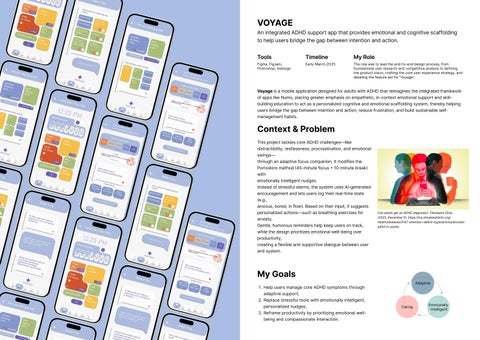
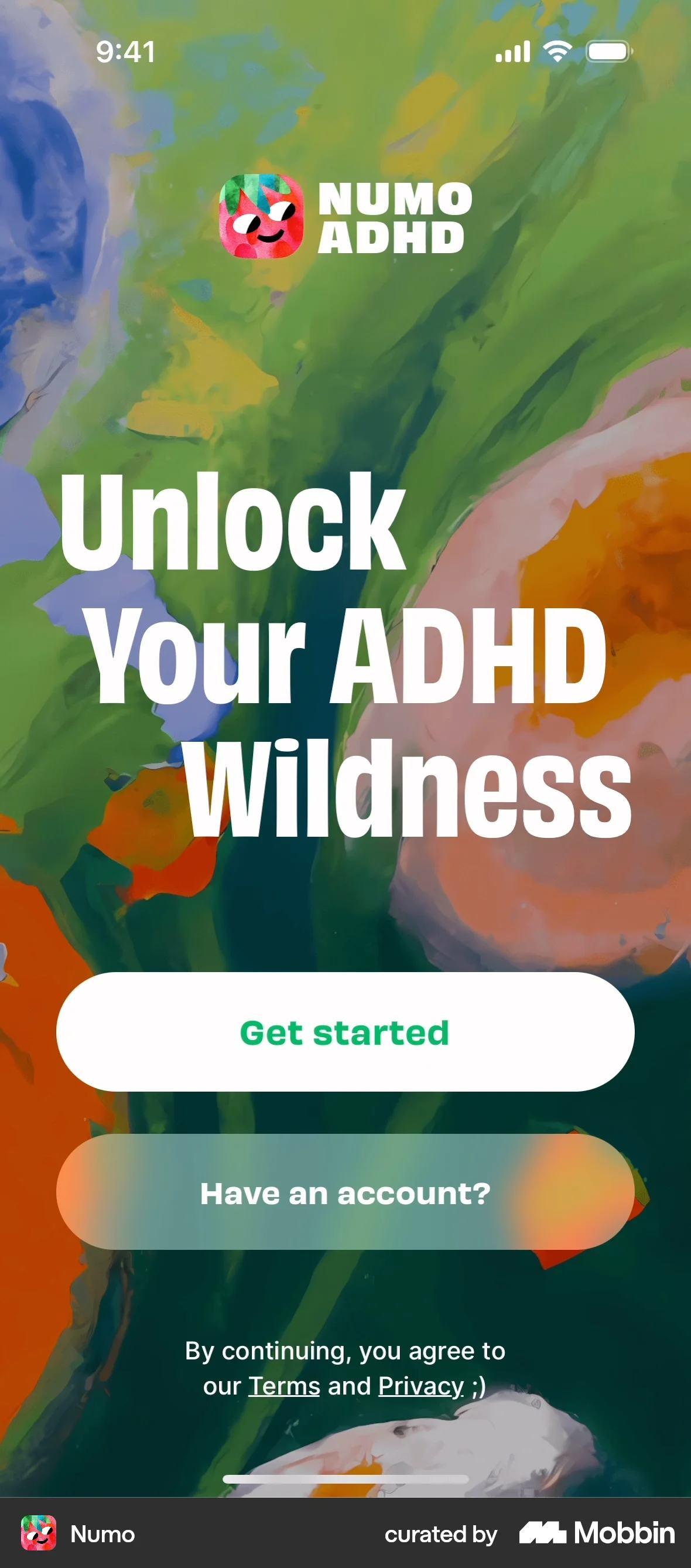
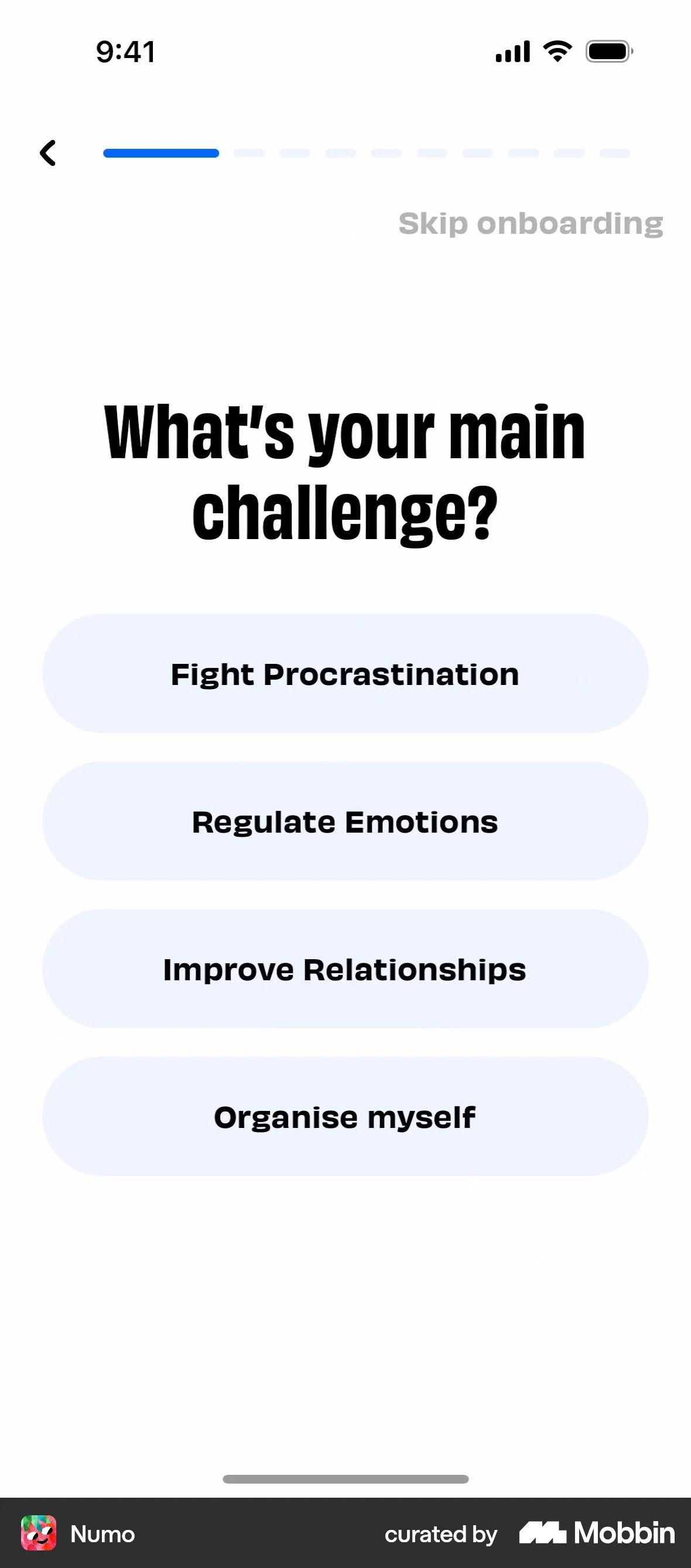
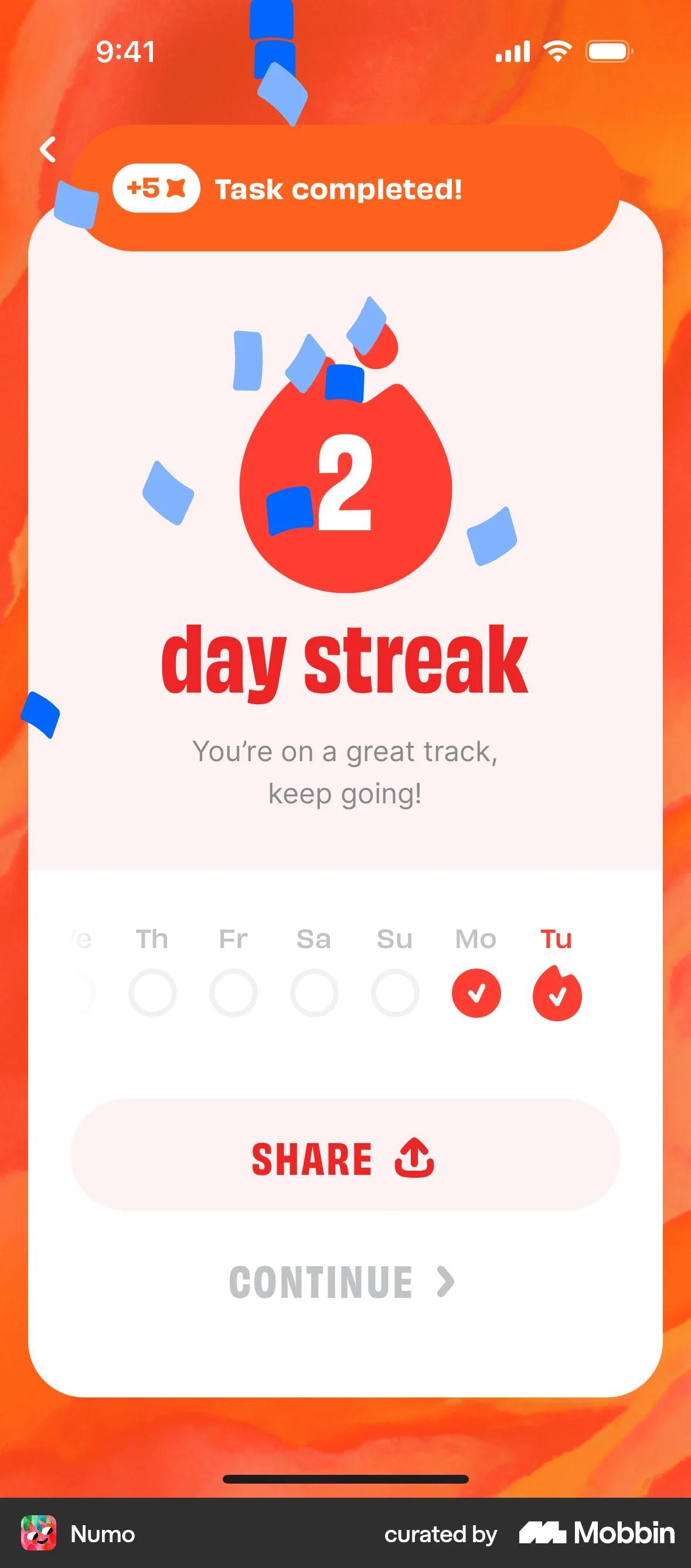
Voyage is a mobile application designed for adults with ADHD that reimagines the integrated framework of apps like Numo, placing greater emphasis on empathetic, in-context emotional support and skillbuilding education to act as a personalized cognitive and emotional scaffolding system, thereby helping users bridge the gap between intention and action, reduce frustration, and build sustainable selfmanagement habits
Context & Proble
This project tackles core ADHD challenges—like distractibility, restlessness, procrastination, and emotional swings—
through an adaptive focus companion. It modifies the Pomodoro method (45-minute focus + 10-minute break) with
emotionally intelligent nudges.
Instead of stressful alarms, the system uses AI-generated encouragement and lets users log their real-time state (e.g.,
anxious, bored, in flow). Based on their input, it suggests personalized actions—such as breathing exercises for anxiety.
Gentle, humorous reminders help keep users on track, while the design prioritizes emotional well-being over productivity,
creating a flexible and supportive dialogue between user and system
My Goal
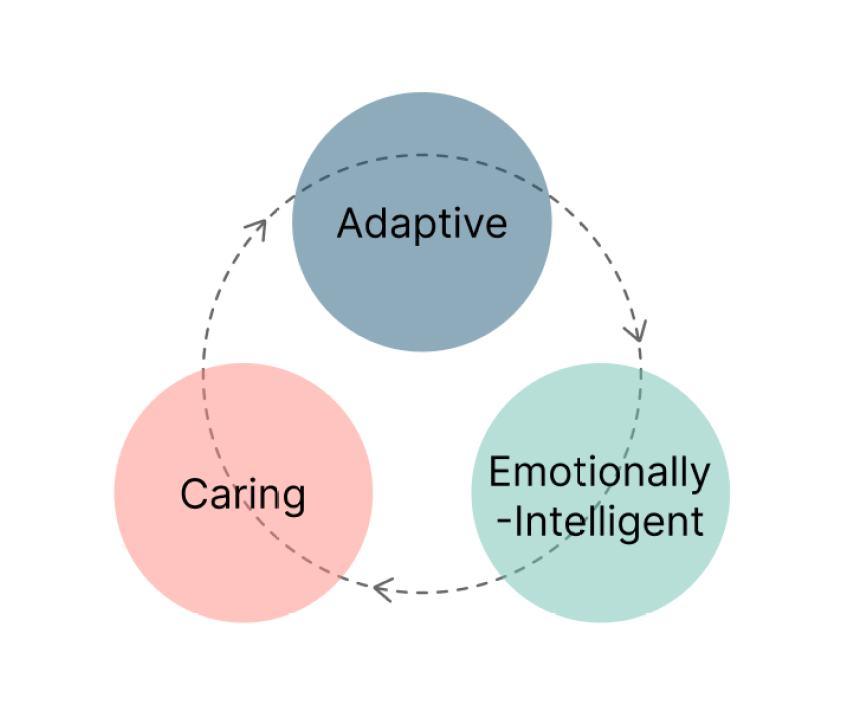
Help users manage core ADHD symptoms through adaptive support;
Replace stressful tools with emotionally intelligent, personalized nudges;
Reframe productivity by prioritizing emotional wellbeing and compassionate interaction
Can adults get an ADHD diagnosis?. Cleveland Clinic.
(2025, December 5). https://my.clevelandclinic.org/
health/diseases/5197-attention-deficit-hyperactivitydisorder-
adhd-in-adults
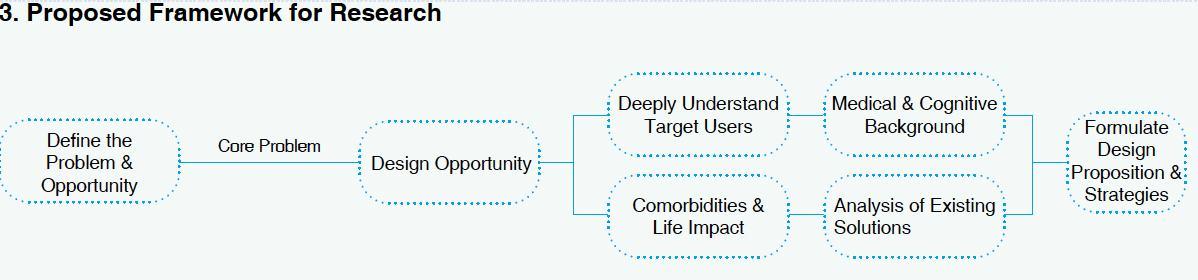
Step 1: Context Researc
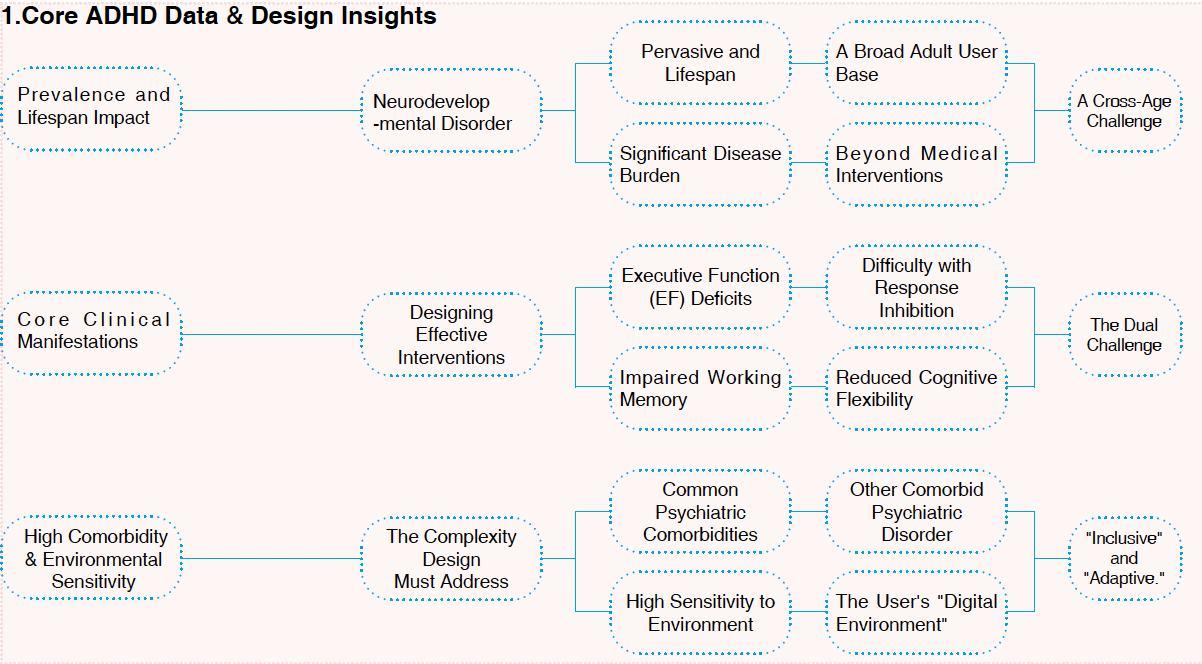
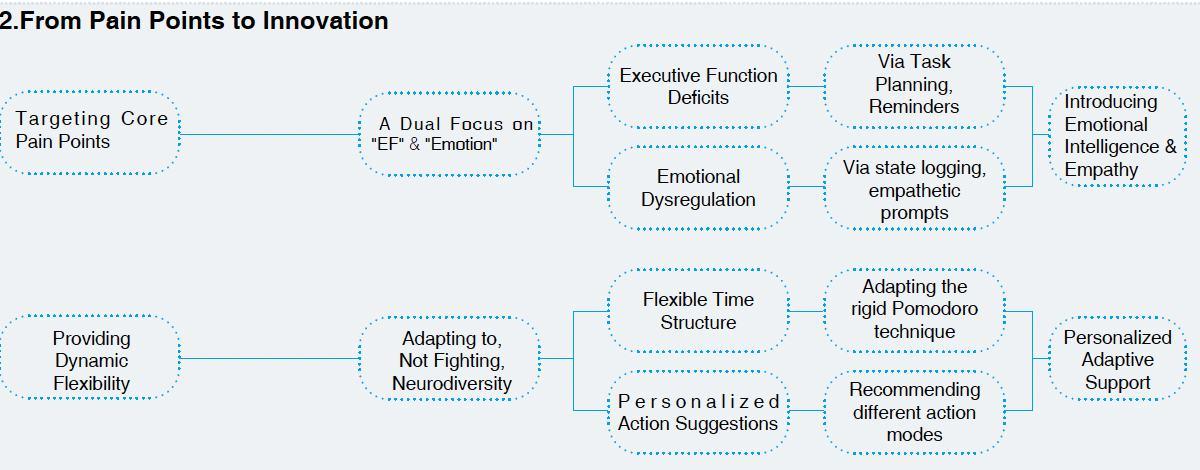
This preliminary research establishes that conventional productivity tools, with their rigid structures, fail individuals with ADHD by overlooking their core need for emotional regulation alongside task management. Grounded in the neurodevelopment understanding of ADHD—particularly its executive function deficits and emotional dysregulation—the project's objective is to move beyond a one-size-fits-all model.
The research aims to inform the design of a flexible, adaptive system that reframes support from a mere productivity tool into an emotionally intelligent companion, prioritizing user well-being by working with, rather than against, neurodiverse cognitive patterns
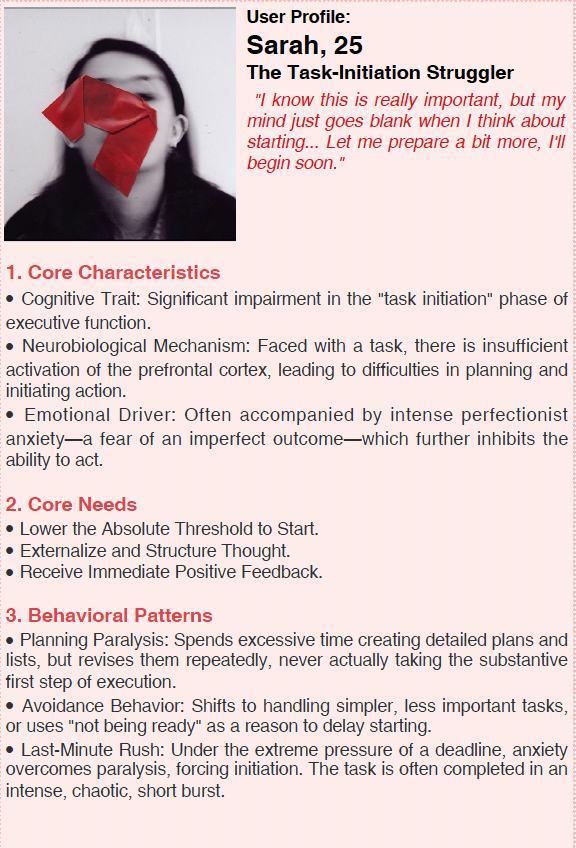
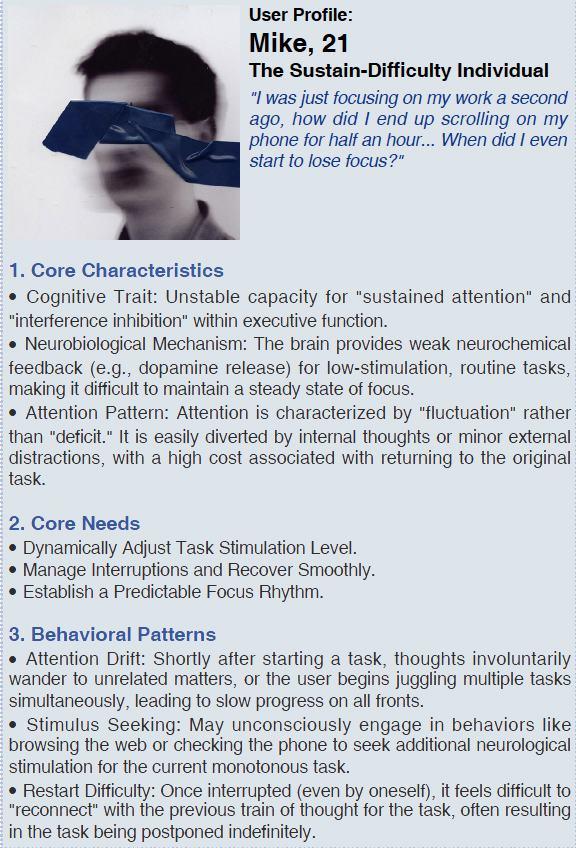
Step 2: User Research&Person
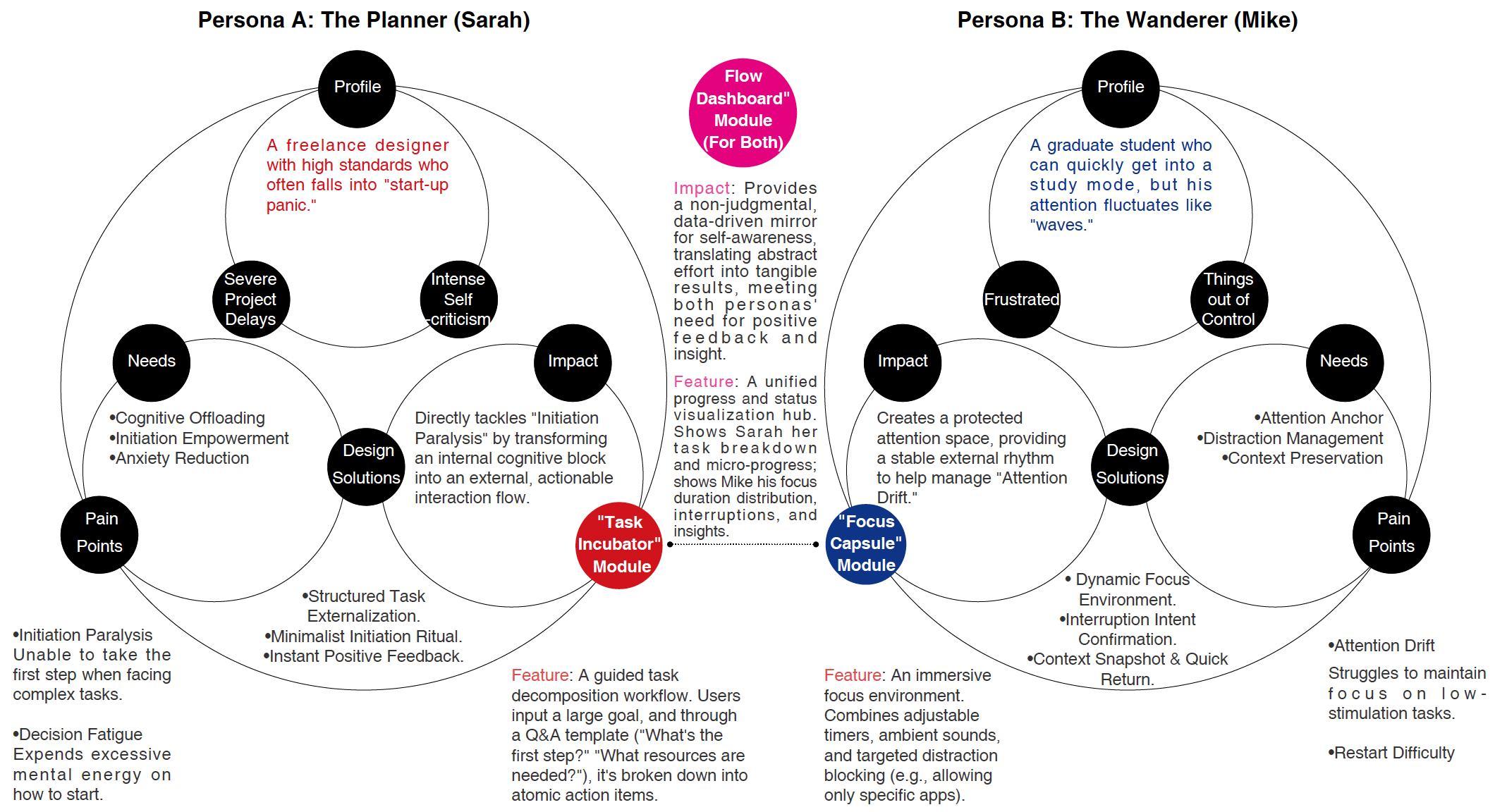
The targeted user interviews identified two key ADHD-related behavior patterns, forming the core of the design personas. It distinguished between the “Task-Initiation Struggler,” who faces overwhelming inertia when starting, and the “Sustain-Difficulty Individual,” who struggles to maintain focus.
These findings directly translate into specific design goals: to build external scaffolding that breaks down first steps for the former, and to create rhythmic, re-engageable flows that support sustained attention for the latter. This research ensures solutions address real cognitive barriers, not just abstract symptoms
Planning & Task Managemen
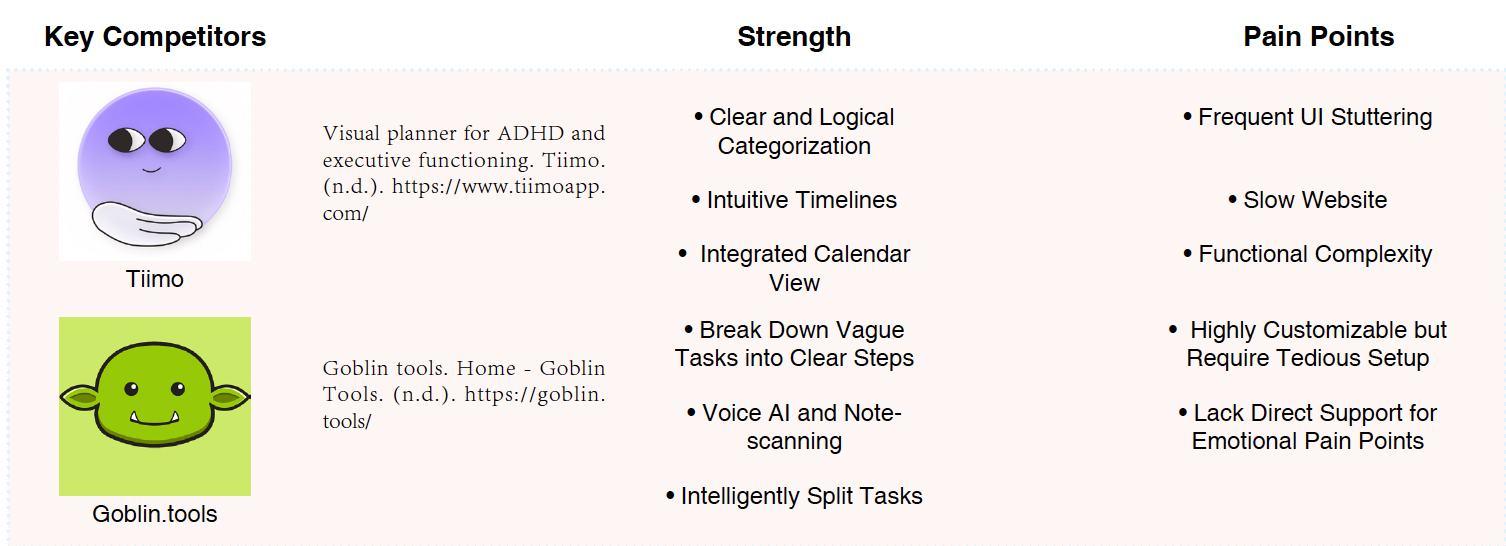
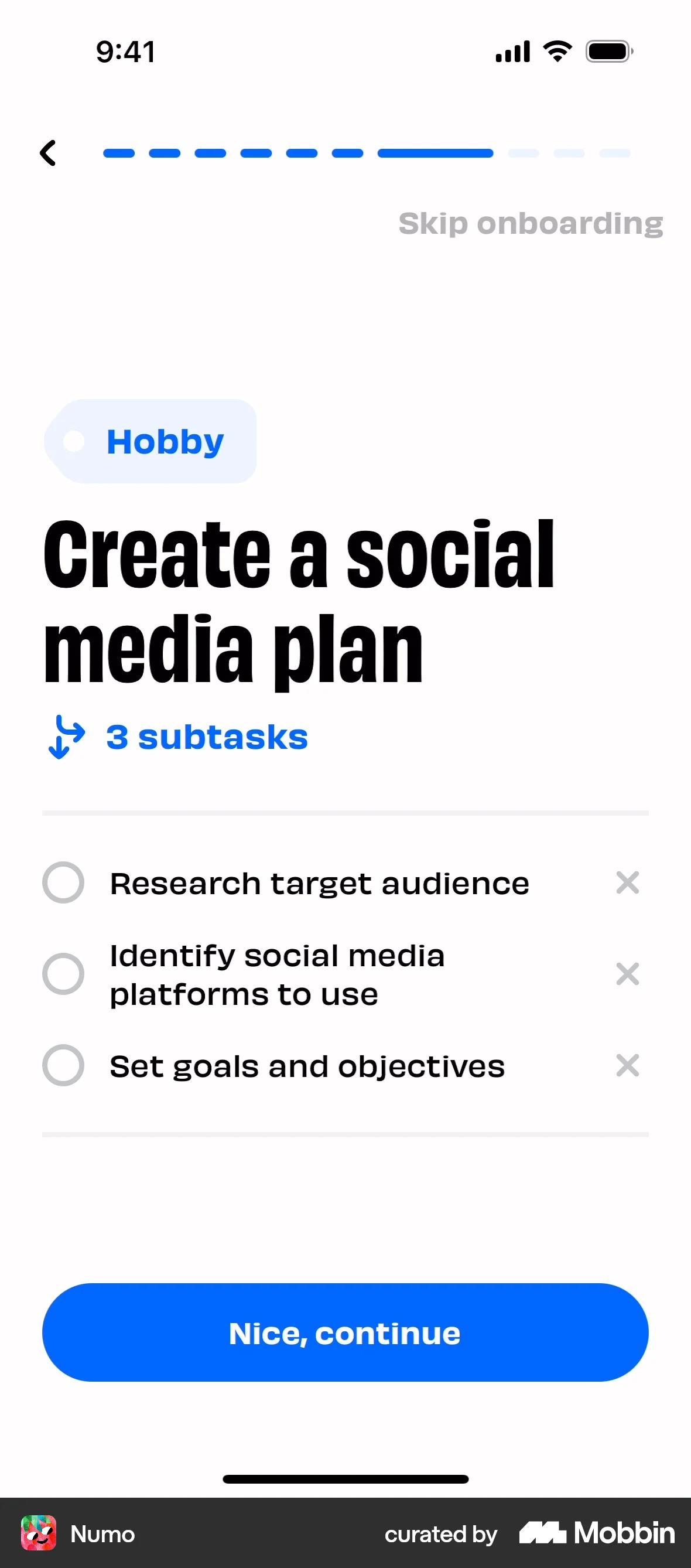
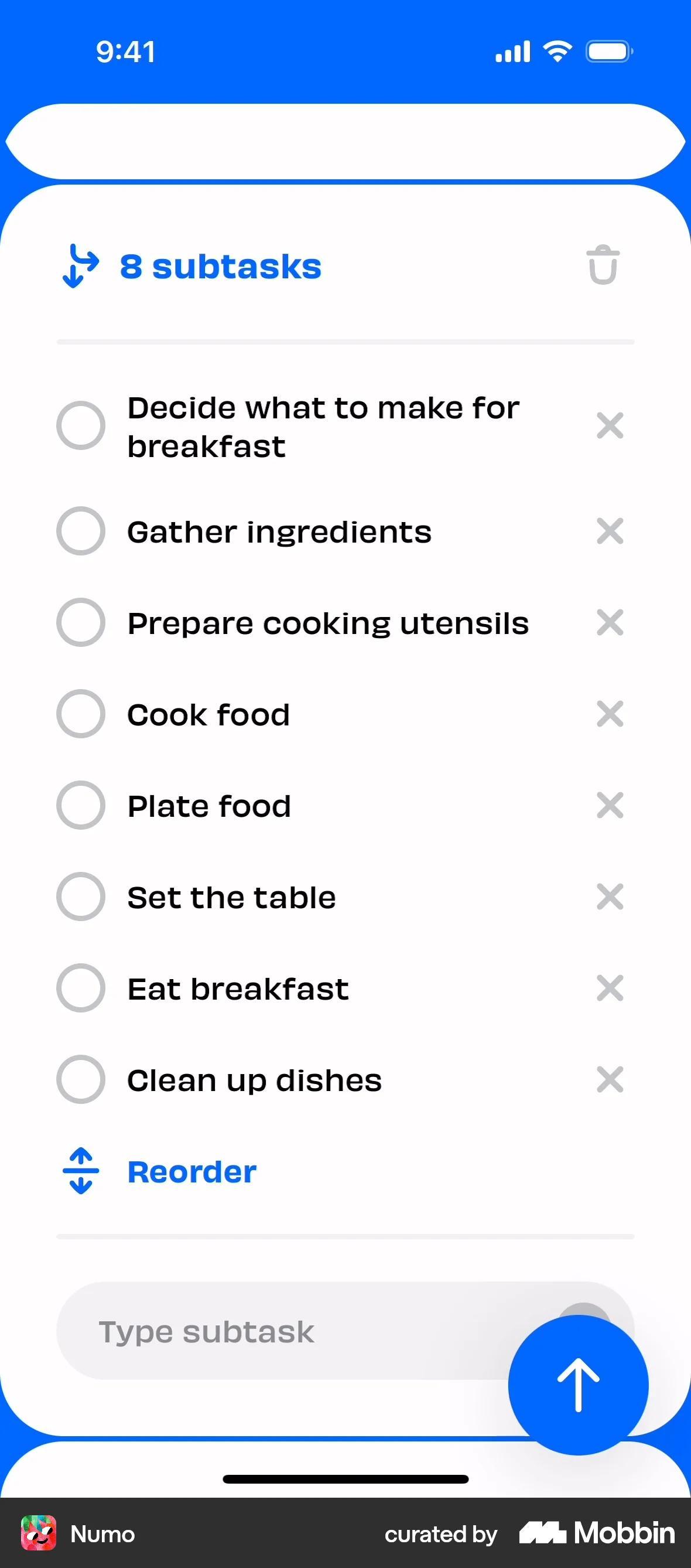
These apps focus on helping users organize tasks and plan time to address "initiation difficulty" and executive dysfunction
Focus Assistanc
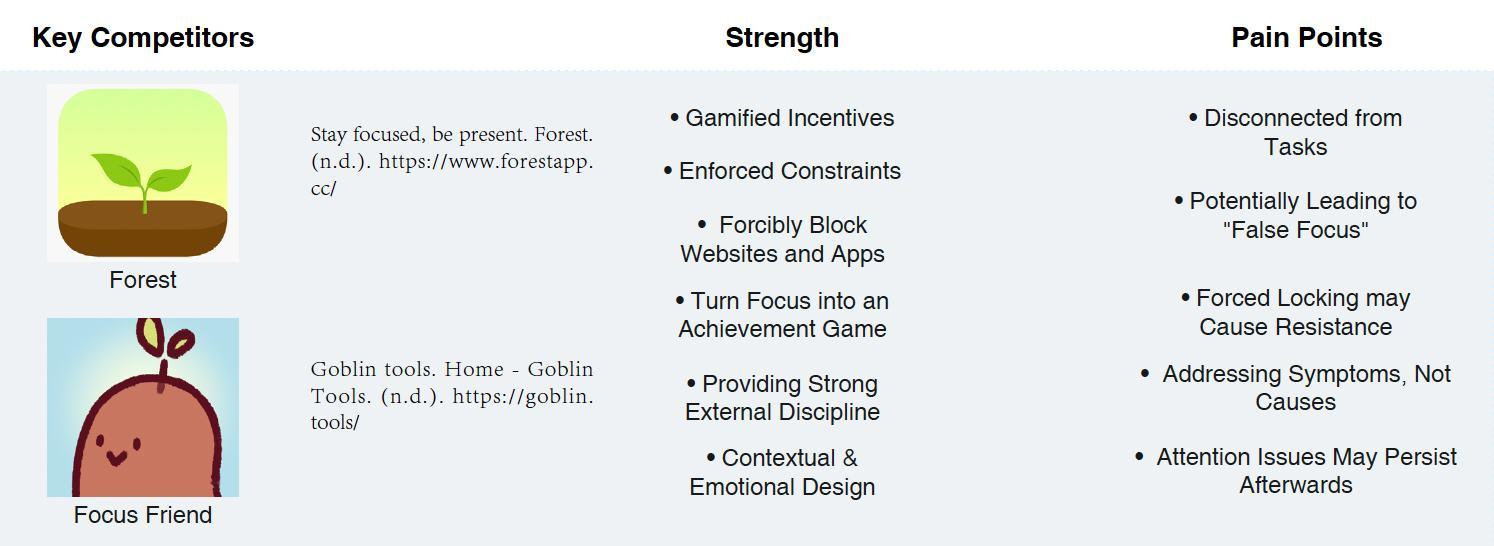
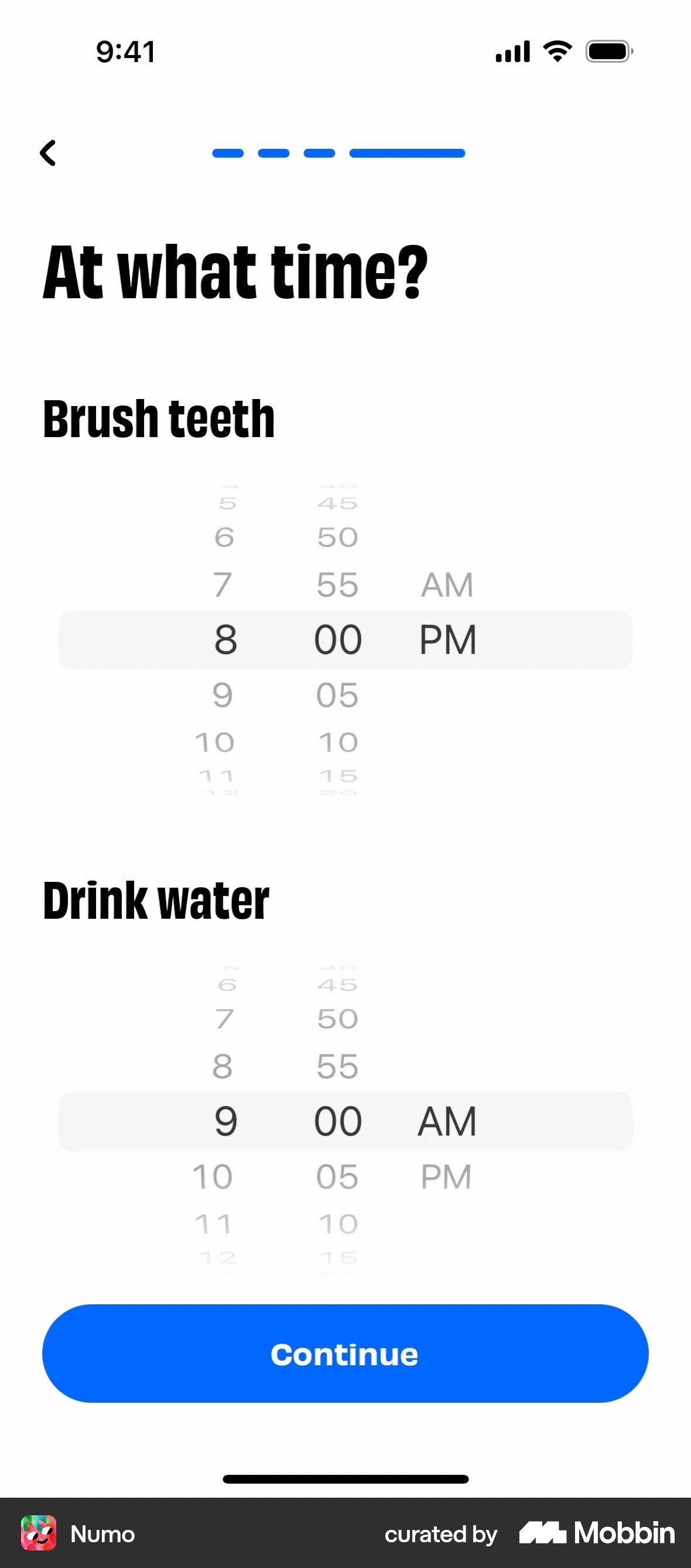
These apps help users sustain attention for specific periods through external constraints and positive reinforcemen
Emotional Support & Educatio
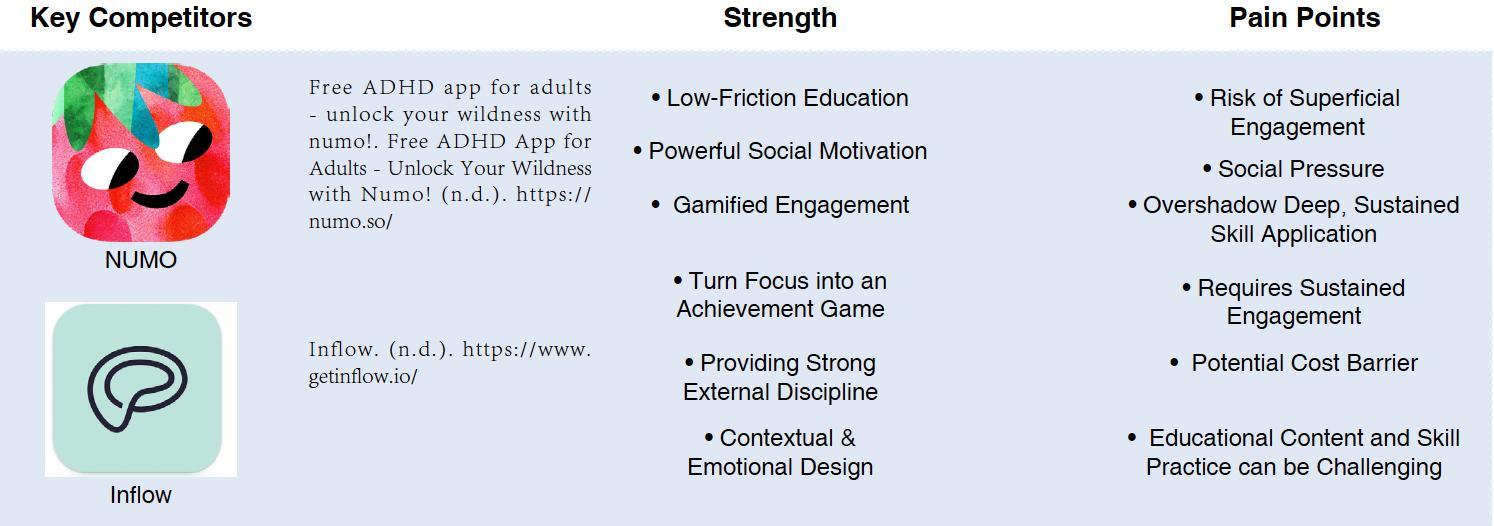
These apps act as "cognitive and emotional scaffolding", designed to bridge the gap between neurodivergent executive function and daily demands to reduce frustration and improve capacity
Step 3 Competitive Analysis of ADHD-Assistant App
The competitive analysis revealed a market of fragmented, single-point solutions for ADHD, focusing either on task planning or focus enforcement. A significant gap was identified in integrated emotional and cognitive support. This validated the user research and directly informed "Voyage's" core thesis: to move beyond isolated tools and create a unified, adaptive system. This system is designed to seamlessly support the entire workflow—from empathetic task initiation to sustained focus—addressing the root emotional and executive challenges users face. This strategic differentiation defines the solution's unique value proposition
Learning Reference for Competitive Produc
Value Propositions & Brainstormin
Pain point
Rewards Task Completion Over Meaningful
Progress: Gamification may prioritize earning points over achieving substantive outcomes
Community Can Generate Performance
Anxiety: Public "Squads" may induce shame from social comparison, not just support
Knowledge Remains Bite-Sized and Passive:
Micro learning offers awareness but often lacks depth or triggers behavior change
Value Propositio
A Cohesive, Multi-Support Ecosystem: Integrates task management, education, and community into a single digital companion
Fights Isolation with Shared Identity: Squads" provide belonging and normalize the ADHD experience, reducing stigma
Lowers Barriers to Engagement: Gamification and micro content make starting selfmanagement feel accessible and less daunting
NOW — Emotional Check-in & Gentle Entr
NOW is the emotional entry point of the app. Instead of asking users what they need to do, it first asks how they feel. By allowing users to quickly log their current emotional state—such as anxious, bored, drained, or in flow—the system reduces the pressure to perform and reframes productivity as a compassionate process. Based on this input, NOW offers low-stakes suggestions and reassuring language, helping users begin their day without urgency, guilt, or self-judgment
START — Task Initiation & Cognitive Scaffoldin
START is designed to address task-i n i tiation paralysis, a common challenge for adults with ADHD. Users can freely express what they want to do through text or voice, even if the task feels vague or overwhelming. The system then breaks the goal into small, manageable steps and estimates effort levels instead of strict time demands. By externalizing planning and reducing cognitive load, START lowers the psychological barrier to beginning and transforms intention into immediate, actionable movement
FLOW — Adaptive Focus & Rhythm Suppor
FLOW supports sustained attention through an adaptive focus experience rather than rigid time enforcement. Tasks are presented one at a time, accompanied by a soft progress indicator that emphasizes rhythm over urgency. Users can pause, resume, or adjust their focus session without penalty, and interruptions are handled through gentle prompts instead of alarms. FLOW respects fluctuating attention patterns and helps users re-enter focus smoothly, rather than forcing uninterrupted productivity
REFLECT— Non-Judgmental Feedback & Self- Awarenes
REFLECT provides emotional feedback without relying on performance metrics or pressure. After completing a task, users are invited to rate perceived effort and difficulty, reinforcing self-awareness rather than outcome comparison. Mood maps and trend summaries visualize emotional patterns over time in an abstract, non-numerical way. REFLECT reframes progress as learning and self recognition, emphasizing that showing up and trying is already meaningful
POD — Low-Pressure Social Connectio
POD offers a supportive community space built around shared ADHD experiences rather than competition. Users can join small identity-based groups, observe others’ presence, and share short thoughts without likes, rankings, or public performance tracking. The design minimizes social anxiety by prioritizing belonging over visibility, allowing users to feel accompanied without the pressure to constantly engage or compare themselves to others