The Techtonic
REPORTING THE SHIFT

Sun, sea and scams: Is Sri Lanka becoming a cybercrime haven? Blast off! How a Soviet spacesuit ended up on eBay LooksMaxxing: Beauty is in the eye of the Algorithm

Sun, sea and scams: Is Sri Lanka becoming a cybercrime haven? Blast off! How a Soviet spacesuit ended up on eBay LooksMaxxing: Beauty is in the eye of the Algorithm

Editor-in-Chief: Rachel Schmid

News Editor: Tom Layton

Culture Editor: Emma Gatrell

Photo Editor: Louis McAllister

Digital Editor: Aryaa

Deputy
Editor-in-Chief: Tom Tarlton

Politics Editor: James Barnes

Chief Subeditor: Ben Pawlowski

Deputy
Photo

Podcast


Deputy Editor-in-Chief: Isaac Borrett

Health Editor: Patrick Cardwell

Deputy Subeditor: Solaya Huang

Video

Podcast


Art Director: Emilie
Business

Digital Subeditor: Anushree



Dear Reader,
Welcome to The Techtonic.
Technology is rapidly reshaping the way we live, work and communicate. This magazine exists to make sense of that shift: to strip back the jargon, cut through the noise and tell the human stories behind the headlines.
The team behind these pages came together over seven weeks, driven by a shared belief in reporting how technological change is affecting everyday people. The 23 journalists who produced this edition bring curiosity and a range of perspectives to that task. We hope it shows.
You are holding one of just 180 printed copies. Inside, you will find stories spanning six sections –News, Politics and Society, Health, Business, Culture and Sport – reflecting the breadth of technology’s reach into modern life. Our journalism takes us from cybercrime operations in Sri Lanka and humanitarian aid workers in South Sudan, to economic miracles in Poland and pub crawls in London.
Some of what you will read is hopeful – some of it is troubling. We are not just interested in the aftershock; we are tracking the daily tremors. Through human stories and lived experiences, we bridge the gap between the digital world and the people shaped by it.
Our thanks go to Yuen Chan, Chris Tilbury and Zing Tsjeng for their guidance in bringing this edition to life.
To the team, I am so proud of us. I can’t wait to see all you accomplish. May your experiences at The Techtonic stay with you, along with the memories this magazine holds.
Rachel Schmid The Techtonic Editor-In-Chief
The Techtonic was created as part of the 2025-2026 International Journalism postgraduate course at City St George’s, University of London
The Techtonic Department of Journalism City St George’s, University of London
Northampton Square
London
EC1V 0HB
Printed by Rapidity
thetechtonicmag.com
+44 (0)20 7040 8221 thetechtonicmag@gmail.com
The Techtonic. Reporting the shift.
Front Cover Image Credits: -Felix Winkelnkemper (Computer, Edited) -Igor Pavlov / Microsoft Corporation (Error Message)
Section Divider Credit: -Adobe Stock


is safer, but workers are still leaving - 44


Is Sri Lanka becoming a cybercrime haven?
How AgriTech is shaping farming
Tech styles shaping the procuction of textiles
How Brexit built an unlikely economic miracle in Poland
How business is profiting on women’s saftey
Cheap pint? There’s an app for that
48 Neocities: The platform rebuilding the old internet 50 The algorithms and apps tackling loneliness 52 How a rare Soviet space suit ended up on eBay
A test of faith: how AI is shaping christianity
Vibe code your way out of AI angst
The road to repair: cafes working to fix devices
AI in production of music 62 How south asian hate has increased online
66 Why football fans are embracing illegal streaming 70 Britain’s youth athletes are being scouted by AI 71 Inside the digital rebirth of Britain’s pub sports 72 Puzzles
Glossary
by Namratha Prasad and Sophie Farmer
Scan to listen on Spotify


By Joyce Lai
Major fashion brands in the UK have begun to launch AI-powered virtual try-on tools which developers boast will reduce the number of online shoppers’ returns, but an expert is warning that the images generated are not accurate.
Virtual try-on, also known as virtual fitting, allows potential customers to ‘try on’ different garments digitally by creating 3D avatars of themselves wearing them.
Users usually have to provide photos to set up their avatars. Zara, for example, requests a selfie and a full-body front-facing photo.
The idea is that customers can see whether the items suit them before making a purchase and cut down on the number of garments that end up being returned. But some shoppers are unconvinced.
“That doesn’t look like me,” said Isha Mull after seeing her avatar on Zara’s app. She is a frequent online fashion shopper and returns half of her orders on average. She said she would ignore the virtual fitting suggestions until she felt they were accurate.
Dr Louise Reid, a lecturer in digital marketing at the University of Gloucestershire, who has researched 3D body scanning and virtual and augmented reality fashion retailing, said the apps may not accurately reflect how people look in the outfits.
Reid said the avatar would tend to look slimmer if the garment was designed to fit a slimmer person.
The type of clothing users are wearing and the kind of data collected also matter. Reid suggested a number of things brands should request to improve the accuracy of predictions: full-body pictures from the front, back, and side,

and the size the customer usually wears in the brand.
Another limitation of using the tools is that shoppers cannot feel the fabric or see how their bodies interact with garments. Reid added that loyal customers of a brand would have a better idea of how they would look and feel in a given garment, so virtual fittings would be more likely to reduce the rate of returns for this group.
She noted that the AI virtual fitting tools do not address a major contributor to returns: the free return policy.
Zara, which launched virtual try-on half a year ago, did not reply to requests for comment on returns.

By Jenna O’Flynn
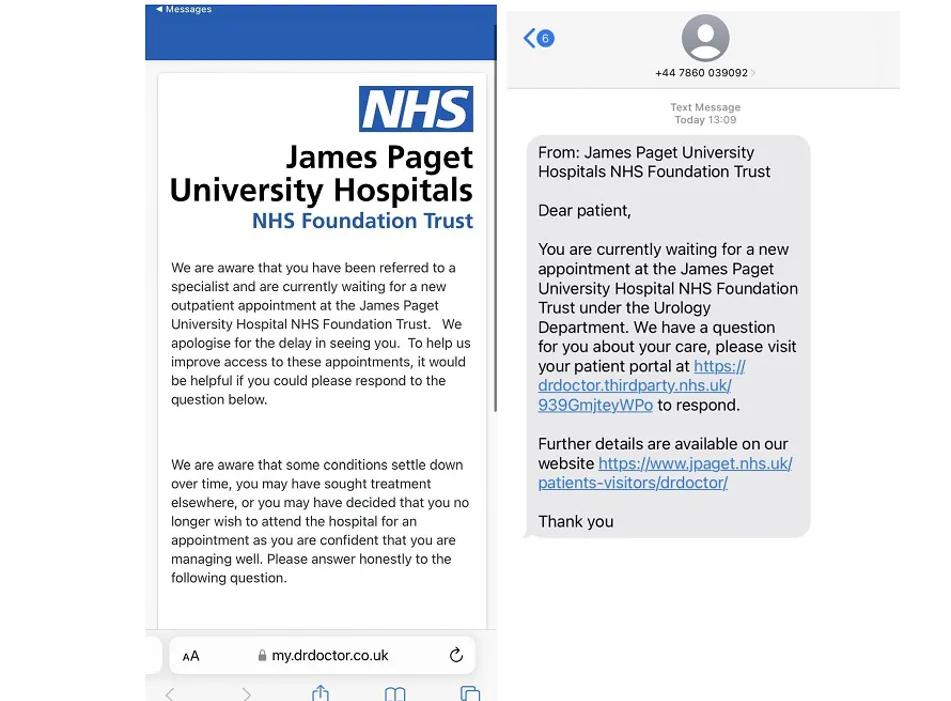
The introduction of an AI apointment system in a London borough has led to 20 per cent more children attending NHS developmental reviews and other appointments, that can spot and mitigate for issues such as autism, ADHD, poor sight and hearing early on.
The appointment management platform uses an intelligent virtual assistant alongside SMS and WhatsApp messaging to allow parents to book, reschedule or cancel appointments.
Before it was introduced in Redbridge last January, only 40 per cent of eligible children were attending the reviews which are designed to make sure development is on track. They are fundamental in spotting delays early and providing appropriate support.
Joanne Scott, a paediatric nurse who also works in waitlist management at James Paget University Hospital said missed appointments mean, challenges
can go unnoticed. She said these challenges included autism and ADHD.
“They’ll go to school, they’ll not see the board and they’ll not be able to develop in the same way that other children do,” she added. “It’s about trying to give a child the maximum opportunity in life.”
Before the system was launched, parents could only manage appointments by phoning services during working hours. In 2023-4, ‘did not attend’ rates for children and young people’s services reached 21 per cent overall, but fell by 25 per cent after it was introduced. Scott said digital communication reflects how many younger parents already manage their lives, particularly using mobile calendars.
The assistant also supports over 100 languages, reducing communication barriers that may previously have prevented some families from making contact.
In parts of the country where digital tools have not been implemented, some parents have complained of a long
and frustrating process to get an appointment. A mother of a 16-month-old in Surrey said she had to call a single point of access number, shared across multiple services, to be redirected to a health visitor.
“I have tried reaching out to them and honestly, it was next to impossible to get hold of anyone,” she said. In Redbridge, the system has since been rolled out across other services including all 0–19 service teams, children’s therapies, Child and Adolescent Mental Health Services and adult therapies.
By Emilie Lenglart
The EU Commission is negotiating with the US Department of Homeland Security on a new deal giving the Americans access to EU citizens’ biometric data as part of an Enhanced Border Security Partnership.
Washington asked for access to the data in 2022 as a new condition for membership of its Visa Waiver Program, which allows citizens of participating countries to travel to the US visa-free for business or tourism. Currently, 24 of the EU’s 27 member-states are part of the scheme.
Last November, the EU agreed to define a common framework for bilateral deals, giving the commission permission to negotiate on their behalf.
According to a draft of the negotiated framework published by the UK-
based policy research charity Statewatch, the agreement covers access to biometric data, such as fingerprints.
It could also include personal data held regarding the “racial or ethnic origin, political opinions or religious or other beliefs, trade union membership”, as well as individuals’ health or sexual life, subject to safeguards and restrictions. Maximilian Henning, a reporter for Euractiv who has investigated the subject, said this could lead to Europeans being denied entry to the US.
Being vetted for their views is already happening to those applying for visas. Alex, a French exchange student in Chicago said:“At the [visa] appointment at the embassy, they requested to make my social media accounts public.” In response, he said he “just stopped posting political content in my story”.
Thomas Vincent, a French ex-
change student in Pennsylvania said he reviewed his online activity to delete anything political, and deleted his X (formerly Twitter) account.
For now, the US-EU negotiations are ongoing and taking place behind closed doors with little reporting on their progress.“No one really wants to be responsible for this,” said Henning.
However, coordination from EU members could provide better safeguards for data protection. A note from the Presidency of the EU Council to its representative members said “the framework agreement should reflect the EU’s standards on data protection and fundamental rights”
Washington wants to reach an agreement by the end of this year, but the framework must be adopted by the council and the EU Parliament, before moving to bilateral negotiations.
By Ben Pawlowski
A futuristic AI personal trainer backed by celebrities including Lorraine Kelly and Sir Richard Branson has received a royal seal of approval after being honoured at Britain’s most prestigious business awards.
London-based startup Magic AI, founded in 2021, was praised by judges for creating what it calls “the world’s first AI personal trainer”, designed to deliver personalised fitness coaching at a fraction of the cost of traditional personal training.
Its flagship Fitness Mirror combines motion-tracking technology and holographic displays to provide tailored home workouts, with users able to follow programmes created by stars including former England cricket captain Sir Alastair Cook and Strictly Come Dancing champion Katya Jones.
The units retail at around £1,000 to
£1,500 and users sign up for a £300 a year subscription to content.
The idea came from founder and chief executive Varun Bhanot’s own experience of trying to get fit, during which he became frustrated by the high cost and limited accessibility of personal training.
“It got me thinking: is there a way we can use AI to coach people just like a human would – but on-demand, scalable to millions at once and at a fraction of the cost? That was the seed of the idea,” he said.
“I can’t really put into words how proud I am of the company, the team and the product. This really is the stuff of dreams.”
Magic AI’s mirror has earned rave reviews, with a 4.8 star rating on consumer reviews site Trustpilot, but human personal trainers have pointed out some shortcomings of a system
that cannot pick up on the subtleties of breathing, posture and symmetry like a human can.
“AI will eventually get smarter, but it’s nowhere near replacing the knowledge, observation and intuition of a dedicated personal trainer,” said Tom Lakos, founder of 4 Core Fitness, during a review of the mirror published last year.
The award entitles the company to use the royal emblem on its packaging and marketing materials for the next five years.
It is one of only 52 firms recognised in the Innovation category of the King’s Awards for Enterprise, which is celebrating its 60th anniversary this year.
Among this year’s other honourees, Bristol-based cycling accessories brand Tailfin claimed a rare double victory, winning in both the Innovation and International Trade categories.
By Isaac Borrett
The National Union of Rail, Maritime, and Transport Workers (RMT), the union behind the recent tube strikes, have promised further “mass industrial action” if pressure groups’ calls for automated trains ever become reality.
This comes after Transport for London (TfL) says there is “no case” for driverless technology.
June’s strikes were the last planned of 2026, but any pursuit of driverless trains will be met with further strikes. An RMT spokesperson said: “Any attempt to move towards driverless trains in the future will be met with mass industrial action over a sustained period of time.”
Despite this, the opposition Conservative Party has been advocating for autonomous technology for some time.
Adam Joiner, a Conservative Party councillor in the London borough of Redbridge, said: “We [Redbridge] do have people who work in the city and rely on the Central Line to get into London to do their jobs.”
Joiner added that driverless trains were “It’s the sort of thing, regardless of strikes, that you [TfL] should be thinking about”.
According to TfL, these calls are impractical. Sean Colfer, a press officer from TFL said: “Platforms haven’t been engineered to support that extra weight.”
Colfer added it is not just the logistics of automation, but also the cost.
“We’re talking billions and billions of pounds, potentially hundreds of billions of pounds,” he said.
Further strikes were planned later in June, but they were cancelled during negotiations that saw the most recent strikes moved from May to June. This has come as a relief to many, with William Yarwood of the TaxPayers’ Alliance commenting that the proposed strikes “could not come at a worse time.”
According to a calculation by the Centre for Economics and Business Research, each two-day period of industrial action could cost up to £250 million arising from lost workdays.
Driverless technology is already being used by Siemens Mobility, the manufacturer of some Tube trains.
By Tom Tarlton
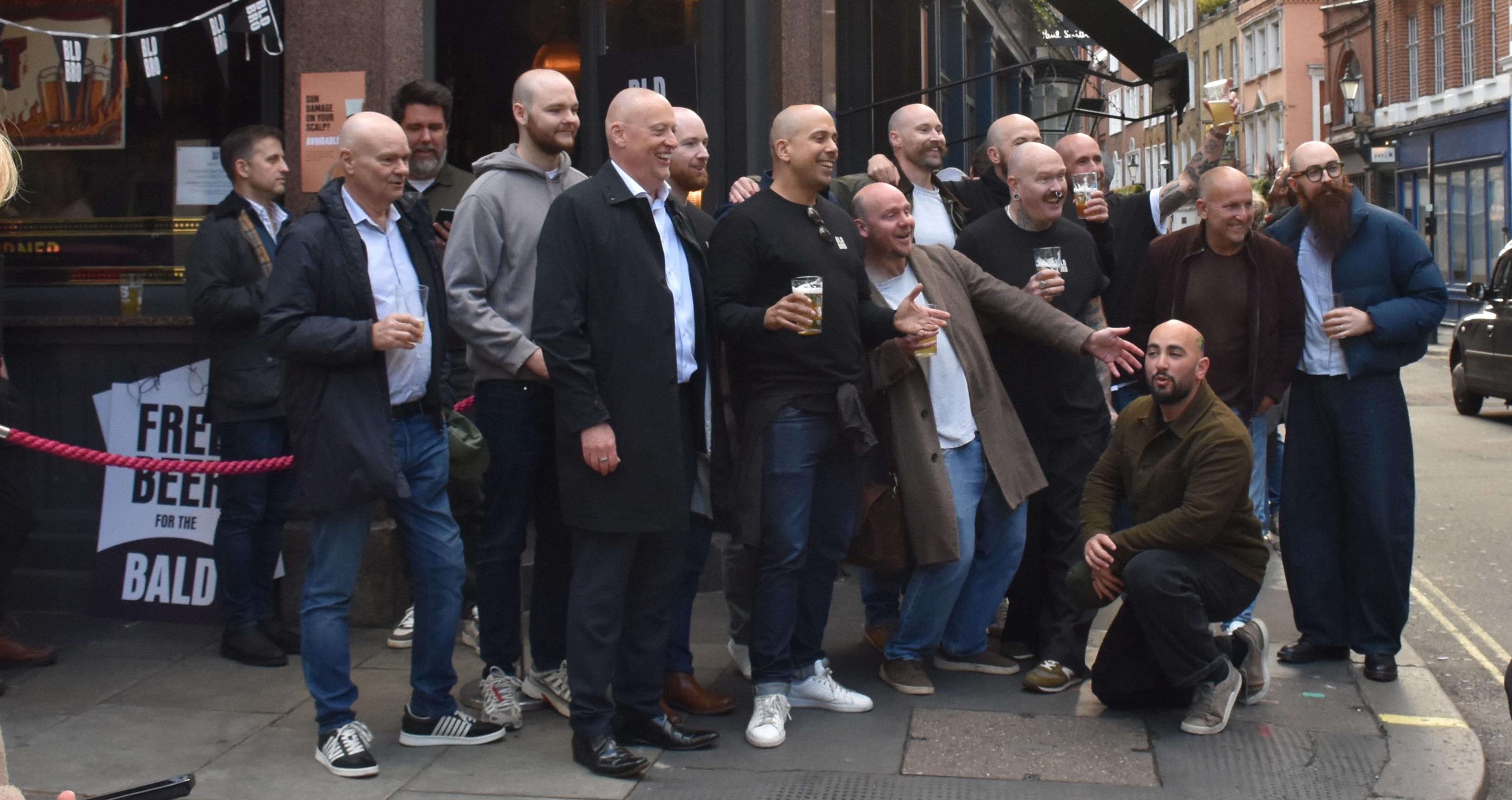
A men’s health specialist is raising the alarm over the worrying side effects of over-the-counter hair loss treatment drugs following London’s first festival of baldness.
Interest in hair loss treatment drugs such as minoxidil and finasteride is soaring, with search rates increasing in the latter by 95 per cent since 2020. Stephen Carson, a trichologist from London, stated he has seen a “tremendous rise in the amount of young men enquiring” about these forms of treatment.
Many of those young men do not seem to be aware of the potential adverse consequences of the drugs. Finasteride works by suppressing DHT (dihydrotestosterone) which can aid in hair regrowth but may also cause “lowered libido, erectile dysfunction and testicular pain,” according to
Steve O’Brien from the London Centre of Trichology.
These side effects can last beyond the period the drug is used. After lengthy litigation in 2012/13, Merck & Co., the main distributors of finasteride in the US, were found to have failed to adequately warn users of the persistence of side effects. This was proven and led to US doctors to largely stop its prescription as a hair loss treatment, but no such step was taken in the UK.
Minoxidil, though not potentially as harmful, even in the best cases only tends to produce vellus, or “peach fuzz” hair. This never fully develops and leaves users trapped.
“If they stop or they’re inconsistent, they can see a lot of hair fall,” said O’Brien, who steered his practice away from minoxidil prescription 25 years ago.
For some attendees at the inaugural Bald Fest in May, there’s another approach to ‘fixing’ hair-loss – accepting it. The event gathered bald Britons at a Soho pub offering free head shaves and pints for the bald.
Drew Wrixen, 44, an attendee of the event, was steadfast in his pro-baldness beliefs: “Just embrace it, shave it off, be confident, and save yourself a few quid”.
For those who are still seeking a pharmaceutical solution, O’Brien is worried about the ease with which the drugs can be acquired. Whereas in the past you would have to get a prescription from a GP in person, nowadays, “you don’t even have to see someone in person “[it’s] quite shocking really,” he said.
Quoted side effect rates, which are often cited as two to three percent, he argued are “misleading” and “not realistic” in his experience.
By Catherine Rowe-Kosary
Anti-tobacco campaigners are calling on companies producing nicotine pouches to stop marketing their products now, ahead of a ban on the advertising of tobacco products in the UK effective from next year.
The WHO issued a report last month warning that nicotine pouch brands are using social media, influencers and marketing to attract young people. It said nicotine pouches are often marketed as “modern” and “discreet” to make them look like lifestyle accessories rather than nicotine products, even though they still carry addiction risks.
Dentist Dr Catherine Haselden warned that nicotine pouches can cause gum recession and oral ulcers, as well as white patches on the gums which “can be a warning sign for oral cancer.”
Caroline Cerny, deputy chief executive at Action on Smoking and Health (ASH), said companies have pushed
“aggressive marketing” of nicotine pouches in the UK. This particularly targets young people, including online promotion and giveaways at festivals and shopping centres.
Although the market for nicotine pouches is much smaller than for vapes, UK sales reached £206m in 2025, growing 60 per cent year-on-year.
The sector is also adopting the tobacco industry’s traditional marketing playbook, including claims that the products can help users quit smoking, relax or focus.
Ed Chambler, 25, who was not previously a smoker or vaper, was introduced to nicotine pouches by a friend two years ago and now uses six to 10 pouches a day. “I like having one first thing in the morning with a coffee while working and I enjoy them socially as well. They make me feel sharper,” he said.
Chambler agreed with the WHO report that sweet and fruity flavours could help to normalise nicotine use among ad-
olescents and young adults as “the branding is colourful, bright and flavour-focused, similar to vape marketing.”
The WHO and other public health advocates are calling on governments to regulate nicotine pouches within broader tobacco control frameworks and close loopholes that allow companies to market them as harmless alternatives to smoking.
Cerny from ASH said “while current evidence suggests they are probably less harmful than cigarettes, more robust and independent evidence is needed to confirm their use as quit aids.”
Nicotine pouches are the latest evolution of snus, a pouch tobacco product placed under the upper lip originating in Sweden, that has been banned in the UK since 1992 due to the cancer risks of smokeless tobacco.
Tobacco-free nicotine pouches entered the UK market in 2019, bypassing the snus ban by using synthetic nicotine rather than tobacco leaf.
By Namratha Prasad
A new TikTok feature allowing users to opt-in to an ad-free experience could exac-

thing motivates greater use to justify the expense, is a well-established cognitive bias, though whether it meaningfully increases screen time hasn’t been studied directly,” Sharpe said.
Tanvi Sathe, a psychologist who has treated clients with social media compulsions, said she sees the feature targeting those who spend the most time on social media, including “doomscrollers” and content creators.
“Most people’s time post working hours is spent doom scrolling, and that has sort of become, I would say, like an escape thing they do to sort of get away from what they have to deal with at home,” Sathe said. “I do think the ad-free subscription would make it a lot worse.”
Sathe explained that ads can interrupt the dopamine loop created when scrolling through social media. They interrupt the reward the brain seeks when doomscroll-
ing, making it easier to exit the app and seek a dopamine reward elsewhere.
“The sort of unpredictability of the ads popping up automatically breaks the rhythm of the continuous stimulation,” she said. “That interruption could reduce how a person is immersed within the act of doom scrolling.”
Sidhi Simpi, who produces content on women’s sports, said she would buy the subscription to help her find material on social media for her content.
But she said she does worry about the impact the feature could have on her scrolling behaviour.
“Ads kind of create a distraction, and make it difficult for me to keep my attention span,” she said.
TikTok users over the age of 18 will be notified of the feature and given the choice to opt-in to it whenever they open the app until November.

Grassroots activists are asking if the UK is sleepwalking into an AI crisis – and whether anyone in power is prepared to stop it
By Ben Pawlowski
On a damp afternoon in King’s Cross in 2023, five people gathered outside the London headquarters of Google DeepMind – barely enough people to fill a black cab home. They had placards and a shared sense of urgency, but little else. One of them was a young man called Joseph Miller.
Three years later on a cool February day, Miller stood outside the same building – this time at the head of a crowd several hundred strong.
Miller, a soft-spoken student in his twenties, is currently completing a PhD in AI safety at the University of Oxford.
There, he grapples with one of the most pressing questions in modern academia: how do you build a machine more intelligent than yourself and ensure it continues to do what you want?
It is, he admits, a problem nobody has solved. And it is precisely because he understands that uncertainty, that he now finds himself at the forefront of Britain’s emerging anti-AI movement.
Miller is no luddite – in fact, he uses AI tools every single day for work. He no longer writes code himself because the technology now does it faster and more reliably than he can. Yet he is also the UK director of PauseAI, a global movement
founded in the Netherlands in 2023 that campaigns for an international treaty to regulate the development of AI before it surpasses the capability of humans.
“I started to become very alarmed that AI was progressing very, very quickly,” he explains. “I went from thinking human-level AI was maybe 50 years away to thinking it could be 10 years away, maybe even five. And it seems to me like we are broadly on that track.”
When Miller first joined PauseAI, he could count the organisation’s entire UK membership on two hands. That is no longer the case. What has changed, he thinks, is that people are beginning to

feel the technology intruding into their own lives.
The evidence is already mounting. Figures published by jobs platform Adzuna earlier this year point to a 34.9 per cent annual decline in graduate vacancies across the UK, as employers turn to cheap, accessible AI tools to perform work once handled by entry-level recruits. For Miller, this shift is merely the visible edge of something much larger.
“In the UK, a sandwich is more regulated than AI”
“It’s like the Industrial Revolution,” he warns. “And it’s probably going to happen much faster, because software can be transmitted across the world instantly. It may be that within less than five years, we have an AI tool that can do any white-collar work, and that is just a

completely unprecedented scale of societal change.”
The people joining PauseAI reflect that widening anxiety. Miller mentions a teacher at a school for children with special educational needs who found herself stumped by a simple question: what jobs would still exist when her pupils grow up? The same uncertainty struck another supporter applying for a 30-year mortgage, suddenly unable to picture what work might look like decades from now.
Concerns around jobs, Miller is careful to point out, are only the tip of the iceberg.
“At the top of the list is human survival,” he says. “If a new kind of intelligence enters the world that is more capable than us, we have to make it care about us. Otherwise, things are not going to end well.”
Pull the Plug, a grassroots organisation founded in late 2025, represents a different strand of the same movement. Where PauseAI draws heavily on professionals alarmed by what they know about the technology, Pull the Plug is rooted in more traditional activist soil, bringing together a broad church of campaigners who see AI as the latest frontier in an ongoing struggle over labour and inequality.
“The wrong people are getting to make decisions on how AI is developed and what it gets to look like in our lives – a bunch of huge US corporations with questionable morals and frankly absurd ideas of what they want the future of humanity to look like,” says a spokesperson for Pull the Plug.
Unlike Miller and his colleagues, the group draws openly from the playbook of controversial movements such as Just Stop Oil, raising the question as to what future campaigning might look like. But the two groups still operate under a shared belief that AI is being rolled out with reckless speed and little democratic oversight.
As the spokesperson puts it: “In the UK, a sandwich is more regulated than AI.”
That comment may appear over the top, but the argument beneath it is one increasingly echoed by senior academics. Demetrius Floudas, a researcher at
the Leverhulme Centre for the Future of Intelligence at the University of Cambridge, believes these campaigners have a point.
“The activists are repeating, in less polished language, what the chief executives of AI firms and many leading AI scientists have been saying publicly since 2023,” he says. Among them is Sam Altman, the co-founder of OpenAI, who once admitted that AI would “probably” lead to human extinction.
“If a new kind of intelligence enters the world that is more capable than us, we have to make it care about us”
As for governments attempting to regulate the technology, Floudas is blunt. “Governments are not struggling to keep up with AI – to struggle implies some realistic effort. Legislators are not just behind the curve; they are behind the curve behind the curve,” he says.
Miller agrees. “The plan, when I’ve spoken to policymakers in both the UK and the US, seems to be to wait until something goes horribly wrong and then there will be the political will to act,” he says. “I think that’s the wrong way to make policy.”
Miller remains convinced that public concern around AI is only heading in one direction – and that movements such as PauseAI will eventually force policymakers to treat the issue with greater urgency.
“I think people find us more credible because we’re not alarmist, we’re not sensationalist and we don’t do it for fun,” he says. “We’re doing it because if this issue goes badly, it is really bad for everyone.” That driving point, he hopes, will help to turn the tide.
As more learning moves online, children without access to tech are being left behind
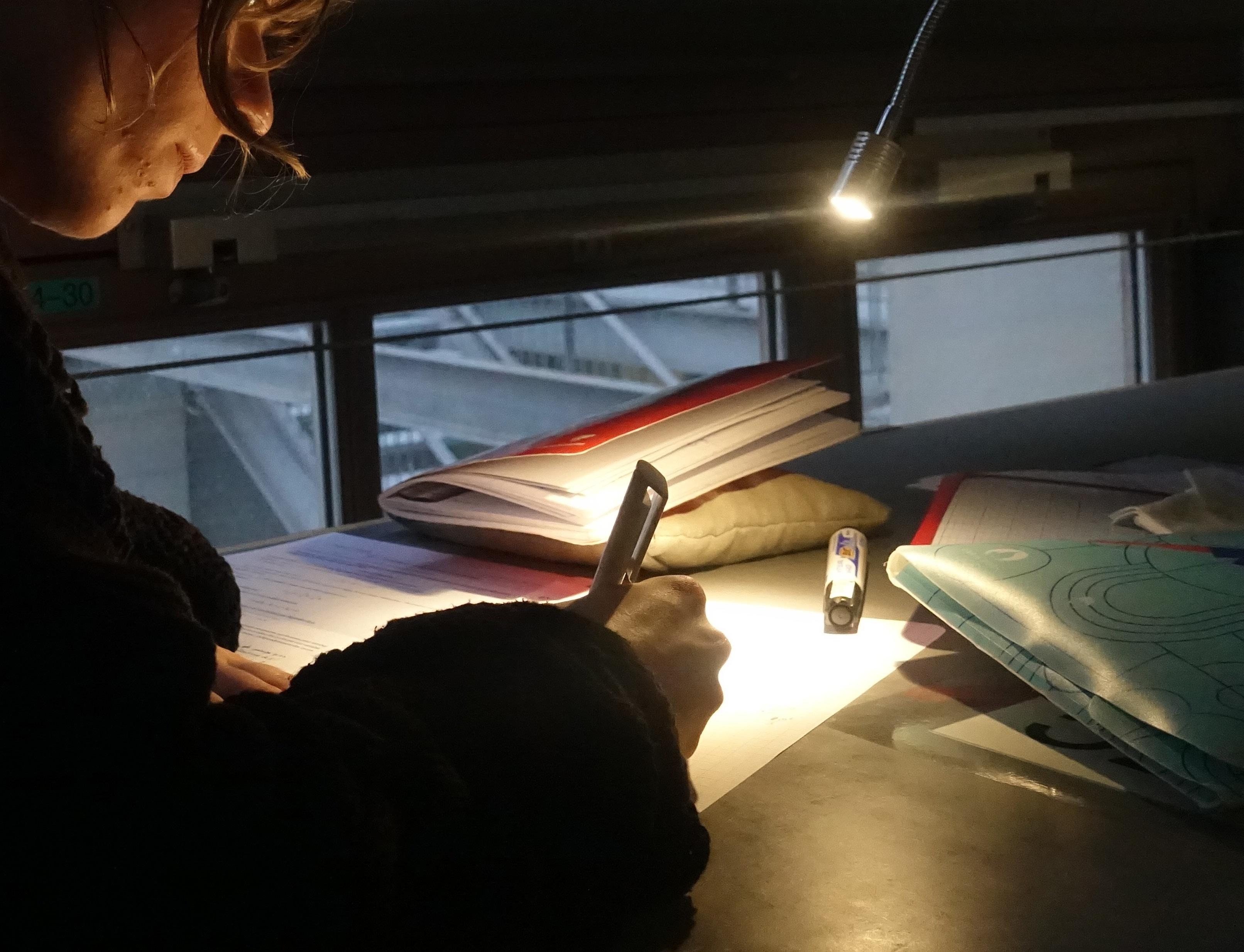
By Emilie Lenglart
Over 200 million unused devices are gathering dust in drawers across the UK. According to a 2024 report from the Good Thing Foundation and Vodafone, one out of ten Brits keep up to five unused devices, while 36 per cent say they do not know where or how to recycle them or donate.
If donated, these devices could help an overwhelming number of disadvantaged children navigating school. According to a study by the Digital Poverty Alliance and RM Technology, over half of low-income families struggle for access to a device or reliable internet to their kids outside of school.
As more teaching tools and resources move online, including assignment requirements, a whole part of the popu-
lation without access to digital devices is getting left behind.
Warren Milburn, a computer engineer and director of the company InfraZen, created the Million People Project about five years ago. During the COVID pandemic, he realised that the resources available to work from home were inadequate.
The charity collects devices in the UK to distribute them in the northeast of England and in other countries such as Sierra Leone and South Africa. The devices are refurbished by a team of young people straight out of school, trained by Milburn.
“There wouldn't be a growing supply if there wasn't a corresponding demand,” Milburn explains.
For Ali Hart, general manager and mentor at PromiseWorks, a charity
mentoring disadvantaged children in Somerset, the digital divide is a serious issue as it often goes unnoticed. “The assumption is that it is a roller coaster anyone can jump on,” she explains.
“The assumption is that it is a roller coaster anyone can jump on"
This inequality can impact children's education as, in the UK, nearly four million families are below the minimum digital living standard. “A minimum
digital standard of living includes, but is more than, having accessible internet, adequate equipment, and the skills, knowledge and support people need,” says the Good Thing Foundation.
With the government promoting a “digital revolution in classrooms”, with a £45m investment plan announced in March 2025, the struggle to access a device or reliable broadband at home is becoming an increasingly serious issue.
“We are putting technology into the hands of teachers and exploring how tools, including AI, can cut the time teachers spend on admin and improve face-to-face teaching,” a spokesperson from the Department for Education says. According to the 2025 Technology in Schools survey, 43 per cent of teachers reported that technology had reduced their workload.
Charlotte Higham, a geography teacher in a state school in Leeds, uses online tools such as Class Chart and Microsoft Teams for home learning, due dates and course descriptions. This allows her students to catch up on lessons they missed or to complete their notes. Like the rest of her colleagues, she also uses Seneca, a platform that allows kids to respond to quizzes on the lessons at home – a practical tool that allows her to track her students’ progress and reduce her workload by being self-marked.
It may be a great help for many chil-
dren and teachers, but it also poses an insurmountable obstacle for some others. Without a device or a reliable internet, it is impossible to join an online class or access lessons, home learning resources and homework descriptions.
While the number of people without access is plateauing, the need to be online is only growing. The gap between the digital haves and the digital have-nots is getting bigger – a growing inequality that accelerated with the pandemic.
“It’s setting up people to fail,” Hart from PromiseWorks says.
Many children she works with don’t have the option of doing their homework at home and must catch up during the day, she explains. In Higham’s school, teachers organise Seneca catch-up sessions during breaks and lunch times for kids to complete the quiz they could have done at home.
“It’s setting up people to fail”
“The higher you go [in education], the more reliant you are on technology,” Hart adds. Higher education is becoming even more inaccessible to a section
of the population, exacerbating class and social inequality. While subsidies and support plans help give access to devices, one would have to be well-informed and supported to apply to them.
This disadvantage can be very discouraging for children, especially in some schools where they can get detention if their grades are not high enough. “They have given up,” Hart says. She is especially worried about the isolation that comes from the digital exclusion, as kids cannot join the main communication channels between students.
Despite the UK Government’s plan to improve schools’ infrastructure and connectivity, very little action has been taken to reduce the digital gap since the pandemic.
Many organisations have taken matters in their own hands instead. The Million People Project, the Digital Poverty Alliance, the Good Things Foundation, Recycle IT and others collected and distributed up to 22,200 devices in 2025.
This is a relatively small step compared to the millions of children left behind by digitalisation, but it is a promising start. Milburn says he is confident that as organisations like the Million People Project get bigger and grow in scale, they will be able to make a difference.

Technology is learning to predict disasters before they happen – allowing charities to focus on those who need it most
By Sophie Farmer
In a rural community in Akobo County, a region in eastern South Sudan, villagers gather in a modest circle to discuss how developments in AI can support them in the event of a displacement crisis. Even without mobile phones or laptops, the practice of forecasting future events for survival has long existed within their community. For them, the idea of predictive data modelling is not too far removed.
“The concept of using AI to predict future displacement,” says Alexander Kjaerum, a Danish Refugee Council senior data analyst who led the dialogue in Akobo, “was often easier and met with less scepticism than explaining it to colleagues in our HQ in Copenhagen".
This weekly conversation was led by the Danish non-profit throughout 2023. The data collected from the dialogue would be used to pilot a model for distributing early aid, including hygiene and period kits for women, food assistance and social cohesion activities, one year later.
The Council is one of the pioneers behind a traditional AI system of humanitarian data modelling. The piloted model in 2023 was fed a combination of open-source intelligence (OSINT), including historical data sources on conflict, food security and displacement, with transparent dialogue with communities in South Sudan.
Ray Eitel-Porter, an expert on AI safety and governance, explains that this is a “safer and more predictable” approach due to the absence of hallucinations and lower rates of security data breaches with generative AI models like ChatGPT and Claude. By mid-2025, over 13.1 million people had been

helped by 154 anticipatory measures worldwide, a number predicted to rise this year as accuracy improves.
The Council’s model forecasted an increase of 1,500 displaced people in Akobo, and by mid-May 2024, the resulting earlier aid activation prevented the displacement of 2,800. For every euro spent on the modelling, 23 euros were saved from prevented displacement and related expenditure. The return on investment, by this measure, was one to 23.
According to the Global Humanitarian Overview of 2026, the global funding gap is $33bn (£24bn), an all-time high forcing investments to stretch far.
The AI forecast works within a
“AI is just a means to an end [...] to respond and protect [the] forcibly displaced and stateless”
three-month timeframe, and its accuracy is measured one year after predictions. So far, the model has an 85 per
cent accuracy rate and has already been used across 11 countries globally. Work carried out by the Council is used to support larger humanitarian organisations. One of those is the UN Refugee Agency (UNHCR), which has clear outlines on the ethical use of AI and development partnerships.
Rebeca Moreno Jiménez, lead data specialist from the UNHCR, says that “the Danish Refugee Council inspired us. We peer reviewed their model”. She explains that from an organisational standpoint, “AI is just a means to an end [...] which is to respond and protect [the] forcibly displaced and stateless”. Crucially, there is no “one recipe fits all” approach with AI computational methods. From the work she oversees, Jiménez emphasises the importance of speaking with people on the ground, which increases the accuracy in her own data models and addresses ethical concerns of sidelining these local groups.
These piloted AI models have not been met without scepticism in the sector. Giulio Coppi, senior humanitarian officer at Access Now, a digital civil rights non-profit, warns that it could end up endangering communities. “If you start drafting very accurate models of displacement,” he argues, “you are basically telling the authorities or potentially hostile actors how to harm these people.” Publicly available forecasts, for instance, are not encrypted and carry further surveillance risks.
Eitel-Porter also explains that data can “reinforce previous patterns of behaviour” and bias given the history of colonial oppression in Africa. The Council recognises the care needed when navigating OSINT, avoiding, for example, the “use of social media data, as we believe this can be heavily biased”, Kjaerum says. It also states that the models provide “no new information” that could be used to harm communities.
False alarms, or false positives, are a further area of debate. These occur when predictions are inaccurate, and resources are inefficiently deployed when they could have been targeted elsewhere, causing local anxiety in the process. Working closely with local members to

represent their needs is at the forefront of the Council’s work, Kjaerum explains, to avoid skewed allocation of aid. Their adopted “no-regret” policy means that aid distribution is considered worthwhile for targeted communities, irrespective of whether a crisis unfolds.
What is the future of data models in the sector? Amid funding shortages
“It is increasingly the case that AI will be used for for forecasting situations”
and public AI mistrust, it might not be a direct priority on the humanitarian agenda. The UNHCR backed their “positively cautious” approach as, unlike corporate entities adopting AI, the technology directly impacts vulnerable communities. With rapidly evolving AI data models being reserved for pilot phases, Coppi stresses that transformative technology “requires transformation” within aid organisations themselves.
For now, the role of AI in anticipatory aid has the potential to radically elevate the work of humanitarians at present if exercised correctly. “There is nervousness,” says Eitel-Porter, but “it is increasingly the case that AI will be used for forecasting and [for] potential disaster situations.”
The residents of tranquil North Ockendon are fighting the destruction of 200 hectares of historic fenland
By Tom Layton
At least once a week, the locals of leafy North Ockendon visit Top Meadow Golf Club, a family-run venue with stunning views of pristine fens.
One of them is Gary, a concerned resident who did not want to share his last name. He gestures through the panoramic windows to the landscape outside. “All of this will soon be a data centre,” he says.
“All of this will soon be a data centre”
Once built, East Havering data centre will be the largest in Europe at an expected cost of more than
£15bn – nearly twice the bill of the 2012 London Olympics.
The site will cover 200 hectares of fenland in total. The land has already been bought by developers Digital Reef with approval from Havering Council, who have promised thousands of jobs, a new 113-hectare Ecology Park and a boost in capacity for AI use and cloud storage to support the local and wider UK economy. But residents of North Ockendon, the only inhabited area of Greater London outside the M25, are growing increasingly disillusioned with the plans. The Top Meadow club owner, who wanted to remain anonymous, has worked there since it was built in the 1980s. He says the new data centre would ruin business. “It will affect people wanting to come in and play golf and possibly get married here. You only have to look at the plans – 21-metre high warehouse-type
buildings that Tesco would use in their storage facilities. They’re massive.”
Danny Leach owns a farm nestled on the edge of the planned data centre. His dirt track, which runs beyond the farm into the fields, will be flanked by warehouses barely 100 metres from his front door.
Last year, Leach found developers on his land, scoping out the site and laying gravel without permission. After he pestered the council, they left. “They set up that site there on top of some badger sets and paved part of it over,” he says. “When we came down they said, ‘oh no, there’s no badgers’. But we’ve got a video of the badgers –there’s cubs in there.”
Leach was also sceptical of the developer’s noise survey, which claimed the existing background noise around his farm was 45 decibels – nearly double what his own test recorded – which he

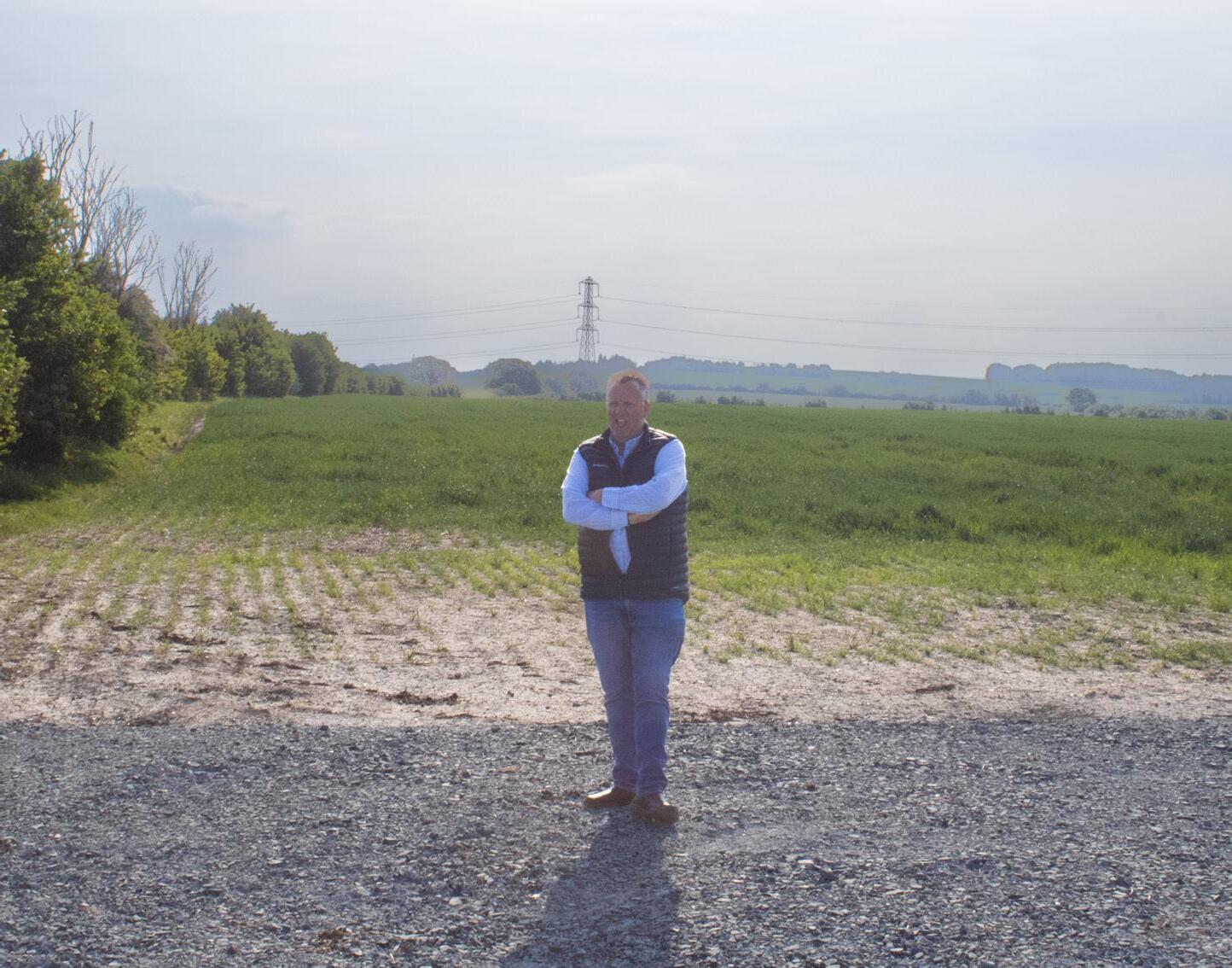
Danny Leach standing on the margin between his land and the proposed site of the data centre campus, which will stretch from him until the horizon // Tom Layton believes will be used to justify the high levels of noise a new data centre will produce. “The centre’s noise will decimate my house and my quality of life, because it’s so quiet here on the farm,” he says. “Who’s going to want to buy a house that noisy?”
Jonathan Stockdale is CEO of studioNWA, an architecture firm that specialises in data centres. He struggles to see the benefits of the East Havering campus for locals: “I’m not sure of the
true benefit other than to some landowner or developer.”
More than £60bn has been invested in data centres in the past three years, spurred on by the current Labour government who have loosened the rules around where the sites can be built, including on previously-restricted “greenbelt” land and in built-up urban areas. According to Stockdale, this land is mostly disused plots on the edge of motorways, or decaying urban buildings
where a data centre could be used to heat nearby apartments. But he explains that government support means data centres are getting built in unconventional spots, such as tranquil North Ockendon.
In some cases, he warns developers are simply trying to “get permission to build on the site and then sell the land” – a move worth millions that would have little value to residents.
“It’s going to affect the views. Now that will affect my business”
Back at the farm, Leach is blunt about what is coming for North Ockendon. “It’s all a negative,” he says. “There’s no other benefit for me.”
A London Borough of Havering spokesperson for the Local Planning Authority says a public consultation on the project was carried out earlier this year, adding: “We are currently reviewing the comments received and would like to thank those who responded for taking the time to convey their views.” Digital Reef did not respond to a request for comment at the time of publication.

By Joyce Lai
Louise Wright has a paralysed leg and a heart problem, but the 63-year-old gardener hasn’t been able to get a doctor’s appointment for four years – all because she doesn’t know how to book an appointment online.
“I just can’t keep up with the speed of everything going on,” Wright sighs. Staff told her that she couldn’t get a time slot by phone or visiting the surgery. She says she was good with word processors and graphic design tools, but she now feels left behind by the rapid pace of technology.
Wright’s case is not rare. A report published by the charity Re-engage in April found that one-third of people aged 75 and older could only book their NHS appointments online, and that they felt isolated from care. Another charity, Age UK, reported that 4.7 million people aged 65 and over lack the skills to use the internet “successfully and safely”. In an increasingly digital world, where services are moving online, these digitally excluded older people are at risk.
Harpal, a 70-year-old resident of Hackney, east London, has strong feelings about it. She is distressed that she cannot speak with a real person when she has concerns about her energy bill and when she manages her finances. “I feel my capacity is being taken away. I’m completely frozen, and I have to wait for my daughter, when she has time, to help me,” she says. Sometimes she has to wait for weeks, but still cannot get a tutorial from her busy daughter. “She just does it for me. I feel embarrassed.”
She is keen to learn technology and do things herself, so she attends the 50+ Digital weekly drop-in session at
Mildmay Community Centre, where people can ask any questions they have about technology. Volunteers previously taught her how to use the NHS app, and she now feels empowered to check her test results online and follow up with medical professionals herself.
The drop-in events are organised by Rick Crust, the digital inclusion lead at MRS Independent Living, a non-profit for disadvantaged and socially excluded communities. The 78-year-old has been in the digital technology world since 1996, witnessing the evolution from the World Wide Web to AI.
He says the current trend of “digital by default” across many services, from councils and housing to applying for London’s Freedom Pass – a concessionary travel card for those over 66 or with disabilities, can create trouble for older people. “They are just completely lost at sea and drowning,” he says.
“[The] introduction of AI into everything will mark a tipping point, for when things were bad, into which they become totally unacceptable.” He says new digital technology is not exciting for many older adults at all; it is instead a threat that people deeply resent.
Crust warns that older people who were confident online are now easy targets for scammers – their habits have not changed, but the technology has. That is why some organisations also run online safety classes for older adults, including Digital Skills Education based in Glasgow.
Project manager Kirstie Steele shares that their cybersecurity courses are always popular. She observes that many of their senior students are more sceptical of new technology than the younger generation. In fact, both Harpal and Wright express feelings of insecurity and mistrust toward AI.
“I see everything with a suspicious eye now,” says Harpal, with Wright adding that “I don’t want AI telling me what to do [...] I don’t trust it”.
As the digitally savvy generation gets older, will the digital divide diminish? Crust firmly objects: “Twenty years ago, the technology people had to deal with was different from what it is now. It’s never stopped changing.” The drop-in project has run for 21 years, and demand is only increasing. The service is now expanding to another location in the city, hoping to serve more older adults struggling in an ever-changing world.
“[The] introduction of AI into everything will mark a tipping point, for when things were bad into which they become totally unacceptable”



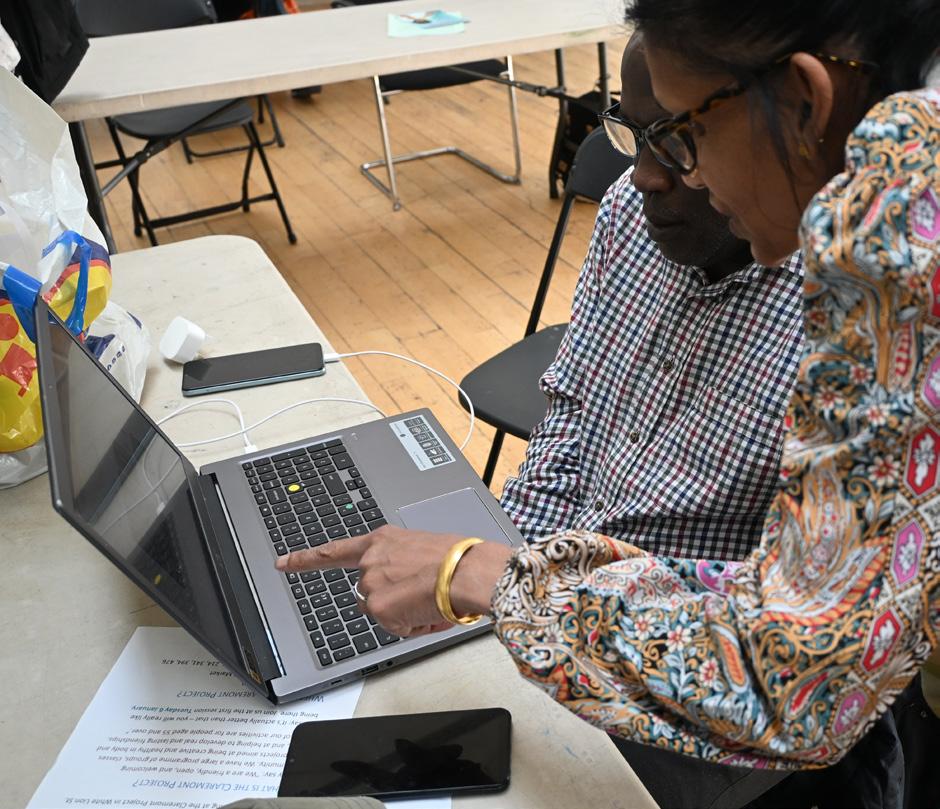

‘Zara’ spends hours tracking down the criminals creating harmful images
By Patrick Cardwell
Note: This story contains descriptions of child exploitation and abuse that some readers may find disturbing. Zara’s name has been changed to protect her identity.
When Zara leaves her work every day, she likes to imagine she is exiting through an airlock. After she passes through the two sets of double doors to leave the office, whatever she has seen that day is confined to the room behind her, unable to reach her as she returns home.
“Perhaps images of babies might stick in my mind a little bit more,” she says. “But we’re trained to not take those images home with you. There are techniques that my counsellor has given me that if an image did stick around, I’ve got some tools on how to remove it from my mind.”
Zara is a senior analyst at the Internet Watch Foundation (IWF) – a non-profit charitable organisation whose mission is to “detect, disrupt, remove and prevent online child sexual abuse material (CSAM)”.
The IWF runs a hotline where members of the public can anonymously report any images they may have stumbled across on the internet for Zara and her team of 15 fellow analysts to review and investigate. The hotline currently gets 300-400 new tips a day.
“If we find child sex abuse material, we’ll trace where that material is, so we find where it’s hosted,” Zara explains. “We’ll then send a notice of takedown to the ISP of where that content is hosted. If it’s in the UK, we’re very proud that we are a very hostile country to hosting this kind of content... if necessary, we’ll use our partners in law enforcement to get that content removed.”
Zara began her career moderat-
ing the chats on platforms like LEGO Worlds and Wii U, making sure children were not sharing personal information online. She was aware of the IWF’s work, and was eager to apply when they began employing analysts.
“It’s a very long hiring process,” she recalls. “It takes about three interviews to make sure that you’ve got the support and the resilience to do the work.”
As part of her job Zara is often required to analyse category A material –the most severe classification of CSAM.
“It’s now incredibly difficult to distinguish between a synthetic image and a real image of child abuse”
“I’d never seen this sort of stuff before, so I really didn’t know what to expect,” she says. “Suddenly you’re just looking at the images as a crime scene, rather than the abuse taking place.”
“Immediately you’re analysing it: What can I see? What’s going on in the background? Can I see an offender? I need to digitally, forensically look at this image and gather the information I need.”
It is estimated that there are over 830,000 adults in the UK who pose a sexual risk to children, and the
proliferation of AI-generated CSAM is making the IWF’s work even more challenging. “It’s now incredibly difficult to distinguish between a synthetic image and a real image of child abuse,” she says.
The IWF have noticed an even more disturbing trend arise in recent years: AI tools trained on existing images of children. “Victims of real child sex abuse are having their images used to create synthetic ones, and they are generally more violent. Can you imagine? They’re just being re-victimised again. I can’t imagine how harmful that is for them.”
Grok, the AI chatbot on the platform X, garnered controversy last year for allowing users to create synthetic images of naked minors. X asserts that this has since been corrected and illegal material is no longer able to be created on the platform, but Zara still believes more needs to be done.
“They do have responsibility,” she says when discussing Silicon Valley AI companies. “But they’ve already built these platforms, and they weren’t thinking of child safety when they built them [...] I’m hoping that the tech industry will not put their profits first and lead by safety by design.”
The IWF hopes to create “an internet free from child sexual abuse that is a safe place for children and adults to use”. But for the meantime, Zara will have to brave re-entry into the airlock and do the work that few others would have the resilience to do.
Zara is entitled to frequent councelling sessions due to the nature of her work // Emilie Lenglart
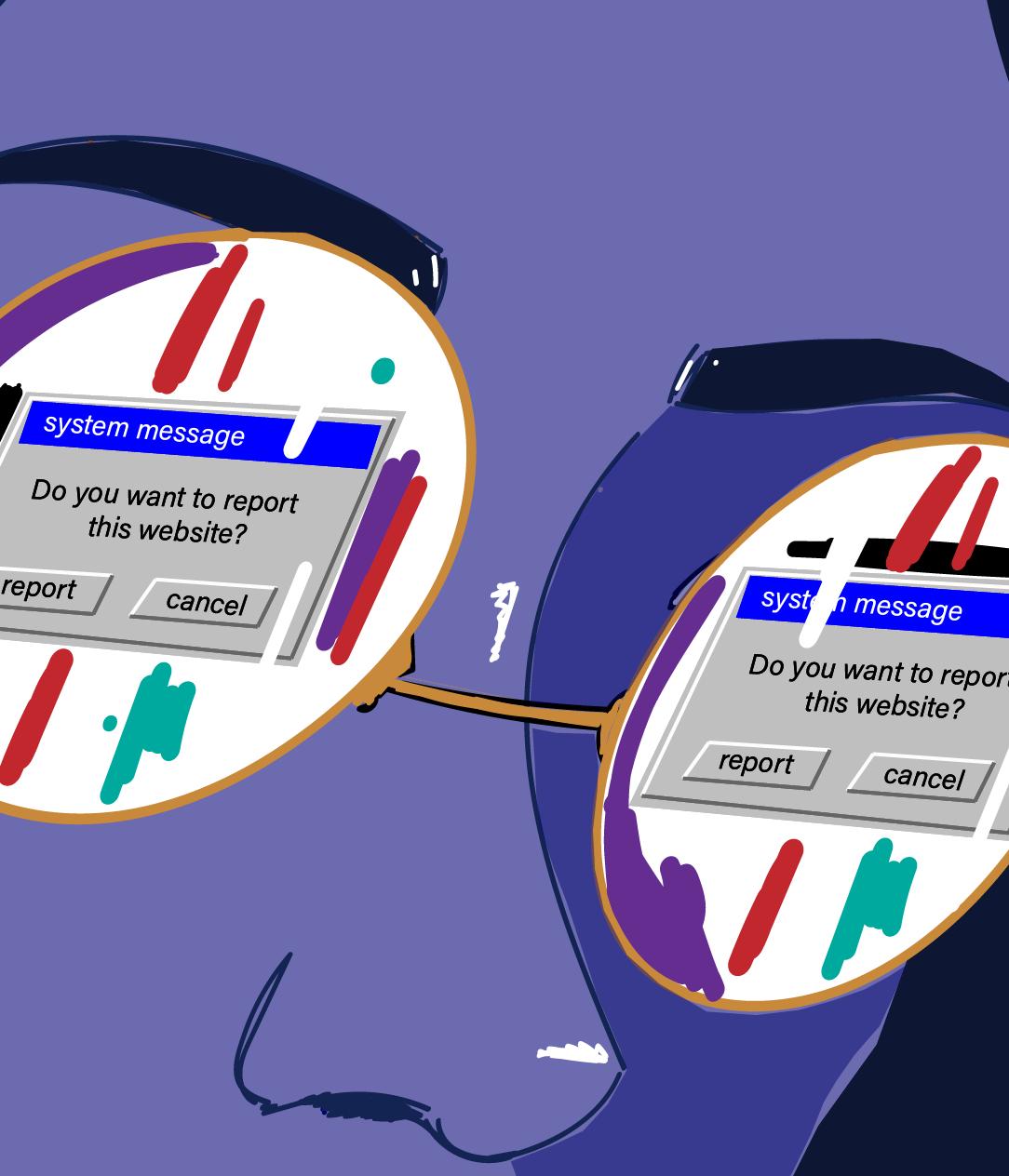
In London, Budapest and New York, a new generation of politicians have turned social media into a campaign engine
By Catherine Rowe-Kosary
What unites a left-wing New York mayor, a conservative Hungarian challenger and the leader of the Green Party in the UK? Not ideology, but a shared playbook of leveraging social media and grassroots energy to challenge traditional power.
New York mayor Zohran Mamdani leapt into icy Coney Island waters, joking: “I’m freezing... your rent.” Hungary’s new prime minister Péter Magyar brought tea and cake to pro-Orbán journalists filming him in the cold. Ahead of the UK’s local elections in May, Green Party leader Zack Polanski gave viral comedian Kareem Rahma his “subway take” on the London Underground. These aren’t just viral moments – they are a deliberate political tactic to attract new voters and volunteers mid-scroll.
Green Party social media officer Simon Larkins explains why the strategy works: “If you can get a good hook in an Instagram reel, people don’t skip past it. You’ve got to attract young people with a little bit of humour.”
That logic has reshaped how social campaigns are planned. “Whenever you go somewhere you think about how it will look, how it’s shot and how it can become content,” Larkins says.
The results of this effort are tangible. Since Polanski became the Green Party’s leader in September 2025, party membership has nearly quadrupled from 66,000 to almost a quarter of a million. Last month, the Greens won their first ever borough mayors in Hackney and Lewisham, areas long considered Labour strongholds.
Across the pond, Mamdani defeated former governor Andrew Cuomo to win
the 2025 New York mayoral election, despite polling in single digits when he first entered the race. His viral videos helped mobilise voters – more than one in four young New Yorkers voted, with 75 per cent of those backing Mamdani. It also attracted more than 50,000 volunteers for his campaign.
In Hungary’s April 2026 elections, Tisza Party candidate Magyar used viral sounds on TikTok and candid moments to build rapport with young voters, defeating Viktor Orbán after 16 years in power with 55 per cent of the vote. His victory came just two years after he became opposition leader.
Right-wing political movements were among the first to master social media-driven campaigning. Nigel Farage, who spent decades on the fringes of British politics before breaking through into the mainstream, is currently the UK’s most followed politician on social media, with 1.4m on TikTok followers and one million on Instagram. In this year’s local elections, Reform made major gains across the country, gaining more than 1,400 council seats.
Jeremy Clancy, the filmmaker behind Polanski’s viral videos, believes progressive movements are harder to sell online. “Right-wing politics can just point to people on small boats and say there’s the problem. Our issues are abstract and our job is to make that visual,” he says.
To take Orbán down after more than a decade-and-a-half in power, Magyar, a conservative-leaning liberal, shone a light on corruption at the heart of his opponent’s Fidesz government
through humorous videos. He also encouraged the creation of around 4,000 local groups called “Tisza Islands”, where people could become involved in politics without the need for traditional party membership.
“That combination of top-down control and grassroots participation was quite interesting,” says Dániel Kálló, a Hungarian political analyst. These groups organised charity drives, cookouts and political discussions in rural areas outside of Budapest. Meanwhile, Magyar’s social media team used semi-candid shots, humour and familiar national symbols.
The Greens had a similar strategy ahead of the local elections. “At election time there are really two goals with social media: mobilising voters and mobilising volunteers,” Larkins says. “A lot of recent content has been direct-to-camera videos asking people to campaign, donate or turn out to vote.”
If there is a new blueprint, it is not simply to go viral, but to use social media to create a recognisable narrative that can encourage on-the-ground activism. Clancy says that these politicians “recognised the power of video and tore up the rulebook”. Whether the new rulebook creates lasting political power will ultimately depend on the policy work and organising that follows the slick editing and trend-setting.


As looksmaxxing spreads across social media, unregulated apps are looking to cash in
By Solaya Huang

Trevor Larcom was playing the video game Fortnite with friends when strangers joined, recognised him and began to mock his weight and appearance. The 22-year-old actor from California grew up struggling with his weight, reaching more than 130kg at his heaviest.
“It was really heartbreaking for me,” Larcom says through tears in a YouTube video, “how a single moment changed my life forever.” He went on to lose 60kg and, hoping to improve his appearance, discovered looksmaxxing – an offshoot of incel culture focused on “maximising” physical attractiveness. Once a niche digital subculture, looksmaxxing has since grown into a prolific tech-backed industry.
AI facial-rating platforms like Umax and Looksmax AI have amassed tens

of millions of downloads by promising users a route to ultimate attractiveness. Users upload a selfie, which the app analyses using facial metrics such as jawline angles and overall symmetry. The software then ranks the user based on the PSL scale, named after now-defunct incel forums PUAHate, SlutHate and Lookism. Users have to pay a fee to access full details of the purported rating and AI-generated recommendations to improve their appearance.
Some tech entrepreneurs are moving fast to cash in on the trend. Take Blake Andersen, the founder of Umax and multiple other looksmaxxing platforms, who turned a profit of $10m (£7.4m) across his platforms in just a year.
Others are more focused on the community itself. Dean Robertson founded looksmaxxing.com to build a
platform that is “more open, useful and accessible” than when he first discovered the culture in 2018. He argues that “an app that gives you a score in 30 seconds is a very different thing from a forum [...] One is a number, the other is actual conversations with like-minded people around the nuances of what someone can do to look better”.
This is a shift that Larcom recognises. “Before, people mostly got opinions from forums or social media where there was at least some human subjectivity and nuance,” he says. “AI makes it feel more clinical and absolute because it gives people a number as if attractiveness is fully objective. People naturally treat technology as authoritative.”
As looksmaxxing becomes mainstream, the line between self-improvement and harm is increasingly blurred.
“The overwhelming majority of people here are just young guys who want to improve how they look”
In April, popular American influencer Clavicular collapsed on a livestream after a near-fatal overdose. The incident came just a day after the 20-year-old, real name Braden Peters, was “outmogged” –a term used to describe being physically eclipsed by another – by an interviewer while appearing on 60 Minutes Australia.
“What happened with Clavicular has definitely put the community under a microscope,” says Larcom. “I think it has made creators more aware of the responsibility they have when discussing appearance, selfw-worth and extreme methods.”
Clavicular is notorious for “hardmaxxing”, an extreme looksmaxxing strategy that includes bone-smashing (using a small hammer to restructure facial bones), unregulated peptide injections and surgical interventions such as limb-lengthening and jaw restructuring. He has also admitted to using methamphetamines to suppress his appetite, in the hopes of maintaining a lean figure.
While public and media scrutiny of looksmaxxing surged in the wake of Clavicular’s overdose, the male beauty trend is only soaring in popularity, driving urgent conversations on safety, ideology and the regulation of technologies enabling it. Robertson acknowledges the “shared online lineage” between looksmaxxing and incel culture, but does not believe it signifies a direct correlation.
“In my opinion, the biggest misconception by far is that looksmaxxing is synonymous with incels or extremism,” says Robertson. “The reality is that the overwhelming majority of people
here are just young guys who want to improve how they look – the same reason someone joins a gym or starts a skincare routine.”
Larcom agrees, arguing that “a lot of what people call looksmaxxing is just modern grooming, fitness, skincare and self-care packaged under a new internet term”.
Ben Firth, a policy researcher who leads a project for the Centre for Young Lives analysing the mental and physical harms of looksmaxxing, says that while going to the gym or keeping a healthy diet “are positive in their own right,” those engrossed in the culture can quickly fall into an ideological trap.
“[Looksmaxxing] comes from this really dark corner of the internet,” says Firth. “Red pill, black pill ideology, incel-adjacent forums that are saying things like ‘you have to look this way to get anywhere in life’.”
Other issues are also at play. “I do think the audience is getting younger, especially because TikTok and AI apps make this content incredibly accessible,” says Larcom.
“A lot of the language and a lot of the terminology is seeping into normal people’s conversations,” adds Firth. “A lot of the derogatory terms used to describe women by lookmaxxers, young people are now aware of.”
Thomas Midgley, director of The Body Image Treatment Clinic in London, warns of the impact of this trend on younger audiences. “We need to be protecting our kids because this is an unregulated, unknown space that is causing harm,” he says, pointing to
“The way we’re moving forward is only going in one direction – and it’s not going to be pretty”

AI-generated product advertisements targeting children aged as young as six.
The technology is moving at an alarming pace, leaving vulnerable demographics unprotected by policy. One of the main goals of Firth’s project, he says, is to highlight that governments across the world are lagging far behind the curve.
“Our current status of regulation and policymaking [is] always two steps behind an online trend,” Firth says. “You can’t just go around trying to identify a harm and then ban that type of content because it’s been shown not to work.”
Midgley echoes this warning, criticising the UK government’s passive “wait and see” approach to technology and its impact on children and young people.
“As a culture, we’re moving away from community and authentic relationships, which means the only way we can get our self-worth when that’s reduced is through competing and comparing,” Midgley says. “The way we’re moving forward is only going in one direction – and it’s not going to be pretty.”
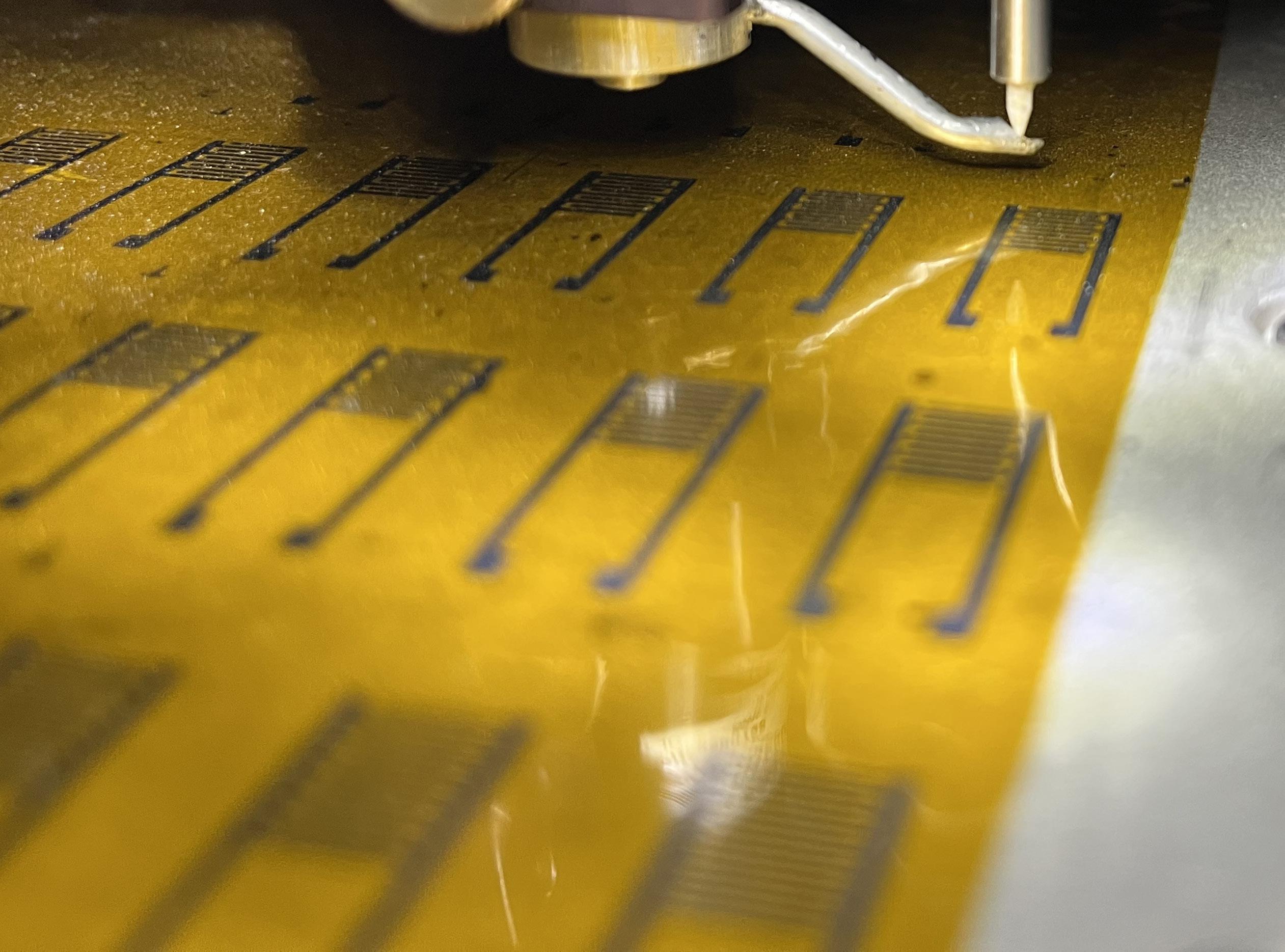
Researchers may have solved AI’s energy problem, but not everyone is convinced
By Louis McAllister
Engineers at Northwestern University have developed artificial neurons that can mimic our brain’s electric signals realistically enough to trigger responses from real cells. They claim the breakthrough has two key implications in emerging tech: prosthetics which can communicate with our nervous system (think vision, hearing and paralysis treatment); and potentially for an entirely new generation of computers.
“We have to come up with more efficient hardware to handle big data and AI,” Professor Mark Hersam explains in the team’s press release. “Because the brain is five orders of magnitude more energy efficient than a digital computer, it makes sense to look to the brain for inspiration.”
Datacentres which process information for AI services like ChatGPT and Grok consume so much energy that new nuclear power plants are in development to power them. Digital processors can work lots of data very quickly, though it is estimated that up to 99.9 per cent of calculations a modern AI model does are irrelevant.
Theoretically, a ‘neuromorphic’ (brain-inspired) computer based on the kind of artificial neurons Hersam’s team have created could perform more functions with fewer components and substantially less power.
Steve Furber CBE is an emeritus Professor of Computing at Manchester University. A leading expert in ‘standard’ neuromorphic computers –a non-biological technology based on
similar principles – he provided some insight into whether these claims hold water. He says that this breakthrough simply represents the absolute bleeding edge of a cutting-edge technology. The leap to running AI models with this technology, Furber explains, is not to be underestimated.
“We’re yet to see a compelling demonstration of those potential energy savings. Nobody has yet built a large enough neuromorphic AI system to convincingly demonstrate that those savings can be realised. I think standard neuromorphic technology may have an impact in the next ten or twenty years. [Hersam’s] technology will not, or at least is further out than that.”
This artificial neuron represents the simplest building block in this next-gen computer. Hersam compared it to the early forms of our current computer tech: “It took six decades for computers to get to where we are today.
I hope we’ll be faster than that, but it’s probably 10-plus years, not 10-plus months.”
Any seismic shift in which this tech surpasses traditional digital computers is unlikely to happen at once. Nonetheless, Hersam predicts that incremental improvements will allow this technology to gradually overtake digital computers in widespread use.
In the meantime, several nearfuture applications may bring it into the public eye. As mentioned in the press release, the ability for computers to talk with our nervous systems enables a new generation of complexity in
prosthetics. Other possible uses include wearable health diagnostic devices, and even military applications such neuromorphic ‘mouse-brain’ drones.
As this technology matures, it most likely will bring gains in computing efficiency. However, in the meantime, rival technologies will also be rushing to solve the same problems. What’s more, improving the efficiency of computers does not usually equate to lower power use. Hersam refers to what is sometimes referred to as the ‘Jevons Paradox’:
“If I came up with a 100-fold more efficient device, would they build 100fold smaller datacentres? I don’t think that’s going to happen. I just think you’d have 100-fold higher performance for the same datacentre.”
The Northwestern team’s breakthrough does appear to be genuinely important – a fact attested to by the likes of Steve Furber. While the timeframe may be hazy, and initial uses are likely to be more localised, neuromorphic computers may represent a fundamental shift in how we process data.
Hersam maintains: “Before the 1950s, computers were made out of vacuum tubes. It wasn’t scalable — you’d have bigger and bigger rooms full of vacuum tubes to do computing.
The integrated circuit comes on the scene, and there were visionaries who are now famous...Are we at a similar moment in history?
Well, we will see.”
By Israa Elmousa
Waiting lists for NHS mental health services have hit record highs, with around 1.7 million people currently waiting to access support.
Among those affected is Ella Griffiths, a 23-year-old from London, who turned to AI chatbots after losing her father. “I was already getting assessments done for borderline personality disorder, then I lost my dad and didn’t get around to the diagnosis,” she says. “I just needed someone to speak to, but I was finding it hard to speak, so the typing helped me.”
Conversations with friends felt too hard, and finding professional support seemed overwhelming, so she turned to the one thing that was always available: her phone. “It started with me asking random questions about anxiety to ChatGPT and telling it how much I was relating to the symptoms,” she says. “Then it became me talking about
real progress being open about my feelings in such a short amount of time,” she explains. There was no waiting for appointments, no pressure to explain herself perfectly and no fear of saying something embarrassing out loud. She could type whatever came into her head at any hour of the day and receive a response within seconds. “As much as people warn against AI, it really did give me different ways to look at situations in my life and grief coping mechanisms that got me through each day.”
Most nights, Griffiths would end up lying in bed scrolling through conversations she had with the AI earlier that day. Sometimes she would ask the same question repeatedly in slightly different ways, adding more context each time. “When you’re anxious, and you just want someone to tell you everything’s okay – that’s basically what I was doing.”
What began as a desperate call for help became a real coping mechanism.
two in the morning, you’re probably not thinking about whether AI is good or bad,” she says. “You just want something to answer you.”
Despite how much Ella appreciates ChatGPT, she is careful not to overpromise what the software can offer. After her sister raised concerns about her AI usage, Ella began seeing a private therapist in January. “I can tell the difference between the two. ChatGPT offers comfort while my therapist tells me what I need to hear.”says Griffiths. “We speak about things I have avoided with AI and people in my life.”
The rise of AI therapy tools has sparked debate around mental health, safety and emotional dependence, especially among younger users. But sitting in a cafe after work, Griffiths seems less interested in the wider argument than in the reality of why people use them in the first place.
“A lot of people hear it and think it
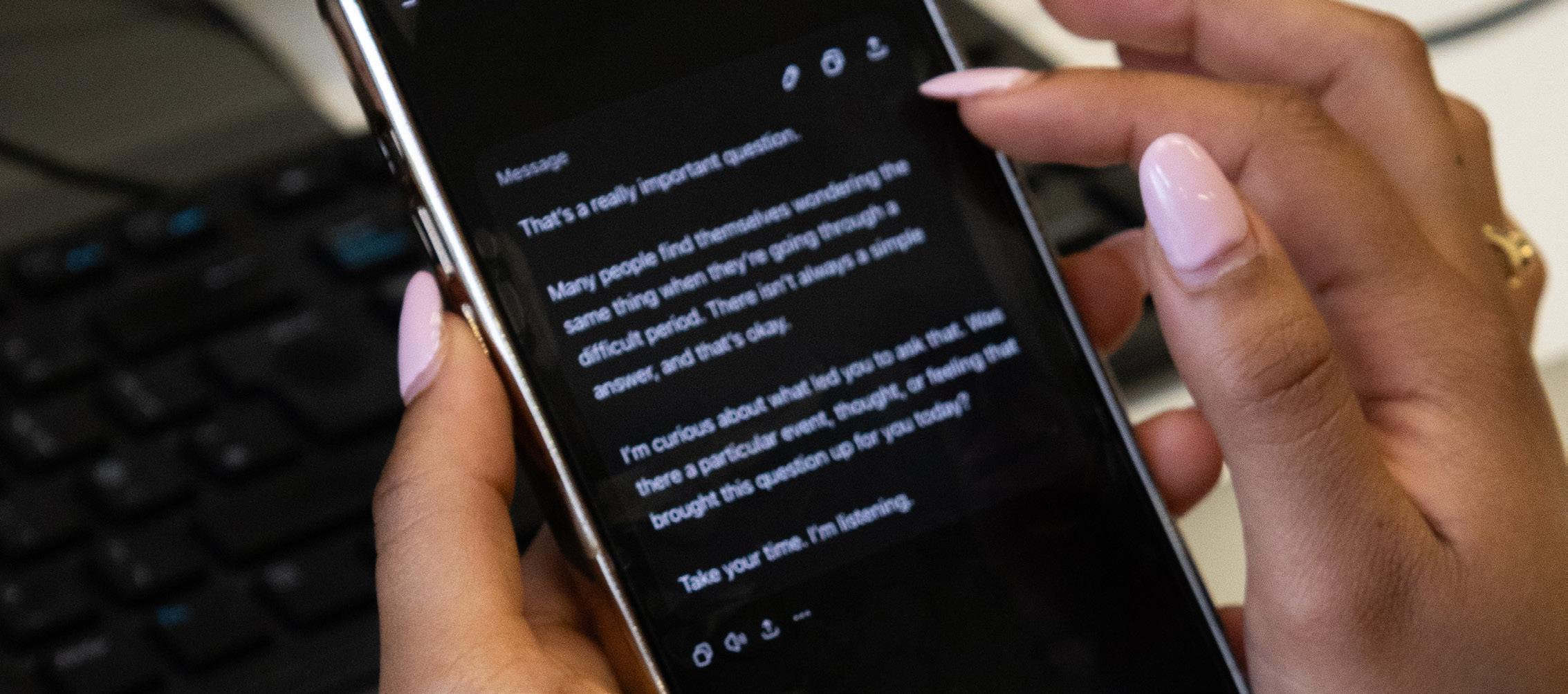
By Claire Ducharme

When sitting around a table with your friends, is the difference between Marcel Duchamp’s readymades and AI-generated images of sailboats an immediate topic of conversation? How about music made from placing electrodes on potato skin?
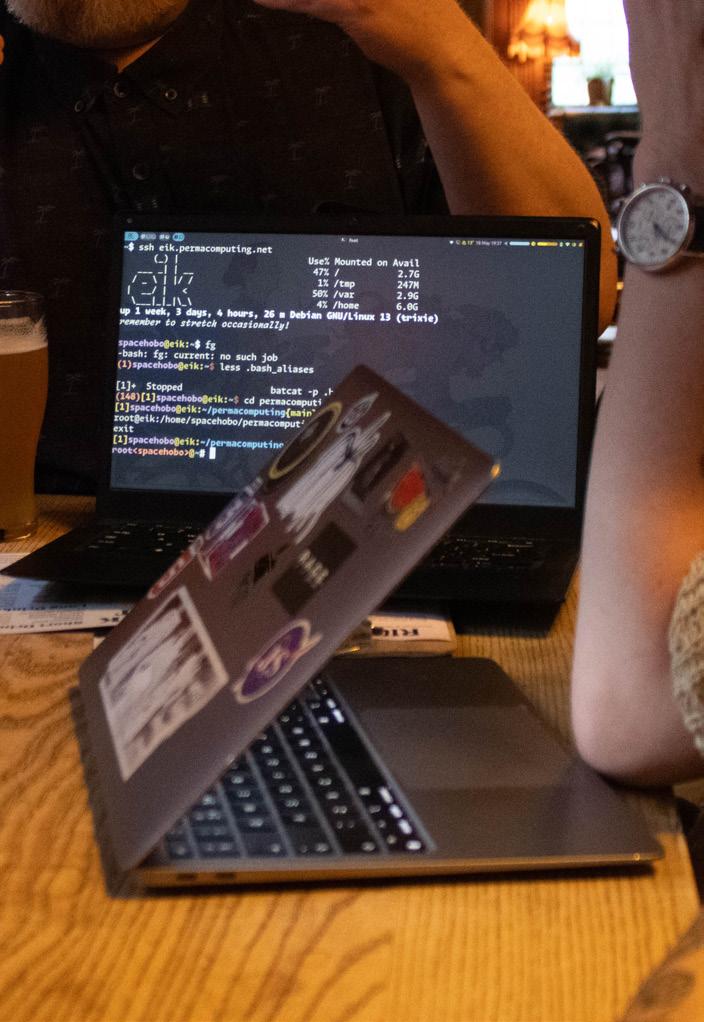
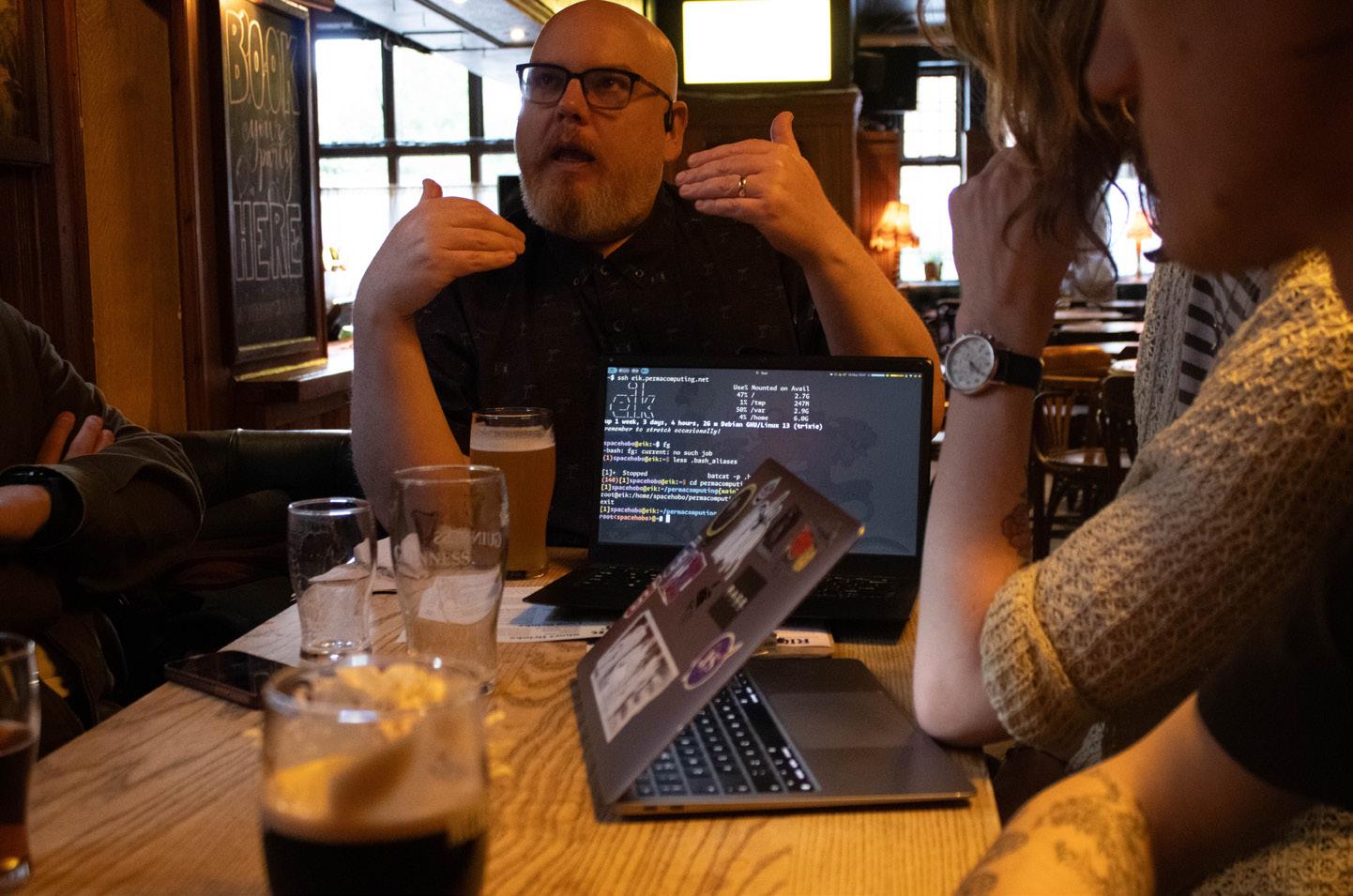
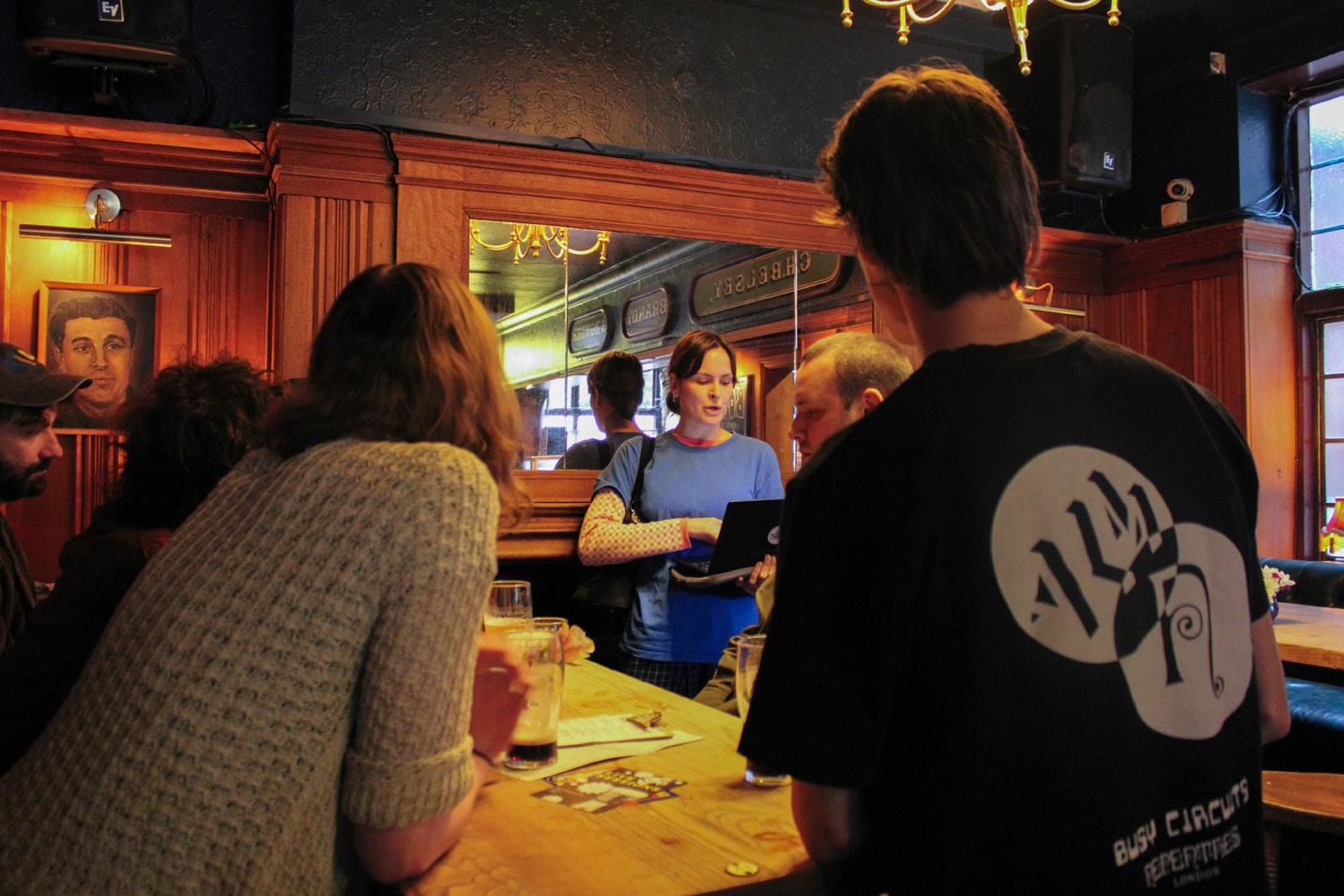
At the Permacomputing Club, these conversations sit alongside serious planning, all geared towards what they describe as “an anti-capitalist project that challenges the environmental and social damage caused by modern technology”. Around 25 London-based members routinely meet in person in Peckham, London.
“Permacomputing is really focused on repair and thinking about the physical materiality of the computer,” says Ana Meisel, who founded the club’s London branch last April. “In the same way that waste is a key strategy for permaculture, where compost is this circular thing where basically no waste is made, permacomputing uses that same analogy.”
The explosion of AI use over the past two years has dramatically increased the energy demands of the digital sector, which encompasses everything from personal devices to data centres. According to the Institution of Environmental Sciences, the
sector accounted for around 4.75 per cent of total carbon dioxide emissions in the UK in 2024. While that figure may seem modest compared with transport (31 per cent) or agriculture (13 per cent), it does not capture the speed at which demand is growing.
In the hope of finding a sustainable alternative, Professor Tony Kenyon has presented evidence to MPs advocating for neuromorphic computing, which models technology on the human brain. The University College London researcher explains that while the brain consumes around 20 watts, a digital computer of roughly the same size uses about seven megawatts. That
is 350,000 times more power, a gap he says must be closed.
Despite such progress, he worries deman “The UK’s computing demands are doubling every three and a half months,” he says, adding that the country’s energy infrastructure cannot withstand such sharp rises in growth. When Ireland announced a moratorium on new data centres in December 2025 because it was running out of power, Kenyon saw it as proof that the UK needs a realistic plan quickly.
Many at the Permacomputing Club are motivated by similar concerns. Co-leader Margot McEwen worries that modern technology has become so streamlined that users are never pushed to seek out alternatives, instead concentrating power in large tech firms and removing autonomy over environmental impact. “That can put you in a position where you’re just a consumer of this stuff and you have no idea how to make something of your own,” the filmmaker says.
Those worries extend beyond the club. Annike Tan, known online as Ube Boobey, went viral earlier this year for showing off her cyberdeck, a working computer she built inside a shimmery clamshell clutch. Tan sees her hobby as a form of activism: “Politics is tied into everything we do and consume
and make – being conscious about the environment, feminism, accessibility, anti-capitalism.”
Her cyberdeck can run entirely offgrid, offering user control and sustainability. “The really cool thing about cyberdecks is because you can take it apart and rebuild it, you can upgrade it when you want,” she explains.
Tan’s approach pushes against planned obsolescence, a strategy designed to increase consumption. “You buy a smart washing machine, and three or four years later the software
is no longer supported by the manufacturer. Now you have to get rid of it,” Kenyon says. Where some technology is designed to expire, cyberdecks are designed to adapt.
“I’ve got computers that are 45 years old,” McEwen says. “I just can’t picture the stuff that’s getting made today lasting as long.” These tensions explain why communities such as these are growing in size: tech specialists, hobbyists and tag-along friends, all united by an ambition to reduce the environmental and socio-economic cost of their digital lives.
By Isaac Borrett
Whenever Otis feels that something is wrong, his first port of call is to consult AI. “The AI chatbot helps me build my own understanding first, which is essential for asking the right questions to the medical professional later,” says Otis, who is using a pseudonym to protect his privacy.
He adds that AI is a “free and highly efficient way of taking care of my mental and emotional fitness”. As appointment waiting times increase and the price of non-NHS care soars, “paying to stay healthy has become a luxury”.
But this supposed efficiency could be causing people to seek unnecessary medical help, according to new research from AXA Health, the second-largest health insurer in the UK. The survey found that users of AI health services, specifically symptom checkers, were twice as likely as non-users to pursue medical care they later discovered they did not need.
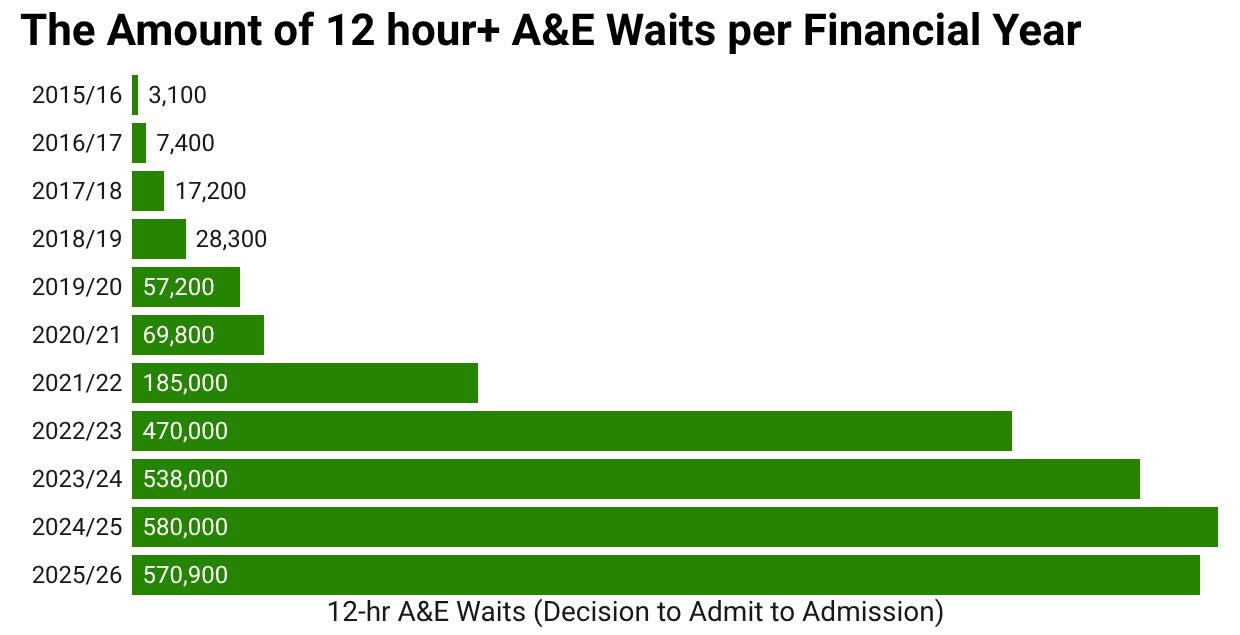
This surge in unrequired appointments comes at a time when the NHS is under significant strain. Recent NHS data found that the number of 12-hourplus A&E wait times hit record highs this January of 71,517 patients (despite an overall decrease in the 2025/26 financial year, compared to 2024/25).
While AI health services originally aimed to help reduce numbers like these, they may inadvertently be increasing them. Unlike human clinicians, AI health apps operate without access to full patient records, meaning their advice often misses individual nuance and provides misleading guidance.
It is this misleading guidance that Tara Akyaa-Sarpong, a specialist nurse for children’s safeguarding at North
Middlesex University Hospital, believes is amplifying this strain on health services – though she understands why people turn to these sources for help.
“[It is a result of] people not being able to get GP appointments,” she says, pointing to the number of people who go to A&E with symptoms like “fevers, things that your primary GP could see”. While someone may have to wait months for a GP appointment, AI is there at every moment.
Many AI health apps are based on existing LLMs. One example of this is DxGPT, an AI symptom checker, which is entirely based on OpenAI’s GPT-4, one of the LLMs that powers ChatGPT.
But general-purpose LLMs aren’t “built to manage” complicated health issues, explains Praharsh Bhatt, the cofounder of AI therapy platform Renée Space. “When people use them for health decisions, the results reflect that,” he says.
In development, human reviewers reward clear and decisive answers better than cautious, uncertain ones. Reinforcement learning from human feedback (RLHF), as it’s called,
means that LLMs are programmed to provide the answer the human would prefer. In essence, the AI is trained to be a people pleaser. While this may work with general queries, it is dangerous for healthcare issues, Bhatt says. When a doctor may say “monitor it, and if it gets worse get help”, an AI model will jump to “seek help immediately” because that is the most decisive answer, even when it is not the medically correct one.
Bhatt’s service runs on a specially coded chatbot that specialises in medical advice. Humans are also on standby if it starts to provide poor guidance. “Specialised agents monitor how a conversation evolves,” he says. “Agents [can] step in and reset the tone [of the conversation].” Some users, he explains, try to steer the chatbot to answer in certain ways, requiring human intervention – an approach that he says “works well in our testing”. Such guard rails are not in place for other AI health services.
Born to fill a need for a quick health solution, chatbots may be doing more harm than good.

Blessed with natural beauty, Sri Lanka draws tourists from across the world. Now it is attracting a different kind of visitor entirely
By Karu Pathmanathan
Cybercriminal networks rarely shut down when the pressure mounts. Instead, they tend to migrate, seeking out new territories with weaker regulation and less oversight. Evidence increasingly suggests Sri Lanka may be their latest go-to destination.
A recent surge in police raids on suspected cyber scam centres in and around the capital Colombo has intensified concerns that the island nation is becoming a new haven for transnational fraud.
Shan Wijethunga, a senior official at Sri Lanka’s Computer Emergency Response Team (CERT), says the “significant surge in apprehending various nationals,” alongside large quantities of computers, mobile phones and tablets seized across the country, “is a cause for serious concern”.
He attributes the trend to Sri Lanka’s rapid digital expansion and its relatively open visa regime, which he says has attracted foreigners to enter the country under the guise of tourism. “Vulnerability is there due to a lack of knowledge and awareness,” he explains. “We conduct workshops but it involves high costs [...] This goes to show we are slow in digital progress [on cybercrime].”
More than 1,000 foreign nationals have been arrested in the past five months. The majority are Chinese citizens aged between 22 and 43, with others from Myanmar, Vietnam, Malaysia, Madagascar, the Philippines, Thailand, Cambodia and India.
Investigations have revealed that many operated in groups from rented apartments and buildings. At least 50 of those recently arrested had previously been detained and deported. Sri Lankan
police have now warned local landlords against providing accommodation to foreign nationals who have overstayed visas or violated immigration laws.
The crackdown follows reports that relaxed immigration regulations introduced in September 2024 to boost tourism have inadvertently attracted cybercriminal syndicates to Sri Lanka’s shores. Under the new regime, free visas were offered to tourists from seven countries including China, India and Malaysia. The scheme has since been extended to 40 countries, including the UK. China is now among the topfive largest providers of tourists for Sri Lanka, alongside neighbouring India and the UK.
Industrial-scale scam centre operations across Myanmar, Cambodia, Thailand, Vietnam and Laos have faced mounting international pressure and domestic crackdowns in recent years. Bilateral and multilateral cooperation – particularly with the US
“More than 1000 foreign nationals have been arrested during the past five months”
– has proven key to disrupting those networks. The FBI received more than 80,000 complaints relating to cyberscams in 2025 alone, with losses from them reportedly exceeding $2.9bn.
Yet despite the Sri Lanka arrests, a second CERT official, speaking on the condition of anonymity, says there has been “no actual crackdown” on cyber centres. “They have all been arrested for violating their visa regulations or overstaying,” he says. “None of them have been prosecuted for cyber crimes.”


That apparent reluctance to act more decisively may not be coincidental. Chinese investment and influence in Sri Lanka deepened significantly during and after the country’s brutal civil war, which ended in 2009.
Beijing provided military support during the conflict, including fighter jets, weapons and sophisticated radar systems. China subsequently expanded its strategic and economic presence in the country, securing a 99-year lease on the Southern Hambanota port project and investing heavily in infrastructure, including the Colombo Port City development. Thousands of Chinese nationals currently work on Chinese-funded projects across the country.
“It appears that the government does not want to hurt the sentiments of Chinese investors and diplomats by taking action against these arrested cybercriminals or exposing their illegal activities,” says Sulochana Mohan, deputy editor of the Colombo-based Ceylon Today newspaper.
In a statement issued in March, the Chinese embassy in Sri Lanka said it was closely monitoring the arrests and providing “full support to Sri Lankan law enforcement agencies in resolutely cracking down on suspects while protecting their legitimate rights and interests in accordance with the law”.
“The government does not want to hurt the sentiments of the Chinese investors and diplomats by taking action”
Balendra Elangco, a UK-based cybersecurity adviser, says Sri Lanka’s authorities must “work very closely” with international partners, including the US, UK and Europe, on intelligence sharing and identifying the full scope of operations. He said the US and UK working in collaboration had already bore fruit, stopping a significant number of cyberattacks and scammers in their tracks.
He also suggests Sri Lanka’s national telecoms provider could monitor activity in identified hotspots, and that seeking assistance from Singapore, which has advanced cyber capabilities, “could help Sri Lanka detect and counter threats similar to those seen in Cambodia, Thailand and Vietnam”.
The question now is not whether cybercrime is happening, but how quickly Sri Lanka and its international partners can respond. Early detection, financial tracking and regional cooperation may yet prevent the country from becoming the next criminal hub. If history is any guide, the window to act is narrow.
By Rachel Schmid
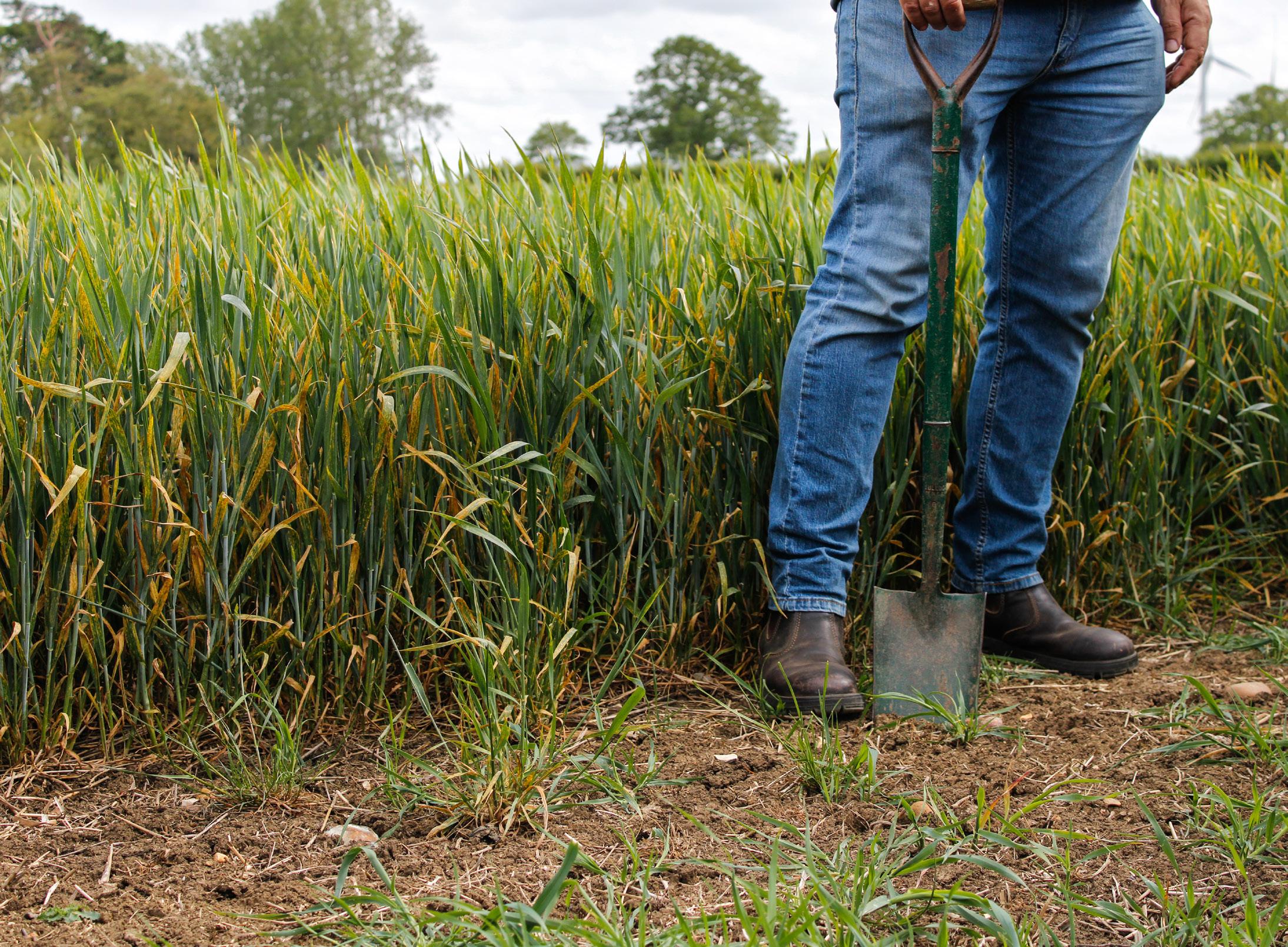
British farming is increasingly being pushed toward a high-tech future. From AI-powered crop analysis to robotic harvesters, agricultural technology companies promise farmers greater efficiency and protection against climate instability.
But for many farmers already struggling to stay profitable, those technologies remain financially unrealistic.
“It’s about looking at what assets we’ve got,” says Andrew Mahon, farming manager of Bromborough Estate Company. “Farming’s not making any money on its own, so you’ve got to do different things with it.”
Mahon has spent the last 13 years shifting his farm toward regenerative practices: reducing chemical inputs, machinery use and intensive farming methods in favour of improving soil health and lowering costs. For him, the
move was driven by financial survival and environmental concerns.
“We were regenerative from using less inputs, less sprays, less machinery,” he says. “None of the guys with a big research budget were going to support it.”
Agriculture remains one of the UK’s largest industries, with 69 per cent of the country’s land used for farming. Yet rising operational costs, climate
“Farming’s not making any money on its own, so you’ve got to do different things with it”
instability, labour shortages and fluctuating crop prices have left many farms under severe financial pressure. Government data shows the average level of liabilities (i.e. debt) reached £302,000 per farm in 2024 to 2025.
At the same time, the UK Government is investing heavily in agricultural innovation. In April, finance minister Dame Angela Eagle announced around £50m in public and private funding will be used to accelerate technologies including robotics and AI-powered crop management systems, saying that the funding would help “boost productivity, strengthen resilience and help secure the future of British agriculture”.
For younger people entering the workforce, agriculture is being rebranded as part of the UK’s growing tech economy. Universities and apprenticeships are increasingly offering

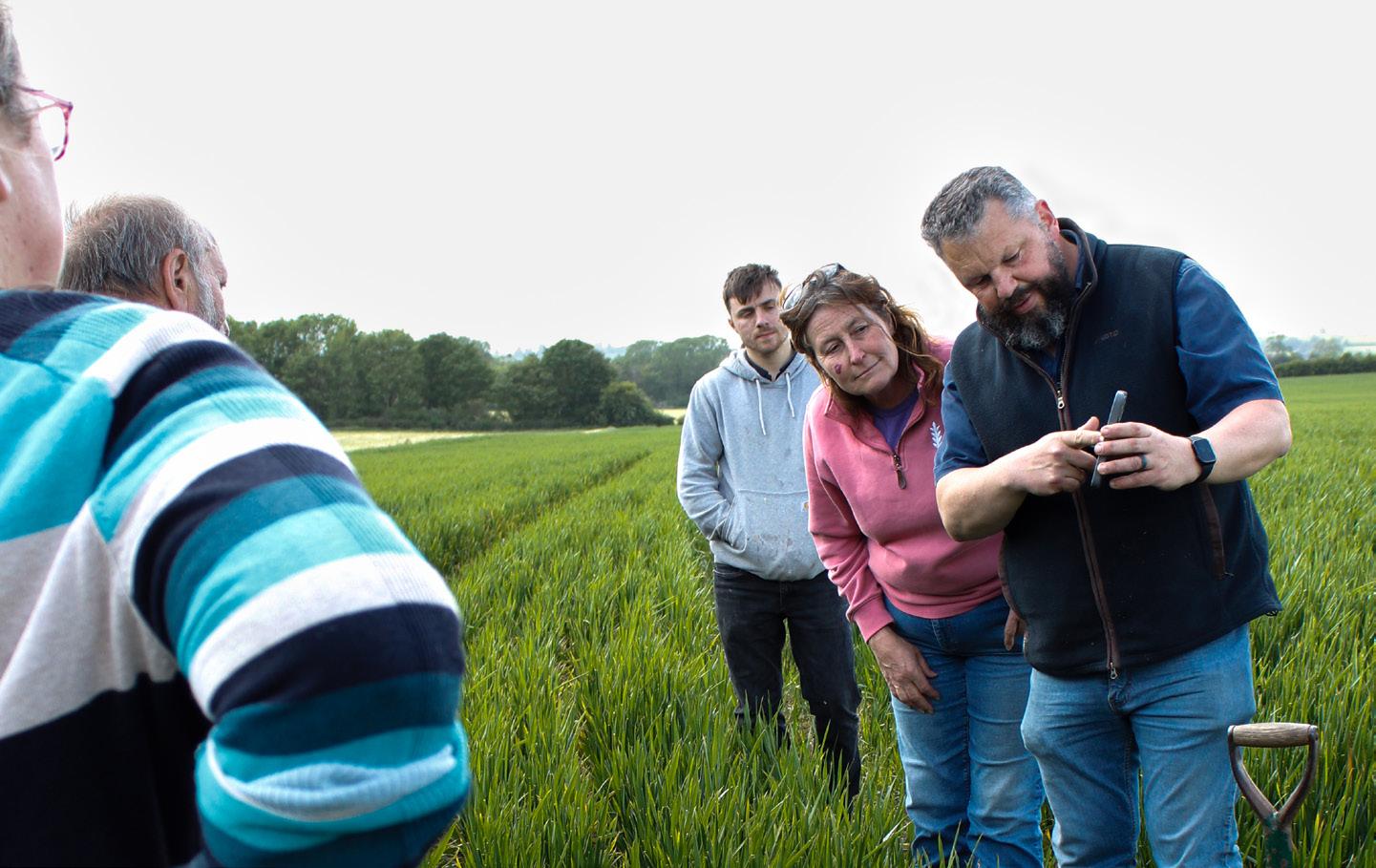
Andrew Mohan, farming manager of Bromborough Estate Company. Agrii (A Farm Tech Company) Silos. Mohan demonstrates soil testing equipment to a group of farmers. A group farm-walk demonstrating Mohan’s sustainable farming practices to other farmers // Rachel Schmid
programmes in agricultural robotics, environmental data science and automation systems.
Yet Mahon says many of the technologies being promoted across the sector are simply not feasible for average farms already operating on narrow margins.
“I’m very wary of investing in tech for tech’s sake,” he says.
Instead, he adopts technologies selectively, only when they provide direct savings. Mobile soil-testing systems, for example, allow him to analyse crop nutrients directly in the field and reduce unnecessary fertiliser use.
“That’s a great bit of tech,” he adds. “I can actually make savings.”
Innovations like GPS-guided tractors have also improved efficiency on the farm. But Mahon believes many farmers are becoming sceptical of companies attempting to commercialise sustainability trends through expensive “natural” products and consultancy services.
“You’ve got to be quite careful,” he warns.
While smaller farms attempt to cut costs, larger corporations are continuing to invest heavily in automation.
Dyson Farming, owned by billionaire inventor James Dyson, has developed large-scale biodigester systems, robotic technologies and high-tech strawberry glasshouses inspired by systems used in the Netherlands.
“I’m very wary of investing in tech for tech’s sake”
According to Peter Willoughby, Dyson’s farm manager, crops grown on their Lincolnshire farms feed biodigesters that generate electricity for both the farms and their glasshouse operations, creating a largely self-sustaining system. The company has expanded beyond traditional cereal farming into potatoes, energy production and large-scale strawberry operations. Robots capable of continuously picking strawberries
during harvest periods are already being developed to reduce labour costs.
But Willoughby acknowledges that this level of innovation requires enormous investment. “The only way to make money in farming is to diversify,” he says. “To not do it is to fail.”
For many independent farmers, however, diversification itself can be financially out of reach.
Mahon believes the future of smaller farms may depend less on competing with corporations and more on collaboration, shared machinery and community-supported agriculture projects that allow farmers to survive without massive technological investment.
“Farmer-to-farmer learning is probably better, because you’re hearing what worked for someone else,” he says. “I’m not trying to sell a product.”
As climate pressures and economic instability continue reshaping British agriculture, technology may increasingly define the future of food production. But for many farmers, the question is not whether the technology works – it is whether ordinary farms can afford it at all.


By Emma Gatrell
Among the luxury fashion brands on the third floor of Selfridges’ flagship London store sits PANGAIA, a label whose products use natural fibres, many of which are biodegradable. Alongside the colourful garments, shoppers can learn about the science behind these materials through an in-store presentation.
The display reflects a growing tension within the fashion industry. Globally, it is responsible for around 10 per cent of carbon emissions, yet in the UK it contributes £62bn annually to
the economy and generates £23bn in tax revenue.
Behind brands like PANGAIA are laboratories developing the technology that drives sustainable fashion. Solena Materials is a London-based company that uses AI-driven computational design to create biodegradable fibres.
“Our CEO came up with this technology,” says Lara Lovric, business and sales administrator for Solena. “After a year working for the company, it still seems like complete magic.”
The process begins with AI designing protein molecules. These proteins are then purified through a fermentation process. The final stage is called wet spinning, during which the protein becomes a fibre.
Hana Amer, Regenerative Fashion
Lab Lead at Imperial College London’s Leonardo Centre, says AI is cost-effective for businesses. Many decisions in fashion, she explains, are based on estimates – such as how much to produce.
“AI can help reduce that uncertainty by accelerating research, modelling scenarios, identifying system hotspots, and supporting faster, more co-ordinated decision-making.”
Still, AI is something of a contradiction when it comes to sustainability. Training and operating AI models require high energy consumption – by 2027, AI training and use could account for up to 6.6 billion cubic metres of water extraction.
“It’s difficult to say sustainability and AI in the same breath,” says Lovric. Solena operates with just one AI computer in the lab: “That’s why we dare say that it’s sustainable.”
Yet new technology is key to removing the current reliance on synthetic fibres – non-biodegradable materials which shed microplastics. According to Lovric, the current system is already fragile and particularly vulnerable to geopolitical instability.
Rising oil prices linked to the current US-Iran conflict have increased the cost of synthetics like polyester, which makes up nearly two-thirds of global fibre output. “We don’t know when that’s going to stop,” says Lovric.
Even so, she doesn’t expect sustainable materials to replace synthetics overnight.
are going to be forced into making this work sooner because of the Middle East [war] and because of the energy prices, then it’s going to happen much sooner than if actual investors don’t feel the sense of urgency.”
Yet the economics remain difficult. Sustainable materials require significant upfront investment, while the average consumer is used to cheap synthetics – a polyester T-shirt from a high-street brand could cost less than £10, whereas one organic cotton T-shirt from PANGAIA is £80.
Still, investment is happening. In Manchester, the Robotics Living Lab is developing collaborative robotics, designed to help UK brands with onshore production of sustainable fabrics. In the US, the Bezos Earth Fund recently granted $34m (£26m) to four research centres developing these fabrics.
Back in Selfridges, PANGAIA’s presentation markets the brand as existing at the intersection of science, technology and design. Amer says that such partnerships are key to scaling sustainable fashion technology.
“Everyone needs to come into that equation to test out these different formulas to reach profitability and sustainability in one go,” she says.
Even if not in our lifetime, Lovric thinks sustainable materials will eventually take over synthetics. “I do think it is inevitable at some point [...] I just don’t see a different way.”
While biotech firms are using AI to develop alternatives to synthetic fabrics, fashion brands are increasingly adopting the technology elsewhere in the supply chain. AI-driven pattern cutting, for example, can optimise fabric layouts to reduce waste during production. Clothes at PANGAIA // Emma Gatrell
“Everything is contingent on the way other things are going,” she says. “If we
Fittingly, the supply chain need not be discarded – merely refashioned.
A decade ago, they were told to go home. Now they’ve made Poland a European tech hub – and Britain is wondering what it threw away
By Patrick Cardwell
On the morning of 24 June 2016, just hours after the result of the UK’s referendum on European Union membership was declared, Polish families in Huntingdon, Cambridgeshire, woke up to find laminated cards posted through their letterboxes.
“Leave the EU / No more Polish Vermin,” the cards read, written in English on one side and Polish on the other. Cambridgeshire Police would go on to declare the incident a hate crime and open an investigation, but the culprit was never found.
A lot has changed in the decade since those cards were posted. According to the Office for National Statistics, approximately

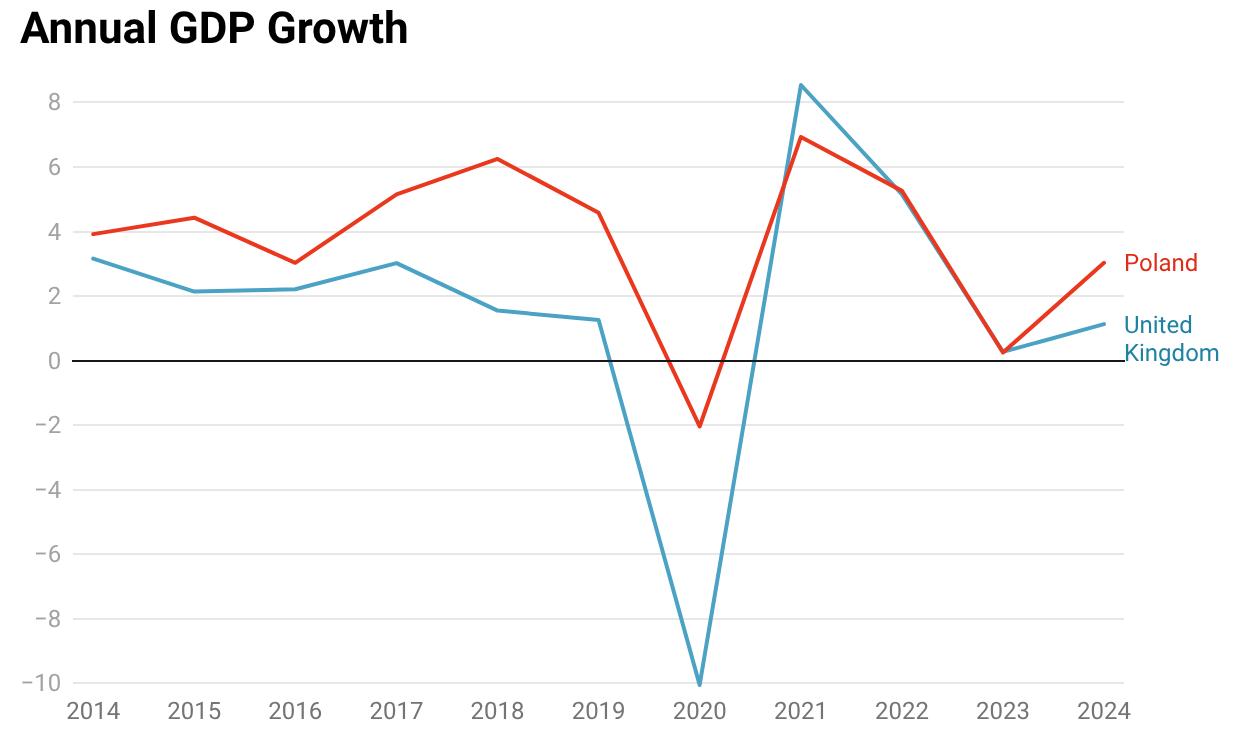
Source: World Bank Group // Patrick Cardwell
one million Polish nationals lived in the UK at the time of the Brexit vote. Today, that figure sits just below 700,000. In 2025, 25,000 Poles left the country, with just 7,000 coming the other way.
Poland is in the midst of what academics have hailed as an “economic miracle”. Over the past two decades its economy has doubled in size, growing at between three to four per cent annually – and is predicted to overtake countries including Australia and Canada in the coming years. The contrast with Britain, whose economy has remained effectively stagnant since Brexit, could hardly be starker.
Perhaps the most surprising aspect of this economic success story is how the technology sector has blossomed. In recent years, Poland has quietly become home to some of the most fertile ground in all of Europe for tech startups. The country is now home to more than 2,000 active startups, several of which are unicorns, meaning they are valued at over $1bn.
Poland’s tech ecosystem has also produced influential figures in Silicon Valley. ElevenLabs, founded by Polish engineers Piotr Dąbkowski and Mati Staniszewski, is valued at around $11bn. OpenAI co-founder Wojciech Zaremba studied at the University of Warsaw, while ChatGPT’s chief scientist Jakub Pachocki is from Gdansk. For Aleksandra Przegalińska, a Polish AI researcher and philosopher, this talent pool is no coincidence.
“Pachocki is a textbook case,” she says. “He was a six-time finalist of the Polish Olympiad in Informatics. The University of Warsaw’s mathematics and computer science faculty trains world-class engineers on a fraction of an MIT or Stanford budget. That olympiad-to-rigour pipeline is the real engine.”
Staying home post-university is increasingly attractive to local talent. “Ten years ago, the assumption among ambitious graduates was essentially one-directional: you trained, you left and that was the career,”

Przegalińska explains. “What’s emerged since is what’s now openly described as a ‘reverse brain drain’. ”
Jakub Wyszomierski is one such example of this phenomenon. A machine learning analyst from Warsaw specialising in LLMs, he previously lived and studied in London before moving home in 2024 to work for the startup Tidio – an AI chatbot used by businesses to resolve common customer queries and complaints.
“In all honesty, I had a strong desire to move back to Poland from my very first days in the UK,” he says. “The cost of living in London always felt like a lifelong challenge if I stayed. At the same time, watching how my hometown transformed every time I visited only fuelled my ambition to move back.”
Although Wyszomierski concedes that Warsaw still has a long way to go before it can overtake the commercial and business output of London, he says this is a fact that excites rather than discourages him.
“The way I see it, London is a wellestablished, powerful warehouse with a wide range of equally well-established departments,” he says. “Whereas Warsaw can still be seen as an up-and-coming construction site where there’s a lot of room to lead the way and build things from scratch.”
This month marks the tenth anniversary of Britain’s decision to leave the EU and the legacy of that vote is unavoidable when
discussing Poland’s rise. Recent analysis from the Office for Budget Responsibility estimates that Brexit will reduce the overall trade intensity of Britain’s economy by 15 per cent in the long term. A separate study published in December 2025 found that the
“What’s emerged since is what’s now openly described as a ‘reverse brain drain’”
UK economy is up to 8 per cent smaller than it would have been had it remained in the EU.
“It’s hard to say whether I’d have been more willing to stay and work in London if not for Brexit,” Wyszomierski says. “What I can say is that the British–EU partnership made it possible for me to afford an undergraduate degree as a home student and allowed me to apply for a PhD with a stipend as an EU citizen – opportunities that weren’t available to my overseas friends and are no longer available to younger Poles.”
Poland’s trajectory is not without obstacles. An ageing population and historically strong public resistance to
non-European migration – two pressures that helped to shape the Brexit debate in 2016 – may yet cap how far the country can rise. Polish president Donald Tusk has surprised many with his recent pivot to more anti-immigration populist rhetoric, seemingly reflective of broader public sentiment.
For many Poles still living in the UK, such as Michal Siewniak, this year’s local election gains for right-wing populist party Reform UK were a disturbing warning sign that they may not be as welcome as they once thought. Originally from Lublin, Siewniak has lived in the Hertfordshire town of Welwyn Hatfield since 2005 and currently serves as its mayor.
“We talk about it a lot,” he says when asked whether his family have considered returning to Poland. “People like Rupert Lowe [the Restore Britain leader] are talking about taking away my voting rights. I’ve lived here for 21 years; I’ve always paid my taxes. If people on the right were able to form a government, that would be the nail in the coffin.”
In many ways, the movement of people has been the defining story of Europe’s political landscape over the past decade. How Poland reckons with its own dramatic rise may yet demonstrate whether it has absorbed the lessons that Britain is still reeling from.
By Catherine Rowe-Kosary

Picture the scene. A woman is walking home at night, steps quickening as she nervously glances over her shoulder. The only thing that reassures her is the phone she clasps in her hand.
For many, such a scenario requires little imagination. According to a 2025 YouGov poll, nearly nine in 10 women in the UK say they feel unsafe walking alone at night.
Behind that alarming statistic lies a rapidly growing industry: apps, wearables and GPS systems designed to reduce risk and reassure users that are increasingly attracting significant investment.
According to government analysis published in April, the UK safety tech sector consists of 145 companies, nearly tripling in size since 2019. Globally, the
women’s safety software market is projected to more than double in value from £750m in 2026 to £1.78bn by 2035.
WalkSafe is one of the UK’s most widely-used safety apps with more than 700,000 downloads. Originally launched as a free consumer tool, the company now offers a business-facing model, selling services to employers, venues and local authorities.
Founder Emma Kay’s route into the industry is rooted in personal experience. The company began as a “family-born passion project” shaped by her own experience of domestic abuse. “I understand what it feels like to be unsafe both inside and outside the home,” she says.
Users can share live journeys or trigger an SOS alert to trusted contacts for free.
Through its paid “Pro” platform, sold as a subscription to employers and institutions, alerts are routed to a 24/7 security hub staffed by trained professionals.
“They can see the person’s location on a map and follow an escalation process,” Kay explains. “Most of the time, the outcome is that the person who triggered the SOS receives a call and if they don’t pick up, a security professional contacts their next of kin.”
WalkSafe’s partnerships include the Royal Albert Hall and Genting Casinos, with businesses now among the fastest-growing customers of safety tech. “Some businesses simply want the reassurance that someone will respond to an alert,” Kay says. “Others are dealing with specific issues such as internal stalking cases or domestic abuse situations involving employees.”
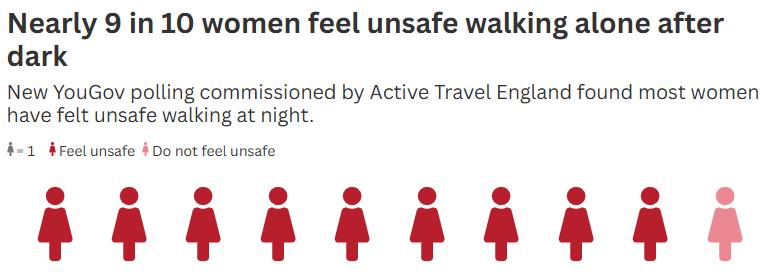
Data from YouGov // Catherine Rowe-Kosary
Around 75 per cent of WalkSafe users are women. The app was created before the murder of Sarah Everard by a serving police officer in 2021, but Kay says that tragedy made it clear how widespread fear already was. “We didn’t fully realise the scale of how unsafe women felt,” she adds.
After Everard’s death, the women’s safety tech sector became far more competitive. “We found a lot of men trying to profit from women’s safety,” Kay says. “Considering what we’re all trying to achieve, it became quite a competitive landscape.”
That competition has been driven by a sharp rise in demand, both from individuals and organisations treating safety as a core business issue. For employers,

safety tools are increasingly tied to staff retention, liability management and brand reputation. At a government level, they form part of a wider public safety strategy that has seen £626m committed to safer street infrastructure in England and £5m for nighttime safety initiatives.
Yet critics argue that framing safety as a product risks shifting responsibility away from institutions and onto individuals.
Laura Montecchio, a lecturer in Media, Gender and Culture at King’s College London, believes the balance is currently the wrong way round. “Technology should follow institutional frameworks, not lead them,” she says. “It ought to be an institutional-level issue first rather than the other way around.”
She argues that the growth of safety tech reflects a broader pattern in capitalist societies, where systemic problems are reframed as matters of individual responsibility. “It is easier to place blame on individuals than to confront structural failures,” she said. “The same logic applies when it comes to women’s safety and technology.”
Morag Rose, a writer and academic whose work focuses on women reclaiming public space, warns that certain technologies can reinforce fear rather than reduce harm. “I can absolutely see the value in things like walking-home apps,” she says. “But these technologies don’t tackle the bigger issues around culture and access.”
Rose also questions the commercial incentives underpinning the sector: “We need to ask who profits from women’s fear. There’s a wider question about
commodifying safety and the effects of constant self-surveillance.”
Kay acknowledges these limitations: “We know we’re not the full solution, but we hope we can play a small part in pushing businesses and public institutions to do more.”
Safety technology alone cannot prevent violence against women. Experts argue that lasting change requires a combination of better-designed public spaces, stronger institutional accountability and cultural shifts that challenge the root causes of gender-based violence.
“I understand what it feels like to be unsafe both inside and outside the home”
Rose points to environmental measures that do not rely on fear, such as livelier spaces, better lighting and community-led initiatives. Montecchio calls for genuine engagement with academic research and gender expertise in policy-making. “Positions of power still lack adequate female representation,” she says. “That needs to change.”
But for now, for the millions of women navigating daily life, these tools make their walk home feel just that little bit safer.
Technology is increasingly being used on UK construction sites, but workers say it is unlikely to solve the sector’s retention crisis
By Jenna O’Flynn
Once a week, Tayler Quieros walks around a construction site in north London with a HoloBuilder, a small handheld camera which captures 360-degree photos of the site. Ten minutes later, he opens his laptop to compare them with images taken the previous week, identifying evidence of progress or any health and safety risks. It is a small but telling sign of the changing UK construction industry – one that workers also happen to be leaving at pace.
Over the past two decades, an estimated net 300,000 workers have left their job in construction, delaying major infrastructure projects and contributing to the current housing crisis. The question is whether technology can improve conditions fast enough to retain
workers, or whether the pressures driving them out run too deep.
Limited opportunities for progression, instability and the constant threat of debilitating injuries are among the main reasons tradespeople give for leaving.
According to recent data, more than half of workers say they would be more likely to stay with a company that significantly increased investment in technology and AI.
David Philip, chair of the Chartered Institute of Building’s digital and innovation advisory panel, explains that this holds true in construction, where technology is playing an increasingly important role. He says it can help increase retention rates by reducing physical strain and injuries, improving working conditions, creating clearer career

pathways and offering skilled workers more control over their work.
Once a world solely composed of hard hats, hi-vis vests and manual graft, construction is undergoing a quiet digital revolution – reshaping what it means to work on a modern site.
“Technology can’t learn the skills [you do] with your hands”
AI-driven monitoring and hazard prevention are gaining ground in UK construction, helping identify risks and streamline site management. Platforms like Ailytics plug into existing cameras, scanning live footage to detect safety hazards in real time.
With construction consistently recording one of the highest fatality rates of any industry, the software acts quickly to alert supervisors about missing PPE, unauthorised access or proximity to hazardous machinery. Wei Zhuang Tan, CEO of Ailytics, says the impact is “immediate because you’re targeting the unsatisfactory, unsafe behaviours right on the spot”.
But Tan also warns that improving the safety of workers alone isn’t enough to solve the “labour crunch and retain workers”. He says the job needs to be “more sexy and more productive at the same time”, by creating roles in “an office-like environment” that appeal to those seeking less physically demanding work.
Another industry-wide issue is productivity, with output per hour increasing by only 14 per cent from 1970 to 2020. Workers previously spent endless hours searching for information, documentation or data located in disconnected systems. With digital management systems, project information is now stored in one place, streamlining workflows.
At a time when the UK has a shortage of 6.5 million homes, enhancing project planning, improving cost estimations and reducing errors on site are also increasingly critical.
RED construction, an established player in the industry operating across the UK, uses the all-in-one management platform innDex. Quieros, a construction apprentice at the company, says that while this technology has improved efficiency, its adoption is not viable for all companies across the sector.
He points to the example of robotic dogs on construction sites, which can cost between £20,000–£30,000 a piece. “No one’s going to be able to do that if they’re a small contractor [...] there will
“When you’re on site, you’re focused on what you’re doing. You don’t want any distractions, but when you’re in the welfare [area], it’s a place to relax and to just take time.”
“I don’t think technology would decide whether I stayed or left”
Jamie Hughes, director at Emeras Developments, has used AI at work since the turn of the year. While it took him some time to get used to the technology, he says “it helps massively on site” with wording, pricing calculations and finding quick answers to urgent queries.
He still remains unsure whether more technology would benefit workers beyond what is currently in place. “Whatever we do is skilled and no matter what, technology can’t learn the skills [you do] with your hands,” he says.
“People are leaving construction because of money. I don’t think technolo-
gy would decide whether I stayed or left. It would be: is there enough work and enough money within what we can earn?”
The average price of construction materials has risen by more than 37 per cent since the start of 2020. “It costs so much more to make a building than it did 10 years ago,” Quieros says. “There is a lot more risk now than there was ever before.”
Fluctuating costs, he explains, makes contractors hesitant to commit to projects because the prices “could just go anywhere.” Domestic work costs have also increased significantly, which, combined with the cost-of-living crisis, means many households can no longer afford extensions or home improvements that provide labourers with valuable work.
While technology may be helping to mitigate safety risks, streamline workflow and open up new opportunities for career progression, workers suggest it still does little to address the wider structural issues apparent in the industry.
With around 200,000 people entering the industry and 10,000 more than that leaving every year, the industry continues to face high workforce turnover. While industry voices agree new technology has a place on construction sites, its ability to reverse this trend appears, for the moment, to be limited.
AI is changing the way we spend our money at the pub and petrol pump
By Ben Pawlowski
Matt Cortland was sitting at the bar of a busy Dublin pub when something clicked. He had ordered a Guinness – €7.80 (around £6.70) – knowing perfectly well that the exact same pint was available just two doors down for almost €2 (£1.70) less. He knew that because he had lived in the city for years. But most other punters didn’t, and there was nowhere they could go to find out.
That moment proved the inspiration for Guinndex, an online tool tracking the price of a pint of the black stuff across Ireland. An AI engineer by trade, Cortland used a voice agent to ring up thousands of pubs and collect a trove of price data.
The project took him one long weekend and €200 (or £173) of his own cash – work that, as Cortland points out, would have once required months of surveys and a hefty six-figure budget. “One engineer and one researcher who know what they are doing with AI can now stand up national-scale infrastructure in days,” he explains.
The tool quickly took on a life of its own in Ireland, where the price of a Guinness has long served as an unofficial barometer of the state of the economy. When Cortland decided to extend Guinndex to the UK in April, the response was much the same.
“There’s so much bad news in the world around technology all the time, so it’s nice to make something people really enjoy,” he says. “To be honest, it’s just really, really fun.”
Guinndex sits at the lighter end of a much broader shift, whereby a new generation of AI-powered tools are providing customers with real-time price transparency. That means smarter spending choices and a shift in the power dynamic with businesses.
Tom Houseman, a Londoner who used AI to build the pint-tracking app PintPal without any prior coding experience, likens the impact of that subtle change to what economists call the “perfect market”: a theoretical situation where buyers have complete information about prices before making a purchase. It is an appeal he understands instinctively. He remembers a boozy Christmas night out around Soho – 12 pubs, a beer in each – and waking up the next morning staring at his bank statement, baffled by the difference in price from place to place. As he points out, “one of the weird things about pubs is you usually pay after you
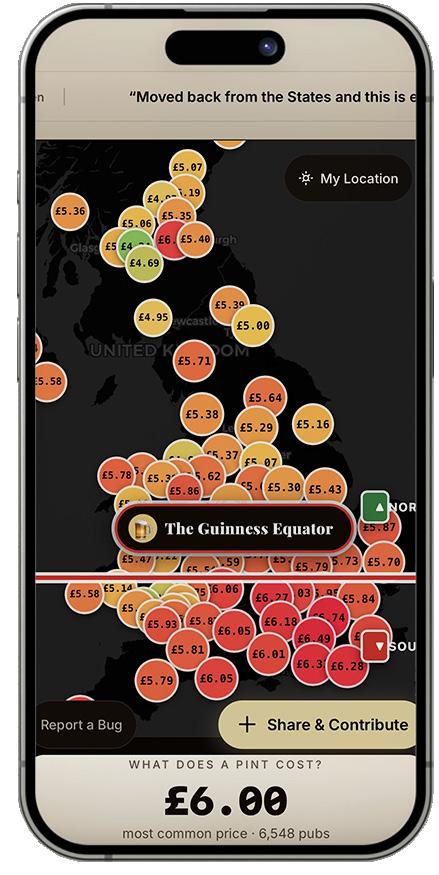
order – you don’t really know the price until after you tap your card”. Apps like his mean customers now have the opportunity to know, if they so wish.
The same logic applies when the stakes are higher. Fuel is, of course, less optional than a Friday night pint. For that, Norfolk-based software developer Scott Benton has the solution.
Earlier this year, he launched Fuel Finder after the government opened up its real-time forecourt pricing data. What began as a side project quickly exploded in popularity, soaring from a handful of daily visits to more than 50,000 users by Easter.
The app tracks price changes every five minutes, quietly revealing what he criticises as “questionable pricing practices”: lunchtime price surges, clusters of stations upping prices in near-perfect synchrony, costs that shoot up quickly yet are suspiciously slow to fall.
For Benton, transparency in pricing is “never a bad thing.” Consumers, he argues, should know exactly how and when fuel costs are changing.
The businesses are watching, too. Benton says that petrol station managers have started using Fuel Finder to monitor nearby competitors, not necessarily to undercut them, but to justify raising their own prices.
“That is the adverse effect of transparency – it’s a double-edged sword,” he admits. Cortland has spotted the same dynamic playing out in the pub trade.
Yet something has undeniably shifted. Cortland, Houseman and Benton were able to build their platforms within days on a minimal budget, because AI put tools that once belonged to the few into the hands of anyone with a good idea and a free weekend. The old information gap is closing, one pint at a time.


An entire page on the ribo.zone website dedicated to ‘bugholding’ // Loren@ribo.zone
The website hosting platform offers a refuge from monotonous algorithms –and it is growing fast
By James Barnes

Entering Neocities.org feels like slipping through a digital wormhole. You surf through Tumblr-esque art portfolios, glossy, retro Windows-themed blogs and even hand-drawn explorative videogames. Before long, you might be convinced that you’re actually in 2006, not 2026.
Neocities was founded in 2013 as a response to the closure of its predecessor, GeoCities. It invites people to create their own websites free of creative inhibition. As of 28 May, 1.6 million websites reside on the platform.
Despite their retro appearance, the vast majority were created in recent years, with the number of sites tripling
since the launch of ChatGPT in 2022 –a trend spearheaded by younger users as opposed to GeoCities veterans.
23-year-old artist Giovanna Fonseca launched her site, Knoxstation.neocities.org, in 2022 to showcase her work. It has since garnered over 400,000 visits.
“I was introduced to Neocities in 2022 and was in love with how every site I visited had its own unique look and feel. Everything felt so maximalist and that spoke to me,” she says.
“Back then the internet really felt more like something you can use to connect with people”
Fonseca’s low-polygon graphics and glossy pop-ups may not be to everyone’s taste, but it is intimately human.
This is most evident on her site’s many interactive pages, in which you are invited to play Rock, Paper, Scissors against a small creature called a “Chao”, or leave messages in an ever-expanding guestbook. For Fonseca, it is these features that matter most.
“The culture on Neocities is based on old web traditions and back then the internet really felt more like something you can use to connect with people –the interactions I’ve had through my guestbook and profile feel more genuine than any social media engagement.”
As Fonseca makes clear, this trend is not simply a surge of nostalgia for Y2K aesthetics. At the core of Neocities’ popularity is a longing for humanity – its “about” page claims its goal is to “rebuild the web we lost to algorithms and monotony”. With analysis by cyber security firm Imperva showing that bots now make up more than half of all internet traffic, humanity is something
that today’s internet severely lacks.
When Fonseca started on Neocities, she says she “was more interested in just having a site to host my art and interactive work, but the more I kept interacting with the community, I realized how ‘political’ being part of the Indie Web is”.
The “Indie Web” is a community of independent sites that place emphasis on digital autonomy, and in recent years Neocities has been firmly at its helm. Individuals within this subculture, Fonseca included, shun the mainstream internet’s usual practices of chasing virality and monetisation in favour of personal projects.
“You’re choosing not to be part of the corporate web space where your platform doesn’t truly belong to you,” she notes.
Earlier this year, Neocities and the wider Indie Web were reminded that their corner of the internet is not impervious to the “corporate web”.
In January, NeoCities founder Kyle Drake announced that for months the search engine Bing had been inexplicably blocking the platform – including all user subdomains. It was not until 11 February that Drake was finally able to get through what was described as “chatbot hell” and find a Bing support member to fix the issue.
Anne Lee Steele, a digital anthropologist specialising in online culture, believes that although the Indie Web is “fighting important battles”, it is far from winning the war against the digital mainstream.
“I think we’re in a huge era of play across the constellations of the ‘Indie Web’ universe, but I won’t pretend that this is the same thing as a revolution.
“It might, however, give us the sense of joy that makes revolution more possible,” she says.
Steele maintains that it is this sense of possibility that really matters, because it does not “adhere to ‘what already exists’, but rather asks ‘what is possible?’” That is apparent when browsing sites like Knoxstation.neocities. org, and something that, for Fonseca, is so important to foster and spread.
Can new tech cure a shabby social life – one of the very problems it stands accused of creating?
By Claire Ducharme
Finding your algorithmically-assigned group at a PLY (People Like You) meetup can feel more awkward than finding a canteen table on the first day of school. At a film night to watch The Devil Wears Prada 2, which cost £10 for a cinema ticket on top of the £20 monthly PLY subscription, conversations bounced between “my mum suggested I come to try and make friends”, “I celebrated my 40th birthday with PLY” and “oh, I’m just here for uni”. After the movie, the chat turned somewhat more natural as people discussed the use of cerulean blue in the first film versus the second and the suspicious lack of wrinkles on some actors’ foreheads. Still, an air of discomfort hung heavy. While some attendees seemed to get along swimmingly, others may have left wondering: What did the algorithm think I have in common with the people I was sat with?
According to the World Health Organization, one in six people worldwide are affected by the loneliness epidemic. In light of this, apps like Bumble BFF, Timeleft and PLY are using algorithms and strategies once reserved for dating to help people find friendship. Bumble BFF offers a free tier that matches individuals one-on-one, but the model is otherwise similar across most platforms: you take an online quiz, pay a fee and are matched with an activity group. While apps like PLY are relatively local, operating across 12 cities in the UK, others like Timeleft operate across 275 cities in 60 countries, with over three million users.
PLY founder Karen Harris says “we look at personality, life stage and energy so the group genuinely clicks, rather than just filling seats. We have an initial algorithm that sorts people into draft groups based on their personality quiz results, and then we manually adjust if need be”.
It’s worked for some. Arron Smith, who is from Lancashire and has worked in London for ten years, credits PLY with improving his social life over the past few months. “It’s very difficult to meet people and make friends in London; this has really helped me to meet people and start building connections, because it’s really not easy in this city.” Though he initially felt odd about being matched by an algorithm, he gets along with his groups and finds PLY’s approach “very human”, as the staff checks in on attendees and actively encourages people to keep coming back.
University student Ara Kim, 21, came to these apps for the same reasons but found herself disappointed by her experience and the price tag attached.

After trying out Timeleft in 2025, she didn’t form any lasting friendships.
“This has really helped me to meet people and start building connections”
At the time, entry for an algorithmically-curated group dinner costs £8.62, and the meal wasn’t included. On one occasion, despite indicating on a quiz that she dislikes bad political jokes, she found herself seated with people whose views were far removed from her own. “Cool concept,” she says, “but it was really bad.”
She ditched the apps and turned towards hobby-based groups and spaces, such as Art Assassins, South London Gallery’s free collective for those aged 16-21. In her experience, apps like Timeleft are “very shallow” in comparison. “The options available are not as nuanced as meeting someone
“There’s only so much technology can do. Maybe it can facilitate third spaces, but it can not replace them”
through the spaces and activities you choose,” she says. For her, community spaces, shared interests and collective action do that more effectively, and without the high price tag. “There’s only so much technology can do. Maybe it can facilitate third spaces, but it cannot replace them.”
Those same concerns have been playing out in the dating market. James Ormerod is head of London events
at Thursday, a dating events brand operating in nearly 200 cities worldwide. Two years ago, the company scrapped its app entirely. “We could see the shift in public attitudes towards dating apps, people wanting to go back to basics and meet in person and make real connections,” Ormerod explains.
The new structure is simple: hosting events where everyone is single and open to dating, removing the awkwardness of approaching others without imposing a rigid structure or assigning pairs – no algorithm necessary. “It’s an open environment,” he says. “You speak to whoever you want, and you make of the night what you make of it.”
Thursday does offer one AI matchmaking event, where attendees complete a questionnaire upon arrival and are algorithmically paired with someone in the room by the end of the night. Ormerod explains this is an activity to break the ice, not the main event. “If the match works, great. If not, there
are still 200 other people in the room.”
Dr Fred Cooper, who researches the evolution of loneliness at the University of Bristol, explains that while technology may not be able to solve loneliness for everyone, it can be “good when used to augment their physicalised social lives”. Echoing Ormerod’s observation about ice breakers, Dr Cooper points out that “even if the algorithm gets everything wrong, you’re still in a place with people[...] It’s about breaking that initial reluctance to socialise”.
Back at the PLY film night, people drift towards the exit as popcorn is swept up. A few exchange details. Most do not, but they had shown up, which is perhaps the point. If you’re bold enough to approach people at the cinema, in a gallery or on the underground, maybe sitting with an assigned group will not feel as exciting. But for those who find those first steps harder, an algorithm might at least open the door to human connection.
The Techtonic went undercover to see what connects a network of shady billionaires, a paranoid eBay seller, and Russia’s failed Moon landing
By Tom Layton
In 1974, after continuous failed attempts to land on the Moon thanks to catastrophic launch failures and poor funding, the Soviet Union realised that the United States had won the space race.
The Politburo of the Central Committee of the Communist Party quietly shut down the N1-L3 programme – the research group tasked with building rockets and training cosmonauts for a Moon landing. With no public announcement, staff were transferred overnight and reminded of their legal obligation to never speak of their work again. All hardware was ordered destroyed, and most records were burnt.
But, for $350,000 (£260,000) and free postage, an N1-L3 prototype space suit could be yours from eBay. Its journey from a Moscow warehouse to the e-commerce site is a window into the high-stakes underworld of artefact dealing, and shows how a piece of top-secret
technology can end up pawned online.
Dr Daniel Salisbury is a visiting research fellow at King’s College London’s Department of War Studies, and has spent over a decade researching the illicit trade of arms and technology that followed the collapse of the Soviet Union.
“It doesn’t surprise me that the suit made its way to the West,” he says. “Given the poor Soviet economic situation and controls on state property, there are a lot of stories about all kinds of things being sold in the early 1990s as the USSR collapsed.”
“This included battle tanks, weaponry and even a lot of concerns about nuclear material being sold,” he adds.
eBay user “Maksuta” claims to be selling the Krechet-94 space suit – Russian for gyrfalcon, an Arctic bird of prey. The prototype was manufactured near the end of the Moon-landing programme in 1967, and designed for use on the lunar surface.

Maksuta is a prolific seller of space antiquities, and appears to be selling matching gloves for the space suit. This Krechet is likely one of fewer than 10 still in existence.
In response to an interview request, Maksuta said: “Sorry, I’m not willing to talk about it. All what [sic] I know is written in the description. The market is space collectors and museums.”
“Many items produced in the Soviet era in Russia are sold through unofficial markets”
The item description says the suit “was luckily saved at the factory” after the closure of the Soviet lunar programme. Beyond a 1999 eBay registration and anonymous reviews praising “awesome item and service!”, Maksuta’s profile gives nothing away.
The reason for Maksuta’s guarded approach became clear when The Techtonic approached them posing as two different wealthy American space enthusiasts. Maksuta divulged that the suit was not in the US as advertised, but was in storage somewhere in Europe.
After several messages, Maksuta explained that the suit was disassembled. Before they would order its reassembly for verification, they insisted on seeing a letter from a reputable US or UK
auction house “to prove our intent and that we were ‘not from [the] secret services of certain countries’.”
According to Maksuta, the suit “was stored at Zvezda [factory] where it was manufactured and then rescued by some of its engineers from complete disassembly and destruction”. They warned that exposing who had then sold the suit to a “private collector” could put them at risk of being thrown in jail.
Founded in 1952 to develop aviation pressure suits and in-flight refuelling systems for the Soviet armed forces, Zvezda has developed every Russian space suit since.
According to several antique experts familiar with the topic, cosmonaut hardware was mostly sold in the 1990s following the fall of the USSR, when details of the N1-L3 programme began to emerge, by either cash-strapped museums, ex-staff or those with access to government warehouses.
One militaria salesman, who has sold deactivated military equipment – including old Soviet memorabilia – across Europe for 30 years, says that the market for space technology was dominated by European and American billionaires building private collections.
He adds that the rare and expensive pieces of technology are becoming harder to sell in Europe, due to a crackdown by Russia on the export of artefacts deemed culturally significant.
David Shayler has spent 40 years researching Russian spaceflight as a fellow of the British Interplanetary Society, the world’s oldest space-advocacy group.
Shayler explains that the Krechet is of huge historical significance. Conceptualised in 1960 as a “long-John” style suit, it was one of the first suits to have a “life support system built in, independent of the spacecraft in case of decompression”.
Soviet engineers who were in the final stages of building a lunar module to land cosmonauts on the Moon needed a new suit for the Moon walk, and put the Krechet into production in 1967. Fully pressurised and independent of the craft, the prototype let crew “float in through the back” for easy access.
The suit would also serve a second purpose: “to save you – to get you back home”. If the craft used to re-enter the Earth was damaged and air began leaking out, the crew could climb into their Krechets.
These features were considered so innovative that parts of the Krechet were incorporated into the Orlan space suit, used into the 2000s for Russian trips to the International Space Station.
The suit is one of many historically significant items from Russian history that has made its way to European black markets.
Maharram Akbarov, a Russia analyst based in Poland, says that ”in post-Soviet countries like Azerbaijan, carpets featuring Yuri Gagarin and many other cultural objects are [...] being offered for sale online”.
“Many items produced in the Soviet era in Russia are sold through unofficial markets,” he adds.
Since 2018, smuggling cultural valuables out of Russia has been a criminal offence. The Krechet, being an artefact of historical importance and rescued against orders from the Zvezda factory, would likely attract scrutiny from any customs official.
As of this article’s publication, the Krechet remains listed on eBay, saved to 42 baskets. Its parts sit in storage somewhere in Europe, waiting for a wealthy patron to spirit them away into their private collection.

Churches across Britain are confronting a difficult question: Can AI deepen faith without replacing the human experience?
By Emma Gatrell

In her cosy office beside St James’ Church in Piccadilly, the Rev Lucy Winkett reflects on an event hosted by her parish on two topics that do not immediately appear connected: faith and AI.
What struck Winkett most was the conversation it generated. One attendee, an AI policy adviser for a multinational company, was seated next to an elderly woman who despised AI. Winkett doubts they would have otherwise met. “They had this really lively engagement,” she says. “It was multi-generational.”
Rather than a traditional debate, the event was framed as a “think in” –a space for attendees to reflect on what
the rapidly-evolving technology meant to them.
“I call it Google on steroids,” says the Rev Nigel Peyton, honorary assistant bishop at All Saints Nettleham in Lincoln. He feels both anxious and curious about AI, the latter of which convinced him to trial write a sermon using the technology for his congregation.
The first draft by ChatGPT was biblically accurate but dull. When he asked the popular chatbot to redraft it in his own style, Peyton was astonished. “I thought it was more convincing, more nuanced. It also came up with the kind of word length I typically use,” he says.
As former Bishop of Brechin in Scotland, many of Peyton’s sermons are accessible online and available as source material for LLMs such as ChatGPT. Only after delivering the sermon did Peyton confess to his congregation. To his surprise, it prompted little reaction.
“I thought ‘blow it’ – why are we trying to write these fresh sermons with an individual approach when people are not really bothered!”
The sermon did later generate discussion about AI. “I think the congregation just didn’t know how to respond to my admission – it was so left field,” he says.
Using AI to preach might once have been considered taboo, but it is now a matter of staunch debate across Christian denominations. In late May, Pope Leo XIV published a major teaching (known as an encyclical) which stressed how any use of AI should serve humanity, which he said “must never be replaced”.
The Anglican Church has no singular framework for AI. The Rev Dr Simon Cross, AI Policy Lead for the Church of England, explains that each of the 42 dioceses are responsible for their own policies. He says the best guidelines “cluster around a set of principles rather
“Christianity is a communal enterprise from the start and that’s why we have physical churches with congregations”
than a Ten Commandments, ‘thou shalt or shalt not’ approach”.
Peyton has not repeated his experiment. “I enjoy the creative process, plus an AI sermon will not capture the micro-context and life of that particular congregation, on that particular Sunday, or world events,” he says.
Away from the altar, laypeople are also turning to AI for faith-related matters. The app Bible Chat allows believers to seek spiritual guidance and has over 25 million users. PriestChat offers a platform to ask questions of an AI priest, even encouraging confession. Magisterium AI is Catholicism’s premier answer engine.
The latter is how Dr Tomislav Karacic, assistant professor in Information Systems at the London School of Economics, arrived at his current research. He first discovered
the tool for personal reasons. Once a vocal atheist, he found talking about his conversion challenging. “It was easier to talk to a chatbot,” he explains. “It was a tool I could use to compensate for not knowing enough.”
Karacic is not alone. In his research, he has interviewed atheists who converted after conversations about faith with ChatGPT.
While inputting a prompt into an AI may help answer spiritual questions, Peyton says it will never truly replace authentic human religious experience.
“Christianity is a communal enterprise from the start and that’s why we have physical churches with congregations,” he says. “It’s all about being together without losing your sense of being an individual.”
Peyton argues that sharing human experiences is essential, with the loss of loved ones being a prime example. He refers to times when he has entered his church on a simple errand and ended up providing comfort to a visitor, whether by lighting a candle with them or praying by their side. “That is a proper human encounter. You’re not going to get that from AI,” he says.
Where AI requires a deliberate input, a chance interaction with a priest may encourage someone seeking comfort to open up when they otherwise might not. “Good clergy are attuned to that,” he explains. “Your ears prick up and you sense somebody is looking for more.”
Other issues emerge relating to the ethics of using AI. Cross is steadfast in his belief that “nobody understands quite how costly for the environment some of these tools are”.
Despite those concerns, Peyton believes that AI can help demystify obscure Christian language. Cross too believes a key part of being human is to improve our existence, and it would be foolish to ignore the benefits of AI: “The human capacity to invent

tools is a God-given gift as far as Christianity is concerned.”
AI has the potential to be a handy tool, such as an entry point for curious believers, or an editor for priests seeking to cut down their sermons. But many foundational elements of faith exist in between: making a wedding personal, conducting a thoughtful funeral, welcoming a baby into the life of the church. For Peyton, these moments are essentially human and irreplaceable. “[AI] can help interpret,” he says, “but it won’t answer the question: how do I feel?”
That sentiment surfaced during the discussion at St James’. Winkett expected the AI experts leading the conversation to wholly champion the technology. “Instead, both said, ‘Don’t forget what it is to be human’ ... That was really amazing,” she says.

It was a lesson the Church had already taken on board, serving as a space for people from opposing walks of life to meet and connect.
As technology change leaves millions feeling anxious, a growing community is finding a novel way to face the fear
By Seth Pollak
Sofiia Matsiutsia rode 30 minutes by bike through relentless London rain to reach the pub. For weeks her social feeds had filled with strangers boasting about entire software businesses they’d built in little more than an afternoon. She wanted in.
When she arrived, soaked, she found eight people around a table drinking beer. “They were so cute,” she says. “We spent two or three hours just talking about vibe coding and how we all feel lonely and a bit scared. I felt that I could be seen and my fear could be seen. And if someone else could feel the same, then maybe I’m not alone.”
The gathering, organised by AI engineer Dan Porder, has since grown into the Vibe Coding Collective – a community group that brings people together in pubs and parks to learn about and experiment with AI. More
specifically, with vibe coding.
The term refers to a way of using AI to build software without prior technical knowledge. Unlike traditional coding, which requires learning languages like Python from scratch, vibe coding lets anyone describe a project or idea in plain language and receive a working program in return.
Named Collins Dictionary’s Word of the Year in 2025, it sits at the intersection of accessibility and anxiety: a technology that promises to democratise software development while unsettling the people it is supposed to empower.
That unease is widespread. A recent study by King’s College London’s Policy Institute found that 41 per cent of people in the UK are afraid of AI. Organisation psychologist Gena Cox says the fear is rational, with routine cognitive work being absorbed by AI faster than
workers can retrain.
“There’s so much uncertainty,” she says. “The only thing that is certain is the change. What we know is that it’s helpful to share experiences, to hear from other people, to have that sense that you’re not crazy for feeling fearful or anxious.”
The Vibe Coding Collective aims to do exactly that: reduce fear by encouraging people of all backgrounds
“I felt that I could be seen and my fear could be seen”
to engage with the very thing that frightens them.
At events, their attendees build apps and software tailored to their own needs – anything from bespoke games to a Tamagotchi-style AI that demands food and complains when neglected. The latter was created by Matsiutsia as a deliberate counterpoint to the agreeable AI assistants that dominate the market.
“Every agent is too good – mirroring your ego, mirroring your soul,” she says. “I was thinking, maybe it would be great to create a devil voice.” That playful spirit shapes the events themselves. The collective consciously avoids what it calls the “LinkedIn style” of so much of the London tech scene. Rather than sterile offices, bright lights and rows of chairs, it favours pubs, cafés and community spaces.
“Dim the lights, turn on some music,” says Porder. “People come because
Sofiia
Matsiutsia introduces the Vibe Coding Collective team to the participants
they want social connection. You could learn vibe coding on YouTube. You could use the tool in your bedroom. But you come because there’s this narrative that technology is making us more lonely, more isolated. We want to show there’s a way to use it to bring people closer together.”
For Joseph Wan, the collective became a remedy for a fear he had largely kept to himself. An artist with a background in computer programming, Wan had long used technology as the foundation of his work. But after taking a short break from the AI news cycle to relocate from Hong Kong to the UK, he returned to find the landscape had shifted dramatically. “I felt a little fear,” he says. “Like I was already behind – and only three months had passed.”Wan says the collective offered something that conventional tech conferences could not. “I usually go to conferences that are quite technical and when you talk to people there’s this fear of saying the wrong words or using the wrong concept,” he
// Seth Pollak
says. “The Vibe Coding Collective was basically the first group where I could just go and chill. Most people there don’t have a high technical background – [it’s] a lot of artists, musicians and people who just want to have fun.”
opinions, and feel comfortable expressing what they like and dislike about a technology — that gives you a lot of inspiration. It helps you see things completely differently.”
Years on, Matsiutsia has joined
“What we know is that it’s helpful to share experiences... to have that sense that you’re not crazy for feeling fearful or anxious”
Now fluent in vibe coding, Wan uses it to build programs for his art projects, work that would previously have taken him a month. The collective has also shifted how he thinks about AI more broadly.
“Most artists think AI isn’t working in their favour right now,” he says. “But in a group where people have different
Porder in running meet-ups in Boston, Amsterdam and Kyiv. The collective keeps growing because the technology that promises to make everything faster, easier and more personalised has also left many people feeling scared and, above all, alone. What the pub offers, on a rainy weeknight, is a way to face the fear together.
Beating online addiction is harder than ever – but not all hope is lost
By Emilie Lenglart

It is late at night after a long day of work and you are ready for a welldeserved night of sleep. But here you are, still awake, scrolling on your phone, wasting precious minutes to hours of sleep. Sound familiar? If so, it might be time for a digital detox.
While social media addiction is not officially recognised as a mental health disorder, governments and non-profits like the Internet and Technology Addicts Anonymous (ITAA) are trying to help those struggling to stay offline.

In March, a landmark trial found Meta and Google responsible for creating addictive social media platforms. A few months earlier in January, Australia officially banned social media for under16s, and the UK prime minister Sir Keir Starmer has vowed to do the same.
“We just had this huge societal change, it’s almost snuck up on us,” says Hector Hughes, co-founder of Unplugged, a company offering digital detox cabins, where visitors lock up their phones for a few days to stay offline. Twenty years ago, only 11 per cent of the adults in the US used social media, compared to 73 per cent in 2025. In the UK, almost 80 per cent of the population uses social media regularly.
“I could go 10 to 15 hours nonstop on the internet,” says Max, whose name has been changed to protect his anonymity. Max has been taking part in the ITAA for almost two years. “I’ve been addicted to the internet for a few years, but it got worse in lockdowns,” he says.
Max, who is in his fifties, lives on his own, works part-time and has been single for a while. As loneliness crept in, YouTube videos took over that space.
For Max, there is an important difference between spending too much time online and being addicted. Addiction, he believes, is when “your life has become unmanageable because of your addiction”.
“I could go 10 to 15 hours non-stop on the internet”
For him, finding this balance is the key to a healthy relationship with social media.
“It’s almost snuck up on us”
To keep a healthy balance between the online and real world, Hughes recommends doing regular “unplugged days”. He does a couple of retreats a year, though that can come at a high price: it costs at least £500 for three nights in an Unplugged cabin. Other digital detoxes are available: last month, Hughes did the Camino, an 11-day pilgrimage in Spain, completely offline.
For Max, social media addiction can be compared to overeating. “It’s not quite the same, but hardly anyone can live without the internet and almost no one can live without technology,” he explains. “You’d have to live in a cave in the hills eating nuts and berries.”
He still uses social media for his work or to communicate with his friends and family, especially with his son, on WhatsApp – but he says that joining the ITAA has otherwise helped greatly.
He found support and met one of his closest friends, who could understand his struggle. “That’s just made my life better,” he says.
Social media and internet addiction is also particularly difficult to fight as most of our communications and services are now almost only accessible online. “The only social media I have is LinkedIn,” Hughes, co-founder of Unplugged, explains. “I do try not to spend too much time on it, but it’s tricky, I definitely haven’t got the balance right.”
The ITAA also gave him tools to understand his addiction better and fight it, including the concept of the top and bottom lines. The bottom lines are the things he finds compulsive, such as scrolling on social media, while the top lines are the behaviours that keep him off the bottom line. For Max, that is writing and other creative activities, which he finds much more rewarding than consuming internet content.
Whether building habits or trying new hobbies, it is always good to take a step back from social media and rethink our relationship with it – safe in the knowledge that there’s always support and a community to be found away from our screens.
As manufacturers make repairs harder and replacement easier, a growing network of volunteers are helping Britons keep cherished appliances alive
By Anushree Reddy
Jessica Stein has brought several appliances to repair cafés in London over the past few years: a kettle, a lamp, a handheld mixer. Each time, her calculation was much the same. Replacing it outright would have been easier, but it also felt wasteful.
“Most people just buy a new one,” she explains. “It’s easier, and it often doesn’t cost much more than getting something fixed. That shouldn’t be true, but it is.” She located her first repair café through social media and has returned several times since. “There have been times where I’ve gone home with something that still doesn’t work. But I’d rather try,” she says.
Stein’s story is representative of a wider movement. Across the UK, at least 425 registered repair cafés were operating in 2025, with the true figure likely higher.
“It might just be a blender or toaster,” says Maya, a volunteer at Fitzrovia Community Centre whose name has been changed to protect her anonymity. “But it can have significant value because it was passed down by someone. People want to keep using it. They don’t want to throw it away.”
But what volunteers see on their workbenches has begun to change. There are still plenty of genuinely broken items, but a growing number arrive in reasonable working order and cannot be repaired for reasons entirely beyond their owners’ control.
When Microsoft ended support for Windows 10 last October, older laptops stopped receiving security updates – not because anything had gone wrong, but because their software had been discontinued.
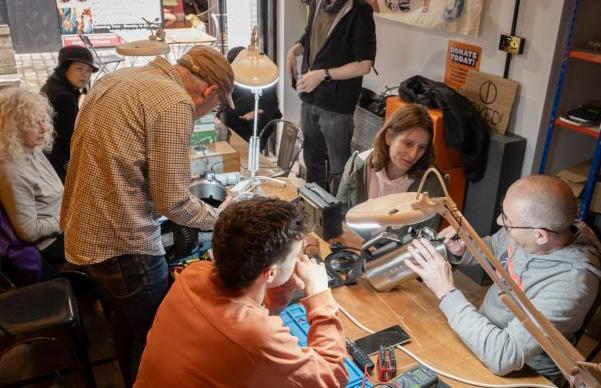
Maya has seen the same logic play out with physical appliances. People bring in a host of devices ranging in size that continue to work but no longer have available spare parts or an official repair route.
“We sometimes have to tell people we can’t help, not because the item can’t be fixed, but because we can’t source the component,” she says. “That’s a frustrating conversation to have when the thing is still working fine otherwise.”
Critics argue that modern products are increasingly designed with replacement rather than repair in mind. The result, campaigners say, is that consumers are nudged towards splashing cash on new products even when the old ones remain largely functional.
Research from the Open Repair Alliance found that nearly one in five items brought to repair events could theoretically be fixed but remain un-
repaired, most often because the right part is unavailable or the job requires expertise beyond what the volunteers can provide.
Right-to-repair campaigners have been sounding the alarm about this issue for years. In 2025, the Restart Project brought community repairers to the House of Commons to meet with 33 MPs and the government’s Circular Economies minister, pushing for UK legislation to mirror the EU’s Right to Repair Directive, which requires manufacturers to offer repairs beyond the warranty period from mid-2026. No equivalent law currently exists in the UK.
In the meantime, repair cafés have found themselves filling that gap. They were created to mend broken items, but they are increasingly working to help people hold on to items that still have life in them. Volunteers do what they can.
By Ben Fearon
When clients started sending Dr Mike Trubetskov AI-generated songs to recreate with real instruments, he found himself confronting a dilemma familiar to many modern musicians: should he turn down the work or abandon his longstanding principles? He took the work.
“The genre is competitive and it’s a challenge for producers to find enough clients,” says Trubetskov from his studio in Melbourne, Australia. “I’m not the songwriter. I’m not responsible for the idea of the song itself. I’m only responsible for helping my client get from point A to point B.”
The songs in question were generated using Suno, an AI platform capable of creating music from a simple text prompt. The US-based startup, recently valued at over $5bn, sits at the heart of a debate Trubetskov has spent considerable time thinking about and discussing publicly. His YouTube channel recently featured a video titled How to Use AI in Metal Music (Without Letting It Replace You).
“The main issue is the question: who is the songwriter?” he says. “Who holds the intellectual property rights? Because it’s not solely a human creation anymore. You could argue that it isn’t really music, because music is a human interaction between people and this is just an output from a database.”
The path Trubetskov took to the studio was anything but conventional. Born in Russia, he moved to Australia as a scientist, earning a PhD in biochemistry before his music career took centre stage.
“The analytical skills I built in science, I can still apply in the music world today,” he says. That scientific back-
ground also helped him build the studio from which he now records and produces music.
Heavy metal has been a constant in his life. Trubetskov fell in love with the genre aged 13 and played guitar in groove metal band Gift of Madness, recording and touring with metalcore heavyweights Killswitch Engage before eventually heading Down Under.
Despite his reservations about fully AI-generated music, Trubetskov is not opposed to the technology. He draws a clear distinction between AI as a finished product and AI as a creative tool. Used carefully, he argues, it can help musicians escape the agony of writer’s block, sketch a chord progression or offer a basic structure that a songwriter can develop into something of their own.
“I would not dismiss the possibility
of someone submitting a rough idea to Suno just to see what comes back but then recreate it with real instruments,” he says. “Make the final product entirely human, even if AI helped spark it.”
It is an admittedly nuanced position, but one he holds firmly. While he still tries to steer clients away from fully AI-generated songs where possible, he sees value in using the technology to support creativity rather than replace it.
“I’d much rather see AI as a helper for more mundane tasks,” he says. “Finding a scale, working out chords – that kind of thing. Not replacing the human at the centre of it all.”
As AI music tools continue to develop, that centre may become harder to define. For Trubetskov, the real question is not what the technology is capable of creating, but how musicians choose to use it.
By Namratha Prasad

Comedian Jamie D’Souza says he used to feel relatively optimistic about the world. That is, until one of his videos went viral on Facebook through Comedy Central UK.
As he scrolled through the comment section, he was shocked that over half of the 50 or so comments were about him being Indian, including one that said “get rid of the curry”.
“I’d probably enjoy having an argument,” D’Souza says. “But then there are also days when I’m feeling more depressed about the state of the world, where you do just feel frustrated about it and annoyed and angry.”
D’Souza is one of many South Asian content creators on social media who have experienced a rise in hate speech after the algorithm placed their content in front of new audiences –and it has changed the way they make their content.
After looking up their individual accounts, D’Souza started responding to his trolls in the comment section to make fun of them. Those who left racially motivated posts were mostly middle-aged white people from the UK, he says.
“So many of them had added that racial layer to it,” D’Souza adds. “It was real ‘people not liking something’ and then using the first noticeable thing about me to criticise me and use it as a weapon.”
D’Souza is not the only one facing increasing hate. In just three months, 680 posts of anti-Indian hate speech on X garnered 281 million views, according to a 2025 study conducted by the Center for the Study of Organized Hate (CSOH). Between July and September 2025, over 100 posts analysed in the study included anti-Indian slurs, and
drew 74.3 million views worldwide.
A large contribution to this rise are social media algorithms, says Raqib Naik, the executive director of CSOH. More inflammatory and derogatory content gets more views as a product of designing these platforms to be increasingly addictive.
“It’s a tried and tested method on Instagram and on X, specifically, where you would see some of these so-called influencers or disinfluencer accounts, which literally had a few thousand followers a few years ago,” Naik says. “As soon as they started targeting migrants, their followers [count] literally ran through the sky.”
According to Naik, another contributor to the rise in anti-Indian hate is the resurgence of far-right groups and their lack of fear of repercussions around speaking openly about their prejudices. When South Asian content creators break into the main sphere and land on the “for you” pages of those people, it can lead to inflammatory language.
“Doesn’t matter whatever you do, as long as you’re a person of color, you’re going to be the target”
“It’s just white supremacy on steroids,” Naik says. “Doesn’t matter whatever you do, as long as you’re a person of colour, you’re going to be the target.”
X and Instagram have become echo chambers for hate due to a lack of moderation by Meta officials, Naik adds. In January of this year, Mark Zuckerberg announced changes to Meta’s content policy, including looser moderation in favour of “freedom of speech”.
“It’s pretty much the problem of platform design in itself and the lack of
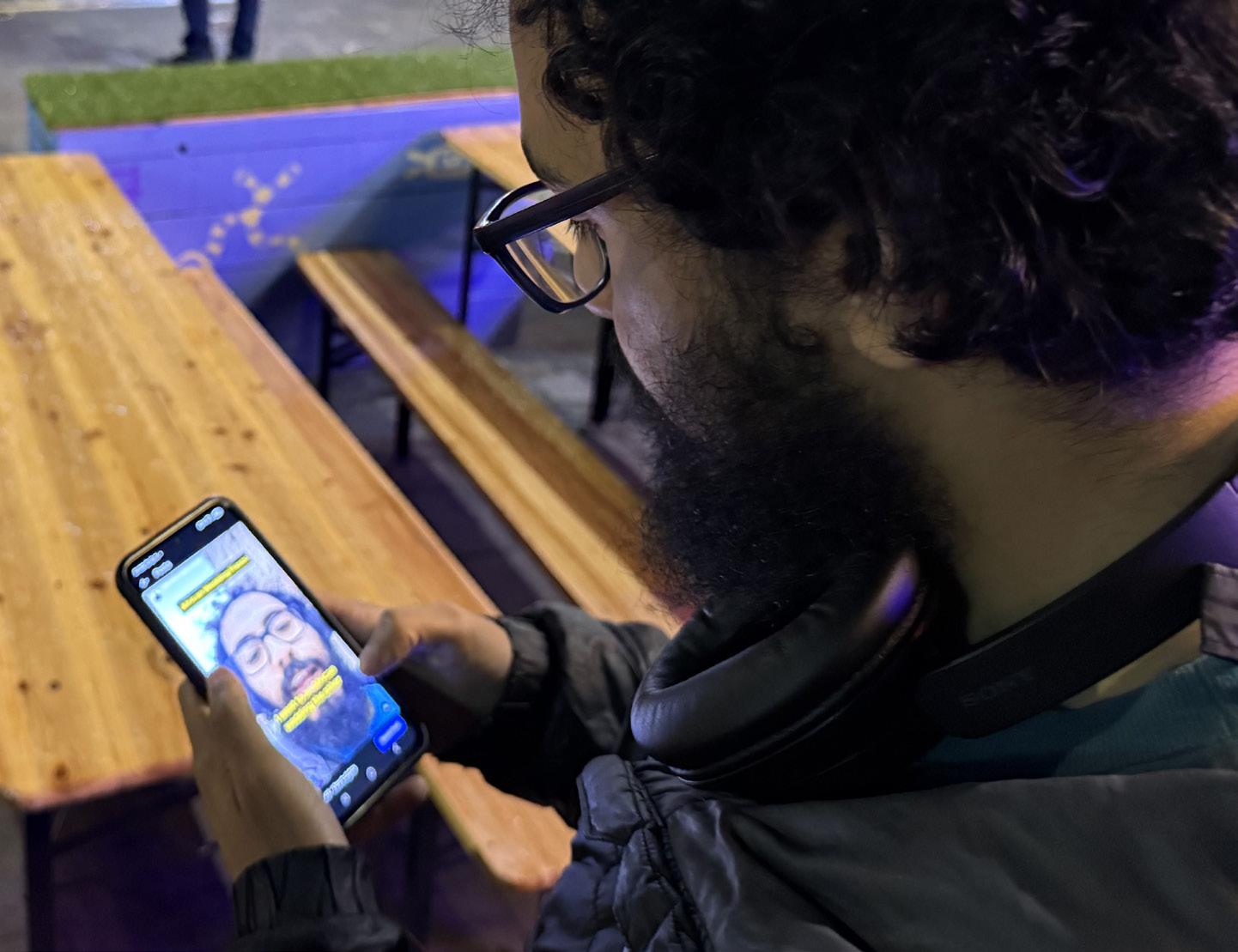
will on the part of the platforms to do anything about it,” Naik says. “Because at the end of the day, it just feeds their business model.” D’Souza was shocked by the comments on the Comedy Central page. If the algorithm were to put him in front of a crowd like that every day, he says, he might not have the energy to fight back and be playful.
“You do go through a bit of a cycle of emotions,” he sighs. “And now, probably how I feel about it is just sad. In the last few years, things have just gotten so much more hostile. I do now feel like there is more hostility towards brown people that I maybe didn’t feel five years ago.”
In a viral video on Instagram, content creator Rishi Khiroya says that the hate South Asians get on social media has divided content creators into two distinct categories: “one either hiding and suppressing their Indian side or two, motivating us to represent and draws us closer to our roots, culture and language”, he says in the video.
Ridwan Hussain, a Bangladeshi comedian who has received hate from South Asians and others as a result of his content, has chosen to embrace his own roots.
In a comment on one of his comedy videos, someone said, “Move over, Romesh. There’s another one”, referencing Taskmaster comedian Romesh Ranganathan. He has also received racist slurs from Indian audiences.
“I thought it was funny,” Hussain shrugs. “I don’t feel threatened by it because – I don’t know, it feels detached.”
Hussain says even if the algorithm put him in front of a hostile audience, he would still always choose to be authentic to himself and his content.
“If you get propped up – well now you’re going to get a wider audience, another audience,” he says. “They don’t know you, so [...] half of them are going to be like, we don’t like you and half are going to be like we do like you.”
Despite the hate, he does like it when the algorithm puts his content in front of other South Asians, and he cherishes that he can make jokes about their shared culture.
“In England, you have a million brown people,” Hussain says. “You’re never going to get them all in the same room. But on the internet, you have them all in the same room.”


Watching the biggest games can set fans back hundreds of pounds a year. Millions of supporters have gone underground instead
By Tom Tarlton
For millions of football fans across the UK, watching the Premier League has become an unjustifiable luxury.
Subscriptions to Sky Sports and TNT Sports, the two broadcasters who hold rights to show live Premier League action in the UK, can cost upwards of £650 per year combined.
In response, an underground market has quietly flourished, built around modified streaming devices, unofficial IPTV (Internet Protocol Television) and cheap subscriptions.
The technology is simple enough.
“It’s as simple as buying a regular Firestick off Amazon and then downloading an app that allows you to download

other stuff off the web,” says Teddy, a 24-year-old Manchester United fan who declined to provide his surname.
“You don’t have to jailbreak anything – it’s mad how easy it is.” He pays an annual £60 a year subscription to watch live sport.
Those selling access to these servers operate in the shadows,

highly encrypted messaging apps and building their customer bases via word-of-mouth.
A seller on Telegram, who wished to remain anonymous, charges a similar rate to Teddy’s provider. He offers customers access to all sports including payper-view and free-to-air channels, plus films and series. He describes himself as “medium-size” and knows of operators both 10 times smaller and larger than himself.
Teddy’s device has become his one-stop shop for everything he could possibly wish to watch, from live Manchester United matches and the UEFA Champions League to boxing bouts and hit mafia series The Sopranos.
The fragmentation of legitimate services frustrates him as much as the cost: “The idea that you have to buy so many different subscriptions – TNT Sports, Amazon Prime, Sky Sports – to watch games you might not even care that much about is mad.”
Teddy previously worked in the anti-piracy industry and believes the sector has largely brought the illegal streaming boom on itself. “Piracy went to an all-time low in the early 2010s because Netflix was quite cheap and offered quite a lot,” he says. “As they’ve increased in price, piracy has gone back up to record levels. It’s an industry issue of trying to milk consumers at every level.”
The anonymous seller largely agrees. “If Sky brought their price down to the same as an average IPTV cost, they
subscriptions,” he says, adding that he doesn’t lose any sleep over any loss in revenue for clubs themselves: “Sky will always pay top dollar for broadcasting rights. It does harm Sky, but not the clubs.”
Kieron Sharp sees things very differently. He is a representative from the Federation Against Copyright Theft (FACT), a company that assists the Premier League with piracy offences. His organisation estimates that around 40 per cent of the UK adult population have used illegal streaming services. “It would get completely out of hand if we didn’t do what we did,” he says.
Some argue this form of piracy is a victimless crime, one that Teddy and many others using such devices agree with. Sharp is firm in his response: “When Sky pay the Premier League £5.5bn for football rights, that money goes to the clubs, down to grassroots football. It’s far, far from a victimless crime.”
There are other risks consumers of so-called “dodgy firesticks” rarely consider. FACT’s research suggests more than 40 per cent of people who have accessed illegal streams have subsequently experienced phishing attempts, malware or age-inappropriate content on their devices.
“It’s not scaremongering,” adds Sharp. “It’s a fact.”
Teddy is aware of these risks but says his main concern is more specific. “The only thing that genuinely concerns me is whether the people providing the service are involved in organised crime,” he says, which Sharp says is common.
The seller, for his part, appreciates
the ethical dilemma of providing his service. “Every day I wrestle with my conscience,” he admits.
Enforcement has ramped up dramatically in recent years, with the seller saying he faces “ten times more pressure in the last two years” than before. FACT confirms that this pressure is intentional and growing, though prosecution is often reserved for only the most serious operators.
Mark Gould, ringleader of the illegal streaming service Flawless TV, was sentenced to 11 years in prison in May 2023. Earlier this year, he was ordered to return £2.35m by August, or face a further decade behind bars.
For smaller sellers and end users, the strategy is disruption: cease-and-desist letters, knock-and-talks and the slow draining of profitability from the market. “We tend to preserve prosecution for the most egregious offenders,” Sharp says, “but end users do also commit a crime, albeit to a much lesser degree.”
“You don’t have to jailbreak anything – it’s mad how easy it is”
Whether fear of prosecution will ever outweigh the saving of £650 a year – equivalent to 112 pints of lager at Old Trafford – remains uncertain. Asked what a single, affordable, legal football subscription would do to the market, Teddy was honest: “If it was a reasonable price, I’d probably be much more likely to consider doing it.”
The seller put it even more plainly, suggesting that broadcasters like Sky could solve the problem themselves if they had the willpower to do so.
But for now, as long as watching the Premier League continues to cost more than many households can reasonably afford, the demand for a cheap alternative is unlikely to dry up.
Despite the errors, Premier League supporters are sceptical of fully automated refereeing
By Isaac Borrett
When Liverpool forward
Luis Díaz slipped between two Tottenham Hotspur defenders and fired his shot into the bottom corner of the goal in the autumn of 2023, none of the 62,000 fans in attendance could have imagined the gravity of the error that the video assistant referee (VAR) was about to commit.
The on-field linesman raised his flag to disallow the goal, believing Díaz had strayed into an offside position. VAR official Darren England and his assistant mistakenly confirmed the decision. “Check complete,” England said. The game restarted. Seconds later, a VAR replay operator alerted England to an issue. He had made a grave error. Díaz was onside and a goal should have been awarded.
The audio transcript of what took place that day reads less like a decision-making process between two elite officials in football’s most prestigious league and more like a comedy sketch. The farcical error may have happened nearly three years ago, yet it continues to serve as the hallmark example of why so many Premier League fans are fed up with VAR.
Compare this to baseball’s automatic ball-strike system (ABS). Just seconds after a pitch is challenged, the correct decision is reached. The main difference? Unlike VAR, which leaves the final call to the referee, ABS removes the element of human judgement entirely.
ABS uses a network of cameras and sensors to track the location of a pitch in relation to the strike zone (the
target area a pitch must pass through) to an accuracy of 2.5mm. The result of a pitch can either be a strike, where the ball passes through the strike zone, or a ball, when it does not. This result can be challenged via an official ABS challenge by the pitcher, catcher or batter.
The use of ABS in any capacity was greeted by a 70 per cent approval rate from fans during the technology’s testing phase, alongside a 61 per cent approval rate from players. This is in stark contrast to VAR in the Premier League, which is supported by a meagre 10 per cent of all supporters, according to YouGov’s latest survey.
Given its success across the pond, full automation of refereeing in the Premier League seems a no-brainer, right? Well, it is not that simple.
“Different referees interpret it in different ways”
Premier League football fans have a complicated relationship with the officiating of the game, as Dan Silver, a board member of the Chelsea Supporters’ Trust, explains. “I think [VAR] is a very frustrating aspect of modern football,” Silver says. “You have all these rules that are open to interpretation, therefore you’re not going to get consistency [...] Different referees interpret it in different
ways, and you’re not going to get the same decision every week.”
It is this inherent subjectivity that Silver, a Chelsea season ticket holder who has attended matches for 43 years, believes is the reason why full automation would not work in the Premier League.
While some laws are black and white, such as the offside rule, other refereeing decisions are more nuanced, such as when to hand out a yellow card or not.
Jack Butler, a Football Association (FA) certified referee, feels that handling this is an essential part of being a referee. “I like to keep the cards in my pocket, if possible,” Butler says. “However, some games can kick off. Cynical fouls or repeated warnings to a certain player or team require me to show a yellow in order to maintain the standards I look to set in the game.”
These on-the-fly refereeing decisions are the ones that Butler thinks automation would have trouble with. “In my opinion, [an] automated system looks at the situation as it is and doesn’t factor in the game as it’s being played,” he says. “For example, there could be a late foul, which is the player’s first of the game. I usually warn the player, whereas an automated system would probably award a yellow straight away.”
This issue crops up regularly when discussing VAR with representatives from supporters’ trusts of Premier League clubs. They believe that keeping the game flowing is an integral part of the sport, meaning automation will need to make decisions with a degree
of “common sense” if it is ever to play a bigger role in officiating. A robot can measure millimetres, but it cannot measure context.
Yet for many fans, inconsistencies in officiating have created a creeping sense that their club is disproportionately impacted by unjust decisions. Some supporters, such as Silver, believe referees carry an unconscious bias when it comes to officiating against their club.
This is one aspect fans believe full automation would improve. But as Silver explains, it would need to be more efficient than its current implementation. “It needs to be quick,” he says. “It’s an entertainment sport, after all.”
It is this joy that Silver believes is disappearing from his matchday experi ence, with VAR one of the chief culprits. “[It is] a really fantastic day with your mates, ruined by 90 minutes of football,” he says. The erosion of entertainment was the focal point of responses from supporters’ trusts. Repeated stoppages of over five minutes often kill the excite ment of games, especially when commu nication with fans is lacking.
The frustration runs deep enough that Fulham Supporters’ Trust treasur er Jerry Cope believes members would rather accept a wrong call than lose the natural flow of the game. “Supporters will tolerate wrong decisions for spontaneity,” he says.
“Supporters will tolerate wrong decisions for spontaneity”

The debate around refereeing and VAR will ultimately outlast any football season. But on one thing, fans and officials agree: automation is not the answer. Whatever works in American sport, the Premier League is a different ball game entirely.

Centuries-old bar games from darts to pool are being transformed into high-tech social experiences
By Solaya Huang
Under the pink and blue neon lights of Boom Battle Bar near Liverpool Street in London, traditional pub dartboards make way for flashing digital scores and animated puzzles.
Just a short walk away at nearby Poolhouse, there are no 20th-century pool sharks to be found, despite the retro decor inspired by vintage Las Vegas casinos. Instead the billiard tables are clothed in AI-powered projections that map out a player’s next best move, giving even the worst players a fighting chance at victory.
Both venues represent the next step in the competitive socialising sector – a leisure trend where traditional hospitality is traded in for interactive high-tech games, fuelled by the rising post-pandemic demand for in-person activities.
Boom Battle Bar general manager Mia Kathleen argues that the tech-driven experience at the venues fosters human connection and creates a more diverse and inclusive space for its patrons.
“I think it’s more user-friendly for those that aren’t good at darts. We have kids that are more interested in it and I find a lot more females interested in it because traditionally darts is more of a male-dominated sport,” says Kathleen.
“When I walk into a pub and ask to play darts, they’ll just give a set and then you’ve got no idea what you’re doing,” she adds. “We have hosts that teach you
how to play everything that you come in for. We don’t just hand you equipment.”
Venues such as Poolhouse say they also aim to bring inclusivity to their crowds. The company writes on their website that their “AI-powered tables and games adapt in real time to your skill level, levelling the playing field so everyone’s got a shot at glory”. Its CEO Andrew O’Brien hails the experience as “the most significant transformation in the history of a near 700-year-old sport”.
Not all bar sports venues are embracing the winds of change. At the Mildmay Club in Stoke Newington, part of the rich history of snooker is preserved in a nine-table Victorian hall, which stands as one of the oldest of its kind. Originally founded in 1888, the club’s interior is Grade II listed, its low ceilings, block columns and working jukebox acting as a permanent mid-century time capsule.
“It feels like a safe community space, and digital darts doesn’t come into it,” says Dan Isaacs, who has volunteered as the club’s treasurer for the past eight years. Despite its traditional roots, the club is dedicated to inclusivity and community.
“We have a snooker coach that comes and teaches people how to play. We [support] Women’s Day snooker and young kids’ snooker,” Isaacs adds. “There are some people who play every day and love it, but there’s enough space
in there, enough tables for anybody.”
One of those new players is Quan Chen, who arrived at the club’s snooker hall “looking for a sense of community”.
“I wanted a dim place to gossip with friends. Talking is as important as the game for me,” Chen says. “The darkness seems to absorb the emotional intensity [of a conversation] compared to a hyperactive place.”
According to Savills, competitive socialising has enjoyed a market growth of 58 per cent since 2018, with over 800 sites now operating across the UK, although corporate giants are consuming a disproportionate share of that growth. Independent operators now make up less than 40 per cent of the market, leaving traditional spaces like the Mildmay to compete against big-city leisure venues like Poolhouse and Boom Battle Bar. As Isaacs warns: “The bar staff that you can see behind you [...] if we run out of business, they lose their jobs.”
For now, the Mildmay continues to hold its own. Yet, as rapid technological innovations push the competitive socialising sector towards a projected £1.2bn UK market value by next year, London’s leisure landscape is becoming more and more high-tech. What remains is how Londoners want to spend their Friday evening: at a local pub over felt-green billiards, or under the glowing neon lights of a digital playground.
By Aryaa Gavai
The stakes of getting youth identification right have never felt higher. This Premier League season delivered some of the most remarkable young breakthrough performances in the competition’s history, with Arsenal’s Max Dowman becoming the youngest-ever player to start a Premier League match and Liverpool’s Rio Ngumoha scoring a debut winner away at Newcastle. The pair jointly won the league’s Home Grown Debutant of the Season award.
When South Croydon resident Niraj Patel attended his daughter’s selection process at Croygas Sports Club, he noticed the selection process involved more than a human coach watching her play. A sensor camera recorded her speed and movement, and an AI model processed the data alongside the coach’s assessment. She was later selected to play at county level for the Surrey Junior Cricket Championship. Afterwards, Patel was asked to sign a consent form – written in legal jargon with little explanation –covering the use of his daughter’s data.
This kind of setup is becoming increasingly common in British sport. Football clubs, rugby academies, cricket boards and tennis programmes around the country are using AI tools to help identify and recruit talent.
Lily Ashford, whose daughter trains at a Wimbledon tennis programme, had a similar experience when she was asked to sign a consent form without explanation. She asked the safeguarding team to go through it with her in plain terms and has since been speaking to other parents at meetings about the rights they hold under data protection law.
“Many parents of young players do not realise that they have real rights
when it comes to how their child’s data is handled,” she says. “They can ask a club or academy what data they hold, request that it be deleted and challenge how it is being used.”
According to market analysts at DataIntelo, the global AI-enhanced sports scouting market was valued at $1.42bn (£1.06bn) GBP in 2024 and is expected to reach $12.39bn (£9.24bn) by 2033. A 2025 survey of sports industry professionals found that three out of four professional teams now use real-time analytics as part of their standard operations.
The idea of using data to assess sporting talent is not new. In 2002, the American baseball team Oakland Ath letics used statistical analysis to find undervalued players overlooked by their rivals, allowing them to compete successfully against much wealthier clubs. The story was later told in the 2011 film Moneyball, and it is wide ly credited with accelerating the use of data-driven methods across profession al sport. British institutions have been following the same approach, with new technology making it accessible at grassroots level.
London-based company ai.io, whose aiScout platform is used by Chelsea FC, Burnley FC and Major League Soccer, allows clubs to assess a player’s physical, technical and cognitive performance using footage shot with a smartphone. According to CNN Business the platform currently holds data on around 100,000 players globally.
Under 14 youth cricket players after a match // Nikhil Chanadrana
Much of what these systems analyse – match footage, competition results and published performance statistics – is information already in the public domain. What AI adds is the ability to process and cross-reference it much faster and at a greater scale than a human analyst could manage alone.
But Prakhar Agrawal, an AI consultant based in London, points out that not all the data involved is publicly available. “AI uses databases of players to strategise, but it also notes physicalities such as eth-

Can you find all 24 tech-terms?
What 90s gadget are you?
How would you spend a perfect Saturday?
A. Having a coffee at a cosy cafe or in your living room.
B. Out and about, rushing around town.
C. Shooting hoops in the park.
At the cinema, do you set your phone to silent or turn it off?
A. All the way off.
B. Silent/irplane mode.
C. What do you mean? I leave it on
Your wifi’s gone out! What do you do?
A. Read a book.
B. Do some exercise.
C. Maybe some arts and crafts!
You woke up late for work! What’s your plan?
A. Send a message and take my time getting ready.
B. Late? Never heard of it!
C. Rush off in my PJs who cares?
Who’s your go-to character on Mario Kart?



You’re a pager! Reliable and social, but busy and always on the go.
A. Princess Peach
B. Mario
C. Donkey Kong
You’ve got a brand new laptop! What’s the first thing you do?
A. Log into your streaming accounts.
B. Sync your contact list!
C. Re-watch your fav music videos to check out the speaker quality.
What’s your favourite cocktail?
A. Gin & tonic
B. Espresso Martini
C. Spicy Margarita
AI (Artificial Intelligence):
A machine capable of performing tasks that typically require human intelligence – what has and will change the world as we know it
Algorithm:
A set of well-defined instructions or rules designed to perform a specific task or solve a particular problem
Cookies:
A small text file used to store information on your computer / device, which is used to track, personalise and save information on your browser
Cryptocurrency:
Digital or virtual money that operates independentaly of central authority, using cryptography and blockchain technology
Cyberdeck:
A custom-built, portable computer heavily inspired by the retro cyperpunk aesthetic
Darkweb:
An intentionally hidden portion of the internet that standard search engines cannot access
Deepfake:
Synthetic media such as video, image or audio that uses AI to alter or generate a person’s likeness
Digital Divide / Gap:
The disparity in access to and use of digital technologies between socio-economic levels
Encryption:
A process that transforms readable data, known as plaintext, into an unreadable format called ciphertext, ensuring only certain parties have access to the original information
Fintech (Financial Technology):
Integration of software, mobile applications and advanced algorithms to improve, automate and deliver financial services
Firewall:
A network security system that monitors and controls incoming and outgoing traffic – a digital barrier
GenAI (Generative AI):
A type of AI that can create new content and ideas
ISP (Internet Service Provider):
A company that provide access to the internet
LLMs (Large Language Models):
AI designed to understand, generate and interact with human language – such as ChatGPT
Scam Centre:
An organised, industrial-scale criminal operation that uses trafficked or coerced workers to execute global online fraud
Silicon:
The main chemical element used to make computer chips
Phishing:
A type of cyberattack where criminals impersonate trusted organisations to trick victims into revealing sensitive information
Vibe Coding:
A software developement approach which builds applications using natural language prompts rather than traditional coding