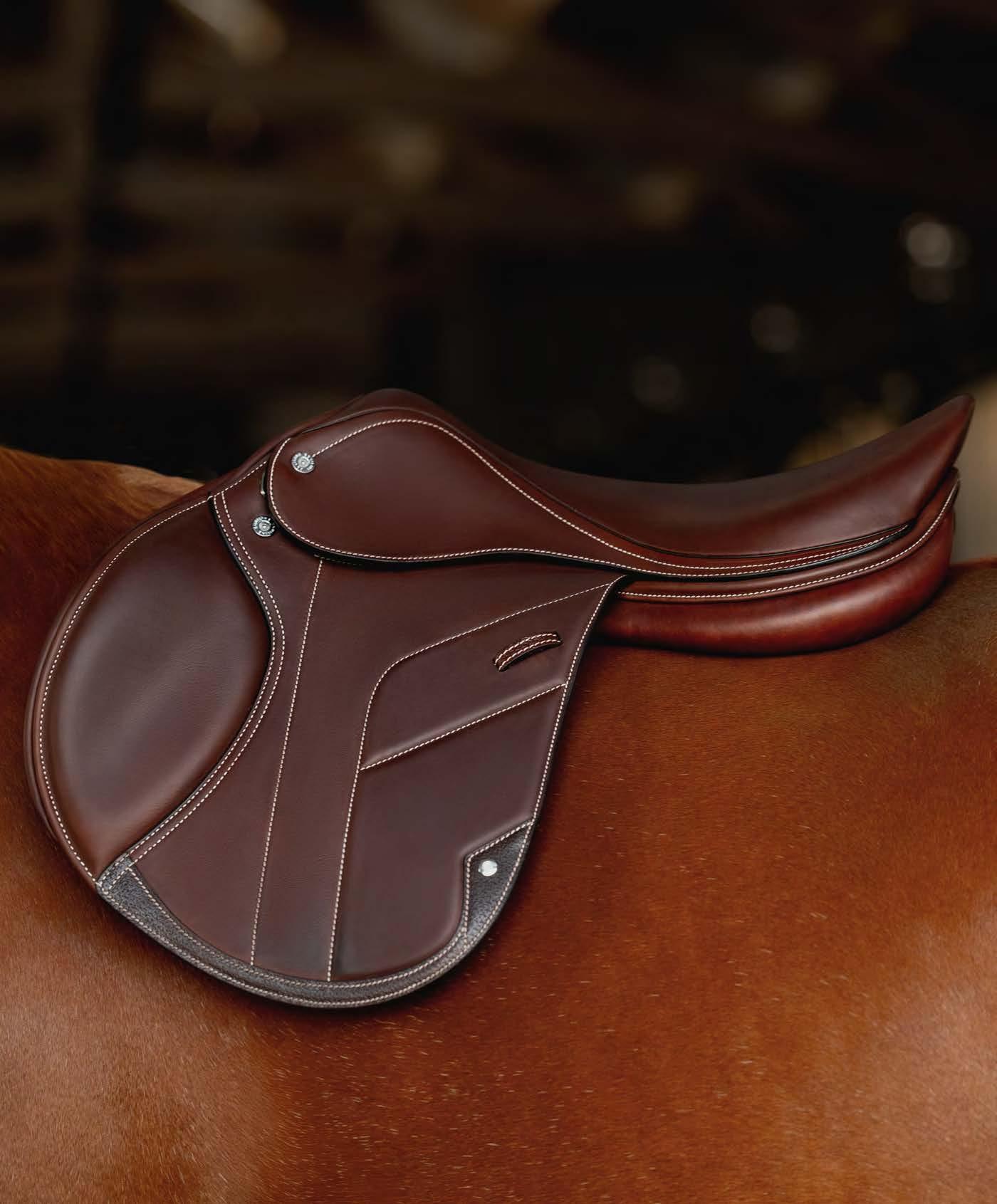
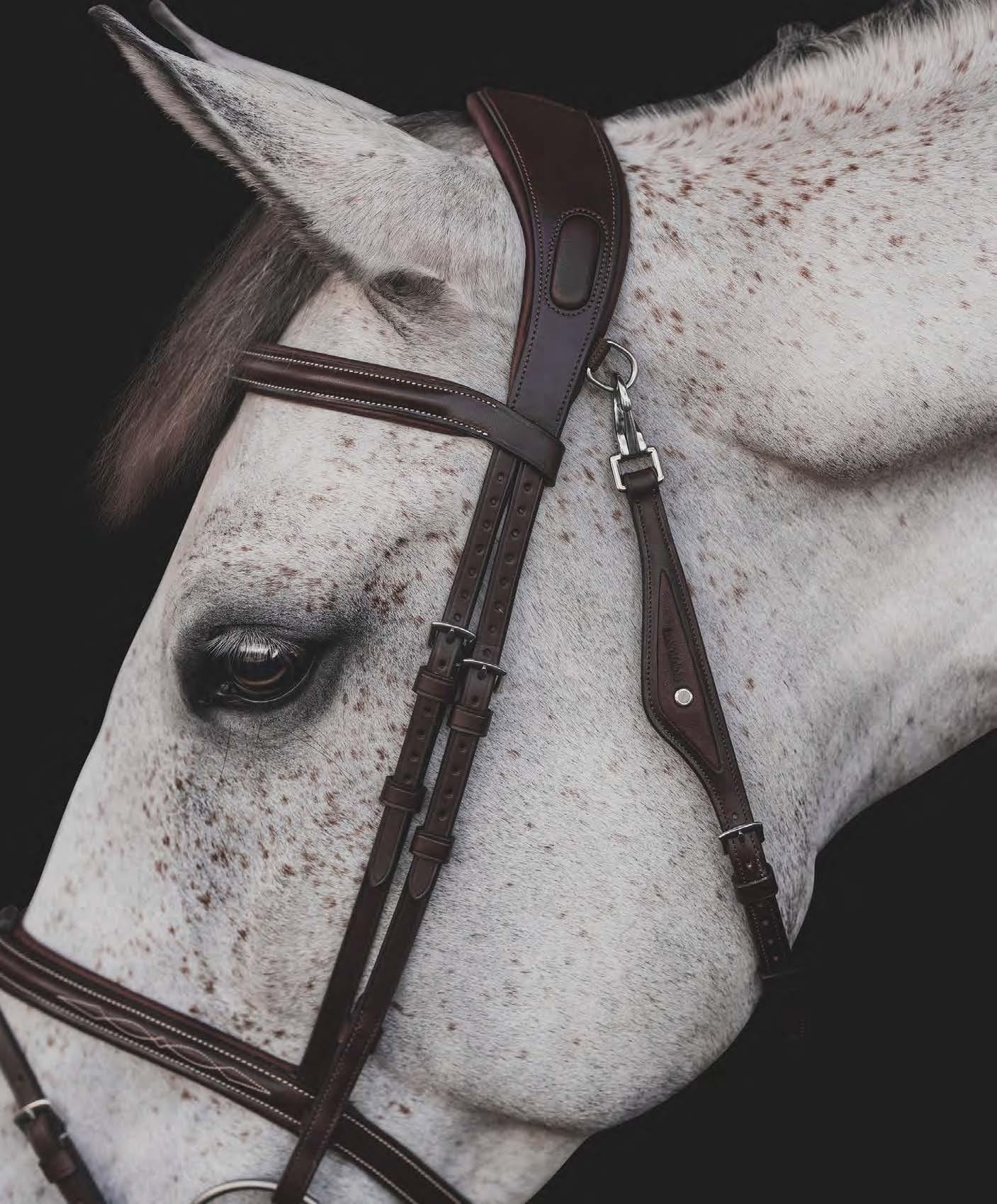
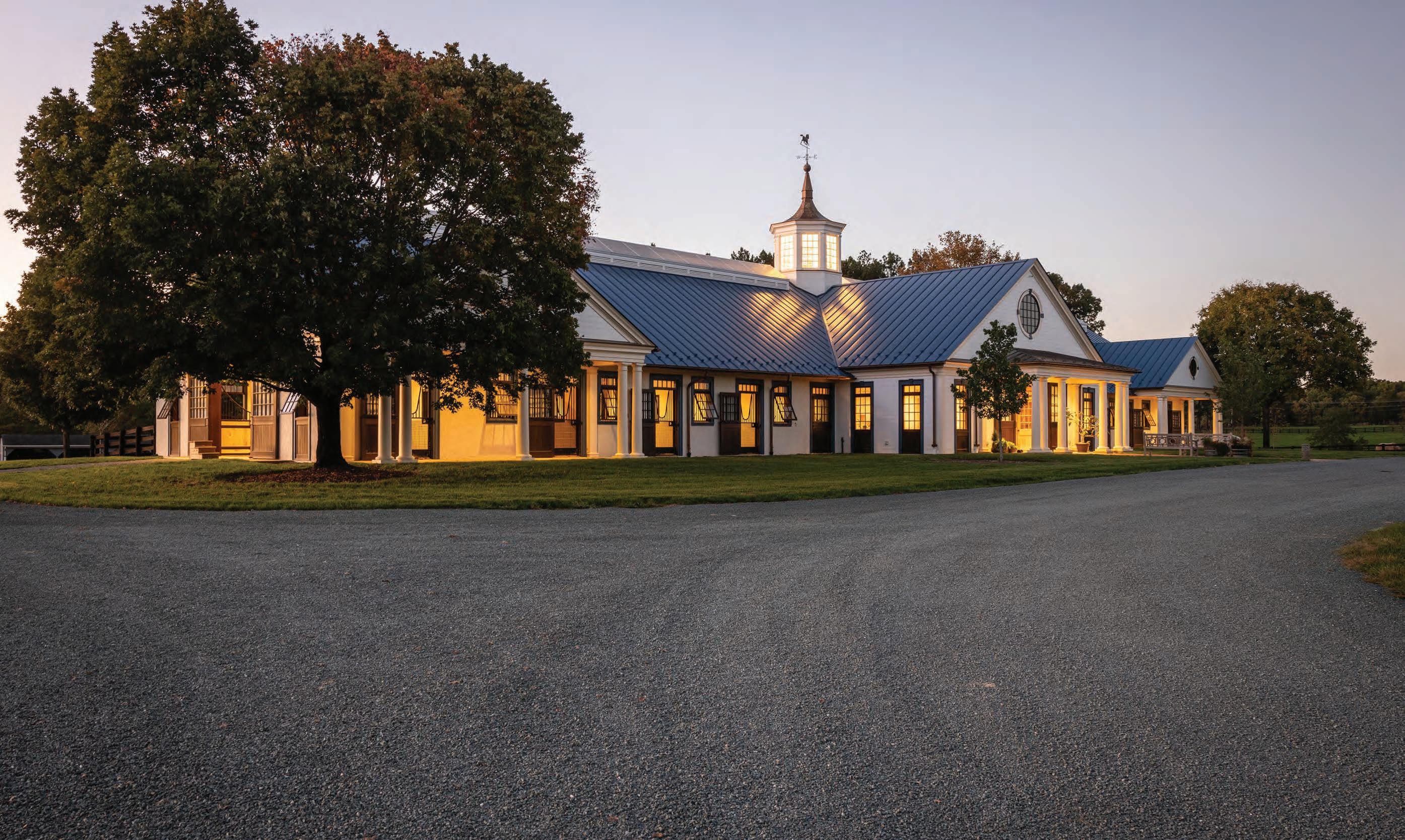
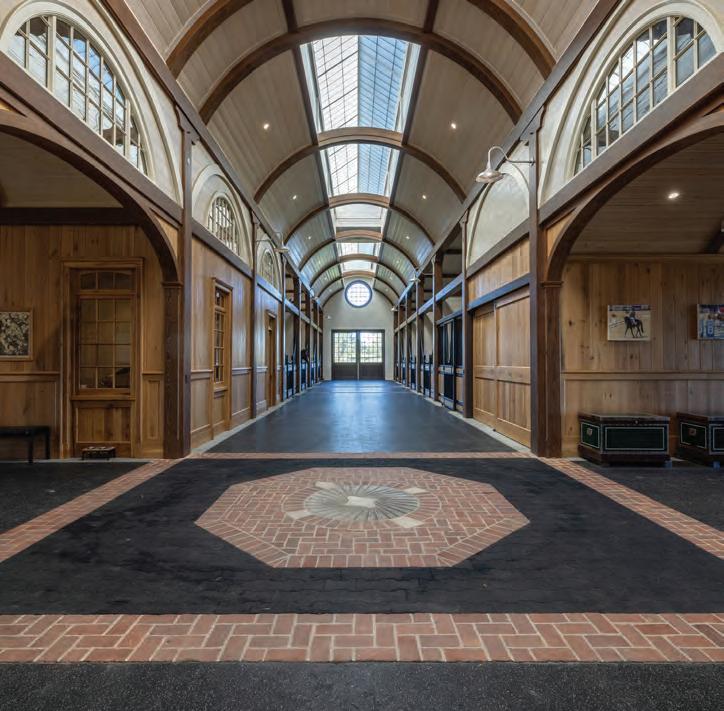
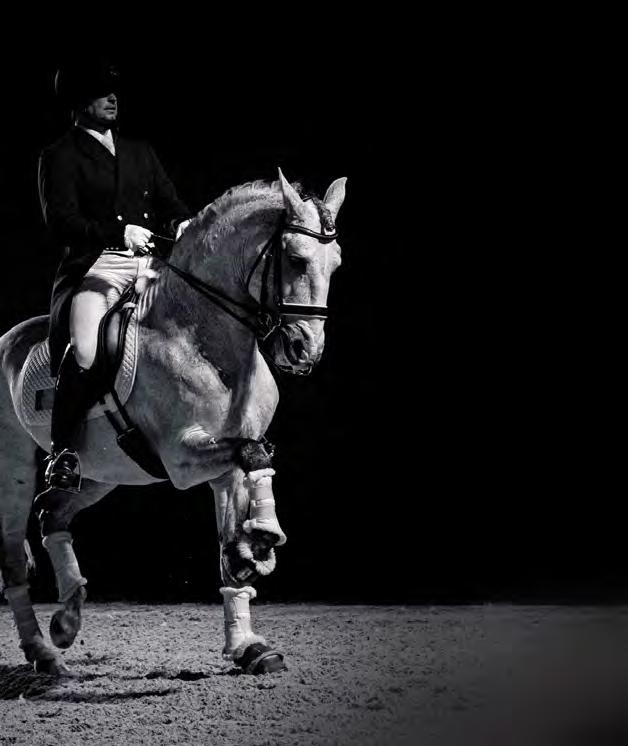
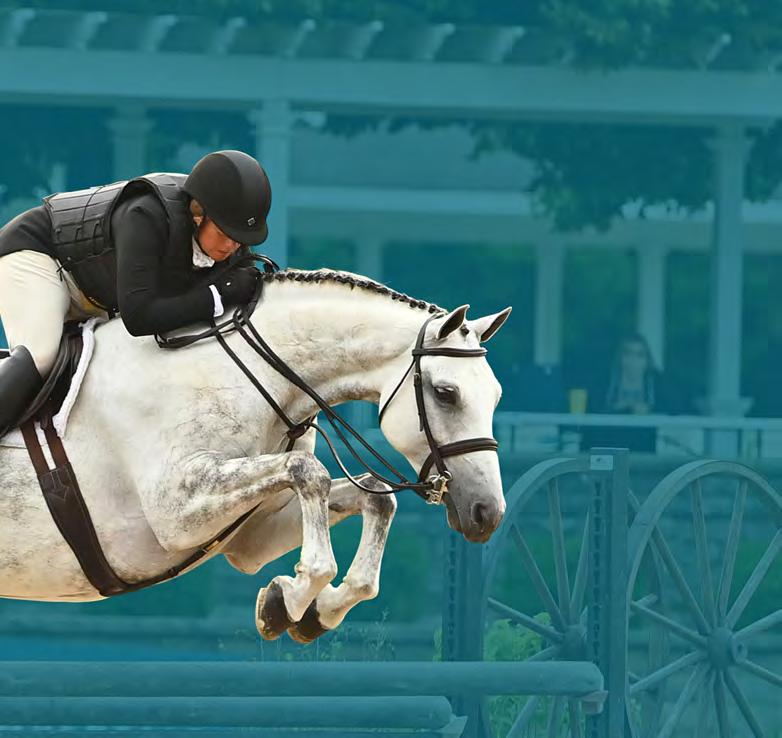
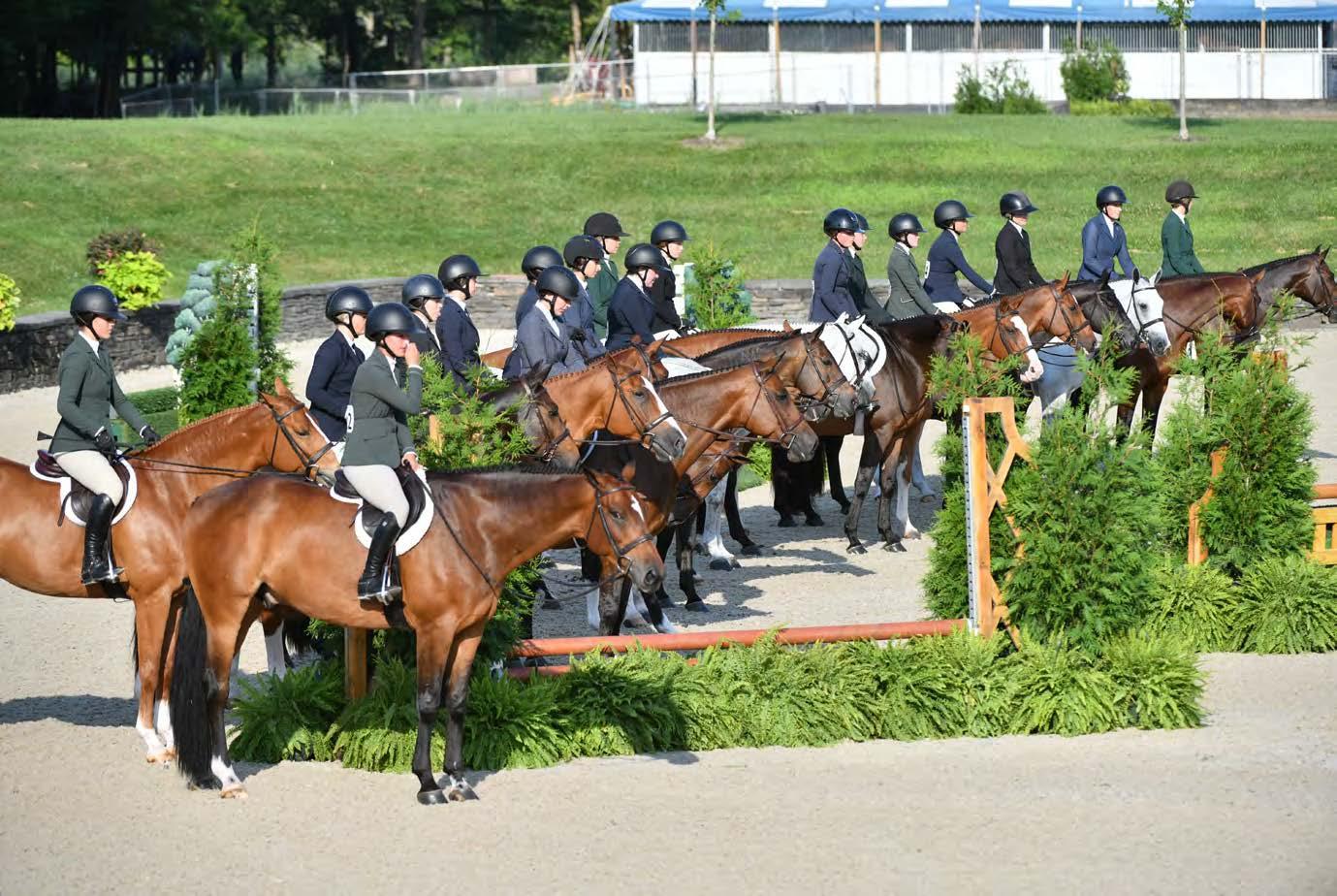
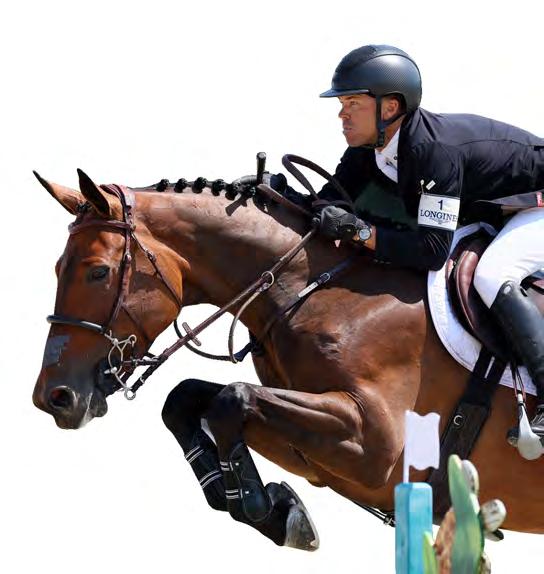
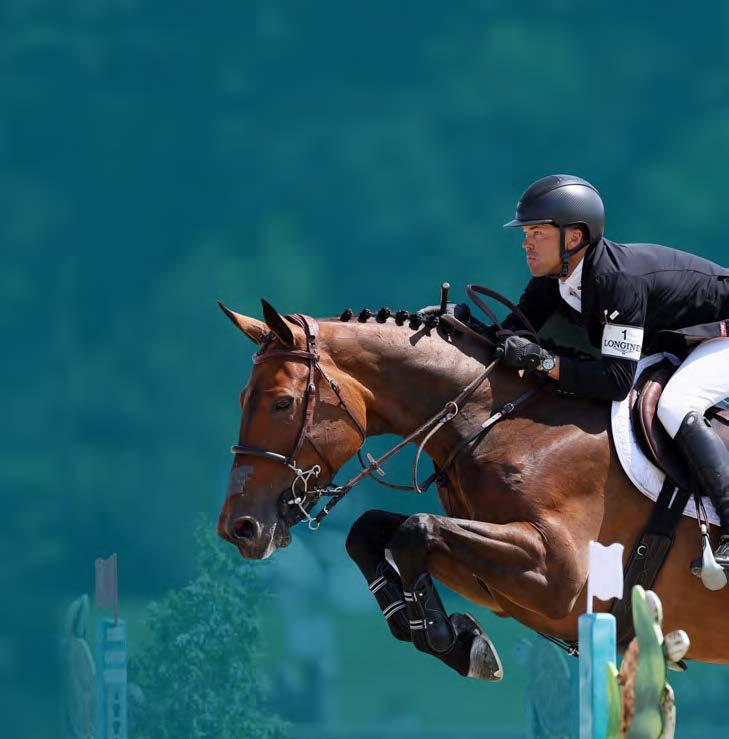
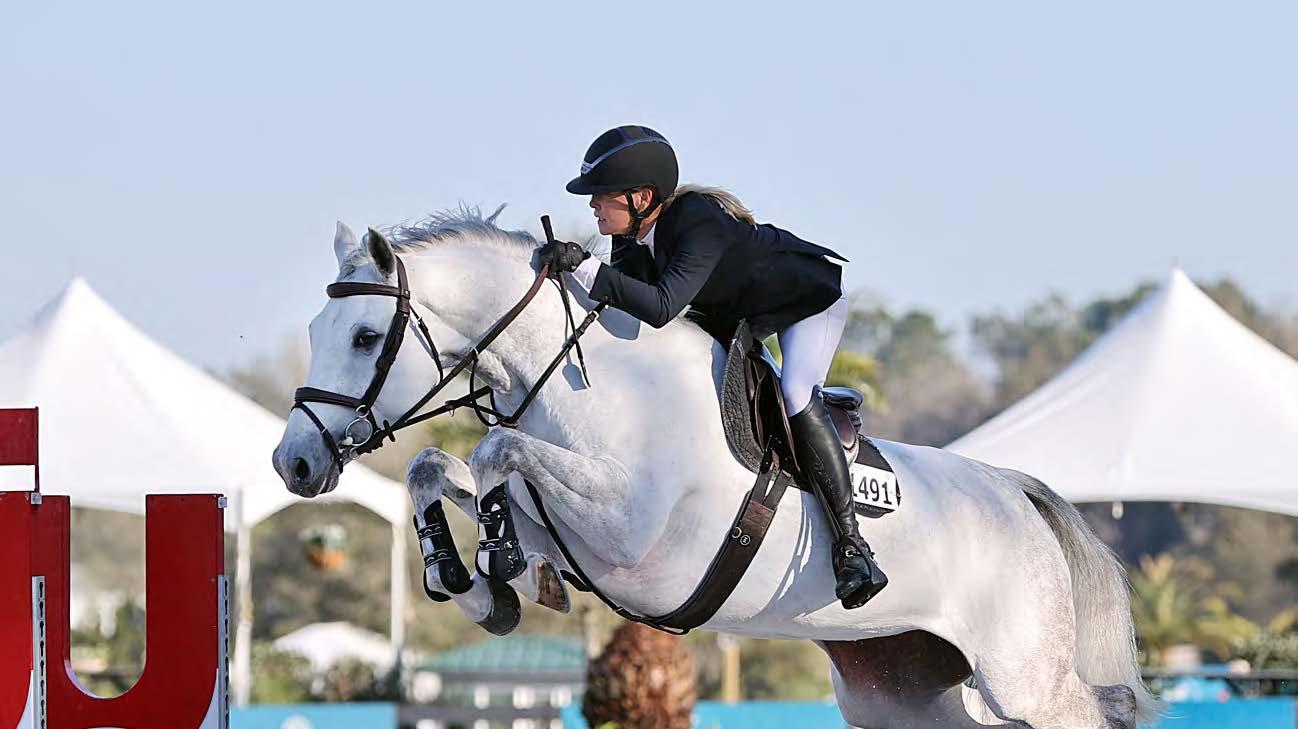
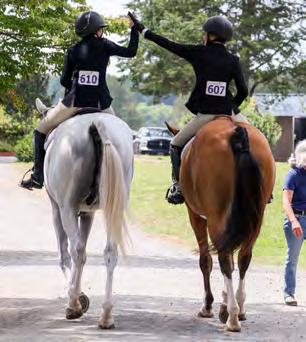
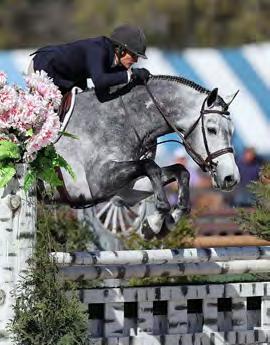
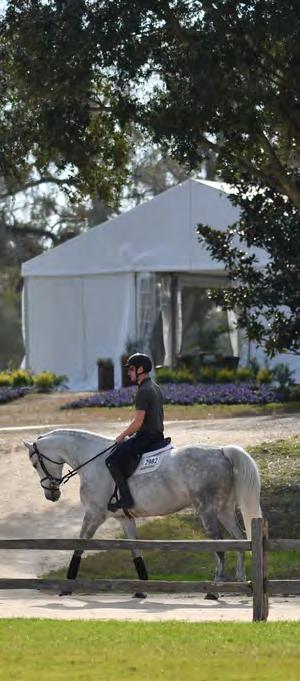
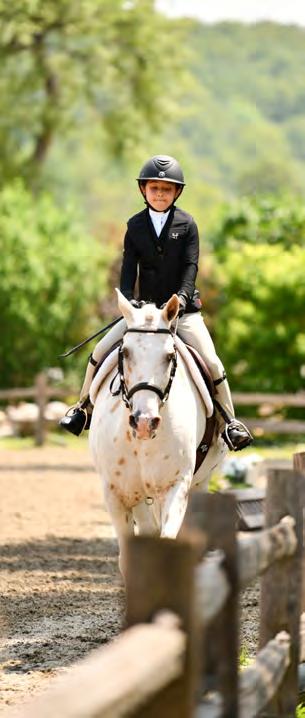
Equiline saddles set a new standard in balance, comfort, and performance. Designed to improve the way horses move and feel.
Saddle Division
Valor J.M.P.
SPRING | 2026
CASTELLO DI RESCHIO
THE SCULPTURES OF
CASTELLO DI RESCHIO 30
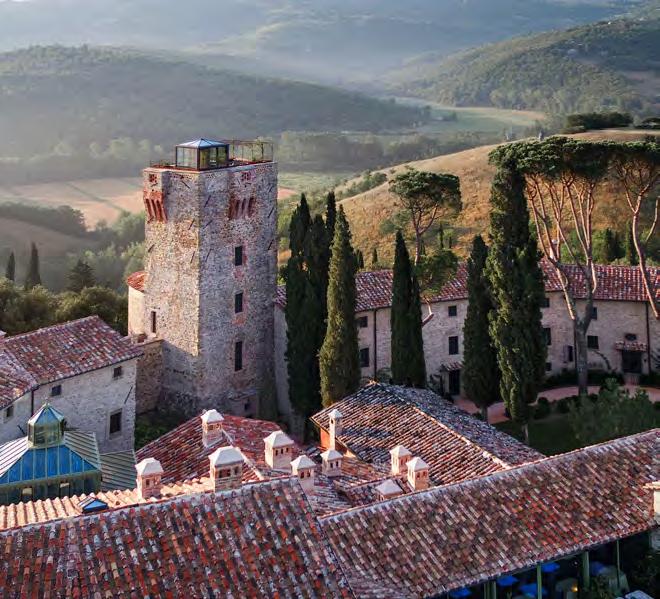
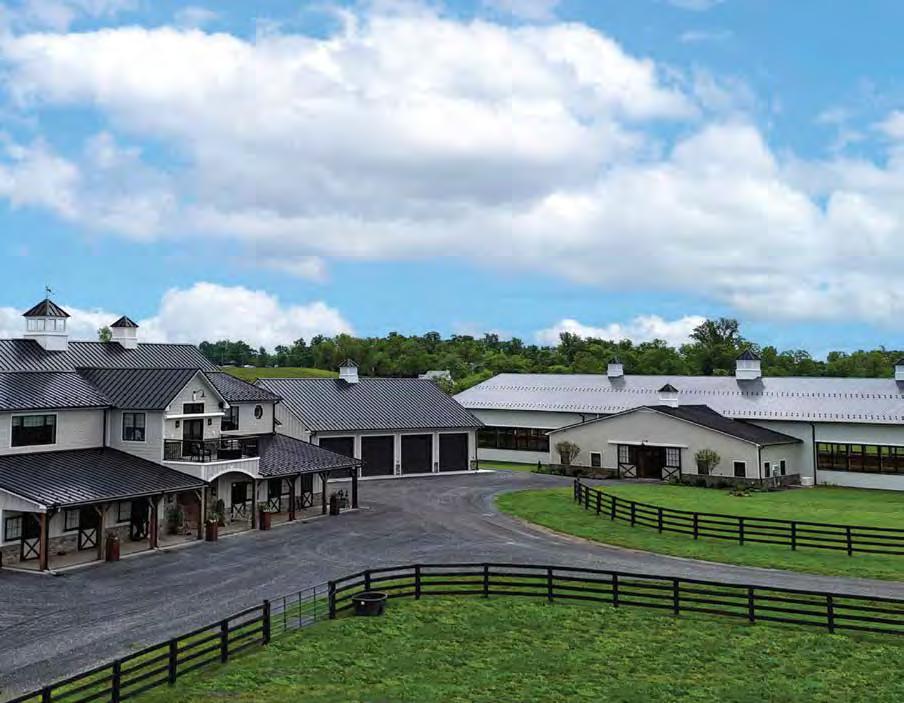
A meticulous restoration transforms a 1,000-year-old medieval fortress into a luxurious 36-suite hotel.
2026 NATIONS CUP 42
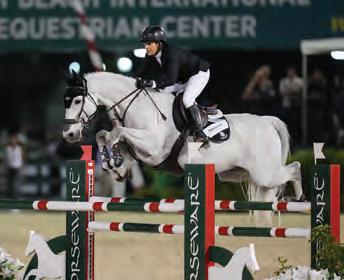
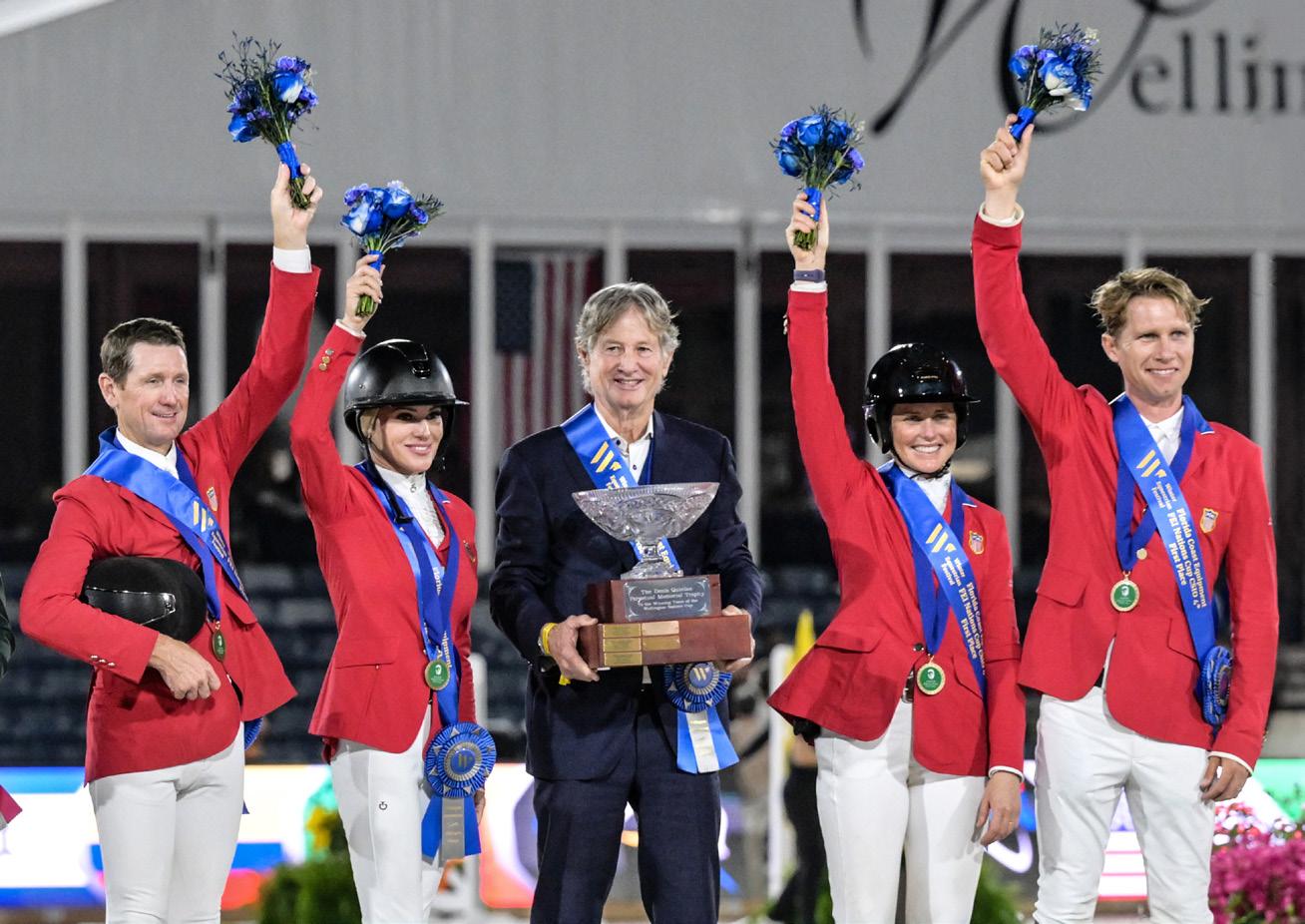
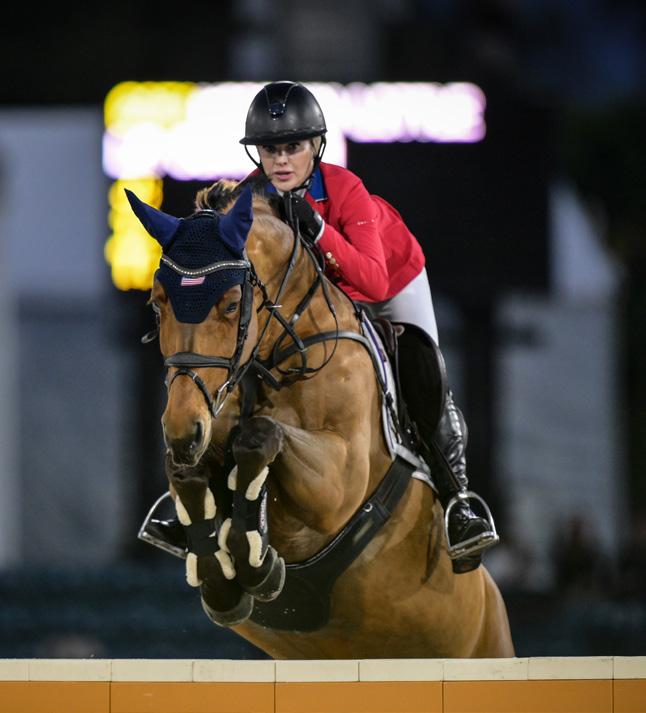
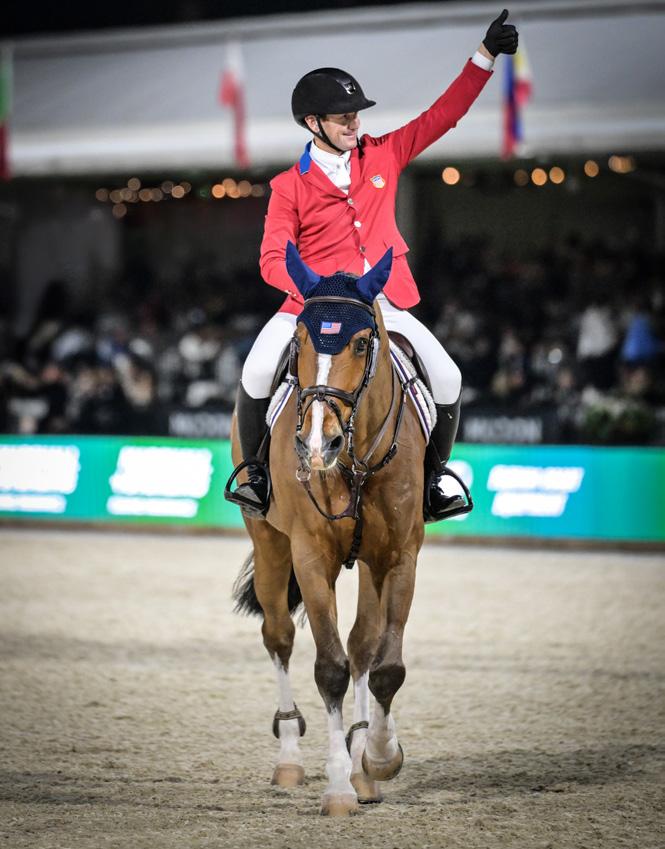
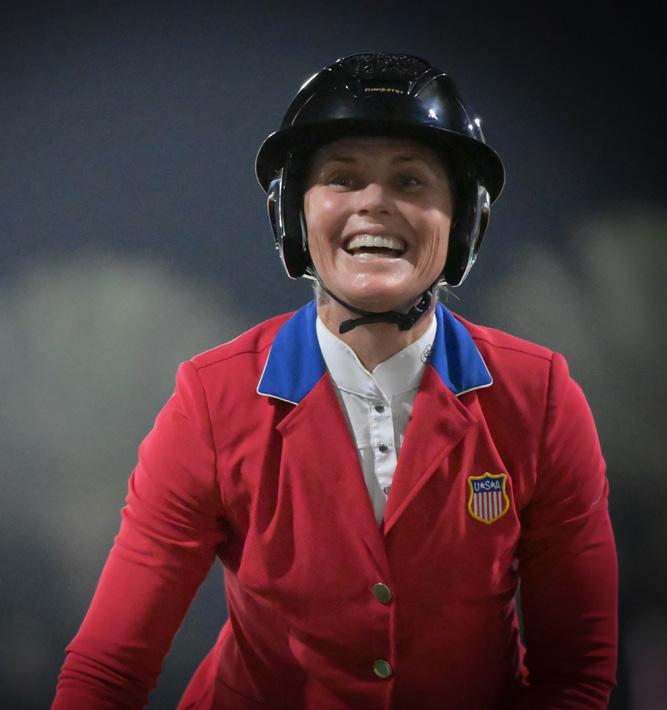
Photographer Alden Corrigan captures Team USA’s flawless, zerofault victory at the Nations Cup Wellington.
FASHION: PERFORMANCE & HERITAGE 50
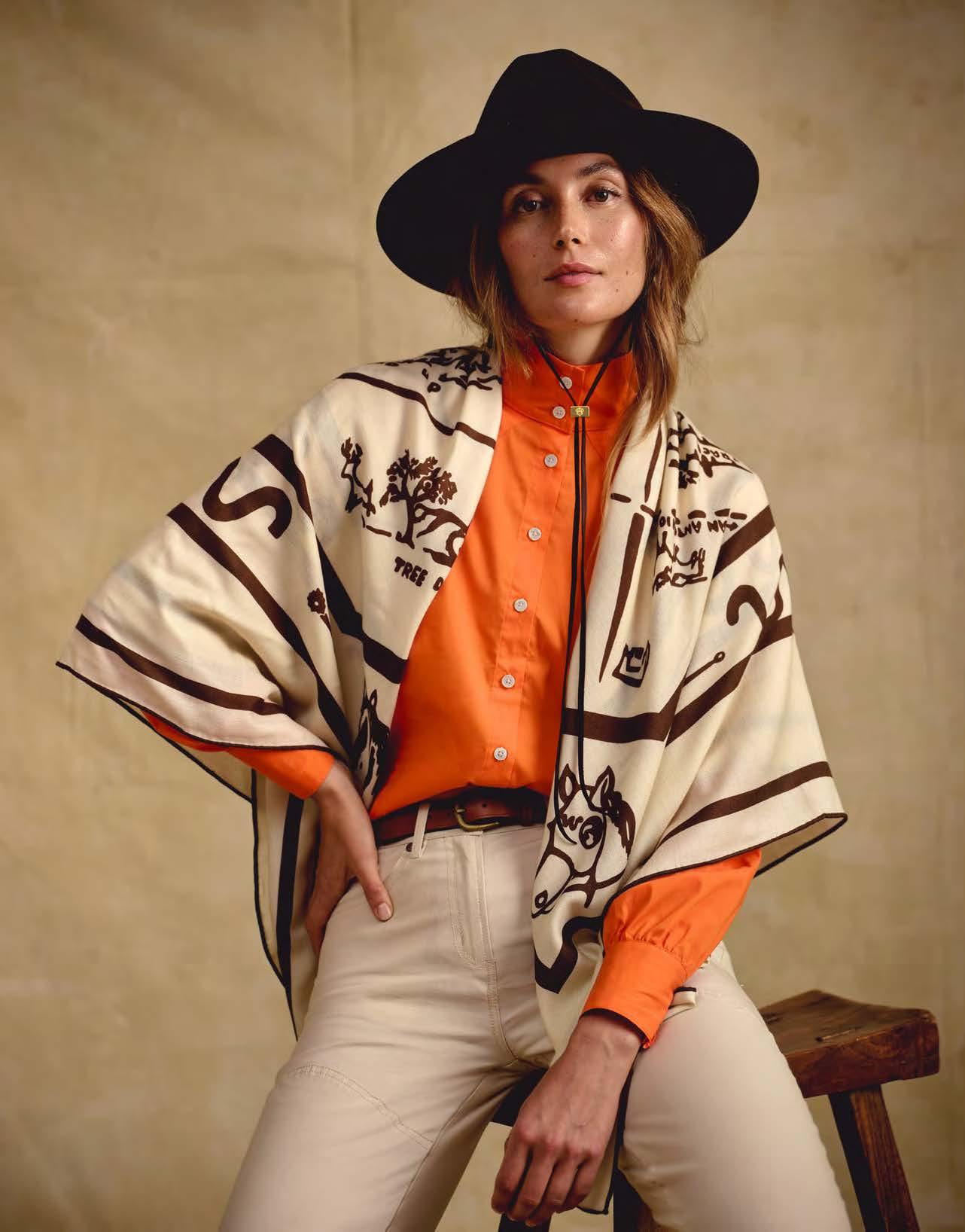
This season, we celebrate iconic equestrian brands alongside four emerging founders. These innovators bring fresh energy, high-level technical performance, and style to modern riding apparel.
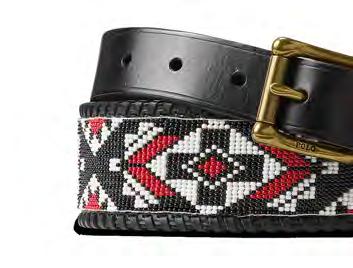
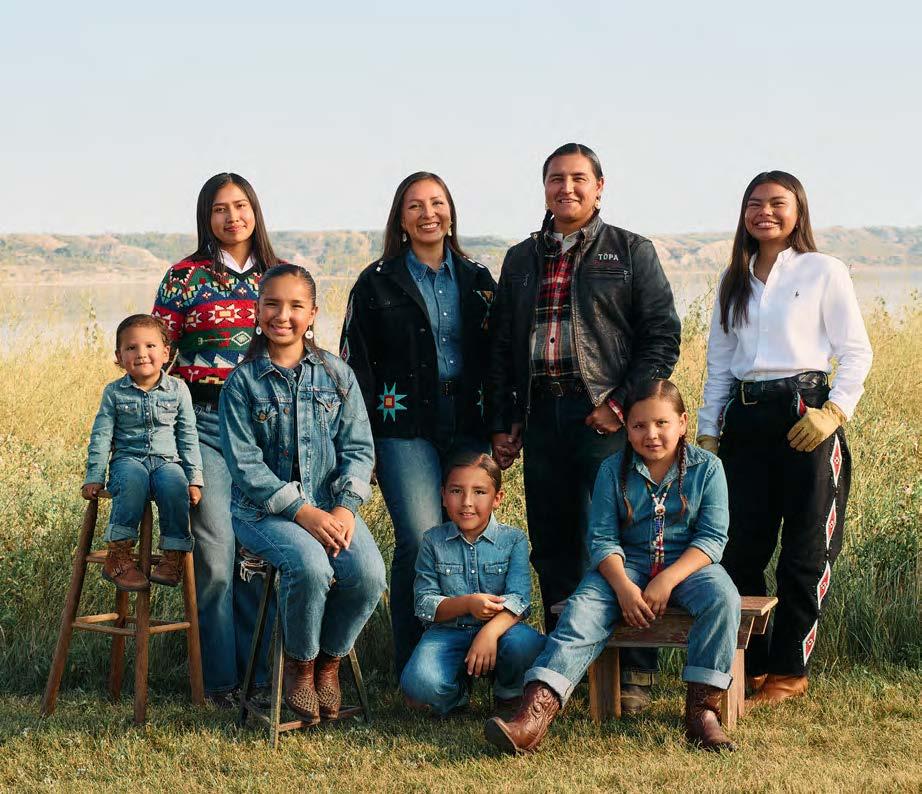
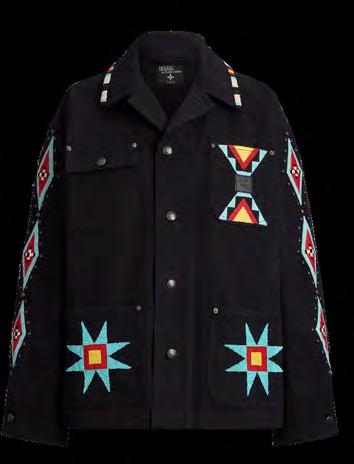
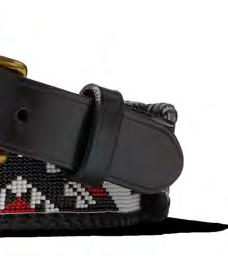
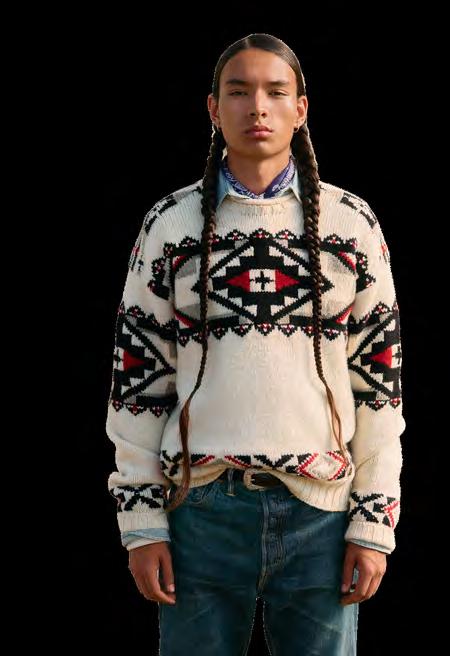
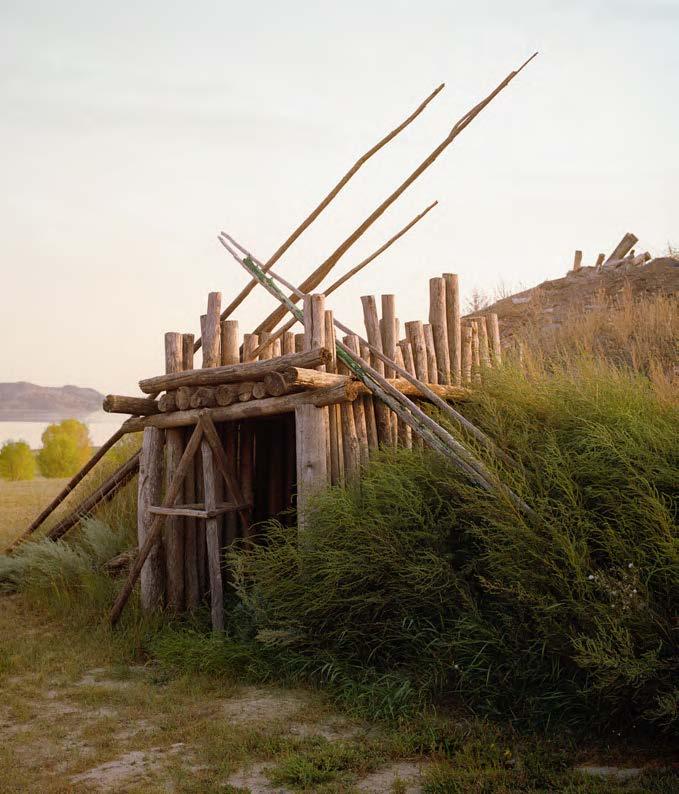
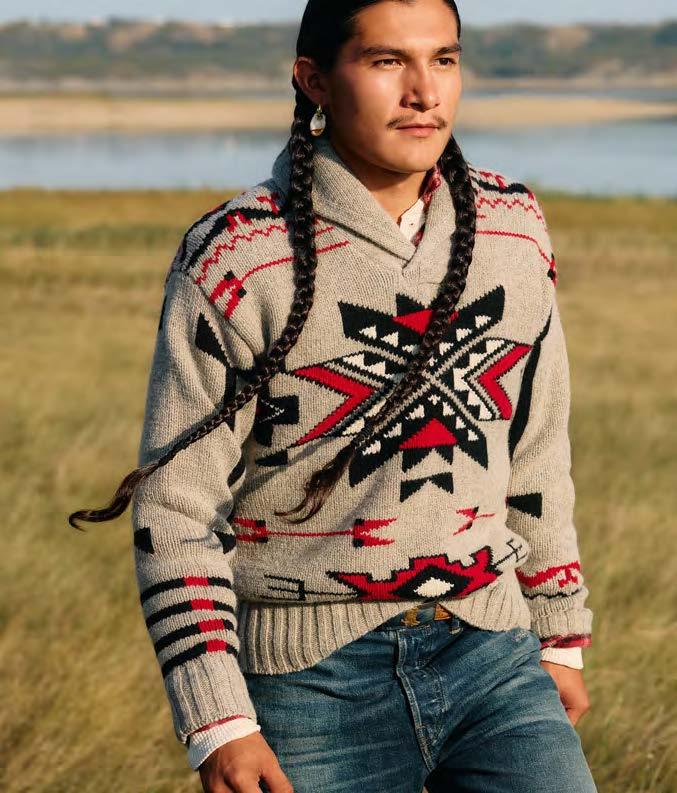
RALPH LAUREN X TÓ PA 64
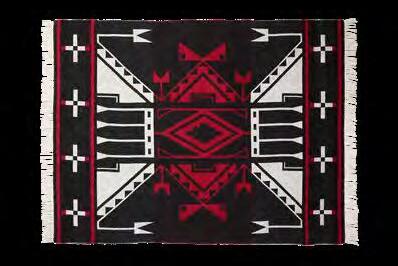
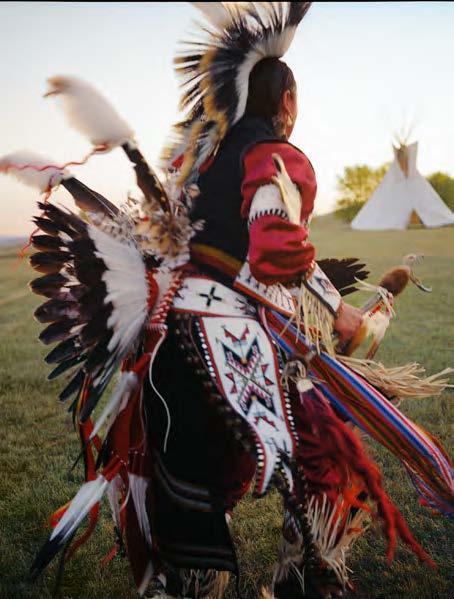
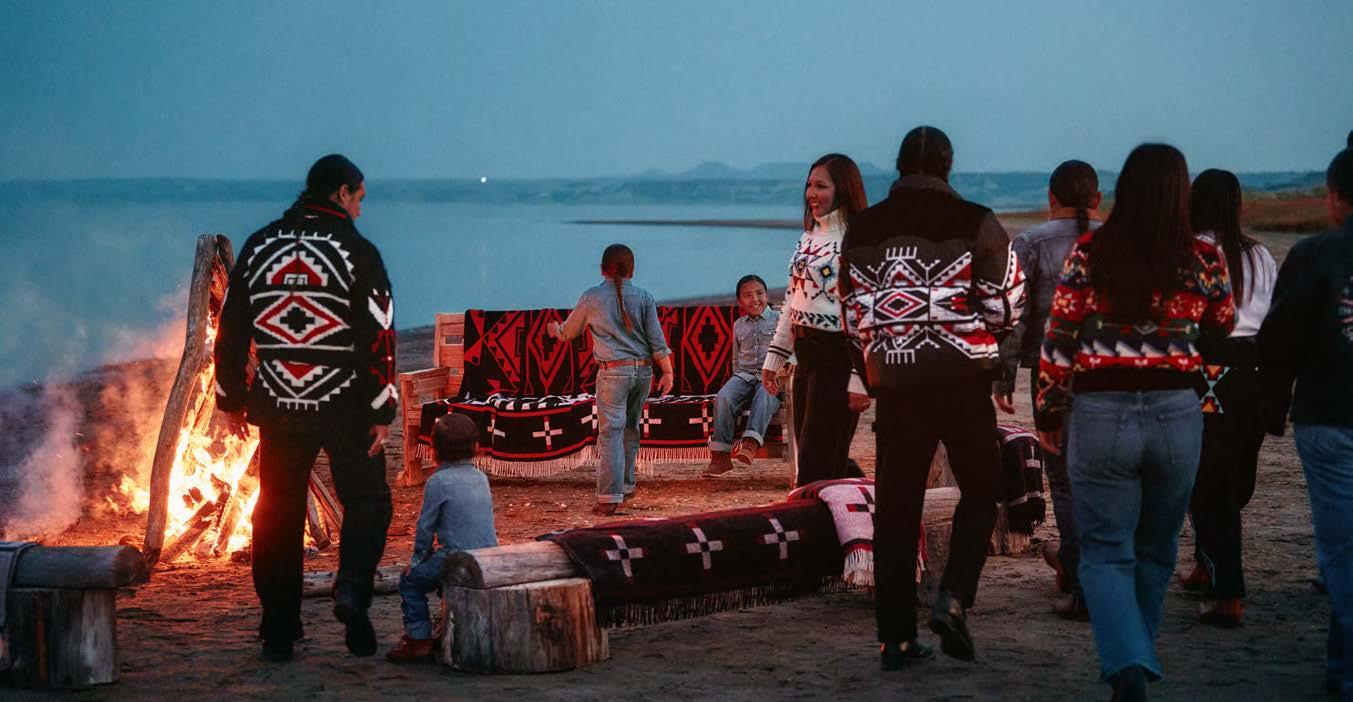
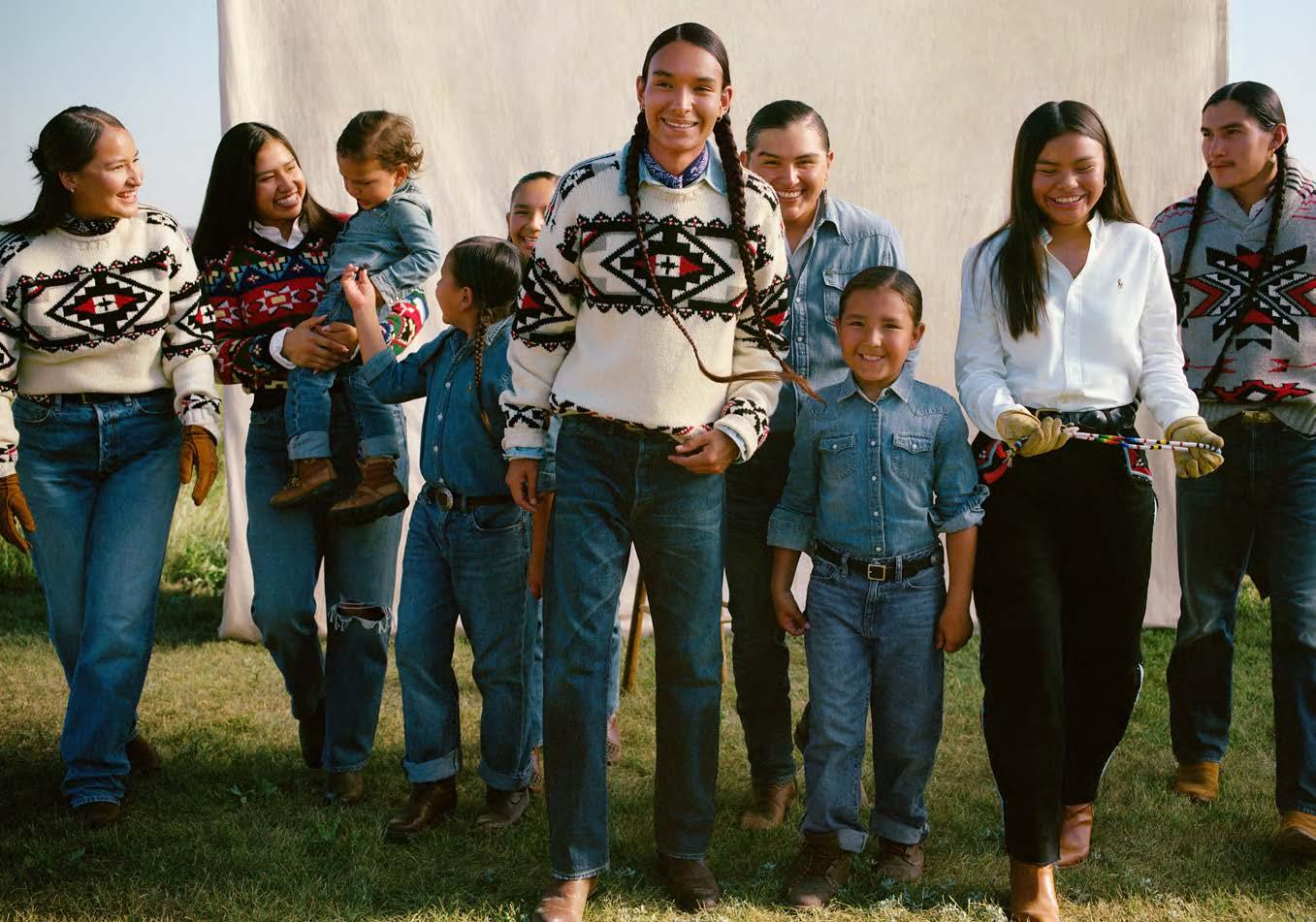
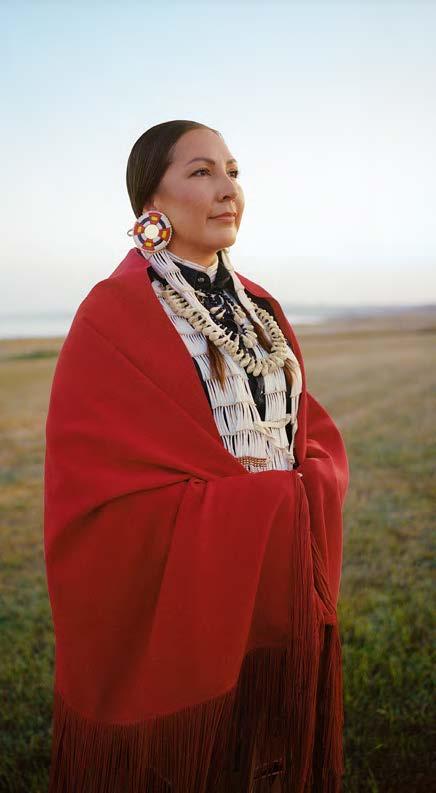
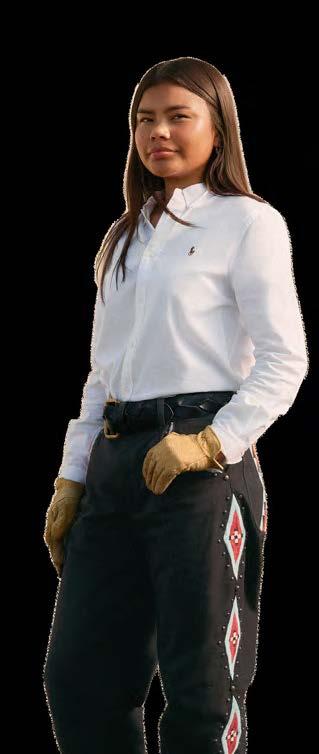
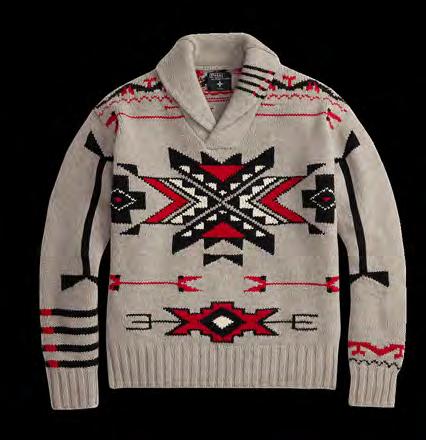
Polo Ralph Lauren recently collaborated with TÓPA, an Indigenous-led brand founded by Jocy Trae Little Sky, marking one of its most culturally grounded projects to date.
THE
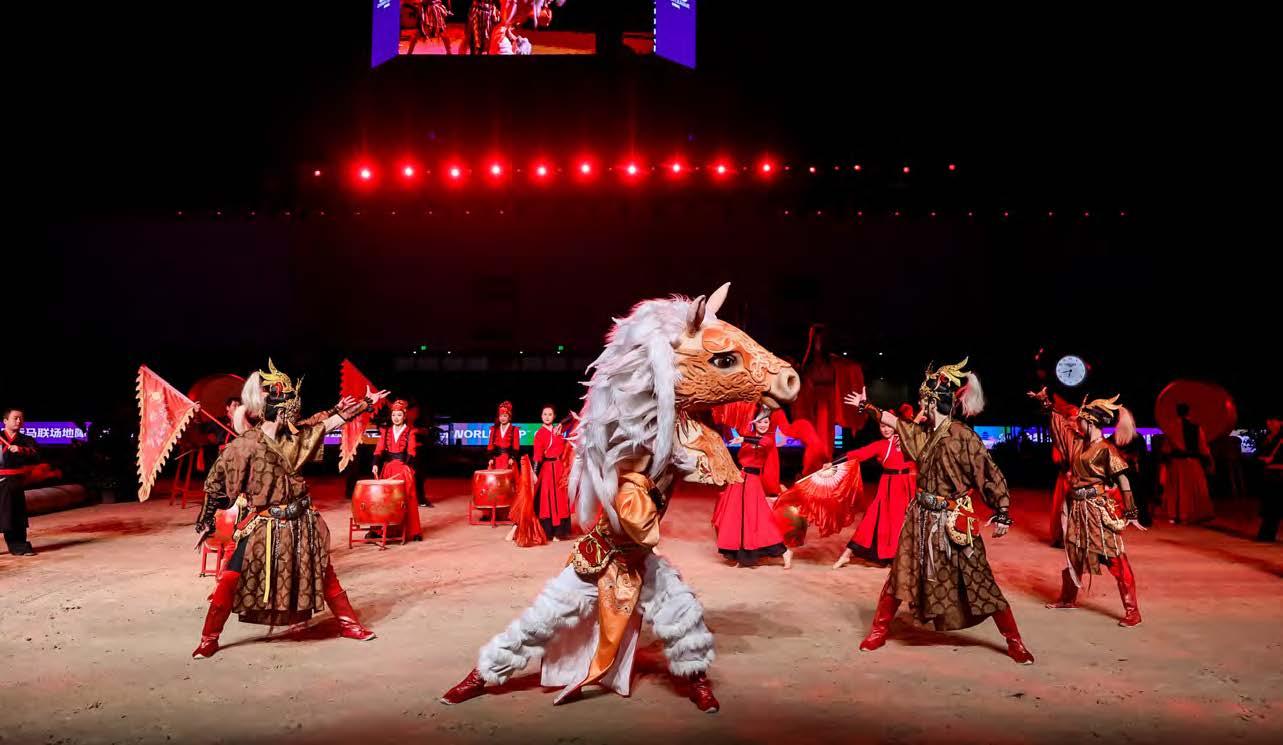
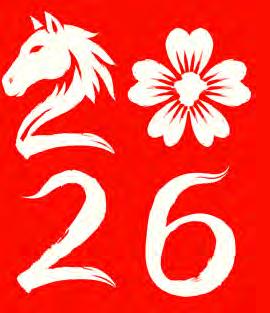
YEAR OF THE FIRE HORSE 68
In the 2026 Chinese Year of the Fire Horse, the global equestrian community enters a rare and powerful period, with intense energy, bold momentum, and major transformations.
HORSES, HISTORY, AND IRISH ROOTS 74
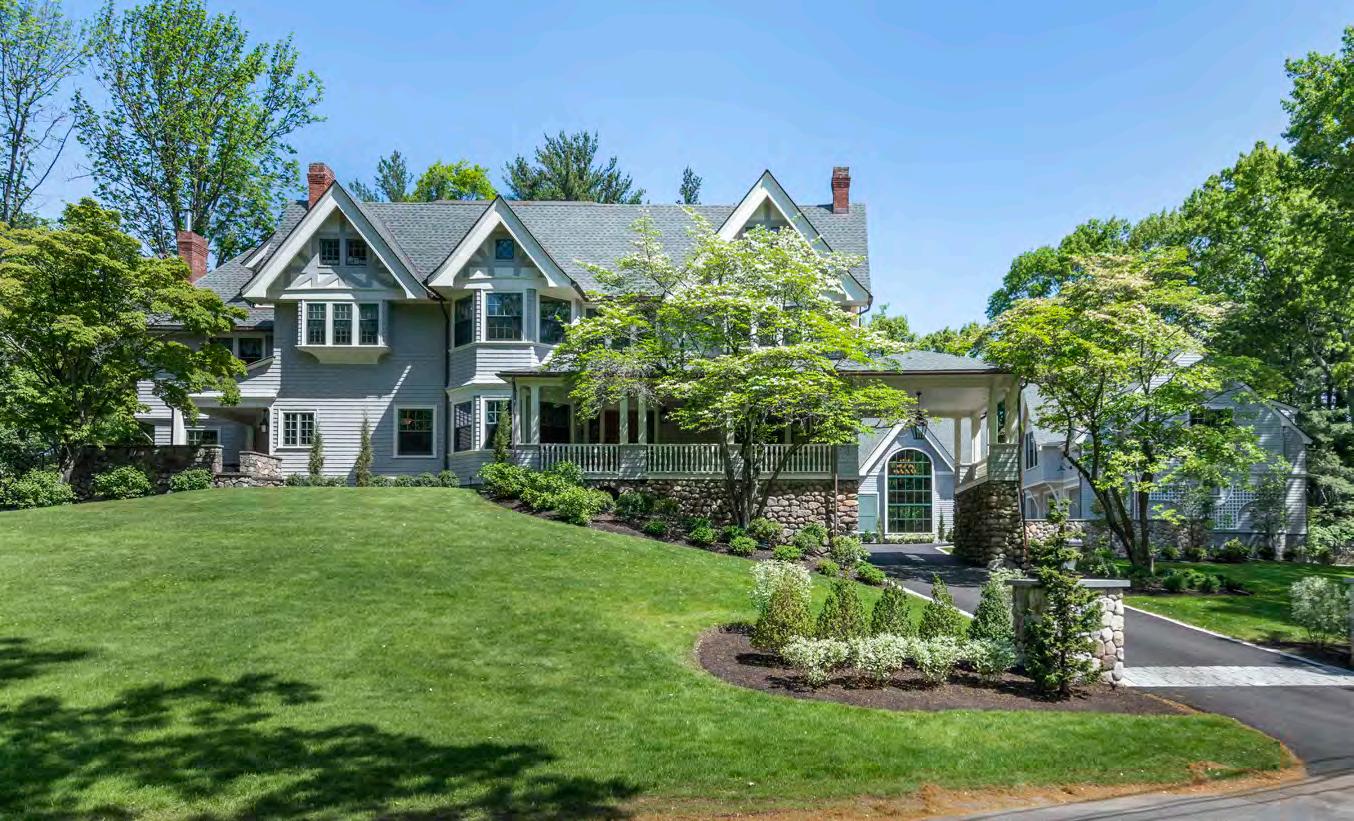
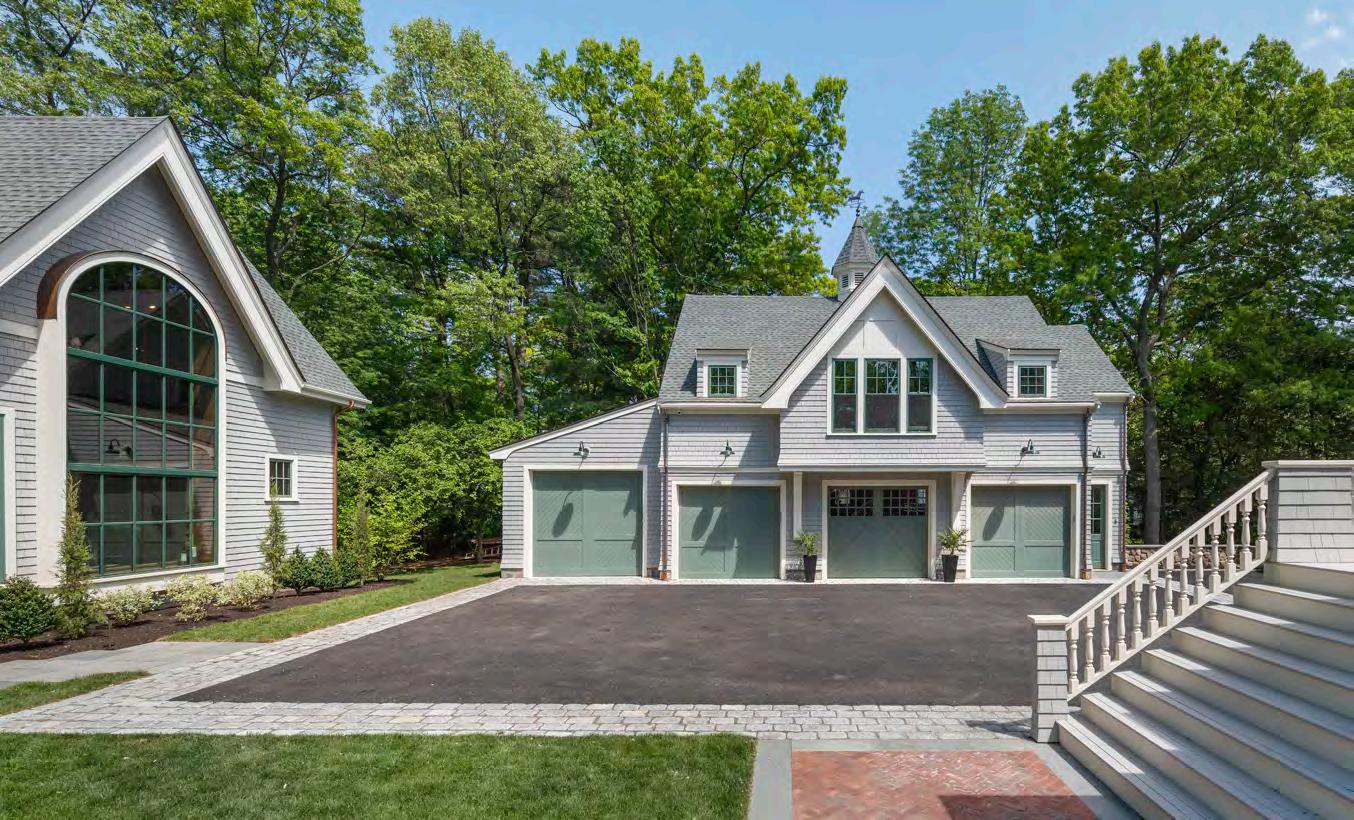
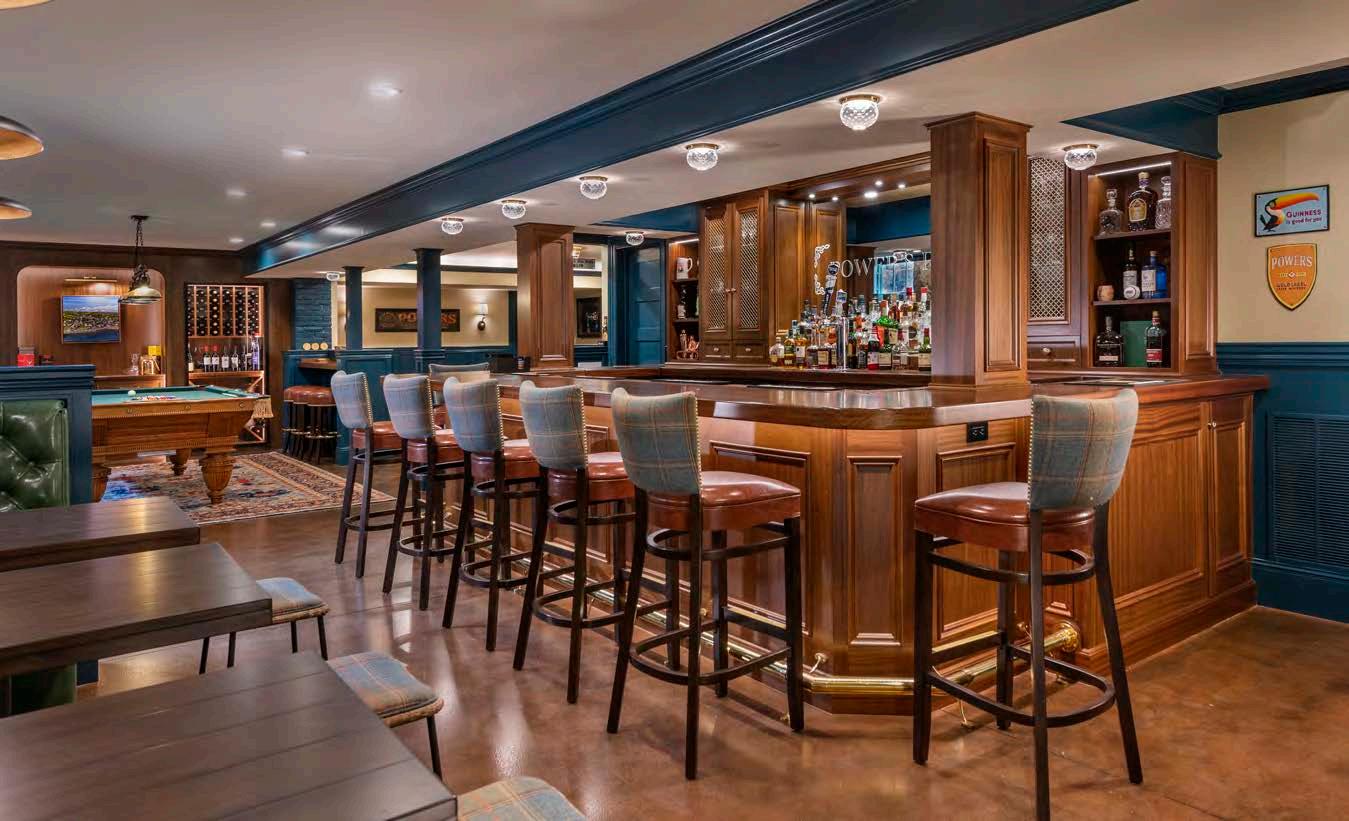
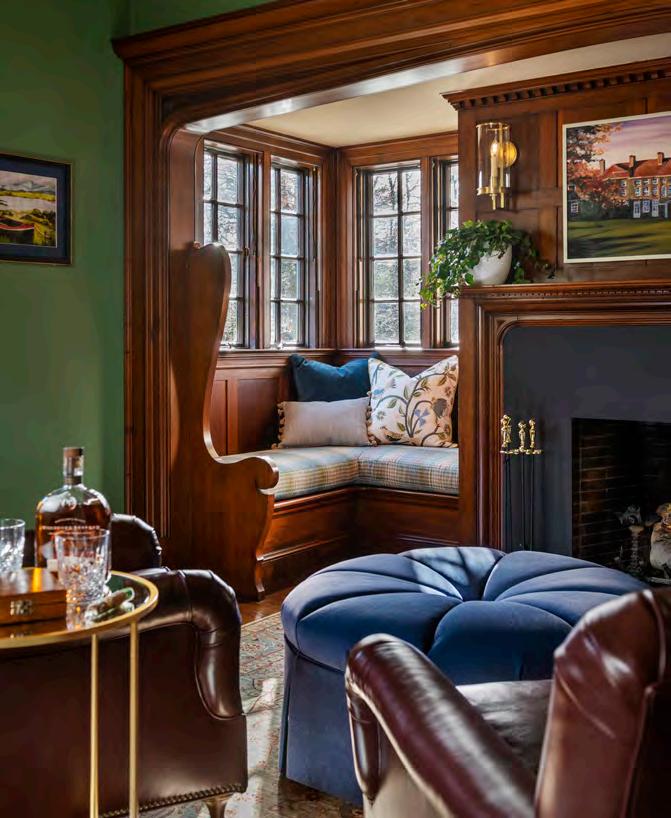
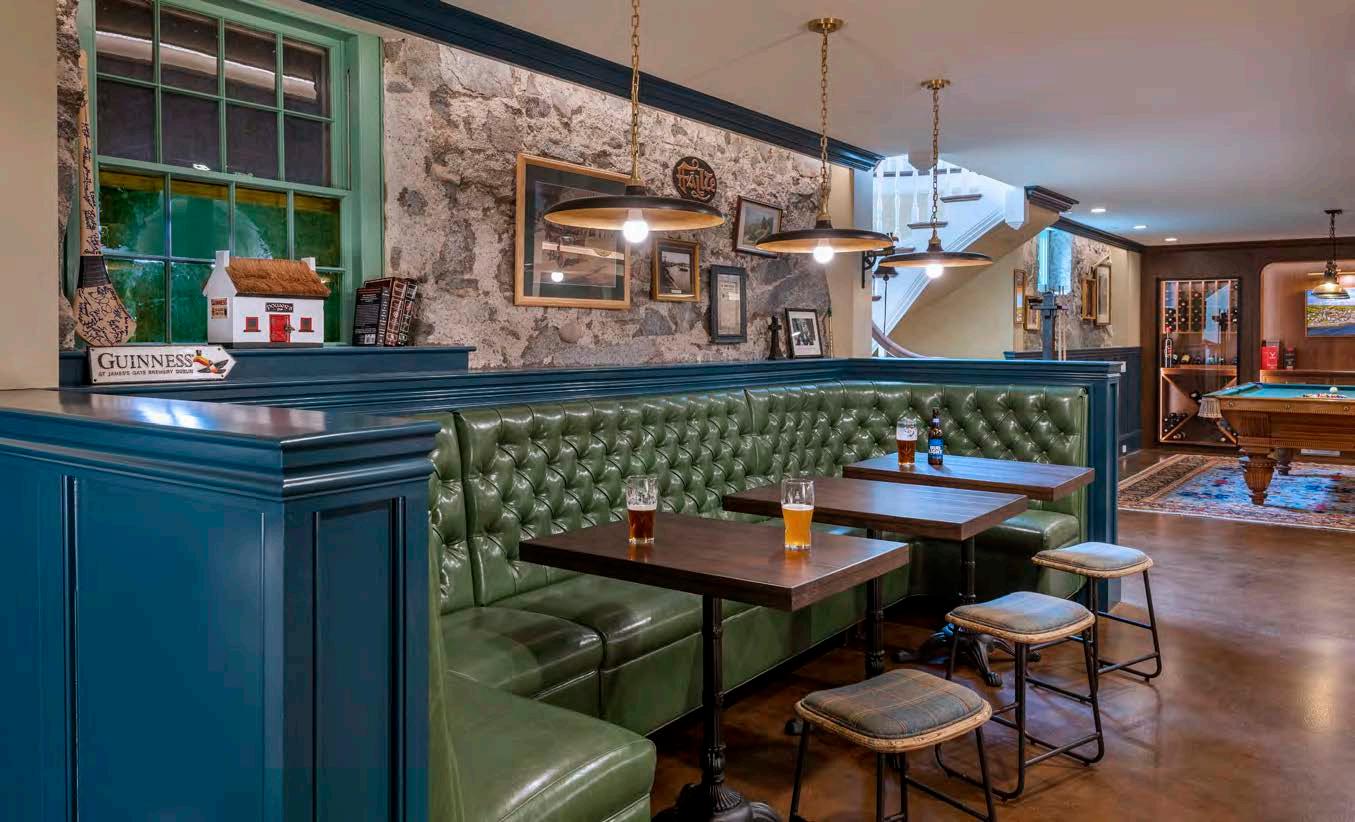
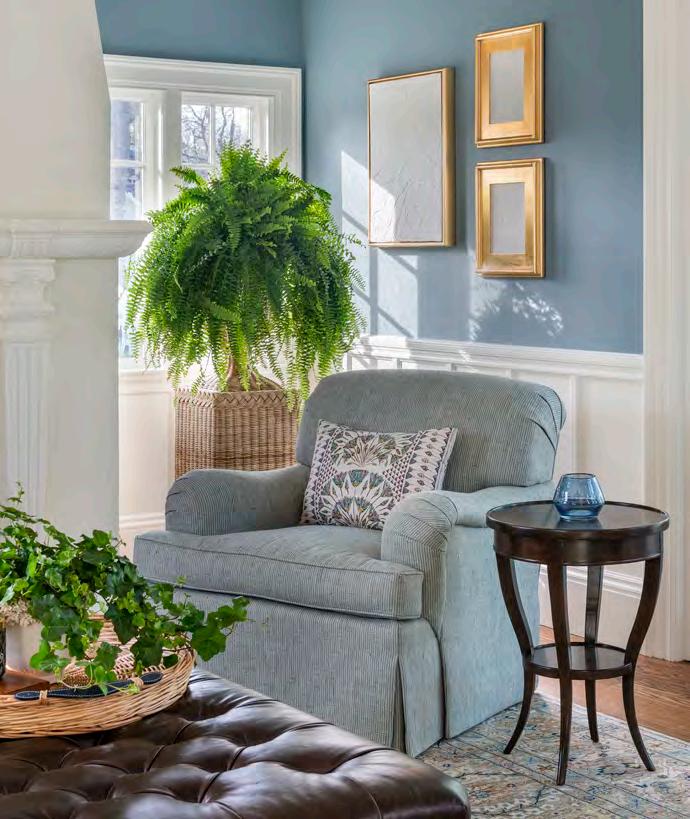
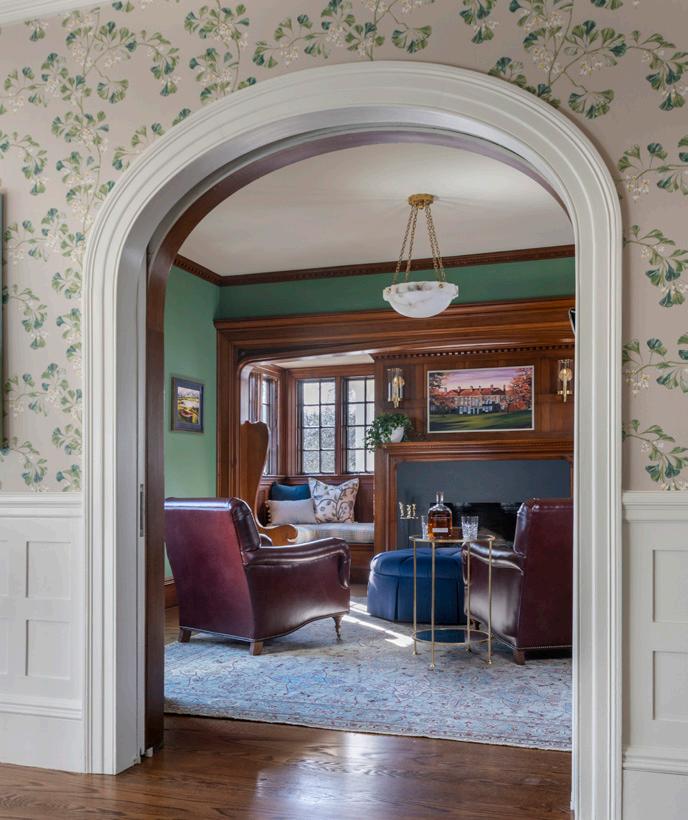
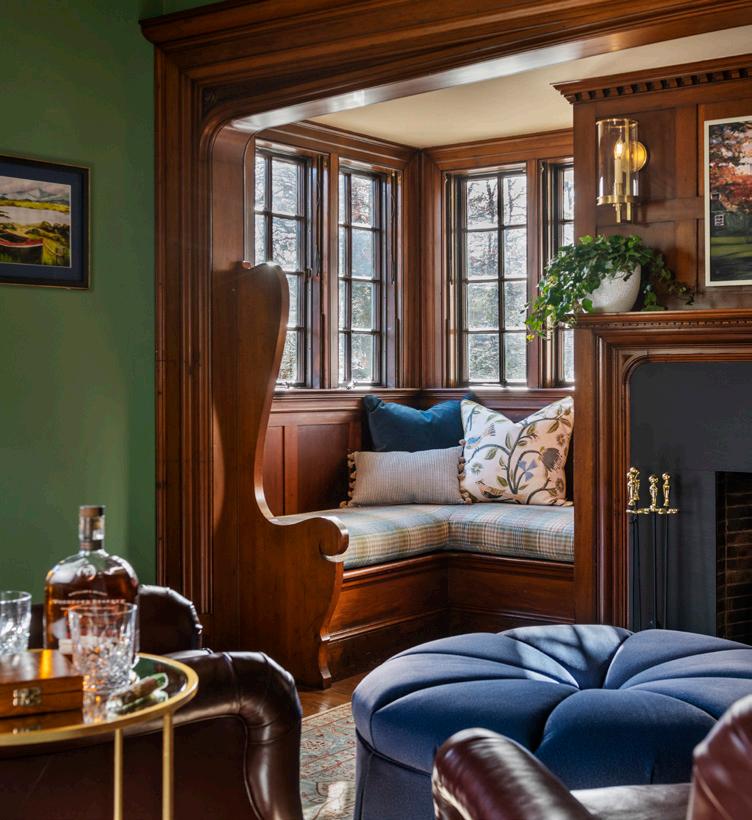
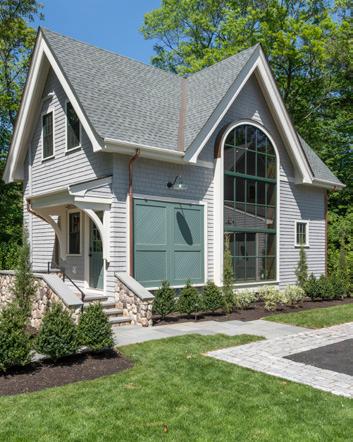
Interior designer Kelly Laurence modernizes a historic home while honoring its original character and Irish heritage.
STYLED BY INSTINCT 80
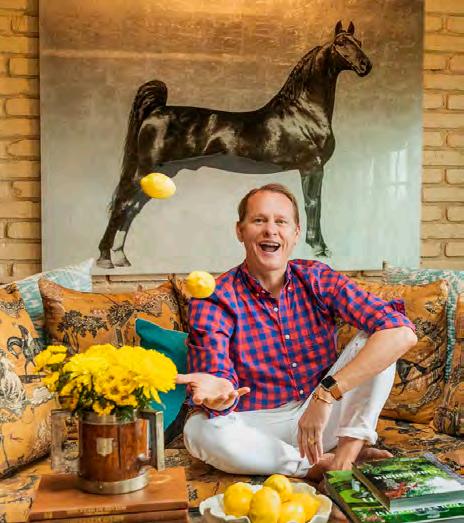
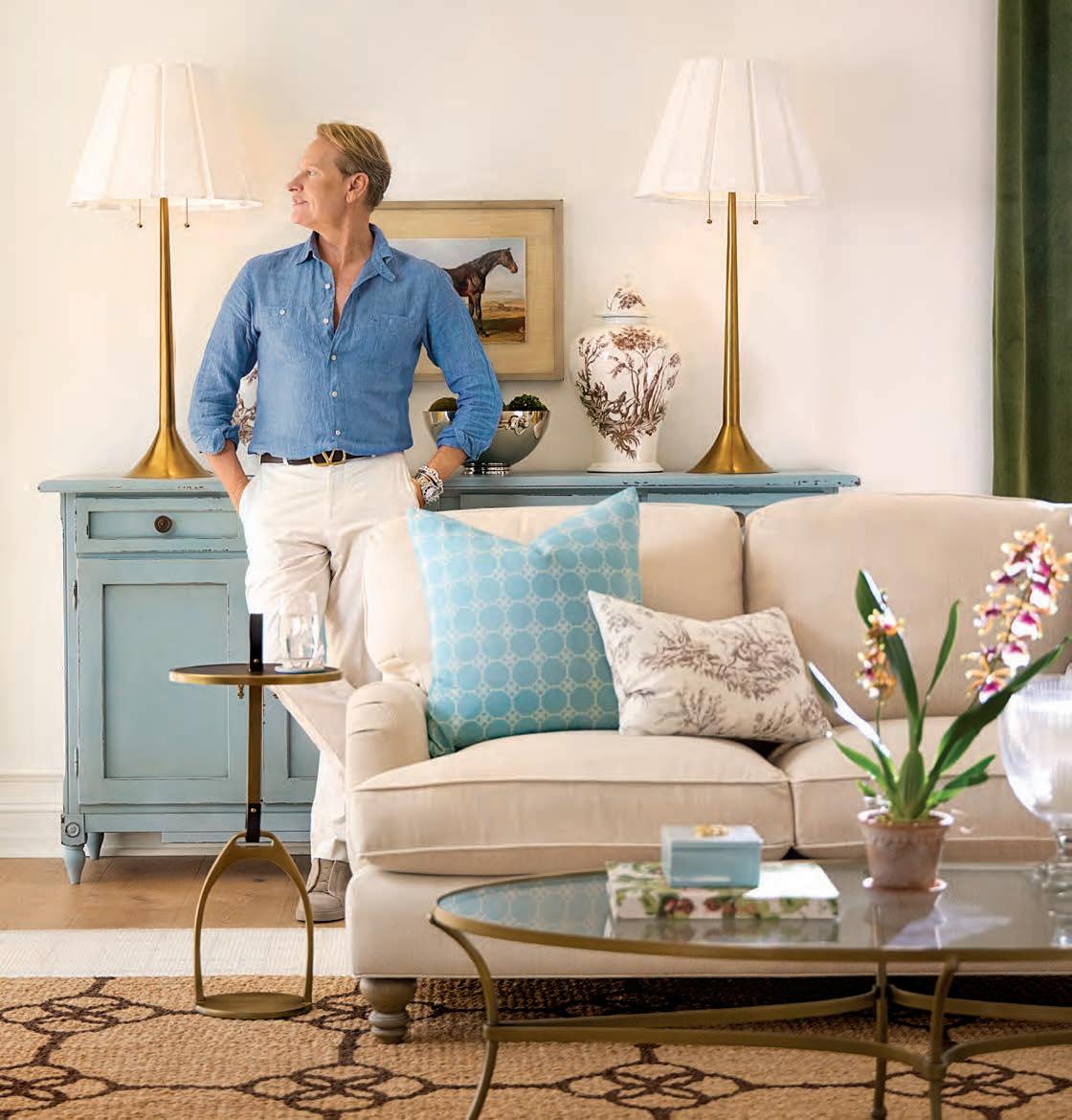
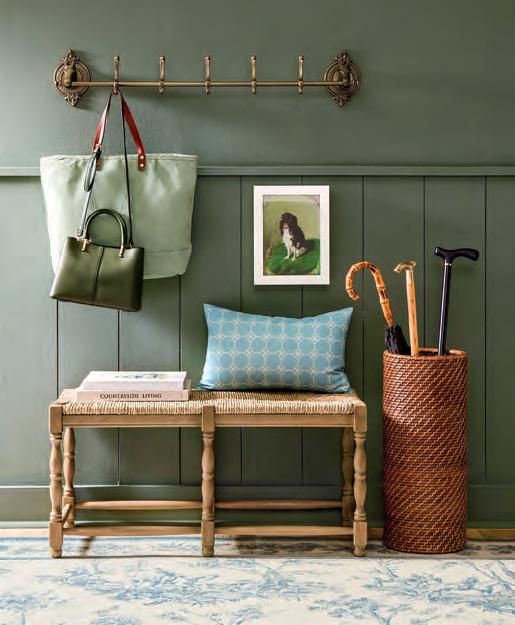
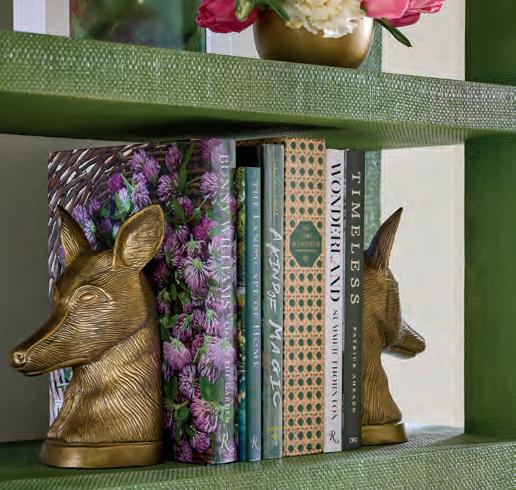
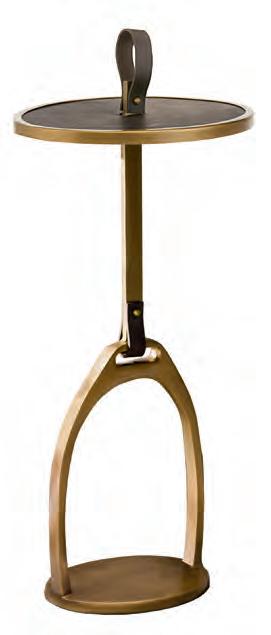
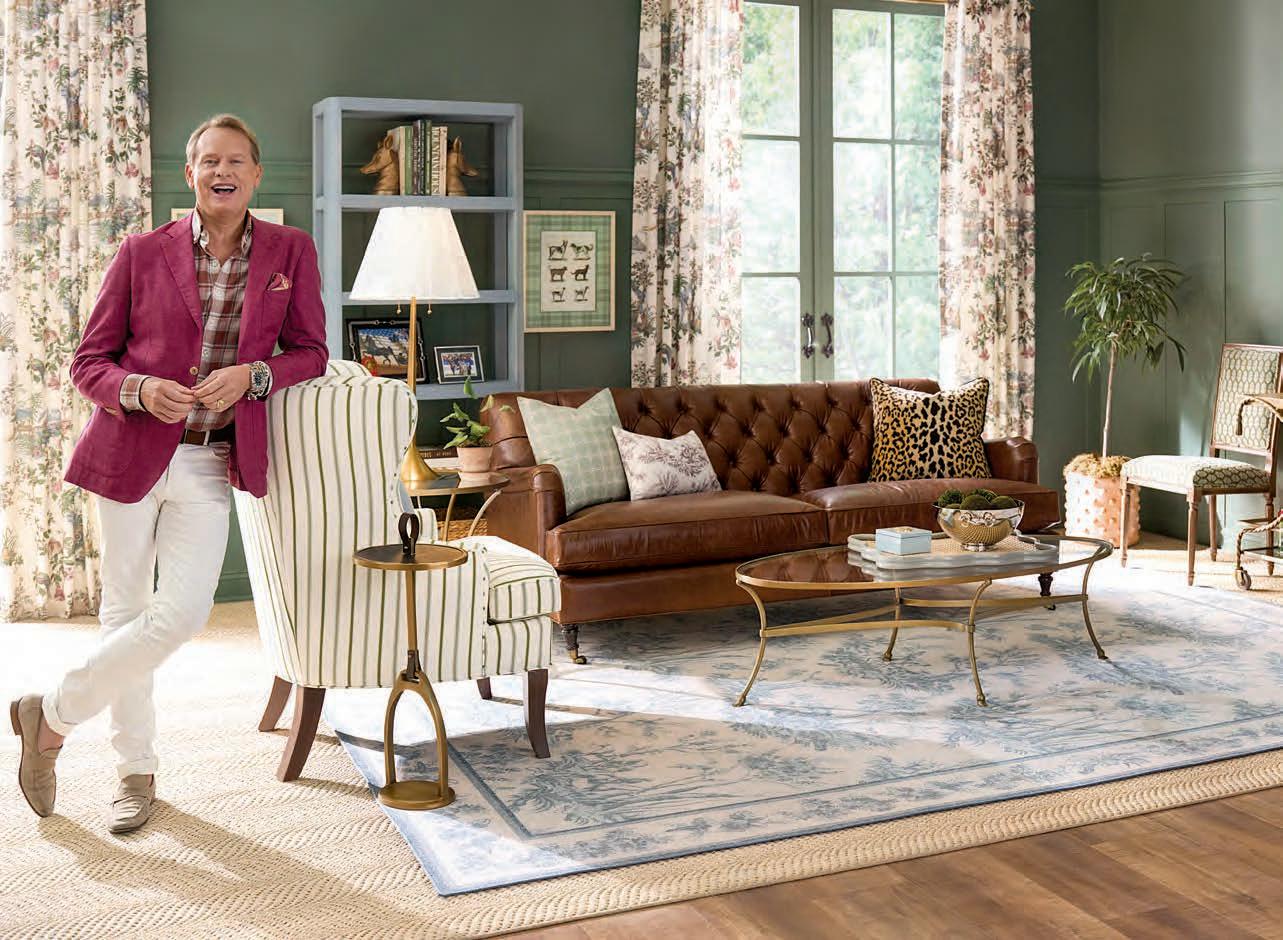
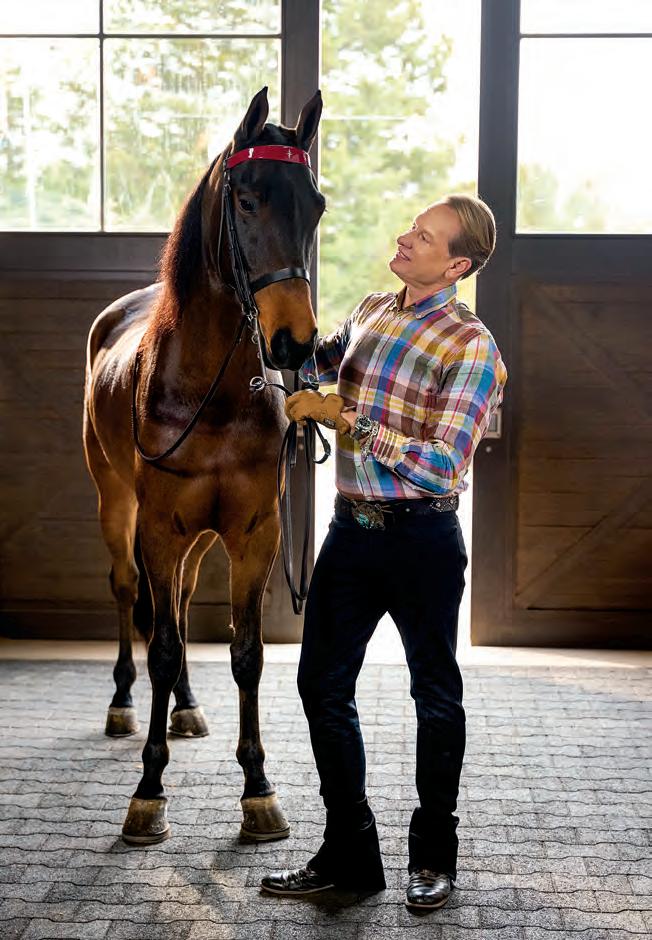
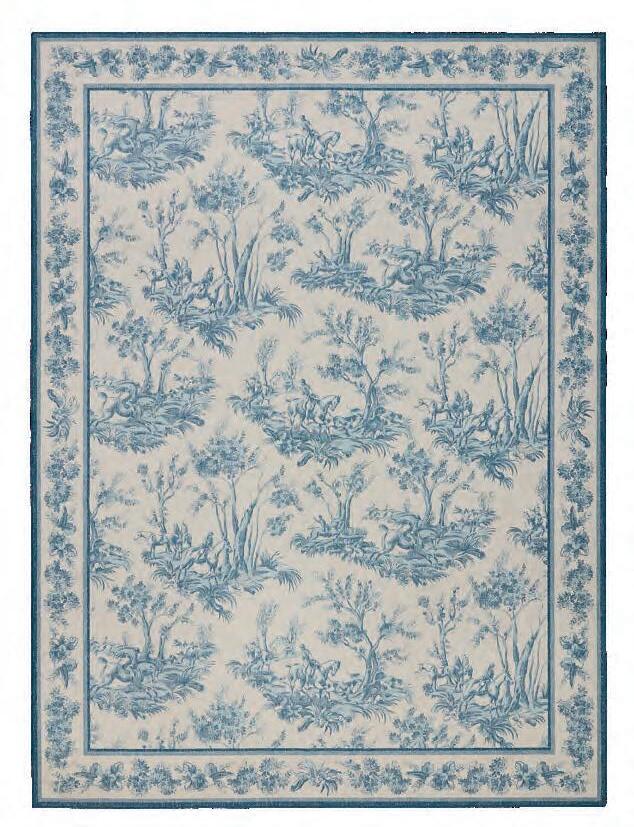
Lifelong horseman Carson Kressley debuts an exclusive equestrianinspired capsule collection for Ballard Designs, blending a polished heritage aesthetic with a warm, personal approach.
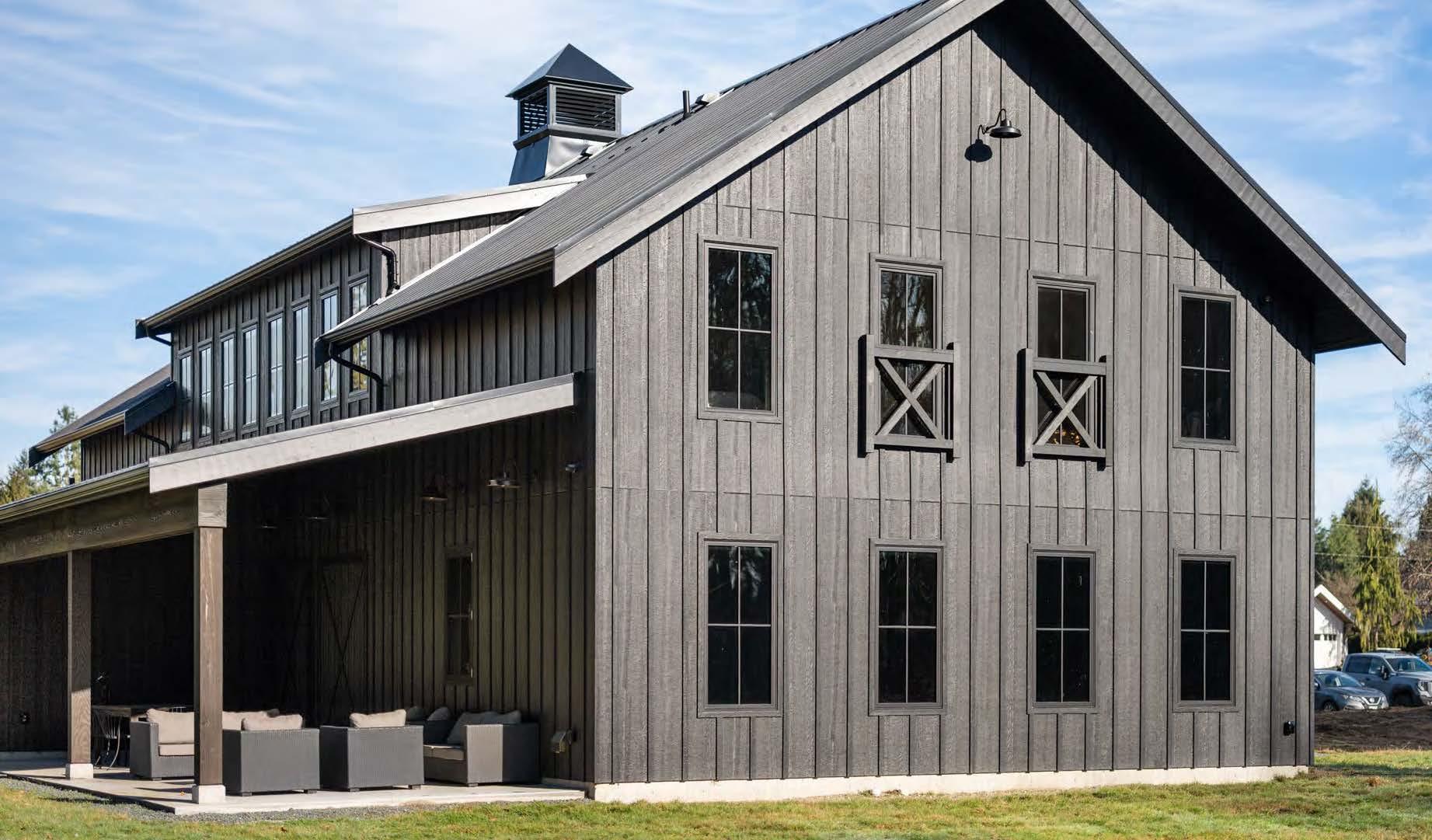
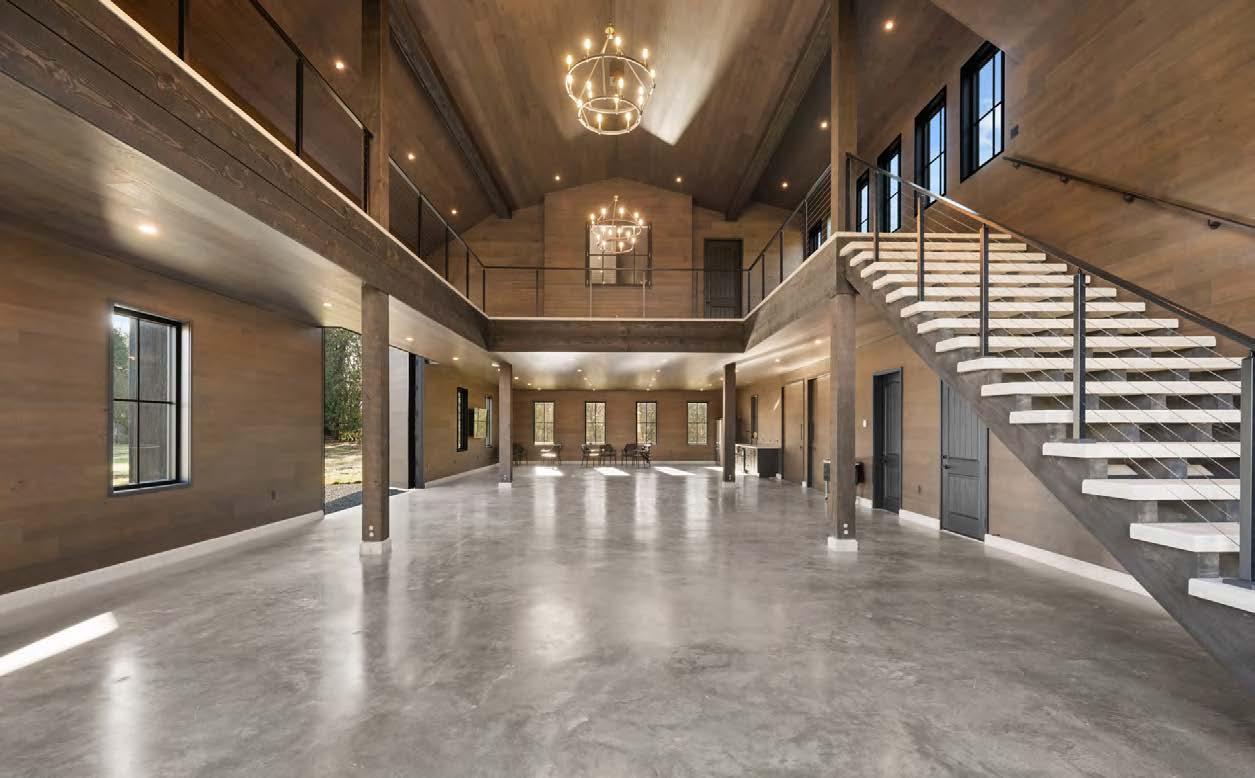
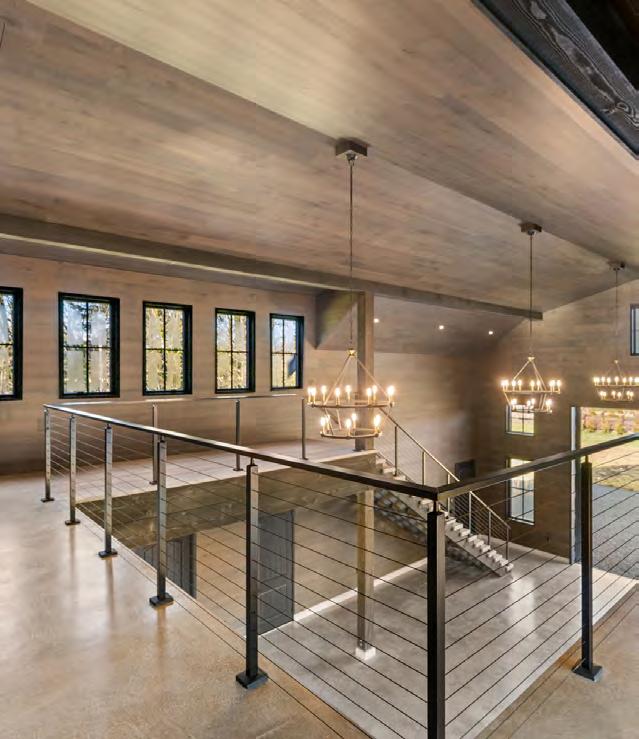
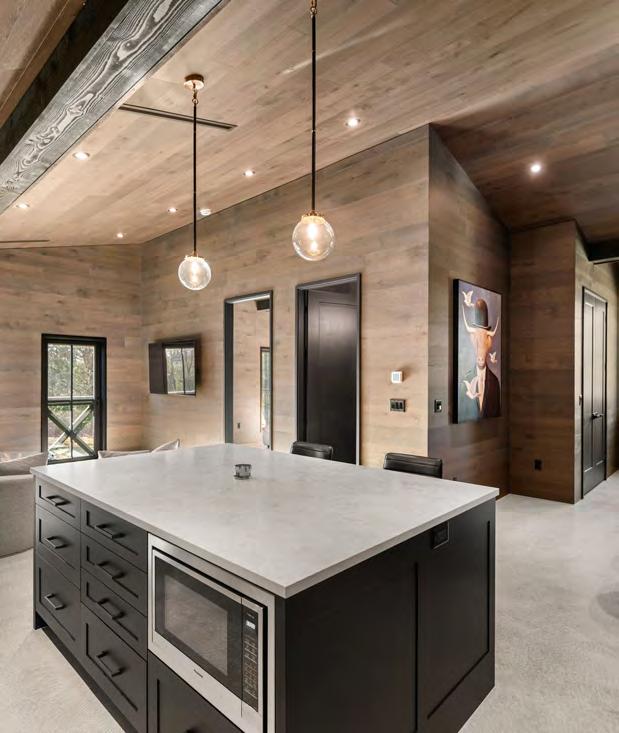
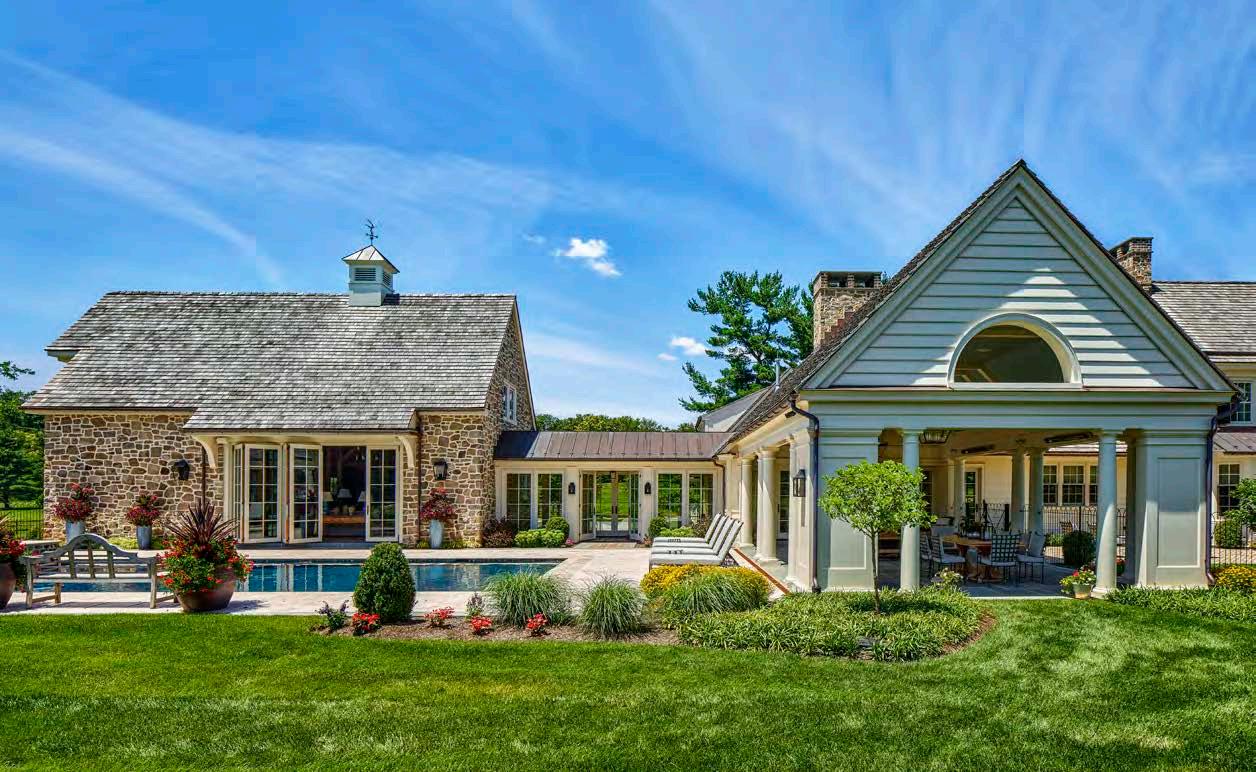
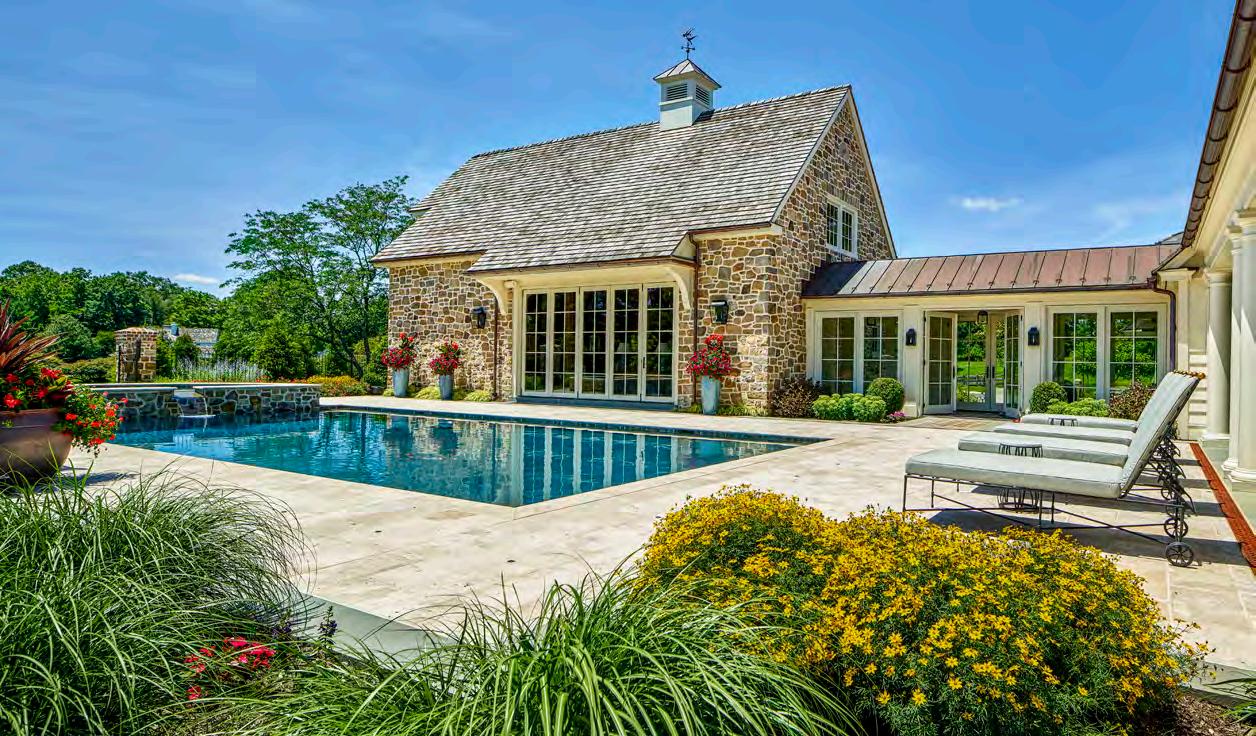
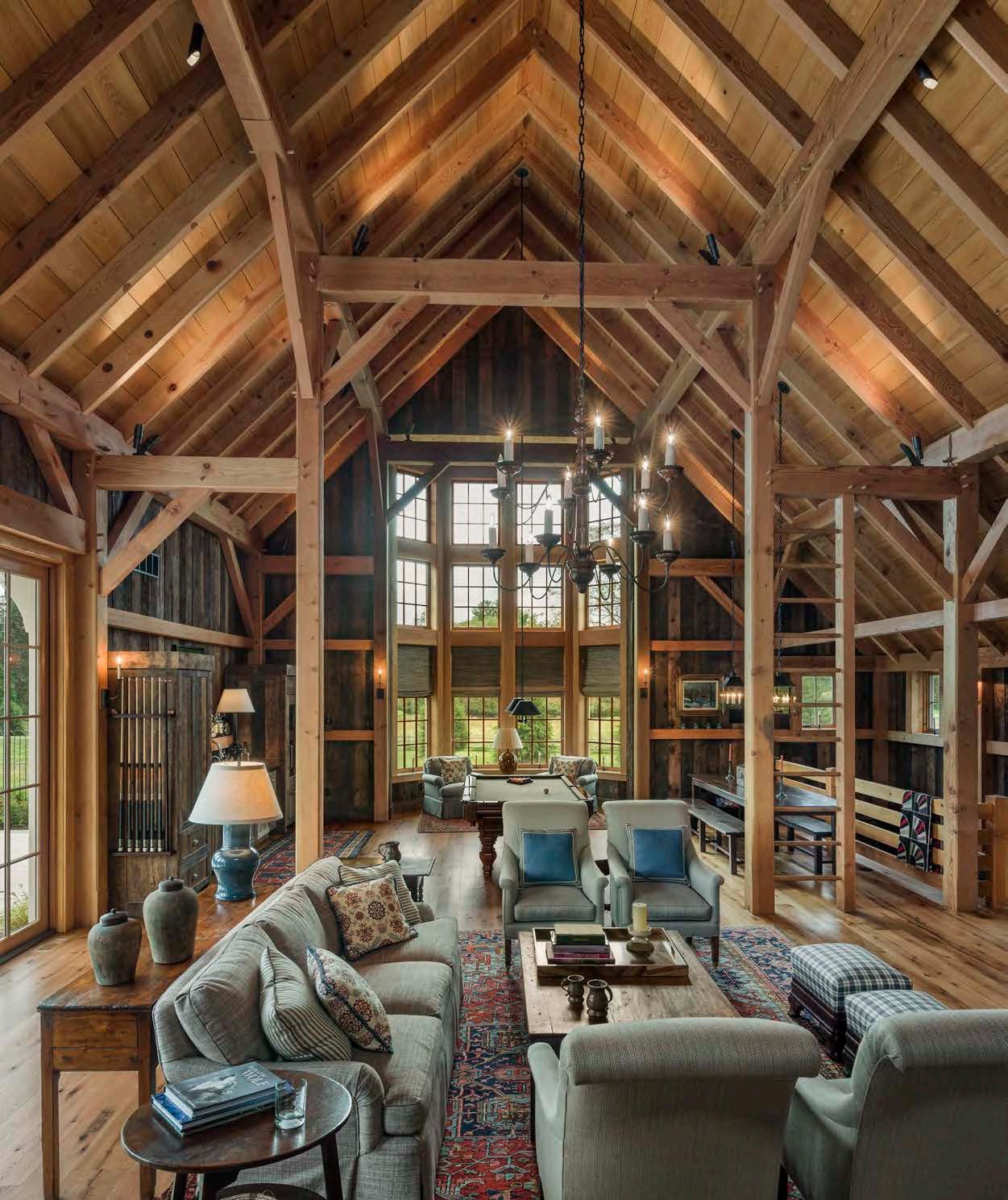
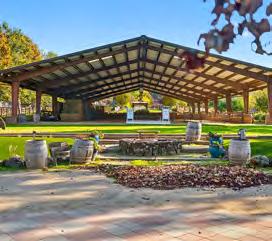
A PORTFOLIO OF PARTY BARNS
86
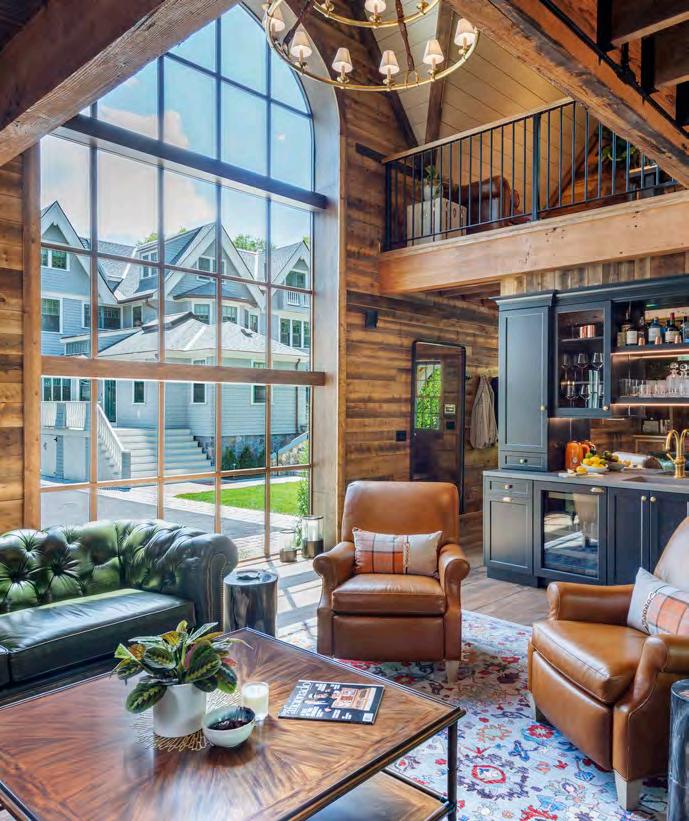
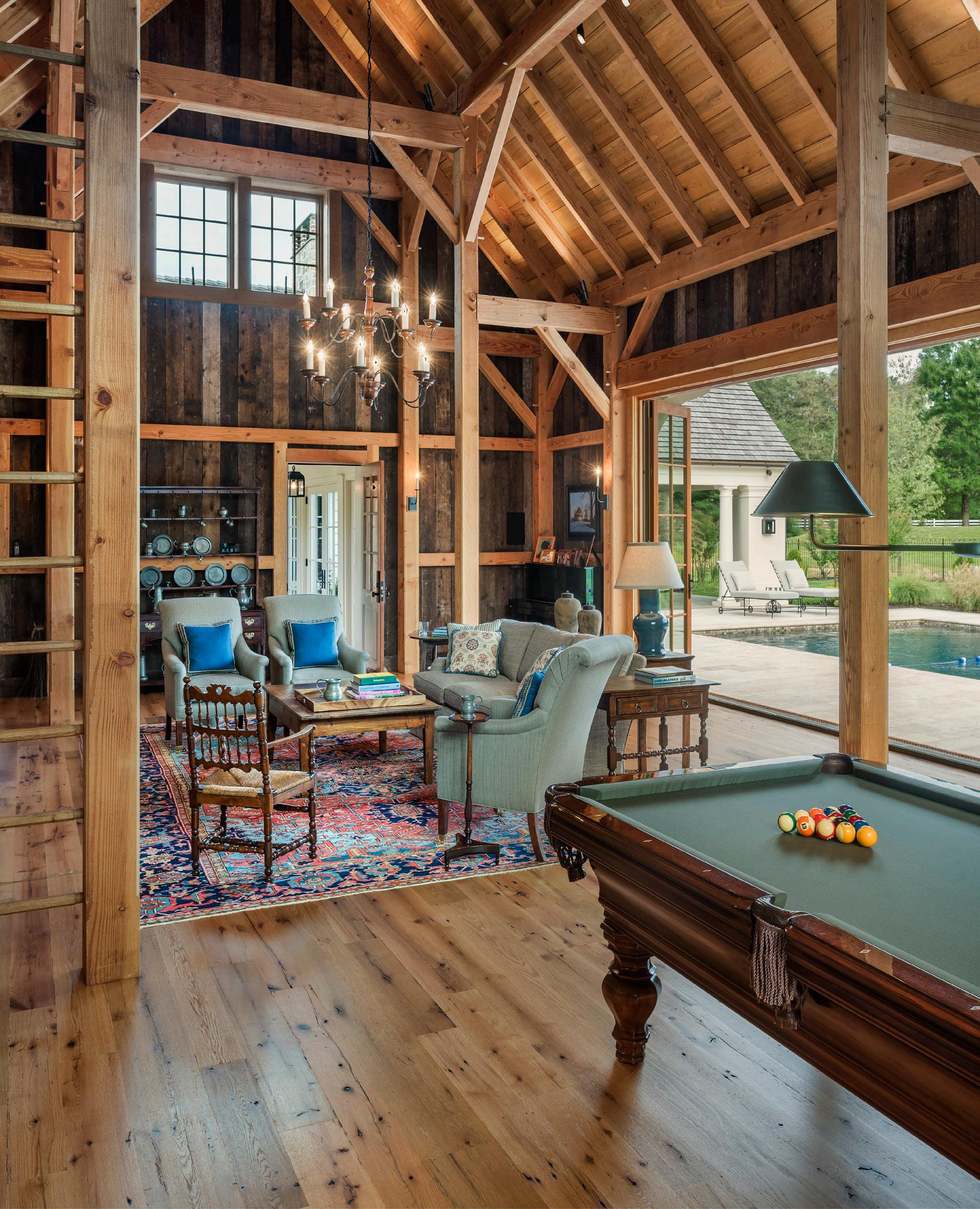
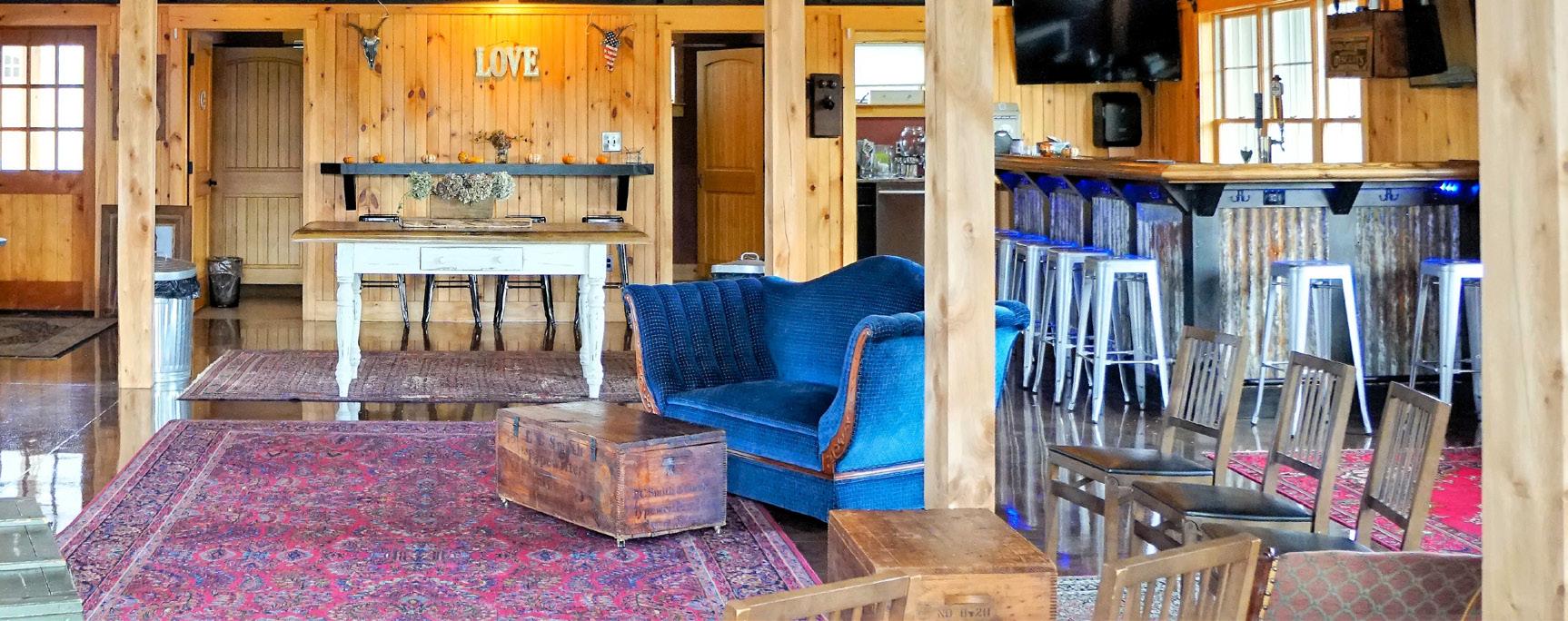
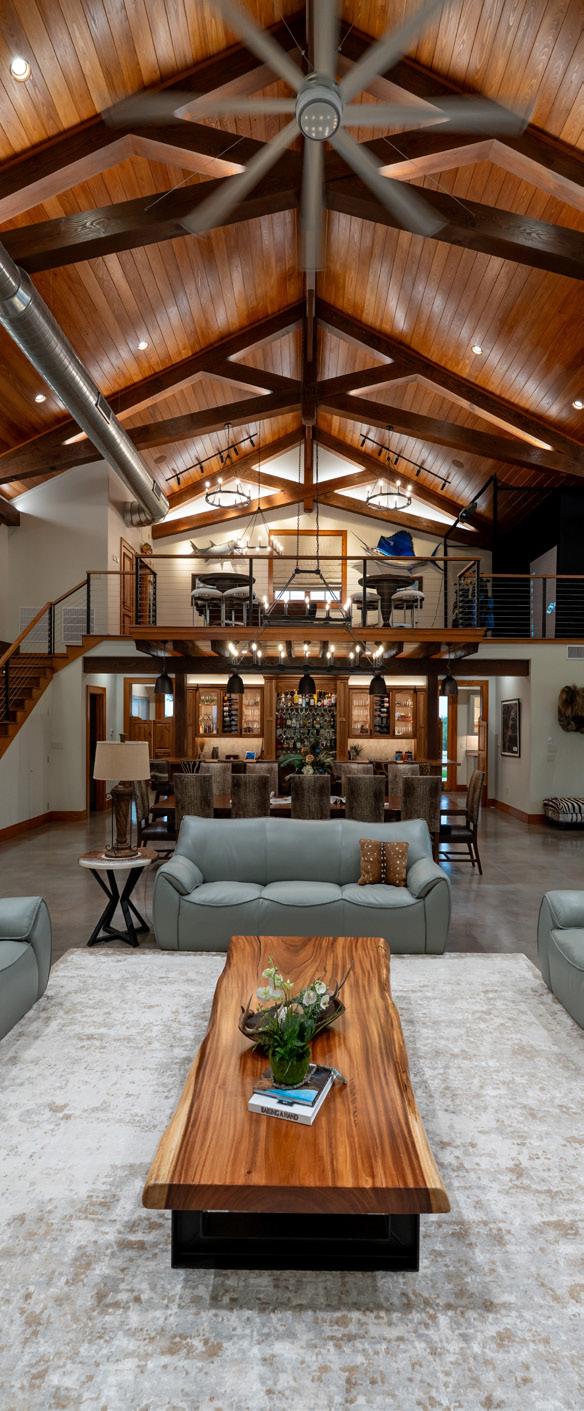
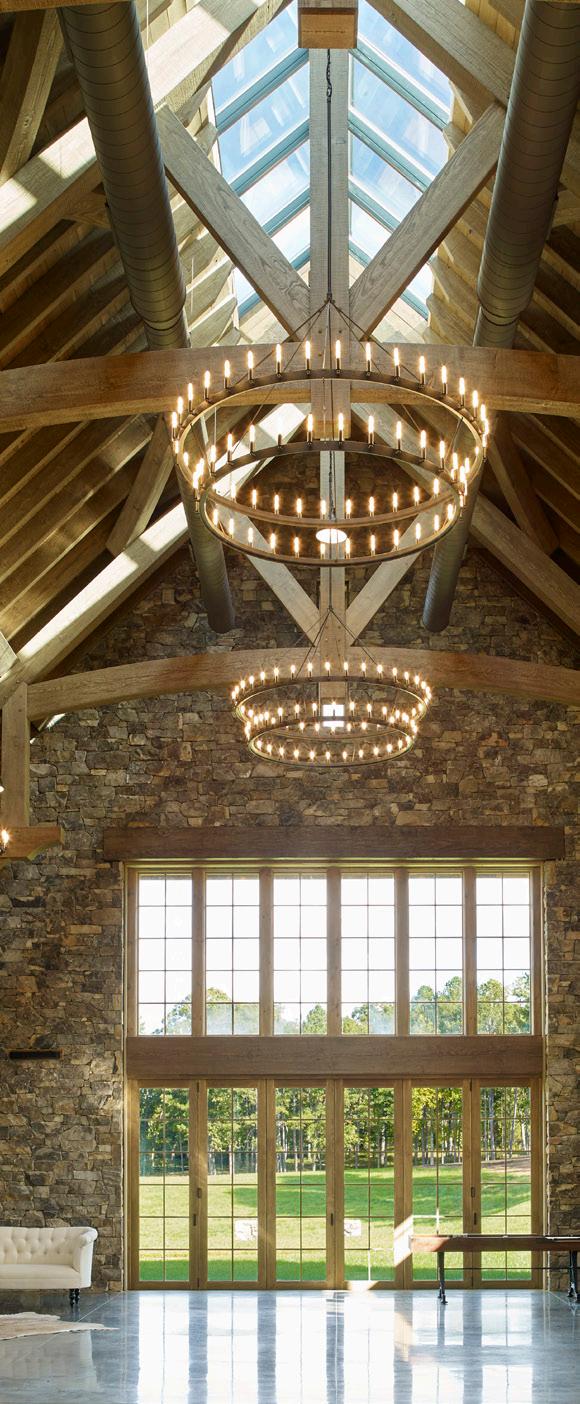
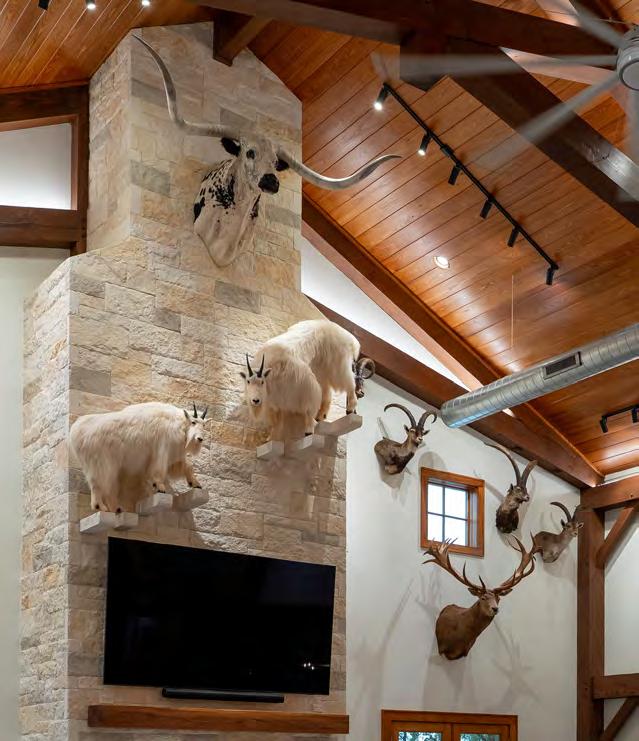
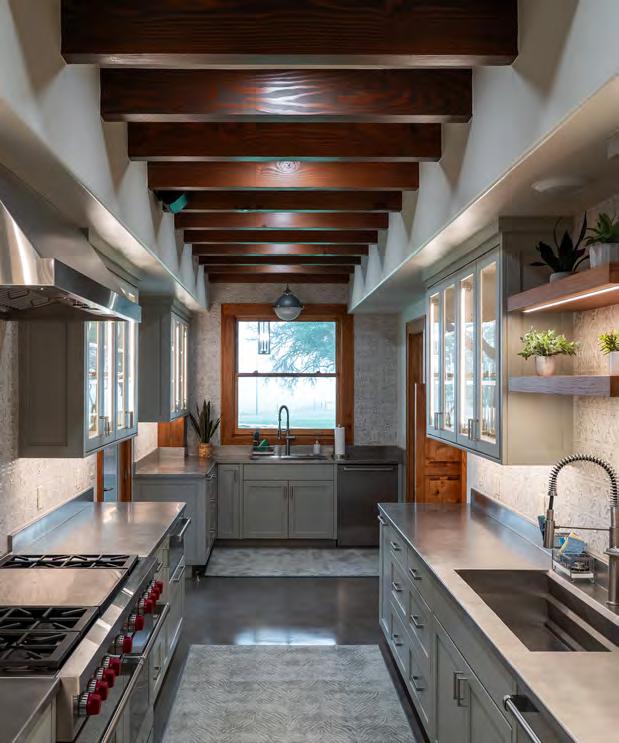
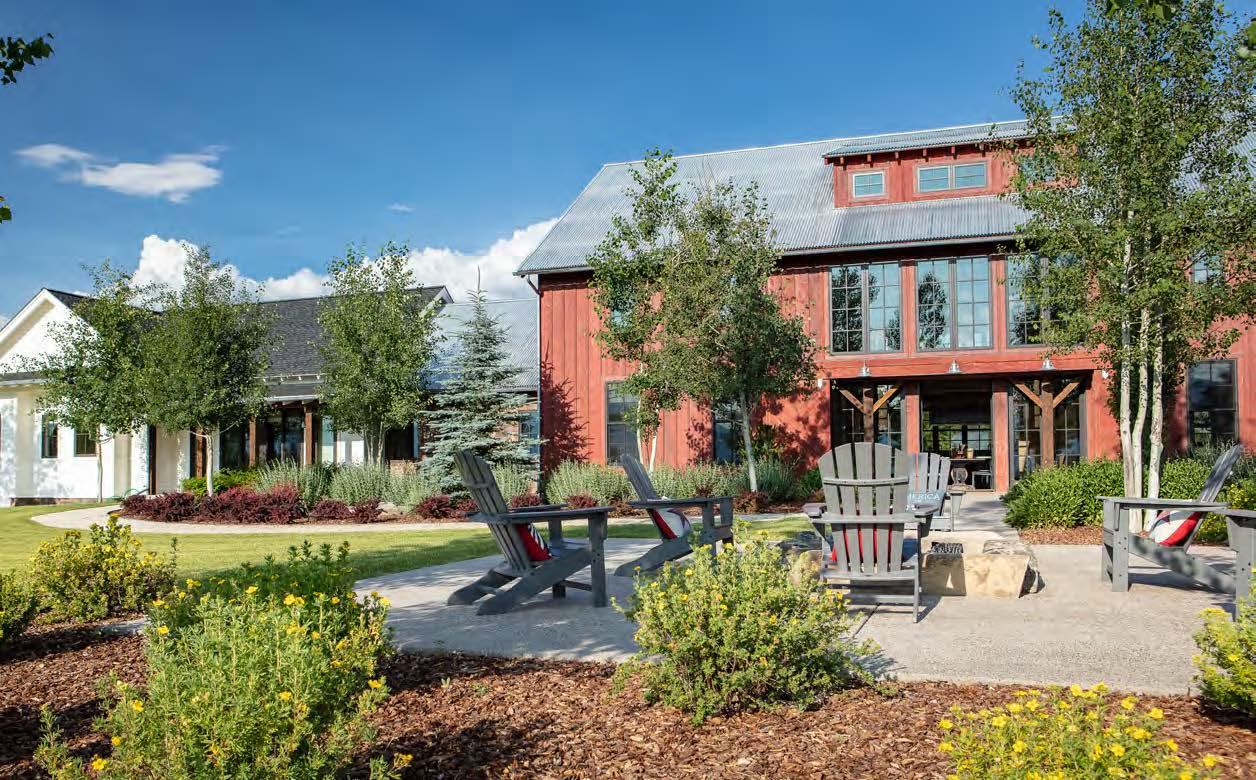
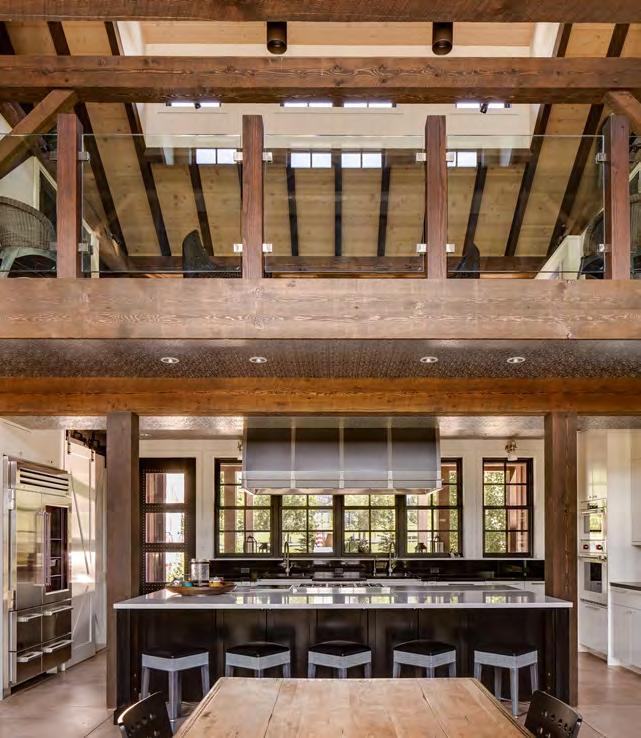
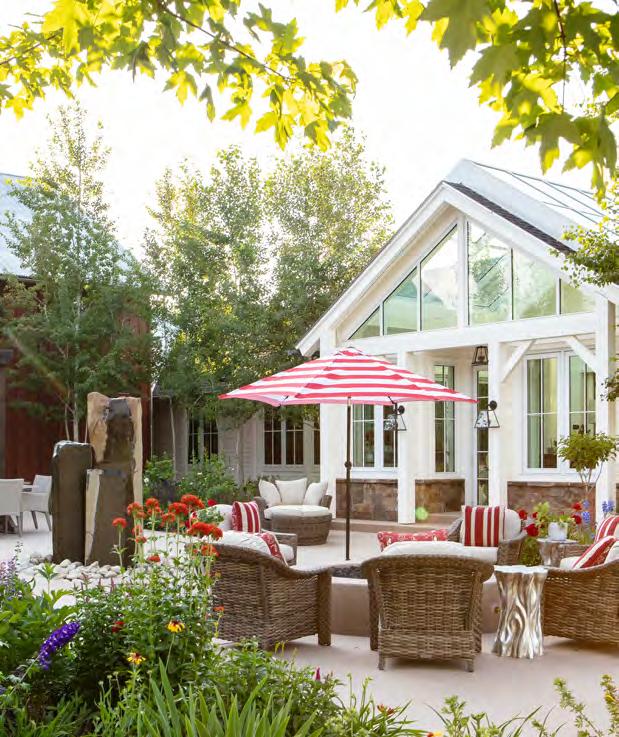
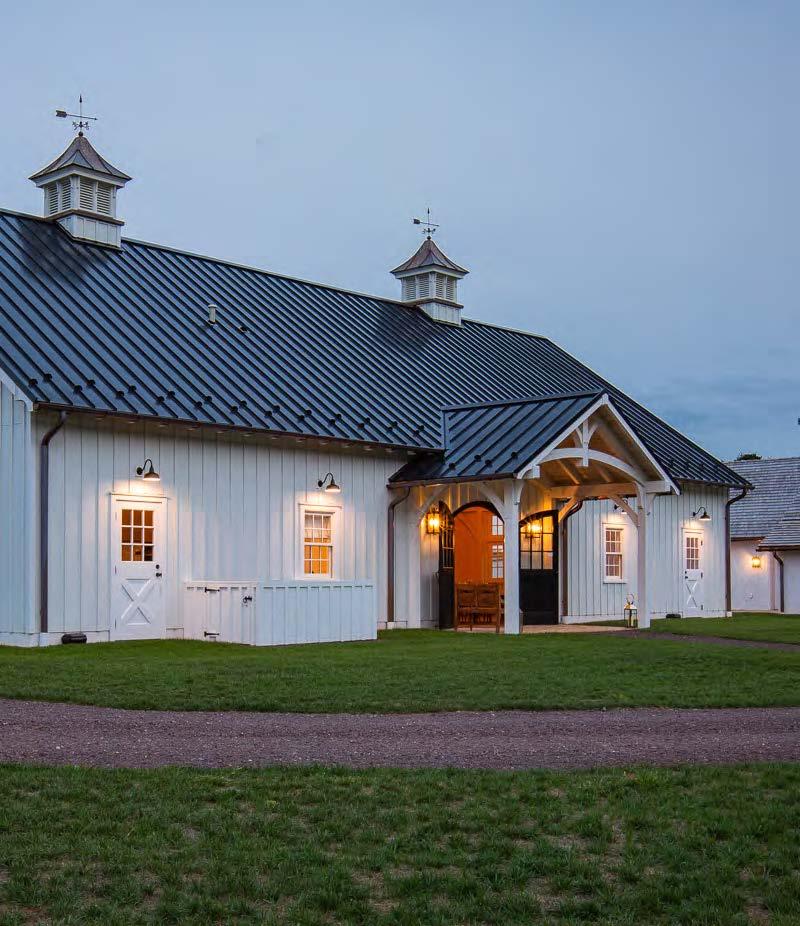
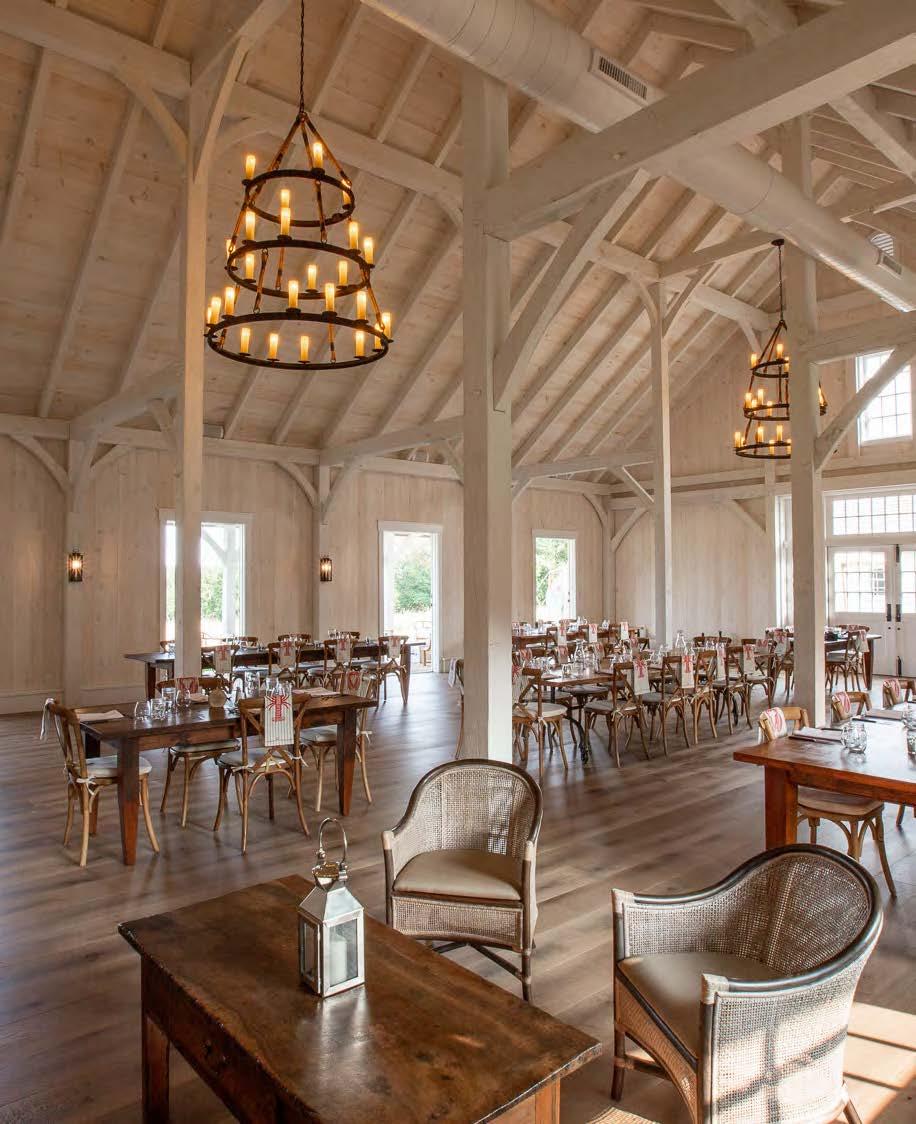
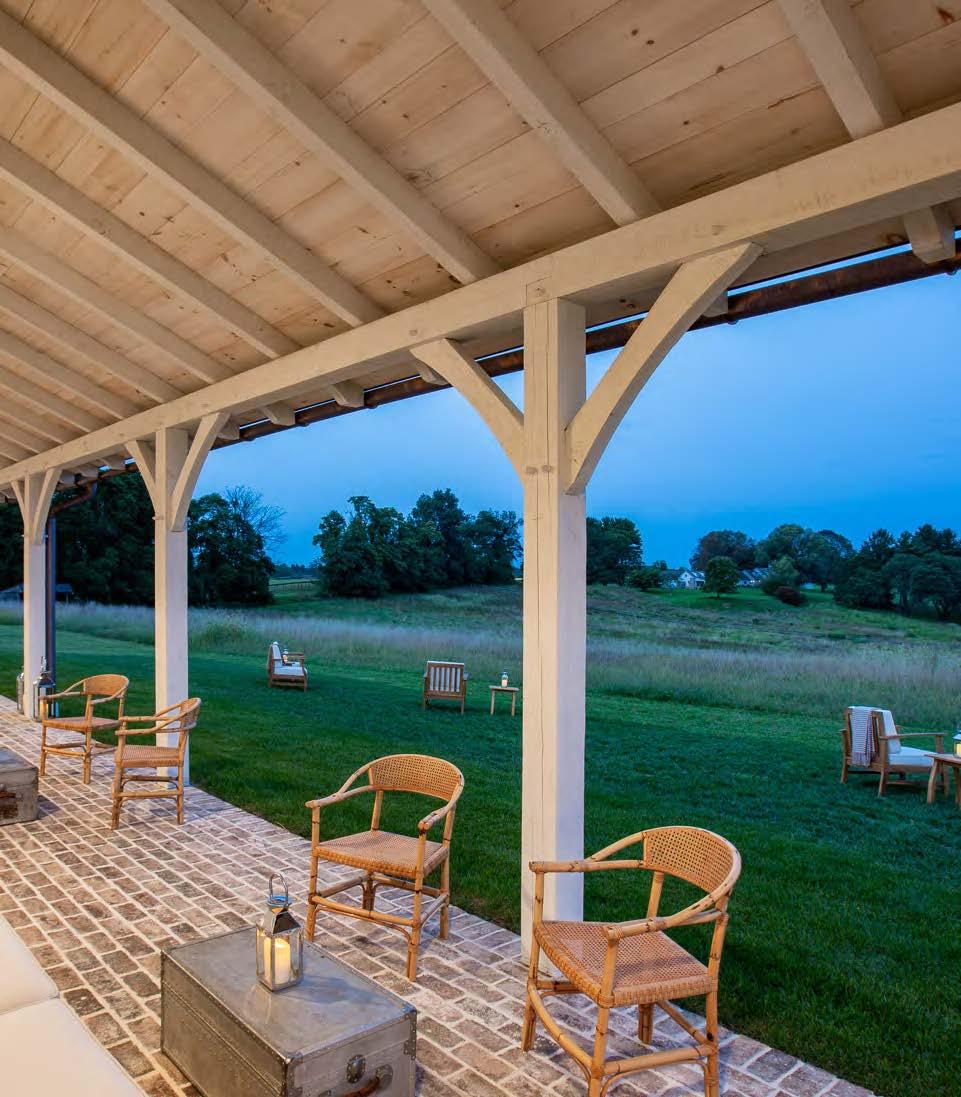
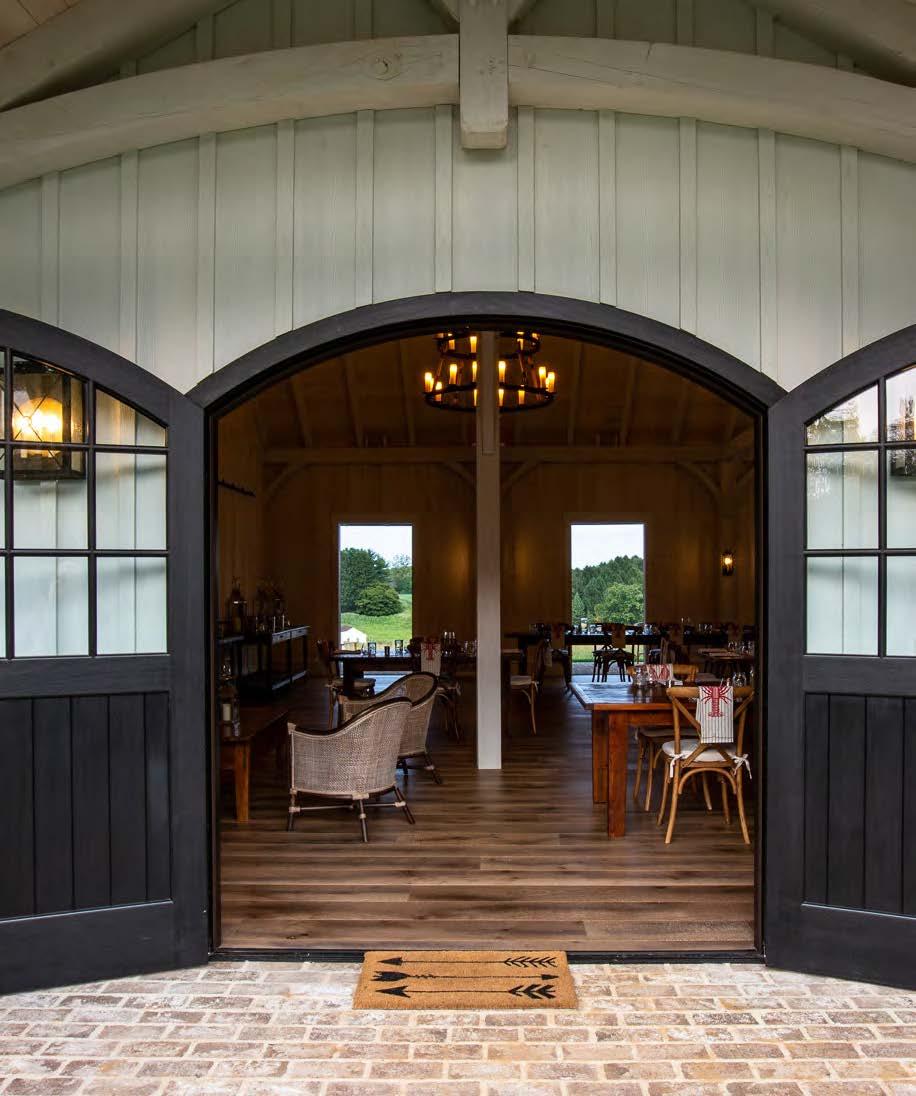
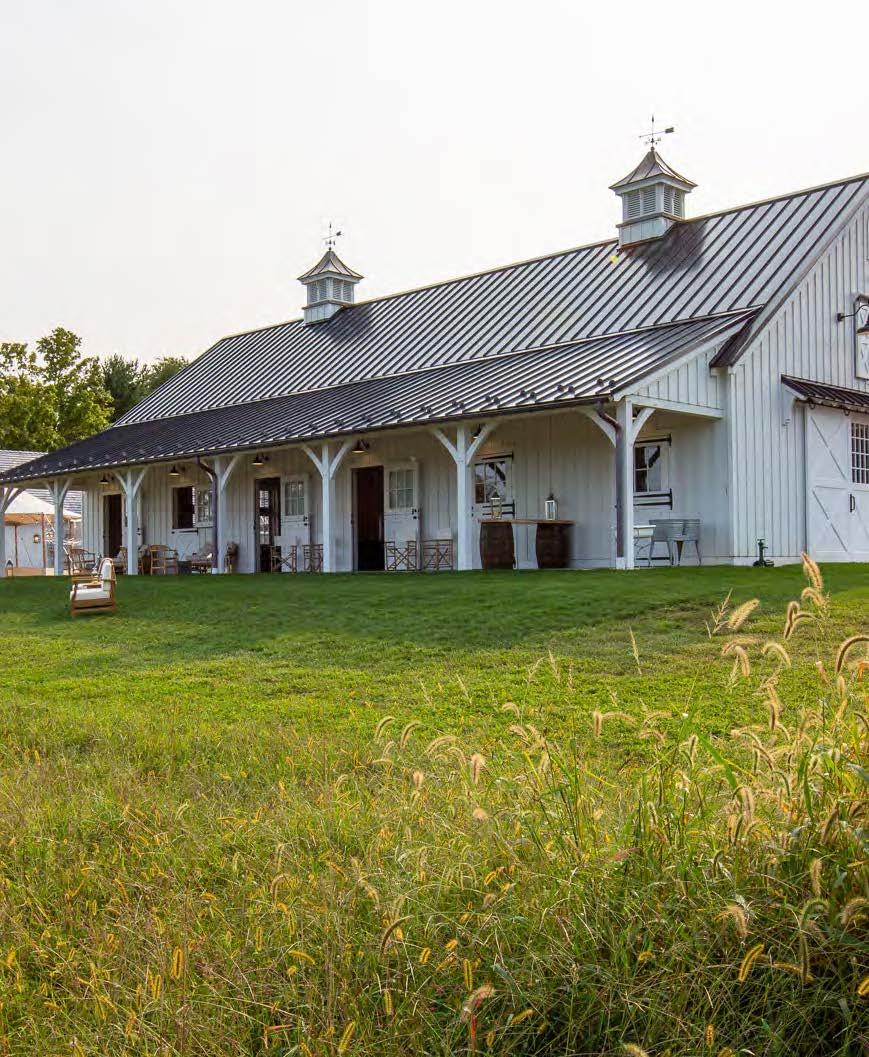
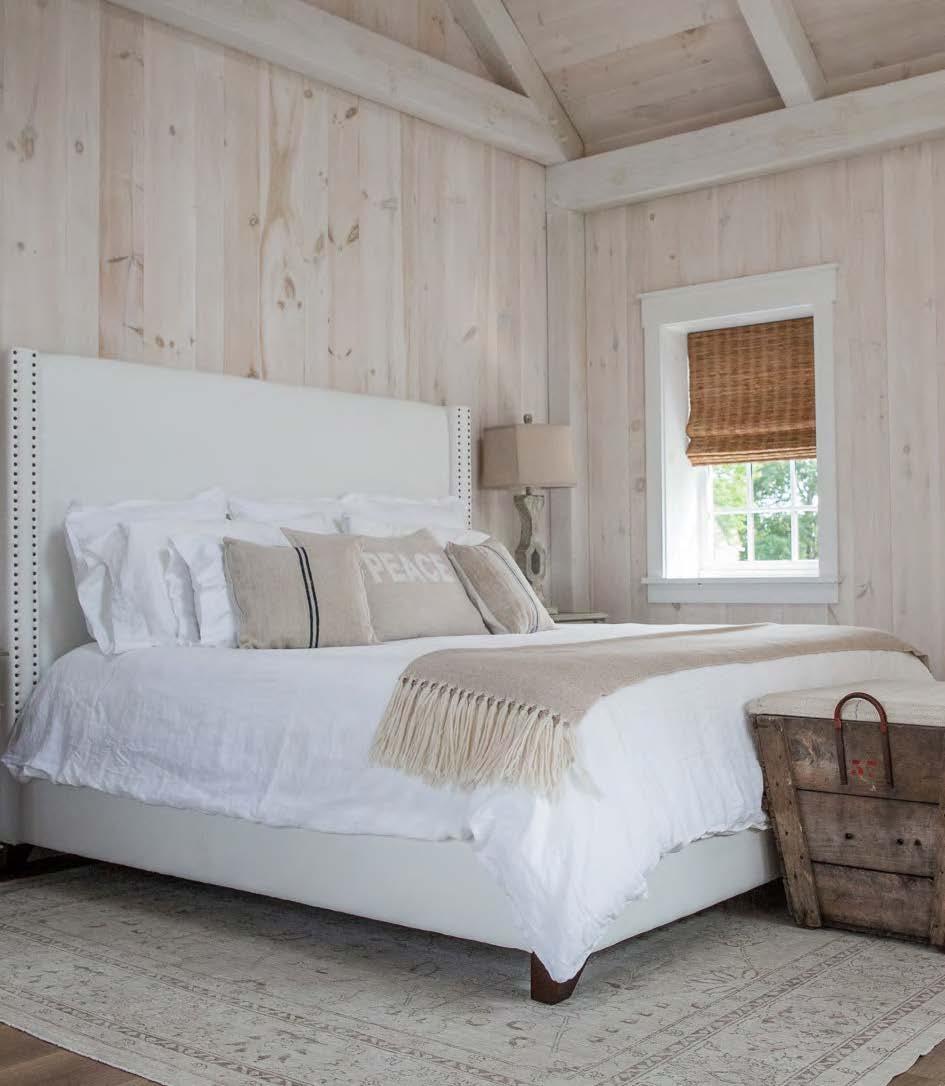
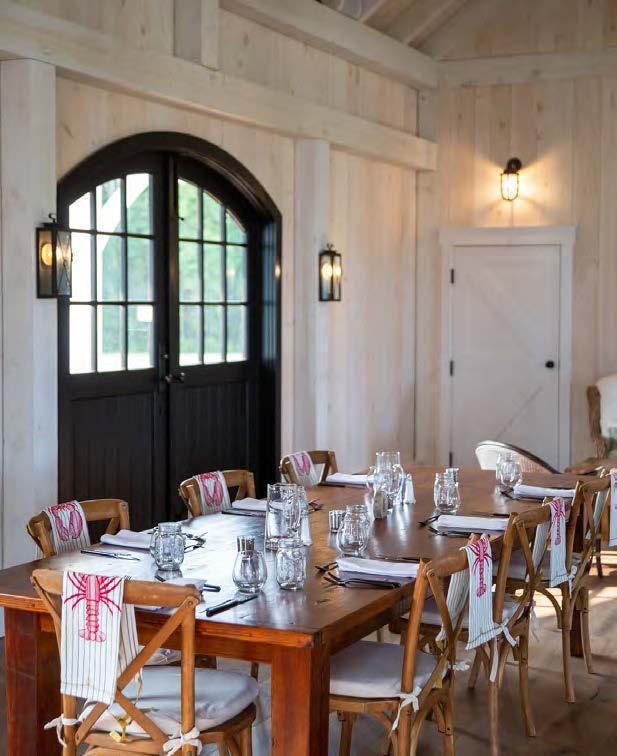
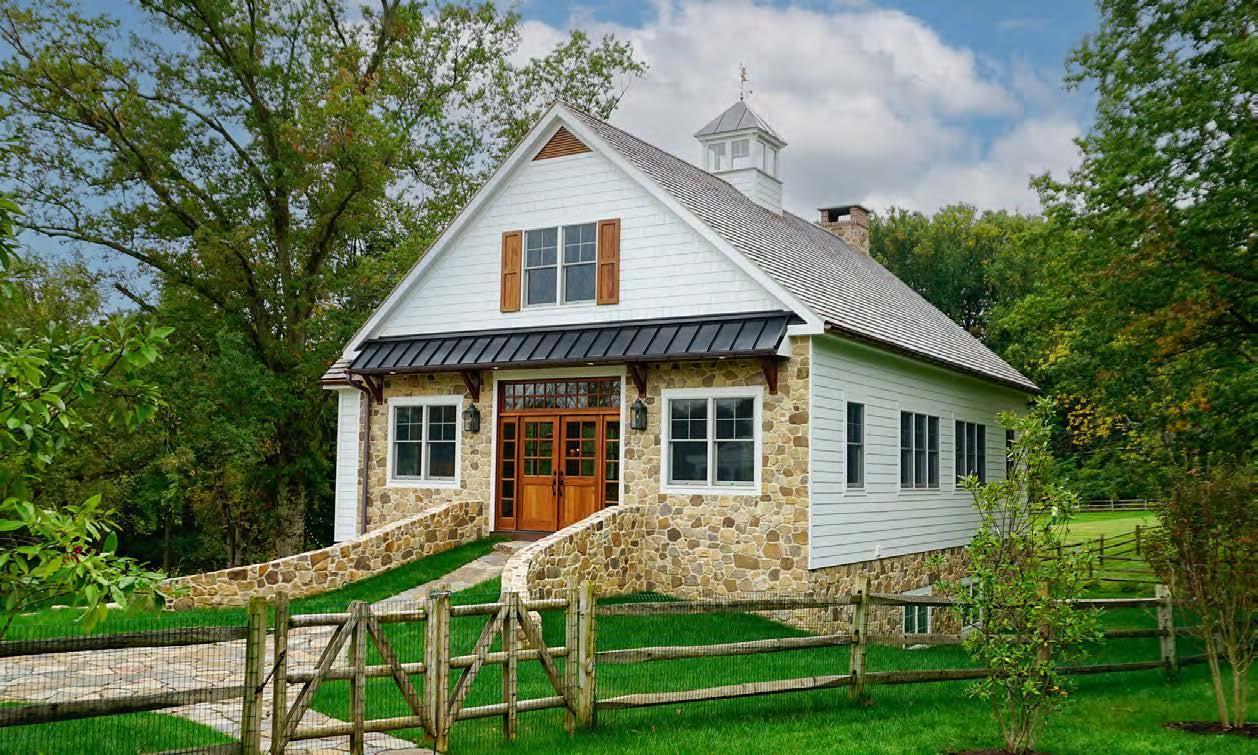
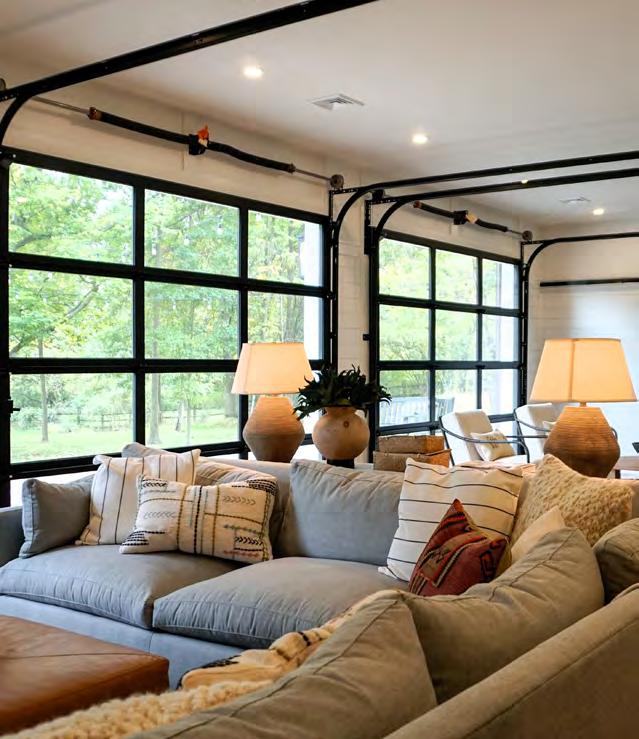
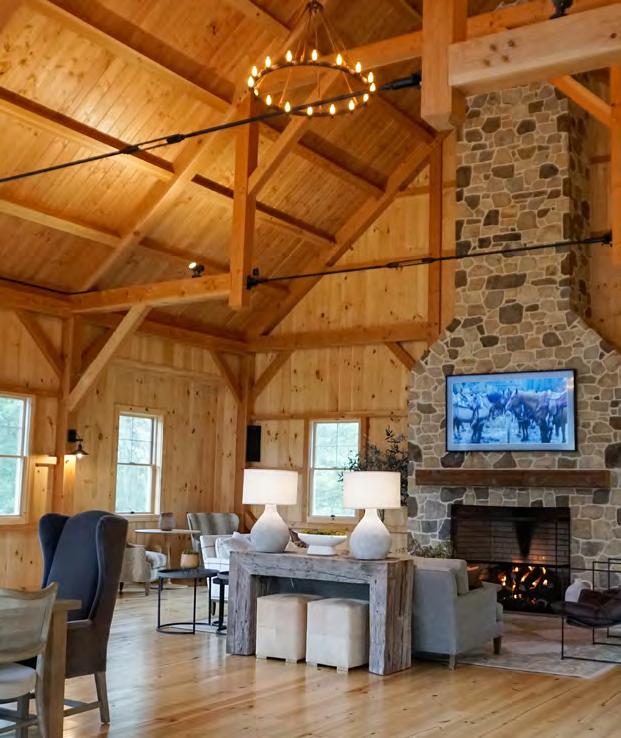
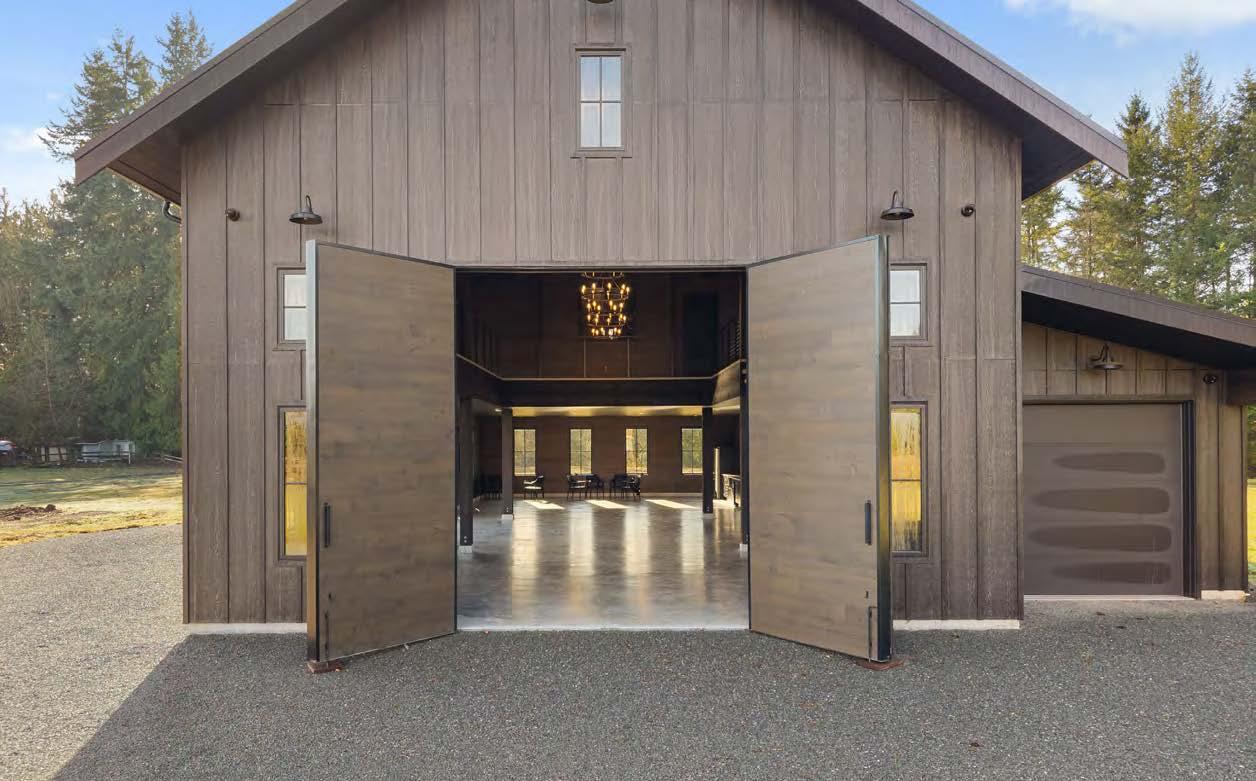
Explore seven stunning structures that pair rural charm with highend design specifically built to facilitate effortless entertaining.
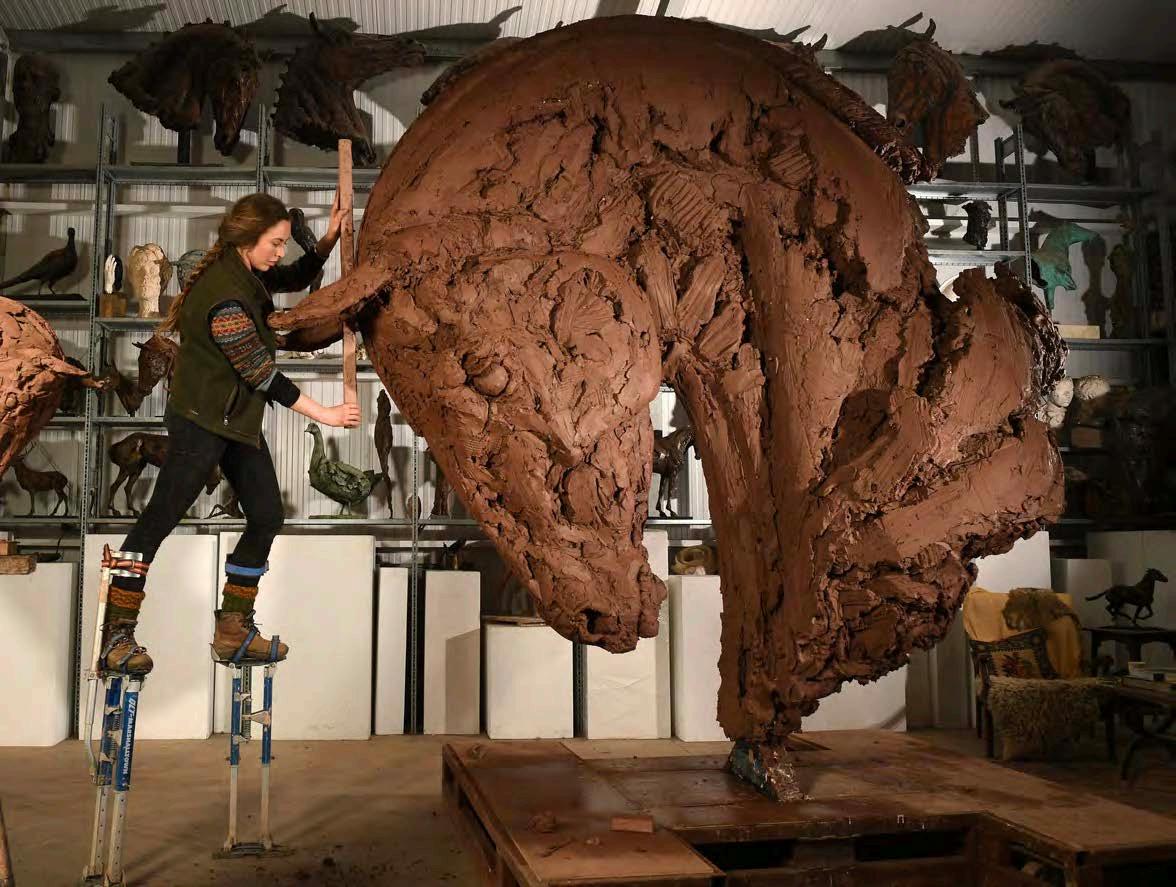
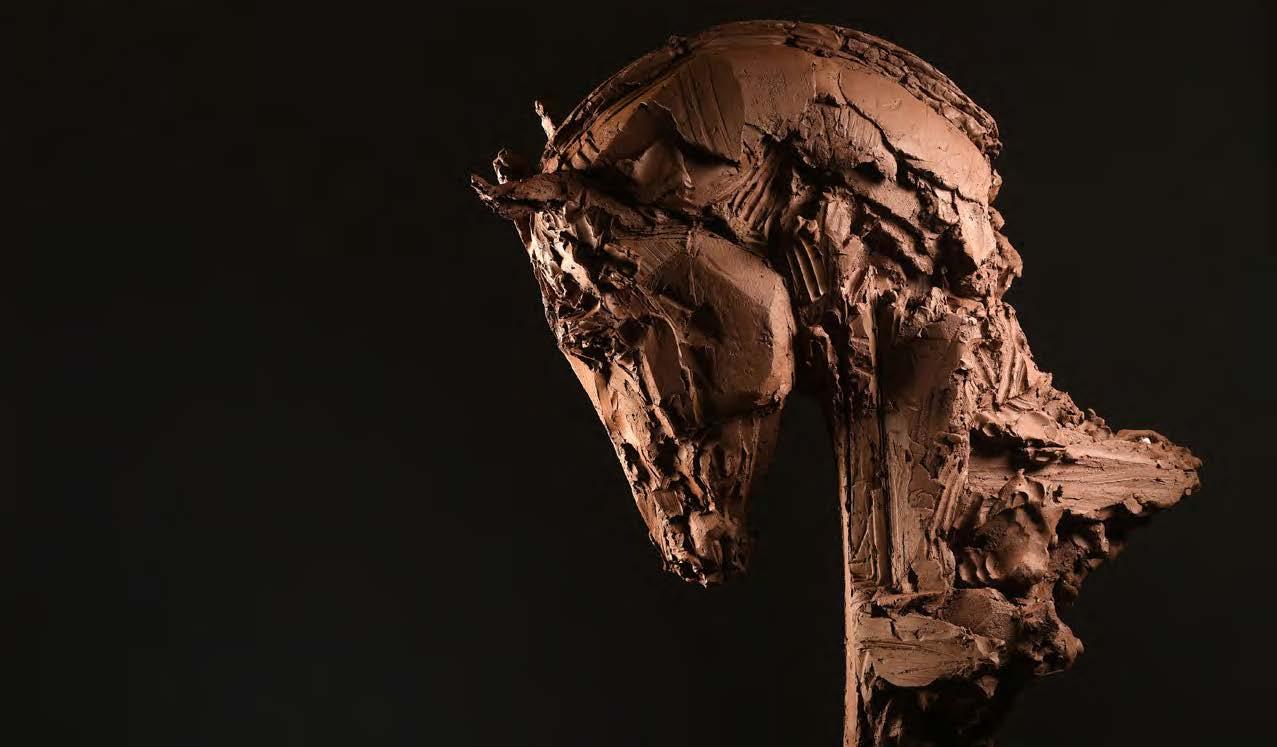
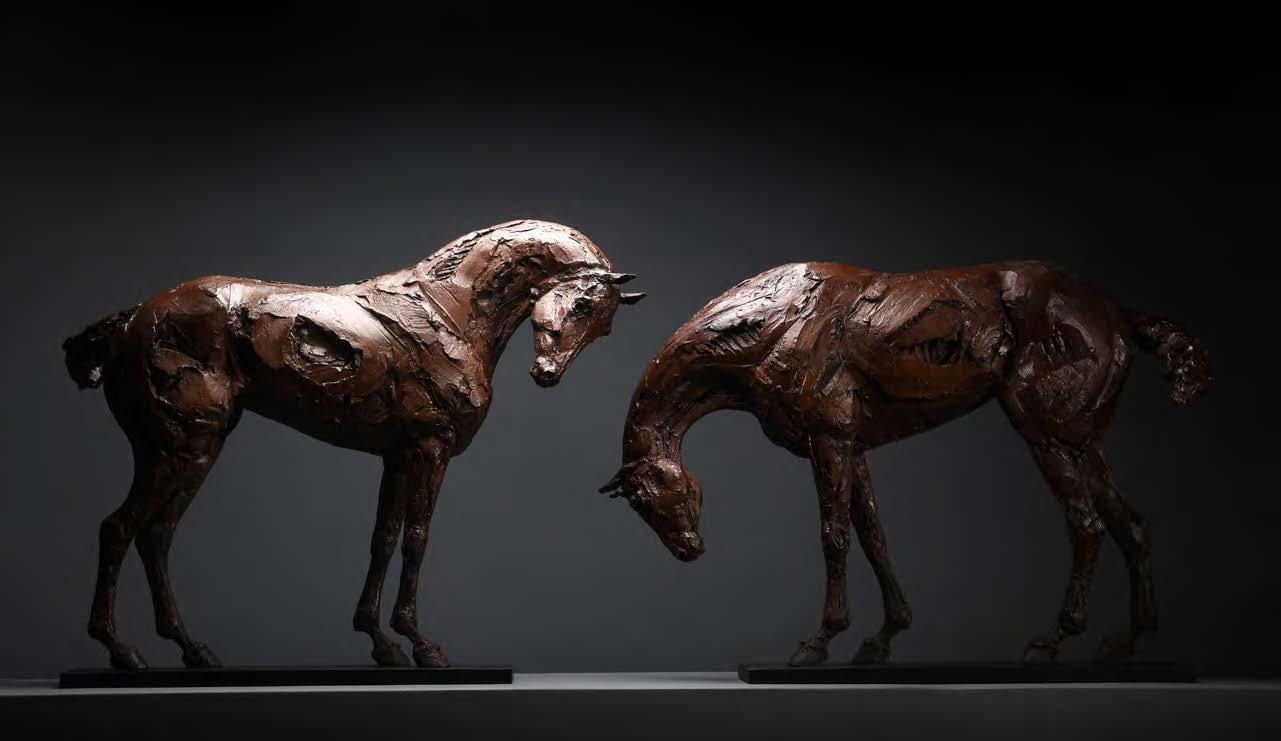
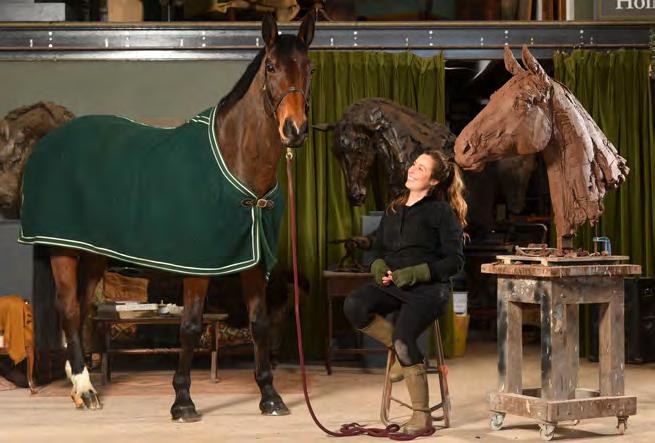
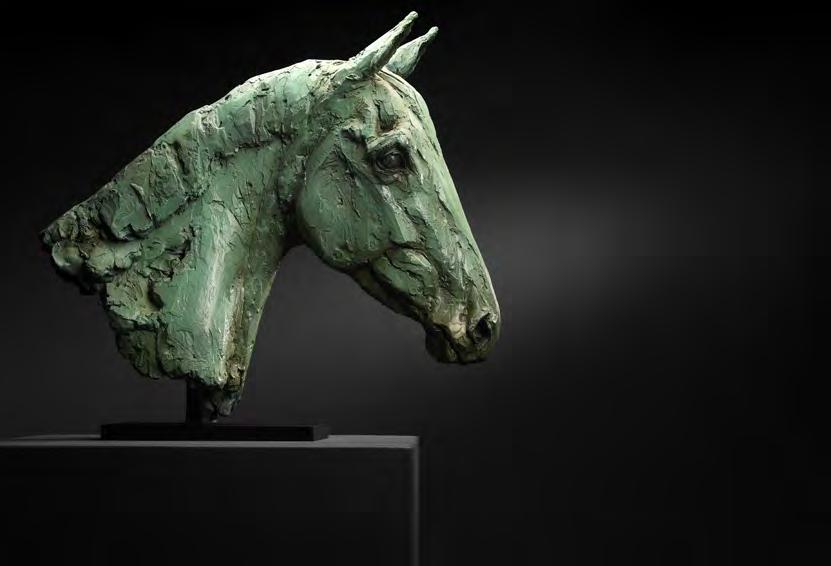
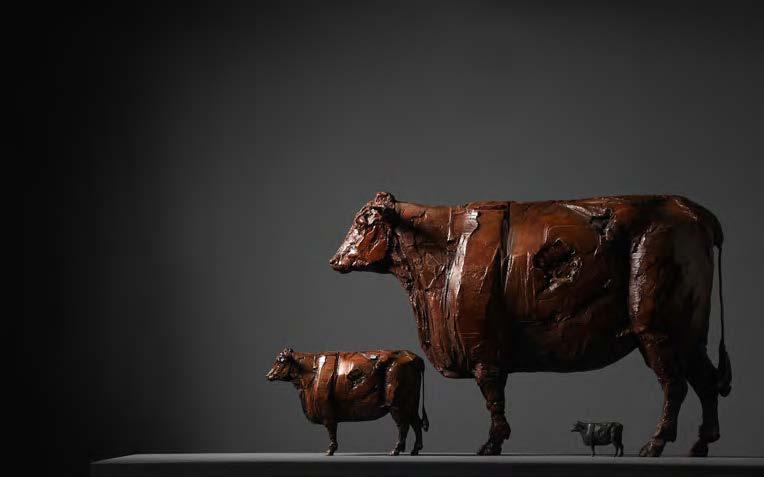
THE SCULPTURES OF HOLLY HICKMORE 102
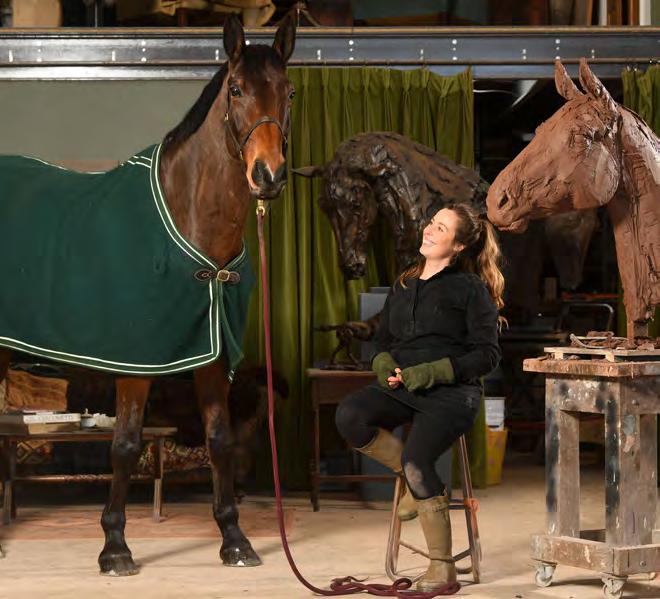
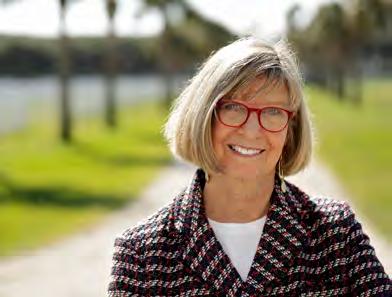
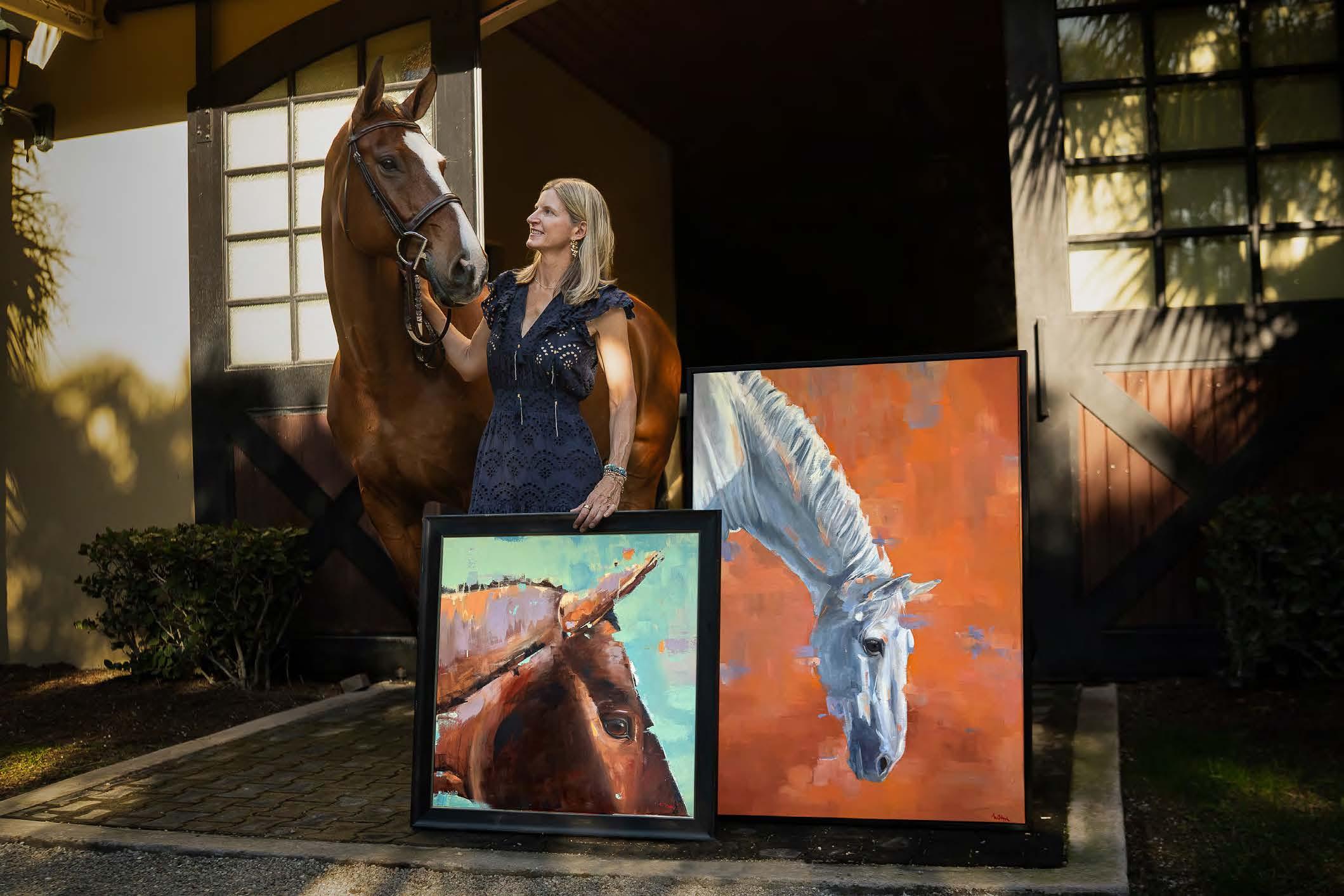
British sculptor Holly Hickmore discusses her process for capturing the essential, fleeting nature of her subjects.
DEPARTMENTS
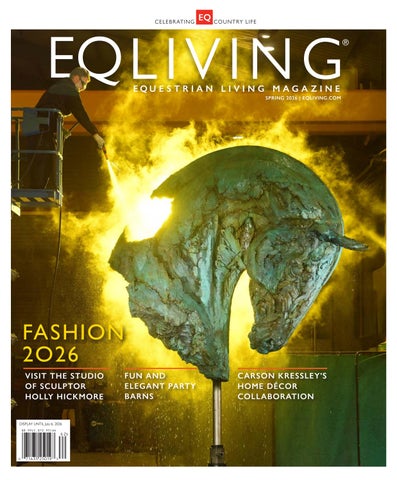
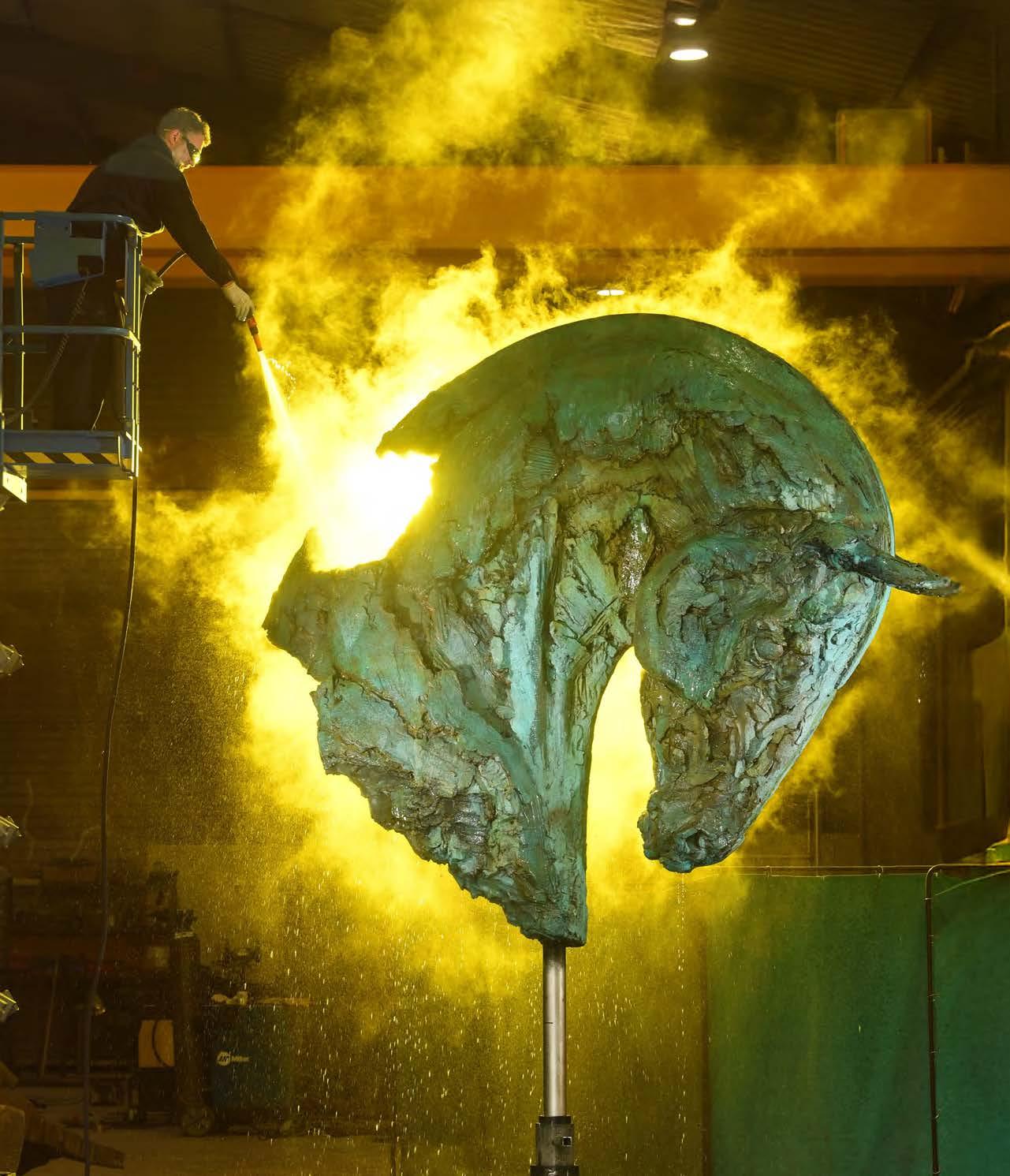
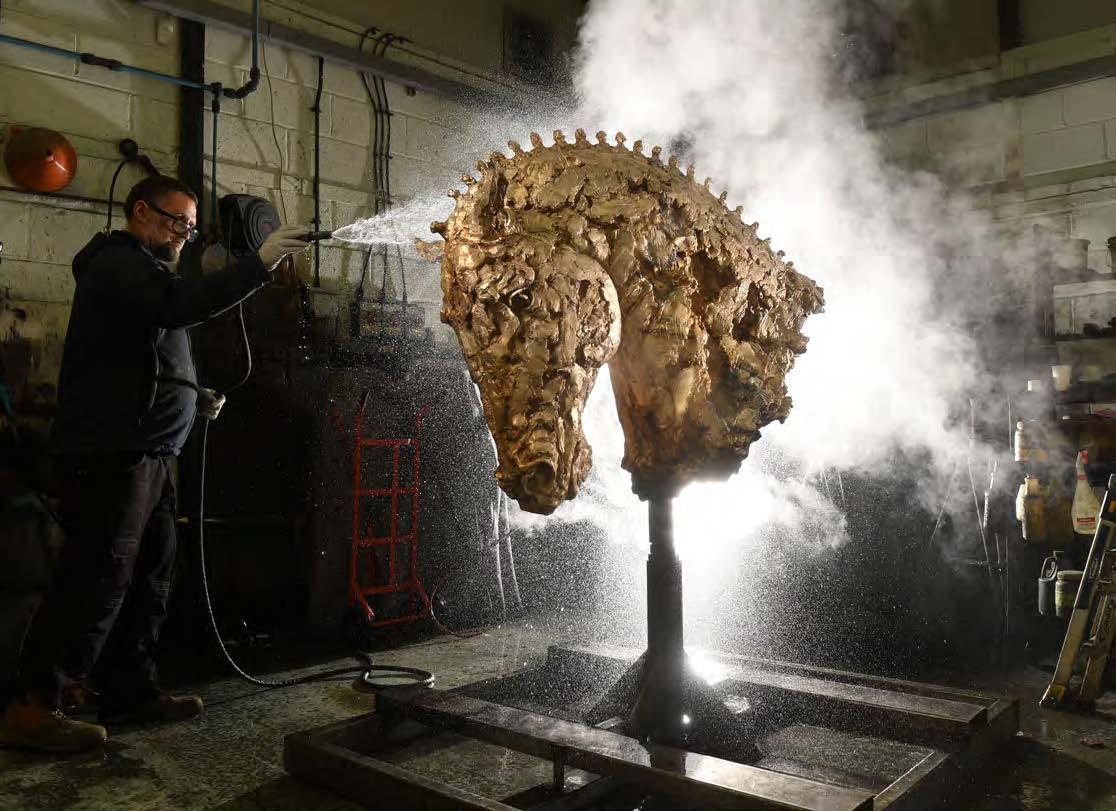
Cover: Sculptor Holly Hickmore’s bronze Artemis at the patination stage at the Morris Singer Foundry in Hampshire, England. Photo: Russell Sach
See page 102 for the full gallery feature.
EDITOR’S NOTE 10
Welcome to Equestrian Living RESOURCES 129
Look for CONTACT INFO | PAGE 129 to find the products and services in this issue.
BARN DOGS 130
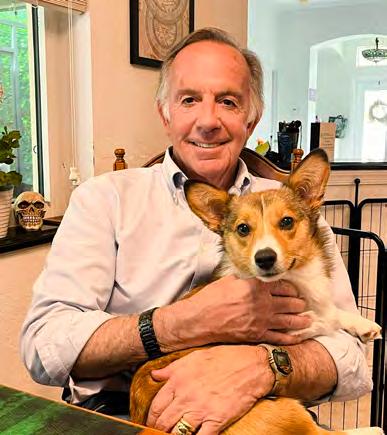
Meet Lily, David Distler’s newest family member. A true puppy at heart, the young corgi is learning the ropes and eager to meet every person and dog she sees.
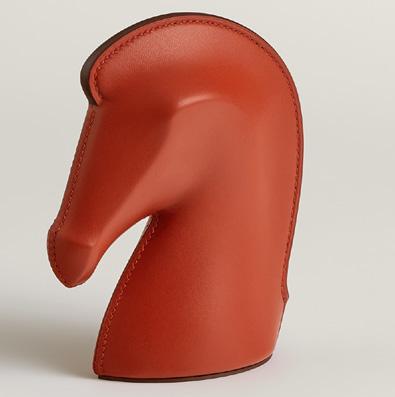
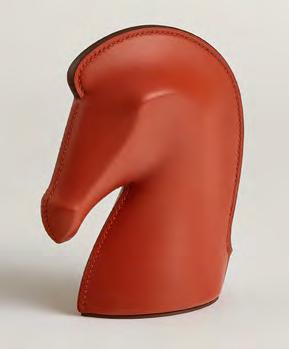
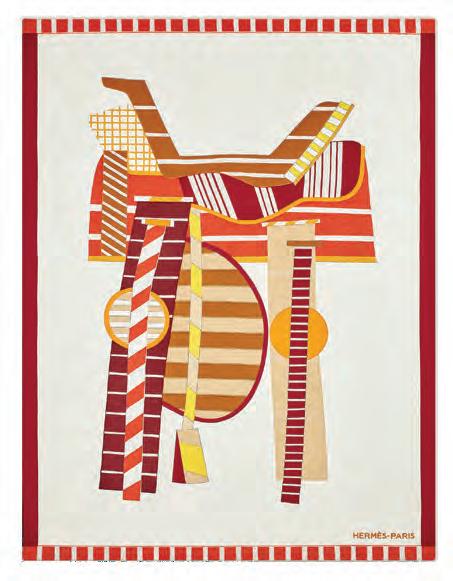
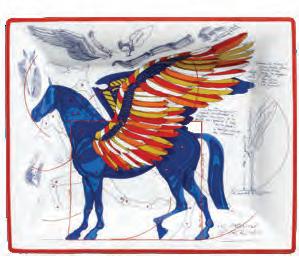
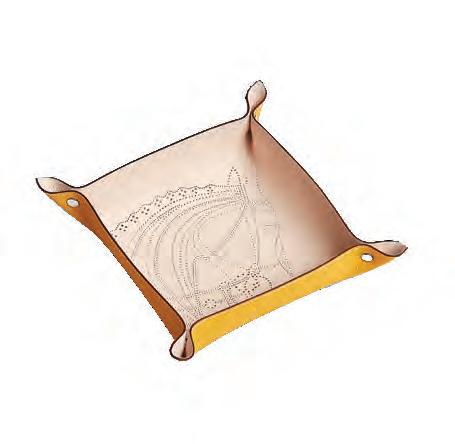
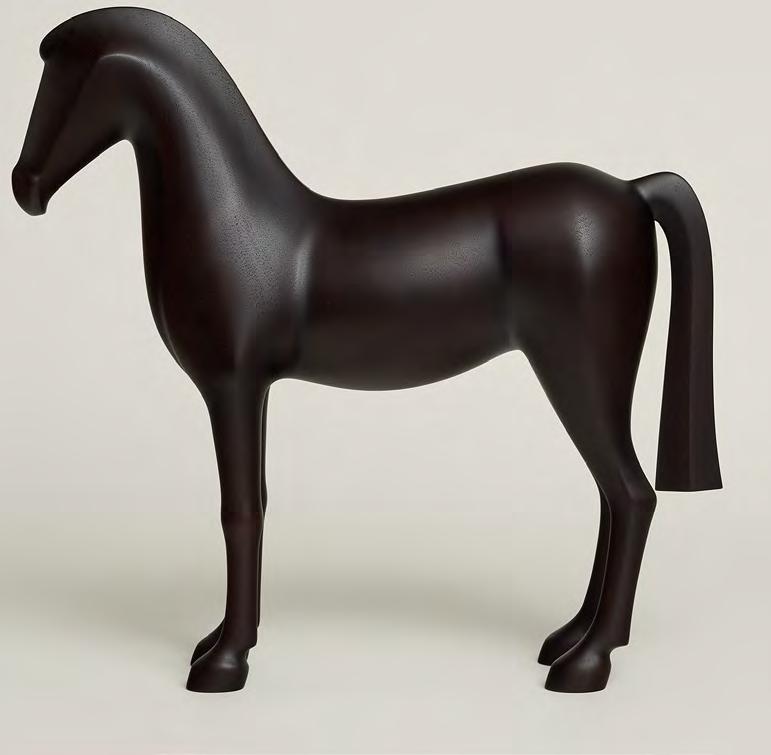
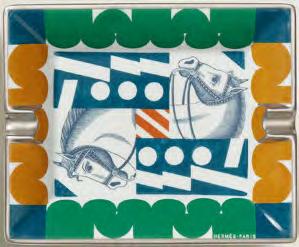
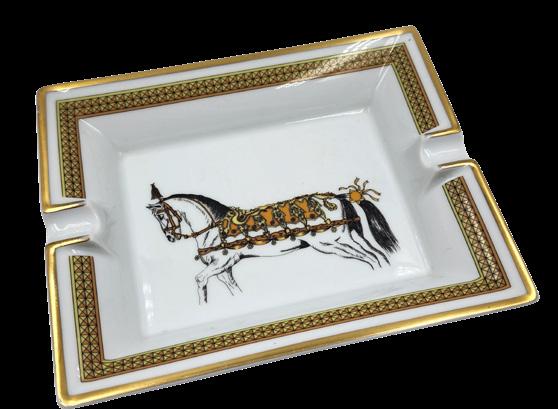
Hermès celebrates the horse through exquisite objects, handsculpted figures, and screen-printed blankets.
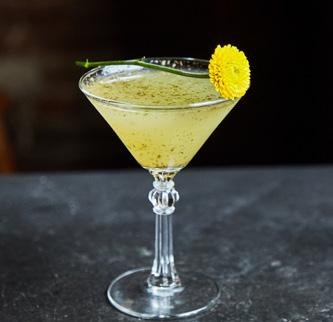
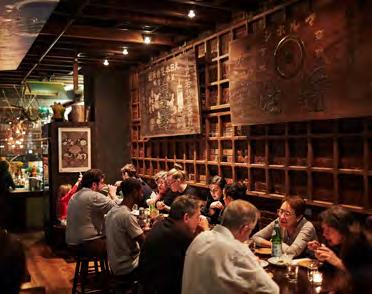
Juban Izakaya reimagines the Gimlet with Japanese citrus and herbs.
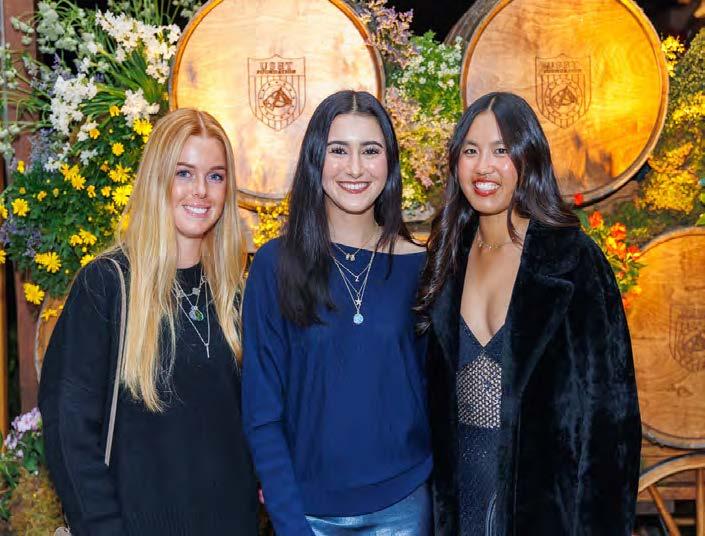
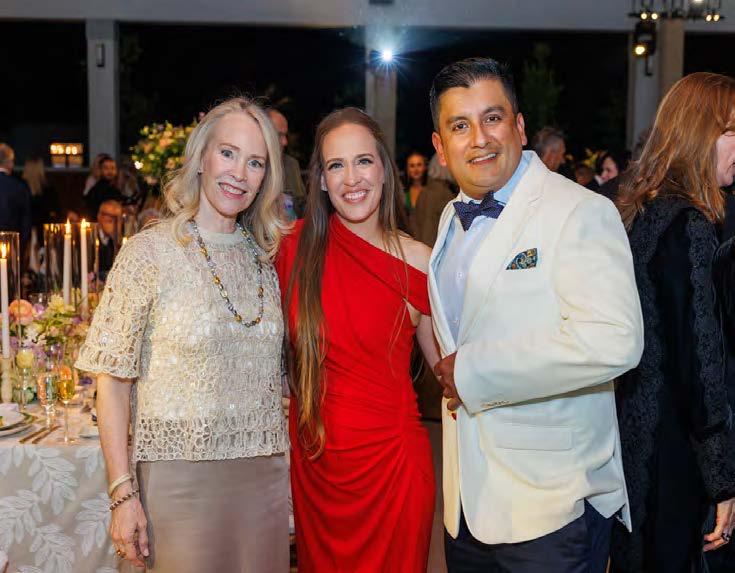
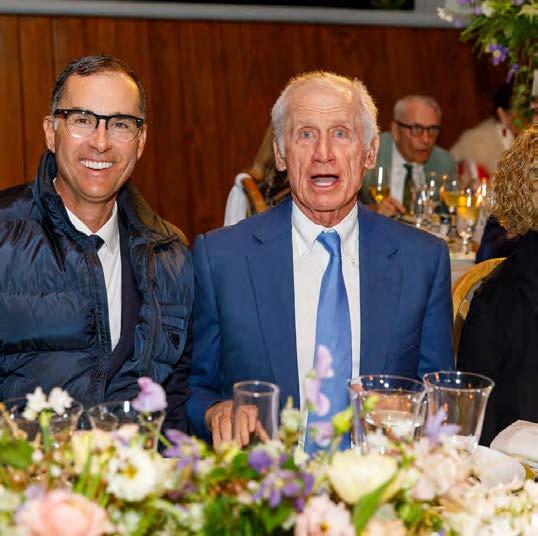
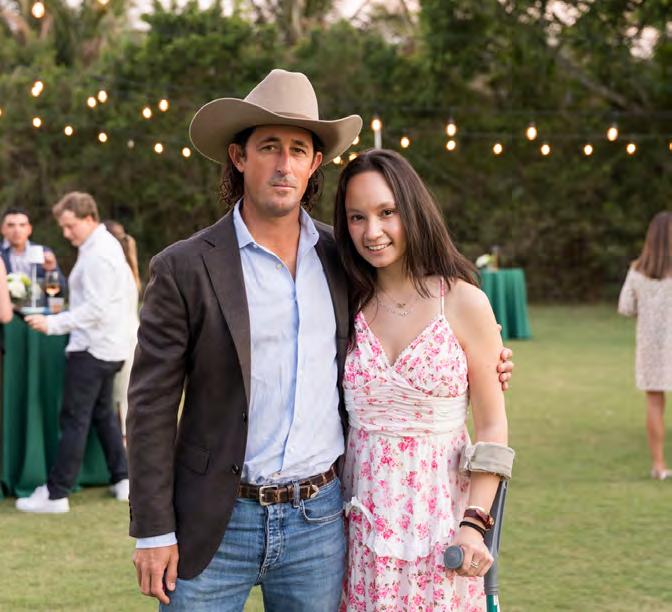
Wellington galas raised millions for equine welfare, benefiting USET, Tusk, GallopNYC, and Brooke USA.
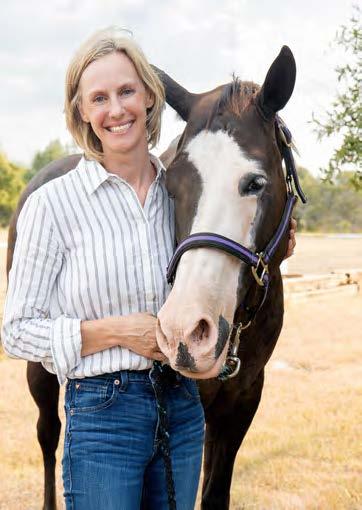
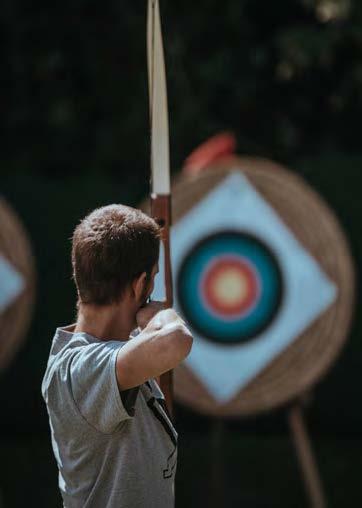
Kristine Palmer utilizes horse interactions and archery to teach mental regulation and authentic presence.
Philip Richter shares his favorite books, travel essentials, and more.
New data-driven tools are revolutionizing how we monitor equine health, performance, and safety.
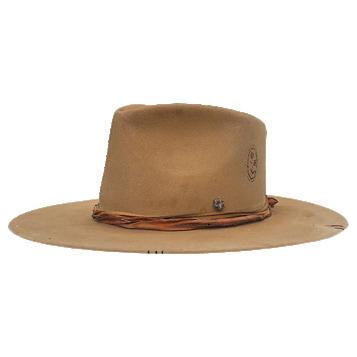
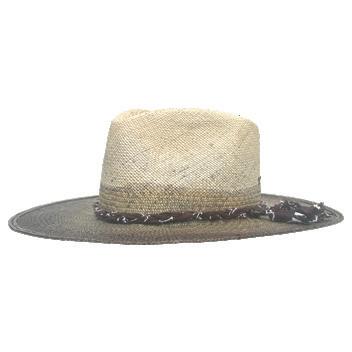
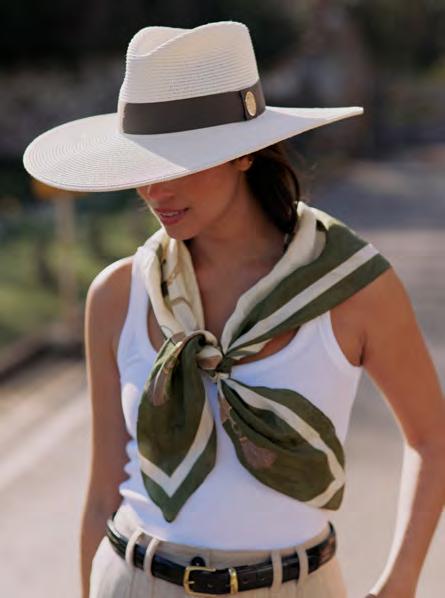
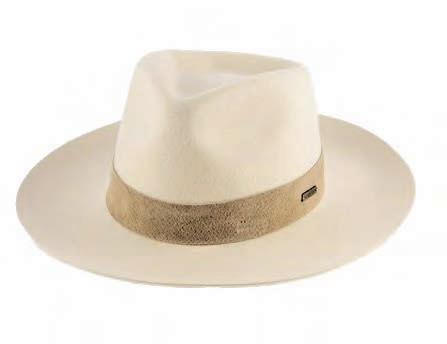
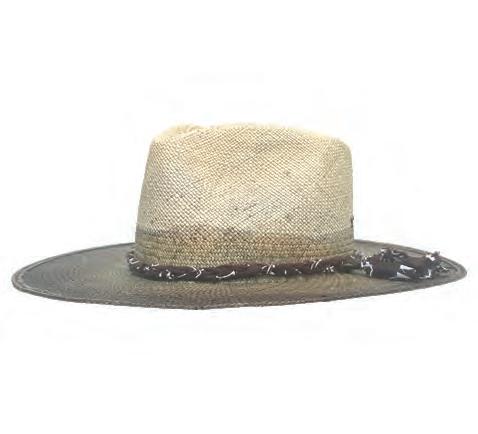
Elegant hats in supple felt and breathable straw offer timeless style.
Farm Sanctuary provides a permanent home for rescued animals.
Research into learning theory shifts training toward welfare-based techniques.
Therapist Sara Goldsmith helps young riders navigate performance anxiety and redefine success in the ring.
EquiJet simplifies international horse transport with expert care.
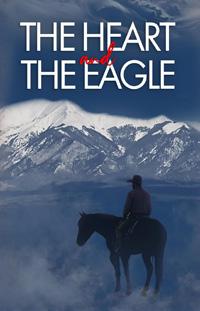
An excerpt from The Heart and the Eagle explores themes of friendship, tragedy, and forgiveness. LUXEQUESTRIAN
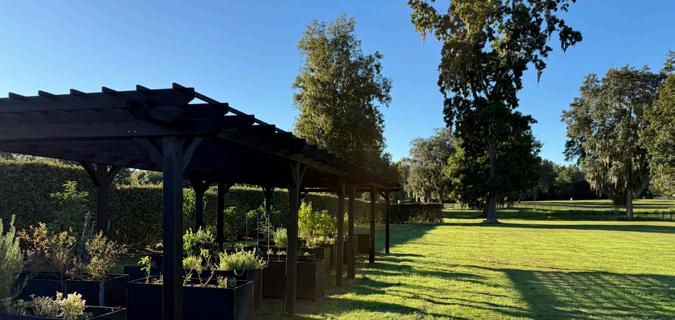
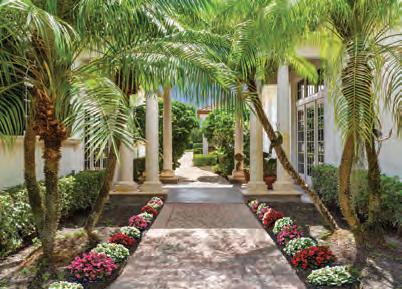
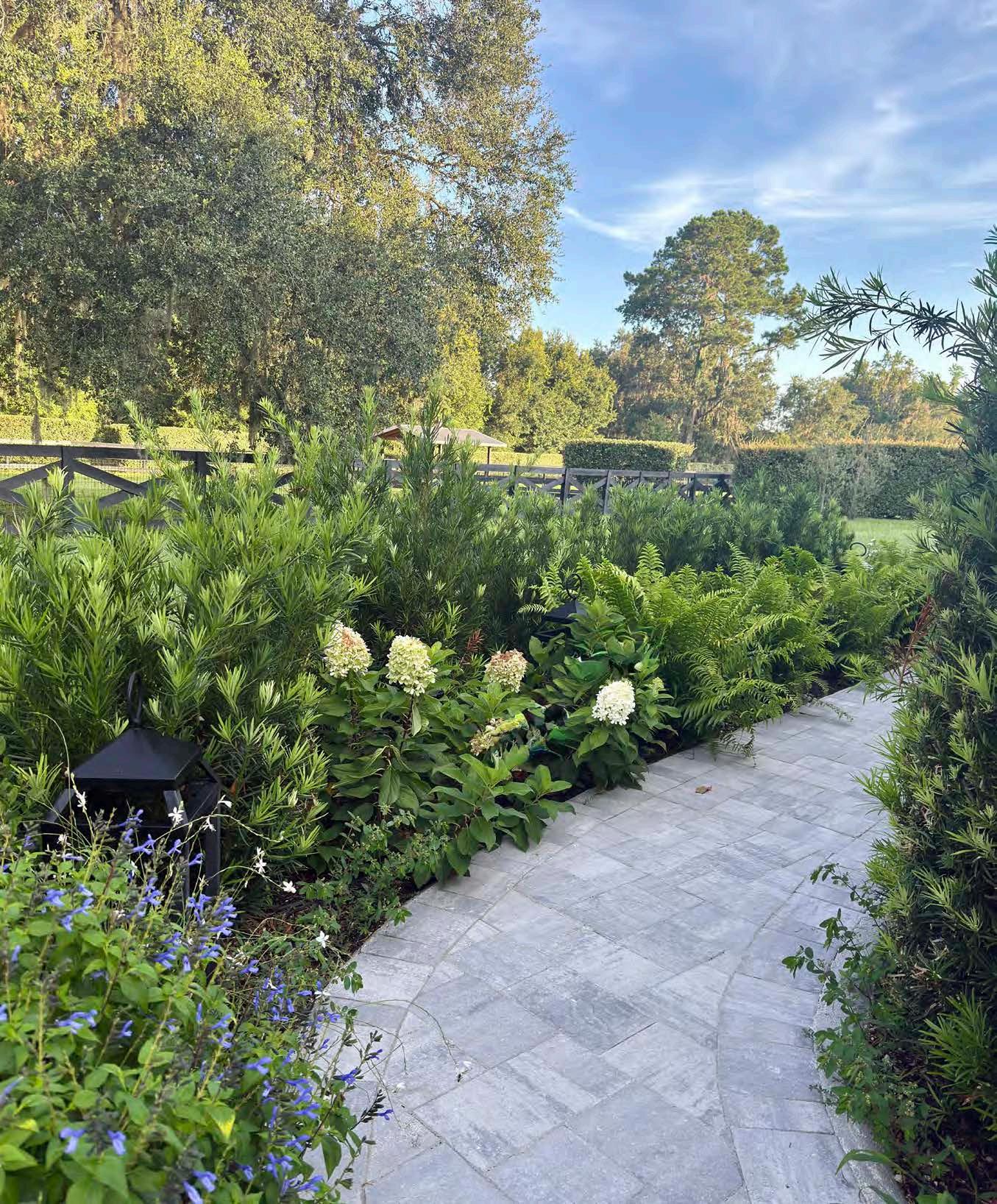
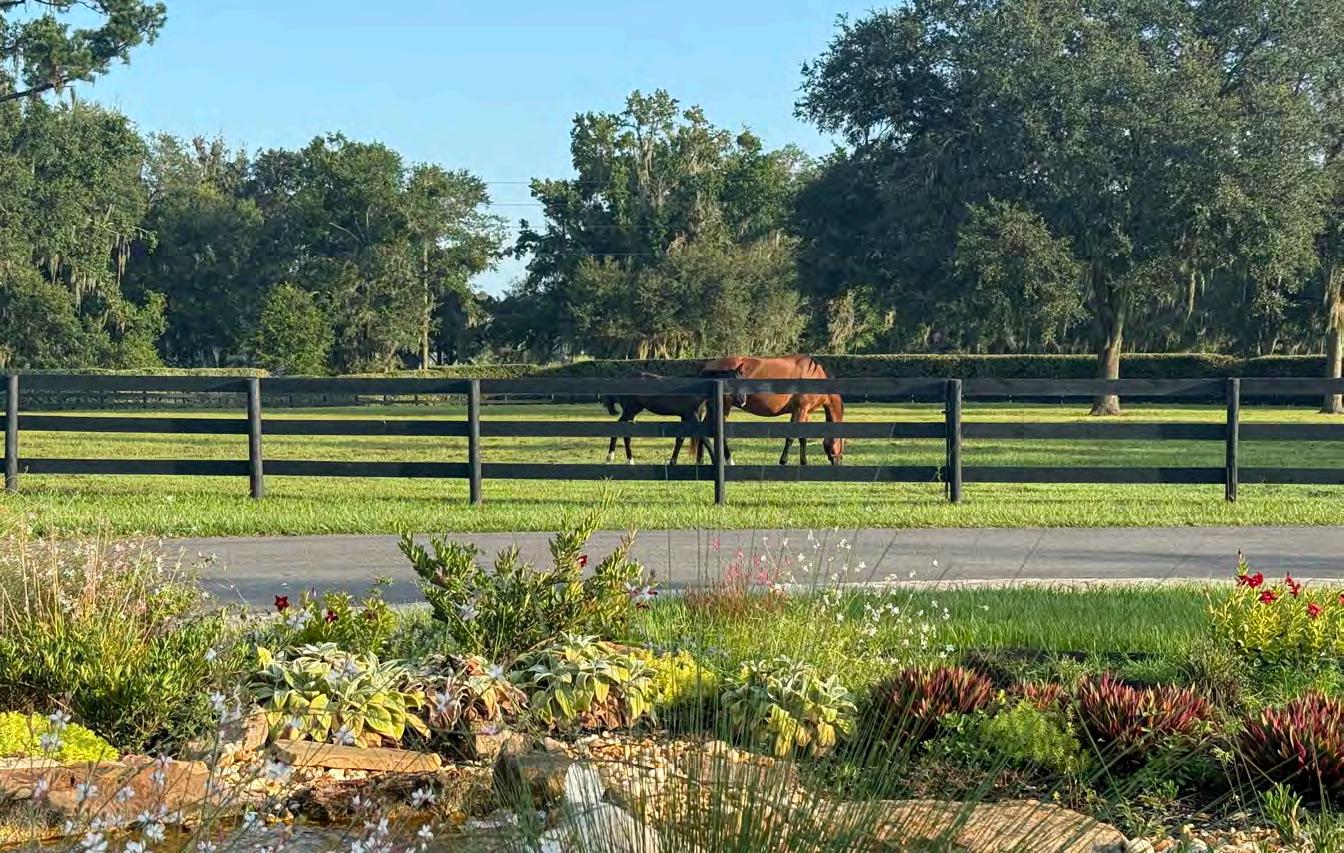
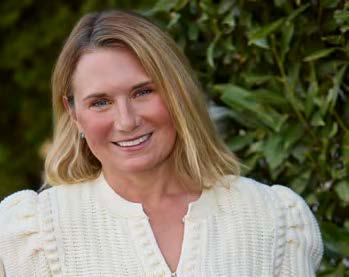
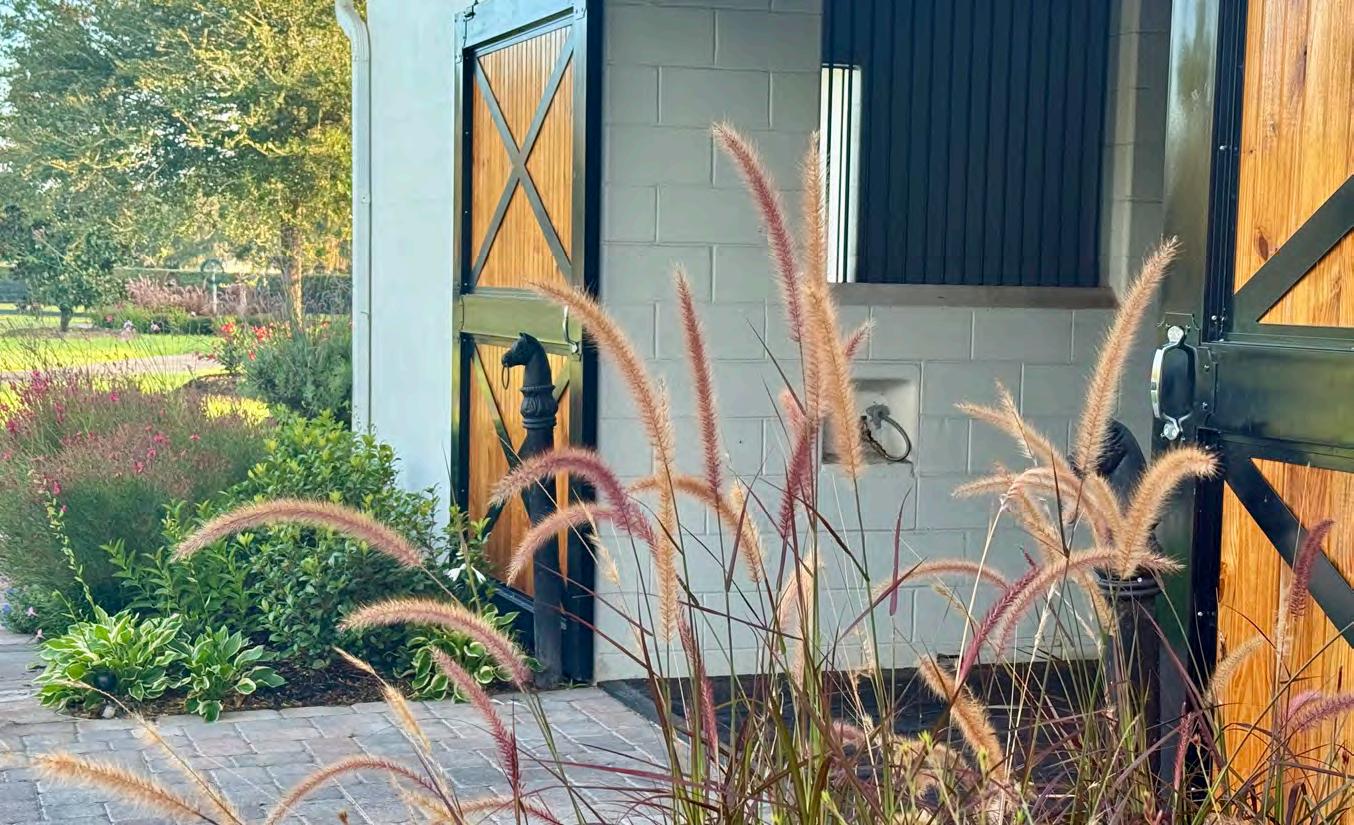
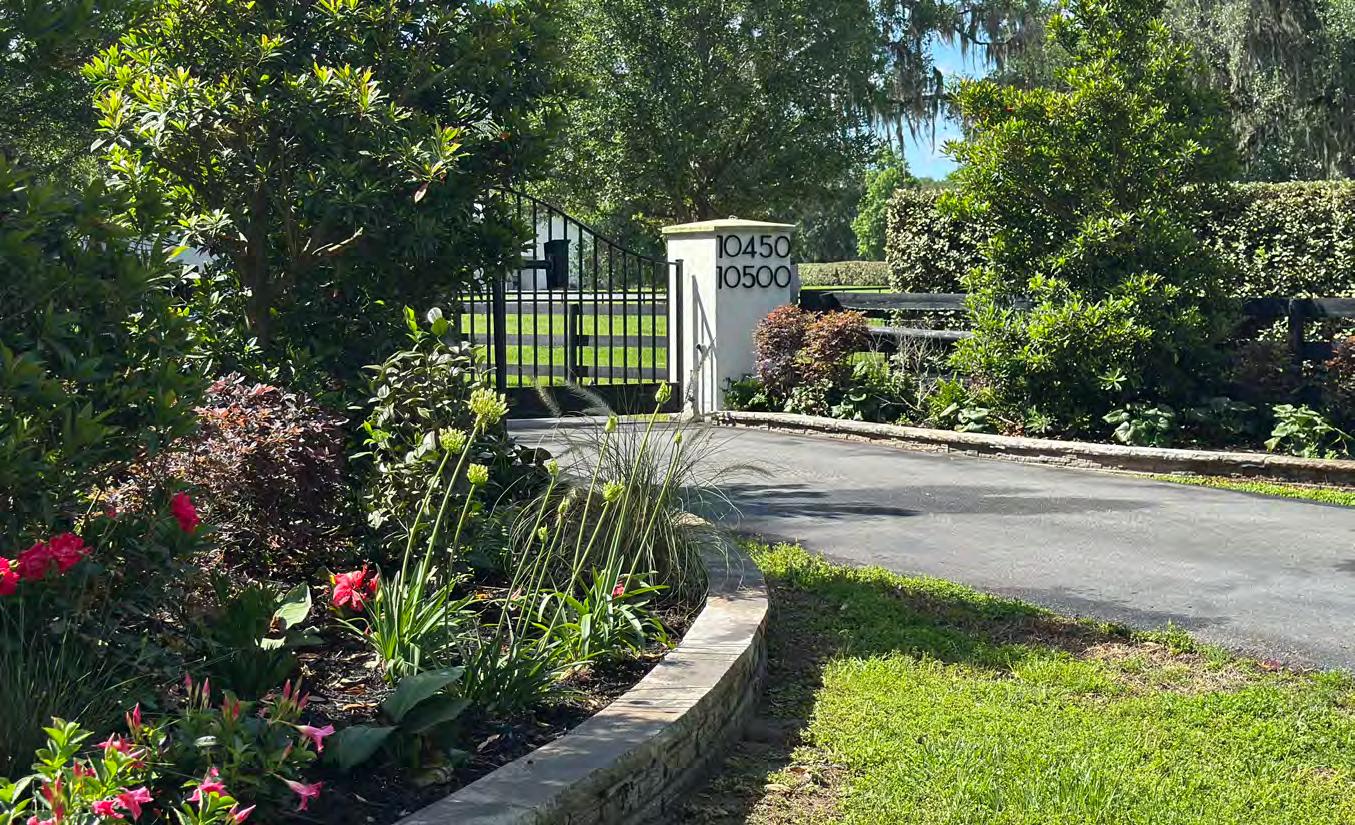
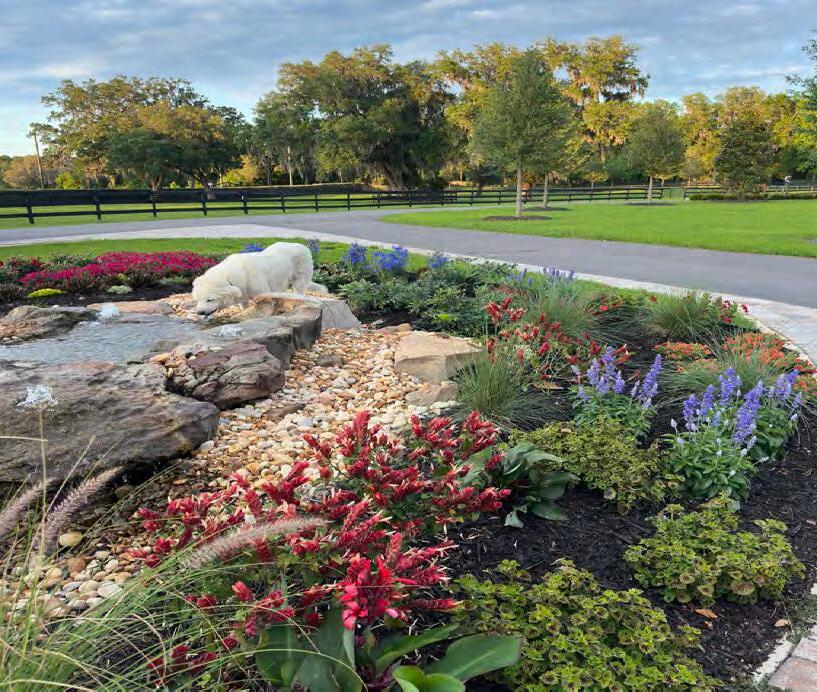
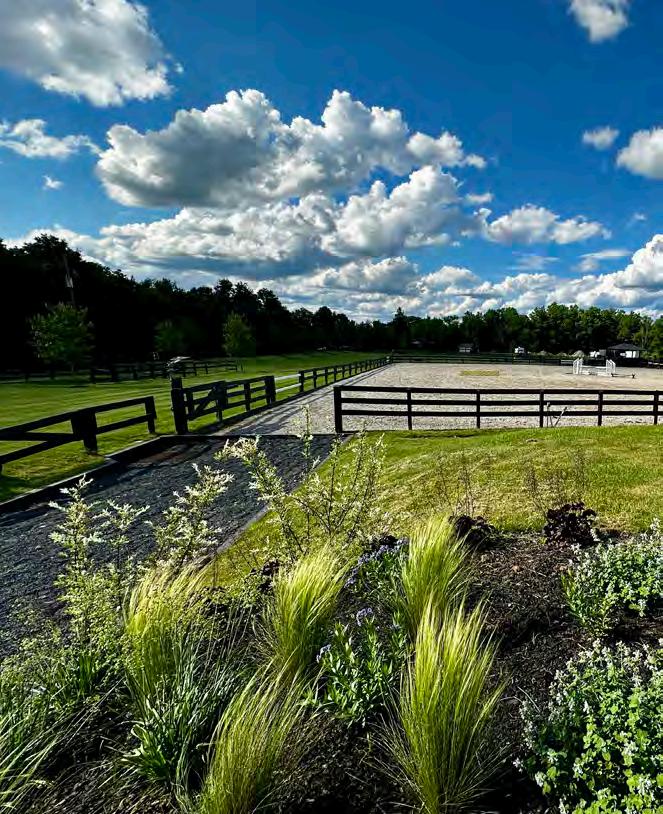
Jessica Jones, founder of Equestrian Gardens, brings her corporateworld experience to designing and landscaping equestrian estates.
COURTESY OF EQUESTRIAN GARDENS
Elevated Craftsmanship for Exceptional Equestrian Living
A custom barn should feel as beautiful as it is functional. At King Construction, luxury begins with design that honors the way you care for your horses and the way you live on your land. Our artisans create barns with graceful rooflines, polished interiors, and refined structural details that set a new standard for equestrian architecture. Every space is tailored to elevate daily routines and enhance the experience of horse and rider. The result is a barn that performs brilliantly and looks spectacular from every angle.
While working on this spring’s issue, our largest to date, the EQLiving team traveled to Wellington, Florida, for a week of interviews, photo shoots, and visits with friends of the magazine. As someone prone to worry, I braced for the challenges of being away from the office while keeping production on track.
The reality was quite the opposite. Time spent with equestrians across generations and disciplines proved not only productive but also unexpectedly restorative. There is, as many will attest, a calming effect in the presence of horses, something difficult to quantify but immediately felt. A few whinnies here, a nuzzle there, and long walks through the barns, paired with conversations with accomplished riders and trainers, left me feeling focused, energized, and nearly stress-free.
The equestrian world is sometimes viewed as a “bubble,” and perhaps it can be at times. But stepping into it, even briefly, revealed a more interesting paradox. Removed from the relentless churn
of news headlines and daily pressures, that so-called bubble actually offered clarity and calm. It’s a space grounded in discipline, care, and connection—to animals, to land, and to one another. For me, it was both an escape and a reset.
That sense of purpose is evident throughout Wellington’s Winter Equestrian Festival, the 12-week circuit that draws a global community of equestrian enthusiasts while supporting a wide range of philanthropic efforts. The many fundraising events held during the season generate meaningful support for causes that extend well beyond the show ring—from therapeutic riding programs to wildlife conservation and the humane treatment of working horses worldwide. Several of these initiatives are highlighted in this issue.
Our annual fashion feature showcases a blend of tradition and evolution. This year, we spotlight brands that balance heritage with a fresh perspective, pairing classic silhouettes with bolder cuts, color, and a growing influence from streetwear. We also turn our attention to emerging labels and hear directly from four founders of smaller, niche brands who are carving out space in a competitive market. Their insights—thoughtful and candid—underscore the creativity and resilience required to drive a successful business.
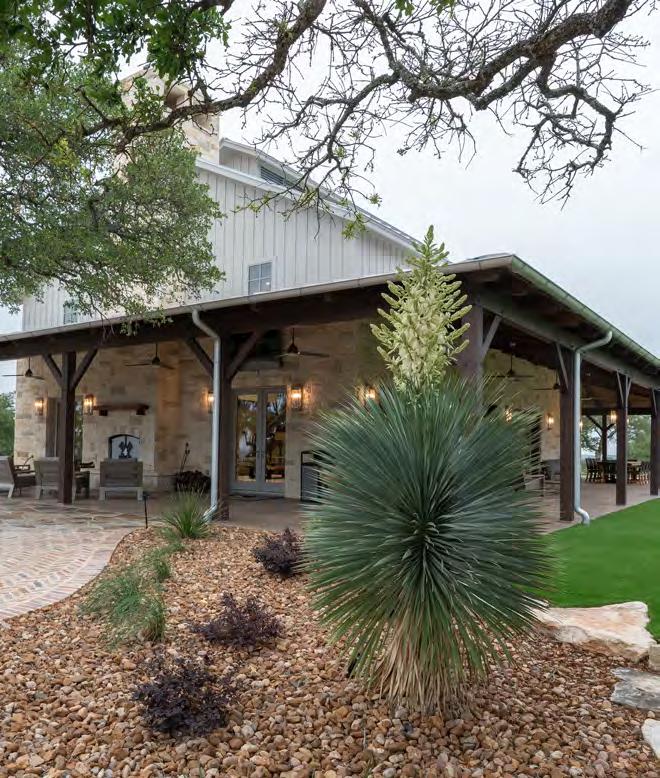
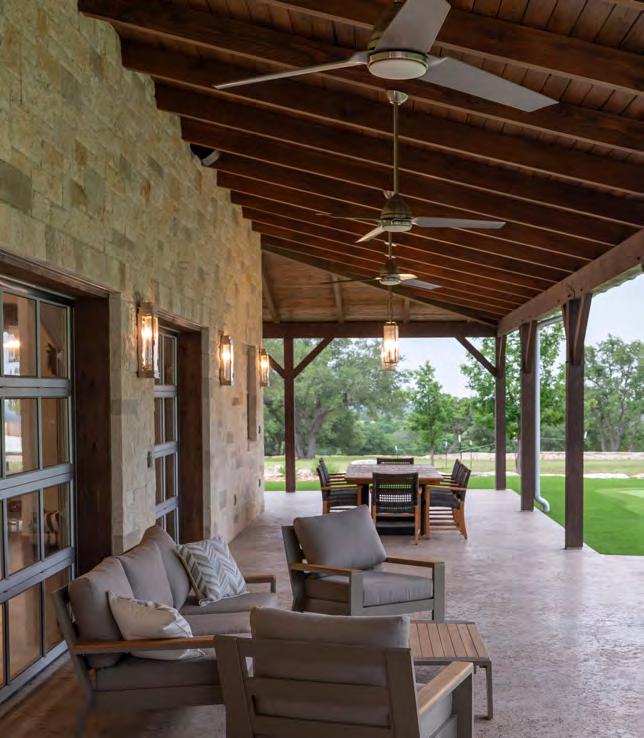
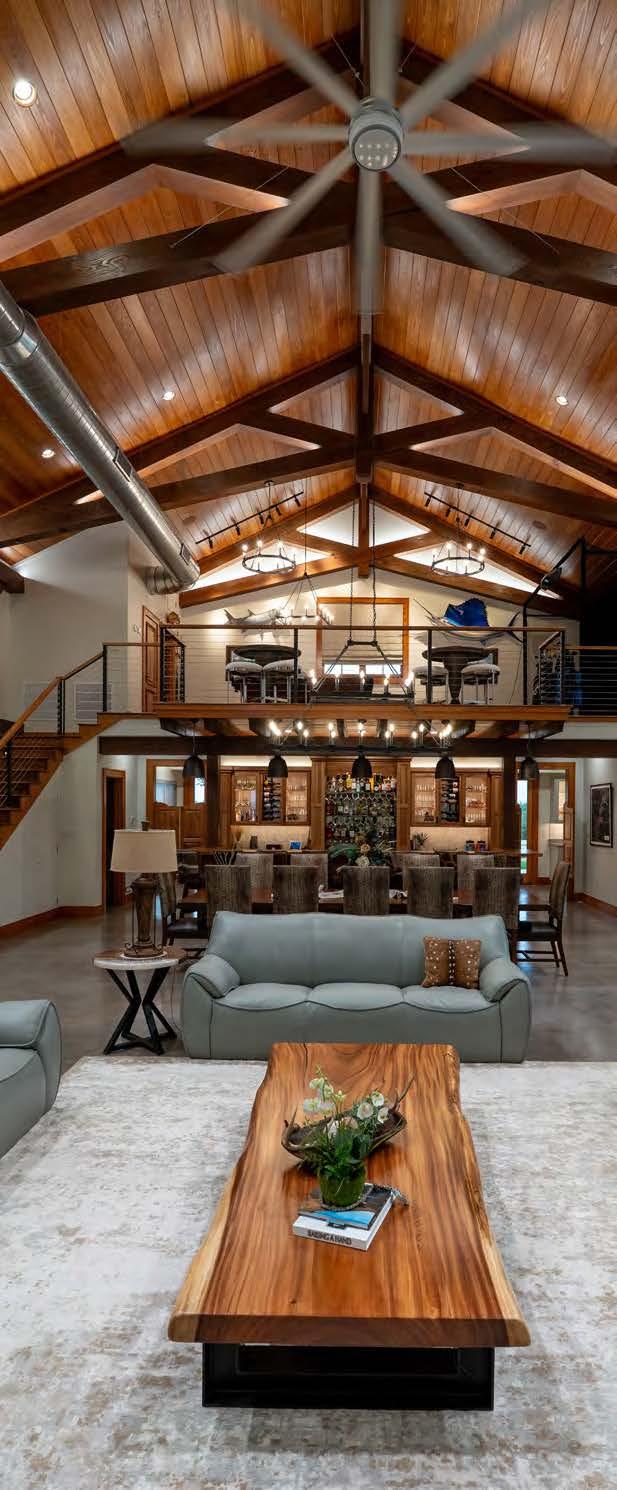
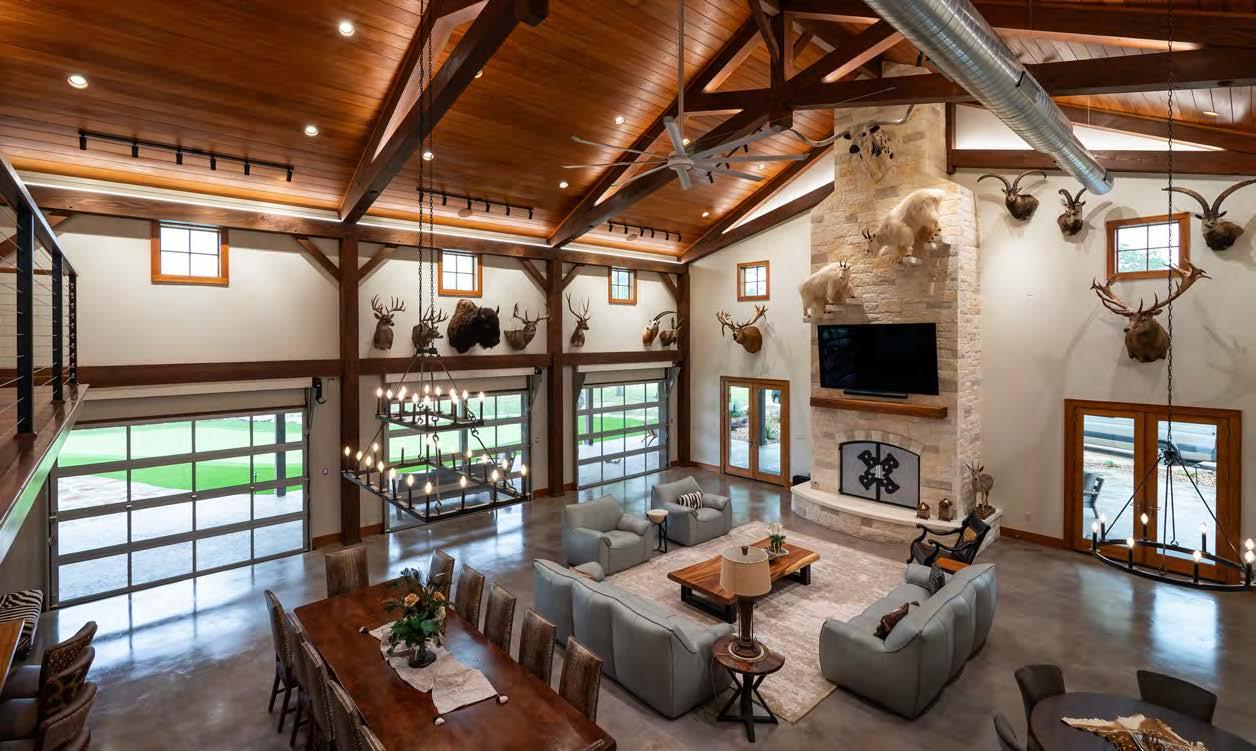
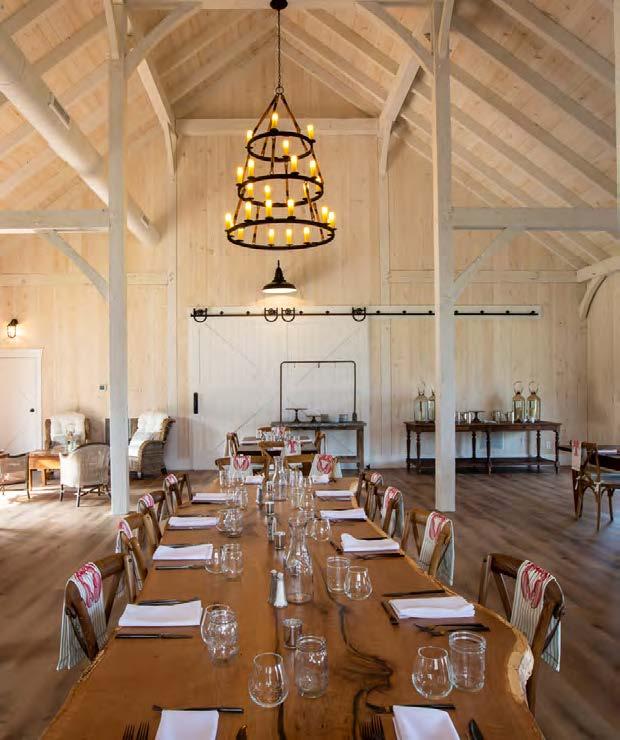
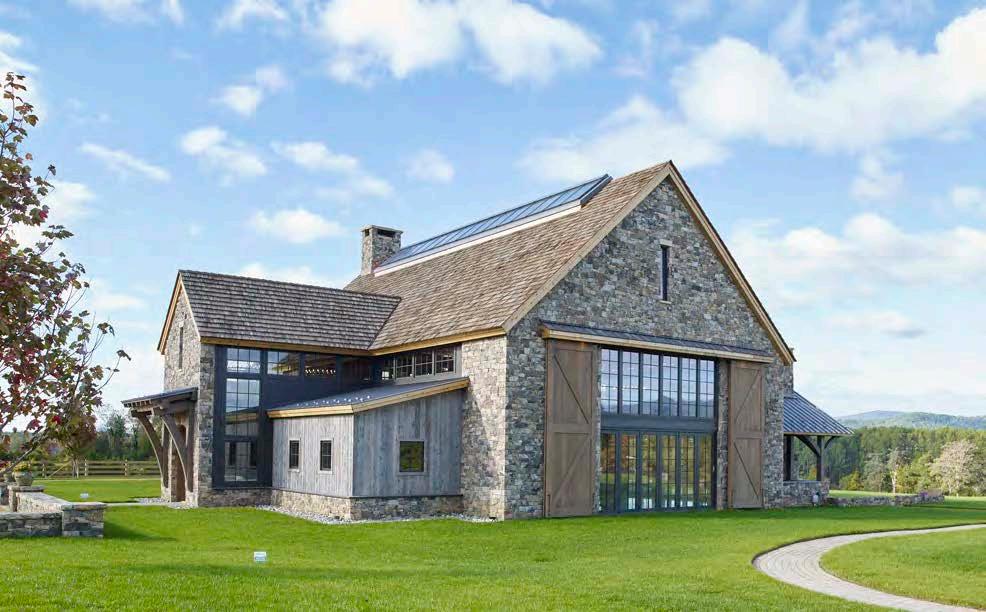
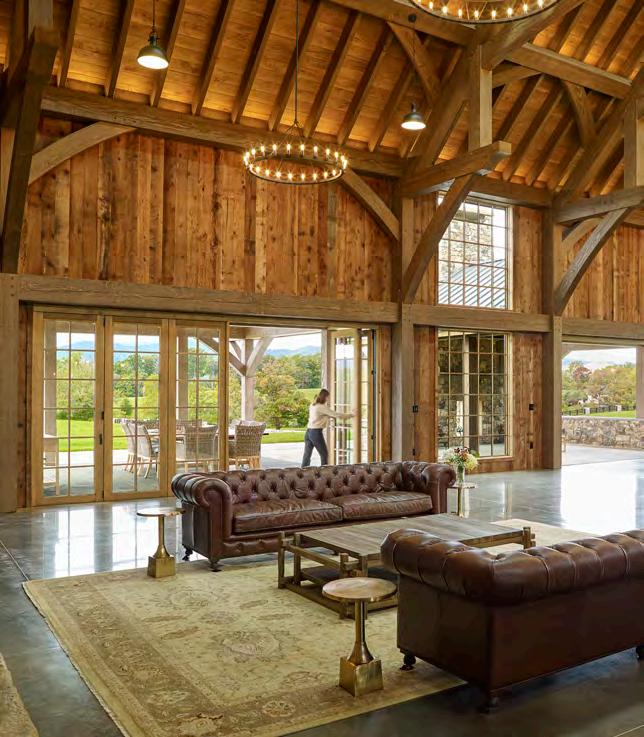
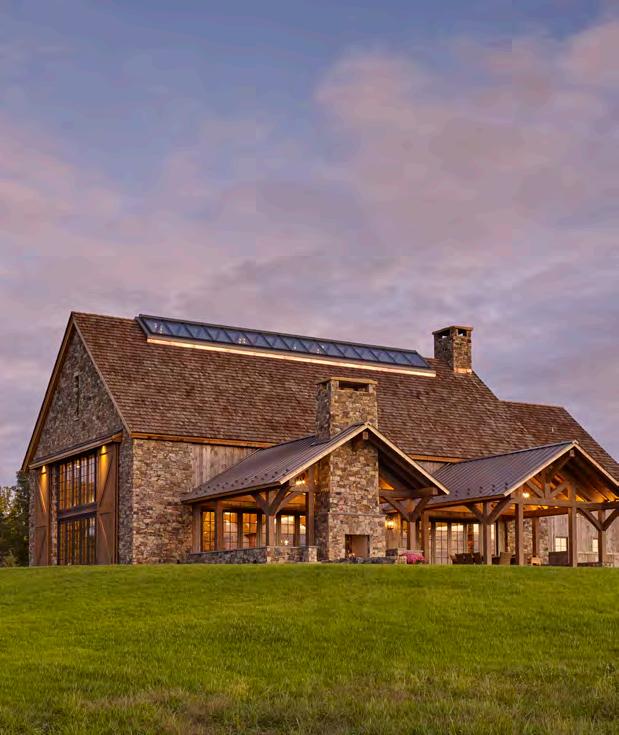
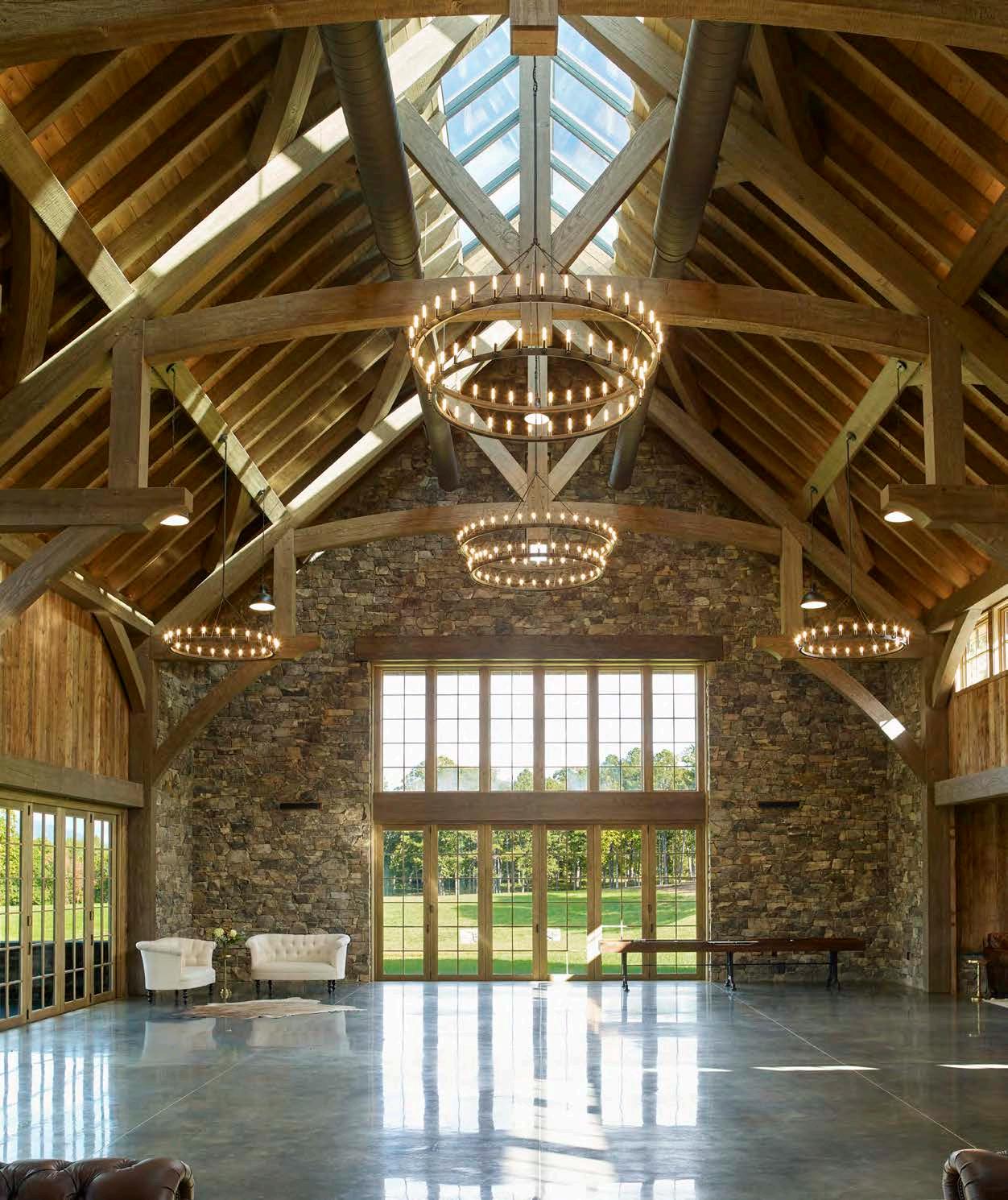
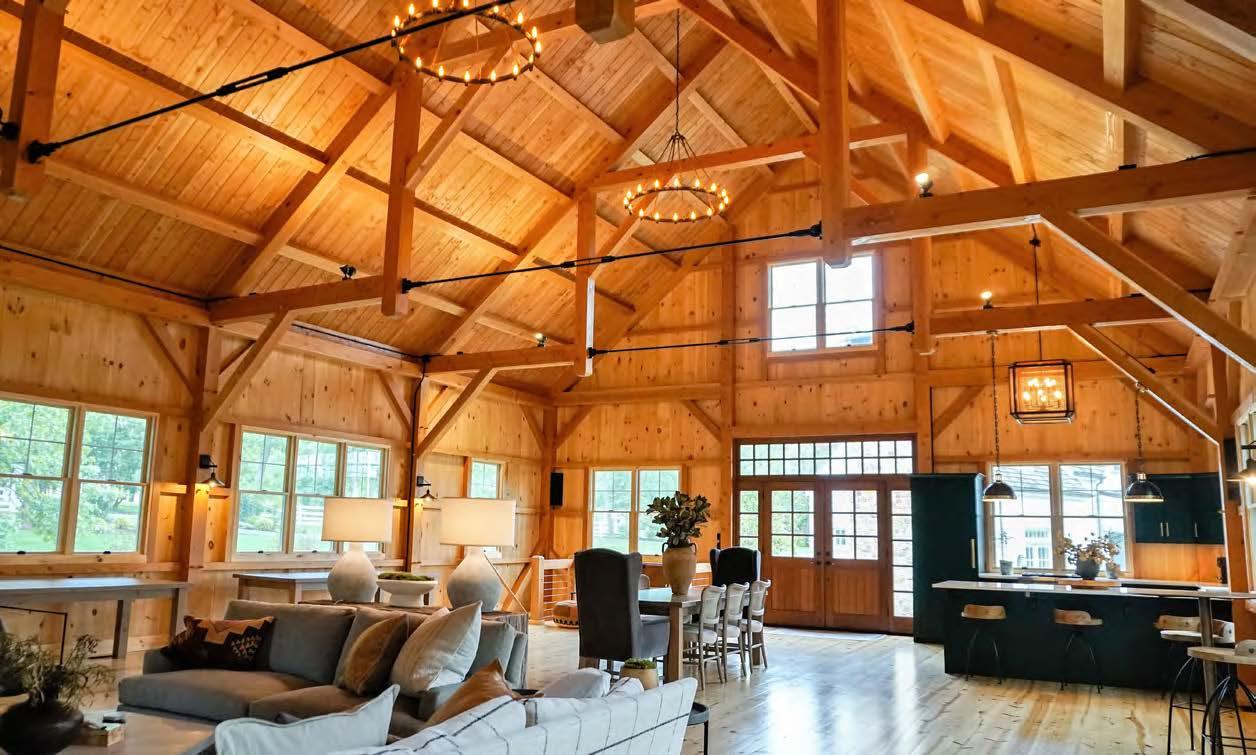
As the season shifts, temperatures warm, and social calendars begin to fill, we look to the art of gathering. Our portfolio of seven party barns offers inspiration for entertaining with ease and style, illustrating how rustic settings can be elevated without losing their inherent
charm. Each space invites guests to experience the landscape in a way that feels both relaxed and refined.
Never one to rest on his laurels, longtime friend of EQ and Advisory Board member Carson Kressley debuts an equestrian-inspired home-décor capsule collection in collaboration with Ballard Designs. Elegant, timeless, and infused with personality, his versatile pieces evoke the allure of a bygone era.
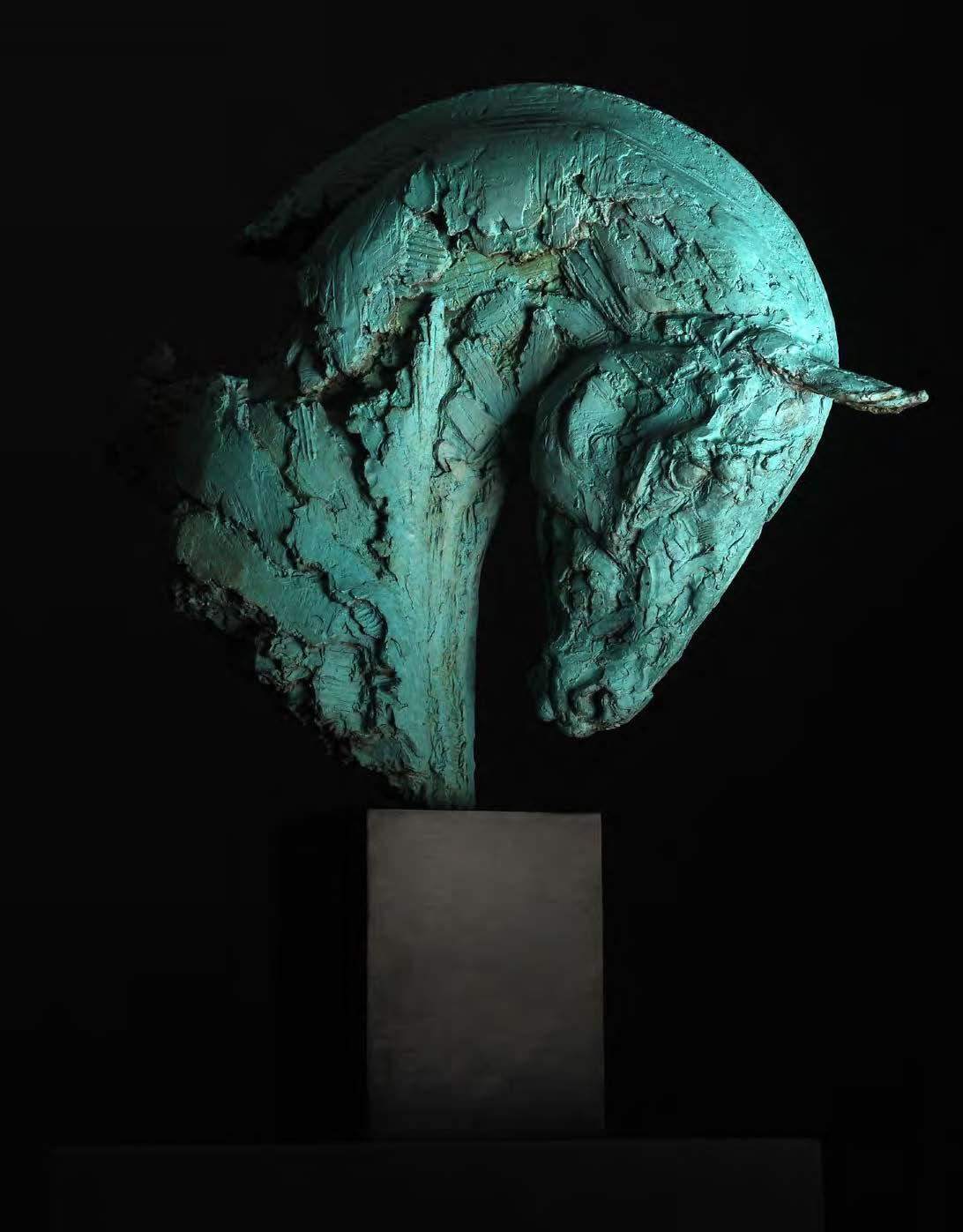
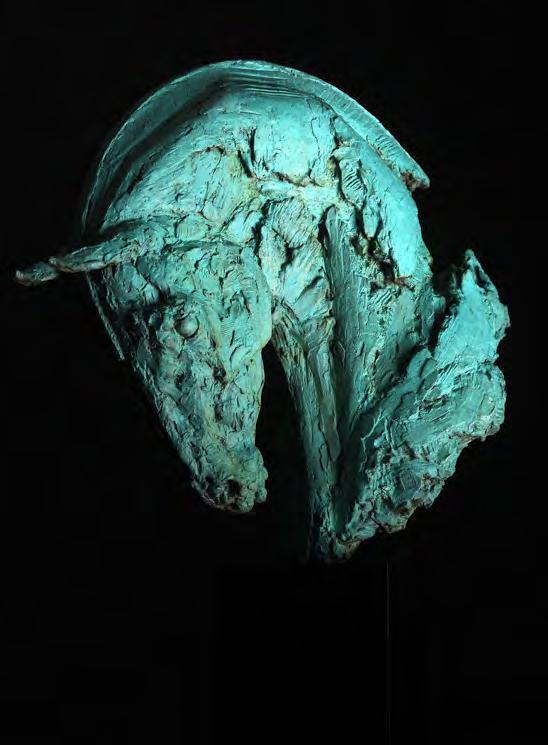
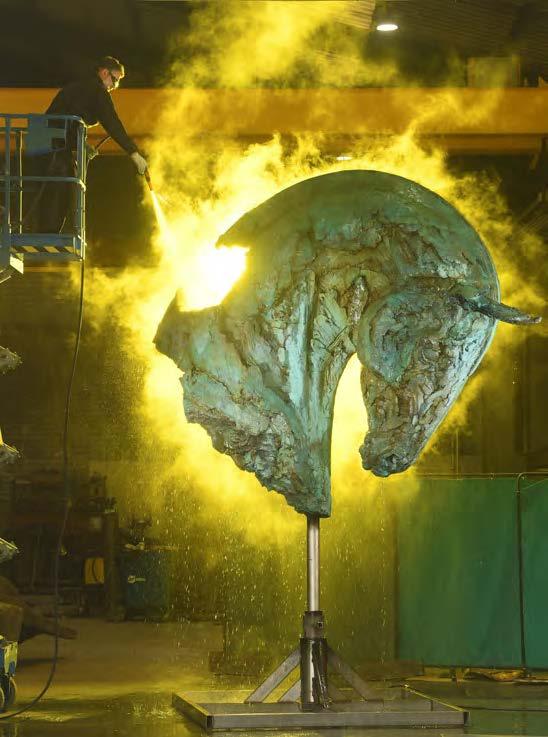
In our gallery pages and on this issue’s cover, we feature the work of sculptor Holly Hickmore, whose pieces capture the quiet expressiveness of animals, particularly horses, through fluid form and gesture.
With this expanded issue, we had the opportunity to broaden our lens. You will find coverage of notable competitions and charitable events from the winter circuit, a profile of a designer advancing sustainable garden practices, and a program offering a reprieve from high-pressure careers through horses and archery. There are books to discover, hats to covet, and plenty to linger over.
As I write this, cold northern winds rattle the windows, a sharp contrast to Wellington’s warm breezes. Still, that brief time “in the bubble” lingers— steadying, energizing, and a reminder that stepping away can sometimes be the most productive move of all.
A POLISHED NOD TO THE YEAR OF THE HORSE
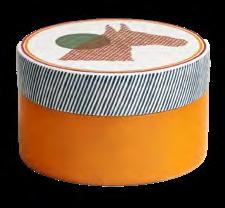
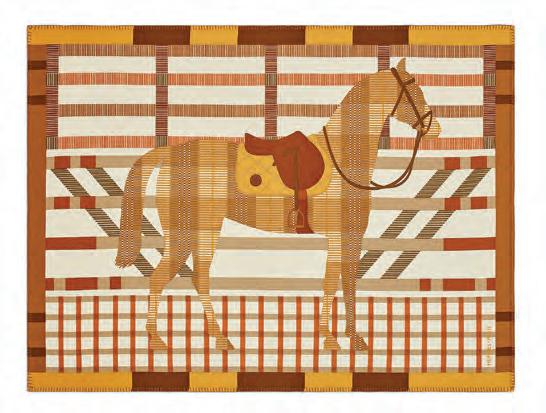
Hermès CELEBRATES THE HORSE one exquisite object at a time.
1. Samarcande Paperweight in cornaline is a reinterpretation of a chess set knight in taurillon leather with a hand-lacquered wood base. $690. 2. Cashmere Patchwork Saddle Blanket in terracotta is hand-embroidered with glass beads and threads of cotton. $20,800.
3. The Arion Sculpture , a hand-sculpted ebonized mahogany wood horse, represents Arion the legendary horse with a martial look and serene power. In acajou ebenise. $8,000.
4. The hermetically sealed Saut Hermès Box in hand-painted lacquered wood has a stainless steel interior. In jaune. $1,000.
5. The screen-printed Cheval Au Box Blanket in ambre double-sided cashmere, is inspired by stable architecture and horse equipment. $6,100.
6. The porcelain Cheval Joker Ashtray in blue nattier represents the horse heads in the two-way reading of playing cards. $840.
7. A Change Tray in taurillon leather features a majestic perforated horse interior. In poudre/ ambre. $1,000.
8. Printed porcelain Pegase Change Tray in anis outremer with goatskin base. $710.
Subscribe and get America’s premier equestrian-lifestyle magazine delivered right to your mailbox. And your inbox will be brightened too with a complimentary subscription to the magazine’s digital edition and the EQ Inner Circle e-Newsletter.
(Required for Inner Circle, subscription, updates, and gift giveaways.)
problems.)
VOLUME 15 NUMBER 2
EDITOR AND CREATIVE DIRECTOR Stephanie B. Peters
SENIOR EDITOR Jill B. Novotny
PHOTOGRAPHY DIRECTOR George Kamper
EDITORS AT LARGE Rebecca Baldridge, Judy Richter (In Memoriam)
PHOTOGRAPHER AT LARGE Alden Corrigan
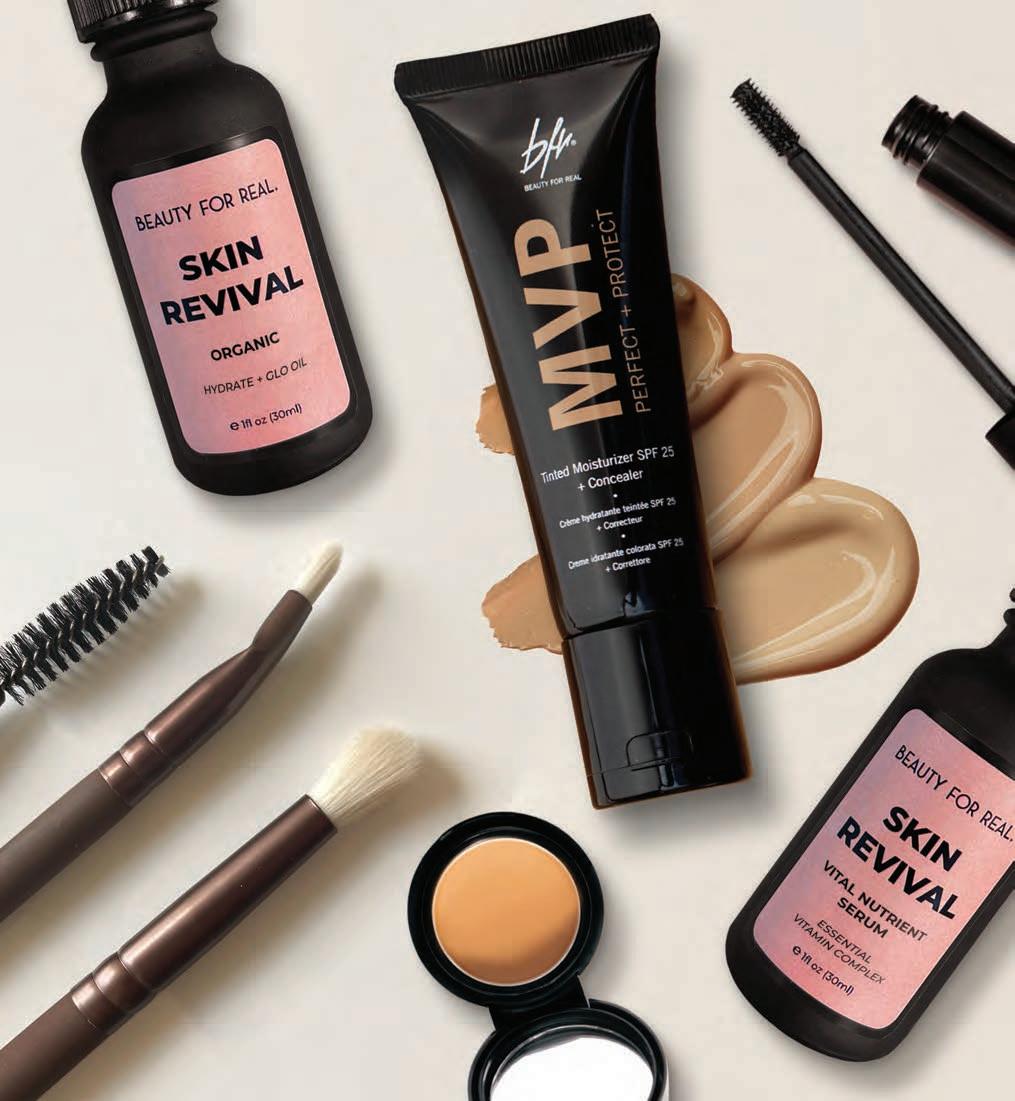
CONTRIBUTING BEAUTY EDITOR Leslie Munsell, Beauty For Real
CONTRIBUTING WRITERS Rebecca Baldridge, David Distler Sarah Lessler, Melissa Lu
CONTRIBUTING PHOTOGRAPHERS J. Bannon, Coastal Click, Tom Crane, Events Through a Lens, Halkin/Mason, Megan Giese Media, Russell Sach,Snap Photography, Darren Setlow, Slideworks, Luxecine, Slideworks Media, Through These Eyes, Timberlyne, Cody Wortman
DESIGN MANAGER Mary A. Stroup
SOCIAL MEDIA AND WEB CONTENT Maggie Carty Golon
DIGITAL & CLIENT SERVICES Sarah Lessler
EDITORIAL MANAGER Theresa Cardamone
EQ SPECIAL EVENTS Jennifer Pearman Lammer
UK-BASED LONDON EDITOR Bridget Arsenault
PUBLISHER C.W. Medinger
CONSULTANT George Fuller
PRINT Irfan Šehić
PUBLIC RELATIONS Carrie Wirth, EQmedia.agency
NEWSSTAND DISTRIBUTION Boyd Mulholland
ADVERTISING SALES
General: 929-262-0347, info@eqliving.com
Joyce Jones, 954-796-1809, jones@eqliving.com
Dick Holcomb, 770-331-7788, dickholc@gmail.com
Europe: Rosa Zampini, zampini@eqliving.com
EQLIVING ADVISORY BOARD
Mark Badgley | Melissa Ganzi | Carson Kressley
Peter Leone | Victoria McCullough | Chip McKenney | Colleen and Tim McQuay
Mindy Peters | David Sloan | Kim Tudor | Chester Weber
EQUESTRIAN QUARTERLY (EQ) became EQUESTRIAN LIVING magazine in 2016 and is published four times yearly. It is distributed at selected equestrian locations, newsstands, and is available for home delivery for $28.95 | Canada $46.95.
SUBSCRIBE
Coupon at left or: eqliving.com/subscribe
For free digital subscription and InnerCircle membership: eqliving.com/ic
To purchase past issues or find newsstands offering EQLiving, visit eqliving.com/where-to-buy
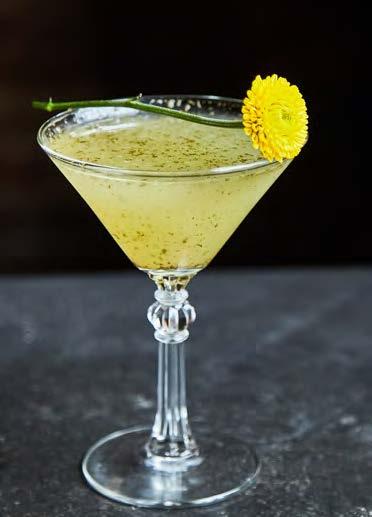
JUBAN blends traditional Japanese citrus and herbs in a vibrant, botanical reimagining of the classic Gimlet.
FORGET-ME-NOT
INGREDIENTS
2 ounces Suntory Roku gin
½ ounce Yuzu sake
½ ounce Shiso puree
½ ounce Yuzu juice
PREPARATION
Shake and strain into martini glass and serve. Garnish with a flower.
Owner Ashwin Balani says, “In Japan, the forget-me-not symbolizes everlasting loyalty and love, particularly in the context of honoring ancestors. Much like the delicate pink flowers of spring, these flowers are seen as a bridge between the living and the deceased, with their memory forever preserved in art and tradition.”
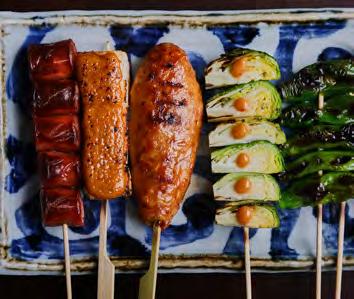
JUBAN is a lively, art-filled izakaya in the heart of Chelsea’s gallery district, offering a modern reincarnation of 207 Tenth Avenue. Its name, meaning “Number 10” in Japanese, nods to predecessor, Izakaya Ten, while establishing its own inventive identity. The restaurant features hand-painted murals, shared plates such as Blue Crab Fried Rice and tsukune skewers from a binchotan-style grill.
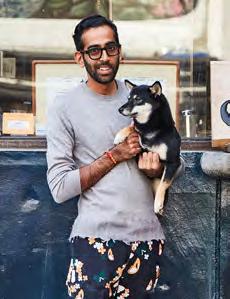
ASHWIN BALANI’S ties to his Manhattan restaurant, Juban, began years before he took over the space. A former server turned manager at Izakaya Ten, he returned after its closure and signed the lease at age 29, a moment his father called “meant to be.” His vision drew on a personal exploration that revealed an ancestral link to Japanese culture, guiding him toward revival rather than reinvention. Since opening Juban in 2015, he has built a welcoming Chelsea fixture where longtime regulars now bring their children.
THERMAL & WELLINGTON: HIGH STYLE, HIGHER PURPOSE
USET FOUNDATION
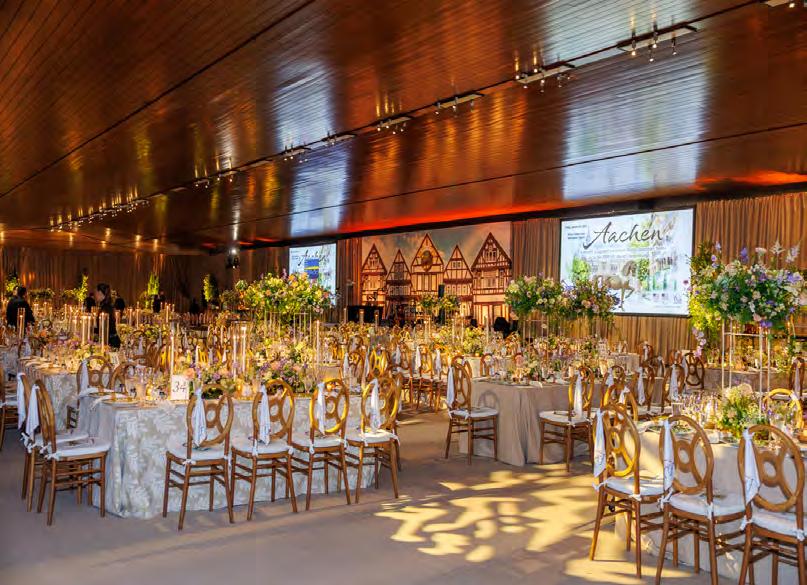
Bicoastal benefits raise $1.7 million to fuel team spirit.
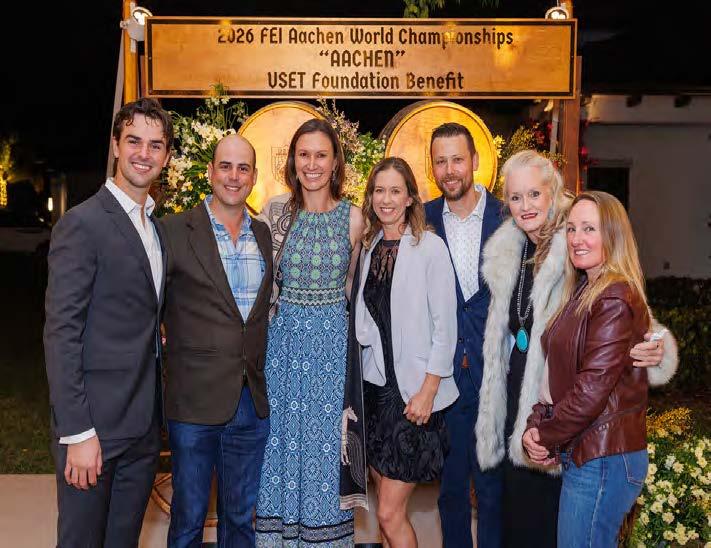
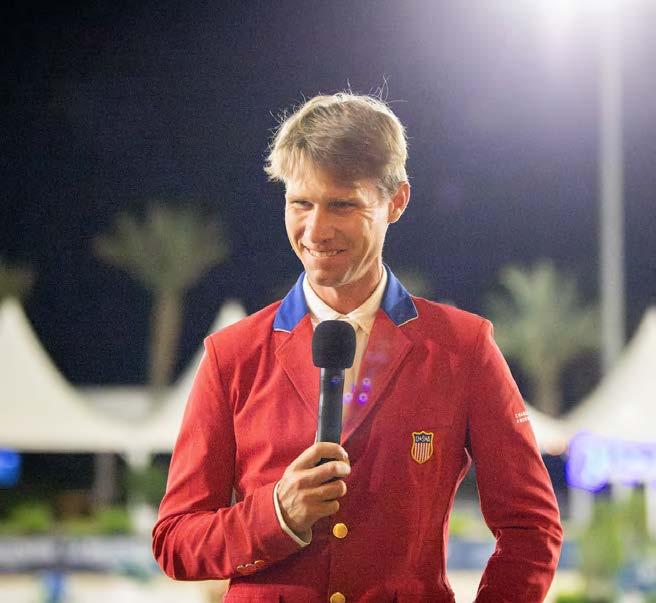
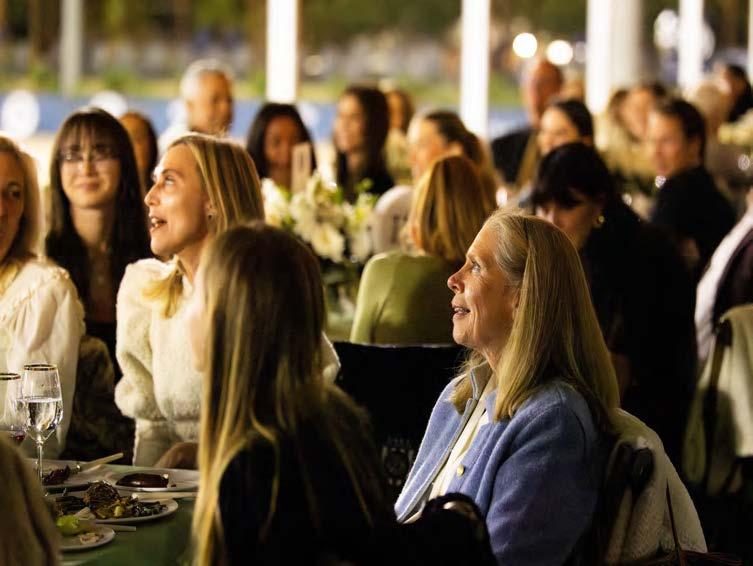
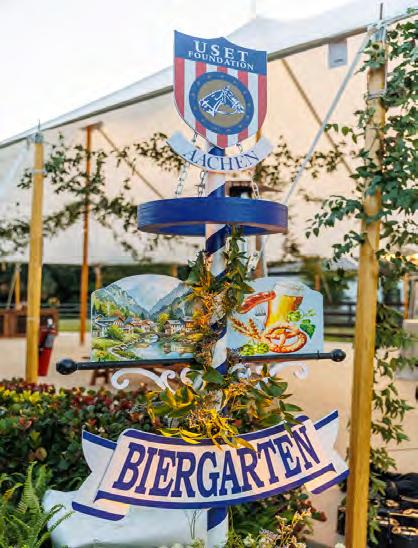
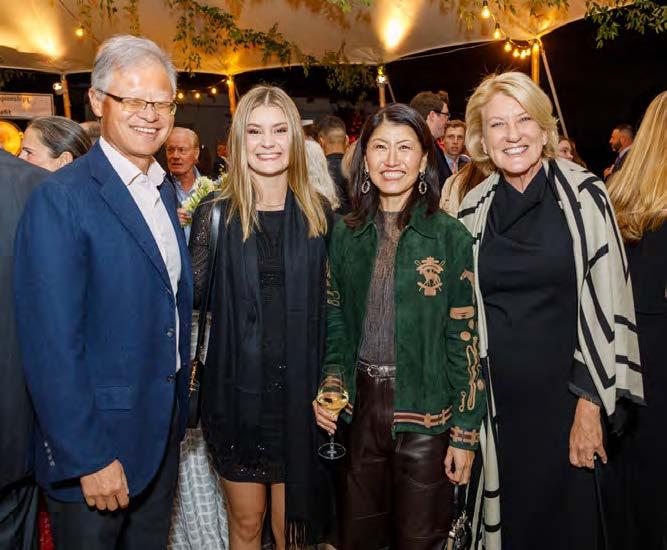
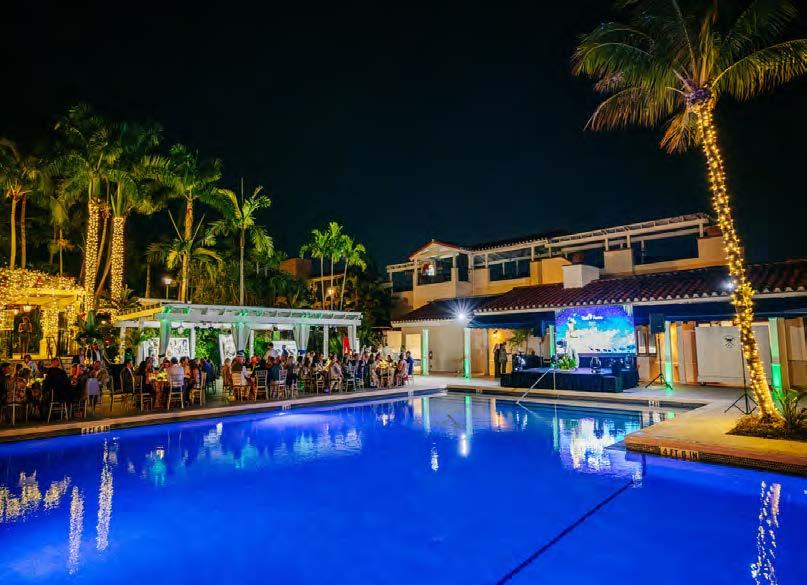
The USET Foundation’s two recent benefit galas ahead of this summer’s FEI World Championships in Aachen, Germany, raised nearly $1.7 million in total. The dazzling events—at USET Foundation Trustee Rowan O’Riley’s ROasis Riding Oasis in Wellington, Florida, and Desert International Horse Park in Thermal, California—raised funds to support U.S. horses, athletes, and teams preparing for and attending the championship at the iconic, world-class Aachen venue.
“Sustaining competitive excellence at the highest levels of equestrian sport requires hard work, unwavering commitment, and meaningful resources,” said USET Foundation Chairman, President, and CEO Kristi Mitchem. “Unlike many other countries, the United States does not receive government funding for equestrian sport. Our teams rely largely on support from the USET Foundation and our dedicated donors. We are tremendously grateful for the generosity shown at this year’s benefits.”
The USET Foundation’s prestigious annual awards were also presented during the gala. Akiko Yamazaki received the 2026 R. Bruce Duchossois Distinguished Trustee Award; the 2026 Whitney Stone Cup was awarded to U.S. jumping athlete Lillie Keenan, and eventing athlete Cassie Sanger was recognized with the 2026 Lionel Guerrand-Hermès Trophy.
The highlight of the West Coast event featured inspiring and emotional performances by Californiabased U.S. athletes, including FEI Jumping Nations Cup Youth Final Young Rider Team gold medalist Skylar Wireman, Olympic jumping silver medalist Karl Cook, triple Olympic dressage bronze medalist Guenter Seidel, USEF’s 2025 Vaulters of the Year, Kylynn Ghafouri, and Emi Yang, as well as noted American dressage athletes Steven Paulson and Tina Caldwell.
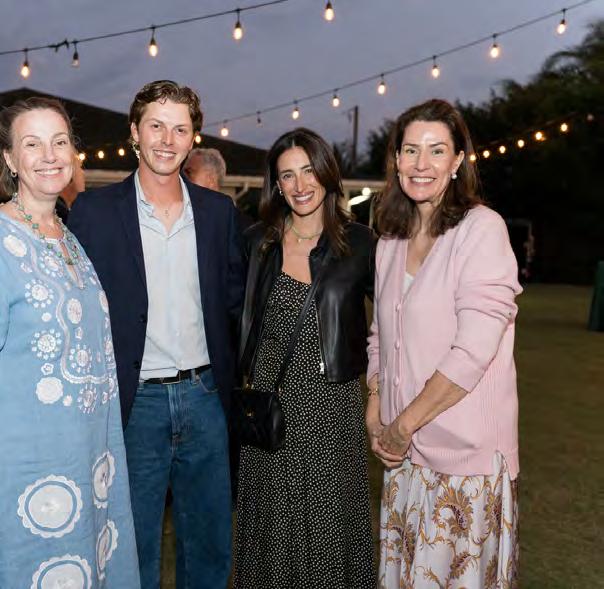
1. Christian Simonson, Dr. David Da Silva, Adrienne Lyle, Katie Duerrhammer, Gerard Duerrhammer, Phylis Massey, Jill Briggs.
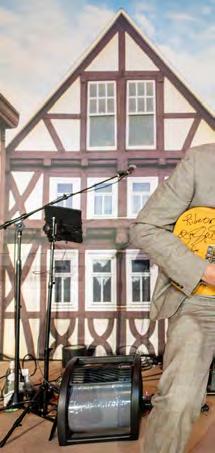
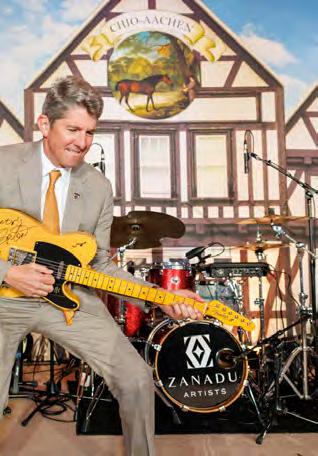
2. Philip Richter with Springsteen’s guitar.
3. Katie Dinan and Georgina Bloomberg.
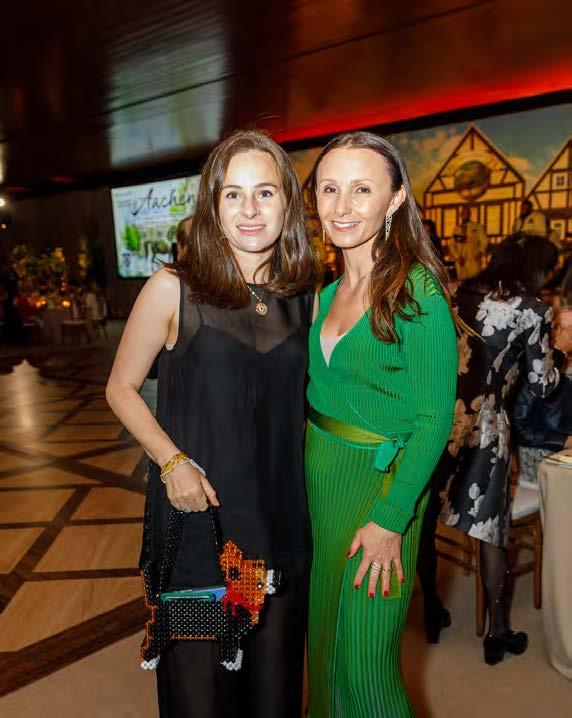
4. Emily Dehoff, Zayna Rizvi, Mimi Gochman.
5. Rowan O’Riley, Rebecca Hart, and Fernando Ortega.
6. Jerry Yang, Erin Nichols, Akiko Yamazaki, Diane Nichols.
7. Andre Dignelli, Joe Fargis.
8. Signe Ostby and Carly Vasan in Thermal, California.
9. Karl Cook at the West Coa st event.
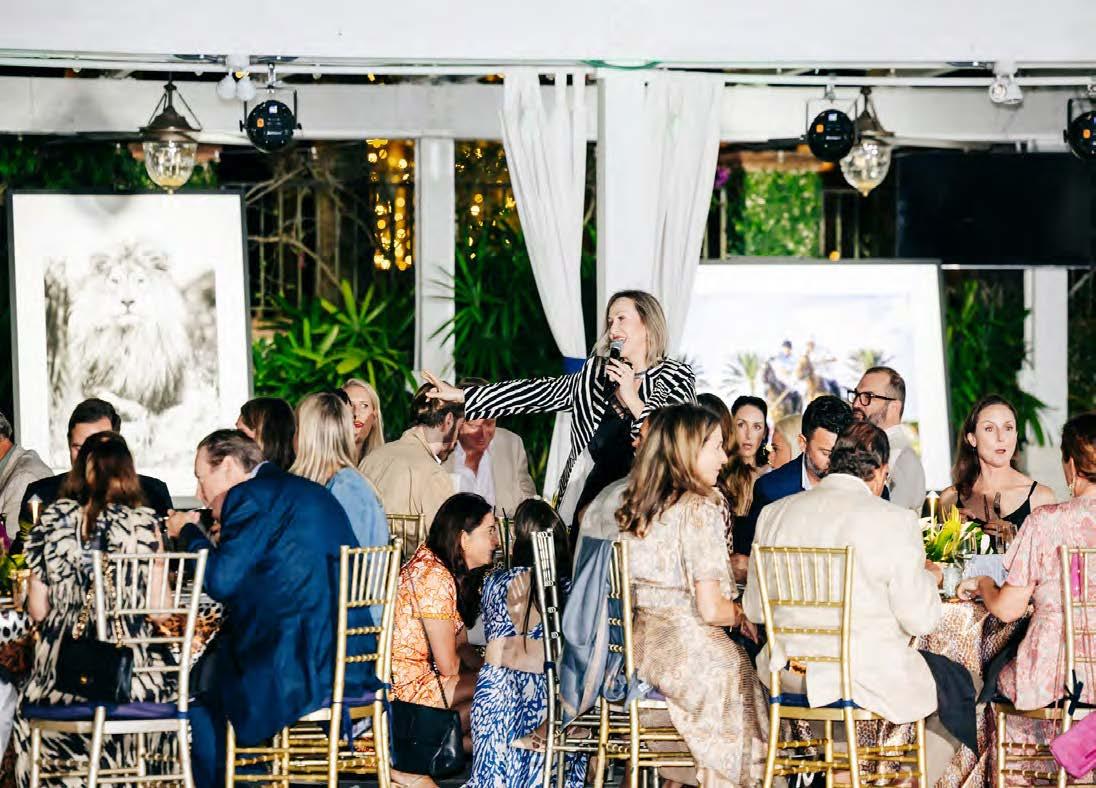
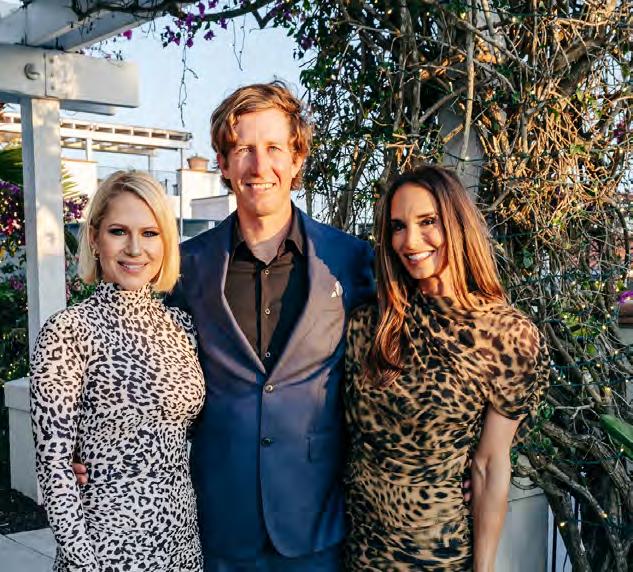
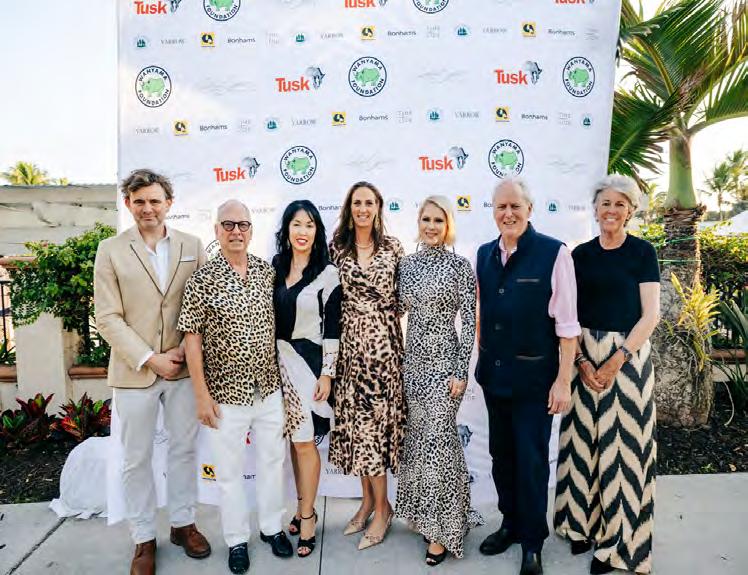
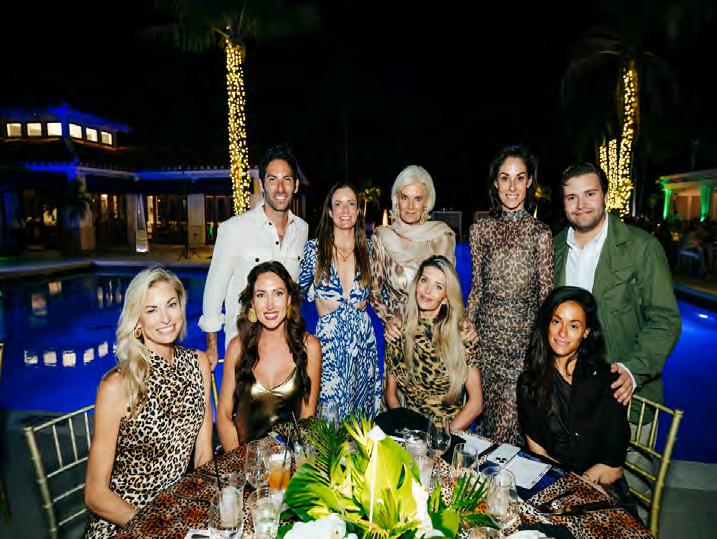
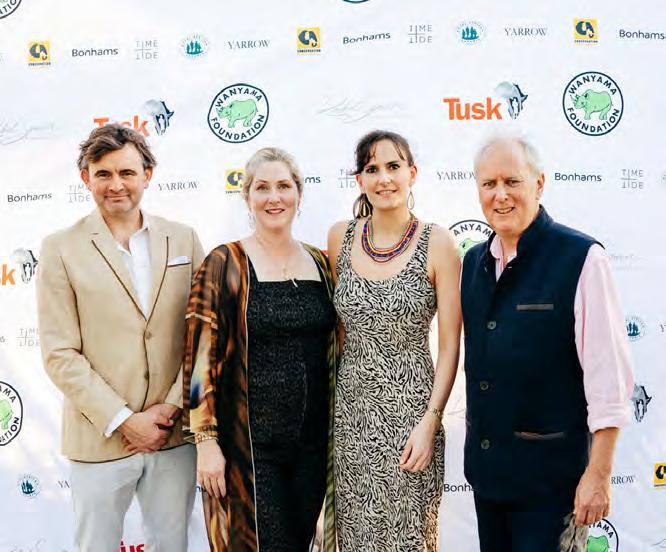
TUSK
An enthusiastic audience for African conservation.
Wellington’s passion for worthy global causes was on full display at the February 19, 2026, first annual fundraiser for Tusk, a nonprofit dedicated to wildlife conservation in Africa. The event, held at the National Polo Center, welcomed 250 guests and successfully highlighted the organization’s mission to accelerate Africa-driven conservation efforts.
Tusk CEO Nick Bubb, a frequent visitor to Wellington for the past decade, recognized the community’s deep connection to the natural world. The fundraiser’s primary goal was to spread awareness of Tusk’s 76 projects across 26 countries. These initiatives protect vast ecosystems that are home to 25 percent of the planet’s biodiversity, which faces increasing threats from human activity and climate change.
The evening was emceed by famed equestrian commentator Steve Wilde, who kept the animal print-clad audience focused on Tusk’s message. A spirited live auction, led by Caroline Robinson from Bonhams, featured three stunning photographs from renowned artist David Yarrow. In keeping with the locale, one photo featured an NPC polo match. Also arousing keen interest from bidders were two safari packages, one an 8-night trip for four to Kenya and the other a conservationfocused 7-night trip for two.
The event raised an impressive $225,000, with all proceeds going directly to conservation projects in Africa.
“Wellington is a community that understands the importance of preserving our natural heritage,” said Bubb. “This event is a significant step forward, allowing us to expand our conservation goals and empower a future where both people and wildlife can thrive in harmony.”
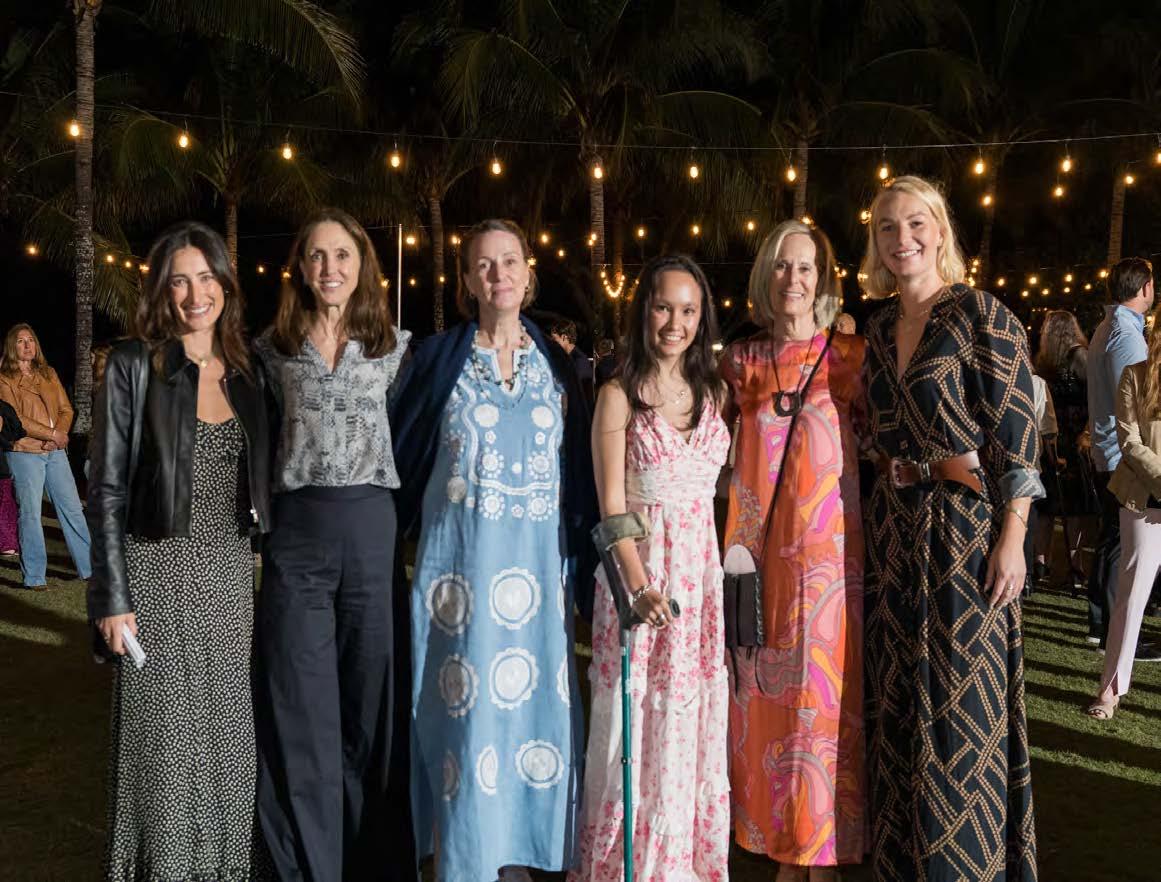
1. Nick Bubb, Tusk CEO.
2. Host Emcee, Steven Wilde
3. Auctioneer, Caroline Robinson from Bonhams delivers the live auction.
4. Nick Bubb, Chip McKenney, Shawna Stout, Samantha Hallman, Kristn Holloway, Charlie Mayhew, and Rachel Spencer the event gold sponsor.
5. Kristen Holloway (left) and friends.
6. Nick Bubb, Bernadette Clemens, Susie Coreth, and Charlie Mayhew.
7. Janice Cook Aron (center with scarf), Safari Under the Stars, event committee member and one of the events sponsors with friends.
8. Tusk Founder, Charlie Mayhew.
PHOTOS: COASTAL CLICK PHOTOGRAPHY
WELLINGTON GALAS: HIGH STYLE, HIGHER PURPOSE
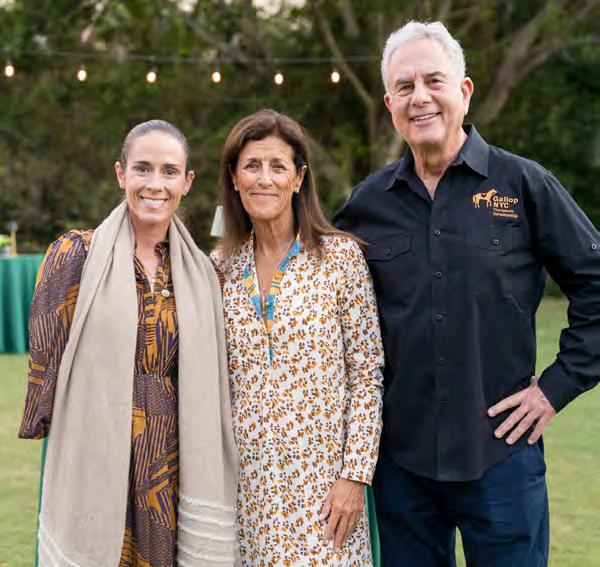
GallopNYC
Jessica Springsteen co-chaired the benefit.
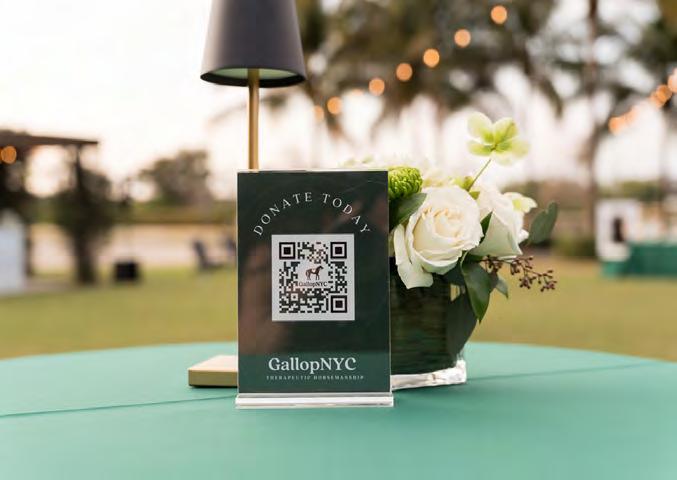
When Olympian Jessica Springsteen and more than 125 equestrians and guests gathered at Wembley Farm in February, they came together for a single purpose: supporting life-changing therapeutic riding programs in New York City. The Wellington fundraiser benefited GallopNYC, which serves more than 450 riders weekly at Sunrise Stables in Howard Beach, Queens. The organization provides therapeutic riding to children and adults with physical and developmental disabilities, as well as to veterans and seniors. Co-chaired by Springsteen, Jeanie Dello Joio, and Amanda Cain, the evening brought together Olympians, international competitors, and philanthropists who understand how horses can transform lives.
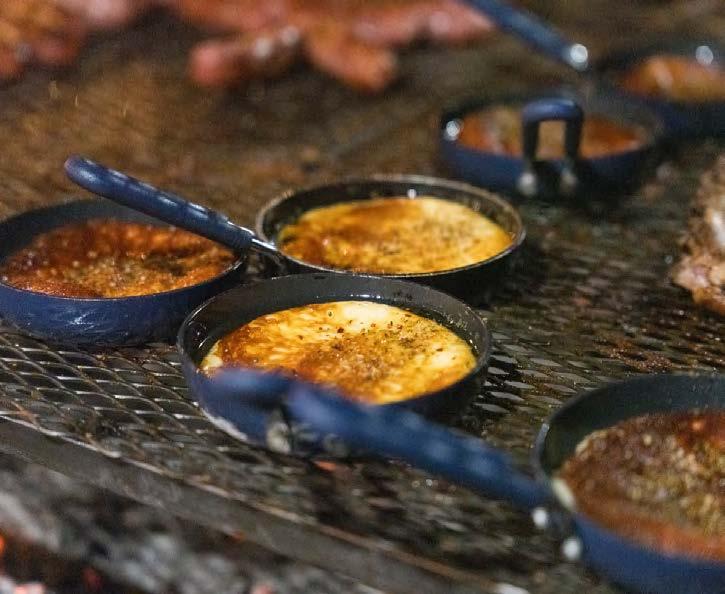
“This evening was a reminder that the equestrian community is united not just by a love of sport, but by a shared understanding of how profoundly horses can change lives,” said GallopNYC Executive Director Jennie Bucove. “The generosity we experienced in Wellington will directly translate into more opportunities for children and adults with disabilities in New York City.” The event at Wembley Farm, home to Olympian and Show Jumping Hall of Famer Norman Dello Joio and top international rider Nick Dello Joio, featured an asado, cocktails, music, and a silent auction.
Funds raised will support scholarships, horse care, and year-round programming that helps participants develop strength, communication skills, balance, coordination, and confidence, empowering them to live more fully and independently.
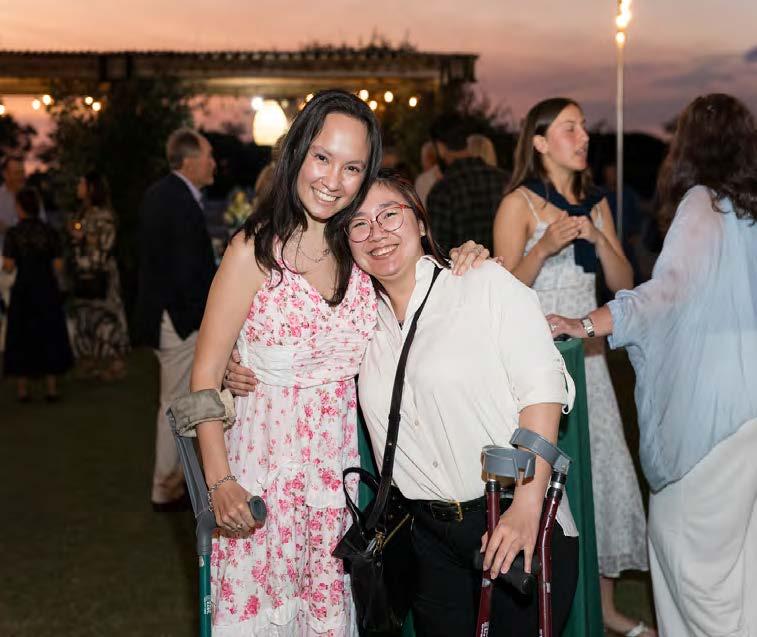
1. Elizabeth Pandich, Jeanie Dello Joio, and Sol Reischer.
2. Jessica Mendoza, Daniela Dello Joio, and Clementine Goutal.
3. Jessica Springsteen, Constance Hunter, Jennie Bucove, Lauren Reischer, Amanda Cain, and Elena Sedlock.
4. Lauren Reischer and Leah Kest.
5. Jennie Bucove, Brian Moggre, Jessica Springsteen, and Caroline Packer.
6. Nick Dello Joio and Lauren Reischer.
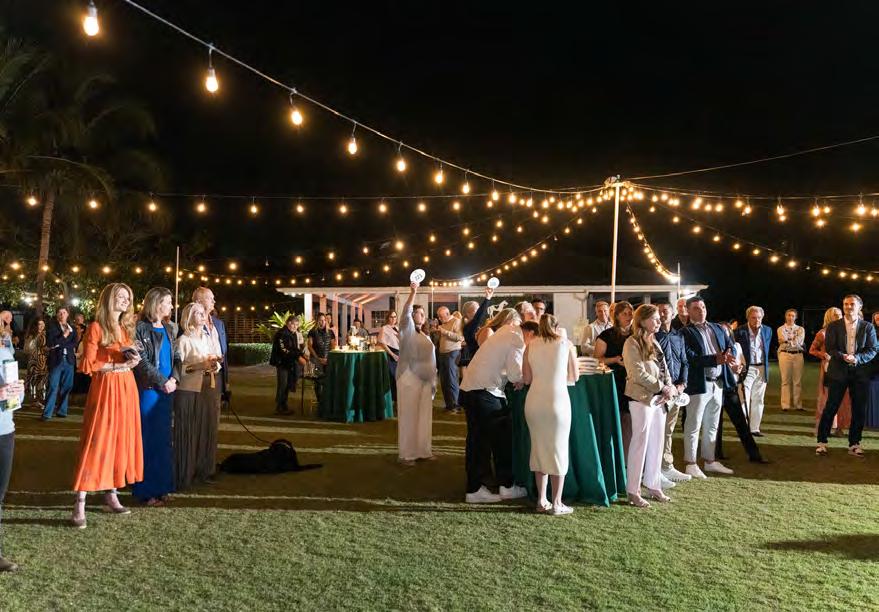
7. The setting at Wembley Farm.
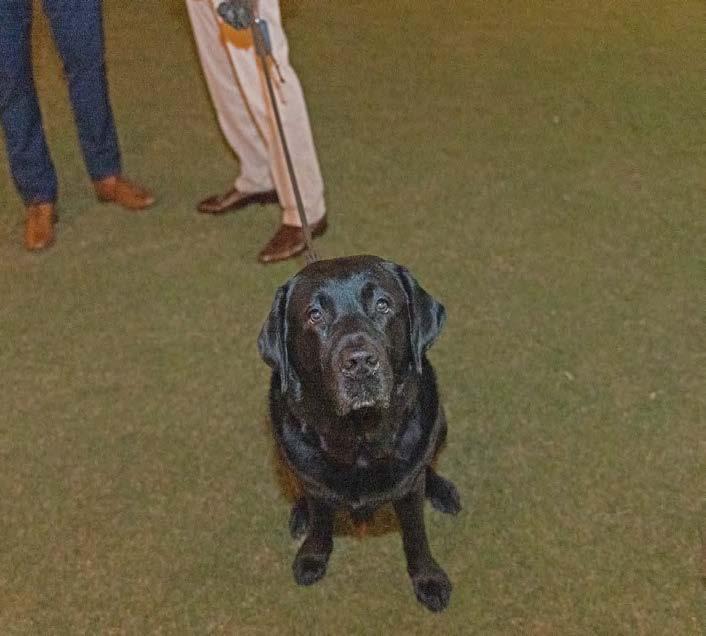
8. Pluto.
WELLINGTON GALAS: HIGH STYLE, HIGHER PURPOSE
BROOKE USA
Helping working equines around the world.
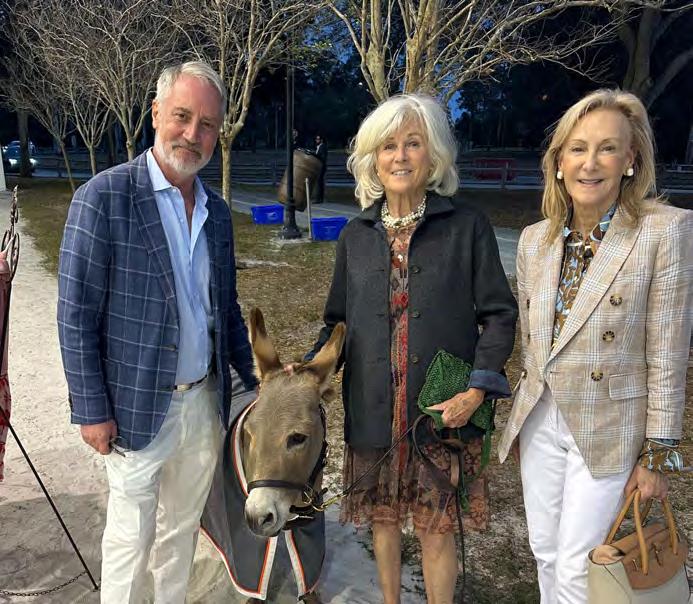
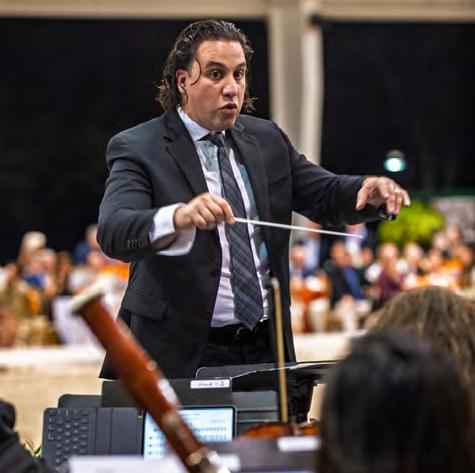
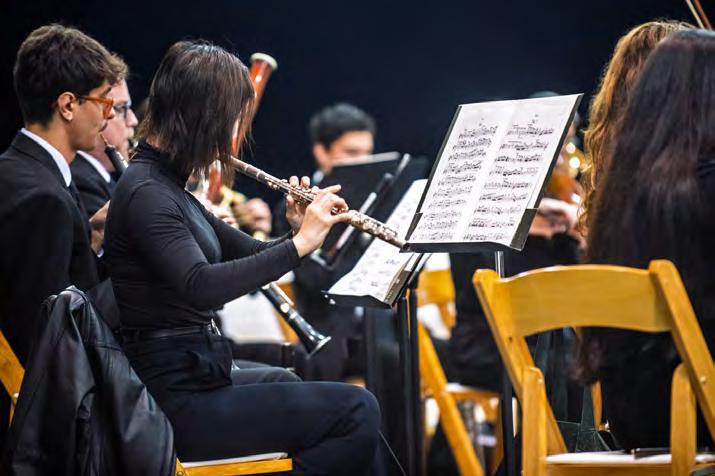
Brooke USA Foundation is a national charity dedicated to improving the health and welfare of working horses, donkeys, and mules, while supporting the communities who rely on them for survival. By investing in equine care and essential resources, Brooke USA funds projects globally and in the United States that help to reduce poverty, increase food security, expand access to water and education, and improve the quality of life for vulnerable families worldwide. They help more than 200,000 equines and people annually across Africa, Asia, and Latin America and the Caribbean. The organization held its annual Brooke USA’s Divertimentos & Dressage in February. The sold-out event raised more than $270,000 for working equines. Presented by The S.K. Johnston Family and Margaret H. Duprey, the evening showcased Olympic Team USA and nationally acclaimed riders performing with their horses to the live music of the Palm Beach Symphony. Performances by JJ Tate, Laura DeCesari, Ashley Holzer, Olivia LaGoy-Weltz, Jennifer Williams, Molly Maloney, and Judy Sloan, coupled with the dedication of Honorary Chairs Judy and David Sloan and Committee Chairs Ashley Wimmer and Jennifer Burger resulted in a spectacular celebration of horses and humans moving in harmony.
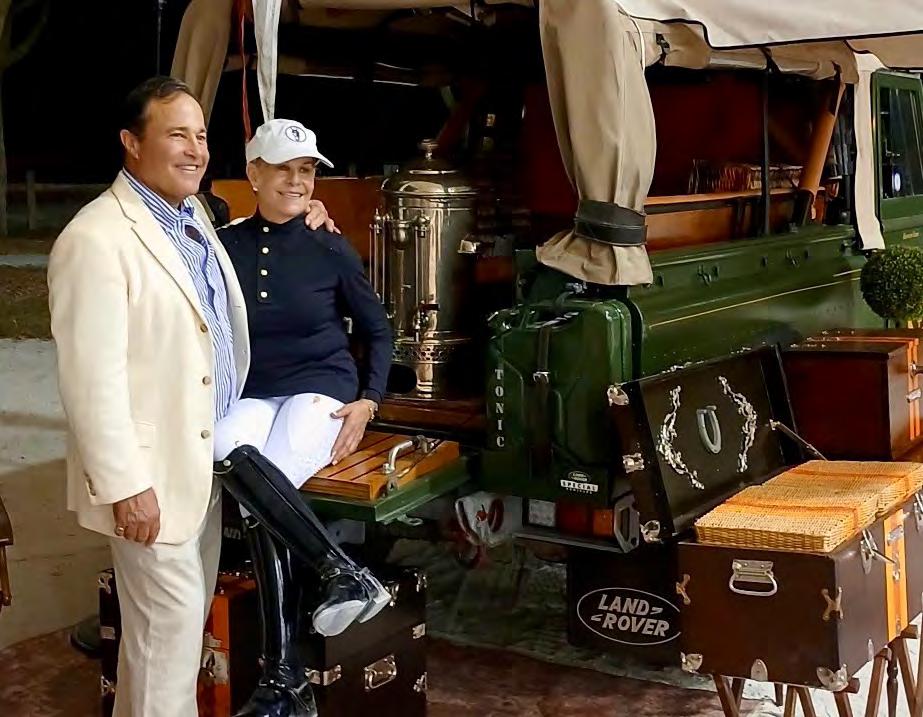
1. Jack Lynch, Mary Hilliard and Karen Klopp with equine ambassador Donkey, owned by January Magee.
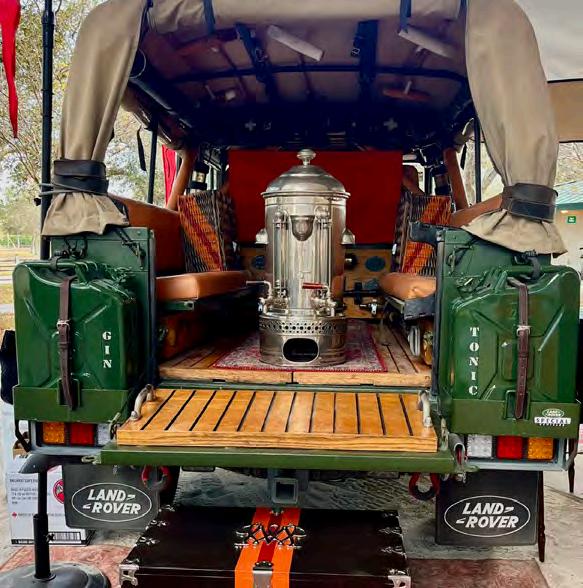
2. The Old Ex-Australian Army Land Rover Perentie was the featured bar.
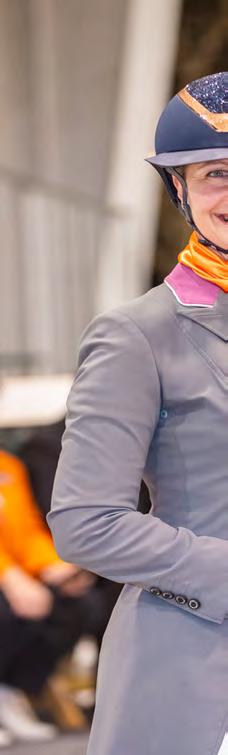
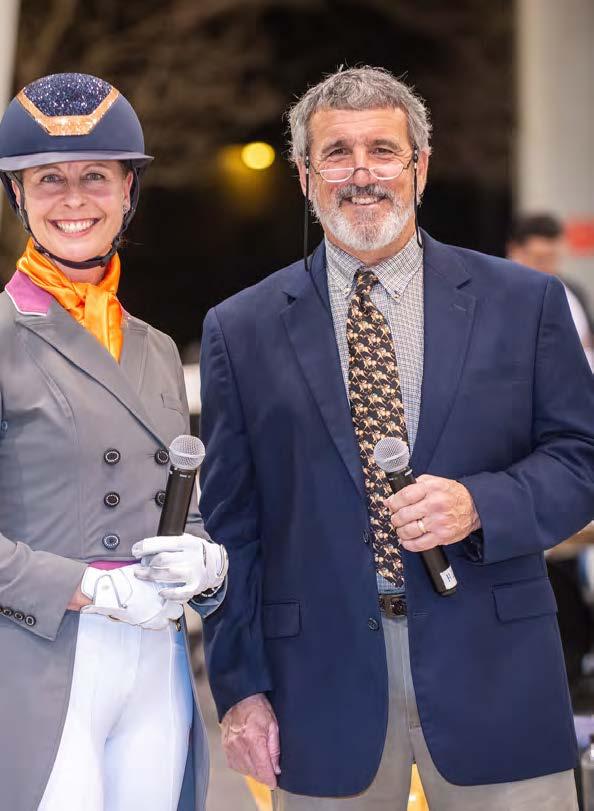
3. Brooke USA’s Kendall Bierer thanks Ambassador JJ Tate after her inspirational speech.
4. Collier Wimmer, Three Wishes Freestyle, and rider Laura DeCesari celebrated a beautiful performance.
5. Judy Sloan and Molly Maloney perform their Pas de Deux aboard Donatello DC and Nobel De Figueras.
6. Brooke USA Ambassador JJ Tate and Master of Ceremonies Brian O’Connor.
7. Honorary Co-Chairs David and Judy Sloan.
8. Maestro Alberto Bade of the Palm Beach Symphony.
PHOTOS: THROUGH THESE EYES PHOTOGRAPHY, AND EMMA CLAIRE
WELLINGTON GALAS: HIGH STYLE, HIGHER PURPOSE
CURRENT TRENDS IN EQUESTRIAN TECHNOLOGY
Smart gear, digital stable management, and predictive diagnostics are ushering in an era of DATA-DRIVEN HORSEMANSHIP.
The current landscape of equestrian technology is defined by a shift toward seamless, data-driven management, with the goal of enhancing equine health, performance, and safety. What were recently just novelty gadgets have now evolved into professionalgrade systems that integrate effectively across the barn and show ring.
Biometric Monitoring and Predictive Health
One of the most profound current trends is the rise of biometric monitoring and predictive health. Wearable sensors are now commercially available, moving beyond simple step counting to offer comprehensive wellness tracking. Products like the newly launched Garmin Blaze Equine Wellness System utilize removable tail sensors and adjustable wraps to track a horse’s heart rate, skin temperature, gait, and activity. This data is used to provide threshold alerts when vitals deviate, giving owners and veterinarians a comprehensive view of a horse’s physical state. This technology is driven in part by recent rule changes, such as the USEquestrian approval of biometric sensors in competition since April 2025, provided they are minimal and non-performance-enhancing.
Artificial Intelligence in Diagnostics
The biometric monitoring is now
BY JILL NOVOTNY
complemented by the integration of artificial intelligence in diagnostics. Current AI applications are moving from the experimental stage to clinical use, particularly in gait analysis and behavioral monitoring. Specialized AI tools, such as those from TTcare Equine and Sleip, utilize video analysis to detect and quantify subtle asymmetries in a horse’s movement, offering a noninvasive, hardware-free method for early lameness detection and monitoring. In veterinary practice, AI is also showing promise and is currently being validated for predicting outcomes of complex procedures, such as colic surgery, and for aiding in the accurate assessment and differentiation of ophthalmic diseases, leveraging large datasets to improve diagnostic accuracy and prognosis.
Smarter Gear and Sustainability
In the realm of rider safety and gear, the trend is focused on smarter materials and greater protection. While technological advancements in related fields like
motorsports continue to drive innovation in equestrian gear, a key focus is on integrating technology without sacrificing comfort or classic aesthetics. Current high-end riding gloves, for example, feature advanced synthetic materials for superior grip and sensitivity, with many now including touchscreen compatibility. The broader trend in apparel and tack also leans heavily toward sustainability, with materials like vegetable-tanned leather, recycled textiles, and ecofriendly alternatives gaining popularity to meet growing consumer environmental expectations.
Digital Stable Operations
Finally, the digitalization of stable operations continues to evolve, making management more efficient. This includes the move toward custom tack and personalization, with manufacturers using precision stitching and 3D printing for components like helmet fittings and stirrups. Cloud-based platforms manage everything from scheduling to digital inspection systems, ensuring consistent quality control across products and reducing production lead times.
The current equestrian technology landscape is characterized by a strong convergence of health monitoring, AI-driven insights, and materials science, resulting in safer, more transparent, and highly efficient practices for horse and rider alike.
CASTELLO DI RESCHIO
A THOUSAND-YEAR LEGACY in the Umbrian Hills.
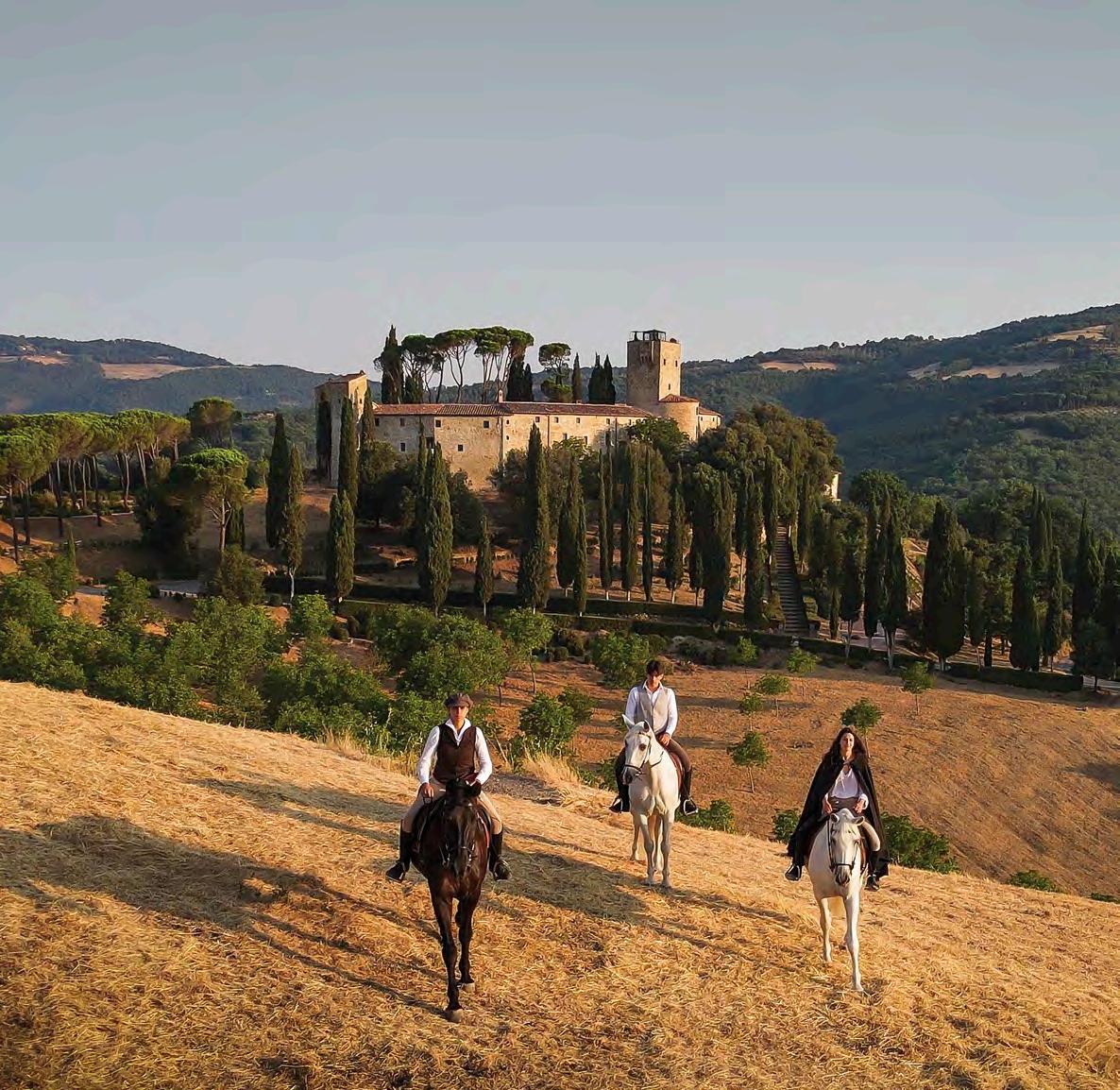
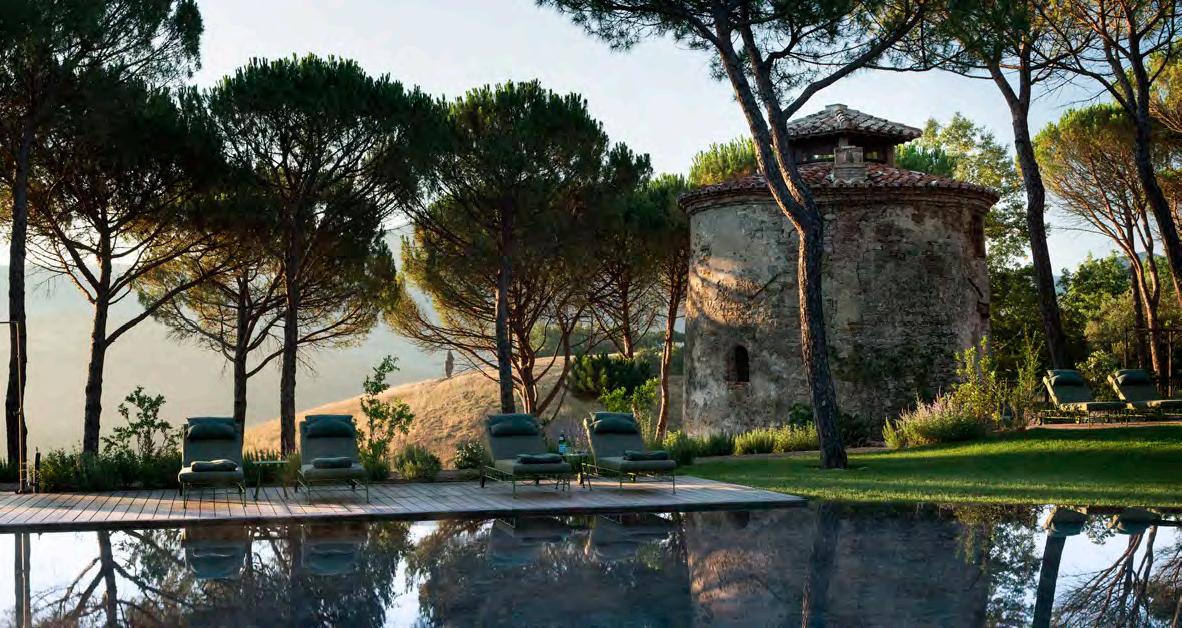
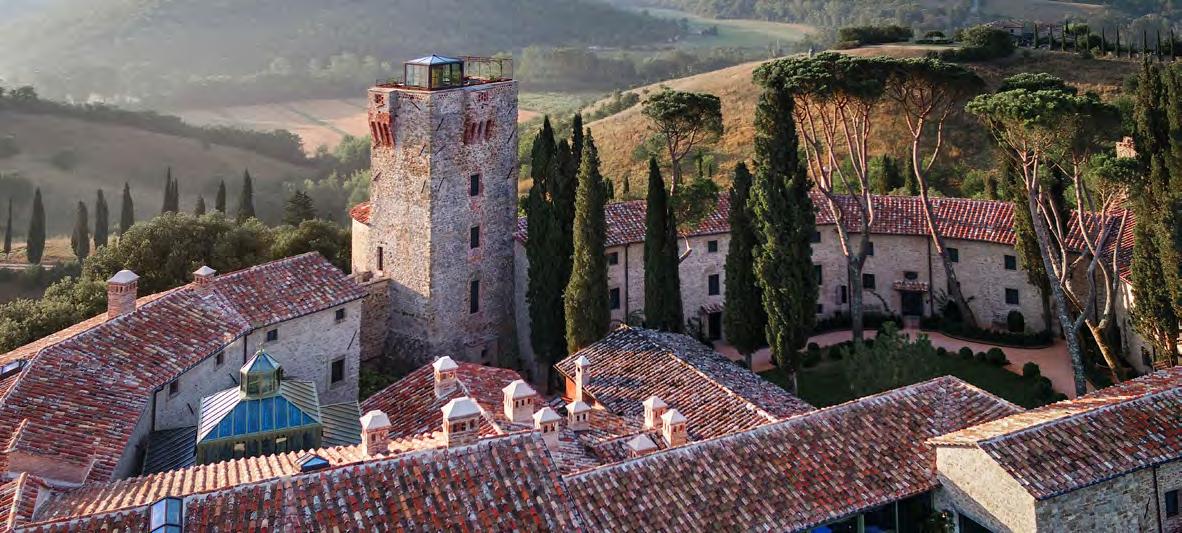
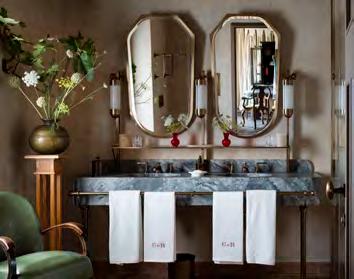
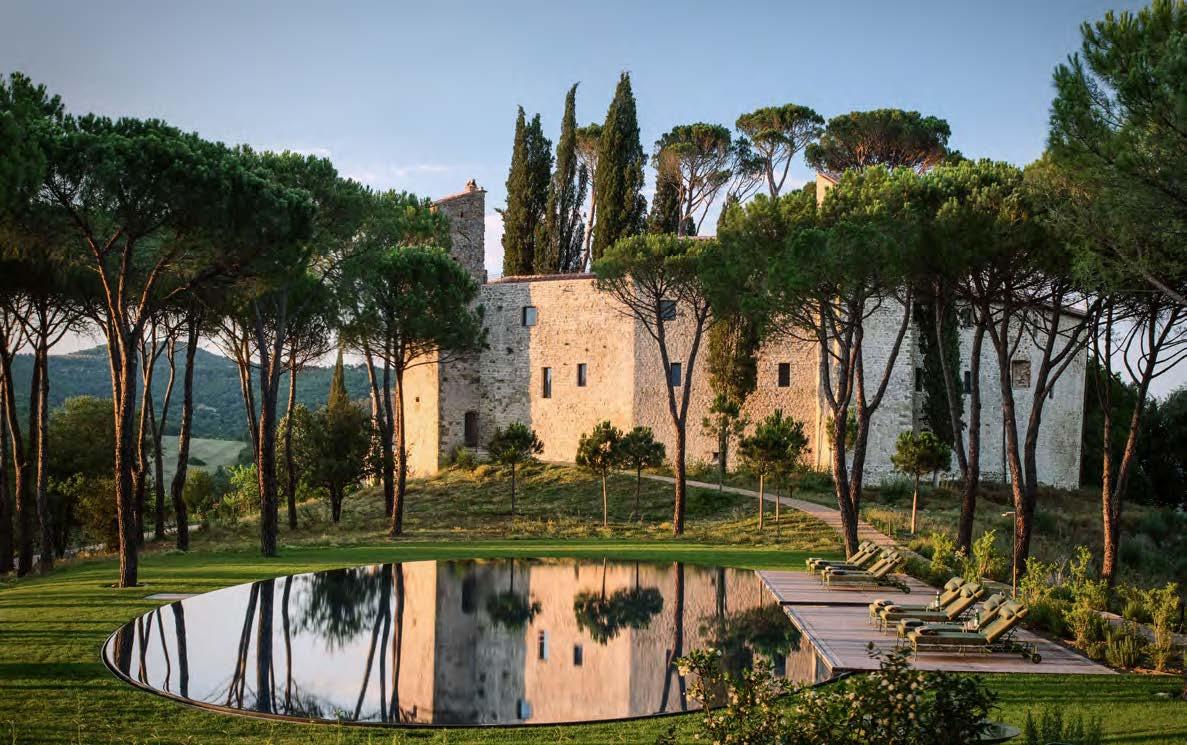
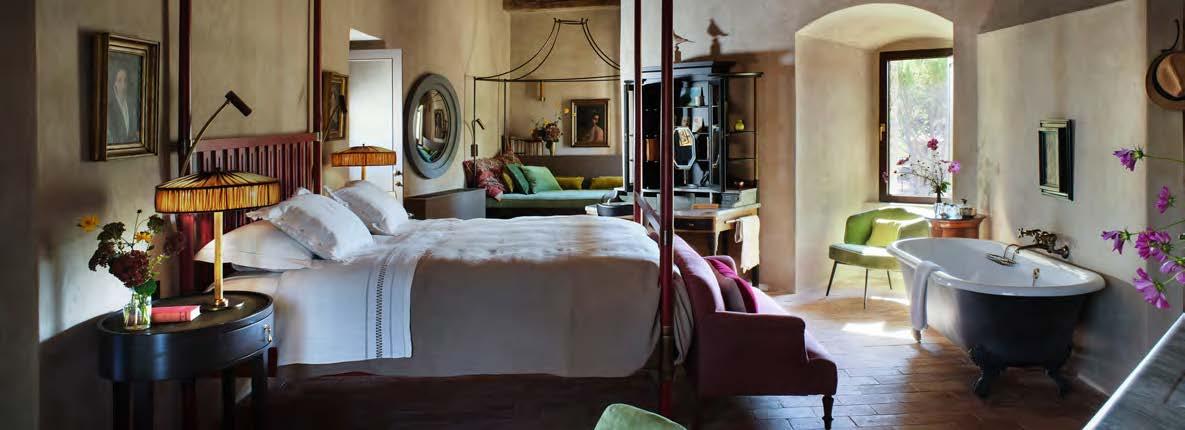
In the verdant heart of Italy, on the borderlands between Umbria and Tuscany, the Castello di Reschio sits on a 3,700-acre private estate of ancient woodland and meadows. This 1,000-yearold medieval fortress, originally built circa 1050, has undergone a meticulous, three-decade-long restoration led by the owning Bolza family, who acquired the
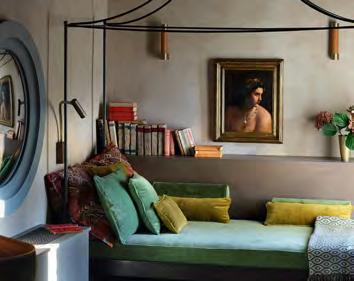
property in 1984. The former castle is now a luxurious, 36-suite, Three-Michelin-Key hotel that blends historic architecture with the contemporary design vision of architect Count Benedikt Bolza.
The broader estate, an expanse of rolling green hills lined with signature cypress trees, is a haven of biodiversity. Guests on guided walks or exploratory drives can spot native wildlife, including
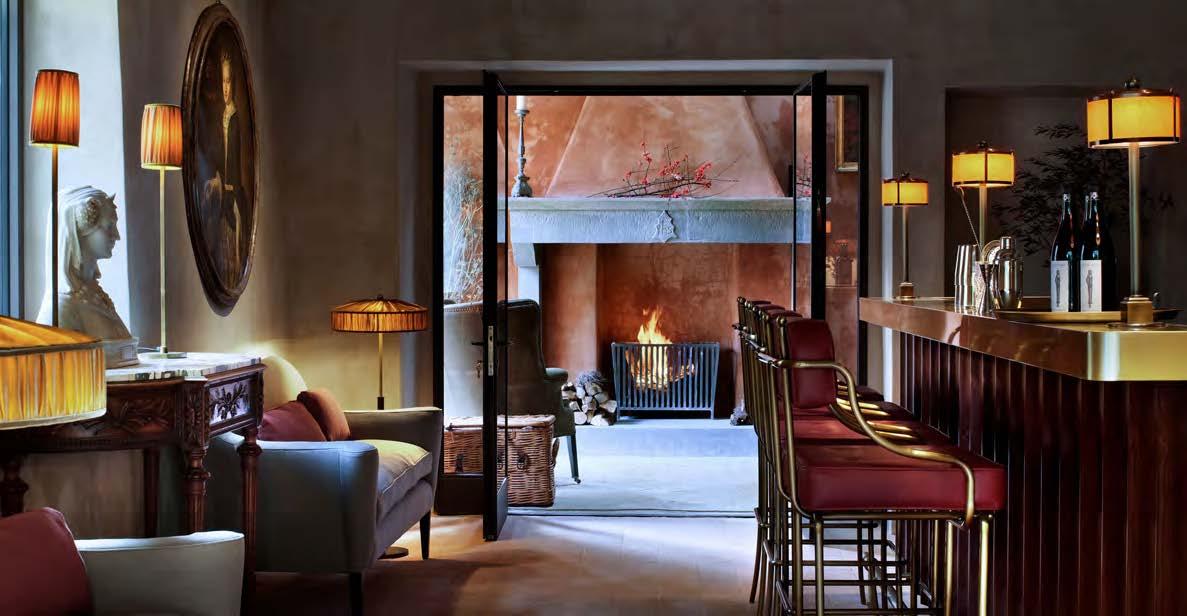
deer and wild boar. The careful preservation of this landscape is matched by the detailed work within the castle walls. Count Benedikt Bolza, alongside his wife Donna Nencia Corsini, oversaw the renovation of every structural element, designing custom furniture and interior pieces—often referred to as BB for Reschio Studio—that stand alongside antique finds, giving each room a unique
and characterful style. In addition to the hotel, the Reschio estate is dotted with a collection of restored farmhouses, many of which the Bolzas have transformed into exclusive private villas.
A central pillar of the Reschio experience is its celebrated equestrian center. The stables, initially created by the estate’s founder, Count Antonio Bolza—whose inspiration stemmed
from his childhood encounters with the famous Lipizzaner horses of Vienna—are state-of-the-art. Today, the facility is home to dressage horses, primarily purebred Spanish horses. Guests can watch weekly performances in the atmospheric Teatro Equestre by master trainer Antonello Radicchi and his wife Francesca. The center also offers multilingual instruction for all skill levels, ranging from private dressage lessons to tranquil guided hacks through the Umbrian countryside. The commitment to natural heritage extends to the estate’s culinary offerings.
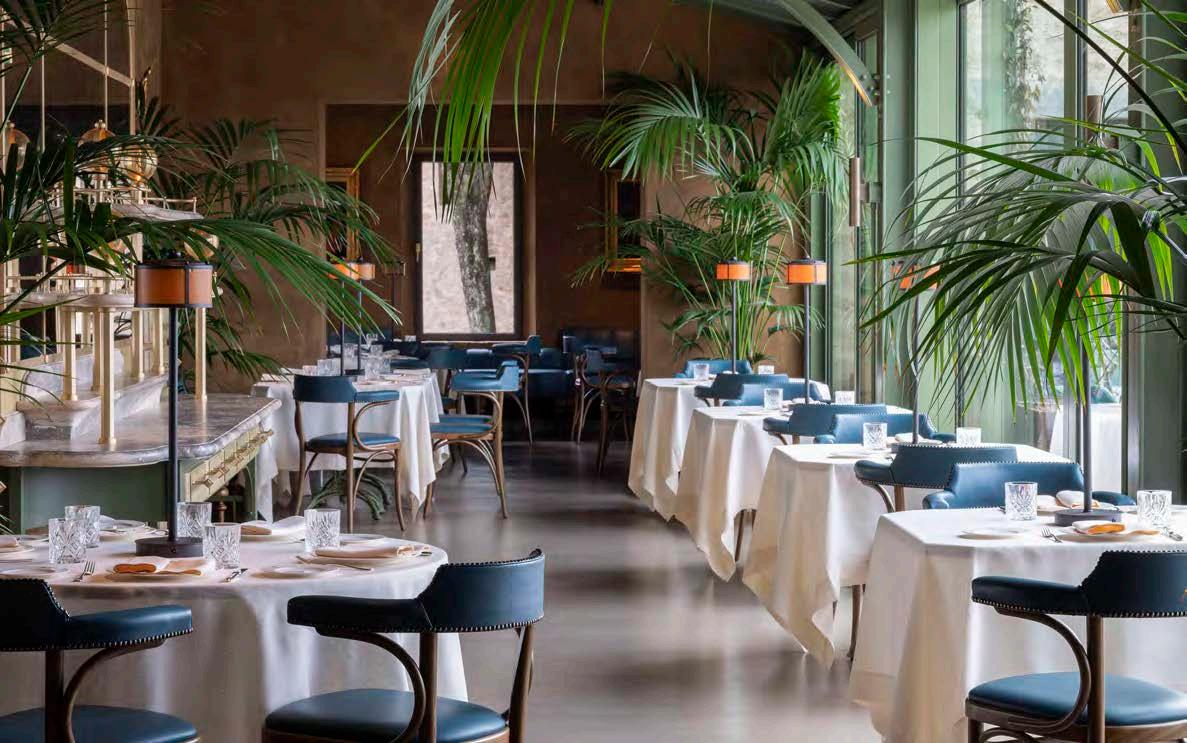
Reschio features two main dining establishments utilizing organic produce grown directly on-site in the estate’s gardens. The elegant Ristorante al Castello, within the castle walls, offers fine dining and serves breakfast on its terrace with panoramic sunset views. Meanwhile, the informal Ristorante alle Scuderie provides a seasonal menu in a beautiful setting with soaring ceilings.
For moments of quiet repose, the unique Bathhouse is situated within the castle’s ancient wine cellars. Designed
as a tribute to the old Roman baths, this wellness space features a large saltwater pool illuminated by natural light, a Swedish sauna and a hammam, and offers curated spa rituals that provide a profound sense of rest and restoration deep within the 1,000-year-old stone foundations. The meticulous transformation of the castle and its surrounding 3,700 acres into a refined luxury destination reflects the family’s dedication to preserving both Italy’s history and its natural beauty.
BRIMMING WITH APPEAL
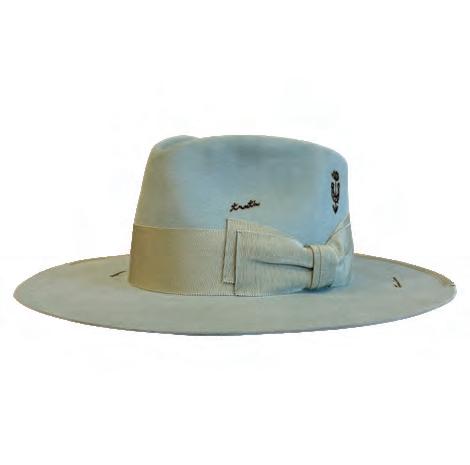
Teressa Foglia’s Shenna in willow in Western-weight felt features a pinched crown, grosgrain band and bow, and 100-percent silk interior lining. $1,700.
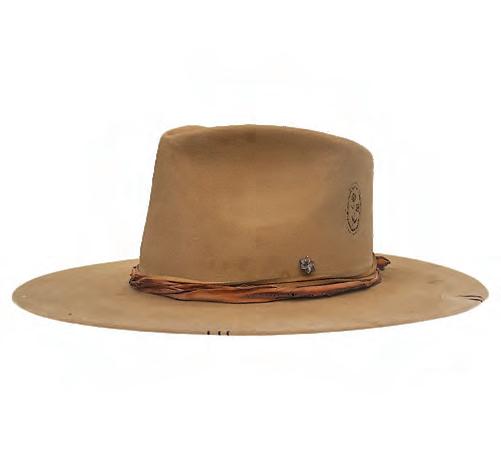
The camel Freija Felt Hat in Western weight by Teressa Foglia has a pinched crown, natural tan leather sweatband, 100-percent silk interior lining, and is sanded to perfection. $1,950.
Elegant, understated hats
SUPPLE FELT and BREATHABLE are perfect for town, country, and everywhere in between.
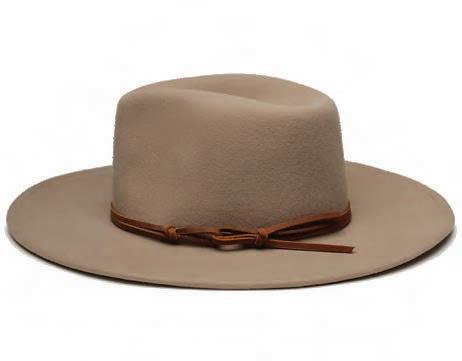
The packable taupe Riley by Wyeth in 100-percent Australian wool boasts a wide brim, leather band, and a size adjuster inside for a customizable fit. $88.
Tecovas’ Belle Cowgirl
in brown is handwoven from durable 100-percent wool. Includes a pinch front, curved brim, leather headband, and a lining with Tecovas’ artwork. $195.
& Brown’s Pebmarsh Fedora in khaki is crafted in a lightweight paper straw with an extra wide brim and finished with a green ribbon and gold-crest branding. $145.
Hicks
Hat
Gigi Pip’s Australian wool Amelia Pencil Brim Fedora in clay flaunts a bold roll brim and teardrop crown. At Nordstrom. $159.
Hicks & Brown Pebmarsh Fedora (see below)
HEALING ON THE HACIENDA
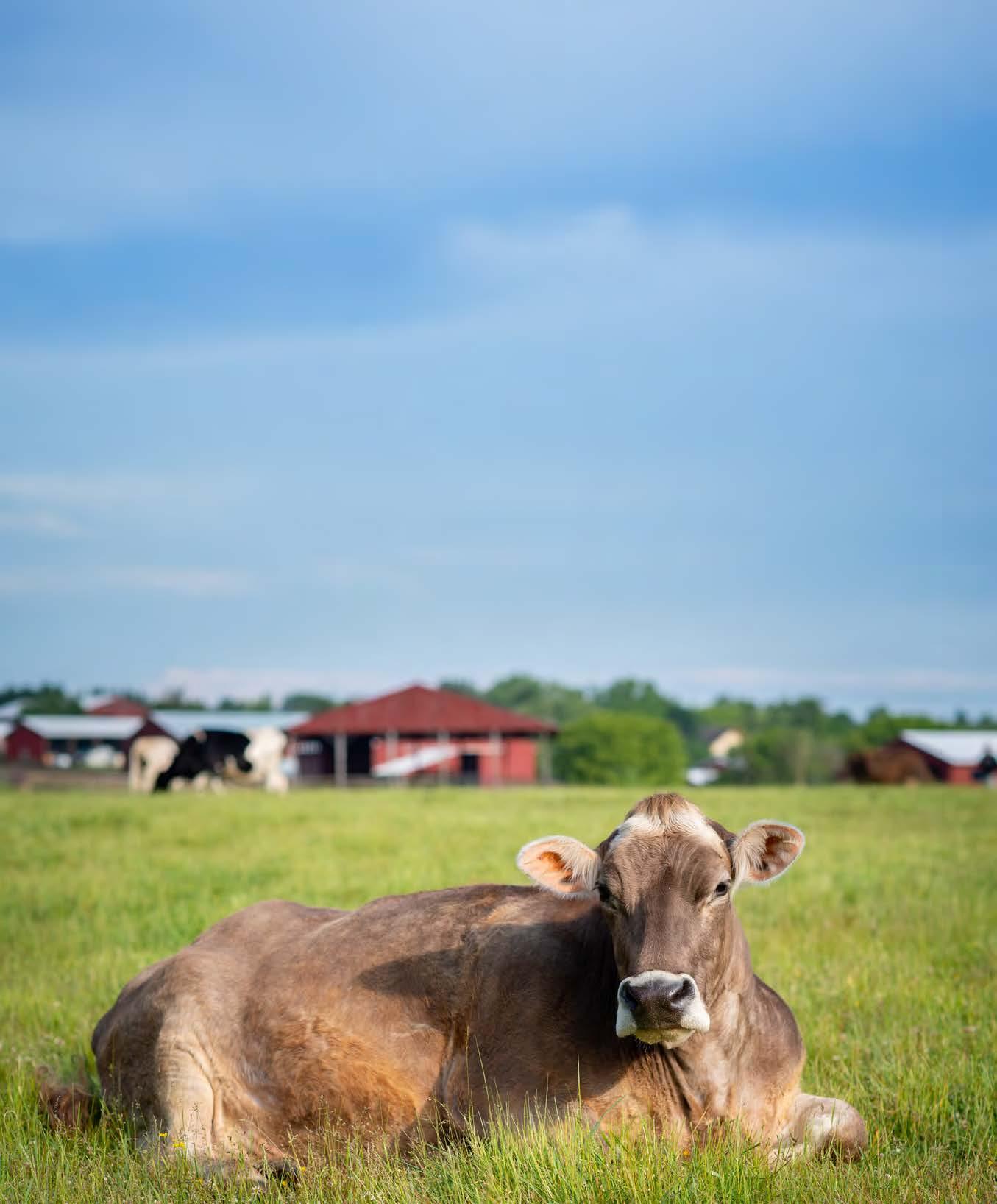
For these former food animals, FARM SANCTUARY offers the promise of protection.
Just 45 minutes from the neon-lit concrete of Hollywood, California, the sprawling urban grid dissolves into the rugged, sun-drenched Sierra Pelona Mountains. Here, in the high-desert community of Acton, the air feels different. It’s cooler, quieter, and scented with the dry heat of the canyons. Nestled within the terrain is a 39-acre hacienda ranch that serves as a profound departure from the typical Southern California estate. This is Farm Sanctuary’s Southern California shelter, a place where the value of life is reclaimed, and a quiet peace takes hold.
The ranch is defined by the simple, radical act of recovery. It is a space where animals that have spent their lives within the modern food system are finally granted the dignity of a name, a story, and a permanent home. For equestrians, accustomed to the deep bond shared with their horses, the sanctuary offers a humbling perspective on the foundational
idea of our interactions with animals: the promise of protection.
The physical beauty of the Acton sanctuary is the first thing visitors notice. The open breezeways of the ranch buildings provide a grounded, timeless aesthetic that melds into the California scrubland.
The facility is home to approximately 100 rescued residents, including cows, pigs, chickens, turkeys, and goats. Each has arrived here following a journey of struggle and survival: stories that, against all odds, have ended with sunshine and pastures, rather than a factory floor.
At the foot of the mountains, animals that began their lives in neglect now spend their days napping in deep straw, basking in the warm California sun, or simply digging in the dirt: natural behaviors that were once entirely denied to them.
This calm, free, and restorative energy is presented to visitors through the “Sanctuary Experience.” Guided tours
led by experts provide a narrative for the visit, connecting the animals’ physical presence to the broader issues of animal welfare and environmental sustainability. For the younger generation, such as the students who often visit for educational programs, these encounters can be lifechanging, fostering a level of empathy that only direct, eye-to-eye contact can provide.
In the high-desert quiet, these animal residents are finally afforded the luxury of choice. They are no longer defined by what they can produce or how they perform; instead, they are recognized as individuals with the right to their own agency. For the visitor, the experience is a profound recalibration of the humananimal bond.
Here, in the stillness of the canyons, the residents of Farm Sanctuary are not just surviving—they are finally home.
FINDING THE CENTER
Leave the digital noise behind to find leadership and calm through the ancient focus of the HORSE AND BOW.
BY JILL NOVOTNY
The rolling countryside has a natural way of pulling a person out of their stress, offering a quiet both literally and mentally. While most people head for the hills to simply unplug from the stress of a modern life at the Horse + Bow ranch in Marble Falls, Texas, that sense of relief is just the starting point. It isn’t a typical weekend clinic or a standard corporate getaway. Instead, founder Kristine Palmer has built a program specifically for those in high-pressure careers who need to do more than just relax; they need to recalibrate how they move through the world.
There is a specific kind of vulnerability that comes with standing in a dusty arena, stripped of a job title and a tailored suit, facing a twelve-hundredpound animal that couldn’t care less about a resume. Horses are masters of energy; they live in a constant state of awareness, reading the subtle shifts in human tension that we often try to hide from our colleagues and even ourselves.
At Horse + Bow, the work is largely ground-based, focusing on nonverbal interactions between humans and horses. If a leader walks into the pen with a mind cluttered by a deadline or a heart full of frustration, the horse feels that dissonance. The horse won’t join up with you if you aren’t fully present. It forces a level of authenticity rare in the modern workplace, acting as a sort of mirror of one’s internal state.
The experience shifts from the expansive connection in the arena to
the internal discipline of the archery range. There is a deep, historical weight to holding a bow, and Palmer uses it to teach mental regulation. In an era of constant digital pings and fragmented attention, archery demands presence and patience.
To release a clean shot, you have to find your physical anchor, settle your breath, and clear the mental noise. If you are dwelling on a past mistake or worrying about the next target in your business plan, the arrow will reveal your distractions. It is a physical practice of being “in the zone,” teaching participants how to find that same centeredness when they return to the boardroom.
The beauty of the Horse + Bow approach is that it feels less like a seminar and more like a return to something essential.
Whether Palmer is hosting a high-level executive retreat or a team returning to the office after working remotely, the results are the same: a profound shift in how people occupy their own space.
This focus on authentic presence is the cornerstone of Palmer’s upcoming Women’s Leadership Series. Designed specifically for female executives and trailblazers, the workshop series utilizes the Horse + Bow methodology to address the unique pressures of the modern corporate landscape.
Participants move beyond the “PowerPoint” approach to leadership, instead using the immediate feedback of the horse and the discipline of the bow.
PAGE 129
PHOTOS COURTESY OF HORSE+BOW
KINDER METHODS, SAFER OUTCOMES
Science is changing how we TRAIN HORSES and making riding safer.
BY JILL NOVOTNY
Hsports rely on a partnership unlike any other— between a human and a large prey animal whose natural response to fear is to flee. Many riders rely on tradition or instinct, but research shows the safest and most effective approach to training comes from understanding how horses learn.
Across the industry—from international organizations to local barns—training methods are shifting away from force and punishment. Instead, there’s a growing focus on welfare, safety, and long-term mental well-being. This movement isn’t just ethical. It’s supported by science showing that when horses understand what’s being asked of them, they respond more calmly and consistently.
At the center of this research is learning theory, especially operant conditioning—the process by which horses connect their behavior to consequences. Riders mainly use three types of responses in training: positive reinforcement, negative reinforcement, and punishment. When used well, these tools create clear communication. When used poorly—especially if timing or pressure is inconsistent—the horse may become
confused or stressed, which can lead to dangerous reactions like bolting, bucking, or rearing.
Research shows training doesn’t just change behavior—it also affects a horse’s emotional state. A 2014 study by Briefer Freymond and colleagues found that horses trained with negative reinforcement showed more signs of negative emotion than those trained with positive reinforcement.
Other research links positive reinforcement to stronger trust and better learning. In a 2010 study by Sankey et al., young horses trained with rewards learned faster and showed more positive interactions with their handlers.
The safety benefits also appear during traditionally stressful situations. A 2019 study by Dai and colleagues showed that training horses to load into a trailer using positive reinforcement reduced loading time from more than seven minutes to
under one minute. Stress behaviors— including kicking and pulling back— dropped sharply. That means fewer risks for both horse and handler.
Similar results were found in basic care. A 2011 study by Hendriksen et al. reported that horses exposed to rewardbased training were calmer during routine procedures such as clipping and bandaging.
Despite the science, rider knowledge of these concepts remains low. In one study, fewer than 25% of riders could correctly define the three core operant conditioning terms. Experts say this gap slows progress toward safer, welfarebased training.
The evidence points to a clear conclusion: when riders understand how horses learn, everyone benefits. Horses become calmer and more confident. Riders communicate more clearly and face fewer risky behaviors.
Training based on learning theory isn’t just about performance—it’s a safety investment. A horse that understands what’s being asked is a safer partner, and a rider who understands how horses learn is better equipped to build trust, reduce stress, and protect the well-being of both sides of the partnership.
restaurants:
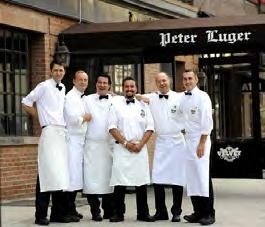
In the U.S., Peter Luger Steakhouse in NYC, and in Europe, Henssler & Henssler sushi in
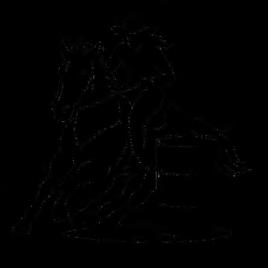
Another riding discipline you’d like to try: Barrel Racing.
Favorite TV show: The Americans.
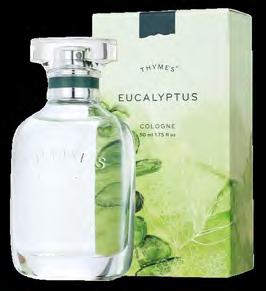
Favorite fragrance: Eucalyptus.
What else might you have been: A race car driver.
MY FAVORITES
Favorite charities: The USET Foundation, Danny & Ron's Rescue, and the Alzheimer’s Association.
Favorite horse show/ venue: Lake Placid. Now with all the improvements and new footing, even more so.
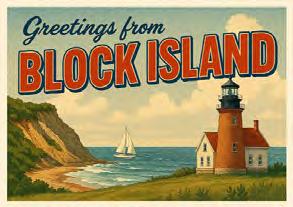
Favorite getaway escape: Lewis Farm on Block Island, Rhode Island.
Favorite app: Audible.
Favorite way to relax: Being with my wife, Kyle, and son, Max, reading Dr. Seuss on the back patio in Bedford, N.Y., or Wellington, Fla.
PHILIP RICHTER
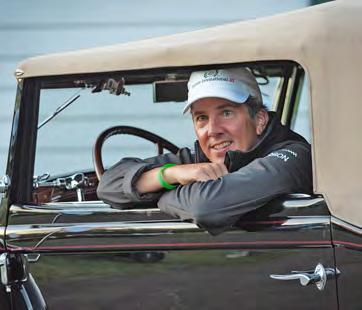
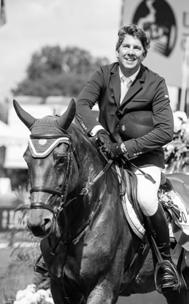
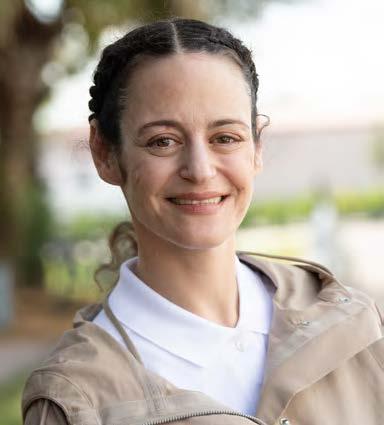
As president and co-founder of Hollow Brook Wealth Management, Philip Richter remains a committed equestrian with decades of experience competing in top-level amateur jumpers. He has also served in leadership roles across the sport, including with the Lake Placid Horse Show and the USET Foundation. Beyond the ring, he’s deeply involved in the collector-car community and hosts the biennial Turtle Invitational at the historic Coker Farm.
Favorite horse you’ve ridden: Norman Dello Joio’s spectacular Glasgow.
What books are on your bedside table: 1929, Outlive, The Fourth Turning, How Champions Think, Atomic Habits, The Psychology of Money, Red Notice, and The Complete Sherlock Holmes.
Favorite music on your playlist: U2, Beatles, REM, Rolling Stones, Jack Johnson, Neil Young, and Bruce Springsteen.
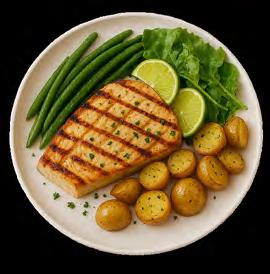
Favorite food to cook at home: Peggy Jacobs' familyfavorite recipe for lime marinade swordfish.
Your greatest extravagance: Having a horse that can jump clear in the 1.45-meter-high amateur jumpers with minimal practice.
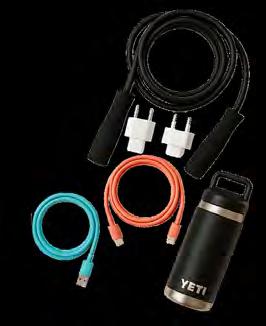
Must-have items when traveling: Several phone charging cords with international adapters, jump rope, and, Yeti water bottle.
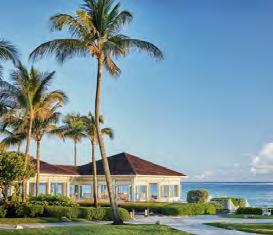
Favorite hotels: The Ocean Club, Nassau, Bahamas, and The Atlantic Hotel, Hamburg, Germany.
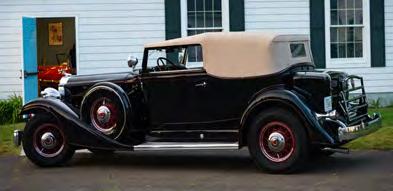
Favorite car: 1933 Packard V12 Dietrich Victoria, owned from new by renowned race horse legend Alfred Vanderbilt, Jr., breeder and owner of Native Dancer.
THE OCEAN CLUB
For many young riders, the walk into the show ring is a culmination of months of hard work, early mornings, and a deep-seated love for their equine partners. However, for some, that same walk can become a source of overwhelming pressure and performance anxiety. Sara Goldsmith, a seasoned therapist and former competitive junior, is uniquely positioned to help riders navigate these internal hurdles. With nearly two decades of experience working with children and families, Sara has developed a specialized practice that brings clinical expertise directly to the barn aisle.
Sara’s professional journey began far from the show ring. She spent years working as a therapist, supervisor, and administrator in foster care and residential facilities, supporting children facing complex challenges like multigenerational trauma, PTSD, and depression. While she continues to maintain a private practice addressing a wide range of mental health issues, including anxiety, mood disorders, and family conflict, her work with young equestrians is now a vital part of her career.
The pivot toward this specialized focus was born from a period of professional burnout. After years in high-stakes social services, Sara felt a disconnect. “I no longer felt like I was making a difference,” she shares. “I still wanted to work with adolescents; however, I also wanted to incorporate my love of riding and my own experience as a competitive junior with my therapeutic training.” This realization allowed her to integrate her lifelong passion for horses with her clinical mastery, creating a space where the specific stressors of the equestrian world
THE COURAGE TO COMPETE
SARA GOLDSMITH offers young riders a bridge from the therapist’s office to the in-gate.
are met with professional psychological support.
One of the most distinguishing factors of Sara’s equestrian work is her willingness to meet clients where they are—literally. Unlike a traditional office-bound practice, she travels to the show ring and to lessons. This allows her to witness the “ring trauma” or performance anxiety in real-time, providing immediate, effective coping strategies for riders who might otherwise feel they are at a breaking point. “My therapeutic model with equestrian
athletes allows me to be in high-stress environments with the athlete so I can assist them with their anxiety in the moment, helping them get ready to get in the ring and perform to their very best,” she says. “If I can help them right in the moment, it also takes a lot of stress off the trainer, so the trainer can focus strictly on the equestrian’s riding and leave the emotional crises to me.”
Sara’s empathy for her clients is rooted in her own history. Having started competing at age seven, she is well-acquainted with the intense pressures young athletes face. “When I was a junior, I loved competing,” Sara recalls. “However, I put a tremendous amount of pressure on myself to win. Back then, winning, for me, was my only gauge of success. I could have gone into the show ring and had an amazing trip, but if I didn’t place, I felt like a complete failure.”
The feeling of a “perfect” round being overshadowed by the absence of a ribbon is exactly what makes her approach so resonant. She knows how easily a rider’s passion can morph into self-doubt or the urge to quit. By providing a safe space to discuss these concerns, she helps young riders redefine success, moving away from a win-at-all-costs mentality and toward long-term growth and resilience.
Through her work, Sara Goldsmith is not just helping riders fix their “head game” for the next class; she is ensuring that the bond between horse and rider remains a source of joy rather than distress. Her work in the equestrian community serves as a reminder that the most important tool a rider can carry into the ring isn’t a crop or a pair of spurs, but a healthy, resilient mindset.
3783 BRIAR HILL ROAD LEXINGTON, KENTUCKY
ZACH
DAVIS PRESIDENT & PRINCIPAL BROKER
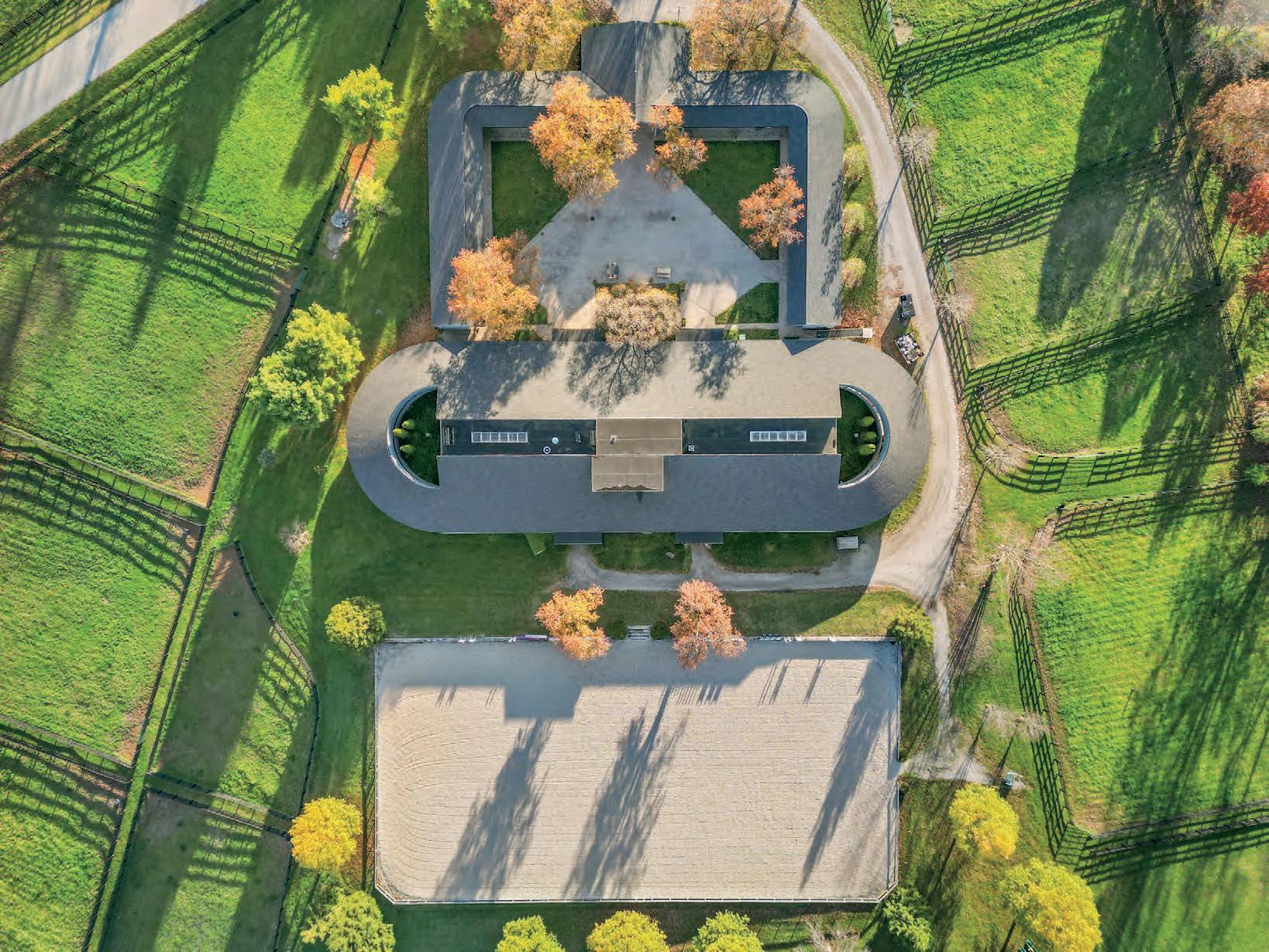
This fully-renovated and impeccably maintained horse farm spans 15.5 Fayette County acres. The farm offers a blend of thoughtful design and expert functionality in a desirable Lexington location.
An appealing European-style courtyard barn has 19 stalls, with an additional 16 stalls in the main barn. Equestrian amenities include a 120′ x 238′ outdoor arena with GGT Footing, 1/8mile jog track, and 15 four-board fenced paddocks. The main barn is exceptionally well-appointed with a spacious feed room, tack room, kitchen, bathroom, office, and a large indoor wash rack with hot and cold water. This thoughtful design is ideal for both personal use or professional training operations. View all photos, maps, & more at KIRKFARMS.COM
2O26
NATIONS CUP
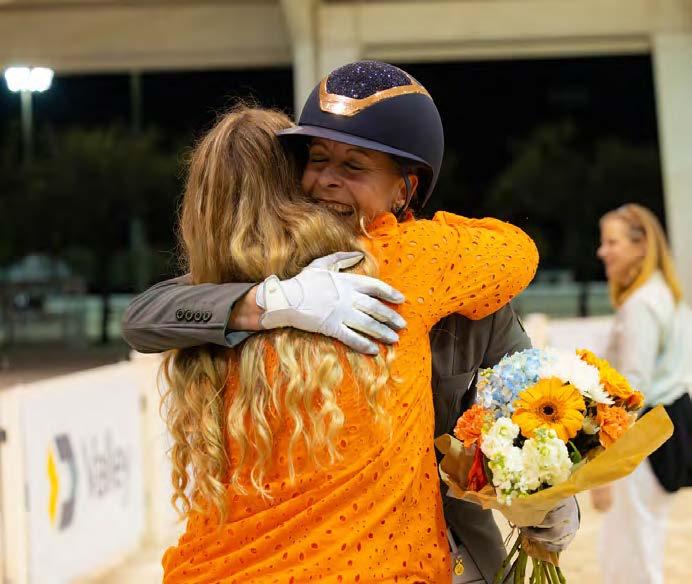
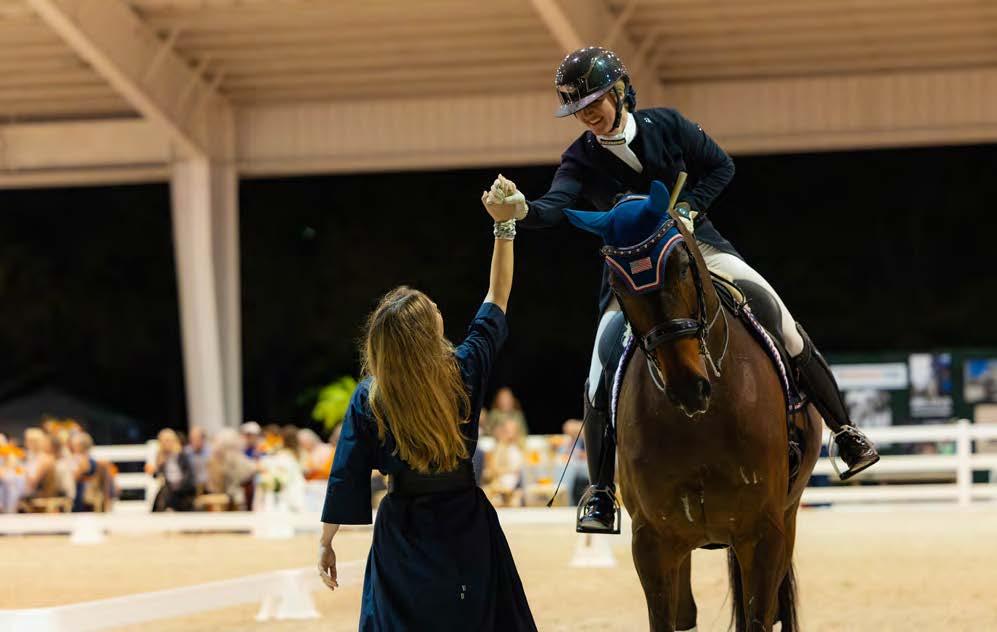
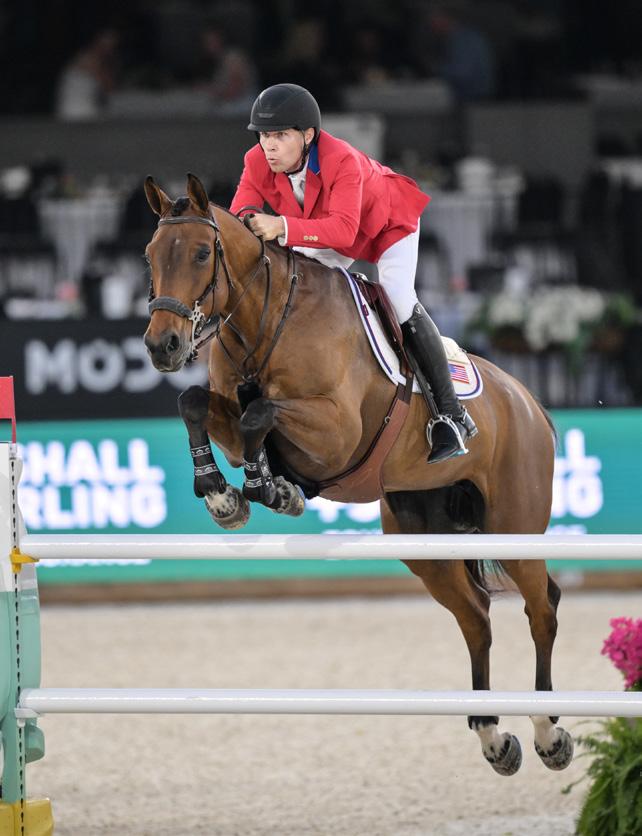
Backed by a sea of red, white, and blue throughout the arena — and an enthusiastic United States Equestrian Team (USET) Foundation and US Equestrian watch party — the team of Karl Cook, Marilyn Little, Callie Schott, and McLain Ward rose to the occasion to win its second consecutive victory in the prestigious FEI Jumping Nations Cup Wellington CSIO4*. Over the 25-year history of the Wellington leg of the FEI Nations Cup, the U.S. has taken the top
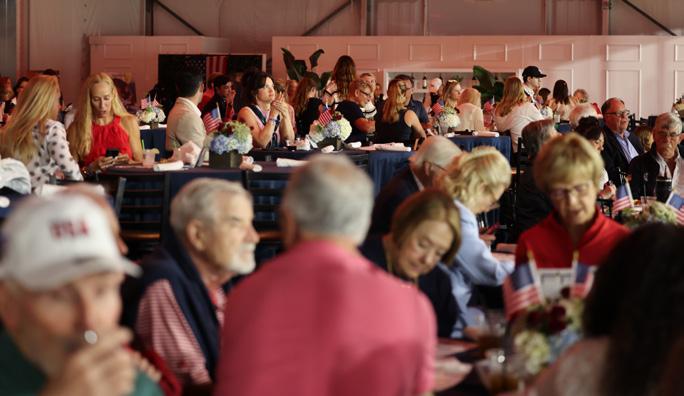
spot on the podium 11 times. USET Foundation donors, supporters, and friends gathered ringside for a reception and watch party jointly hosted with US Equestrian to cheer on the team, creating a lively display of unity and national pride. Guests waved flags and celebrated each round, embodying the spirit of partnership between athletes and the philanthropic community that powers U.S. equestrian sport on the world stage.
Team USA McLain Ward, Marilyn Little, Robert Ridland, Callie Schott, and Karl Cook.
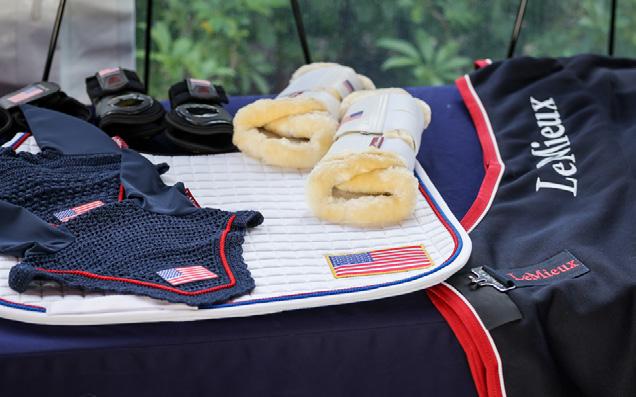
Luxury equestrian-products brand LeMieux joined the fun in support of the U.S. Equestrian Team.
The USET Foundation and U.S. Equestrian's watch party.
Karl Cook and Caracole de la Roque.
Marilyn Little and La Contessa.
Callie Schott.
McLain Ward and Jordan Molga M
FRIENDSHIP, TRAGEDY, AND FORGIVENESS
A hunting accident changed the LIVES OF TWO FAMILIES forever.
Dr. William Bradley grew up in Colorado, graduated Colorado State University, and completed his internship residency at Kansas State. After a year as a racetrack vet, he joined New England Equine Practice in New York and began his long association with the horse show world, caring for the horses of McLain Ward and many other competitors. In 2007, he built a state-of-the-art veterinary clinic/surgery in Patterson, N.Y., and later helped make it possible for Pegasus Therapeutic Riding to make the property their new home. He and his wife, Renee, are proud parents and grandparents and enjoy traveling as a family.
Asecond incident better describes our friendship. We were hunting up Rock Creek late one afternoon. We had killed and gutted a small deer and thrown him over one of our saddles.
About then it began to get dark. We started down from maybe 1000 feet below timberline to try to get back to our truck and trailer and came to a place where a choice had to be made. I made it and it was naturally enough wrong.
Had we made the right hand turn we would have gone up a branch of Rock Creek, found our truck and trailer, loaded our horses, and our deer and gone home. But we turned north to follow the smaller stream with the thought that since it ran downhill, we could follow it out to Rock Creek.
We would then have a pretty good idea of where we were and could make our way back to our truck and trailer. The logic was sound, but it just didn’t pan out. I was 15 and Larry was almost 17 and we were usually lost in every sense of the word. Magellan had nothing to worry about from us. By then it was pitch dark. There was no moon, and we lost the game trail we had been trying to follow. The ground became so rough we could no
longer ride, and we had to get off and lead our horses.
We made our way up and along the steep side of the mountain that bordered the creek. There had been a recent snow and whatever rudimentary path we found was icy, rocky, and muddy.
Blue was my calf horse. Calf roping is the classic timed event in American rodeo. The cowboy ropes the calf, steps off his horse, runs down the rope, throws the calf, and ties him. He then returns to his horse and remounts. The calf must remain tied for five seconds for the run to be considered official. The horse is equally as important as the cowboy in this event. He has to be fast, but he also needs to stop and back up almost immediately in order to keep the rope taut while the calf is tied. This takes a fair amount of training. As these horses stop and begin to back, their center of balance shifts and their hind ends come underneath them. If they become excited, they may back up too fast and too hard and drag the calf as the cowboy finishes his tie. In the arena this probably results in nothing more serious than the cowboy placing out of the money.
In the dark and in the mud that night, when Blue lost his footing, his front end came up, his hind legs slipped under him further, he felt the tension on the reins, and he tried to do what he was taught and what was instinctive. He went back even harder and stumbled. Things got worse from there. He reared, flipped almost all the way over backwards, rolled over his rump, and then onto his left side.
With his legs pointing up the hill he slid out of sight. We heard him crash over the rocks and through the trees and down through the willows. That all ended with a splash. I figured that was the end of my horse and everything else I held dear, my saddle, the rest of my tack, my rope, and my rifle.
This exclusive excerpt from The Heart and The Eagle by William Bradley is reprinted with permission from the author. All proceeds from this book will go to charity.
HERMÈS PARIS PORCELAIN ASHTRAY
$850
1960s rectangular white porcelain ashtray with gold details on the edges. It features a central design of a horse in harness and gold and black decoration.
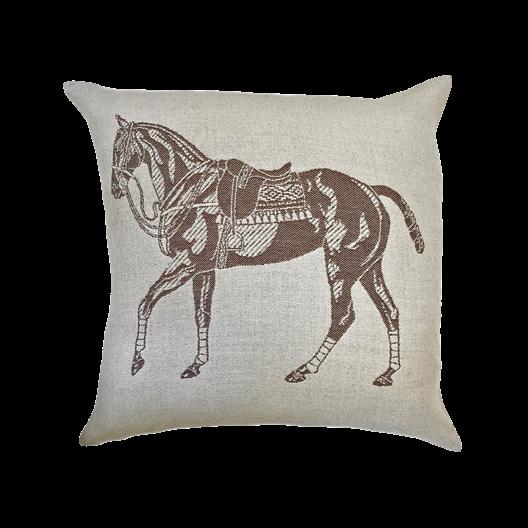
STICK & BALL POLO PONY PILLOW
$265.00
This exquisite pillow is an original design and the perfect equestrian accent for the home. Luxurious, jacquard loomed from super-premium 100% baby alpaca natural yarns for the softest, year-round luxurious comfort. Shipped with luxury duck
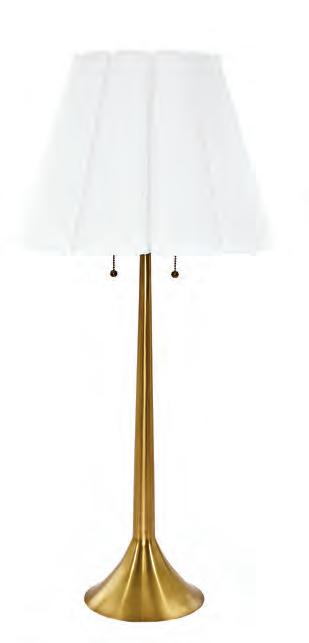
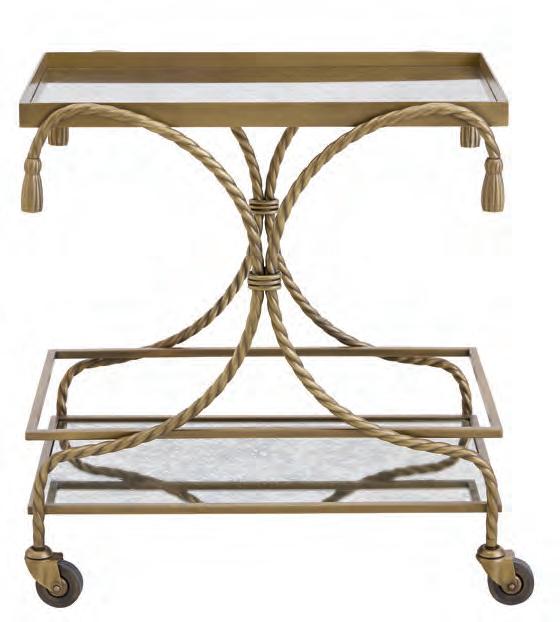
SELECTED BY THE EDITORS OF EQUESTRIAN LIVING MAGAZINE.
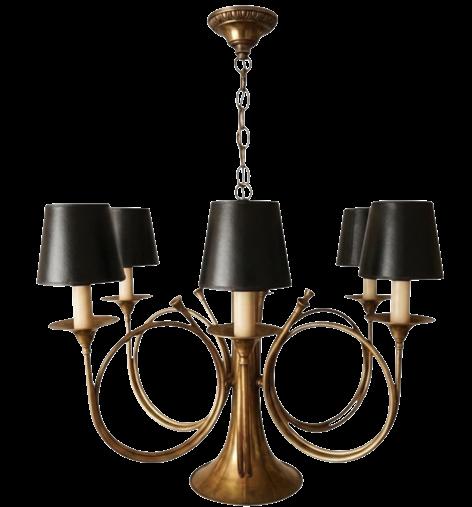
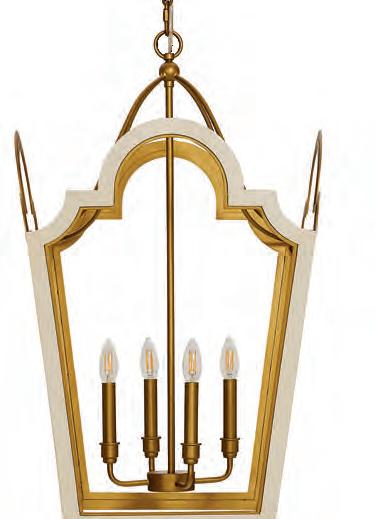
ENGLISH HUNT EQUESTRIAN STYLE FRENCH BRASS HORN CHANDELIER
$1,795
This mid-century brass French horn hunt chandelier with six arms is attributed to Chapman Manufacturing. It is perfect for an equestrian-themed project. It dates to the 1960s, and is newly
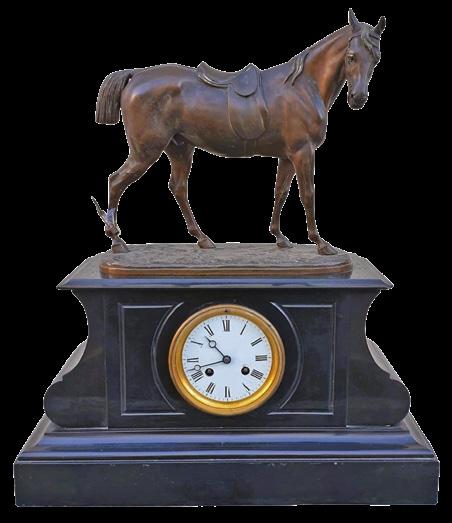
EMILE LOISEAU, HORSE CLOCK, 19TH CENTURY
$1,595.60
This black marble French mantel clock is topped with a spelter horse with a brown bronze-style patina. Signed by Emile Loiseau, the Napolean III-style piece blends grace with precision.
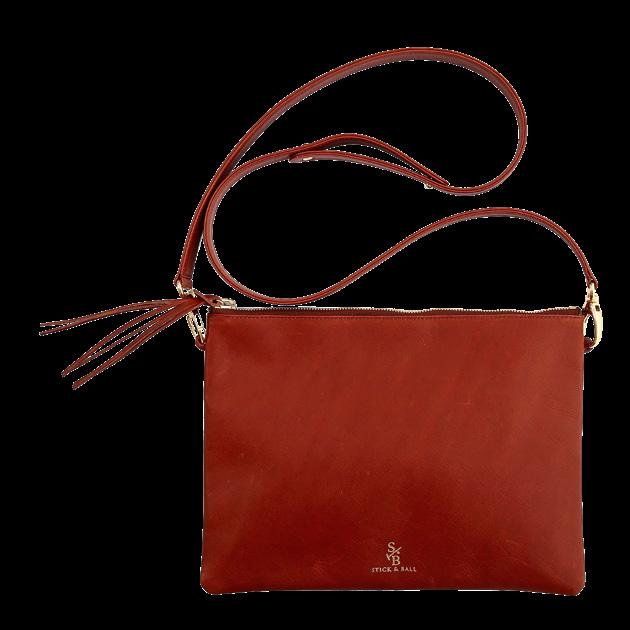
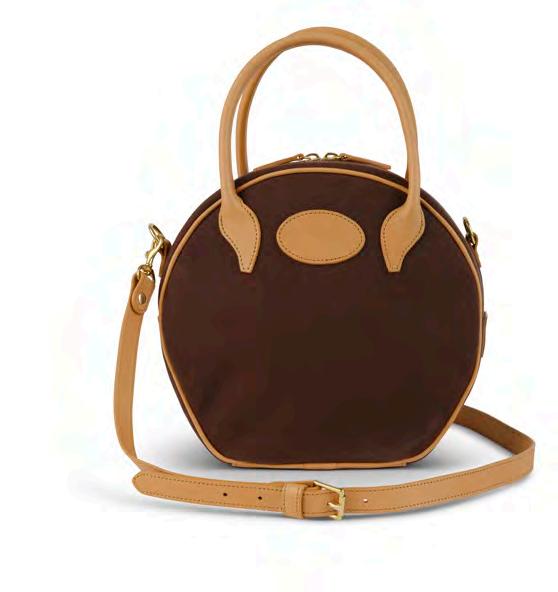
CROSSBODY FROM STICK&BALL
$850.00
The Crossbody is an exquisitely handmade all-purpose bag made of the finest 100% vegetable-tanned leather with an inside suede-leather lining. It features two cell phone-sized pockets in the interior and exterior hardware accents made of highquality brass. Certified Tuscan vegetable tanned, “Pelle Conciata al Vegetale in Toscana.” Available in 5 leather colors
I told Larry to go down and take a look. I didn’t think about it much but it seemed impossible to me that the horse could have survived the fall. If he had somehow managed to live through it, it was unimaginable to me that there would be anything left for us to do but finish the job. I didn’t want to see him like that. Larry dutifully slid down the slope and somehow kept from falling into a beaver pond.
Blue had crashed through the skim of ice that covered the pond. Larry found him standing but almost submerged with his right side against a cliff and his left side against the beaver hutch.
There was a 25-foot long 12-inch diameter aspen log that the beaver had felled wedged up against his chest. Only his back, head, and neck were visible above the surface of the newly muddied pond.
I heard Larry moving around down below. In a couple of minutes, he hollered up to me and said that he would shoot Blue if I wanted him to, but that the horse looked pretty good to him. I made my way down the hill and looked things over and deemed that at least Blue’s death wasn’t imminent. That is, of course, unless Larry shot him.
Blue didn’t appear to have any long bone fractures, so we tried to get him out. But he was in a predicament which we couldn’t solve. We pulled the saddle and put it on the higher ground. I grabbed my rifle and the other horse, and we headed down the creek leaving old Blue to fend for himself overnight.
We got our remaining horse, deer carcass, and gear loaded and headed for Larry’s dad’s farm east of Monte Vista. We got in about midnight. We tried to be quiet, but we didn’t fool anybody.
Very quickly Henry Shriver, the patriarch of the Shriver clan, got up, dressed, and stepped outside. He looked us over,
listened to our tale of woe, and started to laugh. It was gratifying for Larry and me to know that while we were standing there shivering in our wet muddy clothes, we were such a wonderful source of amusement.
Henry, being a perceptive judge of people’s strengths and weaknesses, accurately assessed us as being two of the dumbest young men in North America. That was a viewpoint which both Larry’s dad and my own father consistently held and often discussed between themselves.
Henry told us not to worry. He said go to bed and catch a little sleep. He said he would get us up at 5:00 and that we then would go and see if we could save Blue.
Henry was a capable man, and he had a plan. We got to Blue about 6:30 in the morning. We brought a mule, a chain-
saw, some ropes, and three good saddle horses.
We had the middle of the log cut away in short order. We tied on to it, and with the help of one of our good horses, we dragged it out of the way. Next, we got two ropes on Blue and tied him off to our saddle horns and pulled him out of the bog.
He was stiff and cold, but we dried him off with some towels we had brought along for that purpose and walked him around on the little flat patch of grass that we found near the
bog. After a while we started back down the mountain towards the truck and trailer. Forty-five minutes later we had him blanketed and loaded and were on the way to my dad’s place.
The horse had some abrasions on his hind legs and ended up with an upper respiratory infection but a couple of weeks later he was back to normal physically.
He was a suspicious sort anyway, but he never again after that incident seemed to regain any confidence in any of us in particular or humans in general or to ever again hold me with any great affection.
To be fair and absolutely honest, I should point out that in Blue’s defense, a year earlier another member of my band of merry wizards, Doug Payne, and I had turned a four-horse trailer on its side about a mile down the road from my home place.
We were trying to move two yearlings to summer pasture. My dad didn’t think that there were a lot of ways that we could screw this up, but he did not accurately take into consideration the full breadth and depth of our resourcefulness.
The yearlings had not been handled much and weren’t particularly accustomed to wearing halters, much less broke to lead. I had backed the trailer up so that the gate opened into an alleyway. We then just ran the two colts up that narrow passageway into the trailer. This worked well enough except that we got the pickup stuck in the mud.
Rather than unload the yearlings, we unhooked and used Doug’s truck which was four-wheel-drive to pull the first truck out of the muck and then move it out of the way. We next hooked the trailer to the four-wheel-drive truck and thought we were good to go.
As an afterthought we decided to put Blue on the trailer in hopes that he would be a calming influence on the yearlings. So far it all seemed reasonable,
at least to us. We had, however, neglected to make sure that the hitch on the trailer was the correct size for the ball on the second truck.
We got down the road about half a mile and hit a bump. The hitch bounced off the ball and I remember the trailer coming alongside the driver’s side window almost parallel with the cab of the truck. My immediate reaction was that that didn’t seem okay. The trailer continued to pass us on the left and headed into the bar ditch.
It rolled to a stop and slowly toppled about halfway over and leaned against a fence post. We jumped out of the truck, ran around to the back of the trailer and threw open the doors. The yearlings were petrified, but unhurt. Blue, I think, was mostly just disgusted.
The three horses scrambled out of the trailer and ran home. We drove back and got a couple of chains. We returned, backed the truck up at a 90° angle to the
long axis of the trailer. We threw a chain over the trailer, hooked onto its downside, and pulled it right side up. We then switched our chains and hooked onto the hitch and pulled the trailer out of the ditch. The top of the trailer was a little bit dented where it had landed on the post, but other than that it had held up pretty well. We got the trailer hooked up to the right truck and drove the rig home.
We caught the two yearlings and Blue. The yearlings went back in their original paddock, to be resettled another day. We knocked the dent out of the top of the trailer and loaded Blue and a second horse, Donnie, to go to a rodeo in eastern Colorado.
We were not especially organized, and we had forgotten our buckets. That omission made watering the horses on the road a little trickier.
So about 11 o’clock at night we pulled into the Walsenburg Best Western. We offloaded Blue and his buddy and led
them across the patio surrounding the motel swimming pool and tried to get them to drink. Neither horse had much of a taste for chlorinated water.
Donnie did pass a very large and only moderately formed stool in the middle of the eastern side of the Walsenburg Best Western Motel swimming pool patio. We might have tried to clean that up, but we were suddenly accosted by a small, very angry man.
He turned out to be the manager of the motel and he was most assuredly not pleased with us. He issued a great number of threats, but we, having been squarely apprehended, made a run, with both horses in hand, for our dented horse trailer. Blue and Donnie jumped onboard, and we all headed east. By the end of this and especially culminating with the incident at the beaver pond, Blue had had, I think, enough of us and really just hoped to be sold.
Jessica Springsteen photographed by George Kamper for EQLiving in Wellington, Florida
EQUESTRIAN FASHION 2O26
MEET FOUR FOUNDERS BRINGING FRESH ENERGY TO RIDING APPAREL, ALONGSIDE ICONIC BRANDS THAT CONTINUE TO DEFINE EQUESTRIAN STYLE.
Equestrian style has always balanced heritage with innovation, and this year’s fashion feature celebrates both. The 2026 edition brings together well-established brands—those that have defined the look and performance of riding apparel for decades—with a new generation of niche labels making confident inroads in the industry.
At the center of the feature is a conversation with four founders whose emerging brands are capturing attention for their thoughtful design, technical performance, and fresh perspective on life in and out of the saddle. In a special six-page Q&A, they share the inspirations behind their collections, the realities of building a brand in a competitive market, and their vision for the future of equestrian apparel.
BY STEPHANIE PETERS
Throughout the pages, readers will also discover a vibrant mix of standout pieces, from longtime favorites known for enduring craftsmanship to distinctive selections from these rising labels. Together, they reflect an evolving equestrian wardrobe, where tradition, function, and modern style ride side by side.
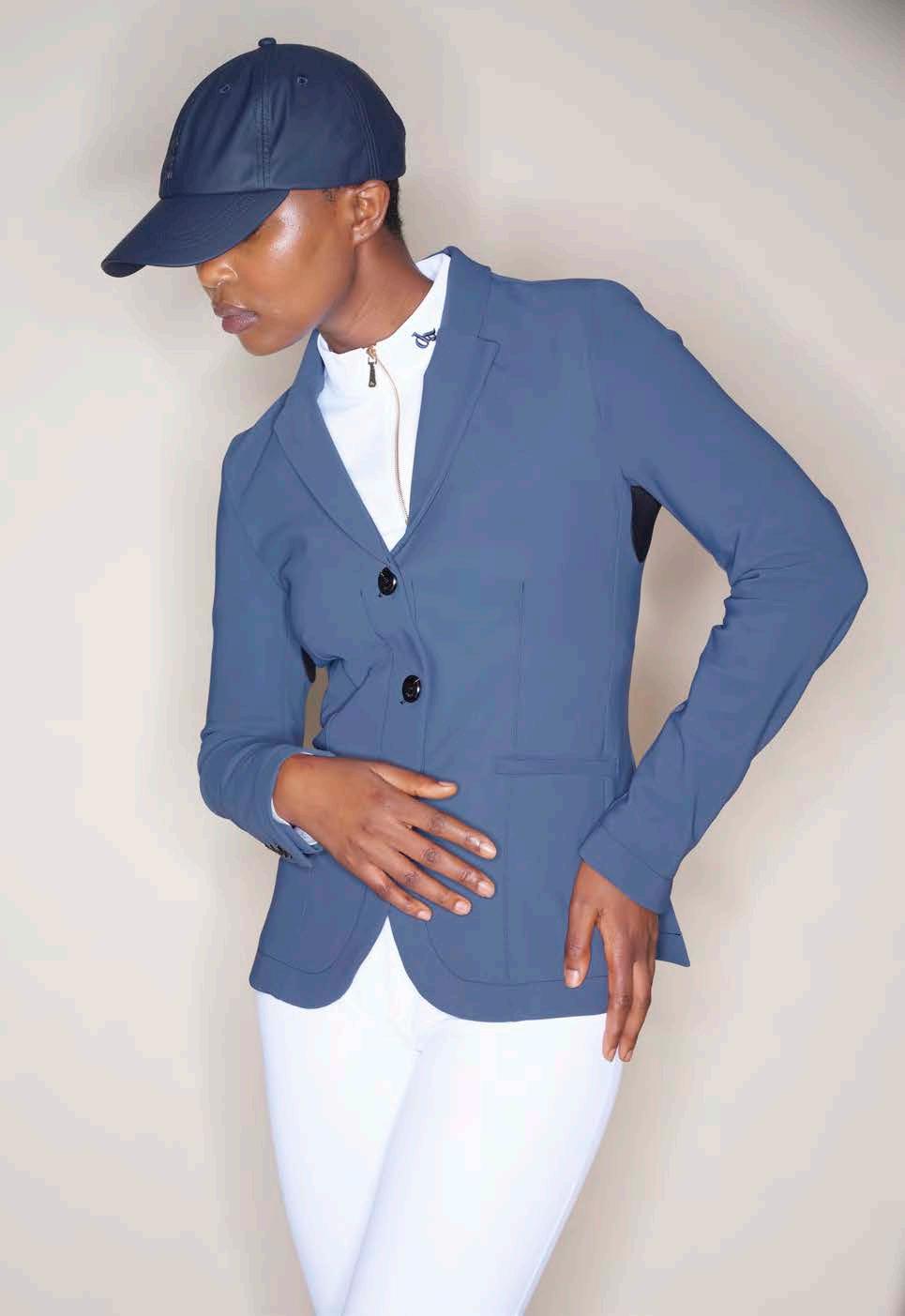
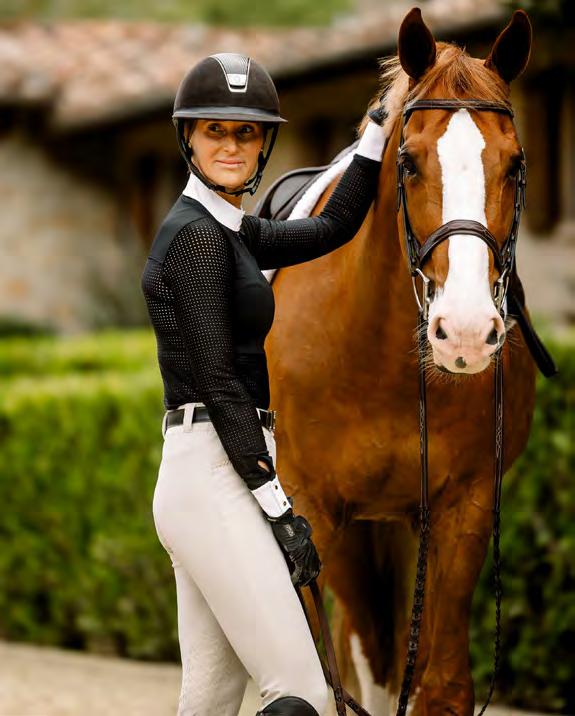
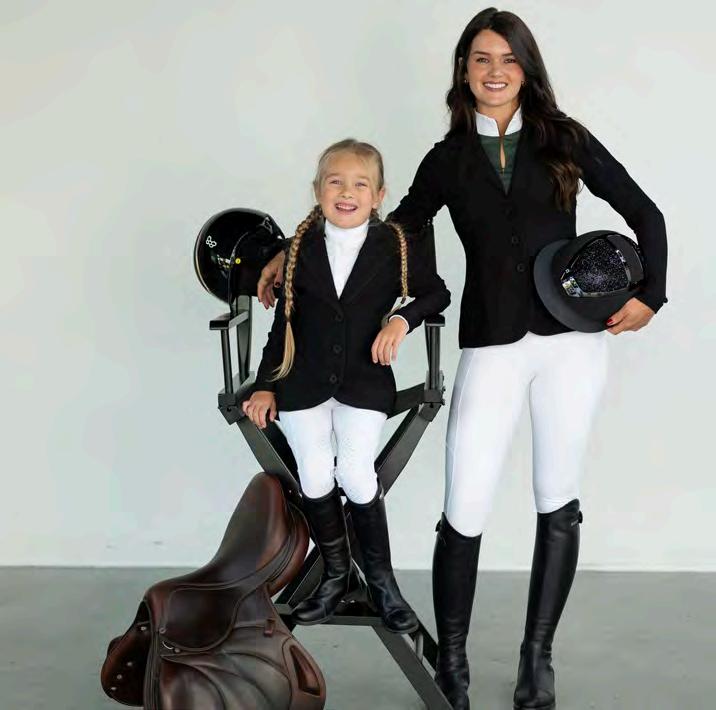
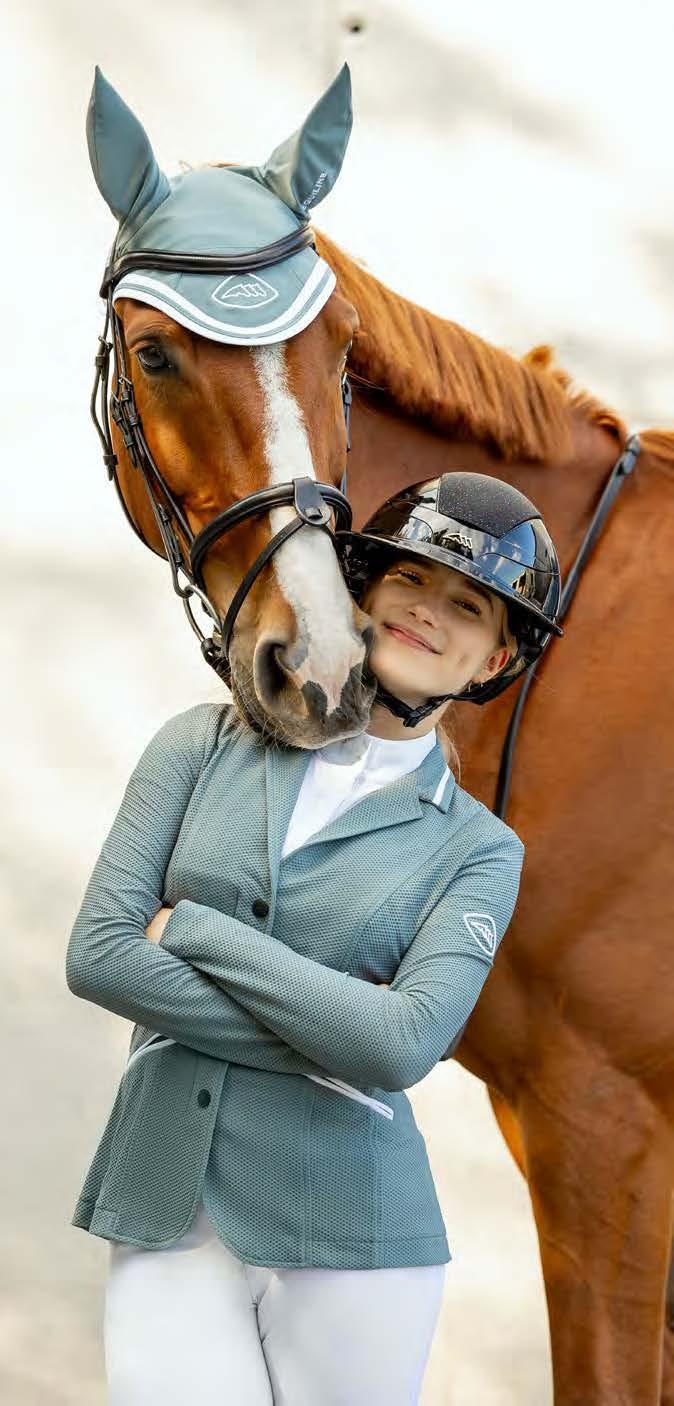
Equiline’s EqCigiac Mesh Show Coat (shown in blue) is their coat of the season. Lightweight and breathable, the unlined, perfectly crafted coat is a must-have for hot competition days. $475. Shown with the brand’s white Eqcusmakh FullGrip Breeches. $379.
Opposite page:
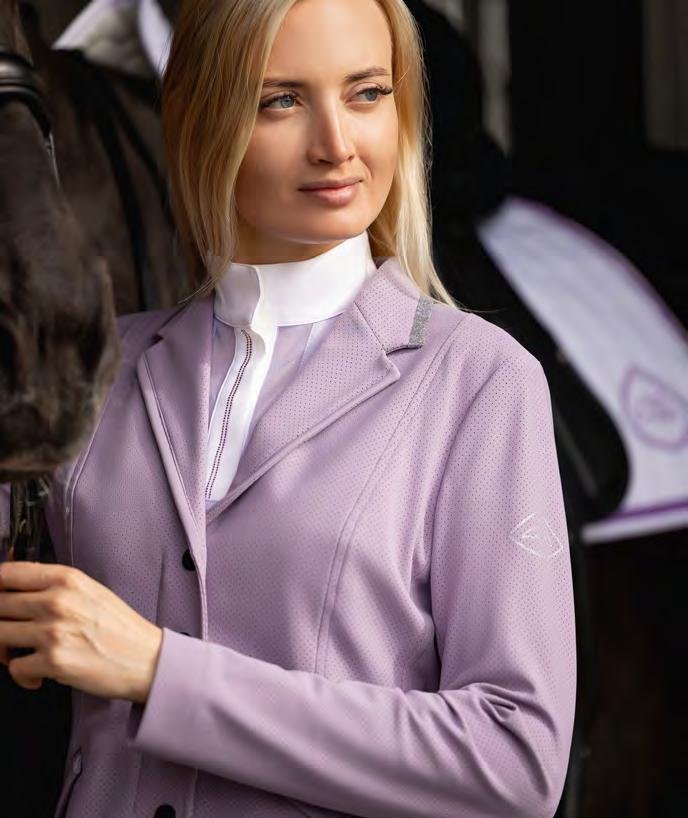
1. Equiline’s EqGarcia Competition Jacket with their B-Move fabric ensures maximum movement and comfort. The unlined construction enhances lightness, while Swarovski crystal fabric details on the collar and pockets add refined touches. The jacket is airbag compatible with UPF 50+ sun protection and a quick-dry technology. Shown in glicine. $865. Paired with Equiline’s EqGlece Show Shirt $225.
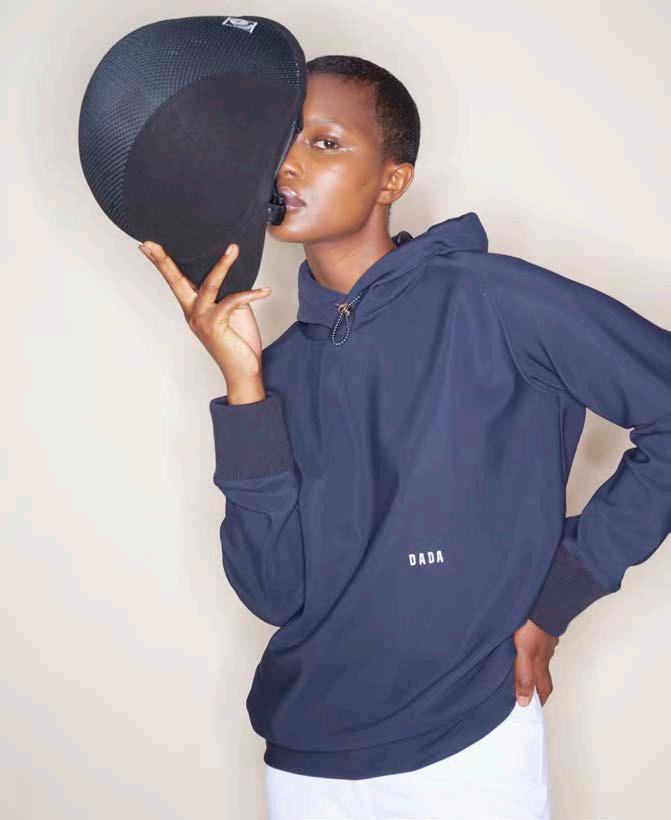
2. The clean cut, soft fabric Dali Riding Hoodie by Dada Sport slips on effortlessly and is ideal on horseback, in town, or anywhere in between. In navy. $290.
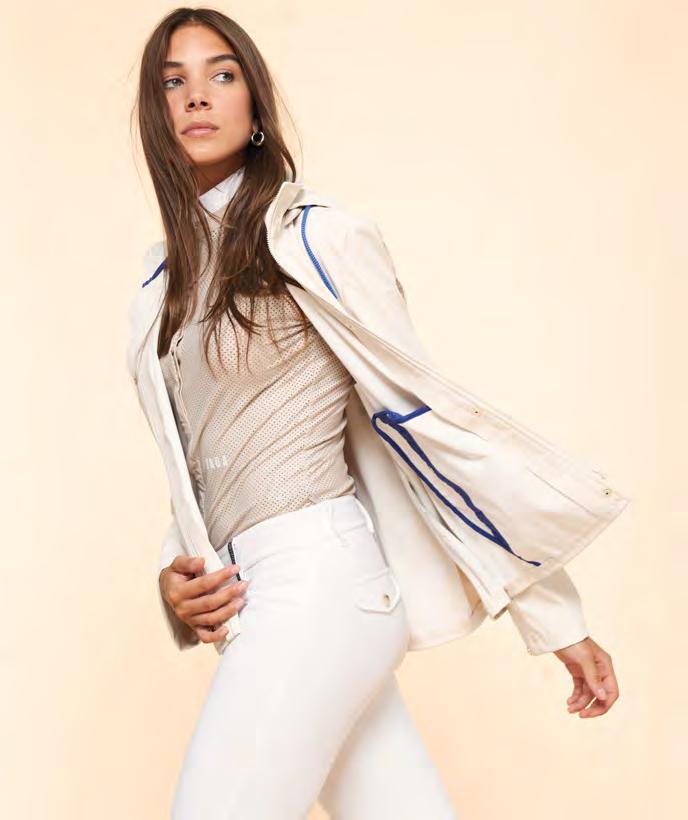
3. Dada Sport’s Tempo Waterproof Riding Jacket combines lightness and style. The trapeze cut and removable hood offer optimal protection. In greige. $443.
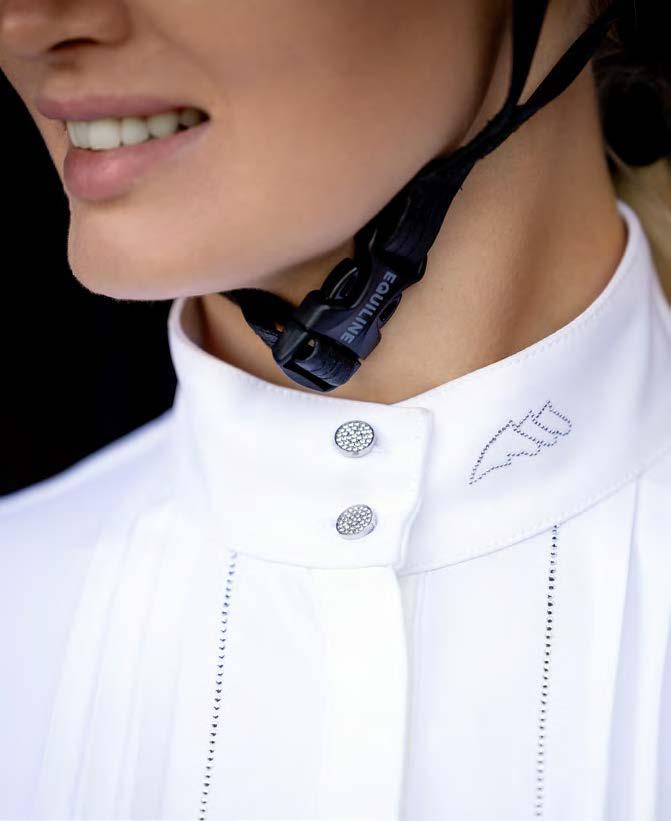
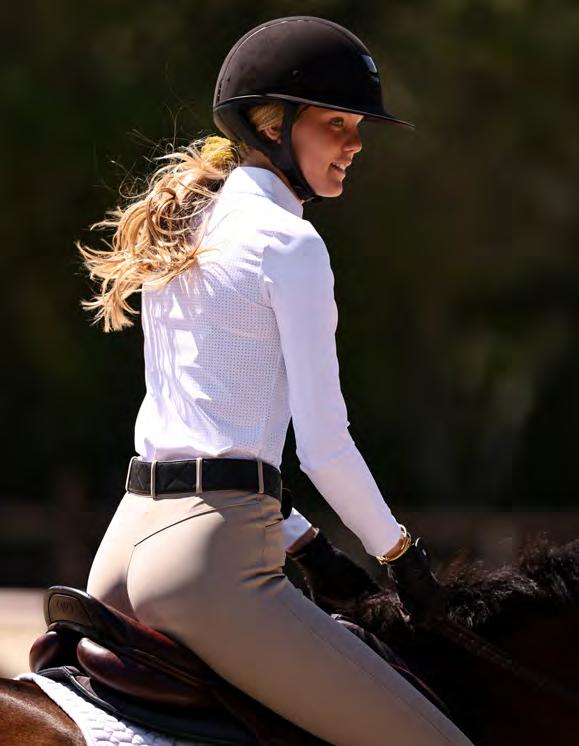
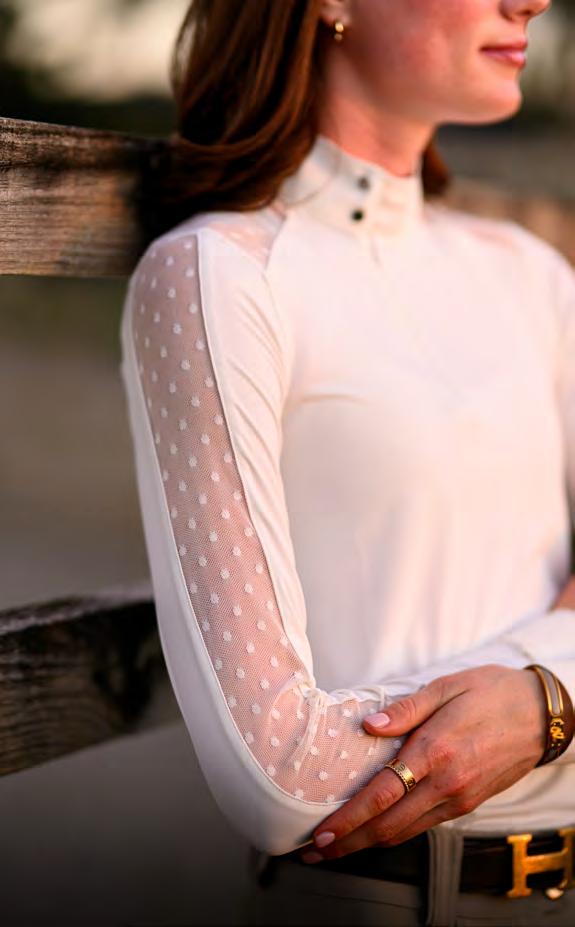
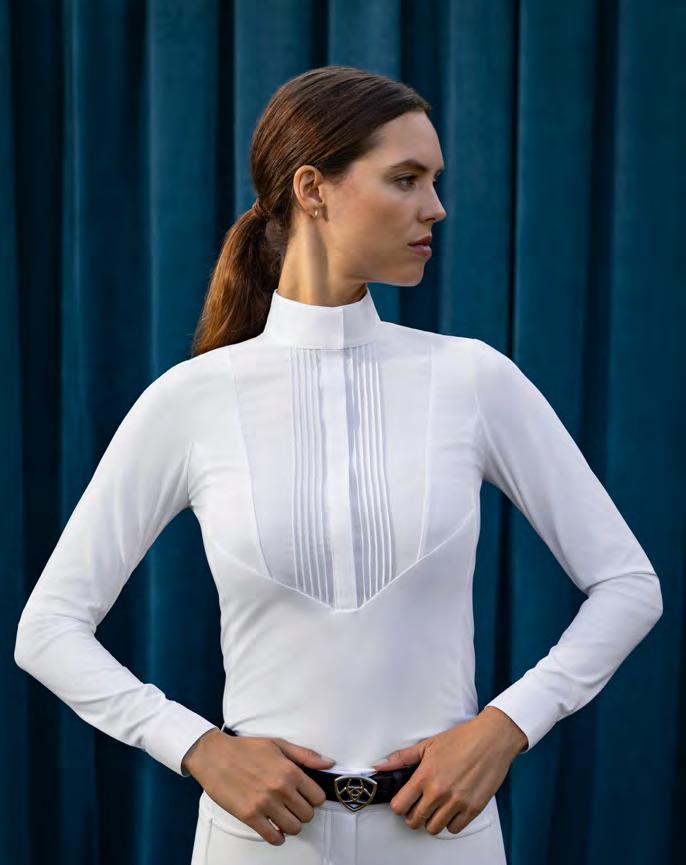
4. Equiline’s highperformance EqGelsa Show Shirt , in a stretchy, breathable fabric ensures a comfortable flawless fit. Includes hidden snap buttons and jewel buttons on the collar and cuffs. In white. $239.
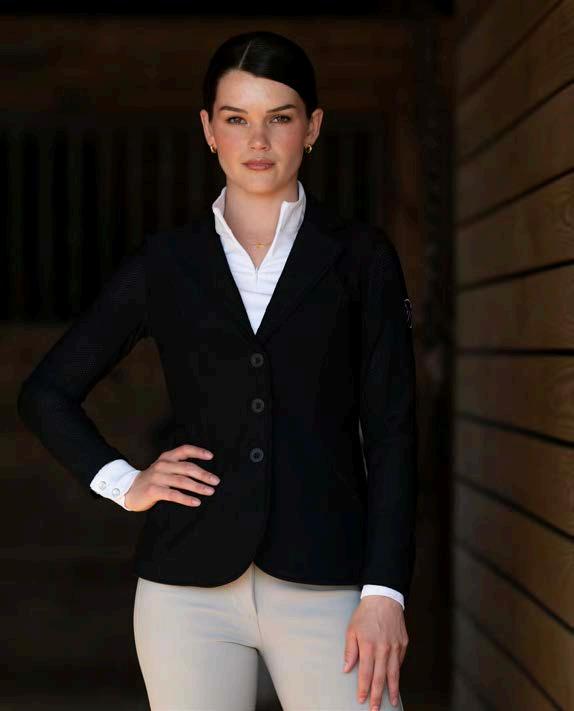
This page: Dada Sport’s new Tzara Horse Show Jacket in Baltic. Designed for competition with a tailored aesthetic, its refined cut also accommodates the brand’s airbag. $769.
HEAR FROM FOUR FOUNDERS OF NICHE EQUESTRIAN APPAREL BRANDS
ALEXA SKONIECZNY Euphoric Equestrian
What inspired you to launch the company, and what niche or gap did you feel the equestrian apparel market was missing?
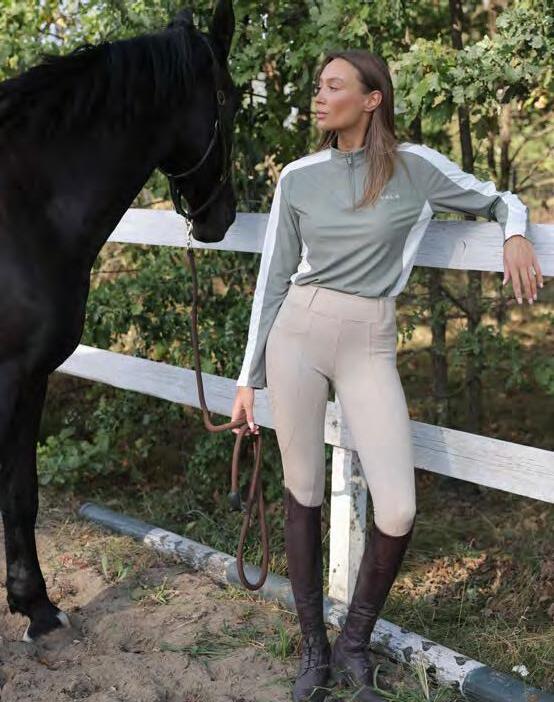
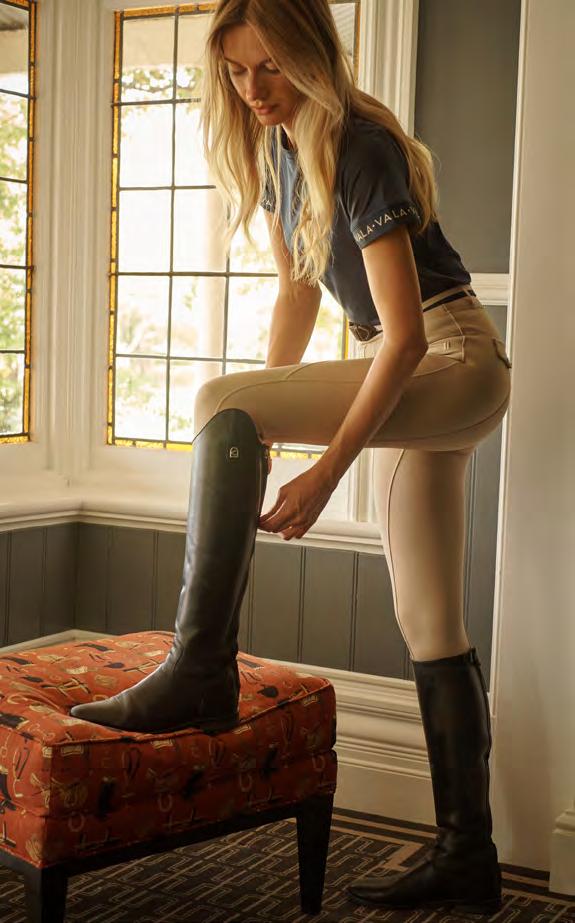
Bec: VALA grew out of my experience returning to riding as an adult and struggling to find pieces that felt flattering and confidence-building. Much of what I found was skin-tight, which made me feel self-conscious rather than supported. That discomfort genuinely affected how I felt in the saddle. When you’re not confident in what you’re wearing, it shows in how you ride.
Before moving back to Australia, I spent several years in New York working for Ralph Lauren, which shaped my love of classic, timeless design. I’ve always had an understated style, and I struggled to find riding clothes that fit naturally into my everyday wardrobe. There was a lot of bling and loud logos, which just didn’t feel like me. I saw a real opportunity to create beautiful, flattering, functional pieces that felt modern, refined, and confidence-boosting—both in the saddle and out.
Alexa: When I got back into riding as an adult after a long break, I went shopping and quickly realized something was missing. Everything felt split between extremely expensive pieces and cheaper options that never quite fit. That middle ground didn’t exist for me. I set out to create it—comfortable, well-fitting pieces you could fall in love with instantly and feel
confident buying on the spot, without needing to go home to think it over.
Kaelyn: I started TKEQ at 17 because I struggled to find casual equestrian apparel with a modern look. TKEQ began as a graphic t-shirt and sweatshirt brand.
The evolution of TKEQ reflects my personal growth and journey over the last nine years. It’s rewarding to see how my life and collections have developed side by side.
Katie: I’ve always had a very imaginative mind. As a child, I would spend hours drawing floor plans for my future farm and designing stables. That creative energy never really left me. In my early 20s, I was an elementary school teacher, rode as a hobby, and did everything I could to afford my horse. What I couldn’t afford were the riding clothes I actually loved.
It felt like there was a huge gap in the market—beautiful, high-quality pieces existed, but they were priced far beyond what most everyday riders could justify. I didn’t see many midpriced options that still felt elevated, technical, and thoughtfully designed. So I started sketching. One design became 10, and before I knew it, I was completely immersed in building what would become Free Ride Equestrian.
The goal was simple: create exceptionally comfortable, durable apparel that felt high-end yet accessible to the everyday rider.
KAELYN KENNEDY TKEQ
BEC CHRISTIAN VALA
KATIE ROSENFELS Free Ride Equestrian
Who is your core customer, and how does that influence your design decisions season to season?
Bec: The VALA customer is any woman, of any age or riding level, who appreciates style, quality, and feeling put-together. She might ride every day, occasionally, or simply love the equestrian aesthetic. What she has in common with our wider community is that she wants clothing that feels easy and considered.
Convenience for busy modern women is central to everything we design. We focus on creating capsule pieces that work together, so getting dressed feels simple rather than overwhelming. Our goal is for her to grab her VALA pieces, throw them on without thinking too hard, and feel confident and polished straight away.
Alexa: It’s kind of funny—as my own seasons of riding have evolved, my customer base has evolved right alongside me.
When I first got back into riding, I wasn’t showing much, and that naturally shaped the brand toward more schoolingfocused pieces. As I started competing more, the collection grew with me, transitioning into elevated competition wear. What I love most is that the brand still speaks to riders who don’t show, while also welcoming an incredible group of new customers who compete the way I do. Being able to connect with both feels special.
Kaelyn: Our core customers are equestrian athletes, ambitious and intentional. They value performance, style, and aesthetics in their wardrobes. Being part of this demographic allows me to design from a personal perspective.
Katie: Our core customer is the everyday rider. She might be juggling work, school, family, and horses—but she still shows up for her ride. She wants to feel confident and put-together at the barn without feeling overdone or uncomfortable.
That reality shapes everything we design. Pieces have to move with real life. They have to hold up in the saddle and through long barn days and still look polished enough to grab coffee afterward. We focus on versatility, durability, and comfort first—then layer in style.
Was there an early moment when you realized, “Yes, this brand is really connecting with riders?”
Bec: Early on, we began receiving messages from women saying they felt more confident riding in public or more comfortable in their bodies while wearing VALA. That really stuck with me. It wasn’t just about how the clothes performed — it was about how they made women feel.
That feeling was further solidified when Australia’s largest equestrian retailer approached us just six months after launch,
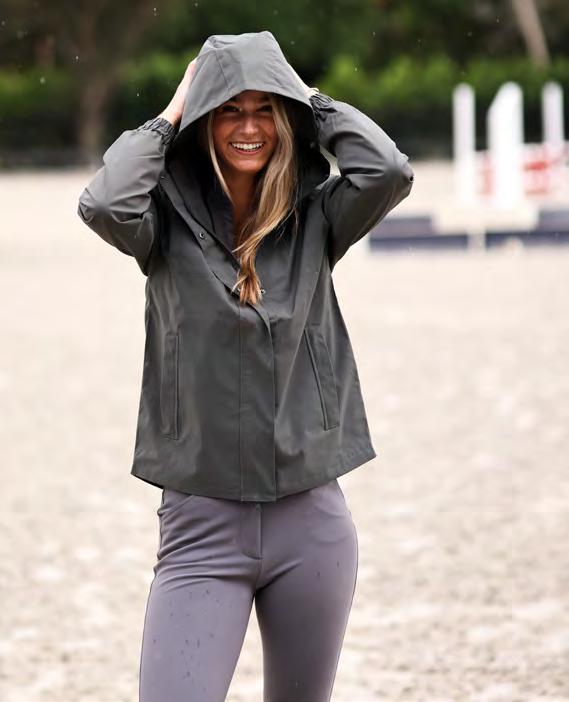
The versatile high-low All-Weather Jacket by TKEQ is designed for life in and out of the saddle. The lightweight, waterand wind-resistant jacket with removable hood and elastic cuffs offers protection in all kinds of weather. In dappled. $210.
VALA’s SPF 50+ Sun Protection Shirt ( in clover) offers comfort, protection, and style. The soft, lightweight fabric, with strategically placed mesh panels keeps riders cool and looking chic. $109.90.
The high-waisted, knee-grip, SCULPT Breeches by TKEQ boast ultra-comfort in a second-skin fabric. The breech combines the structure of a riding pant with the stretch of an athletic pant. Includes a “V” detail for a flattering look. In Cairo. $199.
asking to stock VALA in all their stores. It was an incredibly validating moment and a clear sign that the brand was resonating with customers and the industry.
Alexa: Looking back, it didn’t all click right away. A few years ago, I decided to start posting on TikTok, and that decision had a major impact on the brand. My goal was never to push Euphoric in people’s faces—I wanted to share relatable content that riders genuinely enjoyed. From there, people naturally discovered I owned a brand, and the connection felt more organic and real.
Kaelyn: Absolutely! Our Athletic Collection for Spring 2020 was a game-changer. It sold out within minutes of launching online, confirming that riders were truly connecting with our new athletics-focused direction.
Katie: One of the earliest moments was when our original Lux Breeches launched and sold quickly. I remember holding the first prototype and having a gut feeling—it was different. When orders started coming in, and customers immediately asked for more colors, I knew we were onto something.
But the real “this is connecting” moment happens every year at the Kentucky Three-Day Event. Seeing riders walk into our
booth already wearing Free Ride and stopping in to tell us how much they love their pieces—that’s when it feels real. It’s no longer just a product. It’s part of their story.
How have buying trends in equestrian apparel shifted over the past two to three years, particularly regarding performance versus lifestyle pieces?
Bec: There’s been a shift toward versatility. Riders still expect performance, but they’re also looking for pieces that fit into the rest of their lives.
Having lived and worked in New York, I’ve always had a global view of how women like to dress, and it’s been amazing to see how strongly VALA has resonated with the U.S. market. To better support that customer, we’ve since opened a U.S. warehouse, so our American community can enjoy faster delivery without worrying about duties or long shipping times.
Kaelyn: Riders gravitate toward versatile pieces. They value apparel that performs in the saddle, protects against the elements, and is polished and comfortable for all aspects of their equestrian lifestyle.
Katie: Over the last few years, I’ve seen riders expect both. There was a time when you either bought strictly technical show apparel or casual barn clothes. Now, the lines are blurred. Riders want performance fabrics—moisture-wicking, sculpting, breathable—but they also want pieces that feel modern and wearable beyond the barn. Lifestyle influence has grown significantly. Clean silhouettes, neutral palettes, and elevated basics—they matter more than ever.
Performance is assumed. Style is what differentiates.
When developing new pieces, how do you balance technical performance with polished, fashion-forward style?
Bec: We always start by considering how a piece needs to function in real life: how it moves, breathes, and supports the rider. Once that’s right, we focus on the details that elevate it: the cut, the fabric’s feel, and the overall finish.
We want our pieces to look great and feel natural both in and out of the stables. They need to perform just as well for feeding out or riding as they do for running errands or heading into town. If a piece can move seamlessly from stable to street and still feel comfortable and stylish, we know we’ve achieved the right balance.
Alexa: Always start with two non-negotiables: it has to be cute and comfortable. One should never come at the expense of the other. My factory learned early on that every piece needs to be
highly functional and technical—I had to explain that we wear these clothes all day. They get dirty, they’re washed constantly, and they have to hold up while still looking good.
Katie: Performance is the foundation. If it doesn’t feel incredible in the saddle, it doesn’t move forward. From there, I focus on tailoring and detail—flattering seams, waistbands that stay in place, and subtle design elements that elevate the look. Our Lux Breeches are a perfect example. Riding tights have existed for years, but we designed ours to be even more comfortable while preserving the structure and appearance of a traditional, high-end breech. It’s that blend of effortless feel with polished presentation that defines our design philosophy.
How much do color trends and seasonal palettes influence your collections? Do you follow wider fashion trends or stick to equestrian-specific preferences?
Bec: We’re influenced by broader fashion and lifestyle trends, but we keep things timeless. Instead of chasing seasonal colors, we focus on tones that feel calm, wearable, and easy to mix and match. Equestrian style has a strong heritage, and we love modernizing those classic color stories in ways that still feel relevant.
Alexa: I don’t approach my collections seasonally. I love creating pieces you can wear year-round without ever feeling the color is “off.” I gravitate toward neutrals and soft palettes, which have become a signature of the brand. I don’t use patterns or prints—some might call it minimal, but to me it’s timeless and incredibly chic.
Kaelyn: TKEQ’s seasonal collections focus on flattering silhouettes, refined branding, and performance fabrics. We blend trending colors with timeless equestrian shades to create a cohesive story that feels fresh and complements an athlete’s existing wardrobe.
Katie: Color plays a big role, but we filter trends through our brand lens. I pay attention to broader fashion movements— what feels fresh and what feels timeless—but it has to translate into the equestrian world.
Neutrals will always anchor our collections because riders need versatility. But we love layering in seasonal tones that feel current and inspiring. Customer feedback also heavily influences color expansion. Some of our most successful additions came directly from riders requesting specific shades.
Do you personally test your pieces in the saddle or at shows? Can you recall memorable field-testing stories or lessons learned?
TKEQ’s Globe TROT Performance
Top (in London) features a fully perforated back and sleeves, delivering superior airflow. With UPF 50+ sun protection and a silky feel, it’s an ultimate essential for equestrians. $95.
Bec: Yes. I personally test every piece with our team and several professional riders, so everything gets put through the wringer. It’s important to us that our designs hold up in real-world riding and stable conditions, not just in theory.
One particularly memorable moment came while weartesting an early prototype of what became our best-selling Sculpt & Smooth Breeches. I was feeding hay during a storm, slipped, and fell on some sharp rocks. My knee was cut, but the breeches didn’t tear at all. It was a bit painful and embarrassing, but it proved the fabric’s durability. Every piece also must pass my personal test: I have to genuinely love the style and want to wear it all day. If I don’t completely love it, it gets dropped.
Alexa: Yes, always. I love testing pieces while riding and showing well before they hit the store. I think that hands-on approach has given the brand a real edge. I ride almost every day and compete at least two weeks each month, so being able to put each piece through its paces has been invaluable. It’s helped me fine-tune every detail—understanding what feels right, what doesn’t, and what riders genuinely want to wear.
Katie: Always. Every piece is worn, washed, ridden in, and repeatedly tested. I don’t feel comfortable launching something I haven’t personally spent real time in.
One of the biggest lessons I’ve learned is that what feels good standing in front of a mirror can feel completely different after two hours in the saddle. Waistbands shift. Seams rub. Fabric reacts to heat differently. Those details matter.
Some of our design improvements over the years have come directly from those long barn days—real-world testing always wins over theory.
What have been the biggest challenges of growing a newer or smaller brand in today’s market?
Bec: Standing out in a very crowded market has been a challenge. With so much choice, building awareness and trust takes time. What’s been special for us is that much of our growth has come through word of mouth. Women try the product, love how it fits and feels, and then tell their friends. That kind of support has been amazing and incredibly motivating. We’re so grateful for the community that’s grown around VALA. I have so much love for our amazing customers.
Alexa: Acquiring customers and new retail partners—especially in Euphoric’s early days—was one of the biggest challenges. I was truly hustling, reaching out to stores and asking them to take a chance on the brand. Some people are excited by something new, while others prefer to stick with what they already know. Learning to navigate that balance was tough, but it shaped how I built Euphoric from the ground up.
Katie: The market is competitive, and larger brands have deep resources. In the early years, I was the designer, customer service rep, warehouse team, and marketing department all at once. Growth required learning quickly and being comfortable making mistakes.
Scaling without losing authenticity is another challenge. Our customers are our top priority, and maintaining that connection as we grow is non-negotiable.
At the same time, growth has been incredibly organic. Sometimes it feels like the brand has grown its own legs, and I’m just doing my best to keep up.
What kind of customer feedback means the most to you? Is it the performance wins, the compliments at the barn, or the confidence factor?
Bec: Without question, it’s the confidence factor. Performance matters, and compliments are always lovely, but what really matters to me is hearing that a woman feels more comfortable, more confident, or more like herself in VALA.
I believe what you wear can impact how you perform. When you feel put-together and comfortable, it changes how you carry yourself—in the saddle and beyond.
VALA’s best-selling full-seat grip Sculpt & Smooth Riding Breeches with four-way stretch work like shapewear, offering a flattering fit. In beige. $199.90.
Euphoric Equestrian’s Kloud Competition Top in the brand’s Coul fabric blends performance with elegance. The solid upper panel works as a show shirt under your coat, while the lower, laser-cut fabric wicks away sweat. Enhancing touches on the collar and cuffs. In black. $160.
Free Ride’s Competition Jacket in black features unique styling while offering a range of motion. In a lightweight mesh fabric, the jacket’s comfort and breathability pair nicely with feminine details, making it ideal for all equestrian athletes. $150.
The Palm Beach Competition Top by Euphoric Equestrian in the brand’s Coul, UPF 50+ fabric blends performance with luxury. Lightweight and moisturewicking, it features polka dot dura-mesh lace along the arms and shoulders, offering function without compromising tradition. In white. $168.
The young rider wears Free Ride’s Children’s Competition Jacket in black. $120, the Devon Shirt in white. $60, and Lux Breeches in white. $65.
An adult rider wears Free Ride’s women’s Cassidy Show Shirt, where high performance meets sophisticated style. A moisture-wicking fabric keeps the rider cool and dry. In hunter green. $75.
Alexa: Honestly, I love hearing all of it—whether someone won a major class wearing one of my shirts, found the confidence to get back into riding in one of our pieces, or even suggested something as small as adding an extra inch of length so it stays tucked better. I listen to everything. I’m never above feedback, and I truly believe that mindset is something many people can learn from. For me, it always comes back to this: if you look good, you feel good—and if you feel good, you ride better. That’s the goal every time I release a new piece.
Kaelyn: Confidence factor, hands down! When riders say they feel most confident after getting dressed in TKEQ, that’s everything. Apparel can’t jump the fences for you; however, it absolutely changes how you show up at the barn or horse show.
Katie: Performance feedback matters. Compliments at the barn are wonderful, but the confidence factor—that’s everything. When someone tells us they feel comfortable, confident, and truly themselves in our pieces, that’s the win. Our mission has always been to empower riders to move freely and feel connected throughout their equestrian journey.
If our apparel helps someone feel more confident walking into the barn or stepping into the show ring, that means we’ve done our job.
Opposite page: King Ranch Saddle Shop’s Helenita Loop Road Wool Silk Shawl, in ivory, captures iconic sites from King Ranch, including the race track, stallion barn, house, and more. Crafted in luxurious wool and silk, the shawl is reversible for versatility. In ivory. $195.
This Page:
1. The Cropped Comfort Shirt by Ariat in a soft, drapey denim gives the cropped top a relaxed feel. Wear as a shirt or open as a lightweight layer. Shown in Tampa. $79.95.
2. The chocolate La Riata Handbag by King Ranch Saddle Shop has deep roots. Originally developed in the late 1950s, inspired by lariat rope bags, the bag is crafted in strong cotton canvas with natural leather trim. Includes a zip closure and a spacious interior pocket. $195.
3. King Ranch Saddle Shop’s reversible Running W Brand Belt in cream is crafted in Italian leather and anchored with the brass W buckle. $115.
Opposite page:
1. Equiline’s EqCigiac Mesh Show Coat in a stunning forest green is ideal for hot summer days. Air vest compatible and built for high-level performance. $475. Matching Eqcud Tech Bonnet. $99.
2. The ultralight Breathe X Jacket by Ariat in plum grey pairs waterresistant performance and venting for comfort. The cinchable hem, large front pockets, and bomber styling add polish in and out of the saddle. $139.95.
3. The beautifully crafted white SolVeil Show Shirt by Ariat with sun protection features a pintuck bib front and luxurious fabric. $129.95.
This page: Ariat’s classic A-line Staunton Jacket in vanilla ice gives a new look to a traditional trench coat. The roomy, oversized fit provides a relaxed look, accented with thoughtful details such as a bit detail on the back and a horse-print lining. $250.
Polo Ralph Lauren’s Fall/ Holiday 2025 season arrived with a collaboration that blended heritage, craftsmanship, and contemporary American style.
The company introduced its latest Artists in Residence partnership with TÓPA, the Indigenous-led brand founded by Jocy and Trae Little Sky, marking one of its most culturally grounded projects to date. The collaboration debuted in November in North America and reflected Ralph Lauren’s ongoing effort to shift from drawing inspiration from Native communities to working directly with them.
The TÓPA capsule followed earlier Artist in Residence partnerships
POLO RALPH LAUREN AND TÓPA COLLABORATION
Celebrating the rich history and traditions of Northern Plains artistry.
with Navajo textile artist Naiomi Glasses, Diné weaver Zefren-M, and the 2025 Ralph Lauren Home collection created with Naiomi and Tyler Glasses.
A Family Rooted in Tradition
Jocy and Trae Little Sky, a wifeand-husband team, had built TÓPA around the traditional arts they practiced within their family and community. Jocy, who is Dakota and from the Mandan, Hidatsa, and Arikara Nations, and Trae, who is Oglala Lakota and Stoney Nakoda, were known for hand-crafting powwow regalia using quilling, beading, and leatherwork. Their work served as both artistic expression and cultural preservation, and those values shaped
the collaboration from its earliest sketches.
The couple’s emphasis on honoring lineage and technique aligned with Ralph Lauren’s long-standing fascination with the American West— its landscapes, its craftsmanship and its sense of home. Those themes also anchored the brand’s 2025 holiday campaign, which celebrated family and community against sweeping Western backdrops.
A Collection Built on Meaning
The Polo Ralph Lauren x TÓPA collection featured men’s, women’s, and accessory pieces that merged modern silhouettes with Native design motifs. The name “TÓPA,” meaning “four” in the languages of the Oceti Sakowin, carried layered symbolism: the four directions, four seasons, four stages of life, and the four colors—red,
black, yellow, and white—that hold cultural significance. Those themes appeared throughout the collection’s patterns, palette, and handcrafted details.
A short film accompanied the launch, offering a portrait of the Little Skys’ artistry and daily life. It was filmed on the ancestral lands of the Mandan, Hidatsa, and Arikara Nations on the Fort Berthold Indian Reservation in North Dakota, grounding the project in the place and community that shaped the couple’s work.
A Collaboration With Community Impact
The partnership extended beyond design. A percentage of the purchase price of each item in the Polo Ralph Lauren x TÓPA collection was donated to Thunder Valley Community Development Corporation, specifically supporting
its Lakota Language and Education Initiative. The Little Skys had been learning their ancestral language as part of their commitment to cultural continuity, and the collaboration helped fund programs that advanced that mission, including Lakota language immersion, traditional arts, and storytelling.
For Ralph Lauren, the initiative aligned with its Design With Intent framework, which aimed to broaden the company’s portrayal of America and build authentic relationships with communities whose traditions had long influenced its aesthetic.
Availability and Reach
The collection was released on RalphLauren.com, the Ralph Lauren app, and select stores across North America, followed by a global rollout. It was also sold through TÓPA’s own platform, 4Topa4.com, at Bloomingdale’s locations in New
York and Los Angeles, as well as on Bloomingdales.com.
A Continuing Evolution
The Artist in Residence program had become a defining part of Ralph Lauren’s recent creative direction, offering a model for collaboration, rooted in respect, shared storytelling, and craft. With TÓPA, the company deepened its engagement with Indigenous artists while giving the Little Skys a platform to share their heritage with a global audience.
As Jocy Little Sky said at the time, the partnership honored “our community, culture, and way of life,” and carried the hope that it would inspire others to take pride in where they come from.
The 2026 Chinese Year of the Fire Horse begins on February 17, 2026, and ends on February 5, 2027. As a rare, once-every-60-year event, this year is characterized by intense energy, boldness, and major transformation.
A Sport in Motion in China THE YEAR OF THE FIRE HORSE
BY MELISSA LU
Across cultures, the horse appears at moments of movement. It is not a symbol of stillness or retreat, but of transition—of journeys begun, routes redrawn, and systems tested under speed.
In the Chinese lunar calendar, a Horse year is traditionally associated with momentum. A Fire Horse year, in particular, carries the idea of acceleration: forces already in motion intensify, and
structures built for slower rhythms are asked to respond. It is less about prediction than awareness—an understanding that change, once underway, rarely waits.
As the global equestrian community enters such a year, the timing feels resonant. Participation models are evolving. Youth engagement no longer follows a single path. Urbanization, time pressure, and shifting family priorities are
MELISSA LU works at the intersection of equestrian sport, youth development, and international cultural exchange.
Based in Beijing, she serves as President of Global Business for Horsemanship magazine and media, and as a special advisor to the China World Cup equestrian series. She is actively involved in shaping next-generation equestrian environments that connect competition, education, and community, bringing a cross-cultural perspective to conversations about the future of the global sport.
reshaping how—and why—people encounter horses.
From the outside, China’s equestrian scene is often described through the language of speed: how quickly venues appear, how rapidly competitions multiply. In a country where modern equestrian sport has taken shape within a single generation, this momentum is striking—but speed alone is a shallow explanation. What matters more is how this momentum is being structured, and what it suggests about the future of equestrian sport beyond China.
What many international observers misread about China’s equestrian growth
China’s equestrian expansion is frequently reduced to pace. Venues emerge quickly. Competition calendars fill rapidly. New riders enter the sport in numbers that can seem difficult to contextualize.
Speed, however, is the least interesting part of the story.
What is often misunderstood is not the pace of growth, but the structure beneath it. International observers sometimes assume that equestrian culture must follow a fixed sequence—clubs first, then competitions, then lifestyle. In China, these elements have emerged more concurrently, shaped by different social and urban conditions.
While China’s equestrian landscape includes a range of riding traditions, it is modern competitive sport—most visibly show jumping—that has driven recent growth and international attention. Riding has not developed in isolation from daily life. It is often introduced alongside education, family participation, and emerging equestrian circles, rather than through long-established school programs or inherited club systems familiar in much of the West.
There is also a tendency to interpret scale as spectacle. Yet for many families, riding represents continuity rather than display: a commitment to discipline, patience, and long-term development in an increasingly fast-paced society.
Seen this way, China’s equestrian growth is less an outlier than a variation—a response to pressures that are now global. Time constraints, urban density, and shifting family priorities challenge equestrian communities everywhere. China’s experience simply makes those challenges visible sooner.
Competitions don’t build equestrian culture—Ecosystems do Competitions are often treated as proof of a sport’s vitality. They attract attention,
generate narratives, and create moments that travel well across borders. Yet competitions alone rarely build lasting equestrian culture.
What sustains a sport over time is less visible: education pathways, access to facilities, family engagement, and environments where riders can enter and remain without being defined solely by performance.
In China, this process remains uneven. Much of the current landscape is fragmented, shaped by the rapid emergence of commercial riding clubs focused on
instruction and competitive outcomes. Many families enter the sport without inherited equestrian knowledge, encountering horses for the first time through structured lessons or competitive visibility rather than generational tradition.
As participation grows, so do the accompanying challenges. The pressure to advance quickly—through horse purchases, rankings, and visible success—can sometimes outpace the slower work of education: helping families understand rider development as a journey, the importance of communication between horse and rider, and the responsibilities that come with horse care and welfare.
At the same time, signs of maturation are emerging. Some programs are moving
beyond transactional models, placing greater emphasis on youth development, safety, and values-based horsemanship. These evolving ecosystems—still works in progress—offer a glimpse of how equestrian culture can deepen when competition is supported by education rather than substituted for it.
Why the next chapter of equestrian sport may look more urban and adaptive
Across much of the world, equestrian sport is shaped by pressures once considered peripheral. Urbanization compresses space. Families navigate complex schedules. Young riders balance training with academic expectations that leave little margin for excess.
In China, these pressures are especially pronounced. The education system places a high value on academic achievement, and competition is intense. For young riders pursuing equestrian sport alongside school, commitment often requires exceptional discipline and time management.
This context shapes how riders first encounter equestrian sport. Rather than entering through institutionalized school programs, participation often begins through visibility—competitions seen in person or broadcast, international events followed online, or moments of exposure that spark curiosity.
Media exposure, rather than institutional structure, often serves as the bridge between global sport and local aspiration. International competitions—particularly major European events—have become important reference points for riders and families following the sport from afar.
At the international level, this evolution is mirrored by the presence of Asian leadership within global equestrian institutions. Leaders such as Jack Huang, Vice President of the FEI, whose work has emphasized integrity, development, and inclusion over many years, signal a broader shift toward a more globally
Photos opposite: Longines FEI Jumping World Cup, China League, Chengdu
representative equestrian community. At the same time, access remains uneven. Regulatory and quarantine restrictions mean that imported sport horses typically cannot leave the country once they arrive. This shapes how competition experience, knowledge exchange, and international exposure unfold, requiring riders, trainers, and organizers to adapt within a more closed system than many Western counterparts might expect.
Young riders everywhere are looking for the same thing Amid structural change, one constant remains: the reasons people are drawn to horses.
Across cultures, young riders seek focus in environments filled with distraction, discipline in a world that moves quickly, and purpose shaped through effort rather than instant reward.
Parents recognize this value as well. While competition may attract early
attention, many families remain engaged because they see how riding shapes character: responsibility through care, humility through partnership, and resilience through setbacks that cannot be bypassed.
At its best, equestrian sport rewards presence over speed, process over
outcome, and relationship over display. When these values are upheld, the sport becomes formative rather than transactional.
The horse as connector
The horse has always been more than a means of movement. Across history, it has carried people between places, cultures, and ways of thinking.
Equestrian sport now finds itself at such a moment. The forces shaping it exist alongside a wider world marked by uncertainty and division. Against that backdrop, the values embedded in horsemanship feel quietly significant.
In a world that moves quickly—and not always together—the horse continues to offer an older lesson: that progress is not only about speed, but about balance. And that riding a turn well requires attention, trust, and the humility to adjust—together.
Photos: Longines FEI Jumping World Cup, China League, Beijing.
ARCHITECTS
CHRIS DEORSAY, CAMPBELL SMITH
ARCHITECTS
INTERIOR DESIGNER
KELLY LAURENCE, WARRIOR DESIGN
BUILDER
MATT AYERS, FBN CONSTRUCTION
LANDSCAPE DESIGN
JENNIFER KUNKEL
PHOTOGRAPHER
NAT REA
d
HORSES, HISTORY, AND IRISH
ROOTS
DESIGN MASTER
CLASS
LEARN FROM AMERICA’S PREMIER DESIGNERS
Cassi Ward Power’s lifelong connection to horses began in suburban Ohio, where she learned to ride on a buckskin pony and spent her childhood on wooded trails and at local 4-H events. Those early experiences shaped her understanding of horsemanship and the grounding presence of horses.
While attending Ohio University, she boarded her horse at a facility that partnered with Easterseals on equine-assisted therapy. Asked to help children with disabilities mount and ride, she witnessed the therapeutic bond between horse and rider. The experience influenced her decision to pursue graduate work in special education and reinforced her belief that horses are powerful healers.
Years later, a family friend reintroduced her to the barn community after the COVID-19 pandemic. Cassi’s daughter, Margaret, then 13, took her first riding lesson at the same barn and was immediately captivated. It wasn’t long before she was spending every possible hour at the barn. The barn quickly became a welcome return to a familiar and healing rhythm after the pandemic. The family purchased a Quarter Horse, and competitive riding soon became part of their routine, with shows in Wellington, Lexington, Lake Placid, and other major venues. For the Powers, time at the barn remains a source of connection, purpose, and renewal.
That same friend, interior designer Kelly Laurence, would later guide the family through the renovation of their historic Queen Anne home in Milton, Mass. Laurence, founder of Warrior Design
Margaret Power with Chin Chim VR.
Detached barn above stables.
Crystal horseshoe chandelier
and Decor, works across luxury residential and hospitality design. Her firm’s name reflects the Gaelic meaning of “Kelly,” translated as “warrior,” and her reputation for creating highly customized, narrative-driven interiors.
When the Powers relocated to Milton, they asked Laurence to evaluate potential properties. They ultimately chose a fourstory 1876 estate with a detached barn on a hilltop. Laurence assembled a team that included Campbell Smith Architects for historic preservation, FBN Construction for restoration, and landscape architects Jennifer Kunkel and Bill Madden.
The renovation modernized the home while honoring its original character. Laurence envisioned the house as a place for large gatherings, adding a sunroom, expanding the kitchen, and creating a hidden Irish pub in the basement with a mahogany bar, exposed stone walls, and a speakeasy door. FBN Construction uncovered
an original inglenook on the main floor, which Laurence restored with traditional materials including embroidery, velvet, leather, and gold accents. The former ballroom became a living room with a limestone plaster fireplace surround. The dining room’s Arts and Crafts millwork was preserved, and a Tree of Life tile motif was added to the fireplace. The expanded kitchen now includes a butler’s pantry, built-in bar, and breakfast nook with transom windows.
The detached barn was transformed into guest quarters and office space. Laurence salvaged original boards for shelving, reused stall hardware for doors and hooks, and incorporated a two-story stone fireplace. A concealed door near the wet bar leads to the basement, and a loft offers space for guests or a quiet retreat.
The finished home reflects the family’s equestrian lifestyle, Irish heritage, and love of gathering. It has become a place where history, design, and the rhythm of barn life converge.
Detached updated barn and stables.
BY STEPHANIE PETERS
STYLED BY INSTINCT
CARSON KRESSLEY DEBUTS A BALLARD DESIGNS EQUESTRIAN-INSPIRED COLLECTION THAT’S EQUAL PARTS POLISHED, PERSONAL, AND WELCOMING.
Long before the tastemaker and lifelong horseman put pen to paper on an exclusive capsule collection for the brand, Carson was already a devoted customer, bookmarking pages and sourcing pieces for his own homes. Ballard’s mix of classic lines, custom options, and accessible polish aligned naturally with the way he decorates: layered, tailored, and personal, with a healthy dose of equestrian heritage woven throughout.
“I have always been a fan of Ballard Designs,” he says. “Ballard was always one of my go-tos for custom fabric or custom upholstery, designer pieces, or pieces that have the designer look, without having to go to a designer showroom.”
After collaborating on several projects together, the conversation evolved into something more permanent. Carson expressed interest in creating a deeper partnership. Ballard suggested a capsule home collection. The idea clicked immediately.
Above: The Carson Kressley Blake 4-Light Pendant emphasizes his passion for mixed materials and finishes. The pagoda-inspired frame is crafted in iron with a white enamel-like finish and brass inset. The open sides and four candle arms create an inviting glow. Pendant with shades. $1,455. Pendant without shades, $1,299.
The brand’s leadership team visited his home to better understand his aesthetic. What they found wasn’t staged or overly styled; it was a collection of authentic rooms filled with antiques, equestrian art, leather, brass, and pieces gathered over decades.
“There was a lot of pointing. ‘Yes, we love that, yes, we love this, and yes, we love that.’ My house is basically an equestrian theme park,” he laughs, only half joking.
The direction became clear. Design what you know. For Carson, that meant tapping into the world he lives every day—barns, saddles, trophies, vintage finds, and traditional craftsmanship—then refining it into something chic and livable rather than literal.
“I’ve been collecting these pieces my entire life, so I thought this was just meant to be,” he emphasizes.
Though he’s no stranger to fashion collaborations, the home space holds a different kind of appeal. Decorating has long been a personal passion, one he’s quietly practiced for years in his own spaces.
“Honestly, interiors and home collections are what I love most. I love antiquing, finding vintage
fabric, and decorating my own homes. I love layering, so this is exciting for me. It’s a dream, and it has been the most fun,” he says. Fun, yes—but also meticulous. Home design doesn’t move at fashion speed. From the first meeting to finished samples, the collection took nearly two years to develop. Carson arrived at early presentations armed with storyboards, fabric swatches, and a suitcase of merchandise and products to communicate exactly what he envisioned. Carson admits, “I did a complete show-and-tell at Ballard’s corporate offices in Atlanta. I think they thought, wow, this guy is not fooling around. I’ve been getting ready for this my entire life, so I was very prepared.”
From there, the process unfolded methodically.
Antiques were studied and reinterpreted. Factories tested molds and castings. Custom fabrics were developed from scratch. A hunt-scene toile, one of the collection’s signatures, required original artwork, sourcing the right mill and months of sampling before it could be translated into drapery and pillows. Some ideas worked immediately; others went back to the drawing board.
involved in those details.”
That attention shows in the pieces themselves. There’s a lot of brass and silver, reminiscent of stable hardware and trophies. There’s leather in a warm, pumpkin-orangey-toned brown that Carson describes as “Hermès-colored saddle leather.”
Throughout, Carson remained closely involved, taking a hands-on approach shaped by an early-career lesson he still follows. “It’s all about the details, and that’s what sets something apart,” he says. “Whether you’re showing a horse, designing a room, or putting an outfit together, it’s the details that make it special, that make it your signature. So I was very
The silhouettes feel classic and enduring.
Several designs stem directly from objects he has loved for years. A horsehead hall rack, modeled after one that hung in his grandparents’ Pennsylvania home, serves as a sculptural yet practical accent in an entryway or mudroom.
“It was always the neatest, fanciest, coolest thing in their house,” he says. “They’re hard to find. I think the first one was from the ‘60s. Our team loved it and said, ‘Let’s recreate that for a new generation.’”
Elsewhere, a stirrup-shaped side table delivers a wink of glamour—graphic and unexpected. He likens it to something “Gucci might have made in the ‘70s.” A bar cart based on a vintage piece that’s not necessarily equestrian is still very much in Carson’s traditional taste.
Even familiar motifs get a refresh. Hunting-horn lamps, once popular but often petite, return with stronger proportions and presence. “I wanted to do something bolder,” he says. “Bold is something I enjoy.” The result is equestrian without feeling themed—more heritage than novelty.
That versatility became especially clear during the catalog shoot, when Ballard’s stylists layered Carson’s designs alongside the brand’s core collection. “You could pepper in some of these equestrian-inspired
Equestrian elements, including leather, brass, and traditional patterns, are reflected throughout Carson’s collection.
The lovely ceramic Ginger Jar, decorated with a brown English toile hunting scene, has a glossy ivory finish. The turned finial lid is removable. $229.
Designed in the shape of a classic hunting horn, the Lancaster Buffet Lamp is handmade of solid brass and extra tall for dramatic impact. A double “S” socket with chain pull adds an authentic vintage look. With fluted box pleat shade. $759. Lamp base only. $460.
I did a complete show-and-tell at Ballard’s corporate offices in Atlanta. I think they thought, wow, this guy is not fooling around. I’ve been getting ready for this my entire life, so I was very prepared. “ “
Recapturing the glamour of Hollywood Regency style, Carson’s Brighton Bar Cart in an antique bronze finish with twisted rope and tassel detail, is enhanced with mirror shelves and 360-degree swiveling casters. $999.
Designed with an equestrian flair, the Snaffle Bit Mirror has a handsome frame of oil-rubbed bronze aluminum and is crowned with a snaffle bit finial. $199.
Inspired by a vintage ball mask, the set of two brass Head Bookends touch of class to a bookcase or desktop. Cast in heir loom-weighted brass metal with characterrich details. $169.
The Cisco Drink Table can go anywhere. Shaped like an English stirrup, the antique brass frame supports a round top covered in dark chocolate leather. $349.
pieces, and they worked beautifully in traditional and transitional atmospheres,” he says. “They absolutely fit in.”
Seeing everything styled together for the first time marked a turning point. After months of prototypes and approvals, the rooms finally felt real: wallpaper installed, pillows fluffed, and lamps glowing. “That was like Christmas morning for me,” he says. “I was like, ‘Oh my gosh, this looks great. It’s going to work. It’s beautiful.’”
To complement the interiors, the team shot imagery at a friend’s farm in North Carolina, capturing Carson riding and spending time in the barn. The setting underscores what gives the collection its credibility. These references aren’t borrowed aesthetics; they’re part of his everyday life.
You can seamlessly pepper Carson’s designs into a broad range of décor styles, whether traditional, coastal, rustic, or transitional.
The timing also aligns with a broader return to classic, heritage-driven design. Equestrian elements—leather, brass, tailoring, and traditional forms—are resonating again, thanks in part to fashion houses and interiors brands revisiting timeless American and European influences.
“People are loving the classic equestrian style right now,” Carson says.
His own philosophy embraces that confidence. Minimalism has never been his instinct. He prefers rooms that feel layered and expressive. “I like bold,” he admits, “So, to me, more is more. There’s a great Iris Apfel quote that says, ‘More is more and less is a bore,’ but I think it’s up to everybody’s personal taste.”
Still, he’s quick to emphasize that style should feel personal, not prescriptive. A single lamp or a leather accent can hint at the look without
committing to a full hunt-country interior. The goal is authenticity.
“If you love it, it’s going to work in your space,” he says. “Your home is your sanctuary, and should bring you joy. Decorate for yourself and make it a space that tells your story.”
He compares decorating to getting dressed: invest in the classics first—a great sofa, dining table, or bed—then layer in personality with rugs, pillows, and textiles that can evolve over time.
It’s practical advice, delivered with the ease of someone who has lived it for years. In many ways, Ballard Designs’ collection formalizes what Carson has always done instinctively: blending polish with warmth, tradition with character, and equestrian heritage with everyday life.
The result is timeless, welcoming, and unmistakably his.
Inspired by the rich colors and textures of 1940s menswear, the Winchester Side Table is crafted in mahogany and covered in brown leather with faux ostrich texture and hand-tacked brass nail trim. $799.
The Saddler Toile Printed Rug features classic English hunting scenes in fresh blue hues on an ivory background. The easy-care plush polyester boasts
Crafted in solid brass, the Stetson Wall Hook , inspired by an elegant 1960s coat rack, is loaded with charm and character. $499.
The green Geometric Snaffle Bit Pillow is Carson’s signature graphic. Printed on linen and cotton. With feather down insert. $69.
A PORTFOLIO OF
Barns built expressly for entertaining bring a new kind of hospitality to horse farms. These structures pair rural character with intentional design, offering generous space for parties, weddings, seasonal celebrations, and community gatherings. Surrounded by paddocks and the quiet rhythm of farm life, they create warm, atmospheric settings where guests can enjoy the landscape, the horses, and the easy elegance of country living.
A R N S
These seven barns show how elegance and rustic character can coexist without compromise. Each structure reflects its own interpretation of refinement—soaring timber frames, soft natural light, and materials that honor the land. Together, they reveal how thoughtful design can elevate rural spaces into welcoming venues for moments that feel both grounded and beautifully composed.
SPORTING LODGE TEXAS
The inviting timber frame structure of this party barn beautifully showcases the warmth and charm of natural wood, creating a rich atmosphere. The stunning 40-by-60-foot clear-span was designed for unforgettable gatherings. Inside, a spacious area welcomes guests with seating for dining and socializing. Special features include a hidden catering kitchen and a loft with gaming space. The barn integrates indoor and outdoor spaces with full-view clear garage doors that open to a charming outdoor area. This Timberlyne barn is a great example of how to create a welcoming environment for memories with family and friends.
Builder: Timberlyne Design: Timberlyne
BITTERROOT MOUNTAIN BARN MONTANA
Located in the Bitterroot Mountains, near Missoula, Montana, this soaring open-plan entertainment barn inspires with a true Western feel.
Features include heavy Douglas fir timber frame, board-and-batten walls, and locally sourced Chief Cliff stone. Windows bathe the 30-foot-high interior in natural light. A landscaped entertainment courtyard opens to breathtaking mountain views.
The interior design team used juxtaposed elegant and colorful choices, along with contemporary art and a modern aesthetic, against the rustic backdrop of the barn architecture.
Architect: Blackburn Architects, PC
Builder: Robert Webster Construction
Interior Design: Vallone Design
BRUSHWOOD PARTY BARN PENNSYLVANIA
The Brushwood Party Barn transformed a historic yet dilapidated structure in Chester County, Pennsylvania, that had been in the owner’s family for many years. The transformation yielded a beautiful entertainment space that retains its authenticity. The project also included renovating the nearby stables into a luxury guest apartment, which required an overhaul of the stables with functional and aesthetic updates to both buildings. In the barn, B&D Builders showcased the exposed beam ceiling while adding an expansive kitchen. The new one-bedroom apartment, or groom’s quarters, is outfitted with white-washed walls for a continuous aesthetic.
Builders: B&D Builders
Timber Framing: Mid-Atlantic Timberframes
Hardware/Woodwork: Vintage Millwork & Restoration
BLUE RIDGE BLISS BARN VIRGINIA
Framed by rolling farmland hills in the foreground, and the majestic Blue Ridge Mountain range in the background, this 22-acre farm property features an Irish-inspired stone and heavy timber barn as well as a porte-cochère entry/farm office building, designed by New Energy Works’ in-house team and built in less than a year.
Spurred on by a family wedding, the farm experienced long-planned yet fast-moving development, which included a structural Douglas fir timber-frame barn with ridge skylight and extensive custom-made doors and finishes.
Architect: New Energy Works
Builder: RJ Smith Companies
Engineers: Firetower Engineered Timber and Herrick-Saylor Engineers, D.P.C.
Masonry: MT Stone & Stucco LLC
Woodwork: Pioneer Millworks and NEWwoodworks
FRANKLIN BARN PENNSYLVANIA
Built as a private event space, this two-story bank barn was designed to complement the surrounding landscape. The upper level’s soaring great room is framed by Douglas fir timbers with a striking hammer truss design. On one side, a full kitchen offers space for gathering and entertaining, while a stunning floor-to-ceiling fireplace anchors the opposite wall. The lower level was designed to accommodate overnight stays, featuring two bedrooms and a full bath, and also serves as a convenient changing area for the pool. Two full-glass aluminum overhead doors allow natural light to pour in and create a seamless connection to the outdoors when opened.
Design: King Construction
Builder: King Construction
Interior Design: Stephanie Kraus Designs
BLUE SKY FARM WESTERN CANADA
This 4,800 square-foot multi-use farm building combines utility with refined design. The exterior features a clean, monochromatic palette with substantial, prominent doors for effortless vehicle access or grand entryways for private events. The structure is wrapped by large windows that flood the interior with natural light.
The expansive floor plan offers ample space for storage or hosting, with a wide staircase leading to a second-floor lounge overlooking the main floor. The functional exterior includes a covered tractor bay and an inviting open-air porch designed for outdoor seating.
Architect: Quinis Design Works
Builder: Rockridge Developments
SAUCON VALLEY HOMESTEAD PENNSYLVANIA
The homestead is set on land designated in the 1950s by Bethlehem Steel Corporation for executive homes, in an area rich in natural and man-made beauty. Purchasing an existing home on seven acres, the new owners of Saucon Valley Homestead sought to renovate and expand the home to create a retirement retreat, including ample space for extended visits by their children and grandchildren. A new timber-frame party barn providing space for recreation and entertaining connects seamlessly to the existing home via a new breezeway. Together, the party barn, new pool, terraces, and lanai create a haven for indoor and outdoor living.
Working primarily in clay and casting in bronze, Holly captures the essential nature of her subjects, placing the horse at center stage.
INTERVIEW BY STEPHANIE PETERS
PHOTOS RUSSELL SACH
The Greet Interior equestrian figure composition.
Bronze edition of 9
Left: Regard Right: Appraise
Gaia Olympian Series equestrian bust. Studio image in clay Bronze edition of 9
Where did you grow up, and how did those surroundings shape your creative instincts?
I grew up in a small rural hamlet about half an hour from the nearest town, surrounded by animals and open countryside. My father kept pigs, goats, turkeys, chickens, and a rather intimidating goose—so from an early age, I was immersed in the rhythms and realities of animal life. I was something of a tomboy, usually found outdoors in wellies, though often paired with a pink tutu in an unconventionally cute way. I must have raised a few eyebrows leading goats around in that outfit, but those moments gave me an instinctive understanding of animal behavior—even if it mostly meant learning how not to be knocked over at feeding time.
I learned to ride at a farm in the neighboring village, and from that first experience, I was completely hooked. The stables became my paradise, a place where I wanted to spend every spare minute. I was convinced I was destined to be a famous show jumper, and I devoted a great deal of energy to persuading my parents that the next step was to get a pony of my own.
Over a decade later, life has come full circle. I now live on that farm, beside my studio, with my horses’ paddock just outside—something my 10-year-old self would hardly have believed possible. Growing up so closely connected to animals shaped not only my childhood but also how I observe form, movement, and character as a sculptor today.
Did you know intuitively that your early artistic interest would become an impassioned career pursuit?
In many ways, it felt as though sculpture found me rather than the other way around. As a child, when I wasn’t riding or playing with horses, I was drawing them. I never consciously set out
to become a professional artist, though the need to create was always there, instinctive and constant. The career itself feels like a natural byproduct of that deeper impulse to make sculpture. Each finished piece seemed to create the need for the next. Every sculpture brings its own challenges—questions of form, balance, movement, or expression—and solving one leads naturally to another. It becomes a continuous, evolving process, almost a conversation between the work and myself. It’s as though the work has always been quietly guiding me forward.
You were competing as a show jumper at one point. Was that a time when you were balancing your focus between art and riding? What gave you the confidence to fully commit to sculpture? There was a time when my focus was split between riding and art. I took my horse to college to join the show-jumping academy, with dreams of a future in the sport. Alongside that, I was studying my A-levels, with art as one of my subjects. During that period, I felt a distinct shift—from the pull of the stables and the next competition to an equally strong draw toward the art studio. It was there that I truly discovered sculpture.
Choosing to continue studying art after college meant making the difficult decision to sell my horse. He was the horse of my dreams—exceptionally talented and deeply loved. Letting him go was heartbreaking, but it meant committing fully to sculpture and making that sacrifice meaningful. It gave me the resolve and clarity to pursue art wholeheartedly.
Was working in clay an immediate choice, or did you explore other mediums first?
I spent time exploring several departments at art school, but I always found myself drawn back to the sculpture studio. It was the space that felt most instinctive to me.
I’ve always enjoyed working with clay—it’s essentially playing with mud, and any day one returns home splattered with it is generally a great one. I find no other medium offers the same immediacy of expression as clay. It’s wonderfully responsive yet quietly resistant. It has a will of its own, creating an intriguing dialogue between intentional mark-making and the material’s raw state.
How do you decide which subject to work on next? Do you work on multiple pieces at the same time?
I usually work on several sculptures at once—often three or four at different stages. Alongside my own body of work, I take on a select number of commissions each year. Regardless of their origin, the pieces tend to exist in conversation with one another. One sculpture often sparks the impulse to make the next; finishing a piece often leaves me wanting to make five more. Ultimately, I sculpt whatever compels or inspires me at that moment.
Artist Holly Hickmore in her U.K. studio with Frank, her Belgian Warmblood muse and life-size model.
At Left: Zizi Be Cool Bronze
Below: Marengo Bronze Patination at the Morris Singer Foundry.
Artemis Maquette Olympian Series: Interior bust
Bronze edition of 9
Series
at the Morris Singer Foundry.
I return to the horse repeatedly as a subject because that physical vocabulary allows me to express something far beyond anatomy.
“
Working on multiple pieces simultaneously allows me to move between different energies. Some works demand a freer, more immediate approach, while others require slower, more sustained observation. Shifting between them helps me regulate my intensity and return to each sculpture with the emotional and physical focus it requires.
Does your deep connection with horses influence how you approach equine forms in your work?
Horses communicate through physical gestures, and those of us who live and work with them spend countless hours learning to read that language. I return to the horse repeatedly as a subject because that physical vocabulary allows me to express something far beyond anatomy. A sculpture isn’t merely something that resembles a horse—it can speak of love, freedom, strength, power, or vulnerability.
Horse people develop an instinctive empathy, reading emotion in subtle shifts in posture or movement. There’s a strong parallel between that sensitivity and how I approach sculpture. Just as we learn to read a horse’s physical language, I read the language of form, gesture, and tension within the clay.
Do you enjoy working en plein air to capture wildlife and their habitats?
Studying wildlife in its natural environment is incredibly important to me. Observing animals—whether wild or domesticated—in settings where they feel at ease reveals their true character and behavior. A creature in a studio can move very differently than it does in its own field, stable, or habitat, so spending time watching them where they are most comfortable is essential to truly understanding them.
I often sketch or photograph subjects outdoors, then bring that information back into the studio to develop the work. The aim isn’t just to record what I see but to absorb a sense of presence and atmosphere. When I’m back in the studio, I can translate those impressions into the language of sculpture, so the finished piece carries aspects of that authenticity.
Can you tell us about your Olympian series? Was Artemis your largest piece to date?
The Olympian series consists of more abstract works. Rather than capturing a particular horse or breed, the series explores the horse as an enduring artistic motif, beginning in ancient Greece. Horses have played a profound role in civilizations throughout Artemis
history; the relationship between humans and horses is as old as time, woven into mythology, warfare, sport, and daily life. I’ve always been deeply moved by ancient sculptural fragments—their rugged surfaces, their sense of survival, and the way they’re celebrated in their raw, incomplete state.
Hellenic depictions of horses are extraordinary from an aesthetic perspective. To stand before them and feel the thoughts and sensitivities of another civilization is almost overwhelming—it collapses time. That sense of continuity and dialogue with the past inspired this body of work.
Artemis is currently the largest piece in the series and my largest bronze to date, standing 15 feet tall.
What were the greatest challenges and rewards of working on Artemis?
The greatest challenge was its sheer physicality. Working at such a height demanded new mechanical solutions and structural thinking. With the right tools in place, it suddenly felt as though I had the reach and strength of a large team with me at the studio. That shift was liberating—it opened possibilities rather than imposing limits—and has inspired me to think even bigger for my next piece, pushing how far an idea can go.
The most rewarding aspect wasn’t simply the monumentality of the piece but the effect it has on the viewer. Sculpture at that scale alters your sense of proportion and changes your relationship to the form. In many ways, it returns me to the feeling I had as a child standing beside a horse, looking up in awe and admiration.
How closely do you collaborate with your foundry when selecting the final patina?
Each bronze sculpture involves a remarkable team of skilled artisans as it moves through the stages of the lost-wax casting process—a technique that has remained largely unchanged for millennia. The final stage, applying the patina, is among the most collaborative aspects of the process, especially between myself and the patination specialist at the foundry.
Selecting the final patina is an artistic and personal decision. Sometimes it is inspired by the subject’s colors or the landscape it inhabits. For example, we chose a lunar-toned Verdigris patina for Artemis that echoes the mythology of the Greek goddess after whom it is named.
Once a sculpture is complete, does your satisfaction come from seeing the finished form or from something more internal?
When a sculpture is cast in bronze, it feels as though it has been frozen in time. Every gesture, every fingerprint, every considered mark becomes permanent—something that will outlive me, my children, and generations beyond. In that moment, the work becomes greater than me; it becomes itself.
Seeing the finished piece is like meeting an old friend— familiar yet full of so much still to discover. There’s a sense of acceptance that’s hard to achieve while a sculpture is still in clay, with decisions still unfolding and nothing feeling final.
The ultimate satisfaction often comes later, when the piece finds its new home. Seeing it come to life in someone else’s space, through someone else’s eyes, is deeply rewarding.
Do you still enjoy casual time on horseback?
Yes—I still very much enjoy time on horseback. I ride my Belgian Warmblood, Frank, who is a constant source of inspiration. He’s become remarkably comfortable in the studio, standing in for other horses as I work on the biomechanics and mechanics of pose. He sometimes gets a little too involved, often leaving the studio with clay on his nose! In many ways, he’s both my toughest critic and my greatest teacher.
Riding is also where my mind feels most free. It’s a wonderful way to observe wildlife without disturbing them, and new ideas or directions for my work often emerge during those outings. Time on horseback remains both a joy and a crucial part of my creative process.
Luxequestrian
THE FINEST PROPERTIES FROM EQUESTRIAN LIVING MAGAZINE
E Luxequestrian
PROPERTY HIGHLIGHTS:
- 5 Gated Acres
- Completed in 2022
- State-of-the-Art Facility
- 38 Rower & Tube Stalls
- 3-Story Clubhouse with Suites
E Luxequestrian
This exceptional equestrian property offers 8 bedrooms, 5.5 bathrooms, and 6,380 square feet of living space, designed for riders who live the sport every day. The professional show barn provides a thoughtfully planned training environment for horses and riders performing at the highest level. Overlooking the arena, a striking three-story luxury clubhousefeatures viewing areas, management space, and private suites for trainers, owners, and staff.
Located just 40 minutes from Miami, one hour from Wellington, and minutes from Fort Lauderdale, the property offers convenient access to South Florida’s premier equestrian circuits while maintaining the privacy and space serious riders require. With direct trail access to Vista View Park and the Florida Trail network, it provides an ideal setting to build a program, welcome clients, and create a true equestrian destination. Offered at $7,299,000
26+ Years of Experience
Luxequestrian
A Legacy Property Designed for Equestrian Living
Set among gently rolling hills, Shangri-La-Dee-Da offers space, privacy, and a rare opportunity to own a significant equestrian property in the San Francisco Bay Area. The estate combines open land, horse facilities, and a welcoming 5,402-square-foot main residence, complemented by a 2,300-square-foot guest house and approximately 14 acres of vineyards, all thoughtfully integrated into the landscape.
Steve & Christine Perry
E Luxequestrian
From boutique farmettes to world‑class training estates, the editors selected this portfolio show casing equestrian properties ranging from $1 million to $85 million — a spectrum that reflects the extraordinary diversity of horse country across the United States.
Each property reveals its own interpretation of equestrian living. Some prioritize infrastructure and per formance, with professional arenas, extensive turnout, and training facilities designed for competitive programs. Others emphasize architectural elegance and lifestyle, pairing beautifully restored homes or contemporary resi dences with curated landscapes, guest accommodations, and proximity to cultural hubs.*
RANCHO SANTA FE, CA $84,950,000
26 bed/22 bath
77 acres
Five miles from the ocean and the beach towns of San Diego, this private sanctuary offers both serenity and accessibility. The 12,000+ SF main residence is inspired by the elegance of Santa Barbara’s architectural style and modeled after Argentina’s most magnificent estancias. Equestrian facilities include two state-of-the-art barns, 35 stalls, a professional riding arena where Olympic hopefuls have trained, and lush pastures.
Listed by JASON A. BARRY
Barry Estates barryestates.com
HORSE COUNTRY
OCALA, FL $18,750,000
7 bed/7.5 bath
73.47 acres
This stunning estate offers privacy and convenience, located just 3 minutes from the World Equestrian Center! Fully fenced and thoughtfully designed for equestrian enthusiasts, the property features 10 paddocks, an 18-stall barn with a large barn apartment, feed and tack rooms, a round pen, and a covered arena for year-round training and care. Adding to its charm is a beautifully sodded lime-rock quarry, creating a unique and scenic feature on the property. The main residence, a grand mansion, combines elegance and comfort with 7 bedrooms, 7 full bathrooms, and 2 half bathrooms.
Listed by Matt Varney Brokered by Ocala Horse Properties ocalahorseproperties.com
SOUTHERN PINES, NC
$1,100,000
18 acre lot
Calloway Place in the heart of Moore County’s desirable horse country is privately tucked away yet conveniently located to Southern Pines, Pinehurst, and Fort Liberty. Whether envisioned as a custom estate, equestrian retreat, or private recreational haven, the property provides the space and setting to bring your vision to life. The surrounding area is known for its equestrian heritage, large acreage parcels, and quiet country atmosphere, while still being within easy reach of shopping, dining, and championship golf.
Listed by Laurie Kornegay
Brokered by Pines Sotheby’s International Realty pinessothebysrealty.com
E Luxequestrian
*Properties selected by EQLiving editors. Photos and information from the realtors’ web listings at presstime. Please see the listings for the most up-to-date information.
SCOUTED
BOZEMAN, MT
$3,750,000
4 bed/3.5 bath
20 acres
One of only six alpine lots in Eagle Rock Reserve, this 20-acre retreat is tucked among towering evergreens, wildflowers, and two tranquil ponds with cascading water features, creating a private, park-like setting just 15 minutes from downtown Bozeman. Residents of Eagle Rock Reserve enjoy access to a private equestrian facility, stocked trout pond, maintained trails, and adjacent State Land, with nearby access to Triple Tree Trail and National Forest.
Listed by Valerie Erwin Pure West Christie’s Real Estate purewestrealestate.com
AIKEN, SC
$2,395,000
3 bed/2.5 bath
13.15 acres
This breathtaking timber frame estate is a masterpiece of craftsmanship and equestrian luxury featuring soaring 20’ ceilings, heart pine floors, dramatic stone fireplace, and chef’s kitchen. Equestrian facilities include a beautifully manicured, irrigated 120’ x 200’+/- arena, 5-stall barn with comfort stall mats, tack/feed room, wash stall, four grass paddocks, one medical/day paddock, and a double run-in shed in the oversized pasture. Canopied riding trails abound.
Listed by Sharer Dale Keller Williams Aiken Partners sharerdale.com
WOODSTOCK, VT
$6,750,000
4 bed/5 bath
63 acres
Mineral springs, glass architecture, and extraordinary views define this rare legacy property, just minutes from the charming village of Woodstock. The property features a pond, heated pool, and Jacuzzi/hot tub. Equestrian/farm amenities include equipment barn, paddock, run-in shed, trails, hay/alfalfa fields, indoor arena, barn with hot water, grooming area, tack room, pasture, and riding ring.
Listed by Story Jenks Landvest landvest.com
FIRST‑CLASS TRAVEL FOR FOUR‑LEGGED VIPS
EQUIJET handles the complicated logistics of getting your horse where it needs to be.
In the world of international equestrian sport, the logistics of getting a horse from a stable in Europe to the bustling show rings of Wellington can be as complex as the training itself. It’s a process defined by high-stakes timing, intricate health certifications, and the delicate management of “precious cargo.” For the team at EquiJet, however, these complexities are simply the day-today variables of a job they’ve mastered through decades of hands-on experience.
Founded by industry veterans Bastian Schroeder and Margot Peroni, EquiJet was born out of a simple realization: to ship horses effectively, you have to understand them as more than just “freight.”
Both Schroeder and Peroni are lifelong equestrians; Margot is a regular in the hunter-jumper rings and Bastian is a fixture at major international events. Schroeder’s deep-seated passion for the sport began in Germany, where his parents supported his early competitive riding. Peroni’s background is equally rooted in tradition; she is a third-generation equestrian whose grandfather served in a mounted cavalry unit during World War II before transitioning to tanks.
Their “horse-first” perspective is the company’s north star, ensuring that every flight, trailer ride, and quarantine stay is managed with the sensitivity only an equestrian can provide.
Shipping a horse across continents is a multi-layered relay race. From the initial blood tests and health certificates
to the final delivery, EquiJet acts as the central coordinator for a global network of transportation partners.
“The EquiJet team is incredibly easy to work with,” notes Amanda Steege. “I always know where my horses are, and they keep me in the loop the entire time. Their ability to communicate in multiple languages with European partners ensures that everything is handled quickly, efficiently, and with complete confidence.”
The process often begins weeks before the horse ever steps onto a trailer. EquiJet’s team, which includes specialists for major markets like Canada and Europe, manages the labyrinth of USDA regulations and international customs requirements. Whether it’s navigating the specific quarantine needs of a stallion or coordinating the transport of frozen semen for a breeding operation, the goal is always the same: to minimize the stress on the animal and the owner alike.
For owners like Joy Bahniuk, the personal touch makes the difference: “While there are many big competitors, what I appreciate about EquiJet is the more
hands-on experience with the owner, which is something many of the larger, busier companies fail to provide.”
One of the most common anxieties for owners is the flight itself. EquiJet demystifies this by prioritizing transparency and communication. Each equine passenger is accompanied by a certified groom who monitors their hydration and comfort throughout the journey. By using professional flight stalls and carefully scheduled routes out of major hubs like Amsterdam, EquiJet ensures the horses arrive in top form.
“International horse transport can be stressful, but EquiJet makes it remarkably smooth,” says Mary Bahniuk Lauritsen of Millennium Dressage. “Time and again, Bastian has gone above and beyond—even accomplishing what others believed was impossible—to ensure our horses arrive safely and in excellent condition.”
That commitment extends even after the plane lands. Sorcha Fitzpatrick, who has used EquiJet to ship to Ireland from both California and Idaho, recalls a time when the team went the extra mile to track down missing equipment. “It’s very difficult to get a suitable fake tail here in Ireland and somehow ours went missing, but Bastian and his team did not stop until the tail was located and in my hands,” she says. “EquiJet follows through to the final step!”
JONATHAN YOUNG
EQUESTRIAN GARDENS teamed up with Nina Koloseike to create a sophisticated and enchanting equestrian property in Ocala, Florida.
JESSICA JONES (opposite below) uses meandering paths and curving lines to create an engaging experience for visitors.
A LEGACY IN
BY JILL NOVOTNY
PHOTOS
THE SOIL E Luxequestrian
For over 25 years, Jess Jones has built a career at the forefront of digital innovation. At Salesforce, she led large-scale teams in mapping the customer experience. "Digital has accelerated the pace of living," Jones says, “It’s really important to re-engage with the space, whether that means setting down your phone or taking a walk."
While her professional life was built on code, her genes are rooted in the soil. Jess grew up in a family of entrepreneurs and horticulturalists. Her grandfather was a tinkerer, scientist, and inventor; her grandmother, a Master Gardener; her aunt, the founder of a successful horticultural firm that still thrives today.
Jones felt an early pull toward entrepreneurship, though she didn’t yet know what her product would be. The answer revealed itself as she walked the
HITS showgrounds in Saugerties, New York, and noticed that while horse shows occupy massive acreages, the immediate environments are often dominated by non-natural elements. "Competition is pressure-filled," she explains. "We really need a place that will calm our nervous systems." In her career evaluating the customer’s experience, she is in a unique position to see farms and landscapes as distinct experiences she can craft to bring serenity, engagement, and ease.
Though her business, Equestrian Gardens, is well known for temporary show arrangements and individual tack rooms, Jones is growing more focused on deep-dive estate design, including a recent 18-acre project near Ocala, Florida.
"It’s hard to find somebody who understands a garden, not just a landscaper," owner and notable equestrian Nina Koloseike explains. Having moved from the Midwest, where she owned Lamplight Equestrian Center, Nina found that traditional landscaping often lacked the nuance she was looking for. "In this particular Florida area, there’s your typical landscaper stuff, and everybody has it. I wanted something different."
Working in consultation with the University of Florida’s Florida-Friendly Landscaping program, Jones utilized up to 90% native materials, proving that
E Luxequestrian
indigenous gardens can be as elegant as traditional landscape design. Though equestrians love the classic look of English gardens and field hedges, they also require landscapes that are resilient to the local climate.
One of the primary challenges in Florida is water management. On the Morriston project, the barn’s location at the bottom of a slope caused water to pool. Rather than a superficial fix, Jones implemented a multifaceted stormwater management system to capture and redirect runoff.
Selecting the trees, shrubs, grasses, and flowers is a careful process that considers the local ecosystem, the owner’s preferences, shade, water absorption, windbreaks, and, of course, they are all vetted against the ASPCA list of toxic plants. Some property owners discuss the lifestyle and behaviors of their dogs or children with Jess at length, and how they need to accommodate large trucks for deliveries. Other owners buy properties as investments for their children or as a retirement plan. Depending on their unique needs, Jess works with them to choose a plan that will be beautiful, functional, safe, and maintainable.
“I’m also looking for plants that are going to stay evergreen through our most important time of the season, which is really December through March,” explains Jess. “That period becomes a lot about using texture as color, and using different varieties of green.”
Drawing on her background working with clients, Jess provides guidance for owners and farm staff to ensure her designs thrive. “It’s about enablement. A lot of these farms have teams that have been there for a long time. I see my job as coming in and showing them the 'why' behind the 'how.' If I can teach them how to prune for health or how to manage the soil without chemicals, I’m not just giving the owner a garden, I’m giving the farm a sustainable system that can thrive long-term.”
Ultimately, Jess’s transition from mapping digital clouds to moving physical earth is less of a career change and more of a homecoming. In her previous world, success was defined by the speed of a click; today, it is defined by the steady, intentional growth of a garden that invites the inhabitant to slow down.
Above: Jessica uses different textures and colors to paint beauty in unexpected ways, all while keeping ease of maintenance, water needs, and animal health in mind. Opposite: After the trees are chosen as the foundation to create structure, windbreaks, and shade, Jess looks to add shrubs, grasses, and flowers.
Subscribe and get America’s premier equestrian-lifestyle magazine delivered right to your mailbox. And your inbox will be brightened too with a complimentary subscription to the magazine’s digital edition and the EQ Inner Circle e-Newsletter.
THIS IS MORE THAN A HORSE SHOW THIS IS HITS!
Plan your 2026 show schedule with one unmatched HITS experience across six premier venues, including HITS Ocala, HITS Del Mar, HITS Culpeper, HITS Chicago, HITS Hudson Valley, and HITS Vermont. The excitement spans more than 130 weeks of hunter/jumper and dressage competition from coast to coast, featuring seven total WCHR weeks, nine total FEI jumping weeks, and opportunities for horses and riders of all levels. This action-packed year will certainly be one to remember!
HITS OCALA FALL, WINTER, & SPRING | HITS POST TIME FARM
The 2026 season at HITS Ocala’s Post Time Farm in Ocala, Florida, is action-packed from start to finish. Post Time Farm Premier I & II, managed by West Management, kicks off the new year before the HITS Ocala Winter Circuit gets underway with top athletes, elite horses, and all of the HITS fan-favorite offerings. Plus, the excitement continues for three more weeks with the Classic Company’s Ocala Spring Classic Series.
POST TIME FARM PREMIER I & II - managed by West Management
HITS OCALA WINTER CIRCUIT
December 31 – January 4 & January 7-11
Post Time Farm
December to March
HITS OCALA WINTER CIRCUIT - $60,000 Grand Prix Each Week
HITS DEL MAR SHOW SERIES
Ocala January Classic (I) - January 14-18
Del Mar Horsepark April to August
Ocala January Festival (II) - January 21-25
HITS CULPEPER SHOW SERIES
Ocala Premiere (III) - January 28 - February 1
Ocala Winter Classic (IV) - February 4-8
Commonwealth Park April to September
WCHR & ClipMyHorse.TV Classic Qualifier
HITS CHICAGO SHOW SERIES
Ocala Winter Festival (V) - February 11-15
Lamplight Equestrian Center May to September
Ocala Masters (VI) - February 18-22
HITS HUDSON VALLEY SHOW SERIES
Children’s Charity Classic, presented by United Way of Marion Co.
Ocala Tournament (VII) - February 25 - March 1
HITS-on-the-Hudson May to October
Ocala Winter Finals (VIII) - March 4-8
Ocala Winter Celebration (IX) - March 11-15
HITS VERMONT SUMMER FESTIVAL
WCHR & ClipMyHorse.TV Classic Qualifier
Harold Beebe Farm July to August
Ocala Championship (X) - March 18-22
HITS Equitation Championship
OCALA SPRING CLASSIC SERIES - managed by The Classic Company
Ocala Spring Premier I - March 25-29
Ocala Spring Classic II - April 1-5
Stall Restrictions Apply: Maximum 322 stalls available
Ocala Spring Classic III - April 8-12
Stall Restrictions Apply: Maximum 322 stalls available
A Legacy in the Soil Equestrian Gardens equestriangardens.com
PEOPLE Page 116
EquiJet equijet.com
BARN DOG Page 130
Danny and Ron’s Rescue dannyronsrescue.org
FROM STRAPPER TO LILY
David Distler has a career spanning five decades in show jumping. Since starting as an in-gate starter in the early 1970s, he has risen to become a show manager, Olympic judge, and FEI steward general. Distler has worked five Olympic Games, serving as a starter in 1984 and as a judge in 2008 and 2016. His resume also includes three World Equestrian Games and 12 world indoor championships. He has managed premier competitions including Devon Horse Show, the Winter Equestrian Festival, and the National Horse Show. In 2019, Distler was honored at the Lake Placid Horse Shows for nearly 50 years of service to the sport.
My life has always been defined by two constants: horse shows and dogs. Looking back at my childhood, it’s hard to remember a time when there wasn’t a dog underfoot. My first was a Beagle named Happy, followed by a German Shorthaired Pointer named Rusty and a few crossbreds along the way.
I grew up in a big family—three sisters and two brothers. My oldest sister started riding first, and soon enough, I caught the bug. Eventually, everyone in the family rode for a time, even my parents. But as the years went by, I was the only one who stayed with it to the bitter end.
The legend of Strapper
While I’ve loved every dog I’ve owned, Strapper was in a league of his own. I got him back in 1986 and had him for 14 years. To this day, I’d say he was possibly the best dog I’ve ever met—and most people who knew him would tell you the same. He was simply amazing.
A life measured in LEASHES.
BY DAVID DISTLER
When Strapper passed away in 2000, it marked a new chapter in my life. That was the same year I met my wife, Sharon. She came with a Jack Russell—or maybe the Jack Russell came with her, I’m not entirely sure which—but our home was never without a canine companion.
The dog with the name to match Eventually, we found Purple, a blackand-white mixed breed we rescued from Danny & Ron’s Rescue about 11 years ago. People always ask about the name. When he was with Danny and Ron, they were running out of names, so they started naming dogs after whatever they were doing or playing with. He had a purple toy he wouldn’t share, so “Purple” he became.
When we got him, my son was five and a huge Blue’s Clues fan. He figured if a dog could be blue on TV, ours could certainly be purple. Purple was an incredibly sweet soul. We lost him this past April to what we think was a brain tumor; he was probably 15 or 16 years old.
A new chapter with Lily
After Purple passed, the house felt incredibly empty. I wasn’t in a rush to get another dog, but life has a way of changing your plans. While I was managing the Washington International Horse Show, Kim Tudor walked into my office and showed my secretary a picture of a corgi puppy.
I’d had a corgi decades ago, and while I told Kim I wasn’t ready for a puppy given my schedule, I sent the photo to Sharon anyway. Within 30 seconds, she replied: “Can we get her? Please, please, please!”
Five days later, Danny and Ron drove down to Wellington and dropped her off. We changed her name from Tilly to Lily.
She is a true puppy at heart—affectionate, social, and eager to meet every person and dog she sees.
At one year old, Lily is still learning the ropes. She’s curious about our two cats (who don’t necessarily share her enthusiasm) and is surprisingly quiet for a corgi. While she’ll likely stay home with Sharon and my son rather than hitting the road for every horse show, she has already filled the void Purple left behind.
Supporting Danny & Ron
I’ve known Danny and Ron for a long time, even before I started adopting from them. What they do is over the top— truly incredible. I don’t know anyone who has been displeased with a dog from them. They are an amazing duo, and I’m grateful for the work they do to match dogs like Purple and Lily with families like mine.