Wyoming Livestock Roundup – March 7, 2026 – Section A
Johnson County Weed and Pest program pays locals to pull weeds Page A5
Strategies offered for extending the spring grazing season Page A15
Tips provided on how to reduce the impact of mud on horse health Page B1
Livestock and greenhouse gas
emissions research series published by UNL Extension Page B12
Quick Bits
Snow Report
In the 12th snow report for Water Year 2026, the state’s snow telemetry data reads 84% of median, with a basin high of 110% and a basin low of 3%. Last year, the state was at 99% and at 92% in 2024. The report and a map displaying basin snow water equivalent percentages of median for the state may be found at wrds.uwyo.edu/wrds/nrcs/ nrcs.html
Lambing School
The Wyoming Wool Growers Association will host the 2026 Lambing School on March 21 from 9:30 a.m. to 4 p.m. in Kaycee. The workshop will feature a facility tour and educational discussions focused on ewe and lamb nutrition and health, among other things. Live lambing will be taking place at the operation, so participants have the opportunity for live observation and hands-on experience. For more information or to register, e-mail Alison Crane at alison@wyowool.com.
ARSBA Event
The National Rambouillet Sheep Show and Sale is scheduled for June 16-20 at the South Dakota State Fairgrounds in Huron, S.D. Organized annually by the American Rambouillet Sheep Breeders Association (ARSBA), this prestigious event features both the National Show and Sale and the National Junior Show. Sheep producers from across the country will gather to showcase and purchase top-quality genetics and connect with fellow breeders. For more information contact Burton Anderson at 605852-2233 or Beau Chapman at 605-430-5811.
Annual Sale
The 2026 Western Colorado Angus Association’s 50th Annual Sale will take place on March 14 at 1 p.m. in Delta, Colo., boasting one of the oldest pulmonary arterial pressure tested registered Angus bull sales in the state of Colorado. For more information, to view the catalog or to preregister to bid, visit westerncoloradoangus.org
Cowboy State Ag Initiative Final Report released
After months of meetings, data analysis and discussions with the public, Gov. Mark Gordon announced the completion of the Cowboy State Agricultural Initiative Final Report as February came to a close.
Composed of state and local leaders, legislators, educators, industry representatives and producers from across the state, the 13-member working group was assembled in the fall of 2025 to develop a strategic plan to preserve and enhance
Wyoming’s ag industry for current and future generations of farmers and ranchers.
“Specifically, the governor directed the working group to review previous efforts and determine how and where
CALVING SEASON SUCCESS
Experts provide reminders on ways to boost health, survival and profitability this spring
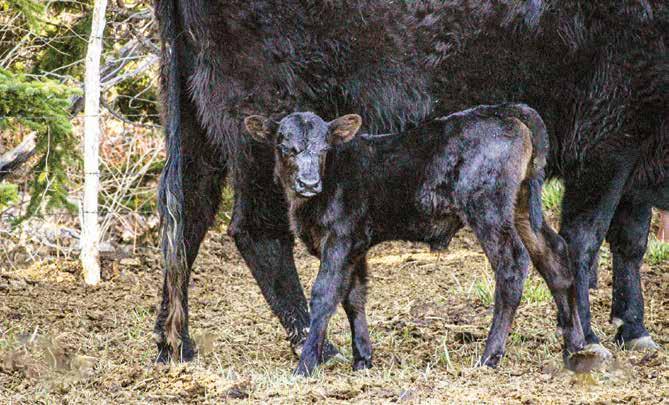
Calving season is arguably one of the most critical times of year for cattlemen, as a successful season sets the stage for overall herd performance, financial returns and long-term genetic progress.
With fresh calves currently hitting the ground – or expected to be soon – in spring-calving herds across the West, experts offer reminders on ways producers can increase the likelihood of a smooth and productive calving season.
WLSB hosts meeting
On March 4, members of the Wyoming Livestock Board (WLSB) and the general public gathered for a meeting held in person at the Thyra Thomson State Office Building in Casper and over Zoom.
Topics covered included director’s updates, brucellosis updates, animal health updates, discussions on Wyoming bangs tags and brand inspection and other administrative board business.
Brand inspection report
Following a call to order from WLSB President Mary Owens and an approval by the board of Nov. 18, 2025 meeting minutes, WLSB Brand Commissioner Lee Romsa shared a brand inspection report.
For brand recording, Romsa shared 4,239 – or roughly 77 percent – of eligible brands were renewed in 2025.
He also shared some updates about delinquent brands and noted immediate priorities for the next brand renewal period include conducting another scrub of addresses and issuing final notifications for delinquent brands.
For brand inspection, Romsa noted several brand inspector positions are currently being advertised and interviewed for, including full-time positions in Thermopolis and Torrington and part-time positions in the Lander and Riverton area and Torrington.
Romsa also noted a review of total inspection numbers for 2025 show similar numbers to 2023-24 and said a detailed report will be finished shortly.
Director’s update
Next, WLSB Director Steve True shared director’s updates.
He began by noting WLSB sent representatives and
Preparing the cow herd
Sources agree one of the most critical foundations for calving success begins long before operations start welcoming new members of the herd with overall herd health and nutrition.
Cows and heifers should enter the last trimester on a robust diet of energy, protein and trace minerals to support fetal growth, quality colostrum production and their
Please see CALVING on page A10
Elk Feedground Management
WGFD releases first of three elk feedground action plans
Wyoming Game and Fish Department (WGFD) Pinedale-based biologists introduced the first of three planned feedground management action plans (FMAP) for western Wyoming’s state-run winter elk feedgrounds.
The goals are to protect private landowners and property from damages, manage or mitigate wild elk populations through hunting and reduce wildlife disease transmission of brucellosis and chronic wasting disease (CWD) between elk and livestock.
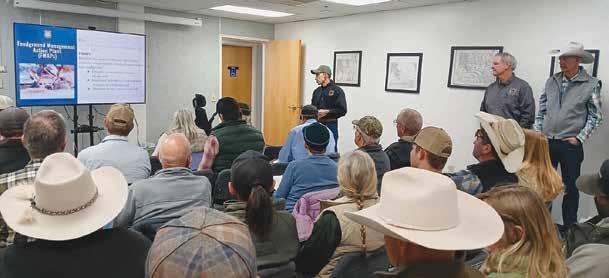
On Feb. 26, Pinedale Region Supervisor John Lund presented the Pinedale Elk Herd Feedground Management Action Plan FMAP at a public workshop attended by outfitters, hunters, wildlife watchers and advocates.
“The FMAP is our internal guidance,” he said. “They are directions we’ve given ourselves – a list of priorities for each individual feedground.”
The Pinedale Herd Unit
Five indicted in cattle fraud case
On Feb. 11, five individuals were federally indicted for their alleged ties to a nationwide fraud scheme involving cattle purchase contracts carried out through Texas-based company Agridime LLC.
According to information shared by the Northern District of Texas’ U.S. District Attorney’s Office in a Feb. 12 press release, the alleged scheme amounted to $220 million and was conducted by Jed Wood of Fort Worth, Texas; Royana Thomas of Arlington, Texas; Taylor Bang of Kildeer, N.D.; Joshua Link of Strafford, Mo. and Tia Link of Smithton, Mo. Case background
Agridime LLC was started in 2017 as an online beef and cattle marketing company. The company promised to help
their investors “make money raising cattle without having to do all the work,” as noted in a Feb. 18 Cowboy State Daily article by Kate Meadows.
Meadows writes Agridime sold cattle contracts to partners for roughly $2,000 a head, promising to raise and care for the animals through processing and then return a portion of profit from beef sales to the original investor.
The company also promised annual rates of return between at least 15 and 20 percent, according to the article.
The indictment alleges fraudulent operations began in January 2021 and accuses the five individuals of using funds from new contracts to pay off earlier
see CATTLE FRAUD on page A7
WYLR photo
GUEST OPINIONS What Do We Eat Now?
As Americans want more protein and unprocessed foods in their daily lives, the decisions they make as consumers are becoming harder as politics and corporate money creeps in.
As the new, five-year U.S. Dietary Guidelines for Americans has offered updated recommendations for a healthy diet, we’re again confused on what to eat – or more importantly, what not to eat. As this list is a lot longer, this is where it gets confusing.
I don’t have a lot of trust in those telling us what to eat and what not to eat. I remember a few years back when plant-based meat was all the rage, and after reading the ingredients list, I soon realized it was nothing more than glorified dog food selling for high prices.
I’m not sure I trust the World Health Organization under the United Nation’s flag or even our own secretary of Health and Human Services. I like the “Make America Healthy Again” slogan, but I think we need to be careful of the motives governing it.
In the past, we were encouraged to eat some bad ingredients just to make food corporations money, and we all liked the conveniences of these foods at quick stops.
We are now being told to avoid highly processed foods, refined carbohydrates and packaged, prepared, ready-to-eat or other foods which are salty or sweet, such as chips, cookies and candy. These super-tasty products make up more than one-half of the calories in the U.S. diet and have been linked to chronic diseases such as diabetes and obesity.
Obesity is falling in the U.S. and one of the causes is GLP-1 medications.
We’re told to stay away from fried foods, sugary snacks, white bread, sodas, alcohol, butter and processed meats and other foods we really like. I think we realize there are ways we can eat some of these foods if the makers clean up the ingredients.
If food processors, restaurants and consumers would use less salt and sugar, we would all be healthier, but salt and sugar are what makes food taste better. Somehow, we need to find healthy replacements.
It has been reported eating two large slices of ham daily can increase colon cancer risk by 18 percent. But why is there so much salt in some hams? I realize salt is used in the curing process, but there has to be a way to preserve the product and keep the taste without using so much salt.
Why are our bread products so full of gluten, when one can go to Europe and eat all of the bread products they want?
One big problem with food in the U.S. is we don’t know who to believe when it comes to what’s healthy or not.
We’ve always heard how chicken is better for you than beef, but today I picked up an article titled “Think chicken is healthier than beef? New study says not so fast.”
While I certainly agree with the study, it is confusing.
It looks like we’ll still have to rely on our commonsense and good information to find out what’s best for us, but until Americans start demanding healthy foods, nothing will change.
Wyoming’s rangelands are the backbone of our identity – the open country that sustains our ranching heritage, supports our wildlife and defines the vast landscapes we cherish.
As a rancher, outdoorsman and governor of Wyoming, I have made it a priority to protect these lands from one of the most urgent and fast-moving threats we face – the spread of invasive annual grasses, especially cheatgrass.
These grasses are not a distant or hypothetical concern. They are already transforming the West.
In states where cheatgrass has taken hold, once-productive rangelands have been converted into brittle monocultures, which results in soil erosion, threatens biodiversity and chokes out natural species.
Importantly, these areas are prone to explode year after year with fires so hot soils are sterilized down to mineral earth – unfortunately, leading to even greater invasive establishment.
Wyoming stands at a crossroads. We can either protect her or let her burn.
Except for a few days a year, cheatgrass can be harmful to wildlife and livestock. Sharp, barbed cheatgrass seedheads can embed in lips, gums and throats causing painful mouth sores and making it difficult for animals to eat.
In 2020, under my direction, a team of 32 experts delivered a comprehensive set of recommendations. Their conclusion was unequivocal –Wyoming is at high risk of widespread invasion, particularly in our northern counties.
Only a coordinated, well-funded effort can prevent the collapse of our sagebrush and grassland ecosystems.
Let’s work together to take care of our precious Wyoming. The Wyoming we all love.
We have made real progress.
County weed and pest districts, federal and state agencies, conservation groups and private landowners have come together in an unprecedented collaborative effort. Hundreds of thousands of acres have been mapped, prioritized and treated with
impressive results.
Restoration work following the 2024-25 fires is already underway and needs to continue.
Still the scale of the threat is growing faster than our current investment.
In 2024, nearly one million acres of habitat and ag lands were burned in the span of only a few weeks, and last year more fires scorched other parts of the state. This is the future we must prevent to save our rangelands, wildlife, watersheds and agriculture.
Today, 78 percent of Wyoming is at risk of invasion.
The estimated annual loss to agriculture alone is $76 million, and this figure does not include the loss of wildlife habitat, the long-term degradation of soils or the escalating costs of wildfire prevention and suppression.
The relationship between invasive grasses and fire is a vicious cycle, and the only way to break it is through a strategic, well-funded, statewide response and careful management.
Wolf shot in Laramie County
According to a Feb. 25 Cowboy State Daily article by Mark Heinz, a rancher shot a wolf near Carpenter, on the plains of southeastern Wyoming, where wolves are practically unheard of.
Royce Breeden said he shot the wolf on Jan. 25, about two and a half miles north of the Wyoming-Colorado state line. This means it’s possible the wolf came from Colorado, which started reintroducing wolves in December 2023.
However, most of the Colorado wolves have tracking collars, and Breeden said the animal he shot didn’t have a collar.
Breeden’s family’s ranch is in Laramie County, where it’s legal to shoot wolves on sight at any time with no license required.
Breeden said he reported the shooting and checked the wolf’s carcass in with the Wyoming Game and Fish Department. It was a male, roughly 80 pounds and estimated to be about two years old.
Breeden said he was told it was the first recorded instance of a wolf being legally shot in Laramie County.
GMO training set
The Grants Management Office (GMO) will be offering a new, one-day, in-person training on postaward grants management on April 16 at 8:30 a.m. to 5 p.m.
This new training will be titled “Post-Award 2.0” and will take place in the Health and Science Building at Central Wyoming College in Riverton.
Post Award 1.0 Trainings will continue to be offered as part of program services and there is no requirement to attend one training before the other.
The training is free, and lunch will be provided. Seating is limited, and registration will close after 35 participants have registered.
For more information or to register, visit docs. google.com/forms/d/e/1FAIpQLScBOJNTuBqQloW V6yRIPKicw9vxniqxiD2eEypVtainKrRW9Q/viewform
Gov. makes proclamation
The importance of reading and agriculture was recognized statewide as Wyoming Gov. Mark Gordon proclaimed Feb. 23-28 as Wyoming Agricultural Literacy Week.
In the official proclamation, the governor highlighted agriculture’s economic and cultural impact across the state.
“Wyoming is rich in agricultural history, and farming and ranching are an important part of Wyoming’s economy, contributing nearly $2 billion annually,” the proclamation reads. “Many aspects of our daily lives, including the food we eat, clothes we wear and medicine we depend on, are made possible because of agriculture.”
The week centered around the Wyoming Farm Bureau Federation (WyFB) Ag Books for Kids program, launched in 2005 by the organization’s Young Farmer and Rancher Committee, which has been promoting agricultural literacy for two decades.
Following the first proclamation in 2008, the program has continued building collections of accurate, agriculture-focused books in Wyoming elementary schools.
The 2026 Book of the Year is “The Kindergarten Cowman” by Rachel Gabel.
Through the program, county farm bureaus will supply books to local schools and volunteers will step into classrooms to share the story directly with students.
The grassroots strength of WyFB enables the Ag Books for Kids project to reach across the state of Wyoming. This year, county farm bureaus purchased 789 books to donate to Wyoming elementary schools.
Wyoming students and teachers are encouraged to visit their school’s elementary library to check out the 2026 Book of the Year.
Additionally, three contests are offered for Wyoming kindergarten through fifth-grade students. The contest deadline is March 20 and details are available at wyfb.org
UW funding restored
According to a Feb. 27 WyoFile article by Maya Shimizu Harris, lawmakers made unusually quick work of the budget, reaching a deal to restore most of Gov. Mark Gordon’s funding recommendations for the University of Wyoming (UW) in the state’s unified budget.
This includes $40 million in block grant funding, $12.5 million in matching funds and about $1.7 million for Wyoming Public Media
The restorations to the university total almost $61 million. UW officials had worried cuts of this size would result in layoffs.
Lawmakers also adopted the governor’s request for employee salary raises, including $27.7 million for the university.
The lawmakers opted to keep a caveat in the unified budget requiring the university to use some of its state money to review its “organizational structure and staffing patterns,” identify positions and degree programs which could be eliminated and “recommend opportunities to further restrict any diversity, equity and inclusion” programming.
UW will also have to submit a $5 million cost savings and reinvestment plan to the governor and the Joint Appropriations Committee by December or risk losing $10 million in state funding.
NEWS BRIEFS
USDA launches initiative
On Feb. 26 at the Commodity Classic Convention in San Antonio, Texas, U.S. Secretary of Agriculture Brooke Rollins announced the “One Farmer, One File” modernization, another action putting “Farmers First” with sweeping technological improvements at the U.S. Department of Agriculture (USDA).
Through “One Farmer, One File,” USDA’s mission is to create a single, streamlined record to follow the farmer – no matter where they go in the USDA system.
USDA’s Farm Service Agency (FSA), Natural Resources Conservation Service (NRCS) and Risk Management Agency (RMA) work with agricultural producers on a wide range of programs and services, from establishing a farm number and reporting acres planted to getting capital and recovering from disasters.
The goal of One Farmer, One File is to reduce the administrative burden for farmers. Additionally, this effort aims to make program delivery more efficient, save time for USDA staff and decrease spending on disparate information technology systems.
The One Farmer, One File initiative is part of a broad modernization effort to unify all FSA, NRCS and RMA systems. This uniformed system will retire legacy systems and remove agency silos.
USDA began work on this system in 2025, plans to greatly advance the effort in 2026 and anticipates completing the project in 2028.
Jessica’s Pond closed
The Wyoming Game and Fish Department (WGFD) will permanently close Jessica’s Pond, a popular community fishery in the Casper Region, this month following the confirmation of invasive New Zealand mudsnails in October 2025.
The pond will be filled in and the area reclaimed in order to remove the threat of further species spread.
The decision comes after a full assessment of the location and determination the risk and proximity to the Dan Speas Fish Hatchery would be too great if the pond remained open.
While there is currently a presence of mudsnails in the North Platte River, the hatchery remains clear of the invasive species.
“We recognize the importance of this location as a community fishery and popular recreation spot,” WGFD Chief of Fisheries Alan Osterland said. “However, the rate of spread from these invasive snails has led us to the decision to permanently close the location and reclaim the site to prevent further spread.”
Anglers are reminded to “Clean, Drain and Dry” all equipment when using all Wyoming waters. Scrubbing stations for boots are located near many fishing access points.
Other precautions, such as seasonal watercraft inspections for watercraft entering the state, are a requirement before going out on Wyoming waterways.
For more information, visit wgfd.wyo.gov
Zoetis acquires GeneSeek
On March 2, Neogen Corp. announced it has entered into a definitive agreement to sell its global genomics business to Zoetis, Inc. for $160 million, subject to customary closing adjustments.
The planned divestiture, which had been previously announced, was part of Neogen’s portfolio review strategy to simplify the business and focus on core strategic markets. The transaction is subject to regulatory approval and customary closing conditions. The net proceeds from the transaction are expected to be used primarily for debt reduction. The genomics business generated approximately $90 million in sales during Fiscal Year 2025.
Neogen’s genomics business GeneSeek is a pioneer in advanced DNA testing for livestock and companion animal industries, delivering data-driven insights which contribute to improved animal performance and health and profitability in the beef, dairy, swine and other industries.
Through the flagship Igenity and GGP portfolio and rapid turnaround times, the business offers returns-focused genomic tools and globally recognized standards in genomic prediction to accelerate herd improvement and enable genomics trait screening.
The genomics business serves customers in more than 120 countries through five laboratories in the U.S., Brazil, Australia, China and the United Kingdom, as well as an office location in Canada.
The business leverages a comprehensive genotyping platform of fixed array and sequencing technologies, as well as software solutions to empower customers to make informed and data-driven decisions.
Zoetis expects to complete the acquisition in the second half of Calendar Year 2026 and is committed to a seamless integration, supporting continuity for colleagues and customers and building on Neogen’s legacy of innovation in genomics.
ALB showcases film
At the 2025 American Sheep Industry Association’s Annual Convention in Reno, Nev., the American Lamb Board (ALB) debuted a new 8:30-minute film putting America’s sheep producers at the center of the story.
This new video, now posted on ALB’s YouTube channel, showcases the diversity, resilience and craftsmanship behind American lamb, from the wide-open West to innovative farm distilleries and leading restaurant kitchens.
ALB will promote the film through media outreach and select film festivals to reach new audiences and grow demand for the lamb American producers raise.
“American sheep producers are doing incredible work every day – caring for their flocks, improving their land and delivering a world-class product,” said ALB Chairman David Fisher. “This film is about putting those stories on screen so consumers can see the craft, commitment and community behind American lamb. We want producers to feel proud of what they do, and we want consumers to understand when they choose American lamb, they are supporting families and farms in every region of this country.”
continued from page A2
Putting fire starter out all over the range just doesn’t make sense.
This is why I fully supported restoration funds in the Essentials Budget – to build on the momentum we have created, ensure we can limit future fuel for fires to prevent irreversible losses.
Unfortunately, this request was reduced by one-third without explanation by Joint Appropriations Committee “Club No” Freedom Caucus members.
Last year, similar funds were held hostage during the failure to pass a supplemental budget.
We cannot afford to repeat this mistake.
Failure to return the necessary funding to fight cheatgrass will have catastrophic consequences – posing threats to our land, wildlife, agriculture and our very heritage and way of life. What we need now is the commitment of our legislators. Members of our state House, I am asking you to restore funding to protect our rangelands, wildlife, agricultural economy and the very character of our state.
Failure to fully fund this effort is a vote to allow invasive grasses and wildfire to reshape Wyoming into something unrecognizable – a fire-driven, ecologically barren landscape. We have the science. We have the tools. We have the partnerships. We have a beautiful state that needs protection. What we need now is the commitment of our legislators to look beyond the mindset of cutting just to make cuts in the state budget.
Headlines don’t stop wildfires. Instead of showboating, let’s work together to take care of our precious Wyoming –the Wyoming we all love.
Mark Gordon was elected Wyoming’s 33rd governor on Nov. 6, 2018. He was sworn into office on Jan. 7, 2019 and re-elected on Nov. 8, 2022, garnering 74 percent of the vote. He can be reached by visiting governor.wyo.gov/
WYOMING
Every summer, the Johnson County Weed and Pest (JCWP) District oversees a Weed Bounty Program which pays locals to pull weeds in hard-to-reach places such as riparian areas, lakesides and mountains.
JCWP Assistant Supervisor Tom Schambow and JCWP District Supervisor Allen Buff say the program is a great way to monitor and control the growth of invasive species while increasing education and building community throughout Johnson County.
Program details
The JCWP Weed Bounty Program was started in 2018. It encourages locals, primarily youth, to get involved with invasive plant management by offering a by-the-pound cash bounty for designated invasive plants.
“We’re basically paying kids to go pull weeds with hopes of raising awareness about invasive species,” Schambow says. “It gets kids out and about and
JCWP Weed Bounty Program pays locals to pull weeds
creates some good dialogue for JCWP.”
Schambow says the program kicks off around the first of June and continues until funds run out, which is usually in mid- to late-July.
Plants must be collected in authorized plastic bags, available for pickup at the JCWP office. The collected weeds are weighed by partners at the local landfill and then composted and burned to prevent further spread.
After weights are recorded, participants report their haul to the JCWP office which keeps track of weights and issues checks at the end of the pull season.
The designated weeds pay between one dollar to $1.25 per pound, and Schambow says it’s not uncommon for participants to show up with truck beds and horse trailers packed full of uprooted plants.
He further notes the program distributed just shy of $32,000 to hardworking locals in 2025, made possible by fund-
ing from JCWP and generous partners including local conservation districts, the Wyoming Game and Fish Department, U.S. Forest Service, Bureau of Land Management, Pheasants Forever, Buffalo Trails Board and University of Wyoming (UW) Extension.
Problem plants
The primary plants targeted by the bounty program are spotted knapweed, houndstongue, mullein, orange hawkweed and oxeye daisy.
Spotted knapweed, houndstongue and mullein bring one dollar per pound, while hawkweed and oxeye daisy are worth $1.25 per pound.
Mullein and houndstongue are the two most abundant threats, according to Schambow, who adds these plants favor areas like lakes and mountains where it can be difficult to apply herbicides and other weed management methods.
He also notes mullein is toxic to aquatic species, so
the Weed Bounty Program has been especially helpful and important in managing numbers along bodies of water.
The program has left a visibly observable impact in the Lake De Smet area, Schambow adds, and pulling plants before they go to seed helps chip away at the problem year after year.
“This program helps keep the seed bank down,” Schambow says. “We’re not going to win the war overnight, but we are going to slowly chip away at it.”
Building community
In addition to reducing the presence of established weeds, Schambow says the program helps increase education about invasive plant species and build community in Johnson County.
Once a year, program participants, members of JCWP staff, Johnson County UW Extension specialists and other community partners gather together in a designated
Greg & KS Gompert 60 Mostly Blk Strs & Hfrs, 650-800#, Weaned since October, Bunk Broke, Complete Vac. Program, Poured, Home Raised Sun Cattle Partnership 33 Mx Hfrs, 650-725#, Weaned a long time, Been on a Grower Ration, Complete Vac. Program Heidi Cardwell 28 Red/Rwf Hfrs, 1050-1100#, Guaranteed Open 2 yr olds, Complete Vac Program, Coming off grass, Home Raised (do not bred their hfrs until 2 yr old coming 3 yr olds)
Reed 77 Ranch/ZN Brand 23 Red/Rwf Hfrs, 1000-1050#, Guaranteed Open 2 yr olds, Complete Vac. Program, Home Raised (do not bred their hfrs un 2 yr old coming 3 yr olds)
WEANED CALVES Sparrow Ranch Limited 276 Mx Hfrs, 450-550#, Weaned a long time, Been on a Light Grower Ration, Complete Vac. Program Ammie, Deb & Bruce Murray 175 Mostly Herefords few Blk Strs, 550#, Weaned since January, Bunk Broke, Been on Creep Feed, Branding Shots: 7-way, Vira Shield 6 w/Somnus, Pre-cond. Shots: 7-way, Vira Shield 6 w/Somnus, Home Raised
Heidi Cardwell 100 Red/Rwf Strs & Hfrs, 550-700#, Weaned since October, Running out on Pasture, Hay Fed, Cake Broke (eating cake out of feed bunks), 2 Rounds of Shots, Home Raised Reed 77 Ranch/ZN Brand 100 Red/Rwf Strs & Hfrs, 550-650#, Weaned since Mid-November, Bunk Broke, Running out on pasture supplemented with 10# of Grass Hay and 1 ½# of Cake, Branding Shots: Pyramid 5+Presponse, 7-way w/Somnus/Spur, Pre-cond. Shots (Nov.) Pyramid 5+Pre sponse, 7-way w/Somnus/Spur, April/May Calves, Home Raised (kept last 2 yrs and ran as yearlings; Steers Paid Weight: 1030#; Heifers Paid Weight: 900-910#) Kruse Ranch/James Kruse 84 Blk/Bwf/Hereford Strs, 625-675#, Weaned 120 days, Bunk Broke, Been on a Light Grower Ration to go back to grass, Free Choice Salt/Mineral Program, Branding & Pre-cond. Shots: P:yramid 5+Presponse SQ, Vision 7/Somnus+Spur, Implanted with Synovex C, Knife Cut, Home Raised (Note; Steers typically summered at yearlings; 2025 yearlings paid 995# when shipped August 2025) Matney Livestock 27 Blk Strs, 550#, Weaned 50 days, Hay Fed Only, Complete Modified Live Vac. Program, Banded on Feb. 4 Tom & Michelle Herbst 16 Blk Strs & Hfrs, 450#, Weaned since Jan. 15, Been on a Grass/Alfalfa Hay Mix, Pre-cond. Shots: Pyramid 5+Presponse, Vision 7 w/Spur, Ivermec
Garrett Herbst 1 Red Hfrs, 550#, Weaned since Jan. 15, Been on a Grass/Alfalfa Hay Mix, Pre-cond. Shots: Pyramid 5+Presponse, Vision 7 w/Spur, Ivermec
FRIDAY,
MARCH 13, 2026 - ALL CLASSES
LIVESTOCK AREA REPS
Michael Schmitt - Torrington, WY 307-532-1776
Ty Thompson – Lusk, WY 307-340-0770
Zach Johnson Lingle, WY –307-575-2171
Jeff Ward – Laramie, WY 307-399-9863
Tam Staman – Crawford, NE 308-631-8513
Justin Smith - Lusk, WY 307-340-0724
Hunter Dockery - Lusk, WY 307-340-1202
Ben Kukowski - Kaycee, WY 307-217-1472
Garrett Nunn - Laramie, WY 307-460-1649
Scott Redden - Burns, CO 970-596-3588
location for a collaborative “Weed Pull Day.”
During this annual gathering, Extension specialists and JCWP staff provide facts on how invasive species spread and why weed control is important.
Additionally, prizes are awarded across a variety of categories including most pounds collected and longest root pulled.
Buff and Schambow say the program helps connect JCWP with citizens and partners across the county.
Buff and Schambow also note the program has even led to eventual career opportunities with JCWP.
“We’ve had kids who participated in the Weed Bounty Program years prior eventually come work for us as a summer job,” Buff says. “It ends up opening doors for them and for us.”
“This program creates partnerships between the landowners, the kids and the district,” Schambow adds. “It creates more community interaction.”
Grace Skavdahl is the editor of the Wyoming Livestock Roundup. Send comments on this article to roundup@wylr.net.
“This program is collaborative, it’s not just JCWP,” Buff emphasizes. “Nearly every agency partners up with us – the landfill, the city of Buffalo, the county commissioners and county road and bridge. You name it, they’re part of it.”
ANGUS BULLS
Nebraska LEAD Class 44 completes national study and travel seminar
Fellows in the Nebraska Leadership, Education, Action Development (LEAD) Program Class 44 recently completed their National Study and Travel Seminar, a 10-day immersive experience designed to deepen their understanding of public policy, global markets, leadership, history and the future of food and agriculture.
The seminar, held Feb. 4-13, included visits and briefings in Kansas City, Mo.; Washington, D.C.; Chicago and Moline, Ill.
The experience is a cornerstone of the two-year Nebraska LEAD Program, providing fellows direct access to national leaders, policymakers, industry executives and cultural institutions.
Bringing leadership to life
Throughout the seminar, Class 44 engaged with organizations representing nearly every facet of agriculture and public life – from the Federal Reserve Bank of Kansas City, Mo. and U.S. Environmental Protection Agency to the U.S. Department of Agriculture, American Farm Bureau Federation, National Pork Producers Council and the American Soybean Association.
Fellows also met with members of Nebraska’s Congressional delegation and staff, visited foreign embassies, including the Embassy of Mexico and the Embassy of Canada, both in Washington, D.C., and toured his-
toric and cultural sites such as Arlington National Cemetery, the White House and Gettysburg National Military Park.
“This seminar brings leadership to life,” said Kurtis Harms, director of the Nebraska LEAD Program.
“Classroom discussion is important, but there is no substitute for sitting across the table from decision-makers in Washington, D.C., hearing directly how policy is shaped and implemented and then connecting it back to Nebraska farms, ranches and rural communities. It challenges our Fellows to think bigger and lead with greater perspective,” Harms continued.
In Kansas City, fellows explored agricultural innovation and market dynamics, including discussions with economists at the Federal Reserve and sustainability leaders at Dairy Farmers of America.
In Washington, D.C., they examined federal regulatory processes, trade policy and farm bill priorities while engaging directly with national commodity groups and Congressional leaders.
The seminar also emphasized historical context and civic responsibility.
At Gettysburg, fellows reflected on leadership during pivotal moments in American history.
“The visit to Gettysburg was especially impactful,” said Shane Wohlgemuth, a Class 44 fellow, farmer and business owner.
“Standing where history was made and then coming back to Washington, D.C. to discuss modern policy issues really put leadership into perspective. It reminded me decisions matter and strong leadership can change the course of a nation.”
Highlighting policy-focused conversations
Another fellow in the class, Erika Coulter, territory manager with Beck’s Hybrids, highlighted the policy-focused conversations in the nation’s capital.
“Meeting with national organizations and hearing firsthand how they advocate for producers helped me better understand how Nebraska agriculture fits into the bigger picture. It gave me confidence to be more engaged in policy discussions at home,” she said.
The final leg of the seminar included visits in Chicago and Moline, Ill., where fellows explored food access initiatives at the Greater Chicago Food Depository, urban agricultural education at the Chicago High School for Agricultural Sciences and global manufacturing and innovation at John Deere facilities.
Harms said the breadth of the experience is intentional.
“We want fellows to see the full food and agriculture system – from production and processing to policy, trade and consumer engagement,” he said.
“This seminar stretches them geographically and intellectually. When they return to Nebraska, they bring back not just knowledge, but relationships, perspective and a renewed commitment to serve,” he added.
Nebraska LEAD Class 44 fellows Nebraska LEAD Class 44 fellows who participated in the National Study and Travel Seminar are Katie Hespe of Ainsworth, Neb.; Jaclyn Frey of Albion, Neb.; Amanda Schultz of Aurora, Neb.; Erika Coulter of Bassett, Neb.; Alexis Corman of Bridgeport, Neb.; Britanie Brewster of Butte, Neb.; Jake Beam of Byron, Neb.; Stacey Guthard of Callaway, Neb.; Daniel Hogsett of Champion, Neb.; Tana Pankoke of Clarks, Neb.; Valerie Bohuslavsky of Columbus, Neb.; Shane Wohlgemuth of Funk, Neb. and Kelsey Harms of Glenvil, Neb.
Others who participated were Colt Foster of Hemingford, Neb.; Justin Morton of Howells, Neb.; Garrett Elfeldt, Chase Hoffschneider and Camille Koehn of Kearney, Neb.; Matthew Cross of Leigh, Neb.; Jacob Schlick, Dillon Kuehn and Katelyn Leibhart of Lincoln, Neb.; Sarah Zimmer of Mason City, Neb.; Brandon Miller of Merna, Neb.; Trey Bahler of North Platte, Neb.; Peter Martin of Omaha, Neb. and Erin Slieter of Red Cloud, Neb.
The Nebraska LEAD Program includes Nebraskans currently active in production agriculture and agribusiness and is a two-year leadership development program under the direction of the Nebraska Agricultural Leadership Council, in cooperation with the University of Nebraska-Lincoln’s Institute of Agriculture and Natural Resources. For more information, visit lead.unl.edu
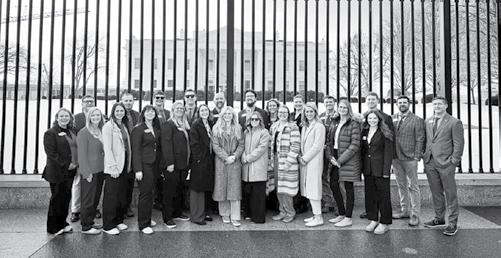
National Study and Travel Seminar – Nebraska LEAD Class 44 stands in front of the White House on Feb. 11 following a tour during the program’s National Study and Travel Seminar. The visit provided fellows a firsthand look at the history and operations of the executive branch while exploring the broader role of leadership in public service. Courtesy photo
investors rather than investing the money in feed and care for contracted cattle.
The Securities and Exchange Commission (SEC) launched an investigation into Agridime and obtained an emergency asset freeze against the company in December 2023.
The SEC complaint claims the defendants did not purchase enough cattle to fulfill Agridime’s contracts but rather diverted tens of millions of dollars in investor funds to pay off prior investors in a Ponzi scheme format.
The case has continued to progress, resulting in the recent indictment whichclaims the extent of the alleged fraud is believed to amount to roughly $220 million.
“The indictment alleges, from January 2021 through December 2023, the five defendants acting through Agridime perpetrated a fraud scheme in which they falsely represented to individual cattle purchasers, cattle ranchers and feedlots that Agridime would use their funds to purchase specific individual cattle for each victim, raise the cattle and eventually sell the meat from the same specific individual cattle for a profit,” states the press release announcing the indictment.
“In reality, the defendants did not use victim funds as promised and instead used newer cattle purchaser funds to pay Agridime operating expenses, funds owed to earlier cattle purchasers and personal expenses and purchase real property,” the release continues.
Nationwide impact
The Agridime LLC scam is believed to have impacted producers and customers in at least 14 states nationwide.
“Thousands of unwitting investors, ranchers and others in the cattle industry nationwide were drawn in and victimized by the defendants’ multi-million dollar scheme alleged in this indictment,” says U.S. Attorney Ryan Raybould in the corresponding press release.
“My office, in concert with our law enforcement partners, will hold these defendants accountable and pursue justice on behalf of the victims,” Raybould concludes.
Indictment details
Details of the indictment were made public in the aforementioned U.S. Attorney’s Office press release.
Thomas, who served as the financial controller, faces six counts of wire fraud, one count of conspiracy to commit wire fraud and one count of
money laundering.
Wood served as the company’s operations director and is charged with three counts of wire fraud, one count of conspiracy to commit wire fraud and one count of money laundering.
Bang served as a cattle broker and has been charged with eight counts of wire fraud, one count of conspiracy to commit wire fraud and one count of money laundering.
Tia served as the marketing director and faces three counts of wire fraud, one count of conspiracy to commit wire fraud and one count of money laundering.
Her husband Joshua served as Agridime’s executive director and is facing 10 counts of wire fraud, one count of conspiracy to commit wire fraud and two counts of money laundering for his role in orchestrating the scheme.
Tia and Bang appeared for arraignment in Fort Worth, Texas on Feb. 12 and both were released under pretrial supervision, while Wood and Thomas were set to appear for arraignment on Feb. 25, according to the release.
Joshua’s whereabouts are currently unknown, and he is considered a fugitive by the Federal Bureau of Investigation.
Spear D Ranch, Inc. - Basin 1 CharX Cow, 1625# $18400 Big West Land & Cattle - Pavillion 1 Blk Cow, 1785# $18300 Pearce, James - Powell 1 Blk Cow, 1475# $17900 1 Blk Cow, 1595# $17800
1 Blk Cow, 1730# $16500 Gillett Farms, Inc. - Powell 1 Blk Cow, 1495# $17700 Mueller, Terry - Shell 1 Blk Cow, 1370# $17300 Herman Livestock LLC - Hyattville
1 Blk Cow, 1260# $17200
So far, all charges against the indicted individuals remain alleged. However, if proven guilty, the defendants face up to 20 years in federal prison for
each convicted count of wire fraud and wire fraud conspiracy and up to 10 years in prison for each convicted count of money laundering, according to the
• Upcoming Sales • March 12 – Feeder Special w/ Weigh-Up Special March 19 – Weigh-Up
Special w/ All Class Cattle, Sheep & Goat March 26 – All Class Cattle April 2 – Bred Cow & Heifer
Special w/ All Class Cattle
April 9 – Feeder Special w/ Weigh-up Special April 16 – Weigh-up Special w/ All Class Cattle, Sheep & Goat
Consignments • March 12 • Feeder Special w/ Weigh-Up Special Trevor O’Driscoll – 60 black steers, 650-750#; 40 black heifers, 600-700#; black, 350-450#.
DeVries Livestock – 150 mixed black, few red and baldy, 450-650#, weaned November, wintered on Aftermath Meadow, free choice hay.
Hamilton Ranch – 41 black steers, 650-750#; 28 black heifers, Bang vacc, 550-650#, NHTC, two rounds of shots, weaned Oct. 1.
Jeff Wick – 40 mixed black, 600-700#, two rounds of shots, weaned long time.
Jack Baird – 30 black heifers, 550-650#, two rounds of shots, weaned October.
Lance Jordan – 25 black steers, 600-700#, two rounds of shots, weaned.
Joe Miller – 20 mixed black and red, 700-750#, weaned, two rounds of shots.
Donny Love – 15 black/red mixed calves, 350-450#.
Steve Bales – 14 black steers, 650-800#, two rounds of shots, weaned long time, wormed and poured. Cheyenne Creek – 2 mixed black, 400-450#, weaned.
Lance Jordan – 25 open weigh-up cows.
Hamilton Ranch – 10 fat grain fed heifers, 2024 models.
Two weeks after House Agriculture Committee Chairman Glenn “GT” Thompson (R-PA) released the final text for the Farm, Food and National Security Act of 2026, also known as Farm Bill 2.0, the House Agriculture Committee advanced the legislation to the House floor with a vote of 34 to 17 on March 4.
“The farm bill affects our entire country, regardless of whether you live on a farm, and I look forward
House Agriculture Committee advances Farm Bill 2.0
to seeing my colleagues in Congress work together to get this critical legislation across the finish line,” Thompson states in a Feb. 27 press release.
Farm Bill 2.0
According to Thompson, Farm Bill 2.0 represents the first full five-year farm bill reauthorization since 2018 and is intended to provide updated policy tools and long-term certainty for the U.S. ag industry, offering “modern policies for modern
challenges shaped by years of listening to the needs of farmers, ranchers and rural Americans.”
The new farm bill, he says, will address challenges facing today’s producers such as rising production costs, market volatility and supply chain pressures, and like previous farm bills, the legislation covers a broad range of agricultural policy areas.
Key provisions in the bill aim to strengthen com-
modity programs and crop insurance, improve disaster assistance for producers and expand access to credit for farmers and ranchers. The bill also proposes investments in ag research, rural development and precision ag technologies.
In addition, Farm Bill 2.0 addresses conservation and forestry programs, global trade promotion for American commodities and policies intended to reduce energy costs in rural areas.
It also includes policy changes related to interstate livestock and agricultural markets and regulatory protections for pesticide manufacturers and users, along with provisions addressing livestock production rules such as California’s controversial Proposition 12.
Widespread support
The bill has garnered widespread industry support with over 230 stakeholder organizations offering public endorsement.
This includes the American Farm Bureau Federation, American Soybean Association, AmericanHort, American Veterinary Medical Association, Farm Credit Coun-
ANNUAL PRODUCTION SALE
MARCH 25, 2026
& 60
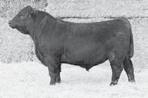
from a proven cowherd, recognized around the world for fertility, productivity and maternal function. A Mc Cumber cow is bred to be forage efficient, adaptable and long-lived. For 62 years our focus has not wavered and our desire to breed cattle that will be profitable, predictable, and problem free for
cil, National Cotton Council of America, National Crop Insurance Services, International Dairy Foods Association, National Cattlemen’s Beef Association (NCBA), National Turkey Federation, National Chicken Council, American Sheep Industry Association, United Egg Producers, American Frozen Food Institute, National Grocers Association, National Association of Convenience Stores, Food Industry Association, Plant-Based Product Council, National Association of Conservation Districts, American Wood Concil, National Association of State Foresters, National Wild Turkey Federation, National Association of Wheat Growers (NAWG) and USA Rice Federation, to name a few.
Most recently, NCBA and NAWG released statements on March 5 praising the House Agriculture Committee for advancing the bill.
“The provisions included in the Farm, Food and
National Security Act of 2026 build upon the legislative successes in the farm bill title of the One Big Beautiful Bill for American cattle producers,” says NCBA Senior Vice President of Government Affairs Ethan Lane. “This legislation finally completes the farm bill cycle and gives producers the operational tools and programmatic investments they need.”
“NCBA thanks Thompson and House Agriculture Committee members for passing this crucial legislation for rural America,” he adds.
NAWG President and Idaho Grower Jamie Kress further comments, “NAWG thanks Thompson for his leadership in moving the Farm, Food and National Security Act of 2026 forward. We applaud the committee’s work and bipartisan support to provide muchneeded certainty.”
Hannah Bugas is the managing editor of the Wyoming Livestock Roundup. Send comments on this article to roundup@wylr.net.
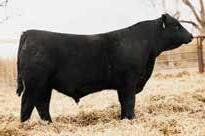
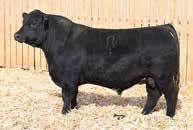
and Lassie cow families and traces them multiple times. A logical choice to replace his sire and not only match his ability to sire incredible females, but provide more power, performance and pounds in a forage efficient, easy fleshing package. The proof is in the multiple generations of fertile, productive, long-lived females that back this herd sire prospect.
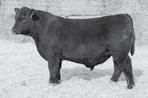
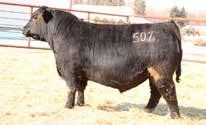
A powerful, heavy muscled calving ease bull with a +16 CED and -2.0 BW EPD. He is a masculine, muscular herd bull prospect produced by an 11-year-old dam with mass, fleshing ease, and forage efficiency. A unique calving ease bull with added dimension and top performance. 507 represents a strong sire group by Mc Cumber Cow Power 118 whose sons are in high demand whenever offered.
JOIN US March 25, 2026 to select your next herd sire or anytime to
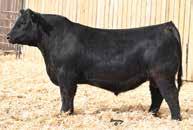
the mass, muscle and power we strive to produce. Mc Cumber Acclaim 557 combines this with balance, eye-appeal, structural soundness and hoof quality. He is 7/8 brother to the $110,000 Mc Cumber Glory Bound 4141 and doesn’t take a back seat. He will rival some of the best bulls ever offered here. Complete, maternally superior and selection for commercial cattle producers’ profitability.
Mc Cumber Genesis 5176 is an impressive, herd bull prospect from the first calf crop by our herd sire Trendsetter Genesis 2242.
He is produced by a 2-year-old Mc Cumber Zodiac 073 daughter from the Miss Wix cow family and she bred back first service AI while raising 5176 and is productive, fertile, perfect footed, neat uddered young cow on the rise here.
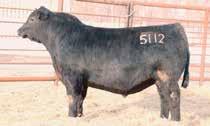
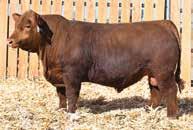
Mc Cumber Captain 5112 and his flush brother Mc Cumber Major 5143 got everyone’s attention this summer on tours to the bull calf pasture. They pack on as much true red meat and muscle as you can put on one and still maintain an appealing look and style all their own. They are sired by Duff Napolean 232 and ET sons of Lassie 9110 of Mc Cumber a full sister to Mc Cumber Zodiac 073, Mc Cumber La Joya 098 and Lassie 090 of Mc Cumber. Unlimited potential with a bright future ahead.
No creep feed
Free delivery up to 1000 miles All bulls and females are Genomically tested and Parentage Verified
Large percentage of the offering are suitable for use on heifers
Fully Guaranteed
SIRES INCLUDE: Mc Cumber Zodiac 073, Mc Cumber Masterplan 3194, Mc Cumber La Joya 098, Mc Cumber Cow Power 118, OCC Edge of Glory 841E, Duff JC 4Real 16250, D7 Yellowstone 1240I 618C, Trendsetter Genesis 2242 and Duff Napoleon 232.
Adobe Stock photo
Award winner announced
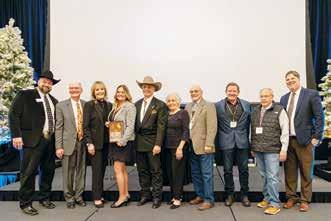
The Wyoming Hospitality and Travel Coalition (WHTC) is proud to announce Debbie Pummel as the 2026 Big WYO Award winner, recognized at the Wyoming Governor’s Hospitality and Tourism Convention.
The Big WYO Award is presented annually to an individual who has made an outstanding impact promoting hospitality and tourism across the state of Wyoming.
As regional director of sales at Safari Hospitality, a long-time WHTC Board Member and a member of the Jay Kemmerer Wyoming Outdoor Recreation, Tourism and Hospitality Institute Advisory Board, Pummel’s career and service exemplify the leadership, passion and commitment which define Wyoming’s thriving visitor economy.
Throughout her decades-long career in Wyoming’s hospitality and tourism industry, Pummel has been a steadfast advocate for local businesses, rural communities and statewide collaboration. Her leadership has strengthened partnerships across the public and private sectors, elevated Wyoming’s presence as a premier travel destination and ensured tourism continues to benefit communities large and small.
“Pummel embodies what the Big WYO Award represents,” said WHTC Executive Director Chris Brown. “Her commitment to true Wyoming hospitality is evident the moment you meet her. Throughout her career, Pummel’s efforts have had an incredible impact on our industry, and I am proud to call her my colleague and friend.”
In accepting the award, Pummel reflected on the collaborative spirit of Wyoming’s hospitality community.
“I am so honored to be recognized by this incredible industry,” she said. “Welcoming the thousands who travel through Wyoming each year and showing them what true, Western hospitality is brings such joy to the work I do, and I am grateful for everyone who has supported me along the way.”
Courtesy photo
own natural processes.
According to Purina Animal Nutrition LLC Beef Cattle Technical Services Director Ted Perry, producers should aim for a body condition score (BCS) of five or six on a nine-point scale as they approach calving.
“Cows with a BCS of six heading into calving season are in good shape, and the chances of a healthy birth are optimal. Plus, when a cow is in good shape, chances are her calf will be in good shape too,” Perry states.
“BCS can help predict which cows may have calving problems as well as calves that may need extra care,” he adds. “A BCS lower than six could mean the cow lacks nutrient reserves to support the calf’s immune system and colostrum production. A BCS higher than six could indicate the cow has a higher chance of dystocia because of more fat in the pelvic region.”
Former University of Nebraska-Lincoln (UNL) Master’s Student Alicia Lansford and UNL Extension Beef Cattle Reproductive Physiologist Rick Funston agree meeting late-gestational nutritional requirements is critical.
In an archived UNL Beefwatch article, Lansford and Funston note recent research has shown late-gestation nutrition of the dam can have lasting impacts on calf health, growth and performance, including increased weaning and yearling weights and improved marbling scores.
The two also mention the importance of providing adequate protein and energy prior to calving, recommending a diet of 7.9 percent crude protein (CP) and 54 percent total digestible nutrients (TDN).
“During winter months, forage CP and TDN values may fall below this requirement. Therefore, supple-
mentation may be beneficial,” the UNL specialists note. “Previous research has determined 0.31 pounds of supplemental rumen degradable protein per cow per day is adequate to meet cow maintenance requirements overwinter for a Marchcalving herd.”
Readying facilities and equipment
Industry experts also agree producers should ensure their calving facilities and equipment are in safe, working order, as good facilities and proper tools can make all the difference between a smooth or stressful calving season.
“In general, nine to 10 months have passed since calving facilities were last used,” says former South Dakota State University (SDSU) Extension Cow/ Calf Field Specialist Olivia Amundson in a Jan. 9, 2023 SDSU Extension article.
“Time saving strategies prior to calving include a walkthrough of the calving setup, inspecting all gates, pens
and alleys for any damaged or broken items and making sure head catches and lighting are in working order.”
Amundson further notes cleanliness of calving facilities is critical to reduce the spread of disease, and she suggests pressure washing or steam cleaning hard surfaces.
It is also advised to lay down fresh bedding and having some stored close by to keep calves clean, dry and free from infection.
Additionally, it is recommended producers assemble a mobile and easily accessible calving kit stocked with essentials like obstetrical (OB) chains or straps and handles, long-sleeve OB gloves, lubricant, paper towels, a calf puller, halter and rope, oxytocin or epinephrine, iodine, sterile syringes and needles, an esophageal feeder, eartags and recordkeeping supplies.
Frozen colostrum or high-quality replacer, electrolytes and a scale for tracking calf weights are also valuable to have on hand.
Collaborating with a local veterinarian
In addition, experts encourage producers to ensure they have a close, working relationship with a local veterinarian throughout calving season.
Prior to calves hitting the ground or early on in the season, cattlemen and veterinarians should discuss past disease issues, region-specific risks and vaccination strategies to help optimize protocols for both cows and calves.
Producers should also tackle parasite control and other herd health concerns before calving begins.
Deworming and managing internal parasite loads can improve overall health and help cows direct more energy into calving and lactation rather than coping with subclinical parasitism.
Managing a successful season
When cows do start dropping calves, one of the most impactful – and laborintensive – practices is fre-
quent and careful observation, especially for first-calf heifers, and experts encourage producers to schedule regular checks every few hours, particularly during peak calving.
An April 18, 2025 blog post by 42 North Land Company emphasizes the importance of recognizing early signs of labor and knowing when to intervene, since attentive observation can help prevent loss and improve calving outcomes but over-intervention can stress animals and create complications.
“The goal is to be available when needed, without disrupting normal calving behavior,” the post reads.
The company goes on to note common indicators of active labor include isolation from the herd, a raised tail, restlessness, mucus discharge, repeated lying down and standing up and visible feet or water bag protruding. It is also noted most cows deliver within two to three hours of entering active labor, while heifers may take slightly longer. If a cow has been straining for over 30 minutes without progress or if only one hoof is visible, experts agree it may be time to provide assistance or call a veterinarian.
Additionally, sources note the first few hours after birth are some of the most critical.
Colostrum contains necessary antibodies to protect new members of the herd against disease, so calves should nurse within the first two hours of life and receive roughly 10 percent of their body weight in colostrum shortly after birth. If a calf cannot stand and nurse naturally, producers should be prepared with high-quality colostrum replacer or stored frozen colostrum to ensure adequate intake.
Producers should also closely monitor calves for signs of weakness, dehydration or cold stress, especially in early spring weather.
Additionally, specialists note selecting the right calving location can help reduce disease and stress. Choosing clean, dry areas with good drainage helps minimize risks of pneumonia and scours, and rotating calving pastures from year to year and providing shelter against wind and cold can further enhance calf comfort and survival.
Industry research has shown feeding cows later in the day results in more births during daylight hours, which allows for easier monitoring and faster response times should problems arise.
Good recordkeeping throughout the calving season – noting dam identification, birth date, assistance required and calf health status – can help producers evaluate herd performance and make informed decisions for future breeding seasons.
Hannah Bugas is the managing editor of the Wyo-
Roundup.
monday,
Lot 511
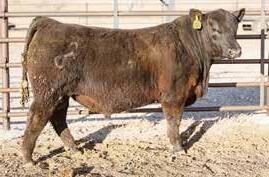
#21506045
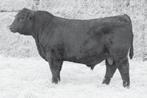
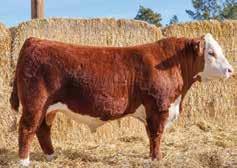
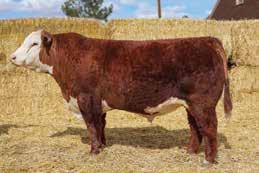
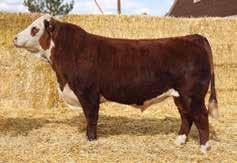
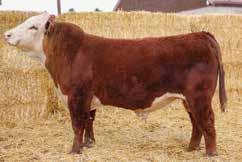
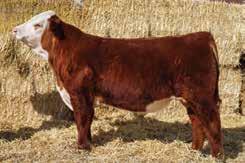
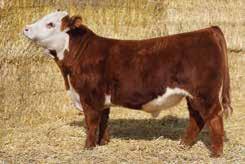
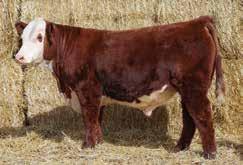
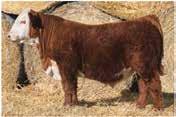
4* CE - Heifer bull Sired by Ranahan. Loaded for maternal. $M Top 30% & $W Top 10% . I’m thinking his heifer calves could easily be keepers. Super efficient -3.12 RFI; He put the Throttle down 4.46 ADG off test at 1218#’s; PAP Epds Top 2%.
#21187806
Lot 4187
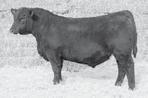
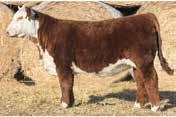
PAP 41 Cow bull 1* CE by Chex; These 2yr olds can cover lots of country; Top 25% WW & Top 45% YW; Milk +24 works Good here; 361 day Calf Intvl; WR & YR 103; Chex’s have Good Docility; Top 10% $M; Top 25% $W; Maternal Cow Maker
#21502266
4*
- By
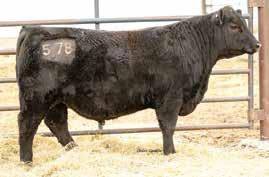
Lot 578
#21501263
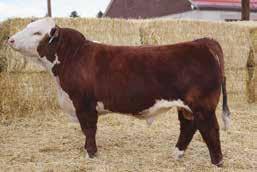
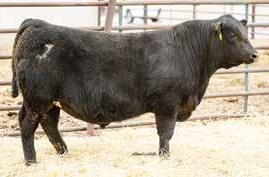
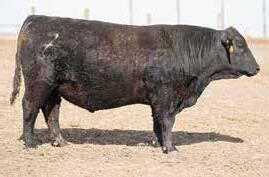
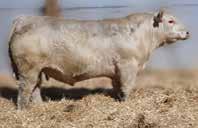
1* CE - Cow Bull sired by Congress out of Great Countdown Dam; 369 day calf interval on 7 head calves. Countdown cows are efficient calf making machines; Top 35% WW & Top 40% YW; Negative PAP Epd Top 4%; -2.35 RFI for efficency
#21495681
3* CE - By Flat Top for Young cows & Big cows; He’ll stack the pounds on some soggy feeder calves. Maternal Top 20% $M & Top10% $W; Dam is especially good footed; Top 20% WW & Top 25% YW; Efficient -1.80 RFI ADG 4.27#’s off test @ 1166#’s
#21502256
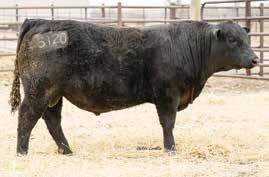
Lot 5120
2* CE - use on young cows Sired by Domain; Innovation Dam has 369 CItvl is 100 WR 102 YR on 6 calves; We love the Innovation cows , just big soggy ranch cows bring a big calf every year; Kicked it in gear on efficiency ADG 3.92#’s @ -1.26 RFI
#21495663
Lot 5187
2 * CE - Sired by Flat Top; for Young Cows; keeping your calves to yrls he’s a power house Top 10% WW & Top 5%YW; Leave you with some great females Top 20% $M & $W Or if you feed your cattle Top 10$F; Gained 4.32 on test
#21502261
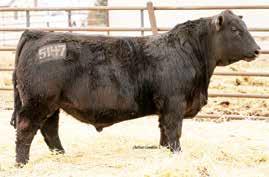
Lot 5147
1* CE- for cows By Jameson Cow bull; really liked this guy as a calf, he hasn’t disappointed; GGDam 0153 is 16 yrs and bred 1st 30 days in 2025; Top 4% WW; Top 10% YW; Top 15% Marb; Top 20% $W; Great Efficiency -2.02 @ ADG 3.78 #’s; Goes CAB
#44630231
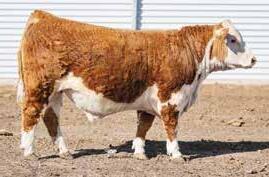
Lot B415
Performance, added growth, carcass merit without sacrificing maternal strength. Sired by my herd bull CSU Kid Ram 1204. Use on big heifers. Top 12 % BW Top 17% CE & WW Top 9% YW Top 5% REA. ADG 3.54 RFI +.27 Heterozygous Polled. 0%-RE 100%-LE
Muddy Creek and Scab
One FMAP strategy the audience questioned is to explore options and landowner interest and assist with development of elk occupancy agreements between interested landowners and funding entities.
But how would a voluntary agreement work and what is the time frame?
“It’s all up in the air until we start having conversations about it,” Lund replied. “There is a lot of interest in talking about it.”
Pinedale herd
The Pinedale herd’s overall count, which was done recently at feedgrounds and via aerial observations, is at its population target of just under 1,900 animals, according to Pinedale Region Wildlife Supervisor Brandon Scurlock.
He explained, because this winter has been extremely mild, elk behavior is shifting somewhat.
The Fall Creek Feedground, created to reduce damage to private lands, usually counts about 700 elk. This year they ranged nearby
but off of the feedground itself, Scurlock said.
The Scab Creek Feedground typically starts feeding earlier to keep elk in the vicinity and to minimize elk and livestock commingling. At 767 elk, this herd is up from last year’s 720 animals.
Muddy Creek Feedground is small and also close to several livestock operations, with 342 elk counted last month compared to 448 the year before, according to Scurlock.
Most of the elk staying on their native range are adult bulls and young spike bulls, he explained, and feeding hay ended at Scab Creek and Muddy Creek in mid-February.
“This seasonal weather is affecting elk movement off of the feedgrounds,” he said.
Other priorities for the Pinedale FMAP include finding grants for tractors and storage as needed, encouraging more hunters and taxidermists to collect CWD samples and seeking CWD research partners and funding. The wish list includes an incinerator in Sublette County for carcass disposal.
CWD review Lund reviewed the agency’s history of its CWD Management Plan leading to the new FMAP for the
Pinedale Elk Herd Unit.
CWD, which is fatal for wild ungulates and difficult to test for, spread from the southeastern part of Wyoming west into mule deer and elk herds in western Wyoming, with concerns congregated elk at feedgrounds would transmit diseases.
It is caused by a mutated prion animals shed, which can remain active in soil for an unknown amount of time, according to Biologist Jared Rogerson.
He cited a wild sheep scrapie fatal epidemic which reappeared with virulence when sheep were returned to the same cleared landscape 16 years later, due to persisting prions.
Pinedale wildlife biologists have not developed a trigger for any specific CWD prevalence on feedgrounds, according to Lund, and no
For more information about the Wyoming Game and Fish Department and management of its winter elk feedgrounds, wildlife herds, brucellosis or chronic wasting disease, visit wgfd.wyo.gov.
ongoing or upcoming CWD research projects are planned at this time.
CWD wasn’t confirmed in the Pinedale herd until 2017, in elk which might have frequented a feedground, Scurlock said.
“Over the last five years, for the Pinedale Herd Unit as a whole, the current prevalence is 0.3 percent,” Rogerson stated.
There is no known cure or quick live test for afflicted wildlife. CWD is now only confirmed with a carcass necropsy.
While studying CWD, Lund said it grew clear the physical aspects of winter elk feedgrounds needed
more attention.
The Wyoming Game and Fish Commission approved the Winter Elk FMAP in March 2024. It set overall feedground management standards of reducing commingling with livestock, scattering hay in a wider area and adjusting later starts and early endings to supplemental feeding.
Reducing winter kill and competition with other wildlife for winter range are also priorities.
While the elk feedgrounds only operate in winter, each has unique characteristics due to geography, land ownership, neighboring ranches and stored forage.
Next steps
This FMAP took about a year to prepare after gathering public input and observations from biologists and the public, according to Lund.
“Every feedground is different,” Lund said. “They all have different issues, but these three were most similar.”
The Pinedale team is debating which FMAP will come next – the Upper Green Herd north of Highway 189/191 in Sublette County or the Piney Herd Unit, south of the highway. Joy Ufford is a corresponding writer for the Wyoming Livestock Roundup. Send comments on this article to roundup@wylr.net.
Local workshop – Wyoming Game and Fish Department Pinedale Regional Supervisor John Lund presents the first action plan for the Pinedale Elk Herd Unit on Feb. 26. Joy Ufford photo
In the Jan. 7 episode of the Wyoming Game and Fish Department’s (WGFD) recently-launched Wyoming Wildlife Podcast, WGFD Director Angi Bruce joins podcast Host Robert Gagliardi for a conversation highlighting the department’s priorities for 2026.
Bruce also discusses her experiences as director since her appointment in September 2024 and provides some updates about WGFD’s areas of interest for the 2026 legislative session. Positive attitude
To begin, Bruce reflects upon some of the experiences she has had since beginning her role as WGFD director.
She expresses gratitude for a widespread sentiment of respect shared by Wyomingites for the WGFD and wildlife in general – an attitude she called an “eye opener.”
“The public in Wyoming supports wildlife and the department,” Bruce notes, emphasizing she felt a high level of respect as soon as she stepped into her role.
Bruce further says she believes this respect to be a product of “years of service from employees who
WGFD Director Angi Bruce highlights department priorities
are very dedicated to fish and wildlife management in the state.”
Top priorities
Next, Bruce turns her comments to highlighting some focus areas for WGFD in 2026. She notes throughout her first year as director, her main priorities focused on collaborating with other WGFD staff to make departmental operations more efficient and effective.
This year, Bruce says more of the work will be forward-facing, with a particular focus on habitat and mule deer conservation.
“A big focus we’ve been talking about for this coming year is developing a statewide mule deer conservation strategy,” Bruce comments. “We’re starting to frame up what the department feels we need to help recover healthy mule deer populations in this state.”
Bruce says an allhands-on-deck approach to conserving mule deer populations will be needed to help correct the downhill trend in populations across the West, not just in Wyoming.
She further says WGFD experts have been working on a roadmap to mule deer conservation, which
WGFD urges caution
The Wyoming Game and Fish Department (WGFD) cautions anglers to be aware of sizeable increases in water flows in the North Platte River for 10 days beginning March 5 as part of a flushing flow project.
WGFD has requested the flushing flow to improve fish spawning habitats and to increase the production of invertebrates fish depend on for food.
The Bureau of Reclamation (BuREC) will begin releasing additional water from Gray Reef Reservoir in the early morning hours beginning on March 5.
Flows will increase from approximately 500 cubic feet per second (cfs) to 4,000 cfs and will gradually decrease back to 500 cfs each day, with the maximum flow occurring between 3-7 a.m.
Flows from Gray Reef Dam will return to 500 cfs at 10 a.m. each day. The schedule will be repeated through March 14. The flows below Gray Reef Dam will then be stabilized at approximately 500 cfs following the completion of the 10-day cycle.
WGFD advises anglers and recreationists to know the potential dangers of flushing flows. Because the flush will span the weekend, there is potential for more people to be wading or floating the river.
In addition, those using the river during the flushing flow should consider the fluctuating water levels and be aware areas which can be waded effectively at 500 cfs may not be safe at 4,000 cfs.
Flushing flows are normally scheduled for completion in March to maximize benefits for spawning rainbow trout. The flushing flow is being conducted two weeks earlier than normal this year due to maintenance activities at Gray Reef Dam being conducted by BuREC.
Semi-annual meeting held
The Saskatchewan Stock Growers Association (SSGA) Semi-Annual Meeting was held on Feb. 27 at the Dakota Dunes Resort in Whitecap, Saskatchewan, Canada in conjunction with the Honour Scroll Banquet. The day started with a Young Ranchers Seminar with presentations on financial management, livestock marketing and herd health.
Keynote speakers included Ednali Fetuck-Zehavi of SDC Farms who provided an update on the federally inspected meat processing facility under construction at Perdue, Saskatchewan, Canada and Dr. Steven Webb of the Global Institute for Food Security who spoke on the recently released beef carbon life cycle analysis study.
the department is excited to make available to the public as the year progresses.
Bruce says she looks forward to receiving feedback and participation from the public, especially regarding policy and funding decisions.
Additionally, Bruce highlights habitat restoration and protection as another priority for WGFD this year.
She acknowledges the WGFD’s long track record of restoration work involving riparian areas, fisheries and stream habitats, sagebrush habitats and forests, while also noting the question of what to do next and how to do more.
“The department is very dedicated to improving and restoring habitat in this state,” Bruce says.
From the Bureau of Land Management and the U.S. Forest Service to private landowners, Bruce says collaborating on habi-
tat management with stakeholders will continue to be a top priority in 2026.
“We need to do more and we know that,” Bruce says. “We’re really going to be exploring how we can do more on a landscape scale, more efficiently and effectively, with all of our stakeholders.”
“In Wyoming, we are very fortunate to have a very unfragmented landscape and a lot of habitat left,” she adds. “We need to focus on improving the quality of this habitat, and we can do it in a lot of different ways.”
One area of focus Bruce mentions is protecting forage through increased efforts to control invasive species like cheatgrass, noting a focus on management, eradication and education goes a long way in controlling damaging grasses.
Legislative focus
In closing, Bruce comments on a few areas of
interest for WGFD during the 2026 Legislative Session.
She points out, since the department does not receive any general funds from the state, WGFD is less dependent upon the outcome of the 2026 Budget Session.
Still, Bruce notes the department does report their budget to state legislators to keep lawmakers informed on where funding comes from and what it’s being spent on.
Further, she makes note of ongoing debates surrounding landowner licenses, a conversation which was started roughly four years ago by the Wyoming Game and Fish Commission.
Bruce says WGFD is continuing to participate in conversations and monitor for potential bills regarding caps on landowner licenses, although she is unsure of how much debate regarding wildlife issues will see the legisla-
tive floor during this year’s short budget session.
Finally, Bruce shares some details on the legislative testimony process which WGFD participates in to increase awareness and education and advocate for the department. She reiterates in cases involving relevant legislation, WGFD does not do any lobbying but rather shares testimony on how a proposed bill would affect department operations.
In closing, Bruce notes she has been pleased with the presence of legislators in recent years who she believes to value wildlife in Wyoming, understand its economic impact on tourism and advocate for what Wyomingites want to see regarding wildlife issues.
Grace Skavdahl is the editor of the Wyoming Livestock Roundup. Send comments on this article to roundup@wylr.net.
The High Plains Region often experiences low winter precipitation, impacting its crop productivity.
Extensive climate analyses indicate years with significant precipitation deficits, including dry winters, amplify drought severity. As this season’s winter has brought negligible snow thus far, the risk of severe or even extreme drought could be seen in Western states.
“This calls for amplified efforts to adopt water-useefficient alternative crops which can buffer major crops during drier years or in the event of crop failure,” said Rituraj Khound, University of Nebraska-Lincoln (UNL) post-doctoral research associate at the Panhandle Research Extension and Education Center in Scottsbluff, Neb.
Proso millet research
Khound has been researching proso millet, also known as hog millet or millet, which is recognized for its ability to efficiently utilize moisture to produce a considerable yield.
Compared to corn and winter wheat, proso millet can produce grain with considerably less water, making it well-suited to water-limited environments.
Proso millet’s short growing season allows for more flexible planting windows.
Studies show replacing summer fallow with proso millet significantly improves winter wheat yield.
“Owing to its remarkable agronomic attributes, proso millet has been integral to dryland cropping systems in the High Plains, particularly in eastern Colorado, western Nebraska and South Dakota,” Khound said.
Corn production is primarily concentrated in eastern Nebraska, but western Nebraska maintains substantial irrigated corn acreage, relying heavily on groundwater resources for sustaining production.
However, when corn production becomes risky due to low water availability during drier years, millet could be a low-waterdemanding alternative to preserve water for corn and stabilize farm income.
Proso millet is highly versatile for mitigating water-related risks in crop production while providing a highly nutritious alternative to irrigated corn.
Proso millet is an excellent, water-efficient alternative – using 50 percent less water than corn – for supplementing or replacing corn in livestock rations, with comparable energy values for swine and cattle.
A grower could plant
approximately 25 percent of irrigated corn acres with proso millet to ensure limited irrigation allocations do not jeopardize corn’s full yield potential.
UNL Alternative Crops Breeding Program
The Alternative Crops Breeding Program at UNL is a leader in proso millet breeding.
Dipak Santra, UNL Extension alternative crops breeding specialist at the Panhandle Research Extension and Education Center, leads the program in Scottsbluff, Neb.
The program has released the varieties Hori-
zon, Earlybird, Huntsman, Plateau, Sunrise and Dawn for commercial production in the U.S.
Efforts continue to improve the crop for essential traits such as early maturity, grain maturity and lodging and grain shattering tolerance through a robust breeding scheme, extensive multi-site testing and germplasm screening for novel genetics.
UNL has developed modern plant breeding tools, including linkage mapping, genome-wide association studies and UAV-based high-throughput phenotyping to enhance
breeding efficiency.
Furthermore, a collection of more than 400 proso millet lines from around the world is being evaluated in field and greenhouse trials to identify the best candidates for future variety development.
The Alternative Crops Breeding Lab has recently partnered with several prestigious institutions in an international initiative supported by the International Atomic Energy Agency in Vienna, Austria to implement mutation breeding to develop novel varieties.
“Proso millet offers more than diversifica-
Conducting research –Dipak
University of Nebraska-Lincoln (UNL) Extension alternative crops breeding
and
post-doctoral research associate, discuss growing
in a small plot south of the Panhandle Research Extension and Education Center in Scottsbluff, Neb. Chabella Guzman photo
tion. It can offer resilience to both dryland and irrigated cropping systems as a risk-buffering alternative crop,” Khound said.
“By integrating millet into corn-based systems and leveraging modern breeding tools, growers in the High Plains can build robust cropping systems to maintain both profitability and productivity.”
Rituraj Khound is a UNL post-doctoral research associate and Dipak Santra is the UNL Extension alternative crops breeding specialist. This article was originally published by UNL on March 3.
Santra,
specialist,
Rituraj Khound, UNL
millet
For many livestock producers, the transition from winter feed to spring pasture is one of the most critical points on the production calendar. Turning animals out too early may stress growing forage and reduce overall productivity, while delaying turnout may mean increased feed costs and associated labor.
However, with thoughtful planning and adaptive grazing strategies, producers can extend their grazing season earlier into the spring – reducing reliance on stored feed, improving animal health and increasing profitability.
In an article published on Feb. 18, the Canadabased Beef Cattle Research Council (BCRC) notes one way to accomplish this is through the use of stockpiled forage, a system in which forage reserves are built up during the prior growing season to use as soon as ground conditions allow in the spring.
“Early-season grazing isn’t about moving from pen to pasture. It’s about strategically managing cool-season grasses to balance nutrition, regrowth potential and pasture longevity,” BCRC explains.
“With the right timing, species selection and rest strategies, producers can take advantage of stockpiled
BCRC discusses ways to stretch the spring grazing season
forage and cool-season grasses to start off the grazing season before warmseason or native forages are ready.”
Understanding stockpiling
To begin, BCRC explains stockpiling refers to the practice of allowing forage to accumulate ungrazed through late summer and into fall so it can be grazed at a later date.
Although this method is traditionally used to extend grazing into the winter and fall, BCRC says it can also provide valuable forage in early spring when perennial grasses are beginning to green up but warm-season forages are not quite ready.
BCRC also highlights the benefits of extending grazing into early spring, which include reducing feed costs, maintaining or improving pasture productivity, providing two grazing periods in one season and supporting calving management systems.
“For producers who don’t use confined winter-feeding systems, early grazing helps bridge the gap between stored feed and the full return of seasonal forages,” BCRC states.
Planning in advance BCRC emphasizes successful early grazing systems require planning
months in advance.
The council notes, since stockpiled forage requires time to accumulate, producers must designate certain pastures or portions of a pasture where they reduce grazing or implement a full season of rest in order to let the grass grow.
According to multiple grazing management guides, deferring grazing for 60 to 80 days before the growing season ends in these areas will allow for substantial forage accumulation.
Other important considerations highlighted by BCRC include rotating the timing of pasture use and choosing pastures based on location and forage typed.
“Begin the grazing season in a different pasture each spring and vary the schedule annually across paddocks,” BCRC recommends. “Develop and follow a grazing plan to ensure pastures are used within their capacity for recovery.”
When it comes to choosing pastures, BCRC says high and dry areas with firm soil are typically the best places to start grazing in early spring, as these sites are less susceptible to hoof damage and soil compaction when conditions are still wet.
The council also urges producers to prioritize
cool-season species like crested wheatgrass, smooth bromegrass and tall fescue, since they start growing earlier in the spring and can tolerate light grazing while maintaining plant vigor.
Managing early growth
Additionally, BCRC notes in order to successfully graze livestock in early spring, producers must first understand how grass grows and manage pastures accordingly.
During the earliest stage of growth, plants rely heavily on energy reserves stored in their root systems, so if too much leaf material is removed at this stage, plants lose the ability to photosynthesize efficiently, which slows growth and weakens root systems.
Because of this, BCRC says grazing strategies must prioritize plant recovery.
“Rest periods are critical during early spring grazing. Because plants initiate growth during this period, grazing plans need to include adequate rest to allow for plant recovery and regrowth,” the council states. “Providing sufficient rest increases both above and belowground plant biomass, carbohydrates and growth rates when compared to plants grazed without a recovery period.”
Without adequate rest,
desirable forage species may lose their competitive advantage, and over time, this may lead to increased encroachment of undesirable plants or invasive species.
Considering skim grazing
Beyond stockpiling, BCRC says producers may consider additional strategies when trying to stretch the grazing calendar.
One approach is known as skim grazing and involves moving cattle through pastures quickly while removing only a small portion of available forage – generally less than 50 percent.
In this method, cattle essentially only graze the tips of plants, leaving enough leaf material for continued photosynthesis.
BCRC notes the rate at which producers move across pastures depends on herd size and pasture layout – with some operations moving cattle every few hours and others moving them every few days.
Monitoring cattle and conditions
To wrap up, BCRC underscores the importance of monitoring both cattle and pasture conditions closely during the early spring grazing period.
“Monitor when grass begins to grow in addition to stockpiled forage,” the council states. “When
early season grazing is finished and cattle are moved to pastures with little or no stockpiled forage, ensure grasses in these pastures are at the three-leaf stage of growth or later.”
Cattle should also be evaluated to ensure their nutritional needs are being met.
BCRC notes while stockpiled forage provides valuable early grazing opportunities, it may not always meet the full nutritional needs of cattle, especially those that are calving or lactating.
BCRC recommends sampling standing forage and submitting it for feed analysis and quality testing to determine whether cattle require additional nutrients. In the case forage is not sufficient alone, protein, energy and/or vitamin and mineral supplementation may be necessary.
“Continue to monitor these pastures throughout the remainder of the grazing season to assess pasture recovery and regrowth,” BCRC concludes. “These observations can be used to plan for the upcoming year.”
Hannah Bugas is the managing editor of the Wyoming Livestock Roundup. Send comments on this article to roundup@ wylr.net.
CALENDAR
EVENTS SALES
March 9 University of Wyoming Extension Pesticide Safety Education Program, 9 a.m.-1 p.m., Sublette County Extension Office, Pinedale. For more information or to RSVP, contact the Lincoln County Extension Office at 307-828-4092.
March 10 University of Wyoming Extension Pesticide Safety Education Program, 2-6 p.m., Eden Valley Community Center, Farson. For more information or to RSVP, contact the Lincoln County Extension Office at 307-828-4092.
March 10 University of Wyoming Extension Pesticide Safety Education Program, 8 a.m.-12 p.m., Sundance Courthouse Basement, Sundance. For more information or to RSVP, contact the Crook County Extension Office at crookcty@ uwyo.edu or 307-283-1192.
March 10 Nebraska Extension Considerations of Causes of Low Pregnancy Rates in Young Cows Webinar, 6:30 p.m., online or in person at the Sheridan County Office, Rushville, Neb. For more information or to register, contact Aaron Berger at aberger2@unl.edu or 308-235-3122.
March 10-11 Precision Education in Spray Technologies Academy Session Five, Precision Application Technology Lab, West Central Research, Extension and Education Center, North Platte, Neb. For more information or to register, visit go.unl.edu/pestacademy
March 11 University of Wyoming Extension Pesticide Safety Education Program, 12-4 p.m., Afton Civic Center, Afton. For more information or to RSVP, contact the Lincoln County Extension Office at 307-828-4092.
March 11 University of Wyoming Extension Pesticide Safety Education Program, 1-5 p.m., Sheridan County Extension Office, Sheridan. For more information or to RSVP, contact Chandra Hendricks at shercnty@uwyo.edu or 307-674-2980.
March 13-15 Black Hills Gun Show, The Lodge at Deadwood, Deadwood, S.D. For more information, call 307-751-1877 or 605-641-0870.
March 13-15 Teton Horse Experience, Wind River Arena, Rigby, Idaho. For more information, visit tetonhorseexperience.com
March 14 University of Wyoming Extension Pesticide Safety Education Program, 8:30 a.m.-12:30 p.m., Hulett School, Hulett. For more information or to RSVP, contact the Crook County Extension Office at crookcty@uwyo.edu or 307-283-1192.
March 16 University of Wyoming Extension Pesticide Safety Education Program, 9 a.m.-12 p.m., Fremont County Extension Office, Lander. For more information or to RSVP, contact the Fremont County Extension Office at rmeeks2@uwyo. edu or 307-332-2363.
March 17 University of Wyoming Extension Sheep Task Force Lambing Webinar, 6-7:30 p.m., Zoom. For more information, contact Jedidiah Hewlett at jhewlett@uwyo.edu or 307-358-2417.
March 17 University of Nebraska-Lincoln Confinement Feeding Cow/Calf Pairs in the Face of Limited Perennial Grass Options Webinar, 6:30 p.m., online. For more information or to register, e-mail Aaron Berger at aberger2@unl.edu.
March 18 Beef Cattle Research Council Strategies For Reducing Calf Losses Webinar, 7 p.m., online. For more information or to register, visit beefresearch.ca
SALES
Feb. 26-March 10 March Farm and Construction Online Auction, 208-431-9300, 208-5958561, bigmountainauctions.com
March 9 Spring Cove Genetics Bull Sale, at the ranch, Bliss, Idaho, 208-280-1026, 208-320-8803, springcoveranch.com
March 9 Pine Coulee Bull Sale, Wagon Box Ranch, Hardin, Mont., 406-855-2832, 406-780-1230, pinecoulee.com
March 9 P\T Livestock Annual High-Country Genetics Performance Bull Sale, P\T Livestock Feedlot, Riverton, 307-709-8351, ptlivestock.com
March 10 Loosli Red Angus 52nd Bull Sale, at the ranch, Ashton, Idaho, 208-652-3303, 208-227-3779, 208-351-3333, loosliredangus.com
March 11 Sitz Angus 24th Annual Spring Bull Sale, at the ranch, Dillon, Mont., 406683-5277, 406-581-9153, 208-670-2364, sitzangus.com
March 12 Raile Cattle Company Bull and Female Sale, at the ranch, St. Francis, KS, 785-332-8399, 785-772-1141
March 13 Green Mountain Angus Ranch x Rooney Angus Annual Production Sale, PAYS, Billings, Mont., 406-220-1975, 406-241-6922, 802-565-0177, greenmountainangus.com
March 14 MTR Cattle Company Bull Sale, Buffalo Livestock Marketing, Buffalo, 307217-0408, 307-217-0409, mtrcattlecompany.com
March 14 Sega Gelbvieh Pound-Makin’ Genetics Bull Sale, at the ranch, Pierce, Colo., 970-590-4862, 970-381-0600, segagelbvieh.com
March 16 Sticks and Stones Ranch Second Annual U Pic Em Private Treaty Bull Sale, Event Center at Archer, Cheyenne, 307-421-1592
March 18 Lufkin Cattle Company Annual Bull Sale, at the ranch, Salmon, Idaho, 208303-0438, lufkincattle.com
March 19 Carter Cattle Company 27th Annual Production Sale, at the ranch, Pingree, Idaho, 208-390-4811, 208-681-9711, 208-681-8859, cartercattleco.com
March 20
March 20
Black Summit Cattle Annual Bull Sale, Black Summit Cattle Sale Facility, Powell, 307-899-3553, 307-899-1764, blacksummitcattle.com
Montana Performance Bull Co-Op with Basin Angus Ranch Annual Bull Sale, Midland Bull Test Sale Facility, Columbus, Mont., 406-780-1219, 406321-2470, 406-350-0350, basinangus.com
March 20 Lechleiter Simmentals 38th Annual Bull Sale, Loma Livestock, Loma, Colo., 970-209-8008, 970-249-5938
POSTCARD from the Past
Compiled by Dick Perue
rrichardperue@gmail.com
The Tariff Clash is Bad Medicine to Nation
No, this is not a modern-day headline. It was ripped from the front page of the Laramie Daily Boomerang, dated March 17, 1910. I discovered it while searching for an appropriate Saint Patrick’s Day Postcard, which will run next week.
The article reads:
Washington, March 18 – It looks this morning as though on the first of April a tariff war between Canada and the U.S. will be inaugurated which will operate most oppressively against the western part of this country. The trouble arises over the maximum and minimum clauses of the Payne-Aldrich tariff bill.
The commission, which recently verified Ottawa to bring about a settlement of the differences with Canada, reports it was utterly unable to reach a settlement with the Canadian statesmen.
Canada seems to be about unanimous in standing firm against the American demands.
Both Liberal and Conservative members of the parliament take the ground the nation’s self-respect and equity – and the future independence of Canada in making her trade bargains with other nations –demands a continued and firm adherence to the attitude maintained throughout by the Canadian government, namely “that there is nothing in Canada’s tariff agreement with other countries which constitutes any undue discrimination against the U.S.”
A revolutionary tariff law
In all previous tar-
iff laws, the minimum or general rates immediately became operative upon importations from all countries, and the maximum rates were put into effect only upon proclamation by the president.
Now it requires the proclamation of the president to give to the other countries the benefit of the general or minimum duties.
The point at issue between Canada and the U.S. is Canada’s treaty with France, which gives tariff rates to the country of about 10 percent less than are given to the U.S. Canada maintains the U.S. has given no concessions to the Dominion and, therefore, it is not entitled to these rates.
What the U.S. contends
The secretary of the treasury holds this 10 percent preference given to French products by the Canadian government is an undue discrimination against the U.S. Canada, on the other hand, maintains the concession to France is in return for special concessions made by France to Canada, and the U.S. has given no concessions to Canada.
President Taft disturbed
A number of conferences have been held at the White House within the past two days, to one of which Sen. Aldrich was summoned by the president, and they have all had relations to the Canada situation.
The president gives it to be understood there is not now any apparent
loophole through which he can evade applying the maximum rates to Canada. It is impossible for this country to make concession to any nation under our tariff law. Wherefore the only escape lies in the making of concessions by Canada and this the Canadian officials have stubbornly refused to do.
History of tariff act
According to information found on the internet, the tariff act lowered the general tariff rate from 46 to 41 percent while it increased rates on items such as animal hides, iron ore and coal. It lowered 650 tariff items, raised 220 and left 1,150 untouched.
President William Taft came to the act’s defense against Democratic and progressive Republican charges that it was a token measure offering precious little relief from the conservative Republicans’ protectionist tactics.
In fact, the new bill made only very small changes in the law, and many reformers had expected Taft to veto it.
A disappointed Taft thought it was nevertheless better than the previous tariff. Therefore, he signed the Tariff of 1909 into law, but the president drew the ire of many by commending the act as “the best tariff bill the Republican Party ever passed.” It later caused him to be defeated in a bid for re-election.
Although the PayneAldrich Tariff was less protectionist than the McKinley Tariff of 1890 and the later Dingley Tariff, it was still protectionist. It remained in effect until the Underwood Tariff of 1913.
The struggle over Payne-Aldrich clearly identified the growing fissures within the Republican Party.
The progressive or insurgent element was growing away from the Grand Old Party Old Guard.
The cutline on the cartoon reads, Consumer: (pictured right) “Go ahead Bill, let down the bars. Pay no attention to that fellow (the U.S. farmer) over there.” In addition to only dropping rates by about five percent, the Payne Aldrich Tariff Act also caused a dispute between the U.S. and Canada as shown in this political cartoon. Information and image from the internet. Historical Reproductions by Perue
Compared to last week slaughter lambs traded steady. Slaughter ewes sold steady. All sheep sold per hundred weight (CWT) unless otherwise specified. Slaughter Lambs: Choice and Prime 1-3: San Angelo: No test.
Ft. Collins: No test. Replacement Ewes: Medium and Large 1-2: San Angelo: No test.
Billings: No test.
Ft. Collins: No test.
South Dakota: No test.
Sioux Falls: 2-6 year old WIN/SPR 140-200 lbs 320.00-460.00 per unit. Sheep and lamb slaughter under federal inspection for the week to date totaled 38,000 compared to 37,000 last week and 41,704 last year.
Source: USDA AMS LPG Market News, San Angelo, Texas National Wool Review As of February 27, 2026
Source: USDA- CO Dept of Ag Market News Service, Greeley, CO
Wyoming Hay Summary
As of March 5, 2026
Compared to the last report, Demand was good especially from out of state buyers with hay going almost to the east coast. Drought conditions and snow pack was on the minds of all contacts. Some water shed districts have already said that they will limit days of water this summer with some districts may not run at this time. Unless, good Ole Mother Nature drops much needed snow or even some slow, soaking rain showers this spring. Central Wyoming
Alfalfa Cubes 375 Eastern Wyoming
Source: USDA-AMS Dept of Ag Market News Service, Greeley, CO
Montana Hay Summary As of February 20, 2026
Compared to last report(2-06-26): Hay sold mostly steady. Hay supplies in central Montana continue to tighten as hay is being purchased to ship north along the highline and west to ranches in drought stricken areas. Many are buying hay in these areas as insurance in case the open, dry winter turns into an all out extreme drought. Cattlemen have a lot of cash tied up in new cow purchases or in replacement heifers and don’t want to have to sell if drought conditions push hay prices sharply higher. Many producers still have cows out grazing which has drastically reduced the use of hay this winter but hay supplies have tightened as ranchers buy up hay to store and use if needed. Due to tight irrigation last summer and dry conditions, hay along the highline has been in tight supply. Many producers are purchasing hay in Central Montana to ship north. Delivered prices remain north of $200/ton with most sales ranging from 210.00-235.00. Hay in rounds remains tight and hay continues to sell at a strong 10.00-20.00 premium to hay in squares. A few loads of Dairy hay moved this week but demand for dairy quality hay has been light. Hay from Billings east has been a harder sell as other competing feed options have allowed ranchers to keep feed costs low. Many producers still have excess grain hay they need to sell and last late fall rains turned tons of malt barley into feed barely. Some of this is being offered from $2.25-2.60/bushel. According to the drought monitor 53.57 of the state is in Moderate drought or worse, up 22.28% from 2 weeks ago. 13.22% of the state is in an Severe drought or worse, up 3.52% from 2 weeks ago. 4.17% of the state is in Extreme drought or worse, up 2.71% from 2 weeks ago. 0% of the state is in Expectational drought, unchanged from 2 weeks ago. Notably, 90.05% of the
from
Light demand for all classes of hay currently. The lack of winter weather has greatly reduced the need for hay as livestock are not consuming as much as they normally would have to during harsher winter weather. Large amounts of carryover, albeit lower quality hay, are reported across the region. Dairy operators are resistant to prices as they have included other feed ingredients into their rations to meet protein needs. Winter storm forecast for the weekend, though just a narrow band but the 14 day forecast looks to have more moisture chances, which would be welcomed. Drought conditions are expanding across the
deputies to the 2026 Western States Livestock Rural Enforcement Association Conference in Reno, Nev. as part of the department’s memorandum of understanding with local sheriffs’ departments.
Additionally, True urged the public to pay attention
to missing cattle reports in Wyoming and around the country, with a particular focus on protecting calves.
“Baby calves are vulnerable little beasts this time of year,” True stated, acknowledging some recent reports of missing calves and markets in Colorado where
bucket calves recently brought up to $1,200.
He noted WLSB law enforcement investigators and local sheriffs are aware of the circumstances and have been discussing potential solutions, including increased patrols.
Legislative update True also provided legislative updates, highlighting various wins to come
Austin Snook • 307-290-2161
Taylor Snook • 307-290-2273
Craig Deveraux • 307-746-5690
Dan Catlin • 406-671-7715
Clint Snook • 307-290-4000
Cheyenne Seymour • 605-641-0638
out of the ongoing state legislative session and topics of interest WLSB will monitor as the session progresses.
“First, the legislative body voted to adopt the governor’s raises for state employees,” True began, noting final decisions will be determined throughout upcoming discussions. “I want to thank the governor
Kyle Kallhoff • 605-881-1526
Casey Sellers • 307-217-2614
Jim Forbes • 307-351-5932
Tye Curuchet • 307-351-8666
Daniel Escoz • 307-217-1440
Kade Kinghorn • 307-620-0525
February 25, 2026 • No Report
Thank you to all our wonderful consignors and buyers, we appreciate your business!
To view the consignment lists visit our website: Office • 307-684-0789 • Auctioneer: Curt Westland • 605-210-3329
"From the ring, to the video, and in the country, we market your livestock the competitive way." www.buffalolivestockwyo.com
and his staff for their battles on that.”
True also highlighted the procurement of funding for an additional state field veterinary position and a onetime appropriation of just over $131,000 for disease mitigation efforts focused on combatting threats such as New World screwworm, equine herpesvirus, influenza or anything else outside of WLSB’s existing animal health budget.
Additionally, True expressed excitement over progress being made with the Rural Veterinary Medicine Education Program, which promises to appropriate $550,000 from the general fund to the University of Wyoming in order to provide veterinary medicine education and training to a cohort of five students who commit to practicing in Wyoming after veterinary school.
True also flagged ongoing legislative debates in Nebraska regarding brand inspection laws as an area of interest the board has been tracking closely.
Animal health updates
Additionally, the meeting included presentations on brucellosis surveillance, management and mitigation efforts, as well as an animal health update from Wyoming State Veterinarian Dr. Hallie Hasel.
Hasel began her report with comments regarding ongoing management efforts of elk feedgrounds in the Pinedale and Jackson areas, which aim to reduce the spread of brucellosis and open up more feedgrounds for elk herds.
Her report also noted two cattle herds – one in Park County and another in Sublette County – remain quarantined for brucellosis, and herd testing remains ongoing.
Additionally, Hasel reported two backyard flocks diagnosed with highly pathogenic avian influenza remain under
quarantine, and flock owners are up-to-date on guidance regarding cleaning and biosecurity.
Wyoming Game and Fish Department Wildlife Health Laboratory Supervisor Jessica Jennings then shared a presentation on brucellosis surveillance in elk herds, and WLSB Assistant State Veterinarian Dr. Teckla Webb offered a cost-benefit analysis regarding brucellosis vaccinations in nonendemic areas of Wyoming.
Webb explained vaccinating against brucellosis as a preventative measure in areas where the disease has not been reported is not cost-efficient and poses the potential for more harm than good.
“The cost outweighs the benefits for preventing a disease that’s not there,” Webb said. “It’s only preventative if we have a risk we’re trying to prevent – if there’s no risk of disease, then there’s not a need for a preventative measure.”
“If the disease is endemic and you’re grazing cattle in an at-risk area, we recommend vaccination,” Webb added. “If you are not in this area, we do not recommend vaccination.”
Additional updates In addition, the board discussed the potential of rolling out a Wyoming-specific bangs tag later this year.
Conversations remain ongoing, but Hasel and True note Wyoming will be offering a metal bangs vaccination tag for in-state use only in the near future. Details are still being finalized and will be made public at a future date.
To conclude, the board heard public comments on brand inspection, and a subsequent meeting was scheduled for April 22.
Grace Skavdahl is the editor of the Wyoming Livestock Roundup. Send comments on this article to roundup@wylr.net.
Blueprint launched
On March 5, Beef.com, the category-defining global domain acquired by Texas Slim, announced it is building the first dedicated digital infrastructure network for the global beef industry to connect ranchers directly to pricing, payment and market settlement for the first time at scale.
“American ranchers operate inside a system built against them – opaque pricing, slow payments and middlemen extracting margin at every step, so this platform is being built to change this structure, not work around it,” says Texas Slim.
The platform is designed to offer a single, transparent layer where product moves, prices are verified and ranchers get paid faster – backed by real assets.
Beef.com is being architected as a real-time beef index enabling transparent price discovery, a rancherdirect routing system reducing intermediary bottlenecks, a digitally secured settlement layer compressing payment cycles, a Strategic Beef Reserve designed to buffer supply disruptions and a digital provenance system verifying origin and production data.
At scale, the platform functions as exchange-grade infrastructure supporting routing, liquidity management and reserve coordination.
Beef.com is now engaging institutional investors, infrastructure capital, fintech partners and agricultural stakeholders to participate in phase one deployment, which will support exchange architecture development, rancher-direct routing integration, regulatory and compliance alignment, institutional pilot execution and operational onboarding and scalability.
wise investments in education, applied research and innovative management could bolster the industry in the future,” the report states. “This included the desire to review more than the traditional components of the agricultural industry in Wyoming and integrate other aspects of most – if not all – operations.”
“The working group also considered unique services provided by Wyoming’s working lands such as habitat and other potential impacts such as failing infrastructure and succession planning when considering the future of agriculture,” the report continues.
Overall, the group’s final report outlines recommendations in four key areas – farm and ranch financing, water rights and infrastructure, education and applied research and succession planning.
“I am pleased to present the strategic roadmap from the Cowboy State Agriculture Initiative,” Gordon states. “This working group was assigned a critical mission – to ensure agriculture remains the backbone of Wyoming’s culture, heritage and economy for generations to come. The findings within this report are vital to every Wyomingite. Our agricultural industry faces modern pressures – from shifting global markets and rising input costs to the everpresent threat of invasive species and wildfire.”
Importance of Wyoming ag
To begin, the working group notes the importance of Wyoming’s ag industry is difficult to quantify, yet it plays a vital role in shaping the Cowboy State’s identity and economy.
According to the report, the state leads the nation in average farm and ranch size at roughly 2,400 acres. Additionally, Wyoming is a major producer of livestock and crops, with over 29 million acres – not including federal or state permits and leases – in operation, which boasts an annual total economic contribution to the state exceeding $2.5 billion dollars.
The report notes, however, agriculture’s importance in the state of Wyoming extends beyond financial metrics, as working lands provide wildlife habitat, protect water resources, preserve open spaces and sustain the cultural traditions that define the Cowboy State.
Financing hurdles
The working group identified access to capital as one of the most pressing concerns for Wyoming producers.
In particular, young and beginning producers are struggling to secure affordable financing in today’s high interest environment.
While the working group notes there are state
and federal loan programs available to these producers, they also cite a decline in participation and strict requirements which often fail to align with Wyoming’s demographics.
To address this, the working group recommends exploring more competitive interest rates and restructuring loan terms to better reflect agricultural income cycles, which can fluctuate dramatically from year to year.
The group also calls for evaluating the level of risk the state is willing to assume in order to better serve producers and keep working lands in production.
Marketing and trade challenges are also highlighted in the report.
Wyoming export commodities include beef, dry beans, wool and other specialty crops, but limited in-state processing capacity and long distances to major markets has created logistical bottlenecks, the working group says.
Their recommendations to manage these hurdles include developing regional distribution hubs, expanding cold and dry storage capacity and incentivizing mid-sized processing facilities to increase value-added opportunities within the state.
By retaining more of the processing chain in Wyoming, the initiative hopes to strengthen rural economies and reduce transportation costs.
Additionally, the working group explored alternatives for effective and affordable health insurance for producers and rural families, urging action to create a clearing house of available information on health insurance for producers, develop a low interest catastrophic health plan for situations which may arise on ag operations and determine where and how many specialized professionals are available for producers across the state.
Aging water infrastructure
The report also emphasizes the importance of water – the lifeblood of western agriculture – noting much of Wyoming’s irrigation infrastructure is more than 100 years old.
A recent study conducted by the Wyoming Water Development Office (WWDO) evaluated roughly 10,000 structures across the state, of which nearly 20 percent were in poor or failing condition.
“Of these 2,000 structures, the 30 ‘worst’ would cost $200 to $300 million to repair or replace,” the report states. “In other words, to fix roughly 1.5 percent of poor or failing structures, it would take 200 percent of all the WWDO’s biennial water development project budget for 2025-26.”
In response, the working group recommends exploring new fund-
ing avenues, reviewing account caps tied to existing programs and increasing outreach to irrigation districts and water management entities.
The group further argues proactive maintenance and modernization will be far less costly than catastrophic failures which disrupt production and threaten water rights, like the Goshen and Gering-Fort Laramie Irrigation District tunnel collapse in 2019 or the failure of the LaPrele Dam in 2025.
Education and applied research
In addition to financing and water, the Cowboy State Agriculture Initiative Final Report places a strong emphasis on education and workforce development.
Expanding agriculture and natural resource curriculum options for kindergarten through 12th-grade students, creating recognition programs for schools excelling in ag education and strengthening career pathways are among the working group’s
key recommendations.
Long-term funding for Wyoming’s land-grant mission and applied research programs is also a priority, as research focused on forage production, rangeland management, drought resilience and invasive species mitigation conducted within the state provides producers with science-based solutions tailored to Wyoming’s unique conditions.
In a Feb. 27 press release, the governor notes he is particularly encouraged by the report’s focus on both financial and educational opportunities, underscoring the importance of equipping the next generation with practical skills and knowledge.
Succession planning
The fourth and final priority outlined in the final report is succession planning.
“Planning for generational changes and succession within the agricultural world has always been
somewhat difficult, for any number of reasons,” the report reads. “Some generational norms do not readily migrate to the next generation, and the pace at which things like technology have changed some parts of the industry are on a truly exponential growth curve. Similarly, Wyoming’s demographics can be a difficult hurdle to overcome.”
“However, the importance of succession planning to the maintenance of the industry cannot be understated,” the report continues. “The inability – for whatever reason – to keep working lands within the hands of Wyoming families not only threatens the future of the industry but can also have implications to ancillary benefits of agricultural lands.”
With the average Wyoming producer nearing 60 years old, the working group recommends expanding access to succession planning
resources, encouraging diversified business models and coordinating with federal agencies to help ensure grazing allotments remain integrated into viable operations.
The group goes on to note, without clear transition plans, ranches risk being subdivided or converted to non-agricultural uses. Therefore, the group stresses maintaining large, functional working landscapes is essential not only for production, but also for wildlife habitat, watershed protection and the preservation of open space.
While many of the challenges identified in the final report are not new, the working group concludes coordinated action across public and private sectors will be essential in paving a path forward.
Hannah Bugas is the managing editor of the Wyoming Livestock Roundup. Send comments on this article to roundup@ wylr.net.
1,
2 Cow, 1452#
RIVERTON LIVESTOCK AUCTION
5 Cow, 1372# $181.50
8 Cow, 1160# $181.00
2 Cow, 1330# $180.00
1 Cow, 1305# $176.00
2 Cow, 1240# $174.00
3 Cow, 1245# $173.00
2 Cow, 1455#
PAIRS
Dennis Horton- 14 Blk Ang & AngX 3-7 yr old Pairs.
Calves have received Endovac & Alpha 7 @ birth. One brand cows. Cows have nice, January calves @ side. Big & Fancy!
BRED HEIFERS
Hellyer Ranch- 11 Blk Ang Bred Heifers. Bred to LBW
Popo Agie bulls to calve April/May. Rec Triangle 5 last fall, Virashield 6 VL5 & 2 rounds of Guardian this spring. Popo Agie genetics for multiple generations. Fancy, high elevation, one brand Heifers!!
Waldo & Emmi Tarango- 8 Blk Ang Bred Hfrs 1050#. Bred to Ingalls Ang LBW bulls, sons of Kahuna. To calve April/May, Rec Virashield 6VL5, poured w/ cleanup, and wormed w/ safeguard. One brand, fancy!
BRED COWS
Bagley Ranch- 12 Blk Ang Bred Running Age Cows. Bred to Black Pharo Bulls to start calving April 25th. All natural.
Zale Vacher- 5 Blk Ang & AngX ST Bred Cows. Bred to Black Angus bulls to calve March-May. CALVES
Bagley Ranch- 5 Blk Ang, 1 Red Ang Strs & Hfrs 550800#. All natural.