Last year at this time, Meteorologist Matt Makens stood in front of cattlemen in Orlando, Fla.
“Different stage, different location, but the outlook was La Niña,” he recalled during the opening statements of his presentation for the 2025 CattleFax Outlook Seminar.
Producers were in the middle of a dry period which comes with the pattern, and since June 2024, Makens said the country was hit with one of the most rapid redevelopments of drought that’s ever been recorded.
La Niña returns
Standing in front of producers gathered on Feb. 6 in San Antonio for the 2025 CattleCon, Makens said he unfortunately had to repeat himself again.
“We are headed into the La Niña phase,” he confirmed.
Makens reminded producers the temperature of the oceans and how their atmospheres communicate dictate weather patterns, and the conversation brought back La Niña just a few months ago.
“It arrived in December 2024 just before Christmas,” he said. “It firmly developed right around this time, and we’re going to stay in this La Niña phase throughout the next several months.”
Third time is the charm too. Makens predicted, in 2026, he’ll once again have the chance to tell producers La Niña is back.
While the repeated patterns might be a disappointment to cattlemen, Makens said he uses a combination of averages predicted from years past and computerbased models to determine what’s coming up.
“The days of using average weather does not work,” he explained. “This is a probability-based world.”
To prepare for upcoming months, Makens encouraged producers to look at 1981, 1993, 1996, 2004, 2006, 2017 and 2021 in their red books, as those were some of the years he used to compile his presentation.
What’s to come
When wheat was planted last year, the ag
industry was looking good in December, thanks to some rain from late October and early November.
As the first few months of 2025 roll through, Makens said there’s an obvious cold issue. There will be more to discuss in mid-March, but he guesses there’s more cold to come.
Despite an upcoming drop in temperatures, Makens said 2025 will see a warmer long-term average. This rings especially true for the northern High Plains, as this increase in temperature will occur rapidly in April.
There will be some snowfall for the region, but nothing Makens would label as abundant.
The Canadian prairies will start to dry off until July, rounding out the first half of the growing season. Canada will also see some heat, Makens added, noting cooler pockets will only stretch to central and eastern corn country.
On a more positive note, he said the dismal monsoon from last year will have more of an effect this year.
“The monsoon is moisture which moves in from Mexico to Arizona, southern California, southern Nevada, southern Utah into New Mexico, parts of Colorado, maybe the panhandle and Nebraska,” he remarked.
Models don’t currently showcase the monsoon Makens is predicting, but he believes within the next two months, it’ll appear.
Speaking of moisture, Makens said there’s good news for the southern and southwestern prairies from May to July. On the precipitation map, he sees a bit of green in New Mexico but warns it may shift either towards southern California or western parts of Texas.
Though the drought has moved across the Pacific Northwest, Northern Plains and Canadian prairies, Makens said the monsoon will help alleviate those effects.
In the summer, he sees the second half of the corn season having a good start then tapering off. It’s bad timing, but Makens predicted through Iowa, north-
ern Illinois and southern Wisconsin, some areas of the corn region will be “downright dry” from midJune to mid-July.
“There’s going to be a pocket there, and you’re going to have a flash drought,” he said, labeling it “bad timing.”
August into November will likely reflect 2024, and Makens said a dry winter will land the country in another La Niña year.
While it’s not news producers likely wanted to hear, Makens said the industry just needs to hold out. He has hopes the La Niña phase will be closing out within the next few years, and the country will see more mois-
years.
ture in the next five to 10
Megan Silveira is the managing editor of Angus Journal and can be reached by visiting angus.org. This article was originally published in Angus Journal on Feb. 19.
A nationwide survey of beekeepers has revealed catastrophic honeybee colony losses across the U.S., with commercial operations reporting an average loss of 62 percent between June 2024 and February 2025, according to a release from the Honey Bee Health Coalition, a project of the Keystone Policy Center.
The coalition says the losses, which surpass historical trends, could significantly impact U.S. agriculture, particularly crop pollination for almonds, fruits, vegetables and other essential food sources.
The survey
“Early reports of severe colony losses began pouring in last month from beekeep-
ers across the country,” said Danielle Downey, executive director of Project Apis m.
“In response, a multi-organizational working group –including Project Apis m., the American Beekeeping Federation and the American Honey Producers Association – quickly mobilized to launch this survey.”
“The goal was to assess the scope and severity of the losses, gather critical management data and help guide research efforts to determine potential causes,” Downey continued.
Administered by Project Apis m., the survey gathered data from 702 beekeepers, covering colony losses, management practices and potential contributing fac-
tors. The coalition estimates survey participants account for over 1.835 million colonies – approximately 68 percent of the nation’s bees.
“Initial survey results of colony losses suggest commercial beekeepers may have lost in excess of 60 percent of their bees,” said Zac Browning, a fourthgeneration commercial beekeeper and board chairman of Project Apis m.
“The scale of these losses is completely unsustainable. Honeybees are the backbone of our food system, pollinating the crops which feed our nation. If we continue to see losses at this rate, we simply won’t be able to sustain current food production. The industry must look inward and outward for solutions to chronic bee health failure,” he added.
The results
The coalition says findings from the survey indicate hobbyist beekeepers with one to 49 colonies lost an average of 50 percent of their colonies, sideliner operations with 50 to 500 colonies lost an average of 54 percent of their colonies and commercial beekeepers with more than 500 colonies lost an average of 62 percent – a reversal of typical trends, where commercial beekeepers generally experience lower losses due to their scale and resources.
The results translate to an estimated 1,123,959 colony losses among respondents, says the coalition, which equates to immediate economic losses.
These include direct colony losses, conservatively estimated at $224.8 million, based on a $200 per colony replacement cost, not including labor, feed or treatments.
For the economic impact – factoring in lost almond pollination income based on the survey results, which was estimated at $181 per colony in 2023 – the lost income exceeds $428 million. The loss rate to U.S. colonies not accounted for in the survey is estimated at an additional $206.4 million in losses, which could equal a total estimated economic loss of $634.7 million.
Additional economic impacts not included in this figure include the loss of honey production and pollination contracts for any crops following almonds, the release said.
To help beekeepers, farmers and policymakers understand the scale of these losses and ongoing research efforts, a free public webinar was held on Feb. 28, hosted by Project Apis m., to share information with stakeholders about progress analyzing the survey data.
Jennifer Strailey is the
director for Farm
Nationwide colony loss – A nationwide survey of beekeepers has revealed catastrophic honeybee colony losses across the U.S., with commercial operations reporting an average loss of 62 percent between June 2024 and February 2025. Adobe Stock photo
YW: +123 and Milk: +23
Buyer: Lawrence Ranches
LLC, Buffalo
Lot 5 – KA Prolific 4012 – Price: $15,000 DOB: 3/4/24 Sire: Ellingson Prolific Dam’s Sire: LD Capi-
talist 316 EPDs: BW: +2.3, WW: +75, YW: +128 and Milk: +22 Buyer: Lawrence Ranches LLC, Buffalo Lot 4 – KA Prolific 4000 – Price: $15,000DOB: 3/13/24 Sire: Elling-
son Prolific Dam’s Sire: B Bar Righteous 76 EPDs: BW: +1.2, WW: +77, YW: +131 and Milk: +22 Buyer: Mill Iron Diamond Ranch, Shawnee Lot 27 – KA Liberty
4078 – Price: $14,000 DOB: 3/11/24
Reported By: Curt Cox, WYLR Field Editor
Top Sellers
Lot 26 – KA Liberty
4007 – Price: $18,000
DOB: 2/10/24 Sire: Connealy Liberty 837 A Dam’s Sire: Sitz Resilient 10208
EPDs: BW: -0.4, WW: +75, YW: +128 and Milk: +23
Buyer: Watson Basin Ranch, Buffalo
Lot 25 – KA Liberty 4043 – Price: $17,000
DOB: 2/13/24 Sire: Connealy Liberty 837 A Dam’s Sire: Connealy Dry Valley EPDs: BW: +1, WW: +70,
Mismanagement corrected
On Feb. 12, the U.S. Department of Agriculture (USDA) released a statement regarding the Government Accountability Office’s (GAO) review of former U.S. Secretary of Agriculture Thomas Vilsack’s choice to modify the longstanding Supplemental Nutrition Assistance Program (SNAP) obligation practice.
“Make no mistake, Vilsack and Deputy Under Secretary Stacy Dean put politics over commonsense, ignoring scores of USDA financial analysts and policy experts. Using a memorandum from the left-leaning Center on Budget and Policy Priorities as their guide, Vilsack and Dean compromised the integrity of SNAP, the financial standing of USDA and further eroded public trust,” said Kailee Buller, USDA chief of staff. “The Trump administration will immediately correct this egregious action, making certain material weaknesses like this do not happen again.”
Developed in large pastures of 150+ acres, fed long stem hay, Muggli Brothers cake and Bio-Reg tubs. NO corn, distillers grain or silage. There’s no need to worry about transitioning their diet from a feedlot fat cattle ration that most of today’s seedstock bulls are fed. Kick them on grass and watch them breed everything in sight!
How a con man pulled the evilest agriculture fraud in history
One agriculture fraud to rule them all. In an eightmillion-acre hoodwink, Gregor MacGregor stole the life savings of hundreds of farmers and sent scores to their deaths.
The agriculture record is replete with monumental con men.
Tino De Angelis stole several hundred million dollars in soybean oil in the mid-1950s, Billie Sol Estes raked in tens of millions via imaginary ammonia tanks during the late 1950s, Fred Hendrickson pocketed $25 million as a Jerusalem artichoke Ponzi prophet in the 1980s and Robert Carl Stokes’ reign as a crop insurance huckster generated at least $100 million in the early 2000s.
They are rank amateurs beside MacGregor and his billion-dollar heist.
Equal parts swindler and sociopath, MacGregor promised farmers an agricultural paradise where three corn crops could be grown in a single year. It was a lie and part of the most chilling and deadly farm-related fraud in history.
Fly in the ointment
Under a presumably starless sky, MacGregor was born in Stirlingshire, Scotland in 1786, foreshadowing P.T. Barnum’s birth 24 years later.
At 16 years young, he fought for Great Britain in the Napoleonic wars, moved up the ranks and gained a deserved reputation as a fearless soldier. Following his British military career, MacGregor stayed in the saddle as a mercenary in multiple wars of liberation in South America.
A Jekyll-and-Hyde split personality, MacGregor returned to Great Britain in 1821 with grandiose claims of fortune, preaching a gospel of green, gold and acres galore.
Opportunity, he barked, waited just across the seas in the hidden country of Poyais, tucked between impassable mountains along the Mosquito Coast overlapping Nicaragua and Honduras. Poyais, he described, was a nation unafflicted by tropical disease and bathed in perpetual 80-degree temps.
Burgeoning with a beautiful port at the mouth of the Black River, Poyais boasted fledgling industry, opportunity and a capital city of St. Joseph, featuring mansions, wide boulevards and an opera house – a wonderland.
Backing his bona fides, MacGregor unfurled a charter purportedly signed by the native chieftain of the greater region, George Frederic Augustus I, bestowing the title of cazique – big dawg or prince – on MacGregor and dropping eight million acres of dominion into the Scotsman’s lap.
There was a stubborn fly in the ointment – the nation
of Poyais didn’t exist. No matter. All MacGregor needed to turn Poyais’ fiction into a golden goose reality were farmers and investors. The rest were mere details.
Crying and dying Peacocking around London, a city emerging as the planet’s financial hub, MacGregor was wined and dined at banquets by businessmen, government secretaries, high-ranking military officers and ambassadors –all wanting a piece of the Poyais pie.
To build the illusion, he published “Sketch Of The Mosquito Shore, Including The Territory Of Poyais,” a 355-page guidebook “chiefly intended for the use of settlers.”
Written by Thomas Strangeways, aid-de-camp to his Highness Gregor, cazique of Poyais, the tome was the key that picked the scheme’s lock.
Strangeways, like Poyais, didn’t exist. “Sketch Of The Mosquito Shore” was authored by MacGregor, or rather, plagiarized. He stole entire sections from other books on the Americas and compiled the material into a believable summary of Poyais, filled with exhaustive detail – hundreds of packed pages on climate, topography, flora, fauna, wild game, rivers, lakes, water depths, mountains, minerals, untapped gold mines and Indians, natives known as Poyers of course, who worked for trade items instead of coin.
The book also dove deep into agriculture, providing a profitability breakdown on crop after crop – corn, cotton, rice and more, including acreage, yield potential, production facilities and management.
“The soil is everywhere fertile in a very uncommon degree and capable of producing in the utmost perfection, whatever is produced between the tropics. Few countries, perhaps ever, possessed higher advantages in an agricultural point of view,” MacGregor wrote.
The farming bottom line, according to MacGregor – plant seed and reap a bin buster.
“In the territory of Poyais, there are three crops of Indian corn in the year, and the produce will generally exceed 100 bushels an acre,” he claimed.
Even decades later, from 1866-99, U.S. corn growers only averaged 26 bushels per acre.
And how much did Poyais’ magical acreage cost? MacGregor charged three to four shillings per acre, a bargain price considering an average worker’s weekly wage was roughly 20 shillings per pound.
MacGregor piously offered land ownership of his eight million acres to all,
Con man – Gregor MacGregor, equal parts swindler and sociopath, promised farmers a paradise where three corn crops could be grown
as long as the buyers were “industrious and honest, none others shall be admitted amongst us.”
Gaining steam, MacGregor opened a Poyaisian governmental office in London and penned a constitution for his fake country. He showed plenty of leg to the newspapers, passed out reams of advertising handbills and distributed stacks of promotional flyers.
Bees to honey, farmers sold their land or dumped their leases and signed on for Poyaisian acreage and a one-way voyage to the promised land.
Insult to injury, MacGregor printed stacks of official Poyaisian currency, encouraging farmers to exchange hard savings and British pounds for worthless Poyaisian bills.
And following the farmers? Next in line were bankers and deep-pocket investors, pouring cash into the money pit.
The trap was sprung. It was time for crying – and dying.
Trip to nowhere
The first half of the 19th century is saturated in agriculture-related invention.
In 1794, Eli Whitney patented the cotton gin, in 1822 Jeremiah Bailey invented a horse-drawn hay-cutting machine, in 1827 Hiram and John Pitts made their mark with an endless-apron threshing machine, in 1835 Solomon Merrick patented the wrench, in 1837 John Deere crafted the self-scouring steel plow and in 1839 Charles Goodyear concocted vulcanized rubber.
And bobbing in the cauldron of innovation alongside Whitney and Deere? The grand Poyais venture on virgin soil where corn and cotton purportedly would explode into yield monsters, courtesy of MacGregor.
In September 1822, lured by saccharine promises, 70 of MacGregor’s first farmer-settlers sailed out of London on the Honduras Packet, bound for the blessed port of Poyais where the Black River spilled into the Caribbean Sea.
Roughly four months later, on Jan. 22, 1823, MacGregor’s second wave departed out of Leith, Scotland on the Kennersley Castle – 180 settlers packed and stacked into a 100by-30 foot ship – the hold
jammed with tons of agriculture equipment and seed.
Fitting the occasion’s pomp, the Kennersley Castle flew the national flag of Poyais, a white background splashed with a green cross of St. George.
Two months of transAtlantic travel later, the Kennersley Castle arrived at the shores of Poyais, its crammed but delighted passengers craning for a look at the bustling Black River port. Instead, they saw wilderness. Silence.
No people. No ships. No docks. No roads. No civilization. And farmland? Only wretched wilderness. James Hastie, one of the forlorn, would later provide court testimony regarding Poyais’ farming potential, saying, “It is such a soil if he were to put a turtle’s egg into the sand, in 10 minutes it would be as well boiled as if it had been put into a kettle.”
Almost 4,500 nautical miles from home, Hastie and 180 trusting hopefuls stumbled into MacGregor’s demented version of Gilligan’s Island. Most would pay with their lives, dead within months.
Meanwhile, back in Great Britain, the faithful were loading six more ships for the trip to nowhere.
Cazique goes AWOL
Exploring on foot around Black River, the bewildered passengers of the Kennersley Castle were greeted by a ragtag band of English-speaking castaways – the original 70 from the Honduras Packet – living in tents and huts. It was a sobering reunion and confirmation of MacGregor’s epic con job.
When rumors filtered along the Mosquito Coast 250 Europeans were camped out and claiming deeded ownership of a massive chunk of land, the titular king of the region, George Frederick Augustus I – the same ruler MacGregor claimed had gifted him eight million acres –made a surprise appearance at Black River.
Enraged, George Frederick called BS on the entire affair and threatened to kill every castaway, unless, of course, they pledged undying loyalty to him.
As word of the plight leaked up the coast, ships were dispatched from the British colony of Belize and survivors transported to relative safety. How-
ever, hardship and disease –malaria and yellow fever –killed 180 of the 250, who either died in Poyais or later of illness in Belize.
When news of the debacle reached London, MacGregor’s other Poyaisbound ships were halted. The Royal Navy managed to turn back five outgoing ships, missing only a single vessel which managed to cross the Atlantic, but wisely dropped its settlers in Belize, forgoing the deathtrap of Poyais.
Of the original 250 farmer-settlers dumped in Poyais, only 50 made it back to Great Britain.
And where was MacGregor? Running like a blind man from a burning barn. Poyais’ grand cazique was AWOL.
Teflon Don
Déjà vu all over again. Skipping across the English Channel to France, MacGregor struck up the Poyais band once more, issuing new promises to French farmers, selling more nonexistent acres and preparing a ship for trans-Atlantic transport.
This time, investigators caught wind of the stench and jailed MacGregor. He was tried and acquitted in 1826, truly a Teflon Don.
Bouncing back to Great Britain, MacGregor unsuccessfully tried to crank up interest in the Poyais scam, at least into the mid-1830s. In 1839, he stopped preaching on the Poyais Eden and moved to Venezuela, dying in 1845 at age 58.
Beyond the death of 180 farmer-settlers, MacGregor’s charade cost multi-billions of dollars in modern currency, by some estimates.
According to Almost History, MacGregor’s frauds “would run to £1.3 million.
As a share of Britain’s economy, this is equivalent to around £3.6 billion today.”
If accurate, the £3.6 billion translates to over $4.7 billion at current rates.
Again, one agriculture
B5
fraud to rule them all.
Writing from the level land of the Delta just outside of Clarksdale, Miss., Chris Bennett has blogged for several years on agriculture, surrounded by cotton and plenty of cottonmouths. He can be reached at cbennett@ farmjournal.com or 662592-1106. This article was originally published by AgWeb on Jan. 21.
SIRES OF THE OFFERING:
Millars Duke 816, U-2 Coalition 206C, GDAR Justified 914, LD Capitalist 316, Coleman Bravo 6313, Coleman Justified 132, VDAR MAGA 2042, VDAR Cedar Wind 568 & more!
OBITUARIES
Alfred Lee Anderson, age 67, of Greybull passed away at his home on the early morning of Feb. 15 after his long battle with interstitial lung disease.
Alfred was born May 14, 1957 in Miles City, Mont. to John and Eleanor Anderson.
He grew up on the Red Canyon Ranch in Shell, along with his two brothers,
and in his younger years, Alfred enjoyed 4-H, FFA and showing steers. He once won a tractor driving contest at the Wyoming State Fair.
Alfred attended Greybull High School, graduating in 1975. This year would be his 50th class reunion.
On Dec. 31, 1987, Alfred married Darla Anderson in Worland. Together they were blessed with two daughters – Kayla Lee and Kirbi Dawn.
After graduation, Alfred continued to work at Red Canyon Ranch until 1984, then drove trucks for Bryant, Inc. In 1986, he joined
his father at AC Supply in Basin, later transitioning with his father in the operations of J&E Irrigation in 1998, before becoming the owner.
In 2000, he became a Reinke pivot dealer, earning excellence awards for numerous years, as well as earning the largest parts sales increase in North America.
Alfred began his lifetime of volunteer work when he first served with the Shell Fire Department for 10 years. The Big Horn County Fair Board was a major part of this work for
23 years, where he spent numerous hours on the arena project, moving it forward to better the fair.
With this, he was also part of the Big Horn County Livestock Sales Committee, Dealer Council for Reinke Manufacturing and chairman of the Scharen Subdivision HOA.
In addition, he was very dedicated to the youth of Big Horn County with his support at the Junior Livestock Sale. Alfred was also a lifetime member of the Elks Club.
Alfred was an irrigation specialist, and many friends and customers relied on his knowledge. He knew every road and history of all of the land in the Big Horn Basin.
In 2012, Alfred and Darla built their dream home in the Scharen subdivision. He took great pride in perfecting the landscape and made sure the grass was green and well irrigated. He loved growing a large garden and sharing his bountiful harvest.
One could always find him cruising in his “buggy,” overseeing the subdivision until his health started to decline. He enjoyed spending numerous hours keeping the subdivision roads graded, clear of snow and maintaining the irrigation system.
He enjoyed camping in the Big Horn Mountains with his family. Whenever one saw Alfred, his dogs were by his side. He had a great passion for sports, including
National Football League, Nascar and basketball.
Early on Sunday mornings, one would find Alfred sending his weekly text updates to a special cousin, Jay Terrett, and longtime friend Rob McDougal. He loved his grandchildren –fondly referred to as “The Noise” – and was fortunate to have them by his side daily at work and at home. They filled each of his days. Alfred is preceeded in death by his parents, daughter Jennifer Anderson, son Tige Good, father-in-law Darrel Anderson, motherin-law Jeanette Elmore, brother-in-law Doug Sabo and granddaughter Whitley Miller.
Alfred is survived by his wife Darla of 37 years; daughters Cassie (Virgil) Capellen of Cody, Kayla (Dallas) George of Billings, Mont. and Kirbi (Mike) Miller of Greybull; brothers John Ed (Gina) Anderson and Larry (Alisa) Anderson, both of Shell; sisters-in-law Dawn Sabo of Gering, Neb., Darcy (Heman) Trenkle of Casper and Timmy Anderson of Shell; grandchildren Ali, Piper, Oaklie, Jersey, Onyx and Keanu and many special aunts, uncles, cousins, nieces and nephews. Services were held on Feb. 22 at the First Baptist Church in Basin.
In lieu of flowers, the family kindly request donations be made to Powell Valley Infusion and Cancer Care Center in Alfred’s name.
USPS reports local mail will not be shipped out of state for processing
In April 2024, the U.S. Postal Service (USPS) announced it was proposing changes to the Wyoming mail system, but with pushback from workers and the National Postal Mail Handlers Union, as well as federal and state officials, U.S. Postmaster General Louis DeJoy postponed these proposed changes to
Due to the impeding changes, U.S. Reps. Harriet Hageman (R-WY) and Emanuel Cleaver (D-MO) introduced the Postal Processing Protection Act on Feb. 21 to require the USPS to follow the same standards for closing or consolidating sorting, distribution or processing facilities as it does for storefront post offices under existing law.
However, on the same day, USPS announced in a press release they would not implement proposed changes and will continue processing mail in Casper and Cheyenne, investing up to $9.2 million to enhance service efficiency.
Original plan
In August 2024, USPS began the regulatory process with the Postal Regulatory Commission (PRC), proposing operational improvements and refinements within current service standards.
These enhancements aimed to strengthen service reliability, increase cost efficiency and boost overall productivity.
The original plan intended to revamp the postal system to cut costs and would have shifted mail processing out of Wyoming.
“Earlier in 2024, the Cheyenne processing facility was part of a Mail Processing Facility Review (MPFR).
The main objective of this review was to find cost efficiencies, primarily through transportation savings,” the press release states.
“By implementing the changes proposed in the request filed with the PRC, USPS intends to achieve further operational efficiencies and optimizations. These would be in addition to transportation savings but achieved through different strategies than those used in certain MPFRs,” the brief adds.
However, USPS has decided local-originating mail processing in Cheyenne will remain the same, meaning single-piece mail sent from Cheyenne to be delivered in Cheyenne will continue to be processed at its current location.
Staying local
According to the most recent USPS press release, the agency plans to retain certain local mail processing operations at the postal facility in Cheyenne.
“The decision to leave operations in Cheyenne is made possible due to a proposed operational strategy aimed at increasing efficiency, improving service quality and saving USPS an additional $3 billion per year nationwide,” reads the press release.
By adopting this operational strategy, USPS will obtain substantial savings, enabling it to maintain the vital local cancellation services in Cheyenne without incurring additional costs.
“This initiative reflects a dedication to balancing operational efficiency with the needs of the community,” states the press release. “As a result, USPS will not need to relocate certain local originating mail processing oper-
ations outside of the Cheyenne facility.”
In addition, USPS announces the Cheyenne facility will also see changes designed to boost its services, thanks to a USPS-planned investment of up to $3.5 million, and these changes will not impact business mail entry, Post Office, station or branch retail services.
The Cheyenne facility is set to become a local processing center and is expected to handle package mailing, shipping, letters and flats, while offering express services and accept-
ing bulk and permit mail, further improving its delivery services.
“Our proposed operational strategy will generate substantial savings for USPS, and this strategy provides a solution which will ensure our organization can cover the cost of local originating mail processing operations in the Cheyenne facility,” states DeJoy.
“By upgrading the Cheyenne facility, the investment goes beyond enhancing the work environment for our employees, it is about equipping the facility
with the necessary technology and resources to deliver top-notch service to the local community for the foreseeable future,” DeJoy adds.
Employee impacts
USPS initially anticipated staffing impacts due to the proposed move of certain local originating mail processing operations to the Processing and Distribution Center in Denver.
However, with the decision to keep these operations at the Cheyenne facility, there would be no anticipated employee impacts.
This remains consis-
tent with the stance taken in March 2024, where no career layoffs were part of the initiative.
“As part of its investment strategy in the Cheyenne facility, USPS is focusing on enhancing package processing and shipping capacity,” the agency states. “This could potentially lead to increased plant activity and a future need for additional staffing support.”
Melissa Anderson is the editor of the Wyoming Livestock Roundup. Send comments on this article to roundup@wylr.net.
More than 200 big game migrations now mapped across American West
Wildlife managers, scientists and conservationists have a more complete ecological map of the American West with the Feb. 6 release of 36 new big game migration routes by the U.S. Geological Survey (USGS) and state and Tribal partners.
The maps were released in “Ungulate Migrations of the Western U.S., Volume Five,” published by the USGS. The new edition brings the total migrations mapped in this report series to 218, along with many more separately mapped by individual states.
This edition of the report features migration and seasonal range maps for mule deer, elk and pronghorn in Arizona, California, Colorado, Idaho, Nevada, New Mexico, Oregon, Wyoming and the Navajo Nation.
The effort is a partnership between the USGS and state and Tribal wildlife management agencies, which have worked together
to build a common approach to analyzing, mapping and sharing migration maps.
The maps and many of the associated mapping layers are available at the USGS ScienceBase archive or through interactive online maps at westernmigrations.net
“This report continues to advance a new approach for the conservation of migrating ungulates in the American West,” says Matt Kauffman, a wildlife biologist with the USGS who administers the Corridor Mapping Team based at the University of Wyoming (UW).
“With these maps in hand, public and private partners are able to better understand where animals migrate and work together to reduce barriers and conserve important migration habitats,” he adds.
The report series puts a strong emphasis on publishing migration maps which are visually engaging, while also providing technical
details for each herd.
Advancing regional needs
Already, the maps are guiding on-the-ground conservation.
For example, detailed maps allowed Arizona to redesign a wind and solar farm to facilitate wildlife movement and guided the investment of tens of millions of dollars for wildlife crossings through state and federal highway funding.
the Western Association of Fish and Wildlife Agencies (WAFWA) to fund a new wildlife movement and connectivity initiative to advance regional needs.
States have further joined together through
“WAFWA is excited to see yet another volume of the Western migrations report being published,” says Zach Lowe, WAFWA executive director. “Central to the longterm success of this work is the principled and intentional partnership between USGS and state fish and wildlife agencies, which allows for the trusted exchange of tracking information to advance scientific decision-making for corridors.”
Federally, the U.S. Department of Agriculture’s Migratory Big Game Initiative and the Natural Resources Conservation Service have used the migration maps to allocate tens of millions of farm bill dollars to conserve private lands which underpin migrations in Wyoming, Montana and Idaho.
Wildlife and hunting groups have strongly supported the federal effort because they recognize the vital need for big game populations to have intact habitats to move between mountain summer ranges and low-elevation winter ranges.
“The Rocky Mountain Elk Foundation (RMEF) is a staunch, longtime supporter of this vital mapping effort, and for good reason,” says Blake Henning, the organization’s chief conservation officer. “Identifying and understanding these migration corridors helps us all better understand the challenges facing elk, mule deer, pronghorn and other big game. This rigorous research helps shape balanced land and wildlife management efforts to conserve and protect these landscapes, which is core to our mission.”
Looking to the future
Analyzing GPS movement data to map migrations has been a hallmark of researching and managing migrations in Wyoming, Nevada, Idaho and other
western states for more than a decade.
Efforts to map ungulate migrations across the western states became a federal priority in 2018 with the Department of the Interior Secretarial Order 3362.
The five volumes and 218 migrations in the report series were published between 2020-25.
Western states and Tribes have tracking data from additional migratory herds, setting the stage for future report volumes. The Corridor Mapping Team is currently working on Volume Six of the series.
“The Western migration report series is unique globally for its scale and scope, including the sheer volume of underlying tracking data the project has leveraged and the strongly collaborative approach,” says Blake Lowrey of the USGS Northern Rocky Mountain Science Center who co-leads the Corridor Mapping Team with Kauffman.
No other country has mapped so many big game migrations across such a wide area using common tools for data analysis or made the maps so readily accessible to public and private stakeholders.
“These maps represent state-of-the-art migration science and management,” Kauffman says. “They are crucial for building the partnerships needed to conserve ungulate migrations of the West into the future.”
The national migration mapping effort is administered by the USGS Ecosystems Mission Area and the Cooperative Fish and Wildlife Research Units Program, which works with state and federal partners to provide actionable science to monitor and manage the nation’s fish and wildlife populations.
RMEF has provided vital financial support to UW throughout the six-year ongoing effort.
This story was originally published by UW News on Feb. 10.
Trekking the sagebrush steppe – Mule deer migrate near Soda Lake Wildlife Habitat Management Area in the Green River Basin of Wyoming in May 2019. State, Tribal and federal partners have now mapped 218 big game migrations in five volumes of the “Ungulate Migrations of the Western U.S.” report series. Wyoming Cooperative Fish and Wildlife Research Unit photo by Tanner Warder
58th World Ag Expo highlights groundbreaking innovation and cutting-edge technology
Nearly 100,000 visitors from over 70 countries and all walks of life gathered in south-central California at the beginning of February to share their interest in agriculture and excitement for the future of farming.
Held at the International Agri-Center in Tulare, Calif., the World Ag Expo is the largest annual agricultural show of its kind, providing a platform for networking, education and business and boasting over 1,200 exhibitors in the 2.6 million square feet exhibit space.
This year, the 58th Annual World Ag Expo was held Feb. 11-13 and offered everything from educational seminars and agricultural tours to hands-on demonstrations and displays of the latest advancements in cutting-edge technology.
Event highlights
This year’s jam-packed three-day event schedule offered more than 90 educational seminars, demonstrations and workshops, offering insights from industry professionals on a wide variety of topics.
The first day featured discussions on the global dairy market outlook, agronomic crops management, hot topics in the dairy industry, the role of artificial intelligence (AI) in dairy production, manure and pest management, ag safety essentials and highly pathogenic avian influenza, just to name a few.
Additionally, a panel of founders from leading ag tech startups shared insights on their journeys to success, while another panel dived into the role alfalfa plays on dairy operations and in cropping systems.
On the second day, individuals attended presentations on using genetic engineering to accelerate tree breeding, advanced technologies for improving food safety, global ag export opportunities, beef on dairy crosses, farm succession and estate planning, nematode management and much more.
The third and final day of the expo featured talks on soil health, irrigation systems and multiple leadership workshops, among many others.
New to this year’s event was the debut of the Women’s Conference Pavilion, which was created with the intention of celebrating the contributions of women in agriculture.
The pavilion featured a series of sessions, panels and networking opportunities to highlight the growing influence of women in ag.
Ag tours
Hosted in one of the most agriculturally-productive areas in the West, tours hosted during the World Ag Expo allowed attendees to
explore the ins and outs of dairy operations, wineries, orchards and more.
Throughout the week, individuals had the opportunity to tour Tulare County, California, including the Kings River Winery, Fresno State Winery, California Almond Growers Exchange and Monrovia Nursery.
Another option included a guided walking tour of the 700,000-plus square feet Wonderful Halos packinghouse in Delano, Calif., before stopping at the J.D. Heiskell and Company Feed Mill in Pixley, Calif.
Cutting-edge technology
A highlight for many who attend the annual World Ag Expo are the more than 1,200 vendors showcasing the latest cutting-edge technology and equipment for farm production.
To place an emphasis on this, the event hosts the World Ag Expo Top 10 New Product Awards.
The 2025 Top 10 New Product Award winners include HCL Machine Works’ self-propelled OMC Brush Shredder with a frontmounted orchard brush rake and a rear-mounted blower; Oxbo’s AutoFill, an innovative, integrated technology available on select Oxbo berry harvesters which is designed to reduce labor costs by up to 75 percent and increase harvest efficiency by automating laborintensive tasks like destacking and filing lugs and the FlexiRiser Pump Puller, a hydraulic, trailer-mounted spool system designed to install and retrieve submersible pumps at the push of a button, exhibited by Water Well Rentals and Hose Solutions.
Ecorobotix’s Ara UltraHigh Precision Sprayer was also on the top 10 list.
Powered by Ecorobotix’s Plant-by-Plant AI Software, this invention includes high-definition cameras which scan fields to detect and distinguish weeds from crops and apply treatments with remarkable precision.
Also on the list are Garford Farm Machinery’s Electric Weeder, which brings electric weeding technology to salad, brassica and vegetable crop applications; Pyka’s Pelican 2, an autonomous electric crop protection aircraft which uses a combination of precision spray and drift reduction technologies to optimize chemical output and and BeeHero’s Pollination Insight Platform (PIP).
According to BeeHero, PIP uses “patented plugand-play in-field sensors and AI to provide powerful data-backed insights into pollination activity,” including bee behavior and environmental conditions.
Seppi M. and Gearmore, Inc. also earned top10 honors with the Seppi
Miniforst Pick Up CL 175, an advanced shredding tool designed to boost soil health and vineyard management efficiency.
Rounding out the Top
10 New Product Award winners were Flory Industries’ Synergy Blower, a hydraulically-driven berm blower designed to clean berms during the almond
and walnut tree-shaking process and the Vulcan T380, an advanced AIdriven weeder specifically designed for the tomato processing industry, created
by FarmWise Labs, Inc.
Hannah Bugas is the managing editor of the Wyoming Livestock Roundup. Send comments on this article to roundup@wylr.net.
Your source for maternally oriented, balanced trait cattle proven to work in any environment. For 61 years our path has not wavered, but our desire to continually make them better is at the forefront of our decision making. Our focus has and will continue to be to produce profitable, problem-free cattle for the commercial cow/calf producer. We believe an efficient, highly maternal, low-maintenance cow herd is key to a profitable operation.
MC CUMBER MASTERPIECE 4137 Reg # 21156610
Sire: Mc Cumber La Joya 098 MGS: OCC Tremendous 619T
BW: 80, WW: 935, 205WT: 845/ET
Masterpiece is a maternally oriented bull that is the result of over 60 years of selection for cattle that excel for fertility, productivity, maternal function, forage efficiency and longevity. An ET son of the incomparable, Pathfinder®, donor dam Miss Wix 2012 of Mc Cumber. One of the top herd bull prospects ever offered.
CUMBER PURSUIT 499 Reg # 21156696
Sire: Duff Red Meat 20114 MGS: Mc Cumber Tribute 702
BW: 92, WW: 885, 205WT: 828/116
Pure power and it comes in an impressive package with a look and design all his own. 499 is loaded with muscle and carries it well displaying extra shape and expression to his top and rear quarter, with the extension, masculinity and breed character to his head and neck that catches your eye.
MC CUMBER GLORY BOUND 4141 Reg # 21156612
Sire: OCC Edge of Glory 841E MGS: Mc Cumber Tribute 702 BW: 72, WW: 760, 205WT: 725/101
A complete, balanced, herd bull prospect with a phenotype unmatched by many you will have the opportunity to evaluate. He truly puts it all together in a package that is hard to fault with the eye-appeal and soundness that really gets your attention.
ease herd bull prospect, he is one of the top bulls in the offering with performance, masculinity, muscle and soundness that puts him right near the top of the offering and one of the top bulls produced here.
Selling 130 Yearling Angus Bulls, 30 Elite Registered Yearling Heifers and 30 Mc Cumber Yearling Commercial Heifers.
MC
Eleanor Edith Walters Hamilton, a devoted ranch wife, mother, grandmother and friend, peacefully passed away at the Central Wyoming Hospice and Transitions care facility
on Feb. 24 at the age of 95. Eleanor was born on Nov. 8, 1929 to Stanley and Helen Walters in Basin. She was raised on the family ranch in Hyattville, growing up with a deep apprecia-
tion for the land, hard work and the simple joys of country life. This began her lifetime ranching pursuit.
Her mother moved to Basin with Eleanor and her brother Ron so they could attend grade school. After attending first grade in Basin, they then moved back to Hyattville and attended second through ninth grades there.
When her mother was diagnosed with breast cancer, Ron and Eleanor moved
to Worland to finish high school. Eleanor’s mother lost her battle with cancer and passed away when she was 16.
She graduated in May of 1947 in Worland and was salutatorian of her graduating class. That fall, Eleanor and Ron attended the University of Wyoming. During her junior year at the university, she met Merle Hamilton who was in his last quarter.
After Eleanor graduated with a degree in history, she and Merle were married on Aug. 31, 1951 on the family ranch at Hyattville. They moved to the ranch shortly after they were married.
Together they built a legacy on their beloved ranch, weathering the seasons with grit, faith and an unwavering dedication to family and livestock. From early morning chores to homecooked meals that nourished generations, Eleanor was the heart of the homestead, embodying resilience and grace in every task she undertook.
Merle and Eleanor raised two sons, Keith and Ken, instilling in them the values of hard work, honesty and a deep respect for agriculture.
Eleanor knew both the joys and hardships of ranch life. She experienced profound loss when her brother was tragically killed in a tractor accident on the family ranch in 1960. The tragedy left a lasting impact on her.
Just a few years later, in 1964, she endured the heartbreak of losing her father Stan to cancer. Through these difficult times, Eleanor remained a pillar of strength for her family, leaning on her faith and the support of community to carry on.
In 1968, Merle and Eleanor purchased her uncle and stepmother’s shares in Walters Brothers Ranch and took on the task of running the operation. Eleanor played a vital part in the ranch’s success, which was later renamed Hamilton Ranch.
A master of many skills, she could assist in the lambing barn, feed a baby calf, milk a cow, mend a torn seam and prepare a feast –all in a single day. Eleanor would often be found on a Ford 8N tractor dragging fields in the spring. She milked cows to be used to feed bum lambs and always raised chickens, ensuring a steady supply of eggs for the family’s breakfast.
Her hands were never idle, whether tending to the garden, canning fresh produce or cleaning house. While doing ranch work, she would raise a garden and canned hundreds of quarts of green beans and pickles and lots of frozen corn when she was able to beat out the skunks, coons and deer.
heart belonged to the sheep. In addition to all of the ranch work, and even though she was not an avid sports fan, she always made an effort to attend school functions like the home football and basketball games her sons played in.
Eleanor was active in the Hyattville Methodist Church and always joined other community members in organizing the annual church dinner to help raise funds to support the church.
As she and her husband began to slow down, somewhere in their late 70s, they took the opportunity to travel around the U.S. and even to Canada and Australia.
While Eleanor enjoyed seeing new places, she never liked to stay more than a day or so at any one place. When she set out to go someplace, she preferred to drive straight through and wasn’t prone to stop short of her destination.
Her husband, on the other hand, liked to stop along the way, often striking up conversations with strangers, while Eleanor would gently remind him they needed to get going.
With all of their travels, however, coming back to the ranch was always her favorite part of the trip.
In addition to raising a garden, she took great pride in caring for and maintaining the yard around the house her father built in the late 1930s.
Eleanor was a key contributor to the sheep operation, assisting with the newborns before breaking away to prepare the noon meal for all of the folks working on the lambing or shearing crews. Eleanor often claimed she wasnʼt a great cook, but anyone who sat at her table knew otherwise, frequently asking for seconds if they were available, especially her mashed potatoes.
Eleanor rode thousands of miles alongside her husband, packing provisions and salt to the sheep camps in the “high country” each summer. She’d help with moving cattle from the lower elevations to the mountain and then help trail them home in the fall, always ensuring the crew had sandwiches and cookies to keep them going. Whenever there was work to be done in the sheep corrals, Eleanor was there. While she could hold her own working both cattle and sheep, she would admit her
Eleanor, like many other ranch women, worked hard to ensure there were healthy calves and lambs to sell in the fall. She preserved food from her garden to help offset grocery costs and continued to pitch in wherever she was needed, even into her 80s.
Her legacy is one of love, faith and the enduring strength of a ranch wife.
She is preceded in death by her beloved husband Merle Hamilton, her parents and her brother.
She is survived by her sons Keith and Linda (Yeager) Hamilton of Hyattville and Ken and Kathy (Weirauch) Hamilton of Laramie; grandchildren Diane (Curt) Cox of Casper, Doug (Michelle) Hamilton of Worland and Ian Hamilton of Sheridan and her greatgrandchildren Carter and Cooper Cox of Casper and Aspyn and Burgess Hamilton of Worland.
Eleanor wished to be cremated, and Newcomer Funeral Home in Casper honored her request. Services are scheduled for March 4 at 1 p.m. at the Hyattville Community Center.
Those wishing to donate to the Hyattville Volunteer Fire Department or the Hyattville Community Center can do so in Eleanor’s name.
Patricia “Pat” Louise Isenberger Litton passed away peacefully at Legacy Living on Feb. 23.
Born on Aug. 26, 1928 in Lincoln, Neb. to Samuel Earl and Lola Bernice (Carter) Eikenbary, Pat led a life filled with adventure and marked by resilience. Her family traveled extensively due to Earl’s work in road construction, and Pat attended 17 different schools before graduating from Beatrice High School in Nebraska.
After graduation, Pat attended Black Hills State University and earned an emergency teaching certificate. She began her teaching career in northeast Wyoming in the fall of 1945.
During one of her teaching assignments at Mondel School, she met local Cowboy Bob Isenberger, whom she married in 1949. Bob worked on local ranches until 1956 when he got the opportunity to lease a ranch from Ollie Kane, leading to the establishment of LY Ranch.
Bob and Pat started their family with the birth of their son Mike in 1954, followed by Lee two years later. Tragedy struck in January 1972 when Bob was killed in a pickup rollover accident. Just two years later, in August 1974, Mike was also killed in a truck collision. Despite these heartbreaking losses, Pat was determined to keep the ranch running.
In 1977, Lee married Peg and they began their life on the ranch where they worked and learned invaluable lessons from Pat. An exceptional stockwoman and astute businessperson, Pat generously imparted her vast knowledge to anyone in need, embodying a spirit of unwavering kindness and mentorship.
Pat’s legacy shines through her deep involvement in numerous local, state and national organizations and boards. She held a fervent passion for children, cowboys, sheep, cattle, dogs, homemaking and all things related to agriculture. Her dedication was most evident in her work with the Wyoming Wool Growers Association, where she proudly served
as the first woman president. Pat was also a founding member of the National High School Rodeo Association Foundation and devoted an impressive 48 years as a 4-H leader.
Pat contributed her skills as a timer and secretary for the Professional Rodeo Cowboys Association National Finals Steer Roping, high school rodeo and various other rodeos.
Additionally, she served as a board member of the Wyoming Board of Agriculture, Thunder Basin Grazing Association, Farmers Co-Op and the University of Wyoming College of Agriculture, Life Sciences and Natural Resources Advisory Board.
Her immense contributions did not go unrecognized, as she received numerous awards throughout her lifetime. Among the accolades she cherished most were her inductions into the Wyoming High School Rodeo Hall of Fame and the Wyoming Agriculture Hall of Fame, along with being a proud recipient of the prestigious Quealy Award.
Former Gov. Mike Sullivan also honored Pat’s remarkable contributions by declaring a day in her name, “Pat Litton Day,” celebrating her tireless dedication. Pat’s remarkable achievements and unwavering dedication leave an enduring legacy that will be cherished for generations to come.
In 1980, Pat found love again and married Gene Litton. They spent the next 34 years together, filled with adventures and travels. For the last 10 years of their life together, they became snowbirds, purchasing a place in Arizona.
After Gene’s passing in February 2014, Pat spent one more winter in Arizona before returning to Wyoming full time. She moved into Primrose Retirement Community in Gillette to be close to family and later resided at Legacy Living Center from 2023 until her passing. She made many dear friends at both places.
Pat was blessed with three grandchildren from Lee and Peg – Bob, born in 1979, and twins Chris and Jessica, born in 1981. Gene brought 10 grandchildren into their family, creating a bustling and loving household.
Pat is preceded in death by her parents, her husbands Bob and Gene, her brother Bob, her sister Jerry and her son Mike.
She is survived by her son Lee (Peg) Isenberger; her grandchildren Bob (Holly) Isenberger, Chris (Jackie) Isenberger and Jessica (Ray) Fer-
tig and her great-grandchildren Tyzer, Tadlee, Tryce, Tripp, Adam, Jackson, Kendall, Cooper and Nora Isenberger and Daniel, Caleb and Josh Fertig.
A celebration of life will be held on March 4 at 1 p.m. at St. Matthew’s Catholic Church in Gillette, with burial and a reception to follow. The reception will take place at the St. Matthew’s Parish Hall following the burial at Mt. Pisgah. There will also be a prayer vigil held on March 3 at 6 p.m. at Gillette Memorial Chapel.
Pat will be greatly missed by all of her family and friends.
In lieu of flowers, donations can be made to the National High School Rodeo Foundation or the Campbell County 4-H Council. Memorials and condolences may be sent in care of Gillette Memorial Chapel 210 West 5th Street, Gillette, WY 82716. Condolences may be expressed at gillettememorialchapel.com
CLASSIFIEDS
SEEKING: WESTERN NORTH DAKOTA FULL-TIME FARM AND RANCH HAND
EMPLOYEE ● Housing provided, located on a school bus route ● Vehicle provided to go back and forth to work ● Wages based on experience ● Send references and work history to slawlar@hotmail. com. Call 701-570-6703 for any questions or interest in position 3/22
Events
Bring it to the Colorado Gun Collectors Show May 17 & 18, 2025 and find out more about it and what it’s worth.
The show is held at the Greeley Event Center in the Island Grove Park, 421 N. 15th Ave., Greeley, Colo. Your Grandpa may have left you with a real treasure. With over 770 tables of antique and vintage firearms you’re bound to find out what you really have. CGCA.com
BLACK HILLS GUN SHOW
MARCH 7-9: The Lodge at Deadwood, in Deadwood, S.D. Call 605-641-0870 or 307-751-1877. Visit us on Facebook 3/1
GUN SHOW MARCH 15-16: Weston County Senior Citizens Center, Newcastle, WY, Sat., March 15, 9 a.m.-5 p.m.; Sun., March 16, 9 a.m.-3 p.m. Admission $5, kids 12 and under free when accompanied by a parent or guardian. Vendor setup Fri., March 14, 3-8 p.m. For more information, call Mike Novotny, 253-678-4825 3/8
Help Wanted
PEEGEE RANCH NEAR ARVADA, WY IS LOOKING FOR A FULL-TIME FARM/RANCH
EMPLOYEE: This position is open immediately. Applicant must be self-motivated, reliable and responsible with knowledge of haying and farming. Mechanical skills are a must. Farming duties include swathing, baling and raking hay, etc. This is not a cowboy position, but applicant will need to assist in all aspects of cattle work as well. Those duties include calving heifers, feeding hay, branding and gathering, etc. Nearest big town is 60+ miles and nearest K-12 school is 30+ miles away (location of the ranch is remote). Housing is provided and on a school bus route. Please send resume with references by mail or e-mail to: PeeGee Ranch, 1251 Lower Powder River Road, Arvada, WY 82831, pgranch@rangeweb.net. Call 307-736-2461 3/22
REGISTERED WYOMING BRAND: LRC, LSH. Current through Jan. 1, 2031. $3,000 OBO. Contact Gene at 307-331-1049 3/8
REGISTERED WYOMING BRAND: LRC, LHS, LSH. Current through Jan. 1, 2033. $4,500 OBO. Contact Gene at 307331-1049 3/8
WYOMING BRAND FOR SALE: RHC, BS. Irons included. Registered through March 2031, $2,000 OBO. Call Mike at 307202-0494 3/22
WYOMING BRAND FOR SALE: RRC, RSS, RHH. Expires Jan. 1, 2029. Electric iron included. $2,500. Call 307-575-6589 3/1
LHH, 10 year fee paid to March 2035, $12,775. Call 307-334-2760 3/22
REGISTRED WYOMING BRAND FOR SALE: LSC, RHS, LBH. Registered to 2029, $4,000. Call 307202-0644 3/1
REGISTERED WYOMING BRAND FOR SALE: LRC, LSS, LSH. Current thru March 2029. Three electric irons, 2 fire irons. $4,000 OBO. Call or text 307-575-7065 3/15
REGISTERED WYOMING BRAND FOR SALE: RRC, RSS, RHH. Renewed to Jan. 1, 2035. $2,500 OBO. Call 403-894-4411 3/15
HISTORIC WYOMING BRAND, ORIGINALLY REGISTERED IN 1941: It has been in the same family for over 80 years and hasn’t been used on livestock for over 40 years. HK bar cattle and horse. LRC, LTH. Double irons. Registered through March 2025. $5,000 OBO if purchased by Feb. 28. $5,500 OBO if purchased after March 1, as it will have been renewed for 10 years on that date. Seller will pay for transfer fee of $137.50 for full purchase price, otherwise will negotiate this fee. Call/text 307-631-5659, for more information or to discuss an offer 3/8
REGISTERED WYOMING BRAND: LRC, LHS, LSH, $2,500 or best offer. Call 307-359-0555 3/1
DAIRY CALF RANCH MANAGER WANTED: Looking for a good, dependable dairy heifer calf ranch manager. We have between 1,000 and 1,300 calves ranging from 1-day-old to 4 months old at any giving time to be cared for and processed. Knowledge of calf husbandry is a plus. Bilingual is necessary. Time and employee management is a must. Please contact Jeremiah Lungwitz at 970-8482842, e-mail jlungwitz@hotmail.com or apply in person at Yuma County Dairy, 8798 Co. Rd. 39, Yuma, CO 80759 3/1
FOR SALE: Wyoming registered 1 iron (2) letter brand registered on all 3 species and in good locations, RRC, RSS, RSH. One hot iron available. Asking $4,995 for this easy to read brand, registered until 2031. Call or text 307-254-2790 if interested 3/1
AKC LAB PUPPIES: All colors available, whites, blacks, yellows, dark chocolates and dark reds. Excellent hunters, family companions. Full AKC registration. Shots, wormed, dewclaws removed. All puppies are cute, but it’s what they grow into that counts. Not all Labs are the same. Proud to own!! Been raising quality AKC Labradors for 30-plus years. Look at the rest but buy the best. Both parents on site for viewing. Will sell quickly!! $200 deposit, picking order is when the deposit is received. Doug Altman, Mitchell, S.D. Call/text 605-999-7149, click the “Our Labs” tab on the website for pictures, www. southdakotayellowlabs.com 3/1
REGISTERED STANDARD AUSSIE PUPPIES: Tails docked, back dewclaws removed, have first and second shots. Working dogs, parents onsite. Two tri females. Ready now, $300. Call 406-281-0712 for info and pictures 3/1
AGRI-ONE FINANCIAL: Farm/ranch and all commercial loans. RATES AS LOW AS 5%. We have been helping with all aspects of agricultural, commercial financing and management for years. LET US HELP YOU on a consulting level with management to increase profitability, deal with and fix credit problems and for all your financing needs. WE CARE AND HAVE WORKING PROGRAMS designed for the farmer/rancher and not the banker. Please call Steve, 303-773-3545 or check out our website, www.agrionefinancial.com I will come to you and get the job done!! 3/22
RegisteRed Angus Bulls Opening dAy sAle
Saturday March 15, 2025
B ridger , MT
Sires Include: Regiment • Republic • Brigade Saluda • Armstrong • Statesman Many suitable for heifers.
SALE * CHRISTENSEN RED ANGUS * SALE: Registered, vaccinated and fertility tested bulls. We have a deep carcass, high ADG packaged with moderate to low birthweights available. Call 406-208-4315 or e-mail criters64@gmail.com 3/22
RED ANGUS COWS AND HEIFERS FOR SALE: Twentyfive red cows, second and third calvers. ALSO, 6 red heifers. All bred to Leachman and Beckton Red Angus bulls April 15 for 60 days. Located in Torrington, WY. Call 307-231-2883 3/15
RED ANGUS HIGH-ELEVATION YEARLING BULLS FOR SALE IN NORTHEASTERN UTAH : Out of AI and bull-bred sires. Will be trich, semen tested and fed for free until May 1. $2,700/head. Bar Lazy TL Ranch, David, 435828-1320, barlazytlranch@ gmail.com 6/14
Shorthorn
SHORTHORN BULLS FOR SALE PRIVATE TREATY: Yearlings up to mature bulls available. Developed conservatively so they hold up. Remember a red Shorthorn bull on your homozygous black cows will give you black calves. Shorthorns are excellent maternal cattle that produce quality beef. Francis-Millvale Shorthorns, Gene and Roberta Francis Family, 701-331-2403, e-mail francis. millvale@gmail.com. To view photos, go to www.wylr.net in the classifieds 3/1
Charolais
PUREBRED CHAROLAIS
BULLS FOR SALE: AI’d to Lead Time, spring and fall yearlings available. Priced at $4,000/piece. Call 406-671-7451 3/22
Simmental
REGISTERED YEARLING SIMMENTAL AND SIMANGUS PRIVATE TREATY BULLS FOR SALE: Proven genetics , most are AI sired, calm dispositions, calving ease and growth bulls, black or red available. Will be semen tested and fed until May 1. For more information call, Trenton Adams, 307-751-1515, Warren Adams, 307-737-2429 or 307-751-1434, if no answer, leave a message. 3/15
Offering custom processing and bulk meat sales. Veteran Owned 605-456-2230 • Newell, S.D. Call to schedule!
Pasture Wanted
LOOKING TO RENT OR LEASE PASTURE FOR
FOR SALE, 18-YEAR-OLD RANCH GELDING: Been here his whole life, done everything on the ranch. Gentle and sound just needs a smaller circle. Call 307-760-5976. To view photos, go to www.wylr. net in the classifieds 3/1
2024 PALOMINO YEARLING STUD COLT WITH WHITE STOCKINGS: An eye catcher and ready to show. Bet Hesa Cat NRCHA $2 million. Night Time Playmate superior cow horse lifetime earnings $23,000 plus, eligible for SDRCHA stallion stakes. Call 307-532-6200, for more information 3/1
RIDE, WORK, ROPE AND PLAY!! Great selection of: Quality GLOVES, mohair CINCHES, wool saddle PADS and blankets. Over 300 BITS in stock!! $AVE on BOOTS: HONDO, BOULET, JUSTIN WORK BOOTS, TWISTED X (boots and shoes) and more!! WE CAN ship!! Shop Moss Saddles, Boots and Tack, 4648 West Yellowstone Highway, Casper, WY 307-472-1872. Our family serving yours for 50 years!! Check us out on Facebook or our website 3/1
Leatherwork
LS CUSTOM LEATHER: Belts, tack, cell phone cases and much more!! Contact Lester, 307-631-1053, leave a message. Located in Riverton, WY 3/1
MOFFAT COUNTY SHEEP SHEARING SCHOOL, CRAIG, CO APRIL 4-6: This 3-day shearing school provides hands-on, instructed experience in shearing sheep and an introduction to equipment maintenance. No previous experience needed. E-mail megan.stetson@colostate. edu or call 970-826-3402 for registration information and questions 3/22
OPEN POLLINATED SEED CORN out produces hybrid for silage and grazing quality grain, $69/bushel +S/H. Call 217-857-3377 or text cell 217-343-4962, visit website www.borriesopenpollinatedseedcorn.com 3/22
Hay & Feed
ALFALFA HAY FOR SALE
1st, 2nd and 3rd Cuttings
Core samples tested for protein, TDN Located 20 miles east of Kaycee, WY at Sussex $175/ton Call Lynn Cowden 806-663-6320
2,000 TONS OF ALFALFA, ALFALFA/GRASS MIX AND STRAIGHT GRASS: Prices starting at $95/ton, 3x4 squares. Located near Manhattan, MT. Delivery available. Minimum order of 200 tons. Call Doug, 406581-4124 3/8
GRASS AND ALFALFA HAY FOR SALE: Cow and horse quality. Round bales, 3x3 square bales and 3x4 square bales. Delivery available!! Call 307-630-3046 3/22
ANNUAL GRASS HAY FOR SALE, in 4x4 bales. No rain. Protein +10%. Weld County Colorado, $160/ton. Call 970381-631 3/8
CERTIFIED BARLEY STRAW FOR SALE, 3x4 bales. Cody, WY. Call 307-899-1952 TFN
HAY FOR SALE: 2023 and 2024, alfalfa, sainfoin, grass and combine grass/straw. Small squares and 3x3x8 bales. Test results available for 2023 and 2024. Will load 3x3s in open truck and trailer. Call 307-250-6005 3/22
QUALITY COW HAY FOR SALE: 3x3’s and small bales. Great blend of native grasses with no weeds. Horse hay also available. Call 719-849-3642 3/22
HAY FOR SALE: Very fine stemmed alfalfa, good horse hay, 3x4x8 bales, 200 available. Call for pricing, 307-2540152, Rivers Bend Ranch, LLC, Greybull, WY 3/1
ALFALFA HAY FOR SALE: 3x3 bales shedded. Priced depending on quality and quantity needed. Farson, WY, trucking available. Call 307350-0350 3/22
BARLEY STRAW: Certified weed-free small squares, $4/ bale. ALSO, 5x6 round bales, $125/ton. GRAIN OATS, wheat and barley, $20/cwt. Greybull, WY area. Call 307762-3878 or 307-899-4714, leave message 3/22
CLEAN ALFALFA AND SOME BARLEY HAY FOR SALE in Riverton, WY area with some trucking available. Call 307-8514532 3/15
STRAW FOR SALE: 200 TONS OF BARLEY STRAW, 4x4 squares, $40/ton. Located west of Powell, WY. Call or text 307-2020532 for more information 3/8
GRASS HAY FOR SALE, 1,400 lb. net-wrapped round bales, $140/bale. Near Laramie, WY. Call 307-760-8429 3/8
2,000 TONS OF HAY FOR SALE: First, second and third cutting alfalfa. All bales are 4x4x8 in size. Location between Lovell and Powell, WY. Contact Crosby Farms, 307272-3712 3/1
HAY FOR SALE: 2023 milo and grass/alfalfa. 2024 first cutting 90% alfalfa/10% grass mix, grass mix, grass/alfalfa, millet cut early and green, milo cut late in the season. ALSO, 2024 haybet barley, nitrates low, protein high. All in net-wrapped round bales. Semi load delivery available. Call for pricing, ask for Klint, 701-290-4418, send a text if no answer or keep trying 3/1
VALLEY VIDEO HAY MARKETS, LLC: Hay available. Go to www.valleyvideohay.com or call Barry McRea, 308-2355386 3/1
NORTHWEST WYOMING CERTIFIED GRASS SEED GROWER HAS CERTIFIED GRASS HAY FOR SALE: 3x4x8 bales. 2023 crop approximately 1,200 lbs. 2024 crop approximately 900+ lbs. $25/bale. Powell, WY area. Call Mike at 307-202-0494 3/22
ROUND-BALED GRASS: 2024 crop $50/bale. 1,000 lb. netwrapped bales. Cody, WY area. Call, don’t text, Anthony at 307-254-2645 3/1
MIXED QUALITY OF HAY FOR SALE: Prices range from $60-135 per ton. 1,200 lbs., 3x4x8 bales. 2023 or 2024 hay. Delivery available for a fee. Call Kelly Foianini, 307-7807027 or Bronson Foianini, 307-760-2263 3/8
WEANER PIGS FOR SALE, located in Powell, WY. For more information, call 307271-1014 1/17
WANTED GRASS FOR YEARLINGS SUMMER OF 2025, references available. Maddux Cattle Company, 308-350-1133 3/1
50-150 cow/calf pairs for 2025, longer or yearly lease if possible. Preferably northeastern Wyoming. Call 307-660-0294 and leave a message if no answer. Ranch for Lease
CERTIFIED WEED-FREE PURE ALFALFA HAY: Small squares, covered. 2023 first cutting available for a reduced price. 2024 first, second and third cutting available. Will load trucks and any open trailer. MONIDA OATS, $16/cwt. Combine run. Will auger into truck, trailer or large totes/ ag bags. Located between Powell and Cody, WY. Call or text Knopp Farms for details, 307254-0554 3/1
Seed
LOOKING FOR RANCH OR PASTURE TO LEASE FOR 150-200 HEAD: Will pay lease or run owner’s cows. Looking for place with corrals. Long term. Call 307-689-6172 (cell) or 307868-2170 (house) 3/22
PARK COUNTY, WYOMING RANCH NEAR CODY, WY IS AVAILABLE FOR A LONGTERM LEASE: The ranch has over 50,000 acres and supports an irrigated hay base with BOR water rights. Carrying capacity is 700 animal units year-round with hay production. Willing to split the hay ground and grazing. Please e-mail Honora Beirne (hbeirne@acpg.com) and Melanie Giliati (mgiliati@acpg. com) for details 3/22
Horses
BEST OF THE BIG HORNS HORSE SALE, APRIL 12, Buffalo Livestock Marketing, 44 TW Rd., Buffalo, WY. Online bidding through www.cattleusa. com, register 3 days prior to sale. Contact Ellen Allemand, 307-751-8969 or Kay Lynn Allen, 406-697-5882. Visit us on Facebook for updates 4/5
Serving Fremont County, Wyoming and the surrounding areas.
HarvXtra® alfalfa with Roundup Ready® technology, Roundup Ready® alfalfa and conventional varieties available! Plant the best!
Buffalo Brand Seed for annual forages, cover crops, pasture grasses, small grains and custom
Hay & Feed
2024 HAY FOR SALE: First, second and third cutting alfalfa/orchardgrass mix, roughly 50/50, round bales. If tests wanted, they can be obtained. Thirty miles east of Valentine, NE, trucking available needed. Call or text for more information, 402-759-2033 3/1
Trailer Services/ Repairs FOR SALE: 2006 KENWORTH W900, in excellent condition. It has approximately 1,583,000 miles, tires are in good condi-
FOR SALE: Mandako 45’ landroller. Farmhand 870 hydraulic grinder/mixer with scale. John Deere 2155 diesel tractor, wide front, nice. 2020 Freightliner, automatic transmission, DD13 engine, 178” wheelbase, 407, 673 miles, runs and drives nice, $28,500. Vermeer BP7000 bale processor. Summers hydraulic rock picker. Miller Pro 5100 18’ chuckwagon with bunk feeding extensions and tandem running gear. H&S 7+4 16’ chuckwagons with bunk feeding extensions and tandem 14 ton running gear. John Deere 716A chuckwagons with John Deere running gear and bunk feeding extensions, been shedded, nice condition. John Deere 1760 12rn planter with liquid fertilizer. Rowse 16 wheel high capacity v-rake. 12’ HD box scraper with tilt. Lorenz 16’x29’ 18 ton bale mover with 10 rails. Farm King 8’ snowblower with hydraulic spout. All in very nice condition!! Call 605999-5482 3/8
Livestock Equipment
PIPE FOR SALE!! 2 7/8”, 3 1/2” tubing, 4” drill pipe, 4 1/2” casing, 5” casing, 7” casing. Rods 3/4”, 7/8” and 1” located in Montana, can ship anywhere. Call Mike, 602-758-4447. To view photos, go to www.wylr.net in the classifieds 7/26
OILFIELD PIPE: PRICE REDUCED!! RPJ Enterprises, Inc. 2 3/8”, 2 7/8” and 4.5” is available, pricing is coming down. Used for fencing, corrals, cattle guards, etc. 2 3/8” and 2 7/8” are on average 31.5’ long per joint. Pierce, CO. Call for details, 970-3244580 6/28
Irrigation Systems
Fencing
RAIL TIES: #1-9 ft., #1 and #2-8 ft. USED CULVERTS: Three foot, 2 ft., 18” and various lengths. Call EMC2, 307-6302345 or 307-534-5253 3/22
LODGEPOLE PRODUCTS, 307-742-6992, SERVING AGRIBUSINESSES SINCE 1975!! Treated posts, corral poles, buck-and-rail, western rail, fence stays, rough-sawn lumber, bedding. SEE US at www.lodgepoleproducts.com and click our “Picking A Fence Post” tab to see why folks choose our posts!! TFN
Property for Sale
a very nice farm in a great location. Price: $1,500,000 Mazet Road Farm: Fremont County, Wyoming: 93+ acres of irrigated farm with alfalfa and irrigated pasture. Located alongside Mazet Road just 10 miles north of Riverton. Very nice property with no improvements located in one of the best areas. Price: 449,000
SOLD: Roseberry Ranch: Washakie County, Wyoming. 386+/- acres on Gooseberry Creek along Highway 431. Consisting of about 180 acres of adjudicated land currently with a portion in hay and pasture. Nearly 2 miles of meandering creek frontage, an out the gate 100 head BLM summer permit and home and accompanying improvements. Price: $1,650,000
CALL US ABOUT OWNER FINANCE OPTIONS ON SOME OF THE FARMS WE HAVE AVAILABLE.
Western Land Sales welcomes Steve Hickstein of Casper, WY. Steve’s expertise in Land and the Farm and Ranch business is well known and has been established for nearly a decade. He is now offering his services marketing Farm and Ranch properties with Western Land Sales. If you would like to talk to a professional about marketing your ranch, give Steve a call today.
Property for Sale
Rocky Mountain Sports. MARCH 7: Sheridan 7-7:40 a.m., Sportsman’s Warehouse; Buffalo 9-9:20 a.m., Good 2 Go; Ten Sleep 10:50-11:20 a.m., Pony Express; Hyattville 12:10-12:30 p.m., Paint Rock Processing; Manderson 12:50-1 p.m., Hiway Bar (drive thru, call/ text Greg); Basin 1:15-1:30 p.m., Overland Express Mart (drive thru); Greybull 1:45-2
Design Taxidermy; Meeteetse 5:45-6 p.m., Elk Horn Bar (drive thru, call/text Greg). MARCH 8: Worland 7-7:30 a.m., Coop One Stop; Thermopolis 8:30-8:50 a.m.,
The choice is simple. Big Horn Truck and Equipment Manderson, WY rairdenjlw@tritel.net
Copper wire is being stolen from electrically powered pivot systems world-wide. Many growers have resorted to 24-hour guards, razor wire, floodlights and daily disassembly to protect themselves. T-L’s hydraulically powered pivot systems can be designed with little or no wire to steal. Stop theft and discover T-L’s reliability, simplicity and low maintenance cost. T-L irrigation systems are easier on you - for life.
Top Sellers
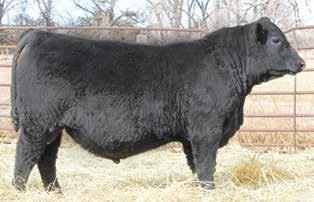
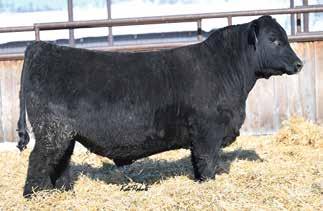
Lot 1 – Heiken Stockman 4043 – Price: $20,000 DOB: 2/1/24 Sire: Sitz Incentive 704H Dam’s Sire: Sitz Logo 12964 EPDs: BW: -0.3, WW: +84, YW: +136 and Milk: +31 Buyer: Crouthamel Cattle Company, Touchet, Wash.
AMAZING DEAL!! ESCAPE THE COLD!! DREAM DESERT RESORT RETREAT AWAITS YOU IN WICKENBURG, AZ!! Picture yourself basking in sunshine surrounded by stunning desert landscapes. Year-round golf, hiking, riding and sports!! Discover your new patio home away from home. Nearby quality horse boarding and trailer storage. One hour from Phoenix, AZ. $500K FULL PRICE OFFER EARNS 10K in PREMIUMS TO BUYER. Over $90,000 of upgrades and $80,000 VIEW lot premium. Seller purchased property for $599,026! Ready to sell and MOVE IN!!! Call Joe at Homesmart, 602-679-2971.To view photos, go to www.wylr.net in the classifieds 3/1 MARCH 6-9: PETSKA FUR
200-300 JACKRABBITS PER MONTH AT $10/ EACH: I pay shipping. E-mail ohminocat@gmail.com or call Dave at 406-529-1080 for further details 3/1
tive 4029 – Price: $16,000 DOB: 1/28/24 Sire: Sitz
Spring is just around the corner, marking the beginning of calving season for many beef producers.
While the change in seasons often brings warmer weather, Mother Nature can be unpredictable, and calving season is not the time for reactive measures.
Being prepared to protect newborn calves with blankets, jackets or coats can provide significant benefits for the long-term health of calves.
A cold calf will need to use energy to try to maintain its body temperature – energy which would normally be devoted to growth and maintaining a healthy immune system.
Instead of using its calories to grow, a cold-stressed calf will use its energy to simply try to stay warm, making it more susceptible to illness or even death.
Researchers have explored what temperatures can be dangerous for calves and the advantages of investing in blankets for the newest herd members, and they provide tips for selecting the right products.
Covering newborns
According to a Feb. 2 PBS Animal Health article, most calves are used to a body temperature around 102 degrees Fahrenheit.
“Naturally, temperatures can drop quickly during outdoor calving since calves lack the insulating layer of fat and the long-haired, heavy coat of their elder herd mates,” reads the article. “Cold, wet and muddy conditions create cold stress for newborns and can definitely make them slow to stand and nurse when it matters most.”
Cows with a thick winter coat can endure temperatures in the teens and, depending on their body condition, even single digits.
“However, calves can begin to experience cold stress when temperatures drop below 60 degrees Fahrenheit, and when it drops below 40 degrees Fahrenheit, calves should have a blanket on them for at least the first three weeks of their life,” the article reports.
Some research studies show blanketing calves increases their body temperature by four-tenths of a degree, and using a blanket increases daily weight gain nearly seven pounds over two weeks compared to a calf not covered.
If possible, it’s best to bring cows indoors to clean, bedded pens to provide a warmer environment for their calves, but if this isn’t an option, try to avoid leaving pairs in muddy areas and locations without shelter from the wind.
Using a calf jacket
When using calf jackets as an additional layer of protection for calves, a common rule of thumb is to put jackets on calves when the ground is frozen.
Days with significant temperature swings in which temperatures spike during the day may require jackets to be removed to prevent calves from getting too warm and sweating.
If a calf sweats during the day, dampness can lead to chilling when temperatures drop again at night. This cycle of sweating and chilling can defeat the purpose of the jacket.
In addition to monitoring temperature changes, it is essential to check the jacket at least once a week to ensure the straps are adjusted properly as the calf grows.
Leg straps can become too tight over time and may dig into the back legs of the calves, potentially creating open sores.
It’s important to note, putting a jacket on a newborn calf is not a one-time action, it requires ongoing monitoring as the calf grows and as weather conditions change.
Investing in calf blankets
Calf blankets are easyto-use tools which provide low-cost protection from the cold for the most vulnerable animals.
Benefits of a calf cover include aiding animals in
using energy for health and growth rather than burning it to maintain core body temperature during cold weather.
Studies show fewer calves are treated for cold stress when they are covered with a blanket during their first 21 days of life.
Additionally, blankets are easy to put on and take off, and they don’t require any special training.
Calf blankets and other forms of cover are reusable for every calving season by simply machine washing and drying them, which is an important step in avoiding the spread of bacteria between animals.
Selecting the right cover
There are several calf blanket options made with durable materials which can withstand regular use and machine washing.
“Choose a blanket that fits your animal’s size and shape but ensures comfort and ease of movement, while also keeping the fit snug enough for optimal warmth,”
the article notes. It is important to remember a calf’s body isn’t the only area susceptible to the cold.
Protecting the calf’s ears and head with ear muffs or a calf hood made of stretchable fabric accommodates most sizes and breeds.
Northwest Wyoming Angus Association 47th Annual Sale
Melissa Anderson is the editor of the Wyoming Livestock Roundup. Send comments on this article to roundup@wylr.net.
Yearling and Two-Year-Old Bulls will be BVD, PAP and Semen Tested Sale Day Viewing and Bidding Available Online at CattleUSA.com
Consignors: Davidson Angus, Hogg’s Angus, Obisidian Angus, JOH Ranch, Lazy BV Cattle, WYO Angus For information or to receive a catalog, call Fred or Kay at 307-868-2595 or any consignor Catalog link at www.greatbearreflection.com/obsidian-angus-cattle-sales.php
7L Diamond’s Hi Altitude Bulls
Leah 719-850-2720; Peter 849-8223
Bulls & heifers sell Friday, March 21, 2025 at Valley Lvstk. in Monte Vista, CO
Altenburg Super Baldy-Triangle J
Selling 150 bulls – Fort Collins, CO Saturday, March 15, 2025 Willie Altenburg 970-481-2570
Baty Livestock
Spring and Fall Heifer Sales batylivestock@gmail.com facebook/batylivestock
Black Summit Cattle
The Quin LaFollette family Bulls sell Friday, March 21, 2025 at Powell, WY • 307-899-3553
Bridle Bit Simmentals
All-Terrain Bull & Female Sale Monday, March 17, 2025 at Walsh, CO Chad Cook 719-529-0564
Campbell Simmental Part of High-Altitude Bull Sale on Saturday, March 22, 2025 at LaGarita, CO Robert 970-749-9708
Dilka Cattle
Yearling & 18-mo-old bulls PT Briggsdale, CO • 970-396-8791 thedilkas@aol.com
Far Out Cattle Ranch
Jerrid Brisendine 719-353-1747
All-Terrain Bull & Female Sale Monday, March 17, 2025 at Walsh, CO
Hill Brothers Livestock Bulls & females available Paul 417-849-6851 facebook.com/hillbrotherslivestock/
Black & red bulls selling Private treaty at Hotchkiss, CO 970-778-9267 • cmp5792@aol.com
Rains Simmental Bulls of the Prairie Sale Saturday, March 8, 2025 at Oakley, KS Mike Rains 785-672-7129
Russell’s Reflected R Ranch Curt 719-469-2857; black & red bulls PT or sell March & Oct. @ RA Brown www.ReflectedRRanch.com
T-Heart Ranch
High-Altitude Bull Sale March 22, 2025 719-850-3082 or 850-3083 shane@t-heartranch.com
BY AMANDA RADKE
I recently read an article about how agricultural groups are seeking a “landowner rights compromise” as the battle between private property rights and a private, out-of-state carbon pipe-
line company dominants the 2025 South Dakota legislative session.
The state legislature has considered several private property rights bills so far, but most notable is House Bill
(HB) 1052, which would prohibit the exercise of eminent domain for carbon pipelines.
This critical piece of legislation could be the relief landowners have desperately sought for as they’ve battled condemnations of their land for a Green New Deal project they simply do not want to participate in.
However, some agricultural groups in South Dakota have abandoned their commitment to stand up for individual farm and ranch families and are instead advocating for mob rule.
According to Brownfield Ag News, “South Dakota
Farm Bureau (SDFB) and South Dakota Corn Growers Association (SDCGA) say pipeline companies should be required to get voluntary easements for at least twothirds of a project before eminent domain is used.”
SDFB President Scott VanderWal told the news outlet, “Our organization is very focused on private property rights, and a lot of people would say, ʻWell, you have to defend private property rights by saying we shouldn’t use eminent domain for it.’ But what about the people who want to sign an easement to let the pipeline go across their
property? They have property rights too.”
Meanwhile, SDCGA Vice President Trent Kubik said, “We do feel there are lawmakers looking for a compromise, and from our viewpoint, we feel this is a good one.”
Let’s keep in mind this company, which SDFB and SDCGA are carrying the water for, has condemned 150-plus landowners, it has sued a county for its ordinances and, most recently, it has filed a lawsuit against a member of the Public Utilities Commission.
So, it’s quite concerning when associations who promise to fight for family farms and ranches would take such a brazen position on landowner rights.
Two-thirds signups on easements for a project isn’t a compromise, it’s mob rule. Bulldoze through one-third of the farmers and ranchers in the path with the extreme use of eminent domain for a private company to get your way? How is this advocating for agricultural families? How is this a compromise?
No, this compromise –just like the other suggested bill, Senate Bill 0198, which would force mediation on landowners who just want to be left alone – is yet again trying to put lipstick on a pig.
Hog-housed by South Dakota Sen. Jeff Mehlhaff and crammed with nonsense, this bill promises to be the reasonable compromise between a bad actor and the landowners who just want to be left alone.
We don’t want to mediate with our bully, we want to say, “No thank you. Please go around.”
How difficult is this to understand?
I’m flabbergasted we have to continue to repeat a
fundamental truth our elected officials conveniently forget at voting time – our private property rights are God given, Constitutionally protected and not for politicians to flippantly chip away at for their pet projects.
South Dakotans have spoken loudly and definitively on carbon pipelines. HB1052 is, without question, the commonsense, reasonable and fair solution to an ongoing problem which has plagued citizens for far too long.
In no way does HB1052 stop a carbon pipeline project from happening. The project can be done. However, easements should be acquired where both parties have a level playing field, not where one enters the conversation with the threat of condemnation and the other has everything to lose with no ability to protect themselves and their land.
I call upon our legislature to do the right thing for South Dakota citizens and for our state’s hard-working agricultural families.
It’s time for our elected officials to answer the cries of the citizens and send a clear message to potential companies who want to come do business here – we love opportunity, and we are open for new and exciting ideas. However, if you’re going to enter into business in our state, you must secure landowner easements through good faith negotiations and you must respect those who have other business plans for the land they own.
With the passage of HB1052, landowners can finally say, “No, thank you.”
And that’s a full sentence.
Amanda Radke is a rancher, author, motivational speaker and podcast host. For more from Radke, visit amandaradke.com