USDA releases funding after reviewing IRA programming Page A18
Honeybee colony loss takes a toll on agriculture Page B2
Local mail to stay in state for processing Page B7
Con Man Gregor MacGregor pulls evilest ag fraud in his-
tory Pages B4-B5
58th World Ag Expo highlights groundbreaking innovation and technology Page B9
Quick Bits
Snow Report
In the 11th snow report for Water Year 2025, the state’s snowpack telemetry data reads 103% of median, with a basin high of 113% and a basin low of 49%. Last year, the state was at 89% and at 115% in 2023. The report and a map displaying basin snow water equivalent percentages of median for the state may be found at wrds.uwyo.edu/wrds/nrcs/ nrcs.html
Workshop
The Saratoga-Encampment-Rawlins Conservation District and Medicine Bow Conservation District are hosting a Winter Workshop at the Platte Valley Community Center in Saratoga on March 4 from 10 a.m.-4 p.m. Admission is $20 and lunch will be provided. Topics include virtual fencing, federal funding and the importance of flood irrigation and wet meadow habitat. For more information or to RSVP, e-mail joe.sercd@ gmail.com or call 307-3268156 or 307-379-2221.
WCCA Gala
The Wyoming Collegiate Cattle Association (WCCA) will host its Second Annual Formal Gala and Auction on May 3 at 6 p.m. at the Black Fox in Laramie. WCCA extends an invite to all Wyoming Stock Growers Association members. There will be a live auction to help raise funds for WCCA trips and events and a prime rib dinner. To purchase tickets, contact Lily Stewart at lstew19@uwyo.edu or 719650-6127.
Farm Data
According to the U.S. Department of Agriculture’s National Agricultural Statistics Service, the number of farms and ranches in Wyoming in 2024 totaled 10,500, unchanged from the 2023 estimate. Total land in farms in Wyoming, at 28.8 million acres, and average size of farms, at 2,743 acres, are both unchanged from the year prior.
Gordon signs first round of 2025 legislative bills
On Feb. 24, Gov. Mark Gordon signed the first bills of the 2025 Wyoming Legislation Session at Capitol Hill in Cheyenne. According to a news release from the governor’s
office later the same day, the first bill signed by the governor was Senate File (SF) 0020, Oil and gas bondingoptions and bonding pools, a bill providing support for producers in Wyoming’s
core oil and gas industry.
SF0020 was sponsored by the Joint Minerals, Business and Economic Development Committee, which benefits Wyoming’s energy industry and provides addi-
Third annual WWGA ewe sale a success
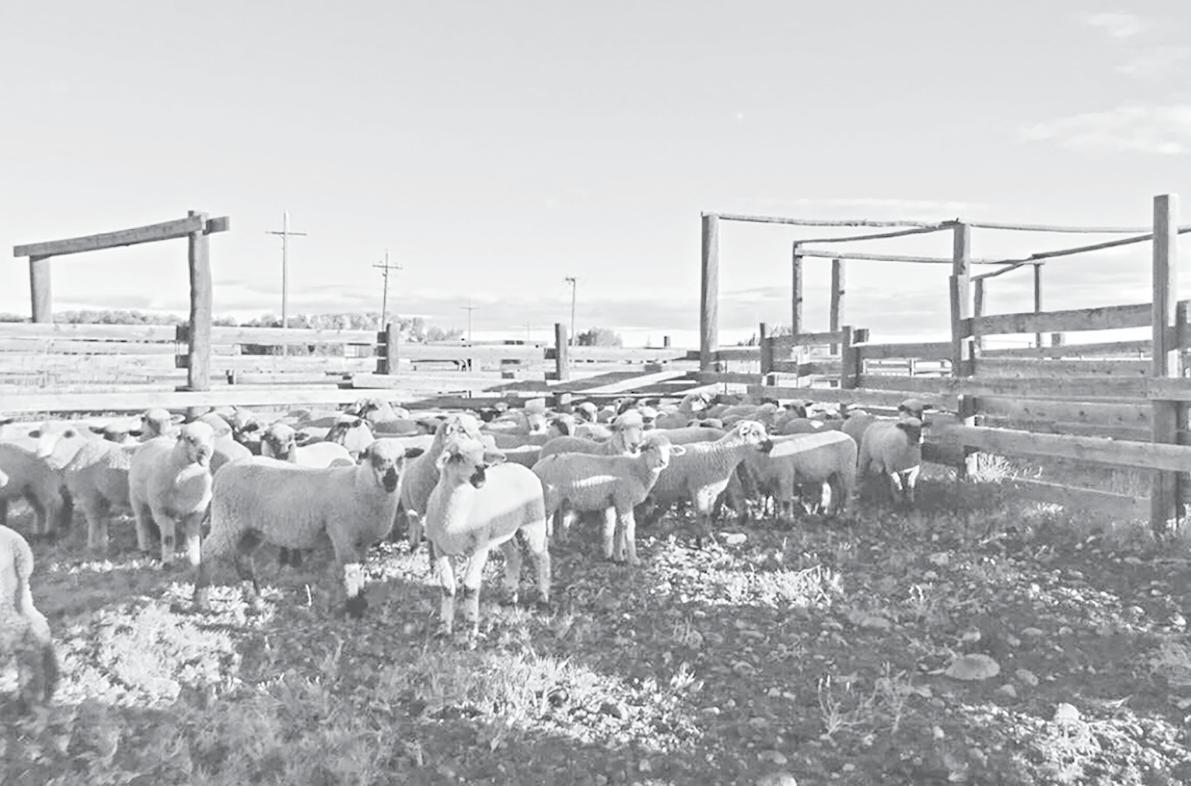
The Wyoming Wool Growers Association (WWGA) offered producers another chance at “the Best in the West,” during the Third Annual Select Bred Ewe Sale, held on Feb. 22 at the CAM-PLEX in Gillette. This year, the sale was also broadcast live online.
Offering an elite selection of open ewe lambs and yearlings, bred two-year-olds and running-age and broken-mouthed ewes, WWGA ensures only the highest-quality range, commercial and purebred ewes are showcased in the annual sale.
“Only the healthiest, highest-quality ewes from some of the nation’s premier breeders are accepted for the sale, assuring buyers our ewes are truly ‘the Best in the West,’” boasts the WWGA website.
WWGA further notes, with the exception of open ewe lambs and yearlings, ewes were confirmed pregnant the day before the sale and strictly sifted based on their eyes, mouth, teeth, udders, teats, body and legs. Sifting was conducted by a panel of knowledgeable Western sheep producers and veterinarians.
“While the Wyoming Select Bred Ewe Sale is about the business of transferring genetics within the sheep industry, it is also a time when sheep producers get together to visit, discuss the industry and renew old and make new acquaintances,” the website continues. “The two days spent in Gillette are intended to be fulfilling, informative and fun, and we hope to meet those goals each year.”
Sale highlights
According to the sale report, the Third Annual Wyoming
tional support for small oil and gas operators.
The bill was formulated in response to the significant bonding requirements introduced during the Biden
Market report
ASI report highlights 2024 lamb market conditions
Producers reminded to pay special attention to cattle nutrition between calving and rebreeding
At any stage in the production cycle, cows and heifers experience nutritional and environmental stressors and undergo periods of high and low nutritional demands.
While nutrition is critical for the cow herd during all of these stages, the 70- to 90-day interval between calving and breeding is quite possibly the period of greatest nutritional demand.
With many spring-calving herds already welcoming the 2025 calf crop, experts are reminding producers to pay special attention to proper nutrition for lactating females following calving and prior to rebreeding, especially in the midst of cold and snowy winter conditions.
Meeting nutritional requirements
In a Feb. 1, 2023 University of Nebraska-Lincoln (UNL) BeefWatch Newsletter, UNL Beef Systems Extension Educator Troy Walz explains energy requirements of a mature, 1,200pound cow are relatively low at nine to 11 pounds total digestible nutrients (TDN) and two pounds crude protein (CP) per day.
Please see NUTRITION on page A14
In the February edition of the American Sheep Industry Association’s (ASI) Sheep Industry News, Texas A&M Agricultural Economics Professor and Extension Specialist Dr. David Anderson reports, “Mature sheep slaughter seemed surprisingly large in 2024 because the federally-inspected slaughter was the equivalent of about 4.3 percent of the ewe inventory compared to four percent in 2023.”
This was the largest rate of slaughter as a percentage of the ewe flock since 2021, he mentions, and over the last decade, this percentage has been about 3.8 percent, on average.
According to Anderson, on the lamb and yearling side, federally-inspected slaughter totaled 1.75 million head which was 0.7 percent larger than the year prior. Combined with slightly higher weights in the second half of the year, lamb production was about 2.5 percent larger than the previous year.
Cold stress discussed as winter persists
Despite a big winter storm that blew through Wyoming late in the week, University of Wyoming Extension specialists braved the weather to gather with local producers in the southwest corner of the state for annual educational programming.
Previously known as Wyoming Utah Ag Days, the event was rebranded as Southwest Wyoming Ag Day this year, held on Feb. 20 at the Roundhouse and Railyards in Evanston.
The one-day conference featured discussions on current livestock markets, multispecies grazing and, to address the area’s recent cold snap and snowy winter conditions, Johnson County Extension Educator Micah Most outlined ways to
mitigate cold stress in livestock. Homeostasis and body temperature
To begin, Most explained the concept of homeostasis, which he defines as “stability while adjusting to ever-changing conditions.”
“Our body systems all operate in homeostasis, whether it is our body temperature or the amount of salt in our blood, our body is always regulating these things around a certain set point,” he stated.
Most noted there are numerous external forces in play which pull body systems in and out of homeostasis and several which influence body temperature specifically, as the bulk of cold stress is
see COLD STRESS on
A12
WYLR photo
Too Many Ag Cuts
May Hurt Food Secuirty
As President Donald J. Trump and his administration live up to their campaign promises of a more efficient government, those in the agricultural business are somewhat worried about what the future holds.
Like other industries, agriculture welcomes a more efficient government, but we are also worried tariffs and layoffs may cause extreme pain. I just hope Trump and U.S. Secretary of Agriculture Brooke Rollins realize their actions affect food security.
The U.S. Department of Agriculture (USDA) has numerous programs to assist farmers and ranchers by improving lands across America.
While some say farmers and ranchers don’t deserve these program dollars, they don’t realize this money is put towards land and water or crop and livestock insurance. Without some USDA programs, the cost of groceries would go up.
There are a couple of reasons the Trump administration should not get too severe with agriculture. One reason is those in agriculture have been on Trump’s side since his first term in office and the other is that Rollins understands agriculture.
As Rollins said, “Farmers and ranchers have been with Trump since he came down the escalator in 2015. I sincerely believe those programs are essential to keeping communities thriving and hopefully more prosperous going forward, and we’ll work with those who are understanding of how important these programs really are.”
Rollins also said, “Any commitments made previously, we will, of course, fulfill those commitments.”
This is good news.
Those who support commodity checkoffs are worried they will be eliminated or changed drastically. I for one hope this doesn’t happen, as these checkoffs not only help producers, but consumers as well.
Agriculture has always shuddered at the mention of tariffs, but we realize the need for the U.S. to have a trade balance with other countries. The past few years have been unfair to the U.S., as seen by an imbalanced trade deficit. While some tariffs may help, they may also hurt certain industries at times.
During Trump’s first term, he placed a tariff on China which caused them to stop buying soybeans from the U.S. This caused the U.S. soybean market to really drop as China was the biggest export buyer of our soybeans. China then looked to South America for soybeans instead.
A government will impose a tariff to raise revenue to rebalance its trade deficit and to protect domestic industries, its consumers and its national interests.
Tariffs are used to restrict imports as they will increase the price of goods and services purchased from another country, making them less attractive to domestic consumers.
Tariffs may produce revenues, open negotiations between countries and ensure domestic products receive a preference within a country to support businesses and the economy.
The downside is they may initiate a trade war or create issues between governments if used to punish another government. I think we need to be careful with tariffs since we are shaking the dice in the response of the other country.
Tariffs are what caused the Boston Tea Party and, ultimately, the colonists to form their own country – America.
Everybody wants to eat at the government table, but nobody wants to do the dishes.
GUEST OPINIONS
Stepping Up for Agriculture in 2025
Just a couple weeks ago at the American Farm Bureau Federation (AFBF) Convention in San Antonio, I reminded farm bureau members it’s going to take all of us stepping up in 2025 to drive agriculture forward.
After a record number of grassroots contacts last year – nearly 50,000 texts, calls, e-mails and letters – I am confident we are ready to work with leaders and lawmakers in 2025.
Already, the past few weeks have been a whirlwind.
When we heard talk of tariffs on our largest export markets, we launched into action by engaging with White House staff and reaching out to President Donald J. Trump about the likely consequences of tariffs for farmers and ranchers who always get
By Zippy Duvall
caught in the crosshairs of tariff battles.
We were also quick to express appreciation for the administration’s negotiations with Mexico and Canada which led to tariffs being put on hold for 30 days.
Of course, farm bureau supports the goals of security and ensuring fair trade, and we’re hopeful Trump can limit trade disruptions and open new markets for agriculture.
We have seen very few new trade deals in the last decade, and U.S. agriculture is now seeing a trade deficit of $32 billion. This is in stark contrast to our historical agricultural trade surplus, averaging $12.5 billion over the past 10 years.
Boosting agricultural trade also has proven to be
good for our overall economy.
Historically, every one dollar of U.S. agricultural exports results in over two dollars in additional domestic economic activity.
The importance of trade is a point I’ll make when I testify before the Senate Agriculture Committee as the whirlwind continues. I’ll also shine a spotlight on the urgent need for action on a new, modernized farm bill.
While the disaster assistance Congress approved at the end of 2024 is critical to farm and ranch families, we cannot afford to keep kicking the can down the road with a long-outdated farm bill.
As farmers and ranchers know, the farm bill isn’t the only pressing issue for agriculture right now.
We – and many other
small businesses – are anticipating what may be the largest tax increase in American history if Congress does not pass critical tax reform legislation this year. Lawmakers have promised to prioritize extending expiring tax provisions, and we will hold them to it.
Congress must find a way to facilitate a stable business environment for America’s farms and ranches to help us continue to provide the food, renewable fuel and fiber this country needs.
AFBF is also urging Congress and the administration to work together to find solutions to one of agriculture’s greatest challenges – labor. It’s among the biggest limiting factors in American agriculture today and farmers are out of options.
Please
From the Publisher Dennis Sun
Nominations open
Each year, the Wyoming Livestock Roundup recognizes two Wyoming citizens or couples for their involvement in the state’s agriculture industry by inducting them into the Wyoming Agriculture Hall of Fame.
Started in 1992, the Wyoming Agriculture Hall of Fame has honored 75 Wyomingites to date.
“The Wyoming Agriculture Hall of Fame award was first started in 1992 to recognize leadership in the ag community,” says Wyoming Livestock Roundup Publisher Dennis Sun. “The need is there to recognize people who have been leaders and given themselves, their time and countless resources to help the ag community in the state.”
Last year’s inductees were Laurie Boner of Glenrock and Philip Ellis of Chugwater.
To nominate someone for the Wyoming Agriculture Hall of Fame, visit wylr.net and click on the Ag Hall of Fame tab, e-mail roundup@wylr.net or call the office at 307-234-2700.
Nominations must be submitted by June 1.
After all nominations are received, a panel of three judges independently rank nominees and select the year’s inductees. A belt buckle and poster will be presented to the winners at the 2025 Wyoming Agriculture Hall of Fame Picnic, held Aug. 13 during the week of the Wyoming State Fair. For more information, contact the Wyoming Livestock Roundup at 307-234-2700.
AG continued from page A2
Washington, D.C. is also abuzz with nominations and confirmations. As critical cabinet and agency positions are filled, we will look forward to coming to the table to ensure the voices of America’s farmers and ranchers are heard in Washington, D.C.
We were pleased to see Brooke Rollins’ nomination as secretary of agriculture advance. AFBF has a long history of working with the U.S. Department of Agriculture, and we are eager to work with Rollins and her team in the days and weeks ahead.
Across AFBF, we will continue to step up and engage on these issues and many others to ensure our voices are heard.
I am amazed when I hear the changes our members have made at the local and state level, and when we come together at the national level, I know we can ensure a brighter future for agriculture.
Zippy Duvall is the president of AFBF and can be reached by visiting fb.org. This column was originally published by AFBF on Feb. 5.
NCBA president testifies
On Feb. 26, Nebraska cattle producer and National Cattlemen’s Beef Association (NCBA) President Buck Wehrbein testified before the U.S. Senate Committee on Agriculture, Nutrition and Forestry to share an update on policy priorities for the American cattle industry.
“The cattle industry is seeing better market conditions, strong consumer demand for beef and optimism for the future of our industry, yet challenges still remain,” he said.
“Congress must always remember food security is national security, and the policy decisions they make will impact the hardworking cattlemen and women who produce our nation’s food,” Wehrbein continued. “Passing a farm bill, axing the Death Tax, protecting beef in the Dietary Guidelines for Americans, rolling back excessive regulations, holding our trade partners accountable, combatting the New World screwworm and protecting the Beef Checkoff are all tangible steps Congress can take to support American farmers and ranchers and protect our food security.”
Ballot measure proposed
The Colorado Secretary of State’s Title Board approved language for a proposed ballot measure which would ask voters in 2026 to end the reintroduction of gray wolves by the end of that year.
“The only thing we are doing with this ballot measure is asking voters to approve a day where wolves would no longer be introduced in Colorado by humans,” said Stan VanderWerf, a former El Paso County, Colorado commissioner who helped write the ballot measure. “This proposal does not make any other changes to state or provisions addressing the management of wolves or reimbursement for depredation. It’s a very simple proposal.”
Voters approved Proposition 114 in November 2020, requiring Colorado Parks and Wildlife to make a plan to begin reintroducing wolves to the Western Slope of Colorado by the end of 2023. The wildlife agency first released 10 gray wolves captured in Oregon onto state land in Grand and Summit counties in December 2023.
After vehement objections from ranchers who lost livestock to the predators, the agency adjusted its management strategy and released 15 wolves captured in British Columbia in Eagle and Pitkin counties in January. Another five wolves wildlife officials captured and relocated were also released in January. Last month, the state estimated there are 29 gray wolves in Colorado.
Brucellosis identified
Routine brucellosis surveillance testing has identified brucellosis-affected cattle herds in both Park and Sublette counties.
Laboratory testing was conducted at the Wyoming State Veterinary Laboratory (WSVL) in Laramie, and results were confirmed at the National Veterinary Services Laboratory in Ames, Iowa.
Both herds are located within Wyoming’s Brucellosis Designated Surveillance Area (DSA). With the addition of these herds, Wyoming Livestock Board (WLSB) currently has three herds in Park County and one herd in Sublette County under quarantine for brucellosis.
Both affected herds have been quarantined following confirmation of test results. No contact herd quarantines are anticipated. The affected herds are currently participating in serial testing to meet the requirements for quarantine release. Testing of affected herds is a cooperative effort between herd owners, private veterinary practitioners, WLSB personnel and U.S. Department of Agriculture Animal and Plant Health Inspection Service Veterinary Services personnel.
Identification of brucellosis-positive cattle is not uncommon within Wyoming’s DSA, where a brucellosis reservoir in wildlife occasionally spills over into cattle. Required brucellosis surveillance for specified cattle in the DSA includes testing prior to leaving the DSA and within 30 days prior to change of ownership.
WLSB Assistant State Veterinarian Dr. Teckla Webb acknowledges the difficult situation faced by owners of affected herds and extends a thank you to all of Wyoming’s DSA cattle producers and veterinarians.
For more information, contact WLSB at 307-7777515, e-mail lsbbrucellosis-mitigation@wyo.gov or call the Wyoming State Veterinarian Dr. Hallie Hasel at 307840-1389.
Rollins takes action
U.S. Secretary of Agriculture Brooke Rollins directed the Food and Nutrition Service (FNS) at the U.S. Department of Agriculture (USDA) to immediately clarify and enforce all rules restricting its beneficiaries to U.S. citizens and legal residents only.
This secretarial directive enforces President Donald J. Trump’s executive order from Feb. 19, which ensures taxpayer resources are not used to incentivize or support illegal immigration.
“The days in which taxpayer dollars are used to subsidize illegal immigration are over,” said Rollins. “Today’s directive affirms USDA will follow the law full stop.”
FNS plays an important role in providing nutrition services for vulnerable populations in the U.S.
NEWS BRIEFS
CattleCon 2026 announced
Downtown Nashville, Tenn. will host CattleCon 2026 Feb. 3-5, 2026.
The largest cattle industry event of the year will be held in the heart of Music City, home of honky-tonks, history and hearty food. Thousands of cattlemen and women will gather to learn, conduct business, network and enjoy the sights, sounds and flavors in the “songwriting capital of the world.”
“Nashville has always been a popular location for CattleCon, and we are excited to bring everyone downtown to be close to everything the city has to offer,” said Kristin Torres, executive director of meetings and events at the National Cattlemen’s Beef Association (NCBA). “We are planning several special events, including an exclusive evening at the historic Ryman Auditorium.”
CattleCon 2026 will feature popular events such as Cattlemen’s College, the CattleFax Outlook Session, a Washington, D.C. issues update, the Cattle Feeders Hall of Fame Banquet, Environmental Stewardship Regional Awards Program and Beef Quality Assurance Awards, along with a few surprises to be announced.
The award-winning NCBA Trade Show will include acres of displays, as well as live cattle handling demonstrations, educational sessions and entertainment. Trade show exhibitors will feature the latest advancements – from equipment and technology to pharmaceuticals and feed supplements – all conveniently located under one roof.
Registration will open in August, and additional information will be available at convention.ncba.org
Beef-on-dairy data released
New data from the U.S. Department of Agriculture’s (USDA) Agricultural Marketing Service is beginning to shed light on the impact of crossbred beef and dairy cattle on the beef supply chain.
While limited in scope, the data collected to date suggests the growing number of beef-on-dairy animals is contributing to higher cattle prices for producers and delivering added value to feedlots and processors.
The practice of using beef genetics in dairy reproductive programs, commonly referred to as “beef-on-dairy” within the industry, has steadily increased as the U.S. beef cow herd has contracted.
Historically, cattle market analysts had limited pricing data to quantify the impact of beef-on-dairy in the cattle market. This changed in March 2024 when USDA began tracking beef-on-dairy animals sold at public auctions.
According to an analysis outlined in a new CoBank Knowledge Exchange report, the slaughter auction prices for beef-on-dairy cattle were slightly higher than for beef cattle and significantly higher than for dairy cattle. The weight of beef-on-dairy animals fell between the ends of the beef and dairy cattle spectrum.
While beef-on-dairy breeding is not a new phenomenon, additional opportunities to track and analyze these animals using performance metrics throughout their life will enhance efficiencies and profitability in the cattle sector.
Judge reinstates CTA
The U.S. Department of the Treasury reset the deadline for businesses to report under the Corporate Transparency Act (CTA) to March 21 after a federal judge lifted his order which had been blocking the law.
On Feb. 18, U.S. District Judge Jeremy Kernodle in Tyler, Texas said lifting the stay was consistent with a ruling in January by the U.S. Supreme Court.
The U.S. Department of the Treasury responded by setting a new deadline for an estimated 32.6 million entities to file reports with the Financial Crimes Enforcement Network.
Over the next month, the agency will assess whether to change the deadline again and will look this year at revising reporting requirements to make them less burdensome on small businesses, according to a statement.
The CTA has come under attack from farm groups, business organizations and others. The law requires the owners and key employees of small corporations to submit photos and personal information to federal financial crime investigators.
Congress passed the law to help U.S. and foreign law enforcement agencies investigate money laundering which finances high-level crimes, such as human trafficking, drug smuggling and tax evasion.
In January, Kernodle ruled the law exceeds Congress’ authority to regulate commerce, foreign affairs and tax collections and imposed a nationwide stay on the reporting deadline.
Kernodle’s ruling was the latest in a series of conflicting decisions which left the law in limbo. The Supreme Court in January lifted an injunction against the law issued by another judge, but was not asked to address Kernodle’s ruling.
The Trump administration signaled it may revise the law to focus on entities posing significant risks to national security, but asked Kernodle to lift his stay while it assessed the law.
House and Senate Republicans have introduced legislation to repeal the CTA.
Greer confirmed
On Feb. 26, the U.S. Senate voted to confirm Jamieson Greer as U.S. trade representative in a vote of 56 to 43.
“It is my honor to be confirmed by the Senate to serve as President Donald J. Trump’s U.S. trade representative,” said Greer. “Trump recognizes the role unfair trade practices have played in offshoring American jobs and harming our national security. Under his leadership, I will work strategically to address unfair trade practices, open new markets, tackle our record trade deficit and restore America’s ability to become a country of producers.”
“I look forward to building off of the many successes from Trump’s first term to lead the Office of the U.S. Trade Representative in executing a robust trade agenda, putting America first,” he continued. Greer’s confirmation has been met with optimism by many in the ag industry, including the National Cattlemen’s Beef Association, National Association of Wheat Growers, U.S. Wheat Associates, U.S. Meat Export Federation and American Farm Bureau Federation.
On Feb. 26, U.S. Secretary of Agriculture Brooke Rollins announced a $1 billion comprehensive strategy to curb highly pathogenic avian influenza (HPAI), protect the U.S. poultry industry and lower egg prices.
This comes in addition to funding already being provided to indemnify growers for depopulated flocks.
As Rollins detailed in the Wall Street Journal, the fivepronged strategy includes an additional $500 million for biosecurity measures; $400 million in financial relief for affected farmers and $100 million for vaccine research, action to reduce regulatory burdens and exploring temporary import options.
“The Biden administration did little to address the repeated outbreaks and high egg prices that followed. By contrast, the Trump administration is taking the issue seriously,” Rollins wrote. “American farmers need relief, and American consumers need affordable food. To every family struggling to buy eggs – we hear you, we’re fighting for you and help is on the way.”
Dressed weights exhibited normal seasonal patterns in 2024, peaking in the spring and declining later in the year, according to Anderson.
“What made them interesting was during the first half of the year they were below 2023’s weights, but in the second half of the year they were heavier than in 2023,” he states. “When comparing production between 2023-24, lighter weights helped to offset larger slaughter during the first half of the year, while heavier weights boosted lamb production later in 2024.”
Lamb prices Anderson also reports lamb prices exhibited little of the normally expected seasonality in 2024.
“The lamb cutout traded between $460 and $480 per hundredweight (cwt) all year until a late slide below $460 per cwt in the last couple weeks of the year,” he adds. “Shoulders, racks and loins exhibited the same flat trading pattern. Normally, different cuts experience different seasonality of prices, either driven by holidays or by production patterns.”
Live lamb prices displayed a more consistent pattern compared to lamb meat, although the fluctuation between the highest and lowest prices was larger than average.
This pattern was observed in both traditional heavier slaughter lambs and lightweight slaughter lambs weighing between 60 and 90 pounds, he mentions.
“The larger range of prices throughout the year suggests some increase in price volatility compared to past years,” he states.
Anderson examined the
average standard deviation and coefficient of variation as measures of volatility using weekly prices each year from 2020-24, which reveal some interesting results.
“The standard deviation and coefficient of variation of prices in 2024 was not nearly as volatile as in 2022,” he reports. “But 2022 was the year prices collapsed from very high to terribly low levels, creating the appearance of more volatile prices.”
He explains price volatility looks a little different depending on the data used, as auction market data for 100- to 150-pound lambs indicates little difference in price volatility measured using the coefficient of variation in 2024 compared to other years since 2020.
“For 60- to 90-pound lambs, little difference is noted for data from San Angelo, Texas and Sioux Falls, S.D. auction market reports. However, Fort Collins, Colo. prices indicate a little more volatility in 2024 compared to 202023,” he adds.
The U.S. Department of Agriculture’s Agricultural Marketing Service’s 352 national negotiated slaughter lamb report indicates a little less volatility than the last five years, but it is worth noting much of the data for 2020 was not available due to confidentiality rules, the article reports.
Imports and supplies
Anderson explains, “Imports continued to be above a year ago, adding to lamb on the market. However, lamb imports did decline later in 2024 but remained above the prior year.”
In 2024, Australian lamb leg prices rose above American prices, which
SALE REPORTS
Reported By: Curt Cox, WYLR Field Editor Feb. 23, 2025
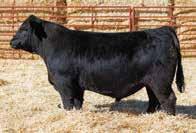
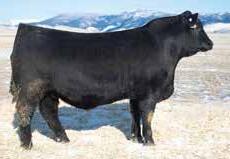
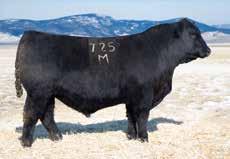
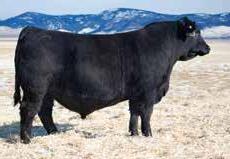
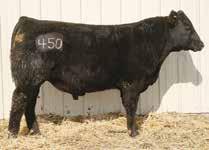
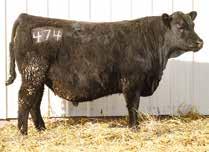
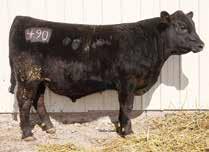
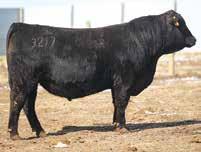
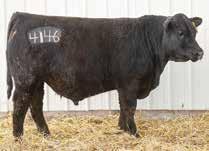
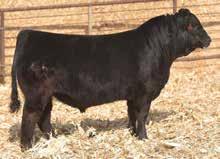
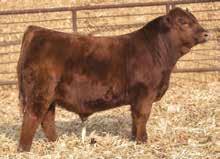
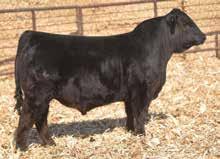
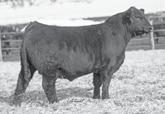
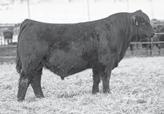
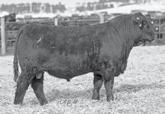
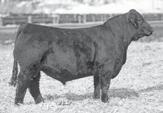
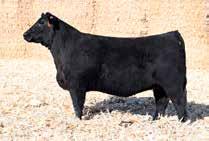
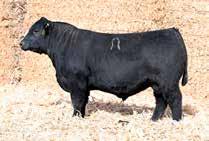
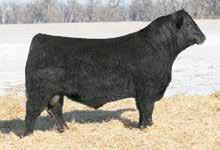
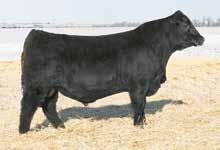
Mount Rushmore Angus Ranch, Rapid City, S.D. Auctioneer: Kyle Schobe 113 Yearling Angus Bulls Avg. $7,347
Top Sellers
Lot 61 – M R A Craftsman 4044 – Price: $18,000 DOB: 1/8/24 Sire: Connealy Craftsman Dam’s Sire: S Thrive JAS 5515 EPDs: BW: +1.1, WW: +80, YW: +142 and Milk: +34
Buyer: Josh Payne, Hemingford, Neb.
Lot 1 – M R A Virtue 4074 – Price: $16,500 DOB: 1/11/24 Sire: Sitz Virtue 11710 Dam’s Sire: B/R MVP 5247 EPDs: BW: +4.2, WW: +91, YW: +161 and Milk: +26
Buyer: Stagemeyer Cattle Company, Page, Neb.
Lot 34 – M R A Fair N Square 4110 – Price: $15,500
DOB: 1/16/24 Sire: Myers Fair-N-Square M39 Dam’s Sire: HF Who’s That 7A EPDs: BW: +1.3, WW: +72, YW: +123 and Milk: +33 Buyer: Fortune Triangle S Ranch, Interior, S.D.
Lot 37 – M R A Fair N Square 4135 – Price: $15,500 DOB: 1/18/24 Sire: Myers Fair-N-Square M39 Dam’s Sire: KG Justified 3023 EPDs: BW: -0.3, WW: +83, YW: +145 and Milk: +32 Buyer: Dan and Teri Goddard, Lusk
Lot 29 – M R A Fair N Square 4066 – Price: $13,500 DOB: 1/10/24 Sire: Myers Fair-N-Square M39 Dam’s Sire: Mohnen Dakota 2528 EPDs: BW: +2.3, WW: +86, YW: +147 and Milk: +31 Buyer: Darby and Autumn Jespersen, Hemingford, Neb.
may lead to a reduction in imports.
Earlier in 2024, relatively lower Australian prices compared to domestic prices increased imports.
Supplies of lamb and mutton in cold storage have remained low, while reduced stock levels, along with increased domestic and foreign supplies, sug-
gest a positive trend for lamb in the market.
“Although there is some uncertainty in the cold storage data, overall lower cold storage stocks are better for
prices,” he concludes. Melissa Anderson is the editor of the Wyoming Livestock Roundup. Send comments on this article to roundup@wylr.net.
Mount Rushmore Angus Ranch Annual Bull Sale
WYLR photo
EXTENSION EDUCATION
By Brenna Litynski, UW Extension Educator
Good Agricultural Leadership is Required
Leadership is arguably the most crucial part of success in any industry. In Wyoming, where agriculture and livestock are central to both the economy and way of life, strong leadership is especially important.
Agriculture in Wyoming is more than just a profession. It is a lifestyle rooted in hard work, integrity and perseverance. It demands individuals who are willing to make sacrifices, embrace challenges and uphold the values which have inspired generations of agricultural participants.
Leaders in agricul-
BILLS
administration, which posed challenges for many oil and gas producers in Wyoming.
The bill establishes an account to allow small operators to cover the costs of bonding and, eventually, the costs of plugging dry or abandoned wells.
“Wyoming has always had a leadership position on these issues,” Gordon states, thanking industry
ture set the stage for their teams, ensuring operations run smoothly, efficiently and ethically. The values of honesty, grit and responsibility are not just personal qualities, they are fundamental to the industry itself.
Leaders in agriculture must make difficult decisions every day while balancing economic pressures, unpredictable weather and ever-evolving demands of consumers.
Key responsibilities
One of the key responsibilities of a leader in agriculture is to lead by example. Hard work and dedication are not just expected
partners and the legislature for working on the issue.
“This is a wonderful bill.”
Bills signed
The governor also signed House Bill (HB) 0075, Coal severance tax rate. This bill reduces the coal severance tax rate from 6.5 to six percent, bringing it in line with oil and gas severance tax rates.
The Senate Revenue
but demonstrated by leaders. Those who follow will adopt these same values, creating a culture of purpose and respect.
However, when leadership fails to uphold these core values, people will take notice.
Employees, partners and community members will ultimately reflect the leadership they see and receive, and if they do not resonate with it, they will spend their time or resources elsewhere.
A leader will look different from operation to operation. It may be a family member, feedlot manager or ranch manager. Regardless of the type or label of the leadership role, a leader’s actions directly impact the morale and success of those they lead.
A true leader also recognizes the importance of mentorship and camaraderie.
Agriculture is an industry built on generational knowledge, passed down from one group to the next. Good leaders ensure
Committee, chaired by Sen. Troy McKeown (R-S24), passed HB0075 on Feb. 12 on a three-to-one vote before heading to the Senate’s Committee of the Whole the following day where it then passed the third reading in the House on Feb. 18 on a 57-to-four vote. Also signed was HB0054, Chancery court judges-district and circuit court assistance, sponsored by the Joint Judiciary Interim Committee.
the next generation is prepared, instilling in them not only technical skills but also the values necessary for success.
By investing in the development of young agricultural participants, leaders help secure the future of one of Wyoming’s most cherished industries.
Good leadership ensures employees are seen, heard and appreciated for their work, ensures criticism is instilled constructively and holds themselves to the same – or even higher – standards as their employees.
Leaders are responsible for ensuring a healthy work environment both physically and mentally. No job is perfect or without its stressors. But, if a leader can foster an environment where people are passionate about and take pride in their work, the entire operation benefits.
Accomplishing this requires leaders to make employees feel appreci-
HB0054 will help address heavy caseloads in Wyoming’s District and Circuit courts by allowing Wyoming’s Chancery Court judge to hear cases in those courts.
The bill passed through legislation quickly, passing the Senate’s third reading on Feb. 14 with a a vote of 31 to zero and cleared the House two days later with a vote of 60 to zero.
Additional bills signed Gordon endorsed 42
ated, while simultaneously pushing them to set goals and aspirations for their job as related to operational success.
Community leaders
Beyond individual operations, Wyoming’s agricultural community relies on leadership in many ways.
Organizations such as the Wyoming Stock Growers Association and 4-H programs provide leadership opportunities which shape the industry’s future.
Strong leadership in these areas helps advocate agricultural interests, promote sustainable practices and ensures the values of Wyoming’s agricultural communities are preserved.
Furthermore, community leadership fosters collaboration.
In agriculture, an industry faced with many unique challenges, leaders must unite stakeholders, encourage innovation and create solutions that benefit all.
Agricultural leaders
must not only focus on their own operations but also contribute to the success of the industry as a whole.
Encouraging training and education on positive leadership qualities in the workplace can be helpful for agricultural operations. Leadership in Wyoming’s agriculture industry is about more than making decisions – it is about embodying the values which define the state and its people. Hard work, integrity and resilience are at the heart of effective leadership.
Whether on the ranch, in the field or within community organizations, strong leaders inspire those around them. Good leadership is not optional – it is required.
Brenna Litynski is the University of Wyoming Extension agriculture and natural resources educator serving Albany County. She can be reached at blitynsk@uwyo.edu or 307721-2571.
For a complete list of the bills Gov. Mark Gordon signed into law, visit wyoleg.gov/Legislation/2025.
bills in all and among them was HB0061, sponsored by Rep. Dalton Banks (R-H46), titled “State land leases preference amendments.”
The bill received broad support in both the House and Senate and was designed to grant individuals who are adhering to the terms of their state land lease a preferred right to renew their lease, thereby fostering stability and consistency in land management.
According to Banks, landowners from around the state requested the legislation, citing issues through the State Lands Office with leases not being renewed because of issues beyond the current lease’s control.
HB0069, Extending the authority of the Secretary of State to dissolution, revocation and forfeiture of entities owned or controlled by foreign government or persons deemed to be an adversary by the U.S. Secretary of Commerce, was also adopted into law.
Additionally, SF0081, sponsored by Rep. Mike Yin (D-H16), was signed into law by the governor. This is a bill exempting all property owned by the state from property taxation through Dec. 31, 2026.
Non-signature bills
Gordon allowed three bills to go into law without his signature. The Wyoming Gold Act was the first.
It requires the state to invest at least $10 million in gold, which Gordon called a “non-income producing asset.”
According to Gordon’s letter to the Senate president, the state treasurer has
the ability to include gold in the state’s investment portfolio, but he added the legislature requiring the investment “represents an invasion of the responsibilities of the executive branch.”
The Wyoming PRIME Act provides a framework to support local meat producers in selling homemade meat products with streamlined state and federal regulations, while also relieving them from the necessity of inspections.
The governor declared the bill a “trigger law,” meaning it does not take effect until corresponding legislation at the federal level is passed into law.
SF0006 is the third bill enacted into law, which empowers homeowners to seek assistance from law enforcement in addressing issues with squatters.
The governor mentions he strongly believes in individuals’ private property rights, despite his concern for adequate due process.
Coming to a close Currently, lawmakers are trying to usher dozens of policy priorities through the House, Senate and joint conference committees ahead of their tentative adjournment on March 6 but can overturn Gordon’s vetoes with a twothirds majority vote in each chamber.
Gordon will have up to 15 days after adjournment to file his objections to unsigned bills with the secretary of state.
Melissa Anderson is the editor of the Wyoming
CONNECTING AG to CLIMATE
By Windy Kelley, Northern Plains Regional Climate Hub
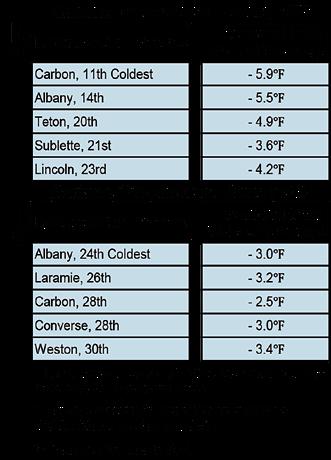
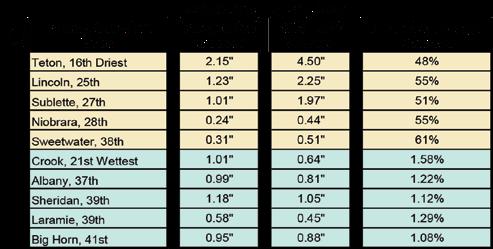
Wyoming experienced its 37th coldest and 37th driest January out of 131 years, according to the National Oceanic and Atmospheric Administration’s (NOAA) National Centers for Environmental Information database, retrieved on Feb. 21.
Scaling to the county level, the adjacent tables include temperature and precipitation rankings of select counties for the month of January.
The U.S. Drought Monitor (USDM) map for Wyoming, released Feb. 20,
classifies over 16.50 percent of Wyoming as being abnormally dry (D0), and it shows over 81.50 percent of the state in moderate (D1) to extreme drought (D3).
View the current USDM map at bit.ly/usdm-wy. Consider submitting a Condition Monitoring Observer Report at bit.ly/condtionreports
Eight- to 14-day and one-month forecasts
NOAA’s eight- to 14-day forecast for March 6-12, issued on Feb. 26, shows a 33 to 40 percent probability of below normal temperatures for the western one-third to twothirds of Wyoming and near normal for the rest of the state.
For the same time frame, there is a 33 to 50 percent probability for above normal precipitation for most of Wyoming. The exception is the northeast corner where near normal precipitation is forecasted.
The one-month forecast for March, issued on Feb. 20, indicates an equal chance for below, near or above normal temperatures and precipitation for all of Wyoming.
For additional information and NOAA forecasts, visit cpc.ncep.noaa.gov
Windy K. Kelley is the regional Extension program coordinator and state specialist for the U.S. Department of Agri-
culture’s Northern Plains Climate Hub, the University of Wyoming Extension and WAFERx. She can be reached at wkelley1@
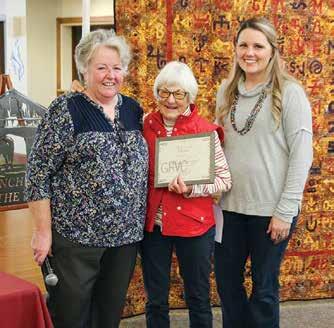
Green River Valley Cowbelles/Cattlewomen (GRVC) presented their annual honors at a leisurely awards luncheon on Feb. 22 at the Southwest Sublette Pioneers Senior Center in Marbleton.
The annual event is more leisurely as GRVC members decided to hold it the weekend before their counterparts’ meetings and big banquet for the Green River Valley Cattlemen’s Association (GRVCA) on March 1, also at the senior center.
GRVC President Haley Clark welcomed members and guests who sat at tables decorated with flowers and gifts of small jars of beef tallow lotion made by Karli Christensen.
Those gathered were
Green River Valley Cattlewomen present honors
reminded of the GRVC’s many activities throughout the year.
Everyone nibbled on delicious mini donuts provided by Bison’s Bounty in Pinedale. Carie James and crew set out yogurt, granola and fruit parfaits to tide everyone over until lunch.
Awards presented
Each year, a deserving member is nominated and honored as Ranch Woman of the Year, with Susan Hoffman selected as the recipient for 2025. Susan’s daughter-in-law Tonia Hoffman read her nomination letter as Susan’s eyes widened at the surprise.
Susan received a gift basket, a floral arrangement, a plaque and an impressive metal sign to be posted on
the honoree’s ranch.
GRVC also gives great weight to selecting each year’s Friend of Agriculture Award, which is given to someone who goes above and beyond to help the ranching community. This year, Sublette County Conservation District (SCCD) Manager Mike Henn was nominated by Coke Landers, SCCD board chair and president of the Upper Green River Valley Cattle Association.
The third honor is the selection of GRVC’s Lifetime Member. This year it was presented to Nancy Espenscheid, who was nominated by Terrie Springman. Espenscheid, who was honored a decade ago as Ranch Woman of the Year, also received a floral arrangement, gift basket and plaque.
The group enjoyed the buffet luncheon, visiting and talking with old friends and new.
Green River Valley Program
Following the awards program, those in attendance heard two informative presentations.
First, Kerry Gold explained her role with the Green River Valley Program through the Jackson Hole Land Trust, which continues work around Sublette County “to preserve conservation values” in permanent legal conservation agreements.
Austin Snook • 307-290-2161
Taylor Snook • 307-290-2273
Craig Deveraux • 307-746-5690
Dan Catlin • 406-671-7715
Clint Snook • 307-290-4000
Cheyenne Seymour • 605-641-0638
Gold explained each conservation easement is very carefully negotiated between landowners and the nonprofit.
Goals are to preserve working ranch lands and open spaces, remove future subdivision scenarios and allow landowners flexibility to set aside a building envelope for a future family home.
Gold gave the group an overview of the process, which can take three to five years.
Gold also noted there won’t be a Green River Valley Program community pic-
Kyle Kallhoff • 605-881-1526
Casey Sellers • 307-217-2614
Jim Forbes • 307-351-5932
Tye Curuchet • 307-351-8666
Daniel Escoz • 307-217-1440
Kade Kinghorn • 307-620-0525
"From the ring, to the video, and in the country, we market your livestock the competitive way."
February 26, 2025
Thank you and we appreciate your business!
nic as in summers past, but a special event is planned for Sept. 7 at the Riverbend Ranch in Bondurant.
Bullseye
Dr. Bob Beiermann, of Western Skies Veterinary Services in Big Piney then talked about important scientific advancements applicable to ranchers at high altitudes who lose cattle to brisket disease or bovine congestive heart failure (BCHF).
Beiermann introduced Shalane Bright of Bullseye Gx, whose family runs beef cattle and a feedlot in Nebraska.
Contrary to concerns a herd bull should have a pulmonary arterial pressure score indicating good respiratory function, Bright said studies show the culprit is the bull’s genetics.
Genetic tests can easily show which cattle are at high, medium or low risk for BCHF.
Ranchers can send cattle blood, semen or a punched
hole to Bullseye Gx and receive information to help build a new replacement heifer herd.
“A high-risk cow can be paired with a low-risk bull,” Bright said.
Calves, particularly steer calves, can die from BCHF if feeding is too intense, such as for 4-H steers, where marbling is treasured but could over-stress the animal.
“Two of the first things you should do when buying 4-H steers is get insurance and a genetic test,” Beiermann advised.
Upcoming events
The GRVC honorees will be veted again at the GRVCA banquet on March 1 at the Southwest Sublette Pioneers Senior Center. Visit @GreenRiverValleyCowbelles/Cattlewomen on Facebook to buy banquet tickets.
Joy Ufford is a corresponding writer for the Wyoming Livestock Roundup. Send comments on this article to roundup@wylr.net.
Ranch Woman of the Year – Susan Hoffman, pictured left, was honored as the 2025 Ranch Woman of the Year. She is pictured here with Katie, Paisley and Tonia Hoffman. Courtesy photo
By Paul Dykstra
CAB Market Update
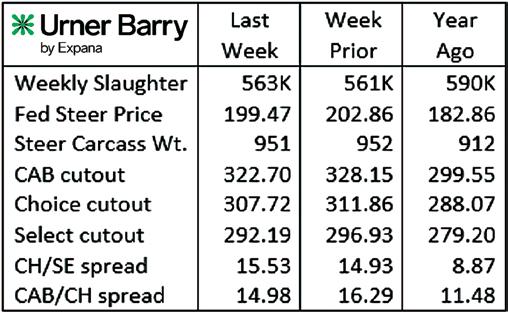
Total beef cattle harvest during the week of Feb. 17 was slightly larger than the prior week at 563,000 head, an increase of 2,000 head. Cull cow processing was the laggard with winter weather impacting movement of cattle, resulting in cow harvest pulling back 8.9 percent from the week before.
Spot-market prices for fed steers and heifers remained under pressure with live cattle futures contracts on the Chicago Mercantile Exchange continuing to lead the cash market lower.
Further pressure on cattle prices traces to lower boxed beef values which persist despite the smaller harvest volume and tighter supplies.
Firming prices in live cattle futures early in the week of Feb. 24 brought an end to the multi-day downward correction from recent record highs. The April contract remains a $3.63 per hundredweight (cwt) discount to the February contract, signaling weaker fed cattle market expectations by traders near term.
Cattle on feed stays on trend with earlier forecasts
The Feb. 1 cattle on feed report, issued on Feb. 21, contained no surprises relative to analysts’ earlier forecasts.
The number of cattle in feedyards with 1,000 head or larger capacity was 11.7 million, 99 percent of a year ago, as of Feb. 1. The head count placed in feedyards through January was 102 percent of the number placed in January 2024, a blizzard-stricken month in cattle feeding regions which resulted in a record-low placement number for this period last year.
Combined Choice and Prime quality grade rates are even with a year ago with a slightly higher U.S. Department of Agriculture (USDA) Prime grade recently at 10.8 percent of fed cattle and USDA Choice slightly lower at 72.9 percent of total.
The Certified Angus
Beef (CAB) brand acceptance rate has ranged slightly above and below a year ago in recent weeks, averaging near 38 percent of carcasses from Angusinfluenced cattle meeting all 10 of the brand’s quality specifications.
CAB drives brand relevance with specification update
Evolution of cattle type, management technology and production economics continue to shape the beef business. As a pioneer in the branded beef space, the CAB brand has remained relevant throughout the supply chain via continued innovation.
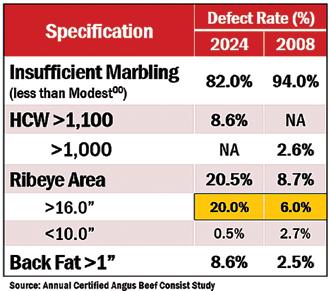
Effective the first week of March, the brand will modify its ribeye area (REA) specification from the current 10- to 16-squareinch acceptable range to include carcasses with ribeyes measuring up to 17 square inches.
Innovating to drive industry relevance has been a focus of CAB since its inception. For instance, in 2007 the brand transitioned from the “yield grade of 3.9 or leaner” standard to specifications for each of the yield grade component traits, including carcass weight, REA and backfat thickness.
Adapting to increasing fed cattle finished weights generated incremental shifts in the brand’s upper hot carcass weight (HCW) limit in 2014 and 2022. While heavier carcasses have inevitably resulted in larger beef cut sizes, CAB has been purposefully slower in modifying the REA specification until now.
In the past three years, CAB’s packing partners have shared data on six million carcasses, allowing the brand to evaluate marbling, fat thickness, REA and HCW – tracking seasonal effects and overall industry trends.
The data reveals, since shifting maximum HCW 50 pounds up to 1,100 pounds in 2022, the proportion of carcasses excluded from
CAB certification due to excessive REA size has increased by 30 percent.
This means in 2024 ribeye size has been the reason carcasses don’t qualify in 20 percent of the cases where Angus-eligible carcasses fail to meet brand standards.
Increasing the REA target by an inch represents a subtle shift in the distribution of ribeye sizes across all CAB carcasses. Data on more than two million carcasses in 2024 shows just 7.4 percent of the brand’s certified carcasses would have fallen within the range of 16.1 to 17 square inches.
As well, the shift will have little impact on middle meat steak thickness.
The difference from a 12-ounce center-cut strip steak will vary less than onetenth of an inch between carcasses measuring a 16.1inch ribeye versus a 17-inch ribeye.
It’s this research and examination which have culminated into the decision to further evolve the brand’s
standards with this adjustment. As total fed cattle supplies trend lower in the short term, this move will positively impact everyone in the brand’s supply chain, alleviating some downstream supply pressure.
From a cattlemen’s view, the shift embraces current – and most likely future – production trends. It is not a directive toward
larger cattle, rather a logical shift to sharpen the brand’s relevance in response to the evolving cattle population.
Increasingly important carcass-based cattle values will reward a few more of the highest-quality carcasses previously constrained by ribeye size, especially those near the upper end of the allowable weight limit.
It’s also important pro-
ducers realize insufficient marbling is easily the primary reason Angus-type carcasses are unsuccessful in meeting CAB specifications, with 82 percent of failures owing to this reason alone in 2024.
Pasture To Plate Performance
Paul Dykstra is the director of supply management and analysis at CAB. He can be reached at pdykstra@certifiedangusbeef.com. SATURDAY, MARCH
Stratton Wotowey (Herdsman) 970-222-1984 www.ocattle.com Follow us on
40 Limousin and Lim-Flex Bulls
OLIM MAVERICK 417M 3/4/24 - HP - 67% Lim-Flex S: MAGS Kooper Rush 2622K ET D: OLIM Gwyndolen 987G CED: 10 BW: 2.4 WW 85 YW 129 MK: 22 DOC: 16 RE: 0.73 MB: 0.37 $TPI: 101 Grand Champion Bull, 2025 NWSS Limousin Show
15 Limousin and Lim-Flex Heifers
OLIM MARVAL 496M 2/5/24 - HP - 53% Lim-Flex S: OLIM Kingsman 21K D: OLIM First Lady 852F CED: 17
0.60 MB: 0.27 $TPI: 94
I looked around the café, saw the ranchers’ table was filled and then noticed there was a seat at the farmers’ table, so I considered joining them. I mean how bad could it be? So, I went over to the dark side and asked the clodhoppers if they’d mind if I joined them.
by Lee Pitts
“Sure, pull up a seat,” said farmer number one. “We have no prejudices here. Your ball cap may advertise a bull, while mine advertises a CAT. You go to Denver to see all of the newest squeeze chutes, while we go to Tulare’s Farm Equipment Show to
see what’s new in heavy metal.”
“Some cattlemen have Red Angus, and we have red tractors,” said farmer number two.
“Yeah,” chimed in farmer number three. “We have a lot in common with you cowpokes. You have trouble finding good cowboys, while we have trouble finding good tractor jockeys. And we’re both in a bad mood when we pour out the rain gauge and four inches of dust falls out.”
“And we’ve been
invaded with imports,” said farmer number four.
“You have Charolais from France, Simmental from Switzerland and Kobe from Japan, while we have Kubotas from Japan, Argo from Europe and even some John Deere tractors made in China. America is dominated by John Deere green, while registered Black Angus wear the pants in your family.”
I countered, “But many of our Black Angus are bred to cattle of another breed.”
“Are you kidding? Farmers invented crossbreeding,” said farmer number four. “Have you ever heard of a tangelo, a limequat or an orangelo?”
“Yeah,” chimed in farmer number one. “It’s a common sight in farm country to see a green John Deere pulling a blue New Holland baler. If that’s not crossbreeding, I don’t know what is.”
“I’ll tell you what it is,” said the grumpy Oliver guy. “It’s heresy. That’s what it is.”
“It’s just because you’re so red you own 35 antique Oliver tractors,” said the county Extension agent who’d joined us.
“There’s another difference between farmers and ranchers,” he contin-
ued. “You don’t see ranchers preserving taxidermy bulls or entering them in the Fourth of July parade. Generally, ranchers don’t have huge shops with bridge cranes, milling machines, expensive tool chests filled with Snap-On tools and piles of used tires everywhere. And, you won’t find any horses on farms much anymore, except in Amish country.”
“Now that I think of it, ranchers and farmers do have some equipment in common,” I said. “We’re both starting to use drones, there’s usually a Bobcat or a mini-excavator on most big ranches, and we both use ATVs.”
I added, “All of us are just like firefighters – we’re always putting out fires. My bull might be shooting blanks, while your tractor may not start. A rancher might have to get up in the middle of the night to check the bred heifers, while a vegetable farmer checks on pumps and generators around the clock.”
“Yeah, I suppose we do have a lot in common,” said farmer number two. “We both get the farm papers to check on prices and read the classified ads. All of us have to worry about being sued into
insolvency for salmonella and E. coli, and the product of our toil is hauled to market by Peterbuilts and KWs.”
“We both drive pickups to check on water, and many of us have equipment we use only once a year –farmers their harvesters and ranchers their scales,” farmer number two went on.
“All of us pay attention to hay prices and many ranchers stoop so low as to grow their own. We both like auctions where farmers buy big tractors and ranchers buy young bulls and old cows. Both farmers and ranchers take out big bank loans to pay for everything, and we both have no idea how we’ll ever pay it back. And, farmers and ranchers get paid just once a year – if we’re lucky.”
By the end of breakfast with the crazy cultivators, I had gained a new appreciation for them, and we slowly formed an uneasy truce.
I found myself eating breakfast with them more often because my old rancher buddies had banned me from their table for associating with the sod busters. They said I’d need to get all of the requisite vaccinations if I ever wanted to rejoin their table.
related to body temperature.
“There are a lot of things in our environment that try to disrupt the internal body temperature of our livestock,” he said. “Air temperature is the most obvious, and wind speed is a pretty obvious one as well. Humidity also plays a role. Then there is clear versus cloudy skies, as the amount
of solar radiation actually making contact with the hide is a factor as well.”
Most said there are also a lot of non-environmental factors influencing the ability of an animal to maintain its body temperature. These include nutritional status, body condition score, available forage, coat or fleece status, genetic influence,
Horse Property for Sale
This is a horseman's paradise. Large brick home, sandy arena, paddocks, lean too sheds, hay sheds, all pipe construction. Newer horse barn with wash rack and heated tack room. Everything is sprinkler irrigated. Located on a paved farm to market county road. 12.47 acres with 9.92 acres irrigated. The house is a fourbedroom, brick, two bath, ranch style home. Price is $650,000.
developmental stage and production status.
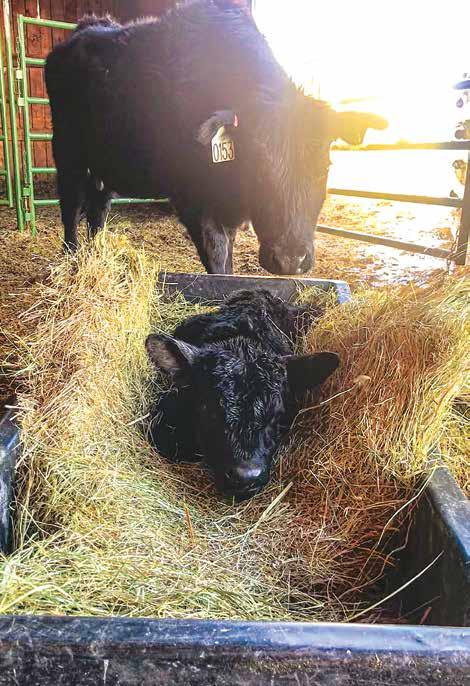
“We have some animals we really have to work to protect, like newborns for instance. When they come into the world, they are wet and they do not have the ability to maintain their core body temperature until they have dried off,” he explained.
“Growing yearling and gestating or lactating females all have additional energy requirements relative to a mature female that is not milking, so being cognizant of production status is also important when temperatures take a dip,” he continued. “Certain groups will need to receive higher priority than others.”
Environmental factors
Blair Newman, WLS, GRI, ALC
Broker/Owner Wyoming Land Specialist/Accredited Land Consultant
215 East 20th Ave. • Torrington, WY 82240 307-532-1592 Or Toll Free 800-658-4431 land@newmanrealty.com
Additionally, Most reminded producers to be aware of specific environmental factors at play on their operations, as different areas across the state –and even from operation to operation in the same region – experience from different environmental conditions.
For southwest Wyoming specifically, he cited data from the EvanstonUinta County Airport which shows, on average, a low ambient air temperature of 15 degrees Fahrenheit and a high of 32 degrees Fahrenheit for late February and early March.
While humidity discomfort isn’t generally a factor in the southwest part of the state, wind speed is. According to the same set of data, the area sees an average eight miles per hour (mph) this time of year.
“This doesn’t show any
specific spikes in the wind, it’s just an average. But it was plenty windy here earlier this month with 60 to 70 mph gusts recorded at the airport,” said Most. “Cold temperatures and wind speed combined create some really dangerous conditions for our livestock.”
Increasing nutrient intake
According to Most, livestock have a regular body temperature of around 102 degrees Fahrenheit and, in winter months when cattle have a thick hair coat and sheep are in full fleece, they have a lower critical temperature of 32 degrees Fahrenheit and 18 degrees Fahrenheit, respectively.
“Below this temperature, animals have to start expending energy from fat reserves to maintain their body temperature,” Most explained.
“Once they hit this lower critical temperature, they start to shiver. They find ways to mobilize energy reserves in their bodies to increase heat production, but eventually they will hit a point where it can’t be sustained and they lose their ability to regulate their internal temperature,” he added.
As livestock pass this lower critical temperature threshold and begin burning energy to stay warm, nutritional energy requirements increase.
“But livestock can only eat so much. Eventually they will max out, and they won’t be able to keep up with their energy demands,” he noted. “This is when we might start thinking about supplementing protein to improve intake and continue to meet energy requirements.”
Most reiterated, “Feed is a big tool we can use to combat cold stress in our livestock species. Energy demand does increase in the cold, and capacity for intake will become limiting.
Any animals in a production state like gestating or lactating are going to have elevated demand.”
He further noted supplementation may include things like high-quality alfalfa or extra grass hay, since roughage generates up to 34 percent of an animal’s body heat as it moves through the rumen, or a source of high-quality protein like distillers’ grains
or cake, which improves digestibility of the roughage.
Although there isn’t specific literature implying feeding in late afternoon increases body temperature overnight, Most said it’s likely true since rumination peaks about six hours after feeding.
“We can infer feeding in late afternoon will line up peak heat generation with the coldest overnight temperatures,” he said.
Providing shelter
In addition to increasing nutrient intake, Most said providing windbreaks or other structural relief from Wyoming’s unrelenting wind and harsh temps is a good way to mitigate the impacts of cold stress.
This will also help keep animals dry, since a wet coat enhances cold stress exponentially.
Most explained cattle’s hides collapse when they get wet, causing them to lose their insulating power.
At just 59 degrees Fahrenheit, a mature cow has to start burning energy to maintain body temperature if her hide is wet.
“This is typically of large concern when there is liquid precipitation coming out of the sky,” he clarified. “Snow does not tend to collapse the insulating capacity of the coat in the same way.”
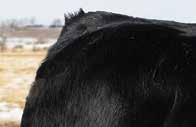
In fact, he noted snow on backs is a good sign, as it indicates there is enough insulation to keep body heat from escaping.
“Sheep tend to be a little more resilient, but they are susceptible at a certain period, especially right after shearing,” he added. “If there is any kind of storm event coming through at this time, shelter needs to be prioritized to keep them dry as best as you can, at least for five to seven days until they get reacclimated to being shorn.”
In conclusion, Most explained windbreaks can include everything from stacked bales, tree lines and snow fence, etc. and reminded producers to be aware of where they erect their windbreaks since they tend to catch snow and cause drifting.
Hannah Bugas is the managing editor of the Wyoming Livestock Roundup. Send comments on this article to roundup@wylr.net.
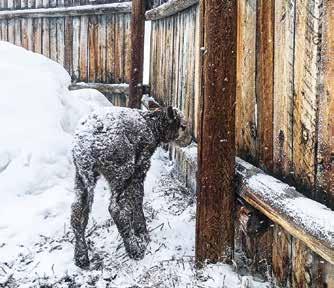
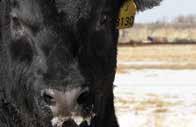
Highly susceptible – Certain groups of animals are more susceptible to the impacts of cold stress than others, especially wet newborns that don’t have the ability to maintain core body temperature until they have dried off. WYLR photo
Brown
Unlike the relatively unsuccessful launch of alternative meat, plantbased milk – almond, oat, coconut, soy, etc. – have become mainstream, and in the unrelenting race for anti-ag groups to turn consumers toward animalfree foods, another product is set to hit the market – the world’s first lab-made whole milk.
According to a report published in 2023 by the University of Saskatchewan and a precision-fermentation company known as Formo, lab-grown dairy has the potential to disrupt the dairy industry, possibly nabbing up to one-third of the current market share.
UnReal Milk
On Feb. 25, Brown Foods, a Boston-based startup backed by Y Combinator, announced the creation of UnReal Milk, a cow-free dairy product designed to match the taste, texture and nutritional quality of conventional cow’s milk, using a mammalian cell culture process.
While there are currently 28 companies around the world actively involved in the research or development of precision fermentation – and several which currently sell lab-grown dairy products in the U.S., including Perfect Day, Bel Brands, Cowabunga, Betterland Milk and Strive Nutrition – Brown Foods claims their processes and products are different.
“Brown Foods has achieved a significant scientific and technological breakthrough by producing the world’s first test tube of lab-grown milk,” says Dr. Richard Braatz, Massachusetts Institute of Technology Edwin R. Gilliland professor of chemical engineering, biopharmaceutical manufacturing expert and member of Brown Foods’ Scientific Advisory Board.
“Unlike precision fermentation, the key strength of Brown Foods’ technology approach is using mammalian cell culture which enables us to produce all components of milk together as whole milk. Technology can also be scaled up using bioreactor systems to produce mass volumes of milk for
human consumption,” he continues. “What makes this breakthrough remarkable is its scalability. This technology can be scaled to meet global demand while delivering a solution which is sustainable and resource efficient.”
Brown Foods alleges UnReal Milk contains all of the essential dairy proteins, fats and carbohydrates which make up 99 percent of conventional cow’s milk while “redefining sustainability in the dairy industry” with a product that has an “estimated 82 percent lower carbon footprint and uses 90 percent less water and 95 percent less land usage.”
On the other hand, the process of precision fermentation, which has been used by companies for a few years now, includes mixing yeast, simple sugars and gene sequences from cow’s milk into a bioreactor to create whey and casein – two of the most important proteins in mammalian milk – then adding fat and flavoring to achieve the right taste and texture, according to a July 20, 2023 article written by Björn Ólafsson and published in Sentient Media
“The result is a product that looks, tastes, smells and feels essentially indistinguishable from cow’s milk,” Ólafsson writes.
Market disruption
Although processes to achieve lab-made milk products may differ, a potential for market disruption still exists.
In fact, through blind taste testing and consumer surveys, Formo found animal-free dairy “has the potential for a massive market disruption.”
Ólafsson notes researchers in the United Kingdom asked consumers about their hypothetical choices in the cheese aisle at the grocery store – three types of mozzarella, one plantbased option or one precision-fermented option.
“The choices were also presented with different price points, intended to replicate how the product would initially debut with slightly higher prices which would come down over time,” he explains. “The result was large sup-
continued from page A1
Select Bred Ewe Sale sold 159 head, grossing a total of $29,350 at an average $209.64 per head.
Sixty head of bred Targhee-Rambouillet cross running-age ewes made up the largest offering in the sale, bringing a total of $12,100 at an average $201.67 per head.
Bred Rambouillet running-age ewes averaged $200 per head, with 32 head bringing a total $6,400, while 19 head of bred Targhee running-age ewes brought $4,180 at an average of $220 per head.
The sale also featured 29 bred Targhee yearling ewes, which brought $6,670 and averaged $230 per head. Additionally, 10 head of Rambouillet ewe lambs and nine bred Rambouillet broken-mouthed ewes were no sales.
Hannah Bugas is the managing editor of the Wyoming Livestock Roundup. Send comments on this article to roundup@wylr.net.
port for animal-free cheese with nearly 65 percent of study participants willing to try the product, 21 percent of which indicated they don’t normally eat cheese.”
Formo Researcher Oscar Zollman Thomas believes the drivers behind this are animal welfare concerns and the common knowledge cheese is a processed food. He notes, while some consumers cast off cultivated meat as ultra processed and unhealthy, this isn’t the case for cheese. Therefore, he
speculates many won’t care about the processes used to achieve lab-grown milk products.
Some optimism
While news of novel products may be concerning to the dairy industry, especially with an ever-declining dairy herd and lower milk production and consumption in the forecast, there is still some optimism among producers.
According to a December 2024 Farm Progress article by Senior Editor Fran O’Leary, dairy con-
sumption climbed to a 64-year high in 2023, with Americans consuming 661 pounds of dairy on a per capita basis.
O’Leary notes cheese posted its third consecutive record year in 2023 as Americans, on average, ate 40.5 pounds of cheese, including a record 11.83 pounds per capita of cheddar and 12.45 pounds per capita of mozzarella.
With latest research suggesting saturated fats are important to the human diet, butter has also seen a
resurgence, with 2023 per capita sales reaching 6.5 pounds – the highest since 1965.
Although lab-made milk may catch some consumers’ attention, the decline of alternative and lab-grown meat has shown many are actually turning back to an all-natural animal-based diet.
Hannah Bugas is the managing editor of the Wyoming Livestock Roundup. Send comments on this article to roundup@ wylr.net.
In this stage of production, maintenance needs can be met by supplementing two to 2.5 pounds of a 20 to 25 percent CP source for cows grazing dormant range or low-quality forage.
However, as calving approaches, these requirements increase, peaking around 60 to 80 days postpartum with an energy demand of 15 to 16 pounds TDN per day.
It is important to note, during this time, there is a shift in the cow’s first limiting nutrient from protein to energy, Walz mentions.
UNL Beef Systems
Extension Educator Meredith Bremer and UNL Cow/Calf Range Management Specialist Dr. Karla Jenkins agree.
“Both the mature cow and first-calf heifer have high energy requirements during lactation,” they explain in a UNL Exten-
sion publication dated October 2015. “If cows are turned out at pasture greenup, the grass will likely meet the energy needs of the cow. However, if peak lactation occurs before pasture turnout, supplementation must occur if the base diet is dormant range or low- to medium-quality hay. Providing a supplement high in protein and energy would be ideal.”
They note good examples of high-protein and energy sources for lactating cows include dry distillers’ grains, high-quality alfalfa and corn.
“Time of calving, age of breeding females and quality of the base diet determine if and when supplementation is necessary for a cow herd during late gestation and lactation,” Bremer and Jenkins say. “A spring-calving cow will be in late gestation – and pos-
sibly peak lactation – prior to pasture turnout in the spring, depending on calving date and forage availability. Thus, supplementation may be necessary to meet the cow’s nutritional needs.”
When it comes to creating a strategic feed and supplementation plan, Walz notes it is important producers test their forages and have an inventory of feed on hand – of both quality and quantity.
Additionally, because feed costs represent a major expense on any operation, he encourages producers to reflect on what they have available in their area and what they can actually afford.
“Realizing one cannot always afford to meet the cow’s nutrient requirements will help with a nutritional plan – putting body condition on cows when their energy requirements are the lowest and letting the cow use that body con-
dition as an energy source when producers cannot afford to meet her requirements,” Walz states. “As such, knowing what type of supplement is needed, when it is needed and how to compare supplements based on nutrient content will help producers make better decisions on needed supplement purchases.”
Monitoring BCS
Many experts and producers agree monitoring body condition scores (BCS) of cows is one of the most effective management tools when evaluating nutritional status of the herd.
Walz recommends scoring cows in a spring-calving system at least a handful of times throughout the year, especially during late summer, fall, weaning, 45 days after weaning and 90 days before calving.
At calving, a BCS of five is recommended.
“The most economical time to put condition on thin cows is after weaning,” he
says. “Ninety days before calving is the last opportunity to put condition on cows economically.”
The best way to manage BCS across the herd during cold winter months and into the spring calving season is to sort cattle into production groups based on age and BCS. This allows producers to create economical, custom dietary plans to meet differing nutritional requirements of cows in the herd.
For instance, thin cows and first- or second-calf heifers can be fed a greater quantity of feed, a higher quality of feed or supplementation mixes other cows in the herd may not need. This cuts costs and keeps pushy cows from bullying younger, thinner cows away from feed.
“Sorting cattle into feeding groups will help producers develop a feeding plan that will maintain cows in adequate body condition or provide needed weight gain for thin cows prior to and throughout the breeding season,” Walz reiterates.
Prioritizing heifers
Because heifers are still growing and simultaneously raising a calf, experts remind producers to prioritize heifer nutrition and health.
Walz notes, as calving approaches, heifers should have a BCS of six, and three weeks prior to calving, they should be separated from the main herd.
“First-calf heifers decrease their daily dry matter intake by 17 percent in the three weeks prior to calving,” Walz states. “Feeding an energy and protein-dense diet to heifers is necessary to compensate for this reduced intake at calving.”
Fellow UNL Extension Specialist Dr. Rick Rasby notes in a separate UNL publication, first-calf heifers should be consuming a diet of at least 62 percent TDN and 10 to 11 percent CP post calving.
Rasby explains winter range, grass hay or meadow hay alone will not meet a heifer’s nutrient requirements and should instead be supplemented with high-quality alfalfa, distillers’ cake or other nonbulky supplements high in energy and protein.
Bremer and Jenkins note energy and CP supplementation should continue after calving and in to the breeding season.
“A heifer is not at her mature weight prior to her first calf being born, so she
will need supplemental protein and energy for muscle deposition, milk production and body condition maintenance,” they say.
“Research has shown supplementing metabolizable protein prior to calving in spring-calving heifers is needed to increase the pregnancy rate on the second pregnancy, and similar responses have been documented for supplemental energy, suggesting metabolizable protein and energy needs are hard to separate for the young cow,” add Bremer and Jenkins.
Data collected by the U.S. Department of Agriculture’s (USDA) Agricultural Research Service in Miles City, Mont. has also shown heifer rebreeding success is intertwined with how they partition nutrients immediately postpartum.
The USDA research found, in order, cattle direct nutrients to basal metabolism, activity, growth, basic energy reserves, established pregnancy maintenance, lactation, additional energy reserves and estrus cycles and pregnancy initiation.
Ultimately, this means heifers utilize nutrients for their own growth before directing them toward reproduction, resulting in an average three to four weeks longer period of postpartum anestrus than their older counterparts.
In a Feb. 25 BEEF Magazine article by Clint Peck, Ruminant Nutritionist Dr. John Paterson, says this is why it makes economic sense to have heifers on an upward plane of nutrition moving into the breeding season. He further notes, with each heat cycle missed, a beef producer can miss out on 40 pounds of gain in a heiferʼs weaned calf.
“We want heifers to be in a position after calving where they can show estrus as early as possible and rebreed on their first post-calving cycle,” Paterson says. “And each cycle missed equates to a significant amount of money left on the table at weaning.”
“First calvers represent future brood cows, and we know they require more labor and management, along with higherquality feeds,” Rasby concurs. “But if we’ve done our homework with due diligence, they’ll reward us by being productive cows for a long time.”
Hannah Bugas is the managing editor of the Wyoming Livestock Roundup. Send comments on this article to roundup@ wylr.net.
Local Cody resident Norm Hayes was known as an avid inventor in the livestock industry, holding numerous patents, including ear tags for livestock.
In 1967, Hayes, along with partners from Texas, founded Y-Tex, a name which reflects a compromise to keep the company based in Wyoming.
Initially, manufacturing was outsourced, but within a few years, production moved to Cody, where it has remained, adding to the uniqueness of the agricultural company.
Over the years, as the business has expanded, it has changed hands.
However, Glenn Nielson currently serves as company president and is dedicated to the organization’s mission, which is deeply rooted in the livestock industry and committed to providing highquality products with real value.
Y-Tex products are designed to meet customer needs, and their insecticide ear tags have been developed to help manage troublesome insect populations effectively over the years.
Insecticide ear tags
Insecticide ear tags can be an essential part of any livestock program when certain pest species become unbearable for animals on pasture.
However, there’s more at play than simply sticking a tag in an ear and walking away. Producers should be strategic about how they utilize ear tags over time to get the most out of their investment.
An insecticidal ear tag is made from molded PVC and contains a slow-release insecticide to kill flies through direct contact.
Tags are attached to the animal’s ear the same way identification tags do, and after attachment, the insecticide begins releasing small volumes every day for the next three to four months.
The active ingredient in each tag is transferred to the animal through hair follicles during natural grooming efforts, but because of the slow-release process, the chemicals do not get absorbed into meat or milk products.
Y-Tex says studies have found a lethal dose of insecticide on hind leg hair clippings three days after tagging.
This means the chemical traveled from the back of the ear to the back leg in just three days with a strong enough dose to be effective against pests.
Suppose targeted pests have been exposed to a sublethal dose of insecticide. In this case, they can develop a resistance to a particular
chemical group and develop resistance if they get the same chemical repeatedly.
Resistance can develop rapidly, depending on the kind of fly and how quickly they reproduce, continuing through generations as more pests are exposed to the chemical.
Y-Tex rotation plan
Y-Tex is a global leader in ectoparasite control for cattle and has been providing effective animal management solutions for livestock producers for more than 55 years.
In this time, 200-plus product trials have been conducted on insecticide ear tags alone, and Y-Tex is the only manufacturer who offers producers a four-year chemical rotation of insecticide tags.
Y-Tex suggests utilizing this chemical rotation strategy to help prevent insecticide resistance, because when fly populations are not exposed to certain chemicals for two to three years, they’re not as likely to build up resistance.
This is why a four-year insecticidal ear tag rotation is worth implementing into any fly control program.
Y-Tex suggests using the Tri-Zap tag during year one, which utilizes a unique combination of zetacypermethrin, abamectin and piperonyl butoxide. These three active ingredients control
horn and face flies, lice and spinose ear ticks.
The Tri-Zap ear tag can be used on beef and dairy cattle, including calves and lactating dairy cows.
In year two, Y-Tex suggests choosing either MAX40 or Optimizer ear tags, as both have a different active ingredient than the previous year.
This time, organophosphate helps control targeted pests for up to five months, and the patented Snap-Lok collar prevents tag or button failure for up to five months.
Max40 ear tags can be used on beef and non-lactating dairy cattle to control horn flies, including pyrethroid-resistant populations, Gulf Coast ticks, spinose ear ticks and lice and to aid in controlling face, stable and house flies.
However, Optimizer ear tags can control horn flies, including pyrethroid-resistant populations, lice, Gulf Coast ticks and spinose ear ticks and to aid in controlling face flies on beef and nonlactating dairy cattle.
Max40 can be used in the winter to control biting or little blue cattle lice and to aid in the control of long-nosed and short-nosed cattle lice.
In year three, Y-Tex suggests controlling horn and face flies, lice and ticks with either the PYthon II or the best-selling PYthon II MagnuM ear tags.
Both of these are approved for lactating dairy cows, and there’s no withdrawal time required.
PYthon II MagnuM provides repellent activity against horn flies resistant to some other insecticides for up to four months and biting lice for up to three months.
This tag also aids in the control of face flies, stable flies, house flies and sucking lice for up to three months.
For the last step in the rotation, Y-Tex suggests using XP 820 ear tags which contain the active ingredient macrocyclic lactone, where
several independent studies have shown the tag improves the average calf’s weight gain compared to untreated animals.
XP 820 can be used on beef and dairy cattle, including calves and lactating dairy cows and controls horn flies, including pyrethroid- and organophosphate-resistant populations, Gulf Coast ticks and spinose ear ticks, while aiding the control of American dog ticks, cattle fever ticks, Lone Star ticks and face flies.
With the most innovative insecticide tag formulations in many different chemical classes, Y-Tex offers producers the choice for a combination of active ingredients to fit their specific needs and budget.
Melissa Anderson is the editor of the Wyoming Livestock Roundup. Send comments on this article to roundup@wylr.net.
March 1-2
March 4 Saratoga-Encampment-Rawlins and Medicine Bow Conservation Districts Winter Workshop, 10 a.m.-4 p.m., Platte Valley Community Center, Saratoga. For more information or to RSVP, e-mail joe.sercd@gmail.com or call 326-8156 or 379-2221.
March 4 University of Wyoming Extension Private Pesticide Applicator Program, 1-5 p.m., Conference Room, Greater Hulett Community Center, Hulett. For more information or to RSVP, contact Sara Fleenor at sfleenor@uwyo.edu or 307-283-1192.
March 4 University of Wyoming Sheep Task Force Predator Management Webinar, 6-7 p.m., online. For more information, contact McKenna Julian at mbrinton@uwyo.edu or 307-828-4093. To register, visit bit.ly/wy-predator
March 5 University of Wyoming Extension Private Pesticide Applicator Program, 9 a.m.-12 p.m., Sublette County Extension Office, Pinedale. For more information or to RSVP, contact the Sublette County Extension Office at sublette@ uwyo.edu or 307-367-4380.
March 5 University of Wyoming Extension Private Pesticide Applicator Program, 2-5 p.m., Eden Valley Community Center, Farson. For more information or to RSVP, contact the Sublette County Extension Office at sublette@uwyo.edu or 307-367-4380.
March 6 University of Wyoming Extension Private Pesticide Applicator Program, 9 a.m.-12 p.m., Fremont County Courthouse, Lander. For more information or to RSVP, contact the Lander Extension Office at 307-3322363 or rfisk@uwyo.edu.
March 6 University of Wyoming Extension Private Pesticide Applicator Program, 10 a.m.-2 p.m., Hot Springs County Weed and Pest Office, Thermopolis. For more information or to RSVP, contact the Hot Springs County Extension Office at 307-864-3421.
March 6 University of Wyoming Extension Private Pesticide Applicator Program, 1-5 p.m., Valley Community Center, Baggs. For more information or to RSVP, contact the Carbon County Extension Office at 307-328-2642 or ajacks12@ uwyo.edu.
March 7 2025 Working Lands Workshop Series, 7:30 a.m.-5 p.m., Watt Building, Sheridan. For more information or to register, visit sccdwy.regfox.com/2025wlw-pt1
March 7-8 Returning to the Farm 2025 Workshop, Central Community College, Hastings, Neb. For more information or to register, visit cap.unl.edu/rtf25
March 7-9 Black Hills Gun Show, The Lodge at Deadwood, Deadwood, S.D. For more information, call 605-641-0870 or 307-751-1877.
March 8 Harvest Wyoming, 8:30 a.m.-3 p.m., Clay Pathfinder Building, Laramie County Community College, Cheyenne. For more information or to register, visit bit.ly/harvestwyoming2025
March 11 University of Wyoming Extension Private Pesticide Applicator Program, 10 a.m.-2 p.m., South Lincoln Training and Events Center, Kemmerer. For more information or to RSVP, contact the Sublette County Extension Office at sublette@uwyo.edu or 307-367-4380.
TW Angus Fourth Annual Online Production Sale, 605-999-0018, 605-6951990, DVAuction.com twangus.com
March 5 Ox Bow Ranch Spring Production Sale, at the ranch, Wolf Creek, Mont., 541-965-0088, oxbowranchangus.com
March 6 Bieber Fever 50th Annual Performance Yearling Bull Sale, at the ranch, Leola, S.D., 605-439-3628, bieberredangus.com
March 6 Split Diamond Ranch 34th Annual Angus Bull Sale, Dillon Livestock Auction, Dillon, Mont., 406-498-3005, 406-581-0612, splitdiamond.com
March 7 Quest of the West 20th Annual Cattle Sale, Spanish Fork Fairgrounds, Spanish Fork, Utah, 801-420-2962, questofthewestcattle.net
March 8 Sega Gelbvieh Pound-Makin’ Genetics Bull Sale, at the ranch, Pierce, Colo., 970-590-4862, 970-381-0600, segagelbvieh.com
March 8 MTR Cattle Company Bull Sale, Buffalo Livestock Marketing, Buffalo, 307217-0408, 307-217-0409, mtrcattlecompany.com
March 8 Wishbone Simmental Inaugural Sale, at the ranch, Frannie, 307-272-4009, 406-690-3369
March 10 Pine Coulee Bull Sale, Wagon Box Ranch, Hardin, Mont., 406-855-2832, 406-780-1230, pinecoulee.com
March 10 Veseth Cattle Company 19th Annual Sale, Glasgow Stockyards, Glasgow, Mont., 406-658-2504, vesethcattleco.com
March 10
Spring Cove Ranch Bull Sale, at the ranch, Bliss, Idaho, 208-320-8803, springcoveranch.com
March 10 P\T Livestock Annual High-Country Genetics Performance Bull Sale, P\T Livestock Feedlot, Riverton, 307-709-8351, ptlivestock.com
March 11
March 11
March 12
March 12
March 14-20
Loosli Red Angus 51st Bull Sale, at the ranch, Ashton, Idaho, 208-652-3303, 208-227-3779, 208-351-3333, loosliredangus.com
Diamond Peak Cattle Company Diamonds in the Rough Bull Sale, Riverton Livestock Auction, Riverton, 970-326-8620, diamondpeakcattle.com
Sitz Angus 23rd Annual Spring Bull and Female Sale, at the ranch, Dillon, Mont., 406-683-5277, 406-581-9153, 208-670-2364, sitzangus.com
Heart River Ranch Annual Production Sale, the Feedlot, Belfield, N.D., 701290-9745, 701-260-4630, heartrivergenetics.com
Big Mountain Auctions Farm and Construction Online Auction, 208-4319300, bigmountainauctions.com
POSTCARD
from the Past
Compiled by Dick Perue rrichardperue@gmail.com
Wyoming Horses Sought for Spanish American War
Horses from the great state of Wyoming have long been sought by folks throughout the world.
In a 1908 prospectus book selling Wyoming and touting its agricultural advantage, it was noted, “We quote the following from the Wyoming 1907 Official Statement, authorized by the Ninth Legislature.”
Horses
It has been proven beyond question horses raised on the foothills and mountains, in the pure light air of an elevation of 5,000 to 10,000 feet, have better lungs, stronger and better-developed bone and muscle and tougher hoofs than horses from any other country.
This is borne out by the fact not only the U.S. Government – during the Spanish War and since – but the English Government, for service in South Africa, have purchased as many thousand head of horses in Wyoming as could be obtained.
No horse in the world can compete with the Wyoming horse in endurance of all kinds of hardship to which horse flesh is subjected by man. This is a broad statement, but we make it without fear of refutation, every horseman and horse in the state stands ready to back it up.
Embracing about 98,000 square miles of territory, nearly every acre of which is clothed in a man-
tle of the most nutritious grasses and sagebrush browse, Wyoming presents a territory for grazing purposes 40 percent larger than is found in all of the eastern states combined.
Add to this vast food supply the most delightful climate in the world, with cool summers and dry, mild winters, and it is but little wonder Wyoming has been called “Stockman’s Paradise,” and it has become an important factor in supplying beef, mutton and wool to eastern and western markets.
The requisites for success in the business are a few cattle, sheep or horses and attention to their wants under the conditions of the
country and climate. The man who can do this for a few years will, with common prudence, find himself independent of the world, and his old age may be spent in peace and with plenty.
In a reference to the Spanish American War and the purchase of horses in 1898, The Saratoga Sun reported, “Cavalry horses for Col. Torrey’s cowboy regiment are being purchased. Horses must be between four and eight years old, geldings, perfectly sound, well broken, gentle, not under 15.5 hands high, not under 850 pounds or over 1,150 pounds, bay, chestnut, brown or black.”
The article was in reference to the organization by Capt. L.G. Davis of Carbon County’s Troop H of the Cavalry Rough Riders to join Col. Torrey and former President Teddy Roosevelt to fight in the Spanish American War. Over 200 Wyoming volunteers joined this troop and each was required to provide his own mount, according to the newspaper.
Pictured at a ranch in the Upper North Platte River Valley of south-central Carbon County is “Fannie N,” half-sister to “Wyoming,” a saddle horse which was presented to former President Theodore Roosevelt during one of his many visits to the Cowboy State in the early 1900s. Photo from Bob Martin/Dick Perue collection. Historical Reproductions by Perue
Compared to last week slaughter lambs 10.00-40.00 higher. Slaughter ewes steady to as much as 40.00 higher. Feeder lambs not well tested. At San Angelo, TX 5,540 head sold. No sales in Equity Cooperative Auction. 2,767 lamb carcasses sold with no comparison due to confidentiality. All sheep sold per hundred weight (CWT) unless otherwise specified. Slaughter Lambs: Choice and Prime 2-3 San Angelo: wooled and shorn 110-120 lbs 186.00-200.00; 120-140 lbs 170.00-202.00; 150-180 lbs 150.00-194.00. Ft. Collins: wooled and shorn 110-130 lbs 225.00-290.00; 143 lbs 210.00.
South Dakota: wooled and shorn 135-145 lbs 172.00-180.00. Billings: wooled and shorn 110-145 lbs 169.00-210.00. Equity Coop: no sales. Slaughter Lambs: Choice and Prime 1-2 San Angelo: hair 40-60 lbs 317.00-353.00, few 357.00-358.00; 60-70 lbs 310.00-349.00, few 350.00-356 .00; 70-80 lbs 270.00333.00, few 338.00-340.00; 80-90 lbs 270.00-292.00, few 304.00-316.00; 90-110 lbs 228.00-274.00. wooled and shorn 53 lbs 336.00; 62 lbs 328.00; 70-80 lbs 280.00-322.00; 80-90 lbs 260.00-262.00.
San Angelo: Good 3-4 (very fleshy) no test; Good 2-3 (fleshy) 146.00-150.00, hair 120.00-160.00; Utility and Good 1-3 (medium flesh) 140.00-168.00, hair 148.00-168.00; Utility 1-2 (thin) 150.00, hair 120.00-156.00; Cull and Utility 1-2 (very thin) 108.00; Cull 1 70.00. Ft. Collins: Good 3-4 (very fleshy) 82.50-120.00; Good 2-3 (fleshy) 85.00-120.00.
South Dakota: Good 3-4 (very fleshy) 85.00-95.00; Good 2-3 (fleshy) 100.00-110.00; Utility 1-2 (thin) 90.00; Cull 1 75.00. Billings: Good 3-4 (very fleshy) 85.00-97.00; Good 2-3 (fleshy) 90.00-102.00, hair 120.00: Utility 1-2 (thin) 95.00 115.00; Cull 1 85.00.
Feeder Lambs: Medium and Large 1-2 San Angelo: hair 40-50 lbs 330.00-335.00.
San Angelo: young hair 100-115 lbs 172.00-218.00/cwt; hair ewes and lambs 104.00-118.00/head. Ft. Collins: no test.
South Dakota: bred middle age 240.00/head. Billings: ewe lambs 112 lbs 180.00/head; yearlings 205.00285.00/head; young 180.00-240.00/head; middle age 160.00200.00/head; aged 145.00-185.00/head. Sheep and lamb slaughter under federal inspection for the week to date totaled 34,000 compared to 38,000 last week and 36,000 last year.
Source: USDA AMS LPG Market News, San Angelo, Texas
National Wool Review
As of February 21, 2025
Domestic wool trading had no confirmed trades reported this week. Prices reflect trades FOB warehouse in original bag or square pack, bellies out, some graded, and 76 mm or longer. No allowance made for coring, freight, or handling fees at the warehouse level to reflect net grower prices. Wools shorter
discounted .10-.20 clean. Classed and skirted wools usually
to original bag prices.
Source: USDA- CO Dept of Ag Market
As of February 26, 2025
Greeley, CO
Movement has increased since the last report, producers are saying demand has been slow all over Wyoming, even for this time of year. Most hay that is moving is moving in small loads at a time. According to the U.S. Drought Monitor Website most of Eastern Wyoming is under severe to extreme dry soil moisture. Western Wyoming is moderately dry to severe dry soil moisture with a small patch of extreme drought. According to the National Weather Service Website precipitation was lower than normal for this time of year all over the state. Temperatures have been below normal for this time of year. According to the University of Wyoming and NRCS Weekly Snow Report, the states SNOTEL’s are reading 103% of median with a high of 113% and a low of 49%, this time last year the state was 89%, and was at 115% in 2023. Western Wyoming is 95%-113% of median and northeast Wyoming is 79%-87% of median, southeast Wyoming mountain range is 97%-103% of median, around Cheyenne is 49% of median. According to the Wyoming Crop Progress Report, as of January 2025, hay and roughage supplies were rated at 89% adequate in the state. Pasture and range is 13% good condition and 25% fair condition, winter wheat is 1% good condition and 62% fair condition, all Livestock is 57% good condition.
Nebraska Hay Summary As of February 26, 2025
Compared to last week alfalfa hay sold steady, grass hay steady to 5.00 lower. Ground and delivered hay and alfalfa pellets steady. Demand is light to instances moderate for bales of forage. Good demand for alfalfa pellets to be reconditioned into livestock feed. Like a broken record player (for those that can remember) the hay market just sits there and skips and not much changes each week. Few loads of hay are getting sold but overall, there will be some large carry over hay supplies into the new crop season. For this reason, some hard-core hay producers are tearing up stands of irrigated alfalfa and will plant a grain of some type, probably corn. Many that are doing this say they can sell a load of corn any day of the week to an elevator, feedlot, ethanol plant or contract it and have cash flow. With bales of hay there must be a demand or a willing buyer to sell a load of hay. Fire index is high across the state with several acres burned this week. Hopefully Mother Nature will bring some much-needed moisture across the state in the very near future.
U.S. Secretary of Agriculture Brooke Rollins announced the U.S. Department of Agriculture (USDA) will release funds which were paused due to the review of funding in the Inflation Reduction Act (IRA).
According to a Feb. 20 USDA press release, and following White House directives, Rollins will fulfill contracts already made directly with farmers.
Specifically, USDA will release approximately $20 million in contracts for the Environmental Quality Incentive Program (EQIP), the Conservation Stewardship Program (CSP) and the Agricultural Conservation Easement Program (ACEP) which all fall under the Natural Resources Conservation Service (NRCS).
“American farmers and ranchers are the backbone of our nation,” Rollins states in the press release.
“They feed, fuel and
USDA releases funding after reviewing IRA programing
clothe our nation, and millions of people around the world,” she adds.
She explains the past four years have been some of the most challenging for American agriculture, largely due to Biden’s policies of overregulation, extreme environmental programs and rising inflation.
“Unfortunately, the Biden administration rushed out hundreds of millions of dollars of IRA funding which was supposed to be distributed over eight years,” she mentions.
“After careful review, it is clear some of this funding went to programs which had nothing to do with agriculture, whereas other funding was directed to farmers and ranchers who have since made investments in these programs.”
Rollins continues to note the USDA will fulfill its commitments to American farmers and ranchers, ensuring they receive the
support necessary to remain globally competitive.
Funds pending review
A portion of the USDA’s frozen funds, part of former President Joe Biden’s significant climate legislation, has allocated approximately $19.5 billion over a decade for farm programs focused on environmental protection.
The release of remaining funds is still pending reviews, and Rollins states the intent of the reviews is to weed out funding awarded by the Biden administration which had nothing to do with agriculture.
The agency is currently reviewing IRA-funded grants and contracts which were distributed during the Biden administration and include more than 400 USDA programs.
When originally announced, IRA funding provided $19.5 billion in conservation program assistance through NRCS
to support oversubscribed conservation programs over a 10-year period, including $8.45 billion to EQIP, $3.25 billion to CSP, $1.4 billion to ACEP and $1 billion for the Conservation Technical Assistance Program.
According to USDA’s 2025 budget, the agency allotted $2.83 billion in funds for EQIP, $943 million for CSP funding and $472 million for ACEP, all through IRA funding.
Climate-smart programs
Contractors involved in the $3.1 billion Partnership for Climate-Smart Commodities conservation pilot program are facing frozen funds as well, although the funds were originally from the Commodity Credit Corporation, USDA’s line of credit at the U.S. Department of Treasury, to launch the program.
Under this program, USDA issued 135 contracts to various groups, companies and universities to help
enroll farmers in climatesmart conservation practices which involves 102 different farm commodities.
Some of the grants under the pilot project paid farmers upfront for enrolling and then were reimbursed through USDA.
USDA is also withholding funds for a pair of organic programs – the Organic Market Development Grant Program and the Transition to Organic Partnership Program.
Progress
Moving forward, stakeholders in the agricultural sector will closely monitor USDA’s funding decisions to see how the department prioritizes financial support for farmers and ranchers in upcoming months.
In addition, recent news of unfreezing funds was greeted positively by American Farm Bureau Federation (AFBF) President Zippy Duvall.
In a Feb. 21 AFBF
press release, Duvall states, “AFBF appreciates the decision by Rollins to release funds for conservation program contracts USDA entered into with farmers and ranchers.”
After meeting with Rollins to address concerns, Rollins dedication to championing the issues facing America’s farmers and ranchers was greatly appreciated by Duvall.
Duvall adds, “We’re thankful the administration recognized the importance of making good on the first tranche of agreements. We look forward to future announcements about fulfilling previously signed contracts. We stand ready to work with Rollins to address the growing list of challenges facing agriculture.”
Melissa Anderson is the editor of the Wyoming Livestock Roundup. Send comments on this article to roundup@wylr.net.
Funding available
Every year, the American Lamb Board (ALB) allocates funds through the Cooperative Funding Program for local sheep producer groups, lamb suppliers and direct marketers to share marketing costs for promoting American lamb. ALB is currently accepting applications until April 30. Funds will be allocated to applicants for marketing
initiatives focused on nonindustry audiences and aligned with ALB’s mission to increase awareness and demand for American lamb.
Once the application process closes on April 30, no additional applications will be reviewed until Oct. 1. For more information or to fill out an application, visit lambboard.com
Vermilion Ranch Vermilion Ranch
MARCH
MARCH
28, 2025
Bulls sell at 11:00 am at Public Auction Yards, Billings, MT
4th Annual Online Embryo Sale MARCH 27
5:30 pm at Public Auctions Yards and online northernlivestockvideo.com FEATURING EMBRYOS OUT OF THE TOP PRODUCING VERMILION COWS AND SOME OF THE BEST SIRES IN THE ANGUS BREED. ALSO SELLING 30 FANCY BRED HEIFERS FROM THE HEART OF THE FALL PROGRAM.
500 Total Performance Bulls
Sired by Riverside, Jameson, Leo, Teton, Badlands, Tahoe, Glory Days, King Air and In uence.
Vermilion Jameson M228
Vermilion
The Institute for Feed Education and Research (IFEEDER), in collaboration with the American Feed Industry Association and North American Renderers Association’s Fats and Proteins Research Foundation, announced a new report which quantifies the amount of feed consumed by America’s major livestock, poultry and aquaculture species.
In 2023, U.S. livestock, poultry and farmed aquaculture consumed approximately 283.6 million tons of feed, according to the IFEEDER report.
The project used a ration cost optimization model to quantify the consumption of feed ingredients for major animal species.
Excluding harvested
forages and roughages, the study found, in 2023, beef cattle consumed the most feed at 76.7 million tons, followed by broilers at 61.5 million tons, hogs at 60.9 million tons, dairy cattle at 48.7 million tons, egglaying hens at 17.7 million tons, turkeys at 10.9 million tons, horses at 5.3 million tons, sheep and goats at 1.2 million tons and aquaculture at 615,800 tons.
The report primarily examined nearly 70 unique feed ingredients used among the studied species, finding, by weight, corn tops the list at 159.4 million tons, followed by soybean meal at 35.4 million tons, corn distillers’ dried grains at 32.6 million tons, wheat middlings at 5.6 million tons and canola meal at
5.2 million tons.
Recognizing feed often complements harvested forages and roughages in ruminant diets, researchers calculated dairy and beef cattle, sheep, goats and horses consumed 267.4 million tons of those ingredients.
The report also found an astonishing 37 percent of total feed consumption – excluding harvested forages and roughages – came from “circular” ingredients, which are coproducts or byproducts from the human food industry or other industrial processes which might otherwise go to landfill.
For more information or to read the full report, visit ifeeder.org/consumption-report
NAWG, USW welcome legislation
On Feb. 11, the National Association of Wheat Growers (NAWG) and U.S. Wheat Associates (USW) welcomed new legislation to move the Food for Peace international food assistance program under the U.S. Department of Agriculture’s (USDA) administration.
The legislation is sponsored by U.S. Reps. Tracey Mann (R-KS), Rick Crawford (R-AR), Dan Newhouse (R-WA), David Rouzer (R-NC) and House Agriculture Committee Chairman Glenn “GT” Thompson (R-PA) along with U.S. Sens. Jerry Moran (R-KS) and John Hoeven (R-ND).
“U.S. wheat has long
P\T LIVESTOCK
High-Country Genetics Performance Bull Sale
64 Angus and Sim Angus • Yearling Bulls for Sale
SALE DATE: Monday, March 10, 2025 • 1pm • Lunch from 11am to 1pm by Bunkers BBQ 345 Missouri Valley Fire Station, Shoshoni, WY • directly across Hwy 134 from our feedlot
True High Elevation and PAP Tested
All bulls AI sired by the BEST Bulls in the industry and backed by generations of Top AI Sires Bred for balance in all traits and to run at high elevation
Real World Bulls Rancher Tested & Approved
View the catalog and videos of the bulls on our website. For a catalog contact:
been proud of the role our farmers play in feeding hungry populations around the world,” said USW President Vince Peterson. “Realigning administration of Food for Peace, our flagship global hunger program, to USDA makes perfect sense and ensures the agency most closely connected with food is equipped to deliver wholesome food from American farmers to those who need it most.”
NAWG and USW have long advocated for “keeping the food in food aid” and have expressed frustration at growing trends in food assistance programs of cash donations and commodity purchases
from U.S. competitors.
“NAWG welcomes this legislation which supports American farmers while working to address hunger around the world,” said NAWG Chief Executive Officer Chandler Goule. “Each year, the Food for Peace program buys more than one million metric tons of food, including wheat, to feed millions of starving people in the poorest countries around the world. Under USDA, this 71-year-old program will feed more people more efficiently and effectively without losing track of starting American foreign policy at home with American farmers.”
WASHAKIE
Heifer, 410#
TUESDAY, MARCH 11
1
2
4
Bred Cow, 1479#
Burton Ranch- 12 Blk Ang Steers 1200#. CALVES Fegler Farms- 125 Blk Ang & AngX Strs & Hfrs 575-650#. Vista Once SQ and Vision 7 w/Somnus in the spring and fall. Weaned over 100 days! Nice, One brand! Green!
Matt Thompson- 20 Blk Ang Strs 500-600#. 40 Blk Ang Hfrs 525#. Rec 2 rounds Pyramid 5, Endovac & Vision 8 w/Somnus. Poured with Ivomec. Long time weaned. Hay fed. Pathfinder Cattle- 55 Blk/BWF Strs & Hfrs 450-650#. Late summer calves, weaned Nov. Sired by GG& T Optimizer bulls. Rec Vision 7 + Spur, Safeguard & Clean-Up. High elevation. Hay fed. Diamond X Ranch- 50 Mostly Blk Ang Strs 475525#. Rec 2 rounds of shots. Long time weaned on pasture & long stemmed hay. High desert. Reputation!
Flying A Ranch/Britain- 50 Blk Ang & CharX Strs & Hfrs 400-600#. Rec 2 rounds of shots. Weaned since Oct. High desert. Hay fed.
Griffin Bros- 50 Blk Ang & AngX Strs & Hfrs 400-600#. Rec 2 rounds of shots. Weaned a long time. High desert. Reputation!
Robbie McNeel- 47 Blk, BWF, sml % RWF Strs 500550#. Been weaned since November. Rec 2 rounds Vision 8 & Pyramid 5. High elevation & reputation!