Wyoming Livestock Roundup March 15, 2025 Section B
Canadian super pigs pose agricultural risk in the U.S.
Feral pigs are intelligent, adaptable and eat a wide variety of foods, with no natural predators besides humans.
According to the U.S. Department of Agriculture, feral pigs cause approximately $2.5 billion in agricultural damage across the country each year.
In recent reports, the Canadian super pig – a hybrid of wild boar and domestic pig – are wreaking havoc along the U.S.Canadian border and are posing a threat to bordering states, as pork producers and regulators worry about the potential destruction and disease these animals could bring if they were to establish a population in the U.S. Canadian super pig University of Saskatchewan Department of Animal and Poultry Science Professor Dr. Ryan Brook has been studying super pigs and warning producers and landowners of their destruction since 2010.
“They are the worst invasive large mammal on the planet. Period,” Brook told Insider Science late last year. “No question, there are a lot of them. It’s kind of alarming just how many pigs there are around us right now.”
Brook notes swine are not native to North America. European settlers introduced the first pigs to the continent in the 1500s.
“Canada didn’t have a significant domestic swine population until the 1980s,” Brook states. “In order to produce bigger, longer animals, Canadian farmers began breeding domestic pigs with wild boars to create a hybrid.”
According to Brook, hybrids established populations in the wild in the early 2000s. In some cases, farmers released them due to economic hardship during Canada’s droughts of 2001-02.
“These animals got all the benefits of the wild boar – extra-long legs, long snout and, especially, their fur,” he adds. “They have a huge advantage of
being big with the ability to stay warm, which is really important in cold environments to survive.”
Brook continues, “Wild pigs have even learned to burrow in the snow and line their tunnels with cattails for insulation.”
Moving closer
Currently, Brook runs the Canadian Wild Pig Research Project, which studies the ecology and distribution of wild pigs.
In 2002, Brook and his team recorded zero wild pig sightings in Canada. Then the population took off, and over the past two decades, his team has logged nearly 60,000 wild pig sightings in three Canadian provinces including Alberta, Saskatchewan and Manitoba.
“The actual number of wild pigs is difficult to estimate due to the wide geographic distribution, low population density and lack of resources available to researchers,” Brook states.
“But, there is a legitimate concern of them entering the U.S.”
A study published by the Biological Invasions Journal in June 2024 says researchers used data from GPS collars on feral pigs to follow their movement patterns and determine their invasion potential.
They discovered feral pigs were mostly located in forests, fields of crops and wetlands, and the pigs’ preferences for habitat indicated areas in northeastern Montana, North Dakota, South Dakota and western parts of Minnesota as areas in the U.S. which are most vulnerable to super pig occupation.
“Our work highlights a need for monitoring and science-based response strategies for the likely southward spread of this invasive species to prevent or reduce potential crop damage, risks to native species and disease transmission to humans, pets, livestock and wildlife,” the researchers state.
Recently, it’s been reported the Canadian super pig has been detected roaming within 40 miles of
the Minnesota border.
Possible damage
Brook explains wild pigs have become so difficult to eradicate because their biology makes them very hard to get rid of, as they reproduce faster than they can be controlled.
“They will eat anything to survive, and they will tear up land and reproduce quickly, with devastating consequences to ranchers and farmers,” he mentions.
Continued on next page
Adobe Stock photo
The University of Wyoming (UW) Ranch Management and Agricultural Leadership (RMAL) Program’s Ranching in the West Seminar Series continued on Feb. 20 at the Roundhouse and Railyards in Evanston.
The second installment of the series, titled “Continuing the Legacy: Energy, Innovation and the Future of Ranching,” was mediated by UW Extension Associate Director Bridger Feuz, who lead panel conversations highlighting the positive impact of emerging technologies and innovative energy solutions on ranch operations.
Panel members included Broadbent Ranch Owner Vance Broadbent, Julian Land and Livestock Owner Dave Julian, Sublette County Conservation District Manager Mike Henn and UW Department of Ecosystem Science and Management Doctoral
Ranching in the West seminar series continues in Evanston
Researcher Nicki Nimlos who addressed how the integration of traditional ranching methods with modern innovations creates exciting opportunities for significant advancements in agriculture.
Participants had the opportunity to partake in an open question and answer portion of the seminar where they discussed topics such as future opportunities for ranchers to work collaboratively within the energy market, challenges and/or benefits of ranching alongside energy leases and areas of energy innovation future ranchers should focus on.
Carbon markets
Nimlos kicked off the program with a presentation on carbon markets and discussed opportunities for ranchers in the voluntary carbon market.
“It’s a hot topic right now, and it is a physical product ranchers can take
“As these populations get bigger and bigger, we’re going to see more crop damage,” he adds.
In recent years, wildlife officials in North and South Dakota have documented some occurrences of feral pigs which likely appear to have come from Canada, but so far, none have been able to establish a permanent population in the northern U.S. Montana has joined the hunt for the Canadian
advantage of and sell,” she stated.
The foundation of carbon markets is soil carbon sequestration, the process where carbon dioxide is removed from the atmosphere, taken in by plants through photosynthesis and stored in the soil.
Nimlos noted, “The information about methane gas from cattle being the demise of the earth is not the case, as there is significant scientific evidence revealing cattle have a positive impact on the soil carbon sequestration process.”
According to research, grazing activity can stimulate root growth in grasses, leading to increased carbon capture.
Nimlos informed attendees soil carbon improves water storage, forage quality and quantity, while supporting native perennials and grasslands, and explained how carbon
super pig and has launched a “Squeal on Pigs” campaign, urging anyone who has seen feral swine to alert officials.
According to Brook, the pigs can grow to well over 600 pounds, thrive in various landscapes and eat just about anything.
A Better Brand of Bull!
companies establish methodologies so landowners can earn eligible credits from the land.
“Options of joining the carbon market include a rancher or farmer putting their land in a conservation easement, subdividing it and engaging in a high-intensity, short-duration grazing and resting rotation, planting a cover crop or halting tilling,” she added.
The panel suggested looking for future ways to be diverse, as earning additional funds for the operation can generate growth and stability for future generations, and utilizing the carbon market could be an option.
Future opportunities
The panel discussed future opportunities for ranchers and how to develop collaborative relationships within the energy market.
Henn noted there are
He mentions, “They prey on native species like frogs and salamanders and the nests of ground-nesting birds, like ducks and geese.”
The super pigs will feast on most agricultural crops using their noses to root directly into the dirt and
opportunities for public landowners to partner with federal leaseholders for a number of things –from getting water distributed to their allotments to allowing staging yards to be placed on them.
“We have worked and been very successful in getting a lot of drill stems and sucker rods to help with projects on federal and public lands that were just going to be scrapped,” Henn stated. “There are numerous opportunities when a relationship is fostered.”
Henn added, “With a working partnership, each party wants to help the other, and with open communication, a relationship forms.”
The panel went on to discuss possible future opportunities working with energy companies on carbon sequestration projects.
“Recently, there was a carbon conference in Lara-
tear up the ground, leaving a trail of destruction.
The exposed ground, in turn, makes it easier for invasive plant species to move in, and the topsoil takes much longer to recover.
mie, and injecting carbon into the ground was discussed,” Nimlos mentioned. “I see this as an area of growth, which could provide opportunities for ranchers in the future, allowing them to diversify.”
She went on to encourage the group to become educated in the carbon market, as it holds opportunities, and there are numerus resources available including local conservation districts and the U.S. Department of Agriculture’s Natural Resources Conservation Service.
“Carbon companies will typically allow landowners to stack additional government programs together when engaging in the carbon market,” she added.
Melissa Anderson is the editor of the Wyoming Livestock Roundup. Send comments on this article to roundup@wylr.net.
Early detection and rapid response is critical in eradicating this species, because invasions are more manageable when populations are small and geographically restricted.
Melissa Anderson is the editor of the Wyoming Livestock Roundup. Send comments on this article to roundup@wylr.net.
Texas A&M lab empowers producers to make data-driven decisions
Analyzing manure can help producers determine forage quality and livestock nutrition needs while making better management decisions, enhancing animal health and saving money.
According to a Feb. 25 Texas A&M AgriLife article by Sarah Fuller, Texas A&M AgriLife Research’s Grazingland Animal Nutrition (GAN) Lab transfers manure analysis into actionable insights.
Established in 1987, the GAN Lab has been offering diagnostic diet analyses and nutritional decision support information for monitoring grazing animals.
“By providing accurate information on forage quality and livestock nutritional needs, the lab enables producers to make informed decisions enhancing efficiency, improving land management and lowering costs,” states the article.
More than manure
According to Fuller, over the last three decades, South Texas Cattle Producer Bob McCan has discovered more about his rangeland and pasture conditions from analyzing manure than any academic paper or ranch consultation could provide.
McCan is a prime example of the many producers nationwide who trust the GAN Lab to expertly convert manure analysis into impactful information, driving success in their operations.
“We’re able to see the level of nutrition our cattle are getting throughout the year and tailor supplemental programs – whether it be vitamin and mineral packages or additional feeding,” McCan states. “This helps
us better forecast management needs and optimize efficiency on the ranch.”
Given proper nutrition impacts fertility, gestation, general health and livestock yields, the significance of these insights cannot be overstated.
“At the heart of the GAN Lab’s mission is dietary diagnostic analysis of manure using near infrared reflectance spectroscopy (NIRS),” states Texas A&M GAN Lab Director and AgriLife Research Associate Professor Dr. Doug Tolleson.
“NIRS works similarly to how our eyes perceive color,” Tolleson explains. “Just as we see all of the pretty colors of bluebonnets because they reflect certain light wavelengths, NIRS detects and analyzes specific wavelengths absorbed and reflected by materials in manure samples.”
GAN Lab scientists can identify key nutritional markers such as protein and total digestible nutrients by shining near-infrared light energy on dried manure samples and applying calibrated equations.
The lab utilizes its Nutritional Balance Analyzer (NUTBAL) software, to effectively process this information.
NUTBAL is a decision support system which models the crude protein and net energy status of cattle, sheep and goats.
The computerized decision aid lets users know their herd and environmental conditions while establishing a weight performance target using the most cost-effective nutrition man-
UW Extension appoints specialist
The University of Wyoming (UW) Extension recently named Abby Perry the new state small acreage specialist.
Perry joined UW Extension as a range management educator based in Carbon County in 2014. For a decade, she has been a member of the Wyoming small acreage team, which works with partner organizations across the state to provide Wyomingites with information about rural living and managing their properties.
As the state small acreage specialist, Perry will continue coordinating the production of Barnyards and Backyards, a magazine addressing topics from gardening, small-scale livestock production and septic system management. Perry has been the co-coordinator of Barnyards and Backyards since 2018, so she is well equipped to take on additional leadership responsibilities.
In her new position, Perry will also help plan workshops, maintain online resources and produce other publications, including resources like the Wyoming Vegetable and Fruit Growing Guide
Perry looks forward to connecting with people across Wyoming and helping them learn and feel confident in their knowledge of small acreage issues.
Perry earned her bachelor’s degree in rangeland ecology and watershed management from UW in 2012 and went on to attain her master’s degree in agricultural and applied economics from UW in 2014.
Perry began her new role on Feb. 26.
To learn more about the small acreage team, visit uwyo.edu/barnbackyard or contact Perry at ajacks12@ uwyo.edu or 307-328-2642.
agement plan.
By taking into account environmental factors and livestock profiles, NUTBAL provides valuable insights to ensure dietary needs are being optimally met.
Results
The lab plays a crucial role in identifying nutritional gaps while also uncovering significant costsaving opportunities.
By accurately assessing when forage conditions meet or surpass an animal’s needs, GAN Lab helps producers optimize their resources, enhancing overall animal health efficiently.
“The analysis helped us realize we were exceeding the nutritional requirements of our sheep herd and spending extra money on
supplemental feeding when they were doing just fine on pasture,” states Erika Campbell, a commercial livestock producer in West Texas. “The nutritional monitoring results helped us fine-tune our supplementation strategies, maintain animal health and condition and prevent excess spending on feed.”
Over time, the lab’s aggregated data empowers producers to confidently track trends and clearly identify how specific land management practices, such as grazing rotation or prescribed fire, directly influence forage production. This valuable insight allows for informed and proactive management decisions.
Impact
The GAN Lab stands
out among other laboratories using NIRS for manure analysis, as it is one of the few commercial labs in the U.S. offering producer predictions about animal diet quality which gives the lab a unique position in the industry, according to the article.
“Beyond the U.S., the lab has supported international producers through projects such as the East Africa Livestock Early Warning System and the Mali Livestock and Pastoralist Initiative,” Tolleson states. “The lab has collaborated with laboratories around the world and has even helped many new labs set up their instruments.”
Tolleson aims to increase the number of pro-
ducers utilizing the lab’s services while also exploring innovative applications for NIRS in agriculture and land management.
“Our goal is to continue to do what we’ve done well, find out where we can improve and ultimately provide better quality information to help people manage the nutrition of their animals,” Tolleson adds.
By integrating science, technology and practice, the GAN Lab empowers producers with tools to optimize livestock performance, protect natural resources and improve profitability.
Melissa Anderson is the editor of the Wyoming Livestock Roundup. Send comments on this article to roundup@wylr.net.
Abby Perry Courtesy photo
The ultimate goal when working cattle is to make it easy for the crew and on the animals.
There are many corral designs, and some of the most popular in recent years have been Temple Grandin’s curved chutes and tubs and Bud Williams’ Bud Box.
Many ranchers spend a lot of money installing elaborate working facilities in hopes their designs will solve problems which often arise when a crew is working cattle, but they tend to forget the most important thing is the way cattle are handled – any facility is only as good as the people who use it.
Good stockmanship and low-stress handling are key – including knowing how to put cattle through a facility, understanding cattle behavior and using body position to direct movement in the proper direction.
Bud Boxes
Guy Glosson, a rancher
Producer outlines differences between cattle handling facilities
near Snyder, Texas, has used many different facilities over the years.
“I met Williams 35 years ago. He came to the ranch and stayed with us for a couple of months and tried to teach me what he knew,” shared Glosson.
The Bud Box makes things simple, especially if a person understands how to properly pressure cattle and make them think it’s their own idea to go the right way.
It’s a simple rectangular design. Cattle enter
through a gate, come to the end of the box, turn around and head back the way they came.
The person who opened the gate merely moves a couple of steps so the cattle want to go past him or her and into the adjacent exit, which puts them on the scale, in the squeeze chute or onto a truck or trailer.
Cattle move of their own accord, rather than being pushed.
“A Bud Box works well because it is based on the
principle of how to handle cattle. Cows know humans are a ‘predator,’ and they want to keep their eyes on us all the time,” Glosson explained.
“If a person gets behind them, they want to turn around and look, which defeats the purpose when
trying to move them,” he continued, noting people need to be trained to do this properly.
Another advantage of the Bud Box is portability, meaning ranchers are able to take it anywhere – from big pastures to the main corral. They can also augment any set of corrals with a Bud Box.
Tub systems
Tub systems – especially the curved, solidsided chutes – and the Bud Box represent two different views of handling cattle.
“I met Grandin the same day I met Williams. I later talked with her several times. I think she designed her systems to keep people away from cattle,” Glosson noted.
On big ranches where cattle run on large pastures and rarely see people, they tend to react adversely when confronted with humans.
“In those situations, I think it is important to keep people away from the cattle for two reasons,” Glosson said. “Most of the managers of large ranches, feedlots or dairies do not think it’s necessary to teach their employees how to handle cows. Secondly, they don’t think about stress. Cattle are prey animals and are very easily stressed by anything causing them fear or suspicion.”
“If the wrong person walks into a corral full of cattle, animals become nervous and flighty,” he added.
Even cattle that have been around humans are on alert when someone strides up to them too quickly and purposefully. But, when approached in a more leisurely manner, they remain calm and relaxed.
Cattle read humans well, just like they would a predator.
They instantly know the difference between predators wandering through the countryside versus one looking for dinner. This is how they have been able to survive for thousands of years.
“In this regard, Grandin’s work has been vitally important – protecting cattle from the humans,” Glosson said.
Good stockmanship
“Regardless of what facility one builds, the people handling cattle still need to be trained,” he added. When handling cattle it’s best to utilize good stockmanship techniques to encourage cattle to understand what a person wants them to do.
How cattle handle in the corral is a reflection of how they were handled outside. If they were brought in quietly and calmly, they stay relaxed and easy to handle in the corral. But if they were rammed and jammed while being gathered, their adrenalin will be at a high level, and they’ll be constantly looking for a way out once they get in there.
Cattle are smart and as “trainable” as horses. The same principles apply – one must give them a chance to think. If they don’t, it will be flight or fight instead.
“Grandin deserves a lot of credit for her work, and so does Williams,” Glosson mentioned. “They both helped change the cattle industry for the better. Many cattle today are easier to handle than the animals we used to have to deal with.”
Heather Smith Thomas is a corresponding writer for the Wyoming Livestock Roundup. Send comments on this article to roundup@ wylr.net.
Up the alley – Temple Grandin’s tub system benefits big ranches where cattle run on wide-open pastures and rarely interact with humans. Courtesy photo
Courtesy photo
Gaging stream capacity cuts could be devastating for the West
In January 1889, an intrepid group of hydrographers, led by Frederick H. Newell, installed the first U.S. Geological Survey (USGS) streamgage on the Rio Grande near Embudo, N.M.
One-hundred and thirtysix years later, the USGS operates a network of over 11,800 streamgages in all 50 states; Washington, D.C.; Puerto Rico and Guam. Recent budget cuts and operational restrictions threaten to undermine this essential work, leaving irrigators, landowners and water managers in the dark.
Importance of stream gage data
USGS’s network of gages provides real-time updates about streamflow, salinity, temperature and other water quality conditions to the public, allowing entities to adapt to changing conditions onthe-ground, even providing notifications for changing conditions based on an individual’s interests and thresholds.
The data provided by this system is used by water managers, emergency responders, fish and wildlife agencies and many others to guide their decisionmaking. It informs everything from reservoir operations and bridge design to recreational management and irrigation planning. It is used to support other critical services such as the National Weather Service and the National Oceanic and Atmospheric Administration’s flood prediction programs.
Despite its tremendous value, the program runs on a modest budget of roughly $120 million per year.
Maintaining these monitoring stations is no small task. Each gage requires routine calibration to account for changing streambeds and shifting flow patterns, often in remote and challenging environments.
While much of the system has been upgraded with remote sensors, these still require regular on-theground maintenance.
During flood events, for example, technicians must often make emergency repairs and resurvey the streambed to maintain accurate readings. Without this upkeep, the reliability of stream data will degrade, directly impacting reservoir operations, water rights enforcement and emergency response.
Negative impacts
One USGS official told On Land the cuts Department of Government Efficiency is making will have large negative impacts on critical flood warning systems, water rights and reservoir operations.
Current orders prevent techs from overnight travel, “which essentially takes us out at the knees when it comes to field inspections, gage readings and maintenance tasks,” said the official.
The USGS employees
On Land spoke to around the West, who all requested to remain anonymous, described blanket restrictions on agency travel, personnel cuts and seasonal employee hiring freezes as potentially disastrous for the system’s operation, and thus, for public safety and water management.
Officials in multiple Western states reported many streamgages they are responsible for are located far from urban centers, requiring field technicians to travel long distances. Without the ability to stay overnight, response times will lag, critical repairs may go unmade and entire regions could lose access to timely and accurate streamflow data with spring runoffs right around the corner.
Compounding these challenges, the General Services Administration is proposing the termination of leases for several USGS offices, including those in Boulder and Golden, Colo.; Bozeman, Mont.; Klamath Falls and Corvallis, Ore.; Moab, Utah; Spokane, Wash. and Cheyenne.
While it remains unclear, the impacts to employees working from these offices who are also under returnto-work orders, closing regional offices will impact the agency’s ability to perform its duties and may also reduce lab and equipment space essential for monitoring efforts.
Many agency employees are worried these closures will further degrade their ability to conduct fieldwork, house sensitive equipment and maintain vital research operations.
Maintaining, repairing, and calibrating these continuous monitoring stations isn’t costly work, but it is skilled and sometimes dangerous. Most USGS gage techs are experienced professionals with detailed knowledge about the intricate and complex gaging systems providing indispensable data to all water users.
USGS officials stressed maintaining these systems in remote areas with adverse weather conditions can be extremely dangerous. They repeatedly raised concerns that cutting skilled and experienced field staff would increase the risk for those who remain and compromise their ability to keep the system running accurately.
“Water monitoring is performed based on nonpartisan standards put in place by the USGS which have helped produce one of the world’s most complete hydrological records,” said Western Landowners Alliance (WLA) Western Water Director Morgan Wagoner. “At a time when water resources in the West are more strained than ever due to drought, climate change and increasing demand, reducing our ability to measure and monitor
those resources is a dangerous gamble.”
If these cuts proceed unchecked, it would leave communities without the
data they need to adapt and respond to water challenges, from drought to flood. The impact will be felt across cities, agriculture, hydro-
power, recreation and conservation.
Matt Smith is the watershed manager for the Headwaters of Colorado Ini-
tiative at WLA and can be reached by visiting westernlandowners.org. This article was originally published by WLA on March 7.
Streamgage construction – U.S. Geological Survey Hyrdotech Pete Elliot builds a streamgage on the Coeur d’Alene River in Idaho. USGS photo by Dan Hess
Flood-irrigated hay meadows are often an overlooked component of many ranches. Understandably, of all the pressing decisions to be made on the ranch, it’s easy for meadows to take the managerial back seat.
In many ways, this may be why meadows behave the way they do. By repeating the same management in the same environment decade after decade, meadows have uniquely adapted to the conditions placed upon them.
However, this relative consistency can be problematic when meadow performance no longer matches ranch goals.
After fielding continued questions from meadow hay producers in Wyoming and Colorado, University of Wyoming (UW) Extension was fortunate to receive funding from the U.S. Department of Agriculture’s (USDA) National Institute of Food and Agriculture in 2021 to undergo a four-year research project examining meadow productivity.
Instead of simply readdressing basic agronomic practices like fertilizer rates, researchers set out to better understand the hidden biological factors which drive and limit meadow hay production.
Research findings
In the end, what they found wasn’t surprising – there is no silver bullet for flood-irrigated
meadow hay production.
However, researchers did reaffirm some critical factors that should always be considered when managing meadows.
For one, meadows are cold. All of the meadows researched throughout Wyoming and Colorado were above 7,000 feet in elevation and had an average frost-free period ranging from 42 to 107 days.
This short, cool growing season clearly limits productive potential, making it important to set realistic production goals.
Mountain meadows simply can’t consistently produce four to six ton-per-acre hay crops like two-cut systems at lower elevations.
Productive capacity can also vary widely among individual meadows depending on water availability, forage species and fertilizer programs. Therefore, when planning for ranch hay needs, referring to a long-term average yield is important to reduce frustration from perceived poor performance and excess spending on unnecessary inputs.
Secondly, meadows are wet. Because of the limited growing season and yield potential, it often doesn’t make sense to spend large amounts of money to improve irrigation infrastructure.
In turn, flood irrigation systems predominate. But when taking a step back,
one may realize this clearly impacts meadow plants and soil.
Would someone expect their garden to perform well under three inches of water for 30 to 60-plus days? In the same way, many desirable forage species simply cannot tolerate the lack of soil oxygen in a continually wet meadow and are easily outcompeted by plants that can.
For example, results from this study confirmed the common predominance of creeping meadow foxtail in meadows because of its water-loving nature and responsiveness to fertilizer. Under typical meadow management conditions, creeping meadow foxtail grows taller and shades out shorter clovers and native plants when nitrogen (N) is highly available in ponded soils.
This is only one example of the natural adaptation of meadows to producers’ management decisions, and just as the plant community responds to management, so does the soil.
Like plants, soil microorganisms are largely more active when soils are warm and have plenty of oxygen, and their ability to decompose dead plant material and manure is reduced during the wet irrigation season and also during the long, cold winter. This leaves only a short period of time for optimum
XL ANGUS RANCH
For a more detailed presentation of these research findings and to further delve into meadow management with fellow producers, individuals are invited to the Albany County Fairgrounds in Laramie on March 21 from 11 a.m. to 1 p.m. Lunch will be provided. To RSVP, call 307-399-1439 or e-mail dadamso2@uwyo.edu.
microbial nutrient cycling in meadow soils.
Researchers investigated the interactions between soil microorganisms – primarily fungi and bacteria – and their influence on nutrient cycling in the distinctive heavy thatch present at the surface of most meadows.
They found fertilized meadow soils had higher amounts of microorganisms than unfertilized meadows and rangeland soils, suggesting nutrient inputs stimulate microbial growth.
This higher microbial biomass in the fertilized meadows, however, was dominated by bacteria, while the unfertilized meadows were dominated by fungi. In general, having higher amounts of fungi than bacteria, as was found in unfertilized meadows, can support better soil stability, greater carbon sequestration and improved long-term nutrient retention.
Impact of flood irrigation
The impact of something as simple as flood irrigation on soil microorganisms can easily go unnoticed, but it plays an intricate role in overall productivity of a meadow.
If microorganisms are inactive during the growing season, then their ability to release fertilizer nutrients, like N bound in the thatch layer, is limited.
In looking more closely at nutrient release from meadows, researchers noticed soil microorganisms release N from the soil most rapidly during haying season when the soil is well aerated, warm and soil microbial biomass is highest.
Conversely, N release is slowest during the latter half of the irrigation season when the soil is ponded and depleted of oxygen.
This observation confirmed many recommendations given by universities for improved meadow management in the 1960s and 1970s, namely, the importance of moving irrigation water frequently to keep the soil from getting waterlogged.
Looking at the big picture, this all makes sense.
Growing hay at high elevation narrows the productive season, and inefficient irrigation further slows overall biological activity.
Although researchers
investigated other management tactics to stimulate the soil, such as tillage, heavy grazing and biofertilizer application, they found many ineffective in overcoming the challenges imposed by important underlying factors.
Researchers also realized lofty improvements in meadow productive capacity must greatly alter the soil environment and are therefore not likely to be economically feasible in a short growing season at high elevation. Alternatively, recognizing the inherent qualities of meadows and optimizing inputs to fit an operation may be equally viable.
Daniel Adamson is a soil conservation Extension specialist at Oklahoma State University; Rael Otuya is a graduate student in soil science at UW and Linda van Diepen is an associate professor of soil ecology at UW. Any opinions, findings, conclusions or recommendations expressed in this publication are those of the authors and should not be construed to represent any official U.S. Department of Agriculture or U.S. government determination or policy.
OBITUARIES
John Michael “Mike” McGill
Aug. 22, 1937 – Feb. 26, 2025
John Michael “Mike” McGill passed away on Feb. 26 at Prairie House in Broken Arrow, Okla. with his wife Joan by his side.
Mike was born on Aug. 22, 1937 to John Q. and Thelma Ann (nee Barnes) McGill in Laramie. Born to a ranching family, Mike was familiar with hard work, caring for animals and helping neighbors when they needed a hand.
In recent years, he commented, “I think I’m better with animals than I am with people.”
Mike played football and was on the wrestling team at Laramie High School. He attended the University of Wyoming (UW), and at just five feet six inches, he made the UW football team.
Mike’s adventures and antics were legendary. One
knew something was afoot when a twinkle came to his eyes and his grin reached his mouth. There was never a challenge too tough or a prank too outrageous.
Anyone who ever cowboyed with Mike knew to never ride a green horse near him, as more than likely, he would throw his hat under the horse “just to see what would happen.”
Mike helped run the family ranch in the Little Laramie Valley after graduating from UW in 1959, taking over the operation after his parents’ retirement.
Described as “one of the most progressive ranchers in the valley,” Mike was one of the first to switch from raising Herefords to raising Angus.
He was a founding member of the Little Laramie Volunteer Fire Department, as well as a member of the Wyoming Stock Growers Association and the Cowboy Joe Club. Mike rarely missed a UW football game, basketball game or wrestling match.
Mike met his sweetheart Joan Kvidahl in 1990. They decided to make their union permanent and married in a small ceremony in California
in June 2002.
Mike and his 1956 Cowboy teammates were inducted into the UW Athletics Hall of Fame in 2001. He was excited to be inducted with his brother-in-law Warren Benson and his cousin James “Lefty” Cole.
The Wyoming Game and Fish Department honored Mike and Joan as Landowners of the Year in 2007.
Mike was honored as one of the 99 All-Time UW Football Players by WyoSports in 2012.
In recent years, Mike helped many young people who were interested in ranching, livestock and agriculture by gifting them cattle to start their own herd, offering advice or just listening to their concerns.
In the past few years, chronic traumatic encephalopathy stole many of Mike’s recent memories, but he always remembered the past and enjoyed the many visitors he received.
Mike is preceded in death by his parents and his brother-in-law Warren Benson.
He is survived by his wife of 22 years, Joan, and numerous, nieces, nephews and friends.
There will be a celebration of life later this year.
In lieu of flowers, the family asks for donations in Mike’s name to Hospice of Laramie or the Cowboy Joe Club.
Reported By: Jace Thompson, WYLR Field Editor March 8, 2025 Buffalo Livestock Marketing, Buffalo Auctioneer: Curt Westland 34 Yearling Bulls Avg. $6,095 14 Open Commercial Heifers Avg. $2,250
him explain the birds and the bees or show me where to hide when the cowboys came to gather us all up. But like many modern American males these days, he skipped town and wanted nothing to do with his offspring.”
Suddenly, what was a joyous Wilson family dinner, turned into a soap opera.
As they were about to dig into the prime rib, one by one the family members put down their forks and sat in rapt attention as Blizzard continued with his autobiography.
“Here I am in the bathtub of the family who owned the ranch I was born on. They are pouring hot water on me to warm me up,” he shared.
“For the first weeks of my life, I lived in close proximity with this kind family of five who bottle fed me at all hours of the night. There I am curled up in front of their fireplace.”
He continued, “I lived in the barn until I was turned out with the herd. The rest of the calves called me names like ‘dogie,’ and I felt lonely a lot. Occasionally I’d try to sneak a drink off of the other cows when they weren’t looking, but I grew tired of being kicked in the
“Then, the rest of the calves were weaned off of their mothers, and it was their turn to cry,” Blizzard added. “But I had no mother to cry for, and I had long ago lost the urge to suckle.”
Mr. Wilson looked at his prime rib and wondered if this wasn’t a case of TMI –too much information.
“For the most part, I was treated well except when
they gave me shots, branded and castrated me,” continued Blizzard. “There’s a photo of me sprawled on the ground as some cowboy took away my manhood. It didn’t hurt as much as you’d think, but I did lose all interest in heifers from then on.”
“Here I am being loaded on a truck with the other calves, bound for a feedlot in Nebraska,” he shared. “Life at the feedlot was like living in a commune with a cafeteria that was open 24 hours a day and we could eat all we wanted. Being the runt of the litter, I had few friends in my pen, except for the cowboy who rode through on frequent checks to make sure we were all okay.”
“There was a lot of gossip about where we were going next – some cattle concentration camp it was rumored, but I didn’t believe them,” added Blizzard. “If you are eating me now, I guess the rumors were true.”
As Blizzard’s story came to a close, the Wilsons turned their attention back to the prime rib but they’d lost their appetite for beef, so someone in the family called and ordered a take-out pizza – a vegetarian pizza. And the next day someone removed all the packages of Blizzard’s beef from the freezer, figuring the poor calf had enough cold weather for one lifetime.
From then on, whenever Mrs. Wilson bought beef –if she bought it at all – she made sure it was from Uruguay or Australia that she knew absolutely nothing about.
DOB: 1/28/24 Sire: LARR Paycheck 0728 Dam’s Sire: Bieber Deep End B507 EPDs: BW: -0.1, WW: +102, YW: +166 and Milk: +30 Buyer: Leland Red Angus, Montana
Lot 30 – Bieber Jumpstart M265 – Price: $24,000 DOB: 2/19/24 Sire: Bieber Jump Start J137 Dam’s Sire: Bieber CL Stockman E116 EPDs: BW: -3.7, WW: +83, YW: +143 and Milk: +32 Buyer: Anthony Red Angus, Oklahoma Lot 3 – Bieber RRA Energize M591 – Price: $24,000
DOB: 1/11/24 Sire: Bieber CL Energize F121 Dam’s Sire: WFL Merlin 018A EPDs: BW: -2.9, WW: +83, YW: +151 and Milk: +31 Buyer: Barenthsen/Bullinger Red Angus, North Dakota Lot 4 – Bieber Jumpstart M181 – Price: $17,000 DOB: 2/11/24 Sire: Bieber Jumpstart J137 Dam’s Sire: Bieber Maximus D294 EPDs: BW: +0.1, WW: +111, YW: +192 and Milk: +32 Buyer: Myles Fairbanks, South Dakota Lot 26 – Bieber BWF Jumpstart M616 – Price: $17,000 DOB: 1/4/24 Sire:
Vermilion Ranch Vermilion Ranch
Spring Performance Sale
MARCH 27, 2025
MARCH 28, 2025
Bulls sell at 11:00 am at Public Auction Yards, Billings, MT
4th Annual Online Embryo Sale MARCH
27
5:30 pm at Public Auctions Yards and online northernlivestockvideo.com FEATURING EMBRYOS OUT OF THE TOP PRODUCING VERMILION COWS AND SOME OF THE BEST SIRES IN THE ANGUS BREED. ALSO SELLING 30 FANCY BRED HEIFERS FROM THE HEART OF THE FALL PROGRAM.
500 Total Performance Bulls
Sired by Riverside, Jameson, Leo, Teton, Badlands, Tahoe, Glory Days, King Air and In uence.
Vermilion Jameson M228
Vermilion
Vermilion
Vermilion Jameson M205
At the beginning of March, the Cattlemen’s Beef Board (CBB) and Beef Checkoff released the 2024 Impact Report, which breaks down how Beef Checkoff funds are spent on promotion, research, foreign marketing and communication efforts.
Additionally, for the first time, this year’s report includes CBB’s financial statement and evaluations of the Beef Checkoff program.
“Over the past few years, we’ve continued to face diminishing checkoff dollars, the spread of misinformation from opposing groups and increasing competition in the protein marketplace,” says Andy Bishop, 2024 CBB chair. “This new impact report is designed to better demonstrate how, even in the face of those challenges, the Beef Checkoff continues to promote beef to consumers, conduct essential research and educate the public about beef’s incredible benefits and value.”
The report begins by highlighting CBB’s promotional efforts, which utilized over $8.9 million for two authorization requests (AR).
Contracted by the North American Meat Institute (NAMI) and subcontracted by the New York Beef Council, $271,849 of the $275,000 awarded funds were spent on veal promotion to increase “consumer consideration of veal by promoting discovery, access and confidence in veal as a protein choice.”
The report highlights social media engagement, virtual farm tours for secondary school classrooms and an e-commerce campaign which boosted veal awareness and sales through strategic banner ads and product placement.
“One campaign in particular had a lasting impact – within two weeks, veal gained 10.2 percent more total customers and attracted 52.3 percent new shoppers,” the report says.
An additional $8.6-plus
million was spent on the “Beef. It’s What’s for Dinner.” promotion contracted by the National Cattlemen’s Beef Association (NCBA).
These dollars went toward five live social media cookalong events; placing ads across major sports networks such as ESPN, NBC Sunday Night Football, Peacock and the NFL Network and the launch of the Chef’s Night In program, which brings audiences inside of chefs’ homes as they prepare and enjoy their favorite beef dishes.
Research
Two ARs for research purposes were awarded a total $8.3 million.
The Foundation for Meat and Poultry Research and Education spent $165,405 to present post-harvest beef safety research during the Meat Industry Food Safety Conference and Beef Industry Food Safety Council’s Safety Summit.
Research focused on salmonella implications, detection and testing accuracy and
To read the Cattlemen’s Beef Board and Beef Checkoff 2024 Impact Report in its entirety, visit beefboard.org/wp-content/ uploads/2025/02/BeefCheckoff_2024-Impact-Report.pdf.
genetic relatedness.
In an effort to improve the safety profile of beef products, CBB is currently engaged in research projects to compile comprehensive salmonella baseline information and analyze outbreaks using single nucleotide polymorphism tests to enhance outbreak traceback reliability.
Additionally, the report notes quarterly cross-species research meetings resumed in Fiscal Year (FY) 2024 to foster collaboration among meat industry groups like the Beef Checkoff, Pork Checkoff and U.S. Poultry and Egg Association.
More than $4.9 million in funds were also spent on pre-harvest safety research, including hosting an immersive two-day ranch tour to provide firsthand insight into sustainable beef production
and broadening the reach of a consumer market research program, which was contracted by NCBA.
Consumer and industry information
Home to nearly 74 million consumers, including major cities like New York City, Boston, Philadelphia and Washington, D.C., the Northeast Nutrition and Health Expert, Consumer and Athletic Program Outreach and Engagement initiative used $892,864 for beef promotion through media, educational webinars, conferences and athletics in the area.
on international market development and access.
In South America, a collaboration with a Peruvian chef led to the creation of the “Power Burger,” a highprotein, iron-rich blend of beef liver and pork, while Costcos across South Korea began offering boiled U.S. beef tendon.
“The product was promoted with 14 days of tasting demonstrations in June and July, selling nearly 4,000 units and moving 11,000 pounds – approximately $70,000 – of U.S. beef tendons,” reads the report.
USMEF boosted U.S. beef promotion in major retailers across China, Indonesia and Vietnam and expanded foodservice through support and training in Europe, Japan and Mexico.
Another $799,704 was spent on sharing beef-based curriculum resources and on-farm science, technology, engineering and math development events, lesson activities and online learning tools with educators in the nation’s largest school districts.
The third consumer information AR utilized over $5.5 million to leverage strategic tactics to provide expertise to Beef Checkoff initiatives, state partners and key global industry influencers in an effort to position beef as a leading choice of protein among consumers.
These funds were spent on hosting the Girls Who Grill Influencer Event and a science dialogue event on improving adolescent health through nutrition, the launch of the Beef Media Expert Program and to promote beef as part of a healthy diet during American Heart Month through the Lean Beef E-Commerce Campaign.
Another three ARs focused on industry information, receiving a total $2.8 million in checkoff funds.
NAMI contracted two projects for $54,793 regarding veal quality assurance (VQA), including hosting the Veal Summit in April and conducting a technical review to update the VQA Certification Manual.
The National Institute for Animal Agriculture was awarded $60,000 for the 13th Annual Antibiotics Symposium and for its continued partnership with the Centers for Disease Control and Prevention, while another $2.7 million was awarded to NCBA for issues and crisis management, beef quality assurance (BQA) and beef advocacy training and engagement.
These funds were used toward an Issues and Crisis Management and Planning program for the highly pathogenic avian influenza outbreak, the Prime Partners Advocacy Summit and continued work on the BQA program.
Foreign marketing
Checkoff-generated funds totaling $8.15 million were awarded to foreign marketing efforts, contracted by the U.S. Meat Export Federation (USMEF) and focused
The report highlights Meat on Wheels showcased U.S. beef cuts across Mexican cities and venues such as vineyards, hotels, restaurants and haciendas.
It notes, “This mobile workshop visited five states known for vibrant tourism and culinary scenes, featuring sirloin, tenderloin, prime rib, brisket, ground beef and ribs. The program accelerated U.S. beef adoption in Mexico’s foodservice sector, building a strong network of chefs, hotels and restaurants, converting many establishments to U.S. beef.”
Producer communications
A little over $1.77 million of the $1.8 million awarded for producer communications was spent to enhance the understanding of national Beef Checkofffunded initiatives.
Over FY24, CBB expanded its presence by guest starring on several industry-related podcasts such as Farm to Table Talk and Agri Talk, while also boosting its social media presence by launching an Instagram to reach a younger audience.
Additionally, the checkoff’s newsletter The Drive won two national awards –the Best of National AgriMarketing Association Award for Best Ag Industry Newsletter and the Merit Award from the Agricultural Relations Council – as well as top honors for Best Digital Publication from the Livestock Publications Council.
“I hope everyone who wants to know more about the Beef Checkoff will take a few minutes to explore the 2024 Impact Report,” states CBB Chief Executive Officer Greg Hanes. “This report provides a true snapshot of the incredible work checkoff contractors have done over the past year, while also sharing insights which will shape our efforts in 2025 and beyond.”
Hannah Bugas is the managing editor of the Wyoming Livestock Roundup. Send comments on this article to roundup@wylr.net.
NOTICE: Publication in this newspaper does not guarantee the legitimacy of any offer or solicitation. Take reasonable steps to evaluate an offer before you send money or provide personal/financial information to an advertiser. If you have questions or believe you have been the victim of fraud, contact the Wyoming Attorney General’s Office, Consumer Protection Unit, 109 Capitol Building, Cheyenne, WY 82002, 307-7776397 TFN
WYOMING STATE PARKS IS HIRING ENERGETIC EMPLOYEES FOR THIS SUMMER!! The employment period will run from May until September 2025. Apply here: www.governmentjobs.com/ careers/wyoming by searching “State Parks.” Join our team this summer! Maintenance and fee employees will be paid $10-$16/hour and law enforcement staff will be paid $18-$22/hour. Housing may be available. EEO/ADA employer 4/5
Auctions
BIRD AND ANIMAL AUCTION
SUN. APRIL 13: Selling a variety of chickens, geese, turkeys, peacocks, ducks, goats, hoof stock, and more. The sale starts at 9 a.m. at the Dawson County Fairgrounds, 1000 Plum Creek Pkwy. Lexington, NE. For more information call Jaiden, 308-2331799. Find us on Facebook, JGrace Auctions 4/5
WYOMING BRAND FOR SALE: RRC, RHS. Electric iron, $3,000. Call 307-8508073 3/15
WYOMING HORSE BRAND FOR SALE: ID A1616100, LSC, LTH. No horse with brand, branding iron included. $3,500, Call after 5 p.m., 307-388-2456 3/29
Services Services
Brands
WYOMING BRAND FOR SALE: RHC, $3,000. Call 307-850-8073 3/15
REGISTRED WYOMING BRAND FOR SALE: LSC, RHS, LBH. Registered to 2029, $4,000. Call 307202-0644 3/15
WYOMING BRAND: “Rocking LS,” LHC, LHH. Registered to 2031, includes a freeze brand iron, $2,500. Call 307-272-2477 3/22
REGISTERED WYOMING BRAND: RRC, RHH. Current through Jan. 1, 2033. $4,500 OBO. Contact Gene at 307-331-1049 2/22
REGISTERED WYOMING BRAND: LRC. Current through Jan. 1, 2033. $2,500 OBO. Contact Gene at 307-331-1049 2/22
DO YOU HAVE SOME WWI OR WWII OLD GUNS?
Bring it to the Colorado Gun Collectors Show May 17 & 18, 2025 and find out more about it and what it’s worth.
The show is held at the Greeley Event Center in the Island Grove Park, 421 N. 15th Ave., Greeley, Colo. With over 770 tables of antique and vintage firearms you will discover a lot more about your old guns. CGCA.com
LIVESTOCK FEEDERS LLC Red Cloud, NE
Events Help Wanted
EXPERIENCED COOK NEED-
Come Join the Gottsch Livestock Feeders Family! Gottsch Livestock Feeders is looking for Cowboys/Pen Riders for their feedyard in Red Cloud, NE. The main focus of the Cowboy/Pen Riders are spotting, pulling, diagnosing and taking cattle to the hospital and shipping fat cattle. This person will need to be a team player who is seeking a long-term position. You will have the opportunity to work with and learn from some of the best in the industry. We offer a benefits package that includes health insurance, dental, vision, 401(k), health savings, life insurance and paid vacation. Retention bonus offered to full-time employees. Incentives paid out at 6 months and 1 year of employment. If you are interested stop by and fill out an application or visit our website at Call Brandon Furr at 402-257-7769 or 402-746-2222 for more information.
www.gottschcattlecompany.com
DAIRY CALF RANCH MANAGER WANTED: Looking for a good, dependable dairy heifer calf ranch manager. We have between 1,000 and 1,300 calves ranging from 1-day-old to 4 months old at any giving time to be cared for and processed. Knowledge of calf husbandry is a plus. Bilingual is necessary. Time and employee management is a must. Please contact Jeremiah Lungwitz at 970-848-2842, email jlungwitz@hotmail.com or apply in person at Yuma County Dairy, 8798 Co. Rd. 39, Yuma, CO 80759 4/5
ED FOR SCENIC MOUNTAIN RANCH: Working ranch. Season is April 1 - Nov. 15. Private apartment, board, internet provided. References, driver’s license required. No chefs. Call Sharon, 307-380-6356, e-mail sharonsotoole@hotmail.com or Meghan, 307-361-9023 3/15
SEEKING: WESTERN NORTH DAKOTA FULL-TIME FARM AND RANCH HAND EMPLOYEE ● Housing provided, located on a school bus route ● Vehicle provided to go back and forth to work ● Wages based on experience ● Send references and work history to slawlar@hotmail.com. Call 701-570-6703 for any questions or interest in position 3/22
PEEGEE RANCH NEAR ARVADA, WY IS LOOKING FOR A FULL-TIME FARM/RANCH EMPLOYEE: This position is open immediately. Applicant must be self-motivated, reliable and responsible with knowledge of haying and farming. Mechanical skills are a must. Farming duties include swathing, baling and raking hay, etc. This is not a cowboy position, but applicant will need to assist in all aspects of cattle work as well. Those duties include calving heifers, feeding hay, branding and gathering, etc. Nearest big town is 60+ miles and nearest K-12 school is 30+ miles away (location of the ranch is remote). Housing is provided and on a school bus route. Please send resume with references by mail or email to: PeeGee Ranch, 1251 Lower Powder River Road, Arvada, WY 82831, pgranch@ rangeweb.net. Call 307-7362461 3/22
Brands
REGISTERED WYOMING BRAND FOR SALE: RSC, renewed to Jan. 1, 2027. $2,500 OBO. Call 605201-7173 3/15
REGISTERED WYOMING BRAND: LRC, RHS, LHH. Current through Jan. 1, 2033. $2,500 OBO. Contact Gene at 307-331-1049 2/22
Brands
REGISTERED WYOMING BRAND: LRC, LSS, LJH. Current through Jan. 1, 2033. $4,500 OBO. Contact Gene at 307-331-1049 2/22
REGISTERED WYOMING BRAND FOR SALE: RRC, RHS, RHH. Registered until Jan. 1, 2029. Nice 1 iron brand!! $5,000. Call 307-351-7829 3/22
OLD WYOMING ONE IRON, LEFT RIB BRAND FOR SALE: LRC, LHH, 10 year fee paid to March 2035, $12,775. Call 307-334-2760 3/22
REGISTERED WYOMING BRAND FOR SALE: LRC, LSS, LSH. Current thru March 2029. Three electric irons, 2 fire irons. $4,000 OBO. Call or text 307-575-7065 3/15
WYOMING BRAND FOR SALE: RHC, BS. Irons included. Registered through March 2031, $2,000 OBO. Call Mike at 307202-0494 3/22
WYOMING BRAND FOR SALE: RRC, RSS, RHH. Expires Jan. 1, 2029. Electric iron included. $2,500. Call 307-575-6589 3/15
REGISTERED WYOMING BRAND FOR SALE: RRC, RSS, RHH. Renewed to Jan. 1, 2035. $2,500 OBO. Call 403-894-4411 3/15
REGISTERED WYOMING BRAND, LRC, LSS, LSH, LRB, 1 iron, best offer or open to trade. Call 307760-5976 3/1
ALL TYPES OF EQUIPMENT AND VEHICLE FINANCING. Great service!! Great rates!! Call Chuck Brown at C.H. Brown Co., WY LLC, 307-3223232 (office), 307-331-0010 (cell) or e-mail chuckbrown@ wyoming.com 3/15
AGRI-ONE FINANCIAL: Farm/ ranch and all commercial loans. RATES AS LOW AS 5%. We have been helping with all aspects of agricultural, commercial financing and management for years. LET US HELP YOU on a consulting level with management to increase profitability, deal with and fix credit problems and for all your financing needs. WE CARE AND HAVE WORKING PROGRAMS designed for the farmer/rancher and not the banker. Please call Steve, 303-773-3545 or check out our website, www.agrionefinancial.com. I will come to you and get the job done!! 3/22
Dogs
AIREDALE TERRIER PUP-
PIES: AKC, ranch and farm raised, from quality hunting lines, gentle, sweet temperaments, good with children and livestock. Excellent protection from predators, bears, mountain lions, coyotes, raccoons skunks etc. Good retrievers and good upland and small game retrievers. Males and females. First shots and wormed. Ready March 30. Worland, WY. Call 307-219-2217 or cell 719-2178054 4/5
Cattle
WANTED TO BUY: No commission. Bred beef cows 2-8 years, 10-20 head. HORSES ALSO WANTED, riding, draft etc. Pickup available. Call Col. Carly Wincher, 320-6309924 4/5
PUREBRED ANGUS BULLS: Only sell 2-year-olds, 100% Ohlde genetics, semen checked. Call Keith Reed, 402-649-3615 4/5
YEARLING ANGUS BULLS: These bulls are grown, not fattened, will get out and cover cows. Many will work on heifers. We will deliver. Call Joe Buseman, 605-351-1535 4/5
120 BLACK ANGUS REPLACEMENT HEIFERS: Uniform group created from our closed herd of females. Will make excellent mothers. Registration papers available. Private treaty sales for nearly 50 years. Let our selective breeding program go to work for you!! Clay Creek Angus, 3334 Rd. 14, Greybull, WY 82426. Call 307762-3541 TFN
BULLS FOR SALE: Registered yearling and 2-year-old Black Angus range bulls for sale private treaty. Good selection for heifers and cows. From popular sires and industry leaders. Semen tested and ready to go. Call 307-762-3541 TFN
TWENTY-FOUR PUREBRED BLACK ANGUS REPLACEMENT HEIFERS, 100% Ohlde Genetics. Great disposition and quiet. Call Keith Reed, 402649-3615 3/22
SALE * CHRISTENSEN RED ANGUS * SALE: Registered, vaccinated and fertility tested bulls. We have a deep carcass, high ADG packaged with moderate to low birthweights available. Call 406-208-4315 or e-mail criters64@gmail. com 3/22
RED ANGUS COWS AND HEIFERS FOR SALE: Twenty-five red cows, second and third calvers. ALSO, 6 red heifers. All bred to Leachman and Beckton Red Angus bulls April 15 for 60 days. Located in Torrington, WY. Call 307-2312883 3/15
RED ANGUS HIGH-ELEVATION
YEARLING BULLS FOR SALE IN NORTHEASTERN UTAH: Out of AI and bull-bred sires. Will be trich, semen tested and fed for free until May 1. $2,700/head. Bar Lazy TL Ranch, David, 435-828-1320, barlazytlranch@ gmail.com 6/14
SIMANGUS BULLS FOR SALE: Yearlings and 18-montholds. All bulls have GE EPDS, are homozygous polled, most are homozygous black. Bulls can be inspected at Dilka Cattle, pictures available by request. Bulls will be fed until April 1 at no cost to buyer. All bulls guaranteed for first breeding season. Information on the bulls may be requested by e-mail at thedilkas@aol.com or calling 970-396-8791 3/29
YEARLING POLLED HER-
EFORD BULLS FOR SALE
PRIVATE TREATY: Forty-five year breeding program, bred to produce top baldy calves. Balanced trait genetics. Reasonably priced. See us on the web at www.mcmurrycattle. com, for pedigrees, photos and videos. BUY NOW! Call 406-254-1247 (house), leave message or 406-697-4040 (cell). E-mail mcmurrycattle@gmail.com 4/12
Charolais
PUREBRED CHAROLAIS BULLS FOR SALE: AI’d to Lead Time, spring and fall yearlings available. Priced at $4,000/head. Call 406-6717451 3/22
Offering 20
REGISTERED YEARLING SIMMENTAL AND SIMANGUS PRIVATE TREATY BULLS FOR SALE: Proven genetics, most are AI sired, calm dispositions, calving ease and growth bulls, black or red available. Will be semen tested and fed until May 1. For more information call, Trenton Adams, 307-751-1515, Warren Adams, 307-737-2429 or 307751-1434, if no answer, leave a message 3/15
SHORTHORN BULLS FOR SALE PRIVATE TREATY: Yearlings up to mature bulls available. Developed conservatively so they hold up. Remember a red Shorthorn bull on your homozygous black cows will give you black calves. Shorthorns are excellent maternal cattle that produce quality beef. Francis-Millvale Shorthorns, Gene and Roberta Francis Family, 701-331-2403, e-mail francis. millvale@gmail.com. To view photos, go to www.wylr.net in the classifieds 3/29
The ranch has over 50,000 acres and supports an irrigated hay base with BOR water rights. Carrying capacity is 700 animal units year-round with hay production. Willing to split the hay ground and grazing. Please e-mail Honora Beirne (hbeirne@acpg.com) and Melanie Giliati (mgiliati@acpg. com) for details 3/22
Saddles & Tack
SPRING’S HERE!! BOOT UP AT MOSS SADDLES, BOOTS AND TACK!! $AVE ON BOOTS!!! HONDO, BOULET, JUSTIN WORK BOOTS, TWISTED X (boots and shoes) and more!! Something for everyone!! GREAT selection of GIFTS for GRADUATION and MOTHER’S DAY!! WE CAN ship!! Shop Moss Saddles, Boots and Tack, 4648 West Yellowstone Highway, Casper, WY 307-472-1872. Our family serving yours for 50 years!! Check us out on Facebook or our website 3/15
Leatherwork
LS CUSTOM LEATHER: Belts, tack, cell phone cases and much more!! Contact Lester, 307-631-1053, leave a message. Located in Riverton, WY 3/15
110 Head Saturday • April 12, 2025 Preview: Fri. 8 AM - 5 PM; Sat.
Lemhi County Fairgounds,
FOR SALE: Five-year-old gray Quarter Horse gelding. Stands 14.2 HH, well-broke to ride. Good ranch horse. Five-yearold sorrel draft cross gelding. Stands 15.2 HH. Well-broke to ride and drive. Fifteen-year-old mini pony gelding. Well-broke to ride and drive. ALSO, yearling blue roan draft cross fillies. For more information, call 307467-5651, leave message for Henry Lambright 4/5
ALFALFA HAY FOR SALE
1st, 2nd and 3rd Cuttings
Core samples tested for protein, TDN
Located 20 miles east of Kaycee, WY at Sussex $175/ton Call Lynn Cowden 806-663-6320
HAY FOR SALE: 2023 milo and grass/alfalfa. 2024 first, second and third cutting alfalfa, first cutting 90% alfalfa/10% grass mix, grass mix, grass/alfalfa, millet cut early and green, milo cut late in the season. ALSO, 2024 haybet barley, nitrates low, protein high, 2023 and 2024 CRP hay. All in net-wrapped round bales. Semi load delivery available. Call for pricing, ask for Klint, 701-2904418, send a text if no answer or keep trying 3/29
2024 HAY FOR SALE: First, second and third cutting alfalfa/ orchardgrass mix, roughly 50/50, round bales. If tests wanted, they can be obtained. Thirty miles east of Valentine, NE, trucking available needed. Call or text for more information, 402-759-2033 3/15
Quality Mules Friday, April 11, 2025
8 AM - 5 PM Mule Race: 3 PM Sale Starts: 5 PM
GRASS HAY FOR SALE, 1,400 lb. net-wrapped round bales, $140/bale. Near Laramie, WY. Call 307-760-8429 4/5
FORAGE WHEAT, GRASS AND ALFALFA HAY FOR SALE: Cow and horse quality. Round bales, 3x3 square bales and 3x4 square bales. Delivery available!! Call 307-630-3046 3/22
HAY FOR SALE: 2023 and 2024, alfalfa, sainfoin, grass and combine grass/straw. Small squares and 3x3x8 bales. Test results available for 2023 and 2024. Will load 3x3s in open truck and trailer. Call 307-250-6005 3/22
QUALITY COW HAY FOR SALE: 3x3’s and small bales. Great blend of native grasses with no weeds. Horse hay also available. Call 719-849-3642 3/22
ALFALFA HAY FOR SALE: 3x3 bales shedded. Priced depending on quality and quantity needed. Farson, WY, trucking available. Call 307-350-0350 3/22
BARLEY STRAW: Certified weed-free small squares, $4/bale. ALSO, 5x6 round bales, $125/ton. GRAIN OATS, wheat and barley, $20/cwt. Greybull, WY area. Call 307-762-3878 or 307-899-4714, leave message 3/22
CLEAN ALFALFA AND SOME BARLEY HAY FOR SALE in Riverton, WY area with some trucking available. Call 307-8514532 3/15
NORTHWEST WYOMING CERTIFIED GRASS SEED GROWER HAS CERTIFIED GRASS HAY FOR SALE: 3x4x8 bales. 2023 crop approximately 1,200 lbs. 2024 crop approximately 900+ lbs. $25/bale. Powell, WY area. Call Mike at 307-202-0494 3/22
ROUND-BALED GRASS: 2024 crop $50/bale. 1,000 lb. netwrapped bales. Cody, WY area. Call, don’t text, Anthony at 307254-2645 5/24
Hay & Feed
CERTIFIED BARLEY STRAW FOR SALE, 3x4 bales. Cody, WY. Call 307-899-1952 TFN
WOODARD LIMOUSIN: Quality Lim-Flex bulls for sale. High performance proven genetics, polled, good dispositions. Will work with you on delivery options. ALSO A LIMITED TIME SEMEN OFFERING ON DEBV MC HAMMER 419M one of the hottest most talked about upcoming young bulls in the breed. His flashy looks combined with the center mass of body, bone and foot shape that’s hard to make, will elevate your next calf crop. Contact Rodger Woodard, 719-439-2011, www. woodardlimousin.com To view photos, go to www.wylr.net in the classifieds 4/5
FOR SALE, 18-YEAR-OLD
RANCH GELDING: Been here his whole life, done everything on the ranch. Gentle and sound just needs a smaller circle. Call 307-760-5976. To view photos, go to www.wylr. net in the classifieds 3/15
LAMAR COMMUNITY COLLEGE LEGACY HORSE SALE!! Join the Legacy. Lamar Community College has been training high quality performance and ranch horses since the 1970s. JOIN US ON SAT., MAY 3 IN LAMAR, CO TO SHOP HIGHQUALITY HORSES. Mark your calendars and follow our social media pages to stay up to date on the Lamar Community College Legacy Horse Sale. Previews at 9 a.m., sale at 12 p.m. 2401 S. Main Street, Lamar, CO 81052. Online as well with DV Auction. Call Savanna Mauch, 719-336-1624 or Jaci Brown, 719-336-6663 3/15
TWO HORSES FOR SALE: Grandsons of Peptoboonsmal, 1 sorrel, 1 bay, half-brothers, 18 and 15 years old, ride or pack, experienced horseman, $5,000/ each. Calls only no texts, 307272-6895 3/29
BEST OF THE BIG HORNS HORSE SALE, APRIL 12, Buffalo Livestock Marketing, 44 TW Rd., Buffalo, WY. Online bidding through www.cattleusa. com, register 3 days prior to sale. Contact Ellen Allemand, 307-751-8969 or Kay Lynn Allen, 406-697-5882. Visit us on Facebook for updates 4/5
MOFFAT COUNTY SHEEP SHEARING SCHOOL, CRAIG, CO APRIL 4-6: This 3-day shearing school provides handson, instructed experience in shearing sheep and an introduction to equipment maintenance. No previous experience needed. E-mail megan.stetson@colostate.edu or call 970-826-3402 for registration information and questions 3/22
HAY FOR SALE: Very fine stemmed alfalfa, good horse hay, 3x4x8 bales, 200 available. Call for pricing, 307-254-0152, Rivers Bend Ranch, LLC, Greybull, WY 3/15
VALLEY VIDEO HAY MARKETS, LLC: Hay available. Go to www.valleyvideohay.com or call Barry McRea, 308-2355386 3/29
CERTIFIED WEED-FREE PURE ALFALFA HAY: Small squares, covered. 2023 first cutting available for a reduced price. 2024 first, second and third cutting available. Will load trucks and any open trailer. MONIDA OATS, $16/cwt. Combine run. Will auger into truck, trailer or large totes/ag bags. Located between Powell and Cody, WY. Call or text Knopp Farms for details, 307-254-0554 4/26
Equipment
EQUIPMENT FOR SALE, FARMER RETIRING: AC Model 1300 30’ ripper with rakes. 16’ Eversman fold up land plane with S tine rippers. 9600 John Deere combine with 930 30’ grain header and an 893 8 row 30” corn header. A 20’ Krause offset disc (new blades in front). 24’ Model 630 John Deere tandem disc. Safety pull with a bull hitch. John Deere front suitcase weights. IHC front suitcase weights. Round John Deere wheel weights. Contact Greg Keller at 406-6791136 3/29
LODGEPOLE OUTDOOR FURNACES, 307-223-2046. Your authorized Central Boiler Dealer. Get your outdoor wood furnace today!! $2,000 tax credit on qualifying models!! Efficient wood heat. Heat multiple buildings. Invest in your heating, don’t just pay for it!! See us at www.cb.lodgepoleproducts. com!! 3/29
Equipment
FOR SALE: John Deere 1760 12rn planter with liquid fertilizer. Mandako 45’ landroller. Rowse 16 wheel high capacity v-rake. Farmhand 870 hydraulic grinder/ mixer with scale. John Deere 2155 diesel tractor, wide front, nice. 2020 Freightliner, automatic transmission, DD13 engine, 178” wheelbase, 407, 673 miles, runs and drives nice, $28,500. Vermeer BP7000 bale processor. Summers hydraulic rock picker. Miller Pro 5100 18’ chuckwagon with bunk feeding extensions and tandem running gear. H&S 7+4 16’ chuckwagons with bunk feeding extensions and tandem 14 ton running gear. John Deere 716A chuckwagons with John Deere running gear and bunk feeding extensions, been shedded, nice condition. 12’ HD box scraper with tilt. All in very nice condition!! Call 605-999-5482 4/5
(house) 3/22
Hereford
Shorthorn
FOR SALE: 1994 FORD
9000 CUMMINS N14 with 13 speed Hendrickson suspension. MOHRLANG MANURE SPREADER, 2 beater, 20’, in good condition!! $49,000. Contact 970-396-9464 or 970-6914782. To view photos, go to www.wylr.net in the classifieds 4/5
TWO DOUBLE 9 KOSCH SICKLE MOWERS, 1 hydraulic driven and 1 PTO driven. Both shedded and in very nice condition. Call Keith Reed, 402-6493615 4/5
Livestock Equipment
RAIL TIES: #1-9 ft., #1 and #2-8 ft. USED CULVERTS: Three foot, 2 ft., 18” and various lengths. Call EMC2, 307-6302345 or 307-534-5253 3/22
LODGEPOLE PRODUCTS, 307-742-6992, SERVING AGRI-BUSINESSES SINCE 1975!! Treated posts, corral poles, buck-and-rail, western rail, fence stays, rough-sawn lumber, bedding. SEE US at www.lodgepoleproducts. com and click our “Picking A Fence Post” tab to see why folks choose our posts!! TFN
According to data released by the U.S. Department of Agriculture and compiled by the U.S. Meat Export Federation (USMEF), January beef exports reached 102,840 metric tons (mt), up three percent year-over-year, while value increased five percent to $804.6 million.
Growth was driven in part by larger exports to China and Canada, while exports to South Korea were steady in volume but higher in value. Strong value increases were also achieved in other key markets, including Taiwan, the Caribbean, Central America and the Association of Southeast Asian Nations.
Exports of beef vari-
PIPE FOR SALE!! 2 7/8”, 3 1/2” tubing, 4” drill pipe, 4 1/2” casing, 5” casing, 7” casing. Rods 3/4”, 7/8” and 1” located in Montana, can ship anywhere. Call Mike, 602-758-4447. To view photos, go to www.wylr.net in the classifieds 7/26
OILFIELD PIPE: PRICE REDUCED!! RPJ Enterprises, Inc. 2 3/8”, 2 7/8” and 4.5” is available, pricing is coming down. Used for fencing, corrals, cattle guards, etc. 2 3/8” and 2 7/8” are on average 31.5’ long per joint. Pierce, CO. Call for details, 970-3244580 6/28 USED IRRIGATION PIVOTS FOR SALE, www.zimmag. com Irrigation systems are COMPLETE with custom sprinkler package, SORTED, BUNDLED and ready to ship ● 2021 Zimmatic 8500 7 tower 1,297’ ● 2020 Zimmatic 8500 7 tower 1,297’ ●
ety meats were the largest in nearly two years, led by larger shipments to Mexico, Egypt, Canada and Hong Kong.
“Demand for U.S. beef came on strong in the Asian markets late last year, and this momentum largely continued in January,” said USMEF President and Chief Executive Officer Dan Halstrom. “The performance in Korea is especially encouraging, given the country’s political turmoil and slumping currency.”
“It is also gratifying to see exports trending higher to China, though we are concerned about access to the market moving forward, as many U.S. beef and pork plants are awaiting word on
their eligibility beyond midMarch,” he continued.
Pork exports totaled 243,965 mt in January, down three percent from a year ago, while value eased two percent to $668 million. Shipments soared to Central America and were the fourth largest on record to leading market Mexico.
Exports also increased year-over-year to Hong Kong, the Philippines, Australia and New Zealand, but these results were offset by sharply lower shipments to Japan, Korea and Colombia.
“U.S. pork is coming off a record-breaking year in 2024, and we see opportunities for continued growth this year,” Halstrom said. “Our Western Hemisphere
markets are obviously critical to this success, so the White House pausing tariffs on some goods imported from Mexico and Canada is certainly encouraging news.”
Halstrom added, “Dutyfree access to Mexico, Canada and other free trade agreement partners has definitely underpinned global demand for U.S. red meat and delivered essential returns at every step of the supply chain. The majority of U.S. red meat exports are to countries with which we have trade agreements. Maintaining trust and access to these markets is critical to the continued success of the U.S. industry.”
January exports of U.S. lamb fell seven percent from a year ago to 282 mt, while value was down one percent to $1.68 million. But muscle cut exports increased slightly
in both volume, at 255 mt, and value, at $1.46 million, led by robust growth in Mexico, Trinidad and Tobago and the Netherlands Antilles. These gains were partially offset by sharply lower shipments to Canada.
A detailed summary of the January export results for U.S. pork, beef and lamb, including market-specific highlights, is available at usmef.org For more information, call 303-547-0030.
Adobe Stock photo
monday,
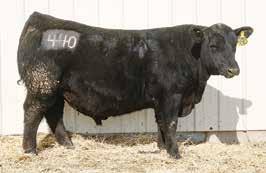
Lot 440
& 4.15 # ADG! CED +8 Top35% & BW +.2 Top 30% we say he’s 3 Star out of 4 Star Bull; Loaded up on performance & pretty thick; no fined boned or small heifers. Chex will keep dispositions good & make replacement females. Fixing RE’s he is Top 15% @ +1.03.
#21156947
Two-Year-Old – Sired by our Confidence 035 bull – he is a big ole black Tank. ADG of 4.50#’s on Efficiency Test as a Yearling; negative for RFI @ -0.13’ Top 10% WW & Top 15% YW; Will make replacement Females Top 15% +81 $M; Top 25% +72 $W; He just about checks every box Top 25% $B; Top 10% $F; Top 15% $C & 2 Star CE
#2118453 By Pacific he’s designed to Kick WW & YW clear across the Road. He won the Efficiency Test at -3.24 RFI and he won Performance as well 4.54#’s ADG. Think the plan is working He’ll put the finishing touches on the feeder calves Top 15% WW @ +81; Top 20% YW @ +140; Looking for less milk only +22
Sired by our
#21181226
Don’t
The six dollar carton of eggs may be a shock, but it is not going to look any different in coming months. Perhaps one’s weekend errand routine consists of traveling to three different stores before hitting the jackpot and snagging the last dozen eggs – don’t plan on ditching this ritual any time soon either.
With the explosion of highly pathogenic avian influenza (HPAI) across the country, poultry producers are left scrambling to fill contracts and get eggs to where they are needed. And
those who have been hit by the virus have a long road to recovery before their flock numbers are back to normal.
“There are a lot of steps which need to happen in a certain order,” says Becky Joniskan, president of the Indiana State Poultry Association.
She adds it could take upward of six months to raise egg-laying birds to maturity and make a flock productive again.
What needs to happen?
Before producers can begin repopulating, the U.S. poultry industry must get HPAI under control. Joniskan shares all efforts are being put toward combating the virus.
Larger commercial facilities will take longer to recover, notes Darrin Karcher, associate professor of animal sciences at Purdue University. Sites with one million birds could take up to a year to repopulate and return to normal production.
A series of steps must happen for producers to build back their flocks, Joniskan notes. When a site is affected, the producer must first depopulate all birds at the site.
Once the site has been cleared to repopulate, it could take upwards of 18 weeks before they start receiving hens which have reached reproductive maturity. This step is affected by breeding bird availability and hatchery capacity.
“There’s a lot of investment, timing and effort that goes into getting a hen into her productive state and keeping her well and healthy while she’s there,” Joniskan says.
Economic impact
Aside from soaring egg prices, this recent outbreak
affects jobs in the poultry industry.
Damages from HPAI in 2015 included $2.6 billion in lower output from the poultry industry and 15,000 jobs lost. There were 48 million birds affected that year.
So far, this outbreak has hit 160 million birds, according to Karcher.
“We know it’s going to have a much bigger impact, not just on the national economy,” Karcher says. “It doesn’t matter what state you’re in. I would expect to see an impact on the economy and jobs lost as we continue to fight it.”
Producers hit with HPAI also feel the economic impact. While they receive indemnity payments from the U.S. Department of Agriculture to cover some of the value of birds lost to the disease, these dollars aren’t equivalent to normal operation and sales.
Some producers may even choose to exit the industry due to the financial impact from HPAI.
The economic impact will hit states like Indiana and Ohio especially hard, given their rank in multiple poultry production areas, and although these states are prominent poultry producers, they may also take longer to recover as egg supply is routed to other parts of the country to meet demand.
However, recovery should look about the same for consumers across the country as supply and demand level out and prices return to normal.
Allison Lynch is a staff writer for Indiana Prairie Farmer. This article was originally published in Indiana Prairie Farmer on March 10.
OBITUARIES
June 23, 1941 – March 10, 2025
Demetra “Demi” Angela Cross, age 83, of Cheyenne passed away peacefully on March 10 surrounded by her loving family.
Born on June 23, 1941 in New York City, Demi lived a life filled with love, devotion and unwavering faith. She was a cherished mother, grandmother and friend, whose kindness and strength touched the lives of all who knew her.
A devout member of the Greek Orthodox Church, Demi found great joy in her faith, her family and the traditions connecting her to her heritage. She was known for her adventurous spirit and her love of storytelling and sharing memories.
Her warmth, philanthropy and kindness made everyone feel welcome.
Demi was preceded in death by father Basil D. Curtis and her mother Esther A. Gailey.
She is survived by her husband William A. (Rory) Cross, daughter Dianne Burner Bitzes, stepdaughter Leslie (Greg) Cross Richendifer, grandchildren Zoe (Sam) Bernstein and Ian Bitzes, step-grandchildren Blake (Tristyn) Richendifer and Shane (Miranda) Richendifer and seven great-grandchildren.