Wyoming Livestock Roundup – March 14, 2026 – Section A
A Look Inside
Early weed control strategies for pastures and hayfields outlined Page A17
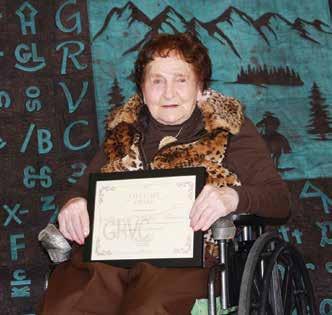
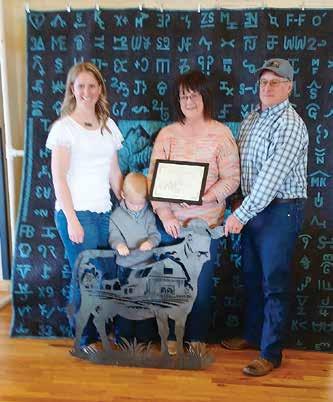
Green River Valley Cowbelles/ Cattlewomen host annual meeting Page A18
APHIS provides reminders for preventing the spread of ASF Page B1
March water supply outlook
Page B5
B6
Quick Bits
Snow Report
In the 13th snow report for Water Year 2026, the state’s snowpack telemetry data reads 84% of median, with a basin high of 107% and a basin low of 9%. Last year, the state was at 99% and at 97% in 2024. The report and a map displaying basin snow water equivalent percentages of median for the state may be found at wrds.uwyo.edu/ wrds/nrcs/nrcs.html
Ranch Camp
The University of Wyoming’s annual Ranch Camp is set to take place this year from June 8-12 at the Ladder Ranch in Carbon County. Through the program, participants will explore ranch economics, animal science, soil and range science, grazing and stocking rates, ranch diversification and team-based ranch planning. The cost to attend is $200, and scholarships are available. The application deadline is April 3. For more information or to apply, visit bit.ly/4rkLAe2
Sheep Festival
The Fourth Annual Wyoming Sheep and Wool Festival is scheduled for July 31 through Aug. 2 at the Park County Fairgrounds in Powell. The event will feature tours of the Shoshone National Forest, workshops, demonstrations, a vendor fair, an art show, sheep dog trials, live music, the annual Sheepherders Come Bye Awards Dinner and more. For more information or to register, visit wyomingsheepandwoolfestival.com
Webinar
The National Grazing Lands Coalition will host a free webinar titled “Snowpack and Effects on Drought Management” on March 18 at 12 p.m. The webinar will walk through available snow survey products and forecasting tools, explain how to interpret the data and provide practical insights for ag producers. For more information or to register, visit grazinglands.org/ events/graze-on-over-snowpack-effects-on-drought-management
Sweeping meatpacking reform introduced in the Senate
During the first week of March, a group of Senate Democrats introduced sweeping legislation to restructure the U.S. meatpacking industry, arguing changes are necessary to restore competition in livestock markets and lower grocery prices for American families.
Deemed the Family Grocery and Farmer Relief Act, the legislation was introduced by Senate Minority Leader Chuck Schumer (D-NY) and cosponsored by Sens. Cory Booker (D-NJ), Peter Welch (D-VT), Elizabeth Warren (D-MA), Bernie Sanders (I-VT), Ruben
Gallego (D-AZ), Jeff Merkley (D-OR), Brian Schatz (D-HI), Dick Durbin (D-IL), Ed Markey (D-MA), Andy Kim (D-NJ), Chris Murphy (D-CT) and Sheldon Whitehouse (D-RI).
The senators believe the bill
WYOMING LEGISLATURE ADJOURNS
2026 Budget Session wraps up with wins for Wyoming ag
Following 21 days of deliberation by members of the 68th Wyoming Legislature, the 2026 Budget Session officially came to a close on March 11.
Some key wins for Wyoming agriculture came out of the short session, including securing appropriations funding for relevant programming in the 2027-28 biennial budget and updated legislative provisions regarding a variety of ag-related topics.
Final budget
The 2027-28 biennial budget, as passed by the House and Senate and signed by Gov. Mark Gordon, secures
UW faculty win prestigious awards
Throughout the winter, members and departments of the University of Wyoming (UW) College of Agriculture, Life Sciences and Natural Resources (CALSNR) have been celebrated for their exceptional efforts and accomplishments.
UW Celebration of Excellence
UW recognized the achievements of outstanding faculty and university departments during its third annual Celebration of Excellence in Research and Innovation on Jan. 22, including members of CALSNR.
Thomas Boothby, an associate professor of molecular biology, received the UW Distinguished Researcher Award, which is given to a researcher with the highest annual research expenditures averaged over the last three years.
His research focuses on how organisms survive extreme environments and how to make practical use of this knowledge for elevating some of society’s most pressing problems, such as increasing access to medicine and food security.
The Wyoming Cooperative Fish and Wildlife Research Unit received the UW Exemplary Research Culture Award, bestowed upon a department with the highest per-faculty research expenditures and innovation portfolio.
The unit, led by Director Matt Kauffman, is currently one of 43 U.S. Geological Survey Cooperative Research Units nationwide. Their offices, programs and personnel are embedded within the UW Department of Zoology and Physiology.
several noteworthy provisions for agriculture.
A legislative update issued by the Wyoming Stock Growers Association (WSGA) on March 11 outlines these provisions, including wins in funding for natural resource programs, wildfire recovery initiatives, higher education, livestock health and rodeo.
According to WSGA, the approved budget secures $5,000 in appropriations for the Centennial Farm and Ranch Program, which honors families who have owned and operated the same farm or ranch for 100
Sheep Tariff Bill
Rep. Amodei introduces bill to impose tariffs on imported lamb
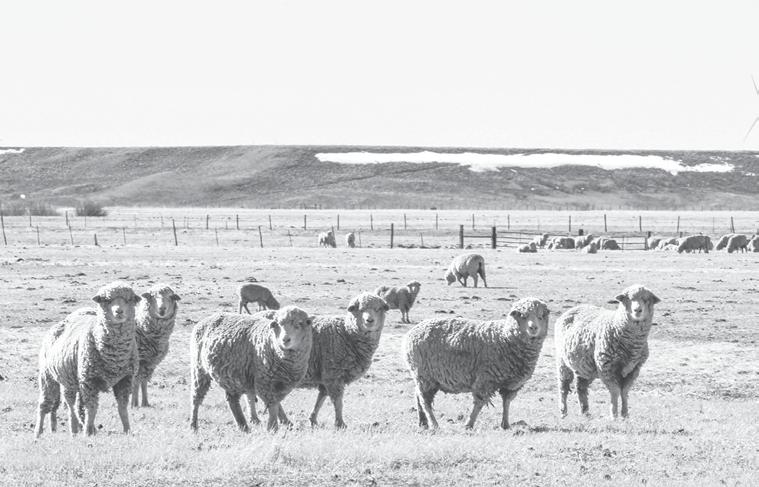
In late January, U.S. Rep. Mark Amodei (R-NV) introduced House Resolution (HR) 7276 in the U.S. House of Representatives to place a 30 percent tariff on sheep and lamb products imported from Australia and New Zealand.
The legislation is cosponsored by U.S. Reps. Celeste Maloy and Burgess Owens (both R-UT) and is drawing praise from ranching groups across the U.S. who believe the measure could help stabilize the nation’s sheep industry.
A push for action Amodei’s tariff proposal follows ongoing concerns from American producers about imported sheep and lamb flooding the domestic market and efforts made through the Protect American Lamb project, an initiative launched in 2023 under the R-CALF USA Sheep Committee.
Through the project, American sheep producers submitted a petition to the Office of the U.S. Trade Representative requesting an investigation to determine if imported lamb and mutton are causing serious injury to the domestic sheep industry.
“The petition claims lower-cost imports, mostly from Australia and New
Wildlife policies stir debate in Colorado
A wave of wildlife-related regulatory proposals is sparking intense debate across the state of Colorado, highlighting the growing tension between environmental and animal welfare advocacy groups and agricultural, hunting and rural communities.
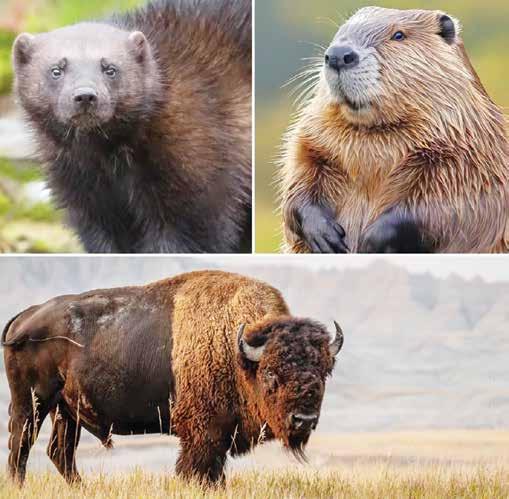
Issues ranging from banning the commercial sale of fur and placing restrictions on beaver harvest to predator reintroductions and new bison protections have surfaced in recent months.
Supporters argue the measures will modernize wildlife management and promote ecosystem health, while critics believe the policies represent an ideological shift away from science-based management and the state’s traditional
outdoor industries.
Public meetings and hearings surrounding the proposals have resulted in packed crowds and heightened tensions, reflecting Colorado’s deep division over how wildlife and natural resources should be managed.
Fur sale ban
One of the most controversial issues came about in early March when the Colorado Parks and Wildlife (CPW) Commission advanced a citizen petition banning the commercial sale of wildlife furs and furbearer parts with a six-tofour vote, despite CPW staff making a recommendation against the ban and the majority of public comment asking the
Do We Need More Cattle?
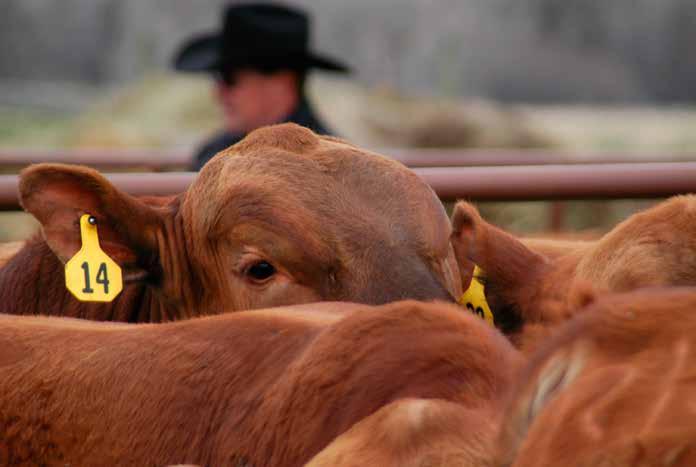
As cattle numbers continue to drop, one might think cattle prices would keep rising, but they are not. I’ve been hearing words such as “volatile,” “uneasy” and “uncertain” in some market reports.
For cattle producers, prices will still be strong, but feeder cattle could drop a little.
There are a couple of reasons for this drop in the last few weeks and it’s mostly because packinghouses had to do something to stop huge losses, so they lowered their processing capacity, either by closing some of their packinghouses or by dropping work shifts at other packinghouses.
They are still losing on every fat cow they process, but not as bad as last year.
Another challenge is union workers at the JBS Packinghouse in Greeley, Colo. have announced they intend to strike on March 16. This is a huge packinghouse, so a strike would affect a large number of people and cattle and could raise the price of beef in the region.
According to CattleFax, “Leverage between the cattle feeder and the packer continues to shift dramatically, with the cutout gaining $20 per hundredweight over the past two weeks, while cash for fed cattle retreated abruptly from recent highs in the mid-$200,000 range. While fed cattle supplies remain manageable, historically negative packer margins led to harvest reductions which have constrained demand for fed cattle in the near term.”
“Fed slaughter has dropped between 410,000 and 420,000 head per week over the past three weeks, which are some of the smallest non-holiday totals on record,” CattleFax continues. “Estimated packer margins have rebounded considerably, although they still remain in the red.”
At 420,000 head, fat cattle processed every week is really down. A year ago last week, packers were processing close to 570,000 head of fat cattle, and the year before that, the number was around 650,000 head of fat cattle processed per week.
With strong beef demand these days – especially for hamburger – one can see why packers are importing beef.
Another issue affecting meatpackers and producers are the ramped-up campaigns from animal welfare groups.
The American Society for the Prevention of Cruelty to Animals, People for the Ethical Treatment of Animals and Humane World for Animals are all raising hundreds of millions of dollars annually to stop meat production across the board.
Their main goals are to lobby for taxpayer-funded programs to encourage livestock operations to transition into plant-based production to develop shareholder activism and coordinated campaigns pushing cage-free commitments and other production standards affecting poultry and egg producers.
They also want food retailers to scale back lower-cost animal protein options in favor of higher-cost alternatives.
As you can see, they are working all angles to reach their goals, so animal production agriculture needs to be aware of their actions and do everything they can to combat them.
With cattle numbers so low, producers need to be aware of all the people and businesses who depend on them. From local auctions to big video sales, it takes a certain number of cattle for them to stay in business.
Along with livestock truckers and other supporting businesses, such as commodity traders, the cattle business is a farreaching industry which cattle producers all depend on. The cattle business is more than just producers.
GUEST OPINIONS
Congress Must Act on the Farm Bill
This week, the House Agriculture Committee is marking up a new farm bill.
This is an important step forward, but farmers know real progress is measured by results, and it’s time for Congress to deliver on a new farm bill.
At the American Farm Bureau Federation (AFBF), we’ve dug through and analyzed the bill. We’re following amendments closely and providing input to Congressional leaders and their staff. This is all part of a critical first step in the process.
With a new farm bill, farm families will have access to critical programs ranging from conservation and rural development to research and energy.
While the One Big Beautiful Bill Act made an important investment in strengthening the farm safety net, it did not replace the need for a new, modernized farm bill.
Just last week, I had the opportunity to sit down with U.S. Secretary of Agriculture Brooke Rollins and House Agriculture Committee Chairman Glenn “GT” Thompson (R-PA) for a round-
By Zippy Duvall
table discussion with farmers in Texas.
Hearing directly from farmers about the challenges they’re facing reinforced why getting a new farm bill across the finish line matters so much.
Every delay leaves farmers facing more uncertainty at a time when agriculture can least afford it, and Congress has an opportunity to act now. Why the farm bill matters for farmers and families
The farm bill is more than a piece of agricultural legislation.
As I have said before, it’s a food and farm bill impacting every American, whether they live in a rural town, a suburb or the middle of a major city.
It helps ensure a stable food supply, supports conservation and research, strengthens rural communities and provides farmers with the tools they need to manage risk in an increasingly unpredictable world.
The last farm bill was written for a very different economic environment nearly a decade ago.
Since 2018, agriculture has
endured a pandemic, runaway inflation, rising interest rates and historic supply chain and market disruptions.
Costs for fuel, fertilizer, equipment and labor have surged and margins have narrowed. The pressure on farm families has only intensified.
According to the U.S. Department of Agriculture, we’ve lost over 175,000 farms since 2017. This trend should concern anyone who cares about food security and the future of American agriculture.
Passing a modernized farm bill is about keeping farmers in business so they can continue doing what they do best – producing safe, abundant food, fiber and renewable fuel for our country.
America’s food security depends on a strong farm economy. When farmers succeed, consumers benefit from a reliable, domestic food supply and rural communities remain vibrant.
Congress must finish the farm bill
Thompson’s leadership in releasing bill text and advancing to a committee
From the Publisher Dennis Sun
Middle East attack affects American ag
According to a March 10 American Ag Network article, Russia’s invasion of Ukraine four years ago triggered volatility and uncertainty in agricultural markets. This year, it’s the U.S. and Israel’s attack on Iran.
The Middle East is a major supplier of energy and fertilizer. Moreover, the Strait of Hormuz between the Persian Gulf and Gulf of Oman is a critical shipping corridor for these commodities.
Progressive Farmer’s Russ Quinn writes, “The Strait of Hormuz moves about 20 million barrels of crude oil and other petroleum products each day, which is
about 20 percent of global demand, and about a quarter of the globally traded nitrogen market moves through the waterway.”
The attack has sent oil and fertilizer prices spiking upwards. Markets are concerned oil and fertilizer will not be able to get out of the region causing supply shortages. As of March 10, the Strait of Hormuz remains closed.
On March 9, the futures price for U.S. and Brent crude oil both rocketed past $100 per barrel, up from the mid$60s prior to the conflict.
AOL said the average price of diesel jumped $0.41 during the first week of
March to $4.16 per gallon –its highest level since 2023.
Josh Linville, vice president of fertilizer for StoneX, reported urea prices at New Orleans are up $132 per metric ton, or 30 percent. The Lincoln Journal Star reported urea prices rose from $457 per ton to $574.
Agricultural producers, who are already concerned about rising costs and profitability, now face even greater challenges, and the timing couldn’t have been worse with spring planting right around the corner.
Higher fuel and fertilizer costs will make breakevens more difficult.
Kansas State Univer-
APHIS invites public comment
The U.S. Department of Agriculture’s (USDA) Animal and Plant Health Inspection Service (APHIS) invites the public to comment on a petition from Pioneer HiBred International, Inc. (Pioneer) to deregulate DP51291 corn, a variety developed using genetic engineering for insectresistance and glufosinateammonium tolerance.
APHIS previously deregulated these traits
in another Pioneer corn variety, referred to as DP23211 corn.
After reviewing Pioneer’s request, APHIS prepared a preliminary plant pest risk similarity assessment (PPRSA) and found DP51291 corn is no more likely to pose a plant pest risk than the previously deregulated DP23211 corn.
The request to extend deregulation, APHIS’s preliminary decision and PPRSA is available for
public review and comment until April 6. Comments can be submitted online at regulations.gov/ APHIS will carefully review all feedback received during the comment period, and if the agency does not receive any new scientific information, it will announce its final decision extending deregulation to DP51291 corn on the APHIS website.
WGFD public meetings set
Hunters are an essential piece of setting hunting seasons, and now is the time to get involved in the process.
Those interested in shaping the 2026 hunting season are encouraged to attend public meetings hosted by the Wyoming Game and Fish Department (WGFD) across the state and submit comments.
Regulations with proposed changes include Chapter Two, General Hunting Regulations; Chapter Five, Antelope Hunting Seasons; Chapter Six, Deer Hunting Seasons; Chapter Seven, Elk Hunting Seasons; Chapter Eight, Moose Hunting Seasons; Chapter Nine, Bighorn Sheep and Mountain Goat Hunting Seasons; Chapter 11, Upland Game Bird and Small Game Hunting Seasons; Chapter 14, Migratory Game Bird Hunting Seasons and Light Goose Conservation Order; Chapter 15, Wild Bison Recreational Hunting Seasons and Chapter 20, Wild Turkey Hunting Seasons.
Initial regulation changes were posted online in February to begin the public comment period. Field staff are currently reviewing data and public input to develop 2026 season recommendations.
Updated draft regulations with revised proposals will be available on the WGFD website by March 18. YouTube videos with district-specific information and proposals will be posted by March 22.
Public comment will be open until April 1 at 5 p.m.
Those interested can submit comments online, in person at upcoming meet ings or by mailing comments to Wyoming Game and Fish Department, 3030 Energy Lane, Casper, WY 82604.
Attending a public meet
sity Agricultural Economist Greg Ibendahl estimates oil prices at $95 per barrel will raise the average Kansas grain farm’s costs between $25,000 to $30,000, and the longer the conflict lasts, the greater the risk of supply snafus and price spikes.
Corn and soybean prices have also risen to a degree as a result of these events, which might be some consolation.
NEWS BRIEFS
Funding preserved
Gov. Mark Gordon recently signed House Bill (HB) 107, Local Government Distributions, into law. This bill preserves funding allocated to local counties and municipalities from the state’s general fund without raising taxes.
The bill was based on a proposal from the Wyoming County Commissioners Association and the Wyoming Association of Municipalities, and it solidifies a state-local partnership which ensures counties and municipalities can continue delivering the fundamental services Wyoming families rely on.
HB0107 allocates eight percent of all state sales and use tax revenues annually to local governments and preserves the historic distribution model, ensuring a measure of stability in local government funding.
The Wyoming Legislature previously appropriated $146.25 million from the general fund to local governments, which municipalities and counties may use for general operations – with the exception of salary increases, additional personnel or increased personnel benefits.
Direct distribution has historically been allocated using the Madden Formula, which accounts for differences in population, cost burdens and tax capacity across counties and municipalities.
However, the distribution itself had to be reauthorized every budget session, creating uncertainty for local governments. HB0107 resolves this issue by codifying the Madden Formula and making direct distribution a permanent, predictable funding mechanism.
Art exhibition unveiled
The Rockpile Museum in Gillette is proud to present the traveling art exhibition “These Noble Brutes: Engravings of the American Bison, 1614-1903.”
This exhibition features an outstanding collection of large-size vintage historic engravings depicting the largest land mammal in North America and the U.S. national mammal – the iconic American Bison.
The exhibit explores the bison’s natural history, its centrality to many Native American Tribes and its dramatic decline in the late 19th century.
The engravings are derivative works after notable artists from the Lee Silliman Western Americana Print Collection, including Frederic Remington, George Catlin, Karl Bodmer, John Mix Stanley, Seth Eastman, William de la Montagne Cary and Peter Rindisbacher.
The exhibit also includes what could be the second oldest depiction of the American Bison from 1614.
Along with the engravings, a collection of Rockpile Museum’s own historic artifacts and artwork will be on display.
In celebration of the nation’s Semiquincentennial year, “These Noble Brutes” will be on display at the Rockpile Museum beginning on March 9 and ending in December.
For more information, visit rockpilemuseum.com
UW to host seminar
On March 26, the University of Wyoming (UW) College of Agriculture, Life Sciences and Natural Resources will facilitate a Ranch Management and Agricultural Leadership (RMAL) seminar for those interested in wildlife and hunting.
The event, which is the third of UW’s 2026 RMAL Ranching in the West seminar series, will take place from 5 to 7 p.m. in room 1032 of UW’s Agriculture Building. It is also available via Zoom.
The seminar series allows students, entrepreneurs and agricultural professionals to connect with each other and learn from experts in the industry. All sessions are free and open to the public.
The March 26 seminar is titled “Journaling the Outdoors: Wildlife Entrepreneurs” and will be presented by Ike Eastman, president and chief executive officer of Eastmans’ Hunting Journal (EHJ), which produces educational resources for hunters, including print magazines, blogs, podcasts, videos and online courses.
During the seminar, Eastman will discuss the wildlife industry, the history of EHJ and the responsibilities of running a company, from managing people and print publications to creating online content and staying aware of current industry trends.
Those interested can register for the session at bit.ly/ rmal-hunt
Each session is livestreamed and recorded via Zoom for participants who cannot attend in person. Registered participants will receive a Zoom link for the session they signed up for.
The 2026 RMAL Ranching in the West seminar series will conclude with the Rocky Mountain Land and Resource Management Conference, held at the UW Gateway Center in Laramie.
This all-day leadership symposium will take place on April 15 from 8:15 a.m. to 5 p.m.
For more information or to register, visit bit.ly/rmalseries or contact RMAL Associate Director Randall Violett at rviolett@uwyo.edu or 307-766-4239.
Training codes offered
The National Junior Angus Association (NJAA) is excited to announce it has received a $4,000 grant from Youth for the Quality Care of Animals (YQCA), enabling the organization to provide 200 free YQCA certification codes to junior Angus members.
LEVEL UP YOUR HERD
Real progress means choosing sires with balanced performance, fertility, structure and feet, carcass quality, maternal influence and efficiency. You can’t improve what you don’t measure.
DATA ADVANTAGE
For over 50 years, top cattlemen nationwide have leveled up their genetics through Midland Bull Test. With decades of consistent measurement and the largest comparison base, Midland customers secure improved herd results using proven information.
The grant supports NJAA’s commitment to fostering youth education and leadership opportunities. Through this funding, NJAA junior members ages seven through 20 who plan to participate in the 2026 National Junior Angus Show can receive a complimentary YQCA online training code.
Codes will be distributed on a first-come, firstserved basis, and members may request a code by contacting the Events and Junior Activities Department by phone at 816-383-5100 or e-mail at events@angus.org with their name and member code.
Once a code is issued, members can complete the YQCA online course at no cost.
For more information, visit angus.org/
ASI hosts fly-in event
Approximately 50 sheep producers and state leaders from across the country traveled to Washington, D.C. during the first week of March for the American Sheep Industry Association’s (ASI) Annual Spring Trip, meeting with policymakers and federal agencies to advocate for priorities important to the domestic sheep industry.
During the fly-in, ASI leadership and members met with key Congressional offices, including meetings with staff for the House Agriculture Committee majority and minority, as well as Senate Agriculture Committee Chairman John Boozman (R-AR) and staff for Ranking Member Amy Klobuchar (D-MN).
Conversations focused on issues critical to sheep producers, including risk management tools, trade issues, animal disease prevention, wildlife services and challenges related to Bighorn sheep interactions on grazing allotments.
In addition to Congressional meetings, ASI leadership received updates from several federal agencies which play key roles in livestock production and land management, including the U.S. Department of Agriculture’s Agricultural Marketing Service and Animal and Plant Health Inspection Service and the U.S. Forest Service.
Participants also met with representatives from the Office of the U.S. Trade Representative to address ongoing concerns surrounding lamb imports and the impact on U.S. sheep producers.
While in Washington, D.C., state association leaders also met directly with their respective members of Congress to highlight the importance of sheep production in their home states and to reinforce the industry’s policy priorities.
Lastly, ASI hosted the Annual American Lamb Reception on Cornerstone’s rooftop. There, attendees enjoyed American lamb while building relationships and discussing the industry’s most pressing issues.
Zealand, have captured 74 percent of the domestic lamb and mutton market and have decimated the commercial sheep industry in the U.S.,” reports Jesse Allen in a March 3 American Ag Network article
Allen goes on to note producers and industry officials believe “America’s decreased lamb production in the face of increased lamb consumption – combined with a dramatic increase in U.S. market share held by imports and a 31 percent surge in the volume of imports from 2018-22 –warranted a careful, probing analysis of the role imported lamb was playing in the alarming contraction of the U.S. sheep industry.”
Those involved in the project also point to structural differences between the involved countries’ production systems, including currency advantages and differences in production standards, which they say give foreign producers an economic edge in U.S. markets.
All of this has caused the number of full-time sheep producers and overall
sheep inventory in the U.S. to decline sharply
Allen cites industry estimates which show the U.S. sheep sector has lost more than 63 percent of its fulltime sheep ranchers and more than 60 percent of its sheep inventory during this time frame, and more recent data shows this trend continuing, with the latest U.S. Census of Agriculture indicating a loss of more than 12,000 sheep producers and nearly 287,000 sheep between 2017-22.
Leveling the playing field
Introduced on Jan. 30, HR7276 is currently in the early stages of the legislative process and will be reviewed by Congressional committees before advancing to the House floor for consideration.
If enacted, the legislation would require the president to impose a 30 percent duty on sheep and lamb products imported from Australia or New Zealand beginning 30 days after the bill becomes law.
The bill broadly defines sheep products to include meat, wool, pelts and other products derived from
NCBA hosts tour stop
During the first week of March, the National Cattlemen’s Beef Association (NCBA) hosted a stop on a United Kingdom (UK) Embassy Farm Tour at Whitestone Farm in Loudoun County, Virginia.
The event included a roundtable with stakeholders from Virginia and the UK, including Secretary of State for Environment, Food and Rural Affairs Rt. Hon. Emma Reynolds MP; Virginia Agriculture Secretary Katie Frazier and Virginia Deputy Agriculture Secretary Ben Rowe, as well as leadership from UK’s National Farmers Union and the Virgina Farm Bureau.
“NCBA hosted this event to showcase U.S. cattle producers and share the great story of U.S. beef, which continues to resonate with British consumers as demand for American beef grows in the UK. NCBA engages continually with our international trading partners to expand market access and create more opportunities for U.S. producers,” said NCBA President and Virginia Cattle Producer Gene Copenhaver.
“This event highlighted the shared values of British and American producers and the production practices common to both sides of the Atlantic – commonalities which make us ideal trading partners. With the first shipments of U.S. beef exports reaching the UK this week, the event was a great opportunity to celebrate our reciprocal trade deal,” he added.
The U.S. signed a trade deal with the UK in May 2025, significantly increasing market access for U.S. beef.
sheep, while lamb refers specifically to meat produced from sheep not classified as mutton.
Those in favor of the legislation believe it will help offset the economic advantages foreign producers currently hold, including weaker currencies, lower production costs and less restrictive predator control practices.
In a March 3 statement, R-CALF USA Chief Executive Officer Bill Bullard says the proposed tariffs would help restore fairness to the market and support rural economies depending on livestock production.
“Reps. Amodei, Maloy and Owens are standing up for America’s sheep producers with their legislation to level the playing field, which has long been tipped in favor of imports,” he
says. “Our domestic sheep industry is incredibly important to the economic viability of rural communities –throughout the West in par-
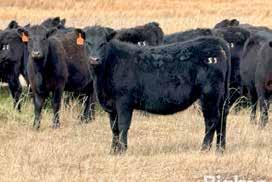
Simmons Ranch/Don & Karen Simmons 506 Extra Fancy Blk Angus Strs & Hfrs, 550-950# (mostly 725-900), Weaned a long time, Been on a Grower Ration, 3 Rounds of Modified Live Vac. Program, Home Raised
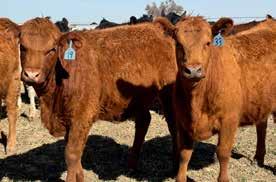
Red Cap Ranch/Robert Evans 134 Blk Strs & Hfrs, 700-850#, Weaned a long time, Been on Ground Hay and Silage, Branding Shots: Bovi-Shield
Gold One Shot, Vision 8 Somnus w/Spur, Weaning Shots: MaxiGuard, Noromectin Plus, No Implants
Forshee Land & Livestock 120 Blk/Rd Strs, 500-575#, Weaned since Nov. 11, Been on a High Roughage Grower Ration, 2 Rounds of Shots:
Nasalgen 3 PMH, Vision 7 Somnus w/Spur, Home Raised, 1-iron, High Elevation
Kelly Land & Cattle 100 Blk Hfrs, 675-825#, Complete Vac Program, Running Out, Producer All Natural, Home Raised, High Elevation, NHTC thru IMI Global Pingetzer Six Iron Ranch 78 Red Strs & Hfrs, 725-825#, Weaned a long time, Been on a Light Grower Ration, Complete Modified Live Vac. Program, Heifers are Bangs Vac., Home Raised
Randy McCoy 75 Blk/Bwf Strs & Hfrs, 700-850#, Weaned a long time, Been on a Light Grower Ration, Branding Shots: Ultrabac 8 w/Somubac, Pre-cond. Shots: Vista Once, Ultrabac 8 w/Somubac, Booster Shots 3 weeks after weaning: Vista Once, Ultrabac 8, Heifers are Bangs Vac., Replacement Quality, Choice set of High Elevation Calves, Home Raised
WEANED CALVES
Bowen Arrow Ranch Inc. 118 Mx Strs & Hfrs, 400-600#, Weaned since February 5, Bunk Broke, Been on a Grower Ration, Shots at Birth: Alpha 7, Branding Shots; Nasalgen PMH, Vision 7 w/Spur, Weaning Shots: Bovi-Shield Gold One Shot, Safeguard Wormer, Poured w/Clean-up, Booster Shots on March 4: Bovi-Shield Gold 5 Ron Lien 60 Mx Strs & Hfrs, 400-500#, Weaned a long time, Running out on Cornstalks supplemented with Hay and Little Grain, 2 Rounds of Shots, Bunk Broke, Electric Fence Broke
Triangle J Ranch 41 Mx Strs & Hfrs, 550-650#, Weaned a long time, Been on a Light Grower Ration, Complete Vac. Program Justin McWilliams 22 Choice to Fancy Blk Angus Strs & Hfrs, 550-650#, Weaned 74 days, Grass Hay Fed, Weaning Shots: Bovi-Shield Gold One Shot, Vision 7 w/Spur, Sired by Bar X & Thomas Angus Bulls, Home Raised, Producer All Natural CATTLE COUNTRY VIDEO - 1:00
Wright Brothers 122 Weaned Steer Cf. 80% Blk/Bwf, 20% Red/Rwf. Base Wt: 850 lbs. Wt Stop: 875 lbs. 2 way Slide: 16 cents. Located: Brandon, SD. Delivery: 3/20/26 to 3/27/26. Complete Vac. Always good feed back from previous buyers. Rep: Richard Zweifel 605-209-6307
Wright Brothers 83 Weaned Steer Cf. 80% Blk/Bwf, 20% Red/Rwf. Base Wt: 725 lbs. Wt Stop: 750 lbs. 2 way Slide: 16 cents. Located: Brandon, SD. Delivery: 3/20/26 to 3/27/26. Complete Vac. Always good feed back from previous buyers. Rep: Richard Zweifel 605-209-6307 Farthing Ranch 324 Steers. Blk/Bwf, few Red/Rwf. Base Wt: 750 lbs. Wt Stop: 775 lbs. Slide: 18 cents. Located: Pine Bluffs, WY. Delivery: 3/19/26 to 3/21/26. Feed: Grower Ration – 37# of corn silage, triticale silage, millett hay & liquid protein. Branding Shots: 7-way Blackleg & Nasalgen. Weaning Shots: 7-way Blackleg/Somnus, Vista Once SQ & Poured with Clean Up. Weigh: Early am gather weigh on the gound w/a 3%, sort for loads. Comments: Fancy one iron steers coming early due to drought. All bunk broke and weigh over 975# in September. April born steers and weaned over 120 days. These are loaded with front end genetics from the top Bull breeders in regions. These will grade and get big! The flesh is just right for grass for outstanding feedlot performance. Rep: Michael Schmitt 307-532-1776.
Hannah Bugas is the
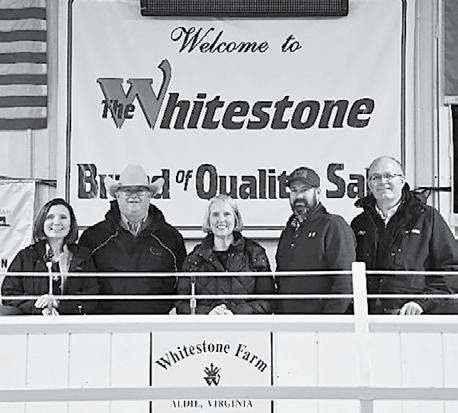
Embassy Farm Tour – Members of the National Cattlemen’s Beef Association (NCBA) hosted a stop on the United Kingdom (UK) Embassy Farm Tour at Whitestone Farm in Loudoun County, Virginia. Pictured from left to right are Virginia Agriculture Secretary Katie Frazier, NCBA President Gene Copenhaver, Secretary of State for Environment Food and Rural Affairs Rt. Hon. Emma Reynolds MP, Whitestone Farm Employee Scott Buchanan and UK Farmer’s Union President Tom Bradshaw. NCBA photo
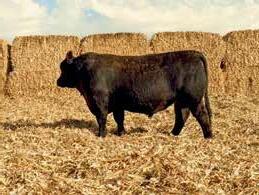
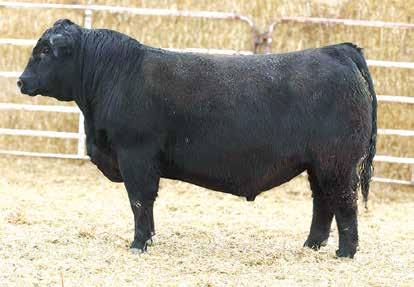
Lot 3 – Pine Coulee Deep Canyon M636 – Price: $26,000
DOB: 6/14/24 Sire: LT Deep Canyon 2040 Dam’s Sire: S A V Renown 3439 EPDs: BW: +0.5, WW: +52, YW: +96 and Milk: +28 Buyers: Open 8 Genetics, Baker, Mont. and 316 Simmentals, Baker, Mont.
Lot 50 – Pine Coulee Saga 059 – Price: $23,000 DOB: 5/15/24 Sire: Beartooth Saga 059 Dam’s Sire: Pine Coulee Capitalist F339 EPDs: BW: +1, WW: +38, YW: +71 and Milk: +30 Buyer: Cody Staiger, Hebron, N.D.
Lot 1 – Pine Coulee Deep Canyon M529 – Price: $20,000
DOB: 5/24/24 Sire: LT Deep Canyon 2040 Dam’s Sire: S A V Renown 3439 EPDs: BW: -0.1, WW: +59, YW: +111 and Milk: +35 Buyer: Cross W Livestock, Ekalaka, Mont.
would address market concentration in the meatpacking sector, which they argue has harmed farmers and ranchers and contributed to higher retail meat prices. It would also implement several major reforms to the meatpacking industry, including restrictions on market concentration, new antitrust enforcement measures and limits on foreign ownership in the U.S. meat supply chain.
“The pernicious stranglehold of the meatpacking monopoly has weakened our supply chains and price gouged consumers at the grocery store,” Schumer states. “This is not the ‘Golden Age’ President Donald Trump promised, but it’s what this administration does best – cater to special interests and corporations at the expense of middle-class families.”
“This is why Democrats are going to do what Trump refuses to do – put the affordability crisis front and center, every day, all year long,” he adds.
Major structural changes
One of the most significant provisions in the bill would require major meatpacking companies to operate in only one protein sector, instead of multiple species markets.
Companies currently involved in more than one protein sector would be required to choose one protein sector and divest other portions of their business.
The bill also proposes a cap on the concentration of beef processing at both the regional and national level, and if these limits are exceeded, the Federal Trade Commission (FTC) would be required to order companies to sell off processing plants, facilities or business units until competition is restored.
In addition, the measure would restore the FTC’s authority to enforce antitrust laws in the meatpacking sector; prohibit foreign leverage over the domestic meat market; place emphasis on unfair and unjust discriminatory pricing practices in retail and wholesale meat markets and authorize the Small Business Administration to provide financial assistance, loan guarantees, technical assistance and other support to farm cooperatives and small businesses.
Those in support of the bill say it targets a market structure in which a handful of large corporations dominate processing, as industry giants like Tyson, JBS, Cargill and National Beef currently control around 85 percent of the U.S. cattle processing market, nearly 67 percent of pork processing and about 60 percent of poultry production.
Schumer contends this has resulted in an anti-competitive environment which harms livestock producers and contributes to rising food prices.
Mixed reaction
Reactions to the proposal have been mixed across the livestock industry.
R-CALF USA welcomed the legislation, saying it reflects growing recognition of structural issues within the industry.
“For decades, R-CALF USA has been rigorously fighting on behalf of cattle feeders and ranchers for free and fair competition in the cattle markets,” states R-CALF USA Chief Executive Officer (CEO) Bill Bullard. “We welcome Congress’ recent effort to address the competition crisis plaguing our nation’s cattle markets.”
Bullard goes on to note the legislation targets some of the same concerns raised by the Trump administration.
“President Trump directed the U.S. Department of Justice (DOJ) to investigate the nation’s largest beef packers for potential collusion, price-fixing and price manipulation and issued an executive order directing the DOJ and FTC to form task forces to determine whether beef prices are being distorted throughout the supply chain,” Bullard explains. “Schumer’s bill similarly calls on the FTC to address concentration-driven distortions in retail beef prices.”
“The administration and Congress are aligned – both recognize the scope of the crisis facing the U.S. beef supply chain, which has seen the alarming contraction of the American cattle herd and a steady loss of the farmers who care for those animals,” he adds. “We will closely analyze Schumer’s bill, engage actively in the debate over its passage and potential improvements and treat it as a serious proposal to address the broken market conditions which have harmed America’s cattle producers for far too long.”
Conversely, meat industry representatives like the Meat Institute strongly criticized the proposal, arguing it could disrupt the livestock supply chain and ultimately increase consumer prices.
Meat Institute President and CEO Julie Anna Potts says the legislation is “flat out absurd” and would likely “backfire spectacularly.”
“Schumer’s bill and other efforts to villainize meatpackers is simply reckless election-year pandering which threatens to damage a crucial industry at the center of every American meal,” Potts says. “If the senator is trying to make meat and poultry more affordable for consumers, this is the wrong approach. It will have the opposite effect. While this may be just a messaging bill to Schumer, it is real life for American families, farmers and ranchers and for the 3.2 million Americans employed throughout the industry.”
Potts further warns forcing companies to divest operations would under-
mine the efficiency of the meat processing sector and notes beef packers have already been operating under tight margins.
“None of this changes the reality the U.S. has the smallest cattle herd in 75 years,” she states. “Consumer beef prices reflect short cattle supply and high consumer demand. Schumer’s bill cannot wish away the free market fundamentals of supply and demand.”
“The ensuing chaos and likely significant drop in meat production will upset delicate supply and demand forces, ultimately forcing retail and foodservice to hike consumer prices for beef, pork and poultry. It comes at exactly the wrong time when food prices are already too high for many American families,” she adds.
Potts continues, “These actions would create uncertainty for livestock and poultry producers, especially cattle producers. Provisions of the bill would
hit cattle feeders especially hard, putting some out of business completely. Costs would also be added to transport cattle to feedlots in other regions, and when Schumer’s bill results in fewer beef packing facilities in this country, producers will be faced with less processing capacity, which will lead to a smaller industry. None of this encourages America’s beef producers to invest in their business and raise more animals.”
“Such a foolish proposal would never even be considered in another industry,” Potts concludes. “Imagine the federal government mandating Ford only manufacture trucks, while forcing them to sell off all their other vehicle lines to separate small businesses. It is unthinkable in a free market. They don’t even do it in Russia anymore.”
A path forward
In addition to garnering divided opinions, DTN Policy Editor Chris Clayton says the Family Grocery and
Farmer Relief Act faces an uncertain future in Congress.
In a March 5 DTN article, Clayton notes the proposal currently has only Democratic cosponsors and no Republican support, making its path forward in the Republican-controlled Senate unclear.
For cattle producers, meatpackers and policy-
makers, the issue of market concentration is likely to remain a central topic as Congress continues to weigh reforms aimed at strengthening the nation’s food supply chain.
Hannah Bugas is the managing editor of the Wyoming Livestock Roundup. Send comments on this article to roundup@wylr.net.
Adobe Stock photo
commission to deny it.
According to multiple sources, the proposal would prohibit the sale, barter or trade of furs and other parts like hides, skins, claws, etc. from 17 species of furbearing animals including beavers, bobcats, coyotes, raccoons and foxes harvested in Colorado.
If adopted, the ban would not eliminate hunting or trapping of these species, and the sale of furs from farmed or wild animals killed outside of Colorado would not be impacted.
The proposal also includes exceptions, such as fishing flies, Western hats and materials used for scientific or educational purposes.
Those in favor of the ban argue commercial wildlife markets have contributed to “severe wildlife declines across North America” and believe the proposal aligns with “more modern conservation practices” outlined in the North American Model of Wildlife Conservation, which calls for eliminating commercial markets for wildlife products altogether.
Samantha Miller, Center for Biological Diversity senior carnivore campaigner, submitted the petition, contending by removing financial incentives tied to wildlife harvest, pressure on certain species may
be reduced and biodiversity may be better protected.
“Right now, furbearers are hunted and trapped in unlimited numbers in the state of Colorado so they don’t enjoy the same protections against commercial markets other big game species do, and in a time of biodiversity crisis and climate change, it’s critical we up our management levels and modernize them to reflect the crises we’re facing at the time and ally for alignment for management with other species,” Miller says.
Opponents, however, believe the proposal ignores the advice of professional wildlife biologists and undermines the longstanding system of science-based wildlife management used by CPW.
“This is a travesty to the democratic process which guides wildlife management, and it shows a complete disregard for science-based wildlife management,” states Coloradans for Responsible Wildlife Management Executive Director Dan Gates in an interview with Outdoor Life Gates further notes, in February, CPW Director Laura Clellan recommended the commission deny the petition, noting the agency doesn’t have any evidence commercial fur markets are resulting in unsustainable
harvest levels of furbearing animals in Colorado.
“The petition relies heavily on uncertainty about these species’ population trends and the possibility the commercial sale market is driving harvest past sustainable population limits,” Clellan writes. “But the petition lacks solid evidence commercial fur sales drive harvest levels in Colorado.”
She adds, “Even if the petition supported the claim commercial fur markets have a significant relationship to Colorado harvest levels, the division does not have data indicating this. While the division does not have perfect data on furbearer harvest levels, it does have good information collected through the furbearer harvest report. This more recent information collected by the division stands in contrast to the petition’s claims.”
Hunters, trappers and agricultural advocates also argue the proposal could harm rural economies and negatively affect conservation funding generated through license sales and outdoor recreation.
Several others believe the petition is part of a broader agenda by animal rights activists to chip away at Colorado residents’ hunting and trapping rights, and they caution the commission that by advancing the ban, they would be overriding the will of the people who voted
down a similar proposal in 2024.
Known as Ordinance 308, this proposal aimed to outlaw the sale of new fur products in Denver, but 58 percent of voters rejected the ban.
While the commission’s recent vote does not finalize the new ban proposal,
it will move into the formal rulemaking process and is expected to return to the commission for further consideration later this year.
Beaver protection bill
Another controversial measure moving through the Colorado Legislature would prohibit the harvest of beavers on public lands.
According to a March 11 article in The Colorado Sun, House Bill 1323 would ban private individuals from killing beavers on state and federal lands across the Centennial State, including areas managed by the U.S. Forest Service and Bureau of Land Management.
Continued on next page
Growing tensions – Several wildlife-related policy proposals including beaver harvest restrictions, bison protections and wolverine reintroduction are stirring up debate across the state of Colorado and highlighting tensions between opposing viewpoints. Adobe Stock photos
Advocates say the ban is necessary to protect a species which plays a critical role in addressing drought, wildfire risk and declining wetlands across the West, as beavers create dams which “slow water flow, raise groundwater levels and form wetland areas which can serve as natural firebreaks.”
Miller, who is also an advocate for the beaver harvest ban, says, “Colorado is in a crisis. We have had increasing wildfires. We are in drought conditions. We have a historically low snowpack, and we need every ally we can get in this fight against increased wildfires and drought. As we know, Colorado is also in a budget crisis. We can have more beavers for free. They make fires harder to ignite and slower to spread, and they create those natural wet corridors firefighters often use as breaks.”
“So, the hope is, while we’re in a budget shortfall and while we are in a pretty desperate drought and wildfire situation, we can use
these free allies to help us and protect us naturally,” she adds.
Hunters, trappers and ag producers, on the other hand, strongly oppose the bill, arguing it bypasses an ongoing stakeholder process aimed at reviewing trapping regulations and that wildlife management decisions should remain in the hands of CPW biologists rather than legislators.
Some opponents of the proposal also believe the legislation represents part of a broader campaign to completely eliminate hunting and trapping opportunities in Colorado.
Wolverine reintroduction
Yet another wildlife initiative generating heated debate in Colorado is the state’s plan to reintroduce wolverines.
In January, CPW unveiled its Wolverine Restoration Plan which outlines a strategy to reestablish the elusive carnivore after more than a century of absence from the state.
The plan stems from legislation passed in 2024
directing CPW to pursue restoration of the species, which were historically present in Colorado but disappeared from the state decades ago.
Under the plan, wildlife officials could translocate up to 45 wolverines over several years into three high-elevation regions of the state, including areas north of Interstate 70, the Elk and West Elk mountains and the San Juan Mountain Range.
CPW Wolverine Coordinator Dr. Robert Inman estimates Colorado could eventually support an established population of roughly 50 to 100 animals.
“Wolverines naturally exist at very low densities wherever they are found. Fifty to 100 wolverines may not sound like a lot, but it is likely in the same ballpark as the historical capacity here in Colorado,” Inman says in a Jan. 14 press release announcing the plan. “It would also represent about a quarter of the population in the Lower 48 states. There never were thousands of wolverines in the Lower 48.”
Those in support of wolverine reintroduction view it as an important step toward conserving the rare species back to its native range.
Livestock producers, however, remain wary of adding another predator to the landscape following the state’s controversial wolf reintroduction.
“Colorado’s livestock producers are understandably anxious about another carnivore on public lands. However, the utilization of the 10(j) rule for management flexibility and CPW’s commitment to a fair depredation compensation program will hopefully reduce the impact of wolverine restoration on producers,” CPW states.
With this, CPW asserts wolverine depredation on livestock is not anticipated to be significant given the history in states where wolverines have lived for the last five decades – including Montana and Idaho –their small size and naturally low densities.
Other controversies
Other recent wildlife controversies making waves across Colorado
include the updated classification of wild bison and ongoing issues with wolf reintroduction efforts.
Beginning on Jan. 1, a new state law designates wild bison as big game rather than livestock, which provides free-ranging bison additional protections and makes it largely illegal to hunt or kill them without authorization. This, however, does not apply to privately owned bison or animals managed by Tribal nations.
While state wildlife officials note Colorado does not currently have any confirmed wild bison herds, animals from Utah’s Book Cliffs Herd have been known to occasionally cross the state line.
The legislation was supported by several Tribal communities who advocated for greater recognition and protection of the culturally significant species, while others are happy the classification ensures wild bison will be managed similarly to other native wildlife species if a herd becomes established in Colorado.
On the wolf front, compensation for livestock losses caused by wolves has been up for debate following legislation passed by Colorado lawmakers in 2025 to shield the names of ranchers who receive state compensation for wolfrelated damages.
The measure was intended to protect producers from harassment and threats following the reintroduction of gray wolves into the state, but transparency advocates argue the policy limits public oversight of taxpayer-funded compensation programs.
Meanwhile, ranchers say anonymity is necessary for safety and to prevent social media backlash or activism targeting producers who report livestock losses.
This debate underscores the continuing challenges surrounding wolf reintroduction, which remains one of the most polarizing wildlife issues in Colorado.
Hannah Bugas is the managing editor of the Wyoming Livestock Roundup. Send comments on this article to roundup@wylr.net.
MSU research introduces novel method to improve prediction of cropland nitrous oxide emissions
A team of Michigan State University (MSU) researchers has developed a groundbreaking machine learning system capable of predicting nitrous oxide emissions from U.S. croplands with unprecedented accuracy, a finding with valuable implications for national greenhouse gas (GHG) accounting and mitigation.
The study was published in the journal Proceedings of the U.S. National Academy of Sciences
Capturing nitrous oxide emissions
Nitrous oxide is a GHG emitted in agricultural operations primarily through the use of nitrogen fertilizers.
Accurately predicting emissions has eluded scientists due to the complex interplay of weather, soil conditions and crop management practices which influence the microbes responsible for producing the gas.
MSU’s new research changes this.
Led by former MSU Graduate Student Prateek Sharma and Bruno Basso, a John A. Hannah distinguished professor in MSU’s Department of Earth and Environmental Sciences and the W.K. Kellogg Biological Station (KBS), the team developed a hybrid modeling system which combines machine learning and ecosystem models to capture daily nitrous oxide emissions.
G. Philip Robertson, university distinguished professor at KBS in the Department of Plant, Soil and Microbial Sciences, co-led the research.
Professor Michael Murillo in the Department of Computational Mathematics, Science and Engineering also contributed.
Additionally, the research
team included Aditya Manuraj, Neville Millar, Tommaso Tadiello, Mukta Sharma and Mathieu Delandmeter of the Department of Earth and Environmental Sciences.
Achieving prediction accuracy
The modeling system leveraged more than 12,000 nitrous oxide measurements collected across 17 sites in the Midwest and Great Plains, spanning six cropping systems and 35 management practices – one of the most comprehensive datasets of its kind.
Whereas conventional single-model approaches for estimating nitrous oxide emissions struggle to achieve 20 percent prediction accuracy, Basso said accuracy for the new ensemble system exceeded 80 percent.
“One of the limiting factors of current predictive models is they rely on outdated national GHG emission inventories and often need to be calibrated to a specific site,” said Basso.
“With this effort, we’ve moved past these limitations to provide management-specific predictions for crucial combinations of cropping systems, soils, management practices and weather conditions.”
“We’re hopeful this approach can lead to fieldspecific emission mitigation strategies, as well as muchneeded updates to estimates of GHG emissions from agriculture,” Basso added.
The project was supported by the Great Lakes Bioenergy Research Center, the U.S. Department of Energy Office of Science, the National Science Foundation Long-Term Ecological Research Program at KBS, the U.S. Department of Agriculture’s (USDA)
National Institute of Food and Agriculture, the USDA Long-Term Agroecosystem Research Program at KBS, the CERCA-Foundation for Food and Agriculture Research Project, Climate
Trace, the Soil Inventory Project and MSU AgBioResearch.
Originally formed in 1888 as the Michigan Agricultural Experiment Station, MSU AgBioResearch over-
sees numerous on-campus research facilities, as well as 15 outlying centers throughout Michigan, where scientists are conducting leadingedge research on a variety of topics from health and agri-
Austin Snook • 307-290-2161
Taylor Snook • 307-290-2273
Craig Deveraux • 307-746-5690
Dan Catlin • 406-671-7715
Clint Snook • 307-290-4000
Cheyenne Seymour • 605-641-0638
culture to food systems and natural resources. To learn more, visit agbioresearch. msu.edu. This article was originally published by MSU AgBioResearch Communications on March 5.
Kyle Kallhoff • 605-881-1526
Casey Sellers • 307-217-2614
Jim Forbes • 307-351-5932
Tye Curuchet • 307-351-8666
"From the ring, to the video, and in the country, we market your livestock the competitive way."
March 11, 2026
Yearlings in high demand, steady Weigh Up market. More Yearling Specials coming up. Thank you and we appreciate your business!
Additionally, the budget appropriates $8 million to the Wyoming Wildlife and Natural Resource Trust (WWNRT) to address invasive species on state and private lands, as well as over $19 million in grant funding appropriations to WWNRT for wildfire recovery initiatives.
Regarding funding for the University of Wyoming (UW), WSGA reports the budget will appropriate $2.5 million to UW for matching grants related to rangeland management, as well as $2.5 million in appropriations funding for the Cowboy State Ag Initiative.
The approved budget also secures $550,000 in appropriations funding to UW for veterinary medicine education and training under an agreement with Kansas State University or any other accredited college of veterinary medicine.
Aimed at addressing the shortage of large animal veterinarians in rural areas, the Rural Veterinary Medicine Education Program will secure funding for the first cohort of five students to attend veterinary school at partner institutions, with the requirement they practice in Wyoming for a minimum of three years following graduation.
In addition, the Wyoming Livestock Board received funding for an additional field veterinarian, as well as one-time funding for disease mitigation efforts.
Finally, the budget appropriates $15 million for the prospective relocation of the Professional Rodeo Cowboys Association headquarters from Colorado Springs, Colo. to Cheyenne.
State lands success
Members of ag advocacy groups like WSGA and Wyoming Farm Bureau (WyFB) worked tirelessly to ensure the interests of Wyoming producers were represented throughout the legislative session.
WSGA Executive Vice President Jim Magagna says the passage of Senate File (SF) 16, Subleasing of state lands exemptions, into law is great news for agriculture, as the legislation updates outdated policies and affords greater flexibility to producers grazing non-owned livestock on state land leases.
Magagna notes WSGA has been advocating for reform to policy regarding subleasing of state lands for several years and celebrates the updated provisions which came out of this session as real progress.
He explains the original law required state land lessees to secure prior approval from the Office of State Lands and Investments (OSLI) before grazing non-owned livestock on state lands and to ultimately return onehalf of the net profits from non-owned livestock back to the state.
The new act requires producers to pay the state a flat monthly fee per head
of non-owned livestock and to notify OSLI within 30 days after placing nonowned livestock on state land leases, rather than requiring the approval in advance.
Importantly, Magagna adds the updated language also provides if the common ownership of the livestock and of the entity leasing the state trust land meets or exceeds 80 percent, livestock shall not be designated as non-owned.
Magagna emphasizes the final document reflects widespread approval from members of the House and Senate, as well as OSLI leadership and the broader ag community.
Private property protected
Further, Magagna says the failure of House Bill (HB) 19, Corner crossing clarification, and SF0025, Landowner license limits in limited quota hunt areas, will hopefully lead to additional much-needed discussion on these important issues throughout upcoming interim committee meetings.
WyFB Executive Vice President Kerin Clark echoes Magagna’s sentiments on HB0019, noting the bill’s failure protects the private property rights which are fundamental to agriculture.
“The 10th Circuit Court of Appeals determined corner crossing under certain conditions is legal. However, this proposed legislation would have broadened the scope of corner crossing from
federal lands to include state lands and local government lands,” Clark explains.
Further legislative triumphs
In addition, both Clark and Magagna highlight the success of legislation regarding prescriptive easements for electricity delivery and distribution.
“Electrical reliability and private property rights drove the discussion on the prescriptive easements for electricity delivery which has been signed into law,” Clark says. “WyFB worked with stakeholders led by the Wyoming Rural Electric Association on this legislation leading up to and during the session.”
Clark adds collaboration on the development of this bill “ensured strong consideration of private property rights while balancing the need for electrical reliability” and served as “a good model for how legislation should be drafted.”
Finally, Clark notes the passage of legislation related to wildland fire management and budget provisions for the state forestry department will be helpful come fire season.
“Our members have witnessed firsthand the nimble response of the state forestry department during wildland fires and this investment in manpower for the office will certainly be helpful for the fire season,” Clark says.
Grace Skavdahl is the editor of the Wyoming Livestock Roundup. Send comments on this article to roundup@wylr.net.
Qian-Quan Sun, Department of Zoology and Physiology professor and director of the Wyoming Sensory Biology Center, received the UW Distinguished Research Service Award.
This award is given to a faculty or staff member who has made major contributions to UW’s research services and infrastructure.
Lauren Shoemaker, an associate professor of botany, received a Faculty Early Career Development Program (CAREER) Award from the National Science Foundation (NSF).
The CAREER Award is one of NSF’s most prestigious awards in support of early career faculty who have the potential to serve as academic role models in research and education and to lead advances in the mission of their department or organization.
The university also honored two faculty members from CALSNR for their contributions to UW’s research and innovation landscape.
The College Honoree Award winners are Bledar Bisha, an associate professor of food microbiology and head of the Department of Animal Science, and Grace Shearrer, an assistant professor of family and consumer sciences.
NIH IDeA Program Award
A longtime UW faculty member who led the IDeA Networks of Biomedical Research Excellence Program in Wyoming for many years has been honored nationally for his efforts.
Department of Zoology and Physiology Professor Scott Seville, a former senior associate dean of CALSNR, received the prestigious 2026 W. Fred Taylor PhD Award for outstanding contributions to the National Institutes of Health’s (NIH) IDeA Program.
Estes Memorial Teaching Award
A UW faculty member was recently bestowed a top teaching honor from the American Society for Photogrammetry and Remote Sensing.
Ramesh Sivanpillai, an instructional professor in the Wyoming Geographic Information Science Center and UW School of Computing, recently received the Estes Memorial Teaching Award from the organization.
Sivanpallai has a longtime association with CALSNR and frequently works with students from farming and ranching backgrounds.
Since 2004, Sivanpillai says he has counted 230 unique projects in which students recruited him for his assistance. Of those, 87 dealt with crops, 60 focused on range mapping, 27 were about wildfires, 18 involved water issues and 14 concentrated on forest projects.
This article was originally published by UW Ag News on March 6.
FARM BILL
continued from page A2
markup shows Congress can still work toward solutions. We appreciate the work that has gone into moving this process forward, and we support efforts to pass a bipartisan farm bill reflecting today’s realities in agriculture.
As this process moves forward, it’s critical lawmakers hear directly from the people living with these decisions every day. I encourage farmers and ranchers to visit the Farm Bureau Action Center and make their voices heard as Congress works to finalize a farm bill. This week’s action shows the farm bill is moving, but movement alone isn’t enough. Congress must finish the job and deliver a modern farm bill which keeps American agriculture strong and our food supply secure for years to come.
Zippy Duvall is the president of AFBF. This opinion column was originally published in his weekly column “The Zipline” on March 4.
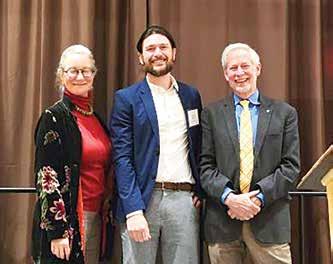
Distinguished Researcher Award honoree – Thomas Boothby, pictured center, an associate professor of molecular biology, received the University of Wyoming (UW) Distinguished Researcher Award at the recent Celebration of Excellence in Research and Innovation. He is flanked by Michelle Sullivan, vice chair of the UW Board of Trustees, pictured left, and UW President Ed Seidel, pictured right. Michala Drum photo
TUESDAY,
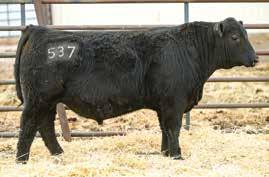
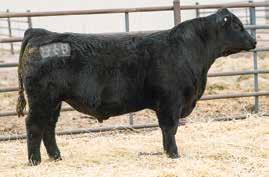
Lot 537
#21495674
Genuine 4* Heifer bull Sired by Chex; out of a 3yr old dam; ADG on test 3.49; Filled with Maternal Cows Top 3% for $M; Top 25% for $ W; off test weight 2/5/26 1020 #’s. GDam by Excitement with Cool are great cows
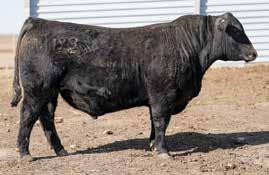
Lot 4198
& 107 for Yrl Ratio; RE Top 4%; $M Top 10%; $W Top 40%; He covers lots of Country and Performance Bases $F Top 10%; $B Top 20% ; $C Top 15%
#21507808
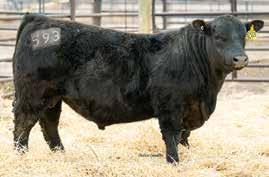
Lot 568
Sired by Congress; used to improve PAP and Carcass on our highly maternal cow herd; He still works Top 35% $M Top 40% $W and $. 83# Birth Weight For use on younger cows or cows; Top 1% with Negative PAP Epd ; ADG 3.53# on test; he’s efficient negative for RFI -4.00
#21495680
Sired by Flat Top; 60# BW but Bigger Heifers only or Young Cows. This is a powerful bull ADG 3.84 Top RFI numbers -4.34 Very respectable PAP Epd ; the FlatTop bulls will lean more toward being a terminal cross than most of our bulls; ADG 3.84#’s off test at 1126 #’s Lot 593
#21502254
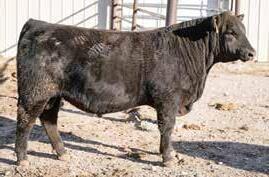
Lot 5106
Sired by Basin Keystone; 75# BW He’ll work on most heifers and bump up WW Top 20% and YW Top 15%; keeping our eyes on Maternal $M & $W Top 25%; Top 15% Marb; Top 25% RE; Top 15% $C; Finished Third on efficiency test ADG 3.72# with super RFI -4.98
#21495661
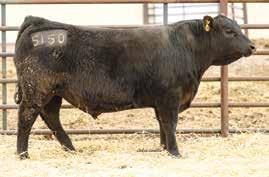
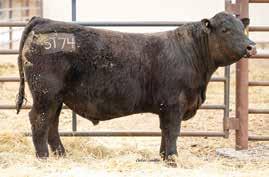
Lot 5174
Cow Bull by Justified 2136; long line of Great Cows 2136’s Dam is 10 yrs old w/ 369 CIntvl she is 110 WR & 109 YR; Proven lines that LAST; This bulls 10 yr old Dam with 107 WR & 105 YR; w/ 366 CInvtl; Top 30% WW & Top 25% YW; he brought it to the Efficiency Test negative for RFI -1.19 F:G 5.88# to 1#; ADG 4.17# off test 1136#
#21495649 By Confidence 035; 90# BW Cow bull; concentrated proven efficiency lines, he’ll get more pounds for more profit; Top 10% WW & Top 15% YW; we didn’t sacrifice Maternal Top 35% $M & Top 25%$W; Number 2 overall on Efficiency test 5.9# Feed to Gain 1# negative RFI -5.41 off test @1161#
#44630204
2 Year Old Want fancy F1 feeder calves? For Cows only ; This big-boned, stout-made son of CSU Kid Ram 1204 is built for it. Good footed, easy-keeping, with extra body & real maternal strength-keep every heifer. Top 23 % WW Top 14% YW Top 12% Marb Top 7% $BMI & Top 4% $CHB. Horned 75%-RE 0%-LE Lot
OBITUARIES
Lacee Sims
July 26, 1969 – March 10, 2026
Lacee Sims passed away on March 10 at her home in Evanston surrounded by her loving family.
She was born in the summer of 1969 in Jacksonville, Fla. and was raised mostly on the Wasatch Front of Utah where she graduated from high school in 1987, then went on to attend Colorado State Universityʼs veterinary technician program in 1988.
Lacee met her best friend and true love Shaun Sims while working for his uncle who was a veterinarian in Bountiful, Utah. She continued commuting to and from Bountiful, Utah from Evanston for work for two and a half years after they were married in September 1995.
She then worked at Bear River Veterinary Clinic for just short of 14 years before medically retiring in 2010.
Lacee had a very chaotic childhood filled with things she never wanted her children to experience, so she did everything in her power to build a safe and strong family, and her husband was the anchor to building this family with her.
Shaun and Lacee raised three perfect, smart and beautiful daughters including Nicole (Kevin) Moore and their children Dakota and Cassidy; Jade (Mike) Shelton and their children Sawyer and Fletcher and Mikayla Sims and her children Oaklee, Waylen, Lane, Dakota and Beau.
Lacee lived for her husband, children and grandchildren.
Lacee created beautiful art and memories in the form of photography and her side gig Leather-N-Lace Photography – named by her beloved grandmother who said Shaun and Lacee were like leather and lace –absolute opposites.
She worked hard creating memories for others and telling the stories of Sims Ranch and others through her agricultural photography for many years.
Lacee volunteered her time and energy to the Adopt a Rancher program through the local conservation district and had so much fun writing letters back and forth with all of the kids.
She sat on the Wyoming Beef Council and was even made chairman for two years. She also put energy and effort into the Wyoming Agriculture in the Classroom board and realized
she had no normal teaching skills. Then, she volunteered for two years as a patient advocate at the University of Utah helping other patients find their voices.
Eventually her health made her step back and focus on survival from disease which debilitated her everyday life.
People would ask her when she would be done with treatments and it broke her heart every time to say “never.” There was no cure, just Band-Aids.
By 2025 she had been fighting hard since 2010, but it began long before then. She went through awful treatments bi-weekly that just gave her a fighting chance, medication trials that never worked but caused more damage, drug oxygen hoses through the house, portable oxygen on the go and cussed her inability to just be normal anymore, yet she continued to smile through the bad days and she cherished the good days. Through it all, she still continued to take photos of everything she could –mostly of her family.
Lacee loved her critters, and her love of poodles was never in question. They were her constant companions for many years. She also had a few kittens she found a lot of joy in. She loved having lambs, chickens and ducks.
Shaun and Mikayla built her a greenhouse and garden plot where she has spent the last few years wandering through the green stuff, growing things and clucking to her vegetables like errant children. She was always trying to grow tomatoes and zucchini, making the grandkids help her by picking strawberries, gathering eggs, pulling weeds and cooking.
Lacee loved to cook and throw family parties – sometimes with themes and decorations to boot – always trying to show her people just how much she loved them.
She had lifelong friends she treasured greatly even though she didn’t get to see them enough. Her best partner in crime throughout her life was her brother Johnny. She loved Shaun more than she could ever explain and really wanted to spend forever in his presence. He never made her feel less than and he always let her be herself when she was grumpy, sad, scared or just emotional about the heaviness of it all. He dealt with her feelings better than anyone ever could, and he always made her laugh, look forward and make plans. He never left her side.
A celebration of her life will be announced at a later date, and the family encourages all of Lacee’s friends and family to attend and share their favorite memories.
And RWF Open Replacement Heifers
IKE Johnny Ringo 5201 (Charolais Bull)
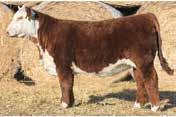
MH Real Deal N308 ET (Reg. Polled Hereford)
OBITUARIES
Gregory “Greg” Gardner
Oct. 14, 1956 – March 1, 2026
Gregory “Greg” Gardner, age 69, of Lysite passed away on March 1 at the University of Colorado Hospital.
Greg was born on Oct. 14, 1956 in Riverton – a place that suited him well, because from the very beginning he was built for the life of a Wyoming rancher.
He attended school in Morton and Riverton before graduating from Shoshoni High School, but the classroom was never really where Greg belonged – the ranch was. The horses, cattle and open country was where he felt most at home.
As a boy, Greg’s Grandpa Stoll gave him the nickname “Timberline,” because he was tall and skinny. The name stuck, and so did the bond between the two of them.
On July 25, 1976, he married his high school sweetheart Barbara Ramage. Together they built a life centered around hard work, family and the land they loved.
In 1980, Greg and Barb moved to Lysite, where they started their own livestock operation and raised their three children.
Greg was a rancher through and through. Being a cowboy wasn’t something he tried to be. It was simply who he was. He believed in getting up early, working hard and doing the job that needed to be done without complaint. He understood horses and cattle in the quiet way lifelong ranchers do.
The ranch wasn’t just where he worked. It was where he understood the world best, and this never changed.
In the days leading up to his hospitalization, Greg was still doing what he had done his entire life – feeding cattle and horses on the ranch.
No matter what, he pushed forward. Cowboy tough was the only way he knew how to live.
Greg lived by a simple code, one that reflected the kind of man he was.
One of the sayings he
WGFD trainings offered
The Wyoming Game and Fish Department (WGFD) is offering training for members of the public to become certified Wyoming aquatic invasive species (AIS) inspectors.
These trainings provide the necessary skills to inspect personally-owned and other watercraft and includes information on basic biology of invasive species, the impacts and distribution of AIS and their common transport vectors.
It also includes classroom instruction and a handson watercraft inspection exercise, culminating in a certification exam. The training is free and open to anyone.
“Aquatic invasive species pose a serious threat to Wyoming’s water resources, impacting agriculture, municipalities and wildlife. Invasive species disrupt ecosystems and harm native species and prized fisheries,” said Josh Leonard, WGFD AIS coordinator. “Public education about AIS, inspection techniques and proper boat maintenance, including ‘Clean, Drain and Dry’ practice guidelines, is vital to safeguarding Wyoming’s waters.”
Trainings are offered statewide as a one-day course from 9 a.m. to 4 p.m. throughout the spring. The registration deadline is one week prior to the class date, and the public can register online at wgfd.wyo.gov
Trainings will be offered on March 20 and July 24 at the Sheridan Regional Office, April 3 at the Cody Regional Office, April 18 at the Casper Regional Office, May 1 at the Laramie Regional Office, May 24 at the Pinedale Regional Office, June 1 at the Green River Regional Office and June 7 at the Jackson Regional Office.
Commission meeting scheduled
The Wyoming Game and Fish Commission will meet in Torrington March 18-19 at the Rendezvous Center on the Goshen County Fairgrounds.
The meeting will be held in-person, with virtual options available via Zoom, and will include presentations, discussions and approval of several items, including the preliminary approval of the Fiscal Year 2027 Commission Budget.
Public comment on these topics can be provided during the meeting in person and online.
Additionally, a tour of the Downar Bird Farm will be held on March 17 from 2-4 p.m. and is open to the public. The tour will meet at the Downar Bird Farm in Yoder at 2 p.m. and participants must provide their own transportation. For more information or to view a full agenda, visit wgfd.wyo.gov
appreciated most came from John Wayne and goes, “I won’t be wronged. I won’t be insulted. I won’t be laid a hand on. I don’t do these things to other people, and I require the same from them.”
Those who knew Greg would say he lived by this kind of straightforward honesty his entire life.
Greg was a private man, and those who knew him understood it well. He wasn’t one for attention or long speeches, but the people close to him knew the depth of his loyalty, his quiet humor and his unwavering sense of responsibility to his family.
Greg could have a quick temper and wasn’t shy about letting a few choice words fly when something needed saying, but he never held onto it long. By the next chore or sunrise, it was usually behind him.
He was also known to guard a few prized possessions – especially his Garcia and other silver bits, his spurs and his saddle. Those who
knew Greg understood those items were strictly off limits.
He had an old soul. Many of his closest friendships were with older generations because he loved hearing stories about the past. History fascinated him, and he had a memory like few others. He could recall names, events and details from decades ago as if they had happened yesterday.
Later in life, Greg developed a love for travel and adventure. Hunting trips took him to places he never expected to see. Trips to Africa, New Zealand and Alaska became some of the most memorable experiences of his life, and he spoke of them often.
He also enjoyed taking solo road trips, driving long stretches of highway just to take in the scenery and the places along the way. Some of those trips took him to Green Bay, Wis. to watch his favorite football team play.
In 2017, Greg was given a second chance at life through a heart transplant. True to his
nature, he faced the challenge head on and came back stronger than anyone expected.
Resilience was simply part of who he was. Over the years he survived more horse wrecks, cattle accidents, tractor rollovers and patched-up body parts than the family could count, yet he always got back up and kept going.
Because of this, when his final hospitalization came, the family simply assumed he would bounce back once again.
Of all the things Greg loved, nothing meant more to him than his grandchildren. They were his greatest joy.
Greg is preceded in death by his grandfathers Jim Stoll and Earl Gardner, his grandmothers Margaret McFarland Stoll and Stella Kelly Gardner and his father Dave Gardner.
He is survived by his wife of nearly 50 years, Barbara Gardner; his three children Heidi (Anthony) Grace and their son Niall; Jason (Bridget) Gardner and their children Lainee and Landon
and James (Jennifer) Gardner and their children Megan, Mac and Madison; his mother Claudine Gardner; his brothers Bret Gardner and Kelly (Kim) Gardner and numerous nieces and nephews.
Greg lived the kind of life that doesn’t need embellishment – a life built on hard work, family, honesty and the land. The ranch was his home, the cowboy life was his calling and somewhere now, we imagine Greg riding again in the mountains – tall in the saddle, high-spirited and free.
A celebration of life will be held at 2 p.m. on March 21 at the Missouri Valley Fire Hall, 384 Missouri Valley Road, Riverton, WY. Food will be provided. Memorial contributions may be made to Shoshoni FFA, Missouri Valley Fire Department or Lysite Fire Department. Checks should be made payable to the organization and may be sent in care of Davis Funeral Home, 2203 West Main Street, Riverton, WY 82501.
Check Us Out On Facebook!
John Burton
June 22, 1940 – Feb. 27, 2026
Born on June 22, 1944 to Harold and Violet Burton, John Burton spent his life ranching on the Upper Bear River.
He grew up on the ranch, raised his family on the ranch and created wonderful memories with his wife Carolyn on the ranch. He seldom found reason to leave the ranch and rarely for more than three or four days at a time.
After graduating from Evanston High School in 1962, John attended Utah State University. Although he enjoyed his time in Logan, Utah, unsurprisingly, he missed the ranch and soon returned to the Upper Bear River.
John and Carolyn were married in 1968, and he found the only thing he loved more than the ranch was his family.
Throughout his life, John enjoyed few things more than good horses. It started as a young boy when he rode his horse to the Fairview School through the eighth grade.
For many years, he used a team to put up hay and feed cows through the long winters.
His favorite horses to ride were snappy, quick mares. Whether he was irrigating hay meadows or fixing fence, John did it horseback.
He enjoyed working in the hayfield and appreciated quality equipment. In John’s opinion, the only tractors worth owning were green. It was in the hayfield he taught his daughters to drive and how to operate machinery.
Recently, one of his favorite activities was letting his youngest grandsons learn to drive across the hayfields, with grandpa and grandma enjoying every bump along the way.
John is preceded in death by his parents Harold and Violet, his daughter Holly and his sister Loretta.
He leaves behind the love of his life Carolyn; his daughters Kim (Ira) Brackett of Three Creek, Idaho, Jaime (Adrian) Hunolt of Evanston and Lori (Brok) Thayn of Farmington, Utah; seven grandsons; two granddaughters and his sister Nita Virden.
A celebration of life will be held at 11 a.m. on March 24 at the Evanston Roundhouse and Railyards. Friends and neighbors are invited to gather and share stories.
CALENDAR
Submit your events to: Editor, Wyoming Livestock Roundup, P.O. Box 850, Casper, WY, 82602, or e-mail to roundup@wylr.net.
EVENTS
March 16 University of Wyoming Extension Pesticide Safety Education Program, 9 a.m.-12 p.m., Fremont County Extension Office, Lander. For more information or to RSVP, contact the Fremont County Extension Office at rmeeks2@uwyo. edu or 307-332-2363.
March 17 University of Wyoming Extension Sheep Task Force Lambing Webinar, 6-7:30 p.m., Zoom. For more information, contact Jedidiah Hewlett at jhewlett@uwyo.edu or 307-358-2417.
March 17 University of Nebraska-Lincoln Confinement Feeding Cow/Calf Pairs in the Face of Limited Perennial Grass Options Webinar, 6:30 p.m., online. For more information or to register, e-mail Aaron Berger at aberger2@unl.edu.
March 18 National Grazing Lands Coalition Snowpack and Effects on Drought Management Free Webinar, 12 p.m., online. For more information or to register, visit grazinglands.org/events/graze-on-over-snowpack-effects-on-droughtmanagement
March 18 Wyoming Game and Fish Department Hunting Regulations Public Meeting, 5:30-7:30 p.m., Jackson Regional Office, Jackson. For more information, visit wgfd.wyo.gov
March 18 Beef Cattle Research Council Strategies For Reducing Calf Losses Webinar, 7 p.m., online. For more information or to register, visit beefresearch.ca
March 18-19 Wyoming Game and Fish Commission Meeting, Rendezvous Center, Goshen County Fairgrounds, Torrington. For more information or to view a full agenda, visit wgfd.wyo.gov
March 19 University of Wyoming Extension Pesticide Safety Education Program, 10 a.m.-2 p.m., Teton County Extension Office, Jackson. For more information or to RSVP, contact the Uinta County Extension Office at 307-783-0570.
March 19 University of Wyoming Extension Pesticide Safety Education Program, 1-5 p.m., Sheridan County Extension Office, Sheridan. For more information or to RSVP, contact Chandra Hendricks at shercnty@uwyo.edu or 307-674-2980.
March 19 Wyoming Game and Fish Department Hunting Regulations Public Meeting, 5:30-7:30 p.m., Thayne Community Center, Thayne. For more information, visit wgfd.wyo.gov
March 19 Wyoming Game and Fish Department Hunting Regulations Public Meeting, 6 p.m., Dubois Headwaters Arts and Conference Center, Dubois. For more information, visit wgfd.wyo.gov
March 19 Wyoming Game and Fish Department Hunting Regulations Public Meeting, 6 p.m., Casper Regional Office, Casper. For more information, visit wgfd. wyo.gov
March 20 Wyoming Game and Fish Department Aquatic Invasive Species Inspector Training, 9 a.m.-4 p.m., Sheridan Regional Office, Sheridan. For more information or to register, visit wgfd.wyo.gov
March 20 Wyoming Game and Fish Department Hunting Regulations Public Meeting, 6 p.m., Volunteer Fire Department, Thermopolis. For more information, visit wgfd.wyo.gov
March 20-22 Up In Arms LLC Flea Market and Gun Show, Central Wyoming Fairgrounds, Casper. For more information, call 208-420-2295.
March 21 Wyoming Wool Growers Association Lambing School, Kaycee. For more information or to register, visit wyowool.com/lambingschool2026
March 23 University of Wyoming Extension Pesticide Safety Education Program 12-4 p.m., Weston County Fairgrounds, Newcastle. For more information or to RSVP, contact the Weston County Extension Office at westncty@uwyo.edu or 307-746-3531.
March 23 Wyoming Game and Fish Department Hunting Regulations Public Meeting, 6 p.m., Wyoming Game and Fish Headquarters, Cheyenne. For more information, visit wgfd.wyo.gov
March 23 Wyoming Game and Fish Department Hunting Regulations Public Meeting, 6 p.m., Northwest College, Powell. For more information, visit wgfd.wyo.gov
March 23 Wyoming Game and Fish Department Hunting Regulations Public Meeting, 6 p.m., Washakie County Fairgrounds, Worland. For more information, visit wgfd.wyo.gov
March 23 AgriPulse Ag and Food Policy Summit, National Press Club, Washington, D.C. For more information or to register, visit agri-pulse.swoogo.com/2026-dcsummit/
March 24 Wyoming Game and Fish Department Hunting Regulations Public Meeting, 6 p.m., Platte Valley Community Center, Saratoga. For more information, visit wgfd.wyo.gov
March 24 Wyoming Game and Fish Department Hunting Regulations Public Meeting, 6 p.m., Fire Station, Lovell. For more information, visit wgfd.wyo.gov
March 24 Wyoming Game and Fish Department Hunting Regulations Public Meeting, 6 p.m., Mountain View School Administrative Building, Mountain View. For more information, visit wgfd.wyo.gov
March 25 University of Wyoming Extension Pesticide Safety Education Program, 9 a.m.-12 p.m., Dubois Town Hall, Dubois. For more information or to RSVP, contact the Fremont County Extension Office at rmeeks2@uwyo.edu or 307332-2363.
March 25 Wyoming Game and Fish Department Hunting Regulations Public Meeting, 4 p.m., Cokeville Town Hall, Cokeville. For more information, visit wgfd. wyo.gov
March 16
March 18
March 19
Sticks and Stones Ranch Second Annual U Pic Em Private Treaty Bull Sale, Archer Complex, Cheyenne, 307-421-1592
Lufkin Cattle Company Annual Bull Sale, at the ranch, Salmon, Idaho, 208303-0438, lufkincattle.com
Carter Cattle Company 27th Annual Production Sale, at the ranch, Pingree, Idaho, 208-390-4811, 208-681-9711, 208-681-8859, cartercattleco.com
March 20 Black Summit Cattle Annual Bull Sale, Black Summit Cattle Sale Facility, Powell, 307-899-3553, 307-899-1764, blacksummitcattle.com
March 20
March 20
March 21
Montana Performance Bull Co-Op with Basin Angus Ranch Annual Bull Sale, Midland Bull Test Sale Facility, Columbus, Mont., 406-780-1219, 406321-2470, 406-350-0350, basinangus.com
Lechleiter Simmentals 38th Annual Bull Sale, Loma Livestock, Loma, Colo., 970-209-8008, 970-249-5938
March 21 Triangle J Ranch and Altenburg Super Baldy Ranch LLC Colorado Select Bull Sale, Centennial Livestock Auction, Fort Collins, Colo., 970-481-2570, 308-627-5085, altenburgsuperbaldy.com, trianglejranch.com
March 21
March 21
March 21
March 22-23
March 23
March 23
March 24
Gnerer Angus Annual Production Sale, at the ranch, Olive, Mont., 406-4986113, 406-935-3183, gnererangus.com
Chundy Land and Cattle 10th Annual Bull Sale, Ogallala Livestock, Ogallala, Neb., 308-883-0565, chundylandandcattle.com
Ochsner Limousin Pasture to Plate Performance Sale, at the ranch, Kersey, Colo, 970-396-5525, 970-222-1984,
Leachman Cattle Spring Bull and Female Sale, Meriden, 970-568-3983, leachman.com
Snowshoe Cattle Company Annual Bull Sale, at the ranch, Arthur, Neb., 406-647-5233, snowshoecattle.com
Sidwell Ranch and Frank Herefords 10th Annual Production Sale, Columbus, Mont., 406-861-4426, 307-631-6012
March 25 NJW Polled Herefords Bull Sale, NJW south ranch, Sheridan, 307-7518289, 307-751-9470, njwherefords.com
March 25
McCumber Angus Ranch Annual Production Sale, at the ranch, Rolette, N.D., 701-871-1072, 701-871-9800, mccumberangus.com
POSTCARD from the Past
Compiled by Dick Perue rrichardperue@gmail.com Ireland’s Patron Saint Revered in Puerto Rico for Driving Out Ants
San Juan, Puerto Rico, March 17 –While the feet of Saint Patrick never trod the American continent, his spiritual intervention is believed by the devout to have rid a portion of American territory of a plague as dangerous as that of the serpents which he is reputed to have driven out of Ireland.
According to a legend here, the island was infested by ants and worms in the year 1536.
The ants were especially vicious. They invaded the houses and attacked the inhabitants. Seven infants died from bites. The worms devoured garden produce, and the cattle starved for lack of grass which was destroyed by both pests.
The chief inquisitor of the Spanish Inquisition conferred with the bishop of this – the oldest Roman Catholic diocese in the new world – and it was decided to select a particular saint to appeal to for aid in the matter.
A meeting of all the prominent clericals of Puerto Rico was held, and it was decided to leave the selection of the saint to chance. The names of the saints in the calendar were written on slips of paper and deposited in a jar. A small boy did the drawing.
Thrusting his hand into the jar, the youngster produced a slip on which appeared the name of Saint Patrick.
“Who is Saint Patrick?” clericals asked each other.
Some obscure saint, it was agreed, and the name was put back.
Again the name of Saint Patrick was drawn. This time, a long discussion took place, for the clericals doubted the power of Saint Patrick and wanted a saint better known to Spaniards.
Eventually, they decided to take one more chance and were astounded to have the now familiar name drawn once more. This third trial settled the matter, and special appeals were made in the Cathedral asking the aid of Ireland’s patron saint.
After three days, corresponding with the three draws, came Saint Patrick’s
answer. Rain commenced to fall and it continued almost steadily for three weeks, washing away both worms and ants and causing grass to spring up in the devastated fields.
Then the people did honor to Saint Patrick and celebrated his birthday.
This article appeared in the March 17, 1926 issue of The Casper Daily Tribune Saint Patrick, Patron Saint of Ireland
According to the Greybull Tribune published March 17, 1922, Today, March 17, marks the 1,549th anniversary of the birth of Saint Patrick, the patron saint of Ireland.
He was born at Kilpatrick, Scotland on March 17 in the year 373 A.D., and he died at Saul, near Armagh, Ireland in the year 493 at the age of 120 years old.
At 16, Patrick – or Succath, which was his original name – was carried off by pirates, who sold him to an Ulster chieftain, whose flocks he tended for six years. At the end of this period, he made his escape to France, became a monk and lived for some time in Saint Martin’s abbey at Toure and afterwards in the monastery of Lerfns.
He was moved by visions to undertake the version of the pagan Irish.
Having been ordained a bishop and received the papal benediction, he went into Ireland to his field of labor around 432. Here, he founded over 360 churches, baptized more than 12,000 persons and ordained a great number of priests.
Many miracles are ascribed to him, especially his expiration of all the snakes and venomous creatures from Ireland. The custom for many years on Saint Patrick’s day has been the profuse wearing of the Irish shamrock.
Pictured is “Saint Patrick Going to Tara,” an illustration from a 1904 book. Historical Reproductions by Perue
Ft. Collins: 120.00-180.00. Sioux Falls: 100.00-165.00.
Feeder Lambs: Medium and Large 1: San Angelo: No test.
Billings: 50-60 lbs 320.00-335.00; 70-80 lbs 310.00-315.00. Sioux Falls: 30-40 lbs 475.00-490.00; 40-50 lbs 465.00; 50-60 lbs 430.00-455.00; 60-70 lbs 385.00-395.00; 70-80 lbs 370.00. Ft. Collins: No test. Replacement Ewes: Medium and Large 1-2: San Angelo: No test.
Billings: 2-6 SPR 200-230 lbs 380.00-430.00 per unit.
Ft. Collins: No test.
South Dakota: No test.
Sioux Falls: No test.
Sheep and lamb slaughter under federal inspection for the week to date totaled 37,000 compared to 38,000 last week and 39,228 last year.
Source: USDA AMS LPG Market News, San Angelo, Texas
National Wool Review
As of March 6, 2026
Source: USDA- CO Dept of Ag Market News Service, Greeley, CO
Nebraska Hay Summary As of March 12, 2026
Compared to the last report. Big round bales of alfalfa sold mostly steady, instances 20.00 higher on loads of hay leaving the state. Grass hay sold fully steady. Ground and delivered hay steady. Demand was moderate. Dryness continues across the state and in the back of minds of several are thinking should we start buying hay because of the drought? Last year, several buyers stepped up and purchased hay 20.00 to 30.00 per ton more than early hay sales then the state received rain and the hay market collapsed. So that is a thought also that the rains will come this spring. A teaser of moisture early in this week gives hope that the weather pattern will change and ample moisture will prevail. Irrigation water restrictions have been a steady talk in the western area of the state. If this happens, on the ditch water it will throw a huge curve ball to several hay and row crop producers.
Source: USDA AMS Livestock, Poultry &
Colorado Hay Summary
As of March 12, 2026
Kearny,
Compared to last report: Trade activity Light on Moderate to Good demand. Prices mostly steady on horse hay trades. Feedlots and dairies trades are $15-30/ton higher delivered in than a month ago. Dairies and feedlots are starting to settle on new crop corn standing prices. Alfalfa standing offers are still being considered by farmers with the recent increase in fuel and fertilizer prices the past two weeks holding them up from locking in prices. According to the U.S. Drought Monitor’s High Plains Summary for March 10, 2026, widespread drought of varying intensity continues across much of the Central Great Plains and Central Rockies. Drought expanded this past week to include all of southwestern Colorado and intensified for northwestern parts of the state. The low snowpack throughout the Central Rockies, especially Colorado, remains a major concern heading into the spring. As of March 10, snow water equivalent for the river basins of Colorado is running below 70 percent of the
1991-2020 average. There were a couple exceptions to the worsening conditions. A wet snow (1” or more, liquid equivalent) supported the removal of extreme (D3)
across parts of the Denver metro area. Heavy rainfall (more
prompted small 1-category improvements to eastern Kansas and southeastern Nebraska. The next available report will be Thursday, March 26, 2026.
Early weed control strategies for pastures and hayfields provided
Many pastures and hayfields will become overrun with weeds in late spring. Before they get too unruly, producers might want to consider early management options to reduce their presence.
There have been a lot of questions about how to control weedy annual grasses such as crabgrass, foxtails, panicum, Japanese stiltgrass and others in grass forage settings. Unfortunately, these grasses start germinating at different times in spring, so there are no universal options.
For example, Japanese stiltgrass can germinate a couple weeks or more before crabgrass and other species. Thus, an early application of pendimethalin will be necessary for initial control.
Large crabgrass and the other mentioned grasses typically start germinating around 200 growing degree days.
A great natural sign it is time for a residual herbicide – especially on annual grass – is when forsythia starts blooming.
Currently, pendimethalin – Prowl H2O and Satellite HydroCap – is an option for controlling annual grasses and broadleaf weeds in cool- and warm-season forage grass settings.
Prowl H2O or Satellite HydroCap can be applied to established perennial forage grasses, including Kentucky bluegrass, bromegrass, tall fescue, orchardgrass, perennial ryegrass, timothy, switchgrass and others, which are grown for forage, greenchop, silage, hay production or livestock grazing. Apply at a broadcast rate of 1.1 to 4.2 quarts of prod-
uct per acre in a single application or sequential applications made 30 or more days apart.
Herbicides must be applied before weed germination in spring or in-season between cuttings. Otherwise, weeds won’t be controlled.
These products may be tank-mixed with other labeled herbicides.
Split applications of pendimethalin are better than a single, high-rate application early in the season. Make the first application – two to three pints an acre – in early spring, around mid-March to early April, but before weed germination. Then, make the second application right after first or second cutting at three to four pints an acre.
One thing to note about pendimethalin is it requires about an inch of rainfall within a week or so after application for it to be activated. If poor weed control is a result, other control tactics might be needed at some point during the season.
Postemergence options are limited
There are limited postemergence herbicides which selectively control annual grassy weeds without injuring the desirable forage.
Plateau – imazapic –controls crabgrass, foxtails, fall panicum, Japanese stiltgrass and others, including postemergence, when weeds are a few inches tall. However, it can only be safely used on certain coolseason forage grasses.
Plateau will cause temporary suppression of Kentucky bluegrass, smooth bromegrass, orchardgrass and perennial ryegrass, but it will likely kill tall fescue
or timothy.
Facet and Quinstar –quinclorac – do not control Japanese stiltgrass but have some activity on other weedy grasses if they are less than two inches tall. It will kill clovers.
Milestone at five to seven fluid ounces an acre –or other aminopyralid products, GrazonNext HL or Chaparral – provides suppression of Japanese stiltgrass when small – less than six inches tall – and controls several other broadleaf weeds, but it will injure or kill forage legumes.
When using aminopyralid-containing products, consideration must be given to issues with herbicide residues in the forage and manure which can cause subsequent problems.
Keep in mind pendimethalin products do not control established perennials like roughstalk bluegrass, which is becoming more of a problem in forage fields. Fall and early spring are the best times to apply effective herbicides to control this weed. Unfortunately, there are no effective products to control it in cool-season grass forages.
In alfalfa settings, the use of Gramoxone/paraquat, Raptor or Select/ clethodim after first cutting generally provides 85 to 90 percent control of roughstalk bluegrass.
Scout for winter annuals and biennials
Now is the time to scout grass pastures and hayfields for winter annuals and biennial weeds.
Winter annuals include the mustard species yellow rocket and shepherdspurse, common chickweed, horse-
Quarter Circle Reverse D - Thermopolis
weed or marestail, deadnettle, henbit and fleabane.
Biennials including bull, musk and plumeless thistle; burdock; poison hemlock; wild carrot and more should be treated before they begin to bolt, and the smaller the better.
Late fall or early spring is the best time to treat biennials when they are still in the rosette growth stage.
An effective herbicide application for both will prevent flowering and seed production.
Perennial broadleaf weeds
Management of perennial broadleaf weeds such as dandelion, Canada thistle, horsenettle, hemp dogbane, milkweed and smooth bedstraw, as well as woody perennials like multiflora rose and autumn olive, can start a little later in early summer, after plants reach the bud-to-bloom stage.
The most common herbicides for grass hay and pasture this time of year are the plant growth regulator herbicides such as 2,4D, plus dicamba like Clarity; triclopyr products like Crossbow and Remedy Ultra and clopyralid like Stinger and PastureGard.
In addition, products containing metsulfuron like Cimarron or other generic formulations can provide good control of many broadleaf weeds in spring.
A newer herbicide to consider for grass stands which include white clover is NovaGraz from Corteva. It preserves white clover but controls many common broadleaf weeds. However, it tends to be weak on many of the problem perennials mentioned above.
Also, be cautious if forage grasses were recently seeded and are not yet established as many of these herbicides can cause severe crop injury.
When it comes to controlling buttercup, it’s important to remember if pastures are yellow with buttercup flowers, it’s too late to get effective control from herbicides. The best time to apply herbicides is from midMarch through April.
Herbicides 2,4-D at two to three pints an acre; one quart of 2,4-D plus one pint dicamba; 0.2 to 0.3 ounces of metsulfuron/MSM; 24 to 48 fluid ounces of Nova-
Graz or two to three quarts of Crossbow are commonly used to control buttercup. When biennials such as poison hemlock, burdock and bull thistle are flowering and a few feet tall, herbicide applications are not effective. As biennials, they form a rosette in the fall, and herbicide applications are most effective when they are sprayed in fall in the rosette stage or before bolting in spring.
Effective herbicides for biennials include 2,4-D plus dicamba; Crossbow; 24 to 48 fluid ounces of NovaGraz or glyphosate as a spot treatment.
Dwight Lingenfelter is an Extension associate of weed science with Pennsylvania State University Cooperative Extension. He can be reached at dwight@ psu.edu. This article was originally published by American Agriculturist on March 10.
• Upcoming Sales • March 19 – Weigh-Up Special w/ All Class Cattle, Sheep & Goat March 26 – All Class Cattle April 2 – Bred Cow & Heifer
Special w/ All Class Cattle April 9 – Feeder Special w/ Weigh-up Special April 16 – Weigh-up Special w/ All Class Cattle, Sheep & Goat April 23 – All Class Cattle April 30 – No Sale
Buttercup trouble – If pasture is yellow with buttercup flowers, it’s too late to get effective control from herbicides. The best time to apply herbicides is from mid-March through April. Dwight Lingenfelter photo
Several years ago, members of the Green River Valley Cowbelles/ Cattlewomen (GRVC) decided it was time to move their annual meeting, committee reports and awards luncheon to the weekend before the cattlemen’s meetings and banquet.
The change gives them more time to highlight their own achievements – especially with many women who are also members of the Green River Valley Cattlemen’s Association (GRVCA).
Trying to accommodate both on the same day meant they missed out on hearing from neighbors and special guests.
Event highlights
This year, GRVC met at Rendezvous Pointe in Pinedale for their “Heart of the Herd” event, with President Haley Clark welcoming local ranch women of all ages – from seven months to 93 years old.
Treasurer Terrie Springman reviewed income and expenses for all of the GRVC’s fundraising projects including the Chuckwagon Days Fourth of July Parade, the Brand Quilt, craft nights and gift sales at holiday bazaars, the Green River Rendezvous and the
Sublette County Fair.
On July 4, 2025, Ranch Woman of the Year Susan Hoffman was squired through Big Piney in a decorated Little Jennie Ranch wagon with Foreman Parker Greenwood driving the draft-horse team.
Beckton’s 81st Anniversary
Bull and Heifer Production Sale
Tuesday, April 14, 2026
Selling 240 Red Angus
231 Bulls and 31 Heifers
Plus 30 commercial heifers
1:00 pm at our ranch 10 miles west of Sheridan
Onnline bidding will be available on DV Auction and Superior Livestock
Guest Speaker Trevor Erickson gave every member a morale boost by reminding them the family ranch runs much better with their support, hard work and experiences.
This year’s 90-by-90 inch GRVC Brand Quilt holds 181 brands.
Beckton is the Foundation Herd of the Red Angus breed 80 years of performance evaluation and genetic selection brings you industry leading genetics for Total Efficiency
Calving Ease and Calving Percentage Efficiency More total live calves per cow in the herd - 16 of the top 20 sires in the entire Red Angus breed for Calving Ease EPD are Beckton sires or descended from Beckton sires.
Cow Herd Efficiency Moderate sized cows have lower feed maintenance requirements. More cows per acre means more calves per acre. The average size of our mature cow age 5 and older is 1100-1150 pounds. We list the act ual weight of each dam for every bull in our sale catalog.
Growth and Feed Conversion Efficiency Rapid and cost efficient gain to market weight - 14 of the top 20 sires in t he
entire Red Angus breed for Dry Matter Intake EPD are Beckton sires or descended from Beckton sires.
Overall Profitability 14 of the top 20 sires in the Red Angus breed for HerdBuilder Index are Beckton sires or desccended from Beckton sires.
Beckton sires have long been the Red Angus breed’s leading choice for calving ease and for functional, maternal females
Additional Facts:
• All 20 of the top 20 sires in the breed for low Birth Weight EPD are Beckton sires or descended from Beckton sires.
• 15 of the top 20 sires in the breed for Heifer Pregnancy EPD are Beckton sires or descended from Beckton sires
• 11 of the top 20 sires in the breed for Stayability EPD are Beckton sires or descended from Beckton sires
Finally: On the consumer’s dinner plate - Beckton’s many generations of DNA selection for beef tenderness make our cattle very popular for specialty beef marketing programs
Ranch families can participate for five dollars per brand. A decision to offer a brand’s eternal presence every year for $50 per brand raised more than $3,000 over the past year.
The winning ticket, bought by Kenny Mooro of Big Piney, was drawn on March 7 at the GRVCA banquet.
Award presentation
The highlight of the luncheon – after a meal of beef filet tips and mushrooms in rich gravy – would be the honors bestowed on significant GRVC members.
Mary “Mickey” Thoman was surrounded by family as her daughter Kristy Wardell related her many achievements in every aspect of agriculture and horsemanship. She was honored as a GRVC Lifetime Member.
Marsha Barlow was stunned to hear the story of her ranch life unfold as she was named Ranch Woman of the Year. Nominated by Springman and Kailey Barlow, she received flowers, a gift basket and a sturdy steel ranch scene silhouette.
Another prestigious honor is the Friend of Agriculture Award, which was awarded this year to Author, Historian and Rancher Jonita Sommers of Pinedale.
Sommers received her honors at the GRVCA banquet on March 7.
“Fair-lyˮ busy GRVC members are always looking for ways to educate the public about beef, and one anticipated annual event is their Philly Cheesesteak Luncheon at the Sublette County Fair. As soon as the grills are set up, the line begins to form, and it’s so popular, a nearby food vendor quits selling the same sandwiches to support their cause.
Another successful project was making buyers’ baskets Sublette County 4-H and FFA youth showing livestock could gift buyers at the fair’s Junior Livestock Sale.
GRVC members get together for fun family craft nights, resulting in handmade items to sell like brand napkins, glad rags, coffee mugs, cards, caps, T-shirts, tote bags, cookbooks and whatever else their logo might fit on. They are sold at local arts and craft fairs, holiday shows and the fair itself.
After both beef groups supported a new Sublette Bred and Raised class for market beef at the fair, they then created a new category with breeding-quality heifers donated by local ranchers.
Continued on next page
GRVC Lifetime Member – Mary “Mickey” Thoman was honored with the Green River Valley Cowbelles/Cattlewomen (GRVC) Lifetime Member Award. Joy Ufford photo
Ranch Woman of the Year – Marsha Barlow, pictured center, was named Ranch Woman of the Year, nominated by Green River Valley Cowbelles/Cattlewomen Treasurer Terrie Springman and Kailey Barlow. She received flowers, a gift basket and a sturdy steel ranch scene silhouette. Joy Ufford photo
New leadership – The Green River Valley Cattlewomen unanimously elected new officers sworn in by outgoing president Haley Clark at the Feb. 28 meeting. Pictured from left to right are Treasurer Terrie Springman, Secretary Marsha Barlow, President Samantha Wardell and Vice President Kristy Wardell. Joy Ufford photo
The goal is to highlight the heifers in one class, then show new cow/calf pairs the following summer.
The Sublette Select Cow Program offers cash prizes, including $500 donated by GRVC.
Last summer, the show boasted four pairs and seven replacement heifers with $2,100 paid out. So far, 4-Hers will show five pairs and seven replacement heifers.
Officers, old and new
With several officers moving away, Clark agreed
to add one more year to her two-year term and Springman volunteered as historian.
After working out how to offset some alternating terms, Vice President Samantha Wardell agreed to tackle her own threeyear term.
With the vice president’s chair now empty, Wardell volunteered to take on the role as a mentor, most recently serving as president of GRVCA, and Walden Campbell moved up to leadership.
Both Wardells were
For more information on the Green River Valley Cowbelles/Cattlewomen, visit @GreenRiverValleyCowbelles/ Cattlewomen on Facebook.
AgriPulse recently announced an impressive lineup of speakers for its Ag and Food Policy Summit, scheduled for March 23.
This year’s summit theme is “Profit, Policy and Possibility: Mapping the Future of Market Expansion for U.S. Agriculture,” and keynote speakers and panel discussions will cover everything from new value-added products, renewable fuels, the power of protein, trade, artificial intelligence and more.
Confirmed speakers include Environmental Protection Agency Administrator Lee Zeldin; Chairman of the Senate Committee on Agriculture, Nutrition and Forestry Sen. John Boozman
(R-AR); Vice Ranking Member -of the House Agriculture Committee Rep. Shontel Brown (D-OH); Ambassador Julie Callahan Elanco Animal Health President and Chief Executive Officer (CEO) Jeff Simmons; U.S. Meat Export Federation Senior Vice President of Communications Joe Schuele; National Milk Producers Federation CEO Ambassador Gregg Doud; National Council of Farmer Cooperatives President and CEO Duane Simpson and American Farm Bureau Federation Vice President of Public Policy and Economic Analysis Dr. John Newton, among many others.
The widely attended AgriPulse event is part of
unanimously elected, while Springman and Secretary Marsha Barlow were renominated to their longtime offices.
Newcomer Tracy Neidig introduced herself as a candidate interested in the historian position. She was also elected, and all were sworn in by Clark.
Joy Ufford will take over Clark’s earlier commitment to report news to the Wyoming Cattlewomen for its quarterly newsletter.
Other attendees talked about ways to increase GRVC’s public exposure and membership. Ideas ranged from creative howto and homemaker in-person and virtual workshops, beef cookoffs and more social media presence.
GRVC’s next meeting is scheduled for June
Friend of Agriculture – Author, Historian and Rancher Jonita Sommers of Pinedale, pictured center, received the Friend of Agriculture Award. Joy Ufford photo
The National Farmers Union (NFU) honored Dr. Dale McCall of Colorado and Joe Logan of Ohio with awards for Meritorious Service to NFU and to American Agriculture, the highest honor presented by NFU.
National Farmers Union awards presented
McCall dedicated his 40-year career to protecting local agriculture and shaping future generations of farmers and ranchers. He used his expertise and experience to promote the needs of family
farmers across three states as president of the Rocky Mountain Farmers Union. McCall also served on the NFU Board of Directors and Executive Committee, where he represented farmers and ranchers from
across Colorado, Wyoming and New Mexico in policy discussions and advocated for family agriculture.
Outside of NFU, McCall was recognized for his commitment to education and mentorship through his lead-
ership as the president of the Colorado FFA Foundation and executive director of the Colorado Board of Cooperative Educational Services (BOCES).
As a farmer himself, McCall’s lived experience fueled his rise as a trusted leader and educator in the agricultural community. His legacy will continue as his farm transitions to the care and stewardship of his grandchildren.
Logan is a fifth-genera-
tion farmer who has served as an integral part of the NFU organization in his home state and nationwide. Logan strengthened both the internal foundation of Ohio Farmers Union (OFU) and its external partnerships, elevating OFU’s voice and impact. As president, he championed rural Ohio through a powerful combination of advocacy and education, ensuring family farmers and rural communities were heard at every level.
Project announced
The National Junior Angus Association (NJAA) has announced the 2026 Angus Impact Project, a service initiative supporting the Colon Cancer Foundation through a fundraising competition known as Penny Wars.
Led by NJAA Vice Chairman Anne Dameron, this year’s effort carries personal significance as it honors her late mother Jennifer who passed away from colon cancer.
The Angus Impact Project serves as the NJAA’s official service outreach, engaging junior members in meaningful acts of community support at state and national levels. Past efforts have included school supply drives and assembling care-kits for Ronald McDonald House Charities.
In preparation for the July event, junior members are encouraged to collect spare change from barns, vehicles and their homes. At the show, Penny Wars will take center stage as jars labeled with the names of well-known Angus staff, regional managers and National Junior Angus Association Board members such as Casey Jentz, Ty Murray, Blake Pillars and Caitlyn Brandt, invite contributions throughout the week.
The individual whose jar collects the greatest amount will be recognized during closing ceremonies and receive a pie to the face on stage.
For more information about the 2026 Angus Impact Project or NJAA programs, visit njaa.info
BRED HEIFERS
Boyd Pallesen- 6 Blk Ang & AngX Bred Heifers. Bred to LBW Hancock Blk Ang bulls. One brand cows! BRED COWS
Boyd Pallesen- 10 Blk Ang & AngX ST Bred Cows. Bred to Blk Ang bulls. PAIRS
Boyd Pallesen- 20 Blk Ang & Blk AngX 2 yr old Hfr Pairs. Tagged to match. One brand. Choice Pairs! CALVES
Simms Ranch- 51 Blk & BWF Hfrs 600#.
9 Red & RWF Hfrs 600#. Rec Vista Once SQ & Vision8 w/Somnus @ branding & weaning. Hfrs are Saler/AngX, sired by V Ranch bulls. One brand. Fancy, high elevation Heifers.
V Ranch- 40 Saler/AngX Strs 550-650#. 20 Saler/AngX Hfrs 600#. Rec 2 rounds of shots. One brand, Reputation! Made for high, dry climate!
Dode Givens- 35 Blk Ang Strs 650#. Weaned 75 days. Sired by Black Angus Lucky 7 bulls. High desert. Bryan & Ray Parkhurst- 22 Blk Ang Strs 650-800#. Rec Vista 5, Vision 8 & Ivermectin pour on @ weaning. Weaned 80+ days. Bunk broke, barley hay fed.
7- 5&6 Yr old Breds, 7- 7&8 Yr old Breds, 4- 9+ yr old Breds) All cows received Triangle 5 fall of 2025 and Virashield VL5 and Vision 7 this spring. Bred Heifers also received 2 shots of Guardian. Fancy, one iron Cows!! All Cows have
BREDS
Hellyer Ranch- 40 Black Angus Bred cows. Bred to Popo Agie Blk Angus Bulls. 13- Bred Hfrs to calve in May. 27- Bred Cows to Calve May/June. (10- 3&4 Yr old