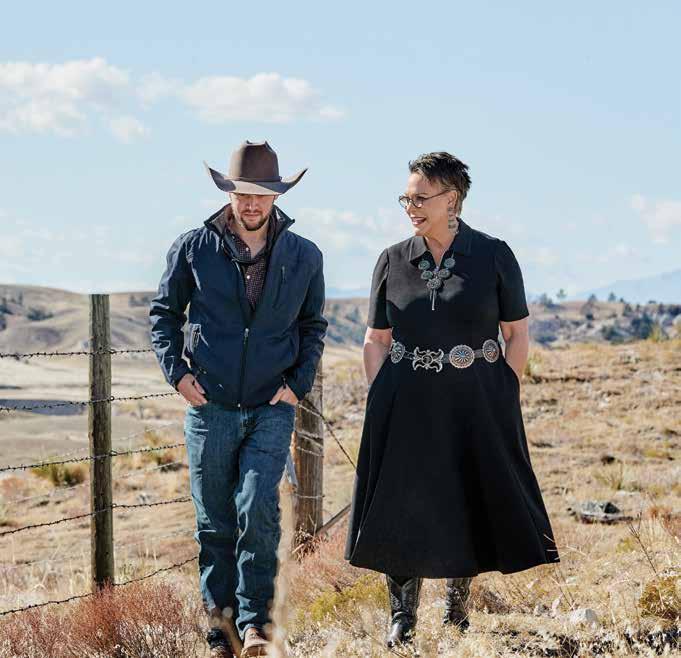
ECP helps producers recover from wildfire damage Page 8
Check your answers for this month's crossword puzzle Page 8
Tips offered for maintaining gardens in a heat wave Page 9
Beef byproduct value is important to cattle prices Page 13
Postcard from the Past highlights the magic of county fair season Page 14
Quick Bits
WWGA Meeting
The Wyoming Wool Growers Association (WWGA) will host its Membership Business Meeting on Aug. 1 during the 2026 Wyoming Sheep and Wool Festival in Heart Mountain Hall at the Park County Fairgrounds in Powell at 2:30 p.m. Members will nominate and vote on the next representative for WWGA board positions and approve the Fiscal Year 2027 budget. For more information, contact WWGA Executive Director Alison Crane at alison@ wyowool.com.
WSGA Award
The Wyoming Stock Growers Association (WSGA) is now accepting applicants for the 2027 Environmental Stewardship Award. Applications require three letters of recommendation, one of which must come from a natural resource conservation agency, as well as responses to a few questions about the operation’s conservation practices. Both nominator and nominee must submit statements of agreement regarding rules of the award program. All applications must be e-mailed to info@wysga.org or shared via Google Drive at wyomingstockgrowersassn@gmail.com by Oct. 31. For more information or to fill out an application, visit wysga.org/environmental-stewardship-award
UW Ranked
Following SmartAsset’s analysis of over 500 public colleges and universities across the U.S., the University of Wyoming (UW) has been ranked among the top 50 public universities in the nation for providing a strong return on investment for its students. On SmartAsset’s new “America’s Best Value Public Universities” list, UW ranks No. 41 and is one of only three universities in the Rocky Mountain West to make the list along with University of Idaho at No. 45 and the New Mexico Institute of Mining and Technology at No. 5. The analysis looked at average cost of attendance, graduation rates and median earnings of graduates 10 years after their first enrollment.
UNL Extension wraps up methane research series
Extension specialists and animal science experts with the University of Nebraska-Lincoln (UNL) recently wrapped up a six-part research series on greenhouse gas (GHG) emissions and livestock.
The final three installments of the
series focused primarily on methane emissions from livestock, including production and measurement processes as well as mitigation techniques.
Methane production
The fourth installment of the research series was published on April 1.
Titled “How and Why is Methane in Cattle Produced?” the article focuses on the methane production process in ruminants.
The authors explain methane is one of three major GHGs and is a
management moves west
Trump administration returns grizzly management to states
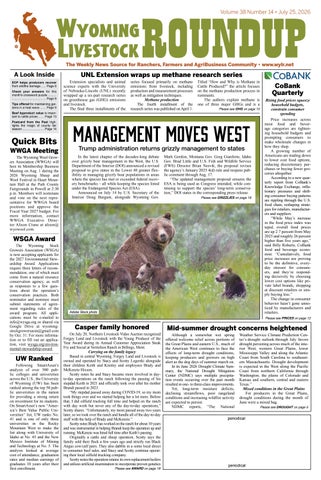
In the latest chapter of the decades-long debate over grizzly bear management in the West, the U.S. Department of the Interior (DOI) announced a revised proposal to give states in the Lower 48 greater flexibility in managing grizzly bear populations in areas where the species has met or exceeded federal recovery benchmarks – all while keeping the species listed under the Endangered Species Act (ESA).
Announced on July 14 by U.S. Secretary of the Interior Doug Burgum, alongside Wyoming Gov.
Mark Gordon, Montana Gov. Greg Gianforte, Idaho Gov. Brad Little and U.S. Fish and Wildlife Service (FWS) Director Brian Nesvik, the proposal revises the agency’s January 2025 4(d) rule and reopens public comment through Aug. 17.
“The updated management proposal ensures the ESA is being used as Congress intended, while continuing to support the species’ long-term conservation,” DOI states in the corresponding press release.
Please see GRIZZLIES on page 18
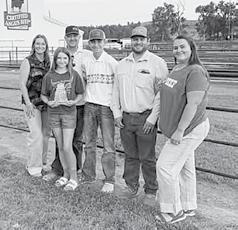
Casper family honored
On July 20, Northern Livestock Video Auction recognized Forgey Land and Livestock with the Young Producer of the Year Award during its Annual Customer Appreciation Steak Fry and Social at Vermilion Ranch in Billings, Mont. Carrying on the family legacy
Based in central Wyoming, Forgey Land and Livestock is owned and operated by Stacy and Scotty Legerski alongside their children Keith and Kinsley and employees Brady and McKenzie Hixson.
Scotty notes he and Stacy became more involved in dayto-day operations on the ranch following the passing of his stepdad Keith in 2021 and officially took over after his mother Brandi passed in 2023.
“My stepdad passed away during COVID-19, so my mom took things over and we started helping her a lot more. Before that, I did oilfield trucking full time and helped on the ranch with day work but never any of the day-to-day operations,” Scotty shares. “Unfortunately, my mom passed away two years later, so we took over the ranch and handle all of the day-to-day stuff with the help of Brady and McKenzie.”
Scotty notes Brady has worked on the ranch for about 10 years and was instrumental in helping Brandi keep the operation up and running. McKenzie was hired full time after Keith’s passing.
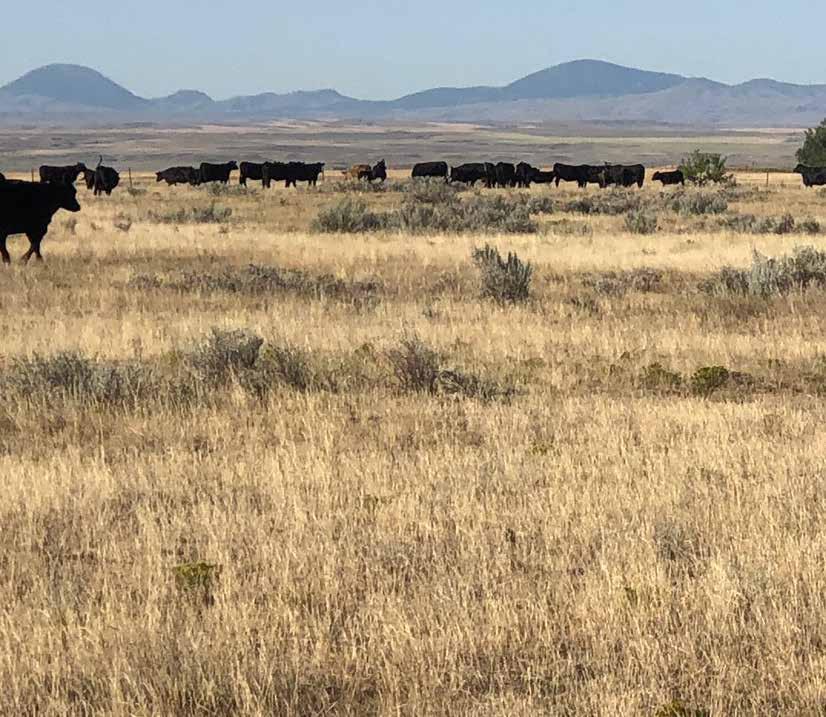
Originally a cattle and sheep operation, Scotty says the family sold their flock a few years ago and strictly run Black Angus cow/calf pairs. They also dabble in a some local direct to consumer beef sales, and Stacy and Scotty continue operating their local oilfield trucking company.
Scotty notes the operation retains its own replacement heifers and utilizes artificial insemination to incorporate proven genetics
Although a somewhat wet spring offered welcome relief across portions of the Great Plains and eastern U.S., much of the American West continues to face the effects of long-term drought conditions, keeping producers and growers on high alert as the dog days of summer march on.
In its June 2026 Drought Climate Summary, the National Drought Mitigation Center (NDMC) says multiple precipitation events occurring over the past month resulted in one- to three-class improvements. Yet, long-term moisture deficits, declining streamflows, poor rangeland conditions and increasing wildfire activity are expected to persist.
Price increases across most food and beverage categories are tightening household budgets and prompting consumers to make wholesale changes in how they shop.
A growing number of Americans are trading down to lower cost food options, reducing discretionary purchases or buying fewer groceries altogether.
According to a new quarterly report from CoBank’s Knowledge Exchange, inflationary pressures and shifting consumer buying patterns are rippling through the U.S. food chain, reshaping strategies for retailers, manufacturers and suppliers.
“While May’s increase in the food price index was tepid, overall food prices are up 2.7 percent from May 2025 and roughly 26 percent higher than five years ago,” said Billy Roberts, CoBank food and beverage economist. “Cumulatively, food price increases are proving to be the definitive, everyday stressor for consumers, and they’re responding decisively by choosing lower cost options like private label brands, shopping at discount retailers or simply buying less.”
The change in consumer behavior hasn’t gone unnoticed by manufacturers and retailers.
Weather Service Climate Prediction Center’s drought outlook through July favors drought persisting across much of the interior West, western Great Plains, lower Mississippi Valley and along the Atlantic Coast from South Carolina to southeastern Massachusetts. Drought development is expected in the West along the Pacific Coast from northern California through Washington, the plains of Colorado and Kansas and southern, central and eastern Texas.”
Mixed conditions in the Great Plains For producers in the Great Plains, drought conditions during the month of June were a mixed bag.
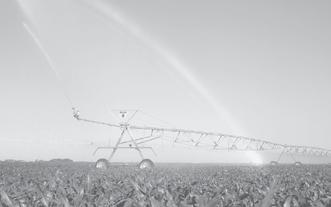
Adobe Stock photo
Mid-summer drought concerns heightened
New Facts Concerning
The biggest news in agriculture this summer has been the long-lasting drought. While it isn’t affecting the entire region, it does cover over 65 percent of the area, which is a huge blow to local agricultural economies.
Currently, most livestock producers and farmers are facing both a forage drought and a hydrological drought – something we have not seen in many years.
This has caused a selloff of both cattle and sheep. While prices are higher than usual, restocking animals is going to be expensive. The loss of genetic improvement producers have made over the years will not be easy to replace.
Everyone wishes they had a crystal ball to help make decisions as the effect of this drought will be felt for some years. There is no telling where the end is.
There is an old saying which states, “It usually takes a hard winter to break a drought.” It is usually true.
The shortage and high prices of hay will not make it any easier. We are all looking for some rainfall from the monsoon, and having Cheyenne Frontier Days running usually brings some rain.
This drought will affect the price of beef for a number of years as ranchers have been selling replacement heifers. This action will delay cattle herds gaining in numbers for some time and will keep the price of beef up for producers.
There are a number of factors guiding the cost of beef. The most likely reason is federally inspected cattle slaughter numbers are down by 7.8 percent. The steer and heifer slaughter numbers are down close to seven percent.
But the good news is yearling dressed weights are up 20 to 30 pounds compared to last year and 65 to 95 pounds above the five-year average.
We can give ranchers a big thank you for their improved cattle genetics and, in some cases, cattle feeders for feeding the yearlings longer. Meatpackers just want beef and beef fat to mix with imported grind.
These dressed weights have made up some for the low numbers of cattle processed.
One of the big reasons for beef prices being where they are is the demand for beef. Beef sales at the grocery store are a high percentage of all of the total fresh meat sales. While all fresh meats are great proteins, beef is currently the most desired.
Total beef exports are down 17.2 percent year-overyear for January through May. In the same time period, beef imports are up around 10 percent year-over-year.
High tariffs are the reason some countries can import beef into the U.S. and others don’t. Uruguay and Brazil are high exporters of beef into the U.S., while Canada and Australia are low exporters. Mexico isn’t able to ship live cattle into the U.S., but the country is shipping beef products into the U.S. due to building more processing plants.
There isn’t any foreseen reason to see elevated beef prices go lower in the next few years.
“Lead, follow or get out of the way” is a phrase coined by my great uncle General George Patton. It was also a favorite of Lee Iacocca’s, a champion of American industry and leadership.
Both men did incredible things for our country – one leading the Third Army on their way to winning an impossible war against unspeakable evil and the other leading an industry out of near certain bankruptcy while helping to revitalize a vital sector of America’s economy.
It’s an adage of courage and confidence, not one of temerity and passivity.
President Donald Trump is a great president because he, like Ronald Reagan before him, is a man of action born of confidence in himself and the greatness of our country.
I wonder if the current conversation about data centers, artificial intelligence (AI) and American ingenuity will continue to be fueled by the traditional American belief in our ability
to meet challenges head on and solve them or if now is the time we will turn to worrying about what horrible things will happen if we act.
Maybe this is the sentiment of the time, and if it is, it comes at precisely the time when the president is asking us to “Make America Great Again.” What irony. Right now, we have far too much wringing of hands, saying no to almost everything and not enough leading.
Take for instance my colleague in New York, Gov. Kathy Hochul (D-NY), who has just put a one-year pause on the construction of any new large AI data centers in her state. She chose sensation over sense. What short-sighted thinking. Her response is not sober reflection and prudent policy, but political faint-heartedness.
Let me be clear – as governor, I do not support any state-mandated moratorium on building data centers in Wyoming. The job of deciding whether to encourage the building of data cen-
ters falls, as it should, on the more than capable shoulders of our local communities within the constraints allowed by the legislature.
As with most development, it is the communities, counties and local boards who do the heavy lifting in economic opportunity. We shouldn’t change this now.
I believe, as our founders, the government closest to the people has the ability to fiercely protect their own homes and families.
Hochul and her leftist friends in Albany, N.Y. are swallowing the dictates of their far-left supporters by banning the fracking of oil and gas in New York, blocking pipelines conveying gas to the Northeast and now by banning data centers. And to what end?
Lost economic opportunities only hurt the communities, workers and families in her state which would benefit from the tax revenues and the jobs brought by these companies – all while Please
NEWS BRIEFS
WyoGives breaks records
Wyoming communities came together on July 15 to make WyoGives 2026 the most successful giving day in the event’s history, raising more than $6.5 million to support more than 500 nonprofit organizations serving communities across the state.
Hosted by the Wyoming Nonprofit Network, WyoGives is Wyoming’s statewide 24-hour online day of giving.
This year’s record-breaking total includes the $1 million Incentive Pool generously provided by the Hughes Charitable Foundation (HCF), whose investment helped inspire generosity and strengthen Wyoming’s nonprofit sector. Since 2021, HCF has contributed $6 million to WyoGives.
“WyoGives was created to strengthen Wyoming’s nonprofit sector and inspire generosity, and this year’s results reflect the impact of this shared commitment,” said Wyoming Nonprofit Network Communications and Programs Manager Katherine Ratigan.
“This year’s theme, ‛The Power of One,ʼ reminds us every act of support begins with one person, one donor, one volunteer, one nonprofit or one community. When those individual acts are united across Wyoming for one day, they become something far greater, creating a lasting impact which will strengthen communities across our state,” said Wyoming Nonprofit Network Executive Director Jody Shields.
The Wyoming Nonprofit Network
also recognizes Gov. Mark Gordon for proclaiming July 15 as WyoGives Day in Wyoming and for his continued support in highlighting the vital role nonprofits have in communities across the state.
While online giving through WyoGives.org has officially ended, the opportunity to support Wyoming nonprofits continues.
Individuals who missed making an online gift can still donate directly to their favorite WyoGives participating nonprofit by cash or check. Participating organizations can add these contributions as offline donations to their WyoGives campaign until July 31.
For more information, visit WyoGives.org
BLM proposes resource management plans
The Bureau of Land Management (BLM) is proposing plans to guide resource management on public lands in northeast Wyoming and throughout Nebraska.
If approved, the plans would provide for responsible use of America’s public lands while managing threats to sensitive resources, address comments submitted by the public and cooperating agencies, make nearly all federal mineral estate in the area available for leasing – including fluid, solid and non-energy resources – allow for live-
stock grazing on all federal lands and allow for commercial timber harvest.
BLM last updated the northeast Wyoming plan 25 years ago. This plan covers 287,900 public surface acres and 1.7 million acres of federal mineral estate in Crook, Niobrara and Weston counties.
BLM last updated the Nebraska plan 33 years ago. The Nebraska plan covers 5,100 public surface acres and 208,300 acres of federal mineral estate across the state.
The four-month extended com-
ment period on the draft plans, which included a total of five public meetings offered in-person, virtually or both ended in March 2025. The BLM received 77 comment submissions resulting in 865 unique, substantive comments.
A note published in the July 17 Federal Register opened a 30-day protest period.
For more information or to submit a protest, visit eplanning.blm.gov or contact BLM Wyoming’s public affairs team at blm_wy_comms@blm.gov.
New succession planning resource launched
Succession planning is one of the most important conversations farming and ranching families need to have, but those dialogues are often hard to navigate or never even get started. While it is a difficult subject to bring up, the time to plan is now.
The National Cattlemen’s Beef Association (NCBA) is launching a new resource to help start the discussion. The online learning module guides families through the steps of transition and helps them create a succession plan unique to their operation.
Professor Shannon Ferrell of Oklahoma State University specializes in estate planning and has spoken to thousands of producers on this topic. He emphasizes the importance of planning to secure business continuity and reduce stress when a family member passes.
Ferrell helps producers understand their operations will undergo a transition at some point, either when someone dies or at a time of their choosing, so it is best to be proactive and have a structure in place.
The new learning module is a start-
ing place for cattlemen and women to initiate necessary steps to pass on ownership and continue a hard-earned legacy. While the conversations may be difficult, they are easier than not being prepared.
The Succession Planning Learning Module, which includes a workbook, is available for free by creating an account at cultivate.vivayic. com/?tenantid=8
For more information or assistance while using the module, e-mail help@ cattlelearningcenter.org.
Open house scheduled
The University of Nebraska-Lincoln’s (UNL) Gudmundsen Sandhills Laboratory (GSL) will host its annual open house on Aug. 19 near Whitman, Neb.
The event is open to cattle producers and industry professionals interested in the latest beef industry updates and current GSL research.
Registration begins at 7:45 a.m. and will be followed by a weather outlook presentation.
Attendees will have the opportunity to participate in interactive sessions, learn about ongoing ranch research and hear from UNL researchers, educators and specialists.
The open house will feature Keynote Speaker Nicki Nimlos, rangeland management specialist with University of Wyoming Extension, who will discuss carbon markets and opportunities for ranchers and landowners.
The program will also include a cattle market update and a producer panel discussion on the realities of ranching in 2026.
Registration is free, and lunch will be sponsored by Merck Animal Health. Participants are asked to RSVP by Aug. 14 to ensure an accurate meal count.
To register for the open house and to view the itinerary, visit go.unl.edu/gslopenhouse
NCBA meeting held
With optimism for the cattle business remaining strong, nearly 700 cattle producers from across the country gathered in Aurora, Colo. for the Cattle Industry Summer Business Meeting, held July 11-13.
This event helps shape the future of the industry through grassroots policy development and discussions to guide research, education and promotion efforts.
Producers participated in National Cattlemen’s Beef Association (NCBA) policy meetings and Beef Checkoff committee discussions to evaluate emerging issues, advance initiatives launched at CattleCon and establish priorities for the upcoming fiscal year. Regional meetings offered attendees the opportunity to discuss local issues impacting their operations.
The NCBA Board of Directors approved several policy recommendations which will be submitted to membership for a mail ballot vote in September. The board meeting also highlighted the work of the Federation of State Beef Councils and its collaborative national efforts to promote beef, support research, expand education and strengthen consumer trust, helping drive beef demand.
Cattle producers and industry stakeholders will gather for CattleCon 2027, which is returning to downtown Nashville, Tenn., Feb. 2-4, 2027, with business meetings beginning Feb. 1. For more information, visit ncba.org
NEWS BRIEFS
4-H volunteers awarded
Each year, the Wyoming 4-H program recognizes volunteers who have made an exceptional impact on youth throughout their years of service.
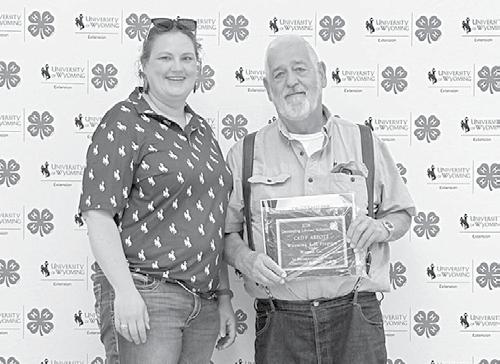
This year, awardees include Cliff Abbott of Weston County and Jackie Bauder of Platte County. Awards were presented at the annual Wyoming 4-H Showcase Showdown in Laramie in June.
Abbott received the Outstanding Lifetime Volunteer Award for his 33 years of commitment to 4-H shooting sports, youth development and mentorship.
Abbott is the main shooting sports volunteer in Weston County, dedicating countless hours to organizing practices, transporting equipment, opening ranges and teaching the youth of Weston County.
“Abbott is the definition of the best kind of 4-H volunteer,” says Weston County 4-H Extension Educator Erin Persche. “He is dedicated, knowledgeable, loves the youth and is enjoyable to work with. He has taught me the ins and outs of the shooting sports program and has been an invaluable mentor.”
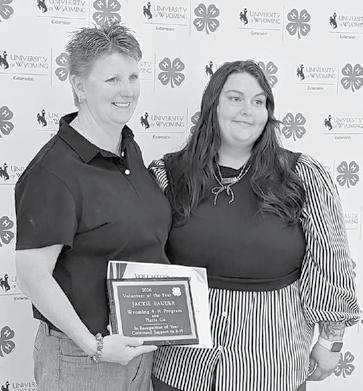
Bauder is the 2026 Wyo-
ming 4-H Volunteer of the Year. She is a club leader for Horseshoe Livestock 4-H in Platte County and serves as the Glendo Cloverbuds leader.
Bauder has volunteered with UW 4-H for six years. In 2025, during a period of transition between Platte County 4-H educators, she took on additional responsibilities to keep the livestock program thriving, ensuring youth still had access to hands-on learning experiences and mentorship.
Bauder planned the 307 Livestock Clinic, a weeklong educational event for 4-H’ers completing beef, sheep, goat and swine projects. She organized presenters, secured facilities and planned programming covering everything from animal care to showmanship.
Bauder also ensured 4-H members received results from the Platte County Carcass Evaluation Program.
Platte County 4-H Educator Hannah Cesar says, “Her positivity, generosity and deep commitment to our youth truly embody the spirit of 4-H. She has made a lasting impact on our 4-H program and continues
those around her through her
Volunteer of the Year – Here, Platte County 4-H Volunteer and Wyoming 4-H Volunteer of the Year
Awardee Jackie Bauder, pictured left, and Platte County 4-H Extension Educator Hannah Cesar, pictured right, pose at the Wyoming 4-H Showcase Showdown in June. Courtesy photo
represents.”
Wyoming communities receive funding
On July 2, Gov. Mark Gordon voted to support communities across Wyoming using Mineral Royalty Grants during a special virtual meeting of the State Land and Investment Board (SLIB).
The meeting was called to review earlier 2026 projects for potential additional funds.
Eleven towns and districts received a total of $3,673,931 in funding from Mineral Royalty Grant reserves during the meeting.
Four of the projects had received no previous funding for their projects. The other seven projects funded during the meeting had previously received partial funding and were
recommended to be fully funded. These projects will help develop a variety of important projects including critical fire protection, water, cistern and sewer projects and street repair projects.
“Our Wyoming communities continue to struggle meeting the challenges of addressing aging water, sewer and other infrastructure needs including being prepared for emergencies. Mineral Royalty Grants help ease the burden of funding essential and extraordinary projects. Using these funds wisely also helps to keep local taxes low,” Gordon said. “I am always encouraged by how well communities from across the state coop-
erate to try to make the best use of these limited funds. I was pleased we were able to find the ability to use some reserves from the last biennium to get these previously unfunded but critical projects the funds they need to move forward.”
The board denied two other recommendations from communities which already received earlier full funding for other projects. Several of the board members thought it important to maintain reserves to help communities in the future when they have emergency needs to maintain their infrastructure.
The next SLIB meeting will be held on Aug. 6.
Brazilian tariffs imposed
The Trump administration announced 25 percent tariffs on a range of Brazilian products, including ethanol, even though the U.S. currently imports virtually no Brazilian ethanol, while agricultural products such as beef and coffee were exempted from the new tariff action handed down on July 15.
The U.S. Trade Representative’s Office (USTR) announced new tariffs “on all goods from Brazil” under Section 301 of the Trade Act of 1974, while at the same time citing exemptions for “certain goods from Brazil.” The tariffs will go into effect on July 22.
“President Luiz Inácio Lula da Silva and his government have not negotiated with the U.S. in good faith,” Secretary of State Marco Rubio wrote on X. “His economic policies are bad for Americans and bad for Brazilians. For the past year, Lula has put his own ego ahead of making a deal for the welfare of the Brazilian people, and these tariffs are the price for that.”
Among the actions USTR cited were Brazil’s restrictions on U.S. ethanol market access and illegal deforestation, arguing the country’s actions “are unreasonable and burden or restrict commerce of American farmers, workers, innovators and exporters.” The action comes after USTR held hearings earlier this month on Brazil.
But industries cited by Brazil’s critics as being responsible for illegal deforestation, such as cattle ranching, were largely unharmed by the Trump administration’s announcement. Beef, which is being imported in record numbers from Brazil, was among the products excluded from the tariffs, as President Donald Trump has increased beef imports from South America as one strategy to lower American grocery prices.
Through May, Brazil exported roughly $1.175 billion in beef to the U.S., up 20 percent from the same five months of last year. Brazil exported a record $1.66 billion in beef to the U.S. in 2025.
Brazilian ethanol will face a 25 percent tariff on top of another 12.5 percent in tariffs the U.S. already imposes, making the tariff as high as 37.5 percent on Brazilian ethanol. Brazil has effectively stopped exporting ethanol to the U.S. After exporting roughly 154 million gallons of ethanol to the U.S. in 2020, Brazil’s ethanol exports to the U.S. fell to virtually none in 2024-25, according to the U.S. Energy Information Administration.
Another major product deemed essential to American consumers – coffee – was also exempted. Brazil’s coffee exports to the U.S. totaled $845 million through May, down 31 percent from a year ago. Brazil exported a record $2.68 billion in coffee to the U.S. in 2025.
Other agricultural products, such as oranges and other produce, will also be excluded from the tariffs. The U.S. imports more than $1 billion in Brazilian fruits and juices annually.
Products which will be subject to tariffs include imported sugar and wood products from Brazil.
PLC applauds decision
On July 13, President Donald Trump modified the Bears Ears National Monument and Grand Staircase-Escalante National Monument to restore multiple use management, including grazing, to more than two million acres.
The Public Lands Council (PLC) has been working for over a decade to protect livestock grazing in the area, which has been devastated by repeated misuse of the Antiquities Act that jeopardized grazing and with a midnight order at the end of the Obama administration.
Oregon Trail Classic - Gering, NE August 4th & 5th, 2026 Frontier Fall Round Up - Cheyenne, WY September 10th, 2026
Johnson Lingle, WY –307-575-2171***Jeff Ward – Laramie, WY 307-399-9863
Tam Staman – Crawford, NE 308-631-8513***Justin Smith - Lusk, WY
Garrett Nunn - Laramie, WY 307-460-1649 *** Scott Redden - Burns, Co 970-596-3588 CATTLE COUNTRY
“Revisions of the boundaries of the Bears Ears and Grand Staircase-Escalante national monuments is welcome news for Utah communities and livestock producers who have fought for years to protect erosion of access to grazeable acres in the area,” said PLC Executive Director Kaitlynn Glover. “Protecting special areas and safeguarding cultural and economic productivity should not be at odds, but the Obama and Biden administrations ignored both the voices of Utah and the Antiquities Act that both called for direction to designate discrete areas, not whole landscapes.
While the monument management plans under previous administrations left the door open to some grazing, constrained access to grazing had rippling impacts. In 2015, the University of Utah showed unutilized animal unit months as a part of the monument management plan cost two Utah counties more than $9 million in lost productivity – a loss which is crippling to rural communities already challenged by lack of property tax due to federal land ownership.
“We thank the Trump administration for once again making clear protecting unique landscapes can be done without locking up an area twice the size of Delaware. History is clear – when monuments are designated, livestock grazing is removed and landscape health and communities suffer,” said Glover.
Outstanding Lifetime Volunteer – Pictured from left to right are Weston County 4-H Extension Educator Erin Persche with Outstanding Lifetime Volunteer Awardee Cliff Abbott at the Wyoming 4-H Showcase Showdown in June. Courtesy photo
In parts of Nebraska, Kansas and the Dakotas, repeated afternoon thunderstorms resulted in abovenormal precipitation, with some areas exceeding 150 percent of normal.
“Some of these areas experienced precipitation anywhere from 1.5 to 7.5 inches above normal, leading to oneto three-class improvements and reducing drought coverage across much of the central and eastern High Plains,” NDMC reports.
Additionally, a late-season cold front delivered cooler than normal temperatures and high-elevation snowfall in parts of Wyoming, Idaho and Montana during the last week of June, resulting in localized one- to three-class improvements across the northern Rockies and parts of the Great Basin.
“In contrast, eastern Colorado, Wyoming, western North Dakota and the Nebraska Panhandle received below-normal precipitation, with many areas receiving less than 50 percent of normal rainfall,” NDMC says, further noting these precipitation deficits, combined with temperatures three to six degrees Fahrenheit above normal, contributed to one- and two-class degradations and drought development in eastern Colorado and Wyoming.
Low snowpack and water shortages
Last winter’s light snowpack continues to be one of the West’s greatest concerns.
According to NDMC’s June 2026 Drought Impacts Summary, record-low snowpack and prolonged aboveaverage temperatures prompted Colorado to declare a statewide drought emergency and activate Phase Three of its drought response plan on June 4.
Likewise, the Navajo Nation declared a state of emergency on June 9, while 19 of Oregon’s 36 counties were operating under drought emergencies by June 24.
Low snowpack has contributed to reduced water supplies throughout much of the region.
Several communities in Utah faced drinking water shortages after their municipal wells ran dry.
NDMC reports, “The town of Emery, Utah was expected to exhaust its water supply by the end of the month and began hauling water. Muddy Creek – the town’s only source of drinking water and irrigation – was flowing at just six percent of normal, while Julius Reservoir held only about a week’s remaining water supply.”
Impacts have also been felt outside of town limits.
NDMC says several
reservoirs across Colorado ended boating season early and emergency public fish salvages were approved at three state properties after water was drawn down for irrigation and municipal needs.
Water shortages have also forced producers to make difficult decisions when it comes to irrigating their crops.
According to NDMC, Utah’s state engineer curtailed some of the state’s oldest Colorado River water rights, affecting water rights dating back to 1886 on Ashley Creek and 1906 on the Duchesne River.
In Oregon, multiple irrigation districts made the unprecedented decision to shut off all junior diversions between Bend, Ore. and Redmond, Ore. to protect senior instream water rights holders. Other districts in the area were only able to deliver a fraction of their normal water supplies, as stored water was depleted at an unprecedented rate.
Likewise, producers in Idaho faced mandatory reductions after the Idaho Surface Water Coalition implemented 33.3 percent cuts in water use amid historically low snowpack and declining flows through the Snake River.
High wildfire risk
Over the past few months, hot, dry weather resulted in heightened wild-
fire danger across much of the West, with 40,357 fires burning over 3.8 million acres across the country in 2026 alone.
As of July 23, some of the largest fires burning in the U.S. included the 101,545acre Aspen Acres Fire and 64,881-acre Ferris Fire in Colorado, the 87,946-acre Kaiser Canyon Fire in Washington, the 69,344-acre Biscar Fire in California and the 133,015-acre Crosswhite Fire in Oregon, among others.
This year marks the worst wildfire season in modern Nebraska history, with nearly one million acres burned during an unprecedented March outbreak.
The Morrill Fire, which scorched roughly 643,000 acres across five counties, has been deemed the largest wildfire in Nebraska’s history, followed by the Cottonwood Fire at 129,000 acres as the second-largest wildfire in state history.
Other significant fires in the Cornhusker State include the 36,000-acre Ashby Fire, the 36,000-acre Road 203 Fire, the 17,200-acre Anderson Bridge Fire, the 14,000acre Minor Fire, the 9,100acre Pressey Fire and the 5,100-acre Daly Fire.
Utah has also experienced significant fire activity this season, including the Babylon Fire at 107,173 acres, the Cottonwood Fire
at 97,464 acres, the Wild Goose Fire at 12,665 acres and the Stookey Fire at 10,337 acres.
So far, Wyoming has mostly avoided the devastating wildfire activity neighboring states have seen.
In 2026, some of the Cowboy State’s largest wildfires include the 6,287acre Sandpiper Fire in Converse and Natrona counties, the 3,900-acre Raven Creek Fire and 2,490-acre Porcupine Creek Fire in Campbell County, the 1,915-acre Kane Fire in Big Horn County and the 770-acre Kinky Creek Fire in the Bridger-Teton National Forest.
Other ag impacts
Despite some shortterm relief in the form of rainfall over the past few weeks, drought continues to shape day-to-day management decisions for producers across the West and the nation as a whole.
NDMC reports poor pasture conditions have driven producers across Wyoming, North Dakota, Texas, West Virginia, Wisconsin, Delaware, Florida and North Carolina to begin supplementing feed to their livestock.
Similar reports emerged from Nebraska, where ranchers delayed turnout to summer pasture to allow recent rainfall time to stimulate grass growth.
Elsewhere, producers
have resorted to reducing herd sizes, marketing cattle earlier than they planned or feeding hay months ahead of schedule.
According to NDMC, growers in Virginia have only been able to harvest 25 percent of normal hay, wheat and rye yields, while extreme heat and lack of rainfall has impacted corn and soybean harvest in Maryland and significantly raised the price of fruits and vegetables in North Carolina.
Further, NDMC notes, “Beekeepers in Delaware and Virginia experienced significant honey shortages as drought conditions persisted. Sparse spring rainfall limited nectar availability, leaving bees to consume much of the small amounts of honey they produced.”
While drought conditions are expected to persist – and in some cases worsen – across the American West, weather forecasters remain cautiously optimistic about the future.
With long-term moisture deficits firmly in place, producers should continue to closely monitor precipitation, water supplies and pasture conditions through the remainder of the summer.
Hannah Bugas is the managing editor of the Wyoming Livestock Roundup. Send comments on this article to roundup@wylr.net.
for best selection of the
compromising our nation’s security and leadership.
America has had enough of “Build Absolutely Nothing Near Anybody” dogma. We are a great nation not because we did not do anything, but because we worked hard to do it right and to do it well.
Leadership is the will to keep going even in hard times. Leadership requires perspective, objectivity,
careful consideration and initiative as much as it does direction to navigate through the maze of conflicting information and disinformation whether generated from the far left or the far right. It’s true for agriculture, it’s true for energy and it’s true for business.
Trump, in his recent statement decrying Hochul’s disastrous decision, said this, “Data centers are tre-
OBITUARIES
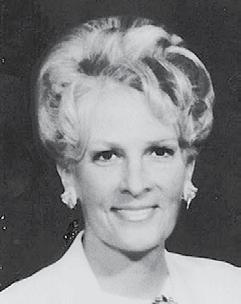
Dr. Leslie Laymon Madden
Dr. Leslie Laymon Madden passed away in her sleep in Sheridan on July 11. She was born on April 25, 1944, during World War II (WWII) at Fort Warren Air Force Base in Cheyenne, the daughter of Marvin Laymon and Valynne Wilcox Laymon.
After WWII, her family moved to Sheridan where her parents continued their service to the country, employed as a medical technologist and registered nurse at the Veterans Administration Medical Center for their lifelong careers.
Leslie graduated from Sheridan High School in 1962. She attended Cottey College in Missouri, receiving her associate degree in 1964, followed by bachelor’s degrees in elementary education and sociology from Hastings College in Nebraska in 1966. Teaching in a high-needs Title One Denver school convinced her to continue her education at the Univer-
mendous wins for the states and communities that are lucky enough to get them.”
I concur. He is exactly right. They use our energy here, energy over 80 percent of which we currently ship to states who have tried to control how, where and what we develop.
They can be built to conserve our water and complement our communities. This is not some doeeyed endorsement of all tech – it is an endorsement of Wyoming people, whom
sity of Utah, acquiring her Master of Social Work. Following this, she worked at the University of Colorado Medical Center.
Leslie married Joseph Madden in Salt Lake City in 1972, returning to Wyoming after their marriage to continue her career, as well as becoming a committed ranch wife.
Ranch demands and a full-time career became her life. She would rise at 3 a.m. to make her famous homemade cinnamon rolls, along with steak and eggs, for multiple ranch hands, followed by a long day of teaching, then return home to cook enormous dinners.
In addition, she became a highly sought after practicing expert in cattle artificial insemination throughout the region.
After touring Japanese schools, Leslie returned to the U.S. to complete two more master’s degrees and
I know and respect, that we can do it the right way.
President Teddy Roosevelt famously said, “People of Wyoming, I believe in you and in your future.”
He was not saying this to people who lacked courage, were reluctant to engage or were happy to let things happen to them. He was talking about people who carved their future from what was given to them.
My Executive Order, Data Centers the Wyoming Way, requires Wyoming’s
her Doctorate in Education Administration from the University of Wyoming (UW).
During her career, Leslie served as a principal at the elementary, middle and high school levels throughout Wyoming, as well as becoming a mental health center director and district staff development director. She also taught classes at UW, South Dakota State University, Sheridan College and Casper College.
Leslie was passionately dedicated to young people, their education and full well-being.
She relentlessly pursued and was awarded grants to improve her schools, enriching the lives of her students, teachers and families. She would drive at-risk children to school, personally and quietly providing them with meals, prescription glasses, clothes and other necessities.
She was accompanied
HAYING & FORAGE (cont’d)
state agencies to prosecute current law to the limits granted them by the legislature, and it also asks them to bring back recommendations for improvement within the coming month.
These will be reviewed, refined and forwarded to the legislature for their consideration in 2027.
In the meantime, I call on all Wyomingites to reject election-year fearmongering, to reflect soberly on the issues and to join me in leading Wyo-
every day by one of her beloved pet dogs, whose companionship was granted to students both as a reward for hard work and as a source of comfort on their worst days.
Every child Leslie encountered felt loved and treasured as if they were her own.
Leslie was the recipient of numerous prestigious awards and prizes throughout her career, and her schools were nationally recognized for their achievements.
Every day, a card or phone call arrived from an appreciative former student or family, and she was always enthusiastically approached in town for a thank you from someone who had benefited from her lifelong love, work and dedication.
Following a very happy and active retirement in Sheridan and Story, Leslie’s last years were spent at Greenhouse Living where she was constantly visited by family and friends and attended with love and dignity by the mar-
ming into a bright future. My great uncle also said, “If everyone is thinking alike, then somebody isn’t thinking.”
Here in Wyoming we raise sheep, we do not act like them.
Mark Gordon was elected Wyoming’s 33rd governor on Nov. 6, 2018. He was sworn into office on Jan. 7, 2019 and reelected on Nov. 8, 2022, garnering 74 percent of the vote. He can be reached by visiting governor.wyo.gov/
velous people there.
The compassionate companions of Synergy Home Care also gave her comfort in her final weeks. The human companionship that was so vital to Leslie throughout her life was lovingly maintained through her final days.
Leslie is survived by her sister Marcia Laymon Sage and brother-in-law David Sage of Story; her nieces and nephews David and Beth Sage of Denver, Tierney Sage and John Alissi of West Hartford, Conn. and Tyler Sage and Kai Collins of Los Angeles and her beloved grandniece Annie and three grandnephews Tucker, Cole and Cory. In lieu of flowers, please send donations to the Sheridan Children’s Library where Leslie’s huge collection of beloved Mickey Mouse items was donated to support children’s literacy.
A celebration of life will be held next summer. Sheridan Funeral Home has care of arrangements.
Monsanto withdraws request
Monsanto has withdrawn a petition calling for antidumping duties while alleging glyphosate from China is being sold in the U.S. below fair-market value, after farm groups accused the company of abandoning farmers.
On July 17, Ruveon LLC said in a news release it had reconsidered the petition it filed with the U.S. Department of Commerce and the International Trade Commission seeking duties on Chinese glyphosate imports, ranging from 68.9 to 446.47 percent.
Monsanto, which is owned by Bayer, filed the petition jointly with Ruveon LLC, Monsanto’s whollyowned subsidiary.
“As the sole American glyphosate producer, Ruveon takes its role in supporting American farmers’ ability to feed, fuel and clothe the world very seriously,” the company said in a statement. “Since filing our petitions, we have engaged directly with farmers and agricultural trade associations to hear their perspectives. Today’s decision reflects our commitment to putting farmers first and meeting their evolving needs, especially during this challenging farm economy.”
Ruveon said it intends to keep the cost of glyphosate-based products based on the cost of production and “in line with its most recent three-year average.”
The company said this is contingent on production and energy costs like the present day.
“As a result of withdrawing them, we will continue with our current dynamic pricing approach, based on the price of generic glyphosate products in the market as we have done in the past,” the company said.
Commodity groups responding to the news have said Ruveon did the right thing for farmers.
TOOLS OF THE TRADE
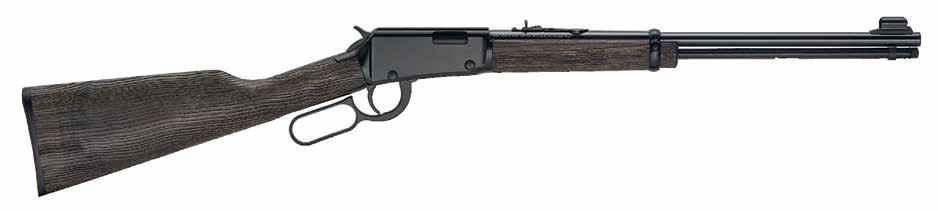
From garden to back pasture, Henry Repeating Arms builds firearms for the work ranch life demands. From keeping your land pest and predator free, to putting food on the table, and protecting what you hold dear, there’s a Henry built for it.
Tracker Rifle & Carbine
Homesteader Carbine What’s Yours Remains Yours with this semi-auto carbine designed for home and property protection. 9mm – Glock/Sig/S&W Magazine Compatibility
Emergency Conservation Program helps producers recover from wildfire damage
Wildfires often leave behind more than burned grass and damaged forage. Fences may be destroyed, water facilities damaged and debris scattered across agricultural land.
The Emergency Conservation Program (ECP) helps producers restore farmland damaged by natural disasters.
ECP is administered through the U.S. Department of Agriculture’s (USDA) Farm Service Agency (FSA) and provides cost-share assistance for eligible rehabilitation efforts.
Following a wildfire, eligible practices may include fence repair and replacement, debris removal, cleanup of damaged materials, repair or
At 9.665 million head, America’s dairy herd is the largest it’s been since 1992, and it’s not growing because milk prices are through the roof.
“The herd is growing not necessarily from returns due to the milk check but growing margins from beefon-dairy calves and even purebred dairy calves,” said Corey Geiger, lead dairy economist at CoBank. “Given beef demand and flat growth in beef cattle numbers, this new dairy herd size could represent a structural shift – not merely a blip on the radar.”
This creates a challenge – all of those cows produce a lot of milk.
“The industry must find more homes for this burgeoning milk supply,” Geiger explained.
Where will it go? The answer is overseas – export sales are outpacing domestic growth.
Since 2019, total dairy sales have grown 6.3 percent, but exports moved even higher, up 20.5 percent, while domestic sales rose only 3.9 percent. This spread was even greater this year.
From January through April, exports jumped 11.3 percent – nearly six times the domestic growth rate of 1.9
replacement of water facilities, shelterbelt rehabilitation and other approved conservation restoration activities.
ECP generally provides cost-share assistance rather than full reimbursement, and payment rates vary based on program provisions and producer eligibility categories.
Why records matter
Before beginning repairs or replacement, producers should consult with USDA staff whenever possible.
In some situations, documentation and site inspections may be necessary before work begins. For example, subsurface work such as moving dirt or bulldozing dead trees will need
an environmental assessment before beginning.
Time frames for completion of the assessment process will vary and must be determined on a project-by-project basis, so start this process early.
Records may include photographs of damage, maps of affected areas, estimates and invoices, receipts for materials, contractor records, documentation of pre-disaster conditions, etc.
While FSA no longer collects invoices or receipts as part of the ECP documentation process, these records could be important down the road if a producer becomes subject to a spot check.
Limitations
While ECP payments are
not limited by adjusted gross income, they are capped at $500,000 per person or legal entity per disaster.
There can be an advance payment of up to 25 percent of expected cost-share for some practices.
These provisions can affect the amount of assistance a producer may receive.
ECP versus EQIP
While both the ECP and the Environmental Quality Incentives Program (EQIP) can assist producers following a wildfire, they serve different purposes.
EQIP, administered by USDA’s Natural Resources Conservation Service, is a conservation program which provides financial and technical assistance
to implement practices addressing natural resource concerns and improving long-term resilience.
In some cases, producers may be eligible for both programs, but federal rules generally prohibit receiving assistance from multiple programs for the same repair, expense or conservation practice.
Producers should work closely with their local USDA Service Center to determine how these programs may complement one another during recovery.
Work with local FSA office
Producers should also notify USDA FSA as soon as possible after discovering losses.
Local FSA staff can
Dairy exports offer new outlet for massive milk production
percent, according to data from the U.S. Department of Agriculture and the National Milk Producers Federation. This growth matters for every dairy farmer watching their milk check.
Geiger said two products are leading the export effort – cheese and butter.
The butterfat boom
Butterfat is the fastestgrowing milk component on U.S. farms, and it’s growing so fast some processors have placed caps on butterfat levels for payment purposes, according to Geiger.
“As an outlet for abundant butterfat supplies, cheese and butter have been extremely valuable export products,” he added.
U.S. cheese exports crossed a milestone in May 2025 when monthly exports topped 110 million pounds for the first time ever. Geiger said this wasn’t a onetime spike – it became the new baseline.
Every month since, exports met or exceeded this mark.
By April, cheese exports set a third consecutive monthly record at 141.2 million pounds. Even when sales dipped slightly in May to 135.4 million pounds, Geiger pointed out it still ranked as the third-highest month in U.S. history.
Year to date, cheese exports totaled 659.4 million pounds, up 23.7 percent compared to the same period last year.
“While cheese is impressive, butter takes it to another level on the growth front,” Geiger said.
Butter doubles down
The butter export story is even more promising.
In May, butterfat exports were 102 percent larger yearover-year, reaching 33 million pounds. The five-month total hit 168 million pounds – more than double the 2023 total for the same period.
While cheese still absorbs 49 percent of all U.S. butterfat production, Geiger said butter holds a firm second.
Export markets remain a bright spot for the dairy industry, but the domestic market is still an economic driver.
Home turf advantage
At 199.9 billion pounds versus 38.1 billion pounds for exports, the U.S. market still accounts for the bulk of dairy sales. It is also growing, but at a different pace, Geiger noted.
“It stands to reason the domestic category has grown at a slower percentage pace since it has a larger footprint,” he explained. “From a math standpoint,
Austin Snook • 307-290-2161
Taylor Snook • 307-290-2273
Craig Deveraux • 307-746-5690
Dan Catlin • 406-671-7715
Clint Snook • 307-290-4000
Cheyenne Seymour • 605-641-0638
Casey Sellers • 307-217-2614
Jim Forbes • 307-351-5932
help producers determine eligibility, identify required documentation and complete necessary forms.
Even if producers are uncertain whether losses qualify, scheduling a conversation with a local USDA Service Center is often the best first step. Nebraska Recovery Roundup is provided by Nebraska Extension and the University of NebraskaLincoln’s Center for Agricultural Profitability to provide timely information for producers and communities recovering from wildfire. For more information, visit cap.unl.edu/recovery This article was originally published by Nebraska Recovery Roundup on July 2.
it’s easier to grow percentages on smaller numbers than on a larger base.”
This growth is driven by consumer choice. Americans are incorporating dairy into their diets in new ways as they look for a quality protein source.
The domestic market provides stability. Exports provide growth. Together, they’re creating opportunities for U.S. dairy farmers. What it means for milk prices
Both markets play a critical role when it comes to milk checks.
“Continued strength in both categories will be
Daniel Escoz • 307-217-1440
Tye Curuchet • 307-351-8666
JJ Butler • 307-231-6878
Chris Rodriguez • 307-217-2172
Kyle Kallhoff • 605-881-1526
Kade Kinghorn • 307-620-0525
Jake Underwood • 307-660-5989
Donny Scantling • 307-217-0537
July 22, 2026 - No Report
Thank you for your business!
critical if $18 Class III and $18.30 Class IV milk futures on the CME for October through December contracts become reality,” Geiger said.
These futures prices depend on sustained demand from both domestic and international buyers.
For dairy farmers, new export opportunities represent more than just additional volume – it’s about value. International buyers are paying for U.S. dairy
products, and this demand is helping support milk prices.
The challenge ahead is maintaining this momentum. As long as both domestic and international markets remain strong, Geiger said the industry can support its larger herd size and deliver returns to farmers.
Mindy Ward is the editor of Missouri Ruralist and Wisconsin Agriculturist. This article was originally published by Wisconsin Agriculturist on July 20.
Wyoming Livestock Roundup Crosswords, created by Myles Mellor.
Success story – This butter represents a success story. U.S. butter exports have doubled in the past year, helping dairy farmers find profitable homes for milk from a herd hitting a 34-year high. Getty
Images photo
Extension specialists offer tips for maintaining gardens in a heat wave
Recent soaring temperatures across Wyoming have been tough on both people and plants.
For gardeners, maintaining healthy plants through heat waves and dry weather can be one of the summer season’s most challenging undertakings.
As Wyomingites continue to seek ways to beat the heat, Extension specialists with the University of Minnesota, Iowa State University (ISU) and Oregon State University (OSU) offer advice on keeping garden plants happy in the midst of sweltering temperatures.
Impacts of extreme heat
In a July 2023 article, ISU Consumer Horticulture Extension Specialist Aaron Steil explains how periods of extreme heat affect gardens, noting although warm temperatures encourage plant growth, extended periods of extreme heat can lead to wilting plants and garden woes.
“Once temperatures exceed 86 degrees Fahrenheit, the growth rate of most plants begins to slow,” Steil writes. “This happens because the rate of photosynthesis reduces when temperatures soar into the 90s and 100s.”
“In contrast, the rate of respiration – the process by which plants use carbohydrates to grow and
develop – continues day and night, even at higher temperatures,” Steil continues. “This depletes the food reserves of the plant, and if extreme heat continues for weeks at a time, plants can actually die from a depletion of their food reserves.”
Water loss is also a concern, as evaporation from soil decreases water availability and causes plants to wilt and wither.
Thankfully, there are some steps gardeners can take to help mitigate the impact of heat stress on gardens. Water wisely
Watering practices during drought and heat episodes play a key role in the overall success of gardens.
Several gardening experts recommend working in the garden and watering plants early in the morning – during the coolest part of the day –which can reduce evaporation and help plants stay hydrated.
University of Minnesota Extension Food Systems Educator Natalie Hoidal notes the average vegetable garden needs roughly one inch of rain per week to thrive.
During extremely hot, dry weather she recommends watering daily or every other day at the rate of eight to nine gallons per 10-by-10 foot area.
Keeping water as close to the ground as possible via
hand watering or drip irrigation systems is ideal, as this method targets soil directly and reduces water waste.
If using a sprinkler, Hoidal recommends using models which deposit water low to the ground rather than spraying high into the air in order to minimize evaporation.
Potted plants require some extra care, too.
In a June 2021 article, OSU Extension Service Horticulturist Erica Chernoh reminds gardeners to pay extra attention to plants in hanging baskets and containers, which need to be watered more frequently than those in the ground.
Chernoh also emphasizes plants in sandy soil require a more frequent watering schedule than those in clay soil which retains more water than its sandy counterpart.
Avoid additional stress
To avoid placing additional stress on gardens, experts warn against transplanting, pruning and fertilizing during heat waves.
Fertilizing and pruning can cause excessive new growth which is susceptible to heat damage, and pruning can expose plant tissue.
Planting new seeds is also not recommended, as new growth competes for resources with already struggling plants and can lead to further stress.
To support established seedlings, experts recommend moving potted plants to a shaded area to avoid unnecessary stress from sunlight when possible.
After a heat wave breaks, experts remind gardeners to be wary of doing too much too soon, especially when it comes to watering.
Chris Bonnet, founder of the online garden center GardeningExpress, emphasizes plants can be easily overwatered in the aftermath of heat waves.
“Aim to water little and often and wait for the water to be properly absorbed before going in again,”
Bonnet advises in a July 15 Country Living article. “Focus on watering deeply, little and often and stay away from fertilizers for a couple of weeks as this may dry plants out further.”
Timing matters
When it comes to working in the garden during a heat wave, timing matters.
In addition to working in gardens during cool parts of the day and watering early, patience is also a virtue for gardeners navigating heat waves and dry spells.
Sometimes there is little that can be done aside from waiting for cooler temperatures. During this time, Hoidal recommends taking note of which plants seem the most resilient and taking
this into consideration for the following year’s planting season.
“Drought offers us insight into plants which may not be quite right for our landscapes,” Hoidal says. “If certain types of plants are thriving, consider removing plants that are not doing well and replacing them with plants that are.”
While caring for heat stressed gardens, it is also important to stay vigilant in supporting one’s own health.
Taking breaks, seek-
ing shade, drinking plenty of water and monitoring for signs of heat stress are crucial to staying healthy and happy in hot weather.
As Wyomingites continue to hold out hope for increased moisture and cooler temperatures, practicing smart gardening techniques can help keep gardens and gardeners thriving throughout the season.
Grace Skavdahl is the editor of the Wyoming Livestock Roundup. Send comments on this article to roundup@wylr.net.
WYLR photo
byproduct of the digestive process of ruminant animals like cattle and sheep.
“Rumen fermentation converts ingested feeds into energy and protein sources to sustain the life of the animal,” the authors write. “More specifically, microbes in the rumen take feed and break them down for the microbes to use first and finally intermediates for the animal to use.”
The authors further emphasize the importance of feeding microbes, as this digestive process enables ruminant animals to eat plants which otherwise would not be digested.
“One of the byproducts produced during rumen fermentation is methane,
which is belched from the rumen out of the mouth into the atmosphere and is one of the three major GHGs,” the authors add. “While methanogens in the rumen contribute to methane emissions, they also play a vital role in the animal’s digestion and energy production.”
Measuring methane
In the second to last installment, published on May 1 and titled “How is Methane from Cattle Measured?” the authors delve into details about measuring methane produced by cattle.
According to the authors, measuring methane is a timeconsuming process which is most accurate when environmental conditions can be
completely controlled.
Collection systems are also costly, which presents some challenges when conducting research. Still, researchers can use devices like head boxes, green feed systems and retrofitted buildings to collect data on methane production.
For example, green feed systems allow data to be collected from many animals in a pasture setting. However, a drawback is methane is captured within a small time frame.
In addition to observing animals, measuring methane emissions from cattle manure also provides valuable insight into the relationship between livestock and GHGs.
Mitigation strategies
The final article, published on June 1 and entitled
2026 Montana Angus Tour
September 22-24, 2026 Havre, Montana
Tuesday, September 22
9 am - 2:30 pm Golf tournament at Prairie Farms Golf Course
3 pm FBA Ranch
4 pm MT Angus Association Annual Meeting @ Prairie Farms
*Registration fee includes banquet, tour meals and bus transportation.
Host Hotel
Best Western Plus Havre Inn & Suites
(406) 265-2888
*Discounted rates available until August 22
Golf Scramble
Prairie Farms Golf Course | Tuesday, Sept. 22 at 9 am
$70/person for Montana Angus Tour registered attendees
“Are there Methane Mitigation Strategies for Cattle?” investigates potential avenues to reduce methane emissions from livestock.
One topic currently being investigated is feeding strategies, and evidence suggests feeding high-grain, fatty diets may help reduce methane production.
“Feeding strategies to reduce methane production in cattle are limited, but more research is being conducted,” the authors write. “Feeding high-grain diets results in less methane production, and adding fat to the diet of beef cattle reduces methane production.”
According to UNL research findings, methane production decreased 5.6 percent for every one percent increase in added fat.
However, the authors emphasize inclusion of fat in rations has limits, with greater than four percent added fat in a ration resulting in reduced animal performance.
Feed additives and incorporating alternative feedstuffs may also aid methane reduction, although research is still ongoing.
According to the authors, the feed additive 3-nitriixypropanol (3-NOP) has shown promise in dairy cattle studies but is not currently approved for use in beef cattle in the U.S.
The authors also highlight research conducted in Canada which showed methane production decreased by 26 percent when 3-NOP was fed to finishing beef cattle.
Feeding seaweed as a method of reducing methane is also being researched, but it is not currently approved to be fed to beef cattle and is also challenging to grow in commercial environments.
Genetic selection is another potential avenue, as methane production from beef cattle has been found to be a moderately heritable trait, but the authors emphasize tools such as expected progeny differences would need to be developed which requires a substantial effort in collecting methane data from large numbers of animals.
Grand Prize Drawing
American Cattleman
Tribute Edition Rifle
* Drawing held at last tour stop
* Must be present to win
Finally, building digesters on farms can help mitigate methane emissions from manure and create positive byproducts in the process.
“Digesters reduce methane release into the atmosphere that comes from manure,” the authors write.
“The three main byproducts from the process are methane gas used as a renewable energy source, liquid manure used for fertilizer and solids used in bedding for livestock.”
Overall, research regarding the correlation between cattle and methane production and potential strategies for reducing environmental impacts remains ongoing and important to the livestock industry.
Grace Skavdahl is the editor of the Wyoming Livestock Roundup. Send comments on this article to roundup@wylr.net.
OBITUARIES
Leon Bernard “Short” Allen
Jan. 5, 1929 – July 15, 2026
Leon Bernard “Short” Allen was born on Jan. 5, 1929 in Beaver County, Oklahoma to Ben and Marguerritte Allen. Short was the second son, with brothers Don and Alvin “A.W.” Allen.
Short was raised on the family farm and was taught to love the Lord by his parents. He graduated from Beaver High School and attended Friends University in Wichita, Kan.
Short joined the U.S. Army in 1951 and was stationed in Germany during the Korean War. He stepped foot on the transport ship on Dec. 14, 1951 and stepped off of another ship on Dec. 14, 1952. He was a radio operator.
When he returned home to Beaver, Okla. he
met Wilda Filbeck one evening dragging Main Street in Liberal, Kan. His buddies dared him to jump into the pickup Wilda and her friends were driving.
The dare was taken. At a stoplight, he jumped out of the pickup and into the back of hers. The rest was history.
Short and Wilda were married on Oct. 3, 1953, choosing the date because there was no field work at the time, which was later not true due to sugarbeet harvest in October.
They had three children – Jerry Allen, Sue Burton and Connie Jones.
Short and Wilda lived in Beaver, Okla. until 1965 when they left the family farm and moved to Arapahoe, Colo. to farm with his brothers Don and A.W. They built a home south of Arapahoe, Colo. and continued to farm until each brother had sons who wanted to farm as well.
The Allen brothers’ operation divided up the land and equipment, allowing Short and Wilda to begin farming with their son Jerry and his wife Vicki.
Short enjoyed the
country life of farming and ranching, but cows were his favorite. He was the veterinarian of the three brothers and loved to take care of the cattle. He also raised wheat, irrigated corn, popcorn, sugarbeets, alfalfa, milo and pinto beans.
At harvest time, Short ran the combine, drove a beet truck and cut alfalfa. He wasn’t allowed in the fields with a cultivator because his rows were never straight and he was famous in the family for cultivator blight.
Short’s life was one of serving the Lord and serving others. He enjoyed cooking and was the cook for the Cheyenne County Fair barbeque, breakfast and the ham n’ beans dinner.
He served on the K.C. Electric Board of Directors for many years, the Cheyenne County Farm Bureau Board and the Great Western Sugarbeet Board of Directors.
He received the Outstanding Farm Bureau Membership Award in 2005 for the state of Colorado. He was also an honor guard for the Cheyenne Wells VFW and served at many graveside services.
Short was a faithful member of the Arapahoe Community Church beginning upon his arrival in 1965. He served his church family in many ways. He
was the chef for the Sweetheart Banquet and the Easter Sunrise Breakfast for more than 20 years.
Short quietly served the congregation by making communion prior to service for more than 30 years. He also served on the church board for more than 20 years. He resigned because it was time for younger men to take over.
His children married, and Short was blessed with eight grandchildren. He loved having his grandchildren around and taught them by example how to serve the Lord, work hard and be a quiet leader and teacher. He helped local grandchildren work on the farm, work with cattle, drive vehicles before they should and have fun.
Short and Wilda took their grandkids to Elitch Gardens; South Fork, Colo.; Lake of the Ozarks and Lake Powell, and what crazy fun times they had. Short would swim in the lakes with long pants, a long-sleeved shirt and straw hat.
He was always in the middle of the action, and his grandchildren loved it. He even went snow skiing for the first time at age 56. He didn’t take to it well, but the grandkids loved that he tried.
He followed his grandkids in their school activities and athletics, driving
all over the area to attend volleyball, football and basketball games. He was a great fan.
After the grandchildren graduated, Short still attended the Cheyenne Wells, Colo. games and was named Fan of the Year. He continued to go to games in Cheyenne Wells, Colo. until it was time to watch his great grandchildren’s games. He then donned his purple shirt and became a Weskan Coyote fan.
Short had 14 greatgrandchildren spread from Tuttle, Okla.; Stratton, Colo.; Maize, Kan.; Colorado Springs, Colo. and Arapahoe, Colo.
He is known as “Grandpa Fruit Snacks” to the local great-grandchildren, where the love and snacks flowed freely. He loved for kids to stop in and spend time with him.
Plans were made to move from the farm into Arapahoe, Colo. in 2011, but prior to the move, Short lost Wilda so he moved without her. He resided there until his passing, with his daughter Connie living with and assisting him.
He entered Hope Springs Care Center in Sharon Springs, Kan. in March of 2026 and died there on July 15 at the age of 97.
Short joined his wife
Wilda and granddaughter Sarah in heaven with a “welcome home, good and faithful servant” by his savior Jesus Christ. He is survived by his children Jerry and Vicki Allen and Connie Jones of Arapahoe, Colo. and Sue Burton of Tuttle, Okla.; grandchildren Coty and Jamie Allen of Colorado Springs, Colo., Chris and Sheila Allen of Arapahoe, Colo., Amber and Jason Chalastari of Maize, Kan., Steven Burton of Alto, Texas, Mikael Burton of Alamosa, Colo., Tim and Jaci Burton of Tuttle, Texas and Curtis Jones of Stratton, Colo.; greatgrandchildren Jacelyn, Brielle, Trexton, Dautry and Kyntrix Allen, McKinely Allen, Cole, Kaden and Gage Chalastari, Elijah Burton and Bella Jones.
Funeral services will be held on July 27 at 1:30 p.m. at the Arapahoe Community Church in Arapahoe, Colo. Burial will follow in the Arapahoe Cemetery with full military honors. Visitation will be held on July 26 from 3-5 p.m. at the Brown Funeral Home in Cheyenne Wells, Colo. Memorial contributions should be made to the Arapahoe Community Church, PO Box 167, Arapahoe, CO 80802.
Large grocery retail chains are unveiling price rollbacks and value positioning to maintain traffic and protect market share.
Meanwhile, food and beverage manufacturers are emphasizing affordability through pricing adjustments, promotions and productivity gains aimed at offsetting rising input costs.
U.S. government
Agricultural issues have taken center stage in the halls of Congress and throughout the countryside in recent weeks.
The U.S. Department of Agriculture (USDA) released its reorganization plan, New World screwworm has returned to the U.S. for the first time in 60 years and debate on the farm bill is heating up.
Three months ago, most of Washington, D.C. failed to fully appreciate the strength of the agriculture community, but this dynamic changed when Midwestern members made demands on the farm bill and E15 in exchange for ending legislative logjams on other issues.
The agricultural industry hopes for swift action on these and other key issues as the farm economy continues to deteriorate.
Affordability issues are being discussed at every kitchen table in America, and many producers are concerned about their futures.
Grains, farm supplies and biofuels
Favorable growing conditions throughout the Corn Belt have eased concerns of
a smaller corn harvest this fall. Barring any adverse weather, corn prices are likely to stay depressed into harvest season due to ample global supplies.
Surging soybean oil prices have sent crush margins for processors to record highs and lifted the U.S. crush pace to breakneck speed.
High diesel prices following the war in Iran have given biofuel feedstocks like soybean oil additional price support.
Heavy rains following a historic drought thwarted the U.S. winter wheat harvest. The U.S. winter wheat crop is expected to be the smallest since 1965 with harvested acreage for all wheat figured to be the lowest since 1877.
Shrinking farmer margins may reduce the volume of crop inputs moving through agricultural retailers. With lower commodity prices projected in 2026, producers will be focused on protecting yields while limiting input spending.
USDA projections show elevated production costs are becoming structural, with per-acre costs expected to remain elevated into 2027.
Farm supply cooperatives and ag retailers should prepare for more cautious fertilizer and chemical buying, but they have opportunities to provide insights to farmers on how to maximize yields.
The Environmental Protection Agency (EPA) delivered an agriculture-friendly renewable volume obligation mandate in March, significantly increasing the
volume of bio-based fuels required for U.S. gasoline and diesel, but the real test will be whether the refining industry can meet the ambitious targets.
The renewable volume obligation (RVO) for 202627 jumps 67 percent and 70 percent, respectively. This year’s level of blending will determine if the EPA can continue to take the RVO on an upward trajectory.
Even as U.S. renewable diesel and biodiesel utilization improves, production remains below mandated levels.
Animal protein and dairy
Animal protein markets are increasingly out of sync with shifting consumer purchasing. Demand remains resilient, but supply responses vary sharply by species.
Consumers are signaling a willingness to pay higher prices for beef despite limited supply, while lower-cost pork and chicken alternatives have not fully absorbed the available production.
A cost-per-gram comparison may help explain the tension. If pork, chicken or eggs offer more affordable protein, the key question is why consumers are not shifting more aggressively toward those products. The answer likely reflects more than price alone, including taste, quality perceptions, meal preferences, convenience and food service menu dynamics.
The export market for U.S. dairy products continues to gain momentum with cheese and butter setting the pace.
Through April, U.S. cheese exports totaled 523 million pounds, a 25 percent increase over the first four months of 2025.
Butter and anhydrous milkfat exports during the
same period totaled 134 million pounds, an 88 percent increase year-to-date.
Cheese and butter have been extremely valuable as export products given the higher levels of butterfat in U.S. milk.
Butterfat production has been improving so fast on U.S. dairy farms some dairy processors have placed caps on butterfat levels for payment in milk checks.
Cotton, rice and sugar
Cotton prices rose eight percent last quarter amid the complicated backdrop of a strengthening U.S. dollar, shifting interest rate expectations and volatility across the broader commodity complex.
U.S. exports remain strong, as global cotton demand is shifting back to the U.S. due to tightening world supplies.
Cumulative cotton shipments are running ahead of USDA’s projected pace with Vietnam leading demand. USDA estimates global cotton production will fall five percent year-over-year, driven by lower yields following last year’s record output.
With global consumption expected to exceed production, world cotton stocks
are on track to fall to the lowest in eight years.
U.S. planted rice acreage plunged to the lowest level in more than 50 years this spring due to dismal prices and record-high input costs.
USDA estimates longgrain rice acreage at 1.4 million acres, down 34.1 percent year-over-year. Longgrain rice exports have stumbled under the weight of a global rice surplus, but a recent bump in export demand to the Middle East is stirring hopes of a recovery in exports.
Anticipation of a smaller world crop and strong global demand is awakening a price recovery with rough rice prices on the CME climbing 20.7 percent last quarter.
Optimal domestic yields and a sustained price recovery will be needed for U.S. rice farmers to return to profitability.
Sugar prices are caught in a tug-of-war between ample global supplies now and fears of rising demand causing a global deficit later in the year.
World raw sugar prices were down 5.1 percent for the quarter with abundant stocks in Brazil and India following record harvests, but U.S. raw sugar prices rose 2.9 percent last quarter on the reduction in U.S. production and growing domestic demand.
Domestic sugar deliveries are rising for raw cane and refined beet sugar as high fructose corn syrup and other artificial sweeteners are being replaced with natural sugar.
Combined, U.S. beet and cane sugar production is projected to fall five percent year-over-year.
Specialty crops
U.S. tomato prices rose nearly 40 percent between January and April – the biggest three-month increase since 2006.
Wholesale prices for Roma tomatoes, largely grown in Mexico, and Florida’s mature green tomatoes hit their highest peak in 25 years.
While crop damage caused by weather disruptions are largely to blame for soaring tomato prices, U.S. duties on Mexican imports compounded matters. After the U.S. withdrew from a deal allowing duty-free imports of tomatoes from Mexico, U.S. tariffs on tomatoes ballooned from $16,424 in 2024 to $4.6 million in 2025.
Throughout the produce aisle, consumer interest in organic products remains steady, but premium prices in a challenging economic environment for younger consumers could signal challenges for the category.
Energy and digital infrastructure
Global energy shocks are impacting the everyday realities of rural households, businesses and electric cooperatives.
As concerns about fuel prices, strategic oil reserves and energy security ripple through the economy, rural communities often feel the effects first and most acutely – in transportation costs, power affordability and supply chain expenses.
Even with a political resolution to the war in Iran and a reopening of the Strait of Hormuz, rebalancing oil market fundamentals will be difficult, and prices may continue to reflect this tightness. Rural America remains particularly exposed to lingering aftershocks of the oil market turmoil.
Artificial intelligence infrastructure buildout is placing tremendous pressure on supply chains supporting fiber, optical networking equipment and other critical communications infrastructure.
The surge in hyperscaler demand could not have come at a worse time for broadband operators, particularly those participating in the Broadband Equity, Access and Deployment program. The combination of higher costs and longer lead times for fiber and other key components increases the risk operators may struggle to meet construction schedules and deployment milestones.
With no meaningful slowdown in hyperscaler investment currently in sight, supply chain constraints could persist well into 2027 and potentially beyond.
CoBank is a cooperative bank serving vital industries across rural America. The bank provides loans, leases, export financing and other financial services to agribusinesses and rural power, water and communications providers in all 50 states. Headquartered outside of Denver, CoBank serves customers from regional banking centers across the U.S. and also maintains an international representative office in Singapore.
Adobe Stock image
TAMU experts discuss recurrent laryngeal neuropathy in horses
The summer season is in full swing, and the heat is on the rise. For horses, high temperatures also mean an increased risk of respiratory issues, such as recurrent laryngeal neuropathy (RLN).
Dr. Dustin Major, a clinical assistant professor of equine soft tissue surgery at the Texas A&M University (TAMU) College of Veterinary Medicine and Biomedical Sciences (VMBS), explains the ins and outs of RLN and how the condition is diagnosed and treated.
Nerves on high alert
RLN is a degenerative process which almost exclusively affects the left recurrent laryngeal nerve – an important nerve that plays a key role in a horse’s ability to breathe, neigh and make other vocalizations.
“The nerve at risk runs from the base of the skull down the neck, wraps around the aorta inside the chest and then courses back up the neck to support the various muscles controlling the larynx –also referred to as the voice box,” Major said.
As the nerve degenerates, the muscle respon-
The importance of strong domestic beef demand and U.S. beef exports to U.S. cattle markets has been well documented.
Beef exports on a volume and value basis were record high in 2022 with record U.S. beef production, but have declined since.
Headwinds include declining U.S beef production and record-high U.S. beef prices.
Beef byproducts
Beef byproducts are less glamorous, and their importance is sometimes overlooked by cattle producers. However, the value of byproducts – sometimes referred to as offal or drop value – also plays an important role in cattle prices.
Beef byproducts include all items – both edible and inedible – from harvested cattle which are not part of the dressed carcass.
Hides were historically the most valuable byproduct but have been overtaken by beef tallow and tongues. Other beef byproducts include liver, heart, oxtail, tripe and meat and bone meal.
Edible byproducts are often referred to as “variety meats.”
Inedible byproducts are used for a wide variety of pharmaceutical, cosmetic, household and industrial products.
The value of beef byproduct exports also reached record-high levels in 2022 and have declined. However, beef byproduct values declined 12.7 percent compared to beef exports declining 21.2 percent.
sible for opening the larynx to allow air to pass through begins to weaken, and the airway’s diameter decreases. When this happens, an action as simple as breathing becomes a struggle.
“A characteristic roaring sound is often the first thing noted by owners,” Major said. “As the horse draws in air, the pressure within the airway causes one of a pair of cartilages in the larynx – colloquially known as a flapper – to collapse, which impedes the flow of air and vibrates as air passes by it. This results in a higher pitched, vibrating sound as the horse breathes.”
As the condition progresses, exercise intolerance and decreased performance may also become noticeable symptoms, especially for highly active horses.
Risk factors
Although RLN is idiopathic – meaning veterinarians don’t really know why it happens – there are various factors which can increase risk and severity.
“The condition is more common in larger horses, presumably because the nerve is longer,” Major
said. “Racing Thoroughbreds, warmbloods, larger Quarter Horses like those used for barrel racing and draft breeds are the most affected breeds.”
The season and climate can also play a role in horses developing RLN, with cases increasing as the temperature does.
“The heat can significantly exacerbate the condition, as this results in higher demands on the respiratory system to assist in cooling, particularly when exercising,” Major said. “We often have an uptick in these cases in spring and summer when people are actively showing their horses.”
Trauma to the throat and leakage around blood vessel injection sites of medications can also result in RLN.
Recognizing and resolving
When diagnosing RLN, veterinarians take several factors into consideration.
They begin by reviewing the horse’s medical history, including any past trauma. Next, they will perform a physical examination of the larynx. Any suspected abnormalities are
confirmed with an upper airway endoscopy, a procedure which uses a small camera to visually access the horse’s airway.
In addition to these methods, Major also recommends exploring dynamic endoscopy, a diagnostic procedure available at some larger veterinary hospitals.
“This diagnostic option utilizes a specialized endoscope worn on the horse’s head while it is exercising,” Major said. “This allows us to diagnose more subtle forms of RLN and assess for the development of other airway abnormalities which may result secondary to the disease.”
Once RLN is detected, surgery is usually necessary, as the issue can lead to complete paralysis of the left side of the larynx.
Veterinarians will use a “tie back” procedure to retract the flapper from the airway so the horse can exercise more easily while still preventing food from entering the lungs.
“It is important to understand we will never return the affected horse’s airway to its original state,” Major said. “We are just trying to improve airflow
to a level the horse can return to its intended level of performance.”
Breathing a sigh of relief
Supporting a horse on their road to recovery is just as vital as the surgery itself.
“The horse will undergo six weeks of rehabilitation with at least one re-check to ensure things are proceeding as planned prior to a full return to activity,” Major said. “Patients will also need to be fed from the ground for a couple of weeks. If they have no coughing in this
Byproduct value is important to cattle prices
Values for individual beef byproduct items are influenced by many fundamental supply and demand factors.
The U.S. is the world’s largest beef producer and beef byproduct producer, so export demand is especially important because the amount of U.S. byproducts produced is large in comparison to domestic demand.
Tastes and preferences for traditional beef cuts and variety meats differ throughout the world. Some foreign customers prefer variety meats such as liver and heart – unlike many U.S. consumers. Tongue, for example, is popular in Japan.
In some countries, particular variety meats are preferred over traditional meat cuts or even used for medicinal purposes. In others, a variety meat may be a cheaper source of protein for lower-income consumers.
Byproduct value
The U.S. Department of Agriculture’s Agricultural Marketing Service (AMS) publishes a daily By-Product Drop Value Report for fed cattle, available at ams.usda.govmnreports/ams_ 2829.pdf, in which AMS reports the quantity, price and value for a number of the most important byproducts for a typical 1,400pound steer. Values are reported on a per-hundredweight (cwt) live basis.
Currently, the byproduct value for a 1,400-pound steer is $14.18 per cwt or $198.52 per head. AMS reports the market value of an average live steer at $258.50 per cwt, so byprod-
ucts amounted to about 5.5 percent of the steer value.
Values of selected individual byproduct items included packer tallow at $3.66 per cwt or $51.24 per head, tongue at $1.77 per cwt or $24.78 per head and steer hides at $1.43 per cwt or $20.02 per head.
The weekly value of beef steer byproducts has risen rather sharply in 2026 from just over $11 per cwt at the beginning of the year to just over $14 per cwt.
The main driver of the increase has been packer tallow values, which increased from $2.24 per cwt or $31.36 per head to the current $3.66 per cwt.
The tallow market follows the energy market due to its use for renewable biofuels. The increase in crude oil prices due to the war in Iran has supported tallow prices.
An increase in export demand for liver has also lent support to byproduct values. Liver values started the year at $0.27 per cwt or $3.78 per head and have risen to $0.83 per cwt or $11.62 per head.
Hide values – once the leading byproduct value –have continued to decline in 2026, extending a several year decline. Many hides are exported to overseas customers to be processed into leather products. The substitution of synthetics for leather has hurt hide demand.
Both domestic and export supply and demand factors will affect beef byproduct values in 2026.
Projected lower U.S. fed cattle and cow slaughter and demand for tal-
low and export demand for variety meats such as liver and tongue should support byproduct values in 2026. However, ongoing trade
time frame, they can return to normal feeding.”
Once these milestones are achieved, there are no long-term management issues, according to Major. The horse will be free to breathe healthily and happily once again.
Pasture Talk is a service of TAMU VMBS. Stories can be viewed on the web at vetmed.tamu.edu/ news/tag/pasture-talk, and suggestions for future topics may be directed to vmbseditor@tamu.edu. This article was originally published by Pasture Talk on June 18.
negotiations with major beef byproduct importing countries could affect demand.
Tim Petry is a livestock marketing economist with the North Dakota State University Extension Service. This article was originally published by Angus Journal on July 13.
WYLR photo
July 22-Aug. 1 Albany County Fair, Laramie. For more information, visit albanycountywy. gov/435/Albany-County-Fair
July 23 Bureau of Land Management Day of the American West Wild Horse Adoption Event, Cheyenne Frontier Days, Frontier Park, Cheyenne. For more information, visit blm.gov/whb
July 23-Aug. 1 Uinta County Fair, Evanston. For more information, visit uintacountywy. gov/1080/Uinta-County-Fair
July 24 Wyoming Game and Fish Department Aquatic Invasive Species Inspector Training, 9 a.m.-4 p.m., Sheridan Regional Office, Sheridan. For more information or to register, visit wgfd.wyo.gov
July 24-Aug. 1 Platte County Fair, Wheatland. For more information, visit plattecountyfair.org
July 24-Aug. 1 Niobrara County Fair, Lusk. For more information, visit wyoextension.org/ niobraracounty/niobrara-county-fair
July 24-Aug. 2 Johnson County Fair, Buffalo. For more information, visit johnsoncountyfairgrounds.com
July 24-Aug. 2 Goshen County Fair, Torrington. For more information, visit goshencounty. org/226/Goshen-County-Fair
July 24 -Aug. 2 Campbell County Fair, Gillette. For more information, visit campbellcountywy. gov/959/County-Fair
July 25 Growing Food in Wyoming Masterclass: Fertilization and Soils, 7-8 p.m., Zoom. For more information or to register, visit dirtworkswyo.com
July 25-31 Hot Springs County Fair, Thermopolis. For more information, contact Sadie Eckley at hscfairgrounds@gmail.com.
July 25-Aug. 1 Crook County Fair, Sundance. For more information, visit crookcofair.com
July 25-Aug. 1 Fremont County Fair, Riverton. For more information, visit fremontcountyfair.org
July 25-Aug. 2 Weston County Fair, Newcastle. For more information, visit westoncountyfair.org
July 25-Aug. 3 Sheridan County Fair, Sheridan. For more information, visit sheridancountyfairgrounds.com
July 27-30 American Lamb Board Targeted Grazing Workshop, Plymouth, Ind. For more information or to register, visit lambboard.com/grazing-workshops
July 27-Aug. 2 Big Horn County Fair, Basin. For more information, visit bighornfair.com
July 28-Aug. 1 Sweetwater County Fair, Rock Springs. For more information, visit sweetwaterevents.com
July 29-Aug. 8 Laramie County Fair, Cheyenne. For more information, visit laramiecountyevents.com/fair
July 30 Succession Planning Workshop featuring Wesley Tucker, 2-5 p.m., 122 Bear River Drive, Evanston. For more information, e-mail info@wysga.org or call 307-638-3942.
July 31 Succession Planning Workshop featuring Wesley Tucker, 1-5 p.m., 100 N Washington Street, Afton. For more information, e-mail info@wysga.org or call 307-638-3942.
July 31-Aug. 2 Fourth Annual Wyoming Sheep and Wool Festival, Park County Fairgrounds, Powell. For more information or to register, visit wyomingsheepandwoolfestival.com
July 31-Aug. 8 Lincoln County Fair, Afton. For more information, visit lincolncountyfair.info
Aug. 1 Succession Planning Workshop featuring Wesley Tucker, 1-5 p.m., 215 State Highway 233, Kemmerer. For more information, e-mail info@wysga.org or call 307-638-3942.
Aug. 1 Wyoming Wool Growers Association Membership Business Meeting, 2:30 p.m., Heart Mountain Hall, Park County Fairgrounds, Powell. For more information, contact Alison Crane at alison@wyowool.com.
Aug. 1-8 Carbon County Fair, Rawlins. For more information, visit carboncountyfairgrounds.com
Aug. 3
Succession Planning Workshop featuring Wesley Tucker, 1-5 p.m., 155 S Tyler Ave., Pinedale. For more information, e-mail info@wysga.org or call 307-638-3942.
Aug. 3 Wyoming State Board of Control Statutory Meeting, 8 a.m., Roundhouse and Railyards, Evanston. For more information, visit seo.wyo.gov/board-of-control
Aug. 4 Succession Planning Workshop featuring Wesley Tucker, 1-5 p.m., 1660 Sunset Drive, Rock Springs. For more information, e-mail info@wysga.org or call 307-638-3942.
Aug. 4-5 2026 Certified Angus Beef Feeding Quality Forum, Amarillo, Texas. For more information, visit cabcattle.com/feeding-quality-forum
Aug. 4-7 Young Adult Ranching for Profit School, Kimball, Neb. For more information, visit nebraskagrazinglands.org/Events/young-adult-ranching-for-profit-school
Aug. 5 Sheep and Goat AI Day 2026, Fremont County Fairgrounds, Riverton. For more information, contact Chance Marshall at cmarsha1@uwyo.edu or 307332-2363. To RSVP, visit tinyurl.com/45nm93y
Aug. 6
Aug. 7
EVENTS
Wyoming State Lands and Investment Board and State Board of Land Commissioners Joint Meeting, 8 a.m.-12 p.m., Capitol Extension Auditorium, Capitol Complex, Cheyenne. For more information, visit lands.wyo.gov/ boards/state-loan-and-investment-board
Wyoming Pioneer Association Casino Night Fundraiser, 7-9 p.m., Ruthe James Williams Memorial Conference Center, Wyoming State Fairgrounds, Douglas. For more information or to purchase tickets, visit wyomingpioneer.org/
Aug. 8 2026 Range War Rodeo Series, 7 p.m., Buffalo. For more information, visit rangewarrodeo.com
Aug. 8-9
Senior Professional Rodeo, Niobrara County Fairgrounds, Lusk. For more information, visit @NationalSeniorProRodeoAssociation on Facebook.
Aug. 11 Cowboy Cornhole Tournament, 12:00 p.m., Wyoming State Fairgrounds, Douglas. For more information, visit secure.qgiv.com/for/wyomingffaassociation/event/2026cowboycornhole
July 27-31
Superior Livestock Auction Video Royale, Winnemucca, Nev., 800-4222117, superiorlivestock.com
July 28-Aug. 11 Summer Farm and Construction Online Auction, 208-431-9300, 208-5958561, 208-312-2520, bigmountainauctions.com
Aug. 4-5
Aug. 10-11
Aug. 15
Aug. 17
Aug. 17-21
Aug. 22
Cattle Country Video Oregon Trail Classic, Gering Civic Center, Gering, Neb., 888-322-8853, cattlecountryvideo.com
Western Video Market, Little America Hotel and Resort, Cheyenne, 530-347-3793, wvmcattle.com
Montana Horse Progress Days Sale, Moore, Mont., 406-366-4667, montanahorseprogressdays.com
Northern Livestock Video Auction Early Fall Preview, 866-616-5035, northernlivestockvideo.com
Superior Livestock Auction Big Horn Classic, Sheridan, 800-422-2117, superiorlivestock.com
Memory Ranches Fourth Annual Foal Sale, at the ranch, Wells, Nev., 208412-6156, 208-695-0399, memoryranches.com
It’s County Fair Time
It’s county fair time, and memories abound as exhibitors and viewers alike recall these special events throughout Wyoming.
Some of these memories are recalled in the history of the Carbon County Fair.
The annual Carbon County Fair has quite a storied past.
The fairgrounds were established in Saratoga in the spring of 1908, and the first fair was held that fall.
As early as 1910, the local weekly newspaper reported the events of the fair, and it has been going strong except for a brief period of unexplained cessation from 1917-26 and during World War II.
The fair was held in Saratoga in 1927-28, then moved to Rawlins in 1929 where it has been held since.
scope of the fair.
Articles of incorporation for the fair were filed in 1908 “to establish and maintain parks, grounds and racecourses, for the trial of speed, development and training of horses and to offer and award premiums, as well as to establish and maintain parks, grounds and buildings for the exhibition of all kinds of livestock, agricultural, mechanical and mineral products and to offer award premiums.”
The newspaper reported in 1910 work of preparing the track and building sites out on the fairgrounds east of town was progressing very well. The track was surveyed, leveled and put in shape.
p.m., and the entire afternoon was fine.
The first race was held at 1:30 p.m. sharp. It was a running race for Carbon County horses only, with an entrance fee of five dollars and purses of $75 and $25. Don McPhails’ Mercidal won first with a time of 55.25 seconds, with English Lass second.
A Sept. 15, 1927 headline in the paper noted the “local dairy association sponsored Platte Valley Fair, to occur on Oct. 8.” The story stated the exhibit hall, cow barns and some other structures on the local fairgrounds were again put to use after standing idle and deserted since the last county fair, which occurred in 1916.
In 1945, the event was called the “Annual County 4-H Fair” and was held in Rawlins Aug. 29-31 under the direction of County Agent Nels Dahlquist. Cash prizes and medals were awarded with the owner of the grand champion fat calf receiving $25 and the top local clothing project winner given $25.
$18600 Black, Vern - Riverton
1 Red Cow, 1375# $18450
1 Blk Cow, 1450# $17700 Willis, Joe - Deaver
1 Blk Cow, 1285# $18250 Hamilton Ranch, Inc. - Hyattville
1 Blk Cow, 1425# $17800 Herman Livestock LLC - Hyattville
1 BWF Cow, 1390# $17550 Redland, R. Rolly - Basin
1 Blk Cow, 1255# $17400
2 Blk Cow, 1315# $15900 Schlattman, Dean - Greybull
2 Blk Cows, avg. 1605# $17250 Wilkinson, Kurt - Basin
1 Blk Cow, 1815# $16300
1 Red Cow, 1220# $15800 PAIRS Friesen, Travis - Basin
9 Blk Pairs
$4575/Hd. Weber, Larry - Lander
11 Blk Pairs
• Upcoming Sales • Aug. 6 – All Class Cattle Aug. 20 – All Class Cattle, Sheep & Goat RJS Ranch LLC - Shell 1 Blk Cow, 1355# $16000 Doyle Ranches Inc. - Hyattville 1 Hrfd Cow, 1570# $15800 Jones, Michael - Otto
Although the first year in Rawlins was a social affair with a small showing – similar to the fairs in Saratoga – in 1930, the fair buildings were built in Rawlins with county funding. This undoubtedly increased the size and
$4050/Hd.
The first payment of $750 was made on the 40-acre tract bought for fairgrounds purposes.
The first day of the fair opened cloudy and threatening. Rain set in about 10 a.m. and continued up until 1 p.m., and everyone believed the first day would be spoiled. But the clouds broke away about 1:30
Of course, the history of county and state fairs is cherished, but the best memories are those shared with the many friends we make while attending these events.
May all of your fair memories be good ones and keep telling them – over and over again – to all who will listen.
Pictured is a horseless carriage and a couple of buggies parked at the fairgrounds in Saratoga in about 1910. The crowd is starting to gather at the grandstand to attend the Carbon County Fair. Photographer unknown. Photo from Dick Perue/Bob Martin collection. Historical Reproductions by Peru
Compared to last week wooled and shorn slaughter lambs sold weak. Ewes sold strong. All sheep sold per hundred weight (CWT) unless otherwise specified. Slaughter Lambs: Choice and Prime 1-3: San Angelo: No test.
Replacement Ewes: Medium and Large 1-2: San Angelo: No test.
Billings: No test.
Ft. Collins: No test.
South Dakota: No test.
Sioux Falls: No test.
Sheep and lamb slaughter under federal inspection for the week to date
totaled 33,000 compared to 32,000 last week and 35,880 last year.
Source: USDA AMS LPG Market News, San Angelo, Texas
Source: USDA- CO Dept of Ag Market News Service, Greeley, CO
Wyoming Hay Summary
As of July 23, 2026
Compared to the last report, Movement was slow but demand was good. Most hay producers have been getting a lot of calls from all over the nation and are shipping quite a lot of hay out of state mostly in small squares. Some producers have been getting some irrigation water since the last report but total feet will be a lot shorter than normal. Tonnage was mostly light on the first cutting in most reporting areas.
Compared to last report(6-26-26): Hay sold generally steady to weak. The hay market is beginning to fully establish itself as producers finally have hay in the bale. Much of the new crop hay on this report has seen a shot of rain. Demand for feeder hay is good. Hay movement the past two weeks was active with many producers actively selling hay as soon as they can get it put up. Most ranchers are purchasing hay for winter needs as most have cows and calves turned out and are not feeding hay. New crop contracts have slowed as producers want to see how much hay they are going to be able to produce before they sell off more than they produce. Surrounding state hay prices have kept Montana prices in check, as producers are being forced to remain competitive with hay being delivered into the state. Hay is being delivered into Western Montana mostly from Washington and Eastern and Central Montana from the Dakotas for 225.00-250.00/ton depending on freight. Ranchers report that they are getting hay delivered out of Canada as well. Rains have been plentiful north of the border and heavy supplies are keeping prices very competitive. Much of the hay being brought into Montana out of Canada is $200.00/ton and under delivered. USDA freight assistance programs have also aided ranchers in bringing in hay from surrounding states. Timely rains have helped boost production yields as many ranchers are putting up their own hay and are less reliant on having to buy hay for winter needs. First cutting continues to be put up at higher elevations and 2nd cutting is underway in many locations in southern and eastern Montana. All hay listed in the report below is new crop hay unless otherwise notie According to the drought monitor 52.91% the state is in Moderate drought or worse, down 23.75% from 2 weeks ago. 20.58% of the state is in an Severe drought or worse, down 10.72% from 2 weeks ago. 0.61% of the state is in Extreme drought or worse, down 5.80% from 2 weeks ago. 0% of the state is in Expectational drought, unchanged from 2 weeks ago. Notably, 85.90% of the state is abnormally dry, unchanged from 2 weeks ago.
USDA AMS
Poultry &
South Dakota Hay Summary As of July 17, 2026
Very good demand for all classes and qualities of hay currently. Drought conditions continue to grip much of the state, resulting in decreased supplies of forage. Dairies are making their third cutting as they are chopping it this week, second cutting of dry alfalfa production is nearing completion. Hot weather has gripped the region for the last few weeks, rain is greatly needed.
NOTICE: Publication in this newspaper does not guarantee the legitimacy of any offer or solicitation. Take reasonable steps to evaluate an offer before you send money or provide personal/financial information to an advertiser. If you have questions or believe you have been the victim of fraud, contact the Wyoming Attorney General’s Office, Consumer Protection Unit, 109 Capitol Building, Cheyenne, WY 82002, 307-777-6397 TFN
Events
18TH ANNUAL OLD WEST COWBOY, INDIAN, ANTIQUE, GUN AND COLLECTABLE TRADE SHOW: Civic Center, Hulett, WY. Aug. 1416 , BUY-SALE-TRADE! Free appraisals and admission. New vendors welcome. Dealer table $30. Call 307-4675668 or 605-892-5324 8/8
COYOTE DAYS 2026: The largest gathering of predator control and fur harvesting experts in the world. Twenty instructional demos on all aspects of the industry. Come learn about an outdoor activity that can be very rewarding. Aug. 14-15 , Niobrara Co. Fairgrounds, Lusk, WY. Vendors, drawings, banquet, fur fashion show and more. For more information, call 307334-9930 8/8
UP IN ARMS, LLC FLEA MARKET AND GUN SHOW
AUG. 28-30 , Gillette, WY at the CAM-PLEX. Open to the public. Fri., Aug. 28 , 3 p.m.7 p.m. Sat., Aug. 29 , 9 a.m.-5
p.m. Sun., Aug. 30 , 9 a.m.-3
p.m. Giving away a .22 pistol Sunday at 2 p.m., must be present to win, 21 years of age and able to pass background check. Buy, sell, trade. Adults $6, children 12 and under free (when accompanied by an adult). For more information, contact Lisa, 208420-2295 8/22
our website at
Call Mike Faimon at 406-469-1585 or Davin Arnold 970-301-3098 for more information.
FULL-TIME RANCH MANAGER: BISON RANCH, SHERIDAN, WY. We are seeking a dedicated, experienced ranch manager to join our growing bison ranch operation. This is a hands-on role for someone who takes pride in hard work, reliability and caring for land and livestock. Responsibilities: Daily care and management of bison herd. Maintaining fencing, equipment and ranch property. Assisting with feeding, health checks and handling livestock. General ranch maintenance and upkeep. Supporting ongoing growth and operations of the ranch. Requirements: Prior ranching or livestock experience (bison experience preferred but not required). Strong work ethic and reliability. Ability to lift heavy items and perform physical labor daily. Self-motivated and able to work independently. Available to start immediately. Salary starts at $145,000 and up. This is a full-time position with opportunity to grow alongside a rapidly expanding ranch. Apply today if you’are ready to work hard and be part of something being built from the ground up. Call Landon, 205-531-9819 or e-mail sheryl@bisonunion. com 8/8
VALLEY FOODS IN SARATOGA, WY HAS IMMEDIATE OPENINGS FOR MEATCUTTER, DELI, GROCERY AND PRODUCE WORKERS: Experience is preferred but not necessary. Ideal candidates are selfmotivated, efficient and customer service minded. Pay DOE. Send resume to valleyfoods9024@ hotmail.com 8/1
RANCH HAND/GROUNDS
KEEPER: Full-time position at a family-owned ranch near Cody, WY and located in the Shoshone National Forest. Position entails lawn care, irrigation, heavy equipment operation, carpentry, equipment maintenance, building maintenance and overall residential and agricultural property maintenance. Experience is welcome but will train the right candidate. The ideal candidate will be reliable; have a strong work ethic; be able to perform individually and with a team; be a self-starter and enjoy working outdoors. Benefits include health, with optional dental and vision; paid-time off and 401(k) with employer matching contribution. For the right candidate housing on property is also available. Salary based upon previous experience. Send resumes to emilyb@colliergroupoffice. com 7/25
FOR SALE: THREE- TO 5-YEAR-OLD BLACK AND BLACK WHITE-FACE COWS, red Angus for March 1. ALSO, black bred heifers, bred Angus, calve in two different calving groups, March or April. Located in eastern Montana. Fall delivery. Call 701-523-1235 8/15
3,500 HEAD FEEDLOT NEAR WATERTOWN, S.D.: Specializing in replacement dairy cattle and custom beef operations. AI service available. Shots/vaccines to your protocols. Room available. Call/text to talk rates, Nathan, 605-868-7383 8/8
AGRI-ONE FINANCIAL: Farm/ ranch and all commercial loans. RATES AS LOW AS 5%. We have been helping with all aspects of agricultural, commercial financing and management for years. LET US HELP YOU on a consulting level with management to increase profitability, deal with and fix credit problems and for all your financing needs. WE CARE AND HAVE WORKING PROGRAMS designed for the farmer/rancher and not the banker. Please call Steve, 303-773-3545 or check out our website, www.agrionefinancial.com. I will come to you and get the job done!! 8/8
BEST LAST CHANCE SALE!! LYTLE RED ANGUS is offering private treaty bulls from our herd founded on 30+ years of selection for fertility, consistency and efficiency. Highly adaptable, our bulls have proven themselves from Arizona to New York state. 16-month-old bulls available. Passed breeding soundness exam and ready to go! Visit www.lytleredangus.com or call Zeb, 605-441-7658. To view photos, go to www.wylr. net in the classifieds 8/15
Cattle
REGISTERED WYOMING BRAND FOR SALE, lazy RM. RRC, RHH, renews in January 2027, 2 sets of hot irons and 2 sets of electric irons, $3,000. Calls only, 307-899-3737 7/25
OWN A PIECE OF WYOMING HISTORY, OLD WYOMING BRAND FOR SALE: LRC, LTH, originally issued in 1910. Purchased by my grandfather in 1913. Easy to read when placed on cows or horses, $12,500. ALSO, RANCH
SADDLE manufactured by Fred Mueller Saddle Co., Denver, CO. Good condition, located in Cheyenne, WY, digital photos available, asking $400. Call 307-6316838 7/25
Dogs
WEAVER FAMILY PUPPIES: PRODUCERS OF HIGH QUALITY, WELL SOCIALIZED AND FAMILY FRIENDLY BERNEDOODLE PUPPIES. A designer breed of the Bernese mountain dog and miniature poodle. The result is a beautiful low shedding, medium sized pet, with lots of affection. We are located in the gorgeous Bitterroot Valley of western Montana. Call 406-4789368 or 406-369-8972. Visit www.weaverfamilypuppies. com 7/25
EXCEPTIONAL BRED REPLACEMENT BEEF-BRED COWS: Quality cows in first, second, third stage, 2 to 6 years old. Vet checked, vaccinated, boostered and wormed. Available only gate cut off grass in load lots. Call Red Bend Ranch with your needs, 309-2638184 8/1
3/H SIMMENTAL RANCH, PLAINS, MT OFFERS POWERFUL SIMANGUS BULLS: Yearlings and 18-month-olds sired by top AI genetics. Bred for performance, soundness and longevity, with a strong emphasis on calm disposition. These bulls are built to work and last in real world conditions. Call Alan at 503-9316815, to find the right fit for your program. To view photos, go to www.wylr.net in the classifieds TFN
Horses
SELLING DUE TO DROUGHT: 55 head of purebred Black Angus cows, 40 with calves. Located too close to Rapid City, S.D. Call 605-390-2756 8/8
REGISTERED ANGUS YEARLING BULLS: Breeding soundness, fertility tested and PAP tested. Ready to go to work. Call Paul at TAG Double H Cattle Co., Ten Sleep, WY, 307-690-4225 7/25
CUSTOM FEEDING AND FINISHING FOR CATTLE AND SHEEP. Cactus Hill Ranch Company, Fort Collins, CO. Contact AJ Nelson, 970372-8273 8/22
LOOKING TO LEASE A RANCH FOR APPROXIMATELY 150-200 HEAD OF COWS. Prefer area in Johnson and Sheridan counties. Call 307-290-1643 8/15
PARK COUNTY, WY RANCH NEAR CODY, WY IS AVAILABLE FOR A LONG-TERM LEASE: The ranch has over 50,000 acres and supports an irrigated hay base with BOR water rights. Carrying capacity is 700 animal units year-round with hay production. Willing to split the hay ground and grazing. Please e-mail Melanie Giliati at mgiliati@acpg.com for details 7/25
REGISTERED ANGUS YEARLING AND 2-YEAR-OLD BULLS FOR SALE, visit www. crookedcreekangus.com or call 785-332-6206, St. Francis, KS 8/29 Horses FOR SALE, PERCHERON CROSS HORSES. Call 605210-1785. To view photos, go to www.wylr.net in the classifieds 8/1
SALE AUG. 23:
at
Cadillac Ranch, Belle Fourche, S.D. Selling 89 head. Yearling Futurity $3,000 added. Featuring a yearling in-hand trail class!! All 2025 foals eligible to win in 2026. Ranch Horse Futurity, added money, open to 2- and 3-year-olds sold through the sale. Invitational saddle horse session, have 17 riders and 14 yearlings. Online bidding available day of sale with pre-approval through Tri-State Livestock at www.thestockshow. hibid.com/auctions/current For more information, call Clete Schmidt, 605-641-0669 or Susan Riesland, 605-6399482, www.rqhba.com. “The Sale Where You Can Buy With Confidence” 8/15
Saddles & Tack
GET READY FOR STATE FAIR AT MOSS SADDLES, BOOTS AND TACK!! Ride with pride, LARGE selection of TOP brand names and QUALITY tack!! $AVE on BOOTS: HONDO, BOULET, JUSTIN WORK BOOTS, TWISTED X (boots and shoes) and more!! WE CAN ship!! Shop Moss Saddles, Boots and Tack, 4648 West Yellowstone Highway, Casper, WY; 307-472-1872. Our family serving yours for 50 years!! Check us out on Facebook or our website 7/25
FINE WOOL TARGHEE YEARLING BUCKS FOR SALE: Forty-five big, growthy, open faced, all natural, not pushed and range raised. Born May 2025. For more information, call 605866-4828 (home) or 605-8925872 (cell), if no answer leave message 9/5
HAMP/SUFFOLK CROSS, POLYPAY/DORSET CROSS RAMS FOR SALE: These rams are big boned, heavy muscled and high performing. They are not tall frame sheep. We sell all across the Midwest. Call DJ, 605-929-0337 8/1
Hay & Feed
HAY FOR SALE: 2026 first cutting alfalfa, grass/alfalfa mix and alfalfa/grass mix. All in net-wrapped round bales. Semi load delivery available. Call for pricing, ask for Klint, 701-2904418, if no answer, send a text or keep trying 8/15
BARLEY STRAW: Certified weed-free small squares, $4/ bale. ALSO, 5x6 round bales, $125/ton. GRAIN OATS, wheat and barley, $20/cwt. Greybull, WY area. Call 307762-3878 or 307-899-4714, leave message 8/8
FEED/GRAIN FOR SALE: Alfalfa, grass and rye/triticale mix hay. Large squares and rounds. Semi loads and delivery only. Call 308-882-1498 8/1
QUALITY ALFALFA AND WHEATGRASS MIX HAY AVAILABLE FOR LIVESTOCK AND HORSES: Small square bales, 55-60 lbs. each, $6/bale. Large round bales, $150/bale. Delivery available for $0.75/mile. Suitable for horses, cattle, goats, sheep and other livestock. Clean, quality hay. Ready for pickup or delivery. Message or call Jeremy at 406208-7132 for availability and delivery arrangements 7/25
Equipment
FOR SALE: Alfalfa and alfalfa/grass mix, large rounds with net wrap, several hundred bales, nice hay. Rowse double 9’ hydraulic sickle mower. New Holland 9’ sickle mower. Rowse 9’ pull type sickle mower. CIH 1100 3 pt. 9’ sickle mower. Hesston/AGCO 5556 large round baler with net wrap and twin tie, 8,631 bales. H&S hay windrow fluffer. H&S 12 wheel finger rake. 2019 Mack day cab semi with Mack MP8 engine, 10 speed transmission, air ride, air slide 5th wheel, aluminum wheels, new tires, 646,581 miles.1999 Wilson Pacesetter 50’ triple axle grain trailer with air lift tag. New Holland 195 manure spreader, 410 bushel with slop gate, double floor chains, tandem axle. Behlen Country livestock working chute with automatic headgate. Burns portable creep feeder. Stroberg portable loading chute. Two John Deere 714A chuckwagons with John Deere tandem running gear. H&S 7+4 24’ chuckwagon with bunk feeding extensions and tandem 14 ton running gear. 12’ and 14’ HD box scrapers with tilt. All in very nice condition!! Call 605-999-5482 8/1
HESSTON STACK FEEDER, been shedded, clean. Call 785475-3107 7/25
LOOKING FOR NEW HOLLAND D1000 2X3 SQUARE BALER. Prefer good condition. Call 217259-4733, leave message 8/1 FOR SALE!! NEW HOLLAND OR MACDON DOUBLE HARD GERMAN GUARDS, low back $19 or high back $20. Rowse mower, hay conditioner or swather. We have used them for years and are proven. FREE SHIPPING if buy 2 boxes. Call Leo Vilhauer, 605-216-8033 Leola, S.D. or Deon Vilhauer, 701-527-5432 Bismarck, N.D. To view photos, go to www.wylr. net in the classifieds 7/25
ORIGINAL ROUND BALER
BELTING FOR ALL MAKES: Save $100s. Free shipping, www.balerbelts.com. Call Hammond Equipment, 334627-3348 10/24
ALFALFA AND ALFALFA/ GRASS HAY FOR SALE: Round bales. Will deliver. Call Dave, 605-520-6341, Thompson Trucking & Farms 8/15
HORSE HAY FOR SALE: New crop, Italian ryegrass, 4x4x8 squares, $325/ton. Contact Crosby Farms, 307-272-3712, Cowley, WY 8/15
MONIDA OATS: $16/cwt. Combine run, great for seed or feed. Will auger into truck, trailer or large totes/ag bags. Located between Powell and Cody, WY. Certified scales on site. Call or text Knopp Farms for details, 307-254-0554 9/12
Includes the original box for hauling and a partial cloth cab (driver door is bent). This machine runs great, but tires will probably need to be replaced. Please contact the Crook Weed and Pest to take a look: 307-283-2375.
Crook County Weed and Pest reserves the right to reject any and all bids.
ODOMETER: 2,763 miles HOURS: 555.1
Equipment
LODGEPOLE OUTDOOR FURNACES, 307-223-2046. Your authorized Central Boiler Dealer. Get your outdoor wood furnace today!! Efficient wood heat. Heat multiple buildings. Invest in your heating, don’t just pay for it!! See us at www.cb.lodgepoleproducts. com!! 7/25
CEDAR RAPIDS EL-JAY ROLLER CONE CRUSHER: Screen deck 14’x4’, double screen, 45” roller cone FS4142. Serial #1239, bearing size 120 SD. ALSO, FOR SALE, Cedar Rapids Jaw, serial #40228, size 2,236. Call 307-8994827 8/8
MULTIQUIP SILENT DIESEL
GENERATOR: 50 KVA, 40KW, 1 and 3-phase. Engine Isuzu 4LE2X, electric start, 4 cylinder water/c. Charged air 4 cycle direct. Horsepower 65.7, 1,800 RPM, fuel capacity 72.20 gallon, 4’ hitch. Model name/number DCAA5SSIU4F5. Mfg. MultiQuip Whisper. Condition excellent. 567 hours on the hour meter. Price $22,000. Contact Ben Piller, 303-6229503 or e-mail vp1@esrta.com. Strasburg, CO 80136. To view photos, go to www.wylr.net in the classifieds 7/25
Advertise your Fencing Equipment here!
RAIL TIES: #1-9 ft., #1 and #2-8 ft. SWITCH TIES: 12 ft. and 14 ft. USED CULVERTS: Three ft., 2 ft., 18” and various lengths. ALSO, 14 pieces of heavy duty schedule 80 PVC, 3.5” ID, 20 ft. long with stainless steel couplers. Call EMC2, 307-630-2345 or 307534-5253 7/25
WE DO ALL TYPES OF FENCING!! Agricultural, commercial, residential, with 3 generations of experience. Call Glen 605380-5311 or e-mail fenceguru@live.com 8/8
LODGEPOLE PRODUCTS, 307-742-6992, SERVING AGRIBUSINESSES SINCE 1975!!
Treated posts, corral poles, buck-and-rail, western rail, fence stays, rough-sawn lumber, bedding. SEE US at www.lodgepoleproducts.com and click our “Picking A Fence Post” tab to see why folks choose our posts!! TFN
WY. 1997 build that checks all the boxes. Metal roof, FANG heating, AC, backup generator with auto transfer switch, excellent water well, septic system, new windows and patio doors, access ramps, 40’x60’ heated, insulated shop, hay barn and tack room. Irrigation water rights, 2 miles from the city limits. Asking $950,000. Call or text 307349-9866 for information 8/8 THE GEM” AN EXCEPTIONAL EQUESTRIAN ESTATE: Scottsbluff, NE. This is an extraordinary 20+ acre estate that offers more than a beautiful 6 bed, 3 bath home. It is a thoughtfully designed property featuring a custom 4 stall horse barn designed to promote horse health and rider convenience, spacious custom stalls and premium ventilation,
80+ FARM AND HOME: Classic, beautiful ranch-style home with a blend of country charm. Situated on 80+ acres with an irrigation well for the wiper pivot. Features a versatile Cleary building, wellmaintained livestock corrals and a character filled antique loft barn. Positioned 6 miles northeast of Henry, NE in Sioux County. $775,000. Pictures at www.buyaranch.com. Call Casey Essert, Land Broker, 307-532-1750 TFN
Systems
choice is simple.
Good time management is essential to farming success. That’s why more farmers are turning to T-L center pivot irrigation systems. Hydrostatically powered, T-L’s simple design gives you the low maintenance time, cost, safety and reliability to let you manage your farm instead of calling electricians or replacing gearboxes. Simplify your complex world and make irrigation easier on you.
Livestock Equipment
209 CROWN POINT DR., BELLVUE, CO 80512: SPECTACULAR SETTING IN UPPER POUDRE CANYON, just west of Glen Echo Resort. 1,886 sq. ft. ranch home on 2+ acres, located between the national forest and Poudre River.
This 3 bed, 2 bath home has an open floor plan with vaulted ceilings, a wood burning stove in the living room and a working wood burning stove in the kitchen along with a gas range and built in oven, it also has forced air heat, a nice patio and metal roof, along with a 2 car garage, a 10’x20’ storage shed and a 40’x50’ insulted and heated shop with 2 large overhead doors great for parking equipment and campers. Call Carmen Murray with RLR Property & Management, 970630-1445, e-mail carmenmurray87@gmail.com 8/15 Wanted to Buy WE WILL PICK UP SCRAP IRON: On-site processing and removal. Receive $$$ top dollar $$$ for your junk!! Call for details, Pacific Steel and Recycling, 307-234-6006. Casper/ Central Wyoming 7/25
Rapidset designs and ships pre-engineered bolt together buildings.
You can design, price and print plans, live online RapidsetBuildings.com 719-268-1325
Oil/Mineral Rights
WE BUY MINERALS, ROYALTIES AND OVERRIDES: Anywhere, any size. We offer maximum value for your assets. Call 1-866-687-2456 or e-mail innerarityoffice@ gmail.com today 8/1
Find it in the Roundup Classifieds
GRIZZLIES continued from page 1
“By providing additional management flexibility in areas where conservation benchmarks and population objectives have been achieved, the proposal would help wildlife managers address conflicts and public safety concerns while continuing to support the long-term conservation of grizzly bears,” the agency adds.
Management revised According to FWS, only a few grizzly bears remained in the Lower 48 when the species was listed as threatened under the ESA in 1975.
After decades of coordinated recovery efforts by state wildlife agencies, Tribes, federal land managers, private landowners and local communities, FWS estimates there are more than 2,000 grizzlies scattered across the northern Rockies today.
Over the course of the last five decades, a distinct line has been drawn between those who argue the species should be delisted and those who believe federal protections should stay in place.
Unlike previous efforts to remove ESA protections altogether, DOI’s most recent proposal will not delist grizzly bears. Instead, revisions will be made to the special protections of grizzlies under Section 4(d) of the ESA, which allows the federal government to tailor management of threatened species while maintaining federal protections. If finalized, the rule would establish a framework allowing states and Tribes to assume greater day-to-day management authority in areas where grizzly populations have
met or exceeded federal recovery objectives.
DOI emphasizes, under the proposal, grizzly bears would remain federally listed as threatened, hunting would not be authorized and existing experimental population designations would remain unchanged.
Proposal welcomed
Several western governors, members of Congress and ag organizations were quick to praise the announcement, arguing wildlife management decisions are best handled by state agencies and those closest to the situation.
They also underscored population objectives in many states have met or exceeded recovery objectives thanks to decades of successful conservation, which they believe deserves recognition in of itself.
“The science is more than clear – grizzly bears have recovered and far exceeded every federal recovery benchmark. DOI is returning conservation leadership to western states instead of Washington, D.C. bureaucrats,” says Burgum. “Under the leadership of President Donald Trump, we’re following the science, upholding the law and ending politics masquerading as conservation.”
“Grizzly bear conservation has steadily advanced over the decades in many portions of the species’ range,” adds Nesvik. “This proposal recognizes these successes and management where the greatest conservation success has taken place. This action would support the administration’s priority of easing regulatory burdens through commonsense flexibilities in management.”
with hopes of improving their herd. Cows are calved at the homeplace near the Casper airport, and pairs are hauled west to native summer range south of Powder River where they run at 7,000 feet.
“Our program is built around functionality, longevity and maternal strength – raising cattle that perform in real-world conditions and thrive in Wyoming’s demanding environment,” Scotty says.
“Keith and Brandi built more than a ranch – they built a legacy rooted in agriculture,” Stacy adds. “We are grateful every day for the opportunity to carry this legacy forward, and we hope we’re honoring them in the way we care for our land, our cattle and our family.”
Recognizing resilience
According to Northern Livestock Video Auction Representative Joe Vodicka, who nominated the operation, the award is given each year to a highly-deserving young producer or family who has started or taken over an operation and “kept
the ball rolling.”
Vodicka notes he has represented the Legerski family’s cattle for 20-plus years and watched as Stacy and Scotty took the reins after their tragic loss.
“They lost both of their parents within the last five years, which was a shock to the system, but they took the ranch over and have continued on,” Vodicka says.
“Their cattle were always some of the market toppers in our sale, and they continue to be under Stacy and Scotty’s ownership.”
He adds, “It is a pleasure working with a young family who has a vision and is always looking ahead. They are certainly following in Keith and Brandi’s footsteps – they do things right.”
In acceptance of the award, Stacy states, “A sincere thank you to Northern Livestock Video Auction for this incredible recognition and for supporting cattle producers and ranching families. We are truly humbled by this honor and congratulate all of this year’s award recipients.”
She adds, “Our goal has never been to simply own a ranch – it has always been to build something that honors those who came before us, serves our family today and creates opportunities for the generations who follow. We are proud to carry this legacy forward.”
Hannah Bugas is the managing editor of the Wyoming Livestock Roundup. Send comments on this article to roundup@wylr.net.
Former Secretary of the Interior and U.S. Rep. Ryan Zinke (R-MT) comments, “This announcement is a long time coming and very good news for many communities and wildlife within the Yellowstone ecosystem and across bear country. Like the bald eagle before it, the recovery of the grizzly stands as one of America’s great conservation success stories – the culmination of decades of hard work and dedication on the part of state, Tribal, federal and private partners.”
“As a Montanan and former Secretary of the Interior who started this process, I’m proud of what we’ve achieved together, and I trust our state wildlife professionals in managing the bear population according to the best science going forward, as they do with all of our wildlife,” Zinke concludes.
The National Cattlemen’s Beef Association (NCBA) and Public Lands Council (PLC) also credited the proposal as an important step toward recognizing recovery success while giving livestock producers more tools to address conflicts.
“This proposed rule acknowledges grizzly bears have met recovery goals and the best management outcomes will happen at the state level,” says NCBA President-Elect and Idaho Rancher Kim Brackett. “Management is most effective when policy reflects on-the-ground realities and provides the flexibility needed to address conflicts between grizzly bears, livestock producers and rural communities.”
“By removing non-sci-
entific barriers to successful species management, the Trump administration is restoring a key function of the ESA which gives local stakeholders the tools they need to manage recovered grizzly bear populations,” she adds. “NCBA thanks DOI and FWS for bringing commonsense to the recovery process and supporting rural communities.”
PLC President Tim Canterbury further notes producers have experienced increasing livestock loss and public safety concerns as grizzly populations have expanded and believes the updated proposal “makes the successful transition from recovery to management by working with state agencies, local stakeholders and ranchers to effectively manage recovered grizzly bear populations.”
The Wyoming Farm Bureau Federation (WyFB) echoes these sentiments.
“The original intent of the ESA is to promote species recovery and delisting, not to impose permanent protected status for animals that are thriving,” states WyFB Executive Vice President Kerin Clark. “Grizzly bear numbers in Wyoming have remained well above the numbers established for a recovered population.”
“The proposed rule is an important step towards state-led management where boots-on-the-ground experience can objectively manage grizzly bears,” Clark adds.
Wyoming’s Congressional delegates were also among those who applauded the proposal.
In a statement published by the Senate Western Caucus on July 15, U.S. Sen. Cynthia Lummis (R-WY) says she is pleased the administration is “keeping their commitment to return-
ing power to the states,” while U.S. Sen. John Barrasso (R-WY) notes additional flexibility would help wildlife managers protect both grizzly bears and public safety.
Questions raised On the other hand, several wildlife experts and conservation organizations questioned whether the proposal would change management flexibility as much as advertised.
In an article published on July 20, Former FWS Grizzly Bear Recovery Coordinator Chris Servheen tells WyoFile the proposal appears “really obtuse and hard to figure out.”
Servheen notes state wildlife agencies have already been handling most of the day-to-day management of grizzly bears for decades under federal oversight.
“To say they haven’t been managing the bears does a great disservice to hardworking state bear managers who have been doing this for decades,” he says.
Servheen also questions whether the revised rule would significantly alter current practices, describing it as “a big nothingburger.”
According to WyoFile, state agencies already trap, relocate and remove problem bears with prior federal authorization, and it remains unclear how much additional flexibility the proposal would actually provide if finalized.
Multiple conservation organizations also voiced their concerns.
Andrea Zaccardi, Center for Biological Diversity senior attorney, says the organization is “disappointed the Trump administration is trying to make it easier to kill grizzly bears.”
Earthjustice Managing Attorney Jenny Harbine argues grizzly bears continue facing threats from habitat fragmentation, increased development and changes in federal land management.
“This does not create a situation where the service should be relaxing protections for grizzly bears,” Harbine says. “They need them more than ever.”
Wyoming Wildlife Foundation Executive Director Kristin Combs also tells WyoFile the proposal leaves many details open to interpretation.
“The consensus amongst everybody I talked to is that it’s leaving things really vague,” Combs says. “We think it might be on purpose so there is room for the states to do a lot of different things.”
Comment period reopened
The revised proposal was published in the Federal Register on July 17 and reopens the public comment period through Aug. 17.
According to FWS, only the revised 4(d) provisions are open for additional public review. Other portions of the January 2025 proposal are not being reconsidered at this time.
The agency also says comments received during both comment periods will be considered before issuing a final rule.
Whether the proposal satisfies advocates seeking greater state authority or opponents concerned about future protections remains to be seen, and the debate surrounding one of the West’s most recognizable predators appears far from over.
Hannah Bugas is the managing editor of the Wyoming Livestock Roundup. Send comments on this article to roundup@wylr.net.
Legacy in motion – Casperbased Forgey Land and Livestock was honored with Northern Livestock Video Auction’s Young Producer of the Year Award during the Annual Customer Appreciation Steak Fry and Social at Vermilion Ranch in Billings, Mont. on July 20. Pictured from left to right are Stacy, Kinsley, Scotty and Keith Legerski and Brady and McKenzie Hixson. Courtesy photo
Farmer's
Field
BY RON RABOU
The Touch of the Master’s Hand
‘Twas battered and scarred, and the auctioneer thought it hardly worth his while to waste his time on the old violin, but he held it up with a smile.
“What am I bid, good people,” he cried.
“Who starts the bidding for me?”
“One dollar, one dollar. Do I hear two?”
“Two dollars, who makes it three?”
“Three dollars once, three dollars twice, going for three.”
But, no.
From the room far back a gray-bearded man came forward and picked up the bow.
Then wiping the dust from the old violin and tightening up the strings, he played a melody, pure and sweet, as sweet as caroling angel sings.
The music ceased and the auctioneer, with a voice that was quiet and low, said “What now am I bid for this old violin?” as he held it aloft with it’s bow.
“One thousand, one thousand. Do I hear two?”
“Two thousand. Who makes it three?”
“Three thousand once, three thousand twice, going and gone,” said he.
The audience cheered, but some of them cried,
“We just don’t understand.”
“What changed it’s worth?”
Swift came the reply.
“The touch of the Master’s hand.”
And many a man with life out of tune all battered with bourbon and gin is auctioned cheap to a thoughtless crowd much like that old violin.
A mess of pottage, a glass of wine, a game and he travels on.
He is going once, he is going twice, he is going and almost gone.
But the master comes, and the foolish crowd never can quite understand,
EPA announces funding
The U.S. Environmental Protection Agency (EPA) recently announced $800,000 in funding to two recipients to develop and commercialize environmental technologies through EPA’s Small Business Innovation Research (SBIR) program.
EPA is one of 11 federal agencies participating in the SBIR program, which is a competitive, awardbased initiative to help small businesses explore technological solutions with the goal of bringing successful innovations to market.
These awards will support solutions to complex environmental challenges, including monitoring water quality, addressing per- and polyfluoroalkyl substances contamination, reducing indoor air toxins and pathogens, enhancing recycling systems and developing safer chemicals.
Acadian Research and Development LLC, based in Laramie, will use the $400,000 Phase II grant to increase the strength, durability and longevity of concrete using biochar-derived from graphene oxide (GO) additives.
Their synthesis method uses a single reagent to convert biochar to GO products, resulting in a lowcost concrete additive derived by renewable resources which can reduce concrete carbon dioxide emissions. According to the company, this technology will improve economic efficiency, durability, concrete performance and production capacity.
PAGE Technologies, Inc., based in Boulder, Colo., will use the $400,000 Phase II grant to improve the accuracy of its electrochemical nitrate sensor technology to address contamination in wastewater treatment plants. This technology provides a compact, costeffective alternative to current technology designed for long-term in-situ deployment with real-time monitoring capabilities.
For more information or to view a full list of SBIR Phase II awardees, visit sbir.gov/awards
the worth of a soul and the change that is wrought by the touch of the Master’s hand.”
The “Touch of the Master’s Hand” was written by Myra Brooks Welch in 1921, and it clearly describes an old, wornout violin, which, when onlookers gaze upon it at an auction, demands little value.
In a sense, despite its history, it is declared virtually worthless. That is, until a man in the back of the room steps forward, grasps the violin, tunes its strings and begins to play a melody so sweet, it is as if angels were singing a tune.
When the old violin was again put up for bid, it suddenly became worth thousands. As a confused crowd cried out in disbelief about the violin’s change in value, the swift reply silenced the complaints.
The “touch of the Master’s hand” was the response, to declare with conviction and truth no matter what our human eyes think they see, we are all valuable in the eyes of God. We can all be transformed with His loving and guiding hand.
Our human nature is flawed. How many times have we looked upon a person or an object and thought, “What a waste?” It’s easy to do. It’s easy to be dismissive.
When I read this poem, I am reminded behind every person and nearly every object there is a story.
Covered in dust, scratches and dents, the old violin seemed to be like any other inanimate object. Yet, when this violin was new, how proud must its creator have been? The one who spent countless hours shaping its frame, carving its finishing touches, gluing it together to create a hollow resonance chamber which would amplify sounds from its tightened strings when they were played with a bow made of fine strands of horsehair.
How happy this violin must have made its new owner. Perhaps it was a small child who would develop self-disci-
pline, persistence and a strong work ethic to master the skill of playing a melodious tune. Perhaps this child discovered the joy of creating music, and their passion would become sharing his or her talent with the world.
I suspect the old violin and its beautiful sound created joy in times of celebration and comfort in times of sorrow. It may have created bonds and memories with its family as they all sat together singing along to a host of wonderful tunes.
Perhaps it was passed from generation to generation and played in symphonies around the world or maybe it was played in a church, a school, a hospital or at a community event.
Maybe it was played with other instruments, where the fullness of its potential could be heard in a way like never before.
We will never know, but what we do know is when it is touched by the Master’s hand – by the one who knows it intimately – its value is forever changed.
It is no longer an inanimate object. It becomes an object whose tune can speak to our hearts, ears and minds. It can speak to our souls. Its value is beyond our comprehension.
Let us all be mindful, as people, we all have a story and a purpose – from the homeless on our streets to the leaders of our nation.
And before we pass judgement on one another, let us remember the Master’s touch, the Almighty God, made us all.
Psalm 139:14 reads, “I praise you because I am fearfully and wonderfully made.”
Ron Rabou is president of Rabou Farms, Inc. in southeastern Wyoming, a nationally known author, speaker and co-host of the nationally-syndicated podcast AgInspo. For more information, visit raboufarms.com
HARRIET HAGEMAN FIGHTING FOR THE WYOMING WAY OF LIFE
by
Lee Pitts Fly Rights
I once met a Friend of the Whales, and I understand in the wine country of Napa, Calif. some people formed a chapter of the Friends of the Mice, then another concerned group of citizens put together the Friends of the Cat. In New York, there is even a Friends of the Common Cockroach.
But they have gone too far. Now one can join the Friends of the Fly.
flies whose sole purpose in life is to torment people and cows.
There is a chapter for horse flies, but I don’t know of any group called Friends of the Horse, and my horse Gentleman could use a friend now and then.
Do you remember the old joke, “Waiter, what’s that fly doing in my soup?”
And the waiter replies, “I think the backstroke.”
Flies only live for six weeks, but it is the goal of the Friends of the Fly to make sure it is quality time.
I can understand people forming groups to stop the harpooning of baby seals, but I cannot understand why anyone would want to be friends with dirty, filthy
Don’t laugh – some rich widow will die and leave them millions. Then mommy fly, daddy fly and their 12 million offspring will dedicate their lives to making life miserable for all of us.
I think Noah should have done away with flies when he had the chance. They had a convention of the Friends of the Fly as a kind of joke, but it did not attract them like flies –only a few people showed up.
Convention goers probably had their meeting at a ritzy hotel with screens on the windows, and they probably walked around with name badges saying, “Hello My Name Is” and sold bumper stickers pleading “Save The Fly.”
Well, Friends of the Fly are aghast at the thought of flies drowning. They want to do away with fishing with live flies because it is inhumane.
You can camp with them, eat with them and try to sleep with them, but they don’t want you fishing with flies.
I once met a lady who would have fit right in as a Friend of the Fly. Her name was Audrey, and I made her acquaintance one day as I was attempting to attract a dive bomber with honey so I could swat it.
Turns out, Audrey was against all of the effective tools we have for decimat-
ing the fly population. She especially didn’t like all of those sticky three-feet long death spirals known as fly paper which render a slow and agonizing death.
Audrey thought Venus flytrap, Raid, screen doors and those electric fly zappers in restaurants that emit the pleasant sizzle sound their victims make were particularly inhumane.
If Audrey had her way, carrying a concealed fly swatter would require a hard-to-get and expensive permit with the money raised used to buy habitat for flies. The only way we could get rid of houseflies would be by saying “shoo” or slapping ourselves silly trying to flatten the filthy devils.
“We have to do something,” I remember telling
Audrey. “Man is the only natural enemy of flies. Do you approve of bait dishes with poison? The poison is fast acting, and the fly feels no pain.”
My friend from “Flies R Us” grimaced.
“Well, how about turning loose a bunch of sterile flies like we’re doing to eradicate the screwworm? The female fly lives a happy life thinking she’s going to reproduce, but nothing happens because the male was loaded with blanks,” I said.
Audrey pondered the question and asked, “How would you like it if you and I were married and had sex purely for sexual gratification?”
I replied, “Lady, I think I’d rather take the poison.”
Livestock Marketing Association announces committees for 2026-28
The Livestock Marketing Association (LMA) announced the appointment of its leadership committees for the 202628 term during the association’s annual convention in Deadwood, S.D.
The appointments follow what was the largest annual convention turnout in LMA history, reflecting members’ commitment to working together on behalf of the livestock marketing industry and rural America.
Individuals appointed to
committee leadership positions will serve for the next two years.
The Animal Handling and Facility Management Committee will include Chairman Todd Eberle of Nebraska, Holland Brewer of Tennessee, Jared Cozzi and Tina Macedo of California, Daniel O’Donnell of North Dakota, Dr. Stephen Matthews of North Carolina and Ken Stauffer of Wisconsin.
The Emergency Preparedness Committee will include Chairman Ben Hale of Okla-
homa, Wayne Cowley of Utah, Chad Fleenor of Tennessee, Julie Hathaway of California, Nick Hayes of South Dakota, Heidi Nicholas of New York and Rich Robertson of Nebraska.
The Government and Industry Affairs Committee will include Chairman Brody Peak of Kansas, Jim Akers and Steve Sterchi of Kentucky, Devon Baum and Jay Nordhausen of Nebraska, Joe Don Eaves of Oklahoma, Josh LeMaster of South Carolina, Bracken Mar-
burger and John Robertson of Texas and Ty Thompson of Montana.
The Market Access and Viability Committee will include Chairman Stephanie Barnett of Kentucky, Megan Atchison and Bill Martin of Texas, Jason Lekin of Iowa, Scott McCornack of Oklahoma, Justin Mora of California, Lander Nicodemus of Wyoming and Byron Wheeler of Missouri.
The Sheep and Goat Committee will include Chairman
Michael Simpson of Tennessee, Charley Christensen and Mandy Geistweidt of Texas, Abdullah Hussaini of Wisconsin, Tristen Tyler of Kansas, Adam Williams of Georgia and Zach Zumstein of Idaho.
The World Livestock Auctioneer Championship Committee will include Chairman Kyle Shobe of Montana, Joe Fisher of Oklahoma, Kevin Larson of South Dakota, Jared Miller of Iowa, Max Olvera of California and Robin Varleman of Colorado.
RIVERTON LIVESTOCK AUCTION
CORA
1 Bull, 1235# ...$230.00
CROWHEART 1 Bull, 2060# ...$224.50
RAWLINS
1 Bull, 1830# ...$220.00 DANIEL 1 Bull, 2235# ...$218.00
RAWLINS 2 Bull, 1877# ...$217.50
JACKSON 1 Bull, 1825# ...$215.00 GREEN RIVER 1 Bull, 2050# ...$214.00 CASPER
Ferris Mtn. Ranch – 70 Blk Ang & AngX Strs 700770#. Life long @ 6,800-9,000 mtn desert. Rec Vision CD-T spur boosted w/ Covexin 8, Bovishield Gold 5 MLV. Knife cut. One hip brand. Producer all-natural. Never wormed or poured. Good compensatory gain potential. 35 Blk Ang & AngX Hfrs 700-770#. Life long @ 6,800-9,000 mtn desert. Rec Ultra choice 7 & Bovishield Gold FP5VL5-MLV. One hip brand. Producer all-natural. Never wormed or poured. Good compensatory gain potential. Cody Brinton– 3 Yrlng Strs 900-1000#. No Hormones. Rec 5 way, 7 way & Ivomec. Started on bunk, ready to fatten. Home raised. PAIRS
Cody Brinton – 2 BWF Pairs. April calves at side. Rec 5 way, 7 way & Ivomec. 45 exposed to bulls. Home raised.