Dental problems are common in horses and can affect nearly every aspect of their daily life – from eat ing, grazing and maintain ing body condition to per forming comfortably under the saddle.
Because horses spend the majority of each day chewing and grind ing fibrous forage, their teeth are constantly wear ing. While this process is a normal part of equine life, uneven wear can lead to sharp points, fractures and other abnormalities which can cause pain and interfere with overall health and wellbeing if left untreated.
Complicating matters, as prey animals, horses instinctively hide signs of discomfort, allowing dental issues to progress unnoticed until they begin affecting chewing, digestion, behav ior or performance.
Without care, dental dis ease can progress and jeop ardize the health of the horse.
This delayed recogni tion is especially concern ing because a horse’s teeth do not grow endlessly, as is commonly believed. Rather, each adult tooth has a fixed reserve which gradually erupts over time to replace what is worn down. Once the reserve is depleted, there is no way to replace it, mak ing early detection and rou tine dental care essential for preserving long-term oral health.
Dr. Kyle Johnson, a clin ical assistant professor at the Texas A&M University
IT'S THE PITTS
by Lee Pitts
Putting on the Dog
The biggest change in the animal world during my 74 years has been our attitude towards dogs. It’s now a common sight to see dogs running around with people chained to them whose sole purpose is to pick up the dog’s poop.
You see more jet-setting dogs in airplanes, whereas
60 years ago, you often heard of pets flying in the baggage compartment and freezing to death.
Today in order for a dog to fly, it must be in a kennel large enough for the dog to stand up, sit down, turn around and roll over. This is more space than the passengers get.
After a tiring flight, the dog can get an at-home neck and shoulder massage or acupuncture. It can even go to a spa – dogs are more spa oriented than cats.
There’s now an entire industry of dog clippers who can make a poodle look like a topiary hedge in some billionaire’s botanical garden.
I have a friend who owns a chain of pet stores offering self-service bathing facilities for dogs. I don’t think I’ve ever washed any of my dogs more than three times in their life, and when I did, it was probably because they tangoed with a skunk.
I could never see the
point in washing a dog only to see it roll in a pile of cow manure afterwards. It used to be the social order of dogs was determined by how high on a fence post or utility pole they could pee, whereas now social status amongst dogs is determined by their name.
Seventy years ago, dogs were given simple monikers like Lady, Spot, Bear, Blue, Buddy or Bandit. Fido was the perfect name for a dog – Fido meaning “faithful” in Latin. Whenʼs the last time you heard of a dog named Fido?
Nowadays, they are more apt to have registration
papers with names like Benjamin Rock-A-Feller III or Queen Amanda of Omaha. Even common mutts are now called Britney, Brandy, Buffy or Snoop Dog.
Growing up, I can’t remember seeing a dog being pushed in a baby carriage or in a doggie trailer pulled by a bicycle, nor was I ever invited to a dog’s birthday party.
You didn’t kiss your dog back then because you knew what your cowdog had been eating and that a dog’s mouth was one big Disneyland for bacteria.
Now people take their dogs everywhere with them. It’s a common sight to see dogs in restaurants, and I was shocked the first time I saw a dog in a grocery store. Dogs are even welcomed inside banks – just as long as they don’t leave a deposit.
to find homes for all of the pups. Now, a good cowdog can cost $12,000, and most dogs in the classified ads are offered for between $500 and $2,500.
You can’t let a dog like that sleep on an old tarp, so now almost every dog has a bed bigger than the one I had as a child.
Another high cost of raising a dog is the special food they’re now fed. As a youngster, we bought dog food in 50-pound sacks of Purina Dog Chow, which was always stacked in the front of the grocery store. Now, most folks buy dog food at stores specializing in more expensive dog food, and our pets are healthier and live longer as a result.
History is being repeated with these cute little purse dogs that sit on their matron’s lap.
In the Victorian era in Europe, it was a big status symbol for socialites to have the most expensive dog sit on the grand dame’s lap. This is where we get the phrase “putting on the dog.”
It takes a lot more money now to raise a dog than it used to. I saw one estimate saying it cost $10,000 over the course of a dog’s life of 11 years. I bet I’ve had over 10 dogs in my life, and I only paid cash for one of them.
Dogs used to be given away, and if yours had pups before you could get her spayed, it was very hard
Just once I’d like to see one of these high-society snobs with a $16,000 snarling Australian shepherd cowdog in her lap.
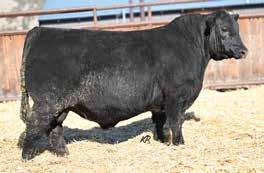
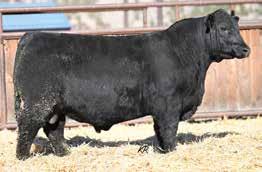
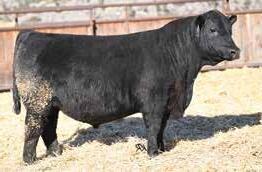
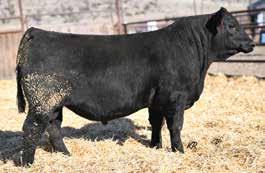
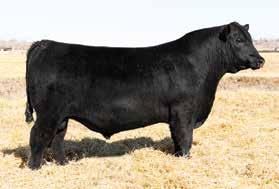
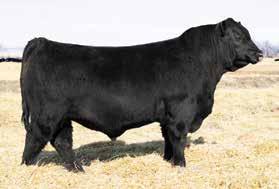
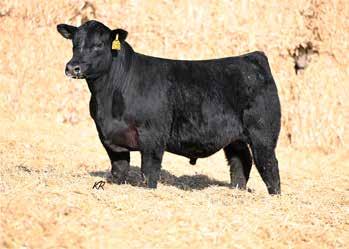
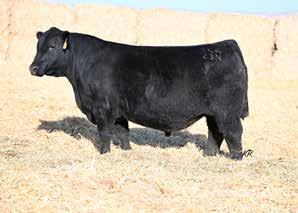
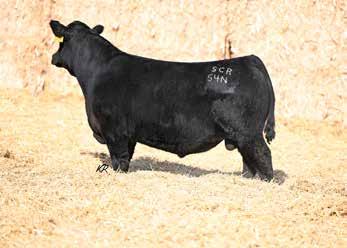
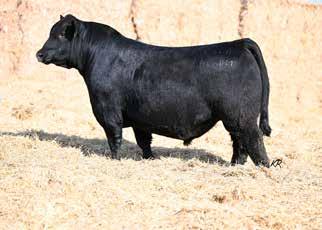
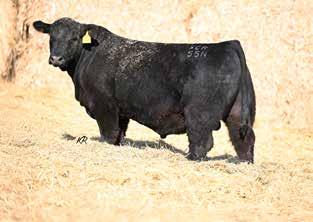
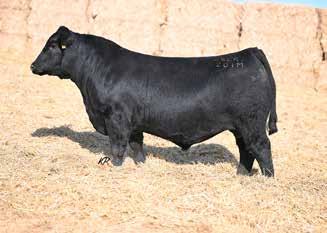
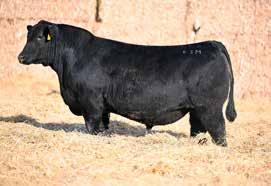
100 SIMANGUS BULLS
Developed on “THE HILL” OFFERING AVE $API 161 - TOP 10%
AVE $TI 92 - TOP 10%
Continued from previous page
disease may include chewing with the head tilted to one side, making a slurping sound while eating, halitosis or bad breath, nasal discharge and swelling along the nose or under the jaw.
The right care
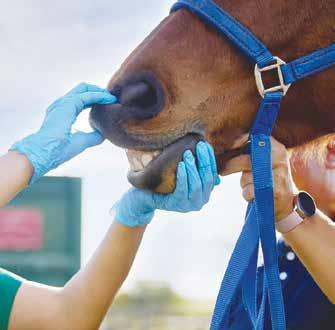
Unlike dogs and cats, horses have limited options for at-home dental care. As a result, working with a veterinarian is essential for ensuring a horse’s teeth and oral health are properly managed.
“Oral and dental health are extremely important to a horse’s overall health and welfare,” Johnson said. “Dental exams should be part of their routine wellness program, alongside regular vaccinations and deworming.”
Most horses should receive an oral examination once a year as part of their routine care. However, senior horses – generally those over 15 years old – should be examined every six months, as dental problems become more common with age.
Homo
PAP Tested - BVD Tested
Performance Tested - RightChoice Verified NEW
5 Registered Heifers
50 Commercial SimAngus Heifers - Sired by Black Summit Bulls from Kent and Shellie Haun, Riverton, WY.
Because horses have a fixed amount of tooth, routine dental care plays a critical role in preserving how long their teeth remain functional. Regular examinations allow veterinarians to identify and correct uneven wear early, helping teeth wear more evenly and reducing unnecessary loss of tooth structure.
When it comes to dental care, Johnson cautions horse owners to carefully consider who is providing these services. Some individuals claim to be equine dentists without being licensed veterinarians, often performing treatments without proper sedation – a practice which can put both horses and handlers at risk.
“Horse owners should be wary of non-veterinarians offering dental care services,” Johnson said. “Only veterinarians who’ve completed extensive training after veterinary school and are board certified by the American Veterinary Dental College can claim the title of equine dentist.”
With this said, most horses do not need to see a board-certified equine dentist for dental care.
“Your veterinarian is best suited to provide for your horse’s oral and dental health,” Johnson said. “They have both the knowledge and equipment – including appropriate sedation – needed to thoroughly examine a horse’s mouth and safely provide treatment as necessary.”
With routine veterinary care, dental issues can be identified and managed early, helping preserve tooth function and prevent unnecessary pain.
By making dental exams part of a horse’s wellness routine, owners can help ensure their horses remain comfortable, healthy and able to do their jobs well throughout their lives.
Pasture Talk is a service of the TAMU College of Veterinary Medicine and Biomedical Sciences. For more information or to view more Pasture Talk stories, visit vetmed.tamu.edu/news/tag/pasture-talk/. This article was originally published by Pasture Talk on Feb. 19.
Federal policy updates provided during Joint YF&R Leadership Conference
Members of the Wyoming Farm Bureau Federation (WyFB) and Colorado Farm Bureau Federation (CFB) gathered in Cheyenne Feb. 6-7 for the Joint Young Farmers and Ranchers Leadership Conference.
A series of breakout sessions on Feb. 7 highlighted relevant topics for young agriculturists, including a conversation on current federal policy updates led by Kelly Carpenter and Ashley House.
Carpenter is the policy advocacy director for WyFB, and House serves as the vice president of strategy and advocacy for CFB.
Their presentation shed light on the current status of several important policy issues including updates on the farm bill, water rights, labor and trade.
Farm bill
To start, House and Carpenter shared information on current conversations surrounding the farm bill on Capitol Hill.
“The farm bill is the cornerstone piece of legislation for ag, and the last one was in 2018 so it’s out of date,” House said, emphasizing her and Carpenter’s work involves advocating for modernization of the farm bill.
While the farm bill has not been updated since 2018, other legislation has been passed to bridge the gap and provide relief, including roughly $70 billion allocated for farm programs under the One Big Beautiful Bill Act.
Ultimately, Carpenter and House emphasized relief packages have been beneficial but still fall short of providing protections an updated farm bill would bring about.
In the time of decreased crop prices and increased input costs, Carpenter and House stressed farm bill reform is crucial to ensuring the future of American ag.
A markup process on the farm bill is set to begin in coming weeks, and Carpenter and House encouraged young producers to stay upto-date on news surrounding the negotiations as meetings unfold.
Federal lands
Moving into westernstate specific issues, Carpenter and House highlighted some changes to federal grazing regulations and public lands policy.
They noted an ongoing effort to update U.S. Forest Service and Bureau of Land Management grazing regulations, which are expected to begin coming to fruition in March.
According to Carpenter, these revisions are meant to focus more on “on the ground observations” to help streamline operations and create commonsense management policies, as well as aid in wildfire prevention, mitigation and post-fire recovery.
In addition, Carpenter noted the Resiliency for Ranching and Natural Conservation Health Act and the Grasslands Grazing Act
are two bills introduced in the Senate aimed at making headway in providing commonsense solutions for ranchers operating on federal lands.
Water
Regarding water issues, Carpenter and House discussed the current atmosphere of the Waters of the United States (WOTUS) rule and the ongoing crisis affecting the Colorado River Basin.
House explained every new presidential administration brings changes to the WOTUS rule, and the most recently proposed draft rule is “the most legally defensible rule” for ranchers in decades.
She added only an estimated 19 percent of wetlands in the U.S. would be under the jurisdiction of the Environmental Protection Agency with the proposed rule, bringing more flexibility for farmers and ranchers.
In terms of the ongoing Colorado River Basin crisis, the pair noted tensions continue to surge regarding both water conservation and compensation for reduced water usage.
House and Carpenter made note of a meeting between governors of the Colorado River Basin states which was scheduled for Feb. 15 to assess ongoing issues.
Ultimately, the pair noted whatever solutions come about in the long run, they expect the conversation to continue to be a long, expensive process.
Trade and labor
Turning their attention to trade and labor, Carpenter and House discussed the H-2A visa program and policy affecting imports and exports.
“On the H-2A side, we’re struggling with the question of how to make our state competitive and attractive to workers,” said House. “Wage rates have a lot to do with this question, and over time, they impact a lot.”
House explained, while heightened wages are necessary to attract workforce, the methodology for determining wage rates comes at the expense of farmers and ranchers – sometimes to an extent which is too great for the operation to bear.
This results in difficulty supporting H-2A workers in industries which rely upon their labor, particularly affecting sheep operations in Western states.
House explained there are a lot of issues which need to be worked out in the H-2A program and encouraged the audience to keep an eye on provisions outlined in upcoming legislation.
Regarding trade, House and Carpenter noted opportunities to expand trade and help ranchers capture a premium on U.S. beef continue to be explored.
They also explained increased numbers of Argentinian beef will likely not be cause for concern when it comes to the competitiveness
of American beef products.
In addition, they encouraged the audience to pay close attention to the topic of pesticide use as legislative conversations unfold, noting many aspects of the Make America Healthy
Again movement directly oppose the implementation of pesticides, yet at the same time, farmers are dependent upon crop protection tools to keep up with food production demands.
In closing, House reem-
phasized the importance of staying involved with policy conversations and advocating for ag on all levels.
“It takes all of us in ag working together,” said House. “While we may disagree on the nuance of something, the only way the work gets done is to be unified as an industry.” Grace Skavdahl is the editor of the Wyoming Livestock Roundup. Send comments on this article to roundup@wylr.net.
During a Feb. 18 webinar organized by the Beef Cattle Research Council (BCRC), Dr. Cheryl Waldner shares insight on the hidden health risks of poor water quality and advice on practical strategies for ensuring stock water safety.
Waldner serves as the BCRC Research Chair at the Western College of Veterinary Medicine in Saskatoon, Saskatchewan, Canada where her research focuses primarily on factors affecting productivity of cow/calf herds.
Water quality
To begin, Waldner stresses the importance of water quality to herd health, noting poor water quality can result in a plethora of issues for beef producers.
“Poor water quality can lead to reduced number of calves on the ground, reduced weight gain in calves and an increased risk of disease,” says Waldner, adding poor water quality can even result in sudden deaths in animals on pasture in some extreme cases.
Waldner emphasizes collecting water samples to evaluate water quality is a simple and vital process which all
producers should incorporate into their operations.
Testing involves collecting a sample in a clean container in accordance with local guidelines and submitting the water for lab assessment.
“Laboratory testing is extremely important,” Waldner says. “We can’t simply look at a water sample and determine whether or not it’s safe for animals to drink.”
Hidden risks
Waldner discusses the impacts of toxicity from runoff contamination and heightened mineral concentration.
She notes recent cycles of drought and evaporation have posed challenges for producers, and the risk of contamination from manure and fertilizer runoff pose constant threats to water quality.
High concentrations of salts and minerals in deep wells located near ancient aquifers can also cause concern, Walner adds.
Waldner emphasizes heightened levels of inorganic salts in surface water accompanying cycles of drought and evaporation have resulted in harmful
concentrations of sulfates in surface water.
Waldner warns if sulfate levels reach high enough concentrations, harm can come to herds in the form of severe disease and nervous system damage.
Another threat stemming from poor water quality is the risk of blue green algae toxicity – a type of toxicity caused by cyanobacteria which can cause damage to the liver and nervous system and result in extreme sensitivity to sunlight.
While cattle can heal from this type of toxicity, the recovery process is intensive and often unsuccessful.
Waldner also warns of another toxicity threatening to ruminants – nitrate and nitrite toxicity.
This type of toxicity can result in a variety of issues from respiratory distress and abortions to sudden death and is exacerbated by fertilizer runoff into surface water and shallow wells.
Staying protected
After detailing the potential impacts of poor water quality, Waldner offers some advice for managing stock water and maintaining herd health.
CLAY CREEK ANGUS
She notes good management practices can help keep the threat of mineral saturation and toxicity at bay, encouraging total herd health from the ground up.
ing water with copper sulfate can help clear out harmful bacteria, but warns water toxicity can increase for a period of time following this method of treatment.
In closing, she encourages producers to consider the impacts of feed and water intake when assessing total herd performance.
To reduce the chances of accumulating high levels of nutrients known to encourage bacterial growth in water, Waldner recommends solutions such as pumping water to troughs or aerating water sources.
She also notes treat-
Additionally, Waldner stresses testing water sources at frequent intervals is crucial to monitoring mineral levels and ensuring water safety, since several environmental factors and outside influences can affect accumulation.
“Looking at total impacts on animal health, we can’t just look at water,” Waldner says. “Remember, these things act cumulatively.”
Grace Skavdahl is the editor of the Wyoming Livestock Roundup. Send comments on this article to roundup@wylr.net.
WYLR photo
U.S. pork exports posted the second-highest value and third-largest volume on record in 2025, according to year-end data released by the U.S. Department of Agriculture and compiled by the U.S. Meat Export Federation (USMEF).
December beef exports were the largest in eight months, but full-year shipments fell substantially year-over-year, largely due to the ongoing trade impasse with China.
Exports of U.S. lamb muscle cuts were the largest in more than a decade.
Pork exports reach annual highs
December pork exports totaled 257,846 metric tons (mt), down 3.5 percent from the large volume posted a year ago but still the third largest of 2025. Export value was $746 million, down three percent but also the third highest of the year.
December shipments trended higher year-overyear to Mexico, reaching the second-largest monthly volume and value on record.
Exports also increased to South Korea, Japan, the Caribbean, the Association of Southeast Asian Nations (ASEAN) and Taiwan, but these results were offset by lower volumes to China, Canada, Central and South America and Oceania.
The December results pushed total 2025 pork exports to 2.94 million mt, down three percent from the 2024 record but the third largest on record –also slightly below 2020. Export value was also down three percent from the 2024 record but was the second highest ever at $8.4 billion.
Exports were recordlarge to leading market Mexico and to Central America and the Caribbean. Exports to Colombia were down less than one percent from 2024’s volume record and reached a new high in value.
“Last year was outstanding for U.S. pork, especially in our Western Hemisphere markets,” said USMEF
President and Chief Executive Officer Dan Halstrom. “Demand in these destinations has maintained multiyear momentum, and dutyfree access to our Free Trade Agreement partner countries is a foundational factor in this growth.”
“We are hopeful current trade negotiations will not only maintain this access, but remove barriers for U.S. pork in other markets,” he added.
Beef exports largest in eight months
December beef exports totaled 98,595 mt, down 10.5 percent from a year ago but the largest since April –access to China was largely lost in March. Export value was $809.2 million, down 10 percent but also the highest since April.
December shipments increased year-over-year to Taiwan, the Middle East, ASEAN, Caribbean, South America and Hong Kong; were steady to Japan and fell only modestly to Korea, Mexico and Canada. But exports to China were minimal, offsetting gains elsewhere.
When excluding China, December beef exports increased four percent yearover-year in volume and were six percent higher in value.
For the full calendar year, beef exports were down 12 percent from 2024 in volume at 1.14 million mt and were 11 percent lower in value at $9.33 billion. When excluding China, 2025 exports were down three percent in volume and just 0.4 percent in value.
“Global demand for U.S. beef – where it’s available to the millions of consumers who love it – has remained strong despite tight supplies and numerous headwinds,” Halstrom said.
“USMEF is encouraged by recent market access gains in some markets, but implementation remains key and the industry looks forward to capitalizing on these wins. However, for U.S.
beef exports to hit on all cylinders and help maximize the value of every animal, it is imperative access to China is fully restored.”
For both U.S. beef and pork, December was an especially strong month for variety meat exports.
Beef variety meat shipments achieved the highest-ever monthly value of $122.1 million, while pork variety meat exports were valued at nearly $105 million – the highest since March.
Lamb exports gain momentum December exports of U.S. lamb muscle cuts totaled 188 mt, down 10 percent from a year ago, but export value increased 11 percent to $1.1 million. Value growth was driven primarily by Mexico and the Bahamas.
For the full year, lamb muscle cut exports totaled 2,765 mt, up 38 percent and the largest since 2013.
Export value climbed 29 percent to $15.2 million, the highest value since 2014. Shipments posted strong year-over-year growth in Mexico, Canada, Central America and Trinidad and
Montana Performance Bull Co-op™
Tobago. Mexico’s demand continues to expand to a wider range of items, including underutilized cuts from the breast and shoulder.
USMEF collects and analyzes market intelli-
gence, implements promotional programs and collaborates with industry stakeholders and governmental agencies to increase U.S. red meat exports. For more information, visit usmef.org
Adobe Stock photo
What does a warm, dry, windy winter mean for Wyoming landscape plants?
Many parts of Wyoming have had unusually warm and dry weather this fall and winter. If this trend continues and brings with it typical western region yo-yoing temperatures – warmer spells followed by deep freeze events – the state is likely to see a variety of effects on plants as spring and summer roll around.
Here are some issues which might be encountered this spring and summer and what, if anything, to do about them.
Winter desiccation
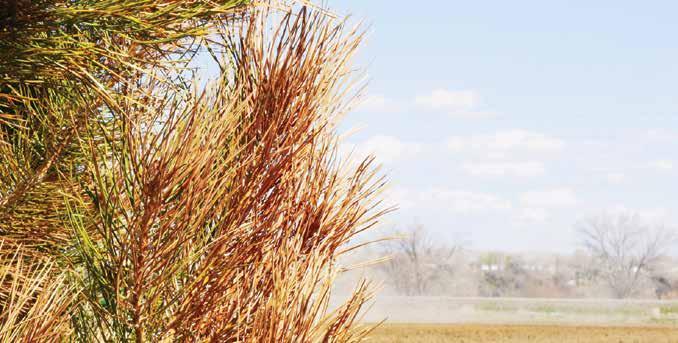
Winter desiccation, also known as winter burn, tends to be a problem on evergreen trees and shrubs across the state.
These plants keep their leaves or needles all year and continue to lose some water during the fall and winter. Dry, windy weather conditions in winter increase this water loss to the point where tissue damage can occur and leaves and needles turn partially or wholly brown –usually from the tip of the needle downwards.
Damage can be reduced by watering unfrozen bare ground during extended warm spells or using temporary windbreaks to protect small trees. When planting new trees, damage can be reduced by choosing appropriate species for the site.
Sunscald
Sunscald is a condition where tissue on tree trunks becomes damaged. It often appears as an area of shrunken, cracked dead bark on a tree trunk. Sunscald appears to be caused by warm sun shining on the bark, which causes cells to become more active.
As the temperature drops again at night or during a cold spell, these active cells can freeze, causing tissue damage and death. The damage will be found on the side of the tree facing the sun – usually south to southwest.
Trees will try to partition off this type of damage and may continue to grow reasonably well or they may die from severe damage.
Sunscald can be prevented by not pruning off too many lower branches, wrap-
This type of damage is often unevenly distributed around the tree or shrub, with the sides facing the sun or prevailing winds exhibiting more damage.
unevenly distributed around the tree, with the sides facing the sun or prevailing winds experiencing the most damage.
ping thin-barked younger tree trunks with white tree wrap in fall or using types of white paint on tree trunks to reflect the sunlight.
General cold damage
During fall and winter, perennial plants are in a condition called dormancy. The factors controlling plant dormancy can be complicated and vary amongst different kinds of plants.
For many species, cold
temperatures are not the only factors driving plant dormancy.
In many deciduous trees, dormancy is driven by both day length and temperature, among other variables.
As plants emerge from dormancy and start putting on new growth, they may experience cold damage. Cold tolerance varies depending on the kind of plant – species or even vari-
ANNUAL PRODUCTION SALE
MARCH 25, 2026
140 YEARLING BULLS & 60 YEARLING ANGUS HEIFERS
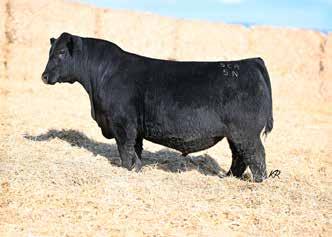
MC CUMBER PINNACLE 586 Reg 21504528
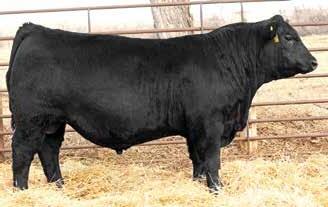
BW: 89, WW: 850, 205WT: 756/103, YW: 1350, 365WT: 1407/108 A sale highlight with herd bull credentials and generations of the very best Miss Wix cows behind him. Sired by OCC Edge of Glory 841E, who sired last years $110,000 Mc Cumber Glory Bound 4141. He is a maternal brother to the 2023 sale topper Mc Cumber Black Pearl 291 and his dam entered the ET program this past spring and is one of the very best daughters of Miss Wix 2012 of Mc Cumber in our herd.
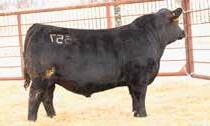
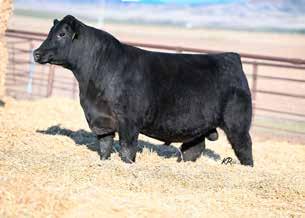
MC CUMBER ACCLAIM 557 Reg 21504509
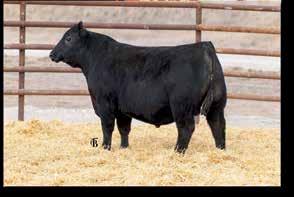
BW:89, WW:820, 205WT: 725/100, YW: 1325, 365WT: 1383/106 A top herd sire prospect that displays the mass, muscle and power we strive to produce. Mc Cumber Acclaim 557 combines this with balance, eye-appeal, structural soundness and hoof quality. He is 7/8 brother to the $110,000 Mc Cumber Glory Bound 4141 and doesn’t take a back seat. He will rival some of the best bulls ever offered here. Complete, maternally superior and selection for commercial cattle producers’ profitability.
JOIN US March 25, 2026 to select your next herd sire or anytime to view our cowherd.
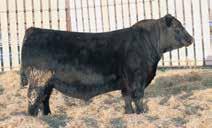
MC CUMBER MAJOR 5143 Reg 21504423
BW:89 WW: 905, 205WT: 832/116, YW: 1325, 365WT:1363/100 Mc Cumber Major 5143 and his flush brother Mc Cumber Captain 5112 got everyone’s attention this summer on tours to the bull calf pasture. They pack on as much true red meat and muscle as you can put on one and still maintain an appealing look and style all their own. They are sired by Duff Napolean 232 and ET sons of Lassie 9110 of Mc Cumber a full sister to Mc Cumber Zodiac 073, Mc Cumber La Joya 098 and Lassie 090 of Mc Cumber. Unlimited potential with a bright future ahead.
ety – and its stage of growth.
Different parts of plants also have varying degrees of resistance to cold damage. Cold damage can express itself in several ways.
In general, damage to flowers becomes more likely if they are closer to blooming and temperatures are colder.
Flowers tend to be most susceptible to cold just before, during and just after bloom. However, a flower’s cold tolerance is greatly dependent on plant type.
Many daffodil flowers can take significantly more cold without injury than apricot blossoms, for example.
If damaged, flowers may become limp, change color, turn brown and fall off.
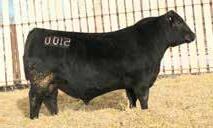
MC CUMBER MASTERPLAN 5100 Reg 21504399
BW:88, WW: 855, 205WT: 764/104,YW: 1325, 365WT: 1375/105 The first set of sons by Mc Cumber Masterplan 3194 sell this year and Mc Cumber Masterplan 5100 is one of the best and not only combines, muscle, performance and mass but has added style, length and exceptional hoof shape. 5100 represents the sire group well and is one of the top bulls in the entire offering.
No creep feed
CHOOSE YOUR NEXT HERD SIRE from a proven cowherd, recognized around the world for fertility, productivity and maternal function. A Mc Cumber cow is bred to be forage efficient, adaptable and long-lived. For 62 years our focus has not wavered and our desire to breed cattle that will be profitable, predictable, and problem free for our customers is at the forefront of our program. www.mccumberangus.com
If leaves are injured due to severe cold, they will eventually turn brown or black and possibly fall off. If it is early enough in the season, the plant will expend extra energy reserves to replace them. The same goes for many herbaceous stems.
If severe cold after warm spells damages a branch, it may die back partially or completely or wounds may be created in the branch’s tissue. If a branch dies back partially, dormant buds in the surviving tissue may become active and start to grow.
Wounds make the plant more susceptible to infection by other organisms.
Free delivery up to 1000 miles
All bulls and females are Genomically tested and Parentage Verified
Large percentage of the offering are suitable for use on heifers
Fully Guaranteed
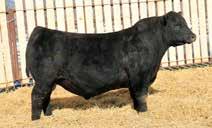
MC CUMBER MASTERPLAN 555 Reg 21504508
BW:81, WW:850, 205WT: 787/108, YW: 1270, 365WT:1333/102 A calving ease herd bull prospect that combines the best of the Miss Wix and Lassie cow families. A powerful calving ease bull produced by a new generation daughter of Lassie 935 of Mc Cumber. This tank excels for rib shape, natural thickness and soundness. He is attractive designed and one of the best from an impressive sire group by Mc Cumber Masterplan 3194.
SIRES INCLUDE: Mc Cumber Zodiac 073, Mc Cumber Masterplan 3194, Mc Cumber La Joya 098, Mc Cumber Cow Power 118, OCC Edge of Glory 841E, Duff JC 4Real 16250, D7 Yellowstone 1240I 618C, Trendsetter Genesis 2242 and Duff Napoleon 232.
If the plant is in reasonable shape, it will try to repair or partition off these wounds before an infection occurs.
Perennial flowers and foliage plants
Many healthy perennials which sustain cold damage early in the season will outgrow it as the season progresses, replacing damaged leaves and stems.
People often become concerned when they see spring bulbs emerging from the soil earlier than normal.
In general, many springblooming bulbs are adapted to quite cold temperatures. However, cold tolerance varies among species. If cold damage occurs, the extent will vary by plant type, stage of development, amount of snow cover – it can act as an insulator – how low the temperature drops and length of the cold spell. If bulb flowers and foliage are damaged by cold, do not cut them off. Leave them in place until one can see the full extent of the damage – usually by early summer – or they turn fully brown and crispy.
Any green foliage left surviving will photosynthesize, providing the bulb with the energy it needs to survive and hopefully recover, grow and bloom again next year.
Newly emerged foliage of other perennial plants is often more cold hardy than older foliage. In addition, crowns and roots are often insulated by the soil. If perennial leaves do sustain damage, they will change color and eventually brown. When new foliage
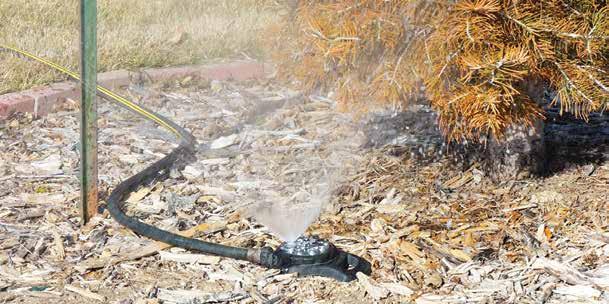
Continued on next page Winter burn – Winter burn is a common problem affecting evergreen trees across Wyoming during dry and windy winters. Damage is
grows out, it can sometimes hide this damage.
Trees and shrubs
As mentioned previously, cold damage depends on the species and variety of the tree or shrub, its stage of plant growth, the low temperatures reached and how long those temperatures persist. Most trees and shrubs in Wyoming weather temperature swings reasonably well.
In some circumstances, emerged deciduous tree leaves will sustain enough damage they will drop, and the tree will expend reserves to replace them. If trees are stressed from drought –especially multiple years of drought – or other reasons, they have fewer reserves to call upon for this purpose.
The flowers of certain early-blooming trees and shrubs may sustain freeze damage which will cause them to turn brown and become limp and mushy.
Cold damage is fairly common in fruit trees in Wyoming and will cause the fruit blossoms to abort and fall off, resulting in little or no fruit set for that growing season. This phenomenon has been studied in commercial fruit crops, and various charts exist showing the likely effects of different temperatures during particular stages of flower development.
Losing this year’s blossoms will not harm the tree’s ability to set fruit in following years. It just affects the yield for this year.
Branches or stems can also suffer cold injury. If this kind of damage has occurred, wait and see how the plant responds – mid- to late-summer at the earliest, waiting a year is often better – before getting out the pruners.
Trees and shrubs often have reserve buds which will start to activate if a primary bud has been damaged.
Trees can be slow to show certain types of damage, so patience and observation may be needed before all damage is apparent. Unless there are safety concerns, it’s best to monitor trees and shrubs as spring and summer progress to see what the true damage is.
Some trees and shrubs are not well adapted to many parts of Wyoming. Trees such as peach trees may survive for a number of years before a bad winter or untimely cold spell severely damages or kills them.
Keep this in mind when selecting trees and shrubs for planting or replanting.
Choose trees rated at or below an area’s U.S. Department of Agriculture (USDA) Hardiness Zone. Below is preferable. Those who live in areas rated as USDA Zone Five should select trees with at least a Zone Five rating, but Zones Three and Four are preferable.
Assisting plants
In general, plants can recover from quite a bit of damage when they have the resources they need.
Once temperatures are above freezing, make sure to provide enough water and nutrients to sustain the plants during their recovery period.
During warm dry spells in fall and winter, consider watering trees and shrubs – giving evergreens and newly planted trees priority – when temps are above 40 degrees Fahrenheit and the soil is dry. If it has been very dry, warm and/ or windy, consider watering other plants as well.
Plants do not need a lot of water this time of year.
Access Yes sees success
The Wyoming Game and Fish Department’s (WGFD) Access Yes program provided hunting access to 2,547,138 acres in 2025 within the enrolled boundaries of walk-in hunting areas (WIHA) and hunter management areas (HMA), according to the department’s Access Yes 2025 Annual Report. This includes land in all 23 Wyoming counties.
The purpose of the Access Yes program is to expand and sustain opportunities for the public to hunt and fish on private lands and on public lands which would otherwise be difficult to reach.
This is achieved by working with private landowners to enroll their properties in one or more of the three Access Yes programs – HMA, WIHA and walk-in fishing areas (WIFA).
The program provided additional access to 190,015 acres of otherwise inaccessible public lands adjoining the boundaries of WIHAs and HMAs and provided fishing access to 3,949 lake acres and 96 stream miles through the WIFAs.
Access Yes assists landowners through management of hunters and anglers, providing sportspersons places to hunt and fish and reducing agricultural damage through hunter harvest.
WGFD benefits through increased wildlife management opportunities, increased license sales, reduced agricultural damage and providing quality hunting and fishing access to the public.
In exchange for providing access, landowners receive financial compensation based on enrolled acreage or stream mileage, increased presence of law enforcement officers, enhanced wildlife management, including population control and damage prevention and assistance with managing sportspeople. For more information, visit wgfd.wyo.gov
Watering once a month is often sufficient. Make sure to water early enough in the day to allow the water to soak into the soil before freezing temperatures return. Also remember to drain hoses and spigots each day after watering.
Once spring has sprung and plants are growing quickly, water all plants consistently. Mulch trees and shrubs and make sure they are not suffering from nutrient deficiencies – often appearing as oddly colored leaves – or other issues hindering their recovery.
With annuals, remember to practice patience and vigilance. Warm spells in early spring can tempt individuals to plant annuals such as flowers or vegetables a bit too early.
Whether one chooses to do this or not depends on their risk tolerance and how much effort they want to invest in plant protection and/or replacement. Sometimes early planting pays off, but often it doesn’t.
Jennifer Thompson is a University of Wyoming (UW) Extension horticulture specialist. This article was originally published by UW Ag News
Winter watering –It’s important to water plants during the winter when temperatures are above 40 degrees Fahrenheit and the soil is dry.
University of Wyoming photo
SEGA GELBVIEH
STEVE & GAIL FIOLKOSKI
16509 WCR 86 | Pierce, CO 80650
Gail’s Cell: 970/590-4862
Steve’s Cell: 970/381-0600
Email: gafiolk@aol.com | www.segagelbvieh.com
Like us on Facebook @segagelbvieh BULLS AVAILABLE TO
AT 1 PM
BID IN PERSON or ONLINE AT WWW.LIVEAUCTIONWORLD.COM!
Study links long-distance movement of mule deer to robust population growth
Ungulate migration has fascinated people for millennia. In the western U.S., ungulates such as elk, bison and mule deer migrate each spring and fall, navigating snow, predators and human infrastructure.
New research by the U.S. Geological Survey (USGS) and the University of Wyoming (UW), recently published in Current Biology, reveals migrating mule deer access more productive summer ranges, have higher adult survival and raise more offspring compared to resident mule deer that remain year-round in a desert ecosystem.
These findings help explain the burning question of why ungulates migrate –to find more and better food.
“This study provides some of the strongest evidence to date on why ungulates need to migrate across western landscapes,” says Matthew Kauffman, a USGS researcher at the Wyoming
Cooperative Fish and Wildlife Research Unit based at UW. “Access to forage, fat gained, fawns raised, surviving through harsh winters –you name it. The migratory animals did much better than their resident counterparts.”
Study details
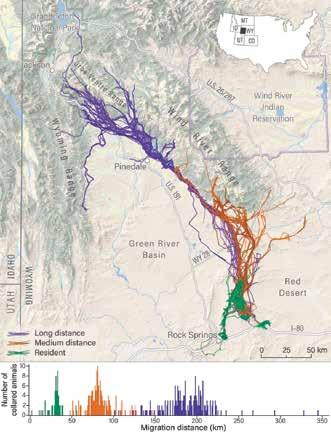
The nine-year study followed a portion of the Sublette mule deer herd which spends the winter in the Red Desert of south-central Wyoming.
Kauffman and others, including Kevin Monteith from UW’s Haub School of Environment and Natural Resources, captured more than 200 mule deer at the beginning and end of winter to attach GPS collars and document each animal’s body fat, which is a measure of their overall nutritional condition.
They monitored where deer migrated, how many offspring they raised each year and when deer died, which allowed them to quan-
tify population growth.
Previous research by the team had documented mule deer in this herd use three strategies. Some deer are residents and remain year-round in the desert sagebrush shrubland, whereas other deer travel mid-distances of 50 miles or longer distances of 100-plus miles to different summer ranges.
But this new study –connecting their movement data from the GPS collars to survival, reproduction and population growth – provides a rare understanding of how different migration strategies translate into population performance.
By traveling to mountainous summer ranges, long- and medium-distance migrants accessed more nutritious forage and outperformed residents when the researchers compared fat gain, survival and reproduction rates.
“But it’s not necessarily the distance of migra-
tion. It’s the act of migrating and obtaining access to more profitable seasonal ranges outside of the desert ecosystem which allow deer to maintain adult survival and robust population growth,” says the paper’s
Lead Author Anna Ortega, a UW PhD graduate and now lead researcher at Western
Wildlife Research Collective LLC.
The long-term study was conducted in collaboration with the Wyoming Game and Fish Department (WGFD), as the migration traverses both their Green River and Pinedale regional offices.
“Since 2016, the agency has had a focus on mapping and protecting migration corridors across the state,” says Brandon Scurlock with the WGFD’s Pinedale Field Office. “This study makes it very clear why it is so important to sustain the migrations Wyoming’s mule deer require.”
Research findings
Overall, migrants had more body fat than residents, buffering the migrants from extreme weather. Fatter migrating deer at the beginning of winter had higher survival than residents during winters with deep snow. Migrants ultimately lived longer than residents and consistently had more twins.
“Basically, it’s terrible to live in the desert and not migrate,” Ortega says. “It’s a really difficult – and unproductive – lifestyle for these deer.”
The study’s years of demographic data also point to migration allowing deer to be more resilient in the face
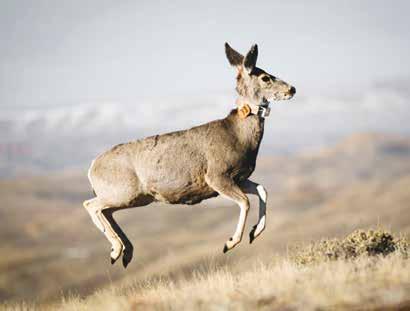
Benefits of migration – A collared mule deer bounds away from biologists after capture in
tory
of a decade-long drought which has gripped the common landscape used by all three strategies.
While the migrant population continued to show robust growth despite dry years, the residents’ combination of reduced survival and few offspring was indicative of a population in decline.
In fact, their analyses indicate residents could go extinct in 40 to 50 years, and this timeline could be accelerated with more extreme droughts under current climatic conditions.
The study emphasizes how critical these migrations are for mule deer and other ungulates across the American West.
“Over four million mule deer inhabit the western U.S., but encroaching subdivisions, fencing, roads and energy infrastructure create obstacles limiting or blocking migrations entirely,” Kauffman says. “It’s a cautionary note for mule deer across the western U.S., most of which are migratory. If we lose those migrations, our western landscapes will support far fewer deer.”
This story was originally published on UW News on Feb. 10. For more information, visit uwyo.edu/news
deer, pictured in green. Anna Ortega graphic
Benjamin Kraushaar photo
Vermilion Ranch Vermilion Ranch
MARCH
Pairs Calves all sired by Vermilion Irish Whiskey.
MARCH 27, 2026
Reducing nitrogen (N) rates in sugarbeet production may be possible without sacrificing yield, and early results from on-farm trials in Nebraska and Colorado suggest growers could cut inputs while maintaining profitability.
N plays a complex role in sugarbeet production, as insufficient rates can limit root yield, while excessive rates reduce sugar concentration and extraction efficiency, ultimately lowering recoverable sugar yield.
This tradeoff makes N management challenging for growers, directly affecting profitability, processing quality and environmental outcomes.
Therefore, improving N management represents a
key opportunity to enhance both economic returns and conservation outcomes in sugarbeet production.
To address this challenge, the University of Nebraska-Lincoln (UNL), in collaboration with Western Sugar Cooperative (WSC), has initiated a U.S. Department of Agriculture (USDA) Natural Resources Conservation Service (NRCS)funded project focused on optimizing N management for sugarbeet growers.
This five-year effort, running from 2025-29, aims to promote the adoption of Conservation Practice Standard 590, Nutrient Management for Sugarbeets, by validating reduced N fertilizer strategies to improve sugar yield and quality while reducing
environmental losses.
On-farm research approach
Over the course of four years, the project will engage 50 sugarbeet growers across Nebraska and Colorado through on-farm, splitpivot side-by-side comparisons of traditional N fertilizer recommendations based on root yield and a new model based on the estimated recoverable sugar (ERS).
Small-plot research experiments suggested beet growers can reduce N input without a yield penalty when they use the ERSbased N recommendation.
The traditional root yield model estimates eight pounds of N is needed to produce one ton of sugar-
beet. In contrast, the ERS model estimates a lower requirement – about 6.5 pounds of N per ton of beet produced.
Thus, the ERS model reduces N fertilizer application by 45 pounds per acre for an average beet yield of 30 tons per acre.
This on-farm research aims to test the ERS-based N model on the farm scale and includes economic and environmental analyses to support the model.
Nebraska and Colorado were selected to ensure consistency in soil and N management and irrigation systems, thereby enabling a thorough regional evaluation of the new model’s effects.
The effectiveness of the ERS-based N model will be
assessed by measuring environmental impacts and agronomic performance over the four years of the study.
Soil, water and plant tissue sampling, as well as measurement of environmental N loss via leaching and emissions will take place at 20 selected sites, while evaluation of root yield, sugar concentration, ERS and sugar loss to molasses; nitrogen use efficiency (NUE) and economic analysis in the final year will take place at 50 selected sites.
There will also be a life cycle assessment to quantify broader environmental impacts.
Preliminary results
Results from the project’s first year, averaged
across all locations, demonstrated reduced N inputs under the ERS model could maintain or slightly improve productivity while substantially minimizing environmental impact.
The N concentration in sugarbeet leaf, normalized difference vegetation index and NUE indicated the ERS N model did not limit sugarbeet N utilization.
Overall, compared with the traditional N treatment, the ERS N model resulted in a slight increase in root yield at 1.4 percent, sugar concentration at 0.6 percent and ERS at two percent; 18 percent less nitrous oxide emissions and over 80 percent less nitrate concentration in leachate water samples collected at a four-foot depth and a 23 percent and 25 percent increase in NUE based on the root yield and ERS, respectively.
Project progression
The primary objective of this USDA NRCS-funded project is to generate reliable, regionally relevant data associated with reduced N inputs.
Data collected from 50 farms will provide the foundation for future conservation incentive programs and confidence in nutrient management recommendations.
As a wholly growerowned cooperative, WSC provides a trusted and direct pathway for sharing research results with producers.
Grower fact sheets, field updates and educational materials will be distributed throughout the cooperative to promote confidence in the ERS N model and to encourage adoption of improved stewardship practices.
Surveys conducted among growers before and after the study, in collaboration with the UNL Bureau of Sociological Research, will help identify barriers and opportunities for broader implementation.
Farmers enrolled in this project save on N inputs based on the ERS model and also receive $118.80 per acre for each acre on which N input is reduced as per the ERS model.
Incentives are meant to compensate for any foregone income due to potential yield loss but are paid regardless of yield outcome.
Through collaboration with WSC leadership and technical staff, UNL aims to support profitable sugarbeet production while advancing conservation stewardship across the northern sugarbeet-producing region.
Godfred Ankomah is a postdoctoral research associate in UNL’s Department of Agronomy and Horticulture, Nicole Heldt is a research project coordinator in the the UNL Maharjan Soils Lab, Sujani De Silva is a PhD student in the UNL Department of Agronomy and Horticulture and Bijesh Maharjan is the UNL Extension soil and nutrient management specialist. This
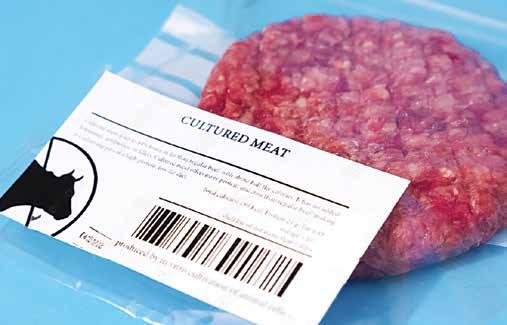
South Dakota Gov. Larry Rhoden recently surprised many of his state’s constituents by vetoing a bill which would ban the sale of cellcultured meat in his state. The governor, a lifelong Meade County, S.D. rancher, in turn supported a five-year moratorium on “lab-grown” meat products in his state, allowing time for its safety and wholesomeness to be studied.
The South Dakota Cattlemen’s Association urged the governor to veto the ban.
Eric Jennings of Spearfish, S.D., past president of the association, said he did not like the bill’s mechanism of placing lab-grown meat on the list of adulterated foods.
“The cell-cultured product is not a dangerous product,” said Jennings in an interview with KOTA Territory News. “It’s inspected by the same process our traditionally-raised meat is, so it’s not unsafe.”
Jennings added he’s confident traditional beef grown in South Dakota will outcompete any lab-grown product.
How it’s made
Decades of accumulated knowledge in cell culture, stem cell biology, tissue engineering, fermentation and chemical and bioprocess engineering preceded the field of cultivated meat.
The process begins with acquiring and banking stem cells from an animal. These cells are then grown in bioreactors at high densities and volumes. The cells are fed an oxygen-rich cell culture medium containing basic nutrients such as amino acids, glucose, vitamins and inorganic salts, then typically supplemented with growth factors and other proteins.
Changes in the medium composition trigger immature cells to differentiate into the skeletal muscle, fat and connective tissues that make up meat. The differentiated cells are then harvested, prepared and packaged into final products.
This process typically takes two to eight weeks, depending on the kind of meat being cultivated. Some companies are pursuing a similar strategy to create milk and other animal products. Most liken the process to making yogurt or beer. Bucking the headwinds
Even as the world continues to increase its meat consumption, positive consumer attitudes towards cell-cultured meat have been slow in developing. Numerous studies show a food’s perceived “naturalness” may influence consumer acceptance.
For example, consumers are more likely to reject cultured meat if they believe these products are overly processed or inherently unnatural. Studies show protein alternatives need to look, feel and taste like conventional meat to gain consumer acceptance.
Research on emerging food technologies – like cul-
Lab grown meat still getting mixed reactions
tivated meat and plant-based meat alternatives – has found consumers may be skeptical of novel products.
This neophobia – or the fear of new foods – is one of the main factors influencing people’s willingness – or unwillingness – to pay for meat alternatives, according to Kendall Profitt of Atlanta, Ga., a food researcher for Faunalytics, an animal protection think tank.
Profitt recently conducted a literature review of 43 articles addressing the factors influencing cultured meat acceptance.
“Concerns for animal welfare, the environment and other ethical considerations play a big role in people’s willingness to embrace cultured meat,” Profitt said. “But the ethical advantages of these products may not be strong enough to encourage acceptance, as even ethically driven people still tend to focus on things like naturalness, health and taste.”
Investments into innovations
Dutch Scientist Mark Post unveiled the first cultivated meat burger in 2013. Two years later, the first four companies were founded.
As of 2024, the industry had grown to over 175 companies on six continents, backed by over $3.1 billion in investments.
Cultivated meat pioneer Upside Foods of Berkeley, Calif. has struggled to engage consumers and pay back the $608 million it’s borrowed from investors since 2015.
Last spring, Upside Foods announced a second round of layoffs as it downsized its operations. The firm also paused plans to build a large-scale production facility in Glenview, Ill.
AgFunder data shows global funding for cultivated meat startups peaked at $989 million in 2021, dipped to $807 million in 2022 and then fell to $177 million in 2023. Startups in the sector did not pick up in 2024 and into 2025.
But it would be naïve for cattlemen to write off the cultivated meat sector or hope it simply rides off into the sunset. Most of the innovation and investment into cultivated meat though is in Europe where it began.
Notable investments in cultured meat technology include Mosa Meats in the Netherlands, which raised $43 million last year, and Israel’s Ever After Foods which raised $10 million. London, England-based Hoxton Farms announced an undisclosed infusion of capital late last year.
Owen Ensor, chief executive officer of United Kingdom-based Meatly, said pet food, rather than human food, is the place to start in developing a market for cultured meat. Meatly is scaling up production of pet food ingredients using chicken egg cells.
“easy-to-use hardware,” including stem cells enabling cattle and dairy producers to culture meat from their own livestock. Meatosys promises to ensure efficient cultured meat operations through remote control and automation of its patented growth pods.
With private funding almost drying up in the U.S., key players warn that in North America the cultivated meat sector could struggle to survive without a massive influx of public money.
For now, public investment into cultured meat development is facing a minefield of opposition.
U.S. Health and Human Services Secretary Robert F. Kennedy, Jr. has made it clear, while he’s a big fan of conventional beef, he’s not a fan of cultured meat.
Like South Dakota, state legislatures across the U.S. are considering banning cultivated meat or have already done so.
As of late 2025, seven U.S. states including Alabama, Florida, Indiana, Mississippi, Montana, Nebraska and Texas have passed laws banning the sale, production or distribution of cultivated meat.
But back in the Mount Rushmore State, Rhoden
said a five-year moratorium on cultivated meat –as opposed to an outright ban – respects constitutional limits, reduces the risk of unnecessary litigation and preserves South Dakota’s longstanding commitment to free markets.
And, Germany’s Meatosys is attempting to sell its
The governor said in a press release, “While you won’t catch me eating these products, it is against our values to ban products just because we don’t like them.”
Clint Peck is an author for BEEF Magazine. This article was originally published by BEEF Magazine on Feb. 19.
CLASSIFIEDS
GUN SHOW MARCH 21-22: Weston County Senior Citizens Center, Newcastle, WY, Sat., March 21, 9 a.m.-5 p.m.; Sun., March 22, 9 a.m.-3 p.m. Admission $5, kids 12 and under free when accompanied by a parent or guardian. Vendor setup Fri., March 20, 3-8 p.m. For more information, call Mike Novotny, 253-678-4825 3/14
UP IN ARMS, LLC FLEA
MARKET AND GUN SHOW March 20-22, Casper, WY at the Central Wyoming Fairgrounds. Open to the public. Fri., March 20, 3-7 p.m. Sat., March 21, 9 a.m.5 p.m. Sun., March 22, 9 a.m.-3 p.m. Giving away a .22 pistol Sunday at 2 p.m., must be present to win, 21 years of age and able to pass background check. Buy, sell, trade. Adults $6, children 12 and under free (when accompanied by an adult). For more information, contact Lisa, 208-420-2295 3/14
BLACK HILLS GUN SHOW MARCH 13-15: The Lodge at Deadwood, in Deadwood, S.D. Call 605-641-0870 or 307-751-1877. Visit us on Facebook 3/7
NE. The main focus of the Cowboy/Pen Riders are spotting, pulling, diagnosing and taking cattle to the hospital and shipping fat cattle. This person will need to be a team player who is seeking a long-term position. You will have the opportunity to work with and learn from some of the best in the industry. We offer a benefits package that includes health insurance, dental, vision, 401(k), health savings, life insurance and paid vacation. Retention bonus offered to full-time employees. Incentives paid out at 6 months and 1 year of employment. If you are interested stop by and fill out an application or visit our website at Call Mike Faimon at 406-469-1585 or Davin Arnold 970-301-3098 for more information.
LOOKING FOR RANCH ASSISTANT PROPERTY MANAGER: Full-time position for large ranch located in Park County, WY. Responsibilities include: Lawn care, irrigation, agricultural equipment maintenance and general residential, building and property maintenance. Salary range of $45$60K depending on experience. Living on property is required for employment. House and vehicle will be provided. Property is located 10 minutes from downtown Cody, WY. Position is available for immediate hire. Please send resumes to mgiliati@acpg.com 3/21
D&S CATTLE CO. FAMILY RANCH LOOKING FOR HELP feeding cows/horses, calving cows, summertime haying. Cattle work done horseback. Good horsemanship skills needed. Ranch housing, wage DOE. For more information, call 406-3425349, Hysham, MT 3/7
WYOMING STATE PARKS IS HIRING ENERGETIC EMPLOYEES FOR THIS SUMMER!! The employment period will run from May until September. Apply here: www. governmentjobs.com/careers/wyoming by searching “State Parks.” Join our team this summer! Maintenance and fee employees will be paid $10-$16/hour and law enforcement staff will be paid $18-$22/hour. Housing may be available. EEO/ADA employer 3/14
IMMEDIATELY SEEKING FULL-TIME FARM/RANCH INDIVIDUAL FOR A REMOTE NORTHEAST WYOMING RANCH: The role supports the current foreman and works alongside to ensure smooth and efficient operation of livestock, haying, equipment and facility management. Applicant must have a strong agricultural background and a hands-on approach to problem solving and daily ranch work. This is a long-term position and offers a clear path to increased responsibilities, pay and leadership. Housing is provided. Will not consider drug addicts or alcoholics. Must have a clean driving record. Please send resume with references and telephone number by mail or e-mail to: PeeGee Ranch, 1251 Lower Powder River Road, Arvada, WY 82831, pgranch@rangeweb.net. NO telephone calls 3/7
WHETHER YOU’RE NEEDING SAND FOR YOUR ARENA OR GRAVEL FOR YOUR DRIVEWAY, WE HAVE YOU COVERED. BIG HORN REDI MIX IN Powell, WY 307-7542923, Cody, WY 307-587469a1, Greybull, WY 307765-4610 and Worland, WY 307-347-2458 or Canyon Concrete in Thermopolis, WY 307-864-3500. Sand, gravel, 57 Rock, concrete and precast. Family owned and operated in the Big Horn Basin for 40 years 3/7
Brands
REGISTERED WYOMNG BRAND: RSC, registered until 2027. Single iron. Also have an additional calf branding iron. $1,250 OBO. Call 307-4610356 2/28
WYOMING REGISTERED BRAND: RHC, RHH, renewed to Jan. 1, 2031. Hot and cold irons. $10,500. Call 307-850-5087 3/14
BIRD AND ANIMAL AUCTION SUN., MARCH 29: Selling a variety of chickens, geese, turkeys, peacocks, ducks, goats, hoof stock and more. The sale starts at 9 a.m. at the Dawson County Fairgrounds, 1000 Plum Creek Pkwy., Lexington, NE. For more information call Jaiden, 308-233-1799. Find us on Facebook, @JGrace Auctions 3/21
ALL TYPES OF EQUIPMENT AND VEHICLE FINANCING. Great service!! Great rates!! Call Chuck Brown at C.H. Brown Co. LLC, 307-3223232 (office), 307-331-0010 (cell) or e-mail chuckbrown@ wyoming.com 2/28
AGRI-ONE FINANCIAL: Farm/ranch and all commercial loans. RATES AS LOW AS 5%. We have been helping with all aspects of agricultural, commercial financing and management for years. LET US HELP YOU on a consulting level with management to increase profitability, deal with and fix credit problems and for all your financing needs. WE CARE AND HAVE WORKING PROGRAMS designed for the farmer/rancher and not the banker. Please call Steve, 303-773-3545 or check out our website, www.agrionefinancial.com I will come to you and get the job done!! 3/21
RICHARDS HOOF AND NAILS LLC NOW OFFERING BOVINE TRIMMING!! Ronnie Richards owner of Richards Hoof and Nails LLC is based out of Broadus, MT. After years of only doing farrier work, he is now offering cattle trimming. He attended a cattle trimming school in London, Canada and is ready to come to you with his custom mobile chute. Call 406-5543064 (home) or 406-853-3491 (cell) 3/7
RED ANGUS HIGH-ELEVATION YEARLING BULLS FOR SALE IN NORTHEASTERN UTAH: Out of AI and bull-bred sires. Will be trich, semen tested and fed for free until April 15. $3,500/head. Bar Lazy TL Ranch, David, 435-828-1320, barlazytlranch@gmail.com 6/13
DILKA CATTLE SIMANGUS BULLS FOR SALE BY GENTLEMAN’S AUCTION MARCH 1 AT 1 PM: Bulls sired by BAS Money Maker, FSCR Freelance, MF/BMF Hilljack, GIBBS Essential, CCR Pounder, GONSIOR Batman, TJ Stability, TJ Stone Cold, BRIDLE BIT Eclipse. All bulls GE EPDS, DNA for hair color and all bulls homozygous polled. All bulls guaranteed for first breeding season. For information contact James Dilka at thedilkas@ aol.com or by phone, 970396-8791. Gentleman’s action will be held on March 1 at 1 p.m. 2/28
STRAND SIMANGUS PRIVATE TREATY BULL SALE: Selling yearling Black Simmental and SimAngus bulls. Our bulls have thickness that has been bred on, not fed on. Leave the trailer at home, we will feed your bull, semen test and deliver free of charge up to 300 miles after April 1. Bulls can be viewed at the ranch, Platte, S.D. For performance records, pictures or more information, call 605-6807628, e-mail strandsimangus@gmail.com. Visit www. strandsimangus.com To view photos, go to www.wylr. net in the classifieds 2/28
SALE 20 BLACK ANGUS
YEARLING ANGUS BULLS: These bulls are grown, not fattened, will get out and cover cows. Many will work on heifers. We will deliver. Call Joe Buseman, 605-351-1535 3/7
Bred by best Vermilion Ranch bulls!! Will start calving March 6 for 52 days. All vaccinations and poured with Ivomec. Can deliver!! Open Spear Ranch Melville, MT
Hot Market Price! Call ASAP 406-537-2333 LL at ranch office 9 a.m.
SALE * CHRISTENSEN RED ANGUS * SALE: Registered, vaccinated and fertility tested bulls. We have a deep carcass, high ADG packaged with moderate to low birthweights available. Call 406-208-4315 or e-mail criters64@gmail.com 3/14
Angus
TURNER RANCH SELLING
35 1,200 lb. fancy Hereford heifers, pasture bred to a son of NJW Historic, to calve March 27 for 35 days. ALSO, 25 Hereford heifers, bull bred to light birthweight Angus bulls, to calve March 23 for 45 days. Selling at Valentine Livestock Company March 5. For more information, call Lawrence Turner, 402-3765248 2/28
TWO-YEAR-OLD HEREFORD BULLS: Canadian registered. Fertility checked. View photos at www.workingherefords. com. Estermann Herefords, 308-340-4159 or 308-9634473 3/7
TWO-YEAR-OLD POLLED HEREFORD BULLS: Top bloodlines Historic and Gold Rush. Call Donald, 208-2016213 3/14
Have Herefords to Sell? Advertise Here!
SHORTHORN BULLS FOR SALE PRIVATE TREATY: Yearlings up to mature bulls available. Developed conservatively so they hold up. Remember a red Shorthorn bull on your homozygous black cows will give you black calves. Shorthorns are excellent maternal cattle that produce quality beef. Francis-Millvale Shorthorns, Gene and Roberta Francis Family, 701-331-2403, e-mail francis. millvale@gmail.com. To view photos, go to www.wylr.net in the classifieds 2/28
SimAngus
Hereford
Pasture Wanted
LOOKING FOR PASTURE FOR THE SUMMER GRAZING SEASON FOR 100 PAIRS OF EXCELLENT BLACK COWS in central or northeastern Wyoming. Call Richard Leavitt, 307-214-2200 2/28
SUMMER PASTURE WANTED FOR YEARLINGS: Seeking summer grass for 2026. For 500-1,500 head. Wyoming, Colorado, Nebraska, South Dakota. Prefer long-term potential, competitive rates offered. Call Jon, 831-240-5795 TFN
LOOKING TO LEASE A RANCH FOR APPROXIMATELY 150-200 HEAD OF COWS. Prefer area in Johnson and Sheridan counties. Call 307290-1643 2/28
Farm for Lease
IRRIGATED ALFALFA LEASE
DOUGLAS, WY: 400 acre irrigated lease near Douglas, WY off I-25 exit with farm operated 7 tower electric center pivots on deep bottom silt loam in the North Platte Valley buffered by hills, cottonwoods, Russian olives, berry bushes. Well rooted pure alfalfa stand in triticale rotation. Woven wire fence, ponds, well, spigots, ravines, corn feeders, housing, corral, bird shed/cage. Deer, turkey, antelope, waterfowl, fish. Longterm. Share interest, equipment, harvest/grazing strategy. Call 605-484-5455. To view photos, go to www.wylr.net in the classifieds 2/28
Horses
AQHA VERY GENTLE, WELL BROKE, NO BUCK, 10-YEAROLD BAY MARE. She has been used on the ranch for sorting, pairing and used in the mountains. AQHA FILLY AND STUD BORN MAY 2025. The filly is out of Ifwhizswereguns. The stud is out of HF Mobster. They are very gentle and halter broke. ELEVEN-YEAR-OLD GRAY, BROKE MUSTANG MARE. She was used as a broodmare and could be used as a recipient mare. For more information, please call 307-679-3126 3/21
RANCH, RODEO, ROPING, BARREL RACING PROSPECTS: 2024 APHA black solid and sorrel Tobiano geldings. 2025 AQHA bay, red roan, bay roan colts. 2025 AQHA bay and APHA sorrel Overo fillies. 2025 grade buckskin colt. Visit www.brokenbackranchquarterhorses.com Call for pricing, 307-272-5509. Ten Sleep, WY 2/28
BEST OF THE BIG HORNS
HORSE SALE, APRIL 11, Buffalo Livestock Marketing, 44 TW Rd., Buffalo, WY. Online bidding through www.cattleusa. com, register 3 days prior to sale. Contact Ellen Allemand, 307-751-8969 or Kay Lynn Allen, 406-697-5882. Visit us on Facebook for updates 4/4
TETON HORSE EXPERIENCE
MARCH 13-15 ● Wind River Arena in Rigby, ID ● Main Headliner Craig Cameron ● Colt Starting Competition ● Youth Freestyle Competition ● Demos ● Speakers ● Interactive classes ● shopping ● food ● For more information, visit www.tetonhorseexperience.com 3/7
FOR SALE THREE 2-YEAROLD GELDINGS, grade horses, all half brothers. These young geldings have had lots of groundwork, including saddling and 3 rides each in the round pen. Gentle, willing and ready to continue their training. $2,700 each OBO. Call for more details, 605-3500495 2/28
CHECK OUT SKB STABLES CONSIGNMENTS at www. lollibros.com SELLING
MARCH 6, yearling AQHA
LL Bowman Cookie, sired by Bowman Metallic Cat filly with One Time Pepto and Shake Shiver and Shine on the dam side. Riata Buckle eligible. ALSO, yearling blue roan AQHA Percheron cross filly. Call 641-664-1949 2/28
SEVEN-YEAR-OLD RED ROAN QUARTER HORSE MARE, grade, nice stocky mare, $4,500 OBO. For more information, call 719-490-8871 2/28
Custom Boot Maker
CUSTOM BOOT MAKER: Boot and shoe repair, service nation-wide. Shock Boot Repair, 307-260-9219, Gillette, WY 2/28
Leatherwork
LS CUSTOM LEATHER: New tack, belts and cell phone cases. ALSO, SADDLE AND TACK REPAIR. Custom orders welcomed. Contact Lester, 307-631-1053, leave a message. Riverton, WY 2/28
MOFFAT COUNTY SHEEP SHEARING SCHOOL, CRAIG, CO APRIL 17-19: This 3-day shearing school provides handson, instructed experience in shearing sheep and an introduction to equipment maintenance. No previous experience needed. E-mail megan.stetson@colostate.edu or call 970-826-3402 for registration information and questions 2/28
WEANER PIGS FOR SALE. ALSO, butcher hogs. Located in Powell, WY. For more information, call 307-271-1014 1/16
OPEN POLLINATED SEED CORN out produces hybrid for silage and grazing quality grain, $69/bushel +S/H. Call 217-857-3377 or text cell 217-343-4962, visit website www.borriesopenpollinatedseedcorn.com 3/21
Hay & Feed
QUALITY HAY FOR SALE: Grass, grass/alfalfa mix and straight alfalfa, net-wrapped large round bales, no rain. Western Nebraska location. Pick up or delivery available for fee. Call or text 303-9062691 3/21
BARLEY STRAW: Certified weed-free small squares, $4/ bale. ALSO, 5x6 round bales, $125/ton. GRAIN OATS, wheat and barley, $20/cwt. Greybull, WY area. Call 307762-3878 or 307-899-4714, leave message 3/21
2025 HAY FOR SALE: 2,000+ bales, first, second and third cutting alfalfa/orchardgrass mix, roughly 50/50, round bales. If tests wanted, they can be obtained. Thirty miles east of Valentine, NE, trucking available if needed. Call or text for more information, 402759-2033 2/28
ALFALFA/GRASS MIX: Large round bales. FIRST AND SECOND CUTTING ALFALFA, large rounds and small square bales. OAT STRAW, large round bales. ALSO, HIGH QUALITY feed value SHELL CORN. For more information, call 307-7545864 2/28
HAY FOR SALE: FIRST CUTTING ALFALFA, ALFALFA/ORCHARDGRASS, STRAIGHT GRASS AND GRAIN HAY OPTIONS. Netwrapped round bales. Delivery available. WE ALSO OFFER CUSTOM TRUCKING, hay hauling and side dump to haul gravel. Call Cheney Trucking/ Jonathan Cheney, 605-5690469 2/28
FOR SALE: 2025 MILLET HAY IN LARGE ROUNDS, approximately 1,100 lbs., 75 tons available at $155/ton. Gooseneck delivery possible. Call and leave message at 307-2595485 3/14
FEED/GRAIN FOR SALE: Alfalfa, cane and millet hay. Large squares and rounds. Semi loads only. Will deliver. Call 970-2272760 3/14
PRAIRIE HAY AND SOME TAME GRASS HAY FOR SALE: Net-wrapped round bales. Located 1/4 mile from Presho Livestock Auction, Presho, S.D. Call 605-7302899 3/7
VALLEY VIDEO HAY MARKETS, LLC: Representing 40 of the best growers in eastern Wyoming and western Nebraska. Call now for your spring needs, Barry McRea, 308-2355386, www.valleyvideohay. com 3/7
CERTIFIED BARLEY STRAW FOR SALE, 3x4 bales. Cody, WY. Call 307-899-1952 TFN
ROUND-BALED GRASS: 2025 crop 1,000 lb. net-wrapped bales, $50/bale. Cody, WY area. Call, don’t text, Anthony at 307-254-2645 3/7
DAIRY QUALITY ALFALFA FOR SALE: Call for pricing, 605-430-9809 3/14
CERTIFIED WEED-FREE PURE ALFALFA HAY: 2025 third and first cutting available in small squares, averaging 7080 lbs. Will load trucks and any open trailer. MONIDA OATS: $16/cwt. Combine run, great for seed or feed. Will auger into truck, trailer or large totes/ag bags. Located between Powell and Cody, WY. Certified scales on site. Call or text Knopp Farms for details, 307-2540554 3/28
HAY FOR SALE: Grass and alfalfa hay. ALSO, grass/alfalfa mix, millet, forage wheat and straw. Round bales and 3x4 square bales. Delivery available!! Call 307-630-3046 2/28
HAY FOR SALE: 2025 grass/ alfalfa, first and second cutting alfalfa, millet, haybet barley and CRP hay. ALSO, 2025 GRINDING HAY also available. All in net-wrapped round bales. Semi load delivery available. Call for pricing, ask for Klint, 701-2904418, if no answer, send a text or keep trying 2/28
PRIME PASTURE RETREAT: Beautifully situated in the shadow of 66 Mountain near Hawk Springs Reservoir. Features a classic older 1 1/2 story home framed by a beautiful shelter belt. Private yet convenient setting 6 miles north of LaGrange, WY 73 + total acres. Build your dream home and barns. $300,000. PREMIER PIVOT AND GRASS PASTURE IN GOSHEN COUNTY, WY: This well designed 368+ acres hay and pasture property features an 86+ acre Reinke center pivot contiguous to native grass pasture with a stock well. The entire property is fully enclosed with perimeter fencing, with the center pivot separately fenced. Pivot is planted to alfalfa. Property can be split. $759,000. HIGHWAY 92 HIGH PRODUCTION FARM: Prime 200+ acre farm featuring 2 Zimmatic center pivots, excellent soils, 2 older, livable homes and 191 acres of reliable water rights from the Goshen Irrigation District. Unbeatable location along Highway 92, 6 miles south of Torrington, WY, for convenient access. A strong producer and solid investment at $1,250,000. Pictures at www.buyaranch.com. Call Casey Essert, Land Broker, 307-532-1750 TFN
LODGEPOLE OUTDOOR FURNACES, 307-223-2046. Your authorized Central Boiler Dealer. Get your outdoor wood furnace today!! Efficient wood heat. Heat multiple buildings. Invest in your heating, don’t just pay for it!! See us at www.cb.lodgepoleproducts. com!! 2/28
FOR SALE: 2017 Freightliner Cascadia 125 day cab semi, Detroit DD13 engine, DT12 automatic transmission, air ride, aluminum wheels, 574,392 miles, very nice. Vermeer BP 7000 bale processor with hydraulic deflector. Miller Pro 18’ chuckwagon with tandem running gear. John Deere 714A and 716A chuckwagons with John Deere tandem running gear. H&S 7+4 16’, 20’ and 22’ chuckwagons with bunk feeding extensions and tandem 14 ton running gear. J&M 385 gravity box with 12 ton gear, truck tires. Landoll 36’ cushion gang disc with 3 bar mulcher. Gehl 1410 manure spreader, 410 bushel with slop gate, double floor chains, tandem axle. Meridian 240 seed tender, all hydraulic and roll tarp. Burns portable loading chute. 12’ and 14’ HD box scrapers with tilt. Farm King 8’ snowblower with hydraulic spout. All in very nice condition!! Call 605-999-5482 3/7
RETIREMENT SALE!! Brand new medium weight corral panels, 12 ft. long x 5 ft. high, if buy minimum of 100, $90/panel. Brand new Cattle Master squeeze chutes, $2,850. Calls only, no texts, 208-651-8698 3/7
2015 F350 4X4, diesel, dual wheeled, REGULAR CAB WITH HYDRABED, custom bumper, grill guard and air bags. 161,000, miles, excellent tires and very good condition. Text or leave voicemail at 307-2160392 for information 3/21
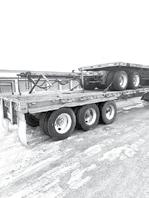
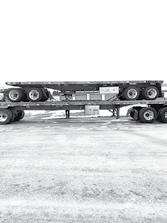
WESTERN B-TRAINS ALUMINUM FLATBED TRAILERS: Lead trailer is 32 ft. long, rear trailer is 28 ft. long. Really good tires, brakes and drums. $20,000 for whole set. Calls only, no texts, 208-6518698 2/28
Security System
Fencing
RAIL TIES: #1-9 ft., #1 and #2-8 ft. SWITCH TIES: 12 ft. and 14 ft. USED CULVERTS: Three ft., 2 ft., 18” and various lengths. ALSO, 14 pieces of heavy duty schedule 80 PVC, 3.5” ID, 20’ long with stainless steel couplers. Call EMC2, 307-630-2345 or 307-5345253 2/28
LODGEPOLE PRODUCTS, 307-742-6992, SERVING AGRI-BUSINESSES SINCE
1975!! Treated posts, corral poles, buck-and-rail, western rail, fence stays, rough-sawn lumber, bedding. SEE US at www.lodgepoleproducts. com and click our “Picking A Fence Post” tab to see why folks choose our posts!! TFN
Pipe
PIPE FOR SALE!! 2 7/8”, 3 1/2” tubing, 4” drill pipe, 4 1/2” casing, 5” casing, 7” casing. Rods 3/4”, 7/8” and 1” located in Montana, can ship anywhere. Call Mike, 602-7584447. To view photos, go to www.wylr.net in the classifieds 5/30
SECURITY ALERT SYSTEM DETECTOR: Indoor/ outdoor solar wireless alarm, half mile range, weatherproof motion sensor. One year warranty. DEALER INQUIRIES welcomed. For more information or to order, call Mountain View Variety, 719490-8871 3/7
Trucks & Trailers
The choice is simple.
Good time management is essential to farming success. That’s why more farmers are turning to T-L center pivot irrigation systems. Hydrostatically powered, T-L’s simple design gives you the low maintenance time, cost, safety and reliability to let you manage your farm instead of calling electricians or replacing gearboxes. Simplify your complex world and make irrigation easier on you.
On You. Big Horn Truck and Equipment Manderson, WY rairdenjlw@tritel.net •
The Cattlemen’s Beef Board (CBB) and Beef Checkoff 2025 Impact Report has been released, providing details on Beef Checkoff financial information, program highlights, key studies and more in one comprehensive document.
The report includes an overview of authorization requests (AR) supported by the Beef Checkoff in Fiscal Year 2025 (FY25) across six program areas – promotion, research, consumer information, industry information, foreign marketing and producer communications.
“Even in a period of historically tight cattle supplies and higher retail prices, consumers continue choosing beef. This sustained demand doesn’t happen by chance,” says 2025 CBB Chair Ryan Moorhouse in a Feb. 24 press release. “It reflects decades of strategic investment through the Beef Checkoff to promote beef, build consumer trust and reinforce its value in a competitive protein marketplace.”
Checkoff impacts
The report opens with a letter from Moorhouse thanking Beef Checkoff investors for their help in advancing the program throughout FY25.
“This year brought plenty of challenges and opportunities – from ongoing drought recovery and unpredictable markets to shifting consumer expectations and fast-moving misinformation online,” Moorhouse writes. “Through it all, producers kept raising cattle with integrity, and your Beef Checkoff dollars helped protect and promote the product you work so hard to produce.”
Moorhouse further notes Beef Checkoff-funded efforts helped bring accurate information about beef’s
Advertise
Cattlemen’s
nutrition, safety and impact on environmental stewardship to millions of consumers, particularly highlighting the impact of the “Beef. It’s What’s for Dinner.” campaign in driving both trust in and demand for beef products.
Additionally, communication was a major priority for CBB, and Moorhouse notes Beef Checkoff updates through meetings, social media, videos and newsletters played an important role in circulating accurate information about the beef industry and how checkoff dollars are used.
“What makes the Beef Checkoff effective is how it brings the industry together,” Moorhouse concludes. “This year, committees dug deep into priority setting, oversight and accountability to ensure every dollar delivered value.”
Promotion Throughout FY25, total funding for promotion ARs amounted to $9.12 million.
The Veal Promotion and the “Beef. It’s What’s for Dinner.” promotion both achieved significant progress toward measurable objectives and exceeded several goals.
The Veal Promotion allocated $192,437 to promoting veal as a familyfriendly meal option through delivering targeted ads for shoppable recipes on digital food sites and achieved an overall total sales lift of 2.7 percent.
Additionally, a targeted social media campaign educated consumers about the Veal Quality Assurance program and reached nearly 1.3 million customers.
Contracted by the National Cattleman’s Beef Association (NCBA), the “Beef. It’s What’s for Dinner.” campaign spent just over $8.8 million on efforts
MARCH 11-13: PETSKA FUR WILL BE BUYING ALL RAW/ DRY FUR DEER/ELK HIDES AND ANTLER IN THE FOLLOWING TOWNS AND LOCATIONS: MARCH 11: Bill 6:15-6:30 p.m., Bill’s Store (drive thru, call/text Greg). MARCH 12: Wright 6:507:20 a.m., Rest Area; Newcastle 8:30-9 a.m., Voelker’s Body Shop; Upton 10:15-10:30 a.m., Joe’s Food Center (drive thru, call/text Greg); Moorcroft 11 a.m.-11:30 a.m., The Coffee Cup; Gillette 11:50 a.m.-12:10 p.m., T&T Guns and Ammo; Gillette 12:30-1 p.m., Rocky Mountain Sports. MARCH 13: Sheridan 7-7:40 a.m., Sportsman’s Warehouse; Buffalo 8:509:20 a.m., Good 2 Go; Ten Sleep 10:50-11:20 a.m., Pony Express; Worland 11:50 a.m.-12:20 p.m., Bighorn One Stop; Manderson 12:50-1:10 p.m., Hiway Bar (drive thru, call/text Greg); Basin 1:301:45 p.m., Overland Express Mart (drive thru, call/text Greg); Greybull 2-2:15 p.m., Overland Express Mart (drive thru, call/ text Greg); Lovell 2:40-3 p.m., Good 2 Go; Powell 3:30-3:50 p.m., Murdoch’s; Cody 4:15-4:45 p.m., Nature’s Design Taxidermy; Meeteetse 5:30-5:45 p.m., Elk Horn Bar (under lights in front of fire hall, drive thru, call/text Greg). For more information, call Greg, 308-750-0700 or visit www.petskafur.net 2/28
Beef Board releases 2025 Impact Report
to boost beef consumption, promoting stories of real people and emphasizing beef as a healthy protein option in a balanced diet.
Beef Checkoff ads also capitalized on live sports streaming, reaching 114 million Americans tuned into events like March Madness and college and professional football games. Research
Total research funding in FY25 amounted to $8.6 million put toward studies assessing pre-harvest safety, post-harvest safety and foundational research.
Forty peer-reviewed studies were published in five key research areas –nutrition, product quality, sustainability, pre-harvest safety and processed beef nutrition.
Key among the accomplishments of the post-harvest safety research was promoting advanced awareness of beef producers’ commitment to food safety, while pre-harvest safety and foundational research addressed key demand drivers including eating experience, nutrition, convenience, versatility and how cattle are raised.
Research insights from this AR helped inform the 2025-30 Dietary Guidelines for Americans, securing beef’s place on the plate and boosting consumer interest.
Consumer information
The consumer information and industry information ARs focus on increasing education around the beef industry.
Total funding for the consumer information category reached $7.5 million across three ARs, achieving 16 goals and exceeding 13.
Through the Northeast Nutrition and Health Expert, Consumer and Athletic Program Outreach and Engagement AR, efforts were focused on reaching
customers in the northeastern U.S. including major cities like New York City, Boston, Philadelphia and Washington, D.C.
“By partnering with foodservice and retail experts, the initiative also aims to enhance consumer confidence and position beef as the preferred protein of choice,” states the report.
Another consumer information AR provided educators in the nation’s largest school districts with beef-centric professional development events, lesson activities and online learning tools.
Through this, urban educators became equipped to teach students about science, technology, engineering and math concepts through the lens of beef production.
Finally, the NCBAbacked Thought Leaders, Experts, Media and Channel Marketing Engagement AR worked to promote positive media coverage of the beef industry, achieving nine cooking segments featuring beef on major television networks and reporting a 200 percent increase in media placements and audience reach compared with prior years.
Industry information
Funding for three industry information ARs amounted to just over $2.9 million and focused on developing new markets and marketing strategies and increasing efficiency and activities through programs focused on issues, management, public relations and quality assurance.
The Veal Quality Assurance AR allocated $58,473 to providing education and certification to ensure ethical, science-based care for formula-fed veal calves and the Antibiotics Symposium AR spent $82,403 on fos-
MARCH 14-15: PETSKA FUR WILL BE BUYING ALL RAW/DRY FUR DEER/ELK HIDES AND ANTLER IN THE FOLLOWING TOWNS AND LOCATIONS: MARCH 14: Thermopolis 7-7:30 a.m., Renegade Guns; Shoshoni 8:15-8:30 a.m., Fast Lane (NW corner, drive thru, call/ text Greg); Riverton 9:15-10 a.m., Vic’s Body Shop (behind the Dollar Tree); Lander 10:30-11 a.m., Bailey’s Pit Stop; Jeffrey City 12-12:20 p.m., Split Rock Café (drive thru, call/text Greg); Muddy Gap 12:30-12:40 p.m., truck stop (drive thru, call/text Greg); Casper 1:45-2:15 p.m., Wagner Outdoor Sports; Glenrock 3:30-3:50 p.m., east exit on interstate (drive thru, call/ text Greg); Douglas 4:15-4:30 p.m., Douglas Feed (drive thru, call/text Greg). MARCH 15: Orin Junction 6:45-7 a.m., truck stop (drive thru, call/text Greg); Lost Springs 7:15-7:30 a.m., Main St. (drive thru, call/ text Greg); Lusk 8-8:30 a.m., Decker’s Grocery; Alliance, NE 11:30-11:50 a.m.,
tering dialogue on antibiotic stewardship.
Two veal production systems successfully met or exceeded all expected outcomes to achieve Veal Quality Assurance certification, while awareness on antimicrobial resistance was increased through the Antibiotics Symposium and a whitepaper.
Finally, the Issues and Crisis Management, Beef Advocacy Training and Engagement and Beef Quality Assurance (BQA) AR spent $2,794,203 on media development and monitoring, strengthening industry advocates through the Trailblazers program, and updating and translating BQA and training resources to reach even more producers.
Foreign marketing and producer communications
Foreign marketing funding and spending totaled $8 million put towards expanding international market development and access.
Engagement in West Africa, Colombia, Taiwan, Japan, South Korea and Mexico was boosted through this AR, even in the midst of tariff uncertainty and price challenges.
Finally, the producer communications AR works to establish a direct line of communication with producers and importers who pay the Beef Checkoff, and this AR spent just over $1.7 million of the $1.8 million it was awarded in funding.
Contracted by the CBB, the Producer Communications of Beef Checkoff Programs achieved nine goals, with one still in progress, and utilized various channels to share information, address misconceptions and improve transparency and communication across the industry.
CBB highlights the development of an informa-
tion processing framework to organize producer-facing communications and help deliver a more cohesive and compelling Beef Checkoff narrative.
Additionally, The Drive newsletter reached a wider audience and added its first corporate sponsor to help extend the newsletter’s circulation and strengthen its brand.
New opportunities for Beef Checkoff-driven content were explored, and CBB says FY25 reinforced the understanding messages delivered by fellow producers are more effective at making an impact than organization spokespersons or staff alone.
“Featuring real producers on camera or behind the microphone enhances authenticity and underscores the Beef Checkoff is producer-led and producerdriven,” reads the report.
Attitudes and behaviors
Finally, the CBB 2025 Impact Report lists some statistics on producer and consumer attitudes.
For producer attitudes on the Beef Checkoff, statistics show 76 percent of producers say the program has contributed to positive trends in consumer beef demand, and 67 percent of producers say education about the value of beef compared to other proteins is the leading area they want to see dollars invested in. For consumer attitudes and behaviors, the report shows protein remained a top priority for nearly half of consumers and high protein diets remained a popular eating trend as public interest in nutrition, health and wellness soared.
Grace Skavdahl is the editor of the Wyoming Livestock Roundup. Send comments on this article to roundup@wylr.net.
Oklahoma State University (OSU) recently announced a new wheat variety, will be on its way to the market this fall. It will be the university’s most widely adapted wheat since Duster in the early 2000s.
“This variety will compete on the farm at the highest levels of yield potential,” said Brett Carver, wheat genetics chair and regents professor in the OSU Department of Plant and Soil Sciences.
“I could have just as easily called it ‘Heavyweight,’ because if it were a wrestler, that is the weight class it would compete in,” he said. “Currently, we don’t have any other varieties with this level of yield competitiveness and straw strength to keep them standing in the field under typical Oklahoma conditions in June.”
Wheat namesake
The experimental variety OK20708, will be commercially known as Wyatt, named after former OSU Wrestler Wyatt Hendrickson, who received the 2025 Dan Hodge Trophy, which is awarded to the nation’s best collegiate wrestler.
During wheat research trials supported by the U.S. Department of Agriculture’s Agricultural Research Service, Wyatt wheat performed well across the Great Plains from Central Texas to Central South Dakota, ranking as a top yielder in Kansas and Nebraska in 2024 and in Texas and South Dakota in 2025.
From 2020-23, Wyatt demonstrated yield superiority over three competitive OSU varieties – Showdown, Smith’s Gold and High Cotton – averaging five or more bushels per acre more than Showdown and six bushels per acre more than Smith’s Gold.
Wyatt was bred from the Romanian variety FDL Miranda and OSU variety Smith’s Gold, giving it lineage to the OSU variety Gallagher, another variety with strong yield.
By 2017, the Miranda variety accounted for the second-highest area of seed wheat produced in Romania.
Both Miranda and Smith’s Gold have strong yield properties, with Smith’s Gold also carrying strong stripe rust resistance.
Wheat attributes
Wyatt variety attributes include very large kernel size with acceptable test weight and strong milling quality; a high-yielding ceiling with excellent straw strength and intermediate height; average protein content; moderately strong adult plant resistance to stripe rust; moderate resistance to leaf rust, with fungicide application being necessary within environmentally-challenged conditions to maintain kernel size and yield and moderately strong resistance to barley yellow dwarf.
Wyatt wheat also boasts intermediate resistance to tan spot; good grazing toler-
ance and yield recovery from grazing; variable baking quality, with slightly belowaverage dough strength; moderate susceptibility to Septoria nodorum blotch and Septoria tritici blotch under severe pressure and low tolerance to suboptimal nitrogen applications.
Wyatt has moderate but variable gluten strength which would be best used in commodity grain channels where it would be blended with other varieties and sources, according to Carver.
“I usually prefer many of our varieties to be marketed without blending because they stand so well on their own for baking functionality, but this one does not have enough dough strength to stand on its own,” Carver said.
“However, Wyatt can provide good baking performance with a reasonable balance of dough strength
and extensibility. This, combined with an exceptional kernel size, carries a dual
for both farmers and millers,” he added.
7L Diamond’s Hi Altitude Bulls Leah, 719-850-2720; Peter, 849-8223 Bulls & heifers sell Friday, March 27, 2026 at Monte Vista Livestock Auction
Altenburg Super Baldy-Triangle J
Selling 150 bulls – Fort Collins, CO Saturday, March 21, 2026 Willie Altenburg, 970-481-2570
Baty Livestock Spring and Fall Heifer Sales batylivestock@gmail.com facebook/batylivestock
Black Summit Cattle
The Quin LaFollette family Bulls sell Friday, March 20, 2026 at Powell, WY • 307-899-3553
Bridle Bit Simmentals
All-Terrain Bull & Female Sale Monday, March 23, 2026 at Walsh, CO Chad Cook, 719-529-0564
Campbell Simmental Part of High-Altitude Bull Sale on Saturday, March 28, 2026 at LaGarita, CO Robert, 970-749-9708
Carlson & Halde Cattle Bulls sell Fri., March 20, 2026 at Stoneham Patrick, 970-768-5345 Glenn, 970-580-2059
Dilka Cattle
Yearling & 18-mo-old bulls PT Briggsdale, CO • 970-396-8791 thedilkas@aol.com
Far Out Cattle Ranch
Jerrid Brisendine, 719-353-1747
All-Terrain Bull & Female Sale Monday, March 23, 2026 at Walsh, CO
Hill Brothers Livestock Bulls & females available Paul, 417-849-6851 facebook.com/hillbrotherslivestock
Cody Pitt Black & red bulls selling Private treaty at Hotchkiss, CO 970-778-9267 • cmp5792@aol.com
Rains Simmental Bulls of the Prairie Sale Saturday, March 14, 2026 at Oakley, KS Mike Rains, 785-672-7129
Russell’s Reflected R Ranch 719-469-2857; Bulls private treaty All female dispersal Dec. 1, 2026 www.ReflectedRRanch.com
T-Heart Ranch
High-Altitude Bull Sale March 28, 2026 719-850-3082 or 850-3083 shane@t-heartranch.com
benefit
Alisa Boswell-Gore is
the communications coordinator for OSU Agricultural Communications Ser-
vices. This article was originally published by Southwest FarmPress on Feb. 18.
Mari Simmental Breeders
New variety – Brett Carver, wheat genetics chair and regents professor in the Oklahoma State University Department of Plant and Soil Sciences, recently announced the new wheat variety and its commercial name, Wyatt, at the Oklahoma Genetics, Inc. meeting in Oklahoma City. Mitchell Alcala photo
Bayer agrees to $7.25 billion proposed settlement over thousands of Roundup cancer lawsuits
Agrochemical maker Bayer and attorneys for cancer patients announced a proposed $7.25 billion settlement on Feb. 17 to resolve thousands of U.S. lawsuits alleging the company failed to warn people its popular weedkiller Roundup could cause cancer.
The proposed settlement comes as the U.S. Supreme Court is preparing to hear arguments in April on Bayer’s assertion the U.S. Environmental Protection Agency’s
(EPA) approval of Roundup without a cancer warning should invalidate claims filed in state courts. This case would not be affected by the proposed settlement.
But the settlement would eliminate some of the risk from an eventual Supreme Court ruling.
Patients would be assured of receiving settlement money even if the Supreme Court rules in Bayer’s favor, and Bayer would be protected from potentially larger costs if the high
court rules against it.
Germany-based Bayer, which acquired Roundup maker Monsanto in 2018, disputes the assertion Roundup’s key ingredient, glyphosate, can cause nonHodgkin lymphoma, but the company has warned mounting legal costs are threatening its ability to continue selling the product in U.S. agricultural markets.
“Litigation uncertainty has plagued the company for years, and this settlement gives the company a road to closure,” Bayer Chief Executive Officer Bill Anderson said.
The proposed settlement was filed in St. Louis Circuit Court in Missouri, home to Bayer’s North America crop science division and the state where many of the lawsuits have been brought.
The settlement still needs the court’s approval.
Settlement payouts to the sick would vary
About 200,000 Rounduprelated claims have been made against Bayer, including more than 125,000 plaintiffs who sued since 2015, according to the settlement documents.
Few cases have gone to juries, with 13 verdicts for Bayer and 11 for plaintiffs, including a $2.1 billion award by a Georgia jury last year. Others already have been resolved through separate settlements, including two recent ones which would take care of about 77,000 claims, the court documents said.
The newly proposed nationwide settlement is designed to address most of the remaining lawsuits, as well as any additional cases brought in coming years by people who were exposed to Roundup before Feb. 17.
If too many plaintiffs opt out of the proposed settlement, Bayer said it reserves the right to cancel it, but Bayer did not specify how many opt-outs would have to occur.
The deal calls for Bayer to make annual payments into a special fund for up to 21 years, totaling as much as $7.25 billion.
The amount of money paid out to individuals would vary depending on how they used Roundup, how old they were when diagnosed and the severity of their nonHodgkin lymphoma.
An agricultural, industrial or turf worker exposed at length to Roundup would receive an average of $165,000 if they were diagnosed with an aggressive form of the illness while younger than age 60, according to the proposed settlement.
Meanwhile, a residential Roundup user diagnosed between the ages of 60 to 77 with a less aggressive form of the illness would receive an average of $20,000, and those diagnosed at age 78 or older would get an average of $10,000.
“No settlement can erase
a diagnosis, but this agreement is designed to ensure both today and tomorrow’s patients have access to meaningful compensation,” said Attorney Christopher Seeger, who would represent current claimants under the settlement.
Whether this compensation seems meaningful to patients remains to be seen. Attorney Matt Clement, who represents about 280 Roundup plaintiffs, said he was surprised by the proposed settlement and expects a lot of his clients will opt out.
The proposed payouts “are exceedingly too small,” Clement said.
Bayer gets Trump’s backing in court
Because of lawsuits, Bayer has already stopped using glyphosate in Roundup sold in the U.S. residential lawn and garden market, but glyphosate remains in agricultural products. It is designed to be used with genetically modified seeds which can resist the weedkiller’s deadly effect, thus allowing farmers to produce more while conserving the soil by tilling it less.
Though some studies associate glyphosate with cancer, the EPA has said it is not likely to be carcinogenic to humans when used as directed. The federally approved label for Roundup includes no warning of cancer.
Bayer contends federal pesticide laws preempt states from adopting additional labeling for products and thus prohibit failure-towarn lawsuits brought under state laws.
Bayer is making this argument to the Supreme Court in an appeal of a Missouri case awarding $1.25 million to a man who developed non-Hodgkin lymphoma after spraying Roundup on a community garden in St. Louis.
President Donald Trump’s administration has weighed in on Bayer’s behalf, reversing the position of former President Joe Biden’s administration and putting it at odds with some supporters of the “Make America Healthy Again” agenda who oppose giving the company the legal immunity it seeks.
The company has simultaneously been lobbying state legislatures to shield pesticide manufacturers from state failure-to-warn lawsuits when their products follow federal labeling requirements.
North Dakota became the first state to enact such a law last April, and Georgia became the second state to do so in May.
David Lieb covers issues and trends in state governments across the U.S., and he’s reported about government and politics for the Associated Press for 30 years. This article was originally published by the Associated Press on Feb. 17.