Wyoming Livestock Roundup February 28, 2026 Section A
President Trump delivers 2026 State of the Union Address
On Feb. 24, President Donald Trump delivered his 2026 State of the Union (SOTU) Address to a joint session of Congress.
Democrats and Republicans convened in the Chamber of the House of Representatives in Washington, D.C.
Quick Bits
Snow Report
In the 11th snow report for Water Year 2026, the state’s snow telemetry data reads 82% of median, with a basin high of 109% and a basin low of 7%. Last year, the state was at 102% and at 90% in 2024. The report and a map displaying basin snow water equivalent percentages of median for the state may be found at wrds.uwyo. edu/wrds/nrcs/nrcs.html
WAIC Auction
Wyoming Agriculture in the Classroom’s (WAIC) Online Silent Auction is now open and will close on March 1. Must-have items like the Commissioner’s Big Game License, donated by Commissioner John Masterson, will be available. For more information, to preview auction items or to place a bid, visit waic2026.givesmart.com
Bull Test
The University of Wyoming (UW) recently announced some important dates for its Fourth Annual High Altitude Bull Test and Sale. The final pulmonary arterial pressure test was conducted by Dr. Tim Holt on Feb. 23 and breeding soundness exams took place on Feb. 24. The bull sale catalog will be available on March 9 and the field day and sale will take place on March 28. For more information or to request the catalog, visit bit. ly/UWBullTest-Info
Range Expo
The Wyoming Range Hunting and Fishing Expo is set for June 11-14 at the Sublette County Fairgrounds in Big Piney. This four-day event will bring premium outdoor vendors, community events and live entertainment together, with every dollar raised going back into wildlife projects across Wyoming. On the nights of June 12-13, popular headliners Tris Munsick and the Innocents and Chancey Williams and the Younger Brothers Band will play. For more information, visit wyomingrangeexpo.com
to hear comments from the president regarding the work of his administration and the future of America.
Inside the address
Calling the Trump administration’s accomplishments throughout the past year “a turnaround for the ages,” the
president highlights a stronger America evidenced by wins in national security, energy and affordability.
“Today our border is secure, our spirit is restored, inflation is plummeting, incomes are rising fast, the
CFD Rodeo debuts updated format
The Cheyenne Frontier Days (CFD) Rodeo will feature an updated format in 2026, including significant changes to the rodeo’s structure which officials say are designed to support the rodeo’s long-term sustainability.
This summer, the iconic “Daddy Of ‘Em All” will feature 10 consecutive days of professional rodeo action following the addition of a Friday performance on July 17 and an increased prize money payout from $770,000 to $960,000.
Notably, slack qualifying rounds for timed events are set to be replaced by a series of qualifying rodeos spanning a nine-state region in the weeks leading up to CFD.
A press release issued by CFD personnel on Feb. 13 outlines the changes and the reasons for them, with CFD officials saying the updated format will allow for more rodeo action and an enhanced overall experience for fans, contestants and volunteers.
Updated format
The most significant change highlighting the 2026 CFD Rodeo is the elimination of timed-event slack rounds.
Rather than advancing through a series of slack rounds in the week preceding CFD, contestants in tie-down roping, steer wrestling, team roping, breakaway roping and barrel racing will qualify through a combination of qualifying rodeos, world standings and circuit qualifications.
According to the press release, CFD worked with the Professional Rodeo Cowboys Association (PRCA) and Women’s Professional Rodeo Association (WPRA) to select qualifying rodeos.
Lawmakers debate ag-related legislation during 2026
Budget Session
The 68th Wyoming Legislature convened in Cheyenne on Feb. 9 for the 2026 Budget Session, where lawmakers debated several ag-related measures.
While budget sessions typically focus on appropriations, legislators may also introduce limited policy bills, and so far, those gathered in Wyoming’s capital city have addressed issues such as grazing access, corner crossing and wildlife management, to name a few.
Grazing flexibility advances
One of the most closely watched agriculture bills this session is Senate File (SF) 16, Subleasing of state landsexemptions, sponsored by the Joint Agriculture, State and Public Lands and Water Resources Committee.
The bill modifies state grazing lease requirements by allowing lessees to notify Please see AG POLICY on page A9
Farm Bill 2.0
New legislation provides a modern farm bill for modern challenges
After years of delay and mounting pressure, House Agriculture Committee Chairman Glenn “GT” Thompson (R-PA) delivered the long-awaited text for the Farm, Food and National Security Act of 2026 on Feb. 19.
Also known as Farm Bill 2.0, the legislation represents the first full farm bill reauthorization since 2018 and comes at a time when American producers are grappling with volatile commodity prices, rising input costs, persistent drought conditions and ongoing global competition.
“This bill provides modern policies for modern challenges and is shaped by years of listening to the needs of farmers, ranchers and rural Americans,” Thompson states. “The farm bill affects our entire country, regardless of whether you live on a farm, and I look forward to seeing my colleagues in Congress work together to get this critical legislation across the finish line.”
Draft bill highlights
According to multiple sources, the draft legislation would provide a five-year reauthorization of commodity, conservation, credit, development and
Wildfires sweep Southern Plains
Fast-moving wildfires driven by extreme winds, dry grass and drought conditions have scorched hundreds of thousands of acres across the Southern Plains in recent weeks, threatening ranches, forcing evacuations and affecting nearly 12 million people from New Mexico and Texas into Kansas and parts of Missouri.
While the worst of the flames have burned through northwest Oklahoma, southwest Kansas and the Texas Panhandle, individuals throughout the West are watching closely as this winter’s dry and windy weather continues to create dangerous conditions.
Explosive fires scorch the Plains
Fueled by a combination of ongoing weather and environmental condi-
tions, Oklahoma and Kansas arguably saw the worst of the recent wildfire devastation from the most destructive blaze – the Ranger Road Fire.
Within a few short days, the fire consumed more than 283,000 acres across the Oklahoma Panhandle and into southern Kansas, earning classification as a megafire and forcing evacuations in communities along highways and rural ranch country.
According to a Feb. 20 Fox Weather article by Olivia Stephens, strong wind gusts of up to 50 miles per hour and a relative humidity below 15 percent allowed flames to spread rapidly and prompted new ignitions to pop up.
The Stevens Fire, ignited northwest
Future Looks Bright for Dairy
Higher beef prices and improved genetics are rewriting the dairy industry. With older dairy cows producing milk at higher numbers and dairy producers using younger cows to crossbreed with beef genetics, the dairy business has really changed.
Dairy producers have caught on and are now in the business of raising calves for beef. They are still in the milk business, but they are also using their heifers to crossbreed and raise calves for some good money.
In the past, dairy producers would cull underperforming or older dairy cows to sell on the canner market and raise as many heifers as they could to replace the milking herd. Most producers have changed management and jumped into the beef market.
Historically, a tight heifer inventory would raise red flags in the milk industry. However, no one is currently concerned as heifers are now used for different purposes, and the best part about keeping older cows longer is the U.S. milking herd is now the largest it’s been in over 30 years.
When it comes to profitability, dairy producers are now breeding their top heifers with the best milking genes in the industry for replacements, and they are breeding all of their other heifers to beef genetics.
Dairy producers are not too quick to cull their cows, and they are getting a beef-on-dairy calf, which is now worth more than just selling off the cow. Because producers are being much more selective with their breeding, the next generation of replacements is genetically superior to anything the industry has seen before.
These older cows are simply serving as surrogates, fulfilling a dual purpose for the terminal beef markets which really helps the bottom line on the dairy farm.
Crossbred beef-on-dairy calves weighing between 70 to 75 pounds are now selling for as high as $1,700 at cattle sales. These calves will take extra care with feed and health, but in the end, they will make money.
Dairy producers are fortunate in that the U.S. Department of Agriculture is currently buying $148 million in dairy products to supply food banks and federal nutrition programs.
Also, U.S. dairy products are now the third largest ag exporter behind corn and soybeans.
It looks like higher prices will stick around for a few years for both dairy farmers and beef producers. If they keep heifers for replacements, this drops the numbers in the feedlots and ultimately less cattle processed for beef products.
As a rancher, do I want to have less cows with a higher price tag or more cows with a lower price tag? I’ll take the less, higher-priced cows instead of higher numbers – this way, I’ll have less expenses. One can see why cattle producers are not in a hurry to expand their herds.
With record demands, beef will also stay high, but it doesn’t matter. I don’t think grocery stores are ever going to drop their prices by much, no matter what happens.
All of the politicians want cattle producers to expand their herds and get cattle numbers higher. This fast expansion happened close to 10 years ago and really dropped cattle prices in the early 2020s. We’ve learned our lesson.
GUEST OPINIONS
Anyone who grew up on a family farm or ranch knows fence work is never complete. It breaks, sags, drifts and disappears under snow, and somehow, fence repair always seems to fall on blizzard days, holidays or the hottest afternoon of the year.
This is just one of the many backbreaking, never-ending jobs that defined my childhood and life on working land.
Those daily burdens add up. Combined with increasingly thin margins, they are pushing younger people away from agriculture.
In 2024, more than half of American farmers and ranchers reported operating at a loss. Today, the average U.S. farm or ranch owner is 58 years old. Meanwhile, the number of farmers and ranchers between the ages of 35 and 64 declined by nearly 10 percent between 2017-22.
This is not just a demographic trend, it is a quiet conservation crisis.
As older landowners retire, many have no successor ready to step in. When ranches do not transfer to the next generation, they are far more likely to be subdivided or converted to non-open space.
According to the American Farmland Trust, nearly 300 million acres of U.S. farm and ranchland, almost the size of Alaska, are expected to change hands in the coming decades. What happens to this land will shape wildlife habitat, water resources, rural communities and open spaces across the country.
If conservation depends on keeping land intact and working, then keeping ranching viable for the next generation matters more than ever.
A promising new tool
Virtual fencing offers a promising new tool to meet the challenge. This emerging technology simplifies ranch management, reduces physical labor and provides a level of flexibil-
ity those stubborn traditional fences could never match.
Virtual fencing relies on GPSenabled collars worn by livestock which communicate with small radio towers and satellites. Much like invisible fences for pets, virtual fencing collars guide animals using basic audio cues and electrical signals.
Ranchers can repeatedly create, adjust and digitally move boundaries, in near real time. Moving a fence during a snowstorm is a lot easier when all it takes is a few taps of a finger on a tablet.
The implications are significant. Virtual fencing can dramatically reduce the need for miles of costly and burdensome physical fence. It can help ranchers locate livestock more easily, respond faster to changing conditions and avoid permanent barriers that fragment wildlife habitat. It can also be a conservation
Pasture To Plate Performance
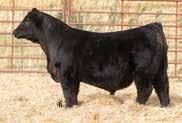
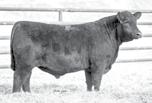
2/12/25
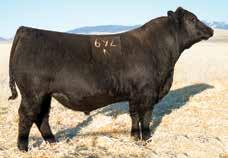
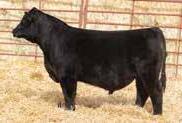
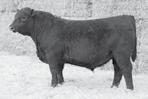
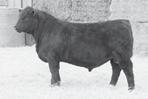
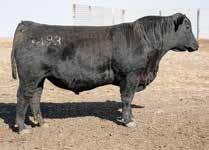
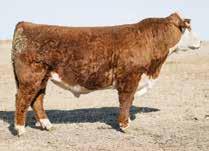
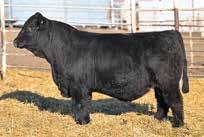
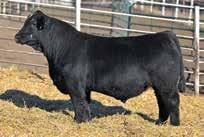
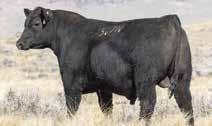
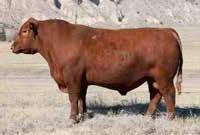
HP • HB • 64% Lim-Flex
S: MAGS Kooper Rush 2622K
CE: 10 BW: 2.1 WW: 77
YW:
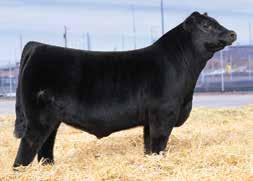
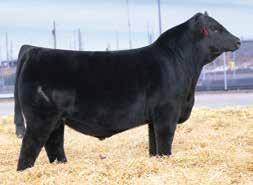
OLIM NAVIGATOR 578N
Lead bull in our 2026 NWSS Champion Lim-Flex Pen. He sells!
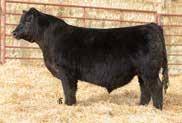
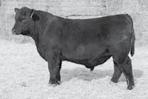
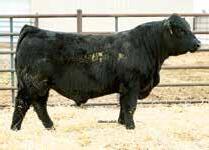
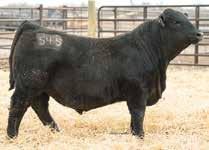
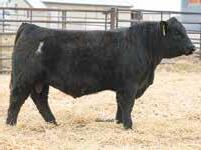
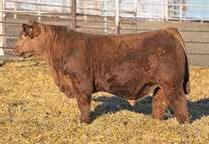
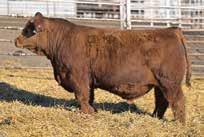
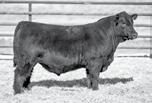
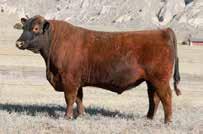
3/8/25
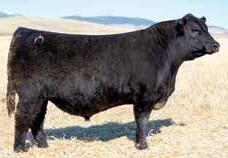
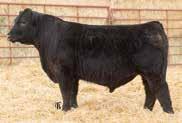
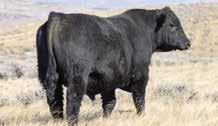
HP • HB • 37% Lim-Flex
S: Connealy Commerce
CE: 14 BW: 1.8 WW: 97
YW: 152 MK: 22 DC: 11
RE: 0.98 MB: 0.42 $TPI: 160
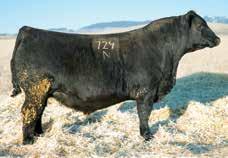
NUMERO UNO 648N
Anchor bull in our 2026 NWSS Champion Lim-Flex Pen He and multiple maternal sibs sell!
OLIM
Nominations open
Webinar scheduled
University of Nebraska-Lincoln (UNL) Extension will host a webinar titled “Confinement Feeding Cow/Calf Pairs in the Face of Limited Perennial Grass Options” on March 17 at 6:30 p.m.
As drought continues to expand across Nebraska and the western Great Plains, pasture rental and purchase prices remain high while many harvested feed commodities are moderately priced.
The webinar will explore the potential of adding a confined cow operation to an integrated cattle and crop system, along with nutritional and management considerations when drought limits or delays perennial grass growth.
The webinar will provide practical information producers can use this spring and summer as they evaluate drylotting operations.
Karla Wilke, UNL Extension cow/calf systems specialist, will highlight lessons learned from university research and from producers who have utilized drylot systems for cow/calf pairs.
The webinar is free, but registration is required.
For more information or to register, e-mail Aaron Berger at aberger2@unl.edu.
Final approval praised
On Feb. 24, Gov. Mark Gordon praised the U.S. Environmental Protection Agency’s (EPA) final approval of Wyoming’s coal combustion residuals (CCR) program.
Wyoming’s Department of Environmental Quality (DEQ) will now be able to permit CCR sites through a program using local, Wyoming-based expertise.
“This decision is extremely welcomed and the result of substantial coordination and work by our dedicated DEQ staff,” Gordon said. “With this decision, the Trump administration is showing they have kept their promise to empower states like Wyoming, where we value our primacy in decision-making. This principle was a major topic of discussion during EPA Administrator Lee Zeldin’s visit to Wyoming last year.”
“Wyoming DEQ has a long-standing history of effectively implementing environmental programs, including managing solid waste,” DEQ Director Todd Parfitt said. “We appreciate EPA’s final action today and their recognition of the importance of cooperative federalism principals while acknowledging the expertise of the DEQ staff.”
U.S. athletes bring home hardware
According to a Feb. 23 NPR article by Brian Mann, when the spotlight shifted to the 2026 Winter Olympics Closing Ceremony in Verona, Italy, the U.S. had scooped up 12 gold medals – its best tally ever in a Winter Games – with 33 medals overall.
This number trails only winter sport superpower Norway.
The medals came on the strength of superstars like Alpine Skier Mikaela Shiffrin and Speedskater Jordan Stolz, as well as stunning team performances by U.S. figure skaters and the U.S. men’s and women’s hockey teams.
In the end, the U.S. was also the only nation outside of Europe to crack the top five in the medal count.
One notable thing about the strong medal harvest is it came despite the fact winter sport remains a regional tradition in the U.S.
The U.S. sent its largest roster of athletes ever – 232 men and women – to
these Winter Games, but 18 states sent no Olympians at all. Even some states where winters are long, like Nebraska, Nevada and South Dakota, sent no competitors.
A relative handful of U.S. states punched far above their weight, with Alaska, Colorado, Minnesota, Vermont, Wisconsin, Utah and Wyoming fostering elite winter athletes and scooping up medals.
Colorado alone accounted for five medals, including three gold. Vermont and Wyoming – two states with tiny populations – accounted for a gold and six silver medals.
While Norway took home more gold and more medals overall, its wins came in a relatively narrow group of sports, with 25 of 41 medals won in just two disciplines –cross-country skiing and biathlon.
The U.S., by contrast, medaled in 11 different sports disciplines, from bobsled and figure skating to hockey to speedskating.
Each year, the Wyoming Livestock Roundup recognizes two Wyoming citizens or couples for their involvement in the state’s agriculture industry by inducting them into the Wyoming Agriculture Hall of Fame.
Started in 1992, the Wyoming Agriculture Hall of Fame has honored 75 Wyomingites to date.
“The Wyoming Agriculture Hall of Fame award was first started in 1992 to recognize leadership in the ag community,” says Wyoming Livestock Roundup Publisher Dennis Sun. “The need is there to recognize people who have been leaders and given themselves, their time and countless resources to help the ag community in the state.”
Last year’s inductees were Doug Miyamoto of Cheyenne and Juan Reyes of Wheatland.
To nominate someone for the Wyoming Agriculture Hall of Fame, visit wylr.net and click on the Ag Hall of Fame tab, e-mail roundup@wylr.net or call the office at 307-234-2700.
Nominations must be submitted by June 1.
After all nominations are received, a panel of three judges will independently rank nominees and select the year’s inductees. A belt buckle and poster will be presented to the winners at the 2026 Wyoming Agriculture Hall of Fame Picnic, to be held Aug. 12 during the Wyoming State Fair.
For more information, contact the Wyoming Livestock Roundup at 307-234-2700.
PEEGEE RANCH
and a hands on approach to problem solving and daily ranch work. This is a long-term position and offers a clear path to increased responsibilities, pay and leadership. Housing is provided. Will not consider drug addicts or alcoholics. Must have a clean driving record.
Please send resume with references and telephone number by mail or e-mail to: PeeGee Ranch, 1251 Lower Powder River Road, Arvada, WY 82831, pgranch@rangeweb.net. NO telephone calls
NEWS BRIEFS
Gordon signs Executive Order
On Feb. 17, Gov. Mark Gordon signed Executive Order (EO) 2026-01 prohibiting the solicitation, delivery or acceptance of campaign contributions on property where state business is conducted, such as state office buildings and commercial buildings where the state leases offices, including the Wyoming State Capitol and Capitol Complex.
The governor’s EO does not apply to those areas of the Capitol which, by law, are managed by the legislative or judicial branches, such as offices of the Legislative Service Office, committee rooms and the Senate and House Chambers.
The governor’s decision followed a recently announced criminal investigation in Laramie County stemming from public reports and photographs showing checks being distributed by a self-identified “conservative political activist” inside the Wyoming House of Representatives chamber while legislation supported by the same conservative political activist was pending before lawmakers.
The EO will remain in effect until the governor, as chairman of the State Building Commission, can bring the matter before the commission where, by a majority vote of the commission, it could become a matter of permanent rulemaking.
“Citizens of Wyoming deserve transparency in their government. They deserve confidence the votes cast in their Capitol are grounded in policy and principle, not political or monetary transactions,” Gordon said. “This EO is about protecting public trust.”
The EO takes effect immediately.
Safety notice issued
The Bureau of Land Management (BLM) Buffalo Field Office is notifying the public of the presence of actively burning coal seam fires in northern Campbell and eastern Sheridan counties.
Although these fires may be visible from the surface and/or from a distance like county roads and highways, they do not always constitute a threat or lead to wildland fires.
Coal seam fires are typically smoldering at or below the surface, with little to no open flame. They spread very slowly, even on windy days.
Continuous reporting of these active coal seam fires can overwhelm 911 Dispatch Centers and Casper Interagency Dispatch Center, which can hamper response to actual emergencies.
If coal seam fires are observed and are not actively spreading to surface wildland fuels, please do not contact 911 or Casper Interagency Dispatch.
If there is an active wildfire observed, it is appropriate to call it in. Please be able to provide basic information such as the location, estimated size, fuel it is burning and if there’s any valuables at risk including homes, energy infrastructure, livestock, etc.
For more information, contact the BLM Wyoming State Office Public Affairs at BLM_WY_912@blm.gov or by phone at 307-775-6328.
Drought webinar set
University of Nebraska-Lincoln (UNL) Extension will offer a webinar on the drought outlook and risk management for ag producers on March 2.
The webinar, titled “Drought Outlook 2026: Weather, Water and Risk Management,” will be held at 11 a.m., hosted by the UNL’s Center for Agricultural Profitability and Nebraska Extension.
It will bring together climate, water and agricultural economics experts from UNL Extension to help producers make informed decisions as they head into spring.
The webinar will look at expectations for spring rainfall and discuss snowpack levels in the North Platte River Basin and what they signal for irrigation supplies in western Nebraska. There will also be an outline of insurance considerations producers may want to review in a dry year.
The discussion will cover irrigation preparation and management strategies as producers assess water availability and plan for the season ahead.
Recent years have underscored how quickly weather conditions can shift. Organizers say understanding the connections between precipitation forecasts, basin snowpack and crop insurance decisions can help producers better manage risk and position their operations for the year ahead.
For more information or to register, visit go.unl.edu/me82
Sugar assistance available
On Feb. 20, U.S. Secretary of Agriculture Brooke Rollins announced the U.S. Department of Agriculture (USDA) is providing $150 million in assistance to American sugarbeet and sugar cane farmers in response to temporary market disruptions and increased production and processing costs.
These one-time payments build upon the previously announced Farmer Bridge Assistance program and Assistance for Specialty Crop Farmers program, which are designed to ensure producers have the financial stability needed to continue operations and plan for the upcoming crop year.
USDA will work with sugar processors in coming months to finalize agreements which will deliver assistance directly to farmer-members.
“President Donald Trump is committed to standing by all of our great American farmers who were unjustly hurt by President Joe Biden’s economic mismanagement which drove up the cost of inputs and dereliction of global trade impacting commodity markets,” said Rollins. “Today’s announcement serves as a bridge to improvements Trump and Republicans in Congress have made to the U.S. sugar program, including the first meaningful increase to sugar loan rates in 40 years.”
USDA is also providing $89.1 million in weatherrelated disaster assistance to sugarbeet producers who suffered losses due to excessive heat in 2024.
This funding, provided by Congress via the American Relief Act 2025, will be administered through eligible beet sugar cooperatives. Producers who are members of these cooperatives should contact their cooperative for more information.
Enrollment period open
On Feb. 20, U.S. Secretary of Agriculture Brooke Rollins announced the U.S. Department of Agriculture (USDA) is opening the enrollment period for the Farmer Bridge Assistance (FBA) program, providing $11 billion in onetime bridge payments to row crop producers in response to temporary trade market disruptions and increased production costs.
The FBA enrollment period opened on Feb. 23 and closes on April 17.
The bridge payments are authorized under the Commodity Credit Corporation Charter Act and are administered by the Farm Service Agency (FSA).
Bridge payments are intended, in part, to aid farmers until historic investments from the One Big Beautiful Bill Act (OBBBA), including reference prices which are set to increase between 10 to 21 percent for major covered commodities and will reach eligible farmers after Oct. 1.
Pre-filled applications will be available online to producers with a Login.gov account who timely filed their 2025 crop acreage report for eligible commodities. Producers who have a Login.gov account can access and submit their pre-filled application from fsa.usda.gov/fba
Additionally, producers can also request their pre-filled FBA application from a local FSA County Office.
Commodities eligible for FBA include barley, chickpeas, corn, cotton, lentils, oats, peanuts, peas, rice, sorghum, soybeans, wheat, canola, crambe, flax, mustard, rapeseed, safflower, sesame and sunflower.
All intended uses for FBA eligible commodities are eligible excluding grazing, experimental, green manure, left standing or cover crops. Initial acres, double crop acres and subsequently planted acres are eligible. Prevent plant acres are not eligible.
For more information, visit fsa.usda.gov/fba or contact a local FSA County Office.
USDA purchases food
On Feb. 19, U.S. Secretary of Agriculture Brooke Rollins announced the U.S. Department of Agriculture’s (USDA) intent to purchase up to $263 million in dairy and agricultural products from American farmers and producers to distribute to food banks and nutrition assistance programs across the country.
These purchases are being made through USDA’s authority under Section 32 of the Agriculture Act of 1935 and will assist producers and communities in need.
The USDA Agricultural Marketing Service (AMS) continuously purchases a variety of domestically produced and processed agricultural products.
These “USDA Foods” are provided to USDA’s Food and Nutrition Service (FNS) nutrition assistance programs, including food banks which operate The Emergency Food Assistance Program (TEFAP) and are a vital component of the nation’s food safety net.
USDA AMS will purchase $75 million in butter; $32.5 million in cheddar cheese and cheese products; $10 million in Swiss cheese; $20.5 million in fresh fluid milk; $10 million in ultra-high temperature milk; $12 million in chickpeas; $25 million in dried beans, specifically black and pinto; $15 million in fresh pears; $14 million in lentils; $10 million in pecans; $24 million in split peas and $15 million in walnuts.
USDA requests info
At the U.S. Department of Agriculture’s (USDA) Agricultural Outlook Forum on Feb. 20, U.S. Secretary of Agriculture Brooke Rollins announced a Request for Information (RFI) on Opportunities, Challenges and Emerging Areas in Statistical Data, Analysis and Research at USDA. Numerous entities within USDA, including the Economic Research Service, the National Agricultural Statistics Service and the Office of the Chief Economist, produce statistical data, analysis and research which aim provide the agriculture community with timely, accurate and useful information.
While the data and statistics used to inform reports, including the World Agricultural Supply and Demand Estimates, Crop Production Reports and January and July Cattle, are often considered the benchmark for other agricultural forecasts, there is always room for improvement to further enhance accuracy and usefulness.
“USDA’s data products have long been the gold standard in market reporting,” said USDA Chief Economist Dr. Justin Benavidez. “This doesn’t mean we can’t make our products better. We’re looking for producer-driven input which can introduce more transparency and ease of access across USDA’s data outputs. We’re also looking for ways to review our own accuracy and take steps to make improvements where we can. If producers don’t believe in our products, we have work left to do.”
The RFI will be open for public comment for 45 days and preliminary analysis of the feedback will be discussed at the 2026 Spring Data Users Meeting on April 22.
For more information or to submit information, visit usda.gov
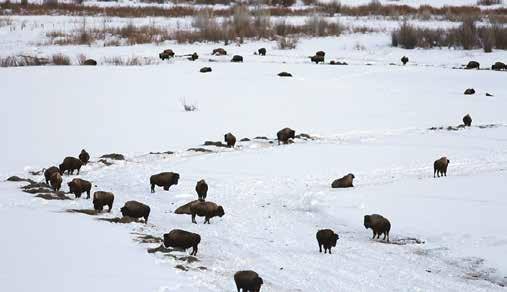
Agreement includes bison
The National Bison Association (NBA) was pleased to learn the recently signed U.S.-Taiwan Reciprocal Trade Agreement includes language ensuring the allowance of bison meat imports into Taiwan moving forward.
The agreement also includes language stating Taiwan’s bovine spongiform encephalopathy (BSE) regulations will not be applied to bison moving forward.
The NBA has long lobbied both the U.S. Department of Agriculture (USDA) and the U.S. Trade Representative’s (USTR) Office to work towards opening Taiwan to bison meat imports, along with other Pacific Rim nations, including Japan and Korea.
The NBA also advocates against the application of existing BSE rules to bison. These rules have long prevented bison from entering Asian markets, despite the fact no confirmed case of BSE has ever occurred in North American bison.
NBA Executive Director Jim Matheson said, “This is great news that will help continue to grow the bison herd and the industry. It also sets the very important precedent BSE regulations should not be applied to bison, because – plain and simple – we’ve never had a case of BSE in the bison supply chain. Taiwan offers a lucrative opportunity for all U.S. bison marketers and producers and will add significant value to the growing bison export market.”
The NBA thanks USTR and the USDA Foreign Agricultural Service for their efforts and support in successfully including bison in these negotiations, and the association looks forward to developing the bison meat market in Taiwan and introducing this uniquely American delicacy to the Taiwanese people.
CFD
The release also explains advancement to the semifinals will be determined by performance during the first six preliminary rounds, with top competitors moving on to one of three semifinal rounds.
“From there, finalists will advance to championship competition, where champions will ultimately be crowned during the finals on July 26, ensuring a competitive field and strong nationwide representation inside the Frontier Park arena,” reads the release.
Reasons for change
Citing challenges to accommodating “huge numbers of modern rodeo rigs” used by timed event contestants, CFD officials say the new format will help reduce congestion on rodeo grounds and offer relief to “road-weary contestants” and event volunteers alike.
The addition of a Friday rodeo performance will allow for even more rodeo action, while the qualifying rodeo format will help preserve the caliber of competition associated with CFD.
“Our goal is to have long-term sustainability for all of our events, especially the rodeo that is the cornerstone of our celebration,” said CFD Chief Executive Officer Tom Hirsig. “There are a lot of factors to consider when planning – from our relationships with our sanctioning bodies PRCA and WPRA to the contestants and the thousands of volunteers who put in countless hours to make it all possible.”
In addition, the press release references current challenges with cattle availability as a major factor impacting the world of professional rodeo generally.
Qualifying rodeos
Timed event contestants in the PRCA and WPRA will get nine chances to punch a ticket to the Daddy Of ‘Em All.
The nine qualifying rodeos for PRCA steer wrestlers, tie-down ropers and team ropers will be the Angelina Benefit Rodeo in Lufkin, Texas; Coleman Rodeo in Coleman, Texas; Elizabeth Stampede Rodeo Association in Elizabeth, Colo.; Colorado Stampede in Grand Junction, Colo.; Lakeside Rodeo in Lakeside, Calif.; American Royal in Kansas City, Mo.; Franklin Rodeo in Franklin, Tenn.; Central Point Wild Rogue Pro Rodeo in Central Point, Ore. and the Navajo PRCA Rodeo in Window Rock, Ariz.
The nine qualifying rodeos for WPRA breakaway ropers and barrel racers will be the Lakeside Rodeo in Lakeside, Calif.; American Royal in Kan-
sas City, Mo.; Kiwanis Rodeo in Clarksville, Tenn.; Rodeo Killeen in Killeen, Texas; Colorado Stampede in Grand Junction, Colo.; Navajo PRCA Rodeo in Window Rock, Ariz.; Eastern Oregon Livestock Show in Union, Ore.; McKenzie County Ag Expo Pro Rodeo in Watford City, N.D. and the Buffalo Bill Rodeo in North Platte, Neb.
“We are excited for the rodeos selected to serve as qualifiers,” Hirsig added.
“This is a groundbreaking opportunity to work with other professional rodeos spread out geographically across the U.S.”
CFD will celebrate its 130th anniversary this summer, with professional rodeo action slated to come to Frontier Park in Cheyenne from July 17-26. Grace Skavdahl is the editor of the Wyoming Livestock Roundup. Send comments on this article to roundup@wylr.net.
FEEDERS
Shinn Park Ranch/Garry Forney 145 Black Angus and Angus/Simental Hfrs, 725#, Weaned 120 days, Running out on grass meadows supplemented with Grass Hay, Branding Shots: Bovi-Shield Gold 5, 7-way, Weaning Shots: Bovi-Shield Gold, 8-way, Bangs Vac., Have had a Lutalyse Shot, Choice to Fancy, Very Green, High Altitude (born and raised over 7000’), Replacement Quality ****41 Black Angus and Angus/Simental Hfrs, 600#, Weaned 120 days, Running out on grass meadows supplemented with Grass Hay, Branding Shots: Bovi-Shield Gold 5, 7-way, Weaning Shots: Bovi-Shield Gold, 8-way, Bangs Vac., Have had a Lutalyse Shot, Choice to Fancy, Very Green, High Altitude (born and raised over 7000’), Feeder Quality WEANED CALVES
Kerns Cattle 82 Blk Strs & Hfrs, 500-525#, Weaned 90 days, Bunk Broke, Been on a Grower Ration, Branding Shots: Alpha 7, Pyralmid 5+Presponse SQ, Pre-cond. Shots: Pyramid 5+Presponse SQ, Corona, Weaning Shots: Pyramid 5+Presponse SQ Harms Ranch/Janyce Harms 23 Blk/Char Strs & Hfrs, 600#, Weaned a long time, Been on a High Roughage Ration, Branding Shots: 7-way, Ralgro, Pre-cond. Shots: 7-way
K. Powd Boles 14 Blk Strs, 600#, Weaned since Jan. 1, Running out on pasture supplemented with Hay and Cake, Branding Shots: Vista Once SQ, Covexin 8, Weaning Shots: Vista Once SQ, Covexin 8
Will Jurek 7 Blk (1 Rd) Hfrs, 600#, Weaned since Sept., Been on Alfalfa Hay and 2# of Cake, 2 Rounds of Shots: Covexin 8 Vira Shield 6, Bangs Vac Cattle Country Video Greg Gardner Livestock 100 Weaned Steer Calves. 100% Black, Base Wt: 655; Wt Stop: 665; Located: Lusk, WY. On Grower Ration. Rep: Ty Thompson 307-340-0770.
BRED HEIFERS
Colter Reffalt 25 Blk Angus Hfrs, 1100#, Bred to Diagger-Orr JD Vindicator 443, 449 CED of +14, +17, CF: Merch 17 for 55 days, Full Vac. Program, 1-iron, Home Raised, Electric Fence Broke, Not been pampered; running out with high forage ration, Purina mineral Program
BRED COWS
Jack Johnson Trust 35 Blk Cows, 4 yr olds to ST, Bred to Rabbit Creek Angus
Clean-up, Injectable Valcor Cody & Joel Tremain 35 Blk Angus Cows, 3 yr olds to ST, Bred
Bulls, CF: April 1st for 45 days, Shots: Vira Shield 6+VL5, Poured w/
to Blk Angus Bulls, CF: April 20 for 66 days, Home Raised
UW Assistant Professor discusses balancing beef
During the Wyoming Stock Growers Association 2025 Winter Roundup Convention and Trade Show, held Dec. 8-10 at the Ramkota Hotel and Conference Center in Casper, a series of Progressive Rancher Forums highlighting relevant topics for Wyoming cattle producers were held.
As part of the series, Dr. Hannah Hollinger, assistant professor of animal genetics in the department of animal science at the University of Wyoming (UW), gave a presentation on balancing maternal and terminal traits to optimize performance and profit in calf crops.
Balancing genetics
Hollinger’s research focuses on improving production efficiency of ruminant livestock.
Her work integrates components of nutrition,
reproduction and genetics to investigate the impact of maternal influence on early rumen microbiome development in offspring as an avenue to improve long-term productivity.
To kick off her talk, Hollinger explained there are three main factors which determine the observable traits of cattle offspring –genetic merit or genotype, environmental influence and residual impacts.
Selecting genetics which achieve the right balance of maternal and terminal traits starts with developing a full picture of producers’ end goals, then accounting for residual impacts such as environmental conditions and management practices.
“One of the best things to think about when balancing maternal and terminal traits is identifying a clear breed-
ing objective,” Hollinger said. “Breeding objective is really important in driving everything afterwards.”
Striking a balance
Mating strong terminal sires to cows with strong maternal strength helps create a balanced, functional offspring, Hollinger explained.
Terminal traits are traits which influence growth and carcass quality, while maternal traits are associated with factors like reproductive capacity and longevity.
Genetic factors in bulls and cows alike influence factors like calving ease, fertility and disease susceptibility.
Hollinger noted expected progeny differences (EPDs) can be useful in assessing performance in bulls and cows, tracking categories from milk production and weaning weight to feed effi-
ciency and carcass quality.
“Utilizing EPDs to our advantage means we have to invest time into understanding all of the different EPDs and true interpretations and limitations of them,” Hollinger said, emphasizing trying to select for too many qualities in one bull or cow can lead to issues.
“If we select for too many traits in one animal, we can lose accuracy and selection intensity,” Hollinger warned.
She also explained the inverse genetic relationship between different traits and different levels of heritability. Carcass and conformation traits are highly heritable, Hollinger said, while traits like temperament and growth efficiency tend to be more moderately heritable.
Achieving goals
Once producers establish a clear understanding of breeding objectives, Hollinger said a few different factors influence how to go about achieving goals.
“Timelines influence what traits you should select now versus ones you may want to look at for a longterm,” Hollinger said.
For example, short-term goals like raising fast-growing market calves requires different breeding considerations than long-term goals
like selecting replacement heifers or bull calves to build up a cow herd.
Additionally, Hollinger noted crossbreeding is often one of the best ways to balance maternal and terminal traits if an operation’s goals allow for, and she encouraged producers to familiarize themselves with the strengths and weaknesses of multiple cattle breeds.
“Make sure you’re complementing what you currently have in your operation and what you need to achieve breeding objectives,” Hollinger said.
She also encouraged producers to familiarize themselves with selection indexes, which use industry data to outline expected breeding outcomes in economic terms and can help determine which traits may be most important to attempt to achieve through the breeding process.
Take-home points
In closing, Hollinger offered four take-home points for producers to bear in mind while assessing and selecting genetics – breeding objective, mating system, timeline and wholeherd utilization.
“First and foremost, breeding objective is going to dictate how much balancing you need to do,” she
asset by aiding passage for migratory wildlife, protecting sensitive rivers and streams and improving rangeland health in ways that create both ecological and economic value.
Equally important, it speaks the language of the next generation of land stewards.
Most current landowners grew up in an analog world. The next generation is fluent in digital tools. Managing livestock through an app, monitoring animal movement in real time and adapting grazing plans on the fly transforms ranching into a modern profession.
Young ranchers are already using virtual fencing to test innovative grazing strategies, protect wildlife habitat, respond to animal health or predator conflict concerns and adapt to drought and flood conditions.
Yet the upfront cost of the technology remains a barrier, especially for family operations operating on thin margins. This is where conservation organizations are making a difference.
The Virtual Fence Conservation Fund
My organization, the Property and Environment Research Center (PERC) created America’s first Virtual Fence Conservation Fund, which shows how targeted investment can accelerate adoption while delivering real conservation outcomes.
The fund has issued nearly half a million dollars in grants to help ranch-
explained, reminding producers to evaluate their operation-specific goals.
Next, she re-emphasized the importance of selecting a mating system which will best aid breeding objectives.
“Clearly defining a timeline will dictate how much emphasis to place on highly heritable terminal traits versus lowly heritable maternal traits,” Hollinger continued.
Finally, she reminded producers to focus on utilizing the entire herd, bearing in mind a single bull will likely not be able to accomplish every breeding goal and encouraging producers to be willing to incorporate multiple bulls into their program.
Grace Skavdahl is the editor of the Wyoming Livestock Roundup. Send comments on this article to roundup@wylr.net.
ers implement virtual fencing to date. In doing so, we’re helping ranchers experiment with the technology, refine best practices and demonstrate its value.
As adoption grows and systems improve, costs decline, making virtual fencing more accessible to producers across the West and beyond.
The fund helps ranchers stay in business today while supporting innovation which will define the future of land stewardship. It also ensures conservation benefits such as healthier rangelands, improved wildlife habitat and more resilient working landscapes are built directly into the economics of ranching.
For many like me who grew up on a ranch, the prospect of managing livestock more efficiently –and with fewer constant headaches – might be enough to consider coming back home. Virtual fencing will not replace mentorship, patience or an unrelenting love of the land, but it can help the next generation step into those roles with confidence and help improve what they inherit.
In this sense, virtual fencing is not just a conservation tool. It is an invitation to the future of land stewardship.
Travis Brammer is director of conservation at PERC, a nonprofit institute based in Bozeman, Montana. This opinion column was originally published by AgriPulse on Feb. 24.
Hannah Hollinger Courtesy photo
crop insurance programs and includes a wide range of policy changes and program updates.
Specifically, the proposal would increase funding for commodity and crop insurance programs, which are widely considered the foundation of the farm safety net, as these programs help producers recover from weather disasters, market downturns and other uncontrollable risks.
The legislation also includes provisions aimed at improving conservation programs for working lands, allowing producers to continue grazing and farming while implementing resource stewardship practices.
Those in support of the bill believe strengthening conservation programs will allow producers to maintain productive ag operations while voluntarily improving soil health, water quality and wildlife habitat.
They also note streamlining these programs may make participation easier for ranchers and farmers.
According to National Cattlemen’s Beef Association (NCBA) President Gene Copenhaver, the bill includes provisions to expand support for rural veterinary services – an issue continuing to affect
livestock producers across much of the West.
Expanding credit access is another major component of Farm Bill 2.0.
Industry officials say agricultural loan limits have not kept pace with rising land values, equipment costs and operational expenses.
By increasing these limits, beginning farmers and ranchers would have an easier path into the industry and established producers would have the opportunity to expand or modernize.
The legislation also proposes a five-year pilot program to expand customexempt meat processing, which could improve marketing opportunities and increase consumer access to locally raised beef.
Farm Bill 2.0 further aims to restore regulatory certainty in interstate agricultural commerce and address ongoing debates involving state-level livestock regulations, including a fix to the controversial Proposition 12.
“America’s pork producers thank Thompson for continuing to take bold steps once again to protect our livelihoods from an unsustainable patchwork of state laws,” says National Pork Producers Council President and Ohio Pork Producer Duane Stateler in a Feb. 23 article published by Ohio’s
Country Journal. “We implore the full House Agriculture Committee to stand up for the American farmer, preserve states’ rights and help keep pork affordable for American consumers.”
Additionally, rural development programs included in the bill could help fund infrastructure, energy projects and economic development in agricultural communities.
Ag industry support
Since the draft bill’s proposal, multiple ag organizations have voiced their support for the legislation, calling for swift passage and emphasizing the need for continued improvement.
“Across wheat growing states, I hear directly from farmers who are navigating sustained economic challenges driven by volatile commodity prices, stubbornly high input costs and increasing global competition,” states National Association of Wheat Growers Chief Executive Officer Sam Kieffer. “For a crop depending heavily on export markets and reliable risk management tools, strong policy at home is essential.”
“Advancing this legislation without delay is critical, not just for wheat farmers but for the rural communities and American families who depend on them,” Kieffer adds.
NCBA Senior Vice President of Government Affairs Ethan Lane comments, “This bill is the culmination of the years-long farm bill process addressing the needs of cattle producers which weren’t included in the reconciliation bill last year. Cattlemen and women are already seeing the benefits of the historic achievements included in the reconciliation bill, and NCBA members look forward to building on this progress by passing Farm Bill 2.0.”
“We strongly urge the House and Senate to swiftly pass this bill to fill the
remaining legislative gaps facing animal agriculture,” Lane continues.
Scott Metzger, president of the American Soybean Association and an Ohio soybean farmer, also praised lawmakers for taking producers’ perspectives into consideration.
“We appreciate Thompson heard the concerns and needs of soybean farmers and addressed them in the bill,” Metzger says. “The provisions included will provide much-needed market and regulatory certainty for producers facing new risks and difficult business decisions.”
American Farm Bureau Federation President Zippy Duvall states, “This legislation is needed more than ever as America’s farmers and ranchers struggle through the worst economic storm in generations.”
The House Agriculture Committee was scheduled to begin markup on Farm Bill 2.0 on Feb. 23, but due to weather impacts, they pushed the markup to the week of March 1. Hannah Bugas is the managing editor of the Wyoming Livestock Roundup. Send comments on this article to roundup@wylr.net.
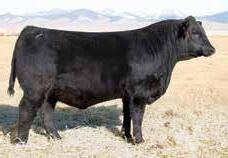
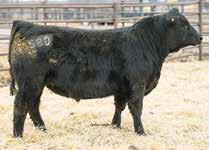
7064 EPDs: BW: +3.6, WW: +100, YW: +166 and Milk: +30 Buyer: Kurt Hebbert, Ashby, Neb.
Access Yes
Coordinator welcomed
Heather Sterling is now the Green River Access Yes Coordinator for the Wyoming Game and Fish Department (WGFD), serving Green River, Rock Springs, Mountain View, Baggs, Evanston, Kemmerer, Cokeville, Pinedale, Star Valley and everywhere in between.
Sterling began her employment with WGFD in 2020 and worked as a game warden in multiple warden districts, including Evanston.
In her role as Access Yes Coordinator, Sterling works with landowners to facilitate public access to the state’s wildlife resources, supporting recreation, healthy wildlife populations and long-term conservation of Wyoming’s open spaces.
Through a unique partnership with private landowners, the Access Yes program provides hundreds of thousands of hunting and fishing days annually to outdoor enthusiasts.
“The conservation, protection and stewardship of Wyoming’s wildlife resources are of the utmost importance. I am greatly looking forward to returning to the Green River Region to serve and work alongside the community members of southwest Wyoming in this new role,” Sterling said.
Access Yes areas offer vital opportunities for young hunters to harvest their first big game and for anglers to return to enrolled waters year after year. The access provided by private landowners not only offers recreational opportunities but also directly contributes to managing big game herds and mitigating agricultural damage statewide.
The Access Yes program originated in the 1990s and has grown exponentially since its inception.
In 2025, the program provided access to 2,547,138 acres for hunting; 3,949 lake acres and 96 stream miles for fishing.
For more information or to locate Access Yes areas, visit wgfd.wyo.gov/public-access
Trusted mentor – Heather Sterling, pictured right, poses for a photo with students while educating them about watercraft safety. Wyoming Game and Fish Department photo
the Office of State Lands and Investments after placing livestock owned by a third party on state trust lands, rather than requiring approval in advance.
It also establishes a fee of no more than 50 percent of the annual animal unit month rental rate for non-owned livestock.
Those in support of the bill believe the change aligns policy with modern ranch management, as producers often operate through more complex arrangements and custom graze cattle or adjust stocking rates in response to drought or market conditions.
During a House Agriculture Committee meeting, Wyoming Stock Growers Association Executive Vice President Jim Magagna underscores this, noting many ranching operations today are no longer structured as single entities, rather operating through extended family or closelyrelated business arrangements. However, he says, current law has created challenges for these types of operations, although SF0016 would remedy that.
Ultimately, SF0016 advanced through early committee review and remains under consideration as lawmakers evaluate its financial and administrative impacts.
Corner crossing remains in the crosshairs
Since four Missouri hunters used a ladder to access checkerboard public lands, crossing a corner of the Elk Mountain Ranch in Carbon County back in 2021, corner crossing has continued to be highly disputed.
Sponsored by the Joint Travel, Recreation, Wildlife and Cultural Resources Interim Committee, House Bill (HB) 19, Corner crossing clarification, seeks to clarify corner crossing –which refers to stepping from one parcel of public land to another at a shared corner where two private parcels meet in a checkerboard pattern, without touching private land – is not criminal trespass in Wyoming statute.
Those in favor of the bill argued it would protect access to public lands and clarify law enforcement authority.
Critics of the legislation raise trespass and liability concerns, as well as questions about how increased public access may affect grazing and livestock management.
HB0019 passed introduction and committee but did not advance to final passage during the budget session.
Wildlife policy heavily debated
The intersection between wildlife and livestock policy continues to be a hot topic,
and the ongoing controversy over landowner hunting licenses reared its head during the 2026 Budget Session.
Two bills introduced by the Joint Agriculture, State and Public Lands and Water Resources Committee –SF0015 and SF0051 – failed introduction into the Senate.
SF0015, Landowner hunting licenses-limitation, authorizes the Wyoming Game and Fish Commission to establish limits on the number of landowner hunting licenses issued in a limited quote hunt area, while SF0051, Transferable landowner hunting licensesrequirements, created requirements for the issuance of transferable hunting licenses.
SF0025, Landowner license limits in limited quota hunt areas, on the other hand, was introduced and referred to committee.
Sponsored by the Joint Travel, Recreation, Wildlife and Cultural Resources
Interim Committee, this bill authorizes the Wyoming Game and Fish Commission to establish limits on the number of landowner licenses available in limited quota hunt areas.
Lawmakers take a hard look at WBC
The Wyoming Business Council (WBC) has also been a subject of heavy debate, with multiple bills proposing everything from major reform to outright elimination of the agency.
While those in support of reform seek to reduce government spending and focus funding on “measurable economic returns,” many in the ag industry have spoken out about the importance of maintaining WBC as it funds rural infrastructure, processing facilities, workforce programs and business development grants which often benefit livestock producers and rural communities.
Both HB0150, WBCevaluation and reform, and SF0100, WBC-evaluation
and reform-2, proposed comprehensive evaluation and restructuring of WBC, including increased legislative oversight and program accountability.
These bills were not considered for Committee of the Whole.
Sponsored by the Joint Appropriations Committee, SF0065, WBC-repeal, looked to ultimately terminate the agency altogether but failed introduction into the Senate.
SF0125, WBC-amendments, aimed to modify WBC’s programs, authority and operations, including limitations and structural changes. This bill failed to advance before the crossover deadline.
Horseback alcohol clarification sparks debate
One of the more unusual proposals brought up this session was HB0031, Saddles, Not Steering Wheels Act, which clarifies Wyoming law regarding alcohol consumption while riding horseback.
The bill argues, because horses are classified as livestock rather than motor vehicles, traditional driving under the influence (DUI) statutes do not directly apply in the same way they do to automobiles.
Supporters of the bill argue the clarification reflects Wyoming’s ranching culture, where horseback travel remains common during brandings, roundups and community events.
Opponents raised concerns about safety and enforcement consistency.
Although the bill gained quite a bit of attention, it ultimately died before introduction into the House.
Stay tuned for more coverage of the Wyoming Legislature’s 2026 Budget Session in future editions of the Wyoming Livestock Roundup Hannah Bugas is the managing editor of the Wyoming Livestock Roundup. Send comments on this article to roundup@wylr.net.
By Paul Dykstra
CAB Market Update
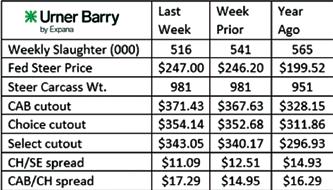
The fed cattle market continued to show strength during the third week of February as negotiated trade developed very late on Feb. 20.
February Live Cattle futures traded near contract highs at $247 per hundredweight (cwt) and small cash trade volume in the north
centered on this price.
Extremely small harvest volume was the key element in the third week of February’s market, sending a clear message packer margins –near $300 per head in the red – have forced reductions on throughput.
Granted, President’s Day
was a federal holiday, but this is negated as a consideration for harvest volume, as packer capacity for the week was sharply underutilized.
Firming demand for round cuts
The Feb. 20 Cattle on Feed Report proved uneventful as analyst expectations were met with the number of cattle on feed in feedlots – with at least 1,000 head of capacity – at 98.2 percent of a year ago.
January marketings look quite low at 87 percent of a year ago, but there was one fewer marketing day this January. With this said, a smaller cattle harvest is evident with year-to-date figures at negative 5.8 percent.
Carcass cutout values showed some life with slightly higher values during the third week of February on a steadily higher trajectory. Mixed price direction has recently been a theme across the major carcass primals.
Firming demand for round cuts is the most nota-
ble trend in recent days, as utilization of lean, grinding beef is cropping up again. With spring spot market demand in the forward view, ribeye prices were a bit higher, but they are just trading off of their winter lows. Wholesale strip loin prices have adjusted lower after making strong moves to the upside throughout
January into early February.
Protein price spreads
The inflationary theme in the grocery sector is impossible to miss, as most Americans are faced with buying a large share of their food at retail. Beef has been in media crosshairs for months as retail prices have escalated.
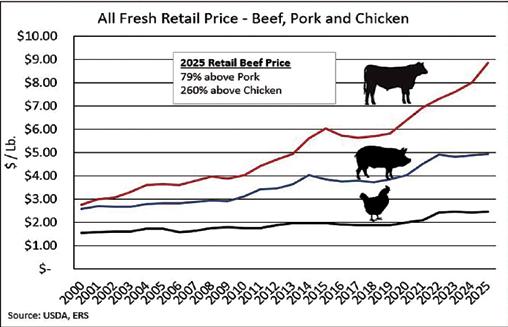
The “all fresh” retail beef price increased 10 percent from 2024-25, with another six percent the prior year.
higher than pork and 260 percent higher than chicken.
It’s important to note beef retail prices rose rapidly throughout 2025 as the fourth quarter’s $9.44 per pound average was 13.8 percent higher than the first quarter average. Once again, the fourth quarter saw record beef demand despite rapidly escalating prices.
Market analysts point to evolving consumer attitudes toward meat as an important component of a healthy diet.
Yet, consumers have a choice in meeting their protein needs, and they continue to demand beef at an impressive level. In fact, beef demand in the fourth quarter of 2025 was recordhigh, according to analysts at Terrain.
A simpler approach is to realize U.S. per capita beef consumption was nearly unchanged in 2025 at 58.4 pounds, scarcely lower than the 59 pounds in 2024. Couple this with the 10 percent average annual retail price and one can quickly see this demand was robust.
Even more amazing –beef has built a rapidly widening price gap over competing meats in the grocery store. This trend has become increasingly pronounced since the early 2000s, but as beef supplies have tightened over the past three years, the pace of the widening price disparity has accelerated.
During 2022, the peak of the cycle’s largest beef supplies, retail beef prices were 49 percent higher than pork and 200 percent higher than chicken. This is a large contrast to the 2025 average, with beef pricing 79 percent
The popularity of GLP-1 medications – with meat indicated as a healthy protein source – and the recent inversion of the U.S. Department of Agriculture (USDA) food pyramid are contributing factors.
Consumers may be adapting to the nutrient density and wholesomeness of beef as they compare the return on their grocery dollar to less healthful food options.
It’s imperative to credit beef quality advancement in the consumer behavior discussion.
The beef industry is offering consumers the most satisfying eating experience they’ve ever encountered, as the share of USDA Prime and Certified Angus Beef (CAB) brand product continue to swell as a portion of fed cattle production.
This leaves little doubt marbling-rich carcasses are driving beef to outperform other protein sources in the meat case.
Paul Dykstra is the director of supply management and analysis at CAB. He can be reached at pdykstra@certifiedangusbeef.com.
AgriSummit set
Guidestone Colorado’s 11th Annual AgriSummit is set for March 5-6 at the Salida Steamplant in Salida, Colo.
This year’s theme is “Restoring Relations: Rooting Down and Reaching Out,” which will highlight the many deep-rooted and widespread relationships at the heart of local food systems.
The event will offer educational sessions, networking opportunities and discussions focused on local food production, food access, food Rx, land management and agritourism in the region.
All sessions on March 6 will include a simultaneous interpretation in Spanish.
Event highlights include a keynote address; workshops; breakout sessions; panel discussions; social networking events; resources for producers and beginning farmers and ranchers; avenues for community members to engage in supporting regional food systems; an open house, seed swap and early farmers market; film screening and farm and ranch tours.
For more information, visit @GuidestoneColorado on Facebook.
of Hooker, Okla., burned an estimated 12,428 acres, while the Side Road Fire scorched 3,680 acres between Hooker and Tyrone, Okla. and the 43 Road Fire consumed 1,680 acres southwest of Woodward, Okla.
In the wake of these wildfires, Oklahoma Gov. Kevin Stitt signed Executive Order 2026-09 declaring a state of emergency in Oklahoma’s Beaver, Texas and Woodward counties.
“We have been very fortunate to keep most neighborhoods safe, although a few homes were lost and we’re keeping four injured firefighters in our prayers as they recover after working tirelessly through the night,” Stitt says in a Feb. 18 statement. “I’m deeply grateful for the incredible efforts of our firefighters and forestry crews on the ground.”
Additionally, the Texas A&M Forest Service reported a handful of fires blazing across the Lone Star State, including the Canadian Bridge Fire, which burned around 350 acres in Hutchinson County, Texas; the 8 Ball Fire, which burned nearly 13,563 acres across Armstrong and Donley counties; the Lavender Fire, which burned 18,423 acres across Oldham and Potter counties and the Willard Fire, which burned 540 acres in Dallam County.
As of Feb. 23, all reported fires were 100 percent contained.
Ranchers face devastating loss
Ag producers were hit especially hard, with recent wildfires destroying grazing land, fences, hay supplies and livestock infrastructure, leaving many operations struggling to
Nominations open
Noble Research Institute (Noble) is now accepting applications for the 2026 Noble Land Stewardship Award, a national recognition honoring farmers, ranchers and landowners leading the way in regenerative land management.
Applications will be accepted through May 29, with the winner announced this summer.
The Noble Land Stewardship Award recognizes those advancing the health of their soil, water and wildlife habitat through principled management of U.S. grazing lands. By encouraging these leaders to share their experiences, the award aims to broaden conversations around sustainable land use and inspire others inside and outside the agricultural community.
The award was established to advance Noble’s commitment to the nation’s grazing lands through stewardship, soil health and keeping farmers and ranchers on the land.
Recipients of the Noble Land Stewardship Award receive a bronze sculpture entitled “Keeper of the Land,” created by Oklahoma Artist John David Rule, as well as a cash prize. The 2026 winner will also be formally recognized at the second annual Roots and Revelry event, hosted by Noble Research Institute this October.
For more information or to apply for the 2026 Noble Land Stewardship Award, visit noble.org/roots-and-revelry/ noble-land-stewardship-award
NAWG issues statement
On Feb. 20, National Association of Wheat Growers (NAWG) Chief Executive Officer Sam Kieffer issued a statement in response to the U.S. Supreme Court’s decision regarding tariffs imposed under the International Emergency Economic Powers Act.
“As policymakers consider next steps following the court’s decision, it is essential America’s farm families’ ongoing financial crisis be considered. Wheat growers finished the third straight year of financial losses driven by stubbornly high supply costs and low prices for the crops we grow,” Kieffer said.
“We depend on fertilizer, crop protection tools, equipment, repair parts and other supplies which sometimes come from trading partners to successfully plant and harvest each year’s crop. As the administration considers how to move forward, NAWG urges careful attention to the avoid any adverse impacts on agriculture,” he continued.
“We look forward to continued engagement with the Trump administration and Congress to achieve long-term policies which stabilize the farm economy and protect America’s domestic food supply,” he concluded.
recover and wondering what comes next.
Sources report some ranch families were forced to evacuate as flames approached their homes and corrals, and in heavily impacted areas, entire ranch headquarters were lost, with damages reaching into the hundreds of thousands – or even millions – of dollars.
In response, community foundations and local stockyards across Oklahoma have stepped in to coordinate hay deliveries and supply donations, while the Oklahoma Cattlemen’s Foundation established a wildfire relief fund to assist cattle producers whose operations were damaged or destroyed.
Those interested in donating can do so online at okcattlemen.org or make checks – with the memo
line “Fire Relief” – payable to Oklahoma Cattlemen’s Foundation, PO Box 82395, Oklahoma City, OK 73148.
Those willing to donate fencing supplies, feed or hay should contact the Beaver County Stockyards at 580-625-3051 or the Oklahoma State University Beaver County Extension Office at 580-625-3464.
Likewise, the Kansas Livestock Association, which can be reached at 785-273-5115, is coordinating assistance via supply donations such as fencing materials, livestock feed or hay.
The Ashland Community Foundation (ACF) is also accepting monetary donations for Kansas community members affected by fires, which can be made online at ashlandcf.org or mailed to ACF, PO Box 276, Ashland, KS 67831.
In Texas, Agriculture Commissioner Sid Miller declared an agricultural
emergency and urged support for ranchers through the State of Texas Agriculture Relief (STAR) Fund – a private-donationfunded disaster relief program administered by the Texas Department of Agriculture (TDA) which provides recovery grants to eligible farmers, ranchers and agribusinesses to help repair or rebuild damaged infrastructure.
“Texans always rise for neighbors in crisis,” Miller says. “I’m calling on individuals, businesses and groups statewide to fuel the STAR Fund to help sustain the backbone of our food, fiber and fuel supply.”
Texas ranchers who need hay and those willing to donate can also call the TDA’s Hay Hotline at 877429-1998.
Officials underscore importance of wildfire preparedness
Although it’s relatively early in the year, officials
urge individuals to keep wildfire preparedness top of mind as drought and high wind conditions persist.
Emergency planning includes assembling evacuation kits, identifying livestock relocation options and maintaining defensible space around homes and buildings.
Removing dry vegetation near structures, cleaning debris from roofs and gutters and spacing trees and shrubs can help reduce fire intensity.
Producers are also encouraged to stay informed through emergency alerts, weather updates and local emergency management agencies. Rapid response to early warnings can make all the difference in protecting livestock and property.
Hannah Bugas is the managing editor of the Wyoming Livestock Roundup. Send comments on this article to roundup@ wylr.net.
Keeper of the Land – The “Keeper of the Land” bronze sculpture, created by Oklahoma Artist John David Rule, is awarded annually to the Noble Land Stewardship Award recipient. The sculpture recognizes the power of the grazing animal to restore and build the land. Noble Research Institute photo by Rob Mattson
On Feb. 19, President Donald Trump and several Indonesian officials signed an Agreement on Reciprocal Trade to eliminate tariffs on multiple U.S. products exported to Indonesia, including major agricultural products like beef.
The trade agreement is expected to significantly expand export opportunities for American cattle producers, granting duty-free access to one of the world’s largest consumer markets and removing barriers which have long limited U.S. beef sales.
Removing longstanding barriers
Under the agreement, Indonesia will remove tariffs on 99 percent of U.S. products, including those in the agriculture, health, seafood, information and communications technology, automative and chemical industries.
The U.S. will maintain a 19 percent reciprocal tariff on Indonesian exports,
excluding certain products for which the tariff will be eliminated, and will allow a certain volume of Indonesian textile and apparel goods – which is yet to be determined – at a zero percent reciprocal trade.
In addition, Indonesia committed to purchasing more than $4.5 billion in U.S. agricultural products and pledged to increase imports of U.S. beef, corn, corn gluten meal, soybeans, soybean meal, wheat, ethanol, rice, fresh fruit and cotton, as part of a broader investment framework valued at approximately $33 billion across the ag, aerospace and energy sectors.
According to multiple sources, one of the most significant changes outlined in the agreement is Indonesia’s recognition of the U.S. Department of Agriculture’s authority over food safety and animal health, which officials believe will remove regulatory obstacles previ-
ously slowing down or preventing the approval of U.S. beef shipments.
Indonesia also agreed to exempt agricultural products from restrictive import licensing systems and commodity balance policies, which had effectively capped U.S. imports and limited consistent access to the market.
Specifically, the agreement removes barriers for U.S. pork exports by expanding plant approvals and eliminating restrictive licensing requirements, creating new opportunities for American pork producers.
The dairy industry is expected to benefit as well, with Indonesia eliminating tariffs on U.S. dairy products, recognizing U.S. regulatory oversight and streamlining facility registration requirements which previously slowed exports.
In a statement published on Feb. 19, U.S. Trade Representative Ambassador Jamieson Greer says, “President
Trump is unlocking Indonesia’s market of over 280 million people to create commercially meaningful opportunities for American farmers and manufacturers. This landmark agreement breaks down trade barriers while advancing the economic and national security interests of the American people.”
A major breakthrough for beef
Also within the newly signed Agreement on Reciprocal Trade, Indonesia agreed to purchase at least 50,000 metric tons of U.S. beef and beef products annually, which industry leaders believe may quickly translate into hundreds of millions of dollars in export value.
Ag groups like the U.S. Meat Export Federation (USMEF) and National Cattlemen’s Beef Association (NCBA) praised the move, noting the agreement addresses restrictions that have kept U.S. beef of Indonesia for far too long.
MADDUX Cattle Company
“Maternalizer”
MATURE BRED COW HERD DISPERSAL PHASE II
SATURDAY, MARCH 7, 2026 Ogallala Livestock Auction n Ogallala, Nebraska
THIS IS A GENERATIONAL OPPORTUNITY!
This sale represents Phase II of a three-year, nearly 6,000 head process to disperse our mature cow herd. These females represent generations of selection, retaining only the heifers that can graze our native Sand Hills, and raise a calf on their own year after year.
The cow herd has been built over decades with the goal of designing moderate, highly maternal, British based, low-input females. The herd is designed to thrive in a year-round grazing program. As a result, fitness and convenience traits have been a constant emphasis. The result is one of the largest, home-raised cow herds in America with generations of selection for udder quality, calving ease, and fleshing ability that deliver high fertility with maximum hybrid vigor.
SELLING APPROX. 3,000 HEAD OF HOME-RAISED, “MATERNALIZER” BRED FEMALES,
“Currently, Indonesia is essentially closed to U.S. beef due to its trade-limiting import licensing system and effective cap on imports,” states USMEF President and Chief Executive Officer Dan Halstrom. “The new agreement addresses these barriers and will allow Indonesian importers and consumers to have meaningful, consistent access to U.S. beef for the first time.”
Halstrom goes on to estimate the agreement could potentially generate $400 million to $500 million in annual U.S. beef export value once fully implemented.
1,175 4- & 5-year-old cows
500 6- & 7-year-old cows
“When combined with the Taiwan trade deal signed on Feb. 12, U.S. cattle producers now have more market access than they have had in decades,” Copenhaver continues. “NCBA thanks Trump and Greer for their diligent work to sign this trade deal to the benefit of American producers.”
Hannah Bugas is the managing editor of the Wyoming Livestock Roundup. Send comments on this article to roundup@wylr.net.
NCBA President and Virginia Cattleman Gene Copenhaver comments, “U.S. beef exports to Indonesia have faced numerous tariff and non-tariff trade barriers, which has made it incredibly difficult to develop any type of market presence. With this agreement, American cattle producers now have access to the fourth most populous country, the largest halal beef market in the world and more opportunities for producer profitability.”
relations – Pictured from left to right, Republic of Indonesia President Prabowo Subianto, U.S. Trade Representative Ambassador Jamieson Greer
President Donald Trump pose after signing
Trade. U.S. Embassy - Jakarta photo
In the January 2026 Drought Impacts Summary, published on Feb. 10, the National Drought Mitigation Center (NDMC) reports this winter’s “snow drought” is raising alarms across the West, where lighter than usual snowpack is threatening water supplies, forage production and long-term agricultural sustainability as producers head into the 2026 growing season.
NDMC’s Drought Climate Summary, also published on Feb. 10, notes drought conditions are expected to persist across much of the West, stretching from portions of New Mexico through northern Colorado, southern Wyoming, Utah and parts of the Northwest.
Additionally, NDMC’s Drought Impact Reporter highlights 108 drought-related impacts nationwide in January alone, affecting dozens of states, thousands of counties and more than 140 cities.
Drought persists across the High Plains
According to NDMC, drought conditions across the High Plains were a mixed bag throughout the month of January, with portions of Wyoming and western Nebraska seeing scattered improvements due to isolated precipitation events, while other areas experienced one- and two-category degradations.
Parts of Wyoming saw both minor improvements and worsening conditions depending on location.
Precipitation deficits were especially evident in north-central and eastern portions of Wyoming, northern Idaho, Central Montana and Oregon, where January moisture was reported far below normal.
NDMC notes temperatures across the western U.S. were mostly warmer than usual as well, with some areas measuring three to six degrees Fahrenheit above normal.
“The central and northern Rocky Mountains were especially warm,” the report states. “Monthly average temperatures in parts of Colorado, Utah, Wyoming, Idaho and Montana soared six to 12 degrees above normal.”
Snowpack lags across the West
NDMC explains winter snowpack acts as a natural reservoir, storing moisture until spring and summer when melting snow replenishes reservoirs, aquifers and streams, which many communities rely on for irrigation purposes, stock water and/or municipal use.
This winter, however, warmer than usual temperatures have caused more precipitation to fall as rain instead of snow, reducing the amount of snow accumulation across critical watersheds.
NDMC reports, as of late January, Colorado’s statewide snowpack averaged 58 percent of normal, marking at least 16 consecutive days at record-low levels for this time of year.
Snow drought raises concerns for producers across the West
Utah fared similarly, with snow water equivalent measuring approximately 5.2 inches – about 58 percent of median and among the lowest levels recorded since at least 1981, according to records from the U.S. Department of Agricultureʼs (USDA) Natural Resources Conservation Service.
“Snow provides about 95 percent of Utah’s water supply, and there were about two months left for snow to accumulate,” the NDMC report reads.
Snowpack levels across Arizona, Idaho and Nevada have also been near or well below normal.
NDMC says Nevada’s snowpack measured 56 percent of median, while Idaho and Arizona hovered near historic lows.
While faring slightly better than its neighboring states, Wyoming’s snowpack conditions are still below ideal.
As of late January, statewide snowpack measured approximately 84 percent of normal, and water managers cautioned dry conditions across the Colorado River Basin could require a significant drawdown of Flaming Gorge Reservoir this spring, potentially affecting downstream water availability.
Warm temperatures worsen snow drought Warmer conditions across the West not only reduced snow accumulation in highaltitude areas, it also accelerated melting at lower elevations.
Instead of slowly building snow reserves through winter, precipitation often ran off immediately as rain, providing only temporary relief to reservoirs without contributing to long-term water storage.
NDMC explains, “Washington, for instance, received ample precipitation in December which led to devastating flooding. As of Jan. 6, storage in the six Yakima Basin reservoirs was at 135 percent of typical levels for that date, according to the Washington Department of Ecology.”
“Yakima reservoirs were at a combined 63 percent of capacity, up from 39 percent on Dec. 11,” the agency adds. “Rain helped refill reservoirs, but it is still no substitute for snow.”
This pattern has extended across much of the West, where intermittent storms provided moisture but failed to build sufficient snowpack to ensure reliable runoff later in the year.
Ag industry feels significant impacts
Widespread drought conditions continue to influence livestock producers’ management decisions, especially in the cattle industry.
According to USDA, the total inventory of U.S. cattle and calves was reported at 86.2 million head as of Jan. 1, down slightly from 86.5 million the year prior.
The nation’s beef cow herd declined by 185,000 head, totaling 27.6 million.
NDMC notes many ranchers have reduced herd sizes since ongoing drought conditions have limited forage production and increased feed costs.
Ag producers across the state of Texas are also feeling the burn.
According to NDMC, drought conditions expanded and intensified across the Lone Star State in January, with unseasonably warm temperatures and little precipitation since mid-summer.
“Impacts ranged from ungerminated wheat fields and declining rangeland conditions to low water levels in stock ponds,” the report reads. “Cool-season forages were stunted in the Texas High Plains, as well as the North, Central and West Texas Regions, as soil moisture continued to decrease. Additionally, some late-planted wheat in the High Plains did not fully germinate.”
Further, the agency mentions Texas ranchers uncharacteristically supplemented livestock with additional feed since winter grazing conditions were in poorer condition than usual this time of year.
“Soil moisture was depleted, and the approach of planting season increased
concerns for farmers aiming to plant crops,” the report continues.
In the Midwest, extreme cold temperatures caused parts of the Ohio and Mississippi rivers to freeze, exacerbating already low water levels and decreasing draft capacity, which hindered transportation of major commodities like grains. Impacts extend beyond agriculture
Effects of the snow drought are also evident beyond agriculture.
According to NDMC,
ski resorts across the West reported reduced terrain availability, with many scaling back to operate limited lifts or relying heavily on artificial snow. Lower-elevation resorts struggled to maintain coverage, while higher-elevation locations fared a little better.
“Visitation to Vail Resort’s North American ski areas in Colorado were down 20 percent compared to the previous season through mid-January, according to the company in an investor update,” NDMC writes. “Vail
Resort’s decline in lift ticket revenue, including applicable season pass revenue, was down just 1.8 percent. The company also reported a 14.9 percent drop in school revenue. Dining revenue was off 15.9 percent. The company’s chief executive officer blamed the slowdown on the lack of snow in the West, which has limited terrain at some ski resorts.”
Hannah Bugas is the managing editor of the Wyoming Livestock Roundup. Send comments on this article to roundup@wylr.net.
Wyoming snow drought – Warmer than usual winter temperatures reported across western states has not only reduced snow accumulation in high-altitude areas, it also accelerated melting at lower elevations. Photo taken in Sweetwater County on Jan. 31 and submitted via the Conditions Monitoring Observer Report. Courtesy photo
As many Wyoming residents have experienced firsthand, invasive plants like cheatgrass increase wildfire risk and com-
pete with native species for water and nutrients. In some cases, they can also be toxic to grazing animals. While these scourges
pose serious threats to agricultural operations, a new study by University of Wyoming (UW) scientists may provide some reassurance for
Consignors
Wyoming sheep producers.
Nutritionally, the researchers found eating a higher proportion of at least some of these plants is unlikely to hinder livestock performance. The sheep rumen, it turns out, is quite resilient.
Previous research indicates the High Plains Region is likely to experience warmer temperatures and higher atmospheric carbon dioxide concentrations in the future. Unfortunately, studies also suggest invasive species like cheatgrass and Dalmatian toadflax will thrive under such conditions.
Paulo De Mello Tavares Lima, an assistant professor in the UW Department of Animal Science, noticed a gap in the literature – how might the expansion of invasive plant populations affect livestock nutrition and performance?
“Why not evaluate the nutritional value?” he wondered. “Maybe ruminants can thrive even in the high presence of these forages.”
Determining digestibility
Lima’s research focuses primarily on precision livestock management, but he also studies ruminant nutrition and methane emissions. His goal is to support domestic ruminant production, especially of sheep, in Wyoming and worldwide.
Lima’s latest research
the environment.
Starting in December 2024, Lima ran multiple trials “in vitro,” simulating a sheep’s digestive process by combining rumen fluid and dried forage samples in an anerobic environment.
Through these lab experiments, he analyzed the gas production, digestibility and nutrient content associated with each forage type.
“For most parameters, the invasive forages are comparable to the native grasses,” Lima found.
His results indicate cheatgrass and Dalmatian toadflax are just as digestible as native forages like Western wheatgrass, suggesting they may be a viable forage resource for domestic ruminants.
Implications
for the sheep industry
Lima’s study suggests, even in the face of warming temperatures and increased carbon dioxide concentrations, Wyoming sheep production will likely remain sustainable.
If invasive grasses like cheatgrass and Dalmatian toadflax continue to spread across the landscape, grazing management may look a little different, but animals will adapt.
This is potentially good news, because if the invasive forages were less digestible than their native counterparts, the animals would likely consume less feed and their performance might suffer.
Lima also observed he two invasive forages produced about the same amount of methane emissions as native forages.
Methane production is a direct product of the digestive process, he notes, so emissions are influenced by digestibility.
“But in this case, we had some indication the digestibility of these forages was just as high as that of the native grass,” he says.
While the livestock industry tends to get a bad rap for contributing to the release of heat-trapping gases like methane, Lima’s research may indicate sheep production – which helps sustain communities in Wyoming and around the world – is not necessarily incompatible with a healthy environment.
Perceptions of the livestock industry aside, it’s possible lower methane production may increase animal productivity.
“In terms of animal production, the carbon converted to methane is carbon not utilized by the animal to grow,” Lima explains. “So, you’re losing some of the energy potential of the feed provided to the animal.”
“The main take-home message, in terms of animal nutrition, is unless the animals are eating almost the entirety of their diet from these plants, they can cope without issues,” Lima says. His results may be useful for producers who are trying to optimize forage nutrition while minimizing the negative impacts of invasive plants.
Cheatgrass, for example, has a short life cycle and loses nutritional value quickly. Its nutritional value peaks in late winter through early spring. Later in the season, livestock tend to lose interest in the grass, and it becomes a fire hazard.
Implementing a targeted grazing system to encourage heavy grazing of cheatgrass early in the season could potentially provide decentquality forage while also reducing fuel for wildfires.
In previous field trials, Lima and UW partners observed sheep grazing invasive species under various conditions.
Although Dalmatian toadflax contains compounds which can be toxic to grazing animals if consumed in large amounts, livestock typically avoid consuming large quantities of the plant.
Nutritionally speaking, consumption of Dalmatian toadflax and cheatgrass can be compatible with decent animal productivity, Lima concludes – a hopeful sign for the sheep industry.
Brooke Ortel is a writer and editor for UW Extension. This article was originally published in the 2025 issue of Reflections, the annual research magazine published by the UW College of
and
Measuring methane – University of Wyoming PhD Student Aaron Kersh and Undergraduate Student Molly McMurry organize vials in the incubator used for experiments measuring methane production. Jeremy Cain photo
economy is roaring like never before, our enemies are scared, our military and police are stacked and America is respected again, perhaps like never before,” Trump states.
“Our nation is back –bigger, better, richer and stronger than ever before,” he says.
Making note of economic wins including record-setting stock market conditions, lowered gas prices and a boosted job market, the president expresses a belief America is approaching a “golden age.”
He also highlights the country’s upcoming 250th anniversary as cause for celebration.
“Together we’re building a nation where every child has the chance to reach higher and go further –where government answers to the people and the interests of hardworking American citizens are always our first and ultimate concern,” Trump says. “That is the debt we owe to the heroes who came before us, and this is the promise we must keep to America for our 250th year.”
Trump’s address lasted approximately one hour and 46 minutes, setting a record as the longest SOTU in U.S. history.
Lawmakers respond Wyoming’s three Congressional members – Sen. John Barasso, Sen. Cynthia Lummis and Rep. Harriet Hageman (all R-WY)
– each released respective statements in support of the president’s message shortly following the address.
“What a difference a year makes,” Barrasso comments in a Feb. 24 statement released on YouTube.
“The president was able to report tonight that America is back on track.”
“Republicans promised safety and prosperity for our nation and we’ve delivered,” Barrasso adds, referencing border security, gasoline prices, job market and affordability as evidence of America being on the right path.
Lummis echoes Barrasso’s comments in a statement shared via Facebook on Feb. 24.
“Unlike the last administration, President Trump has stood behind Wyoming’s coal industry, worked to streamline the burdensome environmental regulations that have killed countless projects and jobs, and kept his focus on delivering affordable, reliable baseload energy that American families and businesses depend on,” Lummis states.
“We’re not done yet, and no one is claiming we are,” she continues. “But we’re headed in the right direction, and as we keep pushing an America First agenda the State of the Union will only get stronger.”
In addition, a Feb. 24 press release issued by Hageman’s office highlighted the path forward.
To read President Donald Trump’s 2026 State of the Union address in its entirety, visit apnews. com/article/donald-trump-transcript-state-of-union-2026-c13e2a07df999b464b733 f4a6e84dbd4.
“President Trump laid out a clear and optimistic vision for America’s future – one rooted in economic strength, secure borders, energy independence and restoring accountability in Washington, D.C.” says Hageman. “The American people deserve a government which prioritizes their interests, protects their free-
doms and creates opportunities for families, workers and small businesses to thrive.”
“Wyoming knows firsthand the importance of policies which empower local communities rather than
expand federal overreach,” Hageman continues. “I look forward to continuing to work with President Trump and my colleagues in Congress to advance policies that grow our economy, defend our constitutional rights and ensure the next generation inherits a stronger, more secure nation.” Grace Skavdahl is the editor of the Wyoming Livestock Roundup. Send comments on this article to roundup@wylr.net.
2 Blk Cows, avg. 1363# $17350 Stutzman, Herman - Powell
2 Blk Cows, avg. 1185# $16700 Greet Ranch, Inc. - Ten Sleep
1 Blk Cow, 1375# $16400 George Sinn & Sons - Worland
1 Blk Cow, 1415# $16200
1 Blk Cow, 1745# $15400
Nelson, Keith - Cody
1 Hrfd Cow, 1330# $15300
• Upcoming Sales •
March 5 – Bred Cow & Heifer Special w/ All Class Cattle
March 12 – Feeder Special w/ Weigh-Up Special March 19 – Weigh-Up
Special w/ All Class Cattle, Sheep & Goat March 26 – All Class Cattle
April 2 – Bred Cow & Heifer
Special w/ All Class Cattle
April 9 – Feeder Special w/ Weigh-up Special April 16 – Weigh-up Special w/ All Class Cattle, Sheep & Goat
Consignments • March 5 • Bred Cow Special w/ All Class Cattle TD & Sons – 100 bred heifers, 1,100#, calve March 23-April 13 (20 day calving period), bred to front end Schaff Angus Valley bulls (sons of Magnify), bulls put in June 13 and pulled July 3. Bought off of Northern Livestock Video Auction September Video Sale, originating off of Topf Ranch, closed herd for 26 years. One iron, age branded, poured, two rounds of breeding shots, two rounds of Scourgaurd, first round of Scourguard put in Dec. 20 and second round put in March 2. Running out on Regrowth since Nov. 1 on Biomass mineral tubs since Jan. 20.
Wyoming Consignments – 16 ST black cows, calve May/June, bred to black bulls. March 12 • Feeder Special w/ Weigh-Up Special
Trevor O’Drisscoll – 60 black steers, 650-750#; 40 black heifers, 600-700#; 20 mixed black, 350-450#.
DeVries Livestock – 150 mixed black, few red and baldy, 450-650#, two rounds of shots, weaned November, wintered on Aftermath Meadow, free choice hay.
Hamilton Ranch – 41 black steers, 650-750#; 28 black heifers, Bangs vacc, 550-650#, NHTC, two rounds of shots, weaned Oct. 1. Hamilton Ranch – 10 fat grain fed heifers, 2024 models.
Joe Miller – 20 black/red mixed calves, 700-750#, weaned, two rounds of shots. Donny Love – 15 black/red mixed calves, 350-450#.
Submit your events to: Editor, Wyoming Livestock Roundup, P.O. Box 850, Casper, WY, 82602, or e-mail to roundup@wylr.net.
EVENTS
Feb. 25-March 1 37th Annual Winnemucca Ranch Hand Rodeo Weekend, Winnemucca Events Complex, Winnemucca, Nev. For more information, visit ranchrodeonv. com or call 775-623-5071.
March 2 University of Nebraska-Lincoln Extension Drought Outlook 2026: Weather, Water and Risk Management Webinar, 11 a.m., online. For more information or to register, visit go.unl.edu/me82
March 2 Uinta Veterinary Hospital Free 4-H Equine Class, 6-7 p.m., Uinta Veterinary Hospital, Fort Bridger. For more information, call 307-783-0570 or e-mail uinta@uwyo.edu.
March 2 The Essentials Budget: Protecting and Powering Wyoming’s Future Series, Rock Springs. For more information, visit governor.wyo.gov
March 3 University of Wyoming Extension Pesticide Safety Education Program, 8 a.m.-12 p.m., Natrona County Extension Office, Casper. For more information or to RSVP, contact Ann Cormican at acormican@natronacounty-wy.gov or 307-235-9400.
March 3 University of Wyoming Extension Pesticide Safety Education Program, 12-4 p.m., Uinta County Conservation District, Lyman. For more information or to RSVP, contact the Uinta County Extension Office at 307-783-0570.
March 3 University of Wyoming Extension Pesticide Safety Education Program, 1-5 p.m., Albany County Fairgrounds, Laramie. For more information or to RSVP, contact the Albany County Extension Office at 307-721-2571.
March 4 University of Wyoming Extension Pesticide Safety Education Program, 8 a.m.-12 p.m., The Event Center at Archer, Cheyenne. For more information or to RSVP, contact the Albany County Extension Office at 307-721-2571.
March 4 University of Wyoming Extension Pesticide Safety Education Program, 1-5 p.m., The Event Center at Archer, Cheyenne. For more information or to RSVP, contact the Albany County Extension Office at 307-721-2571.
March 5 University of Wyoming Extension Pesticide Safety Education Program, 1-5 p.m., Big Horn County Weed and Pest Office, Greybull. For more information or to RSVP, contact the Park County Extension Office at mgetz@uwyo. edu or 307-754-8837.
March 5 University of Wyoming Extension Pesticide Safety Education Program 1-5 p.m., Fairgrounds Community Building, Buffalo. For more information or to RSVP, contact Micah Most at mmost@uwyo.edu or 307-684-7522.
March 5-6 Guidestone Colorado’s 11th Annual AgriSummit, Salida Steamplant, Salida, Colo. For more information, visit @GuidestoneColorado on Facebook.
March 6-7 Rocky Mountain Bison Association 30th Anniversary Spring Conference, Colorado Springs, Colo. For more information, visit bisonranchers.com/ event/2026-spring-conference-social
March 9 University of Wyoming Extension Pesticide Safety Education Program, 9 a.m.-1 p.m., Sublette County Extension Office, Pinedale. For more information or to RSVP, contact the Lincoln County Extension Office at 307-828-4092.
March 10 University of Wyoming Extension Pesticide Safety Education Program, 2-6 p.m., Eden Valley Community Center, Farson. For more information or to RSVP, contact the Lincoln County Extension Office at 307-828-4092.
March 10 University of Wyoming Extension Pesticide Safety Education Program, 8 a.m.-12 p.m., Sundance Courthouse Basement, Sundance. For more information or to RSVP, contact the Crook County Extension Office at crookcty@ uwyo.edu or 307-283-1192.
March 10 Nebraska Extension Considerations of Causes of Low Pregnancy Rates in Young Cows Webinar, 6:30 p.m., online or in person at the Sheridan County Office, Rushville, Neb. For more information or to register, contact Aaron Berger at aberger2@unl.edu or 308-235-3122.
March 10-11 Precision Education in Spray Technologies Academy Session Five, Precision Application Technology Lab, West Central Research, Extension and Education Center, North Platte, Neb. For more information or to register, visit go.unl.edu/pestacademy
March 11
March 11
EVENTS
University of Wyoming Extension Pesticide Safety Education Program 12-4 p.m., Afton Civic Center, Afton. For more information or to RSVP, contact the Lincoln County Extension Office at 307-828-4092.
University of Wyoming Extension Pesticide Safety Education Program, 1-5 p.m., Sheridan County Extension Office, Sheridan. For more information or to RSVP, contact Chandra Hendricks at shercnty@uwyo.edu or 307-674-2980.
March 13-15 Black Hills Gun Show, The Lodge at Deadwood, Deadwood, S.D. For more information, call 307-751-1877 or 605-641-0870.
March 13-15
March 14
March 17
March 17
Teton Horse Experience, Wind River Arena, Rigby, Idaho. For more information, visit tetonhorseexperience.com
University of Wyoming Extension Pesticide Safety Education Program 8:30 a.m.-12:30 p.m., Hulett School, Hulett. For more information or to RSVP, contact the Crook County Extension Office at crookcty@uwyo.edu or 307-283-1192
University of Wyoming Extension Sheep Task Force Lambing Webinar, 6-7:30 p.m., Zoom. For more information, contact Jedidiah Hewlett at jhewlett@uwyo.edu or 307-358-2417.
University of Nebraska-Lincoln Confinement Feeding Cow/Calf Pairs in the Face of Limited Perennial Grass Options Webinar, 6:30 p.m., online. For more information or to register, e-mail Aaron Berger at aberger2@unl.edu.
SALES
Feb. 26-March 10 March Farm and Construction Online Auction, 208-431-9300, 208-5958561, bigmountainauctions.com
March 2-7
Loya/Wardell Angus Online Sale, online on DVAuction, 970-396-0035, 970396-1870, DVAuction.com, loyawardellangus.com
March 4 Ox Bow Ranch Spring Production Sale, at the ranch, Wolf Creek, Mont., 541-965-0088, oxbowranchangus.com
March 5 Grandview Angus Bull Sale, at the ranch, Rapid City, S.D., 605-391-7090, 605-391-6399, 605-430-3312, grandviewangus.com
March 5 Bieber Fever 51st Annual Performance Yearling Bull Sale, at the ranch, Leola, S.D., 605-439-3628, bieberredangus.com
March 5 Split Diamond Ranch 35th Annual Angus Bull Sale, Dillon Livestock Auction, Dillon, Mont., 406-498-3005, 406-581-0612, splitdiamond.com
March 7 Lucky 7 Angus Annual Bull Sale, Riverton Livestock Auction, Riverton, 307850-2514, 307-850-2053, lucky7angus.com
March 7 Maddux Cattle Company “Maternalizer” Mature Bred Cow Herd Dispersal Phase II, Ogallala Livestock Auction, Ogallala, Neb., 308-350-1133, 308-4146682, madduxcattle.com
March 9 Spring Cove Genetics Bull Sale, at the ranch, Bliss, Idaho, 208-280-1026, 208-320-8803, springcoveranch.com
March 9 Pine Coulee Bull Sale, Wagon Box Ranch, Hardin, Mont., 406-855-2832, 406-780-1230, pinecoulee.com
March 9 P\T Livestock Annual High-Country Genetics Performance Bull Sale, P\T Livestock Feedlot, Riverton, 307-709-8351, ptlivestock.com
March 10
Loosli Red Angus 52nd Bull Sale, at the ranch, Ashton, Idaho, 208-652-3303, 208-227-3779, 208-351-3333, loosliredangus.com
March 11 Sitz Angus 24th Annual Spring Bull Sale, at the ranch, Dillon, Mont., 406683-5277, 406-581-9153, 208-670-2364, sitzangus.com
March 12 Raile Cattle Company Bull and Female Sale, at the ranch, St. Francis, KS, 785-332-8399, 785-772-1141
March 13 Green Mountain Angus Ranch x Rooney Angus Annual Production Sale, PAYS, Billings, Mont., 406-220-1975, 406-241-6922, 802-565-0177, greenmountainangus.com
March 14 MTR Cattle Company Bull Sale, Buffalo Livestock Marketing, Buffalo, 307217-0408, 307-217-0409, mtrcattlecompany.com
March 14 Sega Gelbvieh Pound-Makin’ Genetics Bull Sale, at the ranch, Pierce, Colo., 970-590-4862, 970-381-0600, segagelbvieh.com
POSTCARD from the Past
Compiled by Dick Perue rrichardperue@gmail.com
A Feb. 24, 1926 issue of the Park County Herald, published by the Cody Enterprise, notes, Wyoming, and the Buffalo Bill country in particular, has one friend in the Windy City who constantly pines for the wide-open spaces of the sagebrush state, which is evidenced by the following poem that recently appeared in a Chicago paper.
“Slim” of the “Lazy D” He came, all alone, to Chicago, a city’s resplendence to see. Just roaming, from Cody, Wyoming, from the ranch of the Lazy D.
Gone was his wide, flapping Stetson, gone was his Indian vest, no chaps made of hide, no scarf flowing wide, yet he reeked of the cowboy wide West.
He spoke of his little log cabin of springs, clear and cool as the air, of hair-raising slides down the steep canyon sides, in a scramble for deer or for bear.
His words brought the odor of pine trees, the lure of a trail winding high,
the wonderful sight of the Rockies at night nestling close to the stars and the sky. I pondered – so proud of the city where the wonders of man never cease –could we take to the West, though our efforts the best, such a picture of beauty and peace.
“I’m leaving tomorrow,” he told us. “Heading west for my home, Lazy D. I suppose it sounds strange for a man from the range, but Chicago’s too lonely for me.”
Pictured are folks camping at Silver Lake in the Snowy Range west of Saratoga in the early 1900s. Artist unknown. From the Bob Martin/Dick Perue collection. Historical Reproductions by Perue
Compared to last week slaughter wooled and shorn lambs sold higher. Slaughter ewes sold firmer. All sheep sold per hundred weight (CWT) unless otherwise specified. Slaughter Lambs: Choice and Prime 1-3: San Angelo: No test.
Ft. Collins: No test. Replacement Ewes: Medium and Large 1-2: San Angelo: No test.
Billings: No test.
Ft. Collins: No test.
South Dakota: No test.
Sioux Falls: 2-6 year old WIN/SPR 140-200 lbs 320.00-460.00 per unit. Sheep and lamb slaughter under federal inspection for the week to date totaled 37,000 compared to 39,000 last week and 34,307 last year.
Compared to last report: Trade activity light on moderate demand. Prices mostly steady across all hay types. Dairies are starting to put offers out on 2026 corn silage and alfalfa haylage. According to the U.S. Drought Monitor’s High Plains Summary for February 24, 2026, gradual drought deterioration was noted in several areas, except North Dakota, which remains free of drought. In Nebraska, a mostly dry, windy winter has adversely affected winter wheat, which at the end of January was rated just 24 percent in good to excellent condition-down from 54 percent in late-November 2025. Snowfall that blanketed parts of Nebraska on February 19 provided only temporary relief from overall dryness. Farther south, parts of Kansas and Colorado contended with high winds, grassfires, and blowing dust, especially on February 17. On that date, wind gusts in Colorado were clocked to 79 mph in Colorado Springs, 72 mph in Burlington, and 71 mph in Pueblo. South of Pueblo, on I-25, chain reaction collisions due to low visibility in blowing dust resulted in five fatalities and involved approximately three dozen vehicles.
The next available report will be Thursday, March 12, 2026..
Lambing webinars offered
On March 17, the University of Wyoming (UW) Extension Sheep Task Force will host a free webinar about managing flock health around lambing season. The webinar, which is the first of two episodes, will discuss strategies for mitigating ewe and lamb stress from late gestation through docking, as well as colostrum considerations and orphan lamb management.
The second webinar will focus on metabolic stress of ewes through late gestation and early lactation and will take place on March 26.
Both webinars will be held 6 to 7:30 p.m. on Zoom.
The sessions will be led by members of the UW Extension Sheep Task Force and feature guests from the industry. The Sheep Task Force supports Wyoming’s sheep producers facing current industry challenges through evidence-based research and on-the-ground implementation.
To register for the webinar, visit bit.ly/uwyosheep-26. A Zoom link will be e-mailed to participants after registration.
For more information, contact Jedidiah Hewlett at jhewlett@uwyo.edu or 307-358-2417.
TD Ameritrade Founder
Joe Ricketts’ northwestern Wyoming domestic bison herd is back in business after dealing with a transmissible disease the burly beasts likely contracted from nearby elk.
The disease – brucellosis – can be particularly burdensome and costly for stockgrowers because it triggers a quarantine process, multiple rounds of required blood tests and restrictions on moving or selling livestock, be it cattle or bison.
About a week ago, Jackson Fork Ranch Manager Antonio Rivera completed this process, according to colleague Jessica Jaubert, the ranch’s communications manager.
“We just finished our last round of testing,” said Jaubert. “The herd was cleared.”
Only two animals in the 48-head herd were confirmed to carry the disease, she said, and infected bison were turned over to Wyoming State Veterinarian Dr. Hallie Hasel and euthanized.
Brucella bacteria did not make its way into a conspic-
uous sub-herd belonging to Ricketts – the white bison often in view along the Upper Hoback River Road.
A Wyoming Livestock Board press release about the cases in Sublette County caused confusion because the state agency only identified the infected animals as a “herd” without specifying the species. Media outlets understandably presumed cattle were infected.
Hasel said she could not provide an interview for this story because confidentiality statutes prevented her from discussing brucellosis detections where livestock producers are named.
Ricketts’ ranch staff shared no reservations about Jackson Fork Ranch being identified, and they openly shared their experience.
Brucellosis can cause abortions and other reproductive problems in female bovids, part of why it’s a concern for Wyoming cattle ranchers. It’s also transmissible to humans, where it’s often called undulant fever and can be very painful.
About five years ago, Rivera and the Jackson Fork Ranch went through
a similar experience with brucella making its way into the bison herd, Jaubert said.
“This was their first case ever,” she said. “Same situation – they went through the process of contacting the state veterinarian and had to quarantine the herd until they had three clear tests in a row.”
The Jackson Fork Ranch also tests its bison for brucellosis every fall. This is required within the state’s designated surveillance area for brucellosis.
Oddly enough, there’s a connection between the commercial bison herd contracting brucellosis and a famous, record-setting mule deer migration corridor.
Northern reaches of the route the mule deer travel to get to summer ranges in the Hoback River Basin pass through the Jackson Fork Ranch. The migration path’s intersection with the ranch sparked debate when Ricketts was pursuing an upscale resort project which he halted in 2024 because of high costs.
To accommodate the migrating mule deer, the Jackson Fork Ranch has seasonally left gates open and a few years ago, took down some fencing, Jaubert said.
“He’s always learning and thinking about these things,” she said of Ricketts. “It was him deciding he needed to help facilitate these migratory routes across his ranch.”
Elk, in turn, have been able to move more easily around the nearly 1,300acre property which traces the Hoback River.
“Ninety-nine percent of the time elk just migrate through, and it’s not a problem,” Jaubert said. “But if they hang around and are mingling with the bison, then we immediately call the Wyoming Game and Fish Department.”
Elk presence can trigger hazing operations, often executed on snowmobiles and even by drone. If they linger, it increases the likelihood they’ll pass on brucellosis.
Most elk in the basin spend their winters at the
Austin Snook • 307-290-2161
Taylor Snook • 307-290-2273
Craig Deveraux • 307-746-5690
Dan Catlin • 406-671-7715
Clint Snook • 307-290-4000
Cheyenne Seymour • 605-641-0638
state-run Dell Creek and McNeel feedgrounds, which are part of the elk-feeding complex which has made the Greater Yellowstone Ecosystem the last remaining reservoir of brucellosis in North America.
Historically, research has found, historically, the disease flowed outward from one spot – the National Elk Refuge and nearby Jackson Hole feedgrounds.
Brucellosis rates in wild Yellowstone-region bison are high at around 60 percent, although there’s never been a confirmed case of wild bison transmitting the disease to domestic herds.
Kyle Kallhoff • 605-881-1526
Casey Sellers • 307-217-2614
Jim Forbes • 307-351-5932
Tye Curuchet • 307-351-8666
Daniel Escoz • 307-217-1440
Kade Kinghorn • 307-620-0525
February 25, 2026 • No Report
Thank you to all our wonderful consignors and buyers, we appreciate your business!
Elk, rather, are the vector. Veterinarians and disease experts have advised wildlife managers to shift their focus to elk and the feedgrounds which have elevated brucellosis rates in wild herds for generations.
The worst-known outbreak has been documented at the Bondurant-area Dell Creek Feedground, where wildlife managers are monitoring what happens to the elk herd during a winter in which disease experts have remarked is an “important” harbinger of what’s to come.
Mike Koshmrl is a Wyoming’s wildlife and natural resources reporter for WyoFile. This article was originally published in WyoFile on Jan. 30.
Notably, the roughly 20,000 animals gathering at Wyoming feedgrounds and the National Elk Refuge now face a more pressing ailment threatening their own populations. Wildlife managers confirmed the first cases of always-lethal chronic wasting disease on elk feedgrounds in the winter of 2024-25.
iala
Figure One – Wyoming requires routine brucellosis testing around the Greater Yellowstone Ecosystem due to higher rates of infection in wild elk from feeding operations. Wyoming Livestock Board graphic
Figure Two –
that winter in
Hoback River Basin
Big and burly – Bison chow down on hay at Joe Ricketts’ Jackson Fork Ranch in March 2023. High Plains Bison, which distributes to Costco, is among the billionaire’s investments. WyoFile photo by Mike Koshmrl
Addressing concerns – TD Ameritrade Founder Joe Ricketts addresses Sublette County residents in May 2023. WyoFile photo by Mike Koshmrl
U.S. Sen. Cynthia Lummis (R-WY) invited Troy Lake, a Wyoming mechanic who was unfairly prosecuted under the Biden administration before receiving a presidential pardon from President Donald Trump, to join her as a special guest at the Feb. 24 State of the Union Address.
“I’m thrilled to welcome Lake to Washington, D.C. as my guest for President Trump’s State of the Union Address this evening,” said Lummis. “Lake is a hardworking American who was unfairly targeted by Biden’s Department of Justice simply for maintaining diesel engines in school buses, ambulances and fire trucks to keep them operational in Wyoming’s harsh climate.”
“President Trump made the right call in pardoning him, and we’re both looking forward to attending tonight’s address and hearing about the administration’s accomplishments
over the past year and plans for the future,” she added.
Lummis sent a letter to Trump on Sept. 30, 2025 requesting a pardon for Lake, and Trump pardoned him on Nov. 7, 2025.
Early access applications open
The Wyoming Game and Fish Department (WGFD) has opened the application period for early access permission slips onto the Spence and Moriarity Wildlife Management Area (WMA) and Kirk Inberg/Kevin Roy Wildlife Habitat Management Area (WHMA).
From Feb. 15 to April 15, anyone may apply to enter the drawing for a free permission slip through the WGFD Access Yes program to access these areas on May 15.
Forty permission slips will be randomly selected, with results available by 8 a.m. on April 17. The recipient will be able to take one motorized vehicle and up to three addi-
tional occupants onto the Spence and Moriarity WMA and Kirk Inberg/Kevin Roy WHMA a day before the general opening date to hike, fish and/or collect shed antlers. Applications are currently being accepted online.
To apply for the free permission slip and view early access rules, visit wgfd. wyo.gov
These areas and other Wyoming Game and Fish Commission-owned lands in the Dubois area will open to the public at 8 a.m. on May 16.
For more information, contact the Lander Regional Office at 307-332-2688.
or silage. There’s no need to worry about transitioning their diet from a feedlot fat cattle ration that most of today’s seedstock bulls are fed.
Kick them on grass and watch them breed everything in sight!
In early October, Lummis welcomed Fox News to Wyoming to highlight Lake’s case and discuss her legislation aimed at preventing this kind of government
weaponization against other hardworking mechanics.
Lummis introduced the Diesel Truck Liberation Act in October to put an end to the Obama-Biden-
era war on truck owners and mechanics. The bill was inspired by the Biden administration’s weaponized prosecution and imprisonment of Lake.
Special guest – Pictured are U.S. Sen. Cynthia Lummis (R-WY), left, and Troy Lake, right, in the Senate Dining Room on Feb. 24. Courtesy photo
On Feb. 26, the U.S. Fish and Wildlife Service (FWS) finalized removal of the Northern and Southern Distinct Population Segments (DPS) of lesser prairie-chicken from the Endangered Species Act (ESA) list.
The National Cattlemen’s Beef Association (NCBA) and the Public Lands Council (PLC) filed litigation to remove this listing when the lesser prairiechicken was first listed in 2022 due to the protections being both legally and scientifically flawed.
“The ESA listing of the lesser prairie-chicken, coupled with the designation of critical habitat across cattle country, created an unnecessary and unlawful burden for ranchers,” said NCBA President and Virginia Cattle Producer Gene Copenhaver. “Established science has repeatedly proven
NCBA and PLC deliver lesser prairie-chicken delisting
healthy rangelands maintained by cattle grazing is exactly where the lesser prairie-chicken thrives.”
“Grazing creates robust, sustainable habitat for the bird, and by removing this listing, the Trump administration is helping ranchers continue this stewardship,” Copenhaver continued.
“NCBA engaged with multiple administrations, Congress and the federal court system for years to defend cattle producers from this overreaching, unscientific rule, and we are glad it is finally removed.”
The listing took effect on March 27, 2023, impacting all states in the species’ range including Colorado, Kansas, New Mexico, Oklahoma and Texas.
In 2025, the U.S. Federal District Court of Western Texas vacated the lesser prairie-chicken’s 4(d) rule,
maintaining the bird should no longer be protected as “threatened” under the ESA because FWS failed to consider economic implications of issuing the listing.
Recent action by FWS aligns agency action with an existing federal court mandate and is long overdue.
“Ranchers are the primary caretakers of a wide variety of landscapes which provide important habitat for species like the lesser prairie-chicken through voluntary conservation work. Federal agencies recognize this work is the best way to provide long-term stability for habitat for these species,” said PLC President and Colorado Rancher Tim Canterbury. “When the lesser prairie-chicken was listed with two separate designations, the ability to effectively carry out voluntary conservation work was seriously
Adobe Stock photo
constrained, and PLC took legal action to ensure livestock producers would continue to be able to maintain these working lands.”
“This delisting is welcome news for ranchers across the region, and we
will continue to work with our state and federal partners to create and conserve habitat,” he concluded.
NCBA has represented America’s cattle producers since 1898, preserving the heritage and strength of the industry through education and public policy. As the largest association of cattle producers, NCBA works to create new markets and increase demand for beef. For more information or to join, visit ncba.org
Real World Bulls Rancher Tested & Approved
the catalog and videos of the bulls on our website. For a catalog contact:
5 Bred Cow, 1306#
3 Bred Cow, 1181#
RIVERTON LIVESTOCK AUCTION
2 Bred Cow, 1270# $2,800.00
3 Heiferette, 885# $292.50
1 Heiferette, 895# $280.00
1 Heiferette, 910#
2 Heiferette, 1025# $250.00 COWS
4 Cow, 1130#
CO 3 Cow, 1148# $223.50
1 Cow, 1150#
1 Cow, 1225#
1 Cow, 1270# $180.50
SHOSHONI
6 Cow, 1398# $175.00
7 Cow, 1392# $174.50 CRAIG, CO
2 Cow, 1517# $173.00
RIVERTON
6 Cow, 1436# $171.00
7 Cow, 1421# $170.00
8 Cow, 1369# $169.00
SHOSHONI
4 Cow, 1450# $168.00
LANDER
4 Cow, 1456# $167.00
SHOSHONI
5 Cow, 1365# $166.00
4 Cow, 1392# $165.00 BULLS
SHOSHONI
1 Bull, 1270# $226.00
1 Bull, 1845# $215.50
2 Bull, 2052# $215.00
LANDER
1 Bull, 1125# $212.50
SHOSHONI
1 Bull, 1875# $210.00
1 Bull, 1815# $209.00
2 Bull, 1777# $206.00
THERMOPOLIS
2 Bull, 1655# $205.00
SHOSHONI
1 Bull, 1455# $198.00
CROWHEART
1 Bull, 1470# $196.50
SHOSHONI
1 Bull, 2110# $195.00
TUESDAY, MARCH 3
BENEFIT
9:30 AM W/
Benefit Auction for Justin Crimm & Family. Roll Over Auction- 1 Black Angus Steer donated by Keith & Dee Burgess. If you are unable to attend and would like to participate contact Dee Burgess or Riverton Livestock.
CALVES
Frank Land & Cattle CO- 260 Blk Ang & AngX Hfrs 525625#. 100 Blk Ang & AngX Strs 525-625#. Rec (11-15) Vista Once SQ, 7 way w/Pink Eye, wormed w/Safeguard, poured w/ Clean-Up. Hay fed along w/ Protein tubs. Fancy, hay fed calves, conditioned for Grass! Rafter Cross Cattle Co- 75 Blk Ang & AngX Hfrs 725750#. Replacement quality. Bangs vacc. Rec Bovishield Gold, Inforce 3, OneShot Ultra 8 @ branding & weaning. Appr. 40% are AI sired by Baldridge Alternative. The balance are sired by Redland, Redland Redbank & Reverse Rockin R (sons of POSS Deadwood & POSS Rawhide) Blk Ang bulls. All bulls selected for balanced maternal traits & strong terminal traits, as well as for length, foot structure, growth & end product merit. No implants. Superior Low PAP genetics! True high elevation program! Over 3 months run up to 11,000 ft. Superior genetics!
75 Blk Ang & AngX Hfrs 725-750#. Replacement quality. Bangs vacc. Rec (11-1) Pyramid 5+Prespnse, 7 way w/Somnus, wormed w/ Safeguard & poured. All Heifers have been on Grow Ration & set up to be breeders!
Fegler Farms- 130 Blk Ang & AngX Strs & Hfrs 575-650#. Vista Once SQ and Vision 7 w/Somnus in the spring and fall. Weaned over 100 days! Nice, One brand! Green!
Zale Vacher – 35 Blk Ang & AngX Strs & Hfrs 475-600#. Rec 8 way & Bovi-Shield Gold @ branding & weaning. Green, high desert calves!
Pathfinder Cattle Co- 17 Blk & Red Hfrs 750#. Rec 7 way + Spur, Nasalgen 3 PMH, Vista BVD CFT & Multi Min @ branding; Enforce 3, Pyramid 5 + Presponse, Safeguard, Multi Min & Clean-Up @ weaning. Nice set of High desert heifers! WEIGHS Campbell Livestock