Wyoming Livestock Roundup – April 11, 2026 – Section B
Extension specialist explains bull and female contributions to fertility
Bull fertility has long been a cornerstone of profitable beef operations, yet predicting which sires will consistently deliver pregnancies remains a challenge.
While advances in genetics, nutrition and reproductive management have improved pregnancy outcomes, consistent sire performance remains difficult to predict. Even among bulls which meet accepted industry standards, reproduction outcomes can vary widely.
For seedstock producers, this variation carries implications beyond a single breeding season, influencing customer success, genetic progress and longterm sustainability. If a producer’s bottom line depends on calves hitting the ground, this isn’t something to gamble with.
“Efficiency is one of the key components of beef cattle sustainability,” says Saulo Zoca, assistant professor and Extension beef cattle specialist at the University of Tennessee.
This encompasses more than just environmental sustainability, Zoca explains. It includes maintaining a profitable, generational business where herd fertility plays a key role.
The function of fertility
Fertility is often discussed as a pass-or-fail trait, but research continues to show it exists along a spectrum.
Bulls which are technically fertile can still differ substantially in how efficiently they establish pregnancies and how consistently those pregnancies are maintained.
Subfertile bulls indicate cattle which may successfully breed some females but consistently achieve fewer pregnancies overall and more late conceptions.
Beyond conception, fertility also influences pregnancy retention. Research led by Ky Pohler, associate professor at Texas A&M University, shows a bull’s contribution extends past fertilization and into early development.
“The question is how this contribution plays forward in pregnancy,” Pohler says. “When a cow is open or loses a calf, who pays the price most of the time? The cow does. She ends up being sold. What is the contribution of the sire in these situations?”
This distinction helps explain why bulls meeting standard semen quality thresholds can still differ widely in fertility, reinforcing the need to evaluate it as a biological process rather than a single checkpoint.
The role and limits of a BSE
When a bull’s fertility is subpar, the economic effects are immediate. However, fertility itself is influenced by a wide range of
factors, including disease, injury, structural soundness, nutrition and environmental stressors. These variables make it a complex trait to evaluate.
The breeding soundness exam (BSE) remains the primary tool for managing sire fertility risk. Long established and widely accepted, it evaluates a bull’s physical soundness, scrotal circumference and semen quality, including motility and morphology.
“The BSE is not only our current method, but it is the standard and, at this point, essentially the only method we have to evaluate bull fertility,” Zoca says.
Semen evaluation focuses on motility and morphology, with thresholds of at least 30 percent motility and 70 percent normal morphology for natural service and 60 percent motility for artificial insemination (AI) semen before freezing. Conducted properly, BSEs serve as a risk management tool rather than a performance predictor.
“When I talk to producers about BSEs, I encourage them to think of it as an insurance policy,” Zoca says. “When you do a BSE, you hope all bulls pass, but if a bull is not going to pass, you want to know before he is turned out with cows.”
Despite these measures, around 20 percent of bulls fail BSEs for physical or semen-related issues, underscoring the need for proactive evaluation.
Zoca advises to test bulls before each breeding season.
“Even if you use the same bull for multiple breeding seasons in a year –such as spring and fall calving – you still need to retest the bull before each season,” he states.
These failures highlight the importance of testing, but they also point to a deeper issue. Among bulls that pass, significant fertility differences still exist.
Data reveals sire-to-sire variation
Commercial data highlights just how large fertility variation can be.
Pohler describes one Angus fixed-time AI cohort in which pregnancy rates ranged from nine to 64 percent across sires. Equally important to consider is how fertility can fluctuate over time.
“If a bull can get cows pregnant by day 24 or 30, does it mean those pregnancies are likely to continue?”
Pohler asks. “We studied eight Angus bulls and looked at pregnancy loss in the first 24-plus days. Four bulls accounted for most of the early pregnancy loss. When we looked later in gestation, only one bull stayed consistent.”
Data from commercial Holstein AI programs reinforces this point.
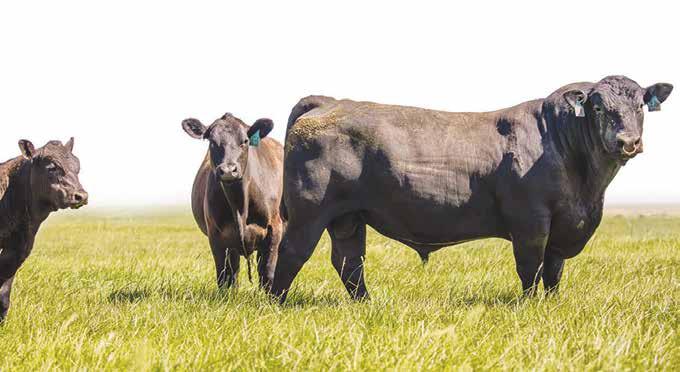
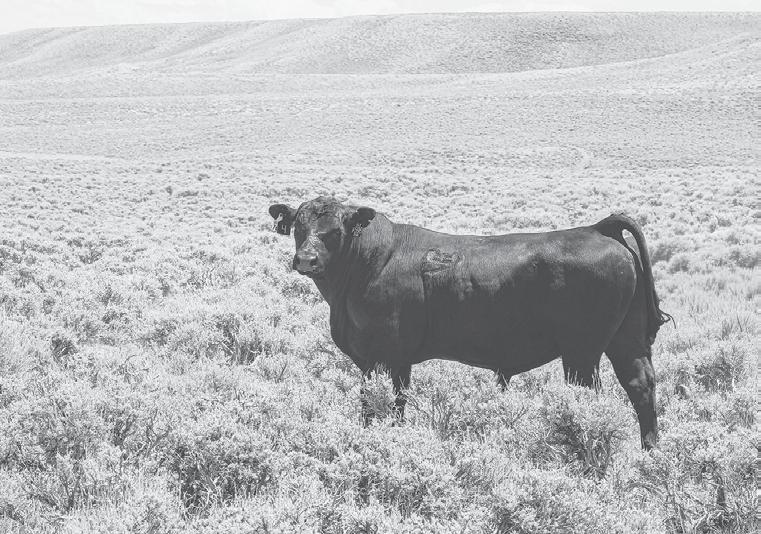
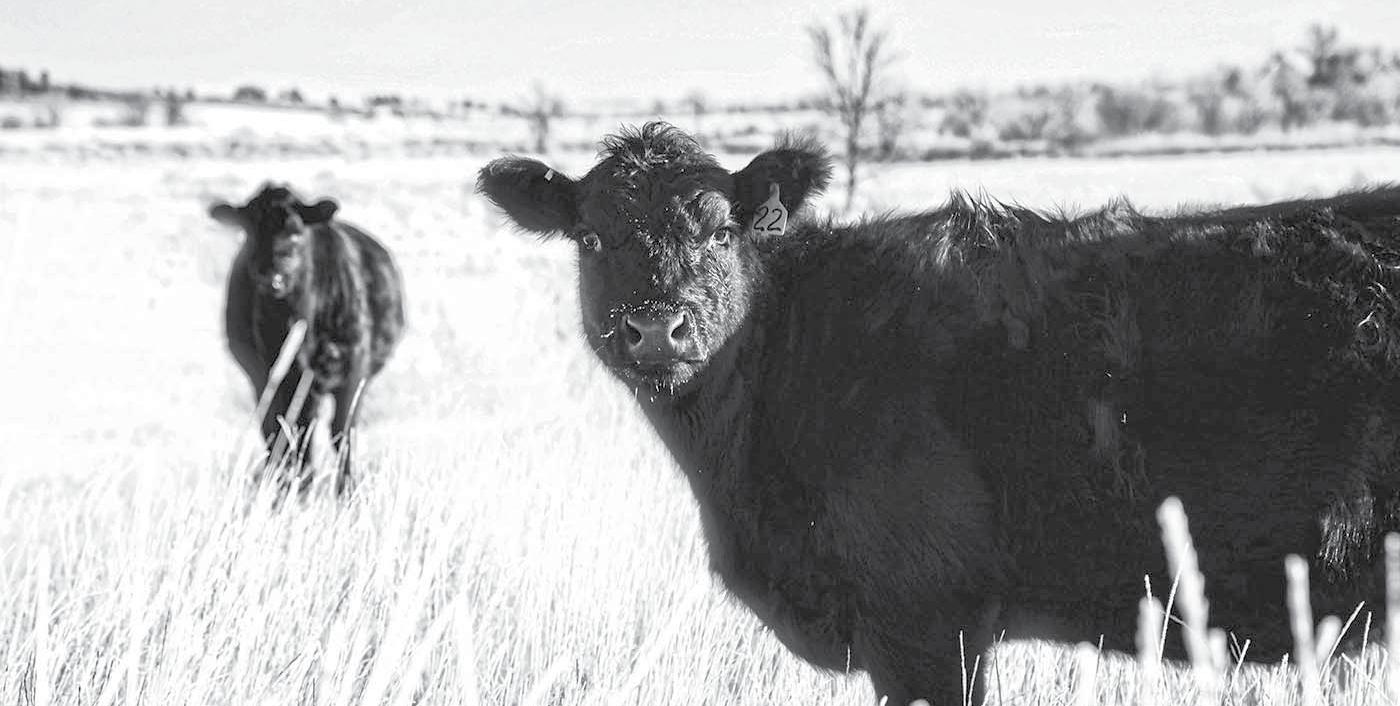
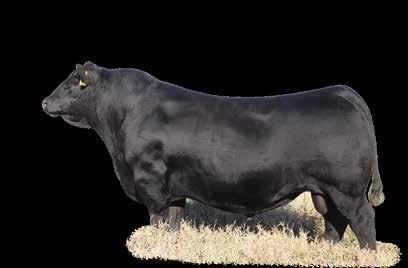
Angus Journal photo
One bull passed his BSE, but when put to the test, the results showed another story. This bull only
accomplished a 10 percent pregnancy rate, and 40 per-
cent of those conceptions
Continued on next page
didn’t make it to term.
“There is no relationship between a bull’s ability to get cows pregnant and the ability of those cows to maintain pregnancy,” Pohler says. “This bull passed all quality control measures. From a sperm standpoint, he looked fine, but there was a clear issue in the field.”
For seedstock producers, these examples pose a critical reminder relying solely on standard BSEs or a bull’s early conception success may not predict longterm reproductive performance in the herd. Tracking pregnancy outcomes across multiple breeding seasons and environments is essential for identifying sires which perform consistently. New tools for evaluating bull fertility
Advances in reproductive science are expanding how fertility can be evaluated, but they also reinforce an important reality –no single measurement captures a bull’s true reproductive impact.
“We used to think if sperm were alive, they were good,” Zoca explains. “Later, we realized not all live sperm are equally fertile.”
Emerging technologies allow researchers to uncover new insights. Innovation including flow cytometry and multi-omics approaches allow researchers to evaluate thousands of sperm cells with greater resolution.
“The key is not just identifying markers, but developing tools which can be used practically by AI centers, veterinarians and producers in the field,” Zoca says.
Pohler emphasizes fertility evaluation must extend beyond fertilization.
“The same bull that gets cows pregnant by day 24 or 30 does not necessarily maintain those pregnancies. Bulls rerank, and we’ve seen this in both beef and dairy data,” Pohler says.
These insights emphasize a bull’s reproductive capacity establishes the upper limit for herd performance, but it cannot overcome limitations in female fertility, embryo viability or herd management. This is where the attention shifts from the bull alone to the entire reproductive system, including female contributions.
Advancements in ET and IVF
While the bull’s repro-
ductive potential defines what is possible, the success of pregnancies ultimately depends on female reproductive health and embryo quality.
For seedstock operations, advanced reproductive technologies offer additional opportunities to manage fertility and reduce risk through methods such as embryo transfer (ET) and in vitro fertilization (IVF).
“Donor management has a lot to do with embryo quality,” says Dr. Lee Jones, senior professional services veterinarian at Boehringer Ingelheim. “We know embryo grades have an impact on performance, and we know fresh versus frozen embryos can sometimes affect performance.”
On the flip side, recipient management remains equally important.
“Body condition score targets of five or six are ideal. We typically like recipients to be at least 45 days postpartum before synchronization,” Jones says.
But it doesn’t stop at conception. The management of these cattle influences factors well beyond for both the recipient
CLAY CREEK ANGUS
female and the calf she’s carrying.
“Recipient management also affects fetal development, body condition at calving, colostrum quality, calf health and postpartum fertility,” Jones says. “Pregnancy diagnosis is one checkpoint where we can assess body condition and gestation stage and make adjustments if needed.”
Tools such as EmVision created by EmGenisys now provide producers with a way to assess embryo viability more precisely. Using video analysis and machine learning, the technology system scores embryos to help select those with the highest potential for successful pregnancies and reduce early embryonic loss.
“This score helps rank embryos from most healthy to least healthy, and producers can decide how they fit into their practice,” says Cara Wells, chief executive officer and founder of EmGenisys. “It empowers embryologists with objective data to make better decisions in the field.”
“Ultimately, we want reproduction
become almost a passive process, monitored carefully and adjusted when necessary, in a way that is sustainable, effective and efficient.” – Dr. Lee Jones, Boehringer Ingelheim
trained on thousands of embryos with known outcomes, allowing the machine learning system to recognize patterns beyond what the human eye can detect.
According to Wells, “Embryos with moderate, balanced activity tend to make the best pregnancies. Our system helps identify those embryos and avoids ones unlikely to succeed, moving the needle on efficiency and live birth rates.”
Advances in ET and IVF are giving producers tools to manage fertility with greater precision than ever before.
From careful donor and recipient management to scoring embryos with EmVision, every decision along the reproductive chain can influence pregnancy success, calf health and long-term herd performance.
replace experience, they allow operations to make more informed, repeatable decisions and set the stage for a more data-focused approach to fertility.
Data-driven fertility selection
Fertility is both a science and an art. Success depends on bull selection, embryo quality, recipient management and attention to detail at every stage.
From selecting sires with consistent performance to managing donors and recipients and now scoring embryos with new technologies, producers have more tools than ever to reduce risk and improve outcomes.
The system works in real time using simple equipment already available in most embryo transfer operations, such as a microscope and smartphone. Videos of embryos are uploaded to the platform, which immediately evaluates each embryo’s activity and assigns a confidence score for pregnancy potential.
Over time, the EmVision platform has been
Jones explains fertility is a year-round cycle, requiring commitment from before conception to well after birth, regardless of the industry sector.
“It can be virtuous or vicious. Everything builds on what came before,” Jones states. By combining traditional management practices with modern technologies, producers are moving beyond guesswork. While these tools don’t
“Ultimately, we want reproduction to become almost a passive process, monitored carefully and adjusted when necessary, in a way that is sustainable, effective and efficient,” Jones says.
Integrating traditional practices with advanced technologies allows producers to make informed, repeatable decisions, ensuring fertility delivers both predictable results and lasting profitability.
Briley Richard is a freelance writer from El Dorado, Kan. This article was originally published by Angus Journal on Feb. 11.
Reproductive expert outlines the influence of nutritional management on bull fertility
During the Range Beef Cow Symposium, held Nov. 10-11 at the Event Center at Archer in Cheyenne, University of Georgia (UGA) Department of Animal and Dairy Science Associate Professor Dr. Pedro Fontes presented his research on the impact of diet on bull fertility.
Fontes received his Doctor of Veterinary Medicine from São Paulo State University and his PhD in Physiology of Reproduction from Texas A&M University. His current research focuses on increasing profitability and sustainability of cattle operations by developing new reproductive management strategies and assisted reproductive technologies.
His talk, titled “The Influence of Nutritional Management on Bull Fertility” outlined his research and existing literature on the impact of over-conditioned bulls on fertility and how bulls influence embryonic development, pregnancy establishment and even post-natal growth.
UGA study
According to Fontes, UGA observed 700 bulls from three different veterinary practices. The bulls were sorted into the top and bottom 10 percent, with a middling 80 percent, based on subcutaneous back fat thickness (BFT) from an ultrasound.
The top 10 percent had a minimum BFT of 0.55 inches. These bulls were found to fail the breeding soundness exam (BSE) at a much higher rate than the other bulls. This was based off of semen quality alone and controlled for other factors which may affect the BSE.
Fontes and his team then attempted to recreate this in a controlled study.
In the preliminary study, herd bulls were fed two diets – one with a goal average daily gain (ADG) of four pounds and another to maintain body weight. After 67 days on feed, their semen was preserved using cryopreservation and in
vitro fertilization (IVF) was performed.
During the IVF process, the same number of oocytes were fertilized but the number of blastocysts – earlystage embryos which have survived long enough to be transferred – were lower.
This study was then recreated with young bulls which, unlike herd bulls, are less likely to gain fat on a high-gain diet. Forty-four half sibling bulls were fed a 114-day diet.
The moderate-gain diet had a target ADG of 2.7 pounds and the high-gain diet had a target ADG of four pounds.
The bulls on a high-gain diet had a decrease in sperm motility, making them less eligible for cryopreservation. They also had a lower percentage of sperm with intact plasma membranes, meaning this sperm wasn’t as resilient and responded to stressors worse.
IVF was performed with these bulls, and the overconditioned bulls fertilized fewer eggs and had fewer blastocysts six to seven days after fertilization, which is when labs generally send out samples. The number of trophectoderms – cells which eventually become the placenta – were also decreased, and embryos from over-conditioned bulls also had delayed embryonic development.
“The diet the bull is exposed to alters sperm biology in a way which influences post-fertilization growth. Not only that, it also affects post-natal growth and metabolism,” says Fontes.
Overnutrition leads to excess fat, which leads to impaired thermoregulation in the scrotum and testes, as shown on infrared cameras. This disruption in natural cooling is harmful to sperm, which then performs worse in fertilization and growth.
Further research
There is expected to be more research on this topic in beef cattle in coming years, but similar studies exist in other mammals,
namely dairy cattle, sheep and humans.
Dairy cattle are excellent for nutritional studies because they are weaned at birth and can have their diets controlled much easier.
An Irish study on Holsteins revealed high nutrition only hastened the age of puberty when offered in the first six months of life, but the window of developmental plasticity closed after that.
A study from North Dakota State University revealed lambs sired by obese rams experienced a 12 percent decrease in ADG compared to fitter rams.
Male obesity in humans has been shown to lead to increased scrotal temperature, sperm DNA fragmentation, germ cell apoptosis or cell death, as well as a decrease in embryo production.
When couples with an obese male attempt IVF, they experience a decreased fertilization rate, fewer embryos are transferable and, of those embryos, there is a lower rate of generating a clinical pregnancy.
Often, doctors will recommend men institute nutritional changes.
Like humans, over-conditioned bulls will experience insulin resistance, commonly referred to as type 2 diabetes.
Studies in rodents show obese sires induce a disruption in the metabolism of offspring.
More research is being done now on beef bulls and how their diet affects reproduction and offspring, but existing studies and research done in other mammals supports keeping bulls in shape will lead to more effective pregnancies and better
development of offspring.
Fontes continues to research the impacts, but so far, nutritional and dietary management has led to leaner bulls performing better on all fronts.
In explaining the impact
of his research, Fontes states, “In the context of the beef industry, we have some sires that might generate thousands of offspring in a single breeding season. Depending on how we’re feeding those bulls, we might be optimizing the post-natal performance of offspring.”
Erin Rees is a corresponding writer for the Wyoming Livestock Roundup. Send comments on this article to roundup@wylr.net.
In a Dec. 1, 2025 University of Nebraska-Lincoln (UNL) BeefWatch article titled “Why Do I Have So Many Open Cows? Causes of Reproductive Failure,”
Nebraska Extension Educator Bethany Johnston and Nebraska Extension Beef
Cattle Reproductive Physiologist Rick Funston discuss common factors influencing breed-up rates in cattle herds.
The authors delve further into the subject in a corresponding Dec. 23, 2025 episode of the BeefWatch podcast of the same title, hosted by Nebraska Extension Educator Aaron Berger.
Nutrition considerations
According to the specialists, inadequate nutrition is normally the biggest cause of reproductive failure.
UNL experts examine causes of reproductive failure in cattle
“If you think of building a wall, nutrition is the bricks. If the bricks are missing, the wall is going to fail,” says Drewnoski. “Protein or energy are usually the big rocks missing, especially in young animals which may still be growing.”
To ensure healthy animals throughout gestation, Johnston and Funston agree cows and heifers should be fed on an increasing plane of nutrition during the breeding season.
Additionally, the authors emphasize the time frame in which producers decide to breed their herd has a direct correlation to nutrition.
“When we’re breeding has a huge impact on level of nutrition,” emphasizes Funston. “The best quality forage is going to be early in the breeding season, not later.”
UNL Beef and Forage Specialist Mary Drewnoski refers to nutrition as the “bricks” of building whole animal health. Protein and energy are the most important considerations.
Additionally, the authors remind producers to be wary of declining nutrition in wet years with an abundance of rainfall and increased growth of mature grass.
Since mature grass is
Nutrient deficiency can be addressed through supplementation of protein and energy during breeding season.
lower in protein and energy, pregnant cattle on pasture may benefit from supplements even when there is a lot of grass to go around.
Body condition
Thin cows with body condition scores of four or lower are less likely to breed back, according to Johnston and Funston’s research.
Thin cows also require more energy and protein to gain weight during breeding and lactation and may have a difficult time maintaining health in some range conditions.
“If you have thin cows, you want them to be gaining weight through the breeding season,” says Johnston. “If she’s thin or losing weight, the environment is saying there are not enough nutrients for her to take care of herself.”
Young heifers and cows are still growing, which means they require more protein and energy and should be managed differently than older cows.
Additionally, the authors note a consistent amount of open, young animals could indicate a producer’s environment and genetics are not aligned and management practices may need to be reevaluated.
Bull factors
Effective bull management is equally important to ensuring higher breed-up rates. Providing the proper bull-to-female ratio and monitoring for soundness throughout the entire breeding season can help improve breeding rates.
“Recommendations for the cow-to-bull ratio depends on the age of the bulls, terrain, size of the pasture and other variables,” write Johnston and Funston. “For older bulls, 25 cows per one bull is suggested. For a yearling bull, the number of females is equal to the bull’s age in months. For example, a 15-month-old bull could run with 15 females.”
Additionally, the authors recommend testing bulls four to six weeks prior to turnout, emphasizing since sperm production is a 61-day process, breeding tests conducted too early may fail to detect issues and injuries affecting breeding rate.
Further, the authors say bulls should be monitored for soundness issues and swelling – especially around the sheath and scrotal areas –throughout the breeding season, rather than solely relying upon the breeding soundness exam (BSE).
Infections and preg checking If cattle are still com-
ing up open in cases where nutrition deficiencies have been ruled out, producers may look towards investigating potential infections.
Johnston and Funston note working with a local veterinarian to determine if disease is present and working out a corresponding vaccination plan is the best course of action.
The authors also recommend testing non-virgin bulls for trichomoniasis during BSEs, as the disease can have detrimental effects on breed-up rates. Additionally, taking care while conducting preg checking and artificial insemination (AI) is vital.
Funston recommends waiting to preg check until after 50 days of breeding to reduce the amount of embryonic loss in pregnant animals.
Additionally, in cases of AI breeding, moving animals either within five days of insemination or waiting 45 days after breeding can help protect small, fragile embryos and reduce risk of embryonic loss.
Other considerations
In closing, Johnston and Funston emphasize implementing good management practices, prioritizing nutrition, monitoring bull performance and eliminating infections should result in pregnancy rates of 90 percent or greater in cows and 80 percent or greater in heifers.
If pregnancy rates remain significantly lower, the authors encourage producers to contact their local veterinarian. A list of questions including whether anything changed drastically during the breeding season, if there was drought or overgrazing of pastures, length of the breeding season, timing of the calving window, whether hay and feed was tested and if herds were supplemented with extra protein and energy can help guide conversations, hopefully leading to answers and an improved breed back next season.
Grace Skavdahl is the editor of the Wyoming Livestock Roundup. Send comments on this article to roundup@wylr.net.
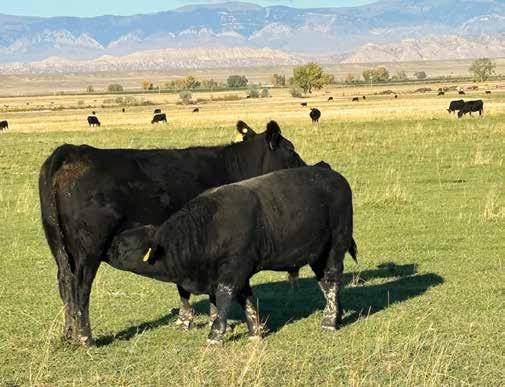
WYLR photo
OBITUARIES
Trigg Russell Thompson
May 25, 2007 – April 2, 2026
Trigg Russell Thompson, age 18, was born on May 25, 2007 and passed away on April 2 in Cheyenne.
Trigg was born and raised between Cheyenne and Lusk, and he spent much of his childhood at the Warren Ranch Company, north of Cheyenne.
As a small child, he loved nothing more than playing in the creek that ran behind his mom’s office. He
loved helping with the sheep and cows – shearing, lambing, calving and branding.
During the COVID19 break from school, he worked at the lambing camp full time, riding up with one of the guys and staying up there all day.
From a young age, he was a great help and was always willing to put in a full day of work. He also enjoyed traveling around
Faith Erin Robinett
Nov. 13, 1960 – April 3, 2026
Faith Erin Robinett, born on Nov. 13, 1960, was the strongest, wisest and most witty woman you could
ever know. She passed away leaving behind a life full of love, faith and the kind of presence that made everyone feel like they mattered.
Faith and Dan Robinett shared many years together and raised their family, which was always at the center of her life. She was a proud and loving mom to her two daughters, Jessica (Joshua) Simkin and Jolene Robinett (Charles Lincecum).
Her grandchildren –Jack, Justin and Elsie Faith – were truly the light of her life. They brought her so
the state working cows and seeing different ranches with his dad.
Trigg’s love for the outdoors was evident in his enjoyment of hunting, fishing and hiking.
His travels included a trip to Africa, where he not only experienced the thrill of hunting but also visited a wildlife conservation reserve. One of his favorite moments was tagging a rhino and participating in the relocation of cheetahs – experiences which deepened his appreciation for wildlife and the importance of conservation.
In 2024, he climbed
much joy, purpose and happiness, and she loved them more than words could ever fully express.
Faith was the kind of person who was always there. She had a way of bringing people together, making everyone feel welcome and doing it all with grace. She was strong in a way not everyone gets to
Mount Kilimanjaro to over 19,000 feet.
He attended Central High School in Cheyenne, where he was involved in wrestling and rodeo, and he enjoyed the Central High Welding program.
He was planning to attend Casper College and rodeo in the fall.
He was very loyal. If family or friends needed anything, they could always count on Trigg. His smile was contagious, he gave the best hugs and he made everyone feel important.
Trigg is preceded in death by his uncle Barry Travnicek, aunt Rhonda
understand and wise in a way that made you stop and really listen.
She was a woman of many accomplishments, and she always encouraged learning and growing. She believed there was always something new to learn and always an opportunity to make a difference.
She loved her fam-
Garaventa and grandpa Cody Thompson.
He is survived by his mother and father Ty and Roxanne Thompson; brother Tripp Thompson and sister Cami (MJ and Ivey Taylor); grandparents Donna Thompson and Gary and Melody Garaventa; aunts and uncles Chad and Rosie Bliss, Sara Travnicek and Amanda and Jeff Cotton, as well as many cousins he really loved.
A celebration of life was held on April 9 at the Little America Hotel and Resort at 1 p.m.
In lieu of flowers, the family requests considering contributing to one of the
ily more than anything and made sure you knew you weren’t alone.
She found peace in gardening, and her faith guided how she loved others –with kindness, patience and compassion.
She is preceded in death by her mother Betty Padgett, her father Lester Obert, her nephews Peyton Hall and
A
BIG SELECTION OF BIG TEX TRAILERS
1918 FORD MODEL T PICKUP
EXCELLENT CONDITION - $19,500 $16,500 2013 MACK 600, 306,406 MILES EXTENSIVE ENGINE WORK DONE - $39,500
2008 LANDOLL 53’ HYDRAULIC TILT TRAILER. AG
Mark Howe and many other loved ones who went before her.
Faith is survived by her sisters Angie and Alicia, along with an abundance of nieces, nephews and family whom she loved dearly.
private family burial was held, followed by a celebration of life on April 8 at The Hangar.
following causes close to Trigg’s heart – Central High School Wrestling Program, Central High School Welding Program or a local high school rodeo club.
During the third installation of the University of Wyoming’s (UW) Ranch Management and Leadership (RMAL) Ranching in the West Seminar Series, Ike Eastman, president and chief executive officer of Eastmans’ Multimedia, shared his perspective on building a career in wildlife media.
His comments focused on the history and evolution of Eastmans’ Multimedia, a three-generation, media-based hunting com-
Eastman shares perspective during UW RMAL seminar series
pany which focuses on promoting elk, deer and western big game hunting; navigating the ever-changing digital landscape and embracing technology as the family business continues to expand.
Company history
Eastmans’ Multimedia began in 1957 with Ike’s grandfather Gordon Eastman. An avid outdoorsman, Gordon strove to tell stories about the untamed wilderness of the American West through filmmaking.
Thirty years later, in 1987, the family business began building up its print presence through Eastmans’ Hunting Journal (EHJ)
Founded by Ike’s father Mike Eastman, EHJ has published stories about wildlife and hunting since its founding and continues to evolve today.
Ike grew up hunting and fishing throughout Wyoming and attended college at UW. After spending his early career in finance,
he returned home to run the family business in 2023.
Under Ike’s leadership, Eastmans’ Multimedia has continued to evolve into a flourishing multimedia company, integrating both print and digital platforms to serve outdoorsmen all over the world.
“My family has always been adventurers,” Ike shared. “We’ve figured out how to take adventure, communicate it and generate revenue so we can go on to the next.”
Embracing technology
Using the evolution of the family business as evidence, Ike emphasized the importance of embracing technology to move a business forward, whether it be a family ranching operation or another endeavor.
“Technology is absolutely critical in movement,” Ike said, noting advancements in technology continue to drive progress forward for Eastmans’ Multimedia all the time.
He explained, over the years, the changing media landscape has brought many challenges and opportunities to the Eastmans’ Multimedia empire.
By building on relationships and reputation in the early years and adapting to changing times, the business has continued to grow and reach new audiences, all while serving lifelong customers.
Ike’s presentation emphasized every product from the original magazine all the way to the modern app was designed to solve a specific problem for Eastmans’ Multimedia customer base, striking a balance between honoring tradition while relentlessly innovating to provide for future generations of customers.
Leadership advice
In addition to his comments on technology, Ike offered some leadership advice to attendees gathered at the evening seminar.
His comments focused on the value of building a trustworthy tribe of people who push each other to succeed and implementing the “golden rule” in business relationships, as well as embracing failure and learning from mistakes.
“In life, you’re only as successful as the people you surround yourself with,” Ike said. “Sur-
round yourself with a tribe of people who enjoy things together and help each other out.”
He also shared his belief in the golden rule of treating others – specifically his employees – with the same level of respect he would hope for in return.
“I treat every person in my organization the way I would want to be treated,” Ike shared. “I want to be the captain of my own destiny and let them be the captains of theirs.”
In closing, Ike stressed the importance of viewing failure as a stepping stone to success by taking risks and learning from mistakes.
The RMAL Ranching in the West Seminar Series is set to conclude on April 15 with the Rocky Mountain Land and Resource Management Conference in Laramie – an in-person, all-day event featuring panel discussions on ethics, land use, negotiations and reclamation, as well as comments from Gov. Mark Gordon.
Grace Skavdahl is the editor of the Wyoming Livestock Roundup. Send comments on this article to roundup@wylr.net
Sellers
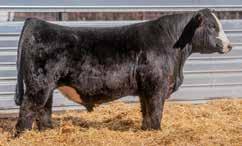
12 – Gunsight Dignity Mtn 5060 – Price: $20,000
2/27/25 Sire: Sitz Dignity Mtn 596L Dam’s Sire: G A R Method EPDs: BW: -0.5, WW: +68, YW: +117 and Milk: +26 Buyer: Dunmire Ranch Company, McFadden
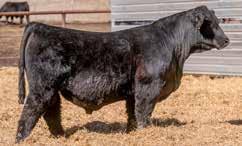
Lot 7 – Gunsight Wrangler 5863 – Price: $19,000
DOB: 2/23/25 Sire: S Wrangler 830 Dam’s Sire: Carter Blackfoot 307 EPDs: BW: -0.9, WW: +58, YW: +103 and Milk: +28 Buyer: Dunmire Ranch Company, McFadden
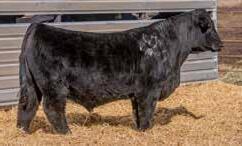
Lot 4 – Gunsight Roughrider 5859 – Price: $18,500
DOB: 2/21/25 Sire: Ellingson Rough Rider 4202 Dam’s Sire: WXW Ten X 2930 P237EPDs: BW: +2.9, WW: +59, YW: +109 and Milk: +24 Buyer: Netz Ranch, Lost Springs Lot 3 – Gunsight Wrangler 5953 – Price: $16,500
DOB: 2/23/25 Sire: S Wrangler 830 Dam’s Sire: WXW Timberline W287 EPDs: BW: -0.3, WW: +56, YW: +102 and Milk: +23 Buyer: MJ Ranches, Garrett Lot 20 – Gunsight America 5958 – Price: $16,500
DOB: 3/17/25 Sire: McConnell America 2804M Dam’s Sire: WXW Timberline W287 EPDs: BW: +0.6, WW: +60, YW: +102 and Milk: +24 Buyer: Strauch Ranch, Medicine Bow
SALE REPORTS Agreement awarded
On April 1, the U.S. Department of Agriculture’s (USDA) Foreign Agricultural Service (FAS) awarded an agreement to the Center for Agribusiness and Rural Development (CARD) to increase American agricultural exports to Armenia.
In coordination with USDA, CARD will support Armenian mills importing U.S. wheat through complimentary training, facilitate research on wheat diseases to safeguard America’s wheat supply, conduct food safety training and support short-term trade promotion programming.
FAS is issuing this award as part of a portfolio of projects called Coordinating Agricultural Development and Innovation. This project unlocks Armenia to U.S. exports by increasing Armenia’s capacity to buy U.S. wheat, reducing food safety regulatory barriers and connect Armenian buyers with U.S. exporters. For more information, visit fas.usda.gov
by Lee Pitts
Dickerin’
My first job out of college was working on a purebred Angus ranch.
I knew in advance there was no future in the job because the cattle were as popular as three-week-old sushi. The owner was either in denial or dumber than a branding iron, but he considered himself to be a brilliant businessman.
He was insistent he was going to teach me the fine art of dickerin’.
“Today I’m going to teach you how to buy something well below its true value,” he said. “We’re going to a farm which has been sold and the owner must get rid of everything on the place before the close of escrow. This means he’ll be desperate to sell. We need a manure spreader for the ranch and he’s got one that will suffice, so just watch how I negotiate the price.”
We went to the farm sale, checked out the manure spreader and then my boss told the owner, “I’ll not pay a penny more than $250 for this worn out piece of junk.”
At this point I tugged on his jacket to convey to him a very important message, but he rudely swatted me away.
“Can’t you see we’re negotiating a deal and you should just shut up and try to learn something,” he said.
The farmer didn’t like the way my boss treated me, so he said, “I want $350.”
My boss took the deal, but when we left, I showed my boss a sign on the barn that said, “Yippee! We sold the ranch so everything today is FREE!”
My next lesson came on the day of a local bull test and sale in which my boss had entered six bulls.
“Here’s $40,” he said. “Buy anyone who looks at our bulls a lunch ticket for the barbecue.”
That evening, I handed him back his $40 and said, “Here’s your money back. No one looked.”
“How much did our bulls sell for?” he asked.
“Well, uh, not a single one of them actually sold,” I answered. “I bought them back at well below slaughter value.”
The last “lesson” my boss taught me was how to
negotiate a private treaty sale.
“There’s a big bull buyer coming tomorrow and I won’t be here, so tell him he’s getting first pick of the bulls and you won’t take a penny less than $2,500,” he stated. “I’ve studied the sale averages of some of the better bull sales and this is what they’re averaging. Remember, not a penny less than $2,500.”
It turned out I’d known this “big bull buyer” for a while as Mr. D was from my county and was also in the citrus business.
Mr. D was a gentle old
soul and a sincere, honest gentleman. We caught up on old times, and then I showed him the bulls.
“How are they priced?” he asked politely.
“My boss said to tell you he wouldn’t take a penny less than $2,500 because you’re getting first pick and this is what the better bulls are averaging,” I said, stressing to my friend it was my boss trying to gyp him, not me.
Mr. D. smirked and said, “Considering the quality of the bulls, you tell your boss I couldn’t pay more than $1,000 apiece.”
That evening I conveyed the message to my boss that I didn’t get any bulls sold and Mr. D’s top offer was $1,000.
“Keeping in mind you said not to take a penny less than $2,500, we couldn’t come to an agreement on
price,” I said.
My boss hit the roof. He was madder than a cow with sore teats and twin calves, but he was not mad at Mr. D – he was mad at me.
“You mean to tell me you let $1,500 stand in the way of a trade?” he asked.
“Well, you being a master negotiator, I’m sure if you called him, you might be able to work something out,” I said.
So, my boss called him and they came to terms. When Mr. D came to pick up the bulls, I asked him what he paid.
“Nine hundred dollars apiece,” said Mr. D, with a big smile on his face.
“But that’s $100 less than you were willing to pay in the first place,” I replied.
“I realize that,” said Mr. D. “You know Lee, some people ought to learn to quit while they’re behind.”
Triple T Land and Livestock Annual Production Sale
Reported By: Curt Cox, WYLR Field Editor April 8, 2026
NOTICE: Publication in this newspaper does not guarantee the legitimacy of any offer or solicitation. Take reasonable steps to evaluate an offer before you send money or provide personal/financial information to an advertiser. If you have questions or believe you have been the victim of fraud, contact the Wyoming Attorney General’s Office, Consumer Protection Unit, 109 Capitol Building, Cheyenne, WY 82002, 307-777-6397 TFN
LIVESTOCK FEEDERS LLC Red Cloud, NE
Come Join the Gottsch Livestock Feeders Family! Gottsch Livestock Feeders is looking for Cowboys/Pen Riders for their feedyard in Red Cloud, NE. The main focus of the Cowboy/Pen Riders are spotting, pulling, diagnosing and taking cattle to the hospital and shipping fat cattle. This person will need to be a team player who is seeking a long-term position. You will have the opportunity to work with and learn from some of the best in the industry. We offer a benefits package that includes health insurance, dental, vision, 401(k), health savings, life insurance and paid vacation. Retention bonus offered to full-time employees. Incentives paid out at 6 months and 1 year of employment. If you are interested stop by and fill out an application or visit our website at
www.gottschcattlecompany.com
Call Mike Faimon at 406-469-1585 or Davin Arnold 970-301-3098 for more information.
LOOKING FOR 5-6 DRIVERS 7 DAYS A WEEK FOR 2 RUNS FROM CASPER TO WORLAND, WY, $33.39/ HOUR TO START: Must have CDL, pass background check and clean MVR. E-mail resumes to dingoboy6342@ yahoo.com or call Matt, 801641-4109 4/18
IMMEDIATELY SEEKING FULL-TIME FARM/RANCH
INDIVIDUAL FOR A REMOTE NORTHEAST WYOMING RANCH: The role supports the current foreman and works alongside to ensure smooth and efficient operation of livestock, haying, equipment and facility management. Applicant must have a strong agricultural background and a hands-on approach to problem solving and daily ranch work. This is a long-term position and offers a clear path to increased responsibilities, pay and leadership. Housing is provided. Must have a clean driving record. Please send resume with references and telephone number by mail or e-mail to: PeeGee Ranch, 1251 Lower Powder River Road, Arvada, WY 82831, pgranch@rangeweb.net. NO telephone calls 5/2
LOOKING FOR RANCH AS-
SISTANT PROPERTY MAN-
AGER: Full-time position for large ranch located in Park County, WY. Responsibilities include: Lawn care, irrigation, agricultural equipment maintenance and general residential, building and property maintenance. Salary range of $45-$60K depending on experience. Living on property is required for employment. House and vehicle will be provided. Property is located 10 minutes from downtown Cody, WY. Position is available for immediate hire. Please send resumes to mgiliati@acpg.com 4/18
FEED TRUCK DRIVER
AND COWBOY WANTED: Western Nebraska calf grow yard is looking for a self-starter capable of supporting and working with a feedyard team to ensure general maintenance and caretaking of livestock, equipment and facilities. Ability to take work direction and change priorities as needed. Valid driver’s license required, CDL would be a plus. Knowledge and prior experience in feedlot and farm work preferred. Pay negotiable based on experience, housing available. Duties may include but are not limited to: Feed truck driving and mechanical skills for basic feed truck/ tractor maintenance; farming to include all aspects of haying and irrigation; facility maintenance, build electric fence, repair pens, welding, stock tank and water line work, clean pens, hauling manure, spraying weeds; assist with the care and processing of cattle/pen riding. Send resume to P.O. Box 1248, Torrington, WY 82214, fax to 307-532-7899 or e-mail info@flagranchllc. com. Potential applicants with questions call 307-532-7885 or 307-534-6259 4/18
SUPERIOR CONTRACTING LLC LOCATED IN WHEATLAND, WY, A FAST GROWING IRRIGATION COMPANY SERVICING PLATTE COUNTY, SOUTHEAST WYOMING AND SURROUNDING AREAS, IS IN SEARCH OF AN IRRIGATION TECHNICIAN SPECIALIZING IN THE INSTALLATION, maintenance and repair of precision agricultural irrigation equipment, primarily center pivots. One year minimum irrigation industry experience with certification. Proficient in technical knowledge of irrigation systems and troubleshooting along with system installation, assembly, diagnostic, repair, preventative maintenance and technology management. Able to work outdoors and operate heavy equipment. Must be able to perform labor-intensive tasks. Must be willing to work independently, possess excellent recordkeeping and have exceptional customer service skills. Must be able to be on call 24 hours during peak season. Training and continuing education provided. Valid driver’s license required and must pass a drug screen. Call 307-331-0257 or e-mail accounting@scllc19. com 4/25
SUPERIOR CONTRACTING LLC IS SEARCHING FOR AN EXPERIENCED HEAVY EQUIPMENT OPERATOR TO WORK REMOTE: Duties will include operating, maintaining and inspecting heavy construction equipment (e.g., excavators, bulldozers, loaders, backhoes, graders, cranes) to perform earthmoving, material handling, site preparation and related tasks safely, efficiently and according to project plans and regulatory requirements. Operator must read and follow work orders, site plans, grade stakes and instructions from supervisors or engineers. Report mechanical issues promptly and coordinate repairs with maintenance staff or vendors. Position equipment accurately using survey references, GPS or laser grade systems to meet project tolerances. Load/unload materials, secure loads and assist with rigging and signaling when required. Follow site safety plans and OSHA regulations; use PPE and operate equipment in accordance with manufacturer and company safety procedures. Communicate effectively with site crews, foremen and traffic control personnel; assist with site setup and cleanup. Maintain daily logs of hours, material moved and work performed. Participate in safety meetings and trainings. Strong situational awareness and commitment to safety. Good communication and teamwork skills. Comfortable working outdoors in varied weather and at construction sites. Possible overtime, early starts, or weekend work depending on project schedules. Valid driver’s license required and must pass a drug screen. Call 307-331-0257 or e-mail accounting@scllc19.com 4/25
Brands
REGISTERED WYOMING BRAND FOR SALE: LHC, LTH. Fees paid until January 2035. $3,500 OBO. Call 307-532-0112, leave message 5/2
Help Wanted Services Services
WYOMING STATE PARKS IS HIRING ENERGETIC EMPLOYEES FOR THIS SUMMER!! The employment period will run from May until September. Apply here: www.governmentjobs.com/ careers/wyoming by searching “State Parks.” Join our team this summer! Maintenance and fee employees will be paid $10-$16/ hour and law enforcement staff will be paid $18-$22/hour. Housing may be available. EEO/ADA employer 4/11
RANCH HAND/GROUNDS
KEEPER: Full-time position at a family-owned ranch near Cody, WY and located in the Shoshone National Forest. Position entails lawn care, irrigation, heavy equipment operation, carpentry, equipment maintenance, building maintenance and overall residential and agricultural property maintenance. Experience is welcome but will train the right candidate. The ideal candidate will be reliable; have a strong work ethic; be able to perform individually and with a team; be a self-starter and enjoy working outdoors. Benefits include health, with optional dental and vision; paid-time off and 401(k) with employer matching contribution. For the right candidate housing on property is also available. Salary based upon previous experience. Send resumes to emilyb@colliergroupoffice.com and cg1@ colliergroupoffice.com 5/2
ALL TYPES OF EQUIPMENT AND VEHICLE FINANCING. Great service!! Great rates!! Call Chuck Brown at C.H. Brown Co. LLC, 307-322-3232 (office), 307-331-0010 (cell) or e-mail chuckbrown@wyoming.com 4/11
AGRI-ONE FINANCIAL: Farm/ ranch and all commercial loans. RATES AS LOW AS 5%. We have been helping with all aspects of agricultural, commercial financing and management for years. LET US HELP YOU on a consulting level with management to increase profitability, deal with and fix credit problems and for all your financing needs. WE CARE AND HAVE WORKING PROGRAMS designed for the farmer/rancher and not the banker. Please call Steve, 303-773-3545 or check out our website, www.agrionefinancial.com. I will come to you and get the job done!! 4/18
REGISTERED WYOMNG BRAND: RSC, registered until 2027. Single iron. Also have an additional calf branding iron. $1,250 OBO. Call 307-461-0356 3/28
Brands
OWN A PIECE OF WYOMING HISTORY, OLD WYOMING BRAND FOR
SALE: LRC, LTH, originally issued in 1910. Purchased by my grandfather in 1913. Easy to read when placed on cows or horses, $12,500. ALSO, RANCH SADDLE manufactured by Fred Mueller Saddle Co., Denver, CO. Good condition, located in Cheyenne, WY, digital photos available, asking $400. Call 307-631-6838 5/2
REGISTERED WYOMING BRAND FOR SALE: LRC, LSS, LSH. Comes with 2 fire irons and 3 electric irons. Two of the electric irons are brand new. Can be used on horses, cattle and sheep. $3,000. Call or text for more information, 307-5757065 4/4
REGISTERED WYOMING BRAND FOR SALE: RHC, RHS, LJH, renewed until 2033. $2,000 OBO. Call 307-575-1852 4/25
REGISTERED WYOMING BRAND FOR SALE: LRC, LTH, renewed to March 1, 2033. $7,500. Call 307-358-3078 4/11
BEST LAST CHANCE SALE!! LYTLE RED ANGUS is offering yearling bulls from our herd founded on 30+ years of selection for fertility, consistency and efficiency. Highly adaptable, our bulls have proven themselves from Arizona to New York state. Get your next bull through our online-only auction hosted by DV Auction. Opens April 27, closes May 1. Visit www. lytleredangus.com or call Zeb, 605-441-7658. To view photos, go to www.wylr.net in the classifieds 4/25
SALE * CHRISTENSEN RED ANGUS * SALE: Registered, vaccinated and fertility tested bulls. We have a deep carcass, high ADG packaged with moderate to low birthweights available. Call 406-208-4315 or e-mail criters64@gmail.com 4/11
RED ANGUS HIGH-ELEVATION YEARLING BULLS FOR SALE IN NORTHEASTERN UTAH: Out of AI and bull-bred sires. Will be trich, semen tested and fed for free until April 15. $3,500/head. Bar Lazy TL Ranch, David, 435-828-1320, barlazytlranch@ gmail.com 6/13
SIMANGUS YEARLING BULLS FOR SALE BY PRIVATE TREATY: Bulls priced for every budget. Bulls have GE EPDS, are homozygous polled, most are homozygous black. Bulls can be inspected at Dilka Cattle, pictures available by request. Bulls sired by BAS Money Maker, Gibbs Essential, Gonsior Batman and CCR Pounder. All bulls guaranteed for first breeding season. Information on the bulls may be requested by email at thedilkas@aol.com or calling 970-396-8791 5/2
TWO-YEAR-OLD HEREFORD
BULLS: Canadian registered. Fertility checked. View photos at www.workingherefords.com Estermann Herefords, 308-3404159 or 308-963-4473 5/2
REGISTERED HEREFORD BULLS FOR SALE: Overaged bulls to cover more cows! Videos, photos, EPDs and certificates available. Call Troy Rasmussen, TSR Cattle Co., 605-690-0100 5/2
PUPPIES FOR SALE: Border collie puppies, fourth generation working lineage, 16 weeks old. With some training. Three males and 1 female. $300. Call 307-2711009. To view photos, go to www. wylr.net in the classifieds 4/25
MYDLAND ANGUS RANCH:
Yearling Angus bulls. Performance tested, EPDs available. Home raised. Call 406-5913404 or 406-855-5598 5/2
YEARLING ANGUS BULLS: These bulls are grown, not fattened, will get out and cover cows. Many will work on heifers. We will deliver. Call Joe Buseman, 605-351-1535 5/2
REGISTERED ANGUS YEARLING BULLS: Breeding soundness, fertility tested and PAP tested. Ready to go to work. Call Paul at TAG Double H Cattle Co., Ten Sleep, WY, 307-690-4225 5/2
REGISTERED ANGUS BULLS FOR SALE: Calving ease, growth. AI sired. Docile. Delivery available. Earhart Farms, Powell, WY 307-2728876 4/11
HEREFORD BULLS FOR SALE: Yearlings and 2-yearolds. Polled and horned. Big, stout, sound Hereford bulls with calving ease and high growth potential. Lots of pigment and no extra white. Get 30-40 lbs. bigger weaning weights on your baldy calves through the heterosis factor from these bulls. We are passionate and committed at providing our customers with the top genetics existing in the entire Hereford breed. Come see our sons of Churchill W4 Sherman, the biggest trait leading bull in the industry from birth to growth, maternal and carcass. BUY WYOMING FIRST!! Gene Stillahn, Sticks & Stones Ranch, 307-4211592 4/11
REGISTERED YEARLING POLLED HEREFORD BULLS FOR SALE PRIVATE TREATY: Great dispositions. Suited for making the most efficient cow, the baldy. Heifer and cow bulls available. Call Lee, 402984-0132 or Aaron, 308-2493306 4/18
SimAngus
ity beef. Francis-Millvale Shorthorns, Gene and Roberta Francis Family, 701-331-2403, e-mail francis.millvale@gmail.com. To view photos, go to www.wylr.net in the classifieds 4/11
HOME RAISED, SIX-YEAR-OLD
JERSEY MILK COW: Has mostly been hand milked but works well as a nurse cow. Started lactation March 18 and is producing 5 gallons per day, super gentle. $5,200, Hulett, WY. Call Jerry, 307-4675343, leave a message 4/18
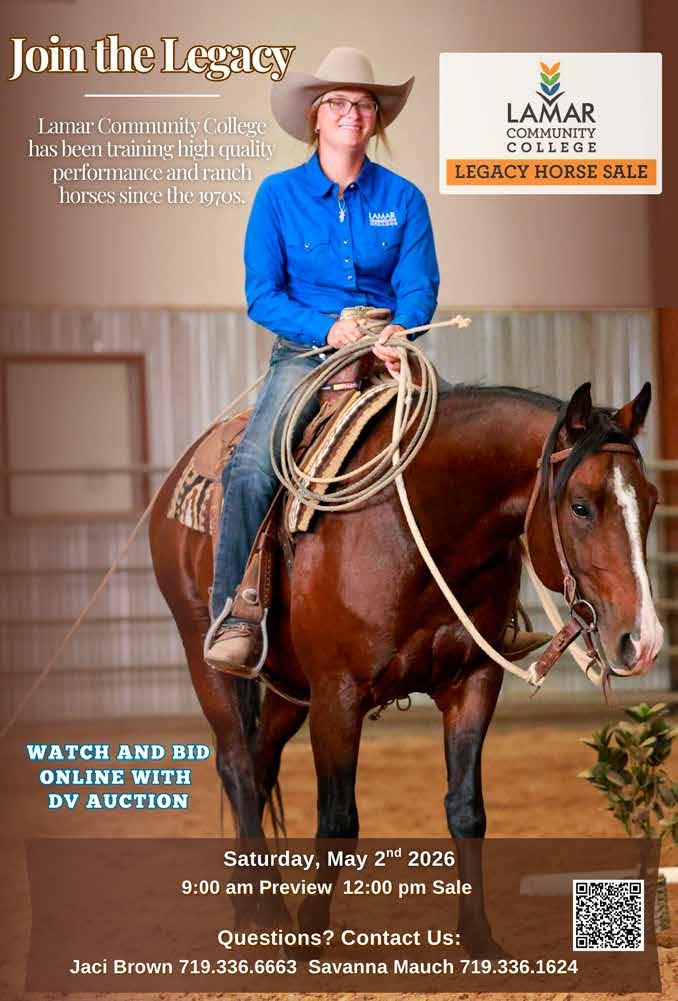
LAMAR COMMUNITY COLLEGE LEGACY HORSE SALE!! Join the Legacy. Lamar Community College has been training high-quality performance and ranch horses since the 1970s. JOIN US ON SAT., MAY 2 IN LAMAR, CO TO SHOP HIGH QUALITY HORSES. Mark your calendars and follow our social media pages to stay up-to-date on the Lamar Community College Legacy Horse Sale. Previews at 9 a.m., sale at 12 p.m. 2401 S. Main Street, Lamar, CO 81052. Online as well with DV Auction. Call Savanna Mauch, 719-3361624 or Jaci Brown, 719-3366663 4/11
LS CUSTOM LEATHER: New tack, belts and cell phone cases. ALSO, SADDLE AND TACK REPAIR. Custom orders welcomed. Contact Lester, 307-631-1053, leave a message. Riverton, WY 4/11
Hay & Feed
PREORDER YOUR 2026 NEW CROP ALFALFA HAY AT VALLEY VIDEO HAY MARKETS, LLC: Representing the best producers in eastern Wyoming and western Nebraska. Call Barry McRea, 308-235-5386, www.valleyvideohay.com 5/2
ALFALFA/GRASS MIX: Large round bales. FIRST AND SECOND CUTTING ALFALFA, large rounds and small square bales. OAT STRAW, large round bales. ALSO, HIGH QUALITY feed value SHELL CORN. For more information, call 307-754-5864 4/11
JOHN DEERE LAND PLANE MODEL 1940
(Identical to Eversman) Call 970-522-5030
LODGEPOLE OUTDOOR FUR NACES, 307-223-2046. Your au thorized Central Boiler Dealer. Get your outdoor wood furnace today!! Efficient wood heat. Heat multiple buildings. Invest in your heating, don’t just pay for it!! See us at www.cb.lodgepoleproducts. com!! 4/25
PIPE FOR SALE!! 2 7/8”, 3 1/2” tubing, 4” drill pipe, 4 1/2” casing, 5” casing, 7” casing. Rods 3/4”, 7/8” and 1” located in Montana, can ship anywhere. Call Mike, 602-758-4447. To view photos, go to www.wylr.net
CUSTOM FEEDING AND FINISHING FOR CATTLE AND SHEEP. Cactus Hill Ranch Company, Fort Collins, CO. Contact AJ Nelson, 970-372-8273 5/2
LOOKING FOR PASTURE FOR THE SUMMER GRAZING SEASON FOR 100 PAIRS OF EXCELLENT BLACK COWS in central or northeastern Wyoming. Call Richard Leavitt, 307-214-2200 4/11
SUMMER PASTURE WANTED FOR YEARLINGS: Seeking summer grass for 2026. For 500-1,500 head. Wyoming, Colorado, Nebraska, South Dakota. Prefer long-term potential, competitive rates offered. Call Jon, 831-240-5795 TFN
LOOKING TO LEASE A RANCH FOR APPROXIMATELY 150-200 HEAD OF COWS. Prefer area in Johnson and Sheridan counties. Call 307290-1643 4/25
PARK COUNTY, WY RANCH
NEAR CODY, WY IS AVAILABLE FOR A LONG-TERM LEASE: The ranch has over 50,000 acres and supports an irrigated hay base with BOR water rights. Carrying capacity is 700 animal units year-round with hay production. Willing to split the hay ground and grazing. Please e-mail Melanie Giliati at mgiliati@acpg.com for details 4/25
WEANER PIGS FOR SALE. ALSO, butcher hogs. Located in Powell, WY. For more information, call 307-271-1014 1/16
OPEN POLLINATED SEED CORN out produces hybrid for silage and grazing quality grain, $69/bushel +S/H. Call 217-8573377 or text cell 217-343-4962, visit website www.borriesopenpollinatedseedcorn.com 4/18
ALFALFA HAY: Round bales. ALSO, BALED CORNSTALKS in 4x4x8 squares. First come first served. Call 970-522-5030 4/11
ALFALFA HAY FOR SALE: 2025 and 2024, various RFV, various protein and various prices. Tested by Dairyland Labs. Call 605-530-8089, Miller, S.D. 5/2
FOR SALE: 2025 MILLET HAY IN LARGE ROUNDS, approximately 1,100 lbs., 75 tons available at $155/ton. Gooseneck delivery possible. Call and leave message at 307-259-5485 5/2
HAY FOR SALE: 2025 grass/ alfalfa, first and second cutting alfalfa, millet, haybet barley and CRP hay. ALSO, 2025 GRINDING HAY also available. All in netwrapped round bales. Semi load delivery available. Call for pricing, ask for Klint, 701-290-4418, if no answer, send a text or keep trying 4/25
CERTIFIED WEED-FREE PURE ALFALFA HAY: 2025 third and first cutting available in small squares, averaging 70-80 lbs. Will load trucks and any open trailer. MONIDA OATS: $16/cwt. Combine run, great for seed or feed. Will auger into truck, trailer or large totes/ag bags. Located between Powell and Cody, WY. Certified scales on site. Call or text Knopp Farms for details, 307-254-0554 5/23
BARLEY STRAW: Certified weed-free small squares, $4/bale. ALSO, 5x6 round bales, $125/ton. GRAIN OATS, wheat and barley, $20/cwt. Greybull, WY area. Call 307-762-3878 or 307-899-4714, leave message 4/18
FEED/GRAIN FOR SALE: Alfalfa, cane and millet hay. Large squares and rounds. Semi loads only. Will deliver. Call 970-227-2760 4/11
2018 DODGE RAM 3500: Diesel, dually, 4x4, loaded, Laramie edition, 8’ bed, 140,000 miles, $39,900. 1994 DODGE 3500: Diesel, dually, 4x4, flatbed, 119,000 miles, $25,900. 2004 FORD F450: 4x4, dually, diesel, dump truck 61,000 miles, $21,900. JOHN DEERE 7’ TRACTOR BUCKET, like new, $950. 24’ STOCK TRAILER with 18’ interior floor and tack compartment, feed bunk, $2,900. Private sale, senior owned and carefully maintained. Ready to use and drive, needs nothing. Call 307-219-2217 4/11
FOR SALE: Landoll 6230 36’ rock flex disc with 3 bar mulcher. Phillips 4305 43’ rotary harrow. Sunflower 33’ cushion gang disc with 3 bar mulcher. 24’ portable ground hay/bale feeder. Vermeer BP 7000 bale processor with hydraulic deflector. Gehl 1410 manure spreader, 410 bushel with slop gate, double floor chains, tandem axle. Burns portable loading chute. Miller Pro 18’ chuckwagon with tandem running gear. 2022 Kenworth T680 day cab semi, PACCAR engine, automatic transmission, air ride, aluminum wheels, 486,242 miles, very nice. John Deere 714A and 716A chuckwagons with John Deere tandem running gear. H&S 7+4 16’, 20’ and 24’ chuckwagons with bunk feeding extensions and tandem 14 ton running gear. J&M 385 gravity box with 12 ton gear, truck tires. 12’ and 14’ HD box scrapers with tilt. Farm King 8’ snowblower with hydraulic spout. All in very nice condition!! Call 605-999-5482 5/2
near Ormsby, MN. Call Kuehl’s Coins, 507-235-3886 or 507-399-9982, Fairmont, MN 4/11
PREMIER PIVOT AND GRASS PASTURE IN GOSHEN COUNTY, WY: This well designed 368+ acres hay and pasture property features an 86+ acre Reinke center pivot contiguous to native grass pasture with a stock well. The entire property is fully enclosed with perimeter fencing, with the center pivot separately fenced. Pivot is planted to alfalfa. Property can be split. $759,000. HIGHWAY 92 HIGH PRODUCTION FARM: Prime 200+ acre farm featuring 2 Zimmatic center pivots, excellent soils, 2 older, livable homes and 191 acres of reliable water rights from the Goshen Irrigation District. Unbeatable location along Highway 92, 6 miles south of Torrington, WY, for convenient access. A strong producer and solid investment at $1,250,000. Pictures at www.buyaranch.com. Call Casey Essert, Land Broker, 307-532-1750 TFN
Horticulture sector shows strong growth in latest USDA census report
With spring planting season approaching, the U.S. Department of Agriculture’s National Agricultural Statistics Service (NASS) recently published the 2024 Census of Horticultural Specialties, highlighting the growing importance of horticulture production in the U.S.
The report is compiled every five years as part of the broader Census of Agriculture to capture detailed data on floriculture, nursery and specialty crop production nationwide.
“First conducted in 1889, the Census of Horticultural Specialties provides data on sectors for which there are no other comprehensive data sources,” says NASS Administrator Joseph Parsons in a March 1 press release. “It is a valuable tool to highlight the contri-
bution horticulture growers bring to our local, state and national economies, as well as changes in the industry over the past five years.”
Released in late February, the latest report shows continued growth across the horticulture sector in both value and diversity.
Industry expansion
According to the census, U.S. horticulture operations generated $18.3 billion in total sales during 2024, marking a notable increase from the previous report in 2019. The number of operations also rose, totaling 23,060 nationwide. It is notable to report part of this growth is due to an increase in reporting categories, as the latest census includes mushroom production and hemp grown under protection – sectors which were not fully captured in
prior surveys.
NASS notes inclusion of these categories reflects evolving consumer demand and the diversification of specialty crop production systems.
Yet, even when accounting for these additional categories, the report shows steady growth across traditional horticultural crops as well.
For instance, demand for ornamental plants, landscaping materials and greenhouse-grown food crops remained strong, driven by both residential and commercial markets.
Sales leaders
The NASS report notes the largest share of horticulture sales came from nursery stock, which totaled $5.34 billion in 2024 – an increase of 17 percent compared to 2019. Annual bed-
ding and garden plants followed at $2.67 billion, up 19 percent.
Other major categories posted even stronger gains.
Sales of sod, sprigs and plugs rose 34 percent to $1.70 billion, while potted herbaceous perennials jumped 47 percent to $1.36 billion. Food crops grown under protection, such as greenhouse vegetables, also saw significant growth, increasing 44 percent to $1.01 billion.
Potted flowering plants reached $1.29 billion in sales, while propagative materials, including bareroot and unfinished plants, totaled $780 million.
These gains reflect shifting consumer preferences toward landscaping, home gardening and locally produced food, and the continued rise of controlled-
environment agriculture, including greenhouses and high tunnels, has also contributed to the sector’s expansion.
While horticulture operations exist in every region of the country, production remains concentrated in a handful of states. In fact, 10 states accounted for 67 percent of all U.S. horticulture sales in 2024.
California led the nation with $3.07 billion in sales, followed by Florida at $2.15 billion and Oregon at $1.29 billion.
Other highlights
Other highlights in the census include a notable distinction between the number of operations and their share of total sales.
NASS found family- or individually-owned businesses accounted for 56 percent of all horticulture oper-
ations, making them the most common ownership structure. However, corporate-owned operations generated the majority of revenue, accounting for 63 percent of total sales, or $11.6 billion.
Additionally, like other segments of agriculture, horticulture producers are facing rising input costs. Total industry expenses increased 33 percent between 2019-24, according to the report.
Labor remains the single largest expense, accounting for 36 percent of total costs, while other expenses, including materials, energy and transportation, have also increased.
Hannah Bugas is the managing editor of the Wyoming Livestock Roundup. Send comments on this article to roundup@wylr.net.
Consignor: 7 Oaks Angus
Buyer: Sunny Okanogan Angus, Omak, Wash.
Lot 251 – BR MOJO
4103 – Price: $32,000
DOB: 9/27/24 Sire: KR
Mojo 8520 Dam’s Sire: KR
Top Sellers
Salers
Lot 550 – ECR 5186N OF ECR163L – Price:
$13,000 DOB: 1/18/25 Sire: Tehama Testament Dam’s Sire: HA Prime Cut 4493
EPDs: BW: -2.1, WW: 75, YW: 125 and Milk: 24 Consignor: Elm Creek Ranch
Buyer: Wes Jensen, Circle, Mont.
LimFlex
Lot 603 – Sevy Maverick
124N – Price: $8,250 DOB:
1/31/25 Sire: Sevy Dan 1137
Dam’s Sire: TNGC Empire
736E EPDs: BW: 0.5, WW: 70, YW: 112 and Milk: 25
Consignor: Lazy L Ranch Buyer: Brandy Davis, Deer Lodge, Mont.
Angus Lot 65 – 7 Oaks Crosswind N513 – Price: $35,000 DOB: 12/12/24 Sire: VAR Crosswind 1361 Dam’s Sire: Baldridge 38 Special EPDs: BW: 1.9, WW: 85, YW: 153 and Milk: 24
WEBO Angus Annual Bull Sale
Casino 6243 EPDs: BW: 2.7, WW: 82, YW: 154 and Milk: 28 Consignor: Bullinger Ranch Buyer: James Schmidt, Menoken, N.D.
YW: 157 and Milk: 22 Consignor: Jocko Vallet Cattle
Wyoming Livestock
EXTENSION EDUCATION
By Jedidiah Hewlett, UW Extension Educator
What Does it Cost to Feed a Cow?
There are many costs associated with raising cattle, whether it is a single cow in the backyard or 200 on the back 40.
Feed expenses tend to be some of the more significant costs associated with keeping a cow, but they can vary widely based on the method chosen to meet the cow’s requirements.
Practice problem
Let’s assume a producer can buy mid-grade hay to meet his cow’s requirements for $150 per ton. This makes every pound of hay worth 7.5 cents on an as-fed basis.
Each cow eats an average of 33 pounds each day, contributing to a daily expense of $2.48. Across 365 days, this cow would cost the operation $905.20 per year.
This rate only includes feed costs. It does not include any estimates for wasted feed, labor, equipment, vet expenses or opportunity costs.
Most operations do not feed their cows in a drylot for the entire year, primarily because it would incur a significant expense.
Working from this level as a baseline, it’s important to acknowledge one might have to pay more if they fed a more expensive feed, but hopefully they can pay less by grazing owned or leased acres.
As a reference, the U.S. Department of Agriculture’s National Agricultural Statistics Service (NASS) reports can serve as a guide for establishing the value of owned or leased grazing land.
In 2025, average grazing fees across Wyoming were $27 per animal unit month (AUM).
It is reasonable to ask the question, “What is the most I can afford to pay for a grazing lease before it would be cheaper to feed hay?”
Assuming feeding hay is the most expensive option, it can be used as reference for the upper bound of possible values.
To begin, divide the $905.20 per year by 12 months or 365 days. This establishes the daily grazing rate cannot exceed $75.43 per head per month or $2.48 per head per day.
Leases are usually priced in one of three ways. The common ways to price land for grazing are dollars per acre, dollars per head or dollars per AUMs.
To make an accurate comparison between different lease rate quotes, there is a little bit of math required.
Price per acre
This value can vary widely because the productivity of a pasture can be higher or lower due to the environmental conditions and potential of the site.
On a less-productive acre of land, the amount of graze-
able forage might be around 100 pounds per acre. At this rate, a 1,200-pound cow or cow/calf pair equivalent to 1.2 AUMs would require about 10 acres to graze for one month. By dividing the maximum value of $75.43 by 10, one can establish a price ceiling of $7.54 per acre per month for this scenario.
If the productivity of the forage were doubled to 200 pounds per acre and only five acres were required to keep a 1,200-pound cow for one
month, the maximum a producer could pay would be $15.08 per acre per month.
Price per head
The baseline price to feed a cow hay is $2.48 per head per day or $75.43 per head per month.
If a lease cannot be found at a rate lower than these values, then cattle should be fed hay or sold. If the lease cost exceeds the cost of hay, the lease can be accepted, but one must acknowledge it will be more expensive than feeding the cattle hay for the same amount of time.
There are other reasons to consider a more expensive lease, such as making tradeoffs between travel distance, labor availability and other non-financial benefits.
Price per AUM
Since this 1,200-pound cow will be equivalent to 1.2 AUMs, simply divide the
maximum monthly rate by the number of AUMs per animal to determine the price per AUM.
So, $75.43 divided by 1.2 AUMs equals $62.86 per AUM. This indicates feeding hay at $150 per ton costs more than double the 2025 average grazing rate for Wyoming quoted above.
Summary
It is important to pay attention to the price as well as the units of measure used with a lease rate.
Based on a hay price of $150 per ton, the lease rates below represent upper thresholds for comparison. These values should represent trigger points where it becomes evident leased grazing is not more cost-effective than feeding hay.
These rates are $75.43 per head per month or $905.20 per head per year, $7.54 to
$15.08 per acre per month or $90.48 to $180.96 per acre per year and $62.86 per AUM.
These rates are related to the costs of feed only. When including other costs like travel to check water, delivering hay to the herd or maintaining fences, it will change the economic feasibility of leasing or feeding.
Comparing the cost of feed should only be the beginning of the analysis to determine if cattle should be fed
hay, pastured elsewhere or sold to reduce carrying costs. There are tools available at uwyoextension.org/ranchtools/ to help determine carrying capacity of pastures and the value of forage.
Jedidiah Hewlett is the University of Wyoming agriculture and natural resources Extension educator serving Converse County. He can be reached in Douglas at 307358-2417 or jhewlett@uwyo. edu.
Genomic testing can offer competitive edge to commercial herds
Growing opportunities for utilizing genomics can bring a competitive edge to the commercial cow producer, according to Troy Rowan, assistant professor of beef cattle genomics at the University of TennesseeKnoxville.
Rowan gave a presentation on genomic testing in the commercial cow herd on Nov. 10, 2025 during the 29th Annual Range Beef Cow Symposium, held in Cheyenne at the Event Center at Archer.
Overall, Rowan’s pre-
sentation underscored the ability of genomic testing to secure more confidence for producers and outlined some growing opportunities for incorporating genomic testing into driving profitability through female genetics.
Genomic testing
Genomic testing can offer a more complete picture of an animal’s genetic merit and help producers pinpoint which animals will offer genetic advantages to breeding programs.
“A genomic test captures the complete set of genetic
material of an individual,” Rowan explained, noting these tests help predict complex traits, which are influenced by both genetic and environmental factors.
According to Rowan, genomic testing ensures more confidence when assessing the profit-pushing traits which matter greatly to producers.
“Carcass weight, cow fertility, and everything under the sun that matters to producers is largely a complex trait governed by a lot of different mutations across an animal’s DNA,” Rowan emphasized.
“Our interest in genetic diversity lies within finding animals with more ʽgood’ mutations,” he continued. “Making them parents in the next generation allows us to get to a point where we improve populations over the long term.”
Sire selection
Since bull performance is the main driving factor for success in most beef cow operations, Rowan encouraged producers not to overlook the potential positive impacts of incorporating genomic testing in sire selection.
“Even a median bull is going to have a genetic footprint on your herd 10 or 15 times bigger than your most productive cow ever will,” Rowan noted.
He emphasized combining genomic data with information from expected progeny differences (EPDs) can offer a more complete picture of a potential herd sire’s actual genetic potential, leading to a sounder investment.
“Genomics have allowed us to be much more confident genetic predictions in the form of EPDs are indicative of an animal’s actual genetic potential that he can deliver to an operation,” Rowan said.
“Genomically-enhanced EPDs increase our confidence, reduce our risk and make the investment in bulls
– which are really expensive right now – that much more solid,” he added.
Cow herd application
In addition to strengthening confidence in herd sire selection, Rowan emphasized genomic testing can add value on the female genetics side.
“There’s a huge emerging interest in utilizing genomics in ways that can help advance genetics from the female side and potentially add value to feeder calves,” Rowan noted.
Rather than helping producers pick the perfect heifer initially, Rowan explained utilizing genomics can help producers avoid investing in the wrong genetics by providing “another set of data points to refine decisions with” throughout an animal’s lifetime.
“There is a significant correlation between a dam’s genetic potential as determined by commercial genomic tests and the performance of her offspring,” Rowan stated.
Using genomic testing can help producers identify heifers with more heterosis potential and invest in them, rather than lower-performing females, leading to a higher return on investment, Rowan explained.
Another valuable aspect of genomics, according to Rowan, is the ability to make
targeted matings between herd sires and females.
“Genomics can help us find weak spots in our herd and in individual heifers and match those animals with complementary bulls to pull up weak spots in genetic composition,” Rowan explained.
Additionally, he explained genomic testing can help establish accurate pedigrees in calf crops by allowing producers data to trace parentage in herds where multiple bulls were present during the breeding season.
Overall, Rowan emphasized commercial genomics are not a one-size-fits-all process.
However, the technology offers ever-growing opportunities to the commercial cow/calf producer.
Grace Skavdahl is the editor of the Wyoming Livestock Roundup. Send comments on this article to roundup@wylr.net.