Wyoming Livestock Roundup – April 11, 2026 – Section A
April water supply outlook published by NRCS ahead of planting season Page A9
Fertility contributions from bulls and females explained Pages B1-B2
Nutritional management and bull fertility outlined by reproductive expert Page B3
Causes of reproductive failure examined by UNL specialists Page B4
Check your answers in this month’s crossword puzzle Page B10
Quick Bits
Snow Report
In the 17th snow report for Water Year 2026, the state’s snowpack telemetry data reads 54% of median, with a basin high of 95% and a basin low of 0%. Last year, the state was at 101% and at 96% in 2024. The report and a map displaying basin snow water equivalent percentages of median for the state may be found at wrds.uwyo.edu/ wrds/nrcs/nrcs.html
WBC Meeting
The Wyoming Beef Council (WBC) will meet in Laramie on April 15 to review the Fiscal Year 2027 proposed budget and marketing plan. The meeting will take place in Room 202 at the University of Wyoming Animal Science Building beginning at 10 a.m. For more information or to obtain a copy of the agenda, contact WBC Executive Director Ann Herne at ann.herne@wyo.gov or 307777-6399.
GFWC Event
Join the General Federation of Women’s Clubs (GFWC) Wyoming for Art and Authors Meet and Mingle: Sip, Savor and Shop, an evening to celebrate local authors while enjoying wine and artisan cheeses. The event is set for May 1 from 5-9 p.m. at the Red Lion Hotel and Conference Center in Cheyenne. Admission is $10 per person, and a portion of the proceeds will benefit the Wyoming Hunger Initiative. For more information or to buy a ticket, visit @ArtandAuthorsMeetandMingle on Facebook.
Job Opening
The Washakie County Conservation District has an upcoming opening for the education and program coordinator. This is a permanent position, either part or full time, plus benefits. Experience in natural resources is a bonus but is not required. For more information, call 307431-3163 or e-mail a resume to wccd@rtconnect.net.
USFS headquarters to relocate out West
On March 31, the U.S. Forest Service (USFS) announced it will relocate its national headquarters from Washington, D.C. to Salt Lake City as part of a sweeping reorganization aimed at
bringing decision-makers closer to the lands and communities they manage.
Since the majority of USFS lands – roughly 193 million acres – are located west of the Mississippi River,
federal officials say the move reflects a “practical shift and commonsense approach” to improve the agency’s overall mission.
Please see USFS on page A6
Treasure Bull Test
TOP-NOTCH, PERFORMANCE-TESTED BULLS TO SELL ON APRIL 21
Following the 112-day Treasure Bull Test, cattlemen from across the West will gather for the Cowboy’s and Cowgirl’s Performance Bull Sale, held on April 21 at the Western Livestock Auction in Great Falls, Mont., where a set of top-quality Black Angus
bulls will be sold to the highest bidder. The sale begins at 1 p.m. and will also be livestreamed via Northern Livestock Video Auction.
“This is the most rancher friendly set of bulls
Please see TEST on page A7
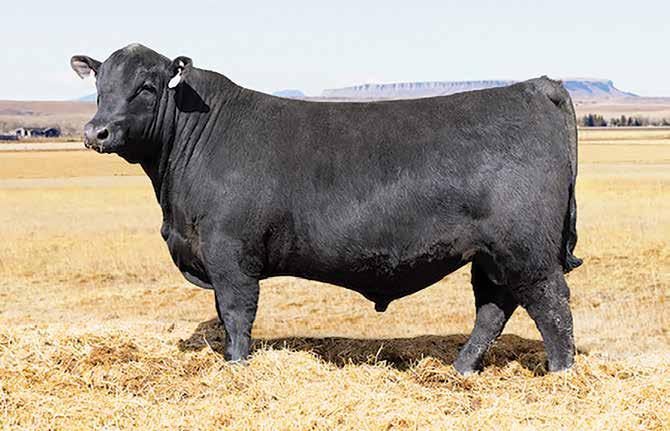
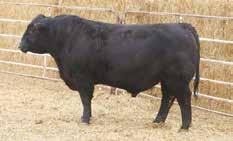
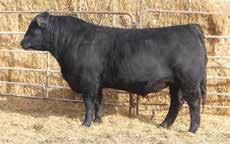
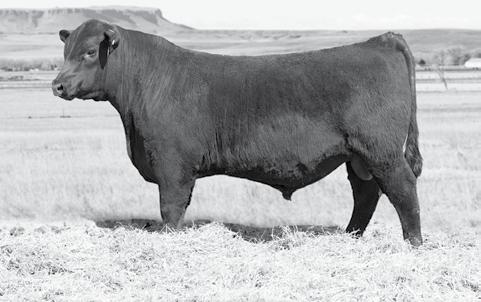
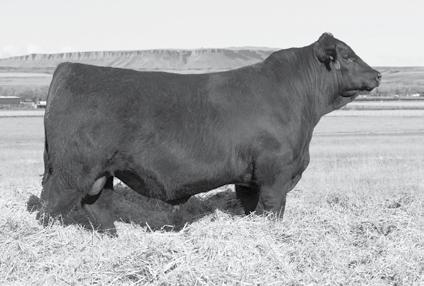
TBT Champion Bull – Following the annual 112-day Treasure Bull Test, leaders are named in average daily gain (ADG), weight per day of age (WDA) and Treasure Bull Test Index (TBT). Pictured is the 2026 TBT Champion Bull, lot 124, WWAR Conclusion 2329, a consignment of West Wind Angus Ranch of Roundup, Mont. and son of V A R Conclusion 0234. This bull had a TBT of 116.53, an ADG of 5.19, a WDA of 3.50 and EPDs of BW 3, WW 96, YW 169 and M 30. Bulls evaluated in the Treasure Bull Test will sell on April 21 at the Western Livestock Auction in Great Falls, Mont. beginning at 1 p.m. Courtesy photo
Reeves selected as UW president
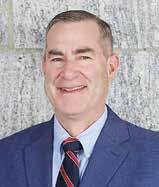
The University of Wyoming (UW) Board of Trustees has selected Brigadier General Shane Reeves, a Wyoming native with a distinguished academic and military leadership career, to serve as the university’s next president.
Originally from Sweetwater County, Reeves currently serves as the dean of the Academic Board at the U.S. Military Academy in West Point, N.Y.
He will take office as UW’s 29th president in July, replacing current president Ed Seidel. The position is a four-year contract with an annual base salary of $500,000.
“I am deeply honored and humbled to return home and serve as the next president of UW,” Reeves says in an April 2 article published by UW’s Institutional Communications Department and written by Nick Seeman. “The future is bright for our incredible community, and I am excited about what we will accomplish together.” Academic and military background
Reeves graduated from Rock Springs High School in 1992. He then enrolled at West Point Academy and earned a bachelor’s degree in European history in 1996.
He earned a Juris Doctor from the College of William
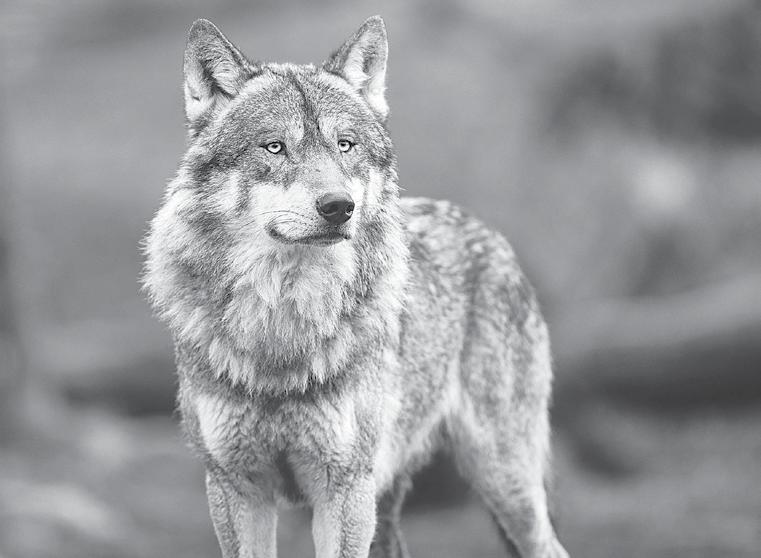
Cody Roberts of Daniel was sentenced to 18 months of county-supervised probation with strict terms on April 8 after previously pleading not guilty to the felony charge of animal cruelty to a young gray wolf.
He was initially charged with the Feb. 29, 2024 alleged torture of an injured wild animal – a gray wolf he caught legally in Wyoming’s wolf predator zone. Roberts then took the subdued wolf, leashed and collared, into a local bar before taking it outside and shooting it.
A secret Sublette County Grand Jury, called by Sublette County Attorney Clayton Melinkovich, indicted Roberts for the felony charge last August. The charge was then filed in Ninth District Court, where
Lambing Webinar
UW Extension discusses lamb survival and ewe performance ahead of lambing season
On March 17, the University of Wyoming (UW) Extension Sheep Task Force held the first of two webinars in the task force’s gestational and lambing miniseries, focused on lamb survival and ewe performance.
The webinar featured a presentation on the importance of colostrum and considerations for passive transfer by UW Extension Sheep Specialist Dr. Whit Stewart, as well as comments from Isaac Brunkow and Steve Kier, staff members at the U.S. Department of Agriculture (USDA) Animal Research Service’s U.S. Meat Animal Research Center (MARC) located in Clay Center, Neb.
Importance of colostrum
To underscore the importance of colostrum, Stewart emphasizes lambs are born without circulating antibodies. Since lambs do not receive antibodies across the placenta, they are dependent upon receiving maternal antibodies from the ewe’s colostrum – a process called passive transfer.
Judge Kate McKay passed it to Third District Court Judge Richard Lavery of Sweetwater County.
Roberts faced 18 to 24 months in prison, a $5,000 fine or both.
Roberts had pleaded not guilty at his Nov. 10, 2025 District Court arraignment via video conference. Then on Feb. 25, Roberts, his attorney Robert Piper and prosecutor Melinkovich posted a plea agreement they submitted to Lavery –almost two years after the actual incident. Changed plea to guilty On March 5, four days before his scheduled weeklong trial, Roberts changed his plea to guilty before Lavery in the Pinedale courtroom. Dozens of
Shane Reeves Courtesy photo
On March 16, around 4,000 union workers went on strike against the JBS packinghouse in Greeley, Colo. The decision to strike came after eight months of negotiations with JBS, a multi-national Brazilian company with packinghouses around the globe. JBS did not give in to any of the union’s demands.
The union is fighting an uphill battle as there are fewer fat cattle to process, and their demands, while valid, would cost JBS more money in a down market.
The union demands more workforce safety and higher wages to keep pace with Colorado’s cost of living. Union workers say the processing line speeds have increased to around 420 cattle per hour, up from 390 head. The union says this makes for unsafe working conditions on the processing line.
In reality, JBS has not been hurt badly by the strike. Sure, they’ve been hurt and have been losing money on every cow they’ve processed for the last couple of years, but by processing less cows, they are losing less money.
As many realize, there is an over capacity in beef packinghouses across America. Some packinghouses have completely closed down, while others have reduced hours or even shifts.
So far, there have been a number of union workers cross the line to work.
Estimated cattle slaughter for the week ending March 21 totaled 511,000 head, down from 525,000 the week before. These numbers are well below year-ago levels. This reduction has helped JBS’s bottom line.
Reduced slaughter means lighter beef supplies while pushing wholesale prices higher. For JBS, this strike is working exactly as they wanted from a supply standpoint – less production, higher prices and improved packer profitability.
For union workers, this is a high hurdle to jump over. They need higher numbers of cattle, which isn’t going to happen until the end of the decade at the soonest. It doesn’t sound like the union will get more than small victories from JBS.
To me, it sounds like JBS will be not be losing much on their margins with less cattle and their beef cutout prices will be higher.
For consumers, this will mean higher prices at the grocery store, especially for ground beef.
Cattle feeders will most likely be at the mercy of the meatpackers. Some weeks make a little and some weeks lose some.
For producers, cattle should stay similar to prices we see now. Record low numbers of cattle and ever-growing demand worldwide for American beef will drive markets higher to a price reflecting what cattle are actually worth today.
The U.S. is working with China and Saudi Arabia to open the door for U.S. beef exports.
Hopefully, talks in May between President Donald Trump and the president of China will convince China to allow U.S. beef packinghouses to process and export beef.
Saudi Arabia’s Food and Drug Authority recently announced it is no longer requiring participation in the Export Verification program, opening the door for expanded exports of U.S. beef.
The demand for U.S. beef is growing.
GUEST OPINIONS
Budget sessions are never easy. They force hard choices about what we value most and what kind of future we want to build.
This year’s Budget Session in Cheyenne was no exception. At times it was tense and deeply contested, but in the end, something important happened – the people of Wyoming spoke.
They spoke up about “cutting just to cut” changes made to Wyoming’s biennial budget. They came out loud and clear, making their voices heard to legislators taking votes on their future. They
reminded lawmakers budgets are not abstract things – they affect real people.
At my town halls in February and March, during phone calls, in conversations across communities and in messages directly to legislators, the people of Wyoming made it clear what matters most.
They reminded all of us Wyoming works best when we stay focused on the essentials, the practical things that support families, strengthen communities and prepare our state for the future. And their voices changed the trajec-
tory of proposals which would have halted key investments in our future.
In my State of the State Address to the legislature just a few short weeks ago, I reminded members of the body to see each other as allies, using the words of President Abraham Lincoln, “We are not enemies, but friends. We must not be enemies. Though passion may have strained, it must not break our bonds of affection.”
Even as national politics attempts to polarize us as a state, we must not let
of the West Phone: 307-234-2700 800-967-1647 • www.wylr.net
High school and middle school students are encouraged to hop online on April 19 at 5 p.m. for Wyoming 4-H’s Sixth Annual Virtual Career Night.
Hosted on Zoom, the event provides an opportunity for young people to interact with professionals in fields ranging from veterinary science, fire safety and law enforcement to counseling, theatrical costume design and real estate.
This year’s speakers include the director of Colorado State University’s Drone Center, a Virginia fire marshal, the chief executive officer of a Wyoming tech company and a wardrobe manager for the live entertainment company Cirque du Soleil.
While the career fair is organized by Wyoming 4-H educators in partnership with other land-grant universities, it is free and open to any young people interested in attending.
To register and view speaker information, visit bit.ly/ wy-4h-career-fair
Each presentation includes a live question and answer session and will last approximately 20 minutes. Participants can attend three sessions of their choice. Following the event, recordings of each session will be posted at bit.ly/ wy-4h-career-fair
Event partners include Colorado State University Extension, University of Idaho Extension, Montana State University Extension, Utah State University Extension and Virginia Cooperative Extension. Door prizes are provided by local sponsors.
For more information, contact Washakie County 4-H Educator Amber Armajo at amwall@uwyo.edu or 307347-3431.
Spring webinar set
A webinar titled “Nebraska Cattle Health Outlook: New World Screwworm (NWS) Update, Scours Prevention and Diagnostics and University of NebraskaLincoln (UNL) Research on Bovine Pinkeye” will be held on April 16 from 6 to 7:30 p.m. via Zoom.
The webinar is designed for Nebraska beef producers and allied industry professionals seeking timely, researchbased information on late-spring herd health risks.
Dr. Matt Hille, assistant professor and diagnostic pathologist at the Nebraska Veterinary Diagnostic Center, will lead the session. Topics will include an update on NWS, prevention and diagnostic strategies for calf scours and UNL research on bovine pinkeye.
The webinar will provide practical guidance to help producers make informed herd health decisions heading into the late spring and summer months.
Registration is available at pears.io/events/nebraskaextension/5109
For more information, contact Brock Ortner at bortner2@nebraska.edu or 308-327-2312.
Brucellosis info released
The Wyoming Game and Fish Department (WGFD) mailed or handed out about 8,500 blood collection kits to elk hunters in 2025 to test for brucellosis. The department’s Wildlife Health Laboratory received 753 samples suitable for testing, and 22 tested positive for exposure to the bacterial disease.
Annual surveillance is conducted in elk herds surrounding the brucellosis designated surveillance area (DSA) and in herds which do not utilize state or federal feedgrounds. Additional surveillance occurs in one-quarter of the hunt areas outside of the DSA annually, which provides coverage of the entire brucellosis non-endemic area every four years.
More than 25,000 elk blood samples have been analyzed by the lab since the program’s inception in 1991.
Surveillance in 2025 included the western slope of the Bighorn Mountains, the eastern and southern border of the DSA, the Cody Elk Herd and the eastern edge of Wyoming.
Brucellosis prevalence in the Cody Elk Herd has increased from about 14 percent during a five-year period from 2016-20 to 20 percent from 2021-25.
The Gooseberry Elk Herd in the southwest Big Horn River Basin in Hot Springs and Park counties, saw brucellosis prevalence drop from nearly 25 percent in 2016-20 to just over 20 percent in 2021-25.
The Wiggins Fork Elk Herd in northwest Wyoming saw brucellosis prevalence drop from just under 10 percent in 2016-20 to just below five percent in 2021-26.
In 2026, the rotating surveillance area will focus on the eastern and southern slopes of the Big Horn Mountains, which encompasses Elk Hunt Areas 33, 34, 35, 36, 37, 38, 47, 48 and 120. Enhanced surveillance will be conducted in Elk Hunt Area 25 and in the Cody Elk Herd, which encompasses Elk Hunt Areas 55, 56, 58, 59, 60 and 61.
Efforts to survey around the eastern and southern border of the DSA and along the western slope of the Big Horn Mountains will continue.
For more information or to view the WGFD’s annual brucellosis report, visit wgfd.wyo.gov
Free webinar offered
Nebraska producers and landowners affected by recent wildfires can learn more about federal disaster assistance and recovery options during an upcoming webinar hosted by the Center for Agricultural Profitability at the University of Nebraska-Lincoln.
The webinar, “Wildfire Recovery Programs: U.S. Department of Agriculture (USDA) Resources for Nebraska,” will be held at 11 a.m. on April 15.
It will feature representatives from the Nebraska state offices of the USDA’s Farm Service Agency and Natural Resources Conservation Service, who will discuss available programs and considerations for those working through wildfire recovery.
The presentation will cover USDA resources related to livestock losses, grazing and forage losses, fencing and water infrastructure repair, debris removal and eligible conservation assistance.
Speakers will also explain how those programs apply in the current wildfire response and what producers and landowners should know as they work with local USDA offices.
The webinar is free to attend, but registration is required.
For more information or to register, visit cap.unl.edu/ webinars
Open house scheduled
The Wyoming Game and Fish Department is hosting a public open house to discuss the latest fisheries management activities, research and regulation updates concerning the Flaming Gorge Reservoir, the Green River and other southwest Wyoming waters.
The event is an opportunity for anglers and interested citizens to connect directly with regional fisheries biologists, ask questions and provide feedback on the management of these vital resources.
The open house will be held on April 16 at 6 p.m. at the Green River Regional Game and Fish Office.
Potential topics for discussion include highlights on prominent fisheries in the region, including recent fish population assessments and access improvements; an overview of coming changes to aquatic invasive species regulation; introduction of the new Regional Fisheries Biologist Colton Curtis and a question and answer session.
Waters to be discussed – but not limited to – will include Flaming Gorge Reservoir, Fontenelle Reservoir, the Green River, Sulphur Creek Reservoir and Viva Naughton.
For more information, visit wgfd.wyo.gov
go of the Wyoming value of neighbor helping neighbor.
My reminder to the legislature was and is heartfelt –we must not let the divisiveness of national issues drive us to hate our neighbor.
Wyoming is Wyoming because of our kindness, friendliness and can-do attitude. Let us never break the
bonds of affection for one another.
I was heartened to see, despite the temptation of locking horns, pitting us against them – whomever “them” are – Wyoming said something more significant mattered – our shared future.
I also asked our legislators to work together to
build something strong for Wyoming’s future, and I reminded them this session would be remembered for either what we built together or what they chose to tear down. I am grateful a majority of them chose to build.
Our children will remember that.
In funding essential ser-
FEEDERS
vices like education, the University of Wyoming, healthcare for our young and old, a strong workforce, economic development, protecting Wyoming’s interests wherever they are challenged and advancing our key industries, we strengthened Wyoming’s future.
The budget we passed together reflects much of the spirit of building for the future.
WEDNESDAY, APRIL 15, 2026 - FEEDER SPECIAL
Hester Farms 350 Blk Strs & Hfrs, 650-775#, Weaned a long time, Bunk Broke, Been on a Grower Ration, Branding and Pre-cond. Shots: Vista Once, Vision 7 w/Somnus, Weaning Shots: Pyramid IBR, Safeguard, Poured w/Ivomax in March No Implants, Knife Cut, Home Raised, Many generations of Ken Haas Genetics Lazy T Ranch 205 Red/Blk Strs, 800#, Weaned since December, Bunk Broke, Been on a Light Grower Ration, Complete Mineral Program, Booster Shots in April: Vista Once SQ, Vision 7 w/Somnus, Bovi-Shield Gold 5, Safeguard Wormer, Poured w/Ivermec, No Implants, Knife Cut Sired by Reputation Bulls from 5L, TJS and Leachman Greg Flitner/Eleven Bar One LLC 140 Blk/Bwf Strs & Hfrs, 700#, Weaned since Oct. 1st, Been on a light Grower Ration, 3 Rounds of Shots, Poured, No Implants, Heifers are Bangs Vac., Steers are Knife Cut, 1-iron, Home Raised Larry Steinle 100 95% Blk bal Rd Strs, 650#, Weaned a long time, Running Out on Pasture supplemented with Hay and Alf Protein Tubs, Bunk Broke, Complete Vac. Program, Poured, Knife Cut, No Implants, Selling ONLY due to drought conditions; Normally sell at Torrington Livestock Mid-September coming off grass weighing 975#, These steers are Growth and Thick; Ready to to Go! Kurt Barker 95 Blk/Bwf Hfrs, 650-750#, Weaned a long time, Bunk Broke, Been on a Grower Ration, Complete Vac. Program, Bangs Vac., Home Raised, Replacement Quality
Kyle Murdoch 78 Blk/Bwf Hfrs, 850-900#, Weaned a long time, Been on a Grower Ration, Complete Modified Live Vac. Program, Poured, Bangs Vac., Replacement Quality, Originated from one ranch with intentions to breed; Selling ONLY Due the Drought Conditions Brandon/Mike Werner 50 Red Angus Strs, 800-900#, Weaned since October, Bunk Broke, Been on a Corn Silage/Ground Hay Ration, Been on a Complete Mineral Program, Complete Vac. Program, Home Raised Circle H Farm/Norman Hochstetler 45 Mostly Blk Hfrs, 650-700#, Weaned a long time, Been on a Light Grower Ration, Complete Vac. Program, Poured (3x), Bangs Vac., Replacement Quality, Sired by Ochsncr-Roth Cattle Blk Bulls RLX Inc. 42 Mostly Blk Strs & Hfrs, 675-700#, Weaned a long time, Been on a Grower Ration, Full Vac. Program Ole Ranch Inc. 30 Mx Hfrs, 850-1000#, Complete Vac. Program
Mike Cain/Brian Faber 28 Blk/Bwf Hfrs, 800-825#, Weaned since Oct. 20th, Running out on grass supplemented with Alfalfa Hay and 1# of corn per day, Branding Shots: Vision 7 Somnus w/Spur, Pre-cond. Shots: Vision 7 Somnus w/Spur, Pyramid 5+Presponse, Nasalgen, Shots on Nov. 4: Bangs Vac, Pyramid 5+Presponse, Dectomax Injectable, Replacement Quality, Selling only due to drought conditions, Home Raised, Bunk Broke, Electric Fence Broke, Blk Heifers are Sired by Ochsner-Roth Blk Bulls, Bwf Heifers are Sired by McMurry Bulls out of Billings, MT Hilltop Hay and Livestock 12 Mx Strs & Hfrs, 990-1080#, Weaned a long time, Bunk Broke, Been Started on Fed, Complete Vac. Program Fred Larsen 10 Mx Strs, 750-825#, Weaned since October, Bunk Broke, Been on a Corn Silage/Ground Hay Ration, Been on a Complete Mineral Program, Complete Vac. Program, Home Raised
Jermiah Harrison 10 Mostly Blk Strs & Hfrs, 675-700#, Weaned a long time, Been on a Grower Ration, Complete Vac. Program Carol Eisele 10 Red/Blk Angus Hfrs, 650-700#, Weaned a long time, Been on a Grower Ration, Complete Vac. Program WEANED CALVES
Aaron Sorsensen 320 Blk Strs & Hfrs, 450-500#, Weaned for 60 days, Bunk Broke, Been on a Grower Ration, One Round of Shots Falls Ranch 200 Blk Hfrs & Strs, 525-625#, Weaned a long time, Been on a Grass Grower Ration, Complete Modified Live Vac. Program, Fancy, Reputation Calves with Strictly Vermilion Genetics, Home Raised, Wintered for grass
Barney Ranches 200 Fancy Blk Hfrs, 550-650#, Weaned since November 18, Hay Fed, Complete Modified Live Vac. Program, Bangs Vac., No Implants, Wintered for grass, High Elevation, Home Raised
Kelley Land & Cattle 120 Mostly Blk few Rd Strs, 550-700# (majority 550-625#), Weaned a long time, Bunk Broke, Been on a Light Grower Ration, Complete Modified Live Vac. Program, Wintered for Grass, Age & Source, NHTC, All Natural Certified thru IMI Global, (Note: few have been Doctored; they have Notch in eartag; can be sorted off)
Charles & Tracy Martin 95 Mx Strs & Hfrs, 450-550#, Weaned 45 days, Bunk Broke, Been on a Grower Ration, Branding Shots: Vista Once SQ, 7-way, No Implants, No Brands, September/October Born, Sired by Angus or Sim/Angus Bulls Terry Regan 80 Mx Strs & Hfrs, 250-300# (few 650-700#), Weaned since Oct., Been on Chopped Hay, Branding Shots: Nasalgen, Pyramid 5, Wormed w/Safe Guard, Pre-cond. Shots: Nasalgen, Pyramid 5, Pinkeye, Wormed w/Safeguard, Booster Shots on Feb. 14: Poured w/Ivermec, Wormed w/Safe Guard
Ron Lien 30 Mostly Blk Strs & Hfrs, 400#, Weaned a long time, Running out on Cornstalks, 2 Rounds of Shots Betschart Land & Livestock 23 Blk Strs, 500-600#, Weaned 35 days, Free Choice Grass/Alfalfa Mix, 2# of Flake Corn, Been on a Mineral Program, Branding Shots: Bovi-Shield Gold 5, Vision 7 w/Somnus, Pre-cond. Shots: Pyramid 5 w/Presponse, Vision 7 w/Somnus, Cydectin Pour On, Weaning Shots: Bovi-Shield Gold 5, Clean Up Pour on, Home Raisedk Out of a Fall Calving Herd (Sept/Oct Born), Bunk Broke, Hot Wire Broke, 100% Sired by TD Angus Bulls Roxie Adams 16 Mx Heifers/Bull Calves, 450-550#, Weaned 20+ days, Hay Fed/Creep Feed, Bunk Broke, No Shots, Producer All Natural CATTLE COUNTRY VIDEO - 1:00 Lot 430 – FX Land Company – 550 Yearling Steers, Base Wt: 710, Slide: 18¢ off @ base weight, Wt Stop: 735, Frame: Med-Large, Flesh: Med, Breed: 100% Black/BWF, Location: FX Land Co., 20 mi N of Scottsbluff, NE, Origin: Purchased from E WY, W NE & W SD, Delivery: 4/16/2026–4/21/2026, Feed: Native pasture, salt, mineral & cake, Shots: Complete vaccination at purchase, boosted with 20/20 Vision 7/Spur and poured in January, Weigh Up: Early AM gather, sort for loads, haul on buyer’s pre-weighed trucks and weigh with a 2% shrink, Comments: Fancy steers purchased in load lots and locally with outstanding eye appeal and reliable delivery, buyer has option on gate cut of two loads or more, cattle have been running out receiving cake, green and ready to explode on grass or full feed, Rep: Torrington – Michael Schmitt (307) 532-1776 Lot 431 – Tyler & Jaimee Mollohan – 110 Yearling Steers, Base Wt: 980, Slide: 12¢ off/on up to 25# over/under base weight, Wt Stop: 1005, Frame: Med-Large, Flesh: Med, Breed: Black/BWF with 40 hd Charolais English X and Red/RWF; predominantly Black Angus & Black Angus Continental X, Location: Mollohan Feedyard, 33 mi SE of Sterling, CO, Origin: Purchased From CO, Delivery: 4/16/2026–4/23/2026, Feed: High roughage grower ration – ground wheat hay (20%), corn silage (60%), dried distillers grain (13%) & milo (7%), ADG predicted at 2.25–2.5 lbs/day, Shots: Weaning – Pyramid 5, Autogenous Bacterin for Histophilus somni, Mannheimia haemolytica Types 1 & 6, Mycoplasma bovis, Pasteurella multocida Type A, Weigh Up: Early AM gather from pen, weigh on the ground with a 3% shrink and weigh back any cuts, approx. 2–54,000 lb loads, Comments: Big-framed, thick-made feeder steers originally intended for grass but performed well this winter, pre-sorted and test weighed, no implants by this owner, Rep: CCV – Chuck Petersen (307) 575-4015 Lot 432 – Cooper & Andy Gray – 105 Weaned Steer Calves, Base Wt: 500, Slide: 40¢ off @ base weight, Wt Stop: 510, Frame: Med-Large, Flesh: Med, Breed: 100% Charolais X; Black Angus & Red Angus cows; Charolais (Linskov) bulls, Location: Corrals, 15 mi S of Douglas, WY, Origin: Ranch Raised, Delivery: 4/16/2026–4/20/2026, Feed: Running on native pasture with protein tubs and salt, supplemented with hay as needed, Shots: Branding – Vista Once & Vision 7; Pre-Cond – Pyramid 5 + Presponse & Vision 7/Somnus, Weigh Up: Early AM gather, weigh on the ground with a 2% shrink, Comments: Fancy, handy-weight, late summer calves wintered to go to grass, very green, pre-sorted from 132 hd, test weighed 106 hd at 489 lbs gross, Rep: Torrington – Ty Thompson (307) 340-0770 Lot 433 – Indian Creek Cattle – 129 Weaned Steer Calves, Base Wt: 845, Slide: 16¢ off/on up to 25# over/under base weight, Wt Stop: 880, Frame: Med to Med-Large, Flesh: Light-Med, Breed: 100% Black/BWF; Black Angus, Angus X & some Red Angus cows; Registered Black Angus (Miller Angus & Mt. Rushmore Angus) bulls, Location: Symonds Feedlot, 10 mi N of Mitchell, NE; 10 mi W of Scottsbluff, NE, Origin: Ranch Raised, Delivery: 4/18/2026–4/25/2026, Feed: Light grower ration targeting 2–2.25 lbs/day gain, Shots: Spring & Fall program; Weaning – Inforce 3, Probac 4, Safeguard; Booster – BoviShield Gold 5 & 7-Way/Somnus, Weigh Up: Early AM gather from empty bunk, weigh on the ground with a 3% shrink, sort and weigh back cuts, Comments: Fancy home-raised black and BWF steers, backgrounded for grass condition, light to medium flesh with flexibility to go either direction, good frame, bone and muscle to get big, no implants, strong shot program, easy to handle, test weighed on 04/06, Rep: CCV – Richard Zweifel (605) 209-6307 Lot 434 – Indian Creek Cattle – 239 Weaned Heifer Calves, Base Wt: 725, Slide: 18¢ off/on up to 25# over/under base weight, Wt Stop: 750, Frame: Med to Med-Large, Flesh: Light-Med, Breed: 100% Black/BWF; Black Angus, Black X & some Red Angus cows; Registered Black Angus (Millar Angus & Mt. Rushmore Angus) bulls, Location: Symonds Feedyard, 10 mi N of Mitchell, NE; 10 mi W of Scottsbluff, NE, Origin: Ranch Raised, Delivery: 4/18/2026–4/25/2026, Feed: Light grower ration targeting 1.75 lbs/day gain, Shots: Spring & Fall program; Weaning – Inforce 3, Probac 4, Safeguard; Booster – BoviShield Gold 5 & 7-Way/Somnus, Weigh Up: Early AM gather from empty bunk, weigh on the ground with a 3% shrink, sort and weigh back cuts, Comments: Fancy home-raised heifers, green to light flesh and ideal for grass, opportunity to sort out a strong set of replacements or run all as grass/feedlot heifers, good frame and bone with growth potential, good disposition and extensive shot program, test weighed on 04/06, Rep: CCV – Richard Zweifel (605) 209-6307 Lot 435 – Heiting Cattle Inc. – 126 Weaned Steer Calves, Base Wt: 875, Slide: 14¢ off/on up to 25# over/under base weight, Wt Stop: 900, Frame: Med to Med-Large, Flesh: Light-Med, Breed: 100% Black/BWF, Location: Heiting Ranch, 3 mi S of Hay Springs, NE; 45 mi N of Alliance, NE, Origin: Purchased From W SD & W NE, Delivery: 4/20/2026–4/22/2026, Feed: Grower ration targeting 2.5 lbs/day gain, Shots: One Shot BVD, Inforce 3, Dectomax injectable, Pyramid 5 + Presponse, Vision 7/Somnus; Booster – BoviShield Gold & 7-Way/Spur, Weigh Up: Early AM gather from empty bunk, sort to buyer’s pre-weighed truck, haul 3 miles and weigh on the truck with a 3% shrink, Comments: Choice to fancy steers selling due to a previous CCV purchase coming in heavier than desired for grass, good frame with light to medium flesh, cattle that will go to work and get big, test weighed, Rep: CCV – Richard Zweifel (605) 209-6307
FRIDAY, APRIL 17,
-
It’s true none of us got everything we wanted, but all of us have taken pride in what we accomplished. This is what James Madison, Alexander Hamilton, John Jay, John Adams, Thomas Jefferson and the rest envisioned. What an achievement for our 250th anniversary.
There were acts of courage, too, which must be recognized, as legislators stood up against out-ofstate interests who prosper from conflict.
While many of these invasive efforts were defeated, thanks to the citizen voice, know these merchants of fear will be back this summer to try and influence the vote just as they will be here next session to try and earn their keep from their national overseers.
Wyoming stands strong today, and we are built to lead. Nothing could be more obvious from our character.
Our economy is resilient, our opportunities are growing and our people remain the most capable, hardy and determined anywhere in this country. The future we want for Wyoming will not happen by accident. Eternal vigilance is the price of liberty.
Liberty is not a gift. It is an achievement requiring us to continue embracing the enduring values which
have always carried this state forward, a commitment to freedom, to local control, to responsible government and to an economy which welcomes growth, innovation and opportunity without changing the character or values of our state.
We are beset by so many from outside our borders who see Wyoming as an easy political prize, but it takes independence and grit to live here. We do not surrender.
The men and women who built Wyoming understood something we should never forget. They knew their responsibility was not simply to manage the present, but to build a foundation strong enough for those who would come after them.
We are but stewards of this remarkable state for the next generation. When we focus on what truly matters, the essentials and if we remember to leave things better than we found them, I have no doubt Wyoming’s best days are still ahead of her. Because Wyoming was built to lead.
Mark Gordon was elected Wyoming’s 33rd governor on Nov. 6, 2018. He was sworn into office on Jan. 7, 2019 and re-elected on Nov. 8, 2022, garnering 74 percent of the vote. He can be reached by visiting governor.wyo.gov/.
Public meeting set
The Bureau of Land Management will host a public meeting in Newcastle to provide information about the Bridger Pipeline Expansion Project on April 13 from 5-7 p.m. at the Newcastle Lodge and Convention Center.
The notice of intent to begin public scoping on the project was published in the Federal Register on April 1.
Only written comments will be accepted at the public meeting.
Two additional meetings will be held in Montana, and one additional meeting will be virtual.
For more information, visit blm.gov
NWS playbook released
The U.S. Department of Agriculture’s (USDA) Animal and Plant Health Inspection Service (APHIS) is sharing the updated New World Screwworm (NWS) Response Playbook, a comprehensive guide designed to support coordinated, science-based action should NWS be detected in the U.S.
The updated playbook outlines critical science-based strategies for federal, state, Tribal and local responders, including how to coordinate response operations, reduce spread and prevent establishment of NWS in new areas; manage the pest in infested animals; implement NWS fly surveillance and control measures; maintain continuity of business and support efficient information flow and situational awareness.
APHIS shared a draft playbook in October 2025 and worked to gather feedback from state animal health officials, federal partners, livestock and wildlife industry groups, Tribal partners, veterinary organizations and other key stakeholders to prepare the updated version.
Based on this feedback, APHIS made several key updates including clarifying and expanding terminology; agency roles, responsibilities and authorities; animal movement requirements and wildlife management, including improved description of roles, responsibilities and authorities related to wildlife; added and improved definitions of confined, farmed and free-ranging wildlife; refined guidance on use of antiparasitic drugs and pesticide for use on or in wildlife and development guidance on wildlife surveillance.
To ensure continued alignment with state-level plans and industry practices, APHIS will continue to revise the playbook as preparedness activities advance and evolve. For more information or to access the NWS Response Playbook, visit aphis.usda.gov/animal-emergencies/nws
“One hundred percent of a lamb’s immune function comes from colostrum consumed within the first 24 hours,” Stewart states, noting colostrum intake impacts everything from protection in the first stages of life to critical nutrients and signals affecting digestion and growth.
“Without colostrum, the lamb’s immune system fails entirely,” he adds.
Passive transfer
Stewart also provides some context on what makes for good colostrum and successful passive transfer from both an immunological and a nutritional perspective, noting concentration of colostrum and adequate consumption are both critically important.
Stewart also highlights the importance of timing for successful passive transfer, noting concentrations of colostral antibodies and fat-soluble vitamins decrease soon after lactation begins as colostrum supply is replaced with milk.
Additionally, he emphasizes a lamb’s ability to absorb colostral antibodies is time sensitive, as changing pH levels in the gut and the changing structure of the small intestine leads to a decreased ability to absorb antibodies as time progresses.
In addition to proper timing, it is also critical to ensure lambs get enough colostrum to get off to a good start immunologically.
“A lot of our challenges with failed passive transfer are a result of inadequate consumption,” Stewart says, noting in cases where lambs struggle to suckle, intervention with an esophageal feeder may be required.
Ewe considerations
Since antibodies are passed from ewes to lambs, Stewart lists some factors to take into consideration in order to prepare ewes for successful passive transfer ahead of lambing.
He also notes studies have shown good energy supplements can have positive outcomes on colostrum production.
“Undernutrition will reduce the amount of colostral antibodies present and the quantity of colostrum produced,” Stewart says. “A readily available soluble energy source, whether from a digestible byproduct or a more concentrated energy source like corn or grain, can help improve the quality and quantity of colostrum produced.”
Additionally, Stewart notes vaccinations ahead of lambing can help ensure colostral protection is achieved.
He highlights the importance of clostridial vaccinations in late pregnancy –administered around four weeks before lambing – to increase antibodies in the bloodstream and protect against diseases like enterotoxemia and tetanus.
Stewart also cautions against vaccinating lambs within the first 24 to 48
hours of life, noting these early vaccinations can actually antagonize the passive transfer process.
Finally, Stewart highlights some benefits of incorporating tools like refractometers and other resources into lambing operations in order to assess colostrum quality and be better prepared to give young lambs a leg up.
Orphan lamb management
Following Stewart’s presentation, Brunkow and Kier share comments on their work at U.S. MARC to reiterate the importance of colostrum in early stages of life and offer some insight on orphan lamb management.
According to Brunkow, roughly 2,000 head of breeding ewes are housed at U.S. MARC, with a flock composed of five breeds –Suffolks, Polypays, Katahdins, Composite IV or “Easy Care” and Romanovs.
At the facility, Kier explains ewes are rarely left to raise more than two lambs, so in cases of triplets or higher, the smallest lambs are removed and raised in a nursery.
Additionally, lambs from ewes with lower milk production rates, orphaned or separated lambs, lambs with trouble suckling and hypothermic lambs are also given extra attention in the nursery.
Newborn nursery lambs are given a powdered colostrum solution, with Kier emphasizing he aims for 10 percent of the lamb’s bodyweight in fluid ounces of colostrum to be administered within the first two feedings.
After an orphan lamb establishes a strong ability to nurse and remain healthy, Kier says they are usually marketed as bottle lambs around three weeks of age.
The second installation of the UW Extension Sheep Task Force Gestational and Lambing webinar miniseries was held on March 26 and featured comments on nutritional strategies and research-based approaches to reduce metabolic stress around lambing from Stewart and Dylan Laverell.
Grace Skavdahl is the editor of the Wyoming Livestock Roundup. Send comments on this article to roundup@wylr.net.
Austin Snook • 307-290-2161
Taylor Snook • 307-290-2273
Craig Deveraux • 307-746-5690
Dan Catlin • 406-671-7715
Clint Snook • 307-290-4000
Cheyenne Seymour • 605-641-0638
Casey Sellers • 307-217-2614
Jim Forbes • 307-351-5932
"From the ring, to the video, and in the country, we market your livestock the
April 8, 2026
Another good sale here with great demand on all classes. No sale next week. Thank you for your business!
21 BLK-STRCF 772 381.00 WT 2,942.77
4 BLK-STRCF 530 527.50 WT 2,795.75
TOM & JODIE EDWARDS, BUSBY MT
BLK/BWF
3
SHANE HAMPSHIRE, LEITER WY
8 BLK/BWF X-STRCF 828 366.50 WT 3,032.78
L3H LLC, BUFFALO WY 2 BLK-STRCF 720 403.00
CLINTON W MCKENZIE, ARVADA WY
T
CATTLE
6F LIVESTOCK LLC, KAYCEE WY 13 RED-HFRCF
6 BLK/BWF X-BCOW 5,6L 1489 4100.00 HD .00
7 BLK/BWF X-BCOW,SM,L 1489 3650.00 HD .00 6 BLK/BWF X-BCOW,BM,L 1469 3200.00 HD .00
“President Donald Trump has made it a priority to return commonsense to the way our government works. Moving USFS closer to the forests we manage is an essential action which will improve our core mission of managing forests while saving taxpayer dollars and boosting employee recruitment,” says U.S. Secretary of Agriculture Brooke Rollins in the corresponding news release.
“Establishing a western headquarters in Salt Lake City and streamlining how USFS is organized will position the chief and operation leaders closer to the landscapes we manage and the people who depend on them,” she adds.
Logistics and restructuring
According to the U.S. Department of Agriculture (USDA), the relocation is expected to be completed by the summer of 2027 and will involve approximately 260 positions moving away from Washington, D.C., while about 130 employees remain in the capital.
As part of a broader restructuring initiative, USFS also announced it plans to shift away from its current regional structure to a statebased organizational model, in which the agency will establish 15 state offices, each led by a state director who is responsible for over-
seeing operations, partnerships and priorities within the assigned area.
A Northern Plains State Office will be erected in Cheyenne to serve Wyoming, North Dakota, South Dakota and Nebraska.
Regional offices will be phased out and functions will shift to a network of operational service centers located in Albuquerque, N.M.; Athens, Ga.; Fort Collins, Colo.; Madison, Wis.; Missoula, Mont. and Placerville, Calif.
Additional service center locations may be added as the transition progresses.
“Locations were selected based on existing USDA workforce and infrastructure presence, operational needs and efficiency and proximity to agricultural and natural resource stakeholders,” notes the USDA press release.
“Together, these centers will provide shared administrative, technical and enabling support to forests and state offices nationwide, allowing field leadership to focus more directly on actions to improve the health, productivity and resilience of our nation’s forests.”
“This approach is intended to simplify the chain of command, strengthen local partnerships and give field leaders greater ability to respond to conditions on the
ground,” USDA adds.
The agency’s reorganization also includes consolidating research operations into a single national program based in Fort Collins, Colo.
Currently, USFS operates multiple research stations across the country with separate leadership structures, but federal officials believe combining the programs will reduce administrative duplication and improve the application of science to land management decisions.
Despite these big changes, USDA emphasizes wildfire response and frontline operations will remain unchanged.
The USFS Fire and Aviation Management program will continue operating under its existing system, with no changes made for firefighters or aviation resources.
Agency officials also confirmed local forest and district offices, including those in Wyoming, are not expected to see immediate staffing changes as a result of the reorganization.
Support and criticism
Like most decisions made at the federal level, the USFS’s announcement to relocate its headquarters has been met with a mix of support and criticism.
Opponents argue restructuring the agency could disrupt operations during a period of increasing wildfire
HERRING ANGUS RANCH
(PAP tested in the fall and again in the spring prior to delivery)
risk and environmental stress across the West.
Some also raise concerns about possible staffing reductions, pointing to a similar relocation of the Bureau of Land Management during President Trump’s first term which resulted in high employee turnover.
Others, however, see the move as a long-overdue shift to align leadership with the communities and lands it manages, while potentially improving communication and responsiveness from agency leadership.
“This is a big win for Utah and the West,” states Utah Gov. Spencer Cox. “Nearly 90 percent of USFS lands are west of the Mississippi, so putting leadership closer to the lands they manage just makes sense.”
“This isn’t symbolic,” he adds. “It means bet-
ter, faster decisions on the ground. Everyone who depends on our public lands – from hikers and campers to ranchers and timber producers – will benefit from this change. Moving away from a regional model to a more state-focused approach strengthens federalism and helps USFS do its job more effectively. I appreciate Trump, Rollins and Deputy Secretary of Agriculture Alexander Vaden for taking this step. We look forward to welcoming Chief Tom Schultz and the dedicated men and women of the USFS to Utah.” Gov. Mark Gordon comments, “I’m pleased by the decision made by the USDA to relocate USFS headquarters to Salt Lake City. I look forward to and have worked for the enhanced on-theground management of our forest resources in Wyo-
ming that this decision will likely bring, which I believe is essential to overall management. The move is anticipated to provide more localized support, better and quicker management opportunities and a deeper federal understanding of western states’ specific needs.”
He continues, “I am optimistic about the opportunities this new organizational approach will bring Wyoming and the cooperative management of our state’s natural resources. Vital areas such as timber, energy development, wildlife and habitat, recreation and livestock grazing all stand to benefit from management closer to the forests they serve.”
Hannah Bugas is the managing editor of the Wyoming Livestock Roundup. Send comments on this article to roundup@wylr.net.
Treasure Bull Test has ever offered for sale. I challenge you to find the depth this sale offers anywhere in America,” says Ryan Perry, Treasure Bull Test owner and operator.
“The depth of quality from breed leading sires will be unparalleled anywhere. From phenotype and genotype to real-world performance, these bulls have the ability to enhance any program.”
Annual test and sale
Established in 1968 by Irvin and Bobbi Meiwald, Treasure Bull Test has grown into one of the West’s most recognized performance testing programs, building a reputation for high-quality, “cowboy-kind” Black Angus bulls that are athletic, growth-oriented, structurally-sound and designed to go straight to work.
After a decade under the Meiwalds ownership, the program was purchased by Russ and Barb Pepper who continued the Treasure Bull Test legacy for over 40 years before turning it over to Ryan and his wife Karnell.
Today, the Perrys receive roughly 150 bulls from consignors across the country each year at the end of October. Bulls are fed out at North Montana Feeders in Choteau, Mont. on a custom high-roughage ration of protein, highly-digestible fiber, chelated mineral supplement, vitamins and corn, designed to promote a steady gain of about three pounds per day.
Bulls are weighed upon arrival, then again at 56 and 112 days on feed to determine average daily gain (ADG) and weight per day of age (WDA), and at the end of the test, each bull is ultrasounded to collect carcass data.
Additionally, Treasure Bull Test Index (TBT) is measured using nursing ratio, yearling ratio and gain ratio, which is used to determine sale order.
Regarding this year’s test, Perry notes, “We started with 175 bulls from 31 different consignors which would represent the top one-half to one-quarter of their individual programs. We then put the yearlings through a ruthless and competitive test narrowing them down to 115 outstanding bulls, representing the top 70 percent.”
This top-end set of bulls will sell on April 21 at the Western Livestock Market in Choteau, Mont. at 1 p.m., following an 11:30 a.m. lunch.
On April 20, the day before the sale, the Treasure Bull Test crew will host its annual Happy Hour Bull Preview at 4 p.m., where buyers and consignors can mingle, enjoy snacks and refreshments and preview the bulls before they sell.
Bulls will also be available for viewing at Muddy Creek Feedyard in Vaughn, Mont. any time prior to the sale or online at northernlivestockvideo.com Test leaders
Among the lineup of bulls to sell at the 2026 Cowboy’s and Cowgirl’s Performance Bull Sale, Roundup, Mont.based West Wind Angus Ranch’s lot 124, WWAR Conclusion 2329, was named the TBT Champion Bull.
A son of V A R Conclusion 0234, this bull posted a TBT of 116.53, an ADG of 5.19 and a WDA of 3.50, as well as EPDs of BW 3, WW 96, YW 169 and M 30. In the ADG category, lot 78, GSAR Dollar Up 5050, took top honors with
an ADG of 5.53. This bull was consigned by Gem State Angus of Twin Falls, Idaho and is a son of Sitz Dollar Up 489Z. He posted a WDA of 3.69 and EPDs of BW 2, WW 65, YW 118, M 27 and TBT 113.7.
The reserve champion ADG bull was lot 165, GK Kodiak N018, with an ADG of 5.34. This bull was consigned by Skogen GK Angus of Fort Shaw, Mont. and sired by Baldridge Kodiak. He reported a WDA of 3.16 and EPDs of BW 0.3, WW 67, YW 120, M 31 and TBT 109.87.
Topping the leaderboard with the highest WDA was lot 63, Legacy Rise Above 505, with a WDA of 3.93. This bull was consigned by Legacy Ridge Angus of Chinook, Mont. and sired by Stellpflug Hoffman Rise Above. He had an ADG of 4.64 and EPDs of BW 1.6, WW 104, YW 177, M 25 and TBT 113.24.
Lot 134, RKP 107-9446 51, claimed the reserve champion slot with the second-highest WDA of 3.89.
This bull was consigned by RK Perry of Power, Mont. and sired by Long Teton 107. He posted an ADG of 4.35 and EPDs of BW 0.3, WW 88, YW 178, M 27 and TBT 108.41.
Additionally, Choteau, Mont.-based Gollehon Angus’ lots 94, 98 and 99 – all sired by Sitz Incentive 704H – were recognized as the Champion Sire Group, followed in reserve by Geraldine, Mont.-based Windy Ridge Angus’ lots 6, 7 and 9, which were sired by CAR Hobson J670.
Jackpot champions
Each year, Treasure Bull Test holds an annual jackpot, which was started several years ago by the Peppers.
“It’s a little contest where every consignor gets to throw a $100 bill in the pot,” Perry explains. “The consignor picks one bull from their consignment list on the day of arrival – the bull they think will gain the best. These bulls are indexed separately from TBT – which is measured by one-half ADG ratio,
one-fourth 205-day ratio and one-fourth 365-day ratio. The winners take all.”
This year, the Treasure Bull Test Jackpot Champion was lot 78, GSAR Dollar Up 5050, with an Index of 118.55. Consigned by Gem State Angus and sired by Sitz Dollar Up 489Z, this bull posted an ADG of 5.53, a WDA of 3.69 and EPDs of BW 2, WW 65, YW 118, M 27 and TBT 113.7.
Cummings Cattle of Cascade, Mont. took home reserve champion honors with lot 42, CC Ashland 5002, with an Index of 117.53. A son of G A R Ashland, this bull had an ADG
of 5.07, a WDA of 3.59 and EPDs of BW 2.2, WW 85, YW 152, M 31 and TBT 116.04.
Rounding out the top three jackpot winners was lot 129, YAR Deadwood 551, with an Index of 116.32. This bull was consigned by Yellowstone Angus Ranch of Reed Point, Mont., sired by 7 E G Deadwood L201 and posted an ADG of 4.98, a WDA of 3.71 and EPDs of BW 1.1, WW 78, YW 139, M 33 and TBT 115.13.
Hannah Bugas is the managing editor of the Wyoming Livestock Roundup. Send comments on this article to roundup@wylr.net.
potential Sublette County jurors were on standby. Roberts indicated he did not plan to go to trial.
Lavery questioned Roberts about changing his plea and reviewed the proposed plea agreement.
It stated Piper and Melinkovich jointly recommended incarceration of 18 months to two years to be suspended, and a fine of $5,000, with $4,000 suspended, in favor of 18 months of successful supervised probation.
Agreed-upon conditions of probation include no hunting, including shed hunting, or fishing whatsoever for the entirety of probation; no alcohol or entry into or presence within bars, lounges or liquor stores and to follow all recommended treatment from ASI – substance abuse – evaluation and standard and additional conditions as enumerated by the court at the court’s discretion.
Under the agreement, Roberts would pay mandatory court costs and assessments and a $300 victim compensation surcharge.
The drafted plea agreement noted Roberts understood Lavery was not obligated to accept it.
Pre-sentence report
On April 8, Lavery said he observed Roberts during
previous court hearings, and the required pre-sentence investigation (PSI) report filled in a lot of details about Roberts’ personal life, longtime family history and lack of significant criminal violations.
“You have a long history in Wyoming,” the judge said. “The PSI gave me a lot of information about your life in Sublette County.”
Melinkovich said recommending supervised probation avoided emotional “sob sister” or “vengeance” avenues.
“The crime is ‘nonviolent’ per state legislation,” he said. “This is not to say this case did not include violence.”
A nonviolent felony conviction means Roberts could potentially have his rights to carry firearms and vote restored.
Lavery emphasized Roberts must successfully complete a level one alcohol abuse treatment program.
“You mentioned alcohol had a lot to do with this incident,” Melinkovich said, noting High Country Behavioral Health in Sublette County would facilitate.
Roberts also should take probation very seriously, the judge said.
“I think there are some things you can get out of probation by doing it right.
People either take the bull by the horns or just flip around and ignore strict terms. That’s usually a failed effort. You will invariably get caught. You can’t ask for forgiveness when you are on probation,” he continued.
County supervised probation
Lavery asked Melinkovich why Sublette County Sheriff’s Office Lt. Lance Gehlhausen would supervise Roberts’ probation rather than the Wyoming Department of Corrections agent at the Pinedale office.
The state generally requires felony probationers to request court permission to travel out-of-state.
“The Sublette County probation officer would be a more tailored supervision based on the nature of Roberts’ business travel out-of-state,” Melinkovich said. “Needing permission to travel out-of-state could limit it.”
Lavery disagreed, saying Roberts’ out-of-state travel will be monitored during probation, and Melinkovich said he would “make sure the court has notice of intent to travel out of state.”
Judge’s perspective
“I have to be honest with you Mr. Roberts, in Wyoming, we have a long history with what to be defined as a predatory animal – including gray wolves,” Lavery said. “Law says they can be taken
at any time, but it can’t be done in a cruel way.”
He noted what happened after Roberts captured the wolf was cruel.
“That was the crime in this case,” he said.
His office received “countless communications from around the world of people trying to influence the court improperly.”
“I can tell you it was almost entirely from people across Wyoming and across the world who objected to the cruel treatment,” he said.
Native gray wolves were extinct in Wyoming in the 1990s when federal officials and wildlife organizations pressured to reintro-
duce them in Yellowstone National Park, he related.
Wyoming formulated detailed legislation, including the state’s designated Trophy Game Management Area and the separate predator zone for the growing gray wolf population.
“As I look at it, the Wyoming Game and Fish Department is second to none in the work they do for game or predators to create a front-row seat to nature. It comes with a special obligation to not be cruel,” he said.
Healing
The only time Roberts has spoken publicly about the entire case was on March 5 when he apolo-
gized to the community and his family with hopes healing could begin.
Roberts declined to speak again at his sentencing.
Sublette County deputies were stationed for security around the courtroom and courthouse. Roberts and his wife Holly were seated when the courtroom opened to their friends, family, public and half a dozen reporters and escorted out ahead of those present.
Joy Ufford is a corresponding writer for the Wyoming Livestock Roundup. Send comments on this article to roundup@ wylr.net.
and Mary in 2003 and a Master of Law in Military Law from the Judge Advocate General’s School of the U.S. Army in 2008.
Seeman notes Reeves began his Army career as an armor officer with the 11th Armored Cavalry Regiment, “leading soldiers at the platoon and establishing a foundation of tactical and organizational leadership.”
He also directed and taught courses in constitutional and military law, jurisprudence, legal theory, international law and rules of engagement at the Judge Advocate General’s School of the U.S. Army.
In 2011, Reeves moved
Across the High Plains, crop yields and hayfields heavily rely on accumulative snowfall and its subsequent streamflow throughout the growing season.
On April 1, the U.S. Department of Agriculture’s Natural Resources Conservation Service (NRCS) published the April 2026 Wyoming Basin and Water Supply Outlook Report, which analyzes snowpack, precipitation, streamflow and reservoir storage across the state of Wyoming, just in time for growers to gauge water supply ahead of the spring planting season.
The NRCS report assesses the water supply outlook for the entire state of Wyoming, as well as individual basins including the Snake River, Madison Headwaters, Yellowstone River, Wind River, Big Horn River, Shoshone River, Powder River, Tongue River, Belle Fourche River, Cheyenne River, Upper North Platte River, Lower North Platte River, Laramie River, Sweetwater River, South Platte River, Little Snake River, Upper Green River, Lower Green River and Upper Bear River basins.
to West Point to serve as a professor and deputy head of the Department of Law, earning a reputation as “a prolific scholar” with over 35 peer-reviewed publications and other articles about armed conflict and national security.
In 2020, Reeves became head of West Point’s Department of Law and was appointed dean of the Academic Board in 2021. In this role, Reeves “drove institutional transformation by advancing education, research and partnerships to prepare leaders for complex global challenges.”
He also founded both the West Point Werx Inno-
vation Hub and the West Point Press, accelerating the U.S. Military Academy’s position as “the intellectual engine of the Army’s innovation ecosystem,” according to Seeman.
Deepening connections
Reeves says he looks forward to applying principles from his previous career to his presidency at UW and continuing to build connections.
“Throughout my Army career, I have worked with and learned from amazing people who are engaged daily in important work for our nation where communicating, innovating, winning and, most importantly, leading with character are essential,” Reeves says. “I look forward to applying
those same characteristics as president of this amazing university.”
Reeves says additional priorities for his presidency include “deepening connections with university and state communities, building the team, establishing an artificial intelligence task force to ensure leadership in the evolving landscape of higher education” and seeing UW sports thrive.
Selection process
UW says the vote to appoint Reeves completes a process which began in September with the appointment of a 17-member committee composed of UW trustees, faculty, staff and students – along with representatives of the state’s key industries
– which led the search for UW’s next president for roughly seven months.
Reeves and UW College of Agriculture, Life Sciences and Natural Resources Farm Credit Services of America Dean Kelly Crane were the two semifinalists to be considered for the position out of an initial applicant pool of more than 100 people.
Leaders of UW’s Faculty and Staff senates, along with the Associated Students of UW, have voiced support for Reeves’ appointment as president, according to Seeman.
“We are thrilled a proven leader with a track record of academic success and strong Wyoming roots has agreed to become the next president of Wyo-
NRCS publishes April water supply outlook
Snowpack and precipitation
As the Cowboy State wraps up its warmest winter on record, snowpack and precipitation data outlined in the NRCS report looks concerning.
As of April 1, snow water equivalent (SWE) across the state of Wyoming was sitting at only 38 percent of median. Last year, the April SWE was at 91 percent of median.
In this year’s report, the highest SWE was seen in the Yellowstone River Basin at 84 percent of median, and the lowest SWE was marked in the Cheyenne River Basin at zero percent of median.
The report also notes the Belle Fourche, Cheyenne, Laramie, Little Snake, Lower Green, Lower North Platte, Powder, South Platte, Sweetwater, Tongue, Upper Bear and Upper North Platte river basins were below 50 percent of the median SWE recorded from 1991 to 2020.
Additionally, NRCS shows the Upper Bear River Basin had the highest precipitation over the past month at 101 percent of median, while the Madison Headwaters River Basin saw the lowest amount at 25 percent of median.
Streamflow yields
NRCS expects median streamflow yields in all Wyoming basins – except the Little Snake, Lower Green, Cheyenne and Upper Green – to average 66 percent from April through September.
Streamflow yields for these four exceptions are expected to average 44 percent, 59 percent, 62 percent and 72 percent, respectively, from April through July.
Expected streamflow yields for individual basins across the state include the Upper North Platte River Basin at 40 percent of median, the Lower North Platte River Basin at 48 percent of median, the Laramie River Basin at 50 percent of median, the Sweetwater River Basin at 55 percent of median and the Wind River Basin at 66 percent of median.
Other streamflow yields across Wyoming include the Tongue River Basin at 70 percent of median, the Powder River Basin at 74 percent of median, the Big Horn River Basin at 75 percent of median, the Snake River Basin at 82 percent of median, the Yellowstone River Basin at 90 percent of median and the Shoshone
Florida’s lab-grown meat ban upheld
According to a March 25 National Hog Farmer article by Ann Hess, a federal appeals court ruled Florida’s ban on lab-grown meat may continue, ceasing the manufacturing, sale and distribution of cultivated meat products across the state.
On March 23, the 11th U.S. Circuit Court of Appeals denied a motion by Upside Foods to continue its case against the Florida Department of Agriculture and Consumer Services over the law being “preempted under the federal Poultry Products Inspection Act.”
Florida became the first U.S. state to enact a ban on cell-cultured meat, when Senate Bill 1084 took effect in July 2024.
In August 2024, Upside Foods, a California-based manufacturer of labgrown poultry products, filed the lawsuit against the state, claiming the ban violates the Commerce Clause of the U.S. Constitution and that Florida’s law was
preempted under federal laws which regulate the interstate market for meat and poultry products.
A district court denied Upside Foods’ motion, ruling the company was unlikely to succeed on its preemption claims because a ban on lab-grown chicken is not equivalent to a regulation of Upside Foods’ ingredients, premises, facilities or operations.
In November, Upside Foods asked the 11th U.S. Circuit Court of Appeals to allow the company’s case to proceed against the Florida Department of Agriculture and Consumer Services over its ban on cell-cultured meat.
In its motion to dismiss, Florida Agriculture Commissioner Wilton Simpson defended the state law as a way to protect Florida consumers from “a new and unproven category of food product” and ensure it “is not distributed for consumption.”
River Basin at 92 percent of median.
Reservoir storage
For the entire state of Wyoming, NRCS reports average reservoir storage at 80 percent of median, down from last April’s 98 percent.
The majority of reservoirs across the state reported numbers below median including those in the Upper Bear River Basin at 41 percent of median, the Laramie River Basin
at 54 percent of median, the Upper North Platte River Basin at 57 percent of median, the Cheyenne River Basin at 75 percent of median, the Wind River Basin at 87 percent of median and the Belle Fourche River Basin at 88 percent of median.
Reservoirs in the Lower North Platte River Basin and Lower Green River Basin, as well as the Boysen Reservoir in the Big Horn River Basin reported num-
ming’s university,” says Kermit Brown, chairman of the Board of Trustees.
“We offer our deep appreciation to the search committee, others who participated in this process and, especially, the excellent field of candidates who applied for UW’s presidency.”
“We have every confidence Reeves will lead UW’s faculty, staff and students – working with the trustees, state leaders, alumni and many other supporters – to lift Wyoming’s world-class university to even greater heights,” Brown concludes.
Grace Skavdahl is the editor of the Wyoming Livestock Roundup. Send comments on this article to roundup@wylr.net.
bers near median at 94, 95 and 96 percent, respectively. Those reporting numbers above median include the Buffalo Bill Reservoir on the Shoshone River at 101 percent, reservoirs in the Snake River Basin at 104 percent and reservoirs in the Upper Green River Basin at 125 percent. Hannah Bugas is the managing editor of the Wyoming Livestock Roundup. Send comments on this article to roundup@wylr.net.
Sire:
Sire: Bobcat Blue Sky
CALENDAR
EVENTS SALES
April 14
April 14
April 14
April 1-26
April 13
Nebraska Sandhills Rancher Fire Relief Auction, online. To donate, visit farmauction.net/nsrfr-auction/?utm_source=FBInsta&utm_medium=post&utm_ campaign=nsrfr-auction&utm_content=post. To bid, visit bidkraupie.com/ auctions/5556-nebraska-sandhills-rancher-fire-relief-fundraising-auction?utm_ source=FBInsta&utm_medium=post&utm_campaign=nsrfr-auction&utm_ content=donations-auction-link
Bureau of Land Management Public Meeting on Bridger Pipeline Expansion Project, 5-7 p.m., Newcastle Lodge and Convention Center, Newcastle. For more information, visit blm.gov
April 15 University of Wyoming Ranching in the West Day-Long Seminar, 7:30 a.m., University of Wyoming Gateway Center, Laramie, in person and online. For more information or to register, visit uwyo.edu/uwag/rmal/ranching-in-thewest-seminar-series.html
April 15 Wyoming Beef Council Meeting, 10 a.m., Room 202, University of Wyoming Animal Science Building, Laramie. For more information, contact Ann Herne at ann.herne@wyo.gov or 307-777-6399.
April 15 Wildfire Recovery Programs: U.S. Department of Agriculture Resources for Nebraska Webinar, 11 a.m., online. For more information, visit cap.unl. edu/webinars
April 16 Grants Management Office Post-Award Grants Management Training 8:30 a.m.-5 p.m., Health and Science Building, Central Wyoming College, Riverton. For more information or to register, visit docs.google.com/forms/d/ e/1FAIpQLScBOJNTuBqQloWV6yRIPKicw9vxniqxiD2eEypVtainKrRW9Q/ viewform
April 16 Wyoming Game and Fish Department Public Open House, 6 p.m., Green River Regional Game and Fish Office, Green River. For more information, visit wgfd.wyo.gov
April 16 Nebraska Cattle Health Outlook Webinar, 6-7:30 p.m., Zoom. For more information, contact Brock Ortner at bortner2@nebraska.edu or 308-3272312. To register, visit pears.io/events/nebraskaextension/5109
April 17-19 Moffat County Sheep Shearing School, Craig, Colo. For more information or to register, e-mail megan.stetson@colostate.edu or call 970-826-3402.
April 17-19 Casper College Ropin’ and Riggin’ Days Rodeo, The Arena, Central Wyoming Fairgrounds, Casper. Tickets may be purchased at The Arena Box Office.
April 18 Wyoming Game and Fish Department Aquatic Invasive Species Inspector Training, 9 a.m.-4 p.m., Casper Regional Office, Casper. For more information or to register, visit wgfd.wyo.gov
April 19 Wyoming 4-H Sixth Annual Virtual Career Night, 5 p.m., Zoom. For more information, contact Washakie County 4-H Educator Amber Armajo at amwall@uwyo.edu or 307-347-3431. To register, visit bit.ly/wy-4h-career-fair
April 22 University of Wyoming Extension Pesticide Safety Education Program 9 a.m.-12 p.m., Midvale Firehall, Pavillion. For more information or to RSVP, contact the Fremont County Extension Office at rmeeks2@uwyo.edu or 307332-2363.
April 23 Wyoming Game and Fish Department “Carrying Capacity: The Hunt for Resilience” Film Screening, 5:30-8 p.m., Buffalo Bill Center of the West, Cody. For more information, visit wgfd.wyo.gov
April 25 University of Wyoming Extension Harvest Wyoming Pre-Conference Workshop, Cody and Powell. For more information or to register, visit bit.ly/ harvest-wy
April 26 University of Wyoming Extension Harvest Wyoming Conference, Holiday Inn, Cody. For more information or to register, visit bit.ly/harvest-wy
April 29 Growing Food in Wyoming Masterclass: Soil and Seeds, 7-9 p.m., Zoom. For more information or to register, visit dirtworkswyo.com
April 30-May 1 2026 Wyoming Outdoor Recreation Summit, Platte Valley Community Center, Saratoga. For more information, visit uwyo.edu/worth/events/wors.html or contact Taylor Kruger at tkruger@uwyo.edu or 307-766-5019.
May 1 Wyoming Game and Fish Department Aquatic Invasive Species Inspector Training, 9 a.m.-4 p.m., Laramie Regional Office, Laramie. For more information or to register, visit wgfd.wyo.gov
May 1 Art and Authors Meet and Mingle: Sip, Savor and Shop, 5-9 p.m., The Red Lion, Cheyenne. For more information, contact Carol Horam at 307-112-8703.
May 4 Uinta Veterinary Hospital Free 4-H Beef Class, 6-7 p.m., Uinta Veterinary Hospital, Fort Bridger. For more information, call 307-783-0570 or e-mail uinta@uwyo.edu.
May 5-7 2026 Animal Agriculture Alliance Stakeholders Summit, The InterContinental Kansas City at the Plaza, Kansas City, Mo. For more information or to register, visit animalagalliance.org/initiatives/stakeholders-summit/
May 7 Wyoming Game and Fish Department “Carrying Capacity: The Hunt for Resilience” Film Screening, 6-8 p.m., Center of the Arts, Jackson. For more information, visit wgfd.wyo.gov
May 8-9 Sheepherder’s Festival, Rockpile Museum, Gillette. For more information, call 307-682-7523.
May 13 Growing Food in Wyoming Masterclass: Fertilizer and Soil Amendments, 7-8 p.m., Zoom. For more information or to register, visit dirtworkswyo.com
May 21-22 Stockmanship and Stewardship, Indian Livestock Days, Farmington, N.M. For more information, visit stockmanshipandstewardship.org/
May 23-24 37th Annual Wyoming Weapons Collectors Association Memorial Weekend Gun Show, Fremont County Fairgrounds, Riverton. For more information or to reserve a table, visit wyomingweaponscollectors.com or call 307349-4914.
May 24 Wyoming Game and Fish Department Aquatic Invasive Species Inspector Training, 9 a.m.-4 p.m., Pinedale Regional Office, Pinedale. For more information or to register, visit wgfd.wyo.gov
May 27 Growing Food in Wyoming Masterclass: Managing Weeds Organically, 7-8 p.m., Zoom. For more information or to register, visit dirtworkswyo.com
May 30-31 Dusty Vaquero Days, the CAM-PLEX, Gillette. For more information, visit dustyvaquerodays.com
June 1 Wyoming Game and Fish Department Aquatic Invasive Species Inspector Training, 9 a.m.-4 p.m., Green River Regional Office, Green River. For more information or to register, visit wgfd.wyo.gov
SALES
April 13 Kugler Ranch Angus Bull Sale, at the ranch, New Raymer, Colo., 970381-6359
April 13 C Spear Angus Sixth Annual Production Sale, Billings Livestock Commission, Billings, Mont., 406-670-0689, 406-670-6311
April 13 Colorado State University 40th Annual Yearling Commercial Angus Bull Sale, One Bar Eleven Ranch, Saratoga, 307-710-2938, 970-491-2722
April 15
April 15
April 17
April 18
April 20
Tri Brothers Equipment Consignment Auction, Tri Brothers Equipment, Torrington, 307-575-2427, 307-338-8363, kerrauction.com
Beckton’s 81st Anniversary Bull and Heifer Sale, at the ranch, Sheridan, 307-674-6095, 307-674-8162, becktonredangus.com
Hilltop Angus Ranch Annual Production Sale, at the ranch, Denton, Mont., 406-366-3461, hilltopangus.com
Kammerer Livestock 20th Annual Bull Sale, the Bull Pen, Piedmont, S.D., 605-484-1469, 605-430-2151
Schaack Ranch Annual Production Bull Sale, at the ranch, Wall, S.D., 605685-3311, schaackangusranch.com
Grill’s 22nd Annual Red Western Red Angus Bull Sale, Crawford Livestock Auction, Crawford, Neb., 605-673-5518, 605-891-3041, 605-890-1477, grillcattlecompany.com, blazytranchredangus.com
Colorado State University’s 19th Legends of Ranching Performance Horse Sale, B.W. Pickett Arena, Fort Collins, Colo., 970-491-8373, agsci.colostate.edu
Rock Lake Angus 2026 Production Sale, the Big Red Barn, Wheatland, 307331-1175, rocklakeangus.com
April 21 Treasure Bull Test Cowboy’s and Cowgirl’s Performance Bull Sale, Western Livestock Auction, Great Falls, Mont., 406-788-9869, 406-390-5473, treasurebulltest.com
April 23 XL Angus Ranch Annual Bull Sale, at the ranch, Evansville, 307-258-0107, ballewranch.com
April 24
April 25
Jordan Cattle Co. Annual Bull Sale, St. Onge Livestock, St. Onge, SD, 307660-1380. 307-351-9574
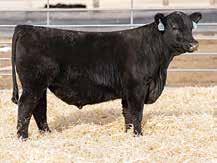
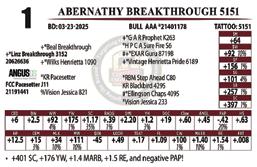
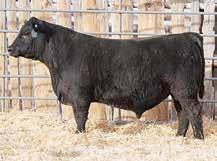
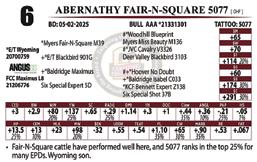
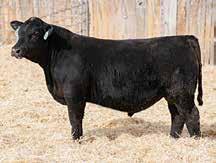
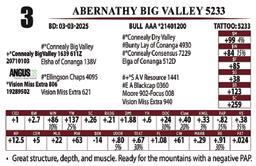
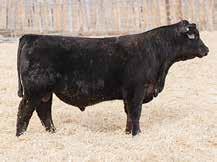
Abernathy Ranches Angus Cattle Inaugural Bull Sale, at the ranch, Lander, abernathyranches.com
April 25 25th Annual High Country Horse Sale, Lucky Moon Arena, Laramie, 307329-7400
April 27-May 1 Lytle Red Angus Best Last Chance Sale, online on DVAuction, 605-4417658, lytleredangus.com
May 2 Leachman Cattle Grasstime Bull and Female Sale, Meriden, 970-568-3983, leachman.com
May 2 Lamar Community College Legacy Horse Sale, 2401 S. Main Street, Lamar, Colo., 719-336-6663, 719-336-1624, lamarcc.edu
May 23 17th Annual Full House Horse Sale, Weston County Fairgrounds, Newcastle, 307-746-5690, 307-746-8592, 307-746-8536, fullhousehorsesale.com
Bonnie Lad 19th, bred and raised by W.M. Turnbull, sold to Colorado Hereford breeder for $2,250
Thus reads a headline in the Nov. 28, 1918 issue of the Saratoga Sun, accompanied by the following news item:
What is said to be the highest cash price ever paid for a Carbon County Hereford at private sale –$2,250 – was received by William Turnbull for his fine two-year-old Hereford bull Bonnie Lad 19th, George Baker of Littleton, Colo., being the purchaser.
The sale was consummated on Thursday of last week, and the animal was shipped to Baker’s farm in Littleton, Colo. the last of the week.
Bonnie Lad 19th was sired by Bonnie Lad 13th, and his dam was by Beau Carlos 2nd, being a halfsister to the famous “Wyoming.” He was raised on the Turnbull Ranch, a couple of miles from town, and is one of the most promising young bulls ever raised in the valley.
His sire, Bonnie Lad 13th, was also formerly owned by Turnbull and was sold last fall to C.D. Terwilliger of Encampment.
Baker is the owner of the celebrated A.L. Weston Hereford Farm, having purchased Weston’s interests last year, and he owns one of the finest herds of registered Herefords in the
entire West.
The Weston farm is the home of Bonnie Brae 15th, a celebrated sire for years at the head of the Weston herd, whose place will now be taken by Bonnie Lad 19th
The Weston farm also brought out Beau Carlos, Bonnie Weston, Bonnie Lad 13th and other Hereford sires of national reputation.
According to W.C. McConnell, who left here recently for Colorado, Baker now has the finest herd of breeding Herefords in the entire state, he having visited all of the foremost Colorado Hereford farms within the past few months.
The fact Bonnie Lad 19th has been purchased by Baker to head this herd is concrete evidence of the kind or stock now being grown by Turnbull at his Saratoga ranch. The sire of Bonnie Lad 19th was a product of the Weston farm, and Baker well knew what he was buying when he came here to purchase the son.
Turnbull has made a number of sales of registered Herefords this fall, among them being the one to Terwilliger, a herd bull to H.A. Hunter of Big Creek, one to W.C. Condict of Brush Creek and two range bulls to John Swanson, all the latter sales having been made within the past six weeks. Turnbull is developing a fine strain of Herefords and is now taking his place among the foremost breeders of the valley. His recent sales will assist materially in spreading the fame of Platte Valley Hereford.
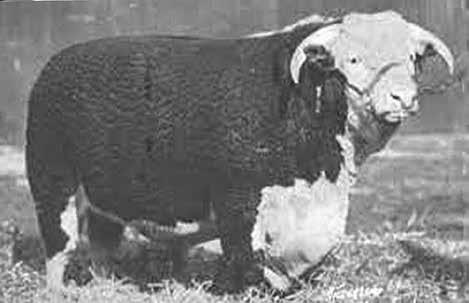
Canary and Son recently purchased Repeater LXIII, the halfbrother of the grand champion Repeater VII, and the price paid was $8,100. The purchase took place at the Harris, Mo. sale on the second of the month. The bull will be shipped to Saratoga shortly, reported the Saratoga Sun on March 16, 1916. The $8,100 Hereford bull belonging to J.D. Canary and Son arrived this week and is at the big barn on the ranch at the edge of town, reported the Saratoga Sun on April 27, 1916. Repeater Jr., pictured above, was the only bull to ever become grand champion at the American Royal
Show in Kansas City, Mo. for three consecutive years –1918, 1919 and 1920 – according to information on the back of the photo. Photo from the Dick Perue/Bob Martin
Livestock
collection. Historical Reproductions by Perue
Source: USDA AMS Livestock, Poultry & Grain Market News, Torrington National Sheep Summary As of April 3, 2026
Compared to last week slaughter lambs 40-70 lbs. 40.00-60.00 lower, 70-100 lbs. 15.00-30.00 lower, 100-140 lbs 20.00-30.00 higher and ewes firm. All sheep sold per hundred weight (CWT) unless otherwise specified. Slaughter Lambs: Choice and Prime 1-3: San Angelo: 70-80 lbs 330.00.
Ft. Collins: No test. Replacement Ewes: Medium and Large 1-2: San Angelo: No test.
Billings: No test.
Ft. Collins: No test.
South Dakota: No test.
Sioux Falls: No test.
Sheep and lamb slaughter under federal inspection for the week to date totaled 30,000 compared to 40,000 last week and 40,547 last year.
Source:
Source: USDA- CO Dept of Ag Market
Greeley, CO
Nebraska Hay Summary
As of April 9, 2026
Compared to the last report, central and eastern areas round bales of alfalfa and prairie grass hay sold steady. Ground and delivered hay steady. Alfalfa pellets sold steady to 10.00 higher. In the west, ground and delivered hay steady with suncured alfalfa pellets 30.00 higher. Round bales of alfalfa in the Platte Valley sold 25.00 to 30.00 higher, ground and delivered hay 10.00 higher, ground and delivered cornstalks 5.00 higher. Alfalfa pellets sold steady. Demand was good. Sporadic rain showers in some areas of the state since the last report. Most areas west of Lexington have not received any measurable amounts of moisture. The updated drought monitor released on April 9th shows a lot of Nebraska in the extreme drought (D3). Irrigation off the ditch in the western panhandle (Scottsbluff) has been a hot topic this week. Limited days of water, preventive planting and other topics have surfaced due to the lack of available water.
Compared to last report: Trade activity Light on Moderate to Good demand. Prices mostly steady on horse hay trades. According to the U.S. Drought Monitor’s High Plains Summary for April 7, 2026, on this week’s map, rainfall (1 to 4 inches) during the past week led to targeted improvements in far eastern portions of Kansas and Nebraska. Meanwhile, conditions deteriorated on the map in areas of central and western Kansas, and southwestern South Dakota. For the week, average temperatures were 4 to 10+ °F below normal across much of the region with the greatest departures observed in the Dakotas. Looking at climatological rankings for the past 60-day period (March 7 to April 7), several locations ranked among their driest on record, including Dodge City, KS (driest on record; -1.51 inches); Goodland, KS (driest on record; -1.05); and Manhattan, KS (2nd driest; -1.81 inches). In terms of hydrologic conditions, the U.S. Geological Survey is reporting below to much below normal stream flows across southwestern South Dakota, southern Nebraska, and central/ western Kansas. For Drought Classifications, 46.51% of the state falls in Extreme-Exceptional drought (D3-D4) categories, and 53.49% of the state falls into the Abnormally Dry-Severe Drought (D0 -D2) categories. The next available report will be Thursday, April 23, 2026.
RIVERTON LIVESTOCK AUCTION
TUESDAY, APRIL 14
LAZY BV CATTLE BULL SALE @ 1:00 PM FEEDER SPECIAL START TIME 9:30 AM W/ WEIGH UPS
BULLS
Lazy BV Cattle- 7 Yearling Bulls (Sim/Ang & 1 Maine/ Sim) PAP Tested, Semen tested, out of ABS AI Sires. Calving ease bulls! For more information call Alan @ 307-868-9250 or 307-921-0839.
YEARLINGS
Woolery Ranch – 240 Blk Ang & AngX Strs 550-700#. Age & source verified through IMI Global, NHTC. Weaned mid Oct. on hay & pasture. Rec complete vacc @ calving, branding, & weaning. Reputation, Green, One brand steers!
Graham Ranch- 75 Blk Ang/AngX (F1 BWF) Strs 500550#. Rec complete vacc @ branding and weaning. Hay Fed, One Brand, High Desert, Fancy!
Morrell Weston & Sons- 30 Blk Ang Heifers 450-500#. Bangs vacc. Rec shots spring & fall. Long time weaned. One brand. High elevation. Rae Angus Ranch- 14 Blk Ang Strs & Hfrs 575-900#. Rec Bovishield Gold & 8 way @ branding & Precon. High elevation.
L-T Livestock- 13 Blk Ang Replacement Heifers 850900#. Quality Black Angus Heifers. Bangs vacc. 2 rounds of shots. One brand, fancy!!
Jared Hamilton- 10 Blk Ang Hfrs 800#. Bangs vaccinated. Rec complete vacc & wormed. Weaned in Nov. Reputable quality, One brand, Fancy! BRED HEIFERS
Dennis Horton- 1 Blk Ang Bred Heifer. Bred to LBW Black Angus bulls to calve April. Rec shots & poured this fall. High desert.
BRED COWS
Dennis Horton- 4 Blk Ang Bred Cows. Bred to Black Angus bulls to calve April. Rec shots & poured this fall. High desert.