Supreme Court debates lawsuits alleging pesticide causes cancer
The U.S. Supreme Court recently heard arguments in Monsanto v. Durnell, a case which could help determine the future of tens of thousands of lawsuits alleging glyphosate, a common weedkiller component, causes cancer.
Quick Bits
Snow Report
In the 21st snow report for Water Year 2026, the state’s snowpack telemetry data reads 49% of median, with a basin high of 94% and a basin low of 3%. Last year, the state was at 83% and at 91% in 2024. The report and a map displaying basin snow water equivalent percentages of median for the state may be found at wrds. uwyo.edu/wrds/nrcs/nrcs.html
ADMB Meeting
The Wyoming Animal Damage Management Board (ADMB) will meet on May 12-13 at the Natrona County Extension Office in Casper and via Zoom. The board will consider grant applications from predator management districts across the state and receive updates on various issues. The meeting will begin at 9 a.m. on May 12 and 8 a.m. on May 13. The public is welcome to attend, and there will be a chance for public comment each day. For more information, to view a complete agenda or to tune into the livestream, visit wyadmb.com/ or contact Jerry Johnson at 307-777-6781.
Grassland CRP
On April 30, the U.S. Department of Agriculture announced agricultural producers and private landowners can enroll in the Grassland Conservation Reserve Program (Grassland CRP) until May 29. Grassland CRP is a voluntary working lands conservation program enabling participants to conserve grasslands while also continuing most grazing and haying practices. For more information or to enroll, visit fsa.usda.gov/
Tax Webinar
Join Ruby Ward of Utah State University and Adam Kantrovich of Clemson University for a presentation titled “Tax Considerations for Producers Under Financial Distress Selling Assets” on May 12 from 12-1:30 p.m. Ward and Kantrovich will discuss potential tax liability and resources that can be used to both mitigate and estimate the tax effects on cash flow. For more information or to register, visit farmers. gov.
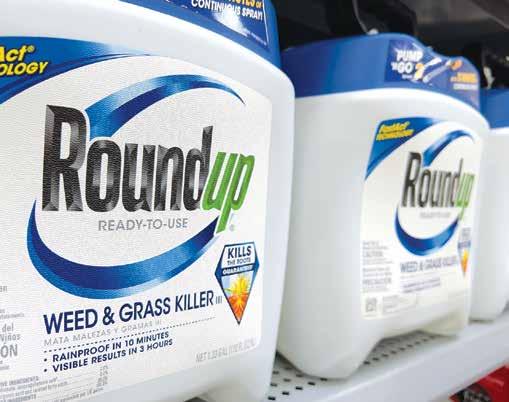
On April 27, Supreme Court justices heard arguments regarding whether federal pesticide law preempts label-based failure-to-warn claims where the Environmental Protection Agency (EPA) has not required
a warning and whether Monsanto can be held liable for not adding cancer warnings to labels of their popular Roundup weedkiller.
After a jury ruled in favor of St.
FARM, FOOD AND NATIONAL SECURITY ACT OF 2026
On April 26, the House of Representatives passed the Farm, Food and National Security Act of 2026 –commonly known as the farm bill – with a bipartisan vote of 224 to 200.
The legislation now advances to the Senate Agriculture Committee where lawmakers will vote either to adopt the House version of the farm bill or draft their own version and will require a bipartisan 60-vote majority to advance.
Updated provisions
Led by House Agriculture Committee Chairman
WCHF announces Class of 2026
On May 1, the Wyoming Cowboy Hall of Fame (WCHF) announced 25 individuals will be inducted into the WCHF Class of 2026.
The 13th Annual WCHF Induction Ceremony will be held Sept. 25-26 at Little America Hotel and Resort in Cheyenne and is open to the public.
Class of 2026
According to a May 1 press release issued by the organization, the WCHF State Board of Directors voted on nominees from across the state during its annual meeting on April 26.
Regional committees from 10 different areas of Wyoming researched and scored over 50 nominations and sent the top picks to the WCHF State Board of Directors, and the state board also selected several nominees.
Four nominees were selected from Region One including Campbell County’s Bob Tarver and R.V. “Dick” Talley of Gillette, Crook County’s Dick Graham of Moorcroft and Weston County’s Susan Martens Vore of Newcastle.
Region Two inductees include Goshen County’s Afton D. Green Sr. of LaGrange and Platte County’s Dennis Brooks of Glendo.
From Region Three, Albany County’s Thomas F. George of Laramie and Laramie County’s K. Norman “Buck” Holmes of Cheyenne will be inducted.
From Region Four, Converse County’s Donald Bruce Murray of Lost Springs has been selected. Region Five had no nominees, but Big Horn County’s John Luman of Hyattville was selected from Region Six.
Glenn “GT” Thompson (R-PA), the 2026 Farm Bill aims to give producers the necessary tools to meet challenges of the modern agricultural landscape and secure funding for key agricultural programming through Fiscal Year 2031.
According to an overview on the House Agriculture Committee website, the legislation includes key updates which would expand investments in rural communities, bring science-backed management practices to national forests and restore regulatory certainty in
Fertilizer Relief
USDA unveils initiative to lower fertilizer prices
With planting season underway, U.S. producers continue to face rising fertilizer costs, which recently prompted the Trump administration to roll out an initiative aimed at increasing domestic fertilizer production and easing supply chain disruptions.
On April 29, U.S. Secretary of Agriculture Brooke Rollins held a press conference in Washington, D.C. with cabinet officials and other lawmakers to create a plan to increase access to fertilizer and lower prices.
“This is an all-of-government approach, and obviously, as a Reagan conservative, I cringe a little bit about saying, ‘The government is here to help you.’ But this is an instance where there is a massive gap in the market, and the national security implications of this are real,” she stated.
Industry officials report the announcement follows a recent multi-week fertilizer price surge amid ongoing conflict in Iran and the Strait of Hormuz – a major shipping route for fertilizer. According to DTN’s weekly Retail Fertilizer Trends report, anhydrous
Fishing outlook promising despite drought
Following the warmest winter in Wyoming since recordkeeping began in the 19th century, water concerns are top of mind for many Cowboy State residents as they head into the summer of 2026.
Despite this, Wyoming Game and Fish Department (WGFD) biologists assure anglers while drought conditions, low reservoir storage and warm summer temperatures may create some challenges, the overall outlook for fishing in Wyoming remains positive for a wide range of sportsfish.
According to a regional update published by the department on April 27, fish populations in many areas of the state remain healthy and, in some cases, are even thriving. However, fishing success
this season will depend on timing, flexibility and a willingness to adapt to changing conditions on the water.
Casper Region
According to WGFD Casper Region Fisheries Supervisor Matt Hahn, water supply is expected to be the biggest variable impacting anglers in central Wyoming this year.
Hahn notes low water levels at Pathfinder and Seminoe reservoirs are unlikely to significantly rebound due to limited snowpack, and while the size of both reservoirs shouldn’t affect fish populations, boating access may suffer as boat ramps dry up and unfamiliar hazards begin to emerge as water levels drop.
The Cost of a Drought
It has been a tough year for agriculture in our region, and the cost of this drought will linger for some time.
I’ve always thought there are two kinds of drought – a hydrological drought and a forage drought – and the bad part is our region is currently affected by both.
A hydrological drought affects snowpack in the mountains and the amount of water in large storage reservoirs, creeks and streams and our range ponds and reservoirs. Really, it is all about the amount of water in these systems.
A forage drought is where there hasn’t been any precipitation – either snow or rain – for some time on the range and forage hasn’t been able to grow because the soil is really dry.
I’ve been planning on writing a column about the ongoing drought for a couple of weeks now, and here I am writing about drought on May 5 while southeastern Wyoming and northern Colorado are in a blizzard. Although one snow won’t fix this drought, it will help the forage grow.
One of the costs of a forage drought is ranchers will either have to buy hay to feed their livestock, find other pasture outside of the drought area or sell some of their livestock. All are expensive, especially finding hay to buy and getting it hauled to where they want it.
A large cost this past winter in southwestern Wyoming was having to haul water for those who winter sheep on the Red Desert. Normally, snow will provide enough water for sheep to last through the winter, but this year without any snow, water had to be hauled in. And besides the cost of transportation, hauling water in below freezing temperatures is always challenging.
This year, producers are selling some of their livestock which really hurts, as they have spent years improving their genetics to match their operation and because their animals know the country and where water is located.
If your area has been designated as a drought area and you have bought risk insurance, you might not be hurt as bad as others without it.
I have heard people say droughts in our area usually last around 30 years. While there may be some years which are not as bad as others, the accumulated effect has still taken its toll. In the past, some droughts have lasted 50 years. We hope this is not the case with this drought since, as droughts get longer, the costs get higher.
If the dry weather doesn’t change, it is going to be a tough summer. From lawns in town to the open ranges between these towns, the lack of water affects everyone.
The one thing we all know is we will get through this drought at some point. Then through the wet years, we’ll say, “A drought is always two weeks away in our region.”
GUEST OPINIONS
Is Your Veterinarian Leaving?
The question posed by the title of this column might very well occur if a proposal by the Wyoming Legislature’s Joint Agriculture Committee comes to fruition.
The Joint Agriculture Committee designated “Non-Certified Pregnancy Testing of Cattle and Proactive Herd Management” as a number one priority, and the Wyoming Legislative Management Council subsequently approved study of the proposal during summer interim committee meetings.
This could lead to the creation of a committee bill to present during the 2027 session.
Under current statutes, pregnancy testing is considered a diagnostic procedure limited to licensed veterinary practitioners within the state. Changing this status has been discussed and, at times, bitterly debated in many states for any number of reasons.
Case in point, I have a close ranching friend with whom I share a background in theriogenology, specifically beef cow reproduction. We have debated this issue several times and remain 180-degree polar opposites in our view of who could and should conduct pregnancy testing.
He views pregnancy testing as a “cash cow” reserved for the veterinarian. I actually agree with him, but I view it more like “Black Friday” for a retail merchant while providing a definite return on investment for the rancher.
For many rural mixed animal or exclusively large animal veterinarians, this income might determine whether they can close out a year profitably, plan and restock for another.
My friend further contends it is difficult to schedule a veterinarian to do fall pregnancy checking and, at times, has questioned the skill levels and accuracy of some individuals. Again, I have to agree.
By Dr. Bill Bennett
against students from rural backgrounds who could far better serve the ranching community.
Over several decades, this has led to a severe shortage of veterinarians serving rural areas.
Wyoming veterinarians are acutely aware of this issue and are diligently working to resolve this situation through the Wyoming Veterinary Medical Association via two complementary programs.
First, the organization itself is funding a program to support externships for current students to work as student assistants in Wyoming rural mixed animal practices. Upon graduation, a number of these students are more likely to return to Wyoming and maybe even stay in the externship practice as a new employee. This can aid in attracting more rural veterinarians in the short term.
A longer-term and more permanent solution exists in an evolving program to select Wyoming students with a specifically rural mixed practice interest. Via contractual arrangements, they would be placed and supported in schools of veterinary medicine which offer training focused on rural mixed and food animal practices.
In time, these efforts will bolster the number of rural veterinarians and thus their availability. In addition, they will come with advanced and likely technically assisted skill levels to address my friend’s concerns.
As to the “proactive herd management” noted in the Joint Agriculture Committee’s priority, the veterinarian plays a key role and often facilitates the involvement and inclusion of those with expertise in animal nutrition, range management, genetics, marketing and more.
scientifically sound information with insight on how best to adapt in a specific herd situation. Many times, this is a bonus provided as a part of other routine herd work.
So, what happens if the regulations change and lay personnel take over routine herd work? In my opinion, this will pose a significant economic impact on a veterinary practice and likely only provide task-focused work at varying skill levels by unregulated lay technicians.
The missing, very credible consideration here is community support.
The issue of preg checking and herd management consulting is specific only to livestock producers. On the other hand, the veterinarian serves the entire community. A vet practice takes care of all kinds of pets, 4-H and FFA projects, ranch and recreational horses and small livestock producer operations. In addition, the veterinarian is likely a friend to all.
Being a mixed animal rural veterinarian is economically tough. Even in a successful practice, the income level is well below their colleagues in more urban small animal practices. They are well aware of this, but they like their work, the rural lifestyle and the people they serve so they choose to remain as long as they can stay solvent and get the bills paid.
Now, take away their herd work and the practice may economically collapse. The veterinarian then has limited choices – close the practice and retire, pursue other interests or move on.
In addition, younger veterinarians likely still have significant school debt and are well aware small animal work in more populated urban areas could help pay down this debt much quicker.
We have allowed the collegiate academic admissions process of selecting students for veterinary schools to favor students from urban or suburban backgrounds and at times even discriminated
In many situations such management consulting is rather subtle. It may evolve as an ongoing conversation between the veterinarian and the owner or manager during the course of a day or days while pregnancy checking the herd.
Here, producers have a valuable resource, oftentimes bringing new and
In either case, this leaves the community without veterinary service and residents may have to drive 25, 50 or 100 miles to get routine pet or other care. Ambulatory and emergency service is likely non-existent, and animal care throughout the whole community is compromised.
postage paid in Casper, WY Fax: 307-472-1781 • E-mail: roundup@wylr.net
DENNIS SUN, Publisher • Cell: 307-262-6132 e-mail: dennis@wylr.net
HANNAH BUGAS, Managing Editor • hannah@wylr.net
SKAVDAHL, Editor • grace@wylr.net CANDICE PEDERSON, Production Coordinator • candice@wylr.net JODY MICHELENA, Advertising Director • jodym@wylr.net
CURT COX, Director of Livestock Field Services • 307-630-4604 • curt@wylr.net
CALLI WILLIAMS, Livestock Field Services Rep. • 605-695-1990 • calli@wylr.net
Subscription
P.O. Box 850 • Casper, WY 82602 Wyoming Livestock Roundup (USPS # 005-774) is published weekly by Maverick Press, Inc. P.O. Box 850 • Casper, WY 82602
From the Publisher Dennis Sun
Easement conserves acreage
The Green River Valley Program (GRVP) of the Jackson Hole Land Trust announced the Manning family has placed a permanent conservation easement on Cantlin Place, a 145-acre working ranch located just west of Pinedale along the New Fork River.
The easement permanently protects irreplaceable agricultural land and wildlife habitat, including migration corridors, in Sublette County.
Cantlin Place has operated as a family livestock ranch for more than 120 years and is currently managed by three generations of the Manning family. The property contains hay meadows and pastureland against the backdrop of the Wind River Range. Its open space protects seasonal habitat for moose, mule deer, pronghorn and migratory birds along the Pacific Flyway.
All 145 acres of the property are within the Identified Sublette Pronghorn Migration Corridor.
The conservation easement ensures Cantlin Place remains a working agricultural landscape in perpetuity, preserving its value for both the Manning family’s ranching operation and the broader Sublette County agricultural economy.
By reducing long-term financial pressures on the property, the easement enables the family to reinvest in their operation while keeping the ranch intact across generations.
The conservation easement on Cantlin Place was made possible through funding from the Natural Resources Conservation Service, Wyoming Wildlife and Natural Resource Trust and Ducks Unlimited.
WGFD public meeting set
The Wyoming Game and Fish Department (WGFD) is hosting a public information meeting regarding the proposed acquisition of property adjacent to the Table Mountain Wildlife Habitat Management Area (WHMA). The meeting is open to all interested parties, and there will be time to discuss the proposal with department staff following a short presentation.
The meeting will be held on May 11 at the Platte Valley Bank Meeting Room in Torrington from 6-7 p.m.
The property is located off of County Road 55 in Goshen County, adjacent to the southeastern portion of the Table Mountain WHMA, and will be included in the WHMA once approved for purchase. The parcel is 368 acres in total, including 84 acres of associated water rights.
The property will remain in agricultural production, and WGFD will continue to pay property taxes on the parcel.
This acquisition will expand and enhance wildlife habitat and allow increased hunting opportunity for the sporting public.
The public is encouraged to submit a comment on the acquisition of this property at the public meeting or online at wgfd.info/3PzXG5j
Nominations open
Farmers are invited to submit nominations for the 2027 Farm Bureau Farm Dog of the Year contest, which comes with cash prizes and bragging rights. This is the ninth year of the contest, supported by Nestlé Purina PetCare.
The grand prize winner will win a year’s worth of Purina Pro Plan dog food and $5,000 in prize money. The winner will be recognized at a Farm Dog of the Year Award Ceremony at the American Farm Bureau Convention in Charlotte, N.C. in January 2027.
The 2027 Farm Dog of the Year will also be featured in a professionally produced video.
Desired attributes for the Farm Dog of the Year include helpfulness to the farmer and his/her family, playfulness and obedience.
Farm dog owners must be Farm Bureau members to enter their dogs in to the competition.
Farm Dog of the Year nominations, which include written responses to questions, at least one still photo and a video clip must be received by July 11 for consideration.
The People’s Choice Pup – a popular social media element of the Farm Dog of the Year competition –returns for 2027. Profiles of several dogs nominated for the contest will be shared beginning in September, with the public invited to vote. Bragging rights and a $2,500 cash prize from Purina will be awarded to the People’s Choice Pup.
For more information or to enter the contest, visit fb.submittable.com/submit
Pipeline project approved
On May 1, Gov. Mark Gordon applauded President Donald Trump for signing a presidential permit authorizing Bridger Pipeline LLC to move forward with a major crossborder energy project connecting Canadian crude supplies to Wyoming.
The project will utilize existing infrastructure from the former Keystone XL pipeline and establish a new pipeline corridor from the U.S.-Canada border in Montana to the energy hub in Guernsey.
The pipeline, led by a Casper-based company, is expected to carry significant volumes of Canadian crude oil into the U.S. and further strengthen Wyoming’s role as a critical energy transportation hub.
CNFR returns to Casper
The College National Finals Rodeo (CNFR) will be back in Casper June 14-20, bringing the nation’s top collegiate rodeo athletes to the Ford Wyoming Center for a week of thrilling competition.
This prestigious event is where champions are made, as the National Intercollegiate Rodeo Association (NIRA) crowns individual and team champions in events like saddle bronc riding, bareback riding, bull riding, tie-down roping, steer wrestling, team roping, barrel racing, breakaway roping and goat tying.
For over 25 years, Casper has been the proud home of the CNFR, a premier rodeo event blending athletic excellence with rich Western traditions.
Event highlights include Family Day: Bulls, Broncs and Breakaway on June 14 from 1-4 p.m., featuring mutton bustin’ during intermission. One ticket is good for the whole day.
Slack rounds will take place June 15-16 at 7 a.m., and evening performances are set for June 16-20 at 7 p.m.
Casper Night will be held on June 16, Ribbons at the Rodeo: Cancer Awareness Night will be held on June 18, the Special Olympics Rodeo will take place on June 20 at 9 a.m. and the CINCH Style Show will take place on June 20 at 11 a.m. at the Ramkota Hotel and Conference Center.
All proceeds raised go to the NIRA Foundation, supporting student scholarships, injured athlete relief, historical preservation and Rodeo Athletes on Wellness Fund.
A trade show will open at 5:30 p.m. for each nightly performance, and the Mercantile at the WYO Sports Ranch will open from 11 a.m. to 7 p.m. June 14-17.
Individual performance and season tickets are both on sale now and available online at cnfr.com or fordwyomingcenter.com, in-person or by phone at the Sinclair box office at the Ford Wyoming Center at 800-442-2256. The box office is open Wednesday through Friday from 10 a.m. to 5 p.m.
For more information, visit collegerodeo.com or cnfr.com
and representatives and asking them not to support lay technicians conducting veterinary work.
Specifically, focus on members of the Agriculture, State and Public Lands and Water Resources Committee. Watch for their regional summer meetings and provide input opposing their proposal and, in doing so, support your local veterinarian.
Dr. Bill Bennett is a veterinarian in Powell and can be reached at billywbennettdvm@gmail.com.
FARM BILL
the interstate marketplace.
Also, the legislation seeks to improve risk management tools for specialty crop producers, lower energy costs in rural America and prioritize American commodities on the global stage, as well as expand producers’ access to credit, promote precision agriculture and enhance conservation programs for working lands, according to the overview.
Two highly-contested topics in the farm bill were fuel and pesticide provisions and, ultimately, lawmakers voted against an amendment allowing yearround sales of E15, while stripping provisions which would have benefited pesticide manufacturers.
After months of debate and lobbying from ethanol groups, lawmakers decided not to include the sale of year-round E15 within the full farm bill. However, the House is expected to vote on a standalone provision for E15 in mid-May.
Additionally, the House voted to remove provisions prohibiting state and local governments from requiring more stringent labeling
requirements on pesticides amidst growing concerns about the linkage between pesticides and cancer rates from advocates of the Make America Healthy Again movement.
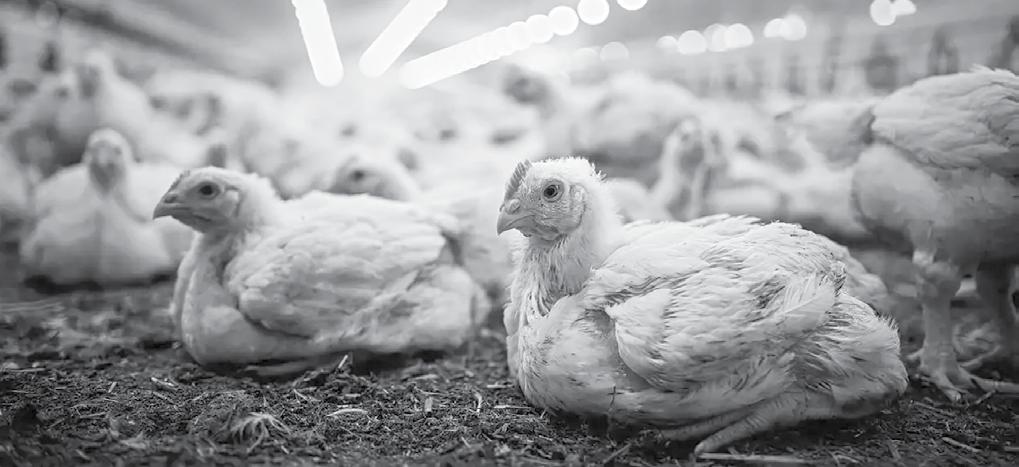
The approved farm bill includes a provision titled the “Save Our Bacon Act,” which addresses state laws such as California’s Proposition 12 requiring standardized living conditions for animals providing meat and eggs and instead ensures states cannot dictate animal living conditions outside of their own jurisdiction.
Several other provisions have been celebrated by ag groups, including a variety of amendments whose impacts will be directly felt in Wyoming.
Wyoming impact
The Wyoming Farm Bureau Federation (WyFB) issued a press release on May 1 outlining some key benefits the modernized farm bill secures for Wyoming farmers and ranchers.
“Wyoming agriculture stands to benefit from several key provisions in the newly passed legislation, particularly those address-
WEDNESDAY,
ing wildfire risk reduction, expanded conservation programs and continued investment in research and development,” WyFB states. “Rural development and access to credit were also prioritized, including increased lending limits for government-backed loan programs – an important tool for Wyoming farmers and ranchers.”
In addition, WyFB notes the bill recognizes the growing need for mental health resources in rural communities and promotes improved risk management tools for farmers and ranchers, providing “much-needed stability and flexibility for Wyoming agriculture in an increasingly unpredictable environment.”
Also, WyFB notes the inclusion of the Processing Revival and Intrastate Meat Exemption Act helps expand opportunities for local meat processing and direct-toconsumer sales, supporting small producers and bolstering rural economies.
The organization also highlights wins in grazing policy and public lands, including the Grasslands Grazing Act which aligns grazing permits on national grasslands with other fed-
eral uses and provisions prohibiting foreign adversaries from purchasing American farmland.
WyFB further notes the bill strengthens the Veterinary Loan Repayment Program which is vital to addressing the shortage of rural large animal veterinarians and also includes provisions aimed at preventing individual states from imposing production standards on producers in other states.
“We applaud the House for coming together to pass a modernized farm bill that provides stability and a clear path forward for agriculture,” says WyFB President Todd Fornstrom in the release. “The farm bill serves as a critical part of the toolbox for farmers and ranchers, supporting everything from financing and risk management to research, development and rural healthcare.”
“The broad scope of the Farm, Food and National Security Act of 2026 will have a significant impact on farmers, ranchers and communities across Wyoming,” Fornstrom continues. “In many ways, Wyoming defines what it means to be rural, and these policies matter deeply to our way of life.”
MAY 13, 2026 - FEEDER SPECIAL
Been on a High Roughage Ration to go back to grass, 2 Rounds of a
weaning, No Implants by this owner, Selling due to dry conditions, Long time consignor with Torrington Livestock Markets
JP Werner & Sons 320 Red Angus Strs, 625-725#, Coming off grass, 4 Rounds of Shots: Vista Once PMH or Naslagen 3 PMH, Vista 7 w/ Somus plus Spur, Poured, Fly tagged on April 9, Green, Selling only due to very dry conditions, Steers are SAV, NHTC, VNB, CARE Verified thru IMI Global (Not All Naturals have a X mark on eartag)
X Lazy Three 258 Fancy Blk Strs & Hfrs, 650-800#, Running Out, Hay Fed Only, Complete Vac. Program, Home Raised, 1-iron Flying Diamond Ranch 250 Blk few Bwf Hfrs, 700-825#, Coming off grass, Complete Vac. Program, Bangs Vac., 1-iron, Replacement Quality, These were his Replacement Heifer; Selling only due to drought conditions
Ochsner-Roth Cattle Co. 169 Blk (6 hd—Hereford) Hfrs, 700-900#, Coming off grass, Complete Modified Live Vac. Program, Bangs Vac., Top Genetic Quality Heifers Nottingham Ranch 143 Blk/Bwf few Rd/Rwf Hfrs, 750-800#, Been on a Light Grower Ration, Complete Modified Live Vac. Program, Bangs Vac., Home Raised, High Elevation, Coming off their Replacements, Leachman Genetics for many Generations
D & M Livestock 140 Blk Hfrs, 650-730#, Spayed, Been on a Light Grower Ration, 3 Rounds of Shots plus Vision 20/20, Poured w/Ivermax, Wintered for grass, Selling only due to drought conditions
Aaron Clausen 109 Blk Hfrs & Strs, 650-725#, Bunk Broke, Been on a Grower Ration, Complete Vac. Program, No Implants, May/June Calves, Replacement Quality
Brian Currier 123 Blk Hfrs, 700#, Ran Open, Complete Vac. Program with the last round of Shots down in March of 2026, Coming off Grass, Wintered on Meadows supplemented with Hay and Cake, Replacement Quality Heifers Raymond Jones 108 Blk/Bwf Strs, 755-775#, Complete Vac. Program, Coming off grass, Selling early due to drought conditions D & W Ranch 100 Red/Char-x Hfrs, 700-750#, Running out on Pasture supplemented with Hay, Branding Shots: Vision 8, Nasalgen3, Presponse HM, Precond. Shots: Vision 8 w/Somnus, Nasalgen 3, Presponse HM, Express, Injectable Dectomax, Injectable Wormer, Pour on, SafeGuard, Vision 7, Pyramid 3, Bangs Vac., Replacement Quality (coming off their replacement heifers), Home Raised J Reverse J 49 Blk few Rd Hfrs & Strs, 650-700#, Spayed, Been on a Light Grower Ration, 3 Rounds of Shots plus a Vision 20/20, Poured w/Ivermax, Wintered for grass, Selling only due to drought conditions North Ridge Cattle Co. 62 Mx Hfrs, 750-850#, Been on a Grower Ration, Complete Vac. Program Little Creek Cattle Co. 51 Mx Hfrs (1 Str), 550-600#, Been on a Grower Ration Full Vac. Program Rod Smith 26 Blk Angus Strs, 825-1050#, Been on a Grower Ration, Branding, Weaning Shots & Booster Shots, Implanted with Revolar G on Feb. 2 Mike Ridenour 18 Blk/Bwf Strs, 800#, Bunk Broke, Been on a Grower Ration, Complete Vac. Program Brian Zerbe 11 Blk Hfrs, 650-750#, Coming off grass, Branding Shots: Bovi-Shield Gold One Shot, 7-way, Wormed, Booster Shots: Bovi-Shield Gold One Shot, 1st Round of Pre-Guard, Bangs Vac., Home Raised, Replacement Quality Ken Crossland 8 Mostly Blk Strs, 800#, Been on Grass Hay Mix, Branding Shots: 7-way, , Vira Shield 6, Vitamin A&D, Weaning Shots: 7-way, Vira Shield 6, Valcor Wormer, No Implants, Bunk Broke
WEANED CALVES
Riehle Ranch 350 Fancy Blk Strs, 600-700#, Weaned a long time, Running Out, Hay Fed, 2 Rounds of Shots: Vista Once SQ, Vision 7 w/Somnus, Home Raised, Usually keep and run as yearlings, A Feature Consignor at Torrington Livestock Markets in the Fall, Selling only due the drought condtions Cole Creek Sheep Co. 50 Blk Strs & Hfrs, 600#, Weaned since October, Running out on Pasture supplemented with Hay and Cake, Branding Shots: Vision 7, Pyramid 5 +Presponse, Ralgro Implant, Pre-cond. Shots: Vision 7, Pyramid 5+Presponse, Weaning Shots: Cydectin, Bangs Vac. Heifers received a Lutalyse Shot, Home Raised, Green Mike Ridenour 30 Blk/Bwf Strs & Hfrs, 300-500#, Weaned a long time, Bunk Broke, Been on a Light Grower Ration, Complete Vac. Program
FRIDAY,
MAY 15, 2026 -
Ty Thompson – Lusk, WY 307-340-0770
Zach Johnson Lingle, WY –307-575-2171
Jeff Ward – Laramie, WY 307-399-9863
Tam Staman – Crawford, NE 308-631-8513
Justin Smith - Lusk, WY 307-340-0724
Hunter Dockery - Lusk, WY 307-340-1202
Ben Kukowski - Kaycee, WY 307-217-1472
Garrett Nunn - Laramie, WY 307-460-1649
Scott Redden -
“After three years of extensions and eight years since a farm bill was passed, we’re grateful the House found a bipartisan path forward,” adds American Farm Bureau Federation President Zippy Duvall. “Important updates to research and conservation, as well as increased loan limits and clarity on interstate commerce, will help farmers survive today’s challenges and give them the tools to thrive in the future.”
“We urge the Senate to follow the House’s lead and move this important bipartisan legislation forward.
Food security is national security, and investing in America’s farmers and ranchers is an investment in America’s families. We all benefit from a reliable and affordable food supply,” Duvall continues.
Industry response
Several national agricultural groups and industry stakeholders have issued statements celebrating the updated provisions and are calling for continued action as the farm bill moves to the Senate.
National Cattlemen’s Beef Association (NCBA) Senior Vice President of Government Affairs Ethan Lane thanked the House for “listening to real farmers and ranchers” to pass the bill in an April 30 NCBA press release.
“Thank you to Chairman Thompson, House leadership and members from both parties for listening to real farmers and ranchers and passing the farm bill through the House,” Lane says. “Instead of caving to attacks on the livestock industry from shell activist groups whom impersonate real producers, a bipartisan group of lawmakers advanced a bill to provide certainty and important policy fixes for cattle country. We look forward to engaging with the Senate to advance this farm bill to the
president’s desk.”
National Association of Wheat Growers President Jamie Kress also expressed support in an April 30 press release, claiming the updated provisions will “help ensure America’s wheat farmers can remain resilient and globally competitive.”
“The Farm, Food and National Security Act of 2026 delivers meaningful improvements which will provide certainty for farmers, expand market opportunities and reinforce the vital role our nation’s farmers play in both food security and national security,” Kress states. “This bill reflects many wheat farmers’ top priorities – from modernizing farm credit and safeguarding international food aid programs to enhancing export competitiveness.”
The National Association of State Departments of Agriculture (NASDA) is also in favor of the legislation, with NASDA Chief Executive Officer Ted McKinney emphasizing the importance of a unified farm bill which supports U.S. farmers, ranchers and consumers in an April 30 press release.
“This legislation supports farmers, ranchers and consumers and provides economic growth for rural communities,” McKinney says. “NASDA stands ready to continue collaboration to advance this critical legislation and will use this momentum as it works with the leadership of the Senate Agriculture Committee to introduce its version of the farm bill.”
“The goal remains the same – to sign a bipartisan farm bill into law to advance American agriculture and support the continued production of food, fiber and fuel communities depend on,” McKinney concludes. Grace Skavdahl is the editor of the Wyoming Livestock Roundup. Send comments on this article to roundup@wylr.net.
USDA accepts applications
The U.S. Department of Agriculture (USDA) is accepting applications through May 18 for an agribusiness trade mission to Melbourne, Australia, scheduled for Aug. 30 to Sept. 3.
The mission, led by USDA’s Foreign Agricultural Service (FAS), aims to expand export opportunities for U.S. producers in Australia, New Zealand and the Pacific Islands. The trip takes place at the same time as the USDA-endorsed Fine Food Australia trade show, giving participants even more access to buyers in the region.
In 2025, Australia ranked as the 18th-largest export market for U.S. agricultural products, totaling $1.69 billion, with consumer-ready goods –such as packaged snacks, wine and fresh meats –accounting for 85 percent of this value. The same year, exports to New Zealand reached $620 million, with consumer-ready products making up more than half of the total.
USDA anticipates strong opportunities for many specific U.S. exports in the region, including pork and beef products; dairy products; distilled spirits, wine and non-alcoholic beverages; fresh fruit and tree nuts; baked and confectionery goods, cereals and pasta; processed food products and pet food.
Throughout the mission, participants will connect directly with regional buyers through business-tobusiness meetings, networking events, in-depth market briefings and site visits led by regional experts.
For more information or to apply by the May 18 deadline, visit fas.usda.gov/topics/trade-missions
EXTENSION EDUCATION
By Micah Most, UW Extension Educator
Not a Dry Subject: Considerations in the Face of Possible Drought
Nearly every conversation held lately with anyone from long-time ranchers to new-to-Wyoming home gardeners has eventually found its way to the unusually dry and warm winter we have experienced.
More than just small talk, there are real concerns about the upcoming grazing and growing seasons.
What will forage look like if it stays as dry through late-May as it has been from November to now? How will livestock water quality be impacted if reservoirs are lower than usual? How can we cut back on water use around the home and yard?
There’s more to each of these questions than can be adequately addressed in a single column. For more detailed information, refer to the University of Wyoming (UW) Extension resources included in each of the following sections.
Climatology data for the state indicate the wettest months on average are May and June. Let’s hold onto hope until then.
Production
agriculture interests
Seasoned ranchers are used to the boom-and-bust nature of Wyoming’s drought cycle. However, it never hurts to review trigger dates, dust off the drought management plan and keep an eye on stock water quality.
The forage component of rangelands in many parts of Wyoming is dominated by cool-season grass species which reach their peak production in late spring or early summer depending on the year.
Trigger dates are aligned with the growth stages of these cool-season grasses and can be thought of as subjective thresholds by when management decisions should be made.
An abbreviated schedule is included below.
On April 1, review how the current year compares to previous records of dormant season precipitation. Dig a few postholes to evaluate soil moisture profile. In cases of extreme drought, pencil a 10 to 20 percent reduction in stocking rate.
From April 15 to May 1, mid-range weather forecasts reaching the end of the coolseason grass growth window increase in reliability and accuracy. Use temperature and precipitation predictions to anticipate forage production of native range. Temperature predictions skewing warmer indicate an earlier peak in forage production. Precipitation predictions skewing lower indicate a reduced quantity of available forage. Adjust stocking rates accordingly.
From mid-May to early June, cool-season grasses are at or past peak production. If the precipitation total from March to May is 50 to 75 percent of an average year, consider stocking rate reductions of 30 to 40 percent or more in response to the condition of available forage resources.
In addition to sufficient feed resources, liquid water resources are also critical to livestock health and productivity. Many producers have been supplementing water through the winter,
Gov. announces funds
On April 15, Gov. Mark Gordon signed Executive Order 2026-02 regarding the federal summer nutritional program called SUN Bucks, announcing the state has been able to pull together the resources needed to ensure low-income children will receive much needed meals throughout the summer months across Wyoming.
As grocery prices rise, Wyoming families are struggling to put food on the table. The SUN Bucks program was a part of the Department of Family Services exception budget request during the recent Budget Session, but was not funded by the Wyoming Legislature.
“When school lets out for the summer, children who qualify for free and reduced-price school meals lose access to the daily nutritious meals they rely on. Existing summer meal sites are vital, but families often face accessibility challenges due to working parents’ schedules and transportation barriers. This program bridges this nutrition gap and sets kids up for success when school starts again,” said Department of Family Services Director Korin Schmidt.
“While the legislature was unwilling to make sure our young children get food throughout the summer months, we have stepped up to ensure it happens,” Gordon said. “We have been able to cobble together a onetime-only, bare bones effort, using current Wyoming Supplemental Nutrition Assistance Program data and Department of Education data, to ensure current eligible children will be fed.”
For more information, visit fns.usda.gov/summer/ sunbucks
especially those who rely on livestock reservoirs.
As water levels drop, substances like nitrates, sulfates and other salts dissolved in the water can become concentrated to the point they reach toxicity thresholds.
Early indicators of water toxicity issues include poor hair and hide condition, and neurological signs like circling, stumbling or head pressing indicate extreme toxicity issues.
If a rancher suspects water quality issues in a reservoir this summer, a livestock water suitability test is recommended to determine levels of dissolved substances and to help make an informed management plan.
Resources for ag producers include “Navigating Drought in Wyoming,” available at bit.ly/B-1325; “Skillful Grazing Management on Semiarid Rangelands,” available at bit.ly/ EC-162 and “Water Quality for Wyoming Livestock and Wildlife” at bit.ly/B-1183
Hard copies of these publications can be printed at local UW Extension offices. Yard and garden interests
Residential properties also suffer the negative effects of drought – often with a spike in the water bill trying to keep green spaces alive.
A couple of easy changes can improve the drought resilience of a landscape.
Adopt a watering schedule which prioritizes deep and infrequent watering over shallow and daily watering. Shallow watering keeps turf roots in the top layer of the soil, which dries out quickly. Roots will follow water down into the soil profile and can be trained to grow deeper when enough water is applied to wet the soil eight to 10 inches below the surface.
This training can be as easy as shifting from watering 15 minutes every day to watering for 30 minutes on Mondays, Wednesdays and Fridays.
Less evaporative loss occurs when water is applied during the early morning or late evening hours, when direct sun exposure, air temperatures and wind gusts are typically minimal.
Drip tape and soaker hoses are better alternatives to overhead sprinkles. If a home gardener doesn’t have one already, irrigation timers are a good investment and make water conservation practices much more user-friendly.
If considering the installation of a new garden landscape bed, include “waterwise” and drought tolerant species in the design. Many beautiful perennial plants native to our area are already adapted to thrive in our harsh, High Plains conditions.
Check out a full list in the UW Extension bulletin “Landscaping: WaterWise Wyoming Gardens” at bit.ly/wy-water-wise. Hard copies of this bulletin can be printed at a local UW
Extension office.
If dry conditions persist to emergency levels, it is recommended to prioritize the survival of established trees and shrubs in the landscape. Turf lawns will go dormant to survive and are easier to replace than a mature tree canopy.
Water each tree around the dripline – under the farthest tips of the branches –and plan 10 gallons of water per inch of trunk diameter.
For example, if a midsize bur oak has a trunk diameter of six inches, then it should receive 60 gallons of water.
Repeat weekly during the growing season when the tree has leaves and monthly when the tree is dormant.
Get involved with local precipitation reporting
If it seems a geographic location is not well represented on the weather maps or the U.S. Drought Monitor – available at bit.ly/WYdrought – consider becoming a volunteer reporter for the Collaborative Community Rain, Hail and Snow (CoCoRaHS) Network.
Volunteer data from
across the state are integrated into the larger dataset which informs the weekly update of the drought monitor. It also happens to be an easy way to track and recall digital records of local precipitation. This makes it easy to compare precipitation amounts from year to year for a precise location.
Also, note reports of zero precipitation are just as valuable as measurable amounts.
Volunteers need a fourinch standard rain gauge, a free online account and a willingness to commit a little time each day to the task.
The Johnson County Extension team reports from Station Number WY-JN-31, and it takes less than five minutes to submit a daily observation.
More information about this collaborative precipitation reporting project can be viewed on the CoCoRaHS website at bit.ly/CoCoRaHSabout
Micah Most is the UW Extension agriculture and natural resources educator serving Johnson County. He can be reached at mmost@ uwyo.edu or 307-684-7522.
Louis, Mo. native John Durnell in 2023 who alleged his exposure to Roundup resulted in developing non-Hodgkin lymphoma
– a form of blood cancer –Monsanto was ordered to pay Durnell $1.25 million.
Tens of thousands of similar lawsuits have been filed against Bayer – Monsanto’s parent company –throughout the past decade and according to an April 28 Western Ag Network article, the rulings of Monsanto v. Durnell could impact the future of whether an EPA stamp of approval on a pesticide label is enough to shield Bayer from state warning label lawsuits against glyphosate-based Roundup.
Roundup lawsuits
Bayer is currently facing claims regarding glyphosate-based Roundup’s potential link to cancer from approximately 65,000 plaintiffs in U.S. state and federal courts, according to an April 28 Reuters article written by Diana Novak Jones.
Jones further reports Roundup lawsuits date back to 2015, with a multitude of plaintiffs alleging they developed non-Hodgkin
lymphoma and other forms of cancer after using the weedkiller either at home or on the job.
Despite these claims, Roundup remains among the most widely-used weedkillers on the market in the U.S., used in both largescale agricultural operations and backyard settings.
Bayer removed glyphosate from residential Roundup products from 2021-23, but the chemical is still found in commercial level weedkillers.
The company has pushed back against the allegations, asserting decades of studies have proven Roundup – particularly its active ingredient glyphosate – are safe for human use.
Monsanto v. Durnell
An April 27 Washington Post article written by Justin Jouvenal explains Durnell sued Monsanto in Missouri state court in 2019, alleging exposure to Roundup had caused him to develop a form of blood cancer called non-Hodgkin lymphoma.
According to the article, Durnell used Roundup to spray weeds in parks near his home for roughly two decades before his diagnosis.
In his lawsuit, Durnell’s arguments claimed Monsanto had a duty to warn consumers Roundup was a cancer risk.
“Monsanto has known for decades its popular weed killer Roundup can cause cancer,” wrote Durnell’s attorneys in a Supreme Court filing. “But the company has refused to make its product safer or to inform consumers they should exercise caution when using it. Instead, Monsanto has marketed Roundup as safe to spray in a T-shirt and shorts.”
A Missouri jury ruled in Durnell’s favor, ordering Monsanto to pay $1.25 million in damages. After an appeal by Monsanto was rejected, the company asked the Supreme Court to take up the case.
Bayer argues plaintiffs cannot claim the company violated state laws by failing to warn about cancer risks posed by Roundup because the EPA has found no such risk and requires no such warning on the product’s label per provisions in the Federal Insecticide, Fungicide and Rodenticide Act (FIFRA), according to Reuters, and FIFRA’s express preemption clause says states cannot impose
CLAY CREEK ANGUS
labeling requirements going beyond what federal law demands.
What’s at stake
The Supreme Court’s decision has the potential to impact existing and future Roundup-related lawsuits against Bayer.
removed the guess work, let our proven sire
agricultural marketplace in a friend-of-the-court brief presented during the hearing and referenced in the Washington Post article, claiming the weedkiller’s removal could force U.S. farmers to rely on herbicides with even greater health risks.
poses risks and should be labeled accordingly.
Monsanto has removed Roundup from the consumer market but it is still available to farmers, according to the Washington Post, and the company claims allowing additional lawsuits to go forward could “threaten Monsanto’s ability to continue to supply glyphosate to farmers who need it to remain world leaders in food production.”
The American Farm Bureau Federation (AFBF) advocated against eliminating Roundup from the
Eight inductees from Region Seven will join the WCHF this year including Carbon County’s Alice Platt Nation of Encampment and Rene Vyvey of Saratoga and Sweetwater County’s Alonzo “Lunk” Raymond Jarvie, Mark Edwin Anderson, Robert Lloyd Anderson and Larry Anderson, all of McKinnon, along with Doyle and Fon Slagowski of Burntfork.
From Region Eight, Doug Wallingford of Thermopolis will join the WCHF, and from Region Nine, Eudjere Hickey of Lonetree and Maurice H. Henry of Robertson were selected.
Rounding out the WCHF Class of 2026 are 11 inductees from Region 10 including Sublette County’s Dianne Boroff, Louis Roberts, Shad “Zac” Roberts and Mac McCormick of Daniel; Clarence “Tuffy” Davis Jr. and James Mickelson of Big Piney and Alexander Marsha Gilchrist Jr., Otto F. Jensen and Gladwon Jensen of Boulder, as well as Teton County’s
“To remove glyphosate from the market would pose an immediate, devastating risk to America’s food supply,” AFBF states. “Farmers depend on this safe herbicide to support highyield food and fiber production, season after season. Glyphosate is used on roughly 300 million acres of U.S. farmland.”
Other groups including farm worker groups, cancer prevention organizations and environmentalists continue to argue Roundup
Warren M. Robertson and Helen Hardeman Robertson of Wilson.
About WCHF
The WCHF began in 2012 as an idea among friends Scott Ratliff, Jim and Paulette Moss and Pinky Walter, according to the organization’s website.
The official 501(c)(3) and board was formed in 2013, and the first official induction ceremony was held in 2014.
According to the organization’s mission statement, WCHF’s chief goal is “to preserve, promote, perpetuate, publish and document Wyoming’s working cowboy and ranching history through researching, profiling and honoring individuals who broke the first trails and introduced the culture to this state.”
To do so, WCHF plans to “collect, display and preserve the stories, photos and artifacts of such individuals and anything else that will honor and highlight their contributions to our history.”
In addition to induct-
“Cancer is an epidemic, afflicting more than one in three Americans within their lifetimes,” the Center for Food Safety and other groups wrote in a friend-ofthe-court brief referenced in the Washington Post article. “The court should not afford Monsanto immunity for its products’ risks and deny Americans their right to know the risks of an inherently dangerous product.”
For now, the Supreme Court is continuing to consider the case, and a decision in Monsanto v. Durnell is expected by the end of June. Grace Skavdahl is the editor of the Wyoming Livestock Roundup. Send comments on this article to roundup@wylr.net.
ing new members each year, WCHF recently opened a new permanent Hall of Fame exhibit at the Campbell County Rockpile Museum in Gillette, marking a major milestone in preserving and celebrating Wyoming’s rich cowboy heritage.
The exhibit, which opened on April 25, honors the more than 450 inductees recognized since the WCHF’s founding in 2013 through artifacts, photographs, videos and interactive displays offering visitors an immersive look into the lives, skills and legacy of Wyoming’s working cowboys and cowgirls.
The exhibit serves as a permanent platform for visitors from across the state and around the world to connect with Wyoming’s rich Western heritage and is part of a broader statewide effort to commemorate the Cowboy State’s culture and history leading up to the nation’s 250th anniversary. Grace Skavdahl is the editor of the Wyoming Livestock Roundup. Send comments on this article to roundup@wylr.net.
Adobe Stock photo
FISHING
Additionally, while tailwaters along the North Platte River are expected to stay relatively stable – largely due to upstream reservoir management – Hahn says streams draining from the North Laramie Range – including Deer Creek, LaBonte Creek and Horseshoe Creek – could see low flows and rising temperatures which may stress fish populations later in the summer.
Despite these concerns, WGFD says anglers can expect fishing to be similar to last year in most of the Casper Region.
“Glendo, Alcova, Pathfinder and Seminoe reservoirs all provide excellent walleye fishing, and Glendo also offers good fishing for channel catfish, black and white crappie, yellow perch and the occasional largemouth bass,” the report reads. “Alcova, Pathfinder and Seminoe offer good fishing for rainbow, brown and cutthroat trout, and kokanee salmon are stocked in Alcova and Pathfinder.”
WGFD says it is also important to note regulation changes in the region, including new restrictions on hook types and bait use in certain North Platte tailwaters.
Sheridan Region
Up in northeast Wyoming, WGFD reports Keyhole Reservoir is shaping up for an excellent year of walleye fishing, with “largerthan-average populations across all size classes.” The reservoir is also expected to offer healthy populations of smallmouth bass and northern pike, with some Master Angler-sized fish of both species caught in 2025.
Healy Reservoir, situated northeast of Buffalo, continues to produce large numbers of yellow perch, tiger muskie and largemouth bass, and Muddy Guard Reservoir, located south of Buffalo, remains a top destination for trophy trout, with multiple species exceeding 24 inches.
WGFD also says Lake DeSmet has shown signs of recovery for rainbow trout and kokanee salmon, and the North Tongue River continues to offer high-quality trout fishing, although biologists are working to address past declines in rainbow trout due to whirling disease.
Cody Region
In northwest Wyoming, spring and early summer are the best times to fish, particularly before runoff peaks or aquatic vegetation becomes an issue.
WGFD notes East Newton, Luce, Hogan and Sunshine reservoirs are reliable, go-to early-season destinations, especially when nearby rivers become unfishable due to snowmelt. Luce Reservoir, in particular, offers anglers the chance at four- to fivepound trophy rainbow trout.
The Big Horn River in Thermopolis is another standout in spring and early summer, offering excellent fishing before algae growth gets too thick.
“For warm-water oppor-
tunities, Deaver, Harrington and Wardell reservoirs are productive for walleye and will slow down as water temperatures rise,” the department shares. “Rivers such as the South and North Fork Shoshone, the lower portion of the Shoshone and Clarks Fork Yellowstone offer outstanding trout angling prior to runoff.”
Additionally, the stretch of Big Horn River winding from Worland to Lovell is a prime spot for walleye, sauger and catfish.
Jackson Region
A little over 100 miles south, WGFD says the Jackson Region is already seeing promising early-season conditions following the relatively mild winter of 2025.
WGFD Jackson Region Fisheries Supervisor Darren Rhea notes early fishing in the area has been good, although timing and intensity of spring runoff will ultimately determine how the season unfolds.
“Similarly, ice-off on the region’s lakes sets the stage for fishing conditions during the summer,” Rhea states. “Early ice-off can mean good fishing early on, though the timing of when lakes become open can impact the prospects of good angling during the summer. Prolonged periods of heat can lead to reduced activity throughout the summer.”
Pinedale Region
In contrast to much of the state, the Pinedale Region entered spring with nearaverage snowpack, providing a more favorable outlook for water conditions.
WGFD says Fremont Lake and Lower Green River Lake are producing trophy lake trout – with some fish approaching 40 inches – and kokanee salmon fishing here is also strong.
“Anglers looking for native cutthroat trout can expect good fishing in Wyoming Range lakes and streams, including North Piney Lake, LaBarge Creek and North Horse Creek, to name a few,” the department states. “Brook trout fishing should be good in Middle and North Piney creeks in the Wyoming Range, as well as the Union Pass lakes and Gypsum, Jim and Tepee creeks in the Upper Green River drainage.”
“Opportunities for golden, brook and cutthroat trout continue to abound among the hundreds of lakes scattered throughout the Wind River Mountains. Good fishing with few mosquitoes can usually be had from August through September,” WGFD adds.
On the other hand, biologists have noted some concerns regarding Soda Lake, where declining water levels have negatively impacted trout populations.
Lander Region Right next door, the Lander Region is expected to offer typical fishing conditions, although the outlook has slightly improved thanks to better snowpack in the western mountains, accord-
ing to the department.
WGFD notes Boysen Reservoir continues to stand out as one of the state’s premier walleye fisheries, reporting strong numbers of fish in the 14- to 20-inch range, along with trophy fish exceeding 25 inches. Yellow perch and black crappie populations are also thriving.
Additionally, spring shoreline fishing for rainbow trout at Boysen Reservoir should be productive, with many fish in the 17- to 20-inch range, the department reports.
Elsewhere, Ocean Lake provides good opportunities for walleye, perch and crappie, while Lake Cameahwait is a top destination for largemouth bass.
WGFD says fly fisherman will likely find quality trout fishing in the Popo Agie system, where surveys have documented large rainbow and brown trout, while other alpine lakes in the region continue to offer opportunities for golden, brook, grayling and cutthroat trout.
Green River Region
Further south, Flaming Gorge Reservoir is poised for an exceptional year, particularly for rainbow trout and kokanee salmon.
“A mild winter jump started the season as shorelines are already warming and the entire reservoir is open, eliminating the usual wait for ice-off or chasing receding ice lines,” says John Walrath, WGFD fisheries supervisor in the Green River Region, who further notes anglers can expect strong action from rainbow trout, with many fish in the 14- to 18-inch range and some exceeding 20 inches.
Kokanee salmon numbers are also on the rise, thanks to strong juvenile survival in recent years.
WGFD says anglers
should find abundant populations in the 14- to 19-inch range this spring, with even larger fish expected by summer.
Lake trout are also a key component of Flaming Gorge Reservoir, and biologists encourage anglers to harvest smaller fish under 28 inches to maintain balance in the ecosystem. WGFD says smaller lake trout can be found near cliffs and deep channels and targeted using jigging or trolling tactics.
“Reducing numbers allows surviving fish to grow faster and maintain a robust prey source for trophy lake trout,” Walrath explains. “A more robust prey source will equate to a heavier and healthier looking trophy lake trout population.”
Beyond Flaming Gorge, WGFD reports the Green River below Fontenelle Reservoir continues to produce large, healthy trout, while Viva Naughton Reser-
voir is expected to rebound with improved rainbow trout numbers, including fish exceeding 20 inches.
Sulphur Creek Reservoir is also on the upswing, offering opportunities for walleye and newly established kokanee salmon populations.
Laramie Region
While the fishing outlook for most of western Wyoming looks promising, WGFD points out southeast Wyoming faces some of the most significant droughtrelated concerns.
“Drought conditions are present because the North Platte and Laramie river basins entered winter dry and received little snow,” the department explains. “This could result in nearrecord low flows in the rivers and streams, and reservoirs are unlikely to fill.”
WGFD Laramie Region Fisheries Supervisor Bobby Compton urges anglers to use caution when fishing during periods of high water tem-
Austin Snook • 307-290-2161
Taylor Snook • 307-290-2273
Craig Deveraux • 307-746-5690
Dan Catlin • 406-671-7715
Clint Snook • 307-290-4000
Cheyenne Seymour • 605-641-0638
Casey Sellers • 307-217-2614
Jim Forbes • 307-351-5932
"From the ring, to the
May 6, 2026
peratures and to consider targeting high-elevation waters during summer months.
“We urge caution when fishing rivers and creeks with elevated water temperatures during the heat of summer and advise following WGFD Fishing in the Heat guidelines,” Compton states. “Consider fishing high mountain lakes in the Snowies this summer.”
Despite these challenges, WGFD reassures Laramie Region anglers opportunities remain, noting Lake Hattie offers good bank fishing for rainbow trout, while Wheatland Reservoir No. 3 offers successful walleye fishing. Additionally, channel catfish populations are strong at Grayrocks Reservoir, Hawk Springs Reservoir and Wheatland Reservoir No. 1.
Hannah Bugas is the managing editor of the Wyoming Livestock Roundup. Send comments on this article to roundup@wylr.net.
Lighter test on all classes. Weigh up market in full steady. Pair Special next week! Thank you for your business!
James “Jim” Hunt Lyle
Sept. 4, 1935 – April
OBITUARIES Farmer's
28, 2026
James “Jim” Hunt Lyle was born on Sept. 4, 1935 in Denver to Stuart Paton Lyle and Myrtle Eda Hunt.
Jim had two older brothers – Robert and John – and they grew up at 1640 Garfield Street, near City Park in Denver.
Jim attended East High School and graduated in 1953. He worked at many different jobs while attending school from delivering newspapers, driving the ski
bus to Winter Park, Colo. and working in the Denver stockyards where he fed his growing interest in the livestock business.
He attended Colorado A&M College in Fort Collins, Colo. and graduated in the first graduating class at the newly renamed Colorado State University with a degree in agricultural economics in 1958.
Following his graduation, he spent time working as a livestock buyer in Kansas City, Mo. and Dalhart, Texas.
On one of his visits back to Denver, he met his future wife, Marilyn Maples. They were mar-
ried in 1964, and following their marriage, they moved to Casper where they made their home for over 55 years.
Together, he and Marilyn raised two children –William Stuart and Allyson Lea.
Jim was a livestock buyer for many years, but over time he transitioned to work involving less travel and time spent away from his family. He spent his second career as a residential and commercial real estate developer in and around Casper.
Following his retirement, he became a master woodworker and spent
many hours in the wood shop at Casper College.
He and Marilyn loved to cross-country ski and take long walks on Casper Mountain and in town. They took many trips to California to visit their children and grandchildren and enjoyed many visits from those same children and grandchildren at their home in Casper.
When Marilyn became ill in 2017, he transitioned to being a caregiver and was there for her every day until she passed in early 2020.
Following her passing, he continued to take wood shop and eventually stained glass classes at
Casper College and attend his monthly “Liar’s Club” lunches where his stories found an appreciative audience.
Jim was known as a man of few words, but when he did speak, people tended to listen and laugh. He was regaling visitors with his unique sense of humor up to the very end.
Jim touched a lot of people’s lives over 90 years, and they were all the richer for it.
A celebration of life will be held at a later date.
In lieu of flowers, donations in Jim’s name can be made to Central Wyoming Hospice and Transitions.
Field
BY RON RABOU
Hope is Not Lost
Springtime in Wyoming is crazy. During all my years on this planet, I’m still not sure I’ve ever seen one spring the same as any other.
This year is no exception. As a farmer, I was grateful for the timely late summer and fall rains last year. Rain at that time of year is an incredible blessing because it is the lifeblood for getting a winter wheat crop well established before it goes into dormancy for the winter.
Now, with virtually no winter when there should have been one, and yet another unpredictable spring – where rain apparently isn’t on the menu whatsoever – we are watching our beautiful wheat crop struggling to survive.
Dry spots of dying wheat are beginning to expose themselves, and each dry day brings a bit more anxiety to the farmer.
Yet, despite our mostly ridiculous climate here in southeastern Wyo-
1918 FORD MODEL T PICKUP
EXCELLENT CONDITION - $19,500 $16,500 2013 MACK 600, 306,406 MILES EXTENSIVE ENGINE WORK DONE - $39,500
2008 LANDOLL 53’ HYDRAULIC TILT TRAILER. AG PULL OUTS. LOW MILEAGE USED ON RANCH TO MOVE BALER+SWATHER. NEW PAINT AND DECK. $75,000 OBO.
2023 SA CARGO TRAILER 6X10 NEW PULLED 1500 MILES - $7,000.00
2013 JLG G6-42A EXTENDED BOOM SKYJACKSJ7135 SCISSOR LIFT THE BEST PRICES YOU CAN FIND!!!!
ming, there is a crop resilient enough it not only survives devasting winds and dust storms, varying temperature extremes and persistent droughts, but in the end, with just the smallest dose of moisture, it can thrive and still produce. It’s quite remarkable.
Wheat is planted in 42 of our states and grown in almost every region on six continents. It is an incredibly versatile and resilient plant. Afterall, if it can grow, survive and thrive on the plains of Wyoming, it must have nine lives. Only God could create such a perfect plant.
One of the miracles of wheat is one seed produces multiple plants. This process is called tillering. When one seed is planted, one sprout emerges initially, followed by many others. Tillering occurs in both the fall and the spring, depending on conditions.
For every one million seeds planted, on average, wheat will return about 30 million seeds. Sometimes, substantially more, depending on environmental conditions.
Even more incredible, wheat regulates itself. When there is more mois-
ture, there will be more tillers. In dry conditions, like this year, the weakest tillers will die first, allowing the strongest ones to utilize any available moisture and eventually produce.
In this scenario, most of the time, fewer tillers will produce larger heads filled with more grain, considering there is ample moisture for the remaining plants to live.
As the green, grassylooking wheat plants mature, they will eventually shoot a head, each with a multitude of kernels. As it nears maturity, wheat graces the landscape as it weaves back and forth in the wind, providing the imagery of “America the Beautiful” with its masterfully described “golden waves of grain.”
Most people don’t think of Laramie County as a wheat producing county, but it is in fact the largest producing county of wheat and the second-largest county for overall agricultural production in the state of Wyoming.
Over 69,000 acres of land in Laramie County are used to produce wheat, yielding enough production to make over 187 mil-
lion loaves of whole wheat bread each year.
As I make my rounds from field to field this year, I can’t help but admire this amazing plant. As it currently stands, it’s the only green color donning the landscape – a subtle reminder there is life, even in the toughest of circumstances.
As humans, there’s a lot we can learn from this little plant. Just like the weather, life isn’t perfect. It’s usually quite the opposite. The challenges we all face at one time or another can seem insurmountable, so much so, we may feel like giving up, withering as a result of our circumstances.
Or, maybe just like I sometimes do as a farmer, we result to worrying, often predicting the worst thing that might happen.
No matter what we do, who we are or where we go, there will sometimes be horrific winds, droughts and extreme situations. Through it all, our job is not to worry, fret or give up.
Our job is to hold on, even if it’s just by a thread. All hope is never lost. That is, if our hope is not in the things of this world.
Just as the farmer has faith it will rain, we
U.S. hog inventory up
U.S. pig farmers remain productive. The latest Quarterly Hogs and Pigs Report, released at the end of March, indicated U.S. farms had 74.3 million total hogs and pigs on March 1, up slightly from a year ago but down one percent from the last quarterly report.
According to the U.S. Department of Agriculture (USDA) report, breeding inventory at 5.89 million head was down one percent from last year and down slightly from the previous quarter. Despite this decline, the market hog inventory of 68.4 million head was up one percent from 2025, but down from the December report.
The discrepancy with the breeding herd being down but the inventory being up is a result of the average pigs saved per litter coming in at 11.9 for the December to February quarter. This is up from 11.65 last year.
Pigs per litter have seen a steady climb in recent years, with the March to May period in 2024 coming in at 11.56 per litter. The 11.9 recorded last quarter is actually down from the
record high of 11.93 set in last year’s September to November quarter.
For this last quarter, South Dakota hog producers topped the pigs-saved-per-litter rankings at 13.15, outpacing Minnesota, which came in at 12.45 saved per litter.
Production to exports
The latest export report released by the USDA and compiled by the U.S. Meat Export Federation (USMEF), showed U.S. pork exports in February were up one percent over a year ago, totaling 242,511 metric tons.
The value of February pork exports was also up one percent, bumping up to $678.8 million. It is estimated these exports equate to more than $67 per head slaughtered.
Even though lack of access to the Chinese market hinders product movement, Mexico continues to be the stalwart.
Another bright spot was significant growth in shipments to Japan, compared with last year’s low spot.
Exports to South Korea, Central American nations, the Dominican Republic and Taiwan also showed higher exports compared
should all have faith we can weather the storms.
In the Bible, Isaiah 41:10 tells us, “So do not fear, for I am with you. Do not be dismayed, for I am your God. I will strengthen you and help you. I will uphold you with my righteous right hand.”
And Jeremiah 29:11 states, “For I know the plans I have for you, plans to prosper you and not to harm you, plans to give you hope and a future.”
And Matthew 6 reassures us, “See how the flowers of the field grow. They do not labor or spin. If that is how God clothes the grass of the field which is here today and tomorrow is thrown into the fire, will he not much more clothe you? Can any one of you, by worrying, add a single hour to your life?”
We all must be led by our faith. Better days are ahead. Even a kernel of wheat knows to do that.
Ron Rabou is president of Rabou Farms, Inc. in southeastern Wyoming, a nationally known author, speaker and co-host of the nationally-syndicated podcast AgInspo. For more information, visit raboufarms.com
to last year.
“It is gratifying to see demand for U.S. pork continue to expand in our Western Hemisphere markets,” USMEF President and Chief Executive Officer Dan Halstrom said in a press release. “But, the rebound in Japan really stands out to me, given the strong economic headwinds and intense competition in this important market. To build on this recent momentum in Japan, it is critical we continue to differentiate U.S. pork and demonstrate its advantages to Japanese importers and consumers.” Ideally, pork demand – both domestically and internationally – will continue to increase, with demand being met by increasing production.
To borrow a line from one of the best baseball movies of all time, “If you build it, they will come.” This is the hope of the U.S. swine industry. If the industry produces the pork, the customer and consumer will come calling.
Kevin Schulz is the editor of The Farmer. This article was originally published in The Farmer on April 13.
TAMU expert discusses ways to manage mosquito-borne diseases in horses
As temperatures warm across the U.S., mosquito activity increases, leading to a rise in mosquito-borne diseases for both people and animals.
For horses, this can mean an uptick in rare but deadly conditions like West Nile virus (WNV) and three forms of equine encephalitis – Eastern, Venezuelan or Western.
Dr. Kallie Hobbs, an assistant professor at Texas A&M University’s (TAMU) College of Veterinary Medicine and Biomedical Sciences, discusses the threat posed by these diseases, as well as how owners can reduce the risk of mosquitoborne diseases by focusing on vaccination and other forms of prevention.
Signs to watch out for “Mosquitoes tend to like the heat and they tend to like places where there are standing bodies of water,” Hobbs said.
In the summer, there is often an increase in cases of WNV and of Eastern equine encephalitis (EEE), Venezuelan equine encephalitis and
Western equine encephalitis in horses across the U.S., with the majority of cases occurring in southern states.
For both WNV and other causes of encephalitis, the first symptoms are fever, slow or dull behavior and a lack of appetite. Because encephalitis causes swelling of the brain, it can also lead to neurological signs, including abnormal limb movements and head pressing.
“Unfortunately, mosquito-borne illnesses can be really expensive to treat,” Hobbs said. “Whenever we talk about EEE virus, it is also commonly fatal.”
If a horse has already lost its ability to stand up by the time it receives veterinary care for any of the mosquito-borne viruses, treatment can often cost up to $20,000.
“Often, you have a horse that’s very alert but doesn’t have the ability to stand,” Hobbs said. “It’s very hard for owners to watch their horses be this sick. Financial implications can also end up being prohibitive to be able to treat these patients.”
Stopping the spread
For mosquito-borne diseases, vaccinating greatly reduces a horse’s susceptibility.
“We do recommend horse owners vaccinate annually for all of the mosquito-borne illnesses in areas where there are higher mosquito populations,” Hobbs said. “Biannual vaccinations can also be helpful.”
The best time to do annual vaccinations is about one month prior to the start of mosquito season. A booster vaccine six months later can help protect horses’ health even further.
Beyond vaccination, controlling mosquito populations is the next best way to protect a horse against WNV and other causes of encephalitis. This can include keeping water buckets clean and removing nearby areas of standing water.
“Some people bathe their horses in vinegar, which can also help with prevention,” Hobbs said. “Flysheets and fly gear are also really helpful for mosquitoes.”
While mosquito-borne
diseases can pose a serious threat, owners can vastly reduce their horses’ risk by keeping up-to-date on vaccinations and implementing mosquito management.
While mosquitoes will
Renowned Montana-based, 112day performance evaluation for Black Angus bulls, see six across and 23
always be a nuisance, these simple steps can help ensure they won’t be a real danger to four-legged equine friends.
Pasture Talk is a service of the TAMU College of Vet-
erinary Medicine and Biomedical Sciences. For more information or to view other stories, visit vetmed.tamu. edu/news/tag/pasture-talk/ This article was originally published on April 23.
by Lee Pitts
In Theory
every night. Having heard all of the stories about Henry’s stingy nature, there’s no way he’d eat his own beef – it would be that of his neighbors.
Avoid cleverly My idol in the cattle business was Henry Miller. At one time in the 19th century, Miller controlled 14 million acres all over the West. It was said he could ride in his buckboard from Baja California to British Colombia, sleep in a Miller and Lux bunkhouse and eat his own beef every night. However, I have reservations about this claim. I don’t doubt he could sleep in a Miller and Lux bunkhouse every night, but I do doubt he ate his own beef
We’re talking about a man who fired a cook because his potato peelings were too thick and a carpenter who used new lumber to make a wire gate. Being a suboptimal spender myself, one can see how I stand in awe of Henry Miller. After all, I’m guilty of recycling deformed paper
clips, making change out of the plate in church and using toilet paper which was previously hanging from trees the day after Halloween.
Hoping to follow in Henry’s frugal footsteps, I tried to eliminate any expense.
One of the costs that gnawed at me every year was paying the vet to preg check my cows, even though my vet had never been wrong and was so good he could tell me the sex of the unborn calf about 50 percent of the time. Still, I tried to come up with a cheaper option.
I could have gone to a school to learn how to preg check, but then I’d be stuck with a hotel bill, plane ticket and the cost of the school so I started researching other ways to find out if a cow was infected with progeny.
An old cowpoke once
told me about “bumping” a cow. At what you think would be the fifth or sixth month of pregnancy, you’re supposed to lay your hand on a cow’s flank and jab her in an inward and upward trajectory. If the cow is pregnant, you should feel the fetus rebounding back against your hand.
I experimented with a cow I knew was in the family way and all I felt was a quick kick in the knee.
Next, I read that if you take a little milk from a cow that just weaned her calf and put it in a glass of water, you could tell her pregnancy status. If the drop of milk goes all the way to the bottom of the glass and does not diffuse, the cow is definitely pregnant. If the molecules of milk go their separate ways, the cow is open.
Once again, I experimented with a cow that had just weaned her calf, but not only was she dry as a bone, I got another nasty kick, this time in the groin.
In a spark of genius, I applied a more scientific approach and came up with a theory cows which stayed around the weaning pen the longest bawling for their calves were the best mothers and therefore were also my best “fertile Myrtles.”
So I wrote down the ear tags of all cows, figuring the cows that only bawled for a day or two and then left to go graze were bound to be open. This made a lot of sense to me, but I had not tested my thesis and therefore I had to pay the vet to preg check once again which caused great discomfort in the wallet area.
You can imagine my surprise when the ear tag numbers did not correlate with the vet’s pregnancy prophecy.
In fact, the vet came up with exactly opposite results, and the toothless old cows that stayed around the weaning pen bawling for seven days were open, as were some shelly old cows that looked like they’d been on Ozempic.
I refused to admit my theory was wrong, and to prove it I kept the cows the vet called open but eventually I had to admit either they were 15 months pregnant or my theory was no good.
Asking myself what Henry Miller would do in a similar situation, I decided to fire the crazy fool who came up with the idiotic theory in the first place.
Mosquito management – As spring temperatures rise, so does mosquito activity across the U.S. Experts encourage horse owners to be aware of and manage for mosquito-borne illnesses like West Nile virus and three different types of equine encephalitis. Getty Images photo
Wyoming Livestock Roundup Crosswords, created by Myles Mellor. Solution available in next week's Roundup. Mail your complete crossword to Wyoming Livestock Roundup,
CALENDAR
EVENTS SALES
May 9 Laramie Rivers Conservation District Conservation Expo, 10 a.m.-2 p.m., Ice and Event Center, Laramie. For more information, visit lrcd.net
May 11 Wyoming Game and Fish Department Table Mountain Wildlife Habitat Management Area Public Meeting, 6-7 p.m., Meeting Room, Platte Valley Bank, Torrington. For more information or to submit a comment, visit wgfd. info/3PzXG5j
May 12 Washakie County Conservation District Annual Invasive Grasses Workshop, Washakie Museum and Cultural Center, Worland. For more information, contact Amanda Konkowski at 307-431-3163. To register, visit washakiecd.com/
May 12 Tax Considerations for Producers Under Financial Distress Selling Assets Webinar, 12-1:30 p.m., Zoom. For more information or to register, visit farmers.gov/your-business/taxes
May 12-13
Wyoming Animal Damage Management Board Meeting, Natrona County Extension Office, Casper and online. For more information, visit wyadmb.com/ or contact Jerry Johnson at 307-777-6781.
May 13 Growing Food in Wyoming Masterclass: Fertilizer and Soil Amendments, 7-8 p.m., Zoom. For more information or to register, visit dirtworkswyo.com
May 14 University of Wyoming Extension Wildfire Webinar Series: Impacts of Wildfire Smoke on Livestock and Grazing After Wildfire, 6-7:30 p.m., Zoom. For more information, visit wyoextension.org/wrir/wildfire-webinar/
May 21 University of Wyoming Extension Wildfire Webinar Series: Best Practices to Reduce the Risk to You and Your Home, 6-7:30 p.m., Zoom. For more information, visit wyoextension.org/wrir/wildfire-webinar/
May 21-22
Stockmanship and Stewardship, Indian Livestock Days, Farmington, N.M. For more information, visit stockmanshipandstewardship.org/
May 23-24 37th Annual Wyoming Weapons Collectors Association Memorial Weekend Gun Show, Fremont County Fairgrounds, Riverton. For more information or to reserve a table, visit wyomingweaponscollectors.com or call 307-349-4914.
May 24 Wyoming Game and Fish Department Aquatic Invasive Species Inspector Training, 9 a.m.-4 p.m., Pinedale Regional Office, Pinedale. For more information or to register, visit wgfd.wyo.gov
May 27 Growing Food in Wyoming Masterclass: Managing Weeds Organically, 7-8 p.m., Zoom. For more information or to register, visit dirtworkswyo.com
May 28 University of Wyoming Extension Wildfire Webinar Series: A Case Study of the 2024 Elk Fire Response, 6-7:30 p.m., Zoom. For more information, visit wyoextension.org/wrir/wildfire-webinar/
May 30-31 Dusty Vaquero Days, the CAM-PLEX, Gillette. For more information, visit dustyvaquerodays.com
May 30-31 Wind River Flywheelers 30th Annual Antique Engine and Tractor Show, Shoshoni. For more information, call Sonja Holm at 307-921-9371, Cindy Leonhardt at 307-851-9681 or Dave Stark at 307-850-2744.
June 1 Wyoming Game and Fish Department Aquatic Invasive Species Inspector Training, 9 a.m.-4 p.m., Green River Regional Office, Green River. For more information or to register, visit wgfd.wyo.gov
June 1 Uinta Veterinary Hospital Free 4-H Sheep and Goats Class, 6-7 p.m., Uinta Veterinary Hospital, Fort Bridger. For more information, call 307-783-0570 or e-mail uinta@uwyo.edu.
June 1-2 2026 Annual Tractor and Equipment Safety Course, Legacy of the Plains Museum, Gering, Neb. For more information or to register, visit unmc.edu/ publichealth/cscash/outreach/farm-safety-days.html
June 3 2026 Annual Tractor and Equipment Safety Course, Sheridan County Fairgrounds, Gordon, Neb. For more information or to register, visit unmc.edu/ publichealth/cscash/outreach/farm-safety-days.html
June 3-5 Wyoming Stock Growers Association Cattle Industry Convention and Trade Show, Holiday Inn Convention Center, Cody, For more information and to register, visit wysga.org
June 4 University of Wyoming Extension Wildfire Webinar Series: Positive and Negative Impacts to Wildfire Habitat, 6-7:30 p.m., Zoom. For more information, visit wyoextension.org/wrir/wildfire-webinar/
June 5-6 38th Annual Overland Stage Stampede Rodeo, gates open at 6 p.m., performance starts at 7 p.m., Green River. For more information, call 307-872-0514. To purchase tickets, visit rodeoticket.com
June 7 Wyoming Game and Fish Department Aquatic Invasive Species Inspector Training, 9 a.m.-4 p.m., Jackson Regional Office, Jackson. For more information or to register, visit wgfd.wyo.gov
June 8-12
University of Wyoming 2026 Ranch Camp, Ladder Ranch, Carbon County. For more information or to apply, visit bit.ly/4rkLAe2
June 10 Growing Food in Wyoming Masterclass: Pests and Pollinators, 7-8 p.m., Zoom. For more information or to register, visit dirtworkswyo.com
June 11-14 Wyoming Range Hunting and Fishing Expo, Sublette County Fairgrounds, Big Piney. For more information, visit wyomingrangeexpo.com
June 14-20 College National Finals Rodeo, Ford Wyoming Center, Casper. For more information and tickets, visit cnfr.com
June 16-20 National Rambouillet Sheep Show and Sale, South Dakota State Fairgrounds, Huron, S.D. For more information contact Burton Anderson at 605852-2233 or Beau Chapman at 605-430-5811.
June 17-19 American Lamb Board Targeted Grazing Workshop, Straughn Professional Development Center, Gainesville, Fla. For more information or to register, visit lambboard.com/grazing-workshops
June 24 Growing Food in Wyoming Masterclass: Water and Irrigation, 7-8 p.m., Zoom. For more information or to register, visit dirtworkswyo.com
June 25-July 1 Great American State Fair, National Mall, Washington, D.C. For more information, visit freedom250.org/celebration/the-great-american-state-fair
June 26 2026 Sportsperson’s Conservation Forum, CAM-PLEX, Gillette. For more information or to purchase tickets, visit wgfd.wyo.gov
July 13 25th Annual Angus Foundation Golf Tournament, Quail Chase Golf Course, Louisville, Ky. For more information or to register, visit angus.org/foundation
July 17-26 Cheyenne Frontier Days, Cheyenne. For more information or to purchase tickets, visit cfdrodeo.com
July 19-21 Ag Media Summit 2026, Hyatt Regency St. Louis at the Arch, St. Louis, Mo. For more information or to register, visit agmediasummit.com/
July 23 Bureau of Land Management Day of the American West Wild Horse Adoption Event, Cheyenne Frontier Days, Frontier Park, Cheyenne. For more information, visit blm.gov/whb
July 24 Wyoming Game and Fish Department Aquatic Invasive Species Inspector Training, 9 a.m.-4 p.m., Sheridan Regional Office, Sheridan. For more information or to register, visit wgfd.wyo.gov
July 25 Growing Food in Wyoming Masterclass: Fertilization and Soils, 7-8 p.m., Zoom. For more information or to register, visit dirtworkswyo.com
June 27-30 American Lamb Board Targeted Grazing Workshop, Plymouth, Ind. For more information or to register, visit lambboard.com/grazing-workshops
May 16
Farmers and Ranchers Livestock Commission Spring Spectacular Catalog Horse Sale, Salina, Kan., 785-825-0211, 785-826-7884, fandrlive.com
May 23 17th Annual Full House Horse Sale, Weston County Fairgrounds, Newcastle, 307-746-5690, 307-746-8592, 307-746-8536, fullhousehorsesale.com
May 31
June 12-13
June 16-18
June 25
June 30
July 6-10
July 13-15
July 20
July 24
July 27-31
Aug. 4-5
Aug. 10-11
Aug. 17
Aug. 17-21
Aug. 22
Aug. 22-25
Sept. 5
Sept. 5
Sept. 10
Sept. 12
Sept. 12
Sept. 14
WYO Ranch Horse and Stockdog Sale, Pitchfork Ranch, Meeteetse, 307248-1530, wyoranchhorsesale.com
Cowgirl Cadillacs Horse Sale, Sheridan, cowgirlcadillacs.com
Superior Livestock Auction Corn Belt Classic, South Sioux City Marriott Riverfront, South Sioux City, Neb., 800-422-2117, superiorlivestock.com
Northern Livestock Video Early Summer Special, 866-616-5035, northernlivestockvideo.com
Cattle Country Video High Plains Showcase, University of Wyoming Marian H. Rochelle Gateway Center, Laramie, 888-322-8853, cattlecountryvideo.com
Superior Livestock Auction Week in the Rockies, The Steamboat Grand, Steamboat Springs, Colo., 800-422-2117, superiorlivestock.com
Western Video Market, Silver Legacy Casino Resort, Reno, Nev., 530-3473793, wvmcattle.com
Northern Livestock Video Auction Summertime Classic, 866-616-5035, northernlivestockvideo.com
Stellpflug Cattle Company “New Frontier” Female Sale, at the ranch, Guernsey, 307-351-1712, stellpflugcattle.com
Superior Livestock Auction Video Royale, Winnemucca, Nev., 800-4222117, superiorlivestock.com
Cattle Country Video Oregon Trail Classic, Gering Civic Center, Gering, Neb., 888-322-8853, cattlecountryvideo.com
Western Video Market, Little America, Cheyenne, 530-347-3793, wvmcattle.com
Northern Livestock Video Auction Early Fall Preview, 866-616-5035, northernlivestockvideo.com
Superior Livestock Auction Big Horn Classic, Sheridan, 800-422-2117, superiorlivestock.com
Memory Ranches Fourth Annual Foal Sale, at the ranch, Wells, Nev., 208412-6156, 208-695-0399, memoryranches.com
Lauing Mill Iron L Ranch 21st Annual QH Production Sale, online auction only, prohorseservices.com, 605-347-6193, 605-280-0698, 605-280-0398, lauingmillironlranch.com
Proffit Ranch 25th Annual Labor Day Horse Sale, Diamond X Barn, Evanston, 307-723-5857, proffitranch.blogspot.com
Cattle Country Video Frontier Fall Roundup, Cheyenne Frontier Days Event Center, Cheyenne, 888-322-8853, cattlecountryvideo.com
Open Box Rafter Ranch Quarter Horses 33rd Annual Production Sale, Rapid City, S.D., 605-538-4450, rafterranch.com
SanBar Ranch Quarter Horses 15th Annual Production Sale, Producers Livestock, Salina, Utah, 435-469-1232, sanbarranch.net
Northern Livestock Video Auction Fall Premier, 866-616-5035, northernlivestockvideo.com
POSTCARD from the Past
Compiled by Dick Perue rrichardperue@gmail.com
Branding Time
By Roy Welton Branding time was special –the work, the food, the fun, riding and roping calves, and a good meal when you’re done!
Wrestling calves and vaccinate, smoke from good hot brands, the smell of burning hair – just being there, a cowboy understands!
Being ready to round up the herd in that four-in-the-morning air made you ride and rassle hard. O’ the fun of being there!
All the jokes about cowpokes –the mud, the blood and plop. Makes you think of the old days, you could work and sweat till you drop!
The bawling cows and calves you could hear a mile away. The de-horned calves with red necks, are part of our memories today!
The ride back home when you’re tired, your saddle felt so sore.
Wasn’t it great to get to the gate, and rest till you do some more?
The above poem was written in the 1950s by Roy Welton, a local cowboy, rancher and character who moved to town to open a Western store and invent several Western-related items including a leather hat.
photograph by M.G.
is
“Branding
and appears
of
Houghton writes the picture shows “the real art of the maverick hunter.” He adds, “The horse, too, knows his business and is never beguiled into slackening the noose, while the roper is kindling the fire and perfecting title to his
Houghton
new claim.” The other illustration is of the famous Pick brand and others listed in the Wyoming Stock Growers Association Brand Book issued in 1883 for “use of and, it is hoped, for the benefit of all persons interested.” Both books are in the Bob Martin/Dick Perue
Compared to last week slaughter lambs 40 to 60 lbs sold steady with a weak undertone noted; lambs 60 to 120 lbs sold strong. Ewes sold strong. All sheep sold per hundred weight (CWT) unless otherwise specified. Slaughter Lambs: Choice and Prime 1-3: San Angelo: 50-60 lbs 378.00-389.00; 60 lbs 371.00. Billings: No test.
Ft. Collins: 105.00-190.00. Sioux Falls: 100.00-145.00. Feeder Lambs: Medium and Large 1: San Angelo: No test.
Billings: No test.
Sioux Falls: 30-40 lbs 525.00-535.00; 40-50 lbs 455.00-525.00; 50-60 lbs 495.00-540.00; 60-70 lbs 355.00-400.00. Ft. Collins: No test.
Replacement Ewes: Medium and Large 1-2: San Angelo: No test.
Billings: No test.
Ft. Collins: No test.
South Dakota: No test.
Sioux Falls: No test.
Sheep and lamb slaughter under federal inspection for the week to date totaled 34,000 compared to 34,000 last week and 35,117 last year.
Source: USDA AMS LPG Market News, San Angelo, Texas National Wool Review As of May 1, 2026
Domestic wool trading had 449,000 pounds of wool offered this past week, though confirmed trades are still being processed and will be reported next week. Prices reflect trades FOB warehouse in original bag or square pack, bellies out, some graded, and 76 mm or longer. No allowance made for coring,
or
Source: USDA- CO Dept of Ag Market News Service, Greeley, CO
Nebraska Hay Summary As of May 7 2026
Compared to two weeks ago, alfalfa pellets in the eastern side sold 10.00 higher. Bales of alfalfa in the Platte Valley and central areas sold steady to 20.00 higher. Grass hay sold fully steady. Ground and delivered hay steady. Ground and delivered hay in the west sold 25.00 higher, alfalfa pellets sold 20.00 higher and bales sold 20.00 higher. Demand and buyer inquiry was good. Contacts stated that phones have been busy and buyers are trying to contract large amounts of hay before its even in the bale. Continued dryness and irrigation concerns in a very large area along with recent fires has amplified the demand for hay going into the 2026 growing season. Pasture and range conditions for the state per NASS is at 72% very poor and poor compared to 30 % in 2025. It was roughly the middle of May in 2025 when most of the state started to receive bountiful rains. Some hay is priced a lot higher than what is quoted in this report but has yet to be confirmed sold. All sale are quoted FOB unless otherwise noted. Central Nebraska
Alfalfa Ground (Delivered) 140-145
Alfalfa - Good Large Round 120
Alfalfa - Fair/Good Large Round 100 Prairie Meadow Grass - Good Large Round 90-100 Prairie/Meadow GrassGood/Premium Small Square 8/bale Eastern Nebraska
Alfalfa Pellets 17% Dehyd 350 Pellets 17% Suncured 250 Grass - Good Large Square
Alfalfa
Source: USDA AMS Livestock, Poultry &
Colorado Hay Summary
As of May 7, 2026
Kearny,
Compared to last report: Trade activity Very Light. Demand Good to Very Good on both old crop and new crop hay. Feedlots in northeast Colorado are contracting new crop alfalfa upwards of $70/ton over what 2026 alfalfa standing prices would have penciled out in the bale. Recent rain/snow accumulations across multiple regions of the state was welcomed but will only have short term impact. According to the U.S. Drought Monitor’s High Plains Summary for May 5, 2026, light to moderate precipitation overspread much of the High Plains, with the heaviest accumulations (0.5 - 1.5 inch) falling across central Colorado, including late season snow across the higher elevations. This precipitation resulted in some drought reduction across central Colorado. Across the rest of the Plains, however, the moisture was not sufficient to engender substantive improvements. Despite cooler temperatures lowering evapotranspiration rates, some degradation occurred across Kansas and Nebraska, and far western North Dakota. For Drought Classifications, 58.19% of the state falls in Extreme- Exceptional drought (D3-D4) categories, and 41.81% of the state falls into the Abnormally Dry-Severe Drought (D0-D2) categories. The next available
CLASSIFIEDS
The Natrona County Predator Management District is holding its 2026 Budget/Board Meeting on Tuesday, June 2nd, beginning at 6:00 p.m. This meeting will be held at the Wyoming Wool Growers, 811 N. Glenn Road, Casper. All producers, Wyoming Game and Fish representatives, Wildlife Service representatives and the public are invited to participate. The purpose of this meeting is to review the 20262027 proposed budget submitted to the Department of Audit and Animal Damage Management Board (ADMB). For additional information, please contact the NCPMD office at ncpmd1@charter.net
Help Wanted
RANCH MAINTENANCE/ANI-
is looking for Cowboys/Pen Riders for their feedyard in Red Cloud, NE. The main focus of the Cowboy/Pen Riders are spotting, pulling, diagnosing and taking cattle to the hospital and shipping fat cattle. This person will need to be a team player who is seeking a long-term position. You will have the opportunity to work with and learn from some of the best in the industry. We offer a benefits package that includes health insurance, dental, vision, 401(k), health savings, life insurance and paid vacation. Retention bonus offered to full-time employees. Incentives paid out at 6 months and 1 year of employment. If you are interested stop by and fill out an application or visit our website at
Call Mike Faimon at 406-469-1585 or Davin Arnold 970-301-3098 for more information.
WASHAKIE COUNTY IS SEEKING APPLICANTS FOR A SEASONAL GROUNDSKEEPER FOR THE WASHAKIE COUNTY FAIRGROUNDS: This position pays $16/hour and offers up to 40 hours/week. Applications are available at www.washakiecountywy.gov/ employment and may be returned to the Washakie County Clerk, 1001 Big Horn Ave, Worland, WY 5/30
LOOKING FOR RANCH ASSISTANT PROPERTY MAN-
AGER: Full-time position for large ranch located in Park County, WY. Responsibilities include: Lawn care, irrigation, agricultural equipment maintenance and general residential, building and property maintenance. Salary range of $45$60K depending on experience. Living on property is required for employment. House and vehicle will be provided. Property is located 10 minutes from downtown Cody, WY. Position is available for immediate hire. Please send resumes to mgiliati@acpg.com 5/16
MAL CARE: Barn and kenneltype duties along with facility and grounds maintenance. Looking for a reliable self-motivated individual with a great work ethic who has some experience in caring for animals and ranch-type work. Proven organizational skills, attention to detail and a team player attitude are required. Job facilities are located 17 miles west of Cheyenne, WY. Applicants MUST possess a valid driver’s license, have reliable transportation and be able to work a flexible schedule. Rotating weekend coverage is mandatory for this position. Hiring for full-time position. Call 307-275-2090 or email resume to brittiny@rfholdings.org 5/16
FULL-TIME RANCH MANAGER: BISON RANCH, SHERIDAN, WY. We are seeking a dedicated, experienced ranch manager to join our growing bison ranch operation. This is a hands-on role for someone who takes pride in hard work, reliability and caring for land and livestock. Responsibilities: Daily care and management of bison herd. Maintaining fencing, equipment and ranch property. Assisting with feeding, health checks and handling livestock. General ranch maintenance and upkeep. Supporting ongoing growth and operations of the ranch. Requirements: Prior ranching or livestock experience (bison experience preferred but not required). Strong work ethic and reliability. Ability to lift heavy items and perform physical labor daily. Self-motivated and able to work independently. Available to start immediately. Salary starts at $145,000 and up. This is a full-time position with opportunity to grow alongside a rapidly expanding ranch. Apply today if you’re ready to work hard and be part of something being built from the ground up. Call Landon, 205-531-9819 or e-mail sheryl@ bisonunion.com 5/16
Brands Notice
Services
Services
CAUCASIAN SHEPHERD PUPPIES: Eight weeks old April 27. Good family and livestock guard dogs, $200. Text or leave a message, Deborah, 406-7944036 5/9
Angus & SimAngus Bulls
Powerful Genetics at Affordable Prices AI Sired by the Best Bulls in the Business High Elevation Reputation Cattle For Sale Private Treaty For
Services
Financial Services
ALL TYPES OF EQUIPMENT AND VEHICLE FINANCING. Great service!! Great rates!! Call Chuck Brown at C.H. Brown Co. LLC, 307-322-3232 (office), 307-331-0010 (cell) or e-mail chuckbrown@wyoming.com 5/9
AGRI-ONE FINANCIAL: Farm/ ranch and all commercial loans. RATES AS LOW AS 5%. We have been helping with all aspects of agricultural, commercial financing and management for years. LET US HELP YOU on a consulting level with management to increase profitability, deal with and fix credit problems and for all your financing needs. WE CARE AND HAVE WORKING PROGRAMS designed for the farmer/rancher and not the banker. Please call Steve, 303-773-3545 or check out our website, www. agrionefinancial.com. I will come to you and get the job done!! 5/16
REGISTERED WYOMING BRAND FOR SALE: One iron brand, LRC, RHH. Good through January 2031. $5,000. Call 307660-0169 5/23
Services
Brands
REGISTERED WYOMING BRAND FOR SALE: LRC, LSS, LSH. Comes with 2 fire irons and 3 electric irons. Two of the electric irons are brand new. Can be used on horses, cattle and sheep. $2,500. Call or text for more information, 307-575-7065 5/30
REGISTERED WYOMING BRAND FOR SALE: One iron brand, LRC, LHS, LTH. Good through January 2027. $5,000. Call 307660-0169 5/23
REGISTERED WYOMING BRAND FOR SALE: LSC, renewed to March 1, 2027. Call for pricing, 307-259-5485 5/9
REGISTERED WYOMING BRAND FOR SALE: LRC, LTH, renewed to March 1, 2033. $5,000. Call 307-358-3078 5/9
REGISTERED WYOMING BRAND FOR SALE: One iron brand, LRC, RSS, LSH. Good through January 2027. $5,000. Call 307-6600169 5/23
REGISTERED WYOMNG BRAND: RSC, registered until 2027. Single iron. Also have an additional calf branding iron. $1,250 OBO. Call 307-4610356 5/9
33 OAK, A 2-YEAR-OLD INTACT MALE BORDER COLLIE AND TRUE WORKING CATTLE DOG, sells MAY 31 at the WYO Ranch Horse & Stockdog Sale in Meeteetse, WY. Powerful, gritty, kid safe and bred for real cattle work, Oak will be a valuable ranch asset. For more information visit www.wyoranchhorsesale.com or call/text 307-2481530 5/16
SALE * CHRISTENSEN RED ANGUS * SALE: Registered, vaccinated and fertility tested bulls. We have a deep carcass, high ADG packaged with moderate to low birthweights available. Call 406-208-4315 or e-mail criters64@gmail. com 5/9
SPENCER & SONS ANGUS: Offering yearling Black Angus bulls. Sons of Sterling Pacific, Top Gun, Alcatraz plus and Raven Powerball. ALSO, 2 Red Angus heifer bulls. Thirty-one years AI breeding. Reasonably priced, Fromberg, MT. Call 406425-3814 5/30
REGISTERED ANGUS YEAR-
LING BULLS: Breeding soundness, fertility tested and PAP tested. Ready to go to work. Call Paul at TAG Double H Cattle Co., Ten Sleep, WY, 307-690-4225 5/30
YEARLING ANGUS BULLS: These bulls are grown, not fattened, will get out and cover cows. Many will work on heifers. We will deliver. Call Joe Buseman, 605-351-1535 5/30
REGISTERED BLACK ANGUS BULLS FOR SALE: Zoetis 50K DNA tested, full EPDs available. Fertility tested. Light birth EPDs plus good maternal traits. Delivery available. Neal Ranch, call Lyle, 406679-1976, Ty, 307-752-4419 or Perrie, 406-660-2055. To view photos, go to www.wylr.net in the classifieds 5/23
REGISTERED BLACK ANGUS
YEARLING AND 2-YEAR-OLD BULLS: For sale private treaty. Performance and fertility tested. Delivery available. REPLACEMENT HEIFERS available. TRANGMOE ANGUS RANCH, Glendive, MT. Call 907-2326093, 406-687-3315 or 406989-3315 6/20
YEARLING BLACK ANGUS
BULLS: AI sired by heifer bull Connealy Patent. Semen tested. Minatare, NE. Call Byron Miller, 303-818-8152, leave message 6/6
BEST LAST CHANCE
SALE!! LYTLE RED ANGUS is offering private treaty bulls from our herd founded on 30+ years of selection for fertility, consistency and efficiency. Highly adaptable, our bulls have proven themselves from Arizona to New York state. Age-advantaged and yearling bulls available. Passed breeding service exams and ready to go!! Visit www. lytleredangus.com or call Zeb, 605-441-7658. To view photos, go to www.wylr.net in the classifieds 5/23
RED ANGUS HIGH-ELEVATION YEARLING BULLS FOR SALE IN NORTHEASTERN UTAH: Out of AI and bull-bred sires. Will be trich, semen tested and fed for free until April 15. $3,500/head. Bar Lazy TL Ranch, David, 435-828-1320, barlazytlranch@gmail.com 6/13
SIMANGUS YEARLING BULLS FOR SALE BY PRIVATE TREATY: Bulls priced for every budget. Bulls have GE EPDS, are homozygous polled, most are homozygous black. Bulls can be inspected at Dilka Cattle, pictures available by request. Bulls sired by BAS Money Maker, Gibbs Essential, Gonsior Batman and CCR Pounder. All bulls guaranteed for first breeding season. Information on the bulls may be requested by email at thedilkas@aol.com or calling 970-396-8791 5/30
3/H SIMMENTAL RANCH, PLAINS, MT OFFERS POWERFUL SIMANGUS BULLS: Yearlings and 18-month-olds sired by top AI genetics. Bred for performance, soundness and longevity, with a strong emphasis on calm disposition. These bulls are built to work and last in real world conditions. Call Alan at 503-931-6815, to find the right fit for your program. To view photos, go to www.wylr. net in the classifieds 5/16
TWO-YEAR-OLD HEREFORD
BULLS: Canadian registered. Fertility checked. View photos at www.workingherefords. com. Estermann Herefords, 308-340-4159 or 308-963-4473 5/30
SHORTHORN BULLS FOR SALE PRIVATE TREATY: Yearlings up to mature bulls available. Developed conservatively so they hold up. Remember a red Shorthorn bull on your homozygous black cows will give you black calves. Shorthorns are excellent maternal cattle that produce quality beef. FrancisMillvale Shorthorns, Gene and Roberta Francis Family, 701-331-2403, e-mail francis. millvale@gmail.com. To view photos, go to www.wylr.net in the classifieds 5/9
Red Angus
Red Angus Shorthorn
Hay Equipment
HORSE TRAINING: Will train horses to drive, single or double. Call Joe at 701-851-0357 5/23
WANTED: Sugar Bars and nonSugar Bars-bred saddle horses for the 24TH ANNUAL SUGAR BARS LEGACY SALE SUN., SEPT. 20 Held in Sheridan, WY. NEW ONLINE BIDDING option thru Frontier Live. Please contact Jim, 406-812-0084 or e-mail deerrunranch@gmail. com for consignment and sale information 5/9
REGISTERED SIMMENTAL/ ANGUS YEARLING BULLS FOR SALE: Bulls out of some of the best AI bulls in the country. Including OMF Epic, Bridle Bit Recharge, Payroll and WHF Double Up. All bulls are out of high-quality cows with great bloodlines. Bulls have been semen tested with great scrotal scores. $5,000-$6,000. Call 801-722-9267 5/9
LS CUSTOM LEATHER: New tack, belts and cell phone cases. ALSO, SADDLE AND TACK REPAIR. Custom orders welcomed. Contact Lester, 307-631-1053, leave a message. Riverton, WY 5/9
WEANER PIGS FOR SALE. ALSO, butcher hogs. Located in Powell, WY. For more information, call 307-271-1014 1/16
PREORDER YOUR 2026 NEW CROP ALFALFA HAY AT VALLEY VIDEO HAY MARKETS, LLC: Representing the best producers in eastern Wyoming and western Nebraska. Call Barry McRea, 308-235-5386, www.valleyvideohay.com 5/30
ALFALFA HAY FOR SALE: 2025 and 2024, various RFV, various protein and various prices. Tested by Dairyland Labs. Call 605-530-8089, Miller, S.D. 5/30
HAY FOR SALE: 2025 grass/ alfalfa, first and second cutting alfalfa, millet, haybet barley and CRP hay. ALSO, 2025 GRINDING HAY also available. All in net-wrapped round bales. Semi load delivery available. Call for pricing, ask for Klint, 701-2904418, if no answer, send a text or keep trying 5/23
MONIDA OATS: $16/cwt. Combine run, great for seed or feed. Will auger into truck, trailer or large totes/ag bags. Located between Powell and Cody, WY. Certified scales on site. Call or text Knopp Farms for details, 307-254-0554 5/23
460 motor with an auto transmission, only 30,000 miles, runs good for $1,500 and 4 cylinder Caterpillar engine, $5,000. Call 307-3581866 5/16
Equipment
FOR SALE: New Holland 7150 hydroswing, low acres. Rowse 9’ pull type sickle mower. CIH 1100 9’ pull type sickle mower. H&S 12 wheel finger rake. Phillips 4305 43’ rotary harrow. New Holland 195 manure spreader, 410 bushel with slop gate, double floor chains, tandem axle. Behlen Country cattle working chute with automatic headgate. Apache portable creep feeder. Burns portable loading chute. 2019 Mack day cab semi, MP8 engine, 10 speed manual transmission, tires like new, air ride, aluminum wheels, 646,581 miles. 2019 Diamond C 22’ dove tail car trailer with ramps, 8,000# axles, low miles. Vermeer BP 7000 bale processor with hydraulic deflector. Miller Pro 18’ chuckwagon with tandem running gear. John Deere 714A and 716A chuckwagons with John Deere tandem running gear. H&S 7+4 16’, 20’ and 24’ chuckwagons with bunk feeding extensions and tandem 14 ton running gear. J&M 385 gravity box with 12 ton gear, truck tires. 12’ and 14’ HD box scrapers with tilt. All in very nice condition!! Call 605999-5482 5/30
FOR SALE 2022 JOHN DEERE 915 NINE SHANK RIPPER: Bought new, used on less than 250 acres. Call 970686-2250 5/30
FOR SALE: 227 Caterpillar feller buncher with rotary cup saw, $30,000. Four ft. metal band saw, $375. 1985 Ford F150, 6-cylinder automatic transmission, $2,500. 1976 Ford F350, 12’ flatbed, 360 engine, 4 speed transmission, $3,000. Fiberglass 8’ camper shell, $300. Wheatland, WY. Call Greg at 970-566-6527 5/16
LODGEPOLE OUTDOOR FUR NACES, 307-223-2046. Your au thorized Central Boiler Dealer. Get your outdoor wood furnace today!! Efficient wood heat. Heat multiple buildings. Invest in your heating, don’t just pay for it!! See us at www.cb.lodgepoleproducts. com!! 5/30
TWO JOHN DEERE 566 ROUND BALERS FOR SALE: Twine tie only. Both field ready. Call 605-280-3748, Murdo, S.D. 57559 5/23
WANT TO BUY!! 206 Gehl 6 wheel finger hay rake. Call Lloyd, 701-226-4055 5/9
ORIGINAL ROUND BALER BELTING FOR ALL MAKES: Save $100s. Free shipping, www.balerbelts.com. Call Hammond Equipment, 334627-3348 10/24
Fencing
LODGEPOLE PRODUCTS, 307-742-6992, SERVING AGRI-BUSINESSES SINCE
1975!! Treated posts, corral poles, buck-and-rail, western rail, fence stays, rough-sawn lumber, bedding. SEE US at www.lodgepoleproducts. com and click our “Picking A Fence Post” tab to see why folks choose our posts!! TFN
ANTLER MARKET STEADY TO STRONG!!! MAY 13-15 PETSKA FUR WILL BE BUYING ALL GRADES OF ANTLER AND LATE SEASON FUR IN THE FOLLOWING TOWNS AND LOCATIONS: MAY 13: Newcastle 7:10-7:30 p.m., Voelker’s Body Shop. MAY 14: Newcastle 6:30-6:50 a.m., Voelker’s Body Shop; Upton 7:20-7:40 a.m., Joe’s Grocery (drive thru, call Greg); Moorcroft 8-8:20 a.m., The Coffee Cup (drive thru, call Greg); Sundance 8:45-9:30 a.m., Rapid Stop; Beulah 9:5010:10 a.m., Truck Stop (drive thru, call Greg); Spearfish, S.D. 10:20-10:50 a.m., Butcher Block (sticking with old location on fairgrounds road); Belle Fourche, S.D. 11:20
Valley Ag Supply; Alzada, MT 2-2:20 p.m., B&J Convenience (drive thru, call Greg); Gillette 7-7:30 p.m., Rocky Mountain Sports and Howard Johnson Motel room 143 7:45-8:15 p.m.
PIPE FOR SALE!! 2 7/8”, 3 1/2” tubing, 4” drill pipe, 4 1/2” casing, 5” casing, 7” casing. Rods 3/4”, 7/8” and 1” located in Montana, can ship anywhere. Call Mike, 602-758-4447. To view photos, go to www.wylr.net in the classifieds 5/30
Design Taxidermy; Meeteetse 8:30-8:45 p.m., on street in front of firehouse (drive thru call, Greg). For more information, call Greg, 308750-0700 or visit www.petskafur.net 5/9
SUMMER PASTURE WANTED FOR YEARLINGS: Seeking summer grass for 2026. For 500-1,500 head. Wyoming, Colorado, Nebraska, South Dakota. Prefer long-term potential, competitive rates offered. Call Jon, 831-240-5795 TFN
LOOKING TO LEASE A RANCH FOR APPROXIMATELY 150-200 HEAD OF COWS. Prefer area in Johnson and Sheridan counties. Call 307-290-1643 5/23
BARLEY STRAW: Certified weed-free small squares, $4/ bale. ALSO, 5x6 round bales, $125/ton. GRAIN OATS, wheat and barley, $20/cwt. Greybull, WY area. Call 307762-3878 or 307-899-4714, leave message 5/16
FEED/GRAIN FOR SALE: Alfalfa, cane and millet hay. Large squares and rounds. Semi loads only. Will deliver. Call 970-2272760 5/9
BROME GRASS HAY FOR SALE: 750 large round bales, 2024 and 2025, 10 miles from Miller, S.D., $130/ton, net wrapped, good quality. Call Tom 605-870-0719 or Tyler 605-871-3878 5/9
Trucks & Trailers
FOR SALE: Eighteen ft. camper trailer, 1980’s, $1,000; One pickup box trailer and 1 flatbed trailer, single axle, $1,000; ATV trailer with dump bed, UTV trailer with dump bed and UTV trailer with flatbed, $500 OBO; 2006 Yamaha TW200, $1,500; 2004 Suzuki 400 ERCE, $1,000; 2000 Polaris 425 ATV, $2,000; 1997 Seadoo watercraft, 3 person, $1,000. Call
5/16
IRRIGATED 80 + FARM AND HOME : Classic, beautiful ranch-style home with a blend of country charm. Situated on 80 + acres with an irrigation well for the wiper pivot. Features a versatile Cleary building, well-maintained livestock corrals and a character filled antique loft barn. Positioned 6 miles northeast of Henry, NE in Sioux County. $775,000. PREMIER PIVOT AND GRASS PASTURE IN GOSHEN COUNTY, WY: This well designed 368+ acres hay and pasture property features an 86+ acre Reinke center pivot contiguous to native grass pasture with a stock well. The entire property is fully enclosed with perimeter fencing, with the center pivot separately fenced. Pivot is planted to alfalfa. Property can be split. $759,000. Pictures at www.buyaranch. com. Call Casey Essert, Land Broker, 307-532-1750 TFN
Hunting & Fishing
ANTLER MARKET STEADY TO STRONG!!! MAY 16 PETSKA FUR WILL BE BUYING ALL GRADES OF ANTLER AND LATE SEASON FUR IN THE FOLLOWING TOWNS AND LOCATIONS: MAY 16: Worland 7:30-8 a.m., Coop One Stop; Thermopolis 8:50-9:20 a.m., Renegade Guns; Shoshoni 10:10-10:30 a.m., Fast Lane/ Exxon (west of truck diesel pumps, (drive thru, call Greg); Riverton 11-11:45 a.m., Vic’s Body Shop (behind the Dollar Tree); Hudson 12:10-12:20 p.m., Wyoming Custom Meats (drive thru, call Greg); Lander 12:50-1:30 p.m., Pit Stop; Jeffrey City 2:30-2:45 p.m., Split Rock Cafe (drive thru, call Greg); Muddy Gap 3-3:10 p.m., (drive thru, call Greg); Alcova 3:50-4 p.m., Sloanes General Store (drive thru, call Greg); Casper 4:30-5:15 p.m., Wagner Outdoor Sports; Glenrock 5:456 p.m., east exit on I-25 (drive thru, call Greg); Douglas 6:306:45 p.m., Douglas Feed. For more information, call Greg, 308-750-0700 or visit www. petskafur.net 5/9
ANTLER MARKET STEADY TO STRONG!!! MAY 17-18
PETSKA FUR WILL BE BUYING ALL GRADES OF ANTLER AND LATE SEASON FUR IN THE FOLLOWING TOWNS AND LOCATIONS: MAY 17: Douglas
USED IRRIGATION PIVOTS FOR SALE, www.zimmag. com ● 2013 Valley 7000 7 tower 1,336’, 3,882 hours. Call 402-910-3236 5/16
BUYING AND SELLING SILVER BARS, SILVER DOLLARS, RARE COINS, GOLD JEWELRY, ANY GOLD-SILVER ITEMS, COLLECTOR COINS, CURRENCY: Forty-four years in business. I have a $1,500,000 line of credit and own 1,475 acres of land near Ormsby, MN. Call Kuehl’s Coins, 507-2353886 or 507-399-9982, Fairmont, MN 5/9
FERTILIZER
ammonia prices climbed above $1,100 per ton at the end of April when the U.S. Department of Agriculture’s (USDA) announcement was made, roughly 30 percent higher than prices recorded at the end of February.
A focus on domestic production
During the press conference, Rollins announced there are some projects already in the works which could increase domestic nitrogen fertilizer capacity by 30 percent in the next one to two years, domestic potash production by more than 100 percent and domestic phosphate production by 200 percent.
“This is real-world change for our farmers and ranchers and for our American rural communities,” Rollins stated.
She also highlighted several short-term measures which have already been implemented, including an extension of the Jones Act waiver allowing fertilizer to move more freely between U.S. ports. The waiver, she said, has already been used for anhydrous ammonia shipments.
Further, the administration temporarily waived restrictions on fertilizer
continued from page 1
imports from Venezuela, and Rollins said pending shipments of urea and sulfur could help close nearly 57 percent of the nation’s projected April-to-June urea supply gap.
In addition, fertilizer manufacturer CF Industries delayed maintenance at its ammonia facility in Donaldsonville, La. to allow the company to produce an additional 100,000 tons of granular urea during the current planting season.
In other comments made during the press conference, U.S. Secretary of Commerce Howard Lutnick noted the administration plans to invest more than $1 billion in infrastructure assistance to support domestic fertilizer projects.
“We’re going to invest in domestic fertilizer manufacturing,” Lutnick said. “So, if we can strengthen our domestic supply chains, our investment accelerator will create more manufacturing domestically. We’re also making sure we cut red tape so we can build and do it quickly, and we can provide the relief our farmers need to make sure they’re feeding America.”
U.S. Secretary of the Interior Doug Burgum noted
the administration is also prioritizing faster permitting for mining projects tied to potash and other critical minerals.
“I think everybody knows we have a permitting problem,” Burgum said. “We’re in a position where our supply chains are too dependent on others – China in particular – controlling not only minerals but the processing as well.”
Concerns about the supply chain
While industry analysts believe USDA’s announcement is a step in the right direction, they also warn fertilizer markets will likely remain volatile for the foreseeable future.
In an April 30 RFD News article, Fertilizer Economist Josh Linville of StoneX explained restoring global fertilizer supplies will take time, even if shipping routes reopen quickly.
“Think about this on the global scale. If the strait opens tomorrow, we’ve first got to convince all of these vessels it’s safe to set sail, and that’s going to take a minute,” Linville said.
“Second, think about some of the attacks we’ve seen. Qatar and Iran both had some of their gas plants
destroyed by missile and drone attacks. Both of those nations’ attacks were centered on the plants that feed their nitrogen production facilities, so now we’re talking about repairs. This also takes a while,” Linville continued. “Once we get that going, we’ve got to get liquified natural gas production back up and running, and once that starts getting to the fertilizer plant, we’ve got to restart the fertilizer.”
Midwest Market Solutions Grain Trader Brian Hoops emphasized the belief the conflict in Iran will not end soon, which will keep energy prices high and may add inflationary pressure on the ag industry.
USDA Deputy Secretary Stephen Vaden also said the administration is examining fertilizer market concentration, noting two companies currently control roughly 90 percent of key fertilizer inputs.
Vaden pointed out both the U.S. Department of Justice and Federal Trade Commission are investigating fertilizer market practices.
“It’s public knowledge they are investigating the fertilizer markets,” Vaden said. “They are issuing questions to these companies, they are examining their business practices and we need farmers to share the
“The man who stops advertising to save money is like the man who stops the clock to save time”
and supports an irrigated hay base with BOR water rights. Carrying capacity is 700 animal units year-round with hay production. Willing to split the hay ground and grazing. Please e-mail Melanie Giliati at mgiliati@acpg.com for details 5/30
information they have about what they are hearing from their own fertilizer dealers with us.”
Producers feel the pressure
According to USDA Economic Research Service data, fertilizer accounted for 33 to 44 percent of corn operating costs and 34 to 45 percent of wheat operating costs since 2020, and in a recent American Farm Bureau Federation (AFBF) survey, 70 percent of the more than 5,700 farmers surveyed from across the nation reported they cannot afford all of the fertilizer they need this year.
With this, AFBF Economist Dr. Faith Parum said the administration’s focus on expanding domestic production is encouraging but will likely not provide immediate relief.
“We think it’s a great step, but it’s going to take a few years for some of the
new production facilities to come online,” Parum told RFD News. “It’s not going to do much to stabilize prices in the short term, but we’re hoping we’ll have a stronger supply chain for the next geopolitical crisis.”
Parum also noted upcoming USDA commodity cost and return forecasts should provide a clearer picture of how rising fuel and fertilizer prices may affect producers’ profitability this year.
“This will be the first USDA data looking at cost per acre since the crisis in Iran started, so we’ll see how fuel and fertilizer prices have increased per acre and it will give us a good look at what profitability will look like in the coming year,” she said.
Hannah Bugas is the managing editor of the Wyoming Livestock Roundup. Send comments on this article to roundup@wylr.net.
UW IMAGINE releases films highlighting cheatgrass management
The University of Wyoming’s (UW) Institute for Managing Annual Grasses Invading Natural Ecosystems (IMAGINE) has released two short films highlighting cheatgrass management efforts in Carbon and Sublette counties.
These films are the latest installments in an ongoing seven-part series highlighting collaborative efforts to “defend the core” from invasive annual grasses like cheatgrass, medusahead and ventenata.
Invasive annual grasses are a leading cause of land degradation in the sagebrush biome, suppressing native plant communities, fueling wildfires and reducing forage availability for livestock and wildlife.
IMAGINE works with local, state and regional partners to prevent and manage the spread of these plants through scientific research, outreach education and the development of practical resources for land managers
and landowners.
The institute’s new educational film series shares successes, challenges and insights from regional collaborators involved in invasive grass management. Contributors include university researchers, county weed and pest districts, private landowners, government agencies and conservation groups.
The first film, “Defend Your Core: An Invasive Annual Grasses Story,” introduces viewers to the urgent
and widespread challenges posed by invasive annual grass infestation, then offers solutions, presenting new management and treatment options.
Subsequent films highlight site-specific efforts in Wyoming, Nevada, Colorado and Idaho, starting in Wyoming’s Carbon and Sublette counties.
In the second film, “Cheatgrass in Carbon County: Everything to Gain and Everything to Lose,” Reese Irvine, Carbon County
Weed and Pest District supervisor, describes monitoring efforts and targeted herbicide treatments he has helped implement.
He is joined by colleagues Katie Cheesbrough, executive director of the Wyoming Wild Sheep Foundation, and Chris Otto, fire management specialist with the Bureau of Land Management (BLM).
All episodes can be viewed online at invasivegrasses.com/films Funding partners for the
Sublette and Carbon county films include the BLM, U.S. Fish and Wildlife Service, Intermountain West Joint Venture, National Park Service, Natural Resources Conservation Service’s Working Lands for Wildlife and the Watt Foundation.
Collaborators include the Carbon County Weed and Pest District, Sublette County Weed and Pest District, Wyoming Game and Fish Department and Wyoming Wild Sheep Foundation.
Adobe Stock photo
The U.S. Department of Agriculture’s (USDA) decision to delay a new poultry transparency rule has ag leaders questioning the Trump administration’s commitment to farmers.
On March 18, USDA announced the proposed Poultry Grower Payment Systems and Capital Improvement Systems final rule will not go into effect on July 1 as originally scheduled. Instead, the rule will be delayed until Dec. 31, 2027.
According to a release from USDA’s Agricultural Marketing Service, the delay is intended to allow more consideration of cost, policy and legal issues associated with the rule.
Poultry Grower Payment System final rule
The new rule addresses what many farmers consider to be unfair requirements large poultry companies impose on poultry growers.
Chicken farmers who enter into contracts with poultry processors are typically required to build chicken houses to company specifications. Farmers are responsible for this expense, which often requires loans.
If a processor decides to change specifications, farmers are required to make those changes on their own dime.
Poultry companies provide contracted farmers day-old chicks and feed. When they mature, the chickens are shipped back to the processors.
According to many farmers, this is where things get murky. Their payments are based on a “tournament” or “ranking” system. A formula developed by the processor pays farmers using calculations which take feed conversion into account.
Critics contend this is unfair because farmers can’t control their inputs.
For example, old and young chickens tend to produce lower-quality offspring than those in the middle. While processors say the birds farmers get are chosen randomly, some data
USDA poultry rule delay draws backlash from farm advocates
suggests certain preferred farmers consistently get better-quality birds than others.
To address these concerns, USDA’s new rule includes key provisions intended to help poultry farmers.
The provisions are that farmers are guaranteed a baseline price for their birds and poultry processors are prohibited from reducing compensation based on a grower’s ranking on the processor’s system and bonuses provided by processors are allowed but limited to a certain percentage of annual grower compensations.
Processors are also required to establish a system to better document the differences of inputs they supply and to provide more information on capital investments they require of farmers.
“For years, our nation’s poultry growers asked USDA to provide fair and basic business guardrails around the deceptive payment system used by large poultry companies to compensate contract growers for growing chickens on their own farms for those companies,” said Steve Etka, policy director of the Campaign for Contract Agriculture Reform.
“The Poultry Grower Payment Systems and Capital Improvements Systems rule finally took meaningful steps to right the wrongs of the payment system,” he added. “Just when it was scheduled to provide some relief and income predictability for U.S. poultry farmers, USDA has proposed to pull the rug out from under them to feather the beds of multi-billiondollar meat conglomerates.”
Processors support delay
The National Chicken Council (NCC), which represents poultry processors, applauded the delay of the rule they say is “un-American.”
In a March 17 press release, NCC President Harrison Kircher called for the “full rescission” of the rule. He said the rule could cause farmers to produce broilers less efficiently and increase production costs, resulting
in higher grocery prices.
As he sees it, the law risks dismantling an “efficient and successful” industry model he argues has worked well for decades and keeps chickens affordable.
“The Poultry Grower Payment Systems and Capital Improvement Systems rule would effectively ban bonuses for the best chicken farmers,” Kircher said. “Eliminating this performance-based compensation system would pay all farmers the same, regardless of hard work, investments, housing conditions or bird welfare practices. It would drive experienced farmers out of the industry and reduce efficiency and competition in rural markets.”
Farm advocates not buying it
American Farm Bureau Federation (AFBF) President Zippy Duvall said the rule would have addressed long-standing issues poultry growers see with tournament pay and requirements. He called the administration’s decision to make farmers “take a back seat” and delay the rule by 18 months disappointing.
“Growers have spoken on the need to level the playing field with more transparency surrounding how they are compensated, and they believed progress was being made,” Duvall said in a March 18 statement. “AFBF looks forward to reminding the
administration during the public comment period farmers come first and poultry companies should not be prioritized over the men and women who work to put food on the table for all of America’s families.”
National Farmers Union (NFU) President Rob Larew noted poultry growers have long raised concerns about the unfairness of tournament pricing and the amount and quality of information provided to them by poultry companies. He argued the rule establishes guardrails on the tournament system, giving producers more certainty and transparency so
they can operate their farm businesses successfully.
“NFU is eager to see implementation of this longoverdue rule,” Larew added. “Delaying it is a disservice to family farmers who deserve a fairer system.”
National Family Farmers Council (NFFC) concurred with those sentiments, calling the delay a setback which will greatly harm contract poultry growers.
“For decades, NFFC, our farmer members and family farmers across the U.S. have been demanding strengthened and enforced antitrust laws to address extreme corporate and multinational control of poul-
try and livestock markets,” said Tim Gibbons, NFFC executive director.
“A critical role of our government is to ensure fairness in markets by facilitating and balancing power in the economic relationships among farmers, ranchers, consumers and food companies. The proposed delay of this important rule is a step in the wrong direction,” Gibbons added.
USDA accepted additional comments on the rule through April 17. Joshua Baethge is the policy editor for Farm Progress. This article was originally published by Farm Progress on March 20.
1 Red Cow, 1265# $16800 • Upcoming Sales • May 14 – Pair, Bred Cow & Heifer Special May 21 – Weigh-Up Special w/ All Class Cattle, Sheep & Goat May 28 – All Class Cattle Breeden, Clinton - Ten Sleep 1 Hrfd Cow, 1450# $16700 Shumway, Eddie Lee - Thermopolis 1 Blk Cow, 1565# $1650 Diamond S Ranch LLC - Hyattville 2 Red
Rogers, Don - Boulder
Tournament system – Contract poultry growers who raise broiler chickens have long criticized the payment ranking system that a nowdelayed U.S. Department of Agriculture rule was designed to reform. Getty Images photo by Justin Sullivan
RIVERTON LIVESTOCK AUCTION
Frank Fear Cattle- 40 Blk Ang Pairs (15- 3yr olds, 25 mixed age). Good calves @ side, tagged to match. High elevation. Nice, one brand, reputation cattle!
Arapahoe Ranch– 400 Blk Ang &AngX Strs 500-600#. High elevation. IMI Global