USMEF study finds red meat exports add value to corn and soybean markets Page 16
Quick Bits
Office Closed
The Wyoming Livestock Roundup Office will be closed on May 25 in observance of Memorial Day. We wish all of our families, friends and dear readers a safe and happy holiday.
Snow Report
In the 23rd snow report for Water Year 2026, the state’s snowpack telemetry data reads 33% of median, with a basin high of 74% and a basin low of 3%. Last year, the state was at 69% and at 103% in 2024. The report and a map displaying basin snow water equivalent percentages of median for the state may be found at wrds.uwyo.edu/ wrds/nrcs/nrcs.html
Rodeo Series
The 2026 Range War Rodeo Series is set to take place on June 11, July 9 and Aug. 8 in Buffalo starting at 7 p.m. each night. The event will feature top competition in bareback riding, calf roping, team roping, saddle bronc riding, breakaway roping, barrel racing, bull riding, steer riding and mutton bustin’. In addition to rodeo action, the event will feature food, vendors and music, and admission is free. For more information, visit rangewarrodeo.com
Show Clinic
Platte County 4-H invites Wyoming youth to the Southeast 307 Livestock Show Clinic to strengthen their skills in feeding, daily care, veterinary care, exhibiting and overall management of livestock projects. The clinic will take place at the Platte County Fairgrounds in Wheatland and will focus on swine from 8 a.m.-3 p.m. on June 9, beef from 8 a.m.-4 p.m. on June 10, sheep from 8 a.m.-12 p.m. on June 11 and goats from 1-5 p.m. on June 11. The registration fee is $15, which includes snacks, a T-shirt and lunch each day. For more information or to register, contact Hannah Cesar at hcesar@ uwyo.edu or 307-322-3667
Trump administration delays
Following pushback from ranchers and ag industry groups, the Trump administration has delayed plans to suspend tariffs on imported beef. According to a May 11 Wall Street Journal article, President Donald
suspending beef tariffs
Trump was initially expected to sign a pair of executive orders on May 11 to waive annual tariff-rate quotas on beef imports for 200 days in an effort to reduce beef prices, but the action was postponed.
The proposed 200-day suspension of quantitative limits under the U.S. beef tariff-rate quota system would allow several countries to temporarily ship unlimited volumes of beef into
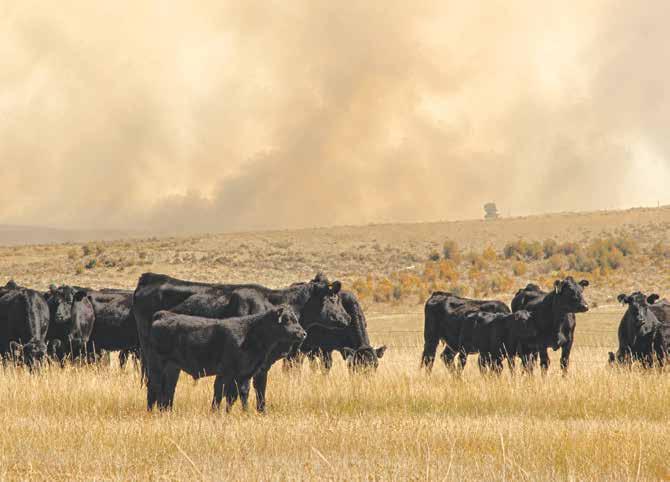
SMOKE AND LIVESTOCK
UW Extension outlines impact of wildfire smoke on livestock health and performance
The University of Wyoming (UW) Extension
Wildfire Webinar Series explores a wide range of wildfire topics and offers practical knowledge, expert perspectives and actionable steps to help communities better understand risk and stay resilient.
On May 14, the series examined the impacts of wildfire smoke on livestock, featuring a presentation from University of Idaho Associate Professor Amy Skibiel.
Skibiel’s presentation highlights current wildfire conditions across the U.S. and studies on the impacts of wildfire smoke on livestock, as well as tips and guidelines for protecting livestock during wildfire season.
Wildfire statistics
Wildfires are not a new issue facing ag producers, but they are becoming increasingly frequent and severe
According to Skibiel, fire activity for 2026 is well above the 10-year average in terms of acreage burned, with roughly 25,000 wildfires already having scorched about two million acres across the U.S. – nearly double what has been recorded during the same time period.
“This is concerning, and experts are predicting this is going to be a potentially bad wildfire season,” Skibiel says, noting fire activity is starting early and
Please see WILDFIRE on page 4
New BLM director confirmed
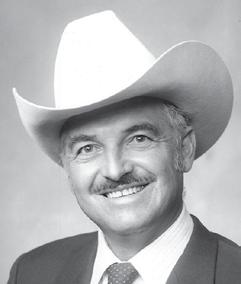
On May 18, the U.S. Senate confirmed Stevan Pearce as the director of the Bureau of Land Management (BLM) in a 46-to-43 vote.
Pearce previously represented New Mexico’s Second Congressional District from 2011-19, and prior to serving in Congress, he was a C-130 pilot in the U.S. Air Force during the Vietnam War and founded an oilfield services company in southern New Mexico.
In his new role, Pearce will lead the BLM in managing nearly 245 million acres of public lands, overseeing multiple uses like livestock grazing, mineral development, recreation and wildlife habitat.
He succeeds former BLM Director Tracy Stone-Manning. Staunch support
Following his confirmation, agricultural organizations and elected officials from several western states were quick to offer Pearce their support, noting his background in energy development and western lands issues seem to be promising qualifications for leading the federal agency.
On May 19, the National Cattlemen’s Beef Association (NCBA), American Sheep Industry Association and Public Lands Council (PLC) issued a joint statement congratulating Pearce and reiterating their support for his nomination.
“Pearce is the right person to lead the BLM and increase partnerships with ranchers who manage millions of acres of range and pastureland land,” states NCBA President Gene Copenhaver. “NCBA is proud to have supported Pearce’s nomination since the beginning of the process, and we are excited to continue working with him to the benefit of cattle producers across the West.”
PLC President Tim Canterbury comments, “Pearce has
According to the National Drought Mitigation Center’s (NDMC) April 2026 Drought Climate Summary and Drought Impacts Summary, both published on May 11, drought conditions worsened across most of the High Plains during the month of April, heightening concerns for producers who are already dealing with dry pastures, poor soil moisture and tightening forage supplies.
The Drought Climate Summary notes extreme drought expanded across large swaths of eastern Wyoming, western Nebraska, Colorado and Utah, while warmer-than-normal temperatures and below-average precipitation continued stressing rangelands and crops.
Forecasters with the National Weather
Agricultural Bankers Conference
Ag lenders, exhibitors gather in Dubois for annual convention Ag lenders from across Wyoming gathered in Dubois May 13-14 for the 2026 Agricultural Bankers Conference, hosted by the Wyoming Bankers Association.
Held at the Headwaters Arts and Conference Center, the convention featured two days of engaging speakers and networking opportunities focused on agricultural and rural banking, in addition to a variety of exhibitors.
Speakers covered relevant agricultural issues from weather and water to policy updates and market perspectives, and attendees had the opportunity to tour the National Museum of Military Vehicles.
On opening day, Meteorologist Don Day, Jr. offered a summer weather outlook and Senior Vice President of Agricultural and Rural Banking Policy at the American Bankers Association (ABA) Ed Elfmann provided a federal policy update on issues affecting the ag industry.
Service (NWS) Climate Prediction Center now expect drought to persist or expand across the High Plains and broader West throughout the month of May.
Drought conditions in the High Plains NDMC reports drought conditions across the High Plains “grew in coverage and intensity” in April, with areas of Wyoming, central and western Kansas, eastern Colorado, southern South Dakota and western Nebraska experiencing one- and two-category degradations. By the end of the month, extreme drought and a few areas of exceptional drought covered large portions of eastern Wyoming, western Nebraska, southwest South Dakota and northern and southern Colorado.
WYLR photo
China Was Good to U.S. Ag, But Time Will Tell
During the recent summit between China and the U.S., China agreed to buy $17 billion in ag products per year from 2026-28, in addition to the soybean purchase commitments they made in October 2025.
In a fact sheet, White House officials said, “President Donald Trump and Chinese President Xi Jinping agreed the U.S. and China should build a constructive relationship of strategic stability on the basis of fairness and reciprocity.”
Some time ago, China did not renew the permits for U.S. beef processors to export beef to China.
In the past, the Chinese had U.S. beef available to them and demand was high. Some had learned to grill beef outdoors, and it was catching on fast.
Some of the best news coming out of the summit is China’s General Administration of Customs granted a five-year registration extension to 425 U.S. beef processors. They also approved 77 new permits for five years. There are some U.S. beef processors waiting for registrations, and the White House fact sheet noted China will work with U.S. regulators to lift all suspensions of U.S. beef facilities.
China has taken the first step in allowing U.S. beef into their country, but the question is when will they start ordering our beef?
The last time President Trump met with the Chinese ruler, they agreed to buy a certain amount of soybean bushels. They didn’t buy near what they were supposed to. Instead, they went to Brazil and other South American countries where they are trying to gain a foothold. China can change its mind very easily.
In 2020, China was supposed to review and automatically relist all beef and pork plants every five years, according to the signed agreement. They did so with pork, but not with beef, which caused a drop in U.S. beef exports.
China’s main demand for beef is going to be variety meats and underutilized cuts, not steaks and roasts, which is good for the industry as it will add an additional $165 to the value of each animal for beef producers and no increased cost to consumers.
In the past, when China was importing U.S. beef, they were one of the top three purchasers of cuts like tripe, tendons and tongues. These variety meats are not favored in the U.S., except by ethnic groups. China was also the number one purchaser of cow hides.
Around 2013, China’s beef consumption started to exceed their domestic beef production. With their huge population numbers, China really had to look at importing beef.
Hong Kong, with its millions of upper middle class people, was always an importer of U.S. beef. Sixteen years ago, Hong Kong imported around 16 percent of all U.S. beef exports.
Some American consumers are complaining about exporting domestic beef when it is so pricey at the grocery stores here in the U.S.
While some exported beef will include Americans favored cuts, most will be variety meats. These record beef prices won’t last forever, and having China import American beef, will certainly help beef producers.
There is no sound harder for a parent to hear than a child saying, “I’m hungry,” when there is not an easy answer.
During the school year, Wyoming families can count on school breakfast and lunch to help keep little bellies full, but when the final bell rings in May, those meals disappear and for too many families, worry quietly takes their place.
Summer should be a season of sunshine, scraped knees and long evenings outside. Instead, for many parents, it becomes a season of stretching groceries, skipping meals and hoping the pantry lasts until payday.
In 2025, Wyoming had only 88 summer meal sites in 32 communities across 18 of its 23 counties. Many rural, Tribal and ranching families live hours from the nearest site.
Federal summer feeding rules from the U.S. Department of Agriculture are built around centralized meal programs which work best in cities, leaving too many children in rural communities out of reach.
This is where SUN Bucks becomes more than a program – it becomes a lifeline.
SUN Bucks gives income-qualified families the flexibility to buy groceries close to home when distance, fuel costs, work schedules, weather or lack of transportation make daily trips to meal sites unrealistic. It complements – not replaces – traditional summer meal programs by reaching children who otherwise fall through the cracks.
For rural families, flexibility is everything. A parent juggling long work hours or multiple jobs cannot always drive across counties at a specific time each day for a meal pickup. A family living miles down a gravel road cannot always afford the fuel for repeated trips into town.
SUN Bucks respects these realities and gives parents the dignity to provide meals at their own kitchen tables – helping them keep little bellies full where children feel safest and most loved.
The program also strengthens Wyoming’s rural economy. Families spend these federal nutrition dollars at local grocery stores and smalltown retailers, supporting jobs, supply chains and businesses which often serve as lifelines in rural communities.
When we invest in feeding children, we also invest in the communities that raise them.
If we believe in feeding children during the school year, we must believe in feeding them during the summer. Hunger does not take a vacation.
In a rural state like Wyoming, programs designed for cities simply cannot reach everyone. SUN Bucks helps ensure children continue to have access to food when school is out.
For the past seven years, the Wyoming Hunger Initiative (WHI) has worked alongside more than 200 partner organizations to feed our neighbors every day. These volunteers and community leaders see what many of us never have to witness – families who
From the Publisher
Dennis Sun
NEWS BRIEFS
WGFD to host public meeting
The Wyoming Game and Fish Department (WGFD) will host a public meeting in Jackson on May 26 to gather public input and answer questions regarding proposed changes to multiple regulation chapters.
The meeting will be held at the WGFD Jackson Regional Office beginning at 6 p.m.
The public comment period for Chapters 35, 47, 51, 54 and 62 is open until 5 p.m. on June 10, and the public comment
period for Chapter 44 is open until 5 p.m. on June 18.
Public comments will be shared with the Wyoming Game and Fish Commission prior to its July 14-15 meeting in Sheridan.
Interested parties can submit comments online at wgfd.wyo.gov, in person at meetings and by mailing comments to WGFD, 3030 Energy Lane, Casper, WY 82604.
Action ordered on golden eagles
In a May 19 WyoFile article by Mike Koshmrl, U.S. Department of Agriculture (USDA) Research Biologist Lindsey Perry briefed Wyoming officials about the status of her golden eagle work at a meeting of the state’s Animal Damage Management Board (ADMB).
“Word came down from U.S. Secretary of Agriculture Brooke Rollins and Secretary of the Interior Doug Burgum that they wanted immediate action this lambing season to alleviate some of the depredation happening,” said Perry, who works at the National Wildlife Research Center. “They asked us to try to do something.”
By the time Rollins and Burgum’s directive trickled down to Perry in February, the marching orders were to capture golden eagles in areas used for lambing domestic sheep and move them elsewhere.
Because of manpower limitations, the eagle-moving efforts effectively delayed a National Wildlife Research Center project geared toward studying and identifying a cost-effective deterrent to golden eagle depredation in Wyoming.
Testing of nonlethal deterrents is now slated to take place in 2028-29, and
because of the directive, the focus in 2026-27 is changing to moving eagles.
The question of where to take Wyoming golden eagles is complicated by their predilection for returning, especially if they’re not moved long distances.
“They often come back to the same location, but it does take some time – a year usually, sometimes it’s a little bit faster,” Perry said.
The goal for 2026 has been to move the large birds of prey toward the Pacific Coast to put some mountains between the translocated birds and their native ranges. But so far, no other states meeting wildlife managers’ criteria have been willing to take an influx of golden eagles.
Addressing livestock conflict with golden eagles is complicated by federal laws which address the native avian predators. They’re protected from most possession and killing by the Bald Eagle Protection Act, which was amended in 1962 to also protect golden eagles.
Golden eagles are also not doing well from a population standpoint. Facing stressors like habitat loss, lead poisoning and wind turbine strikes, numbers in Wyoming have declined by nearly one-third over the
Funding requests welcome
The Cattlemen’s Beef Board (CBB) invites all eligible beef industry organizations to submit funding requests for programs and projects for upcoming Fiscal Year 2027, which begins Oct. 1. Requests must be in the form of an authorization request (AR), and multiple program areas are eligible for funding.
By law, the Beef Checkoff – through their administrative body, CBB – contracts with national, nonprofit, beef industry-governed organizations to carry out promotion, research and education work as directed in the Beef Promotion and Research Act and Order.
As outlined by the Beef Promotion and Research Order, eligible groups which may contract with the Beef Checkoff are established national nonprofit organizations governed by a national board of directors representing the cattle or beef industry and have been active and ongoing for at least two years.
Organizations must submit a first-round draft AR to CBB by June 8.
At the 2026 Cattle Industry Summer Business Meeting in Denver, Colo. on July 12-14, organizations will have the opportunity to present their specific plans and funding requests to various Beef Checkoff program committees.
Interested organizations should contact CBB Senior Director of Operations Sara Arp by June 1 at sarp@ beefboard.org or 303-220-9890.
past 20 years, according to Teton Raptor Center Conservation Director Bryan Bedrosian.
Yet, concurrently, conflict with golden eagles has also been on the upswing.
USDA Wildlife Services reported no hazing of golden eagles in the period from 2016-18, but by 2020, some 19 eagles were hazed, according to an environmental assessment covering bird damage management in Wyoming.
Woolgrowers in places like Johnson County have experienced chronic depredation issues, the Buffalo Bulletin has reported.
Wyoming sheep producers reportedly lost $700,000 worth of lambs related to eagle depredation in 2025, according to the ADMB’s latest annual report.
It’s unclear when these translocation efforts will offer relief.
NAWG names policy manager
On May 18, the National Association of Wheat Growers (NAWG) announced Ross Bodine joined the organization as policy manager.
In this role, Bodine will support NAWG’s advocacy efforts on Capitol Hill and with federal agencies, working to advance federal policy priorities on behalf of U.S. wheat growers.
Prior to joining NAWG, Bodine served as a government relations intern with CropLife America, where he supported federal and state advocacy initiatives and helped coordinate the
Washington, D.C. Agriculture Intern Network. He also brings hands-on research experience from his time as an undergraduate research assistant under Dr. Dean Riechers at the University of Illinois, as well as industry experience through internships with Corteva Agriscience and KWS Wheat. Bodine earned his Bachelor of Science in Plant Biotechnology from the University of Illinois Urbana-Champaign.
“I’m excited to join NAWG and advocate on behalf of wheat growers across the country,” said Bodine.
Lummis leads hearing
On May 20, U.S. Sen. Cynthia Lummis (R-WY), chair of the Senate Environment and Public Works Subcommittee on Clean Air, Climate and Nuclear Innovation and Safety, convened a hearing to examine a trio of legislative proposals – the Build Nuclear with Local Materials Act, a discussion draft of the RECHARGE Act and a discussion draft of the Enrichment Licensing Modernization Act.
During the hearing, Lummis questioned witnesses on what it will take to strengthen America’s nuclear energy sector, covering everything from cutting red tape on project
development and expanding the workforce to attracting lasting investment in energy communities.
Witnesses weighed in on how to move nuclear deployment forward safely, reliably and affordably, touching on construction challenges and the industry’s need for more skilled workers.
“America must remain an economic superpower in the decades ahead, and this requires smart energy policy to ensure the U.S. – and states like Wyoming and Arizona – continue to lead the way,” Lummis said.
The Wyoming Water Development Commission (commission) was awarded a Regional Conservation Partnership Program (RCPP) grant from the U.S. Department of Agriculture (USDA) Natural Resources Conservation Service (NRCS) to provide drought resiliency through enhanced water management in the Upper Colorado River Basin in Wyoming, which includes the Green River and Little Snake River watersheds. The Wyoming Water Development Office (office) has authority to administer the RCPP grant #3207 on behalf of the commission. The office, NRCS and contributing partners will assist producers and Water Management Entities (WMEs) through the RCPP process with their NRCS Conservation Practices, such as installing sprinklers, converting open canals to pipe, improving diversions, lining conveyances, bank stabilization, etc. WMEs apply directly to the office for subawards, while producers apply to NRCS for cost-share reimbursement.
The office is pleased to announce that we are now accepting applications for subawards under the RCPP grant #3207. You can find more details by visiting the website below. Contact the Office Grants Administrator at (307)777-7626 or wdc.GrantsAdministrator@wyo.gov with any questions. https://wwdc.state.wy.us/RCPP/RCPP.html
The deadline for the first draft AR is June 8. Final draft ARs must be received by the
to be considered.
by July
exhibiting concerning patterns, as wildfire season typically starts in June.
Additionally, Skibiel emphasizes both wildfire severity and wildfire intensity have been increasing over the past several decades, and the highest risk of large wildfires is concentrated in the western U.S., posing threats to livestock and livelihood of agricultural producers.
Skibiel further explains the western U.S. is home to approximately four million dairy cattle and more than 5.5 million beef cattle, and therefore, understanding the risks wildfire smoke poses
to livestock and preventative measures to help mitigate effects of wildfires is crucial.
Smoke and livestock
Wildfire smoke is hazardous to livestock, containing pollutants which can travel far distances and drastically impact both animal health and performance.
“With increasing frequency and severity of wildfires, we can expect a greater likelihood of adverse health impacts from poor air quality stemming from wildfires,” Skibiel says, noting common effects from wildfire smoke inhalation include decreased reproduction, respiratory
On May 13, the U.S. House of Representatives passed a bill to allow permanent year-round E15 sales, two weeks after E15 was pulled from the farm bill.
The bill passed on a 218-to-203 vote after a motion to recommit the legislation back to committee failed.
Reflecting E15 is as much regional as partisan, 95 Democrats joined 122 Republicans to pass the bill, while 90 Republicans and 113 Democrats opposed it. One independent also backed the bill.
Known as House Reso-
issues like pneumonia and decreased meat and milk production, along with issues stemming from pasture loss.
In particular, Skibiel notes cattle are especially susceptible to respiratory disease due to unique characteristics of the bovine respiratory system.
“Livestock, especially bovine, have a lower capacity for gas exchange, as well as a longer trachea and bronchi,” Skibiel explains. “This means the length of time particles travel through the airways can increase, thereby increasing the likelihood of small particles depositing
E15 bill moves forward
lution 1346, the legislation represents a compromise from the farm bill version, most notably when it comes to small-refinery exemptions. Starting on Jan. 1, 2028, those refineries would receive an automatic 75 percent exemption from their Renewable Fuel Standard obligations, according to the bill text.
The U.S. Environmental Protection Agency would lose its existing authority to grant hardship-based small refinery exemptions after 2028. In addition, 75 percent of those exempted volumes
within the airways.”
Cattle also have lower levels of critical enzymes and immune cells responsible for clearing inhaled pathogens and breaking down particles, leaving them especially susceptible to lung complications and diseases like pneumonia.
Additionally, Skibiel references studies showing when beef calves are exposed to wildfire smoke, water and feed intake decreases, leading to consequences on both overall health and growth. Poor air quality poses the most risk to pre-weaned calves, which are especially sensitive to changes in their environment.
“In cattle, the pre-wean-
WEDNESDAY, MAY 27, 2026 - FEEDER SPECIAL
Arrow-L Farms/Bob Gorr 246 Red/Blk Hfrs, 600-650#, Guaranteed Open, Been on a Grower Ration, Bunk Broke, Branding Shots, Pre-cond. Shots: Pyramid 5+Presponse, 7-way w/Somnus, Poured w/Ivermec (Note: some of the heifers are Bangs Vac.) JEM Ranch Inc./Jim Morrison 180 Char-x/Rwf/Blk Strs, 725-825#, Complete Vac. Program, Been on a Grower Ration intending to go back to grass, Complete Vac. Program, Purchased at Torrington Livestock Markets, Selling only due to drought conditions DeGering Livestock 113 Blk/Bwf Strs, 700-800#, Weaned in September, Running out, Hay Fed, Cake Broke, Have had all Calfhood/Pre-weaning Shots, Shots in November: Bovi-Shield 5, Implanted, CARE, Age & Sourced and EID tagged thru IMI Global, Angus Link Numbers of Beef 137, Feedlot 138, Grid 123 and Maternal 119, Selling only due to dry conditions, Green, (usually sell their steers on CCV in August weighing 1000# for many years) H & T Ranch 105 Blk/Bwf Hfrs, 650-750#, Spayed, Been on a High Roughage Ration to go back to grass, 2 Rounds of a Modified Live Vac. Program since weaning, No Implants by this owner, Selling due to dry conditions, Long time consignor with Torrington Livestock Markets Bob Clark 49 Blk Hfrs, 700-800#, Complete Modified Live Vac. Program, Bangs Vac., Spring Shots: Vira Shield 5+VL5, Vision 7w/Somnus, Pinkeye, 2 Rounds of Pre-breeding Shots, Sired by Paint Rock Angus Bulls, Replacement Quality, These were his personal replacements and selling only due to drought conditions, Freeze Branded, Home Raised Shawn & Marlisa Hall 36 Blk/Bwf Strs & Hfrs, 800-915#, Heifers Ran Open, Bunk Broke, Been on a High Roughage Grower Ration, Complete Vac. Program, No Implants, Wintered for grass Dan Starkson 20 Blk/Rd Angus Hfrs, 600-625#, Weaned since October, Branding Shots: Bovi-Shield Gold, 7-way, Weaning Shots: Bovi-Shield Gold, 7-way, Valbzen Wormer, Poured w/Ivomec, Poured w/Cydectin in March ****16 Fall Blk/Rd Angus Hfrs, 500#, Branding Shots: Bovi-Shield Gold, 7-way, Weaning Shots: Bovi-Shield Gold, 7-way, Poured w/Cydectin R. Timbers LLC 28 Mx Hfrs, 600-675#, Been on a Grower Ration, Complete Vac. Program TB Cattle 19 Blk/Bwf/Rd Strs, 850#, Been on a Light Grower Ration, Shots: 7-way, Pyramid 5+Presponse, Safe-guard, Poured w/Clean-up
FRIDAY, MAY 29, 2026
SALE RESULTS -PAIR/BRED SPECIAL WEDNESDAY, MAY 20 - 1015 HD
Family Trust 1 Blk
- ALL CLASSES
Ty
Zach Johnson Lingle, WY –307-575-2171
Jeff Ward – Laramie, WY 307-399-9863
Tam Staman – Crawford, NE 308-631-8513
Justin Smith - Lusk, WY 307-340-0724
Hunter Dockery - Lusk, WY 307-340-1202
Ben Kukowski - Kaycee, WY 307-217-1472
Garrett Nunn - Laramie, WY 307-460-1649
Scott Redden - Burns, CO 970-596-3588
would be reallocated to other refiners.
U.S. Rep. Mariannette Miller-Meeks (R-IA) said it makes sense to pass the bill, considering the EPA has granted summer waivers to allow E15 sales to continue since 2011.
“This means Washington, D.C. already recognizes this policy makes sense,” she said.
“What we are doing today is removing an outdated prohibition and finally providing certainty for farmers, producers, retailers and consumers year-round. E15, as an
ing period is a critical window for developmental sensitivity,” Skibiel notes. “Several studies have found reduced or compromised respiratory health in young calves is associated with decreased growth, decreased daily gain and even lower milk production in dairy calves at their first lactation.”
She also explains studies examining the effects of in-utero wildfire smoke exposure are ongoing, with many findings evidencing negative impacts including lower birthweights, immune suppression, heightened inflammation and changes in average daily gain both before and after weaning in young calves, as well as reduced lactation and changes in immune response and metabolism in lactating cows.
With this, Skibiel emphasizes some ways to protect livestock from the adverse effects of wildfires through management practices.
Protecting livestock
First, Skibiel recommends practicing proper barn and field maintenance to reduce the risk of damage from wildfire. Clearing brush and dry vegetation creates a defensible space to act as a buffer around property and reduces the spread of wildfires, Skibiel says.
Further, she recommends having an evacuation plan in place in case of emergency and emphasizes the importance of clearly communicating the details of this plan with crews and family members.
“During wildfire season, it’s important to monitor air quality conditions so you know what your animals are facing,” she says, further encouraging producers to monitor animals for symptoms of smoke exposure including watery eyes,
American-made domestic fuel that is homegrown, lowers gas prices, strengthens our energy independence and supports rural communities across the country.”
U.S. Rep. Harriet Hageman (R-WY) called on House members to vote against the bill, arguing the measure would raise prices at the pump.
“This bill is disastrous for Wyoming refiners and independent petroleum producers, leading to a direct loss of at least 750 jobs in my home state,” she said.
coughing, difficulty breathing, nasal or eye discharge and reduced feed or water intake.
“Consult a veterinarian if you have any concerns,” she adds.
In the event of a nearby fire, Skibiel encourages producers to limit stressful management events including vaccination, weaning and transportation to reduce stress on immune systems and allow animals to focus energy on combatting wildfire pollutants.
Additionally, ensuring adequate water supply is crucial because water intake can help promote mucus production to line airways and help expel inhaled smoke particles.
Allowing animals time to heal in the event of smoke exposure is also important.
Finally, Skibiel emphasizes the importance of keeping good farm records, noting having a strong recordkeeping system in place helps with reporting losses for insurance purposes in the aftermath of a fire.
“Consider taking photos of smoke and screenshots of air quality reports so you have evidence of both the consequences for your animals and the conditions at the time,” Skibiel recommends.
In closing, Skibiel details some online resources for producers to consult regarding wildfires and livestock health, including farmers. gov and livestockwildfirehub.org, noting the Livestock Wildfire Hub has several resources about the effects of wildfire smoke on cattle, as well as maps for monitoring air quality conditions.
Grace Skavdahl is the editor of the Wyoming Livestock Roundup. Send comments on this article to roundup@wylr.net.
For more information on the University of Wyoming’s Wildfire Webinar Series or to view past recordings, visit wyoextension. org/wrir/wildfire-webinar/.
By Paul Dykstra
CAB Market Update
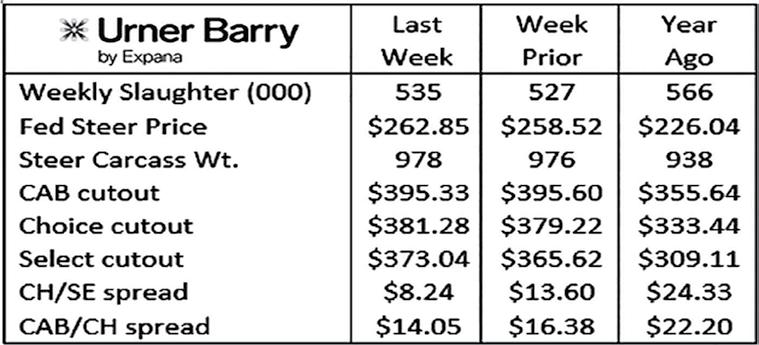
The run-up in fed cattle prices over the past four weeks has been impressive with a $16.67 per hundredweight (cwt) live steer inflationary trend culminating in the second week of May’s $262.85 per cwt steer price.
Federally inspected harvest head counts have also improved to fulfill larger boxed beef sales commitments on spring grilling and holiday demand. The past three weeks have averaged 532,000 head weekly counts compared to the 516,000 head average in the prior three weeks.
Fed cattle market sees steep upward trend
The steep upward price trajectory in the fed cattle market remains wholly supported on fed cattle remaining in tight supply and the tight grasp of cattle feeders keeping feedlot stays and carcass weights elevated.
Weights continue to underpin beef production tonnage, cutting the harvest pace deficit for fed cattle.
Cash cattle values have run higher with no support from boxed beef prices as the comprehensive cutout has been relatively stagnant for the past six weeks after pulling back from March highs.
Wholesale prices are
expected to adjust higher into June, in keeping with previous seasonal trends, but this has yet to develop.
June live cattle futures remain a deep discount to cash, trading at a $10.95 per cwt below the latest cash prices as of May 21. At this point in May, plenty of time remains for the June contract to converge with cash.
Forward contract feeder calf video sales have kicked off the third week of May with a portion of producers pulling the trigger earlier than normal, capitalizing on the current market and offsetting risk.
Fall delivery calf prices are showing breakevens calculated against the current record-high cash fed cattle market.
CME live cattle contracts for next spring are nearly $30 per cwt behind today’s cash, which suggests buyers are both “betting on the come” and planning to add significant cheap gains to back up total cost. More on price spreads In April, this column discussed the notable shift in the spring Choice-Select price spread as the Choice premium dropped to nearly zero dollars per cwt in spot market pricing. The trend has extended
into May with the spread remaining well below $5 per cwt with numerous excursions with the Select cutout becoming premium to Choice.
Market analysts have appropriately focused on the rapid decline in Select carcasses, dropping from 12 percent of the fed cattle mix in December to average just eight percent since February.
This historically small Select share has created a scarcity in the category compared to the lower onethird Choice price, which is literally what’s left in the Choice box after Premium Choice brands like Certified Angus Beef (CAB) have been marked up for a premium end point.
When considering the higher Select value, this year’s exceptionally small cull cow harvest is also important and domestic ground beef demand is quite strong, with more than onehalf of beef consumption in this category.
It’s clear the cyclical trend of cow harvest has been closely aligned with the fluctuations in the Choice-Select price relationship. As cow harvest declines the value of lean, Select end meats increases as those cuts become attractively priced in relation to lean cow cuts.
It’s a simple substitution effect as 90 percent lean trim inflates in value under supply constraints.
Since the majority of imported beef is lean trim, destined to be ground and blended with 50 percent domestic lean trim, there
work hard, do everything right and still struggle to keep food on the table.
Rising costs for groceries, fuel, rent and utilities have stretched household budgets to the breaking point. Many families today are no longer one emergency away from hunger – they are one utility bill away from wondering how they will feed their children.
Summer magnifies this struggle. When school meals disappear, the grocery bill doesn’t just grow – it can double. Parents lie awake at night doing math in their heads, hoping they can make it all work. No parent should have to choose between paying the electric bill and buying groceries.
Some have raised concerns about whether SUN Bucks is the right use of state dollars. This concern deserves respect. In Wyoming, we value independence, responsibility and careful stewardship of public resources, but we also believe deeply in taking care of our own.
SUN Bucks is not a handout. It is a targeted, income-qualified program designed to help working families supplement their grocery budgets during the summer months. It ensures children who already qualify for free or reducedprice school meals continue to have access to food when school cafeterias close.
When food banks, churches and volunteers
is a clear relationship. As Select carcass supplies have declined, the imported tonnage has increased to
replace tonnage while the market seeks to maintain balance in lean beef supply. Paul Dykstra is the direc-
tor of supply management and analysis at CAB. He can be reached at pdykstra@certifiedangusbeef.com.
on the front lines are asked whether this support is needed, the answer is an overwhelming yes.
We often say Wyoming’s children are our greatest resource. Supporting SUN Bucks is our chance to prove we mean it, because behind every statistic is a child, a family and a future.
This summer, we have the opportunity to make sure no child in Wyoming goes to bed hungry – one filled little belly at a time.
Jennie Gordon currently serves as the First Lady of Wyoming and is the founder of WHI, an initiative working to prevent food insecurity by increasing awareness and support for the work of local anti-hunger organizations throughout Wyoming. For more information, visit nohungerwyo.org/
Shepherd PO Box 443 | Lisbon, OH | 44432 A premier source for small ruminant news, The Shepherd magazine is issued monthly in print and online. Subscription Rates: $30 USD for one year or $55 USD for two year Pay via mail or online at: theshepherdmagazine.com Name:
OBITUARIES
Bobby “Bob” Lynn Tarver passed away, leaving behind a remarkable legacy of family, ranching, horsemanship, public service and dedication to the Western way of life.
Bob was born to Lynn Denton Tarver and Bernice Irma (Robinson) Tarver and was the older of two boys. His roots ran deep in Campbell County, where the Tarver fam-
ily history stretches back generations to when his grandfather moved from Georgia and homesteaded the area now known as the Tarver Addition in northwest Gillette.
Bob grew up on ranches across northeastern Wyoming and southeastern Montana. In 1946, when he was six years old, his family moved from Pilgrim Creek south of Broadus, Mont. to the Flint Ranch on the Little Powder River north of Gillette where his father began managing cattle and building his own herd.
A few years later, the family moved to the Gillstrap Place on Wildcat Creek,
where he and his brother Gary attended the one-room schoolhouse.
At age 16, Bob’s family moved their cattle herd 30 miles to Olmstead Creek after his father leased a larger ranch from Albert Hunter, beginning a partnership between the Hunter and Tarver families which would span nearly 70 years.
Bob attended Campbell County High School, where he participated in rodeo and graduated in 1958.
Bob continued his education at Colorado State University, arriving with little more than determination and grit.
True to his nature, he found a way to succeed both academically and in rodeo.
In 1962, he earned a Bachelor of Science in Accounting, then served in the U.S. Army and returned home in 1964 to pursue his lifelong passion for ranching.
Bob worked alongside his father and brother on the Hunter Ranch, raising sheep and cattle until his father’s untimely passing in 1968. Bob and Gary then carried on the ranching operation while also acquiring the Elk Creek place.
In 1966, Bob helped lead the purchase of the Parks Ranch with 17 other local producers, forming the Trail Creek Grazing Association, where he proudly served for many years as president, then secretary and treasurer.
Bob was blessed with his son Michael Tarver in 1969 from his first marriage.
In 1973, he married the love of his life, Nancy Anne Espy. They welcomed their sons Robert in 1974 and James in 1976 and spent decades building a ranching operation and raising their family in Campbell County.
In 1977, Bob’s life changed forever when the plane he and his brother were flying crashed, leaving him with a broken back. At only 37 years old, he faced tremendous adversity with unwavering toughness and determination.
After months of rehabilitation at Craig Rehabilitation Hospital, Bob walked out on crutches which would remain part of his life, refusing to let the accident keep him from ranching and living fully.
Bob loved all things horses, rodeo and roping. When he could no longer compete himself, he found joy in teaching his boys to rope, spending time with friends at steer ropings and attending the Wrangler National Finals Rodeo with family and friends.
Beyond ranching, Bob was deeply committed to public service and improving life in Campbell County. He served as a Campbell County commissioner from 1978-86, during which time he helped promote the construction of the Campbell County Public Library, Recreation Center, Senior Center, Child Care Center, Public Health Build-
ing and, one of his most proud accomplishments, the creation of the CAM-PLEX.
Bob also served on the Farmers’ Cooperative Board and the Powder River Energy Corporation Board.
Despite his many accomplishments, Bob’s greatest pride and most important work was always his family. He treasured everyday ranch life and especially loved supporting his children and grandchildren in sports, rodeo, school events and all of life’s milestones.
Bob is preceded in death by his parents Lynn Denton Tarver and Bernice Irma (Robinson) Tarver, his brother Gary Tarver and his motherin-law Nancy Espy.
He is survived by his loving wife of more than 50 years, Nancy Anne (Espy) Tarver; his sons Michael (Heidi) Tarver, Robert (Michelle) Tarver and James (Jaime) Tarver; his grandchildren Connor (Angel) Serano, Michael (Abby), Carter, Tayler (Faith), Wyatt (Tavee), Hayden, Whitney and William; five great-grandchildren; his nephew Reuben (Jenny); his father-in-law Jim Espy; brothers-in-law Jim (Kym) and Hugh (Holly) and sisters-in-law Cam Emmons and Katy (Harry) Stevenson.
Bob had a remarkable gift for connecting with people. He will be remembered for his kind heart, warm smile, strong hugs and unforgettable handshakes that made everyone he met feel valued and special.
A funeral service will be held at 11 a.m. on May 27 at Family Life Church with Chaplain Gordon Harper officiating. Interment to follow at Mt. Pisgah Cemetery with Military Honors provided by the American Legion Post #42 Honor Guard. Visitation will take place from 4-7 p.m. on May 26 at Gillette Memorial Chapel.
In lieu of flowers, the family requests memorials be made to benefit Sheridan VA Community Development and Civic Engagement, 1898 Fort Road, Sheridan, WY 82801 or NEW Community Health Foundation, 1901 Energy Ct., Suite 265, Gillette, WY 82718. Memorials and condolences may also be sent in care of Gillette Memorial Chapel, 210 West 5th Street, Gillette, WY 82716.
the U.S. market at lower tariff rates, according to a May 12 news release issued by the American Farm Bureau Federation (AFBF).
Additionally, the reduced beef tariffs were planned alongside another executive order aimed at reducing regulations applying to American beef products, but farm and ranch leaders criticized the proposal, citing concerns about potential detrimental impacts on the American beef supply, according to a May 14 TriState Livestock News article.
Farm economists raise concerns
Farm groups and ag industry advocates including AFBF argue, although suspending tariffs may increase beef supplies short term, the action could lead to long-term negative impacts on the U.S. cattle market, harming ranchers and weakening incentives to rebuild domestic herds.
AFBF argues creating a reliance on imported beef and adding unnecessary uncertainty could discourage longterm domestic investments in home-grown protein and fails to address underlying issues facing American farmers and ranchers.
Economists with AFBF analyzed the issue in a May 12 Market Intel report, emphasizing beef imports are already at a high while the domestic cattle supply remains at a multiyear low.
“The U.S. cattle industry is navigating one of the tightest supply environments in decades,” the report states.
“The domestic cattle herd remains near multi-decade lows following years of drought, elevated feed and operating costs, herd liquidation and ongoing disruptions tied to New World screwworm restrictions along the Southern Border.”
“At the same time, beef imports have already climbed sharply,” the report continues. “During the first quarter of 2026, the U.S. imported 562,000 metric tons of beef and beef products valued at nearly $4.5 billion, up 18 percent from the same period last year and 122 percent higher than five years ago.”
Prioritizing producers
AFBF President Zippy Duvall further emphasizes suspending tariffs on beef imports could hurt American ranchers during a time when strong cattle markets are finally providing producers some relief.
“Despite a historic drought limiting the supply of water and feed, the lone bright spot in farm country has been the cattle business,” says Duvall. “Ranchers are finally starting to recover from years of losses. Any plans to increase beef imports are extremely worrisome and could undermine the fragile recovery ranchers are experiencing.”
In his statement, Duvall urges the Trump administration to consider the economic impact such an executive order could have on rural America, claiming increased imports “put the economic sustainability of the men and women who grow the food every family in America relies on” at risk.
Overall, AFBF says although temporary import expansion may modestly supplement certain beef supplies, particularly for ground beef blending, it risks sending mixed signals to domestic producers at a critical stage in the cattle cycle.
“Long-term resiliency in the U.S. beef supply will ultimately depend on the economic confidence and ability of American ranchers to rebuild the domestic herd,” the report concludes.
Meatpackers may benefit
In addition to putting an undue strain on ranchers, some
groups argue reducing import restrictions would serve meatpackers such as JBS rather than consumers.
Farm Action Research and Policy Director Sarah Carden raised concerns in a May 11 news release, blaming a “highly consolidated meatpacking sector controlled by a handful of dominant corporations” for heightened beef prices and arguing reducing import restrictions would do little to resolve the issue for consumers.
“The administration appears to be presenting this move as a way to lower beef
prices for consumers while supporting domestic cattle ranchers, but we’ve already seen this approach fail,” Carden argues.
“Previous import expansions from Argentina did not meaningfully reduce beef prices because the real problem is a highly consolidated meatpacking sector controlled by just a handful of dominant corporations.”
“Expanding imports into a rigged and consolidated market will not lower prices for consumers or create a fairer market for ranchers,” Carden continues. “What it will do is strengthen multinational meat-
Austin Snook • 307-290-2161
Taylor Snook • 307-290-2273
Craig Deveraux • 307-746-5690
Dan Catlin • 406-671-7715
Clint Snook • 307-290-4000
Cheyenne Seymour • 605-641-0638
Casey Sellers • 307-217-2614
Jim Forbes • 307-351-5932
packers like JBS while putting renewed pressure on independent U.S. cattle ranchers who are finally beginning to recover after years of being in a deficit.”
Ultimately, the Trump administration’s decision to delay lowering import restrictions has been welcomed broadly throughout the cattle industry as producers remain wary of heightened imports and continue working to bolster the nation’s beef supply. Grace Skavdahl is the editor of the Wyoming Livestock Roundup. Send comments on this article to roundup@wylr.net.
Daniel Escoz • 307-217-1440 Tye Curuchet • 307-351-8666 JJ
"From the ring, to the video, and in the country, we market your livestock the competitive way."
May 20, 2026
Decent run of pairs. Consisting mostly of middle age and older pairs. Selling on a steady market. Good participation in the turn out bull sale. Pair Special and Feeder Special next week! Thank you for your business!
FRED J OR JANE A OR CARR, KAYCEE WY 4 BLK-PAIR - 3&4YO 1259 4700.00
2023 CAT D6 DOZER 2023 CAT 420 BACKHOE 2023 CAT 906 LOADER 2018 CAT 930M LOADER 2022 FRIESEN TRAILER AIR COMPRESSOR CAT REACH FORKLIFT (TELEHANDLER) 2023 SA CARGO TRAILER 6X10 NEW PULLED 1500 MILES - $7,000.00
SINCLAIR CATTLE COMPANY C, COCKEYSVILLE HU 1 BLK-COW 1350
“In the High Plains, from March 31 to April 28, moderate drought or worse coverage grew from 65.54 to 69.31 percent, severe drought or worse coverage grew from 45.45 to 57.48 percent and extreme drought or worse coverage grew from 23.26 to 29.41 percent,” outlines the report.
Additionally, precipitation remained well-below normal across much of Wyoming and other High Plains states.
Parts of eastern Wyoming, eastern Colorado,
western Nebraska and western Kansas received less than 50 percent of precipitation they usually see during the month of April, while portions of eastern Kansas and southeast Nebraska fared even worse, with some areas receiving 200 percent less than normal precipitation for April.
Warmer temperatures also added to the mix.
“In the southern half of the region, warmer-than-normal temperatures abounded, with eastern Kansas finishing April six to eight degrees above nor-
mal,” NDMC explains. “Temperatures in Colorado and much of Nebraska finished two to six degrees warmer than normal.”
Unfortunately, the NWS Climate Prediction Center outlook shows little relief in sight for Wyoming and most of the West.
“The drought outlook for May favors drought continuation or expansion across much of the Great Plains and the West,” NDMC states.
“Drought development is forecast in parts of Washington, northwest Oregon, northern Idaho, western and eastern Montana, parts of South Dakota and western North
Dakota, eastern Nebraska, northwest Iowa and southwest Minnesota.”
“Drought is expected to continue across most of Arizona, New Mexico, Oklahoma and the northwest half of Texas, western Kansas, Nebraska, southern South Dakota, much of Washington, Oregon, Montana, Nevada and Idaho and across most of Wyoming and all of Colorado and Utah,” NDMC adds.
Wildfire concerns and water shortages
According to the Drought Impacts Summary, there were 6,765 drought-related impacts in 3,180 areas as of May 11, many tied to wildfire
activity, water shortages and poor soil moisture conditions.
The most severe wildfire activity occurred in the South, especially in northern Florida and southern Georgia.
“On April 20, the Georgia Forest Commission responded to 46 new wildfires, burning 1,080 acres statewide. By April 22, wildfires across southern Georgia had burned over 53 square miles and destroyed 50 houses, moving so quickly residents did not have warning,” NDMC reports.
“Georgia saw numerous major wildfires throughout the month. The Pineland Road Fire, which began in Clinch County, Georgia on April 18, expanded to over 16,000 acres in just four days at only 10 percent containment,” NDMC continues. “Another blaze, which was sparked on April 21 in Brantley County, Georgia, destroyed dozens of homes as it grew nearly six times in just half a day and threatened roughly 1,000 homes on April 22. At the time, 91 Georgia counties, especially in the southern half of the state, were under burn bans.”
By the end of April, Florida was also battling an onslaught of wildfires, including 130 different fires sprawling 39 square miles.
Fire restrictions expanded across portions of the High Plains and Rocky Mountain West as well.
After more than 10,000 acres burned in South Dakota earlier this spring, NDMC notes fire restrictions were implemented in the Black Hills National Forest, extending into the Black Hills in Wyoming.
Statewide fire restrictions were also enacted on New Mexico state lands in April after officials reported wildfire activity at more than double the seasonal average, the report states.
As drought conditions and subsequent wildfire risk intensified, water conservation measures became increasingly common across western states during the month of April.
According to NDMC, mandatory water restrictions were implemented in multiple Colorado communities, including Denver; Durango, Colo.; Northglenn, Colo. and Pagosa Springs, Colo., and several other municipalities enacted voluntary conservation measures as reservoir levels declined.
Most notably, Denver Water announced plans to drain and temporarily close South Park’s Antero Reservoir to maintain downstream supplies to the Cheesman Reservoir via the South Platte River. Officials said the rec-
reation area surrounding the reservoir will close to the public for the first time since the severe drought of 2002.
Additionally, communities in Arizona and Utah also enacted mandatory water restrictions in response to low water supplies.
The report notes, “Severe water restrictions were in effect in Kearny, Ariz., as the community risked running out of its water allotment by July 15. The town was down to just 10 percent of its normal allotment from the Gila River. Residents were urged to curb their water use by 30 percent, and car washing, lawn watering and pool filling were prohibited.”
“Northern Utah’s Weber Basin Water Conservancy District, encompassing more than 700,000 people in Davis, Weber, Summit, Morgan and Box Elder counties, was under mandatory restrictions requiring a 20 percent reduction in water use, while voluntary water conservation was urged in Salt Lake City,” the report continues.
Agriculture impacts
In addition, NDMC says dry soils and poor pasture conditions are increasingly affecting ag producers across the country.
In the South, livestock producers say they are hauling water, feeding hay early and reducing herd numbers due to limited forage supplies.
In Arkansas, Tennessee and Alabama, producers are facing limited feed availability, declining hay supplies and reduced forage quality, causing many to begin liquidating their herds, and in portions of the Southeast, dry ponds and deteriorating pasture conditions have forced producers to rely heavily on supplemental feeding earlier than usual.
Crop producers are also facing increased hardships.
NDMC reports farmers in several southern states delayed planting due to dry, compacted soils, while some irrigation ponds ran dry before crops were fully established.
With NDMC’s most recent reports indicating drought covers more than 76 percent of the High Plains Region and over 91 percent of the West, officials note sustained moisture will be key to reversing long-term drought impacts.
Without spring and earlysummer moisture, concerns surrounding forage production, wildfire potential and ag-related water supplies are likely to intensify heading into late-summer months.
Hannah Bugas is the managing editor of the Wyoming Livestock Roundup. Send comments on this article to roundup@wylr.net.
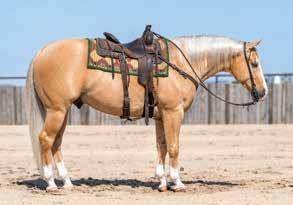
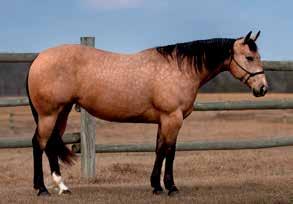
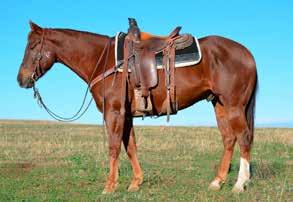
Lot 16 - 2022 Palomino gelding sired by Hollywood Cool Gun, excelling at the ranch shows.
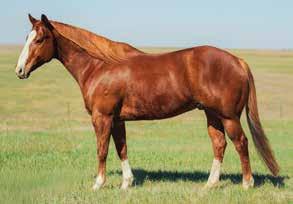
Lot 19 - 2018 Sorrel gelding sired by TR Illuminator Cash, finished head and heel horse.
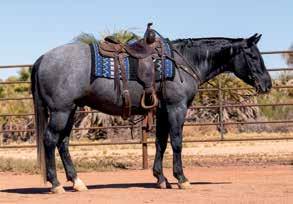
Lot 56 - 2022 Blue Roan Gelding sired by Cats Playin On Time, nice young prospect.
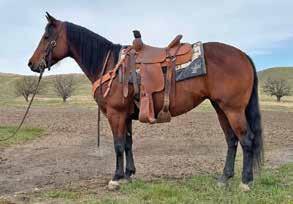
Lot 40 - 2017 Bay mare sired by Banjoe Dun It, finished heel and breakaway horse.
NEW GUN N TOWN
APACHES BLUE CAT
CASH N BIG CHECKS
SHEZA DUN IT TWIST
Lot 20 - 2022 Buckskin mare sired by Stormy Badger. Lot 22 - 2021 Chestnut gelding sired by This Guns For Nic.
WOODROWS BADGER BOON SIT AND SPIN
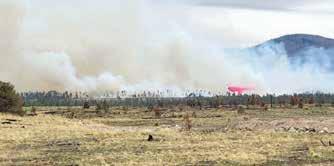
Increased fire activity – A plane drops fire retardant on the Hummingbird Fire in the Gila National Forest of New Mexico on April 25. Wikimedia Commons photo
always been a strong advocate in upholding the multiple-use mandate guiding federal land use policy and working closely with ranchers during his decades of public service. As BLM director, he will be able to utilize his expertise to ensure ranchers are able to carry out the voluntary conservation work vital to maintaining America’s treasured natural resources.”
“PLC and western livestock producers congratulate Pearce and stand ready to work with him to make much-needed changes to the BLM,” Canterbury adds.
Wyoming leaders also welcomed the appointment.
In a statement issued on May 19, Gov. Mark Gordon says, “Pearce is uniquely qualified to lead the BLM. He knows the importance of the agency’s multiple-use mandate and values local and state input on land management decisions. It is gratifying to see his confirmation to this vital role, and I look forward to working with him on issues critical to Wyoming such as oil, gas and coal leasing; sage grouse; recreation; resource management plans; wild horse management and grazing.”
On May 18, U.S. Sen. Cynthia Lummis (R-WY) also praised Pearce’s confirmation, emphasizing the importance of BLM leadership in western states where large portions of land are federally managed.
“I am pleased the U.S. Senate confirmed my friend and former colleague as director of the BLM,” says Lummis. “The BLM oversees nearly 30 percent of Wyoming’s land, making its leadership deeply personal to our state and critical to the communities and economies across the West. Pearce brings experience and vision to honor this responsibility and will serve
as an outstanding guardian of our lands. I look forward to working with Pearce and his team in his new role.”
Strong opposition
While some have celebrated Pearce’s confirmation, environmental organizations and other western lawmakers voiced strong opposition.
They point to Pearce’s past support of legislation related to the sale or transfer of federal lands and his backing of expanded energy development on public lands.
In a May 18 article, Source New Mexico reports U.S. Sen. Ben Ray Luján (D-NM) voted against the confirmation, noting the West “cannot afford a director who has spent his career working against public lands interests.”
Environmental groups like the Center for Western Priorities, the Wilderness Society and the Mountain Pact also condemned the vote.
“Pearce’s confirmation vote is yet another blatant attack on America’s public lands,” states Aaron Weiss, executive director of the Center for Western Priorities. “Congress has put a man who disdains federal land managers in charge of the BLM.”
In a May 19 article published by The Aspen Times, Colorado lawmakers raise concerns about previous statements Pearce has made regarding federal land ownership and public lands sales.
U.S. Sen. John Hickenlooper (D-CO) reiterates public lands are widely valued, especially in the West, and says he questions Pearce’s suitability to oversee the agency, citing the new director’s co-sponsorship of legislation in 2016 which would have authorized the sale of certain fed-
Bookmark and Beyond
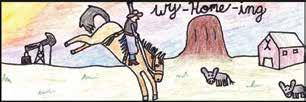
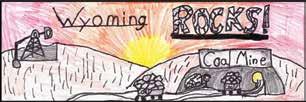
Each year, to showcase their understanding and appreciation of Wyoming’s essential resources, secondthrough fifth-grade students from across the state create bookmarks illustrating a Wyoming resource message through Wyoming Agriculture in the Classroom’s Bookmark and Beyond Program.
This year, 13 winning designs were printed and distributed throughout the state.
For coming weeks, the Roundup will share photos of the 2026 Bookmark and Beyond finalists.
eral lands and some comments Pearce made during his time in Congress suggesting the federal government owned more land than necessary.
Despite the debate surrounding his appointment, Pearce will take the helm of one of the nation’s largest land management agencies at a time when western land-use policy remains at the center of conversations involving agriculture, energy production and conservation.
Hannah Bugas is the managing editor of the Wyoming Livestock Roundup. Send comments on this article to roundup@wylr.net.
Fourth-grade finalist – Created by Hadlee Apland, fourth grade, Hulett Elementary, Hulett, taught by Anna Backen and Casey Van Sickle, sponsored by the Wyoming Department of Agriculture
Fifth-grade finalist – Created by Ruth Draznin, fifth grade, Cloud Peak Elementary, Buffalo, taught by Aimee Shreve, sponsored by ANB Bank
Getty Images photo
May 23-24 37th Annual Wyoming Weapons Collectors Association Memorial Weekend Gun Show, Fremont County Fairgrounds, Riverton. For more information or to reserve a table, visit wyomingweaponscollectors.com or call 307-349-4914.
May 24 Wyoming Game and Fish Department Aquatic Invasive Species Inspector Training, 9 a.m.-4 p.m., Pinedale Regional Office, Pinedale. For more information or to register, visit wgfd.wyo.gov
May 25 Wyoming Livestock Roundup Office Closed in Observance of Memorial Day. Wishing all of our families, friends and dear readers a safe and happy holiday.
May 26 Wyoming Game and Fish Department Public Meeting, 6 p.m., Wyoming Game and Fish Department Laramie Regional Office, Laramie. For more information or to submit public comment, visit wgfd.wyo.gov
May 26 Wyoming Game and Fish Department Public Meeting, 6 p.m., Wyoming Game and Fish Department Jackson Regional Office, Jackson. For more information or to submit public comment, visit wgfd.wyo.gov
May 27 Growing Food in Wyoming Masterclass: Managing Weeds Organically, 7-8 p.m., Zoom. For more information or to register, visit dirtworkswyo.com
May 28 University of Wyoming Extension Wildfire Webinar Series: A Case Study of the 2024 Elk Fire Response, 6-7:30 p.m., Zoom. For more information, visit wyoextension.org/wrir/wildfire-webinar/
May 29-31 Sixth Annual Powder Basin Classic, the CAM-PLEX, Gillette. For more information, visit showman.app/shows#/powder-basin-classic-c80d or @PowderRiverBasinClassic on Facebook.
May 30-31 Dusty Vaquero Days, the CAM-PLEX, Gillette. For more information, visit dustyvaquerodays.com
May 30-31 Wind River Flywheelers 30th Annual Antique Engine and Tractor Show, Shoshoni. For more information, call Sonja Holm at 307-921-9371, Cindy Leonhardt at 307-851-9681 or Dave Stark at 307-850-2744.
June 1 Wyoming Game and Fish Department Aquatic Invasive Species Inspector Training, 9 a.m.-4 p.m., Green River Regional Office, Green River. For more information or to register, visit wgfd.wyo.gov
June 1 Uinta Veterinary Hospital Free 4-H Sheep and Goats Class, 6-7 p.m., Uinta Veterinary Hospital, Fort Bridger. For more information, call 307-783-0570 or e-mail uinta@uwyo.edu.
June 1-2 2026 Annual Tractor and Equipment Safety Course, Legacy of the Plains Museum, Gering, Neb. For more information or to register, visit unmc.edu/ publichealth/cscash/outreach/farm-safety-days.html
June 3 Wyoming Rural Business Development Grant Program Webinar, 1 p.m., Zoom. For more information, contact Lynelle Barber at 307-233-6721. To register, visit zoomgov.com/webinar/register/WN_IkmrtzA_TcmwRYfko1T5gg
June 3 2026 Annual Tractor and Equipment Safety Course, Sheridan County Fairgrounds, Gordon, Neb. For more information or to register, visit unmc.edu/ publichealth/cscash/outreach/farm-safety-days.html
Bjornestad Land & Cattle - Manderson 2 Blk Cows, avg. 1185# $19000 Spear D Ranch, Inc. - Basin 1 CharX Cow, 1355# $18900 Villanueva, Jose - Powell 1 Blk Cow, 1310# $18750
2 Blk Cows, avg. 1545# $17900 Lake, Jerry - Thermopolis
2 Blk Cows, avg. 1440# $17950
June 3-5
June 4
June 5-6
June 6
June 7
June 8-12
June 9-11
June 10
EVENTS
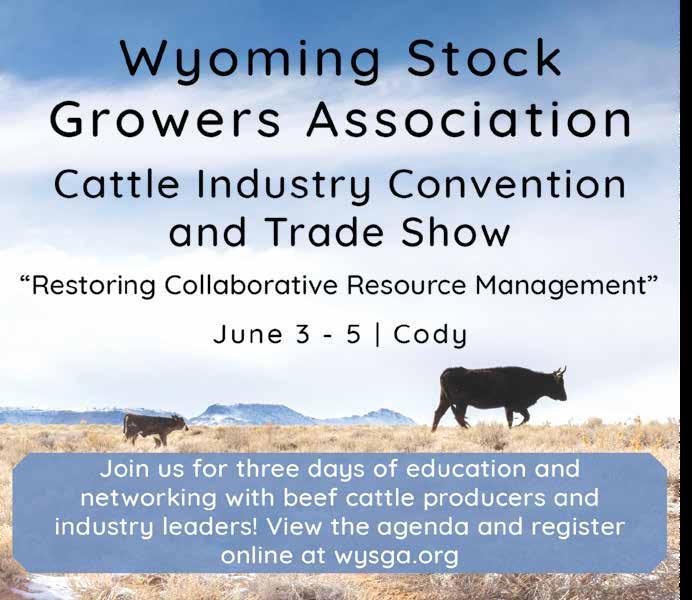
Wyoming Stock Growers Association Cattle Industry Convention and Trade Show, Holiday Inn Convention Center, Cody, For more information and to register, visit wysga.org
University of Wyoming Extension Wildfire Webinar Series: Positive and Negative Impacts to Wildfire Habitat, 6-7:30 p.m., Zoom. For more information, visit wyoextension.org/wrir/wildfire-webinar/
38th Annual Overland Stage Stampede Rodeo, gates open at 6 p.m., performance starts at 7 p.m., Green River. For more information, call 307-872-0514. To purchase tickets, visit rodeoticket.com
Wyoming Free Fishing Day. For more information or a complete list of events across the state, visit wgfd.wyo.gov
Wyoming Game and Fish Department Aquatic Invasive Species Inspector Training, 9 a.m.-4 p.m., Jackson Regional Office, Jackson. For more information or to register, visit wgfd.wyo.gov
University of Wyoming 2026 Ranch Camp, Ladder Ranch, Carbon County. For more information or to apply, visit bit.ly/4rkLAe2
Southeast 307 Livestock Show Clinic, Platte County Fairgrounds, Wheatland. For more information or to register, contact Hannah Cesar at hcesar@ uwyo.edu or 307-322-3667.
Growing Food in Wyoming Masterclass: Pests and Pollinators, 7-8 p.m., Zoom. For more information or to register, visit dirtworkswyo.com
June 11 2026 Range War Rodeo Series, 7 p.m., Buffalo. For more information, visit rangewarrodeo.com
June 11-14
June 14-20
June 16-20
May 30
May 31
Wyoming Range Hunting and Fishing Expo, Sublette County Fairgrounds, Big Piney. For more information, visit wyomingrangeexpo.com
College National Finals Rodeo, Ford Wyoming Center, Casper. For more information and tickets, visit cnfr.com
National Rambouillet Sheep Show and Sale, South Dakota State Fairgrounds, Huron, S.D. For more information contact Burton Anderson at 605852-2233 or Beau Chapman at 605-430-5811.
Stone’s Auction Company, 3445 Chandler – Airport Hill, Riverton, 307850-5506
WYO Ranch Horse and Stockdog Sale, Pitchfork Ranch, Meeteetse, 307248-1530, wyoranchhorsesale.com
June 4 Spring Catalog Horse Sale, Bowman Livestock Marketing, Bowman, N.D., 605-484-3784, 605-210-1124, bowmanlivestockmarketing.com
June 12-13
June 16-18
June 16-20
June 25
June 30
July 6-10
July 13-15
Cowgirl Cadillacs Horse Sale, Sheridan, cowgirlcadillacs.com
Superior Livestock Auction Corn Belt Classic, South Sioux City Marriott Riverfront, South Sioux City, Neb., 800-422-2117, superiorlivestock.com
National Rambouillet Show and Sale, South Dakota State Fair Park, Huron, S.D., rambouilletsheep.org
Northern Livestock Video Early Summer Special, 866-616-5035, northernlivestockvideo.com
Cattle Country Video High Plains Showcase, University of Wyoming Marian H. Rochelle Gateway Center, Laramie, 888-322-8853, cattlecountryvideo.com
Superior Livestock Auction Week in the Rockies, The Steamboat Grand, Steamboat Springs, Colo., 800-422-2117, superiorlivestock.com
Western Video Market, Silver Legacy Casino Resort, Reno, Nev., 530-3473793, wvmcattle.com
At first, Memorial Day was a day of memories, the graves of brave men who gave their lives in the Civil War were decorated with flowers, a sign grateful people had not forgotten the supreme sacrifice these men made.
with a better spirit, if we keep the idea before us.
Memorial Day praised Memorial Day is a day for depth of thought and a day for thanksgiving as well.
Let us offer thanks to God this country has come safely through its great trials, and at the same time, offer a prayer our boys may never again be forced to sacrifice themselves on the altar of war.
– E. Mosher, The Home Hart Schaffner and Marx Clothes, reads a full page advertisement in the Rawlins Republican, May 30, 1918. It was headed by a drawing of World War I soldiers marching off to war.
In the years that have passed, the cream of our citizenship has constantly gone forth to defend our shores against invasion and desecration. It is to those brave defenders our thoughts will turn tomorrow.
1 Blk Cow, 1160# $16600 K Triangle LLC - Thermopolis
1 Blk Cow, 1205# $15850
• Upcoming Sales • May 28 – All Class Cattle Nielsen, Jr., Jack - Greybull
Consignments • May 28 • All Class Cattle
Tim Yetter – 15 mixed calves, 350-400#.
Then the day gradually became a popular holiday – games, sports and picnics were more important than heroic memories. The original idea of the day was in danger of being lost.
Now we have come to a time when Memorial Day can be – and should be – consecrated anew, when we may look back with reverence upon the victorious past and forward with courage and determination to a victorious future.
Let us make this day a time when we renew our declarations of loyalty to the great cause of which our country has always been the foremost champion, the cause of human liberty.
Compared to last week slaughter lambs 5.00 to 15.00 lower. Slaughter ewes 5.00 to 10.00 lower. All sheep sold per hundred weight (CWT) unless otherwise specified. Slaughter Lambs: Choice and Prime 1-3: San Angelo: 60-70 lbs 351.00-371.00.
Sioux Falls: 130.00-195.00. Feeder Lambs: Medium and Large 1: San Angelo: No test.
Billings: No test.
Sioux Falls: 40-50 lbs 455.00-535.00; 50-60 lbs 405.00-465.00. Ft. Collins: No test. Replacement Ewes: Medium and Large 1-2: San Angelo: No test.
Billings: No test.
Ft. Collins: No test.
South Dakota: No test.
Sioux Falls: No test. Sheep and lamb slaughter under federal inspection for the week to date totaled 35,000 compared to 34,000 last week and 36,863 last year..
Source:
Nebraska Hay Summary
As of May 21 2026
Compared to the last report, round bales of alfalfa sold 10.00 to 20.00 higher. Ground and delivered alfalfa in the Platte Valley sold 35.00 higher, ground and delivered cornstalks sold 20.00 higher. Ground and delivered hay in the west sold 20.00 higher. Grass hay sold fully steady. Demand was very good. Dryness continues in a large area and some ranchers are looking for large quantities of hay so they can dry lot cow/calf pairs this summer. Some new crop sales on the report with some large quantities of hay under contract for the 2026 growing season. These contracts are made but the hay has yet to be produced. Upward trend in the hay market and buyers and sellers know it will go higher as the demand picks up and the tonnage could be light this summer due to lack of moisture. Some alfalfa in the central and eastern areas has RFV ranging from 235-260 on first cutting. RFV is testing way better on the first cutting of 2026 than in recent years.
Central Nebraska
Alfalfa - Fair/Good Large Round 127.50
Prairie/Meadow GrassGood/Premium Small Square 8-10/bale
Prairie/Meadow Grass - Good Large Round 90-100 Eastern Nebraska
Alfalfa - Supreme Large Square 3x4 245 Platte Valley Nebraska
Alfalfa
Ground (Delivered) 180
Pellets 15% Suncured 320
Pellets 17% Dehyd 350
Alfalfa - Good Standing 90-95
Alfalfa - Fair/Good Large Round 130-135 Corn Stalk Ground - Delivered 140 Western Nebraska
Alfalfa
Source: USDA AMS Livestock, Poultry &
Colorado Hay Summary
As of May 21 2026
Compared to last report: Trade activity Very Light. Demand Good to Very Good on both old crop and new crop hay. According to the U.S. Drought Monitor’s High Plains Summary for May 19, 2026,temperatures were above normal across much of the region this week, with average readings ranging from the low 40s along the Canadian border and in the mountains to the mid70s across southern Kansas. Highly anomalous early-season warmth gripped the southern half of the region. The core of this heat anomaly was centered over Kansas and Colorado, where weekly temperatures soared 6°F to 12°F above historical averages, with localized spots in southern Kansas peaking more than 12°F above normal. This unseasonable warmth extended moderately northward into Nebraska, yielding departures of 3°F to 6°F above average. Large portions of Wyoming, Colorado, and western parts of North Dakota, South Dakota, Nebraska, and Kansas, reported weekly totals below 0.50 inches, with extensive areas receiving less than 0.10 inches. This lack of moisture resulted in departures of 0.5 to 1.5 inches below average, causing conditions to deteriorate. Extreme (D3) drought expanded in southwestern Kansas and southern Colorado. Severe (D2) in parts of Colorado and northeast Wyoming, while moderate (D1) drought expanded in parts of South Dakota. Heavy rainfall also brought improvements to severe (D2) to exceptional (D4) drought in northern Colorado and a reduction of exceptional (D4) drought in southern Wyoming this week. For Drought Classifications, 42.91% of the state falls in ExtremeExceptional drought (D3-D4) categories, and 57.09% of the
state falls into the Abnormally Dry-Severe Drought (D0-D2) categories. The next available report will be Thursday, June 4, 2026..
&
CLASSIFIEDS
The Natrona County Predator Management District is holding its 2026 Budget/Board Meeting on Tuesday, June 2nd, beginning at 6:00 p.m. This meeting will be held at the Wyoming Wool Growers, 811 N. Glenn Road, Casper. All producers, Wyoming Game and Fish representatives, Wildlife Service representatives and the public are invited to participate. The purpose of this meeting is to review the 20262027 proposed budget submitted to the Department of Audit and Animal Damage Management Board (ADMB). For additional information, please contact the NCPMD office at ncpmd1@charter.net
WANTED: Valley Foods in Saratoga, WY has an immediate opening for a meatcutter. Experience is preferred but not necessary. Ideal candidate is self-motivated, efficient and customer service minded. Pay DOE. Send resume to valleyfoods9024@ hotmail.com 6/6
WASHAKIE COUNTY IS SEEKING APPLICANTS FOR A SEASONAL GROUNDSKEEPER FOR THE WASHAKIE COUNTY FAIRGROUNDS: This position pays $16/hour and offers up to 40 hours/week. Applications are available at www.washakiecountywy.gov/ employment and may be returned to the Washakie County Clerk, 1001 Big Horn Ave., Worland, WY 5/30
REGISTERED WYOMING BRAND FOR SALE: One iron brand, LRC, RSS, LSH. Good through January 2027. $5,000. Call 307-6600169 5/23
REGISTERED
660-0169 5/23
REGISTERED WYOMING BRAND FOR SALE: One iron brand, LRC, RHH. Good through January
RED AND WHITE BORDER COLLIE/AUSTRALIAN SHEPHERD/HEELER CROSS PUPPIES: Born April 3, ready May 28. Wormed and have first shots. One female left, ranch raised and well socialized. Both parents work. These pups will be faithful and loyal with a lot of command and distance. West of Casper, WY, $175. Call or text 307-262-6094. To view photos, go to www.wylr.net in the classifieds 6/13 AKC BERNESE MOUNTAIN DOG PUPPIES: All first shots, microchipped and vet checked. Ready for their new homes now!! $1,200. Call or text 605-680-2571. To view photos, go to www.wylr.net in the classifieds 5/23
SALE * CHRISTENSEN RED ANGUS * SALE: Registered, vaccinated and fertility tested bulls. We have a deep carcass, high ADG packaged with moderate to low birthweights available. Call 406-208-4315 or e-mail criters64@gmail. com 6/6
BEST LAST CHANCE SALE!! LYTLE RED ANGUS is offering private treaty bulls from our herd founded on 30+ years of selection for fertility, consistency and efficiency. Highly adaptable, our bulls have proven themselves from Arizona to New York state. Age-advantaged and yearling bulls available. Passed breeding service exams and ready to go!! Visit www.lytleredangus.com or call Zeb, 605-441-7658. To view photos, go to www.wylr. net in the classifieds 5/23
RED ANGUS HIGH-ELEVATION YEARLING BULLS FOR SALE IN NORTHEASTERN UTAH: Out of AI and bull-bred sires. Will be trich, semen tested and fed for free until April 15. $3,500/head. Bar Lazy TL Ranch, David, 435-828-1320, barlazytlranch@gmail.com 6/13
Help Wanted
FOR RANCH ASSISTANT PROPERTY MANAGER: Fulltime position for large ranch located in Park County, WY. Responsibilities include: Lawn care, irrigation, agricultural equipment maintenance and general residential, building and property maintenance. Salary range of $45-$60K depending on experience. Living on property is required for employment. House and vehicle will be provided. Property is located 10 minutes from downtown Cody, WY. Position is available for immediate hire. Please send resumes to mgiliati@ acpg.com 6/13
FULL-TIME RANCH MANAGER: BISON RANCH, SHERIDAN, WY. We are seeking a dedicated, experienced ranch manager to join our growing bison ranch operation. This is a hands-on role for someone who takes pride in hard work, reliability and caring for land and livestock. Responsibilities: Daily care and management of bison herd. Maintaining fencing, equipment and ranch property. Assisting with feeding, health checks and handling livestock. General ranch maintenance and upkeep. Supporting ongoing growth and operations of the ranch. Requirements: Prior ranching or livestock experience (bison experience preferred but not required). Strong work ethic and reliability. Ability to lift heavy items and perform physical labor daily. Self-motivated and able to work independently. Available to start immediately. Salary starts at $145,000 and up. This is a full-time position with opportunity to grow alongside a rapidly expanding ranch. Apply today if you’re ready to work hard and be part of something being built from the ground up. Call Landon, 205-531-9819 or e-mail sheryl@ bisonunion.com 6/13
TYPES OF EQUIPMENT AND VEHICLE FINANCING. Great service!! Great rates!! Call Chuck Brown at C.H. Brown Co. LLC, 307-322-3232 (office), 307331-0010 (cell) or e-mail chuckbrown@wyoming.com 5/23 AGRI-ONE FINANCIAL: Farm/ ranch and all commercial loans. RATES AS LOW AS 5%. We have been helping with all aspects of agricultural, commercial financing and management for years. LET US HELP YOU on a consulting level with management to increase profitability, deal with and fix credit problems and for all your financing needs. WE CARE AND HAVE WORKING PROGRAMS designed for the farmer/rancher and not the banker. Please call Steve, 303-773-3545 or check out our website, www.agrionefinancial.com. I will come to you and get the job done!! 6/13
Brands
REGISTERED WYOMING BRAND FOR SALE: RHC, RHS, RJH, renews Jan. 1, 2033. One electric iron. $1,500. Call Rob, Laramie, WY 303921-3253 6/13
REGISTERED WYOMNG BRAND: RSC, registered until 2027. Single iron. Also have an additional calf branding iron. $1,250 OBO. Call 307-4610356 5/23
REGISTERED ANGUS YEARLING AND 2-YEAR-OLD BULLS FOR SALE, visit www. crookedcreekangus.com or call 785-332-6206, St. Francis, KS 8/29
SPENCER & SONS ANGUS: Offering yearling Black Angus bulls. Sons of Sterling Pacific, Top Gun, Alcatraz plus and Raven Powerball. ALSO, 2 Red Angus heifer bulls. Thirty-one years AI breeding. Reasonably priced, Fromberg, MT. Call 406425-3814 5/30
REGISTERED ANGUS YEARLING BULLS: Breeding soundness, fertility tested and PAP tested. Ready to go to work. Call Paul at TAG Double H Cattle Co., Ten Sleep, WY, 307-690-4225 5/30
YEARLING ANGUS BULLS:
These bulls are grown, not fattened, will get out and cover cows. Many will work on heifers. We will deliver. Call Joe Buseman, 605-351-1535 5/30
REGISTERED BLACK ANGUS BULLS FOR SALE: Zoetis 50K DNA tested, full EPDs available. Fertility tested. Light birth EPDs plus good maternal traits. Delivery available. Neal Ranch, call Lyle, 406679-1976, Ty, 307-752-4419 or Perrie, 406-660-2055. To view photos, go to www.wylr.net in the classifieds 5/23
REGISTERED BLACK ANGUS YEARLING AND 2-YEAR-OLD
BULLS: For sale private treaty. Performance and fertility tested. Delivery available. REPLACEMENT HEIFERS available. TRANGMOE ANGUS RANCH, Glendive, MT. Call 907-2326093, 406-687-3315 or 406989-3315 6/20
YEARLING BLACK ANGUS
BULLS: AI sired by heifer bull Connealy Patent. Semen tested. Minatare, NE. Call Byron Miller, 303-818-8152, leave message 6/6
SimAngus
SIMANGUS YEARLING BULLS FOR SALE BY PRIVATE TREATY: Bulls priced for every budget. Bulls have GE EPDS, are homozygous polled, most are homozygous black. Bulls can be inspected at Dilka Cattle, pictures available by request. Bulls sired by BAS Money Maker, Gibbs Essential, Gonsior Batman and CCR Pounder. All bulls guaranteed for first breeding season. Information on the bulls may be requested by e-mail at thedilkas@aol.com or calling 970-396-8791 5/30
3/H SIMMENTAL RANCH, PLAINS, MT OFFERS POWERFUL SIMANGUS BULLS: Yearlings and 18-month-olds sired by top AI genetics. Bred for performance, soundness and longevity, with a strong emphasis on calm disposition. These bulls are built to work and last in real world conditions. Call Alan at 503-9316815, to find the right fit for your program. To view photos, go to www.wylr.net in the classifieds TFN
Hereford
HEREFORD BULLS FOR SALE: Sixteen coming 2-yearolds, 13 coming yearlings, 5 older herd bulls. Home raised on forage, never grain. Horned and polled. Average price for 2-yearolds, $3,800 and yearlings, $3,700. Call Rick Rausch, 605380-0784, e-mail rrs@venturecomm.net 6/13
TWO-YEAR-OLD HEREFORD BULLS: Canadian registered. Fertility checked. View photos at www.workingherefords. com. Estermann Herefords, 308-340-4159 or 308-9634473 5/30
Shorthorn
SHORTHORN BULLS FOR SALE PRIVATE TREATY: Yearlings up to mature bulls available. Developed conservatively so they hold up. Remember a red Shorthorn bull on your homozygous black cows will give you black calves. Shorthorns are excellent maternal cattle that produce quality beef. Francis-Millvale Shorthorns, Gene and Roberta Francis Family, 701-331-2403, e-mail francis. millvale@gmail.com. To view photos, go to www.wylr.net in the classifieds 5/23
Hay & Feed
ALFALFA AND GRASS HAY AVAILABLE!! We are in Wyoming every week with HAY!!! We are a large scale hay farm with our own trucks and can work with your delivery schedule. Large squares 3x4x8. Stored inside sheds immediately after baling. No rain. No bale wastage due to weathering!! Call/text Rob’s cell 204-209-1066 or e-mail rob@ redriverforage.com. To view photos, go to www.wylr.net in the classifieds 6/13
HAY FOR SALE: 2025 grass/ alfalfa, first and second cutting alfalfa, millet, haybet barley and CRP hay. ALSO, 2025 GRINDING HAY also available. All in net-wrapped round bales. Semi load delivery available. Call for pricing, ask for Klint, 701-290-4418, if no answer, send a text or keep trying 5/23
Equipment
CASE IH STEIGER 335
TRACTOR: Four wheel drive, serial #Z8F109603, 3,389 hours, CHEAP horsepower, pre DEF, bareback, always shedded, tires 50%, 12 speed transmission, guidance ready, deluxe cab, CLEAN!! $87,500, Chugwater, WY 307331-044. To view photos, go to www.wylr.net in the classifieds 6/13
LODGEPOLE PRODUCTS, 307-742-6992, SERVING AGRIBUSINESSES SINCE 1975!! Treated posts, corral poles, buckand-rail, western rail, fence stays, rough-sawn lumber, bedding. SEE US at www.lodgepoleproducts.com and click our “Picking A Fence Post” tab to see why folks choose our posts!! TFN
Pipe
831-240-5795 TFN
Ranch for Lease
PIPE FOR SALE!! 2 7/8”, 3 1/2” tubing, 4” drill pipe, 4 1/2” casing, 5” casing, 7” casing. Rods 3/4”, 7/8” and 1” located in Montana, can ship anywhere. Call Mike, 602-758-4447. To view photos, go to www.wylr.net in the classifieds 5/30
PARK COUNTY, WY RANCH NEAR CODY, WY IS AVAILABLE FOR A LONG-TERM LEASE: The ranch has over 50,000 acres and supports an irrigated hay base with BOR water rights. Carrying capacity is 700 animal units year-round with hay production. Willing to split the hay ground and grazing. Please email Melanie Giliati at mgiliati@ acpg.com for details 5/30
WANTED: Sugar Bars and non-Sugar Bars-bred saddle horses for the 24TH ANNUAL SUGAR BARS LEGACY SALE SUN., SEPT. 20 Held in Sheridan, WY. NEW ONLINE BIDDING option thru Frontier Live. Please contact Jim, 406-812-0084 or e-mail deerrunranch@gmail.com for consignment and sale information 5/23
HORSE TRAINING: Will train horses to drive, single or double. Call Joe at 701-851-0357 5/23
Leatherwork
LS CUSTOM LEATHER: New tack, belts and cell phone cases. ALSO, SADDLE AND TACK REPAIR. Custom orders welcomed. Contact Lester, 307-631-1053, leave a message. Riverton, WY 5/23
LOOKING TO LEASE A RANCH FOR APPROXIMATELY 150-200 HEAD OF COWS. Prefer area in Johnson and Sheridan counties. Call 307-290-1643 5/23 WEANER PIGS FOR SALE. ALSO, butcher hogs. Located in Powell, WY. For more information, call 307-271-1014 1/16
BARLEY STRAW: Certified weed-free small squares, $4/bale. ALSO, 5x6 round bales, $125/ton. GRAIN OATS, wheat and barley, $20/cwt. Greybull, WY area. Call 307-762-3878 or 307-899-4714, leave message 6/13
PREORDER YOUR 2026 NEW CROP ALFALFA HAY AT VALLEY VIDEO HAY MARKETS, LLC: Representing the best producers in eastern Wyoming and western Nebraska. Call Barry McRea, 308-235-5386, www.valleyvideohay.com 5/30
ALFALFA HAY FOR SALE: 2025 and 2024, various RFV, various protein and various prices. Tested by Dairyland Labs. Call 605-5308089, Miller, S.D. 5/30
MONIDA OATS: $16/cwt. Combine run, great for seed or feed. Will auger into truck, trailer or large totes/ag bags. Located between Powell and Cody, WY. Certified scales on site. Call or text Knopp Farms for details, 307-254-0554 5/23
ATVs
2023 KAWASAKI MULE PRO FX SIDE-BY-SIDE, 6,000 miles. Good condition. $9,500. Call KJ, 307-254-0409 5/23
Trucks & Trailers
FOR SALE: Eighteen ft. camper trailer, 1980’s, $1,000; One pickup box trailer and 1 flatbed trailer, single axle, $1,000; ATV trailer with dump bed, UTV trailer with dump bed and UTV trailer with flatbed, $500 OBO; 2006 Yamaha TW200, $1,500; 2004 Suzuki 400 ERCE, $1,000; 2000 Polaris 425 ATV, $2,000; 1997 Seadoo watercraft, 3 person, $1,000 and Kawasaki 2009 750 UTV, $10,000. Call 307-358-1866 5/30
2012 FORD F650 FLATBED: 6.7L Cummins, Allison automatic. Good condition, 18’ flatbed, Vanair PTO driven air compressor, 161,000 miles. Best offer. Golden, CO. Call Eric at 720-312-9582. To view photos, go to www.wylr.net in the classifieds 6/13
TEMCO FLATBED: Came off of pickup cab and chassis. 8’ width x 8’.6” length, 5th wheel hitch. $1,500. For dimensions, call Rob, Laramie, WY, 303-921-3253 6/13
FOR SALE: New Holland 7150 hydroswing, low acres. Rowse 9’ pull type sickle mower. CIH 1100 9’ pull type sickle mower. H&S 12 wheel finger rake. Phillips 4305 43’ rotary harrow. New Holland 195 manure spreader, 410 bushel with slop gate, double floor chains, tandem axle. Behlen Country cattle working chute with automatic headgate. Apache portable creep feeder. Burns portable loading chute. 2019 Mack day cab semi, MP8 engine, 10 speed manual transmission, tires like new, air ride, aluminum wheels, 646,581 miles. 2019 Diamond C 22’ dove tail car trailer with ramps, 8,000# axles, low miles. Vermeer BP 7000 bale processor with hydraulic deflector. Miller Pro 18’ chuckwagon with tandem running gear. John Deere 714A and 716A chuckwagons with John Deere tandem running gear. H&S 7+4 16’, 20’ and 24’ chuckwagons with bunk feeding extensions and tandem 14 ton running gear. J&M 385 gravity box with 12 ton gear, truck tires. 12’ and 14’ HD box scrapers with tilt. All in very nice condition!! Call 605-9995482 5/30
FOR SALE: 2022 JOHN DEERE 915 NINE SHANK RIPPER. Bought new, used on less than 250 acres. Call 970-686-2250 5/30
LODGEPOLE OUTDOOR FURNACES, 307-223-2046. Your authorized Central Boiler Dealer. Get your outdoor wood furnace today!! Efficient wood heat. Heat multiple buildings. Invest in your heating, don’t just pay for it!! See us at www.cb.lodgepoleproducts. com!! 5/30
Good time management is essential to farming success. That’s why more farmers are turning to T-L center pivot irrigation systems. Hydrostatically powered, T-L’s simple design gives you the low maintenance time, cost, safety and reliability to let you manage your farm instead of calling electricians or replacing gearboxes. Simplify your complex world and make irrigation easier on you.
USED IRRIGATION PIVOTS FOR SALE, www.zimmag. com ● 2013 Valley 7000 7 tower 1,336’, 3,882 hours. Call 402910-3236 6/13
Livestock Equipment
Repairs & Maintenance
BUY
ROYALTIES AND OVERRIDES: Anywhere, any size. We offer maximum value for your assets. Call 1-866-687-2456 or e-mail innerarityoffice@gmail.com today 8/1
cylinder Caterpillar engine, $5,000 and Hydrovac with new Caterpillar engine and pumps, $7,000. Call 307-358-1866 5/30
Hay Equipment
TWO JOHN DEERE 566 ROUND BALERS FOR SALE: Twine tie only. Both field ready. Call 605-280-3748, Murdo, S.D. 57559 5/23
ORIGINAL ROUND BALER BELTING FOR ALL MAKES: Save $100s. Free shipping, www.balerbelts.com. Call Hammond Equipment, 334627-3348 10/24
IRRIGATED 80 + FARM AND HOME : Classic, beautiful ranch-style home with a blend of country charm. Situated on 80 + acres with an irrigation well for the wiper pivot. Features a versatile Cleary building, well-maintained livestock corrals and a character filled antique loft barn. Positioned 6 miles northeast of Henry, NE in Sioux County. $775,000. PREMIER PIVOT AND GRASS PASTURE IN GOSHEN COUNTY, WY: This well designed 368+ acres hay and pasture property features an 86+ acre Reinke center pivot contiguous to native grass pasture with a stock well. The entire property is fully enclosed with perimeter fencing, with the center pivot separately fenced. Pivot is planted to alfalfa. Property can be split. $759,000. Pictures at www.buyaranch. com. Call Casey Essert, Land Broker, 307-532-1750 TFN
Wyoming cuts wolf hunts
According to a May 14 WyoFile article by Mike Koshmrl, Wyoming wildlife managers plan to reduce how many wolves can be hunted by 50 percent following a canine distemper outbreak which has cut the state’s wolf numbers to the lowest level in two decades.
A 22 wolf cap is the fewest number of wolves available to licensed Wyoming hunters since the state began allowing wolf hunting after Endangered Species Act protections were lifted in 2012. The limit also marks a significant decrease from wolf hunting season during the fall of 2025.
Last year, hunters could target a maximum of 44 wolves in the area around the Greater Yellowstone Ecosystem, where Wyoming classifies wolves as trophy game during the Sept. 15 through Dec. 31 season. Hunters bound to Wyoming’s relatively tight regulations in this zone managed to kill 31 wolves. It wasn’t hunting, however, which resulted in the lowest population since wolves were still being established after the 199596 Yellowstone National Park reintroduction. Biologists say a canine distemper outbreak is the primary culprit in the decline.
The measles-like disease is especially deadly for pups, and it was detected in 64 percent of the animals Wyoming biologists handled during routine capture work last year.
As the calendar turned to 2026, federal biologists tallied 253 wolves and 14 breeding pairs statewide. These are decreases, respectively, of 23 percent and 42 percent from the 330 wolves and 24 breeding pairs estimated at the end of 2024.
Wyoming’s proposed hunt for 2026 is designed to increase the wolf population in the trophy game area, located in the state’s mountainous northwest corner. The population in this zone decreased 19 percent to 132 wolves in 2025.
Wyoming Game and Fish Department Wolf Biologist Ken Mills said the objective is to grow the population by 28 wolves.
BANKERS
Weather outlook
Day established his meteorology company, DayWeather, Inc., in 1992.
His presentation focused on potential scientific causes for Wyoming’s recent unseasonably warm, dry winter and considerations for predicting weather patterns for the rest of 2026.
According to Day, this past season has been a “generational winter” heavily influenced by global weather conditions.
He explained a combination of weak La Niña conditions, the negative phase of the quasi-biennial oscillation and lingering effects from the Hunga Tonga volcanic eruption in 2021 created a “perfect storm” for a warm Wyoming winter.
“Those three things together ended up causing extremely warm, dry weather in western North America and very cold weather in the northeastern parts of the U.S.,” Day explained. “The jet stream got stuck this winter, and when the jet stream gets stuck, systems don’t move.”
Looking ahead, Day emphasized moisture throughout the upcoming month will be vital for determining summer drought conditions.
“This next month is super critical for this part of the country in terms of where we are with drought conditions,” Day stated, adding snowpack conditions have been extremely low, paralleling conditions last recorded in the late 1970s and early 1980s.
Still, Day explained he has hope developing
El Niño conditions and heightened desert temperatures indicating more monsoons will have a positive impact on moisture this summer and fall, particularly throughout the southern half of Wyoming.
“El Niño is when the sea surface temperatures along the equator between South America and across the Pacific to near Australia get warmer,” Day explained. “Warmer water means more water vapor going into the air, and more water vapor in the air usually means parts of the U.S. get more rain.”
Overall, Day emphasized nothing is set in stone and recommended keeping an eye on developing weather conditions throughout the summer, paying close attention to thunderstorms which bring both moisture and the potential for wildfires.
“We live in part of the North American continent where the weather year-to-year is highly variable,” Day emphasized. “We should never expect our weather from year-toyear to track like the year before, because it doesn’t.”
“Getting rid of drought is like eating an elephant – you just have to chip away at it one little bite at a time,” Day added. “But the onset of El Niño is really good news, along with the fact I do think it’s going to be a good monsoon season which adds moisture to the mix as well.”
Policy update
In his role with ABA, Elfmann works closely with member banks and stakeholders to develop
EXTENSION EDUCATION
By Sara Fleenor, UW Extension Educator
and advance policy affecting agricultural and rural banks.
He opened his presentation with comments on current trends in the agriculture sector, including the ongoing increase in farm consolidation and farm debt.
“Farms are getting bigger, and consolidation is very concerning to me in a couple ways,” Elfmann said, noting consolidated operations often mean less opportunity for diversification and smaller operations are at risk of struggling.
“I think this is something we have to watch a lot in the banking industry especially,” Elfmann stated. “If ag continues to get bigger, we have to figure out how we can help our smallest institutions remain in agriculture.”
On a positive note, Elfmann emphasized he believes there will be an opportunity for the next generation to create diversified operations to fill gaps left by larger producers and stressed the importance of supporting new and beginning agriculturists.
From a policy standpoint, Elfmann discussed the current status of the 2026 Farm Bill, noting it has passed the House and is currently awaiting action by the Senate.
“The Senate is working on it. They’ve got draft language, and I just met with them last week to start talking through some provisions,” Elfmann stated, emphasizing although the timeline on when the Senate version will pass remains uncertain, getting it through the House was a huge accomplishment.
“Do we pass a farm
bill by September? I don’t know, but I think getting it through the House was the hardest step,” Elfmann said. In terms of farm bill highlights for agricultural producers, Elfmann explained the bill permanently extends the Dairy Forward Pricing Program and allows precision agricultural practices for the Natural Resources Conservation Service’s Environmental Quality Incentives Program and Conservation Stewardship Program.
Regarding rural health and vitality, Elfmann noted the farm bill expands Supplemental Nutrition Assistance Program (SNAP) incentives to include animal protein and expands SNAP benefits to include full-fat fluid milk and hard cheeses. The bill also seeks to create a Rural Childcare Initiative through the U.S. Department of Agriculture to increase childcare facilities in rural areas.
In addition, Elfmann expressed excitement over a pilot program being considered which would allow small meat processors to sell directly to consumers.
“I think it’s going to be really big for our cow/ calf folks, because they’re going to be able to sell to the butcher and the butcher is going to be able to sell it on the market,” Elfmann stated. “It brings new market opportunities.”
Keep an eye out for more coverage on the 2026 Agricultural Bankers Conference in future editions of the Wyoming Livestock Roundup Grace Skavdahl is the editor of the Wyoming Livestock Roundup. Send comments on this article to roundup@wylr.net.
Handle With Care: Getting the Most From Livestock Vaccines Forum scheduled
Gov. Mark Gordon, alongside the Wyoming Game and Fish Department and many of Wyoming’s conservation leaders, invites the public to attend the Third Annual Wyoming Sportsperson Conservation Forum on June 26 at the CAM-PLEX in Gillette.
The forum will take place from 8 a.m. to 5 p.m. and will bring together sportsmen and women, landowners, conservation groups, wildlife managers, policymakers and members of the public to discuss Wyoming’s most pressing wildlife and habitat challenges.
“For the sportsmen and women of Wyoming, conservation is a way of life, and this year it will be critical to ensure our sportspersons’ voices are heard,” Gordon said. “Maintaining robust wildlife and habitat is part of Wyoming culture, it enhances our economy and makes Wyoming a better place to live. ”
Featured discussions and presentations will include Wyoming’s Mule Deer Conservation Strategy and current recovery efforts, how the public can effectively engage in wildlife management decisions, building durable and effective conservation policy, the critical role of private landowners in habitat conservation, maintaining and expanding public access opportunities and lessons learned from recent wildland fires and ongoing habitat restoration efforts.
Tickets for the forum are $25 and include lunch for the full-day event.
For more information, visit wgfd.wyo.gov
Spring is a key time to set calves’ immunity up for summer and fall. Fluctuating temperatures and unpredictable moisture conditions are prime for disease to take hold.
Calves are especially susceptible to a variety of diseases, making springtime vaccinations an important step producers can take to protect herd health and keep cattle performing well.
Proper vaccine administration is especially important to ensure the immune response is robust. Improper handling reduces effectiveness, resulting in wasted resources.
The first step in proper vaccine use is reading the label on the bottle. The label gives information on dosages, withdrawal times, storage temperature and injection modes. The label
also gives information on safety for pregnant females or young livestock.
Mixing directions are also found on the label. Modified live vaccines will be ineffective if mixed improperly.
It is important to keep vaccines at recommended temperatures while using to keep potency.
Protecting vaccines from heat and direct sunlight are also important steps in proper vaccination techniques. Exposure to elements degrades the components in vaccines, making them less effective or worthless, again wasting resources. Heat can also cause bacterial growth in vaccines which can be harmful when injected.
Knowing the correct injection site is also imperative. Subcutaneous injections – also referred to as SC
or subQ – are administered under the skin. These are most common and help preserve meat and muscle. The injection is placed under the skin, usually in the neck.
Intramuscular (IM) is injected deep into the muscle in the neck. With either injection type, shots should be spaced around a hands width apart if multiple injections are required at the same time.
Needles should be changed frequently – every 10 to 15 head or about every 10 minutes in a large livestock vaccination setting. Needles which are bent, contaminated, dull or have burs should be changed immediately. A new needle should be used each time more vaccine is loaded into a syringe. If an animal is sick, a new needle should be used each time.
Reducing the time vaccine is loaded into a syringe is another important consideration. Vaccines should be used within 30 to 60 minutes of loading. Don’t mix or load more doses than can be used within this time.
The vaccine begins to degrade when exposed to air, light and heat. A fresh mix of vaccine ensures ani-
mals are getting the most benefit and potency of the vaccine.
Disposal of vaccines and needles is another step in proper vaccine protocol. Partial vaccine vials should never be reused, as this can compromise effectiveness and safety. Using a biohazard sharps container for needles will reduce the likelihood of accidental needle sticks or unintended injections.
Clearly marking containers as biohazard and properly securing them at the end of vaccination helps prevent used needles from ending up in the wrong hands and makes it safer for sanitation workers.
Vaccinations are one of the best tools we have to protect livestock health. Taking the time to handle, administer and dispose of them properly ensures producers get the most value for their dollar while keeping animals healthy, productive and performing their best.
Sara Fleenor is the University of Wyoming Extension agriculture and natural resources educator serving Crook County. She can be reached at sfleenor@uwyo. edu or 307-283-1192.
by Lee Pitts
Smarty Cows
I don’t think any dimwits or peabrains read this column, but if I wanted to separate the mentally challenged from the brainiacs, I could merely type the letters “IQ EPD” and ask what it means.
Smart cattlemen would know I was referring to expected progeny differences (EPD) and intelligence (IQ).
The dumbest of you will just think I can’t spell “equipped.” Either that or I’m so far behind technologically my typewriter doesn’t have a spell checker.
Breed associations have developed EPDs to make it easier for ranchers to breed better cattle. There are EPDs for birth weight, weaning weight, yearling weight, milk, ribeye area, marbling, blah, blah, blah.
But there is one trait I don’t think any breed association has an EPD for yet –intelligence. As a result, we still have far too many dimwitted cows.
Just how stupid are today’s cows? I am reminded of Gary Larson’s Far Side cartoon which
shows a cow fighting for a better position in line at the slaughterhouse.
Just think, if we had smarter cows there would be more motivation to conceive and bring a big strapping calf to the branding fire every year.
If cows were smarter, they’d look around at all of their sisters who failed to conceive and were sent down the road to the “Big House” – and I’m not talking about the White House, I’m talking about the slaughterhouse.
If we had smarter cows, instead of standing in freezing snow bawling and waiting for some charitable person to bring them some hay, they’d paw the ground like a bison to get at the grass below the snow.
I suppose we could use gene editing and splicing, take a little snippet from the bison and graft it onto the cow’s chromosome, but it’s not that easy. It would be easier to select for cows who already forage by pawing the ground to get at feed.
If we had a whole herd
of such cows, it could extend the grazing capacity of a ranch and the wife wouldn’t have to be in such a big hurry to get out in a blizzard to feed the poor darlings.
By breeding for smarter cows, we could teach them not to calve at night when everyone is trying to get some shuteye. Instead, they’d calve around 2 p.m. when all of the other chores are done and the vet might be available.
Imagine how nice it would be if you had an entire herd of cows smart enough to only calve during daylight hours.
If there was a daylight EPD it would soon become a rancher’s number one criteria, and high daylight EPD range bulls would fetch $20,000 apiece.
I’m sure some college could develop an EPD for intelligence or propensity to calve during daylight hours if given a big enough grant, but I’m not waiting.
Currently, some folks are testing how calmly their cattle stand in a chute, scoring them and then developing an EPD for docility. But this doesn’t show how smart they are, just how calm they are – big difference.
We need a different, far more specific test on which to base cattle IQ EPDs if we’re going to separate the dullards from the Einsteins of the cow community.
And I think I’ve found a way to do it.
We all know how well cows like molasses supplement or “cow candy” as it’s known around our house.
In my test, I’d put out half barrels painted black and plumb full of cow candy, and after the cows all got used to eating it, I’d collect all of the black barrels and put out empty
white barrels, totally devoid of even the smell of cow candy.
Next, I’d corral the cows and keep them off of feed for 24 hours while I put out black barrels containing supplement alongside empty white barrels. When I turned the cows loose, I’d record which cows went to the black barrels and which ones were
stupid enough to go to the white barrels. After testing a few generations in such a manner, I think I could develop an entire herd of smarty cows.
My brainiac wife says there should be a third option. We should select for the cows who look upon the barrels with disdain and immediately go looking for grass.
SHOW SCHEDULE
CLAY CREEK ANGUS
On May 15, the U.S. Meat Export Federation (USMEF) released results from a recent study which found U.S. beef and pork exports generated billions of dollars in added value for corn and soybean producers in 2025 and significantly boosted domestic feed demand.
According to USMEF
Senior Vice President John Hinners, the organization commissions the study each year to better understand the economic impacts of red meat exports on the broader agricultural supply chain. “We initiate this study every year because it quantifies the value beef and
pork exports bring to the red meat supply chain. This added value is why a diverse range of ag industry sectors work together through USMEF to build global demand for U.S. red meat,” Hinners states in a May 15 press release accompanying the study.
Hinners further notes the
annual research ultimately highlights the close relationship between livestock producers, grain growers and the biofuels industry.
Key findings
Conducted as an independent analysis by the Juday Group, the study found beef and pork exports accounted for 508.4 million bushels of corn usage, 2.68 million tons of dried distillers’ grains with solubles (DDGS) and 98.76 million bushels of soybeans.
Using the average annual price of $4.29 per bushel of corn, $139.82 per ton of DDGS and $10.17 per bushel of soybeans, researchers calculated the export-related market value of corn at $2.18 billion, DDGS at $375 million and soybeans at $1 billion.
USMEF notes this means beef and pork exports added 13.5 percent, or 58 cents per bushel, to the value of corn and 10.3 percent, or $1.05 per bushel, to soybean value in 2025.
Additionally, the study found 12.7 percent of U.S. beef and beef variety meat production and 29.6 percent of U.S. pork and pork variety meat production was exported, while beef export value equated to $392 per head of fed cattle and $65 per head of hogs slaughtered during 2025.
“The corn and soybean
industries provide critical support for USMEF’s efforts to expand global demand for U.S. red meat,” Hinners states. “This study helps quantify the return on that investment.”
Research impacts
Ultimately, USMEF Chair-Elect Dave Bruntz notes findings from this study underscore the strong connection between livestock production and grain demand.
“Red meat exports bring significant value to corn and soybean producers by driving demand for feed,” Bruntz says. “This study shows red meat exports accounted for more than 500 million bushels of corn
usage and nearly 100 million bushels of soybeans in 2025.”
While the USMEF study focused on national figures, the findings also carry importance for cattle-producing states like Wyoming, where the livestock industry remains a major economic driver.
Overall, strong export demand for U.S. beef supports cattle prices while also creating additional demand for feed grains used throughout the production chain.
Hannah Bugas is the managing editor of the Wyoming Livestock Roundup. Send comments on this article to roundup@wylr.net.