USDA opens new livestock pest research lab in Texas
On May 27, the U.S. Department of Agriculture’s (USDA) Agricultural Research Service (ARS) opened a new, state-of-the-art livestock insect research facility in Kerrville, Texas.
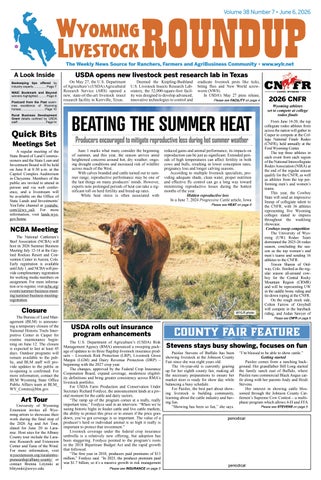
On May 27, the U.S. Department of Agriculture’s (USDA) Agricultural Research Service (ARS) opened a new, state-of-the-art livestock insect research facility in Kerrville, Texas.
A regular meeting of the State Board of Land Commissioners and the State Loan and Investment Board will be held on June 8 at 8:30 a.m. at the Capitol Complex Auditorium in Cheyenne. Members of the public are invited to attend in person and via web conference, and a livestream will be available on the Office of State Lands and Investments’ YouTube channel at youtube. com/@wy_osli. For more information, visit lands.wyo. gov/home
The National Cattlemen’s Beef Association (NCBA) will host its 2026 Summer Business Meeting July 12-14 at the Gaylord Rockies Resort and Convention Center in Aurora, Colo. Early registration is available until July 1, and NCBA will provide complimentary registration for working media members on assignment. For more information or to register, visit ncba.org/ events/summer-business-meeting/summer-business-meetingregistration
The Bureau of Land Management (BLM) is announcing a temporary closure of the National Historic Trails Interpretive Center in Casper for routine maintenance beginning on June 12. The closure is expected to last at least 45 days. Outdoor programs will remain available to the public, and BLM staff will provide updates to the public as re-opening is confirmed. For more information, contact the BLM Wyoming State Office Public Affairs team at BLM_ WY_Comms@blm.gov.
University of Wyoming Extension invites all Wyoming artists to showcase their work during the final stop of the 2026 Ag and Art Tour, slated for June 20 in Laramie. Host sites for the Albany County tour include the Laramie Research and Extension Center and Taste of the Wind. For more information, visit wyoextension.org/ruralentrepreneurship/albany-county/ or contact Brenna Litynski at blitynski@uwyo.edu.
Deemed the Knipling-Bushland U.S. Livestock Insects Research Laboratory, the 52,000-square-foot facility was designed to develop advanced, innovative technologies to control and
eradicate livestock pests like ticks, biting flies and New World screwworm (NWS). In USDA’s May 27 press release,
June 1 marks what many consider the beginning of summer, and this year, the season arrives amid heightened concerns around hot, dry weather; ongoing drought conditions and increased risk of wildfire across much of the West.
With calves branded and cattle turned out to summer range, reproductive performance may be one of the last things on many producers’ minds. However, experts note prolonged periods of heat can take a significant toll on herd fertility and breed-up rates.
While heat stress is often associated with

reduced gains and animal performance, its impacts on reproduction can be just as significant. Extended periods of high temperatures can affect fertility in both cows and bulls, resulting in lower conception rates, pregnancy loss and longer calving seasons.
According to multiple livestock specialists, providing adequate shade, clean water, proper nutrition and effective fly control can go a long way toward minimizing reproductive losses during the hottest months of the year.
Hidden reproductive loss
In a June 7, 2024 Progressive Cattle article, Iowa
Please see HEAT on page 6
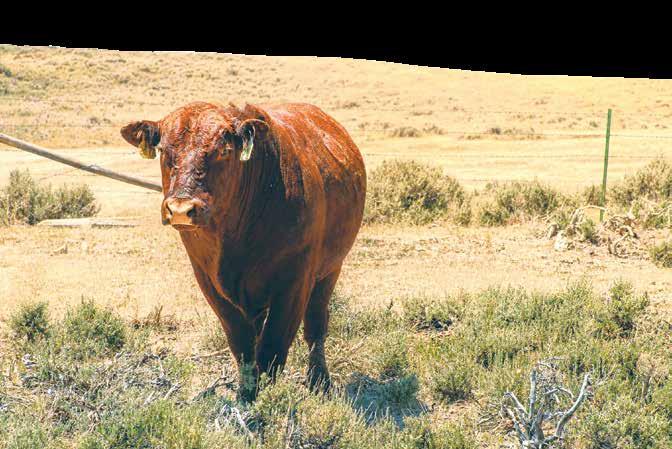
The U.S. Department of Agriculture’s (USDA) Risk Management Agency (RMA) announced a sweeping package of updates to its three flagship livestock insurance products – Livestock Risk Protection (LRP), Livestock Gross Margin (LGM) and Dairy Revenue Protection (DRP) –beginning with the 2027 crop year.
The changes, approved by the Federal Crop Insurance Corporation Board, expand coverage, modernize eligibility definitions and bring greater consistency across RMA’s livestock portfolio.
For USDA Farm Production and Conservation Under Secretary Richard Fordyce, the announcement lands at a pivotal moment for the cattle and dairy sectors.
“The ramp up of the program comes at a really, really important time,” Fordyce said in an interview. “When we’re seeing historic highs in feeder cattle and live cattle markets, the ability to protect this price or to ensure if the price goes down, you’ve got coverage is so important. The value of a producer’s herd or individual animal is so high it really is important to protect that investment.”
Livestock coverage under the federal crop insurance umbrella is a relatively new offering, but adoption has been staggering. Fordyce pointed to the program’s roots in the 2018 Bipartisan Budget Act and the rapid growth that followed.
“The first year in 2018, producers paid premiums of $13 million,” Fordyce said. “In 2025, the producer premium paid was $1.7 billion, so it’s a massive growth in risk management
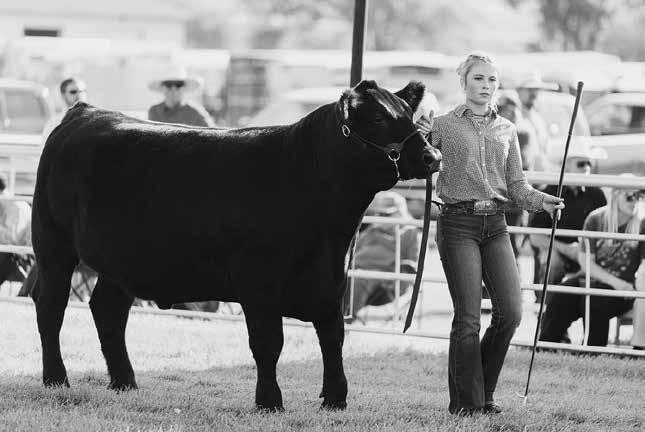
Paislee Stevens of Buffalo has been showing livestock at the Johnson County Fair since she was eight years old.
The 16-year-old is currently gearing up for her eighth county fair, making all the necessary preparations to ensure her market steer is ready for show day while balancing a busy schedule.
For Paislee, the best part about showing livestock is building community, learning about the cattle industry and having fun.
“Showing has been so fun,” she says.

Wyoming athletes set to compete at college rodeo finals
From June 14-20, the top collegiate rodeo athletes from across the nation will gather in Casper to compete at the College National Finals Rodeo (CNFR), held annually at the Ford Wyoming Center.
The top three athletes in each event from each region of the National Intercollegiate Rodeo Association (NIRA) at the end of the regular season qualify for the CNFR, as well as athletes from the top performing men’s and women’s teams.
This year, the Cowboy State will send an impressive lineup of collegiate talent to the CNFR, with 36 athletes representing five Wyoming colleges slated to impress throughout the weeklong showcase.
Cowboys sweep competition
The University of Wyoming (UW) Rodeo Team dominated the 2025-26 rodeo season, concluding the season as the top women’s and men’s teams and sending 16 athletes to the CNFR.
Traven Sharon of Ordway, Colo. finished as the regular season all-around cowboy for the Central Rocky Mountain Region (CRMR) and will be representing UW in the saddle bronc riding and tie-down roping at the CNFR.
On the rough stock side, Colton Farrow of Greybull will compete in the bareback riding, and Aidan Sawyer of
“I’m blessed to be able to show cattle.” Getting started Paislee comes from a ranching background. Her grandfather Bill Long started the family ranch east of Buffalo, where Paislee runs commercial Black Angus cattle along with her parents Andy and Heidi Stevens.
Her interest in showing cattle blossomed through the Johnson County Cattlemen’s Supreme Cow Contest – a multiphase program which allows 4-H and FFA
I have mostly agreed with President Donald Trump and his administration on the actions they have taken with federal lands. They certainly have done away with some unnecessary regulations.
For public lands uses such as grazing and energy, the administration has eliminated some unneeded regulations, although there are still regulations ranchers, energy and other public lands users have to abide by.
The administration has eliminated leasing public land for conservation uses which is good, as it was a misunderstood use to do away with the other public lands users. I have always thought, in order to take care of all lands, whether private, state or federal, someone has to manage them.
Lands left without management will suffer. Whether it is overuse by livestock, wild horses, invasive species and wildlife or human activity, unrepairable damage will occur.
I recently came across an article in the New York Times which really concerned me. The article was about President Trump lifting all restrictions on off-road vehicles on public lands. I think it is a horrible action because throughout my life, I’ve seen the public cause plenty of damage while using public lands.
Especially with the public involved, there has to be some sort of management or damage will occur. We’ve all seen it.
Recreationists use a lot of toys to enjoy public lands these days, from four-wheelers and side-by-sides to electric bikes and off-road pickups. Those who make or sell these toys always have an advertisement with people climbing hills or driving fast through a stream. In some fragile soils and waterways, damage and erosion are easy to cause.
We have seen the public turn some public lands near towns into a junkyard for old dryers, washing machines and refrigerators.
When we owned ranches in Green Mountain, we finally – with the Bureau of Land Management – had to rehab roads where people couldn’t drive on them. We ultimately put up gates to keep the public out from December to June. Most of the public recreates in a responsible manner, but there are a few who cause damage others have to live with.
An issue I really disagree with the president on is opening up our national parks to off-road vehicles. We sure don’t need our national parks to have roads running everywhere.
When I was in Tanzania visiting the Serengeti, there were no off-road restrictions, so one could drive anywhere – road or no road.
On the average day, there were around 100 safari vehicles driving everywhere to get close to wildlife, which were so used to all the traffic, one could drive right up next to them and they wouldn’t even get up. It was like driving around in a zoo.
When our national parks were established, the intent was to keep them, for the most part, pristine for generations to enjoy and not to fill them with roads.
Our public lands serve users and the public, and both have a responsibility to these lands. Opening up public lands with no responsibilities is not a good idea at all.

A day in the life of an agricultural producer is almost never the same, but it is always busy. Between moving and feeding livestock, fixing fence, cleaning irrigation ditches, spraying weeds and coordinating transportation or sales, there is never a shortage of jobs which need to be done on a ranch or farm in Wyoming.
One task that is easy to forget is planning for the future.
Succession planning is vital to maintaining agricultural businesses and keeping working lands working in our industry.
According to the U.S. Department of Agriculture’s National Agricultural Statistics Service, 95 percent of farms and ranches in Wyoming are family owned.
Research from the consulting firm AgriLegacy also shows, while 80 percent of producers want to pass their operation down to the next generation, only 12 percent of secondgeneration farms make it past the third generation.
Unfortunately, succession planning is not usually a pressing issue to most families, until a crisis like a death or injury occurs. Almost no one enjoys thinking about death or change and having hard conversations with family members about the future of the ag operation.
Succession planning does take time, and waiting for a crisis often means it may be too late.
Having a plan can make all the difference.
Succession planning can be overwhelming. Depending on the operation, it may require work with attorneys, tax specialists, financial planners, lenders and more. A farm or ranch is more likely to be passed from generation to generation than a non-farm business, and it’s critical to the business, family and industry to be ready.
A successful transition plan should include business planning for the ag operation, retirement planning for the retiring generation, succession planning to transfer management to the next generation and estate planning to transfer ownership.
Thankfully, there are resources available to Wyoming producers who want to start the process.
A simple google search will find a wide variety of informational resources from organizations like the University of Wyoming Extension, the Wyoming Business Council, Wyoming Farm Bureau Federation, Wyoming Stock Growers Land Trust, the Wyoming Department of Agriculture and more.
These resources include online videos, courses, publications and
HANNAH BUGAS, Managing
workshops, to name a few.
The resources are there. The only thing required is to take the important steps of recognizing their value and beginning to move forward.
The steps producers take now can make all of the difference when it’s needed. This is especially important in the agriculture industry in Wyoming because it not only helps cement a legacy for each family, it also helps ensure the continued operation of the business and that the agriculture industry remains strong.
Effective succession planning is not easy. It can require a lot of time, some investment in the future, possibly some tough conversations and a willingness to look beyond oneself.
While it can be a tough process, it is a vital one for producers, their business, their family and the agriculture industry as a whole.
Keep working lands in production also helps provide secondary benefits like open spaces, wildlife habitat, support for our rural communities and more.
The Wyoming Department of Agriculture is dedicated to the promotion and enhancement of Wyoming's agriculture, natural resources and contribution to Wyoming quality of life. For more information, visit agriculture. wy.gov

University of Wyoming (UW) Extension will host a free, three-part webinar series focused on caring for gardens, trees and turf during drought starting on June 11.
According to the U.S. Drought Monitor, much of Wyoming is currently considered to be in moderate to extreme drought conditions.
The new webinar series features experts from UW Extension, Colorado State University and Utah State University and is designed to help Wyoming residents navigate the challenges of maintaining landscapes under hot, dry conditions with limited water resources.
Webinars will take place via Zoom from 6-7 p.m. on June 11, 18 and 25.
The June 11 webinar will focus on Setting Up Drip Irrigation for Drought-Resistant Landscapes and Gardens, presented by UW Extension State Small Acreage Horticulture Specialist Jeff Edwards; the June 18 webinar will focus on Managing Trees Through Drought, presented by Professor of Horticulture for Colorado State University Extension Alison O’Connor and the June 25 webinar will focus on Managing Turf Through Drought, presented by Utah State University Extension Water Conservation and Turf Grass Specialist Kelly Kopp.
To register, visit bit.ly/drought-webinar-26
On May 26, the U.S. Department of Agriculture (USDA) Farm Service Agency (FSA) announced eligible landowners have from June 1 until Aug. 31 to review and consider base acre increases on farms enrolled in the Agriculture Risk Coverage (ARC) and Price Loss Coverage (PLC) programs, as authorized by provisions included in the Working Families Tax Cuts Act, also known as the One Big Beautiful Bill Act.
The act provides landowners with the opportunity to update and increase base acres in preparation for enrollment in ARC and PLC beginning with the 2026 and future crop years.
ARC and PLC are cornerstone commodity safety net programs which provide financial protection to farmers when market prices or revenues decline. These programs help producers manage risk and maintain the economic viability of their operations amid challenging market and weather conditions.
To be eligible for new base acres, a current covered commodity must have been planted or prevented from being planted on the farm during the 2019-23 crop years.
The farm’s average planted and prevented planted acres during this period must exceed the total existing base acres for all covered commodities in effect on Sept. 30, 2024, excluding unassigned base acres.
FSA farm total base acres cannot exceed the farm’s total cropland acres. If eligible requests exceed the nationwide cap of 30 million acres, USDA will apply an across-the-board, prorated reduction to all approved new base acres.
For additional information, visit fsa.usda.gov/ state-offices or contact a local FSA county office.
The 27th Annual Ag Media Summit is scheduled for July 19-21 in St. Louis, Mo.
Ag media professionals are invited to learn intensive skills training in video production, Adobe Photoshop and artificial intelligence (AI) applications, as well as traditional communications skills.
Programming will include Newsmaker Panel general sessions featuring farmers and hot topics; interviewing, writing and editing breakout sessions; breakout sessions on newer tools such as AI, shooting photos and video with mobile phones; optimizing the use of social media; how to analyze and use audience data; association business meetings and awards ceremonies.
Aaron Putze, chief officer for brand management and engagement at the Iowa Soybean Association, will deliver a keynote address titled “Grit, Growth, Gratitude: Leading with Heart in Ag Media” on July 20.
The summit is hosted by the Agricultural Communicators Network and the Livestock Publications Council, with support from the Ag Media Council.
Conference activities will be followed by an optional post-summit tour day on July 22.
The tour includes Gateway Arch National Park; ADM’s grain barge facility on the Mississippi River; a lunch and tour at the Anheuser-Busch Brewery and an on-farm visit, videography educational session and supper at Eckert Country Farm in Belleville, Ill.
For more information or to register, visit agmediasummit.com
The Wyoming Game and Fish Department (WGFD) is seeking volunteers to assist with wildlife water guzzler repairs on the Jelm Wildlife Habitat Management Area in Albany County on June 12.
The volunteer-driven effort will help improve longterm water availability for local wildlife through fencing replacement, apron repairs, sediment cleanout and general site rehabilitation.
Volunteers will meet at 8 a.m. at the Laramie Regional Office before carpooling to the project site.
Four-wheel drive is required to access the site and volunteers should bring gloves, drinks, sunscreen and bug spray and be prepared for a day in the field.
The Bureau of Land Management and WGFD will provide all necessary materials, tools and equipment to complete the projects. Lunch and water will also be provided for all participants.
For more information, visit wgfd.volunteermatters. org/project-catalog/150 or contact Jerry Cowles at jerry. cowles@wyo.gov.
The Small Business Administration (SBA) is honoring the legacy of small businesses through a nationwide Freedom 250 Patriot Pitch competition.
According to SBA, the competition will bring together entrepreneurs from across the country who are building and scaling businesses within their communities and celebrate the innovation and ambition that has driven American ingenuity for the past 250 years.
Submissions will be evaluated by four stages of judging panels looking at how each business performs in four categories including strengthening American competitiveness, economic impact and quality jobs, small business punching above its weight and business fundamentals and execution readiness.
The top 10 semifinalists will be announced the week of July 4 during the Great American State Fair, with five finalists invited to participate in a live pitch competition in Washington, D.C. featuring a $1 million prize pool.
Submissions must be submitted to local SBA district offices by June 10.
For more information, visit preview.sba.gov/freedom-250/
Brian Olsen, Wyoming Game and Fish Department (WGFD) regional wildlife supervisor for the Casper region, has announced his retirement after nearly four decades of service to the people and wildlife of Wyoming.
Olsen began his career with WGFD in 1988 in Sheridan, where his talent for communication quickly became one of his defining strengths.
From 1988-94, he played a key role in the groundbreaking “Wyoming’s Wildlife: Worth the Watching” campaign, an initiative which broadened the state’s focus to include non-game species and wildlife viewing opportunities.
Olsen moved to Casper in 1994, and following the retirement of longtime WGFD Spokesman Dick Keeney, stepped into the role as a trusted voice for Wyoming’s Great Outdoors for several years.
In 2001, Olsen became the Casper and Sheridan regions private lands/public wildlife coordinator, and in 2011, he was promoted to regional wildlife supervisor.
Olsen’s retirement marks the end of an era for the Casper Region, where his deep institutional knowledge and genuine rapport with the community have made him an invaluable asset.
An open house celebrating Olsen’s 38 years of dedicated service to WGFD was held at the Casper Regional office on June 5.
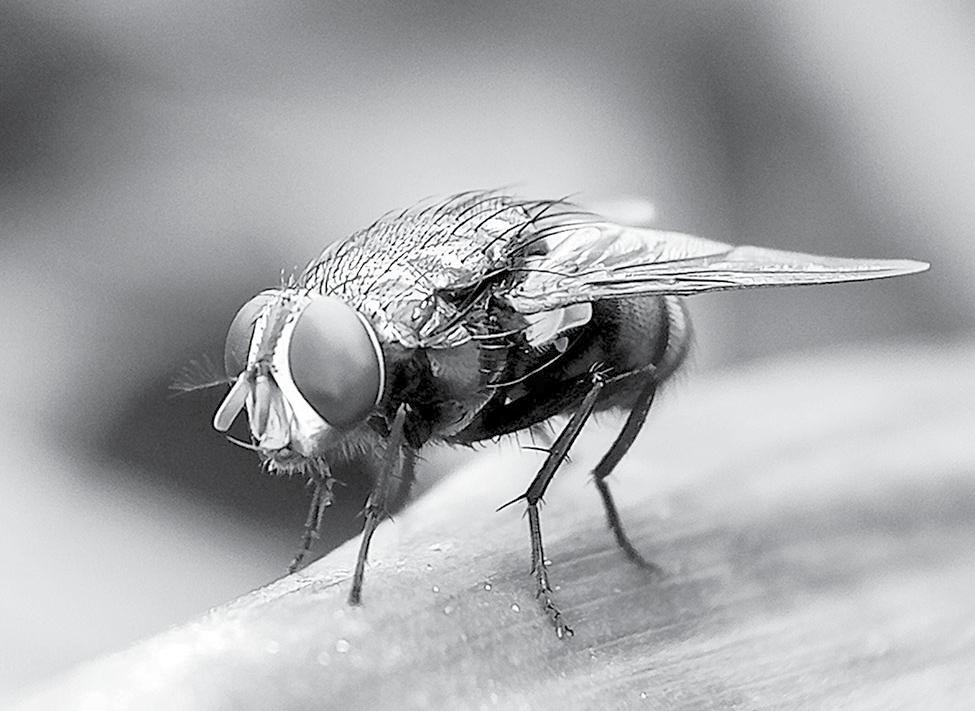
On June 3, the U.S. Department of Agriculture’s (USDA) Animal and Plant Health Inspection Service (APHIS) confirmed the detection of New World screwworm (NWS) larvae in a three-week-old calf in Zavala County, Texas.
Larvae were identified in the calf’s umbilical area, and to date, there have been no further detections.
NWS larvae can infest livestock and other warmblooded animals, including in rare cases people. They most often enter an animal through an open wound and feed on the animal’s living flesh.
USDA urges residents in the area to check their pets and livestock for signs of NWS, including draining or enlarging wounds, signs of discomfort, screwworm larvae and eggs in or around body openings such as the nose, ears and genitalia or in the navel of newborn animals.
USDA further emphasizes the U.S. food supply is safe since screwworms do not infest meat, fruits, vegetables or other food sources.
To read the press release in its entirety, visit aphis. usda.gov/news/agency-announcements/usda-confirmspresence-new-world-screwworm-united-states


U.S. Secretary of Agriculture Brooke Rollins states, “The Trump administration has been committed to eradicating pests which could harm American livestock since President Donald Trump was sworn in. The brand new Knipling-Bushland U.S. Livestock Insects Research Laboratory will allow us to research and find new active measures to keep current and future threats away from our borders.”
A state-of-the-art facility
According to the press release, the state-of-the-art facility will house cuttingedge lab spaces, cattle facilities and a genomics core dedicated to identifying vulnerabilities in livestock pests at the molecular level.
Other research conducted at the facility will focus on improved surveillance and trapping technologies, novel insecticides and acaricides, enhanced pesticide delivery techniques for
both livestock and wildlife, sustainable treatment methods for invasive arthropod species and an improved approach to combatting pesticide resistance.
Additionally, USDA notes the facility will house two ARS research units –the Livestock Arthropod Pest Research Unit and the Veterinary Pest Genetics Research Unit. Together, the two will focus on improving the health, sustainability and profitability of the nation’s livestock sector and protect America’s food supply chain from devastating pests.
“This new laboratory will equip our researchers with advanced tools to combat the most destructive invasive insects already impacting the U.S., as well as those posing future threats at our borders,” said ARS Administrator Joon Park. “The important ARS research conducted in Kerrville, Texas will con-
tinue to play a vital role in protecting and strengthening the future of the U.S. cattle industry.”
In addition, Rollins reiterates the new facility will strengthen efforts the administration has already been taking to prevent the spread of NWS northward and keep it from crossing the U.S.
“We have taken extraordinary actions to keep NWS out of the U.S., and this lab will help us accelerate our offensive efforts to drive this pest further away from our borders,” she states.
A full-circle moment
According to the press release, the new lab is named after Drs. Edward Knipling and Raymond Bushland – two influential USDA researchers.
“In 1937, Knipling first developed the theory screwworms could be controlled using the sterile male technique. In the early
Sparrow Ranch Limited 31 Mx Hfrs, 650-700#, Complete Vac. Program
1950s, Bushland successfully demonstrated the theory worked and viable sterile male screwworms could be produced and used to control screwworm populations,” USDA writes.
“This biocontrol technique, known as Sterile Insect Technique (SIT), became the keystone component of the strategy which eventually led to the eradication of the screwworm from the U.S., Mexico and Central America,” the department adds. “Nearly 80 years later, SIT is still being employed to fight NWS in Mexico and Central America, in an effort to keep the devastating insect from reestablishing itself once again in the U.S.”
With over 80 years of research leading to major breakthroughs in pest control and livestock protection in the Kerrville, Texas area, USDA notes the grand opening of its new facility is a full-circle moment.
“For the last 250 years, our nation has relied on research leading to science-based innovation as a means to overcome some of America’s greatest agricultural challenges, including the exclusion of NWS from the U.S. with novel SIT,” says USDA Under Secretary for Research, Education and Economics Dr. Scott Hutchins. “The Knipling-Bushland U.S. Livestock Insects Research Laboratory will build on this legacy by protecting livestock health, ensuring America’s ranches remain productive, safe and profitable for generations to come.”
Hannah Bugas is the managing editor of the Wyo-
According to a May 22 Northern Ag Network article, America’s sugarbeet and sugarcane producers are applauding U.S. Sens. John Hoeven (R-ND) and Elissa Slotkin (D-MI) and U.S. Reps. Julie Fedorchak (R-ND) and Troy Carter (D-LA) for leading a bipartisan, bicameral letter with more than 110 members of Congress urging the U.S. Trade Representative to take immediate action against the flood of over-quota foreign sugar devastating the livelihoods of family farmers and factory workers.
U.S. sugar policy is designed to defend U.S. farmers and workers from excess over-quota imports and keep the domestic sugar market in balance, but the surge of overquota sugar imports has undermined the longstanding sugar policy enacted by Congress.
In their letter, the members of Congress ask the administration to use Section 301 authorities to investigate “unfair trading practices which disadvantage the domestic sugar industry and take decisive action as appropriate,” noting these practices have severely injured an essential domestic industry, with total U.S. sugar industry losses estimated to exceed $3 billion over the past two years.
The American sugar industry supports family farms and American manufacturing positions across the country, accounting for more than 151,000 jobs throughout the sugar supply chain.
“The losses we are experiencing are staggering and unsustainable. Our farms and factories won’t be able to hold on much longer if the U.S. cannot control the artificially and destructively cheap foreign sugar imports undercutting American-made sugar,” said Brent Baldwin, a fourth-generation sugarbeet farmer from St. Thomas, N.D.
Gerald Sterkel 9 Blk (1 Rwf) Strs & Hfrs, 350-650#, Weaned 45-60 days, Hay Fed, 2 Rounds of Shots:
5+Pre sponse SQ, Vision 7 w/Somnus+Spur
FRIDAY, JUNE 12, 2026 -



SCHEDULE
High Plains Showcase - Laramie, WY June 30th, 2026
Oregon Trail Classic - Gering, NE August 4th & 5th, 2026
Frontier Fall Round Up - Cheyenne, WY September 10th, 2026
Michael Schmitt - Torrington, WY 307-532-1776*** Ty Thompson – Lusk, WY 307-340-0770 Zach Johnson Lingle, WY –307-575-2171***Jeff Ward – Laramie, WY 307-399-9863 Tam Staman – Crawford, NE 308-631-8513***Justin Smith - Lusk, WY
Hunter Dockery - Lusk, WY 307-340-1202 ***Ben Kukowski - Kaycee, WY 307-217-1472 Garrett Nunn - Laramie, WY 307-460-1649 *** Scott Redden - Burns, Co 970-596-3588

for livestock.”
Uniform changes across LRP, LGM, DRP
Several updates apply uniformly across all three programs.
RMA is adding subsidy capture language to address off-exchange contracts, updating the definition of beginning farmer or rancher and subsidy percentages to align with the One Big Beautiful Bill Act (OBBBA), permitting concurrent coverage between similar livestock programs, allowing policies that haven’t earned premium for three consecutive years to be canceled and revising transfer-ofcoverage language.
“These updates expand coverage options, update eligibility definitions and strengthen program consistency across RMA’s livestock portfolio,” says RMA Administrator Pat Swanson. “These enhancements are another way we are putting farmers first. We want to ensure livestock and dairy operations across the
youth to learn about the cattle cycle by exhibiting bred heifers, then showing them as cow/calf pairs the following year.
“Learning about the breeding process through the Supreme Cow contest and seeing everything come full circle has taught me so much,” Paislee says. “It’s a really good program.”
After winning an early phase of the contest, Paislee had the opportunity to select a registered Black Angus heifer donated by local seedstock producers Meg and Tyler Scales of ELK Angus in Buffalo.
She has been showing local livestock ever since, alternating between club and commercial show calves along with a series of heifer and cow/calf projects.
Learning and growing
Paislee says learning about the intricacies of breeding registered cattle has been a highlight of showing cattle.
From expected progeny differences and genetics to artificial insemination, Paislee describes the learning experience as “fascinating.”
country have the best tools available to manage risk.”
Fordyce emphasized the changes flow from two different streams.
“Part of this came from Congress. Part of this came from the board through input from the industry,” he said. “Cattle producers and dairy operations provided input and said, ‘If you could make these changes, it’s going to make it better and easier for us to participate and offer better assurances from a risk management standpoint.’”
Uniform changes across LRP, LGM and DRP include adding subsidy capture language to address off-exchange contracts, updating the definition of beginning farmer or rancher and subsidy percentages to align with OBBBA, permitting concurrent coverage between similar livestock programs, enabling policies which have not earned premium for three consecutive years to be subject to cancellation, revising transfer of
“We run a commercial herd, so it’s very different,” she explains.
Heidi says Paislee has had several “full circle moments” throughout her showing career, and her top priorities have always been raising a good product while having fun.
“Her goal has always been to have fun and to do the best she can,” Heidi says. “She knows the ribbon is not the ultimate goal – putting out a good product is.”
Core community
In addition to support from her family, Paislee expresses gratitude for the community she’s found through showing cattle at the county fair.
“My favorite part about showing in Johnson County is the community,” Paislee says.
“Everyone helps everyone.”
She has made several good friends throughout the years, including the Scales family, the Rives family and Hayden Geis.
Hayden has helped Paislee show her animals during years when she’s exhibited multiple cattle in
coverage language to clarify when coverage can be transferred and updating general policy language for consistency with other RMA insurance policies. A bigger door for new and beginning producers
One of the headline changes – drawn directly from the OBBBA – doubles the window during which new and beginning farmers and ranchers can access premium reductions.
“Right now, if you qualify for the new and beginning farmer definition, you basically get a cut in the premium for five years. It’s graduated depending on how many years you’ve been in the program,” Fordyce explained. “The OBBBA allowed for new and beginning farmers to take advantage of the premium reduction for 10 years now.”
He framed the change as a meaningful runway for young producers entering an expensive industry.
“New and beginning farmers are probably economically and financially
the same class, and this year, she purchased her market steer from Taylor Rives. Staying busy
In addition to showing cattle, Paislee balances a busy schedule between serving as president of the Kountry Kids 4-H Club, helping out on the family ranch, riding pens at the local sale barn, competing in local rodeos and golfing for Buffalo High School.
After selling her steers each year, Paislee invests in more cattle or quality experiences like travel. Paislee says she loves to travel, and money from her show steers have helped pay for a car and trips to Greece and Ireland – well-deserved breaks between school and summer show preparation.
She jokes she gets enough of a break in the wintertime to be ready to do it all again the next year.
Paislee used to show horses and static exhibits like photography and leatherwork, but these days, she prioritizes livestock.
In the past, she has taken as many as eight animals to the fair, but this year, Paislee plans to focus her attention on just one market steer and two cow/calf pairs.
more at risk than most others, so for this to allow them to participate with lower premiums for 10 years is really important,” he said. Tailored updates by program
The popular LRP program, which insures against declining market prices at coverage levels from 75 to 100 percent of expected ending values, sees some of the most substantive changes.
RMA is expanding the forage disaster exemption to address extended drought and other natural disasters, increasing the maximum weight threshold for fed cattle types, extending cull cow coverage to a maximum of 52 weeks and adding three new feeder cattle types in the six to nine hundredweight range.
“Some of the provisions announced today are really meant to offer more clarity and align those programs to better fit the situation livestock producers see in their operations,” Fordyce said.
LGM, which protects cattle, dairy and swine producers against unexpected
drops in gross margin, gets several technical but consequential updates. The maximum insurable weight for LGM cattle increases to 1,800 pounds.
The “target feeder cattle weight” maximum rises from nine to 12 hundredweight for yearling finishing operations and “target live cattle weight” maximums move from 15 to 18 hundredweight for yearling finishing and 13 to 16 hundredweight for calf finishing.
The “share” definition now requires producers to own calves for at least five months for yearling finishing or eight months for calf finishing.
DRP, which guards against revenue declines in milk production on a quarterly basis, receives a single but meaningful tweak – the sales period end date moves to the following calendar day, aligning DRP with the sales period structure used elsewhere in livestock insurance.
“You operate one program this way, you operate one program another way,” Fordyce said of the rationale. “Any time we
can consolidate it eliminates confusion. It also eliminates the off chance someone didn’t completely understand how this program was administered and they miss an opportunity.”
Looking ahead
LRP, LGM and DRP are available to producers in all states and counties. Coverage is sold and delivered exclusively through private crop insurance agents, and a full list is available through the RMA Agent Locator at rma.usda.gov
For Fordyce, the broader takeaway is the value of constant refinement informed by the people who use the programs.
“When you look at an average livestock operation, there’s significant investment. These risk management tools are in place to protect this investment,” he said. “Risk management is critical in this day and age, probably more so than it’s ever been.”
Jesse Allen is the vice president of national ag content for Farm and Ranch Media. This article was originally published by American Ag Network on May 18.
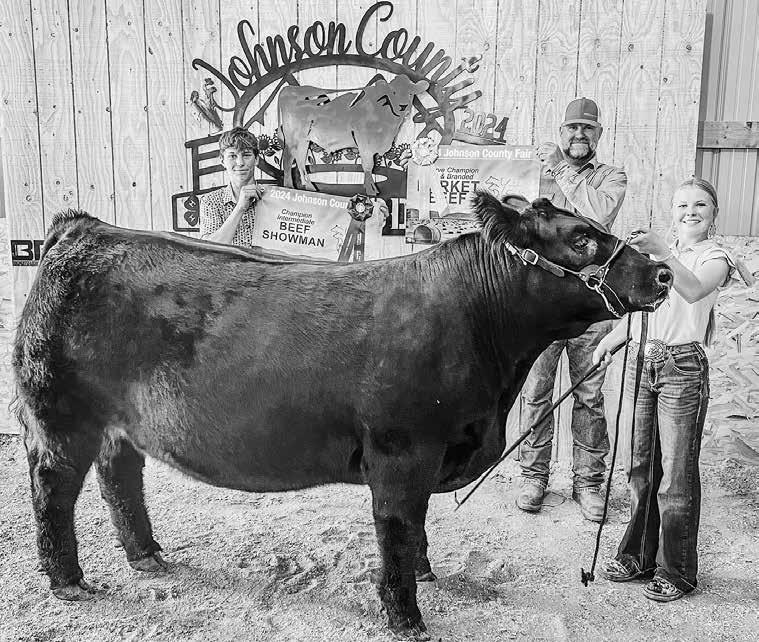
Scaling down slightly allows her to keep her main focus on what matters most – having fun and doing her best.
“Showing is all about having fun, learning and enjoying the community,” Paislee emphasizes. “It’s not about the ribbon.”
Sheridan will represent UW in the bull riding.
For timed events, Tate Talkington of Scottsbluff, Neb.; Treg Thorstenson of Lantry, S.D. and Rio Nutter of Rapid City, S.D. all qualified in the tie-down roping.
Thorstenson and Nutter will also compete in the team roping, along with fellow UW Rodeo Athletes Kash Reynolds of Rozet and Roan Weil and Rowdy Weil, both of Kersey, Colo.
Three UW Cowboys qualified in the steer wres-
tling, including Jacob Wang of Baker, Mont.; Samuel Gallagher of Brighton, Colo. and Thayne Kimbrough of Ohiowa, Neb.
The UW Women’s Rodeo Team is also set for an impressive showing in Casper, with four UW Cowgirls currently preparing for the CNFR.
Makenzi Scott of Rock Springs will compete in the barrel racing, while Olivia Lay of Elbert, Colo. and Josie Mousel of Colman, S.D. will compete in the
continued from page 1
State University Extension
Beef Veterinarian Dr. Grant Dewell notes decreased reproductive performance is often one of the less visible consequences of heat stress in cow herds.
“Poor reproductive performance is often a hidden outcome of heat stress in cow herds,” he states. “Heat stress can decrease the fertility of both the cow and the bull. Additionally, bulls can become less active while breeding and cows may not have as strong of a heat cycle.”
For cows, excessive heat can interfere with normal reproductive processes in several ways.
During periods of extreme temperatures, Dewell says cows may struggle to maintain their normal body temperature, which in turn may damage developing ovarian follicles. These damaged follicles may be less fertile during ovulation, potentially impacting conception rates well into the fall.
“Even if cows were ovulating fertile follicles when the heat event occurred, they may not express enough estrus behavior because of extreme temperatures,” Dewell says. “Cattle undergoing stress release cortisol,
which will decrease estradiol, reducing heat expression in the cow.”
If a cow does get bred and have a calf, Dewell notes elevated body temperatures can still create challenges.
“The embryo is at risk of embryonic death from heat stress due to decreased blood flow to the uterus as the cow tries to maintain body temperature and possibly experiences a reduction in progesterone production,” he states.
According to information published by BioZyme, Inc. on May 1, research conducted at Oklahoma State University found pregnancy rates decreased by as much as 50 percent when cattle were bred during cooler conditions and later exposed to moderate or severe heat stress.
Findings from the study also showed surviving fetuses from heat-stressed cows tended to be smaller and were more likely to be lost later in the pregnancy.
Cows are just half of the equation, though.
With bulls servicing roughly 20 to 30 cows each breeding season, ensuring they remain fertile during hot summer months is also critical.

breakaway roping.
Mousel will also compete in the goat tying, along with Layni Stevens of St. Lawrence, S.D.
Wyoming winners
Athletes from Sheridan College, Gillette College, Laramie County Community College (LCCC) and Central Wyoming College (CWC) will also make their mark at the 2026 CNFR.
Jake Schlattmann of Greybull, Lonnie Dunn of Big River, Saskatchewan, Canada, Taiten Eaton of St. Onge, S.D. and Christopher Nelson of Lake Andes, S.D. will represent Sheri-
According to a 2018 VitaFerm article, heat stress negatively impacts spermatogenesis and can reduce sperm quality and quantity, affecting motility, concentration and total sperm numbers.
The challenge, however, is these effects aren’t often immediately visible to producers.
“The negative effects on semen quality are not usually realized for 45 to 60 days after the stress occurs since the testes and tubules store an abundant amount of sperm,” VitaFirm officials explain. “This is why it is always important to have a thorough breeding soundness exam 30 to 60 days before turning bulls out with cows.”
In addition to impacting sperm production, Genex Beef Sales and Marketing Director Ron Hinrichsen mentions heat stress can also cause lack of libido in bulls.
“When bulls are hot and unable to cool themselves down, they tend to stand in ponds or under shade. Cattle aren’t performing – regardless if they are a bull or female – if they are standing under a tree or out in a pond,” Hinrichsen says.
Kansas State University Veterinarian Dr. Bob Larson further notes even relatively short periods of heat stress can have lasting consequences.
dan College in the saddle bronc riding, while CWC’s Eian Smith of Pinedale and Sheridan College’s Reece Reder of Belle Fourche, S.D. will compete in the bareback riding.
Rounding out the CRMR’s rough stock qualifiers are LCCC’s Kahl Wasilow of Maple Creek, Saskatchewan, Canada and CWC’s Colton Clymer of Loveland, Colo., who will both compete in the bull riding.
On the timed events side, Drew Harper of Faith, S.D.; Cam Johnson of Buffalo and Jess Harper of
“Heat stress events as short as two days can disrupt testicular tissue, resulting in negative effects on sperm motility, shape and function. The degree of sperm damage and the length of time the damage persists depends on the intensity and length of the heat stress insult,” Larson says in a 2025 Angus Journal article.
He goes on to note the resulting damage can lead to abnormal sperm development, decreased fertility and lower embryo survival rates, and depending on the severity of the heat event, recovery may take anywhere from a few weeks to more than two months.
Managing heat stress
Although producers cannot control hot summer temperatures, they can take steps to reduce heat stress and maintain reproductive performance.
Experts agree providing access to cool, clean drinking water is one of the most important management practices, noting water requirements can increase dramatically during hot weather and inadequate intake can quickly worsen heat stress.
Dewell warns stagnant ponds and surface water sources may not be adequate if cattle are congregating in them to cool off.
“Although cows can survive drinking this water
Faith, S.D. will represent Gillette College in the team roping, along with Sheridan College’s Tyon Arneson of Enning, S.D. and CWC’s Cael Epenscheid of Big Piney.
Brylee Grubb of Spearfish, S.D. finished the regular season as the CRMR’s all-around cowgirl and will represent Gillette College in the barrel racing and goat tying.
Caitlin Moore of Wright will also represent Gillette College in the goat tying, and in the breakaway roping, Kaeley Hutchison of Rozet and Staheli
and will not become dehydrated, they will not want to consume adequate amounts to deal with heat stress and maintain high reproductive performance,” he explains.
Shade is also critical. Trees, shade structures and properly ventilated buildings can help cattle escape direct sunlight and lower body temperatures during the hottest portions of the day.
Additionally, experts recommend only working cattle during cooler times of day, such as early in the morning or late in the afternoon; running cattle more suitable to the environment and maintaining a ratio of no more than one bull to 30 cows.
The specialists also underscore the value of a good nutrition program.
Kevin Glaubius, director of nutrition for BioZyme, explains the abrupt transition between highenergy rations and foragebased grazing can cause issues, especially in young bulls.
“Make sure bulls have a good nutrition program in place including a high-quality mineral,” he says. “Often, younger bulls are purchased in a bull sale where they have been on a high plane of nutrition. When they stay on a grain diet until it is time for turn out, their rumen must quickly adjust to a total forage diet, adding yet another stressor.”
Adams of Cedar City, Utah will represent Gillette College; Rayna Billingsley of Phoenix, Ariz. and Kaitlyn Idler of Laramie will represent LCCC and Sierra Hilgenkamp of Wall, S.D. will represent Sheridan College. The 2026 CNFR kicks off with the Bulls, Broncs and Breakaway Matinee performance on June 14 and concludes with the Championship Round on June 20.
Grace Skavdahl is the editor of the Wyoming Livestock Roundup. Send comments on this article to roundup@wylr.net.
To prevent this, he recommends transitioning bulls to forage diets at least 30 days before turnout to minimize nutritional stress.
Fly control is another important component to mitigating the impacts of heat stress.
Officials at BioZyme note cattle will often bunch together to fight flies, lowering air circulation and resulting in elevated heat stress.
Fly tags, oilers, dusters and other control methods can help control flies and keep cattle comfortable through the summer.
Planning ahead
As summer progresses and temperatures rise, livestock specialists remind producers to view heat stress as more than just a livestock discomfort issue.
Reduced conception rates, pregnancy loss and fertility problems can affect herd productivity long after temperatures return to normal.
By ensuring cattle have adequate water, shade, nutrition and pest control, producers can help protect reproductive performance and maintain profitability despite challenging summer conditions.
Hannah Bugas is the managing editor of the Wyoming Livestock Roundup. Send comments on this article to roundup@wylr.net.

As interest in self-sufficiency, pollinator conservation and local food production continues to grow, more individuals are beginning to add honeybees to their farms, ranches and even their backyards.
While beekeeping can provide a long-list of benefits – from honey production to improved pollination of gardens and orchards – experts say success starts long before the first hive arrives.
From understanding state regulations to selecting the right location and equipment, they offer several steps prospective beekeepers should take to improve their chances of building healthy, productive colonies.
Do homework first
Many experienced beekeepers emphasize one piece of advice above all others –do thorough research before purchasing bees.
“Before you dive in headfirst, know there is a sharp learning curve when it comes to successfully running your own first-time hives,” states Pennsylvania State Beekeepers Association President Stephen Repasky in an April 5, 2019 Country Living article.
Repasky and fellow experts encourage new beekeepers to take a beekeeping class, join a local beekeeping association or find an experienced mentor before getting started.
Books, online resources and educational videos can also help beginners learn about bee biology, hive management, disease prevention and seasonal colony care.
Additionally, prospective beekeepers should familiarize themselves with federal and state regulations before purchasing bees.
According to an undated University of Wyoming (UW) Extension publication written by UW Extension Educator Justina Russell, Wyoming residents must register their hives with the Wyoming Department of Agriculture (WDA).
“In general, beekeepers must register hives with WDA by April 1, and failure to do so can result in hefty fines,” Russell explains. “Hobbyist beekeepers can keep up to five hives before having to pay a registration fee, but accurate legal descriptions of hive locations must be provided so WDA can determine if newly established hives might interfere with proper feeding and honey flow at existing apiary sites or if they have the potential to transfer bee diseases and parasites.”
In addition to state requirements, experts note beginning beekeepers should verify whether city, county or homeowner’s association regulations apply to their property before purchasing a hive. Use proper equipment
Like any new venture, beginning beekeepers will need to make some initial investments.
According to Repasky, depending on location,
an individual can expect to spend between $800 to $1,000 for a two-hive setup during their first year, which includes equipment and the bees themselves.
Russell suggests purchasing a starter kit, which averages between $100 to $300 and contains most of the basic equipment needed to establish a hive including hive bodies, frames, foundation, feeders, brood chambers, hive tools and protective equipment.
Experts across the board emphasize the importance of investing in quality safety gear including a bee suit, gloves and protective veil.
“I cannot express the importance of a good bee suit. I would suggest buying the best beekeeping suit you can afford,” writes Kristina Guidroz of Guidroz Family Farm LLC in an undated AcreageLife blog post.
Another commonly recommended tool is a bee smoker, which helps calm bees down during hive work.
Guidroz says, “Another invaluable tool I believe you should splurge on is a bee smoker. You’ll get one in any beginner beekeeping kit, but a great quality smoker will make your hive work much easier.”
Russell agrees, stating, “A bee smoker is a small fire container with bellows used to puff smoke on bees during harvest. Smoke produces a feeding response in bees –when a bee has a full belly, it is less likely to sting.”
“Smoke masks alarm pheromone and keeps bees calm,” reiterates Frank Mortimer, adjunct instructor at the Cornell University Beekeeping Program, in an article published by Cornell’s College of Agriculture and Life Sciences. “Going into a hive without having a smoker can be irresponsible, as it can cause a colony to become increasingly more defensive. All beekeepers should smoke their bees as needed, and for the suburban beekeeper, the use of a smoker is strongly encouraged.”
Choose a good location
Another important consideration is location, as hive placement can have a major impact on colony success.
According to Russell, an ideal apiary site should be level, protected from wind and located near a dependable water source.
She also says hives should be elevated on blocks or stands to improve airflow and to discourage preda tors such as skunks and rac coons, and a large rock or brick should be place on top of the hive to keep top cov ers secure.
“A good rule of thumb for a site is anywhere a tent might be placed – level, close to water and out of the wind. If people would find the site suitable, then bees will prob ably be happy to camp there too,” Russell says. She continues, “Bees are most active in full sunlight, so place hives where they will receive adequate expo sure to the sun to maximize
nectar collection and the honey crop. However, like a pet, bees need shade during the hottest part of the day.”
A consistent water source is equally important, and Russell notes a colony may consume a quart or more of water each day during hot summer weather.
Birdbaths or other shallow sources of water with floating corks or pieces of wood provide a safe place for bees to rest and hydrate without the risk of drowning. A nearby water source will also prevent bees from visiting neighboring birdbaths, swimming pools or pet water dishes.
“It’s important to provide bees with water on your property so they don’t make a neighbor’s pool, dog bowl, air conditioner, birdbath, koi pond or other water source their own,” Mortimer states. “Keep a water source within 15 feet of your hive yearround so they orient on the source you have provided for them before scout bees find water sources in a neighbor’s yard.”
A good location and strong communication with neighbors are also important for new beekeepers who live on small acreages or near residential developments.
Mortimer strongly recommends discussing apiary plans with neighbors before installing hives and providing education about honeybees to alleviate concerns and dispel misconceptions.
“If you’re going to keep bees in your backyard, being a good neighbor is key. A general rule of thumb is if you’re on good terms with your neighbors before you get bees, then they’ll be just as excited as you are about your new hobby. But, if you’re on bad terms with your neighbors, then getting bees is like pouring gasoline on an open fire,” he says.
Additionally, Mortimer recommends setting up the apiary in a location which minimizes complaints.
“First, it’s a good idea
to think about how non-beekeepers will be using your yard,” he points out. “While a south-facing hive is best, you also have to think about what will be happening 10 to 15 feet in front of your hives. One way to visualize the bees’ flight path is to stand where you’re thinking of putting the hive and spraying a hose 10 feet, 15 feet, even 20 feet in front of you. What are the chances of someone or something getting wet? What kind of foot traffic does this area of the yard get?”
“It is equally as important to think about how your neighbors use their yard, so it is not a good idea to put a hive directly on a property line. Instead, place hives 10 feet or more from the property line,” he adds.
Further, Mortimer recommends installing fencing around the hive to discourage people or pets from walking into the bees’ flight path
or putting the apiary near a flight barrier – tall bushes, trees, the side of a house or anything that forces bees to fly up and away after leaving the hive, which reduces interactions with people and pets.
Start small and be patient
After getting equipment purchased and the apiary set up, many beekeeping experts recommend beginning with two hives rather than one, as having two colonies allows new beekeepers to compare hive performance and identify potential problems more easily. It also provides a backup if one colony struggles.
Experts also remind new beekeepers setbacks are common.
Colony losses due to weather, pests and management mistakes are all part of the learning process, especially during the first few years.
Russell says, “Beekeep-
ers can employ techniques to ensure development of a strong colony with ample honey production. Carbohydrate and protein supplementation, disease and pest mitigation and winter hive management are essential to achieving maximum colony numbers in time for the major nectar flow time periods.”
Repasky further advises, “Continue to learn, continue to educate yourself, join beekeeping clubs, be observant and be willing to fail.”
For those willing to invest the time and effort, beekeeping can offer many rewards, and with careful planning and realistic expectations, experts say a backyard apiary can become a productive and enjoyable addition to any farm, ranch or rural homesite.
Hannah Bugas is the managing editor of the Wyoming Livestock Roundup. Send comments on this article to roundup@wylr.net.

Coffee is one of the most widely consumed beverages worldwide, but it also has been associated with health benefits like decreased rates of Parkinson’s disease and Type 2 diabetes, as well as a lowered risk of some cancers, including colon, rectal and breast cancer.
Although the general health benefits of coffee consumption are well known, its specific drivers are still being discovered.
A recently published review paper by Texas A&M University (TAMU) researchers examines the health benefits of coffee and reveals there is still much to explore about coffee’s impacts on human health.
The lead author on the publication in the National Library of Medicine of the National Institutes of Health’s National Center for Biotechnology Information is Dr. Stephen Safe, distinguished professor and Sid Kyle Endowed Chair in Veterinary Toxicology in the Texas A&M School of Veterinary Medicine and Biomedical Sciences (VMBS).
Safe is also a faculty member in the Texas A&M College of Agriculture and Life Sciences Department of Biochemistry and Biophysics.
The paper was stimulated by a recent collaborative study conducted by Safe and his colleague Dr. Robert Chapkin, Allen Endowed
Chair in Nutrition and Chronic Disease Prevention and distinguished professor in the College of Agriculture and Life Sciences Department of Nutrition and Department of Biochemistry and Biophysics. Chapkin also served as a coauthor on the review paper along with Research Scientist Dr. Laurie Davidson and Graduate Student Jainish Kothari, both in the Department of Nutrition.
Additional coauthors from the VMBS include Senior Research Associate Srijana Upadhyay and Amanuel Hailemariam, a graduate student and research assistant.
The mechanics of coffee consumption
Safe said his main inter-
Austin Snook • 307-290-2161
Taylor Snook • 307-290-2273
Craig Deveraux • 307-746-5690
Dan Catlin • 406-671-7715
Clint Snook • 307-290-4000
Cheyenne Seymour • 605-641-0638
Casey Sellers • 307-217-2614
Jim Forbes • 307-351-5932
"From the ring, to the video, and
est in this review paper was understanding the role coffee compounds play in various mechanisms within the human body.
“The mechanisms are really good to know because if you understand how something’s working, you get a better shot at understanding and harnessing coffee to improve health outcomes,” Safe explained.
One beneficial mechanism the researchers identified in a previous study was the fact roasted coffee activates the aryl hydrocarbon receptor (AHR) in the human body.
AHR plays a role in regulating metabolism and immunity, so, by activating AHR,
Daniel Escoz • 307-217-1440
Tye Curuchet • 307-351-8666
JJ Butler • 307-231-6878
Chris Rodriguez • 307-217-2172
Kyle Kallhoff • 605-881-1526
Kade Kinghorn • 307-620-0525
Jake Underwood • 307-660-5989
Donny Scantling • 307-217-0537
Big run of summer weigh ups with a strong market. Bulls slightly softer. Selling pairs every week. Thank you for your business!
roasted coffee boosts an individual’s conversion of food into energy and their ability to fight disease.
Safe and Chapkin also looked at coffee’s influence on NR4A, a receptor in the human body involved in the development of certain kinds of cancer, including colon and breast cancer.
“It turns out a lot of natural products bind to the NR4A receptor,” Safe said. “It could be a contributor to the health effects not only of coffee but also of a vegetable-rich diet, though we don’t know this for sure.”
However, Safe explained identifying receptors such as NR4A is an important step in developing treatments for diseases.
“Once a contributor to a disease has been identified, we can start developing drugs designed to block the expression of the contributor, thus stopping the disease in its tracks,” Safe said. “We can also do the reverse. If we identify something that’s helping fight a disease when activated, we can develop treatments to activate the disease fighting mechanism.”
The researchers also identified NrF2, an oxygen sensor in cells, as a mechanism coffee consumption can activate. AHR enhances NrF2’s protective properties, which are positive for preventing diseases because they help keep oxygen levels in cells at a healthy level.
However, if you receive a diagnosis for a disease treated by enhancing the oxygen level in cells, coffee’s enhancement of NrF2 will counteract the drugs used to treat the illness.
“Some diseases are treated with therapeutics which increase reactive oxygen species (ROS),” Safe said. “ROS attacks the diseased cells until they die, thus eliminating the disease. So, NrF2 can be protective, but if you happen to get one of these diseases, it switches and can cause resistance
to treatment.”
Double shot of cancer benefits
The review paper shared caffeine’s energy and focusboosting effect is the most known benefit of coffee consumption, but the two billion cups of joe consumed daily may also provide both chemotherapeutic and chemopreventive benefits.
Most of coffee’s benefits are chemo-preventive, Chapkin and Safe noted.
Chemo-preventives help prevent the development of cancers. These are the same benefits vegetable-rich diets such as the Mediterranean diet provide.
The chemo-preventive effects coffee has in the body help a person live longer while also preventing some cancers, although there are conflicting reports on benefits for some of these cancers in the scientific literature.
Looking forward, Safe and Chapkin are hopeful future research will focus on these possible chemotherapeutic effects.
The chemotherapeutic aspects of coffee are very exciting, the two scientists agreed, saying while they haven’t been proven, it looks like there are some possibilities for clinical application of coffee extracts to be considered for treating some cancers.
The researchers indicated if one reads coffee literature, they will realize the positive effects of coffee go on and on, and a lot of them aren’t even known yet.
“We still have a lot of research to do, but I’ve been hooked on coffee for a long time and have never seen any reason to unhook myself,” Safe said. “It’s essentially a cooked vegetable with a wide range of health benefits.”
Abagail Chartier and Rachel Knight are communications specialists for VMBS. This article was originally published on the VMBS news page on April 26.
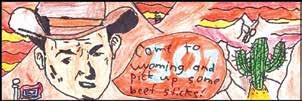
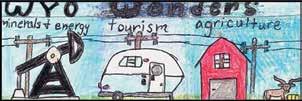
Each year, to showcase their understanding and appreciation of Wyoming’s essential resources, second- through fifth-grade students from across the state create bookmarks illustrating a Wyoming resource message through Wyoming Agriculture in the Classroom’s Bookmark and Beyond Program.
This year, 13 winning designs were printed and distributed throughout the state.
For coming weeks, the Roundup will share photos of the 2026 Bookmark and Beyond finalists.
According to University of Nebraska-Lincoln (UNL) Extension Livestock Educator Aaron Berger, wheat producers across the High Plains are facing the tough decision of whether damaged stands may be more valuable as forage or grain this spring in the wake of ongoing drought stress and recent freeze injury.
Persistent drought conditions, on top of the unusually warm winter of 202526 which resulted in wheat developing well ahead of normal, followed by freezing temperatures in late April that caused significant injury to many fields, has reduced yield potential and left producers considering alternative uses for their winter wheat crop.
“The first step in evaluating what to do with the damaged wheat is to work with crop insurance agents to understand options and the implications of potentially grazing the crop or harvesting the wheat for hay or silage,” Berger states in a May 5 press release issued by the UNL Panhandle Research, Extension and Education Center.
Grazing or harvesting as hay
Berger reiterates many dryland wheat acres across the region have been heavily stressed by drought, resulting in short plants and limited forage production.
While grazing what little forage there may be is certainly an option, Berger says, in some cases, leaving wheat standing to protect the soil may be best.
For producers able to irrigate their fields, Berger says added growth from receiving some moisture could provide an important resource in times of tight forage supplies.
For those who choose to put up hay, Berger recommends targeting the boot-toearly heading stage for the best combination of quality and yield.
“Depending on the variety, wheat harvested for hay after this stage can have rough awns, which can irritate cattle’s mouths,” he notes.
Berger also notes, because this year’s crop was grown under such stressful conditions, producers should also be wary of high nitrate levels. Whether grazing or harvesting as hay, he encourages growers to sample forage and conduct nitrate testing before feeding.
Putting up wheatlage
According to a separate UNL publication written by UNL Extension Educators Jenny Brhel and Todd Whitney, UNL Beef Systems Specialist Dr. Mary Drewnoski, UNL Emeritus Extension Forage Specialist Bruce Anderson and UNL Beef Feedlot Nutrition Specialist Galen Erickson, another option for utilizing damaged wheat is to put it up as wheatlage.
Unlike hay production, wheat harvested for silage is typically allowed to mature longer, and the specialists
recommend waiting until the milk-to-soft-dough grain stage in order to maximize both energy production and dry matter yield.
They also cite research conducted near Bertrand, Neb. which shows irrigated wheat biomass nearly doubled in roughly six weeks as the crop progressed from the flag lead stage to the soft dough stage.
In trials conducted from 2016-17, UNL researchers saw forage yields increase from about 10 tons per acre in late April to nearly 20 tons per acre by early June. As the crop matured, they found the percentage of crude protein declined while total protein and energy production per acre increased because of higher overall tonnage.
Additionally, the specialists emphasize proper moisture management is essential for successful wheatlage production.
“Forage at a moisture level of 70 to 72 percent is ready for packing,” they explain. “If the moisture falls below 67 percent, the wheatlage will be too fluffy and difficult to pack tightly. Conversely, if the silage moisture content is above 72 percent, it will be prone to oxidizing. Wet wheatlage – above 78 percent moisture – will likely result in extreme losses as the nutrient dense water drains from the bunker pile.”
The five educators further note rapidly packing and getting forage covered immediately during the pro-
cess of putting up wheatlage are especially important.
“Unlike corn silage, if the wheatlage pile is not covered quickly after packing, the forage may turn an oxidized black color. Although the nutritional content may still be good, oxidized wheatlage may result in reduced livestock consumption,” they state. “To reduce oxidation throughout storage, quickly recover the bunker after wheatlage is transferred to mixer trucks or daily forage feed is removed.”
The specialists also suggest packing silage in layers no thicker than six inches to improve density and minimize air pockets, and they remind growers to keep wheat variety in mind.
“The most popular forage wheat varieties have been Willow Creek – an awnless variety bred by Montana State University –and Wesley – a Nebraskabred variety from Husker Genetics,” they add. “Awnless versus awned, or bearded, wheat head varieties are usually not an issue since the forage is chopped. However, this might be an important consideration if the wheat forage is harvested as hay after the wheat is fully headed.”
“Beyond disease and insect resistance ratings, straw strength and lodging resistance are the most important factors when it comes to variety selection for wheatlage production,” they continue. “Other wheat

varieties with good to excellent straw strength ratings include AgriPro PostRock, Westbred 143, SY Wolf, SY Flint, Westbred Cedar and Westbred Winterhawk.”
Other considerations
As drought conditions continue reducing feed availability across the High Plains, interest in alternative forages continues to grow.
UNL Extension says, in addition to wheat, some producers have also considered triticale, rye and oats, each of which presents different harvest and management pros and cons. They note triticale often
produces greater tonnage but may be prone to lodges, while rye generally produces lower yields in thin stands and can be difficult to chop because of its hollow stems.
“Wrapped forage bales have also been gaining popularity in central Nebraska,” say Brhel, Whitney, Drewnoski, Anderson and Erickson. “Usually, forage bales are wrapped when the forage reaches 45 to 50 percent moisture content. The downside to ryelage or bale wraps is potentially higher feeding losses if tub grinding is not an option.”
Ultimately, UNL Extension educators encourage producers to carefully evaluate crop condition, forage needs, harvest logistics and insurance considerations before deciding whether to graze, hay or ensile freezedamaged wheat. With forage supplies already limited across the High Plains, damaged wheat acres may provide an important feed resource for livestock producers this year. Hannah Bugas is the managing editor of the Wyoming Livestock Roundup. Send comments on this article to roundup@wylr.net.



June 6 Wyoming Free Fishing Day. For more information or a complete list of events across the state, visit wgfd.wyo.gov
June 7 Wyoming Game and Fish Department Aquatic Invasive Species Inspector Training, 9 a.m.-4 p.m., Jackson Regional Office, Jackson. For more information or to register, visit wgfd.wyo.gov
June 8 Wildfire Preparedness, Response and Recovery Webinar Series: Response, 12-3 p.m., online. For more information, visit nationalacademies. org/projects/CHPP-BHS-26-P-736
June 8-12 University of Wyoming 2026 Ranch Camp, Ladder Ranch, Carbon County. For more information or to apply, visit bit.ly/4rkLAe2
June 9-11 Southeast 307 Livestock Show Clinic, Platte County Fairgrounds, Wheatland. For more information or to register, contact Hannah Cesar at hcesar@ uwyo.edu or 307-322-3667.
June 10 Growing Food in Wyoming Masterclass: Pests and Pollinators, 7-8 p.m., Zoom. For more information or to register, visit dirtworkswyo.com
June 11 University of Wyoming Extension Managing Landscapes in Drought Webinar, 6-7 p.m., Zoom. For more information, visit bit.ly/drought-webinar-26
June 11 Nebraska Extension Management Options in Drought Webinar, 6:30-8 p.m., Zoom. For more information or to register, visit go.unl.edu/drought2026
June 11 2026 Range War Rodeo Series, 7 p.m., Buffalo. For more information, visit rangewarrodeo.com
June 11-14 Wyoming Range Hunting and Fishing Expo, Sublette County Fairgrounds, Big Piney. For more information, visit wyomingrangeexpo.com
June 14-20 College National Finals Rodeo, Ford Wyoming Center, Casper. For more information or to purchase tickets, visit cnfr.com
June 15 Wildfire Preparedness, Response and Recovery Webinar Series: Recovery, 12-3 p.m., online. For more information, visit nationalacademies.org/projects/CHPP-BHS-26-P-736
June 16 Wyoming Beef Council Meeting, 7 p.m., online. For more information, contact Ann Herne at ann.herne@wyo.gov or 307-777-6399.
June 16-20 National Rambouillet Sheep Show and Sale, South Dakota State Fairgrounds, Huron, S.D. For more information, contact Burton Anderson at 605852-2233 or Beau Chapman at 605-430-5811.
June 17-19 American Lamb Board Targeted Grazing Workshop, Straughn Professional Development Center, Gainesville, Fla. For more information or to register, visit lambboard.com/grazing-workshops
June 18 University of Wyoming Extension Managing Landscapes in Drought Webinar, 6-7 p.m., Zoom. For more information, visit bit.ly/drought-webinar-26
June 20 Albany County Ag and Art Tour, Laramie. For more information, visit wyoextension.org/ruralentrepreneurship/albany-county/
June 20-21 World Famous 65th Annual Woodchopper’s Jamboree and Rodeo, Encampment-Riverside Lions Club Arena, Encampment. For more information, visit woodchoppersjamboree.org

June 12-13
June 16-18
June 16-20
June 25
June 30
July 6-10
July 13-15
July 20
Cowgirl Cadillacs Horse Sale, Sheridan, cowgirlcadillacs.com
Superior Livestock Auction Corn Belt Classic, South Sioux City Marriott Riverfront, South Sioux City, Neb., 800-422-2117, superiorlivestock.com
National Rambouillet Show and Sale, South Dakota State Fair Park, Huron, S.D., rambouilletsheep.org
Northern Livestock Video Early Summer Special, 866-616-5035, northernlivestockvideo.com
Cattle Country Video High Plains Showcase, UW Marian H. Rochelle Gateway Center, Laramie, 888-322-8853, cattlecountryvideo.com
Superior Livestock Auction Week in the Rockies, The Steamboat Grand, Steamboat Springs, Colo., 800-422-2117, superiorlivestock.com
Western Video Market, Silver Legacy Casino Resort, Reno, Nev., 530-3473793, wvmcattle.com
Northern Livestock Video Auction Summertime Classic, 866-616-5035, northernlivestockvideo.com
July 21 Tri Brothers Equipment Summer Consignment Auction, Torrington, 307575-2427 307-338-8216, tribrothersauctions.com
July 24
July 27-31
Aug. 4-5
Aug. 10-11
Aug. 17
Aug. 17-21
Aug. 22
Stellpflug Cattle Company “New Frontier” Female Sale, at the ranch, Guernsey, 307-351-1712, stellpflugcattle.com
Superior Livestock Auction Video Royale, Winnemucca, Nev., 800-4222117, superiorlivestock.com
Cattle Country Video Oregon Trail Classic, Gering Civic Center, Gering, Neb., 888-322-8853, cattlecountryvideo.com
Western Video Market, Little America, Cheyenne, 530-347-3793, wvmcattle.com
Northern Livestock Video Auction Early Fall Preview, 866-616-5035, northernlivestockvideo.com
Superior Livestock Auction Big Horn Classic, Sheridan, 800-422-2117, superiorlivestock.com
Memory Ranches Fourth Annual Foal Sale, at the ranch, Wells, Nev., 208412-6156, 208-695-0399, memoryranches.com

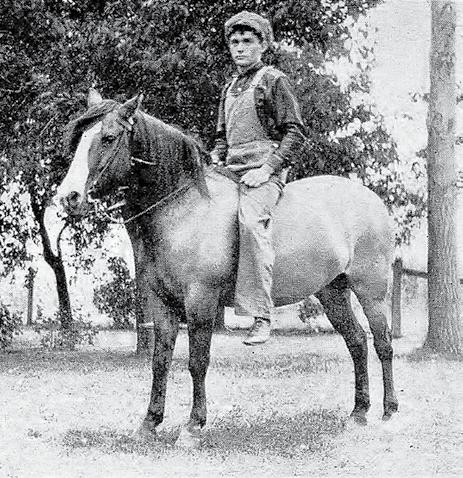
Horses from the great state of Wyoming have long been sought by folks from throughout the world.
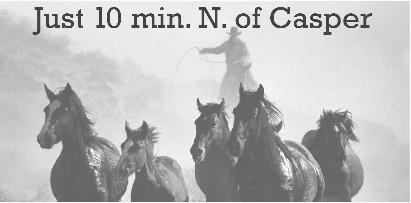
In a 1908 prospectus book selling Wyoming and touting its agricultural advantages, it was noted, “We – the editors of the prospectus book –quote the following from the Wyoming 1907 Official Statement, authorized by the Ninth Legislature:” Horses
It has been proven beyond question horses raised on the foothills and mountains, in the pure light air of an elevation of from 5,000 to 10,000 feet, have better lungs, stronger and better-developed bone and muscle and tougher hoofs than horses from any other country.
This is borne by the fact, not only the U.S. Government during the Spanish American War and since but the English Government for service in South Africa, have purchased as many thousand head of horses in Wyoming as could be obtained.
No horse in the world can compete with the Wyoming horse in endurance of all kinds of hardship to which horse flesh is subjected by man. This is a broad statement, but we make it without fear of refutation, every horseman and horse in the state stands ready to back it up
Embracing about 98,000 square miles of territory, nearly every acre of which is clothed in a mantle of the most nutritious grasses and sagebrush browse, Wyoming pres-

ents a territory for grazing purposes 40 percent larger than is found in all of the eastern states combined.
Add to this vast food supply the most delightful climate in the world, with cool summers and dry, mild winters, and it is but little wonder Wyoming has been called the “Stockman’s Paradise,” and it has become an important factor in supplying beef, mutton and wool to eastern and western markets.
The requisites for success in the business are a few cattle, sheep or horses and attention to their wants under the conditions of the country and climate.
The man who can do this for a few years will, with common prudence,
find himself independent of the world, and his old age may be spent in peace and with plenty.
In a reference to the Spanish American War and the purchase of horses in 1898, the Saratoga Sun reported: Cavalry horses for Col. Torrey’s cowboy regiment are being purchased. Horses must be between four and eight years old; geldings; perfectly sound; well-broken; gentle; not under 15 and a half hands high, under 850 pounds or over 1,150 pounds and bay, chestnut, brown or black.
The article was in reference to the organization by Capt. L.G. Davis of Carbon County’s Troop H of the Cavalry Rough Riders to join Torrey and President Teddy Roosevelt to fight in the Spanish American War.
Over 200 Wyoming volunteers joined this troop and each was required to provide his own mount, according to the newspaper but, then, that’s another Postcard about a Wyoming horse presented to President Teddy Roosevelt.
Source: USDA AMS Livestock, Poultry & Grain Market News, Torrington National Sheep Summary As of May 29, 2026 Compared to last week Slaughter Lambs traded 7.00 to sharply higher and Slaughter Ewes traded steady. All sheep sold per hundred weight (CWT) unless otherwise specified. Slaughter Lambs: Choice and Prime 1-3: San Angelo: 40-50 lbs 348.00; 60-70 lbs 342.00-370.00; 70-80 lbs 335.00-359.00.
Billings: No test.
Ft. Collins: 50-60 lbs 345.00-360.00; 60-70 lbs 350.00-355.00; 70-80 lbs 340.00-410.00; 80-90 lbs 400.00-427.50; 90-100 lbs 350.50-430.00; 110-120 lbs 385.00-420.00. Sioux Falls: 60-50 lbs 340.00-365.00; 70-80 lbs 335.00355.00; 80-90 lbs 345.00-370.00; 90-100 lbs 325.00-360.00; 100-110 lbs 355.00-360.00; 110-120 lbs 362.50-365.00; 120130 lbs 335.00-375.00; 130-140 lbs 335.00-375.00. Slaughter Ewes: Good 2-3: San Angelo: 138.00-195.00.
Billings: No test.
Ft. Collins: 115.00-195.00. Sioux Falls: 130.00-175.00. Feeder Lambs: Medium and Large 1: San Angelo: No test.
Billings: No test.
Sioux Falls: 40-50 lbs 385.00-430.00; 50-60 lbs 320.00-405.00; 60-70 lbs 330.00-355.00; 70-80 lbs 345.00.
Ft. Collins: No test.
Replacement Ewes: Medium and Large 1-2: San Angelo: No test.
Billings: No test.
Ft. Collins: No test.
South Dakota: No test.
Sioux Falls: No test. Sheep and lamb slaughter under federal inspection for the week to date totaled 24,000 compared to 33,000
Source: USDA- CO Dept of Ag Market News Service, Greeley, CO Nebraska Hay Summary As of June 4, 2026
Compared to last report, round bales of alfalfa sold steady to 5.00 higher. Large square bales of alfalfa sold steady. Old crop round bales of grass hay steady to 30.00 higher. Ground and delivered mostly steady except the western area sold steady to 10.00 higher. Old crop dehy and sun-cured pellets steady. Demand was good. Quite a few livestock owners are scrambling to find hay to feed their livestock since the rains have been slow to come and pastures are slow to grow. Spotty rain showers along with some hail in various places across the state. Tonnage on first cutting has a wide range, few early reports on dryland of .50 to 1 ton per acre with irrigation from 1 to 2 tons. With most reports on the lower end of the spectrum. Several eastern area contacts have been done with first cutting and will be starting second cutting in another week or so. As one moves west there is still a lot of first cutting to be cut and baled. Some contacts have green chopped their first cutting of alfalfa and fields of rye grass.
Central Nebraska
Alfalfa Ground (Delivered) 205
Alfalfa - Good Large Round 140
Alfalfa - Fair/Good Large Round 130
Prairie/Meadow GrassGood/Premium Small Square 8-10/bale
Prairie/Meadow
Source: USDA AMS Livestock, Poultry &
Colorado Hay Summary
As of June 4, 2026
Compared to last report: Trade activity Light. Demand Good to Very Good on both old crop and new crop hay. 3x3’s of old crop alfalfa horse hay sold $5.00 to $10.00 per bale higher this period. First cutting of alfalfa hay is underway as we wrap up haylage harvest of wheat, triticale, and rye. New crop prices are firm due to current drought conditions. Irrigation water allocation reductions across the state are driving new crop prices higher and increasing prevent plant acres. According to the U.S. Drought Monitor’s High Plains Summary for June 2, 2026, stormy weather brought soaking rains across much of the High Plains, with the highest coverage and accumulations over Kansas and Nebraska. While beneficial, this precipitation competed during the week with much above-normal temperatures, which maintained high evapotranspirative demands. Accordingly, areas that missed out on significant rainfall, including portions of the Dakotas and far northern Nebraska, experienced some degradation, while reductions were noted across much of Kansas and eastern Nebraska. Further west, beneficial precipitation brought some relief to portions of the Colorado Plains and a few spots in Wyoming, while drier conditions resulted in deterioration in southwestern Colorado. For Drought Classifications, 35.95% of the state falls in ExtremeExceptional drought (D3-D4) categories, and 64.05% of the state falls into the Abnormally Dry-Severe Drought (D0-D2) categories. The next
NOTICE: Publication in this newspaper does not guarantee the legitimacy of any offer or solicitation. Take reasonable steps to evaluate an offer before you send money or provide personal/financial information to an advertiser. If you have questions or believe you have been the victim of fraud, contact the Wyoming Attorney General’s Office, Consumer Protection Unit, 109 Capitol Building, Cheyenne, WY 82002, 307-777-6397 TFN
RANCH HAND FOR FARM AND RANCH IN NORTHEAST
COLORADO: Seeking an experienced quality ranch hand with a good work ethic and responsible enough to work on his own. The position requires livestock care, helping with calving and branding, moving cows to pasture and cornstalks. There is some farming to prepare fields for planting corn. Putting up hay, working on pivot sprinklers. Putting up electric fences and maintaining all pasture fences. Work pickup and housing with utilities provided. Wages based on knowledge and experience. Send resume, references and work history to bkkramer.kk@gmail.com. Call Kim at 970-520-2513 6/27
RANCH HAND/GROUNDS
KEEPER: Full-time position at a family-owned ranch near Cody, WY and located in the Shoshone National Forest. Position entails lawn care, irrigation, heavy equipment operation, carpentry, equipment maintenance, building maintenance and overall residential and agricultural property maintenance. Experience is welcome but will train the right candidate. The ideal candidate will be reliable; have a strong work ethic; be able to perform individually and with a team; be a self-starter and enjoy working outdoors. Benefits include health, with optional dental and vision; paid-time off and 401(k) with employer matching contribution. For the right candidate housing on property is also available. Salary based upon previous experience. Send resumes to emilyb@colliergroupoffice.com 7/25
LOOKING FOR RANCH ASSISTANT PROPERTY MAN -


TWO AUSSIE/BORDER
PUPS: Black tri female, red bi male, excellent workers and companion animals. Will have an off switch for seasonal work, both parents work well, dad heads, mom heads and heels. Both parents are house dogs. House broken to a dog door, $75. Call 801-721-8620. Southwest Wyoming location. To view photos, go to www.wylr. net in the classifieds 6/27
LIVESTOCK GUARDIAN DOGS: PUPS FOR SALE: Great Pyrenees/Akbash/Anatolian/Maremma mix pups. Both parents are on site and guarding livestock. Born Feb. 25. Located east of Chugwater, WY. Priced with the rancher in mind. For further information call Donna, 307-262-5699 or Clay, 307-331-5762 6/27
TAKING IN COWS ON SHARES STARTING JUNE 1: Long or short term, pairs or June calvers. Would consider a lease purchase. Call 307-2021428 6/13
BEST LAST CHANCE SALE!! LYTLE RED ANGUS is offering private treaty bulls from our herd founded on 30+ years of selection for fertility, consistency and efficiency. Highly adaptable, our bulls have proven themselves from Arizona to New York state. Age-advantaged and yearling bulls available. Passed breeding service exams and ready to go!! Visit www.lytleredangus.com or call Zeb, 605-441-7658. To view photos, go to www.wylr.net in the classifieds 6/20
SALE * CHRISTENSEN RED ANGUS * SALE: Registered, vaccinated and fertility tested bulls. We have a deep carcass, high ADG packaged with moderate to low birthweights available. Call 406-208-4315 or e-mail criters64@gmail.com 6/6
RED ANGUS HIGH-ELEVATION YEARLING BULLS FOR SALE IN NORTHEASTERN UTAH: Out of AI and bull-bred sires. Will be trich and semen tested. $3,500/ head. Bar Lazy TL Ranch, David, 435-828-1320, barlazytlranch@gmail.com 6/13
7/4
NATIONAL RAMBOUILLET SHOW AND SALE: JUNE 1620, South Dakota State Fair Park, Huron, S.D. For more information, visit www.rambouilletsheep.org 6/6

GOTTSCH LIVESTOCK FEEDERS LLC Red Cloud, NE
AGER: Full-time position for large ranch located in Park County, WY. Responsibilities include: Lawn care, irrigation, agricultural equipment maintenance and general residential, building and property maintenance. Salary range of $45-$60K depending on experience. Living on property is required for employment. House and vehicle will be provided. Property is located 10 minutes from downtown Cody, WY. Position is available for immediate hire. Please send resumes to mgiliati@acpg. com 6/13
FULL-TIME RANCH MANAGER: BISON RANCH, SHERIDAN, WY. We are seeking a dedicated, experienced ranch manager to join our growing bison ranch operation. This is a hands-on role for someone who takes pride in hard work, reliability and caring for land and livestock. Responsibilities: Daily care and management of bison herd. Maintaining fencing, equipment and ranch property. Assisting with feeding, health checks and handling livestock. General ranch maintenance and upkeep. Supporting ongoing growth and operations of the ranch. Requirements: Prior ranching or livestock experience (bison experience preferred but not required). Strong work ethic and reliability. Ability to lift heavy items and perform physical labor daily. Self-motivated and able to work independently. Available to start immediately. Salary starts at $145,000 and up. This is a full-time position with opportunity to grow alongside a rapidly expanding ranch. Apply today if you’re ready to work hard and be part of something being built from the ground up. Call Landon, 205531-9819 or e-mail sheryl@ bisonunion.com 6/13


ALL TYPES OF EQUIPMENT AND VEHICLE FINANCING. Great service!! Great rates!! Call Chuck Brown at C.H. Brown Co. LLC, 307-322-3232 (office), 307331-0010 (cell) or e-mail chuckbrown@wyoming.com 6/6
AI Sired by the Best Bulls in the
High Elevation Reputation
Call Shippen Angus 307-709-0484 or 307-709-0488
BULLS FOR SALE: Registered yearling and 2-year-old Black Angus range bulls for sale private treaty. Good selection for heifers and cows. From popular sires and industry leaders. Semen tested and ready to go. CLAY CREEK ANGUS, 307-762-3541, www. claycreek.net 6/27
REGISTERED ANGUS YEARLING BULLS: Breeding soundness, fertility tested and PAP tested. Ready to go to work. Call Paul at TAG Double H Cattle Co., Ten Sleep, WY, 307-690-4225 6/27
www.gottschcattlecompany.com
Come Join the Gottsch Livestock Feeders Family! Gottsch Livestock Feeders is looking for Cowboys/Pen Riders for their feedyard in Red Cloud, NE. The main focus of the Cowboy/Pen Riders are spotting, pulling, diagnosing and taking cattle to the hospital and shipping fat cattle. This person will need to be a team player who is seeking a long-term position. You will have the opportunity to work with and learn from some of the best in the industry. We offer a benefits package that includes health insurance, dental, vision, 401(k), health savings, life insurance and paid vacation. Retention bonus offered to full-time employees. Incentives paid out at 6 months and 1 year of employment. If you are interested stop by and fill out an application or visit our website at Call Mike Faimon at 406-469-1585 or Davin Arnold 970-301-3098 for more information.
MEATCUTTER WANTED: Valley Foods in Saratoga, WY has an immediate opening for a meatcutter. Experience is preferred but not necessary. Ideal candidate is self-motivated, efficient and customer service minded. Pay DOE. Send resume to valleyfoods9024@ hotmail.com 6/6
AGRI-ONE FINANCIAL: Farm/ ranch and all commercial loans. RATES AS LOW AS 5%. We have been helping with all aspects of agricultural, commercial financing and management for years. LET US HELP YOU on a consulting level with management to increase profitability, deal with and fix credit problems and for all your financing needs. WE CARE AND HAVE WORKING PROGRAMS designed for the farmer/rancher and not the banker. Please call Steve, 303-773-3545 or check out our website, www.agrionefinancial.com. I will come to you and get the job done!! 6/13

OWN A PIECE OF WYOMING HISTORY, OLD WYOMING BRAND FOR
SALE: LRC, LTH, originally issued in 1910. Purchased by my grandfather in 1913. Easy to read when placed on cows or horses, $12,500. ALSO, RANCH SADDLE manufactured by Fred Mueller Saddle Co., Denver, CO. Good condition, located in Cheyenne, WY, digital photos available, asking $400. Call 307-6316838 6/6

REGISTERED WYOMNG
BRAND: RSC, registered until 2027. Single iron. Also have an additional calf branding iron. $1,250 OBO. Call 307-4610356 6/6
REGISTERED BLACK ANGUS BULLS FOR SALE: Zoetis 50K DNA tested, full EPDs available. Fertility tested. Light birth EPDs plus good maternal traits. Delivery available. Neal Ranch, call Lyle, 406-6791976, Ty, 307-752-4419 or Perrie, 406-660-2055. To view photos, go to www.wylr.net in the classifieds 6/6
REGISTERED ANGUS YEARLING AND 2-YEAROLD BULLS FOR SALE, visit www.crookedcreekangus. com or call 785-332-6206, St. Francis, KS 8/29
REGISTERED BLACK ANGUS YEARLING AND 2-YEAR-OLD BULLS: For sale private treaty. Performance and fertility tested. Delivery available. REPLACEMENT HEIFERS available. TRANGMOE ANGUS RANCH, Glendive, MT. Call 907-232-6093, 406-687-3315 or 406-989-3315 6/20
YEARLING BLACK ANGUS BULLS: AI sired by heifer bull Connealy Patent. Semen tested. Minatare, NE. Call Byron Miller, 303-818-8152, leave message 6/6
SIMANGUS YEARLING BULLS FOR SALE BY PRIVATE TREATY: Bulls priced for every budget. Bulls have GE EPDS, are homozygous polled, most are homozygous black. Bulls can be inspected at Dilka Cattle, pictures available by request. Bulls sired by BAS Money Maker, Gibbs Essential, Gonsior Batman and CCR Pounder. All bulls guaranteed for first breeding season. Information on the bulls may be requested by e-mail at thedilkas@aol.com or calling 970-396-8791 6/13 3/H SIMMENTAL RANCH, PLAINS, MT OFFERS POWERFUL SIMANGUS BULLS: Yearlings and 18-month-olds sired by top AI genetics. Bred for performance, soundness and longevity, with a strong emphasis on calm disposition. These bulls are built to work and last in real world conditions. Call Alan at 503-931-6815, to find the right fit for your program. To view photos, go to www. wylr.net in the classifieds TFN
HEREFORD BULLS FOR SALE: Sixteen coming 2-year-olds, 13 coming yearlings, 5 older herd bulls. Home raised on forage, never grain. Horned and polled. Average price for 2-year-olds, $3,800 and yearlings, $3,700. Call Rick Rausch, 605-380-0784, e-mail rrs@venturecomm.net 6/13 Shorthorn
SHORTHORN BULLS FOR SALE PRIVATE TREATY: Yearlings up to mature bulls available. Developed conservatively so they hold up. Remember a red Shorthorn bull on your homozygous black cows will give you black calves. Shorthorns are excellent maternal cattle that produce quality beef. Francis-Millvale Shorthorns, Gene and Roberta Francis Family, 701-331-2403, e-mail francis.millvale@gmail.com. To view photos, go to www.wylr.net in the classifieds 6/6

BROWN SWISS BULL: Six months old, Select Sire breeding, $2,500. Call 307-358-9323 6/6
CUSTOM FEEDING AND FINISHING FOR CATTLE AND SHEEP. Cactus Hill Ranch Company, Fort Collins, CO. Contact AJ Nelson, 970-372-8273 8/22 FAITHFUL FEEDERS: Heifer development, backgrounding and grass calf prep. Billings, MT. Call Ryan, 406-696-0104 4/10
SILVER STATE INTERNATIONAL RODEO JUNE 29-JULY 6: Winnemucca Events Complex, Winnemucca, NV. $20,000 ADDED money. ALL STAR TEAM: Each state will pick 5 contestants to represent their state. The team with the most points will win $1,500 cash. Prizes include: Cash prizes, saddles for event winners and buckles for 2nd-4th and go round prizes, 1st-3rd. For more information or to register online, visit www.ssir. us, call Kathy, 775-217-2810 or e-mail silverstate10@yahoo. com. Check us out on Facebook 6/20
LS CUSTOM LEATHER: New tack, belts and cell phone cases. ALSO, SADDLE AND TACK REPAIR. Custom orders welcomed. Contact Lester, 307631-1053, leave a message. Riverton, WY 6/6
WEANER PIGS FOR SALE. ALSO, butcher hogs. Located in Powell, WY. For more information, call 307-271-1014 1/16
ALFALFA HAY FOR SALE: 2025 and 2024, various RFV, various protein and various prices. Tested by Dairyland Labs. Call 605-530-8089, Miller, S.D. 6/13
400 TONS DURUM STRAW: Round bales, 1,000 lbs., $60/ bale, 780 bales available. Excellent bedding or feed. Call 406-765-7172 6/27
MONIDA OATS: $16/cwt. Combine run, great for seed or feed. Will auger into truck, trailer or large totes/ag bags. Located between Powell and Cody, WY. Certified scales on site. Call or text Knopp Farms for details, 307-2540554 7/18
HAY FOR SALE: 2025 grass/ alfalfa, first and second cutting alfalfa, millet, haybet barley and CRP hay. ALSO, 2025 GRINDING HAY available. All in net-wrapped round bales. Semi load delivery available. Call for pricing, ask for Klint, 701-290-4418, if no answer, send a text or keep trying 6/20
ALFALFA AND GRASS HAY
AVAILABLE!! We are in Wyoming every week with HAY!!! We are a large scale hay farm with our own trucks and can work with your delivery schedule. Large squares 3x4x8. Stored inside sheds immediately after baling. No rain. No bale wastage due to weathering!! Call/text Rob’s cell 204-209-1066 or e-mail rob@redriverforage.com. To view photos, go to www.wylr. net in the classifieds 6/13
BARLEY STRAW: Certified weed-free small squares, $4/ bale. ALSO, 5x6 round bales, $125/ton. GRAIN OATS, wheat and barley, $20/cwt. Greybull, WY area. Call 307762-3878 or 307-899-4714, leave message 6/13
SUMMER PASTURE WANTED FOR YEARLINGS: Seeking summer grass for 2026. For 500-1,500 head. Wyoming, Colorado, Nebraska, South Dakota. Prefer longterm potential, competitive rates offered. Call Jon, 831240-5795 TFN LOOKING TO LEASE A RANCH FOR APPROXIMATELY 150-200 HEAD OF COWS. Prefer area in Johnson and Sheridan counties. Call 307-290-1643 6/20
CERTIFIED TRITICALE
STRAW: Long stem round bales. Farson, WY. Call 307350-0350 6/27
Trucks & Trailers
2012 FORD F650 FLATBED:
6.7L Cummins, Allison automatic. Good condition, 18’ flatbed, Vanair PTO driven air compressor, 161,000 miles. Best offer. Golden, CO. Call Eric at 720-312-9582. To view photos, go to www.wylr. net in the classifieds 6/13
FORD F250 XL 4x4: Reliable farm/ranch truck, well-maintained, manual transmission and locking hubs, gas engine. Runs strong and has been a dependable truck. Two brand new rear tires, front tires in good shape. I have maintained it and made necessary repairs. Known issues: Some rust on the body, dent on driver-side bed, interior driverside door handle is broken and needs replaced. Solid truck overall. Ready to work, haul or be a dependable winter vehicle. Clean title, 156,000 miles, $15,000. ALSO, 14’ flatbed trailer with 4 new tires, $1,500; chainsaw like new, $700; chop-saw, $200; brand new laser level with stand, $1,400; really nice flock of laying hens, $20/each. Call/text Reba at 307-701-1073, Cheyenne, WY 6/6
TEMCO FLATBED: Came off of pickup cab and chassis. 8’ width x 8’.6” length, 5th wheel hitch. $1,500. For dimensions, call Rob, Laramie, WY, 303-9213253 6/13
2018 DODGE RAM 3500: 4x4, crew cab, 6.4 Hemi. Gooseneck hitch, 94,000 miles. Covercraft seat covers, WeatherTech floor mats. New transmission. Call Dan, 307-250-2178 6/13
ORIGINAL ROUND BALER BELTING FOR ALL MAKES: Save $100s. Free shipping, www.balerbelts.com. Call Hammond Equipment, 334627-3348 10/24


LODGEPOLE PRODUCTS, 307-742-6992, SERVING AGRIBUSINESSES SINCE 1975!!
Treated posts, corral poles, buckand-rail, western rail, fence stays, rough-sawn lumber, bedding. SEE US at www.lodgepoleproducts.com and click our “Picking A Fence Post” tab to see why folks choose our posts!! TFN
Copper wire is being stolen from electrically powered pivot systems world-wide. Many growers have resorted to 24-hour guards, razor wire, floodlights and daily disassembly to protect themselves. T-L’s hydraulically powered pivot systems can be designed with little or no wire to steal. Stop theft and discover T-L’s reliability, simplicity and low maintenance cost. T-L irrigation




CASE IH STEIGER 335 TRAC-
TOR: Four wheel drive, serial #Z8F109603, 3,389 hours, CHEAP horsepower, pre DEF, bareback, always shedded, tires 50%, 12 speed transmission, guidance ready, deluxe cab, CLEAN!! $87,500, Chugwater, WY. Call 307-331-0446. To view photos, go to www.wylr.net in the classifieds 6/20


NEW HOLLAND 855 BALER: Has been reconditioned. Always been shedded. TWO INTERNATIONAL MODEL 7100 DRILLS: Purchased new in 1986. Always been shedded. HAVE LIQUID FERTILIZER TANKS WITH SQUEEZE PUMPS, both 14’, has hitch to pull both planters at the same time. Call 303-947-2338 or e-mail slhieb@msn.com 6/27
June 6, 1945 – May 26, 2026
Donna Kay Malli Hakert, an 80-year-old Buffalo resident, passed away peacefully surrounded by her family on May 26 at the Johnson County Health Care Center in Buffalo.
Donna was born on June 6, 1945 to Gus and Evelyn Malli in Sheridan. She grew up on the family ranch east of
Arvada and attended school in Arvada, graduating from Arvada High School in 1963. After high school, Donna attended St. Mary’s Nursing School in Pierre, S.D., graduating as a licensed practical nurse in 1966. She worked as a nurse at Amie Holt Nursing Home and Johnson County Memo-
March 19, 1946 – May 27, 2026
Stanley Bruce Rennard, age 80, a lifelong resident of Mule Creek Junction, passed away at the Weston County Manor in Newcastle
On June 3, local U.S. Department of Agriculture (USDA) Rural Development staff hosted a webinar on the Rural Business Development Grant (RBDG) program in Wyoming.
During the webinar, Business Specialists Lynelle Barber and Cynthia Detloff provided an overview of the RBDG program, including background information, eligibility and important deadlines for 2026.
Background and eligibility
USDA Rural Development is charged with assisting in the startup, development and expansion of small and emerging businesses in rural communities and supports this mission through the RBDG program.
According to USDA, RBDGs support targeted technical assistance, training and other activities which promote the development and expansion of small and emerging private businesses in rural areas.
on May 27 after a lengthy battle with Alzheimer’s.
Stan was born on March 19, 1946 in Lusk to Samuel and Vivian Rennard. He attended Cheyenne River Grade School and graduated from Niobrara County High School in 1964, before spending the next two years in Denver attending an auto mechanics trade school.
Stan married Marlene Black in 1970 and together they raised two children on the Rennard family ranch near Mule Creek Junction. Jennifer Jo was born on Dec. 22, 1973, and Tye Brian was
rial Hospital from 1966-80.
Donna married Richard Hakert on July 15, 1967 in Buffalo. They had two children – Dee Ann and Travis –and raised them on the family ranch east of Buffalo.
In 1980, Richard and Donna took over the family ranch, raising sheep and cattle together until they retired in 2018. Donna continued to live at home at the ranch until the time of her death.
Donna was a member of St. John’s the Baptist Church. She enjoyed trailing sheep to mountain camp,
born on Oct. 1, 1977. Tye was killed in August of 1985 in an accident near Cheyenne River Grade School.
While working on the family ranch, Stan started building up his own cow herd. He became involved in Holistic Range Management and eventually bought the Porcupine Forest allotment in the Black Hills. He summered his cattle on the allotment and wintered them back on the family ranch in northern Niobrara County.
Taking care of the land meant a lot to Stan. He took real pride in land stewardship, monitoring the grass and moving cattle to keep the rangeland in good shape. He enjoyed just about every part
hunting, fishing and especially “going on the boat with Buzzy.” She loved spending time with her children, grandchildren and family at her childhood home on Middle Prong of Wild Horse.
Donna is preceded in death by her parents Gus and Evelyn Malli, her sister Norma Malli and her two brothers Charles “Buz” Malli and Riley Malli. She is survived by her husband of 58 years, Richard; her daughter DeeAnn (David) Smith of St. John’s, Newfoundland, Canada; her
of ranching, but trailing cattle back home every fall and the spring branding season were two of his favorite jobs.
When he wasn’t working, Stan was usually found roping, playing pool or visiting with neighbors. He spent many years roping at the Niobrara County Roping Club and loved getting together with everyone at the Friday night Mule Creek Junction community gatherings.
He was also an avid pool player, spending most of his time playing in Edgemont and traveling around South Dakota to compete in tournaments.
Stan enjoyed volunteering for community activities. He was a longtime
son Travis Hakert of Buffalo; four grandchildren Ty Hakert of Buffalo, Synneva Hakert Richardson of Gillette, Avery Smith and Madelyn Smith of St. John’s, Newfoundland Canada and great-grandchildren Markus and Elidi Richardson of Gillette, along with numerous nieces and nephews.
Funeral services were held on June 2 at the Harness Funeral Home Chapel in Buffalo with Deacon Jay Garland officiating. A private family interment will take place at a later date.
supporter of 4-H, regularly attending events and sponsoring prizes because he liked to see youth succeed, especially the kids with horse projects.
He was also active in the Legend of Rawhide for many years, serving on the board and taking on many different roles, including driving a team, riding as an outrider and carrying Clyde out.
He was passionate about restoring old wooden things back to their original condition, rebuilt some wagons for the pageant, tinkered and spent many hours on other little projects.
Stan was also involved with the local fire department. There was always a
“The RBDG Grant is a one-year grant, and grant activities must occur during the grant period,” Barber emphasized. “Activities completed before or after the grant period cannot be reimbursed.”
Eligible applicants include rural cooperatives; state government agencies, towns and communities; nonprofit corporations; institutions of higher learning and federally recognized Tribes, according to USDA, and eligible businesses must have fewer than 50 employees and less than $1 million in gross annual revenues.
USDA further notes individuals and for-profit businesses are not eligible to apply for RBDGs. Grant types
According to USDA, RBDG funding is separated into two categories –enterprise and opportunity grants.
Opportunity grants are limited to up to 10 percent of the total RBDG annual funding, and enterprise
The National Water Availability Assessment Data Companion (NWDC) is a centralized website providing U.S. Geological Survey (USGS) model-derived water availability, supply and use information which underlies the National Water Availability Assessment Report.
The NWDC complements the USGS’s Water Data for the Nation (WDFN), which serves real-time and historical observed water data at surface and groundwater monitoring locations across the nation.
The NWDC extends WDFN’s publicly available water data by providing modeled data that are spatially and temporally contin-
type grants must be used on projects to benefit small and emerging businesses in rural areas as specified in the grant application.
“Opportunity projects are for communitywide projects and are global in nature, whereas enterprise projects are to provide technical assistance to small and emerging businesses and are directed to a specific community or business need,” Barber explained.
“Opportunity projects are for the planning and training projects to develop and grow a rural area,” she continued. “The project must be consistent with any local and area wide strategic plans for community or economic development, coordinated with other economic development activities in the project area and consistent with any rural development state strategic plan.”
Opportunity grant funds are made to analyze rural business opportunities, identify and provide training opportunities to rural entrepreneurs, conduct lead-
uous, filling in spatial gaps between monitoring stations and temporal gaps between periodic samples at these stations.
The National Water Availability Assessment Report, key findings and NWDC together make up a comprehensive effort by the USGS to evaluate the status of water resources nationwide, with the goal of assessing how much water is available for human and ecological needs in the U.S. and identifying where and when the nation may have challenges meeting its demand for water.
For more information or to view these tools, visit water.usgs.gov/nwaa-data/ about-us/.
fire truck stationed at Mule Creek Junction, and he was always willing to lend a hand for his friends and neighbors. Stan is preceded in death by his parents Sam and Vivian Rennard, son Tye Rennard and his brother-in-law Carl Christianson.
Stan is survived by his sisters Cheryll Christianson and Carol Sutherland, daughter Jennifer (Boe) Kottwitz and grandchildren Peyton and Abby Kottwitz, as well as family and friends.
A memorial fund will be established in Stan’s name. Memorial contributions will be directed toward improvements at the fairgrounds to benefit the 4-H horse program.
For more information on the U.S. Department of Agriculture Rural Business Development Grant program in Wyoming or to view the application toolkit, visit rd.usda.gov/programsservices/business-programs/rural-business-investmentprogram/wy.
ership development, establish training or technology centers and conduct technical assistance or area-wide planning activities, according to USDA.
“Enterprise projects are for small and emerging businesses and focus on developing or financing existing small businesses,” Barber added. “Opportunity projects are for rural areas, and enterprise grants are for small and emerging businesses.”
USDA explains enterprise grant funds may be used to acquire or develop land, buildings, plants and equipment; access streets and roads, parking areas, utility extensions, necessary water supply and waste disposal facilities; provide technical assistance; establish revolving loan funds
and to create, expand or operate rural distance learning programs which provide educational or job training instruction related to potential employment or job advancement to adult students.
Grants generally range from $10,000 to $500,000, and there is no cost-sharing requirement.
The 2026 RBDG has two closing dates – June 15 for Strategic Economic and Community Development (SECD) applications, and June 30 for all other applications.
To apply for the RBDG, applicants must have an active System for Award Management (SAM) account, which can be registered for at sam.gov
For more information
or to view a full checklist of the necessary application requirements, interested parties may visit the USDA Rural Development website and navigate to the RBDG “Application Toolkit” section.
In closing, Detloff reiterated the RBDG is a reimbursement grant and offered some closing reminders.
“Do not start your project prior to being approved,” Detloff said. “This is a reimbursement grant, so awardees must have proof of payment will only be reimbursed for eligible activities detailed in their original work plan that was approved.”
Grace Skavdahl is the editor of the Wyoming Livestock Roundup. Send comments on this article to roundup@wylr.net.
According to a June 1 Michigan Farm News article, the Federal Trade Commission (FTC) is launching an investigation into pricing practices and market concentration within the fertilizer industry.
FTC Chairman Andrew Ferguson made the announcement on May 28 while speaking to a gathering of more than 100 corn farmers from 18 states gathered in Grayson County, Texas.
A May 29 Northern Ag Network article further notes Ferguson told farmers the FTC has launched an investigation into the fertilizer industry, including the issuance of the compulsory process, meaning the commission is issuing subpoenas for industry information.
Ferguson pointed to U.S. Department of Agriculture data showing the single-largest rise in input costs for farmers since 2020 has come from fertilizer prices.
“These continued price increases are not something our nation, much less our farmers, can continue to ignore,” Ferguson said. “High prices do not always mean something illegal is going on, but when an industry has rapidly consolidated with just a few corporations now controlling a substantial majority of the fertilizer sales in the U.S., we cannot rule out the possibility sustained price increases for fertilizer may be the result of anticompetitive conduct on the part of these companies.”
BY RON RABOU

Recently, I had the privilege to give the sermon at our church, and I do mean it was truly a privilege. I’ve given a lot of speeches in my life, but never a sermon.
My approach was to use some of my own life experiences and tie them back to biblical truths so I could share a message of hope and confidence in Christ and his enduring faithfulness, steadfast love and the strength he can provide to us when we face the giants in our own lives today.
The title of the sermon, “Slaying Your Giants,” used the backdrop of the story of David and Goliath in the Valley of Elah. It’s a story so profound it is still
analogous to circumstances we face today.
It is my hope to spread this message to as many churches and gatherings as possible, so please reach out to me if this is something your church body or organization would be interested in.
In this month’s column, I wanted to share a few excerpts with you.
David understood the battle was not about the sling or the stone. He knew it wasn’t about the spear, the sword or the shield. It was about God being bigger than the problem, bigger than the battle and bigger than any giant that could stand in his way.
We know the rest of the story. It’s been told for thousands of years. Personally, I think it’s the Lord’s way of telling generations of his people, when we face insurmountable odds and when we face giants in our own lives – as we all do –if we are to prevail and if we are to fulfill his purpose for us, we must face those circumstances, challenges, unexpected events and giants, and we must lean on Him.
We can’t defeat them on our own. We must seek refuge in Him.
Today, I share some of my story with you, and I share the story of David and Goliath, because no matter what we do, who we are, how much money we have, how much we think we own, how strong we may outwardly appear to be, no matter how much power and influence we have in this world, we all face giants in our lives. None of us are exempt. Each one of us have our own story.
Maybe your giant is an addiction of some kind, a family issue or a divorce. Maybe it’s a health challenge or a struggling relationship of some kind. Maybe your world has been turned upside down by unforeseen circumstances. Maybe you are comparing yourself to others. Maybe you are struggling with your faith or you’ve fallen on to the wrong path or in to the wrong crowd. Or maybe you are harboring bitterness or unforgiveness toward another person.
Whatever it is, we must realize, “I cannot overcome this on my own, I need God.
When David leaned on God, it gave him courage and strength to do what he could not have done otherwise.
In my own life, I found out – and it remains a fact for all of us – that we don’t always control what happens to us, but what we can control is how we react and how we handle whatever comes our way.
In theory, it sounds sim-
ple. Just trust. Have faith. It’s all good. But it’s easier said than done.
In Philippians 4:6, Paul tells us “Don’t worry about anything. Instead, pray about everything. Tell God what you need and thank him for all he has done.”
Whatever lies in front of us, we are instructed to leave our anxiety and worry behind and pray, and when we pray, the Bible instructs us to give thanks to the Lord for all he has done in our lives. Through it all, we are to be thankful.
The Lord wants us to be confident in our understanding our faith in Him overcomes any fear we could ever imagine, any giant we will ever face.
David understood this to his core. He emerged from the battlefield in the Valley of Elah having defeated the giant. Then God used this circumstance and the other giants David faced in his life to develop him into one of the greatest kings of all humanity
and to glorify the name of the Lord.
When we are facing our own giants, we must turn our faith into action, trust in the Lord and truly believe in our hearts His purpose for us is far greater than our purpose for ourselves.
It’s time we develop an understanding in His truth that the things that happen to us, actually happen for us, so His purpose can be fulfilled.
To slay the giants in your own life, lean on the strength of the Lord and His everlasting word. My hope this time around is the glimpse of this message gives you hope and strength as you face each day. May the Lord be with you all.
Ron Rabou is president of Rabou Farms, Inc. in southeastern Wyoming, a nationally known author, speaker and co-host of the nationally-syndicated podcast AgInspo. For more information, visit raboufarms.com
The University of Wyoming’s Institute for Managing Annual Grasses Invading Natural Ecosystems (IMAGINE) has released two short films highlighting cheatgrass management efforts in Carbon and Sublette counties.
These films are the latest installments in an ongoing seven-part series highlighting collaborative efforts to “defend the core” from invasive annual grasses like cheatgrass, medusahead and ventenata.
Invasive annual grasses are a leading cause of land degradation in the sagebrush biome, suppressing native plant communities, fueling wildfires and reducing forage availability for livestock and wildlife.
IMAGINE works with local, state and regional partners to prevent and manage the spread of these plants through scientific research, outreach education and the
development of practical resources for land managers and landowners.
The institute’s new educational film series shares successes, challenges and insights from regional collaborators involved in invasive grass management. Contributors include university researchers, county weed and pest districts, private landowners, government agencies and conservation groups.
The first film, “Defend Your Core: An Invasive Annual Grasses Story,” introduces viewers to the urgent and widespread challenges posed by invasive annual grass infestation, then offers solutions, presenting new management and treatment options.
Subsequent films highlight site-specific efforts in Wyoming, Nevada, Colorado and Idaho, starting in Wyoming’s Carbon and Sublette counties.
In the second film,

“Cheatgrass in Carbon County: Everything to Gain and Everything to Lose,” Reese Irvine, Carbon County Weed and Pest District supervisor, describes monitoring efforts and targeted herbicide treatments he has helped implement.
He is joined by colleagues Katie Cheesbrough, executive director of the Wyoming Wild Sheep Foundation, and Chris Otto, fire management specialist with the Bureau of Land Management (BLM).
All episodes can be viewed at invasivegrasses. com/films
Funding partners for the Sublette and Carbon County films include the BLM, U.S. Fish and Wildlife Service, Intermountain West Joint Venture, National Park Service, Natural Resources Conservation Service’s Working Lands for Wildlife and the Watt Foundation.
Collaborators include the
black bred cows, calve
30 open cows.
Bonita Ranch – 40 test cows.
Nicholas Ranch – 40 fat, open cows.
Coyote Springs – 2 Jersey heifers, ready to breed.
Jediah Risch – 2 fat sows; 1 fat boar pig, great sausage pigs. Herman Stutzman – Complete dispersal. 13 pairs, mixed ages; 10 bred cows, calve June-July.
Mary Bischoff – 3 test cows.
Dave Bischoff – 3 open heifers; 3 open cows.
Carbon County Weed and Pest District, Sublette County
Weed and Pest District, Wyoming Game and Fish Department and Wyoming Wild Sheep Foundation.
Blevins new all-metal stirrup buckle in 3”& 2-1/2” widths. The 3” and 2-12” widths have the posts set horizontally and fit standard holes while the 2” width has the posts set vertically. Made of stainless steel and heat-treated aluminum, the same as our leather-covered buckles.
Sleeves same as on regular style buckle. The tongue has no hinge or strap. Available in 3” and 2-1/2” widths.
Easy to change stirrup lengths quickly and easy to install – won’t slip or stick. Made of stainless steel and heat-treated aluminum. Sleeves covered with leather. Order either improved, regular or four post buckles. Also new all-metal buckle in 3”, 2-1/2” and 2” widths. At your dealers or:

It’s been 40 years now since I attended the disper-
sal of a historic ranch where 1,000 fall calvers were sold.
They were the most uniform set of cattle I’d ever seen, right down to their attitude – every single one of them was an insane lunatic.
The cattle had made their home in big country where they might see a human twice a year – when their calves were branded and when their offspring were shipped. I had a feeling a
BREDS
Brad Carlson- 45 Blk, BWF, small% RWF Bred Cows. Bred to Blk Angus Bulls. Calving now! Good High Desert Cows! Bred to Good Black Angus bulls!! Pokorny Ranch- 5 Bred Hfrs Calving now! Bred to LBW Blk Ang Bulls.
Garrett Horton- 2 Running Age Bred Cows. Bred to Paint Rock Black Angus Bulls. PAIRS
Garrett Horton- 50 Blk Ang/AngX Running Age Pairs. Tagged to match. Calves Rec Pyramid 5 w/Presponse and 7way w/Somnus. Calves are not branded, Sired by Paint Rock Black Angus Bulls.
YEARLINGS
JM Livestock- 20 Blk & Red Spayed Hfrs 600#. WEIGHS
Garrett Horton- 20 weigh cows. Pokorny Ranch- 1 Load of mixed cows, bulls, and heiferettes.
TUESDAY, JUNE 16 - No Sale
TUESDAY, JUNE 23
UPS
PAIRS
Hellyer Ranch- 80 Blk Ang Pairs. Cows have rec Triangle 5 & poured last fall, Virashield 6 + VL5 & Vision 7 + Spur this spring. All are age branded on left shoulder. Popo Agie genetics for multiple generations. Not exposed for 2025. Fancy, high elevation, one brand pairs!!
TUESDAY, JUNE 30 - No
TUESDAY, JULY 7
ALL CATTLE CLASSES • START TIME 9:30 AM W/ WEIGH UPS
TUESDAY, JULY 14 - No Sale
TUESDAY, JULY 21
ALL CATTLE CLASSES W/ SHEEP & HORSES START TIME 9:30 AM W/ SHEEP & WEIGH UPS
TUESDAY, JULY 28 - No Sale
TUESDAY, AUGUST 4
ALL CATTLE CLASSES • 4-H RESALE (NOON) START TIME 9:30
~~~~~~~~~~~~~Consignors~~~~~~~~~~~ Preg Checking/Bleeding Cattle: Cattle need to be in the yard by 2:00 PM prior to the day of sale if they need preg checked or bled. Thank you for your cooperation!
great many of the cows had escaped human contact even on those occasions.
The cows selling on this day were large-framed black cattle I assumed had a high percentage of Angus in them, but they were much framier than the Angus cattle of the period.
At first, I thought they might be Angus-Holstein crosses, but there wasn’t a speck of white anywhere on the cows nor did the cows show any sign of ear.
I expected the sale to be a barn burner and figured I wouldn’t get anything bought, but for some reason the buyers were sitting on their hands. Obviously, they knew something I didn’t, but I just couldn’t stop myself and ended up with two full loads of the deranged bovines.
I paid an average of $375 per cow and sold them to all of my friends and neighbors for $550, and it was the worst trade I ever made.
I began to understand why buyers were reluctant to bid when the crazy cows tore down my loading chute getting unloaded. Even my horse Gentleman was scared of the black monsters, and with great difficulty we managed to get most of them parked in my used cow lot which bordered a major freeway.
I was probably asking for trouble putting them in such
close proximity to humanity because these were clearly not “town cows” and my fences were suspect, but it didn’t matter because my neighbors started calling right away asking if they were for sale.
I told them I planned to keep them, but with a little arm twisting I might be coaxed into selling a few. I was out of inventory within two weeks – all sold to friends and neighbors.
Over the next year, I heard truckers refused to haul what the neighbors were now calling “Pitts Cows.” Vets wouldn’t preg check them, no one in their right mind would get in a sorting alley with them and cowboys sought employment elsewhere if they heard you had any Pitts Cows.
I was forced to keep a few of the Pitts Cows which had alluded capture, and I can tell you from experience their calves were as nutty as the mothers were.
One of the local ranchers was even inspired by his Pitts Cows to develop something he called the “Waspyometer” – rhymes with thermometer – and on his scale from one to 10, he scored his Pitts Cows an 11.
Then I made the biggest mistake in my life. I wrote a column about the Pitts Cows and how every former friend now called any cow that was
a little loco a Pitts Cow and at every branding I went to I had to listen to them complain about their Pitts Cows, whether they came from me or not.
The term Pitts Cows became synonymous with crazy cattle.
Thirty years after I sold the cows, I was in Nebraska when a rancher came up to me to tell me he had some Pitts Cows halfway across the country from me.
Even though my neighbors complained about them, they refused to cull their Pitts Cows because they lived forever and invariably brought the biggest calves to the branding pen, outweighing the other calves by 50 pounds.
The cattle were so good, they even retained any heifer calves with a Pitts Cow in their pedigree as replacements.
I was a regular Tom Lasater – Beefmasters – or Robert Kleberg, Jr. – Santa Gertrudis – in that I had created my own breed and this would be my lasting legacy.
This is why I have instructed my wife, when I croak, I want my body to be burned up and put in a shoebox, because if I had a headstone it would read, “Here lies Lee Pitts, inspiration for the Waspy-ometer and originator of the infamous Pitts Cow strain of cattle.”
According to the U.S. Department of Agriculture, growers intend to plant almost 1.39 million acres of sunflowers in 2026, up eight percent from 2025.
Using a trend yield, the initial estimate of 2026 U.S. sunflower production is pegged at 2.38 billion pounds, which would represent an increase of three percent from last year.
Most of the increase is anticipated in oil-type sunflowers, with intended acres at 1.29 million, up nine percent from 2025. Based on intended acreage and using a trend yield, oil-type sunflower production is projected to increase to 2.21 billion pounds in 2026, up four percent from last year.
Oil-type seed stocks were higher at the beginning of March, up 48 percent from a year ago.
Increased stocks were expected by traders given last year’s acreage surge and increased production versus the 2024 crop, which was relatively small.
The March seed stocks figure aligned closely to historic levels and was welcomed by crushers and bird food buyers. Non-oil sunflower acres are expected to be slightly lower than last year at around 91,500 acres.
What does this mean?
The production increase will allow for market share gains for sunflower products.
Industry estimates have domestic sunflower crush increasing to 1.03 billion pounds. Domestic sun-

flower oil consumption will continue to rise, reaching 720 million pounds in 2026-27, with exports of sunflower oil predicted to be 75 million pounds.
Meal usage is expected to expand to 516 million pounds. Domestic usage and exports of confection in-shell seed and kernel are expected to remain steady at last year’s levels. Bird food demand is projected to increase slightly from the 2025-26 marketing year.
Ending seed stocks are expected to move above the five-year average, but not to burdensome levels.
For 2026-27, global sunflower production is going to be a moving target, depending on what actually gets planted in Ukraine this year.
The war in Ukraine has left much uncertainty of what seed availability will be like this year, and potentially in 2027 as well.
Ukraine was one of the major producers and exporters of sunflower oil, accounting for 50 percent of global sunflower oil trade.
The events in Ukraine escalated an already tight
vegetable oil market. This conflict between Ukraine and Russia bears watching, as it has significantly increased the uncertainty of the agricultural supply and demand conditions in the region and globally. Now that the South American oilseed harvest is finished, the attention of the oilseed market will shift to U.S. crop conditions and production prospects in months ahead. Weather and demand news will be the main price-determining factors across the sunflower-growing region. New-crop sunflower seed prices should remain firm in the months ahead, unless there is some pressure from lower prices in the soybean market during the first part of the marketing year. This can change dramatically over the course of the next few months depending on the number of acres planted and yields achieved at harvest.
John Sandbakken is the executive director of the National Sunflower Association. This article was originally published by the Dakota Farmer on May 27.