Lamb outlook for 2023 provided by LMIC Page B1
Rising transport costs for cattle analyzed Page B2
Managing hypothermic calves discussed by university experts Page B11
March water supply outlook released by USDA NRCS Page B15
Quick Bits
Snow Report
The 13th snow report for Water Year 2023 shows the state’s snow telemetry data reads 116% of median, with a basin high of 149% and a basin low of 78%. In 2022, Wyoming was at 85% and at 91% in 2021. The report and a map displaying basin snow water equivalent percentages of median for the state may be found at wrds.uwyo.edu/ wrds/nrcs/nrcs.html
APHIS Data

The U.S. Department of Agriculture’s Animal and Plant Health Inspection Service is giving stakeholders an additional 30 days to submit comments on public handling of wild and exotic animals for licensed exhibitors, training of personnel who handle wild and exotic animals at licensed facilities and changes to all regulated animals’ environments to promote their psychological well-being. All comments must be received by April 10. For more information, visit aphis.usda.gov
WWPC Meeting
The Wyoming Weed and Pest Council (WWPC) State Allocations Committee is scheduled to meet in Casper and via Zoom March 14-15. The meeting will begin at 1 p.m. on March 14 at the Thyra Thomson State Office Building. On March 15, the meeting will begin at 9 a.m., and there will be an opportunity for public comment. To view an agenda and access the Zoom link, visit agriculture.wy.gov For more information, contact Lindsey Woodward at lindsey. woodward@wyo.gov or call 307-777-6585.
EPA Webinar
On March 15, the Environmental Protection Agency (EPA) Region Eight, which includes the states of Colorado, Montana, North Dakota, South Dakota, Utah and Wyoming, will host a webinar from 10:30-11:30 a.m. focused on environmental grant opportunities associated with the Bipartisan Infrastructure Law and the Inflation Reduction Act. For more information, visit epa.gov/ grants/region-8-march-2023grants-webinar
Wyoming Legislature's General Session wraps up
Cheyenne – After convening the 2023 General Session of the Wyoming Legislature in early January, Wyoming’s citizen legislators have returned home, and a handful of bills await the signature of Gov. Mark Gordon.
Members of several of Wyoming’s agriculture organizations agreed session was different than normal, with a large portion of new legislators. Overall, Wyoming Stock Growers Association
Executive Vice President Jim Magagna noted, “This year was a successful session from the agriculture perspective.”
Wyoming Farm Bureau Federation Director of Public and Governmental Affairs
Brett Moline agreed, saying, “Overall, it was a pretty positive session. The mood was pretty good, but this is the way it often is when we have the money to fulfill our needs and some of our wants.”
Optimistic Outlook
USDA analyst provides 2023 livestock and poultry outlook during annual ag forum
On the second day of the U.S. Department of Agriculture’s (USDA) 99th Annual Agriculture Outlook Forum, held Feb. 24, Dr. Justin Choe, a livestock and poultry analyst for the World Outlook Board in USDA’s Office of the Chief Economist, provided an update on the outlook for livestock and poultry for the rest of the year with a resounding tone of optimism as agriculture begins to recover from drought implications, high input costs and
FSA offers loss assistance
U.S. Department of Agriculture (USDA) Farm Service Agency (FSA) Wyoming State Executive Director William Bunce announced March 9 that producers who suffered livestock and/or honeybee feed or grazing losses due to the recent winter storm could be eligible for assistance through the Emergency Assistance for Livestock, Honeybees and Farm-Raised Fish Program (ELAP).
“The recent winter storm affected many livestock operations, leaving livestock stranded and producers with snow removal costs as well as increased feed expenses,” said Bunce.

“ELAP provides emergency relief for losses due to feed or water shortages, disease, adverse weather or other conditions, which are not adequately addressed by other disaster programs,” he said.
Associated costs
ELAP assists producers with additional livestock feed purchased above normal quantities. Associated equipment rental fees for hay lifts and snow removal may be eligible as a part of a producer’s additional feed expenses.
ELAP covers up to 150 lost grazing days. If a producer has been forced to remove livestock from a grazing pasture due to an eligible disaster condition, FSA can assist with eligible grazing losses if they are greater than eligible additional feed expenses.
Assistance with transportation costs of livestock, forage and/or water are only for drought events.
Producers are required to maintain records and receipts, which include but are not limited to, the costs of transporting livestock feed to eligible livestock, receipts for equipment
Ranch management
disease outbreak.
First, Choe noted it is important to take a look at the global economic outlook, which is forecast to be slower and steadier, compared to 2022. He said real disposable income is projected to be slightly lower, as interest rates get higher and inflation pressures continue into 2023.
“The U.S. dollar has weakened slightly, but it’s still Please see OUTLOOK on page A9
UW highlights ways to manage human resources on the ranch during seminar Sheridan – The University of Wyoming (UW) College of Agriculture, Life Sciences and Natural Resources held its second seminar in a five-part series on Feb. 16 at Sheridan College.
The series, titled “Ranching in the West,” focuses on ranch management and agricultural leadership through four educational sessions held at community colleges throughout the state, which culminate into a one-day leadership symposium at UW campus in Laramie.
During the second seminar, titled “Managing Human Resources on the Ranch,” presenters discussed challenges associated with hiring and managing employees, how to implement best practices and what to do when something goes wrong.
The first section of the seminar hosted panelists Trey Patterson, chief executive officer and president of the Padlock Ranch; David and Terri Kane, owners and operators of the Kane
Please see UW on page A7
USDA announces new labeling rule
On March 6, the U.S. Department of Agriculture (USDA) announced the proposal of a new rule regarding “Product of USA” labeling for meat, poultry and eggs.
Under the proposed rule, voluntary “Product of USA” or “Made in the USA” label claims will be allowed only on meat, poultry and egg products derived from animals born, raised, slaughtered and processed in the U.S.
Additionally, the label would continue to be voluntary and would remain eligible for generic label approval, meaning it wouldn’t need to be preapproved by USDA’s Food and Safety Inspection Ser-
vice (FSIS) before being used on regulated products.
However, it would still require supporting documentation to be on file for agency inspection personnel to verify, according to USDA.
The proposed rule would also allow other voluntary U.S. origin claims, including a description on the package of all preparation and processing steps occurring in the U.S., seen on meat, poultry and egg products sold in the marketplace.
“Today’s announcement delivers on one of the key actions in President
Please see LABEL on page A6
periodical periodical
Wyoming’s Ranchers, Farmers and AgriBusiness Community • www.wylr.net ®
The Weekly News Source for
Volume 34 Number 46 • March 11, 2023
A Look Inside
see BILLS on
Please see ELAP on page
Please
page A8
A9
WYLR photos
In the last couple of years, we have seen a practice of movement backed by the current administration in Washington, D.C. to have large and small wealth management firms pressure investors and financial advisors to only acquire investments based on the company’s environmental, social and corporate governance (ESG) politics or beliefs.
What started small, is now quite large – large enough the U.S. Senate passed a disapproval resolution, with the U.S. House later passing it as well. The resolution stated the ESG rule “shall have no force or effect,” and investment managers are expected to consider financial returns instead of other issues when making decisions on investments.
President Biden has said he will veto the bill if sent to the White House, so we will have to see where it goes.
A number of large wealth management corporations whose clients are large retirement funds are using ESG to guide their investments. Some call the movement “woke capitalism,” which undermines these retirement accounts by investing in accordance to politics or environmental causes instead of financial gain.
A recent opinion by Wyoming Sen. Cynthia Lummis said it best, “It astounds me anyone would make an investment based on political priorities instead of sound financial information and return on investment, but this is where we are today, unfortunately. I, however, am not interested in letting the financial well-being of the people in Wyoming be hijacked by woke politics.”
Lummis went on to say, “Ultimately, these efforts by the Biden administration and woke fund managers are an attempt to quietly subvert the industries they find to be reprehensible to our domestic energy industry and the firearms industry, which are at the top of their list.”
These large wealth management companies are really driven to promote ESG.
One firm said, “ESG has become a major issue of interest in the modern corporate world usually associated with things like climate change, pollution and resource scarcity. In reality, ESG covers a much wider spectrum of socioeconomic issues like employability practices, diversity, social and cultural ethics, data security and sustainability.”
A lot of the factors these companies don’t approve of are associated with Wyoming and the region such as oil and gas, coal and some types of agriculture. We are not a diverse population, it is just the way it is.
We accept people as they are, but we don’t want a wealth management company investing our retirement dollars in places we don’t approve of.
As with some of the COVID-19 restrictions, we now know were wrong, this ESG is just a way to manage our lives, and it is very intrusive.
Lummis said, “The government should not be picking winners and losers, and it certainly should not be encouraging or pressuring fund managers to pursue a woke agenda instead of positive returns for their customers. It will cause chaos for retirees when they are left with a diminished account due to poor returns on investments.”
I invest my money to make money, as long as it is legal and not harmful. I’m alright with an oil company selling oil or a cow belching, but I don’t need someone from New York City or San Francisco telling me how to invest my money to save our planet. They need to clean up their neighborhood first.
Wyoming Livestock Roundup
Reporting the News by the Code of the West
Phone: 307-234-2700
800-967-1647 • www.wylr.net
HANNAH BUGAS, Managing Editor • hannah@wylr.net BRITTANY GUNN, Editor • brittany@wylr.net
CANDICE PEDERSON, Production Coordinator • candice@wylr.net
JODY MICHELENA, Advertising Director • jodym@wylr.net

DENISE OLSON, Classified Sales Manager • 307-685-8213
• denise@wylr.net
ANDREA ZINK, General Manager • andrea@wylr.net
• 307-630-4604
CURT COX, Director of Livestock Field Services
CALLI WILLIAMS, Livestock Field Services Rep. • 605-695-1990
GUEST OPINIONS
The 67th General Session Positions Tomorrow's Wyoming Leaders for Success
By Ogden Driskill and Albert Sommers
• curt@wylr.net
• calli@wylr.net
On March 3, the Wyoming Legislature gaveled out the end of the 67th General Session. The work elected officials achieved was remarkable.
As leaders of the House and Senate chambers, it is our privilege to report the accomplishments of this body’s work, which are strengthening the future of Wyoming, starting with strong investments in education.
Investing in education
Educating Wyoming’s children is perhaps the single greatest investment our state can make. Public education is the crucible of democracy and the very foundation of our system of government.
Providing the next generation of Wyoming leaders with the resources and tools they need to lead in today’s world economy will pay dividends for our state now and in the future.
Wyoming has always placed a priority on provid-
ing a world class education, and the results speak for themselves.
According to the 2022 National Assessment of Educational Progress (NAEP) results, also known as the nation’s report card, Wyoming students were among the top in the nation. The report demonstrates a trend of strong performance for Wyoming education.
Notably, for all 50 states, Wyoming is among those leading the pack in fourth grade reading and math. Wyoming students also outperformed the national average for eighth grade math. Eighth grade reading is even with the national average for public school students.
When our state has the money, we happily, fully fund Wyoming’s education system. When we don’t have the money, we ask our education programs to tighten their belts just like all other state agencies. This year, we were
fortunate to have the money.
And invest we did. Our spending in the budget bill is a judicious and strategic long-term approach for the benefit of the education system and school facilities.
This funding will help make much-needed improvements to our schools, provide competitive salaries and benefits for our teachers and better ensure our children are receiving a high-quality education to prepare them for success.
About one-half of the savings in the bill goes to kindergarten through 12th grade savings in the Common School Permanent Land Fund and the Common School Reserve Account. The other half goes to general fund savings.
More than one-half of the $380 million in policy funding fully finances Wyoming school construction and maintenance and the External Cost Adjustment to make up
for inflation faced by school districts.
In the supplemental budget bill, the House and Senate invested a historic $1.4 billion in savings in total, a combination of permanent and long-term investments. These savings will benefit future generations and provide returns to help tackle our state’s economic ups and downs, because we know from experience good times are usually followed by hard times.
This is important to us, because the legislature has no greater responsibility than to set up future generations to tackle the challenges of tomorrow.
We are proud of these record-setting savings, and for every one dollar spent on running our schools and funding local governments, more than $3.50 goes to savings.
This budget plans for our
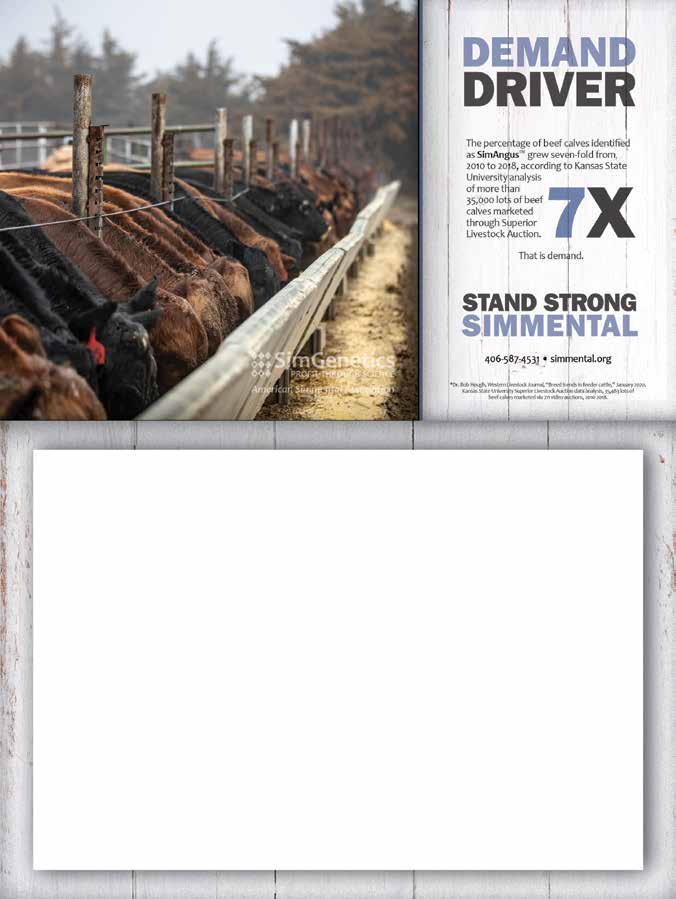
Get your SimGenetics from these Colorado members:
7L Diamond’s Hi Altitude Bulls
Leah and Peter Clark
Bulls sell April 6, 2023 at Valley Livestock in Monte Vista • 719-849-8223
Altenburg Super Baldy Ranch - Triangle J 120 bulls - Fort Collins, CO
Saturday, March 18, 2023
Willie Altenburg, 970-481-2570
Baty Livestock Spring and Fall Heifer Sales batylivestock@gmail.com facebook/batylivestock
Bridle Bit Simmentals
All-Terrain Bull & Female Sale
Monday, March 20, 2023 at Walsh, CO
Chad Cook, 719-529-0564
Campbell Simmental
Part of High-Altitude Bull Sale
Saturday, March 25, 2023 at LaGarita, CO Robert, 970-749-9708
Dilka Cattle
Yearling and 18-mo-old bulls, PT Briggsdale, CO • 970-396-8791 thedilkas@aol.com
Far Out Cattle Ranch
Jerrid Brisendine, 719-353-1747
All-Terrain Bull & Female Sale
Monday, March 20, 2023 at Walsh, CO
Hill Brothers Livestock
Females always available. Paul, 417-849-6851 facebook.com/hillbrotherslivestock
Jay Hill Family Simmental & SimAngus bulls Private treaty • 970-520-1555 jaywhill@kci.net
Mari Simmental Breeders
Ron Mari • Holyoke, CO
Selling black % & PB ET bulls 970-520-7333 for EPDs & data
Phoenix Cattle Co.
Fleckvieh Simmentals & Fleckvieh/Angus seedstock
Roger Schager • 303-550-5592
Cody Pitt Family Black & Red bulls private treaty Hotchkiss, CO • 970-778-9267 cmp5792@aol.com
Rains Simmental Bulls of the Prairie sale
Saturday, March 11, 2023, Oakley, KS Mike Rains, 785-672-7129
Russell’s Reflected R Ranch SimAngus bulls sell private treaty Call Curt, 719-469-2857 for data or go to www.ReflectedRRanch.com
T-Heart Ranch
High-Altitude Bull Sale March 25, 2023 shane@t-heartranch.com 719-850-3082 or 719-850-3083
For sale dates, show details and event highlights, go to: www.ColoradoSimmental.com, e-mail colosimmental@gmail.com or follow us on facebook

Wyoming Livestock Roundup • Volume 34 No. 46 • March 11, 2023 A2 From the Publisher Dennis Sun
It's Gone Too Far
DENNIS SUN, Publisher • Cell: 307-262-6132 e-mail: dennis@wylr.net Member: Wyoming Stock Growers Association Wyoming Wool Growers Association Wyoming Farm Bureau Federation • Wyoming CattleWomen Livestock Publications Council • National Cattlemen’s Beef Association Fremont County Cattlemen's Association Green River Valley Cattlemen's Association Wyoming Angus Association Converse County Stock Growers Association Carbon County Stock Growers Association Subscription Rates: 1 year: $60; 2 years: $90; 3 years: $130 Postmaster: Send address changes to: andrea@wylr.net Wyoming Livestock Roundup • P.O. Box 850 • Casper, WY 82602 Wyoming Livestock Roundup (USPS # 005-774) is published weekly by Maverick Press, Inc. P.O. Box 850 • Casper, WY 82602 Periodicals postage paid in Casper, WY Fax: 307-472-1781 • E-mail: roundup@wylr.net
This publication is © 2023 by Maverick Press, Inc. Please see SESSION on page A7
Disaster declaration finalized
Gov. Mark Gordon submitted a U.S. Department of Agriculture (USDA) request for a secretarial disaster designation as indicated in a Feb. 20 news release.
In his letter to USDA, Gordon noted Wyoming’s winter season started early, and the culminating impacts of sustained cold, wind and snowfall have caused significant distress to the livestock industry across the state.
Access to traditional winter grazing resources has become dire as well because many ranch, county and Bureau of Land Management roads are drifting shut. Even when cleared, these roads continue to redrift because of high winds, the governor’s letter explained.
The governor’s office, in partnership with local, state and federal agencies and impacted ag producers, worked collaboratively to determine losses, the timeframe and the geographic scale of the impact.
Data obtained through the National Weather Service’s event tracking system reveals 66.5 percent of the time, from Jan. 1-Feb. 27, Wyoming was under some combination of winter storm warnings – blizzard warnings, winter weather advisories and high wind warnings – far outpacing any other state in the lower 48.
Underscoring the need for federal assistance, Gordon’s letter noted, “State, county, local and individual resources have been deployed and are being shared between entities for snow removal, but there is too much volume and wind to keep roads open and passable to gain access to livestock.”
Additionally, Gordon’s administration has been working closely with local Farm Service Agency offices to identify the areas of greatest impact and corresponding needs of the ag community.

WSGLT seeks nominations
The Wyoming Stock Growers Land Trust (WSGLT) is seeking nominations for the 2023 Bucholz Conservation Award.
This award recognizes an individual or family who is an advocate for conserving Wyoming’s farms and ranches; a land steward or agricultural advocate who has been a participant in natural resource discussions on a state, regional or national level and a defender of water conservation and protecting Wyoming’s traditional water rights.
Additionally, this individual should have a personal commitment to habitat conservation, be a proponent of hunting and wildlife protection and have implemented land or resource conservation practices on their property with the WSGLT or a similar organization.
Award nominations will be accepted until May 10. The nomination form can be found at wsglt.org/ wp-content/uploads/2023/03/Fillable-NominationForm_2023-Bucholz-Award.pdf
Shively Hardware Co.

Virtual career fair scheduled
On March 21, Wyoming students are encouraged to participate in an engaging, online, one-ofa-kind career night featuring speakers from across the country, including Ryan “Cal” Callaghan of the MeatEater podcast and Netflix series.
The free virtual event, hosted by University of Wyoming Extension 4-H educators via Zoom, offers young people an opportunity to interact with professionals in fields ranging from zookeeping and dog training to leatherwork design, landscaping and the culinary arts.
The 2023 career fair begins at 6 p.m. The event is open to all youth interested in learning about possible career paths, not just those enrolled in 4-H. To register, visit wyoming4h.org/virtual-career-night
This year, the event will kick off with 15-minute presentations by several featured speakers, including Callaghan and a recent college graduate from Lusk. Students will then have the opportunity to attend two additional presentations of their choice before a group wrap-up and question and answer session at 7:30 p.m.
All sessions, including those from previous years, are recorded and can be viewed at wyoming4h.org/ virtual-career-night
Contact Amber Armajo at amwall@uwyo.edu or call 307-347-3431 with questions.
HAF hosts virtual town hall

The Wyoming Homeowner Assistance Fund (HAF) Program will hold three virtual town halls to discuss how eligible homeowners can apply for HAF services, highlighting the new service which assists with up to three months of consecutive forward mortgage payments.
The virtual town halls will be held on March 9 at 2 p.m., March 13 at 12:30 p.m. and March 14 at 4 p.m. Register online for the virtual town hall at dfs.wyo.gov/haf
The HAF Program began accepting forward mortgage applications on Feb. 27. Under the HAF Program, eligible homeowners can receive up to $17,000 in assistance as a one-time award to pay for past due payments and up to three consecutive months of forward mortgage payments.
The award is directly paid to a servicer or vendor on behalf of an eligible homeowner.

The application is only available online at dfs.wyo. gov/haf. For application assistance, contact the call center toll-free at 888-996-4237 during the hours of 9 a.m.-6 p.m., Monday through Friday. The HAF Program is a temporary, federally-funded assistance fund. Funds are limited, so don’t wait to apply.
OFF Act reintroduced
A U.S. Senate bill referred to as the Opportunities for Fairness in Farming (OFF) Act of 2023 was newly reintroduced this week with the intent of overhauling all commodity checkoff programs, including the Beef Checkoff.
Sens. Mike Lee (R-UT) and Cory Booker (D-NJ) are the bills primary sponsors, and Sens. Rand Paul (R-KY), Elizabeth Warren (D-MA) and Kirsten Gillibrand (D-NY) are the co-sponsors.
This same group introduced a similar bill in 2021, but nothing happened after it was referred to committee. For 2023, Nancy Mace (R-S.C.) and Dina Titus (D-NV) introduced the House version of the checkoff bill.
If passed, the OFF Act would prohibit checkoff programs from contracting with any organization that lobbies on agricultural policy, prohibits employees and agents of the checkoff boards from engaging in activities, which may involve a conflict of interest and establish uniform standards for checkoff programs prohibiting anticompetitive activity, unfair or deceptive acts or any act or practice which may be disparaging to another agricultural commodity or product.
Additionally, the bill would require transparency through publication of checkoff program budgets and expenditures, require periodic audits of compliance with the act by the U.S. Department of Agriculture Inspector General and require a government accountability office audit of checkoff board compliance and a report with further recommendations related to checkoff programs.
Flow schedule set
The Bureau of Reclamation has scheduled a series of fluctuating flows in the North Platte River downstream of the Gray Reef Dam beginning March 20.
The Wyoming Game and Fish Department has requested fluctuating flows lasting for 10 consecutive days to improve trout reproduction conditions in the river.
On March 20, flows in the river below Gray Reef Dam will fluctuate from 450 cubic feet per second (cfs) to 4,000 cfs according to the following schedule: 12 p.m.-1 a.m., 450 cfs; 1-3 a.m., 2,000 cfs; 3-7 a.m., 4,000 cfs; 7-8 a.m., 3,000 cfs; 8-9 a.m., 2,000 cfs; 9-10 a.m., 1,000 cfs and 10 a.m.-12 p.m., 450 cfs.
This schedule will be repeated daily through March 29. The schedule may be modified depending on river ice or facility operational conditions. After completing the flushing flow on March 29, the flows below Gray Reef Dam will return to 450 cfs.
The flushing flows are expected to clean the spawning gravels of fine sediment which has accumulated over the winter. The fluctuations in the river flow will be achieved without loss of power generation, and the water released from Alcova Reservoir will be restored downstream in Glendo Reservoir.
The public is urged to use caution during this period of rapid fluctuation of flows below Gray Reef Dam.
A3 Wyoming Livestock Roundup • Volume 34 No. 46 • March 11, 2023 NEWS BRIEFS 77 Zuber Road • Riverton, WY 82501 • (307) 856-8123 carlsonequipment@gmail.com Visit our Web Site at: www.carlsonequipment.com Lakeland Wagon Portable Bunk Feeder, 6’x24’ $7,500 2654 NDE Feeder Mixer $29,500 New EZ Ration 6 Bale Feeder, pull type Call for Pricing Haybuster 256+2 Round Bale Feeder $3,950 1994 Kenworth w/ Knight 3070 Feed Box $79,000 Case IH 5 Bottom in Furrow Plow $9,500 Case IH 4 Bottom in Furrow Plow $4,950 New Artsway 166 6 Bottom Onland Plow $39,000 Brillion 30’ Roller Harrow $54,000 Brillion 25’ Roller Harrow $15,000 Kewanee 14’ Roller Harrow $5,500 Leon 808 Loader, bucket & grpl $7,900 Dual Loader $1,950 14’ Chisel Plow $3,900 580 Massey Ferguson 5 Bottom Plow $6,500 14’ International Disc $2,900 JD 10’ 3 PT Disc $2,950 20’ Disc $1,950 10’ IH Disc $1,950 10’ EZEE-On Disc $1,950 John Deere 8300 Double Disc Grain Drill $7,900 Rhino SE5 Rotary Mower $2,500 Allis-Chalmers 24’ Field Cultivator $3,950 John Deere 3 PT Field Cultivator $2,900 Small Fuerst Manure Spreader $2,900 Kewanne 9’ 3-Way Hydraulic Blade $7,950 Rhino 950 3-Way Hydraulic Blade $7,900 Leon Dozer Blade, 12’ $1,950 New Industries 8’ Tilt Box Blade $3,700 6”x32’ Grain Auger, PTO driven $950 9 Shank V Ripper $4,900 Meyers Ditcher, 3 PT $2,900 22” or 30” Morman Creaser, 9 row w/ markers $4,950 Ford 700 Truck w/ stack retriever $9,500 1979 Ford 8000 Truck, 2 ton w/ flatbed $2,950 IH 4700 Truck w/ flatbed and forklift attachment $9,500 Set of IH Duals 18.4 x 38 w/ clamps $750 Belltec Hydraulic Post Hole Digger w/ down pressure $1,950 Bradco Aster 9000 Skid Steer Post Pounder $4,900 New Arrowquip Hydraulic Cattle Chute Call for Pricing 1 1/4” 6 Rail 20’ Continuous Fence Panels Call for Pricing Case IH MXM190, MFD, cab & air, front weights, low hrs,1 owner $95,000 Case IH 2096 w/ cab, air $19,500 Case IH MX170, MFD w/ ldr, grpl $69,500 Case IH MX240, 4 WD w/ duals $89,000 Massey Ferguson 4243 w/ ldr, 1840 hrs $39,500 JD 2955, 4 WD w/ ldr, grpl $39,500 2019 Bobcat 870 Skid Steer, new tracks, 1370 hrs $79,000 JD 420 Dozer, antique $7,500 MX120, 2 WD w/ ldr $49,500 JD 310 Backhoe $12,500 Oliver 1800 Tractor $7,900 Ford 4000 Tractor $7,900 Best Buys in Used Equipment CARLSON EQUIPMENT TRACTORS/LOADERS MISCELLANEOUS EQUIPMENT New Holland 855 Round Baler $4,900 New Holland 855 Round Baler $2,950 2011 MF 2190 4x4 Baler w/ accumulator $119,500 Hesston 4910 Baler w/ accumulator $39,500 Hesston 4910 Baler w/ accumulator $24,500 Hesston 4900 4x4 Baler w/ accumulator $24,500 Hesston 5580 Round Baler $1,900 Case RS 561 Round Baler $19,500 Vermeer 605h Round Baler $2,950 Case IH 8870 Swather, 16’ head, 1 owner $43,500 Case IH 8840 Swather, 16’ head $32,500 800 Versatile Swather w/ draper head $2,950 Vermeer 2800 Rake $24,500 Hoelscher 10 pack w/ skid steer mount $3,500 New Holland Stackwagon, pull type $950 HAYING & FORAGE N. Highway 130 P.O. Box 605 Saratoga, WY 82331-0605 www.shivelyhardware.com (307)-326-8880 • 800-300-8389 Best Buys in Used Equipment Massey 2190 Baler - low bale count $55,000 Massey 4707, cab, loader, MFD $69,000 Massey 6713, cab,loader, MFD, 350 hours $89,000 Massey 6713, cab, loader, MFD New Case IH Maxxum 125, cab, loader, MFD New Case 35A Backhoe, 4WD $39,000 Danuser SM40 - Post Pounder, tilt & weights $9,500 IH 574 - gas, clean unit $4,000 Skidsteer - grapple $3,600 Hesston 2956 Round Baler $12,000 Hesston 1372 Hydro Swing $17,500 Massey 3545, MFD, cab, loader, grapple $16,500 Visit our Web Site at www.caseih.com Case IH is a registered trademark of Case Corporation.
WEDNESDAY,
FEEDERS
FTR Ranch 275 Blk Strs & Hfrs, 725-875#, Weaned a long time, Bunk Broke, Been on a Grower Ration, Branding & Pre-cond. Shots: Pyramid 5+Presponse, Vision 8, Poured, Clean, Light to Medium Flesh, Home Raised but Family Brands
Brad Foos 115 Choice to Fancy Blk Strs, few Hfrs, 750-775#, Weaned a long time,
Bunk Broke, Been on a Grower Ration, Complete Vac. Program, Light to Medium Flesh,
Clean
T-Chair 108 Red Angus Hfrs, 1000#, Ran Open, Shots: Bovi-Shield Gold 5, Blackleg, Comng off grass, Home Raised
Ruckas Livestock 59 Mx Strs & Hfrs, 750#, Complete Vac. Program
WEANED CALVES
Lee, Deb Lohse, KC & Kelli Curtis 389 Red with some Blk Strs, 600-700#, Weaned a long time, Been on a Grower Ration, Bunk Broke, Branding Shots: Pyramid 5+Presponse,
Ultrabac 7 w/Somubac, Pre-cond. Shots: Vista Once, 7-way w/Somnus, Weaning Shots:
Titanium, Ploybac, Poured w/Ivemec,
Doug Derouchey 250 Blk (2 Char/3 Rd) Strs & Hfrs, 500-600#, Weaned a long time, Bunk Broke, Barley Hay, Silage, No Grain, 3 Rounds of Shots, Poured
Dewey Hageman 170 Mx Strs & Hfrs, 450-550#, Weaned a long time, Been on a High
Roughage Ration of Silage and Hay, 3 Rounds of Shots, Steers are Knife Cut, Home Raised
Alvin Manning 30 Blk/Hereford Strs, 550-650#, Weaned a long time, Been on a Grower
Lex Madden 307-532-1580
Chuck Petersen 307-575-4015 Lander Nicodemus 307-421-8141
Cattle Country Video - 1:00 pm
Campbell Livestock 122 Wnd Str Clvs, 625#, Wt Stop:

645#. Slide: .14. Located: Shoshoni, WY. Delivery: 3/16/23
to 3/19/23. Branding & Weaning Shots. Weigh on Truck w/a
3%. Fancy, home raised strs wintered to go to grass.
Campbell Livestock 100 Wnd Hfr Clvs, 600#, Wt Stop:
620#. Slide: .14.
Ration, Branding Shots: Vira Shield 6, Vision 7-20/20, Pinkeye, Multimin, Weaning Shots: Pyramid 5, Safe Guard Wormer, Poured
Little Creek Cattle Co. 24 Mx Strs & Hfrs, 300-700#, Weaned a long time, Hay Fed, All Shots
Grass Creek Land & L/S 18 Mx Strs & Hfrs, 475-600#, Weaned a long time, Hay Fed, Complete Vac. Program
FRIDAY, MARCH 17 - ALL CLASSES
“Follow Us” for Sale Updates, Results and News


Winter Adventure Day planned
Celebrate the end of the season with fun and safe activities at the Fifth Annual Winter Adventure Day on Casper Mountain in Casper. This free, family-friendly event will take place from 9:30 a.m.-2 p.m. on April 15 at the Casper Mountain Biathlon Center at McMurry Mountain Park.
Individuals will join educators from multiple local organizations and to try their hand at fat biking, Nordic skiing, electronic shooting, snowshoeing and more. Educational stations will also be available for participants to learn about winter safety, snow shelters, animal caching and other place-based learning activities.
According to Bureau of Land Management (BLM) Education Technician Stacey Moore, Winter Adventure Day started as a way to introduce winter activities to children and others who are interested but may be hesitant to try.
Every year, multiple sponsors collaborate to make this an event that is accessible and enjoyable to the whole community. Sponsors include the BLM National Historic Trails Interpretive Center, the Casper Mountain Biathlon Club, Wyoming State Parks, The Science Zone, Central Wyoming Trails Alliance, Casper Mountain Ski Patrol, the Nicolaysen Art Museum and Casper Mountain Science Programs.
Participation is free, but equipment and lessons are limited to a first come, first served basis. Pre-registration is required to reserve equipment times and lessons.
To register for lessons and sign a waiver, visit bit.ly/ CASPERWAD2023. For more information, e-mail caspertrails@gmail.com.
FAS to lead trade mission
The U.S. Department of Agricultureʼs Under Secretary for Trade and Foreign Agricultural Affairs Alexis Taylor will lead a delegation of 26 agribusinesses and farm organizations to Panama City, Panama, from March 19-23.
The mission highlights export opportunities in Panama and throughout the Central America and Dominican Republic Free Trade Agreement (CAFTA-DR) region. Exports of agricultural products to Panama and CAFTADR countries reached a record $8.8 billion in 2022, up 57 percent from 2018.
SALE RESULTS -FEEDER
TORRINGTON LIVESTOCK AREA REPS
Cody Thompson - Lusk, WY 307-340-0150
Ty Thompson – Lusk, WY 307-340-0770
Zach Johnson Lingle, WY –307-575-2171
Jeff Ward – Laramie, WY 307-399-9863
Tam Staman – Crawford, NE 308-631-8513
Lander Nicodemus – Cheyenne, WY 307-421-8141
Danny Nicodemus – Cheyenne, WY 307-632-4325
Chris Williams - Greybull, WY 307-272-4567
Justin Smith - Lusk, WY 307-340-0724
Scott Redden - Burns, CO 970-596-3588
Ben Kukowski - Kaycee, WY 307-217-1472
TORRINGTON LIVESTOCK AREA REPS
Michael Schmitt - Torrington, WY 307-532-1776*** Ty Thompson – Lusk, WY 307-340-0770
Cody Thompson - Lusk, WY 307-340-0150***Zach Johnson Lingle, WY –307-575-2171
Jeff Ward – Laramie, WY 307-399-9863***Tam Staman – Crawford, NE 308-631-8513
Justin Smith - Lusk, WY 307-340-0724***Danny Nicodemus – Cheyenne, WY 307-632-4325
Chris Williams - Greybull, WY 307-272-4567***Hunter Dockery - Lusk, WY 307-340-1202
Nolan Brott - Lusk, WY 307-216-0033 ***Ben Kukowski - Kaycee, WY 307-217-1472*** Scott Redden - Burns, Co 970-596-3588
In Panama City, trade mission participants will engage directly with potential buyers, receive in-depth market briefings from the Foreign Agricultural Service (FAS) and industry trade experts and participate in site visits.
In addition to representatives from the 26 companies and organizations, Taylor will be joined by officials from the Idaho and Montana departments of agriculture.
On the mission, several companies and organizations will represent the West, including Leprino Foods of Denver, Colo.; Obendorf Research and Development of Parma, Idaho; the Intertribal Agriculture Council of Billings, Mont.; the Northarvest Bean Growers Association of Fargo, N.D.; the South Rice Producers Association of Katy, Texas; Trail End Spirits, LLC of Oregon City, Ore.; Blue Diamond Growers of Sacramento, Calif.; California Fresh Fruit Association of Fresno, Calif.; Dairy America, Inc. of Fresno, Calif.; Lawrence Wholesale, LLC of Vernon, Calif. and Portal Pacific U.S. of Rocklin, Calif.
To learn more, visit usda.gov
World Dairy Summit scheduled
Registration for the International Dairy Federation’s (IDF) 2023 World Dairy Summit, held Oct. 16-19 in Chicago, Ill., will open on March 27.
Each year, the IDF World Dairy Summit brings together more than 1,000 dairy industry members from 35-plus countries. The theme for this year’s IDF World Dairy Summit is “Be Dairy – Boundless Potential and Endless Possibilities,” which celebrates the vital role dairy plays in nourishing people, the planet and communities around the world.
The IDF World Dairy Summit is a vital forum for exchanging ideas, dialogue and debate on opportunities and challenges and forecasting the future for dairy.
A multi-disciplinary program will engage attendees on the most critical aspects of the global dairy industry, including dairy’s role in wellness and nutrition security, the acceleration of marketplace expectations around sustainability and the dairy sector’s progress, animal health and welfare, policy and economics, innovation, marketing and more.
Summit attendees will have the option to register for a half day, one and/or two day farm and technical tours to take place Oct. 19-20, which will showcase the diversity of U.S. dairy farms, research centers, processing facilities and retail in America’s heartland states of Michigan, Wisconsin, Illinois and Indiana.
In addition, this year’s IDF World Dairy Summit will offer attendees the opportunity to explore Chicago, one of the largest and most vibrant cities in the U.S.
For further details, schedule highlights and hotel information, visit IDFWDS2023.com
Wyoming Livestock Roundup • Volume 34 No. 46 • March 11, 2023 A4 NEWS BRIEFS
www.torringtonlivestock.com
Torrington Livestock Markets PO Box 1097 • Torrington, WY 82240 307.532.3333 Fax: 307.532.2040
www.torringtonlivestock.com
ONLINE ON CATTLE USA
MARCH 15 - YEARLINGS & CALVES VIEW SALES & BID
Located: Shoshoni, WY. Delivery: 3/16/23 to 3/19/23. Branding & Weaning Shots. Weigh on Truck w/a 3%. Fancy, home raised hfrs wintered to go to grass. Greg Gardner Livestock 90 Wnd Strs, 630#, Wt Stop: 650#. Slide: .14. Located: Lusk, WY. Delivery: 3/16/23 to 3/19/23. Complete Vac. Weigh on Truck w/a 3%. Fancy home raised strs, wintered to go to grass. Rep: Ty Thompson 307-340-0770 Go to www.cattlecountryvideo.com SALE RESULTS -BRED COW SPECIAL FRIDAY, MARCH 3, 2023 - 2095 HD Doug Derouchey 43 Blk Bred Cow 3yr/Mar-Apr 1272 2060.00H The Mackey Family 6 Blk Bred Cow 3yr/Mar-Apr 1191 1950.00H Eric Barnes 35 Blk Bred Cow SM/Mar-Apr 1339 1935.00H Doug Derouchey 14 Blk Bred Cow 4yr-SM/Apr 1302 1925.00H The Mackey Family 9 Blk Bred Cow SM/Mar-Apr 1391 1900.00H Eric Barnes 20 Blk Bred Cow 3-4yr/Mar-Apr 1117 1900.00H Notch Peak Cattle Co 10 Blk Bred Cow SM/Mar-Apr 1260 1875.00H Neal Kelly 6 Blk Bred Cow 3yr/Mar-Apr 1356 1850.00H Ron Blake 9 Blk Bred Cow SM/April-May 1265 1800.00H MR Angus 10 Blk Bred Cow SM/May 1545 1560.00H Neal Kelly 15 Blk Bred Cow SS/April-May 1347 1535.00H Eric Barnes 25 Black Bred Cow SS/Mar-Apr 1347 1510.00H John Kurtz 22 Blk Bred Cow SS/April-May 1241 1460.00H Andy Barnette 26 Blk Bred Cow ST/Mar-Apr 1318 1385.00H Porkorny Ranch 16 Blk/Red Bred Cow ST/Mar-Apr 1362 1400.00H Merl Glick 7 Red Bred Cow SM/Mar-Apr 1145 1485.00H Notch Peak Cattle 14 RWF Bred Cow SM/Mar-Apr 1292 1600.00H The Mackey Family 6 Blk Bred Heifer March-April 1157 1800.00H Doug Derouchey 15 Blk Bred Heifer March-April 1107 1785.00H Doug Derouchey 11 Blk Bred Heifer March-April 1136 1775.00H Notch Peak Cattle 5 Blk Bred Heifer March-April 852 1550.00H Frank Prado 1 Blk Pairs SM 1455 1800.00H Wyatt Prado 1 Red Pairs SS 1550 1760.00H
& CALVES WEDNESDAY, MARCH 8, 2023 - 3316 HD Eklund Hansen 76 Black Steer 682 226.50C 1544.73H Lorin Smart 10 Black Steer 708 211.00C 1493.88H Double D Cattle Co 25 Black Steer 749 199.00C 1490.51H Brad Foos 88 Black Steer 807 194.50C 1569.62H Box E Cattle LLC 59 Black Steer 799 193.50C 1546.07H Eklund-Hansen 61 Black Steer 800 192.00C 1536.00H Rodgers Ranch Inc 7 Black Steer 937 173.00C 1621.01H Ring Tail R Cattle 41 Black Heifer 641 220.00C 1410.20H Tillard Brothers 76 Black Heifer 649 220.00C 1427.80H Pokorny Ranch 24 Black Heifer 657 219.50C 1442.12H Skavdahl & Klein 77 Black Heifer 701 207.00C 1451.07H Butch White 20 Black Heifer 685 206.00C 1411.10H Lorin Smart 7 Black Heifer 719 198.00C 1423.62H Brad Foos 138 Black Heifer 676 195.50C 1321.58H Tillard Brothers 21 Black Heifer 740 191.00C 1431.40H Rodgers Ranch Inc 17 Black Heifer 703 186.00C 1307.58H Linn Ranch 38 Black Heifer 801 175.50C 1405.76H Eklund-Hansen 10 Black Heifer 782 174.50C 1364.59H Eklund-Hansen 26 Black Steer Calf 536 259.50C 1390.92H Chad Harkins 5 Black Steer Calf 576 255.00C 1468.80H Brian Wing 5 Black Steer Calf 510 249.00C 1269.90H Kerbs Four Bar 8 Black Steer Calf 600 241.50C 1449.00H Chad Harkins 19 Black Steer Calf 616 232.50C 1432.20H Box E Cattle LLC 13 Black Steer Calf 640 229.50C 1468.80H Rodgers Ranch Inc 6 BWF Steer Calf 584 238.00C 1389.92H Paul Landeck 41 Herf Steer Calf 627 220.00C 1379.40H Rothschild Livestock 15 Black Heifer Calf 538 245.00C 1318.10H Kerbs Four Bar 23 Black Heifer Calf 499 245.00C 1222.55H Kerbs Four Bar 86 Black Heifer Calf 578 231.00C 1335.18H Pokorny Ranch 38 Black Heifer Calf 600 228.50C 1371.00H Tillard Brothers 33 Black Heifer Calf 614 226.00C 1387.64H Pokorny Ranch 9 Black Heifer Calf 566 225.00C 1273.50H Twin Buttes Ranch 15 Black Heifer Calf 411 225.00C 924.75H Russ Trowbridge 76 Black Heifer Calf 559 223.50C 1249.37H Kerbs Four Bar Ranch 28 Black Heifer Calf 601 221.50C 1331.22H Pokorny Ranch 12 Black Heifer Calf 629 217.00C 1364.93H Double D Cattle Co 46 Black Heifer Calf 585 215.00C 1257.75H Russ Trowbridge 85 Black Heifer Calf 648 204.50C 1325.16H Schoefler Livestock 29 Red Heifer Calf 551 209.50C 1154.35H
Ranch Vermilion Ranch
and Vermilion Currency - three exciting, new sires in the Vermilion program.
•

We are once again o ering a tremendous group of open replacement Angus heifers. We work hard to make sure they are REPLACEMENT QUALITY! We have a “Program” that has been in place for many years.
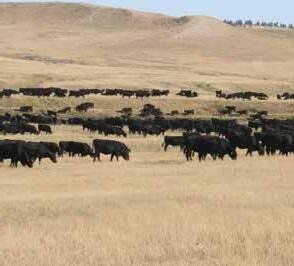
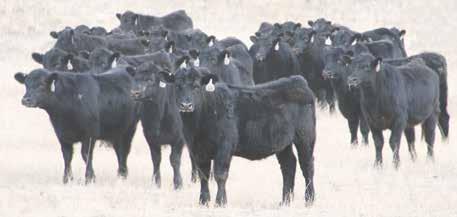
A high percentage of these heifers are sired by or out of Vermilion genetics. These heifers have been sorted three times ahead of the sale for quality and disposition. They are all identi ed as to the ranches they came from and have never been rebranded. We have sorted them back to their origin and will sell them to you that way. This will be the front end of around 10,000 head that we started with. These heifers have been developed in large lots that a ord them plenty of exercise.
Second Annual Embryo Sale MARCH 23



200 embryos from Vermilion’s best sell at the Public Auction Yards, Billings, MT - 6:00 and online www.northernlivestockvideo.com
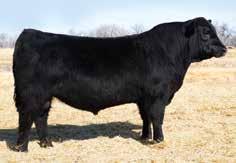
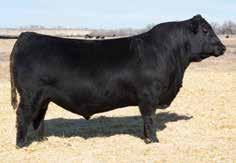
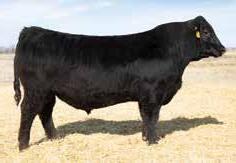
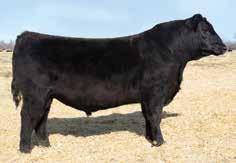
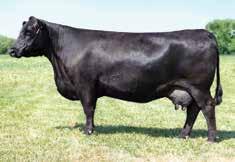





FEATURING THE BEST YOUNG COWS IN THE VERMILION HERD MATED TO:

Basin Jameson, BJ Surpass, SAV Glory Days 1836, TD Doc Ryan, Schiefelbein GOAT













Vermilion Bomber G017 VAR Conclusion 0234, Sitz Incentive Ellingson ree Rivers 0065, Vermilion Leo, Myers Fair-N-Square M39 Ellingson Badlands

Contact Bill Cook at 406-670-0689 or Jake Kading at 406-672-5844 for more information.
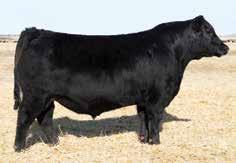
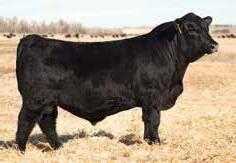
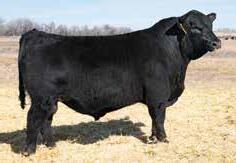
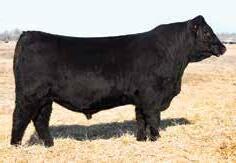
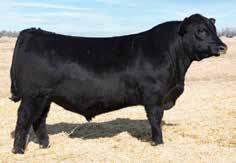
Vermilion Barb 9513























































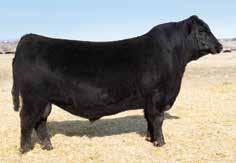
Vermilion Barb 9513, out of Sitz JLS Game Day 9630. Embryos from her and by Basin Jameson are highlights of this online sale.

A5 Wyoming Livestock Roundup • Volume 34 No. 46 • March 11, 2023
THURSDAY, MARCH 23, 2023 Heifers sell at the South Pryor Development Center, Billings, MT - 12:00 FRIDAY, MARCH 24, 2023 Bulls sell at the Public Auction Yards, Billings, MT - 11:00 5,500 ANGUS SELL 5,000 Fancy Open Commercial Angus Replacement Heifers All One Iron - Bangs Vaccinated - Ready to Breed - Montana’s Best Vermilion Ranch Pat Goggins Family Bob Cook - Records & Sales Cell: 406-670-0078 Je Mosher - Vermilion North Brandon Mosher - Pryor Creek Jake Kading - Herdsman Cell: 406-672-5844 Bill Shaules - South Pryor Greg Roberts - Diamond Ring PO Box 30758 Billings, MT 59107 Email: bcook@cattleplus.com www.vermilionangus.com Vermilion Ranch 500 TOTAL PERFORMANCE Yearling Angus Bulls BULLS SIRED BY: Casino Bomber - Sitz Commerce - Connealy King Air Vermilion Bomber G017 - Myers Fair-N-Square - Deer Valley Growth Fund Vermilion Bomber G077 - Connealy McIlroy As well as the rst sons of Ellingson ree Rivers 0065, Sitz Savvy
• Genomic tested with
Volume discounts
Free delivery in Montana and adjoining states
First breeding season guarantee
Vermilion
Spring Performance Sale
•
•
•
Large sire groups with many half and three-quarter brothers
All fertility measured and soundness evaluated
•
Sale will be broadcast LIVE online and videos available through Northern Livestock Video Auction www.northernlivestockvideo.com Follow Us
Vermilion G017 Bomber K061 BW WW YW MILK $W $C Act BW Adj WW Adj YW +.2 +91 +154 +22 +83 +276 70 844 1466 Lot 1 - AAA 20352476 SIRE: *Vermilion Bomber G017 MGS: Vermilion Want To Vermilion G017 Bomber K022 BW WW YW MILK $W $C Act BW Adj WW Adj YW +1.2 +98 +162 +26 +91 +271 88 806 1456 Lot 4 - AAA 20352437 SIRE: *Vermilion Bomber G017 MGS: Connealy McIlroy Vermilion ree Rivers K136 BW WW YW MILK $W $C Act BW Adj WW Adj YW +1.8 +96 +167 +16 +70 +307 92 821 1416 Lot 21 - AAA 20352545 SIRE: *Ellingson Three Rivers 0065 MGS: *Casino Bomber N33 Vermilion ree Rivers K179 BW WW YW MILK $W $C Act BW Adj WW Adj YW -.7 +75 +133 +27 +74 +282 74 782 1384 Lot 33 - AAA *20352569 SIRE: *Ellingson Three Rivers 0065 MGS: *Casino Bomber N33 Vermilion Commerce K104 BW WW YW MILK $W $C Act BW Adj WW Adj YW +2.1 +93 +151 +15 +72 +244 80 779 1413 Lot 41 - AAA 20352517 SIRE: *SITZ Commerce 670F MGS: Vermilion Want To Vermilion Mcilroy K188 BW WW YW MILK $W $C Act BW Adj WW Adj YW +2.4 +85 +154 +28 +78 +317 76 729 1342 Lot 65 - AAA *20352578 SIRE: Connealy McIlroy MGS: Vermilion Privilege C206 Vermilion Savvy K263 BW WW YW MILK $W $C Act BW Adj WW Adj YW +4.5 +91 +152 +25 +72 +267 92 807 1381 Lot 79 - AAA 20374868 SIRE: *SITZ Savvy 732H MGS: Vermilion Sirloin Vermilion King Air K029 BW WW YW MILK $W $C Act BW Adj WW Adj YW +1.7 +82 +149 +26 +72 +262 74 728 1437 Lot 100 - AAA 20352444 SIRE: *Connealy King Air MGS: KG Premium Asset 7161 Vermilion King Air K407 BW WW YW MILK $W $C Act BW Adj WW Adj YW +.8 +81 +139 +28 +80 +257 88 801 1380 Lot 103 - AAA 20389168 SIRE: *Connealy King Air MGS: SydGen Enhance Vermilion Fair-N-Square K302 BW WW YW MILK $W $C Act BW Adj WW Adj YW +3.1 +71 +122 +24 +64 +254 72 754 1308 Lot 207 - AAA *20368285 SIRE: *Myers Fair-N-Square M39 MGS: Connealy Countdown
LABEL continued from page A1
Biden’s executive order on promoting competition in the American economy and a commitment made in the Biden-Harris administration’s action plan for a fairer, more competitive and more resilient meat and poultry supply chain,” stated Secretary of Agriculture Tom Vilsack.
He further noted increased clarity and transparency provided by this proposed change will prevent consumer confusion and help ensure the public understands where their food comes from.
Background information
Vilsack noted the proposed rule comes in response to a comprehensive review published in July of 2021.
The review included a nationwide survey, which showed consumers believe the “Product of USA”
label means products came from animals born, raised, slaughtered and processed in the U.S. and is therefore misleading.
“American consumers expect when they buy a meat product at the grocery store, the claims they see on the label mean what they say,” Vilsack said. “These proposed changes are intended to provide consumers with accurate information to make informed purchasing decisions. Our action affirms USDA’s commitment to ensuring accurate and truthful product labeling.”
According to a March 6 press release, published by Drovers, the proposed rule uses the same standard as the mandatory country of origin labeling (MCOOL) statute, which finalized labeling standards for meat by USDA in 2009.
However, in 2015 Congress repealed MCOOL after the World Trade Organization blocked implementation because Canada and Mexico challenged the statute as a nontariff trade barrier.
Industry support
Several agricultural organizations have spoken out to offer their support and opposition of the proposed rule.

The U.S. Cattlemen’s Association (USCA) thanked the Biden administration in a March 6 press release for “finally closing the loophole allowing meat from other countries to be labeled ‘Product of the USA.’”
“If it says, ‘Made in the USA,’ then it should be from cattle that have only known USA soil,” said USCA President Justin Tupper. “Consumers have the right to know where their food comes from.”
Austin Snook • 307-290-2161
Taylor Snook • 307-290-2273
Craig Deveraux • 307-746-5690
Dan Catlin • 406-671-7715
Clint Snook • 307-290-4000
Report
The proposed rule will be open for public comment for 60 days after being published in the FederalRegister. To view the proposed rule, visit fsis.usda.gov/policy/federal-register-rulemaking/ federal-register-rules/voluntary-labeling-fsis-regulated. Public comments can be submitted at regulations.gov.
“This rule is about truth in labeling, plain and simple,” agreed National Farmers Union President Rob Larew. “For too long, family farmers and ranchers have been competing in a market where imported products were fraudulently labeled as a product of the U.S. Thank you Secretary Vilsack and USDA for bringing more fairness to farmers and ranchers across the country.”
Joe Maxwell, president and co-founder of Farm Action, commented, “Truthful labels protect consumers and keep the playing field fair. After a five-year fight, we’re pleased to see USDA stepping up to stop the
Cheyenne Seymour • 605-641-0638
Casey Sellers • 307-217-2614
Jim Forbes • 307-351-5932
Tye Curuchet • 307-351-8666
Daniel Escoz • 307-217-1440

Kade Kinghorn • 307-620-0525
March 8, 2023

cheaters picking the pockets of America's farmers and ranchers.”
“Our petition filed in 2018 has finally been acted on,” added Carrie Balkcom, executive director of the American Grassfed Association. “We are pleased to have the USDA act on the ‘Product of USA’ as promised in the executive order issued by President Biden in July 2021.”
“This proposed rulemaking change will help American grassfed farmers not be undercut by mislabeled meat coming from offshore. We will continue to work with Farm Action to make meat labels truthful,” she concluded.
Industry opposition
On the other hand, the National Cattlemen’s Beef Association (NCBA) and North American Meat Institute (NAMI) have expressed their frustration and opposition to the announcement.
market-driven labels benefiting cattle producers. We cannot afford to replace one flawed government label with another flawed government label,” he added.
NAMI President and Chief Executive Officer Julie Anna Potts said, “Unfortunately, this proposed rule is problematic for many reasons. USDA should have considered more than public sentiment on an issue impacting international trade.”
“Our members make considerable investments to produce beef, pork, lamb, veal and poultry products in American facilities, employing hundreds of thousands of workers in the U.S. and with processes overseen by USDA inspectors. This food should be allowed to be labeled a ‘Product of the USA,’” she continued.
www.buffalolivestockwyo.com

On March 6, NCBA Executive Director of Government Affairs Kent Bacus made the statement, “There is no question the current ‘Product of USA’ label for beef is flawed, and it undercuts the ability of U.S. cattle producers to differentiate U.S. beef in the marketplace. For the past few years, NCBA’s grassrootsdriven efforts have focused on addressing problems with the existing label, and we will continue working to find a voluntary, trade-compliant solution to promote product differentiation and deliver profitable solutions for U.S. cattle producers.”
“Simply adding born, raised and harvested requirements to an already broken label will fail to deliver additional value to cattle producers, and it will undercut true voluntary,
In addition to increasing the price of meat and poultry and other goods for consumers, NAMI also believes the proposed rule will create conflict with the Federal Meat Inspection Act and the Tariff Act and place additional duties on FSIS, which is already overburdened and understaffed.
“It is also a significant change from FSIS’s previously stated intention provided just three years ago when the agency denied a USCA petition on the label and said it planned to initiate rulemaking to “limit ‘Product of USA’ and certain other voluntary U.S. origin statements to meat products derived from livestock slaughtered and processed in the U.S.,” noted NAMI.
Hannah Bugas is the managing editor for the Wyoming Livestock Roundup. Send comments on this article to roundup@ wylr.net.
Fertilizer prices lower again
According to the DTN Fertilizer Index, as of March 1, the average urea price was $0.72 per pound of nitrogen, anhydrous was $0.69 per pound of nitrogen, UAN28 was $0.84 per pound of nitrogen and UAN32 was $0.86 per pound nitrogen on a price per pound of nitrogen basis.
The Fertilizer Institute (TFI) President and Chief Executive Officer Corey Rosenbusch testified before the House Committee on Agriculture hearing, titled “Uncertainty, Inflation, Regulations: Challenges for American Agriculture,” according to a TFI press release.
Much of Rosenbusch’s testimony focused on the fact fertilizer is a globally traded commodity subject to international pressures and geopolitical events.
These geopolitical events include sanctions on Belarus, which supplies 20 percent of the world’s potash supply; China, which is a major exporter of fertilizers, but last year imposed restrictions on fertilizer exports and Russia, which has historically provided 20 percent of global fertilizer supplies as the world’s largest fertilizer exporter.
All fertilizers are now lower compared to one year ago. DAP is four percent less expensive, MAP and 10-34-0 are both 11 percent lower, potash is 17 percent less expensive, UAN32 is 21 percent lower, UAN28 is 22 percent less expensive, anhydrous is 24 percent lower and urea is 25 percent less expensive compared to a year prior.
Wyoming Livestock Roundup • Volume 34 No. 46 • March 11, 2023 A6
•
Light run on all classes, market steady. Bred cow special next week. Thank you and we appreciate your business!
Market
• UPCOMING SALES • March 15 - Regular Cattle Sale and Bred Stock Special • March 22 - Feeder Cattle Special and Horse Sale March 25 - Sinclair Cattle Company Sale • March 29 - No Sale
FEEDER CATTLE MIKE OR JEAN GORZALKA, RANCHESTER WY 6 BLK-HFRCF 538 212.00 WT 1,141.26 DOBRENZ FAMILY TRUST, RANCHESTER WY 2 BLK-HFRCF 498 217.00 WT 1,079.57 CARR TIDYMAN LLC, NEWCASTLE WY 5 BLK-STRCF 429 238.00 WT 1,021.02 3 BLK-STRCF 378 237.00 WT 896.65 4 BLK-HFRCF 400 223.00 WT 892.00 7 BLK-HFRCF 345 220.00 WT 759.00 TAYLEN ARNETT, MANDERSON WY 1 BLK-STRCF 635 204.00 WT 1,295.40 1 BWF-HFRCF 470 212.00 WT 996.40 1 BLK-HFRCF 480 214.00 WT 1,027.20 BULLS/COWS/HEIFERETTES CHASE WILLIAMS, MOORCROFT WY 7 BLK-HFRTTE 938 142.00 WT 1,331.75 1 RD BROCHFRTTE 1055 131.00 WT 1,382.05 1 RED-HFRTTE 890 157.00 WT 1,397.30 1 RD BROC-STR 1060 140.00 WT 1,484.00 JAYSON OR JENNA FOSS, BUFFALO WY 1 BLK-BULL 1785 102.50 WT 1,829.62 PATRICK (BARNEY) & KAYLEE LONG, BUFFALO WY 1 BLK-BULL 1540 92.00 WT 1,416.80 TIPTON RANCH, WYARNO WY 1 HERE-COW 1265 97.50 WT 1,233.37 NOLAN J RUFF, ROZET WY 2 BBROC-COW 1623 84.50 WT 1,371.01 PATRICK (BARNEY) & KAYLEE LONG, BUFFALO WY 1 BLK-COW 1450 80.00 WT 1,160.00 1 BLK-COW 1245 79.50 WT 989.77 DOBRENZ FAMILY TRUST, RANCHESTER WY 1 BLK-COW 1170 86.50 WT 1,012.05 1 BLK-COW 1535 84.50 WT 1,297.07 THREE BROTHERS LLC, BUFFALO WY 1 BLK-HFRTTE 1180 116.00 WT 1,368.80 PATRICK (BARNEY) & KAYLEE LONG, BUFFALO WY 2 BLK-COW 1260 81.50 WT 1,026.90 2 BLK-COW 1270 80.50 WT 1,022.35 The information contained herein is not an offer to sell insurance. No binder, insurance policy, change, addition, and/or deletion to insurance coverage will be effective unless and until confirmed directly with a licensed agent. Please note any proposal of insurance we may present to you will be based upon the values developed and exposures to loss disclosed to us by you. All coverages are subject to the terms, conditions and exclusions of the actual policy issued. Not all policies or coverages may be available in every state.All insurance products are offered through Silveus Insurance Group, Inc. (307) 285-9898 | (303) 859-0777 WWW . LRP ADVISORS. COM LIVESTOCK RISK PROTECTION Tait Berlier Tait.Berlier@cropins.net Call today to receive LRP offers! Don’t get stuck with ‘just an agent,’ hire an AgRisk Advisor! We have advised the ranching community on LRP for over 15 years. PASTURE, RANGELAND, FORAGE (PRF) LIVESTOCK RISK PROTECTION (LRP) LIVESTOCK GROSS MARGIN (LGM) PASTURE FIRE INSURANCE
"From the ring, to the video, and in the country, we market your livestock the competitive way."
Ranch and SR Cattle Company; Ben Hostetler, operations manager of Mountain Meadow Wool in Buffalo and Amy Ormseth, district ranger for the Tongue Ranger District of the Bighorn National Forest.
Understanding employee strength
“I’m honored to have the opportunity to visit about the issue of human resource management – it’s as important as ever,” said Patterson to kick off the panel. “Leadership is also really important.”
Although important, Patterson noted employees who have worked in a company for a long period of time are not always best suited to serve in a managerial or leadership role.
“There are people who can be a very important part of a team, but this doesn’t mean they will be good in a leadership position,” he said. “There are some people who are just not cut out for it.”
Patterson explained this doesn’t mean it’s not possible – people can change – but doing what’s right by honoring an employee’s loyalty isn’t always what is best for the company.
Finding replacements
most pressing needs, but also sets Wyoming on a path of continued prosperity and leadership.
Reducing tax burdens
The House and Senate were also committed to reducing tax burdens hurting our hardworking men and women.
Wyoming is on the cusp of a property tax crisis. Rates have more than doubled in some parts of the state over recent years. Families are facing the unimaginable decision of having to sell their home just to pay the tax bill.
Skyrocketing rates are making it more difficult for young families to own a home, forcing others to delay retirement and driving up costs for renters.
This session, the legislature passed House Bill 0099, which provides immediate property tax relief by opening up the eligibility process of an existing property tax program to more Wyoming residents.
The bill counters rising home values due to inflation by broadening eligibility for tax refunds to more qualifying residents. The bill also bumps up eligibility to 125 percent of median income and allows for a refund up to 75 percent of a residential property owner’s tax bill.
The House and Senate also passed Joint Resolution Three, which will go before Wyoming voters in the general elec-
for employees who have been hired to replace lost employees or managers is not only costly, but also greatly impacts productivity.
“Bosses have to identify whether a person has the capability to serve in a leadership or managerial role,” he said. “They have to identify whether a person has the capability, and if they’re not cut out for it, they are only going to set the employee up to fail.”
Importance of background checks

David and Terri reminded attendees of the importance of doing background checks on a regular basis for potential hires.
They noted a lot of information can be found on the internet, but in order to ensure a well-rounded, qualified employee is hired, thorough background checks need to be conducted.
The couple shared they often use TransUnion ShareAble for Hires – Designed for Small Business, an online, streamlined website business owners can use to get reports quickly. The company offers three different background checks – a basic, plus and pro option, ranging from $25 to $60.
tion in 2024. The resolution authorizes the legislature to create a subclass of owner-occupied primary residences.
Creating this subclass is critical for the legislature’s capability to bring bills in the future which could result in more meaningful property tax relief for Wyoming citizens. Gov. Gordon signed this resolution into law March 3.
Building solutions for the future Wyoming has long benefitted from far-sighted leaders who have prioritized our state’s longterm economic health and diversification.
During this session, we strived to continue to build on this legacy, with the goal of positioning tomorrow’s leaders for success. This work is a continual process – it’s never fully done.
Yet, this year, the legislature made good progress towards setting our state on a path of sustainable prosperity. We look forward to continuing to work on behalf of the men and women of Wyoming to build solutions for the challenges of the future.
Ogden Driskill is the president of the Senate and has served in the Wyoming Legislature since 2011. Albert Sommers is the Speaker of the House and has served in the legislature since 2013. They can be reached by visiting wyoleg.gov
“People on ranches often open up their place and their lives to potential hires – whether it’s ranch hands, managers, etc.,” said Terri. “We have to be able to trust them.”
“Just because somebody does a background check, doesn’t mean they don’t trust the person,” added David. “As an employer, it’s necessary – we have to protect ourselves.”
Labor crisis
“Labor is not just an issue, it’s a current crisis in our society,” shared Hostetler. “Often, when we have a job opening, we’re subject to hire whoever comes in the door.”
Hostetler mentioned in an entry-level production job, he often sees employees who struggle with drug and alcohol addictions. Over the years, he has worked with several employees who have become some of their most dependable employees.
“As an employer, I love hiring people,” he shared. “One of the joys of being

an owner of a company is bringing someone on board and sharing a goal and mission to achieve great things. But, one of the most challenging parts is allowing bad behavior to continue and knowing an unfit employee may end up on the streets.”
Because of this, Hostetler explained he now has a drug policy in place, but he is always willing to work with employees.
“I find a lot of employees who come into work are really looking for joy and satisfaction in life, but they aren’t finding it anywhere. So, I strongly believe if we can give them a way to find value in working hard and being dependable, we can pull them out of their rut of behavior,” he said.
Employee skill set
Through Ormseth’s position with the forest ser-

vice, she has had experience working with and managing people. She further shared, throughout her career and experience with the hiring process, she has found a handful of employees who tend to inflate their skill set in an effort to get the job.

“There have been a few different times we’ve had applicants who really inflate their skill set. They want the job and want to look good, so they’ll list experiences and skill sets on their resume they don’t necessarily have,” she explained.
“When an employee states false information on their resume or says they have experience or skills in the interview they really don’t have, it unfortunately sets them up for failure in the workplace,” she added.
Ormseth also noted employers will sometimes hire employees simply
because they are desperate to fill a position, but end up setting this employee up to fail.
“I really like to focus on people’s strengths and weaknesses,” said Ormseth. “A lot of people want to hide their weaknesses because they see them as something bad, but weaknesses are not bad at all – everyone has areas they need to grow and improve on. So, as an employer, I like to capitalize on strengths and recognize weaknesses.”
She offered some advice, stating, “People need to be honest with themselves and with their employers, because they never know what they are looking for in a position.”
Brittany Gunn is the editor of the Wyoming Livestock Roundup. Send comments on this article to roundup.wylr.net.
A7 Wyoming Livestock Roundup • Volume 34 No. 46 • March 11, 2023 To view to the full seminar, visit youtube.com/ watch?v=1IPfAJaJGe4. Visit leachman.com or call (970) 568-3983 to order your catalog today! 5 Star Cow Fertility, 5 Star Feed/Carc. $34,751 $Profit, $157 $Ranch 5 Star All-Around Bull! $32,389 $Profit, $158 $Ranch Reduce Feed Intake– Top 2% Feed:Gain! $22,978 $Profit, $117 $Ranch Awesome Feet, Udder, and Disposition! $21,512 $Profit, $100 $Ranch LOT 10 LOT 32 LOT 178 LOT 498 4.5 Star All-Around Bull and 5 Star Calving Ease $35,061 $Profit, $157 $Ranch 4.5 Star All-Around Bull. Great Marbling and F:G! $30,487 $Profit, $132 $Ranch 4.5 Star All-Around Bull. High Marbling and Efficiency! $33,058 $Profit, $139 $Ranch Monday, March 13, 7:00 p.m. (MT) American Rancher on RFD-TV “The Three Big Cow/Calf Challenges” Stabilizer $30,855 $Profit, $139 $Ranch AAA #20312830 Udder and disposition improver! Stabilizer 5 Star Udder, Growth, and Feet! AICA F1324296 5 Star Growth, Top 1% $Terminal LOT 602 LOT 650 LOT 758 Thursday, March 16, 6:00 p.m. (MT) Online Seminar – “New Insights for Profit Focused Breeders” Join us virtually on Facebook Live or YouTube. See www.leachman.com for details. Additional Upcoming Leachman Events LOT 4 LOT 1 LOT 17 Leachman Cows Work! 114 Stabilizer, 34 Angus, 8 Red Angus, & 32 Charolais Sell March 26th LOT 616 Stabilizer Bulls Build Better, MORE FERTILE Cow Herds AND More Valuable Feeders Leachman Spring Bull & Female Sale March 25-27th, 2023 All events will be at the Leachman Bull Barn ▪ Fort Collins, CO Saturday, March 25th All cattle available for inspection. Come early, pick your lots. All lots sell via Superior. Females will also sell on DVAuction. Sunday, March 26th 11:00 AM Lunch 1:00 PM 200 Elite Open Heifers Sell Angus, Red Angus, Stabilizers & Charolais 5:00 PM Banquet & Entertainment, RSVP today! Monday, March 27th 10:00 AM 550 High $Profit, Stabilizer Bulls Sell BREEDINGBULLSSELLWITH GUARANTEE!SEASON Scan for catalog Every bull star scored for feet, udder, and fertility! Lee Leachman, CEO • www.leachman.com Jerrod Watson, Bull Customer Service, (303) 827-1156 Aaron Rasmussen, Cowherd Advisor, (308) 763-1361 Semen Division: (970) 444-BULL (2855) • Office: (970) 568-3983 550 Bulls – Top 1% $Profit – Top 10% Cow Fertility
from page A2
continued from page A1
SESSION continued
UW
Tax relief bills
“I was disappointed in the tax relief bills that did not come forward,” Moline commented. “Out of all those bills, only two passed.” He noted the constitutional amendment making
residential property its own class is also concerning.
“Residential property will be its own class, and they will be able to make subclasses on it,” Moline said. “I’m not keen on this idea because I think it will
set up classes, which will be targeted to increase taxes when the state has less money.”
“I was also hoping other tax bills would go forward to lower the rate on residential property taxes, at least temporarily,” he said.
State lands
For the agriculture
COLORADO STATE UNIVERSITY

ONE-BAR-ELEVEN JOHN E. ROUSE BEEF IMPROVEMENT CENTER
37th Annual Yearling Commercial Angus Bull Sale

We have officially rescheduled the sale for April 17, 2023
Lunch Served at 11:30 • Sale begins at 12:30 p.m. At One Bar Eleven Ranch • Saratoga, WY

Lindsey Wamsley
industry, Magagna and Moline cited state lands as the prominent issue under discussion.
“The biggest overall thing was bringing significant changes to the management of state land as it relates to agriculture and grazing use,” Magagna explained.
Moline agreed state lands proved to be an important and pressing topic for the session.
“Part of the frustration is it is difficult to get an answer on why there are so many parcels not leased,” Moline explained. “This year, we were able to take care of some of those issues.”
“We have had quite a number of problems surface in recent years, so we made them our priority,” Magagna said, noting there were seven bills related to state lands this year, all of which moved forward and are awaiting the governor’s signature. “Many of the bills have to do with process, particularly when grazing leases are up for renewal.”
Magagna further explained because grazing leases are up for renewal
Interim session
The next step for the Wyoming Legislature is the interim session, where committees will meet across the state to hear testimony and updates and discuss important topics for the 2024 budget session of the legislature.
“Interim topics were discussed in meetings over the last week by all committees,” Magagna explained. “Each committee has submitted a list of proposed topics, and the Management Council will meet on March 23 to assign the interim topics for this year.”
Moline explained the interim provides an opportunity to look more in-depth at issues important to the state.
“There is quite a list of topics raised in committees,” he explained. “About 19 topics were submitted to the Ag Committee, but we’ll see how many move forward at the end of March.”
every 10 years, the process can be very confusing. Minor procedural errors resulted in the loss of leases, which was problematic.
“It really created a lot of uncertainty and discomfort in the industry,” he explained. “A lot of the changes have to deal with the process, specifying more intense notice provisions and grace periods.”
He continued, “The state seems to be looking more at other uses for these lands, like development and housing, to make sure those things, as well as exchanges and sale of lands, are all done in a manner which respects and provides an opportunity to current lessees to take advantage of them, to the greatest extent possible.”
Non-owned livestock
Magagna also noted bills addressed non-owned livestock on state lands.
“The way the law was written, and the way it was being interpreted, anytime someone brought in any unowned livestock, even if it was a few head of their kids’ animals, it was considered an action needing prior approval from the Office of State Lands and Investments (OSLI),” Magagna explained. “Any income derived from those had to be divided 50-50 with the state.”
He continued, “If one is truly subleasing their place and someone else is running it, it’s fine. What we pushed for, and what we were relatively successful in getting, is the person managing the livestock is responsible and in care of the state lands –the brand on those livestock shouldn’t make any difference.”
The final bill reflected lessees could run 50 percent non-owned livestock eight years out of the 10-year lease. In the final two years, lessees would have to get permission from OSLI and share revenues.
“This was a compromise to satisfy folks who thought ranchers were getting wealthy running other people’s livestock,” he said. “This bill was a huge step in the right direction.”
Moline, more cautious, said, “The proof will be in the pudding to see whether we can get it to work or not.”
Property rights
Moline commented another win from the session came in a trespass bill targeting hunting, fishing
and collecting antlers.
“We were happy one property rights bill went through,” he said.
Magagna added, “We were also successful with a bill allowing game wardens to issue citations for crossing private land to access other land for hunting, fishing and collecting antlers. Before, they could only cite someone for hunting on private land. They could not cite them for trespassing across land to get it.”
Discussions continued about trespass with drones on private lands. However, Magagna noted a defensible bill was not created and work will continue to be done on the topic.
Moline also noted he was unhappy to hear Gordon vetoed a bill placing a moratorium on eminent domain for wind collector systems.
“I find it ironic companies say they don’t use eminent domain, but if they don’t have it, they’re worried they won’t be able to use it,” he commented.
This year, the Wyoming Legislature also started conversations about ownership of land by foreign entities, specifically adversarial foreign entities like China, Russia, Iran and North Korea, through three bills, all of which failed.
“This is a topic needing more work,” Magagna said. “But, we’ve asked to have this topic discussed more in depth.”
Moline said it will be important to address the constitutionality of such bills moving forward, commenting, “I think we’ll look at foreign ownership of land in the interim. This is a pretty important question, and the interim is the proper time to do it.”
“All in all, this was a good session, with no great, big issues,” Moline commented. “They were able to save a lot of money. Overall, they did a good job and didn’t establish new programs or things like that. We’ll see how the budget session works out next year.”
Gordon has until March 17 to sign any bills remaining on his desk, two weeks from the adjournment of the Wyoming Legislature.
Saige Zespy is a corresponding writer for the Wyoming Livestock Roundup. Send comments on this article to roundup@ wylr.net.
Wyoming Livestock Roundup • Volume 34 No. 46 • March 11, 2023 A8
Details in the catalog. Please contact us if you need a catalog or more information.
Herd Records from over 60 years - In-herd EPDs, Daily Gain and Much More! Raised at 7200’ elevation, PAP tested by Tim Holt DVM, these calving ease bulls perform well at any altitude!
and SealedBids Accepted
307-710-2938 or Mark Enns 970-491-2722 Colorado State University, Department of Animal Science Phone
is to be held LIVE AT RANCH!THE
continued from page A1
Sale
BILLS
OUTLOOK continued from page A1
relatively high so there is some export potential and stronger buying power for U.S. imports,” he stated. “Most importantly, we are expecting a normal weather year, with relief from drought, and we are not forecasting any disease outbreaks at the moment.”
Choe also mentioned feed prices are projected to be lower, with corn prices falling 16 percent from the 2022-23 crop year to $5.60 per bushel in 2023-24, and soybean meal down nine percent to $450 per short ton.
Cattle and beef outlook
According to Choe, the U.S. cattle herd is expected to contract in 2023 due to a smaller numbers of calves born during the year. This can be attributed to a smaller inventory caused by ongoing drought conditions, timing of breed-
ing and an early season slaughter pace.
Choe also said many ranchers reported they will retain six percent fewer replacement heifers this year, and five percent fewer heifers are expected to calve.
Based on an Agriculture Marketing Service report, Choe shared heifer and steer slaughter levels are on par with 2022.
“This is happening because cattle placed on feed in 2022 came through during the first part of 2023, but as supplies dwindle and become tighter, we will see these numbers go down,” he said. “Cow slaughter is currently above last year’s pace as a result of incentives, but we also expect this number to come down as we see improved forage and cheaper feed costs.”
With tight supplies,
ELAP continued from page A1
rental fees for hay lifts and snow removal and feed purchase receipts.
Producers must submit a notice of loss to their local FSA office within 30 calendar days of when the loss is apparent. A notice of loss can be made over the phone.
Additionally, the deadline to submit an application for payment for 2023 ELAP assistance is Jan. 30, 2024. Once the 2023 payment rates are established, FSA will review applications for approval.
“Producers should call their local FSA to submit a notice of loss and for more specific information on required records, receipts and documentation,” said Bunce.
Livestock losses
Producers who experience livestock deaths in excess of normal mortality may be eligible for the Livestock Indemnity Program (LIP).
To participate in LIP, producers will have to provide verifiable documentation of their inventory and the death losses resulting from an eligible adverse weather event. A notice of loss must be submitted to their local FSA office within 30 calendar days of when the loss of livestock is apparent.
For more information regarding ELAP, contact a local USDA Service Center or visit fsa.usda.gov/disaster
SALE REPORTS
Doug Booth Family Angus Bull Sale
Reported By: Curt Cox, WYLR Field Editor Feb. 21, 2023
Torrington Livestock, Torrington
Auctioneer: Lex Madden
83 Yearling Angus Bulls Avg. $5,015
Top Sellers:
Lot 42 – DB Iconic
K86 – Price: $12,500 DOB:
2/14/22 Sire: DB Iconic G95
Dam’s Sire: G A R Ashland
EPDs: BW: +2.6, WW: +89, YW: +157 and Milk: +28
Buyer: Bryan Palm, Mitchell, Neb.
Lot 6 – DB Wickwire
K17 – Price: $10,000 DOB:
2/3/22 Sire: Schaack Wickwire 8344 Dam’s Sire: Mus-
grave 316 Stunner EPDs:
BW: +1.9, WW: +83, YW: +137 and Milk: +20 Buyer:
Derek Bohlander, Douglas
Lot 84 – KLB Iconic
K176 – Price: $9,000 DOB:
3/11/22 Sire: DB Iconic
G95 Dam’s Sire: 3F Epic
4631 EPDs: BW: -1.8, WW: +81, YW: +136 and Milk: +30 Buyer: Diltz
U.S. beef exports are projected to fall in 2023, while imports remain strong. Short supplies will also raise prices, and Choe forecasts live steer prices to go up as much as $15 dollars on a dollar per hundredweight basis.
Hog and pork outlook
For the hog industry projection, Choe nodded to the USDA National Agricultural Statistics Service Quarterly Hogs and Pigs Report, which showed hog inventory declining for the second consecutive year.
However, producer intention points to an increase in hog supply during the second half of the year, with hogs per litter expected to grow.
Choe noted as supply improves, so too will hog slaughter numbers, which are already strong, and this increase in supply
will cause prices to average lower.
Additionally, improved domestic supply will improve exports to key markets such as Mexico and Korea, while imports begin to decline.
“One thing to look out for in the hog industry outlook for 2023 is Proposition 12, a California regulation which will ban sales of pork not following their specific animal welfare regulations, specifically the use of gestation crates and the amount of space they allow per breeder,” Choe said.
He explained Proposition 12 was originally passed in 2018, before being repealed and dismissed. However, the Supreme Court recently decided they would review it again.
“If Proposition 12 is repealed and reversed, it will really cost producers because they will have to retrofit their production
facilities and demand will fall in certain parts of the country,” Choe shared.
Poultry outlook
Following massive impacts caused by highly pathogenic avian influenza (HPAI), Choe noted broiler and turkey production is expected to rebound from 2022.
“The broiler sector faced some challenges in 2022, including a low rate of hatch, which limited growth rate,” he said. “But, data shows these problems are starting to go away. We are seeing a lot of effort by the industry to increase production, and we project a larger laying flock.”
Turkey production, according to Choe, tells a similar story after facing disruption caused by HPAI. However, he noted supply and production are expected to rebound this year.
“One thing to note is there is a biological lag for
turkeys. So, we probably wonʼt see efforts made by the industry come to fruition for another three to five months,” he explained.
In regard to trade, Choe said poultry exports are projected to hold steady, with turkey exports falling in the last half of the year, despite increased supply due to the biological lag.
Egg production for 2023 is also expected to rebound five percent, noted Choe, with imports and exports to remain elevated and prices to fall with increased supply.
“The overhanging concern for the poultry industry throughout the coming year is HPAI, and it is something we need to continue monitoring,” he stated.
Hannah Bugas is the managing editor for the Wyoming Livestock Roundup. Send comments on this article to roundup@ wylr.net.
Ranch Company, Douglas
Lot 1 – DB Iconic J300 –
Price: $8,500 DOB: 9/15/21
Sire: DB Iconic G95 Dam’s
Sire: MGR Treasure EPDs:
BW: -0.5, WW: +73, YW: +133 and Milk: +25 Buyer:
Bryan Palm, Mitchell, Neb.
Lot 2 – DDB Ashland
K4 – Price: $8,500 DOB:
1/27/22 Sire: G A R Ashland
Dam’s Sire: K C F Bennett
Boulder EPDs: BW: -2.4,
WW: +72, YW: +132 and Milk: +24 Buyer: Vollman
Ranches, Douglas
Lot 3 – DB Patriarch
K9 – Price: $8,500 DOB:
1/29/22 Sire: Tehama Patriarch F028 Dam’s Sire: KCF
Bennett Boulder EPDs:
BW: +1.2, WW: +80, YW:
+144 and Milk: +26 Buyer: Vollman Ranches, Douglas

A9 Wyoming Livestock Roundup • Volume 34 No. 46 • March 11, 2023
OBITUARIES
Pauline Mae Pivik Taubert 1923-2023
Pivik – in a two-room house in Gunn in 1923. Her life was rich in love as her father toiled away in the Wyoming coal mines to provide necessities for his family. This is where she learned lessons of hard work from her parents and faith from the Lord.
good student and her penmanship was “Palmer” perfect.
Noticing her keen sense of talent – fate would have it – her mother’s friend befriended Pauline, and after completion of eighth grade, Pauline left home and accepted an opportunity to attend florist school at the Brown Palace Hotel in Denver.
Upon completion of becoming a florist, she accepted a position at Hadley Palm Floral in Casper.
Anita (Bob) Turnbull; Frieda Taubert and Robert (Teresa) Taubert.
From the church pew to the endless afterschool activities, ranching to minding the store, attending markets to a busy kitchen, where the dinner table was always set, Pauline was never out of place. Everything she did was done seamlessly and with grace.
live on as she was a guiding force in the longevity of Lou Taubert Ranch Outfitters. She was forever grateful for all of the friendships and relationships she developed with customers throughout the years.
Wagner and Pam (John) McGarvey.
Born of Slovenian immigrants Joseph and Mary Pivik, Pauline Mae was the first born into a Wyoming coal mining family of three siblings –Arlene, Joseph and Stan

During this time, family working together brought a wealth of love into her life and to her family. She shared this love so generously throughout her life.
Pauline grew up in Rock Springs a beautiful young lady. She excelled, was a strong athlete, a
It was in Casper where she met her love and partner for a lifetime, Louis W. Taubert, on a blind date. Soon after, they married in Cut Bank, Mont. with “six is the limit” written on their honeymoon vehicle.
True to their word, six children would follow: Kurt Taubert; Louis (Kelly) Taubert, Jr.; Carlene (Mark) Parker;
High Altitude Bull Test & Sale



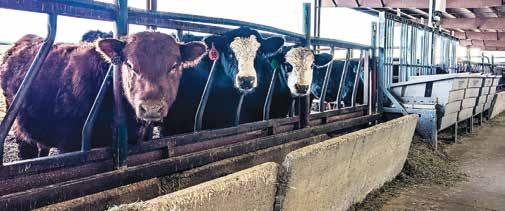

Cliff and Martha Hansen Teaching Arena Laramie, WY 82070
Pauline nurtured all and was dedicated to providing endless opportunities and countless experiences for her family, along with others. The strong family bond she instilled was evident by her children choosing to return to the family business. What a dream it was for her to work side by side with her children for a lifetime.
Up until her 99th birthday, Pauline went to work regularly. Her legacy will
Pauline loved her 11 grandchildren and greatgrandchildren and supported them in all of their endeavors. Likewise, her grandchildren loved and cherished her dearly.
They are Cody Lou Taubert (Dave Shields), Kyler (Mike) Shepard, Kate (Jace) Murphy, Monica Parker, Stan (Tori) Parker, Kassadie (Matthew) Gastgeb, Bobbi (Brian) Booke DeRose (Brian) and Lauren and Harrison Taubert. Her nieces and nephew were also very dear to her. They are Buddy (Peggy) Missel, Catherine (David) Engels, Peggy (Sam)
Pauline is preceded in death by her late husband Louis W. Taubert, Sr.; her siblings Arlene, Joe and Stan Pivik and her in-laws Walt and Freida (Taubert) Missel. Her life ended on a note of peace and tranquility. She will be forever missed and in our hearts.
A private family service has taken place at the Fort Laramie Community Presbyterian Church in Fort Laramie. She has been laid to rest in the Fort Laramie Cemetery in Fort Laramie where the family ranch and Lou Taubert family business was established in 1919.
In lieu of flowers, memorials may be made to the Wyoming Alliance on Mental Illness, Casper Wyoming Chapter, PO Box 1883, Casper, WY 82602.
Wyoming Livestock Roundup • Volume 34 No. 46 • March 11, 2023 A10 Text or e-mail for a catalog! STEVE & AMY WILLIAMS • 5 Bull Drive, Columbus, MT 59019 • Cell: (406) 321-7046 • Office: (406) 322-5597 • E-mail: bulls@midlandbulltest.com MIDLAND BULL TEST JOIN US FOR THE FINAL SORT BULL SALE APRIL 6 & 7, 2023 April 6: Charolais • Chiangus • Gelbvieh Hereford • LimFlex Salers • Simmental South Devon • Red Angus April 7: Angus 110 CONSIGNORS • 800+ BULLS • 24 STATES We develop more than 2,000 bulls annually
Saturday, April 1st, 2023
Laramie Research and Extension Center
10:00AM
- Educational Program
Selection and Evaluation Understanding Bovine Pulmonary Hypertension High Altitude Bull Test Data Overview & Future Directions Noon to 1:30PM - Lunch Poster Session - Highlighting Current Beef Research at the University of Wyoming
- Bulls Available for Viewing
for Private
Sale
Contact
Lake, 307.460.8129
to Noon
Bull
1:30PM-3:00PM
20 Bulls Available
Treaty
Angus - SimAngus - Red Angus All bulls PAP & Semen tested, with EPDs and carcass evaluation data available
Scott
| Shelby Rosasco, 209.753.8227
We welcome obituaries. Obituaries are printed free of charge and can be sent to roundup@wylr.net.


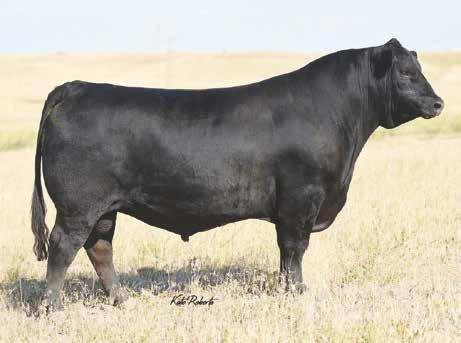
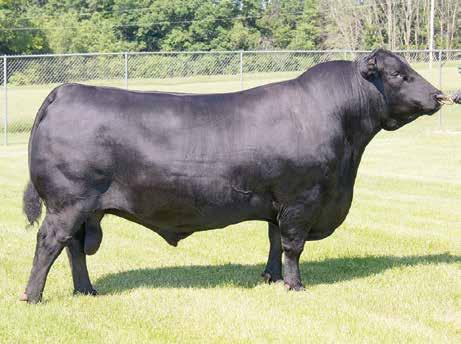
A11 Wyoming Livestock Roundup • Volume 34 No. 46 • March 11, 2023 LOMA, COLORADO SATURDAY, MARCH 25TH 2023 Offering 20 2-Year-old + 180 Yearling Angus • SimAngus Bulls 1 PM LOMA LIVESTOCK Broadcast on DVAuction FEATURING SONS OF G A R FAIL SAFE SQUARE B TRUE NORTH
March 13 Sublette County Private Pesticide Applicator Program, 10 a.m. Sublette County Extension Office, Pinedale. For more information, call Hudson Hill at 307-885-3132.
March 13
March 13
March 14
March 14
Sweetwater County Private Pesticide Applicator Program, 2 p.m. Community Center, Farson. For more information, call Hudson Hill at 307-885-3132.
Wyoming Homeowner Assistance Fund Program Virtual Town Hall, 12:30 p.m. To register, visit at dfs.wyo.gov/haf
Wyoming Homeowner Assistance Fund Program Virtual Town Hall, 4 p.m. To register, visit at dfs.wyo.gov/haf
Wyoming Weed and Pest Council State Allocations Committee Meeting, 1 p.m. Thyra Thomson State Office Building, Casper and online. For more information, contact Lindsey Woodward at lindsey.woodward@wyo.gov, call 307-777-6585 or visit agriculture.wy.gov
March 14 Lincoln County Private Pesticide Applicator Program, 1 p.m. Afton Civic Center, Afton. For more information, call Hudson Hill at 307-885-3132.
March 14-16 National Cover Crop Summit, online. For more information and to register, visit covercropstrategies.com
March 15 Wyoming Weed and Pest Council State Allocations Committee Meeting, 9 a.m. Thyra Thomson State Office Building, Casper and online. For more information, contact Lindsey Woodward at lindsey.woodward@wyo.gov, call call 307-777-6585 or visit agriculture.wy.gov
March 15
Environmental Protection Agency Region Eight Webinar, 10:30-11:30 a.m. For more information, visit epa.gov/grants/region-8-march-2023-grantswebinar
March 15 Washakie County Private Pesticide Applicator Program, 9 a.m.-1 p.m. Washakie County Extension Office, Worland. For more information, call Caitlin Youngquist at 307-347-3431.
March 16 Bureau of Land Management South Pass City Trail Opportunity Open House, 5:30-7 p.m. Lander Library, Lander. For more information, call Jared Oakleaf at 307-332-8400 or Joe Ellis at 307-332-3684.
March 16 Fremont County Private Pesticide Applicator Program, 9 a.m.-1 p.m. Lander Extension Office, Lander. For more information, call Chance Marshall at 307-332-2363.
March 16 Cattle Market Update and Free Meal, 6 p.m., Ramkota Hotel, Casper. For more information and to RSVP by March 13, call 307-747-6377.
March 18 Natrona County Cow-Belles Annual Gala, Hilton Garden Inn, Casper. For more information and to purchase tickets, visit Natrona County Cow-Belles on Facebook or e-mail nccowbelles@gmail.com.
March 18-19 Gun Show, Weston County Senior Citizens Center, Newcastle. For more information, call Mike Novotny at 253-678-4825.
March 21 Sheridan County Private Pesticide Applicator Program, 12-4 p.m. Sheridan County Extension Office, Sheridan. For more information, call Jaycie Arndt at 307-673-2856.
Big horn Basin
Visit
Worland, WY
3 Blk Cows, avg. 1103# $8000 Schuebel Land & Livestock - Cody
2 Blk Cows, avg. 1358# $8600
2 Blk Cows, avg. 1213# $8600 Loeper, Dick - Powell
1 Blk Cow, 1500# $8500
1 Blk Cow, 1550# $7300 McCumber, Donald - Thermopolis
1 Red Cow, 1780# $8450 Johnson & Schuebel Farms - Cody
1 Blk Cow, 1095# $8450 Johnson, Hayden - Thermopolis
1 Hrfd Cow, 1195# $8250 B&W Cattle LLC - Scottsbluff
1 Blk Cow, 1060# $7900
• Upcoming Sales • March 16 – Feeder Special • Feeder cattle only March 23 – All Class Cattle April 6 – All Class Cattle
April 10 – Monday Feeder Special
• Feeder cattle only
April 13 – Bred Cow Special w/ AllClass Cattle
April 20 – All Class Cattle, Sheep & Goat
April 27 – All Class Cattle
Consignments
Moved to Thursday, March 16!
Feeder Special • Feeder Cattle Only • 11 a.m.
Bar Half Diamond Ranch – 170 black heifers, 500-600#, 2 rounds of shots, weaned November, home raised.
100 mixed black, 350-450#, 2 rounds of shots, home raised.
Jerry & Lindsey Walls – 140 mixed black, 500-600#, 2 rounds of shots, weaned October, home raised, no implants.
Michaels, Calvin – 120, mixed black, 550-650#, 2 rounds of shots, weaned November, slow grow ration, no grain.
Rankine Livestock – 100 mixed black and red, 400-500#, 2 rounds of shots, weaned long time.
Michael & Karen Vigil – 50 mixed black, 600-700#, 2 rounds of shots, weaned October, grow ration, home raised.
Verona Cattle – 40 red steers, 800-900#, 2 rounds of shots, weaned in November.
Bonnie Miller – 45 mixed black, 700-800#, 2 rounds of shots, weaned November, no brands.
Double Dollar Cattle Co. – 30 black heifers, 500-550#, 2 rounds of shots, home raised.
John Baird – 20 black heifers, REPLACEMENT QUALITY, 600-650#, 2 rounds of shots, weaned November, hay fed, daughters of Select Sires Growth Fund bull • Growth Fund bull is ranked in top 1% of Angus bulls.
Half Right Cattle Co. – 20 to 30 mixed calves, 450-550#, 2 rounds of shots, Bangs vacc, weaned 60+ days, bunk broke.
Frank Deede – 12 mixed RWF & BWF, 550-600#, 2 rounds of shots, weaned, light grow ration.
Merrill Ready – 4 black steers, 650-700#, 2 rounds of shots, bunk broke, weaned November, hay fed.
Bob Nicol – 130 mixed black, 550-650#, 2 rounds of shots, weaned, hay fed.
307 Wilderness – 50 mixed black, 450-550#, 2 rounds of shots, weaned.
March 13

Holden Herefords 57th Annual Production Sale, at the ranch, Valier, Mont., 406-450-1029, holdenherefords.com
March 13 Pine Coulee Bull Sale, Wagon Box Ranch, Hardin, Mont., 406-855-2832, 406-780-1230, pinecoulee.com
March 13 P\T Livestock Annual High Country Genetics Performance Bull Sale Shoshoni, 307-709-8351, 307-709-8361, ptlivestock.com
March 14 Hancock Livestock Seventh Annual Bull Sale, Riverton Livestock Auction, Riverton, 307-250-6900, hancocklivestock.com
March 14 Cooper Hereford Ranch 57th Annual Production Sale, at the ranch, Willow Creek, Mont., 406-539-6885, cooperherefords.com
March 14 Loosli Red Angus 49th Annual Production Sale, at the ranch, Ashton, Idaho, 208-652-3303, 208-227-3779, 208-351-3333, loosliredangus.com
March 16 Carter Cattle Company 24th Annual Production Sale, at the ranch, Pingree, Idaho, 208-390-4811, 208-681-9711, 208-681-8859, cartercattleco.com
March 17 Black Summit Cattle Company Annual Bull Sale, Black Summit Cattle Sale Facility, Powell, 307-899-3553, 307-899-1764, blacksummitcattle.com
March 17
Montana Performance Bull Co-op with Basin Angus Ranch Annual Bull Sale, Midland Bull Test Sale Facility, Columbus, Mont., 406-780-1219, 406321-2470, 406-350-0350, basinangus.com
March 18 Triangle J Ranch and Altenburg Super Baldy Ranch LLC Colorado Select Sale, Centennial Livestock Auction, Fort Collins, Colo., 303-627-5085, 970481-2570, trianglejranch.com altenburgsuperbaldy.com
March 18 Gnerer Angus Annual Bull Sale, at the ranch, Olive, Mont., 406-427-5293, 406-498-6113, gnererangus.com
March 18 Cowboy Country Horse Sale, Central Pavilion, CAM-PLEX, Gillette, 307660-7303, 307-257-3447, cowboycountryhorsesale.com
March 18 Lechleiter Simmentals 35th Annual Bull Sale, Loma Livestock, Loma, Colo., 970-209-8008, 970-249-5938
March 22 NJW Polled Herefords Annual Bull Sale, at the ranch, Sheridan, 307-6723248, njwherefords.com
March 22 McCumber Angus Ranch Annual Bull Sale, at the ranch, Rolette, N.D., 701871-1072, 701-871-9800, mccumberangus.com
March 23 Gartner~Denowh Angus Ranch 56th Annual Bull Sale, at the ranch, Sidney, Mont., 406-798-3355, 406-798-3375, 406-798-3541, gdar-angus.com
March 23 Schuler Red Angus 41st Annual Production Sale, at the ranch, Bridgeport, Neb., 308-262-0306, schulerredangus.com
March 23 Vermilion Ranch Spring Performance Sale, South Pryor Development Center, Billings, Mont., 406-670-0078, 406-672-5844, vermilionangus.com
POSTCARD from the Past
 Compiled by Dick Perue rrichardperue@gmail.com
A Fierce Storm
As the winter of 2023 continues to blow across the Cowboy State, chatter at the “old geezers coffee klatch” recalls other bad winters such as the blizzard of 1949 – the year we had to move off of the Pick Ranch because we couldn’t get to town to go to school.
Others recall the bitter cold and snow of 1974, while some discuss the winter of 1982-83, with its continual snow storms from late September until far into spring – which wiped out most of our mule deer herd, and of course, they also have to throw in the deep snow causing the floods of 2011-12.
Locally, all of us are not old enough to recall the record snowfall and flood of 1917, when the water of the Upper North Platte River covered some houses in Saratoga.
Other stories of bad winters abound in Wyoming’s newspapers. Here’s one from the Encampment Record of Jan. 25, 1917.
One of the worst storms of recent years has lately come and gone. On Friday night, snow began falling, and Saturday it was damp and heavy. The local forest department estimated snowfall to be 18 inches, and the lowest registered here was -22 degrees Fahrenheit.
Other places had more
snow than here. Sunday was more agreeable than the day before, and Monday was the windiest one of the season. Much snow was hurriedly taken to the draws, etc.
On Monday after school, some of the children needed assistance to get home because of the wind.
The railroad was practically blocked by snow before the storm and now will have to haul out the snow in order to clear the track. The Union Pacific had difficulty in getting along, and is now running plows ahead of all trains, which are running five and six hours late.
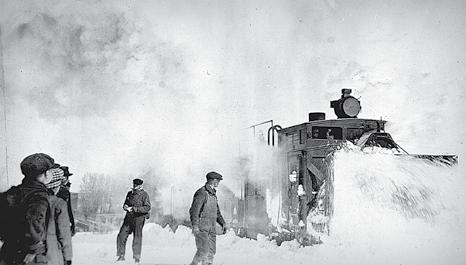
Reports have said during our fair weather previous to the storm, there were high winds between Saratoga and Walcott.
A sled of the Richmond livery of Saratoga, with 12 passengers, left Saratoga at 10 a.m. on Saturday and reached
Walcott at 11 a.m. Sunday. On Saturday night, the party discovered it was lost and camped for the night. No one was reported to have suffered with the cold.
Stagecoaches are now making trips between Saratoga and Walcott.
On Tuesday afternoon, Joe Rankin, the liveryman and Jim Dettinger took mail to Saratoga and returned Thursday.
Another article in the same newspaper reads: Shortly after, pretty weather set in about the first of the year. One remarked winter had “broke.” For a while this seemed so, and Saturday it did “break” many storm records.
On March 22, 1917, The Saratoga Sun noted: We are informed the weatherman optimistically predicts the biggest snowstorm and blizzard of the winter is due to land in these parts some time tomorrow, the 23rd By April 27, 1917, a hope of spring was reported in the Encampment Record with the headlines “Good Crops This Year” and “Plenty of Snow Assures Plenty of Water for Irrigation,” but, then, that’s for the next time.
Wyoming Livestock Roundup • Volume 34 No. 46 • March 11, 2023 A12 CALENDAR Submit your events to: Editor, Wyoming Livestock Roundup, P.O. Box 850, Casper, WY, 82602, or e-mail to roundup@wylr.net. EVENTS SALES
LIVESTOCK AUCTION LLC Call to Consign Cattle Sale Barn: 307-347-9201 Danny Vigil: 307-388-0781
bighornbasinlivestock.com Feb. 9 – 534 Head • Cows $2 to $3 Lower • Bulls $4 to $5 Lower BULLS Mendez Brothers - Otto 1 Blk Bull, 2035# $10850 1 Blk Bull, 2025# $10650 Carter Cattle Co. - Ten Sleep 1 Blk Bull, 1810# $10500 2 Blk Bulls. avg. 2198# $10300 Shumway, Beverly - Thermopolis 1 Blk Bull, 2215# $10150 Durbin Creek Ranch - Thermopolis 1 Hrfd Bull, 1580# $9600 Aagard, Mike - Burlington 1 Blk Bull, 2570# $9250 BRED COWS Thurgood, Bruce - Thermopolis 2 XBred Bred Cows $1625/Hd. TD Farms, Inc. - Worland 40 Blk Bred Cows $1375/Hd. Verona Cattle LLC - Wyarno 10 Blk Bred Cows $1325/Hd. COWS Durbin Creek Ranch - Thermopolis 5 RWF Cows, avg. 1189# $10600 3 Hfrd Cows, avg. 1343# $9750 2 RWF Cows, avg. 1455# $9400 2 Hrfd Cows, avg. 1440# $8500 2 Hrfd Cows, avg. 1468# $8350 Lungren Land & Cattle Co. - Worland 18 BWF Cows, avg. 1384# $9450 40 Blk Cows, avg. 1481# $9225 5 Blk Cows, avg. 1490# $9025 2 Blk Cows, avg. 1468# $8000 Michaels, Calvin - Burlington 1 Blk Cow, 1290# $9100 1 Blk Cow, 1535# $8750 Mendez Brothers - Otto 2 Blk Cows, avg. 1560# $9100 1 Blk Cow, 1430# $8750 Diamond Tail Ranch LLC - Greybull 2 Blk Cows, avg. 1278# $9050 1 Blk Cow, 1215# $8400 Verona Cattle LLC - Wyarno 2 Blk Cows, avg. 1278# $9050 TD Farms, Inc. - Worland 2 Blk Cows, avg. 1410# $9000 1 Blk Cow, 1470# $8900 1 CharX Cow, 1190# $8750 1 Blk Cow, 1535# $8700 1 Blk Cow, 1260# $8050 1 BWF Cow, 1260# $8000 1 Red Cow, 1400# $7550 Deede, Frank - Byron 1 RWF Cow, 1560# $8950 Geis, Jack - Greybull 1 Blk Cow, 1440# $8800 2 Blk Cows, avg. 1540# $8750 2 Blk Cows, avg. 1390# $8500 1 Blk Cow, 1265# $7600 1 Blk Cow, 1390# $7500 Whitt, Star - Big Timber 2 Blk Cows, avg. 1463# $8700 2 Blk Cows, avg. 1248# $8400
Danny Vigil • Northern Livestock Represenative
Cattle USA for broadcasting and online bidding – auctions.cattleusa.com
Rotary plow breaking out the large snowdrifts on the Saratoga and Encampment railroad tracks between Saratoga and Encampment in April of 1917. Photo courtesy of Grand Encampment Museum. Historical Reproductions by Perue
FOR THE WEEK ENDING March 10, 2023
FOR THE WEEK ENDING May 24, 2019
Source:
Source: USDA AMS Livestock, Poultry & Grain Market News, Greeley, CO
As of March 3, 2023
Compared to last week slaughter lambs mostly 5.00-20.00 higher. Slaughter ewes mostly steady to 10.00 higher. No comparison on feeder lambs. At San Angelo, TX 4,170 head sold. No sales in Equity Cooperative Auction. Western Video sold 440 feeder lambs in Idaho and 3255 feeder lambs in California. In direct trading slaughter ewes and feeder lambs not tested. 3,713 lamb carcasses traded with no trend due to confidentiality. All sheep sold per hundred weight (CWT) unless specified.
Slaughter Lambs: Choice and Prime 2-3
San Angelo: wooled and shorn 115-145 lbs 158.00-180.00; 160-165 lbs 148.00-160.00.
Ft. Collins: wooled and shorn 140-160 lbs 150.00-160.00.
South Dakota: wooled and shorn 105-150 lbs 130.00-144.00; 155-160 lbs 125.00.
Billings: wooled and shorn 100-145 lbs no test.
Equity Coop: no sales.
Slaughter Lambs: Choice and Prime 1-2
San Angelo: hair 40-60 lbs 288.00-324.00, few 330.00; 60-70 lbs 281.00-315.00, few 320.00-321.00; 70-80 lbs 261.00289.00, few 301.00; 80-90 lbs 222.00-280.00; 90-100 lbs
200.00-238.00, few 255.00-269.00. wooled and shorn no test.
Ft. Collins: wooled and shorn 60-70 lbs 242.50-257.50; 70-80 lbs 260.00-265.00; 80-90 lbs 235.00-260.00. hair 58 lbs
260.00; 60-70 lbs 207.50-250.00; 76 lbs 210.00; 80-90 lbs
235.00-255.00.
South Dakota: wooled and shorn 48 lbs 285.00; 50-60 lbs 275.00-
300.00; 62 lbs 290.00; 70-80 lbs 240.00-270.00; 96 lbs 220.00. hair 95
lbs 144.00.
Billings: no test.
Slaughter Ewes
San Angelo: Good 3-4 (very fleshy) no test; Good 2-3 (fleshy)
90.00, hair 90.00-115.00; Utility and Good 1-3 (medium flesh)
123.00-133.00, hair 113.00-140.00; Utility 1-2 (thin) 100.00-
108.00, hair 110.00-114.00; Cull and Utility 1-2 (very thin) hair
82.00-96.00; Cull 1 70.00-78.00.
Ft. Collins: Good 3-4 (very fleshy) 95.00-100.00; Good 2-3
(fleshy) 75.00-100.00; Utility 1-2 (thin) no test; Cull 1 no test.
South Dakota: Good 3-4 (very fleshy) 51.00-95.00; Good 2-3 (fleshy) 55.00-100.00; Utility 1-2 (thin) 55.00-80.00; Cull 1 35.00-55.00..
Billings: Good 3-4 (very fleshy) no test; Good 2-3 (fleshy) no test; Utility 1-2 (thin) no test; Cull 1 no test. Feeder Lambs: Medium and Large
151.00/cwt; hair ewes and lambs 100.00-108.00/head.
Ft. Collins: no test.
South Dakota: ewe lambs 79 lbs 199.00/cwt, 98 lbs 168.00/ cwt; bred ewe lambs 160.00-175.00/head; bred yearlings 145.00/head; bred young 175.00-210.00/head.
Billings: no test.
Sheep and lambs slaughter under federal inspection for the week to date totaled 35,000 compared with 34,000 last week and 32,000 last year.
Source: USDA AMS Market News, San Angelo, Texas National Wool Review
As of March 3, 2023
In Australia this week, the Eastern Market Indicator was up 4 cents at 1368 cents per Kg clean from the sale a week ago. A total of 48,389 bales were offered with sales of 89.0 percent.
The Australian exchange rate was stronger by .0086 at .6745 percent of the U.S. dollar. Australian wool prices are quoted US Dollar per pound, delivered, Charleston, S.C. The current freight rate is .15 cents per pound clean Clean Del Price Change from 75-85 Percent
5 AREA WEEKLY WEIGHTED CATTLE PRICE
Eastern Market Indicator was up 4 cents at 1364 cents per kg clean. Australian exchange rate was stronger by .0086 at .6745 percent of the U.S. dollar..
Source: USDA- CO Dept of Ag Market News Service, Greeley, CO Colorado Hay Summary
As of March 9, 2023
Compared to last week: Trade inactive on large squares of feedlot and dairy hay as growers raised ask prices. Few trades on horse hay at the same levels reported last week. According to the U.S. Drought Monitor’s High Plains Summary for March 7, 2023, much of the High Plains remains in long-term drought, with the central High Plains seeing some expansion of moderate drought (D1) from southeast Nebraska to northeastern Kansas based on continued lack of recent precipitation, low streamflows and soil moisture. In the Colorado Rockies, abnormal dryness (D0) was slightly expanded based on below-normal precipitation. In south-central Colorado, abnormal dryness (D0) was expanded because of continued lack of precipitation and low soil moisture. However, southeast Kansas received heavy rain from severe storms that extended from the South and Southeast into the Great Lakes regions. The northern High Plains also saw improvements in north- central/northeastern Nebraska and southeastern North Dakota in response to the season’s heavy snows. Soils are still frozen, so the full benefits of the season’s precipitation will not be realized until the soils thaw and the snow meltwater soaks into the ground. Wyoming also saw improvements to moderate drought (D1) where precipitation deficits have recovered. ***Due to limited sales and price changes, this report will be released bi-weekly until more volumes of hay move. ***
Compared to last week: Hay sold generally steady. Demand for hay remains good to very good for light offerings. Local ranchers continue to buy hay on an as need basis. Loads of hay continue to be sent south into the southern plains as Texas, Oklahoma, and Colorado are active buyers again this week. Many of these loads are catching back hauls which has helped lower freight significantly. Producers report calls were much more active this week as cold weather continues to be seen. Many locations in central Montana remain buried under 2-3 feet of snow and are seeing extremely cold temperatures as a result. According to the drought monitor 65.91 of the is in Moderate drought or worse, down 2.17% from last week. 22.89% of the state is in an Severe drought or worse, down 0.86% from last week. 3.11% of the state is in week.
The latest markets data can be found by visiting USDA’s Agricultural Marketing Service at
A13 Wyoming Livestock Roundup • Volume 34 No. 46 • March 11, 2023 Un SETT PRICE Month Week Prev This Week Change WHEAT FUTURES MARCH 7.65 7.38 -0.27 MAY 7.76 7.50 -0.26 JULY 7.81 7.56 -0.25 SEPTEMBER 7.90 7.65 -0.25
SETT PRICE Month Week Prev This Week Change LIVE CATTLE FUTURES FEBRUARY 162.78 165.15 +2.37 APRIL 164.08 165.33 +1.25 JUNE 159.73 161.28 +1.55 AUGUST 158.78 160.10 +1.32 OCTOBER 162.90 164.18 +1.28 SETT PRICE Month Week Prev This Week Change CORN FUTURES MARCH 6.76 6.60 -0.16 MAY 6.75 6.59 -0.16 JULY 6.64 6.51 -0.13 SEPTEMBER 6.09 6.00 -0.09 SETT PRICE Month Week Prev This Week Change SOYBEAN FUTURES MARCH 15.26 15.34 +0.08 MAY 15.21 15.27 +0.06 JULY 15.13 15.19 +0.06 AUGUST 14.80 14.88 +0.08 WEEKLY CATTLE AUCTIONS Steers Heifers Compiled from USDA Market News Service information and other sources SETT PRICE Month Week Prev This Week Change OATS FUTURES MARCH 3.63 3.71 +0.08 MAY 3.51 3.44 -0.07 JULY 3.54 3.46 -0.08 SEPTEMBER 3.57 3.51 -0.06 WEEKLY SHEEP AUCTIONS
SETT PRICE Month Week Prev This Week Change FEEDER CATTLE FUTURES MARCH 186.23 189.23 +3.00 APRIL 190.60 193.68 +3.08 MAY 194.48 197.73 +3.25 AUGUST 207.85 211.35 +3.50 SEPTEMBER 210.73 213.68 +2.95 Location Under 400 400-500 500-600 600-700 700-800 Over 800 Sltr Bull Stock Cows Volume Sltr Cows Pairs PAYS 240 245-265 236 214.50-236 185 73-129 82-140 3-8 733 198-205 206 168.50-185 75-97.50 Crawford 228-273 239-252 193-220 172-194.50 170 104-118.50 $1875 3-3 1561 197.50-238 222.50-240 209-231 189-220.50 161-180 157.50-175.50 76-95 Riverton 230-260 224-252.50 205-223 185-203 174-183.50 95-106.50 83-115.50 3-7 804 205-212 207.50-216 191.50-209.75 192-212.50 162-183.25 139-148 84-94.50 Torrington 275 235-259.50 216-241.50 193-219 161-194.50 104-116 118-138 3-8 5467 226-247 208-245 195-228 186-207 152.50-207 74-99 St. Onge 214.50-251 200-240.50 221 179-205 180-189.25 96.50-116 $1410-$2150 3-3 2497 227 191-220.50 176-216.50 181.50-209 132-171 74-94 Big Horn Basin 92.50-108.50 $1325-$1625 3-9 534 73-106 Billings 255-277.50 237.50-285 229-291 187.50-261 175-201 175-198 82-113 76.50-146 3-9 1865 236-245 192.50-240 177.50-238 180-222 150-184.50 162.50-174.50 74-96.50 CUTOUT
This Prior Last Week Week Year CUTOUT VALUES 288.91 281.86 262.65 Primal Rib 476.82 466.90 401.63 Primal Chuck 229.03 224.23 217.73 Primal Round 226.47 222.22 223.01 Primal Loin 404.06 392.92 344.82
MARKETS
VALUES
Centennial 197.50-210 185 157.50 169 96-115.50 3-3 187.50 190 175-187.50 152.50-176 152.50 139-145 61-97.50
https://www.ams.usda.gov/market-news Auction Volume Feeder Slaughter Slaughter Stock Slaughter Lambs Lambs Ewes Ewes Bucks Centennial 1545 200-247.50 162.50-215 67.50-127.50 55-135 Daily Grower Bids Region Price US #2 Yellow Corn Southeast WY 6.4850-7.1150 US #1 HRWW Southeast WY 7.2225-7.3625 US #1 Black Beans Min-Dak 40-42/cwt US #1 Dark Red Kidney Beans Min-Dak 45-48/cwt #1 Great Northern Beans Den-Rate 40/cwt #1 Light Red Kidney Beans Den-Rate 50/cwt Min-Dak 46-48/cwt US #1 Pea (Navy) Beans Min-Dak 37/cwt US #1 Pinto Beans Den Rate 36-37/cwt Min-Dak 34-35/cwt
USDA AMS Livestock, Poultry & Grain Market News, Torrington
National
Sheep Summary
San Angelo:
28
300.00; 30-40 lbs 292.00-312.00; 40-50 lbs 292.00-326.00; 55 lbs 280.00. Ft. Collins: 56 lbs 200.00. South Dakota: 34 lbs 265.00; 57 lbs 195.00; 60-70 lbs 195.00196.50, new crop 225.00; 70-80 lbs 185.00-193.00; 80-90 lbs 174.00-181.00; 90-100 lbs 158.00-161.00; 100-110 lbs 151.00163.00; 112 lbs 140.00; 123 lbs 131.00.. Billings: no test. Replacement Ewes: Medium and Large 1-2 San Angelo: young 100-125 lbs 137.00-169.00/cwt; yearling hair 113 lbs 200.00/cwt; mixed age hair 80-125 lbs 145.00-
1-2
hair
lbs
Micron US Grade in U.S. Dollars Previous Sale of Australia 17 > 80s 7.44 + .01 5.58-6.32 18 80s 6.32 - .05 4.74-5.38 19 70-80s 5.41 - .04 4.05-4.60 20 64-70s 4.90 - .05 3.68-4.17 21 64s 4.65 - .04 3.49-3.95 22 62s 4.37 - .14 3.27-3.71 23 60-62s 4.21 3.16-3.58 24 60s 25 58s 2.57 - .07 1.93-2.18 26 56-58s 1.97 - .06 1.48-1.68 28 54s 1.23 - .03 0.92-1.05 30 50s 1.15 + .00 0.87-0.98 32 46-48s 0.97 - .01 0.73-0.92 Merino Clippings 2.97 - .04 2.23-2.53
Southeast Alfalfa - Premium/Supreme Large 3x4 350 Prairie/Meadow Grass - Premium Small Square 11/bale Silage/Corn Bulk 81 Source: USDA-AMS Dept of Ag Market News Service, Greeley, CO
This Prior Last Week Week Year Live Steer 165.02 163.72 140.61 Live Heifer 164.89 163.64 140.82 Dressed Steer 264.43 260.97 224.51 Dressed Heifer 264.45 261.73 224.65 St. Onge No Report PAYS No Report Buffalo 237 238 204 92-102.50 3-8 54 220 212-223 212 79.50-97.50 Montana Hay Summary
of March 3, 2023
As
Alfalfa - Good/Premium Large Square 3x4 250-270 Alfalfa - Good Large Square 4x4 230 Alfalfa - Fair Large Square 3x4 235 Alfalfa/Grass Mix - Good/Premium Large Round 265-275 Large Square 3x4 250 Alfalfa/Grass Mix - Good Large Square 3x4 230 Source: USDA Livestock, Poultry & Grain Market News, Billings, MT
OBITUARIES
























Lawrence George Bugas







Jan. 16, 1929 - March 5, 2023



















“baby” of the family. His parents were immigrants to the U.S. who believed grit, hard work, determination, love and service would take a person places, and they instilled these traits in Lawrence.
several beloved dogs.

He enjoyed shadowing his father – learning to work the land, breaking the meanest of horses, understanding how water would flow best to irrigate each parcel and feeding animals for optimal growth.
During this time, he also realized he did not want to raise pigs, milk cows or grow crops. Instead, he wanted to raise cattle on big country, which required him to ride to gather, just like he saw his neighbors do.
beat, out work or replace a tough horse underneath him when it came to working cattle.


On Sept. 7, 1957, he married his best friend Aileen Micheli. Together they raised six children and grew the cattle operation from a few head to what it is today. They both loved quiet mornings looking out at the country, calving cows, moving cows, haying and Autumn.
He believed he was spoiled, as no matter what his age, he always had neighbors, friends and family who treated him to a movie, candy, a cup of coffee, a donut, a hot toddy or a friendly chat.
Lawrence was service oriented and lived by the phrase, “If you get paid for everything you do, it is all you are ever going to get out of life.”
calm-mannered Angus cattle which produced an even, heavy bunch of steers when they walked across the scales in September.


In the quiet of the falling snow, on the morning of March 5, God called home a great cowman, cow boss and cowboy, Lawrence Bugas.
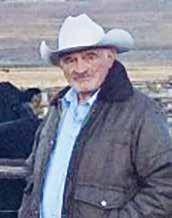
Lawrence was born Jan. 16, 1929 in Rock Springs to Susie and George Bugas. He was the youngest of six children, and he benefited from the blessings of being the
Lawrence had the joy of growing up on the family homestead, high up on the windy Nebraska Flats in southwest Wyoming. He attended a one-room schoolhouse on the ranch until sixth grade, then attended school in Rock Springs for one year. He graduated from Mountain View High School in 1947.
As a boy, Lawrence loved animals. He always wanted pets and was pleased his dad let him have rabbits, pigeons and


After completing high school, Lawrence attended the University of Wyoming for one year, before returning home to make a career out of ranching. He began this career using horses to gather cows, harvest hay, dig ditches and feed his livestock.
He happily witnessed and accepted the evolution of tractors and their benefits as they took over many of the duties on the ranch. However, he was adamant there was nothing that could
Ranching was not just a job or a way of life, but a passion for Lawrence. Long hours that turned into long days never seemed to bother him because he never felt what he was doing was work.
Lawrence lived by the Code of the West – to live each day with courage; take pride in your work; always finish what you start; do what has to be done; be tough but fair; when you make a promise, keep it; ride for the brand; talk less, say more; some things aren’t for sale and know where to draw the line.
He was a member of the 4H/FFA Sales Committee, Farm Loan Board and Wyoming Stock Growers Association. He was also a trustee for St. Helen’s Catholic Church, a lifetime member of Lion’s Club and served on the Bridger Valley Conservancy District for 30 years.
Lawrence had a deep love for family, cattle, land, water and Wyoming. But, at the end of the day, he was most proud of the fact he had raised good kids, built a beautiful ranch and finally had a herd of wellbuilt, heavily-muscled and














Lawrence is preceded in death by the love of his life Aileen, his parents Susie and George, his siblings and their spouses George Bugas, John (Anetha) Bugas, Margaret (Stanley) Hayes, Mary Lou (Chuck) Hlinka, Irene (Roy) Worthington and cherished old time cowboys, friends and neighbors.
Lawrence leaves behind his sons and daughters Larry (LaDonna) Bugas, Mary Sue Carroll, George (Colette) Bugas, Anne Marie (Larry) Anderson, Jonette (Michael) McNamee, Irene (Mark) Coffield, 14 grandchildren and 14 great-grandchildren. A rosary will be held on March 13 at 9 a.m., followed by a viewing and visitation at 10 a.m. and funeral mass at 11 a.m. Services will be held at St. Helen’s Catholic Church in Fort Bridger with interment at the Fort Bridger Cemetery.

UW females honored
Fifty-three women at the University of Wyoming (UW) were recognized at the sixth annual Own It! Awards ceremony on Feb. 21. Seventeen honorees are affiliated with the College of Agriculture, Life Sciences and Natural Resources.
Sponsored by Wyoming’s Established Program to Stimulate Competitive Research (EP-SCoR), Wyoming IDeA Networks for Biomedical Research Excellence and the Wyoming NASA Space Grant Consortium, Own It! strives to recognize women in science, technology, engineering and mathematics (STEM) at UW. The celebration serves to help increase the visibility of an often-overlooked group in STEM, which can be fundamental in encouraging women to participate in science.
At the awards ceremony, female faculty, staff, students, and alumnae – with connections to multiple UW colleges and departments – were recognized.
Winners in the College of Agriculture, Life Sciences and Natural Resources for the Overall Award include Brenda Alexander, professor in the Department of Animal Science; Nicole Bedford, assistant professor in the Department of Zoology and Physiology; Elizabeth Case, assistant professor of veterinary sciences and the director of the Biocontainment Facility; Quiana Jeffs, zoology and physiology student in the neuroscience program and Ema Lujan, zoology student from Raleigh, N.C.
Other Overall Award winners are Amy Navratil, Hank Gardner/Marilyn Fiske associate professor of Physiology; Eunsook Park, assistant professor in the Department of Molecular Biology; Ashleigh Pilkerton, zoology and physiology student from Albany, Ore. and Sylvia Thiong’o, animal and veterinary sciences student from Nairobi, Kenya.
Three students received the Research Award. They are Michaela Kuzniar, animal science student from Hanover, Ill; Erin Schwalbe, microbiology student from Reno, Nev. and Annie Walgren, molecular biology student from Laramie.
Additionally, the College of Agriculture, Life Sciences and Natural Resources recognized five individuals for their service, leadership and mentoring with the Service Award.
They include Rebecca Collins, botany student from Loveland, Colo.; Madison Davis, animal and veterinary sciences student from Manitou Beach, Saskatchewan; Magda Garbowski, postdoctoral researcher in the Department of Botany; Elizabeth Quigley, zoology and physiology student from Ada, Okla. and Kassandra Willingham, assistant lecturer in the Department of Molecular Biology.
For more information and to see highlights of each featured woman, visit wyomingspacegrant.org/wimse/ own-it-2023
Wyoming Livestock Roundup • Volume 34 No. 46 • March 11, 2023 A14 Brad Arntzen: 406.350.4000 Kevin Arntzen: 406.350.1612 Derik Arntzen: 406.350.1728 577 Arntzen Lane Hilger, MT 59451 arntzen@mtintouch.net www.arntzenangus.com POWER OF PREDICTABILITY What does 67 years of breeding with the same goal in mind get you? A consistent, predictable product that has stood the test of time. GDAR LOAD UP 7104 TEHAMA TAHOE B767 KG JUSTIFIED 3023 WOODHILL COMPLETE A130-C2 A A R KNUDSON 8241 A A R RAINIER ELLINGSON CONSISTENT 6235 A A R STUNNER 0549 A A R KNOCKOUT 8732 PINE COULEE HANNIBAL H316 MUSGRAVE 1676 STUNNER 809 SIRES INCLUDED 47th Annual Production Sale at the ranch APRIL 6TH, 2023 • 1:00 P.M. , 200 Bulls & 20 Top End Yearling Heifers Selling All bulls have genomically enhanced EPDs. A A R Complete K141 Reg.20468489 Complete x Ten Fold $M 108 BW WW Milk YW +1.9 +86 +32 +128 A A R Tahoe 2907 Reg.20502460 Tahoe x Load Up Loaded with cow power. BW WW Milk YW +1.0 +86 +39 +161 A A R Justified K173 Reg.20461688 Justified 8244 x Capitalist 316 Weaning Ratio 116 BW WW Milk YW +1.5 +89 +25 +150 TEF Tahoe 234 Reg.20384505 Tahoe x Outside 514 Maternal and growth. Top 1% WW and $M. BW WW Milk YW +1.3 +93 +18 +152 A A R Rainier K066 Reg.20466859 A A R Rainier x Justified Dam Average 3 NR 110 BW WW Milk YW +0.3 +74 +34 +136 A A R Knockout 2019 Reg.20457667 Knockout x Motive Top females stacked deep. BW WW Milk YW -0.1 +82 +25 +140 A A R Load Up 2006 Reg.20524517 Load Up x Frontman 7609 Long made and sound structured. BW WW Milk YW +0 +59 +36 +107 A A R Justified 2517 Reg.20457712 Justified x Load Up Calving ease with extra depth and muscle. BW WW Milk YW -1.2 +77 +25 +131 View bulls and bid online A A R Justified K012 Reg.20461662 Justified x Landmark Calving ease & growth. Top 1% $M. BW WW Milk YW +0.8 +84 +26 +143 1 LOT 4 LOT 37 LOT 92 LOT 6 LOT 8 LOT 5 LOT 45 LOT 2 LOT
We welcome obituaries. Obituaries are printed free of charge and can be sent to roundup@wylr.net.
Subscribe to the Wyoming Livestock Roundup by calling 307-234-2700
Lot 209 Lot 217 Lot 247
– Top 15% +11 CED – Top 30% +.2 BW – He ends up in the Top 30% for both WW & YW – He’ll add plenty of Carcass Top 10% Marbling at +1.13 and is average for RE at +.63; still has lots of Maternal Merit at Top 30% $M & Top 30% $W; has plenty of Production Merit Top 10% for $G & $C; Ends up in Top 15 for $B.
Sired by Ashland
Out of a first calf heifer he is a powerhouse, Sired by Ashland he’s going to add kick to any program.
Weaned at 813 with WR of 124 - Top 2% WW at +90 – Top 4% YW at +150 - Plenty of Carcass at +.70 ranks 40% Marbling - +.84 20% for RE - keep his calves & feed them not only performance he’s efficient gained 4.01# ADG – 3.63# WDA – He’ll make you some cash
6.3 #’s feed to 1# gain. Negative RFI -3.73.
Lot 291 Lot 280
Sired by Justified

A Heifer Bull that Is CAB - Top 10% CED at +13 –
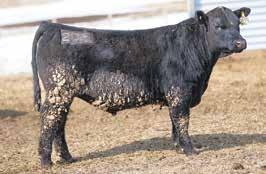
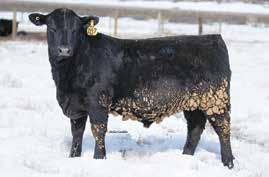
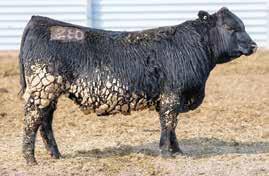


Top 10% BW at -1.0 – Top 1% PAP Epd -2.83 – leans to the Maternal Side +17.3 HP - putting him square in the Top 20% $M – Gives Marbling scores a kick
Top 25% at +89 - Gained 3.74 #’s ADG – 6.36 #’s
Feed to 1# Gain - Grand Dam lasted forever, left the place at 14 with a hint of bad hip.
Lot 2169
Sired by Cash 707
Really wanting to cut feed costs, Cow bull double bred top and bottom by proven efficiency Sires 707 Cash and VR Countdown – bulls on test were fed to gain 3.25#’s ADG –this guy on test 3.71#’s ADG - 6.30#’s feed: 1# Gain - WDA 2.93#’s - Production assured Top 20% WW at +72 - Top 25% YW at +126. He should take hard rough county and add some punch to your calves.
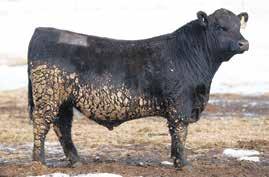
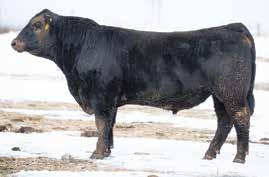
Lot 2197
Sired by McD Confidence 023
Dam is 2yr Basin Rainmaker daughter out of efficiency producer Innovation Grand Dam. Use on Herefords & Crossbreds - Top of the Line Heifer Bull chances are you won’t pull a calf. Ball games, Saturday Night Fun Nights, he’s got your back Top 1% for CED +19 – BW Top 1% at -4.1 - WDA at 2.90 #’s - ADG of 3.39#’s - he ate 5.84#s Feed to Gain 1# - Top 15% $M at +79 – Top 30% $W at +64.
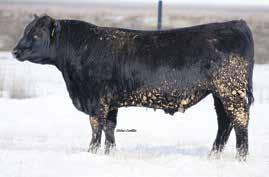
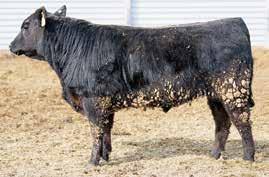
Sired by Black Eagle
Heifer bull Top 10% at +12 CED - Top 15% at -.5 BW – PAP Epd in Top 25% at +.04 - This guy can go to the hills, #2 feed efficiency, #4 for RFI at -5.72 winding up at the top he’s #3 all data combined – gained 3.91#’s ADG – WDA 2.83#’s - He grew up in anther dry WY summer and proved he can take more if he has to, without lots of extra feed – 4.77#’s Feed : 1# Gain, keep his heifers.
Lot 2130
Sired by Sitz Resilient
He’s got Upward & Capitalist 028 in his blood - Big Time
Heifer Bull 68# BW - Hereford, Big BW Crossbred Heifers; Just head for the Game he’ll take care of you – Top 4% CED +14 - Top 1% BW -3.4 - PAP Epd -2.74 – Top 4% HP at +17.1 - bet his calves will make the steer loads – on Feed/ Efficiency Test ADG of 4.13# - WDA 2.88# - Feed 6.37#’s : 1# Gain - Look him over.
Lot
Sired by Vermilion Optimist
124
Dam is 1st calf heifer by McD Efficient 789 a proven efficiency producer - ADG 4.01#’s – We’ve got 25 head of 2 year old bulls in the sale. They are NOT left over bulls, these guys are set to go cover lots of country and can & will take harsher environments. Your windmills or water sources few and far between take a look at the 2 year olds.
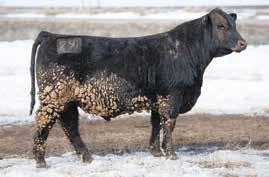
A15 Wyoming Livestock Roundup • Volume 34 No. 46 • March 11, 2023 www.WEBOANGUS.com At the Ranch - Lusk, WY - 1 pm - Lunch at noon 8 miles east on Hwy 20 to Node, then 0.6 miles south on Pfister Rd This sale will be broadcast live on the internet Real time bidding and proxy bidding available April 4, 2023 Buttons York & Family P.O. Box 848 • Lusk, Wyoming 82225 Button’s Cell (307) 216-0090 • Odessa’s Cell (307)340-1182 Elly’s Cell (307) 340-1499 WEBO Angus Annual 22 head of PAP tested 2 year old bulls sired by our herd sires and 70 head of big strapping AI sired yearling bulls Selling: Turning Grass into Greenbacks Sired by Pacific Bigger Heifer or Younger Cows that are range calved, look him over – CED at +8 is Top 35% of the breed – BW at +1.4 sure won’t add much BW and they can make the load at +67 WW and +113 YW - Top 25% HP +14 - These cattle are known for better dispositions – PAP is pretty good at +.85 in Top 40% - working on carcass traits he adds some Top 20% at +.92 Marbling. Sired by Sterling Pacific 904 Sired by up & coming Sterling Pacific 904 Genuine Heifer Bull
Tuesday, March 7 Market Report • 804 Head Sold
Representative Sales Early

TUESDAY, MARCH 28
ALL CATTLE CLASSES W/ SHEEP & HORSES • START TIME 9:00 AM W/ SHEEP & WEIGH UPS 45TH

perform!
BRED COWS
Dustin Eaton – 50 Blk Ang ST Bred Cows. Bred to Powerful Blk Ang Bulls to start calving March 20th. Nice, High elevation cows! BRED HEIFERS
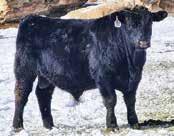
Cottonwood Creek Livestock – 10 Blk AngX Bred Heifers. Bred to Kretzman LBW Blk Ang Bulls to start calving March 20th for 60 days. Rec Virashield 6 VL5 @ preg check & poured w/ Ivomec. High elevation & Fancy! DAIRY COWS
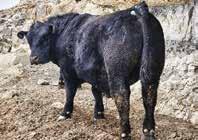
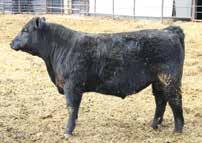
Cottonwood Creek Livestock – 2 DairyX Bred Heifers. Bred to Kretzman LBW Blk Ang Bulls to start calving March 20th for 60 days. Rec Virashield 6 VL5 @ preg check & poured w/ Ivomec. High elevation & Fancy! WEIGH UPS Dustin Eaton – 40 weighs
TUESDAY, MARCH 21
FEEDER SPECIAL • START TIME 9:00 AM W/ WEIGH UPS
TUESDAY,
Wyoming Livestock Roundup • Volume 34 No. 46 • March 11, 2023 A16 Northwest Wyoming Angus Association For information call Fred & Kay Thomas, 307-868-2595 or 307-272-4911 CONSIGNORS: DAVIDSON ANGUS - HOGGS ANGUS - OBSIDIAN ANGUS - WYO ANGUS Tuesday, March 28, 2023 - 1:00 P.M. Riverton Livestock Auction Live Auction Sale Day www.rivertonlivestock.com BULLS ARE BVD, PAP AND SEMEN TESTED 45th Annual Sale Cattle can be viewed under Obsidian Angus Sales Tab • www.greatbearreflection.com • View The 2023 NWWAA Sale Catalog on our Link Page Lot 35 OBSIDIAN TAGISH 782 AAA#20342275 • 02/15/22 Sire: Deer Valley Growth Fund CED +10 • BW -.3 • WW +69 YR +127 Milk +31 • BW -75# • 205 -794# • PAP -35 • EFF 78% Lot 53 AAA#20570551 • 03/13/22 Sire: Reisig Longmire 8326 CED +5 • BW -.1 • WW +45 • YR +82 • Milk +27 BW -77# • Weaning wght 730# • PAP -41 W LONGMIRE 29 Lot 45 AAA#20535345 • 03/07/22 Sire: Basin Payweight 1682 CED +9 • BW +.3 • WW +63 • YR +105 • Milk +28 BW -73# • Weaning wght 698# • PAP - 36 W PAYWEIGHT 204 Lot 16 AAA#20481906 • 03/24/22 Sire: JCH Chisum 0004 CED +11 • BW -1.0 • WW +65 • YR +112 Milk +21 • BW –78# • 205-748# • PAP -38 DA CHISUM 239 AAA#20342280 • 02/20/22 Sire: Deer Valley Growth Fund CED +4 • BW +2.3 • WW +71 • YR +131 • Milk +29 BW -89# • 205-840# • PAP -34 • EFF 76% Lot 38 OBSIDIAN DENALI 790 Lot 2 DA FOUNDATION 243 AAA#20481908 • 03/26/22 Sire: DA Foundation 042 CED +3 • BW +.9 • WW +73 • YR +129 Milk +28 • BW -85# • 205-887# • PAP -37 All sales are broadcast live on the internet at www.cattleusa.com. Please register online to bid on livestock. Be sure to check out our country cattle listings at www.cattleusa.com 1490 South 8th Street East • Riverton, WY 82501 • (307) 856-2209
RIVERTON LIVESTOCK AUCTION Contact: Riverton Livestock Auction (307) 856-2209 • Jeff Brown (307) 850-4193 • Tom Linn (307) 728-8519 • Mark Winter (580) 747-9436 www.rivertonlivestock.com • Also watch our live cattle auction at www.cattleusa.com
Consignments TUESDAY, MARCH 14 BRED COW SPECIAL W/ HANCOCK ANGUS BULL SALE (1:00 PM) START TIME 9:00 AM W/ WEIGH UPS BULLS Hancock Angus – 40 Yearling Registered Blk Ang Bulls. PAP, Semen tested, BVD tested, Carcass Ultrasounded & Performance Tested. Average PAP score of 37.6. Selling sons of SAV Renown 3439, SAV Renovation & Jorgensen Ideal Encore. 1st Year Breeding Guarantee. 4 Registered Blk Angus Replacement Heifers. For more information visit www.hancocklivestock.com or call 307-250-6900. Sale Time 1:00 PM. REPLACEMENT HEIFERS Six Iron – 100 Red Ang Replacement Heifers 700750#. Rec Pyramid 5 w/ Presponse, Vision 8 w/ Somnus, Once PMH IN & poured @ Branding & Weaning. Bangs vacc. Reputation genetics, high desert heifers that are raised to
ANNUAL NORTHWEST ANGUS BULL SALE (1:00 PM) Northwest Angus Association - 55 Blk Ang Yrling Bulls - Obsidian Angus, Hoggs Angus, Davidson Angus, & WYO Angus. Bulls are known for calving ease & growth. PAP, Semen & BVD Tested, Proven Sires! (1:00 PM) Contact Fred & Kay Thomas 307-868-2595 or any Breeder. TUESDAY, APRIL 4 BACK TO GRASS & FEEDER SPECIAL START TIME 9:00 AM W/ WEIGH UPS COWS RIVERTON 3 Cow, 1143# $94.50 LANDER 3 Cow, 1150# $93.00 KINNEAR 1 Cow, 1395# $92.50 1 Cow, 1520# $91.50 1 Cow, 1655# $91.00 RIVERTON 1 Cow, 1515# $90.50 3 Cow, 1365# $90.00 KINNEAR 1 Cow, 1285# $89.00 RIVERTON 3 Cow, 1526# $88.00 LANDER 3 Cow, 1366# $87.50 BIG PINEY 1 Cow, 1295# $86.50 RIVERTON 2 Cow, 1700# $86.00 KINNEAR 1 Cow, 1415# $84.00 BULLS BIG PINEY 2 Bull, 1825# $106.50 2 Bull, 1767# $104.50 LABARGE 1 Bull, 1775# $104.00 LANDER 2 Bull, 1845# $99.00 1 Bull, 1715# $97.50 LABARGE 1 Bull, 1780# $95.00 HEIFERETTES LANDER 1 Heiferette, 875# $163.00 1 Heiferette, 910# $139.00 1 Heiferette, 985# $125.00 4 Heiferette, 1082# $115.50 6 Heiferette, 1125# $112.50 RIVERTON 1 Heiferette, 1275# $106.00 STEERS THERMOPOLIS 11 Steer, 380# $260.00 THERMOPOLIS 30 Steer, 507# $52.50 KINNEAR 3 Steer, 541# $239.00 FORT BRIDGER 4 Steer, 566# $232.50 PAVILLION 7 Steer, 545# $232.50 CROWHEART 2 Steer, 610# $226.00 FORT BRIDGER 9 Steer, 648# $220.00 HUDSON 2 Steer, 657# $219.00 RIVERTON 5 Steer, 685# $205.00 5 Steer, 700# $203.00 9 Steer, 756# $192.50 HUDSON 4 Steer, 781# $185.00 RIVERTON 6 Steer, 811# $183.50 THERMOPOLIS 5 Steer, 861# $182.00 HUDSON 13 Steer, 888# $177.50 SHOSHONI 15 Steer, 916# $174.00 HEIFERS RIVERTON 1 Heifer, 460# $223.00 THERMOPOLIS 13 Heifer, 486# $216.00 12 Heifer, 607# $212.50 FORT BRIDGER 10 Heifer, 616# $210.50 RIVERTON 61 Heifer, 624# $204.25 THERMOPOLIS 25 Heifer, 678# $195.25 RIVERTON 27 Heifer, 708# $183.25 7 Heifer, 713# $181.00 7 Heifer, 715# $181.00 ROCK SPRINGS 6 Heifer, 745# $175.00 SHOSHONI 6 Heifer, 756# $174.00 PAVILLION 1 Heifer, 870# $174.00 RIVERTON 8 Heifer, 795# $167.50 4 Heifer, 866# $166.50 1 Heifer, 1050# $151.00 1 Heifer, 1215# $120.00 CALVES Fegler Farms – 100 Blk Ang & AngX Strs & Hfrs 600650#. Rec Vista Once SQ & 7-way w/Somnus @ branding & weaning. Long time weaned, One Iron, fancy calves! Applequist Ranch – 80 Blk Ang/BWF (F1) Strs 575625#. Rec Vista Once SQ & Vision 7 spring & fall. Long time weaned. Hay fed. Choice, one iron, high desert calves! John Chrisman – 20 Blk Ang Strs & Hfrs 600-650#. Rec 2 rounds of shots. Long time weaned. High elevation! Ralph Johnson – 10 CharX Strs & Hfrs 600-650#. Comp vacc. Long time weaned. Sired by Eaton Charolais bulls.
APRIL 11 BRED COW SPECIAL START TIME 9:00 AM W/ WEIGH UPS
