Potential government shutdown looms across the ag industry
On March 3, lawmakers released the first of two spending packages to set funding levels for the remainder of Fiscal Year 2024. Congress agreed to the

On March 3, lawmakers released the first of two spending packages to set funding levels for the remainder of Fiscal Year 2024. Congress agreed to the
In the 12th snow report for Water Year 2024, the state’s snowpack telemetry data reads 95% of median, with a basin high of 117% and a basin low of 47%. Last year, the state was at 118% and at 84% in 2022. The report and a map displaying basin snow water equivalent percentages of median for the state may be found at wrds.uwyo.edu/ wrds/nrcs/nrcs.html
On March 4, the U.S. Department of Agriculture (USDA) Rural Development announced it is extending the application deadline to March 21 for the Rural Energy for America Program (REAP) Technical Assistance Grants (TAG). Through REAP TAG, USDA offers hands-on assistance to agricultural producers and small business owners applying for funding, which will lower energy costs and make energy efficiency improvements in rural areas. For more information, visit rd.usda.gov
The U.S. Department of Agriculture (USDA) announced the launch of a new conservation initiative – Working Lands for Wildlife’s Northern Bobwhite Pilot Project – as well as the signup dates for USDA’s general enrollment signup in the Conservation Reserve Program, which opened on March 4. Both conservation opportunities give producers tools to conserve wildlife habitat while achieving other conservation benefits. For more information, visit fsa. usda.gov
Wyoming wheat producers seeded an estimated 105,000 acres to winter wheat in the fall of 2023 for harvest in 2024, down 10,000 acres from the 2023 crop. Of the published varieties, Crescent AX was the most popular variety planted, accounting for 14.8 percent of the reported acreage. Pronghorn, with 10.3 percent, ranked second, followed by AP Solid at 2.7 percent and Willow Creek at 1.8 percent.
fourth stopgap bill of the fiscal year and now lawmakers have until March 8 to approve the “minibus” to avoid a partial government shutdown where the U.S.
Department of Agriculture
(USDA), U.S. Environmental Protection Agency (EPA) and the U.S. Department of Transportation funding expire.
Many government agencies are in line to
absorb cuts, but the muchdelayed package includes funding for the departments of Agriculture, Energy, Housing and Urban Development, Transportation,
It’s my first spring in the ranching life, we finally started calving.
Gathered the heifers to the lot, I’m giddy and almost laughing.
We were also building a new barn to help us with this task.
In fact, the welders had to stop, so we could pull a calf.
As we got ready for bed that night, my feller lets me pick.
“Which heifer checks would you prefer, 12 and 4 or 2 and 6?
What? Wait… we get up in the night?
Don’t think I read that part!
I guess I’ll take the 12 and 4, and that was just the start.
I like it best when The Boss is home, but sometimes he can’t be.
Those heifers don’t have a pause button, when he’s gone, it’s up to me.
Was cooking up a supper meal and waiting for one to calve.
She was nearing the two-hour mark stove off… let’s go see what we have.
Sigh… still two toes – got her in and pulled the calf, a healthy one was saved!
On Feb. 24, the Wyoming Wool Growers Association (WWGA) held their Second Annual Wyoming Select Bred Ewe Sale at the CAM-PLEX in Gillette.
“The Wyoming Select Bred Ewe Sale offers the highestquality range ewes, meeting some of the most rigorous standards of any sale in the country,” reads WWGA’s website.
The sale offered open purebred and range ewe lambs, yearlings and bred two-year-olds, as well as running age and broken-mouthed ewes.
With the exception of open ewe lambs and yearlings, ewes were confirmed pregnant the day before the sale and strictly sifted based on their eyes, mouth, teeth, udders, teats, body and legs. Sifting was conducted by a panel of knowledgeable Western sheep producers and veterinarians.
“While the Wyoming Select Bred Ewe Sale is about the business of transferring genetics within the sheep industry, it is also a time when sheep producers get together to visit, discuss the industry and renew old and make new acquaintances,” continues the website. “The two days spent in Gillette are intended to be fulfilling, informative and fun, and we hope to meet those goals each year.”
Sale report
According to the sale report, the Second Annual Wyoming Select Bred Ewe Sale grossed a total of $14,250 across 42 head sold, at an average of $339.39 per head.
Eleven head of open range ewe lambs brought $2,915, averaging $265 per head, while 10 head of open purebred ewe lambs brought $3,260, averaging $326 per head.

Magagna provides insight on WSGA priorities in current legislative session
The Green River Valley Cattlemen’s Association (GRVCA) held its annual meeting at the Town Hall in Marbleton on March 1-2.
Among the high profile lineup of speakers who presented during the twoday event was Wyoming Stock Growers Association (WSGA) Executive Vice President Jim Magagna, who provided an update on WSGA’s current legislative priorities at the state and federal levels.
“As usual, when GRVCA has their meeting at this time of year, the Wyoming Legislature is the big issue on the table, and they have a week to go,” began Magagna.
“The main challenge they have left is to adopt a budget, and there are plenty of bets being made it won’t get done at the end of the week so they will have to come back for a special session,” he added.
With this, Magagna admitted WSGA hasn’t spent much time engaging
Kansas State University (KSU) Department of Agricultural Economics Associate Professor Gregg Ibendahl primarily works in agricultural production and finance, while utilizing Kansas Farm Management Association data to provide research and analysis on cropping systems, machinery and financial trends.
Ibendalh’s latest research, released on Feb. 2, provides an outlook for 2024 diesel fuel prices. His research is part of a series discussing diesel costs, as diesel costs are a major expense item for every producer. So, estimating diesel prices over the next year could help with planning and fuel purchase decisions.
Ibendahl analyzes fuel environments and current factors which drive prices upward or downward throughout the year.
Current prices
According to Ibendalh’s report, “Diesel prices declined during the first half of 2023, then starting rising until October and finally declined again.”
This resulted in lower diesel prices heading into 2024, while gasoline prices remained unchanged from last year.
Of particular interest to producers, the diesel premium widened during the last half of 2023, although it still is less than last year at this time.

People in agriculture business across the country are waiting with much concern over what climate change actions the Biden administration will come out with in the next few months. These concerns are justified, as the Biden administration hasn’t been very fair to the agriculture community during its time in office.
Agriculture has always been easy to pick on, and it’s not because those involved are doing a terrible job or hurting our planet. But, we all feel a little beat up lately, especially those of us who ranch on federal lands or raise beef.
Those in the beef industry really have concerns – both globally and in the U.S. – that they will suffer terrible consequences from actions taken in the name of climate change.
Climate change and endangered species are the two main reasons given for many new restrictions. We don’t know exactly what or when restrictions will take place, but I would guess they would be comparable to the Bureau of Land Management’s Rock Springs Resource Management Plan (RMP) and will come out some time before the election.
Private lands rights and the right to use federal lands to graze livestock and for recreation are going to suffer. We all discovered with the Rock Springs RMP, one major issue and change was how decisions went from being based on private property rights to managing our public lands through government decisions.
While it cannot happen in Wyoming, placing more federal lands as a national monument or other designation could happen in other Western states.
Ray Starling, who served as chief of staff to former U.S. Secretary of Agriculture Sonny Perdue, told a news source the lives of farmers and ranchers have become more difficult since Biden took office for a variety of reasons, including water policy, issues with the guest worker visa program and burdensome regulations, particularly with federal lands.
All of these and more are putting the agriculture industry as a whole in peril.
Starling said, “I couldn’t start the conversation without starting with water and water policy. When we think about all of the different states around the country, water presents different challenges and different opportunities for different parts of the country, but at the end of the day, anybody involved in agriculture needs it – needs access to it and needs to be able to manage it.”
“And, probably the biggest thing we’ve seen in the water space is this administration seems very determined to maximize the Environmental Protection Agency’s jurisdiction over land that has some kind of water on it,” Starling continued.
There were legislation and programs authorized under the Growing Climate Solutions Act, which was signed into law on Dec. 29, 2022 as part of the Consolidated Appropriations Act of 2023.
So, you can see the foundation is laid for innovative climate-smart agriculture practices. The Biden administration says there will be opportunities for ranchers, farmers and forest landowners. We hope so, but time will tell.
When this administration talks of climate-smart practices and working lands conservation, I get a little nervous. So, we’ll wait and see what happens to water, federal lands, sage grouse and other endangered species and the effect of these new restrictions on our private lands.

I am honored and humbled by the opportunity to address the members and supporters of the Wyoming Stock Growers Association (WSGA) as the newly appointed acting dean of the University of Wyoming (UW) College of Agriculture, Life Sciences and Natural Resources (CALSNR).
Since 1992, WSGA has been an important part of my professional life, and members of this organization are some of my dearest friends and most influential mentors.
Engaging in the ag industry
As I consider how UW and CALSNR “engages in your industry,” the following quote by Liberty Hyde Bai-
By Kelly Craneley comes to mind, “The university belongs to the people of the state. It will justify its existence only as it serves the people.”
This quote occupies a prominent place on my office wall to remind me of the university and CALSNR’s dedication to serving the people of Wyoming by inspiring, training and supporting today’s industry leaders.
We also play a crucial role in preparing future generations of industry leaders through our academic degree programs and through addressing the industry’s most pressing challenges with innovative research.
We are proud of our students, faculty and Extension
partners for their profound contributions to Wyoming’s industries related to agriculture and natural resources.
The recent incorporation of the departments of Botany, Life Sciences and Zoology and Physiology into CALSNR creates unparalleled opportunities for us to collaborate and support the industry.
Our hope is parents, employers and prospective students recognize the unique value we offer.
No other college or university is better positioned to prepare the next generation of industry leaders for Wyoming. A few examples illustrating our commitment to this goal exist
within our programs.
Providing diverse programs
We have and continue to excel in supporting ranching, farming and other agricultural sectors through our academic and Extension programs in agricultural business, animal and veterinary science, plant production and protection, rangeland ecology, watershed management, ranch management and agricultural leadership.
We are extraordinary in our commitment to provide experiential learning opportunities to our students.
The annual Ram Test and High Altitude Bull Test and Sale are a prime illustration of our commitment
1.
Building
Leachman Cattle’s Spring Sale offers:
SALE OFFERING OF HYBRID BULLS IN AMERICA
2. The most comprehensive genetic evaluations available
3. The best breeding season guarantee
You will be able to buy bulls that are far above industry average in all of the traits listed below – at a reasonable price. Just look at the depth of quality in the offering.


University of Wyoming (UW) Extension is now accepting applications for the fourth annual Wyoming Ranch Camp, to be held at the Padlock Ranch June 10-14.
Open to applicants ages 18 and older, Wyoming Ranch Camp combines hands-on learning opportunities with team problem solving and practical lessons in ranching economics, diversification, soil and range science, livestock genetics and more.
Workshops and activities are led by UW Extension educators, university faculty and local producers.
While the program is open to individuals of all backgrounds, it’s not just for those who are new to ranching. Past participants range from recent high school graduates who grew up on family ranches to UW students and mid-career professionals looking to start their own business.
Current ag professionals, including ag teachers, are also encouraged to attend.
Wyoming Ranch Camp graduates have gone on to launch their own businesses, diversify their family operations and pursue careers in the ag industry, including as Extension educators.
To learn more and register for this year’s event, visit bit. ly/wrc-2024
The cost is $200 per participant, meals and lodging included. Scholarships are available.
Contact Hudson Hill at hrhill@uwyo.edu or 307-8853132 with questions. Inquiries about sponsoring a scholarship or hosting future Wyoming Ranch Camp events can also be directed to Hill.
Bureau of Land Management (BLM) Wyoming has received a $2.9 million investment from the Bipartisan Infrastructure Law to clean up nine orphaned well sites in the Casper, Lander, Rock Springs and Worland field offices.
The restoration funds are part of a $50 million investment announced on Feb. 22 by the Department of the Interior (DOI) to clean up legacy pollution sites.
The targeted wells are in Fremont, Hot Springs, Natrona and Sweetwater counties. BLM will soon announce an opportunity to plug these wells through the federal government’s procurement website SAM.gov
The funds received by Wyoming are part of a multi-year, $4.7 billion investment by DOI to plug and reclaim hundreds of orphaned wells and restore public lands and national parks, national forests and national wildlife refuges throughout the country.
BLM previously plugged orphaned wells and restored lands in Utah and California using Bipartisan Infrastructure Law funds and are currently working to plug and reclaim an additional 11 wells in the Worland Field Office.


Potato Grower Bob Mattive of Monte Vista, Colo. was elected to a one-year term as president of the National Potato Council (NPC) during the organization’s Washington Summit.
Having grown up on a small farm in Brighton, Colo., Mattive began taking on leadership roles in high school – as class president and president of the 4-H Club.
Now, the partner of Worley Family Farms, LLLP, in Monte Vista, Colo., Mattive will continue to serve the industry in his newly appointed role as president of the NPC.
Mattive, who most recently served as NPC’s first vice president and vice president of environmental affairs, was elected to a one-year term on Feb. 26.
Prescribed fires conducted
The Bureau of Land Management (BLM) Wind River and Bighorn Basin District tentatively plans to conduct six prescribed fire projects within the Cody and Worland field office areas this spring as part of the BLM’s commitment to keeping public landscapes healthy and productive.
The prescribed fire projects may be conducted March through May and when weather conditions and fuel moisture conditions are favorable for a safe and effective burn. Smoke may be visible at times during the operations.
The projects will occur on BLM-managed lands, as well as state of Wyoming, Wyoming Game and Fish Department and private lands.
Projects in the Cody Field Office area, approximately 16 miles east of Lovell along the west slope of the Big Horn Mountains, include 200 acres in the Vopats Canyon and Mexican Hills area, 200 acres at Little Mountain, 300 acres at the Porcupine and Dugan Bench area and 300 acres at Cottonwood Creek.
Projects in the Worland Field Office area include 200 acres each at Medicine Lodge and Noon Point.
For more information, contact Rance Neighbors at 307347-5100.




Rural Media Group, a leading producer in agricultural programming is thrilled to announce the much-anticipated premiere of new episodes for two of its highly acclaimed series – “FarmHER” and “RanchHER” – on RFD-TV.
These captivating shows, dedicated to highlighting the stories of women in agriculture, promise an exciting lineup which will inspire audiences nationwide.
“FarmHER,” the groundbreaking series showcasing the vital role women play in the agriculture industry, will return to RFD-TV on March 19 at 7 p.m.
Hosted by the talented Kirbe Schnoor, viewers can expect six new episodes, each providing an intimate and empowering look into the lives of women who contribute to the success of farms and rural communities.
In addition to the premiere on Tuesdays, “FarmHER” episodes will repeat each week on Fridays at 7:30 p.m. and Saturdays at noon.
Following the return of “FarmHER,” “RanchHER” will make its triumphant return to television on April 30, also at 7 p.m.
Hosted by the dynamic Janie Johnson, this series focuses on the incredible women who work in the ranching and livestock industry. In addition to the premiere on Tuesdays, “RanchHER” episodes will repeat weekly on Fridays at 7:30 p.m and Saturdays at noon.
Gov. Mark Gordon has signed an executive order creating the Wyoming Healthcare Workforce Task Force, a continuation of efforts to address the shortage of healthcare professionals in Wyoming and to look to the future needs of the state.
The task force will develop recommendations to streamline the healthcare licensing process, develop strategies to better support Wyoming students pursuing healthcare certification and degree programs and determine reimbursement strategies for all certified and degreed behavioral health professionals.
The governor’s Wyoming Innovation Partnership initiative furthered these efforts through the state’s community colleges, establishing a new echocardiography program and expanding opportunities for certified nursing assistants.
The Wyoming Healthcare Workforce Task Force will include representatives from Wyoming healthcare licensing boards, the University of Wyoming and Wyoming community colleges, Wyoming health insurance payers, state agency leadership, the Governor’s Office and other non-governmental and industry organizations.

FEEDERS Albertson Cattle Co. 340 Mostly Blk/Bwf few Red/Rwf Strs, 525-800#, Weaned since Nov., Been on Hay & Silage Ration, Bunk Broke, Branding
Shots: PolyBac, 8-way, Before going to summer grass: Polybac, 8-way, Pyramid 5, Pre-cond. Shots (Oct.): Polybac, 8-way, Weaning Shots (Nov.): Pyramid 5, Pour on, Home Raised, High Elevation
Boyd Yeik 300 Blk Strs & Hfrs, 650-700#, Weaned a long time, Bunk Broke, Been on Oats and Hay, Complete Vac. Program, Home Raised Ross & Brett Hughson 150 Blk Hfrs, 700-750#, Weaned since October, Running out on Cornstalks with Free Choice Hay and 3# of Cake, 2
Rounds of Shots: Bovi-Shield Gold, One Shot, Bangs Vac., Poured, No Implants, No Replacements Kept, Some Are Replacement Quality
Rick Jones 64 Blk Angus Strs & Hfrs, 650#, Weaned since Nov. 15, Been on Grass Hay and Cake, Branding Shots: Bovi-Shield Gold FP5, Vision 7, Pre-cond. Shots: Bovi-Shield Gold One Shot, Vision 7 w/Somnus, Weaning Shots: Vira Shield 6, Poured w/Dectomax, Heifers are Bangs Vac., Hfrs are Replacement Quality, Sired by Reyes, Powder River and Sinclair Angus Bulls Ruckas Livestock 46 Mx Strs & Hfrs, 775-900#, Complete Vac. Program, Been on a Grower Ration Kim Albertson 45 Mostly Blk Strs & Hfrs, 700-800#, Weaned since Nov., Been on Hay & Silage Ration, Bunk Broke, Branding Shots: PolyBac, 8-way, Before going to summer grass: Polybac, 8-way, Pyramid 5, Pre-cond. Shots (Oct.): Polybac, 8-way, Weaning Shots (Nov.): Pyramid 5, Pour on, Home Raised, High Elevation
WEANED CALVES
Paul & Nancy Landeck 118 Hereford few Rwf/Bwf Strs, 575-725#, Weaned a long time, Running out, Hay Fed, Full Vac. Program, Home Rasied Terry Regan 75 Blk/Bwf few Rd/Char-x Strs & Hfrs, 400-600#, Weaned a long time, Bunk Broke, Been on a Grower Ration, Full Vac. Program, Poured Branch Fork Ranch LLC 42 Mx Strs & Hfrs, 450-550#, Weaned a long time, Bunk Broke, Been on a Light Grower Ration, Complete Vac. Program
CATTLE COUNTRY VIDEO - 1:00
Wright Bros 80 Weaned Strs. 65% Blk, 35% Red. Base Wt: 690 lbs. Wt Stop: 725 lbs. Slide: .10 cents. Located: Brandon, SD. Delivery: 3-16-24 to 3-23-24. Feed: Grower Ration: 5 to 6 lbs corn, silage and hay, 5 to 6 lbs Wet Distillers. Weaning Shots on Sept 1st: Nasalgen PMH, BoviShield Gold 5 & Vision 7/Haemophilus. Booster Shots: BoviShield Gold 5, SafeGuard & Poured with Clean Up. 3rd Booster: Endovac & Poured with Clean Up. Weigh: Early am gather from pen, sorted going to buyer’s pre-weighed truck, weigh w/a 3%. Comments: Nice lighter steers sorted from approx. 220 hd. 3 rounds of shots. Good disposition and location. Home raised. Purchased steers in one load off the Mill Iron Ranch in Montana. Rep: Richard Zweifel 605-209-6307.
Wright Bros 74 Weaned Strs. 35% Blk, 65% Red. Base Wt: 780 lbs. Wt Stop: 815 lbs. Slide: .10 cents. Located: Brandon, SD. Delivery: 3-16-24 to 3-23-24. Feed: Grower Ration: 5 to 6 lbs corn, silage and hay, 5 to 6 lbs Wet Distillers. Weaning Shots on Sept 1st: Nasalgen PMH, BoviShield Gold 5 & Vision 7/Haemophilus. Booster Shots: BoviShield Gold 5, SafeGuard & Poured with Clean Up. 3rd Booster: Endovac & Poured with Clean Up. Weigh: Early am gather from pen, sorted going to buyer’s pre-weighed truck, weigh w/a 3%. Comments: Nice steers sorted from 220 hd. 3 rounds of shots. Good disposition and location. Home raised. Room to grow. Purchased from Mill Iron Ranch in Montana as one load. Fancy. Rep: Richard Zweifel 605-209-6307. www.cattlecountryvideo.com

Oregon
CCV
Deadline:
www.cattlecountryvideo.com
On March 1, the U.S. Environmental Protection Agency (EPA) announced it is establishing a new office to expand engagement opportunities with agricultural and rural communities.
The creation of the first-ever EPA Office of Agriculture and Rural Affairs represents the Biden-Harris administration’s ongoing commitment to improving environmental stewardship and economic opportunity for America’s farmers and ranchers, as well as strengthening the vitality of small towns and rural communities.
EPA Administrator Michael Regan announced the creation of the new office alongside U.S. Secretary of Agriculture Tom Vilsack while delivering remarks at the 2024 Commodity Classic in Houston, Texas, the largest farmerled annual convention in the country.
The new EPA Office of Agriculture and Rural Affairs will be led by Rod Snyder, who has served as Regan’s senior advisor for agriculture since October 2021.
The new office will expand on the work of the ag advisor and increase coordination with a network of existing agriculture policy advisors located in all 10 EPA regional offices across the country.
In close coordination with EPA’s program offices and regions, the office will forge practical, science-based solutions to protect the environment, while ensuring a vibrant and productive agricultural system.
In support of the Biden-Harris administration’s Rural Partners Network, the new office will also collaborate with small, underserved towns and rural communities seeking federal investments in infrastructure upgrades and other community improvement opportunities.
Additionally, the new office will facilitate closer coordination with relevant federal and state partners such as the U.S. Department of Agriculture, U.S. Food and Drug Administration and state departments of agriculture.
The office will also house EPA’s existing Farm, Ranch and Rural Communities Federal Advisory Committee.
Join Mark McCully, chief executive officer of the American Angus Association on March 12 at 6 p.m. for the next Angus University webinar.
McCully will analyze responses from fellow producers to determine what is driving market value at all stages of production and walk through survey data collected from cow/calf and feedlot operators by Angus Media and CattleFax.
For more information or to register, visit angusconvention.lt.acemlnb.com
Scott Redden - Burns, CO 970-596-3588
Ben Kukowski - Kaycee, WY 307-217-1472
CALVING continued from page A1
Back to the house… stove on… fried up some taters and steak.
There’s been some wrecks while home alone, this time his daughter helped.
It was dark and snowing big, fat flakes, a spring storm we were dealt.
The heifers were crowded up by the barn. their faces and butts were wet.
But a little feller laid in the slop, his Mom was anyone’s bet.
We ran some possible candidates in through the big barn doors.
Hadn’t opened one side all the way, and in the heifers poured.
Hadn’t wanted quite that many, and yep… the door went BANG.
But, we found the mom, let the others go and they bent it the other way!
You know it’s been a busy night with lots of calves to care.
When you’re making coffee, but still wearin’ yesterday’s underwear!
And then there’s always taggin’ calves, ‘cause they can’t keep ‘em straight.
Most of the time I can get ‘er done, but with snorty moms, I cain’t!
I’ll have to ask The Boss for help, most times it’s no big deal.
He wonders what my problem is, and if I tried for real.
There are some times he needs MY help, so I grab my whackin’ stick.
I watch the cow, he tags the calf, we’re done without a hitch!
But… this one came snortin’ and blowin,’ don’t touch my little guy!
The Boss jumped back, I took a swing, I really let ‘er fly.
KER WHOP… something caught my stick, my space I had misread.
And sure enough my HELPFUL self had whacked HIM in the head!
** And this just one of the MANY reasons, he wears a shirt that says “If things get any worse, I’ll have to ask you to stop helping **

CALSNR continued from page A2
to hands-on learning. These innovative programs provide ranchers with valuable performance data and offer students invaluable practical experience.
Students learn firsthand about development, selection, management, marketing and more.
Consignors receive breeding soundness exam results, high altitude fitness evaluations, feed efficiency metrics and other relevant data.
“It’s not a normal class,” says Chase Markel, PhD student from Wheatland who helped design the program. “You can get your baseline classes at any institution in the country, but the lessons in this class are priceless.”
While many of our agricultural programs focus on growing food and production, our Family Consumer Sciences Department investigates how food and nutrition affect the overall well-being of individuals.
Our family and consumer sciences students enrolled in nutrition courses work closely with industry practitioners on the Supplemental Nutrition Program for Women, Infants and Children (WIC) connected with the Dietetics program.
In Wyoming, natural resource and wildlife management is intimately linked with agriculture. We also prepare the next generation of natural resource and wildlife managers through our academic programs.
Botany, ecology, rangeland ecology and watershed management (REWM) and the wildlife and fisheries biology management programs provide outstanding career opportunities for our students.
For example, 90 percent of REWM graduates successfully secured jobs in their field of choice last year. These accomplished alumni often find employment with federal and state agencies such as the
Bureau of Land Management, U.S. Forest Service (USFS) and Wyoming Game and Fish Department.
One-third of graduate students in the zoology and physiology department engage in research within the Cooperative Research Unit, which is a collaboration effort with USFS. Their research spans a wide range of topics, from mule deer migration to native fish conservation and everything in between.
“Our mission is graduate education and meeting the research needs of our state and federal partners,” says Matt Kauffman, unit leader. “One of the strengths of our program is graduate students get instruction and guidance from their graduate committee here on campus, but they also get real on-the-ground training and perspectives from the wildlife managers they work with.”
Making invaluable contributions
The diverse programs in our college allow us to serve Wyoming industries in many
ways. We take pride in producing exceptional professionals with practical and relevant knowledge and experience.
Our academic and research programs in biology, life sciences, microbiology, molecular biology, physiology and veterinary sciences also prepare the next generation of veterinarians, physicians, scientists and healthcare professionals which will make invaluable contributions to Wyoming.
We are genuinely grateful for the support our college and the university receives from Wyoming industries. It is imperative we remain relevant and responsive to the needs of Wyoming.
To learn more about our research, teaching and Extension efforts, visit uwagnews. com or call 307-766-4133.
Kelly Crane is the acting dean of UW CALSNR and can be reached at kcrane1@ uwyo.edu or 307-766-3563. This oped was originally published in WSGA’s Cow Country magazine.
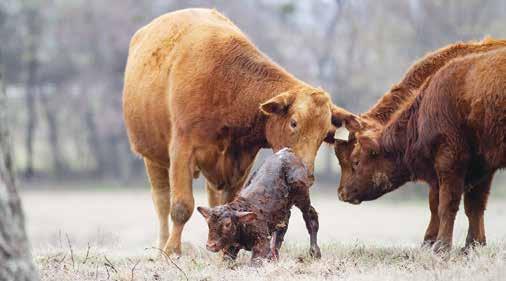
For many cattle producers, calving season is underway, which means an abundance of sleepless nights as calves hit the ground around the clock. This tiring and stressful season is a great time to discuss mental health.
Proper planning supports healthy calves, but it also benefits producers –both physically and mentally – when dealing with the stresses of the calving season.
On Feb. 6, the Beef Cattle Research Council (BCRC) hosted a podcast featuring Cynthia Beck, a provisionally-regis-
BCRC offers tips for reducing stress during calving season
tered psychologist and cattle rancher in Saskatchewan and volunteer director for Sask Ag Matters Mental Health Network.
Beck notes taking the time to prepare for the busy season is well worth it.
“Many producers, myself included, run into a tough time at calving, and I think most of us attribute the difficulty to stress and exhaustion. Yet not many producers know there are things we can do to proactively help ourselves get through calving while maintaining both our physical and our mental health,” she explains.
During the podcast, Beck describes how her and her husband manage a 400head cow herd in southern Saskatchewan.
“Taking time to be prepared can decrease a lot of the stress and workload during this busy season,” she says.
Livestock production is seasonal, and with each season, a specific part of the operation’s production system is completed, bringing new challenges and stressors for producers.
Self-maintenance
Self-maintenance may not be at the forefront of many producers’ minds as they prepare for and navigate their way through


Austin Snook • 307-290-2161
Taylor Snook • 307-290-2273
Craig Deveraux • 307-746-5690
Dan Catlin • 406-671-7715
Clint Snook • 307-290-4000
Cheyenne Seymour • 605-641-0638
Casey Sellers • 307-217-2614
Jim Forbes • 307-351-5932
Tye Curuchet • 307-351-8666
Daniel Escoz • 307-217-1440
Kade Kinghorn • 307-620-0525
"From the ring, to the video, and in the country, we market your livestock the competitive way."
calving season.
However, Beck reminds producers they are the number one asset on the operation, and without them, the machinery doesn’t run and the cows don’t feed themselves.
Beck’s top three selfmaintenance tips for producers to protect their physical, emotional and mental well-being during calving season include staying hydrated, consuming nutritious food and getting an adequate amount of sleep.
“These basic self-maintenance actions will help producers with so many different things during the stress of calving,” says Beck. “When individuals are properly hydrated, they will automatically have clearer thinking, better emotional regulation and improved decision-making skills.”
The same can be said for sleep, as a lack of sleep is linked to increased risktaking behaviors and lower safety behaviors, along with reduced productivity, Beck notes.
Meal planning is another helpful method to reduce stress and anxiety.
“When people feel overwhelmed, the ability to make healthy choices can be compromised, and this becomes even more important when producers run an operation by themselves,” says Beck.
“In this situation, not only are they responsible for feeding the herd, doing herd health, herd mainte-
nance and calving, but they are also responsible for feeding themselves,” she adds.
She suggests producers take time to purchase food or prepare balanced meals in advance that are ready to eat during calving season.
Being proactive
Being proactive is key, however, Beck says it is important to realize one can’t plan for everything.
She points out communication is another key aspect of elevating producers’ wellbeing, particularly if they are working with others.
She says, “It is important to remember there are other people who can help. Being able to speak up and explain areas where you are struggling and need a hand brings benefits for multiple areas of a cattle operation.”
When things do not go as planned, this can create another level of stress for producers, so making the appropriate preparations ahead of time can help minimize calf losses and reduce the stresses for those involved during this busy season.
Sometimes help isn’t just needed for the herd, so when the stress of calving season becomes overwhelming, Beck suggests reaching out to the community or local professionals for mental health support.
Melissa Anderson is the editor of the Wyoming Livestock Roundup. Send comments on this article to roundup@wylr.net.


Mary Irene Benson sadly left us on Feb. 17, at the age of 93 at Hospice of Laramie.
Mary was born Oct. 8, 1930 in Laramie to Bernard John Irene and Carrie Mae (Frise) Irene.
With the loss of her mother at eight months of age, Mary and her two older sisters were raised by their father with the help of their grandma and aunts. As young girls, they spent many summers at their Uncle Nels Irene’s ranch in Leo learning the true cowboy way of life from their Irene cousins. Mary graduated from Laramie High School in 1948, and then attended
Three running age
ewes brought a total of $1,275, at an average of $425 per head, and five head of bred brokenmouthed ewes brought $1,700, at an average of $340 per head.
“The Second Annual Wyoming Bred Ewe Sale had limited offerings, but still shows great promise for young and new sheep producers looking for
affordable, low-risk entry to the industry, while providing an additional marketing option for existing sheep producers,” said WWGA Executive Director Alison Crane.
“For 2025, WWGA will be looking for larger volumes of yearling to broken-mouthed bred ewes to add to the consignment, while maintaining the purebred consignments.”
Hannah Bugas is the managing editor of the Wyoming Livestock Roundup. Send comments on this article to roundup@wylr.net.
On March 1, the U.S. Environmental Protection Agency (EPA) announced finalized amendments to the Risk Management Program (RMP) to further protect at-risk communities from chemical accidents, especially those located near facilities in industry sectors with high accident rates.
The Safer Communities by Chemical Accident Prevention Rule includes EPA’s most protective safety provisions for chemical facilities in history, requiring stronger measures for prevention, preparedness and public transparency.
The rule protects the health and safety of all communities by requiring industry to prevent accidental releases of dangerous chemicals which could otherwise cause deaths and injuries, damage property and the environment or require surrounding communities to evacuate or shelter-in-place.
The final rule includes revisions to improve chemical process safety, to assist in planning, preparing for and responding to accidents and to increase public awareness of chemical hazards at regulated sources.
The rule requires regulated facilities to perform a safer technologies and alternatives analysis, and in some cases, facilities will be required to implement reliable safeguard measures as practicable. This new requirement is expected to reduce the frequency and severity of accidents.
The final rule covers all 11,740 regulated RMP facilities across the country and contains more rigorous requirements for a subgroup of facilities that are more accident-prone and pose the greatest risk to communities.
the University of Wyoming (UW). In 1950, she married Don Sims of McFadden, where they lived and ranched for many years.
From this marriage three children were born – Denise, Scott and Olin. Mary enjoyed the ranch life and helped work cattle and perform other ranch work, but she especially enjoyed running the swather during haying season.
When this marriage ended in divorce, Mary moved to Cheyenne, where she worked for Farm Credit Services of America for several years. Mary transferred to the Casper branch office,
living in Casper for several more years before moving back to Laramie.
There, she went to work at the UW 4-H Office, later transferring to the UW Vet Lab where she retired.
In November of 1987, Mary married Don Benson, and they spent 34 wonderful years together. They enjoyed their retirement by spending time at their cabin in Boulder Ridge, visiting with friends and enjoying the outdoors. They also liked to jump in the car and go for a drive in the afternoons to Albany or Woods Landing.
Mary was active in the
Albany County Cattlewomen organization for many years, volunteering on various committees. She received the Lifetime Member Award in 2021 for her service.
Mary was preceded in death by her parents, husband Don Benson, son Olin Sims, granddaughter Jennifer Jones, grandson Cody Drummond, stepdaughter Janet Benson, sisters Adrienne Irene and Bernice Fluty, niece Susan Fluty, nephew John Cowdin and two infant grandchildren.
She is survived by her children Denise (Larry) Loose of Kimball, Neb.;
Scott (April) Sims of McFadden; stepson Jay (Pam) Benson of Laramie; stepdaughter Jane Drummond of Cheyenne; grandsons Shanon (Melinda) Sims, Tyler (Elise) Sims, Josh Benson and Spencer (Teal) Benson and granddaughters Carrie Jones, Kendra Sims (Josh) Keller and Carrie (Brandon) Schimelpfenig. Mary is also survived by 14 great-grandchildren.
Graveside services will be held at Greenhill Cemetery on June 21 at 11 a.m.
Donations may be made to Hospice of Laramie, 1754 Centennial Drive, Laramie, WY 82070.








WSGA continued from page A1
with the budget, but they have worked vigilantly to support and reject legisla-
tion relevant to Wyoming’s ag and natural resource industries.
WSGA-supported bills pass Magagna noted WSGA brought two bills forward, both of which were “cleanup” to a lot of work
ANNUAL PRODUCTION SALE / FRIDAY, MARCH 29, 2024
1:00 PM / AT THE RANCH NEAR BANCROFT, IDAHO
OFFERING 60 REGISTERED YEARLING BULLS
[Negative BVD-PI Tested, Performance Tested, Fertility Tested and PAP Tested]
25 HOME RAISED AND SIRE IDENTIFIED COMMERCIAL YEARLING HEIFERS
5 REGISTERED FLECKVIEH & FLECKVIEH X RED ANGUS YEARLING HEIFERS
1 DRAFT HORSE TEAM
the association did last year on state lands.
“The two bills we had this year were relatively minor, and they both passed without any problem,” he stated. “They were some of the first bills to be forwarded to the government.”
and ranchers.” Magagna further shared, of the handful of bills, there was only one WSGA became heavily involved in opposition to.
posed for addition to the sage grouse core area,” Magagna said
He explained this bill would have done away with property taxes on any value of land up to $1 million and would have instituted a two percent increase in sales tax.
SUPERIOR
PAP TESTED & PROVEN ANGUS / FLECKANGUS / FLECKVIEH
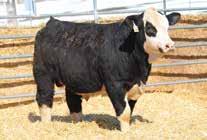
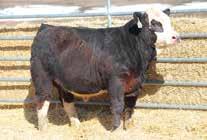
Dirk & Marnie Johnson
Dirk: 208-390-6619 / Marnie: 208-540-2697
2055 Ivins Road • Bancroft, ID 83217 simroot57@yahoo.com

Call or email to join our mailing list. Stay tuned to website for pictures & videos. www.verticaledgegenetics.com
He explained one of these bills provides more flexibility for submitting a lease renewal, allowing the director authority to provide a lessee with 30 additional days if the lease hasn’t been renewed by the expiration date.
The other bill provides the date of the postmark on a renewal application or annual payment shall be deemed the date it was received rather than the date it was actually delivered to the office.
“The other thing we have provided is, on lease renewals, there was some antiquated language in the statutes about how payment could be made. It didn’t allow for the use of a credit card, and we have removed this so they now have the flexibility to accept credit card payments for lease renewals or lease applications,” Magagna said.
Property bills
remain top priority
In addition to the budget, Magagna noted property bills have been a high priority in the Wyoming Legislature, with 23 property bills initially introduced.
“We are down to about four or five now that are still moving forward, all of which are focused on providing property tax relief to residential homeowners,” he explained. “None of them have any impact on the way our ag land and facilities are taxed, but several of them, if passed, would provide some potential tax relief for farmers

“While there may be pros and cons to this, it was our feeling this legislation needs far more research to determine what the implication of the sales tax would be on different industries and across different counties,” he stated.
Natural resources, land ownership and wildlife bills get attention
Magagna noted several other bills have held WSGA’s attention at the state level, including the role of the federal government in natural resource management, foreign land ownership in Wyoming and sage grouse conservation.
He said he believes most of the natural resources legislation introduced has been a result of the Rock Springs Resource Management Plan and noted there have been several that have moved forward.
“One of them outlines support for state and local governments being more involved in federal land processes in the state, and the other bill says if there is a federal order or regulation related to resource management on federal land the government determines is not compliant with the law, no state or local agencies have any obligation to comply or work with the federal government in the application of the particular provisions found to be in violation of the statute,” he explained.
Magagna continued, “Another area which has gotten quite a lot of attention were a few bills introduced – I believe one is still moving forward – regarding foreign ownership of land in Wyoming.”
He explained one of these was an extensive bill specific to ag land, which provided there cannot be any ownership of ag land in the state of Wyoming by any foreign country, and any nation that did acquire ag land would have to put it to non-ag use in five years or they would lose ownership of the land.
Additionally, Magagna touched on the Sage Grouse Implementation Team (SGIT) and the federal government’s sage grouse regulation revisions.
He shared he believes SGIT became more aggressive at remodeling Wyoming’s sage grouse plan in an effort to get ahead of revisions happening at the federal level.
“It caught everyone by surprise, and they, by their own submission, didn’t do an adequate job of making landowners aware their land was being pro-
“It caused quite a bit of consternation, so SGIT pulled back and made some changes,” he continued. “But, this legislation will provide if there are any proposed changes to sage grouse habitat, the public needs to be notified and given a chance to provide public comment.”
HB60 provides a challenge
Lastly, Magagna shared one of WSGA’s highest priorities and biggest challenges during this legislative session has been House Bill (HB) 60, Excess wildlife population damage amendments.
“For the past 10 to 20 years, the Wyoming Game and Fish Department (WGFD) has allowed wildlife populations, particularly elk populations, to far exceed the department’s own population goals they set for certain areas,” he stated.
“This is causing major impacts on landowners, where a lot of producers have had to reduce their livestock herds significantly or buy additional pasture and hay,” he added.
Although WGFD has been more aggressive in their efforts over the past two years, Magagna noted the current law doesn’t adequately reimburse landowners or properly incentivize the department to continue removing excess elk.
He admitted, “The bill has struggled. We got it out of the House with a few acceptable amendments, then it went over to the Senate and was the only bill of those which came from the House that had not been introduced in the Senate.”
He explained WSGA worked tirelessly to ensure the bill was introduced, and it was then assigned to the Travel, Recreation and Wildlife Committee.
“In the end, they did move the bill forward on a four to one vote, but because of some concerns expressed by others that it will cost WGFD a lot of money, they added an appropriation of $5 million,” he said. “This is not something WSGA or WGFD asked for, and unfortunately, I am not sure if it was done to help WGFD or in the hopes of killing the bill because it will move to the Appropriations Committee and they are busy with the budget.”
However, Magagna assured meeting attendees he has not given up the fight and is still urging the committee to support HB60.
Keep an eye out for WSGA’s policy priorities at the federal level in next week’s edition of the Wyoming Livestock Roundup.
Hannah Bugas is the managing editor of the Wyoming Livestock Roundup. Send comments on this article to roundup@ wylr.net.

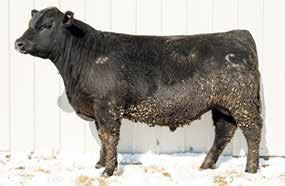
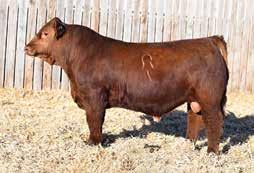
Lot
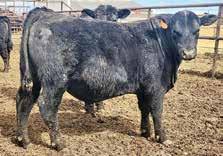
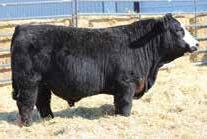
Sire: Mandra Big Valley 20879107
Heifer Bull with extras; Maternal Grand sire Cool proven female producer, great docility & Top 15% for $Maternal, S Summit added more maternal excellence for Top 2% $M. We really work to bring you heifer bulls that aren’t just heifer bulls, their calves need to hit the targets; ADG 4.38
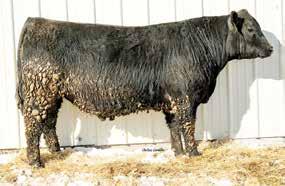
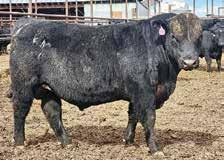
Sitz Accomplishment #20882231 made us a pile of great brood cows. Didn’t make a great claim to fame, just a genuine cow maker. An older pedigree that has longevity, this young dam is a sweetheart. Top 10% CED @+12; Top 5% @-1.7 BW. ABG 4.15
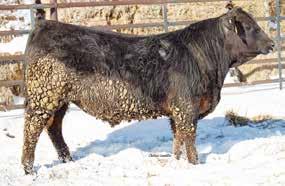
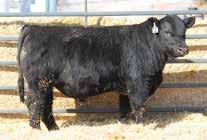
Sire: High Reward #20881046
Good usable Calving Ease; he rings the bell for WW +96 Top 1% & YW +164 Top 2% .Genetically he is more terminal than most of our bulls but he still makes it work for maternal in Top 10% HP +16.8; will add some RE +.80 Top 30%; ADG 3.79
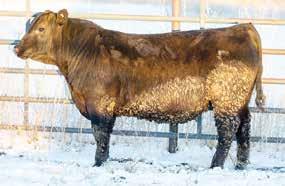
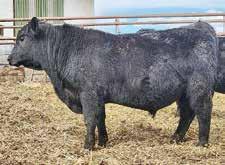
Sire: BJ Surpass #20882227
He brings more carcass, good disposition & maternal. Surpass is in the Top 1% of the breed for $M; 9 yr old GDam; 360 Day calf interval; He’ll make you money Top 5% WW; 10% YW; Top 15% $M & Top 5% $W; ADG 4.17
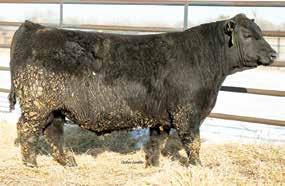
Sire: County Road #20880922
3 year old dam close up to Dateline 1319 donor, Put him on a set of big BW high performance heifers & still won’t cost you sleep Top 3% CED & Top 15% BW; the calves will have added pounds Top 10% @+80 WW & Top 10% YW @ +146; add some Ribeye Top 25% +.85; ADG 4.34
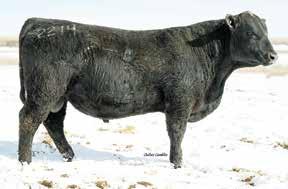
Sire: BAR Cash 707 #20580842
• We love our Innovation cows
• Top 35% YW; Top 4% Docility; Top 10$F
• 1# Gain / 6.37 # Feed
• ADG 3.22 RFI -1.038

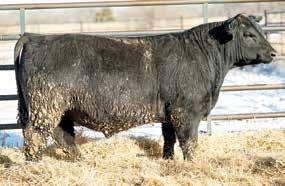
Sire: Mandra Big Valley #20879121
A performance improver Top 25%WW & YW he doubles as a heifer bull +12 CED Top 10%. Grand Sire 789 makes absolutely great females with super dispositions, and udders. His calves will fit the load. ADG 4.38
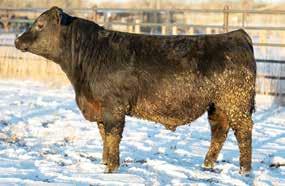
Sire: Home Town #20880969
Big time carcass bull, Top 10% for Marb; Top 10% RE; Perfect heifer bull Top 3% CED & Top 1% BW; Ideal for Hereford heifers or Heifers who need more carcass; Heifer Preg Top 20%; Great production Value’s Top 25% $F; Top 10% $G; Top 15% $B & $C; ADG 4.89
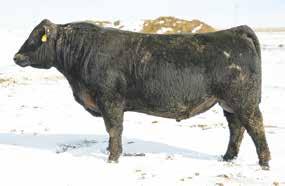
242
Sire: McEffective 20580841
• Top 35% WW; Top 20% HP
• Top 25% Docility
• 1# Gain / 7.02# Feed
• ADG 3.64 RFI.+0.469




Veterans Affairs, Interior, Commerce and Justice, as well as the EPA and a few other agencies.

Congress will then have to turn their attention to funding the rest of the government by the March 22 deadline to secure funding in a second package which is expected to include spending for the Defense Department, Homeland Security, State Department and Health and Human Services.
Lawmakers must pass all 12 appropriations bills before April 30 to avoid one percent cuts across the board.
Ag leaders speak out
According to a press release on March 4, the National Cattlemen’s Beef Association (NCBA) called on lawmakers to pass the minibus appropriations package announced by Congressional leadership on March 3.
The bill prevents a disastrous government shutdown and provides support for several key cattle industry priorities.
“While this legislation is not perfect, it advances a number of priorities impor-
continued from page A1
tant to cattle producers, including critical investments in electronic animal identification tags for producers and strength oversight of lab-grown protein,” says NCBA President and Wyoming Rancher Mark Eisele.
“Further, a government shutdown would unnecessarily harm farmers and ranchers by restricting their access to federal personnel, essential market information and delaying access to critical disaster assistance programs,” he adds. “We urge Congress to avoid a shutdown by passing this important legislation.”
During the Senate Ag Committee’s Oversight Hearing on Feb. 28, Sen. Raphael Warnock (D-GA) asked Ag Secretary Tom Vilsack what consequences a possible government shutdown would have on USDA and the U.S. ag industry, notes a Brownfield Ag News article released the same day.
Vilsack notes consequences may include producers being unable to secure a loan, receive agriculture risk coverage and price loss coverage payments, participate in a disaster assistance program and/or sign a conservation contract. Additionally, Supplemental Nutrition Assistance Program (SNAP) recipients may not be able to receive SNAP resources.
Vilsack further notes researchers might lose millions of dollars of work with a lab shut down and the U.S. Forest Service would not be able to let people enjoy resources.
Vilsack emphasizes when Congress can’t fund the government, there are huge consequences.
“This is the fourth time we’ve had to spend staff time planning for a shutdown,” he says. “Interestingly enough, timing of the shutdown depends on who gets characterized and in what category in terms of the workforce. It is an extraordinary waste of time.”
During the hearing, Warnock reminds the committee a lapse in funding would harm farmers, their families and women and children relying on essential services and programs.
The next step
On March 6, the House of Representatives passed a package of six spending bills, using a fast-track process, known as suspending the rules which required a higher two-thirds majority to pass, with a vote of 339 to 85, sending legislation to the Senate days ahead of the partial government shutdown deadline, according to USA Today
The House of Representatives passed the $460 billion government funding deal needed to fund the government on a longterm basis with 207 Democrats and 132 Republicans throwing their support behind the measure.
The bill now heads to the Senate, where it is also expected to pass and later head to President Biden’s desk for his signature by the end of this week.
Although the final product was passed with a bipartisan compromise, both Republican and Democratic lawmakers claimed their own victories from the spending package.
Melissa Anderson is the editor of the Wyoming Livestock Roundup. Send comments on this article to roundup@wylr.net.
Thousands of milk producers across the country, including approximately 450 producers in Arizona, Colorado, Montana, New Mexico, Utah and Wyoming, will receive surveys from the U.S. Department of Agriculture’s National Agricultural Statistics Service (NASS), as the agency collects information for the 2024 April Milk Production Survey.
“The dairy industry is an important component of the Mountain Region’s agricultural economy, and it is crucial for all involved to have access to accurate data,” said Rodger Ott, director of the NASS Mountain Regional Field Office.
NASS conducts the Milk Production survey every January, April, July and October. The survey asks producers to provide the number of milk cows in their herd, cows milked and total milk production for the first day of the month. This survey also collects information on hay purchased to feed the dairy herd.
By participating in the survey, milk producers can ensure NASS provides timely, accurate and useful data all sectors of the U.S. milk industry can use to make sound business decisions.
“At NASS, we have a strong commitment to respondent confidentiality,” Ott said. “We are required by law to protect the privacy of all responses and publish data only in aggregate form, ensuring no individual producer or operation can be identified.”
Survey results will be published in the quarterly Milk Production report released on April 22. All NASS reports are available at nass.usda.gov/publications/.
For state-specific questions, contact USDA NASS Wyoming State Statistician Leslee Lohrenz at 800392-3202.
The American Sheep Industry Association podcast hosted International Wool Textile Organization (IWTO) Secretary General Dalena White on Dec. 15, 2023, where she discussed the sustainability of wool textiles with Host Dr. Jake Thorne, sheep and goat program specialist at Texas A&M AgriLife Extension.
IWTO is the recognized global authority for standards in the wool industry, representing the interests of the wool textile trade since 1930 including 60 percent of the total wool production pipeline.
White has 20 years of experience in textile manufacturing and sourcing and began her career with IWTO in 2016.
She works closely with retail operations and has been involved with brand development and product design in wool, finding sustainable solutions for designers who want to work with wool in South Africa.
“The wool industry is dedicated to making wool’s environmental qualities more understandable and accessible,” White says. “IWTO’s membership encompasses all stages of the wool textile pipeline. From farm to retail, through research, education and knowledge sharing, IWTO ensures a sustainable future for wool.”
Today, IWTO continues to play a vital role in promoting wool sustainability and sheep welfare.
Benefits of wool
Wool can be used for different purposes, depending on the coarseness of the fiber and on other characteristics such as fiber length and crimp.
Very fine wool is primarily used for clothing, while coarser wool is used in carpets and furnishings.
“Wool’s smart structure has evolved along with sheep to produce an active fiber that naturally wicks moisture, resists odor and reacts to changes in the body’s temperature so individuals stay comfortable in all temperatures,” White says.
Wool garments often last longer than those of other fibers due to garment quality and, potentially, because of its lower washing frequency.
“Wool has many natural properties proven to be beneficial for health, wellness and comfort,” she points out. “These range from ultraviolet protection to sound reduction and the absorption of toxic chemicals in living spaces. There is also wool’s natural breathability and amazing technical ability to control humidity levels. This is all due to the unique design of wool fiber.”
IWTO research supports wool garments work with the layer of air between skin and garment to manage humidity and keep wearers comfortable.
Wool fibers are the
most hygroscopic of common apparel fibers and can absorb and release 50 percent more moisture vapor than cotton and 30 times as much as polyester.
Wool facts
According to IWTO, individuals interested in sustainability naturally want to understand how wool affects the world and how to make informed choices accordingly when purchasing wool textiles.
White says, “Wool is a clear and simple example of the circular economy in action, both in terms of raw material production and its use in the textile industry.”
White further notes this perfect circular economy was originally designed thousands of years ago and it is as robust today as ever.
“In the apparel industry, many eco-friendly ini-
tiatives focus on very similar sustainability strategies, and recent data demonstrates wool brings multiple environmental benefits through the post-use phase of apparel, which is very relevant to today’s society,” she states.
“Therefore, wool should be at the top of a list of materials representing best practice for a circular economy, and IWTO works hard to promote its benefits and positive contribution to policy makers, industry and the general public,” she adds.
White notes when a wool item finally reaches the end of its useful life, it can be recycled to make new yarn or be discarded onto the compost heap, where it naturally biodegrades, putting nutrients back into the soil.
She further notes, “Wool does not contribute
to microplastic pollution. If it’s synthetic, the microfiber breaks down into smaller and smaller fragments and is called microplastic.”
“As a naturally durable fiber, wool offers many opportunities to keep a wool product in circulation for a relatively long period of time, thereby reducing the product’s environmental footprint,” she describes.
Traceability is of high importance along the wool supply chain as brands, retailers and consumers want to know where their wool comes from and all major wool growing countries offer different traceability systems.
The benefits continue
The most widely accepted tool for evaluating the environmental impacts of a product is Life Cycle Assessment (LCA).
Developed in the 1980s, LCA has become the most widely used tool to estimate the environmental performance of a product, measuring the use of natural resources, greenhouse gas emissions and other impacts made during a product’s lifespan and plays an important role in establishing comprehensive environmental measurements for products and materials.
In evaluating wool, LCAs typically assess four lifecycle stages – on farm, processing and manufacturing, use phase and end of life.
“The LCA method aims to avoid a narrow approach by taking into account all of the stages of a product’s life from cradle-to-grave and evaluating all important categories of environmental impact relating to resource
use and emissions to air, water and land,” White says. “LCA is a valuable tool for identifying ‘hotspots,’ monitoring changes in impacts over time and reporting the effectiveness of actions taken to improve environmental outcomes.”
The wool industry is a strong supporter of using robust LCA methodology as a key part of the environment assessment process, and the IWTO has developed guidelines for those who wish to conduct an LCA.
White concludes, “Whether they are focused on growing, processing, brokering, spinning, weaving or retailing, wool businesses are welcomed at IWTO.”
Melissa Anderson is the editor of the Wyoming Livestock Roundup. Send comments on this article to roundup@wylr.net.

Altenburg

Baty Livestock
Spring and Fall Heifer Sales batylivestock@gmail.com Facebook/batylivestock
Black Summitt Cattle
The Quin LaFollette Family Bulls sell Friday, March 15, 2024 at Powell, WY • 307-899-3553
Bridle Bit Simmentals
All-Terrain Bull & Female Sale
Monday, March 18, 2024 at Walsh, CO
Chad Cook, 719-529-0564
Campbell Simmental Part of High-Altitude Bull Sale
Saturday, March 23, 2024 at LaGarita, CO Robert, 970-749-9708
Dilka Cattle Yearling and 18-mo-old bulls, PT Briggsdale, CO • 970-396-8791 thedilkas@aol.com
Far Out Cattle Ranch
Jerrid Brisendine, 719-353-1747
All-Terrain Bull & Female Sale Monday, March 18, 2024 at Walsh, CO
Hill Brothers Livestock Bulls and Females always available. Paul, 417-849-6851 Facebook.com/hillbrotherslivestock
Jay Hill Family
Simmental & SimAngus bulls Private treaty • 970-520-1555 jaywhill@kci.net
Mari Simmental Breeders
Ron Mari • Holyoke, CO Selling black % & PB ET bulls 970-520-7333 for EPDs & data
Phoenix Cattle Co. Fleckvieh Simmentals & Fleckvieh/Angus seedstock Roger Schager • 303-550-5592
Cody Pitt
Black & Red bulls selling private treaty at Hotchkiss, CO 970-778-9267 • cmp5792@aol.com
Rains Simmental Bulls of the Prairie sale
Saturday, March 9, 2024 at Oakley, KS Mike Rains, 785-672-7129
Russell’s Reflected R Ranch
Top bulls for sale private treaty Call Curt, 719-469-2857 for data or go to www.ReflectedRRanch.com
T-Heart Ranch
High-Altitude Bull Sale, March 23, 2024 719-850-3082 or 719-850-3083 shane@t-heartranch.com

For sale dates, show details and event highlights, go to: wwwColoradoSimmental.com, e-mail colosimmental@gmail.com or follow us on Facebook
March 9-11 7 Triangle 7 Cattle Co., LLC Artificial Insemination Clinic, Akron, Colo. For more information, visit 7triangle7.com or call 970-481-3921.
March 11
March 12
University of Nebraska-Lincoln Extension Webinar Series, 6:30-7:45 p.m., online. For more information or to register, visit go.unl.edu/feedingthecow
University of Wyoming Extension Fremont County Private Pesticide Applicator Education Program, 9 a.m.-12 p.m., Dubois City Hall, Dubois. For more information, e-mail rfisk1@uwyo.edu or call 307-332-2363.
March 12 Angus University Webinar, 6 p.m., online. For more information or to register, visit angusconvention.lt.acemlnb.com
March 14
March 14
March 14-17
March 16
March 16-17
March 8-25
University of Nebraska-Lincoln Extension Webinar Series, 6:30-7:45 p.m., online. For more information or to register, visit go.unl.edu/feedingthecow
University of Wyoming Extension Natrona County Private Pesticide Applicator Education Program, 12-4 p.m., Agricultural Resource and Learning Center, Casper. For more information, contact Ann Cormican at acormican@natronacounty-wy.gov or call 307-235-9400.
Cache Valley Cowboy Rendezvous, Cache County Event Center, Logan, Utah. For more information, visit cvcowboy.org
Natrona County Cow-Belles Annual Gala, Hilton Garden Inn, Casper. For more information, e-mail nccowbelles@gmail.com.
Gun Show, Weston County Senior Citizens Center, Newcastle. For more information, call Mike Novotny at 253-678-4825.
Dooley Auction Firearms, Ammo, Coins and Collectibles Online Auction, 406-696-0412, dooleyauction.com
March 9 MTR Cattle Company Bull Sale, Buffalo Livestock Marketing, Buffalo, 307217-0408, 307-217-0409, mtrcattle.com
March 9 Carlson Equipment Annual Consignment Auction, Carlson Equipment, Riverton, 307-856-8123, carlsonequipment.com
March 11 P\T Livestock Annual High-Country Genetics Performance Bull Sale, P\T Livestock Feedlot, Riverton, 307-709-8351, 307-709-8361, ptlivestock.com
March 11 Veseth Cattle Company 18th Annual Sale, Glasgow Stockyards, Glasgow, Mont., 406-658-2504, vesethcattleco.com
March 11 Pine Coulee Bull Sale, Wagon Box Ranch, Hardin, Mont., 406-855-2832, 406-780-1230, pinecoulee.com
March 11 Spring Cove Ranch Bull & Female Sale, at the ranch, Bliss, Idaho, 208-3208803, springcoveranch.com
March 12 Loosli Red Angus 50th Bull Sale, at the ranch, Ashton, Idaho, 208-652-3303, 208-227-3779, 208-351-3333, loosliredangus.com
March 12 Rayford J. Anderson Ranch Auction, Harding County Memorial REC Center, Buffalo, S.D., 605-347-5110, 605-347-9293, casteelauction.com sdauctions.com
March 13 Heart River Ranch Annual Production Sale, the feedlot, Belfield, N.D., 701575-8145, 701-290-9745, heartrivergenetics.com

March 13 Sitz Angus 22nd Annual Spring Bull Sale, at the ranch, Dillon, Mont., 406683-5277, 406-581-9153, 208-670-2364, sitzangus.com
March 13 Roller Auction Construction & Contracting Equipment/Attachments Internet Only Auction, 303-289-1600, rollerauction.com/wyoming
March 14 Raile Cattle Company Annual Production Sale, at the ranch, St. Francis, Kan., 785-332-8399, 785-772-1141
March 15 Black Summit Cattle Annual Bull Sale, Black Summit Cattle Sale Facility, Powell, 307-899-3553, 307-899-1764, blacksummitcattle.com
March 15
Montana Performance Bull Co-op with Basin Angus Ranch Annual Bull Sale, Midland Bull Test Sale Facility, Columbus, Mont., 406-780-1219, 406321-2470, 406-350-0350, basinangus.com
March 15-31 Dooley Auction Vehicles, Fusion Equipment, Pipe and Fittings Online Auction, 406-696-0412, dooleyauction.com
March 16
March 16
Hancock Livestock Eighth Annual Angus Bull Sale, Buffalo Livestock Marketing, Buffalo, 307-250-6900, hancocklivestock.com
Triangle J Ranch and Altenburg Super Baldy Ranch LLC Colorado Select Bull Sale, Centennial Livestock Auction, Fort Collins, Colo., 970-481-2570, 308-627-5085, altenburgsuperbaldy.com, trianglejranch.com
March 16 Bill Erdman, Inc. Estate Auction, Torrington, 308-436-4056, helbergnussauction.com
March 16
March 16
March 16
Gnerer Angus Annual Bull Sale, at the ranch, Olive, Mont., 406-498-6113, 406-935-3183, gnererangus.com
Fifh Annual Intermountain Online Classic Car Auction, 406-698-7930, classiccarauction.us
Diamond Peak Cattle Company Diamonds in the Rough Bull Sale, Riverton Livestock Auction, Riverton, 970-326-8620, diamondpeakcattle.com
March 21 Carter Cattle Company 25th Annual Production Sale, at the ranch, Pingree, Idaho, 208-390-4811, 208-681-9711, 208-681-8859, cartercattleco.com


Throughout the past 50 years of the Saratoga and Platte Valley Chamber of Commerce’s existence, outstanding volunteers have received the coveted “Chamber Pot” in recognition of their dedication and hard work.
Recently it was asked, “How did the award get the name ‘Chamber Pot’ and how was the tradition started?”
If this writer’s memory serves him right, this is how it all happened.
Shortly after the chamber was organized in 1974, several members of the initial committee were meeting at a local bar for a discussion as to what direction the chamber should take.
Someone suggested outstanding volunteers be recognized for service and some type of award be presented, to which the smart aleck of the group quipped, “How can we pay for such an award when we are so poor we don’t have a pot to pee in or a window to throw it out of.”
From this comment, the newly hired chamber manager contended she would indeed buy a pot – which turned out to be a thunder mug, aka as a bedpan – and have volunteers fill it with service, dedication and hard work, with the hardest working member to be awarded the “Chamber Pot” each year.
How to organize a chamber
In the early 1970s, economic times were tough in Saratoga, Encampment, Riverside and the surrounding area. Merchants
were looking for ways to boost the economy and ease the burden of local civic organizations and the various town clerks who were serving as economic development committees and visitor information correspondents.
A joint effort was needed to band together to promote, develop and expand the valley’s qualities and economy. Three or four merchants – including this writer – met in a local watering hole and decided to contact all of the other business men and women to form a united group to put this area on the map.
After many personal visits to each place of business, pledges were secured, promises accepted and the chamber founded.
As with any community project, one will find a few “grouches and naysayers” who would pour cold water on any project. During organizational efforts of the chamber, one such person stands out.
A local hotel and bar owner curtly rejected the committee’s efforts to recruit her into the chamber and would dismiss the organizers bluntly and swiftly, along with plenty of harsh words.
Committee members made several calls with the usual response being, “No way would I join your . . . .”
On one trip around town to sign up chamber members, the organizers decided to skip this particular business and head on down the street, to which the hotel and bar owner came running out, shouting, “What is this? Don’t you think I’m good enough to join your blankity blank club?”
Members of the group returned to the business to ask her to join, to which she replied, with a grin, “Hell no!”
This business person was one of the very few who never did join the chamber, and most of us were grateful.
During the middle of this month, the Saratoga and Platte Valley Chamber of Commerce will celebrate its 50th anniversary, and I have been asked to tell how the organization was founded.
Since I’m the last known survivor of the four original organizers, as well as a honorary life member, I’m honored to pass the story along to all of those “new” chamber members.
– Dick Perue
Source: USDA AMS Livestock, Poultry & Grain Market News, Torrington
Source: USDA AMS Livestock, Poultry & Grain Market News, Greeley, CO
National Sheep Summary
As of March 13, 2024
Compared to last week traditional slaughter lambs 2.00 higher, others mostly steady to 10.00 higher. Slaughter ewes steady to 9.00 higher. Feeder lambs not well tested. At San Angelo, TX 9,330 head Sold in a two day sale. No sales in Equity Cooperative Auction. Western Video sold 3010 feeder lambs in California and 1020 slaughter lambs in Oregon. In direct trading slaughter ewes and feeder lambs not tested. 4,952 lamb carcasses traded with no trend due to confidentiality. All sheep sold per hundred weight (CWT) unless specified.
Slaughter Lambs: Choice and Prime 2-3
San Angelo: wooled and shorn 115-150 lbs 170.00-212.00; 150-160 lbs 182.00-184.00.
Ft. Collins: wooled and shorn 100-130 lbs 240.00-260.00; 150-180 lbs 185.00-210.00.
South Dakota: wooled and shorn 115-140 lbs 195.00-230.00; 150-160 lbs 191.00-195.00.
Billings: wooled and shorn 100-135 lbs no test. Equity Coop: no sales.
Slaughter Lambs: Choice and Prime 1-2
San Angelo: hair 40-60 lbs 270.00-307.00, few 315.00; 60-70 lbs 270.00-300.00, few 301.00-306.00; 70-80 lbs 250.00288.00; 80-90 lbs 242.00-280.00; 90-100 lbs 236.00-270.00, few 274.00-278.00. wooled and shorn 65 lbs 274.00; 81 lbs 260.00; 90-100 lbs 232.00-274.00.
Ft. Collins: wooled and shorn 70-80 lbs 255.00-262.00; 80-90 lbs 249.00-255.00. hair 59-60 lbs 275.00; 60-70 lbs 295.00302.50; 70-80 lbs 267.50-282.50.
South Dakota: wooled and shorn 44 lbs 255.00; 53 lbs 270.00; 60-70 lbs 280.00-295.00; 73 lbs 300.00; 93 lbs 300.00. hair 60-70 lbs 255.00-275.00; 88 lbs 240.00; 90-100 lbs 237.50-245.00.
Billings: no test.
Slaughter Ewes
San Angelo: Good 3-4 (very fleshy) hair 70.00; Good 2-3 (fleshy)100.00-114.00, hair 88.00-114.00; Utility and Good 1-3 (medium flesh) hair 105.00-126.00; Utility 1-2 (thin) hair 90.00108.00; Cull and Utility 1-2 (very thin) hair 88.00; Cull 1 no test.
Ft. Collins: Good 3-4 (very fleshy) 77.50-107.50; Good 2-3 (fleshy) 65.00-115.00; Utility 1-2 (thin) no test; Cull 1 no test.
South Dakota: Good 3-4 (very fleshy) 71.00-110.00; Good 2-3 (fleshy) 80.00-105.00, hair 110.00; Utility 1-2 (thin) 61.0090.00; Cull 1 25.00-40.00.
Billings: Good 3-4 (very fleshy) no test; Good 2-3 (fleshy) no test; Utility 1-2 (thin) no test; Cull 1 no test. Feeder Lambs: Medium and Large 1-2 San Angelo: hair 30-40 lbs 270.00-288.00; 40-50 lbs 270.00282.00.
Ft. Collins: no test.
South Dakota: 49 lbs 305.00; 61 lbs 244.00; 70-80 lbs 238.00248.00; 80-90 lbs 246.00-250.00; 94 lbs 233.00; 100-110 lbs 220.00-231.00; 120-130 lbs 208.00-216.00.
Billings: no test.
Replacement Ewes: Medium and Large 1-2 San Angelo: yearling hair 90-120 lbs 152.00-178.00/cwt; young hair 90-140 lbs 130.00-146.00/cwt.
Ft. Collins: yearlings 102 lbs 172.50/cwt.
South Dakota: no test.
Billings: no test.
Sheep and lambs slaughter under federal inspection for the week to date totaled 41,000 compared with 40,000 last week and 35,000 last year.
Source: USDA AMS Market News, San Angelo, Texas
National Wool Review
As of March 1, 2024
Domestic wool trading had no confirmed trades reported this week. Prices reflect trades FOB warehouse in original bag or square pack, bellies out, some graded, and 76 mm or longer. No allowance made for coring, freight, or handling fees at the warehouse level to reflect net grower prices. Wools shorter than 75 mm typically discounted .10-.20 clean. Classed and skirted wools usually trade at a .10-.20 premium to original bag prices.
As
Compared
Source: USDA Livestock, Poultry & Grain Market News, Worthing, SD
Montana Hay Summary
As of March 1, 2024
Compared to last week: Hay sold fully steady. Hay sales were light this week, but heavier than the week prior. Supplies of utility and fair quality hay remain very high. Some ranchers have started to buy loads of hay incase of drought. Several loads of hay were purchased this week for that purpose. High test hay is very short and buyers continue to search for high test hay, particularly for dairy use. The best demand for feeder quality (utility and fair) hay remains around $150.00-165.00/ton delivered. Demand for straw is light as heavy straw supplies continue to be seen especially in the northern portion of the state. Mild weather and not much snow has kept straw usage low. Single load sales continue to move at steady money from time to time, however many producers have lowered asking prices in an attempt to move volume as supplies remain high. According to the drought monitor 47.30% of the state is in Moderate drought or worse, up 4.58% from last week. 23.26% of the state is in an Severe drought or worse, up 2.25% from last week. 2.36% of the state is in Extreme drought or worse, up 1.01% from last week.
Alfalfa
Alfalfa
Alfalfa
Alfalfa
Source:
Ibendal also explains in a recent webinar hosted by KSU on Feb. 21, “Despite conflicts in Russia, Ukraine and the Middle East, diesel prices were volatile during 2023, but prices are well below what they were prior to the start of the RussiaUkraine war two years ago when oil prices rose to about $135 per barrel.”
“Oil prices throughout 2023 remained in the $70 to $80 per barrel range but did fluctuate about 75 cents a couple of times,” he adds. “But, 2023 prices were at the top end of the five-year price range, while prices entering 2024 were 50 cents below last year.”
He notes challenges facing 2024 might include the world supply concern and the domestic refinery capacity is still constrained.
Current supply
Diesel stocks remain below the typical range from the previous five years.
Stocks of diesel fuel have improved slightly since 2022 but are at the very bottom range of normal supplies.
Refinery capacity in the U.S. remains below preCOVID-19 levels and may
never be at those levels again, so improving the supply of diesel is likely to be a longterm process. Entering 2024, diesel stocks are higher than they were a year ago.
“Current capacity is often utilized at nearly 95 percent, and thus, any hiccup in the refinery system can lead to price spikes,” Ibendahl says.
“The price premium of diesel to gas widened during COVID-19, and the capacity constraints in U.S. refinery systems mean it could take years before the premiums disappears.”
He continues, “The diesel premium reached record levels at the end of 2022, but it did drop every week until July of 2023.”
However, in July, the price premium was actually below historic levels, and the price premium rose from July to November 2023.
“The price premium for diesel has declined slightly, but the current premium of 65 cents is about twice the typical premium range from the previous five years,” he adds.
Outlook
Ibendahl projects diesel prices for the next 12 months
based on the oil futures price and the expectation of the diesel to gasoline premium, concluding diesel prices should decline for the next six months and then rise.
The futures market is indicating steady oil prices, and the diesel premium is expected to follow the trend from 2023 where the premium declined until the summer and then starting increasing again.
“As long as oil stays in the $70 range, diesel prices should remain steady as well. However, the oil market is very volatile and this forecast could change very quickly,” he says.
Diesel prices exhibit some seasonality, peaking higher in the spring and then falling, but its seasonality is not as strong as gasoline, where gas prices rise during the summer due to increased driving.
“However, biodiesel and renewable diesel have a strong potential for a fossil fuel replacement for diesel,” he says. “Biodiesel may be peaking, but renewable diesel looks to have a bright future.”
Melissa Anderson is the editor of the Wyoming Livestock Roundup. Send comments on this article to roundup@wylr.net.
“The price premium for diesel has declined slightly, but the current premium of 65 cents is about twice the typical premium range from the previous five years.” – Gregg Ibendahl, Kansas State University

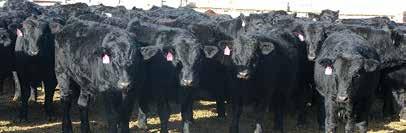





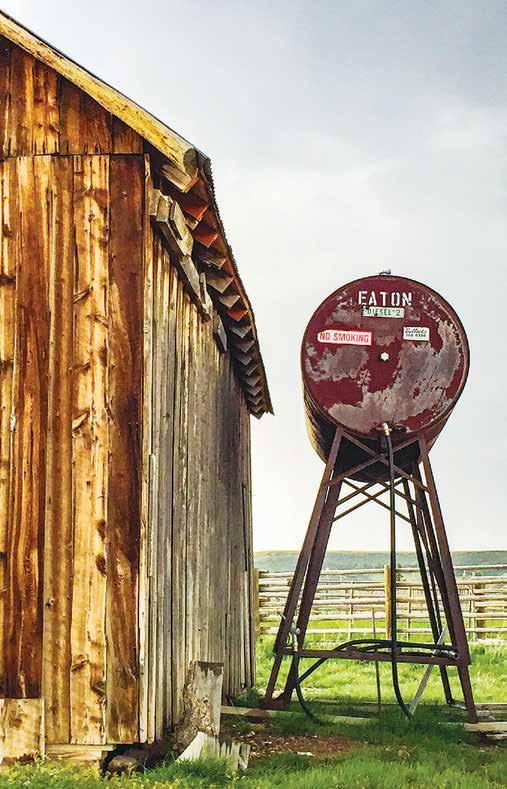







Consignments • Thursday, March 14 • Feeder Special w/ All Class Cattle
LU Ranch – 280 black heifers, 550-600#, two rounds of shots, weaned long time, been on light grow ration.
Hampton Sheep Co. – 200 mixed black, 600-700#, two rounds of shotsl weaned long time, hay fed.
Bill Haun – 130 mixed black, 650-750#, two rounds of shots, weaned Jan. 1.
Frank Deede – 30 mixed BWF, RWF herefords, 500-600#, two rounds of shots, weaned 90 days, light grow ration.
Double Dollar Cattle Co. – 30 black heifers, 500-550#, two rounds of shots, weaned December, on pasture.
Bruce Thurgood – 20 black steers, 700-800#, two rounds of shots, weaned long time.
Martin MacCarty – 23 red heifers, 600-700#, 2 red steers, 700-800#, three rounds of shots, weaned long time.
Hamilton Ranch – 40 black steers, 700#, 15 black hiefers, 650#, two rounds of shots, weaned.
Triple
750-800#, complete vacc,
A squalling snowstorm did not keep many away from this year’s sold-out prime rib dinner, hosted on March 2 by the Green River Valley Cattlemen’s Association (GRVCA) to honor lifetime members, Centennial ranch families and anticipation for the beef industry’s future.
Every year, the GRVCA plans agency discussions, knowledgeable presentations and business meetings on the Friday before and Saturday of the annual banquet, which draws everyone from toddlers to old-timers.
This year’s banquet at the Southwest Sublette Senior Center in Marbleton opened with outgoing GRVCA President Mike Vickrey and incoming President Kristi Wardell, while Treasurer Audra Rouge and Secretary Kim Bright were reelected.
Vice President Walden Campbell of Bondurant couldn’t make the banquet, opting to head home for his grandmother Pat’s 95th birthday.
The evening included longtime favorites of Lucky 7’s donated pistol-rifle raffles and scholarship raffles of Pickaroon Timer’s posts and poles. For the past several years, Rocky Mountain Power Sports has generously donated a kid’s motorbike for the youth raffle.
Guest Auctioneer Tim Sims took bids for dozens of business donations, from delivered alfalfa round bales to local vet services.
Vickrey honored Ranchers Kip and Bonnie Alexander as 2024 Lifetime Members and the Green River Valley Cowbelles did the same, having already named their honorees at their Feb. 24 convention luncheon.
Cowbelles’ retiring longtime Treasurer Terrie Springman welcomed newly elected Treasurer Jenna Montgomery and President Haley Clark’s term runs one more year, with Vice President Hanna McNinch, Historian Karli Christensen, Parliamentarian Sissy Walker and Secretary Marsha Barlow reelected.
Clark named Dianne Boroff as the 2024 Ranch Woman of the Year – the group’s highest honor – and Springman honored Jennifer Rees as a 2024 Lifetime Member. The Springman and Rees families were also recognized as Centennial Ranch honorees.
Barlow read her nomination of Joy Ufford as the 2024 Friend of Ag recipient – another high honor.
One of the best parts of the Cowbelles’ and GRVCA’s meetings and events was seeing how many children were in attendance –a great omen for the future of the Green River Valley’s long tradition of beef ranching in the mountains and high desert.
Joy Ufford is a corresponding writer for the Wyoming Livestock Roundup. Send comments on this article to roundup@wylr.net.
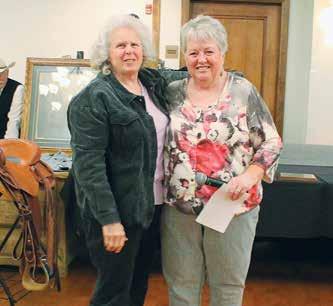
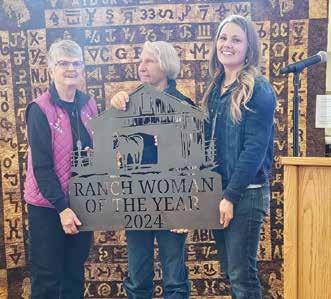
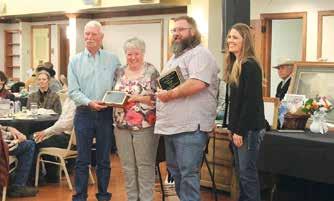
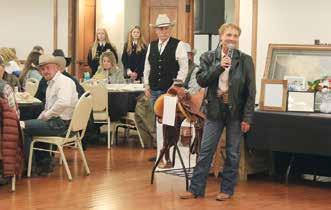

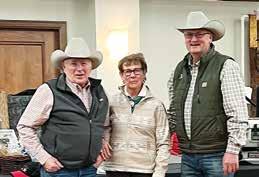









THERMOPOLIS
STEERS
RIVERTON
8 Steer, 446# $355.00
WORLAND
3 Steer, 485# $347.50
ARAPAHOE
21 Steer, 489# $340.00
CODY 7 Steer, 539# $331.00
RIVERTON
10 Steer, 548# $320.00
CODY 5 Steer, 612# $298.00
SHOSHONI
3 Steer, 611# $292.00
ARAPAHOE
5 Steer, 719# $258.50
KINNEAR
7 Steer, 747# $258.00
ROBERTSON
8 Steer, 814# $233.00
HEIFERS
FARSON
1 Bull, 2505# $136.50
ROBERTSON
1 Bull, 1935# $131.50
LANDER
1 Bull, 2480# $130.00
RIVERTON
1 Bull, 2780# $125.00
LANDER 1 Bull, 1960# $123.00
ROBERTSON
2 Bull, 1787# $121.00
ARAPAHOE
10 Heifer, 395# $315.00
KINNEAR
4 Heifer, 540# $315.00
FARSON
14 Heifer, 506# $312.50
ARAPAHOE
12 Heifer, 506#
FARSON
105 Heifer, 630#
KINNEAR
5 Heifer, 670#
41 Heifer, 654#
FARSON
42 Heifer, 713#
5 Heifer, 741#
RIVERTON
2 Heifer, 850#
TUESDAY, MARCH 12 DIAMOND
BRED HEIFERS
Hellyer Ranch- 9 Blk Ang Bred Heifers. Rec 2 rounds Scour Guard 4kc & Virashield 6 VL5. Bred to LBW Popo Agie Angus bulls to calve Mid March-April. High desert & Reputation!
Dennis Horton- 3 Blk Ang Bred Heifers
1000#. Bred to LBW Blk Ang bulls to calve in April. Rec Virashield 6 VL5, Vision 7, Trich Guard & Scour Bos @ preg check. High desert & Fancy!
BRED COWS
Dustin Eaton- 30 Blk Ang Running Age Bred Cows. Bred to Blk Ang bulls to start calving April 1st. Nice, high desert cows!
Dan Bisbee- 21 Blk/BWF Ang Running Age Bred cows. Bred to SO Cattle Blk Ang bulls to start calving May 1st. Rec Virashield 6 VL5 & Clean-Up II this fall. Preg-checked this fall with a close calving range. One brand, one owner. Nice cows!!
Dennis Horton- 17 Blk Ang & AngX Mixed Age Bred cows. Bred to Blk Ang bulls to calve in April. Rec Scour Bos, Virashield 6 VL5, Trich Guard & Vision 7 @ preg check. Nice, high desert cows!
Luke Anderson- 10 Blk Ang Running Age Bred cows. Bred to Blk Ang bulls to start calving April 1st. High desert cows. WEIGH COWS
Dustin Eaton- 35 weighs
SATURDAY, MARCH 16
BULL SALE
START TIME 1:00 PM
Diamond Peak Angus Bulls - 70 Blk Ang 2 yr old virgin bulls
40 Blk Ang Yearling bulls
Calving Ease, High Altitude, PAP tested Black Angus Bulls
80 Blk Ang Strs 550-600#. Rec Vista Once SQ & 7 way @
Northwest Angus Association - 51 Blk Ang Yrling Bulls - Obsidian Angus, Hoggs Angus, Davidson Angus, & WYO Angus. Many Heifer bulls, Top Female & Growth Bulls to round it out! PAP, Semen & BVD Tested, Proven Sires! (1:00 PM)
Contact Fred & Kay Thomas 307-868-2595 or any Breeder