USDA provides 2024 crop outlook
On Feb. 15-16, the U.S. Department of Agriculture held its 100th Annual Agricultural Outlook Forum in Arlington, Va.
Themed “Cultivating the Future,” the two-day hybrid event offered valuable insight into the agency’s expectations for the ag industry over the coming year.
On the first day of the forum, USDA staff presented on the 2024 grains and oilseeds outlook. Corn
Members of the USDA Oilseeds, Feed Grains, Wheat and Rice Interagency Commodity Estimates Committee noted the U.S. corn outlook for 2024-25 forecasts lower production, greater domestic use, increased exports and higher ending stocks.
“The corn crop is projected at 15.04 billion bushels, down about two percent from the prior year’s record. Corn planted area is forecast at 91 million acres, down 3.6 million from a year ago,” the committee stated. “The yield projection of 181 bushels per acre is based on a weather-adjusted trend assuming normal planting progress and summer growing season weather. With beginning stocks up sharply from the prior year, total corn supplies are forecast at a record 17.23 billion bushels.”
Additionally, U.S. corn use is expected to be higher than year-ago levels.
According to USDA, food, seed and industrial-use corn will be slightly higher at 6.8 billion bushels; corn for ethanol is forecast higher at 5.4 billion bushels and feed and residual use-corn will increase one percent to 5.75 billion bushels.

Early calf survival
BCRC discusses key methods to ensure calves have a good start to life
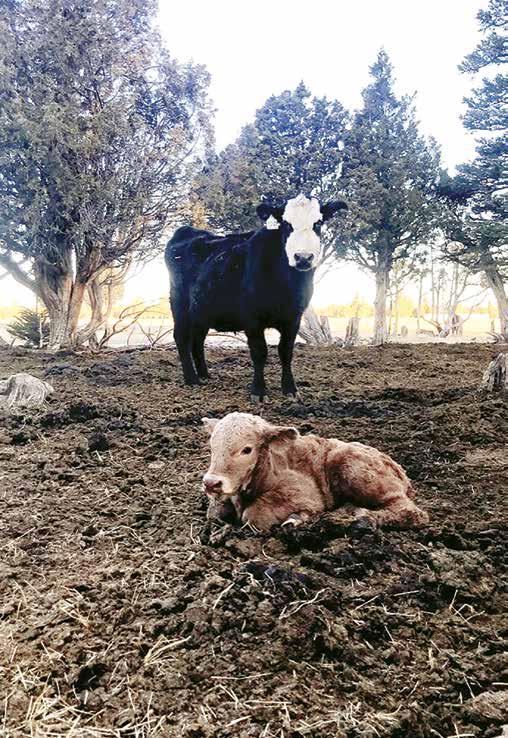
The first 24 hours of a calf ’s life are the most critical, and ensuring calves have a good start to life can make them more productive and profitable at weaning and beyond.
On Feb. 21, the Beef Cattle Research Council (BCRC) hosted a webinar featuring a panel of experts who discussed key methods for calf health management and offered helpful tips to ensure calves have a solid foundation at birth.
The panelists consisted of University of Calgary Faculty of Veterinary Medicine Associate Professor Dr. Claire Windeyer, Shoal Lake Veterinary Clinic’s Doctor of Veterinary Medicine Roger Richard and W.A. Ranches Cow Boss and Activity Coordinator Heidi Bennett.
Early calf survival
Producers should take time to evaluate replacement heifer health, nutrition and reproductive status, which will increase breeding success.
Richard explains multiple methods to ensure calves have a good start to life, including pre-breeding reproductive vaccinations, neonatal processing protocols and neonatal treatment protocols.
Pauley discusses succession planning
Joining and/or taking over the family business is never a decision that should be made lightly, as it can hold great rewards and come with great risks.
Blurred lines between family and business roles and goals create complexities which can result in family-ending conflicts and business disasters.
Wyoming Department of Agriculture Mediation Coordinator Lucy Pauley discussed succession planning at the 2024 Fremont County Farm and Ranch Days held in Riverton Feb. 7-8.
Pauley began the break-out session by identifying succession planning, which is transferring management and decision making from one generation to the next.
She said, “An estate plan deals with the accumulation, preservation and distribution of assets over a person’s life, whereas a succession plan focuses on the shift in a business’s management responsibilities from one person to another.”
Succession planning can also cover the transfer to an individual outside of the family, in the case nobody wants to take over the entity.
Finances
Succession is a family matter and a business decision, and mixing the two realms often means tackling difficult conversations.
“This can be what stops people from
periodical periodical
A Look Inside Please see FIRE on page A17 Please see CROPS on page A10 Please see CALVES on page A8 ® Volume 35 Number 45 • March 2, 2024 The Weekly News Source for Ranchers, Farmers and the Agribusiness Community • www.wylr.net Please see SUCCESSION on page A19
WYLR photo
Protein is critical to a horse’s diet Page A12 Declining dairy heifer numbers may impact milk production Page B3 Wyoming State Forestry provides update to Joint Ag Committee Page B5 Texas A&M University student grows chickpeas in moondust Page B9

The Delivering for America plan is the U.S. Postmaster General’s 10-year strategic plan to review and modernize the nation’s aging network of mail service.
The Postmaster General is selling it as a cure-all for our mail service, to pull the postal system out of financial instability and increase its efficiency and service. But, there are too many issues surrounding the plan to rubber stamp it.
I don’t think this plan does anything to help mail service in rural America, especially in Wyoming, where the U.S. Postal Service (USPS) wants to move all processing centers out of the state. Wyoming would be the only state without a processing center, as Wyoming’s mail would be processed in Billings, Mont., Denver and Salt Lake City.
While the USPS says they are in review, some believe decisions have already been made to modernize our postal service. Some think it is the start of the process to privatize the postal system.
I remember a few years back when they removed processing from Rock Springs and moved it to Salt Lake City. I had heard Salt Lake City was not prepared for the move, but whatever happened, the mail service in western Wyoming was a disaster. There were horror stories coming from western Wyoming for a year or so.
Newspapers, magazines and other periodicals always get the bad end of every change in the postal system.
A couple of years ago, Congress gave the USPS billions of dollars and permission to raise postal rates twice a year. From 2021-23 the Wyoming Livestock Roundup’s cost for mailing has gone up 48 percent with less customer service. It is almost like they want to get rid of periodicals, especially newspapers.
I attended a USPS meeting on Feb. 21 to hear about these proposed changes. Most of those attending were USPS employees or retirees.
While my concerns included increased costs and service, everyone else had job concerns, and rightfully so. Those from USPS management assured everyone at the meeting there would be no layoffs and the Casper Post Office would not be closed.
They plan on modernizing the Casper Post Office, but I really don’t know the details or how our mail would fit in the process. I do know hauling the mail to Billings, Mont. and back to Casper is an eight-hour trip, plus time for processing.
Some of those in attendance were worried about their prescriptions coming in the mail and the length of time it would take to receive it, which is a real concern. Other concerns were if USPS would shut down more rural post offices which are so vital to small rural communities.
I think our post offices are controlled by unions, as there are five unions involved. The unions need to realize they have customers out there and can help with the issues facing us today. There is more to their job than taking care of themselves. Those in the post office are going to need their customers to help with the right thing to do in regard to the post office changes.
We both need each other.
Our Congressional delegation and staff, along with our Governor’s office are working hard on this issue and have asked for meetings with the Postmaster General. So far, he is just ignoring them. We need to support their work by sending in our comments to surveymonkey.com/r/mpfr-casper-wy

The headlines are funny. The U.S. Supreme Court is considering a ruling which may pull back the administrative power of the unelected federal employees and force this power into the hands of Congress.
But, the pundits posit the end of America if decisions directly impacting the American citizens are left to the elected representatives we voted into office.
As I recall from my government class at Big Piney High School, the purpose of elected officials was so they could make the laws. Making laws was not the job of the bureaucracy.
The cases before the Supreme Court arose out of the federal agencies making regulations which “interpret” Congressional statutes. Currently, when Congress passes a law, it is so full of holes, a Mac truck could drive through it.
In 1984, the Supreme Court held this in matters interpreting federal statutes, courts were to defer to the federal
 By Karen Budd-Falen
bureaucracy’s policy interpretations. It was called “Chevron deference” and while there are extremely limited circumstances when someone could challenge Chevron deference, in my experience, the courts would just defer to the agency rather than letting other experts testify.
I cannot explain the number of cases I have brought opposing a federal regulation which was going to adversely impact someone’s property rights and the government counsel would just claim “agency deference” –end of the discussion.
Even if my expert was eminently qualified to offer an expert opinion, they would never be heard because the court would defer to the agency.
I am not saying all federal agency regulations are wrong, but for government attorneys to not argue the substantive merits and just say the agency is right merely because it is the federal agency is not how our system should work.
If, after all of the evidence is reviewed and the legal arguments are made, the agency is correct, so be it. But to not even allow American citizens to make an argument is wrong, and I am thrilled this Supreme Court is reconsidering Chevron deference.
What else amazes me is many environmental groups have lined up against the ability to challenge federal agency regulations and supporting Chevron deference.
The Natural Resources Defense Council states federal agencies should get to make “policy choices,” because “Congress is not equipped to micromanage the day-to-day operation of the legislation it passes.”
EarthJustice believes “statutory decisions which require policy judgments should be left to politically accountable legislators and executive branch agencies.”
There are approximately 4,000 politically-appointed individuals who























































Wyoming Livestock Roundup • Volume 35 No. 45 • March 2, 2024 A2 From the Publisher Dennis Sun GUEST OPINIONS Delivering for America Really? The End of Democracy as we Know it?
DENNIS SUN, Publisher • Cell: 307-262-6132 e-mail: dennis@wylr.net Member: Wyoming Stock Growers Association Wyoming Wool Growers Association Wyoming Farm Bureau Federation • Wyoming CattleWomen Livestock Publications Council • National Cattlemen’s Beef Association Fremont County Cattlemen's Association Green River Valley Cattlemen's Association Wyoming Angus Association Converse County Stock Growers Association Carbon County Stock Growers Association Subscription Rates: 1 year: $60; 2 years: $90; 3 years: $130 Postmaster: Send address changes to: andrea@wylr.net Wyoming Livestock Roundup • P.O. Box 850 • Casper, WY 82602 Wyoming Livestock Roundup (USPS # 005-774) is published weekly by Maverick Press, Inc. P.O. Box 850 • Casper, WY 82602 Periodicals postage paid in Casper, WY Fax: 307-472-1781 • E-mail: roundup@wylr.net Wyoming Livestock Roundup Reporting the News by the Code of the West Phone: 307-234-2700 800-967-1647 • www.wylr.net HANNAH BUGAS, Managing Editor • hannah@wylr.net MELISSA ANDERSON, Editor • melissa@wylr.net CANDICE PEDERSON, Production Coordinator • candice@wylr.net JODY MICHELENA, Advertising Director • jodym@wylr.net DENISE OLSON, Classified Sales Manager • 307-685-8213 • denise@wylr.net ANDREA ZINK, General Manager • andrea@wylr.net CURT COX, Director of Livestock Field Services • 307-630-4604 • curt@wylr.net CALLI WILLIAMS, Livestock Field Services Rep. • 605-695-1990 • calli@wylr.net This publication is © 2024 by Maverick Press, Inc. Please see DEMOCRACY on page A5 Brad Arntzen: 406.350.4000 Kevin Arntzen: 406.350.1612 Derik Arntzen: 406.350.1728 577 Arntzen Lane Hilger, MT 59451 arntzen@mtintouch.net www.arntzenangus.com View bulls and bid online A A R Justified L034 Reg.20767299 Justified x Knudson Top weaning ratio of 122. BW WW Milk YW +0.3 +76 +27 +130 1 LOT A A R Stellar 3514 Reg.20805976 Stellar x Dash Big performance backed with great cow production. BW WW Milk YW +2.0 +91 +19 +157 4 LOT A A R Tahoe L114 Reg.20795605 Tahoe x Matrix Tahoe out of the great donor Blackbird 9044. BW WW Milk YW +1.8 +85 +30 +144 7 LOT A A R Load Up 3551 Reg.20790071 Load Up x High Five Great feet and a phenotypic standout. BW WW Milk YW +0.6 +74 +34 +136 30 LOT A A R Knockout 3066 Reg.20790045 Knockout x Breakthrough Pathfinder® dam and Grandam BW WW Milk YW +0.8 +72 +36 +132 8 LOT A A R Justified 3408 Reg.20790061 Justified x Dash Powerful Justified son with a 124 nursing ratio. BW WW Milk YW +1.3 +79 +28 +133 2 LOT A A R Agenda L174 Reg.20771764 Agenda x Justified High $M and performance. BW WW Milk YW +1.2 +81 +36 +134 3 LOT A A R Scale Crusher L100 Reg.20767366 Scale Crusher x Matrix Scale Crusher out of the great donor Blackbird 9044. BW WW Milk YW +1.4 +73 +28 +130 10 LOT POWER OF PREDICTABILITY
does 68 years of breeding
goal
A
time. Sitz Stellar 726D Tehama Tahoe B767 KG Justified 3023 Millars Duke 129 A A R Knockout 8732 GDAR Load Up 7104 AAR Justified 8293 Pine Coulee Hannibal H316 Woodhill Agenda G151-J043 AAR Rainier SIRES INCLUDED 48th Annual Production Sale at the ranch APRIL 4TH, 2024 • 1:00 P.M. , 210 Bulls & 20 Top End Yearling Heifers Selling All bulls have genomically enhanced EPDs.
What
with the same
in mind get you?
consistent, predictable product that has stood the test of
Western weed symposium set
The Western Society of Weed Science (WSWS) will host a free symposium on Palmer amaranth on March 7 at the Grand Hyatt in Denver, Colo. The symposium will be held during the society’s annual meeting.
Parts of Colorado and western Nebraska have struggled with herbicide-resistant Palmer amaranth for several years, with significant impacts on minor and specialty crop industries. In 2023, Palmer amaranth was identified for the first time in the Intermountain West and Pacific Northwest.
The symposium will bring together academics, industry leaders and impacted stakeholders to discuss the weed’s current and anticipated impacts across the region.
The symposium is free to the public as a service of the WSWS. It will also be livestreamed at unl.zoom. us/j/94462430766
Those wishing to attend other functions offered by WSWS during their annual meeting scheduled for March 4-7, can visit wsweedscience.org/annual-meeting-2024
PRRSV studied
A long-term, international collaboration between researchers at the University of Manitoba and the Leiden University Medical Centre in the Netherlands has uncovered vital information about the porcine reproductive and respiratory syndrome virus (PRRSV).
This pathogen causes severe disease in pigs, leading to significant economic losses for pork producers across the globe.
Marjolein Kikkert, associate professor of virology at Leiden University Medical Centre, and collaborator Brian Mark, dean of the Faculty of Science at the University of Manitoba, looked at targeting a type of protein called a protease. PRRSV uses these proteins to suppress a host’s immune system, causing severe illness. By changing the structure, researchers can design altered viruses upon which to base new vaccines.
With the help of the Canadian Light Source at the University of Saskatchewan, Mark and Kikkert were able to visualize the unique structure of the PRRSV protease. What they learned in their study is valuable for developing new vaccines against PRRSV and also helps inform development of vaccines against emerging human viruses.
The team’s findings also unlock new doors to understanding how viruses like PRRSV use proteins to replicate, making this a significant academic discovery.
Bill advances to Senate
Wyoming Rep. Ken Clouston was joined by many of his colleagues in the Wyoming House of Representatives to advance House Bill (HB) 0166, Education savings accounts-1 to the Wyoming Senate.
The legislation is written to provide some funding to families, based on a tiered income system, to assist them in making a choice outside of public education.
It provides $1,000 to $5,000 for students and can be used for tuition; a computer; education software; extracurricular activities such as taking band, art and/ or career technical education classes at a public school; taking the ACT test or transporting a student with special needs to a medical appointment.
HB0166 has been heavily studied and negotiated throughout the interim and the legislative session.
Additionally, recognizing the significance of prekindergarten education and the long-term benefits of programs for preschool children, the measure also provides education opportunities for four-year-olds.
“Please support this bill in your community, support Wyoming families and give these families some of the education choices they have been asking for,” Clouston said.
The bill passed the House of Representatives with a vote of 44 to 18. It now moves to the Wyoming Senate.
France to host dairy summit
Paris, France will be hosting the International Dairy Federation (IDF) World Dairy Summit Oct. 15-18. It is a milestone event which brings together the entire dairy community.
This event provides an opportunity to share success stories with all of the different stakeholders – dairy farmers, processing companies, etc. – as well as the challenges facing the business – economic and social crises, changing societal expectations from consumers and ecosystems –and join forces to achieve a resilient, innovative and attractive dairy sector.
The summit aims to strengthen its members’ resolve to find increasingly sustainable solutions to meet growing demand.
This goal is embodied in this year’s chosen theme, “Proudly Committed to a Sustainable World.”
The four-day summit will be attended by 53 delegations hailing from all corners of the globe. The agenda will include visits to dairy farms and processing plants across France to showcase the very best the French dairy sector has to offer.
VAPG applications due
Value-Added Producer Grant (VAPG) program applications are due by April 11 online via grants.gov or by April 16 via paper and/or e-mail.
Application pre-review can be submitted by March 15.
The VAPG program helps agricultural producers enter value-added activities to generate new products, create and expand marketing opportunities and increase producer income.
VAPG is for agricultural producers who currently produce and own over 50 percent of the raw commodity which will be used for the production of the value-added product. Producers must also participate in day-to-day labor, management and field operations.
Grant and matching funds can be used for planning activities or for working capital expenses related to producing and marketing a value-added agricultural product. The VAPG program has a 100 percent matching funds requirement.
For more information or to request a VAPG application, contact Cynthia Dettloff at cynthia.dettloff@usda.gov or call 307-233-6716.
NHSFR returns to Wyoming
The National High School Finals Rodeo (NHSFR) is set to return to Rock Springs for the 2024 and 2025 editions, promising a substantial economic impact, a dedicated corps of volunteers and a celebration of youth passion for the sport of rodeo.
Scheduled to take place from July 10-20, the NHSFR is anticipated to draw thousands of participants, spectators and supporters from across the nation. People are expected to come from 44 U.S. states, five Canadian provinces, Australia, Mexico and New Zealand.
This prestigious event serves as a platform for high school rodeo athletes to showcase their skills, compete for national titles and over $375,000 in scholarship money and forge lifelong friendships.
The return of the NHSFR to Rock Springs is expected to have a significant economic impact on the region, with estimates exceeding $10 million. Local businesses, hotels, restaurants and retailers are gearing up to welcome rodeo enthusiasts, generating substantial revenue and employment opportunities.
With visitors patronizing various establishments and availing themselves of local services, the event is poised to invigorate the economy and provide a welcome boost to the community.
The NHSFR is the premier championship event for high school rodeo athletes, featuring competitions in various events such as bull riding, barrel racing, roping and more. Held annually, the NHSFR attracts thousands of participants and spectators, offering an unparalleled showcase of talent and passion.
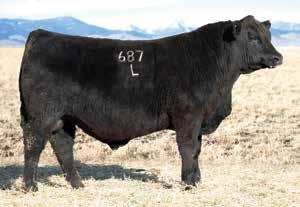
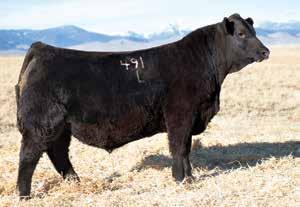
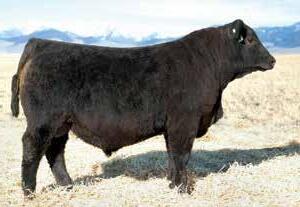

A3 Wyoming Livestock Roundup • Volume 35 No. 45 • March 2, 2024 NEWS BRIEFS 22nd Annual Spring Bull Sale March 13, 2024 12:30 PM (MST) At the Ranch | 9100 MT Hwy 91 North, Dillon, MT 59725 320 Yearling, PAP-Tested Angus Bulls 300 Open Commercial Replacement Females Jim Sitz (406) 683-5277 SitzAngus@gmail.com Bob Sitz (406) 581-9153 SitzAngusRanch@gmail.com Joe Jones (208) 670-2364 JoeJones@SitzAngus.com Catalog and videos available at SitzAngus.com or Bid.NorthernLivestockVideo.com SITZ Dynamic 687L Reg # 20614860 CED 13 BW -2.5 WW 85 YW 146 CW 70 MARB 1.17 REA 0.66 $M 77 $C 309 SITZ Reality 491L Reg # 20614818 CED 12 BW -1.5 WW 77 YW 133 CW 50 MARB 0.91 REA 0.74 $M 78 $C 282 SITZ Dignity 446L Reg # 20613399 CED 12 BW 0.8 WW 69 YW 122 CW 40 MARB 0.34 REA 1.13 $M 67 $C 230 » 25 years of PAP testing » SITZ bred, SITZ raised—no cooperators » 60 years of AHIR® performance testing » 100% Sight-unseen purchase guarantee
Genomic-enhanced EPDs
First-year breeding guarantee » Free bull delivery up to 1,000 miles or sale day pickup discount
Repeat buyer discount
SITZ-influenced calf marketing options To find out more, call or visit SitzAngus.com
»
»
»
»
New product introduced
Simplot Grower Solutions and Innvictis BioScience introduce Evaness, a product designed to maximize the utilization of vital nutrients contained in crop residues.
Regenerative agriculture operations often use no-till or reduced-till practices, which leave behind significant amounts of crop residue containing essential, valuable nutrients.
Evaness’ unique blend of nutrients and enzymes increases cellulose-digesting microorganisms accelerating the breakdown of crop residues, assisting in nutrient cycling and increasing the solubility and availability of nutrients contained in residue left in the field.
Dr. Ben Lawrence of Simplot Growers Solutions noted one study of corn residue in a regenerative ag operation showed residue contained nitrogen, phosphorus, potassium and sulfur, equaling approximately $32 per acre.
“The value of nutrients in crop residues significantly impacts a farmer’s return on investment. Evaness has been shown to capture the nutrients in crop residues, thereby enhancing a farmer’s overall profitability,” he said.
Simplot Growers Solutions and Innvictis tested Evaness in various crops throughout the U.S., including in the South on rice stubble.
“Data collected on these trials not only visually represented less rice stubble in the treated versus non-treated fields, but also improved subsequent soybean crop nutrient uptake during early reproductive growth stages. While heat and humidity contribute to breaking down stubble, Evaness provided improved benefits in stubble management,” Lawrence stated.
“We have seen great results following not only corn, but using it behind wheat, barley, alfalfa and grass crops to speed up the breakdown and release of nutrients from residues like straw, roots and sod balls associated with these crops,” stated Ty Applegate, senior account manager for Innvictis BioScience.
To learn more about Evaness, contact a local Simplot Grower Solutions Crop Advisor.
Governor issues vetoes
After careful review of a rules package proposed by Secretary of State Chuck Gray on Environmental, Social and Governance (ESG) investment disclosure and consent, Gov. Mark Gordon has determined parts of the rules go beyond the secretary’s legal authority.
As a result, the governor issued line item-vetoes of portions of the rules.
The governor has long-opposed any artificial implementation of ESG factors in investment strategies.
“While I agree ESG investment guidance is improper and misleading, the answer to too much government interference in our lives is not more government,” Gordon said. “No government should have the right to direct people’s personal investment strategies.”
In a letter sent to Gray, Gordon notes, by law, he can only approve rules within the bounds set by statute. In the case of the proposed rules addressing ESG investing, the statute does not allow the government to tell individuals how they must invest their dollars.
The consumer protection required by Wyoming and federal law speaks to transparency and disclosure only. Informed consumers should have the freedom to make their own investment choices.
“To be clear, I agree with efforts to better illuminate investment practice and strategy through disclosure. Properly informed investors are always better able to make good decisions for themselves,” Gordon wrote.
“Our appetite to oppose radical and misguided ESG initiatives in Wyoming does not justify implementing rules beyond the scope of statutory authority or interfering in the personal investment choices of Wyoming citizens,” he added. “Personal responsibility and liberty are sacred principles which are all too often usurped by government mandate.”

States battle wildfires
Multiple counties across Texas and Oklahoma are battling several large wildfires after dry conditions, above-normal temperatures and increased wind speeds resulted in increased risk of wildfire activity.
The Smokehouse Creek Fire in Texas is the largest, burning 850,000 acres and was zero percent contained as of Feb. 28. It is also the second-largest wildfire ever in the history of the state.
Other active wildfires in the Texas Panhandle include the Windy Deuce Fire, which has burned 90,000 acres and is 25 percent contained and the Grape Vine Creek Fire, which has burned 30,000 acres and is now 60 percent contained.
The Texas A&M Forest Service reported fire behavior, as of Feb. 28, had moderated with decreased winds but fires were still actively burning.
Much of the impact remains unknown at this point, but numerous social media posts, particularly from ranchers in the region, showed active livestock rescue efforts as the fire ravaged the landscape.
Texas Gov. Greg Abbott issued a disaster declaration for 60 Texas counties in response to widespread wildfire activity. He also directed the Texas Division of Emergency Management to activate additional state emergency response resources to support local firefighters responding to multiple wildfires burning Texas.
Meanwhile in neighboring Oklahoma, crews are battling several active wildfires which currently have burned over 115,000 acres.
In a Feb. 28 update, the Oklahoma Forestry Service reported the Slapout Fire in Beaver County has burned 76,800 acres and is zero percent contained. Also zero percent contained, the Catesby Fire in Ellis County has burned 30,000 acres. The E1980 Road Fire in Choctaw County has burned through 5,535 acres and is 40 percent contained. The Sand Creek Fire has burned 2,385 acres and is 75 percent contained.
Despite much cooler temperatures and reduced wind speeds through the affected regions, fire danger remains a concern given very dry conditions and low relative humidity values. Another round of escalating fire danger is expected during the weekend ahead as temperatures are forecast to once again rise.


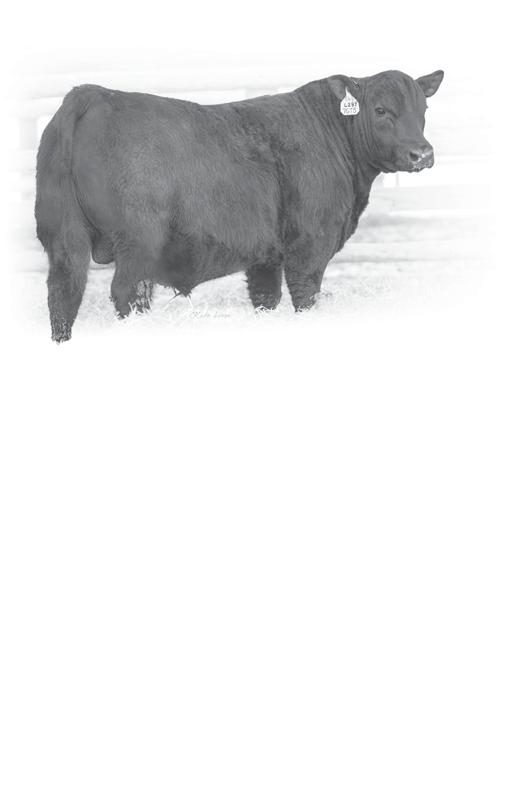
Wyoming Livestock Roundup • Volume 35 No. 45 • March 2, 2024 A4 NEWS BRIEFS Subscribe to the Wyoming Livestock Roundup for $60 per year by calling 307-234-2700 A SAMPLE OF OUR OFERING SELLING 40 ANGUS AND BALANCER ® BULLS Also selling sons and grandsons of SAV Raindance 6848, SAV Remington 5609, MTR Titlest 619, Sitz Response 405C, Square B True North 8052 and Musgrave Cracker Jack Miles & Tiffany Rives • P.O. Box 392 Buffalo, WY 82834 Miles Cell: 307-217-0408 • Tiffany Cell:307-217-0409 mtrctco@vcn.com • mtrcattlecompany.com BULL SALE CATTLE COMPANY March 9, 2024 Buffalo Livestock Marketing Lunch at Noon - Sale begins at 1 pm Please contact us to make arrangements to view the bulls at the ranch in Buffalo Pre-registration required to bid. Sale day phone beside phones listed is 307-684-0789. Sale viewing and Bidding available online at BALANCER (PERCENTAGE) Sire - Basin Safe Deposit 9323 CED 18 • BW -2.6 • WW 78 • YW 129 MILK 29 • CEM 12 ANGUS Sire - MTR Titlest 619 CED 8 • BW +.5 • WW 55 • YW 99 MILK 25 • CEM 11 BALANCER Sire - Sitz Response 405C CED 13 • BW -1.3 • WW 76 • YW 133 MILK 27 • CEM 7 ANGUS Sire - Musgrave Crackerjack 1370 CED 9 • BW -.9 • WW 55 • YW 91 MILK 30 • CEM 8 LOT 15 LOT 19 LOT 1 LOT 7 SALE OFFERING 134 Yearling Angus Bulls 15 Reg. Angus Heifers 65 Hd Commercial Heifers FEATURED SIRES: N Bar Emulation EXT • Reisig Longmire 8326 Coleman Keen • Connealy Gary Sinclair Exquisite 9X15 • Sinclair Executive 9UF3 • Sinclair Emulation XXP • Sinclair Timeless 8BA4 Sinclair In Time 6BT39 • Sinclair Justified J574 Sinclair Justified J575 and other proven Sinclair and N Bar sires. SINCLAIR CATTLE COMPANY, INC . ANNUAL PRODUCTION SALE: SAT, MARCH 23, 2024 BUFFALO LIVESTOCK MARKETING, BUFFALO, WY In Person and Online Bidding at DV Auction and CattleUSA Genetics for the Long Haul LOT 8 SINCLAIR GARY L287 #20833590 SINCLAIR LONGMIRE L505 #20833609 LOT 1 SINCLAIR LONGMIRE L507 #20833626 LOT 2 SINCLAIR GARY L3 #20872799 LOT 4 SINCLAIR EMULATION L005 #220833652 SINCLAIR KEEN L5 #20872816 LOT 10 LOT 18 SINCLAIR GARY L002 #20837940 LOT 5
Crop progress reported
Wyoming received little relief from ongoing drought conditions during the month of February, according to the Mountain Regional Field Office of the U.S. Department of Agriculture’s National Agricultural Statistics Service.
Precipitation was scattered and total accumulations varied, ranging from a trace to as much as six inches during the month, according to the National Oceanic and Atmospheric Administration.
Temperatures across the state were warmer than normal, ranging from two to 10 degrees Fahrenheit above average.
Drought conditions in the state slightly improved during February, according to the U.S. Drought Monitor report published on Feb. 20. The amount of land rated drought free equaled 44 percent, compared with 41 percent on Jan. 23.
Abnormally dry conditions covered 34 percent of Wyoming, moderate drought was found in 16 percent and severe drought was found in six percent.
Hay and roughage supplies for Wyoming were rated one percent very short, two percent short, 90 percent adequate and seven percent surplus, compared with one percent very short, one percent short, 97 percent adequate and one percent surplus last month.
Stock water supplies across Wyoming were rated three percent very short, 10 percent short, 85 percent adequate and two percent surplus, compared with one percent very short, one percent short, 97 percent adequate and one percent surplus last month.
Bill introduced
On Feb. 29, U.S. Sens. John Barrasso and Cynthia Lummis, alongside Rep. Harriet Hageman (all R-WY) introduced the Protect America’s Lands Act which seeks to amend the Securities Exchange Act to prohibit a national securities exchange like the New York Stock Exchange (NYSE) from listing Natural Asset Companies (NACs).
NACs create a financial vehicle for radical environmental activists to raise capital to seize public and private lands and restrict energy production, grazing, mining, recreation and additional economic development.
“Economies in Wyoming and across the West thrive from mining, grazing, energy production and timber logging. The NYSE tried to sell out America’s public lands to the highest bidder. We cannot allow this liberal playbook to be used again,” said Barrasso. “Our legislation makes sure greedy exchanges and radical, climate elitists are not able to take our public lands hostage and disrupt our way of life in Wyoming.”
come in with any given president to manage 2.95 million federal government employees. With this kind of ratio, rarely is the bureaucracy politically accountable.
I am not saying all federal employees are politically motivated, but the math doesn’t add up.
And, consider the whiplash American citizens have to go through
every time there is a change from a liberal to a conservative president. We see it all the time. The new person just revokes the old person’s rules and writes their own.
I think either Congress stating exactly what policy choices its wants or the courts taking a much more active role in interpreting what Congress has ordered is better than the stark
changes from the Obama to the Trump to the Biden regulatory regime.
In the real world, we feel like a tennis ball at Wimbledon. Leveling the playing field and giving litigants – whether representing the conservative or liberal view – a level playing field against the federal agencies is exactly what this Supreme Court should do.
Forcing our elected representatives to pass clear legislation and setting the policy to implement this legislation is not the end of democracy – it is democracy.
And, to my friends who are complaining we don’t have a democracy but a republic, I know, and the point is still the same.
Karen Budd-Falen is a senior partner with BuddFalen Law Offices, LLC and can be reached by visiting buddfalen.com


& Hfrs, 700-1000#, Weaned a long time, Been on a Grower Ration, 3 Rounds of Modified Live Vac. Program, Home Raised, No Replacements Kept Tillard Brothers 360 Fancy to Choice Blk Hfrs, 620-745#, Weaned since Oct., Bunk Broke, Been on a Grower Ration, 3 Rounds of Modified Live Vac. Program, Poured, Home Raised, Sired by MR Angus Blk Angus Bulls, Many will make Replacement Quality Heifers Jay Price 179 Blk/Bwf (15 hd-Char-x) Strs & Hfrs, 600-900# but mostly 700-850#, Weaned a long time, Been on a Light Grower Ration, 3 Rounds of Modified Live Vac. Program, Home Raised, High Elevation Box E Cattle 170 Blk Angus Strs, 700-825#, Weaned Early Oct., Bunk Broke, Been on a Grower Ration, 2 Rounds of Shots: Vista Once, 7-way, Implanted w/Revalor G on Oct. 20, Sired by Lucky 7 Blk Angus Bulls, April/May Calves
Ron, Barb Jespersen & Sons 85 Red/Rwf/Char Strs, 650-750#, Weaned a long time, Bunk Broke, Been on a Grower Ration, Complete Vac. Eldon & Doug Ackerman 75 Blk Strs,700-750#, Weaned a long time, Bunk Broke, Been on a Grower Ration, Full Vac. Program, Poured S & T Farms 60 Char-x Strs & Hfrs, 800-900#, Weaned a long time, Strictly Hay Fed, 3 Rounds of Shots: Vision 7, Once PMH, Branding Shots: Pyramid 5, Pre-cond Shots: Vista 5 SQ, Poured with Ivomec 2x (Pre-cond. And on Feb. 19)
Matt Eastman 15 Blk angus/Maine-Anjou-x Hfrs, 700-750#, Wenaed since Nov 1, Hay Fed with some Corn, Branding Shots: 7-way, Bovi-Shield Gold, Pre-cond. Shots: Pyramid 5+Presponse, Vision 7, Booster Shots: Pyramid 5+Presponse, Vision 7, Poured w/Clean-up, Safeguard, Bangs WEANED CALVES
Ron, Barb Jespersen & Sons 210 Blk/Bwf Strs & Hfrs, 475-575#, Weaned a long time, Bunk Broke, Been on a Light Grower Ration for Grass, Branding Shots: Bovi-Shield Gold 5, Vision 7 w/Somnus, Weaning Shots: Bovi-Shield Gold 5, Vision 7 w/Somnus, Poured, Boostered Shots: BoviShield Gold 5, April/May Calves Brian Peterson 15 Blk Hfrs, 500-550#, Weaned 120+ days, Branding Shots, Pre-cond. Shots: Vista Once SQ, Ultrabac 7 w/Somnubac, Poured with Ivomec
CATTLE COUNTRY VIDEO - 1:00
Lot 315 5W Livestock 140 Weaned Hfrs. 85% Blk, 15% Bwf. Base Wt: 665 lbs. Wt Stop: 685 lbs. Slide: .16 cents. Located: Lusk, WY. Delivery: 3/7/24 to 3/12/24. Frame: Med-Large. Flesh: Med. Wt Var: Uneven. Feed: Grower Ration: 26 lbs/hd/day. 10% Alfalfa hay, 10% Cornstalks, 10% Beet Pulp, 10% Corn, 20% Haylage, 30% Corn Silage, 10% Earlage. Weaning Shots: Nasalgen 3 PMH, Vista Once, Vision 7/Somnus, Poured, SafeGuard. PregGuard 10 and Poured. Weigh: Early am gather from pen, weigh on ground w/a 3%, sort for loads. Comments: Fancy hfrs, one iron, purchased in Eastern Wyoming. Bangs Vac. Handy weight, feed or breed. Sort from 151 hd. Test weighed February 26th 151 hd at 669 lbs gross. Rep: Ty Thompson 307-340-0770.
Lot 316 Stratton Sheep Co 180 Weaned Strs. 100% Blk. Base Wt: 615 lbs. Wt Stop: 635 lbs. Slide: .16 cents. Located: Shoshoni, WY. Delivery: 3/7/24 to 3/12/24. Frame: Med-Large. Flesh: Med. Wt Var: Uneven. Feed: Growing Ration – 28 lbs/hd/day. Ground Hay, Silage, No Corn. Branding Shots: Vista Once, 7-way/Somnus. Weaning Shots in Oct: 7-way/Somnus, BoviShield Gold 7, SafeGuard & Poured. Weigh: Early am gather from pen, weigh on the ground w/a 3%. Comments: Fancy, home raised one iron strs. Pre-sorted and filmed February 24. Wintered to go to grass. Summered at high desert country. Rep: Ty Thompson 307-340-0770.
Lot 317 Stratton Sheep Co 110 Weaned Strs. 100% Blk. Base Wt: 515 lbs. Wt Stop: 535 lbs. Slide: .18 cents. Located: Shoshoni, WY. Delivery: 3/7/24 to 3/12/24. Frame: Med-Large. Flesh: Med. Wt Var: Uneven. Feed: Growing Ration – 20 lbs/hd/day. Ground Hay, Silage, No Corn. Branding Shots: Vista Once, 7-way/Somnus. Weaning Shots in Oct: 7-way/Somnus, BoviShield Gold 7, SafeGuard & Poured. Weigh: Early am gather from pen, weigh on the ground w/a 3%. Comments: Fancy, handy wt strs, one iron. Pre-sorted on February 24th. Young May-June calves. Excellent sort with 60 hd left, light end. Good long haired calves, wintered for grass. Rep: Ty Thompson 307-340-0770. www.cattlecountryvideo.com
Arlin
Alum
Stock Trlr-Tandem • ‘84 Walton 20’x 8’ Tandem GN Trlr
• ATV, Older Pickups & Trailers • MACHINERY: ‘05 NH HW345
D Swather-NH #2366 16’ Discbine Head, Shedded, 2,200 Hrs
• Case-IH LBX #432 3X4 Baler, 1 Axle. 26K Bales, Shedded
• ‘80 NH #1895 SP Chopper-Cat 3306, Hydrostat, Shedded, Sells w/ Hay &
•
Jorgensen Black Bulls. CF: March 14th for 60 days. Shots: PregGuard, VL5, ScourGuard & Dectomax Wormer

Danny
Chris
Justin
Scott
Ben
A5 Wyoming Livestock Roundup • Volume 35 No. 45 • March 2, 2024 Torrington Livestock Markets PO Box 1097 • Torrington, WY 82240 307.532.3333 Fax: 307.532.2040 www.torringtonlivestock.com www.torringtonlivestock.com Lex Madden 307-532-1580 Chuck Petersen 307-575-4015 Lander Nicodemus 307-421-8141 “Follow Us” for Sale Updates, Results and News FRIDAY, MARCH 8, 2024 - BRED COW SPECIAL & ALL CLASSES WEDNESDAY, MARCH 6, 2024 - FEEDER/CALF SPECIAL TORRINGTON LIVESTOCK AREA REPS Michael Schmitt - Torrington, WY 307-532-1776 Cody Thompson - Lusk, WY 307-340-0150 Ty Thompson – Lusk, WY 307-340-0770 Zach Johnson Lingle, WY –307-575-2171 Jeff Ward – Laramie, WY 307-399-9863 Tam Staman – Crawford, NE 308-631-8513 Lander Nicodemus – Cheyenne, WY 307-421-8141
Nicodemus – Cheyenne, WY 307-632-4325
Williams - Greybull, WY 307-272-4567
Smith - Lusk, WY 307-340-0724
Brott - Lusk, WY - 307-216-0033
Nolan
Redden - Burns, CO 970-596-3588
Kukowski - Kaycee, WY 307-217-1472 FEEDERS Simmons Ranch/Don & Karen Simmons 536 Extra Fancy Blk Angus Strs
Torkelson 15 Blk Hfrs, Bred to
SALE RESULTS -FEEDER SPECIAL WEDNESDAY, FEBRUARY 28 - 2578 HD DL Jackson Ranch 43 Black Steer 648 304.00 $1,969.92 Ellicott Hereford Rch 72 Black Steer 685 292.50 $2,003.63 Tom Schwartz 15 Black Steer 668 291.00 $1,943.88 Kaisler & Page 27 Black Steer 702 272.00 $1,909.44 Thisledew Land 68 Black Steer 751 263.50 $1,978.89 Michael Romsa 24 Black Steer 781 254.50 $1,987.65 Lerwick Brothers 22 Black Steer 790 251.50 $1,986.85 Thisledew Land 69 Black Steer 866 237.50 $2,056.75 Lerwick Brothers 21 Char/Red Steer 701 265.00 $1,857.65 Falls Ranch LP 47 Black Heifer 536 302.00 $1,618.72 Duck Bar Ranch LP 34 Black Heifer 624 284.00 $1,772.16 Falls Ranch LP 348 Black Heifer 618 283.75 $1,753.58 Falls Ranch LP 143 Black Heifer 687 270.50 $1,858.34 Lon Eisenbarth 16 Black Heifer 758 238.50 $1,807.83 Val & Sherry Eklund 24 Black Heifer 739 233.00 $1,721.87 Duck Bar Ranch LP 45 Charolais Heifer 684 252.00 $1,723.68 Lerwick Brothers 34 Char/Red Heifer 726 245.50 $1,782.33 Delton Tinsley 42 Red Heifer 562 276.00 $1,551.12 DL Jackson Ranch 32 Black Str Cf 567 333.50 $1,890.95 Ellicott Hereford Rch 29 Black Str Cf 552 330.00 $1,821.60 Ellicott Hereford Rch 106 Black Str Cf 620 315.00 $1,953.00 Bruce Murray 18 Hereford Str Cf 470 342.00 $1,607.40 Bruce Murray 46 Hereford Str Cf 551 315.00 $1,735.65 Bruce Murray 83 Hereford Str Cf 609 310.50 $1,890.95 DL Jackson Ranch 12 Black Hfr Cf 504 322.00 $1,622.88 Ellicott Hereford Rch 54 Black Hfr Cf 558 300.00 $1,674.00 Ellicott Hereford Rch 43 Black Hfr Cf 587 295.00 $1,731.65 DL Jackson Rch 27 Black Hfr Cf 597 288.00 $1,719.36 Kaisler & Page 24 Black Hfr Cf 573 283.50 $1,624.46 Delton Tinsley 20 Red Hfr Cf 493 293.50 $1,446.96 VIEW SALES & BID ONLINE AT CATTLE USA DEMOCRACY continued from page A2 TRACTORS & PAYLOADERS: 2000 CIH MX200 MFD MagDlux Cab, Duals, Low Hours • ‘02 CIH MX180 Mag-2WD, Cab, Duals, Low Hours • ‘86 CIH 2096 D-2WD, Cab, Duals, New Inj Pump & Injectors January • TRACTORS ABOVE HAD PRESALE SERVICE & REPAIR DONE AT TITAN MACHINERY IN TORRINGTON. Website Has Invoices.‘78 IHC 1486 D Tractor • ‘68 Farmall 544 Gas-WF, FH235 Ldr, Bucket & Kelly B60 Backhoe • ‘90 Case W14C Feedlot Spec PayloaderBucket & Grapple • ‘73 W14FL Feedlot Spec Payloader-Bucket & Grapple • Farmall C-SF • TRUCKS & VEHICLES: ‘87 IH S1700D-Auto T, 14’ Botec Knight 4037 Box, Scale • ‘90 GMC Top Kick-454 Gas, TS, 10 Spd. Trans., Aulick Mdl. 2057 Slip Body • ‘75 GMC 6500 Truck-5x2, V8, Harsh #350 14’ Feed Box • ‘76 Int TS-5x2, 20’ Jacobs Box • ‘93 Hillsboro 6’10 x 20’
Corn Head • Meyers
Tandem Axle Manure Sprder • Sitrex MK-12 12 Wheel Folding Hay Rake • IHC #10 7 Shank Subsoiler w/Wheels • IHC #165 On Land 5 Bottom Plow
M425
Brown Husky 10’ Box Scraper • IHC #510 12’ Double Disc Drill w/Seeder Eversman 2 Cyl 3 Pt. Ditcher • Buffalo Cultivator
IHC Tandem Discs • Water Trans. Pumps • Automatic Roll Mill • Panels & Gates • Older Power River Chute & Alley • Lots More On Website • FROM LIPPINCOTT FEEDING, INC.307-532-6245 2012 JD R450 SP D Swather- Monitor Hours 1,312/935, Wheel Auto Steer. SN-380716. With JD #995 16’ Tri Lobe Head • Case-IH RB564 Round Baler-Net/Twine Wrap, Monitor, Shedded. 8-9,000 Bales • Knight #410 Tandem Manure Spreader- 540 PTO • Darf #917 16 Wheel Folding Rake NOTHING REMOVED BEFORE FULL PAYMENT. FOR QUESTIONS, CALL TIM WEAVER AT 307-338-7391 TERMS: Cash or good check the day of sale. No Credit Cards. Payment required on all items before removal. State sales tax applies. Not responsible for accidents, or lost items. All items sold in “as is” condition. Announcements the day of sale take precedence. Driver’s license required to register for bidder number. BILL ERDMAN, INC. ESTATE AUCTION SATURDAY, MARCH 16th, 2024 • 11:00 AM MT HELBERG AND NUSS AUCTIONS & REALTY 1901 East 33rd Street • Scottsbluff, NE 69361 • 308-436-4056 www.helbergnussauction.com
9 MILES SOUTHEAST OF TORRINGTON,
(OFF HIWAY #92), OR 4 MILES NORTHEAST OF HUNTLEY, WYO. SALE SITE 5681 ROAD #55, TORRINGTON, WYO. LARGER ITEMS OFFERED ON proxibid.com AT 12:00 NOON MT. DIRECTIONS, FULL LIST, TERMS AND PICTURES AT www.helbergnussauction.com
•
LOCATION:
WYO.
To advertise in the Midland Bull Test Edition, contact Calli at 605-695-1990 or calli@wylr.net Advertising Deadline: March 8, 2024 • Insert Date: March 23, 2024 Midland bull test edition ® 800.967.1647 • 307.234.2700 P.O. Box 850, Casper, WY 82602 www.wylr.net
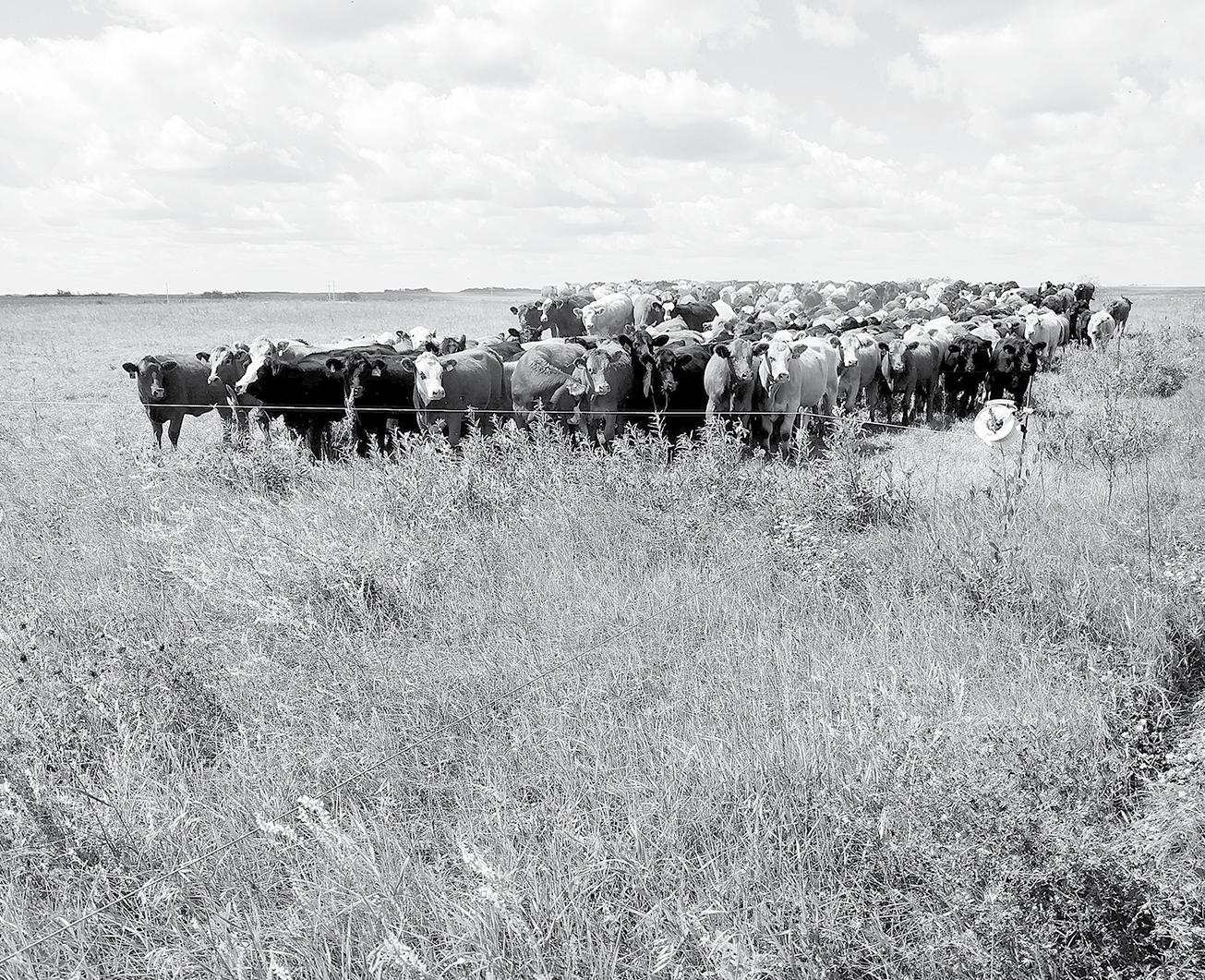
Short duration highintensity grazing, in which a bunch of cattle are placed on a small area of pasture and moved at least once a day or several times a day to a new section of pasture is often called mob grazing.
One problem, however, according to Ian MitchellInnes, is people have different interpretations of what mob grazing means.
Mitchell-Innes is a holistic management certified educator in South Africa who has been practicing these principles on his own ranch for more than 25 years, while giving talks and short courses around the world.
The predator-prey relationship
He defines mob grazing as getting animals to move around a pasture at highstock density to emulate the predator-prey relationship, which was the major factor influencing grazing behavior of herd animals before humans decimated large herds and interposed their own management systems on domesticated ruminants.
In discussing the predator-prey relationship, Mitchell-Innes points out it is difficult for any predator – other than man – to kill wild animals if they are tightly bunched.
To protect themselves from predators, herd animals grazed in tight groups and had to keep moving.
“As a result of continually moving to a new feeding area, only the tops of the growing grasses were
eaten, and this is where all of the plant energy is. The rest of the plant was trodden into the ground, where it served as protection for the soil from sun, wind or rain,” explains MitchellInnes.
Capturing energy from the sun
The plant litter provides food for life in the soil and sequesters carbon.
“If 50 percent of ranchers in the world practiced some form of holistic management such as mob grazing, carbon content of the air could be taken back to pre-industrial levels within five years,” he states. “But, because of the way we’ve managed land, we have destroyed grasses’ ability to capture energy from the sun.”
Instead, producers graze pastures too continuously and too short, leaving plants with inadequate leaf surface to capture the sun’s energy.
“Energy is what makes animals fat and enables them to be healthy and reproduce. To monitor whether they are doing mob grazing correctly, producers should look at their animals,” he says. “They have to monitor animal performance as well as the plants. Without acceptable animal performance, they will go broke.”
“Energy from the sun is free for landowners,” Mitchell-Innes adds. “If we harness it properly by letting grass keep most of its leaves, having our cattle eat just the tops rather than grazing the plants down to
the ground or even down to the bottom leaves, it makes us money.”
“Then why are people on the land making less money and becoming bottom feeders of society with all of the money ending up in town?” he asks.
He believes it’s because ranchers are doing a poor job of capturing all of the free energy with proper grazing methods.
Principles of mob grazing
“The term mob grazing came into existence when Greg Judy and I were discussing ultra-high-stockdensity grazing,” MitchellInnes says.
For the past several years, Mitchell-Innes and Judy have hosted several grazing schools on Judy’s farm in Missouri.
Mitchell-Innes notes he learned the principles of mob grazing by trial and error on his own farm in South Africa, funding
A management intensive grazing (MIG) system has cattle eating grass while it is still in a vegetative or growing stage. This leads to high animal performance by grazing plants while nutrient levels are high and before plants become mature.
“Those who use this method believe the only vegetative stage is with a short recovery period, which is what a MIG system does. But with a short recovery period, there isn’t much bulk by the time they graze those plants again,” says Ian Mitchell-Innes.
Instead, he prefers to use a longer recovery period, enabling plants to grow taller, with less stress and therefore becoming mature at a later date, thus producing more plant mass before going to seed.
“This bulk covers the soil and feeds the soil life, which improves soil fertility over time, and the grass is less stressed
all of his own experiments and working through the problems, using the holistic management decision-

when grazed later,” he explains.
“Mob grazing is very different,” he continues. “Producers allow cattle to graze only the top of the plant in its growing season. Even though cattle tread some of the rest of the plant down to cover and feed the soil, the grass is not stressed and the window period of grazing it in a vegetative stage stretches from 20 days to three months.”
The grass is still green and growing even though it becomes very tall, with the green understory protected by the canopy of tall grass. The soil is covered at all times, which prevents moisture loss and erosion and keeps the temperature of the soil constant.
“Nature operates with ‘wholes within wholes’ and interconnecting parts. The whole consists of grass, animal performance, air, soil surface and life in the soil,” says Mitchell-Innes.
making process.
“There are no predetermined outcomes, as no company will fund my stud-
ies,” he says, noting there are no commercial companies interested in this type of grazing system because people on the ground who are doing it correctly don’t need to buy anything.
“If you don’t need balers, tractors, fertilizers, etc. all of a sudden ranching can become exceedingly profitable. I am passionate about getting people on the land making a decent living. My learning through trial and error cost me a lot of money until I figured it out,” he adds.
Now, Mitchell-Innes spends much of his time traveling around the world teaching other stockmen the basics of mob grazing, to help save them the high costs of trying to stay in business using traditional methods of grazing and haying.
Heather Smith Thomas is a corresponding writer for the Wyoming Livestock Roundup. Send comments on this article to roundup@ wylr.net.
Wyoming Livestock Roundup • Volume 35 No. 45 • March 2, 2024 A6 Big horn Basin LIVESTOCK AUCTION LLC Call to Consign Cattle Sale Barn: 307-347-9201 Danny Vigil: 307-388-0781 Worland, WY bighornbasinlivestock.com • Upcoming Sales • March 7 – Bred Cow Special w/ All Class Cattle March 14 – Feeder Special w/ All Class Cattle March 21 – Weigh-Up Special w/ All Class Cattle, Sheep & Goat March 28 – All Class Cattle Consignments Thursday, March 7 • Bred Cow Special w/ All Class Cattle Aaron Sorensen – 100 bred cows, 3-4 YO, calve March 20, all raised calves last year, summered in high elevation. Star Whitt – 12 SM Hereford cows, calve April 1, bred to black bulls. Visit Cattle USA for broadcasting and online bidding – auctions.cattleusa.com Thursday, March 14 • Feeder Special w/ All Class Cattle LU Ranch – 280 black heifers, 550-600#, two rounds of shots, weaned long time, been on light grow ration. Hampton Sheep Co. – 200 mixed black, 600-700#, two rounds of shots, weaned a long time, hay fed. Frank Deede – 30 mixed BWF/RWF Herefords, 500-600#, two rounds of shots, weaned 90 days, light grow ration. Bill Haun – 130 mixed black, 650-750#, two rounds of shots, weaned Jan. 1. Danny Vigil • Owner and Northern Livestock Represenative Layne Weber • Field Rep & Auctioneer • (307) 331-2222 LANCER LIVESTOCK SALE Sunday, March 24 EWC ATEC Building 3401 West C Street, Torrington, Wyoming Up to 16 show lambs Up to 16 show goats Up to 16 show swine Viewing 10:30 a.m. Sale 1 p.m. For more information, call 307-799-5419 Mob grazing works as a tool to improve pasture and increase stocking rate Comparing MIG and mob grazing
Courtesy photo
The Western Landowners Alliance has appointed Jason Fearneyhough, a seasoned advocate for agriculture and natural resources, as the organization’s inaugural chief policy officer, the alliance announced on Feb. 28.
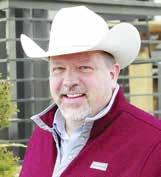
Fearneyhough joins Western Landowners Alliance
Fearneyhough previously served as the deputy commissioner of agriculture for Texas from 2015-23. In Texas, Fearneyhough managed a globalscale agency with more than 650 employees and an annual budget surpassing $1 billion, according to a press release by the organization.
Before his appointment in Texas, Fearneyhough served the people of Wyoming as deputy director of the Wyoming Department of Agriculture from 2006-09 and then director from 200914. He was first appointed to his position in Wyoming by Dave Freudenthal and was reappointed by Matt Mead. Fearneyhough was born
and raised in Wyoming and graduated from the University of Wyoming with a bachelor’s degree in agricultural communications and then a master’s degree in business administration. He is a cofounder of World Ag Journal, a global agriculture news aggregator.
Fearneyhough will immediately turn his attention to stalled farm bill negotiations in Congress, as well as big issues facing working lands in statehouses across the West.
“We’re facing some immense challenges in the West,” Fearneyhough said. “An ongoing megadrought, intense development pres-
Angus award applications open
The American Angus Association is calling for applicants for the 2024 Angus Ambassador of the Year and Young Breeder of the Year awards. The awards, established in 2023, highlight impactful individuals helping drive the breed forward.
This year’s recipients will be recognized at Angus Convention in Fort Worth, Texas on Nov. 1-4.
The Angus Ambassador of the Year Award recognizes someone who goes above and beyond to promote or aid Angus efforts and broad-
ens the influence of Angus cattle in the beef industry.
Applicants for this award can nominate themselves or be nominated by someone else. Nominees do not need to be members of the association and can be businesses or allied industry members.
Nominate an Angus Ambassador of the Year by March 15.
The Young Breeder of the Year Award recognizes a young, registered Angus breeder for their leadership within the Angus breed, participation in Angus programs and innovation within
their herd.
Applicants for this award can nominate themselves or be nominated by someone else. Applicants must be between 25 and 45 years old as of 2024 and an active member of the association.
Couples or business partners can be nominated if they meet age requirements. Herd ownership and/ or management responsibility is required of each individual applicant.
Nominate a Young Breeder of the Year by March 15.
sure, population growth and critical pollinator declines, among others. The time for non-partisan, practical, West-
ern solutions to these issues is right now.”
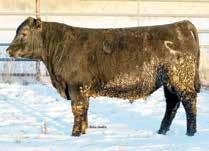
Sire: Surpass
AAA# 20882264
Surpass & Playbook, our cow 459 improves dispositions. Top of the line heifer bull Top 3% @ +15 CED and Top 10% @ -1.5 BW. Looking for less work, here he is with plenty of performance high maternal merit Top 20% WW, Top 1% $W and Top 1% $M ADG 4.06
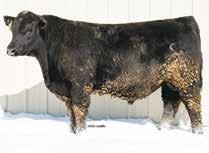


soggy cows he’ll do it and put the #’s on feeder calves. Slam dunk performance bull. Top 2% for WW & YW. ADG 4.70

Sire: Black Eagle
AAA# 20593336
• Top 30% WW; Top 35% YW; Top 25% Doc
• Top 35% $M; Top 30% $W; Top 30% $F
• 1# Gain / 7.24 Feed • ADG 3.28 RFI

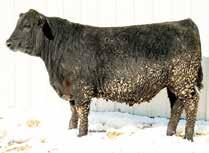
Sire: Desperado 029H
AHA# 444430713
• Stout, solid made cow bull, will sire a nice set of feeder calves or F1 replacement females
• Full pigment
Lot 2225
• PAP 40



A7 Wyoming Livestock Roundup • Volume 35 No. 45 • March 2, 2024 www.WEBOANGUS.com Buttons York & Family P.O. Box 848 • Lusk, Wyoming 82225 Button’s Cell (307) 216-0090 • Odessa’s Cell (307)340-1182 Elly’s Cell (307) 340-1499 WEBO Angus At the Ranch - Lusk, WY • 1 pm - Lunch at noon 8 miles east on Hwy 20 to Node, then 0.6 miles south on Pfister Rd 85 Yearlings, 20 Two Year Old Angus and 5 Two-Year-Old Hereford Bulls April 2, 2024 Annual Selling: Turning Grass into i s i o Greenbacks Bull Sale Gr e bac s l S Bulls were feed a ration to gain 3.25 pounds a day. ADG posted was taken in January. We did not get the bulls on test until later this year. The 90 day test will finish this week, because of the late finish date the final ADG and Efficiency sores won’t make sale book. Those will be on line at weboangus.com or provided sale day Sire: Mandra Big Valley AAA# 20879104 Big time heifer bull, he is the kind to use on Herefords or big crossbred heifers. Shouldn’t have to help the heifers, heck, you might not even have to get up at night. He was born little but he took off when he hit the test. ADG 4.66 Lot 307 Sire: Sitz Spectrum AAA# 20879104 Spectrum brings it for Value indexes with Top 30% $G, Top 20% $W, Top 10% or higher $F, $B & $C. Loaded for Maternal and Calving Ease +11 Top 15% with Top 15% WW and Top 10% YW. His young dam bred back AI, will sure work on heifers. ADG 5.34 Lot 326 Sire: Sitz Spectrum AAA# 20881075 Maternal top and bottom sires tested top efficiency @ MBT. This Dude is just what he is bred to be, top performance. Want some
Lot 394
Lot 3109
+1.069
on both eyes, dam is a 10 yr old cow with a highly maternal pedigree, • Ratios IMF-110, WW- 95, YW-93, Top 25% for WW & YW, Top 23% $BMI • 1# Gain / 5.90# Feed • ADG 3.10 RFI -0.91 • PAP 42 Lot B210 This sale will be broadcast live on the internet Real time bidding and proxy bidding available Jim & Lori French 3334 Rd. 14 • Greybull, Wyoming 82426 • 307-762-3541 www.claycreek.net • bulls@claycreek.net OFFERING BY PRIVATE TREATY 30 Coming 2-Year-Old bulls 225 Yearling bulls • 95 Replacement Heifers Grandsons available • BW: -2.0 WW: +63 YW: +131 M: +30 If you’re looking for growth and still want a bull that you can use on heifers, Encore is a true “Curve-Bender” bull. CLAY CREEK ANGUS
Jason Fearneyhough Courtesy photo
CALVES continued from page A1
“There are three stages to the calving process. Stage one includes pre-labor, next is delivery of the calf, followed by the expulsion of the placenta,” he remarks.
Richard adds in stage two, the appearance of the water bag through the vulva signals the start of labor, and once a water bag appears, a calf should hit the ground within one hour for cows or up to one and a half hours for a first-calf heifer.
“If a producer notices a cow being restless and uncomfortable, the cow may have a uterine torsion. Depending on the extent of the torsion it may be able to correct with instruction from a veterinarian and a bit of practice, but this is something a person should not try to correct for the first time on their own,” he adds.
Anterior and posterior calf presentations may be delivered vaginally.
“Anterior presentation is the head and two front feet
with the spine of the calf resting against the underside of the cow’s spine,” Richard explains. “Posterior presentation is two rear feet and a tail with the spine of the calf resting against the underside of the cow’s spine.”
When assessing the calf’s presentation, producers should determine its orientation in relation to the cow’s spine and find three things belonging to the same calf – two front feet with its head in between or two rear feet with its tail in between.
“If the presentation is normal, they may allow the cow to labor for 40 minutes to an hour, especially if the water bag is still present around the calf. But, if the water bag has broken, the calf should be delivered sooner,” he notes.
Richard further explains the proper way to pull a calf if intervention is needed, as early intervention can minimize the risk of losing the calf.

Get them breathing
According to Windeyer, if a calf needs resuscitation when it is born, it is recommended to use the calf recovery position, straw in their nose, water in their ear or to rub vigorously.
“Avoid hanging calves upside down. Position the calf in the recovery position with both front legs tucked underneath their chest or out in front of them and back legs on each side of the body, pulled towards its head,” Windeyer states. “If you take those back legs and pull the feet up by the armpits or by the ears it will stabilize the calf.”
This allows the calf’s lungs to expand with the least amount of pressure, making it easier for the calf to breathe.
She continues, “We want them to start breathing, so be annoying. It will stimulate them. We want them to gasp, sneeze or cough.”
“Gently poke the nasal septum, this may cause the calf to take a deep breath and initiate the breathing process. Or, give them a wet willy, which can often cause them to gasp and start breathing,” she adds.
Get them up
Through a research study, BCRC pulled blood samples measuring biomarkers from calves born unassisted versus assisted and discovered the blood samples showed muscle damage linked to how much trauma the calf underwent.
“This research showed us calves that received assistance received more trauma than calves who were born with no assistance,” Windeyer explains.
Additional research has been done on providing a cow/calf pair with pain medication after a difficult calving.
“Providing calves with meloxicam had improved vigor, greater weight gain and milk intake, spent more time playing and were more active within the first 24 hours of life,” she continues. “We also provided calves
with ketoprofen, and they showed signs of increased play and investigative behavior and spent less time laying on their side.”
Windeyer further notes cows were given the same medication in the research study, and under meloxicam, they spent more time at the feed bunk and more time being active, while ketoprofen intake produces lower incidence of retained placenta, less time laying on their side and spending more time resting comfortably.
Feeding time
Vaccination is another
Wyoming Sen. Fred Baldwin announced he will not seek another term in the

"From
Daniel
Kade
Wyoming Legislature.
Baldwin was elected to the Wyoming Senate
excellent colostrum management tool, mentions Richard. When a pregnant cow receives a scour guard vaccine, calves receive the antibodies through colostrum ingestion.
By vaccinating cows and first-calf heifers in late gestation, producers can reduce the risk of newborn calf scours just after birth.
“At-risk calves, those that had assisted deliveries, weak suckle reflex, twins, orphans and those that have been mis-mothered will need colostrum intervention,” Windeyer states.
in 2017. He served in the Wyoming House of Representatives from 2015-16.
Baldwin has played a pivotal role in shaping healthcare policy in Wyoming. As longtime chair of the Senate Labor, Health and Social Services Committee, Baldwin notably led legislative efforts to modernize healthcare in the state, prevent opioid abuse and promote mental health.
He supported bills to advocate for emergency responders and protect newborn children.
“It has been the honor of my lifetime to serve my district and the people of Wyoming,” said Baldwin. “There are not many opportunities to work so closely with the people of your community and make such an impact together. I am grateful for and proud
“One to six hours is the most effective time to start colostrum intervention.”
She reiterates the dam’s colostrum is the best source, but if it is not available, producers can use colostrum from another dam in the herd or using a colostrum replacement product with at least 100 grams of immunoglobulin. Windeyer advises producers avoid dairy colostrum for beef cattle.
Melissa Anderson is the editor of the Wyoming Livestock Roundup. Send comments on this article to roundup@wylr.net.
of the important work we have accomplished here in the Wyoming Legislature.”
Baldwin has served in the Wyoming Legislature for nine years. A native of Afton, he first served in the Wyoming House of Representatives for one term. He was then elected to represent Senate District 14 in 2017.
Baldwin has served on the Senate Labor, Health and Social Services Committee throughout his service in the Wyoming Senate. He is the chairman of the committee and a member of the Senate Travel, Recreation, Wildlife and Cultural Resources Committee.
Further, Baldwin was recognized with the Milbank Fellowship for Health Equity and the National Conference of State Legislatures Opioid Abuse Fellowship.
Wyoming Livestock Roundup • Volume 35 No. 45 • March 2, 2024 A8 Market Report • February 28, 2024 • No Report Thank you and we appreciate your business! Austin Snook • 307-290-2161 Taylor Snook • 307-290-2273 Craig Deveraux • 307-746-5690 Dan Catlin • 406-671-7715 Clint Snook • 307-290-4000 Cheyenne Seymour • 605-641-0638 Casey Sellers • 307-217-2614 Jim Forbes • 307-351-5932 Tye Curuchet • 307-351-8666
•
Escoz
307-217-1440
Kinghorn • 307-620-0525
the ring, to the video, and in the country, we market your livestock the competitive way." www.buffalolivestockwyo.com • March - april Sale Schedule • March 6 - Feeder Cattle and Grass Cattle Special • March 9 - MTR Cattle Company Bull Sale March 13 - Bred Stock Special with Weigh-up Cattle • March 16 - Hancock Livestock Bull Sale • March 20 - NO SALE! March 23 - Sinclair Cattle Company Bull Sale • March 27 - Regular Cattle Sale • April 3 - Bred Stock Special with Weigh-up Cattle April 10 - TTT Angus Bull Sale with Replacement Heifers and Feeder Cattle Special • April 13 - Best of the Big Horns Horse Sale April 17 - Regular Cattle Sale • April 20 - Bulls of the Big Horns Bull Sale • April 24 - Regular Cattle Sale April 26 - Open Consignment Horse Sale To view the consignment lists visit our website:
JOHN DEERE 6155R TRACTOR JD 5093E TRACTOR 2016 KUBOTA MX5200D TRACTOR 2022 BOBCAT T770 SKID STEER 2008 BOBCAT T250 SKID STEER 2023 CAT D6 DOZER CAT320 EXCAVATOR 2022 BOBCAT E60 MINI EXCAVATOR 2023 CAT 420 BACKHOE 2023 CAT 906 LOADER 2018 CAT 930M LOADER 2000 CAT 950G LOADER 2022 FRIESEN TRAILER AIR COMPRESSOR CAT REACH FORKLIFT (TELEHANDLER) 2023 SA CARGO TRAILER 6X10 NEW PULLED 1500 MILES $7,000.00 2 – 2001 REITNOUER STAINLESS STEEL TRAILERS 48’ SPREAD AXLE CLEAN & WELL CARED $16,500 each 2006 REITNOUER STAINLESS STEEL TRAILER 48’ SPREAD AXLE CLEAN & WELL CARED $17,500 1984 FRUEHAUF FB TRAILER $8,500.00 1988 LUFKIN FB TRAILER $9,500.00 Call us today! 307.856.1254 10749 N. Hwy 789, Riverton, WY 82501 FOR SALE OR RENTAL
2021
Baldwin announces retirement
WYLR photo
UW researcher finds no parasites in monarch butterflies in east-central Wyoming
A recent University of Wyoming (UW) graduate learned a parasite which has led to the decline of monarch butterflies around the globe does not appear to be present in the specific butterfly species in east-central Wyoming.
This parasite, known as Ophryocystis elektroacirrha (OE), can cause wings to malform and thus, decrease the migration success of monarch butterflies.
“The main takeaway from our paper is a parasite affecting monarch populations across the country was not found in our study area in Wyoming, which is a great sign,” says Zoë Short, a spring 2023 UW graduate from Douglas who received her bachelor’s degree in zoology.
“This means monarchs in Wyoming may have better migratory success than monarchs in regions with high parasitism because high parasite loads can cause wing malformations and decrease migration success,” she continues.
Grad project
Short was lead author of a paper titled “Monarchs Reproduced in Eastern Wyoming and Were Not Parasitized by Ophryocystis elektroacirrha” which was published online on Feb. 2 in Prairie Naturalist, a peerreviewed natural history science journal for the North American Great Plains.
The project was part of her undergraduate research project supported by the Wyoming Research Scholars Program. Short is now enrolled in veterinary school in Edinburgh, Scotland.
Lusha Tronstad, lead invertebrate zoologist with UW’s Wyoming Natural Diversity Database
(WYNDD), was Short’s faculty adviser.
“She came up with the idea by herself, did the fieldwork, analyzed the data and wrote it up,” Tronstad says of Short. “She investigated monarch butterflies in Wyoming, the degree to which they reproduce here and what percentage are infected by a parasite.”
Population decline
The monarch butterfly is in decline in North and Central America. The North American population is split into western and eastern fly zones by the Rocky Mountains, with both populations experiencing steep declines in the past few decades, according to the paper.
Monarchs from the eastern population overwinter in southern Mexico, and monitoring has found an overall decline of monarchs of 85 percent since the mid-1990s.
Along with general factors causing butterfly numbers to decline, other reasons include the loss of milkweed habitat, logging of trees used for overwintering, climate change and the effects from OE, which include deformed wings, decreased mating success in male monarchs and reduced migratory success due to decreased wing mass and wing tear resistance.
UW study
During Short’s study, three sites – one southeast of Douglas along the North Platte River and two in Glendo State Park – were sampled weekly from June 15, 2022 to Aug. 16, 2022 for a total of 30 sampling events.
Short and Tronstad surveyed the study areas for eggs, larvae, pupae and adult monarchs, the latter which were tested for OE.

In all, two eggs, 29 larvae, one empty chrysalis, five adult monarchs and 17 other butterfly species were identified during the surveys.
Short and Tronstad searched for monarchs on every milkweed plant, including the undersides of leaves where eggs are typically laid. Samples from the abdomens of the 18 adult monarchs were collected to search for signs of OE.
“None of our sampled butterflies had any parasite spores. We speculate this may be due to the dry climate of Wyoming, along with the low density of monarchs found in our state,” Short says. “Monarchs do experience higher infection rates in areas with higher abundance. The species of milkweed found in our study also may contribute to the low parasite loads of our monarchs.”
Short says the study concluded the conservation of these butterflies may
be aided by using breeding programs at the edge of their range, in areas of lower parasitism and, perhaps, by selection of the milkweed species they are reared on, to help further curb parasitism rates.
The main limitation of the study was the low sample size of monarch butterflies.
“The opportunity to design and see an independent project through to the end was invaluable. To complete each step of a project in a timely manner takes extreme self-discipline and motivation,” Short says.
“I am very passionate about this subject matter, and I felt it was critical to share these results, as there is little data on monarchs in Wyoming,” she adds. “The amount of work it takes to publish a research project is astounding, and I greatly admire all of my fellow scientists for their incredible work ethic.”
“I was able to design
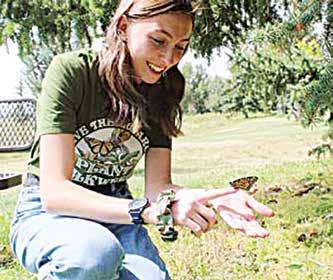
Monarch research – Zoë Short observes a monarch butterfly at LaPrele Park in Laramie. Short, a University of Wyoming 2023 spring graduate from Douglas who received her bachelor’s degree in zoology, was the lead author of a paper which studied why monarch butterflies in eastcentral Wyoming were not affected by a parasite known to hinder butterfly migration. The paper appeared online in the journal Prairie Naturalist on Feb. 2. Kellyn Chandler photo
and publish my own work thanks to the support and encouragement of my mentor Dr. Lusha Tronstad,” Short continues. “I learned a lot about time management, hard work and the scientific
process, all of which are currently helping me pursue my doctorate in veterinary medicine.”
This story was originally published by UW News staff on Feb. 5.
A9 Wyoming Livestock Roundup • Volume 35 No. 45 • March 2, 2024 Montana Performance Bull Co-op™ with Herd Bull quality in volume Large Groups of Half Brothers Selling 230 Bulls For more information, contact any of the Montana Performance Bull Co-op consignors Brian Barragree • 406/780-1219 Rob Aumueller • 406/321-2470 Shane Whiteman • 406/366-0688 Doug Stevenson • 406/350-0350 Annual Bull Sale Friday • March 15, 2024 • 1:00 pm at the Midland Bull Test Sale Facility, Columbus, MT Basin Salvation 3533 2 Lot CED BW WW YW Milk CW Marb RE $M $C +3 +1.7 +84 +152 +26 +87 +1.58 +.77 +72 +382 Basin Jameson 3012 3 Lot CED BW WW YW Milk CW Marb RE $M $C +5 +3.5 +87 +143 +34 +81 +1.64 +1.11 +81 +382 Basin Rangeland 3511 17 Lot CED BW WW YW Milk CW Marb RE $M $C +2 +2.9 +87 +157 +32 +85 +1.16 +.84 +71 +352 BCC True North 36L 49 Lot CED BW WW YW Milk CW Marb RE $M $C +12 +0.1 +76 +137 +32 +62 +1.15 +.55 +94 +316 Basin Man In Black 3245 13 Lot CED BW WW YW Milk CW Marb RE $M $C +10 +0.9 +85 +155 +34 +84 +1.40 +.82 +68 +357 Basin Jameson 3263 5 Lot CED BW WW YW Milk CW Marb RE $M $C +11 +0.0 +83 +144 +39 +67 +1.16 +.73 +68 +300 Sire groups by: Basin Jameson 1076 • Basin True Grit 1021 Basin Jefferson 1104 • EZAR Step Up 9178 Musgrave 316 Exclusive • Sitz Stellar 726D Basin Safe Deposit 9324 • SG Salvation DA CF Payweight 513 812 • G A R Sunbeam Ellingson Rangeland • LAR Man In Black MccLUN’S M LAZY JM RANcH ANGUS AND POLLED HEREFORDS | APRIL 11, 2024 SELLING AT TORRINGTON LIVESTOCK TORRINGTON, WY • SALE: 1 P.M. •••SELLING 120 BULLS••• Kody: 307-575-3519 • Jeff: 307-575-2113 Jim: Cell: 307-534-5141 • mccluncattle@gmail.com FOR MORE INFORMATION CONTACT: www.McClunRanch.com MC SUMMATION K48 DTM DOB: 08/31/22 • CED: 10 • BW: -0.9 WW: 82 • YW: 148 • $B: 145 • $C: 233 K48 - PAP 42
Exports are up 50 million bushels to 2.15 billion, and ending stocks are projected at 2.53 billion bushels, up 360 million from the same time last year. If realized, this would be the highest since 2005-06.
The season-average farm price (SAFP) is forecast at $4.40 per bushel, down 40 cents from the year before.
Soybeans
Overall, the 2024-25 soybean outlook includes higher supplies, use and ending stocks, as well as lower prices compared to the previous year, according to USDA.
The committee explained both soybean production and supplies are forecast eight percent higher than that of 2023-24, with production at 4.5 billion bushels and supplies at 4.8 billion bushels.
The department expects soybean exports up 155 mil-
lion bushels from the 202324 forecast at 1.87 billion bushels and soybean ending stocks up 120 million at 435 million bushels.
“Large global supplies are likely to lead to lower soybean prices, spurring national demand, but the U.S. share of exports is expected to remain below 30 percent of global exports due to higher South American supplies,” said the committee.
Likewise, large global supplies will result in the highest stocks-to-use ratio since 2019-20 at nearly 10 percent, according to USDA, and the soybean SAFP is projected at $11.20 per bushel, down $1.45 from 2023-24. Wheat Wheat supplies, use and ending stocks are also expected to increase in the coming year.
In fact, USDA noted U.S. wheat production is
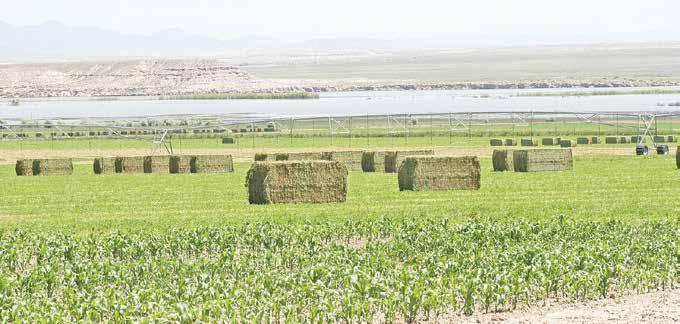
forecast five percent higher at 1,900 million bushels, which, if realized, would be the largest harvest in five years.
“Total wheat planted area for 2024-25 is projected at 47 million acres, down 2.6 million acres from last year. Harvested area is forecast at 38.4 million tons and is based on the 10-year
average harvest-to-plant ratio,” stated the committee.
“The all-wheat yield for 2024-25 is projected up two percent from last year at 49.5 bushels per acre and is based on a long-term linear trend,” the committee continued. “After six years of successive reductions, beginning stocks are forecast to increase in 2024-25 to 658
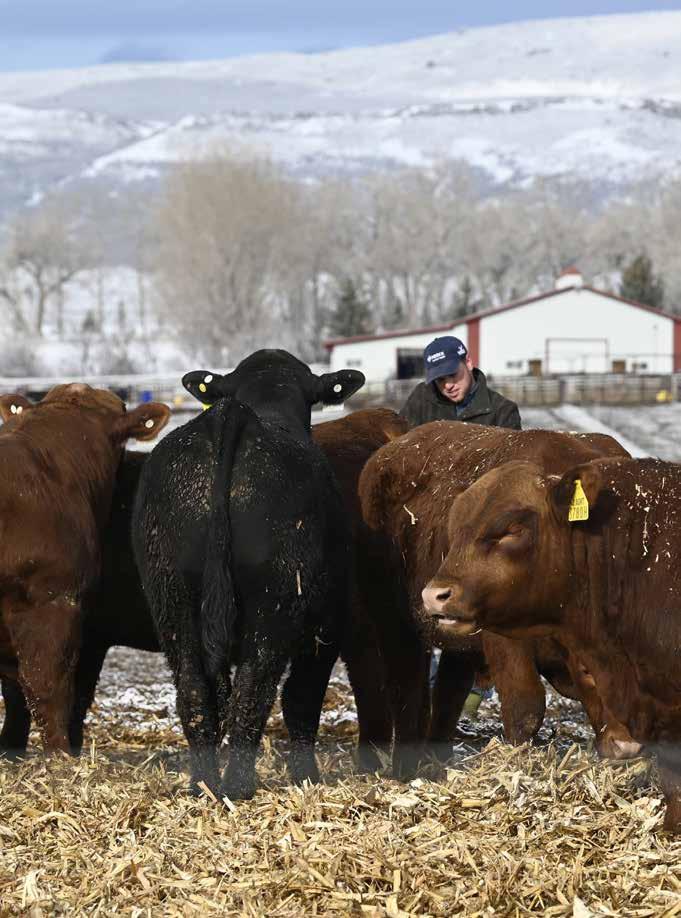
550
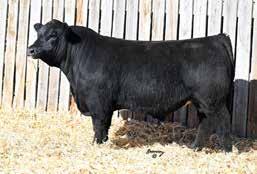
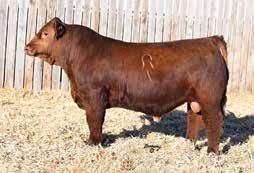
Building on our 90-year heritage of leading the industry, Leachman Cattle’s Spring Sale offers:
1. THE LARGEST SALE OFFERING OF HYBRID BULLS IN AMERICA
2. The most comprehensive genetic evaluations available
3. The best breeding season guarantee
You will be able to buy bulls that are far above industry average in all of the traits listed below – at a reasonable price. Just look at the depth of quality in the offering.


million bushels, an increase of 15 percent from the previous year. A larger crop and higher beginning stocks are expected to raise 202425 supplies by six percent to 2,678 million bushels.”
USDA further noted total use is expected to increase two percent from the previous year to 1,909 million bushels, with domestic use forecast lower and wheat exports expected to rebound from last year’s 52-year low.
Ending stocks are expected to reach 769 million bushels, up 17 percent from last year and slightly above the five-year average.
The SAFP is projected at six dollars per bushel, down $1.20 from 2023-24 and the lowest since 2020-21.
Rice
The USDA Oilseeds, Feed Grains, Wheat and Rice Interagency Commodity Estimates Committee noted they expect the 2024-25 U.S. rice outlook to include higher supplies and beginning stocks, unchanged total production and record-high imports.
“Despite higher exports and domestic use, ending
stocks are projected rising to the highest level since 201415,” they note.
The committee projects total 2024-25 rice planted acreage at 2.9 million acres and total harvested rice area at 2.85 million acres.
Assuming normal weather and planting dates, the average all-rice yield is forecast at 7,641 pounds per acre, unchanged from last year, while all-rice total supplies are projected to increase 13 million hundredweight (cwt) to 304.5 million.
USDA expects total 2024-25 use up four percent to 258 million cwt, with total domestic use at a recordhigh 167 million cwt.
“All-rice ending stocks are forecast to increase nine percent to 46.5 million cwt,” stated the committee. “The 2024-25 all-rice SAFP is forecast to decline by $1.60 per cwt to $16.80 with reductions in both long-grain and medium- and short-grain prices.”
Hannah Bugas is the managing editor of the Wyoming Livestock Roundup. Send comments on this article to roundup@wylr.net.
Wyoming Livestock Roundup • Volume 35 No. 45 • March 2, 2024 A10 CROPS continued from page A1 Veseth Cattle, where the focus is on the Female. (406) 658-2504 • djvsth@itstriangle.com 22787 Midale Rd • Malta, MT 59538 D ale & J anet V eseth Lunch at 11:30 • Sale starts at 1:00 pm Glasgow Stockyards in Glasgow, MT March 11, 2024 18th Annual Sale Selling 65 Red Hybrid Yearling Bulls 15 Red Bred Heifers to Start March 20th 40 Red Bred Heifers to Start April 20th 65 Red Heifer Calves – Bangsed 10 Black Heifer Calves – Bangsed 36 Short Term Cows Margaret Demarais Dispersal 10 – 12 Mature Cows www.VesethCattleCo.com
BULLS – BETTER BULLS – FOR LESS!
MORE
JERROD WATSON (CO) - 303-827-1156 AARON RASMUSSEN (NE) - 308-763-1361 KURT SCHENKEL (OH) - 740-503-6270 WWW.LEACHMAN.COM | (970) 568-3983 Top 3% CowHerd Profit ($Ranch) Top 3% Cow Fertility (Zoetis EPD) Top 0.1% Birth to Harvest ($Profit) Top 3% Cowherd Profit ($Ranch) Top 1% Cow Fertility (Zoetis EPD) Top 0.3% Birth to Harvest ($Profit)
LOT 3
24-25, 2024
sell Sunday at 1:00 PM Bulls sell Monday at 10:00 AM
Bull Barn | Fort Collins, CO SPRING BULL & FEMALE SALE
LOT 389
MARCH
Females
Leachman
Stabilizer
& 200+
& Charolais Heifers MORE HYBRID VIGOR • MORE CALVING EASE • MORE COW FERTILITY MORE GROWTH & CARCASS • MORE RETAINED OWNERSHIP PROFIT WYLR photo
Bulls
Stabilizer, Angus, Red Angus

A11 Wyoming Livestock Roundup • Volume 35 No. 45 • March 2, 2024
Regardless of a horse’s responsibilities or the time of year, protein is vital to their diet, and the amount needed is largely based on their age and workload.

“The right amount of high-quality protein will provide essential amino acids to support optimum horse health,” states Sarah McNaughton in a Farm Progress article published Oct. 3, 2023. “While protein is essential, too much consumed in the diet can cause kidney damage, so care must be taken to hit the proper amount.”
Protein supplementation options
On average, horses consume a variety of roughage and grains with varying levels of protein quality and quantity.
Kentucky Equine Research (KER) Staff note soybean meal, linseed meal, corn gluten, canola meal and cottonseed meal are some of the most common protein supplements used in textured and pelleted feeds, and although they are all suitable components of horse feed, they deliver differences in quality.
“Quality of protein is determined by amino acid composition,” KER says. “A single amino acid – lysine –is of particular importance to horse owners.”
“High-quality protein feedstuffs are those which contain high amounts and proportions of essential amino acids,” agrees Iowa State University Extension and Outreach. “The best indicators listed on com-
mercial feed tags are the essential amino acids lysine, methionine and throenine, although lysine is the only one routinely listed.”
Iowa State further notes high-quality protein feedstuff includes legumes, young grass pastures, canola meal, linseed meal and soybean meal, which is rated the highest quality because it has a superior amino acid profile.
On the other hand, cereal grains and grain byproducts have moderate- to low-quality protein content.
Specific protein requirements
Regardless of how protein is supplemented in the diet, a horse’s protein requirement will vary depending on their age and workload.
McNaughton points out fully-mature horses at maintenance require the lowest protein requirement, needing only 1.4 pounds per day, which can be achieved through grazing or feeding on grass hay, as long as quality is average or above average.
Working and performance horses with a heavier workload should consume more protein – up to 1.9 pounds per day, according to McNaughton.
“For horses involved in regular athletic activity, protein works alongside starch, fat and fiber to
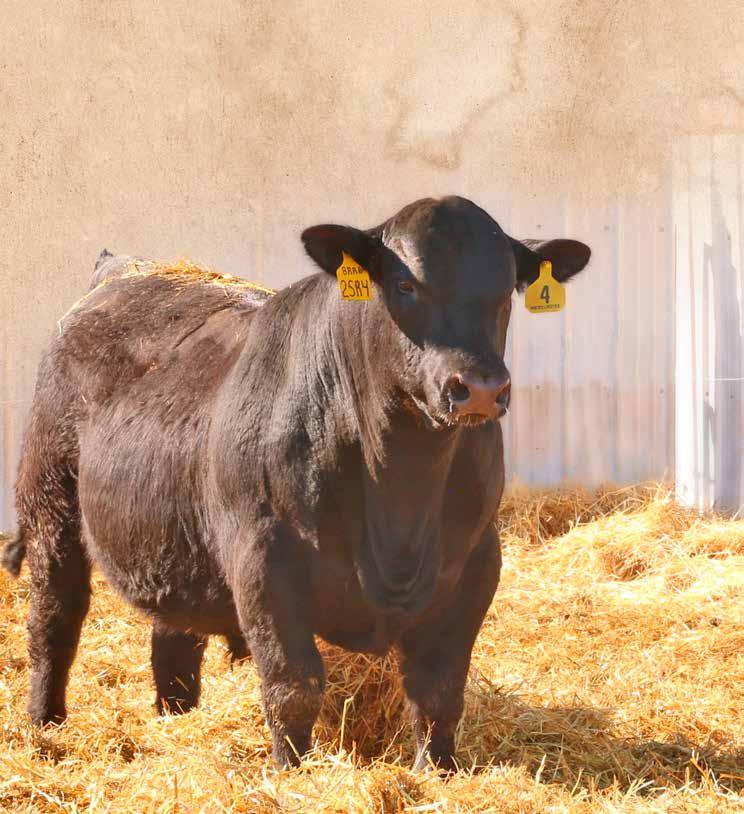
fuel working animals,” she explains. “Excess protein consumed can be turned into a source of energy as the amino acids present in excess protein are broken down by the liver.”
Younger horses also require greater amounts of protein in their diet.
McNaughton notes a 550-pound weanling should receive about 1.5 pounds of protein per day, while an 850-pound yearling should consume 1.75 pounds per day.
“Up to two pounds of protein may be needed daily for animals in training programs,” she adds.
Additionally, during the last 90 days of gestation, broodmares will require around two extra pounds of protein daily in order to meet their own requirements and build fetal tissue.
“Lactating mares have the highest protein requirement of all, as large amounts of protein leave through mare’s milk,” McNaughton explains. “For horses that do not receive enough protein, owners can expect to see decreases in milk production and lowered foal growth. Three to 3.4 pounds of protein is needed each day for this class.”
Hannah Bugas is the managing editor of the Wyoming Livestock Roundup. Send comments on this article to roundup@wylr.net.



Wyoming Livestock Roundup • Volume 35 No. 45 • March 2, 2024 A12 Average PAP37.5 Selling 50 Registered ANGUS BULLS 1st YEAR Breeding Guarantee PAP Tested SEMEN Tested CARCASS Evaluated PERFORMANCE Tested Selling Sons ofS A V Renown 3439 Ideal Encore of 9524 Lady S A V Renovation 6822 HL Ladies Man 5RI1 Ideal 1925 Emulous of E1674 HL Thunder bolt 5RI2 McCumber Tribute 702 www. HANCOCKLIVESTOCK .com 307-250-6900 Complimentary LUNCH 11:30 Proper amounts of protein are critical for a horse’s diet

During the last full week of February, cattle harvest was notably smaller with the President’s Day holiday which shortened Monday’s fed cattle harvest by 20 percent compared to the following weekdays.
Regardless of the holiday, packers continue reducing hours to regain leverage given the sector’s estimated recent losses.
Also during the week, fed cattle prices increased again on strong February Live Cattle contract prices and increasing boxed beef values.
Carcass weights posted a correction to the upside in the week of Feb. 12 as steer carcasses added three pounds to average 912 pounds each. Steer weights landed at 10 pounds heavier than the same week last year, even as they’ve shed a net 30 pounds since their December highs.
The 912-pound average is still nearly seven pounds lighter than the records for the period, marked in 202122.
Last Friday’s Cattle on Feed report indicated a slightly larger January placement number than analysts’ pre-report estimates had guessed. However, the January number was just 92.6 percent compared to last January and the smallest in decades.
The month’s severely inclement weather was a factor in feedyards opting to place fewer cattle.
Beef market sees strong increases
The boxed beef market saw strong increases in prices with restricted supply yet again a driver. Discussion about softening demand or customer pushback at recent price levels is nullified by the evidence of boxed beef values marching higher.
The current price rally is reminiscent of a year
ago, even though late February beef demand is typically quiet.
Chuck and round prices are quite firm as consumers move toward value-priced items.
In the week beginning Feb. 26, the cutout report showed very strong support for multiple beef cuts from each of the subprimals, adding credibility to further upward price moves to follow the previous week’s generous increases.
There is a bit of a juxtaposition in the price position of several cuts versus this period a year ago. Ribeyes, tenderloins and 0x1 strip loins are cheaper than a year ago, whereas many of the lower priced cuts from the chuck, round and skirts are higher.
2023 carcass primal premiums review
In the brand’s continued effort to track carcass premiums, there is logically a tendency to focus on total carcass cutout values. In other words, the weighted average price of each subprimal cut from the carcass summarized into a singular price for the entire carcass.
Comparing cutout values across U.S. Department of Agriculture (USDA) quality grades and Certified Angus Beef (CAB) brand carcasses provides the quality pricing component of fed cattle values for grid and many formula sales.
Last November, CAB focused on chuck and round primal price differences between the CAB brand, USDA Choice and USDA Select carcasses.
This study revealed a trend where CAB chuck primals increased 285 percent over Choice since 2018. Slightly less dramatically, CAB round primal premiums 170 percent compared to Choice.
The combined chuck and round CAB premiums

increased by 223 percent over five years, while the CAB cutout total increased 39 percent for the period. The per-head value addition changed from $20.66 in 2018 to $48.99 in 2023.
This compares to the $17.84 premium for USDA Choice chuck and round primals over Select in 2023.
Looking at the other major primals, it’s easy to see the largest value gains in the middle meat rib and loin primals are achieved moving from USDA Select to Choice.
More moderate gains are achieved upgrading from Choice to CAB, as the Choice middle meats already command a significant premium. Even so, moving to the higher-quality CAB rib and loin primals generates another $84 per carcass.
Historically, the widest Choice/Select cutout spread of $204.51 per head –basis an 880-pound hot carcass weight – achieved in 2023, set the general tone for increasing demand for higher quality grade and premium branded carcasses.
Yet, the CAB premium added $147.05 per head, on top of Choice, for brandqualified carcasses.
Carcass cutout values are not equivalent to grid payment prices for fed cattle, with packers keeping a share of the premium and passing a portion back to the feeder.
As well, we tend to see premiums tighten when cat-
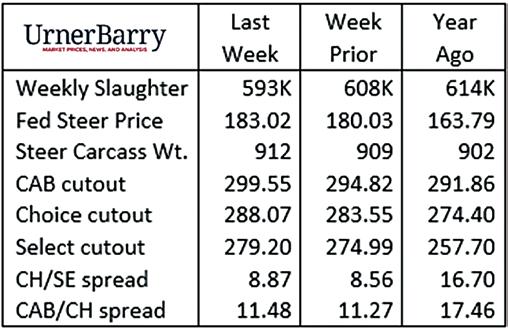
tle supplies shrink, as they are currently. This is likely to create a pricing scenario where all cattle are priced at or near record-high levels, yet the premium outcome may pause or retreat some as was the case in 2014-15.
However, the message from our customers and consumers has strengthened the votes for higherquality carcasses in the 2023 cutout data.
Preference for highlymarbled beef with added specifications under a brand with a reputation for quality will not fade even if the magnitude of premiums does.
Paul Dykstra is the assistant director of supply management and analysis at CAB. He can be reached at pdykstra@certifiedangusbeef.com.
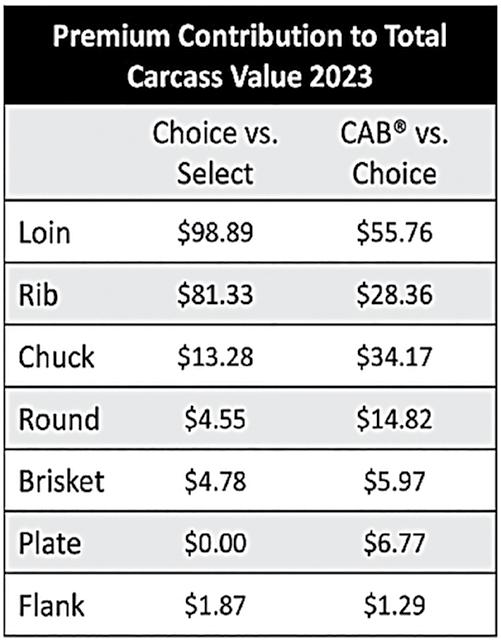

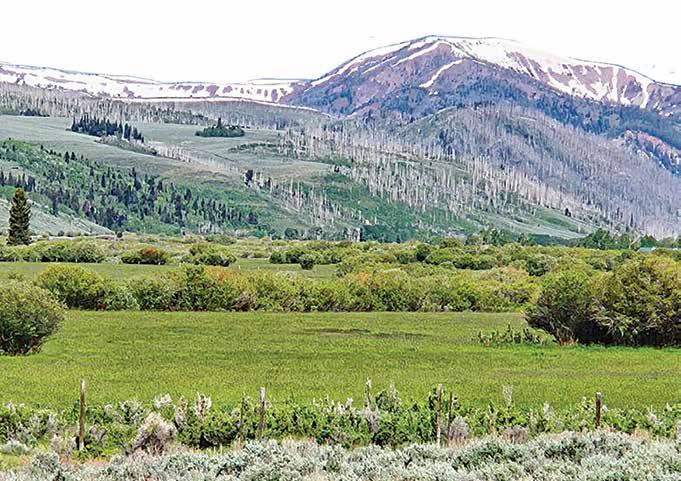
A13 Wyoming Livestock Roundup • Volume 35 No. 45 • March 2, 2024 • Tired of Paying High Prices for Your Bulls?? • More Value for Less Money • 100% AI Sired www.ptlivestock.com 307-709-8351 Pete & Lynnda Thompson Big Piney and Riverton, WY Annual High-Country Genetics Performance Bull Sale Selling 60 Head of Angus, SimAngus and Simmental Bulls High Elevation, Bred for Balance in All Traits, Cattlemen’s Kind Monday, March 11, 2024 P\T Livestock Feedlot 345 Missouri Valley Rd. on Hwy. 134, Riverton, WY Many bulls suitable for heifers • 46 years AI • PAP tested View the catalog of the bulls at www.ptlivestock.com All AI Sired by These Breed Leaders: Angus: Hometown • Fail Safe • True North • Alternative Simmental/SimAngus: Executive Order • Epic • Bank On It TJ Gold • Beacon • Right Now • Big Casino Also Additional Sires Cattle raised by cattlemen for cattlemen in a real-world environment at 8,000-9,000’ elevation Come to the Source for Superior Quality High-Elevation Bulls • Angus • SimAngus • Simmental Raised by cattlemen in real ranch conditions at high elevation in big pastures. These bulls will stand with any in the country for much less money. SATISFACTION GUARANTEED! Real World Bulls Rancher Tested & Approved By Paul Dykstra CAB Market Insider Rocky mountain horse edition ® 307-234-2700 • wylr.net To advertise in the Rocky Mountain Horse Edition, contact Denise or Jody at 800-967-1647, denise@wylr.net or jodym@wylr.net Advertising Deadline: April 26, 2024 Insert Date: May 25, 2024
EVENTS
March 1-3 Black Hills Gun Show, The Lodge at Deadwood, Deadwood, S.D. For more information, call 605-641-0870 or 307-751-1877.
March 4
March 4
March 5
March 6
March 6
March 6
University of Wyoming Extension Sublette County Private Pesticide Applicator Education Program, 9 a.m.-1 p.m., Sublette County Extension Office, Pinedale. For more information, contact Dagan Montgomery at 307-367-4380.
University of Wyoming Extension Sweetwater County Private Pesticide Applicator Education Program, 2-5 p.m., Eden Valley Community Center, Farson. For more information, contact Dagan Montgomery at 307-367-4380.
University of Wyoming Extension Uinta County Private Pesticide Applicator Education Program, 12-4 p.m., Uinta County Extension Office, Evanston. For more information, contact McKenna Julian at 307-783-0570.
University of Wyoming Extension Washakie County Private Pesticide Applicator Education Program, 1-5 p.m., Washakie County Extension Office, Worland. For more information, visit uwyoextension.org
University of Wyoming Extension Albany County Private Pesticide Applicator Education Program, 8 a.m.-12 p.m., Albany County Fairgrounds, Laramie. For more information, contact the Albany County Extension Office at 307721-2571.
University of Wyoming Extension Lincoln County Private Pesticide Applicator Education Program, 10 a.m.-2 p.m., Afton Civic Center, Afton. For more information, contact Hudson Hill at 307-885-3132.
March 7 Western Society of Weed Science Palmer Amaranth Symposium, Grand Hyatt, Denver, Colo. For more information or to view the livestream, visit wsweedscience.org/annual-meeting-2024
March 8 Uinta County Women in Ag Night, 6-8 p.m., Beeman-Cashin Building, Evanston. For more information or to RSVP, contact McKenna Julian at mbrinton@ uwyo.edu or 307-783-0570.
March 9-11 7 Triangle 7 Cattle Co., LLC Artificial Insemination Clinic, Akron, Colo. For more information, visit 7triangle7.com or call 970-481-3921.
March 11
March 12
March 14
March 14
March 14-17
University of Nebraska-Lincoln Extension Webinar Series, 6:30-7:45 p.m., online. For more information or to register, visit go.unl.edu/feedingthecow
University of Wyoming Extension Fremont County Private Pesticide Applicator Education Program, 9 a.m.-12 p.m., Dubois City Hall, Dubois. For more information, e-mail rfisk1@uwyo.edu or call 307-332-2363.
University of Nebraska-Lincoln Extension Webinar Series, 6:30-7:45 p.m., online. For more information or to register, visit go.unl.edu/feedingthecow
University of Wyoming Extension Natrona County Private Pesticide Applicator Education Program, 12-4 p.m., Agricultural Resource and Learning Center, Casper. For more information, contact Ann Cormican at acormican@ natronacounty-wy.gov or call 307-235-9400.
Cache Valley Cowboy Rendezvous, Cache County Event Center, Logan, Utah. For more information, visit cvcowboy.org
March 16 Natrona County Cow-Belles Annual Gala, Hilton Garden Inn, Casper. For more information, e-mail nccowbelles@gmail.com.
March 16-17 Gun Show, Weston County Senior Citizens Center, Newcastle. For more information, call Mike Novotny at 253-678-4825.
March 18
University of Nebraska-Lincoln Extension Webinar Series, 6:30-7:45 p.m., online. For more information or to register, visit go.unl.edu/feedingthecow
March 18 Ranching in the West Seminar Series: Energy Innovations, Gillette College, Gillette. For more information and to register, visit uwyo.edu/uwag/rmal
March 19
March 20
University of Wyoming Extension Free Virtual Career Fair, 6 p.m., online. For more information, e-mail amwall@uwyo.edu or call 307-347-3431 with questions.
University of Wyoming Extension Hot Springs County Private Pesticide Applicator Education Program, 1-5 p.m., Hot Springs Weed and Pest, Thermopolis. For more information, visit uwyoextension.org

POSTCARD from the Past
Compiled
by Dick Perue rrichardperue@gmail.com

A Beneficial Snowstorm
With my computer having a fit, I was forced to call upon a past Postcard for this week’s column. Following is one from 2011. Enjoy!
Upon returning from a warm, sun-drenched trip to the southwest, my wife and I were greeted with below zero temperatures and a snowstorm in Wyoming. It reminded me of a story I read recently where the editor of the local weekly newspaper described a February 1906 snowstorm as beneficial.
The article reads:
The storm of snow which began here last Saturday left about 12 inches of snow in its wake. Coming as it did from the north, it was expected it would be followed by extreme cold, but the temperature grew quite warm, and on Monday morning this valley was visited by a Chinook wind which swept twothirds of the snow from the ground.
Again on Tuesday morning a warm snow set in and continued for
some time, melting almost as fast as it fell. The consequence is the moisture which has fallen in this time has, in a great measure, gone into the ground, leaving the roads in very muddy condition.
The stages have been from two to four hours late each day, and strange to say, there has been more passenger travel during
this time than for weeks before. The rough weather seemed to startle everyone who had to travel out on the road, bad and disagreeable as the weather was.
The storm will prove of great benefit. The ground was warm and the moisture was soaked up at an alarming rate, thus ensuring a great grass crop when the warm weather comes in the spring.
The people of this valley may expect a great deal of moisture to fall during this month, for this storm will hardly have expended itself before we may look for another, which will probably show up around the 22nd of this month. Look for it.
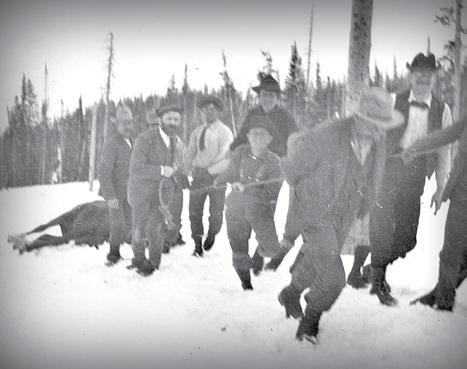
Wyoming Livestock Roundup • Volume 35 No. 45 • March 2, 2024 A14 CALENDAR Submit your events to: Editor, Wyoming Livestock Roundup, P.O. Box 850, Casper, WY, 82602, or e-mail to roundup@wylr.net.
the Sierra
of Encampment was tough to negotiate for both men and horses in the early 1900s. Often, the horses would be so bogged down in snow they would have to be laid on a blanket or sled and drug to safe ground by several men.
The deep snow of
Madre Mountains west
Photo by Jack Ledbetter. Courtesy of Grand Encampment Museum. Historical Reproductions by Perue
Source: USDA AMS Livestock, Poultry & Grain Market News, Torrington
CO
National Sheep Summary
As of February 23, 2024
Compared to last week traditional slaughter lambs 22.00 higher, others mostly 10.00-30.00 higher. Slaughter ewes steady to 15.00 higher. Feeder lambs steady to 6.00 higher. At San Angelo, TX 5,618 head sold. No sales in Equity Cooperative Auction. In direct trading slaughter ewes and feeder lambs not tested. 4,654 lamb carcasses traded with no trend due to confidentiality. All sheep sold per hundred weight (CWT) unless specified.
Slaughter Lambs: Choice and Prime 2-3
San Angelo: wooled and shorn 115-150 lbs 170.00-198.00; 161 lbs 186.00.
Ft. Collins: wooled and shorn 100-130 lbs 182.50-225.00.
South Dakota: wooled and shorn 100-135 lbs 200.00-232.50; 150-160 lbs 173.00-175.00.
Billings: wooled and shorn 100-135 lbs no test.
Equity Coop: no sales.
Slaughter Lambs: Choice and Prime 1-2
San Angelo: hair 40-60 lbs 272.00-308.00; 60-70 lbs 268.00299.00, few 300.00-320.00; 70-80 lbs 260.00-286.00, few 289.00-290.00; 80-90 lbs 242.00-278.00, few 282.00-290.00; 90-100 lbs 235.00-270.00, few 276.00. wooled and shorn 46 lbs 285.00; 80-90 lbs 266.00-277.00; 94 lbs 258.00.
Ft. Collins: wooled and shorn 43 lbs 275.00; 80-90 lbs 275.00282.50; 90-1 wooled and shorn 60-70 lbs 247.50-257.50. hair 40-50 lbs 270.00-290.00; 50-60 lbs 267.50-272.50; 60-70 lbs 240.00-262.50; 70-80 lbs 237.50-247.50; 80-90 lbs 235.00255.00; 90-100 lbs 225.00-255.00.
South Dakota: wooled and shorn 73 lbs 280.00; 85 lbs 260.00; 90100 lbs 260.00-270.00. hair 73 lbs 295.00.
Billings: no test.
Slaughter Ewes
San Angelo: Good 3-4 (very fleshy) hair 70.00; Good 2-3 (fleshy) 101.00, hair 100.00-116.00; Utility and Good 1-3 (medium flesh) hair 107.00-126.00; Utility 1-2 (thin) hair 86.00-106.00; Cull and Utility 1-2 (very thin) 74.00, hair 70.00-86.00; Cull 1 no test.
Ft. Collins: Good 3-4 (very fleshy) 100.00-120.00; Good 2-3 (fleshy) 85.00-110.00; Utility 1-2 (thin) no test; Cull 1 no test.
South Dakota: Good 3-4 (very fleshy) 71.00-115.00; Good 2-3 (fleshy) 75.00-125.00; Utility 1-2 (thin) 65.00-75.00; Cull 1 55.00-65.00.
Billings: Good 3-4 (very fleshy) no test; Good 2-3 (fleshy) no test; Utility 1-2 (thin) no test; Cull 1 no test. Feeder Lambs: Medium and Large 1-2 San Angelo: h air 30-40 lbs 270.00-290.00; 40-50 lbs 270.00296.00; 53 lbs 2960.00.
Ft. Collins: no test.
South Dakota: 40-50 lbs 225.00-270.00; 50-60 lbs 250.00260.00; 60-70 lbs 255.00-258.00; 74 lbs 237.00; 88 lbs 230.00; 90-100 lbs 217.00-226.00; 105 lbs 208.00; 115 lbs 193.00. hair 42 lbs 250.00; 50-60 lbs 285.00-310.00.
Billings: no test.
Replacement Ewes: Medium and Large 1-2 San Angelo: ewe lambs 90-100 lbs 182.00-200.00/cwt; yearling hair 100 lbs 190.00/cwt; young hair 90-135 lbs 121.00-
152.00/cwt.
Ft. Collins: no test.
South Dakota: bred yearlings 185.00-270.00/head; bred young 137.50-210.00/head; bred aged 130.00/head.
Billings: no test.
Sheep and lambs slaughter under federal inspection for the week to date totaled 40,000 compared with 39,000 last week and 32,000 last year.
Source: USDA AMS Market News, San Angelo, Texas
National Wool Review
As of February 23, 2024
Domestic wool trading had no confirmed trades reported this week. Prices reflect trades FOB warehouse in original bag or square pack, bellies out, some graded, and 76 mm or longer. No allowance made for coring, freight, or handling fees at the warehouse level to reflect net grower prices. Wools shorter than 75 mm typically discounted .10-.20 clean. Classed and skirted wools usually trade at a .10-.20 premium to original bag prices.
The latest markets data can be found by visiting USDA’s Agricultural Marketing Service at https://www.ams.usda.gov/market-news
A15 Wyoming Livestock Roundup • Volume 35 No. 45 • March 2, 2024 Un SETT PRICE Month Week Prev This Week Change WHEAT FUTURES MARCH 5.83 5.77 -0.06 MAY 5.79 5.76 -0.03 JULY 5.80 5.79 -0.01 SEPTEMBER 5.87 5.87 NC FOR THE WEEK ENDING May 24, 2019 SETT PRICE Month Week Prev This Week Change LIVE CATTLE FUTURES FEBRUARY 183.50 184.00 +0.50 APRIL 186.55 185.35 -1.20 JUNE 182.70 181.23 -1.47 AUGUST 181.53 180.70 -0.83 OCTOBER 184.58 184.23 -0.35 SETT PRICE Month Week Prev This Week Change CORN FUTURES MARCH 4.06 4.16 +0.10 MAY 4.18 4.29 +0.11 JULY 4.31 4.41 +0.10 SEPTEMBER 4.40 4.50 +0.10 SETT PRICE Month Week Prev This Week Change SOYBEAN FUTURES MARCH 11.48 11.28 -0.20 MAY 11.52 11.41 -0.11 JULY 11.61 11.51 -0.10 AUGUST 11.56 11.49 -0.07 WEEKLY CATTLE AUCTIONS Steers Heifers Compiled from USDA Market News Service information and other sources SETT PRICE Month Week Prev This Week Change OATS FUTURES MARCH 3.63 3.77 +0.14 MAY 3.51 3.71 +0.20 JULY 3.46 3.67 +0.21 SEPTEMBER 3.51 3.67 +0.16
AUCTIONS MARKETS SETT PRICE Month Week Prev This Week Change FEEDER CATTLE FUTURES MARCH 252.05 249.00 -3.05 APRIL 256.70 253.73 -2.97 MAY 259.33 256.13 -3.20 AUGUST 268.35 266.65 -1.70 SEPTEMBER 269.63 267.53 -2.10 Location Under 400 400-500 500-600 600-700 700-800 Over 800 Sltr Bull Stock Cows Volume Sltr Cows Pairs PAYS 362.50-400 310-375 253-354 252-328.50 231-286.50 215-255.50 107-119 111-182 2-23 6017 285-335 282.50-328 256-314 240-284.50 223-260 144-213.50 99-113 Crawford No Report Riverton 112-120 2-27 129 101-112.50 Torrington 342 312-335 291-315 248-285 229-237 120-136 170-205.50 2-28 4661 329-336 300-325 276-322 255-284 232-245.50 211 97-135 St. Onge 387.50 320-346 310-342.50 288-311 271-280.50 113-141 2-23 3000 311-320 260-315 269-296 245-284.50 240.50-255.25 93.50-117.50 Big Horn Basin No Report Billings 387 317.50-372.50 330-347 262-294 254-269 98-143 112.50-191 2-29 870 317 272.50-315 242.50-288 249.50-268 79-122 1450-2550 CUTOUT VALUES This Prior Last Week Week Year CUTOUT VALUES 296.36 294.37 284.86 PRIMAL RIB 461.27 461.01 466.90 PRIMAL CHUCK 253.53 253.47 224.23 PRIMAL ROUND 248.20 246.54 222.22 PRIMAL LOIN 388.53 283.97 392.92 FOR THE WEEK ENDING MARCH 1, 2024 Centennial 320 299 269-285 237 128.50 $1475-$2300 2-23 267.50-275 247.50 250-270 165-226 154-213 91-119 $2300-$2600 Auction Volume Feeder Slaughter Slaughter Stock Slaughter Lambs Lambs Ewes Ewes Bucks Centennial 797 85-130 170-302.50 52.50-165 172.50 102.50-180 5 AREA WEEKLY WEIGHTED CATTLE PRICE This Prior Last Week Week Year Live Steer 182.95 180.35 163.72 Live Heifer 182.95 179.97 163.64 Dressed Steer 291.61 286.61 260.97 Dressed Heifer 291.69 286.82 261.73 St. Onge 774 170-250 27.50-86 87 PAYS No Report Buffalo No Report Daily Grower Bids Region Price US #2 Yellow Corn Southeast WY 3.7950-4.2950 US #1 HRWW Southeast WY 4.9725-5.1225 US #1 Black Beans Min-Dak 40-42/cwt
#1 Dark Red Kidney Beans Min-Dak 41/cwt #1 Great Northern Beans Den-Rate 42/cwt
#1 Light Red Kidney Beans Min-Dak 41/cwt #1 Pea (Navy) Beans Min-Dak 30/cwt
#1 Pinto Beans Den Rate 38/cwt Min-Dak 37-40/cwt
WEEKLY SHEEP
US
US
US
Source: USDA AMS Livestock, Poultry & Grain Market News, Greeley,
Australian Wool Exchange Clean Del Price Change from 75-85 Percent Micron US Grade in U.S. Dollars Previous Sale of Australia 17 > 80s 5.37 0.03 4.03-4.57 18 80s 4.77 0.02 3.58-4.06 19 70-80s 4.34 0.04 3.25-3.69 20 64-70s 4.13 0.05 3.09-3.51 21 64s 4.08 0.05 3.06-3.47 22 62s 4.07 0.06 3.05-3.46 23 60-62s -----24 60s 25 58s 2.25 (0.03) 1.69-1.91 26 56-58s 1.73 0.02 1.30-1.47 28 54s 1.22 0.00 0.92-1.04 30 50s 1.16 0.01 0.87-0.99 32 46-48s 1.06 (0.03) 0.79-0.90 Merino Clippings 2.28 0.02 1.71-1.94 Source: USDA- CO Dept of Ag Market News Service, Greeley, CO Wyoming Hay Summary As of February 29, 2024 Compared to last week hay sales sold steady. Demand remains light. Some producers are thinking they will have to lower their asking prices to finish cleaning out their hay barns before first cutting of alfalfa hits the sheds in June. All types and qualities of hay left at most producer’s piles. Eastern Wyoming Alfalfa - Good Large Square 3x4 180 Alfalfa Pellets 15% Suncured 350 Alfalfa/Oat Mix - Fair Large Square 3x4 125 Forage Mix-Two Way - Good Large Square 3x4 150 Oat Large Square 3x4 90 Western Wyoming Alfalfa - Premium Small Square 3 Tie 300 Alfalfa - Good/Premium Small Square 270 Alfalfa - Utility Large Square 3x4 90 Alfalfa Cubes 400 Alfalfa/Grass Mix - Utility Large Square 3x4 110 Alfalfa/Orchard Mix - Premium Small Square 285-300 Alfalfa/Orchard Mix - Fair Small Square 210 Source: USDA AMS Livestock, Poultry & Grain Market News Torrington Nebraska Hay Summary As of February 29, 2024 Compared to last week bales of hay sold with a lower undertone. Ground and delivered hay sold steady. Alfalfa pellets steady. Demand was very light across the state. Some contacts stated hay that had been spoken for has been turned back to the producer. Each week when making calls someone says this. Looks like there will be quite a lot of hay carried over. Dryness continues across the region but demand for hay remains nil. Few, reports of some hay going south to help with the fires in the Texas panhandle. Central Nebraska Prairie/Meadow Grass - Premium Small Square 8/bale Prairie/Meadow Grass - Good Large Round 140 Prairie/Meadow Grass - Utility/Fair Large Round 100 Eastern Nebraska Alfalfa - Premium Small Square 10/bale Alfalfa Pellets 17% Suncured 330 Brome Grass - Good Small Square 12-14/bale Straw Wheat Small Square 6.75/bale Platte Valley Nebraska Alfalfa - Premium Large Round 170 Alfalfa Ground (Delivered) 190 Pellets 17% Dehyd 375 Pellets 17% Suncured 375 Corn Stalk Ground (Delivered) 100 Western Nebraska Alfalfa - Utility/Fair Large Square 3x4 130 Alfalfa Ground (Delivered) 150-180 Alfalfa/Oat Mix - Fair/Good Large Square 3x4 125 Alfalfa/Orchard Mix - Utility Medium Square 3x3 115 Millet Large Round 125 Oat Large Square 3x4 90 Source: USDA AMS Livestock, Poultry & Grain Market News, Kearny, NE
Livestock guardian dogs (LGDs) are superstars in the canine world, even if they may never be seen performing live.
These unique canines are imperative to the ranching industry and Texas A&M (TAMU) AgriLife Research and Extension Center in San Angelo, Texas created an entire program dedicated to these livestock protection professionals.
LGDs provide producers with a way to combat predators and save the lives of valuable sheep, goats, poultry and other livestock, which reduces financial losses associated with losing livestock.
Utilizing LGDs
According to TAMU, until the turn of the century, LGDs were not popularly used nor needed in Texas, but coyotes and other predator populations have grown and now threaten the livelihoods of ranchers.
“Early settlers of major sheep and goat producing regions of Texas had nearly eradicated the common predators of small ruminants,” explains Reid Redden, TAMU AgriLife Extension Service specialist and associate director in the Department of Animal Science, in the October 2023 edition of AgriLife Today.
“When numbers of predators began to rise,
most ranchers lacked the understanding of how to best manage LGDs under Texas ranching conditions,” he states.
“Predators took a toll on animal numbers, financially hurting ranchers and in turn, driving down livestock numbers while driving up costs for wool, meat and related products.”
The LGD Program in San Angelo, Texas was established to help address persistent predator problems by giving ranchers an alternative, cost-effective means of keeping livestock safe.
“We have seen lambing and kidding increase up to 100 percent in less than a year when a producer uses
LGDs to protect their livestock versus trapping and other methods,” says AgriLife Extension LGD Specialist Bill Costanzo.
Increased survival rates for lambs and kids – often an easy meal for predators – show LGD’s direct impact to ranching operations’ bottom line.
Specialized breeds
LGDs have been utilized around the world for hundreds of years and have the natural instincts, temperament and talent to protect livestock.
On Feb. 15, TAMU AgriLife Extension hosted a LGD webinar focusing on the Maremma breed.
Sarah Letts, president
of the Maremma Sheepdog Club of America, works with organizations to improve breeding practices and provide mentorship for those new to LGDs in general and to Maremmas in particular.
“The characteristics of close and intentional guarding, the general friendliness with people and the ease of training to poultry and other livestock are essential,” Letts says.
“Maremma dogs are a breed that work well as protection dogs for many varieties of livestock due to their style of close and intentional guarding.”
large dog evolving over many centuries from Bulgaria and its neighboring countries.
“They are known to have patrolled local mountains, protecting livestock by warning off any predatory threats with deep, guttural growls and barks,” Sponenberg states. “These dogs are strong and courageous, and they would fight any predator without hesitation if it continued to pursue its prey.”
Guardian dog program









The Maremma breed originated in Italy, where it was used for thousands of years to protect flocks from predators – particularly wolves – sometimes known as the Maremmano-Abruzzi in Italy, where it was originally found.
The Maremma protects livestock through territorial marking, warning barks and when required, it will display protective behaviors.
While the Maremma is not an aggressive breed, if a predator persists, it will protect its flock by force.
In November 2023, TAMU featured the Karakachan breed in their educational webinar.
Dr. Phillip Sponenberg, veterinarian and professor of pathology and genetics at the Virgnia-Maryland Regional College of Veterinary Medicine, in Blacksburg, Va., was the guest speaker.
“Sponenberg has played a direct role in establishing the Karakachan LGD in the U.S. through the initial importation of dogs and then serving as breed registrar until recently,” states Costanzo.
The Karakachan is a
The TAMU AgriLife LGD Program was established in 2017, and in 2019, the LGD Bonding Project was formed.
No other university or Extension system has a program as large and as effective as the one in place where AgriLife Extension specialists collaborate with TAMU AgriLife Research scientists and students.
These animal science experts study LGDs to improve all facets of their health, life and working success, from puppy to professional protector.
Redden noted the program was designed to dispel commonly held myths of LGDs, including that they cannot be socialized to people. The program was also implemented to improve best-management practices from weaning to adulthood so more dogs are trained and provided guidance and tools to do their job.
The ongoing research and educational programs done by AgriLife Extension and research helps ranchers and producers protect their livestock, not just in Texas, but across the U.S.
Melissa Anderson is the editor of the Wyoming Livestock Roundup. Send comments on this article to roundup@wylr.net.
Lawmakers blast EPA rule
U.S. Rep. Dan Newhouse (R-WA) and other leaders of the Congressional Western Caucus recently joined more than 100 members of the House of Representatives in demanding the Environmental Protection Agency (EPA) rescind the recently finalized rule for National Ambient Air Quality Standards (NAAQS) for fine particulate matter.
“EPA’s recent NAAQS rule is an unnecessary change which puts American manufacturing, forestry and other industries at risk,” Newhouse said. “America already has stringent clean air standards and ranks in the top 20 globally in air quality.”
“This new standard only serves to hamper prosperity across the country for negligible benefits while forcing businesses to close, increasing manufacturing costs and inflicting harm to communities across the country,” he added.
On Feb. 7, the EPA finalized the rule, which the administration says is a significantly stronger air quality standard that will better protect America’s families, workers and communities from the dangerous and costly health effects of fine particle pollution. The agency is also planning complementary standards to reduce pollution from power plants, vehicles and industrial facilities, paired with clean-air spending from the Inflation Reduction Act and Bipartisan Infrastructure Law.
Lawmakers say the rule will be a death knell for vital U.S. industries, including timber and manufacturing. They say the new standards will be logistically impossible for the industries to execute and would result in the loss of thousands of jobs and billions in economic activity.
Wyoming Livestock Roundup • Volume 35 No. 45 • March 2, 2024 A16 77 Zuber Road • Riverton, WY 82501 • (307) 856-8123 carlsonequipment@gmail.com Visit our Web Site at: www.carlsonequipment.com Lakeland Wagon Portable Bunk Feeder, 6’x24’ $7,500 2654 NDE Feeder Mixer $29,500 New EZ Ration 6 Bale Feeder, pull type Call for Pricing 2620 Haybuster Feeder $7,900 1994 Kenworth w/ Knight 3070 Feed Box $79,000 Peecon Feeder/Mixer Wagon $29,500 Case IH 5 Bottom in Furrow Plow $9,500 New Artsway 166 6 Bottom Onland Plow $39,000 Brillion 30’ Roller Harrow $54,000 Leon 808 Loader, bucket & grpl $7,900 Dual Loader $1,950 236 MF Front End Loader $1,950 14’ Chisel Plow $3,900 Case IH 345 Vibrashank $7,950 International 21’ Vibrashank $3,960 Krause 955A 25’ Disc $7,900 14’ International Disc $2,900 JD 10’ 3 PT Disc $2,950 10’ IH Disc $1,950 10’ EZEE-On Disc $1,950 New Idea Manure Spreader $6,500 Miskin 7 Yard Scraper $4,500 7’ Rotary Mower $1,950 Rhino 950 3-Way Hydraulic Blade $7,900 Leon Dozer Blade, 12’ $1,950 New JCT 72” Tiller Skid Steer Mount $1,800 Unused JCT 72” Rock Grapple Bucket Skid Steer Mount................. $2,900 Unused AGROTK Pallet Forks 48” for Skid Steer $850 6”x32’ Grain Auger, PTO driven............................................................$950 22” or 30” Morman Creaser, 9 row w/ markers $4,950 Ford 700 Truck w/ stack retriever $9,500 IH 4700 Truck w/ flatbed and forklift attachment $9,500 Set of IH Duals 18.4 x 38 w/ clamps $750 Bradco Aster 9000 Skid Steer Post Pounder $4,900 New Arrowquip Hydraulic Cattle Chute Call for Pricing 1 1/4” 6 Rail 20’ Continuous Fence Panels Call for Pricing Case IH MXM190, MFD, cab & air, front weights, low hrs,1 owner $95,000 Case IH 2096 w/ cab, air $19,500 Case IH MX170, MFD w/ ldr, grpl $69,500 Case IH MX240, 4 WD w/ duals $89,000 Massey Ferguson 4243 w/ ldr, 1840 hrs $39,500 2019 Bobcat 870 Skid Steer, new tracks, 1370 hrs $79,000 JD 420 Dozer, antique $7,500 MX120, 2 WD w/ ldr $49,500 Oliver 1800 Tractor $7,900 Ford 4000 Tractor $7,900 International 1486 $17,000 JD 332 Skid Steer w/ tracks,diesel $29,500 JCB Backhoe, 4 WD, extendahoe, diesel $29,500 Mitsubishi MS180 Trackhoe $39,500 Best Buys in Used Equipment CARLSON EQUIPMENT TRACTORS/LOADERS MISCELLANEOUS EQUIPMENT New Holland 855 Round Baler $2,950 Hesston 4910 Baler w/ accumulator $39,500 Hesston 4910 Baler w/ accumulator $24,500 Hesston 4900 4x4 Baler w/ accumulator $24,500 Hesston 5580 Round Baler $1,900 Case RS 561 Round Baler $19,500 Case IH 8840 Swather, 16’ head $32,500 Vermeer 2800 Rake $24,500 IH 35 Rake .......................$2,995 New Holland Stackwagon, pull type.......................................................$950 HAYING & FORAGE Kobelco Trackhoe $49,500 Annual Consignment Auction • March 9, 2024 • Call us with your Consignments Mike L. / customer since 1985 No other line of credit offers more benefits –more advantages – than a WorkSmart line of credit. Built for agriculture, WorkSmart can reduce interest costs, add convenience and save time. It features cash-back dividends and cash rewards, too! Learn more by calling the Casper office at 307.577.4700. 1401 Wilkins Circle Casper, Wyoming Agriculture Works Here.® FCSAmerica.com WORKSMART®. GET THE LINE OF CREDIT THAT DELIVERS MORE. Terms apply. See website for details. 25976 TAMU honors unsung heroes of the livestock industry
Virtual career fair set
High school and middle school students are encouraged to hop online on March 19 for an interactive virtual career night organized by the University of Wyoming (UW) Extension.
Hosted on Zoom, the annual event offers an opportunity for young people to interact with professionals in fields ranging from agriculture, firefighting and wildlife management to video production, tourism and exercise physiology.
Participants will also receive information on postsecondary education options and financial aid.
While the career fair is organized by Wyoming 4-H educators, it is free and open to any youth who are interested in attending.
This year’s event features speakers from across the country, including YouTube Personality and Agricultural Professional Greg Peterson of the Peterson Farm Brothers and Teffany Fegler, an Educational Opportunity Center TRIO coordinator based in Riverton.
The 2024 career fair begins at 6 p.m. To register and learn more about this year’s speakers, visit bit.ly/ wy-4h-career-fair
All presentations, including those from previous years, are recorded and can be viewed at the above link. Brief bios and contact information for each speaker are also provided.
E-mail amwall@uwyo.edu or call 307-347-3431 with questions.
UW Extension offers class
University of Wyoming (UW) Extension has released a free online course on how to use electric pressure cookers to prepare healthy, inexpensive meals.
The online course, which is approximately an hour long, introduces the device’s components and settings, then demonstrates how to safely operate and clean it. An e-booklet with budget-friendly recipes adapted for electric pressure cookers is also provided.
The self-paced course is designed with Wyoming cooks in mind, using recipes from UW’s Cent$ible Nutrition Program’s (CNP) signature cookbook and explaining how to adjust other recipes for higher altitude locations.
Recognizing these devices may not be affordable for the people with limited resources, CNP staff secured external funding from the Wyoming Hunger Initiative, Farm Credit Services of America and other sources to provide electric pressure cookers to CNP-eligible participants who completed the in-person course.
UW Extension’s new online class is open to the general public as well as CNP participants.
To view the online course, visit bit.ly/uw-electricpressure-cooker
firefighters working on hot spots.
However, by 3 p.m., flames were still visible, moving southeast toward the state line. But, it was no longer threatening the I-80 corridor, Wyoming Highway Patrol reported.
Hitting close to home
Local Rancher Mark Eisele witnessed the fire up close as it burned around 2,000 acres of pasture at the King Ranch
“I have been fearful about wildfire for about six months now, and we started taking precautionary measures. We implemented fire mitigation by allowing the herd to graze closer buildings and structures here on the ranch,” Eisele said. “It gave us a buffer, but I have always managed risk by being proactive.”
“We have equipment to help fight fires, but it takes time to fill the water truck. With fires like this, you don’t have time,” he continued. “We had a pasture with about 20 bulls and at one end of the pasture was the fire, so we took the feed truck out and they followed us to safe ground.”
Eisele noted King Ranch always plans on having periods of drought, so they have a grass bank available when they are faced with dry conditions.
“Along with losing our spring pasture ground, we lost a small haystack, but it could have been worse,” he said. “If it went the other direction, it would have burned our corrals, buildings and possibly our homes, so we are very lucky.”
The King Ranch has incorporated numerous land

and resource conservation practices such as drought management and rotational grazing practices.
“You have to prepare the best you can and know drought will occur – not when will it occur – and know threats of wildfire are possible,” he concluded.
Preparing for wildfires
Wildfire season seems to start sooner, last longer and affect more individuals, families, animals and properties every year.
According to Oklahoma State University (OSU) Extension, wildfire preparedness is especially important when living on farms or ranches and having horses, cattle or other large animals creates unique challenges.
With just a small amount of preparation work and annual maintenance, properties can be made safer and better able to withstand wildfire, as wildfires can occur at any time of year.
OSU Extension reports preparation work should be done around homes and structures, such as trimming lawns, removing tall vegetation, pruning trees and shrubs and cleaning roofs and gutters of flammable debris, which can buy extra time in a wildfire event.
It is difficult to protect stored hay from blowing embers, and OSU suggests
“You have to prepare the best you can and know drought will occur – not when will it occur – and know threats of wildfire are possible.” –Mark Eisele, King Ranch
not storing all of an operation’s hay supply in one location. Instead, it should be placed it in several locations to reduce the risk of it all burning at once.
OSU also suggests having a livestock evacuation plan, which considers how and where livestock will be taken in the event of a wildfire, while also creating safe areas for livestock along fencelines or pasture corners with mineral placement.
Weather outlook
According to the National Interagency Fire Center’s (NIFC) National Significant Wildland Fire Potential Outlook report, released Feb. 1 for the outlook period of February through May 2024, El Niño continues in the equatorial Pacific Ocean, with the warmest sea surface temperature anomalies migrating from the eastern Pacific to the central Pacific Ocean during the past month.
“The Madden Julian Oscillation (MJO) has been unusually strong for an El Niño the past month, and El Niño has also been weakening during January, with current forecast guidance showing a rapid weakening of El Niño into spring,” NIFC reports.
The Climate Prediction Center forecasts El Niño will weaken into early spring, with a 73 percent chance of El Niño-Southern Oscillation (ENSO) neutral conditions for the timeframe of April through June.
“The MJO, Pacific Decadal Oscillation, PacificNorth American Pattern and Arctic Oscillation are likely to influence weather and climate during the outlook period, but El Niño will be the main driver,” NIFC states.
“El Niño has peaked and will be weakening through spring, and by April, conditions may transition into the neutral phase, with ENSO neutral conditions likely by the late spring.”
NIFC’s outlook reports temperatures will continue to become normal as El Niño weakens. However, by the middle of spring, temperatures will start to trend above normal again and precipitation will be trending towards normal conditions as well, while going into May, conditions may start to trend back toward below normal.
Melissa Anderson is the editor of the Wyoming Livestock Roundup. Send comments on this article to roundup@wylr.net.
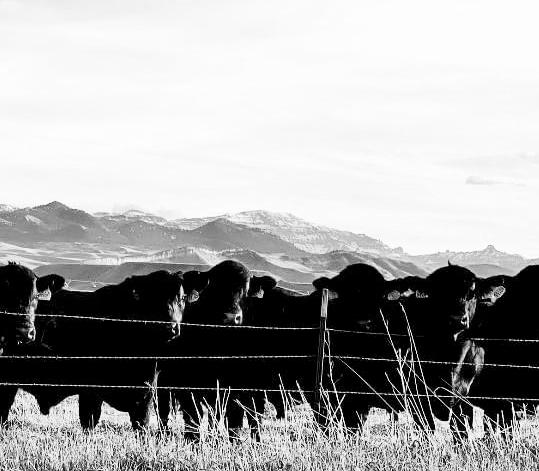




A17 Wyoming Livestock Roundup • Volume 35 No. 45 • March 2, 2024 Saturday, April 6th, 2024 Big Country Genetics Bull Sale Cody, WY . Sale at 1 PM Selling 200 PAP Tested Bulls Volume Bull Discounts . Three Year Breeding Guarantee on Feet, Legs & Semen Jimmy & ShayLe Stewart www.BigCountryGenetics.com 231.878.1908 [C] Sale Location 46 Slippers Lane Cody, WY 82414 X/L ShortMag x Double Vision Reg# 4310293 | API: 177 TI: 95 Big Country Summit x Balance Reg# 4310275 | API: 177 TI: 90 Indreland EXT x Spartan Reg# 4310334 | API: 128 TI: 71 Big Country Summit x Emulation Reg# 4282751| API: 152 TI: 86 X/L ShortMag x Jackpot Reg# 4310295 | API: 175 TI: 97 Sale Broadcasted on: Bulls for the Commercial Cowman’s Bottom Line! Big Country Summit x Red Moon Reg# ASA Pending | API: 165 TI: 88 Bulls developed in a 150+ acre pasture! FIRE continued from page A1
Galen and Lori Fink were recognized on Feb. 29 as the 2024 Stockman of the Year. The award is presented annually by the Livestock and Meat Industry Council (LMIC) at the annual Stockmen’s Dinner at the Stanley Stout Center in Manhattan, Kan.
Galen and Lori grew up on eastern Kansas farms, learning the importance of sound decisions in cattle judging, business and leadership. The couple met at Kansas State University (KSU) and married in 1975.
Galen spent 14 years managing the KSU Purebred Beef Unit, while Lori served as secretary fieldman of the Kansas Angus Association from 1979-90.
Utilizing technology to create a solid genetic program
In 1990, after having
their daughter Megan, the couple took a leap of faith and left their day jobs to put all of their effort into a program to create cattle that worked for a growing base of commercial customers.
All along they’ve chosen to invest in their cows first. Land came later, and still today, they own very little equipment.
Despite lacking their own land, the couple, driven by a passion for innovation, utilized technology, including embryo transfer and artificial insemination, to build the Fink Beef Genetics program in a non-traditional manner.
Starting by placing embryos in other people’s cows, they pioneered an approach, becoming the first in the U.S. to develop such a program.
Through the years, the
Fink Beef Genetics operation flourished, currently headquartered in Randolph, Kan. on land purchased in 2006. The couple’s unique thinking and dedication has led to a program which implants more than 800 embryos annually, hosts two sales a year and offers more than 600 bulls annually through private treaty.
In 1999, Charolais was introduced to the program, providing customers with additional breeding options.
In 2017, Fink Beef Genetics expanded their offerings by introducing Copperhead bulls – a blend of Charolais and Red Angus – aiming to provide even more choices for their customers.
Unwavering commitment recognized over the years Committed to customer
80+ Salers & Optimizer Bulls
5 SimAngus Bulls & 6 Elite Heifer Prospects
Born:
DR
DR
Born:
DR
service, the Finks have worked with U.S. Premium Beef, Angus and Charolais GeneNet and Meyer Natural Angus, as well as developed several feedlot partnerships to help customers get premiums.
Galen and Lori have both served as leaders in numerous industry organizations, and Fink Beef Genetics has garnered numerous awards, including being named 2000 Beef Improvement Federation (BIF) Seedstock Producer of the Year, 2001 KSU Alumni and 2008 Certified Angus Beef, LLC Seedstock Commitment to Excellence Award.
They were honored as the 2011 American International Charolais Association Producer of the Year, and Galen was presented with the BIF Pioneer Award in 2021.
This article was originally published by KSU Research and Extension News Service on Feb. 16.

Trout production reported
The total value of fish sales received by trout growers in the U.S. totaled $100 million for 2023, down five percent from 2022.
The number of trout 12 inches and longer sold during 2023 totaled 27.2 million fish, up one percent from the previous year. The average price per pound was $2.16, down four percent from the previous year.
The value of sales for the 2023 marketing year was $93.1 million, down five percent from 2022. For trout 12 inches or longer, 66.4 percent were sold to processors.
The number of sixto 12-inch trout sold during 2023 totaled three million fish, down 40 percent
from 2022. The average price per pound was $4.64 during 2023, up five percent from the 2022 price.
The total value of sales was $5.75 million during 2023, down 18 percent from the previous year. The major sales outlets for six- to 12-inch trout were for recreational stocking, accounting for 52.6 percent of total sales.
The number of one- to six-inch trout sold during 2023 totaled $5.48 million, up three percent from the previous year. The average value per 1,000 fish was $260 during 2023, up from $245 in 2022. The total value of sales was $1.42 million, up nine percent from last year’s total.
Trout distributed for restoration, conservation,
enhancement or recreational purposes, primarily by state and federal hatcheries, included 6.99 million 12-inch or longer fish, 66.3 million sixto 12-inch fish and 37.6 million one- to six-inch fish. The estimated value of fish distributed totaled $145 million, up three percent from 2022. Total losses of all trout intended for sale were 9.63 million fish during 2023. Disease accounted for 73 percent of these losses.
For a full copy of the Trout Production report, visit nass.usda.gov or contact National Agricultural Statistics Service Wyoming State Statistician Leslie Lohrenz at 800392-3202.
MDA announces awardees
Montana Department of Agriculture (MDA) Director Christy Clark and the Agriculture Development Council announced recipients of the state’s $818,954 investment in innovative, valueadded agriculture projects through MDA’s Growth Through Agriculture (GTA) program.
From Plevna, Mont. to Kalispell, Mont. a total of 22 agricultural businesses throughout the state were awarded funds to advance Montana’s agricultural economy.
The GTA program was established by the Montana Legislature in 1987 to strengthen and diversify Montana’s agriculture industry through development of

new agricultural products and processes.
The GTA program offers funding in the form of a grant, loan or both, and funding is determined by a seven member Agriculture Development Council during scheduled meetings. Council members are appointed by the governor.
Recipients of the 2024 GTA awards include Farmer Boy Eggs of Drummond, Mont.; Old Salt Meat Company of Helena, Mont.; Bruce Seed Farm of Townsend, Mont.; Glacier Processing Cooperative and Farming Logistics, LLC of Kalispell, Mont.; New England Chowder, LLC of Big Timber, Mont.; Big Sky Butcher, LLC of Glendive,
Mont.; County Rail Farm of Huson, Mont.; Horizon Biologics, LLC and Crooked Yard Hops of Bozeman, Mont. and Eden Feeds of Great Falls, Mont.
Other recipients are Skattum Dairy and Ranch and Taste of Paradise, LLC of Livingston, Mont.; Speedy and Flo’s Sweet Corn of Hardin, Mont.; Pelz MT, LLC or Missoula, Mont.; Homestead Organic Farm of Hamilton, Mont.; ZEGO of Belgrade, Mont.; Eagles Acres, LLC of St. Ignatius, Mont.; Lame Jones Meats of Plevna, Mont.; Schmitt Organic Farms of Wolf Point, Mont.; Yellowstone Pasta Company of Billings, Mont. and Gally’s Brewing Company of Harlowton, Mont.

Wyoming Livestock Roundup • Volume 35 No. 45 • March 2, 2024 A18
GARELLI 64L Born: 3/7/23 • POLLED • OPTIMIZER Reg. # 756397 • Tattoo: 64L Sire: MJB GARRELLI 372G • Adj WW: 791 CED BW WW YW Milk +8.8 +1.8 +80 +125 +24
ENDURO 59L
3/11/23 • POLLED • OPTIMIZER Reg. # 756393 • Tattoo: 59L Sire: MAC F1 ENDURO 43E • Adj WW: 802 CED BW WW YW Milk +8.0 +3.2 +80 +135 +25
DR
DR
Born:
GENERAL 17L
3/12/23 • POLLED • 5/8 SALERS Reg. # 756351 • Tattoo: 17L Sire: MJB GENERAL 424G • Adj WW: 711 CED BW WW YW Milk +12.7 -1.0 +62 +87 +20
PATRIOT 317L Born: 3/6/23 • POLLED • 5/8 SALERS Reg. # 756894 • Tattoo: 317L Sire: MJB PATRIOT 342H • Adj WW: 868 CED BW WW YW Milk +11.4 -1.4 +76 +117 +20
Born:
DR
ENDURO 48L
2/25/23 • POLLED • OPTIMIZER Reg. # 756262 • Tattoo: 48L Sire: MAC F1 ENDURO 43E • Adj WW: 599 CED BW WW YW Milk +9.4 -0.7 +55 +89 +18
JUNEAU 309L
• POLLED • OPTIMIZER
#
• Tattoo:
ECR JUNEAU 352J • Adj WW: 686 CED BW WW YW Milk +13.9 -1.1 +50 +78 +13 Sell
2, 2024
pm MST • Billings Livestock Commission Billings, Montana • Auctioneer-TyThompson Doubet Ranch Jim Doubet Family Formerly MJB Ranch 1309 State Highway 345 • Ranchester, Wyo. DEICHMANN LIVESTOCK BROKERAGE Feeder Cattle Procurement 406-423-5500 • 406-799-5200 P.O. Box 310 • Hobson, MT 59452 Jim (303) 638-2625 Curtis (303) 681-7086 Cody (720) 346-8894 Justin (720) 302-3291 Requestasalecatalogtoday! Galen and Lori Fink named 2024 Stockman of the Year
3/1/23
Reg.
756897
309L Sire:
APRIL
1:00
Galen and Lori Fink
Subscribe to the Wyoming Livestock Roundup for $60 per year by calling 307-234-2700 ® The Weekly News Source for Wyoming’s Ranchers, Farmers and AgriBusiness Community
Courtesy photo
SUCCESSION continued from page A1
going further into this process – trying to get a handle on what the finances look like,” Pauley stated.
She noted there are experts who offer financial counseling to support producers as they walk through this process.
“A lot of producers probably have an accountant or financial planner,” she said. “This is a good time to bring them in and start looking at what they need to have available in resources and how they contribute to the operation.”
Another important component Pauley explained is getting professional tax advice, noting taxes can be a huge reason to do succession planning.
Individuals who plan on inheriting land from their parents may still find themselves burdened by estate tax.
Pauley said, “Currently, there are organizations with programs which can help the next generation get some financial resources they can contribute to the operation.”
Creating a succession plan is a complicated process, and families must navigate legalese, tax burdens and financial planning.
Seeking help from experts, like financial planners, lawyers and lenders during this process will ensure a successful farm succession plan which can withstand the test of time.
Communication
“This is where I come in,” Pauley noted. “Communication can be a huge issue in succession planning.”
Communication is a tough barrier, and families have to open up about what they want to do with the operation in the future.
Having tough conversations often requires a facilitator or mediator, and mediation has been shown to be a helpful tool when making plans for the future or managing important relationships.
“We have a ton of resources for families, and we have some great tools and guides on starting tough conversations and how to ask family members questions,” she explains. “The biggest issue I face when helping families with succession planning is communicating about fairness.”
One resource Pauley suggests is utilizing Ag Legacy, a program to assist rural families in creating their own legacy by beginning the thought process and opening the lines of communication.
According to the Ag Legacy website, the program consists of a series of online modules related to communication, transferring management skills and end of life planning and are paired with related newsletters, bulletins and other instructional materials.
She said, “I like to encourage people to look at what other families have done and talk to folks they
know who have gone down this path of succession planning and find out how they have handled some of these topics.”
To read about some real-life farm and ranch transitions, Pauley suggested obtaining a copy of the “Western Farm and Ranch Transition Strategies” book.
The book contains interviews from families around the West who worked through succession planning.
“Sometimes reading about other people’s examples can ignite some ideas of your own and help you figure out what you want to do next,” she said.
Certified coordinators
The Mediation Pro-
gram now has five mediators who have completed training to become a certified farm succession coordinator through the International Farm Transition Network.
“In mediation, we try to help people really focus on the future,” Pauley remarked. “It’s important to get issues worked out right now, but I also want them to talk about what happens in five years when another issue pops up.”
Families may be at various stages in the transition of their operation – identifying a successor, transferring management responsibilities, structuring estate plans or just getting started – but a certified farm succession coordinator can
CED+13
Milk+29
help at each step. Succession coordinators work with families and operations to navigate the process of transitioning an ag operation to the next generation, which involves more than just a business structure or an estate plan, it also includes management transfer, inheritance issues, feelings and emotions.
Currently, there is no charge for using a farm succession coordinator through the mediation program.
“This is not an overnight process. It could be several years before everything gets established. The hardest thing we see is producers taking the first step,” she concluded.
Melissa Anderson is the editor of the Wyoming Livestock Roundup. Send comments on this article to roundup@wylr.net.
Feedlot inventory reported
The U.S. Department of Agriculture (USDA) has released the February Cattle on Feed report, revealing a feedlot inventory totaling 11.8 million head, as of Feb. 1, up slightly by 0.4 percent from Feb. 1, 2023 and in line with analysts’ expectations.
The average pre-report trade estimate in a Bloomberg survey was for a 12 percent year-over-year decline in feedlot placements during January. The USDA report revealed placements in feedlots during January totaled 1.79 million head, only seven percent below 2023.
Net placements were 1.71 million head. During January, placements of cattle and calves weighing less than 600 pounds were 370,000 head; 600 to 699 pounds were 395,000 head; 700 to 799 pounds were 475,000 head; 800 to 899 pounds were 377,000 head; 900 to 999 pounds were 105,000 head and 1,000 pounds and greater were 70,000 head.
Marketings of fed cattle during January totaled 1.84 million head, slightly below 2023 and in line with pre-report estimates.
Both April live cattle futures and April feeder cattle futures settled higher at $187.900 per hundredweight (cwt) and $259.975 per cwt, respectively.
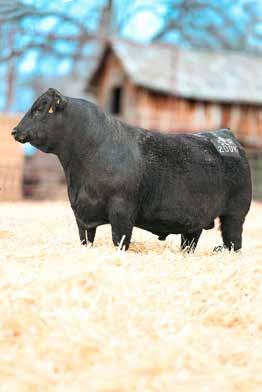
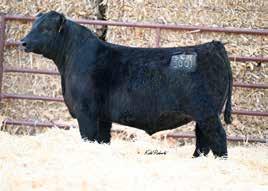
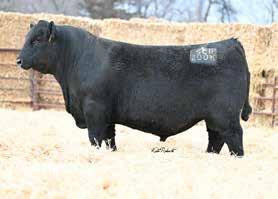
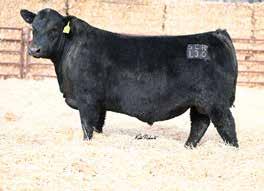
CED+9
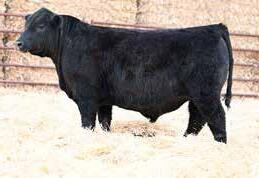
A19 Wyoming Livestock Roundup • Volume 35 No. 45 • March 2, 2024
Lot 23 Spring Cove Inspire L30 REG 20683873
BW+.6 WW+77 YW+129
Milk+25 CW+56 Marb+.52 RE+.71 $M+68
Lot 1 Spring Cove Essential 19L REG 20653502
BW-.1 WW+82 YW+138
CW+ +58 Marb+.84 Rib +.71 $M+85
REG 20669600 CED+11 BW+1.2 WW+76 YW+121 Milk+28 CW+61 Marb+.66 RE+.97 $M+75 Lot 51 Spring Cove Feat 31L REG 20653541 CED+9 BW+.2 WW+66 YW+114 Milk+17 CW+52 Marb+.65 RE+.71 $M+92 Lot 59 Spring Cove Top Cut 3001 REG 20653060 CED+12 BW+.6 WW+76 YW+141 Milk+24 CW+48 Marb+.1.53 RE+.29 $M+75 Lot 85 Spring Cove Grant 200K REG 20669598 CED+10 BW-.5 WW+79 YW+135 Milk+27 CW+59 Marb+1.02 RE+.70 $M+94 Lot 135 Spring Cove Feat L73 REG 20683913 CED+9 BW-.1 WW+63 YW+102 Milk+23 CW+45 Marb+.75 RE+1.09 $M+82 Spring Cove Ranch Bull & Female Sale Monday, March 11, 2024 in Bliss, Idaho at 1:00 pm MDT Lot 36 Spring Cove Enforcer L159 REG 20755080 CED+11 BW+1.0 WW+84 YW+148 Milk+33 CW+65 Marb+1.11 RE+.75 $M+68 Selling 230 Angus Bulls 2 ‘s, Falls & Yrlgs & 20 reg. Yrlg heifers + 20 comm hfrs. For catalogs: Text 208-320-8803Re Lot 85 Lot 37 - Spring Cove Essential 37L REG 20654341 CED+7 BW+1.9 WW+87 YW+140 Milk+20 CW+59 Marb+1.09 Rib+.25 $M+87
Lot 87 Spring Cove Feat 202K
SHEEP continued from page A1
Moving closer to home, Spreitzer says 2023 U.S. lamb imports totaled 113,545 metric tons – the lowest since 2019.
“As I mentioned, the U.S. is one of the top importers of lamb, with the majority of supplies coming from Australia and New Zealand and minimal volumes coming from Chile and Uruguay,” Spreitzer says. “We have also seen some momentum picking up from Ireland and the UK.”
American exports
With this, the majority of the discussion was focused on American lamb exports.
“In 2023, U.S. lamb muscle cut exports totaled 4.4 million pounds, at a value of $11.9 million, down 10 percent from the previous year,” Spreitzer remarks.
She notes the Caribbean and Dominican Republic remain the nation’s top export market, although Mexico has recently rebounded as a leading export destination as well.
“We saw strong growth in the Caribbean
and Dominican Republic in 2022 as they both saw a strong rebound in tourism,” she says. “Mexico is our second largest market, followed by Canada and Central America. Guatemala and Panama are growing markets, and we have seen increased interest from the Association of Southeast Asian Nations and the Philippines.”
Niche markets
Following a question from a webinar attendee, Spreitzer explains why the U.S. exports product despite being one of the top four importers of lamb and mutton.
“The U.S. is a niche exporter of high-quality lamb,” she states, noting the U.S. is able to fill demand for other nations’ specific wants and needs, while those nations, in return, fill needs for American markets.
“A good example of this is the product we export to Mexico, where there is demand for heads and necks for barbacoa and birria tacos,” she continues. “It is a major consumption pattern there and really important to their food culture, so
we fill supply for a product that is not demanded in the U.S.”
Spreitzer outlines several other niche markets the U.S. supplies, including sending middle meats to the Middle East; cap-off racks, legs, shanks, squarecut shoulders and variety meats to Canada; shoulders, ribs, frenched racks, legs, breast bones and trimmings to the Philippines and frenched racks, bonein and boneless legs, shoulders, shanks and carcasses to Central America.
“American lamb is very different from other lamb around the world,” adds Heller. “U.S. lamb serves a niche market and provides international marketing attributes like taste and cut size, muscle-to-bone ratio and lamb quality.”
She further explains, “American lamb has a milder, less gamey taste and larger cut size due to genetic selection and grain feeding. We are different in how we choose our genetics and growth goals, so our primary production is focused on meat breeds for export versus the wool breeds raised by our competitors.”
Because U.S. producers place an emphasis on

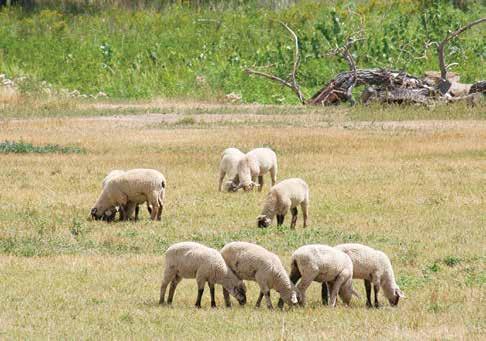
raising a high-quality meat product, lambs are usually fed out for 30 to 45 days on a high-quality grain diet prior to harvest, resulting in superior muscling, marbling and flank streaking.
“Therefore, around 90 percent of U.S. lamb quality grades Choice or Prime, indicating a more youthful carcass and setting us apart from our competitive markets,” Heller concludes.
Trade forecast
To wrap up the presentation, Spreitzer discusses USMEF’s export forecast
for the next five years.
She notes the federation is optimistic in its outlook because the U.S. has seen promising potential for growth in some of its smaller export markets.
She explains, “In 2010, 11.2 percent of U.S. lamb production was exported, and a high of 14.1 percent of lamb production was exported in 2011. In 201819, the share was 4.2 percent, and this dropped to 2.6 percent in 2020, then bumped back up to 2.8 percent in 2021. The share
rebounded again to 4.7 percent in 2022, then was 2.2 percent in 2023.”
“With this downward trend in U.S. lamb production, a larger share will have to be exported to reach forecasted growth with the share of production exported reaching over five percent in 202728,” she concluded.
Hannah Bugas is the managing editor of the Wyoming Livestock Roundup. Send comments on this article to roundup@ wylr.net.
New resource developed
A new resource developed by the National Cattlemen’s Beef Association and CattleFax helps cattle producers maximize profitability from their culling decisions.
“Right Way. Right Time –A Guide to Cull Cattle Management” is now available at ncba.org/
With effective planning, cull cattle can be a significant source of revenue and should not be overlooked. In essence, cull cattle are market cattle.
This new document addresses key problem areas, provides strategies for making timely culling decisions
to prioritize animal welfare and is designed to help producers capture more value through effective management regarding cull cattle.
For cattle producers across the country, whether beef or dairy, cull cattle are part of doing business. Animals age, they no longer breed back and their health deteriorates.
Incorporating culling decisions into an operation’s best management practices benefits both animal welfare as well as the producer’s bottom line.
According to the 2022 National Beef Quality Audit,
the market cow and bull sector provides an alternative product and a secondary value to animals once their original purpose is no longer suitable.
When it comes to product fabrication, market cows and bulls are typically associated with ground beef production. However, over time, the industry has realized some market cows and bulls have the potential to yield valuable primals to be fabricated and sold as retail cuts and to the restaurant trade.
For more information or to access the resource online, visit ncba.org/producers
Wyoming Livestock Roundup • Volume 35 No. 45 • March 2, 2024 A20 1490 South 8th Street East • Riverton, WY 82501 • (307) 856-2209 Tuesday, February 27 Market Report • 129 Head Sold RIVERTON LIVESTOCK AUCTION Contact: Riverton Livestock Auction (307) 856-2209 • Jeff Brown (307) 850-4193 • Tom Linn (307) 728-8519 • Mark Winter (580) 747-9436 www.rivertonlivestock.com • Also watch our live cattle auction at www.cattleusa.com Early Consignments riverton@winterlivestock.com FEEDER SPECIAL START TIME 9:00 AM WEIGH UPS TUESDAY, MARCH 19 ALL CATTLE CLASSES W/ SHEEP & HORSES 46TH ANNUAL NORTHWEST WYOMING ANGUS ASSOCIATION BULL SALE START TIME 1:00 PM START TIME 9:00 AM W/ SHEEP & WEIGH UPS TUESDAY, MARCH 26 CROWHEART 1 Cow, 1405# $102.00 RIVERTON 1 Cow, 1135# $101.50 1 Cow, 1435# $101.00 HEIFERETTES LANDER 1 Heiferette, 1115# $143.50 BULLS ARAPAHOE 1 Bull, 1875# $120.00 BIG PINEY 1 Bull, 1910# $119.00 ARAPAHOE 1 Bull, 1835# $117.00 BACK TO GRASS FEEDER SPECIAL START TIME 9:00 AM W/ WEIGH UPS TUESDAY, APRIL 2 BRED COW SPECIAL START TIME 9:00 AM W/ WEIGH UPS TUESDAY, MARCH 12 DIAMOND PEAK BULL SALE START TIME 1:00 PM SATURDAY, MARCH 16 Diamond Peak Angus Bulls - 70 Blk Ang 2 yr old virgin bulls 40 Blk Ang Yearling bulls Calving Ease, High Altitude, PAP tested Black Angus Bulls Northwest Angus Association - 51 Blk Ang Yrling Bulls - Obsidian Angus, Hoggs Angus, Davidson Angus, & WYO Angus. Many Heifer bulls, Top Female & Growth Bulls to round it out! PAP, Semen & BVD Tested, Proven Sires! (1:00 PM) Contact Fred & Kay Thomas 307-868-2595 or any Breeder Ron & Jackie Lucas- 115 Blk Ang Strs & Hfrs 500600#. Rec 2 rounds of Vista Once & Vision 7. Poured @ weaning in Nov. Bunk broke. High desert calves! Ed & Tory Burton- 100 Blk Ang Hfrs 550-625#. Rec Vista Once SQ, Vision7, Nasalgen 3 @ branding & Weaning (11-1). Sired by powerful Bl Ang Bulls, Bunk broke, summered on high desert range! Choice Steers!! Nicholls Ranch- 60 Blk Ang & AngX Hfrs 600#. Rec 2 rounds of Vista Once SQ & Vision 7 w/Somnus. Bangs Vacc. Hay fed. High Desert. Fancy, Reputation heifers! Griffin Bros- 40 Blk/BWF(F1) AngX Strs 475-550#. Rec 2 rounds Vista Once SQ, Vision 7 & Nasalgen. BRED COWS Dan Bisbee- 21 Blk/BWF Ang Running Age Bred cows. Bred to SO Cattle Blk Ang bulls to start calving May 1st. Rec Virashield 6 VL5 & Clean-Up II this fall. Preg-checked this fall with a close calving range. One brand, one owner. Nice cows!! Year-round mineral program. 100% Lucky 7 sired! Reputation High desert Calves! Steve Ward- 30 Blk Ang Strs 550-625#. Rec 2 rounds of shots & poured this fall. Hay fed, nice steers! Sadee Hurst- 1 Registered Blk Angus Hfr 600-625#. Bangs vacc. Sired by Timberline. Fancy!
WYLR photo