Cold weather can present challenges for watering cattle, especially in climates where water sources freeze up or areas with no access to electricity for tank heaters.
Jim Anderson of Rimbey, Alberta, Canada solved this problem 25 years ago by creating an innovative water system in which cattle pump water for themselves from shallow wells – water that never freezes, even at 40 degrees below zero.
A handy invention
Anderson’s innovation is a piston pump, like the old-fashioned well where a person works the handle up and down to lift water.
“We modified it so cattle could use their nose to push a lever. This operates the piston pump by raising and lowering the piston in the cylinder, the same as a handle used to do,” he explained.
“Like the old-fashioned hand pump, we have a threeinch cylinder down inside the well. This is how we made this pump frost-free, capturing geothermal heat from the ground and containing this heat all the way up to the surface to keep the water in the pipe from freezing,” he said.
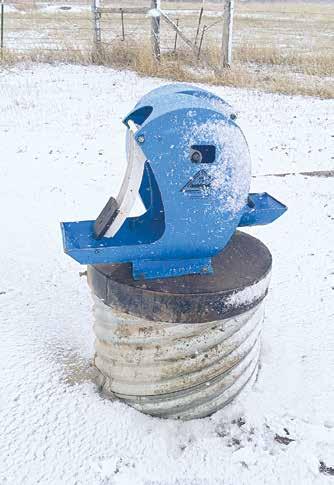
The waterer is a small basin on top of a vertical culvert, with a lever which can be pushed by the cows’ nose. The culvert has two feet above ground, going down to whatever depth is required to make use of ground water or water from the bottom of a pond or dugout nearby.
Water from the pond is piped horizontally underground to the bottom of the culvert, where it then rises to the same level as the pond surface but will not freeze. A buried collection tank from
a spring works also. A regular well can be used, as long as the water level comes up to within 50 feet – and preferably 30 or less feet – from the surface.
“Some ranchers use large pipes, but the typical installation is a road culvert at least 24 inches in diameter, set into the ground. The two factors determining how much geothermal heat one will gain is how deep they go and how big a diameter pipe they take to this depth,” Anderson explained.
“The bigger the pipe, the more opportunity for heat to rise to keep the water pipe in the center warm enough,” he added.
Utilizing nose pumps
Alvin Lusk, manager of Agricultural Resources at Brigham Young UniversityIdaho in Rexburg, Idaho, said their cattle facility has two nose pumps.
He installed the first one about nine years ago and another two years later.
“Our facility is located near the river, and the water table is fairly close to the surface – around four to 12 feet down. Where we pasture cattle is far enough away from our buildings we didn’t want to run electricity down there for pumping or to keep water tanks heated,” he said.
“We heard about nose pumps and searched for more information. We got our nose pumps from Anderson and installed them ourselves,” said Lusk.
Lusk further explained he used a backhoe to dig a hole deep enough to get water to come into it, then put the culvert in the hole, nearly 12 feet deep. He then put gravel around it and drilled holes around the bottom end of the culvert to
allow water to come into it.
“We dug it as deep as we could with the backhoe because we knew there would be times in the fall when our water table was low. The river is low during this time of year, with irrigation around the area pulling water out of the river,” he explained.
Of the two wells they put in, one goes dry temporarily when the water table drops.
“The other pump works year-round, and we can make both of them work all year if we plan ahead,” said Lusk. “If we know we’ll be putting cattle near the one that might go dry, we start running the pivot in the field next to it so the water table rises.”
Benefits of nose pumps
Lusk pointed out it took
Continued on next page
Beckton has long been the premier breeder of Red Angus cattle
maternal traits, and rapid growth to yearling age, for maximum overall
cow-calf cattlemen Beckton’s balanced genetics and emphasis on the maternal traits, have made them the leading choice for commercial replacement females and for building a productive cow herd And the lower birth weights make them a first choice for breeding heifers
Ever
Call, write or email for a catalog www becktonredangus com becktonwyo@gmail.com 37 Beckton Drive • Sheridan, WY 82801 307-674-6095 • 307-674-8162 - Evenings Fax: 307-672-7281 Cam and Trish Forbes
which combine calving
ease,
profitability to commercial
more than 80% of the highest
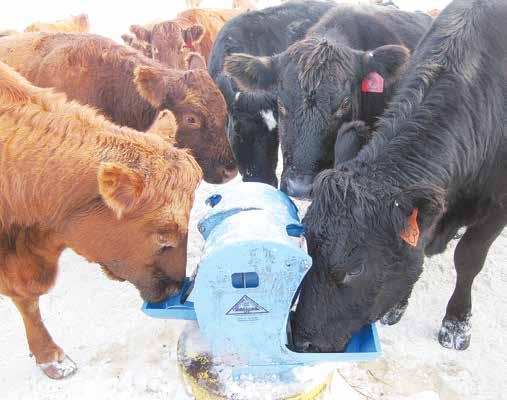
Industry leading genetics and the highest quality Red Angus, with 79 years of Satisfied Customers Please join us at our 79th Anniversary Sale Selling 300 Red Angus - 250 Bulls and 50 Heifers Tuesday, April 9, 2024 1:00 pm at our ranch 10 miles west of Sheridan, Wyoming Frost-free nose pump allows cattle to pump their own water Catching on – Jim Anderson explains once a few cattle in the herd catch on to using the nose pump, others will follow suit. Courtesy photo Frost-free nose pump – Jim Anderson's frost-free nose pump invention is a waterer with a small basin on top of a vertical culvert, with a lever which can be pushed down by a cow's nose. Courtesy photo
since the original Red Angus Herd Builder Index was created,
ranking sires for overall profitability are Beckton sires or descended from Beckton sires
Enterprise management helps producers explore finance strategies
Brian Lee, University of Wyoming (UW) Department of Agriculture and Applied Economics research scientist at the James C. Hageman Sustainable Agriculture Research and Extension Center, presented on enterprise evaluation and financial performance during the Fremont County Farm and Ranch Days on Feb. 7.
All business owners make decisions impacting their bottom line, and making these decisions is harder when there is uncertainty.
Lee reported agricultural producers make more risky decisions than most business owners, but studies show most producers don’t have a strategic plan to manage risks.
Having a solid plan to manage risks softens the impact of lower yields, higher costs or lower prices.
“RightRisk is an organization helping farms and ranch families understand problems associated with
financial, market, production, legal and human risks through educational programming,” Lee explained.
According to the RightRisk website, it’s been offering education programs across the U.S. since its inception in 2002 and provides learning opportunities using portable computer labs, audience response systems and web-based software to producers located in remote locations across the West.
The RightRisk team is comprised of individuals from UW, Colorado State University, University of Arizona, University of Idaho, Montana State University, University of Nevada, Utah State University and Washington State University.
Planning for the future Enterprise risk management is a methodology which strategically looks at risk management from the perspective of the entire firm
or organization.
“Making sound enterprise management decisions begins with an effective risk management process,” Lee said. “It is a strategy to identify, assess and prepare for potential losses, dangers, hazards and other potentials for harm which may interfere with an organization’s operations and objectives.”
“What constitutes an enterprise compared to the whole farm or ranch?” he asked. “An enterprise is any activity which results in a product used on the ranch or farm, such as feed for livestock, direct-to-consumer meat sales or corn sold to a local mill.”
What is produced determines the profitability of the operation, and the enterprises are the basic building blocks for a farm plan.
Producers often have many different enterprises which contribute to their whole farm or ranch business, Lee explained, provid-
ing an example of a sheep producer who may have enterprises for hay sales, sheep sales or income from sheep utilized for mutton bustin’.
Producers can use an enterprise budget to help review historical information for each enterprise as well as new enterprises under consideration.
“The enterprise budget is a listing of all income and expenses associated with a specific enterprise,” he continued. “By analyzing revenues and expenses associated with individual enterprises, a producer can determine which enterprises might be expanded and which should be cut back or eliminated.”
Lee stated, “A budget can be developed for each existing or potential enterprise in a farm or ranch plan. Several budgets could be developed for a single budget to represent alternative combinations of inputs

and outputs.”
Each budget should be developed on the basis of a small common unit such as one acre of corn, wheat, hay, etc., or one head of livestock. This permits comparison of the profit for alternative and competing enterprises.
Developing an enterprise budget
“The first step to developing an enterprise budget is to estimate total production – output or yield –and expected output price under normal conditions,” Lee said. “Then, estimate operation or variable costs. These costs are what they sound like – they vary with the amount of product you produce.”
These are out-of-pocket costs which must be incurred if the enterprise is produced or grown. An example of variable costs could be hired labor, repairs, feed, supplies, veterinary medicine and services, fuel, renting farmland or seed.
pay debt, invest or save, while a return can be defined as the yield or price received for each enterprise product produced,” Lee pointed out. “Producers need to place a value on every resource utilized in the production activity, including their time.”
When a return is positive, production is economically rational for an established enterprise and indicates the enterprise generates enough revenue to cover all variable costs and some portion of fixed costs.
If the returns are negative, the enterprise is not generating enough revenue to cover even variable costs, unless the producer is willing to subsidize the operation by contributing off-farm income.





Lee concluded, “It is important to remember when it comes to agriculture production, everything doesn’t go as planned. Budget projections can be influenced by production and price uncertainty, but utilizing a breakeven analysis will help determine what those values are.”












What does 68 years of breeding with the same goal in mind get you?
A consistent, predictable product that has stood the test of time.
“Labor charges can be defined as a wage rate necessary to provide the service, and many times producers do not consider it in a budget,” he remarked.
Next is to assess fixed costs. Fixed costs occur and will stay about the same no matter how much an operation produces. An example of fixed costs are depreciation, taxes, land owned or insurance.
Good financial and production records are very important when setting a budget and producers need to know the cost of production to calculate breakeven levels to develop appropriate risk management strategies.
















“Net receipts are income left for producers to live on,
Melissa Anderson is the editor of the Wyoming Livestock Roundup. Send comments on this article to roundup@wylr.net.






Continued from previous page
some time to train cows to use the first nose pump.



start grazing windrows in October and graze through December.
The nose pumps are a foolproof water source in winter, but they are also nice in the summer because cattle can be kept out of the river.











“We fenced them into a small area with just the nose pump for water,” he shared. “When they got thirsty, we’d pump a little by hand. They knew the water was there. They’d drink it and we’d pump a little more until a few figured it out and the rest copied them.”
Young calves aren’t as strong, but yearling cattle or older have no problem.
“Once you have two or three that can do it, they teach the others,” Lusk said.
“We don’t have to worry about them damaging the river bank or getting manure in the river,” said Lusk.
Lusk explained the second nose pump at the university provides water for winter grazing on corn.
He further noted this invention allows the university to practice winter grazing.




“It’s a pasture where we’ve tried a lot of different things, but this worked the best,” he noted. “There haven’t been any breakdowns or problems, and there is no maintenance required at all. In earlier years, the cattle were drinking from the river, and in cold weather, we had to be out there chopping ice every day.”
This pasture gets cut once for hay in the spring and regrows for fall and winter feed. The second cutting is left in the pasture and raked into windrows. The cattle
“Sometimes there will be a little ice around it on really cold days, but it still works. Here in Rexburg, Idaho it can be 20 degrees below zero or well below freezing for 40 days or more, and we don’t have any problems,” said Lusk.
Nose pumps won’t work in all situations, however. They need a water table or water source that’s not too deep.
“There are many situations where this would work, since winter water is often a challenge,” Lusk concluded.
Heather Smith Thomas is a corresponding writer for the Wyoming Livestock Roundup Send comments on this article to roundp@wylr. net.
B2 Wyoming Livestock Roundup • Volume 35 No. 47 • March 16, 2024 Brad Arntzen: 406.350.4000 Kevin Arntzen: 406.350.1612 Derik Arntzen: 406.350.1728 577 Arntzen Lane Hilger, MT 59451 arntzen@mtintouch.net www.arntzenangus.com View bulls and bid online A A R Justified L034 Reg.20767299 Justified x Knudson Top weaning ratio of 122. BW WW Milk YW +0.3 +76 +27 +130 1 LOT A A R Stellar 3514 Reg.20805976 Stellar x Dash Big performance backed with great cow production. BW WW Milk YW +2.0 +91 +19 +157 4 LOT A A R Tahoe L114 Reg.20795605 Tahoe x Matrix Tahoe out of the great donor Blackbird 9044. BW WW Milk YW +1.8 +85 +30 +144 7 LOT A A R Load Up 3551 Reg.20790071 Load Up x High Five Great feet and a phenotypic standout. BW WW Milk YW +0.6 +74 +34 +136 30 LOT A A R Knockout 3066 Reg.20790045 Knockout x Breakthrough Pathfinder® dam and Grandam BW WW Milk YW +0.8 +72 +36 +132 8 LOT A A R Justified 3408 Reg.20790061 Justified x Dash Powerful Justified son with a 124 nursing ratio. BW WW Milk YW +1.3 +79 +28 +133 2 LOT A A R Agenda L174 Reg.20771764 Agenda x Justified High $M and performance. BW WW Milk YW +1.2 +81 +36 +134 3 LOT A A R Scale Crusher L100 Reg.20767366 Scale Crusher x Matrix Scale Crusher out of the great donor Blackbird 9044. BW WW Milk YW +1.4 +73 +28 +130 10 LOT POWER OF PREDICTABILITY
Sitz Stellar 726D Tehama Tahoe B767 KG Justified 3023 Millars Duke 129 A A R Knockout 8732 GDAR Load Up 7104 AAR Justified 8293 Pine Coulee Hannibal H316 Woodhill Agenda G151-J043 AAR Rainier SIRES INCLUDED 48th Annual Production Sale at the ranch APRIL 4TH, 2024 • 1:00 P.M. , 210 Bulls & 20 Top End Yearling Heifers Selling All bulls have genomically enhanced EPDs.
A Cowboy’s Work
by Tirzah Conway
A cowboy’s work is never done, like shepherd’s among the sheep. No matter what, up with the sun, not really much time for sleep.
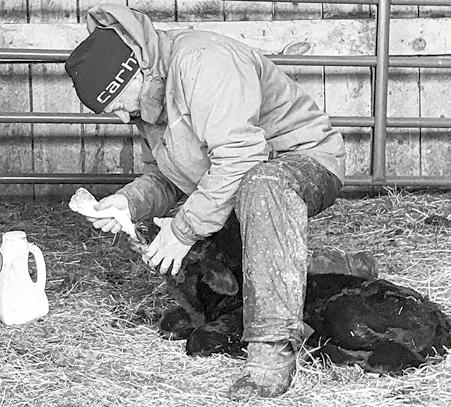
You stay up all night to help out the weak, even ones that won’t make it through. Let’s face it, that’s what makes you unique, without it, you wouldn’t be you.
You may not cry when you lose a calf, but it’s not because you don’t care. You hold strong for other’s behalf, and inside you feel only despair.
You know deep down you can’t save ‘em all, and it’s not really up to you. It’s never stopped you from hitting a wall, ‘cause that’s what helps pull you through.
But instead of giving in you move to another cow, it’s how you know calving season is here.
You just step by her side, furrow your brow, ‘cause that’s life out on the frontier. You will always be there for her, that’s what being a cowboy is all about. Stay by her side ʻtill her calf is astir, no matter your fears or doubts.
And seeing the calves running around was worth all your sleepless nights. You watch them play without making a sound, it’s what helps you keep fighting the good fight.
SALE REPORTS
Bieber Red Angus "Bieber Fever" Performance Bull Sale
Reported By: Curt Cox, WYLR Field Editor March 7, 2024
Bieber Red Angus, Leola, S.D.
Auctioneer: Seth Weishaar
273 Yearling Red Angus Bulls Avg. $7,270
Top Sellers
Lot 6 – Bieber Rou
Dynasty L575 – Price: $41,000, DOB: 1/21/23
Sire: Bieber Dynasty H524
Dam’s Sire: Bieber Hard Drive Y120 EPDs: BW:
-4.8, WW: +76, YW: +130 and Milk: +30 Buyer: Bowling Ranch, Oklahoma
Lot 16 – Bieber Paycheck L188 – Price: $40,000, DOB: 2/13/23 Sire: LARR Paycheck 0728
Pine Coulee Bulls, LLC Angus Bull Sale
Reported By: Curt Cox, WYLR Field Editor March 11, 2024
Wagon Box Ranch, Hardin, Mont.
Auctioneer: Ty Thompson
155 Angus Bulls Avg. $7,580
Top Sellers
Lot 110 – Pine Coulee N
Lights 151L – Price: $23,000
DOB: 1/6/23 Sire: Shipwheel Northern Lights Dam’s Sire:
PVF Insight 0129 EPDs: BW: +3, WW: +76, YW: +135 and Milk: +38 Buyer: Duff Cattle Company, Hobart, Okla.
Lot 1 – Pine Coulee
Juneau K569 – Price: $20,000
DOB: 6/26/22 Sire: O C C
Juneau 807J Dam’s Sire: Connealy Onward EPDs: BW: +1.3, WW: +67, YW: +114 and Milk: +33 Buyer: Koupal Angus, Wagner, S.D.
Lot 5 – Pine Coulee Bravo
K592 – Price: $19,500 DOB: 6/7/22 Sire: Coleman Bravo 6313 Dam’s Sire: O C C
Juneau 807J EPDs: BW: -1.6, WW: +53, YW: +88 and Milk: +31 Buyer: Cross W Livestock, Ekalaka, Mont.
Lot 23 – Pine Coulee Rainfall K583 – Price: $17,000

Dam’s Sire: Bieber Sparticus E671 EPDs: BW: -1.0, WW: +93, YW: +146 and Milk: +30 Buyers: Bowling Ranch, Oklahoma
Lot 28 – Bieber Flashdrive L179 – Price: $38,000, DOB: 2/11/23 Sire: Bieber
Flashdrive G266 Dam’s Sire: Bieber CL Stockmarket E119 EPDs: BW: -1.5, WW: +96, YW: +155 and Milk: +31 Buyer: Loosli Red Angus, Idaho
Lot 151 – Bieber Paycheck L518 – Price: $25,000 DOB: 3/2/23 Sire: LARR
Paycheck 0728 Dam’s Sire: GMRA Trinity 5222 EPDs: BW: -2.5, WW: +103, YW:
DOB: 6/10/22 Sire: S A V
Rainfall 6846 Dam’s Sire: S A
V Resource 1441 EPDs: BW: -0.4, WW: +65, YW: +117 and Milk: +32 Buyer: Sadler Ranches, Perkins, Okla.
Lot 34 – Pine Coulee Real
Deal K575 – Price: $17,000
DOB: 6/5/22 Sire: Duff Real
Deal 19115 Dam’s Sire: S A
V Resource 1441 EPDs: BW: +1.9, WW: +53, YW: +94 and Milk: +18 Buyer: JR Ranch, Othello, Wash.
B3
+173 and Milk: +29 Buyer: Pieper Red Angus, Nebraska
Lot 7 – Bieber Asset
L191 – Price: $24,000
DOB: 2/13/23 Sire: PIE Asset 1276 Dam’s Sire: Brown BLW Statistician
B5240 EPDs: BW: -0.1, WW: +80, YW: +139 and Milk: +34 Buyer: Northern Lites Red Angus, Montana
Lot 8 – Bieber Rou
Dynasty L577 – Price: $24,000, DOB: 1/23/23
Sire: Bieber Dynasty H524
Dam’s Sire: VGW Oly 903
EPDs: BW: -4.1, WW: +73, YW: +134 and Milk: +35
Buyer: Leland Red Angus, Montana
Ox Bow Ranch Annual Angus Bull Sale
Reported By: Curt Cox, WYLR Field Editor March 6, 2024
Ox Bow Ranch, Wolf Creek, Mont.
Auctioneer: Roger Jacobs
68 Yearling Angus Bulls Avg. $7,615
24 Two-Year-Old Angus Bulls Avg. $7,493
High Sellers
Lot 8 – OX Spur 2615 –
Price: $13,500 DOB: 2/19/23
Sire: Crouthamel Spur 1011
Dam’s Sire: Ox Bow Ozzie
3233 EPDs: BW: +0.1, WW: +53, YW: +90 and Milk: +20
Buyer: Eagle Ridge Cattle Company, White Horse, S.D.
Lot 12 – OX Outrider
3121 – Price: $12,000 DOB: 1/19/23 Sire: HA Outrider
9672 Dam’s Sire: C C A
Emblazon 702 EPDs: BW: -0.6, WW: +50, YW: +91 and Milk: +22 Buyer: Dan and Bobby Lavine, Wolf Creek, Mont.
Lot 107 – OX Vindicator
2170 – Price: $11,500 DOB: 1/28/22 Sire: OX Vindicator
0017 Dam’s Sire: Ox Bow
Final Answer 1304 EPDs: BW: -0.9, WW: +54, YW: +99 and Milk: +26 Buyer: Shotgun Ranch, Post, Ore.

Wyoming Livestock Roundup • Volume 35 No. 47 • March 16, 2024 Subscribe Today! The Shepherd PO Box 168 | Farson | WY 82932 The Shepherd is issued 12 months of the year & is now entering its 61st year of publication Subscription Rates are: $30 USD for one year or $60 USD for one year international delivery Name: Address: City: State: Zip: Breeding & Reproduction • Nutrition • Animal Husbandry • Management Disease & Parasites • Pasture Management • Marketing Feeding Strategies • Wool • Research & Development • Industry Resources Lambing/Kidding Cooking • Guardian Animals •Breed Profiles Breeding & Reproduction • Nutrition • Animal Husbandry • Management Disease & Parasites • Pasture Management • Marketing Feeding Strategies • Wool • Research & Development • Industry Resources Lambing/Kidding • Cooking • Guardian Animals • Breed Profiles
WYLR photo
As the U.S. dodges the ever-present threat of foot and mouth disease (FMD), traceability conversations continue to dominate livestock policy.
“The damages of FMD on American soil would be incalculable,” says Ethan Lane, National Cattlemen’s Beef Association (NCBA) vice president of government affairs. “This is reality and something we need to be prepared for.”
Why now?
The U.S. Department of
Additionally, a proposed policy was circulated prior to the recent 2024 Cattle Industry Convention, which, if passed, would have called for NCBA to support EID devices for interstate movement of all breeding cattle over 18 months of age, as well as rodeo and exhibition cattle by 2024, and for interstate movement of all cattle by 2026.
This has sparked discussion on both sides of the issue, particularly at the Cattle Industry Convention in
U.S. beef industry from a foreign animal disease outbreak.
If FMD were to appear on U.S. soil, USDA would halt all cattle movement for 72 hours. To continue cattle movement through the supply chain, all segments of the industry would be required to demonstrate they haven’t been in contact with an infected animal.
“Without EID, our producers are at a disadvantage,” Lane says. “These are real problems we want to make




and president of Nebraska Livestock Markets Association, circulated prior to NCBA’s EID discussions.
Robertson says requiring EID adoption in all cattle by 2026 is not in the best interest of cow/calf producers and called for readers to engage with their state cattlemen’s associations to actively combat the policy proposal.
“All cattle will have to be read upon arrival to any auction market and will probably be put through a chute, as the EID reader technology currently available isn’t sufficient to capture numbers without going through a chute one at a time,” Robertson explains. “Now there is extra shrink on our cattle and another opportunity for injury. Folks, this is just what is on the surface regarding this proposal.”
Robertson’s letter was posted on Facebook, where a commenter adds EID tags are “part of a communist agenda to control the food supply.”
Lane says NCBA’s policy has been misconstrued and emergency preparedness has been confused with government overreach.
“There are some peo-
ple who are really scared of what EID could mean,” Lane says. “We have folks in parts of the media landscape who make their living scaring people.”
After much debate, NCBA affiliates from across the country voted in favor of policy which would support the adoption of EID for interstate movement of all cattle subject to the 2013 Animal Disease Traceability rule.
This includes sexuallyintact cattle over 18 months of age, rodeo and exhibition cattle and dairy cattle. The policy does not discuss younger animals.
“This is what grassroots looks like,” Lane says. “It’s the entire cattle industry, regardless of segment or part of the country, coming together to find common ground on issues.”
Chelsea Good, Livestock Marketing Association (LMA) vice president of government and industry affairs, says the traceability conversation is far from over.
LMA represents local livestock auction markets. Due to the volume of cattle sold at auction for a wide vari-
ety of producers, auctions are often a point of identification for livestock.
“Folks definitely spoke out recently and shared their concerns about expanding the program to younger animals,” Good says.
Good also says the industry should instead work on improving USDA’s current traceability program.
“The overwhelming consensus amongst LMA members is we are not ready for any conversations about younger animals or feeder cattle ID,” Good says. “We’re trying to focus on getting those currently covered animals identified well and systems in place which allow this information to be shared and well utilized.”
Since 2013, USDA has required documentation for interstate movement of sexually-intact beef cattle 18 months of age and older and dairy cattle of any age.
“Questions remain about data security and confidentiality, whether or not tags are getting retired at slaughter, consistency of enforcement, etc., in the current program,” she says.
Who pays?
LMA and NCBA agree the expense of EID should not fall on the shoulders of cattle producers.
“EID is nine times as expensive as the current modes of identification, which have traditionally been provided for free to farmers and ranchers by USDA,” Good says. “USDA needs to fully fund the cost of electronic tags and cost of electronic reader infrastructure at livestock auctions.”
EID expense, she adds, goes far beyond the cost of the tag. Livestock auctions will incur additional labor expense and additional infrastructure expense, plus a potential risk of injury and shrink to animals.
“The bottom line is we want to see a proposal where producers aren’t bearing the cost,” Lane says. “Whether USDA proposes rules outside of our control or whether, as an industry, we look for ways to move the needle forward, we have some very real concerns to work through.”
Betty Haynes is the associate editor of Prairie Farmer This article was originally published in Prairie Farmer on Feb. 27.
Wyoming Livestock Roundup • Volume 35 No. 47 • March 16, 2024 B4 7 Triangle 7 Cattle Co., LLC A.I. Training Clinics For Details, Call: (970) 481-3921 or www.7triangle7.com or Harold Miller 31065 C.R. 41 • Akron, CO 80720 April 19-21, 2024 May 17-19, 2024 June 10-12, 2024 Get your A.I. Class Booked! In our 42nd Year training 6,976 cattle producers from 38 states & 8 countries Bookearlyto getyourdate! SPRING A.I. CLASS DATES Brian and Jamie Jo Axtell H 970-383-2332 C 970 -554-1132 www.axtellcattlecompany.com or find us on Facebook Annual Production Sale March 25, 2024 1:00 p.m. (MST) Sterling Livestock Commission Sterling, Colorado Saleofferingincludes 69YearlingRedAngusBulls 20RegisteredRedAngusHeifers Plus30CommercialRedAngusHeifers DUFF BOSS 20102 RED SSS ACTION 907G Traceability rule divides U.S. cattle producers
Urszula Norton, a professor of plant sciences in the University of Wyoming (UW) College of Agriculture, Life Sciences and Natural Resources, has received a Fulbright scholarship to study soil contamination in agricultural systems.
Beginning in January 2025, Norton will conduct research at Poland’s Wroclaw University of Environmental and Life Sciences (WUELS), in collaboration with Agnieszka Medynska-Juraszek, a world-renowned expert in environmental pollution.
“This Fulbright award will help me develop new trajectories of research much needed in agricultural sciences,” says Norton. “I am looking forward to gaining better understanding of the fate of heavy metals and microplastics entering the human food chain.”
Use of biochar
During a sabbatical from UW in 2015, Norton spent five months at WUELS studying the use of biological charcoal (biochar) in greenhouse vegetable production. It was her first experience working with biochar and inspired new directions for her research at UW.
Specifically, she has delved into heavy metal contamination in Wyoming soils, a topic which complements her research on carbon and nitrogen cycling and sustainable food systems.
“Norton has built an internationally recognized program in sustainable agriculture, while also teaching some of the most
important and high-enrollment courses in our department,” says Andrew Kniss, head of the UW Department of Plant Sciences.
“Anyone who has discussed research ideas with Norton will know her genuine excitement for innovative research is contagious, whether it is her own research ideas or others.”
Since Wyoming soils tend to be alkaline, Norton’s research in Wroclaw’s acidic – and in some cases, heavily contaminated – soils will provide an opportunity for comparison.
“Since availability of most heavy metals is highly influenced by soil pH, conducting this research under acidic soil conditions to complement Norton’s work here in Wyoming will be of great interest,” Kniss comments.
Heavy metal and microplastic contamination
Norton’s research at WUELS will also provide opportunities to develop new methods for studying heavy metal and microplastic contamination.
Medynska-Juraszek, Norton’s mentor at WUELS, specializes in the bioaccumulation of heavy metals, pesticides and microplastics as well as the role of biochar in agroecosystem remediation.
Wroclaw is home to many thriving community gardens, but heavy metal contamination related to historical industrial activities remains a challenge, especially in urban soils. While this issue may not be as prevalent in Wyoming, it can be difficult to visually
assess whether soils have been historically contaminated with lead and other heavy metals.
Microplastics are another growing issue, Norton notes.
In Wyoming, plastic covers are often used to protect crops from harsh weather conditions. However, when exposed to seasonal weather and variable moisture, the plastic becomes brittle and can flake off into the soil.
With growing interest in local food production and home gardening, detection and mitigation of soil contamination has become increasingly important.
As a Fulbright scholar, Norton hopes to help address these issues through collaborative international research.
The Fulbright Scholar Program
The Fulbright Scholar Program, overseen by the U.S. Department of State’s
Bureau of Educational and Cultural Affairs, is the world’s largest and most diverse international educational exchange program.
Since its establishment in 1946, more than 400,000 scientists, teachers, students, artists and professionals from all different backgrounds and disciplines have participated in the Fulbright Scholar Program.
Fulbright scholarships facilitate opportunities to study, teach and conduct research, as well as exchange ideas with colleagues around the world.
Norton, who joined UW as a faculty member in 2007, already maintains active collaborations with fellow researchers in Ghana, Iceland, Kenya, Poland, Switzerland, Uganda and Ukraine.
Brooke Ortel is a writer and editor for UW Ag News. This article was originally published by UW Ag News on March 7.

To learn more about Urszula Norton’s research, visit bit.ly/urszula-nortonresearch. For more information on the Fulbright Scholar Program, visit fulbrightscholars.org.
B5 Wyoming Livestock Roundup • Volume 35 No. 47 • March 16, 2024
LANCER LIVESTOCK SALE Sunday, March 24 EWC ATEC Building 3401 West C Street, Torrington, Wyoming Up to 16 show lambs Up to 16 show goats Up to 16 show swine Viewing 10:30 a.m. Sale 1 p.m. For more information, call 307-799-5419
UW professor receives Fulbright award to study soil contamination in Poland
Urszula Norton Courtesy photo
On the week of March
1, the U.S. Department of Agriculture (USDA) raised its agricultural export and import forecasts for Fiscal Year (FY) 2024 by $1 billion each.
Now, 2024 exports are forecast at $170.5 billion and imports are forecast at $201 billion, with a $30.5 billion ag trade deficit, which would be the largest ever recorded and nearly double the current record of $16.7 billion in FY 2023.
Exports
According to the USDA Economic Research Service (ERS) and Foreign Agricultural Service Situation and Outlook Report, created by ERS Coordinators Bart Kenner, Hui Jiang and James Kaufman and published on Feb. 28, ag exports for 2024 are now projected at $179.5 billion, up one billion from the November forecast.
“Exports of livestock and dairy, as well as grains
USDA raises agricultural
and feeds, lead the increase, which more than offset reductions in oilseeds and products,” reads the report.
Now, livestock, poultry and dairy exports are expected at $37.7 billion, an increase of $1.4 billion.
Beef exports are projected at $700 million due to tight domestic supplies and rising values, pork exports are expected at $600 million due to higher prices and robust shipments to American markets and dairy prices are up $500 million due to higher prices for key products.
Likewise, grain and feed exports are forecast up $700 million to $38.2 billion, with cotton exports expected at $6 million, up $300 million on higher unit values.
Exports of horticultural products and ethanol are set to remain unchanged at $39.5 billion and $3.6 billion, respectively, while oilseed and product exports are expected to fall $1 bil-
export and import forecasts for 2024
lion to $36.2 billion, almost entirely due to lower soybean volume and unit values, according to USDA ERS.
The report further notes China is expected to remain the largest market for U.S. ag exports at $28.7 billion, an $800 million reduction from the previous forecast, due to strong competition from South America for soybeans and corn.
“Exports to Mexico are forecast to rise by $500 million to a record $28.4 billion, whereas exports to Canada are forecast up $300 million to $28 billion,” reports USDA ERS. “U.S. agricultural imports in FY 2024 are forecast at $201 billion, an increase of $1 billion from the November projection, which is predominantly driven by higher beef imports, raised $1.2 billion to $10.1 billion.”
Imports
According to the USDA ERS report, U.S. FY 2024
To view the entire U.S. Department of Agriculture Economic Research Service and Foreign Agricultural Service Situation Outlook Report, visit ers.usda.gov/webdocs/ outlooks/108657/aes-127.pdf?v=2611.9.
imports are forecast at $201 billion, up $5.6 billion from the $195.4 billion recorded in 2023 and $1 billion higher than the November forecast.
“This upward revision mainly comes from livestock and products, and to a lesser degree, grain products and vegetable oils,” explains the department.
With USDA’s recent revision, livestock, poultry and dairy imports are forecast to rise $1.1 billion to $28.1 billion, with higher beef and pork imports offsetting lower dairy imports.
The beef import forecast was raised $1.2 billion to $10.1 billion, while live cattle imports were raised $100 million to $2.6 billion. Likewise, pork imports increased $100 million, with
live swine import values and poultry and products remaining unchanged.
Dairy imports were lowered $200 million, as U.S. domestic prices for cheese, butter and whey have become more competitive on the international market, according to USDA ERS.
Additionally, the USDA’s forecast for horticultural product imports was revised to $98.1 billion, one percent above the FY 2023 reports and a downward adjustment of $300 million from the November projection.
This includes a higher forecast of fresh fruits, up $400 million to $18.9 billion from the November outlook, as well as a higher forecast of processed vegetables, up $200 million.
Processed fruit and fresh vegetable imports are set to decline, however, with values adjusted down from the November outlook by $100 million to $8.4 billion and by $400 million to $12.3 billion, respectively.
Sugar and tropical products were also forecast down $600 million to $28.8 billion, while coffee values are expected down $400 million to $9.1 billion. Additionally, sweeteners and product values are expected lower, reduced $100 million to $7.5 billion.
On the other hand, USDA adjusted the grains
and feed imports forecast up $500 million from the November projection to $22.4 billion, largely due to expectations of continued growth of processed grain products.
“Grain products, including snack goods and baked goods, largely from Canada, have continued growing and are adjusted up $600 million from the previous forecast to $16 billion. This represents a five percent increase over FY 2023,” notes USDA ERS. “Generally, imports of animal feeds have declined marginally, with the largest exception being pet food from Canada. Food grain imports are expected to be up in FY 2024, driven mostly by rice imports.”
Additionally, imports of oilseeds and products are expected to be up $500 million to $19.7 billion, mostly due to a $500 million upward revision of vegetable oil imports.
“Vegetable oils comprise more than 60 percent of the value of the category and oil import values are expected to continue to rise, driven by increased import volumes, despite a larger domestic availability of soybeans in FY 2024,” concludes the report.
Hannah Bugas is the managing editor of the Wyoming Livestock Roundup. Send comments on this article to roundup@wylr.net.
Top Sellers
Lot 3 – MTR Titlest
1533 – Price: $10,000
DOB: 3/3/23 Sire: MTR
Titlest 619 Dam’s Sire: S A
V Remington 5609 EPDs:
BW: +2.4, WW: +58, YW: +98 and Milk: +29 Buyer:
Tag Double H Cattle, Ten Sleep
Lot 13 – MTR Response
151L – Price: $9,500 DOB: 3/8/23 Sire: MTR Response
918H Dam’s Sire: S A V
Remington 5609 EPDs:
BW: +0.9, WW: +75, YW: +130 and Milk: +30 Buyer:
Belus Brothers, Buffalo Lot 9 – MTR Titlest
1613 – Price: $8,000 DOB: 3/18/23 Sire:

Wyoming Livestock Roundup • Volume 35 No. 47 • March 16, 2024 B6
MTR Titlest 619 Dam’s Sire: S A V Remington 5609 EPDs: BW: +0.6, WW: +59, YW: +103 and Milk: +27 Buyer: Belus Brothers, Buffalo Lot 5 – MTR Raindance 1373 – Price: $8,000 DOB: 2/22/23 Sire: S A V Raindance 6848 Dam’s Sire: S A V Remington 5609 EPDs: BW: +0.7, WW: +65, YW: +108 and Milk: +24 Buyer: Belus Brothers, Buffalo MTR Cattle Company Annual Bull Sale Reported By: Jace Thompson, WYLR Field Editor March 9, 2024 Buffalo Livestock Marketing, Buffalo Auctioneer: Curt Westland 38 Yearling Bulls Avg. $6,059 SALE REPORTS Rocky mountain horse edition ® 307-234-2700 wylr.net To advertise in the Rocky Mountain Horse Edition, contact Denise or Jody at 800-967-1647, denise@wylr.net or jodym@wylr.net Advertising Deadline: April 26, 2024 • Insert Date: May 25, 2024
02-24-2023
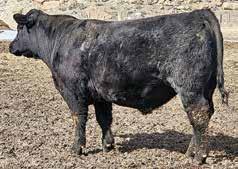
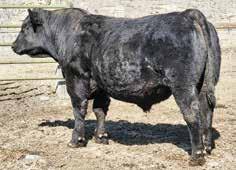
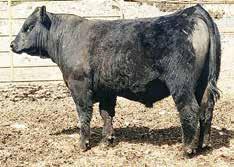
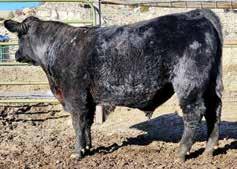
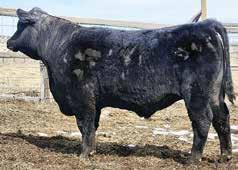
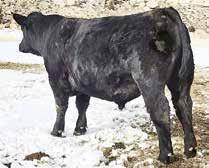
B7 Wyoming Livestock Roundup • Volume 35 No. 47 • March 16, 2024 OBSIDIAN ANGUS Bull Calves Available March 26, 2024 at the Northwest Wyoming Angus Association Sale Fred, Kay & Darryl Thomas Meeteetse, WY 82433 • 307-272-4911 • 307-868-2595 Cattle can be viewed under the Obisidian Angus Sale Tab at www.greatbearreflection.com LOT 27 OBSIDIAN GROWTH FUND 839 02-15-2023 • AAA #20642374 PAP 41 BW 89# 205 Weight 845# EFF 80% CED +5 • Birth +2.1 • WW +71 • Yearling +127 Milk +27 $F +101 $M +80 $G +39 $W +67 $B +141 • $C +263 • Scrotal 37cm • 1300# 3-10-24 LOT 33 OBSIDIAN STOCK MARKET 847 02-26-2023 • AAA #20642382 PAP 41 BW 79# 205 Weight 805# EFF 74% CED +8 • Birth -.2 • WW +74 • Yearling +130 Milk +29 $F +110 $M +62 $G +52 $W +76 $B +163 • $C +273 • Scrotal 39cm • 1238# 3-10-24 LOT 37 OBSIDIAN NITRO 853 03-10-2023 • AAA #20642388 PAP 42 BW 71# 205 Weight 773# EFF 82% CED +12 • Birth -1.6 • WW +69 • Yearling +125 Milk +26 • $F +96 • $M +48 • $G +49 • $W +70 $B +146 • $C +237 • Scrotal 35cm • 1200# 3-10-24 LOT 28 OBSIDIAN AVIATOR 842 02-20-2023 • AAA #20642377 PAP 42 • BW 67# • 205 Weight 820# • EFF 82% CED +11 Birth -1.4 WW +66 Yearling +120 Milk +30 • $F +98 • $M +93 • $G +68 • $W +76 $B +165 $C +307 Scrotal 36.5cm • 1196# 3-10-24 LOT 25 OBSIDIAN GROWTH FUND 837 02-10-2023 • AAA #20642372 PAP 41 • BW 84# • 205 Weight 784# • EFF 69% CED +5 Birth +2.9 WW +71 Yearling +140 Milk +31 • $F +117 • $M +45 • $G +52 • $W +62 $B +169 $C +264 Scrotal 40cm • 1290# 3-10-24 LOT 23 OBSIDIAN THEDFORD 834 02-05-2023 • AAA #20642369 PAP 39 • BW 59# • 205 Weight 802# • EFF 69% CED +14 Birth -2.2 WW +58 Yearling +110 Milk +40 • $F +94 • $M +68 • $G +42 • $W +70 $B +136 $C +244 Scrotal 39.5cm • 1359# 3-10-24
OBSIDIAN GROWTH FUND 848
AAA #20642383 PAP 39 • BW 88# • 205 Weight 853# • EFF 81% CED +8 Birth +1.0 WW +73 Yearling +133 Milk +27 • $F +116 • $M +73 • $G +37 • $W +71 $B +152 $C +270 Scrotal 39.5cm • 1360# 3-10-24
LOT 34
02-26-2023 •
OBSIDIAN DNAMITE 845
LOT 31
AAA #20642380 PAP 39 • BW 72# • 205 Weight 848# • EFF 75% CED +10 Birth -.5 WW +76 Yearling +136 Milk +30 • $F +116 • $M +57 • $G +64 • $W +74 $B +180 $C +290 Scrotal 40cm • 1285# 3-10-24
•
FAST FORWARD 836
• AAA #20642371 PAP 35 • BW 94# • 205 Weight 876# • EFF 89% CED +0 Birth +2.9 WW +67 Yearling +109 Milk +29 • $F +85 • $M +71 • $G +56 • $W +69 $B +140 $C +253 Scrotal 42cm • 1395# 3-10-24 LOT 26 OBSIDIAN BANK ROLL 838 02-14-2023 • AAA #20642373 PAP 35 • BW 65# • 205 Weight 799# • EFF 70% CED +10 • Birth +.1 • WW + 66 • Yearling +120 Milk +28 $F +97 $M +69 $G +41 $W +65 $B +138 • $C +248 • Scrotal 38.5cm • 1258# 3-10-24 LOT 35 OBSIDIAN BLACK CASSIAR 850 03-03-2023 • AAA #20642385 PAP 37 • BW 96# • 205 Weight 878# • EFF 85% CED -3 • Birth +4.8 • WW +90 • Yearling +163 Milk +30 $F +127 $M +36 $G +33 $W +72 $B +161 • $C +245 • Scrotal 40cm • 1420# 3-10-24 LOT 22 OBSIDIAN BOMBER 832
• AAA #20648690 PAP 38 • BW 86# • 205 Weight 854# • EFF 83% CED +3 • Birth +.7 • WW +90 • Yearling +154 Milk +20 $F +126 $M +56 $G +71 $W +77 $B +197 • $C +312 • Scrotal 40cm • 1425# 3-10-24
LOT 24 OBSIDIAN
02-09-2023
02-04-2023
and south halls. You can enter at either hall. Admission $5. Children 12 and under are free. Early entry before the public from 7-9 a.m., $10. Ninety plus dealers from 10 states displaying 250+ tables of items. Contact Sherlyn Sampson, 970663-9392, e-mail sks80538@ gmail.com or visit website at www.lovelandlionsclub.com
Facebook at Loveland Lions Clubs/events 3/23
LANCER LIVESTOCK SALE, SUN., MARCH 24 AT EASTERN WYOMING COLLEGE’S
ATEC BUILDING, 3401 West C Street, Torrington, WY. Viewing 10:30 a.m. Sale 1 p.m. Up to 16 show lambs, up to 16 show goats, up to 16 show swine. Call 307-799-5419 for more information 3/16

GOTTSCH LIVESTOCK FEEDERS LLC Red Cloud, NE
Join Our Team! Gottsch Cattle Company, Red Cloud, NE is looking to hire motivated and dependable feed truck drivers. Our full-time benefit package includes: Health, dental, life insurance, health savings account and 401(k). Retention bonus offered to full-time employees. Incentives paid out at 6 months and 1 year of employment. If you are interested stop by and fill out an application or visit our website at www.gottschcattlecompany.com
Call Russ Weber 402-984-8485 or 402-746-2222 for more information.
PART-TIME DITCH RIDER
WANTED: Shell Canal Company, Greybull, WY. Call 307-2501572 3/30
COWBOY/RANCH HAND
WANTED AT CROSS FOUR
RANCH, MILES CITY, MT. Duties include: Moving and handling cattle, calving, branding, maintaining water sources, fencing, putting out salt/mineral as needed, riding pens, etc. We offer housing, groceries (beef), health insurance, life insurance, paid-time off, profit sharing bonus, competitive wages dependent on experience. Contact Fred at 406-951-3953, Julie at 406-232-4527, e-mail resume to jnowicki@midrivers.com or mail to PO Box 70, Miles City, MT 59301 3/30
Help Wanted

Help Wanted

The University of Wyoming is seeking an Assistant Farm Manager at the Sheridan Research and Extension Center. The University of Wyoming is an equal opportunity/affirmative action institution. For qualifications, additional details and to apply visit https://eeik.fa.us2.oraclecloud.com/hcmUI/ CandidateExperience/en/sites/CX_1/ job/234074/?utm_medium=jobshare

GOTTSCH LIVESTOCK FEEDERS LLC Red Cloud, NE
Come Join the Gottsch Livestock Feeders Family! Gottsch Livestock Feeders is looking for Cowboys/Pen Riders for their feedyard in Red Cloud, NE. The main focus of the Cowboy/Pen Riders are spotting, pulling, diagnosing and taking cattle to the hospital and shipping fat cattle. This person will need to be a team player who is seeking a long-term position. You will have the opportunity to work with and learn from some of the best in the industry. We offer a benefits package that includes health insurance, dental, vision, 401(k), health savings, life insurance and paid vacation. Retention bonus offered to full-time employees. Incentives paid out at 6 months and 1 year of employment. If you are interested stop by and fill out an application or visit our website at
www.gottschcattlecompany.com
Call Brandon Furr at 402-257-7769 or 402-746-2222 for more information.
LAMBING HELP NEEDED. Call 307-431-2642 4/6
WYOMING STATE PARKS IS HIRING ENERGETIC EMPLOYEES FOR THIS SUMMER!! The employment period will run from May until September 2024. Apply here: www.governmentjobs.com/careers/wyoming by searching job code “ATTP99 024-St. Parks & Historic Sites.” Maintenance and fee employees will be paid $10-$16/ hour and law enforcement staff will be paid $18-$22/hour. Housing may be available. EEO/ADA employer 4/6
ASSISTANT SUPERVISOR POSITION AVAILABLE AT LARAMIE COUNTY WEED AND PEST, PINE BLUFFS, WY: This position is full time and open until filled. The position qualifications are available on our website at www. laramiecountyweedandpest. com along with the job application or by calling 307-2453213. Please mail your completed application and resume addressed to Attention: Matt Haas, district supervisor, Laramie County Weed and Pest, 801 Muddy Creek Drive, Pine Bluffs, WY 82082 and clearly marked “job application” on the envelope or by e-mail to lcwpsupervisor@ gmail.com. For more information, contact Matt Haas, District Supervisor at 307256-1979 3/30
HOT SPRINGS COUNTY WEED & PEST IN THERMOPOLIS, WY IS SEEKING A PROGRAM
LEADER: Our ideal candidate enjoys working outdoors, has strong leadership skills and has an interest in weed science and natural resource management. This is a permanent, full-time position with benefits. EOE. Contact hscwpsupervisor@gmail.com or 307-864-2278 for a complete job description and application information 3/30
ALL TYPES OF EQUIPMENT AND VEHICLE FINANCING. Great service!! Great rates!! Call Chuck Brown at C.H. Brown Co., WY LLC, 307-322-3232 (office), 307-331-0010 (cell) or email chuckbrown@wyoming. com 3/16
Brands

WE ARE OFFERING FOR SALE THE ANCHOR BRAND: RRC, BS, RTH. One of Wyoming’s great one iron brands. The anchor has been a registered brand since the very early years in Wyoming, appearing in the 1909-1912 brand book. We know this brand has significant historic and monetary value and we have priced it accordingly at $15,000. If interested, you can call or message me at 307-330-4343 4/6

OLD REGISTERED
WYOMING BRAND FOR
SALE: LRC, LBH. Hasn’t been used for 10 years. Expires 2032. $5,000. Call 307259-2062 3/30
SPRAY OPERATOR NEEDED FOR BETHUNE CO. AREA: Must have some experience. Salary depending on experience. Call 719-340-5480 3/30
RANGE RIDING JOB: Come spend your summer herding cattle for the Caribou Cattlemen’s Grazing Association, located east of Montpelier, ID. This job requires cowboys or cowgirls with a strong work ethic and a desire to tend to cattle on the National Forest. The pay is $3,500 a month. Job is from June 1-Oct. 31, 5 days a week. Responsibilities are packing salt, working with permittees to move cattle, doctoring cattle and keeping cattle where they belong. A cabin is provided with horse pasture. Applicants must have their own horses and tack, (dogs are welcome) and pickup and trailer. If interested, contact Dru Haderlie, 307-723-0944 or Layne Keetch, 208-540-0634 3/23
EXPERIENCED FARMHAND
WANTED: Year-round employment and benefits. Call 307-8993772, 307-254-5672 or 307-2711471 3/23
HELP WANTED: Five years plus cattle handling experience. All aspects of ranch operations: Irrigation, haying, feeding, cattle stewardship and horseback skills. Housing, benefits and salary. Only serious, committed candidates should apply. Eastern Oregon cow/calf operation. Send resumes to lisa.steele@pvranch. com 3/23
MOUNTAIN RANCH IN COLORADO LOOKING FOR COWBOY ON A YEARLING OUTFIT: Experience roping, doctoring and riding rough terrain preferred. Must be able to work on a team. Housing and benefits included. For more information, call Whit Gates at 970-846-4353 3/23
JOB OPENING: PUBLIC WORKS POSITION FOR THE TOWN OF COKEVILLE. A water level 1 license, a waste water level 1 & 2 and a CDL Class B driver’s license are preferred at the time of hire. Applicant must be able to obtain CDL Class B within 6 months of hire, a water level 1 within 1 year of hire, a waste water level 1 within 1 year of hire and a waste water level 2 within 2 years of hire. $40,000 annual salary with health insurance and Wyoming retirement. To apply, contact Town Clerk at 307-279-3227. Pay is negotiated on experience 3/16
AGRI-ONE FINANCIAL: Farm/ ranch and all commercial loans. RATES AS LOW AS 5%. We have been helping with all aspects of agricultural, commercial financing and management for years. LET US HELP YOU on a consulting level with management to increase profitability, deal with and fix credit problems and for all your financing needs. WE CARE AND HAVE WORKING PROGRAMS designed for the farmer/rancher and not the banker. Please call Steve, 303-7733545 or check out our website, www.agrionefinancial.com. I will come to you and get the job done!! 3/23
Services

WYOMING REGISTERED BRAND FOR SALE, LHC. Renewed to Jan. 1, 2031. $900. Includes electric cow iron and electric calf iron. Call 307-7156184 3/23

HISTORIC WYOMING REGISTERED BRAND FOR SALE: LRC, BS, LTH. One iron, branding iron included. Renewed to January 2033. Was originally issued in 1915 to the Jacob Delfelder estate, $5,000. Call 307-8563044 3/16

OLD WYOMING REGISTERED BRAND, LRC, LSH. Expires January 2029. $3,500. Call 307283-3431 3/16



AKC LAB PUPPIES: All colors available, whites, blacks, yellows, dark chocolates and dark reds. Excellent hunters, family companions. Full AKC registration. Shots, wormed, dewclaws removed. All puppies are cute, but it’s what they grow into that counts. Not all Labs are the same. Proud to own!! Been raising quality AKC Labradors for 25-plus years. Look at the rest but buy the best. Both parents on site for viewing. Will sell quickly!! $200 deposit, picking order is when the deposit is received. Doug Altman, Mitchell, S.D. Call/text 605-999-7149, click the “Our Labs” tab on the website for pictures, www.southdakotayellowlabs.com 3/23
BORDER COLLIE PUPPIES FOR SALE: Mother is a registered Juan Reyes bred cow dog, father out of our good stock dog. Puppies will have a lot of bite and be good stock dogs. Two females and 3 males. Three black and white and 2 blue. Call 435-8817049 4/6
AKC SHELTIE SABLE/ WHITE PUPPIES: All first shots, de-wormings, dewclaws removed and microchipped, asking $900. Call or text 605-680-2571. To view photos, go to www.wylr.net in the classifieds 3/16
BORDER COLLIE PUPPIES FOR SALE: Great bloodlines, out of excellent working parents. Born Feb. 1, $500. Call 307-645-3130 3/30
LIVESTOCK GUARDIAN DOG PUPPIES, ANATOLIAN SHEPHERD/BERNESE MOUNTAIN DOG/GREAT PYRENEES MIX: Puppies will be 85-120 lbs. at maturity. These puppies are raised on a ranch and are highly socialized with 3 young children (ages 5, 7 and 9), adult dogs and chickens. These dogs are awesome with protective livestock guardian instincts, high intelligence and, with proper training, make great family dogs. Large backyard or acreage a requirement. Puppies 11 weeks old and immediately ready for new homes. Dewormed, vaccinated and come with a transponder chip kit, $550. Call Tyler Toth, 303-828-6397, e-mail tlrtoth@gmail.com. To view photos, go to www.wylr.net in the classifieds 3/16
AIREDALE TERRIER
OORANG PUPPIES: AKC registered, will be large calm protective dogs. Great farm/ranch protectors from mountain lions, bears, coyotes, vermin... For more information, call 307-2192217 3/16
LOOKING FOR TOP QUALITY CATTLE? I’m a North Dakota order buyer licensed and bonded. I can help you find the perfect cattle you are looking for. I buy in North Dakota and South Dakota barns. I can help you purchase feeder cattle, weigh-up cows, pairs and breds, replacement heifers and any other needs. I can also find country deals. Low commission rates. Feel free to call Cody Fettig at 701-391-9132 for all you cattle needs!! 4/6
WANTED: PRAIRIE DOGS AND YOTES. Mature (60+), responsible, experienced Iowa hunter seeking ranchers/farmers with excess prairie dogs and/or coyotes. Precision shooting, not lead flinging. Call or text Scott at 319-4312491 3/23
HUGE BIRD AND ANIMAL AUCTION SUN., APRIL 14: Selling horses, ponies, miniature cattle, goats, llamas, alpacas and birds of all types. Sale starts 9 a.m. Dawson County Fairgrounds, 1000 Plum Creek Pkwy., Lexington, NE. To consign or for more information, call 308-222-0335 or 308-233-1799 4/6

WANT TO BUY LONGHORN/ CORRIENTE COWS OR HEIFERS: Bred or open. Crossbred would be ok. Must be bangs vaccinated. Call 307921-3593 3/30
STAIRCASE CHAROLAIS AND RED ANGUS ONLINE BULL
SALE: 50+ purebred yearling Charolais and Red Angus bulls
SELLING APRIL 13-18 Timed auction online with www. DVAuction.com!! Our bulls are bred for balanced traits, functionality, disposition and efficiency to serve the cattle industry every step of the way, from the cow/calf producer all the way to the packer and consumer! For more information, visit www. staircasebulls.com, find us on Facebook or give us a call. Gus, 307-575-5860 or Amy, 308631-1952 4/13
Wyoming Livestock Roundup • Volume 35 No. 47 • March 16, 2024 B8 March 16, 2024 2 307-234-2700 • 1-800-967-1647 • Fax: 307-472-1781 • E-mail: jodym@wylr.net or denise@wylr.net Website: www.wylr.net Weekly Deadline: Wednesday, 12:00 p.m. CLASSIFIEDS www.torringtonlivestock.com 307-532-3333 Torrington Livestock Markets Notice Events Auctions Help Wanted NOTICE: Publication in this newspaper does not guarantee the legitimacy of any offer or solicitation. Take reasonable steps to evaluate an offer before you send money or provide personal/financial information to an advertiser. If you have questions or believe you have been the victim of fraud, contact the Wyoming Attorney General’s Office, Consumer Protection Unit, 109 Capitol Building, Cheyenne, WY 82002, 307-777-6397 TFN Pump Solar Water Pumping Systems Water Well Services • Well & Pipeline Design Submersible Pump Specialist Parker Blakeley, Owner ppr@pronghornpump.com www.pronghornpump.com • (307) 436-8513 • Service LLC. FINAL DRIVE FOCUSED!! CUSTIS SHOW PIGS 19TH ANNUAL SALE, MARCH 23, AT 1 PM, CARBON COUNTY FAIRGROUNDS, RAWLINS, WY: Multiple State Fair Grand and Reserve Champions have sold in this sale
Don’t miss the chance to own the next champion!! Call Krisha, 307-760-0327
30, TIMBER DAN SPRING TOY SHOW
SALE OF COLLECTIBLE, VINTAGE AND ANTIQUE TOYS. Hours Sat. 9 a.m.-4 p.m., First National Bank Exhibition Building, Larimer County Fairgrounds
Ranch), 5280 Arena Circle, Loveland, CO, I-25 exit
Blvd.). The toy show is in both north
year after year.
3/16 MARCH
AND
(The
259 (Crossroads
Cattle Financial Services Dogs
Angus
Registered Yearling and Two-Year-Old Black Angus Range Bulls for sale Private Treaty. Good selection for heifers and cows. From popular sires & industry leaders including Spur, Rito 707, Encore and others. Semen tested & ready to go. www.claycreek.net
Clay Creek Angus • 307-762-3541
Hereford
BROWN SWISS BRED HEIFERS FOR SALE: Will calve March, April and a few in May. Bred to Brown Swiss bulls, most are AI’d and some live covered. Have had all shots. Poured with Ivomec on regular basis. TB tested and current health papers. Nice, gentle, outside cattle, in good shape and well fed. Delivery options available. For pictures or more information, call Robin Carlson, 605-224-6100, if no answer leave message. Pierre, S.D. To view photos, go to www.wylr.net in the classifieds 3/23
DO
Ranch Lease Wanted
Ranch Lease Wanted
SELL YOUR COWS AND COMBINES WHILE THE MARKET IS HIGH
Secure reliable income during retirement while keeping land in your family.
EVALUATING NEW LEASES AND PARTNERING WITH NEW LANDOWNERS UNTIL APRIL 1
Minimum 7 year lease since we will invest in livestock water development and add pivots to flood irrigated ground. Call/text 307-429-8878.
Swine
ANGUS BULLS:
Very low birthweights, $3,000/ each. Call 307-241-0396, Glendo, WY 4/6
Red Angus

RED ANGUS HIGH-ELEVATION YEARLING BULLS FOR SALE IN NORTHEASTERN UTAH: Out of AI and bull-bred sires. Will be trich, semen tested and fed for free until May 1. $2,500/head. Bar Lazy TL Ranch, David, 435828-1320, barlazytlranch@ gmail.com 6/30
SimAngus
SIMANGUS YEARLING AND FALL-BORN BULLS AVAILABLE PRIVATE TREATY: Great dispositions. Black and BWF bulls available for cows and heifers. Bulls will be semen checked and ready to go. Quantity discounts. Call Rob at Schultz Farms, 308-390-3612 3/30
SIMANGUS BULLS FOR
SALE: 18-month-olds

Hereford
YEARLING POLLED HER-
EFORD BULLS FOR SALE
PRIVATE TREATY: Forty-five year breeding program, bred to produce top baldy calves. Balanced trait genetics. Reasonably priced. See us on the web at www.mcmurrycattle. com, for pedigrees, photos and videos. BUY NOW! Call 406-254-1247 (house), leave
Hay & Feed
ALFALFA HAY FOR SALE
1st and 2nd Cutting
Tarped 3x4 Bales
Also Clean Wheat Straw Bozeman, MT (406) 600-4146
300 TONS SUDANGRASS FOR SALE, NOT SORGUM
SUDAN. Light rain. Most stored under shed. 3x4s, 1,100 lb. average. Great ration mixer. Extend your good hay. Riverton, WY area. Delivery available. Call 307-709-6290 3/30
2023 ALFALFA AND ALFALFA/GRASS MIX HAY, 3x3 bales barn stored. ALSO, SOME FEEDER HAY and BARLEY
STRAW available. Call 307350-0350, Farson, WY 3/30




of professional ranch management. We work to understand your needs on your ranch and provide a professional management team tenancy where you no longer need to worry about the work, get paid competitive rent and can keep the ranch legacy intact. Instead of selling, please consider renting the ranch to our team. We are a family business, based in Wyoming and with expertise in all arrangements of federal, state and deeded land and work every day to accomplish our mission. We steward land with regenerative principles, where animals thrive by connecting rich heritage to vibrant futures. Call Sage, 307-3514875 or e-mail at saskin12@ gmail.com 5/11
WEANER PIGS FOR SALE, located in Powell, WY. For more information, call 307271-1014 8/3
HAY FOR SALE: 200 tons left of first crop hay with protein ranging between 19.7% and 22.4%, baled mature, but not rained on, bales weigh between 1,500-1,650 lbs., $160/ ton. 400 tons of second crop hay with protein around 21%, baled without rain damage, bales weigh around 1,6501,800 lbs., $180/ton. ALSO, 200 tons of straw left, bales weigh approximately 1,100 lbs., certified weed free, $75/ ton. All bales are 4x4x8 in size. Location between Lovell and Powell, WY. Contact 307-2723712 3/16
Horses Horses
~ 51 st Annual ~
Salmon Select Horse Sale
Selling 110 Head
Saturday • April 13, 2024
Preview: Fri. 8 AM - 5 PM; Sat. 9 AM - 1 PM
Sale: 2 PM
25th AnnuAl
SAlmon Select mule SAle
60 Quality Mules
Friday, April 12, 2024
Preview 8 AM - 5 PM
Mule Race: 3 PM
Sale Starts: 5 PM
Lemhi County Fairgounds, Salmon, ID Call for information or catalog: Sale Manager: Fred Snook 208-756-2125 • Fax: 208-756-6809 • 44 Cemetery Lane, Salmon, ID 83467 or vist: www.salmonselectsale.com
Sugarbeet Shares
WESTERN SUGAR COOPERATIVE BEET SHARES, Lovell District permanent or temporary transfers. Call 307-272-4384 for more information 3/16



PASTURE WANTED
PASTURE WANTED: I am
Joe, 605-830-2210, jrcre-
ORIGINAL DOCTOR’S BUGGY FOR SALE: Dark green body, red interior, black top. Top folds back to make into a convertible. Oak wheels with rubber on them. A1 condition. Was made by W.A. Heiss Coach Company in Mifflinburg, PA, company was in business from 1884-1920. Single horse shaft, always stored inside. Worland, WY. Call 307-347-2095. To view photos, go to www.wylr.net in the classifieds 4/6
REFURBISHED HORSEDRAWN BUGGIES: Early 1900s doctor’s buggy, $2,500. 1863 Canadian runabout, $2,000. A more modern surrey, $3,500. Twowheel cart, $500. All OBO. ALSO have harness. All in excellent condition. Call 307-241-0396, Glendo, WY 4/6
BEST OF THE BIG HORNS HORSE SALE, APRIL 13, Buffalo Livestock Marketing, 44 TW Rd., Buffalo, WY. Online bidding through www.cattleusa.com, register 3 days prior to sale. Contact Ellen Allemand, 307-7518969 or Kay Lynn Allen, 406697-5882. Visit us on Facebook for updates 4/6
CERTIFIED BARLEY STRAW: Small bales, average 65 lbs., $5/ bale. Farson, WY. Call 307-3505211 3/30
2023 ALFALFA/GRASS HAY: Large rounds, net wrapped. ALSO, 2023 OAT HAY, large rounds, net wrapped. Scale on site. Near Rapid City, S.D. Call 605-786-3272 (cell) or 605-7875373 (landline) 3/23
2023 OAT HAY FOR SALE: Good and green with lots of oats, 1,500 lb. round bales, plastic twine. Tested low in nitrates. $110/ ton, 45 miles west of Fort Pierre, S.D. Call 605-224-6100, if no answer leave message 3/30
Sheep Sheep
Hay & Feed
ROUND BALES: QUALITY GRASS HAY FOR SALE, bales weigh approximately 1,300 lbs. each, Laramie, WY. Call 307760-8429 4/6
SHELL CORN FOR SALE: Very good feed value. For more information, call 307754-5864 3/16
VALLEY VIDEO HAY MARKETS, LLC: Ranch hay consignments available now $130$160, rounds and squares alfalfa. Lusk and Torrington, WY. Scottsbluff and Lyman, NE. Go to www.valleyvideohay.com or call Barry McRea, 308-2355386 3/30
CERTIFIED WEED-FREE
PURE ALFALFA HAY: Small squares, all covered. First, second and third cutting available. Will load trucks and any open trailer. OATS: Combine run. Will auger into truck, trailer or large totes/ag bags. STRAW: Small squares available. Located between Powell and Cody, WY. Call or text Knopp Farms at 307-254-0554 4/27
ROUND BALED GRASS HAY FOR SALE: Cody, WY area, 1,000 lb. net-wrapped bales, $60/bale. Call, don’t text, Anthony at 307-254-2645 3/30
100 TONS ALFALFA HAY: Big round 1,400 lb. bales, $165/ton. 100 TONS OATS/25% BEARDLESS TRITICALE MIX, big round 1,400 lb. bales, $150/ton. Call 308-778-6104 3/23
BARLEY STRAW: Certified weed-free small squares, $4/ bale. ALSO, 5x6 round bales, $125/ton. GRAIN/OATS, $20/ cwt. Greybull, WY area. Call 307-762-3878 or 307-899-4714, leave message 3/23
B9 Wyoming Livestock Roundup • Volume 35 No. 47 • March 16, 2024 Wyoming Livestock Roundup 3 MORE ADS Ask about our Social Media & E-blast Advertising Call 800-967-1647 or 307-234-2700 Registered Limousin Bulls Joe Freund 303/341-9311 Joey Freund 303/475-6062 Pat Kelley 303/840-1848 BULLS FOR SALE
Pasture Wanted
and yearlings. Sired by TJ Chief, Tehama Tahoe, TJ Big Easy, TJ Flatiron, MR SR Highlife, EWA Peyton or sons of TJ Main Event and SAV Rainfall. Call James Dilka/Dilka Cattle, 970-396-8791, thedilkas@ aol.com 3/23 Jane Evans Cornelius 970-371-0500 Hampton Cornelius 970-396-2935 18300 CO RD. 43 ~ La Salle, CO 80645 See Bull Info & Videos on Website & Facebook Polled & Horned Hereford Bulls - Private Treaty Sale CRR Herefords Good for your Business Look to CRR Baldie Makers... ...Proven to Increase your Bottom Line. COYOTE RIDGE RANCH Katie Cornelius & Lee Mayo 970-396-8320 www.coyoteridgeherefords.com Family & Nurse Cows Horses Angus ANNUAL PRODUCTION SALE Lunch Noon - Sale 1:00 PM Glasgow Stockyards Glasgow, MT Selling: BidIn-Person,ByPhoneor Online@DVAuction.comor cattleusa.com Gibbs Red Angus 406-977-2852 513 Van Norman Road Jordan, MT 59337 www.GibbsRedAngus.com FINAL DRIVE FOCUSED!! CUSTIS SHOW PIGS 19TH ANNUAL SALE, MARCH 23, 2024 AT 1 PM CARBON COUNTY FAIRGROUNDS RAWLINS, WY Multiple State Fair Grand and Reserve Champions have sold in this sale year after year. Don’t miss the chance to own the next champion!! Call Krisha 307-760-0327 Hay & Feed Processing SEVEN EXPERIENCED BLACK ANGUS BULLS FOR SALE: Registered bulls ran on Union Pass last year with 90% breed up on cows and heifers. 70% bred in first cycle. Trich, fertility tested and ready to go! Three 4-year-olds, one 3-yearold, three 2-year-olds. Call or text 307-431-5423 4/6 YEARLING ANGUS BULLS: These bulls are grown, not fattened, will get out and cover cows. Many will work on heifers. We will deliver. Call Joe Buseman, 605-351-1535 5/4 YEARLING
message or 406-697-4040 (cell). E-mail mcmurrycattle@gmail.com 3/23 STICKS & STONES RANCH Hereford bulls for sale!! 25 Horned/polled 2-year-old and yearlings. Home of the Reserve Champion Pen of Bulls at the 2023 Western States National Hereford Show. Big, stout, sound bulls with calving ease/high growth potential/lots of pigment/no extra white. Get 30-40 lbs. bigger weaning weights on your baldy calves through the heterosis factor. Come early to selet your top bulls!! Gene Stillahn: 307-421-1592 Offering 20 head of black, polled 2-y-o bulls private treaty for 2024 John Paul & Kara Stoll 307-856-4268 • Pavillion, WY New herd sire, TREF Kombat 283K, raised by Treftz Limousin Limousin NINE BAR NINE GELBVIEH 307-351-6453 ninebar9@hotmail.com Red & Black Yearling & 2-Year-Old Bulls Available: Videos Available of Bulls on the Nine Bar Nine Gelbvieh YouTube Channel https://www.youtube.com/@ninebarninegelbvieh901 Gelbvieh bulk beef, pork & lamb. 605-456-2230 • Newell, S.D. Call to schedule!
for 2,000 yearlings and 500 pairs. Can split into smaller bunches. Call 701-523-1235 4/13
looking for a ranch lease or summer pasture lease for 250-500 pairs. Call
dangus@yahoo.com 3/23
AT
TOP
MARKET
LLC
service
YOU WANT TO RETIRE
THE
OF THIS
AND KNOW YOUR LAND IS IN GOOD HANDS? Regen,
is a business that provides for ranchers/landowners the
600+ TONS OF GRASS HAY FOR SALE. ALSO HAVE grass/ alfalfa mix and alfalfa hay, cow and barn stored. WHEAT HAY, OAT HAY AND STRAW. Small squares, 3x3s, 3x4s and round bales. Delivery available!! Large quantities still available. Call today for best price, 307-6303046 3/23
800 TONS NICE, green grass/alfalfa mix (80/20); 600 TONS MIX with rain and/or weeds (cow/grinding hay); 300 TONS GRASS HAY, green; 1,000 TONS TRITICALE HAY, mostly green, some with rain; SEVERAL LOADS MILLET HAY, nice!! All types, mostly round bales, some 3x4/4x4. Delivery available. Please call 307-6303768. Marketed by the Cheyenne, WY area producer 3/16
GOOD QUALITY OAT HAY: 3x4 bales. Barn stored $145/ton. Outside $120/ton. Tests available, Lusk, WY. Call Paul Hicks, 970203-5019 3/16
285 PLUS TONS OF 2023
GRASS HAY: 3x4, $175/ton, Encampment, WY. Call 307-3211444 TFN
CERTIFIED BARLEY STRAW FOR SALE, 3x4 bales. Cody, WY. Call 307-899-1952 TFN
ELSTON 3 PT. GOPHER GETTER, rebuilt hitch, stored inside, $950. Call 307-715-6184 3/23
FOR SALE: John Deere 2155 diesel tractor, wide front, fenders, 3 pt., nice acreage tractor. Notch 24’ portable ground hay feeder. 12’x24’ heavy duty bale hauler. Phoenix H14 42’ rotary harrow. H&S 7+4 17’ and 16’ chuckwagons with bunk feeding extensions and tandem 14 ton running gear. Meyer 18’ chuckwagon with bunk feeding extensions and 14 ton gear, very nice. Two John Deere 716A chuckwagons with John Deere running gear and bunk feeding extensions, been shedded, nice condition. Big Valley cattle working chute with automatic headgate. Lorenz 16’x29’ stack mover. 12’ box scraper. All in very nice condition!! Call 605999-5482 4/6
2020 JOHN DEERE 3046R
TRACTOR: 4x4, low hours. Quick Attach 3 pt. hitch. Rear blade. Post hole digger 8” and 12”, 3 pt. Rototiller, 5’ Quick Attach loader, 3 pt. brush hog, dozer blade and bucket forks. $49,500. Call 307-3311151 or 307-214-0814. To view photos, go to www.wylr.net in the classifieds 3/30
Seed


varieties
the best!

tion, $3/lb. Call Big Horn Seed Company, 307-202-0704 or 307-645-3322 3/30
OPEN POLLINATED SEED
CORN out produces hybrid for silage and grazing quality grain, $67/bushel +S/H. Call 217-857-3377 or cell/text 217343-4962, visit website www. borriesopenpollinatedseedcorn.com 3/23

OREGON RANCH, Baker City, Baker County, OR. The Alder Creek pasture contains over 2,000 acres of native spring, summer and fall pasture. The rangeland is situated just east of Baker City, OR. The property is in good condition and has good perimeter fencing. The range is gently south facing slope with a variety of native grass. FIRST TIME OFFERING at just over $500 per acre for deeded and contiguous ownership, $1,095,000. Give us a call at 541-523-4434, Intermountain Realty, Inc., Greg Sackos, Principal Broker, James Dunlap, Broker, www.intermountainland.com 3/23
66.856 ACRES, JUST NORTHWEST OF RED LODGE, MT BORDERING THE GOLF
COURSE: This property is presently agriculturally zoned, current use is hay and pasture and it is fenced and cross fenced. Enjoy views of several mountain ranges and lots of water, including Spring Creek frontage, mature trees and lush grass. Could be zoned commercially, allowing for development of a number of homesites and/or other commercial ventures. This property is simply loaded with possibilities. Access is off Willow Creek Road.
DNRC Right Nos. 43D 21633100 and 43D 200020-00, Pryde Ditch and West Fork of Rock Creek. $2,300,000. Property to be shown by appointment only and listing agent shall accompany all showings. Sellers ask that prospective buyers respect their privacy. Call Bill at 406698-9266 for a tour of this parcel TFN
Pipe Pipe
WILKES RANCH is a great opportunity to own a thriving crop and cattle ranch in Goshen County, WY. Includes a nice home, livestock barn and center pivot. This property is well-equipped to support optimal crop and hay production, as well as efficient cattle rotation. Located near Hawk Springs, WY. $800,000. Pictures and video at www.buyaranch. com. Call Casey Essert, Land Broker, 307-532-1750 3/16
HOME FOR SALE BY OWNER!!
97 SW. Ash St., Lewistown, MT, 3,000 sq. ft. 3 bedroom, 3 bath with basement. Nice size man cave 46’x48’ shop with loft and bathroom, 12’ doors on shop. Creek in backyard with a greenhouse. Approximately 2 acres front and back of house. Asking $897,250. For more information, call 406-350-0919. To view photos, go to www.wylr.net in the classifieds 3/30
Property for Rent
CASH RENTER WANTED:
The West Nebraska Joint Water Board is taking bids for cash rent on the farming of 162 acres of dryland grass. A specific outline of what is expected can be obtained at the Village of Lyman Office located at 414 Jeffers Ave. in Lyman, NE. DEADLINE FOR
SUBMITTING BIDS WILL BE APRIL 15 at 3:30 p.m. Bids will be opened on April 16 at the Village of Lyman meeting room at 414 Jeffers Ave., Lyman NE at 6 p.m. Any ques-

Irrigation Irrigation

Irrigation Systems
The choice is simple.

www.wylr.net in the classifieds 4/20
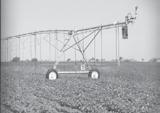
Easier On You.
Good time management is essential to farming success. That’s why more farmers are turning to T-L center pivot irrigation systems. Hydrostatically powered, T-L’s simple design gives you the low maintenance time, cost, safety and reliability to let you manage your farm instead of calling electricians or replacing gearboxes. Simplify your complex world and make irrigation easier on you.
Big Horn Truck and Equipment Manderson, WY rairdenjlw@tritel.net • 800-770-6280
FOR SALE: 1,360
PIVOTS

Mineral Rights


Wyoming Livestock Roundup • Volume 35 No. 47 • March 16, 2024 B10 March 16, 2024 4 THE ROUNDUP GETS RESULTS PLACE YOUR AD HERE Read it in the Roundup Email your ad to denise@wylr.net TANK COATINGS ROOF COATINGS Available for METAL, composition shingles or tar roofs. Long lasting and easy to apply. We also manufacture tank coatings for concrete, rock, steel, galvanized or mobile tanks. VIRDEN PERMA-BILT CO. 806-352-2761 www.virdenproducts.com Call for our free catalog: Scan the QR Code with your mobile device to visit our website! Roof Coating Three Crown Petroleum P.O. Box 774327 • Steamboat Springs, CO 80477 We Buy or Lease Minerals 970-756-4747 hcooper@ipcoilandgas.com www.threecrownpetroleum.com Fax: 970-457-5555 Mineral Rights • Handles Calves up to 300 lbs. • Operates off tractor, bale bed or remote hydraulic unit. Call Darin Coyle, Big Horn Livestock Services, Inc. 307-851-1634 • www.bighornlivestock.com Rupp Hydraulic Calf Tables • Handles Calves up to 300 lbs. • Operates off tractor, bale bed or remote hydraulic unit. Call Kevin McClurg, Big Horn Livestock Services 307-751-1828 • bighornlivestock.com Rupp Hydraulic Calf Tables $5,250 Equipment PIPE FOR SALE!! 2 7/8”, 3 1/2” tubing, 4" drill pipe, 4 1/2" casing, 5" casing, 7" casing. Rods 3/4", 7/8” and 1" located in Montana, can ship anywhere. Call Mike • 602-758-4447 Livestock Equipment Used guardrail for sale!! Great for fencing! Thrie-beam & W-beam; 20” & 12” wide panels by 13.5’ long. Truckload quantities available; delivered to your location. Call Keegan • (208) 775 - 0135 LODGEPOLE PRODUCTS, 307-742-6992, SERVING AGRIBUSINESSES SINCE 1975!! Treated posts, corral poles, buckand-rail, western rail, fence stays, rough-sawn lumber, bedding. SEE US at www.lodgepoleproducts.com and click our “Picking A Fence Post” tab to see why folks choose our posts!! TFN Pipe
tions
directed
WNJWB Clerk,
IT PAYS TO ADVERTISE Vehicles Wanted WANTED!!! 1932, 1933 or 1934 Ford car project, unrestored or restored. Call 605-290-3208 3/16 WANT TO BUY: 1980’S ERA FORD F-350 TRUCK. With or without motor. 1980 to 1986 year preferred. Flatbed and dually preferred. Call Eric at 307696-9930 3/23 Hay & Feed Fencing Fencing Trailer Services/ Repairs Livestock Equipment Livestock Equipment Livestock Equipment Property for Sale Property for Sale Miscellaneous 48V SOLAR HOUSE POWER 5KW, EXPANDABLE TO 12 KW: Panels, battery, controller and accessories included. BMI STEEL GUITAR (early 1980s) and FENDER Twin Reverb (late 1970s, black with silver screen) Amp. $2,300. 50 GALLON HEATING STOVE, 6” stack, $250, with leveling cooking top, $400. Lovell, WY. Calls only no texts, 307-250-9663. To view photos, go to www.wylr. net in the classifieds 3/16 Seed Seed
the
HarvXtra®
with
conventional
available! Plant
Brand Seed for annual forages, cover crops, pasture grasses, small grains and custom mixes. Call Today! Bryan Warner • 307-850-7668 (cell) GRASS SEED FOR SALE: Manifest wheatgrass and Cache Meadow brome, good germina-
can be
to
Kim Robb, 308-787-1444 3/16
Warner Ranch
Serving Fremont County, Wyoming and
surrounding areas.
alfalfa
Roundup Ready® technology, Roundup Ready® alfalfa and
Buffalo
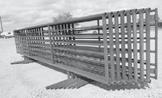
24' Free Standing Panels Delivery and Truckload Prices Available Big Horn Livestock Services, Inc. 307-851-1634 • www.bighornlivestock.com 5’ High 7 Rail 5’6” High 8 Rail
Pipe
7/8” are on average 31.5’ long per joint. Pierce, CO. Call for details, 970-324-4580 7/27 PIPE FOR SALE!! 2 7/8”, 3 1/2” tubing, 4” drill pipe, 4 1/2” casing, 5” casing, 7” casing. Rods 3/4”, 7/8” and 1” located in Montana, can ship anywhere. Call Mike, 602-758-4447. To view photos, go to
OILFIELD PIPE: PRICE REDUCED!! RPJ Enterprises, Inc. 2 3/8” and 2 7/8” is available. Used for fencing, corrals, cattle guards, etc. 2 3/8” and 2
ft. of
minum pipe and
ft. of
gated PVC pipe.
3415, Potter, NE
6” alu-
2,250
8”
Call 308-249-
3/23
LEADING BRANDS: Valley, Zimmatic, Reinke, and T-L. Visit website www.zimmag.com Current available used inventory ● 2021 Zimmatic 8500 7 tower 1,297+ ● 2020 Zimmatic 8500 7 tower 1,297+ ● 2020 ZIMMATIC 8500 8 tower 1,296+ ● 2003 Zimmatic Gen II 7 tower 1,295+ ● 2013 Valley 7000 7 tower 1,336+ ● 2014 T-L Corner Arm only. Call 402-910-3236 3/16
USED IRRIGATION
FOR SALE FROM
Tips offered for early chick care
As spring approaches, chicks begin to appear at local farm stores, and there are several things to keep in mind when purchasing chicks.
A North Dakota State University (NDSU) Extension article published in March 2023 suggests individuals should get involved in raising backyard poultry, which offers families the opportunity to raise their own meat and eggs, while serving as an avenue to get involved in 4-H.
Purchasing chicks locally allows individuals to see birds prior to purchase. However, stores usually offer only a few relatively common breeds, although some feed stores will special order chicks of a particular breed.
If an individual is looking for a particular or an exotic breed, they can consider ordering directly from a hatchery, as shipping chicks is very successful as long as there are no weather extremes at either end of the chicks’ journey.
NDSU suggests buying chicks from National Poultry Improvement Plan certified hatcheries or independent flocks and dealers and advises individuals to purchase chicks which have been vaccinated against Marek’s disease.
“Marek’s disease is very common in young chicks because they are still developing their immune system, but it can affect up to 40 percent of an unvaccinated flock and there is no treatment,” NDSU states.
Raising day-old chicks requires frequent monitoring and adjustment. A less laborintensive option is to purchase pullets near egg-production age.
Pullets are typically 15 to 22 weeks old female chickens which will start to lay around 24 weeks old and can continue producing up to 10 years.
Breeds
Iowa State University
Outreach Youth Animal Science Education Specialist Amy Powell explains the first step to introducing poultry into a backyard farm is selecting a breed.
Most backyard breeds are considered “dual purpose,” which means they are raised for both meat and eggs, she notes.
“Most chicks available at local farm stores are pretty hardy,” Powell adds. “They’re usually Rhode Island Reds (Reds) or a crossbreed like Black Star or Red Star.”
Breed selection depends on how the chick will be used, but the most common breeds for backyard flocks are Sex-links or Americanas.
Sex-links lay brownshelled eggs and are good for both eggs and meat typically laying 150 to 200 eggs per year.
But, if a greater egg production is desired, Reds or White Leghorns are the breed of choice, as each of these breeds can produce about 250 eggs per year. Reds lay
brown-red shelled eggs and Leghorns lay eggs with white shells.
However, NDSU states, Americanas are hardy chickens and will lay beautiful blue eggs at a rate of around four per week, and they will become a valued member of the flock for around eight years.
All chickens can be used for meat, but if chickens will be grown primarily for meat, Cornish Cross or slowergrowing Red Broilers are the best choice.
Cornish Cross chickens grow fast and need less feed to gain weight compared to other breeds. They should be ready for processing around six to seven weeks of age.
Attractive breeds, such as bantam chickens are pretty to look at but generally make poor production birds.
Housing
“Housing is also an important consideration when building a flock. Chicks younger than six weeks require a brooding period, where they will need to be kept inside and warm,” Powell says.
Chicks should be confined to the brooder area by using a 24-inch-high chick guard, which keeps chicks from straying away from heat and prevents floor drafts.
Keeping the brooding area big enough allows chicks to escape one another, but it also allows them to choose a comfort zone around the light.
According to NDSU, newly hatched chicks are sensitive to temperature because they cannot regulate their body heat without feathers.
“For the first week, the heating source temperature should be 95 degrees Fahrenheit for chicks seven days old or younger, then reduce the temperature by five degrees each week until they are one month old,” NDSU states.
Keeping a thermometer in the brooder area to monitor temperature regularly, especially during the first 48 hours of placement is highly suggested.
Chicks are fully feathered around six weeks of age, and if outside temperatures are over 65 degrees Fahrenheit, they are ready to be moved to the coop. However, if the temperature is below 65 degrees Fahrenheit, supplemental heating may be required for a while longer, either in the coop or the brooder.
Nutrition It is important to acclimate chicks to their new water and feed source and assist them in drinking water by dipping their beaks in the water dish.
Local feed stores provide a variety of water sources. Purchasing one with a base which keeps it from tipping over and spilling is recommended, and providing an inch or less water depth works best for new chicks.
NDSU recommends purchasing a base bright in color to help attract the birds to the water, but to be cautious
of waterers that are too deep because they pose a risk of drowning.
There are many feed companies which provide chicken feed for every stage of life – from chicks to productive hens or market-ready meat birds.
Chicks under six weeks should be given starter feed, which has a higher level of protein to promote healthy growth.
Chick starter can be medicated or non-medicated, but medicated chick starter should be fed immediately after hatching to reduce the risk for coccidiosis in chicks which have not been vaccinated for the disease at the hatchery prior to shipment, according to NDSU.
Non-medicated feed may be used for vaccinated chicks, but it is suggested to provide medicated feed for extra protection against the disease.
Safety tips
While chicks generally
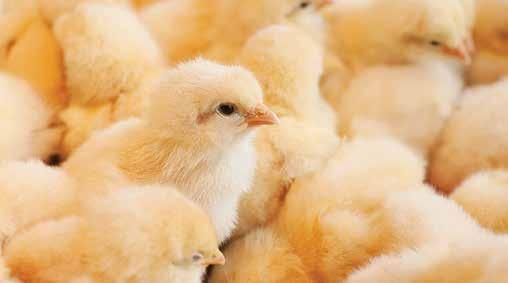
tend to be healthy, in order to keep both people and poultry safe, it is important to maintain proper biosecurity practices.
“One thing to keep in mind is promoting good biosecurity, since chickens can carry salmonella,” says Powell. “It is also important to be aware of highly pathogenic avian influenza, since there has been an increase in detections lately.”
Anyone handling chicks
or other poultry should wash their hands thoroughly immediately after touching the birds, collecting eggs or touching food or other equipment used for poultry.
“Make sure chicks are confined to areas which will not allow access for predators including cats, dogs racoons or skunks. Anything will eat a chicken, so predator awareness is essential,” warns Powell.
Raising chickens is a
fun and educational way to engage with agriculture and food production, especially for children, and Powell recommends children interested in raising poultry get involved with 4-H, where they can learn more about livestock and enter competitions.
Melissa Anderson is the editor of the Wyoming Livestock Roundup. Send comments on this article to roundup@wylr.net.
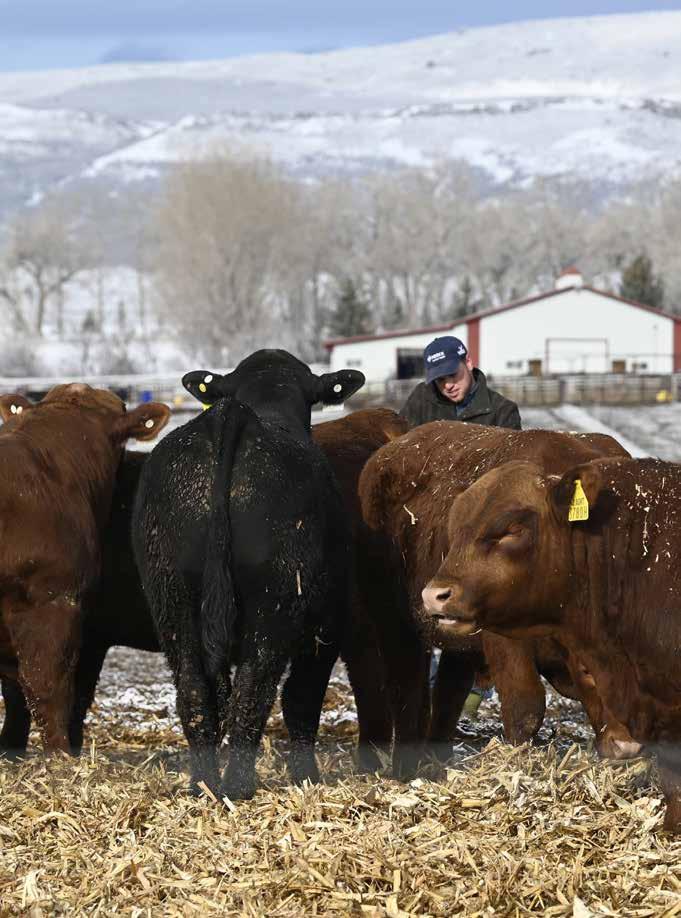
550
MORE BULLS – BETTER BULLS – FOR LESS!
Building on our 90-year heritage of leading the industry, Leachman Cattle’s Spring Sale offers:
1. THE LARGEST SALE OFFERING OF HYBRID BULLS IN AMERICA
2. The most comprehensive genetic evaluations available
3. The best breeding season guarantee
You will be able to buy bulls that are far above industry average in all of the traits listed below – at a reasonable price. Just look at the depth of quality in the offering.
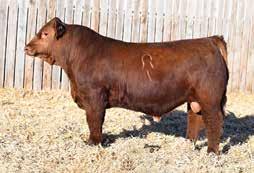


B11 Wyoming Livestock Roundup • Volume 35 No. 47 • March 16, 2024
JERROD WATSON (CO) - 303-827-1156 AARON RASMUSSEN (NE) - 308-763-1361 KURT SCHENKEL (OH) - 740-503-6270 WWW.LEACHMAN.COM | (970) 568-3983 Top 3% CowHerd Profit ($Ranch) Top 3% Cow Fertility (Zoetis EPD) Top 0.1% Birth to Harvest ($Profit) Top 3% Cowherd Profit ($Ranch) Top 1% Cow Fertility (Zoetis EPD) Top 0.3% Birth to Harvest ($Profit) LOT 3 LOT 389 MARCH 24-25, 2024 Females sell Sunday at 1:00 PM Bulls sell Monday at 10:00 AM Leachman Bull Barn | Fort Collins, CO SPRING BULL & FEMALE SALE
Stabilizer Bulls & 200+ Stabilizer, Angus, Red Angus & Charolais Heifers MORE HYBRID VIGOR • MORE CALVING EASE • MORE COW FERTILITY MORE GROWTH & CARCASS • MORE RETAINED OWNERSHIP PROFIT
Stock photo
Adobe
After the harsh winter of 2022-23 and disease outbreaks decimating many Western Wyoming pronghorn antelope, causing many animals to drop dead where they stood, calls grew even stronger to protect and designate the celebrated ancient migration corridor from the Red Desert to Jackson Hole.
On March 12, the Wyoming Game and Fish Commission (WGFC) and staff met with the public in Pinedale for a monthly meeting to determine whether or not it should proceed with the next step in its migration corridor designation.
Many in Western Wyoming and beyond urged WGFC for months to take the long-awaited step to kick off the initial “threat evaluation.”
The draft threat evaluation, released in November, was then open for public comment through Jan. 5. It cited “human impacts” such as residential development, energy facilities –including wind and solar –and resulting fragmented habitat as potential threats and obstacles to the pronghorns’ continued spring and autumn migration to summer and winter ranges.
Aye to proceed
WGFC took the next step on March 12 to “identify” the pronghorn corridor and conduct a biological risk assessment, after several hours of more public comments, questions and answers and explained intentions.
First, WGFC Departing Chair Ralph Brokaw opened the meeting and was replaced by Incoming Chair Richard Ludvig and Vice Chair Mark Jolovich.
Commissioners Ashlee Lundvall, Rusty Bell, Ken Roberts and John Masterson also attended in person, as did Wyoming Game and Fish Department (WGFD) Director Brian Nesvik, who spoke about two recommendations – the Sublette Antelope Migration
Commission identifies Sublette pronghorn migration corridor
Corridor and the WGFD’s Winter Elk Feedground Management Plan.
Nesvik referred to an upcoming Greater sage grouse amendment to be released on March 15 for public comment.
This announcement and the as-yet-incomplete and controversial Bureau of Land Management’s (BLM) draft Rock Springs Resource Management Plan (RMP) could restrict many human activities including grazing and mining in favor of conservation.
Some commissioners and public speakers asked the commission to delay a corridor identification decision.
“I’m curious,” Masterson said. “With the sage grouse plan imminent and the RMP, what is the interplay between the sage grouse amendment and the Sublette antelope corridor designation here? Should we wait so we can work them together?”
Nesvik said, “There is a lot of overlap, but I advise you to take each one individually. Today we’re going to action on the Sublette migration corridor. Some parts of this correlate with wildlife protections. There’s nothing to trigger us to go in a different direction today relative to the migration corridor.”
Masterson asked again about the timing.
Nesvik replied, “Irregardless of where the RMP lands, we should discuss this corridor today.”
The Wyoming Legislature removed formal designation authority from the state wildlife agency, handing it to Gov. Mark Gordon.
Gordon’s Migration Corridor Executive Order 2020-1, published on Feb. 13, 2020, states existing federal U.S. Forest Service (USFS) and BLM grazing permits, public access or existing energy facilities and development will not be affected by state designated migration corridors,
nor would private property be affected, WGFD speakers reinforced.
Pronghorn pitch
WGFD Migration Corridor Coordinator Jill Randall told commissioners federal public lands protect wildlife on a range of levels. For example, USFS designated “The Path of the Pronghorn” in 2008.
WGFD can leverage corridor funding from foundations and nongovernmental organizations, who help establish conservation easements and big game projects. For example, the U.S. Department of Agriculture’s Big Game Initiative offers $30 million in grants to private landowners near a designated corridor.
Will Schulz, habitat protection supervisor, highlighted this is the first time the designation process is underway.
“The commission essentially has the option of identifying the Sublette pronghorn corridor and leaving it at that or pursuing designation,” he said.
The Governor’s Office would appoint a local working group of stakeholders as each segment is studied very closely. Randall said the northern end of the migration route has more landscape disturbance – the Pinedale Anticline and Jonah Infill – and development obstacles.
Deputy Wildlife Chief Doug Brimeyer said 90 percent of public comments supported the Sublette pronghorn corridor’s designation process.
WGFD posted 17 mostly pro and con letters from local agencies and statewide hunting, energy and conservation groups and 100 pages of digital comments from 293 online comments filed by the Jan. 5 deadline.
Those against the designation cited pronghorn antelopes’ apparent comfort around oil and gas facilities, economic down-
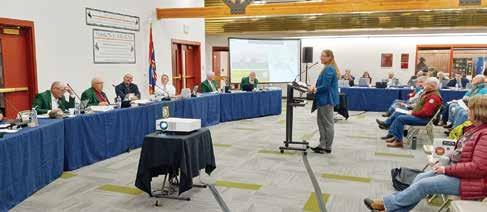
turns for the region’s agriculture and energy industries and the “lack of need” for more protections. But, many more favored migration-corridor protections that include no surface occupancy only in high use areas.
“We’re not trying to prevent projects from occurring,” Brimeyer said.
Randall said the corridor’s 300-meter buffer will be refined during the biological risk assessment. Looking at the route in segments will pinpoint the bottlenecks and other obstacles more clearly and will provide “opportunities for conservation.”
Public comments
The first to speak was Daniel Rancher and Sublette County Commissioner Doug Vickrey, who referred to his fellow officials’ stance that corridor designation would negatively impact energy and agriculture revenues which fund the county.
“Let’s use caution as we move forward,” he said. “The devil is in the details.”
As a citizen, Vickrey advised the commission to close the county’s pronghorn hunting seasons.
Meghann Smith, of the Sublette County Conservation District board, softened the board’s previous comments by citing its support to proceed.
Mark Anselmi said energy and mining operators “are good neighbors.”
The real issue is the
county’s approval of agto-residential rezoning for subdivisions. He pointed to their decision to allow 50 five-acre homesites north of Daniel, west of Highway 191, where pronghorn moved their route to avoid development on the highway’s east side.
Conservation and environmental speakers spoke in favor of the designation.
Jasmine Allison from PureWest – formerly Ultra Resources – and Paul Ulrich from Jonah Energy cited obligations both natural gas operators follow under their respective Pinedale Anticline, Jonah Field and Normally Pressured Lance records of decision.
From siting a well pad to reclamation, they consider wildlife and habitat priorities, they said, and worry those records of decision might be updated if a corridor is designated.
Mike Schmid, owner of SOS Well Services and former WGFD commissioner, presented the board with population statistics which rose and fell before and after “the two megafields’ drilling” started. WGFD has managed pronghorn well with good herd numbers.
“It’s hard to support this,” he said. “I just don’t see the need for it.”
Petroleum Association of Wyoming’s Colin McKee asked the commission to “defer today or make a stipulation to the RMP being included in the
risk assessment.”
Deputy Director Angi Bruce said the state should lead off with Gordon’s first-ever migration corridor designation and repeated the governor’s executive order does not contain stipulations.
“What if we don’t do anything?” she said. “The BLM’s RMP refers to Gordon’s executive order and if Wyoming doesn’t step up, the federal government might think it needs to step in.”
Linda Baker of the Upper Green River Alliance pointed to declining natural gas prices in 2023 and expanding international energy development.
“Wyoming control for Wyoming wildlife,” she stated.
Nesvik answered commissioners’ final questions and outlined their options, saying, “We control the timeline. There were excellent points made here today. It gives local governments something to refer to.”
Brimeyer said WGFC staff could complete the detailed risk analysis “later this year.”
Masterson moved “to further evaluate the Sublette Antelope Corridor” and Brokaw seconded
Every commissioner voted “aye.”
Joy Ufford is a corresponding writer for the Wyoming Livestock Roundup. Send comments on this article to roundup@ wylr.net.

 by Lee Pitts
Coloring Outside the Lines
In my younger years I fantasized about becoming fabulously wealthy as an artist. There was only one thing standing in my way – I couldn’t draw.
Well, this isn’t entirely correct as I could draw farm animals, but I simply couldn’t draw people. My men all had faces resembling Berkshire hogs, a breed known for being especially ugly. My women all had horse faces, and my children all had countenances that only a nanny goat could love.
I also couldn’t draw clouds, and no matter how
hard I tried, they invariably ended up looking like exploding bags of flour.
I’d have to say my best artistic masterpiece was probably a wood carving I did using my mother’s brand new coffee table as a pallet on which I carved my troop number using my Cub Scout knife. I made the mistake of signing my name on the masterpiece, and I’ve never made that faux pas again, no sirree. I take solace in the fact my artistic efforts will one day be fully appreciated because Van Gogh sold only one painting while he
was alive. Of course, when he died his pieces sold for what are called “dead men’s prices.”
I didn’t fail as an artist for lack of trying.
Did you know the average kid between the ages of two and eight spends 28 minutes of their day coloring? I easily tripled this.
I attribute any artistic shortcomings to the fact I was a deprived kid who only had an eight pack of Crayola® And please note I included the ® thingys because I wrote the word Crayola® without it once and got a nasty letter from Binney and Smith threatening legal action.
I was quite honored to receive such a letter to think the people who made Crayola® actually read my column.
The company got bought out by Hallmark in 1984, and ever since then, they don’t
seem to be so uptight about the ® thingy because I’ve never received such a letter from them.
Just for fun, let’s see if Hallmark reads my column or takes legal action this time... Crayola, Crayola, Crayola.
I was jealous of the kids who had the 64-piece set of Crayola® and attributed my shortcomings in the art department to not having the other 56 colors. I probably should be getting reparation payments for being deprived of the full color spectrum.
I enjoy painting with oils, and I’ve done two pieces that deserve the space they take up on our walls. One is of a Hereford cow and the other is of a sea otter and her pup. The rest of the wall space in our house is covered with cowboy art.
I have originals from people many have heard of
like Will James, Joe Beeler and two pen and inks from Edward Borein. Then, there are all of my originals from artists who are still alive including Phil Tognazzini, Vel Miller and Jerry McAdams, who all happen to be friends of mine.
My all-time favorite cowboy artist is Tim Cox, and years ago, I asked Tim and his wife Suzie if I could use a favorite of mine on the cover of one of my books titled “Essays From God’s Country.”
Not only did they give me permission, they also gave me a large artist proof of the piece which takes center stage in our home.
My favorite deceased artist is Georgia O’Keeffe, and her work borders on modern art which I usually hate. I agree with Al Capp, the artist behind the comic called “Lil’ Abner,” when he said
modern art was, “A product of the untalented, sold by the unprincipled to the utterly bewildered.”
Some of the stuff being called “art” these days is a real travesty, like the 10-foot round circle of manure shown at the San Francisco Art Institute which was taken down after only one day because it stunk up the place – both artistically and aromatically.
Then there was the air conditioning vent that wasn’t even entered in the show and got top prize at a different modern art show.
I shouldn’t leave readers with the impression I have zero artistic talent.
I love airbrushing some of my leather creations, but as for drawing the human form, I agree with the anonymous art critic who said, “His illustrations were horribly executed and the artist should be.”
Wyoming Livestock Roundup • Volume 35 No. 47 • March 16, 2024 B12
IT'S THE PITTS
Providing public comment – Wyoming Game and Fish Migration Corridor Coordinator Jill Randall speaks to the Wyoming Game and Fish Commission during a public meeting in Pinedale on March 12. Joy Ufford photo
