Prop 12 moves forward Page A9
Grazing management strategies discussed following a wildfire Page A20
Frost-free nose pumps allow cattle to pump their own water Page B1
Early chick care tips offered Page B11

Prop 12 moves forward Page A9
Grazing management strategies discussed following a wildfire Page A20
Frost-free nose pumps allow cattle to pump their own water Page B1
Early chick care tips offered Page B11
In the 13th snow report for Water Year 2024, the state’s snowpack telemetry data reads 97% of median, with a basin high of 122% and a basin low of 52%.
Last year, the state was at 120% and at 84% in 2022. The report and a map displaying basin snow water equivalent percentages of median for the state may be found at wrds.uwyo.edu/ wrds/nrcs/nrcs.html.
The Wyoming Water Development Commission (WWDC) will hold a public meeting at the Wyoming Water Development Office in Cheyenne on March 20.
To view the livestream, sign up for public comment or to access the most recent agenda, visit wwdc.state.wy.us/
The Wyoming Water Association is seeking a highly motivated and dedicated individual to oversee the administration, programs and strategic plan of the organization. This parttime executive director will work closely with the board of directors and interact regularly with membership. Interested individuals can e-mail their resumes and cover letters to office@wyomingwater.org. Apply by March 31 for full consideration.
Wyoming Agriculture in the Classroom (WAIC) is looking for a fundraising professional from Wyoming to fill the position of director of philanthropy, who will lead WAIC’s major fundraising efforts. For more information, visit indeed.com/ job/director-philanthropy4f099940842f5921
The 2024 National Rambouillet Show and Sale will be held in conjunction with the National Junior Show June 17-22 at the Tarleton State University Animal and Plant Sciences Center and Arena in Stephenville, Texas. For more information, contact Robbit Eckhoff at rambouilletassn@gmail.com or 409-256-3687 or Lee Munz at tsumunz@yahoo.com or 254-379-6857.
On March 7, the House Committee on Agriculture’s bipartisan Agricultural Labor Working Group (ALWG) published its final report of policy recommendations on how to
improve the H-2A Visa Program for temporary workers and relieve labor shortages which have seriously impacted America’s farmers and ranchers.
ALWG’s report includes
over 20 recommendations –15 of which received unanimous approval – to streamline the H-2A program and make labor more affordable for ag producers.
“The agricultural sec-
tor is currently facing urgent challenges caused by producers’ lack of access to an adequate workforce,” reads the report. “This has been a problem for decades, and it
Please see H-2A on page A13
On March 8, U.S. senators approved a $460 billion spending package by a vote of 75 to 22, with 21 Republicans and one Democrat voting in opposition, in time to meet the midnight deadline for avoiding a government shutdown of key federal agencies, sending it on for the president’s signature.
The six bills are part of an equation Congress must solve before the next funding deadline of March 22, when the other six bills, which are much more challenging and include a higher price tag, come due.
Within the spending package, lawmakers secured
The U.S. Department of Agriculture (USDA) Natural Resources Conservation Service (NRCS) published the March 2024 Wyoming Basin and Water Supply Outlook Report on March 1.
This report analyzes snowpack, precipitation, streamflow and reservoir storage across the state of Wyoming.
The report also assesses the water supply outlook for the entire state of Wyoming, as well as individual basins including the Snake River, Madison Headwaters, Yellowstone River, Wind River, Big Horn River, Shoshone River, Powder River, Tongue River, Belle Fourche River, Cheyenne River, Upper North Platte River, Lower North Platte River, Laramie River, Sweetwater River, South Platte River, Little Snake River, Upper Green River, Lower Green River and Upper Bear River basins.
Snowpack and precipitation
As of March 1, snow water equivalent (SWE) across the state was 68 percent of median, which remains unchanged from the February report. The highest SWE was reported in the Upper Bear River Basin at 113 percent of median, and the lowest SWE was reported in the Belle Fourche River Basin at 35 percent of median.
According to NRCS, the Belle Fourche River, Cheyenne River, South Platte River, Powder River, Tongue River, Yellowstone River, Lower North Platte River, Big Horn River, Shoshone River, Upper Green River, Laramie River and Madison Headwater basins were below 90 percent of the median SWE recorded from 1991 to 2020.
Additionally, the report notes the Sweetwater River Basin had the highest precipitation for the month at 203
more than $900 million in Community Project Funding –formerly called earmarks – while the remaining spending measures include Defense, Homeland Security, Financial Services, Labor, Health and Human Services, Education, the Legislative Branch and State-Foreign Operations, which are still operating under a continuing resolution but are anticipated to be fully funded by March 22.
Lawmakers speak out Senate debates transpired over the spending package, arguing earmarks in the bill should be removed, although
ACA encourages individuals to celebrate National Agriculture Week
The Agriculture Council of America (ACA) commences March 17-23 as National Agriculture Week, acknowledging the agricultural industry and the role it plays in stabilizing the U.S. economy. The council also announced March 19 will be National Ag Day with the theme of “Agriculture: Growing a Climate for Tomorrow.”
National Agriculture Week commends the ag industry as a whole for being a source of abundant food, fiber and renewable products and celebrates efforts made by those involved in providing the U.S. with the necessities most take for granted.
“American farms remind us of the beauty and generosity of our nation. They feed the country and the world, and with each new planting season, they embody the most American of things – possibilities,” states the U.S. Census Bureau.
Please
A recent article published by E&E News on March 7 reports the Biden administration is expected to release a plan to save the Greater sage grouse, which would impose most of the Obamaera restrictions to block oil drilling and other activities near the bird’s habitat, according to people familiar with the plan.
The Greater sage grouse has been one of the most controversial issues in the West, as many believe protecting the bird’s sagebrush habitat means limiting drilling, renewable energy projects, mining and livestock grazing.
According to the article, “After years of negotiations with environmentalists,
state leaders and industries operating on federal land, the Obama administration in 2015 came out with its plan to safeguard the most sensitive grouse habitat across 10 states, and in 2019, the Trump administration rewrote those regulations, giving states more leeway to green light projects near grouse breeding grounds.”
Now, it’s reported the Biden administration is set to offer its compromise affecting conservationists, state leaders and industry advocates.
“The Bureau of Land Management’s (BLM) latest proposal returns to the Obama plan but incorporates some of Trump’s flexibility, said an Interior

In recent days, beef has been a topic in the news once again – some good, some not so good.
As you can read more in this week’s Roundup, Congress passed an omnibus spending bill which stopped the threat of a government shutdown. A shutdown never does anyone much good, as it just shows Congress couldn’t get the job done – a responsibility of both parties.
In the omnibus bill, $15 million was earmarked to provide electronic tracking of cattle. For years, this subject has been one of the most discussed topics whenever cattle producers get together, whether it is two or 200 producers.
To say the least, this topic has been controversial across the West as every cattle producer has an opinion about electronic ear tags.
Many state livestock boards are in favor of the tags so they can quickly trace a diseased animal.
Foot and mouth disease is a huge threat, especially with the porous Mexican border and a couple of South American countries that struggle with the disease. A single diseased cow or one outbreak from someone’s contaminated boots would shut down the beef business in America. It’s that serious.
Our state livestock boards need a system to track cattle quickly to get a handle on any disease, but many producers are already using electronic ear tags to help market their cattle.
If a producer wants their processed beef to be sold in China, the European Union and other countries, the meat must be traceable, so one would need radio frequency identification (RFID) ear tags.
If the U.S. Department of Agriculture proposal is finalized, RFID ear tags would be required on all sexually-intact cattle over 18 months of age which are moving in interstate commerce.
There are many pros and cons concerning ear tags which have fueled the discussion. The big issue is it would involve the government, and they would know where your cattle have been and are currently.
Some Congressmen in opposition of the tags are concerned the legislation would be used by the green agenda to limit beef production and will also allow large corporate ranchers and meatpackers to dominate small producers.
In other related issues of last week, U.S. Agriculture Secretary Tom Vilsack announced the finalization of a rule mandating all meat products sold with the “Product of USA” or “Made in the USA” voluntary label, must be derived from animals born, raised, slaughtered and processed in the U.S. This rule applies to meat, poultry and egg products.
Currently, a package of meat at the grocery store may use the label, but in reality could have some meat or fat from another country. It has been false advertising used by meatpackers and others to help sell products.
The rule will prohibit misleading U.S. origin labeling in wholesale and retail stores and let customers know, if the USA label is on the product, it really is from the USA. Customers should like this rule in times of tight beef supplies.
Cattle producers realize consumers are their customers, worldwide. They all want to give these customers the best beef products they can, with a label on the package that tells the true story.

The saying goes, “Wyoming is a small town with long streets.”
This is inherent in the Cowboy State’s identity. Our state’s small towns make up its collective spirit and are directly tied to our values of independence, resilience, family and stewardship.
Each community in Wyoming is unique and binds us together as friends and neighbors – as Wyomingites. Have you ever been at the airport and ran into someone with a Pokes hat? Even if you don’t know the person, we can bet you both know someone in common.
This is truly a Wyoming phenomenon.
Wyoming is the 10th largest state by land mass and the least populated, with only 576,851 residents.
By Ogden Driskill and Albert SommersMunicipalities with populations of less than 4,000 are statutorily considered a “town,” while those with 4,000 or more residents are classified as “firstclass cities.”
There are 19 first-class cities in Wyoming and 80 towns spread across the state.
By comparison, our neighbor to the south – Colorado – is similar in land mass. But, it has 273 incorporated municipalities and a population 10 times Wyoming’s at 5.8 million people.
It’s safe to say, Wyoming is a small town with long streets.
It is for this reason comments made on the floor of the Wyoming House of Representatives gave us pause.
When discussing House
Bill 70, Local government distributions, Rep. John Bear questioned if small towns need to receive funding from the state.
He asked, “Should they exist?”
Our answer is a resounding, “Yes. Absolutely.”
Wyoming needs its small towns.
Wyoming, as a state, is a small town.
We are proud of its small-town feel, rural nature, abundant wildlife and worldclass energy reserves.
Small towns are the pillars of our state. We need small towns for our schools, diners, gas stations, community centers, bowling alleys, bars, grocery stores and churches.
We have challenges attracting businesses and
industry without the churn of a large population center, so we must rely on who we are.
Wyoming small towns need funding to run their hospitals, libraries, water and sewer systems, to plow streets and to fund those critical defenders of the public’s safety – our fire and police departments.
Small towns support those who are doing the work in Wyoming. It’s appropriate money coming from those communities gets back to living in communities through the funding of local government distributions.
During the biennial budget, distributions have been over $100 million. Both sales tax and property tax help support local government and


The Wyoming Stock Growers Land Trust (WSGLT) is seeking nominations for the 2024 Bucholz Conservation Award.
This award is meant to recognize an individual or family who is an advocate for conserving Wyoming’s farms and ranches; is a land steward or agricultural advocate who has been a participant in natural resource discussions on a state, regional or national level and is a defender of water conservation and protecting Wyoming’s traditional water rights.
The award also recognizes those who have a personal commitment to habitat conservation and is a proponent of hunting and wildlife protection and has implemented land or resource conservation practices on their property with WSGLT or a similar organization.
Wyoming is home to many individuals and families who exhibit these traits. WSGLT asks individuals to help them recognize Wyoming’s land stewards and agricultural advocates.
Nominations must be submitted by May 1.
For more information or to fill out a nomination form, visit wsglt.org/bucholz-award/
Representatives from 49 U.S. companies and organizations will join the U.S. Department of Agriculture (USDA) agribusiness trade mission to Seoul, South Korea, led by Under Secretary for Trade and Foreign Agricultural Affairs Alexis Taylor March 25-28.
South Korea ranks as the nation’s fifth-largest single-export market. Also, as one of the fastest-growing economies in the developed world during the past several decades and with relativity small amounts of arable land, South Korea relies heavily on imported agricultural goods, especially meat and bulk commodities, to satisfy food and feed demand.
While on the trade mission, participants will engage in targeted business-to-business meetings and pre-arranged site visits to build new trade linkages, strengthen existing partnerships, observe U.S. products in the marketplace and discover the latest Korean consumer food trends.
Participants will also receive in-depth market briefings from USDA’s Foreign Agricultural Service and industry trade experts.
Gov. Mark Gordon has appointed Liz Gagen as director of the Wyoming Department of Workforce Services (DWS), effective March 18. Gagen replaces Robin Cooley, who was appointed to be a Laramie County District court judge on Dec. 29.
Gagen has served as deputy director of DWS since 2020, providing oversight to the department alongside Cooley and providing direct supervision of the Medical Commission Contracts Unit and executive support staff.
She previously spent more than 16 years representing state agencies in the Wyoming Attorney General’s Office, serving as supervising attorney general, senior assistant attorney general and chief deputy attorney general.
Gagen holds a Bachelor of Science and Juris Doctor from the University of Wyoming.
“Liz’s work as a member of the department’s leadership team and her extensive background working on legal issues with state agencies will ensure this is a smooth transition,” Gordon said. “I thank Cooley for her outstanding work and service to the state during her tenure.”
The U.S. Department of Agriculture (USDA) Animal and Plant Health Inspection Service (APHIS), Justice Department’s Environment and Natural Resources Division (ENRD) and USDA Office of the General Counsel signed a memorandum of understanding (MOU) on Civil Judicial Enforcement of the Animal Welfare Act (AWA).
ENRD Assistant Attorney General Todd Kim, USDA Principal Deputy General Counsel Mary Beth Schultz and USDA APHIS Administrator Michael Watson made the announcement.
The MOU represents another significant step forward in AWA enforcement, as it outlines new actions the agencies will take to enhance their collaboration.
In general, the MOU establishes a framework for notification, consultation and coordination among APHIS, USDA’s General Counsel and ENRD. Building on the agencies’ ongoing relationship, this framework formalizes procedures for regular meetings, coordination on enforcement referrals, information sharing and additional training for employees, among other activities.
These procedures will better enable the agencies to prepare for and coordinate on potential civil enforcement actions.
The day after Nevada Wildlife commissioners signed a letter calling for more money for the Bureau of Land Management (BLM) to decrease the number of wild horses on Nevada’s public lands, Congress did the exact opposite.
According to the American Wild Horse Conservation, the spending bill signed into law reduced the BLM’s budget for roundups by $5.9 million to $141.9 million.
The bill was part of the $460 billion package which narrowly passed Congress to avoid a government shutdown.
Among the provisions was a significant spending cut for the BLM’s Wild Horse and Burro Program budget, emphasizing the need for a shift towards humane and sustainable in-the-wild conservation strategies, said Spokeswoman Amelia Perrin.
Notably, the legislation preserves $11 million in funding specifically designated for the implementation of a robust, humane fertility control program, as advocated by both House and Senate versions of the bill.
According to the wild horse organization, Congress directed the BLM to explore alternatives to helicopter roundups, acknowledging for the first time, growing public opposition to this method as both inhumane and ineffective.
The state of Wyoming, along with the states of Colorado, New Mexico and Utah, submitted an alternative on the future operations of Lake Powell and Lake Mead to the U.S. Bureau of Reclamation.
The current rules, which control the operation of those reservoirs, expire in 2026 and must be replaced.
Since 2000, the Colorado River Basin has been facing historic drought. The likelihood of continued low-runoff conditions continues to increase which will further reduce water supply across the region.
The proposed reservoir operations submitted by Wyoming and other states are designed to help provide water supply certainty and sustainability in the face of a drying and uncertain future.
“Our alternative focuses on building storage in Lake Powell to help provide a sustainable water supply into the drying future and avoid the constant crisis of recent years,” said Wyoming State Engineer Brandon Gebhart, Gov. Mark Gordon’s Colorado River commissioner. “It’s a response to the lessons we’ve learned and acknowledges the uncertain future we face.”
In addition to submitting an alternative on future reservoir operations, Wyoming and other Upper Division States are also pursuing separate but complementary activities.
These include potential releases and recovery of storage at the Colorado River Storage Project Act Initial Unit reservoirs, such as Flaming Gorge Reservoir in southwest Wyoming, and voluntary water conservation programs.
Both activities are intended to help protect the ability of Lake Powell to make releases and to provide drought mitigation and resiliency.
Montana State University (MSU) Extension and the Montana Feed Association (MFA) will co-host the annual Montana Nutrition Conference and Livestock Forum April 16-17 at the Best Western Plus GranTree Inn in Bozeman, Mont.
The theme for this year’s conference is “Owning the Outcome: Proactive Management in Challenging Environments.”
Experts from MSU and other institutions will share their expertise on the market dynamics shaping the cattle outlook, parasite effects on profitability, diseases affecting Montana cattle and the long-term effects of drought, among other topics.
Graduate students in the MSU Department of Animal and Range Sciences will also be on hand to share their livestock research and other agriculture-related research during a networking social and poster contest.
New this year is an expanded trade show for top-tier conference sponsors and a live auction hosted by the MFA, which will offer attendees the chance to bid on donated items to benefit the association’s scholarship fund.
The keynote dinner will feature several past scholarship recipients who will share how receiving a MFA scholarship has helped pave the path toward their education and careers.
Register online at ecommerce.montana.edu/abio/
For more information and a detailed conference schedule, visit animalrangeextension.montana.edu/beef/nutritionconference.html
The McCoy Insurance Agency also provides:
• Hard to Place Commercial Risks
• Cabins and Dwellings In Unprotected Areas
• Equine Risks
We insure in Montana and Wyoming.
For more information, call 307-672-3456
130 S Brooks St, Sheridan, WY 82801

The rural broadband industry has been a major focus for investors, private equity sponsors and government across federal and state levels in recent years. This heightened level of interest and investment has led to an unprecedented amount of private and public capital flowing to rural America to build or expand broadband network infrastructure.
Private investors, attracted by the favorable economics of the broadband service business model, are aiming to capitalize on the opportunity to tap underserved markets.
While merger and acquisition (M&A) activity in the rural broadband market has slowed due to high interest rates and other economic headwinds, further consolidation within the industry is expected in the years ahead. However, the degree and pace of rural broadband consolidation is not likely to match what has played out in the cable and wireless industries over the last few decades.
According to a new report from CoBank’s Knowledge Exchange, several forces are driving broadband consolidation, including the need for greater scale, investor interest in owning broadband assets and potential M&A interest from large cable operators struggling to grow their broadband base. But, the fragmented nature of the market is likely to limit the rate and scope of industry consolidation.
Independent rural broadband operators have their own unique mission, service territory and business case, which means many will not be M&A candidates.
Some of these operators will get overbuilt with fiber from larger players and will struggle to survive. Others operating in high-cost, remote areas may not be attractive assets for an investor or another company to own, and cooperatively-owned operators, which have been formed to serve a specific need and are likely the only provider in the area, have historically been hesitant to sell.
But, given the sheer number of broadband operators and the coverage holes being addressed with new fiber networks, it is probable many operators in attractive markets may be considered M&A candidates.
Agriculture Secretary Tom Vilsack announced the U.S. Department of Agriculture (USDA) has finalized a rule he says will align voluntary “Product of USA” labeling claims with consumers’ understanding of the term. The news came during the secretary’s address at the National Farmers Union annual convention in Phoenix.
“Today’s announcement is a vital step toward consumer protection and builds on the Biden-Harris administration’s work to bolster trust and fairness in the marketplace where smaller processors can compete,” Vilsack says.
“This final rule will ensure when consumers see ‘Product of USA’ they can trust the authenticity of the label and know every step involved, from birth to processing, was done here in America,” he adds.
American farmers and ranchers have long complained about companies labeling their products as U.S. made even when their animals were raised overseas. These companies contended processing animals in the country was enough for them to be considered products of the U.S.
USDA’s new rule now says otherwise. It explicitly stipulates the terms “Product of USA” or “Made in the USA” may only be used on meat, poultry and egg products derived from animals raised, slaughtered and processed in the U.S.
Use of the claim will continue to be voluntary. It also remains eligible for generic label approval, which does not require USDA Food Safety and Inspection Service approval.
USDA has published updated labeling guidance with additional information on how to properly use the U.S. origin labeling. The public is encouraged to submit comments for 60 days.
University of Wyoming (UW) Extension welcomed Jennifer Faulkner as a local foods coordinator in the Department of Agricultural and Applied Economics.
Faulkner grew up on a Wyoming cattle ranch and managed a ranch operation in Riverton for three years. As a rancher, she was highly active in the local foods movement and sold meat, dairy and produce to local customers.

Faulkner’s experience with agriculture and passion for local foods serve her well in her new role.
“Jen rolled up her sleeves and hit the ground running, finding creative solutions to grow and strengthen Wyoming’s producers and food entrepreneurs,” says Anders Van Sandt, UW Extension specialist and assistant professor of regional economics in the Department of Agricultural and Applied Economics. “She brings a unique blend of thoughtful determination and innovation emblematic of her Wyoming ranching roots.”
Faulkner’s position is funded by the Northwest Rocky Mountain Regional Food Business Center Grant, which is led by Oregon State University and Colorado State University. Members of the food business center team work within their individual states as well as across a six-state region to develop a robust regional food system.
Those funded by this grant serve underinvested communities and small- to medium-sized food businesses. Their aim is to help small food businesses grow and connect food entrepreneurs to resources, support investment in effective infrastructure and build meat supply chain capacity and resilience.
Over the first eight months of this grant, which launched in summer 2023, the food business center team has already impacted Wyoming’s food landscape. In particular, they have connected Wyoming food businesses to wholesalers and other resources.
Last month, the team sponsored a workshop at the statewide Wyoming Food Coalition conference, which is dedicated to bringing together food system leaders from across the state. The workshop showed participants how to move from a home kitchen into a shared commercial space.


University of Wyoming (UW) Extension welcomed Rob Ziegler as the new livestock production and marketing Extension specialist with the Department of Agricultural and Applied Economics.
Ziegler earned his bachelor’s degree in animal and veterinary sciences from UW in 2018 while working as a laboratory technician for the Wyoming State Veterinary Laboratory.
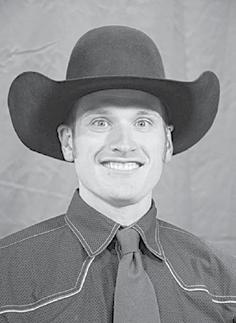
He went on to earn a master’s degree in ruminant nutrition from the University of Nebraska-Lincoln in 2020. His master’s thesis focused on cow size and optimizing resources in range production environments.
After graduating, Ziegler worked as a customer technical communication specialist for Telus Agriculture in Alberta, Canada, where he helped producers make informed decisions about livestock using animal performance data.
“We’re so excited to have Rob join us to help serve the needs of livestock producers across the state,” says Ben Rashford, head of the Department of Agricultural and Applied Economics. “His extensive background in livestock production and animal science, combined with his hands-on experience in the supply chain, is going to bring a wealth of knowledge to Wyoming.”
“I was anxious to get immersed back in the cow/calf sector, since this is where most of my formal training is,” says Ziegler. “What excites me the most is supporting the landgrant university mission and making a positive impact on livestock producers around the state.”
Ziegler can be contacted at rziegle3@uwyo.edu or 307766-3719.
University of Wyoming (UW) Extension welcomed Makayla Getz as the new Park County agriculture and natural resources educator.
Getz recently graduated from Tarleton State University in Stephenville, Texas with a master’s degree in agriculture and consumer resources. She achieved a bachelor’s degree in agricultural communications from Missouri State University in 2017.

At Tarleton, Getz worked as a graduate assistant and gained experience with teaching other students and organizing and facilitating events. She also used social media to promote events and sales and helped run the Purple Tractor store, a Tarleton State farm-to-table teaching laboratory.
“Makayla will be a great asset to Park County,” says Bridger Feuz, associate director of UW Extension. “Her experience managing the Purple Tractor will give her insights to helping Wyoming producers market their products.”
Getz also worked with several online companies, including Lexipol, a digital marketing company, where she managed employees and collaborated with outside partners to find grant funding.
“I’m excited to get my feet wet, meet local growers and connect with the community in an impactful way,” she says. “I knew looking for a role in Extension would possibly lead me away from Texas, so I traded sand for mountains and I am loving it!”
Getz can be reached at mgetz@uwyo.edu.
University of Nebraska-Lincoln (UNL) Extension will host a roundtable discussion on technology and ranching on April 16 in Kimball, Neb.
Technology is increasingly being incorporated into the tradition of ranching. However, producers need to consider the cost and whether it adds value to their operation. The roundtable discussion will involve area producers and researchers to discuss the technology available and how it can be effectively applied to ranching.
The discussion will include drones, remote water monitoring systems and cameras, calming pheromone treatment of cattle and virtual fencing.
The program will be held from 7 to 8:30 p.m. at the 4-H Building, located off South High School Street in Kimball, Neb. Attendance is free and registration is not required.
For more information, contact Aaron Berger at 308-2353122 or aberger2@unl.edu.
In a letter submitted to the House Natural Resources Committee, the National Cattlemen’s Beef Association (NCBA) urged members of Congress to support the recently introduced America’s Wildlife Habitat Conservation Act (H.R. 7408). This landmark conservation bill, led by Chairman Bruce Westerman (R-AR), was considered in a Water, Wildlife and Fisheries Subcommittee hearing on March 6.
The legislation would invest in state-led conservation projects, push the U.S.
Fish and Wildlife Service (USFWS) to delist species that are recovered and provide regulatory certainty for landowners who participate in voluntary species conservation agreements.
“Despite the best original intentions of Congress, the Endangered Species Act (ESA) over the last half-century has become a bureaucratic nightmare which stifles voluntary conservation work, provides endless ammunition for frivolous litigation and imposes unnecessary restrictions on farmers and ranchers,” writes
NCBA in a March 7 press release.
The association explains H.R. 7408 would address many of these challenges by codifying Candidate Conservation Agreements and Candidate Conservation Agreements with Assurances; prioritizing funding for projects led by states and Tribes, rather than funneling more money into implementing top-down, one-size-fits-all federal species management plans and requiring USFWS to set clear benchmarks for recovery when issuing 4(d) rules and to delist when those
goals are met.
Additionally, the bill would fix the disastrous Cottonwood decision which has bogged the U.S. Forest Service down in ESA consultation and prevented crucial fire mitigation work from moving forward and extend Good Neighbor Authority to USFWS to allow the agency to work with public and private partners across fence lines to conserve contiguous habitat.
The legislation now awaits a full committee hearing in the U.S. House of Representatives.

25
29
1
2
6
7
8
13
21
22
23
27
28
Submit
to: Editor, Wyoming Livestock Roundup, P.O. Box 850, Casper, WY, 82602, or e-mail to roundup@wylr.net. We reserve the right to edit letters.
It is the policy of the Wyoming Livestock Roundup that we do not print letters attacking individuals, groups or organizations within the Wyoming agricultural community.
Dear Editor,
In 1973, the first day of spring – March 21 – was dedicated to recognize and appreciate American farmers. I truly believe America has been blessed by our loving God who works in partnership with farmers to provide food, fiber, clothing and shelter for our people.
National Ag Day, celebrated on March 19, is quickly approaching, and
what a great time to thank farmers for all they do.
American farmers represent and preserve the values of our nation – hard work, risk-taking and love of the land. In their daily lives, they demonstrate love of family and love of our country.
From a purely financial perspective, farmers have an incentive to preserve and improve the soil, water and air which sustains their
livelihood. One can easily say farmers are the original environmentalists and the land they work is very precious to them.
Often, they take extreme measures to preserve land, such as planting lower priced crops for rotation crops to improve and preserve the soil.
Less than 1.5 percent of the U.S. population is engaged in production agri-

culture and only 42 percent of the U.S.’s total land area is farmland, at 893.4 million acres.
One farmer supplies food and fiber for over 165 people in the U.S. and abroad. More than 22 million full- and part-time jobs are related to agriculture. The sugar industry alone provides 146,000 jobs, according to the American Sugar Association.
Agriculture is America’s number one export, and farmers have been blessed with modern methods to grow crops. For example, one acre of land in the U.S. – about the size of a football field – can produce
42,000 pounds of strawberries; 11,000 heads of lettuce; 25,400 pounds of potatoes; 8,900 pounds of sweet corn or 640 pounds of cotton lint.
In 1997, Kansas’ wheat farmers produced enough wheat to make 36.5 billion loaves of bread or enough to provide six loaves of bread for each person on Earth. With the world population reaching nine billion by 2050, there will be millions of new lives to sustain, many of whom rely on U.S. food production.
History can testify on behalf of America’s helping hand to any foreign country in the event of any disastrous situation. Historically, the U.S. has been the Good Samaritan to feed and shelter any foreign country in distress.
It is very important to acknowledge the significance of the farm bill, which provides a safety net for the agriculture industry.
Members of the U.S. Congress who represent all taxpayers in this country revise and evaluate the importance of the farm bill every five to six years and proceed to pass the farm bill. Unfortunately, there have been groups from both the far left and far right that want to cut holes in farmers’ safety net, and they will use every opportunity to do so.
As American citizens, we should not allow such
efforts to succeed because it will threaten rural economies, endanger America’s ability to feed and clothe our people, and it will jeopardize our nation’s independence.
We must continue to work together to mount a unified defense for the 2023 Farm Bill, which Congress has not yet passed.
As my Great Auntie Yomie used to say, “God sends his angels to guard America.”
I whole heartedly agree with her.
There is no doubt in my heart God protects our beloved America, as America and her people have listened to His only Son.
Jesus said to his disciples, “When I was hungry, you fed me. When I needed a place to stay, you sheltered me. When I was sick, you came to visit me.”
His disciples asked him, “But Rabbi, when did we do all of this for you?”
Jesus said, “Whenever you help people in need, you are helping me.”
As we celebrate National Agriculture Day on March 19 this year, please let our lawmakers know dismembering the fruitful and dynamic working machine of America’s agriculture will not result in prosperity of this nation’s economy.
Klodette Stroh PowellTOWNS continued from page A2
this means our tax policies can have a drastic effect on small town Wyoming, especially reducing property tax. This state was settled through small towns.


Whether it’s Upton or Big Piney or all of the small towns in between, each town adds an important facet to the character and strength Wyoming brings to the world. We cannot afford to bend to rhetoric which diminishes who we are. We have lost too many of our small towns already.
Small towns are the heart and soul of Wyoming, and they should be invested in and celebrated, not diminished and discarded.
Albert Sommers is the speaker of the House and represents a number of small towns as the representative for House District 20. Ogden Driskill is the president of the Senate and represents a number of small towns as the senator for Senate District 01. This opinion column was originally published in Cowboy State Daily on Feb. 19.
SAGE GROUSE continued from page A1
Department official and two state government officials familiar with the draft, who were all granted anonymity because they weren’t authorized to speak publicly,” states the E&E News article. “However, a BLM spokesperson declined to update the status of the draft plan or the alternatives expected to be in it.”
Saving the Greater sage grouse
BLM oversees an estimated 67 million acres of sage grouse habitat and the regulations governing federal lands in California, Colorado, Idaho, Montana, Nevada, North and South Dakota, Oregon, Utah and Wyoming.
Over the years, these states have had issues drilling for oil and gas or mining without encroaching on at least some of the bird’s habitat.
Now, the Biden administration, which wants to build out renewable energy projects on federal land, commercial-scale wind farms and high-tower electric transmission lines, will also need to work around sagebrush ecosystems.
E&E News states, “The main focus of the updated plan is to incorporate updated scientific research and field data which more accurately identifies where sage grouse
thrive and to set priority habitat boundaries where activities which displace the bird would be restricted, said all three officials.”
The three unidentified officials who spoke to E&E News say, “BLM’s draft environmental impact statement is expected to include a ‘preferred alternative’ which mirrors the land-use restrictions in the original Obama administration plan, including ‘no surface occupancy’ rules which ban land disturbance and seasonal restrictions on activities near sensitive grouse habitat, but it will also include a greater adherence to state maps designating priority habitat areas that were in the Trump revisions.”
The BLM has been working since November 2021 to develop an updated plan, involving Western governors, state wildlife agencies, federal agencies and academic researchers.
Also, BLM would need to amend dozens of federal land management plans to incorporate measures to protect the bird’s most sensitive habitat.
The article notes the Trump administration and former Interior Secretary Ryan Zinke reworked the federal plans to reflect state concerns as a top priority in 2019, and those revisions
drew bipartisan support from Western leaders.
However, environmentalists sued and an Idaho judge issued an injunction blocking revisions, keeping the 2015 plans in place.
Anticipating the next steps
E&E News further notes, “The latest proposal expected this month will come as Greater sage grouse populations across the bird’s Western-state range have rebounded slightly in the last year after sharp population declines in most states over the past decade, the U.S. Geological Survey reported in a recent population trend analysis.”
“These plans need to require habitat protections Greater sage grouse need in order to avoid extinction, and the good news is we have the science showing us exactly what to do,” Randi Spivak, public lands policy director at the Center for Biological Diversity, tells E&E News
“What sage grouse need to thrive doesn’t vary by state, so there should be no exemptions for mining, transmission lines and other habitat-destroying activities,” she says. “Time is running out for Greater sage grouse and the hundreds of plants and animals depending on the sagebrush sea. Their survival depends on
On March 14, Gov. Mark Gordon released a statement on the public draft of the Bureau of Land Management’s (BLM) multi-state Greater Sage Grouse Management Plan.
The governor has worked alongside the Wyoming Game and Fish Department, Wyoming Department of Agriculture, Wyoming Department of Environmental Quality, Wyoming Oil and Gas Conservation Commission, Wyoming County Commissioners Association and the Sage Grouse Implementation Team, to aggressively advocate for Wyoming’s interests in the matter for the past year and a half.
Now that BLM has published their plan, Gordon will continue to work with these agencies to provide comments on the state’s behalf.
Gordon commented, “This was long-awaited, and given Wyoming’s leadership on sage grouse management, I have been concerned about how well the BLM would respect stateled efforts. While more analysis of this is needed, the first pass shows the BLM picked a preferred alternative which will allow for detailed comments specifi -
what we do next.”
Sigrid Johannes, director of the Public Lands Council and National Cattlemen’s Beef Association Government Association Affairs points to research, stating, “It has been shown grazing helps build healthier habitat for the Greater sage grouse, and livestock grazing and sage grouse can thrive together.”
Johannes further notes
cally addressing Wyoming’s concerns, including that the preferred alternative does not propose Areas of Critical Environmental Concern on top of our state identified core areas.”
“I appreciate the efforts of Wyoming agencies and counties to provide comments and suggestions to BLM through the cooperative agency process,” he added. “Our leadership on this matter has shown state-led efforts are effective, as evidenced by Wyoming having more sage grouse than any other state. Since this plan could have a disproportionate effect on Wyoming citizens and industries, any proposed BLM actions which do not align with the core areas established through our state-led process will be closely scrutinized.”
“Wyoming maintains primary management authority of most wildlife, including sage grouse, and deference should be given to our management processes, population assessments, identification of core areas, prudent use of no surface occupancy restrictions in mineral and oil and gas development and stewardship areas,” he concluded.
ranchers want to see commonsense updates to old plans which reflect what many have learned since 2015, including a greater emphasis on addressing predator species such as ravens, which she said are a much bigger challenge to sage grouse than many previously thought.
The draft plan is not expected to address the fate of controversial sage-



brush focal area designations included in the 2015 plans as areas deemed critical to the survival of the grouse and worthy of special protection, according to the Department of the Interior official familiar with the draft, notes E&E News
Melissa Anderson is the editor of the Wyoming Livestock Roundup. Send comments on this article to roundup@wylr.net.











On March 2, Wyoming Stock Growers Association (WSGA) Executive Vice President Jim Magagna addressed attendees of the Green River Valley Cattlemen’s Association (GRVCA) Annual Meeting, held at the Town Hall in Marbleton.
Magagna noted during this session, the legislature’s main priority was to adopt a budget, which has since occurred in the past week.
However, he also shared WSGA spent less time engaging in the budget discussion and more time supporting the association’s policy priorities at a state and national level.
“At the federal level, things have been interesting, especially in the last six months,” he stated. “There has either been a new draft or final regulation of some kind coming down the pipe almost weekly. In fact, in one week I counted four of them in the natural resource arena alone.”
Rock Spring RMP
To start, Magagna discussed the Bureau of Land Management’s (BLM) controversial Rock Springs Resource Management Plan
(RMP), which was of particular concern to WSGA and garnered a lot of the association’s attention.
Magagna noted WSGA identified 25 items in the BLM’s preferred alternative that it viewed as a “direct threat over time to the continuation of livestock grazing on BLM lands.”
“We provided a lot of comment, and I served on the governor’s task force, where we came up with over 100 recommendations,” he shared.
“BLM’s national director has given some assurance to the governor they are listening and there will be changes made, which is great, but whether enough changes will be made to make the Rock Springs RMP something we can live with in our state and our industry is something I remain skeptical about,” continued Magagna.
“I think the BLM does realize they have strong pushback,” he added. “But, whether they are willing to listen to it is an unanswered question.”
At this point, Magagna noted the only thing left to do is to sit back and wait.
Sage grouse, livestock grazing, endangered species
Additionally, Magagna mentioned the federal government’s revisions to the 2015 Sage Grouse Management Plan, which are set to be publicly released any day now.
He noted, although WSGA hasn’t directly seen these revisions, a few of their cooperating agencies have.
“From my understanding, there is an agreement they will release a specific plan for Wyoming like they did in the past – they won’t lump us in with all of the other states because we have an effective plan of our own in Wyoming,” he said. “We will see where it goes, but I think there is some hope there.”
Magagna also noted the U.S. Forest Service has been in the process of revising their guidelines for grazing management for the past seven years, and they have recently released a few sections of their proposed changes.
“To date, they are generally favorable, but the more important ones haven’t come out yet,” he said. “I had a conversation with them last
week, and they are hopeful to get some more out before too long.”
Magagna pointed out many of these revisions were made during the previous administration, so it is difficult to say what they might look like now.
Circling back to the BLM, Magagna explained the agency made an announcement on Feb. 28 they are moving forward with some amendments to remove the administrative ability to use categorical exclusions for certain activities which have been in place for over a decade.
“One of those they identified is removing the categorical exclusion for issuing livestock grazing permits, and it had us very concerned immediately,” he said. “There is some confusion out there that I am trying to track down – if it is the broad ability to renew and issue permits with categorical exclusions or it if is more narrowly focused.”
“I have heard a little bit of both so we are continuing to work on it and find out what the implication might be,” he added.
In the meantime, Magagna shared he has notified the governor’s office
“At the federal level, things have been interesting, especially in the last six months.” – Jim Magagna, Wyoming Stock Growers Association
and Wyoming’s Congressional delegation and asked them to become engaged right away.
Another issue WSGA has worked diligently on is the Endangered Species Act reform, which is currently underway. Magagna said WSGA has not seen these revisions, but they are concerned.
Other litigation
To conclude, Magagna shared litigation WSGA has been involved in includes litigation for the Upper Green and the ongoing corner crossing case in Elk Mountain.
“We are still waiting on action regarding the amicus briefs for litigation of the Upper Green from the 10th Circuit Court,” he stated. “The good news is the 10th Circuit Court denied the environmentalist request for a stay, but we are still concerned for it.”
He noted it has been sent back to U.S. Fish and Wildlife Service for additional review, but WSGA is keeping a close eye on the
case and is prepared to be involved on the litigation as long as may be necessary.
“The other litigation we are involved in today is over the corner crossing situation – we have been involved in it from the very beginning,” he added. “It is now involved in the 10th Circuit Court as well.”
He continued, “We are not involved in terms of the particular facts of the case over at Elk Mountain, but rather our argument has been corner crossing is a private land issue, and as such, any decisions should be made by the Wyoming Supreme Court, not by federal courts or federal policy.”
Magagna noted WSGA will continue to fight for this particular legislation as well.
To read more on WSGA’s policy priorities at the state level, look back to the March 9 edition of the Wyoming Livestock Roundup
Hannah Bugas is the managing editor of the Wyoming Livestock Roundup. Send comments on this article to roundup@wylr.net.

WATER continued from page A1
percent of median, while the Belle Fourche River Basin had the lowest precipitation for the month at 49 percent of median.
Streamflow
NRCS forecasts streamflow yields from April through September across Wyoming basins – excluding streamflow in the Green, Little Snake and Cheyenne
Producers wishing to comply with California’s voter-enacted standards in Proposition 12 (Prop 12) need to have their operations certified to be able to sell pork products into the Golden State market.
The first step is hiring a certifying agent, and according to Jamee Eggers, producers will find the on-farm inspection portion similar to a common swine industry audit.
“The auditor will measure pens, verify the square footage available to the pigs and review documentation,” Eggers says.
Eggers is the founder and president of Rafter J Consulting, LLC, specializing in strategic solutions for livestock and food producers. She is also a certifying agent with CloverLeaf Animal Welfare Systems.
Receiving certification
The California Department of Food and Agriculture – the agency charged with regulating the letter of the law of Prop 12 – has a list of accredited certifying agents on its website which producers may contact to get the process rolling.
Just as with a visit from a common swine industry auditor, a certifying agent will not come unannounced.
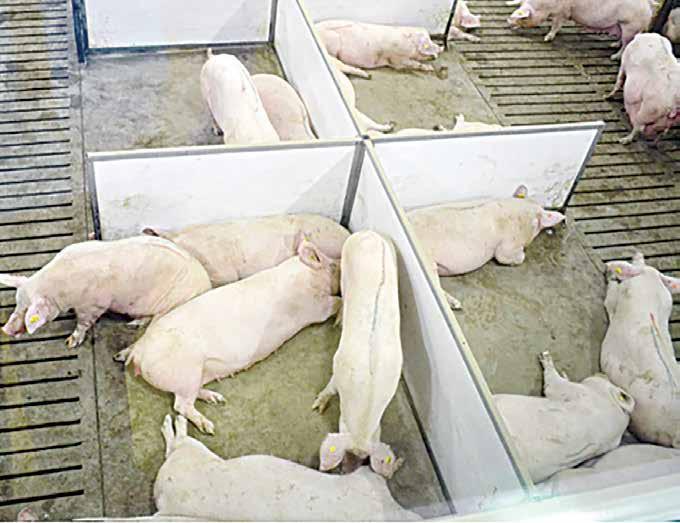
“They look at all the animal enclosures to make sure sows have 24 square feet per sow and can turn around freely,” Eggers says, referring to the sow space requirement spelled out in California law which was passed in 2018 and went into effect at the first of this year.
Certifying agents also check producers’ records, confirming documentation sows were kept in compliance.
“This includes reviewing veterinary exemptions for confining sows longer than allowed,” Eggers says. “Also, the records for husbandry practices like heat checking, breeding, etc. and verifying sows aren’t confined longer than six hours in a 24-hour period and not more than 24 hours in a 30-day period to perform those activities.”
Once producers’ facilities and recordkeeping meet the approval of the certifying agent, the producer will receive certification, which is good for one year.
Eggers notes producers who raise pigs under programs such as Humane Certified or Global Animal
basins – to average 96 percent. Streamflow yields at these three basins are expected to respectively average 91 percent, 108 percent and 51 percent from April through July.
Median streamflow yields from April through July are forecast to average 51 percent for the Cheyenne River Basin, 75 percent of
median for the Tongue River Basin, 80 percent of median for the Powder River Basin, 84 percent of median for the Yellowstone River Basin and 87 percent of median for the Snake River Basin.
Further, the report shows yields will average 93 percent for the Laramie River Basin, 94 percent for both the Shoshone River and Upper North Platte River basins and 96 percent for the Lower North Platte
River Basin.
Yields from the Wind River, Big Horn River and Sweetwater River basins is forecast at 106 percent, 108 percent and 124 percent, respectively.
Reservoir storage
For the entire state of Wyoming, NRCS reports average reservoir storage at 104 percent of median, which remains unchanged from the February report.
All reported reservoirs
were near or above the median.
According to NRCS, reservoirs in the Snake River, Lower Green River, Big Horn River, Cheyenne River, Lower North Platte River and Wind River basins reported numbers at 98 percent, 100 percent, 102 percent, 102 percent, 103 percent and 104 percent, respectively.
The Buffalo Bill Reservoir in the Shoshone River
Partnership will still need to be Prop 12-certified to sell into California.
As of yet, she says there is a mix of U.S. swine producers looking to comply with the California regulations, as well as those who plan to carry on with their current production practices and facilities whether they are Prop 12-compliant or not.
Is Prop 12 better?
California voters brought Prop 12 to a vote in 2018 under the guise requirements set in the language would be better for both welfare and sustainability.
Research done by Pipestone Veterinary Services shows accomplishing these goals in a Prop 12 system is challenging.
Cara Haden, Pipestone director of animal welfare, presented welfare assessments on three different housing systems – stall, traditional pen and Prop 12 compliant. All three systems have positive and negative aspects.
Although Prop 12 allows for greater movement and interaction with other sows and the environment, there are some real challenges when it comes to lameness.
The percentage of sows treated for lameness were 3.5 percent in stalls, 7.8 percent in pens and 10.2 percent in Prop 12-compliant housing.
The same trend holds for the percentage of sows culled due to lameness –0.45 percent, 0.88 percent and 1.2 percent for stall, pen and Prop 12, respectively.
When researchers looked at the percentage of sows that died due to lameness, the same trend line held true – 0.45 percent, 0.56 percent and 1.11 percent, respectively.
“From a lameness standpoint, Prop 12 is certainly not the system we would have chosen as an industry,” Haden says. “Having said this, this is what our customers have asked for, and so we have an obligation to make Prop 12 systems work.”
Pipestone research also looked at the need for injections for both anti-inflammatory and antibiotics, as well as total sow death loss, and the same trend held true in all three investigations, with the Prop 12-compliant housing showing the higher incidences of the need for injections and death loss.
Realizing Prop 12 is not
Basin and reservoirs in the Belle Fourche River Basin both reported numbers near median at 108 percent.
Additionally, reservoirs in the Upper Green River and Upper North Platte River basins reported higher numbers, at 112 percent and 117 percent, respectively.
Hannah Bugas is the managing editor of the Wyoming Livestock Roundup. Send comments on this article to roundup@wylr.net.
going away, and regardless of what regulations say, animal welfare and health is what matter at the end of
the day. With this in mind, Haden says Pipestone is dedicated to improving the lameness-
Beef Quality Assurance Certificates are industryrecognized credentials for students enrolled in Career and Technical Education classes in Wyoming’s secondary and post-secondary programs. Over 6,000 students participated in CTE programs last year.
 related welfare concerns through pen designs, genetic selection and distraction and enrichment.
There is simply no substitute for land when it comes to production agriculture. Even if you are new to production agriculture, chances are you are well aware of the old cliché about land: They aren’t making any more of it. Access to land, in whatever form, can be one of the biggest barriers to entry for new or beginning producers.
Recently, inflationary trends have seen most classes of farm and ranch land increase significantly in value. This trend, along with recent increases in interest rates, have made obtaining land for agricultural activities considerably more challenging. Fortunately, there are many alternatives for beginning producers seeking to obtain and use land needed for their operations.
First and foremost, it is important to have a long-term view when talking about land and agricultural production. A successful ag business rarely appears overnight; it often takes many years of work, planning and preparation.
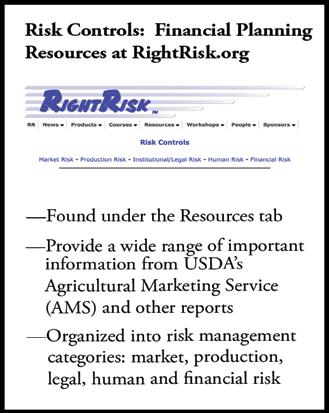
In particular, financial planning and preparation is extremely important, both for operational success and to demonstrate to others (prospective sellers, lessors, business owners and others) that you are dependable and well established. People you deal with, from lenders to landowners and others, want to see that you are reputable, trustworthy, and worthy of their time and effort. Developing complete and detailed business plans, financial statements and a sound long-term business model can help you earn their trust and respect.
The standard fee title purchase is the most common and conventional land purchase. The purchaser agrees to a price and lines up financing, if necessary. Generally, if financed, the borrower will provide a down payment, often around 25 percent of the purchase price. Many states, including Wyoming, offer programs providing financing incentives for new or beginning producers. These programs may include a reduced down payment, reduced interest rate or a deferred interest rate schedule.
In Wyoming, these incentives are available through the Office of State Lands and Investments. Government financing through the USDA’s Farm Service Agency (FSA) and Rural Development initiative are also options for most beginning producers. These programs offer direct financing or can assist producers through a guaranteed loan program with a commercial lender. Utilizing these options requires extensive financial planning and preparation before applying, but can also provide an excellent gateway to an otherwise inaccessible land purchase.
Another outright land purchase option is owner financing. Under this scenario, the owner of a property agrees to sell to a purchaser who makes payments directly to the owner, rather
than working through a lender. Instead, the owner holds the title of the property until the terms of the purchase agreement have been fulfilled.
This type of agreement can offer advantages for both the buyer and seller. Buyers may be able to negotiate a better and more flexible payment schedule with this type of arrangement. First-time producers and those with limited resources have the advantage of not needing to meet the terms of a standard or commercial lender.
At the same time, a seller who does not want or need to reinvest their land sale proceeds as a lump sum has the advantage of an income stream, with interest, from the sale proceeds. This can help limit capital gains and income tax liability issues for the seller.
When entering into an owner financing agreement, it’s important to obtain the assistance of appropriate legal counsel in drafting the contract. This can help ensure all potential issues and the needs of both parties are addressed.

Leasing land for agricultural production can provide advantages for new and beginning producers who are already established, but may not yet have the financial resources necessary for a land purchase. For new producers, leasing is often the least expensive way to obtain land for production.

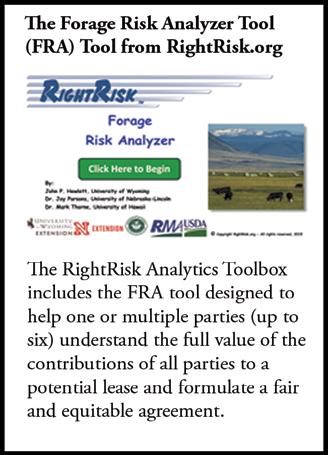
A lease agreement must include several key components, to be a benefit to all parties involved. First, the agreement should be in writing and comprehensive in its provisions and terms, including those involving dispute resolution process and termination. As with all business decisions, make sure to incorporate long-term financial planning. For example, a lease can be helpful as a means of working
toward ownership or developing safeguards for long-term operation of the business.
Land leases usually fall into one of several categories: cash, share and flex/hybrid. Under cash rental leases, the tenant pays a fee to lease or rent land based on a fee schedule. Under a share lease, a landowner takes a share of production as payment for use of the land. Flex/hybrid leases usually include some combination of both a share and cash lease, such as using a lease with a cash payment as a minimum, while offering more to the landowner as production levels increase.
Lease-to-purchase arrangements, sometimes called lease-to-own, are another option that can help beginning producers secure land for production. These types of arrangements generally fall into two types. The first involves leases in which the tenant agrees to lease and has to an option to purchase at a later date as specified in the agreement. Usually under these agreements, the lease price is not applied to the land purchase. These terms may take the form of a “first right of refusal” option, which provides the lessee first chance at purchase should the property be offered for sale.
The second type of lease-to-own arrangement is the lease-purchase agreement, in which the terms of purchase are built into the terms of

the lease. For example, a farmer might lease a property for a specified number of years before the agreement is converted to a purchase agreement. In this type of lease-to-own arrangement, the rental amount may go toward the eventual purchase of the property.
Remember, when leasing to own or entering into other forms of leasing or purchasing agreements, long-term planning is key for success, both in terms of risk management and building the business for the future. This may mean planning for eventual purchase, putting money aside in case a purchase opportunity arises, and planning for contingencies should production levels not generate the funds necessary to cover the lease payment.


James “Jim” Tom O’Rourke, age 81, died unexpectedly in Chadron, Neb. on March 5.
Jim was born to Joseph and Jean (Moeller) O’Rourke on Nov. 16, 1942 in Alameda, Calif.
From California, the family moved to Fort Collins, Colo. where his father Joe
finished his forestry degree and was employed as a district ranger for the U.S. Forest Service, residing at the Stub Creek Ranger Station.
At age nine, Jim and his family moved to Bayfield, Colo., residing there for four years. At the beginning of eighth grade, the family moved to Buffalo, where Jim graduated from high school in 1961.
During their time in Buffalo, the family resided at the Hunter Ranger Station, from where Jim explored the Big Horn Mountains in depth, accompanying his father on his forest and range work, developing his interest and love of the range and emulating his father’s work.
Jim received his Bachelor of Science in Forest and Range Management
from Colorado State University and his master’s degree and PhD in range management from the University of Arizona.
Jim taught range science at Utah State University for six years.
Jim taught range science at Chadron State College (CSC) for 15 years and helped establish the Range Management Program at CSC which continues to have high numbers of range students. Even though he retired in 2002, he remained active in the range management program and always promoted the CSC range program worldwide.
Jim was a passionate champion of rangelands, both domestic and international.
During his 60-year membership with the Society for Range Management (SRM), he served in many positions including president. He was also president of the Nebraska Section SRM.
He received SRM’s top honors including the Fred-
erick G. Renner Award, Fellow Award, Outstanding Undergraduate Teacher Award and Range Management Service Award.
He also received numerous awards from other professional organizations including the Leopold Conservation Award, Presidential Citation from the American Forage and Grassland Council, Distinguished Service Award from CSC, International Professor of the Year from Utah State University and Conservation Education Award from the Upper Niobrara White Natural Resources District.
Jim’s international rangeland management consulting work was extensive. He spent over eight years working in Africa, including two years each in Morocco, Tanzania and Nigeria.
In addition, he worked in numerous countries within Africa for many organizations including the University of Minnesota; Near East Foundation;
U.S. Agency for International Development, Food and Agricultural Organization of the United Nations (UN); UN Development Programme; World Bank and the Peace Corps.
Jim was instrumental in organizing the International Year of Rangelands and Pastoralists 2026, which is a worldwide event recognizing the importance of rangelands and is sponsored by the UN.
Jim served in the U.S. Army as an education specialist on the DMZ of Korea from 1967-69.
After the Army, Jim married Nancy McCoy of Big Horn. Jim adopted Nancy’s two wonderful boys Charles and Keith. Their wonderful daughter, Valerie, was born in Arusha, Tanzania.
Jim met his second wife, Lora Hawkins of Ophir, Utah, and they lived in Kaduna, Nigeria for two years before moving to the RUJODEN Ranch south of Chadron, Neb. Jim and Lora’s twins Seth and Shannon were born in Chadron, Neb. and were Jim’s pride and joy.
The ranch is named after his grandparents, Frank and Jerene O’Rourke’s children – Ruth, Joseph and Dennis.
On RUJODEN Ranch, Jim implemented a shortduration, high-intensity grazing management system, planted thousands of trees and built lots of fence and water developments.
At the time of his death, Jim was working tirelessly on his new passion – writing a book on sheep wagon builders.
Jim and Lora’s collection of 21 sheep wagons started in 1987. The book is near completion and the hope is to establish a museum which represents a
sheep wagon made by each of the major builders. Jim was also a technical service provider consultant working with over 100 ranchers conducting rangeland assessments and developing livestock grazing management programs under the Natural Resources Conservation Service’s Conservation Stewardship Program.
Jim thoroughly enjoyed working with ranchers throughout the Panhandle and Sandhills.
His other passion was restoring the 1870 Lawrence Mercantile, which sits in the historic mining town of Ophir, Utah.
Jim is survived by his wife Lora of 38 years; twins Shannon and Seth; daughter Valerie; son Keith, his wife Denia O’Rourke and their daughters Kaelyn and Kiana and son Charles, his wife Sonja O’Rourke and their daughters Madison and Ariana and son Charles; brother Jack, his wife Mary O’Rourke and their sons Mark and Michael and sister Janice, her husband Jeff Cowger and their son Matthew and daughter Carrie.
Jim was a compassionate husband, loving father, dedicated brother, friend and mentor to so many. Jim lived his life to the fullest and touched many, many lives. He will forever be remembered.
A celebration of life will be held at the RUJODEN Ranch, five miles south of Chadron, Neb. in June. The specific date and time will be announced at a later date. Memorials for the completion and publishing of Jim’s “Sheepwagon Builders” book can be sent to Lora O’Rourke and Family, 61 Country Club Road, Chadron, NE 69337.

2021

H-2A continued from page A1
continues to worsen.”
“U.S. farmers are already reeling from record-high production costs which have translated into thin and negative margins,” it continues. “The inability to find and hire workers is only exacerbating this negative trend.”
Creation of the task force
In an effort to curb this issue, the House Agriculture Committee formed ALWG and tasked the group with identifying the root causes behind the lack of an available domestic workforce, the impact this has on the nation’s domestic food supply and potential solutions to address it.
Members of the task force worked diligently over the past year, hosting five public roundtables in 2023, as well as multiple memberlevel meetings and a member forum on Jan. 18 with members of the House, to develop their list of policy proposals.
ALWG met on Feb. 6 and Feb. 29 to discuss and vote on the complete list of proposals.
Only proposals receiving majority support were included in the task force’s final report, which includes 21 of the original 25 recommendations put forth by ALWG.
Policies adopted with unanimous support
Although ALWG’s recommendations don’t address all of the labor challenges facing ag producers today, they do offer needed solutions for everything from recruiting and hiring H-2A employees to reforming wage calculation standards, to name a few.
Among the 15 unanimously voted in, ALWG recommends committees of jurisdiction work together to establish a new application processing system through the creation of an internet-based electronic portal; allow farmers and producers to file job postings on an electronic registry; permanently waive the in-person interview requirement for H-2A workers and expedite the review of delayed worker applications.
ALWG further recommends requiring the Department of Labor (DOL) to consult with the U.S. Department of Agriculture (USDA) and allowing USDA to provide written comments prior to publishing a rule or notice of proposed rulemaking with any changes or updates to the program.
The task force also asks Congress to require the Government Accountability Office (GAO) to report on H-2A program integrity within one year of the program and to study and report on the mechanisms for H-2A workers to report workplace violations within two years of enactment and each two years thereafter, as well as on the effect of changes made to the H-2A process from the COVID19 pandemic.
Other recommenda-
tions unanimously voted on include adopting a de minimis exemption from the Adverse Effect Wage Rate (AEWR), eliminating midcontract wage adjustments, creating a federal heat standard, codifying special procedures currently in regulation, reforming the wage system to better reflect realworld wages and granting year-round industries access to the H-2A program.
Policies adopted with majority support
Additionally, six policy recommendations were adopted by ALWG with majority support.
These include support for the creation of a new pilot program, in which an H-2A visa is good for three continuous years at a single site or location with no seasonality requirement and workers will be allowed to stay in the U.S. the entire time or return home if they would like.
ALWG also recommends providing DOL the authority to provide an exemption of the AEWR for operations under a certain size. For farms with a gross cash farm income of less than $350,000, the Secretary of Labor would be able to waive the AEWR requirement altogether.
The task force further suggests changing the current part-time rules for joint employers to allow an H-2A employee to work full time for a single employer in a given week, enacting policies to restrict or cap annual increases in the AEWR to predictable and sensible levels that are manageable for large and small H-2A employers, directing DOL to use an alternative method other than the USDA’s Farm Labor Survey to better capture real domestic wages and serve as the basis for the AWER and reforming H-2A program housing requirements by improving the availability of farmworker housing and lowering employer costs related to such housing.
“We are losing farms in America at a rapid pace and there is no question our broken workforce system is partly to blame,” says American Farm Bureau Federation President Zippy Duvall in a March 8 press release. “This report makes it clear, once again, there is bipartisan agreement on the need to improve the H-2A program to better serve America’s agriculture sector.”
“I am grateful to committee leaders for making this a priority when they could have looked the other way,” Duvall continues. “This is what leadership is all about, and I hope this work is followed by action. America’s farmers and ranchers are counting on Congress to address this issue before more farms go under.”
Hannah Bugas is the managing editor of the Wyoming Livestock Roundup. Send comments on this article to roundup@wylr.net.
Two southeast Colorado ranchers were ordered to pay more than $6.5 million in fines and were sentenced to prison after pleading guilty to tampering with rain gauges in an attempt to collect crop insurance.
The Department of Justice (DOJ) announced Patrick Esch and Ed Dean Jagers of Springfield, Colo. agreed to the settlement to resolve allegations they defrauded federal crop insurance programs by tampering with and damaging rain gauges.
Committing fraud
Federal prosecutors said Esch and Jagers concocted a scheme to defraud the federal crop insurance program by making it appear there was less precipitation in their area than there actually was between July 2016 and June 2017.
The DOJ said Esch and Jagers tampered with and damaged rain gauges in the area to prevent the accurate measurement of rainfall.
Some of the rain gauges belonged to the National Oceanic and Atmospheric Administration and were operated by the National Weather Service.
Esch and Jagers cut wires on automated rain gauges, tipped over some collecting buckets, covered others with pie pans and agricultural disks and plugged another gauge with silicone caulk.
Guilty plea
Prosecutors used civil tools to investigate Esch and Jagers, who violated the False Claims Act and the Financial Institutions Reform, Recovery and Enforcement Act and have agreed to pay a combined $3.5 million to settle the allegations.
The claims resolved in the civil settlements are allegations, the DOJ said. In agreeing to settle, Esch and Jagers did not admit liability, except to the extent admitted in their guilty pleas.
The federal government also indicted Esch and Jagers criminally for their roles in the conspiracy.
Esch and Jagers both pled guilty and were ordered to pay a combined $3.1 million in restitution. Esch was also sentenced to be imprisoned for a term of two months. Jagers was sentenced to be imprisoned for a term of six months.
“Hardworking farmers and ranchers depend on U.S. Department of Agriculture crop insurance programs, and we will not allow these programs to be abused,” said U.S. Attorney Cole Finegan. “This case also shows the full measure of justice which can be achieved when our office uses both civil and criminal tools to protect vital government programs.”
Greg Henderson is an editorial director for Drovers. This article was originally published in Drovers on March 12.
The University of Wyoming (UW) Extension will host a one-day conference on season Extension and small-scale food production at Sheridan College Saturday on April 6.
The conference, which is supported by the Wyoming Department of Agriculture’s Specialty Crop Program, is part of UW Extension’s Harvest Wyoming Initiative. Event partners include

the Barnyards and Backyards team, Wyoming Food Coalition, Sheridan College and UW’s Growing Beginning Farmers and Ranchers program. Workshops will highlight season Extension structures, pest management, hydroponics, Wyoming soils, pollinator habitats, a producer panel and more. Weather permitting, attendees will also have the option to participate in
a low tunnel build in Sheridan College’s agriculture field lab.
The conference is organized into three concurrent tracks, and attendees can attend any sessions of their choice.
The registration cost is $30 per participant. For those who register by March 26, lunch will be provided. Late registrants are welcome to attend, but are not guaranteed a meal.
Austin Snook • 307-290-2161
Taylor Snook • 307-290-2273
Craig Deveraux • 307-746-5690
Dan Catlin • 406-671-7715
Clint Snook • 307-290-4000
To register, visit bit.ly/ harvest-wy-24
Check-in begins at 8:30 a.m. in the Whitney Building at Sheridan College. Opening remarks begin at 8:50 a.m. and sessions start at 9 a.m. The event concludes at 3 p.m.
To learn more about the conference, visit wyoextension.org/harvestwyo or contact Micah Most at mmost@uwyo.edu or 307684-7522.

Cheyenne Seymour • 605-641-0638
Casey Sellers • 307-217-2614
Jim Forbes • 307-351-5932
Tye Curuchet • 307-351-8666
Daniel Escoz • 307-217-1440
Kade Kinghorn • 307-620-0525
"From the ring, to the video, and in the country, we market your livestock the competitive way."
Bred cows in high demand, weigh up cows and bulls selling on higher market. Thank you and we appreciate your business!
March 18
March 18
March 19
March 20
University of Nebraska-Lincoln Extension Webinar Series, 6:30-7:45 p.m., online. For more information or to register, visit go.unl.edu/feedingthecow
Ranching in the West Seminar Series: Energy Innovations, Gillette College, Gillette. For more information and to register, visit uwyo.edu/uwag/rmal
University of Wyoming Extension Free Virtual Career Fair, 6 p.m., online. For more information, e-mail amwall@uwyo.edu or call 307-347-3431 with questions.
University of Wyoming Extension Hot Springs County Private Pesticide Applicator Education Program, 1-5 p.m., Hot Springs County Weed and Pest, Thermopolis. For more information, visit uwyoextension.org
March 20 Bureau of Land Management Kemmerer Field Office Virtual Public Meeting, 3 p.m., online. For more information, contact Kelly Lamborn at klamborn@ blm.gov or 307-828-4505.
March 20
March 21
March 21
March 26
March 30
Wyoming Water Development Commission Public Meeting, Wyoming Water Development Office, Cheyenne. For more information or to view the livestream, visit wwdc.state.wy.us
University of Wyoming Extension Fremont County Private Pesticide Applicator Education Program, 9 a.m.-12 p.m., Fremont County Extension Office, Lander. For more information, e-mail rfisk1@uwyo.edu or call 307-332-2363.
University of Nebraska-Lincoln Extension Webinar Series, 6:30-7:45 p.m., online. For more information or to register, visit go.unl.edu/feedingthecow
Second Annual University of Wyoming High Altitude Bull Test and Sale, field day starts at 9 a.m. and the sale starts at 1 p.m., Cliff and Martha Hansen Teaching Arena, Laramie. For more information, contact Shelby Rosasco at 307-766-2329.
Timber Dan Spring Toy Show and Sale, First National Bank Exhibition Building, Larimer County Fairgrounds, Loveland, Colo. For more information, call Sherlyn Sampson at 970-663-9392, e-mail sks80538@gmail.com or visit lovelandlionsclub.com
March 31 Wyoming Game and Fish Department 2024 Collectible Conservation Stamp Art Contest Deadline, 5 p.m. For more information, visit wgfd.wyo.gov
April 1 Ranching in the West Seminar Series: Leading the Field, Northwest College, Powell. For more information and to register, visit uwyo.edu/uwag/rmal
April 3 Institute for Managing Annual Grasses Invading Natural Ecosystems Free Virtual Workshop, 9 a.m.-4 p.m., online. For more information, contact Claire Visconti at cviscont@uwyo.edu.
April 6 University of Wyoming Extension Small-Scale Food Production Conference, 9 a.m., Sheridan College. For more information, visit wyoextension.org/ harvestwyo or contact Micah Most at mmost@uwyo.edu or 307-684-7522.
April 8-12 Second Annual Wyoming Funding Summit, Riverton. For more information and to register, visit lummis.senate.gov/wyoming-funding-summit/
April 13 2024 Ram Test Field Day, 470 Highway 230, Laramie. For more information, visit wyowool.com

March 8-25
March 14-20
Dooley Auction Firearms, Ammo, Coins and Collectibles Online Auction, 406-696-0412, dooleyauction.com
Big Mountain Auctions Farm & Construction Online Auction, 208-431-9300, bigmountainauctions.com
March 15-31 Dooley Auction Vehicles, Fusion Equipment, Pipe and Fittings Online Auction, 406-696-0412, dooleyauction.com
March 21 Carter Cattle Company 25th Annual Production Sale, at the ranch, Pingree, Idaho, 208-390-4811, 208-681-9711, 208-681-8859, cartercattleco.com
March 21 Vermilion Ranch Third Annual Embryo Sale, PAYS, Billings, Mont., 406-6700078, 406-672-5844, vermilionangus.com
March 22
Vermilion Ranch Spring Performance Sale, South Pryor Development Center, Billings, Mont., 406-670-0078, 406-672-5844, vermilionangus.com
March 22 Lisco & M Diamond 32nd Angus Bull Sale, M Diamond Ranch, Glenrock, 307359-0167, 307-359-1162, mdiamondangus.com liscoangus.com
March 23
March 23
March 23
Sinclair Cattle Company 20th Annual Production Sale, Buffalo Livestock Marketing, Buffalo, 307-254-1477, sinclaircattle.com
Valley View Charolais 56th Annual Bull Sale, at the ranch, Polson, Mont., 406270-0222, vvcrbulls.com
Lechleiter Simmentals 36th Annual Bull Sale, Loma Livestock, Loma, Colo., 970-209-8008, 970-249-5938
March 23 Custis Show Pigs 19th Annual Final Drive Focused Sale, Carbon County Fairgrounds, Rawlins, 307-760-0327
March 24
March 24
March 24-25
March 25
March 25
March 26
March 26
March 26
T-Heart Ranch High Altitude Bull Sale, at the ranch, LaGarita, Colo., 719-8503082, 719-850-3083, t-heartranch.com
Lancer Livestock Sale, Eastern Wyoming College’s ATEC Building, Torrington, 307-799-5419
Leachman Cattle of Colorado Spring Bull & Female Sale, Leachman Bull Barn, Ft. Collins, Colo., 970-568-3983, leachman.com
Sidwell Ranch & Frank Herefords Sale, Sidwell Barn, Columbus, Mont., 406861-4426, 307-631-6012, sidwell-land.com, frankherefords.com
Axtell Cattle Company Annual Production Sale, Sterling Livestock Commission, Sterling, Colo., 970-383-2332, 970-554-1132, axtellcattlecompany.com
Northwest Wyoming Angus Association 46th Annual Sale, Riverton Livestock Auction, Riverton, 307-868-2595, greatbearreflection.com
Obsidian Angus at the Northwest Wyoming Angus Association 46th Annual Sale, Riverton Livestock Auction, Riverton, 307-868-2595, greatbearreflection.com
University of Wyoming Second Annual High Altitude Bull Test & Sale, UWLREC Hansen Arena, Laramie, 307-766-2329, 307-766-3892, 307-761-2811, uwyo.edu/anisci/outreach/index.html, DVAuction.com
March 27 McCumber Angus Ranch Annual Bull Sale, at the ranch, Rolette, N.D., 701871-1072, 701-871-9800, mccumberangus.com
March 27 NJW Polled Herefords Annual Bull Sale, at the ranch, Sheridan, 307-6723248, njwherefords.com
March 28
March 28
March 28
March 29
Schuler Red Angus 42nd Annual Bull Sale, at the ranch, Bridgeport, Neb., 308262-0306, schulerredangus.com
Gartner~Denowh Angus Ranch 57th Annual Production Sale, at the ranch, Sidney, Mont., 406-489-0172, 406-480-2761, 406-489-1762, gdar-angus.com
Gibbs Red Angus Annual Production Sale, Glasgow Stockyards, Glasgow, Mont., 406-977-2852, gibbsredangus.com
Vertical Edge Genetics Annual Production Sale, at the ranch, Bancroft, Idaho, 208-390-6619. 208-540-2697, verticaledgegenetics.com


Collided on bridge
One eight-horse team and four-horse team try to pass and have mix up
Thus reads the headline and subheads in the Dec. 29, 1904 issue of The Saratoga Sun. Following is the article which appeared in the weekly newspaper.
Last Thursday afternoon, the freight outfit of L.B. Chase, consisting of an eight-horse team and three wagons, met a fourhorse coal team belonging
to C.S. Taylor in the middle of the bridge, and as a result, one of the horses belonging to Taylor has a broken leg and a wagon wheel was badly smashed.
The bridge is sufficiently wide to allow two wagons to pass if the teams are driven with lines, but the freight outfits nearly all use jerk lines, and it is a difficult matter to keep a long string of horses hugging one side of the bridge.
It seems Chase had gotten his teams swung over, but the minute the Taylor
wagon, which was driven by Chas. Warnock, passed the leaders then swung back to the middle of the bridge, crowding Warnock into the railing so they were stopped just in time to prevent pushing him clear off the bridge.
The horse with the broken leg was shot.
In the same newspaper, more bad news about freighters was reported. The short item reads: Mrs. S.J. Ferris killed Word was received here by telephone Sunday to the effect Mrs. S.J. Ferris, the woman freighter who left here last fall for Goldfield, Nev., had been killed.
Nothing definite can be learned concerning the manner of her death, but it is surmised it was due to an accident with her teams.
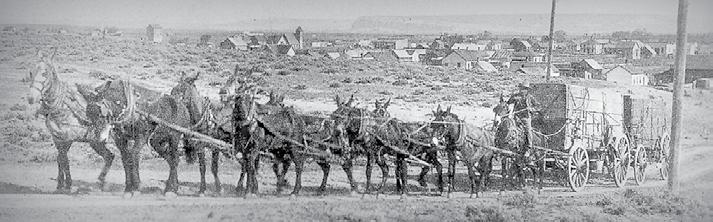
US #1 Light Red Kidney Beans Min-Dak 41/cwt
#1 Pea (Navy) Beans Min-Dak 30/cwt
US #1 Pinto Beans Den Rate 38/cwt Min-Dak 37-40/cwt
Source: USDA AMS Livestock, Poultry & Grain Market News, Torrington
Source: USDA AMS Livestock, Poultry & Grain Market News, Greeley, CO
National Sheep Summary
As of March 8, 2024
Compared to last week traditional slaughter lambs steady to 5.00 higher, others mostly steady to 20.00 higher. Slaughter ewes steady to 10.00 higher. Feeder lambs not well tested. At San Angelo, TX 6,385 head sold in a one day sale. No sales in Equity Cooperative Auction. In direct trading slaughter ewes and feeder lambs not tested. 4,077 lamb carcasses traded with no trend due to confidentiality. All sheep sold per hundred weight (CWT) unless specified.
Slaughter Lambs: Choice and Prime 2-3
San Angelo: wooled and shorn 110-120 lbs 225.00-232.00; 120-165 lbs 182.00-227.00.
Ft. Collins: wooled and shorn 120-130 lbs 200.00-265.00.
South Dakota: wooled and shorn 110-160 lbs 195.00-230.00. Billings: wooled and shorn 100-135 lbs no test. Equity Coop: no sales.
Slaughter Lambs: Choice and Prime 1-2
San Angelo: hair 40-60 lbs 282.00-320.00, few 322.00-334.00; 60-70 lbs 282.00-315.00, few 316.00-322.00; 70-80 lbs 268.00300.00, few 302.00-318.00; 80-90 lbs 260.00-296.00, few 301.00-304.00; 90-100 lbs 248.00-286.00; 100-110 lbs 234.00286.00, few 290.00. wooled and shorn 44 lbs 292.00; 85 lbs 276.00; 90-100 lbs 258.00-266.00.
Ft. Collins: wooled and shorn 59 lbs 285.00; 70-80 lbs 287.50325.00; 80-90 lbs 250.00-285.00; 90-100 lbs 250.00-275.00; 100-110 lbs 245.00-290.00. hair 60-70 lbs 275.00-292.50; 78 lbs 290.00; 80-90 lbs 275.00-295.00; 100-110 lbs 275.00-287.00.
South Dakota: wooled and shorn 58 lbs 305.00; 70-80 lbs 290.00310.00; 90-100 lbs 265.00-295.00; 104 lbs 255.00. hair 50-60 lbs 315.00-320.00; 60-70 lbs 300.00-325.00; 88 lbs 285.00; 92 lbs 265.00.
Billings: no test.
Slaughter Ewes
San Angelo: Good 3-4 (very fleshy) hair 70.00; Good 2-3 (fleshy) 120.00, hair 80.00-116.00; Utility and Good 1-3 (medium flesh) hair 120.00-136.00; Utility 1-2 (thin) hair 90.00110.00; Cull and Utility 1-2 (very thin) hair 78.00-90.00; Cull 1 no test.
Ft. Collins: Good 3-4 (very fleshy) 87.00-112.50; Good 2-3 (fleshy) 80.00-120.00; Utility 1-2 (thin) no test; Cull 1 no test.
South Dakota: Good 3-4 (very fleshy) 95.00-115.00; Good 2-3 (fleshy) 95.00-110.00, hair 110.00-115.00; Utility 1-2 (thin) 55.00-70.00, hair 70.00-80.00; Cull 1 40.00-60.00.
Billings: Good 3-4 (very fleshy) no test; Good 2-3 (fleshy) no test; Utility 1-2 (thin) no test; Cull 1 no test. Feeder Lambs: Medium and Large 1-2
San Angelo: hair 30-40 lbs 270.00-296.00; 40-50 lbs 290.00325.00.
Ft. Collins: wooled and shorn 47 lbs 305.00.
South Dakota: wooled and shorn 45 lbs 320.00.
Billings: no test.
Replacement Ewes: Medium and Large 1-2
San Angelo: hair lambs 78 lbs 303.00/cwt; yearling hair 115 lbs 174.00/cwt; young hair 115-145 lbs 138.00-140.00/cwt. Ft. Collins: no test.
South Dakota: bred middle age 200.00/head.
Billings: no test.
Sheep and lambs slaughter under federal inspection for the week to date totaled 41,000 compared with 41,000 last week and 37,000 last year.
Source: USDA AMS Market News, San Angelo, Texas
National Wool Review
As of March 8, 2024
Domestic wool trading had no confirmed trades reported this week. Prices reflect trades FOB warehouse in original bag or square pack, bellies out, some graded, and 76 mm or longer. No allowance made for coring, freight, or handling fees at the warehouse level to reflect net grower prices. Wools shorter than 75 mm typically discounted .10-.20 clean. Classed and skirted wools usually trade at a .10-.20 premium to original bag prices.
that purpose. Hay testing over 150 relative feed value is selling with the best demand as supplies of Good and higher quality hay are the lightest. High test hay (Premium and Supreme) is in very short supply and buyers continue to search for high test hay, practically for dairy use. Several loads of high test hay were shipped east to Wisconsin and Minnesota dairies this week. The best demand for feeder quality (utility and fair) hay remains around $150.00/ton delivered. Demand for straw is light as heavy straw supplies continue to be seen especially in the northern portion of the state. Mild weather and not much snow has kept both straw and hay usage low. Single load sales of straw continue to move at steady money from time to time, however many producers have lowered asking prices in an attempt to move volume as supplies remain high. According to the drought monitor 48.60% of the state is in Moderate drought or worse, up 1.30% from last week. 21.98% of the state is in an Severe drought or worse, down 1.28% from last week. 2.36% of the state is in
drought or worse, unchanged from last week.
several conservative senators argued the spending levels were too high and it didn’t do enough to rein in the current administration.
According to the U.S. Senate Committee on Appropriations website, Senate Appropriations Chair Patty Murray (D-WA) believes the bill includes important priorities like the Special Supplemental Nutrition Program for Women, Infants and Children (WIC), housing assistance, environmental protection programs and Veterans’ healthcare.
“This first package is evidence we can get things done when everyone is focused on what can actually help folks back at home and what can actually pass in a divided government,” Murray says. “This isn’t the package I would have written on my own, but I am proud we have protected absolutely vital funding American people rely on in their daily lives.”
Chair of the Agriculture, Rural Development, Food and Drug Administration and Related Agencies Subcommittee Sen.
continued from page A1
Martin Heinrich (D-NM) states, “As chair of the Senate Appropriations Subcommittee on Agriculture, Rural Development, Food and Drug Administration and Related Agencies, I am focused on delivering for American families, farmers, producers and rural communities.”
“Though we had to make some tough decisions to get there, this bill gets it done,” Heinrich continues. “I am especially proud we stood firm to fully fund WIC and other programs which will help put food on the table for America’s kids.”
Closer to home, Rep. Harriet Hageman (R-WY) released a statement on her website, which reads, “Washington’s addiction to spending must be stopped. With a national debt of over $34 trillion – a debt growing by $1 trillion every 100 days – we must be bold in our efforts to fix this very real problem.”
“Some issues are too important not to fight for, and our obscene national debt is one of those issues,” she adds. “This minibus provides over $60 bil-
lion more in discretionary spending than the same six appropriations bills drafted by House Republicans earlier this year.”
Hageman notes, “In addition to this overspending, many of the issues important to Wyoming, which were included in earlier bills passed by the House of Representatives, have been left out of this minibus.”
“Delisting the Greater Yellowstone Ecosystem Grizzly and halting the implementation of the Rock Springs Resource Management Plan were stripped from the final spending package, and money to implement a program which isn’t even law – electronic identification (EID) ear tags for cattle and bison – was increased, making our fight against mandatory EID even more difficult,” she concludes.
Appropriation key points
The U.S. Department of Agriculture (USDA) will see its funding rise by $383 million to a total of $22.3 billion. Several of the accounts within the bill were singled out for specific spending boosts,
including the Agriculture Research Service, the Food Safety and Inspection Service and the Special Supplemental Nutrition Program for WIC.
The Special Supplemental Nutrition Program for WIC serves nearly seven million women and kids nationwide by providing $7.03 billion for the program, a $1.03 billion increase over Fiscal Year 2023, ensuring all eligible participants can continue to rely on the essential nutrition assistance and support provided by WIC.
The bill fully funds the Supplemental Nutrition Assistance Program, serving an estimated 42 million people per month and fully funds child nutrition programs which serve an estimated five billion lunches and 2.6 billion breakfasts to kids across the country.
Additional USDA accounts will see reductions in their budget authority and the National Institute of Food and Agriculture, Animal and Plant Health Inspection Service and Agricultural Marketing Service will all need to account for millions less in spending than they currently have.
The bill provides fund-
For more information on the Fiscal Year 2024 Appropriations package, visit appropriations.senate.gov.
ing for numerous agencies like the Army Corps of Engineers, Environmental Protection Agency, Food and Drug Administration, National Aeronautics and Space Administration, National Science Foundation and military construction projects.
The bill also strengthens oversight of foreign purchases of U.S. farmland, an issue of concern in recent months.
The bill added the U.S. Secretary of Agriculture to the Committee on Foreign Investment in the U.S. and provides $2 million in funding to ensure the secretary can notify the Committee on Foreign Investments in the U.S. when agricultural land is sold to entities which “may pose a risk to national security,” specifically listing purchases by China, Iran, North Korea and Russia.
The Commerce-Justice-Science Appropriations Bill totals $68.5 billion in discretionary spending, with $37.5 billion going to the Depart-
ment of Justice, $24.9 billion for National Aeronautics and Space Administration, $10.8 billion for the Commerce Department and $9.1 billion for the National Science Foundation, which are decreases from the current funding level.
In addition, medical care at the Department of Veterans Affairs would receive $121 billion in funding, an increase of $2.3 billion compared to its current funding level. Funds will be divvied up between numerous initiatives, including Veterans’ homelessness programs, mental health, rural healthcare and women’s healthcare.
Funding for the Bureau of Land Management would be cut $81 million to $1.38 billion and spending on the U.S. Fish and Wildlife Service would drop by $51 million to $1.7 billion.
Melissa Anderson is the editor of the Wyoming Livestock Roundup. Send comments on this article to roundup@wylr.net.
Gov. Brad Little (R-ID) is asking a court to require the U.S. Fish and Wildlife Service (USFWS) to issue a final rule by the end of next year to revise or remove protections for grizzlies under the federal Endangered Species Act (ESA).
The state sued after its petition for grizzly bear delisting in 2022 was denied in February 2023.
The litigation comes as some Western states, includ-
ing Wyoming and Montana, have reported increases in bear-livestock conflicts and depredations in recent years.
Because of federal procedural requirements for making changes to the ESA list, Idaho’s proposed settlement does not guarantee delisting of all grizzly bears. However, the January 2026 deadline makes delisting grizzly bears in Idaho possible by ending the flawed premise of the 1975 listing, state officials argue.
The total grizzly bear population is estimated at over 60,000 bears, with about 2,000 living in the lower 48 in Idaho, Washington, Wyoming and Montana and under ESA protection.
The settlement also upholds Idaho’s current practice of seeking USFWS concurrence before lethally removing nuisance grizzly bears that are safety risks but do not pose immediate threats.
A Advocate 9035 Dam’s Sire: Boyd Coach 7127 EPDs: BW: -0.5, WW: +71, YW: +122 and Milk: +38 Buyer: Wild Eagle Mountain, Springdale, Mont.
Lot 31 – GMAR Flagstone L013 – Price: $9,500
DOB: 1/17/23 Sire: Baldridge Flagstone F411
Flagstone L335 – Price: $11,500 DOB: 2/28/23
WW: +86, YW: +156 and Milk: +28 Buyer: Fortunes Triangle S Ranch, Interior, S.D. Lot 28 – GMAR
Sire: Baldridge Flagstone F411 Dam’s Sire: Connealy Guinness EPDs: BW: +5.8, WW: +66, YW: +114 and Milk: +34 Buyer: Thad Jenni, Lewistown, Mont.
Lot 9 – GMAR Advocate L539 – Price: $9,500
DOB: 2/1/23 Sire: M R
Dam’s Sire: Kessler Frontman R001 EPDs: BW: +1.3, WW: +57, YW: +111 and Milk: +28 Buyer: Nusbaum Ranch, Pine Bluffs
Lot 41 – GMAR Wrangler L531 – Price: $9,000
DOB: 1/27/23 Sire: S
Wrangler 830 Dam’s Sire: FF EZ Money D217 EPDs: BW: -3.6, WW: +45, YW: +93 and Milk: +38 Buyer: Mark Holmes, Rosebud, Mont.

ACA continued from page A1
“On National Ag Day, we celebrate all of the farmers, farmworkers, ranchers, fishers, foresters and other agricultural workers who do so much to make our nation strong, fuel our economy and steward our lands,” the bureau continues.
This year, ACA will host a multitude of free events on March 19 including a Virtual Ag Day featuring Ag Day Chair and Ag Public Relations Manager Jenni Badding.
The activities continue in Washington, D.C., featuring U.S. Department of Agriculture Secretary Tom Vilsack and American Farm Bureau Federation President Zippy Duvall. Closing out the day will be Ag Day on the Hill, featuring several Congressional speakers.
Prior to Ag Day, the 2024 Ag and Food Policy Summit, hosted by Agri-Pulse will also take place in Washington, D.C. on March 18 and can be streamed virtually.
“Revitalizing Rural Revenues” is this year’s theme, and the summit will explore a wide variety of options from local food systems to biomanufacturing, environmental markets and the potential to increase overseas demand.
Wrapping up the 2024 summit will be a panel of policy analysts who will explore some of the outside influences impacting the future of food and agri-
“It’s
culture’s ability to stay economically sustainable.
Confirmed speakers for the summit include Sen.
John Boozman (R-AR), National Potato Council Chief Executive Officer Kam Quarles and U.S. Meat Export Federation Chief Executive Officer Dan Hallstrom.
History of National Ag Day
The primary focus of ACA is to conduct the National Ag Day program which occurs every year in March and was celebrated for the first time in 1979.
Since 1973, the ACA has put efforts into creating awareness about the role of agriculture in modern society and is committed to teaching others about food and fiber production, as well as how agriculture provides safe, abundant and useful products.
Another important thing agriculture provides is employment opportunities, and ACA promotes career opportunities in the agriculture industry.
2024 National Ag Day marks the 51st year of the nationwide effort to share real stories of American agriculture and remind citizens agriculture affects everyone.
ACA invites students to interact virtually with legislators and agency representatives, delivering the Ag Day message. A core leadership team of college
a

students will participate in the Washington, D.C. events, along with representatives of national farm and commodity organizations and representatives of the food, fuel and fiber communities.
According to an ACA press release, ACA President Jenny Pickett states, “Students are interested in advocating on behalf of agriculture and their future roles in the industry. Their participation in National Ag Day activities provides a glimpse of the future of agriculture.”
“It’s exciting to learn from students what they think agriculture will be like in the years ahead and how their involvement will shape the industry and America as a whole,” she continues.
The U.S. Department of Agriculture Economic Research Service reports roughly 10 percent of all U.S. employment and onfarm jobs represented about 2.6 million jobs or a little over one percent of U.S. employment. Additionally, agriculture- and food-related jobs totaled
For more information on celebrating National Agriculture Day, visit agday.org/.
more than 19 million.
“More and more students and individuals are finding careers in agriculture. The industry needs scientists, biologists, food safety technicians, livestock nutrition specialists, arborists and conservationists – one doesn’t have to be a farmer or have a direct on-farm job to be involved in the agriculture industry,”
Pickett says.
Celebrate agriculture by thanking all of the individuals who work hard to feed the world, look after crops and livestock and contribute to agricultural production.
Melissa Anderson is the editor of the Wyoming Livestock Roundup. Send comments on this article to roundup@wylr.net.

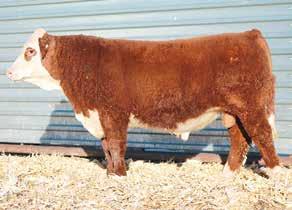

The National Weather Service’s Climate Prediction Center (CPC) recently released its monthly drought outlook for March 1-May 31, which shows overall conditions improving in the center of the country, with persistent and worsening conditions in the Southeast and across the North.
CPC expects areas of the Central Plains and parts of the South to see drought conditions improve, while drought conditions are expected to persist and further develop from southeastern New Mexico through southern Texas.
“Drought coverage in the continental U.S. dipped to a relative low of 19.46 percent in February, before beginning to increase again,” writes Denise Gutzmer in the
“Drought Impacts Summary February 2024,” published by the National Drought Mitigation Center (NDMC) on March 8.
“In February, there were 84 impacts describing many water issues, as well as concerns relating to agriculture, plants and wildlife and drought responses,” Gutzmer adds. “Texas had 23 impacts detailing agricultural and water supply matters. Louisiana followed with 14 impacts largely about agricultural topics, like crawfish.”
Drought in the High Plains
According to NDMC, drought coverage remained similar to January, with abnormally dry or worse conditions decreasing from 50.7 to 50.6 percent, moderate or worse conditions decreasing
from 21.8 to 19.2 percent, severe drought conditions decreasing from 5.6 to 5.2 percent and extreme drought or worse conditions decreasing from 0.5 to zero percent between Jan. 30 and Feb. 27.
NDMC’s report notes one-category improvements were made in southwestern and northeastern Colorado, northern and central Kansas, south-central Nebraska, Southern Wyoming, Western and Eastern South Dakota and a two-county area in North Dakota along the Canadian border.
Like much of Central and Eastern U.S., the High Plains experienced above-normal temperatures, with Colorado and Wyoming experiencing temperatures one to three degrees above normal
and areas along the Missouri River experiencing temperatures nine to 15 degrees above normal.
“Western North Dakota, South Dakota, Nebraska and Kansas experienced temperatures of three to eight degrees above normal,” reads the report. “Omaha, Neb. experienced their third-warmest February on record at 39.3 degrees and broke the record on Feb. 28 with a high of 80 degrees.”
Additionally, precipitation in the High Plains was a mixed bag.
Along the Rocky Mountains, into Western Kansas, Nebraska and Wyoming, was 0.5 to 1.5 inches above normal, while areas along the Missouri River and in North and South Dakota saw belownormal precipitation up to one inch and Nebraska and Kansas saw below-normal precipitation up to 1.5 inches.
Drought impacts seen across the U.S.
Drought has recently had the largest impacts on southcentral states of Texas, Oklahoma and Louisiana.
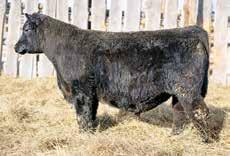
Strong winds and unusually dry weather contributed to a wildfire outbreak across the Texas Panhandle on Feb. 26. One of these blazes, known as the Smokehouse Creek Fire, charred more than one million acres in Texas and Oklahoma and is the largest fire in Texas history.
The Betty’s Way Fire, fueled by winds of 40 miles per hour, burned nearly 110 square miles in Nebraska.
Although millions of acres of grasslands were
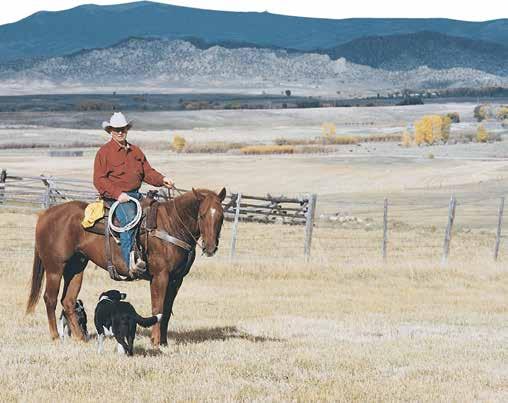

destroyed and thousands of cattle likely died, many experts don’t believe the fires will have a significant impact on the U.S. cattle market.
Additionally, years of ongoing drought conditions and water shortages slashed sugarcane harvests in Texas’ Rio Grande Valley, causing the Santa Rosa sugar mill to close permanently after 50 years.
Drought and freezing temperatures delayed the crawfish season in Louisiana and east Texas as well.
“The crawfish season usually begins in January and stretches until July, but the January harvest was a small fraction of normal,” explains Gutzmer. “The crawfish were also smaller and more difficult to eat.”
The impact of drought conditions has also been felt to the east in Florida, where the 2023 record-dry summer caused the Southwest Florida Water Management District to enact outdoor water restrictions in the Tampa Bay area.
Up in the midwestern states of Kansas, Iowa, North Dakota and Wisconsin, many farmers are getting con-

cerned as the growing season nears.
“Persistent drought conditions in Iowa continue to worry farmers as the start of the growing season nears, but crop yields last year were better than some farmers dared to hope,” Gutzmer says.
“Iowa remains in a recordbreaking drought which has been ongoing since May 12, 2020.”
According to University of Nebraska Extension Meteorologist Eric Hunt, the summer of 2024 will depend heavily on weather conditions over the next few months.
“If we get ample rainfall in the next 90 days, as currently expected, then we should have a reserve of soil moisture to work with should we turn dry for a few weeks in early summer,” he points out. “However, if this spring ends up being on the dry side and soil moisture isn’t meaningfully replenished this spring, this summer has the chance to go sideways in a hurry.”
Hannah Bugas is the managing editor of the Wyoming Livestock Roundup. Send comments on this article to roundup@wylr.net.

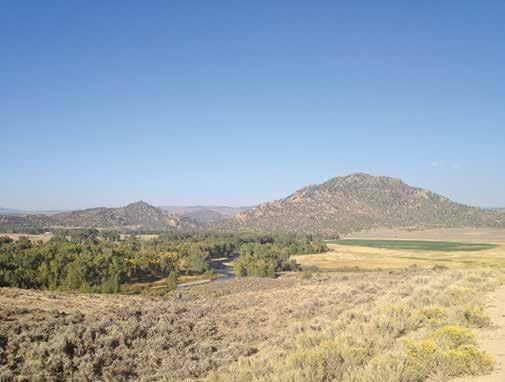

Lot 350
Sire: Architect #20881042
Raised by a top program Architect brings on scale pounding performance, PAP Epd’s in Top 10%, Top 1% Maternal This guy will sure work on young cows. 10 yr old GDam has 366 day calf interval & still a perfect udder. Top 4% WW & Top 10% YW; ADG 4.91
Sire: McD Confidence 035 #20879124
Take a look here, Pathfinders cows are stacked at least 3 deep. I know he is packing an 85# BW & he is a cow bull, but I have liked him from a calf, he weaned at 112 ratio, has a good disposition @ +32 Top 3%; He is over Top 35% on every $Value Index; ADG 4.17
Sire: Sitz Accomplishment #20879117
Maternal side Supported by big time brood cows perfect udders for generations Grand Dam 368 Calf Intervl on 7 calves. Moderate BW DNA’d as a cows bull, Top 25% WW; Top 15% YW; Doc +22 Top 25%; PAP Epd +.78 Top 45%; ADG 4.38
Sire: Marda Big Valley 180 #20879120
Maternal built from ground up Top 20% $M +77; plenty of CED +8 Top 35% so he’ll work on big heifers and make some great replacement females. Grand Dam still here at 10 years old. Sire 180 super disposition, very quiet. ADG 4.13
Sire: Deer Valley High Reward #20881149
He is a Soggy Dude! Maternal Grand Sire a graduate of Midland Bull Test, Countdown sires bulls that excel for efficiency, his dam is Always in extra good shape, numbers don’t give this line of cows full credit; Average or above Epd’s, Top 20% YW, Top 10% $F & Top 25% $B; ADG 3.87
Sire: Vermilion Reride G195 #20580856
• Top 30% CED young cows ok, not heifers
• Top 20% HP; Top 3% Docility
• 1# Gain / 6.14# Feed
• ADG 3.39 RFI-0.371
• Nice Big 2 yr old to cover lots of country
Sire: Marda Big Valley 180 #20879123
Super gentle Dam produces the pounds, Combined with 180 disposition should be great Doc @+34 Top 1%. While nice quiet he’s packs the pounds Top 10% WW & Top 15% YW; Top 2% HP; $M and $W both Top 4%; ADG 4.15
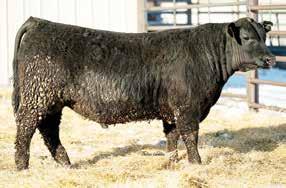
Sire: Sitz Specturm #20881077
Raised by a super young cow by our 789 Herd bull his daughters are producers, stay in really good shape. He’ll work on most heifers +12 CED Top 10% & -.4 BW Top 20% Adds enough carcass +88 Marb & + 72 RE; ADG 3.66
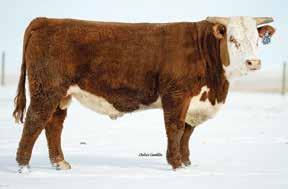
Sire: Churchill Desperado 029H #44430713
• Stout, solid made cow bull, will sire a nice set of feeder calves or F1 replacement females
• Full pigment on both eyes, dam is a 10 yr old cow with a highly maternal pedigree, • Ratios IMF-110, WW- 95, YW-93, Top 25% for WW & YW, Top 23% $BMI
• 1# Gain / 5.90# Feed
• ADG 3.10 RFI -0.91



University of NebraskaLincoln (UNL) Extension Range and Forage Specialist Jerry Volesky describes grazing management techniques following a wildfire in a UNL Beefwatch article posted on Feb. 27.
With drier conditions, dry, brittle vegetation has fueled wildfires and gone up in smoke on hundreds of acres of range and pastureland in the western half of Nebraska this spring as wildfires rage across the Midwest.
According to Volesky, wildfires occurring on range and pasturelands happen when there is the right combination of high winds and low humidity.
“This has been the case here in 2024, and the threat will continue until we have new, green grass growth later this spring,” he states.
Although the aftermath of a fire can look quite devastating, perennial pasture grasses are resilient and will recover, especially since they are still dormant.
However, he says spring is a time when many prescribed burns are conducted but adequate moisture from spring to early summer is key for pasture growth whether it was burned or not.
Key impacts
“One of the key impacts of a wildfire is the loss of plant residue and litter which protects
the soil surface. This residue is important for reducing wind and water erosion and the loss of soil moisture,” Volesky says. “This plant litter and residue is particularly important on sandy soils as high winds following a fire can led to scouring erosion around the plants.”
According to UNL research, nitrogen and sulfur in the residue would have been lost due to wind, while phosphorus and potassium in the residue would have remained in the ash, if ash is still present on the field and not removed by wind.
Research at UNL discovered the nutrient content within the residue would not need to be replaced for this year, particularly regarding nitrogen, as the carbon-nitrogen ratio has changed and more mineralization could occur.
What was not conclusive in the research was the impact on microbes due to fire, and it’s recommended to not focus on nitrogen needs now but to get something planted if at all possible.
Grazing management recommendations following a wildfire is to delay turnout, possibly as long as one month, but can be adjusted depending on rainfall, allowing grasses to accumulate more growth before being exposed to
grazing.
Volesky adds, “Stocking rates should be reduced, with the objective of leaving adequate residue, which will become litter on the ground replacing what was lost in the fire.”
May and June rainfall will be critical and should be used as the guiding factor for many management decisions.
“It is not uncommon to see more annual weeds show up in a pasture after a fire. While this may look concerning, these weeds can actually be useful and have some forage value or will turn into residue and cover at the end of the season,” he says. “Their numbers will decline the following year.”
Fire damage
Fence damage may curtail any grazing management plans but many pastures may have been only been partially burned.
“On a pasture which has been partially burned, studies have shown cattle prefer to graze the burned portion, resulting in much heavier grazing on the area compared to the unburned portion. Temporary fencing to exclude burned areas early in the season may be a solution, but is often impractical,” Valesky remarks.
Pasture areas may have been disked to create a fire break, and if the disking
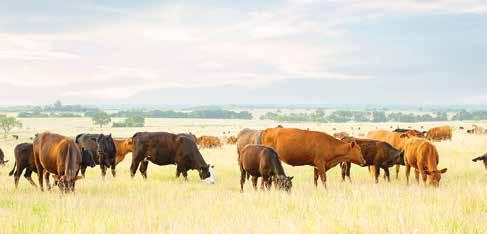
was significant where it killed most of the grasses, reseeding these areas using the same grass species found in the rest of the pasture many be warranted.
UNL CropWatch explains if this cannot be done by the end of May, a summer annual forage crop could be planted as a cover, and then growers can plan to reseed the perennial grasses next spring.
But, the greatest benefit for vegetation following a fire will be a complete growing season rest, perhaps grazing again after vegetation is dormant in the fall.
Not grazing the year following a wildfire will provide necessary litter to cover the soil surface, and if an area must be grazed, delaying at least until important plants have reached maturity and set seed will be beneficial.
Planting tips
UNL Extension reports fires have been a common historical occurrence in grasslands, but many herbaceous plants quickly recover after fire.
A team at UNL analyzed wildfires which burned across the Great Plains between 200012 and discovered vegetation rapidly recovered after wildfire, even when fires burned under extreme drought conditions.
Regions expected to be particularly vulnerable to wildfire, like the Sandhills, have been found to fully recover aboveground biomass within two years of wildfire and extreme drought.
Planting an annual forage system is an option, UNL Extension suggests, particularly for those with livestock where forage resources were lost to the fire.
UNL Extension further notes, should it be a dry season, drought impacts to forage production are more important than the wildfire, and the UNL Drought Management Planning page provides a variety of helpful resources for developing a drought management plan.
However, for rangelands reseeding is not recommended. Research from the Great Plains shows dormant-season fires do not reduce forage regrowth and grassland vegetation quickly recovers following fire.
UNL Extension reminds land managers and producers to replan their grazing or haying year differently as a result from fire.
Melissa Anderson is the editor of the Wyoming Livestock Roundup. Send comments on this article to roundup@wylr.net.
SHOSHONI
LANDER
FARSON
LANDER
Applequist
Rec Vista Once SQ & 7 way @
Hay fed. One brand, one raising!
Diamond X Ranch- 60 Blk Ang Strs 500550#. Rec 2 rounds of shots. Long time weaned. Hay fed. Fancy, High desert, reputation steers!
JF Ranch- 50 Blk Ang Hfrs 600-650#. Weaned a long time. Bangs vacc. 2 rounds of shots. High elevation & Reputation!
Dode Givens- 26 Blk Ang Hfrs 600-650#. Rec 2 rounds of shots. Hay fed. High desert!
Pathfinder Cattle- 25 Blk/BWF Strs & Hfrs 500#. Rec shots @ branding & weaning(Oct.) & poured & Clean Up. Knife cut. Ran on High Desert.
TUESDAY,