On Feb. 10, the National Drought Mitigation Center (NDMC) released its drought conditions and impact summaries for the first month of the year, showing continued degradation and significant impacts across the Southwest region.
“During what was a cold, dry January for the U.S., 49 impacts describing water issues were recorded in the Drought Impact Reporter,” writes Denise Gutzmer in NDMC’s Drought Impacts Summary January 2025. “Texas had a dozen impacts documenting water shortages and dry landscapes. Arizona and Utah each had five impacts related to water issues.”
Drought in the West
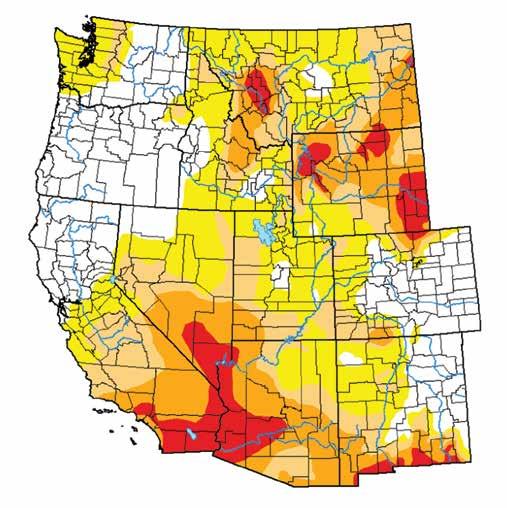
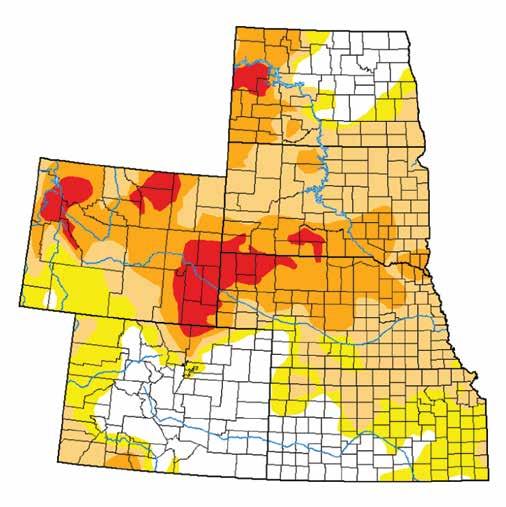
According to NDMC’s Drought Climate Summary January 2025, written by Curtis Riganti, drought conditions mostly worsened in the West with one- and two-category degradations occurring across southern California, western New Mexico, Arizona and parts of southern Utah.
One-category degradations also occurred in eastern Idaho, northwest Montana and western Washington, while a small area of western Washington saw two-category degradations.
“Abnormal dryness (D0) or worse coverage increased from 70.34 to 72.17 percent after dropping to 67.03 percent in mid-January,” Riganti says. “Moderate drought (D1) or worse coverage increased from 39.86 to 44.16 percent. Severe drought (D2) or worse coverage increased from 19.17 to 25.13 percent, and extreme drought (D3) coverage grew from 6.85 to 7.66 percent, after peaking at 8.5 percent in late January.”
Riganti further notes parts of California, Nevada, northwest Montana, Arizona, western New Mexico, Utah, Idaho, western Oregon and much of Washington saw far less precipitation than usual, while above normal precipitation fell in parts of eastern New Mexico and parts of central and southern Montana.
Additionally, warmer than normal temperatures occurred in parts of north-
east Utah, California’s Central Valley and central Montana, while areas in Arizona, New Mexico, Idaho and the rest of Montana saw temperatures ranging from two to eight degrees below normal.
Conditions in the High Plains Conditions across the High Plains states were more of a mixed bag, with one- to three-category degradations occurring across southwest Colorado; oneand two-category degradations occurring in parts of southwest Nebraska and one-category improvements occurring in western and northern Wyoming, central Colorado, east-central Kansas, northwest South Dakota and southwest North Dakota.
While D0 coverage grew from 73.72 to 76.75 percent in the region, D1, D2 and D3 coverage actually decreased to 59.75 percent, 28.73 percent and 7.02 percent, respectively.
“Well below normal precipitation fell across southwest Colorado, parts of western Wyoming, southeast North Dakota, eastern South Dakota and most of eastern Nebraska – excluding the southeast counties,” Riganti explains. “Above normal precipitation – much of it from a blizzard in early January – fell in north-central and northeast Kansas, parts of eastern Colorado and northcentral Wyoming.”
Additionally, Riganti notes most of Colorado, Wyoming, Kansas and the western parts of South Dakota and Nebraska saw colder than normal temperatures, with central and eastern Colorado, central and eastern Wyoming and parts of central Kansas falling nearly six to 10 degrees below normal.
Nationwide impacts
The cold, dry conditions seen throughout the month of January resulted in a total of 49 impacts across the U.S., many of which occurred in the Southwest region, according to the Drought Impact Reporter.
The nation’s cattle herd, reported at 86.7 million head as of Jan. 1, according to the U.S. Department
of Agriculture, is down one percent from a year ago and the smallest on record since 1951.
Drought conditions are playing a key role in the continued decline of the U.S. cattle inventory, as producers have been wary about restocking their herds with operational costs, high interest rates and other factors brought on by dry conditions.
Drought also played a role in one of January’s biggest tragedies – the more than six deadly wildfires scorching over 50,000 acres across Los Angeles County, resulting in more than $14.8 billion in damages, 92,000 people displaced and at least 29 people dead.
Gutzmer explains southern California has been considerably dry since the water year began in October, and
tinder dry fuels which are usually wet this time of year, combined with Santa Ana winds, “provided the ingredients for some of the most devastating wildfires in Los Angeles’ history.”
Down in Texas, persistent drought has stressed water supplies.
According to a Jan. 3 KSAT article, restrooms at the Enchanted Rock State Natural Area were closed
on Jan. 1 because the park’s wells could not keep up with water demand – posted at about 7,000 gallons per day.
On Jan. 13, CBS Austin reported lack of rain at Palmetto State Park in south-central Texas caused the park’s swamp – usually around three feet deep – to completely dry up, killing native grasses, hackberries
and cedar elms and threatening the ability of green tree frogs to reproduce and lay eggs.
In a Jan. 30 article, AZCentral notes the beginning of January marked 159 days without measurable rainfall at the Sky Harbor Airport in Phoenix, which is the second-longest dry spell on record, while NWS Las Vegas says Jan. 29 marked 200 days since Las Vegas received any moisture.
for wildlife, the Nevada Department of Wildlife (NDOW) hauled 37,000 gallons to existing stations in the mountains of southern Nevada in late December, where water and forage have become alarmingly scarce.
A Jan. 27 article in the Nevada Current notes, in an effort to provide water
Despite their efforts to provide water, NDOW believes the lack of mois-
ture is reaching emergency levels as many of the state’s Bighorn sheep have little to nothing to eat.
Livestock producers in the neighboring state of Utah are also worried about lack of feed.
A Jan. 31 Fox 13 article notes dairy farmers in Cache Valley are concerned
the lack of snow this winter may not provide enough irrigation water to grow hay in the summer.
A separate Fox 13 article says farmers and ranchers in Washington County, Utah have found the ground too dry to plant alfalfa, hay, wheat and oats, which are usually planted in January.
According to the article, this area of the state is currently witnessing its driest winter on record, with no significant rainfall reported since spring of 2024. Hannah Bugas is the managing editor of the Wyoming Livestock Roundup. Send comments on this article to roundup@wylr.net.
Figure one – Pictured are drought conditions across the West as of Jan.
U.S. Drought Monitor graphic
Figure two – Pictured are drought
ASGA’s annual meeting focused on politics, policies and economics
The 2025 American Sugar Growers Association (ASGA) Annual Meeting took place at the Manchester Grand Hyatt in San Diego on Feb. 2-4, as key sugarbeet growers from across the U.S. gathered to unite, share knowledge and discuss the future of the industry.
The annual meeting featured a variety of sessions designed to address common interests among members, including legislative updates, international trade discussions, scientific advancements and innovative strategies.
In addition to these sessions, there were ample opportunities for networking and camaraderie, starting with a golf tournament on the first day and culminating in the President’s Luncheon on the final day.
Tariffs and trade American Sugar Alliance (ASA) Director of Policy and Economic Analysis Dr. Rob Johansson began the annual meeting with a prepared update on market expectations, economic trends and evolving policies.
However, he had to pivot from his original slides because news regarding President Donald J. Trump’s tariffs on Canada and Mexico had been circulating around the conference.
Originally, the Trump administration planned to impose 25 percent tariffs on goods coming from Canada and Mexico, with an additional 10 percent tariff on goods coming from China, which were set to go into effect on Feb. 4.
However, Mexico’s President Claudia Sheinbaum and Trump announced on Feb. 3 they would delay tariffs on goods coming from Mexico for 30 days, allowing additional time for negotiations.
Hours after the two presidents agreed to pause tariffs, Canadian Prime Minister Justin Trudeau made a similar announcement.
During Johansson’s presentation, he examined the economics of sugar as well as general farm economics.
According to a Feb. 3 Ag Week article by Jenny Schlecht, Johansson notes increased sugar production has resulted in an accumulation of stocks, which is one of several factors contributing to a potential decline in global sugar prices by 2025 and there may be a surplus in the global sugar market.
Johansson states, “Mexico’s raw and refined sugar coming into the U.S. likely would be the most affected if a 25 percent tariff goes into effect, as Mexico will still want to sell into the U.S., but it’s a matter of how low their price can go to remain competitive in the U.S. with the 25 percent tariff.”
He also mentions there could be an impact on products containing sugar from Mexico and China, which would depress demand in the U.S. for those products, leading to a potential increase in sales for U.S.-produced products.
During the annual meeting, Robert Cassidy, a partner at the law firm Cassidy Levy Kent, which specializes in international trade and
Miller begins appointment at BLM
The Bureau of Land Management (BLM) has selected Ruth Miller as the field manager for its Lander Field Office.
Miller has relocated to Wyoming from the BLM Montana/Dakotas State Office, where she served as the deputy state director for resources and planning for the last several years.
In her new position, Miller oversees the management of approximately 2.5 million acres of public land in central Wyoming.
“Lander is one of the great places in this country to live and work and get out and enjoy public lands,” said Miller. “The BLM staff has an amazing reputation as well, and I look forward to meeting our customers and community members.”
Miller began her career in federal service with seasonal positions in recreation, fire and hydrology for the BLM and U.S. Forest Service (USFS). She went on to serve as a recreation planner for the U.S. Fish and Wildlife Service in eastern Oregon and as a planning and environmental coordinator (P&EC) for the USFS in Washington and Pennsylvania.
Beginning in 2001, Miller joined BLM Montana/ Dakotas and served as P&EC in Butte, Mont., followed by the program lead for National Landscape Conservation System lands.
She then gained BLM field manager experience for several years as the Shoshone field manager in Idaho before returning to BLM Montana/Dakotas for positions as planning and environmental specialist, branch chief and, finally, deputy state director.
Originally from Maine, Miller earned her degree in forest recreation resources from Oregon State University.
represents the sugar industry, discussed matters related to international trade.
Cassidy explains how the tariff rate quota system for sugar operates and how the U.S. has prevented Mexico from dumping excessively subsidized sugar into the domestic market.
He further notes the International Trade Commission is currently reviewing the anti-dumping program with Mexico, which may involve comprehensive surveys of growers.
“We will be talking to the commission to keep you all
from suffering this kind of pain,” Cassidy states.
Cassidy brought up the important topic of molasses imported from Canada, as there are differing opinions regarding the potential presence of sugar in this molasses, and some stakeholders believe it warrants consideration within the framework of the sugar program.
“Currently, a petition with U.S. Customs has been in limbo for some time,” he adds.
Pest management
U.S. Department of Agriculture’s (USDA) Agricul-
ture Research Service (ARS)
Sustainable Agriculture System Lab Research Ecologist Dr. Steven Mirsky discussed herbicide-resistant weeds, which are currently the biggest challenge impacting sugarbeet production in the U.S.
According to Mirsky, new tools and technology are urgently needed to address these needs, and USDA ARS is at the forefront of researching the use of artificial intelligence to automate weed identification coupled with robotics to streamline their control.
In addition, USDA
Office of Pest Management Policy (OPMP) Director Kimberly Nesci also spoke about pest management tools and best practices, which are critical to growers as they combat a host of environmental challenges. USDA OPMP works with the U.S. Environmental Protection Agency and other agencies to ensure pesticides are used safely for the environment and for people. Melissa Anderson is the editor of the Wyoming Livestock Roundup. Send comments on this article to roundup@wylr.net.
Ruth Miller Courtesy photo
EXTENSION EDUCATION
By Sara Fleenor
Extension
the babies.
Take Time When Tagging
Springtime means calving in Wyoming, and for a lot of ranchers, this also means putting ear tags in
Ear tags were created for animal use in 1799 to identify King George III’s sheep. Using ear tags as a source of breed identification in cattle began as far back as 1895. Ear tags have served many purposes since then, from identifying cattle for tuberculosis testing to current traceability measures with electronic identi-
fication tags.
Ear tags can provide animal identification, lineage, birthdates or any other information pertinent to the ranch.
Knowing how to properly place the ear tag can help minimize animal distress and cost of replacing lost tags.
Proper tagging procedure
The first step in proper ear tagging procedure is having the correct tagger for the type of tag one is using.
There are a variety of tags and backs which fit differently in different applications. Ear tags come in twopiece tags, one-piece tags and electronic identification tags. Different brands of tags may require a specific tagger for the specific brand.
Additionally, making sure the tagger is in good working order, easy to squeeze and free of rust is important.
Another critical component of proper tagging is good hygiene.
According to Merck Animal Health, tagging can spread bacteria and viruses such as papillomavirus –warts – and bovine leucosis – blood-borne infection.
Cleaning taggers with
alcohol or other disinfectants between tagging can reduce the risk of disease spread.
When working with calves, it is important to keep them away from the mother cow to prevent interference. Anyone who has dealt with a feisty mama cow knows keeping her clear of them and the calf for personal safety reasons is imperative.
Also, keeping the mother away helps protect the calf’s ear during tagging by having time to carefully and correctly place the tag.
This will help prevent ear problems and tag loss later on.
Additionally, knowing the front and back of the tag versus the tagger direction can help prevent frustration from backward tag placement, which can be easy to do when in a hurry.
When tagging older animals or putting in replacement tags, having the animals restrained in a chute is optimal, allowing for easier access to the ear while also keeping the person tagging the animal safer.
Significance of correct placement
Correct placement of an ear tag is significant for several reasons.
Ears can get infected by
improper placement, and tags can snag and rip out if placed too close to the edges of the ear.
When placing a tag, feel the ear for the two large parallel veins and avoid them. Also, avoid the cartilage ridges in the middle of the ear. Hitting the veins will cause bleeding and hitting the cartilage can cause infection or deformation. Place tags in the middle of the ear as opposed to close to the edges. Make sure the tag can spin freely after being placed in the ear to avoid painful pinching to the calf.
If a tag is placed incorrectly or begins to cause infection or a drooping ear, remove the tag and consult a vet. The wounds can be slow to heal. Tagging on the cartilage ridges has shown association with wound lesions which can take a long time to heal.
When administered correctly, ear tags are a safe, inexpensive way to track a cattle herd. Taking time to tag properly will pay off in the long run.
Sara Fleenor is the University of Wyoming Extension agriculture and natural resources educator serving Crook County. She can be reached at sfleenor@ uwyo.edu or 307-283-1192.
Sept. 18, 1930 – Feb. 4, 2025
Eleanor LaVonne (Boe) Ingalls, age 94, of Maurine, S.D. stepped into glory on Feb. 4 at Aspen Grove Assisted Living in Sturgis, S.D.
Eleanor was born on Sept. 18, 1930 in a farmhouse near Vale, S.D. She was the fourth of 10 children born to Rudolph and Opal Boe.
She grew up on the farm with her parents, her grandparents and many brothers. As the only girl in the family at the time, Eleanor enjoyed special treatment from her Norwegian grandparents who lived in an adjoining part of the house.
When she was eight years old, two important events happened – she finally got a sister to add to her five brothers and the family moved to a ranch near Colony. In addition to doing lots of chores, Eleanor recalled many days spent playing in the Wyoming hills, returning home when her mother rang a bell on a post in the yard.
About 1942, the family moved back to the farm near Vale, S.D. Three years later, when Eleanor was in high school, her father bought a grocery store and the family moved to town. Along the way, three more brothers
were added to the family.
Eleanor attended high school in Vale and Newell, S.D. Among other activities, she was on the basketball team and played coronet in the band. Because her mother was not always well, Eleanor regularly fixed meals for their family of nearly a dozen people.
During her senior year, Eleanor and her brother Bryce took turns taking days off from school to run the grocery store and the boardinghouse above the store. In this situation and so many others throughout her life, she proved herself to be willing to do whatever job needed to be done.
After graduating from Vale High School in 1948, Eleanor attended an accelerated teacher-training program at Spearfish Normal School. She began her first year of teaching a few weeks before she turned 18.
During the fall of her second year of teaching, she met Hugh Ingalls at a community dance in Vale, S.D. Eleanor recalled saying to a friend, “Who’s that good looking guy? He must be from California.”
Hugh’s dashing good looks and his kindness quickly won her over, and the two began dating. Her students used to tease her when her cowboy pilot buzzed over their school in his little red and white airplane.
Eleanor and Hugh were married at the First Lutheran Church in Newell, S.D. on June 1, 1950. After a hon-
SALE REPORTS
eymoon trip to Yellowstone National Park, the couple moved into a small house along Horse Creek, just below Horse Butte in northwest Meade County, South Dakota. Children soon followed, starting with Marie then Peggy, Dan, Kenny, Beth and Laila.
While the family was growing up, Eleanor sewed her own clothes as well as most of her children’s. She raised a large garden and did a lot of canning. She was a master at stretching a dollar, which was especially important during the lean early years. She taught her children how to cook and sew and made sure they had access to piano lessons, even if it meant driving them the 75-mile round trip to Faith, S.D.
Eleanor was an active partner in the ranch operations. She ran the windrower and moved cattle. She paid bills, kept the books and assisted Hugh in any way she could as they acquired land and grew their Black Angus herd.
Eleanor put a lot of food on the table, feeding hungry ranch hands, neighbors and relatives who would squeeze around the expanded table in her tiny kitchen.
Eleanor was also involved in her church and the community. For many years she taught Sunday School and could be counted on to help with whatever project the church had going. She especially enjoyed several years of leading after-school Bible clubs in area schools.
She loved teaching, and one year in the mid-60s, she even dusted off her teaching certificate when she was asked to step in after a teacher left partway through the year. She went back to college that summer and taught another full year.
Eleanor loved to tell stories – she was a Boe, after all – and she loved to laugh. She sometimes couldn’t contain her laughter, especially after successfully bluffing in a card game.
She cherished spending time with her children, grand-
Montana Performance Bull Co-op™
children and great-grandchildren, her siblings and her friends. Most of all, she loved Hugh. She supported and stood by him through good and challenging times, during periods of timely rains as well as droughts and blizzards. She enjoyed being with him and sharing their lives together. They would have celebrated their 75th anniversary this coming June.
When she was diagnosed with a heart condition in December, Eleanor remained positive.
“I’ve lived a great life,” she said.
And as she looked toward her future, she told those around her, “It’s gonna be okay, and even it’s not okay, it’s still okay.”
Her faith in God was very strong, and she was not afraid. She knew her Lord and Savior would welcome her with open arms.
Eleanor died peacefully in her sleep while holding Hugh’s hand.
Eleanor is preceded in death by her parents
Rudolph and Opal Boe; her brothers Bob, Ivan, Kenny, Bryce, Art, Norman and Dale Boe and her son-in-law Fred Lambing.
Eleanor is survived by her husband Hugh; her six children Marie (Daniel) Shilling, Peggy Rahn, Dan (Monica Obregón) Ingalls, Kenny (Dana) Ingalls, Beth (Terry) Hotchkiss and Laila (Phillip) Brownlee; 18 grandchildren; 42 great-grandchildren and two great-great-grandchildren.
She is also survived by her sister Jean Lewton; brother George Boe and four sisters-in-law Sandi Boe, Connie Boe, Elaine (Neal) Rowett and Virgina Brandt, as well as many nieces and nephews.
A memorial has been established to Cedar Canyon Bible Camp where Eleanor served as registrar for more than 20 years. Donations can be directed to Kinkade Funeral Home or sent to Cedar Canyon Camp, % Prairie Home Church, 17010 US Hwy 212, Faith, SD 57626.
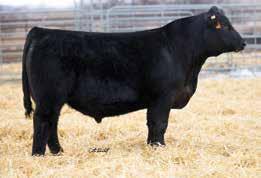
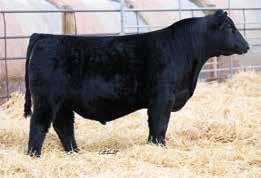
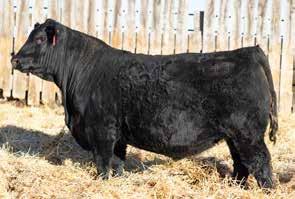
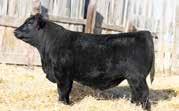
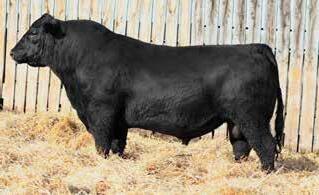
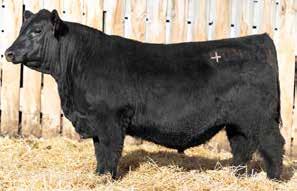
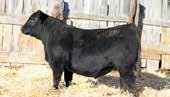
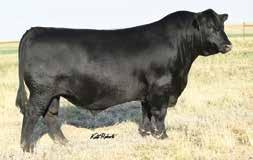
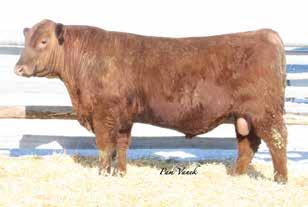
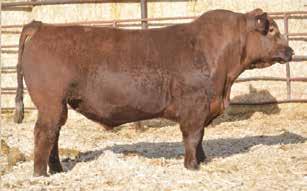
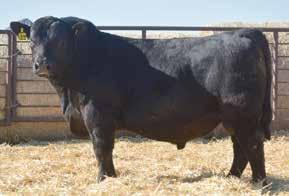
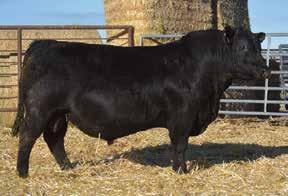
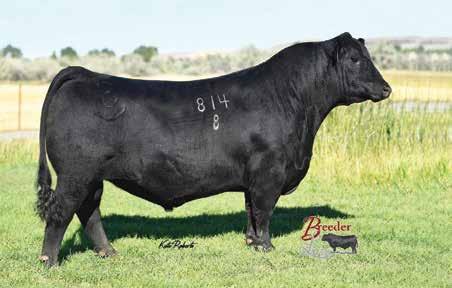
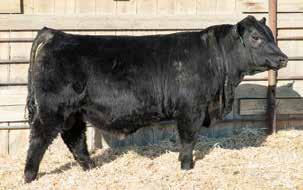
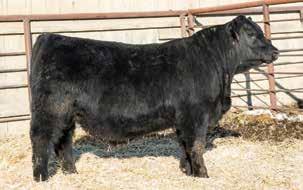
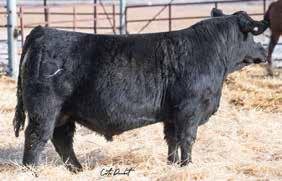
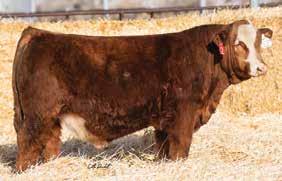
Lot 1 – MMP Man In Black M36 – Price: $20,000 DOB: 1/3/24 Sire: LAR Man In Black Dam’s Sire: BUBS Southern Charm AA31 EPDs: BW: +2.6, WW: +85, YW: +141 and Milk: +23 Buyer: Rafter T Angus, Gillette
Wyoming Department of Agriculture provides mediation and succession planning support
The Wyoming Department of Agriculture (WDA) provides mediation services to resolve disputes confidentially, efficiently and at a low cost for agriculturalists across the state. Trained mediators help conflicting parties explore options and develop solutions everyone agrees on.
Mediators work as facilitators, not as judges, and therefore do not decide if one party is in the right or the wrong. They help involved parties control the result of the mediation and whatever agreement they come to.
Mediation is a tool used to help agricultural producers with a wide variety of issues, including neighborto-neighbor conflicts, farm and ranch transition discussions, lease issues, grazing permit issues, ag business
disputes and much more.
WDA Mediation and Farm Succession Coordinator Lucy Pauley presented on how the department can help ease the tension of succession planning at the Johnson County Cattlewomen’s Women’s Ag Summit held in Buffalo on Jan. 11.
Succession planning challenges
“When we look at what succession planning means, we’re talking about the transfer of management from one generation to another,” explained Pauley.
“Sometimes we’re talking about the transfer of management from somebody within the family to somebody outside of the family. There are folks in Wyoming who might not have any heirs or other family members interested in continu-
ing the ranch, so they have to take a different approach at how to keep their operation going.”
Pauley identified some of the major barriers people face when succession planning.
She noted finances tend to be at the top of the list, but through WDA’s mediation program, ranchers have access to financial counselors to help navigate the process.
The second barrier identified is communication.
Pauley recognized succession planning can often be stressful, which can prevent people from communicating to their best ability.
“What I do as a mediator is get people to talk and share ideas, which adds an additional component to the planning process,” she said. “There’s something about
For more information on the Wyoming Department of Agriculture Mediation Program or workbook, visit agriculture. wy.gov/mediation-program.
sitting down with a neutral third person who doesn’t know anybody and isn’t invested in the situation. It just helps people talk.”
Workbook available
Pauley presented a workbook put together by the University of Wisconsin-Madison, specifically designed for succession planning in agriculture. The workbook is broken into three sections –where are you now, where do you want to be and how do you get there?
One portion of the workbook highlighted the “D Risks” – death, disability, disaster, divorce, disagreement, debt, depression, dysfunction and denial.
The book helps individuals identify and prioritize these risks in relation to their operation, brainstorm strategies for mitigating potential issues and how to put strategies into action.
The book helps address the factors affecting the transition, as well as a variety of challenges and conflicts which could potentially arise through the process of succession planning, as well as provides outlines for actionable steps measurable in a way that is attainable.
A conflict which often arises in succession planning is deciding what is fair versus what is equal. Sweat equity, interest in and inten-
tions for the ranch are all factors which come into play.
There are pages in the workbook allowing families to figure out everyone’s intentions and values, which can help direct the conversation, especially if the intention is to keep the operation in agriculture.
The workbook is available through the WDA Mediation Program as a physical workbook or as a downloadable PDF.
Tressa Lawrence is a corresponding writer for the Wyoming Livestock Roundup. Send comments on this article to roundup@ wylr.net.
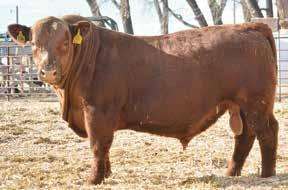
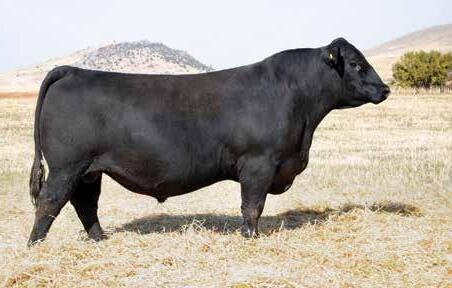
CALVO EXTERNAL LAW L214 Blairs External Law x SR Jessi 683A - ET mating
CALVO PONCHO L241 Coleman Poncho x Calvo Chino 102F
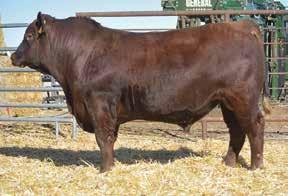
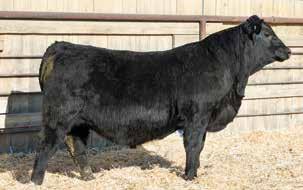
CALVO ROYAL TOUCH L246
DVO Royal Touch x OCC Vanessa 858Z - ET mating
CALVO PINNACLE L248
Mr Pinnacle 272H x Calvo Julian 77Z
CALVO TITAN L414 Calvo Titan 64E x Calvo Julian 2C
CALVO PINNACLE L402 Mr Pinnacle 272H x Calvo Julian 95Z
Rayola Lea Bessey peacefully passed away on Feb. 9 in Riverton.
She was born May 30, 1942 to her parents Ray-
mond Marion Weber and Lela Lucille Taylor-Weber in Riverton at her great grandparents’ home.
She grew up on the bank of the Big Wind River in the shadow of the Wind River mountains in Johnstown Valley near Kinnear.
Rayola attended school at Morton and graduated in 1960 with honors. She lettered as a cheerleader and in the band. She sang in the choir, was a tenor saxophone player and loved to square dance.
Rayola worked at the CM Ranch in Dubois as a cabin girl and cook’s assis-
tant during the summers of her junior and senior years of high school and a summer during college. She attended the University Wyoming on a full-ride teacher scholarship for one year.
She met Bob Bessey, fell in love and married him on June 29, 1962. She supervised the cabin girls at the CM Ranch after their marriage and worked at the Crowheart Post Office for a while.
Rayola and Bob had three children – Barbara, Brad and Jeanne – and lived in the Crowheart and Riverton area for their entire married life of 62 years. Their nephew Steve Bessey spent part of his teen years living with them as well.
Rayola was an accomplished seamstress. She made Western shirts for her fam-
ily and Western suits for the girls’ rodeo queen outfits. She proudly won the Grange sewing contest. She also did wonderful upholstery work on car, truck and airplane seats.
She always supported Bob in his endeavors, including chariot racing and raising Paint and Quarter horses, Longhorn cattle and blue heeler and border collie dogs. He often bragged she was a good woman and had his chores done, his dogs fed and supper ready when he got home from a long day horseback.
Rayola was a wonderful homemaker and an excellent cook. She made the best cookies and often gave the last batch to the beloved blue heeler dogs. Her companion Missy was the only dog ever allowed in the house and spent many hours by her side at her sewing machine.
She was the most inventive and creative woman. She cross stitched, loved crafting and beaded her own jewelry.
She supported her kids in all of their adventures, attending nearly every horse show and rodeo. She was selfless with her time, always willing to open chutes for roping practice and help them prepare for 4-H projects or horse shows at the county fair.
She encouraged all of her children to receive a college degree, and all three graduated with either associates, bachelor’s or master’s degrees.
In 1983, when the kids were in high school and college, Rayola began to work at Riverton High School as the guidance office secretary. She learned how to enter records in the computer when the technology age ushered in and was not afraid to learn new skills. She retired after 18 years.
She loved her job and the students she helped. Rayola received many accolades for her efforts with recruiting for the U.S. Air Force and Navy. She helped with parade floats and graduation ceremonies yearly.
After a year of retirement, she returned to work as a special education paraprofessional and enjoyed helping kids at Riverton High School (RHS), before finally retiring at age 75.
Bob and Rayola were sponsors for the RHS Rodeo Club, and she was the secretary for the rodeo for many years. She loved helping young people and guided them to see their potential in anything she was involved in.
Forever a secretary, just for fun, she recorded the times and scores for the many local rodeos she and Bob attended and watched on television.
Rayola was the secretary behind the scenes for several ranch manager jobs Bob held as well. She made spreadsheets to keep track of all the cows, and they knew at a glance what cows needed to be kept or culled.
She enjoyed riding in her mid-60s and helped Bob on South Pass for many summers moving cattle and fixing fences. They lived in a dry camp for weeks at a time using an outhouse. She was the epitome of toughness.
She was the most supportive grandma, attending as many activities for her grandchildren as she could. She was always up for a rodeo, dance recital, band concert, wrestling match, track meet, volleyball, soccer or basketball game.
She enjoyed making Halloween, Christmas and other holidays special for her grandchildren and family. She loved her six grandchildren and seven great-grandchildren dearly.
Rayola is preceded in death by her parents Raymond and Lela Weber, brothers Lyndall and Craig Weber and sister Frances Bullington.
She is survived by her husband of 62 years Bob; sister-in-law Connie Weber; daughters Barbara Jacobs and Jeanne (Shawn) Carper; son Brad Bessey; grandchildren Brenda Fluty, Amy (Greg) Winford, Brian (Haylie) Jacobs, Clay (Jenna) Carper, Cara (John) Franzen, Kyle Carper and Jori Skaggs and great-grandchildren Jaxson, Jase, Jordy, Lyle, Ava, Madison and Blue, as well as many beloved nieces and nephews.
Funeral services were held on Feb. 15 at the Davis Funeral Home in Riverton.
Rapid City hosts 67th Annual Black Hills Stock Show and Rodeo
The 67th Annual Black Hills Stock Show (BHSS) and Rodeo took place Jan. 31 through Feb. 8 in Rapid City, S.D.
The two weeks of jam-packed action boast over 120 events, ranging from elite horse sales and competitive livestock shows to exciting concerts and thrilling rodeo action.
With an estimated 331,000 people and 400 vendors from 13 states in attendance, BHSS is the second largest gathering in the state of South Dakota, following the Sturgis Motorcycle Rally.
According to the BHSS website, an economic impact study conducted in 2012 found the event brings in $21.9 million, with a direct economic impact of $15.2 million.
“Our little Midwestern city becomes a slice of the Old West when cowboys and ranchers come to town to compete in 10 different breeds of cattle shows, ranch rodeos and 14 different horse events,” reads the BHSS website. “There is something for everyone, including concerts and a beer festival.”
The website continues, “An idea that started as a discussion in a laundromat by the Rapid City Chamber Ag Committee has since evolved into a multi-show event attracting people from a 13-state region. BHSS is committed to preserving the Western heritage of the state of South Dakota, while incorporating rural lifestyles into the urban community of Rapid City.”
Melissa Burke photos
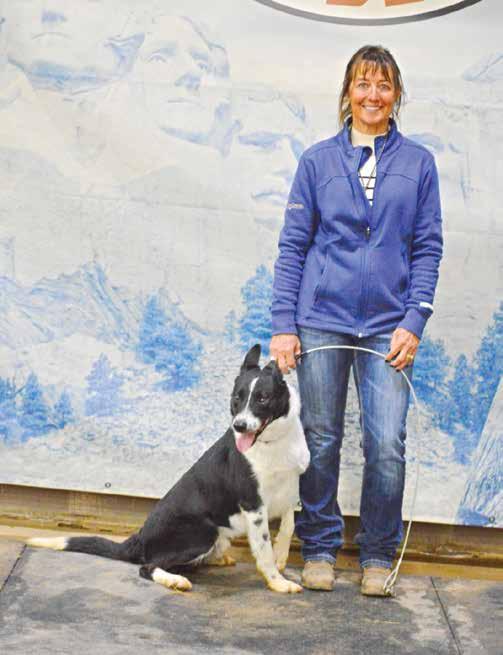
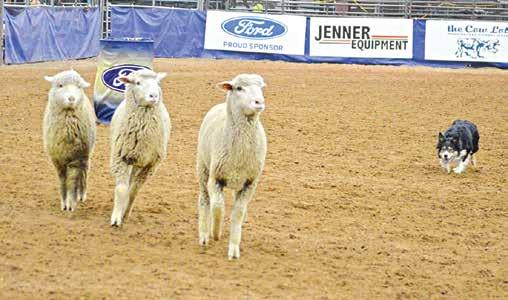
Reining champion – Wendy Auzqui of Clearmont and her dog Bo won the 2025 Black Hills Stock Show Sheep Dog Trials with a time of one minute and 21 seconds in the final round. Auzqui was also the champion in 2024.
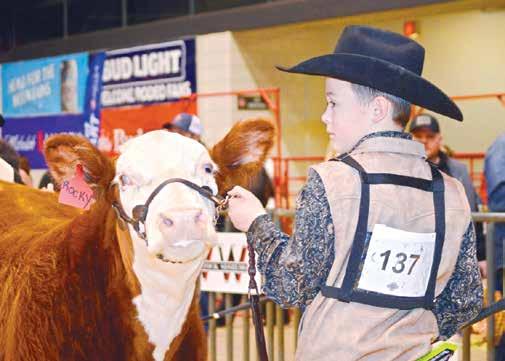
Beginner showman – Nine-year-old Tuf Hagen of Lake City, S.D. keeps his eyes on the judge during the beginner showmanship class of the Youth Beef Show. His parents are Brandon and Calee Hagen.
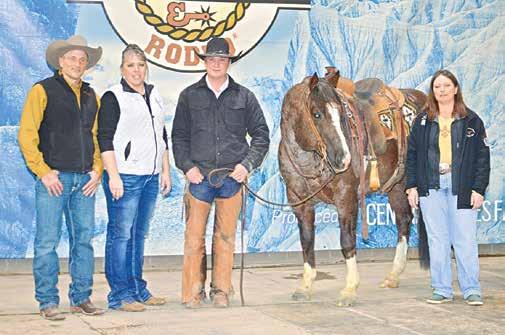
High seller – Lot 43, the high seller of the All-Breed Horse Sale, was Time Marker, a 2016 red roan American Quarter Horse Association stallion consigned by Wagonhound Land and Livestock of Douglas. Started in calf roping and heeling, the son of One Time Pepto brought a final bid of $50,000 from Cathy Whetham of Morrill, Neb.
Dog trials – Approximately 60 dogs were entered in the Sheep Dog Trials at the 2025 Black Hills Stock Show. Dogs must work three sheep around a pattern within the allotted time. The top 16 dogs with the fastest times enter the semi-finals round. Then, the top 10 dogs with the fastest combined times advance to the final round.
Rapid City hosts 67th Annual Black Hills Stock Show and Rodeo
Melissa Burke photos
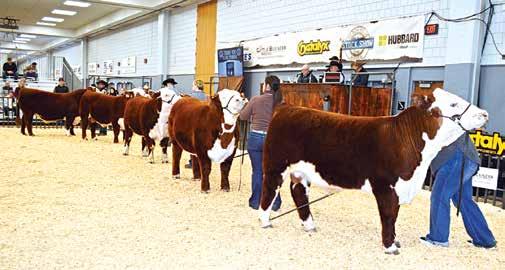
Competitive class – Exhibitors set up their animals in this class of Junior Hereford Bulls.
Starting ‘em young – Twenty-month-old Joby Johnson waves enthusiastically as she sits aboard one of the horse sale consignments. Her parents are Gannon and Bridget Johnson of Colony.
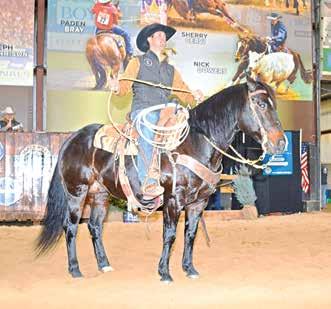
Local stud – Stallion Row showcased the breeding programs of multiple stallion owners around the region. Pictured is Nostalgic Oak, a 2017 dark bay American Quarter Horse Association stallion owned by Swaney Horse and Cattle of Moorcroft.
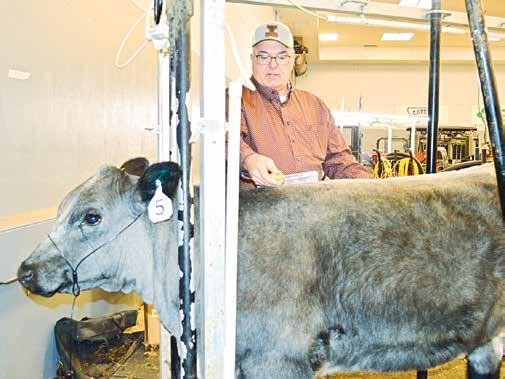
Getting gussied up – Ryan Hedges of Lander combs out a blue roan Shorthorn heifer before their turn in the show ring. His daughter Elayna Hedges owns the animal but was unable to attend the stock show.
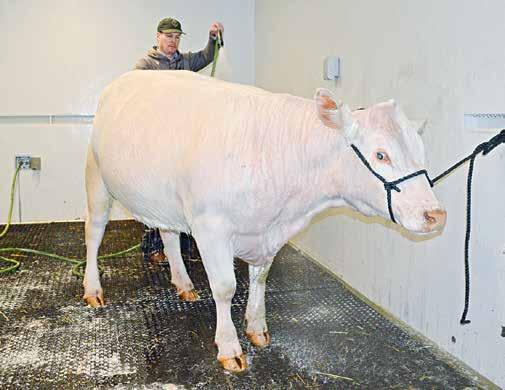
Grand-champion honors – Brett Tostenson of Highmore, S.D. gives this Charolais heifer a bath. The heifer is owned by Grand Hills LLC of Fort Collins, Colo. and went on to earn overall Grand Champion Charolais Female honors.
CLASSIFIEDS
CASPER ALCOVA IRRIGATION DISTRICT’S ANNUAL MEETING AND ELECTION IS FEB. 21, at 6 p.m. Location: Agriculture Resource Learning Center, 2011 Fairgrounds Rd., Casper, WY. Up for election are areas 1 and 2 2/15
NOTICE: Publication in this newspaper does not guarantee the legitimacy of any offer or solicitation. Take reasonable steps to evaluate an offer before you send money or provide personal/financial information to an advertiser. If you have questions or believe you have been the victim of fraud, contact the Wyoming Attorney General’s Office, Consumer Protection Unit, 109 Capitol Building, Cheyenne, WY 82002, 307-7776397 TFN
Events
DAIRY CALF RANCH MANAGER WANTED: Looking for a good dependable dairy heifer calf ranch manager. We have between 1,000 and 1,300 calves ranging from 1-day-old to 4 months old at any giving time to be cared for and processed. Knowledge of calf husbandry is a plus. Bilingual is necessary. Time and employee management is a must. Please contact Jeremiah Lungwitz at 970-848-2842, e-mail jlungwitz@hotmail.com or apply in person at Yuma County Dairy, 8798 Co. Rd. 39, Yuma, CO 80759 3/1
guns you might find you have a real treasure in your hands! CGCA.com Come to the Colorado Gun Collectors Show May 17 & 18, 2025 and find
BLACK HILLS GUN SHOW
MARCH 7-9: The Lodge at Deadwood, in Deadwood, S.D. Call 605-641-0870 or 307-751-1877. Visit us on Facebook 3/1
GUN SHOW MARCH 15-16: Weston County Senior Citizens Center, Newcastle, WY, Sat., March 15, 9 a.m.-5 p.m.; Sun., March 16, 9 a.m.-3 p.m. Admission $5, kids 12 and under free when accompanied by a parent or guardian. Vendor setup Fri., March 14, 3-8 p.m. For more information, call Mike Novotny, 253-678-4825 3/8
2025 CACHE VALLEY COWBOY RENDEZVOUS, MARCH 6-9: Welcomes in concert Suzy Bogguss, Paul Overstreet and Bar D Wranglers. Free admission to Cowboy Poetry, Western Music, Vendors and Poetry Contests, etc. Fri. 3-10 p.m. and Sat. 10 a.m.-8 p.m. Cache County Event Center, Logan, UT. Go to www.cvcowboy.org or text/leave message at 435-760-0160 2/22
UP IN ARMS, LLC FLEA MARKET AND GUN SHOW FEB. 21-23, Gillette, WY at the CAMPLEX. Open to the public. Fri., Feb. 21, 3-7 p.m. Sat., Feb. 22, 9 a.m.-5 p.m. Sun., Feb. 23, 9 a.m.-3 p.m. Giving away a .22 pistol Sunday at 2 p.m., must be present to win, 21 years of age and able to pass background check. Buy, sell, trade. Adults $6, children 12 and under free (when accompanied by an adult). For more information, contact Lisa, 208-420-2295 2/15
PEEGEE RANCH NEAR ARVADA, WY IS LOOKING FOR A FULL-TIME FARM/RANCH EMPLOYEE: This position is open immediately. Applicant must be self-motivated, reliable and responsible with knowledge of haying and farming. Mechanical skills are a must. Farming duties include swathing, baling and raking hay, etc. This is not a cowboy position, but applicant will need to assist in all aspects of cattle work as well. Those duties include calving heifers, feeding hay, branding and gathering, etc. Nearest big town is 60+ miles and nearest K-12 school is 30+ miles away (location of the ranch is remote). Housing is provided and on a school bus route. Please send resume with references by mail or e-mail to: PeeGee Ranch, 1251 Lower Powder River Road, Arvada, WY 82831, pgranch@rangeweb.net. Call 307-736-2461 2/22
DEVILS TOWER FOREST PRODUCTS INC., A LUMBER MANUFACTURER IN HULETT, WY, IS ACCEPTING APPLICATIONS FOR FULL-TIME BOILER/KILN OPERATOR, MILLWRIGHT, PLANER PRODUCTION OPERATORS and BAGGER POSITIONS: Benefit package includes company paid medical and dental insurance (including dependents), life insurance, company-matching 401(k), safety incentives, holiday pay, paid vacation and sign-on bonus. Mandatory employment and random drug testing is conducted. EOE. Starting wage D.O.E. Online applications are available at wwww.neimanenterprises. com. E-mail applications to joe.ortner@devilstowerfp. com or fax to 307-467-5418, contact Joe Ortner at 307467-5252 with additional questions 2/22
ARE YOU SEEKING A LONG-TERM CAREER IN AGRICULTURE?
Dinklage Feed Yards in Fort Morgan, CO is hiring a Cattle Supervisor. Must own your own horse and have at least five years of experience in cattle care. Dinklage offers an outstanding benefits package including 100% employer paid health and life insurance; dental, vision and supplemental insurance; health reimbursement account; paid time off; and 401(k) with 5% match. Qualified applicants should apply with Cory Carritt @ (970) 867-4977. Visit our website for job description and application.
www.dinklagefeedyards.com
Dinklage Feed Yards, Inc. is an equal employment opportunity employer.
application or visit our website at
RODEO GROUNDS located at 1665 Rodeo Drive, Lander, WY 82520 with the intent of producing of rodeos, rough stock events, concerts and other community events for the benefit and entertainment of the general public at the Lander Rodeo Grounds. Contract will commence March 2025, for a two-year term ending December 2026. A proposed “Agreement for Lander Rodeo Grounds Concessionaire Services” is located at www. landerwyoming.org/rfps or may be picked up at City Hall, 240 Lincoln Street, Lander, WY 82520. Interested parties may inspect the rodeo ground premises by contacting Parks and Recreation staff Lori Eckhardt, 405 Fremont Street, Lander, WY or by calling 307-332-4647. All proposals must be received by 2 p.m. on Thurs. Feb. 20, 2025 Proposals will be accepted by electronic submission to rsfossen@landerwyoming. org or by standard mail and hand delivery. Standard mail and hand delivered proposals must be clearly marked “Lander Rodeo Concessionaire” and delivered to City of Lander, RaJean Strube Fossen, 240 Lincoln Street, Lander, WY 82520. Proposals should include an explanation of the type and frequency of potential entertainment events, description of experience in operating rodeos and other similar entertainment events, proof of capacity to operate and maintain the rodeo facilities as a sole provider or using subcontractors, proof of business or organizational structure, and certificate of liability insurance as required in the draft agreement. Proposals will be evaluated based on the frequency and type of entertainment events, past experience, references for similar concession agreements. The City of Lander reserves the right to accept or reject any or all proposals and to accept the proposal which is deemed to be in the best interests of the City of Lander to increase the usage and capacity of the rodeo grounds for community events. The City of Lander does not discriminate on the basis of handicapped status in the admission or access to, or treatment or employment in, its programs or activities. The City of Lander does comply with the nondiscrimination requirements contained in Section 504 of the ADA regulations. The City of Lander is an Equal Opportunity Provider 2/15
ALL TYPES OF EQUIPMENT AND VEHICLE FINANCING. Great service!! Great rates!! Call Chuck Brown at C.H. Brown Co., WY LLC, 307-3223232 (office), 307-331-0010 (cell) or e-mail chuckbrown@ wyoming.com 2/15
AGRI-ONE FINANCIAL: Farm/ ranch and all commercial loans. RATES AS LOW AS 5%. We have been helping with all aspects of agricultural, commercial financing and management for years. LET US HELP YOU on a consulting level with management to increase profitability, deal with and fix credit problems and for all your financing needs. WE CARE AND HAVE WORKING PROGRAMS designed for the farmer/rancher and not the banker. Please call Steve, 303-7733545 or check out our website, www.agrionefinancial.com. I will come to you and get the job done!! 2/22
HISTORIC WYOMING BRAND, ORIGINALLY REGISTERED IN 1941: It has been in the same family for over 80 years and hasn’t been used on livestock for over 40 years. HK bar cattle and horse. LRC, LTH. Double
WYOMING BRAND FOR SALE: RRC, RBH&M. Renewed to January 2033. After my husband passed, I sold our ranch. We have a huge sign with the
WYOMING BRAND FOR SALE: RRC, RSS, RHH. Expires Jan. 1, 2029. Electric iron included. $2,500. Call 307-575-6589 2/15
REGISTERED WYOMING BRAND: LRC, LSS, LSH. Current through Jan. 1, 2033. $4,000 OBO. Contact Gene at 307-331-1049 2/15
REGISTERED WYOMING BRAND: LHC, BS, LHH. Current through Jan. 1, 2033. $4,000 OBO. Contact Gene at 307-331-1049 2/15
REGISTERED WYOMING BRAND: LHC, LBH. Current through Jan. 1, 2033. $4,000 OBO. Contact Gene at 307-3311049 2/15
REGISTERED WYO-
MING BRAND: LRC, LSS, LSH. Current through Jan. 1, 2033. $4,000 OBO. Contact Gene at 307331-1049 2/15
REGISTERED WYOMING BRAND: LRC, LHS, LSH, $2,500 or best offer. Call 307-359-0555 3/1
OLD WYOMING ONE IRON, LEFT RIB BRAND FOR SALE: LRC, LHH, 10 year fee paid to March 2035, $12,775. Call 307-334-2760 2/22
WYOMING BRAND FOR SALE: RHC, BS. Irons included. Registered through March 2031, $2,000 OBO. Call Mike at 307202-0494 2/22
BULLS FOR SALE: Registered yearling and 2-year-old
Angus range bulls for sale private treaty. Good selection for heifers and cows. From popular sires and industry leaders. Semen tested and ready to go. Call 307-762-3541 TFN
RED ANGUS HIGH-ELEVATION YEARLING BULLS FOR SALE IN NORTHEASTERN UTAH : Out of AI and bull-bred sires. Will be trich, semen tested and fed for free until May 1. $2,700/head. Bar Lazy TL Ranch, David, 435828-1320, barlazytlranch@ gmail.com 6/14
Shorthorn
SHORTHORN BULLS FOR SALE PRIVATE TREATY: Yearlings up to mature bulls available. Developed conservatively so they hold up. Remember a red Shorthorn bull on your homozygous black cows will give you black calves. Shorthorns are excellent maternal cattle that produce quality beef. Francis-Millvale Shorthorns, Gene and Roberta Francis Family, 701-331-2403, e-mail francis. millvale@gmail.com. To view photos, go to www.wylr.net in the classifieds 3/1
TEDDY ROOSEVELT TERRI-
ERS FARM COMPANION AND VERMIN CONTROL. Puppies for sale near Cheyenne, WY. Two females and 4 males. Born Nov. 27, ready to go to their new home. These little dogs are excellent short-haired, selfcleaning companions in any setting. Good hunters. $700. Call/ text 307-477-0386, visit www. wabbitfireterriers.com To view photos, go to www.wylr.net in the classifieds 2/15
FOR SALE 36 BRED HEIFERS: Black, black white faced and 4 reds. Bred to low birthweight black bull. Calve April 10 50 days. Home raised. Call 308870-0466 2/22
STAIRCASE CHAROLAIS AND RED ANGUS ONLINE
BULL SALE: 50+ purebred yearling Charolais and Red Angus bulls SELLING APRIL 12-17 Timed auction online with www.dvauction.com!! Practical bulls bred for balanced traits, functionality, consistency, disposition, efficiency and quality, built to excel in every step of the cattle industry!! For more information, visit www.staircasebulls.com, find us on Facebook or give us a call. Gus, 307-575-5860 or Amy, 308-631-1952 4/12
YEARLING ANGUS BULLS: These bulls are grown, not fattened, will get out and cover cows. Many will work on heifers. We will deliver. Call Joe Buseman, 605-351-1535 3/8
120 BLACK ANGUS REPLACEMENT HEIFERS: Uniform group created from our closed herd of females. Will make excellent mothers. Registration papers available. Private treaty sales for nearly 50 years. Let our selective breeding program go to work for you!! Clay Creek Angus, 3334 Rd. 14, Greybull, WY 82426. Call 307762-3541 TFN
WANTED GRASS FOR YEARLINGS SUMMER OF 2025, references available. Maddux Cattle Company, 308-3501133 3/1
Ranch for Lease
PARK COUNTY, WYOMING RANCH NEAR CODY, WY IS AVAILABLE FOR A LONGTERM LEASE: The ranch has over 50,000 acres and supports an irrigated hay base with BOR water rights. Carrying capacity is 700 animal units year-round with hay production. Willing to split the hay ground and grazing. Please e-mail Honora Beirne (hbeirne@acpg.com) and Melanie Giliati (mgiliati@ acpg.com) for details 2/22
2024 PALOMINO YEARLING STUD COLT WITH WHITE STOCKINGS: An eye catcher and ready to show. Bet Hesa Cat NRCHA $2 million. Night Time Playmate superior cow horse life-time earnings $23,000 plus, eligible for SDRCHA stallion stakes. Call 307-532-6200, for more information 3/1
FOR SALE, PERCHERON CROSS HORSES. Call 605210-1785. To view photos, go to www.wylr.net in the classifieds 2/15
FOR SALE, 18-YEAR-OLD
RANCH GELDING: Been here his whole life, done everything on the ranch. Gentle and sound just needs a smaller circle. Call 307-760-5976. To view photos, go to www.wylr. net in the classifieds 2/15
Leatherwork
LS CUSTOM LEATHER: Belts, tack, cell phone cases and much more!! Contact Lester, 307-631-1053, leave a message. Located in Riverton, WY 2/15
CERTIFIED BARLEY STRAW FOR SALE, 3x4 bales. Cody, WY. Call 307-899-1952 TFN
STRAW FOR SALE: 200
TONS OF BARLEY STRAW, 4x4 squares, $40/ton. Located west of Powell, WY. Call or text 307-202-0532 for more information 3/8
GRASS HAY FOR SALE, 1,400 lb. net-wrapped round bales, $140/bale. Near Laramie, WY. Call 307-760-8429 3/8
HAY FOR SALE: Very fine stemmed alfalfa, good horse hay, 3x4x8 bales, 200 available. Call for pricing, 307-2540152, Rivers Bend Ranch, LLC, Greybull, WY 2/15
MIXED QUALITY OF HAY FOR SALE: Prices range from $60-135 per ton. 1,200 lbs., 3x4x8 bales. 2023 or 2024 hay. Delivery available for a fee. Call Kelly Foianini, 307780-7027 or Bronson Foianini, 307-760-2263 3/8
2024 HAY FOR SALE: First, second and third cutting alfalfa/orchardgrass mix, roughly 50/50, round bales. If tests wanted, they can be obtained. Thirty miles east of Valentine, NE, trucking available needed. Call or text for more information, 402-759-2033 3/1
2,000 TONS OF HAY FOR SALE: First, second and third cutting alfalfa. All bales are 4x4x8 in size. Location between Lovell and Powell, WY. Contact Crosby Farms, 307272-3712 3/1
NORTHWEST WYOMING CERTIFIED GRASS SEED GROWER HAS CERTIFIED GRASS HAY FOR SALE: 3x4x8 bales. 2023 crop approximately 1,200 lbs. 2024 crop approximately 900+ lbs. $25/bale. Powell, WY area. Call Mike at 307-202-0494 3/22
ROUND-BALED GRASS: 2024 crop $50/bale. 1,000 lb. net-wrapped bales. Cody, WY area. Call, don’t text, Anthony at 307-254-2645 3/1
HORSE QUALITY GRASS HAY, 3x4s barn stored, $175/ ton. 2024 GRASS COW HAY, 3x4s barn stored, $135/ton. 2023 GRASS COW HAY, 3x4s barn stored, $115/ton. Encampment, WY. Call 307321-1444 TFN
200 tons 2023 GRASS/ALFALFA in large rounds, cut slightly mature but baled green!! Also, selling 2024 WHEAT STRAW in large squares and 200 tons MILLET HAY. Will deliver!! For sale by Cheyenne, WY area producer. Call 307-630-3768 2/15
CLEAN ALFALFA AND SOME BARLEY HAY FOR SALE in Riverton, WY area with some trucking available. Call 307-851-4532 2/15
CERTIFIED WEED-FREE PURE ALFALFA HAY : Small squares, covered. 2023 first cutting available for a reduced price. 2024 first, second and third cutting available. Will load trucks and any open trailer. MONIDA OATS, $16/cwt. Combine run. Will auger into truck, trailer or large totes/ag bags. Located between Powell and Cody, WY. Call or text Knopp Farms for details, 307-254-0554 3/1
ARE YOU IN NEED OF A NEW HERDER CAMP OR A PERSONAL RANGE CAMP FOR YOUR FAMILY? Contact us at Western Range Camps and see what we can build for you. We specialize in quality, handcrafted camps built to your specifications. Contact us today to design the camp just right for you. Western Range Camps, 435-4625300, heidi@wrcamps.com, 1145 S. Blackhawk Blvd, Mt. Pleasant, UT 84647 2/15
MOFFAT COUNTY SHEEP
HAY FOR SALE: 2023 milo and grass/alfalfa. 2024 first cutting 90% alfalfa/10% grass mix, grass mix, grass/alfalfa, millet cut early and green, milo cut late in the season. ALSO, 2024 haybet barley, nitrates low, protein high. All in net-wrapped round bales. Semi load delivery available. Call for pricing, ask for Klint, 701290-4418, send a text if no answer or keep trying 3/1
1,300 TONS OF ALFALFA, ALFALFA/GRASS MIX AND STRAIGHT GRASS: Prices starting at $95/ton, 3x4 squares. Located near Manhattan, MT. Delivery available. Minimum order of 200 tons. Call Doug, 406581-4124 2/15
Trucks & Trailers
SHEARING SCHOOL, CRAIG, CO APRIL 4-6: This 3-day shearing school provides handson, instructed experience in shearing sheep and an introduction to equipment maintenance. No previous experience needed. E-mail megan.stetson@colostate.edu or call 970-826-3402 for registration information and questions 3/22
OPEN POLLINATED SEED CORN out produces hybrid for silage and grazing quality grain, $69/bushel +S/H. Call 217-8573377 or text cell 217-343-4962, visit website www.borriesopenpollinatedseedcorn.com 2/22
VALLEY VIDEO HAY MARKETS, LLC: Hay available. Go to www.valleyvideohay. com or call Barry McRea, 308-235-5386 3/1
GRASS AND ALFALFA HAY
FOR SALE: Cow and horse quality. Round bales, 3x3 square bales and 3x4 square bales. Delivery available!! Call 307-630-3046 2/22
HAY FOR SALE: 2023 and 2024, alfalfa, sainfoin, grass and combine grass/straw. Small squares and 3x3x8 bales. Test results available for 2023 and 2024. Will load 3x3s in open truck and trailer. Call 307-250-6005 2/22
BARLEY STRAW: Certified weed-free small squares, $4/ bale. ALSO, 5x6 round bales, $125/ton. GRAIN OATS, wheat and barley, $20/cwt. Greybull, WY area. Call 307762-3878 or 307-899-4714, leave message 2/22
ALFALFA HAY FOR SALE: 3x3 bales shedded. Priced depending on quality and quantity needed. Farson, WY, trucking available. Call 307350-0350 2/22
HORSE QUALITY GRASS HAY, third cutting, barn stored, 3x4 square bales, $200/ton. Lusk, WY. Call Paul Hicks, 970-203-5019 2/22
FOR SALE: 2006 KENWORTH W900, in excellent condition. It has approximately 1,583,000 miles, tires are in good condition, $65,000. I will require a 5% nonrefundable deposit in order to hold the truck. I will accept full payment with a cashier’s check or direct bank wire transfer. Please contact Brian for further information.
Red Angus
Angus
WANTED TO BUY: 1995 TO 2005 SPREADER TRUCK for dry fertilizer/lime, 14’-16’ box, decent shape. Call 720-2980948 3/1
EQUIPMENT FOR SALE, FARMER RETIRING: 9600
John Deere combine with 930 30’ grain header and an 893 8 row 30” corn header. A 20’ Krause offset disc (new blades in front). 24’ Model 630 John Deere tandem disc. Safety pull with a bull hitch. John Deere front suitcase weights. IHC front suitcase weights. Round John Deere wheel weights. Contact Greg Keller at 406-679-1136 3/1
LODGEPOLE OUTDOOR FURNACES, 307-223-2046. Your authorized Central Boiler Dealer. Get your outdoor wood furnace today!! $2,000 tax credit on qualifying models!! Efficient wood heat. Heat multiple buildings. Invest in your heating, don’t just pay for it!! See us at www.cb.lodgepoleproducts. com!! 2/22
Livestock Equipment
Equipment
FOR SALE: CIH 585 diesel tractor, wide front, 3 hydraulics, 2,900 hours, runs great. John Deere 2155 diesel tractor, wide front, nice. Lorenz 16’x29’ 18 ton bale mover with 10 rails. 2020 Freightliner, automatic transmission, DD13 engine, 178” wheelbase, 407, 673 miles, runs and drives nice, $28,500. Vermeer BP7000 bale processor. Summers hydraulic rock picker. Miller Pro 5100 18’ chuckwagon with bunk feeding extensions and tandem running gear. H&S 7+4 17’ and 16’ chuckwagons with bunk feeding extensions and tandem 14 ton running gear. John Deere 716A chuckwagons with John Deere running gear and bunk feeding extensions, been shedded, nice condition. John Deere 1760 12rn planter with liquid fertilizer. Rowse 16 wheel high capacity v-rake. 12’ HD box scraper with tilt. Farm King 8’ snowblower with hydraulic spout. All in very nice condition!! Call 605-9995482 3/8
Livestock Equipment
Fencing
RAIL TIES: #1-9 ft., #1 and #2-8 ft. USED CULVERTS: Three foot, 2 ft., 18” and various lengths. Call EMC2, 307-6302345 or 307-534-5253 2/22
LODGEPOLE PRODUCTS, 307-742-6992, SERVING AGRIBUSINESSES SINCE 1975!! Treated posts, corral poles, buck-and-rail, western rail, fence stays, rough-sawn lumber, bedding. SEE US at www.lodgepoleproducts.com and click our “Picking A Fence Post” tab to see why folks choose our posts!! TFN
Pipe
Pipe
OILFIELD PIPE: PRICE REDUCED!! RPJ Enterprises, Inc. 2 3/8”, 2 7/8” and 4.5” is available, pricing is coming down. Used for fencing, corrals, cattle guards, etc. 2 3/8” and 2 7/8” are on average 31.5’ long per joint. Pierce, CO. Call for details, 970-324-4580 6/28
PIPE FOR SALE!! 2 7/8”, 3 1/2” tubing, 4” drill pipe, 4 1/2” casing, 5” casing, 7” casing. Rods 3/4”, 7/8” and 1” located in Montana, can ship anywhere. Call Mike, 602-758-4447. To view photos, go to www.wylr.net in the classifieds 2/22
AMAZING DEAL!! ESCAPE THE COLD!! DREAM DESERT RESORT RETREAT AWAITS YOU IN WICKENBURG, AZ!! Picture yourself basking in sunshine surrounded by stunning desert landscapes. Year-round golf, hiking, riding and sports!! Discover your new patio home away from home. Nearby quality horse boarding and trailer storage. One hour from Phoenix, AZ. $500K FULL PRICE OFFER EARNS 10K in PREMIUMS TO BUYER. Over $90,000 of upgrades and $80,000 VIEW lot premium. Seller purchased property for $599,026! Ready to sell and MOVE IN!!! Call Joe at Homesmart, 602-679-2971.To view photos, go to www.wylr.net in the classifieds 3/1
AND
IN
FOLLOWING TOWNS AND LOCATIONS: FEB. 28: Ft. Bridger 3:40-4 p.m., Cash Store; Evanston 4:40-5:10 p.m., Prairie Inn. MARCH 1: Kemmerer 7-7:20 a.m., Ham’s Fork Station/Sinclair; Cokeville 8:108:30 a.m., Flying J Truck Stop; Afton 9:30-9:50 a.m., Afton Country Village; Thayne 10:05-10:20 a.m., Farmer’s Feed (drive thru); Etna 10:2010:30 a.m., Etna Trading Post (drive thru); Alpine 11-11:30 a.m., Grey’s River Saloon; Hoback Jct. 12-12:20 p.m., Hoback Market/Exxon; Bondurant 12;50-1 p.m., Elkhorn Bar (drive thru); Bondurant 1:05-1:15 p.m., Post Office (drive thru); Daniel 1:50-2:10 p.m., The Den; Pinedale 2:403:10 p.m., Gannett Sports; Big Piney 3:50-4:10 p.m., Public RR Visitor Info. lot; La Barge 4:30-4:45 p.m., All American Fuel (drive thru call.text Greg); Fontenelle 5-5:15 p.m., (drive thru, call/text); Green River 6-6:30 p.m., Hitching Post. MARCH 2: Rock Springs 7:30-8:15 a.m., WY Wool Warehouse; Wamsutter 9:15-9:30 a.m., Wamsutter Conoco (drive thru); Rawlins 10:10-10:40 a.m., Trails West
Irrigation Systems
Good time management is essential to farming success. That’s why more farmers are turning to T-L center pivot irrigation systems. Hydrostatically powered, T-L’s simple design gives you the low maintenance time, cost, safety and reliability to let you manage your farm instead of calling electricians or replacing gearboxes. Simplify your complex world and make irrigation easier on you.
USED IRRIGATION PIVOTS FOR SALE, www.zimmag.com Irrigation systems are COMPLETE with custom sprinkler package, SORTED, BUNDLED and ready to ship ● 2021 Zimmatic 8500 7 tower 1,297’ ● 2020 Zimmatic 8500
2/15
New food traceability requirements set to impact the grocery industry
A November 2024 webinar hosted by the National Grocers Association (NGA) explores why traceability is becoming essential for independent commercial grocers, from complying with regulatory standards to enhancing food safety and responding effectively to product recalls.
The food traceability requirements taking effect early next year are compelling grocers to address various challenges, including financial implications, supplier-related issues and potential legal consequences for non-compliance.
Retailers now have less than one year to comply with Section 204 of the Food Safety Modernization Act (FSMA), which will be implemented in January 2026.
FSMA originated in 2010, but Section 204 passed in 2023 and mandates companies involved in the food supply chain must maintain detailed records regarding the traceabil-
ity of specific food items listed on the Food Traceability List (FTL), allowing for faster identification and removal of potentially contaminated food in the case of a foodborne illness outbreak, including tracking key data elements (KDEs) at critical tracking events throughout the supply chain
“This important legislation aims to enhance supply chain traceability, enabling the swift identification and removal of potentially contaminated food products,” states ReposiTrak Chief Customer Officer Derek Hannum during the webinar.
FSMA
According to the Centers for Disease Control and Prevention, approximately 48 million individuals in the U.S. experience illness due to foodborne diseases each year.
Of these cases, 128,000 result in hospitalization and 3,000 lead to fatalities, which is a considerable public health challenge that is largely preventable.
FSMA is designed to transform the nation’s food safety system by shifting the emphasis from merely responding to foodborne illnesses to actively preventing them.
Enacted by Congress, the FSMA responds to significant changes in the global food system and underscores the importance of understanding foodborne illness and its repercussions.
This legislation highlights foodborne illnesses pose a serious public health concern and threaten the food sector’s economic stability.
The U.S. Food and Drug Administration (FDA) has developed several finalized rules to implement FSMA, acknowledging ensuring food safety is a collective effort across various points in the global supply chain for both human and animal food.
These FSMA rules are designed to clearly outline the necessary actions at each point to effectively prevent contamination.
Future effects
Section 204 of FMSA will significantly impact commercial agriculture by requiring enhanced recordkeeping for specific highrisk foods listed on the FTLs.
The list encompasses various fresh produce items, such as cucumbers, herbs, leafy greens, melons, peppers, sprouts, tomatoes and tropical tree fruits, as well as all fresh-cut fruits and vegetables.
Non-fresh produce items on the list include ready-toeat refrigerated deli salads, soft cheeses, shell eggs, nut butter, finfish, crustaceans and mollusks.
Hannum notes, “Producers will have to maintain detailed tracking of KDEs like lot numbers, harvest dates and shipping information including packing, shipping and receiving information.”
This means commercial farmers and food processors must meticulously track the movement of these foods throughout the sup-
ply chain to quickly identify and remove potentially contaminated products in the case of an outbreak, improving food safety and consumer protection.
Commercial producers who manufacture, process, pack or hold these items must keep records containing KDEs about the products and be able to provide this information within 24 hours of a request from the FDA.
“The KDE records must be created and maintained as products go from suppliers and distribution centers to stores and restaurants and then saved for two years,” Hannum says.
According to the NGA webinar, some KDEs, like the traceability lot code and product description, can be printed on a label, while others, such as the date when food was received, cannot.
“Retailers with a central kitchen or who make deli foods in one store to provide to multiple stores will need to go through addi-
tional data steps including creating a new traceability lot code for the transformed food items,” states Independent Grocers Alliance Chief Executive Officer John Ross.
Retailers and wholesalers need to think about traceability implementation as three distinct phases – supplier onboarding to enable data sharing, traceability at the distribution center and warehouse level and traceability at the store level as consumers expectations fuel the need for traceability.
Recently, Kroger, a major retailer in the U.S., announced it will require its suppliers to provide essential food traceability data attributes for all food products, not just those listed on the FDA’s FTL and expects its suppliers to comply with these requirements by July 2025.
Melissa Anderson is the editor of the Wyoming Livestock Roundup. Send comments on this article to roundup@wylr.net.
BY AMANDA RADKE
Good People, Good Cattle, Good Food and Goodness in our Communities AG of Heart
I’ve often said meeting people on the dusty trail is my favorite part of traveling the country to speak at agricultural conferences.
At every stop I make, I am immensely blessed to meet some of the best folks in rural America – people who are doing inspiring things to make this country stronger and agriculture great.
These folks are what inspires this column and my weekly podcast, “The Heart of Rural America.” It’s their
stories, businesses and pursuit of the American dream that continues to push me to fight to keep family farms and ranches on the land where they belong.
Let me give you an example of what I mean.
Last year, at the Edgar Brothers Angus Production Sale in Rockham, S.D., I met Gregory, S.D. Rancher and County Commissioner Jessy Biggins. He was on a mission to buy a bull with great marbling and carcass merits.
WSGLT announces new member
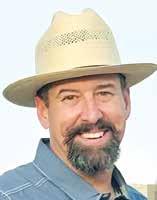
The Wyoming Stock Growers Land Trust (WSGLT) announced the selection of new Board of Director’s Member Josh Coursey.
Coursey is a proud Wyoming native and accomplished businessman with a strong commitment to service and leadership.
After graduating from Rock Springs High School in 1992, he served in the U.S. Army as a photojournalist.
He holds an Associate of Science from Western Wyoming Community College, a Bachelor of Science in Emergency Management from Grand Canyon University and is a graduate of Leadership Wyoming’s Class of 2019.
In 2011, Coursey co-founded the Muley Fanatic Foundation (MFF), where he dedicates his efforts to advancing the organization’s mission of conservation and community impact. His passion for making a difference drives his work both in business and in his role as a leader within MFF.
“I very much look forward to joining the board and assisting with the furthering of its mission. With half of Wyoming privately owned, these landscapes are essential for maintaining our incredibly valuable heritage, healthy wildlife resources and the stewardship responsibilities we collectively hold. This takes work and priority. I aim to listen, learn and intimately understand these labors and assist where needed. To be frank, I am humbled for this opportunity,” Coursey said.
Wyoming files suit
Wyoming and 21 other states have filed a lawsuit challenging New York’s ill-disguised attempt to put more Wyoming coal companies out of business. Wyoming and its fellow energy states filed the lawsuit on Feb. 6 in the Federal District Court of West Virginia.
New York’s Climate Superfund Act could impose $75 billion in liability on major fossil fuel companies by requiring them to pay into a state “climate superfund” based on their past greenhouse gas (GHG) emissions.
Wyoming and other states point out only Congress has the power to regulate interstate commerce.
Congress has already regulated fossil fuels and GHG emissions through the Clean Air Act, which gives the Environmental Protection Agency this power. New York’s law targets only out-of-state fossil fuel companies, a violation of the Equal Protection Clause of the 14th Amendment to the U.S. Constitution.
“Even with the change of policy from Washington, D.C., some states are still attempting to bankrupt core Wyoming industries through claims of environmental harm in order to meet their budgetary needs,”
Gov. Mark Gordon said. “I commend Attorney General Bridget Hill and her team for once again stepping up to protect Wyoming’s interests.”
His wife Katie Jane Biggins was rocking and rolling in her direct-to-consumer beef business, and she wanted to continue to deliver high-quality premium Angus beef to her customers. Of course, careful genetic selection is a huge part of this goal.
After careful consideration of the catalog, Jessy got a bull bought, and after the sale, he introduced me to his wonderful wife.
Naturally, I couldn’t wait to get her on the podcast to talk about the ins and outs of her exciting beef program.
One year later and it’s been awe-inspiring to watch this ranching couple work and grow their beef business from afar. They’ve sold nationwide, and they have such a unique and fun way of showcasing their life on the ranch through their social media pages.
In a new and exciting step in her business, Katie
has started making beef tallow skincare products for her Biggins Cattle Company customers, and I was eager to try her skincare line and lip balms.
I placed an order, and Jessy delivered the products to me at the Edgar Brothers sale. It was a packed house with much enthusiasm and excitement over the current cattle market and the opportunities existing for producers in the months ahead.
It was extra fun to catch up with Jessy once again and talk bulls, beef and business at the sale. I brought the products home to my family, and in the harsh, cold, dry South Dakota weather, the products have been incredible to use on our chapped lips and dry hands.
I know creating and making tallow products takes work, trial and error and a great deal of time. However, seeing a young
ranching couple add value to their operation and diversity with new products that meet the needs and desires of their customers is so exciting.
My good friend Chris Earl at CK6 Consulting often says, “The cattle business is 49 percent genetics and 51 percent people,” and I absolutely believe this to be true. I feel so blessed to work in an industry where every corner of the nation I go, I get to meet the very best, most inspiring, salt-of-the-earth people.
Be sure to support this great family and tell them Amanda Radke sent you. Check out their products at bigginscattleco.com/ and use code RADKE to save 10 percent when you order.
As I wrap this column up, I would like to take the opportunity, on behalf of my husband Tyler and myself, to invite you to our Radke Land and Cat-
tle Inaugural Presidents Day Production Sale on Feb. 17, right here at our ranch north of Mitchell, S.D. We are thrilled to offer this set of Angus, Limousin and Lim-Flex bulls for your appraisal, and if you can’t make it, the sale will also broadcast live on DVAuction.
But even more than the bull sale itself, we are so honored to host cattle friends from near and far in a special day where we get to gather together and celebrate all we hold dear in the heart of rural America – good people, good cattle, good food and the goodness that can be accomplished together when folks come together.
God bless you all, and we hope to see you at the sale.
Amanda Radke is a rancher, author, motivational speaker and podcast host. For more from Radke, visit amandaradke.com
Josh Coursey Courtesy photo
The 41st Annual Fremont County Farm and Ranch Days, held Feb. 5-6 at the Fremont County Fairgrounds in Riverton, offered a jam-packed schedule of educational programming and local agency updates.
During the morning session on the first day of the event, Fremont County Weed and Pest Director Aaron Foster provided information on the district’s 2025-29 Special Management Program, which includes three separate projects focused on six noxious weeds.
Fremont County Weed and Pest offers cost-share opportunities
Foster noted Fremont County has had an established special management program since 1990, but more recently was able to capitalize on an opportunity to expand its scope to include more residents and add more species to the priority list.
Countywide program
The first project under Fremont County Weed and Pest’s 2025-29 Special Management Program is a countywide program in which any landowner impacted by leafy spurge, Russian knapweed, white-
top or houndstongue are eligible to enroll.
“Within this program, landowners are eligible for an 80 percent cost share on chemicals and equipment rentals to control these weeds,” Foster said. “And, new this year, we are offering a limited program where we are going to provide an application-based 80 percent cost share on equipment purchases for landowners who are willing to do the work themselves because we are stretched pretty thin.”
Foster further noted,
“The goals of this program are to increase the availability and scope for cost-share opportunities, empower producers to do their own work and increase outreach regarding our programs. We feel like there may be a lack of understanding about our special management program to the greater county.”
“We also want to increase knowledge and stewardship on how to manage these weeds and how to apply herbicides effectively,” he added.
Other goals Foster outlined include increasing
awareness and incentives for landowners to manage houndstongue, which is spreading rapidly throughout the county, and whitetop, which can be expensive to control, as well as continuing to incentivize yearslong control of leafy spurge and Russian knapweed.
Focus-area project
The second program offered through Fremont County Weed and Pest is an 80 percent cost share on herbicides, equipment rentals, approved spray equipment purchases and labor services to encourage the containment of Dalmatian toadflax and baby’s breath within the focus areas of Lander and Ocean Lake.
Foster explained other goals of this program include decreasing the cover of these two species while increasing cover and composition of desirable vegetation and increasing outreach, stewardship and proper herbicide application.
Any areas outside of the designated focus areas are considered “high priority” and control efforts for Dalmatian toadflax and baby’s breath are free through the district.
minded to anything.”
However, he noted the district will have to be deliberate when allocating money since $10,000 won’t go far on large equipment, especially if quite a few producers apply.
“If we don’t end up using the $10,000 and someone asks for a three-point hitch sprayer at $8,000, we’ll probably cost share,” he explained. “If 10 landowners want ATV sprayers at $2,000 each, we might have to allocate 80 percent cost share up to $1,000. For producers who already have a three-point sprayer, it might come down to wanting things like boomless nozzles.”
“We are just going to have to address it as it comes. We will have to see what kind of demand there is and how it all plays out,” he added.
As far as cost share on labor services go, Foster explained individuals can either hire someone through the Fremont County Weed and Pest District or use an independent contractor.
Specific management zones
The third project includes control of leafy spurge, Russian knapweed and whitetop within specific management zones along Badwater Creek, Beaver Creek and the Sweetwater River.
Through this program, eligible landowners may receive 80 percent cost share on herbicides, equipment rentals, approved spray equipment purchases and labor services within the three management zones.
Foster noted goals of this project include incentivizing containment to the specified zones, increasing incentives for the maintenance and control of Russian knapweed and whitetop in these areas and increasing outreach, stewardship and proper herbicide application.
Cost-share program details
Following producer questions, Foster clarified how the cost-share programs will work.
“Right now, we are looking at $10,000 possibly, depending on how things shake out with our budget this next year,” he said. “It all depends on what the landowner is looking for. I think we’re open
He noted, in order to keep track of dollars spent, those who hire within the district will be required to sign an agreement contract, while those who use an independent contractor will need to fill out a form and get it authorized by the district to have their money reimbursed.
He also pointed out, because the district is stretched thin, commercial contractors will likely be able to get work done quicker, which may better align with individual’s management goals.
Program applications
Those interested in applying for one of the projects outlined in the Fremont County Weed and Pest District’s 2025-29 Special Management Programs can get started by calling or visiting the office in person for a free consultation.
“We will help you come up with a plan and work with you and your applicator, even if you hire outside of the district,” Foster said. “We will get you signed up for the right program and help you enroll. Then it’s time to control those weeds.”
Hannah Bugas is the managing editor of the Wyoming Livestock Roundup. Send comments on this article to roundup@wylr.net.