Outbreaks of highly pathogenic avian influenza (HPAI) continue to drive egg prices to record highs across the U.S., according to Texas A&M AgriLife Extension Service experts.
Dr. David Anderson, AgriLife Extension economist and professor in the Texas A&M Department of Agricultural Economics, said egg prices have skyrocketed to record highs due to ongoing supply disruptions caused by HPAI outbreaks in commercial laying flocks.
The U.S. Department of Agriculture (USDA) is reporting “sporadic outbreaks” within commercial meat and egg production flocks.
Since Feb. 8, 2022, more than 134.7 million birds have been lost across 1,410 flock outbreaks, including 637 commercial and 773 backyard flocks in every U.S. state, according to the USDAʼs Animal and Plant Health Inspection Service.
Wholesale prices for large Grade A eggs hit an all-time high of $6.14 per dozen on average nationally Jan. 18, according to the latest USDA report. For perspective, the previous price
peak for the same dozen eggs was $5.38 in December 2022 and $2.20 per dozen in January 2023.
Similarly, the price peak in 2023 was related to HPAI outbreaks in poultry flocks, Anderson said.
“There is seasonality to egg prices based on demand, but the cutting of supplies, in this case by disease, has driven prices higher,” he said. “I wouldn’t be surprised to see them go higher in the next report, but there is price volatility when we consider the supply and demand factors in play.”
Laying hen numbers impacting egg supplies
The USDA reported 304 million table egg laying hens in the U.S. flock as of Jan. 1, a 2.3 percent drop compared to the 311 million laying hens at the same time last year.
Dr. Greg Archer, AgriLife Extension poultry specialist and associate professor in the Texas A&M Department of Poultry Science, said the time it takes to rebuild the laying hen flock will depend on factors still in flux.
Environmental conditions are prime for the HPAI-causing pathogen,
he noted. The disease prefers temperatures below 90 degrees.
The poultry industry, which has dealt with multiple avian influenza outbreaks since 2015, aggressively applies its biosecurity regimens, but intermittent outbreaks continue to occur.
Archer said migratory birds have historically been the main culprit. For instance, the pathogen might be introduced to a poultry house in the form of migratory bird feces on the bottom of a shoe or from farm to farm in the tread of a feed delivery truck.
“Farmers take biosecurity seriously because they’ve been dealing with the threat for years,” he said. “The big question this time is the strain mutations and how outbreaks in poultry facilities are occurring.
Rebuilding the egg-producing flock
The recent transmission patterns have not been so clear cut, and the spread of the disease to and from dairy cows, pigs and humans has further blurred the lines for potential transmission sources, Archer pointed out.
When it comes to replacing lost birds, Archer said it can take 20 or more weeks for birds to develop from incubated eggs to pullets and then to productionready laying hens. Laying farms are typically large and can include one million or more birds living in several stand-alone laying houses.
If an entire farm is wiped out by the disease, Archer noted farmers bring those farms back online in phases to stagger their production by new and older birds. Eggs produced by younger and older birds are typically smaller, while hens in their prime lay large to jumbo eggs.
Anderson said the flock rebuild will be a contributing factor on where prices go from here.
Consumer demand amid high prices
Consumer demand for eggs has been trending upward but could wane with higher prices.
The higher costs at grocery stores could also drive consumers away from more expensive niche egg categories like cage free, free range and organic until prices fall.
The higher prices might also push consumers to calculate the cost-per unit difference between egg sizes like medium versus jumbo for breakfast or baking needs.
The impact of egg price increases is rippling into restaurants, bakeries and driving decisions and price increases across other markets. The good news for consumers is these diseasedriven price spikes are temporary, historically.
For instance, by May 2023 the dozen large eggs which cost over five dollars the previous December had dropped to 84 cents per dozen, Anderson said.
“Producers will be
expanding their flocks to produce more eggs to meet demand and capitalize on the high prices, while consumers might cut back,” he said. “This combination, aligning with fewer instances of avian influenza as the weather warms up, would likely put downward pressure on prices. There is a natural ebb and flow to egg prices from seasonal supply and demand, and HPAI has just added volatility to the market.” Adam Russell is a communication specialist for Texas A&M AgriLife. This article was originally published in Texas A&M University’s digital magazine, AgriLife Today, on Jan. 24.
Shipment suspensions, adverse weather conditions and concerns about winter kill across the plains are shaping the agricultural commodity trade.
AccuWeather labeled a late January arctic blast a “once-in-a-generation” storm, bringing frigid temperatures, heavy snow and dangerous ice to the eastern half of the U.S.
This arctic airmass moved across the U.S. and ultimately impacted up to 41 states and over 230 million people.
The Northern Plains experienced temperatures dropping to minus 30 degrees Fahrenheit, while parts of Texas and Louisiana received over six inches of snow and northern Florida reported significant snowfall.
For much of January, cold air mixed with a large swath of moisture from the Gulf of Mexico, created ideal conditions for snow to fall over parts of the deep South.
Reports indicate portions of Texas, southern Louisiana, Mississippi and Alabama received snowfall, while Milton, Fla. received nearly 10 inches of snow during the storm, breaking the previous record of four inches set in 1954.
Due to this rare winter storm, various regions are expected to see short-term
Farm country production impacted by recent artic blast
delays and disruptions in produce production.
Experts estimate billions of dollars in crop damage may occur, with particular concern for Florida’s citrus and strawberry crops, Louisiana’s sugarcane and the Midwest’s winter wheat.
Shipping delays
Logistics challenges, such as shipping delays, have been a persistent issue during the recent storms.
The Port of Houston closed its public facilities, while Port Freeport experienced limited vessel activity, and both regions dealt with heavy snow, ice and high wind gusts.
In a recent Fresh Plaza article, Texas International Produce Association Chief Executive Officer and President Dante Galeazzi highlights a lot of Texas is not used to these temperatures or conditions, and several heavy equipment operators simply couldn’t work because of concerns about ice on the roads.
The article further notes, “The storm affected the harvest of products like corn, as machinery was unable to access the fields due to muddy conditions.”
Gaps in production
In south Texas, the production of commodities, such as leafy greens including spinach, collard greens, mustards, cilantro and pars-
ley, is expected to face a gap.
According to a post on the Texas International Produce Association’s Facebook page, local farmers in the Rio Grande Valley have been combating frigid temperatures by spraying their crops with vitamins and using helicopters to circulate warm air over the fields to protect the plants.
“If there is any damage to the product, it’s going to take a few days before we can assess things like leaf burn,” Galeazzi adds. “We’re closely monitoring items with high water content, such as celery. However, many factors determine the availability of this product, the extent of any damage and, ultimately, what the supply gap may look like.”
In Poteet, Texas, recent freezes have adversely affected strawberry crops, leading to delays in production.
Similarly, cold temperatures in Florida have impacted strawberry harvesting, which is essential as the market gears up for Valentine’s Day.
Additionally, the harvest of peppers is experiencing delays as well, with prices recently dropping from the high $30 range to $15 per box.
Cold weather can also
lead to bloom drops in plants like peppers, squash and cucumbers during their early production stages, further contributing to gaps in availability.
Experts report sugarcane crops in Louisiana and Florida could see setbacks, as negative temperatures can burn the leaves of young plants, killing them or delaying their development.
However, this year’s harvest concluded earlier in January, so the sugarcane was starting to sprout again.
Winter wheat damage
Frigid temperatures likely killed as much as 15 percent of the winter wheat crop in parts of the Plains and Midwest, according to Commodity Weather Group (CWG).
The recent arctic storm affected approximately 65 percent of the nation’s hard red winter wheat belt, which stretches from Montana to northern Texas, including parts of Kansas.
The severe cold weather caused by the polar vortex impacted about 35 percent of the soft red winter wheat belt, specifically in Illinois, Indiana, southern Michigan and Ohio.
Hard red winter wheat is primarily grown in the Plains and is used to make bread, while soft red winter wheat is produced in the Midwest for cookies and
snack foods.
In a Jan. 27 article by Reuters, CWG Agriculture Meteorologist Joe Woznicki speculates, “If all of the wheat were well established, producers would expect losses of about 10 percent in areas experiencing winterkill. However, losses might be closer to 15 percent in regions where wheat crops were poorly established or where dry soils left the plants more vulnerable to the cold. The ultimate amount of crop loss is still uncertain.”
Assessing freeze injury to winter wheat is notoriously difficult until the dormant crops resume growth in the spring.
Woznicki stated, “Without a protective layer of snow, winter wheat was vulnerable to freeze damage or ‘winterkill’ as temperatures
fell to or below minus five degrees Fahrenheit.”
The article concludes, using last year’s production figures for wheat harvested in 2024 as an estimate, a 10 percent loss on 65 percent of the hard red winter acreage works out to 52 million bushels or 6.7 percent of the crop.
A 10 percent loss on 35 percent of the soft red wheat acreage would be 12 million bushels or 3.5 percent of production, reports CWG.
The U.S. is the world’s fifth largest wheat exporter and U.S. farmers planted 34.1 million acres of winter wheat for harvest in 2025, which is up two percent from the prior year.
Melissa Anderson is the editor of the Wyoming Livestock Roundup. Send comments on this article to roundup@wylr.net.
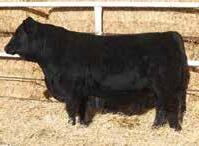
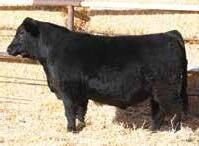
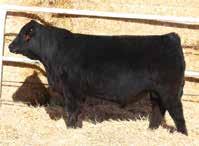
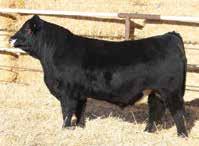
McNamee Angus Ranch & Cook Angus
Adobe Stock image
EXTENSION EDUCATION
By Makayla Getz, UW Extension Educator
Considerations for Soil Amendments in Wyoming Discussed
Depending on where one lives in Wyoming, their soil may allow them to grow barley, sugarbeets, alfalfa or possibly nothing at all.
Soils in Wyoming are made up of sand, silt and clay and can have a variety of characteristics. Typical characteristics include a pH above seven and as high as 8.5, either fast draining or heavy clay-like behavior, soil which falls into the calcareous soil category, as well as soils falling into the saline soil category, just to name a few.
Why is understanding our state’s soil and soil pH important?
Simply put, soil pH affects the availability of
nutrients for plant uptake. Whether this is crops, flowers, a garden in the backyard or a new vineyard venture, soil pH matters.
For example, micronutrients in the soil – such as iron and zinc – become more available as pH decreases, but phosphorus and magnesium become less available.
In Wyoming, because we have such a high soil pH, iron and zinc micronutrients are often unavailable to plants.
Due to the drastic pH range, weather and landscape in Wyoming, people have begun turning to soil amendments to balance their soil pH. In addi-
tion to the previously stated reasons, to ensure plants are receiving the micronutrients needed, rather than adding additional micronutrients to the soil, soil amendments are also a cost-effective way to decrease Wyoming soil pH.
Soil testing
Before attempting to alter soil pH, it is best to gather a soil sample to see where soil is on the pH scale. Next steps would include discussing soil amendments with a local Extension agent.
To take an appropriate soil sample, the sample should be representative of the entire area tested, collected from the same depth and should have as much information as possible provided about the area being sampled for the testing lab.
Those unsure about how to sample soil should contact a local weed and pest office or county Extension office.
Adding soil amendments
Amendments used to change soil pH are most effective when applied in the spring or fall, meaning the soil tempera-
ture should be above 55 degrees Fahrenheit.
Amendments can be broken down into two categories – organic or inorganic.
Organic amendments simply mean they come from previously living matter such as compost, wood chips, manure, straw, corn husks and other substances which fall into this category.
Inorganic amendments include gypsum, coal byproducts, sulfur, coffee grounds and others. These are considered inorganic because they are minerals and/or did not originate from another previously living being or thing.
As previously discussed, since Wyoming soils typically have such a high pH, the name of the game is to lower the pH to the six to 7.5 range.
Common and low-cost amendments include elemental sulfur, a safe and inexpensive option which slowly oxidizes in the soil to create a sulfuric acid and can take three to six months for the soil pH to decrease after applying; organic mat-
ter including leaves, grass clippings, soybean meal and alfalfa pellets, to name a few; coffee grounds can help make soil more acidic and compost can neutralize alkaline soils and bring pH levels to a range ideal for plant nutrient uptake and organic mulch, which can help neutralize soil alkalinity and offset the deficiency of organic material in alkaline soils.
Soil amendments purchased at a store will typically have instructions included on the packaging. Those who would like to purchase soil amendments in bulk should discuss their plan with a local Extension agent.
When it comes to timing, the most effective way to change soil pH is to make changes pre-planting. Certain amendments such as sulfur are not water soluble and need to be incorporated into soil with a tiller, shovel, etc., to a depth of six to eight inches.
Please note, these changes are not instantaneous and take time –weeks to months.
If plants are already in
the ground, individuals may still apply an amendment to the topsoil, rake the amendment evenly across the surface without damaging the plants and then water the area.
Don’t forget the water
Once individuals have figured out what soil amendments will work best for their location and budget, they need to remember soil needs water.
At the beginning of this article, I noted Wyoming’s soils tend to do one of two things – they have either fast draining or clay-like behavior, meaning they lose water quickly or water does not move through them as efficiently as we would like.
Adding additional amendments like gypsum can increase calcium in the soil. This calcium increase causes soil particles to stick together, improving water movement.
Makayla Getz is the University of Wyoming Extension educator for agriculture and natural resources serving Park County. She can be reached at mgetz@uwyo.edu or 307-527-8568.
I was recently told I was “selfish and self-serving” for opposing a 700-mile proposed carbon pipeline which is cutting through multiple states, strong-arming families, condemning landowners and attempting to forcibly take easements against people’s will.
The commenter suggested “for the good of all,” we should be willing to give up our own private property rights for a hypothetical, unproven suggestion of greater profitability for one industry.
I was aghast to read this.
To be quite frank, it sounded like extreme socialism to me, and while I value differing opinions, freedom of speech and the ability to have difficult conversations with others, I found this to be quite alarming an individual would suggest standing up for one’s family and neighbors and protecting them from potential harm could somehow be “selfish and self-serving.”
Is it selfish and self-serving to believe in the fundamental American dream that began in 1776 with our Declaration of Independence?
Alexander Hamilton said, “The sacred rights of mankind are not to be rummaged for, among old parch-
BY AMANDA RADKE
Selfish and Self-Serving AG of Heart
ments or musty records. They are written, as with a sunbeam in the whole volume of human nature, by the hand of the divinity itself and can never be erased or obscured by mortal power.”
Is it selfish and self-serving to live by the U.S. Constitution, where our Founding Fathers keenly understood private property is the foundation, not only of prosperity, but of freedom itself?
George Washington said, “Freedom and private property rights go hand in hand. You can’t have one without the other.”
Is it selfish and selfserving to understand individual liberties should be safeguarded and not sacrificed because a “get-rich scheme” comes into town, benefitting the donor class and very few?
Is it selfish and selfserving to dedicate one’s life to building a home, business and family, to investing in land and pouring blood, sweat and tears into it?
Is it selfish and selfserving to want to protect this, build a legacy upon it and create something that can be passed down for generations to come?
Is it selfish and selfserving to recognize since our nation began, men and
women have sacrificed everything, including their lives, in order to keep us free?
Is it selfish and self-serving to want to say, “No, thank you,” to something I fundamentally don’t believe in?
Is it selfish and selfserving to have other hopes and dreams for my land and understand I cannot and should not ever covet or lay claim to the land of my neighbors?
Is it selfish and selfserving to want to do business through fair, honest and good-faithed negotiations verses coercion and force?
Is it selfish and self-serving to stand up for my family and to care about my neighbors and community too?
No. The answer is no. It is not. There is a cost to pay for standing up for what is right, and I will continue to do it despite the attacks and the naysayers. Our private property rights are worth fighting for, worth protecting and worth preserving.
To control the land under one’s feet is paramount to a free and fed society, and as I look across this great nation, I am saddened to see the many attacks happening in almost every state for this fundamental building block to independence and liberty. May we all become courageous and resolved to stand up for our private property rights. Our children, grandchildren and generations to come are counting on us. Amanda Radke is a rancher, author, motivational speaker and podcast host. For more from Radke, visit amandaradke.com
BLEVINS
New All Metal Stirrup Buckles
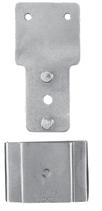
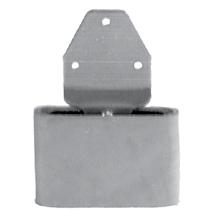
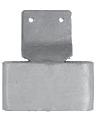
Blevins new all-metal stirrup buckle in 3”& 2-1/2” widths. The 3” and 2-12” widths have the posts set horizontally and fit standard holes while the 2” width has the posts set vertically. Made of stainless steel and heat-treated aluminum, the same as our leather-covered buckles.
Blevins Stirrup Buckles Improved
Sleeves same as on regular style buckle. The tongue has no hinge or strap. Available in 3” and 2-1/2” widths.
Easy to change stirrup lengths quickly and easy to install – won’t slip or stick. Made of stainless steel and heat-treated aluminum. Sleeves covered with leather. Order either improved, regular or four post buckles. Also new all-metal buckle in 3”, 2-1/2” and 2” widths. At your dealers or:
OBITUARIES
Donald “Don” Leroy Sims
March 5, 1930 – Jan. 21, 2025
Donald “Don” Leroy Sims of McFadden passed from this world on Jan. 21.
Don was born on March 5, 1930 to Roy and Opal (Printy) Sims in Laramie. He was a graduate of Laramie High School and an alumnus of the University of Wyoming (UW).
Don spent most of his life as a rancher in the Rock Creek Valley where he and his family led the Sims Ranch to receive national recognition for their holistic management practices and environmental stewardship.
He also served as a hydrographer and commissioner for the state of Wyoming over a distinguished 30-year career.
He was well respected for his knowledge of water law and how he handled water administration in his district.
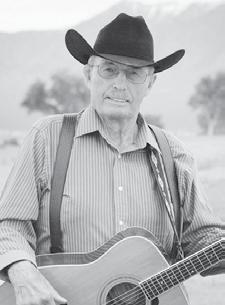
Don led a life of wide and varied interests. He was proud of the fact he was on the first UW rodeo team and participated in the first rodeo put on by UW. He was also a talented musician, playing both the saxophone and the guitar in bands and solo.
He was active in cowboy poetry, writing and reciting numerous poems and a few songs. He wrote a few books, both fiction and nonfiction. One of his books, titled “My First 70 Years,” shares not only his life but some valuable history of the Rock Creek Valley.
Some of Don’s adventures led him to explore ranching in Australia and New Zealand, as well as a trip to China.
He was an avid elk hunter and mountain fisherman who taught his family the art of packing with horses. Even when his hunting days were over, he delighted in hearing hunt-
ing stories and often shared his past stories as well.
He was very proud of his family and how the family managed the ranching operation. He was eager to try new things and supported new methods of operation as they came along. He was ready to offer a helping hand and did so up to the day he died. He always looked forward to the next day with enthusiasm.
Don was preceded in death by his mother and father, his older sister Lauretta McQuay, his son Olin Sims and grandchildren Jennifer Jones and Russel and Brooke Sims.
He is survived by his wife Cheryl (Williams) Sims; son Scott (April) Sims of McFadden; daughter Denise (Sims) Loose and her husband Larry of Kimball, Neb. and Tammie Sims of McFadden; stepsons Chance and Casey George of Douglas; grandchildren Carrie Jones, Shanon (Melinda) Sims, Kendra (Josh) Keller, Tyler (Elise) Sims, Kaleigh Dixon and Lane, Tyler, Autumn and Karah George and great-grandchildren Kagan and Jentry Sims, Georgia Lendhart, Kash Keller and Charlee and Jesslyn Sims.
In a community where stockmen respect each other’s hard work and expertise, the Herdsman of the Year Award is a mark of excellence in the Angus breed. This award recognizes an Angus enthusiast who has dedicated themselves to the management, strategic choices and advancement of their cow herd.
While the life of a herdsman may seem glamorous to many, few understand both the physical and mental demands of the job.
Award winner
Cash Langford of Hunter Angus in Fair Grove, Mo. understands these demands and embraces his role fully, earning him the recognition as the 2025 Angus Herdsman of the Year.
The award was presented by the American Angus Association (AAA) on Jan. 10 at Cattlemen’s Congress in Oklahoma City.
After the initial shock of the announcement passed, Langford credited his success to surrounding himself with good people, noting the first people to congratulate him were fellow nominees
Angus
–
Langford named 2025 Angus Herdsman of the Year
and good friends Greg Van Zee, Michael Jones and Cole Kaufman.
“I thought, ‘There’s no way.’ I mean, I really was not expecting to win this,” Langford said. “It’s always been –not necessarily a goal – but a dream. There are some people who mean so much to me and have taught me so much who have passed away in the last few years and previously won this award. I’ve learned so much from those guys.”
What means even more to Langford is the award is voted on by his peers.
“It’s pretty awesome people think I’m the one who needs to be chosen for the award,” he said.
Angus background
Langford, a Texas native, grew up with a competitive spirit for showing cattle. His interest in the cattle industry was sparked at a young age as he exhibited Angus cattle nationally and steers at the Texas majors.
Today, he calls Fair Grove, Mo. home, serving as the herdsman at Hunter Angus. There, he manages show and sale cattle and plays a key role in
the daily operations of the farm. He works closely with the Hunter Angus team on breeding decisions, mating strategies and maintaining the farm’s donor and recipient cow battery.
Under his management, Hunter Angus has achieved considerable success, including the exhibition of the 2023-24 Roll of Victory Show Bull of the Year, BNWZ Executive Decision 2219.
At Hunter Angus, Langford serves as a mentor to junior members, helping them select heifers, offering advice on feeding and providing guidance on fitting and clipping for shows.
“The Angus breed has given me so much, and I’m honored to be nominated for this award alongside three other deserving gentlemen as well as dear friends,” Langford said. “What keeps me motivated is the people I get to work with, especially the young people in the industry. Helping them grow and succeed is what it’s all about.”
Langford noted he hopes Richard Stotts and Ed Rich-
Starting on Feb. 25, the University of Wyoming (UW) Extension Sheep Task Force is hosting a series of virtual webinars on predator management.
The webinar series is free and open to the public. Sheep producers from across Wyoming and beyond are welcome to attend. The three webinar sessions will take place from 6-7 p.m. on Feb. 25, March 4 and March 11.
The first webinar will focus on using burros to protect sheep flocks from predators. Researchers at the Laramie Research and Extension Center (LREC) adopted burros from the Bureau of Land Management to test this method.
During the webinar, LREC Director Derek Scasta will discuss LREC’s research and what producers may need to know before adding a burro to their flock.
Livestock guardian dogs are the topic of the second webinar, where Sublette County Extension Educator Dagan Montgomery and Cat Urbigkit, president of the Wyoming Wool Growers Association (WWGA), will lead the dis-
cussion. They will discuss differences between livestock guardian dog breeds and how to manage guardian dogs effectively.
The final webinar will address predator assistance options and predator management costs. Speakers are Fremont County Extension Educator and Fremont County Predator Board Member Chance Marshall; Alison Borcher, WWGA executive director, and Rob Ziegler, UW Extension livestock production and marketing specialist.
Marshall and Borcher will discuss how the Wyoming Wool Growers Association, county boards and state trappers can assist Wyoming sheep producers with predation. Ziegler will review the economic impacts of predation and examine which predator management strategies are most cost effective.
To register for the webinar series, visit bit.ly/wypredator. Registered participants will receive a Zoom link to all three webinars and are free to attend one or all of the sessions.
Webinar recordings will be available on UW Exten-
ardson are proudly looking down over him, because they helped mold and guide him to where he is today.
The 2025 Herdsman of the Year nominees were slated by a committee of previous award winners, based on their devotion and skills spent improving a specific herd and the Angus breed. They were Michael Jones
of Express Ranches; Cole Kaufman of Oakley Farms and Greg Van Zee of Udell Cattle Company.
Peers select the Herdsman of the Year Award winner through voting, hosted by the association.
To be eligible to vote, exhibitors must have entered at least one of the following shows in 2024 – Cattle-
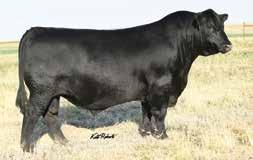
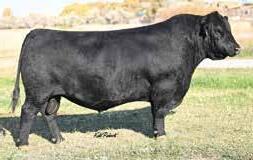
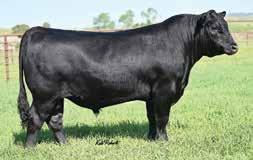
Powder River Angus
Spotted Horse, WY
Feb. 14, 2025
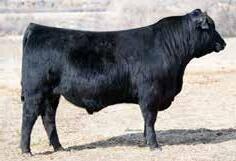
Buffalo Livestock Marketing • Buffalo, WY POWDER RIVER ANGUS cattle are grass oriented. We want performance off grass in our cattle, with maximum performance gained from breeding generations of superior dams. Our bulls are developed on long stem grass hay and a high fiber pellet, with fertility, good feet, longevity, and docility always at the top of our mind. They’re range-ready, Pap tested ANGUS bulls that have been developed in rugged country. Learn more at: PowderRiverAngus.com
SONS OF:
men’s Congress, National Western Stock Show, Western National Angus Futurity, Atlantic National, American Royal or North American International Livestock Exposition.
Molly Biggs is a communications specialist for AAA. This article was originally published on Jan. 27 by the association.
sion’s YouTube page after the series’ conclusion.
For more information, contact McKenna Julian at mbrinton@uwyo.edu or 307-828-4093.
The 2025 Herdsman of the Year Cash Langford, is pictured alongside his family. The 2025 American Angus Association (AAA) Herdsman of the Year results were announced on Jan. 10 at the Herdsman Social during Cattlemen’s Congress in Oklahoma City. AAA photo
For many Wyoming visitors and residents, winter isn’t just snow season – it’s also snowmobiling season.
This type of seasonal recreation can be an important source of economic activity, especially in the state’s small rural communities. Snowmobilers rent rooms at local hotels, eat at local restaurants and purchase fuel and supplies at local stores.
But what happens if there’s not enough snow to ride? And, on the flip side, how might rural communities benefit if they consistently receive more snow?
Economic impacts of winter recreation
Every 10 years, the Wyoming State Trails Program works with the University of Wyoming (UW) to collect economic data associated with snowmobile and off-road vehicle (ORV) use on public lands.
In 2023, a group of researchers in the UW
Department of Agricultural and Applied Economics partnered with Atmospheric Scientist Bart Geerts and his team to take the investigation a bit further.
“I wanted to figure out how future changes in climate may change how we go about economic development and tourism in the state,” says Anders Van Sandt, community development specialist in the UW Department of Agricultural and Applied Economics.
“Tourism is one of the top three industries in Wyoming, and winter tourism tends to be really seasonal,” he continues. “The more we can extend the season or add on in different seasons to retain employment means keeping jobs in rural communities.”
In collaboration with fellow UW Agricultural Economics Professor Chris Bastian and Graduate Student Kelsey Lensegrav, Van Sandt used survey data and
climate predictions to examine how changes in snowpack could affect Wyoming’s economy.
Correlating snow depth and spending
Surveys were sent to randomly selected resident and non-resident snowmobilers who registered with the Wyoming State Trails Program. Respondents were asked about their preferred snowmobiling sites, how much they spent on snowmobiling equipment and travel and what impacted their enjoyment of snowmobiling – e.g., preferences for certain types of trails –during Wyoming’s 2020-21 snowmobiling season.
Based on survey results, the researchers developed economic models to predict how changes in snow depth could affect snowmobiler spending at 18 sites across Wyoming.
To cover a wide variety of scenarios, they used nine different climate mod-
els with varying predictions for mid-century and end-ofcentury snow depth.
Entering different snow depths into their economic model, they generated predictions about how snowmobiler activity might influence local economies in each set of conditions.
Residents and non-residents
In this study, snowmo-
biler behavior and spending were broken down into two categories – resident and non-resident. Results suggested a clear divide in the predicted behavior and spending patterns of residents versus non-residents.
In nearly all mid-century and end-of-century predictions, the number of nonresident trips and value of non-resident expenditures were predicted to increase relative to the 2020-21 baseline.
Meanwhile, snowmobiling trips and expenditures associated with Wyoming residents were expected to decline.
Overall, this pattern could potentially benefit Wyoming’s economy at a statewide level. While resident snowmobiling brings economic activity to rural communities, it represents movement within the state’s economy.
recreation – Snowmobiling is an economically important winter activity, especially for rural communities.
cated some Wyoming snowmobiling sites may suffer economically from reduced snowpack, the state’s altitude may help it outperform neighboring states like Montana and Idaho.
“Our estimates may actually be conservative in the sense we focused just on the state of Wyoming,” Bastian explains. “A number of the states surrounding us are probably going to experience net loss, and Wyoming is generally predicted to be a net gainer in some high-elevation sites. So, we may see a higher influx into the state from non-residents than we captured in this study.”
Planning ahead Bastian and Van Sandt are hopeful their research will positively contribute to trail management and economic planning in communities which serve as “gateways” to outdoor recreation opportunities.
Non-resident spending, on the other hand, introduces new dollars into the state.
The current and predicted decline in resident registrations doesn’t necessarily mean a decline in trail use, Van Sandt notes. Locals may be more inclined to buy tracks for their ORVs rather than owning both snowmobiles and ORVs, for example.
Gains and losses
For some communities, this might mean pivoting to focus on other types of outdoor recreation.
“For places which will likely lose snowpack, there may be some recreation substitution,” Bastian comments.
Although Wyoming’s non-resident snowmobiling industry is likely to grow at a statewide level despite changing snow depth, models suggest economic impacts will vary by community.
“Given the models the climate scientists established, we found there are sites that gained and some that decreased in snow,” says Bastian.
Based on mid-century and end-of-century climate predictions, five to six of the 18 study sites were deemed unlikely to maintain the recommended eight inches of snow during the snowmobiling season. Unsurprisingly, those sites will likely experience reduced demand and snowmobiler spending.
Results also suggested sites predicted to receive more snow could benefit economically from changing environmental conditions. The Snowy Range, for example, is expected to experience increases in both snow depth and non-resident snowmobiling expenditures.
While the study indi-
With less snow, perhaps a longer ORV season will help compensate for the loss of snowmobiler spending, he suggests. In other locations, maybe the market for cross-country skiers will expand, even if the snow depth can no longer support snowmobiling.
Regardless, the circumstances and response will vary by community. While some local economies may grow in response to increased demand for snowmobiling-related amenities, other communities may shrink as residents migrate elsewhere to find work.
“We can provide information that’s relevant, but the communities are the ones who come up with ideas on what to do next,” Van Sandt notes. “If they have this information ahead of time, they may have a better chance of transitioning to a slightly different-looking economy in the future.”
Brooke Ortel is a writer and editor for UW Extension and can be reached at bortel@uwyo.edu. This article was originally published in the 2024 issue of Reflections, the annual research magazine published by the UW College of Agriculture, Life Sciences and Natural Resources.
Wyoming State Trails Program photo
On Jan. 10, the U.S. Department of Agriculture’s National Agricultural Statistics Service (NASS) published the annual Crop Production 2024 Summary for the U.S. and individual states.
The report includes statistics on the production of corn, barley, wheat, hay, alfalfa and sugarbeets across the state of Wyoming, based off of an agricultural survey published by the NASS Mountain Regional Field Office on Dec. 1, 2024.
Corn
In Wyoming, production of corn for grain in 2024 is estimated at 10.23 million bushels, up 17 percent or 1.15 million bushels from the 8.72 million bushels produced in 2023.
Average yield, at 155 bushels per acre (bpa), was up two bpa from the previous year, and area harvested for grain, at 66,000 acres, was up 9,000 acres from the year before. Planted area totaled 85,000 acres in both 2023 and 2024.
Additionally, NASS estimates area harvested for corn silage in Wyoming is at 15,000 acres, down 8,000 acres or 35 percent from the year prior, with production estimated at 345,000 tons, compared to the 529,000 tons produced in 2023.
Comparatively, corn for grain production across the entire U.S. is estimated at 14.9 billion bushels, down three percent, while both planted area, at 90.6 million acres, and harvested area, at 82.9 million acres, are down four percent.
Average yield in the U.S. is estimated at a record high of 179.3 bpa, up two bpa from 2023.
The NASS report also shows the nation’s total corn silage production is forecast at 123 million tons, down five percent from the year before, while silage yield is estimated at 20.2 tons per acre.
Wheat and barley Winter wheat production in the state of Wyoming is estimated to be up
NASS releases 2024 crop production highlights
four percent from last year at 2.82 million bushels.
NASS notes area harvested for grain increased by one percent to 91,000 acres. Additionally, winter wheat yield, at 31 bpa, is up one bushel from a year ago.
According to NASS’s survey, growers seeded 110,000 acres in 2024, which is down from the 115,000 acres seeded for the previous year’s crop and represents the smallest seeded area since 1937.
Winter wheat seeding in Wyoming for the 2025 crop year is estimated at 105,000 acres, down 5,000 acres from the final planted area in 2024.
When it comes to barley, NASS estimates Wyoming production to be down five percent to 5.71 million bushels.
The agency also estimates area harvested for grain will be down 7,000 acres from last year to 51,000 acres.
Barley yield, at 112 bpa, is up eight bpa from 2024, which is a new record high.
The NASS survey further notes Wyoming growers seeded 74,000 acres, down from the 83,000 acres seeded for the previous year’s crop.
Across the U.S., winter wheat production totaled 1.35 billion bushels, up nine percent from 2023, with a yield of 51.7 bpa, up 1.1 bpa from the year prior.
Area harvested for grain is also estimated higher at 26.1 million acres, up six percent from 2023, with record-high yields forecast in Missouri, South Dakota and Wisconsin for 2024.
All wheat production in the U.S. totaled 1.97 billion bushels, up nine percent from 2023, with total area harvested at 38.5 million acres, up four percent, and average yield at 51.2 bpa, up 2.5 bpa.
National barley production is estimated at 144 million bushels, down 23 percent from 2023’s 186 million bushels.
The average barley yield in the U.S. for the year
was 76.7 bpa, up 4.4 bpa. Producers seeded 2.37 million acres in 2024, down 24 percent from 2023, and harvested area, at 1.88 million acres, was down 27 percent from 2023.
Hay
According to NASS, alfalfa and alfalfa-mix hay production is estimated at 1.95 million tons, down 23 percent, while average yield for the 2024 crop is 2.9 tons per acre, fractionally smaller than last year’s numbers.
All other dry hay production totaled 675,000 tons from 450,000 acres harvested, which is down 100,000 tons from the previous crop. Average yield is also down, at 1.5 tons per acre.
NASS estimated new seeding of alfalfa and alfalfa mixtures at 35,000 acres, down 15,000 acres from the previous year.
Overall, NASS notes all 2024 dry hay production
in the state of Wyoming is estimated at 1.95 million tons, down 23 percent.
Additionally, the NASS survey shows, as of Dec. 1, 2024, producers in Wyoming had 1.3 million tons of dry hay in storage, down 13 percent from the 1.49 million tons stored last year.
On a national scale, production of alfalfa and alfalfa-mix hay in 2024 is up slightly at 49.8 million tons, while harvested area, at 14.6 million acres, is down six percent and average yield, at 3.41 tons per acre, is up fractionally.
Production of all other hay in 2024 totaled 72.6 million tons, up six percent from 2023, with harvested area, at 34.8 million acres, down six percent and average yield estimated at a record high of 2.09 tons per acre.
NASS reports show all hay stored on U.S. farms as of Dec. 1, 2024 totaled 81.5 million tons, up six percent from the year prior.
Montana Performance Bull Co-op™
Sugarbeets
The state’s 2024 sugarbeet crop totaled 946,000 tons, up 12 percent from the 847,000 tons produced last year. Planted area totaled 31,700 acres, compared to 2023’s 29,100 acres, and producers harvested 30,800 acres in 2024, up from 28,800 acres in 2023. Average yield is estimated at 30.7 tons per acre, up 1.3 tons from last year.
In the U.S., 2024 sugarbeet production is estimated
at 35.3 million tons, down two percent from the year prior. NASS notes growers planted 1.10 million acres, down two percent from 2024 and harvested area, at 1.09 million acres, was down three percent from the previous yield.
Estimated yield was up slightly from the year before at 32.5 tons per acre.
Hannah Bugas is the managing editor of the Wyoming Livestock Roundup. Send comments on this article to roundup@wylr.net.
CASPER ALCOVA IRRIGATION DISTRICT’S ANNUAL MEETING AND ELECTION IS FEB. 21, at 6 p.m. Location: Agriculture Resource Learning Center, 2011 Fairgrounds Rd, Casper, WY. Up for election are areas 1 and 2 2/15
NOTICE: Publication in this newspaper does not guarantee the legitimacy of any offer or solicitation. Take reasonable steps to evaluate an offer before you send money or provide personal/financial information to an advertiser. If you have questions or believe you have been the victim of fraud, contact the Wyoming Attorney General’s Office, Consumer Protection Unit, 109 Capitol Building, Cheyenne, WY 82002, 307-7776397 TFN
2025 CACHE VALLEY
COWBOY RENDEZVOUS, MARCH 6-9: Welcomes in concert Suzy Bogguss, Paul Overstreet and Bar D Wranglers. Free admission to Cowboy Poetry, Western Music, Vendors and Poetry Contests, etc. Fri. 3-10 p.m. and Sat. 10 a.m.-8 p.m. Cache County Event Center, Logan, UT. Go to www.cvcowboy.org or text/leave message at 435760-0160 2/22
UP IN ARMS, LLC FLEA MARKET AND GUN SHOW FEB. 21-23, Gillette, WY at the CAM-PLEX. Open to the public. Fri., Feb. 21, 3-7 p.m. Sat., Feb. 22, 9 a.m.-5 p.m. Sun., Feb. 23, 9 a.m.-3 p.m. Giving away a .22 pistol Sunday at 2 p.m., must be present to win, 21 years of age and able to pass background check. Buy, sell, trade. Adults $6, children 12 and under free (when accompanied by an adult). For more information, contact Lisa, 208-420-2295 2/15
Help Wanted
GOTTSCH LIVESTOCK FEEDERS LLC Red Cloud, NE
Come Join the Gottsch Livestock Feeders Family! Gottsch Livestock Feeders is looking for Cowboys/Pen Riders for their feedyard in Red Cloud, NE. The main focus of the Cowboy/Pen Riders are spotting, pulling, diagnosing and taking cattle to the hospital and shipping fat cattle. This person will need to be a team player who is seeking a long-term position. You will have the opportunity to work with and learn from some of the best in the industry. We offer a benefits package that includes health insurance, dental, vision, 401(k), health savings, life insurance and paid vacation. Retention bonus offered to full-time employees. Incentives paid out at 6 months and 1 year of employment. If you are interested stop by and fill out an application or visit our website at
www.gottschcattlecompany.com
PEEGEE RANCH NEAR ARVADA, WY IS LOOKING FOR A FULL-TIME FARM/RANCH EMPLOYEE: This position is open immediately. Applicant must be self-motivated, reliable and responsible with knowledge of haying and farming. Mechanical skills are a must. Farming duties include swathing, baling and raking hay, etc. This is not a cowboy position, but applicant will need to assist in all aspects of cattle work as well. Those duties include calving heifers, feeding hay, branding and gathering, etc. Nearest big town is 60+ miles and nearest K-12 school is 30+ miles away (location of the ranch is remote). Housing is provided and on a school bus route. Please send resume with references by mail or email to: PeeGee Ranch, 1251 Lower Powder River Road, Arvada, WY 82831, pgranch@ rangeweb.net. Call 307-7362461 2/22
THE CITY OF LANDER IS ACCEPTING PROPOSALS FOR A CONCESSIONAIRE AND FACILITY MANAGER FOR THE LANDER RODEO GROUNDS located at 1665 Rodeo Drive, Lander, WY 82520 with the intent of producing of rodeos, rough stock events, concerts and other community events for the benefit and entertainment of the general public at the Lander Rodeo Grounds. Contract will commence March 2025, for a two-year term ending December 2026. A proposed “Agreement for Lander Rodeo Grounds Concessionaire Services” is located at www.landerwyoming.org/rfps or may be picked up at City Hall, 240 Lincoln, Lander, WY 82520. Interested parties may inspect the rodeo ground premises by contacting Parks and Recreation staff Lori Eckhardt, 405 Fremont Street, Lander, WY or by calling 307-332-4647. All proposals must be received by 2 p.m. on Thurs. Feb. 20, 2025 Proposals will be accepted by electronic submission to rsfossen@landerwyoming.org or by standard mail and hand delivery. Standard mail and hand delivered proposals must be clearly marked “Lander Rodeo Concessionaire” and delivered to City of Lander, RaJean Strube Fossen, 240 Lincoln Street, Lander, WY 82520. Proposals should include an explanation of the type and frequency of potential entertainment events, description of experience in operating rodeos and other similar entertainment events, proof of capacity to operate and maintain the rodeo facilities as a sole provider or using subcontractors, proof of business or organizational structure, and certificate of liability insurance as required in the draft agreement. Proposals will be evaluated based on the frequency and type of entertainment events, past experience, references for similar concession agreements. The City of Lander reserves the right to accept or reject any or all proposals and to accept the proposal which is deemed to be in the best interests of the City of Lander to increase the usage and capacity of the rodeo grounds for community events. The City of Lander does not discriminate on the basis of handicapped status in the admission or access to, or treatment or employment in, its programs or activities. The City of Lander does comply with the nondiscrimination requirements contained in Section 504 of the ADA regulations. The City of Lander is an Equal Opportunity Provider 2/1
Brands REGISTERED WYOMING BRAND FOR SALE: LSH, one iron, nice horse brand, doesn’t scald, $5,000. Call 307247-5307 2/15
REGISTERED WYOMING BRAND: LRC, LSH. Current through Jan. 1, 2033. $2,500 OBO. Contact Gene at 307-331-1049 2/1
REGISTERED WYOMING BRAND: LRC, LSS, LHH. Current through Jan. 1, 2033. $5,000 OBO. Contact Gene at 307-331-1049 2/1
REGISTERED WYOMING BRAND: LRC, LSH. Current through Jan. 1, 2033. $3,500 OBO. Contact Gene at 307-331-1049 2/1
REGISTERED WYOMING BRAND: LRC, LHS, LSH. Current through Jan. 1, 2033. $5,000 OBO. Contact Gene at 307331-1049 2/1
Jindra • Clarkson, NE • 402-920-3171 nickjindra@hotmail.com • jindraangus.com
TEDDY ROOSEVELT TERRIERS: FARM COMPANION AND VERMIN CONTROL. Puppies for sale near Cheyenne, WY. Two females and 4 males. Born Nov. 27, ready to go home Jan. 22. These little dogs are excellent short-haired, self-cleaning companions in any setting. Good hunters. $700. Call/text 307-477-0386, visit www. wabbitfireterriers.com To view photos, go to www.wylr. net in the classifieds 2/1
AKC BORDER COLLIES
CHAMPION LINES: This is a beautiful litter of border collies with the potential to show and compete. They have numerous champions in their lineage. They will have rough coats and have medium to low drive. They will also make amazing family pets just as their parents are!! These puppies come with an AKC registration application. They will have a vet check at 6 weeks of age including vaccinations, worming and microchip. To reserve a puppy, a non-refundable deposit of $300 will be required. With the balance due before pick-up. Whelped Dec. 19, 2024. Will be ready to go Feb. 22. Five males available, 1 male and 1 female are reserved. If you have any questions about this litter please contact me. Call or text 307267-6362. Thanks, Cheri. To view photos, go to www.wylr. net in the classifieds 2/15
AGRI-ONE FINANCIAL: Farm/ ranch and all commercial loans. RATES AS LOW AS 5%. We have been helping with all aspects of agricultural, commercial financing and management for years. LET US HELP YOU on a consulting level with management to increase profitability, deal with and fix credit problems and for all your financing needs. WE CARE AND HAVE WORKING PROGRAMS designed for the farmer/rancher and not the banker. Please call Steve, 303-773-3545 or check out our website, www.agrionefinancial.com. I will come to you and get the job done!! 1/22 ALL TYPES OF EQUIPMENT AND VEHICLE FINANCING. Great service!! Great rates!! Call Chuck Brown at C.H. Brown Co., WY LLC, 307-3223232 (office), 307-331-0010 (cell) or e-mail chuckbrown@ wyoming.com 2/1
OLD WYOMING ONE IRON, LEFT RIB BRAND FOR SALE: LRC, LHH, 10 year fee paid to March 2035, $12,775. Call 307-334-2760 2/22
WYOMING BRAND FOR SALE: RHC, BS. Irons included. Registered through March 2031, $2,000 OBO. Call Mike at 307202-0494 2/22
REGISTERED WYOMING BRAND, LRC, LSS, LSH, LRB, one iron, best offer or open to trade. Call 307760-5976 2/15
WYOMING REGISTERED, ONE-IRON BRAND FOR SALE: LR cow. LT horse. Dues paid 10 years to 2035. Asking $6,995. Easy to read, clean cut brand. Hot iron available. Call 605-390-4797 2/22
STAIRCASE CHAROLAIS AND RED ANGUS ONLINE
BULL SALE: 50+ purebred yearling Charolais and Red Angus bulls SELLING APRIL 12-17 Timed auction online with www.dvauction.com!! Practical bulls bred for balanced traits, functionality, consistency, disposition, efficiency and quality, built to excel in every step of the cattle industry!! For more information, visit www.staircasebulls.com, find us on Facebook or give us a call. Gus, 307-575-5860 or Amy, 308-631-1952 4/12
YEARLING
BULLS FOR SALE:
and 2-year-old Black Angus range bulls for sale private treaty. Good selection for heifers and cows. From popular sires and industry leaders. Semen tested and ready to go. Call 307-7623541 TFN
SimAngus
SIMANGUS BULLS FOR SALE: Yearlings and 18-month-olds. Sired by CCR Bonafide, TJ Chief, TJ Stability, TJ Stone Cold, TJ Teardrop, Bridle Bit Eclipse. All bulls have GE EPDS, are homozygous polled, most are homozygous black. BULLS WILL BE OFFERED BY BID OFF ON FEB. 15 No bulls sold before the bid off. Bulls can be inspected at Dilka Cattle anytime before the bid off, pictures and videos available by request. ALL BIDS MUST BE TURNED IN BY NOON ON FEB. 15 Bulls will be fed till April 1 at no cost to buyer. All bulls guaranteed for first breeding season. Information on the bulls and the process may be requested by e-mail at thedilkas@ aol.com or calling 970-396-8791 2/8
Cattle
Ranch for Lease
Trailers
Selling 30 Purebreds February 17, 2025
Stockmen’s Livestock Dickinson, ND
Helm 406-557-6259 41st Annual Salers
PARK COUNTY WYOMING RANCH NEAR CODY, WY IS AVAILABLE FOR A LONGTERM LEASE: The ranch has over 50,000 acres and supports an irrigated hay base with BOR water rights. Carrying capacity is 700 animal units year-round with hay production. Willing to split the hay ground and grazing. Please e-mail Honora Beirne (hbeirne@acpg.com) and Melanie Giliati (mgiliati@ acpg.com) for details 2/22
ALFALFA HAY FOR SALE
1st, 2nd and 3rd Cuttings
Horses
Core samples tested for protein, TDN Located 20 miles east of Kaycee, WY at Sussex $175/ton Call Lynn Cowden 806-663-6320
200 tons 2023 GRASS/ALFALFA in large rounds, cut slightly mature but baled green!! Also, selling 2024 WHEAT STRAW in large squares and 200 tons MILLET HAY. Will deliver!! For sale by Cheyenne, WY area producer. Call 307-630-3768 2/15
Hay & Feed
CERTIFIED BARLEY STRAW FOR SALE, 3x4 bales. Cody, WY. Call 307-899-1952 TFN
FOR SALE, 18-YEAR-OLD RANCH GELDING: Been here his whole life, done everything on the ranch. Gentle and sound just needs a smaller circle. Call 307-760-5976. To view photos, go to www.wylr. net in the classifieds 2/15 FOR SALE, PERCHERON CROSS HORSES. Call 605210-1785. To view photos, go to www.wylr.net in the classifieds 2/15
Saddles & Tack
GREAT SELECTION OF VALENTINES GIFTS!! MONTANA Silversmiths, AUSTIN Accent and others!! Jewelry prices start at $9.95!! SILK SCARVES, BELT BUCKLES, MONEY CLIPS, TOM BALDING and DUTTON BITS and ALL KINDS OF QUALITY TACK for your COWBOY or COWGIRL VALENTINE!! $AVE on BOOTS: HONDO, BOULET, JUSTIN WORK BOOTS, TWISTED X (boots and shoes) and more!! WE CAN ship!! Shop Moss Saddles, Boots and Tack, 4648 West Yellowstone Highway, Casper, WY, 307-472-1872. Our family serving yours for 50 years!! Check us out on Facebook or our website 2/8
Leatherwork
LS CUSTOM LEATHER: Belts, tack, cell phone cases and much more!! Contact Lester, 307-631-1053, leave a message. Located in Riverton, WY 2/1
Sheep
LOOKING TO RENT OR LEASE PASTURE FOR 50-150 cow/calf pairs for 2025, longer or yearly lease if possible. Preferably northeastern Wyoming. Call 307-660-0294 and leave a message if no answer.
Sale WANTED GRASS FOR YEARLINGS SUMMER OF 2025, references available. Maddux Cattle Company, 308-3501133 2/1
ARE YOU IN NEED OF A NEW HERDER CAMP OR A PERSONAL RANGE CAMP FOR YOUR FAMILY? Contact us at Western Range Camps and see what we can build for you. We specialize in quality, handcrafted camps built to your specifications. Contact us today to design the camp just right for you. Western Range Camps, 435-4625300, heidi@wrcamps.com, 1145 S. Blackhawk Blvd, Mt. Pleasant, UT 84647 2/1
MOFFAT COUNTY SHEEP SHEARING SCHOOL, CRAIG, CO APRIL 4-6: This 3-day shearing school provides handson, instructed experience in shearing sheep and an introduction to equipment maintenance. No previous experience needed. E-mail megan.stetson@colostate.edu or call 970-826-3402 for registration information and questions 3/22
GRASS AND ALFALFA HAY FOR SALE: Cow and horse quality. Round bales, 3x3 square bales and 3x4 square bales. Delivery available!! Call 307-630-3046 2/22
HAY FOR SALE: 2023 and 2024, alfalfa, sainfoin, grass and combine grass/straw. Small squares and 3x3x8 bales. Test results available for 2023 and 2024. Will load 3x3s in open truck and trailer. Call 307-2506005 2/22
HAY FOR SALE: Very fine stemmed alfalfa, good horse hay, 3x4x8 bales, 200 available. Call for pricing, 307-254-0152, Rivers Bend Ranch, LLC, Greybull, WY 2/1
BARLEY STRAW: Certified weed-free small squares, $4/bale. ALSO, 5x6 round bales, $125/ton. GRAIN OATS, wheat and barley, $20/cwt. Greybull, WY area. Call 307-762-3878 or 307-899-4714, leave message 2/22
ALFALFA HAY FOR SALE: 3x3 bales shedded. Priced depending on quality and quantity needed. Farson, WY, trucking available. Call 307350-0350 2/22
NORTHWEST WYOMING
CERTIFIED GRASS SEED GROWER HAS CERTIFIED GRASS HAY FOR SALE: 3x4x8 bales. 2023 crop approximately 1,200 lbs. 2024 crop approximately 900+ lbs. $25/bale. Powell, WY area. Call Mike at 307-202-0494 3/22
HORSE QUALITY GRASS HAY, third cutting, barn stored, 3x4 square bales, $200/ton. Lusk, WY. Call Paul Hicks, 970-203-5019 2/22
1,300 TONS OF ALFALFA, ALFALFA/GRASS MIX AND STRAIGHT GRASS: Prices starting at $95/ton, 3x4 squares. Located near Manhattan, MT. Delivery available. Minimum order of 200 tons. Call Doug, 406581-4124 2/1
ROUND-BALED GRASS: 2024 crop $50/bale. 1,000 lb. netwrapped bales. Cody, WY area. Call, don’t text, Anthony at 307-254-2645 3/1
HORSE QUALITY GRASS HAY, 3x4s barn stored, $175/ton. 2024 GRASS COW HAY, 3x4s barn stored, $135/ton. 2023 GRASS COW HAY, 3x4s barn stored, $115/ton. Encampment, WY. Call 307-321-1444 TFN
CLEAN ALFALFA AND SOME BARLEY HAY FOR SALE in Riverton, WY area with some trucking available. Call 307-8514532 2/15
CUTTING ALFALFA: John Deere 5x6 big rounds, net wrapped. RFV 218, protein 20.7%. The quality of this hay will make it go a long way and help supplement a lesser quality feed. Reasonably priced. Delivery by semi loads. Call 308-4300428 2/8
HAY FOR SALE: Alfalfa, mixed grass/oats and pea hay. Feed analysis and trucking available. Call 701-290-2363 2/8
EXCELLENT QUALITY OATS FOR SALE, $12/cwt. ALSO, WRANGLER ALFALFA SEED, $2.50/lb. Greybull, WY area. Call 307-272-9259 2/1
STRAW FOR SALE: 200 TONS OF BARLEY STRAW, 4x4 squares, $40/ton. Located west of Powell, WY. Call or text 307-2020532 for more information 2/8
MILLET AND BARLEY HAY, 4x4 square bales for sale, $135 and $140 a ton. ALSO, have third and fourth cutting alfalfa available. Located near Douglas, WY. Call 307351-4175 2/8
GRASS HAY FOR SALE: 2023 crop, 3x4x8 bales, 1,200 lbs., $100/ton. 2024 crop, $135/ton. Call Kelly Foianini, 307-7807027 or Bronson Foianini, 307760-2263, Lyman, WY 2/8
SUPERIOR 2024 HAY FOR SALE: For horses, cows, dairy cows. Protein 16-18%, RFV 140-175. Lab tested. Lab reports available. Large round netwrapped bales, 1,500 lbs./bale. We arrange trucking and participate in trucking costs for buyers. Price negotiable. Buffalo, WY. Call 307-217-0386 2/8
GRASS HAY FOR SALE, 1,400 lb. net-wrapped round bales, $140/bale. Near Laramie, WY. Call 307-760-8429 2/8
FOURTH CUTTING ALFALFA HAY FOR SALE, 3x3 squares, 800 lbs./bale, stored in barn, RFV 252, protein 26.17%. Wheatland, WY. Call 307-3313781, no texts 2/8
VALLEY VIDEO HAY MARKETS, LLC: Hay available. Go to www.valleyvideohay.com or call Barry McRea, 308-2355386 2/1
2,000 TONS OF HAY FOR SALE: First, second and third cutting alfalfa. All bales are 4x4x8 in size. Location between Lovell and Powell, WY. Contact Crosby Farms, 307-272-3712 2/1
2024 HAY FOR SALE: First, second and third cutting alfalfa/ orchardgrass mix, roughly 50/50, round bales. If tests wanted, they can be obtained. Thirty miles east of Valentine, NE, trucking available needed. Call or text for more information, 402-759-2033 2/1
CERTIFIED WEED-FREE PURE
ALFALFA HAY: Small squares, covered. 2023 first cutting available for a reduced price. 2024 first, second and third cutting available. Will load trucks and any open trailer. MONIDA OATS, $16/cwt. Combine run. Will auger into truck, trailer or large totes/ag bags. Located between Powell and Cody, WY. Call or text Knopp Farms for details, 307-254-0554 3/1
with 10 rails. 2020 Freightliner, automatic transmission, DD13 engine, 178" wheelbase, 407, 673 miles, runs and drives nice, $28,500. Vermeer BP7000 bale processor. Summers hydraulic rock picker. Miller Pro 5100 18’ chuckwagon with bunk feeding extensions and tandem running gear. H&S 7+4 17’ and 16' chuckwagons with bunk feeding extensions and tandem 14 ton running gear. John Deere 716A chuckwagons with John Deere running gear and bunk feeding extensions, been shedded, nice condition. John Deere 1760 12rn planter with liquid fertilizer. Rowse 16 wheel high capacity v-rake. 12' HD box scraper with tilt. Farm King 8' snowblower with hydraulic spout. All in very nice condition!! Call 605-9995482 2/8
EQUIPMENT FOR SALE, FARMER RETIRING: 9600 John Deere combine with 930 30’ grain header and an 893 8 row 30” corn header. A 20’ Krause offset disc (new blades in front). 24’ Model 630 John Deere tandem disc. Safety pull with a bull hitch. John Deere front suitcase weights. IHC front suitcase weights. Round John Deere wheel weights. Two 1,000 gallon fuel tanks with pumps. 500 gallon round fuel tank with stand. Contact Greg Keller at 406-679-1136 2/1 FOR SALE 1948 INTERNATIONAL TD6 DOZER, new injection pump, clutch, seat, paint and steering clutches, $8,000. ALSO, 1948 JOHN DEERE MT TRACTOR, engine rebuilt, new paint and seat, runs great, $4,000. Contact James at 307-254-0087 2/1
HESSTON 30 STACK MOVER with feeder attachment. Real good condition. Call 785-4753107 2/1
Fencing
RAIL TIES: #1-9 ft., #1 and #2-8 ft. USED CULVERTS: Three foot, 2 ft., 18” and various lengths. Call EMC2, 307-6302345 or 307-534-5253 2/22
LODGEPOLE PRODUCTS, 307-742-6992, SERVING AGRIBUSINESSES SINCE 1975!! Treated posts, corral poles, buck-and-rail, western rail, fence stays, rough-sawn lumber, bedding. SEE US at www.lodgepoleproducts.com and click our “Picking A Fence Post” tab to see why folks choose our posts!! TFN
Have Pipe to Sell Advertise Here Hunting
OILFIELD PIPE: PRICE REDUCED!! RPJ Enterprises, Inc. 2 3/8”, 2 7/8” and 4.5” is available, pricing is coming down. Used for fencing, corrals, cattle guards, etc. 2 3/8” and 2 7/8” are on average 31.5’ long per joint. Pierce, CO. Call for details, 970-324-4580 6/28
PIPE FOR SALE!! 2 7/8”, 3 1/2” tubing, 4” drill pipe, 4 1/2” casing, 5” casing, 7” casing. Rods 3/4”, 7/8” and 1” located in Montana, can ship anywhere. Call Mike, 602-758-4447. To view photos, go to www.wylr.net in the classifieds 2/22
200-300 JACKRABBITS PER MONTH AT $10/ EACH: I pay shipping. E-mail ohminocat@gmail.com or call Dave at 406-529-1080 for further details 2/15
Fanny Loretta Malm
Jan. 14, 1936 – Jan. 24, 2025
Fanny Loretta Malm, age 89, went to be with her Lord and Savior on Jan. 24 at her home where her family had been caring for her.
Fanny was born to Frank and Eithol Dwinell on Jan. 14, 1936. She graduated from Carpenter High School. She married Howard “Gordon” Malm on Jan. 16, 1954, and
they returned to the family ranch where they spent their lives investing in their children, grandchildren, great-grandchildren, their church, their business – Malm Ranch Company –and their community.
Fanny spent her life serving the Lord, her husband and her family. She was rich in her faith, her
family and her character. Her humble spirit gave her the strength to be a caregiver for her mother, her mother-in-law and, later, for her husband Gordon.
She was slow to grumble, quick to smile and a wonderful hostess who was always prepared to serve a meal or provide a homemade treat whenever people stopped to visit or look at cattle. She filled her home and everything she did with kindness and the sweetest laugh.
She will be dearly missed by her family and
many friends.
Fanny was preceded in death by her husband Gordon of almost 66 years, her parents Frank and Eithol Dwinell, brother “Frankie” Dwinell and sisters Alice Ward and Margaret Montgomery.
She is survived by her children Martha Ellis of Albin, Howard (Dixie) of Albin, Lynette (Kent) Hunter of Hawk Springs and Andy (Stacy) Malm of LaGrange; nine grandchildren, J.D. (Esther) Ellis, Lindsy (Michael) Booth, Timothy Malm, Beth-
FEB. 12-16: PETSKA FUR WILL BE BUYING ALL RAW/DRY FUR DEER/ELK HIDES AND ANTLER IN THE FOLLOWING TOWNS AND LOCATIONS: FEB. 12: Bill 6:30-6:45 p.m., Bill’s Store (drive thru, call/text Greg). FEB. 13: Wright 6:50-7:20 a.m., Exxon Big D on S. 387; Newcastle 8:30-9:15 a.m., Voelker’s Body Shop; Sundance 10:30 a.m.-11 a.m., Rapid Stop; Moorcroft 11:30 a.m.-12 p.m., The Coffee Cup; Gillette 12:30-12:50 p.m., T&T Guns and Ammo; Gillette 1:10-1:40 p.m., Rocky Mountain Sports. FEB. 14: Sheridan 7-7:40 a.m., Sportsman’s Warehouse; Buffalo 9-9:20 a.m., Good 2 Go; Ten Sleep 10:50-11:20 a.m., Pony Express; Hyattville 12:10-12:30 p.m., Paint Rock Processing; Manderson 12:50-1 p.m., Hiway Bar (drive thru, call/text Greg); Basin 1:15-1:30 p.m., Overland Express Mart (drive thru); Greybull 1:452 p.m., Overland Express Mart (drive thru); Lovell 2:40-3 p.m., Good 2 Go; Powell 3:30-3:50 p.m., Murdoch’s; Cody 4:20-4:50 p.m., Nature’s Design Taxidermy; Meeteetse 5:45-6 p.m., Elk Horn Bar (drive thru, call/text Greg). FEB. 15: Worland 7-7:30 a.m., Coop One Stop; Thermopolis 8:30-8:50 a.m., Renegade Guns; Shoshoni 9:30-9:50 a.m., Fast Lane (NW corner, drive thru); Riverton 10:20-11:10 a.m., Vic’s Body Shop (behind the Dollar Tree); Hudson 11:30-11:45 a.m., Wyoming Custom Meats (drive thru, call/text Greg); Lander 12:301 p.m., Zander’s One Stop; Jeffrey City 1:50-2:10 p.m., Split Rock Café (drive thru, call/text Greg); Muddy Gap 2:20-2:40 p.m., truck stop (drive thru, call/text Greg); Casper 3:45-4:15 p.m., Wagner Outdoor Sports; Glenrock 5 p.m., Sinclair (drive thru, call/text Greg). FEB. 16: Douglas 7-7:20 a.m., Douglas Feed; Orin Junction 7:407:50 a.m., truck stop (drive thru, call/text Greg); Lost Springs 8:158:30 a.m., Main St. (drive thru, call/text Greg); Lusk 9-9:30 a.m., Decker’s Grocery; Alliance, NE 12:45-1 p.m., Petska Fur Shop (drive thru, call/text Greg). For more information, call Greg, 308-750-0700 or visit www.petskafur.net 2/8
any (Todd) Self, Cassady Malm, Jessica (Seth) Hills, Katelin (Avery) Jamerman, Karissa Malm (Ryan Fling) and Kaden Malm (fiancé Paige Miller); step-grandchildren Quinn Hunter and Kylie Dealy and nine great-grandchildren, Tirzah and Caleb Ellis, Baylie, Brylie and Bryce Booth, Raelyn, Maverick and Maddilyn Self and Carson Jamerman. She is also survived by brother-in-laws Earl Montgomery and Ken (Linda) Malm of Cheyenne and a multitude of
Lingle 11:30-11:50 a.m., Ty’s Pit Stop; Torrington 12:10-12:40 p.m., Insight Precision Arms; Scottsbluff, NE 1:50-2:20 p.m., Murdoch’s (north side). For more information, call Greg, 308-7500700 or visit www.petskafur.net 2/8
nieces, nephews, great nieces and nephews. A celebration of life was held on Jan. 31 at the Albin Baptist Church.
Irrigation Pipe
USDA announces grant funding to support bison production and marketing
On Jan. 16, the U.S. Department of Agriculture (USDA) announced the availability of up to $2 million in grant funding through the Bison Production and Marketing Grant Program (BPMGP).
This program aims to strengthen and enhance the production and marketing of bison and bison products in the U.S. and focuses on business and resource development, as well as the advancement of innovative solutions and approaches to support the long-term growth of the bison sector.
“The bison production and marketing grants will ensure our nation’s bison producers meet growing consumer demand for bison products and create lasting solutions to the industry’s most pressing issues,” states USDA Under Secretary for Marketing and Regulatory Programs Jenny Lester Moffitt in the Jan. 16 press release. “This investment builds on the BidenHarris administration’s efforts to diversify the meat sector and expand opportu-
nities for local and regional producers.”
The program aims to offer practical solutions to challenges in the bison industry while highlighting measurable benefits for producers, fostering partnerships among industry organizations and minimizing duplicate efforts.
According to the press release, BPMGP comes in addition to other USDA investments supporting Tribal food systems, which include the Indigenous Animals Harvesting and Meat Processing Grant Program, Local Food Purchase Assistance Cooperative Agreement Program, Local Food for Schools and the Food Distribution Program on Indian Reservations.
Investments like these further the USDA’s Indigenous Food Sovereignty Initiative, which aims to promote traditional food practices and reimagine federal food and agriculture programs from an Indigenous perspective.
USDA will use a competitive process to select
Lawsuit settled
Cargill, Inc. has reached a $32.5 million settlement in a broad class-action lawsuit over price-fixing in turkey production.
The potential settlement comes in a case led by a collection of companies which buy large volumes of turkey products. They filed a lawsuit initially in 2019 against major turkey producers, which also includes a range of companies such as Butterball, Hillshire Brands, Hormel, Kraft Foods, Jennie-O Turkey, Perdue Farms and Prestage Farms.
The lawsuit alleges turkey processors conspired as part of an illegal price-fixing scheme by exchanging information to reduce supplies or suppress competition.
The turkey case is one of multiple lawsuits over the poultry and pork industry’s use of Indiana-based Agri Stats, which is also a defendant in the case. The lawsuits, which includes litigation against Agri Stats by the U.S. Department of Justice, allege companies were able to use Agri Stats reports to adjust their prices and production based on reports filed by competitors and compiled by Agri Stats.
The plaintiffs filed a motion in the U.S. District Court for Northern Illinois asking the judge to approve the Cargill settlement. The settlement will go through a process over the next six months before reaching final approval.
The proposed settlement states, “Cargill has agreed to provide meaningful cooperation” which will assist plaintiffs in their claims against other major turkey processors which have not settled claims.
Along with a $4.6 million settlement from Tyson in 2022, the total settlements would reach $37.13 million.
Land bills supported
On Jan. 23, the National Cattlemen’s Beef Association (NCBA) and Public Lands Council (PLC) hailed the House passage of two significant land management bills which are strongly supported by America’s livestock producers – the ACRES Act and the Fix Our Forests Act.
The ACRES Act, introduced by U.S. Rep. Tom Tiffany (R-WI), requires the U.S. Department of Agriculture and U.S. Department of the Interior to accurately report their activity on reducing hazardous wildfire fuels. Recent investigations have shown the U.S. Forest Service overcounted the number of acres where they reduced wildfire fuels, leading to incorrect information.
The Fix Our Forests Act, introduced by U.S. Rep. Bruce Westerman (R-AR), would support livestock grazing as a valuable tool for reducing wildfire risk, reduce frivolous lawsuits and support other measures to protect the West from catastrophic wildfires.
Both bills passed the U.S. House of Representatives in bipartisan votes. The legislation will now go to the U.S. Senate for approval.
NCBA and PLC strongly urge senators to vote in favor of this legislation so President Donald Trump can swiftly sign it into law before the 2025 wildfire season.
one or more organizations, which will then issue competitive sub awards to support the bison industry.
The USDA Agricultural Marketing Service will prioritize selections of national nonprofits and federally chartered Tribal organizations with expertise in bison production or marketing.
They encourage applications from those aiming to serve smaller farms and ranches, new and beginning farmers and ranchers, historically underserved producers, Veteran producers and underserved communities.
USDA supports additional bison programs
In July 2024, the USDA awarded a $1.9 million research grant to South Dakota State University (SDSU) to support bison producers in South Dakota, Nebraska, North Dakota, Montana, Minnesota, Wisconsin and Texas.
The project will be led
by SDSU Assistant Professor of Bison Biology and Management Jeff Martin, who is regarded as the nation’s leading Extension bison specialist.
According to a Jan. 7 article by Addison DeHaven and published by SDSU, the university is dedicated to supporting bison ranchers across the Great Plains.
“I’m excited to lead this team to advance knowledge about bison and their grazing ecology. We will coordinate with bison producers to implement actionable management practices which contribute to enhanced sustainability,” Martin states. “Dr. Joshua Leffler and Dr. Lora Perkins will lead efforts to understand how the soil and plants change with bison grazing, while Dr. Rachel Short will generate educational resources to address bison producer needs.”
During the experiment,
For more information on the U.S. Department of Agriculture Bison Production and Marketing Grant Program, visit ams.usda.gov/ services/grants/BPMGP.
Martin and his team will evaluate the environmental impact of bale grazing on soil and wildlife habitats while also monitoring the health of bison. The findings from this research will contribute to promoting sustainable bison ranching practices in the region.
SDSU has collaborated with the National Bison Association, Tanka Fund and a private producer on a project financed by the Conservation Innovation Grants from the USDA’s NRCS, the article reports.
This initiative is part of a broader $90 million investment from the federal government aimed at developing new tools, approaches, practices and technologies to enhance natural resource conservation on private lands.
Melissa Anderson is the editor of the Wyoming Livestock Roundup. Send comments on this article to roundup@wylr.net.
“We will also implement several workshop training modules for producers and various nationwide train-the-trainer workshops for USDA’s Natural Resources Conservation Service (NRCS) and landgrant university Extension agents to become better acquainted with bison biology and ecology, as well as bison management practices such as winter bale grazing,” Martin adds.
Most homes were still illuminated by lanterns and candlelight when the National Wool Growers Association – the predecessor to the American Sheep Industry Association (ASI) – held its first convention in 1865.
But 160 years later, sheep producers from across the country shared a renewed excitement for the industry’s future as a panel of solar grazers pointed toward new heights for the American flock and its role in developing clean energy for the U.S.
Solar grazing
Ryan Indart of California, Reid Redden of Texas and Daniel Dotterer of Pennsylvania shared stories of getting their feet in the door of solar grazing in recent years during
ASI annual convention shines light on flock’s future
the 2025 ASI Annual Convention Opening Session on Jan. 16 at the Scottsdale Plaza Resort in Scottsdale, Ariz.
They were joined in the panel discussion by Silicon Ranch Corporation’s Loran Shallenberger and David Wen of AES Corporation. Both companies are developing solar assets, while Silicon Ranch has taken the unprecedented step of assembling its own sheep flock as well.
The panel was moderated by Lexie Hain of New York, a solar grazer who founded the American Solar Grazing Association and is now the director of agrivoltaics and land management at Lightsource bp.
Agrivoltaics is the practice of using land for both agriculture and solar
energy production, and more often than not, at this point, this agricultural use is the grazing of sheep.
The explosion of solar fields throughout the country has created a whole new job for America’s sheep, and producers like those on the panel welcomed the opportunity to supplement their livestock incomes – from lamb and, in some cases, wool – with grazing fees.
While solar grazing has allowed producers to expand their flocks, it has also welcomed newcomers who often found the lack of land an expensive barrier to getting into the industry.
Targeted grazing
The western wildfires dominating the news in recent weeks have also
put a spotlight on grazing and the role it can play in a changing climate. Targeted grazing is a booming industry as well and has long been used in states such as California to reduce fire loads.
“The American sheep industry has definitely seen a resurgence in recent years thanks to these grazing opportunities,” said newly elected ASI President Ben Lehfeldt of Montana. “We wanted to further highlight this opportunity at this year’s convention. But sheep producers have always known the value sheep bring to the lands they graze, whether it’s a solar field, national forest or private land.”
In addition to the discussion on solar grazing at the opening session, ASI
introduced a book, “Targeted Grazing 101: Starting and Sustaining a Grazing Service Enterprise,” focused on paid grazing opportunities and how to get started. The book will be available this spring. Election
As mentioned, the association elected new officers during the 2025 ASI Annual Convention.
Lehfeldt was elected to serve as president, while California’s Joe Pozzi moved into the vice president slot and Tammy Fisher of Texas was elected secretary/treasurer.
Brad Boner of Wyoming will serve as past president after two years at the helm of the association.
Lehfeldt is a fifth-generation rancher, and his family has been involved
in the industry for more than 135 years. He previously served as vice president from 2023-25, secretary/treasurer from 202123 and is a past member of the ASI Wool Council. He also served as a director of the Montana Wool Growers Association and on the board of directors for the American Lamb Board and the National Grazing Lands Coalition.
ASI is the national organization representing the interests of sheep producers located throughout the U.S. From east to west, pasture-based flocks to range operations, ASI works to represent the interests of all producers. This article was originally published in ASI’s weekly newsletter, dated Jan. 24.